The Power…and the Glory – Australia Day Tasting, London 2018

I hadn’t been to the annual ADT event in London for a few years and coming back to it didn’t really feel like being away. Crowded (okay, really popular), quite hot (an issue for some of the red wines, with high alcohol wines showing less well as a result), and with plenty of the cliché red wines which put power above all else. But having got the negatives out of the way, there was plenty to try and to like. Some glorious wines alongside the big, powerful, ones.

I’ll start off with what for me were the most interesting and exciting tables, which by odd coincidence were grouped together in a corner of the same room. After that I’ll look at some of the classics, or at least those classics which interest me (those showing subtlety and finesse, perhaps), with a few more new discoveries merged in as well.

The ADT is always a great social event, but quite a few people greeted me with “I didn’t expect to see you here”. I think I’m getting a reputation for writing about natural wines, but I’d like to say that I’m no fundamentalist when it comes to added sulphur. I’d also like to point out that a fair few of the producers I’m covering here are what one might call “naturalistas”, certainly low intervention winemakers, and most of the rest I mention have at least some consideration of what they are using out in the vines and in the winery.

DAL ZOTTO

Christian Dal Zotto was over to help Red Squirrel promote his, and brother Michael’s, delicious wines, both sparkling and still. Christian’s father, Otto Dal Zotto, grew up in Valdobbiadene and when he emigrated to Australia Prosecco was always on his mind. Now, two of his sons make some of the most exciting sparkling wines in Australia, not least because they don’t blindly follow their adopted country’s blind affair with “traditional method” fizz. Dal Zotto are based in Whitfield, Victoria, with all fruit coming from the King Valley.

Pucino Col Fondo 2016 is a traditionally cloudy wine made from the Prosecco grape (now known as Glera in Italy). It’s a fizzy fruit bomb, a delicious wine. I’d go as far as saying forget Prosecco and buy this, though you’ll pay almost £30 for this level of quality…and sheer fun.

If fun is the object, Pink Pucino NV is certainly up there too. This gentle sparkler blends “Prosecco” with Moscato. Its 16.5g of residual sugar makes it seem off-dry, but this is also down to the Moscato element adding light fruitiness – “Extra Dry” is the traditional designation of Prosecco in Italy, rather than the dryer “Brut”, and that allows up to 17g/litre r/s. So whether you say off-dry or fruity, it’s a great hot weather fizz, and only 9.1% abv (the white Pucino runs with 11.4%).

There were two dry whites on show, a lovely, refreshing stone fruit and pear flavoured Arneis (more fruity than your average Piemontese version), and an equally fruity Garganega. The red Sangiovese (all 2016) is fruity too, probably shockingly so to a Tuscan native, but with a nice long textured finish. A very Australian interpretation.

Christian is a great bloke and a very enthusiastic advocate for his family’s wines. If you want to head somewhere else in Australia in terms of sparkling wine, this is one route which you should consider picking up.

4A33509B-66A8-42C0-8A2D-EF031EBDF754

Christian, with Nik (of importer Red Squirrel)

PIZZINI

Pizzini are based in the King Valley too, and lo and behold they are cousins of the Dal Zottos. The wines in this case are imported directly by Vagabond Wines and before writing about the wines on taste, I’d like to mention that Vagabond are also bringing in the wines of my mate Brad Hickey of Brash Higgins (or at least some of them at this point). They are currently on the ocean, so were not available here, but the Brash Higgins range is one to try when they do finally arrive.

2D1E6E5F-3233-4F74-96F8-9A1FB9337D26

Pizzini King Valley Arneis 2016 is a little bit of a contrast to the Dal Zotto version. It has a very big, perfumed, bouquet and finishes with an edge of bitter quince. Different styles but the same quality. The next white is made from the traditional Veneto variety, Garganega (2017). The nose is, by contrast to the Arneis, more closed, but the palate is subtle with nice rounded fruit and another bitter touch on the finish.

Four still reds were on the table. Sangiovese “Nonna Gisella” 2016 is quite intensely meaty with something resembling iron. But there’s fruit too. Sangiovese “Pietra Rossa” 2015 is a year older, spending time in old oak. It has more structure than the previous wine but is actually quite elegant too. I’d give this a little time.

There is a King Valley Sagrantino 2012 which, despite its age (spent in old oak), has been no more tamed by time than you’d expect a Sagrantino from the motherland to be. Deep-coloured, with spice and length, big legs, 13.8% abv, and abundant tannins. Nebbiolo from 2013 is a typical brick red colour, very much varietally recognisable on the nose, and polished. It also still needs time, though. The Nebbiolo is the oldest fruit on the estate, planted in the 1970s, and of course King Valley is an important location for this grape variety in Australia.

Last, but by no means least is King Valley Brachetto 2017. I have a big soft spot for Brachetto, partly from Piemontese holidays, and partly because a 5.5% off-dry fizz makes a perfect lunchtime palate tickler for those who need to hit the keyboard again in the afternoon. Precise and fresh, red-fruited, really very good indeed, and only around £15.

702BDE55-404E-434F-AE25-D54BEF7D8AFB

THE KNOTTED VINE

This is a merchant’s table, and you may remember that I first tried David Knott’s portfolio at the Out of the Box Tasting in Clerkenwell last year. David imports a lovely small range of low production, artisan wines, with real excitement on offer. I’m only going to mention five wines, due to space, but if you’ve not tried any of the Knotted Vine wines, take a look. The names will be completely unfamiliar to most people, but bravery and a spirit of exploration is exactly what I know my readers possess.

Koerner is a Clare Valley label, and David was showing a 2016 Sangiovese labelled by its island iteration, Nielluccio, along with a younger Pigato 2017, which I tasted. Pigato is, of course, the Ligurian name for Vermentino (though some Ligurians bottle both, just to confuse us). This was a good opener, fragrant on the nose but with a little more body than the bouquet suggested. Less acidity than your average Ligurian too.

La Violetta “Spunk Nat” 2017 is a pétillant-naturel style of fizz which is a wild blend of Shiraz and Riesling from Mount Barker in Western Australia. It’s basically just a good fun, cloudy glass of wine. At £26 it might put a few people off (and maybe the name might shock a few of the more conservative wine buyers), but that would be a shame. Wine like this, which provides straightforward, yet exciting, drinking pleasure without commercial blandness should be encouraged. £26 for all that pleasure is no big price to pay.

Pick of the still whites for me was David Franz “Long Gulley Ancient 129 Year Old Vine” Barossa Valley Semillon 2015. David Franz is Peter Lehmann’s youngest son and he’s making some cool wines. This has nice rounded mouthfeel, plump fruit and a delicious savoury quality. I also enjoyed his Barossa Valley Grenache 2015 which sees French oak. It had a savoury quality, like the Semillon, with an additional touch of eucalypt.

By way of contrast, the last wine I’ll mention here is arriving in the UK soon, Flor Marché “Longley” Pinot Noir 2015, from Margaret River. Elizabeth Reed Graduated in 2001, and established a wine project in Montsant (Spain). She began working back in Australia in 2010, building a range of wines from around WA. This 2015 is quite classical – earthy, savoury, quite meaty and dark for Pinot, with enticing fruit. It’s something I’d very much like to contemplate a bottle of, rather than a mere tasting sample.

GARAGISTE

Garagiste is a new label to me, from Mornington Peninsula. They produce relatively small batches of sub-regional specific varietals, and I tried three whites and one red.

Côtier Sauvignon Blanc 2016 has a lovely nose and some depth on the palate, with toned down acids. Côtier Gewurztraminer 2016 has a pale bronze colour and is clearly Gewurz on the nose, but the palate is clean, no hint of the confected quality that can mar New World versions (perhaps underlining that the Peninsula can be quite “cool climate” for Australia).

My favourite of the whites was La Stagiaire Chardonnay 2016. The region produces some very good Chardonnays, slightly leaner than the Australian cliché, but not too lean. This has a balance of calm acidity and good fruit, with length.

La Stagiaire Pinot Noir 2016 is on the bright cherry spectrum, good fruity young Pinot with a bit of grip. The range is not cheap (all wines £25), but the way Mornington wines seem to be going (see later), they are relatively cheaper than most. Alliance Wine is the importer.

A8C4435C-6CC0-439A-B333-8CDA0B6505FB

LARRY CHERUBINO

Having enjoyed a number of Cherubino wines over the past couple of years, especially the Fiano below, I thought I’d try a few here. First, the Apostrophe Stone’s Throw White from Great Southern Region, WA. It blends Riesling, Gewurztraminer, Chardonnay and Sauvignon Blanc, is fresh and lively and very good value for £13.49 rrp.

The Cherubino “Laissez Faire” wines combine reasonable commercial quantities with a little artisan flair, and they are all recommended at under £20. The Fiano here was a 2016, which is nicely aromatic and with a little body, and hails from the Frankland River Region. In the same range is a Porongorup Riesling 2015 which has varietal character and depth of fruit. A Laissez Faire Field Blend 2016 seemed the most interesting of the three. The constituent parts are Pinot Gris, Gewurztraminer, Pinot Blanc and Sauvignon Gris. The acidity is fresh to brisk (maybe from the last variety?) and it has a tiny bit of residual sugar. Yet there’s also a teasing hard edge which suggests it might get some interesting complexity in a few months.

I also tried Fox Gordon Adelaide Hills “Princess” Fiano 2016 as a contrast to the Cherubino. Difficult to say which I liked most, but if you want a little more freshness in your Fiano, this is the one to choose.

Hallgarten Druitt import Larry Cherubino and Fox Gordon.

ENOTRIA AND COE – KOOYONG, HENSCHKE and MOUNT PLEASANT

Kooyong is without doubt one of my favourite producers of Chardonnay and Pinot Noir, not just on Mornington Peninsula, but in the whole of Australia. Today I had the chance to taste their two entry level wines, which retail around £20. This pair don’t serve up great complexity, but I think they offer pretty good value for Aussie cool climate wines.

Kooyong Clonale Chardonnay 2016 has a certain lightness to it. There’s freshness, and you could say it lacks a little depth, but remember the price. It will also improve a touch, even though the wines at this level are not intended for cellaring. Kooyong Massale Pinot Noir 2016 is a wine with high-toned, tasty cherry fruit. There’s a bit of tannin and it finishes well for this level.

EBA04D0E-8989-4862-BB7B-FA38238BB441

Henschke is a name which needs no introduction, one of the family estates at the pinnacle of Australian wine. We all know the famous wines, but I’ve always had a thing for Julius Eden Valley Riesling. Here we were trying the 2016, which shows off this vintage well, 2016 being described by most commentators as a great classic Riesling vintage in South Australia. This is very young, and such Rieslings should never be consumed at this age, but the concentrated lime and citrus peel is there, with mineral depth (off loam, gravel and clay). Cellaring of up to 25 years is recommended, but being serious, please give it ten, at least.

E98FCDB0-5AEA-489C-9747-E5653E779230

Mount Pleasant is the family homestead in the Hunter Valley of McWilliam’s Wines. This Pokolbin winery was one of the first wine properties I ever visited in Australia (it was either this or Tyrrell’s on the same day), and looking back on it I had a cracking tasting of some aged Hunter Valley classics (which they always seem to pull out if they know you are passionate about wine).

The Hunter is of course the home of a fantastic, and unique, style of Semillon. Mount Pleasant Elizabeth 2007 is always released with age. For me this is often one of Australia’s best value white wines. Whilst others have rocketed in price, this is still available for under £20. Refreshing lemon and lime flavours  (a touch of Rose’s Lime Cordial – they always used to call this Hunter Valley Riesling in the bad old days and you can see why) are matched with extract and a certain presence which is so hard to describe. Quality has gone up and down, but this is good. The Lovedale Semillon 2011 is altogether bigger, finer, more impressive, but is more than a little more expensive…though still very decent value at £35, for cellaring.

I’d not tried a Philip Shiraz for many years. Named, along with Elizabeth, after our current Royal Family’s first visit to Australia in 1954, it is a small batch cuvée which is said to exhibit the Hunter Valley style. Whilst there is a certain meaty quality to it, there’s also more plum and dark fruit than I recall of old. There’s peppery spice, and a bit of oak. The 14% alcohol actually seems to add character. It’s quite difficult to believe that it comes with a RRP of £14.50.

I’m not sure Scott had a beard when I was at Mount Pleasant, Hunter Valley!

I apologise for passing Tyrrell’s, who had half-a-dozen wines on show, including The Hunter’s other great Semillon. With 77 crowded tables, many with multiple producers, it’s difficult to try everything.

TEN MINUTES BY TRACTOR

I visited TMBT on Flinders Road, Main Ridge, a decade ago, when they seemed a relatively new name on Mornington Peninsula, but I’ve not drunk any of their wines for a couple of years, so I thought I’d go through the whole range. I began tasting with Julia from importer Bancroft Wines, then owner/winemaker Martin Spedding came back from lunch and I continued with him.

A499A7B7-D21C-443C-B6D3-9E3E7B8DBF6E

The range roughly divides into three – 10X is a Mornington Peninsula brand, then we move a step up for the “Estate” Pinot/Chardonnay, using fruit just from Main Ridge. Finally we have three single block wines (Judd, McCutcheon and Wallis) for both varieties, with the addition of Coolart Road for Pinot Noir.

The two 10X bottlings are nice entry level wines, the 2016 Chardonnay in a lighter style (though it does show 14% abv on the label), and the Pinot Noir showing pleasant high-toned fruit. The Estate Chardonnay 2015 is a little more serious but also needs time. I noticed the alcohol slightly more, but you also get a lot more for your dollar. The Estate Pinot Noir 2015 seems more serious, and in terms of quality is a step up on the 10X.

All seven single vineyard wines express their terroirs differently. I preferred the Judd Chardonnay 2015 which did feel like a fine wine from a relatively cool climate region (2015 seems to have been hailed as a very good vintage for both varieties on the Peninsula). McCutcheon seemed more mineral and perhaps Wallis showed more fruit?

For Pinot, Wallis 2015 had a breadth of lovely fruit as well (a vineyard characteristic?), McCutcheon had nice fruit too but more grip, and Judd won me over by its latent complexity…but it may need more time than the others. Coolart Road is a vineyard down at Moorooduc/Teurong (“down the hill”), with well drained, warmer, soils and fruit that ripens a little earlier. This is quite different, obviously more accessible with slightly stewed strawberry fruit and an earthy quality.

The Coolart Road wine certainly has appeal, as do all the other single vineyard wines from TMBT, those others perhaps requiring some bottle age to show their complex best. But the prices are eye watering now ~ £30 for the 10X wines, £40 for the estate bottlings and £55 for the single vineyards.

9CC2C755-8CF9-4218-91E3-9876A4DD6A43

There is also a multi-vintage bottle-fermented Chardonnay sparkler (not listed) now as well (which I never knew existed). Quite full in body and dry (3g/l dosage, Extra Brut style), it’s a little different, and I’d say probably very good accompanying food. I enjoyed my small taste and would be tempted to try a bottle if I saw one.

I should mention, for potential visitors to the region, that the restaurant at TMBT has a very good reputation, and its wine list has won awards (including three stars in the World of Fine Wine Wine List Awards since 2015). The TMBT web site also contains many suggestions for other dining options, cellar doors, and “things to do” on Mornington Peninsula, well worth checking out (and perhaps noting their warning about local taxi services). On balance, considering the food and the beaches as well as the wines, this is probably my favourite Australian wine region to visit, though when in Melbourne I’d not miss Yarra as well.

F34D97C7-784A-4540-BBCA-1A1709CC61B6

HOUSE OF ARRAS

On the subject of sparkling wines, Fine Wine Partners were showing House of Arras Grand Vintage 2008, an award winning Chardonnay/Pinot Noir blend which I think I saw three times, dotted around the tasting halls. It has real class and focus, genuine lees ageing style and at around £35 is another sparkler well worth checking out. A very different style to the TMBT wine above. It was also, sadly, the only Tasmanian wine I got to try, although from previous experience I can recommend Ministry of Clouds Chardonnay (imported by Knotted Vine) as a left-field choice. I missed Dalrymple, and was otherwise engaged on the Liberty Wines spread of tables, where Tolpuddle was located. But with all the press Tasmania is finally getting, a Tasmanian Tasting would be seriously interesting.

05594C6F-5A75-4F54-BF5D-D0510F51FB42

LIBERTY WINES

I can remember a long time ago, when David Gleave left Italian specialist Winecellars (which eventually, down a long road, became Enotria and Coe), he founded Liberty Wines. Almost immediately one saw some great Australian additions in the range, and their continued strength here was plainly evidenced by them taking several tables along one long wall of Room 2 at the ADT. One of the more recent additions to that portfolio is LAS Vino.

LAS Vino is the label of Nic Peterkin (son of Mike Peterkin, of Pierro, and nephew of Vanya Cullen). Some readers may recall I enjoyed one of Nic’s wines at Brunswick House back in December, his “CBDB” blend of Chenin, Viognier and Sauvignon Blanc. I was therefore looking forward to a taste of the pair Liberty was showing.

LAS Vino Margaret River Chardonnay 2015 is largely fermented in stainless steel, with 15% in new oak, and is bottled unfiltered. It tasted quite “natural”, with a very tiny bit of volatility, but lots of character and I liked it best out of the two on show.

“The Pirate Blend” 2014 takes three Portuguese varieties, Tinta Cão (for aromatics), Touriga Nacional (for elegant depth) and Souzão (as Nic says, the darkest berries give the sweetest fruit). It is sappy, textured and a little tannic right now. An interesting wine, but a little hard to judge on account of the slightly hard edge there. I’d like to try this with a bit more age, a vigorous decant, and/or something “meaty” to eat. LAS is definitely a name to check out if you haven’t already.

C701031E-1D25-46D9-9B1D-6A7B11AA3001

There are a few producers who you have to try at a Liberty Tasting, but here I had to make some choices. So no Shaw + Smith, Tolpuddle, Charles Melton, Cullen…but I did taste Grosset, SC Pannell and Clonakilla.

Jeffrey Grosset has long made my favourite Australian Rieslings, and I do have one or two older wines secreted away. It is well worth making sure that you don’t drink these wines too young, especially the Polish Hill bottling. Back in December I drank a 2013 which a friend brought to lunch at the Draper’s Arms in Islington, which I think was very young. By contrast, I took a 2004 to dinner in August, which was singing.

2017 is yet another in a line of superb vintages in Clare and Watervale, it seems. Polish Hill Riesling is incredibly youthful, as expected, with extract, texture and the most concentrated lime fruit imaginable. I heard someone say they didn’t like it, but you can like Grosset PH at less than a year old no more than you can truly like Chateau Latour at the same age. Likewise, the Springvale 2017, except that this wine always drinks sooner, ages hardly less well in my experience, and as the price seems to become more differentiated over time (£26 as against £34 for PH), there’s a lot to be said for looking here for value.

Alea is the newest addition to the Grosset Riesling range, and they claim that the 2017 is the best yet. It comes from a tiny Watervale vineyard called Rockford, said to measure just 23×30 metres, on red loam. They claim it is a more “European style” and in fact according to The Wine Society, Jeff says it’s his “most Germanic” wine. Right now it is dominated by more of that classic lime acidity, but the technical details suggest that may be hiding a little residual sugar. Very impressive, another great advertisement for the vintage, and as this comes in at just 12% alcohol and a full quid less than Springvale I will be looking out for a bottle or two.

F383E411-0349-4F4D-8125-E1AE8565D5D4

Why SC Pannell you ask? Because way back when, this producer introduced me to my first Australian Nebbiolo, and I bought it regularly for a time. Every occasion when I drink a SC Pannell wine I generally think it pretty good for the money. And remember that Steve has been Australian Winemaker of the Year (2015), and is a Jimmy Watson Trophy Winner (Adelaide Hills Syrah 2013). So with three wines to try here, I ploughed in.

The SC Pannell “The Vale” McLaren Vale Grenache/Shiraz 2016 rather ploughed into me, if I’m honest. I know balance is what’s important but as a lily livered drinker of low alcohol reds, the 14.7% of alcohol (that, at least, is what the label said) was not really for me. But lest you think me a weakling, the other two wines were labelled at 14% and were much more to my taste.

These were McLaren Vale Grenache-Shiraz-Touriga Nacional 2016 and McLaren Vale Tempranillo-Touriga Nacional 2016. I favoured the latter, the perfumed and sweet fruited Tempranillo balancing a bit of heft, and tannin, from the Touriga. This particular wine, winner of many show medals in the past, does have a good long life ahead of it. It retails for less than £20. You can still get the Nebbiolo, but at twice the price.

7795B3A7-7F53-45EA-9A14-34D8CA005A89

If you were to ask me to name my favourite “classic” Australian producer I won’t say it would be easy, but I’m reasonably sure that Clonakilla would be my answer. I’ve followed this estate for decades, since a visit to the Canberra Region back in 1988. For many years I was lucky enough to buy the famous Shiraz/Viognier from Adnams of Southwold, then later the wine that became Hilltops, with fruit from Young in New South Wales (just over the State border). A beautiful Viognier (previously, but possibly no longer, seen in Fortnums in London) is one of Clonakilla’s best kept secrets.

Liberty Wines were showing the two reds plus Clonakilla Canberra District Riesling 2017. This is beautifully defined, young but one of the most approachable Rieslings I tried at the ADT this year. It’s not the cheapest at around £30, but if you fancy a change from Grosset…

Hilltops Shiraz has had its ups and downs, especially with regard to fruit availability in the more distant past. It’s also fair to say that some critics have passed Hilltops over when praising the more famous estate wine. This is somewhat unfair. Hilltops will set you back £25 for this 2016 –  high toned, black fruited, spicy Shiraz which is usually relatively easy to drink at just a few year’s age.

Contrast that to the £90 you will pay for the Canberra District Shiraz/Viognier 2016. For me, this is one of Australia’s finest wines, even if it doesn’t have the cachet of a Grange or a Hill of Grace in some quarters. A well aged example is so complex, and it is oddly enough one of the few wines of this type where you truly do see the Viognier influence in both lifting the palate as well as in the perfume of the wine.

It has a much bigger nose than Hilltops for starters, with, most noticeably, more spice and greater depth. I doubt I will be buying this again at this price, but I wish I could. Just a couple of older bottles left chez-moi, and I will have to savour them. Back in 2016 a 2005 vintage was more than sublime.

4C0249C1-63FD-4E27-913D-F1261D6E9042

That’s almost the end of the Tasting. I did visit the room of Australia’s Top 50, a merchant led selection, whittled down from 200 supplier recommended wines. Almost all the bottles were empty. The one I most wanted to reacquaint myself with was Pike’s “Traditionale” Riesling 2016, which I recall used to knock me back about a tenner not too many moons ago (£18.75 now from Seckford). But whilst there were undoubtedly good wines there, the room was full of young men attacking the bottles like the starlings attack the fat balls on our bird feeder, and what summed the room up for me was hearing a couple of guys saying how they’d always wanted to taste Mollydooker “Two Left Feet” (“a regular top-scoring wine with Wine Spectator”).

92163F95-E6FA-4B0E-8629-C2C534A5345B

I’m being unfair, so unlike me. There were plenty of good wines in that Top-50, just not on the whole my kind of kit. Yet the conclusion I would draw is that (I suppose unsurprisingly) the Australian Export Bodies do favour a certain traditional view of their country’s wine, in particular their red wines. What are perhaps the most exciting wines from Australia are often hard to get hold of. They come in through specialist retailers in small quantities.

But we have seen a lot of great wines here, both from among the classics (Clonakilla and Grosset are just two examples of truly world class producers), and some of the new producers (Dal Zotto, Pizzini and the almost obscure producers The Knotted Vine and others are bringing in), which at least show the wider trade that there is a different kind of thrill to be found, if you dig a little. Perhaps we should be happy that the wild men of the Adelaide Hills and elsewhere are, in fact, still under the radar. But if you ask your trusted small independent they will surely have a few tips.


Posted in Australian Wine, Wine, Wine Agencies, Wine Merchants, Wine Tastings | Tagged , , , , , , , , , , , , , , , , , , , , , , , , | Leave a comment

Ozgundy 2016 (16 January 2018)

This is the time of year when London is awash with Burgundy Tastings as all the agents wheel out their portfolios for the newly bottled vintage, 2016 in this case. There is a lot of positive noise from those who have ever increasingly expensive wines to sell. The general view of the critics is fairly nuanced with the reds getting plenty of highish marks from the best producers, with less enthusiasm in some quarters for the whites. The overall warning, however, is more about price.

What the wines hide well on tasting is the devastating frosts, in particular, of 2016. Frost and hail have hit the region badly for some years, and 2016 was one of the worst. Vineyards were wiped out from Chablis in the North to the Beaujolais Crus in the South, with some pockets of total carnage in between. I know producers, like the De Moors in Chablis, who lost everything, and likewise in Morgon and Fleurie in the far south, where whole hillsides were affected. So even after bigger crops generally in 2017, the 2016 wines will be expensive of necessity. Too expensive for some? I have no doubt that overall, prices present a serious barrier to some people. I hope that those who can afford to support producers in this difficult time will do so.

One of the highlights of the winter tasting round for me is that hosted by Mark Haisma and Andrew and Emma Nielsen of Le Grappin. With Jane Eyre they have collectively become known as The Ozgundians, although the Tasting also includes the wines of two young Burgundian producers now, Jeremy Recchione and Jane & Sylvain Raphanaud, along with a taste of Vincent Paris Cornas and the Romanian wines of Dagon Clan, with whom Mark Haisma is associated.

The London Tasting is always organised by the producers and now seems firmly planted upstairs at Vinoteca, on Beak Street in Soho.

3D6A4F93-42BF-43B6-88FA-5A619B99DBDD

The 2016s provided an interesting contrast to the often fuller wines of 2015. From what other people have said of the event, I think my views are broadly in concurrence with the mainstream, but with perhaps one or two differences of opinion. If you read this and do disagree with my own opinions and assessments, please do feel free to leave a comment. I’m not Robert Parker. I will excuse the fact that this article is rather long, but I’m sure those who are seriously interested in these wines will cut me some slack.

LE GRAPPIN

Andrew and Emma suffered from the weather and therefore had to cut their main Côte D’Or offering to four wines rather than six in 2016, but there were a couple of the 2015s on show to compensate, plus a few extras from outside the region. They produced two whites, Saint-Aubin “En L’Ebaupin” and Santenay 1er Cru “Les Gravières”. The contrast was quite significant. Both wines are very good, to my palate, but the St-Aubin is leaner, more citric and mineral, whereas the Santenay is noticeably fatter. Andrew seemed to think people were preferring the second wine, but I really liked the St-Aubin, as indeed did one or two friends. Andrew, of course, shares with me a love of a lick of acidity, but I suppose many like the fatter style. Take your pick.

The reds contrast as well. Savigny-lès-Beaune has a high-toned cherryish scent and freshness with a little grip. Beaune 1er Cru “Boucherottes” has a bigger bouquet (beautiful) but structure to age well. I have a strong attachment to this vineyard, it being the first of Andrew’s wines I bought.

The two 2015s were Beaune Grèves Blanc – developing beautifully on the nose and with the palate not far behind…some complexity but still grippy. One to keep, despite the obvious temptation. Beaune Boucherottes Rouge 2015 shows quite a contrast to the 2016 and may be developing quicker, but it also seems a bigger wine. I’m less sure of where the drinking window will appear at the moment. The 2016 is the prettier wine at the moment.

Of the other wines, I find the 2016 Macon-Villages Blanc Chardonnay a simple wine, but none the worse for that. Simple and refreshing. Côtes du Rhone 2016 in bottle is very juicy with good acidity and fruit (100% Grenache). Of the two Beaujolais, I know Jancis appears to be a fan of the Fleurie-Poncié, but the Côte de Brouilly is actually my favourite of the two, nice and punchy whereas the former has finesse and prettiness without lacking a certain strength.

D31D06AA-BDAF-402C-84BA-81DB754178E4

Don’t forget the bagnums which are not only perfect picnic/beach wines, but also a cook’s delight in the kitchen, a preprandial lubricant for the one doing all the hard work. The Syrah-Grenache (below) is really tasty. For the next vintage, 2017, also look out for some Aligoté and Saint-Amour, the latter adding to the Nielsens’ growing Beaujolais arsenal.

9460B0C2-F975-4FB2-8E08-672FB8ACC7E6

Emma Nielsen and bagnum

Andrew and Emma always give off a really calm vibe. I’ve no idea whether they tear their hair out in the winery? I know the frosts saddened them greatly. These are beautifully crafted wines, often showing great delicacy, always showing a preference for freshness, but I did mention cost? You will pay between £150 and £200 for a six-pack of the Côte d’Or wines if you buy them now, as primeurs. The mixed half-dozen pack they do is a great way to acquaint yourself with these lovely wines, and if you can afford them they are well worth the investment.

JANE EYRE

Jane actually began her winemaking career in Burgundy back in the late 1980s, before returning to Australia to take a course in Wine Science at Charles Sturt University, Melbourne. Moving back in 2004, Jane worked for Dominique Lafon and Domaine de Montille, and now works part-time at Domaine Newman as well as making her own wines.

Fleurie 2016 is Jane’s first foray into Beaujolais and she’s come up with a cracking wine. Jane looks for perfume and elegance, so this Cru was the obvious choice, but she nevertheless managed to blag some seriously old vine material (from “La Madone” and “Les Labourons”). It sees 500 litre old oak following 18 days in tank and is bottled under screwcap (surprised the AOP allows that, but there you go!). Ten barrels (ie 5,000 litres) made.

A cherry-nosed, savoury, Côte de Nuits Villages 2016 comes from a new grower at Comblanchien. There’s no new oak and 10% whole bunches and it’s a wine which will drink reasonably soon.

20867FEB-F4A7-4C28-BCED-30E55C8AB752

Gevrey-Chambertin 2016 is altogether more serious, and comes from old vines (up to 55 years old) in one of Gevrey’s most northerly village sites. The fruit is darker on the nose but smooth bright cherry on the palate. Just four barrels were made. This will probably drink magnificently when young but will also repay keeping, probably longer than the six or seven years some big league critics suggest (in my very humble opinion, that is).

Savigny-les-Beaune 1er Cru Aux Vergelesses 2016 is from an excellent location, which along with the neighbouring Île, is one of the most under rated sites on the Côte, in the right hands of course. I think this wine is lovely, and it was the first site Jane worked with when she set out as a negoce. 100% destemmed fruit, no new oak, 3 barrels only. Characteristic Jane Eyre elegance, Le Grappin levels of freshness, a touch of spice, but bags of raspberry and a little tannin for grip and structure. Actually my favourite of the bunch.

D1DFF6AD-B29D-44AA-8D12-97BC2CF182BE

There is also a Gevrey-Chambertin 1er Cru from Les Corbeaux, which sits almost right beside Mazis-Chambertin on the south side of the village. Here, Jane breaks the embargo on new oak and slips in 25%. If this was available to taste, I didn’t see it.

A very nice set of wines. Jane isn’t the only producer here who seems to impress more and more each year, and I have no doubt that her reputation will grow to the level where she is much more widely known, as Andrew and Mark’s reputations have. Intuitive, measured and expressive winemaking.

E5988534-F330-452B-A895-72A848EE90A6

Jane

MARK HAISMA

Mark has so many wines on show at these events that I find it really difficult to do them all justice in print. I would say that there are no wines I’d not be happy to own here, although some unquestionably require more time than others. Mark Haisma is also not necessarily the man to go to for “typicity”, whatever that may be. But this uniqueness to his range is what makes for star quality. His “style” is one I find appeals a lot to a younger audience (by that I mean really that traditionalists might pass him by, though I’m probably talking rubbish as there are always plenty of, shall we say, older gents, around the Haisma table). Certainly his loyal fans are legion.

I often joke that Mark’s best wine is his Aligoté. I don’t mean that, of course, but the comment underlines just how brilliant this wine is. Aligoté 2016 is atypical in that there isn’t the searing acidity that even some reliable producers get with the grape. It doesn’t need cassis, being a very fruity version, albeit with fruit that is pretty lively. Did someone say it had a New World quality to it? Purity is the key word here, and just 12.5% abv. I love this year in, year out.

507AD26C-C888-4A78-A356-06539BF3A3BF

Mark’s Viognier is also a wine made in the fresher and lighter style that avoids the oily apricot which can put some people off the grape. It reminds me a little of Stéphane Ogier’s white La Rosine. It comes from Flaviac, in what Mark calls the “Middle Rhône” (on the way to Privas, if you know the region).

New for 2016 is a Saint-Peray. Blending 50:50 Marsanne and Rousanne, this manages much of the weight of a good Saint-Peray with a mineral freshness and acidity that many lack (Saint-Peray was always quite old fashioned and Mark’s is modern without being bland). This wine did divide a few opinions at the table, but I am a big fan and this would be in my mixed case.

D2D7BEF8-89B3-4798-91DA-9927C9516634

From the Côte d’Or 2016s we kicked off with a Saint-Romain which had almost sherbert fruit, with a fresh acidity which went “pow!” on the palate. Like Andrew’s Saint-Aubin, a wine with a touch of texture which many call minerality.

Of the reds from the Côte, if I am going to stick my head above the parapet and say which I liked the most this time around, I’d go with Nuits-St-Georges (elegant but tannic, with hints of the iron in the soil and very old vines, lots of lift), and the Gevrey-Chambertin, which is bigger, silky, and a good prospect to age, again. That’s not to dismiss Pommard Les Arvelets and Morey-St-Denis Les Chaffots.

Mark was showing Cornas Les Combes 2016, which is beautifully perfumed. It grows in the glass, but is still closed somewhat on the palate. I’m not so sure I find this wine easy to judge. It needs time, but it is more a tenor than a bass. I think it will develop more elegantly than many Cornas, and indeed into a fantastic wine (I still have some 2010/2011 I’ve not touched). If you are looking for beef and bacon it may pay to look elsewhere, but this is very classy stuff. It deserves its undoubted popularity.

E8C3A159-2567-4E68-9CD5-5E2252452C59

Last, probably least, but really worthy of a good look, is the Syrah-Grenache Vin de France, which like the Viognier (with which it pairs) can be had for just £16.50. A fun wine, plenty of juicy fruit but with that signature of skillful attention which Mark gives to all his wines. Throughout the range this is assured winemaking from a true pro in his prime.

47758009-82AB-4FCD-99D9-2F097908C337

Mark

Next we come to the two young Frenchmen.

JEREMY RECCHIONE

Jeremy’s winemaking is definitely showing the increased confidence of a young vigneron a few vintages in, who knows what he wants to achieve, which certainly includes quality and sustainability (he’s effectively biodynamic by practice but not certified).

There are two wines with no added sulphur in the range now. A 2017 Gamay comes from whole bunches and tastes like concentrated cherries. From the same Hautes Côtes vineyards above Nuits is an amazing Aligoté 2017 (both are Vin de France) which Jeremy gives three days skin contact at 12 degrees and then barrel fermentation. Appley and peachy, it has a little stone fruit texture and is a real contrast to Mark’s version. Yet another fine example of Aligoté, but not as we know it. This wine was proving very popular indeed.

DFD2571B-CC73-4EB3-BEA1-637E9953925C

There are three wines from the Côte d’Or in 2016. Bourgogne Blanc Chardonnay is very fruity indeed. The grapes come from a vineyard sited just above Meursault Charmes and are sold to Jeremy as an act of generosity by his former employer. This wine sees just a touch of sulphur after the malo. I’d say that overall it’s quite simple, but nevertheless you can see that it is made from really good material. There’s a certain restrained weight there, which might even lead an expert to guess the source.

Gevrey-Chambertin 2016 comes from Creux Brouillard, sited just east of the D974 on the southern side of the village. The grapes are sorted intensively and dry ice keeps them cold before fermentation starts naturally. The wine has less power than the Gevreys already mentioned, but still has structure.

3C9C28E4-A4C5-4E34-9A7E-B2E59C23C4A4

Jeremy’s Premier Cru is his Fixin “Les Hervelets”. This is a site a little under 4.5 ha, with sandy, stony, soils. The wines can be supple and approachable early (some Fixin vineyards can produce wines which do need more time than you think). This wine is indeed quite supple, but concentrated too.

The main disadvantage is its price- £53/bottle. Call me old and out of touch, but £50 for Fixin is hard to swallow. Don’t get me wrong, much of the northern sector of the Côte d’Or is producing truly excellent wines now, and you would certainly place this wine alongside many Gevrey 1er Crus, but if this is £50 we begin to lose hope for remotely  affordable Burgundy at this level, though it is hard to blame the producer in these times of low crops and rising costs.

D9C890DC-ED1C-49BE-A9BA-2C60E2784C60

Jeremy

JANE & SYLVAIN RAPHANAUD

The Raphanauds are new to me. The domaine was formed in 1993, and the “Jane & Sylvain” label in 1999, so I’ve obviously been wandering Gevrey (where the domaine is based) with my eyes and ears half closed. They have only around 4.5 hectares to their names, of which over half is on some sort of rental agreement. Practices are organic.

I tasted three wines. Côte de Nuits Villages was from 2015. It has some development already, a touch of farmyard funk on the nose but quite rich and smooth fruit for the appellation. Gevrey-Chambertin 2015 had nice fruit and a higher tone coming through. Structure too. Gevrey-Chambertin 1er Cru “Les Fontenys” 2015 is similarly priced to Jeremy’s Fixin 1er. The best part of this almost four hectare site (the top part) is all owned by Bruno Clair, but it all has a sunny aspect on a very hard limestone base. A wine with more structure than the village wine, probably requiring patience, even with the warmer 2015 fruit.

DAGON CLAN, ROMANIA

The Dagon Clan wines are quite different to Mark Haisma’s French wines. Although we are not talking massive commercial quantities, there is a really wide appeal to them, and their pricing is very competitive with less well crafted wines from Western Europe.

Of the two whites, Clar 2016 is fruity and fresh, whilst Clerstar 2016 is a field blend, bottled with a tiny bit of residual sugar to balance the acidity of the Feteasca Regala, Feteasca Alba and Sauvignon Blanc varieties. It is fresh, but well balanced and more rounded than Clar.

62C055C3-2536-4F15-B0FF-CA0B9186030A

There are two versions of Jar which blend Feteasca Neagra, Romania’s most highly regarded red variety, with French grapes. The blend with Pinot Noir has mouthfilling cherry fruit and a brambly finish. The second blend, with Cabernet and Merlot, has quite a bit of plummy Merlot showing through, despite the blend being 40:40:20. The Merlot is also picked a little early to avoid high alcohol. The other grapes contribute a nice black fruit lick on the finish.

The third red from Dagon Clan is what they call their “estate wine”, Orama, and is 100% Feteasca Neagra. This native grape is planted on the sandy soils of Valea Nucetelui in the famous wine region of Dealul Mare (north of Bucharest). Only one 500 litre barrel was made (it’s the wine in the photo below with a temporary label), in which it was aged 16 months. At the moment it has an elegant nose and a good tannic structure.

This more serious wine aside, the Dagon Clan range should have wide appeal and I’m quite surprised not to see it in more small independent wine shops. There may be a slight prejudice against Romanian wines among the wider public, yet this beautiful country has a long tradition of viticulture, and has at least as much potential (if not more) than any other Eastern European wine producer. The wines clearly show the hand of Mark Haisma, with an understanding of the New and Old Worlds. And the prices are still very attractive.

The Annual Tasting of the Ozgundians et ors is now one of the exciting wine fixtures of the New Year. It’s always somewhere I bump into people I rarely see, but I can be sure they will be there to taste what they have already ordered with confidence. Without exception, there are wines from all of these producers I’d be very happy to drink and own. That is really the problem, how to choose, which can only lead to head scratching, soul searching, and looking deeply into the communal purse.

75D2EDB8-3786-4F32-8A47-5949299D2EEF

Mr Andrew Nielsen himself


Posted in Burgundy, Wine, Wine Tastings | Tagged , , , , , , , , , , | 2 Comments

First Impressions (Two Very Different Wines)

People often say first impressions are important. Many people are quite happy to make important decisions based on first impressions, and it pays to be aware of that in our own lives. The same is the case for wine. So much wine is “judged”, and most judgements are merely first impressions, those of a snapshot in time, a glance, sniff, swirl and spit on a tasting bench.

When we drink wine at home we at least have an opportunity to get to know a wine, to spend a little time together whilst it unfurls in the glass. Just as when we meet another person for the first time, we decide whether we want to spend the evening chatting (another glass or two), or to meet up again (an extra bottle, or do we order a case?).

But first impressions can be, and often are, deceptive. The first two bottles of red wine this year proved very different experiences and are a case in point. The disparity between these two wines when initially poured, sniffed and supped, was startling. One wine was love at first sight and the other was something approaching disgust. But this latter wine was not a complete unknown, at least as to origin, grape variety and winemaking technique. It was that degree of experience which frankly stopped it going down the sink. In both cases the wine was beautiful. It was merely the case that the second wine needed to be listened to.

So, what was wine number one? At the Real Wine Fair last year I reached the American wines on the far side of the room during the second half of the afternoon. I’d been given a number of strong recommendations to go and chat to a winemaker I’d neither met before, nor whose wines I had tasted, Martha Stoumen. As often happens with brilliant wines, word gets out at these big events and bottles get swiftly emptied, so by the time I got there her Post Flirtation Napa Red 2016 was all gone, like the rest of her samples.

It was only a month ago that I spotted some bottles on the shelf at that great source of hard to find wines, Solent Cellar in Lymington, Hampshire. I can sometimes rely on the people at Solent Cellar to tip me the wink when something interesting comes in, but in this case they didn’t. I think they had no idea how desperate I was to try this, but there it was, just a handful of bottles on the shelf when I visited. If Solent Cellar was in London I think they’d have lasted a day there at most, so I was lucky.

“Post Flirtation” 2016 is a blend of Carignan (65%) and Zinfandel (35%), very much a glugging wine of just 11.3% abv (labelled 11% on the overlain UK label). It is all concentrated red fruits like cranberry, redcurrant and pomegranate, maybe a touch of raspberry (like a red fruit sorbet) but with a slightly bitter rhubarb note as well. You serve it cool and knock it back, simple as that. It’s lighter in weight than the colour suggests.

But what charm, what charm indeed. I’m increasingly enjoying wine that tastes like alcoholic fruit juice rather than wine that tastes, in its chewy sweetness, rather more like a very big slice of Black Forest Gateau. Even in winter. If you are with me on this, then you’ll love Martha’s “Post Flirtation”.

There’s only one thing wrong with it, and that is the mere 330 cases she was able to make. If you believe not only in first impressions, but also in love at first sight, then this is what you need, if you can find some. Retail price is around £23, imported by Les Caves de Pyrene. Serve cool or lightly chilled.

6D8A93D8-87ED-4F5C-BA83-A35A5ABBCCD1

The second wine was decidedly not love at first sight. It looked fine but the first sniff showed a farmyard smell that probably is best left not described in detail. In fact a friend told me that he’d experienced the same farmyard bouquet but obviously not as badly as I had. Volatile aromas often affect different bottles in different ways.

I should introduce the wine in question, really, Overnoy-Crinquand Ploussard 2015. The Crinquand brothers are cousins of the much more famous Pierre Overnoy, and they are also, like Pierre, based in Pupillin, near Arbois in the Jura. What do we know about them that might assist us in deciding how to approach this wine?

F095C208-B883-4DF7-BA41-8D3F8B5820F6

We know that although you will see a sign advertising their wines as you leave Pupillin in the direction of Poligny (their house is in the centre of the village), they are pretty low key and not all that well known, except for the Overnoy family name. In fact this domaine of around 6ha of vines is one of the most old fashioned still working in the region. We might think of Puffeney, Overnoy-Houillon, or perhaps Lucien Aviet in these terms, but the Crinquand brothers are very old school. Theirs is one of the only truly mixed farms I know of in the region, their dairy herd being as important as the vines.

In the cellar the wines are fermented in large old oak barrels and aged in a wide variety of barrel sizes. They no longer use the old wooden press, but most equipment is secondhand and decidedly low-tech. Sulphur is added at bottling, not a lot, and one suspects that this is merely because that is what was always added rather than any “natural wine” philosophy (though note that they do have agriculture biologique certification). As Wink Lorch says in her profile of the domaine in Jura Wine, this is “perhaps the closest one might find to how a typical Jura vigneron made wine 50 years ago”. Although her notes on the wines are positive, I’m still not sure to what extent that was a compliment?

To appreciate this wine for the potential in the glass required a two-stage process. The first involved action and the second, time and faith. It was in fact Wink Lorch who taught me how to deal with reductive wine, and gave me the confidence to pursue such a course of action.

Reduction appears in wines which have, for whatever reason, been protected from oxygen during winemaking and bottling. If wines are not racked (from one container to another) during ageing in barrel (or tank), then reductive notes can appear on opening.

These reductive (as opposed to oxidative) notes can take a number of forms and are most noticeable on the nose. Struck match or rubber are two common descriptions often attributed to reduction, but worse, such as “sewage” (to put it politely) is at the extreme. Of course the farmyard smells I experienced could have been caused by other things besides mere “lack of oxygen”, bacterial spoilage, for example. One never knows.

But if you find a wine like this, and indeed many natural wines are made reductively, the first thing to do is to treat it a little roughly. The wine lacks contact with oxygen and it needs to gulp some down. Swirl it in the glass. Some people might place a mat, or a hand over the glass and shake it vigorously. Splash decanting (into a decanter or carafe) helps no end, and will usually sort it out.

This is what Wink Lorch did to one of my favourite wines, Domaine de la Tournelle Uva Arbosiana. We were at Terroirs in London some years ago, a few months before she published her Jura book. She glugged the bottle of the Clairets’ gorgeous pink Ploussard into a carafe, stood up, placed her hand firmly over the top and shook it violently. And it worked (don’t risk this anywhere near new carpets, folks…outside the back door in our house, I can tell you, if I want to try this at home!).

The first glass of our Overnoy-Crinquand was fairly disapointing (after merely swirling), but that in itself was clue enough when the first sniffs had suggested it might be sinkward bound. After a while the ugly duckling blossomed into a swan. 2015 is a plush vintage in Jura, as with almost all of Eastern France. When the reductive nature of the wine had dissipated, the fruit here was smooth, and softer than many vintages. But soon there was a lovely haunting redcurrant flavour coming through, perhaps with a touch more raspberry on the nose.

It’s a warning. Knowing a little about how a wine might be made, how it might develop, and how to serve it is not a magic gift, nor intuitive really. It’s a matter of mixing experience with learning from someone who knows the wines better than you do (in my case, Wink). My first impression here was not positive at all. By the time we were half way through the bottle it was as if we were drinking a different wine, and a quite beautiful wine at that.

As far as I know, no one is currently importing Overnoy-Crinquand into the UK. Perhaps someone will tell me I’m wrong. There may be a little in the USA. Domaine visits are strictly by appointment.

34635183-E45D-4251-9A57-5CEE239ABD70

Happy New Year!

Posted in Jura, Natural Wine, Wine, Wine Science | Tagged , , , , , | 1 Comment

Wines of the Year (2017)

I recently read the view of an esteemed wine editor that they are not keen on listing their “wines of the year” because they like to enjoy what is good about every wine they drink. I can agree with that sentiment, but at the same time it’s nice to sort of sum up the year’s drinking highs. It feels a nice way to begin 2018, to look back at 2017, which was certainly a great wine year for me, if not so great in some other respects.

Every year visitors to Tom Cannavan’s Wine Pages site are invited to participate in listing their wines of the year, which Tom publishes, and my list is loosely based around what I contributed there, using the same categories but with a little more freedom. Of course, it’s almost impossible to come up with a definitive list. For a start, my memory is far from perfect, and in at least one category the wine I chose could well have been superceded between Christmas (when I submitted my list) and the end of the year.

WINES OF THE YEAR 2017

Red Wine: a very difficult category to choose one wine for. Austria figured with quite a few possibilities, as did Catalonia and Piemonte. A wonderful 2004 Barbaresco Riserva Paje, Produttori Barbaresco taken by a friend to dinner at Brunswick House made a strong impression, greater than many bigger names, and this helps synthesise the reasons for selecting any particular wine. We are not necessarily looking for greatness. Personality comes into it, for me, and sometimes (as with my white choice), so does finally getting to taste a wine after a long time searching.

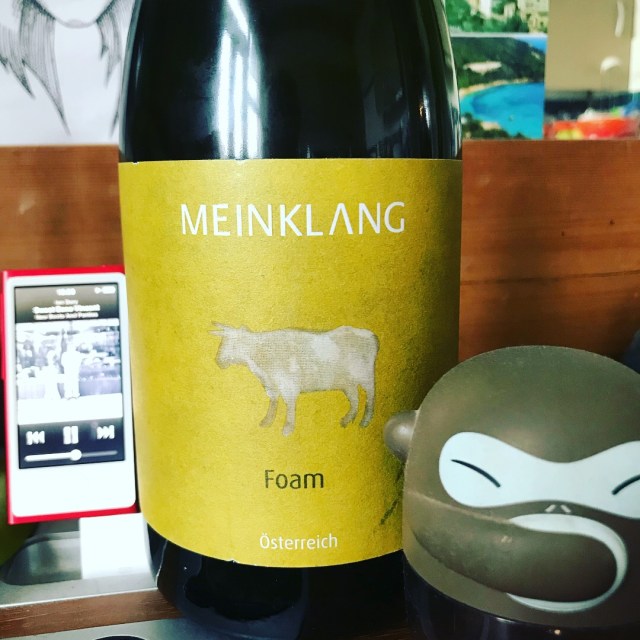
So the winner here in the “red” category is Meinklang Graupert Zweigelt 2013, Burgenland. This marvelous producer makes so many great wines it’s even difficult to choose among them, let alone all the reds I drank last year, but this “wild vine” red from the southern end of the Neusiedlersee in Eastern Austria deserves the accolade. Concentrated black fruits from tiny berries on tangled, unrestrained, vines, highly perfumed and concentrated, with a good lick of slightly abrasive acidity and mouthfeel. Personality! That’s what puts it here.

D60ACABC-3D0A-463C-8FC9-A1FA8C6C1860

White Wine: This choice was, by contrast, less difficult. Three white wines kind of stood out for me in 2017. The one which misses out, just, was the most astonishing wine I tasted at the Real Wine Fair last May, and then managed to drink a couple of glasses of at a Solent Cellar event in the summer (when I was also able to buy some for myself). That is COS Zibibbo in Pithos 2014, which was only bottled in magnums. I also cannot fail to mention a rather wonderful Lopez de Heredia Viña Tondonia Rioja Blanco 1973.

But the winner is a wine I’ve been wanting to try for a couple of years and which had thus far eluded me until a friend brought one to a spectacular lunch at The Draper’s Arms in Barnsbury just one month ago. Domaine des Miroirs Chardonnay Mizuiro 2013, “Les Saugettes” is grown on Limestone and Marl near Grusse, in the southern part of the Jura Region. Kenjiro and Mayumi Kagami are, as I said in the article about that lunch, almost impossible to visit and their wines are tantalisingly difficult to track down. This one was ever so slightly cloudy, all saline citrus, which doesn’t suggest complexity. And yet it has such a unique personality. A very personal choice, perhaps, but I think it is an astoundingingly good wine if you are open to it. Arigato gozaimasu!

B64DA373-EA0C-4D64-9801-A7CE7B1EE490

Budget Red: The winner here established itself early and every subsequent bottle just delivered. A simple wine, but just fantastic in that simplicity. Claus Preisinger Puszta Libre 2015 is labelled as a mere Austrian Rotwein, and is a blend of Pinot Noir, Zweigelt and St-Laurent, which Claus suggests serving chilled. Simple raspberry and cherry fruit with a touch of spice, and just 12% abv. It goes down a treat.

Already this year I’ve drunk a similarly beguiling simple wine, Martha Stoumen’s Post Flirtation Napa red blend. Whether that wins out by the end of 2018, who knows, but this kind of gluggable juice never fails to thrill.

IMG_2689

Budget White: This wine stands up on its own, but I won’t deny there is another reason I chose it. The world of wine does have its dark corners, but generally wine people are incredibly supportive of each other. When the De Moors of Chablis suffered terribly from the appalling conditions of the 2016 growing season, friends in the South of France let them have some grapes with which to make at least something. The resulting wine, Le Vendangeur Masque “Melting Potes” 2016 is the first cuvée (of three, I think) which expresses their thanks.

Blended from Grenache Blanc, Clairette and Viognier, not varieties which I suppose Alice was all too familiar with, this is just lovely. “Budget” is stretching it a little, but it is a genuine tribute to their potes. And writing this has reminded me I still have one left!

IMG_0197

Rosé: I’m quite partial to wines of pinkish hue, I must admit. Olivier Horiot Rosé des Riceys “En Valingrain” 2006 came close to this slot, but despite its name I wonder whether “Riceys” is really a rosé, rather than a pale red? But for the second year running I’m giving this accolade to Clos Cibonne Tibouren 2014 , a “Cru Classé” of the Côtes de Provence. I think it helps that this is from magnum but who says pink wine cannot age? Well, obviously no one who knows Château Simone, Musar, and this (okay, and Rosé des Riceys, which absolutely needs to age). It has all the freshness of a pink plus complexity and (perhaps more so) character, which comes from this unusual and rare variety.

IMG_3399

Sparkling Wine: The toughest choice lay here. Somehow I have to fit in Champagne, other sparkling wines and the innumerable pét-nats I could have listed. After considering a very fine Piper Rare 2002, and from the same vintage, a stunning (if still not fully mature) Pierre Peters “Les Chetillons” 2002, I awarded the gong to a unique sparkler, Clos Lentiscus Sumoll Ferèstec Reserva Familia 2010, Bodega Can Ramon from Catalonia. 

I love Sumoll, both red and white. This rare wine usually manages to fill between 300 and a touch over 700 bottles, depending on vintage. This superb 2010 was disgorged in 2016, and local honey is used in the dosage. Pale bronze, quite rich and mature, we might be in the territory of Selosse or Prévost. Not your simple Cava (indeed, it’s not a Cava at all), it is richly complex, but with a direct, if elegant, acidity.

IMG_3146

In the days before New Year, Clos Lentiscus was, if I’m being objective, surpassed by Pol Roger Cuvée Sir Winston Churchill 1996. This is nicely mature and drinking wonderfully well right now. I won’t try to describe this legendary vintage for “Winston”. When I said on social media that this was my best wine of the holidays, someone replied “er, ever”, which did pretty well sum it up. Not my best wine ever, not quite, but they had the right idea. It was all the more appreciated, as it was after an impromptu visit to very good friends following a bracing dog walk when the cork was popped.

944C096B-B6E2-4E65-A41F-A55F8A0F2693

I’ve not even mentioned any pétillant naturel wines, and I drank dozens in 2017, a style I find both attractive and at the same time so perfect once it’s warm enough to venture outdoors. I can’t list them all, but one I always adore is Domaine des Bodines Red Bulles. Arbois Ploussard which tastes to me of concentrated pomegranate, redcurrant and raspberry, all enveloped in a gentle fizz and froth. I managed a whole two bottles of this in 2017 (it’s not easy to procure, even were I not obsessed with drinking widely). I do try to have some at home if at all possible.

image

Sweet Wine: We are moving decidedly upmarket here. We went to a wedding in Tokyo in the summer and the bride’s father had set aside a bottle from his daughter’s birth year specifically to open on this occasion. It was Château d’Yquem Sauternes 1988 served from a 5 litre format (followed by a number of ordinary bottles, just in case anyone hadn’t managed to get a third or fourth glass). Nothing else came close. I’ve never actually got drunk on Yquem before (though the beer, Champagne, gin and red Bordeaux throughout the dinner helped) and I was glad we were only staying a mere four very humid minutes’ walk from the wedding venue. I wasn’t so drunk as to be unable to remember it, and the experience will linger for many years.

IMG_0279

Fortified Wine: I don’t drink masses of Palo Cortado, though it’s a Sherry style I’m coming to appreciate more and more as I get older. It explains why I didn’t buy this wine on release, but that has been rectified to a degree – as I type I’m waiting for a single bottle to be delivered this afternoon.

Equipo Navazos Palo Cortado Bota 75 is possibly the most elegant Palo Cortado I’ve ever drunk. It was sourced from Hijos de Rainera Pérez Marín in Sanlúcar, and in fact is the same liquid that went into the first bottling of the Equipo Navazos table wine, Florpower. It is smooth in the middle and prettily floral on the finish. It lacks that incredible intensity you often get with a EN Palo Cortado, yet makes up for it with such finesse. Mind blowing…to me, at least.

A13CDFFB-0CDF-4E98-8D73-82302BF94A98

On the Wine Pages  WOTY entry you get the chance to list a “Thing” (wine related or not). I chose Champagne by Peter Liem, which I have already written about  (30 November 2017). It was my wine book of the year, not least for its concentration on terroir wines, and for the unrivalled Larmat maps of the region (reproduced separately in a drawer, for the first time since their original and very limited release in 1944). Yet there were a couple more wine-related things which I’d like to mention, both vineyard visits.

After a few years of very much wanting to go, I managed a visit to Emilie Porteret and her Domaine des Bodines on the edge of Arbois in late October. It was in fact just days after wonderful visits to Jean-Pierre Rietsch in Mittelbergheim and to Fritz Becker Junior in Schweigen, and indeed it preceded a visit to my favourite Champagne producer, Bérêche, at Craon de Ludes, just three days later. I’ve been drinking Domaine des Bodines for several years and they have crept into my absolute top six Jura addresses. To actually visit and to feel the wonderful energy going into the vineyard and the wines here was a very special experience.

In 2017 I also visited my first ever Japanese vineyard, Domaine Sogga, outside Obuse in the Nagano Region (on Japan’s main island, Honshu). It doesn’t count as the most obscure vineyard/winery I’ve ever visited (that would go to what at the time was Nepal’s only real wine producer, Pataleban Vineyard, west of Kathmandu). But Domaine Sogga, which grows mainly vinifera varieties, from Chardonnay, Petit Manseng and Albariño to Merlot, Petit Verdot and Cabernet Franc, makes surprisingly good wines. In fact I was so taken with some of these wines (within context) that I was quite relieved and gratified, on returning to the UK, to discover quite how in such high esteem their winemaker (Sogga fils) is held by those experts here who know Japanese wine. I do plan to return.

Individually protected bunches at Obuse (Nagano, Japan); Emilie Porteret in her tiny barrel cellar in Arbois; and Peter Liem’s Champagne masterpiece

In a world where more and more wines continue to astonish me with their personalities, all of the above provided inspirational moments, reminding me why I’m so passionate about wine, and why I want to continue to share that passion. I hope I can continue to do just that through 2018 and beyond. Happy New Year!


Posted in Wine | Tagged , , , , , , , , , , , , , , , | 4 Comments

Recent Wines (Winter 2017) #theglouthatbindsus

As we head for what in our case will be a welcome Christmas break (the usual pre-Christmas colds have reared their heads like the four horsemen this year), I thought I’d be totally predictable and forego a list of Christmas wines. What to drink with the turkey…there won’t be one… Instead it’s high time I gave you another batch of the best wines I’ve been drinking at home, especially as my last lot were two months ago.

Ivag 2015, Cascina degli Ulivi, Piemonte – This is one from Stefano Bellotti, and I think it was sadly the last of his bottles I have in the cellar. I’m sure you’ve spotted that it is cryptically named after that much maligned (often with reason) DOCG on the eastern edge of Piemonte. This is bottled as a mere table wine.

The grape is Cortese, and few do Cortese better than Stefano. Biodynamic, no additives, the nose is marvelously complex and the palate is so fresh, almost spritzy on the tongue yet there is no visible CO2. Citrus acidity and a herby dryness. It has a certain touch of weight and richness beneath the acidity, and we drank it with a risotto of butternut squash and mushrooms. Only the weather failed to transport us to Novi Ligure.

Stockist: Les Caves de Pyrene

F011E5FF-8DD7-4C4C-8CA5-3D2BBED2F67A

Sergentìn 2009, Fabrizio Battaglino, Roero – I mention this wine mainly to give a plug to the Roero region as an alternative source of Nebbiolo. Lord knows, we need one with prices going sky high in the two “B’s”. There were no real signs of age, either visibly or on the nose here. The palate showed it was young and as it was was drunk before going out I didn’t have time to splash it into a decanter.

Yet real Nebbiolo character is here in this wine. I’m so often unable to find that “tar and roses” thing in its pure form with Barolo, but I was getting that here, along with black pepper. It just needs time. Hopefully there’s time for us to explore Roero further before the Barolo boys catch on.

Stockist: Big Red Wine Company (current vintage 2011)

AC2B629E-2EA4-47CA-AECD-E458275886D9

7 Fuentes 2015, Valle de la Orotava, Suertes del Marqués, Tenerife – This gets a mention because as an entry level wine, and as an introduction to the wines of Tenerife, it is excellent. It is based on Listán Negro, an under appreciated variety, though its white form, Listan Blanco, is none other than Palomino Fino. The minor component is Tintilla, which most readers will know better as Trousseau.

Initially there is some reduction and a whiff of volatility, which some people have said has put them off (though I’d not suggest you get it with every bottle). But using a carafe soon sorts it out. The key to this wine is freshness, but with that sort of textured freshness you get from volcanic soils. Sappy, simple, but sensuous, it slips down easily.

Stockist: widely available via importer Indigo Wine

D6361465-7816-4ECE-AE52-47107F64CF6B

Furmint Vogelsang 2014, Michael Wenzel, Rust – Sometimes you buy something and stick it away and somehow it almost gets forgotten. This happened here. Michael Wenzel’s family grow grapes around Rust on the western shore of the Neusiedlersee. This bit of the lake is historically known for Furmint, grown on gneiss/quartz and mica schist, and Vogelsang was the first vineyard the family purchased in the 1980s. But the grapes were virtually smuggled in from then Communist Hungary, because the variety had almost disappeared from Austria (the border is only a relatively short cycle ride south of Rust, and in fact you can ride the “Iron Curtain Trail” here).

We all buy wine with positive expectations, but sometimes even high expectations are exceeded, and this was the case with this Furmint. Elegance, minerality, character, finesse and presence are what I’d rather say about this bottle than a string of fruit etc related descriptors. This is brilliant, though very sadly all gone. I understand that just 800 bottles of the Vogelsang were made in 2014.

Stockist: all gone, but Newcomer Wines are the people to hassle for the next vintage

45A1DD55-19D9-4504-99CF-05795AFA9AF1

Kalkundkiesel Rotweincuvée 2015, Claus Preisinger, Gols – Here we are just moving around the lake from Rust on the western shore, to Gols, more or less on the northerneastern shore. Claus is a regular in these lists of recent wines, but I have tended to drink more of his reds. This beautiful red is an experimental blend of Blaufränkisch and St. Laurent with added white grapes.

There is around six weeks skin contact (other vintages have had longer) for most of the fruit, although some is direct pressed juice, all blended at the end, but the wine is quite smooth and not so textured. The bouquet is of rich darker fruits and spice, quite Christmassy. There’s plenty of acidity, keeping it fresh, and a bit of bite on the finish.

Stockist: another one from Newcomer Wines

3F6153BD-C699-4F88-A4EE-A906AC1C91B2

Corbières Blanc “La Bégou” 2015, Maxime Magnon, Languedoc – Magnon is a bit of an insider producer and as you are all insiders you might not need me to tell you that he makes exceptional white (and red, of course) Languedoc, which does not always bring to mind this southern region. More, on account of the finesse in this bottle, fine White Burgundy. Funny that, as Maxime is originally a Burgundian. He worked with Jean Foillard in Beaujolais, but his southern influences come via his friendship with Didier Barral.

Based at Villeneuve-des-Corbières, the blend of grapes in La Bégou is 90% Grenache Gris and 10% Grenache Blanc. The bouquet is floral, and this is reflected on the palate, along with pears and a dry stony mineral texture on the finish. The vines here are at least fifty years old, on limestone and schist. Maxime uses biodynamic practices, though I don’t think he’s certified. Very impressive indeed, and even at £30 we are in the territory of a bargain for the quality.

Stockist: Solent Cellar might still have the odd bottle of Magnon’s wines if you are swift

B3B0F305-DA41-4649-9BF2-7B4BFB8BB913

Poliphonia 417 2016, Pheasant’s Tears, Kakheti, Georgia – Few recent wines have filled the mouth with such concentrated sappy deliciousness as this wine. It’s quite unusual, and may well be the most grapes I’ve had in a blend, ever – 417 of the estimated 525 autochthonous red and white varieties in Georgia. They come from a small vine library in Kakheti.

This isn’t complex but that dark fruit coats the mouth. Lip-smacking might be an apt choice of adjective. Not your typical qveri wine as it majors on the fruit more than texture. If you see a bottle then grab it. About £21 retail.

Stockist: also Solent Cellar via Les Caves de Pyrene

61207D1F-1EC4-499B-AF03-9044F1D3A2B7

Madiran 2004, Château d’Aydie – It has been a good while since I’ve drunk a Madiran. When I was younger I had a bit of a thing for the wines of Southwest France, especially Irouléguy, Cahors and Madiran. Of course all Madiran is not cut from the same cloth. The best is pretty much 100% Tannat and, although micro-oxygenation was more or less invented here to soften these brutes, a good Madiran is generally an old Madiran.

This wine, judging from the back label, is pure Tannat. It won a DWWA Trophy (Decanter) in 2007, but the tasters must have found it hard and difficult to judge if my experience of three year old Madiran is representative. This is still dark and only just showing a crimson rim. The nose is lovely though, broody plum, red fruits and spice/pepper. There are still tannins here, slightly dusty, and enough structure to suggest this is still not fully resolved (though as with Nebbiolo, you don’t always know). But it’s damned good. It really comes into its own with food, a rich sausage and vegetable roast with a little chilli posing no difficulties. With 14% abv it didn’t taste alcoholic, just rich.

Stockist: you may find this in Barcelona or the US Virgin Islands according to Wine-Searcher, but it’s basically long gone

8F7B7E8D-0D51-40CB-A6D5-8F8DF35C8452

Blanco 2016, Bodega Cauzón, Andalucia – We finish here with a gem from one of the finest estates of Andalucia, though it is little known. The man behind these vibrant natural wines is Ramón Saavedra, who farms a few hectares high in the Sierra Nevada at Cortes-y-Graena. When I say “high” I mean it – between 1,100 and 1,200 metres altitude in this case. But this is not a blend of weird autochthonous Andalucian grape varieties, discovered by Ramón whilst walking the dog. It’s a blend of Sauvignon Blanc, Chardonnay, Viognier and Torrontes.

The colour is a beautiful yellow. The bouquet is of fresh orchard fruits, plus peach and citrus zest. When you glug this it is ridiculously fruity, in fact it’s real fruit juice for adults. Somewhat worryingly, there is no indication whatsoever than this contains 13% alcohol when you knock it back. Ramón goes his own way but his wines are delicious.

It’s a rather nice way to end this roundup of recent wines because it’s just simple pleasure in a glass, and who cares that I’m drinking a Spanish white in December when three quarters of the country is blanketed in snow (though not my bit). You’ve probably seen the fine wine (sic) I’ve been drinking at lunches and dinners these past months, but this is no less pleasurable, and when the flavours are unexpected, such a wine is just as exciting too.

Stockist: Otros Vinos

72FE868A-891F-4252-9BEA-569356F289CD

Have a great festive holiday break, if indeed you have one. I aim to be drinking moderately and sleeping as much as possible over the next week. I hope to be back in the New Year, but in the meantime, as they say, have a good one!


Posted in Natural Wine, Wine | Tagged , , , , , , , , , , | 5 Comments

Songs From The Wood (Lime Wood)

We were lucky to be part of a group of eight that had the chef’s table at Lime Wood the weekend before last. Lime Wood is a Regency-era country house hotel set in parkland in the New Forest, at Lyndhurst. The team behind Lime Wood’s restaurants is Angela Hartnett and Luke Holder, with an Italian influence to the cooking from Luke. It’s smart but relaxed, and actually a great location for a comfortable break. I wrote about a trip there for lunch in the summer, part of my New Forest Gastronomy series.

The restaurant itself is a reasonably formal affair, as befits the surroundings. The chef’s table, set in the large kitchen itself, not only gave us a taste of the excitement during a busy service, but allowed us to be a little louder than the restaurant would have permitted. If the wooden benches were slightly less comfortable, the atmosphere made up for it. Needless to say, the food was good. Service was also perfect. It was as if the waiters and sommelier were able to relax in the kitchen and didn’t feel the need to treat us with quite the degree of detached deference you would get out in the restaurant.

16C74315-1441-4E3C-8C2D-85A63F03E051

The meal began with the Smokehouse Board, with culatello, leg soaked in red wine, cured loin and chorizo smoked on site. Fennel and black pepper salami, effectively a finocchiona, was delicate and fine. The salmon is cured ten days before smoking. I should say at this point, with all that dead pig on the table, that Lime Wood caters for vegetarians and vegans, and served up imaginative vegan dishes for the non-meat eaters.

59DED23A-796A-4216-AEF8-AFCCDDD23139

Smokehouse Board

The wines began spectacularly with a magnum of Stéphane and Bénédicte Tissot‘s Chardonnay Gravières 2015. I’d assumed this might be a touch young, but 2015 was a richer vintage in Arbois. Les Gravières is a blend of six sites where the underlying rock and soils are limestone. Whilst Arbois is perhaps famous for its various marnes (marls, which are calcium/lime-rich mudstones with varying amounts of clay and silt), there are outcrops of pure limestone which produce excellent Chardonnays. The most famous must be Stéphane’s own Clos surrounding the Tour de Curon, a steep and stony limestone vineyard rapidly achieving a “Grand Cru” reputation.

The Gravières begins with peachy ripe fruit, more rounded and voluptuous than you expect, but it takes only a little time before other qualities become apparent, and I mean citrus acidity, salinity, and a very long, almost chalky, finish. I can’t say how this wine will age (even in mag), but I found it astonishingly beautiful, especially because I’ve erred more towards Tissot’s single vineyard “La Mailloche” as my favourite, the one off “Les Amants” aside. If I could drive to Arbois tomorrow I’d try to grab a few magnums of this to enjoy over the next two years or so.

61A18FE0-E0AB-4B80-9EA9-5E3593B68ECA

Mag-nificence

Someone called for a rosé, and so we grabbed a bottle from the Lime Wood list, Ca dei Frati Rosato “Rosa dei Frati” 2015. This is a sound wine from the famous Lugana producer. Pale salmon colour, quite muted to begin with (but cold), opening into a nice fruity wine, dry and fresh, not spectacular but enjoyable. At some point a ewe’s cheese salad with young vegetables appeared and it didn’t clash.

Ewe’s milk cheese with young baby vegetables

We soon polished that off and another magnum appeared, San Lorenzo Ciliegiolo 2009, Sassotondo. This is a Maremma wine and is 100% Ciliegiolo, all from vines over 50 years of age in Sassotondo’s home vineyard near Pitigliano. This is always a superb wine, but I’ve never tried a magnum before. This 2009 starts with dark blackcurrant fruit on the nose, and then some rich cherry comes through. The bouquet has great depth. So does the palate. There’s fruit, but also a slight bitterness which seems to resemble black pepper (some also say cloves). There are still tannins present but they just add the sort of structure you want for food matching. There is just a slight note of alcohol (14% abv) on the finish, but it is smooth and long.

F4DCC1AB-10F2-4BD8-9639-42EE487ABAB9

The dish we paired this with was a ravioli of rainbow trout and ricotta with walnuts and lemon zest. Like Lime Wood’s famous “double agnolotti”, this is the kind of pasta dish they do to perfection. It doesn’t look much on the plate but its richness suffices to satisfy the stomach until the next plate arrives.

74130CFE-D53E-4344-9155-7D0BA4EF8FCF

More than just ravioli

The main course was braised duck breast, and offal in a roasted artichoke shell (or a very inventive raw vegan pizza). The pairing was Château de Beaucastel Châteauneuf-du-Pâpe 1999. This was drinking superbly, though not yet at its peak I think. Still dark in colour but with a lovely brick red-orange rim, it is rich and fruity with a pleasant bitter touch. The 13.5% alcohol feels restrained and I’d say this is the most elegant Châteauneuf I’ve had for a while. Of course there’s plump Grenache with rich complexity building in the glass, but there was no “leaking at the edges”. Counter-intuitively it was served in Riedel Bordeaux glasses, but they worked for me.

0B6EACCE-9360-4809-9C14-464BA824A1E1

B8860D4E-797C-442C-8D06-98EC085E09E5

Duck breast

Another red was called for and someone ordered Leah Pinot Noir 2014, Seresin. This Marlborough Pinot is a blend of the three Seresin vineyards (and named after Michael’s daughter), a wine which drinks well quite soon after release. It nevertheless also has the ability to age. The 2014, the result of a long ripening season, has lightish red fruits but also a herby note on the finish, a touch of early complexity. I think there’s about 15% oak used. Still a fresh young wine, its biodynamic origins showing, perhaps, though I’d say this is good to go now. If you want greater complexity, move up the range.

4D2E3C36-BC8D-4A11-BE21-7EE3308B8694

At this point a pause in the proceedings was called for, and the wilder members of the party decided it was negroni time. It wasn’t the occasion for an interrogation as to the exact contents of this version (most of us had gone past that stage), but it was very good indeed. Always the sign of a good hotel. In my world there are many ways to make a negroni, no single right way, but there is a wrong way. This was not the wrong way.

Negroni time

Dessert came out soon after, a chocolate mousse with chantilly, ale soaked cherries, a white chocolate snowflake or two and mixed red berry sorbet. With this we were treated to Château Fayau Cadillac 2011. Cadillac is one of the old sweet wine regions of Bordeaux. It’s about 30 km upriver from the city, on the right bank of the Garonne, ie the opposite bank to Sauternes and Barsac.

The wine is not as complex as a top Sauternes, and there is little if any sign of the noble rot which adds complexity to the left bank sweet wines. Yet this is very pleasant with honey and stone fruits (peach and apricot). It doesn’t have exceptional concentration, nor length, but as an accompaniment to this type of dessert it works well, neither too rich and cloying, nor adding any jarring acidity. A nice complementary touch.

Mousse and sorbet with the Fayau

This chef’s table experience is to be recommended. I enjoyed the very relaxed atmosphere in the kitchen. I’m sure the fact that there were eight of us helped, and I think we were able to be far more noisy (in a good way) than in the formal restaurant. Eating outside in the summer was also very enjoyable for the lack of formality. The food at Lime Wood is good as well, the influence purportedly being Italian but not to the extent that this inhibits creativity. That creativity was especially evident in the vegan dishes.

In some restaurants, having vegan dietary requirements is sometimes a real nuisance for them, and any vegan dishes are grudgingly prepared. Here we got the opposite response, creativity being given its head. That was rather nice as one of our number was also a chef who goes an extra mile when asked to prepare vegan dishes.

Vegan treats, raw pizza and dessert platter

If there is a down side to Lime Wood dining it is only in the pocket. The meal came to £130-a-head, more than expected (which seems to be my theme for late 2017), but that was possibly in large part down to the wines we took (Tissot, Sassotondo and Beaucastel) at a guess. Corkage is £35/bottle and I’m not sure how they worked the magnums. But the evening, food, wine, service and entertainment, was very enjoyable. If you want to crawl up to bed rather than our taxi back to Lymington, expect relative luxury in (at this time of year) a warm and hospitable hotel.

Lime Wood is at Beaulieu Road, Lyndhurst, in the New Forest (nearest rail link is Brockenhurst, then 15 minutes in a taxi). See link here for restaurant and rooms.

Posted in Dining, Wine, Wine Agencies, Wine and Food | Tagged , , , , , , , , , , , | 2 Comments

Our House (Taittinger)

Many of you will know that I have something of a thing for Grower Champagne. It comes from an interest in wines which express “place”, terroir wines, I suppose. But that doesn’t mean I ignore the so-called Grandes Marques. For almost as long as I can remember I’ve had a special relationship with Taittinger, perhaps ever since I visited their impressive chalk cellars in Reims (which, along with Ruinart, are probably the best in the city).

The whole philosophy behind a Grande Marque like Taittinger is that they claim to be able to reproduce wines in the same style every year. This is certainly true of their non-vintage cuvée. Their literature plays down vintage character, and yet Taittinger produces four very fine vintage wines. It’s just that two of them are not labelled as such.

This is because the whole of the marketing at Taittinger is to tell a story, one of ever decreasing elements in each wine which, logically, ends with a single vineyard at the Château de la Marquetterie, at Pierry, near Epernay, which Pierre Taittinger purchased after having been billeted there as a cavalry officer during WW1. I have no issue with this. It’s a good story to tell.

I was pleased to be able to go to this Taittinger Tasting at Solent Cellar in Lymington last Friday, and to taste through six wines from the range, tutored by Kevin McKee of  Taittinger’s UK agent, Hatch Mansfield, where his role is UK Director – Family Taittinger.

A3DF15D7-DCEB-4362-AB74-4FD7693E63B4

Kevin McKee, UK Director – Family Taittinger

A little history first. As I mentioned above, the Taittinger family became involved in Champagne when Pierre Taittinger acquired the vineyard at the Château de la Marquetterie after WW1. In the 1930s Taittinger went on to purchase the old Champagne House, Forest-Fourneaux, changing its name to Taittinger.

Pierre went on to establish the name of Taittinger, basing operations in Reims at the Butte Saint-Niçaise. Below the ruins of the Benedictine Abbey of Saint-Niçaise are the deep UNESCO “World Heritage” chalk crayères dug in Gallo-Roman times, which provide perfect conditions for making and storing Champagne.

The part of the Taittinger story they don’t emphasise is the company’s recent history. It gets in the way of the astonishing fact that not only is Taittinger one of the only family run Champagne Houses today, but it is (probably) unique in being run by the family named on the label. In 2006 Taittinger fell prey to a takeover by an American consortium with support from the French banking group, Crédit Agricole. In 2008 Pierre-Emmanuel Taittinger managed to regain control of the House and now runs it along with his children, Clovis (exports) and Vitalie (marketing). Loïc Dupont has been Chef de Caves for 30 years. Although nearing retirement, the succession has been well in hand for some time.

Taittinger has the advantage, rare among the Grande Marque Houses, of vineyard ownership. The company is the second biggest owner of vines in the region, and their own estate provides half of their required fruit. This, along with the great work done by Pierre-Emmanuel and his team, has had a dramatic impact on both quality and consistency.

2E86BCA7-9AC8-40D6-8399-0EAE99445420

We began with the Prestige Rosé, a non-vintage rosé d’assemblage. Fifteen percent of still red Pinot Noir from the Montagne de Reims is added to control colour. This, like the wine which follows it, is in a lighter, fruity style. It offers consistent easy drinking as an apéritif, with refreshing red fruits. As a wine marketed in a clear glass bottle, further ageing might be risky except in dark conditions, but I’m not sure it needs it.

Brut Réserve is effectively cut from similar cloth. It’s light and fresh with just a hint of complexity, clean and easy going, always elegant. The blend is usually around 40% Chardonnay, 35% Pinot Noir and 25% Meunier, and the wine we were tasting was from a 2012 base. This is Taittinger’s most important wine, production being around 70% of their 6 million bottle total. A lot of work has gone into Brut Réserve over the past eight or so years to improve consistency, and in this style I think it offers good value.

Expect clean citrus fruit, with developing brioche if you keep it six months or so after release. It is released after three years on lees, but whilst they will tell you all these wines are ready on release, I think we know that a little post-disgorgement ageing can improve them further, so long as the conditions for ageing are pretty good.

The Brut Vintage we tasted was the interesting 2009. Interesting because I’ve bought some of the 2008 and this wine is in contrast quite rounded at this stage, though still young. It is comprised of equal proportions of Chardonnay and Pinot Noir with five to six years on lees. It will peak before the 2008. The next vintage to go on sale will be 2012 (which I’ve not seen but someone on the Wine Pages Forum mentioned they’d just bought some).

The story continues now with wines which are sourced from increasingly smaller selections of vineyards. Prélude, or more formally Prélude Grands Crus NV, is not in fact a non-vintage wine, or not according to Kevin McKee (my own assumption has always been that it is more or less fruit from one vintage).

I’ve always liked Prélude. It’s made up of fifty percent each of Pinot Noir and Chardonnay, the former from the Montagne and the latter from the Côte des Blancs. The cuvée was created for the millennium, the first release (magnums only) being from the 1996 vintage, whilst the current vintage we tasted is 2012. There is depth of fruit here, and a lovely fresh bouquet. The balance is really very good, with rich Pinot fruit and delicate Chardonnay. As a personal preference I will say that I often prefer Prélude to all but the best “vintage” cuvées at Taittinger. Those who benefited from Solent Cellar’s offer on the night (reduced to £36) were smart.

03B31FD3-0CEF-4A1A-AC01-37BDB4DCDB9E

Of course, I’m not counting Taittinger’s Comtes de Champagne there. This wine is one of my favourite prestige cuvées. Hand crafted finesse and, with age, considerable complexity. There is always a sense that this wine has had extended lees ageing, and in fact it sees nine or ten years on lees, but what drives it for me is always a pristine, almost crystalline, mineral acidity. This Blanc de Blancs is from Chardonnay fruit grown exclusively in some of the best sites on the Côte des Blancs. The 2006 tastes quite magnificent but do not be fooled. With decent ageing it will get very much more sophisticated and complex.

32831D1D-F5A5-49F7-8CE0-01B190317D3E

Although Comtes is not shy of food pairing, it is usually drunk on its own. If you want to drink Taittinger with food, my recommendation would be Folies de la Marquetterie. I like everything about this single vineyard wine. It comes, as I’ve said before, from the rather unique chequerboard vineyard, planted with alternating plots of Pinot Noir and Chardonnay, which surround the Taittinger family home, the Château de la Marquetterie near Pierry, in the valley of the Cubry, southwest of Epernay.

F3FBB1E5-4DF9-478E-BCC5-87543FD54088

Folies is the vineyard numbered 2 on the Larmat map (reproduced from Peter Liem’s essential Champagne (Mitchell Beazley 2017))

Folies is different from the other Taittinger wines, not only in that it is a single vineyard, single vintage, cuvée, but in that it departs from Taittinger’s easy to drink style. It is broader than the rest of the range with more body, but it does retain the elegance of the House.

The vineyard is steep, and all the work here is done by horse. Around 20-to-25% of the fruit goes into 4,000-litre oak for the first fermentation, which must add to the weight. But the fruit is often quite exotic, as expressed on the nose. There is a very slight weighting of Pinot Noir over Chardonnay (55:45 in this 2012), which it seems to me is enough to give a Pinot character to the overall blend. For me, this extra weight along with its unique type of complexity (increased with age) makes this a gastronomic Champagne matched by few others.

Of course, 30,000 bottles produced makes it relatively easy to find in the UK, and with retail offers around £50, it makes it something of a bargain too (you’ll be lucky to find Comtes under £100, sometimes more like £110, at best). Even if, like me, you have a bit of a thing for the growers, you should forget this is made by a Grande Marque and take it on its merits, as a brilliant single vineyard, terroir, Champagne.

A4864C50-5CFA-404F-9A3C-B8B5D9A46640

This is not the whole of the Taittinger range. Nocturne is a “sec” with double the dosage of the Brut Réserve. There is a pink version of Comtes, and Taittinger Collection is a limited edition, artist’s label, late disgorged vintage wine. The last release I saw was a 2002, released in 2011, but it is not the most recent (I understand a 2008 was released in time for the Rio Olympics in 2016).

Taittinger’s wines are all widely available and it is just a matter of finding the keenest prices, which are often found in the various supermarket “25% off six bottles” offers. I don’t see any significant discounting this Christmas, although it has happened in the past.

Taittinger’s Reims cellars are open to visitors at: 9, Place Saint-Niçaise, Reims (follow the rue du Barbatre east from the Cathedral and you are pretty much there). They are generally open seven days during the warmer months, with some weekend closing at other times.

Taittinger web site

Hosted tours (French or English) are charged, but they include a film and a tasting, for which different options are available. This is probably the best Champagne House tour which combines spectacular chalk cellars below the city with an accessible commentary for non-experts. There’s a little romance (when I went, albeit many years ago, they oddly kept the gyropalettes hidden), but I can recommend a visit here.

8D30BD3E-5A87-460A-B464-6EE123C47B93

7942FC9F-B7C6-478B-9A72-F5C57C2640DC

Posted in Champagne, Sparkling Wine, Wine, Wine Agencies, Wine Tastings | Tagged , , , , , , , , , | 3 Comments

The Plumpton Riots (Keep Calm and Carignan)

Do excuse my continued obsession with obscure musical puns in the title, and also excuse me writing about something a little different today. Last week I had the pleasure to visit Plumpton College in Sussex. It was only my second visit and my first since the brand new Wine Centre building opened. I was there for a lecture by Professor Barry Smith, going under the title “Why Wine Tasting is Hard“.

Some of you may know Barry Smith from his writing in World of Fine Wine. Others may have come across him as a guest judge on Masterchef, or from Saturday Kitchen, or indeed from his radio work. Professor Smith works at (and is co-director of) the Centre for the Study of the Senses at the University of London’s School of Advanced Study within the Institute of Philosophy.

The lecture was both fascinating and entertaining, and Professor Smith (I’m pretty sure “Barry” would be okay) is very much at ease making a difficult topic both entertaining and easy to understand without dumbing it down. I’m not going to reproduce the whole lecture, though I’ll give you a flavour of it along with a few interesting conclusions, but after the lecture I was treated to a tour of the Wine Centre by the Head of Wine Studies, Chris Foss. I’m sure you will also be interested in hearing about that, with a few photos thrown in.

One of the key questions wine professionals, whether sommeliers, wine trade members or winemakers, ask themselves is why we find wine tasting easy and most other people don’t. In fact many people, including those in popular journalism, are so sceptical of wine tasting that they constantly run it into the ground, and even among the pros there is a certain negativity towards those who take the entertainment aspects of wine tasting a little too far. In many quarters it is certainly seen as an elitist hobby.

What is easy to forget is that wine tasting needs to be learnt. In fact only the other day I read that going on a one-day wine appreciation course can increase spend on wine by an average of 12% per bottle. I can believe that. If you begin to appreciate quality you soon realise that by spending a little more, wine quality can rocket.

Professor Smith gave an apposite analogy about how we can grow to appreciate classical music. First we hear the loud noise of the orchestra as one soundscape. Only with experience do we begin to single out individual instruments and to hear what they are contributing. That is indeed a lot like getting to grips with wine tasting.

D52AF6E7-8971-4407-A8EE-FBDC6EDD16AE

A good part of the lecture looked at the neuro-science aspects of wine tasting and appreciation. The Dijon Hypothesis suggests that everyone does taste more or less the same things in wine, but that some people just don’t know what they are tasting, the failure of reflective cognition.

A study of sommeliers and non-tasters under MRI showed, perhaps counter-intuitively you might think, that it is the non-tasters who show the greatest brain activity when sipping a wine. This is because the brains of the sommeliers are attuned as to what to look for, whereas the non-tasters’ brains are all over the place, trying lots of different pathways to identify something they don’t know.

What we generally more experienced tasters do all know is that wine tasting is based on recollection and building an easily accessible database of reference points, although this does not mean that we can order these in a way that enables us to nail a wine time and time again. This is probably why we get it so blatantly wrong, calling our Rioja a Chianti, or whatever.

The sensory task is to pick apart what the brain has built, and indeed to overcome external factors which impede our ability to do so. Apparently aircraft noise impedes our ability to taste sweet, sour and salt, yet our taste of umami is enhanced. This may well be why some people like to drink tomato juice on a plane but nowhere else, and why you always get tomatoes in airline meals. Apparently Lufthansa provide noise reducing headphones during meals! And apparently the food tastes better!

So when we taste we use all our senses (scientists have identified somewhere between 22 to 33 of them, not just five) in order to build a profile of the liquid, and also to build expectations based on thousands of sensory snapshots. It’s a complicated process. The novice doesn’t know where to begin, and when we start telling them we are getting Madagascan vanilla, cloves, kirsch and leaves rotting on the forest floor there’s no wonder they are confused. But it is clear that even with a little help and encouragement, people can learn to taste. Then it’s just a matter of time, experience and data processing. However, a little time spent teaching the basic skills (and why it is worth acquiring them) benefits not only the individuals, but very probably the wine trade too.

What I’ve reproduced here is a mere snapshot, perhaps even an incoherent one, of this fascinating lecture. If you get an opportunity to hear Barry Smith speaking, I can recommend him. This was the first of the Plumpton Lectures, initiated by Tony Milanowski. In the New Year they have Joe Fattorini, followed by John Atkinson MW of Billecart-Salmon (UK) Ltd, who will be talking about terroir in Burgundy and Champagne. Both look interesting. The lecture I attended cost £10, and included substantial nibbles and some Plumpton fizz.

FA894E69-D9F3-447E-8DAB-5EAF259BE324

Plumpton College is the only place in the UK to offer degree level education in a variety of wine studies, from undergraduate Winemaking and Wine Business to an MSc in Viticulture and Oenology. There are also shorter courses as part of the Wine Skills Programme, ranging from an intensive week on viticulture or vinification, to a one day a month option. As I said, after the lecture I was able to take a tour of the facilities at Plumpton, and to find out a little more about what they do.

The Wine Centre has ten staff, including a resident winemaker, with up to a hundred students on the undergraduate programmes and a further twenty or so postgrads. They are thinking of adding brewing, distilling and cider making to the BSc in Drinks Business and Production curriculum.

Tony Milanowski, who I mentioned as the lecture series organiser, runs an outreach programme which delivers around 150 events each year to the UK wine industry, along with wine masterclasses. In addition, pure research is undertaken at Plumpton, for example work is currently ongoing on climate change, including the use of oils to delay bud burst.

Many of you will know that Plumpton is also a working English winery, with about 8 hectares of vines, some under replanting at the moment. Production usually sits around 30 to 40,000 bottles, except that frost and fruit fly (dropsophila melanogaster) dramatically reduced output this year. There are two sparklers and several still wines (red, pink and white blends, plus varietal Bacchus, Ortega and Pinot Noir).

Plumpton College Winery

Since 2015 there has been a project on skin contact, with First Contact, a Schönburger left on skins for around ten days (vintage depending), followed by ten months on lees in barrel with weekly stirring. I believe there is an exciting project under wraps to go the whole traditional Georgian hog in the future.

I’m very pleased to say that the English and Welsh wine industry has been supportive of Plumpton. The impressive little research winery was funded by Sussex newcomer, Rathfinny Estate (near Alfriston), where we saw some experimental microvinifications in progress.

Research Winery at Plumpton

So that was a great two-for-one or BOGOF offer, with the lecture and the tour. The nibbles included Plumpton beef and Plumpton pork, and most people managed a glass or two of The Dean sparkling blush. This is not only very good indeed but remarkable value (£23 from Waitrose Direct or from eight local branches).

Plumpton College has various sites in Sussex but the wine facility is on the main campus at Ditchling Road, Plumpton, a few miles northwest of Lewes.

Plumpton College Wine web site

3C243AE9-3995-41A8-BA22-9D95A8B89389


Posted in English Wine, Tasting Wine, Wine, Wine Science | Tagged , , , , , , , , , | Leave a comment

Zoo Time – Wide World of Wine Awards 2017

To be completely honest, I’ve never really been a great fan of Awards. Well, not since I used to fill in the NME’s Musicians of the Year Poll, which I can tell you was a very long time ago. The problems with the awards you get in the wine press are twofold. First, you gotta be in it to win it, and the number of wines that I like that enter competitions like the IWC or DWWA can usually be counted on the fingers of a one-armed, three-toed sloth. Anyway, if you’ve read this Blog all year you already know which wines I’ve loved. So we’ll skip the wines and stick with those selling the wine – the retailers and importers.

The second problem with wine awards is the subjectivity of the judges. So-called “Retail Awards” usually pick really good merchants, but rarely those at the cutting edge, those doing today what the established retailers will be doing tomorrow. Whatever they tell you, all our decisions are affected by unconscious bias if we are lucky, and sometimes conscious bias too. But sometimes we can make a virtue of bias. Bias is especially useful if both the tastes of the judge and the tastes of the reader are outside the mainstream, and they both coincide.

So these awards may just be a bit of pre-festive fun, and I’ll not pretend they have any clout out in the mainstream of the wider world of wine. But on the other hand, if I dish out a bit of praise, you not only get to find out who I like to go to for all the brilliant wines I drink, but maybe you’ll have time to check them out for some holiday drinking too. With a bit of nostalgia for those NME Awards of old, in the words of Dave Vanian and The Damned, here we go now…

The Frank Carter Award for Heaviest London Wine Shop 

London is awash with brilliant wine shops, whether you want the classics or the obscure, and this award was incredibly close to call, so much so that I’m going to give it to two shops, and the crazy thing, brilliant for wine lovers, is that they are within walking distance of each other.

Winemakers Club is a bar, a shop and a venue under the Holborn Viaduct on Farringdon Street, which in the past was the London Wine Mecca that was the original Oddbins Fine Wine store. The shop part is dark (actually, it’s all dark), and smaller than probably most of the wine shops we know and love. But John and his team win here because, out of sheer bloody-mindedness, they plough their own furrow. So you’ll find the kind of stuff here you might never expect to find. But you are also just as likely to be recommended a wine you’ve never heard of, only to find a month or two later that it’s on everyone’s lips.

Marnes Blanches, Vetter, Romeo del Castello, Sean Callaghan, Guccione, Hegyikaló, Vinochisti, Shobbrook, Vionnet, and especially Meinklang are all names whose UK profile has been raised immeasurably by Winemakers Club. But they seem to have new wines every time I visit. This is a solid team of good people, and if you get to know them, the bar is one of the most hospitable in London.

website: here

image

Noble Fine Liquor has a couple of shops, and the bar/kitchen P. Franco, but it’s the shop at 88 Farringdon Road that I know. It shares a site with Quality Chop House about fifteen minutes or so north of Winemakers club, so if you remember a suitcase you can easily shop at both.

I didn’t actually discover NFL until this year, but there’s little doubt that no shop has a better selection of natural wines in London, which is a pretty bold statement. This is especially true of their Jura selection, and although wines sell out quickly when only available in tiny quantities, at least you have a small chance of finding L’Octavin, Domaines de la Tournelle and St-Pierre, Ganevat, Labet and Les Dolomies.

From elsewhere you might find Envinate, No Control, Julie Balagny, Partida Creus, De Moor and Schueller. They also have a fine selection of Grower Champagnes such as Bérêche, Agrapart, Suenen, Lassaigne and Prévost (to name all too few). Even those who prefer more classical wines will not be disappointed. If I’m wholly honest here, NFL is the one shop I feel uneasy about recommending to anyone who doesn’t know it…because I just know you are going to buy all the stuff I want for myself.

website: here

F2EA84F8-C8DE-4932-8BF0-17E38958C720

The Rammstein Award for Downright Dirtiest Wine Country Specialist

This can only go to Austrian specialist Newcomer Wines out at Dalston Junction. Although we all miss the old Boxpark shop in Shoreditch, there’s a bit more space in Dalston, and so the range has expanded, and outside of Austria too. Austria as a tiny country now punches well above its weight in wine. We mustn’t forget the classics from the Wachau, but it’s the new wave natural wine revolution which has grabbed the world’s attention (well, the tiny bubble of a world I live in). Although Savoie will still benefit immeasurably when Wink Lorch’s book eventually comes out, I predict a riot for Austria in 2018.

Most of the stars of Dalston need little intro to regular readers, but if you haven’t tried Preisinger, Jutta Ambrositsch, Tschida, Jurtschitsch,Wenzel and company, joined now by the likes of Nesterec (Czech Moravia), Mythopia (Valais) and others, then you should get on a bus. The new producer of the year was the Rennersistas, Stefanie and Susanne, who farm around the northern edge of the Neusiedlersee. Wild wines which scream life, not yet perfect but somehow all the better for it. Like Newcomer.

website: here

img_2431

The Carte de Sejour Douce France Award for the Place to buy Wine in Paris

This must go to the the Cave Des Papilles on rue Daguerre in Paris’ 14th Arrondisement. People keep disagreeing with me, but I find it really inconveniently located, with the kind of opening hours that are slightly odd and best checked before you go (lunch closing is usually 1.30 to 3.30). But it’s worth the journey. Even with all the other wonderful wine shops in that city. It has to be natural wine heaven, but then so are Septime, Verre Volé, the Caves du Panthéon and others. What makes Papilles stand out is the kind of unicorn wines you may be lucky enough to find on the shelves.

Métras, Guillot, Schueller, Rietsch, Valérie Frison, or Bodines, Monnier and Menigoz from Jura, not to mention Catherine Hannoun’s pét-nat which I spotted online the other day. The house Champagne is from Emmanuelle Lassaigne of Montgueux, for goodness sake. This is why you take two suitcases on Eurostar, one empty. #glouglou

Anyone else remember Rachid Taha’s first band?

website: here

img_2074

Best shop in Paris, shhh!

The Robert Fripp Award for London Wine Shop Not Actually in London

This award is for a wine shop which would be up there with the best if it were in London, but it’s not. In the same way that Robert Fripp would receive his due acclaim if everyone just looked beyond the obvious. It feels slightly odd giving this award, first because I have two brilliant wine shops where I live (Butler’s Wine Cellar and Ten Green Bottles both of which I love dearly), and secondly because I seem to have bought around 50% of my UK wine purchases from Solent Cellar in 2017 (slight exaggeration, but still), and I’m probably not done with them yet. The shop in question is in Lymington, on the edge of the New Forest.

Solent do not pretend to be a “Papilles”. They do have to cater for the locals, though I must say that through the hard graft of regular tastings they are building a local clientele for the wines they like to drink, and there is always a large and eclectic offering of “real wine”. Visiting the shop is always better than looking at the web site, but you need to go further and cultivate a relationship with Simon and Heather.

Ganevat appears often, and I was swift enough to grab some La Zaune à Dédé this year, and an even greater coup was the COS Zibibbo en magnum in the summer, available almost nowhere. They always have a few Jura, including Vin Jaune, and a good Loire and Burgundy offering. Fine Wines here are usually well priced, and Champagne is also worth exploring (Bérêche Reflet D’Antan, Vilmart Coeur, Vve Fourny, Clouet to name a few). They often have a few nice magnums (Foillard and Equipo Navazos last time I was in, for example), and they also stock my favourite gin, Dorset’s Conker. But that’s just a small taste of what you will find in this pretty little shop. Great Saturday Market in Lymington too.

website: here

New Forest-20130827-00067

The Goat Award for Young Guns Going For It Importer of the Year

They’d probably have been insulted if it was the Wham! Award. In a market near to being saturated with small and interesting wine importers it was really hard to choose a winner here. Red Squirrel get the gong because they are small but brave. They have really looked deep and asked searching questions as to whether they can actually sell some of the stuff they import, and then said what the hell!

Diwald and Holzer, Bellwether and Canada’s Okanagan Crushpad are all producers who have an established name among their customers now. But whoever decided to bring in wines from the Azores Wine Company, Bruna (Liguria) and Pasaeli (Turkey) must be some kind of crazy genius who deserves to succeed.

But not only does Red Squirrel push the boundaries every year, I think they are also being rightly seen as an inspiration to others. I can’t wait to see what they bring in for 2018…Icelandic Romorantin, Nick?

website: here

106EFED8-0E35-4F00-B02E-AA6E5C5256FD

The Iron Maiden Monsters of Rock Award for Established Superheroes

It has to be Les Caves de Pyrene. They have been around for a long time now, and every year they seem to grow. Some people now see them as more establishment than rebels, based purely on the fact that they can sometimes seem to have natural wine all sewn up. That totally ignores what Doug and the team do every year, both to promote natural wine as a whole (I can’t tell you how much I will miss the Real Wine Fair in 2018), and in being behind so many of the bottles of natural wine which are creeping into nearly every independent wine shop in the country. If anyone in UK wine deserves a Lifetime Achievement Award it is Doug Wregg, though he doesn’t do it alone.

The key, I think, to the success of Les Caves has been in spotting an up-and-coming region or country producing exciting natural or biodynamic wines before the competition. They clearly got onto the Jura bandwagon before the band was formed and the wagon was built. They are not far from where I’d like them to be with Savoie, but I think Austria is getting some attention behind the scenes. Doug, if anyone can sell Silcher-Sekt and the Blauer Wildbacher grape, you can (I saw you at Strohmeier the other day).

The CdP list is enormous, and covers everything you can imagine. A good place to begin is with a trip to their warehouse shop at Artington (next to the Park & Ride), near Guildford. And remember that there’s a lot more out back than is on the shelves. Make a morning of it.

website: here

IMG_3256

Real Shopping

Les Caves’ shop at the Real Wine Fair is always too tempting to ignore

The Manu Chao Clandestino Award for Tiny Importer of Wines from the Coolest Wine Country of the Moment

Where is all of a sudden making the coolest wines in Europe? Spain, of course.  That bastion of tradition took a very wrong turning indeed when it decided to pander to those who wanted new oak, high alcohol and modern wines. But that seems to have left a gap for people to buy vines in unproductive terroirs known in the past for high yields and dirty winemaking, where the old vines lay neglected and unappreciated.

Then along comes Otros Vinos, with a portfolio probably smaller than any other award winner here. Don’t worry, you can easily fill a mixed case of bottles to try just by reading the article I wrote on their portfolio tasting at Furanxo in Dalston Junction back in October (use the search function on the right). If you prefer, you can walk over to Furanxo next time you visit Newcomer (about five minutes), where a limited selection of Otros Vinos’ wines are on the shelves. You’ll find the full list of stockists on the Otros Vinos web site, which includes Burgess & Hall, Noble Fine Liquor and Theatre of Wine.

Don’t miss the wines of Ambiz, Purulio, Cauzón and Costador to name just four. Look out for Costador’s “La Metamorphika” flagons,  and I can’t help but mention Clot de les Soleres’ pet-nat too.

website: here

IMG_3043

Some of Otros Vinos’ wines at Furanxo, 85 Dalston Lane

There are just a few more Awards left to go as our glittering evening draws to a close.

The Algiers Award for Totally Out on the Edge Wine

This goes to Tutto Wines for some of the weirdest tasting but most exciting wines I’ve had this year. And they also import Balagny and L’Octavin, both absolute favourites. With the taste to grab those two, you feel in safe hands so long as you are prepared to put on the blindfold and go where Alex and Damiano take you.

Olek Bondonio, Skerlj, Marco Fon and Jean-Pierre Robinot may be more familair to some than others. Ar-Pe-Pe will be familiar to all. Like all small importers, they get a parcel and it goes in days, so worth keeping a careful eye on your emails once you establish contact.

Are Tutto, like Algiers, the guys who are inspirationally different but who not enough people have heard of?

website: here

img_1957

The Men Who Will Not Be Blamed for Nothing…Doing it For The Whigs Award for Extreme Innovation in the Wine Trade goes to one man (who probably has a dog) called Rupert Taylor and his Uncharted Wines. Few wine lovers will have heard of Uncharted, but Rupert is the man who has probably done more than any other to bring wine on tap to the UK.

Wine on tap makes buying wine in a bar just like buying beer. It’s hard to imagine that the result could be very appealing, but in the same way that Andrew and Emma Nielsen revolutionised the wine in a bag concept with their Du Grappin brand (sitting right alongside their fine bottled Burgundy), Rupert has shown that the wine on sale in a bar can not only be decent, it can be downright consistently good (as it should be). And it’s easy to serve as well.

Rupert developed the idea at OW Loeb, and whilst Uncharted Wines are not yet well known, they will be. Because this way of serving wine fits in so well with the way in which young people are enjoying wine today, in a social environment, interchangeable with beer or gin.

Follow Uncharted Wines: on Twitter (@Uncharted_Wines) and Instagram (uncharted_wines)

The Sultans of Swing Award for Best Traditional Portfolio Daddio

I won’t pretend I never enjoy the classics, and those who purvey (let’s use a more sophisticated word than “sell” or “flog” here) such wines are numerous in England. There are the bastions of excellent tradition like Berry Bros, and the relative newcomers like Uncorked (who themselves have been much awarded in recent years, being favourites of some higher profile wine scribes). But I’m giving the gong to Howard Ripley Wines. My reason is simple. They specialise in Burgundy and Germany, and what two finer locations can we head for when we want a little classicism and tradition?

Although many of their customers pack out the Burgundy Tastings they lay on, zealots jumping on the Grand Crus like vultures for tiny allocations, the more sophisticated palates head for the German Tastings, usually held in the sedate surroundings of one of London’s Inns of Court. Here we sample in relative leisure the cream of German estates. Those of us with stranger tastes hardly require use of our elbows to get to the best of that country’s finest new names, and indeed some of her finest red wines too (a relative secret about which the Burgundy boys know nothing…yet).

Howard Ripley Wines are perhaps the best example here of how diligence and hard work can gather together a portfolio where every wine by every producer justifies its place. And whilst we are all chasing unicorn wines from Grusse, Sion, Vézelay or Illmitz we should not forget that there were always brilliant, if unfashionable, wines to be had in Germany too.

Julian Haart, Peter (Florian) Lauer, Julg, Schloss Lieser and Ziereisen are among my own favourites…if you can stop sipping the Prum and Keller.

website: here

IMG-20150610-00195

The Lonely Goat Herd Award for Merchant High on a Hill in the Wilderness

The last award here goes to an online merchant based up in Yorkshire which, because they don’t get down south very often, don’t get anywhere near the attention they deserve. When a London merchant (albeit a very good one) implies they are doing something new importing Swiss wines, you wonder what an importer that began by importing those very wines long ago is doing wrong in their marketing.

Alpine Wines used to be known as Nick Dobson Wines, but Nick sold the business to Swiss National, Joelle Nebbe-Mornod a few years ago. The portfolio has grown and covers areas which are only alpine at a stretch, but the heart of the matter is still Switzerland, along with Austria (where they bring in a few nice alternatives to the wines offered by Newcomer).

One of the pleasures of the Swiss wines at Alpine Wines is trawling through and coming across some lovely obscurities, but I appreciate that Swiss wine is new to a lot of people. Alpine Wines do put together different taster cases, but from their Swiss producers look out for Marie-Thérèse Chappaz (Fully, Valais), Simon Maye & Fils (Valais Syrah and Humagne Rouge), Badoux Vins (Aigle, Vaud) and Domaine Grand’Cour (Geneva).

From Austria one very subjective personal favourite is Heidi Schröck (Rust), and then Rainer Christ (Vienna), Martin & Anna Arndorfer (Wagram) and Leo Alzinger (Wachau). But from both Switzerland and Austria, if the wine is made from a grape variety you don’t know, then do try it. Both countries have some wonderful autochthonous varieties. Alpine Wines’ web site is not the easiest to navigate but in its nooks and crannies you’ll find some fascinating liquid.

website: here

Vienna 2015 326

These Awards are, of course, just a bit of fun. But the serious part is remembering that all of the above are trying to sell really interesting wine to a market which, at its heart, is still fairly conservative. We may see all our friends drinking wines like these, but we are still at the fringe, and the market for Real Wine is actually quite crowded, though the positive is that it undoubtedly seems to be growing.

Decanter Magazine has, in its latest issue, an article with the headline “The Most Exciting Wines of 2017”. They list seventy-five. With all due respect, I think we could probably come up with a far more exciting list if we went around all the retailers and importers mentioned here. This is why we need to spread the word.


Posted in Natural Wine, Wine, Wine Agencies, Wine Merchants, Wine Shops | Tagged , , , , , , , , , , , , , , , | Leave a comment

Liem and Larmat – A Perfect Combination

147

Like most people, I imagine, I came to appreciate Champagne first as a celebratory drink. Most often it was the non-vintage wine of a well known Grande Marque, or occasionally a vintage wine, consumed several years too soon. But in the days before autoroutes would take you right through France, Champagne (the region) became a convenient, and frequent overnight stop. As these journey breaks somehow came to encompass an extra day for exploring Reims, Epernay, or the Montagne, I began to appreciate Champagne, the region and her vineyards, and in particular, two things about it.

First, I realised that whilst the Grandes Marques usually blended their wines from multiple sources creating something which claimed the whole to be greater than the sum of its parts, there were hundreds of small producers bottling wine from their own few hectares of vines. Not all were as good as each other, but some were certainly good enough to distinguish the attributes of their different parcels.

Secondly, I came to appreciate Champagne as a wine in its own right, and I came to this through following the lead of the locals and drinking it throughout a meal. When you drink it as an aperitif you fail to appreciate its versatility with food, because there is a Champagne somewhere that will go with the majority of dishes.

679E77B2-FF86-4496-B93C-7F251B512E5D

I own several books on Champagne, but this year Peter Liem has published one which I think is different to all the others. Champagne (Mitchell Beazley, 2017)  is firmly focussed on terroir and so it is a book about those who grow grapes and make wine which expresses a particular vineyard, or perhaps a small number of sites where each plot contributes discernibly to the cuvée. This categorically does not limit us to “Grower Champagne”, because plenty of the Grandes Marques make site specific wines.

The book, in making terroir its focus, also celebrates Champagne as a wine, in all its diversity, and indeed takes this diversity as a mark of quality, rather than one over-arching single standard by which Champagne should be judged. To push the terroir point further, Liem has included in the package, published to the general public for the first time since they were produced in 1944, the maps of Champagne created by Louis Larmat for his Atlas de la France Vinicole: Les Vins de Champagne.

B7BD9505-46A6-4D2D-ADCD-36C53EE5D887

These colour maps come as separate fold-out sheets housed in a pull-out drawer, a second drawer containing the book. For a map geek like me they provide a cartographical bounty beyond my dreams. I’ve seen some of these maps in one or two tasting rooms, though possibly in facsimile as only 150 original copies of the Champagne part of the Atlas Vinicole were produced at the time.

Other books on the subject tend to focus more on the process of making Champagne. That requires so much space as to make viticulture a bit of an unwanted intrusion. This despite the modern mantra that wine is made in the vineyard, one espoused by all of the finest producers the world over these days. As a consequence pretty much all I ever learnt from those books was that the Champagne Region is based on chalk. Whilst I’ve since been told a more nuanced story by producers, I had no idea of the sheer diversity of soil types in the wider region, not least the vastly different types of chalk alone, which affects the fruit produced above them. I learnt a lot about geology, yet you should not suppose that this is solely what the book is about, nor that its approach is in the slightest bit dry.

Champagne divides into three parts. Understanding Champagne does cover the usual history and winemaking, but also features chapters on “The primacy of place” and on farming methods, including organic farming and the increasing interest in biodynamics.

The Place comprises eight chapters , which among other things break down the region into more sub-regions than the casual Champagne drinker will be aware of. Aside from the usual distinction between the Barséquannais and the Bar-sur-Aubois in the Côte des Bar, we also have The Grande Vallée made distinct from the Valley of the Marne, and the introduction of the Coteaux du Morin as the distinct sub-region to the north of the Côte de Sézanne. You will also come to appreciate the growing importance of the Coteaux Sud d’Epernay and the once densely planted Vitryat.

In these chapters Liem talks us through individual wines made within the different terroirs of these sub-regions, and in doing so he is able to describe in real terms what the land contributes to each of these cuvées. This is how he brings the terroir alive. Each chapter ends with a list of recommended “Single-Cru and Single-Vineyard” Champagnes from each of the major villages in each sub-region, which are usually wines created by producers discussed within the chapter.

A1434F71-EE19-4F2B-81DF-A70600E5B599

I mentioned above that by no means all of the site specific wines in this book are created by small artisanal growers. My own introduction to single vineyard Champagne came via the oft ignored Champagne House of Philipponnat. Their Clos des Goisses is still my favourite Champagne, and a photograph of it features on both my business card, and as one of the changing header photos on this site. Taittinger’s “Les Folies de la Marquetterie” has always been another (more affordable) favourite, yet I had no idea that Roederer’s “Cristal Rosé” was such an exemplar of Cumières Pinot Noir (with added finesse from a proportion of Chardonnay from the Côte des Blancs).

The final part of the book covers The People. Here, you don’t get the lengthy profiles you’ll find in some other books (Michael Edwards’ The Finest Wines of Champagne is a good source for these). Neither do you get any rankings of different wines and producers, as you get in the well known “Champagne Guides”. This section attempts to briefly introduce the individuals behind the exciting revolution which has been taking place in the region, and Liem has chosen both growers and négociant houses who he considers have “contributed to illuminating issues of terroir and advancing contemporary themes…”. Offhand, I cannot think of anyone he’s left out.

698D597A-2CC5-47FF-8FD5-E7DCBD6E8DBD

I will say straight off that this is my Wine Book of the Year (up to this point I’d probably have chosen John Szabo’s Volcanic Wines, and of course I’m looking forward to Luis Gutierrez’s new book on the new generation of wine producers in Spain, the English Language edition of which is due to come out in December).

It is a beautifully put together book, with lovely photographs by Gentl and Hyers. Any criticisms would in reality be not only subjective, but irrelevant. It did sometimes frustrate me that the beautiful photos generally only have a caption when they are a portrait of a wine producer. Several times I thought “where’s that?”.

There are several “insert” sections to emphasise a point, and whereas they are a useful focus, they do occasionally split up the thread of the general narrative in annoying places, so that you have to find where the argument continues and go back to the insert when you can better draw breath. And I think Peter could have written a little more about the Côte des Bar, where perhaps more than any other sub-region, there has been a grower revolution in what was once Champagne’s backwater. But then again, on the Côte des Bar subject I’m thankful that I’m not the only person who adores well aged Rosé des Riceys, especially those of Olivier Horiot and his single vineyard bottlings, which gets a whole page.

9A032785-0950-4D0D-9CA8-DE046F1FCCFC

Nevertheless, minor points like these aside, I doubt that anyone who truly wants to get under the skin of Champagne, both the region and the wine, will find a better source, and a more readable and enjoyable source too. Peter Liem has lived in Champagne for many years, and his web site, ChampagneGuide.net, is one of the most renowned sources of information on the region’s wines and producers, but his experience goes back much further. He is, of course, also one of the organisers for La Fête du Champagne, an event which began life in New York and is probably unparalleled as an exclusive Champagne Tasting.

I only weep at the wines he describes and recommends. Many I know, of course, others I have heard of and long wanted to taste, whilst several are completely new to me. When I first became interested in (or possibly addicted to) site specific Champagnes I was probably seen as a little odd. But so what, I could afford to buy a good many of these wines back then! Prices have risen inexorably. £30 single-site wines now cost £50, and the £50 treats of old soon reached £100 (I’m thinking specifically of favourites like Clos des Goisses and Pierre Péters’ Chétillons).

Producers who a decade ago were relatively unknown names, occasionally spotted on the shelves of The Sampler in Islington, and those of a few similar pioneers selling Grower Champagnes, are now praised as the stars who, along with a select coterie of Chefs de Cave from several Grandes Marques, are moving the whole of Champagne forward, making the wine so much more relevant and meaningful for the twenty-first century wine lover. Champagne is no longer just bubbles to spray about frivolously at a big event, but a genuine wine, like any other, as versatile as any other, and like the best wines from any region, just as expressive of place as any other.

I know it’s expensive as wine books go (£60 rrp in the UK, though I did find a hefty discount at a well known online retailer), but if you love Champagne you need this book.

7C9EAEBD-5449-49E1-A185-C2A01AB3131B

Posted in Champagne, Sparkling Wine, Wine, Wine Books | Tagged , , , , , , , , , | 8 Comments