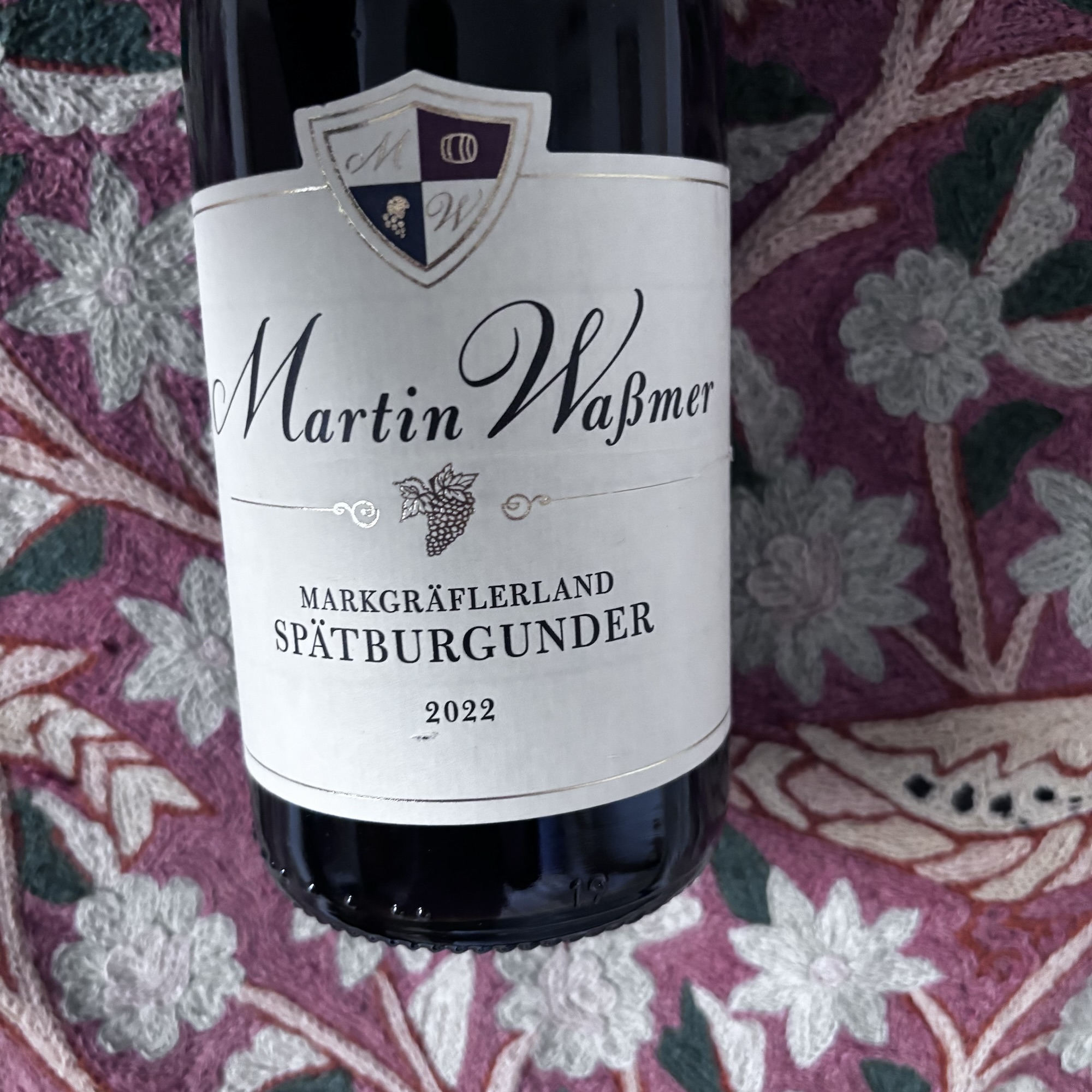
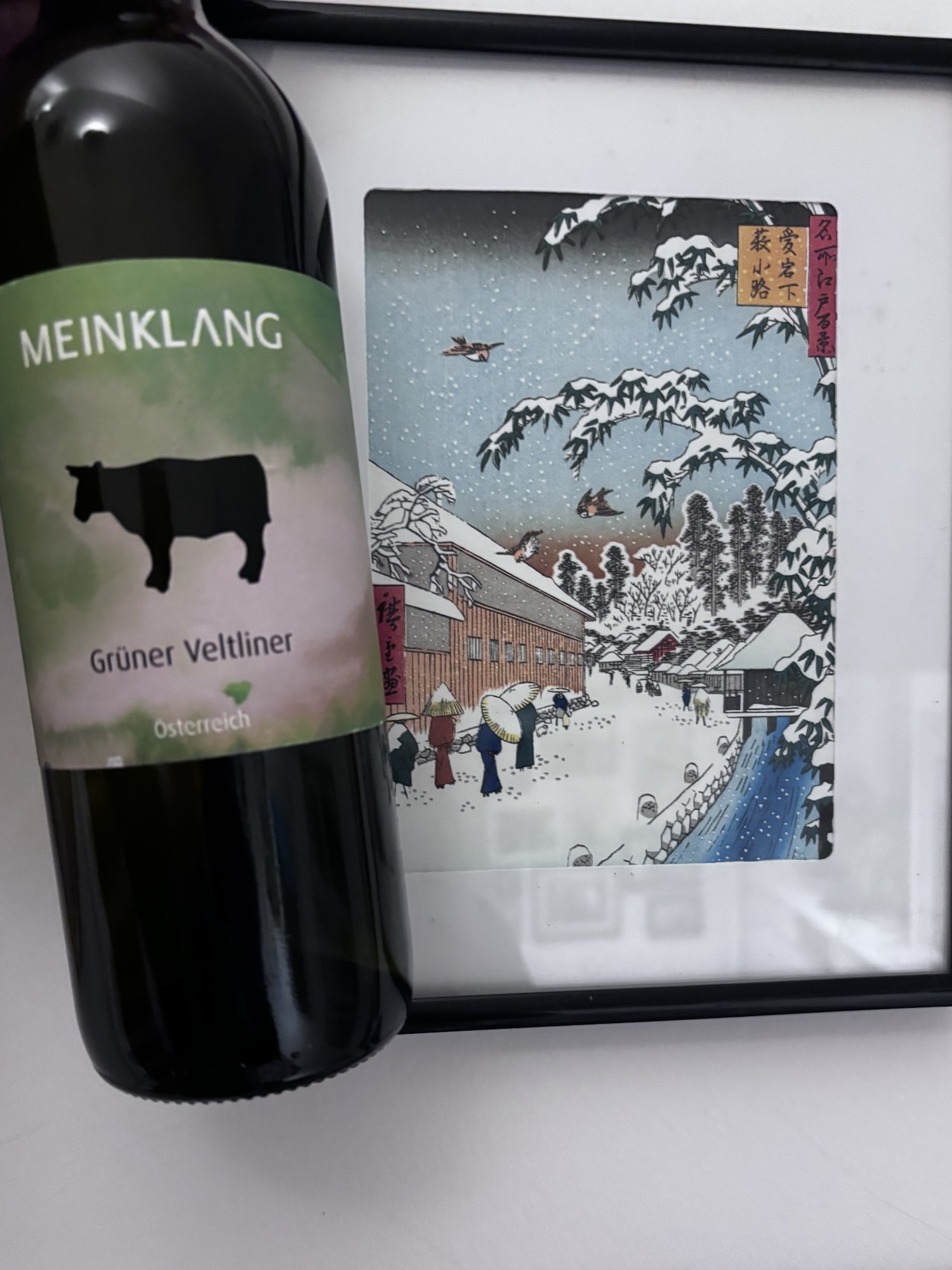
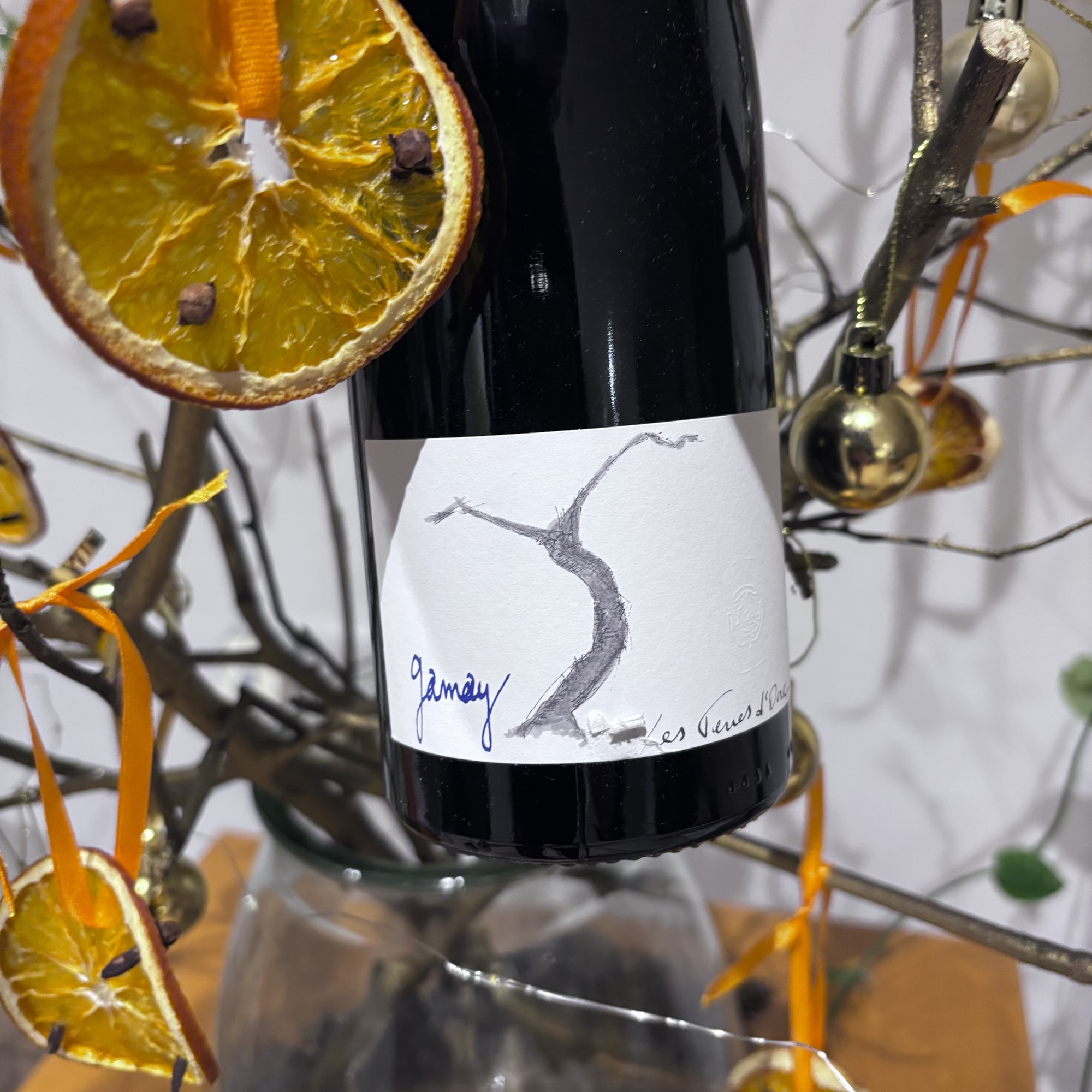
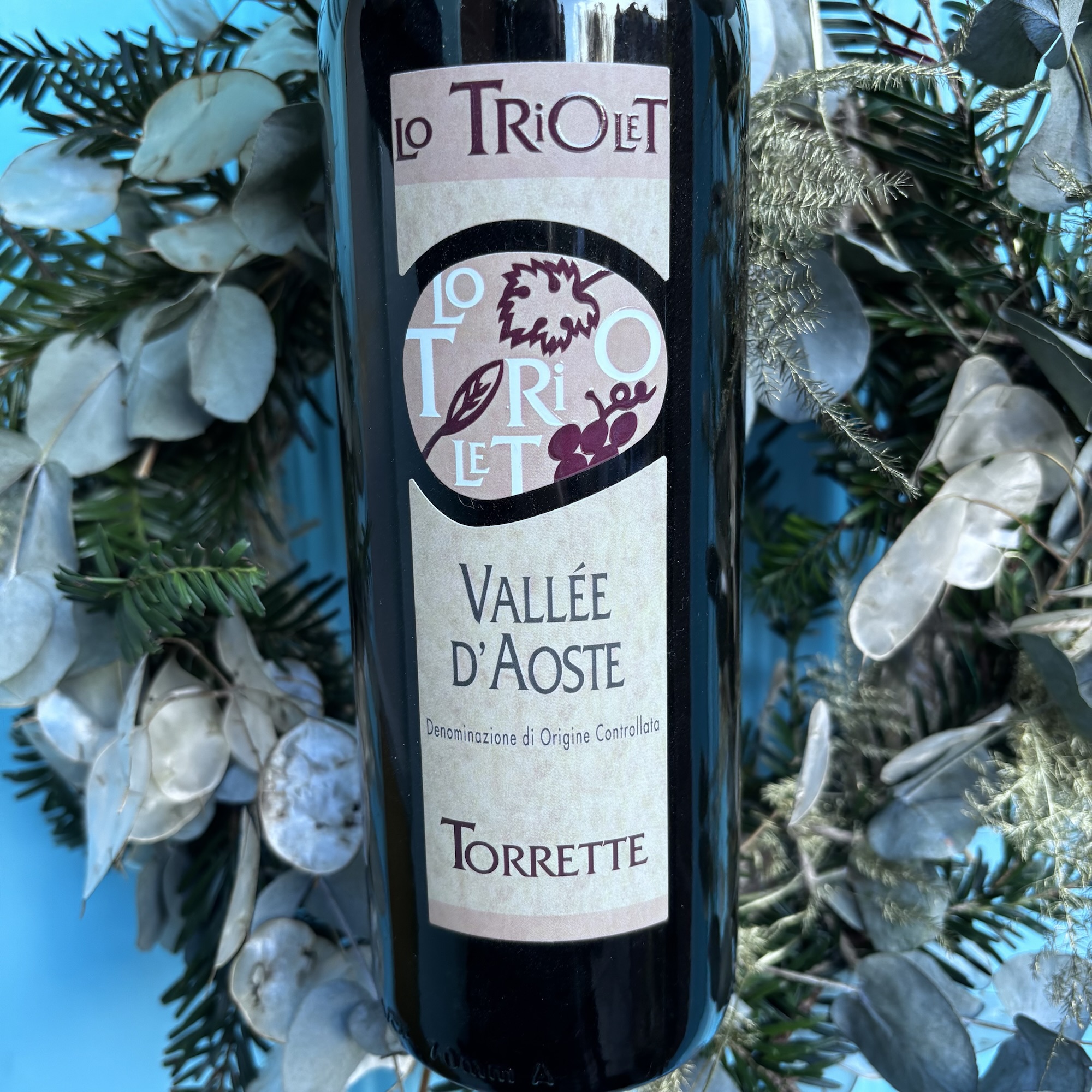
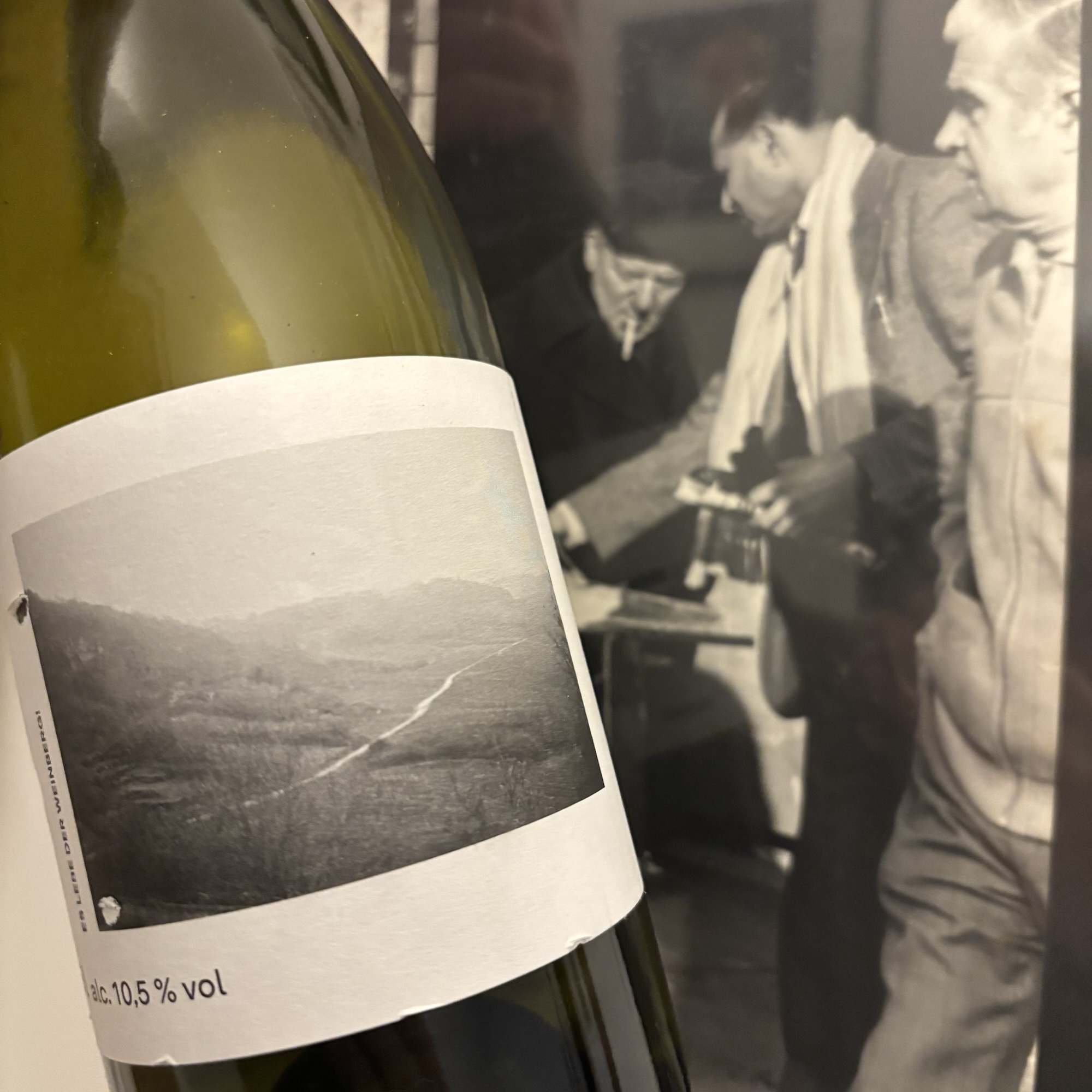
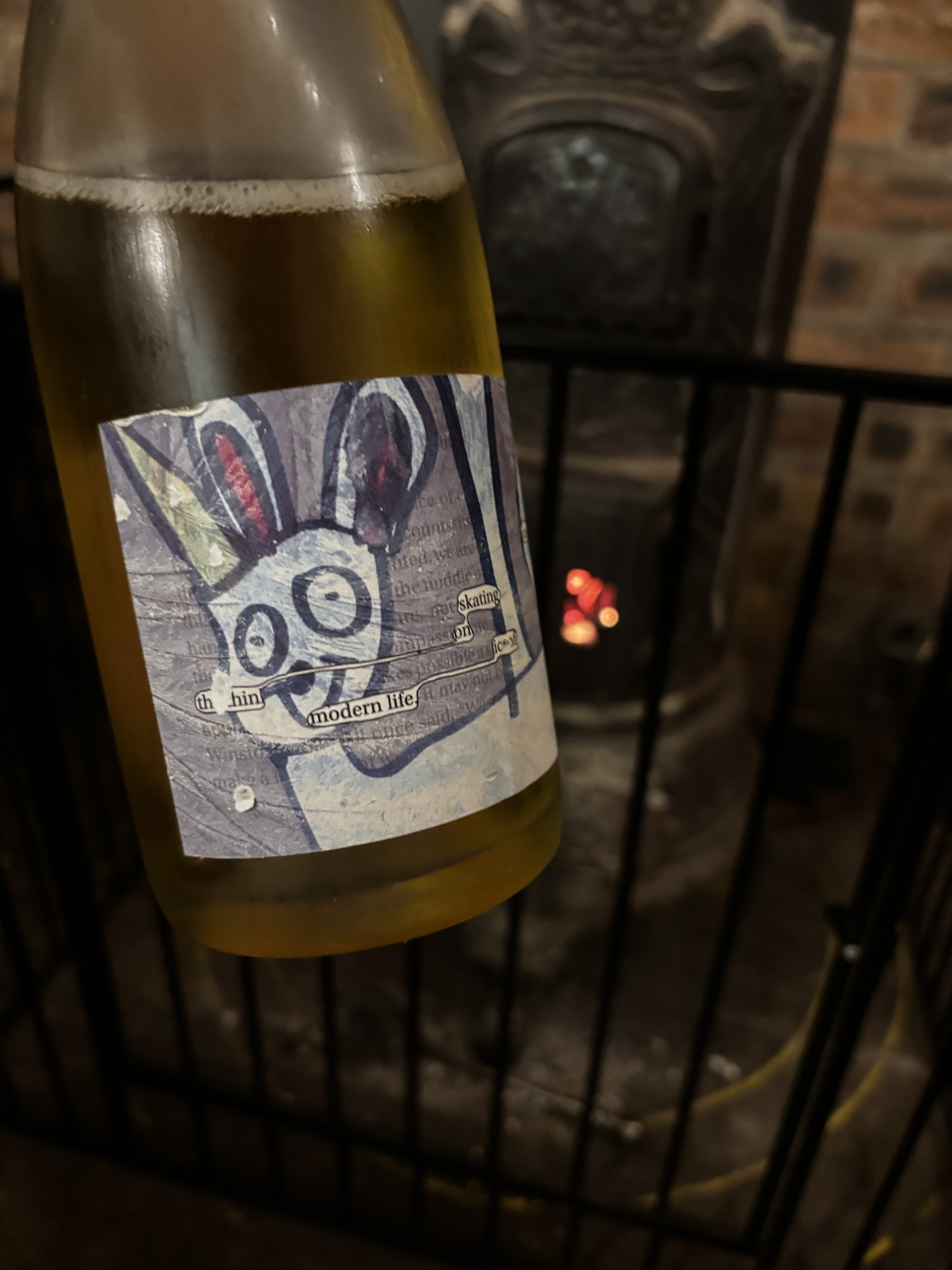
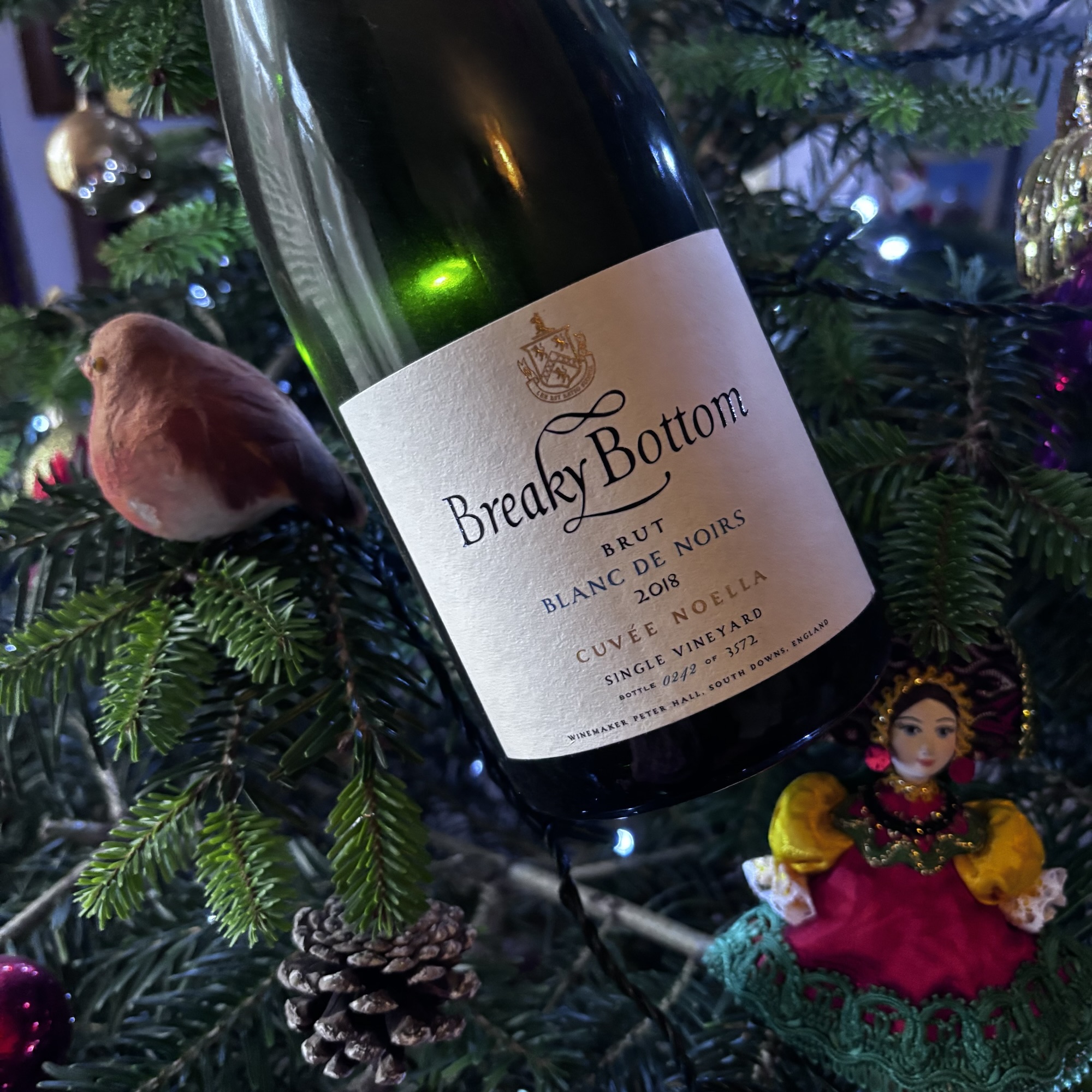
Recent Wines November 2025 (Part 3) #theglouthatbindsus

Part Three of my “Recent Wines” for November is an interesting mix, even by my slightly weird (at times) standards. We kick off with another of those Geneva wines I’ve been sneaking in throughout the year. Wine two is a Czech sparkling wine, without doubt the best sparkling wine I can remember drinking from that part of the world. Wine three is a truly exceptional Barolo at fifteen years old, followed by an Austrian wine from equally deep in my cellar, hailing from my favourite Wachau producer. We finish with what is certainly the strangest wine of the year. Tasted literally blind, not only would you be lucky to get the grape variety and region, but you’d need a few guesses to pinpoint its colour.

That final wine warrants an aside about what we, meaning the kind of people who read this blog, are looking for in a wine. It was a gift from a close friend who was staying with us. The retailer had told her “no way” I’d have tried this. Well, I had of course, but only at a tasting. Our friend didn’t really like it. I presume that much of her reaction was down to the colour/grape combo. However, I was quite excited to drink half that bottle, whilst the others stuck with their first glass. It was interesting, entertaining, stimulating and I am pleased to have drunk it. That said, I won’t be heading out for a six-pack. Nevertheless, it definitely merits inclusion.

Pierres Noires 2022, Cave de Sézenove/Bernard Bosseau (Geneva, Switzerland)

Bernard Bosseau is based at Bernex. This village is next to better known Lully, directly to the west of, and close to, Geneva and to the south of the Rhône where it flows out of the lake. This wine is one of those interesting blends which Geneva does surprisingly well, considering they get little publicity overseas, where I am guessing most wine lovers hardly register that Geneva makes wine. This, despite that quality revolution here which I keep endlessly repeating.

The grape varieties involved are the classic Merlot and Syrah with one of the newer crossings Gamaret, and Ancellotta. Gamaret is probably known to many of my readers, but Ancellotta is fairly new to me. It’s actually a dark-skinned vinifera variety from Emilia-Romagna in Italy, where it is a rare blending variety in Lambrusco. Strong pigmentation means it has also been used as a natural food colouring. It has made inroads into Swiss wine for some reason, and I’ve had reason to mention it before in this context.

I don’t know a great deal about this producer either. Apparently, he was originally from Nantes, in France, but has been making wine at Bernex for twenty years. However, this wine from this vintage did manage a 90 Point rating in Falstaff Magazine, which placed this cuvée among the best 17 wines of the 2022 vintage in the Geneva AOC.

It is certainly dark in colour, the predominant aromatics being black cherry and toasty oak (it is aged 12 months in oak, 25% new). The tannins are fine-grained but it is youthful. The 13.5% alcohol helps add a sweetness/richness, and the fresh fruit acidity is attractive. It has good length too. Despite its youth I enjoyed drinking it, but it needs hearty cuisine. I suspect it will age quite elegantly.

Naturally you are unlikely to find this in the UK, where you will have to visit Alpine Wines online to sample a selection of other wines from Geneva (but not this one). I believe price is around CHF24 (roughly a 1:1 conversion rate for £).

Blanc de Noir 2020, Krasna Hora (Moravia, Czechia)

In Stary Poddvorov in Southern Moravia you can hardly miss the Krasna Hora winery. It is small but modern, sitting as many older winegrower’s buildings around it do, at the bottom of a vine-clad hillside that climbs to a wooded crest. The labels of many of the wines here look very modern, and to some extent they taste modern too. Yet these are natural wines, with tradition at their heart. This Blanc de Noir (sic) Sekt is one of the most traditional, and in some respects the one wine they make that cannot be called a “natural wine”.

There is one grape variety, Pinot Noir. It is made by the “traditional” method, that used in Champagne. There is no dosage and the wine is allowed 12 months on lees before disgorgement. No additives are used on the vines, and there are no synthetic chemicals used in the winery. There is some sulphur added, but in very small amounts. However, the intention with this wine is to create a Champagne lookalike, and so Champagne yeasts (rather than the ambient yeasts used for their other bottlings) are added to start the fermentation.

As you can see, I’ve aged this myself for a few years, and the wine has certainly benefitted from this. There is a fruity side to it, red fruits showing initially on the nose. Then more complex aromas and flavours kick in. I think it is developing some nice autolytic character. I get apples, a slight yeasty-mushroom element and some autumnal notes. It’s very good, and indeed extremely good value, I think around £33. Ageing it a little certainly paid dividends.

Purchased directly from importer Basket Press Wines.

Barolo 2010, Giacomo Fenocchio (Piemonte, Italy)

Kerin O’Keefe in “Barolo and Barbaresco” (University of California Press, 2014) unhesitatingly calls this a “cult winery”. They are based at Monforte d’Alba and Claudio Fenocchio now orchestrates 15 hectares of vines, of which around 7ha are in the Barolo DOCG. He has some fantastic individual sites used for his Bussia, Villero and Cannubi cuvées, but here we have his entry level Barolo. It’s still brilliant!

The wines here at Fenocchio all err towards what some like to call the “traditional” style. In this case we have a spontaneous fermentation using ambient local yeasts, taking place for the straight Barolo in stainless steel (oak fermentation is just for the Reserva). Ageing, however, is in Slavonian oak (both 35hl and larger 70hl casks).

Despite being fifteen years old, it might strike many as still a bit youthful (not young). The bouquet is shockingly fruity, but supplemented by some toasty/smoky notes on the nose. Finally, a hint of something floral, good old roses. The palate still has tannins, albeit soft and ripe tannins. It may be an odd thing to say, but they were the most beautiful tannins I’ve tasted for a long time. I decided not to decant, and I made the right choice because as a whole package it was wonderful. However, I do have another bottle, which I will try to keep three-to-five years.

This came from The Solent Cellar in Lymington. No idea what I paid, probably a lot less than it costs now, yet importer Armit Wines has the 2021 for around £41 (you can pay a fair bit more at one or two well known retailers). £40 is, in my mind, a bargain for a wine this good, so long as you are prepared to wait.

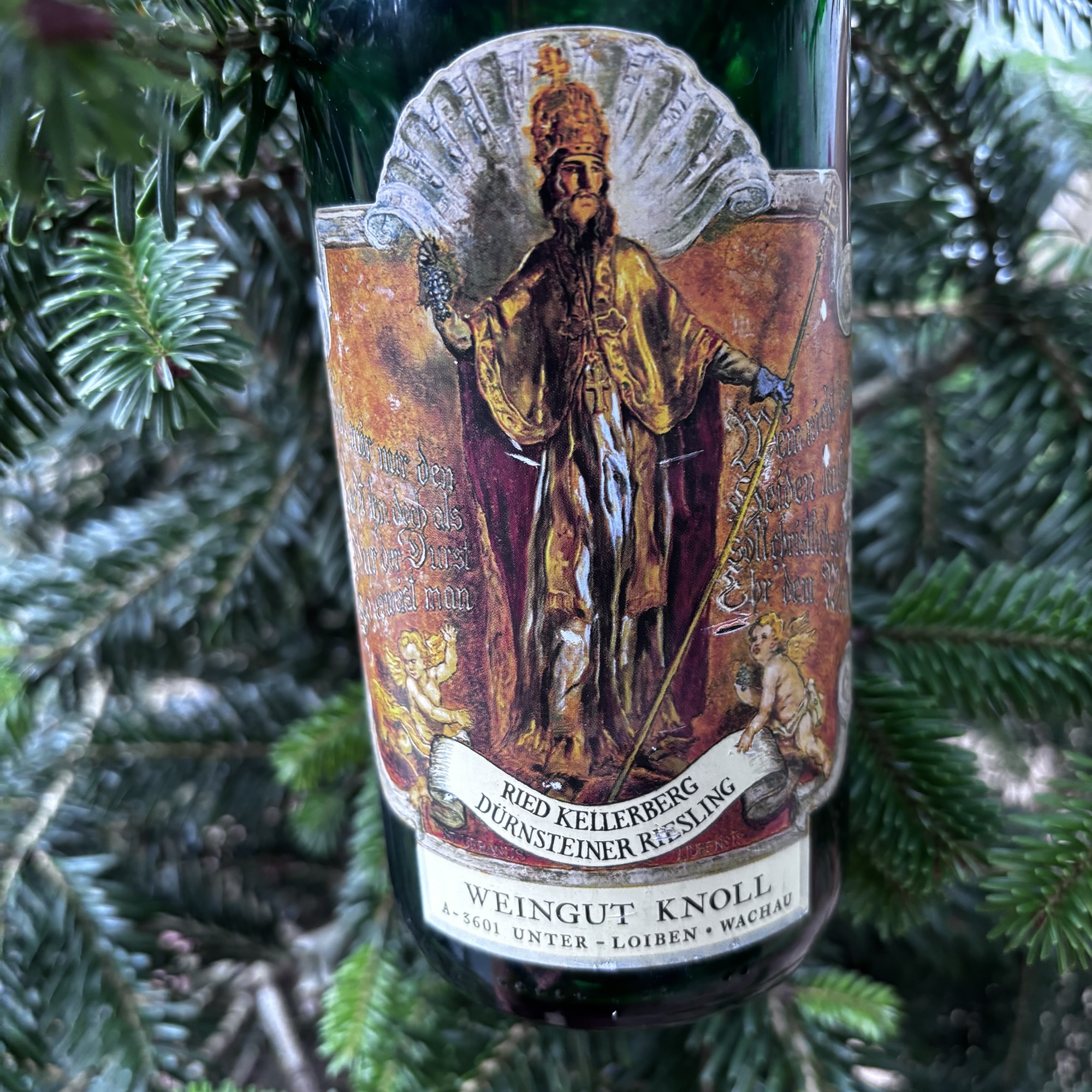
Dürnsteiner Riesling Ried Kellerberg Smaragd 2011, Weingut Knoll (Wachau, Austria)

Perhaps I should decode the label of this traditional Wachau Riesling. Ried Kellerberg is a single site in the village of Dürnstein. Sitting to the east of the Knoll winery (and excellent heuriger restaurant) at Unterloiben, the castle ruin above Dürnstein once acted as the prison for King Richard I of England after his capture by the angry Austrians on his rather foolhardy solitary return from the First Crusade. He suffered for his arrogance toward Austria’s Duke Leopold on campaign at the siege of Acre, and England was forced to pay a meaty ransom for it.

The Kellerberg sits at the top of the hill, to the east of the castle. Smaragd denotes ripeness. Federspiel wines are picked young, and generally drink young (though many can age). Picked later, Smaragd wines are dry but rich, and generally age well, especially if the wine is made by Emmerich Knoll.

As for the vintage, 2011 was a good year in the Wachau. A sunny, warm, growing season led into an Indian summer stretching well into October. The wines are ripe and complex. Though in youth they probably lacked the acidity of some vintages, they made up for it in extract. The dry late summer also meant little or no botrytis was created on the grapes destined for a dry style. At Knoll critics usually count 2011 among the top five vintages of the first two decades of this century.

We have 14% abv here, but the wine is well balanced. The bouquet has greengage with a hint of bergamot, yet the palate sings of apricots. There’s softness, richness and weight, yet I feel it is elegant too, perhaps in a “Dowager Countess” way. I can’t fault its length, which goes on forever.

I imagine few bottles will be around from the 2011s now. This bottle began its life, with a few others, in a basket on a hired bicycle. We were cycling the Wachau Cycle Trail (very highly recommended, the bikes were hired close to the station in Krems), and paid a visit to the wonderful Vinothek Föhringer wine shop on the banks of the Danube (near the landing jetty) at Spitz. We’d just had lunch at the riverside Gasthaus Prankl, followed by a climb up to the castle at Spitz, but if your legs are weary, I would suggest the aforementioned Heuriger, the Restaurant Loibnerhof owned by Knoll. Oddly enough it is now lunchtime and the thought of schnitzel or schweinsbraten with a bottle of Knoll Federspiel Grüner is making my stomach rumble something rotten.

« Never Odd or Even » Vin de France [2022], Chàteau Picoron (Bordeaux, France)

So, what is strange about this wine. Quite a lot, really. Okay, it’s a Merlot and it comes from Bordeaux, in fact from the wider Saint-Emilion sub-region, although Sainte-Colombe is technically within the Castillon-Côtes de Bordeaux AOC, named after the town it centres on, Castillon-la-Bataille. The battle in question took place on 17 July 1453 when the defeat of the English army under John Talbot (yes, that one), First Earl of Shrewsbury, led to the loss of nearly all English-ruled land in France, and finally ended the so-called Hundred Years War between the two crowns.

But this it isn’t red Merlot. It isn’t even white (they do make a white Merlot). But we are ahead of ourselves. Château Picoron is run by an Australian couple, Glenda and Frank Kalyk. The Château dates from 1570 and its vines, 4.5 hectares, grow in different plots surrounding it, one plot per cuvée. They only grow Merlot but they do manage to make a surprising number of styles of wine from it. I say “the wider Saint-Emilion region” because in terms of terroir, the Château sits, geologically speaking, on Saint-Emilion’s clay and limestone ridge. They do go for palindromes for the names of their wines, but that must be the least of the worries Bordeaux traditionalists have with this estate.
Never Odd or Even (they had to kill the English language for that palindrome, losing an inconvenient “n”) is what you might call a grey wine, though not a Vin Gris. In other words, it isn’t a wine tinged with pink as in oeil de perdrix. It is literally grey. The colour of a lemon squash like Robinson’s Barley Water, which will be familiar to British readers and fans of the Wimbledon Grand Slam. It’s also cloudy.

The bouquet was quite muted until pear and coconut welled-up in the Zalto. The palate was clean and direct, showing some acidity and a chalky texture (very fine grained, dusty). I saw a tasting note that said tahini. I didn’t get that myself but a good shout. I know what they meant.

So, this is unquestionably the strangest wine of the year. It was definitely enjoyable alongside being extremely interesting for any wine obsessive. It came from Winekraft in Edinburgh, and the importer is Moreno Wines. Moreno currently list seven Picoron wines and this isn’t one of them. Only 600 bottles of it were made, and I do wonder whether they decided not to repeat the experiment. Winekraft were brave to list it because there are not all that many people who like wine that’s this crazy in Edinburgh. Cork & Cask list a few of Picoron’s other wines, one of which I’ve previously written about here.

It also cost £30. We all agreed that £20 would have been a better price point, and that’s the problem with artisan wines like this. Producer etc costs are high, especially when the bottle run is just 600 units. I’ve no doubt the maths doesn’t work at £20, but £20 seems right for a crazy experiment like this. That said, lovers of the weird and wonderful should seek it out if any is left.

The next Recent Wines articles covering December will, of course, appear in January. I shall be trying to publish my Review of the Year before Christmas, whilst my traditional Wines of the Year will most likely appear as my first piece of 2026 (fingers crossed). Regular readers might be relieved that my recent prolific output will hopefully slow down a bit over the holiday period whilst I indulge in some well-earned hibernation, vinyl-spinning, weight gain through food and alcohol, and maybe a bit of exercise to burn it off.


Posted in Artisan Wines, Austrian Wine, Bordeaux Wine, Czech Wine, Italian Wine, Natural Wine, Piemonte, Swiss Wine, Wachau, Wine, Wine Agencies, Wine Merchants | Tagged , , , , , , , , , , , , , , , , , , | Leave a comment

Recent Wines November 2025 (Part 2) #theglouthatbindsus

We switch the vibe a little for Part Two of the wines we drank at home during November. Nothing from the likes of Albania and Ukraine, but instead four French wines and one from Austria. From France we have a brilliant Grower Vintage Champagne, and an even older Cornas, before switching to a natural wine Beaujolais, and a very natural Alsace blend. We stray east for the final wine, a very good zesty white from Kamptal.

Cramant Grand Cru Blanc de Blancs 2006, Lilbert et Fils (Champagne, France)

Lilbert is a top Grower based on the Côte des Blancs. The family has been farming here since 1746, and making Champagne since the early 20th Century. Bertrand Lilbert owns around 3.5 hectares at Cramant, Chouilly and Oiry. The vintage Blanc de Blancs is mostly Cramant Chardonnay from the oldest estate vines, some now approaching 100 years old. A little fruit from the Cuis side of Cramant is blended in.

People call this wine “ageworthy”, which is something of an understatement. Ageing is essential here. Tasting young wine at the estate on a cold morning at nine o’clock is a bracing experience. It’s a little like, I imagine, swallowing an icicle might be like. Here it is mature, wonderfully so. There is still the trademark acidity, but now it supports greater complexity, autolytic character, and a certain richness which is overwhelmed in youth.

Don’t make the mistake I made and be too impatient to drink it. I originally bought four of this Vintage, among a mixed case purchased at the domaine many years ago. It also included Bertrand’s Perlé NV, one of my two favourite “lower pressure” Champagnes (the other being from Péters), which I would also highly recommend. This was the last bottle from that case. I think that The Wine Society has the non-vintage Blanc de Blancs for £40 (a bargain) and the NV Perlé for £51. More recent vintages of the BdeB are knocking around at close to £75. Worth it if you can afford it and can age it.

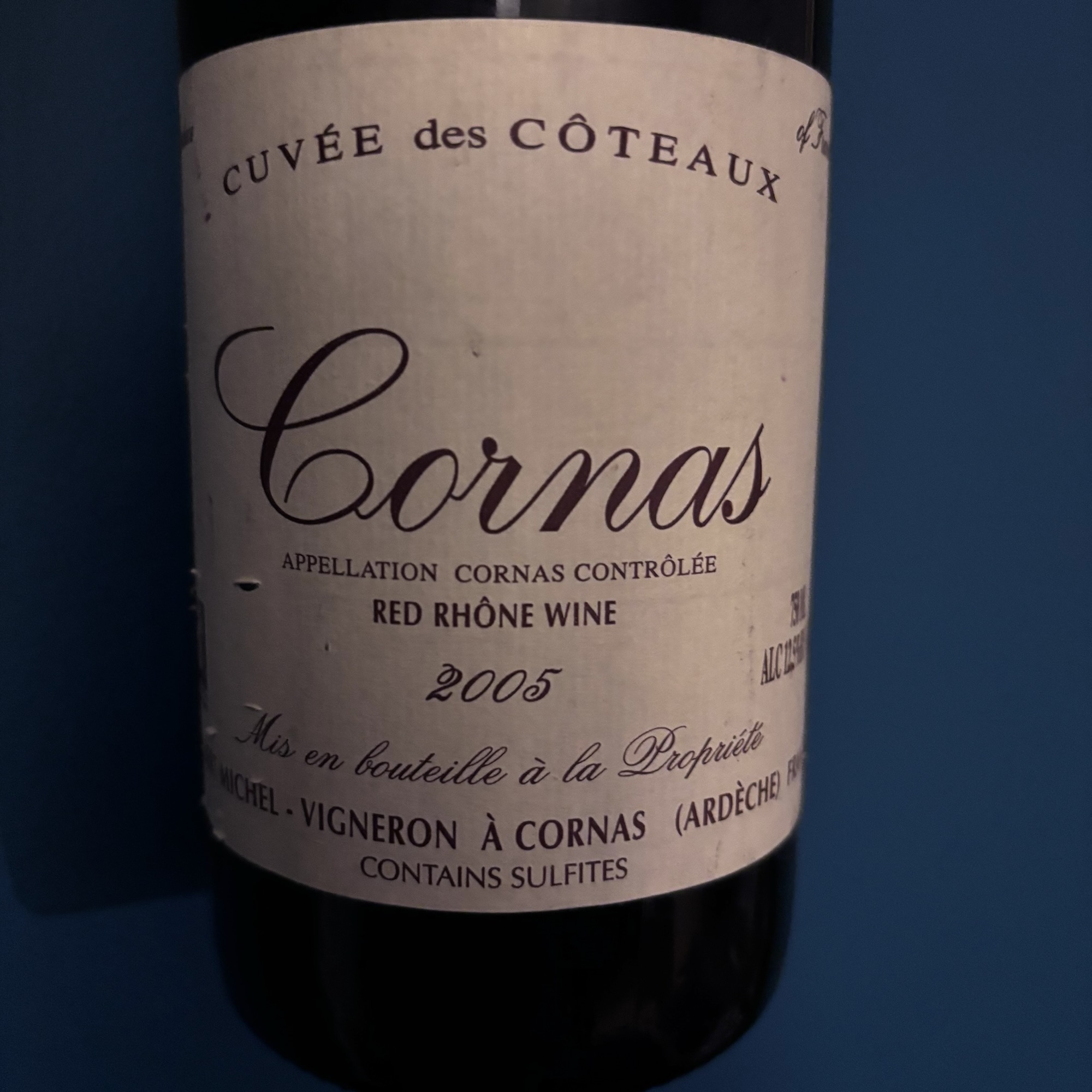
Cornas “Cuvée des Coteaux” 2005, Robert Michel (Cornas, France)

Another classic from the cellar. The long-retired Robert Michel’s name lives on as one of the winemakers who helped put this small appellation back on the map. Cornas has not always been mentioned in the same breath as Hermitage and Côte-Rôtie, and it certainly wasn’t when I began to buy Rhône wines in the 1980s. That was a time when an appellation like Saint-Joseph was more or less considered equal, in some cases, to a wine like Gigondas, and both have risen inexorably in price and reputation since. Cornas was but a small step up back then, although Auguste Clape had gained a strong following through the support of Robin Yapp in the UK.

When Robert Michel took over from his father, Joseph, in 1975, aged 29, he was the only young winemaker in the village. He farmed just four hectares in Cornas, with a little in St-Joseph. Incidentally, for younger readers, it was Robert’s nephew, Vincent Paris, who took over the Michel family vines on Robert’s retirement, so this terroir lives on in more than capable hands. Robert Michel always made wines in the classical tradition, at least in my understanding, meaning partly destemming the fruit and ageing in used oak. That fruit here came from two lieux-dits, Chaillot and La Geynale.

For me, this is a supreme terroir wine. In 2005 the ripe fruit gave some quite intense wines in the Rhône, yet the balance here is mirrored in just 12.5% abv. You rarely if ever see that these days. In youth I have no doubt that this was nevertheless quite muscular. Now it has a gentler side, with smooth red plum, hints of darker fruit, and a smoky finish. Complex, yet aside from a tiny hint of texture rather than tannin, it is a wine that lingers happily on the tongue…for a very long time.

Summing up, it has a lovely fragrance and is more elegant, both than many Cornas I’ve tried, and certainly than many 2005s. I cannot recall what I paid for it. It was a long time ago. It came from Leon Stolarski Fine Wine, which I believe may have ceased trading this year. Although I bought little from Leon (I’m positive he mistook the reasons why), he was one of those wonderful specialists/small importers, perhaps before his time. Some of the wines he introduced to the UK ten or twenty years ago, especially from his main specialism of Languedoc-Roussillon,  are now established stars.

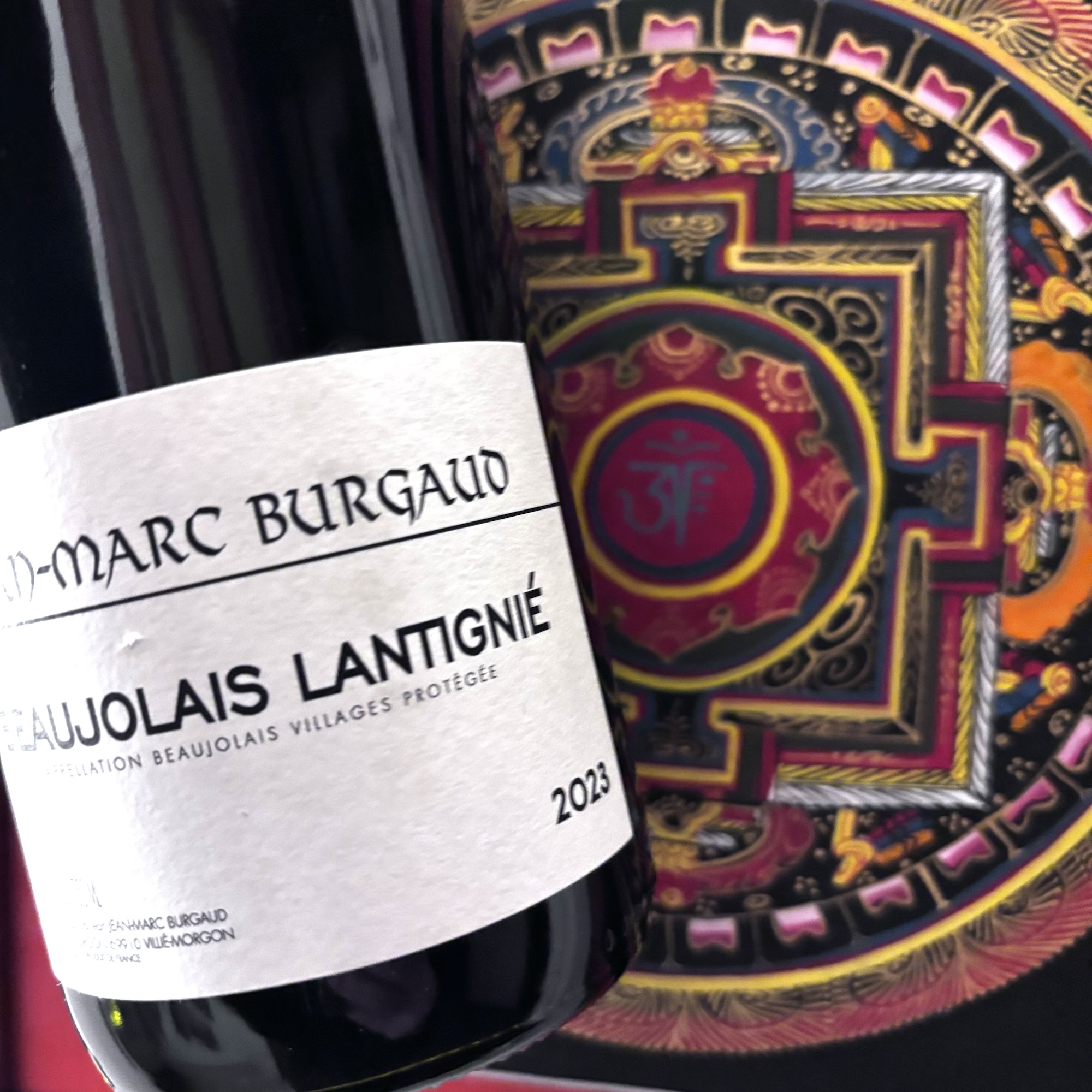
Beaujolais-Lantignié 2023 Beaujolais-Villages, Jean-Marc Burgaud (Beaujolais, France)

Jean-Marc started farming in Villié-Morgon in 1989, with just 3 hectares. Now he has expanded to 17.5 ha, and has become very well established as one of the top names in the region. He’s helped somewhat by having a whole 7 ha right on the top of Morgon’s famous Côte du Py with which to make a name.

J-M is definitely a viticulteur, and that is how he would see himself. In the winery he tries to be relatively hands-off, in the same way that his whole philosophy, as a wine grower and maker, is to make natural wine. He mostly practises semi-carbonic fermentations. For his more fruity offerings (which includes this “Villages” wine from Lantignié) there will just be a short maceration on the skins, here about a week, before pressing.

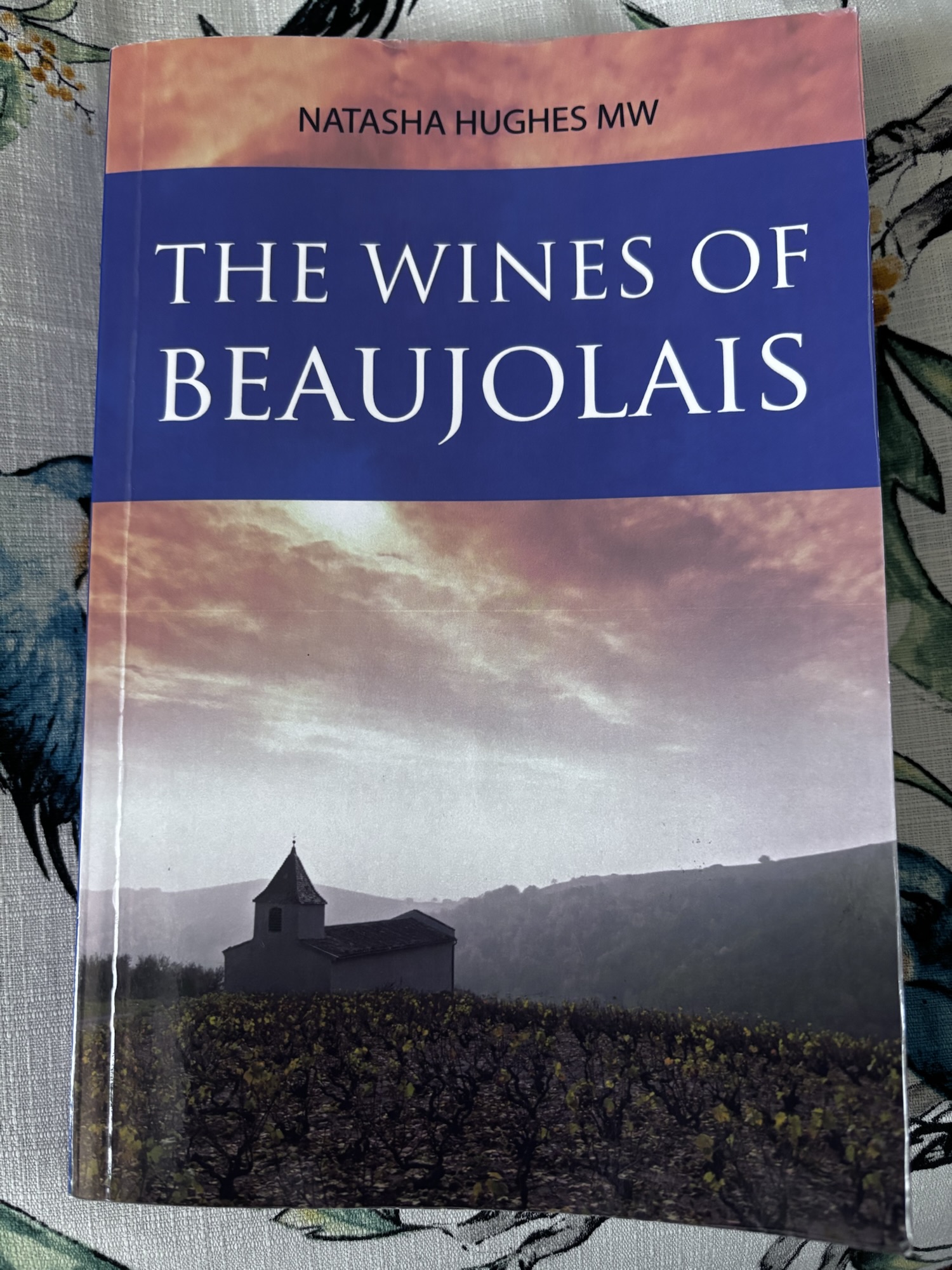
The result is pure-fruited and juicy, with just a little tannin to ground it at the moment. Natasha Hughes in her “The Wines of Beaujolais” (Academie du Vin Library, 2025) points out that Jean-Marc deliberately devotes as much attention to this wine as he does his top Morgons, which is of course always the sign of a top winemaker.

It is approachable from the off, and drinking very well indeed. A lovely wine and very good value, even though Beaujolais prices are creeping up (which they should, given the quality all round). £20 from Lockett Brothers (North Berwick), via importer Liberty Wines.

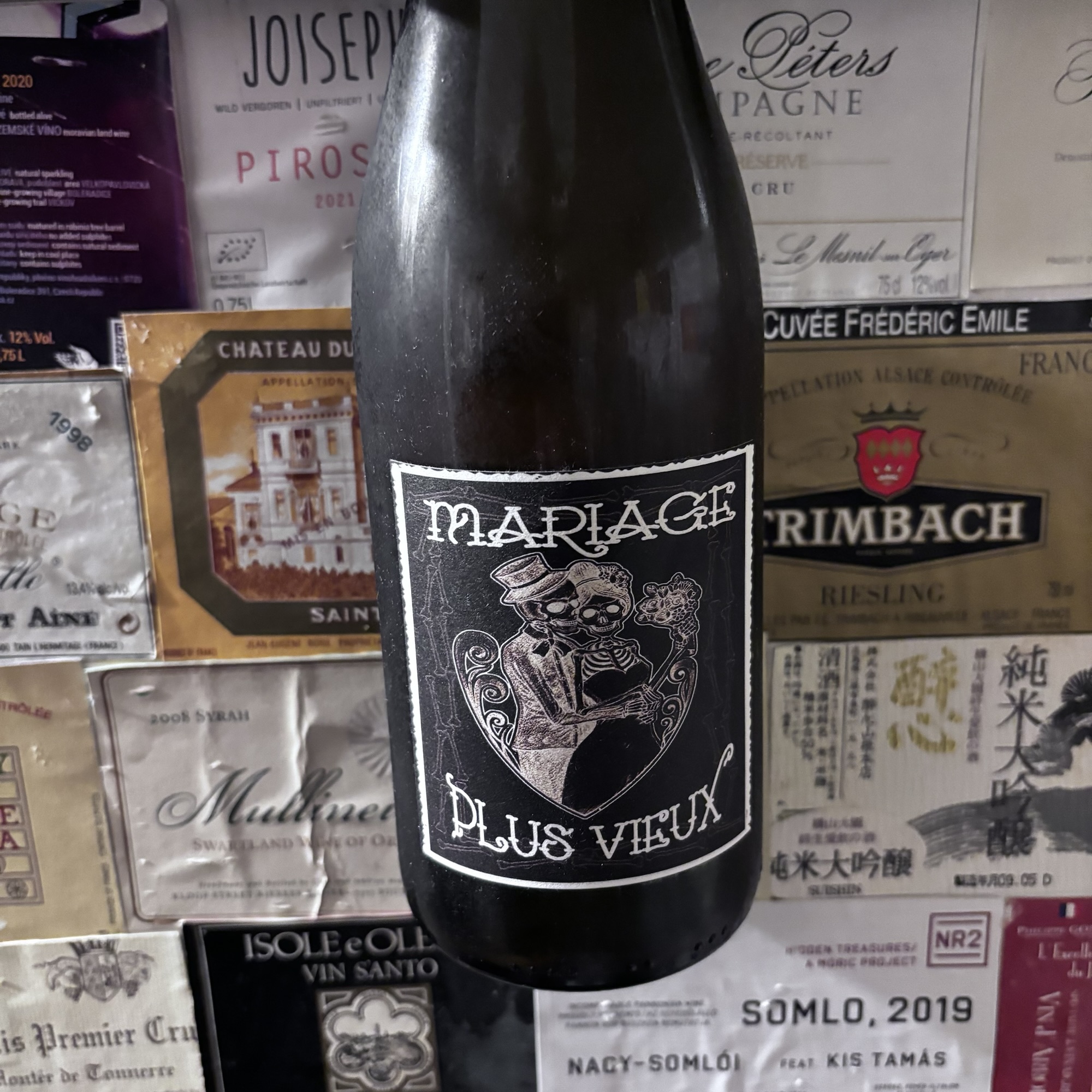
Marriage Plus Vieux XXIII Vin de France, Lambert Spielmann/Domaine in Black (Alsace, France)

If Beaujolais prices are rising, I fear that the cost of natural wines from the current cohort of exciting natural winemakers in Alsace is doing so even more quickly. At least from UK importers. Still, Alsace is very exciting. Thankfully the similar cohort of young Mosel natural wine stars lags a little way behind. I don’t begrudge winemakers turning a profit, don’t get me wrong, although UK prices obviously don’t translate to producer profit. It’s just that the affordability of “natural” Alsace seems to have been taken from my empty purse before its time.

Musician and winemaker is no longer an unusual combo. Natural winemakers all over Europe seem to spend their time playing in bands and I can certainly understand, from my own passions, why the two go together. Lambert perhaps wears his love of music on his sleeve more than most. Every cuvée comes with a recommended track to listen to, often in a punky-ska style. But maybe you should buy the wines first.

Lambert Spielmann has three hectares of vines in small parcels split between Dambach-la-Ville, Epfig, Nothalten, Reichsfeld and Obernai. He makes wines with no inputs, including zero sulphur, and follows the biodynamic calendar. This cuvée blends 80-year-old Sylvaner spiced with a bit of Gewurztraminer from mere 40-year-old vines. Most of the fruit is destemmed, with the Gewurztraminer seeing a two-week infusion before pressing into vats. It rests until the following spring before bottling.

It isn’t a pale wine, for sure, but it is so zippy and fresh with bright lemon citrus on the palate first. It’s such pure lemon, to which you find added a little ginger. It’s a wine of total purity, and exciting electric energy.

I am very grateful to Cork & Cask in Edinburgh for adding a selection of Spielmann’s wines to an order from Lambert’s UK agent, Tutto Wines. I’m not sure they felt they could hand-sell these wines, despite their wonderful labels. A shame in a way because if you told me I could only ever buy two Alsace producers, or bottles, ever again, Lambert Spielmann would sit beside Jean-Pierre Rietsch as my choices. Tutto flog this for £40, so hardly surprising it isn’t on any Edinburgh shelves. We’re not as well off as you South- and East-Londoners.

Grüner Veltliner 2023, Loimer (Kamptal, Austria)

There was a time, before I began visiting Austria and its wine regions, when I used to drink the odd wine from Fred Loimer. In fact, a Loimer Riesling would number among the very first Austrian wines I bought back in the late 1990s or early 2000s. But although I have visited the Wachau and Krems, I’ve never been to Kamptal.

The latest edition of the World Atlas of Wine says of Kamptal “it has been called the K2 of Austria (Wachau being Mount Everest)”. Its climate is protected by mountains to the north, and is influenced by the Danube tributary, the Kamp. Loimer is quite a large producer, with more than 85 hectares planted on mostly south-facing slopes with predominantly loess soils around one of the oldest viticultural centres of the region, Langenlois. However, the whole lot of this large holding is certified biodynamic (by Respekt). Fred took over in 1997, and is certainly responsible for the reputation the wines have today.

One key to the quality at Loimer is old vines. Even this entry-level Grüner Veltliner has some fruit from vines more than fifty yeas old. It has a zesty lemon nose as part of some nice aromatics, finishing with a whiff of white pepper, and a palate which majors on lemon and deeper stone fruit. Overall, though a wine that is simple in one respect, it is very fresh, and nicely direct. Clean but not bland.

Further up the Loimer range there are some very nice, and more serious wines, all with their minimalist modern label design. This wine is excellent value at £20. Like the Beaujolais from Burgaud above, same price, same importer (Liberty Wines) and also purchased at Lockett Brothers in North Berwick.

Posted in Alsace, Artisan Wines, Austrian Wine, Beaujolais, Champagne, Natural Wine, Rhone, Wine, Wine Agencies, Wine Merchants | Tagged , , , , , , , , , , , , , , , , , , , , | Leave a comment

Recent Wines November 2025 (Part 1) #theglouthatbindsus

In the month of November, we appear to have drunk quite a lot, but I blame the guests. It means we have three parts of Recent Wines for last month, even with a few less exciting bottles culled. We begin Part One with a Sherry style I drink rarely (note to self, drink more Amontillado). Then we have one of Alice Bouvot’s domaine wines from L’Octavin in Arbois, and a wine that was far more than a mere “oddity” in an excellent white wine from Albania. Then we go to the mountains of Macedonia in Northern Greece before heading well off the beaten track, to Ukraine. Lots of interest here, but quality alongside diversity and a little bit of obscurity.

Amontillado “I Think”, Equipo Navazos (Montilla-Morilles, Spain)

This is one of a series of wines made for Equipo Navazos’s UK agent, Alliance Wine. It’s a saca of June 2023 sourced from the bodega of Pérez Barquero in Montilla. The grape variety of this region just south of Córdoba is Pedro-Xímenez (PX) rather than the Palomino of the Sherry Triangle. It is usually the variety used in the sweet wines, many made by Pérez Barquero, that are relatively easy to produce in the more extreme climate of Montilla-Morilles, although PX has always been shipped over to Jerez for blending as well.

So, it is perhaps slightly unusual to see PX used to made a dry Amontillado style. One thousand half-bottles came from a single cask at the bodega, the wine being on average fifteen years old. This is unfortified, with 16.5% alcohol achieved naturally, through ripeness.

The bouquet is pure autumn, with mushrooms and leaf litter. The palate is bone dry and savoury, smooth, and also quite rich. It will pair with a wide variety of dishes, especially those with an autumnal feel. It did go particularly well with the roast kabocha we had cooked. One of those underrated wines which lubricates the palate, enriches the senses and satisfies the soul.

My half-bottle came from The Solent Cellar, but Alliance Wine imports Equipo Navazos. It usually retails between £20-£28.

P’tit Poussot Vin de France [2016], Domaine L’Octavin (Jura, France)

Made from estate-grown fruit from Alice Bouvot’s Poussot site at Arbois, this cuvée is usually made from Chardonnay young vines. Most of the cuvée is made by direct pressing of the fruit, but a small amount was macerated on skins for three weeks. Although the 2016 vintage has long disappeared from retail, and very little natural wine, especially wine with no added sulphites like this one, gets to see a decent age, this was a treat. Although this bottle has moved around a bit since I purchased it, at least its time in the cellar has been in a suitably cool environment and it certainly showed no negative effects. Don’t tell me natural wine doesn’t age.

Green-gold in colour, a colour as glorious as the wine itself, it is apple-fresh with hints of tropical fruit like pineapple on the nose. The palate gets fruitier the longer the wine sits in the glass (you might have expected the fruit to fade, but it does the opposite here). The acidity of youth is somewhat tamed, but not completely. It finishes long, and more savoury (nutty, but also a little quince perhaps) than the bouquet suggests. If you are making a natural wine from Chardonnay this is benchmark stuff.

You would be very lucky to find the 2016 now. Mine came directly from the domaine. Tutto Wines, Alice’s UK importer, had a recent vintage for £52. Russell at Feral in Bordeaux had some for 38€ but it looks like it has all gone, hardly surprising. Both sources are the go-to for L’Octavin wines though.

Shesh I Bardhe 2024, Kantina Lundra (Tirana, Albania)

This is a modern estate in the Lundra Hills, near to the Albanian capital, Tirana. Although described as “modern”, it is also a producer focussed on tradition. Modern here means above all a focus on quality fruit from the vineyard, and clean winemaking. As they put it, “we are for the land in an artisanal way”. The winery was founded on the fall of the isolationist communist regime, which kind of mirrors the changes being made that have all so quickly made Albania one of those top spots for semi-adventurous tourists. If there’s a lot of wine like this, they won’t have any complaints.

The old vineyards of the state co-operative, which is the origin of the vines Kantina Lundra farms, are a mix of both international and autochthonous varieties. This is a single varietal wine made from one of the latter. Shesh I Bardhë is, you can imagine, a variety I’d never come across before. It is usually said to make pale wines with high acids and a mineral bite. The vineyard here is at 220-250 masl, and was planted in 1988.

The colour is quite golden and the bouquet is both fruity and floral. The palate is very clean so the wine certainly tastes modern. The striking feature is some very attractive minerality. It combines with a freshness which reminds me both of lemon and crisp green apples. But there is also some breadth on the tongue, perhaps assisted by 13.5% alcohol.

I’d say that for my first Albanian wine, this is very good. It was brought back by some friends who went to Albania on holiday, actually the third couple I know to go there this year. This means I don’t think you can get it in the UK. Mind you, the way things are going at The Wine Society (see wine number five below), you may one day have the pleasure. I understand that there may be a sweet version of this wine but this dry rendition would definitely be more suited to our market.

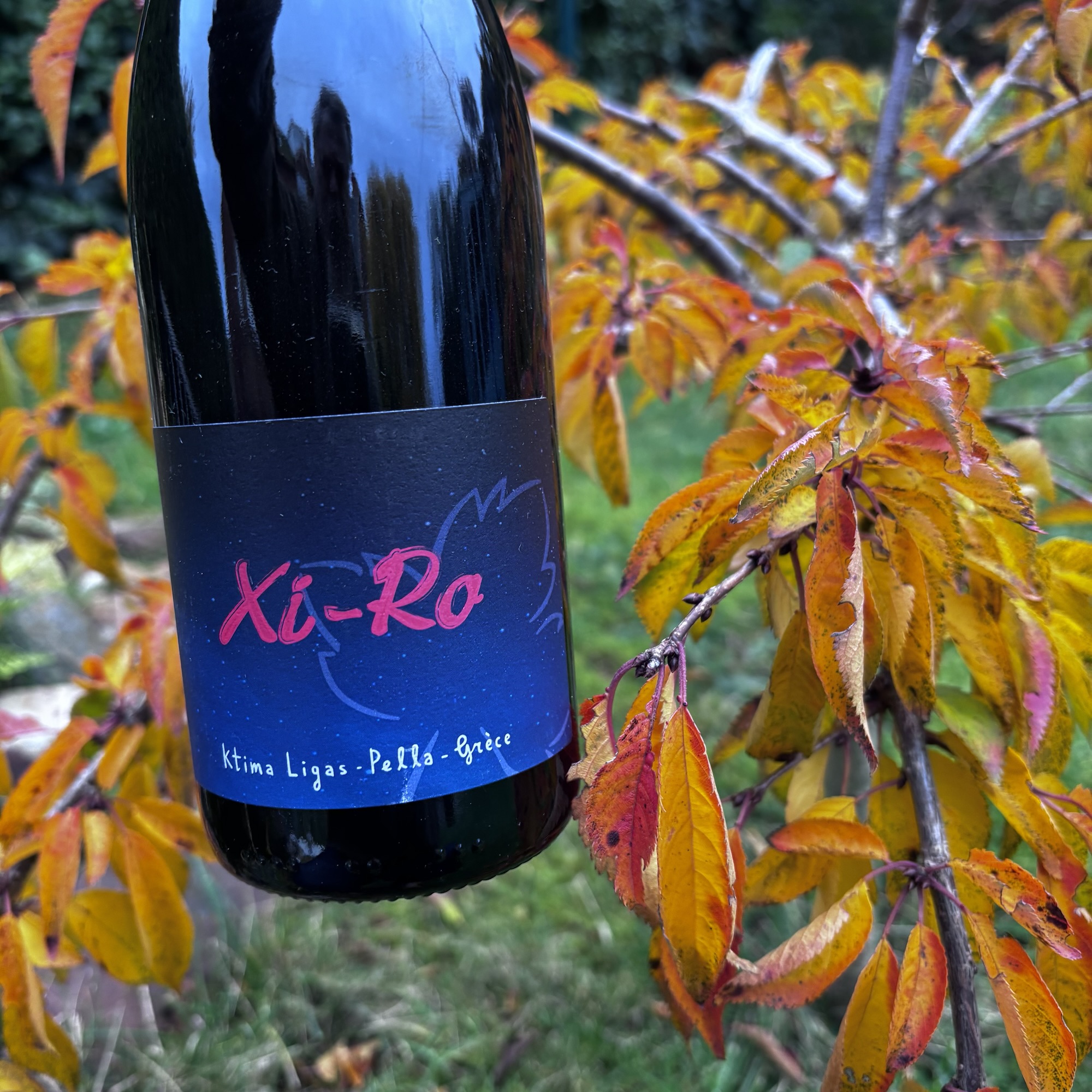
Xi-Ro 2021, Ktima Ligas (Pella, Greece)

Thomas Ligas was responsible for reviving the indigenous grape varieties, and traditional viticulture, in this part of Northern Greece in the 1980s. His anchor was permaculture, and this is one of the prime examples of permaculture in viticulture in Europe. Making natural wine was also not merely a choice, but a necessity for Thomas, as he couldn’t afford the chemicals. Not that he’d have wanted to use them.

Pella is a little northwest of Thessaloniki, and close to the better-known vineyards of Gouménissa. Thomas Ligas worked for many years with his children, Jason and Meli. Although Jason worked the vines for some years, whilst Meli was living in Paris (hence my having met her several times at wine fairs), I understand that she is now back and running the estate.

Xi-Ro is made from Xinomavro, usually with a little Roditis (hence the name) but in 2021 we have a 100% Xinomavro. This is a quintessential mountain wine, redolent of wild herbs and tomato riding with the bouquet’s cherry fruit. The palate has bright cherries and other red fruit. Despite 13% abv, I’d call this a lighter style of Xinomavro than you might be used to. It’s freshness, and a judicious amount of acidity, that balances the alcohol. Very much a terroir wine too. Ligas wines really show what the Greek region of Macedonia can do. Without chemical inputs they just seem to paint a picture of this wild but beautiful landscape in the far north of the country. I’m sure the future of Ktima Ligas is safe in Meli’s hands.

Ktima Ligas is imported by Dynamic Vines. I found this bottle at the Futtle shop in Dundee, Futtle being an organic brewery at Bowhouse, just outside of St Monans on the East Neuk of Fife. I had a tip-off about this store, which has a very small but well-chosen shelf of natural wines alongside the beers, and so I sneaked a peek when we were over visiting Dundee’s outpost of the V&A, from which it is a mere six-or-seven-minute walk. Both proved worth the drive.

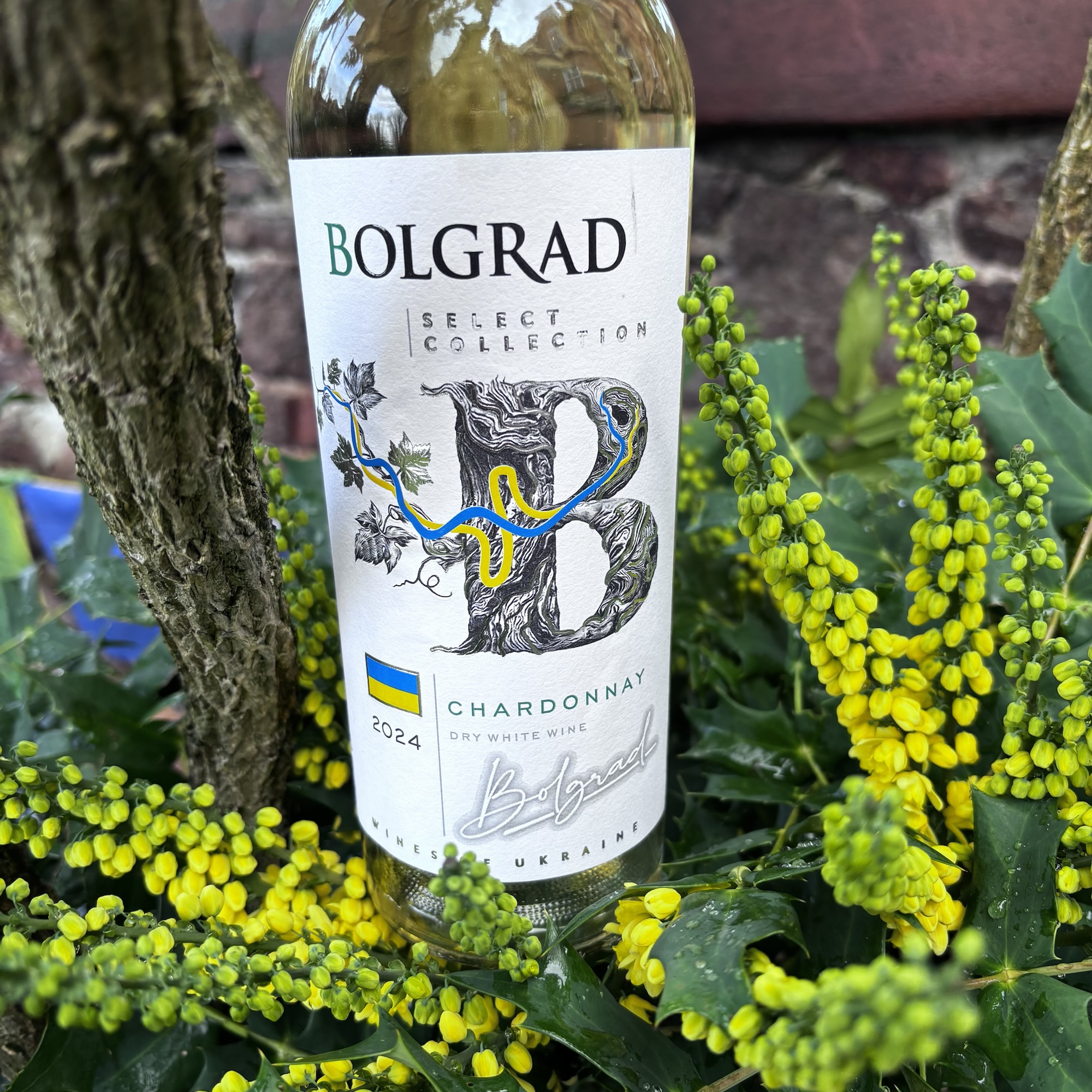
Chardonnay “Select Collection” 2024, Bolgrad Winery (Odessa, Ukraine)

The grapes are grown on the southwestern slopes of Lake Yalpug, one of Ukraine’s largest freshwater lakes. They benefit from the reflected sunlight off the water, as well as the maritime influence from the nearby Black Sea. Bolgrad is apparently Ukraine’s largest producer of still wines.

Made without oak, in steel tank, in 2024 this cuvée had a little Aligoté blended in. Oddly, if I had to guess I’d have gone with Gewurztraminer. You can tell it isn’t 100% Chardonnay. It’s an easy-going white wine. It isn’t a complex Chardonnay, but it’s fruity and unquestionably very good value at just £11. You get an apricot and lemon softness, and I found less crispness than some tasting notes have suggested. But I would say it’s a nice bottle to try. I would suggest it isn’t one to cellar though. Also, the vendor’s web site suggests this is sealed under screwcap. My bottle of 2024 was definitely under cork, as indeed I think the bottle in their photograph is.

Of course, it is a thrill to add Ukraine to the list of countries whose wine I’ve now tried (especially only four days after my first Albanian wine). How The Wine Society, and the winery, managed the logistics of exporting this, I have no idea…I mean not so much from Ukraine but specifically from Odessa. Although this won’t bring the wine critics running, it’s surely worth trying a wine from Ukraine, perhaps whilst we still can. You can’t expect a lot from £11, but I think you will find you get at least a little more for your money than you expected. It would also have quite wide appeal, but I dare say there’s not a lot of it in the country.

Posted in Albanian Wine, Arbois, Artisan Wines, Greek Wine, Jura, Natural Wine, Sherry, Spanish Wine, Ukraine Wine, Wine, Wine Agencies, Wine Merchants | Tagged , , , , , , , , , , , , , , , , , , , , , , | Leave a comment

More Blind Summit – Latest Releases

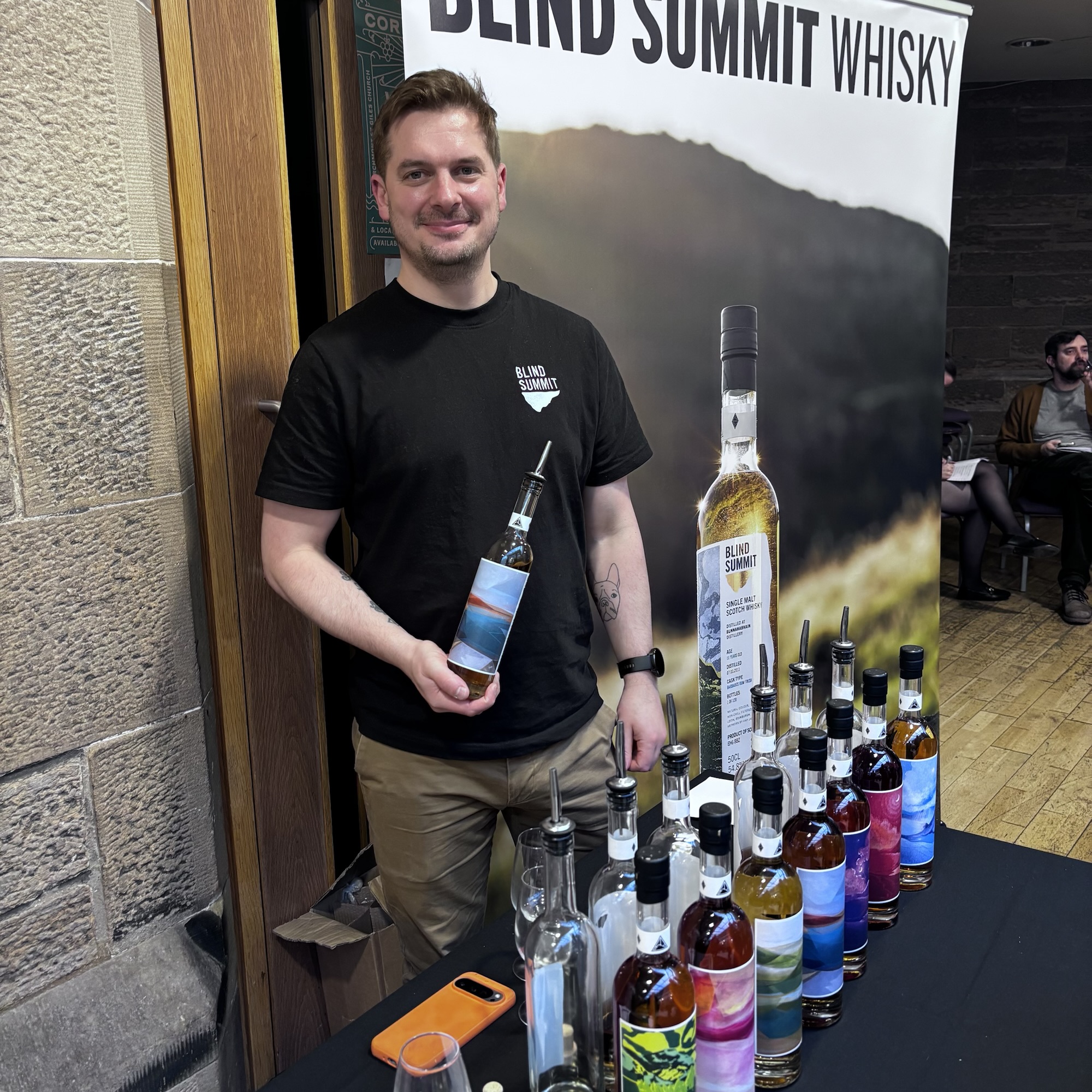
I know that I have written quite a bit about Blind Summit Whisky recently, but I couldn’t help myself when I saw that Jamie Dawson, one of the partners behind this new, young, independent bottler was doing a tasting at Lockett Brothers in North Berwick a couple of weekends ago. Not only were some new releases up to taste (and we are talking extremely generous pours here), but he was also unveiling a Lockett Brothers exclusive.

I would not call myself a whisky expert, far from it, but I am a whisky enthusiast. My knowledge has increased exponentially since arriving here in Scotland just over three years ago. Whisky now challenges wine and vinyl on almost equal terms when it comes to discretionary spend. As with wine, you learn much more from repeated and regular tasting than merely from books. It’s just that there’s so much more opportunity to taste wine than there is to taste whisky, so you can see why I jumped in here.

Blind Summit is a partnership between Jamie Dawson, who I got to know through his day job as wine and spirit buyer for Cork & Cask in Marchmont (Edinburgh), and James Zorab, who manages a cask maturation warehouse in Glenrothes. The pair are long time friends who first worked together at good old Oddbins back in the 2000s.

Based in Leith, Blind Summit purchases single malts from a range of distilleries and further matures or finishes them in the most interesting casks Jamie can get hold of, with provenance being central to their philosophy. All of the whisky below are single malts with the exception of the first, a very highly recommended blended malt.

All the labels which help create the very distinctive and modern branding are collaborations with local artists. Each whisky comes in a 50cl bottle. This means that you can much better afford a taste of something really good, and distinctive. The production runs are tiny. With the exception of the Lochend Blend below (320 bottles), each whisky is only available in around 200 bottles.

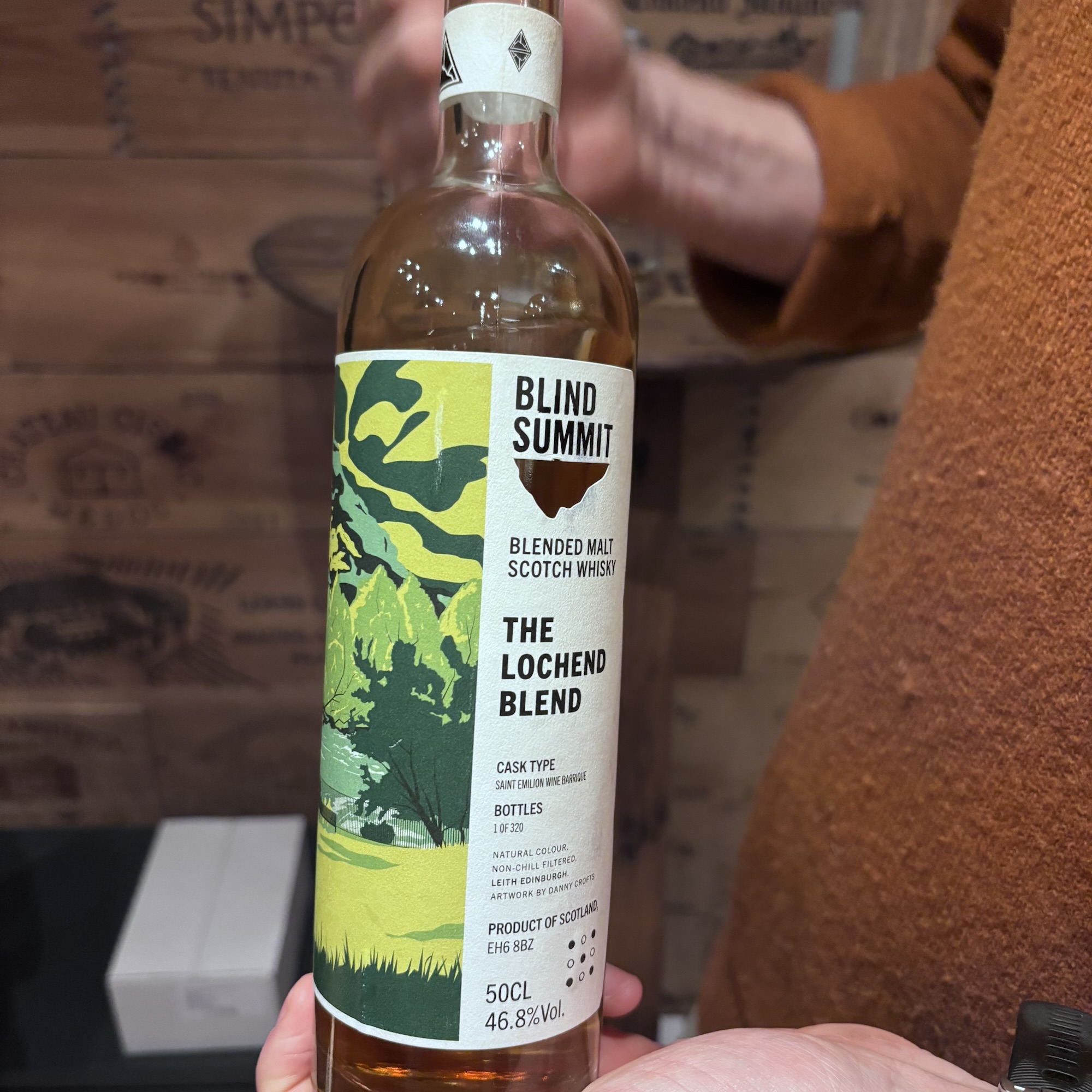
Lochend Blend

The Lochend Blend, named after an Edinburgh location close to Leith, is well described by the team as “a coastal and fruit-forward blended malt”. This current Volume II (its second release) is made from five single malts married together in a Saint-Emilion cask. It is a little lighter than the individual single malts, and this is reflected in its lower alcohol (46.8% abv), but everyone who tastes it seems to like it. Especially when they see the price, but also its sheer drinkability. This is an absolute bargain at £35, when you think that is the price of many supermarket bottles, albeit they will have the quantity.

Tamnavulin 11yo “The Law”

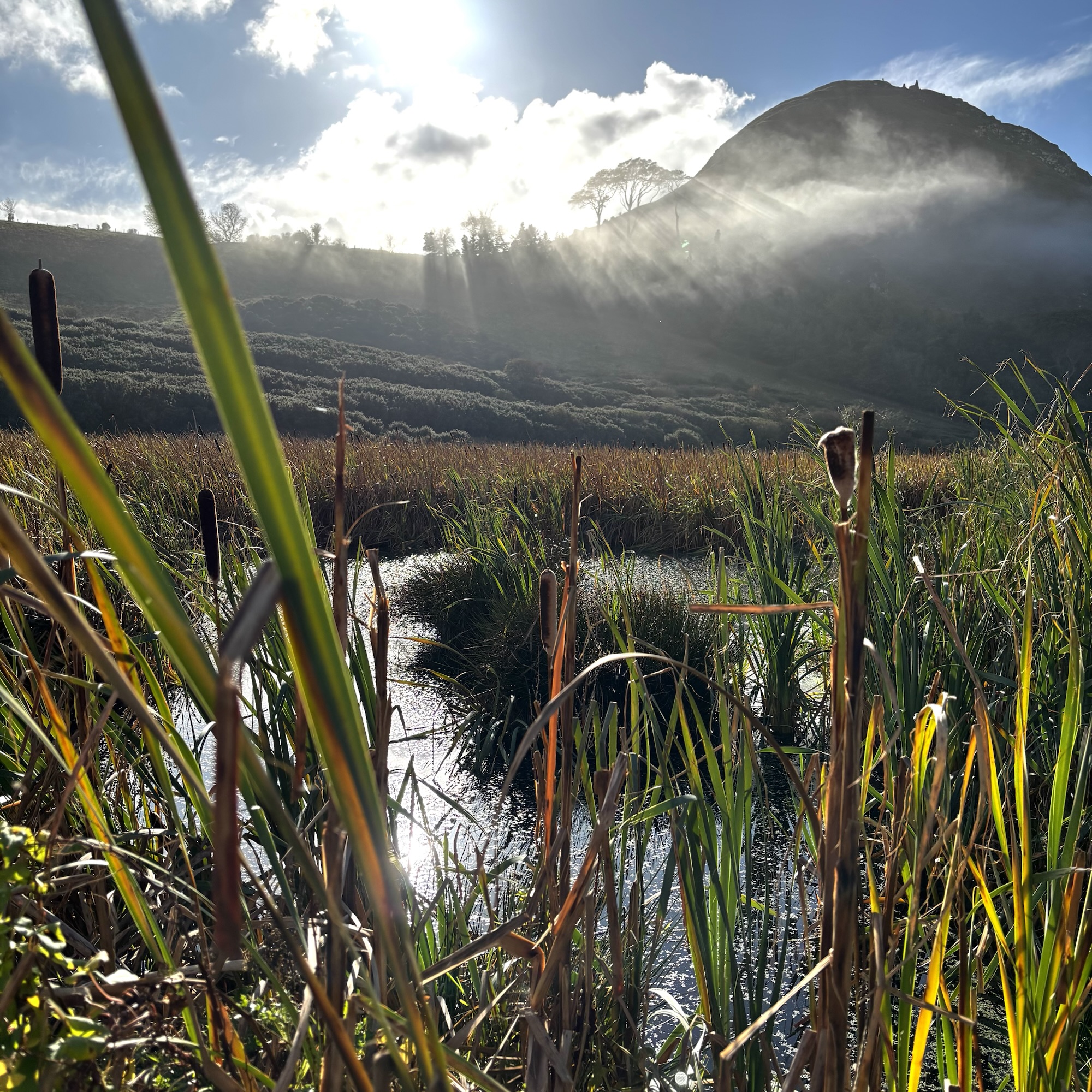
Named after North Berwick Law, the volcanic plug that rises south of this scenic small town on the Firth of Forth, this was selected by, and bottled exclusively for, the town’s distinguished wine and spirits retailer, Lockett Brothers. They already boast one of the best and widest whisky selections in Lowland Scotland.

Tamnavulin is a Speyside distillery at Ballindalloch (Moray), built originally as a partner for Glenlivet. It sits in the steep glen carved by the River Livet. Ending up under Whyte & Mackay, they were sold in 2014 to the brandy producer Emperador who are based in the Philippines. This cask seems to come from the time of that acquisition.

It originated in a bourbon cask and was finished in a Barbados Rum cask. The label was designed by North Berwick artist, Kyle Lunneborg. Bottled at a natural cask strength of 58.8%, it is creamy and spicy, with notes of coconut, apple and ginger coming through for me. 216 x 50cl bottles, £65 exclusively from Lockett Brothers.

Glencadam 14yo

Glencadam distillery is on the east side of the Highlands, just outside of Brechin in Angus. Originally founded in 1852, it was sold to Hiram Walker in the 1950s. As with most Scottish distilleries it changed parent a number of times, including a spell with Allied Lyons, eventually coming to Angus Dundee (based neither in Angus, nor Dundee, but London). They finally released Glencadam as a single malt from 2005.

This 14-year-old was put into a bourbon barrel, and bottled at 53.6%. It has lifted flavours which mix bright apple fruit with a butterscotch base, quite creamy-textured. 178 bottles, £75.

Miltonduff 14yo

Miltonduff (founded 1824) is another Speyside distillery, situated south of Elgin (Moray). After the usual string of owners, it now falls under the Pernod Ricard brand and their subsidiary, Chivas Bros. A major refurbishment is due to be finished this year.

The cask choice here is a used Red Bordeaux barrique, sourced from a Médoc Cru Classé thanks to Jamie’s wine contacts. It’s a whisky with real depth and a smooth bass note. There’s even a hint of wine tannin, and it has a reddish hue (as does the next whisky). Everyone at the tasting seemed to have their own favourites, but I grabbed one of these (one of three bottles procured on the day) in part because of its contrast to the others. 52.1%, 228 bottles, £70.

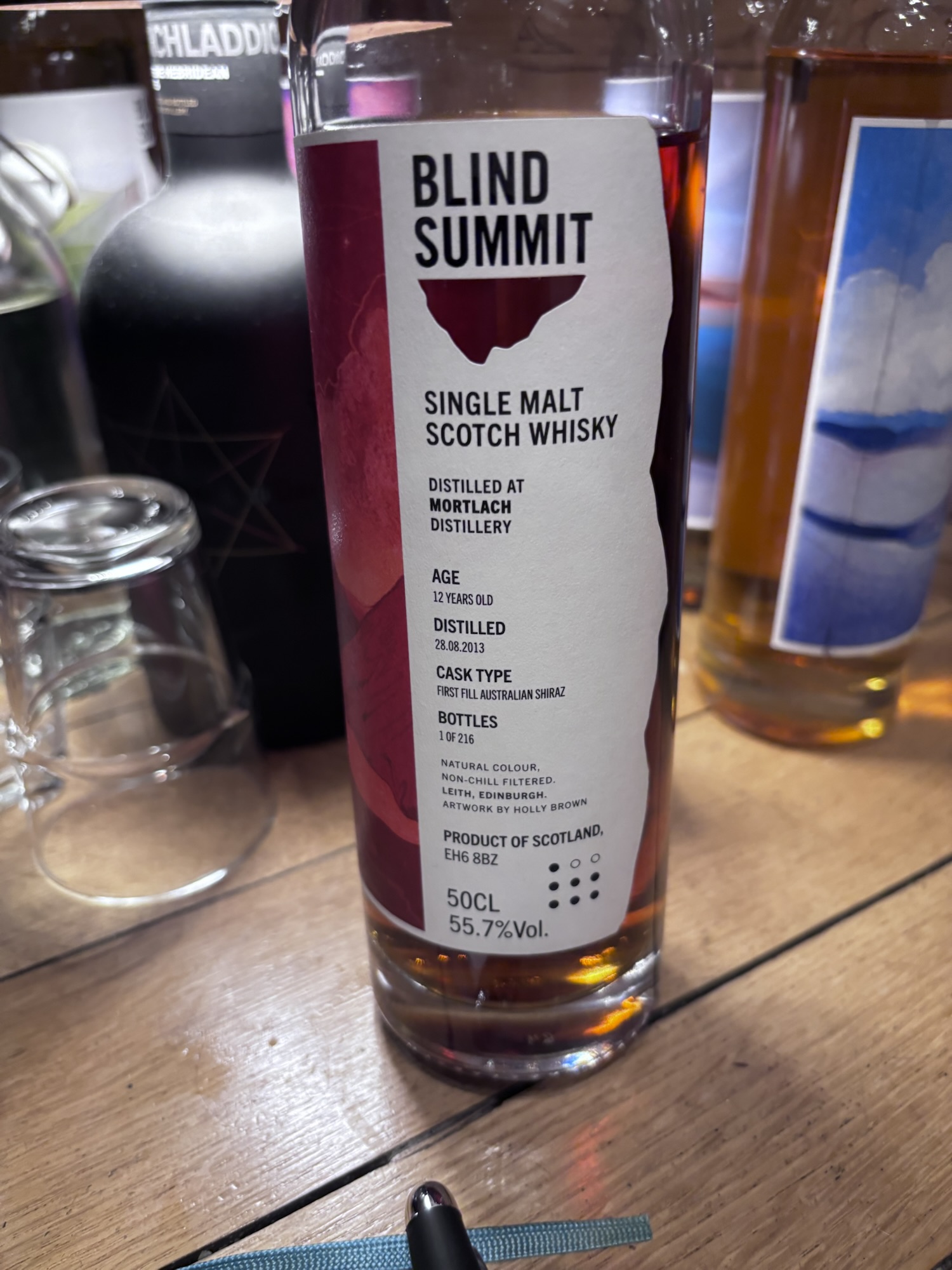
Mortlach 12yo

Speyside again, you will find Mortlach at Dufftown (Moray). Although founded in 1823, most of the current buildings date from the 1960s. It’s a famous distillery known for its malt quality, which is why it became an important component in Johnnie Walker (under Diageo ownership now), only recommencing to release single malts in 2014 (including a 25-year-old).

This is a very distinctive dram, and I’d say it was the absolute favourite for a number of folks at the tasting, but mostly among the men (it was good to see an almost equal number of ladies at the tasting with their own clear preferences). It was also the most expensive bottle on show. It saw the inside of an Australian Shiraz barrel, and this has imparted a definite deep red colour. In fact, “depth” is the word I’d choose to describe the whisky, but fruit-wise, definitely red apples/apple peel. 55.7%, 216 bottles, £85.

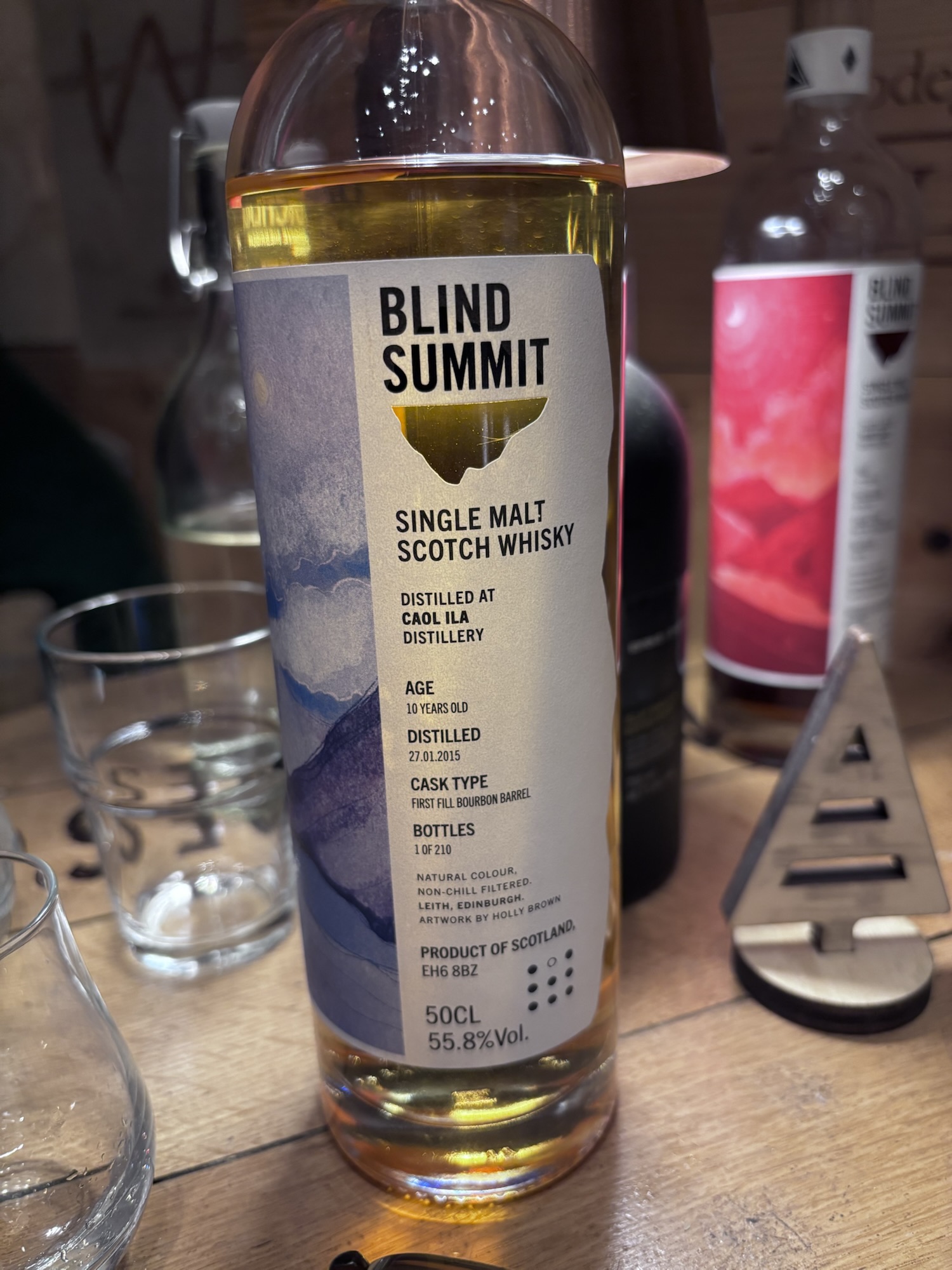
Caol Ila 10yo

“Cull-eela” is at Port Askaig on Islay, and the name is gallic for the Sound of Islay, the narrow stretch of water which runs between Islay and Jura to the north, and out over which the distillery looks. Built in the 1840s, it is now another old distillery under Diageo’s care, the parent having spent millions on upgrading both the distilling capacity (it is Islay’s largest distillery) and a modern visitor centre. Islay is now, after all, pretty much tourist central for the whisky industry.

Caol Ila makes a classically peaty island malt (though not quite up there with Lagavulin for peatiness). This first-fill bourbon cask bottling by Blind Summit, bottled just two weeks before the tasting, was quite smoky, but very elegant. I’d say it had the most appealing bouquet of the tasting and the bottle in my cupboard has interestingly gone down quite swiftly in the days since I got one. It tastes, to me, more complex than most 10-y-o malt. 55.8%, 210 bottles, £65.

Highland Park 7yo

Highland Park distillery overlooks Kirkwall on Orkney’s “Mainland”, and thereby describes itself as the most northerly whisky distillery in the world. Distilling allegedly began here in the late 1700s, albeit illicitly and illegally. Through the 1980s Highland Park established its name as a single malt and it is owned by the Edrington Group. As a more mature malt, this is a whisky I already like.

This youthful seven-year-old, from an Oloroso Hogshead (one of those very strange British sizes, usually 52.5 UK gallons or 54 gallons for beer, or if you prefer, 238.7 litres/245.5 litres) has peaty depth with a softness to it. The nose reminded me of ripe pears, though I should point out that I had one of those at lunch and it is lingering on my mind. Others detect roasted nuts and orange peel. The palate is nutty and oily. It’s remarkably good, even at seven years old. That is obviously why it has been released now. 56.5% abv, 190 bottles, £60.

At pain of repeating myself, these whisky bottlings are all very distinctive, and different. You pay your money and make your choice, but the choice is easier, at least for me, in the 50cl format. You can buy two bottles for not necessarily an awful lot more than you might pay for one full bottle. I just love the interesting take these guys have and how they are really thinking about their releases, both their choice of whisky and how they are further maturing and finishing them.

I’ve seen some bottles heading down to London, I think, so you might spot them down there. However, retailers like Cork & Cask and Lockett Brothers are geared up to ship across the UK. Blind Summit is definitely one to explore, whether you have already got a good knowledge of indie bottlers and what they bring to the whisky table, or whether you are just tempted to dip your toe in. With Blind Summit it doesn’t cost a fortune to do that. If you are a retailer reading this (as I know many of you will be), I hope you agree that they will stand out on the shelf.

If you are interested check out blindsummitwhisky.com . If you are a retailer, contact Jamie or James via hello@blindsummitwhisky.com .

Posted in Craft Spirits, Premium Spirits, Spirits, Whisky | Tagged , , , , , , , , , , , , , , , , , | Leave a comment

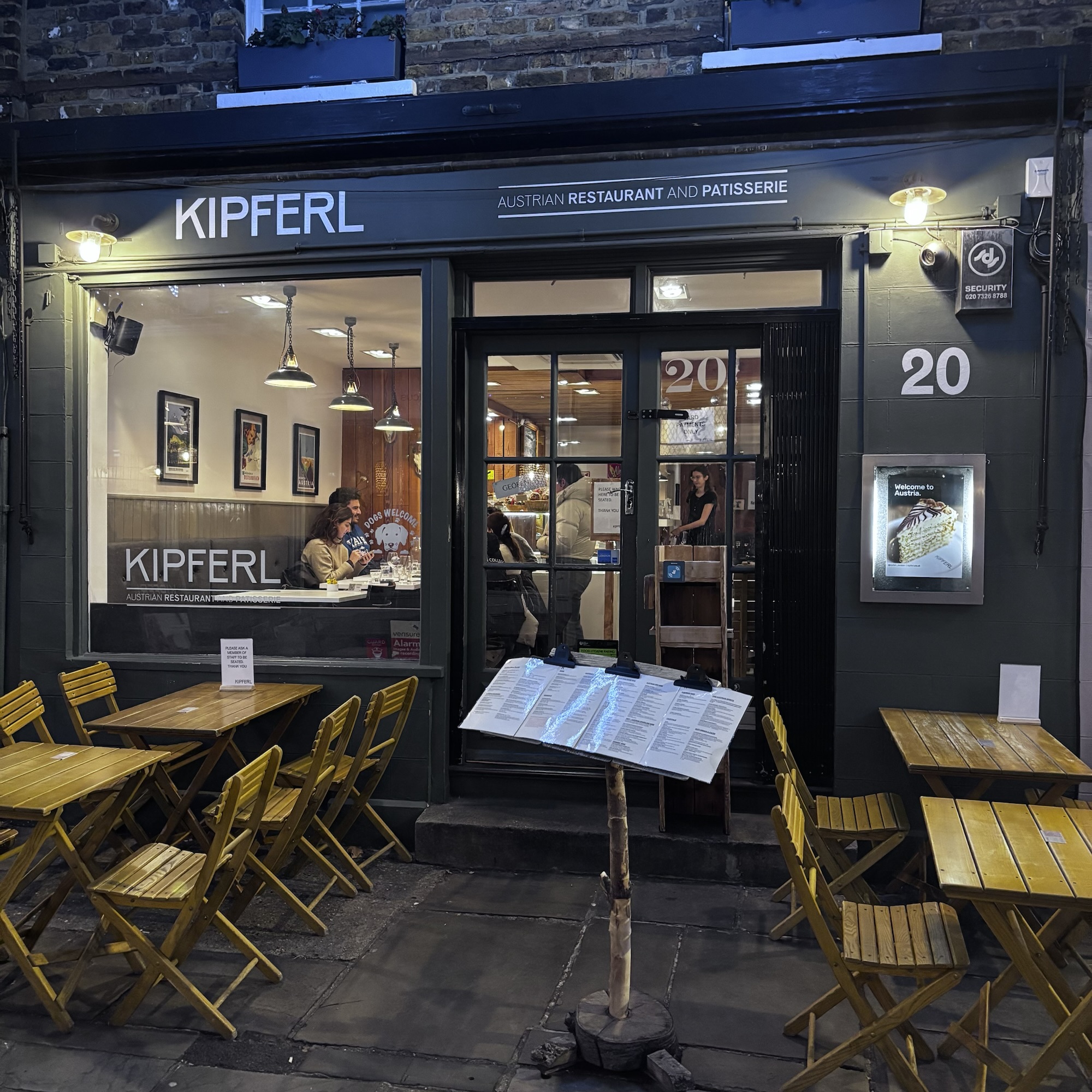
Kipferl – Austrian Restaurant, Café and Bottle Shop in Islington

The evening before the tasting I have just written about, we headed up to Angel’s Camden Passage to try a restaurant recommended by a friend who knows we love Austrian wines and Austrian cuisine. Kipferl is an Austrian restaurant and patisserie, during the day serving mostly traditional cakes and pastries of the type you get in Viennese cafés, and in the evening, serving the kind of food you get in a traditional beisl.

I don’t often do “restaurant reviews” these days. Social media and the internet are full of them. But…I haven’t seen Kipferl mentioned by anyone I know before that recommendation, and I suspect that it might appeal to a few of my regular readers at the very least.

I haven’t been down Camden Passage for over thirty years, and it has changed somewhat since those days, but Kipferl was easy to find, with its welcoming bright frontage on the south side of the alleyway. Inside, a large counter fronting the bar displays the cake selections, with the rest of the space given over to simple tables. The traditional feel is created via some wood-panelling at the back (essential for many, but not all, beisl in Austria), decorated with memorabilia which betrays the owner’s Tyrolean origins.

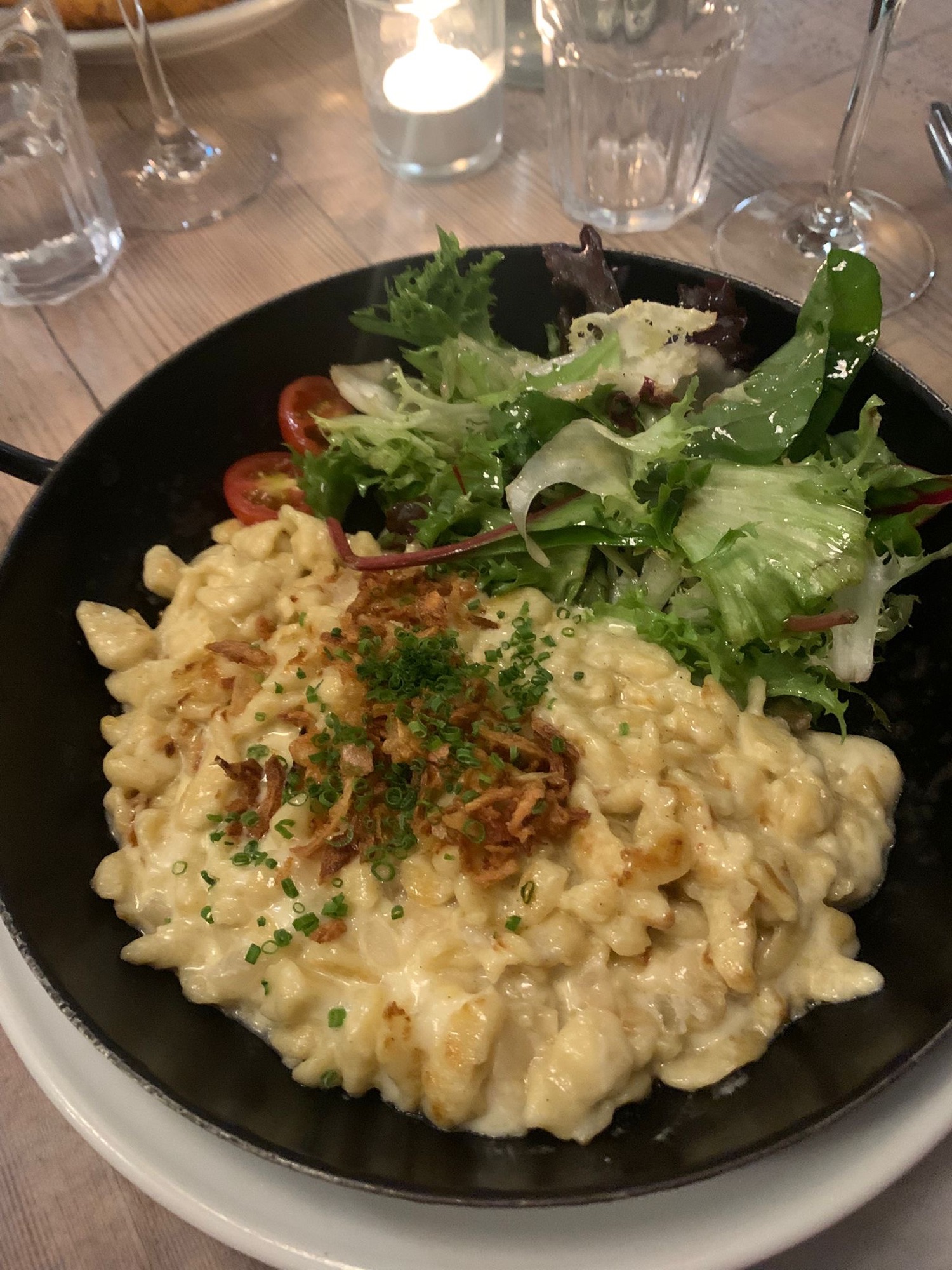
We had a relatively early dinner, and even on a Monday it was pretty packed by around eight o’clock. We skipped any starters because I wanted to have room for dessert. Last time I had a Wiener Schnitzel, at The Delauney on The Aldwich just a month or so ago, I was too full. In fact, the schnitzel here at Kipferl was delicious, with a lightness you don’t always get. It wasn’t a traditional “plate hanger”, coming in two pieces, but I’m not complaining. It was close to perfect, served (as I chose) with a trad’ potato salad. K had a Käsespätzle, I think equally delicious.

For these main courses we chose a wine we know, but one I think went perfectly with the food: Weingut Christ Wiener Gemischter Satz from Bisamberg. It’s a field blend of mostly Grüner and Roter Veltliner, Neuburger and Riesling, plus many others. Quite floral on the nose, with peachy fruit and just the right mix of fun and seriousness I look for in a WGS.

Kipferl imports wine, and describes itself as the largest importer of Austrian wines in the UK. Others might argue with that, but all the wines in the restaurant are available to take away. This wine is priced at a decent £32.50 in the restaurant (and is also available by the glass). Off the shelf it costs £26.50. Alpine Wines online lists the 2023 Wiener Gemischter Satz, along with a number of wines from this excellent producer, for £23.

Some of Kipferl’s takeaway delights

The desert I wanted to make room for is an Austrian classic. I think I rather disappointed the friend who recommended this place by not choosing to have the Esterhazy Torte, but I can almost never forego the opportunity to eat Kaiserschmarrn. This is a sweet pancake apparently loved by Emperor Franz Joseph I. Sprinkled with icing sugar, it is shredded with rasins (and sometimes redcurrants) with apple sauce. A crispy bottom makes the dish. First made for me by a colleague of my wife’s in Vienna many years ago, it has become a favourite, but this is actually the first time I’ve eaten it outside of Austria. I am not Austrian, but I thought it a very good effort.

Kaiserschmarrn…for those who don’t know

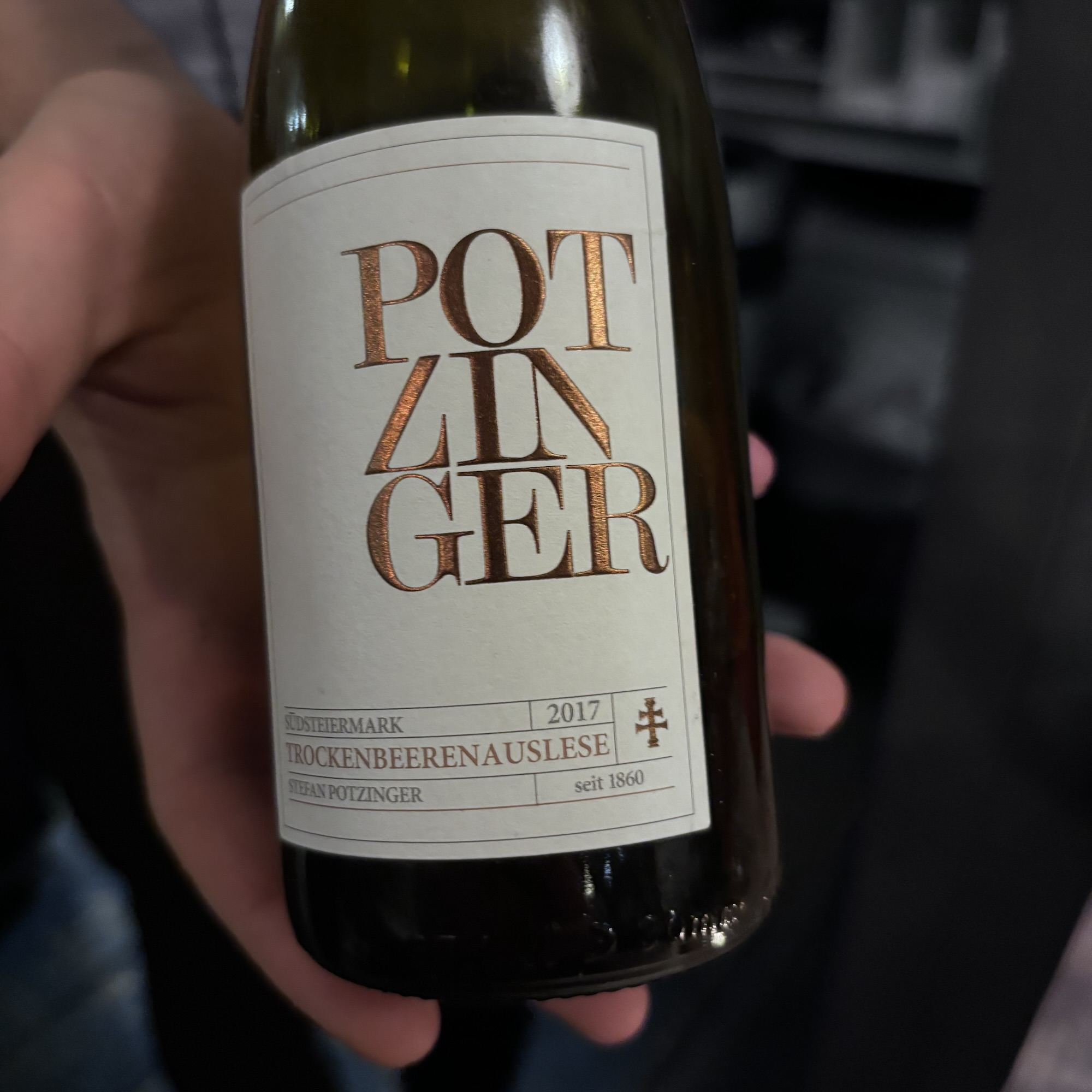
To accompany such a dessert required wine. Whilst I know the Christ wine well, I decided to try something new here. Stefan Potzinger’s family estate, established 1860, is best known for Sauvignon Blanc, which I’m sure you know performs spectacularly well in this region, in the right hands. He made this Trockenbeerenauslese 2017 in Gabersdorf, Südsteiermark, where he farms 17 hectares.

This was rather nice. Actually, I chose it partly because I don’t think I’ve had a sweet wine from Styria before, but it was a good choice for this dessert. Amber-gold in colour, it is low in alcohol (9% abv), quite sweet but not cloying, and whilst there is some acidity to balance the sweetness, the acids are smooth, not sharp. The overall impression, on both nose and palate, is of candied fruits.  I had to delve deep on the producer’s web site to find the grape variety, but I think this bottling is Sauvignon Blanc from the site called Ried Czamillionberg. Takeaway, this costs £27.50 for a half-bottle but the Kipferl web site suggests it has now sold out.

Really, to sum up, I’d say if you want fine traditional dining, you won’t find it here. If you want what I take to be pretty authentic Austrian food, with a menu full of hearty dishes that will be familiar to you if you’ve travelled much in Austria, this is well worth the trip. The atmosphere is even a little bit Austrian, and it is clearly somewhere Austrian nationals who live in London, or tourists feeling homesick, will head for. I’m very sure I’ll be heading back. Both for dinner and for mid-morning coffee and cake as well. In fact maybe I will combine it with a trip to The Sampler, nearby on Upper Street. I haven’t been there for a while.

Booking is online only and they will take your card details, so beware if you are a serial no-shower. Judging from what I’ve been told, and the evidence from when we were there, booking is recommended, unless perhaps you dine early.

Kipferl is at 20 Camden Passage, London N1 8ED, Tel: 020 7704 1555, www.kipferl.co.uk

Goodbye London for 2025

Posted in Austria, Austrian Wine, Dining, Restaurants, Wiener Gemischter Satz, Wine and Food | Tagged , , , , , , , , , | Leave a comment

Annamária Réka-Koncz – New Arrivals

I’m now ready to turn my attention to a recent trip to London. I’ve got a great restaurant discovery and recommendation which will be of special interest to anyone who loves Austria (or subscribes to Trink Magazine), but before that, a few notes from a small private tasting given to me by Basket Press Wines of the latest shipment from Annamária Réka-Koncz. As you will know, I’m something of a fan of the wines Annamária makes in Eastern Hungary, from her own vines at Barabás (near, in fact very near, to the border with Ukraine), and from fruit grown by friends further north and west.

All the grapes are certified organic and regenerative practices are taken seriously here. The estate itself is small, just six hectares of which 1.3ha are not quite yet in production. The vines which are producing grapes are generally between 40-to-60-years old.

Like the wines of Mira Nestarcova from Czechia, these are wines which usually disappear within a few weeks of arriving in the UK. It is not unusual for wines to have been long sold out by the time I drink my stash, with suitable time to rest after delivery and an understandable desire to eke them out through the year. Well, the good news is that Annamária’s wines have only just arrived, as indeed have Mira’s. If anything tasted here takes your fancy you will hopefully be able to get an order in. I have already received mine.

I am not sure these wines have made it up onto the Basket Press Wines web site yet, at least at the time of writing. I would suggest contacting them if you want some. All the wines cost between £20 and £30.

*All of the information re viticulture and vinification here was dictated to me and I was taking notes very quickly. Apologies if I get anything mixed up. The tasting notes, of course, are all my own…

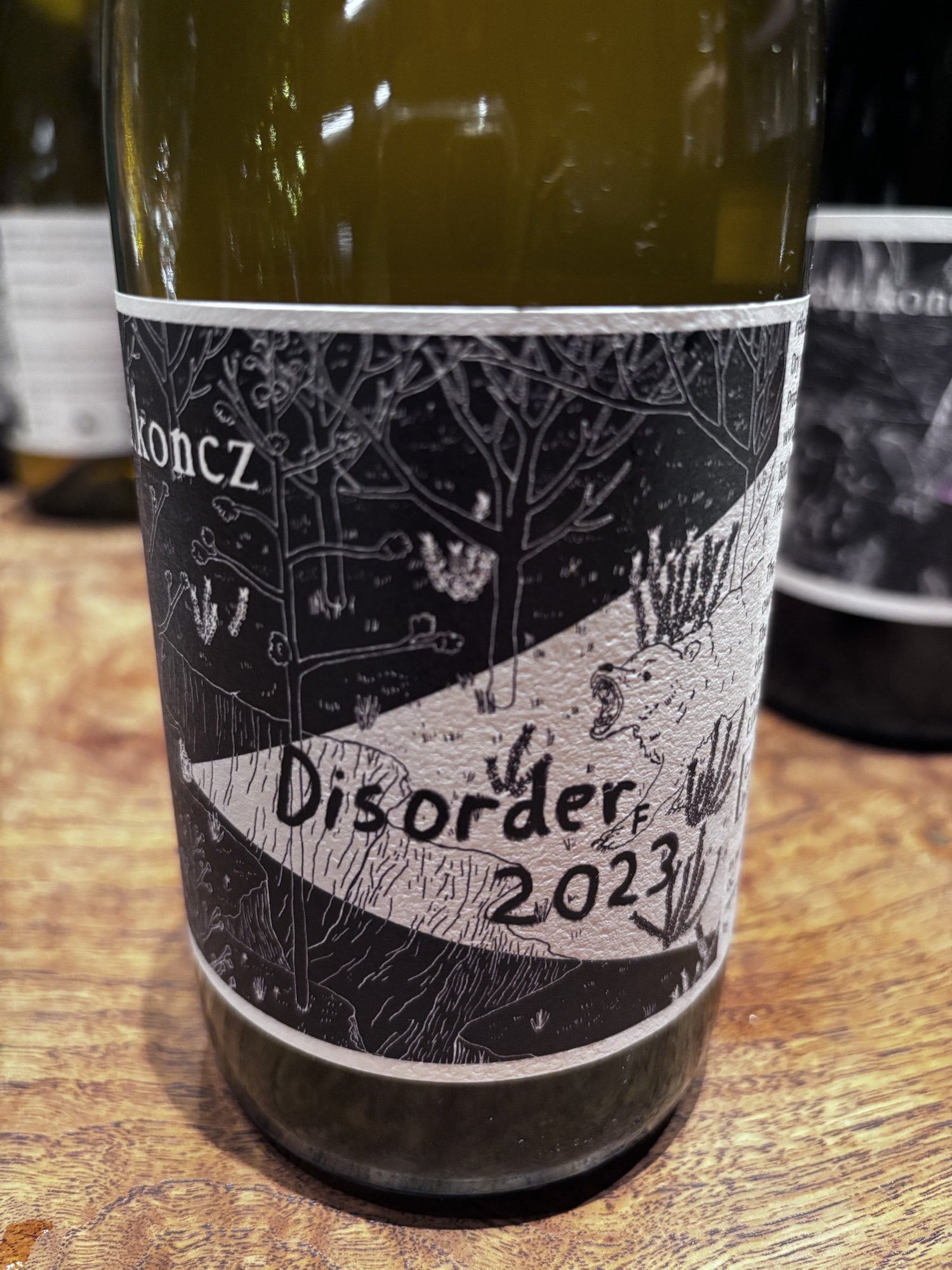
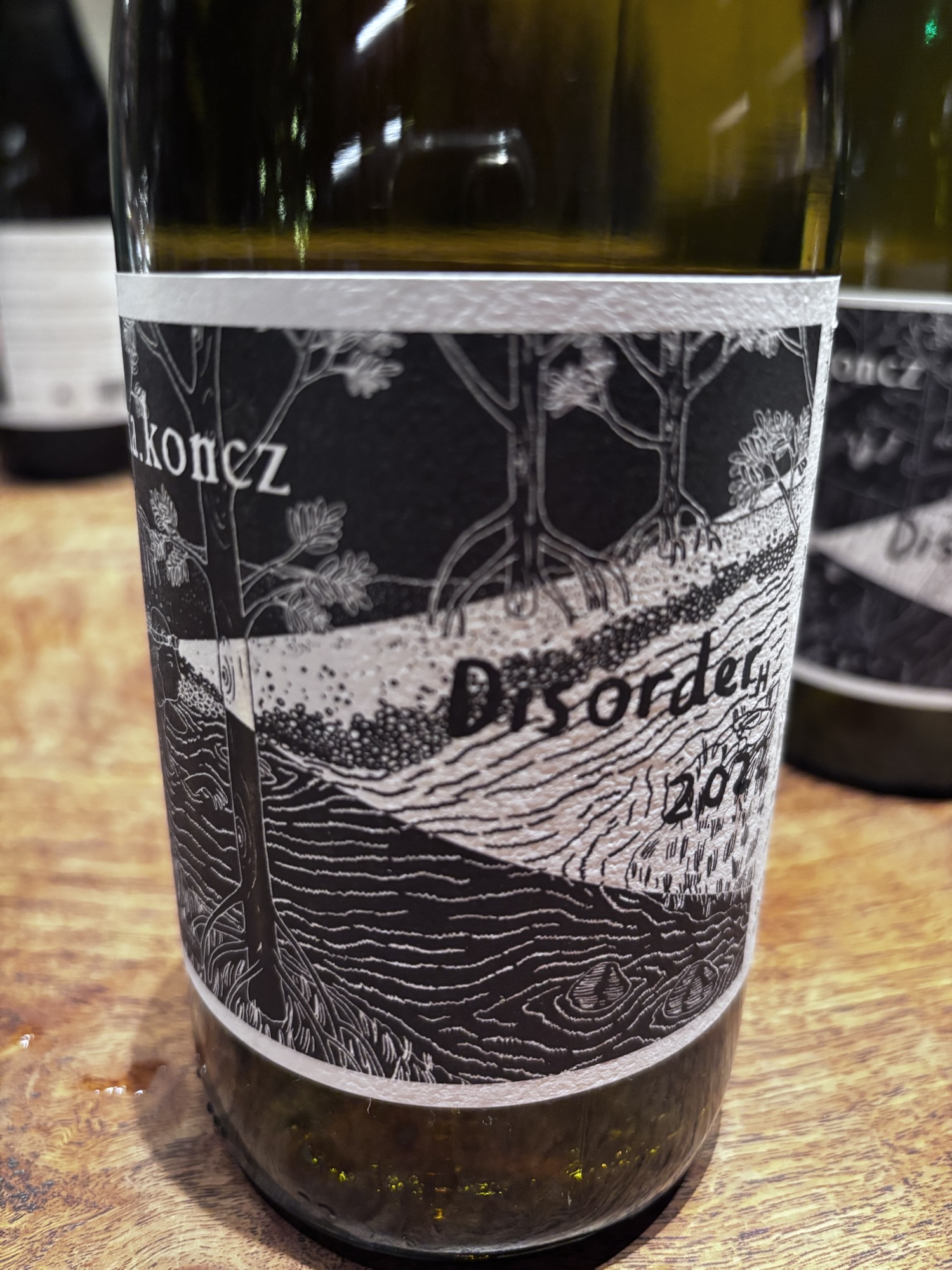
Disorder 2023 – This is made from Furmint sourced from three sites in Mád, in the Tokaj region. The fruit comes from 20-30-year-old vines off clay soils sitting on volcanic rock. As you doubtless know, despite the best efforts of academia to persuade us otherwise, when we think Furmint we think mineral, especially Mád Furmint.

Vinification, never totally straightforward with Annamária (whose attention to detail may well be the reason why these so far underrated wines are often so spectacularly good) is 50% whole clusters and 50% destemmed fruit, the latter gently pressed in a basket press. No skin maceration takes place. Fermentation was in individual concrete eggs and they were blended together in autumn 2024.

The fruit here is pristine and amplified. The texture is rocky more than grainy. The wine has a clean nose with a little smoke and length is long. Personally I think the 2023 needs just a little more time though. At least I intend to age mine a little, if only a year.

Disorder 2022 – This is very different. I’m relying on the information read out to me at the tasting, as the Réka-Koncz web site is never kept all that up-to-date (it’s hard for someone working on their own, I guess). This 2022 is apparently not Furmint, but 100% Harslevelü, made 50% in amphora and 50% in eggs. Again, this is made without skin contact.

Whatever the contents, the fruit in this 2022 is more direct than the 2023. The acid balance is perfect and the freshness of the wine is beautiful. It just feels all lifted-up. I already have some of this in my cellar and it seems ready to drink, so I bought the 2023 intending to age it, as I said above. I’m a big fan of Furmint, but to drink now, this is lovely.

Eastern Accents 2022 – This was described as a blend of 65% Harslevelü and 35% Furmint. These are younger vines, 12-15 years old, from the Mátra region. This is a mountain range in the north of the country, home to Hungary’s highest peak, and close to the town of Eger (which you might perhaps have heard of).

Again, it is all certified organic fruit. Fermentation is a mix of whole clusters and some broken bunches to release some juice. The Harslevelü is fermented in closed vats. Some fruit is fermented on skins, only for about a week, but that’s a little longer than the previous vintage. Some stalks are also kept in, which give a little tannin (remember this is a white wine).

The beauty of this wine is the way its freshness strikes you. It’s not the freshness of simple acidity, it’s more than that. As if the whole wine is alive. In fact, this seems a good place to comment on why I think Annamária’s wines appeal to me so much. We so often judge wine quality in terms of complexity. That misses wines which, in their sheer electric presence, thrill you. It’s a sensual response, one of excitement, rather than an intellectual one. But as I’m getting carried away, I should mention the texture, because this is so much a part of the experience. It’s drinking so well right now.

Óra 2023 – This wine is made from a field blend of Annamária’s own vines at Barabás and some Furmint from Mád. The four varieties which go into Ora are Királyléanyka, Riesling, Harslevelü and Furmint. The Furmint vines are 20-30 years old, the rest are vines planted in the 1970s. The Furmint was destemmed and fermented two weeks on skins, some in eggs. Annamária’s winemaking is always exacting and I sometimes get the details wrong but I hope this is correct.

The wine was blended in autumn 2024. The colour is quite orange/amber. It is pretty complex already and it is knitting together. It will age well, though. The fruit is ripe, so it offsets the tannins, although they will soften (not that they are harsh at all). It has big legs, though at only 12% abv, it seems well balanced.

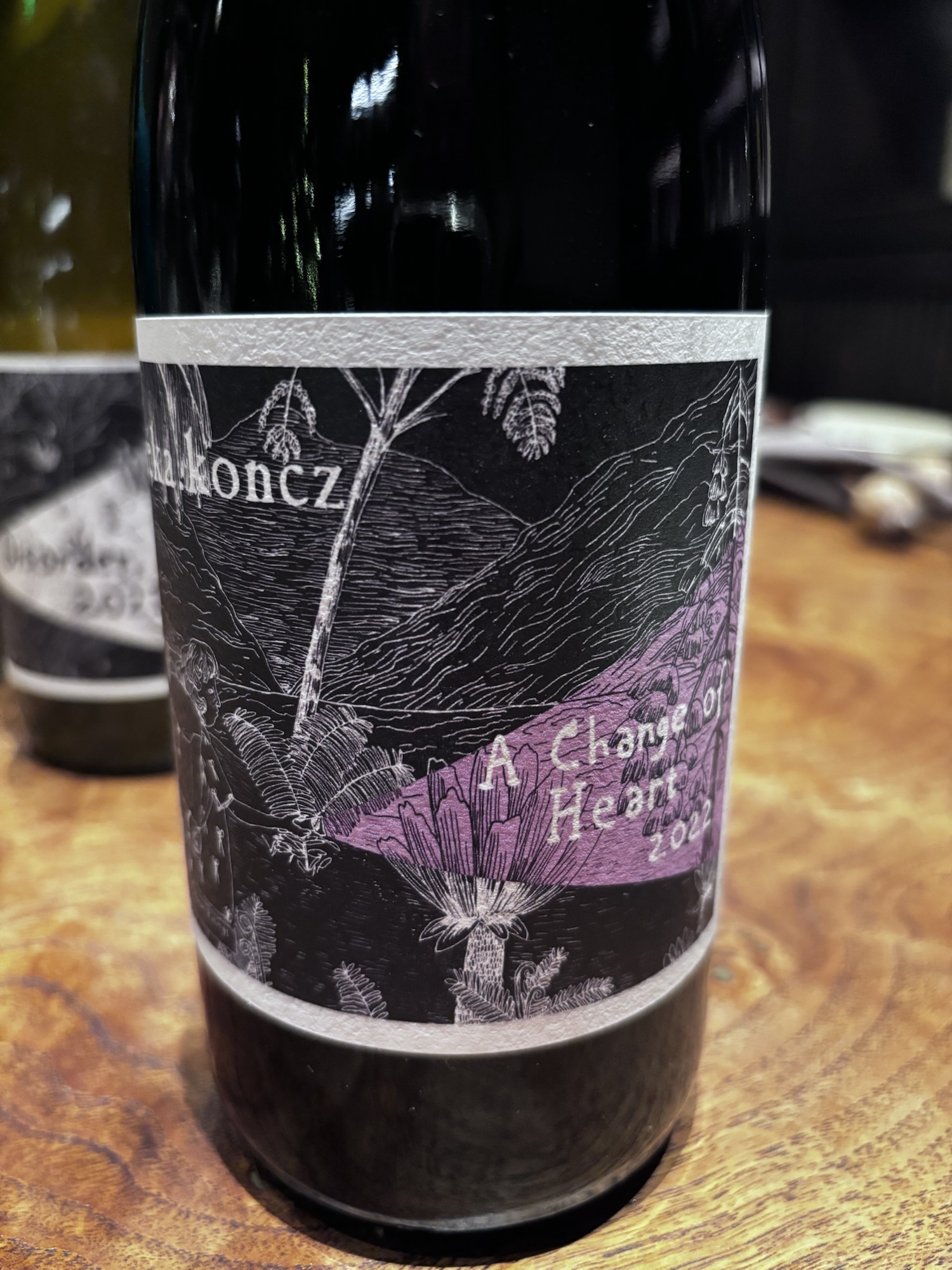
Change of Heart 2022 – I don’t know whether Annamária makes more than one red wine, but this is the only one I see. It is 100% Kekfrankos (aka Blaufränkisch, or Frankovka) from the volcanic soils of Mátra, again. In fact, the geology here is complex, with andesite as well, and a loamy topsoil. 50% whole bunches see five days with stems, fermenting in fibreglass. The other 50% is layered with the former for a fourteen-day maceration before maturation in vat.

Some will know this method, used by some Beaujolais producers, especially for the Crus, as a more complex form of semi-carbonic maceration. It allows for some intra-cellular fermentation and some crushed grapes in the vat fermenting as free-run juice as it drains to the bottom. Or at least that’s how I think it works. The result, in theory, is different simultaneous types of extraction, bright and juicy aromatics without loss of tannins and colour, and a cooler fermentation (assisted by the stalks/stems). The wines always have far more complexity than a normal carbonic fermentation as a result.

Like all of the Réka-Koncz wines, only a tiny amount of sulphur is added, here 15mg/l. The colour is bright and luminous red, very appealing. There’s equally bright cherry fruit on both the nose and palate. The tannins are grippy rather than prominent, giving the wine a bit of structure to go with the rather attractive, quite concentrated, fruit. I think that was the whole intention, and if so, the winemaker has succeeded admirably.

It does remind me a little of a Beaujolais Cru. Of course, the grape variety is quite different, but you get all that cherry fruit allied to a bit of depth which signals that it might age really well. If you order this, get two, one for now and one for later.

As far as I know, these are the wines shipped this winter by Basket Press Wines, so I haven’t tasted the new sparkling wines. The last one I had of those was the petnat “Robin” (in Part 2 of my Recent Wines post for October 2025, of 17/11/25). I do always look forward to getting hold of some of Annamária’s wines and I endeavour to get my order in early. This time you can join me, should you feel moved to do so. The wines have their own personality but they are not in the slightest bit scary as natural wines go, and not especially funky. I have seen a much greater awareness of this producer over the past couple of years, especially in Scandinavia. It’s perhaps a good idea to discover them now.

Thank you Zainab from Basket Press Wines for the tasting and to Hide Restaurant for providing the venue.

Posted in Artisan Wines, Eastern European Wine, Hungarian Wine, Natural Wine, Wine, Wine Agencies, Wine Tastings | Tagged , , , , , , , , , , , , , | Leave a comment

Cork & Cask Winter Wine Fair 2025, Part 3 (Alliance Sevslo and Indigo)

The third and final part of my coverage of Cork & Cask’s mammoth Winter Wine Fair 2025 covers three wine agencies/importers. Two are based in England, being Alliance Wine and Indigo Wine, and sandwiched between them one from Glasgow, namely Sevslo, the sister company of that city’s fine retailer, Made from Grapes. Perhaps, as the afternoon progressed, it wasn’t quite as easy to taste at these tables. I’m not complaining as this is a rightly very popular public tasting. I apologise to those producers or importers who this time I was not able to taste at all.

ALLIANCE WINE

I began here by allowing Andrew to pour me two wines from Eric Texier. I’m sure he’s familiar to many. Matt Walls, in his 2021 Wines of the Rhône, says “It’s hard to think of a more creative or experimental vigneron than former nuclear engineer Eric Texier”. He is credited with putting the appellation, or village if you wish, of Brézème back on the map, though Jean-Marie Lombard should get some credit. He is certainly the leading producer of Brézème, and his minimalist natural wines can be very special.

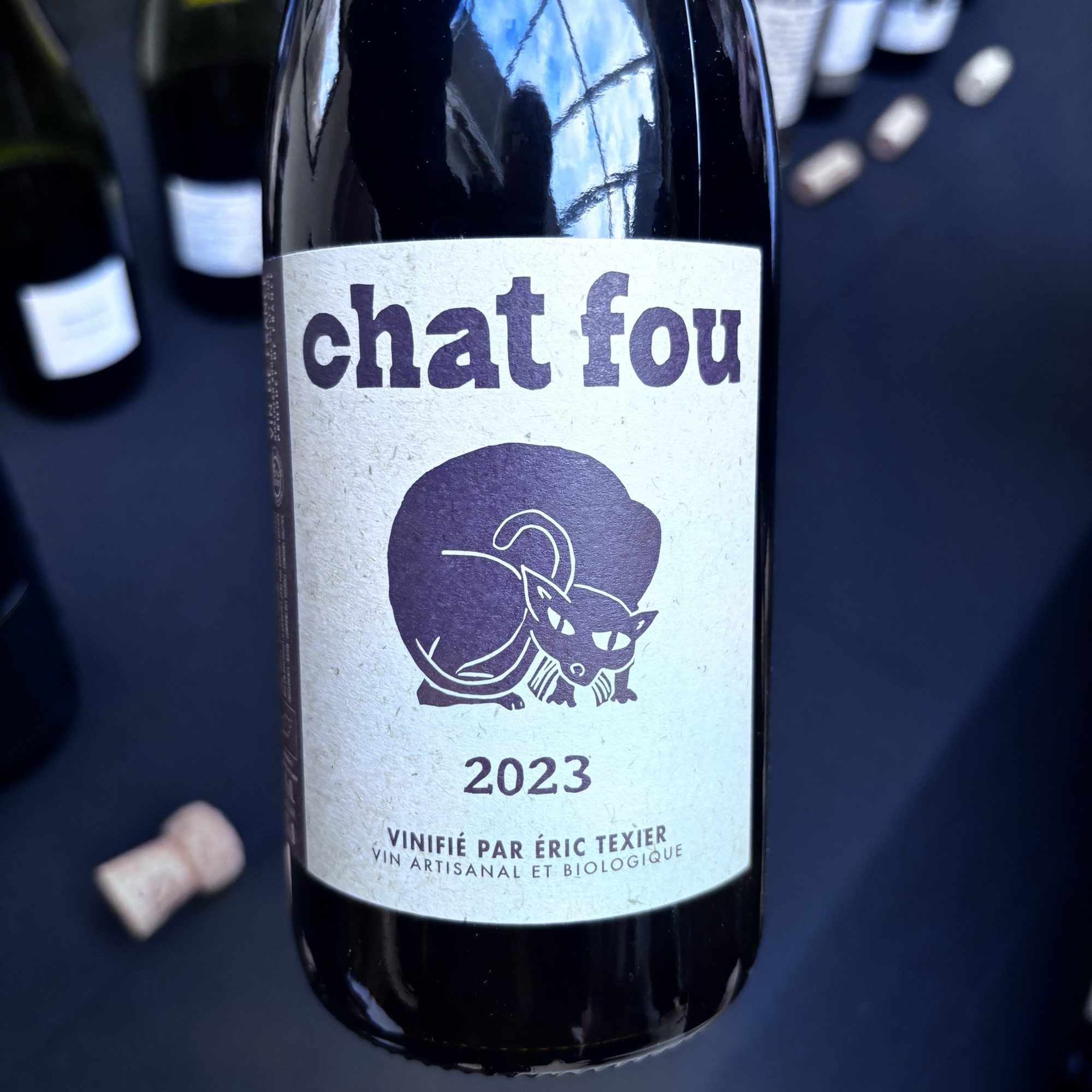
Chat Fou 2023 is a blend of red and white grapes bottled as Vin de France. It is made in open-top concrete tanks with no extraction, resting for 18 months. Minimal added sulphur. Luminous and super-fruity and really at £20 a wine to grab.

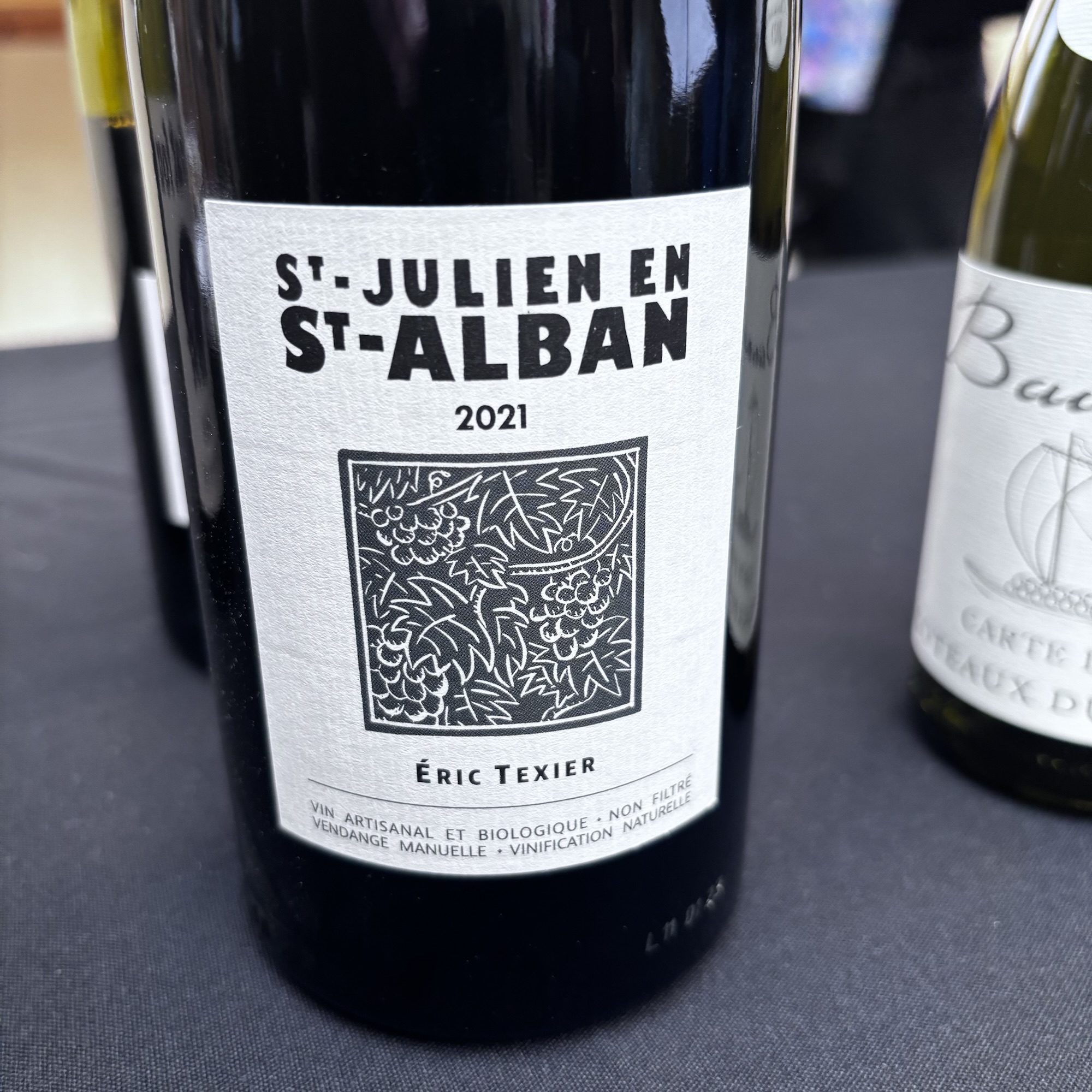
St Julien en St Alban 2021 is a Côtes du Rhône bottling. It’s 100% Syrah off granite from the northern bank of the Ouvèze in the Ardèche. Whole clusters are macerated 8-10 days in wooden vats and this was aged in foudre (they say 36-48 months…it would be good to know exactly how long for the ’21?). Great depth, quite savoury with liquorice and an earthy texture under darker fruits. A little edgy, but not too much. Still only £26.

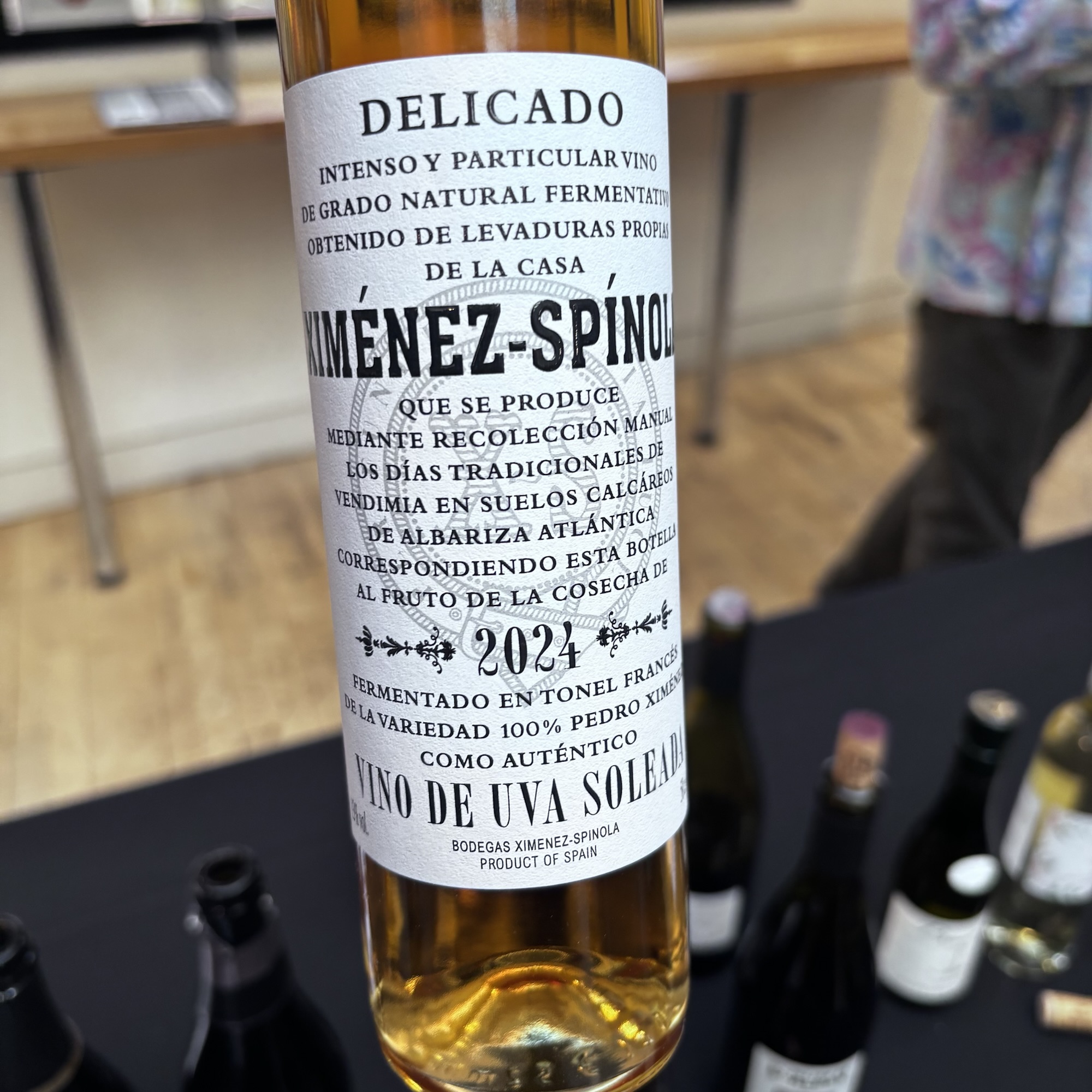
Three delicious wines sitting somewhere in the dessert wine spectrum next, beginning with Bodegas Ximénez-Spinola and their Delicado 2024. This Bodega is focused just on PX, and has been doing so since 1729. Their vineyards are in the Jerez triangle off the famous chalk Albariza soils. The grapes for this cuvée are dried in the sun for 21 days, on mats. This is done between the vines, so that the bunches see both light and shade as the sun moves round. In the winery the grapes only receive a gentle pressing. The result is rich with orange peel, apricot and concentrated raisined, fruit. There is no fortification and alcohol is just 13%. £28 for 50cl.

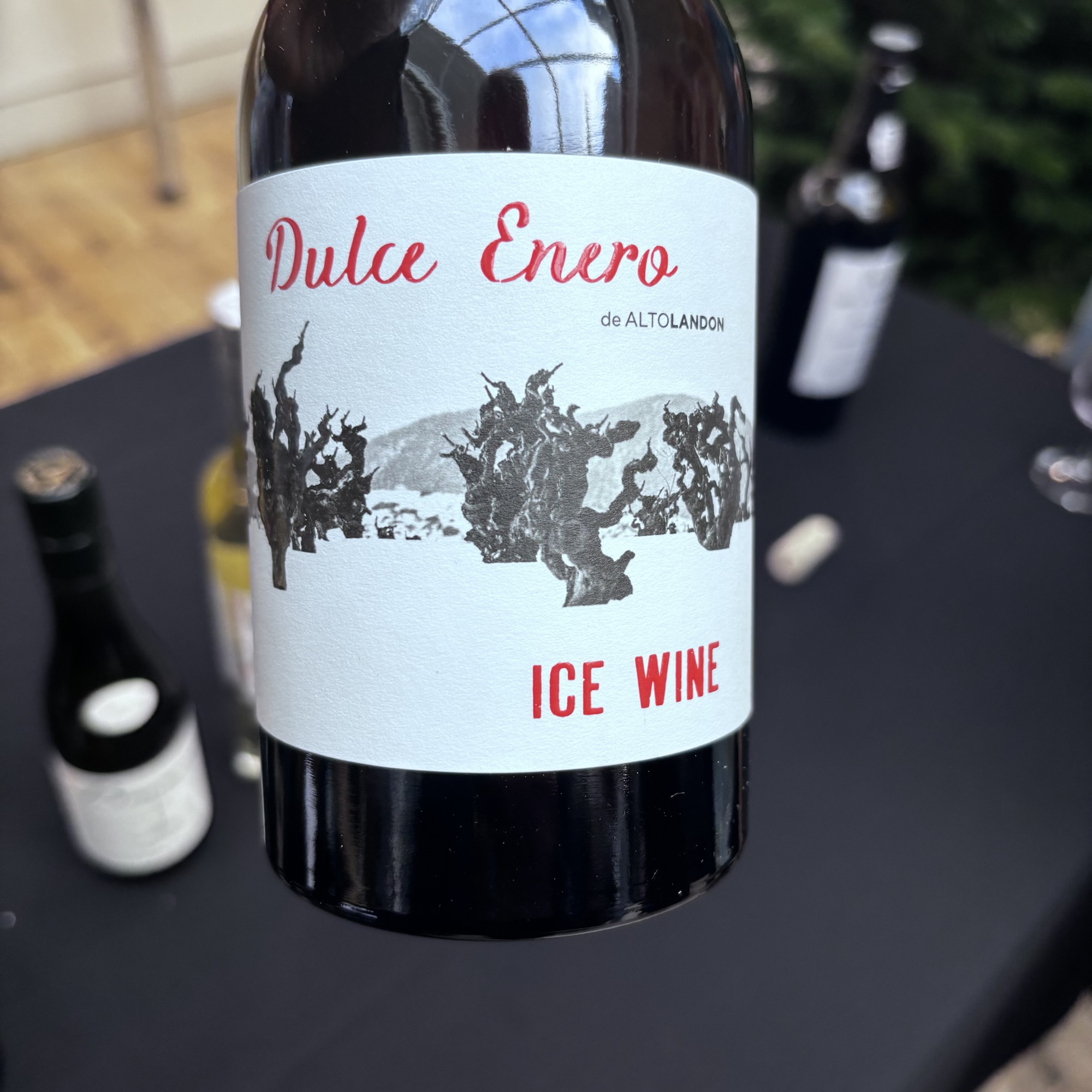
Bodegas Altolandon is new to me. They make exciting sounding organic wines, with some biodynamics, at altitude in Manchuela, at around 1,100 masl. Dulce Enero 2023 is an Ice Wine, bottled in 50cl (as is the Delicado above). Frozen grapes are harvested in January, which means they can’t make this every year. Fermentation can apparently take two-to-three months in stainless steel. It is a completely natural wine, with no added sulphur. Amber in colour, the fruit is tropical and concentrated. The nose explodes with pineapple, peach and caramel, but the palate has decent acid balance and although honeyed, the finish is fresh and not cloying. £25/50cl. This is frankly gorgeous and would go with blue cheese served with Iberico or (if you eat it) Foie gras.

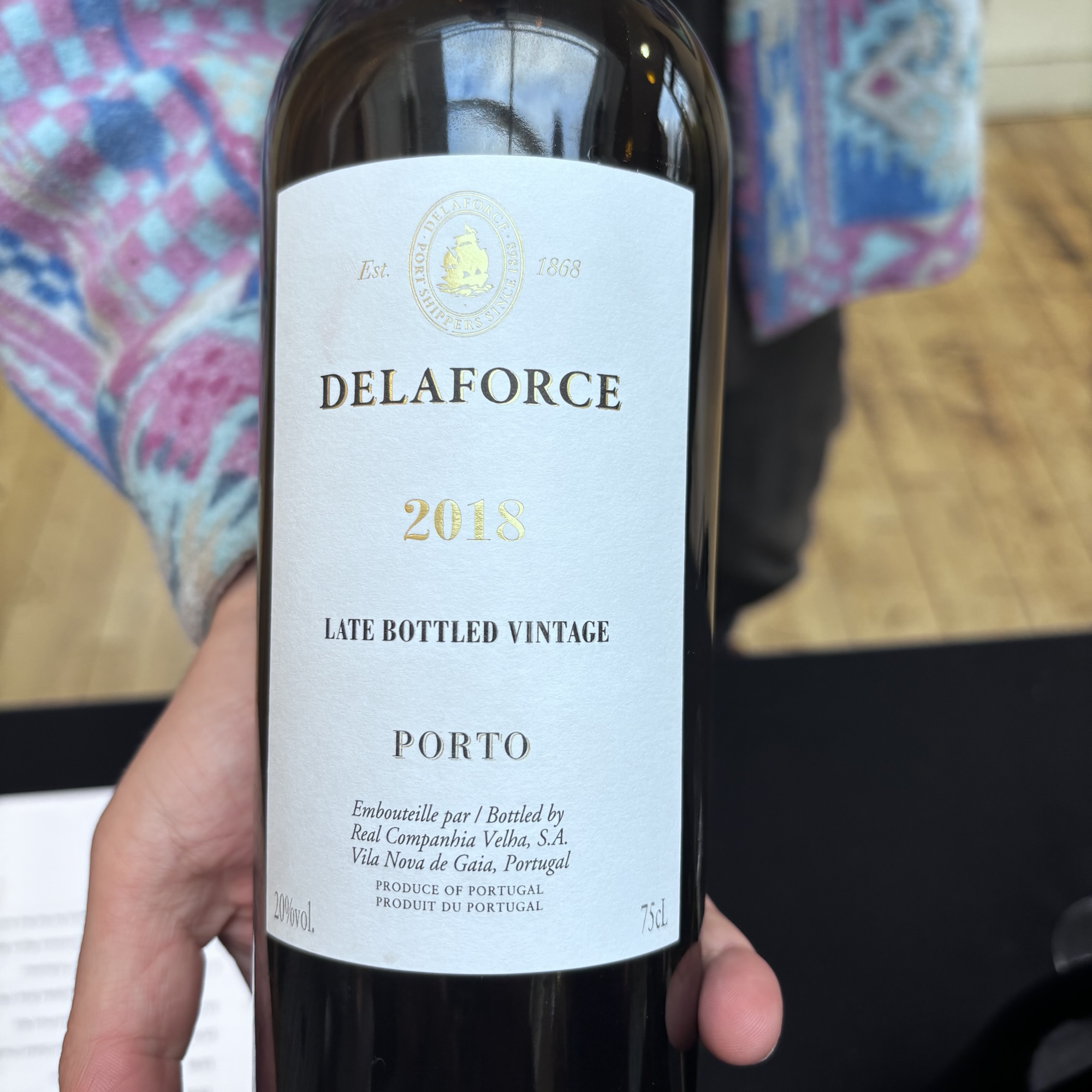
We drink too little Port, by which I mean both myself and all of us. I was reminded of this by several Instagram posts by wine writer Henry Jeffreys recently, and by tasting this Late Bottled Vintage 2018 from Delaforce. This traditional Port House (founded 1756 by the Marquis de Pombal) has managed to combine tradition with modern methods to keep relevant in the 21st Century. LBV is generally ready to drink on release, but you do get a nod towards vintage quality here. A deep plummy nose combines with mellow plum fruit on a smooth palate giving a rich wine, youthful but with some depth. I like the little bit of characterful bite on the finish. I’m not a Port expert but this seems exceptional value for £22.

SEVSLO

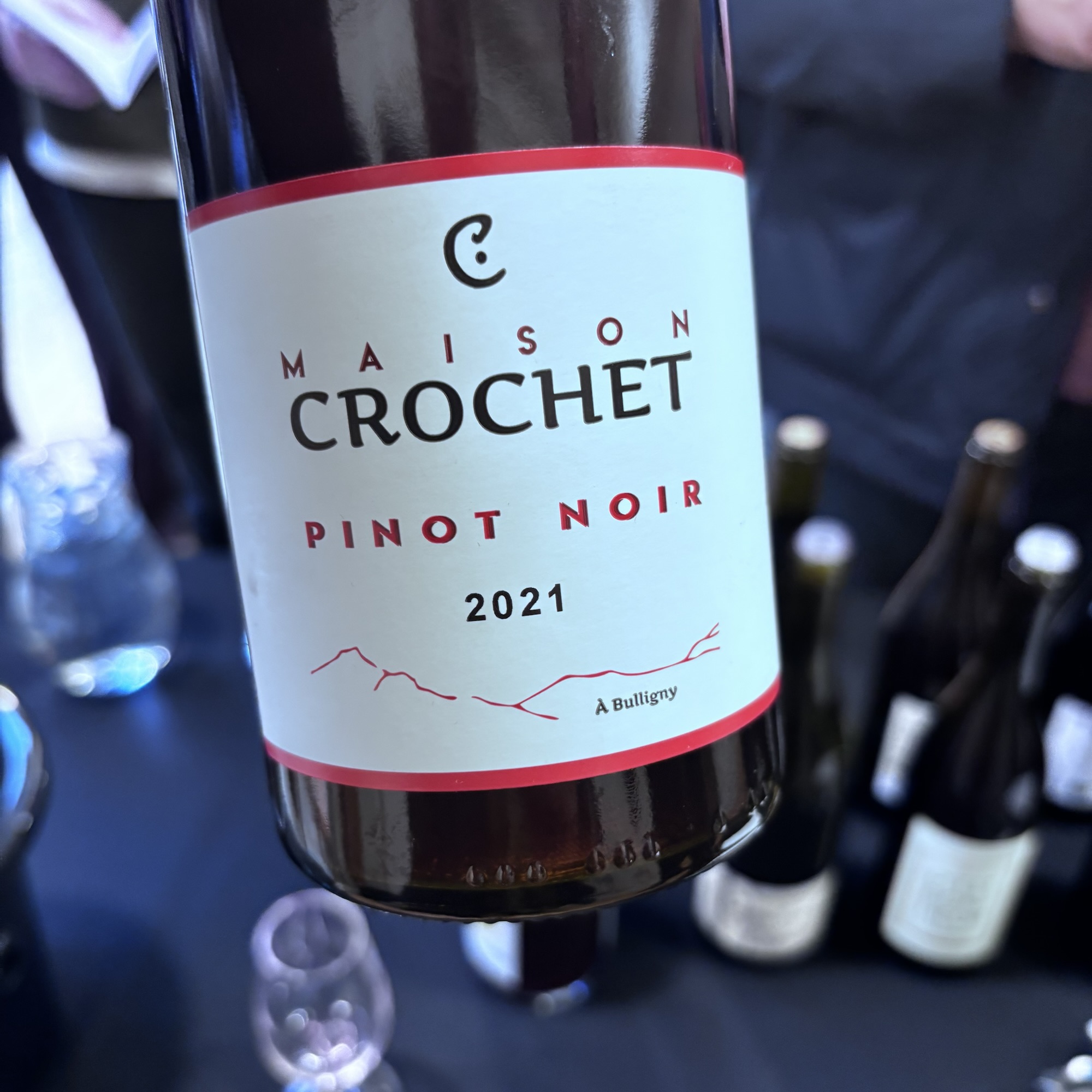
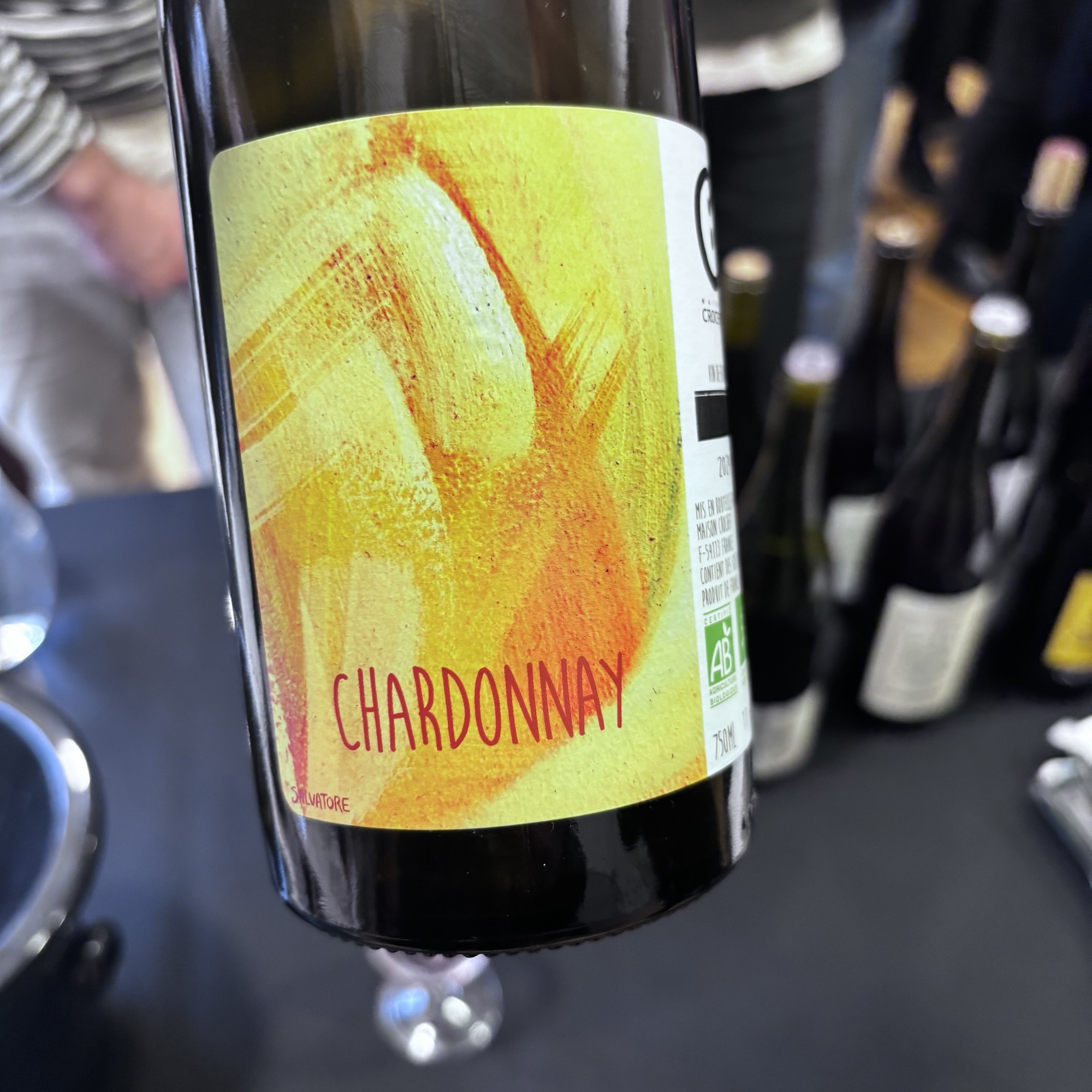
Sevslo is based in Glasgow’s South Side, where founder Séverine Sloboda imports a range of natural wines which I think shows a clear inspired difference from her competitors. This is certainly exemplified in Maison Crochet. You don’t see many people confidently importing a range of wines from Lorraine. Wilfried Crochet has been converting his family estate at Buligny, southwest of Nancy in the Côtes de Toul, to natural wines, and the wines now are bottled as Vin de France. I try to buy anything I see from this producer. Three of their wines were on show.

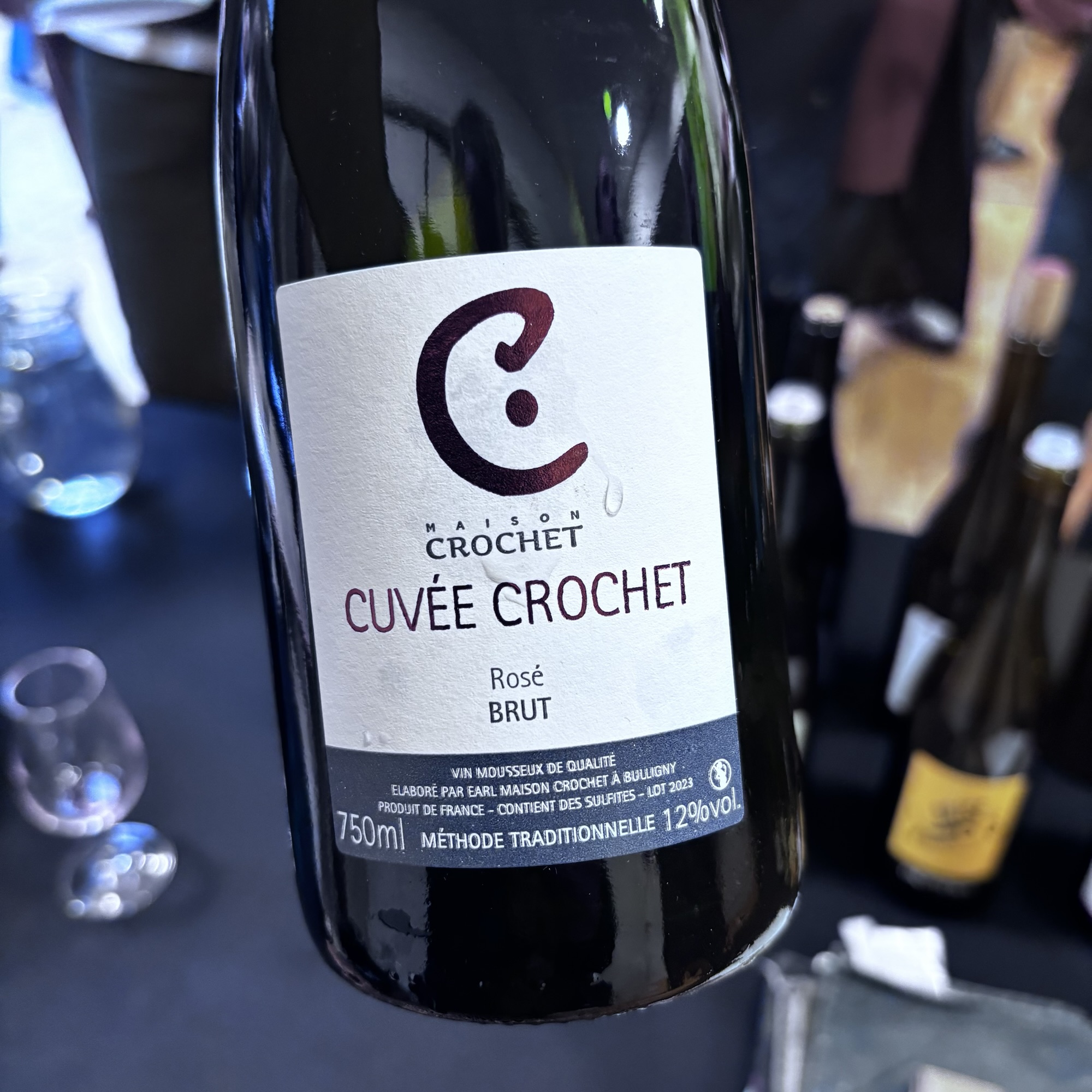
La Cuvée Crochet Rosé is a very dry pink sparkler, 100% Gamay in this new vintage (it previously had 20% Pinot Noir). It had nine months in bottle. It therefore isn’t complex, but it’s not intended to be. It is, however, super-fruity. I like it. £27.

Oaked Chardonnay 2024 is a floral wine, with some noticeable oak influence (not too much). The palate has a nice hazelnut note, and it is quite round and smooth. The alcohol sits nicely at 13%. £28.

The Pinot Noir, off a clay/limestone mix of soils, is from 2021. Fermentation and ageing (just seven months) are in stainless steel. It is pale, a little on the wild side (which, with wine, you know is where I like to take a walk). Funky, but in a good way. Just £22.

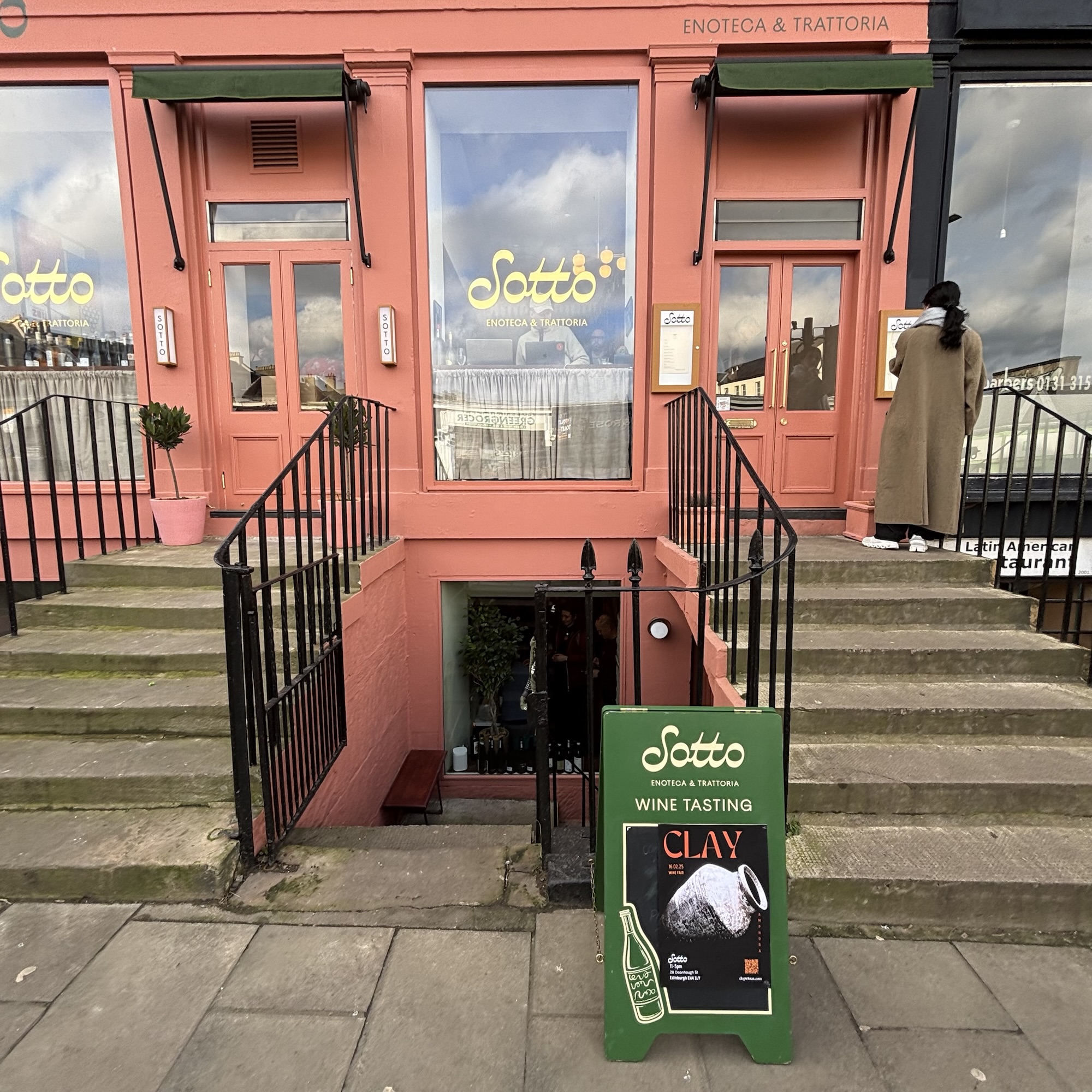
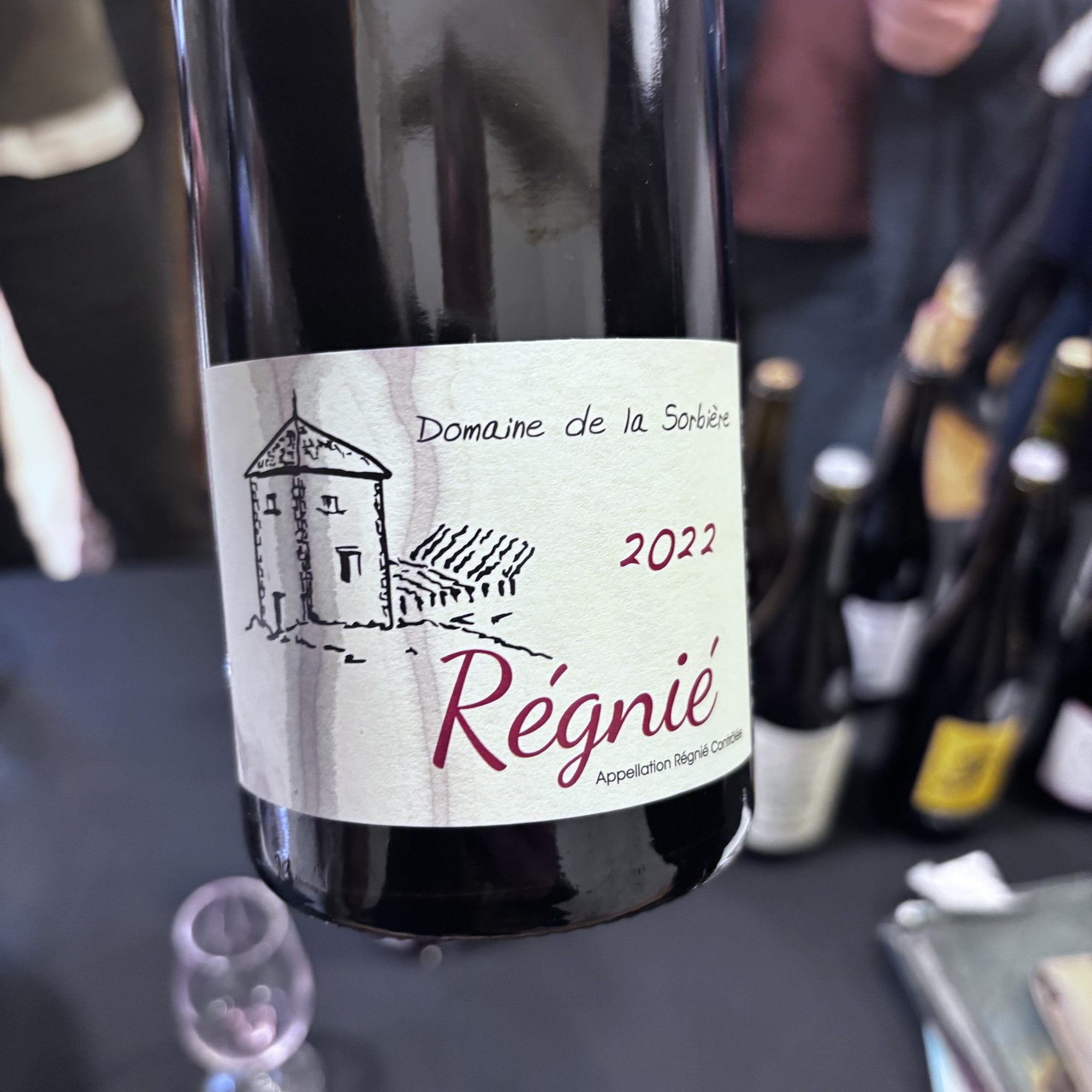
Another not so well-known (it should be) Sevslo-imported domaine worth highlighting is Domaine de la Sorbière in Beaujolais. Jacques Juillard works organically, biodynamically, naturally, and has something of a penchant for amphora. Say “amphora Gamay” (here they say “en jarre”) and my ears prick up. At the Clay Wine Fair in Edinburgh this past February I was lucky enough to try Jacques’s Brouilly en Jarre. It won Gold Medal and was the “Critics Choice” winner. A brilliant wine. On show at this fair was his Regnié 2022. It is made from 80-y-o vines, whole bunch fermentation in stainless steel, aged just three months, with zero added sulphur. Bright and fruity on the palate with a nice gentle, floral, bouquet. £24. Another delicious Gamay for Gamay Season (when isn’t?).

INDIGO WINE

Although we have a few Spanish wines here, from what for me is the best Spanish range I have access to, what was on show was not restricted to Spain. Nine wines were being poured and I’m afraid the three I missed out were the Germanic speakers. But you shouldn’t need me to recommend the wines of Clemens Busch, and Gernot and Heike Heinrich. Cork & Cask always has a good selection of wines from Indigo, but of course The Sourcing Table in Pekham Rye is the place to go in London. Peckham/Peckham Rye and Dulwich are well worth a day out now, packed as this triangle is with restaurants, bars, wine shops, and of course Kanpai Sake Brewery.

Sebastien Brunet isn’t a grower I know, but he makes a Sparkling Vouvray NV called La Rocherie off clay and flint. He’s uncertified organic. This cuvée is made 80% in stainless steel but 20% in 225-litre used oak. The wine sees 18 months sur lattes, a reasonable amount of time for Sparkling Vouvray (the minimum is 12 months on lees, although top growers might age wines for three years or more). This is quite fruit-driven. Although not as complex as some longer-aged wines, it does have nice honeyed Chenin fruit on a very decent finish. £22.

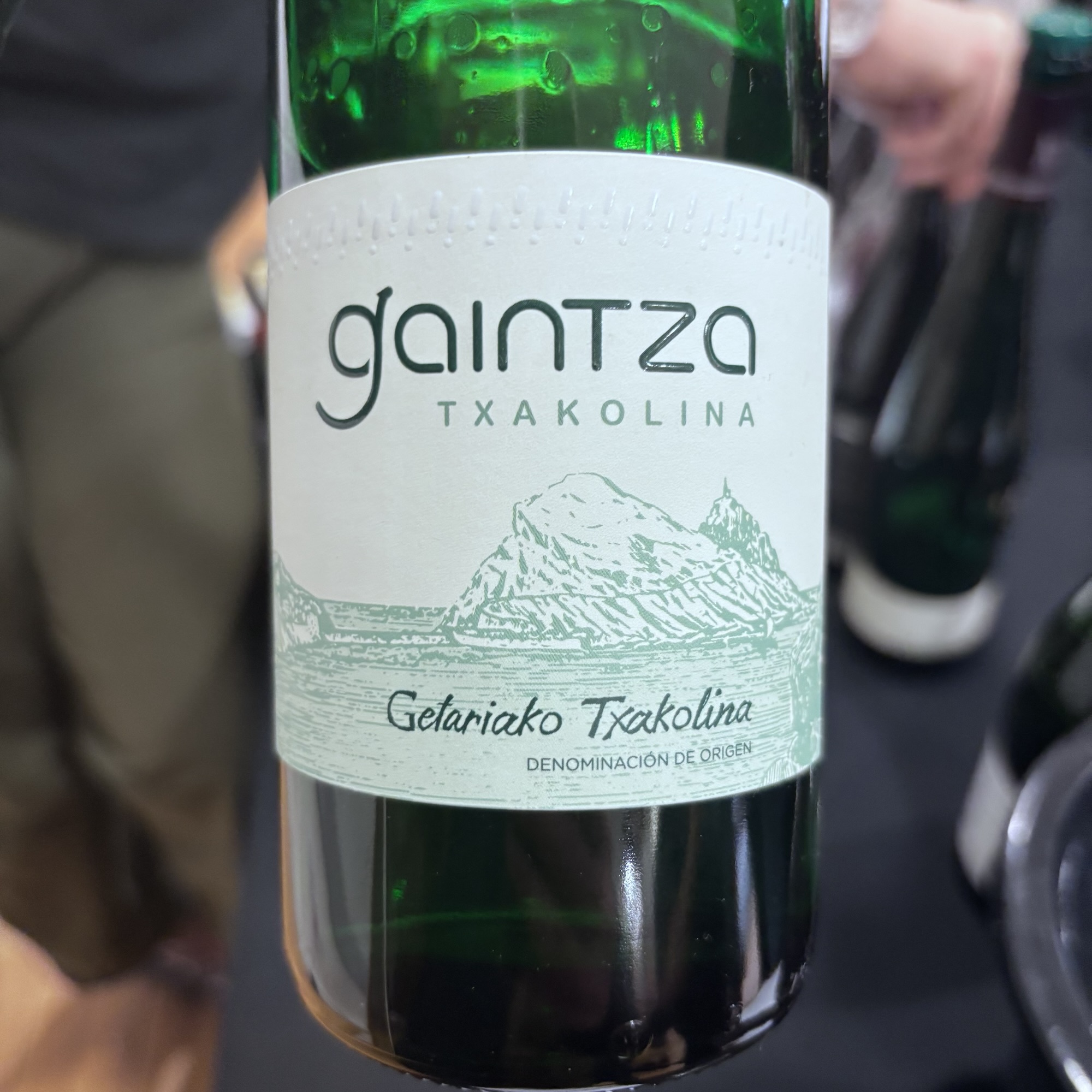
Gaintza’s white Getariako Txacolina (Indigo also imports their excellent pink version) is made in the Basque region from 100% Hondarrabi Zuri. The acutely maritime climate of the Basque coast and the limestone/clay soil mix create apple-fresh wines, cool-fermented, with a little carbon dioxide creating a frothy top to a prickly wine. In its simplicity it is perfect for grilled fish with a squeeze of lime or lemon, or indeed a perfect accompaniment to fish & chips when you don’t want to open a nice Champagne, nor take in the alcohol inherent in a Fino or Manzanilla. £20.

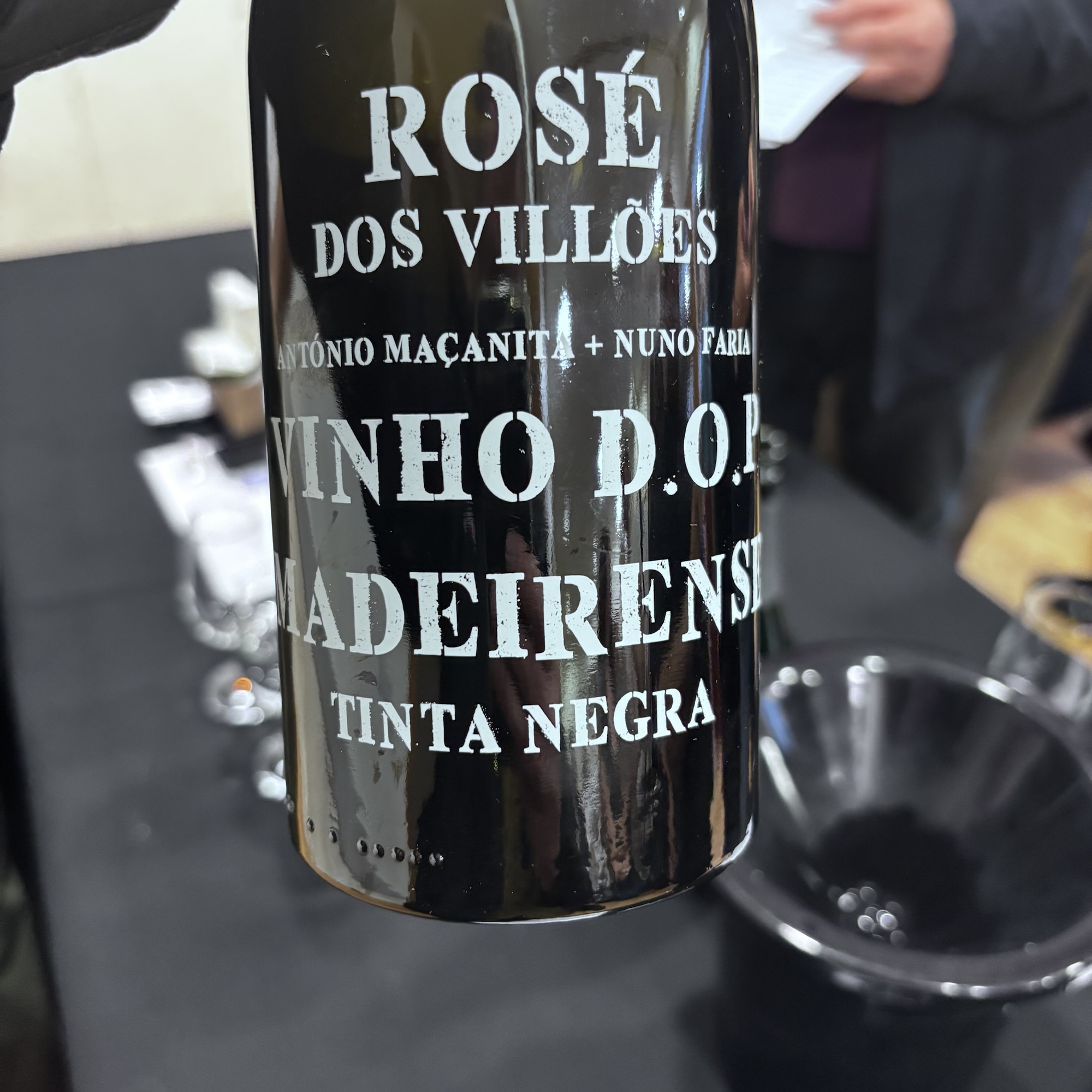
Antonio Maçanita first became known to me through his wonderful wines from the Azores, and it was in this context that I met him a couple of times way back before Covid. Then I got to try some wines he’d made in Portugal itself, and more recently as a partner (with Nuno Faria) in this Madeira project. I drank a very good red table wine called “Dos Villoes” in December last year. That, like this wine, was made from the “Tinta Negra” variety and was pretty pale as reds go. This has been labelled “Rosé” as the photo shows, but it’s not a whole lot paler. Anyway, this is superb if you like that kind of ethereal pink that haunts the air with wafting scents of red fruits, and skips lightly on the palate yet also bursts with fruit bombs. So good I yet again went home with a bottle of Antonio’s Madeirense. Cork & Cask have this Rosé for £25, and also the red for £35.

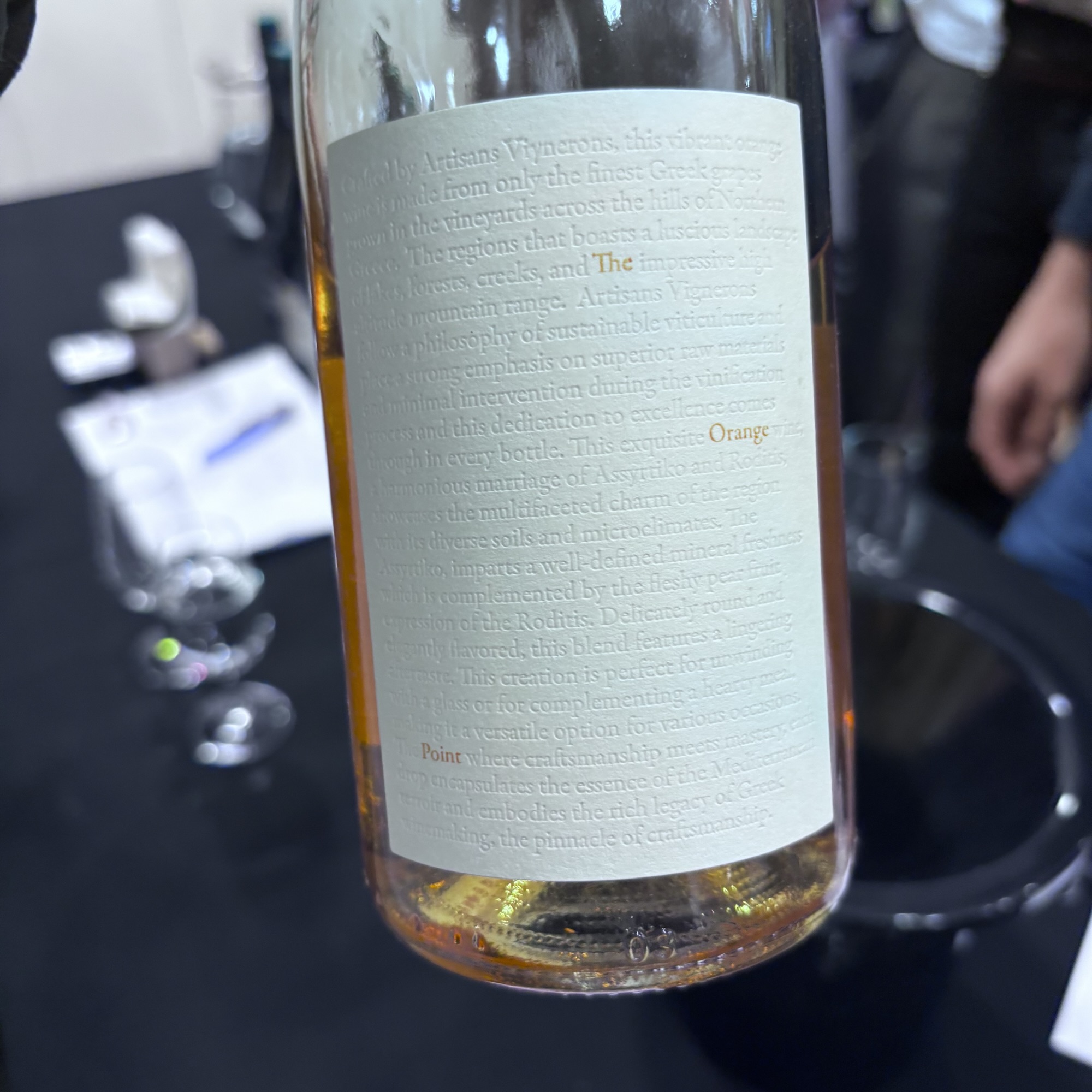
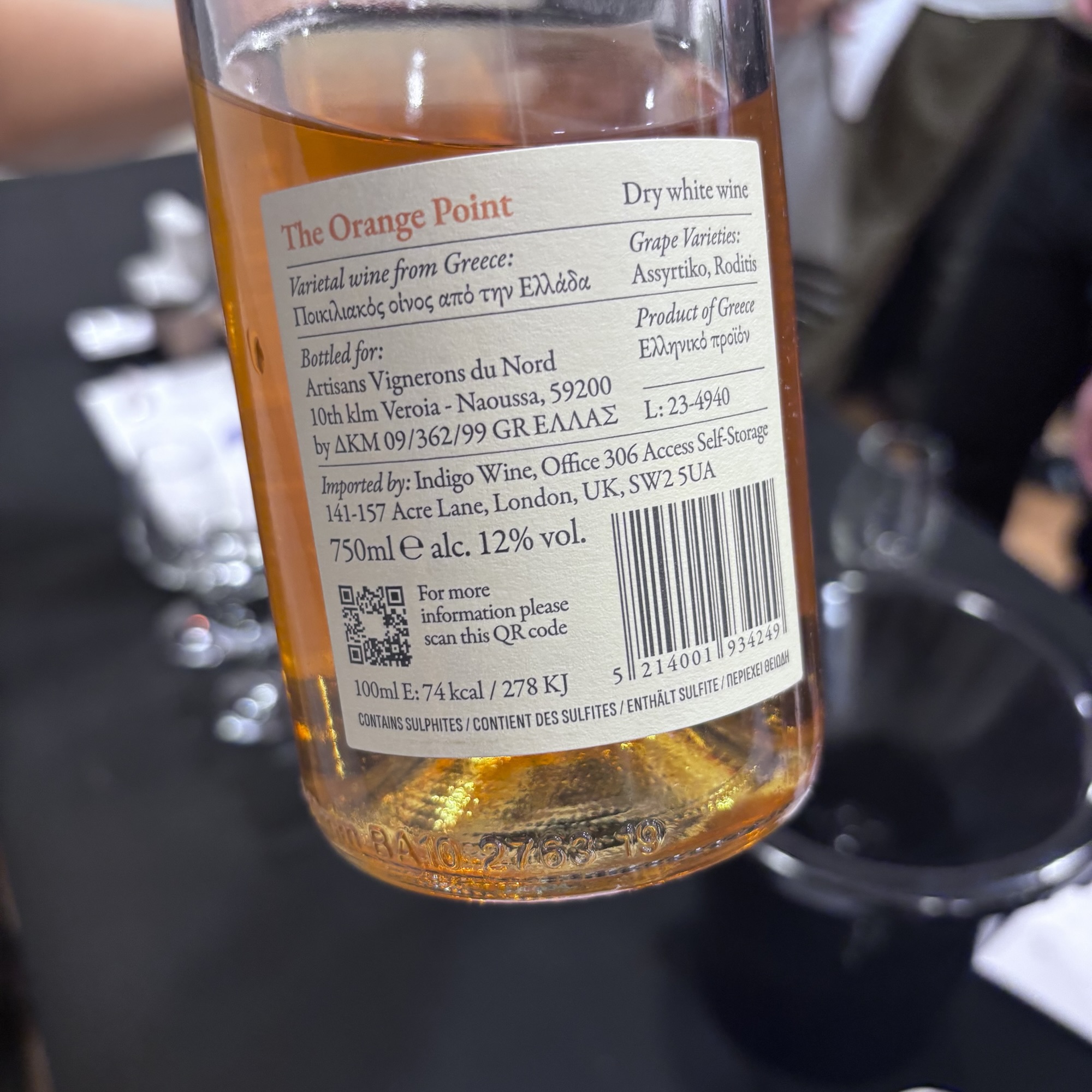
To Greece next (always happy to drink Greek wine, which seems to be getting a little traction now). The Orange Point is from the Artisans Vignerons de Naoussa, a grower collective in this excellent, and now perhaps emerging, region in Amyndeon (Northern Greece). This is a low-intervention, organic, wine made from Assyrtiko and Roditis grown up at over 600 masl. Fruit is co-fermented in stainless steel for over three weeks on skins, then the wine is aged 10 months on fine lees. You get oranges on the nose (why so often oranges in an orange wine?), and lots of apricot freshness and texture which comes especially from the Assyrtiko (think of that Santorini texture in a white wine translated to skin contact orange). Nice packaging, although a photo doesn’t do the textured label justice. £20.

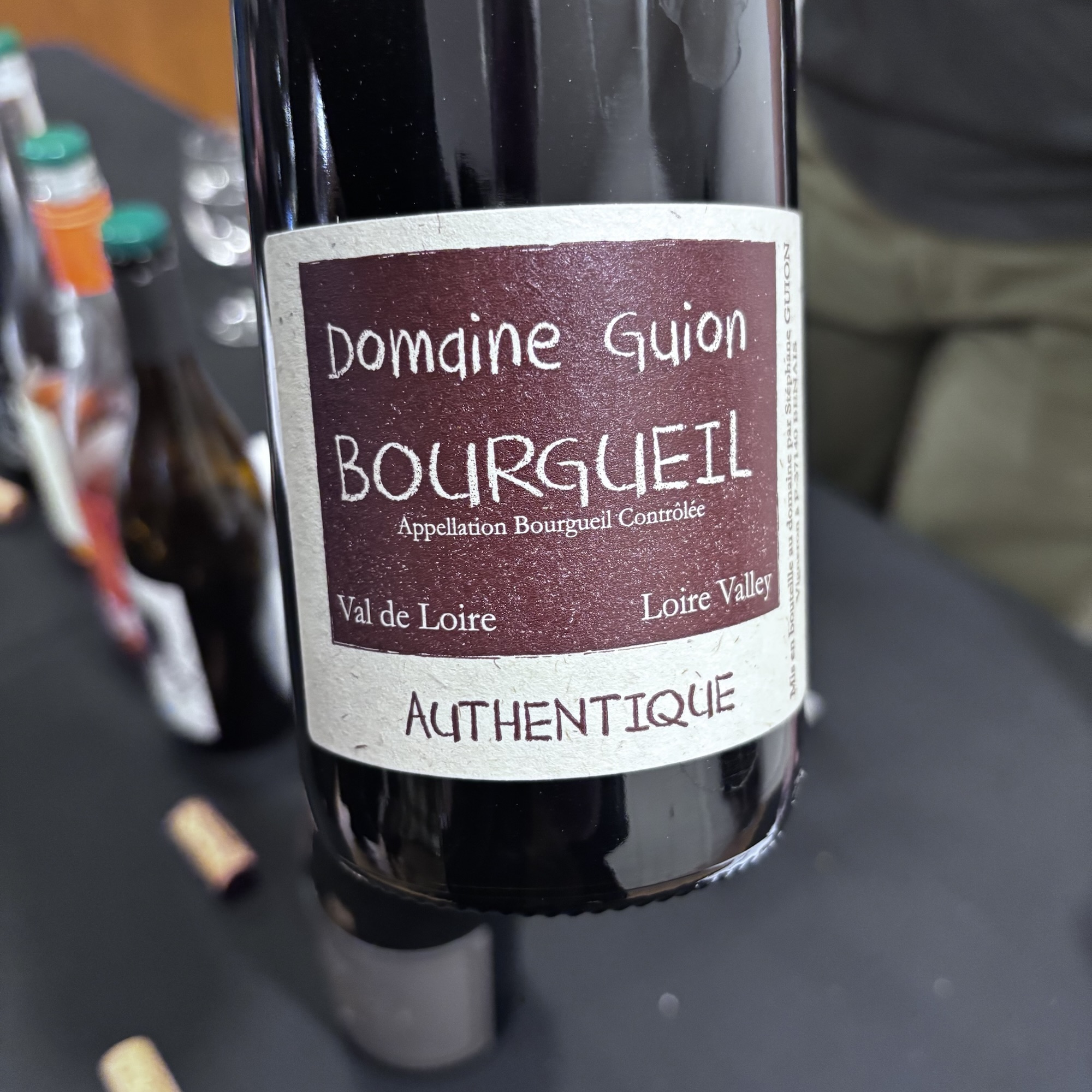
Domaine Guion is based in Bourgueil in the Loire. Stéphane Guion makes ageworthy Cabernet Franc, and only Cabernet Franc, off sandy clay over limestone, and this Cuvée Authentique, which is the new name for Stéphane’s “Cuvée Prestige”, comes from 50-y-o vines. From the 2019 vintage, so you’ve had a good bit of ageing done for you. It’s made in stainless steel, “for purity”, and it has very nice crunchy fruit. This is a good example of Cabernet Franc from a Loire setting in a warm year with a little light late summer rain to freshen it up. Ripe fruit is the result, and when this variety is properly ripe it’s often properly good. £23 seems a good price too.

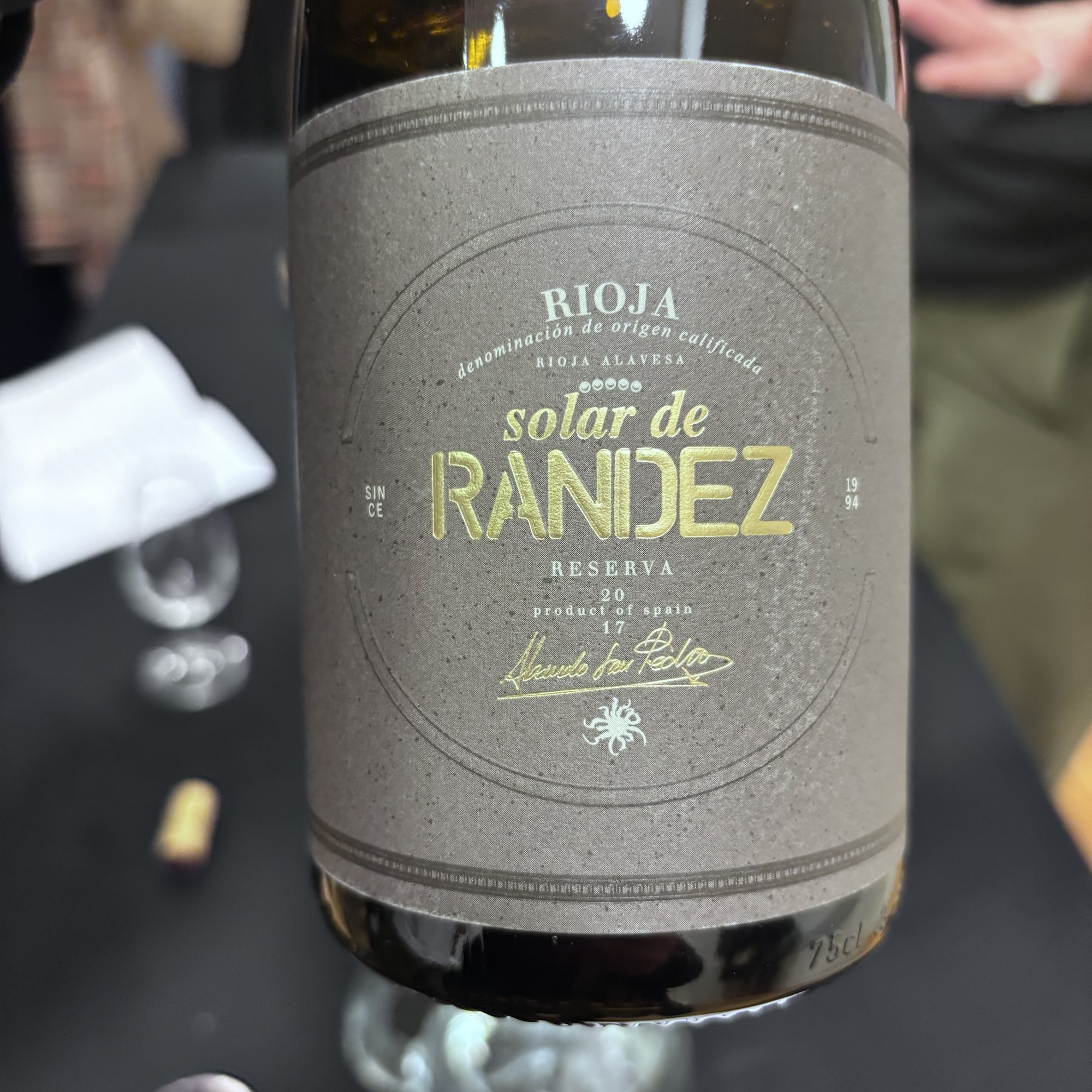
Back to Spain for our final wine, and the Rioja Reserva 2017 “Solar de Randez” from Bodegas Las Orcas. This is a third-generation family producer in the Alavesa sub-zone. 100% Tempranillo off clay/limestone soils, and 24 months ageing in oak, then 16 months in bottle before release. Plummy, and a rare whiff of unmistakable cedar wood, nice and smooth yet also fresh, with good elevated Alavesa acidity. I think this is very good quality for the money, a proper Reserva for £25. Indigo knows Rioja, as I keep discovering.

That brings to a close three articles on this year’s Cork & Cask Winter Wine Fair. Except of course to do what I did with Parts 1 and 2, and give you my favourite wines from each table. It wasn’t easy as each table furnished more than one possibility. Three, possibly four from Alliance, and Indigo’s was pretty hard to choose as well, although all of the wines I’ve written about would be welcome in my cellar. But as I must decide:

  • From Alliance Wine I’ve chosen the rather special Bodegas Altolandon Ice Wine.
  • From Sevslo I think Maison Crochet’s Cuvée Rosé, delicious pink Gamay.
  • From  Indigo, Antonio Maçanita Rosé dos Villoes (Madeira table wine).
Posted in Artisan Wines, Natural Wine, Wine, Wine Agencies, Wine Festivals, Wine Merchants, Wine Tastings | Tagged , , , , , , , , , , , , , , , , , , , , , , | 2 Comments

Cork & Cask Winter Wine Fair 2025, Part 2 (Modal, Roland, Vine Trail and Blind Summit)

Following on from Part 1 of my coverage of the Cork & Cask Winter Wine Fair 2025 (see article of 20/11/2025), we have four more tables to enjoy. Three wine agencies, Modal Wines, Roland Wines and Vine Trail, plus a brief look at Blind Summit Whisky, the independent bottlers from Leith. It was great to see Nic from Modal as I hadn’t seen him up here for a while. He’d brought an eclectic range from Portugal, Austria, France, Italy and Slovakia. Roland brought with him an equally varied selection from both France and points east, whilst Jack from Vine Trail almost stuck to their traditional French range, but somehow a Rioja (which I’m afraid I didn’t get to taste) crept in. Apologies to everyone for not being able to try every wine on their respective tables.

MODAL WINES

Planet Mouraz Vinho Verde 2017, Casa de Mouraz is a pretty good start here. Antonio Lopes Ribeiro and Sara Dionisio make wine in Dão, but after wildfires decimated their vines they had to look further afield for fruit. This parcel of very old vine Arinto, Avesso and Loureiro from the north of Portugal saw long ageing in wood. Mouthfilling but with nice fresh acids and bite. Lime and pebbles. £22.

Next, over to Austria. Christoph Heiss has worked in New Zealand, South Africa and Germany. His Malinga wines are always great value. He farms 12ha in Kamptal, north of the Danube and east of Wachau. HeissWeiss 2023 is mainly Grüner Veltliner with a little Müller-Thurgau. It sees a little skin contact and is aged in stainless steel on lees. Lively, fruity, savoury, with a bitter twist to ground the finish. £20.

I wasn’t aware that Modal Wines imports Elodie Jaume. Elodie made the wine at her family estate, Château des Chanssaud, for eight years. From the 2023 vintage the name changed to Domaine Elodie Jaume. She makes rather fine Châteauneuf-du-Pâpe (c.£47), but the quality of her fruit and winemaking is such that her two Côtes-du-Rhônes are very much worth seeking out. The Blanc 2024 was on show, Grenache Blanc and Clairette, only 6,400 bottles, made in concrete. Very classy and £24. Cork & Cask also have a little of its red sibling from the 2023 vintage for £22.

Next, two wines from Southern Burgundy and the Mâconnais. Domaine de Thalie “Les Pierres Levées” 2023 is a Chardonnay from Mâcon-Bray, not a wine I’ve drunk before. Four hectares of vines made in a mix of old oak and amphora. Lovely clean lines but good depth of fruit. A good wine for £30. The Pouilly-Fuissé “El Dorado” 2023 from Clos Sauvage is a step up, though as always when fashionable appellations get pricy, if it’s a stretch to afford the £50 this will cost, then maybe get the Bray. However, there’s no doubt this is good, certainly a fine wine, and it will be even better with some age. Chardonnay planted on that amazing middle-Jurrassic chalk/limestone. Just 2,800 bottles made. It even says “longue garde” on the label so don’t waste it.

Always superb, Nic showed two of his great Italian finds, Zerbetta’s Barbera from the Monferrato Hills, and Borgatta’s Dolcetto (if you are yet to try the latter wines of this old couple working very traditionally, you should). Equally, Slobodne, one of my three favourite names in Slovakia. Cabernet Sauvignon, in the form of their Liberator bottling, was on show.

But for want of space I’m going to skip the well-known Cheverny Rouge of Domaine Tessier and head deeper into the Central Vineyards of the Loire and Menetou-Salon. It’s an appellation that has long been seen as the poor relation to Sancerre, but Sancerre of both colours has become pretty expensive at or towards the top end. This 2023 Pinot Noir isn’t cheap but it is very good and still “affordable”. It’s from Domaine Bernard Fleuriet et Fils (who do also make Sancerre), and I was rather taken with it. Pleasantly pale but it has lovely pure fruit. That above all else comes through with an ethereal quality. £34.

ROLAND WINES

My first sip here was a wine that the Cork & Cask team say was one of the hits of their Summer Fair this year. “La Baignade” from Les Errances is a natural (with zero added sulphur) Chenin Blanc from Anjou. Apple and elderflower nose, saline acidity on the palate, rather lovely in its fresh simplicity, and £25.

Strekov 1075 is a name to conjure with in Slovakian wine. “Richard” 2022 is a varietal Chardonnay fermented in new, 600-litre, Zemplén oak, and aged eight months on fine lees. Again, fully natural wine here with no added sulphur. In my view, exceptional.

In the summer I drank a Rosé from Edgar Brütler, who makes wine in the foothills of the Carpathians on family land reclaimed from the communist regime when it fell. He had been in Germany up to that point, and learned to make wine at Geisenheim, then working for several top Austrian estates. It was very good. This wine, called Sefu Red, is a collaboration with a neighbour. It’s a blend, in this case not of Edgar’s local varieties, but of Syrah (66%) and Cabernet Franc (34%), which both see a short maceration. So, you get a simple fruity red, but a litre bottle for £20. Excellent party stuff.

Oskar Maurer’s Crazy Lúd Red 2023 was on taste but I’m not sure it’s worth expanding upon as I can’t see it on the C&C web site. However, Maurer does make the best Serbian wines I’ve tasted. Nor can I see Bott Frigyes “Just Enjoy Orange” (£30), from the Garam Valley in Slovakia. Both producers are worth getting to know. Bott Frigyes has a following in the UK, wholly justified. I have always been impressed by Maurer and Crazy Lúd is good value at £26 if you want to experiment with a good Serbian producer.

Thankfully Cork & Cask do have some of the White Label Refosk from Uroš Klabjan. Refosk, aka Refosco in Italy, does well in the Istrian Region where it is often very good. Klabjan is based in the kind of border country that made viticulture a dangerous nightmare under the iron curtain, but thanks to the EU things are simpler. But not this wine. A complex amalgam of dark black fruits with pepper spice, smooth tannins and good acid balance. Age it for a treat, perhaps a very pleasant surprise as well.

VINE TRAIL

Vine Trail boasts a list to die for if, like me, you love Alsace and Jura (and increasingly Bugey and Savoie), and if you yearn for the kind of Lottery win that would enable you to do more than stick your little toe into their Champagne section.

I always bang on about Bugey, don’t I. Bugey-Cerdon is an appellation for a gently sparkling wine that retains some noticeable residual sugar (and is therefore generally lowish in alcohol). The production method is similar to that for Clairette de Die. I am not so pretentious that I cannot enjoy, with a capital E, this gorgeous grapey wine as if it were a fruit juice (the acidity usually mitigates the sweetness like a German Kabinett does). This pink Ancestral Method sparkler from Balivet ranks among my three favourite versions, and it costs £25. Drink as an aperitif, with fruit desserts, or mid-morning if you need a lift. I drink at least one bottle every year, sometimes three.

One French appellation that has changed beyond recognition since I were a lad is Muscadet. The region is making loads of brilliant wines, but we see all too few here. Is it because it has a reputation as cheap and acidic, which comes from the 1980s Muscadet that I bet few can remember. Picpoul de Pinet, I’m sorry, but… Clos Armand is one of two biodynamic cuvées from Michel Delhommeau. It’s made from 70-y-o vines grown not on your usual Muscadet granite, but south of Nantes on volcanic gabbro and gneiss. Aged “sur-lie” of course, fruit from each soil type is vinified separately then blended before bottling. Fuller than much Muscadet, but still only 12% abv, this is juicy and textured, and exceptional stuff. Only £22.

Alsace, finally someone brought one! Surely a candidate for most dynamic and exciting region of France at the moment ought to have more representation on our shelves, for goodness-sake. Léon Boesch Grande Lignes Riesling 2023 is a stalwart at C&C, made by an eleventh-generation couple at this estate, but fully biodynamic and making wines which reflect their special terroir around the Rouffach-Guebwiller fault. One word? Saline.

Domaine Ardoisières is undisputably one of the top producers in Savoie. Brice Omont farms around 18ha now at Fréterive, St-Pierre-de-Soucy and Cévins. He’s a Michel Grisard protegé if that means anything to you. The vineyards are remote and chemical-free. Silice Blanc (2024), however, is a negoce wine. Brice buys Jacquère from Apremont and the grapes are both fermented and aged in fibreglass tanks for nine months. With minimal sulphur, this is lively and fresh. There’s a floral, citrus bouquet and quince and lime on the palate’s long finish. It will keep and improve but is delicious now. £28.

Chiroubles is not the most famous Beaujolais Cru by any means, but Daniel Bouland is a top grower. Based in the hamlet of Corcelette, near Villié-Morgon, he farms 7ha, all at 300-400 masl on a real mix of soils and terroirs. The Chiroubles comes from a tiny plot of 30-y-o vines on yellow sandstone. These are all natural wines here, and all see a whole-bunch fermentation. Bright colour, vivid cherry on nose and palate, it was so good to try this 2024. Excellent. £28.

From the Côtes de Bordeaux Francs we have a highly regarded 12ha property called Cru Godard. It has been run, since 1998, by Franck and Carine Richard, who farm organically. Average vine age here is good, at 45 years old. As the importer says, this is comparable to top Médoc Crus Classé. This 2022 is 65% Merlot, 20% Cabernet Sauvignon, 10% Cabernet Franc and 5% Malbec. It may sweat out 14.5% abv, but the fruit is fresh as well as rich. Low rainfall in this specific location helps especially the two Cabernets to ripen fully. The result is very good, and I think even better on the value spectrum at £22.

Vine Trail also showed Clos du Jagueyron Haut-Médoc. Based at Arsac, this is predominantly Cabernet Sauvignon (60%) with 30% Merlot and 5% each of Petit Verdot and Cabernet Franc. We have another good Bordeaux, but when I tasted both wines back in 2019, they were half the price they sell for now (this one at £20). I have to say that this alone would make me choose the Godard if I’m paying.

BLIND SUMMIT WHISKY

Blind Summit (who I profiled here on 01/08/2025, and who you will doubtless read more of very soon as I was at their tasting on Saturday) is a new independent whisky bottler. They source single casks from distilleries across Scotland and then re-rack and further mature or finish in another cask. Although the warehouse is elsewhere, they are based in Leith (Edinburgh).

The three whiskies I tasted at the end of the day were all bottles I retasted on Saturday, and I will go into a little more detail when the notes from that tasting come to be published. But the three I tasted were a 7-y-o Highland Park (£60) which they put into an Oloroso barrel, a 14-y-o Miltonduff (£70) from a Bordeaux barrique, and their powerful Mortlach 12-y-o from an old Australian Shiraz cask (£85).

These are all exceptional in their own way. Here, I will say just three things. First, Jamie and James seek out casks direct from producers, casks that have genuine provenance (for example, the Bordeaux barrique for the Miltonduff came from a famous Cru Classé). Secondly, every single whisky released is distinctive and different, and they show traits you’d expect (once again, taking the Miltonduff, it has a reddish hue and wine-like tannins just getting into the texture). Finally, these are small batches, generally between 100 and 300-or-so bottles, but in choosing to bottle in 50cl they are more affordable for the quality. The £85 Mortlach would cost at least £130 in 75cl. Same quality, you just have to sip it more slowly.

I hope you agree that the branding, including the overall design and the labels (which use local artisis), is spot-on too.

As with Part 1, I’m going to stick my neck out and give my favourite wine from each table. Bear in mind this is subjective.

From Modal Wines, Elodie Jaume Coudoulet Côtes du Rhône Blanc 2024 (£24)

From Roland Wines, Strekov “Richard” Chardonnay 2022 (£32)

From Vine Trail, Domaine Ardoisières Silice Blanc 2024 (£24)

Blind Summits Whisky, well, you pays your money…they are all brilliant, including their very well priced blended malt, of which more later…

Posted in Artisan Wines, Natural Wine, Spirits, Whisky, Wine, Wine Agencies, Wine Festivals, Wine Merchants, Wine Shops, Wine Tastings | Tagged , , , , , , , , , , , , , , , , , , , , , , , , , | Leave a comment

Cork & Cask Winter Wine Fair 2025, Part 1 (Keeling Andrew, Dynamic, Uncharted and Diatomists)

It’s that time of year again. Mid-November for me means the Cork & Cask Winter Wine Fair. Not many wine retailers put on an event like this. In England perhaps Butlers Wine Cellar in Brighton come closest. Cork & Cask, based in Marchmont, just south of The Meadows in Edinburgh, does it twice a year. The format is that a selection of importers and agents Cork & Cask works with come along with perhaps ten wines, give or take, and pour them for the paying punters, with a discount, of course, on any wines purchased on the day.

The summer event has more beer, and a smaller number of wine importers. The winter fair, with Christmas approaching, is more wine-based. This 2025 event was the biggest yet, and dare I say best as well. The wine agencies present included Keeling Andrew, Dynamic Vines, Uncharted Wines, Modal, Roland, Vine Trail, Alliance, Sevslo and Indigo. You will see from these three articles that these guys alone brought along some affordable gems. I’ve also added in Diatomists’ Fine Sherries, Antonio becoming a welcome fixture now at this fair, and also Blind Summit Whisky, whose separate new release tasting I hope to be at this Saturday.

As an event open to the public it gets mighty crowded after an hour or two and this is the main reason I cannot possibly taste everything. When I’m at a table waiting for ten minutes for a pour that’s me done, but I’m not complaining. I hope you agree if you explore these three articles that there are some fantastic wines on the Cork & Cask shelves at the moment (all wines tasted were, on Saturday, available in-store and on-line).

The order of tasting within the three articles will be as follows:

Part 1 – Keeling Andrew, Dynamic Vines, Uncharted Wines and Diatomists Sherries

Part 2 – Modal Wines, Roland Wines, Vine Trail and Blind Summit Whisky

Part 3 – Alliance Wine, Sevslo (Glasgow’s finest) and Indigo.

So on with Part 1…

KEELING ANDREW

The boys behind Noble Rot have opened more retail stores in London (Shrine to the Vine), and continue to import a mix of cutting-edge new wines and contemporary classics. Charlie had ten wines to show here, with an emphasis firmly on Spain and Greece.

Two new Cuvées from Suertes del Marqués on Tenerife (Canary Islands) are always a treat to taste. 7 Fuentes is as good, and good value, as ever (£25) but pay a bit more and you have Trenzado. It’s a varietal Listán Blanco (aka Palomino) made in tank. Very slightly reductive (I was first to taste this) with that classic volcanic note, but with genuine depth and length. I am not the only person to suggest that the 2024 vintage is the best yet. £35. I bought one, an easy decision with that 10% on-the-day discount, but still worth every single penny at full-price.

Tetramythos makes a few different ranges, but the “natur” wines are very good, a step up from their less expensive wines which, don’t get me wrong, I will buy as well. I’ve enjoyed the Amphora Retsina before, and the orange Roditis. Here I’m going to single out the Natur Sideritis and the Natur Agiorgitiko.

Sideritis is a retsina variety here made as a table wine without resin. Mineral, citrus and savoury in 2024, and one to try if you want to try something different (£27). It’s really good. If you want to try one of Greece’s top (but often unsung) red varieties, the Agiorgitiko is a bit of a bargain for £24. I remember Agiorgitiko from Nemea in the 1990s and 2000s. It was often a bigger style of red than we have here. Okay, it does hit 13% abv, but it has a lovely cherry bouquet, lifted fruit and a little tannic bite.

Charlie also had two Lopez de Heredia red Riojas open. The Tondonia Reserva will now knock you back a cool £50, a bargain if you have that to splash. If not, Cubillo (£30) is the next best thing, perhaps and certainly more my price range these days.

Finally, I was surprised to see the Anthemis Samos Muscat open…because I’d only a week previously been at a local dinner party where it was served. For a less-known dessert wine option for Christmas this is definitely worth a go, and at £20 it isn’t too expensive. It’s a 2018 as well.

DYNAMIC VINES

Jean-Christoph was on-hand as usual to pour some classics from Bermondsey. One could hardly expect them to bring out the family silver (Gut Oggau, Tournelle, Chappaz etc) but we didn’t do too badly, with seven wines, from Burgundy, via Emmanuel Giboulot, Bordeaux via Cahors King Matthieu Cosse, and a curved ball from Yohann Moreno (Corbières).

Emmanuel Giboulot, who is based in Beaune itself, makes truly excellent wines, wholly natural save a tiny amount of SO2 at bottling when deemed necessary. He additionally works biodynamically, both in vines and cellar.

His Bourgogne Blanc 2022 is made in a mix of stainless steel and old oak and is a very fine and classic Chardonnay. Don’t be surprised at the price (£43). I used to pay this for Roulot’s BB years ago and you can double that now. But like Roulot’s entry level white, this is fine wine, and it will age.

The Bourgogne Rouge is similarly good, but if you want something just a little bit more interesting, and four quid cheaper, take a look at the 2023 Terres Burgondes IGP (£43). It’s a pale and youthful Pinot Noir from vines outside the Bourgogne appellation, at Saint-Marie-la-Blanche, ten minutes east from Beaune with a clay and limestone soil mix. Easy to drink, floral, very “alive”, a gentle wine that entrances. Cork & Cask say pair with chicken or veal in a cream sauce. Stomach rumbling already…

Matthieu Cosse is well-known among the kind of people who read my blog as the best grower in Cahors. These past few vintages he has been making wine in the Bordeaux region with his friend, Jérôme Ossard. These are superb wines at a good price and all three come highly recommended. The two reds, both 2020 currently, come from Blaye (£26) and from Fronsac (£30). When I first tasted this pair a couple of years ago they felt as if they needed some more time, but now they have lost their tannic edge and the fruit is shining. You pays your money and makes your choice between the two.

The Blaye Bordeaux Blanc was good from the off, and still is. Exceptional value from a Sauvignon Blanc with a bit of Muscadelle (£26). I think the cat is out of the bag though. Very popular. All natural wines, of course.

Apaché from Yohann Moreno/Vin des Potes is a light, carbonic maceration, blend of organic and biodynamic Carignan, Grenache and Mourvèdre from the Corbières region. The Vin des Potes project is worth following as they make wines not only in France but also in Italy and Greece. A dark-fruited and herbal red with just a lick of tannin. Juicy fruit, £25. I always enjoy a chance to drink this, and the label always gets a comment.

UNCHARTED WINES

It’s always good to catch up with Gus and he had brought along, well, not any of my Uncharted favourites like Hermit Ram or Domaine Chapel, but nevertheless a varied host of cracking bottles. I had to pass on the pair of wines from Sybille Kuntz, but I hope you agree that this small Mosel estate is always good.

I started with a Bourgogne Aligoté from just south of Dijon. Marc Soyard (Domaine de la Cras) has worked with the undisputed Aligoté master, Sylvain Pataille, and this “Tercet Aligoté” is another classy version of this resurrected and once again fashionable variety. Some classic acidity but toned down by the overt fruitiness here. £29.

Next, off to Savoie, a dispersed region which is getting very exciting now. Jura land is too expensive these days, and what’s left can be too marginal. Savoie has the soils and the altitude, and now some new blood to spice things up. Domaine de Lucey “Les Chemins” 2022 is 100% Altesse made in concrete hexagon (what is it with Savoyard vignerons and oddly-shaped vessels?). Zero additives here, not even sulphur. Lemony, savoury, very electric, nothing muted at all. The wines are made off 6.5ha of vines by Erwan Buchwalter at the Château de Lucey, overlooking the Lac de Bourget. The Chemins vineyard sits at 350 masl.

Domaine Saint-Cyr with its instantly recognisable labels is one of the wonderful Bojo domaines Uncharted love so much (I think their Nouveau was hand-collected by Rupert for the annual Fête in London this year). Cork & Cask has some, Saint-Cyr’s “French Kiss Kanon” Nouveau, for just under £20. Gus showed their Chénas “Les Journets”. All I will say is that Chénas, once ignored, is coming to be quite fashionable on account of the better ripening global climate chaos has brought to the Cru’s western hills. It is also Beaujolais’s smallest Cru.

But special mention is saved for another Saint-Cyr wine, Raphael’s Aligoté, called Alien. 80-year-old vines on clay and limestone in the far south of the Beaujolais region. It spent two years in 600-litre oak. No additives whatsoever. Okay, it costs £37, but this wine is a far cry from the Aligoté of old. Gorgeous, creamy, melons with minerals and a wine that is just “vivid” in scent, fruit and tension.

I want to mention a couple more bottles here. Rodrigo Martin’s Espera “Alvarinho na Ânfora” is a flor-aged, zero-zero (no additives, not even SO2) from his Espera label (he’s the same guy who makes the Nat Cool wines). It comes from vineyards just north of Lisbon. Very dry, but it has lively peach and pear fruity freshness. £40. More serious than many Portuguese wines you may have become used to but top quality for the price.

Also, last but most definitely not least (my favourite wine on this table), “Les Vestides” from Romain le Bars. It’s described as a Tavel Rouge (I was sure Tavel was an appellation for just Rosé, but who cares?). Well, it turns out this is the kind of Tavel we used to love, technically a Rosé but more like a light red than a “pink”. Semi-carbonic Cinsault and Grenache from a Pfifferling protegé. Very fruity, but with bite. Only £22 as well.

DIATOMISTS SHERRY

I first discovered Diatomists at the Cork & Cask Winter Wine Fair back in 2022, very soon after I’d moved to Scotland. The venture was started by three friends, and the one I met was the very warm and affable Antonio Morenés Bertrán, their Sales Director. He does seem to enjoy coming to Edinburgh. He was showing eight wines last Saturday.

First, a new bottling for me. Sotovelo 2023 is a Palomino table wine, very fashionable now, of course. Off chalk, it was still aged under flor,  but without fortification it turns in just 12% alcohol. Dry and mineral with a grainy texture, but nice lemon fruit. Excellent, and £24.

There were two Manzanillas on show, but I was especially impressed this time with the Fino El Puerto de Santa Maria (15% abv, £17/half bottle). I’ve bought the Manzanilla a couple of times but this grainy, mineral wine seems a lovely expression of terroir and will make a nice change. It was bottled just two months ago and it is so fresh.

The Amontillado (£22 for a half bottle) is a single bota, 12-y-o wine with a bright amber colour and lots of depth, yet it is still super-fresh. A style I’m drawn to, now more than ever before. Then there’s the “Medium”, a style I am rarely drawn towards. But this is very nice. Another single bota, the key is the age of the blend, at least 19-year-old wines in here. Lovely raisin fruit on the nose, getting complex even at a tasting, fresh but with a bit of sweetness. Tempted (also £22/half).

Finally, the Pedro Xímenez Single Bota 5-year-old, sweet, dark, a bouquet of rich caramel, deep and long. I wish I’d had the muscles to grab one for Christmas, perhaps it ain’t too late. In case you think I’m especially weak, I was carrying several 75cl bottles home.

So, hopefully you consider that a good start. These wines will doubtless fly out at the lower end of the price spectrum, but the more expensive treats are, well, tempting for Christmas. Best from each table? Tough as always, but:

  • From Keeling Andrew, the Suertes Trenzado is my clear winner.
  • For value as well as quality, from Dynamic Vines, the Cosse Blaye Rouge on this occasion.
  • From Uncharted Wines, the Tavel from Romain Le Bars.
  • From Diatomists, if I have to choose, a wine that has already achieved praise from bigger names than me, the Fino El Puerto de Santa Maria.

Next-up, in Part Two, look out for gems from Modal, Roland, Vine Trail and Blind Summit Whisky Bottlers.

Posted in Aligoté, Artisan Wines, Beaujolais, Bordeaux Wine, Burgundy, Canary Islands, Greek Wine, Natural Wine, Savoie Wine, Sherry, Spanish Wine, Wine, Wine Agencies, Wine Festivals, Wine Merchants, Wine Shops, Wine Tastings | Tagged , , , , , , , , , , , , , , , , , , | 1 Comment

Recent Wines October 2025 (Part 2) #theglouthatbindsus

Recent Wines for October, Part 2 begins with a pétnat from Hungary. Then we go to Lavaux, for one of the cheapest Swiss wines I’ve found in the UK. A Kentish pétnat cider breaks the flow, before we finish with an old favourite from Marcillac in the Aveyron, and another wine from our own shores, a remarkable English Sparkling Riesling.

Robin 2021, Annamária Réka-Koncz (Barabás, Hungary)

This is Annamária’s pétnat, made in Eastern Hungary principally from Királyléanyka (circa 60%) with Furmint (30%) and Rhine Riesling (10%) in this vintage. The Furmint is sourced from a friend at Màd. Hand-disgorged but with a small deposit, it is possible that the bubbles have subsided just a little from when I first had this vintage. That was in August 2023.

It is interesting to see how it is possible for a pétnat to age. The Furmint was from quite old vines and the depth of that fruit does, I think, come through here. However, the fruitiness of the Királyléanyka (aka Feteasca Regala in Romania) still shines through. If anything, it’s a softer wine now, more mellow, and less overtly mineral. It may be a touch darker and there is a bit of lees deposit in the bottle.

It’s now more “smooth and savoury” than it was in 2023. There’s something of the kind of depth you can get in some Champagne after autolysis, although without quite as much complexity. I will say, I think I have stored it properly, though.

Although this has long gone from Importer Basket Press Wines’ web site, they are, I understand, getting the latest shipment from ARK imminently. This 2021 still appears to be listed at Prost Wines for the same £27 I paid two years ago, along with the 2022 vintage for £32.

Chasselas 2024 Lavaux AOC, Famille Testuz/La Cave Beau Reveil (Vaud, Switzerland)

I’m sure that if you didn’t know where Lavaux is a month ago, you certainly will now (because you read my recent Swiss articles, right?) If you didn’t, it’s between Lausanne and Montreux in the Canton of Vaud, the vines situated for the most-part on the steep terraces, constructed by Cistercian monks in the eleventh century, and now designated a UNESCO World Heritage Site.

The Testuz family farms 3ha of vines near the village of Aran-Villette, between Lutry and Cully, not far east of Lausanne. Cave Beau Reveil is their negoce arm, from which they make a larger range of wines from the different Lavaux villages. They grow mostly Chasselas, along with some Pinot Noir and Merlot, in their own vineyards.

This is a blend from across Lavaux. It was one of the “critics choice” wines at the recent Wine Society Press Tasting, which some notable critics have described as the best tasting the Society has ever put on. Okay, this wine is quite simple as Chasselas goes, although people have a perception of the variety producing simple wines. I doubt many critics have experienced the relative heights Chasselas can aspire to, and also what it can age into (it is well worth seeking out an aged wine from the two Lavaux Grand Crus of Calamin and Dézaley).

It has classic Chasselas flavours: a fresh but not tart lemon acidity, a bit of stone fruit, along with a herbal finish. The texture, slightly chalky, softens the overall perception. It has a savoury quality too. Alcohol, labelled at 12.3%, is well balanced.

This is quite a long note for a simple wine, but that’s because of the price. The Wine Society is knocking it out at £14. It belies the myth that all Swiss wines are expensive. It won’t wow collectors of Daniel Gantenbein’s wines, but if you don’t know Swiss wine, this is a pretty inexpensive way to dip your toe in.

It is possible that Rick at Dreyfus Ashby Wines may import the Testuz Family as well, although the Dreyfus Ashby web site says that “your country is not allowed to view this resource”. I’m not sure where it thinks I am?

Fledgling No4 Red Cider “Redlove Wild Ferment” 2022, Nightingale Cider Co (Kent, England)

This is unusual, but that’s why I bought it. A mix of the label and the colour. If you think cynical old wine obsessives (who like cider too, of course) cannot be swayed by a standout label, you are wrong. It is also three years old, which goes against the perception that cider is best drunk young.

Located at Tenterden, in Kent, also known for Tenterden Vineyard (now part of Chapel Down and the English Wines Group), which was planted in 1977 by Stephen Skelton MW, no less, after his return from Germany the year before. Back then, the English wine industry was in its precarious infancy, and cider making was seen as more profitable. However, we are talking “big cider” rather than the artisan farmers who are making the wonderful “craft ciders” we can find today (not sure I like that term, considering how fake the word craft often sounds when placed before beer these days…let’s stick with artisan natural cider for Nightingale).

Nightingale have been growing apples since 1948. Sam Nightingale first bottled his own ciders in 2013, going full-time as a cider maker two years later. He makes natural ciders from 100% juice, no additives, which are both vegan and gluten free.

Fledgling No4 is a single varietal cider from Redlove apples. There isn’t enough of a Redlove crop to make Fledgling every year but 2022 was abundant. As a pétnat, it is made by the same Ancestral Method that pétnat wine is made by, with the fermentation finishing in the bottle. It’s dry, naturally it’s appley, and the bubbles are fine. It has red fruit aromas and red berries on the palate. Acidity is nicely zippy, even with age. Alcohol is 7.1%.

As for the colour, Redlove is a red-fleshed apple. That gorgeous red colour is completely natural. No drop of red wine, no additives. As I said, 100% juice.

My bottle cost £12 from Aeble Cider Bar and Shop in Anstruther, Fife (Scotland’s wonderful cider specialist). That Nightingale believe it can age is born out by it still being listed on their web site (£13.50). It also won a bronze medal at the Japan Cider Cup in 2024. I think you will agree that the label is totally made for Japan. I love it too. If an artisan has thought about the label (viz Westwell, L’Octavin, Gut Oggau…) maybe they thought a lot about the wine as well.

Marcillac “Lo Sang del Pais” 2023, P&J Teulier/Domaine Le Cros (Aveyron, France)

Although it is many years now since I have visited Aveyron, it ranks as one of my favourite parts of France. Always one of France’s poorer Departments, it sits just south of the equally wild and rugged Cantal and Lozère. The architecture of its red stone towns and villages, the drama of its river valleys, and its history, are all amazing.

The religious treasures at Conques make it one of the must-visit places for any connoisseur of medieval Europe, but its once lost vineyards of Estaing, Entraygues et du Fel and Marcillac were a real draw for me too in the days when I dreamt of writing “The Lost Vineyards of France”. Those vineyards are no longer lost.

Perhaps Marcillac has always had potential. It used to be the source of wine for the coal mines, for which the region was once known. As the mines closed and the trains to Paris didn’t run that far, then viticulture, often on hard to work terraces, dwindled and almost died. The Teuliers started out at Goutrens with just one hectare, but from the 1980s began acquiring more sites, often needing to replant on slopes with a gradient over 60%. Now the family, as in father Philippe and son Julien, farms 30 ha.

Like the Roc des Anges cuvée I wrote about in Part One of October’s wines, Lo Sang del Pais is a wine I pretty much purchased every time I made an order from Les Caves de Pyrene from way back in the mists of natural wine time. I had probably read Paul Strang, that expert on the wines of Southwest France, who I think it was who drew my attention to a wine from a region I had such a soft spot for. As with the wines of Nicolas Carmarans, when I spot an Aveyron wine I usually grab it.

This is a natural wine, made wholly from the variety here called Mansois, but which is better known, if known at all, as Fer Servadou [100% Mansois according to their web site, though other sources claim it has a dash of Cabernet Sauvignon and Merlot]. Of those thirty hectares farmed, around twenty of them are planted to Mansois. Vine age for Lo Sang averages 25 years. The fruit, hand-picked of course as it is all grown on steep hillsides, sees a 15-20-day maceration in stainless steel with various measures to keep the cap moist. Élevage lasts about twelve months, also in stainless steel.

The bouquet is all raspberries whilst the palate has crunchy fruit, dark and brambley, with just a touch of tannic structure. A simple wine, but few wines show their terroir like this does. It has that taste sensation which some describe as iron filings (which I haven’t tasted, and the hint is surely in the name “Fer”), or others have said like blood in black pudding. I get both. But more than anything it tastes of those wild, steep, once-abandoned terraces in valleys once redolent with the smell of coal dust.

I assume that Les Caves de Pyrene still imports and sells this cuvée. My bottle came from The Wine Society for £11. Everything what they used to call French Country Wine should be.

*Looking up a fact which had slipped my mind, a Google search came up with an article I wrote myself top of the list. It’s gratifying whenever I discover I’ve been one of only a few UK writers to cover a region. Anyway, though I say so myself, it’s a nice article, and informative. Search for Wines of the Aveyron and a Little Vicarious Travel (6 May 2020), or just type Aveyron into the search box, top right, should you want to read more.

Promised Land Sparkling Riesling 2017, Charlie Herring Wines (Hampshire, England)

Tim Phillips is no stranger to this blog, but his wines are as rare as teeth in the hens that wander freely in his walled vineyard near Lymington, so perhaps he gets mentioned less than he deserves. There are two reasons I hesitate to open Tim’s lovely wines. One is rarity…I never know if and when I can replace bottles. Second is whether they will be ready to drink. His wines benefit from age, and although I try to buy more than one of each wine, I can’t always manage it and mistakes made opening a bottle too early could be annoying.

Luckily, I do have another bottle of this sparkling Riesling. Ripening Riesling in England would be laughed at by some so-called experts, but the walls of the old Victorian kitchen garden which is now Tim’s vineyard retain heat, and the site is sheltered somewhat, not only by the walls, but on account of it being just over two miles inland from the Isle of Wight.

Promised Land is made as a traditional method sparkling wine, dosage free (Brut Nature), and of course it is a natural wine too. I guess Tim is making something akin to what, in Germany, is now called Winzersekt, and which is undergoing a fantastic revival. The minimum time on lees that German wine law requires for these estate-grown and bottled sekts is nine months. Tim needn’t worry on that score, yet he is right to give his wines extended lees ageing.

The bouquet takes time to build to a crescendo of fruit, but the palate is explosive. Acidity is as strict as the psychopathic German teacher I had at school whose 45-minute homework always took us three hours, and who preferred a cricket bat to a cane (which I thankfully avoided), but there is enough tropical fruit with lemon and lime riding on top here to make the experience thrilling.

Despite the exciting ride, I won’t open my next bottle for a couple more years. We thoroughly enjoyed it, and the whole 11% abv bottle went at one sitting (with vegan Sri Lankan food from the wonderful Sri Lankan Delights), but I would next like to see a wine showing its potential for complexity next time. I loved it, but I add the caveat that I’m a real Saarwein fan so acidity is my friend. It may need more time ideally, but boy this is so good!

Genius winemaking, full of soulful introspection combined with remarkable intuition. That’s what it takes to make a wine like this in England. As usual, purchased direct from the vineyard and as ever, in very short supply. However, if you are quick, you might find that Solent Cellar in nearby Lymington has some of Tim’s new Seyval Blanc cuvée, called Charlie Don’t Surf. Whether this is a nod to Apocalypse Now or The Clash, I’m not sure, but it is sure to be fabulous.

Posted in Artisan Cider, Artisan Wines, Cider, English Cider, English Wine, Hungarian Wine, Natural Wine, Petnat, Swiss Wine, Wine, Wine Agencies, Wine Merchants, Wines of Southwest France, | Tagged , , , , , , , , , , , , , , , , , , , , , , , , , , , , , | Leave a comment