Cork & Cask’s Edinburgh Summer Fair is always fun. Of course, the weather helps lift the spirit, but there is less of a wine focus in the summer. There’s plenty of wine to taste, but equally lots of beers and other drinks. For someone tasting to write (as opposed to pre-loading for an afternoon barbecue, as one couple were heard to say), having slightly less wine to get through at a busy public event is no bad thing.
I shall need to split my coverage into three articles. Part One will cover Element Wines and Raeburn Wines. Part Two will take a look at what Indigo Wines and Moreno Wines brought along. Part Three will cover Richmond Wine Agencies and a rather good selection of Sake from Marusia Beverages. We will finish that article with some very fine ciders and a few beers.
All prices listed are retail, at Cork & Cask of course.
ELEMENT WINES
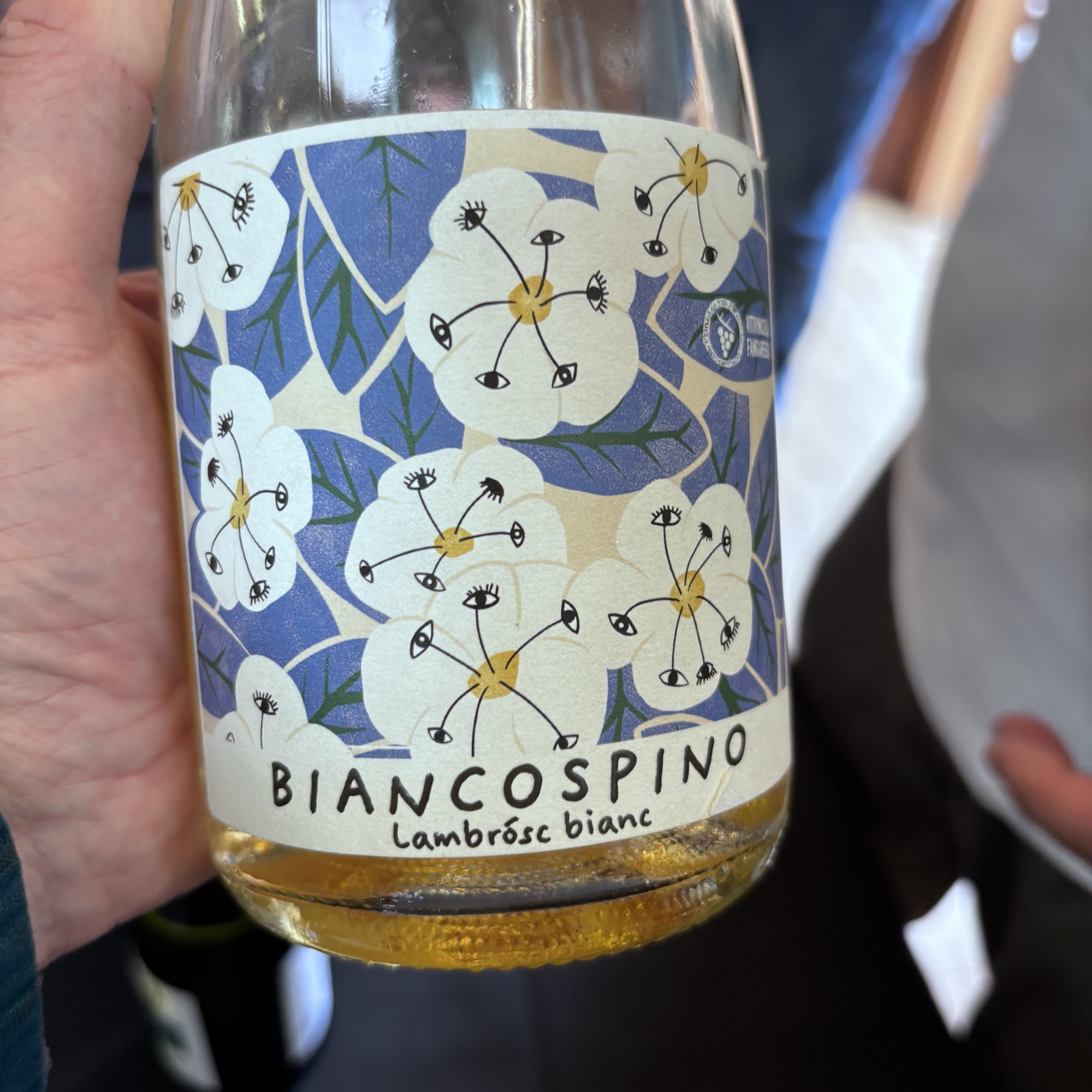
Lambrusco Bianco Biancospino, Vitivinicola Fangareggi (Emilia-Romagna, Italy)
This wine comes from a 24-ha family estate with roots in the 19th century. They farm organically and follow other low intervention winemaking practices such as indigenous yeasts. It is a “Charmat method” wine, that is tank-fermented, but one of very good quality. I’ve bought this myself a couple of times as it’s a light and fresh summer party wine redolent of yellow stone fruit. I’d rather drink this outdoors in summer than a cheap Champagne. £25
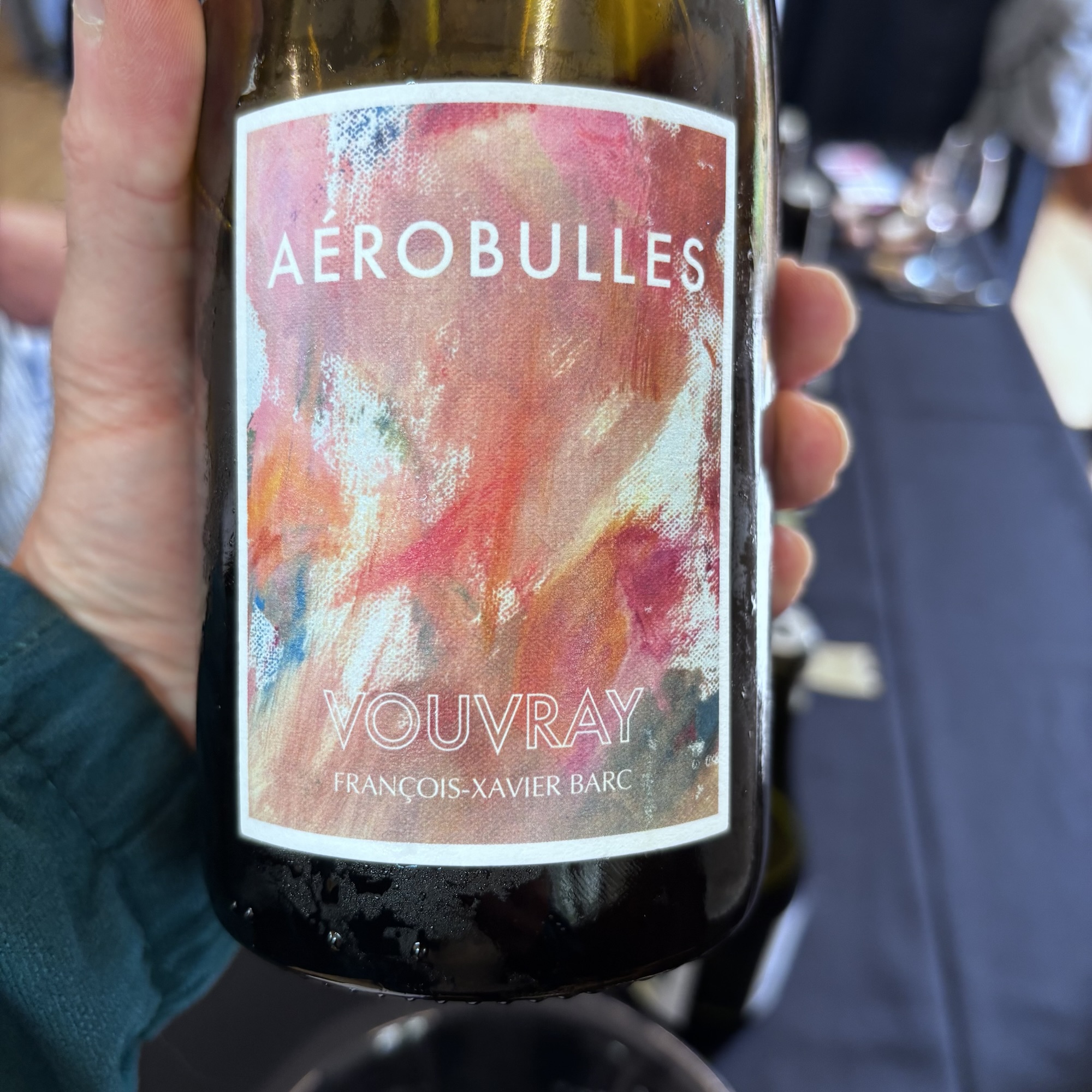
Aerobulles Sparkling Chenin Blanc, Vouvray, Complices de Loire (Loire Valley, France)
Sparkling Chenin is underrated. It can be pretty complex, or it can be fun. This is one of the fun new-style wines, but with a serious side as well. It comes from two local winemakers, François-Xavier Barc and Gérald Vallée. Vines are a decent 25 years old, off clay with flint soils. Fermentation is 90% in oak and 10% in amphora. It sees a decent 24 months on lees and is bottled with zero dosage. The bouquet is quite floral, the palate more creamy-textured, with apricot stone fruit and bags of finesse. Definitely recommended at £27, but not a lot was made so stocks will be limited.
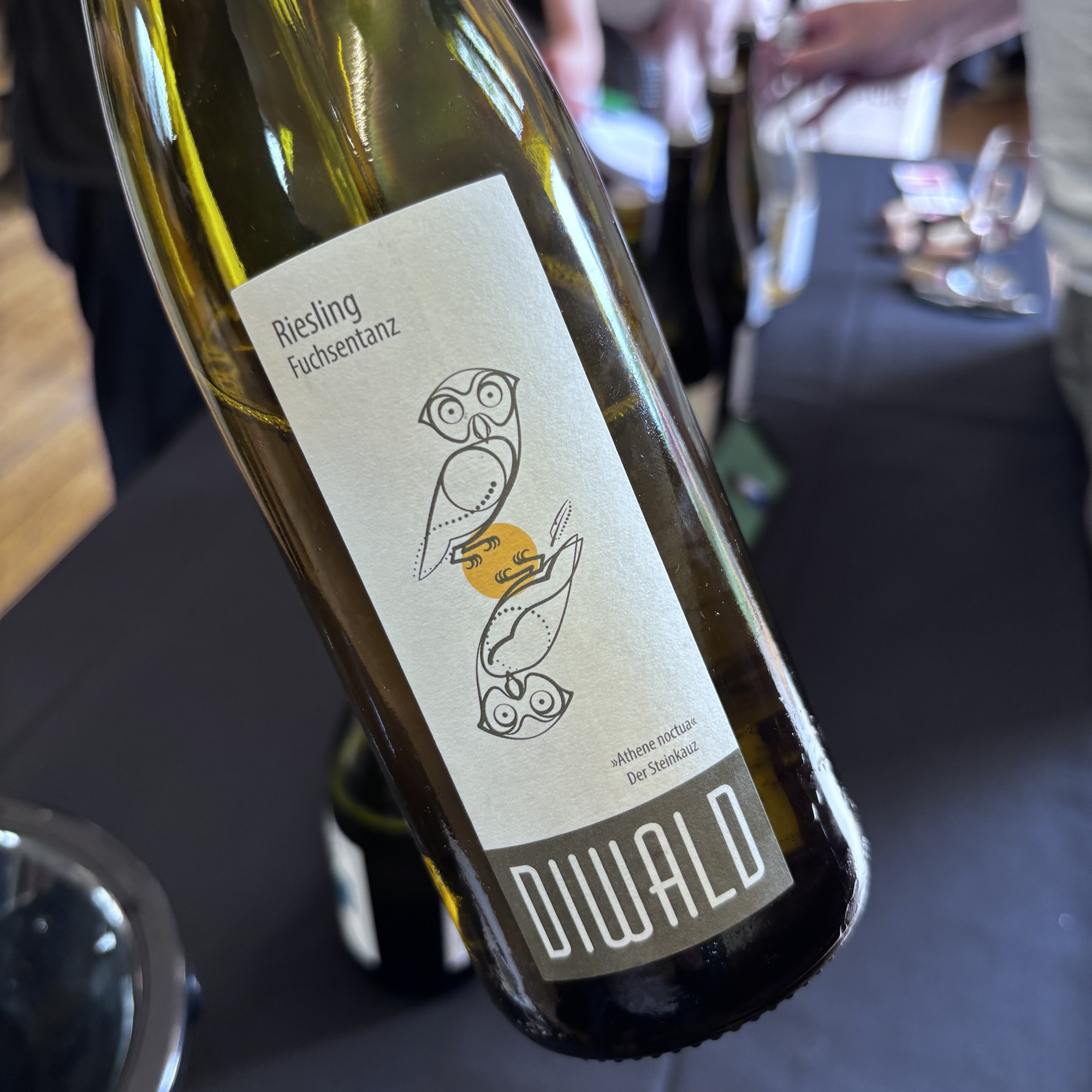
Fuchsentanz Riesling 2023, Weingut Diwald (Wagram, Austria)
I first tasted Martin’s wines at a Soho tasting in the rather faded splendour of Black’s Club so long ago that it must have been before I began this blog. I think back then he was with Red Squirrel Wines. It was great to taste this Riesling from one of Austria’s unsung regions, which follows the Danube immediately west of Vienna. Made in stainless steel with ten months on lees, it is generously ripe with a fresh citrus acidity and a texture that hints at the gravelly soils it comes from. Biodynamic. £25
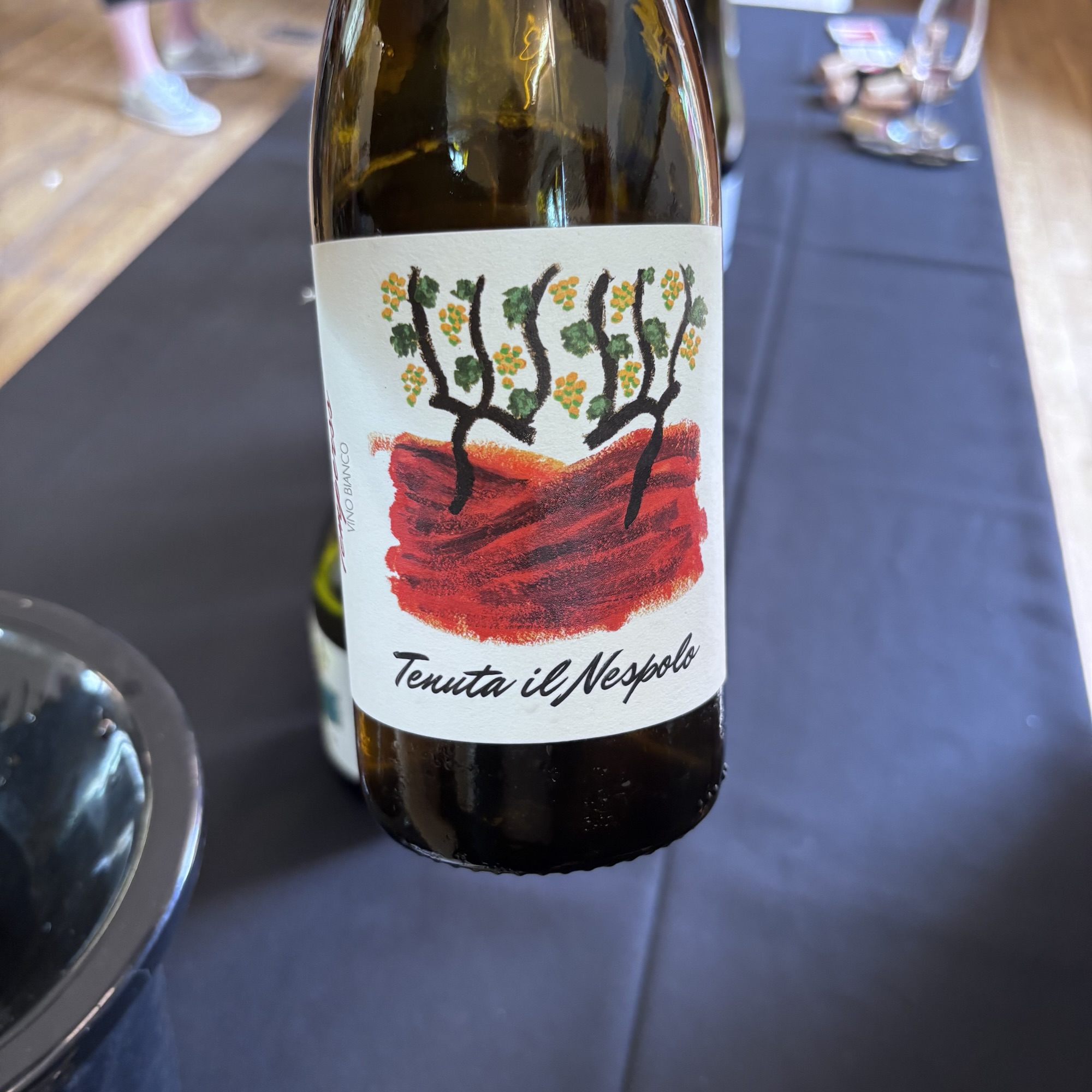
Temperss Muscat “Skin Contact” 2023, Tenuta Il Nespolo (Piemonte, Italy)
This is effectively a Moscato from Asti, but vinified quite differently to the light and grapey, low alcohol, original. Luca Amerio farms vines planted in the 1960s at Moasca. This rendition of Muscat is quite serious, and very possibly age-worthy, yet it is unquestionably easy to drink. Ageing is 18 months on lees after fermenting to full dryness (abv is 13% yet it still tastes light and fresh). Definitely a food wine, and the producer suggests options which include shellfish and grilled vegetables. £27
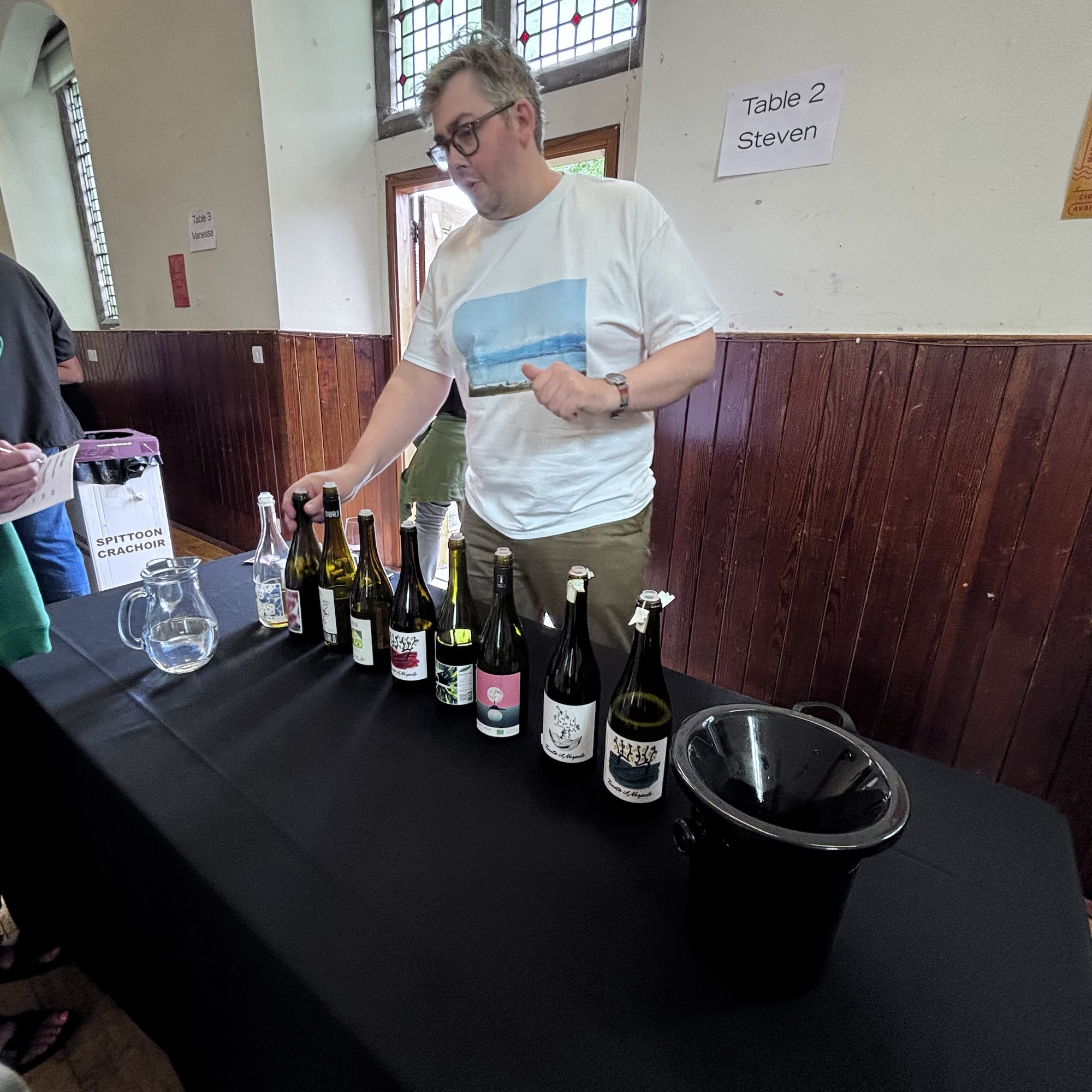
Steven Windsor, Director of Element Wines, with a pristine table showing it was early on in the proceedings
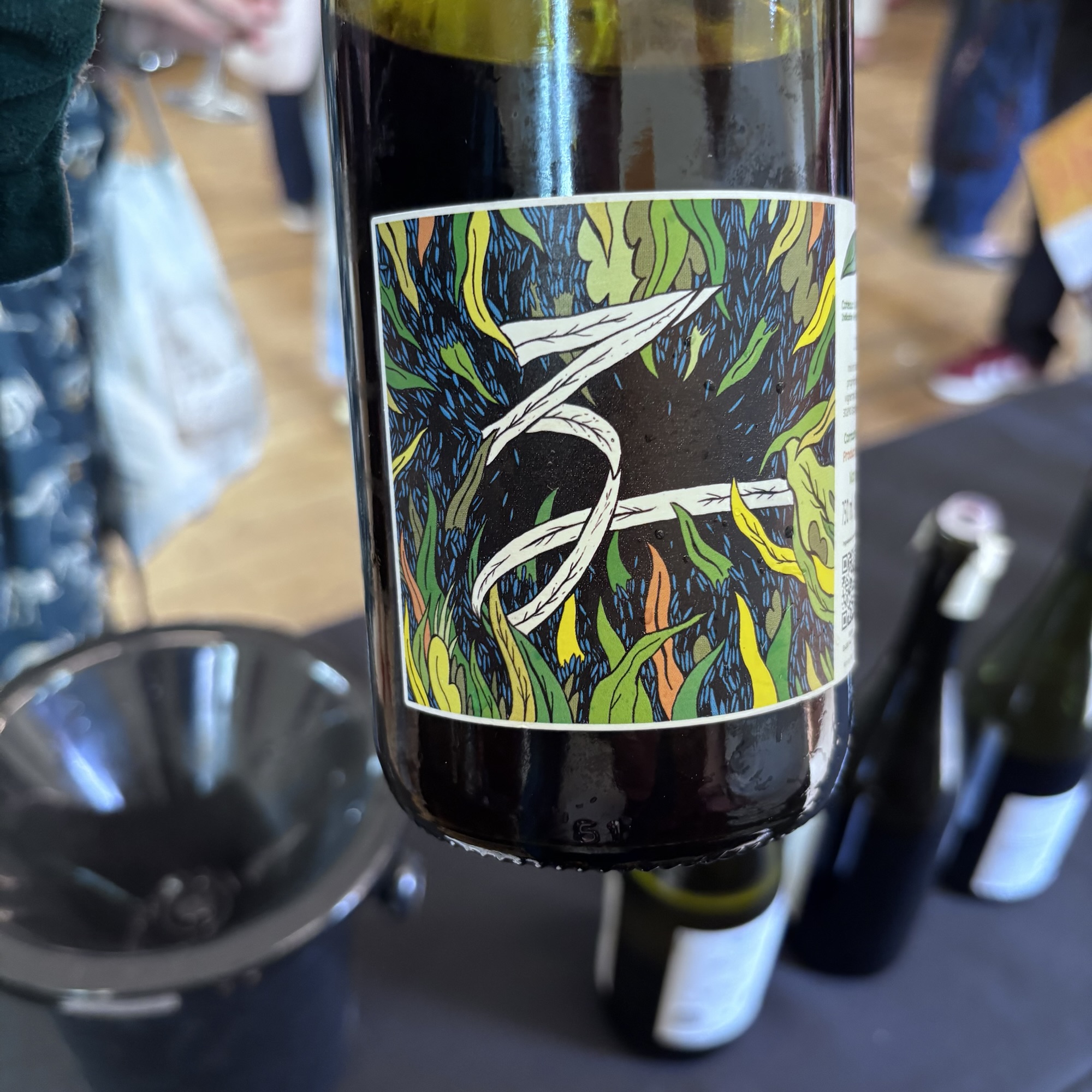
Cuvée Z, Les Vignerons d’Estezargues (Rhône Valley, France)
This co-operative not far from Avignon has been a bit of a well-kept secret for years, but I’m now seeing their wines more frequently. And so we should! Since the 1980s, under the direction of Jean-François Nicq, they have been making natural wines using biodynamic methods, and in quantity. The only addition here is a tiny dose of CO2 if absolutely necessary. You get raspberry, liquorice and a bit of texture. A glugging wine with a bit of bite. Barbecue is calling. You get Grenache along with a few of the new PIWI varieties bred to give protection against fungal diseases. £17. If you need a cheap quality red snap it up in multiple bottles. This should fly out the door.
RAEBURN WINES
We had Murray, as always, cheerfully pouring for the crowds at Raeburn’s rightly popular table. There were some serious crackers on show here, and I bought the Palaverga below, among the bottles I took home from the shop after the tasting. These are available at Cork & Cask, but of course Raeburns have a shop in Stockbridge if you are down in that part of the city.
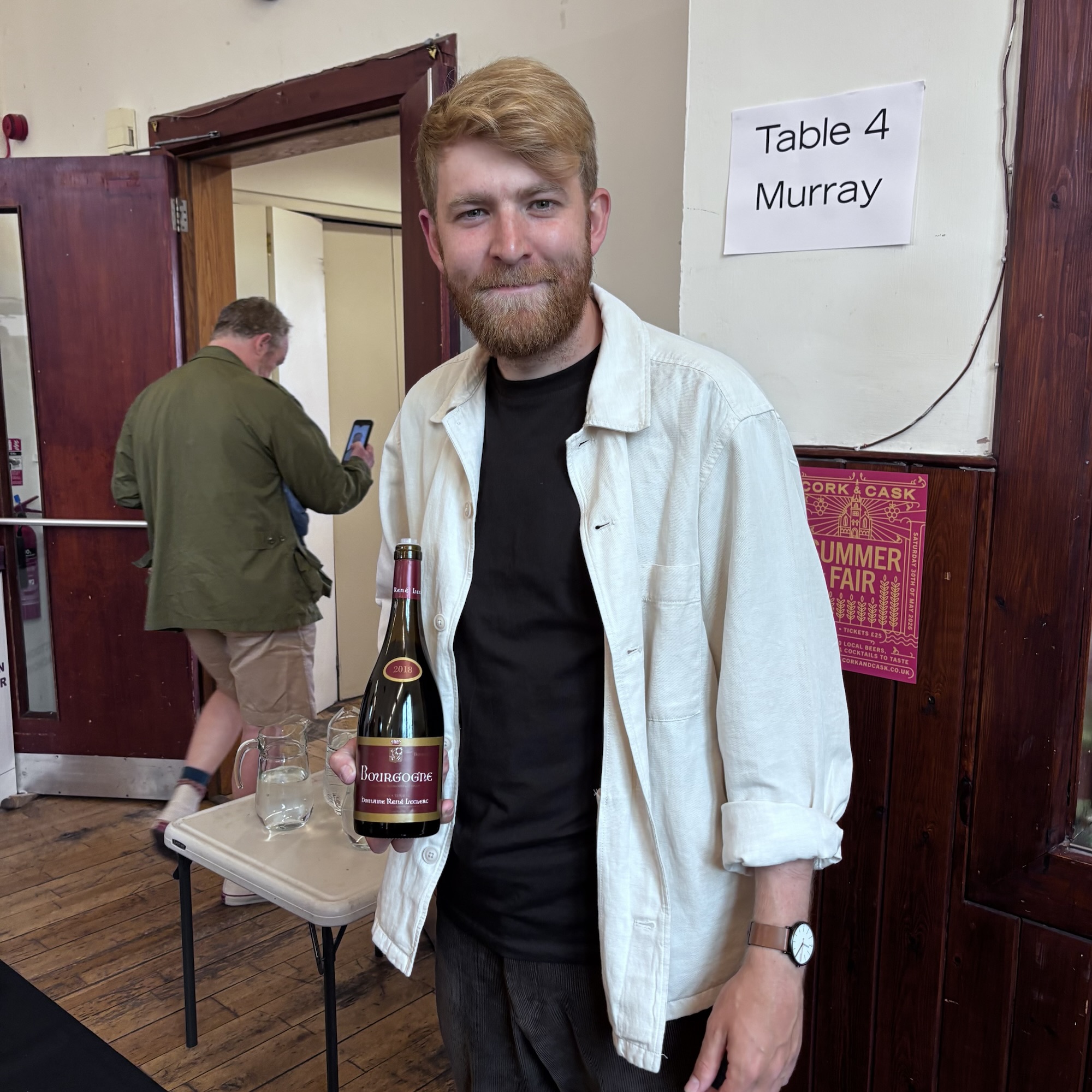
Is the René Leclerc Murray Mcdougal’s favourite?
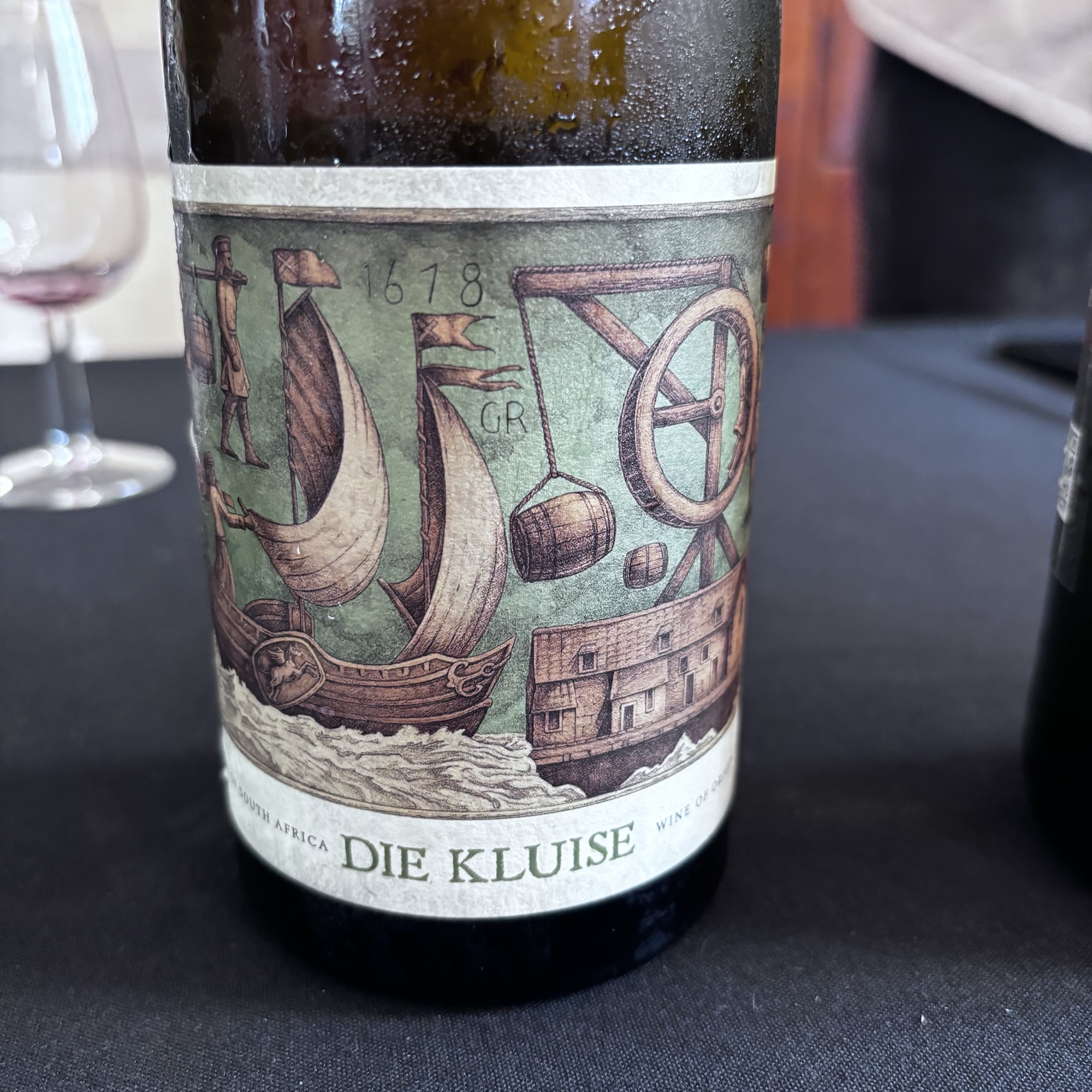
Old Vine Chenin Blanc 2023, Die Kluise (South Africa)
This is one of Raeburn’s house wines, there being a red made from Cinsaut to accompany it. The old bush vines (possibly Swartland, but I’m not sure) are farmed organically. The wine is really tasty, with a waxy texture and fresh peach fruit topped-off with a hint of almond essence and pear. Excellent value at £25.
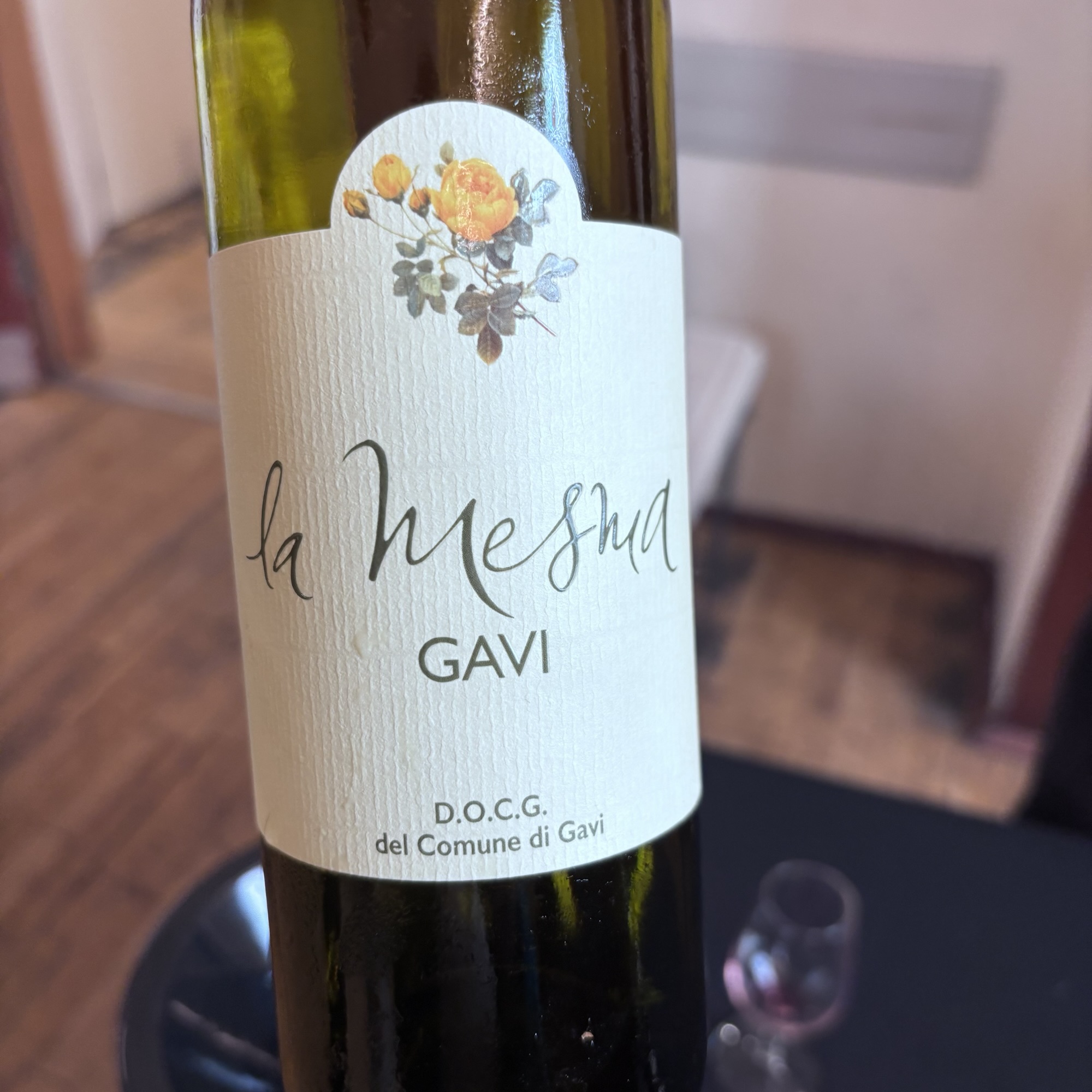
Gavi Yellow Label, La Mesma (Piemonte, Italy)
Gavi, in eastern Piemonte, has had to work hard to get a quality reputation. When the appellation’s “G” was added to the DOC in 1998, people seemed a bit underwhelmed by these white wines, made from Cortese, but this wine is proof of its potential. The fruit comes off limestone and red clay and underwent an ambient fermentation. It’s an excellent, quite savoury, Gavi. £25
Same River Twice Orange, Heliocentric Wines (Rhône, France)
This is a brand, created by James Dunstan, to sell wines from the wider Southern Rhône, but labelled as Vin de France. All the wines are sourced from small producers with the intention of expressing their individual terroirs. They are also pretty much natural wines, and in this case biodynamic. This skin-contact wine comes from the Ventoux Region, and is made from a blend of Rolle (aka Vermentino in Italy), with some Grenache Blanc and Muscat. It sees a week on skins, long enough to give it a golden colour, but the texture is more like a gentle Darjeeling tannin rather than the full-on Georgian black builder’s tea tannin. £24
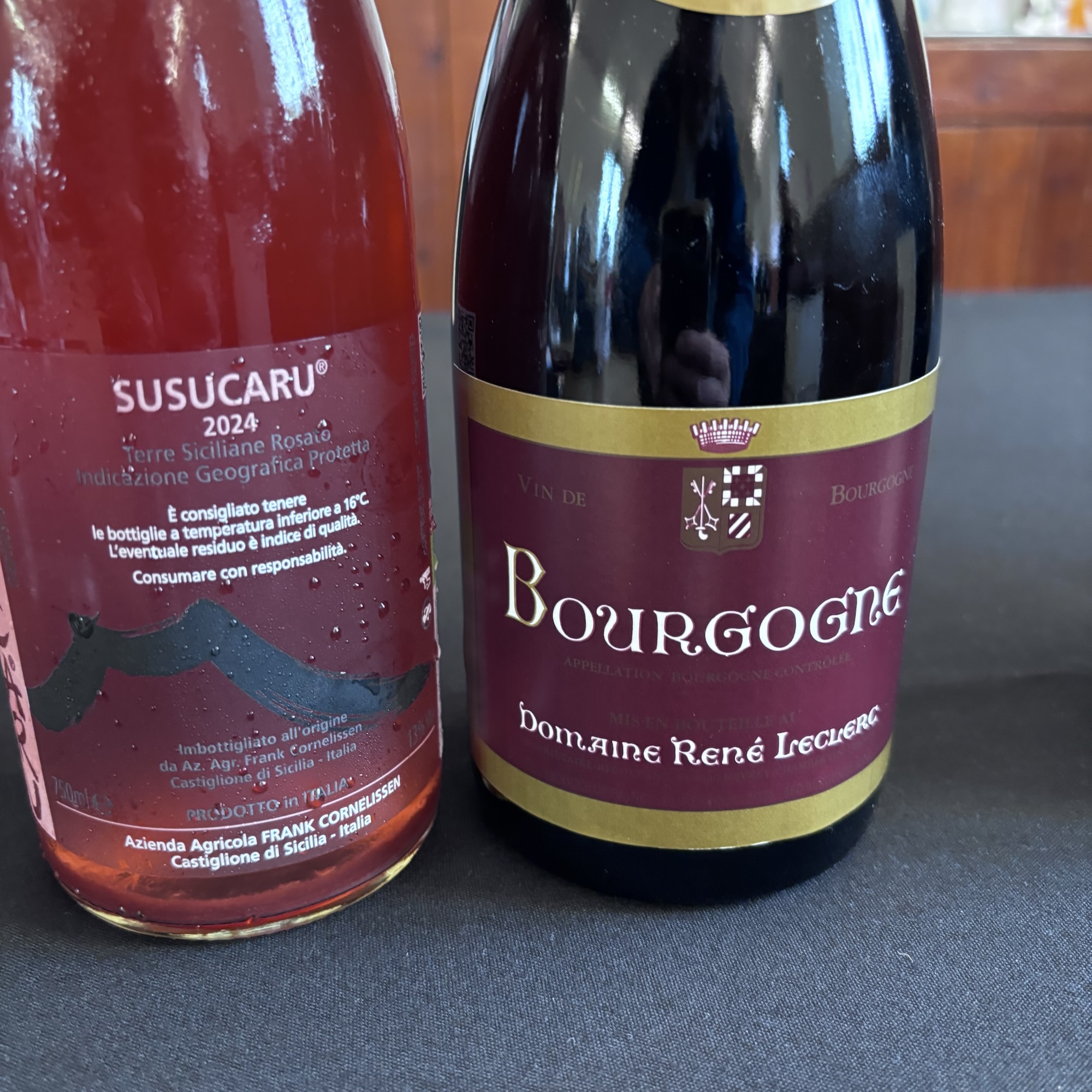
Susucaru Rosato 2024, Frank Cornelissen (Sicily, Italy)
I didn’t taste this at the table because I know this vintage and have more at home. But my wallet has spoken. This Etna pink blends both red and white varieties Malvasia, Moscadella, Insolia and Nerello Mascalese. I’d call it a Rosato that verges towards a light red. It’s a natural wine but Frank does add a touch of sulphur these days. Expect a refreshing red-fruited wine that does carry 13.5% alcohol, and goes well with food. The tasting booklet lists this at £30, Cork & Cask’s web site at £32.
Bourgogne Rouge 2018, René Leclerc (Burgundy, France)
The Leclercs are in Gevrey, and I must admit I do get confused by the Leclerc family members here. The René Leclerc domaine consists of 12-ha which are farmed without interventions and the wines are all “natural wines”. François is now at the helm. The grapes go into a very old (1951) basket press for a short and gentle three hours, and old oak is the medium for ageing. The Bourgogne Rouge is traditional in the very best sense, a chance to drink the kind of Red Burgundy I discovered in the mid-1980s, when it was on song that is. Smooth and almost silky fruit and more depth than you expect from this level. But then it is a 2018, ready now but no rush if you like “tertiary”. £37
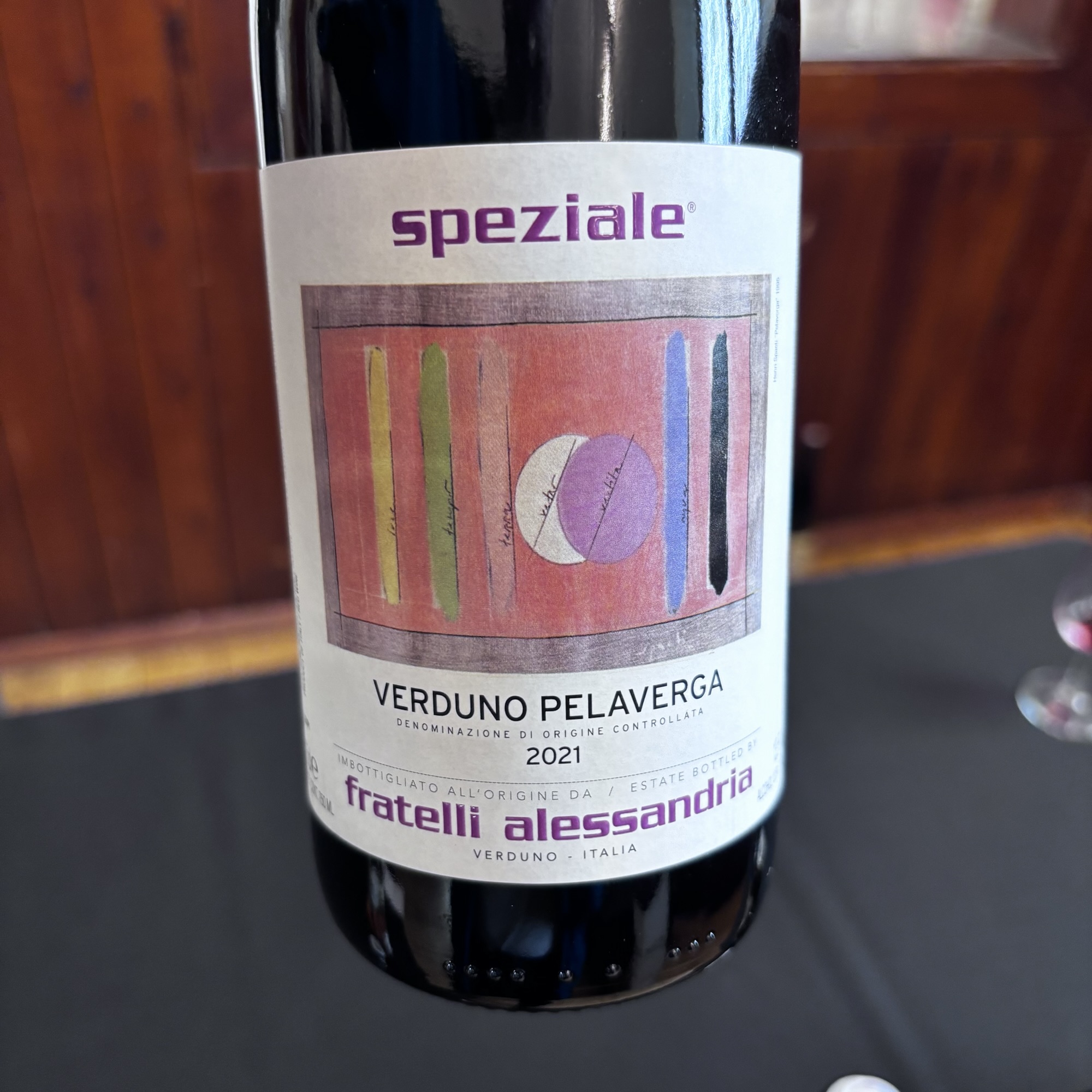
Pelaverga Speziale, Verduno DOC 2021, Fratelli Alessandria (Piemonte, Italy)
Out of all the Piemontese wines on show, it was this rare variety I was most taken with. Pelaverga is usually a second-string blending variety, but this estate has been bottling it on its own since 1973 under its own DOC. It’s fermented in stainless steel after a short maceration and then it goes into a mix of steel and concrete. It’s fresh, with gorgeous strawberry scents. Raspberry enters on the palate and the finish has a white pepper hit. A lighter red from its flavour profile, but 13.5% alcohol could surprise the unwary. One rests in my cellar perhaps for autumn. £37
Bardolino Classico Rosso 2024, Raval (Verona, Italy)
Bardolino sits to the east of Lake Garda, with the superior Classico zone in the hills which tumble down to the lake. When I was young Bardolino came with a screwcap, which back then meant cheap and not necessarily very cheerful. Much has changed. This is a simple wine, but it has both charm and a little depth. I would actually recommend trying this to prove to yourself that prejudice is hard to erode yet it can be done. A mix of red and darker fruits are balanced by a nice crispness. £22
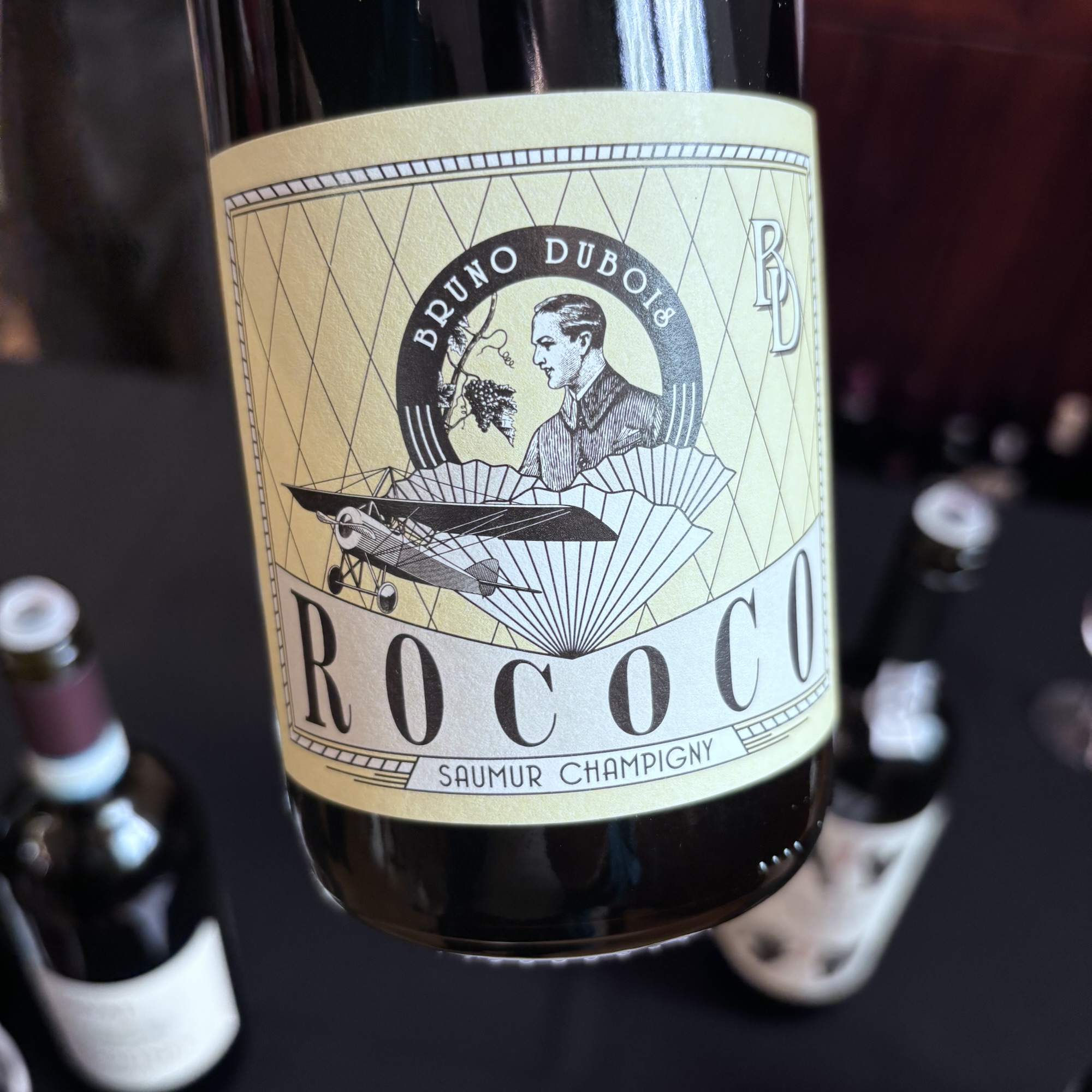
Saumur-Champigny Rococo 2021, Bruno Dubois (Loire, France)
There are other more famous names making Saumur-Champigny, but Bruno Dubois makes biodynamic wines which express his terroirs no less well. This is a small domaine of 3.5-ha, all old vine stock. There’s a bit of agroforestry and plenty of regenerative agriculture above the limestone tufa soils. This is a man who worked for Marcel Lapierre in Beaujolais, so he has pedigree.
Like all Bruno’s reds, Rococo is a 100% natural wine with no added sulphur. The grapes are macerated and fermented in concrete to make a wine that is smooth, fresh, with the elegance and blackcurrant fruit of ripe, old vine, Cabernet Franc. A balanced 12.5% abv makes it the complete package. £35
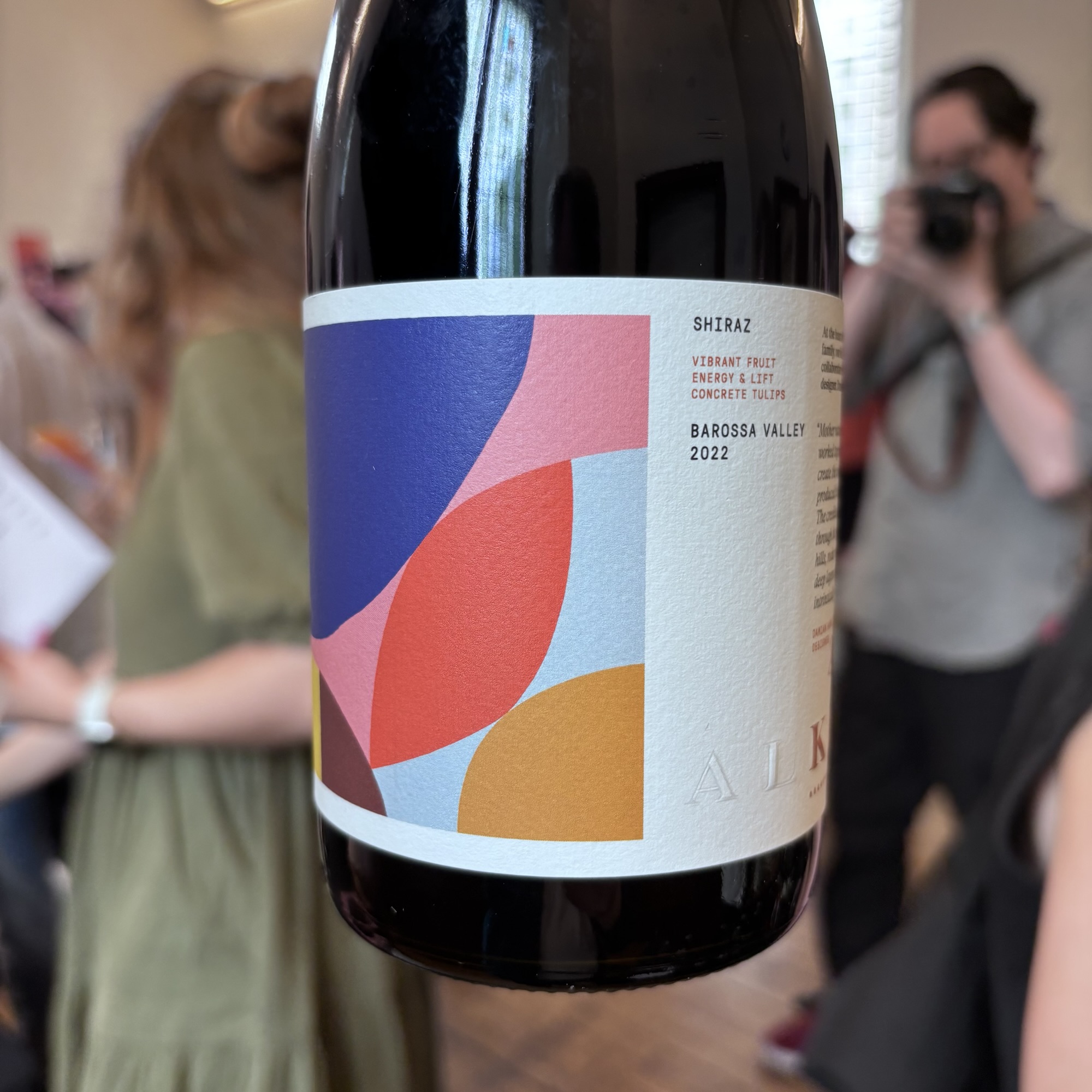
Kin Shiraz 2022, Alkina Wines (Barossa, Australia)
If I’d have taken a small suitcase, I’d have bought a bottle of this this, on account of the bang for your buck it gives you. Alkina is a fairly large (43 ha) estate in the Barossa (South Australia), but they make biodynamic wines from fruit dating back to original 1950s plantings. The Shiraz fruit for Kin (an “old vine” project) is fermented in concrete tulips, all but around 15% being whole bunches. Additionally, about 5% from a vineyard on clay goes into oak foudre. Everything is blended after six months. It is very Australian in its voluptuousness, but it has also got structure too. A tasty varietal which will age further, or just let it breath in a nice big glass I would say. Even in my tiny tasting glass its potential was evident. 14.2% abv, £24
It’s worth noting that I bought the Alkina Kin Field White 2019 made in Georgian Qvevri from Raeburns after tasting it at the first Clay Wine Fair in 2025. That wine was somewhat more expensive, but it was exceptional.