We begin coverage of the wines we drank “at home” during May with the best two bottles we drank staying in a house belonging to friends in The Gers at the beginning of the month. They were both recommended by a wonderful wine shop in Lectoure, which could have kept me interested for weeks. The second of them was so good I went back for more, but they’d sold out, more expected on the day we had to leave for Bordeaux at five in the morning.
Back home we drank one of the best value orange wines around, from Catalonia, then a superb Chilean Semillon which I had tasted at the Clay Wine Fair earlier in the year, a Chasselas from one of my favourite producers in Switzerland’s Lavaux, and a cracking value Victorian Chardonnay, which had me screaming at the difficulty of finding Aussie wines like this today, as compared to back in the late twentieth century.
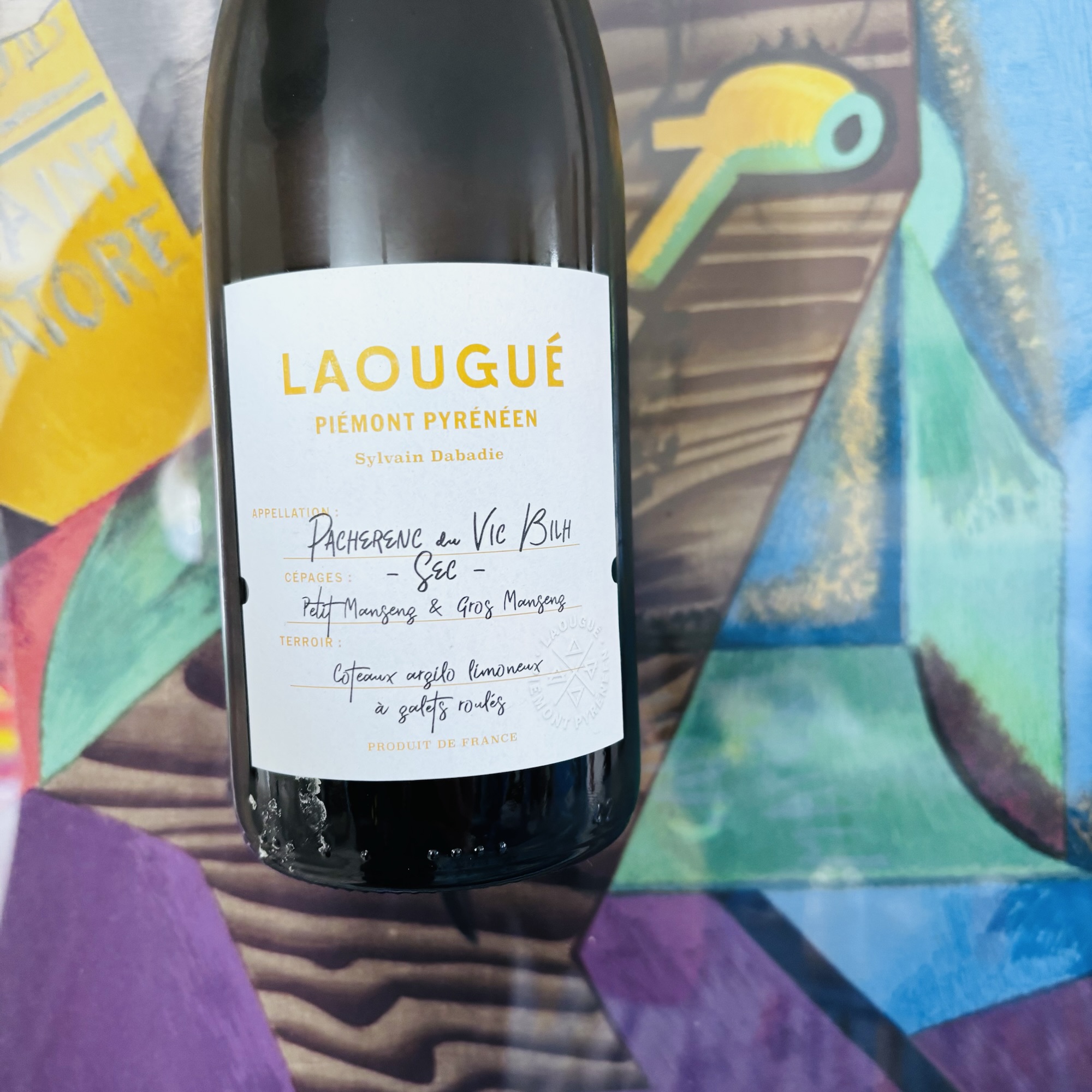
Pacherenc du Vic-Bilh Sec 2025, Domaine Laougué (Gers, France)
Sylvain Dabadie is the fourth generation of his family to make wine in Viella, not far from Madiran. Pacherenc is effectively “white Madiran” as the two appellations have the same boundary, more or less. This bottle is made from a blend of both Gros and Petit Manseng, varieties perhaps better known to us in the blend for Jurançon, which is maybe 20-30 kilometres to the southwest, near Pau. Both appellations sit in the foothills of the Pyrenees.
The Laougué Pacherenc is made in tank, without oak influence. It is dry and crisp and quite “mineral”. It comes off a clay and limestone mix of soils and rocks, with galets roulés pebbles scattered across the vineyards in the manner of some parts of Châteauneuf-du-Pâpe. In the glass it developed a nice mix of peachy stone fruit with a touch of fresh lemon. Not complex but very nice. We enjoyed it with asparagus, which was abundant in the markets, and on which we willingly overdosed (white and green) during our week. Others recommend it with shellfish/seafood, none of which we ate this far from the coast.
The Lectoure wine shop I mentioned is De La Terre au Verre, where this bottle cost €12. On returning home I discovered that The Wine Society had the 2024 before they sold out. Tanners does list the 2025 for £17. They list it as pushing out 13.5% abv. My bottle said 14%, but to be honest it didn’t taste like it was that high. A nice fresh white wine, a bargain in France, and to be fair not ridiculous at UK prices either.
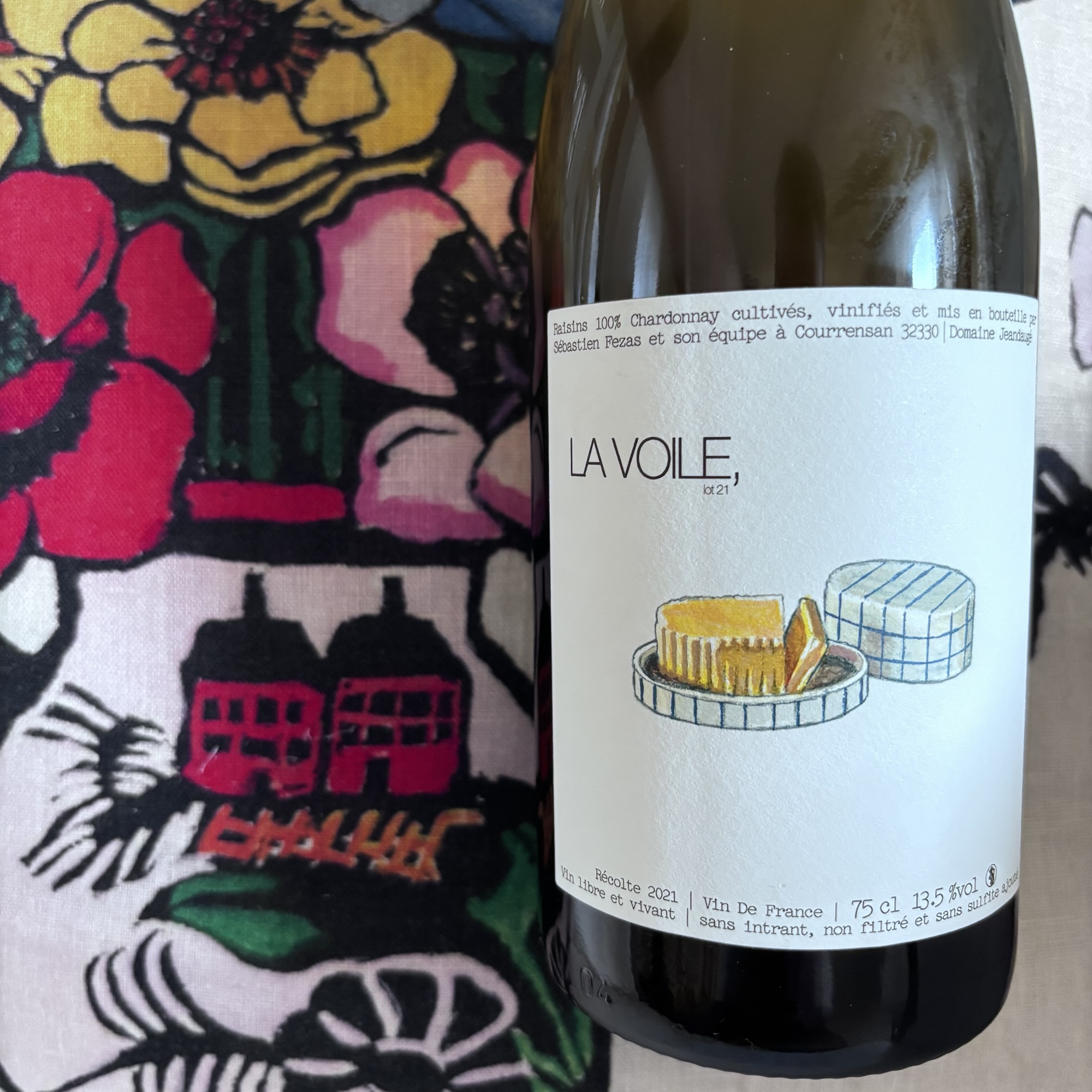
“La Voile” Vin de France 2021, Domaine Jeandaugé (Gers, France)
If the previous wine was nice, it didn’t prepare us for this beauty. It was a genuine revelation. It was the kind of wine you want to bring home to drink with your most wine-obsessed friends, but as I mentioned in my intro, it wasn’t to be. I felt vindicated in my judgement by discovering that Christina Rasmussen, whose opinions I value greatly, had visited the domaine for Littlewine (littlewine.io ) a few years ago, and had pretty much felt the same.
Sébastien Fezas is based at the village of Courrensan, not far from the town of Condom. This is Côtes de Gascogne territory, but Sébastien bottles his wines as Vins de France. He took over the family domaine in 2012, bottling the wine himself and cutting out the chemicals. He now farms biodynamically, he makes his own preps, and has the loan of some local sheep to graze the vineyards.
This is a natural wine (no added sulphur at this domaine) made from 100% Chardonnay. It spent a year and a half on lees with no topping-up. The result is mildly oxidative but magically fresh, no hint of heaviness. It has bags of salinity and a mildly nutty undertone beneath fresh fruit edging towards citrus.
Someone really should import this, I thought. Then I saw Doug Wregg had written about the domaine on his blog, so I checked out the Les Caves de Pyrene trade list and lo and behold, there on page 17 sit four of Sébastien’s wines…but not this one. Never mind. I’m sure what they do have is very good. They include a concrete-fermented Colombard called “Partie Fine”, which I brought back from France myself in lieu of the Chardonnay, and three reds. Doug waxes lyrical about a Syrah, though it’s the Tannat I would love to get hold of.
Back to La Voile…as already mentioned, it came from De La Terre au Verre in Lectoure, which is a pretty village on the pilgrim route to Santiago, with a rather fine market on a Friday and an excellent restaurant called Racinette (booking essential but worth it, cooking of a standard way above the €88 including a glass of wine each we paid for lunch). La Voile cost us €24 retail, and it shocked a local couple we went to a bar with that we had paid that much for a bottle of wine. I guess if Les Caves did import it, I’d be paying a lot more, but I would probably deem it worth it at, say, £40 in the new era of societal collapse.
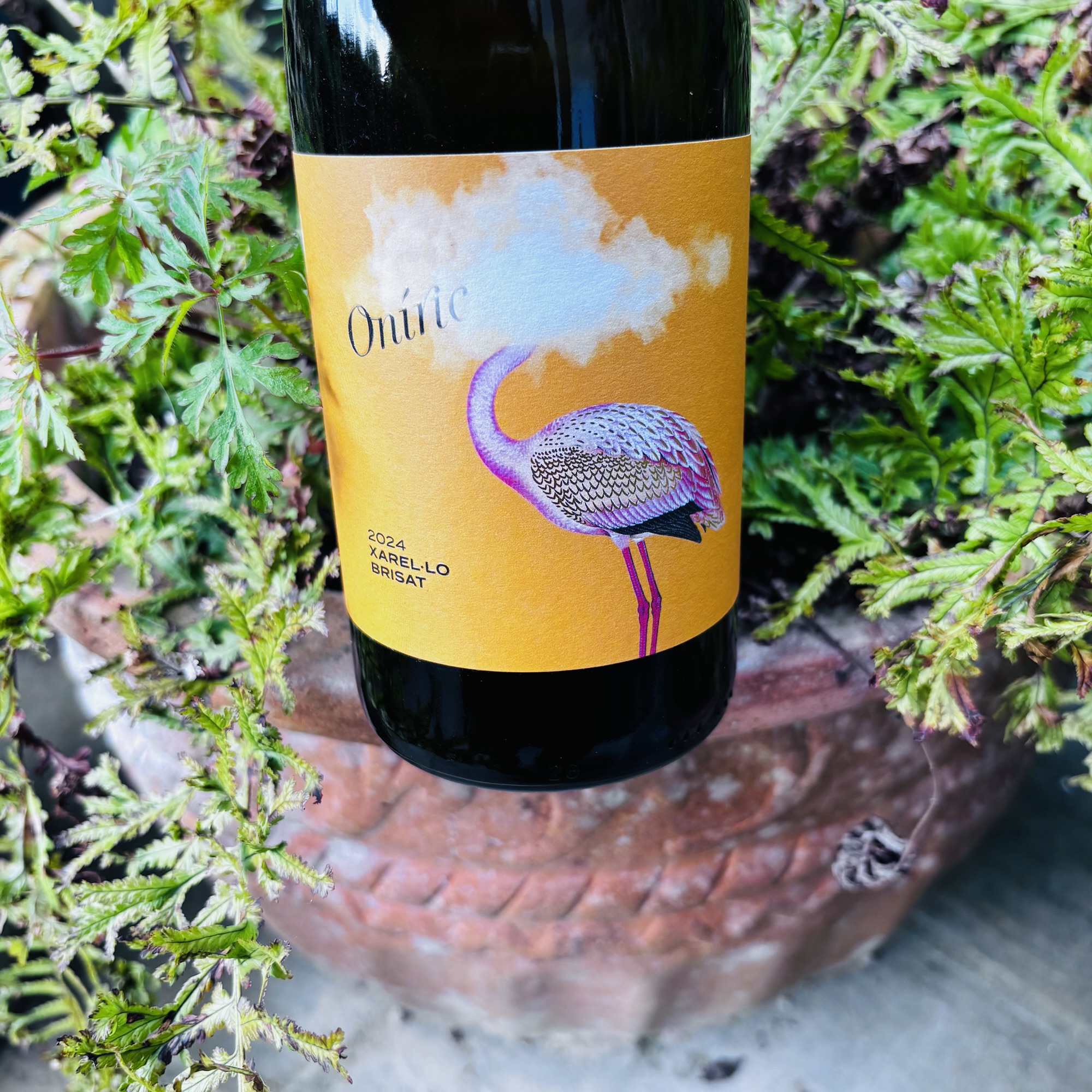
Oníric Xarel-lo Brisat 2024, Entre Vinyes (Penedès, Spain)
This domaine is the project of Maria Barrena and Pep Tort Montserrat. They have revived abandoned vineyards in Penedès to make some magical Catalonian wines. Oníric is a natural wine made from old vine Xarel-lo that has been given a maceration of around two weeks. It then goes into amphora, resting six months on lees.
The winemaking results in a nice texture to the juice, but not too much. Otherwise, we have a wine that is light and fresh. Peach and lemon seem to be the prevalent flavours of the month here, but this has a saltiness and a slightly leesy element which you might think a negative, but it is a creaminess which adds interest and pleasure. Although there’s a bit of grip, this is definitely the lighter side of brisat/skin contact wine, perhaps reflected in the low (10.5%) alcohol.
I probably buy two-or-three bottles of Entre Vinyes a year which, if you know me and my desire for variety, is an endorsement of what this couple are doing. This is a delicious and lovely wine, and it is equally ridiculously good value. My bottle cost £17 from Smith + Gertrude (Portobello, Edinburgh). The importer is Modal Wines. On the subject of Modal, I was thrilled to bag a couple of their latest New Zealand wines last week.
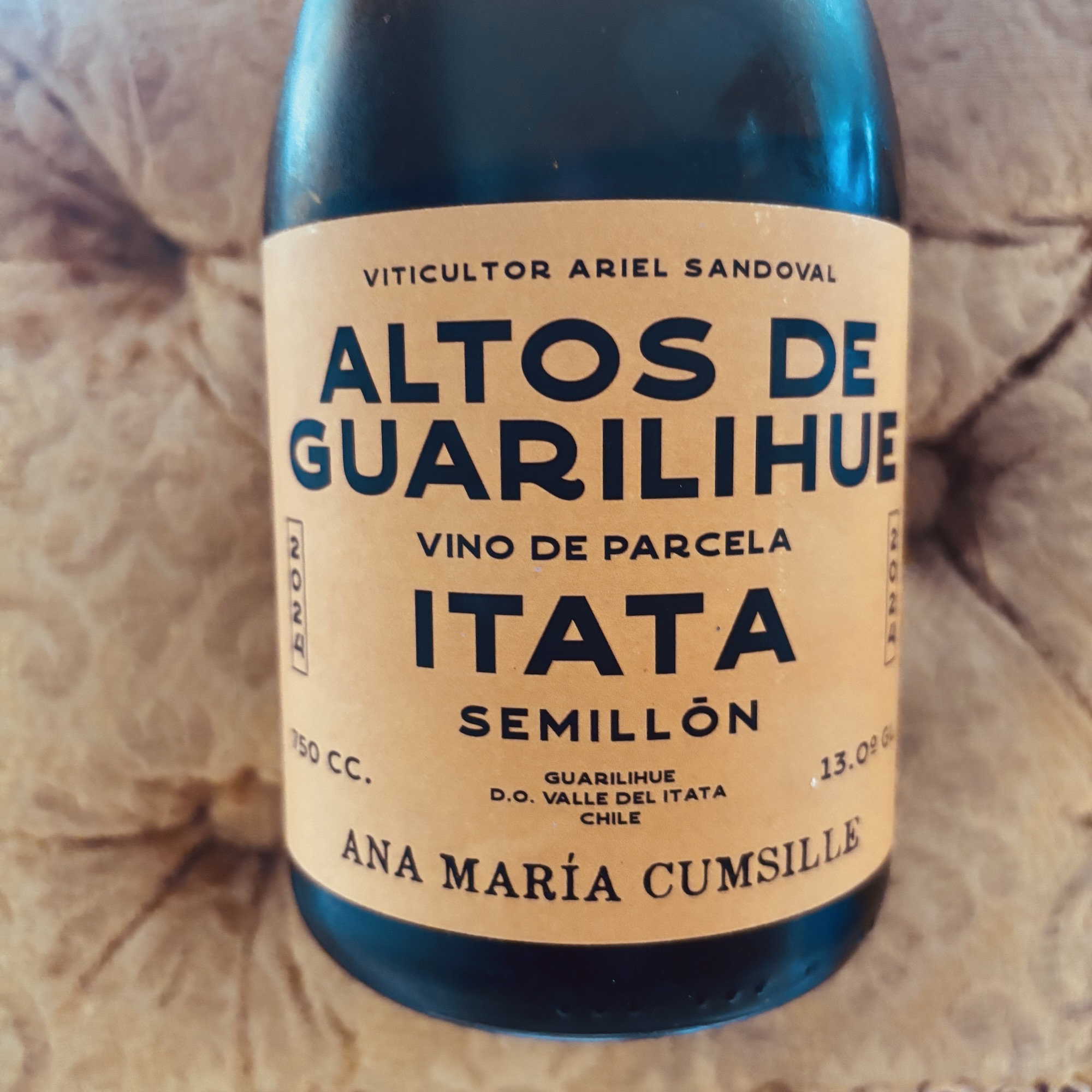
Altos de Guarilihue Vinos Parcella Semillon 2024, Ana María Cumsille (Itata, Chile)
I’m always on the lookout for good South American wines, though perhaps “good” isn’t the right word I’m looking for. Perhaps I should say wines which fit my own expectations, and which don’t fit in with a more commercial vibe, good as those wines might be. I found this on a table at the Clay Wine Fair earlier this year and liked it a lot. It took me so long to get some because I had to put in some serious footwork to a part of Edinburgh I rarely reach.
Ana María Cumsille is Chief Winemaker at Viña Carmen, but this is a side project. She buys grapes from a selection of growers and winemakers to showcase the high-altitude vineyards of Itata. This wine comes from the Itata sub-region of Guarilihue Alto. The grape grower (all the growers are highlighted on the labels) is Ariel Sandoval. He’s growing cool climate Semillon at above 300 masl in this case, and the vines average eighty years old.
This, as befits a wine presented at “Clay”, is a skin contact cuvée, aged partly in amphora and partly in oak. It has a bit of texture, more soft than hard. The fruit rises above that structure, very pure fruit, lovely and rounded, smooth, sensual. A delicious wine.
I bought this at Woodwinters Wine, from their shop in Newington (South Edinburgh). It seemed very reasonable for £26. I tasted a very nice Cinsault at Clay Wine as well, but what intrigued me in the shop was a Pais, though next time I will have to have the capacity to bring back another Semillon beside those reds.
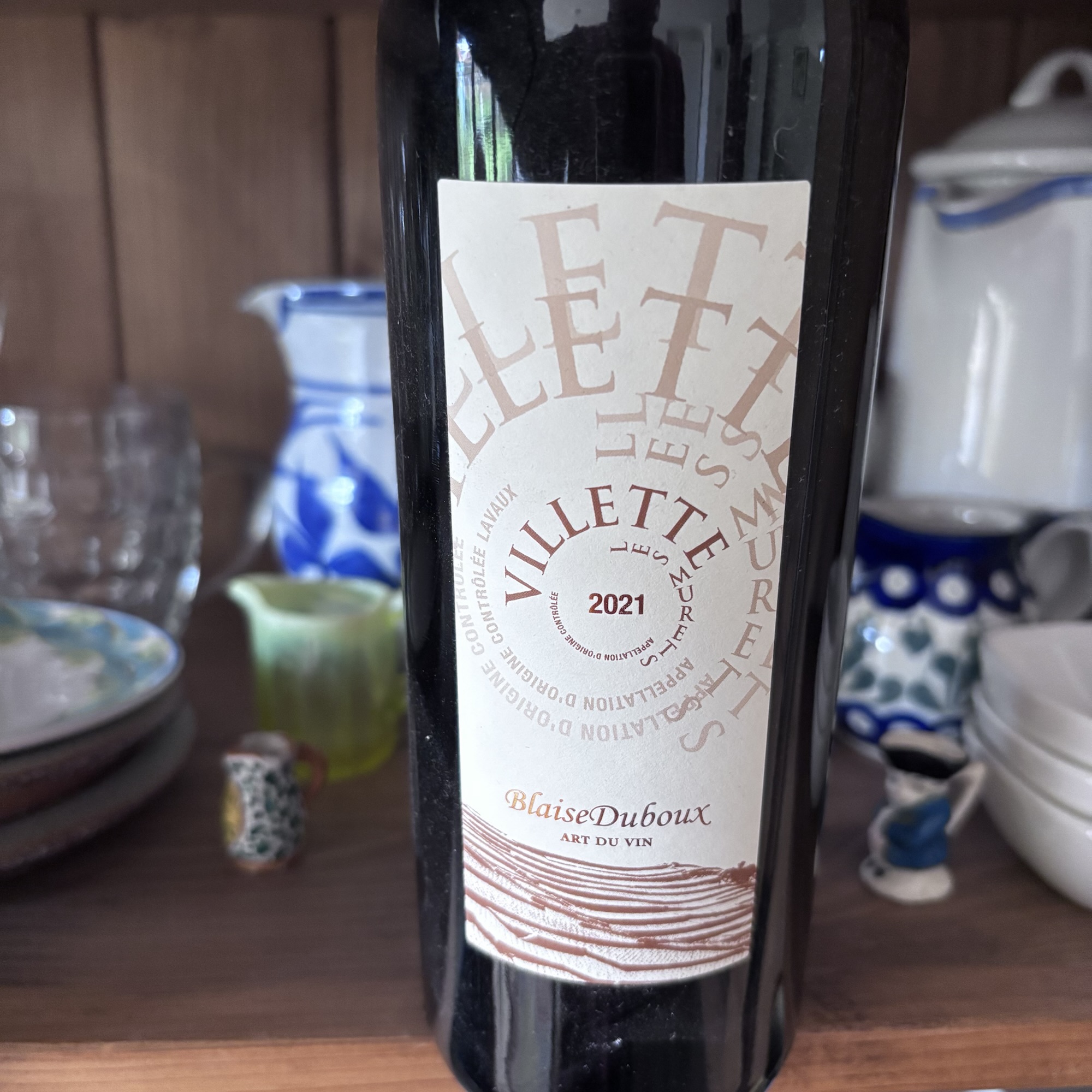
Villette Les Murets 2021, Blaise Duboux (Lavaux, Switzerland)
Blaise Duboux is part of a family which has been farming the slopes of Lavaux in the Canton of Vaud, above Lake Geneva (Lac Léman), for five hundred years, or seventeen generations. Blaise runs a fairly small domaine based at Epesses. He only converted to organics in 2016, so late because that was the year it became prohibited to spray the terraced slopes here (a UNESCO heritage site) with helicopters (meaning no vines were safe, so organic certification would have been impossible). He now farms using selective biodynamic methods and adds very small doses of sulphur if and when needed. He also tries to avoid using copper sulphate, a mainstay for many organic farmers.
Chasselas is the main variety here. If you wish to taste this variety at its finest, then Blaise’s Dézaley Grand Cru Haut de Pierre Vieilles Vignes is the one to seek out. He also makes one of the best versions of Plant Robert, which is a locally specific Gamay mutation beloved by Swiss wine obsessives (like me).
Les Murets is a lighter expression of Chasselas, not a wine you need to age like the Grand Cru, but as you will see from this 2021, not a wine you absolutely need to drink in its first year or two. It comes off sandy soils near the village of Villette, at the western end of Lavaux, a little outside Lausanne. The wine is very dry with a mix of herbal notes plus added lime citrus and a bit of texture. This 2021 is still pretty fresh, although I’d like to see a more recent vintage if it returns into stock (see below). It has plenty of character, wholly expected with any wine from this producer.
This was £22.50 at The Wine Society. It’s was good value for a Swiss wine, let alone a wine from one of the people I’d certainly say is in the top few Lavaux producers I know, a man who would definitely get a bottle in any mixed case of Swiss wine I were to buy given the choice. Perhaps their excellent buyer of the less-trodden paths of the wide world of wine will manage to squeeze some more wine out of Monsieur Duboux? Please.
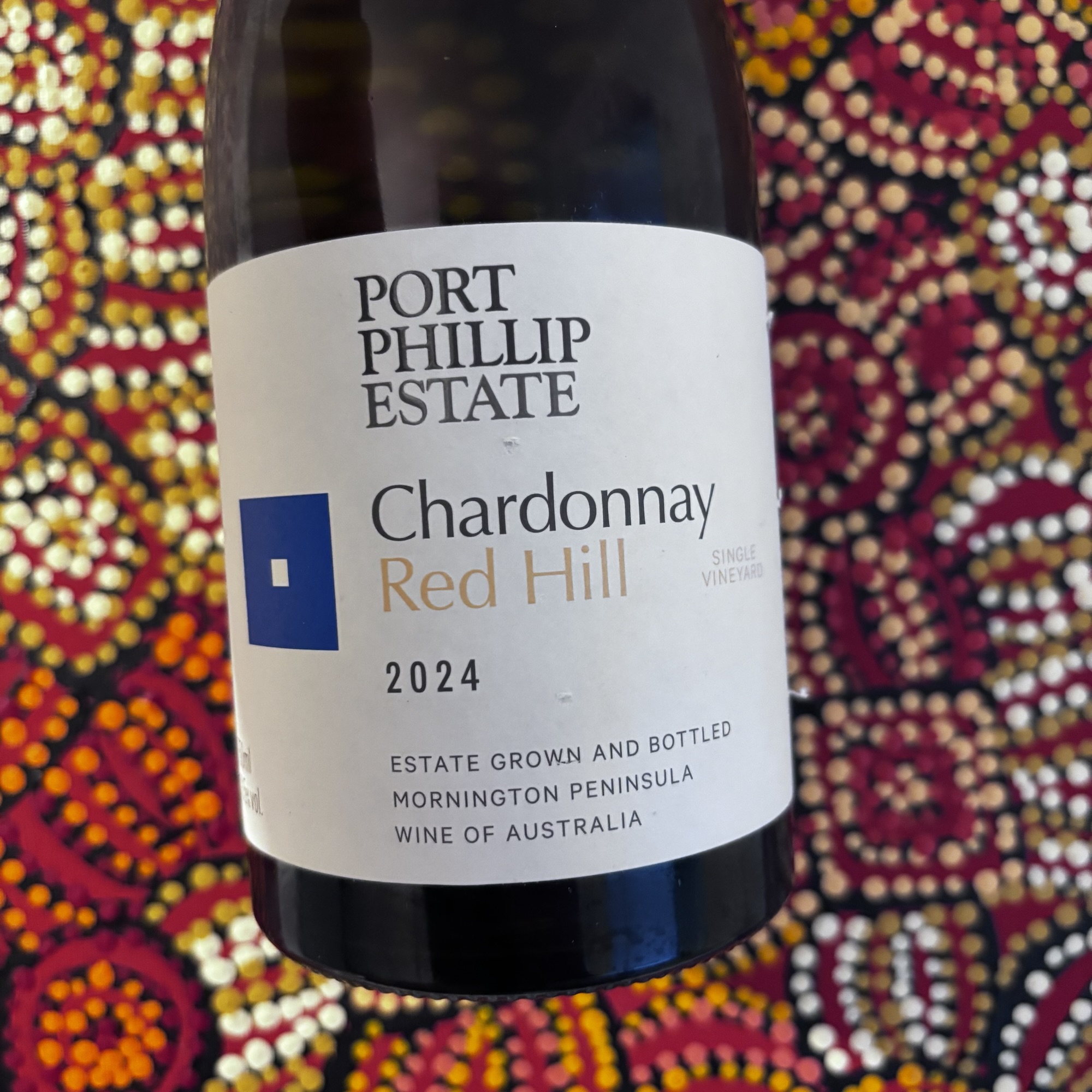
Red Hill Chardonnay 2024, Port Phillip Estate (Victoria, Australia)
I’ve a strong affection for the wines of Mornington Peninsula. It was far from the first Australian wine region I visited but I did manage to spend a couple of days there on my first visit, and have subsequently been back. It’s a region which, like the Yarra in the opposite direction from Melbourne, caters very well to wine tourism. You can soak up the tasting samples, if you are not spitting, with food ranging from the excellent contents of wood-fired pizza ovens to the sort of posh nosh you’d also find in Melbourne. Naturally you can eat at Port Philip Estate.
Port Phillip Estate, and sister winery Kooyong, sit close to the viticultural centre of the Peninsula, just over the ridge from another excellent estate, Polperro, at Red Hill. Mornington has a maritime climate, as you’d expect from a bit of rock sticking out into the Bass Strait, with its Antarctic currents. Chardonnay and Pinot Noir do not always thrive here, and the wines can even have way too much alcohol in some vintages, but they do most of the time, displaying the thrilling edge that comes with a marginal climate. With this Chardonnay there are no worries. Superstar winemaker, Sandro Mosele, has moved on (also from Kooyong too), and he now has his Elanto Vineyard project at Balnarring, still on the Peninsula, but the winemaking here at Port Phillip Estate seems to be going strong.
The Chardonnay vines here date to 1987, planted on the deep red volcanic loam at between 140-to-160 masl on Red Hill. They use “low intervention” viticulture, whatever that means. The result, though, is a really lovely lemony wine that is way fresher and more spritely than you’d expect from a European version packing 13.5% abv, but I don’t detect any obvious acidification. It was aged in oak, but probably not new oak. You can’t taste any overt oak, just a bit of influence, and I’m guessing the price suggests new oak is unlikely.
When I put a pic up of this originally, on Instagram, I called it “lean but not mean”. Someone at The Wine Society agreed it was a good description, which I meant very much as a compliment. Even today there are some Aussie Chardonnays that are tough to drink, packed with oak chips. This one is pleasantly the opposite. Yet again, it’s a wine that is currently unavailable, but it may return. It cost £20.