Bruno Paillard and Dosage:Zéro – A Fascinating Release

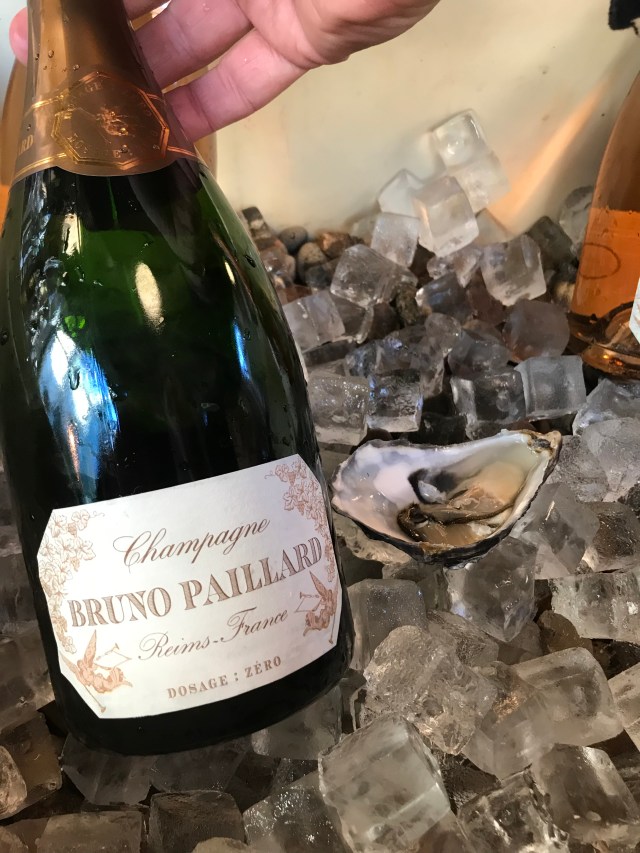
You may have read my last roundup of the best wines I drank at home during August, under my usual hashtag #theglouthatbindsus, and you might recall that one of them was a Champagne that I readily admit surprised me by its quality. That was Bruno Paillard‘s Première Cuvée Extra Brut NV. As a result of what I wrote (I think) I was invited along earlier this week to the launch of the new cuvée from Bruno Paillard, Dosage:Zéro. All well and good, you think, but as luck would have it, tasting this wine provided not just an insight into a brand new wine from a Maison de Champagne, but also gave me a lot of food for thought on broader issues in Champagne, which actually make for a far more interesting article.

I would suggest that “dosage zero” is in some ways a red herring here. This cuvée is a bit of a departure for Paillard (though a non-dosed wine was made, briefly, some years ago), and is a very welcome addition to the debate about what Champagne is capable of being as we approach the third decade of our millennium. It will help if I get to it and give you some more detailed information about Dosage:Zéro, but for me there’s another angle, and that is more subjective, and has a lot to do with the people.

255150B2-EB5B-48E5-90E5-14250207A9C8

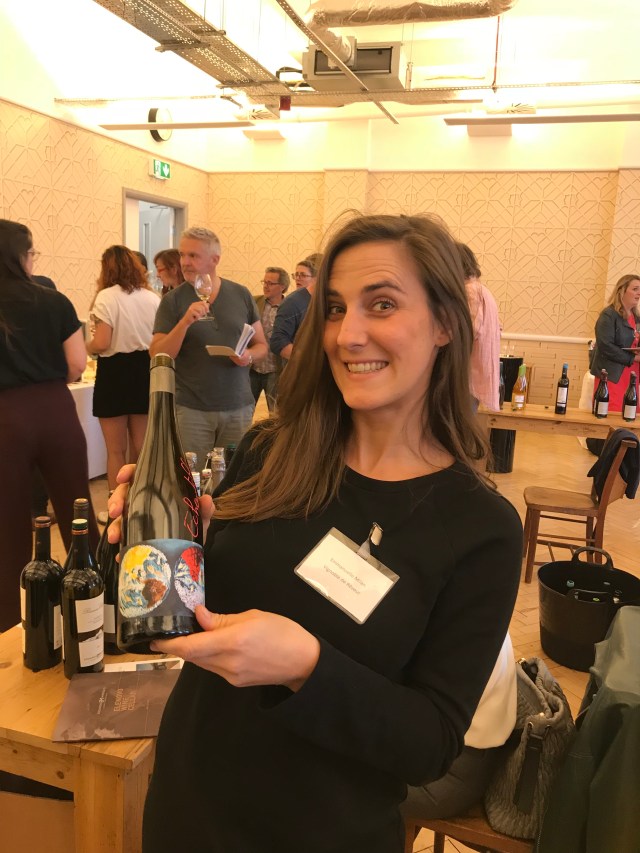
Alice, with Dosage:Zero

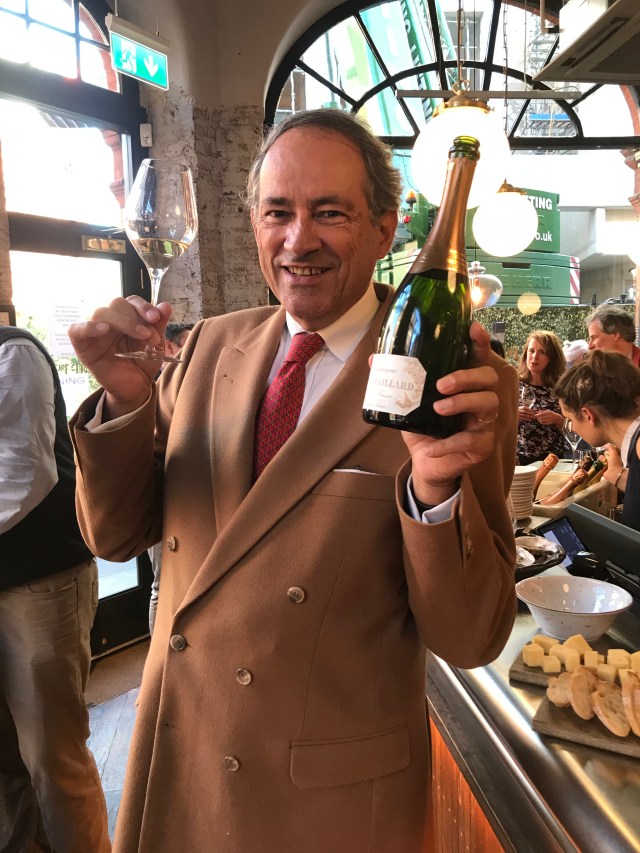
I’d never met any of the Paillard clan before Tuesday, although I know quite a lot about Bruno. He didn’t surprise me at all: tall, distinguished, only slightly reserved, and whatever his background he has a slightly patrician air (as perhaps one might expect from a man who founded a Champagne House at the age of just twenty-seven, back in 1981),…but extremely friendly, knowledgeable, thoughtful.

Alice, his daughter, who is now much more than just a major part of the team at Champagne Bruno Paillard, is slightly different in character. I’m sure she possesses the steely determination of her father, but in her eyes and in the way she expresses herself you really sense her passion for the wines. This is a House that thinks deeply about what they are doing and why.

8F7D6096-F562-4F69-8C5A-28B27DF971D5

Bruno

I have a nuanced view about wine appreciation, and wine writing. Objectivity is naturally important when analysing the wines we taste, but I think a bit of subjectivity helps us to get deep into the soul of a wine (where a wine has soul, of course). Understanding a wine and what its maker is attempting to achieve cannot be ascertained by objective analysis alone. So here’s my take on Cuvée D:Z.

In a way I think its label is slightly irrelevant. Zero dosage, or Brut Zero as some choose to call a non-dosed cuvée, brings out heated debate among more geeky Champagne lovers. Despite climate change and riper grapes, there are many aficionados (I’m not one) who are philosophically opposed to zero dosage. “If only they’d added a little sugar (sic)” they say. And it is true that in the old days some of these undosed cuvées were rather angular and lacking balance. Some still are.

Where Bruno Paillard Dosage:Zéro differs is that I think it is a complete wine. It is also a bit of a red herring to tell you that this is a blend of thirty crus. What I think you do need to know is that it is a wine comprised of fifty percent reserve wines, wines which date back to 1985. You also need to know, perhaps just as importantly, that this wine is comprised of fifty percent Pinot Meunier.

This Meunier is sourced (they own around 35 hectares of their own vineyards) from the area around Cumières and surrounding villages, on the right bank of the Marne, with some coming from vineyards in the northern Montagne. Although when we think about Pinot Meunier the first wine that comes to mind might be Jérôme Prévost’s “Les Béguines“, that wine is made from grapes grown at Geux, on the Montagne. The soils are sand and limestone.

West of Cumières, along the Marne Valley, the Meunier-dominated vignoble is planted on clay-rich soils. Meunier around Cumières, however, is grown on a chalky bedrock (I thank Michael Edwards for this information), where the valley opens out and southerly-exposed slopes allow for a riper style of Meunier as well, especially when care is taken in the vineyard and overcropping is frowned on. Paillard’s vines are all organically farmed, with some parcels under biodynamic conversion.

There is clearly a realisation today that Meunier (or Pinot Meunier if you prefer) is capable of true greatness. When I began drinking Champagne in the 1980s there was a sense, fostered in the wine literature, that Meunier was the runt of the litter, a late budding grape that thereby avoided spring frosts (at least before recent vintages), and a grape which could resist the dampness and cold of this northerly wine region. The wine writers of that time suggested that maybe it was best for packing out cheap supermarket Champagnes and all those unknown labels we saw in the French hypermarkets. Oh how wrong the old scribes were.

I would not go quite so far as to assert that D:Z is therefore a terroir wine, a rather bland statement, but I would assert that it is marked by terroir. This terroir character is merely part of the whole package, which also bears the supporting role of the other varieties and of the exceptional reserve wines. Naturally four years on lees with a further six months post-disgorgement helps rather a lot. It is certainly a wine, though.

DB54CE1D-1EF4-406C-905D-D787AC0CD5E6

It is made just from the first pressing, giving very pure juice. Fermentation is mostly, but not exclusively, carried out in small oak barrels. Some of the reserves were also barrel-fermented, and then kept in stainless steel. The reserves add the lovely autolytic character which comes through as a savoury umami note on nose and palate. In fact the bouquet is toasty and nutty, but also has hints of red fruits, very complex. The palate is pleasantly rounded. Paillard describe it as “chiseled”, but I think it’s a broad chisel.

I was lucky to taste this wine (very correctly served in a slightly larger wine glass – this is one for your Riedel Riesling glass or Zalto Universal) fresh from a just opened bottle, and also from a bottle almost empty, and from which the bubbles had mostly dissipated by the time I’d finished talking and got round to taste it.

Fresh in the glass the bead was very fine, the mousse frothy. There’s nice definition but what it so obviously lacks is the angular and harsh acids that can spoil an undosed wine. Without bubbles the wine exhibits a unique (I chose that word carefully) personality, and genuine character. The facet of that character which stands out most is a very attractive salinity, which defines the wine as a Gourmande Champagne. Drink it with food, throughout a meal. Let it warm in the glass (don’t over-chill it in the first place) and see how it develops, both aromatically and on the palate.

Analyse D:Z by all means, but allow your senses to float inside the wine, to get a sense of something more than its component parts. Treat it as you would a fine white wine without bubbles, treat it as a wine enhanced by bubbles, but nevertheless as a wine like any other.

Bruno Paillard Dosage:Zero is, like all of Bruno’s wines, mostly available in restaurants. I think this is a shame, personally. As with the finest Grower Champagne, I like to see this as a wine that would demand my full focus and attention, in surroundings devoid of too many distractions. In any event, I wonder how many restaurant customers will be persuaded to drink this with food – something I would advocate, although I’ve no idea whether Alice and Bruno would agree with me.

Dosage:Zéro is available, as of this week, at one store, Hedonism Wines in London’s Mayfair. It can be had for a little under £50, which I don’t think is bad value at all. I’m quite sure that it is not a wine that will appeal in quite the same way to those who have a fear of gourmande, zero dosage, cuvées, but it is completely to my own taste, and I look forward at some point to grabbing myself a bottle.

I think Bruno and Alice have achieved here a Champagne that stands out as being a little different, a Champagne with its own individual personality, and a wine that is no mere box-ticking excercise in range building. They have, I think, produced something which for me is quite special because of this.

We also had the chance to taste Première Cuvée in its white and rosé versions. The tasting and launch took place at Comptoir Mayfair on Weighhouse Street, close to Bond Street Underground.

7CD41A27-138E-4D26-AB26-6809A7B777C5


Posted in Champagne, Sparkling Wine, Wine, Wine Tastings | Tagged , , , , , | 2 Comments

Take a Quick SWiG

Back on 25th September I was at the Out The Box young importers tasting and I promised to put up some notes on what I tried from Swig at the end of last week, following their joint Portfolio tasting with Uncharted Wines. That turned out to be yet another fabulous event, so I had to split the two merchants, and Uncharted won the toss. Finally, with apologies to Swig, we have the final article from that frantic fortnight. Last, in this case, unquestionably means  but not least. Swig has a portfolio of wines which stretch the imagination as well as any of the other small importers, and they also have a reputation for excellent customer service. This is just a snapshot, from 25 September and 2 October.

Swig manages, rather like Red Squirrel, who also exhibited at Out The Box, to pull in really interesting producers from all over the world, rather than attempting to specialise. You can understand from stalking them on social media that this is a bunch of enthusiasts who want the excuse to live the dream of constant wine trips (South Africa at present). If they find something good they grab it, and thankfully for sales, they do find plenty of the good stuff.

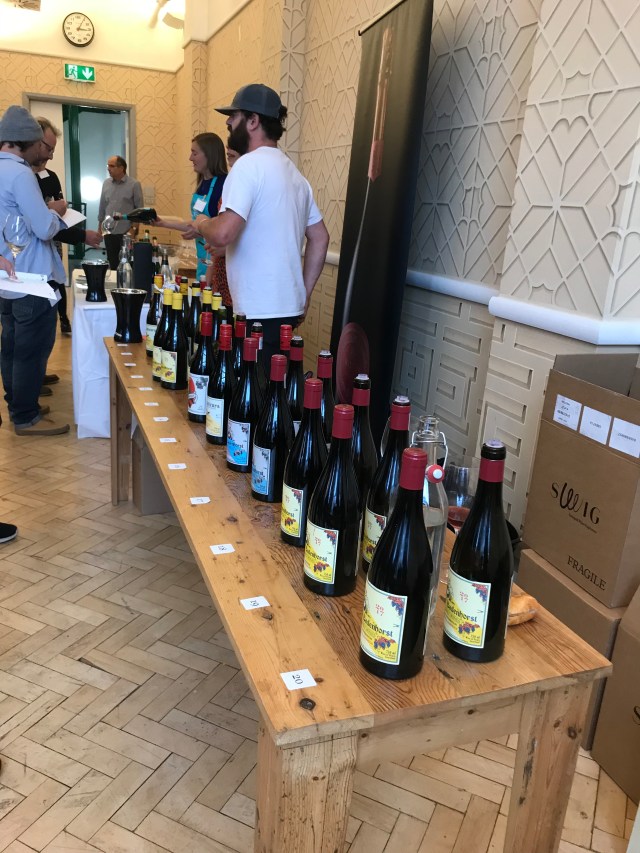
Whilst Swig is not a specialist, they share with Red Squirrel a great list of those South African wines, especially two producers: Adi Badenhorst and Pieter Walser, or if you like, AA Badenhorst Family Wines and BLANKBottle.

ADI BADENHORST, Swartland, South Africa

AA Badenhorst is one label most people who become interested in South African wine will get around to trying very quickly, very possibly via the Sacateurs pair, the red blend (Syrah, Grenache, Cinsaut) or the Chenin white. The range at AA Badenhorst is wide, but all the wines are great value, not least the Secateurs. Adi used to work with Simon Barlow at Rustenberg, and the great work he did there twenty years ago stood him in good stead for what he’s doing today. He’s no johnny come lately.

37662786-B040-441E-8D75-28B330847F2C

The first wine tasted was a Chenin Blanc, a variety which Badenhorst seems intuitively to know with great intimacy. Golden Slopes 2017 is a wine that will be available soon. This is a single site bottling, actually the first vineyard on the property which you see on arrival, planted with old vine stock which Adi found in a pretty poor state and nurtured back to health. This is totally beguiling, mineral, Chenin, with real personality leaping out of the glass. It will age, of course, but boy this is good.

Piet Bok se Bos 2017 is another soon to be available white wine made from Chenin, or “Steen” as it says on the label in this case, the old South African synonym for the variety. The wine itself is named after an old winemaker who lived in an equally old cottage by the side of the vines. The soils here are deeper, with a high silt content, and this is hyper-fresh, with very concentrated fruit and an almost tense, bitter, edge. This 2017 is the first vintage Adi has made of this cuvée.

122FBEB2-D1C5-49B2-A38A-76959DE54751

Papegaai is an incredibly popular wine, and not everyone sipping the white version with pleasure realises it is made, in part, from the Sherry grape, Palomino (there’s also an amazing single varietal Palomino, not shown here, called Sout van die Aarde). But there is also a red Papegaai now, and this is a delicious new 2017 blend (the Swig web site lists it as 100% Cinsaut but I was told otherwise) of 80% Cinsaut with 20% of the Portuguese variety, Tinta Barocca, a grape that has a long history in The Cape. This is another example of the remarkable value Badenhorst provides at the lower end of the range. You get genuine character, and the 14% alcohol just doesn’t show. Crunchy red and darker fruits sum it up nicely.

Yet another wine to look out for soon, which you may not have come across before, is Ramnasgras 2017. This red, as far as I know, is 100% Cinsaut/Cinsault. Although relatively expensive, this is for me a delicious light wine which is best served cellar cool, or even lightly chilled. The colour is a vibrant, palish, red. The nose is quite rich, and fresh. The fruitiness bursts through, strawberry, cranberry and pomegranate, with sweet spice, which gives an all round sweetness to the fruit without the wine actually tasting sweet. Very long, extremely…well, I was going to say impressive, but that sounds too serious. A great wine, but fun as well.


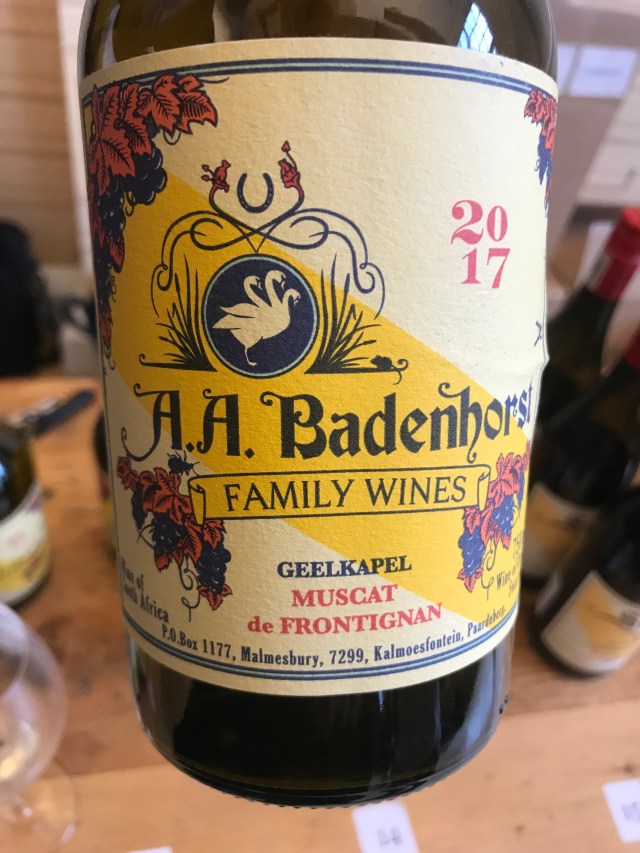
I think there were more than a dozen wines on the Badenhorst table, including several new wines, all well worth exploring, obviously, but I’m going to finish with Geelkapel Muscat de Frontignan 2017. Of course the “Muscat” name refers to the grape variety, not the Languedoc AOP.  “Geelkapel” is another name for the highly venomous Cape Cobra, which is able to transform itself into a colour closely resembling the vibrant yellow of the wine.

This is a blend of Muscat (à Petit Grains) and Muskadel (Muscadelle) picked and trodden by foot as whole bunches before a two week fermentation. The wine shows a quite complex bouquet of tropical fruit (mango) overlain with gentle floral notes (rose petal). The palate is smooth with just a little texture and dry extract, and it comes in at 13.5% abv. It combines real freshness, from the new vintage, with impressive length.

4B9CBB9C-7655-4209-96F0-E5575970087C

BLANK BOTTLE, Western Cape, South Africa

I’ve written quite a bit about Pieter Walser and Blank Bottle. If you’ve not already read my piece written just over a month ago, it may be of interest – follow the link here. Last week I actually got to meet Pieter, and the experience was just as good as tasting his wines (quite a number of which, I should say, I have in my own cellar). He’s a top bloke. The big problem in tasting (and buying) Blank Bottle is that some of the wines only get made once, so there are a lot on the table at any tasting. I’ve tried (not with complete success) to write just about wines I’ve not covered recently.

Moment of Silence 2017 is a white blend of Chardonnay, Grenache Blanc and Viognier (allegedly). It’s not the most complex of Pieter’s wines, but it is super-fruity and quite concentrated, making it a good place to start. It also has possibly the least exciting of the Blank Bottle labels, but I only comment on that because I love Pieter’s labels, some of the most quirky and inventive I know.

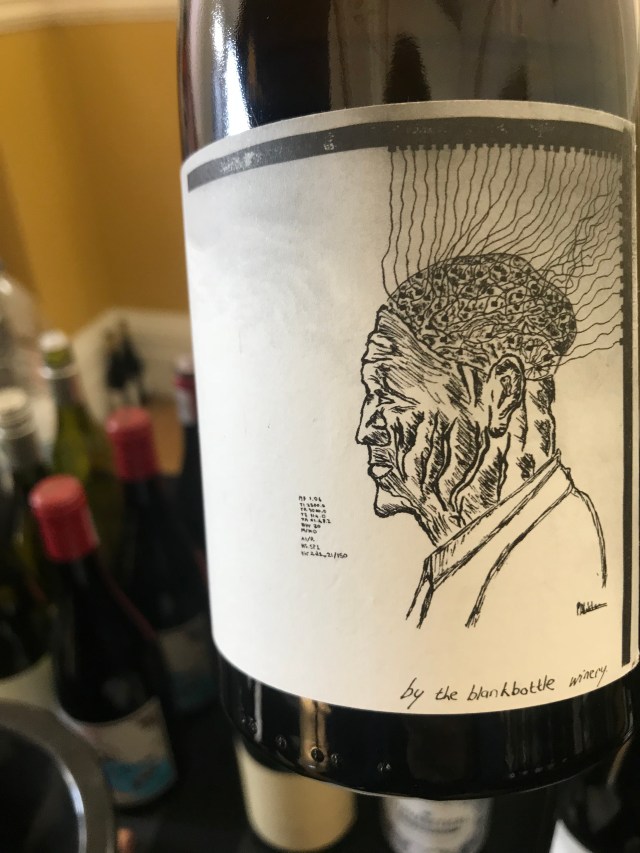
Epileptic Inspiration 2016 is a wine with an interesting label, showing a brain scan, and I think it’s a label with very personal connections. The wine is Semillon, fresh and mineral. I think this will also be drinking brilliantly, something I plan to test soon in the comfort of my own dining room.


Rabbitsfoot 2017 is a cuvée I’ve not tried before. The variety is Sauvignon Blanc, and I’d put it right up there with all the best, and most interesting/exciting SBs I’ve drunk this year (which would include the New Zealand example from Hermit Ram that I tried at the same event). Pieter says he hates “green” Sauvignon Blanc, and this wine seems to prove that point. There’s a bit of tropical fruit, and a bit of stone fruit, in a wine that is lush for the variety, but nothing like most tropically fruited New World versions. One for the disciples of Abe, perhaps. Apparently the wine comes from five rows of vines which are more usually eaten by the baboons. Not this time…thankfully.

D37ADF3F-8D82-4837-8190-DFBB18CFE333

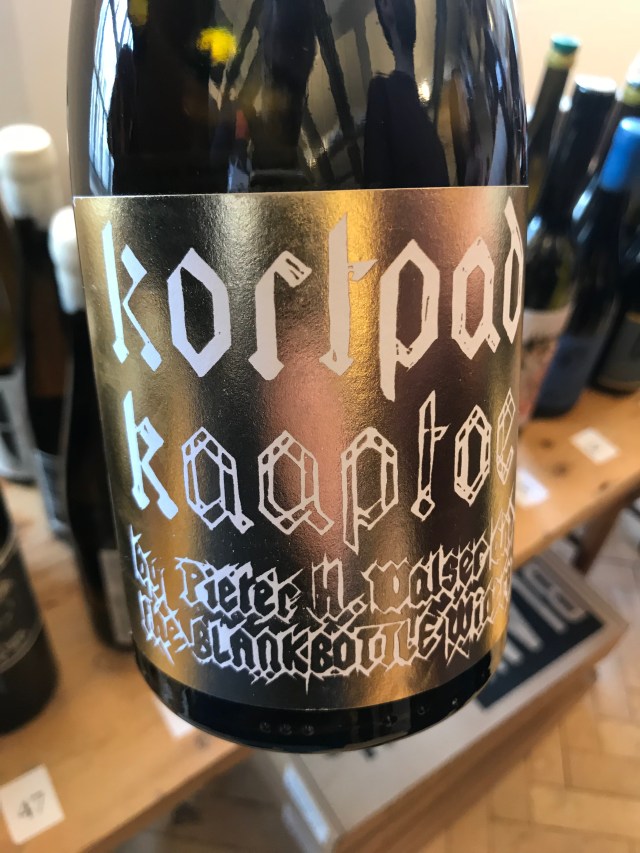
Kortpad Kaaptoe was the first Blank Bottle wine I ever bought. It’s made from a variety I think Pieter really likes, Fernão Pires (aka Maria Gomes in Portugal’s Bairrada). The grapes for the 2017 come old vines on sandy soils in Swartland’s fringe, from Darling (just inland from Grotto Bay). This is quite unusual stuff, and my notes say it has a savoury lush sweetness. Swig, on their web site, go for “turkish delight and crystallised pineapple bashed with quartzy stones”. I truly love it.

C53DAE10-6271-448C-95BD-54209ADFF552

Don’t Look Back 2017 is as yet unavailable, but will be worth the wait. It’s Clairette bottled in a flute (Pieter likes to confuse), nice and fresh with a stone fruit and mineral finish. Manon des Sources 2010 is also yet to arrive in the UK, but note the vintage. After one year in barrel Pieter decided it needed seven years in bottle. Don’t ask me what it’s made from, I’ve no idea (and the whole point behind Blank Bottle is that it doesn’t matter), but it is a stunning wine, really interesting, full and big but with flavours which initially have a hint of Riesling (lime and petrol), but then morph to juniper with a hint of dry apricot.


The first of three reds was Misfit 2017. I do know what this is, Swartland Carignan from old bushvines, of which 30% was whole bunch fermented. It has a fruity freshness to it, very brambly with a little crunch to the vibrant fruit, finishing with a herby twist. Jaa-Bru 2016 is quite a contrast. It’s a rather big Malbec in a little dumpy bottle that really packs a punch and attitude (though it is only 13.5% abv), yet retains what can now clearly be seen as that trait through the whole range, “Blank Bottle freshness”.


Last up here, PH.D 2016, which I tasted back at Out The Box. This blends Cabernet Sauvignon, Cabernet Franc and Malbec. It does seem quite a philosophical wine, though doubtless the name is auto-suggestive. Equally, it does taste like a Bordeaux blend in terms of fruit profile and structure, but it is also very pure and precise. A brilliant wine, and though it ain’t cheap, it’s great value.

943BC774-0061-4A45-ABE1-44616CB23AB1


VIGNOBLE DU RÊVEUR, Bergheim, Alsace

This domaine encompasses the vineyards left to Mathieu Deiss (working with Emmanuelle Milan who was pouring the wines for us) by his maternal grandmother. He operates out of his famous father’s, Jean-Michel Deiss’s, Domaine Marcel Deiss, in Bergheim, in the heart of Alsace. Most of Mathieu and Emmanuelle’s seven hectares of vines are in the commune of Bennwihr, near Kaysersberg. Mathieu’s dream has one practical side – to explore and fine-tune the art of skin maceration, and to diminish, and then eradicate, the use of sulphur.

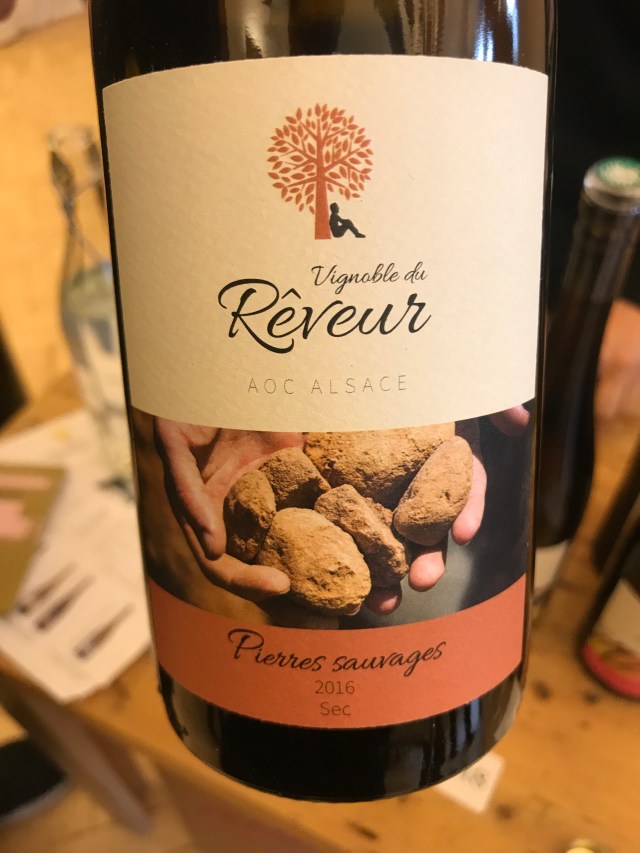
Pierres Sauvages Pinot d’Alsace 2016 is a classic Pinot d’Alsace blend, made from Pinot Gris, Pinot Blanc and some Pinot Noir vinified en blanc. Straight off you can tell this is a terroir wine, one where the variety and winemaking doesn’t intrude. Vinification is in large neutral oak for fermentation and again for twelve months ageing on lees. Saline and mineral.

2F08AAE2-CC37-4877-82F0-65E4B23DAB77

Vibrations Riesling 2016 has a deeper minerality and softer fruit which makes it taste quite creamy on the palate, with a nice touch of lees age texture. It is bottled with 30 ppm total sulphur. Vinification as with the Pinot above.

Vibrations Riesling <Nature> 2016 sees a very similar vinification to the previous two wines, but, as the name suggests, this has more of a “natural wine” liveliness about it and is bottled with no added sulphur. That said, the lemon acidity of the Riesling is fresh and the wine is dry (technically 2g/l of r/s). Very precise with a nice clean palate, vivacious.

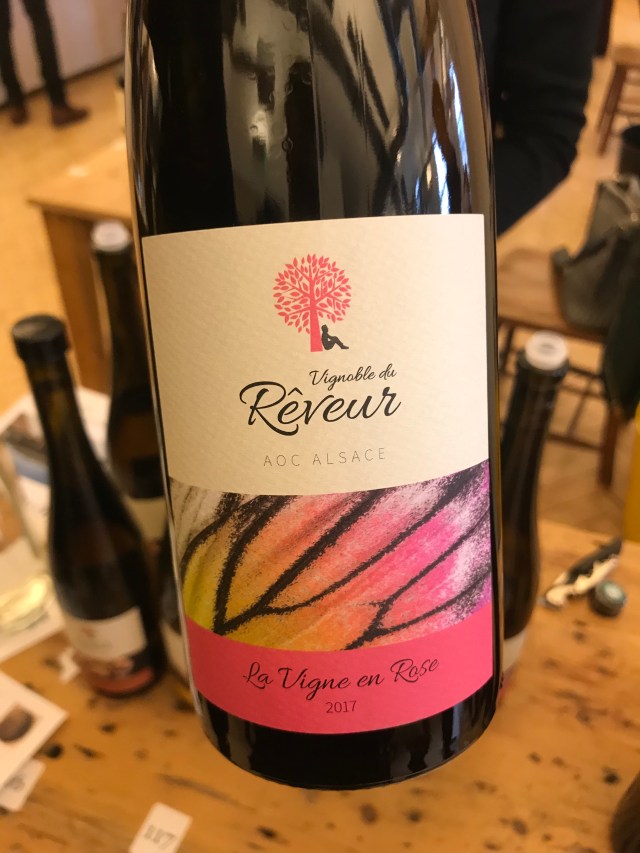
La Vigne en Rosé Gewurztraminer 2017 is described as a rosé, but the colour comes from the skins of the Gewurztraminer grape, via a touch of skin maceration. The vinification is also carbonic, so the wine is quite fresh and light. None of the heaviness associated with many versions of the variety. The bouquet is of gentle rose petals, elegant and lifted, but the wine is dry, and despite a surprising 13.6%, it tastes light, with an ethereal quality.

1A83EBF1-64E4-4F82-91B4-B0DB04579FBF

Un Instant sur Terre Gewurztraminer 2017 is a brilliant peak to Mathieu’s range. It is an orange wine, although there is a distinct pinkish tinge from the Gewurztraminer skins macerated in amphora. You’d almost buy it for the colour alone. The bouquet is very complex, sweetish and floral but with a distinct savoury edge coming from the vinification vessel. There is no residual sugar so any perception of sweetness comes just from the richness of the fruit on the palate, and 14.5% alcohol, though do not let that put you off. A marvellous wine.

4727A3A1-7CE0-479E-A97C-1F51426D80C9

Emmanuelle with “Un Instant”

I’ve tasted Mathieu’s wines three of four times in the past eighteen months or so and they are really impressive. I think he has hit upon a style which accords with his fellow young growers (thinking of those in the north of the region), and there is a clear point of difference with his father’s wonderful wines. A name to follow.

CHAMPAGNE COLLARD-PICARD, Épernay, France

Olivier Collard and Caroline Picard sound as if they may be a new tiny “Grower” making wines from a few hectares, but they are actually a “Maison” (founded 1996). They occupy impressive premises on Épernay’s Avenue de Champagne, although the cellars are actually at Villers-sous-Châtillon, not far from Châtillon and Mareuil in the Marne Valley. They farm 15ha which is spread over the Marne Valley (for the two Pinots) and the Côte des Blancs for Chardonnay.

There are eight cuvées in the range, five of which I tasted last week. The range starts with Selection Brut NV, comprised of 50% Pinot Meunier and 50% Pinot Noir. It’s a fruity NV without great pretence at complexity, with a dosage level that’s quite easy to guess (9g/l…I guessed eight). The thing I liked about it was that Collard-Picard make their Champagnes without malolactic, so that even at this level of dosage you still get a nice acidity and freshness.

Prestige Brut NV has the same dosage, but the grape blend is 50% Chardonnay with equal parts Pinot Noir and Meunier. It has four years extended lees ageing, one year in foudres and the rest under crown cap in bottle. There is definitely more elegance here.

Blanc de Blancs Grand Cru Brut NV is blended from Chardonnay sourced from Oger and Le Mesnil-sur-Oger. This is where you noticeably step up to a degree of complexity. The best juice from the first press only is used, and the base vintage in this case is 2014, supplemented with reserve wines. You get some biscuit and brioche, but there’s fresh citrus too. The fruit in this comes through nicely.

Essential Brut Zero NV has the same Chardonnay dominated grape mix as the last wine, but this cuvée only appears in the finest vintages. With a base of 2010, this certainly qualifies under those rules. This wine is given 18 months in barrique, and then four years on lees in bottle, this time under cork, which Raphael Bérêche has convinced me is superior to crown cap, however others may fuss and splutter. It’s a very fine Champagne. Whilst the three previous wines were enjoyable, this is what made me sit up and take notice, and this is the wine that secured the inclusion of Collard-Picard in this article.

Coteaux Champenois Rouge “Terres de Meunier Les Louves” 2014 – Coteaux Champenois used to be a rarity, if not a joke to many, but as with the example of German red wine, the still wines (particularly reds) from Champagne have quietly been improving for some time. Back in June this year I drank Raphael Bérêche’s “Les Montées”, an Ormes red from the same vintage, and it has been one of my reds of the year so far. This Collard-Picard wine, however, is not Pinot Noir, but Pinot Meunier, and a very fine still Meunier it is too.

Les Louves comes from a small individual plot on the right bank of the Marne. This cuvée is only made in very fine vintages, and 2014 yielded only a fraction more than 1,700 bottles. It spent eighteen months in small barriques (both old and new) after very gentle pressing, and there was no filtration. The bouquet is very concentrated, cherry and red fruits, which translates on the palate as very smooth, silky and long.

4805F3A0-53EF-48C9-B118-11B801E980C6

Many more Swig wines deserve a mention, but there’s only time for a few. BK Wines is a creative outfit making exciting wines from single sites around the Adelaide Hills in South Australia. Everyone knows their One Ball Chardonnay, but of the whites my current favourite is definitely Skin n Bones White 2017. It’s made from Savagnin, you see, though admittedly not Savagnin as I’m used to it, but a truly Aussie interpretation of the variety.

The grapes come from Lobethal, near better known Lenswood, which is over the Basket Range, due east of Adelaide. As the name suggests, there’s skin contact here, one month on skins in fact, then nine months battonage. You get sunshine fruit, but equal amounts of freshness, a twist of lemon on the finish, and a lingering nutty and gingery note. But it’s more fruit than nuts, unlike the standard Jura Savagnin Ouillé. The Skin n Bones Red 2017 is good too, made from Lenswood Pinot Noir which sees 100 days on skins before ageing in mostly older French oak. It’s pale and  has an unusual, almost textured, nose. You get the weight of cherry fruit with the zip and bite of more acidic cranberry. Clean but with a wild side.

Everyone seems to be bringing over something interesting from Portugal these days. The Boina range from the Douro fits this category perfectly. The red and white here are relatively inexpensive, but provide genuine interest, especially for those looking for something a bit different on a bar or restaurant list. The white is a co-fermented field blend of several autochthonous varieties which you almost never see on a wine label: Rabigato, Códego, Códego do Larinho (sic) and Malvasia Fina. It seems to combine apple freshness with a nutty, buttery palate.

The red was, for me, the most interesting, made from the somewhat better known Touriga Nacional, although from a vineyard where, in the old Douro fashion, other varieties are co-planted. The nose was fairly muted, but it was all change on the palate with lots going on. It has body, as you’d expect from the variety, but it is really fresh and frisky too, not qualities always associated with Touriga.

99E21041-18DB-4092-9EF3-18A687295A3D

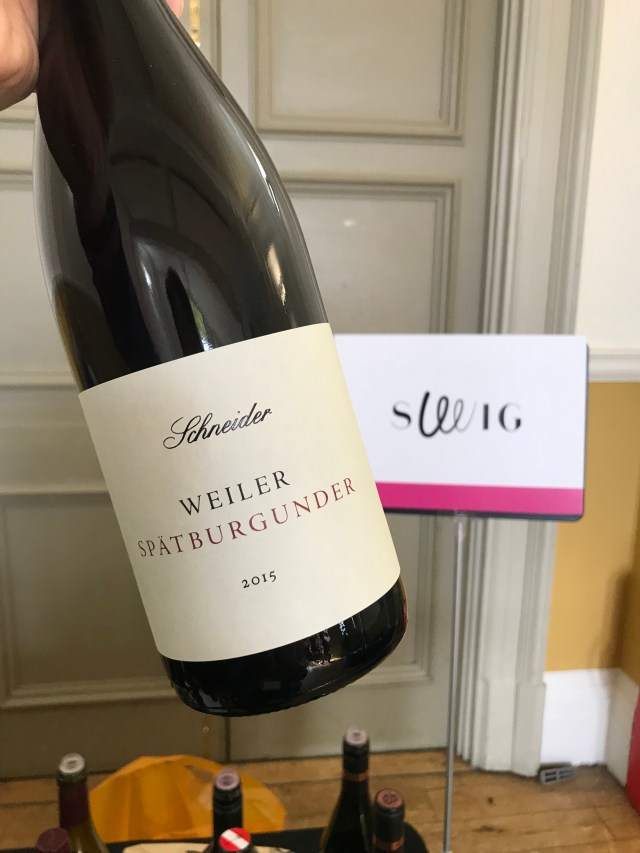
I also need to give a shout out for Claus Schneider Spätburgunder “Weiler Schlipf” 2015. As Swig justifiably points out, this wine has all the fruit of the excellent 2015 red wine vintage in Baden, but as well as this touch of fatness you get masses of delicious smooth summer fruit. This is in effect an entry level wine, but as well as the fruit you get more, with a touch of orange citrus and a very slight leafy undergrowth hint. A simple wine with a bit of added interest, but with its lush fruit, definitely a wine to convert a few people to German Pinot. It’s funny but an independent merchant in the Midlands was telling me on Saturday that another German Spätburgunder is currently his biggest selling red. Who’d have thought!

EB4E1472-504D-4661-B519-97EDC6FBFEA1

Finally, do take a look at the Guy Breton Beaujolais selection (Régnié, Côte de Brouilly and two Morgons). The wines don’t show on the Swig Web Site at the moment, so perhaps they are new to the list. They are excellent wines, as anyone who has tried them, perhaps in Paris, or perhaps the P’tit Max when Winemakers Club had some, will know full well. Swig also sell one of my very favourite English wine estates, Wiston, from just north of Findon in West Sussex. Their wines need little introduction to aficionados of English fizz, and from June 2018 Swig are their UK agent/distributor for the on-trade.

Contact Swig for further information here.


Posted in Alsace, Natural Wine, South African Wines, Wine, Wine Agencies, Wine Merchants, Wine Tastings | Tagged , , , , , , , , , , , , , , , , | Leave a comment

Uncharted Territory

I had intended to write an article combining the wines from Uncharted Wines and Swig that I tasted last week at Out the Box with those I tasted at their joint portfolio tasting at The China Exchange in Soho yesterday. Looking at the number of wines I want to include (let’s face it, a good sign), I’ve decided I need to split these two importers. This article will therefore cover just Uncharted Wines. You can look forward to reading about Swig after the weekend.

Rupert Taylor set up Uncharted Wines to revolutionise the way we consume wine in bars and restaurants. We had already been seeing different packaging formats for wine evolve in the past few years, the main step forward being, in my view, when people like Le Grappin and others began to put wine of genuine quality into bags. The bag-in-box wines of old were generally very ordinary. The fruity Beaujolais and Macon wines released in “bagnums” by Andrew and Emma Nielsen were pure glouglou and were perfect for the time.

064D32F2-E8A1-40C5-AA7C-20D0CD2E6F85

Uncharted Wines’ Rupert Taylor

Rupert, who despite his youthful appearance has a history on both sides of the trade (sommelier through to account manager with Enotria and OW Loeb), took things one step further by introducing the wine on tap concept. If people are drinking wine in bars like they used to drink beer in pubs, it figures that wine on tap should be convenient and popular. Thirty-, and twenty-litre kegs keep the wine fresh and drinkers can try a good selection of wines.

The genius part of the idea is to fill those kegs with special cuvées made by some of the most exciting producers in the world. Well, almost the world. Getting kegs from South Africa has proved do-able, but Rupert is having to work on the logistics and costs for New Zealand.

The vast majority of the business conducted by Uncharted Wines is the kegs, and this has been an incredible success story, but the strange thing is that quietly, with no fanfare, Rupert and his team have put together a quite astonishing portfolio of producers and wines in bottle, quite aside from the kegs. I shall begin with a few of the keg wines, but I really want to highlight the other side of the business as well. Go into an establishment that has some of Uncharted’s kegs and you can be sure of glugging a fun wine, with personality and excitement. But the rest of the list…wow, some crazy stuff they’ve discovered.

9CF9345E-350B-454E-A5AE-6F24212D327E

THE KEGS

You wouldn’t really expect to find Burgundy in a keg, would you? I’ll rephrase that, you wouldn’t expect to find really decent Burgundy in a keg…? Olivier Morin is based in Northern Burgundy, at Chitry, near Saint-Bris and not too far from Chablis. He provided two keg samples, Bourgogne Blanc “Circonstance” 2016 and Bourgogne Rouge “Circonstance 2016. The white is relatively lean for Chardonnay, perhaps erring towards Petit Chablis in style, but it has great freshness. The red is just lovely and fruity, just what you want. It reminded me of the juicy Pinot Noir that I first tasted from Jean-Paul Brun (Beaujolais) in the 1990s.

Somewhat more serious, and pretty classy, is Le Grappin Bourgogne Aligoté “Skin” 2017, which I’ve written about from bottle. The fact that Andrew is so generous in sending this wine to keg is why there’s so little to go round the rest of us. There’s great texture, richness, and less acidity than in the Aligotés of old, though again, it is fresh. I would love to wander into a bar where this is on tap.

Raphael Saint-Cyr farms the largest organic domaine in the far south of the Beaujolais Region, at Anse. He is therefore well placed to provide a juicy Beaujolais for keg. Domaine St-Cyr Beaujolais “Kanon Keg” 2017 is purest cherry fruit in a glass, and lovely. It’s the first wine here to come in the larger 30-litre format, just as well because I bet this flies.

I tried a few other keg samples, many of which I’d happily drink, such as Domaine de Séailles “Presto” 2016, (a Gascogne white made from Sauvignons Gris and Blanc), but I’m going to move on to some fantastic South Africans. Adi Badenhorst has provided kegs of AA Badenhorst Family Wines Secateurs 2017 Chenin and Secateurs 2016 Red (Shiraz, Mourvèdre, Grenache and Cinsault) which taste no less good than from bottle. The white has pear, quince and mineral freshness, the red is grippy but concentrated.

Pieter Walser’s Blank Bottle Winery has likewise provided two cracking wines. White KegWyn 2017 blends 50% Fernão Pires with Chenin and Roussanne, whilst the red, from a wider blend of Cinsaut, Grenache Noir, Shiraz, Roussanne and Pinot Noir, is lovely, and it does show a bit of structure.

Another vibrant South African is a Sauvignon Blanc from the 2018 vintage, from Duncan Savage. It was just a tank sample, Western Cape fruit, but I loved the soft lemon on the nose, coupled with a grassy note. Such a fruity Sauvignon Blanc is hard to find. Two wines (white and red) produced by Craven in Stellenbosch were also 2018 tank samples, but look very promising, and will appear under the Yellow Belly by Craven label.

THE BOTTLES (fizz first)

First in the lineup at China Exchange, as at Out The Box, were some Sparklers. Last week I’d been most impressed by Maison Nicolas Morin “Intrabulleuse” 2016, a petnat from Chardonnay. Although this particular Morin is based in Nuits, on the Côte d’Or, the fruit is sourced in the Jura and it has a real focus and spine.

Vigna San Lorenzo “Col Tamarie” 2016 is a Col Fondo wine from the Veneto. It comes off high altitude limestone soils, a blend of biodynamically, and “homeopathically” farmed Glera, Boschera, Perera, Biancetta, Grapariol, Verdiso and Marzemina. No wonder they call Italy Enotria! If you love a leesy col fondo, this takes the style to another level. Yet it does not lack focus.

One of the star fizz’s yesterday was Huis Van Chevallerie Filia Brut 2014, a Kap Klassiek from Swartland. This is astonishing Chenin, which has a touch of old Loire about it (anyone tried any old Huet Vouvray Mousseux?). Golden colour, zero dosage, a bit of fat, dry.

Also full and fruity, in fact mouthfillingly so, was the brilliant Westwell Wines “Pelegrim” NV, a traditional method wine based mainly on the two Pinots (Noir and Meunier), with 15% Chardonnay. Just 11% alcohol, but a big impact. Fresh apple dominates, with red fruits playing a supporting role, a touch of chalky minerality finishes things off. More of Westwell later.

Check out those lees in the Tamarie!

I remember when OW Loeb began importing Château Yvonne, a producer in Parnay, overlooking the Loire half way between Saumur and where that river is joined by the Vienne, to the southeast. They produce stunning Chenin, and their Saumur Blanc 2016 has concentrated pear and quince flavour. Saumur-Champigny “La Folie” 2015 is quite purple, and has a concentrated cherry nose. The fruit on the palate is more brambly with a bit of bite, an excellent drinker.

Saumur-Champigny 2015 tout-court is more tannic. It’s a vin de garde with the richness of the vintage. In a period where there are now some star estates in the region whose wines have become hard to source, let alone afford, names like Yvonne (and indeed Antoine Sanzay) merit immediate attention.

62B701C6-9950-46EC-9A13-01C66F260C11

MAISON NICOLAS MORIN, Côte d’Or (Burgundy)

I mentioned the petnat of Nicolas Morin earlier, which I tasted last week. Yesterday I had the chance to try his negoce range. Morin is an ex-cooper, turned negociant, in Nuits-St-Georges. There are negoces aplenty these days, but Morin has carved a name for himself among aficionados for the obsessive nature of his winemaking philosophy. He lacks his own vines, so he can’t make the same wines every year, but there is a stylistic thread running through what he does produce.

Bourgogne Blanc 2016 has colour and richness not always found at this level, yet the finish has minerality as a nice contrast. It is a wine of ambition for a mere BB. The next three wines are reds, and all of them show more class than their appellation might suggest.

Santenay 2014 is fairly pale, and the fruit is smooth, but there’s grip on the finish. About 20-30% of the fruit is destemmed and it goes into 40% new oak. Hautes-Côtes de Nuits 2015 is darker, is all destemmed, and all sees new oak, not all that common to say the least for wines from the hills above the Côte. Bottled with minimal sulphur, the fruit is sweet on the nose, quite rich, but you can taste that it has had a little bit of whole berry fermentation to round it out.

The top red on show came from less fashionable Monthélie, too often forgotten by the Burgundy buffs (well, has anyone tasted Roulot’s Mothélie Blanc?). Monthélie 1er Cru “Les Riottes” 2016 is not cheap (£46), but it’s serious and becoming more complex. The fruit is great, but there’s a bit of added spice as well. One to keep a while, I think, but impressive…and I’d say that about all these wines. A genuine discovery in a region where you don’t expect to find a lot of new blood. The micro-negociants continue to come up with the goods.

There was one more wine from Nicolas Morin, a Vin de France sourced from the Rhône, Intrépide 2016. This has very plump Syrah and Grenache fruit, from Ventoux, with whole bunch vinification and bottled with low sulphur. It has a gorgeous bouquet and a savoury finish. Richer than you’d expect and quite big (14%). I preferred the Burgundy bottles, and loved the petnat, but I am still impressed by this red.

DAVID CHAPEL, Régnié

David Chapel is another coup for Uncharted, a man whose star has risen faster than anyone’s in the Beaujolais I can recall for a while, and we all know it’s a region packed with rising stars. I got to try the Juliènas Côte de Bessay 2017 twice in nine days and both times I was super impressed. It has a savoury side to it, and is a genuine terroir-defined parcel wine (from vines on pink granite, close to Saint-Amour). It is just the second vintage of the first wine David and partner Michele Smith-Chapel made. This also comes in magnums and double-magnums, for those after an impressive bottle.

Beaujolais-Villages 2016 is lighter, of course, but shows the fresh, smooth, fruit of the vintage, and it’s a few quid cheaper. David Chapel’s dad knew all the greats, and this is why David ended up working at Domaine Lapierre. The domaine is actually based in Régnié, and lucky for us, since 2017 they have managed to add three hectares in Chiroubles and Fleurie.

052D4D32-3125-4AB3-9D84-884B2D9E93F6

Although everyone is talking about Domaine Chapel, Rupert has also got hold of more Beaujolais domaines: Thillardon, Saint-Cyr (as we saw in the keg section), Château Grand Pré, and Damien Coquelet, whose wines I also like. He was represented by another nice Beaujolais-Villages 2016 and a classic Morgon Côte du Py 2014. This is from a beautifully fresh and classic vintage. The Coquelet Py has a touch of the funkadelics, but it’s a biggish wine with fresh acidity. You could drink it now with food, thanks to this freshness, but it’s not going anywhere soon.

Moving South, the next truly impressive producer was Jean-Baptiste Souillard. I’d never tried his wines, though I was just beginning to see them on my radar. Seven wines were shown, starting with some single varietal Marsanne and Roussanne, but at the top of the range the class here became evident. Côte Rotie “Coteaux de Bassenon” 2016 was deep purple, dense, tannic, but the bouquet of violets was elegant and ethereal, pointing perhaps to this wine’s future. Cornas “Les Côtes” 2016 was once more very tannin-dominated, and needs a lot of time. But the rich fruit underneath was very impressive and will come out, with complexity, when the mask of oaky tannin slips. Not as difficult to taste as some young Cornas.

20409128-668D-4014-944B-899F866116F6

A quick diversion is required before we leave France. I’ve seen bottles of Domaine du Petit Août before, but I can’t recall where [thank you Wink Lorch for reminding me when I tried this producer’s rare Espanenc]. Yann de Agostini started this domaine with two hectares of old vines in 2009, and in nearly a decade has increased his vines to six hectares, at Théüs, which overlooks the River Durance southeast of Gap, near the large Lac de Serre-Ponçon, in the southern region of the Hautes-Alpes.

“Sous le Fil” 2016 is a gorgeous, simple, white from Roussanne and Clairette, made with the freshness of vines grown at 600 metres altitude. “Le Poids du Superflu” 2016 is 100% Roussanne. The nose is exotic, the palate mineral and stony. Just 11.5% abv. Not fine wines but well worth trying if you see one on a wine list or on the shelf. I was quite taken with this pair.

37519A08-4609-4399-830B-92983AE97DC7

WESTWELL WINES, Kent

Westwell Wines is on chalk terroir on the south side of the North Downs, just north of Ashford in Kent, and close to the old Pilgrim’s Way to Canterbury. There are around nine acres planted to the three classic Champagne varieties, along with four acres of Ortega. I’ve had a good taste already of some of that Ortega, because part of it went to Ben Walgate, for the Tillingham “Artego” cuvées.

Around 18 months ago the estate was taken over by former record company owner and music business figure, Adrian Pike, perhaps best known for founding the successful record label Moshi Moshi (that’s until you see him modelling a Throbbing Gristle t-shirt in the photo below…respect!).

I’ve already mentioned the “Pelegrim” English Sparkling Wine earlier in this article. I started off here with Adrian pouring me Westwell Ortega Classic Ferment 2016, a very nice wine with excellent freshness, but then Adrian was able to grab me a glass from keg of the 2017 Ortega, of which more is also about to go into bottle. This was very lively and vibrant, all aged in stainless steel. There are tropical notes, but grapefruit comes through on the finish. I must say I felt the 2017 is a step up.

Westwell Amphora 2017 was a sample, the wine will be available in November. It was fun to contrast this amphora-aged Ortega with Ben’s Tillingham Qvevri version. This is a bigger and more textured wine than the keg sample, but it is fresher, with less deep texture, than the qvevri wine from Tillingham. Adrian destemmed the grapes into steel vats but it unexpectedly began fermenting, so he left it on skins there for three weeks before pressing into amphora, where it spent eight months. It was bottled with just a tiny bit of sulphur. I’m certainly going to head out to visit Adrian some time. The wines are a great addition to the English artisan winemaking fraternity.

Adrian Pike sporting his fabulous TG t-shirt

SYBILLE KUNTZ, Lieser, Mosel

There are two women winemakers I really admire in Germany, Theresa Breuer and Sybille Kuntz. Sybille farms from the village of Lieser, and in fact shares the great Grand Cru Niederberg with Thomas Haag, of the Schloss.

An indication of the steely determination Sybille has to succeed lies in the story of how she opened a wine shop to help finance her studies in business administration. She effectively tasted half the stuff she was selling and thought “I can do better than this”. She can, but she is blessed with parcels on one of my favourite Mosel sites, the Niederberg, and some old vines to boot. She is certified fully biodynamic (since 2016) and has vegan certification too.

I tasted half-a-dozen wines, the Riesling QbA Trocken 2016 last week (off quartz and slate), and the following five wines yesterday. We begin at Kabinett Trocken 2015, a wine off blue slate which is richer than a Kab Trocken often appears, and it is lovely and long. Spätlese Trocken 2012 shows the soil really coming through, as does the intensity of 80-to-100-year-old vines from Niederberg. It has Spätlese richness without sweetness. It also comes, in this case, out of one of the world’s most elegant magnums.

DFD1E241-6583-461A-A6F5-84404AE7EBF4

Dreistern Goldkapsel 2003 from Niederberg Helden is bottled with 14.5g r/s and 14% alcohol, and has genuine richness, but also a slatey mineral intensity. Fresh for a 2003 too, it oozes class. If that were not spectacular enough, Scharz 2007, is a parcel wine from that part of the Niederberg (Scharz is an old German word for slate), from 80-y-o vines. It is bottled with 25g/l residual sugar, but it also has a very definite savoury side. Auslese Feinherb 2011 is from the Helden parcel of the Niederberg, also farmed by Thomas Haag. It’s a steep slope (a 70% incline) requiring hard manual labour. Bottled with 50g/l residial sugar, it rewards the work with a deep richness, fabulous.

These are magnificent wines, and Sybille Kuntz is not sufficiently recognised as one of the great winemakers on the Mosel. Her wines are truly expressive of a special site, reflecting the terroir, but they also show great intensity and presence. They are among my personal favourites from the region.

Sybille Kuntz

Sybille’s husband, Markus Kuntz-Riedlin, took over his parents’ vines near Laufen, in Baden, in 2009, where he specialises in Spätburgunder. Sybille was showing his rosé (2016) and red (2014). The pink is very fruity with lively acidity, the red sees 15 months in old oak. It’s not as structured or big as some Baden reds, but it is savoury and has bite. These wines are not, for me, as truly exciting as Sybille’s wines, but they are still pretty good. The labels show a 1950s chalk crayon sketch by Adolf Riedlin.

CE6FD9E9-7068-4C74-9C74-BCAC9CD89C11

We now reach the last two producers who I must mention in more than just passing from yesterday’s tasting.

SUCCÉS VINICOLA, Conca de Barbera

This is a new estate in Conca de Barbera, the hard work of Albert Canela and Mariona Vendrell, who met at wine school and formed the domaine (and a more romantic partnership) from vines owned by Albert’s family in 2011, at only twenty years of age. It’s hard to believe this obviously still young, but highly engaging, couple (Mariona is the most chatty, perhaps with the best English) are making such super wines. They have since unearthed some very old and neglected parcels in the hills.

Experiència 2017 is 100% Parellada, a lovely sappy and juicy white, 50% direct press and 50% skin contact, but the real gems here come from a local grape I have written about elsewhere, Trepat. This was once a workhorse variety, and as I mentioned last week (Out The Box) in relation to Lectores Vini’s Pomagrana (from Modal Wines), around 1,500 hectares of Trepat are still planted, for fairly ordinary rosado wines. The grape, when handled carefully, can actually make a brilliant glouglou red in the old clarette style. La Cuca 2016 is just such a wine, deliciously fruity, crunchy, and just 12% abv.

What I didn’t expect was El Mentider 2016. This is a darker, more serious Trepat from a single vineyard, and vines aged between 80 to 118 years of age. Darker, with 14% alcohol, it has body and depth, and no rusticity at all. I was astonished by the quality, although I lost my heart to the lighter version, for sure. I truly wish these lovely young people every “Succés”.

Albert and Mariona and their wines

THE HERMIT RAM, Canterbury, New Zealand

Talking of losing one’s heart, I had waited a long time to try these wines, and only broke my duck last week. Everything that has been said about Theo Coles’ South Island estate is true. These are the most exciting wines from NZ I’ve tried since I tasted Kusuda and Bell Hill some many years ago now.

Yet again, I’m about to shoot myself in the foot. I never, ever, ask for free wine, but I do sometimes wish some importers would just keep aside the odd bottle for me to buy. If everyone who reads this buys just one bottle of Hermit Ram, there will be none left in the UK well before you are all done, and it would not be the first time I’ve plugged a wine/producer only to leave myself empty handed.

Field Blend Skin Fermented Rosé 2017 does what it says on the bottle, then more. Half the blend is Riesling, picked at spätlese ripeness. The rest is 35% Pinot Noir and 15% made up from Gewurztraminer and Cabernet Sauvignon. Old oak, no sulphur, a textured and savoury pink with genuine personality.

Sauvignon Blanc 2017 also sees skin contact, and this really exemplifies why so many forward thinking producers are giving this technique a go with a grape that seems to turn off so many wine obsessives, or at least did until Abe Schoener gave us his cave-dwelling prince. It’s a gravel and limestone parcel which gives a wine that’s grassy-fresh and saline. The nose is unlike any NZSB you’ve smelt before. If I buy some of this it will be a NZSB first for well over a decade (though to be fair I did enjoy someone else’s Seresin SB last Christmas).

You know I love a wine which pokes people in the eye, and the next wine does just that. Before we saw the first acclaimed Sauvignons from New Zealand in the 1980s, the country was famous, or rather infamous, or maybe just not very well known at all, for dull Müller-Thurgau, vinified in their stainless steel dairy vats. Europe, mainly Germany and Austria, has seen something of a minor M-T revival, but this is the first NZer I’ve seen with the balls to highlight this grape. And you know what? It may just be my favourite wine from yesterday’s Hermit Ram offering for that reason.

Müller-Thurgau 2017 comes in at a low 9% alcohol, and sees three weeks on skins. No sulphur is added. The vines are a very old parcel. The skin contact seems to have given the wine an odd colour, almost pale caramel, which is immediately appealing to me, doubtless not to more conservative palates. The fruit smells sweet, with lovely high floral notes, but it’s another of those wines where you think you begin to pick up the texture through your sense of smell, even before sipping. There is a certain sour nature to the palate, which is not uncommon as a result of skin contact, but there’s characteristic freshness to balance it. Lovely juice.

Whole Bunch Pinot Noir 2017 is truly lovely. 70% whole bunch fermentation, six weeks on skins, gentle handling into old oak, and just 20 ppm sulphur added to finish. 12.5% alcohol, great legs, a fragrant and fruity Pinot nose, what more do you need? I forgot “concentrated”. It’s very concentrated. And long.

Apparently Theo is sending us two single vineyard Pinots soon, which he describes as “more graceful and delicate”. How good will they be, for god’s sake, because this Whole Bunch job is good enough! Now I know who I’d like to spend my winter holiday working for. Shame all the NZ family is way up in Auckland.

Theo Coles of Hermit Ram

One final quick shout for Celler Frisach in Spain’s Terra Alta. Three producers get together to make some delicious wines, here represented by a 2017 rosado, made from skin contact Garnacha, Garnacha Blanca and Garnacha Gris, plus 3 Porcs, a golden Parellada, savoury, bready and really unusual (in a good way). Both were poured out of magnum, and although Louise Holstein of Uncharted got me to try them right at the end, they were really interesting and I hope to taste them at leisure another time.

I’ve been going through my notes, and there are a few more wines I’d love to write about. But I think I’ve exhausted myself, and very probably my readers. This won’t be the last time I get excited about Uncharted Wines, I am certain. Rupert, Louise, Angus and the team have made such a big splash and a spectacular start in the wine trade that I only hope they can continue with their current success.


Posted in Artisan Wines, English Wine, Natural Wine, Wine, Wine Agencies, Wine Merchants, Wine Tastings | Tagged , , , , , , , , , , , , , , , , , , , , , , , , , , , , | Leave a comment

Out the Box 2018

September is a busy month for Tastings, so I apologise that this article is appearing, unusually, almost a week after the event. I’m covering five importers here: Maltby & GreekModal WinesThe Knotted Vine, Basket Press Wines and Red Squirrel Wine. I simply didn’t have time to get to Nekter Wines and Roland Wines. I did taste rather a lot of wine, and spent a long time, with Uncharted Wines, and perusing at my notes it looks as if I tasted rather more wines with Swig than I thought I had. But I’m off to their joint tasting in London tomorrow, so they will get a piece to themselves, a blend of the two events.

In his welcome to Out the Box 2018 David Knott (of The Knotted Vine) stated that he has one goal: “to bring together the most exciting group of young importers focused on importing minimal intervention wines in the UK…”. There is no doubt in my mind that he has succeeded. Out the Box is, for me, one of the most exciting Tastings now established on the London circuit. It contrasts with other similar Tastings in that pretty much every wine has some sort of individual personality, something to say for itself. The wines are not “safe” and none are boring, and I’m sure not all of the wines will appeal to all palates, but a wine that has little to say for itself here is a rarity.

In exploring the importers here you will doubtless come across wines you’d never think of trying. The advantage of attending is that you can explore some pretty obscure wine regions, and try some producers from more well known regions who you may never have come across. But in purchasing these wines from such a group of young importers you are also supporting the future of the wine trade, and supporting those who, in pushing the boundaries, are creating the mainstream of the future.

There have been people predicting wine trends for as long as there has been wine writing. I think that Out the Box is always one of the places to spot future trends, or certainly to have them confirmed. It’s not hard to see that the wines of Central Europe and The Balkans are making great strides, and at the very top of the pile for excitement I’d place Moravia in the Czech Republic, in whose wines Basket Press specialises. I’d also suggest that the time for Greek Wine to finally break through might finally come in 2019. We shall see.

South Africa, of course, continues to grow beyond expectations, finally, and Swig is right behind this groundswell, as also is Red Squirrel. It’s pretty clear that wine on tap is a big thing, largely the result of the catalyst effect of Uncharted Wines, but that will have to wait for my next article.

MALTBY & GREEK

Maltby & Greek has been going for about six years now, based originally in the wonderful market in Bermondsey’s Maltby Street (now in Arch 17 of the Apollo Business Park). They supply a wide range of Greek produce, including a good portfolio of Greek wines, of which just shy of forty were on show last week.

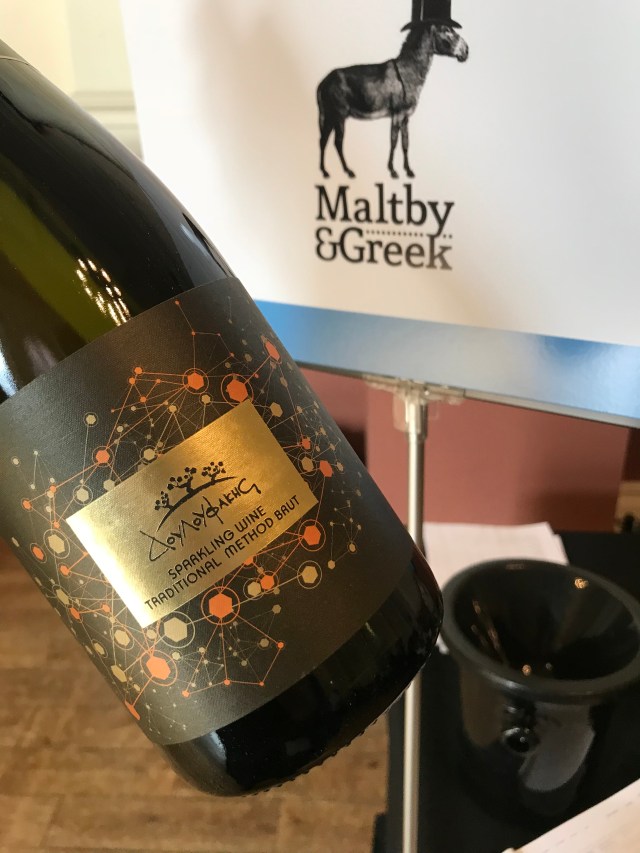
Douloufakis Winery Sparkling Vidiano 2017, Dafnes, Crete – Three sparklers were on show to kick things off, all good, and all of which I’ve tried before. My favourite, though I like this grape variety anyway, was this Cretan Vidiano. Very frothy, but underneath the intense mousse and bead there is bags of fruit and citrus flavour. Just a little complexity balances the freshness, but this is at its core a delicious thirst quencher.

7CC14E12-7AE0-4E5C-A30C-D7B81F2654F6

Other M&G highlights included reds from the Peloponnese and Tinos. Rouvalis Winery “Tsigello” 2017 is made from one of Greece’s finest red varieties, Mavrodaphne, in Aigion, in the far north of the Peloponnese, not far from that grape’s natural home of Patras. Tsigello is actually a top quality Mavrodaphne clone. It’s a dark wine, as Mavrodaphne habitually is, with 13% alcohol. It combines freshness, possibly a result of the vines being at 650 metres altitude, with lovely sweet fruit. It finishes with a touch of tannin and texture. Ageing is in a mix of French oak and amphora. Extremely good value at just under £10 to the trade, I thought.

Vapistis Winery “Vapistis Red” 2016 is an altogether more serious wine. The varietal mix is listed as Mavrothiriko (70%) and Mavrotragano (30%). It comes from Tinos, an island in the Cyclades, and it sees a 12-day maceration followed by six months on lees in stainless steel. Then it is allowed four months in bottle before release. The wine has a very moderate 11.5% abv, and I caught a bit of reduction on the nose. But this is really promising. The fruit in this ruby wine is really intense. Beneath the fruit is a spiciness, certainly nutmeg (I adore nutmeg), and the wine has a sweet and sour richness to the finish.

My favourite wine from M&G at this tasting comes from one of my two favourite Greek producers, Domaine Kalathas, also from Tinos (my other favourite is, for the record, Ktima Ligas). Domaine Kalathas “Sainte Obéissance” 2016 is an old vine Aspro Potamisi-Rozaki blend (indeed!). The Aspro Potamisi (80% of the final blend) is initially vinified in stainless steel, and then it sees “a refermentation and reduction of 10g of sugars the following spring”. Then, after malolactic, 20% of the same vintage’s Rozaki is blended in. It might sound complicated, but the intense nectarine bouquet and really fine fruit are all you need to fall in love with this. There’s a touch of salinity as well. Try it with a saffron monkfish stew with fennel and couscous. One of my wines of the day. #tinoseveryday!

2B5408BA-3FF3-49F9-A7EC-FF3863B53A24

MODAL WINES

Nic Rizzi has built up a wonderful portfolio of “small-batch” (as he calls them) wines in a short time. None is more wonderful than the guys I headed here to taste, though I do somewhat shoot myself in the foot for plugging them – JoisephLuka Zeichmann only founded Joiseph a couple of vintages ago, at Jois near the top end of Austria’s Neusiedlersee in Burgenland. A young man, still well in his twenties, Luka is potentially a future star of the region.

470719F0-D817-4D8D-B9AE-DB48224EBF50

Nic Rizzi

Joiseph Mischkultur 2017 blends Grüner Veltliner, Traminer and Welschriesling and other varieties in tiny quantity. There is a little skin contact for some varieties, and it sees élevage in old oak. It’s a slightly cloudy wine but massively flavoursome.

Rosatant 2017 is a pure Blaufränkisch rosé. The fruit gets a six hour maceration for colour and then gets popped into just two 500 litre barrels. It’s a pale wine, very good fruit, lively, but with a lick of spice to add interest.

Roter Faden 2017 is Luka’s current red blend (I should say that he still only has around three hectares of vines) in 2017. Zweigelt (50%), Pinot Noir (30%) and Blaufränkisch (20%) gives a palish but bright wine, where the Zweigelt is given a ten day maceration (the rest just three days). The result is a fruity wine with a sour cherry finish.

1940CC27-9DAA-4AD1-A48D-682E2F6F8C16

Very good indeed as all these three are (all bottles I’d go out of my way to buy), another of my wines of the day was Luka’s Tannenberg from the badly frost hit 2016 vintage. This 100% Zweigelt comes from the vineyard (sort of) depicted on all the Joiseph front labels (photo above). It’s Luka’s best parcel, on schist. Fifteen months in 225 litre oak after the grapes have undergone a light infusion on the skins, following destemming, gives a wine with a lifted, slatey, nose and bags of concentrated red fruits. There’s acidity to match. It’s a genuine terroir wine, but reflecting a cold vintage in its tight focus. Stunning!

Sadly only 300 bottles were made. Please save me one, Nic, or failing that, just save me anything from Joiseph.

1452E6F6-23F6-4F59-9AAF-A25073263E2F

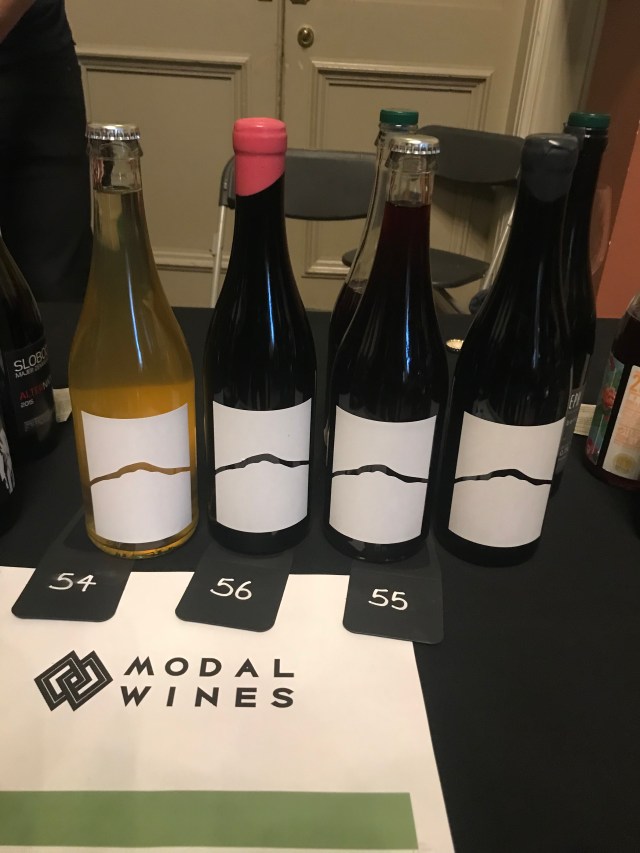
Modal Wines is not just Joiseph. Slobodne, from Hlohovec in Slovakia, is another of my favourie Modal producers. I recently drank their gorgeous Deviner (see here, in my review of Modal Wines at Plateau Brighton back in May). That wine was on show at Out the Box, but I’m going to mention two others here.

Jantara 2017 is a blend of 70% Pinot Gris with 30% Grüner Veltliner, where the former sees five weeks on skins, the latter variety two weeks. A mineral core is surrounded by savoury fruit. Rebela Rosa 2017 is a pinkish-orange colour, containing equal amounts of Blaufränkisch and Cabernet Sauvignon. It gets directly pressed and then sees eight months in vat. This is a fairly soft wine with a mineral grip and texture, and a 13% alcohol content which you don’t really register.

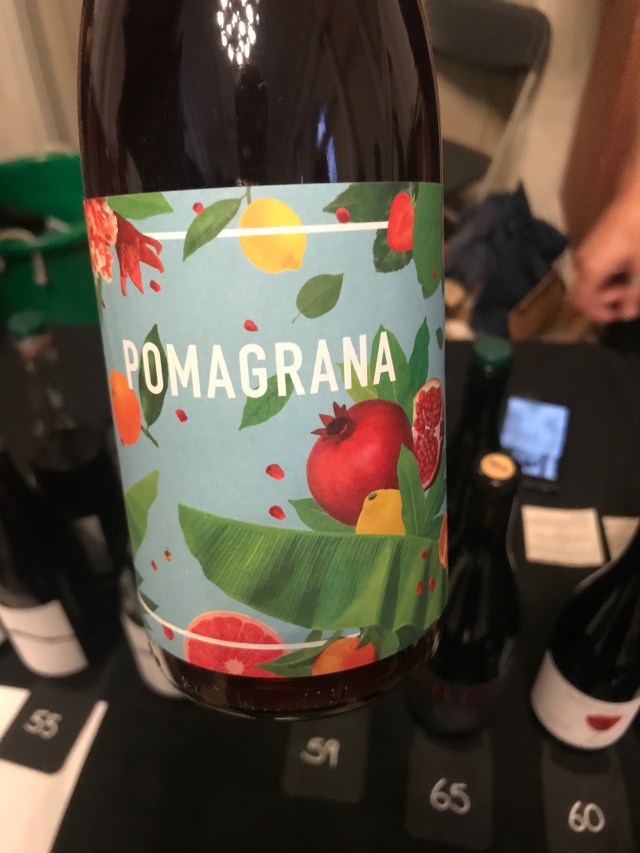
Finally from Modal, a wine from a producer I’d not tried before, Lectores Vini “Pomagrana” 2017. This comes from Conca de Barbera in Spain, and although there is 10% Grenache in here, the rest is made up from Trepat. Now Trepat is quite common in Conca de Barbera and neighbouring Costers del Segre, and there are still around 1,500 hectares planted. This is because it is used largely to make rosado wines. But one or two forward-thinking producers are starting to make promising reds.

Pomagrana sees a two-week maceration to gain more colour and some texture. The grapes are then pressed and returned to stainless steel. There’s no carbonic here. The fruit is a frankly delicious redcurrant, pomegranate and cranberry mix, with added spice. I’ve tried a few Trepat reds and I think this crunchy red fruit thing it has going for it will make it popular with anyone looking for this kind of style. A great wine for bar drinking.

9E54622E-035F-4594-915D-F5B6CD9BF8FD

THE KNOTTED VINE

David Knott is passionate about his growers, but he’s also one of the most astute of the small importers. He’s got a number of really good European producers on his books, but perhaps he truly excels in picking out a small number of Australians who, when you try them, you wonder why no one has got there first.

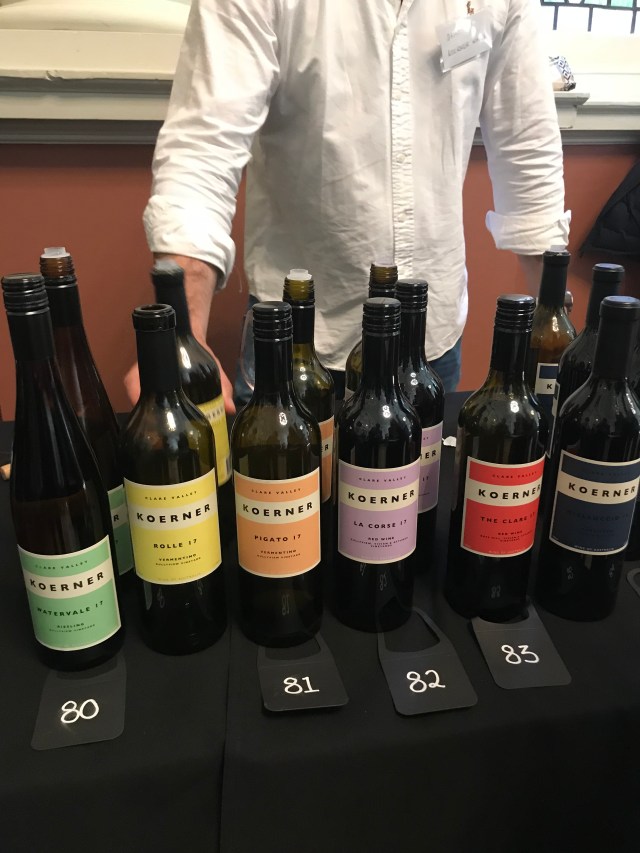
It’s a close call but I am picking out here the producer I think just about tops the list. It is also a producer who does seem to be starting to get recognition this year (I keep seeing bottles in restaurants, if that’s anything to go by). Koerner is a Clare Valley producer run by brothers Damon and Jonathan Koerner. But their wines don’t necessarily fit the standard mould of the region. This is largely because I think they reject the idea that especially Clare white wine needs to age for a decade or so.

Koerner Watervale Riesling 2017 is therefore very different to the “Grosset” ideal. The skins macerate over night and then the juice is pressed, half to amphora and half to stainless steel. This is much richer and softer than anything you’ll have tried from the region, a wine full of new flavours and textures. Try it.

They produce a couple of Vermentino wines, differentiated by cuvée names which don’t necessarily reflect their styles. Pigato 2017 is another nicely rounded out wine, always slightly cloudy, richer and more textural than much of the Ligurian version, after which it is named, will be. It has three weeks fermenting on skins. Rolle 2017 is named after the Provençal version of Vermentino, which I usually find rounder and softer than the Ligurian. Here, we see a cuvée that is made by macerating the skins overnight and then it goes into big slavonian oak foudres. It has a certain Riesling quality and as much as I’ve enjoyed bottles of the Pigato, this is impressive.

La Corse 2017 is a mixture of Sangiovese, Malbec, Grenache and Sciaccarello, which sees two months in new oak and amphora. Quite inspired, this is a lifted, pale red with a fresh and slightly dusty nose. Picked early, it exudes freshness, and I think the Sangiovese fruit shines here.

The Clare 2017 nods towards Bordeaux, blending Cabernet Sauvignon, Petit Verdot, Malbec and Cabernet Franc, with the (increasingly common) twist that it has ten months in amphora. There are intense fresh acids and dusty tannins again, a powerful wine in many ways, yet still light in others.

Nielluccio 2016 is a Clare Valley 100% Sangiovese this time. The cuvée name is inspired by Corsica, of course, and it does have a rugged quality. “Light and bright”, say my notes. Just chilled, this was delicious, showing good fruit but a bite on the finish.

937F3AA9-F6BC-45D5-919F-D4FFEAC1FFD2

I wanted to try the wines of Noelia Ricci, having heard good things about them. The original Tenuta Pandolfa was created by  Noelia’s father, Giuseppe Ricci, who revived winemaking after the destruction of WW2. After he died in 1980, Noelia took over with a strong vision to make exciting wines. This Emilia Romagna estate is now in the hands of her granddaughter, Paola Piscopo.

Bro Bianco Forli 2017 is made from the humble Trebbiano grape. It’s clean, fresh and simple, a wine perhaps for simple pasta dishes such as ravioli stuffed with pumpkin and herbs. An unloved variety, but a nice wine.

Godenza 2015 is, despite some bottle age, still remarkably fruity. The fruit is super-concentrated, but it isn’t heavy, nor is it complex. It’s a very nice, slightly different, interpretation of Sangiovese. Both wines show a simple purity that is quite beguiling.

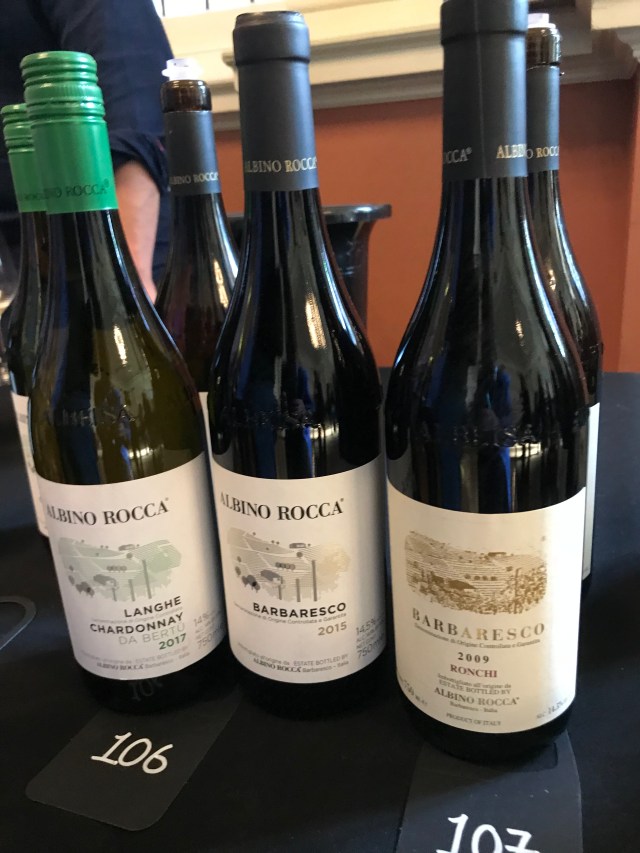
Also from Italy, but quite different, is Albino Rocca. This is a name you might know. They used to be imported by a bigger name agent, but they were dropped. Under biodynamic conversion, and with a real focus on quality at every level, the rejuvenated Albino Rocca has been snapped up by David Knott.

Langhe Chardonnay “da Bertu” 2017 was very good, in a fresh and lighter style with a medium body (for Chardonnay). Barbaresco 2015 is an ageable wine, palish (as I like my Nebbiolo), with a clearly defined varietal bouquet showing a nice, haunting, florality. It has a 2015’s body, with a touch of muscle and quite youthful tannins still.

Barbaresco Vigneto Ronchi 2009 is a single vineyard lying east of Pajé, on the border with Nieve. The vines are old here, between fifty and seventy years, on chalky clay. This is quite old school, bright in colour, concentrated and still young. This estate is one that perhaps would have been listed among the modernists in the 1980s, but the oak is being dialed back these days and, as biodynamic conversion illustrates, a far more thoughtful approach to viticulture is also being brought in. This 2009 could be drunk now, but it does have the potential to get even better. An estate on the way back to greatness?

5C269B7E-821B-484F-BEC1-0E3822E7A061

David Knott delves into the Iberian Peninsula a fair bit, and I was able to chat with one of his producers on the stand, Gorka Mauleon of El Mozo. This is a producer from Lanciego, in the Rioja Alavesa sub-region, the smallest of the three, just north of Logrono. They own some lovely old vines which the family planted in the 1930s. There are around nine hectares in total, spread over 18 plots, and Gorka calls the wines produced “microwines”. The project Gorka has embarked on since taking over is to make wholly natural wines with no added sulphur, and where possible using carbonic maceration to make vibrantly fruity wines.

Herrigoia 2017 contains both red and white varieties, very common at El Mozo, and traditional in Rioja Alavesa. In this case it is Tempranillo with Viura and Malvasia. It’s a fruity red in the aperitif style, very easy to drink.

El Cosmonauta is a wine you may have seen, the brightly coloured label (it comes in a number of different cuvées) depicting a cosmonaut spacewalking. This pale red is in the “clairette” style, and is based on the kind of wine Gorka’s grandfather, Teodoro, made. The grapes (Tempranillo, Garnacha, Viura, Malvasia and Torrontes) come from over 600 metres up Monte Viñaspre, just north of Lanciega. Pure glouglou, or whatever the Spanish/Basque equivalent is.

BASKET PRESS WINES

Czech Moravia has, for me, been my most exciting wine discovery of the past twelve or so months. I had no idea that such exciting quality wine was being made by artisan producers not all that far north of Vienna, over the border in the Czech Republic. And it’s not as if these wines have just started being made. The natural wine movement in Moravia has been going a good few years.

Jiri and Zainab of Basket Press Wines are not the only people importing from Moravia, but they are true specialists with deep, on the ground, knowledge. I first met them at Plateau (again) in Brighton, for a Tasting back in February, which you can read about here. These wines are seriously exciting and worth getting to know.

1CFE9DA1-3D9D-4832-B5F6-13B65356FC53

Jiri

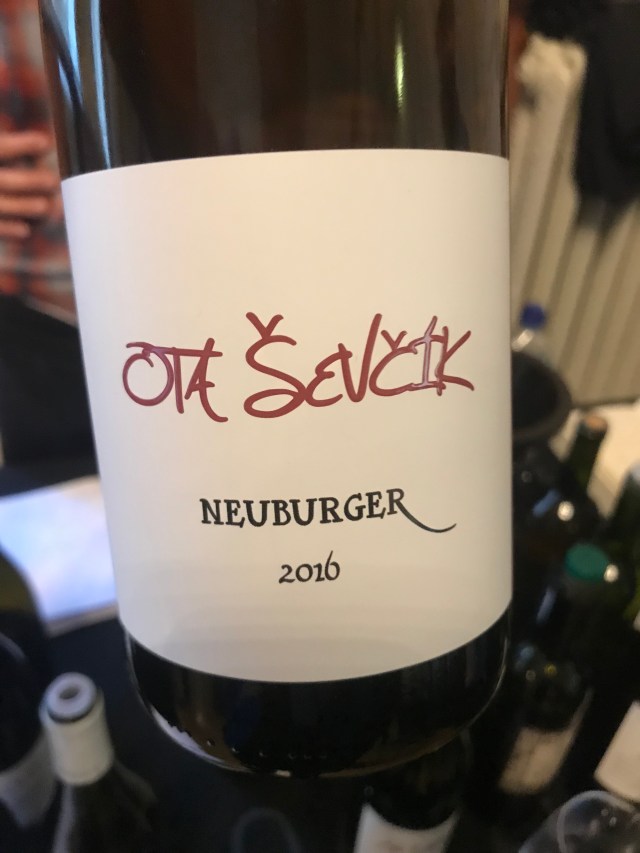
Ota Ševcik makes brilliant Frankovka, which is the Moravian name for the better known Austrian variety, Blaufränkisch. I’ve tried that before, and also his excellent Pinoty, but I very much wanted to try out his Neuburger. This is a 2015 wine made from a variety which is not considered very wonderful by more conservative Austrians (and doubtless Czechs as well), it’s a cross of Roter Veltliner and Sylvaner. Often criticised for being too full bodied, carefully nurtured it is capable of producing quite elegant dry whites. This version is soft, juicy and rounded with nice peppery notes. It does come in at 13.5%, though it’s far from ponderous.

234D68DE-981D-4F64-87A8-4D6039D67CFC

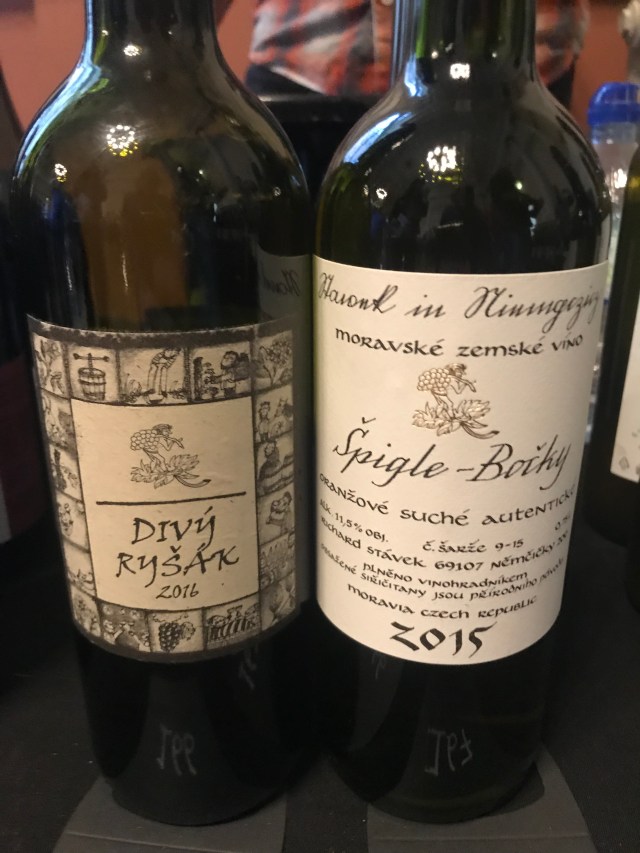
Richard Stávek is, since the mid-1990s, one of the first pioneers of natural wines in Moravia. His winemaking philosophy came from his whole attitude to mixed farming, pursuing a holistic approach to the wellbeing of his land and his animals. I think his field blend skin contact Špigle-Bočky is one of my favourite half-dozen Baskett Press wines, so here I will tell you about a new discovery for me, Divý Ryšak 2016. It is also a field blend which includes Grüner Veltliner and also the hybrid Isabella (cf a Proibida from the Azores Wine Company). There’s also some Blaufränkisch, St-Laurent and Blauer Portugieser in the mix.

This is beautiful. I’d call it a cross between a light red and an orange wine, initially showing a lovely lifted strawberry bouquet, with deeper mandarin, orange peel and spicy citrus on the palate. Spice kicks in on the finish. Mind blown! Want!

1BF417C8-C813-497A-856C-930A56BD4D62

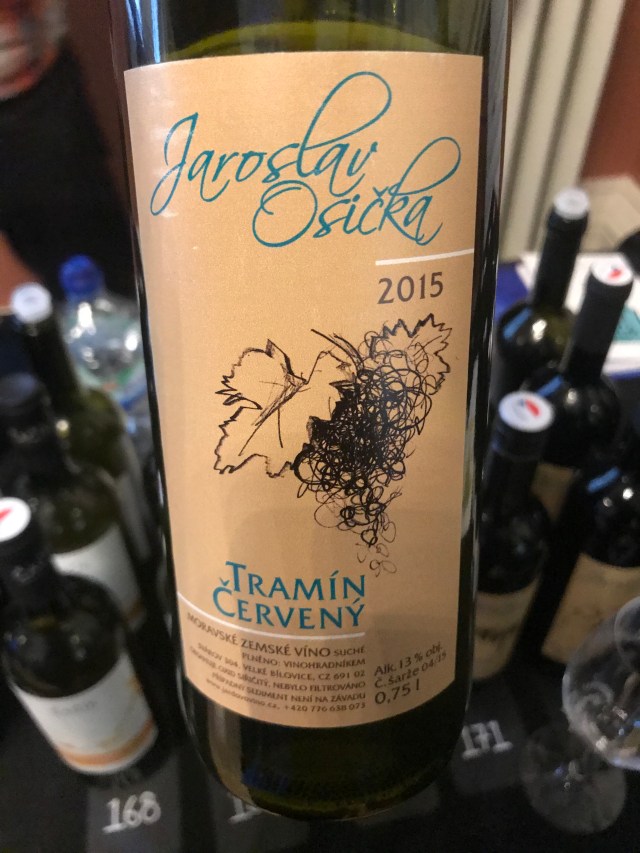
Jaroslav Osička is another of the founding lights of Moravian natural wine, a former wine professor turned producer. In his case he looks the part with his grey hair and trimmed moustache.  He makes another of my favourites, Modry Portugal (the Czech name for the Blauer Portugieser variety), but here I’m picking out Tramin Ceverny 2015, made from Gewurztraminer. The variety is pretty obvious from the nose, so it’s floral with exotic fruits. An attractive wine, pure gold colour reflecting greenish glints, quite autumnal.

BA219DB4-A24B-4270-8AD7-3CD69AC677D7

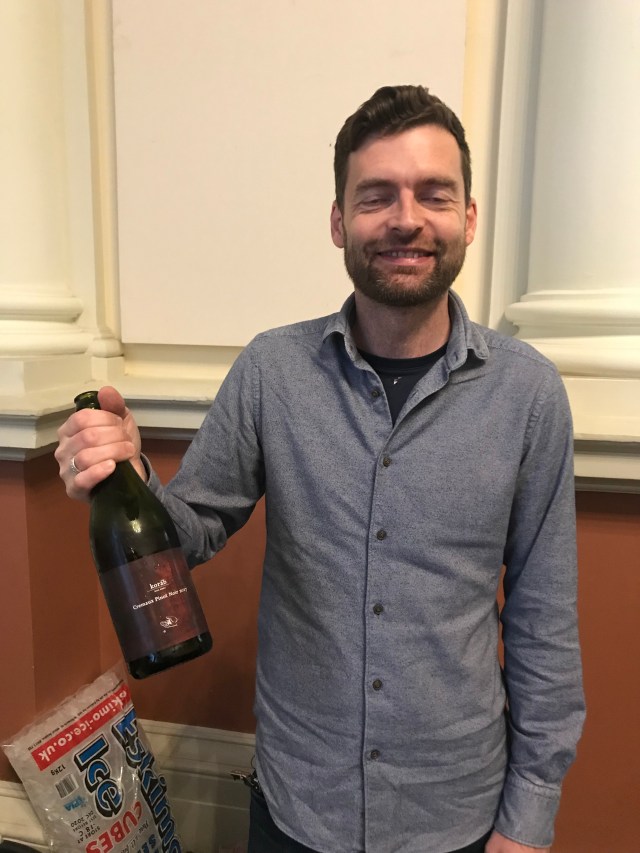
Petr Koráb “Cremant” 2017 is actually a petillant naturel made from 100% Pinot Noir. I’d describe this as a winter sparkler, orange in colour tinged with red. It’s incredibly fresh, but with a warming bitterness. Unusual, yet very appealing.

I tried two wines I’d not remembered seeing before from Krásná Hora, based right near the Slovakian border close to Dolno Poddvorov. These five hectares were originally planted eight hundred years ago by Cistercian monks. Eschewing all synthetic products from the beginning, they are well on the way to being fully biodynamic now.

The specialities here are Pinot Noir, Chardonnay, Riesling, Pinot Blanc, Sauvignon Blanc and Merlot. Sekt Brut Natur Blanc de Pinot Noir 2016 is a delicious Sekt (I think Jiri also has some 2014 which I recall shows nice complexity on top of the freshness here). I was slightly reluctant to try Chardonnay 2016 at first. You see, it is supposedly the favourite wine of John Cleese who, having tried it in a restaurant, came back and bought it in large quantity. Despite its celeb endorsement, I was won over.

The wine is actually a blend, with (in this vintage) just 57% Chardonnay, along with 43% Pinot Blanc. Partially fermented in stainless steel, partially in open old oak vats, it is also aged in a steel and oak combination. There is smooth fruit with a slight plumpness (13% abv) and a fresh finish, very attractive and a wine with its own personality. Which obviously can also be said of John Cleese.

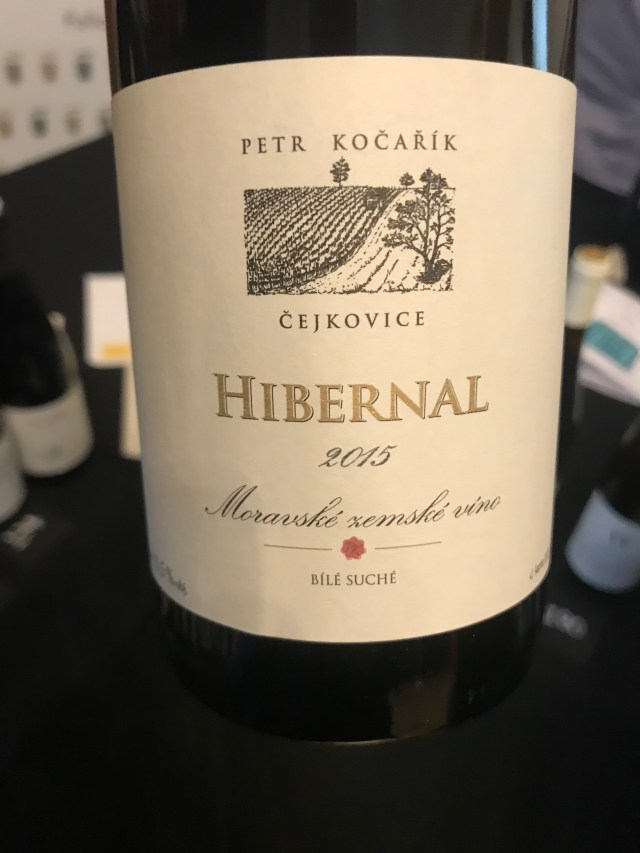
Petr Kočarík Hibernal 2015 is made from a Riesling x Seibel cross (Hibernal). After a year on lees in barrel it still has a very pretty nose, and it reminds me of the bouquet of some English white wines, with just a hint of grassy Sauvignon Blanc style, and an even fainter hint of grapefruit. The palate is very gooseberry, and it has a bit of melon and apple in there, plus some body too (13.5%).

2D31EA68-FA2F-4660-AADC-DBCE8E8CD1AF

Jakub Novák is another name to look out for, as much as Joiseph, the Austrian producer at Modal Wines. One wine only was on show last week, I’m sure because Jakub’s production is equally tiny, and his wines hit the UK only intermittently. Muller Thurgau 2016 gets a day on skins and then is aged in 500 litre acacia barrels for eight months, on lees with occasional stirring. Fruity but intense is how I’d describe it, but one of the best Muller-Thurgau wines I’ve tried (and there are, as some of you will have discovered, a few very good ones these days).

ADC4CA9E-DA9B-4608-B70E-1D0BE35028F0

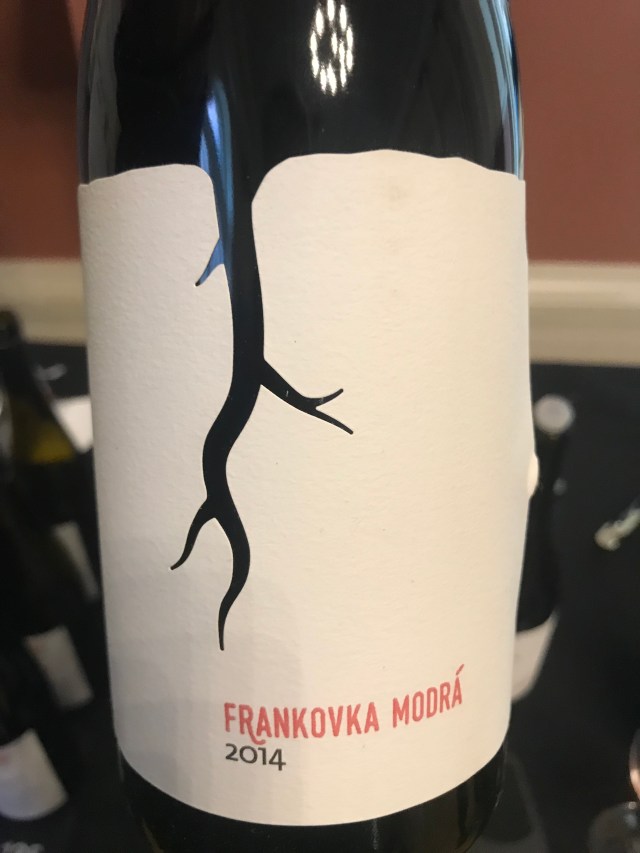
Magula Family Winery is not Czech, but Slovakian, based in Malokarpatská, or the Lower Carpathians to you and me. Frankovka Modrá 2014 (not 2015 as listed) is, as we have already learnt, Blaufränkisch. They make several cuvées with this variety, but this one is light-to-medium-bodied, quite pale and bright. The fruit is elevated on the nose, and it shows intensity on the palate, but not massive weight. There’s a nice bit of grip to ground it and give a little structure. Tasty stuff, basically.

A2EB8C3B-72B8-4092-8007-893588EC56AB

RED SQUIRREL WINE

You’ve had the Red Squirrel Portfolio tasting to digest recently (early September, see here if you missed it) but don’t worry. The RS folks have such a varied portfolio, of which I’ve extolled the virtues quite enough, that I can happily fill in on some wines here that have missed out on recent occasions.

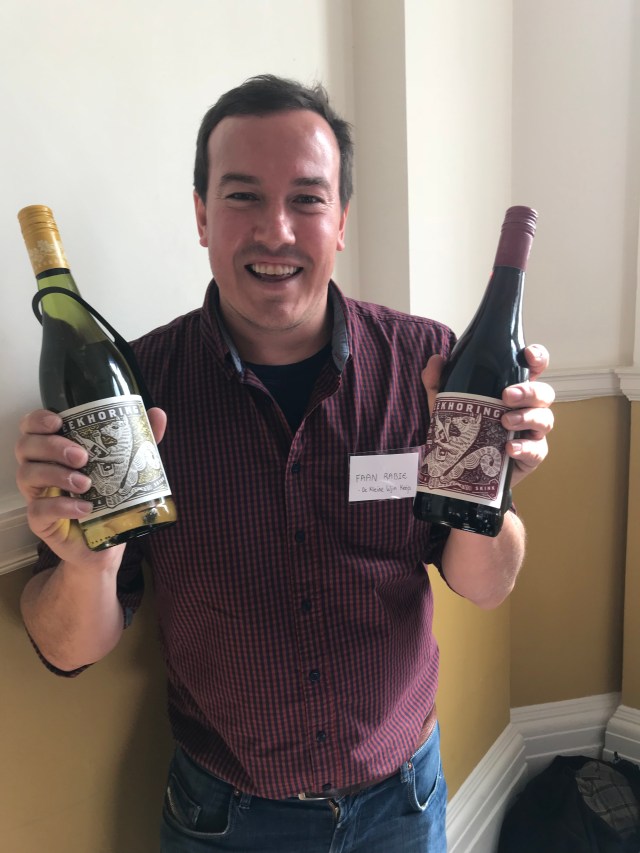
The main producer I want to cover is South Africa’s De Kleine Wijn Koöp. The cooperative is based in Stellenbosch, but sources grapes from all over the country. This producer has always gone a little under my radar, though I’ve tried their wines before. What has grabbed my attention is that they are producing a couple of wines for their UK importer under the Eekhoring label…eekhoring means squirrel in Afrikaans.

Eekhoring Wit 2017 is a Swartland blend based on Chenin Blanc with other varieties (including Grenache Blanc, Marsanne and Viura). It is deliciously simple, crisp and quite floral, but with a beeswax texture as well. Eekhoring Rooi 2018 (yes, 2018) throws together Cinsaut, Syrah and Pinotage. It was only bottled in august, and it is also lively and fruity with a bit of texture on the finish. Both wines are great fun, and they have a well designed label, which really should make this fly off any restaurant wine list.

BB34F069-A320-40E6-8B21-4DA7EF490B82

There’s a bit more seriousness to Kreatur “Die Synachin” 2017. More body, more weight, and more on the nose than the previous wine (flowery, with tea leaf aromas). It has pretty smooth dark fruit yet it’s grippy as well. The label depicts a fictitious composite creature which changes every vintage. Just 3,000 bottles made.

Ou Treffer 2017 is pure Cinsaut, a variety which has only come to the fore in terms of quality wine in recent years, formerly being consigned to the heap of “workhorse varieties”. The very best South African Cinsau[l]t is every bit as good as the much more trumpeted Cabernet Sauvignon, or Syrah, as the Sadie Family’s Pofadder attests. Open top fermenters and old oak is the regime here for a wine that is smooth, rounded, and like so much of the “new” South African Cinsaut, bears a passing resemblance to Pinot Noir for some reason. Just over 600 bottles of this were made, but the UK was lucky enough to receive 200 bottles. Snap ’em up.

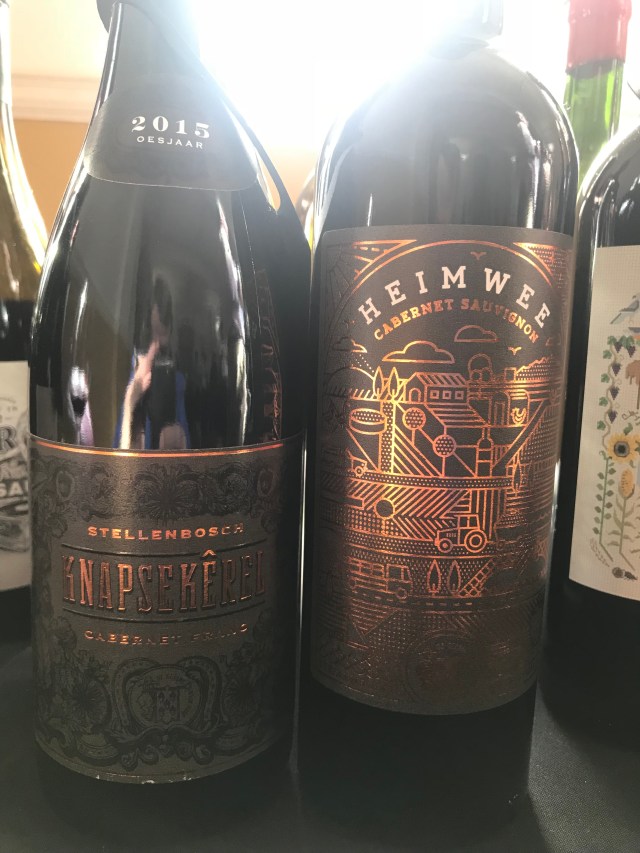
Lke Ou TrefferKnapskêrel 2015 is a Stellenbosch wine, from the Polkadraai Hills to the west of the town. The wine is made, in this case, from Cabernet Franc and it’s a biodynamic wine, just 700 or so bottles with 200 in the UK (thankfully a little more abundant 1,200 bottles were made in 2016). The grapes are farmed by Johan Reyneke and Rosa Kruger, and see whole berry fermentation before ageing in 225-litre, third fill, oak for 18 months. This is like a very ripe Loire red, with a lovely lavender and violet bouquet framing raspberry and a little blackcurrant fruit. 13% alcohol, a juicy steak wine in my book.

The last KWK wine was the pure Cabernet Sauvignon Heimwee 2015 from Stellenbosch. It comes from the same block as the Cabernet Franc and is made in a similar style, quite intense but that fruit intensity is not drowned by oak.

EF77EFD1-832A-4DAB-9383-AF7768F0DC57

I was taken through the wines by Faan Rabie, a videographer and one of the co-op’s partners, whose detailed explanations were much appreciated. The wines are really good, and I’m not sure why I’d not really focused on them so much before.

2DF01E8F-0472-48A1-85B1-37B121431717

Faan Rabie with the Squirrel cuvées

Before finishing I must give a shout out for a few more producers I’ve missed out in previous pieces on Red Squirrel, and which I tasted last Tuesday. Château de Bel I have mentioned before, and have secretly been drinking their wines. But the one I’ve only had once before, as far as I recall, is Bel en Blanc. Like the red Cabernet Franc, this is a Non-vintage wine, a blend of vintages. It is also unusual in that the variety is Muscadelle, usually a real bit player in Bordeaux.

The nose is quite exotic. I get greengage, a touch of mown grass, and some tropical fruits. The palate combines those tropical fruits with a touch of nuttiness. Truly one of the most fascinating Bordeaux producers around, well out of the ordinary for the region. The Cazenave family farm at Arveyres, southwest of Libourne, but they also have vines in wider Saint-Emilion, plus a third of a hectare in Pomerol. One to explore if you haven’t already.

I spotted Tenuta di Angoris Schioppettino 2016 because I like the grape but rarely get to try one. This was very fruity with fresh acidity, plus a bit of brambly grip. Not a complex wine, but a nice red for autumn, and deceptively alcoholic (13.5%).

I have one or two Valdonica wines in my stash at home. This Tuscan producer has scored a spectacular coup by enticing Tim Manning, Sean O’Callaghan’s right hand man at Riecine when he was there, as head winemaker. I’ve bought several of Tim’s brilliant Vinochisti wines from Winemakers Club and they really are some of the most exciting wines in Tuscany. At Valdonica, Tim is ploughing a similar furrow.

Mersino 2015 is a beautiful Vermentino, for sure, but I slightly preferred Arnaio 2015 this time, which is a Sangiovese/Ciliegiola blend. It has an orange/brick tinge to the colour and a savoury nose. Juicily plump fruit has great acidity, making for a wine which is fresh and long. I have a bottle of this from the 2013 vintage which I shall open soon.

The last producer for this article is from a country that is all too unfashionable, but Red Squirrel has (if you count Azores Wine Company) managed to snag four really good new ones. Morgado do Quintão is in the Algarve, let’s face it, not Portugal’s most famous wine region. But not for Filipe Vasconcellos the school of bung ’em in rotting old oak for a decade and let them dry out good and proper. That’s not to say he’s a modernist. Actually, he wants to revive traditional varieties, and these are what he has planted alongside the vines his grandparents farmed sixty years ago.

The white 2017 here is made from the Crato Branco variety, and is a simple wine in some ways, yet that fantastic salinity gets to you as you sip on it. It’s oyster fresh. The 2017 red is a “clarette” style (paler red), made from Tinta Negra Mole. Be honest, who doesn’t want to try a Tinta Negra Mole these days, especially those of us who were assured by the Madeira buffs that the variety was a disgusting weed. Here, it makes a light wine which mixes red and darker fruits into something just a tiny bit exotic, finishing with crunchy acidity to refresh the palate. They say a rosé is coming soon.

6D3A38FC-856C-426E-AB34-9BD9A4C30E87

Out The Box really delivered, as I expected it would. It’s one of the best tastings of the year now, and the organisation is pretty good too. Make it a date for the diary in 2019.

1E27429C-88A8-4774-9A32-D328BA694EDC


Posted in Artisan Wines, Czech Wine, Wine, Wine Agencies, Wine Merchants, Wine Tastings | Tagged , , , , , , , , , , , , , , , , , , , , , , , , , , , , , , , , , | 2 Comments

Downstairs at Eric’s (and Doug’s) Part 2 – Wines Under the Bonnet in the Basement at Terroirs

This is the second part of our Yazoo-themed coverage of the joint Tasting held by Otros Vinos (Part 1, here) and Wines Under the Bonnet. Whereas all Fernando’s wines are Spanish, the wines I picked out here are largely from France, with the interesting and fascinating exception of the Chilean producer at the end.

JEAN-PIERRE RIETSCH, MITTELBERGHEIM, ALSACE

I began with what I consider a bit of a coup for the WinesUTB boys, a producer who I visited last October, when he told me he didn’t currently have a UK importer. I doubt that Basile and Alex made the decision to visit J-P on the basis of my write-up, but you can read it here. Visit him they did, in December, and now the UK has access to a producer I consider right in the front rank in the region.

Jean-Pierre is what I (not he) would call a philosophical winemaker. I mean that he does seem to think deeply about what he is doing, and why, and he is keen to produce focused wines of great purity. He makes wines both with and without skin contact, and with and without added sulphur. I know one or two people who have issues with some of these sulphur-free wines, but not me. I’ve not yet had any wine from this producer showing the slightest fault, bar temporary, removable, reduction.

I didn’t taste all the wines, trying to recall what I’d tasted and bought when I visited, but there were some I’d not tasted in Mittelbergheim. One such wine was Blanc au Litre 2017. This is a gentil-style blend, 80% of which mixes Riesling and Sylvaner, along with 15% Auxerrois and 5% Gewurztraminer. It’s well priced for a litre, and is fruity with a touch of florality and a savoury edge. The Gewurz doesn’t come through more than a little and the Sylvaner and Riesling give acidity and freshness. Simple but great glugging for two people.

5582324E-EFAB-420D-8FD0-90A56896C3B8

Demoiselle 2016 is a wine I’m very much taken with. It’s a maceration Gewurztraminer (16 days on skins and then six months in tank). It comes off the argilo-calcaire soils of the Zotzenberg Grand Cru. Forget the Gewurztraminer flab effect, which has certainly turned me off this variety on many occasions, this is really focused. The florality of the bouquet is delicate, not over blown. Pale and fresh, with light acidity, it nevertheless finishes round and long. “Elegant” doesn’t often apply to this variety, but I think it does here.

D930FCA3-2BCF-4446-948F-206912D6033B

The next wine on the list was J-P’s Savagnin Rose Klevener de Heiligenstein 2016. Well, I drank this wine a couple of weeks ago so you’ll have to wait for my roundup of September wines (#theglouthatbindsus) to read about it. But as a teaser, my notes say “one of the wines of the year so far”…but then I do have strange tastes 😉 .

Rietsch bottles two versions of Pinot Noir. The first is the Rouge au Litre 2017, which is very pale, the way Alsace reds used to look. But it doesn’t taste like they used to. It undergoes a 22-day carbonic maceration and then sees six months in cuve. It was bottled with a moderate 12.5% alcohol and no added sulphur. Its light sour cherry fruit is balanced by the right amount of fresh acidity, very well judged, to create another great wine for knocking back.

60F1B69E-ACE6-429D-BBC0-4A446CA41078

Some people say that Jean-Pierre makes one of the best Pinot Noirs in Alsace. This was only the second time I’d tried his Alsace Pinot Noir, although I’m very lucky – it was sold out at the domaine but Jean-Pierre let me have one out of his own stash. But that is a 2016. This is the 2017 vintage, which had a 16-day carbonic of grappes entières followed by six months in cuve. It has an extra half-degree of alcohol over the red litre, and again, no added sulphur.

This has a pale garnet colour, very vibrant, but not as pale as the litre (see photo). The bouquet is sweeter cherry, and whilst it is still very fruity, and quite lively, it has more presence than that wine. It’s made entirely from Mittelbergheim grapes.


LA DERNIERE GOUTTE, CYRILLE VUILLOD, VAUX-EN-BEAUJOLAIS

Cyrille Vuillod is a name I’d never come across before. He farms 4.5 hectares around Brouilly, and is also new to WinesUTB, who more or less came across him accidentally. He’s apparently around forty years of age, from the Alps, a former ski instructor who discovered wine when first picking for, and then working with, the Lapalu family. He’s been going on his own for three-to-four years. All the wines are bottled as Vins de France, with no AOP applied for.

Tisane de Bois Tordu XVI Vieilles Vignes (effectively 2016) comes from 80-year-old vines. The grapes undergo a three week carbonic maceration before going into concrete tank. It has amazing colour, and the nose has that slightly dusty, almost textured quality which you often get from cement. On the palate the fruit is amazing, really zippy and alive.

Tisane de Bois Tordu is a 2017 cuvée made from earlier ripening plots. It’s also incredibly fruity, if with a little less depth than the Vieilles Vignes. La Baleine Ivre is another 2017 bottling, which in fact was the first of these wines I tasted. A great start, it sees an eight-day whole bunch maceration and has exciting (not just nice or lovely) fruit.

Sang Neuf (2017) is made in a concrete egg. It retains the signature zippy fruit that seems to be Cyrille’s calling card, but definitely has an extra dimension. Delicious. That would have been a good enough place to end, but there was still Dolia (2016) to try. Every individual berry for this cuvée is hand-destemmed. I know how that must feel, having hand-destemmed the fruit for just five litres of juice a couple of weeks ago.

The pampered berries get a whole-grape maceration in amphora for 50 days, are then pressed, and go back into amphora. There’s a sort of CO2 zip to the fruit, which is big and rounded, but the wine has plenty of texture as well. You might think that an amphora Gamay off granite might not taste like your normal Beaujolais, and you’d be right. This is an astonishing wine, but it might scare some people as much as it would excite others.

On the basis of what I tasted I think this is a real find for WinesUTB, although the fresher bottles did taste more lively than those which were down to the last couple of centimetres.


LANDRON CHARTIER, BEN AND BERNARD LANDRON, LIGNE, NANTES

Basile comes from the Muscadet Region, and so there is a sort of Loire focus within the Wines Under the Bonnet List. Bernard Landron moved northeast of Nantes in 2002 when he stopped working with brother Jo, and bought 20 hectares of vines in the Ancenis region. His son, Benôit, did his travels abroad before coming back to join and then take over from his father.

I tasted one wine from this exciting venture, a wine which has already had a bit of social media coverage, Naturlich Petnat Rouge 2017. It’s one of several exciting sparkling Gamays to emerge from the natural wine movement, and it’s really grapey, and “winey”. This was initially tasted from a flat bottle, almost empty, but a second bottle opened for me had great bubbles and a frothy head, wonderful. In fact, in that context, I’d suggest that this wine is amazing. It has no added sulphur, and was machine disgorged, but it’s a relatively cheap sparkler made for fun drinking, not cellaring. Just dry and fruity. I think there’s a bit of Folle Blanche blended in with the Gamay. Go (Gamay Go) for it!


DOMAINE DES COGNETTES, VINCENT & STEPHANE PERRAUD, CLISSON, NANTES

This is a domaine run by two brothers in the southeastern sector of the Muscadet region, about 15 to 20 kilometres outside Nantes. Eguor is an amphora wine, blending Pinot Noir with Gamay and Cabernet Franc. Some whole Cabernet Franc berries are added in to the fermentation at the end.

Twelve months in amphora rounds out a very interesting red wine which is not quite what you’d expect from the region. It has a lovely savoury quality with texture, but fruit too.

032E4592-7375-4687-BD3A-E7AEBDA06EFF

MELANIE HUNIN & AYMERIC HILLAIRE, LE-PUY-NOTRE-DAME, SAUMUR

Domaine Mélaric is a compound of its owners’ first names. Their 4.5 ha of 50-year-old vines are on the steep chalky hillsides near their base at the Château de Baugé, not far from the impressive Château de Montreuil-Bellay, in the far southwest of the appellation.

Saumur Clos de la Cerisaie Blanc 2015 is a lovely “natural” Chenin Blanc. The nose is fresh, but then savoury notes follow, and it has old vine depth. A very tiny bit of volatility helps lift and freshen it. “Volatile” will signal a fault to many, and some people are massively sensitive (philosophically as well as in terms of their senses) to volatility. But many argue that a tiny bit can add character and personality. It’s all about degree. It works here, for me, for sure. I like the leanness as well. You might wonder where I’m going with all these potential negatives, but the wine is just really good. Not the same old same old.

25AA06D7-BB4D-4375-B758-D83794B863EB

CHATEAU BAROUILLET, VINCENT ALEXIS, POMPORT, BERGERAC

You drink nothing from Bergerac for years and then several come along in quick succession. Eight generations of the Alexis family have farmed this large Bergerac estate, based south of the town within the Monbazillac zone (they also make a sweet Monbazillac), but they also have vines up in Pécharment, to the immediate east of Bergerac, too.  Vincent only joined the family operation in 2010, and began releasing domaine bottled organic cuvées in 2012.

Vincent is in his early forties. He got into wine working in London, allegedly for the Nicolas chain, and got into natural wine totally by accident, without knowing this was what he was enjoying. He was originally going to go to work in Chile but ended up staying at home, and he intends slowly to change the direction of the family estate.

Bergerac Rouge 2017 is a blend of four out of five Bordeaux red varietals: Cabernet Sauvignon, Cabernet Franc, Merlot and Malbec. In my humble opinion this is just the kind of wine the Bordelais should be thinking of putting out. The fruit is fairly lightly extracted, and the cuvée sees only stainless steel, no oak. It has all those classic flavours of a balanced Bordeaux blend without the encumbrance of over extraction, over cropping and over oaking. This is just simple, pleasurable wine.

9AFBD5BB-A204-47A9-89FB-A39AED67BA5A

ROBERTO HENRIQUEZ, NACIMENTO, BIO-BIO, CHILE

Roberto trained as an agronomist and oenologist in his native Chile, worked for a few commercial wineries, and then headed off to Canada and South Africa, before a stint in the Loire turned his mind and palate towards a more natural approach. He now farms (since only 2015) 6 ha in the up-and-coming Bio-Bio Valley (only three hectares of which he owns). After trying the stunning Argentinian wines of Pol Opuesta a week or so ago, this is yet another revelatory South American producer, wholly new to me.

Rivera del Notro White 2017 is a blend of Moscato, Semillon and Corinto, the latter being the same variety as Chasselas. The grapes originally rocked up in Chile from the Canaries and the resulting wine here is exciting stuff. It undergoes a gentle maceration giving a wine which is almost smoky rather than fruity, on the right side of unusual.

Rivera del Notro Red 2017 is made from Pais. Basile drew my attention to a Decanter Article (current edition) which covers the Criolla varieties. I wasn’t aware that this term covers a list of grapes (not just one variety) which came to South America with the Spanish invaders in the 16th Century. Many of these vines arrived from the Canary Isles, or occasionally from the Azores.

Pais used to be Chile’s most planted variety, even up until this century, but in the past eighteen years it has been supplanted by Cabernet Sauvignon. It was especially found down south, in Bio-Bio (and Maule, and the Itata River regions). A thin-skinned grape with low acidity, it was usually over cropped and over extracted to make a thin jug wine. Recently, pioneers have discovered that as with so many disliked varieties, if you keep yields low you can work wonders. Another bonus is that the vineyards up here have often seen no chemicals put on the soils, ever. What is more, many of the vines are really old, some over 200 years. This gives some special plant material to convert into wine.

So, this particular cuvée comes from grapes Roberto buys from friends, off alluvial soils washed down from the Andes. Hand destemmed (very traditional, part of an historic range of winemaking practices called pipenos), the grapes see an eight day maceration and ageing in stainless steel. Every stage sees the material worked lightly and the result is a wine with surprisingly rounded deep cherry fruit and just a little grip, with a hint of beetroot on the nose. Any hint of rusticity is avoided. Tasty and sappy.

Santa Cruz de Coya 2017 is also made from Pais. This is from Roberto’s own vines, three hectares at 350 metres. This is one of those 200-year-old plots I mentioned, all on granite, forgotten and never grubbed up or grafted over. The vinification begins as with the previous wine, but this one goes into new oak (although Roberto plans to put some of this cuvée into amphora as soon as he can afford to buy some). This is wonderful stuff, very pure, and almost certainly the best Pais I’ve ever tasted.

Roberto has gone from someone who learned to make commercial wine to someone with a real interest in keeping historic vines alive, and keeping historic winemaking traditions going. He deserves our support. His wines merit it.


Posted in Beaujolais, Natural Wine, Wine, Wine Agencies, Wine Merchants, Wine Tastings | Tagged , , , , , , , , , , , , , , , , , , , | 3 Comments

Downstairs at Eric’s (and Doug’s) Part 1 – Otros Vinos in the Basement at Terroirs

September is Tastings Month. There are several events almost every day, so it’s impossible to get to them all. It’s also impossible to keep up my usual timely posts, splitting writing with sipping wine all day. For those who have asked, this two-parter will cover the event at Terroirs on Monday. Part 1 for Otros Vinos and Part 2 for Wines Under the Bonnet. Then I’ll begin work on Tuesday’s Out the Box Tasting in Shoreditch, but I might leave out Uncharted Wines and Swig. You see, they have a joint Tasting in Soho next week and I may well cover both events in relation to those two importers in one article. I must say that there were some astonishingly good wines at Out the Box, and my introduction to Uncharted’s portfolio (I already knew Rupert) was mindblowing.

I have written about Otros Vinos several times before, but for anyone who hasn’t already come across them, Fernando brings in a small but wild and wonderful selection from across Spain, working with winemakers who occupy the fringes, usually in terms of winemaking, but often in terms of location too. His list contains some of Spain’s least known stars, some young and some not so young. Here, I’ll mainly look at a few new wines, but I can’t resist commenting on one or two favourites as well. If his wines appeal, search my site for more notes. A selection can be had at Furanxo, the Spanish grocer’s/bar on Dalston Lane in London.

The title? Excuse my music obsession. Upstairs at Eric’s was the 1982 debut album by Yazoo on Mute Records. Eric and Doug are the guys behind Les Caves de Pyrene, who own Terroirs Wine Bar. But you knew that…

98C05CC9-3C17-4BEC-87FE-DC9D501CDF96

Ancestral, Fuente Guijarro, 2017 – Fuente Guijarro is a producer based within the boundaries of the Sierra Nevada National Park in Andalucia. Their location means that they are not allowed to use any machinery in their viticulture, so they harvest in the cool of night using horses to transport the grapes. When your vineyards are at 2,000 metres altitude this is no mean feat.

Although the days can be hot, it doesn’t take a genius to work out the kind of wine you can make with the enormous diurnal temperature shifts they get. This is an ancestral method bottle-fermented sparkler which sits on its lees and is disgorged, in the spring following the harvest. It’s uncomplicated, but also focused, and immensely zippy and fresh. I loved it.

BF78B850-3A3D-4DFC-8AD7-77C8A5809CD8

Atardecer en el Patio, Vinos el Patio, 2017 – This is another sparkling wine fresh on our shores from the current vintage. Samuel Canos farms a relatively large 35 hectares of vines in La Mancha, but he sells 90% of his grapes to the co-op and keeps back just 10% for his own interesting projects. I say interesting, all the vines are sprayed with cow’s milk against fungal diseases (I guess that may make them not vegan?), and every wine Samuel makes is aged in square containers. It’s his thing.

Before you decide this guy’s a nut job, try this amazing wine. The colour is a wild pink. The grape, Tinto Velasco, is pretty exciting. Once, it had a good reputation in the region, but as is always the way, it is now down to fewer than 50 hectares planted anywhere. He harvests twice, in August for this rosado, and then in October to make a red from the same vines. This sees whole bunch fermentation, followed by direct press into stainless steel, kept at 7 Degrees. It is bottled with a little residual sugar.

It’s very fruity, but with a kind of tea leaf note on the finish, adding an unusual savoury touch to the sweet fruit. Pretty delicious, less delicate than you might think, but very nice. For me, an aperitif or refresher, but at 13% perhaps not one for breakfast.

2081561D-7E8D-4635-B01C-C484DA9C361F

Monteplas, Marenas, 2017 – José Miguel Márquez is a young grower starting out in the Montilla Region, better known for its wines made in a similar (but not identical) way to Sherry. This is hot country, where summer temperatures can reach up to 50 Degrees, though the sea does provide some cooling breezes. This is another region where harvesting is done at night…a 2 a.m. start for José Miguel.

“Monteplas” is the wine and the subtly different “Montepilas” is the white grape variety. Seven-hundred vines are planted at Cerro Encinas, at 350 metres altitude, all hand grafted. The wine itself is subtly different too. A very natural wine which despite being close to the edge in some respects, has a genuine purity and life to it. Herby and nutty, but still fresh.

Blanco de Negra, Viña Enebro, 2017 – This is an estate at Bullas in Murcia, with around seven hectares under vine on sand and clay with a high lime content. Bullas has very low rainfall, creating serious vine stress, but the young Juan Pascual López Céspedes seems to enable them to thrive, along with apricots, figs, olives, almonds and peaches.

Speaking of peaches, this wine has a slightly sour stone fruit palate. As the name suggests, it’s a white wine from red grapes, in this case the rare, indigenous, Forcallat which has the benefit of being a drought resistant variety (how nature adapts if left to its own devices). Whole bunch, then direct press, no sulphur. Another “just fermented grape juice” operator.

B924113D-D224-4475-BE53-BED5EFBE7435

Metamorphika Sumoll Blanc Brisat, Costador Terroirs Mediterrani, 2016 – This has been one of my favourite Otros Vinos estates since I first came across Fernando’s portfolio two or three years ago. The Brisat (skin contact) wines are bottled in wonderful terracotta flasks, similar to those used by Sepp and Maria Muster in Austria for their skin contact cuvées. Winemaker Joan Franquet says he wants to sell the wines in the same material as they were made in.

Costador is based in Conca de Barberà, in Tarragona Province, high up on limestone hills, inland, above the Mediterranean, where incidentally Torres makes its Milmanda Chardonnay. The Costador vines lie between 400 and 800 metres altitude. Sumoll, which is best known in its red form, also appears as a rare white variety, which lends itself perfectly to skin contact, rather like the Ribolla/Rebula variety of Italian Friuli and Slovenia.

This has a nose to die for, amazing. It has the soft texture of clay which just smothers your smell receptors, and it does the same on the palate. If you like skin contact/orange wines, try it. There’s lots of texture, for sure, but the fruit is rounded and not lacking in freshness. This is the new vintage of this cuvée, just arrived.

3DC81A17-77C1-4A55-A2A3-CD550296745B

Metamorphika Sumoll Amfora, Costador Terroirs Mediterrani 2015 – This is the red cousin of the wine above. The mountain vineyards ameliorate the heat and so the grapes are picked fresh. They spend around six weeks or so in clay amphorae for fermentation, and are then transferred to clay tinajas for ageing.

The bouquet here is quite different in style to the white Sumoll. The fruit has an intense sweetness on the nose, and the concentration is reflected on the palate. You get texture, but maybe less than you might expect. This could be down to that beautiful fruit intensity. It finishes dry, and very long. It’s a wine I find too hard to spit, and if you read this, Fernando, I must get a bottle somehow. I was sorely jealous of the guy I saw leaving with one.

34F67DA9-BC0F-4FEE-A232-E7B4197AD478

Iradei, Cauzón, 2017 – If a few of the winemakers here are very young, that cannot be said of Ramon Saavedra Saavedra. After a career as a well known chef at Can Roca, on the Costa Brava, he returned to his family village, Graena, on the north side of the Sierra Nevada to make wine from vineyards at over 1,000 metres altitude, in some of the most hostile terrain in Spain. The red sandy loam soils are baked dry in summer, but in winter are often covered in snow.

Saavedra is perhaps something of a magician. All his wines taste magical, anyway. They seem to combine initial simplicity with something much more, that you often notice on second or third sniff or sip. Iradei begins with a high register bramble nose, from darkish vibrant fruit. In this case, you begin to notice the interesting bitter streak later…it’s initially covered by the fruit.

There are no tricks, and nothing obscure. The oldest, ungrafted, Tempranillo, Garnacha, Syrah, Merlot and Cabernet Sauvignon planted on Ramón’s six hectares go into this. The concentration comes from ridiculously low yields. This is the first year he has used only stainless steel for this bottling, and whether or not this, or the vintage, is the cause, the wine does seem to have greater freshness. I don’t think the Cauzón wines hang around, on the shelf or in the rack, but Iradei is a cuvée that should age.

0287D36D-ED47-4F75-8420-C41F7D483FCC

Cabernet Amfora, Clot de les Soleres, 2014 – Carles and Montse Ferrer make wine on the edge of the Vals de L’Anoia, not far from Barcelona. Their range is quite eclectic, and I’ve drunk their petnats quite a lot over the past two years. This wine is an unusual iteration of Cabernet Sauvignon, which is actually fermented in stainless steel before going into amphora to age for a little over a year (13 months).

I last drank the 2015 version, which at 14% had a degree more alcohol, and I found this 2014 a little more balanced. It’s almost a black wine, and very clearly Cabernet Sauvignon. It tastes at first like a modern Cab, with concentrated blackcurrant fruit, enormous fruit in fact. But the fruit is allied to the texture given by the amphora, and the one can take the other. I’d really love to know what people who buy Californian Cabernet think of it? Impressive stuff.

F55E969E-AAC5-4E56-8008-EA5BF1DBA02A

Posted in Artisan Wines, Natural Wine, Spanish Wine, Wine, Wine Agencies, Wine Merchants, Wine Tastings | Tagged , , , , , , , , , , , , , , | 1 Comment

Alpine Wines at SITT

SITT is the Specialist Importers Trade Tasting which groups together a number of both large and small wine importers who seem mostly to fall outside of the regular London circuit. Just under forty importers were grouped together at the Honorable Artillery Company barracks on City Road in London on Monday. I made this my first port of call simply to taste what Alpine Wines were showing, but I ended up tasting a few Bordeaux as well.

As you know, I count myself lucky to be independent and able to choose what I write about. This doesn’t mean, however, that I don’t take the opportunity to say what I like over and over again. I buy far less wine than I’d like to from Alpine Wines, but I think their range is one of the UK Trade’s best kept secrets. I discovered them for their Swiss wines, and in fact as far as I know they are the only specialist Swiss importer in the country. I also think their Austrian wines are worth exploring, and as the wines shown here prove, they have diversified into other parts of the Alps (and fringes) with some success as well.

76596F3B-9FA8-405A-926C-91976AD805B2

Robb Nebbe and Joelle Nebbe-Mornod of Alpine Wines

Ten wines were shown on Monday: five Swiss, two Austrians, two Italians and one from France. This is but a tiny snapshot of the Alpine Wines portfolio and, as this event is often seen mainly as a way in to the restaurant trade, the wines shown were (on the whole) towards the entry level (most of these wines sell to the trade at around £10 or just over, with three exceptions, the last two wines being closer to the £25-£30 price point).

293DF984-B36E-4372-8B45-0E0AA994257A

Domaine de Montmollin Chasselas Non-Filtré 2016, Neuchâtel, Switzerland – This is a style of wine that was once just released early as a sort of late primeur, in January, but has been so successful it is now available all year round. It’s in no way a complex wine, but it is fresh and has punch. The palate is lively with a bit of stone fruit and a herby bitterness on the finish.

3C347FE3-4B0C-4890-8D9F-172685683960

Cave de la Côte Uvavins Doral Expression 2016, Vaud, Switzerland – Uvavins is the large co-operative which dominates this part of Lake Geneva’s north shore. It’s massive by Swiss standards, but as with other Swiss co-operatives (Cave de Genève, for example), you’d be surprised at the quality of wines at all levels.

Doral is a grape variety which seems to combine the fresh minerality of Chasselas with a more aromatic quality which some liken to Chardonnay, although apricot notes are quite common (Doral can be used for sweet wines to good effect). This wine is on the light and fresh side, with that mineral texture.

7FF16CA2-A09F-4591-B2D0-9CD93948BA27

Provins Petite Arvine Grand Métral 2016, Valais, Switzerland – Provins is also a co-operative, this time from the Valais Region. Provins is in fact the largest wine producer in the country, based in Sion, and if I say that this was one of my favourite wines tasted you might want me to justify that.

First of all, I think that Petite Arvine is the most interesting of Switzerland’s autochthonous white grape varieties. Secondly, there are thousands of smallholders in the Valais, and Provins takes grapes from 3,300 of them. Their oenological team needs to be very strong to turn the produce of all of these growers, many just weekend farmers, into wine that will satisfy the very exacting standards required by their Swiss customers.

This is actually really lovely entry level Petite Arvine and a good place to come to try the variety. It doesn’t have the genuine complexity of versions produced by the top individual growers, such as the highly ageable wines of Marie-Thérèse Chappaz, but aged in stainless steel on its lees it does show what the variety is made of. Fresh, a little texture, a wine for seafood or oysters. There’s a lovely touch of characteristic salinity on the finish.

7F00B182-8BE5-4CDC-84F4-1697A4058E31

Weingut Waldschütz Riesling Classic, Kamptal, Austria – Anton and Elfriede Waldschütz are based in Sachsendorf in Wagram, but also have vines in neighbouring Kamptal. They farm around 16 hectares, mostly on sandy loam and loess. Their son, Ralph has joined the business, and looks like taking the domaine to another level.

The entry level Kamptal Riesling is pale with genuine Riesling character and definition on the nose. There is perhaps a touch of stony pear fruit on the palate, and this is another wine with a bit of a saline lick on the finish. Very clean but not lacking character.

C7993D82-F914-43AB-811D-D9F6C91C1F57

Mamete Prevostini Nebbiolo Botonero 2017, Valtellina, Italy – Alpine Wines describe the Valtellina as the most Swiss valley in Italy, and to an extent they are right. It certainly exudes Alpine charm, although the region’s main grape is the very Italian Nebbiolo. Sales in Switzerland, just over the border, are so high that relatively little Valtellina wine travels outside of the wider region. We get to know the famous producers in the UK, but their wines tend to be for long ageing, whereas the wine tasted here is more accessible in its youth.

Mamete Prevostini began making wine to serve in his restaurant in the early Twentieth Century, and his grandson (also called Mamete) took over here in 1995. This wine is actually made from grapes grown just outside the DOC and is bottled as an IGT wine. It is pretty fruity for Nebbiolo, yet the nose does easily give the variety away. You do get a little tannin here but it merely underpins the fruit. Tasty.

So far so “what’s the big deal”? Well, Mamete’s top Valtellina Cru, Inferno Superiore, won a Platinum Medal/Best in Show Award at the Decanter World wine Awards 2018. So if you want an affordable entry to this up-and-coming producer, try this.

0EF87D8E-96DF-4839-9BB7-68B4226C4EE5

Cave de la Côte Uvavins Pinot Noir Suisse Vin de Pays 2015, Switzerland – This is another wine from Uvavins, one that may not appeal to the private customer so much, but if you want a Swiss wine on your restaurant list, it might. The grapes here are actually sourced from all over Switzerland, depending on the vintage.

This 2015 contains grapes from Pinot specialist Graubunden in Eastern Switzerland, but also from La Côte in the Vaud, and from the Valais. It has a nicely lifted cherry fruit bouquet, rounded and smooth on the palate, finishing with a bit of bite and grip. If you want a handle on Swiss Pinot in its simplest form, this is a good, well made, example.

493D82B6-6380-46F8-8A60-492556E6B655

Kellerei Kurtatsch Lagrein DOC, Alto Adige, Italy – Kellerei Kurtatsch (Cantina Cortaccia in Italian) is one of the smaller Alto Adige co-ops, here with vines between 200 to as high as 900 metres on the sunny plateau and hillsides which overlook the Etsch Valley.

This is a lovely deep purple and the nose is quite intense, a deep and dark scented black and red fruit combination. The palate is densely concentrated, but this is not a heavy wine even with 13% abv. The brambly finish is refreshing, complemented by a little tannin. Very enjoyable, as well as being a grape variety which deserves to be better known.

C48A9981-92DA-4D38-83D0-6D7514B47B09

Domaine de la Croix Barraud Chénas Vieilles Vignes Cuvée Prestige 2014 – Alpine Wines moved into Beaujolais a few years ago. “Alpine” is stretching it a bit, but the region has granite hills and it is sort of in the right direction, so we can allow them a bit of leeway.  I’ve never tried the wines from this producer, but I am enjoying the 2014 vintage generally at the moment, a vintage which I find far more typical than the rich, and often alcoholic, 2015s.

This is a lovely mid-purple wine from Franck Bessone, and the cherry nose has obviously mellowed now, but there is a nice floral note which was described to me as peony, not that this is a scent I can readily summon to mind. The palate has a little spice. There is actually a little tannin left as well, and this Beaujolais Cru is definitely a food wine (a plain steak or perhaps with a harder cheese). Old vines off highly decomposed granite suggests that it will last a while, and it does seem to me a genuine terroir wine.

D9E93F1B-FE14-47F0-8C0A-C893FAFD8425

Domaine des Muses Cornalin Tradition 2013, Valais, Switzerland – If Petite Arvine wins out as Switzerland’s finest indigenous white variety, then Cornalin may well fit the bill for her finest red (though some Humagne producers may beg to differ).

Domaine des Muses is based in Sierre, in the heart of the Valais, where the River Rhône passes southwest towards Martigny, before it turns north towards Lac Léman. Robert Taramarcaz (the “az” is not pronounced locally) took over here in 2002 after training in Dijon, and almost immediately became one of the most “awarded” and highly regarded young winemakers in the whole country.

The Cornalin is the product of the special climate here, one either in the grip of the warm Foehn,or the cold Bise, winds. They make for healthy vines and when you add in the passion of the winemaker you have a recipe for something special. The nose has a meaty touch, and also an elegant floral note, and the two combine surprisingly well. The palate is tannic, even for a 2013, but it is beginning to drink well with intense sweet cherry combining with fresh red fruit notes. It comes in with 13.5% abv.

This is a wine of character, and Robert is without doubt a winemaker to watch. As the big names (Chappaz, Gantenbein, Mercier etc) become all too unaffordable, this is a young man to watch.

B079FFB2-2F70-4E99-AD94-195D288D5C39

Gunter and Regina Triebaumer Blaufränkisch Reserve 2014, Burgenland, Austria – These are what some people call “the other Triebaumers”, less famous than Ernst, perhaps, but their reputation is building. They are (like Ernst Triebaumer) based in Rust, on the western shore of the Neusiedlersee. They have around 25 hectares of vines over 45 different parcels, with eight hectares of their signature Blaufränkisch.

This estate produces a lovely cherry scented entry level version of Blaufränkisch, but this is the Reserve wine, which is altogether more serious. The bouquet is lifted spicy cherry, and spice is a theme of this wine. 2014 was not considered the finest year in Burgenland, and so the Triebaumers didn’t make their single vineyard wines (their Oberer Wald off chalk is famous in Austria). All the best fruit (from both chalk and limestone sites) went into the Reserve, and as a consequence this is a very fine wine with some ageing potential. I can say that this is the best Reserve Blaufränkisch of theirs I have tried. Concentrated and savoury with spice to the fore. 14.5% abv, but still with freshness, which I think totally disguises the alcohol here. Very good indeed.

DDBDFC25-D366-464B-AC4B-0C798263FED3


PLANETE BORDEAUX

This table focused on Bordeaux and Bordeaux Supérieur, the unsung part of the vast Bordeaux vignoble.


B37AD375-E0BE-420B-9D73-B9649FFF6283

Why here, you may ask, as I’m not known for drinking gallons of Bordeaux. Actually, I do own a small but well formed collection of Bordeaux, and I do wonder whether it doesn’t get drunk so much because I baulk at the price of those bottles of cru classé now.

But Bordeaux isn’t just the 1855 Classification, which is just a tiny part of the region’s production. If Bordeaux is to regain its position in the hearts of younger drinkers, it is these simpler wines, rather than the very fine wine only now available to wealthy collectors, which need to excel.

So what did I try? Four white wines, all Sauvignon/Semillon blends, were attractive and fresh but not simplistic. I remember when there was a vogue for single varietal Sauvignon Blanc in the region, with pretty tasteless wines often coming out of the Entre-Deux-Mers. What they had going for them was a cleanness which was not always there before the mid-1980s. I think Semillon (and indeed Muscadelle, where it is used) adds a little depth and interest.

The first wine was my favourite, but was also the most expensive, at £16.99 (prices to trade), Domaines Martin, Bordeaux de Gloria 2016. It had a bit of colour to it, and although made by the large negociant, SOVEX, it was a nice new direction. Just more presence and fruit along with the freshness.

Château Vircoulon Nektart Bordeaux Supérieur 2015 is a wine that would probably have its appeal enhanced by its attractive label, designed by Jean-Charles de Castelbajac. There is a touch of 2015 richness here. By way of contrast, Château Ballan-Larquette Bordeaux 2017 had the freshness of this most recent vintage. I think that White Bordeaux is ripe for a surge in interest. Finding whites of character here is becoming increasingly less difficult.

I also liked Château Jean Faux “Les Pins Francs” 2016. Its rather traditional label is attractive, but I do wish that Bordeaux would appear less conservative and appeal to a younger audience. Labels don’t make a wine, but they can do a lot to grab our attention, as the label immediately below does. Perhaps. It’s not perfect, but tell me which one your average 25-year-old from a non-wine background would be drawn to.

I also tasted a couple of reds. I don’t need to tell my regular readers what a difficult sell Red Bordeaux at this level is in the more exciting and contemporary part of the London restaurant scene, so this is where we need to see well priced wines, with good fruit, using the classic Bordeaux varieties to best advantage. Past problems would probably best be described by dilute wines (over-cropping) with stalky notes (over-extraction or stalks and pips). Trading on the Bordeaux name may be okay for some markets, but the UK has matured.

The reds I tasted here were free from any such problems. I’d probably single out a couple of wines. From the rich 2015 vintage Château de Beauregard-Ducourt 2015 was straight and juicy with a nice grip, not too hard. I thought it was a good example of what I was looking for, though again, the rather conservative label will appeal less to younger drinkers.

Château de Parenchère Cuvée Raphael 2016 comes from a large 67 hectare vineyard on clay-limestone. This is their top cuvée from older vine plots (from 40-years-old upwards) at Ligueux, north of Duras. The grape blend is 55% Cabernet Sauvignon, 25% Merlot and 20% Cabernet Franc, so a lower Merlot to Cabernet ratio than most wines in the wider Bordeaux region. Nicely dense, the tannins are smooth and don’t smother the fruit.

This is a more ageable petit-château wine than the previous red. It will probably benefit from a decade in the cellar to reach full maturity. In a way, what Bordeaux needs at this level is more gluggable wine, but nevertheless, you can’t argue with quality, and a wine like this shows that you don’t only find seriously made wines in the Haut- Médoc, Pessac and Saint-Emilion.


Posted in Swiss Wine, Wine, Wine Agencies, Wine Merchants, Wine Tastings | Tagged , , , , , , , , , , , , , , , , | 1 Comment

Restyling Wine – Les Caves de Pyrene at Thirty

Back in the 1990s I discovered a wine merchant who appeared to sell all the weird and wonderful wines I’d come to love over the previous decade. I’d just had a few trips to Aosta, and I couldn’t believe I could get some of that region’s best wines in the UK. Other producers from Marcillac, Irouléguy, obscure (at that time) Loire producers, Palari in Sicily, Roussillon and some of the new Australians I’d read about were on this enormous wine list, full of wonderful wines and wonderfully crazy philosophising.

In those days these wines were less easy to find in wine shops. The proliferation of the classy independents we all visit these days had hardly begun. But these guys did have a warehouse, open to the public, at the quaintly named Pew Corner in Artington, on the edge of Guildford. I tried to get up there a couple of times a year to fill my boot.

That was twenty years ago, and Les Caves de Pyrene was unbelievably almost a decade old already. In the following double-decade which has taken them to their 30th year, they have developed so much. Back in the day, natural wine was hardly a thing, except in a string of bars in Paris where the wines tasted pretty odd, but equally pretty exciting for adventurous types like me. Now many (well, all but the most conservative wine lover) would see the movement as almost mainstream, and wines distributed by Les Caves (as they are generally known among fans) can be found in any town or city that has a thriving wine culture.

The theme of this 30th Anniversary Tasting at the Hellenic Centre in Marylebone, London, on 18 September 2018, was Restyling Wine. The title refers to the division here of wines into sixteen categories which ignore the more commonly used delineations of country or grape variety. Those categories are Light, Crunch, Riesling vs Chenin, Sea and Sand, Elevation, Limestone, Volcano, Garrigue, Old Vines, Orange/Skin, Pots and Eggs, Pet Bubbles, O2/Flor, Indigenous, Juice and Juicier and Decanter (with some wines in keg at the end).

These categories might seem a little random, but it was fun to look at the wines in this way. Yet the title might equally aptly refer to Les Caves themselves. They have been restyling wine for the past thirty years. I would argue that there is no UK importer/distributor which has had such a profound effect on how and what we drink in the UK. Okay, I’m going to have to justify a statement like that.

We have plenty of wine merchants who have made the finest wines of Bordeaux available to us, or who have promoted the vignerons of Burgundy. But Les Caves are responsible for the widening of the world of wine. Not all that many of us drink Mauzac Noir or Vermont wines, Vin Blanc de Morgex or Vitovska. But what was once a bunch of geeks (like me) has become a crowd of often younger wine lovers to whom trying such a wine is just no big deal any more. In the process wine snobbery has been dealt a blow. If it’s good, drink it.

Secondly, Les Caves has, in importing natural wines in such numbers, provided the bottles for those new wine bars and small independents to sell. The idea of a Bar à Manger/Bar à Vins, which started in Paris, spread to London in the new millennium, bars serving simple food and natural wines, drunk socially in a sort of alternative to the traditional pub, with a wine shop section for take aways. It’s amazing just how many of these bars sell Les Caves’ wines.

Finally, you will point out that the UK is now awash with small, and not so small, exciting wine merchants bringing in astonishing wines from around the world. They range from the tiny specialists like Basket Press Wines (Moravian wine) and Otros Vinos (exciting new Spain), to the not so small now, like Red Squirrel and Indigo (who have developed a nearly all-vegan list). But I’d argue that the success of Les Caves is what has opened the door for others to follow. They have created the market and created the oxygen for their own competition.

One hundred and seventy-four wines were on show yesterday. I certainly wasn’t able to try them all, especially as I felt restrained from asking too many people to move from the table once their glass had been primed (pet hate = the table hogger), but I did try around a hundred, and I plan to mention seventy or so here. My theory is you’d rather hear a little bit about all the exciting stuff I loved rather than a lengthy spiel about a smaller number. It saves me the impossible task of culling them back further. I shall follow the same categories as Les Caves.

Just one word of warning – this article is long, over 5,800 words. I promise that all the wines mentioned deserve their place. I couldn’t leave any more out than I have. It would have been more than rude. Maybe eat this in two sittings, but do try to chew it over. I don’t usually ask, but there are some real crackers here.

LIGHT

A broad category, but one where we’d expect true glouglou to reign. Of the eleven wines on this table you cannot go wrong if you choose the refreshing citrus and grapefruit flavours of Partida Creus Vinel.lo Blanco 2017 from just outside Bonastre, in the hills above Tarragona. Absolutely anything made by Massimo Marchiori and Antonella Gerona, former architects from Italy turned genius winemakers in Catalonia, is superb. Vinel.lo is a fresh wine of 10.5% alcohol, made from Grenache Blanc, Sumoll and Trepat among several varieties, and is perhaps the easiest Partida Creus wine to source.

Pol Opuesto, Criolla Que Grande SOS 2016 comes from Mendoza, Argentina, and is a simple but extremely sappy rosé from Pol Andsnes, from vines in Tupungato. This Criolla/Criollo is macerated for 40 days and tastes like wondefully sour grape juice. I’ve no other way of describing it.

Hughes-Béguet Ploussard Côte de Feule 2017 is a wine from possibly the finest vineyard site in Pupillin, just outside Arbois, and from one of my very favourite Jura growers. Freshness combines with a bitter finish and a lick of tannin and Ploussard texture. Red fruits like cranberry and redcurrant dominate. And the updated labels are lovely.

Sepp Muster Sauvignon Blank “Vom Opok” 2016 hails from one of my two favourite producers in Styria, the Austrian region which has embraced natural wine like few others. This wine speaks from its terroir (opok is limestone-rich clay, particular to the region), and is more complex than many Sauvignons. Very mineral with a touch more richness than you might expect…but the overall experience is of the terroir.

I also need to mention that they placed Ben Walgate’s Tillingham Wines Artego 2017 here, but I’ve written about it so recently that I won’t repeat myself (you can search for the Tillingham Wines Tasting at Plateau Brighton, article posted 12 September 2018).

CRUNCH

I didn’t get this category until I tasted the wines, when the idea of really crunchy fruit came through. Smashable stuff, all truly exquisite in their own way, all so, so alive. Domaine Belluard Savoie-Ayze “Les Alpes” 2916 is the perfect place to begin. One of my two favourite Savoie producers, with Dominique Belluard’s classic autochthonous varietal wine, made from Gringet. Who knew that this variety could make such a classy wine? Complex, slightly bitter and mineral with just enough plumpness to make it more than attractive.

Les Vignes de Paradis Chasselas “Face Au Lac” 2016 hails from my other favourite Savoie producer, Dominique Lucas, whose on-form Savagnin featured in my last article on August’s “Recent Wines” (17 September). The “Lac” in question is, of course Lac Léman (Lake Geneva to some), and it’s fair to say that this wine and its producer are a shining beacon of excellence on a sea of mediocrity, as far as the southern (French) shore goes. Weighty fruit and massive presence, genuine class.

The first of the wines from Kelley Fox, Kelley Fox Freedom Hill Pinot Blanc, Dundee Hills 2017 shows what all the fuss is about. Kelley was influenced very much by Oregon pioneer David Lett (Eyrie Vineyards) and left her biochemistry doctorate programme for winemaking, founding her eponymous winery in 2007. This is just so fruity, but the fruit is, yes, crunchy. There’s restraint, but only just, creating tension within the wine, despite its simplicity. A wonderful combo.

Bow & Arrow Air Guitar Red 2016 is another Oregon wine. I met Scott Frank a year or so ago, and somewhere on my site is a photo of him playing air guitar with a wine bottle and, I believe, wearing a Judas Priest t-shirt. It just sums him up. This is a “cabernet” (60% Cab Sauvignon and 40% Cab Franc), cool climate Willamette Valley fruit blended with Cabernet Franc from the Borgo Pass in the Coastal Range. You get just 12% alcohol, perfect for the crunchy Franc fruit to come through. Really good!

Momento Mori “The Incline” 2017 is a high acid, textured, Syrah grown by the Chalmers family in a part of Heathcote (Victoria) known locally as the Mount Camel Ranges. This is a light wine, but it’s an old vine cuvée as well, which gives it an extra dimension. A natural wine, it seems incredibly vibrant.

RIESLING Vs CHENIN

We begin here with two from Alsace. Whilst the first producer gets a lot of attention, the second is, in my opinion equally good. Take note. Domaine Pierre Frick Riesling Bihl 2016 comes from Pfaffenheim, a village south of Eguisheim and Colmar in the heart of the Alsace vignoble. Jean-Pierre, Chantal and Thomas Frick produce wines of great purity and precision, but it’s not all steel, there’s bags of fruit to balance things.

Domaine Binner Riesling Schlossberg 2014 comes from one of Ammerschwihr’s finest Grand Cru sites, granite overlain with silt on a steep slope. The vines are around 40 years of age, and the grapes see eleven months on lees in large old oak. This is an altogether bigger wine, befitting its site, and has the complexity of greater age (and I really have a thing for the 2014 vintage in Alsace). At 13% abv it’s powerful, but so well judged.

Ovum Riesling “Off the Grid” 2016 is yet another Oregon wine. It grabbed me by being quite different. It comes from 1,500 feet altitude in the Rogue Valley AVA (never heard of it!), off alluvial clay. Just under 300 cases were made. It clocks in at 13% (on the label), and is weighty, fruity and quite rich, but very delicious.

I’m a massive fan of Nicolas Carmarans‘ wines, and of the Aveyron where he makes them. It’s a rural backwater anyone with a passion for La France Profonde should make a point of visiting one day. Nicolas ran the Café de la Nouvelle Marie, one of the first natural wine bars in Paris. He left to make wine near Marcillac, but he releases his wines as IGP Aveyron. Selves Blanc 2016 is made off granite from mainly old vine Chenin grown in a cool river valley on the River Selves. Very dry, one tasting note I read once said “crushed sea shells” (quite apt). Expect good acids, and a chalky finish. Nicolas is possibly best known for his reds, yet this white is a star.

Testalonga El Bandito “Cortez” 2017 probably needs no introduction here, such is the fame of Craig and Carla Hawkins’ Swartland classic. This is quite magnificent, one of South Africa’s finest Chenin Blancs. I probably don’t need to say more, but this has just 12.5% alcohol, and such palate-blowing freshness.

SEA & SAND

Pedro Marques has revitalised the once moribund wine region closest to Portugal’s capital city. Vale da Capucha Vinho Branco 2016, Lisboa blends Arinto, Gouveio and Fernão Pires into a wine which is fresh and light, but where the interest lies in a twist of salinity, nuttiness, and a racy character provided by the understated acids.

Zidarich Carso Vitovska 2015 is just one of the regional specialities Benjamin Zidarich fashions from unique iron-rich red loam on a limestone base at around 300 metres altitude atop the hill looking over Trieste, in the south of Friuli. Even the bouquet here has texture, before you get to actually taste the wine. The nose is lifted and bright, and the palate is mellow and complex…and textured, obviously.

Sclavos, Efranor White, Kefalonia 2016 is certainly an unusual wine, but I really liked it. I genuinely think Greek wine is making a comeback and from things I can see going on around the trade, I think 2019 will be a good year for Greece. This wine also has a bright and lifted nose, but the palate here, which is the slightly unusual side of the wine, is all pear and quince. Not what I’d expect from mainly Moscadello/Muscat (with a touch of local variety, Vostilidi, apparently).

Marco de Bartoli Grillo Vigna Verde, Sicily is classic Western Sicilian white wine, dry and lemony (like a Muscadet), yet also with hints of peach and apricot. I think we are just lucky that Marco’s legacy is being carried on with such commitment by his children. This always was a lovely “atypically typical” fresh Sicilian white.

Domaine de Botheland  Beaujolais-Villages Blanc 2016 shows the freshness of the 2016 vintage which retains just a touch of the gras of 2015. It really shows why we should (and will) be paying more attention to Chardonnay from the Beaujolais. With 12% alcohol this is quite light, but so fresh as well. Rémi Dufaitre is making wonderful Gamay wines around Brouilly, and this white complements them perfectly.

ELEVATION

Comando G “Las Rozas” 1er Cru, Sierra de Gredos 2016 is a stunner, a step up from the entry level “La Bruja de Rozas” at this estate. The original Three Musketeers of modern artisan winemaking in this region near Madrid are the guys behind Comando G – Daniel Landi, Fernando Garcia and Marc Isart. The wines are something else. This one, pure Grenache, like all their production, relies on very old vines (some over 80 years old). It is tannic, but very mineral, which gives it a lifted freshness lacking in many modern Spanish wines from this variety.

A total contrast would be La Cave Mont Blanc Vin Blanc de Morgex et de la Salle 2016  which is made from local variety Prié Blanc, in some of the highest vineyards in Europe, nestling above the Dora Baltea river in the Aosta/Aoste Valley. Whenever I try it I recall a day walking in the Gran Paradiso National Park. We lodged a bottle in a cold stream. It tasted like Evian Water with a twist of lemon, and the texture seemed so similar to licking a wet river pebble that I tried it for myself. Very light, lemon and herbs, unusual but quite unique.

Gentle Folk “Come Down the Mountain” 2017, Adelaide Hills has a tiny touch of Australian sunshine fatness but balanced with a good heft of refreshing acidity and a bite you don’t often find with Chardonnay. Bin XXX it ain’t. From the Basket Ranges, it’s all concentrated smooth citrus and just 12% abv. More a wine for seafood than creamy chicken.

LIMESTONE

Champagne Val Frison “Lalore” Blanc de Blancs – Val Frison is a producer I’d ironically been looking for for the past twelve months, and it took a trip to Paris to track some down earlier this year. I then found out Les Caves sell this, and if I could have taken any bottle home with me it would probably have been this one. Brut Nature (zero dosage), 100% Chardonnay from a single vineyard on, unusually, Portlandian soils, near Ville-sur-Arce on the Côte des Bar. Valérie farms around 6 hectares, mostly Pinot Noir, but this wonderful Chardonnay is creamy yet also well focused, pleasantly tighter than some Aube Chardonnay. I love it.

Alexandre Bain “Pierre Precieuse” 2015 may be Sauvignon Blanc from Pouilly-Fumé, but it is unsurprisingly sold as “Vin de France”. It’s unlike almost any wine from this variety you’ll ever have drunk. This newly opened bottle showed a bit of CO2, but it was amazing, if slightly wild. Just try it. It does divide opinion, but my friends do seem to share the love.

VOLCANO

Oops! A lot of wines here, unsurprisingly. Another De Bartoli, Marco de Bartoli Pietra Nera 2017 is an 11.5% fresh Zibibbo (Muscat of Alexandria), floral but with a palate combining a little fat with mineral freshness, and deceptive length. The grapes, as with all of the wonderful De Bartoli Zibibbo, come from the island of Pantelleria, closer to the coast of Africa than Sicily and Europe.

Back on Sicily, Vino Di Anna Qvevri Rosso 2016 comes from the eastern side of the island, on Etna. Anna Martens harvests Nerello Mascalese from 60 to 100-year-old bush vines up at 800-900 metres on the mountain’s north side. They go into 2,000 litre buried qvevris. It’s so juicy that the texture that follows is quite a surprise.

Andrea Occhipinti Rosso Arcaico 2017 is not Sicilian, despite the producer’s name. The estate is in Maremma, but the part which lies in Lazio, to the south of Tuscany. Aleatico and Grechetto Rosso give a purple wine which is not as big as it looks. You get bright cherry, with a touch of red meat or iron on the nose. The tannins are not hard, the wine is slightly spicy on the finish, and seemingly less alcoholic than the 13% on the label suggests.

Bodega Tajinaste Tradicion 2016, Tenerife is made from the island’s main red grape variety, Listan Negro, in the Valle de la Orotava. Smooth, bitter cherry with a lighter redcurrant note above coming through, and a textural finish. The Canaries are on fire with superb wines and this is another discovery for me.

Jean Maupertuis Gamay Pierres Noires 2017, Auvergne – Well, I’ve drunk several of this domaine’s petnats and this Gamay is equally as good, and good value. There’s a massive bright cherry nose which introduces more of the same on the palate. One of the highest glou factors of the day.

Another lovely Gamay from not so far away is Cave Verdier-Logel Côtes du Forez “Le Poycelan” 2017, a dark purple fruit bomb, yet this has a bit of tannin too. 50% of the fruit was destemmed, so 50% with stems, and aged in cement. You can tell through the texture, but the stems add lift. This is a large estate, 17 ha, run by a couple who moved from Mulhouse in Eastern France in the early 1990s. Like the Auvergne, the steep vineyards of the Côtes du Forez, near Lyon but technically the first vineyards of the Upper Loire, have slowly and quietly been increasing their reputation for excellent Gamay, and this can only further the Gamay revolution which the new Beaujolais began.

We end our volcanic section with another Kelley Fox wine. Kelley Fox Momtazi Pinot Noir 2015 has a certain fame, well deserved. The fruit, from this site in the McMinnville Foothills AVA outside Salem is really fresh, with a bright intensity. It’s so fruity at first you could miss the savoury notes that creep in on the long finish. I’m not kidding, this is impressive.

GARRIGUE

I selected Alberto Loi Monica di Sardegna “Nibaru” 2016 because it is not only a lovely pale and vibrant red with an elevated cherry nose, but because let’s face it, we should all be trying wines from Sardinia (and indeed Corsica) if we are going crazy for Sicily. We need to encourage them.

Intellego is another South African winery known to many, and their Swartland Syrah 2015 was described as “sheer decadence” by Peter Richards MW on the Decanter Magazine web site earlier this year. It’s definitely in the fresh, peppery style, showing a little red meat edge, though it doesn’t lack for fruit. Richards also called it “a belter”. Spot on!

Think of garrigue and a few French wines come to mind. From the Les Caves portfolio the producer that springs to my mind is Dominique Hauvette’s family estate at Saint-Rémy-de-Provence. Domaine Hauvette “Cornaline” 2011, Les-Baux-de-Provence is a wine I’ve not drunk for a very long time, but it has aged so well, still fresh, very classy and yes, archetypal garrigue essence in a glass. Quintessentially Provençal. A blend of Grenache, Syrah and Cabernet Sauvignon.

Hervé Souhaut Saint-Joseph “Clos des Cessieux”2017 is dark, dense and chewy. Put some aside. The concentration is off the scale. It comes from vines up to 100 years of age, and whilst Hervé claims to make wines to drink on release, which with such purity one could, they deserve to be allowed to evolve…in my humble opinion.

OLD VINES

Another Champagne, Pierre Gerbais L’Originale Extra Brut, also (Like Val Frison) came from the Côte des Bar, this time at Celles-sur-Ource, and is unusual in being 100% Pinot Blanc. In fact they are claimed to be the oldest vines currently planted in Champagne (planted 1904). The soils are the region’s typical Kimmeridgian limestone and marl, and the wine itself has a little more weight than you typically find in a Champagne. It’s a multi-faceted wine of significantly more complexity than you might expect from the variety, except that Aurélien Gerbais, who has been slowly taking over from his father, is becoming a name to watch on the ever growing list of exciting Aube Growers.

In wider Burgundy you rarely hear loud praise for Macon, Blanc or Rouge, but two bottles here blow the argument that the region is full of mediocre wines right out of the water. Both are highly sought after, at least in France. Domaine Philippe and Gérard Valette Macon-Chaintré Vieilles Vignes 2014 is mineral and citrussy. The character of old vines cropped low, with attention to every detail, yields another wine of exceptional purity, whilst Domaine des Vignes du Maynes Macon-Cruzille “Manganite” 2015 is as on form as always. Gamay à Petits Grains yields small berries which produce first fruit, and then a wine, of rare concentration for the variety. Magnificent. Julien Guillot is a genius. I can’t write his story here, but it’s worth investigating. As are all his wines.

Jean-Claude Lapalu Brouilly Vieilles Vignes 2017 is an altogether different Gamay, so fruity, but then not so simple – is that a lick of licorice on the finish, or maybe a hint of pencil lead? I can see why this didn’t go into the “Juicy” section, though it’s also very juicy. Don’t forget Lapalu when you recite the big guns of Bojo.

ORANGE/SKIN

Going for an unusual wine? Don’t be put off by the dull label. Andert-Wein Rulander 2017 is orange, smooth and fairly rich. German speaking regions usually call this grape variety Grauburgunder, and it is, of course, Pinot Gris. Rulander is a less common name for it. This is (like Meinklang) from Pamhagen in Austria’s Burgenland.

Now we need a quiet moment of respect for Stefano Bellotti who died in recent days. His Cascina Degli Ulivi “A Demûa” was the first of his wines I ever bought, a Monferrato white made from a blend of Riesling Italico, Bosco, Verdea, Timorassa and Moscatella (sic), all grown biodynamically with immense love. A true great, the star of Jonathan Nossiter’s film, Natural Resistance, and the maker of wines the like of which Gavi has never seen before. I believe his daughter will carry on his legacy.

A couple of similar-ish wines from Australia followed, both Sauvignon Blancs, but one from Victoria, the other Western Australia. Patrick Sullivan Waterskin 2017 is a Yarra Valley wine, cloudy, and which frankly takes SB to another level of weird fruitiness. Is it a level you wish to aspire to? To be honest, yes for some and no for others, but remember, this is my selection so you can take it as read that I like it. No added sulphur.

Sam Viniciullo Warner Glen Sauvignon 2017 is also unsulphured, a skin contact SB from Margaret River. Sam was one of the stars, new to me, of the last Real Wine Fair in 2017. It has much in common with Patrick Sullivan’s wine, but is maybe less wild and shows at least a little Sauvignon typicity.

Talking stars, Scott Frank also shone brightly at the 2017 Real Wine Fair. Our second wine from him today is Bow & Arrow “Le Chenaie” Sauvignon Blanc 2016. It’s almost sweet, but salty at the same time. Not your usual straight-laced Oregon wine, label it up for a night when you are feeling a bit wild and free, then stick on a Behemoth CD.

POTS AND EGGS

Dominique Lucas has already featured here as one of my favourite Savoie producers. He also makes wine in Burgundy. This Les Vignes de Paradis Aligoté “Face au Levant” 2015 is actually from a parcel of 100-year-old vines just above Pommard at around 500 metres, in the Haute-Côte de Beaune. I love it, but be warned that for Aligoté it is atypical, being very rich. It doesn’t have anything like the acidity you expect from this variety, but it does have an interesting saline finish. I know one colleague was less keen, but for me, exploring a grape like Aligoté you sometimes crave some variety, some differentiation.

Foradori Fuoripista Pinot Grigio 2016 from their biodynamic vineyards near Trento will be known to many readers. If it isn’t, try not to read the variety. It’s a ramato wine, pinkish-copper coloured, smooth and rich. It should be ready around 2025 to 2028, but it’s so good I doubt much will last that long before being drained. World class, if you ask me.

COS Pithos Rosso 2017 isn’t far off that accolade. When people criticise natural wine I always think of this. I’ve been drinking it for so long and I’ve not had a single off bottle. It has a high terracotta “lick quotient” – textured to hell, but fresh with great acidity. Nero d’Avola and Frappato from Vittoria in Sicily’s southeastern corner, and forget Etna for now, COS was really the catalyst for Sicilian natural wine. Still going (very) strong.

Kelley Fox has had enough publicity for one day, but this wine perhaps tops them all in some ways. Maresh Pinot Gris 2017 is a pinkish red wine from a very famous vineyard, the grapes fermented in plastic (gives me hope) before racking to amphora. I think the glou score just went through the roof. A few people had this marked down as wine of the day.

Beckham Estate Pinot Noir “Creta” 2014 has a few years under its belt, and you know, it really does taste like Pinot Noir aged in amphora, which it is. Andrew Beckham’s amphora project was inspired by Elizabeth Foradori. This Pinot comes off Oregon’s Chehalem Mountains, and like everything you’ll taste from Andrew Beckham, it is fine wine with a twist.

Another Tillingham wine appeared here, and again, I’m not going to repeat myself from my previous article, but I will say that although available in tiny quantity, Tillingham Qvevri Artego 2017 is my favourite of Ben’s wines to date. Not everyone agreed with me, as I was told yesterday, but it’s my genuinely held opinion. And it’s not from Sicily, but East Sussex! Someone else has an amphora project, and I wish Mr Walgate every success.

PET BUBBLES

A short entry here doesn’t denote fewer good wines, just that I’ve noticed the sun is starting to go down. La Garagista Grace and Favour is a focused petnat from Vermont. If that were not unusual enough, the grape variety is La Crescent, aka Black Hambourg, the same as the Great Vine at Hampton Court Palace outside London. There’s a kind of florality, and also rapier-like precision through the wine’s spine. An unusual petnat, but a very good one.

Loxarel “A Pel Ancestral” 2017 is also a petnat, not a Cava. It blends sweet and sour and umami flavours and scents, and is yet another sparkler to make us wonder why we drank the same old same old for so long.

O2/FLOR

Vittoria Bera Bianchdudui 2000 is unusual even among unusual wines. I know this estate at Canelli in the Alto Monferrato very well, but had never tried this. Moscato that didn’t ferment formed a layer of flor when left in tank. Eighteen years on, we get this, Nutty but also floral. Really interesting.

Marco de Bartoli Vecchio Samperi NV is very well known to me. It’s basically unfortified Marsala, Marsala as they used to make it. This was bottled in 2016, and it’s not unlike a dry Madeira. It is very nutty and complex, but very fresh, really fine. If you’ve not tried it see whether they have it by the glass in Terroirs.

Clos Fantine Valcabrières Blanc NV is Terret Blanc and Gris off dark schist in the Faugères region in Languedoc. Two vintages, 2016 and 2017 I believe, were blended together, hence the NV status. The key to the complexity here is old bush vines of 100 years of age. Grapefruit and citrus peel notes dominate, in a wine of genuine vivacity. The estate has been a star of Languedoc natural wine since the start of the millennium, with a focus on indigenous varieties and impeccable winemaking.

Finally, I get to try the wine with the weird triangular label from Argentina! I even had to leave a restaurant a few weeks ago where they opened a bottle just after I left. So I was happy. Pol Opuesto Chardonnay 2015 is from Ucco, an arid near-dessert region in the high Andes. Pol Andsnes grows vines at 1,600 metres, where the diurnal temperature range is shockingly wide, with freezing nights.

The label symbolises the three wines in one which are blended together. It would take too long to describe the processes in detail, but it involves different methods of pressing the grapes, and different vessels for fermentation. So, swearing I’m not on some strange medication, I was getting a mix of apricot with caramel. I exaggerate, of course. I’m praying I can get hold of a bottle…close run thing with Val Frison for “bottle I wanted to take home but Doug wouldn’t let me”.

INDIGENOUS

One of my first ever orders from Les Caves included some wines made by the Plageoles family in Gaillac. The estate, created by Robert and now run by his grandchildren, is almost a nursery for the forgotten varieties of this part of Southwest France. Domaine Les Tres Cantous Mauzac Noir 2016 has nice cherry notes, which are accompanied by notes resembling beetroot, with a little hint of rhubarb on the finish. No, it’s not horrible, quite the contrary. Light with bite, I’d say. Unusual, for sure, but hey, give it a go one Tuesday night.

Piquentum is an estate I used only to be able to get from an obscure source which I think may not now be trading. Doug Wregg grabbed a slice of this Croatian estate and here we have their delicious Malvazija 2016 from Istria. Savoury and concentrated with a touch of earthiness, or a chalky texture.

Burja Reddo Vipavska Dolina 2016 is a Slovenian marvel, the label of which you might well have seen plastered on Instagram recently. Purple-hued, concentrated bitter cherry, with the bite and zip of a white wine, but unquestionably a red.

JUICE & JUICIER

Apologies for hitting the 5,000 word mark already, but bear with me, just two sections to go, and ten more wines. Nicolas Carmarans features again, with a Carmarans classic, Maximus Rouge 2016. Fer Servadou, the speciality of Marcillac and the Aveyron region generally, is grown at around 450 metres. It is pale and fresh, but quite ferrous, with a finish that nips at your palate. Twisted.

We have to mention Domaine de Botheland Brouilly 2017 because it is indeed juicy, and juicier. Vibrant purple, deep cherry, with a bit of grip right now. 2017’s looking good.

Alex Craighead Kindeli Tinto 2017 is a fun blend of Pinot Noir and Syrah made by carbonic maceration. If you don’t mind cloudy you’ll enjoy the fruit with a little texture you get here. It’s from Nelson in New Zealand, which, considering it’s pretty adventurous for that spot on South Island, you should give it a try…if you don’t, as I said, mind cloudy.

Jauma “Audrey” Clarendon Shiraz 2016 is classic natural wine shizza from James Erskine and the team in McLaren Vale. Lifted, vibrant yet graceful nose, a little plum, really fruity. Named after James’s daughter, it is released young and should be enjoyed as such.

Ruth Lewandowski Wines Feints Red 2017 could just be from the most unusual location to find a great wine in the whole of this tasting – Utah. Evan Lewandowski is the man behind the wine. Ruth is the book in the Bible (though I’ve also been told the name comes from Evan’s grandmother). This wine blends four Italian varieties – Arneis, Dolcetto, Barbera and Nebbiolo, an unlikely combo that sure makes for an interesting wine of just 11.5% alcohol. Really marvellous stuff.

DECANTER

We end with some complex wines which truly needed a carafe, but really need the privacy of your own home. Il Paradiso di Manfredi “Trentennale” 2011 is an IGT Sangiovese Grosso from Montalcino, yet not labelled as a Brunello for the kind of reasons you can guess. The estate is tiny, just 2.5 ha, the wine sees four years in Slavonian oak. It has a haunting nose, not so typical of “Brunello”. The fruit begins concentrated and lively even, but the wine tails off with much more complex notes of tea leaf. Age has really brought complexity. An estate I’ve long admired, though cannot really afford any longer.

Kmetija Mlecnik Cuvée Ana, Vipavska Dolina 2010 is another interesting Slovenian wine blending Malvazija, Chardonnay, Sauvignonasse and Rebula, which ought (if you really have read this far) to be of interest just for the grape mix.

Arianna Occhipinti Siccagno Rosso 2015 is Nero d’Avola. So often turgid and stewed, this Nero d’Avola is like gorgeous fruit juice, with an unexpected Lucozade factor. Big flavour combined with great glugging potential.

Sepp & Maria Muster Sgaminegg 2015 is another of the wines of the day. Another wine that combines gluggability with almost impossible complexity. The fruit is apricot or peach and the undertone is nutty and mineral-textured. Anything from Sepp Muster is a must try, and this beauty is one of the best. The name? Haven’t a clue. I think the grapes are Chardonnay and Sauvignon Blanc, but I may be wrong. It doesn’t really matter.

Finally we reach the end. As I said the other day, Beechworth Rocks. There are a few great producers in this out of the way corner of Victoria. Julian Castagna is one of the best. Castagna Sangiovese “La Chiave” 2014 is biodynamic, slightly tannic right now, and spicy, from a lick of French oak. Fruits include blackberries, cherries and raspberries, with a coffee or dark chocolate note creeping into the finish. You’ll probably not taste another Sangiovese quite like this. I’d buy some…but for the price…but it’s worth it, for sure.

Such a long article. I apologise, but such a tasting deserved some proper consideration. I guess two parts might have worked, but at least I managed to finish it. Thank you Les Caves for all the truly amazing wines you’ve given me these past couple of decades, and for all you have achieved for adventurous British wine lovers. Happy 30th Anniversary.

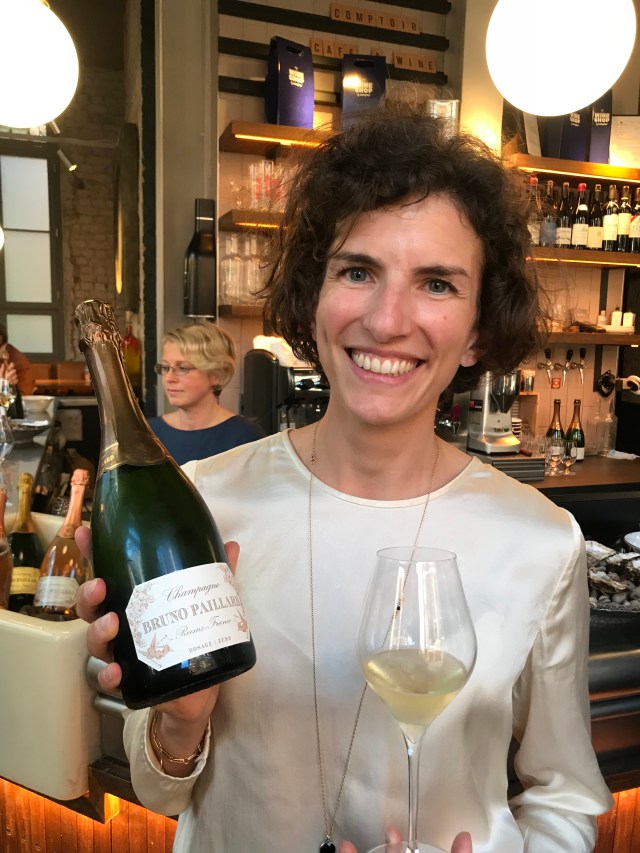
Posted in Artisan Wines, biodynamic wine, Natural Wine, Wine, Wine Agencies, Wine Merchants, Wine Tastings | Tagged , , , , , , , , , , , , , , , , , , , , , , , , , , , , , , , , , , , , , , , , , , , , , , , , , , , , , , , , , , , , , , , , , , | 3 Comments

Recent Wines (August 2018) #theglouthatbindsus

It seems a long time ago, August, days of thirty-degree plus temperatures, three meals a day taken out in the garden, and hardly a serious red wine drunk. Nothing here will be anything more than light red, although the Blank Bottle Winery pair from Butler’s only get left out because I’ve written about them so recently in another article (a gorgeous Tempranillo blend and Pinot Blanc, exclusive to Butler’s Wine Cellar in Brighton, from Pieter Walser).

Other regular favourites also get missed, such as Tillingham Wines‘ PN17. I still have a couple of these from a half dozen I pulled together from different sources and it’s still going strong. Finally, summer would not be summer without some Bagnums of Beaujolais-Villages from Du Grappin. The Nielsens’ wonderful summer glugger provided plenty of lightly chilled glasses whilst standing over a hot stove, or listening out for the frogs in the pond as the sun went down.

The following ten wines are my pared-down best of the best for what was a wonderful month of weather and wine. If the first four are Austrian, I make no apology for that. I was doing some research for my trip in the middle of last month.

Wiener Gemischter Satz Nussberg Reserve 2012, Rotes Haus, Vienna – This truly was research because within a couple of weeks of drinking this I’d spent a day and a half walking in these beautiful vineyards, which afford such amazing views of the Austrian Capital. I had bought this bottle on a previous trip to Vienna back in 2013, at the Heuriger, Mayer am Pfarrplatz, to which we returned one very sunny day this August to quaff Himbeer Sturm after a very long day walking (and drinking wine) among the woods and the vines.

Gemischter Satz can come from anywhere in Austria, but the DAC of Wiener Gemischter Satz, although available in a lighter form, can be built for ageing when from the best vineyard sites. This wine, comes in at 13.5% abv, and is such a wine, although I’m not sure it has the ability to age a long as, for example, Wieninger’s top Gemischter Satz wines can.

The blend here includes Grüner Veltliner, Pinot Blanc, Welschriesling and assorted Traminers, a field blend which in the Gemischter Satz tradition is co-fermented. It has a medium body, a hint of appley freshness still, and quite a bit of herbs and spice, with a touch of texture manifesting itself as a pleasant dryness. Definitely a food wine and quite versatile. It’s always a pleasure to drink a Wiener Gemischter Satz, and I think I’ll be drinking more of this blend from other producers in the coming weeks.

A12A57D7-E5F1-4364-800B-274DAF1E78FB

Rakete 2017, Austrian Landwein, Jutta Ambrositsch, Vienna – This is one of my discoveries of 2018. I’ve loved the wines of possibly Vienna’s smallest artisan winemaker since Newcomer Wines began importing them a number of years ago. I first tasted this at the Newcomer Wines portfolio event at the RIBA earlier in the year, but this was my first complete bottle.

It’s a roter gemischter satz, but released as a Landwein. The blend is Zweigelt, St-Laurent, Merlot, some assorted white varieties from Kahlenberg in Vienna’s 19th District and Blauburger. The latter variety is a hybrid of Blauer Portugieser and Blaufränkisch. Its lack of eligibility for the DAC presumably comes from its colour (the DAC is as far as I’m aware for white wines only), but including a hybrid variety may be an additional hurdle. I’m not sure we should care.

The cuvée saw a four-day whole cluster maceration, and it was aged and bottled on fine lees. Consequently, although this is a pale, glowing, red wine it is absolutely bursting with flavours of cranberry, raspberry and strawberry, with a touch of spice. Invert the bottle to distribute the lees for maximum intensity, and serve lightly chilled.

5DDF9FA5-7E2D-4A6D-9332-515F15CEA9A0

Puszta Libre! [2017], Rottwein, Claus Preisinger, Gols – Another wine without an appellation, and another red wine I’d suggest serving slightly chilled. This is more purple in colour than Jutta’s Rakete, but it has the same low alcohol (11.5%), and lightness. It’s a blend of Zweigelt and Blaufränkisch based on a wine style Claus’ grandfather used to make from the northern shore of the Neusiedlersee in Burgenland. The bottle is based on an old soda bottle design, which presumably nods towards how Claus thinks you should consume this.

Carbonic intra-cellular fermentation gives it the flavour of zippy macerated raspberries and cherries. It is simple, for sure, but the epitome of glouglou, and one of my reds of the summer yet again. I’d go as far as saying that this 2017 bottling is the best yet. Brilliant, pleasurable, glugging.

03639D85-29AB-49CB-BFDC-8F3542582427

Schilcher Frizzante [2017], Strohmeier, Weststeiermark – Franz and Christine Strohmeier were natural wine pioneers in a region which has become synonymous with the birth of this movement in Austria. They make a range of lovely wines from their ten hectares, but they’ve become particularly well known for the regional speciality, Schilcher.

Schilcher is made from the rare Blauer Wildbacher grape variety, which is so important to Western Styria that it occupies around three fifths of the area under vine in the region. Schilcher can be a still wine, or Sekt. It is a pale red/rosé with searing acidity and great (usually raspberry with cherry) fruit intensity.

This frizzante version sits between the two styles. Bottled in February 2018, the fruits are fresh but show macerated flavours, with a bitter finish. The acidity slakes the thirst in the heat, and it has (for me) a passing resemblance to Belgian Kriek beer. This is a wine surely for the adventurous.

Stephen Brook in his Wines of Austria book (Infinite Ideas Ltd, 2016) is mildly dismissive (“very popular within Austria, though it finds few takers outside the country”), but Newcomer Wines has brought this in and the more open-minded crowd who shop there, eager for new flavours, appear to have taken to it. I can certainly vouch for its popularity back in Austria. Serve it chilled.

117D702A-4097-4E8F-B3B6-680CE6F67CA1

EFDE659B-992D-4A77-9B5B-847B454DA199

L’Uva Arbosiana 2015, Domaine de la Tournelle, Arbois – This is the first wine I ever tried from one of my favourite Jura producers. I remember heading to Antidote Wine Bar off Carnaby Street when I heard that they sold it (the Clairets of La Tournelle are partners in Antidote).

You’ll notice this is a little old for a fruity pale red. It’s my last bottle and I had been saving it up for this summer, not having had the chance to visit the domaine when in Arbois last year because Evelyne and Pascal were on holiday.

It looked a little more bronze than its usual vibrant pale red, and it probably did need drinking, but the bouquet had even more than usual of that haunting Poulsard aroma, a sort of autumn leafiness. The fruit has a gentle savoury quality. Whilst the vivacity and freshness this wine usually exhibits has almost passed away, it’s still delicious. As a side note, this wine can often be reductive, and generally I always reach for a carafe from experience. I didn’t do so with this older bottle, due to its potential fragility, and frankly it didn’t need it. No added sulphur, 12% abv.

I pray I can stock up with more of this next year.

250B434C-30C7-47D4-89BE-C393D767488C

Savagnin Vin des Allobroges IGP 2016, Les Vignes de Paradis, Savoie – If Belluard remains my favourite Savoie estate, Dominique Lucas’ domaine south of Lake Geneva (Lac Léman) is coming up fast, despite all the other contenders (by coincidence both producers share the same first name). Dominique makes some very lovely wines from two-or-three hectares in the hills above the Côte d’Or in Burgundy, but his Savoie wines are gaining a very big reputation.

Savagnin is, of course, much better known in the Jura region, over the mountains to the north of the lake. Dominique has nearly 8 ha vines in an area once almost completely known for inexpressive Chasselas (in AOCs like Marin, Ripaille and Crépy), but even the Chasselas at this address is wonderful.

Whether it is the terroir or not, away from the marnes of its native region, the Savagnin here is almost sweet fruited with a touch of richness, and nowhere like the nuttiness that Jura-grown Savagnin shows. Whereas the norm for the lakeside wines from most other producers is, at best, refreshing acidity and simple dry flavours, there seems to be genuine complexity forming in this low yield tiny cuvée (just 3,300 bottles made). Find one if you can, it truly hits the spot. All the wines I’ve tried from this source have been exquisite. Imported by Les Caves de Pyrene.

B8E02D5B-225F-4ADB-806A-99FF75261D96

Pétillant Naturel Vin de France [2017], Famille de Conti, Bergerac – The de Conti family has, as long as I can remember, been the foremost producer of quality Bergerac. I remember in the early days buying several of their well priced bottles from Les Caves de Pyrene. I doubt I’ve drunk one for maybe two decades.

This petnat looks like something different. A jazzed-up label adorns a méthode ancestrale fizz, blending 70% Sauvignon Blanc and 30% Chenin Blanc off the soft sandstone soils of Agen, the land of prunes. It’s a new venture for the family, and judging by all the social media coverage I’ve seen, a very successful one.

This is a completely natural wine, including no added sulphur. Lightly crushed fruit was partially fermented in tank and then put into bottle in September 2017 with the lees. The bouquet is of apples and pears, the bubbles are tiny, and the whole wine is quite tight and focused. Flavoursome and delightful would describe it well.

As with most of these wines today, it’s fair to say that they are not wines for winter, although on a sunny day I’m not so sure. But even if you don’t grab some to see you through our late ending summer (I’m still looking out on blue skies here and we had lunch in the garden), be prepared for the next one.

B82837DF-948C-44B0-B9F6-DE29F05B8C77

Sylvaner 2016, Domaine Gérard Schueller, Alsace – Bruno Schueller has become one of the cult names in Alsace. He farms not in the trendy north of the region, but at Husseren-les-Châteaux, to the south of Colmar (ten hectares in all, around Husseren with additional vines in nearby Eguisheim’s two Grand Crus), so often a bastion of conservative winemaking. Like many of the region’s finest vignerons, Bruno has the sort of rebellious nature that means his wines (including an amazing wild Pinot Noir) don’t always get AOP approval, not that he cares.

There is no doubt that Sylvaner is making a comeback in Alsace (and, as Silvaner, in Germany), a comeback that begins with a very poor reputation for thin and acidic, highly cropped, vines. This skin contact wine is something altogether different. Watch out though, it comes in with 15% alcohol, although I’d challenge anyone to nail that fact without seeing the label. It’s rich, not especially acidic at all, and it has smooth texture and depth.

One wonders how many better Sylvaners you might find in Alsace? Genius winemaking. I found this at Verre Volé in Paris (the Canal St-Martin branch).

0F2966EA-F5F3-45D9-8478-35A8F3ABF5BA

25739606-8499-4CDE-96C7-F7E99A457019

Tibouren 2014, Côtes de Provence Cru Classé, Clos Cibonne – In some respects this estate reminds me of Château Simone in Palette, another wonderful Provençal pink that ages magnificently and is wholly outside the norm of the region’s many insipid rosé wines. It, as indeed the wine, has a certain old fashioned quality. The estate dates from the 17th Century, and it sits in the hills of the Maures massif, near Pradet, above Toulon.

The grape variety, Tibouren, may sound obscure, but some will know it as Rossese, the red variety of Western Liguria, just along the coast into Italy. André Roux is at the helm, and keeps the wines here very traditional. This pink, from magnum, has an almost orange tinge to it, very delicate. The nose, by contrast, is richly scented and deep. You would not believe just how fresh this 2014 is, enhanced no doubt by the larger format, but still! You also get the kind of complexity not usually found in pink wines from Southern France, and indeed, the sort of complexity you would find in maybe just a dozen or so rosé wines throughout the world.

Simone, Tondonia, Musar…I’d place this Tibouren in the same list of serious rosé wines, with the added benefit that this is nowhere near as sought after and is not usually difficult to get hold of, though the vintage will have changed. Imported by Red Squirrel.

FF82BC54-6647-4B8B-9F4F-8D514C75EA0F

Champagne Bruno Paillard Première Cuvée MV Extra Brut, Champagne – Last but by no means least here is a wine which on the face of it might appear to be less unusual than the rest of this list. But what is unusual in this case is how taken aback I was by how good it is.

I remember when Bruno Paillard, who from a long line of Champagne brokers began in the same broking role in 1975, set up his own Grande Marque in 1981. In the 1990s the House began investing in its own vineyards, and today has a little under 30 hectares, producing around half-a-million bottles per vintage. I recall the first wines from Paillard, imported for a short while by Yapp Brothers, creating quite a stir at the time. It’s fair to say that my long journey with Champagne has since then taken me in a different direction, towards the artisans, the Growers.

Nevertheless, I’ve been more than aware of the rise of the man himself, with his several chairmanships and CEO positions, and of course his great commitment to, and work for, the Champagne region as a whole.

Première Cuvée is a low dosage, multi-vintage blend from 35 individual crus. It is made only from fruit of the first pressing, 45% Pinot Noir, 33% Chardonnay and 22% Pinot Meunier, 20% being barrel-fermented. What is interesting is that the reserve wines added in are from no less than 25 vintages, back to 1985, and these reserves make up close to 50% of the final blend.

Ageing involved three years on lees for this release, a disgorgement of June 2017 with a further five months in bottle before shipping. I’m not sure of the exact dosage, Extra Brut denoting less than 6g/l (but it seems drier than that). The bouquet is very fresh, yet there’s a really nice touch of complexity which comes through. If Chardonnay notes appear to dominate the nose to a degree, then the red fruits of the Pinots come through on the palate – the palate begins with citrus fruit, but then builds to a lovely brioche or arrowroot biscuit before red fruits, like redcurrant, appear.

Overall, there’s lots of focus, and a whole lot going on here. I was genuinely impressed by a wine I was given as a “try this”. I’m grateful for having had the chance to discover it. I’m sure I’ve not tried a “NV” as interesting or as good as this all year, and I was even more surprised to find that it retails for (I think) around £40.

95909384-F7B9-495A-843C-D16D38DDE61B


Posted in Alsace, Austria, Austrian Wine, Champagne, Jura, Natural Wine, Rosé, Rosé Wine, Savoie Wine, Sparkling Wine, Vienna, Wiener Gemischter Satz, Wine | Tagged , , , , , , , , , , , , , , , , , , , , | 2 Comments

Jura Night at Solent Cellar

I’m a little sad this year. Followers of Wideworldofwine will be well aware that Eastern France’s Jura region is one of my passions. They may well know the story of how we used to stay on the Côte de Beaune each spring, and how we took a chance one year, for one of our day trips, to check out Arbois. This was many, many years ago now, but as others know well, once you smell the wood smoke and sample the cakes (Hirsinger) and Comté, you don’t look back.

Whether it was to stay in a tiny gîte with a stream running through the garden when the children were tiny, or merely passing through on the way to or from Geneva or the Alps, what started out as frequent visits ended up becoming a visit every year. Until now. For the first time in many years we have not set foot in the region during 2018, in fact not since November last year.

We plan to put that right as soon as temperatures become tolerable there in 2019 (February can be worse than bitter), but I continue to drink deep of the wines and follow closely what is going on around Arbois and beyond. We’ve not even had the customary Jura-themed wine dinner in London this year, but last Friday I was pleased to give an introduction to the region and its wines at Lymington’s adventurous wine merchant, Solent Cellar.

Simon and Heather at Solent Cellar have shared my love of the region’s wines for a few years, and after their first visit in 2017 I think they also have the bug for travelling there. They began to widen their Jura range after that visit, and you won’t find many wine shops outside London that can match their ever changing offering, which ranges from well known names like Ganevat and Berthet-Bondet, to the remarkably fashionable Philippe Bornard, and a relatively new name on the block, Fabrice Dodane’s Domaine St-Pierre.

As many independent wine merchants do these days, Solent Cellar has to innovate in order to build a loyal customer base, and one way they have done this is to convert the shop into a restaurant from time to time. They work with a versatile local chef, and they can squeeze twenty-four covers in without discomfort. As with most of their events, it sold out quickly, with people left disappointed.

It’s a testament to the knowledge and astute buying here that such trust is placed in the team by their customers. I began my introduction by asking whether anyone had been to the region, and one couple stuck their hands up. Asking if people knew where the region is, it was by no means universally acknowledged. Yet the audience attacked these sometimes unusual wines with a spirit of adventure. I hope that my descriptions of especially the region’s autochthonous grape varieties, and of the main techniques for making them into wine, gave an accurate enough picture of what to expect.

The food was very well executed. Guests were given a glass of very interesting Crémant du Jura Château Bethanie with canapes on arrival. This is a Chardonnay-based méthode traditionelle sparkler with the twist that a small amount of Vin Jaune is added in the dosage, which gives the wine a very interesting slightly (only slightly) oxidative note. I’m sure that there are certain provocative wine writers who in the past might have called this “Krug for under £20-a-bottle”.

1CED4D03-B354-407C-BCD8-0B48E825316B

The menu began with a trout starter with delicious saffron-pickled cauliflower, followed by the traditional coq au Vin Jaune et au morilles. The sauce here, in this case, actually made with Vin Jaune rather than a Savagnin substitute, was well executed. Instead of dessert we had a generous cheese platter with young Comté, Morbier and Bleu de Gex.

There was a very wide selection of wines by the glass to choose from, priced keenly, along with some more wines available by the bottle. The ticket included the food and the glass of Crémant, with further drinks purchased through the evening. You can see what was on offer from the photo of the evening’s wine list (above, NB prices are for wines consumed during the meal, not on-the-shelf prices). I tasted all the wines beforehand, but purchased wines throughout the meal, and my brief notes below largely comment on the wines I drank. There was one corked bottle, which we spotted and replaced, but the wines otherwise performed really well.

Michel Gahier Melon “La Fauquette” 2013 – The Melon in this case is not the grape of Muscadet, but Melon à Queue Rouge, a (very) red-stalked Chardonnay mutation/variation. This variety has become very fashionable of late, but there is justification. It hasn’t been much planted for many years so when you find it, the bottle will almost certainly be an old vine cuvée. Jura author Wink Lorch describes it as being softer and with more yellow fruit characteristics than straight Chardonnay, but additionally, all the versions I’ve drunk (at least three or four in recent years) have had a lovely freshness too.

6AA7E204-F54D-4281-AF65-5E8F891550DC

I drank the Gahier with the trout. You don’t see MàQR very often so it seemed a good opportunity to do more than just taste it. My wife went for the Poulsard Sans Souffre “Love” 2017 from the Fruitière d’Arbois (fruitière is the name for a co-operative in Jura). It may be a co-operative wine but it’s a nice, fresh, red-fruited, natural wine with no added sulphur, and slightly cheaper (£22 vs £28) than the Poulsard from Domaine de la PinteL’Ami Karl from the same vintage, although the latter wine can age wonderfully (they sometimes have an older vintage at their Arbois shop). The Pinte wine has added nuance and complexity with lots of cranberry fruit.

EF9B861E-5DA5-4A48-9855-A82EE25E7AE6

The main course was, as I said, pretty well handled. Although we naturally didn’t get a Poulet de Bresse (which is what you will commonly get served in Arbois), the chicken was very nice, and a whole breast. We decided to go traditional, drinking the sous voile Savagnin 2013, Daniel Dugois with this course.

Daniel’s son, Philippe, runs the domaine, based in Arsures just to the north of Arbois, these days. This (like Puffeney in Montigny-les-Arsures) has always been a good address for Savagnin aged under flor because they also make one of the best Vin Jaunes around Arbois (a well kept secret). This particular Savagnin wine isn’t released every year, and it sees around five years sous voile, so as you can see, it’s well on its way to being a Vin Jaune when bottled.

It was one of the best performers on the night, and possibly the surprise of the night as well, nutty and complex but fresh too. I’m not sure whether Solent Cellar has any left (I’m also not sure the Jura wines listed on their web site are comprehensive so do inquire what they have if interested), but it comes highly recommended. Flor-aged Savagnin when of a very high quality, is a true bargain, usually retailing at between 50% to 60% of the price of the same estates’ increasingly expensive Vin Jaunes (not to mention the often ignored fact that you get 75cl as opposed to 62cl in the traditional Vin Jaune clavelin).

A8EE6FD9-828D-4956-BCEC-B829D26E0AB5

A few people drank the Trousseau Singulier, a “barrel selection” from Stéphane Tissot, which still has some tannin but is a deliciously sappy red wine, and a few others went for the Berthet-Bondet “Balanoz”. This 2015 Chardonnay is drinking especially well right now, which I made note of (I have some at home). The other Berthet-Bondet listed in the white wine section, the topped-up (ouillé) Savagnin “Savignier”, was also drinking nicely in a lighter but still slightly nutty style.

I thought the cheese platter was generous, considering the miserly cuts you sometimes get in London restaurants. I had counselled everyone to try one of the Vin Jaunes with the cheese course, and almost everyone did (I think some went with the Trousseau).

Domaine Saint-Pierre is near the village of Vadans, which is just a few minutes outside of Arbois, on the road to Dôle. Its Vin Jaune in a slightly lighter style, quite young (2008), but a Vin Jaune that will happily drink young. Some preferred it because the complexity of older Vin Jaune can be a little bit too intense.

Berthet-Bondet Château-Chalon 2009 is even younger, and I was surprised that this was drinking so nicely. The Berthet-Bondet family make what I consider one of my two favourite Vin Jaune styles from the village (Macle being the other). This wine is truly elegant and fine. As much as it is nutty, it is smoky too. You get complex notes of ginger and cumin, and a layer of quite exotic fruit on top, but just a hint. Of course it will keep for a very long time, but it was very good on the night.

There was one truly well aged Vin Jaune on the list, a real cracker. Jacques Puffeney Vin Jaune 1995 for a ridiculous £12-a-glass was irresistible. I guarantee I’ve seen it for double that in one particular London restaurant. Jacques Puffeney, one of the greatest five or six names in the Jura region, retired after the 2014 vintage. He sold his vineyards (to Domaine du Pélican) but kept the wine he’d made, his pension he said. But still, the supply of wine, from this master of an age when Jura wine would be laughed at by Parisians and Burgundians alike (ha! Domaine du Pélican are Burgundians and they’re not laughing now!) is now finite and running low.

05A59E20-D500-41C9-85FF-FC7355091A6F

Although many would place the rise of Jura, from unknown backwater to one of the most fashionable wine regions in the whole world among younger connoisseurs, on the shoulders of Jean-François Ganevat, Stéphane Tissot, or perhaps Pierre Overnoy, others might point to the impact that Jacques Puffeney’s wines made in America when they were imported by pioneer wine merchant Neal Rosenthal. Rosenthal had become close friends with Puffeney when he began falling in love with the region in the early 1990s (as I had done just a few years earlier).

I’m pretty lucky. Puffeney’s wasn’t the first Jura wine I tasted, but during those early visits I fell in love with the Puffeney wines I bought, along with those of André and Mireille Tissot, whose son Stéphane had just returned to the domaine from overseas and was frightening his father with his determination to convert to biodynamics, now almost ubiquitous around Arbois. The oldest Jura wine I own is a 1989 Vin Jaune special cuvée from Puffeney.

This 1995 Vin Jaune at Solent Cellar was just stunning. If the other two similar wines were a high tenor and a baritone, this was a true, deep, bass. A wine of profound complexity, but despite that depth, and despite the acidity of youth having mellowed significantly, it still drank fresh, alive. You could count the wine’s length in minutes. It was a perfect accompaniment to the three regional cheeses.

592FE2E0-B456-4361-9D5B-E331A9B7B7B6

As a generous reward for my talk we did get to share a wine of equal profundity with the Solent Cellar team at the end of the evening: Houillon-Overnoy Ploussard 2015 (they spell Poulsard as “Ploussard” in Pupillin, a village just minutes south of Arbois, which claims the title of the “world capital of Ploussard”, and where this domaine is situated). It’s hard to describe a wine like this. Since Emmanuel Houillon, who began working at the estate aged 14, took over more or less completely from Pierre Overnoy at this signature Pupillin domaine things have remained pretty much the same. Ever since Pierre began making wine in the late 1960s he eschewed the use of sulphur at any stage in the winemaking process, and of course the vineyards have been farmed without any synthetic chemicals since at least the 1980s.

The thing which almost literally shines (see the colour) through this wine is its amazing fruit. A host of red fruits with strawberry and raspberry perhaps dominating. Pure concentrated fruit juice. Almost off the scale, yet so simple at the same time. I’m lost for words, really. This was a single bottle from Simon and Heather’s cellar, so not on their shop list, but a privilege to drink, as I know many of you will agree.

A great evening, made even more fun by a nice adventurous crowd in the shop. I think, from the feedback I got, that people really enjoyed it. As Simon told me later, “these things are an effort to put on so we like to make sure what’s on offer are wines we ourselves really like and want to share with our customers”. Admirable!

As I noted, the dinner was sold out, but for customers who couldn’t come, or in at least one case, for those who couldn’t get enough of all things Jura, Solent Cellar laid on some Jura wine flights on the Saturday, accompanied by a slice from a couple of Tartes au Comté left by the chef. The alternative, which we eagerly participated in, was a glass (£6) of Philippe Bornard Ça va Bien petnat served from magnum. This was a treat for me because I’ve seen empty magnums of this wine at the domaine, but never managed to get one for myself. I’m still not sure how Simon managed to, though he is pretty persuasive sometimes. Simply gorgeous, though I’m known to go weak at the knees at the sight of a Jura magnum (Solent cellar even have the odd Ganevat “Kopin” in 150cl if you are extremely swift (£58)).

One final note on Solent Cellar. I have family in Lymington. For a while after they opened I walked past the shop convincing myself that I didn’t need yet another wine supplier in my life. After I cracked I discovered that this is one of the finest wine shops in the country, and I’ve visited a lot of wine shops. The best way to get the measure of them, if you can’t make it in to browse for half an hour, is to go to the web site link (in the third paragraph of this article) and scroll down the Home Page and click on the photo and link to “unique and rare wines”. It’s a lovely three-page snapshot for any wine obsessive to salivate over.


Posted in Jura, Wine, Wine Merchants, Wine Shops, Wine Tastings | Tagged , , , , , , , , , , , , , , , , , , , , , , , , , , , , , , , | 3 Comments