Alto Adige at Solent Cellar

I’ve been down in the New Forest for a week, having family down there. It’s a lovely part of the UK, but increasingly it seems to be developing a real reputation as a gastronomic location as well. I’ve written about a few of the New Forest restaurants before, and I shall follow this article with one on a rather good day’s dining soon. But for those wanting to buy wine, Lymington is your destination.

On the coast, with attractions including its marinas, a ferry to the Isle of Wight, and a very good Saturday market, Lymington is worth a visit anyway, but it also possesses one of the best wine shops in the country, Solent Cellar (voted one of the “Top 50 Indies” by Harpers Wines & Spirits for the past two years, but in my view, clearly top-10 material if you browse the shop). Apart from scooping up a load of wine last week, I popped in on Friday evening for one of their regular tastings. This was billed as “Alto Adige“, although the importer apparently forgot to put one of the reds in the box, so we had a Piemonte red as a substitute.

The importer in question was Astrum Wine Cellars. All over the country dedicated staffers spend their evenings putting on tastings like this, in conjunction with local stockists. It gives customers a chance to try something new and to focus on a particular producer or wine region, under the tutelage of the importer. Generally, the wine shop will discount the wines on the night, so it will generate interest and a few sales as well.

ALTO ADIGE, aka Südtirol in the local German dialect (the region having formerly been part of Austria until war changed its nationality in the last century), comprises the valleys which follow, or diverge from, the River Adige, north of Lake Garda. We are between Trentino and the Brenner Pass, in Northeast Italy. The region has a strong local identity and co-operatives have played a major part in regional viticulture since the late nineteenth century. Co-ops like San Michelle Appiano and Cantina Gries are often listed among the best in the country, and Cantina Sociale Terlano, based at Terlan just north of Bolzano, can be added to that list.

The Terlan co-operative, founded in 1893, joined forces with Cantina Andriano in 2008 and the wines still appear under the two distinct labels. Six of the wines on show came from this source, but the first wine was a sparkler from Cesarini SforzaTridentvm Brut 2010 is a metodo classico (bottle fermented, like Champagne), made from the classic Champagne grape varieties – Chardonnay (80%) and Pinot Noir (20%) in this case, under the Trentodoc DOC. Trentodoc is very quickly gaining a very fine reputation for classy sparkling wines, being brought to our attention by some of the foremost writers on fizz.

The grapes for Tridentvm (sic) are fermented in stainless steel before undergoing a second fermentation on lees in bottle for 48 months. Bottled at just under 10 g/l dosage, this nevertheless tastes very dry. The crisp acidity and mineral structure is set off against a very fine bead. There’s little sign of further autolytic character yet, but the nose is elegantly floral. As a Champagne rival, it challenges on price for quality (around £20), as well as being a well made and attractive wine. With 48 months on lees, it may develop more bready notes if cellared.

IMG_0105

Next we tasted two varietal wines made from two of the white grapes with which the Alto Adige co-operatives are synonymous, Pinot Bianco and Pinot Grigio. Finado 2015, Cantina Andriano is a Pinot Bianco, made with six months lees contact to give a little texture. The main impression is of soft pears, with an initial touch of CO2 which dissipated fairly quickly. Although it’s a gentle wine without being very assertive, it has a good length, and was quite popular.

It contrasted with Pinot Grigio 2015, Cantina Terlano, which is quite a bit richer (it comes from a south facing vineyard). The Pinot Grigios at this level are wholly different to the dilute examples sold for well under £10 in UK supermarkets (this one retails at £18, compared to £14 for the Finado above). In fact Waitrose sell a decent upgrade on the cheaper versions of Pinot Grigio for £12, which comes from another Alto Adige co-op, San Michelle-Appiano, but in terms of weight and complexity this Terlan version is another step up again. There’s pear, but apricot and peach as well, with a bitter stone fruit twist on the finish.

Terlaner Classico 2016, Cantina Terlano (£19) is one of the blends the region does so well. This one is 60% Pinot Bianco, 30% Chardonnay and 10% Sauvignon Blanc. It is mostly aged on lees in stainless steel for seven months, but 20% of the blend is aged in oak. The bouquet is much more floral than the previous two whites. The weight of rounded Chardonnay fruit dominates the palate, but on the nose there’s definitely a sense of grassy Sauvignon Blanc. A certain lightness of touch made this wine, on balance, my favourite of the three so far, though the best was still to come.

IMG_0107

Terlaner “Vorberg” Riserva 2014 is one of the top wines from the Terlan Cantina, coming from one of the region’s best single sites. It is fairly expensive at £32/bottle, and this is why the opportunity to try something like this at a tasting is quite enlightening. It’s made from 100% Pinot Bianco, fermented in 30 hectolitre casks, and then aged for a year in oak, during which time it undergoes a softening malolactic fermentation. At 14% alcohol it is rich and buttery on the palate, with pear and peach fruit. The nose is developing slowly and right now is mainly reminiscent of white flowers, but this is one to age. In fact I know someone who has put away a couple of six-packs. The little bit of austerity, which may have put off some tasters, will give way to a complex bottle, given several years cellaring, at which point it might appreciate being paired with turbot at Verveine (the marvelous fish restaurant in nearby Milford-on-Sea).

IMG_0112

There are a few red grapes which are native to Alto Adige. Teroldego is one, particularly well known in the version called “Morei”, from Foradori. Another red variety which is often grown alongside it is Lagrein. Under the Cantina Andriano label, we tasted Rubeno 2015, 100% Lagrein, and nicknamed “Ribena” by a few on our table. It’s a dense ruby red colour, fermented in stainless steel, and very bright to look at. It’s a fresh, young, red with soft and juicy black and red fruits, and a little tannin. It finishes slightly bitter. A nice sappy red at £16. These Alto Adige wines are never cheap when they are good, but if you’d like to try something a little different, it’s worth it. I find Lagrein attractive when it’s well made, and like so many Italian country reds, it goes really well with local cold cuts and cheeses.

IMG_0110

We finished with our Piemontese interloper. The Produttori del Barbaresco is very well known, and I’ve written about them in the past. If the Alto Adige co-operatives are among the best in Italy, then “The Produttori” can stake a reasonable claim to be the best. Certainly a few of their single vineyard Barbaresco wines can match those of the top producers in the right vintage, and at half the price.

Here we were tasting the entry level Langhe Nebbiolo 2015. I’d not tried the 2015 vintage of this yet, so I wasn’t complaining our final wine wasn’t from the Northeast. These have finally hit the £20 barrier now, though even at that price they are still good value. I’ve had many cheap Barolos which truly disappoint, but this Nebbiolo cuvée has never done so. Characteristically pale, although far from the brick red which Nebbiolo assumes when old. The nose hasn’t fully opened, but it hints at something more haunting, and quite a few tasters detected a touch of liqorice. There’s tannin here, not the firm tannins of a young Barolo (or Barbaresco), but enough to prefer food, or a year or three in bottle. But a nice wine, well priced for the quality and, after a year or two, capable of showing the uninitiated what Nebbiolo can do. It won’t hit the heights of Barolo, but nor will it break the bank.

IMG_0111

A nice little tasting. Some readers might have seen me mentioning COS Zibibbo on Social Media last week. Solent Cellar had one or two magnums of this new and rare COS wine, the Sicilian strain of Muscat vinified in amphora. I thought I’d offer a heads up to any readers who got this far, and who might fancy popping down to Lymington this coming Friday evening (21 July). From 6pm Solent Cellar are hosting a Sicilian night, along with Sicilian pasta merchants, Bedda Co. They will be cooking up some fresh pasta with Sicilian toppings out back, whilst Solent will be selling (mainly Sicilian) wines by the glass. I am promised that the last two magnums of the Zibibbo will be opened. There’s a large car park over the road, down the side of M&S, and you don’t need to book or buy a ticket. But if you want the Zibibbo, remember to arrive early (and don’t blame me if there’s a rush). If nothing gets in my way, I shall be there. Solent Cellar is at 40 St Thomas Street, Lymington.

Posted in Italian Wine, Wine, Wine Agencies, Wine Tastings | Tagged , , , , , , , , , , , , , , , , | Leave a comment

Social Me, Dear!

William Kelley’s piece on wine and social media in the new edition of Noble Rot got me thinking (and James Springall’s cartoons got me laughing out loud, spot on!). If you are reading this Blog Post, you may well have come to it via Twitter or Instagram, and Kelley is not the first to notice how important these two forms of social media (along with Facebook, and I would add, sites like Tom Cannavan’s Winepages, or Jancis Robinson’s Purple Pages) have become to the wine community.

I admit that I rely on both, and especially Instagram, in order to see what my friends are drinking (and eating), and to see what various wine merchants and shops have just put onto their shelves. And I won’t deny that my posts on these sites help generate traffic for my Blog (it seems to work, thanks!). So how do these social media shape wine appreciation, and what are the potential effects of their influence on wine fashion and the wine market? It seems that it might be the right time to start talking about it.

IMG_0047

Typical wine geek Instagram feed…oh, that’s mine…damn, no Ganevat there…

Only last night I spotted, via Instagram, that local wine shop Ten Green Bottles had a particular winemaker in for a staff tasting, alerting me to the forthcoming opportunity to buy some natural wine from Bordeaux some time soon. Today, in the same place, I saw that a friend had bought a wine I’m after, and now I know where to get it (if I’m quick). Yes, Instagram and Twitter are pretty essential for me, both as a wine writer and a wine lover.

Most of us who use social media to fuel our wine passion have come to enjoy the real sense of a wine community it has brought about. It connects customers with wine sellers, wine writers with their readership, importers with others who have regional expertise in what’s hot, and wine geek with wine geek. There are people I’d never have met were it not for Instagram and Twitter, and I’m so glad I have met them.

Yet Kelley does identify two issues with social media. The first is very well lampooned in Springall’s two cartoons, which feature bottles of Overnoy and Clos Rougeard. He’s pretty much nailed the wines, although he could have easily substituted a Ganevat for the Overnoy. There is certainly a particular type of wine geek on social media who might be compared to those who post pictures of Porsches and Rolex watches. There’s an assertion of something or other going on, whether it be via pics of Krug’s Clos du Mesnil or one of the kings of natural wine, like those mentioned above. Perhaps it’s an assertion that “hey, look at me, I’m here and king of the castle. Look on my cellar, and my impeccable taste, and despair”.

IMG_0048

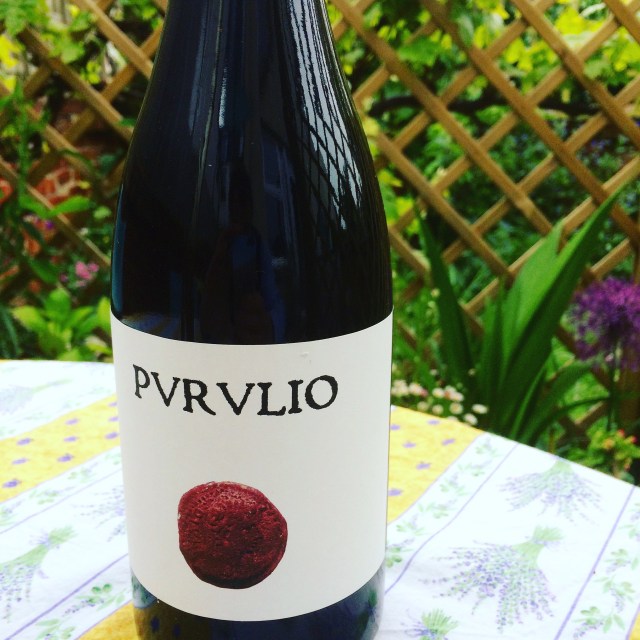
It’s not really fair to categorise people like this…is it? You drink a nice wine, you want to post a pic, simple as that. You can soon see the type of person you are following…if all they post are trophy wines. It’s not necessarily willy waving, but I know it can look like that. I’ve noticed that, not at all deliberately, I’ve almost stopped liking photos of Ganevat etc. Of course, I still adore the wines. It’s really because I see at least half-a-dozen Ganevats a day. I am trying to turn my likes into an acknowledgement that someone is at the cutting edge of exploration (Pvrvlio, Sanzay, Sean O’Callaghan, or a nice Pineau d’Aunis or Sumoll), rather than them merely being recognition of a wine I myself and everyone and their mother likes.

The other thing Kelley hits upon is the democratisation of wine which social media assists. Or, to put it another way, letting the cat out of the bag. It could be argued, and Kelley does, that a wine like Clos Rougeard was only known to a small selection of insiders before it began to be plastered all over Instagram. Some would argue that its dramatic increase in price is in good part down to the social media effect (although there are a number of other perfectly valid reasons for this in the case of Clos Rougeard, not least people having the chance to taste it at the excellent new breed of wine-focused restaurants like, er, Noble Rot).

Certainly social media has the effect of identifying the cool wines, thus potentially making them scarcer and harder to get hold of. I know this really annoys some people. They are not always shy in saying so.

My philosophy is a little different, but it would be of course, as someone writing about wine. I see my role as trying to be at or near the cutting edge of what’s good in wine, so I have to share what I am liking, and what I am hearing. I loved the classic wines once, and still do, and I’ve not forgotten how, when one wine became too expensive or hard to source, I just moved on to another. I’d still love to own some Haut-Brion, but I’m more than happy with Haut-Bailly these days. Winemaking has improved so much, and viticulture arguably even more, in the past twenty years or so, and whilst we lose some labels to the collectors, a host of new possibilities open before us.

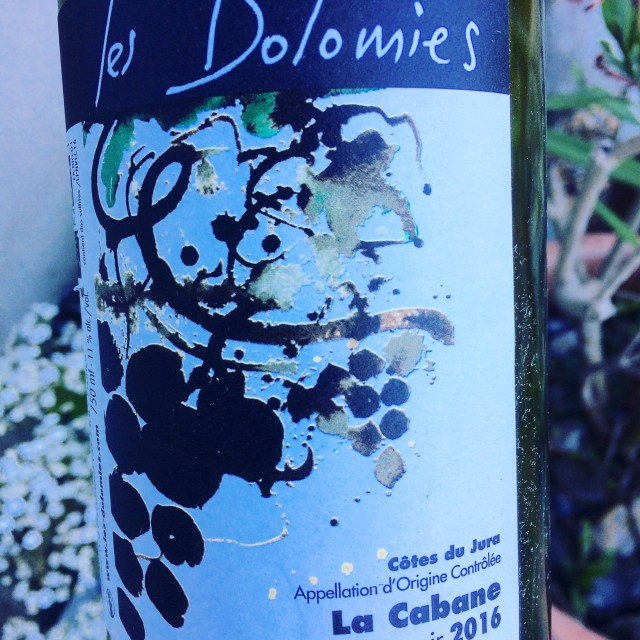
Take one example, Jura. I would take just a tiny bit of credit for helping to bring Jura wines to a wider public (the vast bulk of that credit must go to Wink Lorch). When I first nosed around Arbois in the mid-1980s it was a backwater. Now, the finest producers are in the finest wine merchants and three star restaurants. But prices have risen inexorably as well. Actually, I’m glad they have, because it makes wine production economically viable for the many artisan vignerons who farm a few hectares of vines yet make amazing wines (Hughes-Béguet, Les Dolomies and Bruyère/Houillon are just three of many who are now getting international acclaim, and I hope Les Bodines and others will follow).

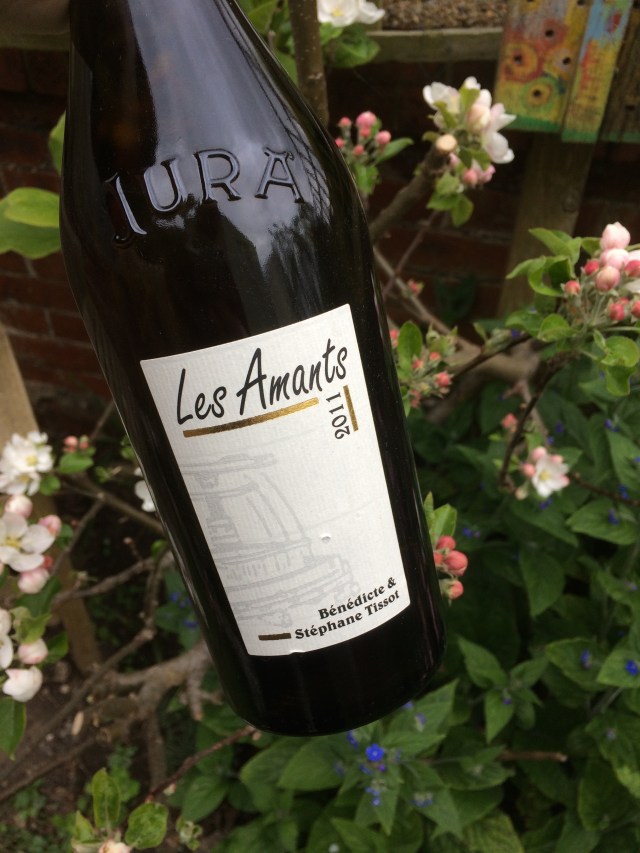
I remember, from talking to some of the better known people, what it was like back then. When a region gets no attention, no one can make a decent living. The best names generally get little premium over the ordinary producers. Recognition encourages younger talent to live their dream, and in that particular region we are now reaping the rewards in quite spectacular fashion. We have wines like Stéphane and Bénédicte Tissot’s Clos de la Tour de Curon matching in quality pretty much any Chardonnay Burgundy produces, but we also have several dozen newcomers blazing a trail on the coat tails of producers like Stéphane, now able to make a living where it was impossible before.

[As an aside, I predict the same thing will happen to Savoie once Wink Lorch’s book on French Alpine Wines comes out later this year. I suggest you start acquainting yourselves now.]

My point is that it might annoy those who want to keep great wine a secret that everyone is just a Tweet away from the latest hot Chasselas in the Crépy region, or indeed from the latest exciting cuvée from Julie Balagny. But in the long run, these wines getting due praise benefits everyone. It gives hope and encouragement to producers who might otherwise struggle, be they a farmer of a hectare or two in the Alps, or be they geographically far away from world markets (like, for instance, Okanagan Crush Pad, whose wines have been picked up at the important natural wine fairs and have gained a big British following on social media). Put money in their pockets and they will grow, and make more wines, and their neighbours will look on them and want the same. The best rise to the top.

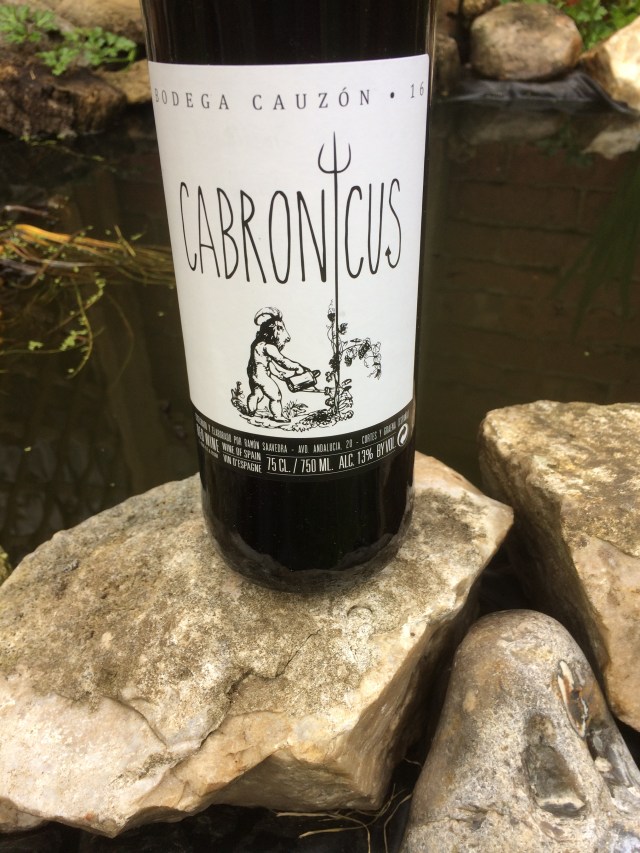
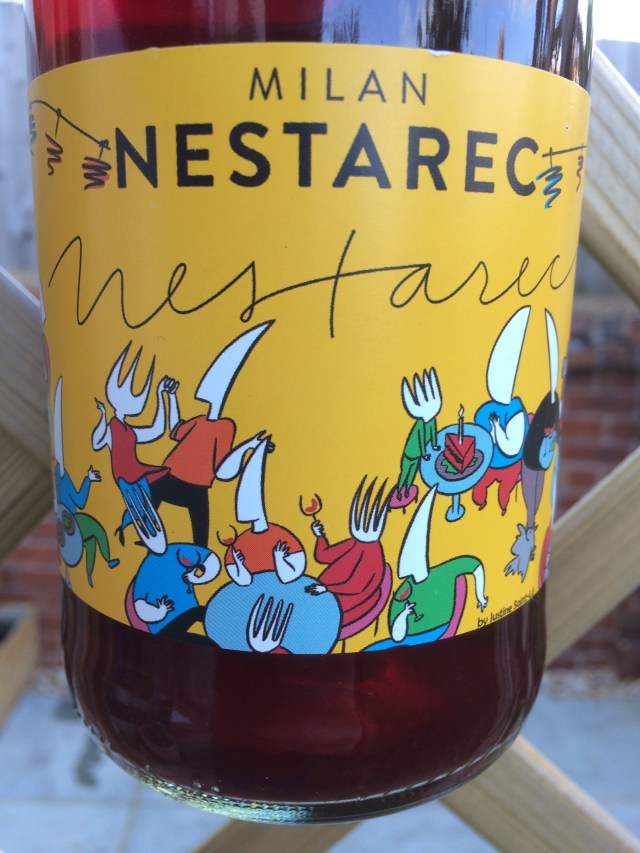
Social media also encourages small importers to take up the challenge. Take Otros Vinos whose wines are available in Dalston’s Furanxo deli as well as online. They import some brilliant, if obscure, natural wines from The New Spain (Pvrvlio, Cauzón, etc). Or their near neighbour and Austria specialist Newcomer Wines, who import the likes of Rennersistas and Preisinger, along with Milan Nestarec from the Czech Republic. These are wines which without social media would be a hard sell in the UK, and without the help of social media, how many of us would know about them? I actually think we bloggers do a good job in disseminating these wines to that public which most craves them.

The argument that social media helps to put the best wines beyond the reach of ordinary people is, to my mind, at least a little tenuous. It didn’t take social media to make Lynch-Bages and Fourrier so expensive. Wine has taken off, both as a beverage of the masses in the so-called First World (especially the middle classes and moderately affluent), and also as an investment vehicle. The fact that wine has brought greater profit than many other investments to a relatively small number of people is a result of different forces, including supply and demand, but not social media. The same supply and demand issue operates for cult wines, which are usually made in tiny quantity compared to top Classed Growth Bordeaux.

Instagram may give us pictures of Ganevat’s Vignes de Mon Père to lust after, but if we can’t afford the £150-plus asking price today, then there are plenty of really great wines from the same producer that we can afford. Instagram then gives us a window into a world where we can discover other producers and other wines, often no less exciting (if not Ganevat, then Labet nearby, for example). There are very few wines that are unobtainable if we can find out where to look. It’s then just a matter of cost. But at least social media brings them to our attention.

When one wine ceases to be available or in our price range, then another producer or wine comes along to replace it. Do I wistfully recall Latour when I drink my Pontet-Canet, or Fourrier when I drink my Pataille? No, not really. I enjoy the wine of my moment for what it is. I’m more than happy to share that joy with my followers on social media, and indeed to share a bottle if we meet. And I am so glad that they (you) all share back.

Social media has been a catalyst to building a larger and stronger wine community. It has also brought together a much more diverse set of wine lovers, the types of people (young, or tattooed, or female, for instance) you’d not find sipping the Taylor’s in a London Club, and chatting about the merits of Ausonne ’47 and Palmer ’66.

So I’m all for it. Let’s all share our discoveries and enjoy wine together. Especially, let’s share what’s new and exciting in the wide world of wine. If it weren’t for The Wine Analyst, one of several bloggers I follow, I’d have never known (from a post this week) that I can try Palestinian wine in London (at Nopi). Now there’s a thing.

William Kelley’s article Vinstagram – Is Social Media Changing the Way we Enjoy Wine? appears in Noble Rot Issue 14, in many good wine merchants and magazine stores now. You can subscribe to the best smelling wine mag in the world at www.noblerot.co.uk (you can quote me there, guys).

Below are a few of my pretty Instagram pictures of snobbishly obscure wines, just to show how cool I am…not!


Posted in Wine, Wine Agencies, Wine Writing | Tagged , , , , , , , | 6 Comments

Tuff Act to Follow

In 2010, when Max Allen featured Tom Shobbrook in his seminal work on The Future Makers of Aussie wine, Tom had only been back in Australia for three years. He was embarking on a ten year plan to convert his family’s properties (his parents’ in Seppeltsfield and his partner’s at Ebenezer, in South Australia’s Barossa Valley) to biodynamics, but Max had his finger on the pulse, and knew Tom would go places. It’s now 2017, and what better time to have a look at how he’s getting on.

Those who know Tom’s wines, which certainly includes all the on the ball wine writers I can think of, are aware that he’s becoming one of the real stars of The New Australia. These are natural wines, with minimal intervention (including low sulphur additions), many being fermented and aged in concrete egg. Eight wines were on show at Winemakers Club yesterday, along with one exceptional treat (more of that later). Winemakers imports Tom’s wines, and in fact has been their champion in the UK for several years.

Reddish Cider 2016 is an unusual name for an unusual product. You do have to see the humour here. The classic criticism of natural wine is that it all tastes like cider, and this is just the thing to serve blind to such a person. When they scoff, you can point out to them that it is in fact a blend of pear cider and Mourvèdre (50:50). The two elements are fermented separately, of course. It’s an unusual product. There is certainly wine there, on the palate, but the cider element dominates in terms of acids and texture. What an idea! And it tastes, to be honest, bl**dy amazing. True glugging pleasure, and only 10.7% abv.

IMG_0031


Sammion 2016 is Tom’s Semillon. I always wondered what the name signified, and now I know. Tom’s little brother is called Sam. This comes from two plots, one of 55-y-o vines, the other, 110 years old. It spent 15 days on skins in egg, was pressed, and then saw 7 months (Tom’s magic number) in egg to follow. A lovely wine, a bit richer than the previous vintage by my recollection, something which I think can be said of all of Tom’s 2016 “whites”. The Semillon fruit is plumpish, and quite long on the finish, rounded off with a little bite.

IMG_0032


Riesling 2016 doesn’t necessarily smell like Riesling at first sniff. There’s something else going on here, but what is it? The grapes get a 12 hour maceration, but the egg is not quite fully topped up for later ageing. This allowed a thin layer of flor to form. The wine is reasonably rich, but fresh too. Colin said he thought people might not notice the Sherry-like note unless told about the flor, yet it is there, clear as day. But then I am a Sherry and Vin Jaune nut! It appears on the finish, almost as an afterthought and it adds the subtlest of complexity. So don’t knock it back too quickly. Let it build in the glass.

IMG_0033


Giallo 2016 is a blend of Semillon, Riesling and Muscat. The varieties receive varying degrees of skin contact when fermented separately (12 hours to 12 days), before they are blended together for ageing, for the magic seven months, in egg. In some ways this wine is Tom’s signature, perhaps his best known among aficionados. It’s pale orange-gold in the glass, slightly cloudy, and beautiful on the nose. That Muscat is really concentrated and very ripe, showing apricots over the grapiness. The palate finishes with a beguiling apricot/peach sourness, and a little texture to ground it. Very long. Very delicious.

IMG_0034


Cinsault 2016 – I told Colin that the Giallo was the first Shobbrook wine I drank, but actually, I now remember the Cinsault was. My wife bought me a bottle (with the old white label) soon after Winemakers opened (when her office was conveniently very close). This comes from a patch of just two rows of vines (27 ceps in total), the only Cinsault in Vine Vale. In fact they were due to be pulled before Tom bagged them, so to speak. There’s a three week maceration with some whole bunches, after which the wine gets the customary 7 months, but this time in one old 5hl barrel.

The colour is lovely and pale, a joy to look at. It smells of smoky cherries, and on the palate there’s a bitter cherry note with fresh and lively acidity. It’s a lovely vin de soif, although on second taste a fine grained texture shows that it will not be wasted on food.

IMG_0035


Novello 2015 is, Tom would not be afraid to admit this, the wine he makes from his leftover grapes. In fact Novello tends to have an Italian character, whilst Nouveau is more French. In 2015 Novello was comprised of Nebbiolo, Grenache, Syrah and Muscat, the Nebbiolo giving the Italian slant. But the addition of Muscat here is interesting. It really lifts the blend, adding fragrance. Pure glugging pleasure. Seven months in egg, again, for this wine.

IMG_0037


Clarott 2015 is made up of between 80% to 90% Merlot with a dash of Syrah. The regime here is 12 months in stainless steel tank, and the resulting wine is upfront and simple (not in a bad way, in fact it’s truly delicious). The nose has very plummy Merlot fruit (the grapes are picked pretty ripe), but there’s a nice hint of spice as well. The palate is darker, with black olives (and Winemakers’ manager Colin suggested seaweed). Although rich, and weighing in at 14% abv, you don’t really notice the alcohol when tasting. It’s that trademark Shobbrook freshness that’s ever present.

IMG_0038


Tommy Field 2015 is the wine formerly known as Romanee Tuff (it was so-named up until this 2015 vintage). It’s 100% Syrah, which gets a three week whole bunch maceration, then a year in a 60hl barrel. This is very concentrated, and tannins are also present here, albeit the fine grained variety. Alcohol once more weighs in at 14% but the fruit is there, and boy is it silky. That will be your lasting impression. This is no Pinot Noir (which always made me puzzled at its former nomenclature), but when you let that fruit slip across your tongue, it’s pure velvet. But there’s structure enough to balance things, without turning off that spotlight on the fruit. Stealing a quip from Winemakers‘ A-board, “…the Ruff with the Smooth”.

IMG_0039


The final wine on taste was not from Tom Shobbrook, but from his erstwhile mentor, Sean O’Callaghan. Shobbrook spent six years at Riecine with O’Callaghan in the 2000s, the Chianti Classico estate where O’Callaghan made his name as one of Tuscany’s finest winemakers. Sean left Riecine last year, following a change of ownership. Although Sean is originally from Somerset, twenty-five years making wine in Tuscany has given him a depth of knowledge and experience which few locals can boast. Winemakers Club, in the form of its founding father (literally), Robin Baum, is a partner in Sean’s new winery in Radda-in-Chianti, so expect to see his wines in the shop from now and in the future.

Il Guercio 2015 is the first of these wines. When Sean left Riecine he took with him a vat of Sangiovese. It comes from a vineyard at 700 metres altitude (one of the highest in Chianti), called “Mello”, which Sean is now leasing. He gave it three months’ whole bunch maceration in a square “Nomblot” cement tank at Riecine, and then it was aged at Sean’s new winery for a year in cement eggs (the same as Tom Shobbrook uses, shipped from Australia).

The nose is beautiful fresh cherry with a slightly ethereal quality. I think it’s very refined for Sangiovese these days. It’s also paler than many modern Sangios, none of the dark colour of added French varieties, and over extracted, over ripe fruit. This is fresh! In fact, the label looks more like that of a vin de garde but I think you will get the biggest thrill if you drink it now, on its fantastic primary fruit.

“Il Guercio” means one-eyed rascal. Sean was born blind in the right eye. He produced 1,800 bottles (and 234 magnums – I’d buy magnums but the wine isn’t cheap, even in bottle). Snap some up. I know a surprisingly large number of people who have already done so.

IMG_0043


Posted in Australian Wine, biodynamic wine, Italian Wine, Natural Wine, Wine, Wine Agencies, Wine Merchants, Wine Shops, Wine Tastings | Tagged , , , , , , , , , , , , , , , | 2 Comments

Growing Reputation

One of my regular readers asked a while back for some recommendations for Grower Champagnes in advance of a forthcoming visit, and I’ve been meaning to oblige. This month’s Decanter Magazine has a Tasting of Grower wines, but as always, many of my favourites didn’t get tasted. So it seems a good time to say a few words about a subject close to my heart.

There are over 15,000 “growers” in the wider Champagne Region, but somewhere under a third of those actually make their own Champagne. Most supply grapes to the Champagne Houses, or the many co-operatives. That said, at around 20% of production, the growers are playing an increasingly significant role in Champagne. It may be fair to say that many grower wines can be one-dimensional, the product of a restricted palette of grapes, bottled from one vintage with no, or limited, reserve wines available to add depth and complexity. But there are also a number of growers, perhaps a hundred (I’ve not really counted), who make wine every bit as good as the best Grandes Marques. The very best make singular wines of personality which offer something a bit different as well. Many of the finest of these wines are thrilling in entirely different ways to the famous wines we know and love.

Peter Liem, in his Decanter overview, suggests that the best growers’ names are not “on the tip of our tongues” in the UK, even though they are on the “hippest” wine lists in New York, and a cult in Japan. I think Peter is being a little unfair. It is true that the UK has a particular thirst for the Grandes Marques, the well know names like Bollinger, or Taittinger, and even more so for the discounted brands usually flooding the supermarkets at Christmas. But there is a genuine thirst for the growers too, perhaps among those one might call “wine geeks”, but if we are “geeks” then the small restaurants and wine bars of our larger cities are increasingly full of us. Perhaps the “cultishness ” Peter describes in other places is just more hidden here, because the people enjoying such wines are perhaps a little younger than many traditional Champagne drinkers?

It is an undeniable fact that the grower category only accounts for just under 1.5% of Champagne sales in the UK, whereas the comparative figure for the USA is about 5%. But we must remember that the UK is a massive market for Champagne, especially for the cheaper labels where volume sales soar. So I’m not surprised the UK market shows a low share for growers. As availability improves, this will increase. I judge a wine’s success on how hard it is to find in the UK. Some of the producers I’m going to mention sell through all too quickly.

To many readers, the wines below will be well known and no surprise. But I hope it proves interesting to see my personal tastes, and some readers may discover one or two new names.

Bérêche et Fils

Bérêche is, unashamedly, my favourite grower. There’s a handful of producers whose wines I’d be happy to drink to the exclusion of all others if I had to, but Bérêche would be my choice if I had to make one myself.

Raphaël and Vincent Bérêche are based in the tiny hamlet of Craon de Ludes, up on the ridge of the Montagne de Reims (right by the speed camera!). They are the fifth generation of this family producer, which was founded in 1847, and the two brothers have been at the helm since 2004. In addition to their own carefully tended vines, the family make a small amount of negociant wine. No ordinary bottles, these are long aged wines which reflect the different terroirs of the region (Côte, Montagne and Vallée), bottled under the Cru Sélectionnés label.

I’m going to select three wines to mention from Bérêche, but all come from the family vineyards. The first is their entry level cuvée, Brut Réserve. It’s made up of roughly equal parts of the three main Champagne varieties (Pinot Noir from the Montagne, Chardonnay from Ludes and Ormes on the Montagne, and from Mareuil-le-Port in the Marne Valley, and Meunier from Mareuil), but 30% of the blend is from the Bérêche perpetual cuvée (Raphaël doesn’t like us to call it a solera). It’s a brilliant wine for its price (generally found for around £35 UK retail), showing both richness and mineral precision. It benefits from a little age, and the 60,000 or so bottles are usually given around 7g/l dosage.

Campania Remensis is a delicious pink made from 65% Pinot Noir, 30% Chardonnay, and 5% red Coteaux Champenois from Ormes. Vinification is in used oak. After 36 months on lees under natural cork (not crown cap), it is bottled at a fairly low 4g/l dosage. Consequently the wine is dry, with a real texture, Pinot fruit to the fore. If you are lucky enough to bag one or two of around 5,000 bottles, and like a dry rosé, you are in for a treat.

The truly unique wine here is called Reflet D’Antan. Using only wines from the perpetual blending system (the three varieties in almost equal proportions), it is vinified in demi-muid followed by 41 months on lees under natural cork. Bottled at 6g/l dosage, current production is just under 4,000 bottles and 400 magnums. To describe Reflet is also, in a way, to describe Bérêche. The wines exhibit both power and elegance. There’s always a mineral precision, here very much down to the chalk terroir, but every wine produced here is capable of attaining complexity with time. Reflet D’Antan is the apogee of this.

I’ve got to know Raphaël a little over the years. He’s a really nice guy, but he’s also a genius of a winemaker, who deserves to be spoken of in the same breath as a few of the better known superstars of the region. Take my word for that.


Pierre Péters

This is a star domaine of the Côte des Blancs, with a little under 20 hectares in Le-Mesnil-Sur-Oger (where they are based), and Avize. The domaine is run today by Rodolphe Péters, who has taken over from his father, François. This is the place to come to experience pure Côtes Chardonnay, although the first wine I plan to mention is in fact a pink. I only tried it for the first time this year. For Albane is made from top Chardonnay sites, blended with a rosé de saignée. It’s a colour between salmon and orangey pink, very delicate, as are the red fruits. Freshness and a fine mineral line describe a very elegant cuvée, and not too dry, dosed at 7g/l.

The true star at Péters is Les Chetillons, of course. I know people who would rate this the finest of all grower wines. This single site cuvée, previously known simply as Cuvée Spéciale, reflects Le Mesnil terroir wonderfully. But be warned, even at a decade old it may still be very acidic. Patience reveals a golden colour, a complex bouquet of nuts, fruits (often stone fruits) and flowers, but you are as likely to find more obscure complexities such as toffee or orange citrus in well matured bottles. I drank the 2002 recently. It’s quite a big wine, but with plenty left in the tank. The only down side – I can’t believe I was paying £55 for Les Chetillons not too many years ago. It has almost doubled in price, but It’s still well worth the money. On a level with Comtes, DP, etc.


Lilbert Fils

Bertrand Lilbert has a tiny estate, less than 4 hectares, tucked away in what is almost a garage in Cramant, in the northern part of the Côte des Blancs. His vineyards number some of the finest Grand Cru sites in the village, and at Oiry and Chouilly, and they produce rapier-like Chardonnay, with a lace-like structure which can be so fine that you imagine it could shatter like thin ice.

Bertrand produces some very fine Vintage Chardonnay wines which in youth reflect the terroir, and the acidity it nurtures, if you are crazy enough to open one too soon, and indeed there is exemplary Blanc de Blancs NV too. But there is one particular style which I think Lilbert is noted for among aficionados, the Brut Perle. You might remember Mumm’s Crémant de Cramant in the days before the “Crémant” designation was reserved for non-Champagne bottle fermented wines in France. One or two people make very good versions (Péters, above, was always a favourite, though I’ve not come across it for some years).

Crémant means creamy, and that is what the style reminds me of. Generally, Champagne has a pressure of between five and six atmospheres in a bottle, said to be the same  as that inside the tyre of a London bus (I’m not sure how accurate that is, but my car likes 3.2 atmospheres in normal conditions). That actually equates to something less than five million bubbles per bottle. Crémant comes in at between three to three-and-a-half atmospheres. The gentler mousse and bead generated make for a softer wine, which seems more easily digestible to many drinkers.

Lilbert may well make the best version. It’s an old vine cuvée which sees between four and five years in the cellar before release. With a gentler mousse, fine bead, and a chalky softness in the mouth, yet with the hidden structure of Cramant, this is a wonderful food wine. Turbot would be my choice, of course.

Bertrand is a really nice young guy, and he’ll take you through all his wines if you make an appointment. And if I’m honest, you may find it easier to get one with him than with Bérêche, who usually sell out of wine pretty swiftly. Getting an appointment chez Péters these days, well, you probably need to be a regular customer, or an important wine writer.

I can’t find a photo of the Brut Perle, so here’s a delicious Blanc de Blancs 2006.

IMG_0002


Vilmart

My friends would tell you that I do have something of a passion for the Blanc de Blancs style, yet here is another producer from the Montagne, with plenty of Pinot Noir. Vilmart & Cie are based in the village of Rilly-la-Montagne. Vilmart has been in existence since 1890, but currently farms eleven hectares of Pinot Noir and Chardonnay, under the watchful eye of Laurent Champs.

Vilmart was one of the originals when it comes to talking up the grower revolution. Their exemplary range, which gets better and better the higher up the range you travel, is marked by fermentation in large, and small, oak. If you are lucky enough to land a visit to their Rilly premises, aside from the wines and the wonderful stained glass created by Laurent’s father, René, one of the highlights is the temperature controlled room full of foudres and other oak barrels.

The wines really hit their stride, in terms of magnificence, with the Grand Cellier d’Or. This is the second tier from the top of the range, but the organic grapes which go into this cuvée see three years on lees. Malolactic is stopped, so the wine retains real tension. With age, complexity builds (with nuts, brioche and stone fruits like peach and apricot). It seems cut from granite in youth, but age brings out genuine complexity. It’s very drinkable when mature.

Coeur de Cuvée gets, as the name suggests, to the heart of the matter, and tops out the Vilmart range. The first pressing juice is fermented in 225 litre oak before long ageing (the current release is 2009). The grapes are only “Premier Cru” (about 80:20 Chardonnay/Pinot Noir), but the wine is monumental and magnificent in almost every vintage (in fact Coeur has a knack of producing something pretty special in many so-called off-vintages). A mature bottle (which will generally be, at the very least, twelve years old) will introduce you to some new flavours and aromas. Try looking for crème brûlée and linden blossom. Try not to pop one too soon, as well.

I used to love Cuvée Création, a Chardonnay with a lovely label depicting one of René’s stained glass works, but for some reason Laurent decided to discontinue it. What he does still make is (yet another) beautiful Rosé. Grand Cellier Rubis comes in both Vintage and Non-Vintage format, and it is the former which really lights my fire. It’s a blend of 60% Pinot Noir and 40% Chardonnay from a single parcel at Rilly, which is aged ten months in foudre, then thirty or more months on lees. Unusually, for pink Champagne, it ages pretty well. I have one bottle left of the 2006 (pictured below), which online sources suggest will go another six or seven years (it won’t survive longer than this summer though, if I remember to drink it).

With all of these wines I would recommend avoiding a flute. Particularly with Vilmart’s Coeur, Bérêche’s Reflet, and Péters’ Chetillons, something like a Riedel Sangiovese/Riesling glass works well. The large bowl allows these big wines a bit of space to grow as you drink them (with food, of course).

IMG_0003


It’s probably not the time to write a book-length article, but I must make a few shorter recommendations for names to try. Everyone knows Selosse, but likewise everyone knows how expensive his wines are. A so-called disciple of Anselme Selosse is Jerôme Prévost, in the “Petite Montagne” village of Gueux. For some years Prévost made just one wine, called La Closerie Les Béguines, a cask-aged Pinot Meunier of majestic quality and expression. Then he added a haunting, pale, pink, extra brut called fac-simile. If you can find a bottle, you will be beguiled.

IMG_0004


Another so-called Selosse disciple is Olivier Collin, who makes wine under the family label of Ulysse Collin, well off the beaten track at Congy, southwest of Vertus, beyond the Côte des Blancs. Any wine from Collin is worth a go, they are all wood fermented and made with the greatest of care. Les Maillons is an old vine Blanc de Noirs from a site with clay over chalk not far from Sézanne. Both appley and nutty, with some spice (though the wood used is not new, some sees small barrels). I’m sure Olivier is pretty well known in Champagne circles now, but six or seven years ago he seemed like a real discovery.

Cedric Bouchard makes very tiny batch Champagnes right in the far south of the region, on the Côte des Bar (Aube), under the Roses de Jeanne label. There are several small parcel wines, and you might find Les Ursules and Inflorescence in the UK. Personally, I’m very taken with the pink Le Creux d’Enfer. I’d hardly call it a rosé, more a wine with a dash of colour. It’s another haunting pink which reminds me on the nose more of a weak Earl Grey tea than a wine (depending which way the wind is blowing). Made by the saignée method, it’s pretty and delicate, but has that thin backbone which keeps it tight.

Another “B” is Francis Boulard. His vines are on the rather unfashionable slopes of the western side of the Montagne and the Massif de St-Thierry. Farming biodynamically, Boulard really does create silk purses from what by rights should be sow’s ears. I always had a very soft spot for his Cuvée Petraea, a multi-vintage perpetual blend of around nine vintages, fermented in wood. Honey and spice.

Rightly, Francis’ wine of the greatest renown is Les Rachais. It’s pure Chardonnay from silex terroir on the Massif. Fermented in oak and bottled at a very low dosage (maybe a couple of grams per litre), it develops a real rounded Chardonnay flavour, and complexity.

The  first bottle below (on the left) is under the Raymond Boulard label (vintage 2002). Francis split from the family firm some years ago, forging ahead with his daughter on the path of biodynamics. The bottle on the right is labelled Francis Boulard, retaining a similar look.


Heading back down to the Côte des Blancs, I want to finish on two very different producers and wines. Pascal Agrapart is based in Avize with a selection of Grand Cru vineyards there and nearby. Pascal is another proponent of biodynamic viticulture, or methods very close. The small range is exemplified by Cuvée Mineral. It’s an extra brut which sees a dosage of around 4 g/l. It increases in complexity with age, but it is well named, being above all mineral and fresh. It’s far from being Pascal’s most expensive wine, but I love it for its purity of expression.

image


Contrast with the Cramant-based domaine of Diebolt-Vallois. Jacques Diebolt makes exemplary wines which eschew the wood of several producers highlighted here, for ceramic and stainless steel tank fermentation, for most of the range. And indeed, I love the non-vintage Prestige Brut for its lively finesse. But the true prestige cuvée here is made in wood (205 litre Champagne pièces). Fleur de Passion is a non-malo vintage wine from the family’s finest crus and appears to be a bit of a secret to a relatively small number of aficionados in the UK. Not so in France and the USA. It’s yet another wine which develops peach flavours in maturity, replacing more apple tones in youth. Perfect balance between power and elegance in a good vintage, but again, with time.

image


As I intimated, I could go on for days extolling the virtues of Grower Champagne. There are also many lesser growers who, whilst not reaching these heights, have the advantage of being less well known and commanding lower prices. None of the top wines mentioned above are any cheaper that the prestige bottlings of the famous Houses. Indeed, the oft-cited cheapness of Grower Champagne can be a false economy. But then cheaper Burgundy is no different.

If you know these wines, I hope you found it interesting seeing what my tastes are. If you have found a few new names, then I hope you like them, if tempted to seek them out. But these are not wines to pop the cork when you get them home. And even when you do, a nice big glass, and even a carafe (for the brave), may be a good move.

Clockwise from top: One of René Champs’ lovely pieces of stained glass at Vilmart, one of Raphaël Bérêche’s negociant wines (Côte), and the elephant in the room, Selosse, and his least expensive cuvée. You don’t need me to tell you about Anselme Selosse.


Posted in Champagne, Sparkling Wine, Wine | Tagged , , , , , , , , , , , , , , , , , , , , , , , , | 11 Comments

Radikon Action (To Unseat the Hold of the Monkey Mind)

Dynamic Vines showed eight wines from the Radikon family at Antidote (Newburgh Street, near Carnaby Street) yesterday. The reference in the title (to King Crimson‘s latest release) is not in the least bit fanciful. These are wines which provoke intense contemplation of all their qualities. None of them gives you what you might expect, and that is probably as true for those who don’t like skin contact wines as much as for those who are open to them. I’m sure you know which camp I’m in. In order to appreciate them, you do have to cast aside a few preconceived ideas about what wine should taste like, though, and even what it should be.

Stanko Radikon made a momentous decision in 1995, to eschew pesticides and other chemical preparations in the vineyard. His reason was simple. This is the year he decided to concentrate on skin contact for his wines, and skin contact requires both healthy and clean grapes. Another Radikon rule is that fermentation must be wholly with natural yeasts, and without temperature control. All of this builds wines which can age for extended periods, even without the addition of sulphur (they used to make cuvées with sulphur as well as the sulphur free ones, but gave up when they preferred the sulphur free bottlings on release). The wines can withstand, or at least recover from, temperature variations too, something often cited as impossible for sulphur free wines.

Within five years, they (after Stanko’s son, Saša, joined him around a decade ago, Stanko sadly passed away last year (2016)) were working with much longer skin contact times, and to eradicate potential TCA with extended bottle ageing, moved to custom made bottles with super premium corks. All but two of the wines below undergo long pre-release ageing, although there are also Riserva wines (not tasted) which spend considerably longer in bottle before release (and which are ferociously expensive).

The Radikon estate is now around twelve hectares in Venezia-Giulia, in the far northeast of Italy, in the village of Oslavia. This part of the region is designated Collio DOC, but as you will notice, all the Radikon wines are unsurprisingly labelled IGT. Slovenia is just over the hill. This enclave, north of Gorizia, has become known as an epicentre for experimentation, and for “orange wines” in particular (neighbours include Gravner, Dario Princíc and Primocic, among others).

Saša Radikon was on hand to pour and talk through the wines which, despite the bottle age of the final six wines, are all current releases and available from Dynamic Vines.

2015 IGT Venezia-Giulia “Slatnik” is a blend of Chardonnay and Tocai Friulano, from the vineyard of that name. This and the following wine both undergo a shorter maceration/skin contact than the remainder on show, around ten days. They come bottled in either 75cl or 150cl magnum, and we tasted from the latter.

Slatnik is pale orange in colour and it is really hard not to pick up orange peel and marmalade on the nose. The palate has plenty of texture, with quite smooth fruit underneath.

2015 IGT Venezia-Giulia “Pinot Grigio” is the other wine with just ten days of skin contact. The colour here is quite different, on account of the reddish skins of the grape variety. Imagine a ramato Pinot Grigio with the colour turned up several notches. It’s not exactly, pink, nor red, and certainly not the “partridge eye” of the ramato style. It has less texture, perhaps, than the blend above, but is also fresher, and the acidity is more pronounced as a result.

IMG_3587

“Slatnik” and Pinot Grigio in magnum

2010 IGT Venezia-Giulia “Oslavje” is the first of the longer skin contact wines. This blend of Chardonnay and Sauvignon Blanc, and the two wines which follow, all see three months on skins, followed by four years in oak and a further two years in bottle before release. All the oak used is large format, of different ages, but used oak, not new.

Oslavje is a selection, not a single vineyard wine. It has an amazing bronze, or rust, colour with a mineral/earthy bouquet. There’s a lot of texture in the mouth, and tongue-coating earthiness, but there’s also a smoothness which goes hand-in-hand with the texture. It’s a feature of the Radikon style.

2010 IGT Venezia-Giulia “Ribolla Gialla” undergoes exactly the same fermentation as Oslavje, and has a similar colour, but shows more tannins, texture and dryness on the palate.

2010 IGT Venezia-Giulia “Jakot” is the Radikon wine I know best, and was indeed the first of their wines I ever tried. There’s a very slight difference in how this wine was showing, as compared to the previous two. I’d put it down to a slight (almost) sweetness of fruit on the nose and a delicate note of honey on the tongue, although the wine is bone dry. A degree more elegance and a touch more complexity.

Saša said that 2010 was a rainy vintage, which actually accentuated the character of the grape variety (Tocai Friulano, “Jakot” being, as you may know, Tokaj spelled backwards). For me, it was, and remains, my favourite of Radikon’s orange wines, and I think Saša’s in 2010, although I got the impression his heart generally lies with the Ribolla.

All of the above three wines are bottled in 50cl and 1litre formats.


2005 IGT Venezia-Giulia “Merlot” is the first of the three reds, palish in colour and with a powerful nose of cherry, plum and fig. Alcohol is 14% and you just get a hint of that too. The fruit is plump, but the wine tastes very dry (not dried out). There’s a kind of double attack – fruit first, then tannins, which linger with acidity on the finish. This has seen eight years in barrel!

2004 IGT Venezia-Giulia “Pignoli” is a rare outing for the pignolo grape variety. It may be a rarity, but wine writers have recently woken up to its potential to produce great wines. This too is pale. The nose is quite reminiscent of aged Nebbiolo, perhaps more powerful, but also complex, attractive and haunting. The palate matches in complexity, but like all of these wines, there’s more than a hint of considerable capacity to age. Don’t think that because the wines are well aged on release, that they need drinking soon. That is very much not the case. 14.5% alcohol is slightly “visible”, but well balanced.

If my favourite orange wine was Jakot, then Pignoli was my favourite of the reds.


2003 IGT Venezia-Giulia “Modri” is 100% Pinot Noir. 2003 was the first vintage of the Pinot, which has spent a decade in barrique. The nose is very clearly Pinot Noir, although there’s no small hint of California via its sheer size, and it does come with a 14% abv tag. Yet again we see smoothness allied to a tannic structure, which makes itself known on the very long finish. Very attractive, with genuine presence.


The red wines are also bottled in both 50cl and 1litre formats.

As I said, these are wines for contemplation, and for food I should say. You have to accept that they are living wines too. There’s a bit in Isabelle Legeron‘s book on natural wine where she quotes Saša Radikon. He says that “Chemical wines are like a flat line…that suddenly comes to an end”. I’m not sure I’m 100% in agreement, but he goes on to describe natural wine as being “like a giant wave”.

What he means is that sometimes the wine will show really well and other times, less so, I suppose reflecting the biodynamic calendar, perhaps. The picture of peaks and troughs does indeed reflect how natural wine can perform, and the peaks are the great heights to which these wines can climb. But as far as Radikon’s wines go, my experience has them far more often up at the peaks than down in any sun-starved, frosty, valley.

There is no doubt that many drinkers, unaccustomed to these flavours, would find all of the Radikon wines somewhat confrontational. But where some see confrontation, others will see their individuality, personality and soul. They are unquestionably wines which shine at table, with food. It’s what you’d expect of tannic wines.

If you compare the orange wines to red wines, you’ll see what I mean. Younger reds always taste better with food. It is also tempting, especially in the weather we are having in the UK right now, to serve them chilled. Ironically, I think Radikon’s reds take more to chilling than the orange wines. The former have their tannic edge taken away when cool, but the whites can lose their haunting qualities if you chill them down.

Maybe that’s just my preference. However you drink them, these are masterful wines, in touch with something quite profound at times. So do drink them.

I always enjoy being back at Antidote, whether to eat, drink, or to taste, and I must plug them as I always enjoy the food, and they do have some exceptional wines if you like your vino naturally inclined. The venue suits a small tasting like this (in the upstairs room), and it’s always a good sign when you are handed a Zalto Universal to taste with as you go through the door.


Posted in Italian Wine, Natural Wine, Wine, Wine Agencies, Wine Tastings | Tagged , , , , , , , , , , , , , , , , | 1 Comment

Volcanic Wines

When I was at school I loved Geography. I’m sure it’s where my passion for travel came from. I think I was pretty young when I studied volcanoes, but they made a big impression, as did the consequences of their eruptions. Despite their destructive power, human beings have always been drawn to these fertile soils, and viticulture has been part of agriculture in these regions since man planted the grape vine.

It was back in the 1990s when I first became aware of “volcanic wines”, or wines made from vineyards on volcanic strata, and I soon formed a picture of some of the qualities which seemed to be present in them.

It is fashionable now, in some quarters, to deny the direct influence of “rocks” on wine. Before my subscription to World of Fine Wine was allowed to lapse, hardly an Issue went by without an eminent scientist demonstrating how minerals in the soil could not possibly transfer to the wine. The science is all well and good, but olfactory evidence suggests that the rock beneath vineyards, and the topsoils, do often correlate with some common characteristics in the wine, and I’ve always felt that this is nowhere more apparent than in wines emanating from volcanic terroir.

John Szabo MS has created a rather beautiful book about volcanic wines. It is subtitled “Salt, Grit and Power”. Salinity is often a feature of these wines. The grit for me comes as texture, which is often allied to a bouquet which can sometimes remind me of iron filings, and sometimes earth (occasionally terracotta). Szabo adds power, but I can’t taste one of these wines without finding a distinct freshness, on both the nose and palate.

IMG_3078

Volcanic Wines begins, after an introduction to where and how volcanoes form, in North America, working down from the Pacific Northwest (the Pacific Rim Volcanic Arc) to California, before travelling south, to Chile, perhaps where we find the most active volcanic activity today in the Andean Volcanic Belt. These chapters are very instructive on the geology and the wines, and the finest producers profiled here are often better known to Europeans than the nuances of terroir in this part of the world.

The next chapters cover some of Europe’s least known wine regions, throwing light on wines which are shouting out for a wider audience. Macronesia is a chapter on Madeira, The Canary Islands and The Azores. The wines of Tenerife, in the Canaries, are already getting a great deal of attention, largely through the brilliant bottlings from Suertes del Marques. It is perhaps fortuitous that the wines of the Azores, once famous in their own right, are undergoing a revival which has been acknowledged by Decanter Magazine (July 2017 edn), via an article by Sarah Ahmed.

IMG_3577

The wines of Pico, the island with the greatest concentration of vines in The Azores, are now being imported into the UK by innovative agent, Red Squirrel. They are pretty expensive, but also unique. The cost of producing wine from such remote islands, 900 miles from the Portuguese coast, is considerable. The UNESCO World Heritage landscape of dry stone walls (“Currais”) protects the low grown vines from sweeping Atlantic winds. In places, imported soil fills cracks in the solidified magma, allowing vines to be planted. It is a story of perseverance paying off.

From Macronesia, we move to Alsace and Germany, before a substantial section on Italy’s varied volcanic terrains: Etna, of course, then Basilicata, Campania, Tuscany and Soave. Naturally there is also a focus on the Greek Island of Santorini, before we finish in Hungary.

I was so pleased, here, to see a whole section on Somló. This unusual truncated cone, not far from Lake Balaton, reminds me a little of the Kaiserstuhl in Germany’s Baden wine region. Once famous for viticulture in the time of the Austro-Hungarian empire, it suffered under communist collectivisation. I know its wines through that favourite Austrian producer of mine, Meinklang. The family had owned vineyards here before the Iron Curtain came down, and after the fall of Communism, bought back into the region, where they make some of their finest, and most unique, wines (try the Juhfark varietal wine, which does especially well here).

IMG_3574

Volcanic Wines is a wonderful addition to any wine library. The wines John Szabo writes about may not have the fame of wines grown on other rock types – limestone being but one obvious example, yet they are wines of true singularity. The coffee table format belies the contents, which give just enough factual information about each region’s geological complexity, with good maps accompanying a host of attractive photographs.

I don’t intend to use very minor observations as a stick to beat the author, as some critics are wont to do, but I will say that on a personal level I regret one omission. The wines of Central France (Auvergne, Aveyron, etc) were some of the first in which I came to identify something unique about wines made from volcanic terroir. One or two have been available in the UK for some decades, yet whilst Szabo is a pioneer in identifying wines from The Azores (and to a degree, The Canaries), he may have been just a little too early in writing his book to pick up on the renaissance in viticulture in this part of France.

It would have been especially nice had Szabo been able to include reference to the wines of  Vincent Marie (No Control) , who makes wine north of Puy-de-Dôme in the Auvergne. If you make a cuvée called Magma Rock it deserves to be in a book on volcanic wines. All his wines are terroir specific examples of what the Auvergne’s volcanic terrain has to offer.

But you can’t cover everyone. I learnt a lot from this book, and even after writing this review, I shall continue reading, in order to cement much of the knowledge I have gained. If you are an open minded drinker, yet are wondering why you should read a book about a group of wines which cover a tiny part of the world’s vineyards, a good number of which one might rightly call “obscure”, I am sure that you will be won over. It scores especially highly on its overall look, and the photos almost have you tasting the wines. For the inquisitive wine lover, this book is highly recommended.

Volcanic Wines by John Szabo MS is published by Jacqui Small LLP, an imprint of Aurum Press (which published the highly acclaimed “Finest Wines…” series from World of Fine Wine). It retails for £30 in the UK, but of course can be obtained at a discount, should you wish, from the usual sites. There is a Foreword from Andrew Jefford, and the book was a worthy André Simon Memorial Fund Prize Winner.

                                          A few volcanic wines to whet the appetite

Posted in Volcanic Wines, Wine, Wine Books | Tagged , , , , , , , , , , , , | 1 Comment

Strong and Stable – Howard Ripley 2016 Germans

When the world of politics is dissolving, you know that there are still a few remaining certainties in life, and one of those is that a Howard Ripley German Tasting will come up with the goods. Consistency is something the Germans do well in most spheres, be that football, politics or wine. As the rain held off over Gray’s Inn yesterday, and eager voters thronged the streets, a group of us were getting down to the business of tasting sixty-two wines (and one delicious grape juice) from the 2016 vintage.

So what of the vintage? Terry Theise said of 2016 “Where I tasted, it is almost never not delicious” That’s a reasonable place to start, on a positive note. I am equally positive, although I do have friends with nuanced views based on their own stylistic preferences.

Generally, wines are of medium weight in relation to other recent vintages. Some wines were sweeter than expected within the Kabinett and Spätlese prädikats, but where I potentially differ from Theise in his own vintage assessment, is that I did find some mineral flavour and texture in the Mosel wines, where he found more silkiness. I agree with those who say that the wines of the Pfalz were quite “generous”, Rheingau being somewhere in between – so no surprises there.

Personally, I like the balance of the 2016s. There was, in the wines of my favourite producers, a freshness, and indeed in some, a lovely lick of salinity. The best Kabinetts were really to my taste, and where the Spätlesen were restrained, they were lovely too. Indeed, the move to sweeter Spätlesen seems to have been checked a little in 2016. Do you agree?

Finally, let’s not forget the trockens. I know these are more to my own taste than some people’s. I am, after all, quite a fan of the Grosses Gewächs wines higher up the scale. The dry wines here are (mostly) in contrast to those, wines to thrill the palate and quench a thirst on a hot day in the sunshine. Perennial favourites, Like Keller’s Von der Fels, always deliver for me. Again, it’s a matter of personal taste, but if you like that wine in 2016, there are others to try here as well.

I think “strong and stable” sums up the 2016s far better than it does our own political situation, as we go forward into the unknown. After the richer 2015s, this vintage may be slightly dialed back, but it will be no less long lived in the best wines – and there are plenty of those.

I don’t plan to give you a note on every wine tasted. I’m just going to give you a highly subjective overview of the wines of my favourite producers on the Howard Ripley list, along with a nod towards some of the other wines I found outstanding. I make no apology for the bias towards the wider Mosel Region.

All wines below will be shipped in Spring 2018. Further details from the Howard Ripley 2016 German Primeur List.

Julian Haart

Julian is a rising star. Two years ago some of my friends were unaware of his wines, but no longer. He came to wine making via the kitchen (as a chef), and then via a stint at a number of top estates (he’s now good friends with the winemaker at one of them, Klaus-Peter Keller). He began with around 4 ha of vines, at Wintrich and at Piesport (where he is based). The wines are still extremely good value, and are truly worth seeking out in any recent vintage (I really loved his ’15s too).

Piesporter Riesling is the dry wine, very hard to spit out. £69/case in bond is not the cheapest of my recommendations, but it does illustrate how silly prices are for German wines…well, some German wines.

One of my favourite wines from Julian is his classic Piesporter Goldtröpchen Kabinett. Stylistically, this wine suits my own taste for diversity in Kabinetts. If you compare it to the same wine from Reinhold Haart, you find a little less perfume, but a little more silkiness and, perhaps, weight. In other words, you gain a little succulence and lushness, but also find the tautness of a racket string. £66/case in bond.

When we move on to the Piesporter Schubertslay Spätlese, you definitely get more depth. Schubertslay is not an individual vineyard, but a section on the Goldtröpchen slope, a very individual microclimate planted with ungrafted vines of over 100 years of age. This is a very fine bottling, not too sweet, and suggestive of the slate on which it is grown through a touch of texture. The price is commensurately higher at £96/case in bond.

As with many wines in the tasting, the Spätlese will age well, yet it this one is strangely moreish now. In fact few wines were not immediately enjoyable, in the sense of “I know I shouldn’t, but…”. One or two wines yesterday did show a little sulphur on the nose, but only one or two.


Schloss Lieser (Thomas Haag)

Schloss Lieser is a brooding castle on the banks of the Mosel, just outside Bernkastel. It has a slightly gloomy air. But the wines are the complete antithesis of this. Thomas Haag has made this estate one of the river’s top producers, lavishing extreme levels of attention to detail to produce wines which, more than anything, display elegance and precision.

We begin with two Kabinetts. I know writers always seem to focus on Haag’s sweet wines, but I really like these (a Lieser Kabinett was the white wine at our son’s wedding last year). The Schloss Lieser Kabinett is the entry level (there is a “Kabinett Trocken” from the estate sometimes, not on the Ripley List). This is a wine where my description of “precision” is well aimed, I think. Perfect balance on a tightrope. You can buy this for £54/case in bond, yet the Brauneberger Juffer Kabinett is only an extra 50 pence/bottle (in bond), and you get a real hint of what is to come in Haag’s signature spätlese wine from this site.

The Brauneberger Jufer-Sonnenuhr Spätlese is a beauty, though you didn’t need me to tell you. Very elegant, with a touch of salinity. But don’t discount the Niederberg-Helden Spätlese. What I personally liked about this was that you could almost smell the wet slate. Very fresh and alive.

From the same vineyard there’s a Niederberg-Helden Auslese which is completely balanced and, topping the list at £177/case in bond, Lieser Niederberg-Helden Auslese Goldkapsel. Probably little point in saying anything but “sublime”.


Weingut Peter Lauer

Let’s go with Florian Lauer next. If I was forced to buy just one producer from 2016, I’d probably choose this one. I met Florian this year, and it only cemented my love of his wines, which go well beyond those at this Tasting.

We begin with the Saar Riesling Faß 16. Ironically I bought some 2015 of this cuvée only two days before this Tasting. The 2016 has a new label and, at £45/case in bond it’s great value. You have to be partial to precision, but it’s fruity with citrus freshness. This precision comes from both the Saar region, and from the Devonian slate of the soils here. We step up with the Ayler Kupp Kabinett Faß 8, which may cost £69/case in bond, yet is worth it. There’s still that precision, and the concentration of the fruit is a notch higher. These are both wines you’d be tempted to guzzle very soon. Whether you are prepared to keep these mineral gems is up to you, but the Ayler has great ageing potential.

The Ayler Kupp Spätlese Faß 7 was a tiny bit sweeter than I expected from this address (such perceptions can be so subjective when tasting among other samples), but still thrilling. The fruit is a touch fatter, from an extra week of hang time. I’m sure I have it wrong in many eyes, but I think this needs time much more than the Kabinetts. Kupp Auslese Faß 10 just has a whole lot of everything. More colour, more sticky weight, and yet a mineral spine as well.


Schäfer-Fröhlich

I admit I came to this wonderful Nahe producer rather late, just a few years ago. Tim Fröhlich was a star before I ever tasted his wines. He began making wine in Bockenau around twenty years ago, despite looking not much more than thirty (I think he’s in his 40s). These are terroir wines, made on the back of old vines on the best sites. Again, this is an estate which has built a reputation on its GG (from Felseneck), and on its sweet wines from the same site.

There are two dry wines to try here. Nahe Riesling Trocken was the cheapest wine at the Tasting (£39/case IB), and deserves a mention for its nice grapefruit notes and freshness. You have to leap to £72 for the Vulkangestein Trocken, but this is really good, if quite bracingly mineral. It comes from parcels in Felsenberg and Stromberg.

The Felseneck vineyard, which this estate is famed for, first appears as Felseneck Kabinett, which has wonderful mineral precision. We are treated to two Spätlesen from this site, the straight Felseneck Spätlese, which appears to have all the fine balance you want from this prädikat, until you try the Felseneck Spätlese Goldkapsel. It’s a leap from £84/case IB to £102, but it is also clearly a step up, it seeming to have more in every department. This is probably down to it being made from an especially old vine parcel within the vineyard.

Felseneck Auslese (£112 for a case of half bottles IB) is made from non-botrytis fruit, and is not as sweet as you’d expect. It has room for minerality, salinity and a herby side. It probably needs a good fifteen years before you will really see its nuance and complexity, yet Auslesen are always so tempting.


Weingut Keller

I’m not going to try to get away without featuring Klaus Peter Keller’s Rheinhessen marvels. So much does everyone focus on the finest wines like Morstein, Hubacker and even G-Max, that people can forget how German estates generally offer wines to suit all pockets. Here we are going to focus on four such wines.

In the dry category there is a Riesling Trocken for just £57/case IB. This has a floral nose and a lick of gooseberry fruit, with a little sourness on the finish. Upping the price to £72/case gets you the very well regarded Riesling von der Fels. I would say I buy a few bottles of this pretty much every year. It’s always remarkable value, and Ripleys suggest that it is of GG standard. It’s hard to disagree. The vines are really quite old for a wine at this level, and are all situated in Hubacker, Kirchspiel and Morstein. Consequently, the ageing potential is surprising. If you drink it young, there can be a sense of solid mineral there, which age adds complexity to, and softens (though it never disappears).

There next comes a couple of Kabinetts. Kabinett Limestone gives minerals, fruit and precision for just £81/case IB. It comes from the same parcels as the “von der Fels”. Of course, if you are flush with having a bet on the election, you could move up to the Niersteiner Pettenthal Kabinett. This is a great wine. I may have detected a sniff of sulphur, but this wine is destined for the long haul, and I’ve no doubt it will go to around 2040 if well cellared.

There is no doubt that these are very impressive wines. For me, I’m a fan of the von der Fels, and a buyer of odd bottles of the GG wines (and of the Spätburgunder reds when I spot them). But it would be wrong to fixate only on the GGs.

We finish Keller with the Westhofen Bräunenhauschen Abts E Spätlese Goldkapsel. This is another fine wine which clearly has everything. But at £198/case IB of course. If you can afford it, this is worth purchasing, because these Spätlesen are made in fairly small quantity and you might not get another sniff at it. There are a couple of Auslesen and a BA on the List, but we were not likely to have been offered a taste of these. There was only 60 litres made of the BA GK 2016, but some can be had for £948/six halves, in bond of course.


What else should we talk about? Too much, but I’ll keep it as brief as I can. The Ruwer wines of Maximin Grünhaus/von Schubert continue their revival in my eyes. I’m always a sucker for one of their wines which shows great individuality, the Abtsberg Superior. Almost dry, but ripe and rounded fruit showing grapefruit with a hint of pineapple, and with a little more weight than some of the dry wines here. It’s £114, but these are some of the Abtsberg’s finest grapes just left to do their own thing. I’ve been lucky to buy some older vintages of this bottling and it does age marvelously well for a decade or longer.

IMG_3493

I’m not going to say much about Egon Müller‘s Scharzhofberger Kabinett. The only vintage I own now is 2008, and if anyone thinks I should be giving it a go yet, do let me know. £336/case, and unsurprisingly, by the time I got to the bottle (the Tasting was around 40 minutes old at this point) it was only 20% full (compared to 70-80% for the rest). Interesting, that. Still, potentially a great wine, even at Kabinett level, if you are wealthy enough.

IMG_3498

There were two Mosel wines which were new to me: Philip Vesser Mülheimer Sonnenlay Kabinett and Franzen Bremmer Calmont Kabinett (the latter is new to Howard Ripley, I believe). Both are worth trying if you get a chance. I enjoyed trying the Franzen (£57 IB).

IMG_3514

There were several other individual wines I liked a lot. Hermann Dönnhoff Oberhäuser Leistenberg Kabinett has great fruit. This is significant, as it’s a cooler vineyard with a really mineral terroir, so it needs it. Another Spätlese I particularly liked was the Grünhaus Abtsberg (£78). Robert Weil Gräfenberg Spätlese was also especially good, but you need deeper pockets (£176). This is richer, quite honeyed, as one might expect.

Of the Auslesen I liked the contrast between Reinhold Haart Goldtröpchen (about 20% botrytis, very fine and long) and Peter-Jakob Kühn Lenchen, which is more creamy and rounded, a touch of plumpness too. A contrast between Mosel and Rheingau.

IMG_3535

There are notable names missing from my write-up (like Zilliken and Willi Schaefer), but please don’t think that because they are missing there is something less attractive about their wines. This is a personal selection, based on my taste, and very subjective. And price plays its part for me, as well, in some cases.

But by way of a postscript, I will mention the non-alcoholic sparkling grape juice, Raumland Grape Secco. It’s made from the Bacchus variety, and is more frothy than straight sparkling, but the bead is very fine and it is full of apple acidity. Incredibly refreshing and quite intense. £42/case IB (no duty, of course), making it a cool £3.50 per bottle. Well worth it!


Posted in German Wine, Mosel, Wine, Wine Agencies, Wine Merchants, Wine Tastings | Tagged , , , , , , , , , , , , , , , , | 1 Comment

Go Gamay, Go!

It’s Beaujolais time again. Not Beaujolais drinking time (it’s always that), but tasting it. Yesterday, Westbury Communications and Beaujolais Wines UK put on a Tasting at The Trampery on London’s Old Street. There were close to two hundred wines to taste, and I doubt I’ve been in the presence of so many wines from this region before. It’s fair to say that it was up there with the best Tastings of the year so far.

IMG_3477

The theory was to highlight the 2016 vintage, although as it turned out the majority of the wines appeared to come from 2015, and there were one or two older wines. With the samples set out as a range from white/rosé, through Beaujolais, Villages, and then the ten Crus, it was in theory possible to judge the individual AOCs. But as with Burgundy, the conclusion here was that it is normally safer to look to the individual producer. That said, Morgon did show itself to be perhaps the most consistently impressive cru over the whole Tasting. Maybe that is in part down to personal taste, and partly because of the impressive producers based there.

With so many 2015s on show, it was really rather instructive. There has been some criticism of some wines from this very ripe year, but from this Tasting it was clear that where producers had managed to moderate alcohol levels, the wines could be as delicious as ever. Also, having tasted many 2015s already, I feel that they are all settling down a bit as they get used to being in bottle. It is only when you see alcohol levels clearly very high for Beaujolais that you worry, but even here, it’s not black and white. Foillard’s Côte du Py, after all, registers 14% (not the 12.5% in the catalogue), and that is a very fine wine.

Just by way of background, before we hit the wines, it’s worth setting out a few Beaujolais facts. The region has 3,000 producers, who farm 17,000 hectares of vineyard. Less than 2% of that vignoble is Chardonnay, for the white wines, the rest, of course, being Gamay. The region produces 110 million bottles each year, of which 42.4 million come from the ten named Crus, the pinnacle of the Appellation pyramid.

IMG_3452

Soils in the region are more mixed than is often generalised. Granite is the main rock type, of which there are several different kinds. But there are also clays, and, importantly, limestone. The white wines, mainly produced from vines in the far south, and north, of the region (towards the famous Macon Crus) are normally grown on these limestone soils. Of the Cru villages, the largest are Brouilly and Morgon (7.5 million bottles from 1,257 ha, and 6.8 million bottles from 1,115 ha respectively). The tiniest is Chénas (just 1.3 million bottles from 250 ha).

You will see below that many of the producers I liked best are either organic or biodynamic, and some are what we would call “natural wines”. I make no apology for these preferences. I heard a lot of conversations whilst tasting. Where another taster was critical of a wine I liked, they generally seemed to come from an older age group and had something of a conservative air about them. Where a wine I loved was praised, it was often by someone from a younger demographic. Perhaps that mirrors life in the UK right now.

That was absolutely true of Julien Sunier’s wines, which I felt were some of the best on show. I point this out not to be critical of those preferring a more conservative approach, but merely to warn you of my own preferences – for lively fresh fruit, a lick of acidity, and something a little different, perhaps. None of the wines here seemed burdened with any great excess of funk, not to me at least. But some sulphur levels were proudly low.

Beaujolais Blanc “69” 2016, Christopher Coquard – This is made from old vines (up to 40-y-o), gently pressed and aged in steel. A simple wine, which was a good palate cleanser, and introduction to the tasting.

Beaujolais Blanc 2015, Domaine de la Bonne-Tonne – This was a step up, though no more expensive. Coming from the “Pizay” lieu-dit, in Morgon, it had a nice mineral edge, clean, with a touch of nuts and butter on the finish, with a citrus freshness running right through. Seeking distribution.

IMG_3450

Beaujolais 2015, Château Cambon – This is not inexpensive for straight Beaujolais (about £11 to the trade, ex VAT, from Les Caves de Pyrène). It’s nice and fresh from whole bunch pressed fruit. With medium colour, that fruit is pretty plump. The key is 80-year-old vines and, after a 15 day fermentation, ten months in old oak. Sulphuring is negligible. The label may be simple, but, for straight Bojo, the wine is deceptive (in a good way).

IMG_3451

Beaujolais “L’Ancien” VV 2015, Pierre-Dorées (Jean-Paul Brun) – Brun produces his wines from the far south of the region (at Charnay), and he’s been a favourite producer of mine, across his range, for longer than any other producer mentioned here. L’Ancien is slightly funky, again in a good way. It gives you a lighter fruitiness from destemmed grapes (made in a more Burgundian way, and just 12.5% abv), but it doesn’t lack depth, nor interest, for a wine at this level. Delicious. OW Loeb is the importer.

IMG_3455

Beaujolais-Villages “La Sambinerie” 2016, Richard Rottiers – This is a light wine, but with an intriguing sourness on the finish. The vineyard is close to Moulin-à-Vent, and it’s Ecocert organic, made by semi-carbonic maceration, with malo in old barrels. Seeking an agent, this wine comes with a rrp of £16.

IMG_3456

Beaujolais-Villages 2016, Maison Trénel – Although this is a negociant wine, it’s a simple, light and fruit-filled Villages with fresh cherry flavours. The Wine Society sell this, and it is very reasonably priced. The vines are around 45 years old, in Clochemerle and Perréon. Ten day maceration, 30% destemmed, and aged six months in cement. There is also a Saint-Amour, which is quite pretty, the sort of Valentine’s Day wine to fit the cliché, but very nice in an easy drinking sense. The Wine Treasury were listed as bringing that one in, though I don’t see it on their web site.

Régnié “Chamodère” 2016, Domaine les Capréoles – is a light and vibrant wine from the newest of the Cru villages. There’s not a lot of substance, but it is very pretty, and as it isn’t expensive, that makes it an attractive proposition.

Régnié “Diaclase” 2015, Domaine les Capréoles – has an extra degree of alcohol (14%) and a more purple colour. The nose is bigger and deeper too. This wine is certainly more serious, though I’d love to try them again – the former does have charm, and is cheaper.

IMG_3466

Regnié 2015, Antoine Sunier – In the clamour for Julien Sunier’s wines, don’t forget his brother, Antoine, who also makes exquisite Gamays. This 2015 has a beautiful perfume on the nose, and is very purple in the glass. Classic Gamay in fact. You can tell you have something a bit different here. The fruit is smooth and there’s a nice cherry twist on the finish. There’s more body than you expect from Régnié, and this is lovely. I don’t know to what extent there’s a friendly sibling rivalry, but game on! Not cheap though.

IMG_3458

Régnié “Vin Sauvage à Poil” 2015, Château de la Terrière – This bursts with cherry fruit, although there was also a whiff of alcohol on the nose initially (14%). It’s quite big and ripe in the mouth, typical of 2015, yet it had presence and a certain style which won me over.

IMG_3459

Régnié “Grain & Granit” 2014, Charly Thévenet – Charly’s Régnié comes off pink granite and clay with alluvial stones in the vineyard. The wine is aged on fine lees in older Burgundian barrels after carbonic maceration, and as with all of Charly’s wines, there is minimal sulphur added at bottling. This has a Pinot Noir paleness, but it is very much cherry Gamay all round. Serve a little cool. It tastes “natural”, and it’s really good. Charly is, of course, the son of Beaujolais giant, Jean-Paul Thévenet. Contact Roberson for both Thévenets’ wines (father and son).

IMG_3467

Saint-Amour “Vieilles Vignes” 2015, Château Bonnet – This has more structure than the Trénel Saint-Amour mentioned above, but it also has an abundance of fruit. I think this is a 2015 that needs a bit of time, not lots, just to realise the potential that is there.

IMG_3469

Brouilly “Terre de Combiaty” 2016, Domaine Manoir du Carra – This comes from a 3 ha lieu-dit with high density planting. The cherry fruit bouquet is refined. The colour is pale, but not especially so. This is around €5.50 ex-cellars, so pretty good value.

IMG_3470

Brouilly “Vieilles Vignes” 2015, Jean-Claude Lapalu – I’d been itching to taste Domaine Botheland’s Brouilly, but the wine hadn’t turned up. My disappointment soon disappeared when this appeared a few bottles along the line. These are very old vines, between 60 to 80 years old. It’s made by carbonic maceration, but for around ten days, after which it is aged for six months on fine lees in old wood. Just 2 g/hl of sulphur is added at bottling. The lees ageing gives texture and there’s a little tannin and bite. Delicious. Another offering from Les Caves de Pyrène.

IMG_3460

Brouilly “Combiaty” 2015 and Brouilly “Corentin” 2014, Domaine Laurent Martray – Both of these sites are on the same soils (granite with sand and silt) in Odenas, and vinification is conventional (but see below), so it’s a chance to look at the two sites in consecutive vintages. “Combiaty” has very easy going fruit, a little body, a simple but tasty wine. Ageing is in foudre and new muids. “Corentin”, from 2014 with an extra year in bottle, and from a more classical vintage, has more complexity on the nose, a little more depth and more subtlety on the palate, without appearing to sacrifice fruit. This wine was aged in “oak barrels”. Both were attractive, the 2014 Corentin seeming a little more serious. Justerini’s are listed as importer.

IMG_3474

Brouilly “Cuvée Prestige” 2010, Domaine du Château de la Valette – This was the oldest wine I tasted yesterday. The vines are 100 years old and the soils on the lieu-dit of “La Valette” near Charentay are clay and limestone, not granite. The nose is quite developed, but not towards the Pinot Noir bouquet of the cliché for older Beaujolais. It has depth, but also (despite its age) tannic structure, perhaps because it is made from a yield of just 25 hl/ha. In all honesty it tastes younger than seven years old. But quite an impressive effort. Seeking distribution.

IMG_3475

Fleurie 2015, Julien Sunier – For me, this was the pick of the very many Fleuries on taste, but as I intimated in my introduction, it wasn’t a wine without controversy. It comes from a lieu-dit called “Niagara” at only a little below 500 metres’ elevation, on granite and quartz. The nose is very pretty, and elegant too, but the wine has structure, more so than many 2015s. No hint of flab. Alcohols are highish, but 13.5% is not excessive for the vintage. You can tell there is minimal sulphur addition, yet it is well handled. Roberson import Julien Sunier.

If I was going to recommend any other Fleurie wines, I’d point you towards Lucien Lardy (Bibendum), but I can’t mention everyone.

IMG_3461

Chénas “Quartz” 2015, Dominique Piron – Chénas isn’t seen all that often. As I said in the introduction to this Tasting, it’s the smallest Cru in terms of production. This is listed as another import by Roberson (although I can’t currently spot it on their web site, and  Piron’s other wines seem to be available through a number of UK merchants). It’s not a wine I’d tried before, and it was impressive, with plump fruit combined with a high note on the nose. The palate to me displays the kind of mineral definition suggested by the name of the cuvée.

IMG_3472

Morgon “Les Charmes” 2015, Château Grange Cochard – This is a different proposition to the wines which have preceded it. Morgon has a reputation for structure but Les Charmes is pretty dark in colour for Beaujolais. It’s also structured and tannic at this stage, and 13.7% abv is not exactly restrained. Yet it will be interesting to see how this ages, as it suggests potential.

Morgon “Côte du Py” 2015, Château Grange Cochard – has an even higher abv level, 14.3%. It’s just as dark, but much more mineral, and it seemed, counter-intuitively, the more balanced of the two at this stage. Interestingly, viticulture and vinification with these two wines is very similar, so they do show site differentiation. These wines definitely have the potential to age. Both are available through Raeburn in Edinburgh.

IMG_3463

Morgon 2015, Julien Sunier – This cuvée comes from two sites, Les Charmes and Corcelette (of Foillard fame). Ageing is for eleven months in barriques on fine lees. This Morgon is less pretty than Julien’s Fleurie. It’s also plumper, with more rounded fruit. Which do I like best? Impossible to say. I can only repeat that these were among my top wines of the day. Contact Roberson for availability. Julien Sunier has unquestionably become a star of the region fairly quickly. The only downside, prices have risen somewhat swiftly as a result.

IMG_3462

Morgon “Tradition, Le Clachet” 2015, Jean-Paul Thévenet – What can I say about this wine? It’s clean, perfectly in balance and lovely, but I think it will benefit from a bit of bottle age, for sure. The vines are pretty old (70), and yields are low for the region. Colour (and plenty more besides) comes from punchdowns during fermentation. Ageing is for about eight months in 5-to-7-year oak. Classic. As with son, Charly’s, wines, contact Roberson.

Morgon “Vielles Vignes” 2014, Jean-Paul Thévenet – There’s a touch more funk on the nose than with the “Tradition”, but it’s also a bit livelier and, with a swirl, fresher. This could be the vintage. It’s a step up from the previous wine, and around £4 more retail. It still has the structure to make me recommend keeping it, though.

IMG_3471

Morgon “Côte du Py” 2014, Domaine de la Bonne-Tonne – You’ll recall I tasted this domaine’s white earlier in the Tasting. I’m not going to argue that this wine is in the same class as Thévenet’s Morgons (above), nor the wine which follows. But this Morgon is relatively inexpensive for this famous Cru. It’s paler than one might expect, made with an all round lighter touch. If you say you expect something different from the Côte du Py, well fair enough. But this wine is worth a mention for its good value.

IMG_3464

Morgon “Côte du Py” 2015**, Domaine Jean Foillard – Is this the king of the Crus? The Côte is made up of crumbling granite and schist of considerable geological age. The wine here is nurtured like a frail child at every stage. It first sees cement tanks and open fermenters, soaked with protective CO2. Pressing is gentle, and everything is done using gravity. It is aged on fine lees for between six to nine months in old wood of various sizes. What it doesn’t see in the vineyard is any chemicals (including sulphur, although a tiny bit of SO2 is added at bottling in the normal cuvée).

For all that, you get structure. It’s hard to read at just under three years old, but the 2014 has seemed to me very impressive at every stage, and this 2015 follows in its wake. The cherry fruit is rich, but herbs and spices add a dimension rarely found in Gamay. It has a long life ahead of it. Note that alcohol is 14% abv, not the 12.5% listed in the catalogue to the Tasting. This is quite high, but Foillard seems to handle it impecably. **Equally, this was the 2015, not the 2014 as listed, but don’t worry which you are buying if you come across it.

IMG_3465


To sum up, if merely to repeat what I said in my introduction, this was a brilliant Tasting and, considering the sheer number of wines on show, extremely well organised by Westbury Communications. I kind of wished Beaujolais Wines UK had laid on some branded pens (as the good people of Saint-Chinian, and Comté, had laid on recently), and I could have done with exiting through the gift shop to snag one of the delicious “I Love Beaujolais” t-shirts sported by Westbury’s Christina Rasmussen, but I’m just greedy for merch!

As to vintages, well 2014 is often elegant and intense, whilst 2015 is ripe…to very ripe. But we mostly knew that. 2016 does appear to have been successful in terms of quality and overall levels of production, though spring hail was a bane for many producers. Still, compared to Burgundy, the region was perhaps lucky.

There were two seminars during the day, which I didn’t get to. In the morning, Christopher Piper spoke. Christopher both makes and imports Beaujolais. Last time we met, he was writing a book on the region. I missed him yesterday, but I sincerely hope he’s going to be able to publish it. In the afternoon, Jamie Goode had the lectern. I really wanted to attend that, but it was full and I didn’t fancy waiting around for an hour on the off chance (very off chance with Jamie on stage) that someone dropped out.

I hope the wines I mentioned whet your appetite for one of my favourite wine regions. A few of the wines above were tasted as a result of recommendations from others as I was moving around. Meeting another friend for a drink afterwards, I realised I’d missed the wines of the Château de Moulin-à-Vent (especially the “Champ de Cour”), and the wines of Domaine Mee Godard. But I’m sure that if you are extra keen to read about more wines, others will be writing/blogging about the Tasting too.

IMG_3454

IMG_3453


Posted in Beaujolais, Wine, Wine Tastings | Tagged , , , , , , , , , , , , , , , , , , , , , , , , , , , , , , , , | 4 Comments

Time to Go Pink

With temperatures hitting twenty-seven degrees here yesterday, it has focused the mind on the pinker hues as a source of vinous pleasure. I hesitate to focus just on rosé here. The first hurdle to overcome is the connotation of that label, that it’s a drink for girls, as it undoubtedly is in some minds. But secondly, and more importantly, we should not forget that today there are many lighter coloured “reds” with low alcohols, especially in the realm of natural wines, which sort of fulfil the same function as a rosé. Benefiting from chilling a little, they are fresh and fruity.

I actually look forward to bringing out these wines, and to making the most of whatever sunshine we get. There’s nothing worse than realising summer has passed you by, and there’s still a dozen bottles of pink in the cellar…unless you buy the ones that will age.

I remember in the early 1980s, judging at the International Wine Challenge. I think one of my first tables was the Rosés, which, along with “Spanish Whites” (yes, that one as well) was considered a very short straw (the big boys probably got Barossa Shiraz, Amarone and Napa Cabs). But quality has rocketed since then, and more than quality, diversity. Whilst the supermarkets will still be pushing Chileans, Provence or Navarras in the rosé category, independent merchants will have much more to offer for your garden table.

The baker’s dozen wines below are my usual eclectic mix. If we get a hot summer, these will be gone in no time. If you fancy a change from Whispering Angel, read on.

I’ve already drunk a couple of bottles of this first wine this year. Palmento Rosso 2015, Anna Martens (Vino di Anna), is a field blend (Nerello Mascalese plus others, including white varieties), which gets fermented on skins for just three or four days, so it’s a very pale red. At 13% abv it’s a bit more alcoholic than many of the bottles here, yet it tastes light and fruity. It’s truly delicious. The 2016 is coming soon, via Les Caves de Pyrène. I picked up a couple of bottles of the 2015 (retail) at Terroirs near Trafalgar Square.

IMG_2743

Another wine I’ve drunk up already is Czech, Forks & Knives Red, Milan Nestarec. This Moravian beauty is made from the Suché grape. There’s a little sparkle, juicy fruit and a soft yet refreshing finish. Fun too. Imported by Newcomer Wines. Of course, it also happens to have one of the most summery labels you’ll find.

IMG_3274

Moving south, the next wine I have to suggest is one of the most beguiling I’ve drunk this year. It also has something in common with the Rosé des Riceys I’m going to mention later – a haunting nose and floral freshness which will remind many of a rose hip tea. Cseresznyeérés 2014 is from that lovely Hungarian producer, Hegyikaló. This is really a pale red, and cloudy too, but the rose hip nose and the soft strawberry and cherry palate linger on as you sit in the shade on a scorching May afternoon. Slip over to Winemakers Club, grab a bottle (if they’ve any left), and serve it very lightly chilled.

IMG_3364

If, as it seems, we are focused in the east right now, we need to talk about Austria. Even when I was more fixated on the classic wines of the Wachau, I always enjoyed a pink Zweigelt, preferably sitting on the banks of the Danube. The two still wines I’d like to recommend are more modern, natural, wines, from around the Neusiedlersee. At Illmitz, Christian Tschida makes a very fine pink in his Himmel Auf Erden (Heaven on Earth) range. Okay, so this isn’t quite what you might expect…unless you know Christian. Cabernet Franc, skin contact, and unfiltered. Stand it up for several days, mine is full of small sediment balls. It will age, and it will go with food, a serious pink. Also from Newcomer Wines.

IMG_3395

The second Austrian pink I’m recommending, if you can beg some, is Rennersistas Waiting for Tom Rosé. With luck, some of this will be arriving at Newcomer Wines before long. The sample 2016 was one of the best wines from these young ladies at Raw Wine back in March. Based in Gols (Neusiedlersee’s northern end), this blend is Pinot Noir, Zweigelt and Blaufränkisch. The wine is fruity and zippy. The girls worked with both Tom Lubbe (South Africa and Roussillon) and Tom Shobbrook (Australia). I can’t remember which one they are waiting for.

IMG_2772

I can’t leave Austria without a fizzy one from The Klang! Meinklang Prosa comes from their vineyards near Pamhagen, south of the Neusiedlersee (on the Hungarian border). Strawberry flavours with a touch of cherry, off-dry but set beside good acidity. Billed as a “frizzante“, this really is a wine to seek out when you need a little fruity and uncomplicated sparkle. Light and simple (and sealed with a rather endearing tied cork – the look is rustic, yet the wine isn’t). Look at Vintage Roots for this wine, although I’ve bought it from Wholefoods Warehouse in London, where I found it on just a couple of occasions last year.

img_1881

Another natural home of the “pale red” is Jura. There are dozens of Poulsard/Ploussard wines which fulfil this description, so many that it seems pretty difficult to select just two or three. But I will try.

The non plus ultra of light Arbois reds comes from Domaine de La Tournelle, their L’Uva Arbosiana. Carbonic maceration, a month in vat, then moved to foudres and bottled the following spring without sulphur. This is a wine I have drunk every summer for some years, and would hate to be without. If you can, drink it in the Bistro de la Tournelle on the banks of the Cuisance in Arbois. If you bring it home, or buy it in the UK, keep it cool, and be prepared to use a carafe to shake off any reduction. Another hauntingly fruity wine. Find it either at Dynamic Vines, or from the retail shop at Antidote Wine Bar (Newburgh Street, near Carnaby Street in London).

image

Domaine L’Octavin, in Arbois, make several delicious pale reds. These are all very “natural”, and their light fruit makes them perfect for drinking on the cool side. Ulm is certainly the first of such wines which comes to mind. This odd blend (for a still wine) of Pinot Noir and Chardonnay (proportions vary from vintage to vintage, but check out the label below) sees all the grapes co-fermented as whole bunches. Dorabella (Ploussard) or even Commendatore (Trousseau) are equally exciting. I’ve not yet tasted a wine from Alice Bouvot which has not excited me, although the way she pushes the boundaries in search of purity and naturalness might just about scare a few people, for sure. Ulm has just 10.5% abv. It should be available from Tutto Wines (specialists in the unsulphured), possibly in magnums too (now there’s an idea!).

IMG_3396

It would be an error for me to leave Jura without recommending one of the region’s inimitable pét-nats, but which one? Patrice Hughes-Béguet’s Plouss’ Mousse would be a shoe-in, were it not for the fact that I don’t have any right now. I will therefore recommend my other current favourite Jura wine of this style, Domaine des Bodines Red Bulles (nice pun – “bulles” means bubbles and it is kind of red). Alexis and Emilie Porteret are a young couple whose vines and winery lie on the northern edge of Arbois. Red Bulles is another sparkling Ploussard which is just simple and fruity, but as such it does exactly what the label suggests, providing fun for uncomplicated summer drinking.

This is the one wine you won’t find in the UK, as far as I am aware. A visit to buy at the domaine, or perhaps to Fromagerie Vagne (aka Epicurea) in Poligny, is your best bet. North American readers can contact Selection Massale (Oakland, California, plus New York and Chicago).

image

Head south from Jura and before you reach The Alps, you get to that odd pre-alpine enclave known in France as the Revermont. This is where you’ll find one of France’s up-and-coming wine regions, Bugey. Bugey-Cerdon is a cru of Bugey, making méthode ancestrale sparkling wines from Gamay and (often) a touch of Poulsard. These pink sparklers are off-dry, and low in alcohol (around 7-8%). Refreshing and frothy, the sweetness makes it perfect for light desserts, as well as simple sipping. Less grapey than a Moscato Rosa, or a Brachetto, these wines are just beginning to appear in the UK. The version which is currently my favourite, is from Philippe Balivet (now run by Cécile and Vincent Balivet), based in Mérignat.

This wine was purchased in the region, but keep an eye on the shelves. With Wink Lorch publishing a book on The Alpine Wines of France later this year, we are beginning to see a bit of a surge in availability (for both Savoie and Bugey). In the meantime, Christopher Keiller Fine Wines import excellent Bugey-Cerdon from Alain and Elie Renardat-Fâche (and other Bugey wines from the excellent Franck Peillot).

IMG_3397

So, three to go. I can’t leave France before mentioning a rather special Pinot Noir rosé. It doesn’t come from Burgundy, but rather Champagne’s Côte des Bar. I chanced upon Rosé des Riceys (from the cluster of villages which go under the name of Les Riceys) in the 1980s, and felt very geeky diverting from the Autoroute to grab a few bottles as often as I could. Then I discovered that Champagne producer Olivier Horiot makes small quantities of this unusual wine. It is unusual because it’s a rosé with tannins. And when it ages (which it does rather well, indeed it almost demands age) the red fruits which give that haunting “tea-like” quality are joined by gamey old Pinot notes.

The Sampler (Islington and South Kensington) bring over tiny quantities of this rather expensive pink, from two site-specific bottlings, “En Valingrain” and “En Barmont”. The former is slightly less structured than the latter cuvée, but expect complexity and length like (I hope) you have rarely found in a pink wine. Note that my last bottle of Valingrain is a 2006. The Sampler is, I think, listing 2010s right now (at around £40-a-pop, which may sound a lot, but this wine has a reputation in France which the British have so far missed).

IMG_3398

Spain is an enormous source of rosado wine, but the one I’m recommending here is the all time classic. I don’t have any right now, but Lopez de Heredia Viña Tondonia Rosado Gran Reserva is undoubtedly one of the finest pink(ish) wines you can buy. It has a colour which in bottle hardly looks “pink” at all, more onion skin. It is characterised by its freshness, even when approaching twenty years old. Chateau Musar rosé can age magnificently as well, but Tondonia’s rosado usually has an ability to outlive it. It is not exactly widely available, but it does appear from time to time in shops like Harrods, Fortnum & Mason, and The Sampler.

Last, but by no means least, is my favourite rosé of last year, Clos Cibonne Tibouren. It’s a “Cru Classé” of the Côtes de Provence, from near to Le Pradet (between Toulon and the Îles d’Hyères). This old mediterranean variety also goes under the name “Rossese” in Liguria. It makes smoky, red fruited, slightly earthy, wine in this special cuvée from Cibonne. It’s really the antithesis to all those supermarket Provençals (though Simone, Tempier and a few other’s pinks shouldn’t be put in that category). I have one magnum left for a visit by Aussie friends in July. I hope the weather obliges. This wine is magnificent. Clos Cibonne wines are imported by Red Squirrel.

IMG_3399

Pink wine comes in all guises, and there are whole styles, and whole countries, I’ve left out of this case for summer drinking. As I’ve been scrolling through for photos I’ve come across many more wines I could have written about. There is still a lot of bland rosé out there, and I hope that if I have achieved one thing here, it is to have pointed out some less well known, yet characterful, choices. You’ll have no doubt gathered that I have a penchant for haunting, ethereal, versions, but I also like the simply fruity as well, especially if they come with bubbles.

The important thing is not to get hung up over drinking pink. It’s just another style of wine, and indeed it’s capable of complexity as well as being refreshing. Christian Tschida ended up almost reluctantly making the Himmel rosé (above) after his father claimed he could make a better one than his son. The result is far from the bland style we all came across two decades ago, and still do on the hypermarché shelves today. Compare something like the clean and fruity Bugey-Cerdon to the old style of semi-sweet fizzy pink you might have tasted from Portugal, or industrial Lambrusco, and the similarities are remote. But the idea of fun remains.

So, simple pleasures, or serious complexity (and an ability to improve with age). Two styles of pink. Try both this summer. And we didn’t even mention Champagne…

Posted in Rosé, Wine | Tagged , , , , , , , , , , , , , , , , , , , , , , , , , , , , , | Leave a comment

Crafty Little Tasting

Crafty Little Tasting was the rather nice name Alliance Wine gave to a tasting of their more artisan winemakers, which took place at Carousel, on Blandford Street (London) on Tuesday. More than 170 wines were on show, and I managed to taste more than seventy. Very few warranted ignoring here, so I’m going to skip through without too many notes. I apologise if this article is even longer than usual. I really wanted to get everything down in one go. I hope you can make it to the end. There are some particularly nice Greek wines towards the bottom, and also a nice pair from New Zealand to finish up with. In between there are also delights from Italy and Spain, a rather surprising wine from Poland, and two excellent producers from Alsace and Jura.

Overall, this is an exceptionally well chosen range. The wines don’t tend to run to the artisan extremes that some of the smaller importers manage. There might be slightly less risk taking here, fewer wines at the periphery of the world of wine. But that is in no way a criticism. What Alliance do very well is supply a host of really interesting wines to independent retailers and restaurants.

From Italy, we begin in Piedmont. Tenuta Olim Bauda is set in the beautiful rolling Monferato Hills, north of Nizza. This is prime territory for Moscato and Barbera, and there is a textbook Moscato d’Asti (frothy, with grapey Muscat fruit and 5.5% alcohol), and a fairly concentrated Barbera d’Asti, with nice colour, bright fruit and some tannins on the 2016.

Staying with the froth, Venturi Baldini is a new Lambrusco producer to me. With lovely bitter cherry and just 11.5% abv, this Montelocco Lambrusco is perfect to introduce this style for summer drinking, with charcuterie at lunch in the garden…preferably.

Val D’Aosta is one of my favourite wine regions to visit, for its innate beauty as much as anything. It’s just luck that the wines are generally of a very high standard, although production is so tiny that the wines are rarely seen outside of the region. That’s been changing, insofar as the UK is concerned. La Crotta di Vegneron, based in Chambave, is one of the larger producers, a co-operative, but a welcome addition to the Alliance list.

On show were Crotta’s Petite Arvine and Fumin, two signature grapes of the region. Petite Arvine is the grape of Switzerland’s Valais, just over the Saint-Bernard Pass. This is bright and peachy, with grapefruit acidity and lots of extract. Fumin is a massively under rated variety, especially by some anglophone wine writers. This version has a high tone of sweet cherry fruit, with a bitter finish. Like Barbera, such wines come into their own with fattier foods. It is not at all heavy.

La Crotta makes two highly acclaimed dessert wines, often the best in the region. If you ever come across their Moscato Passito or Malvasia Flètri, give them a try, as well as the wines above. I know Alliance import the first of these.

Another rare alpine variety is Lagrein. Alliance have one from the Cantina Merano co-operative (in the Adige Valley, northwest of Bolzano). Another blend of florality on the nose and cherries (this time slightly darker) on the palate, the 2015 is a bigger wine than some versions I’ve tried, but wins on a little greater concentration than many. The co-ops up here all make very good wine.

Gulfi is a name that is fairly well known to lovers of Sicilian wines. Based north of Ragusa on the island’s southeastern side, they specialise in the wines of Vittoria. Two varietal wines (white Carricante and red Nero d’Avola) and a Cerasuolo di Vittoria blend were an interesting contrast to COS (who I wrote about in Part 3 of my Real Wine Fair roundup the other day). These wines are bigger than COS wines, with generally higher alcohols. But the white is nice, bright but with a fascinating sour finish. The reds both have sweet fruit.

The other Sicilian I tried was a Grillo from Cantine Rallo. I like my Grillo to be fresh, and this was, although with 13% abv it didn’t quite have the acidity and lightness of some. It’s a style thing. If you want a bigger, rounder, Grillo, here you have it.

Another island wine was the Cannonau di Sardegna from Mora & Memo. This has red fruits and a bitter twist, remarkably fresh for a wine with 14% alcohol…be careful, it is quite moreish.

Alliance has now taken on Riecine, the exquisite producer of biodynamic Chianti Classico in the Gaiole hills. The Classico 2015 is no shrinking violet, but it is clean, with medium colour and a little tannin, which needs to rest. Riecine Rosé is always good, often more than. A salmon pink rosato in a clear burgundy bottle, 13% with great fruit and length. In fact, it’s one of the best pinks in Chianti.

“La Gioia” is their “Super Tuscan” – old vines, low yields, vineyards at 500 metres, a year in new and second use barrique. So this 2013 is big, and there’s depth. “Riecine”, or “Riecine de Riecine” as it is sometimes known, is the estate’s top wine. Both are 100% Sangiovese, but this is a small production cuvée, aged for 36 months, first in concrete egg, then in used tonneaux. The 2012 is already gaining depth on the nose, and complexity, but it needs a lot longer before it opens and shines fully.

“Sebastiano” is not a Vin Santo, but a passito. The grape canes are usually cut, so the majority of the Trebbiano and Malvasia grapes dry on the vine. I’ve had a few bottles of this. It’s delicious – mahogany colour, a figgy/toffee nose, smooth and sweet. Hard to spit! But not cheap, of course.

Moving on to France, Alliance do like to buy Beaujolais, and they usually do the region very well. Domaine de Colette had three wines on show. A simple Villages 2014 was fresh and classic, and then we were able to contrast a 2015 Regnié Vielles-Vignes with a 2014 Morgon. The VV from 2015 was dark and concentrated for this Cru, showing the higher alcohol of 2015. But being Regnié, it didn’t go over the top. Still, I much preferred the classic profile of the Morgon myself. Leaner, but fresher too.

Domaine de la Couvette is at Bully, in the Southern Beaujolais, not all that far from Lyon. A 12.5% “Blanc”, from Chardonnay, was light and fresh, very pretty but with an unusual lick of quince on the finish. There are two straight Beaujolais reds, a simple cherry chiller, and an organic version, which did in all honesty have a bit more fruit and depth. But it is a 2015 (the other two are 2016). Nice labels here too, which I shouldn’t really comment on, but it’s useful for retailers to know people will be attracted to the bottles. They will provide simple summer drinking pleasure.

Next, we move to alpine climes again. Jean Perrier is based on the western bit of the Combe de Savoie, as it goes up towards Chambéry. Not a producer I know, but as Savoie is becoming the new Jura, it’s good to see Alliance bringing some in. Jacquère is the workhorse grape of the region, and appears in Perrier’s mouthfillingly fresh (quite bracing) Crémant, and the still white Cru Abymes. Chignin-Bergeron is a specific name for wines made from Roussanne, which is more rounded (peach and pineapple), with a slightly fuller palate. The Pinot Noir, like many from the alps, is pale light ruby and with almost carbonic red and cherry fruits.

IMG_3330

Last year I went to the annual Jura Tasting at the Chandos House Hotel in London. I tasted the wines of a producer who, as an annual visitor to the region, I know really well. It was amazing that one of the most highly regarded growers in the village of Château-Chalon, Berthet-Bondet, had no UK importer. Well, now they do.

At the entry level (though entry to a fine domaine doesn’t come cheap), we begin (as we always do in Jura) with a red. “La Queue Au Renard” blends Pinot Noir, Poulsard and Trousseau into a light and sappy single site wine of character. The whites, “Balanoz” (a Chardonnay parcel), and “Savagnier” (Savagnin, of course) are both made in the ouillé style (ie topped up). Both are approachable yet classy.

The oxidatively aged wines here are superb. Château-Chalon 2009 is very elegant (a B-B trait). It is very young, of course, but it has already started to come together nicely. If you want to try the style at half the price, buy “Tradition”. A blend of Chardonnay and Savagnin, it is aged for two years in 228 litre barriques without topping up. A layer of flor protects the wine, as with the Vin Jaune style Château-Chalon. It doesn’t have the depth and complexity which will come with age in the C-C, but it has beautiful line and a nutty finish. But, of course, nothing beats a fine Château-Chalon, which even at over £50, is good value for a world class product.

I’m often guilty of neglecting Languedoc, but I did want to catch up with Mas Cal Demoura. This well known producer is situated not far from Gignac and Montpeyroux, in the hills north of Clermont L’Hérault. The “Mas des Amours” Côteaux de Languedoc red is simple, but tasty. “L’Infidèle”, a Terrasses du Larzac cru wine, is deeper (garrigue herbs, pepper, dark fruits), smooth but with lingering tannins. It’s a five variety blend of Syrah, Grenache, Mourvèdre, Carignan and Cinsault coming in at 13%. Ageing potential abounds.

Another red of a different kind came from Chinon, on the Loire (Touraine). Domaine de la Noblaie makes lovely wines, very vibrant and alive. Their whole range is one to seek out. Their Chinon red in 2015 is a little darker than usual, richer too. If you feel Cabernet Franc can sometimes be under ripe here, this will persuade you otherwise.

Alliance also imports the wines of Domaine des Baumards. Based in Rochefort-sur-Loire, around 20km from Angers, they specialise in Savennières and Chaumes. The Quarts de Chaume 2009, in half bottle, displays the classic warmer vintage characteristics of concentrated sweet Chenin. Candied fruit, honeyed and waxy. This will age but how can one resist such a wine.

Clément Klur from Alsace deserves a slot to himself. He’s based in Katzenthal (north of Turkheim and west of Colmar), and specialises in wines which, for me, reflect terroir more than grape variety.

His Crémant d’Alsace, bottled without added sulphur, has a rounded character. It’s not the most elegant example, and the Crémant style doesn’t aim for autolytic complexity, but it wins on personality. The classic wine from Klur is the “Gentil”, a blend of Pinots Blanc and Gris, with Gewurztraminer. The 2015 is a little fresher, perhaps less soft, than the previous vintage. Gewurztraminer dominates on the nose this time. Alsace blends are coming back, trust me.

Clément’s varietal Pinot Gris is one for those who find many Alsace examples too alcoholic and too sweet. This is just off-dry, and soft, but there’s a great lick of acidity to balance it. Almost a mineral touch…on an Alsace PG! Top of the range is a Grand Cru Riesling (2011), from Wineck Schlossberg. This really is mineral, and structured. 13.5% alcohol, and potential to age, this is impressive. But don’t open too soon.

IMG_3337

The next table was showing all sorts of odds and ends from different countries. I was looking forward to the Slovenian wines from Guerila (based in the Vipava Valley). I’ve been drinking too many of the finer wines from Batic and so I found these wines a touch pedestrian. I was very interested in the Polish wine on show (my “oddities” radar was flashing), Domaine Bliskowice. I know almost nothing about this domaine, except that they only planted vines in 2009. If you asked me to name a Polish wine region, I’d be blank-faced. But they were at Raw Wine 2017, so their natural credentials must be good.

“4&14 Canva” appears to be the name of the wine. I’m not saying we’ve discovered a new superstar, but this smooth and simple wine is very tasty. I have no idea of the grape variety/varieties. All credit to Alliance for taking a punt on this. I’ve reproduced the back label, for those who speak Polish (you’ll need to click to enlarge).

There were a lot of very good Spanish wines, an area where Alliance does particularly well. Bodegas El Lagarto “Ruby Luby” from Arribes del Duero was a pretty good start. Six months on lees, darkish yellow, herby, mineral, with taste and texture. 13.5% alcohol. I really liked this and it’s relatively cheap.

Casal de Armán makes wine in the Ribeira region of Northwest Spain, and is based in Ribadavia. “Eira Dos Mouros Blanco” is mainly Treixadura from the Valle del Avia. Fresh, light, but stony mineral character dominates. The red “Eira dos Mouros Tinto” is a fascinating wine. I wondered what the grape varieties could be, and researching the Alliance web site I see it is a blend of the very well known Brencellao, Caiño and Sousón varieties. Bright cherry, a bit smoky, supple tannins…like the white, this is really nice.

IMG_3342

Cellar del Roure also makes very attractive wines. From Moixent, near Valencia, their whole range is attractively labelled, too. Showing two wines, the first, called “Cuillerot”, is a blend of six white grapes, is dry and fresh, but with deep flavours too. “Safrà” is a bright-fruited red wine, just 12.5%. Tannic now, but it will soften. 85% Mando and 15% Garnacha Tintorera. Look out for “Vermell” from  this producer too (bigger and richer).

I particularly like the wines of Rioja producer, Abel Mendoza, especially the white wines. Their barrique aged Malvasia white Rioja is pale and fresh, even at five years of age (as with this 2012). A 2010 Viura further proves how well their white wines age. Real depth, with grapefruit and lime to nuts and creaminess. Aged in barrique as well.

Mendoza’s “Jarrarte” is quite unusual. A red Rioja, vinification (of 100% Tempranillo) is by carbonic maceration in cement, and the fruit gives that away (dense cherry bursts out). But we also have 14.5% alcohol in the new 2016 vintage. I swear you’d not realise it’s this high, so nicely is it balanced. It’s remarkable value, and I’ve not, myself, tasted anything quite like it. The 2015 was my first vintage of this wine, and this 2016 is just as good.

I also couldn’t turn down a sip of Pazo de Señorans Albariño 2016, from Rias Baixas. Some of you will have read about the full range of Señorans wines I drank at a dinner at the end of March (at Lymington’s Shipyard Restaurant). That included some wonderful, aged, bottles. Out of that context, the 2016 tasted every bit as good as you could want, cementing this producer’s place at the top of the Galician pyramid. With a nose a touch like Sauvignon Blanc, you get grass and asparagus, but even more, that mineral structure, and a surprising touch of underlying richness beneath the acids.

My last Spanish red was an afterthought. Phoebe, from Alliance, pointed me towards this amazing gem of a wine. Always pays to ask for a tip or two. Oller del Mas only produced 1,056 bottles of Picapoll Negre Especial from their Pla de Bages DO vineyards not far from Montserrat. It’s the same grape as Picpoul Noir, which is as rare in Languedoc-Roussillon as it is in Catalonia. A pale, bright, red, it is smoky with a brambly undertone. The 2014 is about £50 a bottle, but it’s very good and I felt privileged to taste such a low production rarity. As such a rarity, it probably has a limited audience. Just as well with only a thousand bottles to play with.

IMG_3359

Spain ended for me with Equipo Navazos. They need no introduction, I’m sure. I’m a fully paid up friend of EN, who bottle some of the most glorious wines in the world in my book.

“Florpower” Bota 44 MMX is their table wine, both clean and sour in a lovely, soft, way. This is Palomino Fino, with just a hint of the chalky white soils which give the best of Jerez its character. This is a nice and fresh, even though it is an aged version from 2010, with 32 months under flor, 8 months in butts, and 24 months in tank. Each bottling of Florpower is quite different, but do try any you see. It’s such good value. The current bota is No 67, from 2014.

“I Think” Manzanilla En Rama comes in a screw-capped half bottle. A saca of February 2017, it is both light and textured, and has real en rama yeasty character and the texture of a more or less unfiltered wine. More expensive than most half bottles of Sherry, but the wow! factor is there.

Manzanilla Pasada Bota 59 “Capataz Rivas” is from Hijos de Rainera Pérez Marín. From a 15-butt solera of very old Manzanilla, this has the depth of age (average age of around 15 years), but also the fresh salinity of Sanlucár. I’ve had this several times and it’s a stunner. La Bota de Manzanilla 71 is a more recent release and shows the vibrancy of a straight, relatively youthful in comparison (around seven years old) Manzanilla. This is a wine for a seafood lunch.

IMG_3358

If you are flagging a bit, try to stay awake. There are a few wines to go, but we have reached Alliance’s Greek wines. Greece appears to be back on the agenda in the UK, with quite a few hitting the shelves. These guys have a good range.

Especially good were the two wines from Vassaltis on Santorini. Of two 2015 Assyrtikos, the “Barrel Aged” cuvée showed depth and keeping potential, though my own preference was for the zippy unoaked wine, with six months on lees. Great texture and grassy grapefruit freshness.

T-Oinos is a producer on the island of Tinos (in the Cyclades, not far from Mykonos). “Malagouzia” is a simple but effective white, its citrus and mineral flavours reflecting perfectly this boulder strewn island. “Clos Stegasta Assyrtiko” is bigger all round, and even more mineral. Real personality. “Mavro” 2011 blends Mavrotragano and Avgoustiatis varieties grown at 450 metres on granite. Impressive dark wine but still tannic. “Clos Stegasta Mavrotragano” 2013 is also tannic, but has a lifted nose and crisp acidity to balance a big wine.

Bizios makes Nemea. West of Athens, this hilly region of the peloponnese produces a long time favourite Greek red from Agiorgitiko. At 14% abv, this is at the powerful end of the Nemea spectrum, but I liked its smoky, slightly bitter, fruit.

La Tour Melas makes wine in Achinos, in Northern Greece (facing the top of the Island of Evia). These are fairly traditional wines with a nod to Bordeaux. “Cyrus One” 2015 blends international varieties Merlot and Cabernet Franc with Agiorgitiko, getting 15 months in oak. Imagine blueberries and raspberry on the nose with a floral bouquet. It has grip, and would suit smoky BBQ food.

The wine eponymously named “La Tour Melas” (2014) has a very traditional gravure label of an 1806 print of Echinos (sic) by Irish painter and travel writer, Edward Dodwell. This is pretty much like a Saint-Emilion. Merlot and Cabernet Franc, 14.5% abv, dark fruit, graphite and vanilla oak notes. Actually pretty impressive, if not the kind of style I buy much of these days.

Moving out of Europe we reach the final five wines. I wanted to try Raats Family Wines “MR de Compostella”. It’s a Stellenbosch blend of all five Bordeaux varieties. As the 2008 got the highest ever Wine Advocate score for a South African wine, you may not be surprised that the 2014 weighs in at 14.5%, nor that it comes in a very heavy bottle, heaviest of the year so far. Not my cup of tea, but this big, tannic, wine has such sweet fruit. Impressive, but hard to do anything but sip it.

The Drift Farm “Year of the Rooster” is altogether different. A single vineyard Touriga Franca rosé, it’s light, fruity and fun (and pink, of course). It comes from a single mountain vineyard in the Overberg Range (east of Cape Town), weighs in at just 11.5%, and sadly comes from a production run of just four barrels.

“There are Still Mysteries” Pinot Noir is pale, with a vibrant nose and strawberry and raspberry fruit. You don’t expect 14% alcohol. It’s appealing, nevertheless, and pretty serious stuff. Which you would expect for £50-a-pop. The rosé is quite serious too, but a more manageable £15. But both are impressive in different ways.

Last, well almost, were the pair of wines from New Zealand’s Central Otago District, made by Mount Edward. This leading producer is based in Gibbston. Alliance showed a 2016 Riesling from the Lowburn sub-region, in the typical off-dry style which New Zealand seems to do so well now in Otago. More weight and richness than a German Kabinett, but real concentration of flavours and varietal character.

The Pinot Noir from 2014 was, if anything, even better. Excellent fruit, very concentrated and lifted. It’s elegant but, yes, it is all about the fruit. Duncan Forsyth and his partners have fashioned a lovely Pinot Noir here.

This would have been a nice way to end, but the final wine on the table was Stella Bella‘s Pink Muscat, from Australia’s Margaret River Region. Moscato Rosa is often quite expensive from its heartland in Northeastern Italy. The Aussies fashion somewhat more inexpensive versions. As a pink alternative to Moscato d’Asti, and for around £12.99 in the UK, this is a delicious, low alcohol, palate cleanser. Frothy, grapey, and that’s about it, but sometimes you don’t need any more…especially after tasting 70+ wines. I took a cheeky slug. It’s the colour of mouthwash at the dentist, but oh so much better to swish away all those tannins.

IMG_3353


Posted in Artisan Wines, Wine, Wine Agencies, Wine Merchants, Wine Tastings | Tagged , , , , , , , , , , , , , , , , , , , , , , , , , , , , , , , , , , , , , , , , , , , , , , , , , , | Leave a comment