Late January back in Se-ven-teen

I’m chanelling “Oh What a Night” (The Four Seasons)…Not December 1963, but still “What a Very Special Time for Me, As I Remember, What a Night”. If you know the song, that’s what it felt like. I rarely write about a set of wines from one meal at home, and as meals go there were only four of us and so we only drank six wines, plus one spirit. But the wines all sang beautifully, and although one or two are well known, none of the wines were obvious. It wasn’t a string of Classed Growth Bordeaux, book-ended with Krug and d’Yquem, and I thought each of the wines would interest readers.

The food, incidentally, was almost (cheese course excepted) all vegan. A soup based on squash and fennel, a rich wild mushroom stew, a pear tarte tatin, and a Jura cheese platter from La Fromagerie (18- and 30-month Comté plus some Morbier).

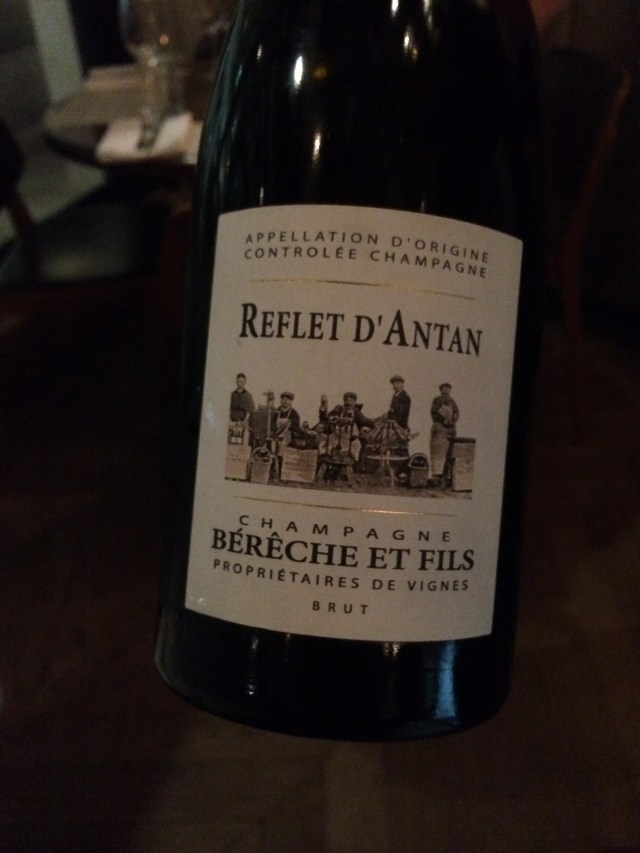
Rare 2002, Piper-Heidsieck – This vintage, only the eighth out of nine since this prestige cuvée’s inception in 1976, is blended from 70% Chardonnay and 30% Pinot Noit. The grapes come from eight villages on the Montagne de Reims and Côte des Blancs**, and the wine undergoes seven years ageing. Dosage in 2002 is 9.5g/l. It’s a wine which had been very highly recommended to me on release, by perhaps my two most knowledgeable Champagne friends, but I’d never managed to buy any. This was most generously brought by our guests.

[**Decanter, in the 2016 Awards Issue, suggests all grapes for Rare 2002 came from the Montagne. Piper’s own web site lists Oger and Avize among the crus providing grapes]

It’s funny, I have just read two tasting notes for this wine, wondering when the experts consider it to be ready to drink. One, in the normally more forward French publication, La Revue des Vins de France, suggested a drinking date from 2020. Another, from a Silver Medal tasting note from the 2015 International Wine Challenge, suggested it was fully mature back then – it had in fact won a Trophy in the same competition in 2014, but this vintage went on to win Platinum/Best in Show in the more recent 2016 Decanter World Wine Awards. I think it is somewhere between the two in maturity terms, drinking quite nicely now.

There are some very complex things going on – white flowers, bread and lemon citrus to begin with. The Chardonnay is interesting as it’s not a mature version of a Côte des Blancs style of Chardonnay (to generalise horribly), and the Pinot definitely comes through strongly. It’s elegant and fine, with a smooth and silky texture, which certainly brings to mind the phrase which Cellar Master Régis Camus used to describe it, Haute Couture. A stunningly beautiful Champagne. Yet it also has a bit of heft, not that I should use such inelegant language for such a supermodel, but such wines do have a certain size and weight to them before maturity beckons and they shed a few pounds.This is no lean and mean wine, despite its profound elegance.

img_2359

The Orange, Roter Veltliner 2013, Eschenhof Holzer, Wagram – Arnold Holzer is a great guy and a great winemaker. I’m sure you’ve read about his sappy glugging wines on this Blog before, especially his Zweigelt. This is a different ball park, in terms of quality, price and ambition. Take a rare but really good Austrian grape variety, pick it pristine, by hand of course, and give it around three weeks skin contact before leaving it in new barriques for 18 months. Orange in colour, obviously, just below the Lucozade spectrum for British readers, in fact. There’s so much going on I can’t reasonably describe it all. At the top of the ladder there’s orange peel and soft-scented floral notes, below you have honey and spice. It’s dry, there’s some texture but not too much (for me!), and the wine is soft but not flabby. The acidity’s there, but not prominent. We drank it with a nice orange coloured soup – butternut squash, fennel and ginger. Add that to the list of food matches, Red Squirrel!

I think this may be onto the 2015 vintage now. Red Squirrel, who import Arnold’s wines, suggest it will improve over about four years from vintage, and I think the 2013 was à point. The only problem, I think he only makes around 300 bottles per year. It’s expensive too. This will, I think, knock you back somewhere between £40-£50/bottle, but having managed a sniff and a sip at the last Red Squirrel Tasting, I could not resist. But if you can’t go there, all of Arnold Holzer’s wines are worth buying.

img_2360

Hermitage La Chapelle 1998, Paul Jaboulet Aîné – In some ways this wine might sound quite conventional, given the wines I usually write about. Well, I used to drink more conventional wines. It was generally held among wine writers that PJA went through a less exalted patch during the 1990s. La Chapelle gained its unquestioned prestige as one of the top three or four Hermitage cuvées, and certainly the best known, for vintages in particular in the 1960s, late 1970s and early 1980s (although the Legends were probably 1961, 1978, and 1990, with a personal shout for a bottle of 1983 which opened my eyes to Northern Rhône Syrah). By the 1990s things were less even. 1995 and 1999 were very good, but other vintages have come up for criticism.

In the previous decade Fleet Street wine bar and merchant, El Vino, were selling through their 1990s stocks of La Chapelle at very reasonable prices, and I bought a good string of vintages. This was the last bottle of 1998 in my cellar. A previous bottle, and a couple of 1997s, had been somewhat disappointing, but this was a joy. It was soft but still showing some fruit under the bacon butty nose and slightly oily texture. John Livingstone-Learmonth (Wines of the Northern Rhône, CaliforniaUP, 2005) gave a drinking window, based on tasting it in 2003, of between 2015-19, which I’d say was uncannily accurate. He gives it three out of five stars, but I’d like to give this bottle four. Very lucky. The Henschke backup was not called into play.

img_2368

Traminer Trockenbeerenauslese Nummer 8 “Nouvelle Vague” 2004, Kracher, Burgenland – The late Alois Kracher not only made a name for some of the very finest sweet wines in Austria, he created one of the country’s very top domaines too. Under his winemaking tenure the sweet wines, from the eastern side of Burgenland’s Neusiedler See, more specifically from a stretch of land known as Seewinkel (near to Illmitz), were divided into two styles and labels. Schwischen den Seen (between the lakes) is for wines made in stainless steel where the focus is on the fruit flavours of each grape variety. Nouvelle Vague (New Wave) is for wines aged in barrique. There is also a numbering system, from less sweet to sweetest as the numbers increase. Finally, there’s the colour of the label. There are many cuvées each year (with at least six or seven grape varieties plus blends) and different levels of residual sugar. But the top wines have a gold label, and the cuvée in each series which is deemed best balanced (not necessarily the sweetest) doesn’t have a number, but is called “Grande Cuvée”. Complicated.

The Traminer here has a number 8, so it’s quite sweet, with relatively low (9.5%) alcohol. It’s pretty dark in colour (see photo below), and it smells of botrytis (found in Kracher’s BA and TbA wines) and apricots. At this age I couldn’t discern any real oak. The palate is smooth, very sweet, very concentrated. There’s not a lot of acidity left but it hangs onto its frame nicely. Maturity, depending on storage, probably in three or four years. This was a very nice bottle, and it was a very good match for one of current winemaker Gerhard Kracher’s own food pairing recommendations, tarte tatin (albeit made with pears at this time of year, by choice we’d have used apricots for this match, but it still worked).

img_2362

Château-Chalon 1999, “Granges Bernard”, Marie & Denis Chevassu, Jura – The Chevassu-Fassenet family live at Granges Bernard in one of the villages just to the north of Château-Chalon itself, Ménetru-le-Vignoble. The domaine (now Chevassu-Fassenet) has been run since 2008 by Marie and Denis’ daughter, Marie-Pierre, although she began working with her father, as winemaker, back in 2000. This wine, if I’m correct then, might be the last vintage of Château-Chalon made by Marie-Pierre’s father.

In some respects this is an old school “Vin Jaune”. There are prominent nutty aromas and plenty of flor character. There’s also a strong line of citrus flavour, lemon with perhaps a hint of lime or grapefruit. But it is also very mellow and retains a stately elegance. These wines prefer not to be chilled. Their complexity is masked by cool temperatures, and their length is amazing, they go on and on.

I say “retains” a stately elegance almost as if this were an old wine. Whilst this might be so in some wine regions, here that is not the case. Because of the ageing requirements for Château-Chalon (exactly the same as for Vin Jaune, it must be aged until at least 15 December in the sixth year after harvest), this is really a wine only approaching middle age slowly. Vin Jaune habitually appears on release in restaurants and bars now, and anyone sampling a 2008 today, quite common to find in London, is drinking a young bottle (2009 is the most recent vintage you could potentially find in shops at the moment). It’s a wine which not only ages magnificently, but cries out for it.

If you do want to try a Vin Jaune, or similar style, which is approachable young, look to Domaine de la Tournelle and Domaine des Marnes Blanches (both brilliant and also capable of maturing nicely), or a sous voile-style Savagnin such as now retired Jacques Puffeney’s. But at the same time, keep an eye out for older vintages. They’re not exactly two-a-penny, but you can find them, and if you are happy to pay a bit extra for a wine that is not at all cheap on release, snap up whatever you find. There are few poor producers of Château-Chalon.

The perfect match for Vin Jaune or Château-Chalon is, of course, Comté cheese. One of the best sources for Comté in London is Patricia Michelson’s La Fromagerie, off Marylebone High Street. I quite like to pull out a cheeseboard consisting of just three ages of Comté, which provides a good contrast between youth and the amazing complexity of a mature cheese. In this case I went for a bit of variety, unable to resist the really good Morbier fermier which they had in the cheese room. Morbier is largely produced industrially, and a lot of it is nothing like a really good farm cheese. Buy a good one when you find it and you will notice the difference. With the Morbier, we ate an 18 month Comté, and a 30 month version, the latter full of the small crystals which give older Comté its unique nutty flavour and texture.

img_2363

La Bota de Palo Cortado 62 “Diez años después”, Equipo Navazos, Jerez – This is quite a rare bottling, a ten year celebration of the Equipo Navazos story, which began with an Amontillado in 2005. It’s a Palo Cortado from the cellars of Bodegas M Aragón in the town of Chiclana. A single butt of 300 litres was, unusually, completely bottled (in 50 cl bottles) for this saca. Some went to friends of Equipo Navazos and a small number were commercialised. Anyone who got one has a real gem.

It’s very dark, so dark that you can tell the level of concentration just by sight. On rare occasions you can justify a flowery tasting note, a real Oz and Jilly. On other occasions a more philosophical note, a Jefford, comes to mind. For a wine like this I’m just transported to somewhere old and dark. The wine in this butt is about fifty to sixty years old, but it smells of the big tasting table I remember inside of Taylor’s old Vila Nova Lodge, the beams on HMS Victory’s gun deck, or perhaps, I imagine, the old dresser in the loft of Tom Hardy’s fictitious London house in the current TV Series, Taboo.

There’s a freshness and a timelessness such as you find in very old Madeira. You know this wine isn’t a youth, but it’s still youthful. This comes through the concentrated but well-toned muscles of its frame, and the breath of fresh air acidity which underpins the longest length on the planet…almost. In some ways it might seem a shame not to let it age further. Another twenty years will not concern it unduly. But without sounding morbid, this is one wine you really don’t want left in the cellar when the doctor tells you to give up immediately. I don’t give scores, but I’ll go “sensational out of a hundred on this”! A “you could smell it in the dining room in the morning” kind of wine, and certainly the most memorable out of a bunch of memorable wines on the night.

img_2367

La Bota de Ron 65, “Bota No”, Equipo Navazos – And now for the Rum. Someone impugned my speed of drinking, and probably my masculinity too, when I mentioned this last on social media. Well, ha! I got some more, you see. That, considering you can’t find this in the UK, is about as boastful as I hope I get this year. But this is really good, a very fine spirit. I’m no rum aficionado, having only really discovered it in the past few years, so I’ve been giving occasional sips to people with more experience than I have, and thankfully they agree.

This old rum (15-20 years) made 800 bottles, at 44% proof. Made from the finest sugar cane (I found a suggestion that it comes from Nevis in the West Indies, although the EN web site doesn’t confirm this), with no additives (colouring, sweeteners etc). The EN web site calls this an “iron fist in a silk glove” (sic), a cliché perhaps, but you can see what they mean. It does have a punch, but not a kick in the mouth. Instead, it’s smooth, refined and very long. The alcohol is not obtrusive. You may only want to sip it, but you will sip it all night until someone takes the bottle away and tells you to go to bed.

img_2366


Posted in Dining, Fine Wine, Premium Spirits, Rum, Sherry, Wine, Wine and Food | Tagged , , , , , , , , , , , , , , , , , , , , , , , , , , , , | 1 Comment

Panacea – A Remedy for all Ills

I’m not really one to make New Year’s Resolutions, but I won’t deny the tendency to make a few wishes – things I’d like to do, places I’d like to go, in the coming year. One of those was to visit The Remedy in London’s Fitzrovia District. I’m not sure why it took me so long after all the photos I’d envied on Instagram throughout 2016, and we had tried to go, for sure. Anyway, a mere ten days into 2017 we managed to secure a table for four, not bad!

One reason we’d not been able to get a booking before became apparent as soon as we walked in. The place is tiny, really tiny. They can seat forty people, I think, plus ten outside (not in these temperatures, they can’t). There’s hardly anywhere for a coat and work bag. In some places that would be a right pain, but here it doesn’t matter. Brilliant aperitifs, tick. Stunning deep wine list, tick. Really great food, tick. Friendly and helpful staff, tick.

The wine list is what all my wine friends go to The Remedy for, but it would be foolhardy to neglect the list of aperitifs. There are plenty of adventurous options, a lot of Lillet, and a good fix of gin. I had my first ever white negroni. It was brilliant, and only the first of several reasons why I can’t wait to go back.

The food is very much in the small(ish) sharing plate format. You certainly need a number of them, although the sausage dishes come with delicious chips, and are more substantial (and come in at £10). Courgette Frittata and Grilled Octopus were my personal selections, but I also shared some Smoked Duck, and Chorizo Sausages with chips. It was all good but the octopus and the chorizo were exceptionally so. Simple but well done, with the octopus cooked perfectly, something easy to get wrong. I didn’t have any of the oysters, but they were pronounced fresh, from Jersey I think. We finished with Antica Formula and Orange Sorbet, which was a perfect palate cleanser.

The wine list is quite a thing to behold. As someone who has seen the wine bar scene in so many capital cities blossom in the past few years, it’s no surprise to find a decent wine list, but The Remedy just seems to get hold of so many wines you rarely see elsewhere. It’s probably no surprise that David and Renato, who run The Remedy, used to work at Terroirs, the first of the wine bar/restaurants owned by Les Caves de Pyrene. There are plenty from CdP’s exciting portfolio on the list.

We did ask for one rare wine, Alice and Olivier De Moor’s “Cuvée 1902” Aligoté. The De Moors are a favourite Chablis producer, based in the village of Courgis (where the only other producer is young rising star, Thomas Pico). I’d tasted their current vintage of Aligoté with Alice at the Real Wine Fair last year and was stunned by its quality. Probably the best Aligoté I’ve tried (I’m guessing that Coche-Dury was still too young!). We were told that it was sold out. Now I’m usually slightly cynical in such cases. Parisian natural wine bars are notorious for saying “non!”, saving their Overnoys and Ganevats for regular customers. But I later found out (Doug Wregg told a friend) that there were only 24 bottles of this imported into the UK.

Anyway, we chose the De Moor Chablis L’Humeur du Temps 2015 instead. It was brilliant, very possibly the best bottle of this that I’ve had for a while. This was the first ever De Moor wine I bought if my memory serves me, and it’s also the cuvée I’ve drunk most often. I first found it in, of all places, Berry Brothers‘ “factory outlet” just outside Basingstoke. This is a great place not only to discover bargains, but also new wines. De Moor are, of course, part of the Caves de Pyrene portfolio, but I have found one or two De Moors in the Basingstoke warehouse, and it’s a shame I find it pretty difficult to get over there these days.

img_2336

The Chablis was £75 off the list at The Remedy. This may sound expensive, but is just about on the good side of typical for London restaurant markups (about double the retail price in this case). Wine drinkers may not like subsidising the food, but the food here is pretty well priced, and an overall bill of under £60 per person for aperitifs, plenty of food including dessert/cheese, a great bottle of wine plus a couple of extra glasses of red, isn’t bad at all for a night out in London.

The Remedy is brilliant. Good food and drink (do take a peek at the list of Madeira by the glass on one of the blackboards, and the magnum selection), and a lot of fun with a warm atmosphere. If you’ve not been, be sure to book for dinner. They are now open all day in the week, for breakfast (with really good coffee), lunch and dinner. Shorter hours on Saturday, closed Sunday (see web link below).

The Remedy, 124 Cleveland Street, Fitzrovia, London W1, 020 3489 3800


Posted in Dining, Wine, Wine and Food | Tagged , , , | 2 Comments

Great Exhibitionists

The Winemakers Club and Carte Blanche Wines got together again at Farringdon Street Vaults for their Winter Portfolio Tasting. Readers of this Blog will know Winemakers very well. Their philosophy is finely stated in the words of founder/owner John Baum: “The place for understated winemakers – those of quiet genius, and for those who want to drink their wines”. Carte Blanche are a good fit with Winemakers. Founded about seven years ago, and based in Basingstoke, their stated aim is to bang the drum for “new regions and new styles”.

Both of these merchants sell, albeit not exclusively, wines which some people would term “natural”, many of which are biodynamic. Certainly you won’t find any winemakers here who don’t give a toss. As far as exhibitionism goes, these are hardly the voluptuous, fleshy, wines of parkerised porn. They often have more in common with a fine etching rather than a canvas where oils have been laid on with a  palette knife. If they often seem leaner at times, then they are often elegant with it, and certainly all of the best wines have a frame on which the lightest of silks are often draped, either on their bouquet, on the palate, or both.

This will be yet another long read, I’m afraid, but I think it is right to keep to one piece. As a result, my comments may be truncated, and inevitably with two such high quality ranges there will be producers I can only mention in passing, or will miss out entirely. Explore! If your appetite is whetted, it’s not difficult to find out more from Winemakers Club and Carte Blanche themselves, via their web sites:

Winemakers Club

Carte Blanche Wines

WINEMAKERS CLUB

Stefan Vetter, Franken, Germany

Vetter is one of the exciting new producers on show, with the wines being available to buy in a month or two. Winemakers Club are leading a London cider revival, from Herefordshire to Barossa, and Stefan Vetter makes a very fresh appley Rural Method Apfelperlwein. This was a very pleasant start to an afternoon’s tasting. There will be four whites, and based on the three I tried (Müller-Thurgau, Riesling and Sylvaner), there’s a lot of promise. Winemakers Club are introducing a few Sylvaners and they might even challenge Aligoté in popularity as the fresh white of 2017. But the wine of the pack here is the Blaufränkisch 2010. Pale, piercing nose, very juicy. The grape is more commonly known as (Blauer) Limberger in Germany, but Stefan has chosen the Austrian synonym.

La Grange de L’Oncle Charles, Jérôme François, Ostheim, Alsace

Another exciting new producer. Based in Ostheim, near Ribeauvillé, 2015 is only Jérôme’s second vintage. The range opens with an old time classic Alsace blend of ten grape varieties, which has a lovely gentle nose, and the softness is accentuated by a relatively low level of acidity. Sittweg is a single site on granite, blending Riesling and Pinot Gris. There’s more body here. Grand K blends Riesling, Pinot Gris, Gewurztraminer and Muscat. Like the Sittweg, this majors on its aromatics, with the Gewurz and Muscat coming through. Three wines which smell wonderful and I’m really looking forward to buying some.

img_2372

Domaine des Marnes Blanches, Saint-Agnès, Jura

I’ve been drinking a few of these wines since Winemakers began stocking them last year. Marnes Blanches are without doubt rising stars of the southern part of the region, and we should all join the party. Their Crémant is fresh and wonderfully apple scented. For £30 in the shop, it’s a genuine challenger for even good Champagne. There are two very good Chardonnays, although I find their Savagnins more fascinating in a regional context. En Jensillard 2015 is described as Savagnin Muscaté and shows the fruity side of the grape. The Savagnin Tradition is labelled Empriente de Temps, for their wines which are aged sous voile. Magnificent.

The Trousseau is full of bitter cherry fruit, and the Poulsard is pale and haunting. Apologies for not tasting the Macvin (not a style I drink a lot of), but the new (2008) Vin Jaune is one of the best. It’s actually one of only a small group of VJs which are genuinely approachable young, though it will age magnificently if you are prudent enough to put some away.

img_2371

Karim Vionnet, Villié-Morgon, Beaujolais

Karim is one of the good guys, and is another producer who really merits support after a weather affected few vintages. His Nouveau, which we tried in Paris, is still fresh and light, even after Christmas. He makes two very good Beaujolais-Villages, one just labelled thus, and one with a little more body and presence, called Du Beur dans les Pinards. Those are all 2015s, but he was also showing a 2013 Moulin-à-Vent, which is nicely settled and smooth, altogether a little more serious.

But going back a step, perhaps because I adore the vivant qualities of Karim’s wines, the one I’ve bought most often (both in Paris and from Winemakers) is the Chiroubles Vin de KaV 2015. This was a little cold, but it’s a really tasty wine from a Cru which isn’t seen quite so often in the UK. Perhaps not as serious as the M-à-V, but it’s a little cheaper too.

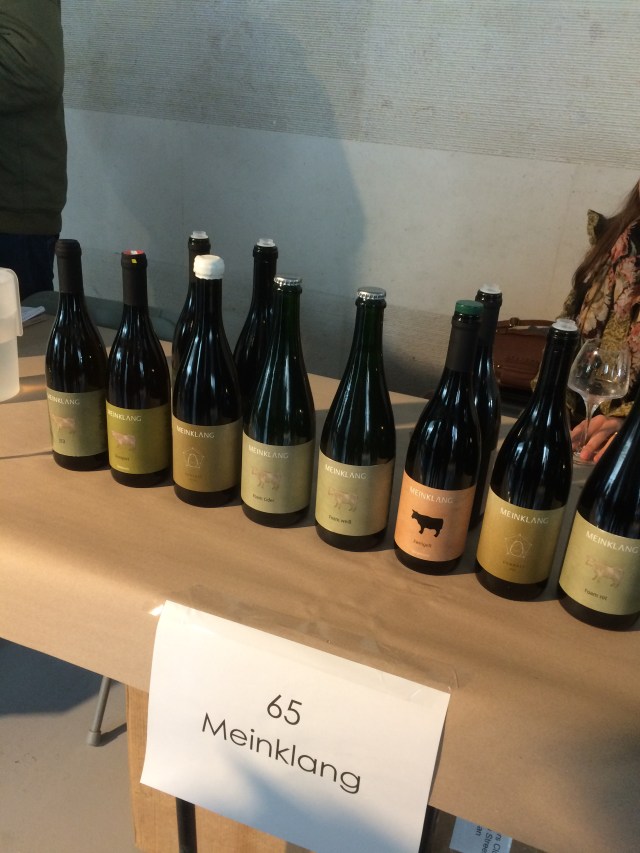
Meinklang, Pamhagen, Burgenland, Austria

One of my favourite handful of Austrian producers, so the chance to taste so many of their wines together was a treat, although my bias here is clear to anyone who would take a peak in my cellar.

The wines divide into several sub-ranges. There are some really nice and fairly inexpensive 2015 wines such as Burgenlandweiss (Welschriesling, Gruner and Muscat Ottonel), Sziklafeher (Olaszrizling, Harslevelu and Juhfark, zippy and aromatic), and Burgenlandrot (Zweigelt, Blaufränkisch and Sankt-Laurent), a 12.5% glugger which had lots of great press for the previous 2014 vintage).

Slightly more serious are three reds made from single varieties, ZweigeltSankt Laurent and Blaufränkisch. These are still in the realm of “drinkers”. But it’s not much of a step up, financially, to two really interesting whites. H15 is Harslevelu, ornate and confident with a smooth body offset by fresh acidity. J13 is made from the rare Juhfark. The nose here is more subdued but there’s more palate complexity. It’s the wine which started off my Meinklang passion.

The last of the whites on show was a Pinot Gris (Grauburgunder), the Graupert Weiss 2014. This is made from vines allowed to grow wild and is part of a permaculture project. The wine has skin contact and you’ll detect floral notes and mandarin citrus, with plenty of extract, texture and mouthfeel. There is a red version (2013), made from Zweigelt, which has so much juicy fruit that you are almost shocked by the serious twist at the end.

The last red comes from the very pinnacle of the Meinklang range, Konkret Rot 2012. There is a white Konkret as well, which is possibly my favourite Meinklang wine, but it wasn’t on show (the Konkrets are both rare and expensive). The red version is made in concrete egg, as the name suggests. It has that dusty terracotta texture also found in amphora wines, and the Sankt Laurent variety gives a deep colour, fine acidity and beautiful elegance. This wine is unique.

Kiral Yudvar, Tokaj, Hungary

This producer has a reasonably large 45 hectare biodynamic estate, and there is a very good dry Furmint Sec 2013, but it’s the sweet wines which have the wow factor. Lapis 2010 is a nicely scented Furmint, sweet but not cloying. Patricia Cuvée 2012 has a degree less alcohol (10%), and is commensurately a little sweeter with a touch more complexity. Furmint is joined here by Harslevelu, as is the case with the Lapis Aszu 2005, a Tokaj 6 Puttonyos showing amazing complexity, with concentrated and unctuous honey and lemon – there’s no lack of freshness along with all those “buckets” of residual sugar.

img_2382

Hegyikalo, Eger, Hungary

This is a producer I think not many readers will know, other than the few who noticed how loudly I praised a couple of their wines last year (and, of course, those readers who I know buy them too). The added pleasure of meeting Julia, one part of the winemaking couple here, enhanced the experience of tasting so many of their wines.

There were two whites, a sort of pink(ish) light red, three darker reds, and a sweet red on show, and they are all very different indeed. Héjon Erjesztett (2012) is one of my favourite wines from the estate. It blends Olaszrizling and Zold Veltellini (Grüner Veltner). Skin contact makes it almost tannic, but there’s a gentle and quite ethereal nose, a wine to contemplate. They make a lovely single varietal Zold Veltellini as well.

The pink, or probably more of a pale red, is called Czeresznyéerés Roze 2014. The grape here is Medina, not very Hungarian sounding, but this rich, dark, red seems to be planted all over Poland (never had a Polish wine, believe it or not) according to my few minutes of research. Here in Eger it makes a light wine which is very hard to describe, perhaps like a red fruit tea with a bit of bite? If there had been a bottle on the shelf at 5.45pm, it would have gone home with me.

My favourite red is the Kékfrankos 2015, which is a very sappy version with intense fruit. Örökségül Voros 2012 is a serious red, blending Cabernet Franc and Turran (sometimes spelt Turan, a 1964 cross with Kadarka as one of its parents, very dark and normally used to add colour). This is quite a tannic mouthfiller, with evident oak. Tiszta Szivvel (2009) is a pure Turran. It smells of pure, sensual, rose, but is tannic, even a little rustic. Although dry and recommended for beef by Julia, she said it is also paired with dark chocolate desserts.

The last wine, from an unlabelled bottle, was a 2015 botrytis Turran. Very concentrated, sweet but not lacking acidity. Tremendous stuff. Adam and Julia only make a sum total of 4,000 bottles each year, so the wines are not easy to track down. But they epitomise what John and the team are trying to sell to a less conservative clientele.

Tom Shobbrook, Seppeltsfield, Barossa Valley

I think I counted ten Shobbrook wines, plus a cider. I’m sure a few were lined up that didn’t appear on the list. We had Shobbrook Rieslings from the High Eden, various Syrahs and Cinsault, plus other grapes as diverse as Merlot and Mourvèdre to Nebbiolo and Semillon.

Of the whites, go for the Rieslings if you want to play safe (though the High Eden 2016 has quite a unique flavour), but if you want to venture into Tom’s world, try the lovely 2016 Sammion (Semillon), or the even more avant-garde Giallo 2016. This is a blend of Musket (sic), Riesling and Semillon, which tastes not like the derogatory “cider” jibe of those afraid of natural wine, but of a simple but very fruity cloudy apple juice (alcoholic of course).

Clarrot is a 14% Barossa Merlot and Syrah blend which tasted uncannily of beetroot (in a nice way). I always enjoy the fresh, very dry, Cinsault, but the Novello shone more brightly for me. It’s a Nebbiolo/Grenache/Syrah/Musket blend from the Basket Ranges.

The “Tommy” wines are always exciting – Tommy Field is Syrah, Tommy Ruff is a darker and more concentrated Syrah-Mourvèdre. It’s this latter wine that Aussie natural wine proponent Max Allen said tastes like “pink flowers and raspberries squashed between terracotta”. If that doesn’t appeal to you, I know quite a few people that it does excite. I finished off with the slightly more conventional Seppeltsfield Syrah 2013, all dark black plums.

Aussie biodynamic winemaking of the highest order.

img_2407

A little known fact about Tom Shobbrook – he spent six years at Tuscany’s leading biodynamic exponent, Riecine. The man who became synonymous with that producer, although as loyal winemaker, not owner, is Sean O’Callaghan. His latest project is Il Guercio. I know nothing about it really, and although Sean was purported to be there yesterday, I didn’t spot him to ask. More’s the pity. There was a simple bottle of Sangiovese which in all its unobtrusiveness was deemed “Wine of the Day” by one or two people. Of course, there’s the range of Riecine wines which Winemakers Club stock (grab that magnum of rosato for summer), but this is a wine to send out your spies for.

A final pair of sweet wines before we move on, which John poured for me before I left. Gino Pedrotti Vino Santo 2001 is exquisite. It’s from Trentino (hence the “Vino”), and fashioned from Nosiola (usually a good sign). Snap some up.  The second was Maestro Terenzio Passito 2008 from Feudo dei Sanseverino (Saracena, Calabria), a blend of Greco Bianco and Moscato. Winemakers Club is really hot on the stickies right now.

I have rather neglected Italy, which Winemakers Club does so well. Although I’ve not featured them, do not ignore the wonderful wines of Tim Manning’s Vinochisti (Tuscany) and both Romeo del Castello and Guccione (both on Sicily).


CARTE BLANCHE WINES

Domaine du Mortier, Saint-Nicolas-de-Bourgueil, Loire

I’ve written about these guys before. These wines are common on the Parisian natural wine bar circuit but not often seen in England. Carte Blanche were showing a very gluggable Saint-Nic and the slightly more serious Bourgueil from the 2014 and 2015 vintages respectively. These are fairly inexpensive for these appellations, and are so much more alive than most of the wines you’ll find there at this sort of price. Below is also another of their sappy reds that I drank earlier.

Domaine de L’Horizon, Calce, Roussillon

Another old favourite from my explorations of Roussillon, I remember back then (they’ve been going since 2006) finding the wines both exciting and challenging.

There are two levels here, the L’Esprit bottlings in white and red, and the corresponding Domaine bottlings. Both of the whites are based on Macabeu with different additions, whilst both reds are built around a base of Carignan, with other varieties. It is definitely worth trading up to the more expensive domaine wines if you can, my favourite of these four being the domaine white (a Côtes Catalanes Macabeu/Grenache Gris and Blanc) of exceptionally low yields (12-15 hl/h) from chalk and schist.

There is additionally a red called Mar-y-Muntanya which I’d not tried before. It’s a good intro to the range, albeit not as serious as those domaine cuvées.

I’m wondering, as an aside, if anyone can tell me why there is a photo of Jancis Robinson at the top of the home page on their web site? I know she has a place down there, but I’d not have necessarily paired her with these wines, and I do read her fairly avidly. Obviously missed something.

Domaine Christophe Muret, Castelnau de Guers, Languedoc

Christophe apparently used to be one of the biggest exporters of melons in France, but just as banking becomes boring, so presumably does melon growing. Anyway, Christophe now makes wine in Languedoc. His most recognisable wine is his dry and stony textured Picpoul de Pinet, an AOC which seemed, a few years ago, to take over the role once played by Muscadet as a dry aperitif or oyster accompaniment. This is a nice wine, although it seems that Christophe may have more of a passion for his interloper varieties. The Chardonnay is very lively, in a leaner and fresher style than you usually find in parts of the Languedoc. The Syrah, Christophe’s passion, is grown on a windy limestone and red clay hillside. The wine is textured from a little skin contact, and whilst you won’t mistake it for Côte Rotie, it’s an excellent cheap version of Syrah.

img_2397

Mas del Périé, Fabien Jouves, Cahors

Fabien is fairly (in)famous for his cuvée You F*ck My Wine. This is one of his Vins de Soif, a series of brightly labelled wines, of which he was also showing Haute Côt(e) de FruitTu Vin Plus Aux Soirées, and the pink Malbec A Table. All of these are really tasty gluggers, seriously worth trying not just for their bright (and one very rude) labels.

Fabien also makes a range of Vins de Terroir, AOC Cahors under the Mas del Périé label, although these are hardly traditional in style. Les EscuresLa Roque and Les Acacias are all well delineated, being both drinkable (the first there is 2015, the other two 2014) as well as having the potential to age. Bloc 763 Malbec comes from a 1.3 hectare site of 50+ year old vines. The grapes undergo a 30 day maceration and are fermented in egg, followed by 22 months élevage in the same type of container. This is a fine expression of Malbec, and I am pleasantly surprised that this is allowed as AOC Cahors.

Likewise Amphore, which comes from a 1 hectare plot, and is both fermented and aged (for 6 months) in various amphora of between 100 to 800 litres capacity. These are some of the most interesting Cahors wines you’ll find, although having met Fabien yesterday, his personality definitely inclines towards his Vins de Soif. If he likes to challenge his audience, so do his wines, but I mean that as a positive. They all, of whatever style, speak impressively for the man, and are fine examples of the real dynamism that is surfacing in Cahors now.

image

Mouthes Le Bihan, Duras, Southwest France

Duras is a small town with a fascinating Château, east of Bordeaux but outside of the Bordeaux Region. I’ve known the red wine from this estate for many years. The two reds on show yesterday blend Merlot with Malbec. Pie Colette Rouge 2014 (Pie Colette is slang for knocking back a few, but the picture on the label is of course a magpie/”pie” in French). It is another vin de soif, a light wine with generous fruit. Vieillefont Rouge (2011 was listed) is in a slightly more structured style, but hardly much more expensive. The very tasty Pie Colette Blanc is Semillon, with Chenin and Sauvignon Blanc blended 50:25:25. A refreshingly clean, steel tank fermented, thirst quencher from one of the Southwest’s rarely seen appellations.

img_2389

Other wines to look out for from the Carte Blanche portfolio are Champagne Camille Savès (from Bouzy on the southern side of the Montagne de Reims), the lovely Chablis of Patrick Piuze, and several Spanish producers, especially the two Galician estates of Dominio do Bibei (Ribera Sacra), and Forjas del Salnés (Rias Baixas).

I really wanted to try the one wine listed from Gaznata. This producer is based in an old co-operative cellar near El Barraco in the Sierra de Grédos (within an hour of Madrid). The winemaker is a name you may have come across, a budding superstar called Daniel Ramos. Sadly, this solitary Garnacha, Daniel’s entry level glugger, was too well hidden among the crowds and there was never anyone to ask. Carte Blanche list four of the Gaznata wines, and I’d like to try them all.

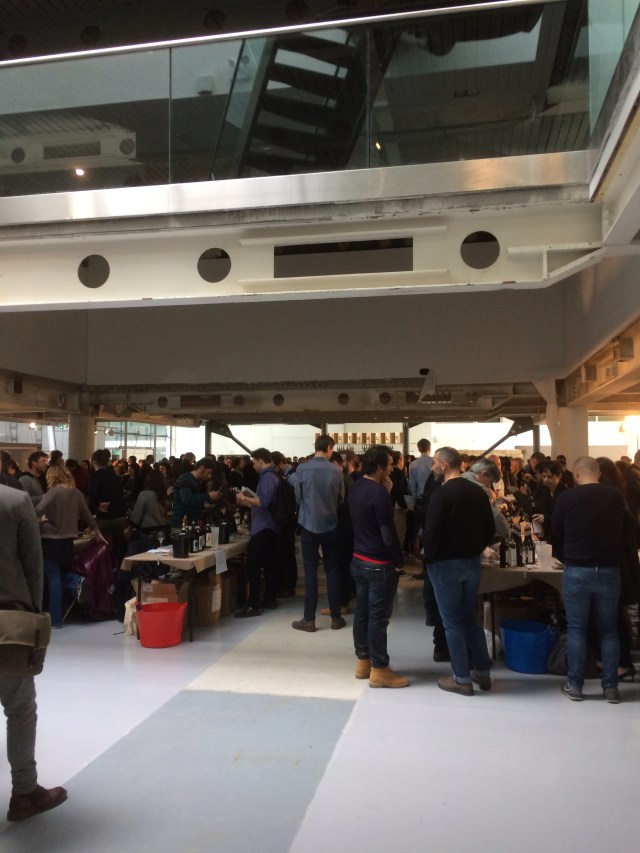
The incident with the Gaznata highlighted my only real issue (not really a criticism) with this Tasting – there were just so many wines to try, probably hundreds of them, in quite a small space overall. In that sense, I’m sure there were gems that I missed. I managed to be there for about three-and-a-half hours, but I would have been pushed to try every wine if I’d been there all day. I saw one or two professionals I recognised who were in and out somewhat more swiftly.

In that context perhaps my notes will be valuable where the wines may not be written about elsewhere. There are wines I haven’t mentioned, but probably more due to omission than any active dislike. Some of these wines might be challenging to very conservative drinkers, but then if you read my Blog with any degree of regularity, you will know my tastes are both adventurous and wide. Well done to all the readers who made it this far (is it presumptuous to presume that any did?).


Posted in biodynamic wine, Hungarian Wine, Languedoc-Roussillon, Loire, Natural Wine, Wine, Wine Agencies, Wine Merchants, Wine Tastings | Tagged , , , , , , , , , , , , , , , , , , , , , , , , , , , , , , , , , , , , , , | 3 Comments

I Met a Traveller from an Antique Land

…My name is Ozburgundian, Winemaker of Winemakers, Look on my Wines, ye Mighty, and despair!

Okay, not quite what Shelley had in mind, but the mighty Ozgundians were in town again yesterday, this time joined by another Australian washed up on the shores of the Côte d’Or, Jane Eyre. Still utilising the facilities of Vinoteca, but switching from Farringdon to Soho, they exchanged a dark basement for a lighter first floor room without giving in to providing us with any more space (though there seemed to be more wonderful cheese to nibble). The move was a good one, although I know of at least one poor man who rocked up at St John Street (where their previous tastings had been held) and gave up due to the atrocious weather. It does pay to read the email!

Le Grappin, Andrew and Emma Nielsen, Beaune

Andrew and Emma Nielsen have had a magnificent year. When John Bonné described Le Grappin as “One of Burgundy’s next superstars” he wasn’t exaggerating. Not only have some of our own very senior wine writers discovered them, but they have been fashioning what might just be their finest wines yet. Indeed, 2015 was a great success for all of the exhibitors, but there’s a sense that Le Grappin is really hitting its stride now.

This comes at a time when Burgundy is playing hard to get with the micro negociants. Small crops, caused by hail and other climatic nasties, have caused prices to rise inexorably, so that Andrew said “we are starting to become a Beaujolais producer who makes some Burgundy”. Don’t despair. The Côte d’Or wines will stay as they are, but expect some expansion in Beaujolais and the Rhône for the du Grappin range in particular. Whilst Andrew and Emma were showing their Côte d’Or wines yesterday, let’s not forget that they are making Beaujolais which is just as exciting as that made by the young guns who are the superstars of the Parisian and New York wine scene.

To the wines themselves (prices for the EP offer in brackets are for a 6-pack in bond here). There were four whites and three reds. Don’t just focus on the reds because Le Grappin made some very fine, and well differentiated, white wines in 2015. The Savigny-lès-Beaune Blanc (£137) has a warm, friendly, nose. It might be the “entry level” white, but it has bags of personality, not least because Andrew is very precise about when, and how much, sulphur is added.

Saint-Aubin “En L’Ebaupin” (£152) is a step up, but quite different. Almost exotic, delicious, with a nod towards Meursault, despite this lieu-dit being situated right at the northern tip of the Appellation. It has a good bit of gras and body to it without losing acidity. Santenay  1er Cru “Les Gravières” (£170) has a more elegant nose. It’s less opulent but more serious, as befits a Premier Cru. The Beaune 1er Cru “Les Grèves” (£190) is a very fine white, with great balance and finesse. Although the Beaune is a touch more expensive, my personal favourite was the Santenay. A personality thing, I think, and it’s interesting because it has taken me a long while to see the potential in the wines from this village.

Just two reds to whet our appetite. Savigny-Lès-Beaune (£137) has all the plush fruit you’d expect from 2015, amazing fruit actually, with a silky smoothness, and freshness too. Beaune 1er Cru “Boucherottes” (£177) is generally my favourite Le Grappin red. It’s an interestingly sited vineyard on the Pommard border, below Vignes Franches and Clos des Mouches. The nose is very different to the Savigny, and overall the wine has more depth. For a 2015 there is exemplary weight and balance. But of course, the price reflects this.

I won’t deny that the wines here are getting more and more expensive, but they do represent good value for the quality. I’d strongly recommend buying now, especially if you are new to Le Grappin. I’ve been following them for several years, almost from the very beginning. 2015 is potentially a magical year at this address, and the wines, now very much in favour with those in the know, ain’t gonna get any cheaper.

Mark Haisma, Burgundy and Rhône

Mark was showing a long string of wines, as usual. I tasted every one, and although I can’t write about them all, Mark’s 2015s (and one 2016 sample) were singing. The 2016 was his Viognier (£16.50/bottle) from the Ardèche. As with the Auvergne, this is an area which, with some great terroirs and younger winemakers, is taking off. Mark has his finger on what is essential with Viognier at this level – to retain fresh acidity and to keep the alcohol down. He succeeds! The bottle I tasted from, with Mark, had lost its chill, but the wine was still holding it together. I know that when freshly opened this is Viognier not unlike Stéphane Ogier’s La Rosine Blanc. The other Ardèche wine is a Syrah/Grenache Vin de France (£16.50), made with lowish yields from vines on schist, near Flaviac, in the hills south west of Valence. Great value, sappy fruited, tasty stuff.

Of the Burgundian whites, the Saint-Romain (£24.50) is lovely, restrained for the vintage, but of course the village is up in the cool hills north of the main Côte de Beaune villages. It’s a lovely wine, but the real find is Mark’s Aligoté (£17.50). If 2017 is the year when Aligoté may make its breakthrough, this is one to help push that secondary grape forward.

Of course all the Côte d’Or reds are very fine, just different. The Bourgogne Rouge (£18.50) is always worth snapping up (we did a dinner featuring a string of Mark’s straight Pinots a couple of years ago), and add in the vintage, 2015, and you know that it will punch above its weight. Of course, it doesn’t compare with the top wines, but neither does the price. There’s Nuits “La Charmotte” (£32.50), Volnay “Paux Bois” (£31.50), Gevrey-Chambertin (£33.50) all at village level. The two Premier Crus, Morey-St-Denis “Les Chaffots” (£52.50) and Pommard “Les Arvelets” (£47) are both particularly fine and classy, and quite well priced for this quality. Mark’s Bonnes-Mares Grand Cru is legendary. It would knock you back £235 per bottle, and he’d only let you have two per person, but I think he said there were just eight bottles left. The 2015 is already stunning, and I did ask myself what on earth I was doing spitting it out, an automatic tasting reflex when there’s a spittoon nearby.

Mark also showed his well priced Cornas “Les Combes” (£29.50), very purple, beautifully scented and structured. It needs the respect of time, but I’d say this should be added to any order. As usual the wines of Vincent Paris were also on show, and again the Granit 60 showed greater class than the Granit 30, albeit as a dense and quite tannic wine right now. But oh, the 2008 Geynale! Worth the entry fee for the nose alone. And at £27.50 it is even cheaper than the majestic, but only cellar ready, 2015 (@£31.50). Cornas has jumped in overall quality in the past decade, and wines like this are amazing value when set beside Hermitage and Côte Rôtie.


Jane Eyre, Bligny-Lès-Beaune

Jane moved to Burgundy in 2004, working with Dominique Lafon, with whom she now shares a winery and cellar in Bligny-lès-Beaune’s old château, whilst still working as full-time winemaker at Domaine Newman in Beaune. She began making wine under her own label in 2011. Jane also makes Pinot Noir in Australia, with logistical help when she’s away from her friend and mentor, Bill Downie. There were five 2015 wines on show, all from the Côte d’Or, but expect a Fleurie from the 2016 vintage. This was the first time I’d met Jane and tasted her wines, and without being condescending, I was very pleasantly surprised. I wondered why I’d not heard about her…too much of a well kept secret.

The Volnay (£31) was a promising start. It’s the only wine that underwent a light filtration, the rest being unfined and with minimum sulphur additions. Bottling took place in December. The Volnay’s promise over the next decade lies in its bouquet, floral and ethereal. But the ’15 doesn’t lack for structure at this stage.

The Savigny 1er Cru “Aux Vergelesses” (£32.50), is from a vineyard which sits at the northern end of the Appellation, right on top of one of my favourite vineyards in Burgundy for value, Pernand’s Ile des Vergelesses. Jane made four barrels of this, using one new barrel and three older ones. A wine of lively energy, precise, concentrated cherries on nose and palate, and fine tannins. This was a real eye-opener, and it was not only my favourite of Jane’s reds, but one of my wines of the tasting. 14% alcohol, but you’d never know without looking.

There’s a Beaune 1er Cru Cent Vignes (£32.50) which shows how fresh Beaune might prove in this hot vintage, the cru being situated northeast of Beaune, adjacent to the Clos du Roi, towards the A6 Autoroute (it’s a large vineyard, there are more than 100 vines!). Then there are two Gevreys from the Côte de Nuits. The village Gevrey Chambertin (£32.50) is dark fruited with spicy notes. The Gevrey 1er Cru  “Les Corbeaux” (£60.50) is situated right next to the village, but travel a few metres south and you have stepped into Mazis-Chambertin. Jane uses 20% whole bunches and 40% new oak on this wine. We are back with cherries, and a deep licorice. The oak is quite strong, but this is built to age. All of Jane’s wines will age gracefully, on the basis of what I tasted here, but this wine particularly so. It has the fruit to go the distance. I think Jane’s estimate of 8-15 years errs more to the French taste than the British – it will live longer than that.

Jérémy Recchione, Gevrey Chambertin

Not an Ozgundian, indeed very much a local, we met the young couple behind this Gevrey domaine last year. This time Jérémy was on his own as they are expecting a baby soon. They have planned it well, at least avoiding harvest. The domaine is based in Gevrey Chambertin, but the white comes from the Côte de Beaune. Saint Romain “Combe Bazin” 2015 (£24.50) is rich and ripe, quite tropical. The winemaking is gentle, the fruit is scrupulously clean (not so difficult in ’15) and the care taken has created a wine that despite its voluptuousness, is also elegant. The village wine from Gevrey Chambertin (£32) has a nice high toned bouquet and is well structured on the palate. Fixin 1er Cru “Les Arvelets” (£45) is a supple wine with an elegant nose, which might persuade older tasters that Fixin, like Marsannay, is now firmly part of the Côte d’Or heirarchy. Someone told me that they didn’t like Jérémy’s labels, but to be frank, who cares. The wine is good, and this lovely young couple deserve to do well.


Dagon Clan, Dealu Mare, Romania

Dagon Clan is a collaborative venture between a local family and Mark Haisma, who makes the wines here. These are Romania’s most famous vineyards, Dealu Mare, on the lower curve of the Carpathians, directly north of Bucharest. There are both traditional grapes with a long history, and Western European varieties, some of which blend well together.

The wines include a crisp, dry, white, an off-dry white, a pink and a red. The dry white, based on Feteasca Alba, is very good. Bottled about four months ago, it is very fresh and lively. The rosé deserves a mention. 50% Cabernet Sauvignon and 50% Syrah, it is pale, dry and fruity. The off-dry white is also fresh. The style perhaps might not appeal to the wine buff, but it should appeal massively to many novices, although that’s to do it a disservice. The star, for me, is the red. It blends Feteasca Negra with Pinot Noir (which has been present in Romania for a very long time), and it is indeed a fortuitous blend which works very well. The blend is 60:40, and it is oak aged (about 30% new oak). The 2015 is bright and elegant with good fruit and acidity, even for a vintage which was as hot in Romania, as in much of Europe. The 2014 had the advantage of an extra year in bottle and showed nice richness, though the ’15 had deeper fruit.

These are well priced artisanal wines, made with lower yields by a highly skilled winemaker at the top of his game, and they are made in a style intended to appeal to Western palates. They are clean and well made, and just a little bit different. They help show the enormous potential of Romania, where there is a vast, untapped, supply of good vine material and excellent terroir, which Mark is helping to highlight.

Dagon Clan are available via Wanderlust wines for between £10-£15. www.wanderlustwine.co.uk 


My Favourites!

I’m well aware this has been a long piece of writing. It’s hard to do justice to everything here. It’s also hard to pluck out a few wines when everything was genuinely good. But I won’t sit on the fence. The following are the wines I’d buy myself:

  • Le Grappin Santenay 1er Cru Blanc “Les Gravières” 2015
  • Le Grappin Beaune 1er Cru “Les Boucherottes” Rouge 2015
  • Jane Eyre Savigny-Lès-Beaune 1er Cru “Aux Vergelesses” 2015
  • Mark Haisma Bourgogne Aligoté 2015
  • Mark Haisma Bourgogne Rouge 2015
  • Mark Haisma Morey-St-Denis 1er Cru “Les Chaffots” 2015
  • Mark Haisma Cornas “Les Combes” 2015
  • Dagon Clan “Jar” (Red) 2015

But of course, when it comes to Andrew and Emma’s Beaujolais, it’s a case of filling your boot with anything you can get. Add in a few of those and I’d have a very desirable mixed case.


Posted in Burgundy, Fine Wine, Rhone, Wine, Wine Agencies, Wine Tastings | Tagged , , , , , , , , , , , , , , , , , , | 3 Comments

Beyond the Classics

January sees the tasting circuit back in full swing after the Winter Solstice, so much so that there were at least four tastings yesterday which I would have liked to have gone to. I chose the tasting of the French Vigneron Indépendant group because it promised a lineup consisting almost entirely of producers I didn’t know. Whilst the tasting’s title may have been slightly misleading (many of the wines on show would be categorised as “classics”, both in terms of origin and winemaking, by the majority of the British wine trade), there was plenty of interest here.

The tasting was organised by Business France, who chose an interesting venue for the event, Soho’s The Vinyl Factory. This is a large underground industrial space with the requisite white walls and bare pipes. Its only drawback in an English winter, it was pretty damn cold. Whilst I imagine it would be pleasantly cool in summer, the wines, especially the reds, were not at an ideal temperature. That said, a reasonably experienced taster should be able to see through that issue. After all, we often taste in cold cellars in the field. But I think the producers would have preferred a temperature more conducive for their reds, and I hope it didn’t put any buyers off the wines.

There were plenty of visitors, although a high percentage were French speaking, and I didn’t see nearly as many of the faces familiar to me from the usual round of tastings. I know this was due to the other tastings which clashed with this, so perhaps I will be one of the few to write about this one? Out of thirty-one producers I found twelve I thought particularly worth mentioning, either for the whole range or for individual wines.

It’s worth iterating the code of the Vignerons Indépendants:

  • They farm their own vineyards
  • They harvest their own grapes
  • They make and age their own wine
  • They bottle their wine on the estate
  • They sell their own products

But bear in mind that whilst some of these are small producers, some member estates can be quite large, with a production of tens of thousands of bottles.


Dominik Benz, Ariège

Dominik, as his name suggests, isn’t a local. He hails from Zurich, and with his wife Martina, has only been farming ten hectares of vines not far from Foix for a few years, arriving in the region in 2013. He has Cabernet Sauvignon, Merlot, Syrah and Tannat, all IGP Ariège, and was showing exclusively red wines.

The wines are all named after characteristics of local fauna, and are attractively labelled. Fait du Bruit and Nez Creux are both Cabernet/Merlot blends (the former 80:20 and the latter 50:50) and are aged in large oak. Tête Sage is a pure Merlot, aged partly in barrique, partly in 500l oak. Le Roi is the most regionally indicative wine of the bunch, 100% Tannat aged 12 months in barrique after careful hand harvesting and hand de-stemming. This was my favourite of the four wines tasted (I believe Dominik makes six wines in total, including a rosé but no white). The wines are hardly inexpensive and this is a producer who is focused and pays attention to detail. A nice guy too. Definitely one to watch.

http://www.dominikbenz.fr

Domaine Leccia, Patrimonio, Corsica

Lisandru Leccia has around thirteen organic hectares in the north of Corsica, making a range of dry wines under the Patrimonio AOP, plus a delicious Muscat du Cap Corse.

The dry white is a Vermentino which is not over acidic, but is nevertheless fresh and nutty (no malo). There’s an equally fresh, pale pink made from Nielluccio (Corsica’s name for Sangiovese), and the same grape is used for the estate’s two reds. The basic domaine red wine is a simple, sappy, cherry number, whereas the Cuvée Pettale is from a single site, a hillside on chalk/schist. This has fine tannins and needs a little time.

The Muscat du Cap Corse is a lovely wine. A typical Mucat nose is grapey, and the palate blends concentrated fruit with good acidity to balance it. The grapes are harvested ripe. The more sugar, the less alcohol is needed for the mutage to stop the fermentation and retain sweetness (at 16% alcohol). A rotary fermenter is used for one day and the skin contact it generates helps release the sugars. As a Vin Doux style, the wine is in harmony with the added spirit. It’s a long way from the cheap Beaumes de Venise I recall buying in the 1980s from French Hypermarkets, a wine which in its day was incredibly popular, not as an aperitif (as the French use it), but believe it or not, as a dessert wine.

I’m familiar with Antoine Arena, and the various excellent Corsicans imported by Yapp’s. This is another domaine to add to the list. Like Dominik Benz, Domaine Leccia is looking for UK representation. I hope they find it.

img_2298

Domaine Déramé, Muscadet, Loire

Déramé was one of the larger producers present. They make around 30,000 bottles of their Muscadet Sèvre et Maine Sur Lie from their Domaine Du Moulin, and about a third of that from their Domaine de la Morandière. Both of these wines were 2016 bottle samples and were ever so slightly in shock, but both are clearly well made, refreshing wines. There are two more selective Muscadets from the same AOC, the most interesting of the Melon wines being the Cuvée Famille Déramé 2014, fresh and highish in acidity, but with a faint prickle on the tongue and a herbiness which reminded me of Swiss Fendant.

There’s a Chardonnay which was very interesting, with distinctive freshness. It was a bit lean, but Chardonnay tends to put on a bit of fat after initial bottling, and I’d quite like to revisit this after that has happened (all the 2016s being samples).

Finally, the Gros Plant. Most Folle Blanche wines are fairly neutral with very high acidity. I used to use them for Kir, a cheap substitute for Aligoté. This version may well be the most distinctive I’ve tasted, a wine of actual personality. There’s a mix of ground almonds and violets on the nose, and the palate is clean and fresh (like the freshness of a nice Loire Sauvignon Blanc). Acidic, and dry but not rough, in fact quite refined for this grape variety.

http://www.domainederame.com

Domaine de la Font des Pères (Philippe Chauvin), Bandol

Font des Pères is based at Le Beausset and produces AOP Bandol wines in a fresher style, this being on account of having some north facing slopes. This means the vines get about an hour less sunshine in the afternoon, and temperatures cool quicker allowing for fresher nights – no great disadvantage in the South of France.

This gives a fresh and herby white, made from 52% Clairette/44% Bourboulenc, with floral notes. The palate is what some of us more annoying wine writers like to call mineral. The pink is pale salmon coloured and has a lovely bouquet, floral and citrus, the palate being slightly weightier than the elegant nose suggests. It’s made from around 50% Mourvèdre and 30% Grenache, plus a little Cinsault, Bourboulenc, Clairette and Syrah. It’s made by direct press after a night’s cold soak, and is mainly tank fermented, with about 15% fermented in wood.

The red Bandol is perhaps the main event. This is 90% Mourvèdre, the remainder Grenache. It’s typically deep purple with floral, herby, scents and a palate which combines chocolate/coffee and menthol with plummy fruit. In essence, it smells like Bandol! I have this down as a wine to age for a decade, also typical of the region’s better wines.

http://www.lafontdesperes.com

img_2306

Domaine du Deffends (Anne de Lanversin), Var

This is a 14 hectare family estate in the foothills of the Monts Auréliens, 45 minutes north of Bandol (between Aix-en-Provence and Brignoles). This was one of the producers I was most impressed with. The vines are at altitude (around 400 metres) and largely on southeast facing slopes which see sunset at around 4pm in the ripening season. The earlier sunrise gives heat in the morning, but the afternoons are much fresher and the vines avoid the stress of direct sun.

The estate was founded around thirty years ago by Anne’s father, a Professor of Law at Aix University, but the vines are mostly between 40-50 years old. The estate’s white, Champ de Sesterce, is made from 75% Rolle (Vermentino) and 25% Viognier. I really enjoyed this. It is made in demi-muid, and has a nice stone fruit texture to go with its freshness. The vineyards’ orientation allows the Viognier in particular to be harvested with decent acidity, yet the variety gives the blend a little weight and gras.

The pink Rose d’Une Nuit (self-explanatory, I hope) was also very good. A blend of Cinsault and Grenache, the elegance of the nose is matched on the palate, very floral plus a touch of red fruits. The estate’s red Coteaux Varois en Provence (as the AOC is now formally designated) is made in higher quantities than the couple of thousand bottles of the white and pink (18,000 bottles of red), but don’t think it lacks any quality. It’s the new classic Provençal blend, Cabernet Sauvignon and Syrah (or one could say the “Trévallon blend”). It has 12 months in third fill demi-muid (previously used on the white wine). There are elements of each variety on the nose, but they meld together well. The 2014 already has hints of a nice complexity to come.

Again, an estate looking for UK representation. http://www.deffends.com

Domaine L’Amauve (Christian Voeux), Séguret, Vaucluse-Rhône

Christian Voeux is a man in late middle age with a twinkle in his eye. He was described in the catalogue as a “non-conformist wine grower”, but when I asked him about that he was self-deprecation incarnate. He is certainly a man who pays complete attention to quality at every stage of the wine growing and wine making process.

Christian’s vines inhabit the rocky hills around Séguret, just north of Gigondas, and overlooking the River Ouvèze. The soils are chalky-clay, strewn with chalky white pebbles. There is no trumpeting of organics, but respect for nature is paramount. The red wines in particular are structured to age, but at the same time, elegant. Christian recommends putting them into a carafe when young and drinking them with grilled meats. When more mature, he suggests venison. You get the idea.

La Daurele is a blend of Grenache Blanc, Clairette, Viognier and Ugni Blanc. There are 7,000 bottles, with 3,000 more of each of two reds. Laurences blends Grenache, Syrah, Mourvèdre and Cinsault. The 2015 has settled nicely and is characteristic of this superb vintage with great length, fruit and an elegant structure. Cuvée Estelles is made from the same as the above, with the addition of Carignan. A third of the must is vinified in oak for 12 months, of which a third of the wood is new, so a sort of “prestige cuvée”. There’s a little oak on the nose, not too much. It’s rounded with a lovely weight and chewy extract.

The wines at this domaine are all really fresh and alive. Christian aims to use minimal sulphur. Again, looking for an importer, but surely he’ll find one! Very good indeed. http://www.domainedelamauve.fr

Mas Oncle Ernest (Alexandre Roux), Entrechaux, Ventoux

Alexandre is typical of a breed of young winemaker keen to make the very best wines they can, but this Entrechaux domaine is actually four generations old, and its new name is an homage to Alexandre’s uncle Ernest, on whose very hard work the domaine was originally established.

Les Safres de mon Enfance is an AOC Ventoux Blanc, blending Grenache Blanc, Roussanne, Viognier and Vermentino (using the Italian name rather than the French “Rolle” because Alexandre thinks it sounds nicer) making around 3,000 bottles each year. It’s clean but bursting with character.
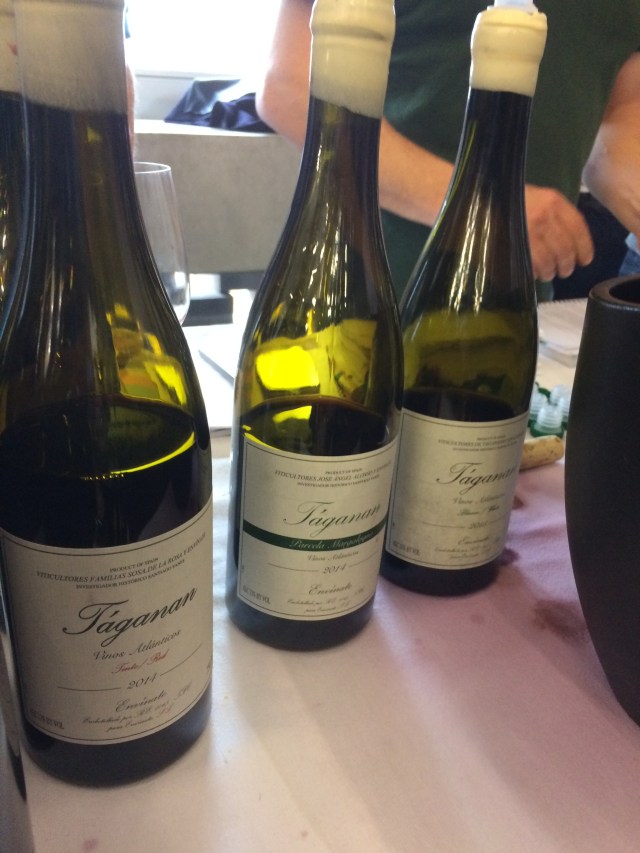
I really liked every wine I tasted yesterday which contained Viognier, it being infused with fresh acidity and not dominating in any way. I tasted the 2015 and the not yet bottled 2016 from Alexandre, both were very good, and both displayed that lovely freshness which Viognier can sometimes inhibit when harvested very ripe from younger vines.

Next, three reds, the first two being Ventoux AOC, the last, a Côtes du Rhône. The “Ventoux” tout-court is 80% Syrah with 20% Grenache, already displaying gamey notes and indeed some nascent complexity. Instant Présent is Grenache, Syrah and Carignan (50:30:20), the latter two varieties undergoing carbonic maceration. Despite 14% alcohol, it doesn’t taste heavy at all, really nice ripe cherry fruit and good lift. Patience et Longeur de Temps is an equal blend of Grenache and Syrah, bottled as Côtes du Rhône. Half the wine is aged in (used) oak for a year. This is more spicy and toasty, but the wood is fairly discreet.
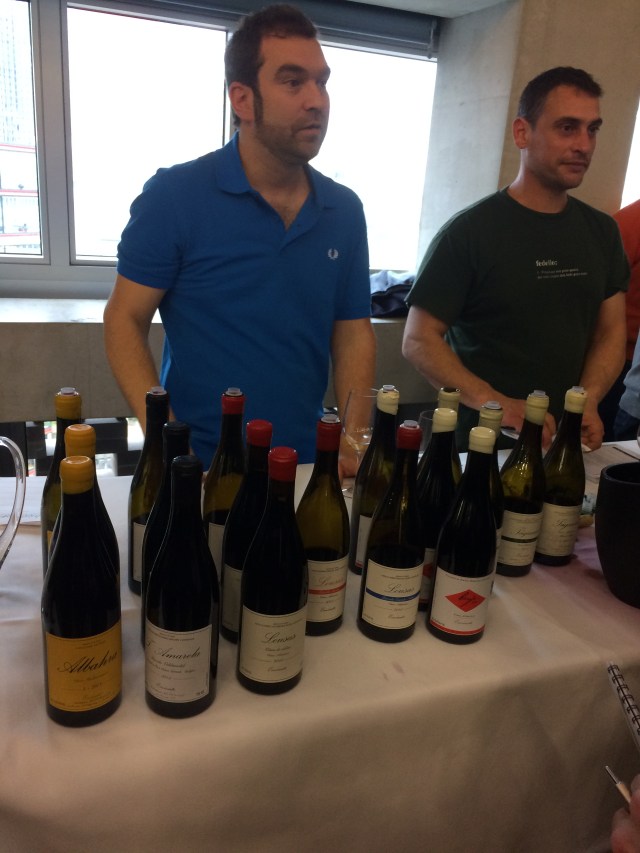
Alexandre pulled out an unlabelled bottle which he said doesn’t yet have a name, a new prestige cuvée made from 90% Grenache and 10% Syrah. This is pretty tannic right now but showed considerable potential, although Alexandre reckoned he’ll only manage to produce about 500 bottles of it for the 2016.

As with the wines of Christian Voeux, above, the cellar door prices here are very reasonable for the quality. This is an estate which wine savvy friends in France have heard of, but again, no UK importer yet. http://www.mas-oncle-ernest.com

Domaine Py (Jean-Pierre Py), Corbières, Languedoc

Domaine Py is a large producer, situated at Douzens, in the beautiful Cathar country between Carcassonne and Narbonne. Some of their wines (they bottle nine different cuvées) are imported into the UK by Yapp’s and Vintage Roots. I tasted six of them (five reds and one white), which are all commendable in their own way and well priced.

The one which really interested me was the Cuvée Tout Naturellement. It was a good example of a larger producer experimenting with a sulphur free bottling and making a pretty decent success of it. The 2016, of which 13,000 bottles were made, so a not inconsiderable number, is 100% Grenache with a reasonably high yield of 50 hl/h. This has the advantage of yielding just 12.5% alcohol. Sans souffre wines often work best with lower alcohol, as it helps not to mask the wine’s innate freshness.

Vinification is otherwise pretty traditional. The wine tastes of black cherry, the palate is smooth but has bite. Very enjoyable. It contrasted with the more traditional Cobières reds made by the domaine, which seemed more tannic as we moved up to the very oaky Cuvée Lucien 2014. Here, 55-year-old Carignan was blended with Syrah and Grenache to give a very much more concentrated wine. I kind of preferred the sappy fruit of the previous wine to the more serious attempt of the Lucien, although I’m sure that the latter cuvée is the wine of which the producer is most proud.

http://www.domaine-py.com

Château Leroy-Beauval, Entre-Deux-Mers, Bordeaux

Leroy-Beauval is, like Domaine Py, hardly a small producer. I’ve been looking for some artisanal Bordeaux, and I can’t say that this property qualifies as “artisanal”. They are, however, an example of a larger producer in private ownership which is concentrating on quality and originality. Originality comes in two forms. First, they use all three of the traditional white grape varieties, Semillon and Muscadelle in varying proportions with Sauvignon Blanc. In a region where Sauvignon Blanc has almost taken over in the white wines, this is welcome. So it’s originality in tradition.

Secondly, under the Marquise de Leroy-Beauval label, they make a pair of fresh tasting, bottle fermented (Ancestral Method) sparklers, a Semillon/Muscadelle white and a Cabernet/Merlot red. Then there’s a fresh white Bordeaux Blanc, very fruity. The two top red wines are both Bordeaux Supérieur and are well made and reasonably serious. The Château bottling in 2014 is remarkably good value at cellar door prices (8 €). Okay, no egg fermentation or amphora, but this is a source of well made Bordeaux. They are represented by Be My Wine, an importer I’ve not come across.

I also tasted a single wine from Château La Haye, a Cru Bourgeois in Saint-Estèphe. The Cuvée Le Cèdre 2014 is remarkably smooth and I’d like to try a bottle with food. Available via Cambridge Wines.

img_2320

Château de Peyrel, Bergerac

Bergerac was one of the first French wine regions I visited, back in the 1980s. I was a complete novice then, and things have changed a lot. I’d really like to go back. The countryside was quite bucolic.

Château de Peyrel is near to Prigonrieux, west of Bergerac itself, and in the tiny AOC of Rosette, an attractive large Manoir with separate dovecote. The domaine recommenced making wine only in 2013, but the vines on the property are around sixty years old. Methods are deliberately artisanal.

There are two Bergerac whites and one Bergerac red, all well made. The most interesting wines are the Rosettes, a white wine AOC making an almost abandoned style of demi-sec traditional white. The Château de Peyrelle Rosette is made from all three traditional varieties, Semillon, Muscadelle and Sauvignon Blanc. It is semi-sweet, or off-dry – I didn’t see the technical data for residual sugar and the information wasn’t available. I think this kind of wine is unfairly forgotten, not nearly as popular as it once was. But the low level of sweetness, coupled with the fresh acidity, gives it some versatility. Quiches and tarts, salmon and blue cheeses were suggested as food matches.

There is also a Rosette Cuvée Excellence which is a touch sweeter and sees some oak. The sweetness is really nice, not cloying. The oak in the 2014 was just a little more intrusive than I’d like, but it should, one hopes, integrate with age. The market for Rosette must be tiny, but the wines are worth exploring.

http://www.chateaudepeyrel.com

I didn’t know any of the Grower Champagnes on show, but I did try a couple of cuvées from Champagne Fresne Ducret. This as an artisan winemaker at Villedommange, on the Northwestern side of the Montagne de Reims. The fruit is Premier Cru and, based on the cheaper cuvées Les Nouveaux Explorateurs (17k bottles) and Le Chemin du Chemin (7k bottles), it’s a house which might bear further investigation. The wines were well made and approachable.

http://www.champagne-fresne-ducret.com

img_2321


One premise of the Tasting was that wine and music go together, and I was asked to put together a playlist inspired by the wines. I’m not sure that the client realised that I’d be avoiding the cliché of songs with wine in the title, or actually about wine, but I put together a mixed list of material, with the help of Laure Monrozier at Business France. I’m not sure how many of them the DJ actually played.

The great thing about this tasting was the opportunity to try wines from producers I didn’t know. To this end it was very successful, and as you can see, there was a fair bit worth writing about. There were estates which I would certainly consider importing, if that were my métier. I hope that sufficient numbers of the trade managed to taste them.

Post-tasting, four of us headed up to The Remedy in Fitzrovia for an excellent dinner. If you read my recent New Year piece, you’ll know it was a New Year’s Resolution to go there, and I’m truly happy I did go so early in 2017. I’ll be reviewing The Remedy soon.


Posted in Wine, Wine Agencies, Wine Tastings | Tagged , , , , , , , , , , , , , , , , , , , , , | 6 Comments

Happy New Year 2017

I did consider a review of 2016, you know, what I drank, but it just seemed boastful and self indulgent for me (no aspersions cast on anyone else). It’s also quite likely you’ve read about it all on my blog already. So I thought I’d tell you what I hope to be drinking, and what I hope might happen in the world of wine, in 2017. After that, you can flick through a few photos of my highlights of 2016 if you like.

The tasting circuit cranks into gear straight after the festive break, and there look to be two crackers next week. On Thursday it’s the annual Le Grappin-Mark Haisma bash, still at Vinoteca but this time at the Soho venue. This is always a highlight, and the #ozgundians are not only about Burgundy, so plenty to taste. Before that, I’m at The Vinyl Factory, also in Soho, for the French Independent Vignerons’ Tasting, on Tuesday. I’m really looking forward to trying, among wines from many regions, some of the Bordeaux on show here.

It’s one of my hopes for 2017 that the smaller producers of this massive wine region start to get a look in. There are bordelais doing all sorts of stuff – eggs, amphora, the “back to cement” movement, and even pét-nat (did you spot that at one of our Oddities lunches?). With Burgundy, the Rhône, Loire and Champagne all showing the dynamism of the younger generation, it would be nice to see a bit of innovative publicity grabbing activity from wine’s famous dinosaur (or sleeping giant). Yes, we know it’s not just about the Corporate-Classés, so let’s hear it from the little guys in 2017.

This year might just be the year of Aligoté, as wine blogger/PR Christina Rasmussen (vintageofallkinds.com) has already mentioned in her New Year piece. Alice de Moor’s is the best I tasted last year, but a good few new ones have been recommended. I’ve a hunch that we’ll hear a lot more about this forgotten grape, deemed fit only for a summer Kir by much of the old brigade. Another look, I’d suggest.

It can’t just be me guessing at the 2017 trends, because Christina also mentions Grenache as well. I drank more Grenache last year than I have for a long while, but little came from the Rhône. Most turned out to be delicious examples from Spain, including those from around Granada, where I traveled to in the summer. But California and Languedoc-Roussillon were not far behind, not to mention some brilliant South Africans. Of the major varieties, 2017 could be the year of Grenache – made with balance and avoiding the jamminess of old. Christina – you stole my article, but if I’d appeared to pinch any more of your ideas it would have looked really bad, wouldn’t it!

Some may say Gamay is the “it-grape”, but I think Gamay may have been the grape of last year. I remember, as may you, the three great Beaujolais dinners we ran in 2015, but I drank far more Gamay than possibly any other red grape in 2016. My cellar is now almost rammed with younger/newer Beaujolais producers – Balagny, Breton, the Suniers (Antoine and Julien), Métras jnr (Jules), Kav Vionnet, France Gonzalvez and so on. Gamay is consequently getting attention everywhere, obviously all down to me and Dave Stenton, and don’t worry, it’s not going away any time soon. I have to admit that the Magma Rock of Vince Marie (Auvergne) could be the outstanding example from outside of Beaujolais from last year. Not everyone will love it as much as I do (it begins with some protective CO2 that takes a while to dissipate), but it wins out for being different, and original. Sorrenberg’s Gamay (Beechworth, Victoria) challenges for the top gong chez-moi.

I’m hoping to plan another trip to Switzerland in 2017, Lavaux and Geneva’s wines to take centre stage. Switzerland has a lot to offer the adventurous wine lover, but the prices put people off. The fall of sterling won’t help one bit, of course, but that will be the same wherever we look for wine. I sort of feel I should be taking advantage of the January Wine Sales as a result, but the wines I yearn for are almost never discounted.

The alpine, and semi-alpine regions are, as you know, the places which excite me most. So I know I’ll drink more Savoie and Bugey…and also the wines of Northern Italy, from Aosta to Isarco and everything in between. Austria will continue to feature, along with Jura, as my two subjective favourites, so long as their astonishing experimentation (both viticulture and winemaking) continue apace. And perhaps finally, Spain’s fringes and South Africa beckon as two more beacons of innovation. Altitude seems to be a running thread here, if you are after some vinous excitement.

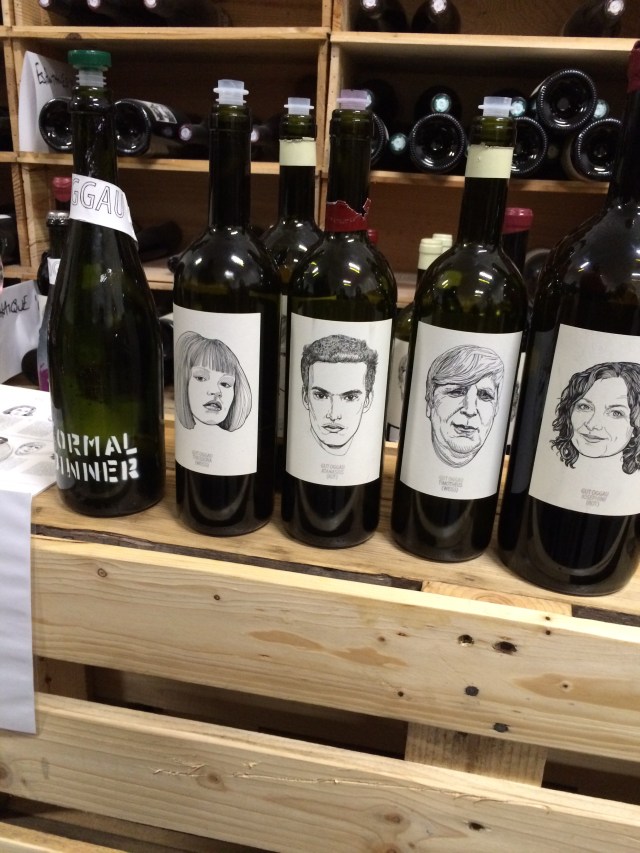
If the world were ideal I’d plan to set foot in Arbois, Vienna and Epernay again before the year is out, but too many dreams can lead to disappointment and I’m unlikely to manage all three. I’m certainly low on Champagne, and Gut Oggau. I also have a mission closer to home, first to visit London’s The Remedy (I keep nearly getting there but other people always suggest somewhere else, or it’s full). I must also visit Newcomer Wines’ new store at Dalston Junction. I did promise I’d get there before the end of November, but Dalston is so hard to reach for us out-of-London types. Damned inconsiderate place to move to, but I wish you well, as I do to all my favourite haunts which I have managed to frequent pretty regularly (Winemakers Club, Rochelle Canteen, Solent Cellar, The Sampler, Quality Chop House…).

Instead of rambling further  into my wine dreamworld, I’ll simply wish you all a Happy New Year. To those who read this blog, a genuine, heartfelt, thank you. I hope the photos below, some highlights from 2016, will be of interest. They should all be tagged.

Posted in Wine | Tagged , , , , | Leave a comment

The Shipyard

The New Forest is one of the UK’s most interesting places to dine at the moment. One of the newest restaurants in and around Lymington is The Shipyard Fishmarket, Bar and Kitchen, beyond Lymington Quay, in the thick of the town’s boatyards. Situated in a rather unpreposessing 1960s building, The Shipyard is open for breakfast, lunch and dinner. Inside, the decor has been done well, improving on the building’s outer shell, but prices are remarkably reasonable. The fish, straight from the boats, is fresh and good. It’s a similar concept to the quite well known Verveine in nearby Milford-on-Sea, but not as expensive. So this is where we ate with friends last night…but first, I shall wind back a little.

Having things in common is the essence of friendship, but when your interest in wine is a little offbeat, as is mine, the best times are had with friends who share exactly the same eccentricity. It’s not that we don’t appreciate the classics, it’s that we’ve kind of done them to death and want to explore more widely. Before dinner last night we drank two wines as aperitifs which proved the case in point.

Martin Diwald is a mate of Arnold Holzer, whose wines I’ve often written about. They were school friends and remain neighbours in Austria’s Wagram wine region. Both of these young guys are doing exciting things. Martin makes a truly delicious biodynamic  Sparkling Gruner Veltliner Brut as part of his range. This was accompanied by Dermot Sugrue’s Sugrue-Pierre 2010 English sparkler (disgorged 2014). Dermot is probably acknowledged as perhaps the finest sparkling winemaker in England, forging the wines at Wiston on the South Downs of Sussex, as well as his own Sugrue-Pierre Label. There’s no doubt that the very precise Sugrue-Pierre (sub-titled “The Trouble with Dreams”) is a delicious Blanc de Blancs (100% Chardonnay), and we liked it a lot. But we were truly charmed by the Austrian wine, with its sensual softness contrasting with the precision and rigour of the English wine. The Sugrue-Pierre is quite widely available (try Brighton’s Butlers Cellar for both this and the Wiston range, or indeed Lymington’s own Solent Cellar), but you will have to go to Red Squirrel for the sparkling Gruner at the moment. Please leave some for me.

At The Shipyard we were able to obtain corkage, and so we took a few of our own bottles along. Just three, but lovely wines. First we opened Gut Oggau Theodora 2014. It’s a blend of Gruner Veltliner and Welschriesling from the village of Oggau, a couple of kilometres north of Rust. Theodora is a light wine, bottled with a good whack of protective CO2, and unless this wine is thrown into a carafe you’ll find that it takes a while to dissipate. That’s part of its charm. There’s precision and a mineral element, but under this there’s a kind of softness. Theodora will happily age a few years, and the apparent simplicity you get on first sip belies a haunting complexity which grows as the wine warms and breathes. No additives, biodynamic and vegan.

Gut Oggau is run by husband and wife team, Eduard Tscheppe and Stephanie Tscheppe-Eselböck. They are two of the most “alive” people I know in wine, and this trait is almost directly transposed into their incredible wines. If you have not yet tried them, then Theodora is quite a nice one to start with. If you “get it” you’ll probably go mad for the whole range.

We decided to follow this with our lighter red, for reasons which should become apparent. I recently wrote about Vincent Marie’s Magma Rock, an Auvergnat Gamay from Volvic, made at Vince’s Domaine No Control. Here we were drinking one of its sister wines, called Fusion, a Vin de France like Magma Rock, from the 2015 vintage. This is Gamay with vines up to 110 years of age, on sand and feldspar (a group of rock forming minerals which crystallize from magma, but can also be found in sedimentary rocks), on south facing slopes at just over 400 metres’ elevation. Fusion is a softer wine than Magma Rock, more like a Beaujolais in some ways. Magma Rock has a freshness to it which it is easy to deduce, rightly or wrongly, comes from the volcanic location of the vines. This is more gentle and subtle, a pleasant contrast. I sort of prefer the spikiness of the Magma Rock, but I’m sure that’s down to it being a little bit different to most of the Gamay I’m drinking a lot of at the moment. The name relates in part to the diverse musical tastes of Vince, something we share, but it’s also a passing reference to the style of vinification.

img_2266

We ended, wine-wise, on what I hope we all agreed was the highlight of the evening, Jean-François Ganevat Côtes du Jura Savagnin Cuvée Prestige 2006. This is a Savagnin made in the oxidative style. It has nine years in barrel without topping up, and many might call it a mini-Vin Jaune. But there is clearly a different style here. Young Vin Jaune has a lot of acidity and extract. This has a truly beguiling nose of lemon and walnuts, but it’s altogether softer, something mirrored in the wine itself. The alcohol is 14%, and although there is no suggestion of this on nose or palate, it undoubtedly adds presence. I think this is in a really good place right now, a very fine and complex wine to beg or borrow if you can. I doubt I’ll drink better over this festive period.

Here are a few of the dishes at The Shipyard. The Belly Pork was very good, the crab was amazing. The fish is as good as you’ll find landed almost anywhere on the South Coast. Highly recommended.

The Shipyard Fishmarket, Bar & Kitchen is at Anchor House, Bath Road, Lymington, Hampshire, right next to Berthon Boatyard. See their web site here. Bookings on 01590 677705.

Posted in Austrian Wine, English Wine, Jura, Natural Wine, Sparkling Wine, Wine, Wine and Food | Tagged , , , , , , , , , , , | 4 Comments

Recent Wines – December 2016

The sudden realisation that if I don’t write about some recent wines soon, we shall be into the festive flurry, reminded me I do have a few exceptionally tasty wines to tell you about. In clearing the decks, don’t think this means the wines I shall drink in the next couple of weeks will be far more expensive, nor in any way more festive. In our family, Christmas is no longer about pulling out old classics which no one other than me will want to drink, and in any case, more of the festive season will be spent driving to and from family than actually sitting down and drinking. The one time ritual of Champagne aperitif, an old red with the dinner, a dark dessert wine with the Xmas Pud, and an old Oloroso slumped in front of the TV, semi-comatose,  will probably be replaced, on 25th, by a single bottle of red Bordeaux at home (and a nice long doze). It doesn’t matter that I don’t think Red Bordeaux goes all that well with Turkey – none of my family eat meat. But in any event, I’m sure any typical reader of my Blog would be pretty happy knocking back any of these wines over the festivities.

It was difficult, as ever, to choose my usual eight wines from those I’ve drunk at home in the past few weeks. Few bottles have been drunk which would fit the description “winter wines”, because temperatures have been unseasonably high (reaching around 14 degrees some days). This is illustrated by the first wine here, although it’s also true that most pét-nats are probably best drunk by the end of the year following their vintage, if not before (so I am prone to drinking a few up in December).

“Plouss’ Mouss” Pétillant Naturel, Hughes Beguet, Jura – I love Patrice’s pét-nat, but I can never get enough of it. Whenever I visit in September he only has a few bottles left and I’m naturally not allowed to clean him out. I actually decided to have this on my birthday. It’s the palest pink Ploussard, which starts off slightly appley, but as its bubbles turn to froth, this becomes redcurrants. It has that dry mineral edge which, despite its lightness (and low alcohol, 10.5%) means it will go beyond aperitif time. Light, refreshing, you don’t want it to finish…magnums please, Patrice? Purchased from the producer.

img_2155

Brut de Cuve [2016] Vin de France, Romain des Grottes – This is one of the wines I picked up in Paris on my Beaujolais Nouveau trip, which I mentioned in that previous article (see here if you haven’t read it). Effectively this is a Nouveau, a Gamay from near Odenas, biodynamic and unsulphured and, as Romain says, “produit…sans cochonnerie”. This has that slightly appley note which some people don’t appreciate with natural wines, but I will stress that here it is a long way from the cider vinegar notes which spoil some wines. This is fruity, fresh and tasty, a vin de soif without artifice. Purchased from Cave des Papilles (Rue Daguerre, Paris 14).

img_2159

Arbois Chardonnay 2012, Domaine des Bodines – “Natural wines don’t age”. Bo****ks! I have a real liking for Domaine des Bodines, and they are rapidly moving onto my “Arbois A-List” too (which is very select, I can tell you). Emilie and Alexis’ Chardonnay had a golden orange tinge, suggestive of a little skin contact, and it isn’t 100% clear of cloudiness. The nose is apples and oranges, quite elegant. The palate has a pleasant hint of lees (I can hear the traditionalists clicking their mouse to exit at this point). It’s light but not wimpy, and both flavour and complexity grow with air in the glass (a Zalto Universal for a wine like this, not a White Burgundy bowl). A truly satisfying bottle where bouquet and palate combine with true harmony. Don’t serve too cold. Purchased in Poligny this time.

img_2188

Magma Rock “LMR15”, Vincent Marie/Domaine No Control, Vin de France (Auvergne) – This is Vince’s Auvergnat Gamay, made from a 25-year-old parcel grown at 430 metres altitude in Beauregard Vendon (Volvic). Whole bunch fermented in a conical wooden tank with daily punchdowns and no chemical inputs, except plenty of protective CO2. That carbon dioxide froths up a little on opening and some is dissolved in the wine. It does dissipate. The fruit is supple cherry with a “volcanic” bite. There’s a tiny touch of the Lambrusco about it on first sip. It’s light, fruity, sappy, delicious. I’ve seen quite a bit of Vince’s stuff on social media, labels on Instagram etc, but so far this is the first of his wines I’ve tasted. I’m definitely searching for more. Purchased from Solent Cellar, Lymington (Hants). If in Paris try Cave des Papilles (see above).

img_2191

Bérêche & Fils Brut Réserve NV – This was (I think) my last bottle of Raphael’s NV from the 2012 base. It was disgorged in July 2014 (so two years and four months pda), bottled at a dosage of 7g/l. It’s a blend of all three major Champagne varieties, grapes for the NV coming from Montagne and Marne plots. There’s a little colour from the ageing, but the nose is still piercingly mineral and refined. This is mirrored with a very fresh palate, there’s real precision here. As it warms it evolves. It’s a lovely wine, and although I admit a strong emotional attachment to the house of Bérêche, and a genuine admiration for the winemaker (there’s no grower I admire more in Champagne), I find this almost tear-inducingly good for a non-vintage wine. Purchased from the producer, Craon de Ludes.

img_2196

Pinot Noir 2014, Elio Ottin, Vallée d’Aoste – Another emotional draw for me is the scenic National Park, the Gran Paradiso, which lies south of the Aosta Valley. The wines of the valley are often distinctive, and on average of a very high quality, which goes unrecognised due mainly to the tiny production of Italy’s smallest region (which can be labelled as either Val d’Aosta or Val d’Aoste, depending on the linguistic preference of the producer in this bi-lingual part of Savoy). This Pinot has a dark colour, 13.5% alcohol, a relatively simple cherry nose, and a palate which, whilst not complex, is nevertheless smooth. There’s more cherry fruit here, allied to a little tannin, giving a nice bit of grip. This may not be a spectacular wine in the context of World Pinot, but it’s very good indeed. There’s a positive review on Jancis’ Purple Pages if you need convincing. It is nice to see Prohibition Wines stocking it, but I understand Flint Wines may be importing it. More people ought to be drawn to trying some of the wonderful, and varied (both autochthonous and international grape varieties) wines from this beautiful place. Ottin’s Petite Arvine and Fumin (two of those more or less local varieties) are also very much worthy of attention, and both are stocked by Flint.

img_2198

Via Revolucionaria Torrontés Brutal 2013, Passionate Wines (Matias Michelini), Mendoza, Argentina – This is one of a clutch of wines I sought out after Dave Stenton’s trip to Argentina earlier this year (see his article on this site here). I’d forgotten about it and when I saw the vintage I thought maybe I should drink it. It turned out to be in a really good place. It’s made from old pergola-trained vines in Tupungato, fermented in open top vessels with 100 days on skins. It then gets 18 months in barrel, which I don’t think get topped up (although I don’t personally get any strong flor notes?).

Orange in colour with really big legs (alcohol 13.5%), the most unusual thing about it was the nose. Torrontés is an aromatic variety, but the bouquet was a pure cross between Muscat and Gewurztraminer, with a real sweet and sour thing going on. Very much muscat grapey sweetness with eastern spice. The palate, by way of contrast, was bone dry, with a tannic mouthfeel from the skin maceration. There was a lot of texture, and a bitter note on the finish. This is the “brutal” side of the wine, because if anything, as it warmed up, it became even more floral. It also became much more complex, with so much going on for what is a relatively cheap wine (under £20 in the UK). Worth seeking out, this won’t be to everyone’s taste but if you want to try something genuinely different…Purchased in Selfridges Wine Dept, Oxford Street (London).

img_2208

Mondeuse “La…deuse…” 2013, Gilles Berlioz, Savoie – Gilles Berlioz is based in Chignin, which is south of Chambéry in a sub-region known as the Combe de Savoie. If you imagine the Combe as a bent arm with the elbow furthest south, then Chignin lies a little west of its crook, where the River Isère changes direction. It’s a region famed for some of the best white wines in Savoie, labelled Chignin-Bergeron, but the reds are Vin de Savoie. Berlioz has added a dash of Persan (15%) to his Mondeuse, and it is deliberately made in what he claims is the old fashioned style, where alcohol levels were between 8-10 degrees (this one has 9.5%). The lightness of the wine allows the fruit intensity to shine. It’s lovely. I really don’t need to say more. It matches its stated purpose perfectly, a glugging wine which refreshes the palate. Perfection if four friends glug a large glass each in around ten minutes. The only drawback I can see is that it costs more than you might think, the inevitable result of UK duty and the difficulty of sourcing tiny production natural wines, and shipping them at a safe temperature. I got mine from Winemakers Club in Farringdon Road, although Vine Trail also list it.

img_2250

A nice set of wines, every one the epitome of deliciousness and individuality. In fact I don’t think I’ve written about a more individual bunch of wines for some time.

I’m not sure how much I shall get to write over the Christmas period, but the diary for January holds some very nice trade tastings, one of which I may turn out to be especially good fun, so please stay “tuned” for the New Year. Festive and seasonal greetings to everyone who has been kind enough to read my blog.

Posted in Aosta, Argentinian Wine, Beaujolais, Champagne, Christmas and Wine, Matias Michelini, Michelini Brothers, Natural Wine, Passionate Wine, Wine | Tagged , , , , , , , , , , , , , , , , , , , , , , , , | 3 Comments

Pearl of Brunswick

Our Oddities Christmas Lunch took place yesterday at Brunswick House in Vauxhall (London), a completely new venue for us. The theme was Fizz and Fortified. The restaurant, which I’d been desperate to try for some time, really nailed it for us. A simple but well executed menu, really congenial surroundings, very attentive service, and two big tables for a total of eighteen people in the middle of a spacious room, surrounded by the other diners. Brunswick House comes highly recommended on many levels, and seems worthy of a reputation which has spiraled fairly quickly. The wine list looks pretty good too, although we took our own wine, obviously!

The menu at lunch provides a limited number of choices, but with plenty of variety. As you can see below, the price is especially remarkable and it represents superb value. We decided to take both a cheese course and a dessert, and the restaurant were very happy to accommodate that. I chose the duck liver parfait, cod main course, and chocolate dessert, plus the cheese, all of which were very good. I also heard very good things about the carrot starter. Thank you Brunswick House.

img_2210

I will be relatively honest on the wines…it was our Christmas Lunch, and it’s fair to say that whilst we were all, without exception, well behaved, we certainly drank a lot, and alongside the dozen bottles brought along by members of our table of nine, there were numerous bottles which appeared from the guys on the other table. By the end it was a little anarchic, but I hope to mention almost everything which passed my lips.

Dom Pérignon 1973 (en magnum) – Hmmm! Start with a wine like this and where do you go after that? Brown, if more onion skin than gravy, the nose was pretty good for its age (though with obvious oxidative notes, more minims than quavers), doubtless the magnum effect. There were also bubbles to begin with, although they dissipated quite soon after pouring. It began complex, and remained so as it faded. At this age it was not typical Dom, but actually a profound wine, nevertheless. It goes without saying that it was a rare treat.

img_2209

Vouvray Pétillant Brut 2005, Huet – This was, of course, completely overshadowed by the DP. It has less pressure than a fully sparkling Vouvray, and at a decade the Chenin is soft and the acidity less than one might expect. I’ve had this particular bottling (Huet also do a non-vintage pétillant) at a great age, although I’m not sure this 2005 would last another twenty-five years or so. I hope that those who tasted it (many who know Huet’s Vouvray still wines don’t know the sparklers) might be persuaded to look out for some aged examples.

Lanson 1996 – Lanson’s Gold Label Vintage is probably severely under rated, and this was one of my wines of the day from a purely quality perspective. Despite its age it began with a rapier thrust of acidity on the tongue, made all the more striking by the very fine bead and non-malolactic style. Despite two decades passing since harvest, the fruit retained its precision, but complexity came in the way which it was changing constantly in the glass. There was even cherry fruit, very prominent, at one point.

img_2213

Franciacorta Satèn 2010, Bellavista – When I see a Bellavista wine I always start humming Nick Cave’s “The Curse of Millhaven”, but you are certainly not slumming it with Bellavista (the most obscure music pun to appear yet). The wine, for those who don’t know it, comes from Brescia Province in Lombardy. Satèn equates pretty much to the French term, “Crémant”. This wine is made from Chardonnay, although I think Pinot Blanc is technically allowed in the DOCG. It’s metodo classico, a pale straw colour, very dry, slightly appley and fresh. Probably a wine to drink rather than age, but one of the highest quality sparklers at this level which Italy has to offer.

img_2214

Caluso Spumante “1968”, Cuvée Tradizione, Orsolani – Whereas Franciacorta has become a well known sparkling wine DOCG, Caluso is the opposite. The grape here, Erbaluce, is famous enough, in wine circles at least, for its sweet passito wines from the same region, whilst many Londoners at least know Tim Manning’s stunning dry Erbaluce, from Northern Tuscany. But I think we were all impressed by Orsolani’s bottle fermented version. Higher in alcohol than Champagne (13%), you’d call it super-dry, definitely a food wine for me, though it doesn’t lack underlying fruit. Simon, who brought it, said he thought it was the best example from a press trip, another unusual wine well worth seeking out. “1968” is the name of the cuvée, not the vintage.

Ferrari “Maximum” Brut, Trentodoc – Trentodoc completes our string of Northern Italian bottle fermented fizz. It’s a little bit cheaper than the Franciacorta, but, as with that DOCG, also made from Chardonnay. Non-vintage, this is another very dry, so food friendly, wine. Lots of nutty/bready notes and quite floral on the nose. Very good length too. Of course, the producer is one of the best known in Italian sparkling wine, and this is very high quality fizz. The fact that one UK regional merchant currently has it priced below £24 makes it a genuine bargain over many cheaper Champagnes.

img_2223

Montlouis-sur-Loire Méthode Traditionelle Brut, François Chidaine – Chidaine is one of my favourite Loire producers, and every time I’m near Montlouis I always visit his shop, just outside the town on the banks of the Loire (not least because of the other carefully chosen producers whose wines are stocked alongside his own range). This is another pure Chenin Blanc, but the key here is that the vines are old, some up to fifty years of age. It’s one of the most well made Loire sparklers you’ll find. Fresh acidity with a great bead of tiny bubbles, you get flowers and peach stone, giving a wine which I’d use either as an aperitif, or a lunch time refresher, rather than as a dinner accompaniment, but that should in no way detract from a lovely wine. I did eventually guess this, after an embarrassing suggestion that it might be Savoie. Pay Chidaine a visit! Jacky Blot’s Taille-aux-Loups address is just down the road, in the hamlet of Husseau, as well. Then on to Cheverny…

img_2225

Prisme .05, Champagne Guiborat – Richard and Karine Fouquet farm 8 hectares around the Côte des Blancs village of Cramant, although they sell off more than half of their grapes and bottle the rest. Prisme is a Blanc de Blancs (Chardonnay) made entirely from Grand Cru fruit and bottled as an Extra Brut (in this case a dosage of 2.5g/l). Around 10% of reserve wines are blended into the cuvée. This wine, in magnum, was from the 2005 harvest, bottled in April 2006, and disgorged April 2015. I’d never heard of this producer, yet served from the larger format it was drinking beautifully, as indeed many top 2005s are doing from bottle. A very pleasant surprise, and with that fine, almost mineral, quality indicative of Cramant fruit.

The third photo below is of the first wine to sweep in from our friends on the other table, the aptly named Bat-Nat (though what was wrong with Pét-Bat, guys?). A light wine, in colour and flavour, it’s made from Schwarzriesling (Pinot Meunier to you and me). It’s made by the team at 2Naturkinder, who are getting masses of underground press at the moment. They’re based in Kitzingen, a little to the east of Würzburg, in Germany. Former publishers who took over one parent’s vines with one mission – to make natural wines with nothing added and nothing taken out. The wine tastes pretty light (though it’s 12%), and only 800 bottles were made of the 2015 (first vintage, disgorged July ’16). A name to watch for fun wines made with care.

At some point Peter from the other side slipped us a taste of the delicious Cape Fortified 2008 from Swartland, produced under the Niepoort & Sadie label. You just know that when Dirk gets his white socks dirty in any collaboration it will be good, and he scores again here. A blend of old vine grapes from some of the more traditional Portuguese and Mediterranean varieties found in South Africa. A hard to find wine, not least because the EU doesn’t treat “Cape Port” too kindly, and not inexpensive too, so this was a treat to try for the first time.

The first fortified from our table proper was one of my stash of Equipo Navazos wines, Palo Cortado “Bota No” 47. Bottled (at 22% alcohol) in December 2013, it comes from the cellars of Gaspar Florido, the contents of which are now owned by Pedro Romero. This very wine was once bottled and sold as the incredibly rare “Ansar Real”. The contents of the bottle are very old, so it isn’t too surprising that it is very intense, too intense for some people. It’s a wine to sip in (preferably quiet) contemplation, rather than glug. But there’s also a wild side to it, almost a rawness of soul. It has something a little different, that breaks out of the constraints of how a sedate old brown sherry should age to the more conservative drinker. As an aside, I used hardly ever to buy Palo Cortado, yet I now find myself drinking more of it than I do Amontillado and Oloroso. It seems to have an intellectual side to it which increasingly appeals to me. I apologise to no one for making something I brought along another of my wines of the day.

Taylors 1985, Porto – We guessed hard at this. Vintage Port, of course, but vintage guesses tended to go older (I guessed Vargellas, so in the right producer ballpark, but way out on age). It’s often hard to describe the beauty of a nicely aged vintage from Porto, but elegant and smooth sums it up. You know, without me telling you, that there will be cigar box aromas, and fruit which goes on forever, with only a hint of spirit to give just enough of a tiny kick. You can still find this if you have around £100 to splash. If you do, it is well worth it.

Mavrodaphne of Patras 1944, Karelas Winery – This lovely wine obviously has a story which didn’t manage, in its full details, to make it over to my side of the table. The vintage, as the back label attests, is 1944, so this was made in German occupied Greece towards the end of the Second World War. For some reason, it seems (from a little research), that the wine was never bottled from the 10,000 litre wooden vat in which it has sat for well over 65 years. Around 1,000 bottles were produced, I’m not entirely sure when (the label looks very new), from 100% Mavrodaphne grapes, fortified to the level of a Fino Sherry. It’s brown with raisins, caramel and apricots dominating. It has amazing length and was astonishing. Like me, you may have tried a Mavrodaphne of Patras before. I’ve sought them out when in Greece. They are usually inexpensive and, to be frank, pretty commercial, in most cases. This is something entirely different, going to show how the fame of a once well regarded wine can be eclipsed by modern commercial interests.

Look at the bottle below. What do we think it might be? Well, it is unlabelled, of course, but the contents give it away as another Port. This time we have absolutely no idea of the producer, and age can only be guessed, albeit an educated guess. We didn’t have time for carbon dating but the person who brought it said it might be pre-20th Century, or perhaps up to around 1925. It reminds me of when an eminent Madeira expert poured a similar bottle, saying he didn’t know the vintage, only that it was pre-1800! In some ways, wines like this are museum pieces, which give us a thrill for their age more than their flavours. Yet this wine also reminded us of the great ability of fortified wines to go on, and on, and on…

img_2239

I know the wines of Jean-Paul Brun (Beaujolais) pretty well, but I’d never tried “FRV” before. Slipping a sparkler of that colour in after the fortifieds was suicidal, but it was another wine from our friends, and I was really glad to try it (it’s not the first “Sparkling Beaujolais” I’ve tried, but they don’t come my way all that often). Very low (7.5%) alcohol, aromatic, light and medium-dry, wholly out of place for my alcohol sodden palate, but it made me interested enough to want to try it next summer, once the garden furniture can be safely left outside.

img_2240

Plum Sake Liqueur! Nazawa Brewery, Japan – Perhaps if you can decipher the back label (magnify the photo below) you will find out more about this intriguing beverage. I should warn you that there were people there yesterday who did not like this one bit, who were not at all enamoured by its plummy sweetness and, it must be said, a very strong nose and flavour of almond, from the plum kernels, apparently (someone said it reminded them of Disaronno, the ubiquitous super sweet almond liqueur from Italy). I suppose it’s possibly because I have a secret Bakewell Tart crush, and also that after ingesting a certain quantity of alcohol I am game for this sort of thing, but I quite liked it. For me, as a coffee didn’t come my way to sober me up, it seemed a potentially risky business to ingest a few centimetres of this stuff, but I did so with pleasure, and without any incident. It’s only 11% alcohol, you kind of expect it to be higher.

I apologise for not mentioning a few other wines which made their way over to our table, after the point where my pen went back in my pocket. I think I may have desired a little snooze, although I managed to stay awake and take part in what I remember as a detailed conversation about Beaujolais Nouveau which Mr Uber must have found very bizarre, as we slunk back in our comfortable limousine, en-route to the after party at Winemakers Club. Here, notes went out of the window. The Heymann-Löwenstein Schieferterrassen Riesling 2012 was a great palate cleanser, but the Domaine Lucci (Anton von Klopper) Estate Pinot Noir “Jasper’s Vineyard” 2014 was stunning (ultra-fresh). After that I had to begin the long trek home. I know I missed a 2001 Salvioni Brunello, but hey, I think I’d had a pretty good innings.


Posted in Dining, Oddities lunches, Sparkling Wine, Wine | Tagged , , , , , , , , , , , , , , , , , , | 5 Comments

Where To Now, Saint Vincent?

I think there are many wine obsessives who begin life very traditionally, enjoying the red wines of Bordeaux. But after that, Burgundy begins to fascinate, and fascination soon turns to something stronger. There are many reasons why this can happen, but for me it was without doubt about falling in love with the Côte d’Or itself, the landscape, the villages, and the food, all contributing to enhance the wines when experienced in situ. There’s no escaping the fact that Burgundy appeals to the romantics.

This was true for me through the later 1980s and the 1990s. In those days there were no endless lines of traffic snaking along the Route du Vin, and apart from market days, Beaune was not the crowded town it is today. But even with the increase in wine tourism, Burgundy retains most of its charm. Where it becomes problematic for wine lovers is its prices. Increased global popularity and extremely small harvests have pushed prices inexorably higher. Once we could afford the odd Grand Cru from a good producer, but now even the village wines from such sources are becoming prohibitively expensive, if indeed we can get an allocation.

At the same time that we’ve seen Burgundy prices rise, from Chablis to Macon, we’ve also seen Pinot Noir and Chardonnay take off in other parts of the world, “New” and “Old”. For many, good as these wines are, they remain Pinot Noir and Chardonnay. They are not “Burgundy”. But the news for Burgundy lovers doesn’t need to be bleak. The wider region we call Burgundy is large and varied. There are many sources of reasonably priced and highly individual wines within it. All we need to do is to decide whether these wines merit our attention. The question we must ask is whether we are just buying these wines because we can’t afford the wines we used to buy, or has winemaking improved so much as to make some wines from less glamorous corners of the region as worthy as the wines we bought of old? In deciding this, we must remember one of the frustrations for lovers of all things Burgundian in the last decades of the last century – for every heavenly bottle there were many which should by rights have been consigned to Hell at the point of bottling. Real consistency in the region is a relatively new phenomenon.

I’m going to offer a few suggestions of what to take a look at – the wines and sub-regions I think are worth exploring. I’m by no means the first to do so, and there are many more examples I could have chosen, yet it might make interesting reading. I can only apologise to regular readers and followers of Wideworldofwine, who might already know all of the producers I list.

But first, a few facts…

Burgundy – it covers a lot of ground

Burgundy is obviously much more than the Côte d’Or. The whole region produces close to one-and-a-half million hectolitres of wine in an average year – that’s around 180 million bottles, which makes up about 7% of French AOC wine production by volume, yet approaching 20% by value. That’s about 3% of world quality wine sales by value. More than 60% is, some may be surprised to learn, white (red and a little pink making up about 30%, with the other 10% going to crémant). Only 1% of this is designated “Grand Cru”, and more than 50% comes from the basic or bottom tier, regional wines such as Bourgogne Blanc and Rouge. The Burgundy pyramid has a wide base and a tiny tip on the top. So amidst all that there is bound to be value for money, and hidden quality, but whilst both exist, they are no longer a well kept secret. Let’s take a little trip north to south and see what we find.

The Cold North

Chablis is the furthest north you can get and still be in “Burgundy”. Not much further north and you are into the Aube, whose vineyards are classified as part of Champagne, although you’ll find a good smattering of still wines along with the fizz, not just red and white but a very interesting pink Pinot Noir, Rosé des Riceys, which only just fails to slip into Burgundy. Chablis is so famous that it isn’t hard to find wine which is a pale shadow of the finest bottles. There is value in Chablis, but I suggest that you don’t look to the Premier Crus of lesser producers as a substitute for the long lived Grand Crus of Raveneau and Dauvissat. If I were to name one domaine which for me epitomises what is right about this region today, it is that of Alice & Olivier De Moor. Based in Courgis, southwest of Chablis itself, they make a range of highly individual, biodynamic, wines expressive of so much more than the mass produced wines of some larger producers. And they also make a stunning Aligoté.

Aligoté is the forgotten grape of Burgundy. Aficionados of your usual white Burgundy (you might say wine snobs…), made from Chardonnay, may tell you it tastes like paint stripper. I got laughed at once for taking a Coche-Dury Aligoté to a wine lunch…seriously. But so many producers are making good ones today that it cries out for at least a little exploration. Another good example of Aligoté is made by a producer based not too far from Chablis, in St. Bris-le-Vineaux, Domaine Goisot. This producer makes largely Côtes d’Auxerre wines, from around Saint-Bris and Irancy. They used to be a well kept secret but no longer. They make lovely wines which are fine, yet never lose a touch of earthy terroir, and coming from an appellation many have never heard of, their quality often comes as quite a surprise.

img_1032

If these are too well known to the expert, the new northern frontier of Burgundian viticulture is still further east, in the sub-region of Bourgogne-Vézelay, near one of the most beautiful romanesque abbey churches in France, though still in the Yonne Département. Catherine and Jean Montanet run a leading estate here, Domaine de la Cadette. Look especially for Chardonnay and Pinot Noir (sometimes, like the Goisot’s, with a touch of César in the reds) of character here, but don’t ignore their strange speciality, Melon de Bourgogne. You will know it as the oddly named grape of Muscadet. Well, here we have it in its homeland, so to speak, on clay-limestone slopes nestling into the wild Morvan hills.

Côte d’Or – surely not?

When I were a lad there were parts of this famous sliver of vineyard that few connoisseurs would venture into. Whilst you can find good wines up in the Hautes-Côtes, viticulture in the hills above the Côte d’Or can be hit and miss. On the other hand, the once neglected villages of the Côte itself have sprung to life. It is no longer the case that villages such as Marsannay and Fixin in the north, Pernand and Aloxe in the centre, and St-Aubin and Santenay in the south, are on the fringes. It’s all down to producer.

Seven or eight years ago I’d be getting all excited, telling you about Sylvain Pataille. He may be rather more famous today, but no one has done more, not only to put Marsannay on the map, but also to draw attention to other unfashionable villages. Try the Marsannay “Clos du Roy” to see what I mean. Oh, and he also makes a very good Aligoté.

If anywhere is less fashionable than Marsannay, it has to be its neighbour Fixin. Not as famous as Pataille, Domaine Berthaut has been quietly ploughing its furrow since the 18th Century. You pay a fortune for Côtes de Nuits Premier Crus, yet Berthaut makes four single vineyard Fixins which still manage to illustrate their different terroirs without the Gevrey price tag (although the domaine does make wine from some of the more famous villages, including Gevrey, too).

img_2202

Other villages worth seeking out are Pernand-Vergelesses and Aloxe-Corton, via the estate of Chandon de Briailles. They have some of the best value Corton Grand Crus on the market, but their Pernand “Île des Vergelesses” (in both red and white) is one of my favourite wines from around Beaune, for character, value and quality.

Saint-Aubin is probably the village which has most gained in reputation in the past decade, and there are several Premier Cru sites, and even village wines, worth seeking out. With a village like Saint-Aubin, even though prices are spiralling, you don’t need to seek out the cheapest domaines. When the producer is a hundred percent committed to quality, the premium is worth it. You should grab anything you can from Pierre-Yves Colin-Morey (PYCM to his fans), but my recommendation here is the Saint-Aubin “En Remilly” Premier Cru, for value.

img_2199

I’d also like to make a shout for Chassagne. Not the whites, but the rarely seen nowadays red Chassagne-Montrachet. Much of the vineyard in this famous village was turned over to white wine to capitalise on the “Montrachet” connection at the end of the last century, yet the village used to be dominated by Pinot Noir, and many sites are much more suited to that red grape variety than they are to Chardonnay. I enjoyed some quite earthy and rustic reds from here in the late 1980s, and you can occasionally still find them, if more often in local restaurants. If you do see one, it is probably worth giving it a go.

Alongside the growers, we are seeing a real growth in the new breed of micro-négociant. Prohibitively expensive land prices have forced small growers to buy in extra grapes so as to make their domaines economically viable, but some outsiders have also moved in. You’d assume that they would be left with the dregs that no one else wanted, but when you taste some of the wines, you realise you’d be wrong. There are plenty of grape growers on the Côte d’Or who don’t want to use all of their grapes, or occasionally, any of them.

One of the most successful outsiders is Andrew and Emma Nielsen, whose Côte d’Or wines come under the Le Grappin label. They produce very good wines from several Côte d’Or villages, although my personal favourites remains their two Beaune 1er Crus, Boucherottes (red) and Grèves (white). Their prices have risen quite a lot in recent vintages, not helped by the very short recent harvests, leading to those spiralling grape prices. But any wine in the range, including those from Southern Burgundy and Beaujolais (labelled “Du Grappin”) are genuinely worth seeking out, including their great value “Bagnums”.

Another micro-négoce who’s been incredibly successful on the Côte d’Or is former Yarra-Yerring winemaker, Mark Haisma. Whilst the Nielsens work out of cellars in the walls of Beaune, Haisma is based in Gevrey. He makes some very grand wines from around there (and a brilliant Cornas), but he also makes a particularly excellent Bourgogne Rouge.

There are dozens more names to look out for, but lovers of minimal intervention in the vineyard and cellar will probably have already discovered Fanny Sabre and Philippe Pacalat.

Bourgogne AOC, in its simple form, is the bottom tier of Burgundy, and can cover a multitude of sins. But as the tasting of Bourgogne Blanc in the last issue of Decanter Magazine shows, there can be some lovely wines which cost a fraction of the price of the grander wines from the top domaines. Whilst the Decanter piece mentions the Bourgogne Blanc of Domaine Leroy, my very favourite Blanc is that of Domaine Roulot. It’s a brilliant wine (though not quite as good as their rarely seen Monthélie, which is close to Meursault quality), but you will pay an eye-watering sum for a basic Roulot Bourgogne Blanc these days. Yet as the Decanter tasting shows, there are plenty of wines around the £15 mark which are worth exploring – and many are from the big négociant houses as well as the growers.

Further South

Ten or fifteen years ago you began to see more frequent recommendations for wines from the Côte Chalonnaise (Rully, Mercurey etc). I think if truth be told, it took this region of mixed farming, stretching south of the Côte d’Or, a few years for consistent viticulture and winemaking to catch up with the marketing, but today there are several producers making Pinot Noir and Chardonnay worthy of their growing reputation. There are more than 2,000 hectares of vineyard down there, with a little more than half devoted to Pinot Noir (thus bucking the overall trend towards white wine).

There are plenty of producers to explore on the Côte Chalonnaise, but those who have been slowly establishing good reputations include Paul Jacqueson (Rully), Michel Juillot (Mercurey),  François Lumpp and Michel Sarrazin (Givry), and Stéphane Aladame (Montagny), to mention just a few.

We’ve mentioned the Aligoté grape several times, and we can’t leave the Chalonnaise without mentioning Bouzeron. Bouzeron was promoted to full village status in 1998, but for Aligoté only. One of Burgundy’s most famous names, Aubert de Villaine of Domaine de la Romanée Conti, shares a domaine here with his wife, Pamela, although it is managed by his nephew, Pierre de Benoist. They produce another excellent Bourgogne Rouge called “Le Digoine, but they are most famous for one of the finest Aligotés in the whole of Burgundy, which also has a reputation for ageing really well.

I think Aligoté is starting to be taken much more seriously, and I think it is making a bit of a comeback as a wine in its own right, not just a base for a Kir. You didn’t exactly hear it first here, but I don’t think its slow rise has been spotted by many.

Further south still lies the Mâconnais, a vast area encompassing a host of full AOCs, named villages, and basic Macon Blanc and Rouge. We are talking the likes of Viré-Clessé and Saint-Véran, or Pouilly-Fuissé, -Vinzelles and -Loché. There’s more than 5,500 hectares down here, the vast majority of them planted to Chardonnay, although there are one or two producers making very good reds, something that could not be said very often twenty years ago, when a sea of “Bourgogne Grand Ordinaire” used to be made with Gamay, not Pinot Noir. Some of these were, I’m afraid to say, the worst red wines with the Burgundy name on them that I’ve ever drunk.

Today the situation is very different. It’s not hard to find lovely wines down here, whether from the famous Pouilly-Fuissé estates, or the newer named villages. Famous names like Dominic Lafon (Héritiers du Comte Lafon) have moved in and lead the way in quality, and they produce a string of whites which are all worth trying. But I have a favourite producer down here as well, one whose wines I will always grab when I see then in the UK, or in France – it’s Julien Guillot’s Domaine des Vignes du Maynes. Based in Sagy-le-Haut, near Cruzille, this domaine makes two wines I’d recommend as an introduction to the new (bio)dynamism of the region – the white Mâcon-Cruzille “Aragonite“, and its red brother, “Manganite“.

But if you’d like me to finish with something really unusual, try Guillot’s Clos des Vignes du Maynes Cuvée 910. The Clos used to be owned by the monks of the Abbey of Cluny, and Julien has made a wine in the image of how it might have been done when the abbey was built, eleven centuries ago. Hand picked, the grapes were transported by oxen. The grapes were foot trodden at the Prieuré de Blanot, fermented with wild yeasts, and no additives were used whatsoever. Like all the produce of the domaine, a natural wine, yet as others have remarked, a very fine Burgundy too.

Vignes du Maynes is also a prime example of a new trend in Burgundy, one which has in part crept up from the Beaujolais – the onward march of natural wine. These wines may not appeal to the Burgundy traditionalist so much, but they are at the cutting edge of a movement trying to make “Burgundy” more accessible (and exciting) to the drinkers of the future. Something which Bordeaux has thus far failed to do. This is why, ultimately, the region may come to appreciate these producers and their wines.

img_2200

So there we have it. You might not be able to afford Clos de Bèze and Bonnes Mares any more, but there’s plenty more where they came from. My point is not to pretend that the wines I have recommended here can match in quality the best of those famous names, but if you came to Burgundy looking for wines of personality and individuality, wines which contrast with the more uniform fare of some other regions, then they are still plentiful, both on the Côte d’Or, and in wider Burgundy. And you will find that you can afford these wines, because although some may not be cheap, they all represent fantastic value in their own way. Even if some of them are not easy to track down.

There is one other alternative, though: Drink Beaujolais…


Posted in Burgundy, Wine | Tagged , , , , , , , , , , , , , , , , , , , , , , , , , , , , , , , , , , , , , | 4 Comments