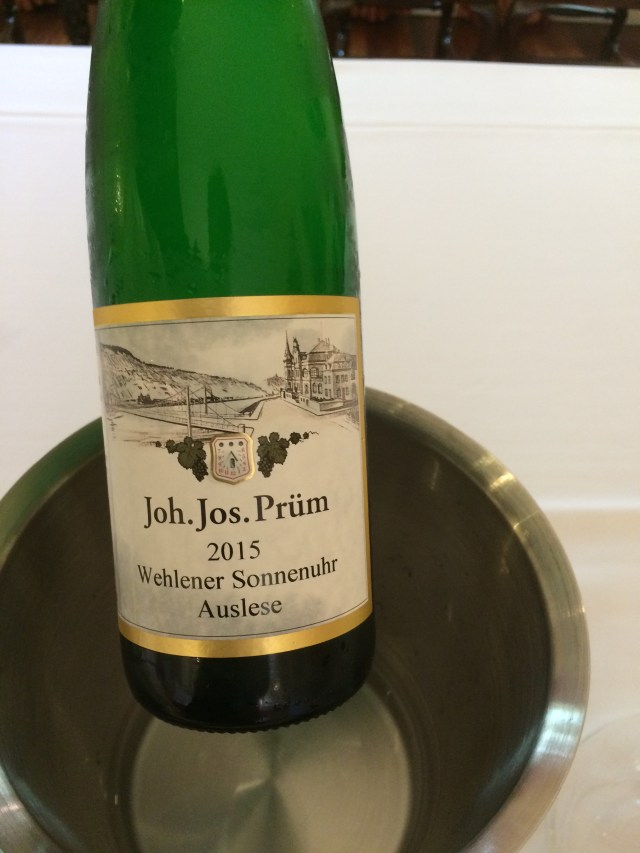
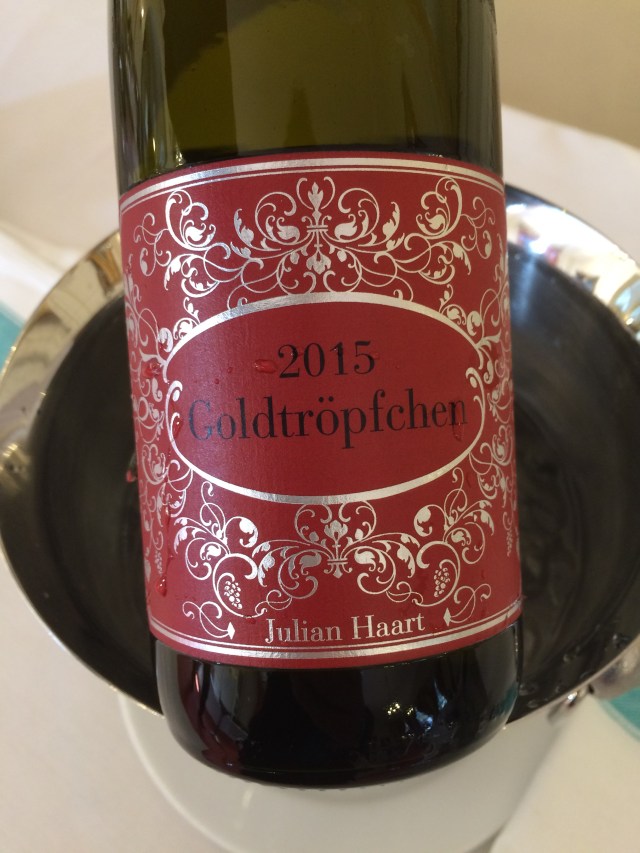
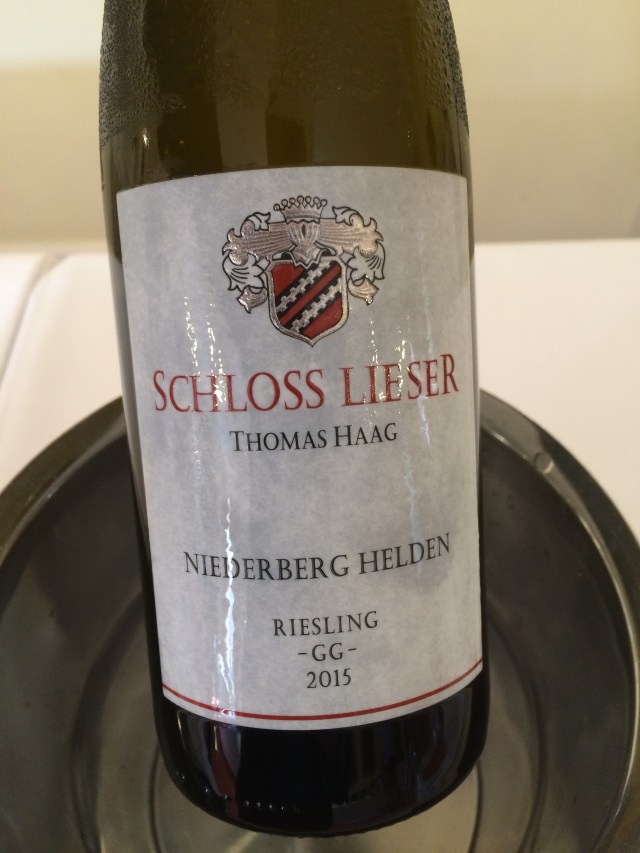
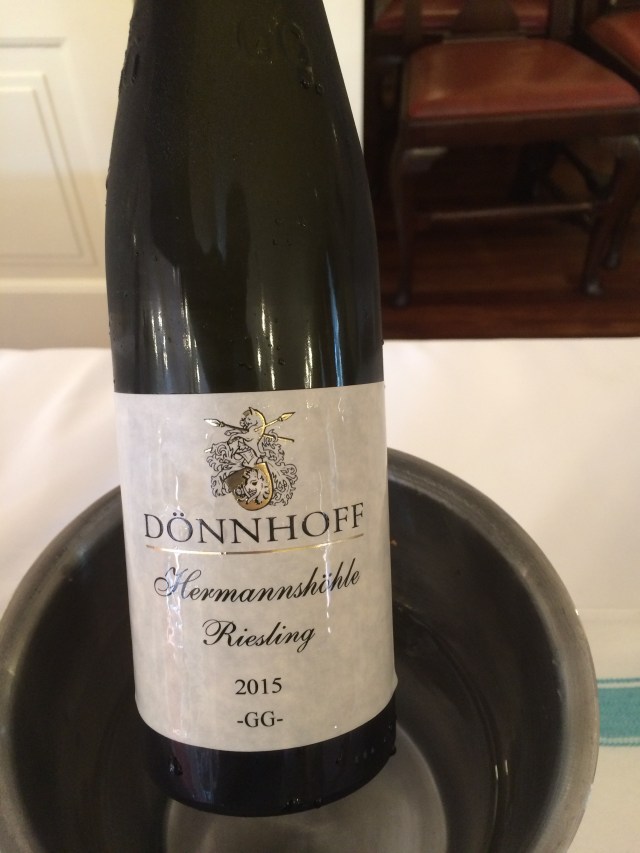
Working Up a Genuine Thirst

We recently had some extensive building work done and, in order to save some money for a lot of new carpets, we decided to do all the decorating ourselves. I know, so much less exciting than hitting the South of France for summer. But after days spent up a ladder, or rolling a roller on a long pole, at least there was a nice bottle to look forward to. Come next week, when the carpet fitters have done their fitting, life can return to normal – wine tastings, lunches (including a trip to “The Sportsman” which I’m very much looking forward to), and vineyard visits. All the everyday stuff. But at the end of the decorating day, paint-spattered and muscles aching, the following half dozen wines stood out from the past couple of weeks, providing thirst quenching enjoyment before stumbling into bed.

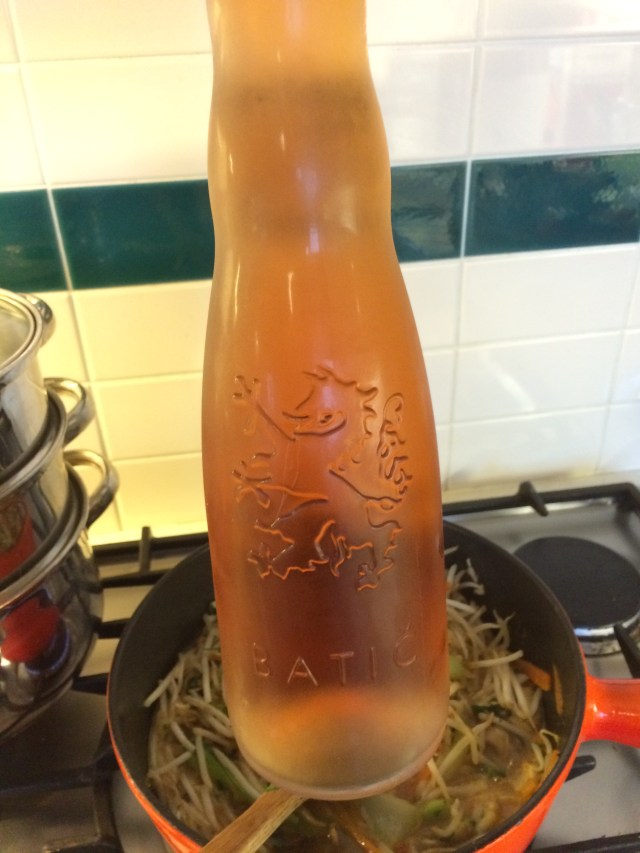
La Bota de Florpower 57, Equipo Navazos [2012] (12.5%). I never tire of Florpower, and every bottling is fascinatingly different. This is the most recent bottling I have, although the subsequent edition is heading over to the UK right now (I under ordered dramatically, thinking I had plenty of this one – bad move). It’s a simple proposition. Make a Palomino table wine from the same soils as Fino Sherry, ferment in steel with natural yeasts, allow for a flor reaction, but bottle unfortified. It’s dark yellow and smells like a fino, but it’s light on the palate, balancing citrus and what can be described in no other way (with apologies to the naysayers) as a chalky, soft, mineral mouth texture. It doesn’t lack for fresh acidity and it’s in a great place now, just bursting to be glugged.
image

Chianti Classico Fonterutoli 2011 (13.5%). Some might wonder whether a wine at 13.5% alcohol can be a thirst quencher? Wait and see the last wine! Actually, this appears to be a lighter vintage at Fonterutoli, or at least the 2011 is a wine of elegance. I particularly liked this because one thing you can always rely on this estate to produce is a wine which really smells and tastes like Chianti. It’s mainly Sangiovese, and it does have that classic brick red tinge which you don’t get when you completely overdo the Merlot. They do put it in small oak for twelve months, but you can hardly tell.

As I was reminded by a friend on Twitter, Fonterutoli is located in a lovely village, just a few kilometers south of Castellina and very close to Vagliale, where I’ve stayed before.The Mazzei family, who run the estate today, have been in charge since the 15th Century and it’s one of those quintessential Tuscan family farms. The winery is very modern, all gravity fed, built into the hillside and providing for small batch fermentations, yet it blends in seamlessly without being in the slightest bit obtrusive. That seems to be mirrored in this entry level Classico, and that’s what I love about it.

image

Regnié 2014, Julien Sunier (12%). Sunshine means Beaujolais, and Julien’s Regnié was just perfect. It comes from two small lieu dits called “En Oeillat” and “Les Forchets”, just 1.45 ha, but planted at a density of 1,000 vines per hectare. Fermentation is carbonic, with natural yeasts.

Vivid Gamay fruit here, a natural wine giving pure refreshment without the need for anything more. There’s a note on the label to keep this below 14 degrees. I very much doubt that was achieved in retail, and I’m sure that the ambient cellar temperature here at the moment is above 14 degrees as well, but there is no sign of spoilage. Nor was there with the previous bottle. But these warnings on low sulphur, or sulphur free, wines always interest me. I really do doubt the ability of most retailers to abide by them.

I was actually prodded into drinking this by someone asking me about Antoine Sunier. Antoine’s Regnié had been voted wine of the night at one of the three Beaujolais dinners we had last summer. I’m right out of Antoine’s wines, although it looks like UK distribution might not be too far away. But I do thankfully have just a little more of Julien’s.

image

Santorini Assyrtiko 2013, Hatzidakis (13.5%). I wish I drank more Greek wine (I used to), and I wish I drank more Assyrtiko too. It’s a grape which excels on Santorini, and can also benefit from a little bottle age (like Albarino, and Verdicchio, two other grape varieties which mostly get knocked back too soon). This is a pale wine which doesn’t look either alcoholic, nor complex. The nose is a little muted at first as well. But take a sip and you get a nice touch of citrus zest on the end of the tongue, and a chalky dryness further back. The acidity refreshes, but the dryness leads your senses on to just enough complexity and a certain richness, to make it a food wine.

If you want an analogy which is probably way out but sounds nice, think Chablis from a volcanic island. At least the second bit’s accurate. In fact, this relatively inexpensive bottle (the 2015 is currently £12.99 at UK supermarket, Waitrose) is possibly the best of the bunch for outdoor dining under the parasol, as the mercury heads towards 30 degrees Celsius here on the South Coast.

image

Piquentum Blanc 2012, Buzet d.o.o., Istria, Croatia (12.2%). This is a lovely Malvasia (or Malvazija in Croatian) given three days skin contact by French-born (Jurançon) winemaker Dimitri Brecevic. It sees a mix of wood and stainless steel and is intended to be aged (I’ve kept it about one year). This is another wine which combines freshness and complexity. The nose is really hard to describe, being both floral and spicy (mild spices). There’s a tiny bit of texture, perhaps the short skin contact, reflected in the mid-yellow colour, and the wine doesn’t lack for weight, despite the very specific but relatively low level of alcohol.

Dimitri has his vines near the town of Buzet. No, not that one! This Buzet is not far from the Slovenian border in Croatia’s Istrian wine zone. He makes natural wines with minimum intervention in a winery hewn into the hillside, providing uniform coolness (around 11 degrees) in which the wines mature. The region may be a rural idyll, but Dimitri is no stay-at-home. He’s made wine in Spain, Australia and New Zealand, along with a final stint in Burgundy, before finding his home in Istria.

I admit, I don’t get to drink a lot of Croatian wine, it must be said. That’s why, without making this out to be something it isn’t, I was really taken aback. It really is very good. I bought this from an interesting small merchant which specialises in the food and wines of the Adriatic region, Pacta Connect.

image

Nussberg Alte Reben 2012, Wiener Gemischter Satz, Wieninger (14.5%). This wine probably can’t claim to be the most thirst quenching of the half dozen here, but I do love Gemischter Satz. Actually, many versions of this Viennese field blend are the height of thirst quenchability, but with this cuvée, one of Fritz Wieninger’s top bottlings, for your £20+ you get vines over 50 years old, blending nine grape varieties (the main ones are Pinot Blanc, Neuberger and Welschriesling). It’s also one of the richest of Wieninger’s bottlings, a complex white with spice, brioche, citrus, mineral mouthfeel and more. Not a hotchpotch of flavours mirroring the multitude of varieties in the field blend, but more a wine of genuine personality reflecting both the terroir of the slopes surrounding the city and the traditional winemaking of this relatively new DAC, but centuries old vineyard.

Wieninger has perhaps the largest holding in Vienna, 70 hectares (including now the estate of Hajszan Neumann – he is only really challenged by the other great reviver of Gemischter Satz in Vienna, Mayer am Pfarrplatz). The Nussberg  vineyard rises around 360 metres above Nussdorf  on Vienna’s northern edge, on the western side of the Danube. Wieninger is actually based on the other side of the river at Stammersdorf, where the other great vineyard for Wiener Gemischter Satz lies – Bisamberg. Nussberg faces south and southeast, largely on limestone. In the near distance is the enormous edifice of the great abbey of Klosterneuberg, and all the villages boast the famous Heurigen where you can turn up and enjoy the owner’s wines along with some simple food (so long as you don’t choose one frequented by the coach parties where the wines are  probably made with less discerning palates in mind). Beautiful place, and surprisingly beautiful wines. Quite unique and well worth exploring.

image

Oh, and when it’s thirsty work, there has to be beer as well. Beavertown Neck Oil, does what it says on the tin! Pale Ale, but don’t expect it to be filtered to death to extract all flavour. It’s not. Neither is it quite what you might expect from an industrial estate in North London.

image


Posted in Wine Agencies | Leave a comment

Five Men, Seven Wines, Typical Tuesday

When 28-50 was simply one exciting new restaurant for wine lovers, albeit in a dark basement off Fleet Street, I used to dine there fairly regularly, lunch and dinner. But after the Marylebone branch opened I kind of gravitated there, and it became my favourite branch of the emerging chain. Having a good relationship with the team, it became the venue for many wine dinners, corkage having been duly agreed. For a number of reasons I don’t think I’d dined there for about a year, so it was very pleasurable going back on Tuesday evening for dinner with some good friends, most of whom I’d also not seen for a good while. One of them was bound to bring some fine, no, very fine, Rioja, so lips were being licked well before kickoff.

The food at 28-50 doesn’t make any claims to grandeur. It’s fairly simple fare, plated up without pretense, but that’s the beauty of using them for a wine dinner, whether you are buying from their excellent connoisseur’s list of usually older wines, supplied by friends of the chain, and sold at reasonable markups, or whether you are taking your own kit, as in our case. The food doesn’t fight with the wine, it complements it. So apologies if I don’t eulogize over the terrine, steaks and dessert and move on to the wines. We were, as ever, grateful for the welcome, and especially for the excellent wine service.

A good Champagne is obviously welcome to set off proceedings (well, the two early birds were thirsty and ordered a glass of La Guita Manzanilla, but that doesn’t count as one of our seven a day). After Saturday’s Clouet Cuvée 1911, I have been seriously spoilt because Diebolt-Vallois Fleur de Passion is another Champagne I love, but rarely drink (and I think I’ve only ever bought one bottle myself, I hardly ever see it). This was the 2006, which was fresh and clean. It’s classic Cramant Chardonnay, but with (as every book says) a light touch. Nothing too “strict”, despite it being a non-malo cuvée which is vinified in (old) oak, from a village whose wines can often err towards the far reaches of chalky minerality and precision.

image

Instead of moving on to a white, we took the first red because on decanting its owner was worried it might fade. It didn’t fade, though nor did the charcuterie plate we ordered to go with it turn up (no matter). We were trying the wines blind. This was so obviously Rioja, but in playing the blind tasting game properly, someone must suggest something different (it’s a rule). That’s why I said Pomerol. Well, it was just so silky and rich. It turned out to be CVNE Vina Real Reserva Especial 1952, a magnificent wine.

image

There’s always a moment when you realise the wine you brought is going to have to follow something like that. It doesn’t help when the vintage you thought you had (2009) turns out to be something else. And then, in a blind tasting, you find yourself sat right next to a man who buys from this producer every year. Oh well! Roulot Meursault 2011 was not up to the standard of some of the other wines of the evening, and the 2009 (lost somewhere, hopefully to turn up one day) would have been better. But I’m a massive Roulot fan. I love this style of Meursault, at the opposite end of the field to the fat and buttery school of winemaking. I did enjoy drinking it, a lot if I’m honest, though I wondered whether others were being polite.

image

The next wine looked magnificent just sitting in the glass. Even by sight one might have ventured a very classy claret. Sadly one sniff, and it was clearly corked to you-know-what-ery! Chateau Léoville-Barton 1999. It would have been stunning, just not tonight!

image

The next red is very different. We managed to narrow this down to Northern Rhone. My guess was Seyssuel, but I was too far north. Hervé Souhaut Saint-Joseph 2010 is a fantastic young wine. In the “natural” camp, the fruit is truly alive, freshness no doubt enhanced by just 12.5% alcohol. But the depth of this wine is likely to have something to do with the age of the vines – 80 to 100 years old. I’ve only had Souhaut once or twice before, but every time I feel a desire to look out for a bottle or two.

image

After the corked Léoville-Barton it’s always good to have a man with another bottle in his bag, and when the wine was identified exactly, producer and vintage, on a couple of sips by the man on the left, below, (the man on the right was the generous provider, of course), I was glad I hadn’t proposed the Meinklang Graupert Zweigelt which was lurking in mine (a magnificent wine, of course, but not matching yet another wine over 60 years old). It was, of course, CVNE Vina Real Reserva Especial 1954. Such richness was unexpected. But here’s what the man who brought it along had to say in print: “This vintage [1954] qualified as merely good  [official designation]…But time has proved CVNE’s Vina Real Reserva Especial…[one] of the best Riojas ever”. Imperial may be the flagship wine at CVNE, but Vina Real has a great reputation for ageing, and for a certain richness, and this was no exception. I was actually in heaven here. What indeed must the 1947 Imperial taste like?!

The argument between us was which was the better CVNE wine (1952 or 1954). It left a split in the ranks, I myself going with the 1954 initially, yet oddly it is that first taste of the 1952 from decanter that has remained with me as I type. Unlike the 1954, whose greatness has been acknowledged, 1952, both at CVNE and in Rioja generally, does not appear to gain such high praise in print, so far as I can see. Yet both bottles were superb, and ageless. It’s easy to think wine lovers can get complacent when drinking wonderful bottles almost weekly, but it’s just not true. When you drink wines like these CVNEs, made before any of us were born, you do really stop and savour the moment.

We finished the evening with a wine generously ordered off the list by the man whose red was corked. We didn’t have to guess the wine, and I think someone probably managed to guess the vintage, although by this stage we were all quite relaxed and amiable. Chateau Coutet 2003 is rich, but not as rich as the vintage in wider Bordeaux might suggest. Very balanced, with orange dominating the colour, and apricot the nose (or is it peach, nectarine, you know what I mean). There was little sense of botrytis, though a nice bit of honey. A very tasty Sauternes, or should I say, Barsac.

image


Posted in Dining, Fine Wine, Wine | Tagged , , , , , , , , , , | 1 Comment

More Than Just Cordial

I enjoyed a tasting event at Elderflower Restaurant a few weekends ago (see here), but until Saturday night I hadn’t dined there. That was soon put right, four of us enjoying a meal of a standard high enough that I can recommend a detour to Lymington without any hesitation.

Lymington is a sleepy Georgian town on the south coast, reached by a drive through the beautiful New Forest, beyond Lyndhurst and Brockenhurst. My connection is that my wife grew up near here, and my mother-in-law lives there. When she was younger, my wife couldn’t really wait to escape what seemed like a town full of retirees, but nowadays it at least has a good sprinkling of weekend residents from London who come not just for the yachting, but for a very good Saturday market and an increasingly worthwhile restaurant scene (I reviewed the fish and seafood restaurant, Verveine, in nearby Milford-on-Sea last year). Don’t forget Solent Cellar just up the High Street from St Thomas’s Church either, one of the South’s very best wine shops. A browse in here is pretty essential for any serious wine lover (some very good Champagnes in the glass cabinet, a surprising number of wines in magnum, and a host of gems for the very adventurous, a range many London shops would be proud of, and half these wines don’t sell out quite so swiftly).

The restaurant sits half way down the old cobbles towards Lymington Quay. It’s an old building with low ceilings and beams, relatively small and only a little less unprepossessing from the outside than the tea room which previously occupied the site before Elderflower opened its doors in early 2014. Owner and Head Chef at Elderflower is Andrew Du Bourg. He started his career during college at The Goring in London and, after stints at places like The Square with Phil Howard, he made Head Chef at Club Gascon, before moving to the same role at the famous country house hotel along the coast, Chewton Glen. Front of House is run with warmth and professionalism in equal measure by Andrew’s wife (and co-owner), Marjolaine, and fellow French compatriot Julien Bailly.

The Food

Fresh ingredients, well executed dishes, a degree of innovation in both construction and presentation are all evident. Highlights would include very fresh local crab if they have it, excellent turbot, and the smoked cigar dessert (this comes with a layered mousse in a glass coffee cup and a smoked chocolate cigar in an ash tray beside it). Andrew also accommodated my vegan wife with an inventive menu which probably tops anything put together for her before – and willingly so, no grudging response to her dietary requirements.


The Wines

The wine list at Elderflower is perhaps a work in progress. It’s the only thing one might quibble with (the younger waitresses don’t have the confidence of their counterparts in those places Andrew has worked in before, but I couldn’t fault the service). That’s not to say the list is devoid of plenty of good wine by any means. Indeed, if you want Mouton 2005 you can have it. It’s just that the list could do with a few more of the type of wines that will excite the wine enthusiast. But this is a very minor quibble. The 2014 Foillard Cote du Py we took from the list was magnificent. The rest of the wines were either consumed before we went (the first two wines below), or taken on special dispensation (the Loire and Alsace bottles). I don’t think corkage is generally encouraged.

We began the evening with a wine of both linear freshness and a good undercurrent of richness, but never losing a certain finesse which gives it great versatility. It will match so many dishes, despite our selection of it as an aperitif. It has been a long time since I drank André Clouet Cuvée 1911 but it’s wonderful, and at £70 is pretty good value for a multi-vintage prestige cuvée in my opinion. It’s 100% Pinot Noir from the best of Clouet’s Bouzy holdings on the Montagne. Only 1,911 bottles are produced, of course, so you won’t find it in Waitrose.

image

One of our foursome had planned to take a Coche-Dury Bourgogne Chardonnay 2007 to the restaurant, but on opening this had a few problems. One person thought it was corked. It certainly had a mustiness to it, but it did blow off a little. It was also very acidic indeed and, judging by a profound note on the 2002 I read today on the Winepages Forum, I am sure this bottle was way too young, corked or not.

image

I was also slightly worried about the Trimbach Cuvée Frédéric Emile 2001. It’s a wonderful wine from a wonderful vintage, but older CFE has been hit and miss over a few bottles I’ve had in recent years, in terms of oxidation. This was dark in colour, but a wonderful, evolved Riesling, and so long as well. On top form. I was very pleased with this bottle.

image

The counterpoint to the Alsace was a Loire wine of some rarity, I think (at least, I don’t see it often despite the ubiquity of the red these days). Clos Rougeard Saumur Blanc “Brézé” 2008 was even darker than the Trimbach, much more evolved in colour than I imagined it would be. But it was fascinating on the palate, a kind of dry tarte-tatin one moment, hoisin the next. The acidity was still fresh and it tasted young…and delicious. The pendulum has well and truly swung for the Foucault family’s wines, but in the rush to Instagram the red, don’t neglect the white.

image

Then finally the Foillard  Morgon Cote du Py 2014. For me, the 2014 vintage in Beaujolais seems to be drinking very well at most levels. This was fresh and juicy. Although at least one diner said they felt it had much more to give, I like a bit of grip with my Gamay sometimes, and I’d not be afraid of popping one open if you have some. The bottle was bought at more or less the insistence of the man who’d ordered steak. I don’t think anyone would argue with that match, but as someone who enjoys reds with turbot, I was happy to go with the flow as well.

image

A brilliant evening in a restaurant turning out dishes beyond what I’d have dreamed Lymington was capable of a few years ago. Will our disengagement with Europe have a negative effect on gastronomy, or will the British food revolution continue apace? We shall have to see, but I can thoroughly recommend Elderflower, whether you are a merchant banker with a weekend retreat opposite the island, or whether you are camping in a tent in the forest. They even have three rooms over the shop, for those with nowhere to stay, although the town does now boast a few airbnb apartments too.

Booking at Elderflower is via their web site here. A three course dinner costs around £40, or a little more, depending on what you go for. The Foillard was around £60 off the list, but there is plenty to choose from above and below that.

Posted in Dining, Wine and Food | Tagged , , , , , , , , | 1 Comment

Refresher Course

Back when I began enjoying wine, pre-Parkerisation, there were lots of red wines which, when served cool, or at “cellar temperature”, used to quench a thirst on a warm day. Back in the late 1970s it wasn’t uncommon to find Bordeaux Classed Growths coming in at under 12% alcohol. Without discussing the merits, or not, of such wines, you could share a bottle over lunch and stay awake at your desk beyond 3pm on returning to work.

I’m not really one for segregating the wine year by season, although it’s hard not to do so just a little bit. Thoughts turn to Nebbiolo as the leaves turn in colour, or to Beaujolais when the first glow of Springtime warms my face. There have been some warm days in Southeast England amid all the thunder storms, not to mention the other storms we are facing (out of Europe twice in one week is hard to handle). A bit of true liquid refreshment has been called for, and as all these wines, drunk over the past two weeks, fit that bill, both red, white and orange – they’re worth sharing.

image

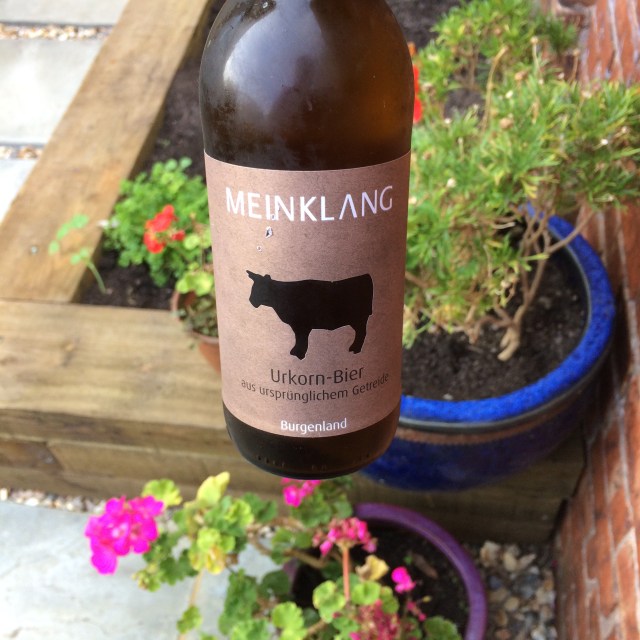
Burgenlandrot 2014, Meinklang – The Klang make plenty of more expensive wines, but as I’ve said before, a true test of a winemaker is their entry point. Burgenlandrot is their simply named, does what it says on the label, wine that ticks all the boxes. A vibrant, dark red with a nose of peppery cherry. The blend is Zweigelt, Gamay and St Laurent. Its fruit is quite intense, partly because it’s lifted by refreshing acidity. I’m guessing Winemakers Club are taking (of necessity) their “Central London Location” cut, but at £16 it still represents excellent value…if they have any left, of course. It’s a lot cheaper in Austria, about €10 with taxes, but after the petrol…I’m not complaining. Alcohol – 12.5%.

image

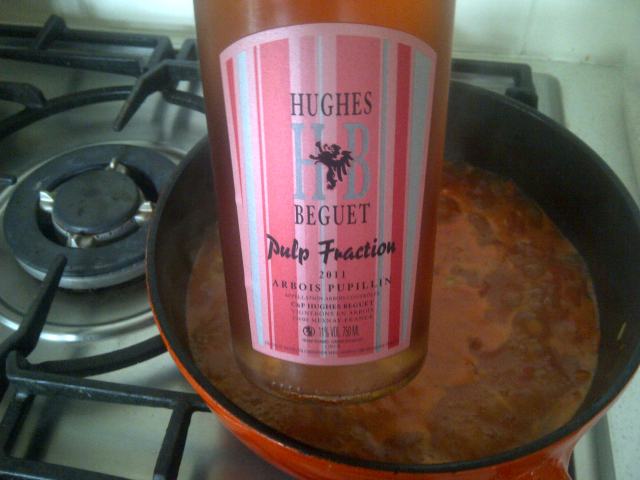
Arbois “Champ Fort” 2009, Patrice & Caroline Hughes Beguet – This is Poulsard, or I should say “Ploussard” (Patrice has another cuvée complementing this one from the Côte de Feule in the “World Capital of Ploussard”, Pupillin). Champ Fort is from a north facing site of grey marl in the family’s home village of Mesnay, just a minute or two out of Arbois. This aged example, which I bought from Patrice in 2014, has fruit, structure and maturity. It feels à point. Although Wink Lorch describes the Côte de Feule as the top wine in the range (in Jura Wine, 2014), this particular Champ Fort is, on reflection, probably the best of Patrice’s wines I’ve tried to date. Alcohol – 12.5%.

image

Fleurie 2010, Jean Foillard – This is one of the wines we drank at our son’s recent wedding. Everyone rightly raves about the Morgons from Foillard, but his Fleurie is a dark horse and is sometimes my favourite. This 2010 is drinking superbly now, a majestic wine, smooth, fruity but not lacking grip. Earlier this year I was talking to a member of the Foillard team, who told me that this wine was what they’ve been drinking at the domaine this year. ‘Nuff said. Alcohol – 13%.

image

Brauneberger Juffer Riesling Kabinett 2010, Schloss Lieser – The other wedding wine. Thomas Haag is one of my favourite Mosel producers, even though his castle, a little downstream from Bernkastel on the opposite bank, is a little forbidding. When you want something light to go with the fizz, beer, gin, B52s and rum, this is just the thing. But it’s the ability of wines even at this level to age well which makes them quite remarkable. Alcohol – 8%.

image

Prosecco Colfondo NV, Casa Belfi – My son’s elder sibling had a birthday a few days after the wedding and we were pleased to be able to celebrate it with her. This and the following wine engendered a deep discussion on natural wines with two of her friends deeply into sustainability and permaculture. Colfondo Proseccos are cloudy, bottle fermented without disgorgement. There’s a yeasty softness. The cloudiness often makes people wary, but there’s something elemental, by which I suppose I mean primitive, but in a positive way. A wine full of contradictions, yet emerging at the end in simple form with all its flavours on its sleeve. Not the most profound of wines, indeed not the most profound of Proseccos (Casa Coste Piane anyone?), but bursting with simple pleasure.

image

Albillo 2014, Vinos Ambiz – This is the third time I’ve drunk this in the past couple of months, the first being at the Raw Popup at the London Edition Hotel in early May. An orange, skin contact, wine from the Sierra de Gredos, made by Fabio Bartolomei, although “made” is hardly fair. Winemakers often say that a wine makes itself, but other than some organic sheep and goat manure every two years, plus a tiny bit of sulphur in some of the wines when required, that’s all Fabio does. This wine is slightly cloudy with peach, apricot and mandarin flavours balanced by a savoury note. You don’t notice the alcohol at all, remarkable! One of the most challenging wines you’ll taste all year, but assuming you like a challenge, this is fantastic. But be warned. Others may run at the first mouthful. Alcohol – 15%.

image

Behind the wine, our new hospitality venture,  “solitary bee”  apartments – airbeenbee

One of the guests was the guy with whom we made some wine from a Seyval Blanc plot last year. I have to say that the bottles of white had improved a lot with a few months rest post-bottling. They still weren’t good, but they were drinkable if very tart. But a step up was a batch given extended skin contact. It only managed 5.4%, so not really a wine. But it tasted quite nice. I was surprised. This year the task is to thin the bunches more rigorously so that the remainder ripen better. But it’s not looking all that good on the weather front and even my home vines need pruning back every few days with all this rain.

image

Zweigelt Kieselstein, Burgenland 2014, Claus Preisinger – I won’t say much about this as I drink it, and write about it, with some regularity. This is a light and fruity red with a little bite/crunch. This time we served it pretty cool and that worked well. It’s probably top of my list of great value Austrian wines. Again, like the Meinklang, this is at the cheaper end of Claus’s range, but none the worse for that. Alcohol – 12.5%.

image

L’Uva Arbosiana, Arbois 2014, Domaine de la Tournelle – Pascal and Evelyne Clairet are among a select group of Arbois producers who owe some of their inspiration, and skills perhaps, to Stéphane Tissot, but who have since gone on to form their own domaines, creating exciting wines of their own. The whole range from Domaine de la Tournelle is exciting, right up to their Vin Jaune. Yet not one of them is more thrilling than this lovely  carbonic maceration Ploussard. Is it a red, is it a pink? Who cares, it’s a totally delicious natural wine. It’s actually the first wine I ever tried from the domaine, which I purchased from Antidote, the restaurant near London’s Carnaby Street where some of you may recall we had one of our three New Beaujolais events last year. This bottle came from Dynamic Vines. I have a massive soft spot for this. Splosh it into a carafe, give it a shake, and enjoy. Jura wine at its most fun. Alcohol – 10.5%.

image

To finish, here are some Norwegian beers (mustn’t forget these, very nice, they arrived from Norway in a suitcase but I’m reliably informed that M&S have the prescience to stock the one on the right), and a sneaky peek at what we shall be drinking tonight – Domaine L’Octavin’s Cul Rond à la Cuisse Rose (pardon my French). White Ploussard, no less. 10.7% alcohol, FYI.


Posted in Austrian Wine, Jura, Natural Wine, Wine | Tagged , , , , , , , , , , , , , , | 2 Comments

A Toast to Aosta

A few days ago I realised that there is a small European wine region I’ve visited several times, whose wines I love, and yet I’ve never written about it here. Back in 1990, when Burton Anderson’s Italian Wine Atlas was published in a short lived Mitchell Beazley series, Aosta was the first region you came to. I was intrigued. Later, on so many trips to Italy, it has been the first I’ve driven through. I’ve often stayed up in the Gran Paradiso National Park at an Auberge with (at that time) an excellent Italian wine list, but under its owner’s knowledge and tutelage, I soon gravitated away from Barolo and Brunello to the local wines. Over the years I guess I built up an above average appreciation of them, for we have seen so few in the UK that hardly any British wine writers have had much experience of them. But that is changing, and when Jancis commented on one via Twitter, in reply to a post by Jane Parkinson the other day, I thought maybe it’s time to pull my finger out.

Aosta is usually cited as Italy’s smallest wine region with somewhere around 1,000 hectares of vines, most up on high terraces. These vines, commonly pergola trained, are equally often cited as the highest in Europe, at between 900 to 1,300 metres for the Vin Blanc de Morgex et de la Salle  (although the Swiss often claim that same prize for the vines above Visp in the Valais, those reach only 1,100m). What we do know is that Aosta (the town, the region and its vines) is surrounded by the highest peaks of the Alps, and from the north and west is only really accessible via the Mont Blanc and Grand Saint-Bernard Tunnels. All the regional sub-zones are located along the Dora Baltea River, which flows by the town, and if you enter the valley along the Autostrada which follows it you will miss the vines, along with some spectacularly perched castles, as you speed along the Aosta region’s fifty or so kilometres.

If you take the time to stop you will find the unspoilt valleys of the Gran Paradiso National Park, filled with wildlife (chamois and marmots especially) and more or less devoid of ski pylons. In Aosta itself, you will find abundant remnants of its Roman past, and along the route don’t forget to look out for those imposing castles like Fénis, Montjovet, Brusson, Sarre and Saint-Pierre, among many defending this essential trade and military route between France and the Italian states.

Aosta has a catch all DOC which, given how little wine is made from a diverse array of grape varieties, at least gives the region some sort of profile. But in truth, Aosta is better described through seven sub-zones. The furthest west of these, nearly as far west as Courmayeur, is Vin Blanc de Morgex et de la Salle, made from a regional variety also called Blanc de Morgex, or Prié Blanc in local dialect. This is a wine I was famously mocked for elsewhere when I described it as tasting like licking a rounded pebble from a cold glacial stream. But in my defence, I’ve tried that taste test for real in the Valgrisenche, on a short trek up to the refuge there.

Close to Morgex, travelling eastwards, comes the little village of Arvier with its ancient stone houses, twisting medieval streets, and Roman bridge. You will often read that the wine made (mainly) from the Petit Rouge grape variety, Enfer d’Arvier, is the region’s best red. That is in my view outdated, and you will find more interesting reds along the river. But that’s not to discount the wine’s appeal if you have never tried it.

Torrette, around the communes of Sarre, Saint-Pierre, Introd and Aymavilles, is capable of some very attractive wines today. Again, Petit Rouge is the mainstay variety, but there’s Dolcetto, Pinot Noir, Gamay, Gros Rouge and Fumin, along with other local relics. Fumin is especially worthy of exploration as a single variety, capable of making long lived reds of medium weight.

To the east of Aosta itself we find the sub-zones of Nus and Chambave. Although you can find decent red wine here, the two villages are more famous for their sweet wines, by no means the only dessert style wines benefiting from the alpine sunshine, shelter, and surprisingly low rainfall (averaging 500-600ml/year in the valley). Nus has Malvoisie Flétri, made from Pinot Gris/Griggio, whilst Chambave has Moscato Passito. Both are vinified from semidried grapes, flétri being the local francophone dialect word for the more common Italian passito.

After Chambave, the Dora Baltea river and the Autostrada which follows it, turn southeast, towards Piemonte. The two remaining sub-zones fit into the broadening valley here. First is Arnad-Montjovet, and then, by the regional border, Donnas/Donnaz (known widely by both its French dialect and Italian names). Nebbiolo is, perhaps not unsurprisingly, the red grape of choice here, often going under its local name,  Picutener. I’ll be honest and tell you that I’ve had very few Arnads, but I’m quite a fan of Donnas. These wines are lighter than those of the Piemontese zones around Barolo (Carema is just over that border), and they can also be leaner. But the wine I will be recommending below is capable of long ageing and shows off the potential delicacy of Nebbiolo when it is on form.

It’s probably a good time to recommend some producers, and their wines. Although I said at the beginning of this article that we see few of the wines of Aosta in foreign markets, small independent wine merchants, who can accommodate a few intriguing cases in their stores, are starting to catch on to the fact that the region’s best winemakers do crave some international recognition for what can be very attractive, and in some cases world class, wines.

I shall keep this list of recommended producers relatively short, so don’t think there are not many other names to check out. Keep an eye out for the Gambero Rosso wine awards each year – the Aostan section is of necessity small, but a good pointer to the best addresses.

Cave de Morgex et de la Salle – The Blanc de Morgex of choice is the Cuvée Rayon here. Along with the wet pebble, look for hay, herbs and stone fruit…but mainly stone. A pale wine, like Evian but more interesting (and alcoholic). The Cave’s Cuvée “Vini Estremi” does what it says on the bottle. Interesting, but more extreme. They also make a very worthwhile sweet wine from the same grape variety, a vin de glace called Chaude Lune, if you can find it.

Cantina di Barro – One of the first producers of Aostan reds that I began getting to know in detail. Their estate sits on the slopes above Villeneuve, and they produce several cuvées of Cru Torrette, including two Superiore (Clos du Chateau Feuillet and Vigni di Torrette). The main variety is Petit Rouge, with the addition of a multitude of both the familiar and unfamiliar: Mayolet, Vien de Nus, Fumin, Cornalin (of Swiss Valais fame) and Neblou. Even better, perhaps, is Di Barro’s Fumin. With more body than Petit Rouge, or Mayolet, it is often likened to Syrah. As with Trousseau in Jura, Mondeuse in Savoie, or perhaps Cornalin and Humagne Rouge over the border in Switzerland, Fumin is a truly distinctive regional grape of quality, in the right hands.

Les Crêtes – On the international stage it is arguable that Les Crêtes, founded by Costantino Charrère with other local partners, is pre-eminent in Aostan viticulture. This producer saved many of the local varieties from extinction, but also makes a famous Chardonnay, an estate which combines tradition and innovation. At 25 hectares in production, this is also the largest private wine estate in the province. My choices here, two whites and a red: Chardonnay “Frissonnière” Cuvée Bois (a perennial Gambero Rosso Tre Bicchieri Winner), the Petite Arvine “Champorette” (as good as almost any version you will find in Switzerland’s nearby Valais) and the Fumin “Vigne La Tour“.

Lo Triolet – A good range topped by a famous Pinot Gris, which comes with or without oak. Another wine you’ll find every year in many of the Italian wine awards.

Elio Ottin – The subject of the Tweets which prompted this article was Ottin’s excellent Pinot Noir, but he’s even better known for his Petite Arvine.

Anselmet – This house has vines from Torrette to Chambave, but is well known for varietal Fumin and Torrette Superiore. Good wines if you find them locally. Their Pinot Noir “Semel Pater” 2013 won a Gambero Rosso Three Glass Award for 2016, but I’ve not tried this wine.

La Crotta di Vegneron – This co-operative makes a wide range of wines, about 200,000 bottles per year, and has around 70 members . But they make the most accessible versions of the excellent sweet wines mentioned above, the Nus Malvoisie and the Chambave Moscato from semidried grapes. I’ve had Moscatos which have been aged for a decade and more, and they are concentrated, brown, wines, more like a passito from Pantelleria, off Sicily, than anything you might find in the Alto Monferrato an hour or two further south. They are open to visitors at Chambave.

The Cave des Onze Communes (you can certainly get away with using your French in Aoste) is at Aymavilles, at the start of the Val di Cogne, which is the most spectacular (but also most popular with tourists) valley of the Gran Paradiso, narrow in its lower reaches, but broadening towards Cogne, the main village surrounded by rising meadows and glacier encrusted mountain peaks. The Cave, in its own way, has quite a spectacular hillside setting, its modern building set off by the spruced up castle opposite. This co-op makes another wide range of wines, including possibly the best value, cheap, Pinot Noir in the valley…in a good vintage, along with a good Fumin, both aged in barricati.

Cave Coop de Donnas – This is the place to come for a different experience with Nebbiolo. They make a range, many with a label depicting the famous arch on the old Roman road which Napoleon followed on his return to France from Elba in 1815. The best of these is the Cuvée Napoléon itself, a selection, aged for 12-18 months in assorted wood. It’s so cheap you really can’t go wrong.

On the Tourist Trail

There’s a lot to do in the valley, or should I say valleys, including spectacular walking, from easy to extreme. For an easy day trek, start beyond the dam in Bonne, at the end of the lake, above the village of Valgrisenche in the valley of the same name, and walk up to the Rifugio Bezzi. You can get food there in the summer and walk back in less than a day, or you can climb higher to the other refuges which ring the Gran Paradiso. It’s not a long walk, but you will notice the altitude (just under 2,300m), so take care.

Visit some castles. Some prefer Sarre, others Fénis. The latter is a fairy tale medieval edifice, the former a hunting lodge of Vittorio Emanuele II. There’s a funny story that VE wanted to buy the castle at Aymavilles, the one near the cooperative, opposite, but his agent went and bought the wrong one. Both Sarre and Fénis are open to visitors, but there are many more castles, keeps and towers, including a large number of ruins of all sizes, which you will stumble across if you spend a few days in the region.

Spend a day, or at least a morning, in Aosta. The centre of town is the Place Chanoux. North of here is the Cathedral (the inside is much older than the facade) and the Archeological Museum. Walking east from the Place, you will pass the medieval Torre Fromage and through the Roman Porta Prettoria, and it is just north of here where you will find the ruined Roman theatre. At the far end of the Via Sant’ Anselmo you’ll find the Arco di Augusto and the Roman bridge. But in between, don’t miss the churches of San Lorenzo and Sant’ Orso. The latter has 10th Century frescoes (if you can gain access up there to the walkways), and a very attractive small romanesque cloister.

There are plenty of decent restaurants in Aosta, and wine shops too. But another place to look out for in the region is one of the branches of the local produce stores, Pain de Coucou. The store above Saint-Pierre (you’ll need a map but they have a web site) is the best stocked with local meats, cheeses, wines (mainly from the cooperatives, but a good selection from those mentioned above) and grappas (the grappa di mirtilli is worth checking out).

Fontina – this cheese has been devalued in its industrial version, yet the genuine mountain version, made from Valdostana cows, and made from a single milking, ranks alongside the famous French hard Alpine cheeses for flavour, being sweet and fruity but quite strong. It’s also a chewy cheese not dissimilar in some respects to Abondance. Good for fondue too, and it goes well with the local red wines, including Pinot Noir.

Posted in Aosta, Italian Wine | Tagged , , , , , , , , , , , , , , , , , , , , | 4 Comments

American Oddities (June 2016)

Every so often we go for a themed version of Oddities. It keeps everyone on their toes. Although more and more of us are buying American wines, which are much better represented in the UK than they were even five years ago, many said they had found it quite difficult to find much that was very odd. But they made a great effort. Surprisingly we only saw three South Americans, one example being badly corked, and all were from Chile (no Argentina!). But the north yielded some diversity with Canadian wines from two Niagara micro climates, Willamette, Yakima and Columbia Valleys in Oregon and Washington States, and of course California. It was the latter which stole the show overall with, I think, most people’s top three or four wines on the day.

Mariposa Vineyard Arvine 2014, White Heron Cellars, Columbia Valley, Washington State – A very rare sighting of this Swiss/Aostan native (though not of the Petite variety in this case). Lemon sherbet to the fore, a nice racy white with a little less breadth than you might find in the Valais. I thought this was quite delicious, though not a complex wine. I think I heard $12 mentioned and if that’s right, it would be a remarkable bargain (a few wines came back across the Atlantic in a suitcase).

image


Trousseau Gris 2014, Wind Gap, Russian River CA – Slightly broader with a waxy texture, possibly a little skin contact, but something a little steely about it, almost Riesling but not on the aromatic side. What could this be? Well, having drunk it and written about it a week ago, I felt a little silly not to spot this. As I said in that roundup of recent wines, this is no relation to Trousseau Noir, Jura’s darkest hued native variety. It used to go by the synonym Gray (sic) Riesling in California, and was widely planted before being grubbed up in all but a few old vine locations. But a surprisingly decent number of producers are making one now, probably due to Jura’s fashionability (though I’ve not seen Trousseau Gris even in the vine repositories I’ve visited there). Still, for all that, this is enjoyable if not profound. I think I like this wine more than many.

image

Johan Vineyards Grüner Veltliner 2013, Willamette Valley – Another major fail in identifying this wine on a table with several WSET Diploma holders and a MW candidate. I jest, yet when this was revealed it was so obviously full of white pepper. We just weren’t expecting GV from the Americas. A clean, fresh, and perhaps over-typical example, pretty decent though.

image

Boushey Vineyard Grenache Blanc 2014, Two Vintners, Yakima Valley, WA – If Willamette Valley is a drive south of Portland, Oregon, Yakima Valley is to that city’s northeast, in the State of Washington. This Grenache, which actually has 7% Roussanne blended in, is another unusual variety for this far north in the US, a variety we are more likely to know from the South of France. Its production is tiny, a mere 310 cases. It manages to keep a little of its typicity up here. It’s not as cool as one might think, being between Bordeaux and Burgundy in latitude with a continental climate. Syrah is becoming a favoured red variety. So you can imagine that although this was a decent effort, it was a little on the lean side despite over 13% alcohol. But Grenache Blanc is capable of producing better wines than we occasionally give credit for and I’d happily drink a bottle of this, if not buy a case.

image

Chardonnay Musqué 2013, Cave Spring Vineyards, Beamsville Bench, Niagara – Canada gets a first look-in with a wine from the increasingly high profile Niagara Escarpment’s Beamsville Bench. Most of the Niagara terrain is glacial deposits but there’s a fair amount of chalky soils on the benches too. Ice Wine used to rule. Now, Pinot Noir and Riesling are gaining a following for dry wines, but this Chardonnay variant is a rarity. Summers are warm here, largely due to Lake Ontario’s influence, and the movement of the airstream around the falls. So ripeness is rarely a problem. That said, Chardonnay Musqué does make for an unusual wine. I guessed some kind of Muscat, and there was a hint of it, but on reveal, this did have some cool climate Chardonnay characteristics too. Perhaps an oddity in several senses, but I enjoyed trying it. One or two didn’t like it but, as is often my take, I’d quite like to try a whole bottle, giving it a little more focus.

image

Steverjan 2014, Scholium Project, Rocky Hill Vineyard, Sonoma Mountain – This was my offering, and was (as I suspected) nailed on mere sight by Mr Rogers opposite me. This is Abe Schoener’s skin contact Pinot Grigio, a sort of mix on the palate between a pink, an orange wine and a white (in that order). It combines an almost fruit juice like texture with a subtle complexity. It’s one of Schoner’s least expensive wines (around £28 retail, I think), but one you can drink all day. Most found it delicious, certainly a top three placing. The name – the town where Gravner and Radikon make wine, what else!

image

Vineland Pinot Meunier 2011, Niagara Escarpment – Another Niagara wine, this fooled everyone, largely because it appeared older than it was, and because it was so “obviously”, to a few of us, a well aged Pinot Noir, although there might have been the odd shout for Virginia. Again, an unusual grape in an unusual location fooled us all, but on being told it was PM it seemed to make sense. I’m guessing it was planted on the Escarpment for its famous frost resistance, although frosts don’t appear to be as bad as one might think up there, with all that moving water and offshore breeze. Fascinating stuff, and it’s impossible to thank people enough for trawling New York wine stores just to bring things like this back for us to try.

image

Pleiades XXI, Sean Thackrey, California – No more specific designation, Thackrey has  crafted wonder blends from old vines in his Bolinas base for a few decades with just a cult following. My first ever Pleiades preceded the numbering system, bottled in 1995. XXI was bottled in 2011, and consists of Sangiovese, Viognier, Pinot Noir, Syrah, Mourvèdre and Marsanne, to name just some varieties. I thought I spotted Sangiovese (tick) and Nebbiolo (big cross). A wonderful wine, which hid the labelled 14.9% alcohol very well indeed. Complex, savoury and majestic, this was almost unanimously wine of the day.

image

Pistolero 2011, Viña Raab, Quilpué, Chile – Quilpué is a town about 10km inland from Valparaiso, on the cost just north of Santiago. It sits just south of the warm Aconcagua Valley, and Christophe Beau probably has no difficulty achieving the 14% alcohol on this unusual blend of Merlot and Pinot Noir. This is a well made, tasty wine from organic fruit and quite an interesting blend (I’ve had Pinot blended with Shiraz from Victoria and The Hunter Valley, but not with Merlot). But as Joel said, how was it going to follow the Thackrey? It did suffer a little in the attention it got as a result of that.

image

Unofuera 1994, Maipo, Chile – This old gem was the product of a collaboration between the late Paul Pontallier (Ch Margaux) and Bruno Prats (Cos d’Estournel) back in the days when Chile was wine’s wild frontier. Hard to think that this cost £4.99 at Oddbins back in the day. 100% Cabernet Sauvignon from a large (25ha) vineyard in the region, close to Santiago, where the Chilean wine story began. If only it were possible to buy a wine like this for £4.99 today (well, an Argentine Malbec costing under £5 at Asda has reputedly just won a Decanter Trophy in the 2016 DWWA, so we shall see). Needless to say, the Bordeaux pair didn’t mean to craft a £5 wine, and its subsequent incarnation went on to claim a better price. A momentary bargain which we were privileged to drink on Friday. If a 1980s minor Cru-Classé from Bordeaux were still holding up well, it might taste similar to this.

image

Viejas Tinajas Cinsault 2014, Secano DO, De Martino, Chile – Sadly, this was horribly corked. A great shame as there’s no reason why this relatively inexpensive wine, which I have enjoyed a couple of times over the past twelve months, couldn’t have been sealed under stelvin/screw cap.

image

Johannisberg Late Harvest Riesling 1978, Belle Terre Vineyard, Chateau St-Jean, Alexander Valley, Sonoma CA – Once a speciality of once famous Chateau St-Jean, this wonderful old brown wine showed lovely complexity, a rum-like smoothness, and a scent worthy of any old Mosel, except that this is an almost unique style. It has more in common with Rutherglen stickies in some ways, but with a mere 10.3% alcohol on the label. Words fail really, you just wish you had a case (the man who brought it did, once). Another close WOTD contender.

image   image

Zinfandel Port 1988, Christian Brothers, Napa Valley – The Christian Brothers winery is famous in the annals of Napa. Founded in 1882, there’s a tiny connection between this winery and Chateau St-Jean. When Japanese drinks giant, Suntory, bought St-Jean in around 1984, it was, at $40 million, the most paid for a Californian winery at the time. Christian Brothers was bought by then UK drinks giant, Grand Metropolitan in 1989 for a seemingly remarkable $150 million (estimated). Where are they now? This 1988 “Cali-Port” was the last vintage made by the famous winemaking monk, Brother Timothy. But aside from its historical significance, it’s a smooth and alcoholic example of a disappearing genre. In the rush to escape Napa’s high alcohol reputation, it would be a shame to see little (well, maybe little is a poor choice of word) gems like this disappear, a wine of another time and place.

image

Rochelle’s generosity extended beyond the most amazing chicken (I completely forgot to ask where they sourced it from) to the most enormous hunks of three English cheeses (it broke more than one heart that we couldn’t finish them, and there were ten of us), and an Eton Mess variant dessert. It gave a couple of generous attendees a chance to open these two beauties, off theme but so enjoyable…

image   image

Here are a few pics from the Canteen…

…and what we drank for afters at Winemakers Club…

Oddities lunches take place approximately every two months at Rochelle Canteen in Shoreditch. They are open to all, but they are first announced on Tom Cannavan’s Winepages site, on the wine forum. If you would like to come to a future event (there is no charge other than for food, usually up to £60 with a tip, and the bottle you bring), sign up there and keep your eyes open. 


Posted in Oddities lunches, Wine Tastings | Tagged , , , , , , , , , , , , , , , , , , , , , , | 1 Comment

Now We Have Sunshine (Recent Wines)

There’s something about a spell of sunny weather that makes me want to drink more wine. Something to do with long evenings and tables out in the garden. I thought I’d share a few recent bottles that seemed to fit the bill really well.

We have an Oddities Lunch again this Friday, and it’s devoted to The Americas this time. I could quite easily have taken the first wine here, Wind Gap Trousseau Gris 2013, Russian River Valley. This is a white with a tiny touch of skin colour. I’d been warned this needed drinking up, but it was a good bottle, fresh on the nose, with a waxy lemon palate, with fresh but not sharp acidity. This unusual variety is almost unknown in Jura, where it is not related to the region’s Trousseau Noir. In California it was known as Gray (sic) Riesling before Jura became fashionable, and most was pulled up. This wine is quite neutral, like some Southern French whites, but it does have some character, and a good reputation. And it does work in the garden.

Stockists: Try Roberson

image

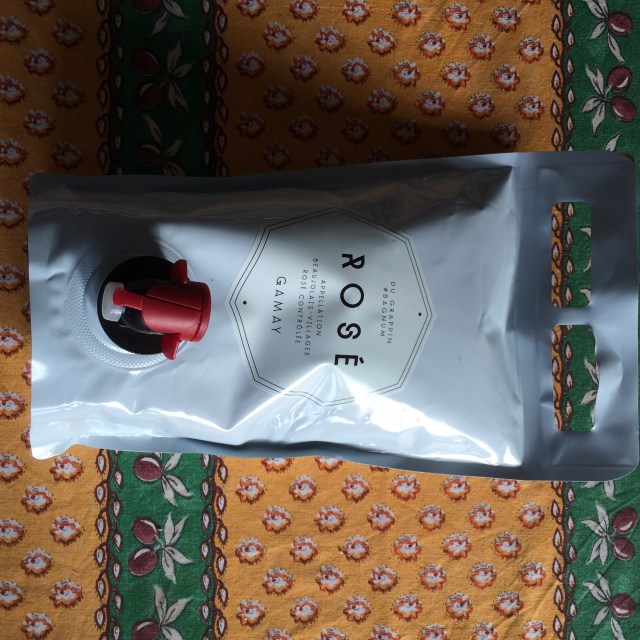
Du Grappin Beaujolais-Villages 1.5 litre #bagnum. This is Andrew and Emma Nielsen’s version of their Beaujolais-Villages in a bag. There’s no vintage on it, so not sure how that works, but as I bought it very recently it may be the 2015 I tasted at Raw Wine? Anyway, it’s a cracking bag of wine, not just a carbon footprint-reducing packaging format. Perfect for picnics and festivals, but this cherry cola was glugged in our back garden on the warmest evening of the year so far. These bagnums are highly recommended – there’s a Macon-Villages white, and a pink as well. The best thing is that they can be combined with other wines over several days (they are supposed to keep fresh for a couple of weeks, but surely no one will keep away from them for that long?).

Widely available at independents or direct from Le Grappin at their London market locations, or via mail order. Mine came from Solent Cellar

image  image

Champagne Ulysse Collin Blanc de Blancs Extra Brut “Les Perrières”. NV, but based on 2009 fruit, disgorged 07-03-2013, therefore with three years’ pda. It’s all Chardonnay, from Olivier Collin’s holdings around Congy. It’s not the most famous terroir in Champagne, but Collin is gearing up towards stardom and makes a very fine bottle, albeit already pushing beyond the prices charged by some quite good growers. Some say Extra Brut doesn’t age well. This has some maturity, but underneath a mineral, almost steely, structure. If you don’t like your Champagne to be at all bracing, this may not be for you. If you want to slake a thirst in the heat, with something which will then accompany food, then give it a go…if the price isn’t too shocking.

This bottle was purchased in Epernay at a good £10 cheaper than UK prices, but I have previously purchased Olivier Collin’s wines from Selfridges. The link is to a slightly different BdeB cuvée. North American readers may have a wider choice.

image

Almost the antithesis of Champagne is the fun concept of the pét-nat. It’s a style I love for its lively simplicity. The Loire, Jura and Austria are increasingly good sources of these wines, along with Southern France. This bottle, Domaine des Bodines Red Bulles, is made by a young couple, Alexis and Emilie Porteret, at their tiny domaine on the edge of Arbois. I love all the Bodines wines I’ve tried. Alexis did a stint at Domaine de la Tournelle, so he’s been well taught, and shares the philosophy of the Clairets – one I would describe as kindness to everything. Red Bulles is a sparkling Poulsard of unusual fruitiness and a wonderful vibrant pink colour. Bulles translates as bubbles (but, you knew that), so the pun is humorous, but I feel more invigorated by this than by any energy drink.

Purchased in situ, I’m afraid. You might have to go to Arbois for these wines, though I’m sure someone will let me know if I’m wrong. Certainly Californian readers will be able to call the excellent Selection Massale in San Leandro (or via their NYC and Chicago sales people).

image

Fabien Jouves “You Fuck My Wine” is a result of that old chestnut, the appellation regulations blocking certain grape varieties, in this case, Jurançon Noir. Fabien makes very terroir specific Cahors, but this wine is released as a Vin de France. It’s sappy, brambly, with crunchy fruit. Someone told me they thought this tasted like Malbec anyway, but not the sort of South American Malbec we have come to know. This has just 10.5% alcohol. I love it, and like the label, it’s a fun wine. But not as rebellious (in a good way) as the name might suggest, so it won’t frighten those unsure about natural wines. Jouves was all set to become a doctor before he turned to winemaking as a career. His 20+ hectares are biodynamic, and he seems to apply the sensibilities of a caring physician to his chosen path.

This one’s easier to find in the UK. The Sampler often stock a good range of Fabien’s wines and got a new delivery not all that long ago.

image

I visited Heidi Schröck at her winery in Rust last May, but I’ve enjoyed her wines for several years, currently via her importer, Alpine Wines. For some reason I’ve had a bit of a Heidi blitz in the past couple of weeks. I drank the very refreshing Blaufränkisch Kulm 2012, her fruity, dry, Gelber Muskateller 2013, and the concentrated yellow-gold Pinot Blanc Beerenauslese 2008. Heidi makes a variety of wines from her ten-or-so hectares, and she’s probably best known for her sweet wines. But I love the reds too. This Blaufränkisch is made from vines planted in the 1950s and it combines depth with really lively dark cherry fruit. She’s another winemaker who oozes warmth, both for visitors and for her wines.

As I said above, Alpine Wines bring in Heidi’s wines, for which I am very grateful. Rust is a long drive!

Argile Rouge 2011, Domaine des Ardoisières is a Vin des Allobroges St-Pierre de Soucy, made by Brice Omont near Freterive, on the Combe between Chambéry and Albertville. This IGT designation used to be called Vin de Pays des Allobroges and I first came across its wines in the very early 2000s. I think it was a co-operative wine, which I bought near Evian. Anyway, it was tart and acidic enough to remember it well. But Brice Omont unquestionably makes some of the best wines in Savoie today. This red is made from 80% Gamay (de Chautagne) and 20% Persan. Gamay with bite is how I’d describe it, or just a damned good wine.

Vine Trail in Bristol bring in Brice Omont’s white and red Argile, along with his top white, “Schiste”. This bottle came from Solent Cellar, but I’m not sure they have any left?

image

It may be a little bit past spring, but I’m throwing this wine in at the end as we drank it at the end of May, when “Beaujolais Season” in our house usually hits full stride. Yvon Métras Fleurie “Le Printemps” 2013 is cherry red in colour, cherry scented and it tastes of cherries too, simple as that. Though it’s not simple to craft such a delicious wine, where the fruit bursts on the tip of the tongue and again on the back of the palate. Essence of Beaujolais, and delicious.

This Métras Fleurie was procured in one of Paris’s natural wine shops, though I can’t rightly say which one because on my trip there last summer I did buy rather a lot of Beaujolais.

image


Posted in Austrian Wine, Beaujolais, Champagne, Jura, Natural Wine, Rust, Wine Agencies | Tagged , , , , , , , , , , , , , , , , , , , , | 6 Comments

Of Austria and Ostriches

If you read this Blog regularly you’ll know what I think of Austria – it’s the most exciting wine country in Europe right now. Let’s face it, I’ve probably written that phrase enough times this year for it to have become boring. But I exist in a little cosmopolitan bubble. In the wider world, Austria still figures only a little on wine shop shelves, it’s hardly mainstream. It’s almost as if much of our wine trade are ostriches when it comes to the wines of Austria, failing to realise just how good they are. There are a few older books on the country, but if you wanted to keep on top of what’s happening in Austria via the written word in the past few years, you’d have had to find something like the Vinaria annual Weinguide, in German. But like parts of that country, the Vinaria Guide is pretty conservative in its tastes. The great estates are lauded, but you don’t get to see the work being done by the younger generation.

Now there is, finally, a good, up-to-date book on the country, The Wines of Austria by Stephen Brook (Infinite Ideas, 2016). Many will know Stephen Brook as a writer and contributing editor for Decanter Magazine. He’s also perhaps better known for his works on Bordeaux and California, but he’s actually spent a lot of time in Austria over the years, ever since his post-student days in the 1970s, and there’s no doubt that he truly appreciates her wines.

image

You might have heard the term “Austrian Wine Revolution”. Austria is unusual, in that it might be said that it has undergone two wine revolutions. The first involved rebuilding confidence after 1985 diethylene glycol scandal (the antifreeze scandal to the tabloid press). The adulteration of wines, intended to be sweet, with this agent which gave the appearance of sweetness, took Austria out of UK and US wine shops for years when I was young. The result, the DAC system of wine appellations, is now one of the strictest in Europe, and the country’s important wine families fought back strongly with quality, to re-establish Austrian wines on the international market within little more than a decade.

The next revolution is the one which is happening now. It involves a strange coincidence – that so many of Austria’s wine estates are being turned over to a younger generation. This generation has traveled and worked internationally, and they also seem to be far more environmentally and ecologically conscious than their parents’ generation. Biodynamics is certainly not new in Austria (Brook points to the famous Wachau estate, Nikolaihof, converting in 1971), but today it seems almost as if most of the top estates follow this path. And natural wine is a major movement too, in a country which still has fewer than 50,000 hectares of planted vineyard.

That first wine revolution was led by a two-pronged attack: Kracher and Opitz leading the charge to establish Austria’s sweet wines from around the Neusiedler See on a level with the great dessert wines of the world, and the Wachau region’s top producers putting their greatest white wines, from Riesling and Grüner Veltliner grown on the steep slopes flanking the Danube’s northern bank, on a par with top White Burgundy.

The second revolution is being fought elsewhere, in regions such as Wagram, Burgenland, and even Vienna. Austria’s palate is being excited by a palette of exciting grapes extending beyond Grüner to Roter Veltliner, Rotgipfler and other autochthonous varieties, perhaps achieving their apotheosis in the Wiener Gemischter Satz field blends of the capital’s hills (I’m so pleased Brook acknowledges that “Vienna is capable of producing truly excellent wines that bear comparison with those from more prestigious regions of Austria”). But it’s really the Austrian red varieties which are now beginning to grab attention: Blaufränkisch, Zweigelt and Saint-Laurent, and often, these wines are made with minimal intervention, the whites frequently in amphora or concrete egg.

This is perhaps where I differ from Brook in my appreciation of Austrian wine. As you probably know, I adore the classics. It was the likes of Kracher, Prager, Knoll and Hirtzberger on whom I cut my Austrian teeth. But I can’t agree that cloudiness in one of Claus Preisinger’s Grüners is “alarming” (has he not seen Christoph Hoch’s Kalkspitz?). I find it boundary-pushing myself.  I don’t find some of the natural wines he has tried “hit and miss”, and I would not concur that biodynamic, orange and natural wines are a “fad”. Indeed, Brook states that he is “no fan” of natural wines. That’s fair enough, and despite expressing such sentiments, he is generally fair, often balancing such comments, and there’s no denying that such wines are indeed “Controversial”. But when he states that, in relation to orange (skin contact) wines, “the good wines tend to be outnumbered by the flawed wines”, I think that is a situation which pertained a few years ago, but that this has largely been reversed by improved winemaking decisions – often merely scaling back the time juice is left on its skins.

The reason we would beg to differ is quite simply explained, but it does go to the heart of “what is wine?”. Brook’s assessments are based on a fault criteria which has guided wine professionals in the UK since we began to appreciate wine centuries ago. His conception of what makes a good wine is followed by the established trade, and by established wine writers. I would claim, as someone who has grown up with French classics I can often no longer afford, that I know a faulty wine when I see one. But some wines straddle the edge of what is faulty and what is not.

Sometimes it is these boundary pushing wines which show real excitement, something new…when they get it right. Like Punk in the 1970s, New Austria has its rough edges, but it is through innovation and experimentation that adventurous producers reach for something new and sublime. I guess I just want to experience that experimentation, because wine appreciation ought to be a continuing journey, not one where we arrive at Pauillac or Vosne, or in this case, Oberloiben and Illmitz, and park the Jaguar. The bars and wine shops of places like the East End of London, and New York’s Lower East Side might not yet have credibility with the wine establishment, but like CBGB’s and The Marquee Club, their influence will be felt.

The Wines of Austria follows a fairly standard format for a wine book. A very good introduction sets the historical scene, then a chapter on grape varieties follows, before the meat of the book – the individual wine regions. In these Chapters each region is introduced before we get producer profiles of the region’s best domaines (for Brook, one or two of mine are missing, but not many). The book rounds off with a chapter on vintages, before a good Glossary and an index of wineries (which confused me at first, until I found Gut Oggau under “O”, Oggau being merely the next village to Rust, not a producer’s surname). There are four pages of atmospheric colour photos in the middle of the book. I’d have liked to see more from this exceptionally photogenic wine country, and perhaps some producer portraits. I accept that this would have cost money, but I can’t help recalling how Mick Rock’s brilliant photography enhanced Wink Lorch’s book on Jura Wine.

In the acknowledgements to The Wines of Austria, Brook alludes to the fact that it was not a book on Austria that he was originally asked to write for Infinite Ideas. I don’t agree with all of his assessments, nor do I share, quite obviously, all of his tastes. Yet I still have no hesitation in recommending the book to anyone interested in this most exciting wine country. Well written, thorough, professional and erudite, if a tiny touch conservative in the way of most older wine writers, but I have no criticism to make of genuinely held beliefs, and I am sure he’s a more experienced taster than I am. It is actually refreshing to see someone express an opinion in a wine book, especially as Brook acknowledges a great deal of assistance from the various Austrian wine bodies, a tiny fraction of which a poor wine blogger would envy, and which, so obviously, has had no direct influence on what he has written. Thank you Stephen Brook for taking the trouble to write it. If you want to learn about Austrian wine, do buy it.

The Wines of Austria by Stephen Brook costs £35 (h/b), although a p/b version is due to be released on 30 June (£30, Infinite Ideas)


Posted in Austria, Austrian Wine, Wine, Wine Books, Wine Writing | Tagged , , , , , | 2 Comments

Solent

Elderflower Restaurant, on the cobbled street leading to Lymington Quay,  is gaining a very good reputation under chef Andrew Du Bourg (previously Head Chef at Chewton Glen and Club Gascon) and wife Marjolaine. They provided the canapés and crudités for the Fifth Anniversary Tasting of Lymington’s gem of a wine shop, Solent Cellar. Elderflower has been open just over two years. Like that other Hampshire hidden gem restaurant, Verveine in Milford-on-Sea, the decor at Elderflower gives little away about the standard of cooking. Before I talk about the wines Solent presented on Sunday, I have to say that the French Black Pudding canapé, one of several stunning mouthfuls, was as good as anything I’ve put in my mouth at any London two-Michelin-starred restaurant.

It’s fitting, as one happy customer said, that Elderflower and Solent Cellar should team up for this Anniversary tasting. I’ve said it before, but sleepy Lymington, on the edge of the New Forest, comfortable in its Georgian past and smart yachting present, really does not know how lucky it is to have a wine shop that would thrive in the competitive environment of London. It’s a store which, of course, caters for a Champagne day out on the Solent or a week of sipping rosé for Cowes (or should that be the other way round, perhaps?). But they have a passionate team who adore wine – Simon and Heather having been lately joined by Rob Caswell, whilst former helper, Julien Bailly, has serendipitously moved over to Elderflower as front of house.

So what Simon and Heather have done is create a list which includes serious fine wines and Champagnes (not forgetting local beers and a growing local gin selection), along with rather a lot of wines which reflect their own fascinations – hence a good Jura offering and not a few natural wines as well, the sort of stuff they feel is maybe “too weird for Lymo”, but they sell anyway because a large enough number of people like me make the trip down, just to see what’s new. The wines I’ve picked out from the tasting below cover all those bases, from well chosen wines at around £10/bottle up to the top. And the wine I enjoyed with dinner that evening was one of the cheapest wines on show!

The Fizz – Villa Marcello Prosecco is a clean and fruity version of this much maligned wine, and I include it here because it’s one of the nicest “normal” Proseccos I’ve had in a while. At £13.49/bottle that’s not surprising, but if you are after a good party fizz this one works. I did pick up a Prosecco a little more to my taste for home consumption, Casa Belfi Prosecco Colfondo. Colfondo Proseccos are cloudy, left on the yeast lees in the bottle. At just 10.5% alcohol, the Belfi will be gracing lunch in the garden fairly soon, weather permitting. But Simon did say that one splits opinion right down the centre when they have it on taste.

At the other end of the scale, and this is typical of Solent Cellar, they had some Roederer Cristal 2007 open. I’m not one to turn that down. I do drink a bit of prestige Champagne on my travels, but Cristal, very rarely.  This was obviously so young, and to be honest if you popped a 2007 now you might be wasting £135. But still…not going to turn down a sip. My tip from Solent’s Champagne portfolio, André Clouet Cuvée 1911. Says a lot about this shop that they truly understand Champagne.

image

The Whites – A couple of less expensive wines impressed. The first is no secret, it’s fairly easily available, Saladini Pilastri Falerio. The 2015 has a base of Trebbiano with Pecorino and a splash of Chardonnay and Passerina. It’s quite delicious, but not run-of-the-mill (£8.99).

image

Anselmo Mendes Alvarinho Contacto 2015 is, as you’d expect, like a skin contact Vinho Verde. Just six weeks on skins then four months on lees, a grassy nose and a nice, freshly textured palate (£15.99).

Laissez-faire Fiano, Larry Cherubino 2015 was my pick of the whites. Mineral citrus, and a hint of nuts, a fresh “natural” wine, the grapes for this wine from the Laissez-faire range coming from Frankland River (WA), Delicious, with the prospect of improvement in bottle. This was a sample, but Solent plan to list it at £20.50, which is cheaper than I’ve seen it elsewhere.

image

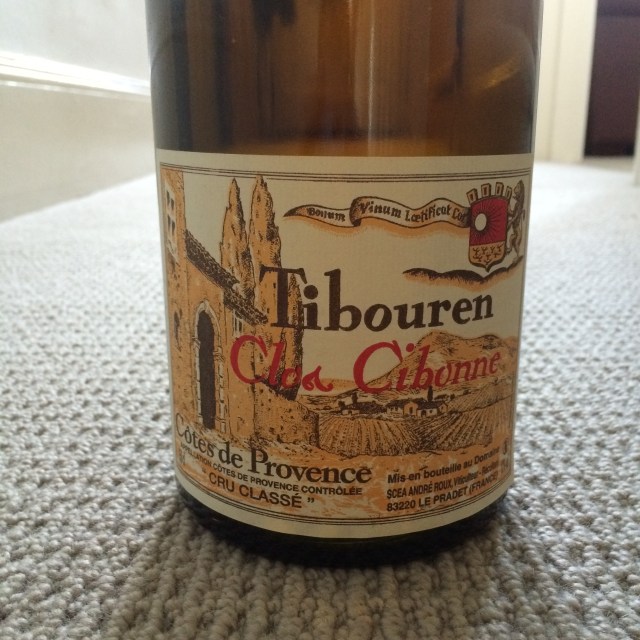
The Pink – A lot of people seemed to be going for the Ott pink, yet at least two people described Chateau Cibonne’s Clos Cibonne Tibouren as the wine of the London Wine Fair. I’d be inclined to agree, having had the same wine at Red Squirrel’s trade tasting last year. Whilst Solent have the big brother Tibouren (I think at around £18, or £42 for a magnificent magnum), the wine on taste here was the entry level “Tentations” cuvée. It’s a negoce wine, and it only contains a little (15%) of the rare Tibouren grape in the blend, along with Grenache, Syrah and Cinsault, but it’s just a lovely Provençal pink. Apricot/peach nose and peach stone or minerals on a dry palate (£13.99).

image

Domaine Treloar – Many readers will know the wines of Roussillon’s Domaine Treloar really well. For those who don’t, English winemaker Jonathan Hesford and New Zealander Rachel Treloar were both working close to the Twin Towers on the day they were destroyed. It made them rethink a few things, and via New Zealand’s Lincoln University Department of Oenology, and Neudorf Estate, he and Rachel ended up near Perpignan with around ten hectares. Rachel was over in the UK to show her wines personally.

image

Sorry this is a touch dark, Rachel

All of these wines are both very good, and more importantly, stunning value, as exemplified by the bone dry One Block Muscat 2012 (£9.99). If you find Muscat too flowery, this might change your mind.

Terre Promise is a low intervention white blend of Macabeu, Grenache Gris and Carignan Blanc. Fresh, dry, quince. Apparently named after Springsteen’s “Promised Land”. Jon is a big music fan.

Of the three reds on show, the One Block Grenache 2014 is new to me. It has bite and crisp fruit, tannin and good length. None of the flabby, jammy, flavours which can spoil some inexpensive examples (£10.99).

Three Peaks is possibly the best value wine Treloar produces. This 2012 is a nicely aged (it sees a bit of oak) blend of Syrah, Grenache and Mourvèdre (£11.99).

Their top cuvée is called Tahi, which apparently means “1” in Maori. It’s made from individual parcels of Syrah, Grenache and Mourvèdre on limestone (unusual for Roussillon), aged 12 months in small, new, French oak, and then a barrel selection determines what the production level will be. The 2010 still has some toasty oak, with a touch of almond stone. Amazing length, this is a very impressive wine at six years of age. It will go another six years too, if you let it (£20).

The Reds – 

Eschenhof Holzer Blauer Zweigelt 2013 – A wonderful quaffing red with crunchy purple fruit and light body. From Arnold Holzer in Wagram (Austria). This was the wine I had for dinner after the tasting. Delicious, coming back for more, Simon. (£10.99)

Weingut Thörle Spätburgunder 2014 – This Rheinhessen Pinot (from Saulheim) is a wine I’ve had several times. Good colour and one of the best inexpensive German reds out there (£14.99).

Sancerre Rouge “Sauvage” 2011, Pascal Jolivet – Another attractive Pinot Noir, but this one is a bit more serious, to say the least. You are paying Burgundy money here, but you get Burgundy quality, from one of the best red winemakers in the village. (£38)

image

Morgon “Cote du Py” 2014, Foillard –  The 2014 is a structured wine which needs time to age, but I didn’t find any of the brett some tasting notes have mentioned. For me this is exemplary (though see the magnums selection, below). (£22)

image

Vasco and the Explorers Touriga Nacional 2015, Stellenbosch – Rob, minding the reds, thought I might not go for this. Perhaps he thought the relatively high alcohol could put me off, I’m not sure, but this is a very inexpensive (£9.99) rendition of the Douro’s signature grape, grown down in South Africa. Not complex, yet vibrant. Pretty good for a tenner.

image

“Alion” 2011, Ribera del Duero – A very fine wine, all vanilla oak and elegant, sweet and juicy fruit. A baby, from the Vega Sicilia stable. £55, but delicious, and eminently cellarable.

image

The Stickies – I just tasted the two Coume del Mas Banyuls wines, white (2012, £17.99) and red “Galateo” (2011, £21). I have a soft spot for Banyuls and Collioure, the region and the wines. I’ve not been there for a very long time and I’d love to go back. The white here is a clean wine, made from Grenaches Gris and Blanc, not made in an oxidative style and, presumably, not of the type stuck outside in demijohns to age in the sun. The Galateo red is also clean. It’s fortified on its skins to reduce oxidation. Both wines are aged for around six months, the white in barrique and the red in larger casks.

Celebratory Magnums – Solent Cellar stock an increasingly decent number of magnums and to finish off, we were all treated to three gems: Raveneau Chablis 1er Cru, Montée de Tonnerre 2004, Fritz Haag Brauneburger-Juffer Sonnenuhr Spätlese, Mosel 2002 (Grosser Ring Auction bottling), and Foillard Morgon “Cote du Py” 2011. All of them were stunning. The Chablis and the Morgon clearly prove how superior the magnum format is (or, as a friend said in another place, “how effortlessly superior”. The Haag perhaps shaved it for wine of the day, it being no ordinary bottling, but one of the Auction versions so prized by German Wine aficionados. It was also the one wine of the three I had not previously tried in mere mortal bottle format.

image

A fabulous end to what was more than a mere merchant tasting. The food, and the wines on offer, made it a pretty special Sunday afternoon, in a very pretty town. Elderflower (4A Quay Street) and Solent Cellar (40 St Thomas’ Street) are two reasons to visit Lymington. The Saturday Market and the yachts are another. Make a weekend of it, visit Keyhaven and take a boat to Hurst Castle, then eat turbot at Verveine in Milford as well. But don’t forget a walk in the New Forest. All highly recommended.

image

Posted in Dining, Wine, Wine Merchants, Wine Tastings | Tagged , , , , , , , , , , , , , , , , , , , , , , , , , , , , , , , | 2 Comments

The Funk, The Whole Funk, and Nothing But The Funk…Raw, Part 2

One nation under a groove, that’s what Brick Lane in London feels like on a sunny Sunday in early summer. You wander along, bumping into what seems like every race on earth, most of whom are sampling the cuisine of every nation on earth. It’s the kind of place which can restore your faith in humanity. It was pretty much the same in the Old Truman Brewery where the Raw Wine Fair was in full swing on Sunday, exhibitors and visitors alike. The air was saturated as much with a beautiful vibe as with the perfume of spilt and spat vinous delights.

You can read Part 1 of my Raw Report here, covering four Austrian producers. In Part 2 I’m profiling just seven more wine estates (out of the 217 present). Only a snapshot, I’m afraid, but I hope it adds to the coverage of the Fair by others. They include three French producers, two Spanish, a Czech and a Greek. No Italians, although they were the biggest exhibitors, closely followed by France. Italy is ripe for natural wine exploration, but I know many of the producers quite well, and with the exception of Le Grappin, whose wines I know very well indeed, all the producers profiled below were either new to me, or people I’d discovered only a week before.

Domaine de Kalathas, Tinos, Greece (Cyclades)

I’m not going to pretend I knew where the Greek island of Tinos is, although I can locate the Cyclades on a map. This is where the Binda family have established their vineyard, old vines left uncultivated for fifty years until they came along, centenarian vines among the lavender, on the island’s sandy granite.

Jérôme Binda is the winemaker, aided by mentors Jason and Thomas Ligas (of Domaine de Ligas in Northern Greece, another domaine to seek out if you don’t know them), but it was his son, Gabriel, who took me through the whole range. Most are made with local varieties, although there’s an Asyrtiko (sic), which is pretty well known now, and they have a Syrah called (appropriately) “Le Français”, from vines on pink granite and clay. The reds are pretty tannic at the moment, having just been put in bottle for the Fair. For me, the red “A Quatre Sur L’Echelle”, blending Mavro Potamisi, Mavro Tragano and Koumari showed the most exciting flavours. But perhaps the whites are the most interesting wines anyway?

image

A Rozaki, “Très Vielles Vignes de Vangelis” 2015 was fresh and herby. A sur lies bottling of this grape, “Vorias”, was fresh with more complex flavours. A blend of 20% Rozaki with 80% Aspro Potamisi, from 100 year old vines, called “Sainte-Obéissance”, smelt of pure lavender and violets, whilst “10+12”, coming 100% from Aspro Potamisi de Livaderi, was the most complex of these whites.

image

Gabriel Binda with the Asyrtiko (sic)

The Asyrtiko was perhaps the most fascinating bottling. The estate’s Asyrtiko vines are still young, and the juice was macerated for three weeks on the skins in 2015. At the weekend this tasted quite tannic, too tannic really. Gabriel said that for 2016 they will shorten the maceration period by at least half. But with vine age and this adjustment I think this wine will be superb. Even in this sample, of which only forty bottles were produced, there was a lovely peach and apricot fruit, melding with an orange peel bite. Enormous potential, whether it softens through age, or whether it is tweaked in future vintages.

image

The Kalathas range. The Asyrtiko is the bronze one.

Domaine de Kalathas is a brand new domaine introducing their first wines to the British public. They don’t, as yet, have a UK importer. Perhaps they are a work in progress, but there’s great promise here. Along with a firm commitment to biodiversity, the estate works off-grid, relying on solar power for energy, and local wells for water. One to watch.

Milan Nestarec, Moravia, Czech Rep.

Moravsky Zizkov? Me neither. This is where Milan Nestarec has his 8 hectares of vineyards. I have drunk Czech wine before, even Moravian wine – some of you may remember the lovely wines from Stapleton & Springer, including an orange Pinot Noir we were quite taken with, at the April Oddities Lunch. There’s certainly something going on in this patch of Central Europe. I tried three wines from this table, but the winemaker wasn’t present so I didn’t get much back story. It was all left to the palate.

The first wine, a Sauvignon Blanc 2014, was a shock. Quite dark in colour, almost brown, it kind of smelt like Sauvignon Blanc, yet it tasted like none I’d ever tried…in a good way. Concentrated, and almost sweet, so pronounced was the fruit, it’s a wine you want to drink a whole bottle of rather than rely on just a tiny sample. But a promising start, to say the least.

image

Next up, a Gewurztraminer, labelled Tramin, from 2013. I’m going to be hypocritical here – I so often shudder at wild descriptors, but “crème brûlée, whisky and woodsmoke” was my immediate reaction and I’m going to stick with it.

The final wine I tried looked like it was going to be a pét-nat, presented in a thick, clear glass, bottle sealed with a crown cap. But it was a still, palish Pinot Noir called Forks and Knives (2014). Just deliciously fruity and quaffable, as they say.

image

Milan has no UK importer, and I think at least one, perhaps two, agents have shown an interest. Whilst these wines are on the unusual spectrum, they are very good and genuinely exciting. I hope they work something out.

Domaine Yves Duport

I wrote a short piece on Bugey back in January (here). In that blog post I said that we are seeing more and more Bugey producers in the UK, and it might be the case that I’ll need to revise my prediction that Savoie is the next up-and-coming French wine region. Bugey sits not so neatly between Jura and Savoie, and to an extent takes its grapes from both sources, whilst stealing a few classics, like Pinot Noir and Chardonnay, from not so distant Burgundy.

Yves Duport’s wines only got a minor mention in that article, so it was nice to taste a small selection at Raw. I began with his Altesse de Montagnieu “En Chinvre” 2015 (bottled in February). It’s one of those fresh and mineral grape varieties (Altesse is actually a synonym for Roussette, a grape seen far less in Bugey than it once was) which can’t help remind you of a fresh-flowing mountain stream. The beauty of this version is that the acidity isn’t too prominent. The terroir of the En Chinvre parcel is full of amonites, and you can’t help but find an echo of them in the wine, just as in Chablis. I already had a bottle of the 2014, which I plan to open tonight.

I’ve talked before about the traditional méthode ancestrale wines of Bugey. The Duports make a méthode traditionelle sparkler, fermented in bottle before undergoing disgorgement. It’s a blend of Chardonnay, Pinot Noir and Aligoté, fermented with indigenous yeasts, with 12 months on the lees. It is therefore a clean wine, crisp with precise fruit, rather than a wine of great complexity – though that might come with bottle age.

Yves makes several Mondeuse, the signature red grape of the French alpine regions. The top of the range, single parcel, cuvée is called “Sous le Château – Terre Brun”. The 2014 was vinified in three-year-old Burgundian oak, perhaps not wholly inert. Although I often enjoy the sappy fruit of this grape unattenuated by wood flavours and effects, the fruit of this parcel is such that I think this quite impressive wine has real potential, and will certainly get even better in a year or so as the tannins soften. Right now it does need some mountain ham and cheese, or something finer.

This is a very good range, which also includes a Chardonnay and Pinot Noir. Yves’ wife showed me a nice 3-dimensional topographical map of the region. It shows the curve of the pre-Alps around the right bank of the Rhone, with the Duport family’s vineyards around the village of Groslée nestling, protected, in the lee of the mountains with the Bresse plain to the west, and the large mass of the Lac du Bourget to the east. The wines are imported by Totem in the UK, and, as with the bottle of Altesse I found, are often available in small independents like Winemakers Club.

image

Didier Grappe

Didier Grappe is a producer I’d heard of but never tasted. There are probably two reasons for this. First, he is located at St-Lothain, a no-man’s land in some ways between Poligny and Lons-le-Saunier. There is viticulture around here but it tends to be small scale, and Didier has only around 4 ha of vines, slightly more than the only other producer I’m aware of in the village. That’s the second reason – not much to sell. Arbois, further north, seems to have dozens and dozens of small producers, but down here you are on your own.

Didier doesn’t even have enough wine for the Poligny wine shops, like L’Epicurea. He is, like Yves Duport (above), imported into the UK by Totem wines, but I think much of his production goes to the USA, that great devourer of Jura’s small labels. Wink Lorch, in her profile of Grappe (Jura Wine, Wine Travel Media, 2014) points to the organic/biodynamic local wine fair, Le Nez dans le Vert, as the great shop window for these small producers, and Didier has certainly been showing his wines there for some time. He warned me to telephone before I visit in case he has no wine left to taste.

I tried five of Didier’s wines. The Chardonnay 2015 sample was fresh and gluggable, and the 2015 Savagnin Ouillé was zingy, in a fruity “Tramin” style, yet had real presence. Insouciantes 2015 is a blend of Pinot Noir, Trousseau and Poulsard, sealed now under screwcap to conserve the evident freshness. There’s a Vin Mousseux de Qualité NV called Clash, the label bearing a drawing of the iconic image from the cover of London Calling. Didier is a massive Joe Strummer fan. It’s a 50:50 blend of Chardonnay and Savagnin, bursting with freshness, simple but in the best way. I finished with a very intense, sweet but not cloyingly so, Vin de Paille 2011, which hits the 14% alcohol required for this AOC exactly. Savagnin is the grape, four years in oak the regime. There was a Vin Jaune 2005 listed in the guide, Didier’s first, but it was not available when I visited his stand.

image  image

Bodega Cauzón

This is one of the domaines I tasted at the Raw Wine pop-up at the London Edition Hotel last week, but it was good to catch up with Ramon Saavedra again, albeit in broken Spanish and French. The domaine sits high in Andalucia’s Sierra Nevada, with vines between 1,080-1,200 metres. There’s just 2.5 ha of red vines on red soils, but the grape mix includes international varieties like Syrah and Cabernet Sauvignon, Spanish classics like Tempranillo (aka Tinta Fina here), and local rarities. The range is mainly red, but there’s a lovely fresh Cauzón Blanco blending Chardonnay, Sauvignon Blanc, Viognier and Torrontés, which I especially liked. Imported by Otros Vinos.

image  image

Cauzón Blanco and Ramon Saavedra

Vinos Ambiz

Another domaine I tried at the Raw Wine pop-up last week. Their orange Albillo was the wine of the night and I was able (eventually) to grab a bottle of it at the on-site shop on Sunday. I was able to fit in three more Ambiz wines before lunch.

A Sauvignon Blanc underwent two weeks maceration on its skins, then between two and three months in an amphora. It vied with the Nestarec Sauvignon Blanc for SB of the year so far, although my friends in New Zealand might disown me for saying that once they saw the wines in glass! Another whitish-orange wine is called Malvar, after a grape variety more commonly used for brandy. This was a 2015 bottling, really fresh but with texture. Then I tried my first Ambiz red, a lovely juicy Garnacha 2014, which disguised its 14.5% alcohol really well (as did the Albillo last week).

Fabio Bartolomei is the winemaker/owner. He’s of mixed Italian and Scottish parentage and has a great sense of humour (and has retained a Scottish accent too, a bit of a shock at first when you know his name but have never met). His is the back label in the photo near the beginning of Part 1 to my Raw Wine round-up. He makes his wine in the Sierra de Gredos, at El Tiemblo. He’s taken over the old co-operative building there, and makes about 8,000 litres of wine in a building capable of producing 1.5 million litres, according to the biographical details on the Raw Wine web site. That’s about nine or ten wines each year from 3 ha plus some bought in grapes. In the vineyard he uses no chemicals, apart from the manure from a herd of sheep which he allows to graze between the rows at certain times of year. He adds nothing in the winery, and uses recycled bottles too. Very green.

image

Fabio

Le Grappin

Last but not least, Andrew and Emma Nielsen’s Burgundy micro-negociant. Of course I know these wines well, and so do many of you. They range from the great value and innovative “bagnums” (I bought one only the day before the Raw Fair), through Beaujolais and Macon, to the exquisitely crafted wines from the Côte d’Or.

On taste at Raw were seven wines:- Savigny Rouge ’14; Savigny Blanc ’14; Beaujolais-Villages (red) ’15; St-Aubin “En L’Ebaupin” Blanc ’14; Beaune Grèves ’14; Fleurie ’14 and Beaune Boucherottes ’14.

All of these would be good bankers in your cellar and, let’s face it, if you are reading this in the UK they probably are in your cellar. I will say that the Fleurie 2014 just gets better and better. Andrew reckons it is drinking brilliantly now. He’s right, but I can’t bring myself to finish the few bottles I have. The Boucherottes, which comes from a plot next to Pommard and just below the Clos des Mouches, is silky and lovely. It is usually my personal favourite of Andrew’s reds. I liked it when I first tasted it from cask in a previous vintage. The Saint-Aubin comes from a plot I know from the days when I used to stay in La Rochepot and used to slink round the back of the hill, a lovely quiet place. But as the Côte d’Or wines become necessarily more expensive (hail has not been kind to Le Grappin), it is good to know that the 2015 Beaujolais-Villages is mighty tasty as well.

image

Andrew on usual good form

That’s just another seven producers for Part 2. You can read about four Austrians in Part 1 by following the link near the beginning of this post. There are, of course, other producers I would like to have mentioned, but aside from stamina to keep typing, I lacked the tasting stamina to visit all of the producers I wanted to. That goes for the Real Wine Fair as well.

It can be frustrating to miss an opportunity to taste, and to chat with, favourite winemakers, although it has been nice (at both fairs) to discover new producers as well. Elisabetta Foradori, Anton Van Klopper, Tom Shobbrook and Michael Seresin are all people I’d have liked to meet, but at least in three of those cases I have a good selection of their wines at home.

Like a good art exhibition, the balance between the organisers (getting revenue from attendees and satisfying the exhibitors) and the visitors (actually getting to a crowded table, and then avoiding spitting your wine over someone at the spittoon) can be difficult to achieve, and this is what stops some of us persevering until the bitter end when the hall is indistinguishable from the concourse at Victoria when waiting for the 18.06. But it is worth the effort of attending just to taste an unparalleled selection of some of the most exciting winemakers around, and these events are always relatively empty if you arrive when the doors open (which to be fair, the organisers recommend, it’s just that they go unheeded by most). Certainly, over the two fairs (Raw and Real) I have discovered some marvellous wines and some interesting people. I hope you’ve got some idea of the fun from my blogs on them over the past month.

image

Needless to say, this was around 10.15


Posted in biodynamic wine, Natural Wine, Wine, Wine Tastings | Tagged , , , , , , , , , , , | 1 Comment