Out The Box Young Importers 2019, Part 1

The Out The Box “young importers” tasting took place on Tuesday 1 October at what has become its usual venue, The Crypt on the Green, beneath St James’s Church in Clerkenwell (London). The rather flattering name of this tasting event is actually pretty apt, because the importers who show here are reasonably young. The event brings together some of the smaller importers whose ranges are definitely among the most exciting available in the UK. I got absolutely soaked to the skin walking to the station and were it not for the opportunity to taste such interesting wines I’d probably have turned around and headed home for a warm shower. I’m glad I didn’t.

There were six importers showing in Clerkenwell. Part 1, here, will cover 266 WinesSwig and Uncharted Wines. Part 2, which will follow, will cover Graft Wine Company (the newly amalgamated Red Squirrel Wines and The Knotted Vine), Carte Blanche Wines and Maltby & Greek.

img_7672

266 WINES

266 Wines has only been going since March 2019. The company is run by Ben Slater (ex The Sampler), and its mission is to import interesting wines made without heavy manipulation. It was my first chance to taste a selection from the “266” portfolio and boy did they have some interesting stuff on show, not least the Georgian wines, including two sparklers, made by an ex-Champenois and his Georgian wife.

Champagne Charles Dufour “Bistrotage B10”, 2010 (Côtes des Bar) Charles Dufour established a 6ha estate at Landreville in 2010 when the family estate he was running was split up. He’s become a bit of a star, especially for his “Bulles de Comptoir”, but this new wine is made from a parcel owned by his mother, Françoise Martinot, at Celles-sur-Ource. The nose is stunning, I mean what a start to a tasting. 100% Pinot Noir aged in a mix of neutral barrel and stainless steel for a year before six years on lees in bottle, it has a slightly oxidised feel, bruised apples and soft autumn leaves under foot. Very vinous and gastronomic, and very likely of slightly lower pressure than some Champagnes. Nothing aggressive about it.

img_7607

Ori Marani “Nino” Brut Nature NV (Igoeti, Shida Kartli, Georgia) This is the first of several wines, including two sparklers, from the Kartli Region of Central Eastern Georgia. Bastien Warskotte and his wife, Nino Gvantseladze, set up their domaine in 2017 and the wines, which only landed in the UK a week ago, are quite exciting. The limestone soils in Kartli are particularly good for sparkling wines, and Kartli, and Imereti where some fruit is sourced, are cooler than Kakheti to the northeast. The Nino cuvée is a three grape blend of Tsitska, Chinuri, and Goruli Mtsvane, which are all initially aged half in qvevri and half in neutral oak (I think this is the regime for all their wines). The period in bottle on lees was a year and a half and this cuvée was disgorged only at the end of August. There’s a lively bead and mousse, and flavours of frothy peach, nectarine and pear. It finishes dry.

Ori Marani “Areva” NV (Igoeti, Shida Kartli, Georgia) The previous wine might appeal to more traditional palates, and it is remarkably good, but this is the wine to try if you are a vinous adventurer. The blend is currently Takveri, Chinuri and Goruli Mtsvane, gently direct pressed and bottled in the January following harvest to preserve freshness and aromas. The wine is pink, verging on pale red and sealed under crown cap, with lower pressure creating a kind of petnat style. Honey from Imereti (where Bastien sources some fruit) is used for the liqueur to start the second fermentation and this comes through as a touch of richness on the palate. The dominant flavours are pomegranate, cranberry and strawberries. It’s slightly more unusual than it sounds, but I really have to get myself a bottle of this. It’s around £16 to the trade (DPD and ex VAT), ever so slightly cheaper than Nino.

Hiyu Wine Farm “Falcon Box” 2017 (Oregon, USA) This is a truly remarkable wine, though very expensive. It’s a blend of Pinots Noir, Meunier, Blanc and Gris, Aligoté, Chardonnay and Melon de Bourgogne, all from the far north of the Oregon, almost in Washington State. Hiyu is a 30-acre farm with pigs and cows, orchards, a market garden and just two hectares of vines, which are farmed without any synthetic chemical inputs whatsoever, using a mix of biodynamics and permaculture. They use oils and tisanes to combat disease. This wine is a field blend, apparently inspired by what the Corton Hill on the Côte de Beaune might have looked like before phylloxera. 

This is so savoury. It has lovely balanced acids with a smoothness that helps it slip down. The problem is that you really want to savour this over time, and a tasting doesn’t allow for that. Mind you, I was lucky to taste it at all. It retails for £90/bottle at The Sampler and much as I would not dispute the price for such a unique wine, it is very much for those above my pay grade.

img_7610

Ori Marani “Mariam” 2018 and Ori Marani “Nita” 2018 (Kakheti, Georgia) These are two still wines made by Bastien Warskotte at Igeoti (see above), proving he has wider talents than merely those imposed by his Champenois origins. “Mariam” is made with Chinuri sourced from Okami, Lamiskana and Kartli, with three weeks on skins, aged partly in qvevri which keeps the fruit pure and allows the lees to circulate, and partly in neutral oak barrels which add complexity and a different kind of texture. Even the nose is textured here. The wine is broad and rounded, and there’s more texture on the tongue. As with most Chinuri, it makes for a versatile food wine.

Nita” is a red blend from Chumlaki and Kakheti fruit. The varieties are Saperavi (40%) and Rkatsiteli (20%) plus Cabernet Sauvignon (40%). Only 500 bottles were made of a light and luminous palish red in a “fruit juice” style. Cranberry, strawberry and raspberry fruit and a little grip to ground it. Delicious.

Weingut Schmelzer Zweigelt 2015 (Burgenland, Austria) This is yet another interesting biodynamic and natural producer based in Gols, on the northern shore of the Neusiedlersee. Since 2013 no sulphur has been added to any of the Schmelzer wines. This Zweigelt is off loamy soils and is aged in neutral oak. The style is fresh and pure, which is how I like my Zweigelt, but there is a little bit of grippy texture which adds a degree of structure. This wine scores on great value for money (just under £10 DPD, ex VAT).

img_7613

Artuke “Artuke” Rioja 2018 and Artuke “Paso Las Mañas” 2017 (Rioja, Spain) This is a new find by Ben, a Rioja producer based in the Alavesa village of Baños de Ebro and I will provide a note on two of the Artuke wines which make for a good contrast. The cuvée named after the producer is a carbonic maceration Rioja from the Alavesa sub-district. It may be a youthful wine with dark and red berry flavours to the fore, but it comes from a single site and biodynamic fruit. It’s like glass-coating, joven, cherry drops. Pretty cheap at around £12 retail.

Paso Las Mañas is quite different and a more serious proposition. It comes from Artuke’s highest altitude vines, is darker (in colour and tone), and is glass-coatingly big and already hinting at complexity. Definitely a terroir wine, with tobacco flavours peeking out behind the fruit, and this is because Artuke avoid negating terroir with oak and over extraction (as can be the case with modern Rioja). This cuvée is one of the “purest” styles of Rioja you are likely to come across but, I think, quite serious stuff.

Although that’s the last wine from 266, I have to admit frustrating embarrassment…there were two wines on a final page of the tasting book which I missed. They were Smokeshop Band Spring Ephemeral Grenache (Oregon) and Scholium Project “1MN” Cinsault. If only I could go back and taste those, but I can’t. They are more than worth looking out for.

img_7615

img_7606

Ben Slater of 266 Wines with partner Dawn Mannis of The Sampler

SWIG

Swig has been going longer than many, but their youthfulness doesn’t lie in the time they’ve been around, but in the energy the folks here put into sourcing some of the most exciting wines in the room. I know Swig’s portfolio pretty well, and the task when tasting here is not to just hit the wines I love and miss new producers. I think I managed partial success.

Badenhorst “Papegaai” 2018 (Swartland, South Africa) The inexpensive Cape Parrot blend from Adi Badenhorst is irresistible. Chenin Blanc dominates (80%), but with a lot more added by the Palomino, Roussanne, Verdelho and Grenache Blanc. At 12.5% abv it majors on freshness, but it has a little weight as well. Classic pear and quince, finishing with a pebbly texture that adds something extra.

img_7616

Vignoble du Rêveur “Artisan” 2018 (Alsace, France) Of all the lovely wines made by Matthieu Deiss and Emmanuelle Milan, from Bennwihr fruit, this is my favourite, so I was very happy to taste the latest vintage. It was bottled in August and isn’t yet officially released. Pinot Gris and Gewurztraminer are harvested together and macerated ten days on skins before gentle pressing into concrete tank for fermentation. The grapes are picked ripe but ensuring no bunches have botrytis. No sulphur is added. It’s an orange wine, but not one with really overt texture. The smooth fruit is redolent of tangerine orange and grapefruit, with perhaps a more tropical side as well. Long and satisfying, I hope I can find some before it’s all gone.

img_7617

Guy Breton Beaujolais-Villages “Marylou” 2018 (Beaujolais, France)  This is one of Guy’s entry level wines, named after his daughter. The key to its appeal lies in very healthy grapes, from young vines (young for Breton at 30-50 years of age), harvested from his plots at 450 metres, above the Côte de Py at Saint-Joseph, just outside the Morgon Appellation. Pure bright cherry results from two-weeks of carbonic fermentation. The juice is super clean, with no lees after gentle pressing. An extra dimension comes from a bit of spice and a little grip. Gorgeous stuff, Beaujolais just as Jules Chauvet would have wanted.

img_7618

Lourens Family “Howard John” 2017 (Western Cape, South Africa) Franco Lourens, who learnt his trade with Adi Badenhorst and is also an assistant Winemaker with Chris Alheit, has sourced fruit all over Western Cape for this impressive red blend of Cinsaut, Grenache, Syrah and Carignan, and has named it after his father. The wine sees nine months in older oak, is very bright and has a mix of concentrated cherry fruit and a touch of olive and garrigue (or should I say Fynbos?). It has a touch of the Languedoc about it, also enough tannin to suggest it will age a little further, perhaps.

img_7619

Domaine de Maupertuis Bourgogne “Les Brûlis” 2017 (Burgundy, France) This is not the Auvergne domaine of Jean Maupertuis, but don’t be disappointed. This domaine is based at Saint-Bris, near Chablis, in Burgundy’s far north, and a region from which increasingly interesting wines are coming. The Pinot Noir vines for this cuvée are thirty years old and the wine is given six months on lees (no oak) to give us a wine that has lovely fruit character, quite elegant and not at all lacking ripeness, but with restraint too. It’s a lighter style, and for “Burgundy” is pretty good value (£13.35 to trade, ex VAT). In many ways a much better bet than a cheaper Bourgogne Rouge from the Côte d’Or, I’d suggest.

img_7620

Domaine L’Horizon Côtes Catalanes “Mar y Muntanya” 2018 (Roussillon, France) This is a long-time favourite Roussillon estate of mine. Based in Calce, up the Agly Valley in the hills northwest of Perpignan, Tomas Teibert (whose father-in-law is Franz Stockinger, of the famous Austrian cooperage) makes increasingly lauded wines from very old vine stock. The region is packed with other great producers (Pithon, Roc des Anges, Matassa and Gauby to name just four) and Tomas was helped very much by Gérard Gauby when he was starting out. “Mar y Muntanya” is made from 45% Syrah, 45% Carignan and 10% Grenache. It’s not perhaps what you might expect of this wild garrigue. Made by semi-carbonic maceration, it has a lightness and elegance, but the fruit is mouthfilling, all the more satisfying after the intense perfumes of the wine’s bouquet. It’s essentially a wine of terroir, but with a lighter, and perhaps more modern, touch.

img_7622

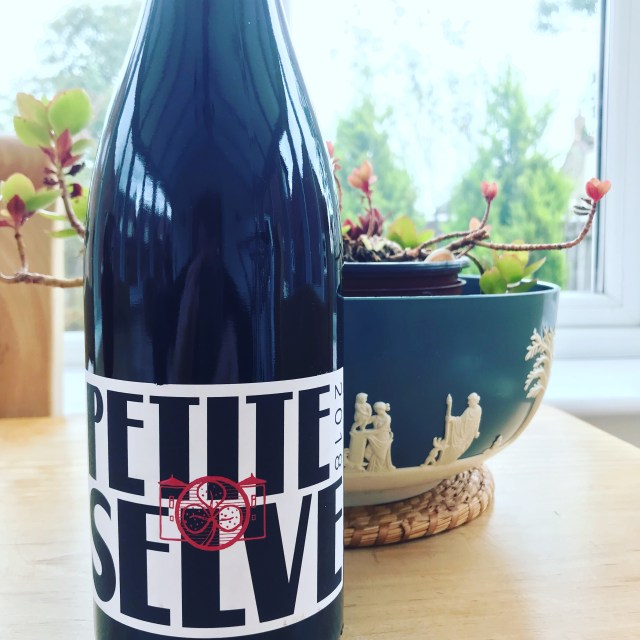
La Vigne des Pères “Petit Père” 2016 (Saint-Joseph , France) I’m sure some of you have read several reviews of the Champagnes of Bruno Paillard on my site, usually presented in London by his daughter, Alice. Well this estate is run by Bruno’s son/Alice’s brother, Aymeric Paillard. After making some winemaking travels with his wife he worked a while with Delas Frères and Stéphane Ogier, before managing to purchase vines near Tournon, opposite the Hermitage Hill on the Rhône’s right bank. These vines had suffered terribly from rot and other fungal diseases and the vineyard took a lot of work to rejuvenate.

Now in good health, the vines, interplanted with herbs and flowers and worked by a horse called “tartiflette”, produce a gorgeous, and I must say impressive, Syrah. Farming is organic but not advertised as such. There are tannins and structure, as one would expect from a serious attempt at St-Jo, but the wine is so pure, and I thought the fruit was pretty amazing…blackcurrant, pepper, herbs. A new name to follow in the Northern Rhône, for sure.

img_7623

UNCHARTED WINES

Rupert Taylor founded one of the most innovative wine companies for many years when he left a famous name importer to concentrate on something he’d been developing for a while – wine on tap (aka keg wine). The idea that quality wine can be purveyed just like beer, from a “tap” in a bar, was quite revolutionary at the time. Now it is commonplace and much of that is down to Rupert and his team. As Uncharted Wines has developed they have also added more wines in bottle, but the sense of adventure which came with the keg wines has filtered through into this more traditional delivery method. Nothing is short of excitement.

img_7647

Rupert with Miss Wine Car Boot, Ruth Spivey

The keg wine samples were mostly all freshly splashed into clear sparkling wine bottles for tasting. This meant that the wines were all able to show of their best. I began by tasting Domaine Rougeot Bourgogne Aligoté 2018 made in the modern style, ie fresh and fruity without any piercing battery acid. It’s very good, and perhaps the ideal wine bar wine for late summer into autumn. Another cracking white, straight from the keg, was Hans Wimmer-Czerny Grüner Veltliner “House Wine” 2018 from Fels in the Wagram region, which many will know is somewhere that quality has rocketed in recent years. This is a wine normally bottled in litres, so it’s obviously a simple wine for glugging. It adapts really well to the 20-litre keg format. Biodynamic, unfiltered, light and refreshing.

The best of the white wines in keg was probably Westwell Wines Ortega 2018, from Kent in England. The fruity-floral nose characteristic of Ortega but with something else akin to buttered toast haunts the bouquet. On the palate it’s straight and fresh grapefruit with a good lick of refreshing acidity which doesn’t intrude. I’d buy this in a bar if I was thirsty, and it would go nicely as a half-pint. If, as I think is the case, it’s the same wine as the Westwell Ortega that doesn’t go into amphora, then it has 11.5% alcohol.

From bottle…

Sybille Kuntz Riesling Kabinett Trocken 2015 (Mosel, Germany) Sybille Kuntz is an exciting producer based in Lieser, a neighbour of Thomas Haag at the Schloss. I’ve followed her wines for several years and recently some of the big boy (or rather, girl) wine writers have been taking notice. I feel wholly vindicated. Note the vintage here. 2015 was a superb Mosel vintage, one of the best in recent years. Acidities were good and so this Kabinett Trocken has been able to age. It has a big bouquet and an explosive palate, a lovely wine even at this level. 12% abv, but don’t look for the delicacy of its prädikat sibling.

img_7628

Succés Vinicola “Expériencia” 2018 (Conca de Barberà, Spain) Mariona Vendrell and Albert Canela studied winemaking together at Tarragona and were only 20 years old when they set up their estate from vines owned by Albert’s family in 2011. I met this engaging young couple at a tasting in Soho almost a year ago to this day (3 October 2018). There I tasted “Expériencia” 2017. The 2018 is still 100% Parellada from Conca fruit, coming in at a nicely balanced 12% abv. It has a bit of texture because half the fruit is direct pressed and half has some skin contact. Lovely. Although there’s no photo, Uncharted also had their Cuca du Llum 2017 on taste. This is a light red made in the glouglou style from a very promising local variety, Trépat, with nice crunchy fruit. These inexpensive wines are a real find.

img_7629

Hermit Ram Sauvignon Blanc 2018 (Canterbury, New Zealand) Theo Coles must make the most interesting wines in New Zealand, surely? This is Sauvignon Blanc so removed from the usual “savalanche” norm that it is unrecognisable. In fact some might think it is unrecognisable as wine. The bouquet is peachy (honestly) at first, before you smell the scent of deep gooseberry. It sees a very long but gentle skin maceration, so it’s not too textured and it is fairly linear. But its cloudy goodness reveals something complex, with a savoury umami element. I love The Hermit Ram, possibly my favourite range of wines that Uncharted sells.img_7630

Red from keg…

Domaine Rougeot Bourgogne-Passetoutgrain 2018 (Burgundy, France) This traditional blend of Gamay (30%) and Pinot Noir (70%) is just what you wish all Passetoutgrain could be, “smashable”. Both varieties are harvested together (I believe the co-planted vines are south of Meursault, towards the main D974 road), and co-fermented too, as whole bunches. The result is fruity, no more, no less but from a keg, absolutely on the nail.

Le Grappin Côtes du Rhône 2017 I don’t actually know where the grapes come from, and I ran out of time to email Emma or Andrew today, but if it’s the same fruit as their bottles and bagnums, then it may be from down at Nyons (in the Drôme, close to Vinsobres). Their commitment to keg has been consistent, and their wines, with forward fruit and good acid balance, seem just made for the medium. Rupert did say that this cuvée is best glugged fresh from the keg (it was delivered on tap here). It has a lovely hi-toned fruit bouquet and is just so refreshing. In so many ways this is just what keg wine is all about.

And from bottle…

Westwell Wines “Field” 2018 is another triumph from Adrian Pike, near Ashford in Kent. I hardly ever get so geeky as to give clone numbers, but Adrian feels it’s important to know that the Pinot Noir in this blend is clone 667 and the Chardonnay is 96. I feel as out of my depth on this as Noel Fielding pretends to be on the Bake-Off. The grapes ferment in open top stainless steel and have a tiny bit of sulphur added at bottling, that’s all. The wine is rich in the scents of strawberry and apple with a touch of the old herbs from somewhere deep within. The palate has cherry, strawberry and pepper. Only 1,000 bottles of this lovely wine were made and I like it very much, thank you. The unpressed skins went to Burning Sky Brewery to make a saison beer.

img_7634


Posted in Artisan Wines, Georgian Wine, Keg Wines, Natural Wine, Sparkling Wine, Wine, Wine Agencies, Wine Merchants, Wine Tastings | Tagged , , , , , , , , , , , , , , , , , , , , , , , , , , , , , , | 1 Comment

Les Caves de Pyrene Drinking Outside the Box Tasting 2019 (Part 3)

This final part of my coverage of the large and rather magnificent 2019 vintage Les Caves portfolio tasting (or at least the London leg) contains well over thirty wines, so I won’t waste time on introductions. If you haven’t read my preliminary and explanatory comments at the beginning of Part 1, it might be worth following the link here.

Part 2 covers various terroir categories formulated by the team at Les Caves as a way to allow tasters to look at some groups of wines from diverse geographical locations, yet which share the characteristics of a particular set of soils, climate etc. You should find that Part 2 sits below this Part 3 on my site.

If you don’t plan to read my intro it might be helpful if I point out that from all these wonderful wines I have given three hearts (♥♥♥) to those of which I am most enamoured. It’s purely subjective, wines I react to on an emotional level rather than being a reward resulting from organoleptic analysis.

ALL ABOUT THAT GRAPE (Around the world in twelve Pinots)

In my case make that seven Pinots. The standard on this table was incredibly high with four wines awarded the hearts (and one missing out probably because I worry that you think I just love everything…which isn’t far from the truth in this particular case).

♥♥♥Kelley Fox Wines Mirabai Pinot Noir 2017 I’m on solid ground here as I bought some of this very wine and vintage after tasting with Kelley earlier in the year. Right now it’s remarkably pure, heavenly even. But although I bought this cuvée in the hope that it will drink a little sooner than some of her others, I’ll stick my neck out and say it still needs a bit longer and will indeed age magnificently, which tasting it again confirmed. From the Maresh vineyard in the Dundee Hills, this shows the vineyard’s characteristic strawberries and spice freshness. Kelley is becoming a real icon producer. “Keep it secret, keep it safe”.

img_7525

Vini Viti Vinci Bourgogne Coulanges La Vineuse 2016 VVV is a negoce based in the western part of the Côtes d’Auxerre, in Avallon, not far from Vézelay, where in sight of the magnificent Romanesque church Bernard of Clairvaux got the Second Crusade rolling in 1146. Apparently, the church contains relics of Mary Magdalene…so easy to digress, isn’t it…The wine, which incidentally appears to be one of the few from this negoce which doesn’t wear a risqué label, had good linear Pinot fruit and a bit of smoky spice. It has a “northern edge” and is quite cloudy, but the acid-fruit-texture ratio is spot on. An interesting diversion into uncharted Burgundy well worth following.

img_7526

♥♥♥Tillingham Wines Qvevri “Tinop” 2018 Ben Walgate makes so many different wines in his artisan winery near Rye that I can no longer keep up. However, it’s his qvevri wines, buried under an oasthouse on the farm, which interest me most. Qvevri Pinot Noir is not something you taste every day, but one sip of this is enough to suggest that perhaps we should. A beautiful medley of fruit, texture, length and fruit acidity. A friend who has tasted all Ben’s 2018s tells me he rates the vintage at Tillingham as spectacular. On this evidence (and the white wine which follows later), I’m willing to agree. Sadly only 400 bottles were made of this and I’m already fearful of missing out. Wonderful experimentation that works astonishingly well.

Domaine Christian Binner Cuvée Béatrice 2017 I bought a bit of Binner when it first came over, and the first wine I drank was a Pinot Noir. It’s a proper wine, serious stuff, but one so full of fruit that you don’t need to prostrate yourself in front of it. It comes from old vine parcels on a conglomeration of very complex soils close to the Kaefferkopf Grand Cru, near the Binner family’s home village, Ammerschwihr. Viticulture is as one would expect from a CdP producer, but picking is always later than most of their neighbours. Vinification involves ageing in very large 100-year-old foudre. A lovely wine, but one I think you’ll agree has something different to it.

♥♥♥Les Cailloux du Paradis Pinot Noir 2016 In the viticultural loneliness of The Sologne, the area of marshes, forest and small lakes so beloved of hunters and vaguely close to Alençon, near the Rivers Loire (north) and Cher (to the south), the Courtois family magic from their cauldron the most wonderful natural elixirs. How they got here is a long story but one ultimately worth pursuing elsewhere if you have time. Claude is the father, who now retains a couple of hectares with which to make the Racines cuvées. His sons, Julien and Étienne, both make wine themselves, separately but close together, and if I have it correctly, the Les Cailloux du Paradis wines are largely made by Étienne (the youngest of the two sons), with occasional help from Claude. It’s pointless writing a tasting note here. You have to experience such wonderful creations yourself. The minerality sings like a fine soprano, but it is the sheer life in the glass which sings the loudest.

♥♥♥Domaine Saint-Pierre Pinot Noir “Les Corvées” 2018 Fabrice Dodane farms around six hectares at Mathenay, just outside Arbois and close to where we have friends, so I’ve been following him, from vineyard manager to estate owner. I came to hear about him several years ago, during which time he’s become a rising star, albeit quietly. Most of his vines lie between St-Pierre-sous-Vadans and Vadans itself, where the soil is notably more limestone than the usual marls of the region, but Les Corvées is an Arbois site of gravel over Jurassic grey marls, located between the town and Montigny-lès-Arsures, presided over by the now famous “Tour de Curon”. Several well known natural winemakers have vines here.

This may be the best wine I’ve had from Fabrice so far. Pale, luminous, cherry scented (like those “car sweets” you get in a tin at service stations), it’s stunning and impressive yet so drinkable.

img_7533

Celler Batlliu “Biu de Sort Negre” Pinot Noir 2017 This comes from Borda de Cebria, specifically Pallars, in one of the sub-zones of Costers del Sègre in inland Catalunya. The region has begun to get a name for international varieties, and at altitude it is possible to ripen Pinot Noir without losing acidities. That is what you get here, the grapes being farmed at 850 metres. The wine is made completely in stainless steel, fermenting with punchdowns and then aged in tank as well, “reductively”. The fruit has a little structure and a lot of flavour. Alcohol is a balanced 13%. So impressive, yet I’d never even had a sniff of this before.

img_7534

ALL ABOUT THAT GRAPE (Native grapes and Field Blends)

Les Cailloux du Paradis Racines Blanc 2016 We’ve just had one of the Courtois wines, but this (as with its sibling red in Part 1) is from the “Racines” line made by Claude Courtois from his retirement patch of two hectares down in the Sologne. It’s a blend and what is in it is difficult to say as there are as many as forty varieties on the joint family properties. Certainly there’s Sauvignon Blanc and Chardonnay (or so I was told, and I know they have some very old Orléans clones of the grape, maybe 90+ years of age). There’s also Menu Pineau (another ancient variety which also, oddly, occasionally goes by the synonym “Arbois Blanc”, though I can’t discover a Jura connection). I found the wine intense and appley, but not an acidic apple variety. Someone else put it really well – “hoppy sour beer”. Don’t let that put you off, it was superb, if encouragingly different.

img_7540

♥♥♥La Garagista “Loup d’Or” 2017 I won’t dwell over a wine I’ve written about before this year. Deirdre and Caleb make wines in cold climate Vermont, from American hybrid vines, and they really prove how good these varieties can be. In this instance we have the Briana variety, a hardy cold-resistant cross, close to Muscat, only bred (in Wisconsin by Elmer Swenson) in 1983. The result is intensely perfumed (floral, orange citrus and a hint of marmalade) and the palate is not remotely “foxy” (referring to the fox aroma of many US hybrid varieties). Tasting this, as with all of the Garagista wines, I can only exclaim YESSSSSS! So good…so interesting…mind stretching stuff.

img_7537

Ramaz Nikoladze Tsolikouri “No Skin Contact” 2017 This wine comes from one of my two or three favourite Georgian producers. Nakhshirgele, in Imereti, is the location. The wines are made in qvevri, but usually (in this producer’s case) without extended skin contact. The fruit was directly pressed into the clay pots, fermented 18 days, then left 5-6 months before racking into fresh jars until bottling. The wine is quite linear, but that line is lovely and clean, acidities are fresh and the overall flavour is lemon citrus. My bottle at home has a lot of sediment, perhaps worth noting.

Piquentum “Crno Vino” 2017 This is made from Téran (from the Refosco family of grapes) in the Croatian region of Istria. I used to buy this producer from a small importer who I don’t think exists any more, so I was pleased to see Les Caves take them on a while ago. The Téran clones here have red stems, unique. Acidity is pronounced, but in a way that refreshes. As well as bramble fruit you get flavours and scents of iron and iron filings, perhaps a touch of blood…like wines made from the Fer Servadou variety in Aveyron, France.

Okro’s Wine Saparavi Budeshuri 2017 Okro’s Winery is in the village of Manavi, in Eastern Georgia’s Kakheti Region. I didn’t know this producer until I bought a mixed case of Georgians as recommended by Doug Wregg, and I was somewhat enthralled by their Mtsvane. This is just as impressive and, most important, equally enjoyable. It’s an intense qvevri red with big legs and very pure juice, made by completely natural winemaking, with no additives (including sulphur). It is made from a quality-based selection of a particular strain of Budeshuri Saparavi, aromatic and smooth.

BY STYLE – GLOU

That which binds us all together, those of us who seek pleasure through natural wines, is glou(glou). What does it all mean? It is a French onomatopoeic term which describes the glugging noise we make when “necking” a thirst-quenching glass of fruity, fresh and full of flavour vin de soif (or equally the sound of wine quickly glugging out of a bottle without undue ceremony). It’s a rare case of a very contemporary French phrase which has captured the zeitgeist in both the francophone and anglophone worlds of wine. The essence of these wines is not the worship of the gods of super serious wines at serious prices, but the worship of Bacchus, god of wine for pleasure and enjoyment (and occasionally, er, mild inebriation, right!). The next half dozen will quench any thirst.

Pol Opuesto Criolla Que Grande SOS 2017 That very much maligned heritage variety, Criolla (aka Mission, Pais) is starting to be recognised in Argentina and on foreign markets as a potential new weapon, albeit a niche one. Wines like this are doing wonders in advertising its potential for interesting wines which slip down easily, rather than the big faux-Europeans tasting of naked oak, which some producers there are aiming for. Sipping wines, to put it nicely.

Uco (Mendoza) old vine fruit, farmed at Finca Serrera,  is harvested early and undergoes a soft extraction. There’s some Bonarda in here too, and probably Tempranillo and Muscat, but mainly Criolla. It’s a light (11% abv) wine with a palish colour and grippy bramble fruit, repeated on nose and palate. I really like this wine. 2017 is only its second vintage, and it is reasonably priced at the moment. Although I’m not reviewing a lot of South American wines in these articles, it must be said, this is a terrific advertisement for the possibilities outside of oaky CMM.

Domaine de la Borde Ploussard Côte de Feule 2018 Côte de Feule is a lovely steep hill situated in the bowl of vines just outside of Pupillin (off to your right if driving through from Arbois, and nice vineyard walking territory). I consider it possibly Pupillin’s finest site. Julien Mareschal, who we met previously, in Part 1, makes a Ploussard (Pupillinese for Poulsard) which I think is even better than his brilliant Chardonnay. It’s glugging qualities come from 11.5% alcohol, and the freshness that this site’s famous red clay (argile rouge) brings to the party. If you look at the soils here, or get them stuck to your boots, you just know the wine will have a rapier thrust of bite to it. What it requires is the cranberry and pomegranate fruit, with maybe a lick of strawberry sweetness, to go with it. We ask and Julien delivers, or rather the Côte de Feule, with a leafy nose and a modicum of grip for good measure.

Vino di Anna Palmento Rosso 2018 is yet another near perfect Etna red from Anna. You know, I bought three bottles of the first vintage, and I remember some volatility, but this (as with all recent vintages) is just pure fruit. Thankfully I’ve drunk literally dozens of Anna Martens’ wines, and as you probably have too you won’t need much convincing. Largely the two main Nerello varieties (Mascalese = 90%) with Cappucchio, Alicante (Grenache, not “Bouschet”), Minella, and Grecanico. Everything is vinified together, first foot trodden after a four day maceration in Anna and Eric’s 250-year-old stone palmento (incidentally the name of a worthwhile book on Sicilian Wines by Robert Camuto, pub 2012, Univ of Nebraska Press). As I said, just pure fruit.

Domaine Le Clocher Capitalisme Rouge, 2018 This is a “Loire” red, but it’s made near Vendôme, which I visited a few years ago, not very much “wine country” as I recall. The full name of this 12% quaffer (sorry, promised never to use that word) is “Le Capitalisme Rouge Est Un Vin De Garage”. According to winemaker Brendan Tracey, the name is based on a Trotskyist newspaper headine where the original use is “Une Voie” instead of “Un VIn”, but I’m not really much the wiser.

We have two-thirds Gamay with one-third Côt (a Loire synonym for Malbec, common in Touraine), I believe from a bit of research (although the CdP employee on the table reckons it’s Pinot Noir and Cabernet Franc, perhaps someone might know the correct encépagement?). It’s packed with fruit and goes down easily, but it does have a bitter twist. Brendan reckons it has a “punk energy”, and seeing him in one of his punk band t-shirts, you’d have to agree. Banging high glou quotient.

Ruth Lewandowski Wines Feints Red 2018 I won’t say a lot about this delicious red from Evan Lewandowski, who harvested this Arneis, Nebbiolo, Dolcetto and Barbera fruit in Mendocino and, as is his wont, trucked it back to Utah to make “biblical” wine. I shouldn’t joke. For one thing, you’ve got to sit up when a bloke says he has a “favourite” book of the Bible (Ruth, of course), and stay sat up when seemingly against all odds he continues to make stonking wine. An adorable, zippy, light red which I keep praising (and enjoying) when I taste it but somehow, inexplicably, never get around to buying.

♥♥♥Momento Mori Wines “Etcetera Etcetera” 2017 I’ve been trying to track down New Zealander Dane Johns, who makes wine out of a garage somewhere in Brunswick, from Heathcote fruit. Dane, if you’re out there get in touch. I plan to visit the winery where you trained (Bress) for lunch quite soon, but I’d far rather hook up with you in Melbourne, if you don’t mind me saying. This blend of Schioppettino (60%) with Greco, Fiano and Syrah (like there’s any Schioppettino in Australia, LOL!) is gorgeous, pure, juice, with sour cherry fruit. Les Caves previously sold Dane’s “Staring at the Sun” skin contact Moscato Giallo/Vermentino/Fiano blend, and this wine is equally as brilliant.

BY STYLE – O2 & FLOR

This is the table for oxidative and biologically aged wines. They can be tough on a hard-worked palate after (at this stage) more than four hours tasting. That may be why I was selective here. Three of the four wines got the ♥♥♥ treatment, and that’s only because I couldn’t justify giving them to all four. Anyway, you know my Jura passion and I’ve loved Marie-Pierre’s wines (see below) for many years.

♥♥♥Tillingham Wines Qvevri Rülem 2018 I will assume you’ve got the hang of Ben’s wine names by now. The fruit is organic but not EVA-certified, so he cannot use the varietal names. Lo and behold, here we have qvevri Müller-Thurgau. One of the world’s most maligned varieties, often with reason, it is making a comeback, alongside many other German grapes. Treated with care you need not make the dilute sugar water of Liebfrau-Gütes-Black Tower of 1970s infamy. This is partially fermented on skins, then “pressed” and the clean juice added back to the qvevri with some newly fermented Chardonnay and Pinot Blanc, where it formed a veil of yeast flor. There’s zippy citrus along with a gentle nutty quality. It’s pretty sensational, but only if you get hold of one of just 533 bottles will you be able to find out if I’m right. Is Ben a lucky maverick, a genius, or both?

img_7555

Marie-Pierre Chevassu Chardonnay Sous Voile 2017 Marie-Pierre Chevassu-Fassenet works out of the old family farm, Les Granges-Bernard, near Menétru-le-Vignoble in the Côtes du Jura, just north of Château-Chalon, where she also has some vines. This Chardonnay is made in a similar way to those Savagnin wines, not being topped up during maturation, so that a thin layer of flor (the voile) forms on the wine’s surface. It protects the wine from oxidising but adds a nutty character during biological ageing. But the oxidative nature of the wine is not all that pronounced, so the bouquet and flavours “hint” rather than “steamroller”. It’s therefore a subtle wine on most levels, and therefore quite fine. An under-the-radar producer you can rely on, and well priced compared to many of the “New Jura” stars.

img_7558

♥♥♥Bodegas Cota 45 UBE Paganilla 2018 This is the second of the Cota 45 wines we’ve come across in this series of articles, the first being “Miraflores”. The third, Agostado Raya Oloroso, is no less fine than this so you can take it that my feelings for both are equal. I’ve tasted many of these wines before, and I’m hooked, but the wine from “Paganilla” is new to me. I consulted my “Liem & Barquin” to no avail, as they neither mention this pago, nor does it appear on one of the maps. I’m told it is “inland”, and has a high chalk content, which figures.

I chose this wine to illustrate that what at first might appear a relatively simple Palomino table wine blossoms into something far more complex than the lemon and lime which initially strikes you. It’s like when you listen to a record and after a couple of listens it reveals more and more. It’s pretty exceptional to achieve this from what we are all told is a fairly neutral variety and at low alcohol.

img_7559

♥♥♥Marco de Bartoli Vecchio Samperi NV People often call this wine “Marsala”. Strictly speaking it isn’t (and does not have the Marsala DOC). Samperi is the arid limestone region outside of Marsala, where this wine (and Marsala) is made, a wine originally created by English merchant John Woodhouse in 1773. The variety is Grillo, here fermented in chestnut cask before moving to a solera. Although the wine shows 16.5% abv, it remains unfortified, unlike modern, often cheap, Marsala. This is a finer beast. The wines in the solera system average around 15 years of age, but the solera was started by the late Marco de Bartoli in 1978, so some parts of your bottle will be 40+.

The colour of cherry wood, it smells heady but not alcoholic. The mixture of dry salinity and complex wood, coffee, chocolate and caramel notes create a truly magnificent wine which deserves as much fame as Port, Sherry and Madeira. Sometimes available by the glass in some restaurants (occasionally, for example, at Terroirs), if you spot it don’t hesitate. Often thought of as a digestif wine, it has a surprising number of applications during a meal.

img_7561

BY STYLE – AMBER REVOLUTION

The title of this table is a nice nod to Simon Woolf, whose book of the same name has just won, deservedly in my view (it was my “wine book of the year” in 2018) a Roederer Prize (a gong to sit beside my “WOTY” Certificate on his mantelpiece, no doubt). I will give notes on five wines here, but take it as read that the Rebula from Nando (Slovenia), Cascina degli Ulivi A Demû (Gavi/Piemonte) and my almost beloved COS Zibibbo In Pithos 2017 are at least equally worthy of your hard earned cash.

img_7563

Christian Binner “Si Rose” NV is an unusual wine from a quietly innovative producer in the village of Ammerschwihr, west of Colmar. The grape blend is 65% Gewurztraminer and 35% Pinot Gris. Half the juice was from 2016, half from 2017. This is a skin contact wine and the juice is macerated on fine lees in foudre, too. As Pinot Gris in particular has a reddish skin, the wine is pink. Not the pale onion-skin-oeil de perdrix-ramato of most skin contact PG, but full-on pinko with a hint of Irn Bru. There’s definitely a bit of texture here, but overall you have a light wine, which you look into its depths as if through a telescope. There’s more in there and you are encouraged to fish for it, if that doesn’t sound too “Eric Cantona”. I guess I’m saying it’s bloomin’ good but it might take you a moment or two to realise.

img_7564

Zurab Topuridze Golden Blend 2018 Here we have a difficult wine in some respects. There is no doubt that you are captivated in part because, with 15% alcohol, it sort of thrusts itself at you. But it’s also an unusual wine that appears both friendly and interesting, and part of its appeal lies in the fact that it is unquestionably unusual. The blend is Mtsvane, Rkatsiteli and a rare Kakheti variety, Kisi. The three varieties are all co-fermented in qvevri for six months. I saw a note from someone which said “diapers and asparagus”, which my poor palate thankfully didn’t find at all. I found more pears, plums and maybe a little apricot. A clean wine too, I’d say. But Unusual.

Sisters Wines Kisi 2017 Another wine from the Okro’s Wine stable in Kakheti (Eastern Georgia), and this time the rare Kisi grape made as a 100% varietal wine. Winemaking is four months on skins in qvevri. Pear and galia melon dominate but there’s something akin to a very faint caramel note down in the depths of this wine. After a few sniffs I’m also certain I was getting some hint of leaf tea (don’t ask me to specify, but not “builder’s tea”, okay). The 14% alcohol sort of creeps up on you, unawares. I drank a Kisi and I liked it!

Iago Bitarishvili Chinuri Skin Contact 2017 Of the few Georgian winemakers I’ve met, I really warmed to Iago more than any other. He makes his wines in Kartli, which like the Kakheti Region we have seen wines from here, is in Eastern Georgia (not far from Tblisi), but is cooler and windier, which does affect the character of the wines. The grape is another of the less well known autochthonous varieties, Chinuri, a late ripener known for its highish acidity. This wine has a good bit of colour from Iago’s characteristic six month maceration in qvevri. The bouquet is almost floral, with hints of fennel, but the palate has lovely peach and pear flavours. Another well priced “amber” wine from Georgia, which country it must be said, Les Caves de Pyrene has pretty much cornered the UK market in.

♥♥♥Progetto Calcarius Nû Litr Orange 2018 We saw the Calcarius Bombino Bianco back in Part 1. This is their very differently coloured “orange wine”, again under crown cap and bottled in litres. Falanghina is the variety and here it creates a wine that is remarkably fresh and refreshing for that sun-seeker’s heaven, Puglia, down in Italy’s far south. What you get is simple yet interesting. Stone fruit is the dominant note. There is a bit of citrus acidity, and a bit of honey (a touch of richness, not sweetness). There’s a bit of grippy texture, but less than you would suspect from the colour, just enough to grate the tongue a little. I love it, and it just edges the non-skin contact version on my “to buy” list.

BY STYLE – BUBBLES

Fizzy wine! Just the thing after a long tasting. We are still spitting here, but tiny quantities are allowed to trickle down, especially as these are so good. Seven wines (out of nine on the table), five with hearts. All of these are fun…well, Valerie’s Champagne is a little bit serious. All of them are wonderful, and more than a few spectacular. But I do like a few thousand bubbles!

♥♥♥Recaredo Terrers Brut Nature Gran Reserva 2013 Cava had a terrible reputation twenty years ago, no better than Prosecco’s today, inasmuch as most of it was pretty commercial and the few that excelled were known by very few people on export markets. That has changed, and Recaredo must be at the top of the list of those quality producers (as opposed to brands) which are now given due credit. What makes this wine so good? Gran Reserva (six years old), Brut Nature (so dry) and from altitude in the Alt Penedès, so the fruit was fresh to start with. The perfumed bouquet is elegant and the palate is excitingly fresh with perfectly judged acidity, accentuated by the dryness. This is currently tasting better than ever. Time to try (the best) Cava again if you haven’t recently.

img_7571

Cambridge Road Pet Nat “Naturalist” 2018 is perhaps a rare thing, petnat from New Zealand. About time. Since taking over the Martinborough vineyards of Cambridge Road in 2006 the Redgwell family has been committed to minimal intervention viticulture and winemaking, and their reputation has rocketed. This is a gently sparkling wine blended from Sauvignon Blanc and Pinot Gris, with a touch of Meunier, Pinot Noir and Chardonnay (I think they make a red from Pinot Noir as well). The wine can be quite cloudy from the lees in the bottle (especially my first taste from the last couple of centimetres in the bottle) and there’s a bit of residual sugar too, adding sweetness to the texture. A new bottle was opened and this had more zip, but both were very good, if different. Shake or stand for cloudy or clear.

Casa Costa Piane Di Loris Follador, Prosecco di Valdobbiadene NV The 100% Glera vines here, all over sixty years old, in the Valdobbiadene sub-zone of Prosecco, are planted on very sparse and rocky limestone and sandstone soils. Loris Follador and his sons farm organically on hillsides where no tractor or machinery could go. So this is as far from flatland, industrial, Prosecco as you can get. The nose gives a good nip of arrowroot (if anyone still recognises that these days), but otherwise it is quite neutral. The palate is almost totally different, cleansing the tongue with apple and lemon freshness and a line of bright rocky acidity with a little lees texture. Not a wine for long ageing, but for fun drinking, preferably with (lighter) food in my opinion, despite the producer’s suggestion of an aperitif function.

♥♥♥♥La Garagista Grace & Favour Petnat 2018 Another Garagista wine which I’ve written about recently, so I won’t go over the whole story. Just to say that “Grace & Favour” refers to the apartments granted by the British Monarch to former Ladies in Waiting and other employees at the royal palaces (specifically, here, Hampton Court), in gratitude for services rendered. The vine, La Crescent (as always here at La Garagista, a hybrid) is a descendent of Muscat d’Ambourg, the “Great Vine” at Hampton Court. The climate is cool, maybe “cold” is a better word, in this part of Vermont, but the waters of Lake Champlain do ameliorate the temperatures, as up in the Great Lakes (Niagara, for example, benefits in the same way).

This has savoury qualities, depth, a little weight, balanced with brisk and fresh acids. It’s a wine I find quite gourmande and even a little complex (dare I say that of a hybrid?). If I were to order a mixed case from Les Caves today there would be one, if not two, bottles of this in it. What more can I say. I truly love this wine (so it gets an extra heart).

img_7578

♥♥♥Loxarel “A Pel” Ancestral Petnat 2018 This is another wine from Alt Penedès, but not a Cava this time. Josep Mitjans started Loxarel in the 1980s, which you might not guess from the modern feel of this wine. Xarel-lo spends a week on skins for texture and finishes fermenting in bottle using the Ancestral Method (so the lees remain in the bottle without disgorgement). This wine is frankly brilliant for a retail price of perhaps around £20 or so. Apple-fresh with strong herbal notes beneath, a lovely gentle fizz and a bit of savoury bite. It’s also memorably packaged.

img_7575

♥♥♥Camillo Donati Malvasia Rosa Frizzante 2018 Back in the 1990s I’d come across occasional “frizzy” wines from Emilia-Romagna, but then they’d disappear, never to return. Nowadays this kind of wine obviously must sell better. Now Malvasia is a white grape, but this wine is pink. I know that there is 5% of a red grape in here, but I’m not sure what. This looks like a simple, frothy, fun, glass, and to a large degree it is. But there’s a lot going on here. Cherry and plum fruit combine with spice and fine earthy flavours suggesting that it wants to pair with typical Italian country dishes or cold meats. I love the acidity (like you get in a good Lambrusco, without quite the bitter bite), and also how as it sits on the palate a harmony takes over, as if it resolves right there on the tongue. I may forget to buy this for a year, maybe two, but rarely for longer.

img_7576

♥♥♥Champagne Val Frison “Goustan” Brut Nature NV In just the past two years I’ve taken up buying quite a bit of Valérie Frison’s wines. She now farms around 6ha at Ville-sur-Arce, in the Aube/Côte des Bars, just east of Bar-sur-Seine. Her vines are 93% Pinot Noir, the rest Chardonnay, on Portlandian Limestone, all farmed organically. This Blanc de Noirs cuvée is direct pressed before fermentation and is aged in neutral oak (secondhand Chablis barrels) until the following summer. It stays on lees in bottle for around 19 months before disgorgement.

I have always previously felt I liked Val’s rarer Blanc de Blancs best of all (though a close call), but this made me think again. The cuvée tasted here is based on perfect 2014 fruit, and it’s another wine where I got a distinct hint of arrowroot biscuit (regularly consumed with tea in my family childhood), plus gorgeous, sparkling, clean red fruits with that nice edge that ripeness brings, all underpinned by stony minerality.

img_7579

This was a rather classy way to finish such a magnificent tasting. I hope you’ve enjoyed the three parts I’ve managed to bring you. I’m afraid “the torture never stops” as I’m off to London tomorrow (hoping they manage to remove a fallen tree from the line) for the rather similarly titled tasting for a group of small (and “young, apparently) importers, “Out the Box 2019”. It’s another of the best tastings in town, and I hope to bring you some notes soon.

Posted in Artisan Wines, biodynamic wine, Natural Wine, Wine, Wine Merchants, Wine Tastings | Tagged , , , , , , , , , , , , , , , , , , , , , , , , , , , , , , , , , , , , , , , , , , , , , , , , , , | 7 Comments

Les Caves de Pyrene Drinking Outside the Box Tasting 2019 (Part 2)

This second part of my coverage of Les Caves de Pyrene‘s 2019 London Portfolio Tasting takes in four of the categories of wines which relate to “terroir and climate”. These are MineralsSea Sand and SalineVolcanoes and Mountains and Garrigue Maquis Fynbos. If you would like to read Part 1, which includes all of my introductory comments, follow the link here. Part 3, which will take us through to the end of the tasting, will follow shortly.

If you don’t read my intro it might be helpful if I point out that from all these wonderful wines I have given three hearts (♥♥♥) to those of which I am most enamoured. It’s purely subjective, wines I react to on an emotional level rather than being a reward resulting from organoleptic analysis.

TASTE OF TERROIR AND CLIMATE – MINERALS

img_7497

The four sections which make up Part 2 are where we really see the team at Les Caves working hard to create a narrative. In a wine shop I tend to prefer the shelves to be organised by country and region. That’s partly because eight times out of ten I enter a store knowing more or less what I want (although invariably I spot something I didn’t know I wanted and end up buying it). At a tasting it’s a nice change to look at wines in a context which is more real than that of sometimes random geopolitical borders, and it enables me to learn far more about the wine in a stylistic context.

♥♥♥Nicolas Carmarans “Entre Les Eaux” Blanc 2017 Nicolas is based half way between Aurillac, on the Causse de Cantal, and Espalion in Aveyron, two of France’s least visited but most strikingly beautiful departments, but for this 2017 white wine he needed to supplement his grape supply due to the usual meteorological disasters of frost and hail. So this wine is a blend of 60% Aligoté sourced from a friend’s organic vines in Mâcon and 40% Chenin Blanc from his own vines, grapes which would usually go into the cuvée called “Selve”. It has a granite minerality immediately coming through. The Aligoté has that modern fruitiness with none of those old fashioned shrill qualities, whilst the Chenin brings a deliciously sour finish to the party. A fascinating, and satisfying blend.

img_7501

Andreas Tscheppe Blue Dragonfly Sauvignon Blanc 2017 We had another impressive Sauvignon from Styria in Part 1 (Sepp & Maria Muster), and this pair merely shows how excellent this Austrian region is for the variety. The bouquet soars with a “you can take me high-er” (Funkadelic) and it is remarkably multi-dimensional for the variety, despite a certain clean side to it. I know this wine well, and if you linger over it you will get all sorts of quite dainty floral and fruit flavours, with a bit of weight in the mid-palate. Aims for purity, gets purity.

♥♥♥Domaine de la Borde Chardonnay “Terre du Lias” 2018 2004 was a good year for the Jura. Wink Lorch says that ten new young vignerons got off the ground, and Julien Mareschal was one of them. He farms around five hectares biodynamically in Pupillin, near Arbois. I came to Julien’s wines late, but I think he has really come a long way since 2004. “Terre du Lias” is made from 50-year-old vines on a decent slope below Pupillin, with clay and limestone over grey marl. The wine has a certain breadth which gives it a more serious air than some, but the mineral freshness he gets gives it lift. A fine wine from one of the village’s “newer” stars.


♥♥♥Domaine Belluard Gringet “Le Feu” 2016 The autochthonous grapes of the French Alps have surely been given a boost by Wink Lorch’s new book, but obscure and rare as Gringet is, I’d guess that most people reading this article have at least heard of it. That’s down to Dominique Belluard of Ayze, just off the A40 Autoroute, southeast of Geneva. His ten hectares plus of vines are dominated by this rare but fine variety, from which Dominique makes both still and very fine bottle fermented sparkling wine. Le Feu is the top Gringet cuvée, from a perilously steep slope with tiny parcels of old vines. It’s just a remarkable wine, intense and pure, mineral and long. But be aware that it begins life as a wine with concentration and acidity. It prefers at least five years of age to soften. The “Les Alpes” cuvée is approachable sooner but doesn’t quite match the product of this half-hectare patch of vines.

img_7504

♥♥♥Les Vignes de Paradis “C de Marrin” 2017 The best winemakers in the Alps usually seem to be called Dominique these days. Dominique Lucas is based south of Lac Léman (Lake Geneva) in a region long known for Chasselas of generally (but not exclusively) mediocre quality. Dominique is the magician who has conjured miracles from these soils. “Kheops” is his rare as hen’s teeth super cuvée, made in a cement pyramid. “C de Marrin” is biodynamic Chasselas (the C) from the appellation known as Marin (with one r), close to Evian and Thonon (this wine is, of course, VdF). The acidity is curtailed and it allows the mineral intensity of the Chasselas to come through. Much as I like many a Chasselas from the lake’s north (Swiss) shore, this is perhaps superior to most of them.

Domaine Goisot Bourgogne Aligoté Cötes d’Auxerre 2018 I’ve known the Goisot wines for decades, and I rather think that being over familiar makes me buy them less often these days than I should. This may have been compounded in recent years by the very small harvests they have suffered, up in the very north of Burgundy. Their Aligoté used to be legend in our house, when all Aligoté was usually thin, weedy, and shrieking with acidity. This isn’t a wine of overt complexity. It is fresh but not too acid, and it rests its case on one thing – being the essence of minerality. It’s that sea shell/marine fossil minerality we get in nearby Chablis (the family is based at Saint-Bris in the Yonne). A very affordable classic, no question.


TASTE OF TERROIR AND CLIMATE – SEA, SAND, SALINE

Pierre Luneau-Papin Muscadet de Sèvre et Maine Sur Lie “Goulaine Excelsior” 2015 Note the vintage. L-P is always a source for majestically aged Muscadet. Thirty-six months on lees here, from vines planted in 1936. Depth of both flavour and texture make this genuinely “Grand Cru” quality. What adds the icing to the very dry cake is its salinity. Wow!

Domaine de la Sénéchalière Folle Blanche 2017 is one of an increasing number of super wines being made not from the Pays Nantais’ best known variety, Melon, but from Folle Blanche (I had another at home recently). The variety is a child of the famous Gouais Blanc, and is better known in Cognac and Armagnac, where thin and acidic wine is a plus. In fact it became used in the Western Loire for Gros Plant, which in our house was usually best softened with some Crème de Cassis, if not used to clean the sinks. But if you take 60-year-old vines and allow the wine to rest four months on lees you might get a wine like this, pure and long, textured and tasting of the sea. For Folle Blanche this is magnificent, but hardly less so for just a lovely seafood-friendly drink.


Martha Stoumen Post Flirtation White 2018 We saw Martha’s exciting red sibling to this wine in Part 1. The white is 40% Roussanne with 28% Colombard, 17% Marsanne and 15% Muscat, largely from Mendocino, and it comes in at a very moderate 10% abv. The Colombard is fermented separately and the other varieties are co-fermented and then added in. I’m not sure what the specific effect is, but as with all of Martha’s wines, it’s certainly effective. This is pure salinity on the tongue, in some ways extreme, but it really works. A delicious wine which I’m hoping my usual sources for the red might be selling soon.

img_7511

Bodegas Cota 45 UBE Miraflores 2018 How many people know that before the 1970s the fortification of Sherry was not as habitual as it is today? What we have seen recently, perhaps given a big boost by the Equipo-Navazos Florpower series, is a return to unfortified Palomino. It’s really making waves. Ramiro Ibáñez Espinar is the man behind Cota 45 and three of his wines were on taste on Monday. The “Miraflores” is from one of the famous Sherry Pagos, but this is an unfortified Vino de la Tierra de Cadíz. The bouquet is a floating chalky perfume. There’s a burst of citrus fruit on the palate which as it broadens turns salty and tingly. Just 10.5% alcohol.

img_7513

TASTE OF TERROIR AND CLIMATE – VOLCANOES AND MOUNTAINS

I Vigneri Carricante “Aurore” 2018 is a classic Etna white from the village of Milo, 90% Carricante with 10% Minella, a variety whose name derivation is interesting, but perhaps I’ll leave you to look it up. The vineyard is between 900 to 1,000 MASL on Etna’s north side. As the producer, Salvo Foti, would suggest (he’s cited as “the godfather of Etna wine”), this is no simple white. The old bush vine fruit gives depth and intensity, and from my perspective it is a typical “volcanic” white wine, yet it also shows some of the marine influence of the wines from the previous section. Classic Etna, far more serious than Carricante used to be taken.

Vino di Anna Jeudi 15 Rosato 2018 Anna’s rosato is mostly Nerello Mascalese co-planted with other varieties (including white). Just looking at the colour brings joy, and that’s what this wine is all about, joy (joy as an act of resistance, as Idles would say). It’s a wine for all seasons, with beguiling ripe fruit on the bouquet and a little richness underlying its volcanic structure making everything nicely in balance.


Etnella “Kaos” Rosso 2016 Totally new to me, a blend of principally Nerello Mascalese and Nerello Cappuccio from vines at 750 metres, again on Etna’s northern side. Davide Bentivegna also makes olive oil and apple cider at his 17 ha property, plus he runs an agriturismo with what look like stunning, elevated, views to the coast. This wine reminds me a little of Palari’s Faro, which Les Caves used to sell in the distant past. Bright fruit, textured and tannic, built to age a while, and a richness partly derived from, and driven by, 14% alcohol.

Jean Maupertuis Gamay “Pierres Noires” 2018 is a still wine made by a producer from whom I buy his pink petnat every year. Jean farms less than four hectares in the village of Saint-Georges-sur-Allier and neighbouring La Roche Noir. They lie on dramatic rocky terrain southeast of Clermont-Ferrand. The Gamay here, Jean describes as Gamay de L’Auvergne, demonstrably different to the Beaujolais Gamay. I think the soils here are well described in the wine’s name, based on the area surrounding Central France’s volcanic puys. The grapes have a short maceration and you get the purest cherry fruit with an extra dimension. A lovely artisan wine, full of personality.

Cave Verdier-Logel “Le Poycelan” 2017 is a wine from a rarely seen region, the Côtes du Forez, which is in the hills between the Loire and the Allier to the northwest of Lyon. This is also Gamay, but like the Maupertuis above, it’s a different wine entirely to Beaujolais. The vines in this case are over a hundred years old and the soils are volcanic, again being the outer reaches of France’s Massif Central. It’s spicy and quite dark-fruited, and even though I knew otherwise, I really stopped in my tracks and wondered whether this was Syrah. Big, mouthfilling fruit with a textured finish. 13.5% abv gives it quite a presence, but a deliciously concentrated one.


TASTE OF TERROIR AND CLIMATE – GARRIGUE, MAQUIS, FYNBOS

I could have written about every one of the eleven wines on this table, and that in a nutshell summarises the difficulty I elaborated in my intro to Part 1. At a Les Caves tasting there really are too many wines (178) to do them all justice. So there’s no Fynbos among the three wines below. These bring Part 2 to a close.

Clos du Gravillas “Lo Vielh” 2016 is another one of the earliest wines I bought from Les Caves rather a long time ago now. In those days I had rather more of a thing for fairly rich wines from Languedoc-Roussillon. I suppose in some cases I’ve become less keen on high alcohol wines, but mostly it’s just down to the desire to try new things. Tasting this after a long time no see, I was struck by how intense and herbal this 100-year-old Carignan wine is in the freshness of relative youth. If you want sweet fruit seasoned with garrigue herbs wafting across the nose and on the tongue, you can’t do a lot better than Nicole and John Bojanowski’s brown label. It’s made from the first vines the couple purchased, and is only excluded from the Minervois AOP because it is 100% Carignan, bottled instead as IGP Côtes du Brian.

img_7521

Panevino UVA Rosso Sardegna 2018 I’ve never seen this before. Les Caves calls it a “rare unicorn”. Gianfranco Manca is a baker, and as he knew his way around yeasts, and as his bakery had a plot of old vines, in the mid-1980s he decided to give winemaking a go. All Gianfranco’s wines do what they will. This new one (they don’t usually have consistent names vintage to vintage) comes from forty varieties of co-planted centenarian vines off three vastly different terroirs, all hard and mineral-laden.

Although this is a zero sulphur cuvée it doesn’t taste at all like the stereotype of a natural wine, then how many here do? It has a smoothness and very pure biodynamic fruit, with, as they say, great line and length. There’s also a touch of the vermouth about it…packed with herbs. UVA? United Vines of Angiona, of course. It also spells “grape” in Italian. Doug Wregg called it “a wine true to its time and place, born out of the instincts of the vigneron”, hence “unicorn” status.


Hervé Souhaut Syrah Vin de France 2018 We finish with a classic producer of natural Northern Rhône wine. I’m hazarding a guess that this is one wine many readers will have tried, perhaps in previous vintages. Hervé farms at Saint-Épine, within the Saint-Joseph appellation and opposite the Hermitage Hill. He trained with Dard & Ribo and his illustrious neighbour is Thierry Allemand, but his connections run very deep. His “Cuvée Saint-Épine” is the essence of concentrated natural Syrah, but this wine has a similar smoothness of fruit, assured I’d say. I’ve seen some volatility in his wines in the past, but not here. Classic, fine and, as with everything tasted (but particularly in this case), sings out “I’m alive, I’m alive, I’m alive”.

img_7524


Posted in Minerals and Wine, Natural Wine, Volcanic Wines, Wine, Wine Agencies, Wine Merchants, Wine Tastings | Tagged , , , , , , , , , , , , , , , , , , , , , , , , , , , , | 1 Comment

Les Caves de Pyrene Drinking Outside the Box Tasting 2019 (Part 1)

Les Caves de Pyrene held their annual Portfolio Tasting on Tuesday 23 September at the Hellenic Centre off Marylebone High Street, London. As with a similar event last year, Les Caves decided to stir things up a bit. A lot of work was put into choosing wines which would fit into several different categories (see below). The success of the tasting depended on the wines not only showing in a good light, but equally demonstrating that they did actually fit into these loose boxes.

That they achieved this made the event that little bit more interesting for we tasters. Not only could we assess the individual wines, but in some cases we could place them within a broad narrative. Such thinking shows that Les Caves continue to innovate on all sorts of levels, and they manage to educate us further than merely showing individual wines in isolation might.

I like the small hall at the Hellenic Centre. It’s bright white walls create the right environment for tasting, but even better is the nice high ceiling. The venue was quite full at times, and I tasted what I consider to be a lot of wines, more than ninety out of 178 on show. The high ceiling means that noise is less pronounced, which overall makes tasting more peaceful and less stressful. I kind of wish other organisers of portfolio events would consider these things.

If I’m truthful, what is hard with any Les Caves tasting is the sheer volume of wine to look at. They are, after all, the UK’s largest importer of natural wines, and their range is as broad as it is deep. I’m pretty sure no one got through all of the 178 wines, and I’m proud that I managed as many as I did in something over five hours, non-stop. I can’t repeat the feat of the recent South African New Wave event, where my single article was frankly too long. Hopefully I’ve learned my lesson. I shall bring you three bite-sized chunks over the next several days, which I shall hope to complete next week.

The categories chosen to illustrate the importer’s range were as follows (paraphrasing):

  • Keg Wines
  • Bang for Buck
  • Variations on Classics
  • Old and New (faces, arrivals, vintages)
  • Taste of Terroir – Minerals
  • Taste of Terroir – Sea, Sand & Saline
  • Taste of Terroir – Volcanic, Mountains
  • Taste of Terroir – Garrigue, Maquis, Finbos
  • All About… – Pinot Noir
  • All About… – Native Grapes
  • Glou
  • 02 and Flor
  • Amber Revolution
  • Bubbles

Part 1 will take us up to the beginning of the “Taste of Terroir” categories. Part 2 will take us through those four “terroir” categories, and then a slightly larger Part 3 will carry us through to the end.

Of all the wines I tasted there were none I didn’t like. One or two showed some reduction, which I feel I understand sufficiently that it doesn’t worry me. One usually cracking wine did seem closed. I tried to mix up some new wines and old favourites. With such a fine array of wines I decided to find a way to indicate any wines I felt were especially good. To achieve this, if you see ♥♥♥ before a note, you’ll know I especially loved that wine. I say “loved” because such assessments, selecting the best among equals, can only really be subjective, and intentionally so.

I must, before beginning, mention one thorny subject – mousiness. It’s a fault said to bedevil natural wines (and is well covered in Jamie Goode’s recent book on Wine Faults, Flawless). Jamie notes that around 30% of people may be immune to detecting this fault, which is only picked up on the palate, not by the nose. It is also a wine fault poorly understood by many. I have detected mousy wines on occasion, but rarely, and I think I may be at least on the outer edge of that 30%. I detected none on Tuesday, but I can’t ignore the fact that more than one taster told me they had.

LICENSED TO KEYKEG

This was subtitled 0020 (Litres) being the size of these kegs. Naturally, you cannot get them “in Bond” (ouch! Sorry). The first four were actually sampled from keg whilst the last two wines were bottle samples of wines available in keg.

Domaine Nicolas Reau, Bonhomme Chenin Blanc 2017 comes from the village of Sainte-Radogne in Anjou. Nicolas is a former jazz pianist who began making wine in 2002, but he’s better known to natural wine lovers as the bon mec who, with his wife Sylvie Augereau, created La Dive Bouteille, aka Le Salon des Vins Nature, in Saumur. This keg wine expresses gluggable Chenin perfectly.

Keg wine is relatively new, but pioneered by the likes of Rupert Taylor’s Uncharted Wines, and producers like Andrew Nielsen (Le Grappin), they have really taken off as a perfect tool for wine bars into selling the glouglou. 

Ben Walgate has naturally been a keen advocate of the 20-litre keg format, and Les Caves sells a multi-varietal white blend, Tillingham Wines, Tillingham White 2018 made from grapes purchased from organic vineyards close to Tillingham, near Rye in East Sussex. It’s a foretaste of Ben’s delicious ’18s to come in later eoisodes. Andi Knauss Pinot Noir 2017 is a juicy German red from 15 hectares of vineyards near Stümpfelbach and surrounding villages, just east of Stuttgart (Württemberg). This is the valley of the famous River Rems (only joking), with vines up to 350 metres ASL. San Ferdinando Toscana Rosso 2016 is in effect a remarkably rare thing, gluggable Chianti which I reckon should be served quite cool.

img_7460

The best of the bottle samples were the classic Loire Sauvignon Blanc, Clos du Tué-Boeuf “Le P’tit Blanc 2018 (very fresh indeed), and Arndorfer Grüner Veltliner Unfiltered 2018 from that excellent Kamptal producer…although I also liked Nicolas Reau Muscadet Indigène 2018.


Trade Prices (excl VAT) for a 20-litre keg vary from around £160 up to £340 (the Tillingham being the most expensive). They did the concept proud. What strikes me is that these are interesting wines, a real step change from the old bag-in-box rubbish we used to see.

BANG FOR BUCK

This section speaks for itself. It’s easy to get into thinking that these artisan natural wines are all expensive. In this category all of these wines bar one would be under £11 to the trade, with the cheapest at £6.25/bottle. I think all of these five wines below deliver real value for money. For Les Caves, price is meaningless if the wine doesn’t inspire at least joy in its drinking.

Celler Credo Miranius 2018 is 100% Xarel-lo from Penedès in Spain. The fruit here is very clean but the wine does show some personality. Excuse the short notes for these wines. We are not, after all, trying describe wines aspiring to greatness. These are more likely wines you will buy off a restaurant list, or by the case for a party, rather than to tuck away in your racks for a special occasion. But that doesn’t mean they are not worth trying, far from it.

Adega Sameiras, Sameiras Blanco 2017 is a case in point. A Treixadura-based multi-varietal blend from Ribeiro in Galicia, Spain. All the grapes are co-fermented in stainless steel and then aged a while in neutral oak to give a very fresh and harmonious, if simple, wine. Mind you, this was that one wine which, at £11.20 (trade, excl VAT) edged over that £11 mark.

There’s a big name Loire producer surprisingly in this category, with Domaine Vincent Ogereau L’Anjouée Rouge 2018. 70% Cab Franc blended with 15% each of Merlot and Pineau d’Aunis, all fermented separately by carbonic maceration. It’s super-cherry juice with plump fruit.


Even more powerful on the nose, almost a “grown up” wine, was Continental Platter “Pot à Cab Sav” 2018. Cabernet Sauvignon from Margaret River (WA), this is a steel fermented wine, aged in neutral oak for six months. The 13% alcohol pushes it forward. For £8.20 it has to be a bargain. It was only pipped for favourite red here by a very purple and violet 2018 Syrah from Domaine des Vigneaux in the Ardèche.


VARIATIONS ON CLASSICS

This section threw up some classics indeed, but always wines with a twist. Wines whose personalities somehow make them stand out in whatever context they are viewed. Take Jo Landron Vin de France “Melonix” 2017. This estate makes glorious Muscadet but this is made from fruit grown outside those appellations. With 12 months sur-lies, it is fresh and stony, in fact the texture is pure pebble. It’s not as high in acidity as the fresh bouquet might suggest, but it is perfectly balanced.

img_7471

Intellego Wines Chenin Blanc 2018 is made by Jurgen Gouws, who used to work with Craig Hawkins at Lammershoek. This comes from two separate Paardeburg (Swartland) parcels. The bouquet is unmistakably Chenin. The palate bursts with pure fruit, from grapefruit and lime to pear, so fruit-driven and pure.

Matthias Warnung Basis Grüner Veltliner NV is an example of the new styles from Kamptal, challenging the more serious bottles from nearby Wachau. Sealed under crown cap, boasting just 12% abv, it has lovely sour pear fruit and good fruit acidity. It shares that fresh quality, driving it forward, like the South African above.


♥♥♥Patrick Sullivan Baw-Baw Chardonnay 2018 is not what many might expect from an Aussie Chardie. Gippsland is a promising region for Burgundian grape varieties, being a little cooler and in part almost coastal, not a million miles from Mornington (lying to the east of Melbourne). The bouquet is fresh, and the palate’s attack begins quite smooth, before the acids kick in. It finished as mineral as anything you’ll taste from Gippsland, but has an added dimension of vivacity balancing what it lacks in seriousness.

img_7475

♥♥♥Domaine Alexandre Bain Pierre Précieuse 2017 is a Vin de France made from Pouilly-Fumé fruit by one of the Upper Loire’s iconoclasts. Slowly fermented (six months), with extended lees ageing (twenty months) and zero sulphur added, this wine was obviously never going to be granted the appellation, yet it is a beautiful example of complex, mineral, Sauvignon Blanc. Its sour quality might put some people off, yet this makes it a more weighty, food-friendly, wine than most examples of the variety.

img_7476

Jauma Audrey’s Fairygarten Shiraz 2017 actually has 10% Grenache, I believe. Another wine under crown cap (too much expensive and dodgy cork around, I’m led to believe), the fruit comes from altitude in the Basket Ranges from vines farmed by Audrey Wood. Fermented and aged partly in old wood and partly in steel, you get a pale and fruity wine with just 12.5%.

Château Lamery Autrement de Lamery 2015 This is described as “Bordeaux”, although it is made by Jacques Broustet from his 4.5 hectare property in St-Pierre-de-Aurillac, nearly 50km southwest of the city. That matters little. We have a biodynamic wine made from approximately 70% Merlot and 30% Cabernet Franc with no added sulphur, and you know, it actually tastes like a good Bordeaux. What that says about terroir I’m not sure, but it is lovely and pure. Goes from good old cement into neutral oak for ageing, and pops out at a decent 12.5%. Very 1978.

Antoine Arena Carco Vermentino 2018 is from Corsica’s Patrimonio, and is from one of the first “natural” producers I discovered. Oddly enough this was before the days of natural wine bars, and it was in Le Villaret, then quite a famous off the beaten track Paris bistro among those in the know…but it was, and still is, in Oberkampf, of course. This is sweetly perfumed with a puff of blackboard chalk. Elegant.


♥♥♥Pierre Frick Riesling Grand Cru Vorbourg 2014 comes from what for me personally is one of the great GC sites in Alsace, and a wonderfully versatile one too (it provides some of the region’s finest Pinot Noir). It has an intense bouquet like a “Top C” and, in its savoury deliciousness, is just so obviously a terroir wine par excellence. 

♥♥♥Cascina degli Ulivi “Filagnotti” 2015 is another of the late and truly great Stefano Bellotti’s creations, and another “non-Gavi”. Made from Cortese (like Ivag), it has a striking, bright, yellow-gold colour, a bouquet of apples and pears leading to tangerine and quince (yes, it’s complex Cortese) which fills the mouth with flavour almost like no other wine tasted here so far.


Sepp & Maria Muster “Graf” 2016 almost got the three hearts treatment (trying not to be too profligate), a wonderful wine from a wonderful Steirerland (Styrian) producer. It’s a multi-dimensional Sauvignon Blanc off the famous Styrian opok (fine-grained sedimentary rock comprising marl, clays and silt), particular to Steiermark. The wine has a genuine breadth which you so rarely find in the variety grown anywhere else. It has to be tried.

img_7482

♥♥♥Les Cailloux du Paradis Racines Rouge 2015 – Courtois, of course, so lonely in the Sologne. Thirty grape varieties, many given to Claude Courtois by visitors. I think the key olfactory experience here is the amazing shock of a wine that tastes so alive. Simple vinification in old oak can’t have that much influence, so it must be magic. Serious stuff worthy of the legendary status these wines have attained.

img_7483

Domaine des Vignes du Maynes Mâcon Rouge Cuvée 910 2018 like the Muster above only fails to get the triple love award because, well, you can’t truly love them all, I suppose. This is the cuvée made in the medieval styleee, from the Cluniac Clos, brought to the winery by ox cart, you know the form. Raspberry and cherry fruit with a touch of tannin, but also haunting and intense at the same time.

img_7484

Domaine Leon Barral Faugères “Jadis” 2015 is a great example of beyond biodynamic wine. The vines near Lenthéric in Faugères are grazed by livestock,  and were some of the first to enthusiastically take up insect predators as part of creating a balanced eco-system. Jadis is 50% Carignan with Syrah and Grenache (all old vines), fermented in cement, then basket-pressed into oak (10% new) for two years. This has smoothed out with age and the purity is beginning to come through. Lovely wine.

No photo 😦 .

OLD & NEW

This category amalgamates some new imports, new arrivals and some new vintages from old favourites. We have here the final ten wines of Part 1. They are all crackers in my opinion, but four of them earned the hearts.

♥♥♥Domaine Les Bottes Rouges “Face B” Savagnin 2017 is yet another Savagnin cuvée from Jean-Baptiste Ménigoz, who makes wine in a tiny hamlet, Abergement-le-Petit, west of Arbois. It’s new to me, though I do know his Savagnin “No Milk Today” (presumably named after the Herman’s Hermits song, whose B-side incidentally was “My Reservation’s Been Confirmed” – yes, I own it to my shame). This is mineral stuff, bright and vivacious and far superior stuff to the single, if I’m honest. More intense, for sure.

img_7485

♥♥♥Progetto Calcarius, Nû Litr Bianco 2018 is the first of these wonderful new wines from Puglia sold in litre bottles, sealed under crown cap. I say “new” but they have been all over Instagram this summer, although this was my first sampling of them. The white is 100% Bombino Bianco, which may be the same variety as Pagedebit. I won’t go into all the periodic table stuff (see the label), but giving the fruit some skin contact has turned what is normally a neutral, over-cropped ugly duckling into a fully fledged pterodactyl with sharp teeth. Fresh, with bite, grip and a pebbly texture.

img_7486

Luddite Chenin Blanc 2018 is, yes, yet another Saffer Chenin. Don’t yawn, this Bot River (Western Cape) wine sees a year in oak and undergoes full malo, but retains great acidity nevertheless. What this wine gives you is a beautiful savoury and mineral finish, making it versatile at the table.

♥♥♥Domaine des Miquettes Viognier-Chasselas 2018 is a Vin de France made in Saint-Joseph, on the Rhöne. Doug Wregg told me to try this, and I might have otherwise missed it. It’s a 50-50 blend made initially with around ten days on skins, and fermented in amphora. It smells like expensive perfume but the palate has lovely sweet fruit (in a dry wine) and almost massive texture. A wine that perhaps impresses as much as pleases, but one which you want to savour over a bottle rather than merely sip and spit out at a tasting.


Kelley Fox Weber Vineyard Pinot Gris 2018 Kelley makes this pinky PG from from “self-rooted” vines planted in 1987 in the famous Weber Vineyard (Dundee Hills, Oregon). I’m not allowed to tell you how good this is, because Kelley prefers to focus on her admittedly inspirational Pinot Noirs. But it’s pale and has the texture you find when rolling a grape skin around on your tongue…and I do rather love it.

Martha Stoumen Post Flirtation Red 2018 is the new vintage of another classic “drinker” from a great American female winemaker. She’s based at Sebastopol, obviously not in the Crimea but in Sonoma, California. The fruit for this wine, however, comes from Mendocino and Contra Costa Counties. It is Zinfandel and Carignan, in equal proportion, old vines but made in a lovely light style (12.3% abv), showcasing pomegranate fruit and rhubarb acidity. Pale and vibrant, alive with so many possibilities, you drink it and feel you can achieve anything. Life-affirming juice.

Bow & Arrow Air Guitar Red 2017 Who doesn’t enjoy a bit of air guitar. I know I do and I’ll bet Doug does too. I know winemaker Scott Frank does, because I’ve got photographic proof from several years ago. 50% Cabernet Sauvignon from Borgo Pass in the foothills of the Coastal Range and 50% Cabernet Franc from Willamette Valley’s Johan Vineyard, the wine made in Scott and his wife Dana’s Portland urban facility. At 12.5% abv this is clearly an attempt to make a lighter and (Scott says) European style. Yet like its maker, it’s a bold wine, big fruit with strong and intense flavours, very long (like all good guitar solos, of course…).


♥♥♥♥Vittorio Bera Bianchdudui 2000 Oops! Four hearts. Well, it is a special wine, though I’d suggest others matched it for my favour. It’s flor-aged Moscato. The flor was totally accidental, but after it formed the wine was left for 14 years in tank. It tastes unique (and totally dry), with a little Muscat quality but mostly pure umami. It’s simply a unique and astonishing wine which I’d urge every adventurous wine geek to try. The kanji on the bottle is the symbol for harmony. Spot on.

img_7494

Ryme Cellars Ribolla Gialla 2013 This is a Geyserville wine, and I’m not sure whether the vines here originated from that first suitcase of illegal cuttings which came in from Gravner in the 1970s. The wine certainly does more than merely nod to Gravner, but a later Gravner of skin contact (two weeks here, I think) and texture. Ageing is in large old oak, not amphora, though. You really taste the depth here.

Domaine du Pech “Totem” 2004 Linger over the age of this new cuvée from Magali Tissot who makes probably the only wine worthy of being positively described in Buzet (Southwestern France). It’s obviously why the local authorities have never welcomed her into the appellation. The blend in Buzet is a Bordeaux mix, here around 50% Merlot with 25% each of Cabernets Franc and Sauvignon aged in 200-year-old foudre…for fourteen years! Another quite astonishing wine from a producer I’ve had a long affection for. Quite big, smooth, structured even (and 13.5% alcohol), a bit of a big boy really, but very impressive.


img_7463

f69d585b-a913-4b1c-8596-e5e6e62fdc18

Posted in Artisan Wines, biodynamic wine, Natural Wine, Wine, Wine Agencies, Wine Merchants, Wine Tastings | Tagged , , , , , , , , , , , , , , , , , , , , , , , , , , , , , , , , , , , , | 2 Comments

Swiss Wine by Sue Style

To give it its proper title, Sue Style’s latest book is The Landscape of Swiss Wine – A Wine-Lover’s Tour of Switzerland. Now you all know that I’m a bit of a fan of Swiss Wines, and from time to time I do ask my readers to indulge me in reading about them. It must be difficult because until recently Swiss wines have kept a fairly low profile on export markets. Once-upon-a-time that was no bad thing. With no competition, Swiss wine used to be made up almost entirely of inexpensive (well, inexpensive to the average Swiss) bulk wine, with producers going for as high yields as possible. A few oldies still retain a fondness for those days, but thankfully such wines are as rare as a top Graubünden Pinot nowadays.

Many people will be aware that many of Switzerland’s wine regions are breathtakingly beautiful, as you will see from the few shots of the book reproduced here. Terraces of vines cling to precipitous slopes in several. In the modern world of viticulture such winemaking is expensive, and around the late 1970s and early 1980s many producers began to realise that survival rested upon being able to charge more for their bottles, and charging more meant a focus on quality. If Switzerland has had a revolution since the Protestant Reformation, then the modern Swiss wine scene (I hesitate to say “industry”) has seen one.

With raising quality comes the desire for confirmation, and so the past decade has seen increasing numbers of Swiss wines reaching foreign shores, albeit in small quantities. At the same time we now see Swiss wines entered in international wine competitions, and unsurprisingly they are making their mark on the world stage. The relatively small volume produced doesn’t mean we will see an avalanche of these wines in the UK, but aside from the UK’s one specialist mail order merchant, Alpine Wines, we are also beginning to see Swiss wines on some retail shelves, whether they be smart department stores or the kind of small independent wine merchants who are also doing so well selling natural wines.

I’m grateful to Wink Lorch for making me aware of Sue Style’s book, because I’d neither read nor heard anything about it. I do know Sue’s work, however. She’s written nine books, including The Taste of Switzerland, and writes for Decanter Magazine and The Financial Times Weekend. She is based in Alsace, so has been well placed to travel throughout Switzerland for the required research.

img_7444

Well, what did I think? It’s a book which I admit I didn’t find perfect, but those quibbles were minor and personal. I think it’s great. If you have the slightest interest in jumping on Swiss Wine before everyone else does (the natural progression, after all, following Wink Lorch’s books on Jura and French Alpine Wines), then you should seriously consider reading this. Not that its £35 cover price is an easy stretch for everyone.

Sue constructs her narrative around a clockwise path, beginning in the Valais (being the valley of the River Rhône) in Southern Switzerland, and taking us on a journey through each of Switzerland’s regions which make wine, finishing in Ticino, the Italian-speaking Canton which specialises in Merlot.

In doing so she introduces a host of wonderful autochthonous grape varieties, including the rarities Completer, Plant Robert, Räuschling and Diolle, along inter alia with Humagne Rouge and Blanc, Chasselas, Cornalin, and the wonderful Petite Arvine. We also get to meet some outstanding classic imported varieties. Sharing the limelight with Merlot, there’s Pinot Noir, Gamay, Chardonnay, and others, some planted for decades, and making genuinely world class wines (like the Pinot Noir of Graubünden, especially those of Daniel and Martha Gantenbein). She also introduces us to the Swiss PIWIs (pronounced “Pee-Vee”). These are disease resistant crossings developed in Switzerland especially to help combat the various rot diseases, and which have been taken up, enthusiastically in many cases, especially by those producers eschewing synthetic vineyard treatments. The most well known include Gamaret and Garanoir.

There are, if I have counted correctly, profiles of fifty producers and wineries. The largest number, quite rightly, are from The Valais, Switzerland’s largest region for both volume and quality (18 entries). Vaud has seven entries, Geneva Region three, Graubünden gets three, Ticino Five, and the other regions just two or three entries each. For every producer there is sometimes a photo of a favourite bottle, always some lovely photographs of the winery or their vines, though all too rarely a photo of the winemaker (but I’m sure that it’s just me who likes to see the woman, increasingly a woman in this often male dominated nation, or the man, who makes the wine).

I should note that there are other entries of a similar size covering subjects as diverse as Swiss wine competitions, wine organisations, special events, and one on Switzerland’s ubiquitous Chasselas grape variety, all illuminating.

Do I agree with Sue Style’s choices of producers (she’ll wonder who I think I am)? Well broadly, yes, although there are one or two cutting edge producers not included. The example I’d give which my regular readers may well know is Mythopia. This Valais winemaker probably has the biggest profile of anyone making wine in Switzerland among certainly the more adventurous London and metropolitan crowd in the UK, and to be honest, they have done more than any other to “popularise” Swiss wine in small UK independent wine shops and restaurants of the type frequented by you lot. But the wines are very “natural”, perhaps a bit too edgy for many, including the Swiss Wine authorities. They are also perhaps less well known in Switzerland itself than in London, New York, Berlin and San Francisco.

The book was published with “generous support” from Swiss Wines Valais, and the publisher, Bergli Books, received a structural grant from the Swiss Ministry of Culture. There’s nothing unusual in this. I have French books and CDs which received similar funding, and it’s good to see projects which promote culture receiving such support elsewhere in Europe. I’m not suggesting that those getting an entry were in any way prescribed to Sue, but most of them happen to be members of a key Swiss Wine organisation, Memoires des Vins Suisse. 

This organisation was founded in 2002 as a way to illustrate how well Swiss Wines can age. Each member (there are currently 56) supplies sixty bottles of one wine every vintage, a wine which is in some way unique, or typical of a style, grape variety or terroir. There’s a big annual tasting, remarkably free to the public (but you need to book), which examines a selection of vintages of these wines in order to prove the point. It’s a big deal in the country.

Another objective of “Memoirs” is to facilitate interaction between Swiss producers. In the past a certain insularity, possibly built into the temperament and loyalty to Canton, was made even more pronounced by the difficulty of physically getting around and between the mountains. But the modern Swiss winemaker has probably worked abroad, perhaps in France or Germany, but equally likely, also in California and New Zealand. Sharing ideas, and goals, has recently become much easier, and is very common among the best.

Each featured producer gets two pages, setting out their philosophy and way of working (increasingly organic, biodynamic and even “natural” in some cases), introducing their terroir and their wines. A silhouette map pinpoints their vague location, and a panel lists Sue’s favourite wines, full contact details, information about buying the wines and visiting (many Swiss wineries helpfully open their doors for tastings on Saturday morning, others just for the annual portes ouvertes events). Another wonder of Switzerland in general is her well-signed walking paths, and the vineyard trails in some regions are near legendary. Information on these is provided in brief on local paths worth following.

I could list all my favourite producers, but that wouldn’t really help a lot. Wine legends like Marie-Thérèse Chappaz and the Gantenbeins are very hard to source (although the abovementioned Alpine Wines does manage to plead tiny quantities of Marie-Thérèse’s wines, you just need to catch them swiftly when they land). I have the advantage of close friends in Geneva, whose own wine region boasts a few more worthwhile domaines in addition to those which appear in the book (although the featured Domaine Les Hutins is remarkably good). But the city’s wine stores are equally a good source for bottles from other Swiss regions, including those you won’t find outside of the country (it’s certainly the only place I’ve personally seen bottles of the Completer variety).

I will list a few which you might be able to track down in the UK – Albert Mathier (amphora wines), the Mercier family, Domaine des Muses, Simon Maye and Germanier (all Valais),  Badoux (Vaud), and Peter Wegelin (Graubünden)…and if I may, one more that doesn’t appear in the book, Domaine de Beudon (Valais). But going on the many other producers I know that are featured, I think you can try any of them with confidence.

What were my quibbles? Well, my main one is maps. I’m a stickler for maps in wine books, even if they are not incredibly detailed. They put the different regions in a geographical context. I’d have liked more producer profiles too. But in both cases I can see why those things didn’t happen. I’m thrilled that we have this book, in English, at all, without wishing upon the project what could have been prohibitive costs and time constraints. Anyway, the new “Wine Atlas” is due to be published in October and that will give us some cartographical context.

If you happen to be in Switzerland try to seek out the wines from producers Sue recommends from the smaller wine regions, especially those of the north, which even in enlightened markets don’t often get a look in. The German speaking Cantons in particular are top-secret suppliers of some thrilling Pinot Noir. If you are in or around Geneva and have a way of getting out into the vineyards to the west of the city, a visit to the wine villages around Satigny (where the Cave de Genève co-operative is based) and Dardagny (one of the villages best endowed with good artisan producers) makes for a pleasant afternoon, or Saturday morning.

Equally, if you have a few days in Geneva, get the train out to the UNESCO-listed vineyards of Lavaux (between Lausanne and Montreux). They vie for the title of the most beautiful vineyards in the world with those of the Valais (Martigny to Brig), the Douro and Ribera Sacra, perhaps. There’s an excursion you can make, by car or train, to the Lavaux Vinorama near the village of Rivaz (which you can read about in my 2017 article here). As usual, there are well signed vineyard paths nearby, on the terraces which drop alarmingly in some places to the glinting Lac Léman, below.

img_7445

There’s equally plenty to see if you find yourself in Basel or Zurich (though if in the former, do pop over the German border to visit Ziereisen, won’t you!)

Sue Style’s “Swiss Wine” is published by Bergli Books (2019, paperback/soft cover, 188pp), and is available (currently) for £35.19 from a popular web store, or CHF34,90 from Bergli Books’ own online store.

Alpine Wines (online and mail order) has the largest source of Swiss wines in the UK, although their focus is perhaps slightly more on the French-speaking regions (not exclusively).

Newcomer Wines 5 Dalston Lane, London E8 and online) imports Mythopia, and is increasingly another great source for Swiss wine.

Other than the above, check out independents, who often surprise with the odd Swiss producer. I am positive we shall see more. You almost never saw a wine from the French Alps ten years ago, after all.

Geneva has a branch of the famous Lavinia chain, but the top department stores usually have a good basement wine department. Other cities likewise. As the book says on the title page, its a “guide to tasting, buying, and experiencing the best wines of Switzerland”. I’d add that it’s the best guide there is for those purposes. I thoroughly enjoyed it, and I’m sure a few likeminded wine lovers reading this review will enjoy it too.


Posted in Artisan Wines, Grape Varieties, Swiss Wine, Wine, Wine Books, Wine Writing | Tagged , , , , , | 2 Comments

Three Go Mad In Islington – Nekter, Roland, Modal Portfolio 2019

The three dynamic, young and small importers featured here have not chosen a pithy name for themselves, like the “Dirty Dozen”, so I’ve kind of done it for them in my title (sorry chaps). Nekter Wines, Roland Wines and Modal Wines held their annual Portfolio Tasting once more at The Duke of Cambridge, in Islington, London, on Tuesday 17 September. It’s a small and intimate venue but the event once more seemed to attract the numbers of tasters that these wines deserve.

NEKTER WINES

Nekter Wines specialises in organic and low intervention producers from California, Australia and South Africa. They have around thirty estates on their books, and bring in a range of wonderful rarities, often in very small quantity, selected with passion and a deep knowledge. That is reflected in the wines I have chosen to highlight here.

It may be a good time to note that quite a few wines showed reasonably high levels of alcohol, as one might certainly expect from some of these sources. Maybe the pendulum is swinging back a little, but despite my general aversion to high alcohol wines as I get older, it’s all about balance. If I’ve selected a wine to comment on, you can be sure that if a high alcohol level is noted, it didn’t detract from the wine for me. So long as the wine is sitting up with a straight back, rather than slouching on the sofa (as I’m told I do regularly), then it doesn’t seem to matter.

Keep Wines Delta White 2018, Clarksburg (USA) – A 50:50 blend of Falanghina and Cortese from fruit grown on the Lost Slough Vineyard in the Sacramento River Delta in California. It is made by Jack Roberts (also assistant winemaker with Steve Mattiasson) and Johanna Jensen, a couple who, rather romantically, met on their first day travelling in Napa a decade ago, and are now married. The blending of this pair of varieties, one which performs best on the hills of Southern Italy, and the other a ubiquitous Piemontese (Gavi etc) has a past tradition in California among Italian immigrants. The marine deposits of the river delta site are mirrored in the wine’s minerality, and assist with the texture cultivated from four months on lees whilst ageing in stainless steel. A lovely style, balancing some weight with elegance. A juicy opener. £28.

img_7385

Pasarene Chardonnay 2017, Elgin (South Africa) – I am always impressed by this Franschhoek wine from Martin Smith and Ndabe Mareda. The 2017 underwent a gentle pressing (0.2 bar max) over seven hours at very low pressure to obtain the purest juice which glints bright green in the sunlight. You get 14% abv, not as low as some wines from cooler Elgin (this is exclusively Elgin fruit grown up around 300 metres ASL on mainly red clay with plenty of iron ore deposits coming through). There is certainly a richness. But somehow it is still incredibly fresh (not just fresh). It also shows a definite savoury side, and the fruit and savoury combination lingers for a long time.

Aged in new, tight-grained, French oak, the freshness may in part come from 5% topping up with the new vintage during the 16 months spent there. It is then kept in bottle a further 10 months before release. Retailing at £45 it’s not cheap, but it is rather fine. It was the first wine Nekter ever shipped, so it has a special place in their portfolio.

img_7386

Benevolent Neglect Submerged Cap Ribolla Gialla 2017, Oak Knoll, Napa (USA) – This is quite an unusual wine. In 1972 George Vare, president of Geyser Peak and others, brought back some Ribolla cuttings from Josko Gravner in his suitcase. The results of these surreptitiously sneaked in cuttings were eventually grafted onto vines in the Bengier Family Vineyard at Oak Knoll in 1999, and have thrived.

The vineyard, at the foot of the Mayacamas, benefits from cool air blowing in from San Pablo Bay. The wine is called “submerged cap”. This translates to 15 days skin contact/cool maceration, before fermenting and ageing in neutral oak on the lees for fifteen months. The only point at which sulphur is added is a tiny amount at bottling. The wine was not fully topped-up during this time and a little flor formed. Savoury, with the slightest note of deliberate oxidative/biological ageing, textured, almost tannic, this is a glorious alternative to Friulian Ribolla (or Slovenian Rebula). Around £38 retail.

Keep Wines Counoise 2018, El Dorado (USA) – The specific site for this rare “Châteauneuf” variety is the Girard Vineyard, close to Placerville in the Sierra Nevada Foothills, east of Sacramento. The wine underwent whole cluster carbonic fermentation in a sealed vessel before transfer to neutral oak for just six months ageing. No sulphur was added at any time. It’s quite a pale wine with lovely red fruit scents (pomegranate and redcurrant jelly) with a waft of violet or lavender. The palate produces a little fine grained tannin and a herbal element adding a savoury, bitter note which makes the finish more interesting. This was poured chilled, which worked well. £32.

img_7389

Vignerons Schmölzer & Brown Prêt à Rouge 2017, Beechworth and Alpine Valleys (Australia) – Tessa and Jeremy Schmölzer farm 18 hectares south of Beechworth, perhaps the one part of the State of Victoria from where I don’t think I’ve ever had a less than exciting wine. If I tell you that Tessa has worked at Kooyong, on Mornington Peninsula, and closer to home at Sorrenberg, you will immediately sit up. The Alpine Valleys part of the wine is 60% Syrah, from Whorouly South, in the Ovens Valley. Beechworth is represented by 40% Pinot Noir, three quarters their own fruit and a quarter from a neighbour. The cool climate element comes through nicely with juicy and sappy red fruits. It’s an approachable wine with nice acidity, grounded with the smallest hint of tannin. Excellent for £34.

img_7390

Benevolent Neglect Whole Cluster Syrah 2016, Sonoma/Carneros (USA) – Las Madres Vineyard is a hillside site resting in a bowl, with the vine rows orientated to allow prevailing winds to flow down them. It’s a clever way of cooling the grapes and limiting disease in this dry-farmed vineyard. We have whole cluster fermentation here, the fruit being basket pressed into a decade old large puncheon. The result has 14.8% abv, which might in part account for the rather amazing bouquet of dark olives and crushed black fruits. Astonishing. The palate shows spicy blackberry and blueberry with dark chocolate and fairly firm tannins (still). It’s certainly a big wine, but equally, a fine wine, for ageing. £60.

img_7393

Keep Wines Carignanne 2015, Contra Costa County (USA) – From the famous Evanghelo Vineyard, these Carignanne vines claim to be the oldest in existence anywhere (130-to-140-years-old). The sandy soils here have kept phylloxera at bay, so they are on their own roots, remarkably rare in California. The vines are farmed organically by Morgan Twain Paterson. 100% whole clusters are pressed early and fermented in old oak. Ageing is one year in similar. This is so complex. There’s dark bramble fruit, but also balsamic notes and there’s something almost North African. I’m thinking pair this with a good tagine.

Expensive for Carignan at £44? Not really for a wine as special as this, and with all that history. Talking of which, the Nekter folks are rightly happy with the new labels from Keep Wines, but this one retains the old black & white pic of Beverstone Castle, an 11th Century Norman Keep in Gloucestershire. I rather like it, and it reminds me of when I first tasted Jack and Johanna’s wines, three or four years ago.

img_7395

Ferdinand Wines Tempranillo 2014, Amador County (USA) – Shake Ridge Vineyard, near Sutter Creek, sits up at over 1,700 metres ASL. The soils are red volcanic, with lots of quartz, and it has been farmed by one (now) elderly lady in her eighties for the past 27 years. Evan Frazier, who works as an assistant winemaker at Kongsgaard, makes Tempranillo and Albariño as his side project. Fermentation is in stainless steel, and ageing is 20 months in oak (10% new) with malo.  Red fruits and plum dominate a wine that has a smoky touch, and a pert freshness possibly brought out by the 5% Graciano fruit added to the Tempranillo. At 14.1% abv it is perhaps more Ribera than Rioja, but perhaps a bit less tannic. That freshness is nicely complemented on the nose where we have more floral scents, quite haunting. £36.

img_7396

From Sunday Lucky’s Red 2018, NSW (Australia) – This is a Syrah-Pinot Noir blend again, the Syrah from Orange and the Pinot from Hunter Valley. This was one of the three wines paired with food on a separate table. It’s popularity was assured for those of us tasting around lunch time, and the pairing in this case, of quail rillette on toast, worked very well (as did all the pairings). This is a wine of juicy, expressive fruit, inexpensive at £20, and not surprisingly Nekter’s best selling red wine. From Sunday is a partnership of three guys who met at university, who make different series’ of wine around Australia.

img_7383

img_7397

img_7392

ROLAND WINES

Roland Wines perhaps flies under the radar a little, possibly on account of their preference for Facebook and Instagram, rather than an active web site, as their contact point. They specialise in low intervention wines from Central and Eastern Europe, and their reputation to a certain extent has grown on the back of some of their star producers like Strekov1075 and Klabjan. I tasted wines from Slovakia, Austria, Croatia and Slovenia.

In a small tasting venue the Roland Wines table was awkwardly placed, and consequently quite crowded. I found it difficult to “get in” and I was very disappointed on leaving to find that I’d forgotten to ask to taste the Serbian wine on show, Maurer’s Kadarka 2017 from Szerémség. I know it’s a light red but with a big punch of flavour, excellent for summer barbecues and dried meat and cheese…and it’s Serbian! You don’t get the opportunity to try Serbian wine all that often.

img_7403

New Boy Emidio Russo

Strekov1075 HEION 2015 (Slovakia) – Probably Slovakia’s best known cult producer, the project of erstwhile drummer Zsolt Sütó. HEION is a Welschriesling cuvée made from young vines. Fewer than 1,000 bottles were produced in 2015. The grapes go into open top fermenters for two weeks on skins, and the juice is then aged on lees for nine months. It sure is a different kind of wine. To appreciate it you need to leave all your prejudices behind. If you can do that you almost attain an enlightened state. Well…it’s cloudy with a predominance of sour stone fruits, but it is flavoursome, juicy and long. Bottled without sulphur and sealed under crown cap, a wine for those looking for something new, pure, wild perhaps.

img_7399

Johannes Zillinger White Revolution Solera and Pink Revolution Solera NV, Weinviertal (Austria) – This pair was a bit of a revelation to me. From the Austrian wine region to the northeast of Vienna, and approaching the Czech and Slovakian borders, they were both aged in amphora. The white is co-fermented Chardonnay and Scheurebe, with back vintages of Riesling from a solera added. A light (12% abv) wine, but with texture, it has notes of orange zest and stone fruit. No sulphur is added. It was paired with a fresh and tasty crab and fennel salad on the food matching table.

The pink version is similarly vinified, with a long maceration in amphora, but the grape varieties are Saint-Laurent, Syrah and Roesler, the latter a grape I know from Gut Oggau in Burgenland. It’s pale with ethereal red fruit notes, dominated for me (I can’t help being specific here) by Scottish raspberries…you know, the fresh and slightly more acidic ones with a bit of bite. The acids are really crisp and refreshing. Both were quite revelatory, but if I had to choose a favourite, then the “Pink” would edge it.

Strekov1075 Fred#3 NV (Slovakia) – There’s a little bit more of Fred than the HEION, thankfully, but not a lot. “Fred” is (actually a surprise to me) short for “Friendly Red”, but it certainly is. Number 3 is blended from 50% Blauer Portugieser, 25% Dunaj (A St-Laurent/Zweigelt cross) and 25% Alibernet (Alicante x Cabernet Sauvignon). After two weeks fermenting in open vats the Dunaj goes into stainless steel and the other varieties into old oak. The wine is dark in colour with vibrant berry fruit plus some lovely “autumnal” flavours (hard to pin down exactly). A fruity wine but with just a twist of bitterness. Serve chilled with a cold platter, lip smacking stuff.

img_7402

Vinarja Križ Trica Plavac Mali 2016, Pelješac (Croatia) – Križ (pronounced “Krish”) makes lovely wines. This red is from dolomitic sand and limestone close to the sea near Prizdrina. It tastes quite old fashioned in a way, none the worse for that, of course. It has dark fruit and a meaty side as well, plus 14.5% alcohol. The fruit on the nose smells so sweet, a major part of its charm, I think. It ferments in open top vats for two weeks, then a year in old oak, only being released after a further six months in bottle, with a dash of added sulphur. It has bite, texture and tannins that give it a hard edge, but yet it is so packed with flavour.

img_7404

Klabjan Refošk “BL” 2011, Istria (Slovenia) – The Refosco variety does well in Slovenia, and this estate makes a cracker of a version. It is no shrinking violet, spending a long four weeks in open top fermenters and then three years in 1,500-litre casks of Slavonian oak. Bottled without added sulphur, it is a full-bodied wine coming in at 14.5% abv. Black fruited, with even more “meat and gravy” than the Croatian wine above, it is rounded with smooth fruit, yet grippy tannins, and a certain (expected) astringency. Keep for a few years and serve with game or full-flavoured dishes. This is the “black label”, which I think is a kind of reserve cuvée…there’s a “white label” which is, I think, generally more approachable in its youth.

img_7405

MODAL WINES

Modal Wines perhaps has less of a specific focus than the other two importers, yet has a dynamic range of yet more low intervention wines. I last saw Nic Rizzi at the recent Vicky Torres tasting at Ten Cases. None of those rare wines were on show here, unsurprisingly, but some fundamentally great wines were. The new ones never cease to surprise me (especially that final wine, below), but equally I can’t resist my old favourites. When an old favourite like Joiseph brings out a new wine, jackpot.

I tasted a lot of wines here, so the trade-off will be slightly shorter notes…perhaps.

img_7408

Entre Vinyes Cava Gran Funàmbul 2014, Penedès (Spain) – This wine deserves its place because although less rare than it once was, artisan Cava from a small family estate is still not all that common. About 3,000 to 4,000 bottles are made of this Xarel-lo and Chardonnay blend. All the Entre Vinyes Cavas are vintage dated wines and this spends four years ageing on lees in bottle before disgorgement. It shows. The wine has a gentle palate on which the fresh bubbles ride. There’s complexity, but not solely from long lees ageing. The vines are very old. With zero dosage the result is savoury and gourmande, and also pretty concentrated.

img_7407

Schenter Schönberg Riesling 2018, Kamptal (Austria) – I’ve never seen this producer on the Modal list before, but this is from the Nibiru stable of Josef Schenter and Julia Nather in the Danube region of Kamptal, east of the Wachau, and also one of the dynamic Austrian wine zones where younger producers are settling, unable to afford land west of Krems. The grapes are off schist but you’d not immediately recognise that. The fruit is soft and the bouquet quite floral. But then there’s a piercing mineral note which comes through on nose and palate, like a thin line running down the wine’s spine. The grapes have actually gone through malolactic but it’s still mighty fresh, and just 12% abv. Super value too.

img_7409

Sota Els Àngels “Flow” Blanc de Noirs 2018, Empordà (Spain) – This estate is in an idyllic location inland from the Costa Brava, surrounded by a Mediterranean cork forest. Farming is biodynamic and winemaking is simple. Here, fermentation and ageing (6 months) is in stainless steel with gentle batonnage. The variety is Carignan Blanc and the wine is clean and fresh. It’s the freshness that sells it, although it isn’t over acidic (it goes through the malo). There’s a whole range of fruit flavours, right from pomegranate to peach, but as it tails off it is the wine’s salinity which lingers longest.

img_7410

Slobodne Veltliner 2017, Zemiansky Sady (Slovakia) – A favourite producer, not just of mine, but of so many frequenters of cutting edge small restaurants in London, where you see this star producer listed. The Veltliner comes from vines about an hour east of Bratislava. It’s a new wine from the estate (with a new label too) where the fruit has spent seven days on skins (these people are masters of skin contact, as we shall see below). The next stage is ageing…a year in concrete egg. It has a pure scent, quite floral and (white) peachy, a bit of texture, and a good dollop of pepper and spice. A lovely addition.

Slobodne Cutis Deviner 2016, Zemiansky Sady/Hlohovec (Slovakia) – If you really want to try orange wine, come right this way. The colour, for a start! It’s almost like glowing caramel with orange flecks in the light. The grape, Deviner, is a cross between Devin and Traminer, the latter being exceptionally well disposed to making skin contact wines. It is aged not in amphora or egg, but for 18 months in old Hungarian oak. It’s super aromatic, obviously unfiltered (lots of fine lees sediment) and has explosive flavours of oranges, cardamom, cinnamon and more. Very complex and textured, but somehow easy to drink at the same time. For me, glorious stuff. Others might shudder just to look at it, and prefer some Chilean Cab.

Fattoria di Sammontana Primo Fuoco Bianco 2018, Tuscany (Italy) – This is a fourth generation 13 hectare wine and olive estate, now biodynamic, on the east side of the Arno Valley near Montelupo, about 20 km from Florence. Primo Fuoco is a Bianco Toscana IGP wine made from the much maligned Trebbiano Toscana variety. Vinification is in large (500-litre) amphora with three months on skins, after which the wine is drawn off and put back into amphora, minus skins, for a further six months. It’s a cuvée made from the estate’s best Trebbiano, from vines up to 50 years old. Quite golden, it’s another savoury, textured, skin contact wine, and certainly the best Trebbiano Toscana I’ve tasted this year, if not longer.

img_7415

Joiseph “Fogosch” 2017, Burgenland (Austria) – The rising star young winemaker (and one of three partners, based at Jois, just north of the Neusiedlersee) is Luka Zeichmann, who only began making wine in 2015. His wines made their mark with me from the beginning, but I only met him for the first time early this year. What a nice young man! Fogosch is Grüner Veltliner which saw 24 hours on skins, being both fermented and aged in neutral oak. Luka achieves the near impossible task of integrating suave fruit with grippy texture. I’m going to steal a perfect description that I cannot better for a wine like this from my IG friend Valerie Kathawala: “animated tension”. That sums up this deceptively simple, yet ultimately sophisticated, wine perfectly.

Malinga Sauvignon Blanc 2017, Kamptal (Austria) – That same wine writer was mentioning the often remarkable Sauvignon Blancs from Styria the other day. I’ve enjoyed a few of those, but what I don’t think I’ve ever tried is a Sauvignon Blanc from Kamptal, though not labelled with the DAC. It’s a bit “out there”, you see. Christoph Heiss added 20% Welschriesling (in 2017, sometimes a little less) as whole clusters to Sauvignon Blanc that had already macerated on skins for ten days. I think it all comes through most on the nose, which is very unusual for SB.

The fragrance of the nose is mirrored in the lovely brightness of the wine. You get something akin to a mix of tropical pineapple with apple/pear and lemon citrus. There’s something deeper too, like blood orange. It’s all wrapped up in freshness that isn’t too bracing, and there’s also a touch of minerality and texture, from the terroir, and from the skin maceration this undergoes. Definitely one of the most multi-dimensional SBs you will taste, although you can imagine a Show Judge noting “lacks varietal character”. Hmm!

img_7419

Fattoria di Sammontana Alberese 2018, Tuscany (Italy) – Alberese is not a grape variety, of course, it’s the name of the famous soils in Tuscany’s Chianti Region. The main grape here is Sangiovese, with around 30% Trebbiano, vinified as a light bodied (and pale coloured) Rosso Toscano, intended to be served chilled. Both grape varieties are co-fermented and then aged in stainless steel. It’s a lovely easy drinking wine, with light cherry fruit, hi-toned, and yet with identifiable Sangiovese character. Quite inexpensive but a great little light red.

img_7421

Joiseph Piroska 2018, Burgenland (Austria) – This looks new, but I think it’s the new version of Roter Faden. It’s a blend of Zweigelt from the Trift site and Pinot Noir from Langen Ohn. It has a bit of the white wine about it in its crispness, and yes, there is a dash of Welschriesling in here, and allegedly a tiny bit of Blaufränkisch as well (but I’m confused by the “GS” on the back label). Luka likens it to a red gemischter satz (maybe that’s it?). It certainly cries out to be chilled. The scents are light and fresh red cherry, mirrored on the palate. The fruit is pure, concentrated and smooth, and you get a little tannin too. A lovely wine, sealed under crown cap. So good! Damn, I want some!

The “food match” wine from Modal was Cascina Borgatta “La Milla” 2013, Piemonte (Italy). This estate is at Tagliolo Monferrato, near Ovada, just east of Acqui Terme. We are in the far south of Piemonte, bordering on the Ligurian Mountains here, and many of you will know that Ovada is one of the zones renowned for Dolcetto. This Dolcetto ferments in cement tanks with 20 days left on the skins. It then ages for just a few months in second and third year oak barrique. It’s not complex, but is quite concentrated, with soft cherry fruit and a spicy twist to it, finishing pleasantly bitter. It went well with stuffed pepper Panzanella.

img_7384

There’s one more wine to mention here, which I’d never tried before, but that was frankly sensational. Clos des Plantes Whaka Piripiri Mai 2018, Anjou (France) is, as far as I can tell, a previously undiscovered gem from Olivier Lejeune, who makes only around 3,000 bottles of wine each vintage from Saint-Lambert-du-Lattay (close to the River Layon, and indeed to Domaines Oggereau and Mosse). This is a new producer to Modal, and Olivier (I saw a photo, he does indeed look very jeune) also has a Grolleau and a Cabernet Franc off his miniscule two hectares. This is a gorgeously pure pear-drop Chenin, bottled as Vin de France. I know almost nothing else about this, but it was shockingly good.

img_7426

This was a great tasting, and provided all the evidence one needed that keeping up with this trio of small importers is pretty essential. I did notice that the members of the trade tasting here, pretty much most of them already customers, were remarkably young. I felt obviously the oldest in the room. That is not a rare thing, but it was very noticeable here. It’s an interesting point to note, and it actually felt good…that there’s a willingness to try new wines from less well known producers and regions. That said, some of these wines are not available in huge quantities, some merely a case or two. With the quality on show, I doubt they have too much trouble shifting them when tasted, even though a good number are from producers you may never have heard of.

img_7416


Posted in Artisan Wines, Australian Wine, Austrian Wine, Californian Wine, Natural Wine, Slovakian Wine, Slovenian Wine, South African Wines, Spanish Wine, Tuscan Wine, Wine, Wine Agencies, Wine Merchants, Wine Tastings | Tagged , , , , , , , , , , , , , , , , , , , , , , , , , , , , , , , , | Leave a comment

Recent Wines August 2019 #theglouthatbindsus

August is traditionally the month when people head off on their holidays, but we were at home, drinking our way through a host of wonderful wines as usual. I’ve cut this down to twelve bottles, assisted by having written a separate piece about the new wines from Alex and Maria Koppitsch, which I’m sure you’ve read (2nd September). I’m sorry to publish two articles in a day, but I’m off tasting again tomorrow (Modal:Nekter:Roland Wines) and I don’t want to get behind.

Looking through the selection, there are a few wines from The Jura, but we also have appearances from England, Germany, Greece, Austria, and Czech Republic. One or two of these might be new to you, so I hope you might be tempted to seek them out.

ARBOIS-PUPILLIN “CÔTE DE FEULE” 2012, DOMAINE HUGHES-BÉGUET (Jura, France)

This is “old school” Patrice, I think the last remaining bottle from my first ever visit to him, some years ago, when he suggested I see how this beautiful Pupillin vineyard ages. Things have changed chez Patrice, but this wine comes from one of Pupillin’s best sites. It’s pure Ploussard, pretty mature now for sure, but it has become a mellow red, still vibrant but with added complexity. There’s orange scents, autumnal leaf notes and tea leaf. The acidity remains to ensure freshness. It’s a haunting wine, a memory of when this domaine was one of the new stars of Jura wine. Patrice is easy to find, beside the church in Mesnay, just minutes outside Arbois (direction Les Planches).

For current wines from Patrice Béguet, try Les Caves de Pyrene.

ebaa18bb-3b43-429b-8053-5eff3bd2d04d

COL ’17, TILLINGHAM WINES (East Sussex, UK)

Ben Walgate is creating a boutique wine estate not far from Rye, where you can dine and will be able to stay. You’ll walk amongst the newly planted vineyards, visit his burried qvevri “plantation”, and perhaps take a peak at his gleaming winery. Don’t be fooled. Everything here is done in a true artisan fashion, with a focus on biodynamic practices. But more than anything, the focus is on innovation. Expect lots of different experimental cuvées made in small batches. The grapes are all bought in from local organic and biodynamic growers whilst Ben waits for the estate fruit to come on tap.

“Col” references the “Col Fondo” style of cloudy Prosecco, so different to the industrial version of the famous Italian fizz. The wine is bottle-fermented but without disgorgement, so it retains the cloudy lees in the bottle. It is bottled in spring with a little sugar to enable a second fermentation, but no sulphur is added. Despite the nod to Italy, the grape blend is pure “Champagne” – Pinot Noir, Chardonnay and Meunier. Crisp, frothy and with mouthfilling freshness, sealed under crown cap. ’18 is the current version.

Relatively limited availability, but you can find Tillingham wines in a surprisingly large number of small independents, distributed by Les Caves de Pyrene.

img_6928

GOLDTROPFCHEN KABINETT 2014, JULIAN HAART (Mosel, Germany)

We are going a little “trad” here, but you probably know I like my German wine, especially the refreshing Kabinetts. Haart is a rapidly up-and-coming star. Three quarters of his four hectares are in the vicinity of Piesporter (as with this wine), with one hectare at Wintrich.

This is mature Kabinett. The acidity level has decreased, and the residual sugar seems slightly more emphasised as a result. However, it is still light and elegant, nothing like Spätlese levels. It still retains freshness as well, and comes in at a dainty 7.5% abv. This 2014, from a vintage which was largely cool and wet in the Mosel, shows just how good Haart is becoming. And he’s a relative bargain at the moment.

This was purchased from the region (Weinhaus Porn in Bernkastel), but Howard Ripley Wines stocks a very good range from this producer.

53f818c2-6893-4516-9ea6-3bbc01c81020

PATA TRAVA 2016, KTIMA LIGAS (Pella, Greece)

From Paiko Mountain at Pella,  in Central Macedonia, Northern Greece, Domaine Ligas makes some of the very finest wines in the whole country in my opinion. This is Xinomavro, vinified en blanc, but with enough skin contact to give the wine some colour, a mix of pink and bronze. They make a little under 4,000 bottles of this, and it is one of the Domaine Ligas wines which is approachable young, yet will happily age a few years too. The scents and flavours here are complex and beguiling. Victoria plum, orange marmalade, pink grapefruit and a mineral note that shouts “big boulders”, not your mere gravelly grit. The bouquet reminded me just a little of Malvasia di Lipari, yet the wine is clean with a certain linear spine to it as well. That keeps it together nicely. No added sulphur, 12.5% abv.
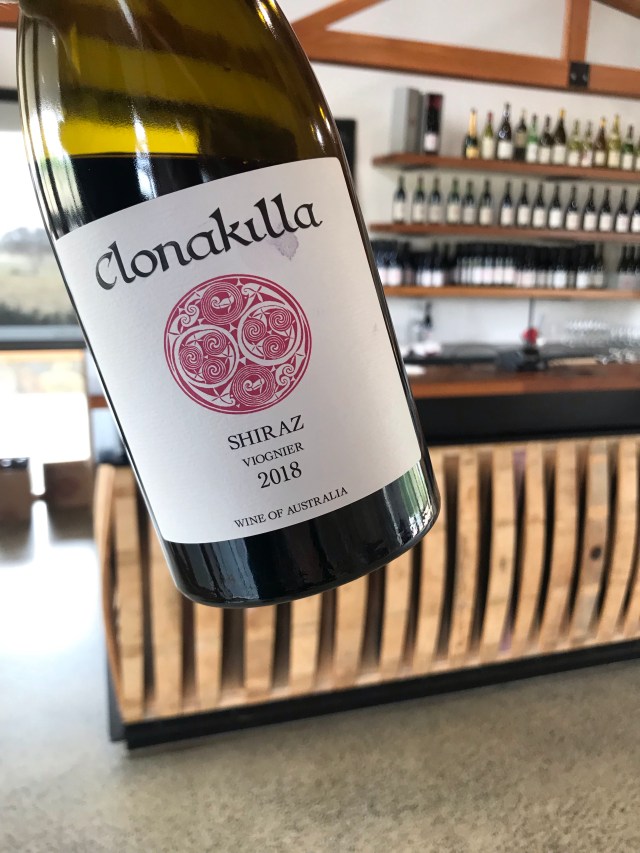
It’s an unusual wine, and one which will benefit from a carafe, but the passionate wine lovers who shared this adored it. It came from Burgess & Hall (Forest Gate, London).

b8796ba1-baa4-41cc-bb52-0aabd2a75bb7

BEAUJOLAIS 2014, YVON MÉTRAS (Beaujolais, France)

This is a remarkable drop of cherry juice from one of the region’s superstar natural wine pioneers. It was a bit reductive on opening, with a tiny pinch (or two) of volatility, but a few good swirls sorted it out. A very pure wine, with a ferral edge adding considerable interest, unless you are of a squeaky clean disposition. This truly is the glou that binds us. I drank his Fleurie “L Ultime” 2014 with friends about a week after, and it was not really ready, but this was singing. A joyful wine.

This came from Paris, either Caves du Pantheon or Verre Volé. Sorry not to be more specific.

8491650b-ac8d-474f-bed7-5011d765f018

SAVAGNIN 2016, DOMAINE DE LA LOUE (Jura, France)

Catherine Hannoun is well under the radar in the UK, but her tiny estate in the very north of the region, at Port-Lesney, makes wines every connoisseur wants to get hold of. In a clear case of “the pupil becomes the master”, some friends beat me to her door, pulling off a visit last year, but they didn’t forget me. This is the first of two wines from Catherine here from August. We didn’t strictly drink this at home, but no way is it not going to be included!

We have a gentle, svelte, Savagnin, smooth-fruited compared to many. The wine’s nutty character seems almost like a fading image on a screen, which considering Catherine was a film producer, is remarkably apt. She actually decided to stay and make wine in the region after working on Jonathan Nossiter’s Mondovino film. Catherine learned her second trade with help from Manu Houillon and Pierre Overnoy, and in fact her Savagnin is usually sourced from her plot of vines in Pupillin (see label below), where the Houillon/Overnoy domaine is famously situated. This was gorgeous. Truly, honestly. I’m told it’s a notoriously fickle wine, but we hit the jackpot.

This wine, and the petnat which follows, were sourced at the domaine. Visits welcome strictly by appointment. Quantities are tiny.

c592d361-919b-4cc2-93fe-f0093024e87c

PETNAT 2018, DOMAINE DE LA LOUE, (Jura, France)

A few days later we drank Catherine Hannoun’s petillant naturel, also made from Savagnin, although if you thought you were drinking a racy Chardonnay I’d not laugh. There’s a bit of ripeness and great bubbles. This and the Koppitsch “Pretty Nuts” I reviewed recently are the best two petnats I’ve drunk this summer…it is stunningly good. The bottle wasn’t even labelled (they were yet to arrive at the domaine) so it was a gift of a gift, so to speak. It felt as much a privilege to drink this as any fine wine.

e2579978-a0b0-4afa-b98d-8558e1175ed9

SAV ‘OR 2017, VIN DE FRANCE, DOMAINE DE LA PINTE (Jura, France)

This bottle was given to us by Laura Seibel, well known to any Jura fanatics, who used to work at La Pinte. The domaine was the first to go biodynamic in the region and has mentored so many of the first generation of natural winemakers in the Arbois area (see my article following a visit last December, “It Comes in Pintes”, 18-12-2018). This is a relatively new departure for them (though I have tried it before), a skin contact Savagnin. It had just a week on skins, in concrete, prior to destemming/pressing. It has a nice texture and, as is so often the case with orange wines, has hints of orange citrus, specifically tangerine here. The finish is savoury and pleasantly bitter. I should mention the 14% alcohol. Don’t let it worry you, seriously.

It’s not one of the domaine’s most expensive wines and I strongly suggest you try it if you are in the vicinity of the Domaine de la Pinte shop in Central Arbois (where many of their wines are on taste). Thanks, Laura.

5ae0421d-2208-43a4-93a3-f632f811303c

“EX MONTE LAPIS” 2015, DVA DUBY (Moravia, Czech Rep)

Dolni Kounice, close to the Austrian border in Southern Moravia, has been famous for its wines since medieval times, principally Frankovka (aka Blaufränkisch) grown on volcanic magma 700 million years old, called Granodiorite. This wine is from another Austrian variety, Saint-Laurent. Just as this variety is gaining renewed interest in Burgenland, so here in the Czech Republic, in the hands of the local artisans, it should have a great future.

The wine is zippy and dark-fruited, with grip and texture. You’d call the fruit crunchy. But it’s not “tannic” as such, and served ever so slightly chilled it makes a very tasty summer red. Jirí Šebela’s Frankovka is impressive, but don’t ignore Ex Monte Lapis. It’s a cracking little wine, in the image of some of those crunchy reds from the northern side of Austria’s Neusiedlersee.

Available from Basket Press Wines.

b48c8bd9-e51f-4eaf-a63e-7f797a3eee55

PETNAT [2018], OFFBEAT WINES (Dorset, UK)

Offbeat Wines is the side project of Langham Estate’s Winemaker, Daniel Ham. The fruit comes from Solaris grapes grown on clay and flint soils over Greensand, by Kathy Archer, at Ottery Saint Mary in Devon. She farms with no chemicals and Daniel bottled it without sulphur. Two things to note with this wine. First, around 10% of the very ripe grapes developed noble rot, adding a honeyed richness here. Second, the wine developed just 2-bar of pressure, so it is fully, yet gently, sparkling. It was disgorged, but only to get rid of the gross lees. There is still some finer sediment remaining in the bottle.

The whole package is excellent, with a great label. Although like most petnats, it has a degree of simplicity to it, so many things (the botrytis element, the grape variety and the lower pressure) put this up there with the other finer petnats I’ve drunk this summer in terms of interest. It’s a shame only 360 bottles were made, but I’m sure you will find the odd one still knocking around. The word hasn’t really got out, I don’t think. Yet.

Mine came from Solent Cellar in Lymington, who also sell the Langham Estate wines.

“PAMINA” VIN DE FRANCE [2015], DOMAINE L’OCTAVIN (Jura, France)

This Arbois domaine is right up at the forefront of experimentation in the region. Alice Bouvot makes such a wide range of wines it’s hard, if not impossible, to keep up. All those “gnome labels” (well, nearly all) are made from grapes purchased from her many friends around France. Pamina, though, is one of the original estate wines. The variety is Chardonnay, from old vines in Arbois’ “La Mailloche” vineyard, which have always been farmed without synthetic pesticide sprays. Wink Lorch has called it L’Octavin’s “most serious white”.

It sees direct pressing of the fruit, then a year in older oak from various locations. It’s a savoury wine, almost salty. It starts a little reductive but we gave it the respect of a wide bottomed decanter where, after some vigorous swirling, it opened its petals to reveal an extraordinary wine, one of the finest whites I’ve drunk this year in fact. It starts out lean, and although this is the leanness of a thoroughbread, it does put on a little flesh as it opens out. Scents of heaven with a very long finish, suitable for food (including Comté), or to be savoured on its own.

This bottle was purchased from the domaine, but Tutto Wines is the UK importer for Alice Bouvot’s remarkable creations. They currently list the 2016.

d00e17a4-af2c-4124-b428-3ada219937d7

MASKERADE WEISS [2018], GUTT OGGAU (Burgenland, Austria)

Oggau is a small village on the Western shore of the Neusiedlersee, just north of Rust. The estate and its wines have to rank among my top six wine estates. I’m not talking just Burgenland, although heaven knows there are plenty of contenders there, but I mean anywhere. This cuvée has sparked plenty of excitement because it, along with a red version, is new, from 30-y-o vines Eduard and Stephanie acquired and have converted to organics/biodynamics.

These wines are made available in litre bottles and the characters (rather, family members) on the labels are masked because they/the wines have not yet revealed their true personalities. The white version is a field blend of Grüner Veltliner, Weissburgunder, Welschriesling and others, grown on gravel, limestone and slate. Vinification included a couple of hours skin contact before direct pressing into older oak for fermentation and ageing.

The wine is dry, saline and fresh, with a pronounced savoury note, not unlike a Wiener Gemischter Satz. It is in some ways simple, but so satisfying, quite light but gourmande too. It will be interesting to see how the personality of this wine is revealed in the future, but I really like it, and I hope “she” doesn’t grow up too quickly.

This wine, and its red counterpart, cost close to £30/bottle, but remember that is for a litre…£22/75cl is pretty cheap for Gut Oggau. Grab these whilst they are still around. The importer is Dynamic Vines, whose Bermondsey shop is open on Saturday mornings. However, I bought this one from the new wine shop upstairs at Antidote Wine Bar (12A Newburgh Street, close to Carnaby Street, London).

595bb723-c656-41a4-a494-c376b8455eb2

Before I sign off, I just have to mention something else. We have been enjoying a lot of Vermouth over the summer. I do love a negroni, but specifically we have been drinking vermouth on ice with a drop of orange and mint leaves, topped up with tonic water (mostly Fever Tree Mediterranean). It makes a wonderful long drink as an aperitif. Occasionally, if I have one to hand, I liven it up with a small squeeze of lime.

The two vermouths of choice have been Partida Creus’s MUZ from Bonastre in Catalonia, and Vermood from GP Hahalis/Tentoura Castro distillery in Patras (Greece). The latter is sweeter, made from Rhoditis and Mavrodaphne, aromatised with saffron, bergamot, artemisia and other ingredients, plus the added delight of Greek honey, which really dominates the bouquet. I can’t find a current stockist for MUZ, which sells out like wildfire. Vermood is available from Greek wine specialists Southern Wine Roads (£28). Thanks go to sommelier and wine consultant Ania Smelskaya for sharing this with us.

Posted in Arbois, Artisan Wines, Austrian Wine, Beaujolais, biodynamic wine, Czech Wine, German Wine, Greek Wine, Jura, Natural Wine, Wine, Wine Agencies | Tagged , , , , , , , , , , , , , , , , , , , , , , , , , , , , , , , , , , , | 2 Comments

Wild Flor Hove Again

Friends and acquaintances in London are increasingly asking me where to dine in Brighton, and I always come up with two recommendations now. I say to them that if they want a buzzy atmosphere and cutting edge natural wines, within walking distance from Brighton station, then head to Plateau. If they want something slightly more sedate, head to Wild Flor, which is not in Brighton, but “Hove Actually” (as they say over there). The contrast between the two is perfect if you are down for the weekend.

Last time we were at Wild Flor, in fact our first visit to this relatively new restaurant, was back in June, and on a Sunday, when the menu is geared towards a more traditional approach, serving an all day Sunday Lunch. Having allowed the summer to zip past, we were back there on Saturday night to sample their à la carte menu.

The food at Wild Flor is excellent, but one of its draws, rather like Noble Rot in London, is the incredible wine list, put together by co-owner and passionate wine lover Rob Maynard. I’m not talking dull classics, but an adventurous list with a good number of wines with a bit of age. Of course, buying small batches means the list changes and evolves. As people get to know Wild Flor as a place geared towards wine lovers, then Rob can become even more adventurous, but there’s plenty for averyone, including a wide range by the glass thanks to a good supply of Coravin wine preservers.

As I sat down to write my monthly article about what we drank at home in August I thought I’d just put up a very short piece, mainly to give you a photographic taste of what Wild Flor has to offer, first. The wines were all drunk by the glass. Naturally, this does bump the price up considerably. You can dine here for about £35-£40 each for three courses, so our £170 bill (for two, including service) is a reflection of the number of glasses we consumed. You can have a great evening for less, but the temptations are there.

I’m not going to give any notes for the wines, but they were all very good.

img_7374

We drank:

  • Champagne Michel Gonet “Les 3 Terroirs” BdeB 2010 (£12/glass)
  • Lustau Palo Cortado “Cayetano” £10
  • Riesling Auslese Trocken Kallstadter-Saumagen 2014, Koehler-Ruprecht (Pfalz) £13
  • Bourgogne Blanc “Les Chaplains” 2015, Simon Bize £8.50
  • Marsannay “Clos du Roy” VV 2013, René Bouvier £12
  • Grenache-Syrah “Classe” 2017, Jeff Coutelou (Languedoc) £7.50


img_7363

Smoked chicken and duck terrine, plum and brioche (£9)

img_7366

Roast partridge, caramelised celeriac, lentils, pickled pear and walnut pesto (£19). I ate this with a side of crushed new potatoes and “honey and cumin” roast carrots.

img_7371

Comté and Stichelton. £12 for the two, or £20 for four cheeses.

0d40483b-e8e5-4479-aa3e-45fda45526a2

I couldn’t resist the lovely rich Coutelou.

Wild Flor is at 42 Church Road, Hove (01273 329111) or check out their web site here.

Highly recommended on your weekend away in sunny Brighton (Hove Actually). They also do an excellent Vegan Menu.

Posted in Dining, Restaurants, Wine | Tagged , , , , | Leave a comment

Dirty Dozen Tasting 2019 (Part 2)

I wrote about some of the wines tasted at London’s Dirty Dozen Tasting in Part 1, here. Those importers covered were The Wine Treasury, Roberson Wine, Howard Ripley Wines, Raymond Reynolds, H2Vin and Flint Wines. Follow the link above to see what I liked most on their tables, and for any introductory comments. This second part covers wines from Astrum Wine Cellars, Clark Foyster, FortyFive10°, Indigo Wine, Maltby & Greek and Swig.

ASTRUM WINE CELLARS

Astrum typically seeks out artisan producers, not exclusively from Italy but that’s where much of their focus lies. Two of the wines below are made from Piemontese Nebbiolo, fine wines providing a nice contrast with the 2013 Barolo I chose (from Flint Wines) at the end of Part 1. The other two wines were Austrian and Northern Italian. I’m a long-standing fan of the first wine, below.

Kerner 2018, Abbazia di Novacella, Alto-Adige By a coincidence some friends have been in Northern Italy and whilst they were near to Trento I tried to persuade them they should visit the Abbey, up at Novacella/Neustift, or at least look out for this wine in particular. Why? Well you don’t find the Kerner variety very often, and great Kerner is a rarity. The Abbey is by no means the only good producer, but who doesn’t like a beautiful old abbey that also makes lovely wines? The scents of Alpine meadow flowers and wild grasses are palpable (if you let your mind wander on a dull London day). But it’s fruity too, with stone fruits to the fore. You also get texture and length, and it must be said, 14% alcohol. Don’t let that put you off.

img_7293

Barbaresco Gallina 2016, Oddero (Piemonte) Oddero is, of course, based in the Barolo zone (La Morra) but this Barbaresco is a fine addition to their portfolio. A 25-day fermentation at 28° is followed by ageing in 40-hectolitre French oak. The elegant bouquet is lovely, and it even has that elusive hint of rose petals. Is there tar? For me, it does have spice but my nose rarely detects any deep tar these days. It’s certainly savoury and firmly structured. In good 2016 fashion it has more acidity than most 2015, and probably more tannin as well, a wine to age, certainly.

Barolo 2015, Francesco Rinaldi (Piemonte) We are with one of the greats here, a traditional producer from the town of Barolo itself. Paola Rinaldi runs things today, pretty much along the same lines as in the past. There is a clutch of famous sites, producing wines of genuine class, but here we are taking a look at the straight DOCG Barolo. It’s paler than the Oddero, undergoing a slightly shorter (20-day) fermentation, then spending three years in older Slavonian oak. It’s a wine to age, whatever its designation. It has real depth despite the tannins (prominent for the vintage), and as I suggested, it truly needs time to show its class. Impressive now, but not for drinking for well over a decade, I’d say.

Cuvée Auslese 2017, Weingut Tschida Angerhof, Neusiedlersee This is “the other Tschida” estate in Illmitz, on the eastern shore of the Neusidlersee. It’s flat land and reed beds, along with the shallow lake (hardly more than a metre deep at any point, despite its size) have always made for excellent sweet wines. This cuvée is harvested in late October and consists of 35% Sauvignon Blanc, 35% Rhine Riesling and 30% Welschriesling. Some of the fruit will have differing degrees of botrytis. The result here is very sweet, not over complex but with rich honey and apricot flavours. The same is mirrored on the nose, with added florality. It has some acidity, not as much as you expect from German Auslese made from Riesling, but it’s there. Who doesn’t like a sticky?

CLARK FOYSTER WINES

Clark Foyster is another of the importers here who I don’t know all that well, and they don’t really specialise in one country or region. But they have some nice wines. I’ve reproduced notes from five, but I could have easily chosen Cretan Vidiano, Georgian wine from the Kakheti Region, Kamptal classics from Schloss Gobelsburg, Vinho Verde and more.

Grüner Veltliner “Rotes Tor” Federspiel 2017, Franz Hirtzberger, Wachau This wine is from Spitz, one of the villages you can reach for lunch on the Wachau cycle trail, if you start from Krems (after an early train from Vienna). It has a castle on a hill, beneath which is a good traditional Weinstube (Gasthaus Prankl), and an even better wine shop by the jetty (Föhringer). And this wine is from one of the Wachau’s finest producers. Although the Smaragd wines from here are rightly lauded, it is the more fruity Federspiel designated wines which are more approachable young, as intended. Don’t dismiss them. This has depth of fruit and lovely balance, plus enough age to show a touch of complexity in what is basically a drinking wine from the producer of some of Austria’s finest wines.

Assyrtiko Cuvée Monsignori 2017, Argyros Estate, Santorini (Greece) As we know, Assyrtiko is the speciality of Santorini, although it also does well elsewhere in Greece. The volcanic soils and windy location (vines trained into a kind of basket shape to protect them from the wind), plus the fact that the phylloxera louse never reached the island (I don’t think it ever established itself on volcanic terrain) gives unmistakable qualities to Santorini Assyrtiko. Straw, lemon, dark textured minerality, fresh salinity and a long finish, is what you get here. Under rated as one of the world’s fine white wines. It ages well, too, but it’s also undoubtedly thrilling in youth.

Riesling Loibenberg Reserve 2015, Rainer Wess, Wachau I drank a Neuburger from Rainer Wess last night, bottled by Somm in the Must, whose Rescued Zweigelt I tasted in Part 1 (at Flint Wines), a nice coincidence. The Loibenberg vineyard is a famous site at the beginning of the Wachau Gorge. Many famous names have vines here. Although Wess is traditionally described as an Unterloiben (therefore Wachau) producer, he now has an ultra-modern winery at Krems (Kremstal), just to the east.  At just 12.5% and really very fruity, it seems to have a touch of richness without too much weight. It’s very much the Wess style, clean, pure and with a touch of the intensity you expect here. It would prefer to be left in peace for a few years, but probably won’t be.

“Hidden Treasures – a Moric Project” Riesling/Furmint, Moric, Balaton (Hungary) Roland Velich is famous in Austria, making wine in Burgenland. This particular part of the “Moric Project” is a collaboration with Villa Tolnay near Lake Balaton, in Hungary. It’s a 50:50 blend of the two varieties, aged in a mix of Stainless Steel and Austrian and Hungarian oak. The fruit is smoothed out, rounded, and doesn’t taste wholly dissimilar in profile to the Ress, above. This wine, though approachable, will also take some ageing.

Riesling RS3 2019, Mac Forbes, Victoria Nice to meet Mac and taste his wines. If I’m honest I could have chosen his Yarra Valley Chardonnay, or the Yarra Junction Pinot Noir, but I picked the Riesling to highlight because it screams out from the glass. It’s made in a very refreshing style, low alcohol (12%) and it is unbelievably bright on both nose and palate. The grapes come from a single site, Antcliffe Chase Vineyard, high up on the southeast side of the Strathbogies, a granite plateau uplifted by ancient volcanic activity northeast of Melbourne and near Mac’s Yarra home. In fact there are granite boulders so big here that they had to plant around them. The vines were planted here in 1982/83 and have always been dry farmed. The wine is made with minimal intervention, de-stemmed, crushed, and aged on lees in wood. A joyful wine.

FORTYFIVE10°

Here we have an Italian specialist, so much so that I think I was the only one not speaking Italian (reminds me of my wonderful local Greek bakery where I’m sure I get special treatment because I sadly can’t speak Greek). They aim to import “artisan” wines with “distinct personality”. Hopefully the four wines below provide a snapshot which demonstrates that.

Nosiola 2018, Pojer e Sandri, Trentino Based at Faedo, in Trentino, we are right in the north of the Province, just to the east of the Adige river. Nosiola is one of the autochthonous grapes of the region, and Pojer e Sandri make their version with minimal interventions, not exactly a natural wine but certainly with low sulphur etc. Pale in colour, the bouquet is fragrant and has depth, floral, herbal and grassy. The wine is reasonably light, certainly elegant, but it also has a bit of texture. A very fine example, which would probably age for five years, though I’m sure very little gets to last that long.

Friulano “Skin Contact” 2016, Primosic, Friuli This is made from the variety previously called Tocai Friulano, one of the great native varieties of Northeast Italy and the border regions with Slovenia. It is bottled under the Oslavia DOC. It has a lovely colour, which in a certain light almost looks ivory with a pink tinge. This is from skin contact – eight hours is sufficient. More and we’d be straying into orange wine territory with Friulano. This wine is clean, lightish in body, and with a bouquet and palate that hints at honey and apricot without quite delineating it strongly. So you get personality and a degree of elegance (despite 13.5% alcohol) which suggests a very fine wine. The texture is a little chalky, which should help its gastronomic potential.

Morellino di Scansano 2017, Castello Romitorio, Tuscany Romitorio is owned by acclaimed artist Sandro Chia, and his son. I know their wines from Montalcino (and indeed Sandro Chia’s art from an exhibition long ago in Paris) but I was unaware they had an estate down near the coast at Scansano (purchased in 1999). I liked the smooth bitter cherry of this wine. There’s plenty of body, and alcohol (14.5%), grippy tannins too. What I liked was that under all this there’s such pure fruit, and it’s not a horribly expensive wine, maybe £20 retail.

Valtellina Superiore Pietrisco 2015, Boffaloro, Valtellina (Lombardy) So I have a thing for Nebbiolo made outside of the two “B”s. Valtellina Nebbiolo (called Chiavannasca here), grown on steep slopes close to Sondrio, seems to improve all the time, and I keep coming across new names (at least to me). Giuseppe Guglielmo founded Boffaloro in 2002, with four hectares of vines between 400m and 700m ASL. This single vineyard wine is actually a traditional brick red colour (extra points) and the scent is so beautiful it would get a mention here for that alone. The fruit is quite prominent, and there’s less tannin than you’d expect perhaps from a Piemontese Nebbiolo. This is the epitome of hand crafted, artisan wine. For a first try I was very impressed.

INDIGO WINE

I apologise to the other importers that I strayed here, and have ten wines to mention. I can’t explain why. I’ll just have to be less wordy.  Indigo is what I’d call a non-specialist specialist. They began with a Spanish focus and then grew…and grew. Needless to say, I think they have an impressive range. The disconnect here is that I love the wines but rarely find an opportunity to buy them. Maybe that’s why.

Heavy Petting and Astro Bunny Petnat, 2018, Wildman Wine (from Riverland, Australia) These two pétillant naturel wines are bottled by Tim Wildman MW, who imports them into the UK. Heavy Petting, which is not aimed at animal lovers, is a glowing cherry red colour, and is made from Nero d’Avola (mostly) with some Zibibbo (Muscat of Alexandria) from fruit grown in the Riverland region of South Australia. I happen to have a bottle in my fridge, awaiting a rescheduled drinks session with neighbours. It’s a fun wine with refreshing simple fruit. Invert the bottle to gently shake up the sediment. 10% abv.

Astro Bunny is a pink petnat made from Vermentino with Zibibbo and Nero d’Avola. It’s also cloudy, with soft ripe fruit, creamy and peachy. Both are great fun. Tim has moved his fruit source to McLaren Vale for the 2019s.

Jijiji Chenin Blanc 2018, Gen de Alma, Uco Valley (Argentina) This superb Chenin, always a favourite with me, is made by one of the famous Michelini brothers (Gerardo), and his wife Andrea Mufatto (actually, I think this is really Andrea’s baby). It is made from old vines grown up around 1,000 metres ASL. It gets 20 days on skins and is quite unusual, with plenty of fresh sour apple flavour. Great value.

img_7315

Fino Balbaína Alta, Bodegas Riva, Jerez Chalky Albariza soils from a famous site make for a glorious, and characteristically super fresh, Fino made from Palomino fruit. It has had ten years under flor so it has a nutty side, but that freshness dominates. Just one saca made per year. Very Fine indeed. Contrast with…

El Muelle De Olaso, Luis Pérez, Cadiz Here is an unfortified Palomino table wine made as a VdT Cadiz. It’s a single Pago wine from Carrascal. The grapes are 80% fermented in stainless steel, with 20% being sun dried and then fermented in American oak. It’s a deliciously mineral wine. It is unfortified because Luis believes in the great character of the different terroirs he farms (Balbaína Alta, Macharnudo, Añina and Carrascal), which come through when the wine has no grape spirit added and no biological ageing under flor. Palomino table wine seems to be taking off, somewhat, and this is a very fine example indeed.

Texture Like Sun 2017, Ochota Barrels, Adelaide Hills (S. Australia) If you know Taras Ochota you’ll know that he names many cuvées after favourite bands/songs. This one is named after The Stranglers’ homage to a certain resinous substance (Fugazi must be his coolest choice of name).  The grape blend is long: Mourvedre, Pinot Noir, Gewurztraminer, Gamay, Chardonnay and, er, Fragola. It comes off clay soils over limestone deposits at about 550 metres ASL. The mash is given a cold soak for five days, and is then allowed to ferment and age in stainless steel. Oh…So…Fruity! Any Ochota Barrels wine will do, if you see one on a wine list.

Pepe Le Pinot 2018, Jamsheed, Upper Goulburn Valley, Victoria We’re in Northern Victoria here, getting up towards the NSW border. Gary Mills makes a wonderful range of wines, and most are for glugging pleasure, true glouglou wines. This is one. It’s from Yarra fruit, 75% whole bunch pressed, fermented in steel (three weeks on skins) then eight months in new hoggsheads and old barriques. 12% abv gives it that “down like fruit juice” quality (just). There is a tad of concentration which edges it towards proper wine.

Benje Tinto 2017, Envinate, Tenerife (Spain) The wines Envinate labels as Benje are made from tiny plots at, in this case, some of the highest altitudes they farm at (up to 1,000 metres with this red cuvée). The main grape here (though there is, of course, co-plantation in these vineyards) is Listán Prieto (aka Païs), with around 5% Tintilla. The soils are naturally volcanic on all of the Canary Islands, and the freshness the soils give the wines is accentuated here by fermentation in concrete with 20 days on skins, followed by eight months in old French oak. The standout quality with this wine is amazing purity, coupled with unusual but scintillating fruit flavours. The DO is the impossible to spell (for me) Ycoden-Daute-Isora (I think they made a typo in the Tasting booklet).

img_7320

Barossa Dry Red 2018, Frederik Stevenson, South Australia I’ve no idea why Steve Crawford goes under the wine name of Frederik Stevenson (I do know someone who knows him really well…I must ask), but I do know that I rate him as one of the best, if most under rated, winemakers in South Australia today. He’s based in Adelaide, and maybe that’s how he gets away with stamping his own style (Elegance and then more elegance) on Barossa fruit, which let’s face it, doesn’t usually do elegant! The blend is Mourvedre, Cinsault, Syrah and Grenache. Winemaking is simple and low intervention, whole bunch fermentation, ageing in used oak and just a tiny addition of sulphur at bottling. A complete wine, and easy to drink. Katie Shriner has produced lovely artwork for the label. I want the Benje but I also want this one really badly!!!

img_7321

MALTBY & GREEK

This importer brings in both food and wine from Greece (check out their web site), specialising in usually small, artisan, quality producers. One of them (Kalathas) is one of my two favourite Greek producers.

“Alargo” Assyrtiko 2017, Douloufakis Winery, Crete This new wine is from Dafnes, on Crete. The vines are grown at 350 metres altitude, and are turned into wine by simple fermentation and ageing in stainless steel, but spending three months on lees. Not quite like a typical Santorini Assyrtiko, it has lemon with slightly herby flavours and a chalky texture on the tongue, rather than a mineral spine. Crete is increasingly getting its act together and producing lovely wines if you are prepared to pay artisan, as opposed to bulk wine, prices. In this case about £20.

Aa Assyrtiko-Athiri 2017, Domaine Sigalas, Santorini One of Assyrtiko’s finest exponents here blends Santorini’s signature variety with 25% Athiri. The vines on Santorini, like all of the volcanic islands off mainland Europe’s shores, were never struck by phylloxera, and so are ungrafted. Most observers do accept that such vines are capable of extra depth, particularly if they are also very old, as they are here. It’s all down to the producer. This is a wine of quite intense minerality, with citrus and peach running right through, the latter adding a bit of flesh to a taut frame. The fatter fruit is sensuous and the finish is like velvet.

“O Zontanos” Aspro Potamisi 2016, Domaine Kalathas, Tinos Jérôme Charles Binda established this wonderful domaine on Tinos, in the Cyclades, in 2011. He bottles a number of mainly autochthonous varieties under the Vin de Pays designation, but Aspro Potamisi has to be one of the rarest. I’ve never seen this cuvée before. It’s an orangey-pink wine with 14% abv, a bouquet of ethereal tangerine, with smooth and rounded, almost sweet (the alcohol?), apricot fruit satisfying the palate. Despite that alcohol I’m completely seduced.

img_7325

Goumenissa 2015, Chatzivaritis Estate, Macedonia (Greece) Goumenissa is the slightly less well known alternative to neighbouring Naoussa in Northern Greece. The main grape variety is Xinomavro, and here it is blended with Negoska by winemaker Chloe Chatzivariti. Xinomavro is often called the Greek Nebbiolo and there can be similarities, as here. The aromas, however, are for me like tomatoes and olives with a touch of spice, very savoury, very gourmande. There’s a bit of cherry in there to add fruitiness, and certainly a coffee twist on the finish. This is really good, though the 15% alcohol is likely to creep up on you…I didn’t notice it, but I was spitting.

img_7326

SWIG

Swig Wine has been around for twenty-two years now and they have a massive reputation among wine obsessives for their well-honed buying prowess. They know their way around South Africa, and I’ve always been an enormous fan of Blank Bottle. I wasn’t going to include them, then I went and found a wine I’d never tried. But I’m no less passionate about Vignoble du Rêveur.

img_7327

Vibrations Riesling 2017, Vignoble du Rêveur, Alsace Mathieu Deiss set up with his partner Emmanuelle Milan to farm seven hectares from his maternal grandfather, as a separate project from the famous family firm. This dry Riesling comes from alluvial soils at Bennwihr, with old vines approaching 50 years of age. It is fermented and aged in foudre with 12 months on lees. There is around 40m/g of sulphur added at bottling. Dry and easy to drink, you get genuine Riesling purity. I will buy any “Rêveur” wine I see on the shelf.

img_7329

Blanc 2016, Domaine de L’Horizon, Roussillon (France) L’Horizon is based at Calce, on the edge of the Pyrenees. It doesn’t have a great concentration of fine winemakers for nothing (Gauby, Matassa, Pithon and Roc des Anges to name four) – the soils around this village are some of the most complex and exciting in France (it would take a page to list the soil types). Thomas Tiebert used to sell barrels and he came to Calce to set up his wine estate after meeting Gérard Gauby and falling for the place. This white is a blend of 70% Macabeu, 25% Grenache Gris and 5% Grenache Blanc, all biodynamic, much of the fruit off mainly chalk (unusual down here). Ageing is in old foudres. It’s very mineral with a honey and lemon strand, plus your usual garrigue herbs adding interest. Real mineral purity. Only 12% abv, not your usual southern sunshine scorcher at all.

Morgon Vielles Vignes 2017, Guy Breton, Beaujolais We had a wonderful 2017 Morgon from Julien Sunier in Part 1, and now we have another. “Petit Max”, as Guy is known, has a mere three hectares around Morgon, with the VV cuvée taking fruit from 80-y-o vines in the lieu-dits of Saint-Joseph and Le Grand Cras. There’s glorious depth of fruit with a tiny bit of funk (not the whole funk of Funkadelic…the cherries dominate). The granite gives the wine a bit of structure. Different from the Sunier but equally good Gamay.

Red Claw Pinot Noir 2017, Yabby Lake, Mornington Peninsula I’ll be right near Mornington soon but it doesn’t look as if my schedule will take me down there again, unless I’m remarkably lucky. It’s my favourite Australian region for Pinot Noir, and Yabby Lake makes very fine Pinot, the Red Claw coming from Teurong. All the “Red Claw” cuvées come from estate grown fruit, and this is pale and delicious with vibrant cool climate freshness made more complex by the wine’s savoury side. The overall picture is of a bright wine with a silky smooth texture. Classy is a good description.

Little William 2018, Blank Bottle Winery, South Africa Apparently this is Little William’s fourth vintage, I think, but in the time I’ve been regularly tasting Pieter Walser’s wines I’ve never seen it. We have Swartland Syrah from high up a pass on the Ceres Plateau (at 750 metres ASL). The region is very remote. This is an unusually pale, pure, Syrah at only 12.5% abv (a low record, eh, Pieter?). It’s just such a lovely wine, and though I give Pieter far too many plugs (he deserves them), I can’t help really bigging up this wine. One of the very best Blank Bottles I’ve tasted this year. For those who know Pieter, yes, there is a rather long story to this wine, involving a little boy by the roadside, and a snaking mountain pass (on the label). But now isn’t the time, and anyway, it’s the way he tells ’em. Damien, if you can persuade Henry/Cassie to get some in, I’d be grateful.

9a136680-024c-46cf-85ef-d335f2840fbe

That’s the end of Part 2, a few more wines than in Part 1, but if you enjoyed the wines here then do go and follow the link at the top of the page.

Posted in Artisan Wines, Wine, Wine Agencies, Wine Merchants, Wine Tastings | Tagged , , , , , , , , , , , , , , , , , , , , , , , , , , , , , , , , , , , , , , , , , , , , , , , , , , | 2 Comments

Dirty Dozen Tasting 2019 (Part 1)

September sees so many tastings, too many. A top Sommelier told me yesterday that all the importers think that the sommeliers change their wine lists, starting from scratch, in November, but she also added that this is a complete myth. So apart from everyone itching to get going after their August holidays, there’s no real reason why September should be so packed with tastings that you miss some great events. Graft is a case in point, the new amalgamated Red Squirrel and Knotted Vine, whose portfolio was on show yesterday in another part of London. I shall at least be able to taste those wines later, at Out The Box.

For me, the three trade tastings I wouldn’t want to miss right now are Caves de Pyrene (23 Sept), Out The Box (1 Oct) and Dirty Dozen, which took place at Glaziers Hall by London Bridge yesterday (Tuesday 9 September). Dirty Dozen features twelve small-to-medium importers, some of whom I know well and others who I come across rarely throughout the rest of the tasting year. This tasting was an opportunity to catch up with some new wines from people I know, and to sample the ranges of those I don’t. The standard was very high this year, and my desire to keep the numbers down has been a bit of a trial in some cases.

I originally promised myself that I’d only write about what were my favourite four wines at each table, but of course I failed over all. I will, however, try hard to keep my coverage well short of the recent South African opus. To that end I’m going to split this into two parts, two quite manageable bites. Let’s see how we go…in order of appearance…

THE WINE TREASURY

The Wine Treasury has a wide portfolio, although they say they do specialise in wines from North America, and as those wines tend to be some of the most interesting imported into the UK, it’s a few of those I’ve brought to the page here.

img_7254

L’Ecole #41 Old Vine Chenin Blanc 2017 is a perfect example. We’ve probably all heard of this Columbia Valley (Washington State) producer, but you don’t see Chenin from America all that often. But, founded in 1983, Chenin is one of the varieties upon which the Ecole #41 reputation was built. Pale, stony, waxy with citrus and plump peach, it’s both deliciously fresh and a wine of depth…very long. A very good way to begin a tasting.

Sonoma Coast Chardonnay 2017, Schug was equally interesting for a Cali-Chardie. Almost unoaked (10% fermented in neutral oak), and aged five months on lees. The vineyard sites used are mostly influenced by the cool winds entering the Petaluma Gap, so the style is crisp, yet with an underlying richness. Pineapple fruit comes through, with peach and citrus acidity. It holds its 14.2% abv remarkably well.

La Pleiade II NV, Sean Thackrey, California Even the importer doesn’t really know what’s in this, except that we do have Muscat, Viognier, Marsanne and maybe Roussanne. Doubtless there’s more. If you know Sean’s wines, it doesn’t matter. This is so delicious, with almost a sour, certainly savoury, quality. TWT has several other Thackrey cuvées, all worth exploring. Unique wines.

Le P’tit Paysan 2016, Le P’tit Pape, California This is a blend of 53% Grenache, 35% Syrah, with  Mourvèdre, Counoise and Cinsault (well, the name gives a lot away). The fruit is sourced from Monterey and San Benito Counties off granite and limestone. It’s bright violet in colour with similar violets and red fruit on the nose, big legs, big smooth fruit and richness. You might be surprised that the alcohol is just 13.2%. That means it’s not over the top, but it’s a lovely plump red, totally approachable.


ROBERSON WINE

I truly lament the closing of the Roberson shop in West Kensington. Whilst I made more and more frequent trips there, involving a long walk for me, I seem to buy far less from them now (clue: I have too much wine to be buying cases of it in the UK). Roberson is another USA specialist, in fact at the forefront of the New Wave of California here (see John Bonné’s seminal book The New California Wine, Ten Speed Press, 2013), but there’s so much else they do well, so I only tasted one American wine.

Chalklands Classic Cuvée 2016, Simpson’s Wine Estate, Kent (UK) Roberson lists a number of bottles from this producer in Barham, near Canterbury. Charles and Ruth Simpson have been making wine in Southwest France for approaching two decades, and have now added a 30 hectare vineyard planted with the three classic Champagne varieties on Downland chalk in Southern England. This is the first wine I’ve tried from them and it’s very good. The bouquet is quite biscuity but the palate has broad fruit, with pear and lemon freshness. Not as precise as some, but it’s good to drink a different style. This is well made and expressive, with enough of a point of difference within the genre.

Hermanschachern Grüner Veltliner 2018, Ebner-Ebenauer, Niederösterreich If you know me you know that this estate is on my “to visit” list. Marion Ebner is a wonderful winemaker, perhaps not accorded the praise she deserves in the UK. They are in Weinviertal, the wine region north of Vienna, towards the Czech border. This is a single vineyard wine, a step up from the basic Grüner. You get apple and pear fruit, plus the mineral texture of the limestone terroir. Aged in stainless steel, it has a smoothness which makes it deceptively approachable. It is lovely now, but will age and develop for five years.

Baker Street English Bacchus 2018, London Cru Those who have been with me a long time will remember my visit to London Cru a few years ago, London’s first urban winery. Then winemaker, Gavin Monery, has moved on to make wine with Vagabond, and I was keen to catch up with the London Cru range again, now crafted by Alex Hurley, under Head Winemaker Augustín González Novoa. The bouquet is powerful, gooseberry, elderflower and peach/grapefruit. The palate has a refreshing bitterness, and a little texture is added via 10% barrel fermentation (the rest in stainless steel). It’s a nice summer white (shame to be trying it in autumn), and for under £15 is very good value.

Morgon 2017, Julien Sunier, Beaujolais From three vineyards – Charmes, Py and Courcellette with nine months in oak, this is delicious “natural” (and biodynamic) Morgon. Roberson was an early champion of Julien, and they chose well. This wine is almost luminous. It has a glorious concentrated sweet cherry bouquet, with ripe sour cherry on the tongue. Lip-smacking just came to me, a perfect adjective. The wine is relatively structured, despite being made by carbonic maceration. Highly recommended.

Sonoma Coast Syrah 2016, Arnot Roberts, Sonoma (California) Once more we have cool climate sites to thank for a very pure Syrah from one of my favourite Roberson producers. The prices here are steeper now, but what will you get for your £45? The plum and darker fruits on the nose are concentrated, and there’s an added note. I called it “animal” and they called it “earthy”, but it adds bags of interest. There’s a bit of tannin. You might be tempted to open a bottle now, but it is really a keeper…like a good Northern Rhône, a decade will do it if you want to see how complex it may get.


HOWARD RIPLEY WINES

Okay, I’ve just been to a Ripley tasting, but I would like to think that the wines I tasted here complement those at the Army & Navy Club rather nicely. If you think it’s “The B-Team”, think again. The producers chosen here are ones I tasted last week, but the wines show a different facet of their creativity.

Saar Riesling Crémant Brut NV, Peter Lauer, Saar After praising Florian Lauer as one of my very favourite German producers last week, it was nice to get the opportunity to taste the lovely “Sekts”. I think “Crémant” better describes what Florian is aiming for here. Savoury and very fresh, it must be one of the best contemporary sparkling Rieslings coming out of Germany.

Riesling Brut Natur Reserve 1992, Peter Lauer, Saar If you have a chance to grab a few bottles of these older wines, made by Florian’s father and then left to age for, er, rather a long time, then don’t hesitate. This is exemplary, a perfect example of the depth which Sparkling Riesling can achieve. Not to mention complexity. Very fine sparkling wine.


Weisser Burgunder 2017, Weingut Wittmann, Rheinhessen I mentioned last week that the only Wittmann I currently own is “Pinot Blanc”, and it is this vintage, so excuse me grabbing a quick sip to see how it’s going. It’s a lovely smooth and dry food wine. The stony fruit has a richness (it’s only 12.5% abv though), but it’s also bright and fresh. Complete proof that you are on safe ground with a great producer. You can purchase this with the same confidence you would have for Keller’s Von der Fels Riesling, for example.

img_7265

We now move to three wines from Ziereisen. I make no apologies…

Steingrüble Gutedel Unfiltriert 2014, Ziereisen, Baden Because you read my notes from last week’s Ripley tasting of German GG and Red wines, you will know exactly where Ziereisen is located in Southern Baden. You will also have read my almost gushing praise for the remarkable (and expensive) “ten to the power of four” (10 hoch 4) cuvée of Gutedel (aka Chasselas). You might be slightly disappointed if you tasted this wine side-by-side with the super-cuvée, but this lovely wine costs a fraction of its price. The fruit gets 48 hours skin contact and six months on lees, and with a few years in bottle it is surprisingly in a very good place. A slightly smoky bouquet, a little citrus, some stone fruit, a creamy heart, and a dollop of texture. Gorgeous, or at least I think so. And only 12% abv. And 2014!

Schmätterling Rosé 2017, Ziereisen, Baden This 2017 has gained, not lost, from its time in bottle. We have 90% Pinot Noir with 10% Regent (shock!), and the wine is a pale pink. When you taste it you will be surprised as there is complexity here. The fruit is both smooth strawberry and cranberry with bite. Again, there’s a creamy texture and surprising length. I’d have no fears about keeping this for next summer.

Spätburgunder Tschuppen 2015, Ziereisen, Baden This is really the entry level Pinot from Ziereisen, cheaper even than the “Talrain” I tasted last week. This is my go-to Ziereisen red, and I was thrilled that the sommelier I mentioned at the beginning of this article said it’s the same for her. The vineyard is clay, and it helps make for a really juicy-fruited wine. Maybe there’s not such concentration as in the Talrain, but it is just so approachable and delicious. At £54/6 in bond for the 2015, it’s almost a stupid price. You won’t get the massive complexity and potential of the up-range reds, but you will get every day drinking enjoyment.


RAYMOND REYNOLDS

Raymond Reynolds is an importer who I probably only really come across at the Dirty Dozen Tastings. They have built a reputation as a specialist Portuguese importer, with names like Luis Pato, Susana Esteban, Niepoort and various Madeira and Porto producers shining their light. I hope the four wines described here whet a few appetites for Portugal (and Madeira).

Bastardo 2018, Conceito, Douro When I was young I used to joke that Bastardo was the grape variety that would always give you a headache. Of course that was a lie on two counts, first because it never appeared outside of a tiny component in some Port blends, and secondly, Bastardo is a synonym of my beloved Trousseau, from the Jura. Rita Ferreira Marques is the winemaker here. This 5 hectare vineyard of Bastardo was planted by her grandfather fifty years ago. Foot trodden, it produces a pale but almost fluorescent wine with an ethereal scent, light red fruits and a bit of bite. Only a tiny amount of sulphur is added. It has one of the most recognisable labels in Portuguese wine these days. I think the wine is equally marvellous.

Colares Tinto Ramisco 2007, Casal Santa Maria, Colares (Lisbon) These sandy coastal vineyards are legendary in Portugal, and their story is not difficult to find. Historically they produced mostly tannic reds from ungrafted, pre-phylloxera, vines. Today, production is tiny, so much so that they tend to harvest all the grapes together and make the wine in a central facility (but not technically a co-operative), which is then returned to producers for individual ageing and bottling. Ramisco bush vines spread across the sand, bunches propped up with bamboo. This is pale, with hi-toned fruit and a savoury (deliberately slightly oxidative) note. There’s a bit of tannin/texture, but as you’d hope, fourteen years or so ageing has softened it. A museum piece for the adventurous and those who seek learning at the altar of tradition.

Tinto 2012, Quinta do Mouro, Alentejo This estate was an Alentejo pioneer, Luis Louro planting in this arid region in Southern Portugal’s interior from 1989 and releasing wine from the mid-nineties. The varieties for this famous red are Aragonez (aka Tempranillo), the teinturier Alicante Bouschet (which does well here), Touriga Nacional and Trincadeira. I was told there’s some Cabernet Sauvignon in there now, as well. From foot trodden grapes grown on schist, this wine is quite tannic still, and concentrated, but at the same time retains a remarkable elegance. Ageing is in a mixture of French, and unusually, Portuguese, oak. It’s a very traditional estate, but one that’s wine shows a modern side as well.

The Atlantic Rainwater, Barbeito, Madeira Madeira isn’t all about venerable old vintages, or at least not any more. Barbeito has added a bit of excitement to the brand at wholly affordable prices, and this “Rainwater” is just one example. This is surprising, coming from one of the smaller houses, founded only in the mid-20th Century. This is the style of fortified wine once so loved in pre-, and post-Revolution America. The name is said to derive from its dilution, by the rain, when awaiting shipment across the Atlantic. It’s a lighter style, with dried fruits complemented by lemon freshness and almost Sherry-like salinity. It ends with a hint of freshly-sawn timber. Another hint…Christmas is coming and as well as your well aged vintage for sipping at home before you go to bed, this is one to add to someone’s Christmas stocking.


H2VIN

H2Vin does not specialise in any region or country. They do have an excellent French portfolio, and three of the wines reproduced here are French. But they are also lucky to import one of New Zealand’s stars, well represented by their entry here.

Champagne Dehours “Terre de Meunier” Grande Réserve Extra Brut NV It doesn’t seem that long ago that I wrote about this wine in my monthly roundup of wines drunk at home (it was in fact the June selection). This is pure Pinot Meunier, in this case from 2015 with reserves from 2014, mis en cave July 2016 and aged on lees until disgorgement in October 2017, with zero dosage. So it’s not a wine with long lees ageing. Jérôme is aiming for a wine of freshness and fruit, but there’s a bit of spice too. For me it makes a good aperitif style, and a more affordable Meunier than some.

Jurançon Sec “La Part Davant” 2018, Camin Larredya, Jurançon If you want a well priced dry but interesting white wine, Jurançon in Southwest France, close to Pau, is a good place to sniff around. This is one of the top producers, and this cuvée is a blend of 50% Gros Manseng with Petit Manseng (35%) and Petit Courbu (15%). This is not quite typical Jurançon Sec, in that the high proportion of Petit Manseng adds finesse, and it is also richer than many examples of the dry appellation wine. That richness puts it on the verge of sweetness on the nose. It is very good, and it’s not going to cost a lot more than £20.

Old Weka Pass Road Pinot Noir 2016, Bell Hill, North Canterbury (NZ) The Canterbury revolution has seen this South Island Region go from nothing to super fashionable in a short space of time, and Bell Hill was one of the major drivers. The home vineyard is an old limestone quarry on the Weka Pass, which now has a little over two hectares planted. The mantra here is quality above all, and the method is Burgundian. Pale, bright and frankly stunning, this wine has close to the best bouquet of any at the tasting. The cherry fruit is equally floral and very pure. Savoury notes kick in after half a minute. It’s a wine we all should get to try…but quantities are tiny. It is on allocation, price on application (which means if they’d printed the price it would have been upsetting). But I’d love one. It’s that good. So is anything from Bell Hill,

Chinon Rouge 2018, Philippe Alliet, Touraine/Loire My old friend (I mean from a buying point of view) Philippe crafts his complex wines at Cravant-Les-Coteaux, a short drive east of Chinon. He makes some of my favourite Cabernet Francs (something about this village and its south-facing slope to the River Loire because Bernard and Matthieu Baudry are based here too). The key with Alliet, apart from being very much a stickler for how things are done, is generally old vines (and he makes a VV cuvée too). The colour is vibrant cherry red with darker hints. The bouquet is sweet fruited, classic ripe Cabernet Franc, but as with all Alliet wines, there’s genuine personality too. It’s not squeeky clean, neither is it “natural” (forgive my choice of word, friends). And let’s not forget to mention the grip. His wines age well.


FLINT WINES

Flint Wines has a reputation as one of the UK’s best importers of interesting, occasionally (once) under-the-radar Burgundy growers. Now they offer so much more, but in expanding they have retained an eye for the interesting, and a focus on what is good, with no “fillers”. The first wine below is a good example of this.

Petite Arvine 2017, Elio Ottin, Valle D’Aoste If you have drunk Petite Arvine it is most likely a bottle from Switzerland’s Valais, but the variety actually originated over the Saint-Bernard Pass in Aoste/Aosta (whatever you read to the contrary). The valley is a source for some wonderful wines, only unknown because there is a ready local market. Mirroring their Swiss neighbours, the Aostans are now focused on quality, and several independent winemakers are making news, Ottin being one. This screams out freshness (the slopes are generally less baked than in the arid Valais) but the fruit is plump, with lots of pineapple, grapefruit and grassy herbs. There’s a nice salty edge, just evident.

Bourgogne Rouge “OKA” 2015, Domaine Arlaud, Burgundy Cyprien Arlaud took over a family business, created during WW2, in 2013, which used to be based in ancient cellars in Nuits-Saint-Georges. Winemaking has now moved to more modern premises in Morey-Saint-Denis, with Nuits being retained as an ageing cellar. I’ve always liked the Arlaud wines. They have four Grand Cru sites, but yet they have always made excellent Bourgognes tout-court. I’ve never had OKA, being more familiar with the “Roncevie” cuvée, but this is very good indeed. Fresh, smooth, with a bit of structure and ripe 2015 fruit, yet it only shows 12.5% abv.

Rescued Zweigelt 2005, Somm in the Must, Kremstal (Austria) I can’t find much out about this wine. In the tasting booklet it says it comes from Burgenland, yet I believe the source of the grapes the guys here used is Manfried Felsner, and his vines are, as far as I know, on the north side of the Danube near Krems. I was also wholly unable to discover why this cuvée is “rescued”, though the vintage (2005) must be the key. This wine is dark with nice bass notes, but otherwise oozes the bramble freshness of this under rated variety. Smooth fruit and typical zip. Slightly more alcohol (13%) than you get on the palate. A shame the guys on the table didn’t know more about it, but that doesn’t take away from the fact that I thought it was pretty exciting and worthy of mention here.

Barolo Cascina Nuova 2013, Elvio Cogno (Piedmont) I like the style of a lot of 2013 Barolo (doh!). A cooler year, ripeness was harder to achieve without limiting the crop, so some producers (despite the hype…there’s a lot of hype which puts the ’13s up with 2010) did better than others. This wine carries the perfume of the nicest wines of the vintage. That goes with the territory, a 2.5 ha site at 380 metres ASL between Monforte d’Alba and La Morra. The tannic structure of a wine requiring ageing does hide the fruit, but it’s there and this should age beautifully. It is fermented in stainless steel, but aged 24 months in large old Slavonian oak (six months on lees), and given another six months in bottle before release.

This is where I shall end Part 1. Part 2 will feature my selections from Astrum Wine Cellars, Clark Foyster, FortyFiveTen°, Indigo Wine, Maltby & Greek and Swig, and hopefully will follow tomorrow.


Posted in Artisan Wines, Wine, Wine Agencies, Wine Merchants, Wine Tastings | Tagged , , , , , , , , , , , , , , , , , , , , , , , , , , , , , , , , , , , , , , , | 3 Comments