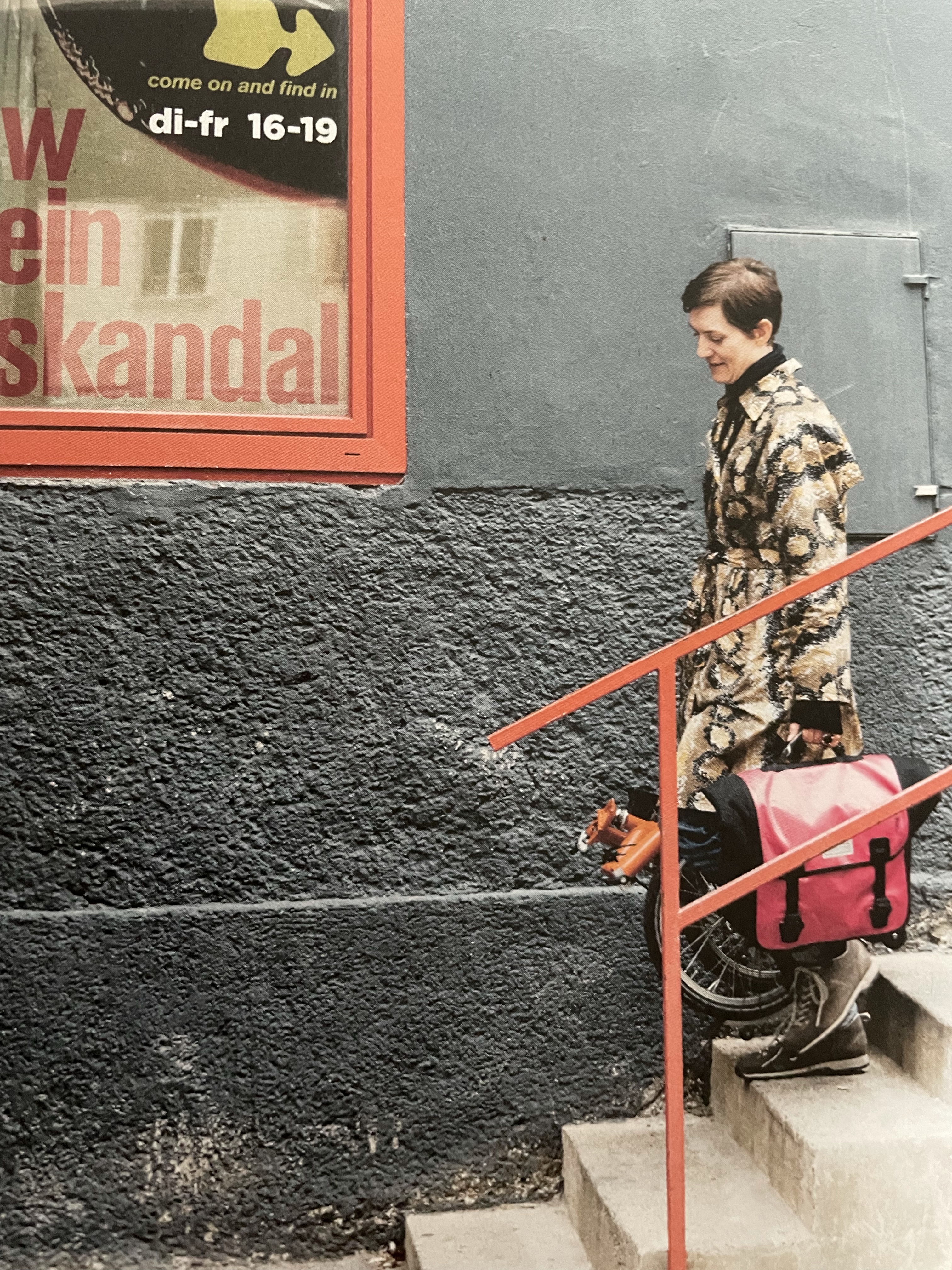
The One Straw Revolution (Masanobu Fukuoka)

Here in the UK a series of proposals has just been published under the ambitious heading of a “National Food Strategy”. Its author, Henry Dimbleby, has outlined a raft of measures we need to adopt in order to save lives from our poor diet, to protect nature and the environment and ensure that farming in the UK is sustainable. Perhaps the most eye-catching proposal is that we should reduce meat consumption by 30%. Less eye-catching, but no less important, is the need to massively reduce agri-chemical inputs. Aside from the dangers to human health they may or may not pose, long-term, it is their destruction of ecosystems which has finally been recognised (in some quarters) as unacceptable.

Such proposals may well get nowhere, and especially those relating to synthetic chemical interventions. Aside from the fear that climate change will bring new challenges, no challenge to the profits of the large agri-chemical producers will go unchallenged. Whilst low input agriculture remains a minority sport, there’s little to worry about, but we can’t have the whole world going organic, surely? Think of food security, think of the costs (they say).

In many ways the food strategy is framed in a way that puts the focus on a change in diet, and on educating people to change habits. In other words, a market-led approach. What needs to happen (as indeed with things like plastic packaging) is a producer-led approach. We are starting to see this to a degree, but nowhere near enough.

I think we can say that in some respects the wine fraternity is moving ahead of other agricultural sectors, and one way it is doing this is by exploring the methods of regenerative agriculture. No-till farming is not new. In fact, such methods were common in many countries until the 20th Century. I keep hearing about projects in the UK, and I even read about a return to this way of farming in The Guardian newspaper this week, in Spanish olive groves. But the methods, practical teachings and philosophy of the man I will introduce you to have taken off all over the wine world, whether directly influenced or indirectly.

Those who know producers like Ligas (Greece), Lissner (Alsace) and Meinklang (Burgenland), to name but three, are all following principles which effectively leave the whole ecosystem to regulate itself. In the case of vines there is no intervention between rows and just a little shoot repositioning (no annual pruning). Such ecosystems seem to become self-regulating after a while. I was recently with Tim Phillips (Charlie Herring Wines) in his Hampshire vineyard and we were discussing our passion for this very book as he showed me the cuttings to be returned to the earth as natural fertiliser.

The book is The One Straw Revolution and the author is, of course, Masanobu Fukuoka. I think those interested in natural wine and low intervention wine production will enjoy reading it, not least because of the increasing interest in Fukuoka from the wine community. Perhaps the time has arrived to shift our focus away from the biodynamics of Steiner and Thun, just a little, and to focus on how wine in general might benefit from a “no-till” regenerative approach.

Fukuoka was born in 1913 and lived a long and eventually contented life, passing away in 2008. Trained as a scientist (plant pathology), he broadly managed to avoid combat in WW2 working as a produce inspector and researcher in Yokohama. This gave him an insight into Japanese agriculture, which underwent great change after the war, largely as a result of American influence, both in terms of what to grow (Japan was a big potential market for American cereals) and how to farm.

In rejecting modern agricultural methods, returning to farm on the island of Shikoku, he developed a philosophy which some called “do nothing” farming. He applied his methods to both the dual cultivation of rice (summer) and grain (winter) in the same fields, and to his citrus orchards, in which he also planted his vegetables, amongst the trees. Some thought him crazy, but his methods worked. He matched the best yields in his neighbourhood without the costs associated with mechanised, chemical, farming, and with far fewer hours work than his contemporaries.

Fukuoka’s farm became the focus of attention, both from other scientists and from people looking for identity in a new way of life, the latter forming a community in huts on his mountainside.

The key to Fukuoka’s philosophy and methodology lies in the ability of nature to carry on doing what it does without much help from humans. In fact, Fukuoka’s light bulb moment may have been when he saw an abandoned field full of weeds, but with an ample crop of rice growing up among them.

A natural ecosystem includes a fluctuating number of predators which generally appear to balance each other. Too many of one type of insect and you get more predating spiders, too many spiders and there’s more food for the birds. Even common rice diseases righted themselves. In fact, as for yields, his shorter and healthier plants produced the same number of rice grains as the taller chemical-fed fields. What’s more, his natural food began to get a reputation which could have enabled him to charge much higher prices (as the retailers did who bought it), except that he believed such food should be available to all (an issue in our market, for sure).

The application of agri-chemicals on a large scale is largely a 20th Century phenomenon. In the 1960s activists drew attention to the potential harm to humans some of them could cause, especially Rachel Carson in the USA. Yet although her warnings were heeded to a degree, once DDT was banned the pressure kind of fell away.

Fukuoka outlines four principles to “Natural Farming”:

1 No cultivation (ie no ploughing or tilling);

2 No chemical fertilizers or prepared compost;

3. No weeding (weeds build soil fertility and balance the biological community); and

4. No other chemicals.

Soil health is absolutely key. This is a mantra we hear almost daily now, but not from a majority of farmers. And indeed viticulteurs. This despite so many photos of napalmed vineyards. Now, chemical applications by heavy tractor seem the easy route, and no one thinks of the long term.

It reminds me of a story in the James Rebanks book (see further reading below) English Pastoral. An old farmer was mildly made fun of for having been left behind by the agricultural revolution, for being a bit “backward” in taking up any new technologies. After he died a soil analysis was undertaken. On intensively farmed land this is essential because the soil is slowly dying and needs constant “replenishment”. On Henry’s farm they discovered the soil was rich and healthy, full of worms, very fertile. Henry had added no chemicals to his land and had not spent thousands of pounds doing it.

Quoting Rebanks “The men had discussed it in the pub. Dad said the way farming was going was insane. That old Henry had known more than the rest of us daft fuckers put together”.

Masanobu Fukuoka recounts a visit from a university professor who finally understood why there was no leaf-hopper problem in these fields…because natural predators of the insects were there in abundance. It dawned on him that in the other fields all the predators had been eradicated by spray treatments, yet here a natural balance in nature was maintained. “He acknowledged that if my method were generally adopted, the problem of crop devastation by leaf-hoppers could be solved. He then got into his car and returned to Kochi”. Even when his methods were proved to work, no one dare advocate them on a large scale.

Of course, many grape growers are highly focused on soil health these days. I only choose to mention the Rennersistas in Gols (Burgenland) as an example because soil health featured very early on in my conversations with Stefanie Renner, even before I visited them. One aspect of soil health Stefanie believes has a profound effect is a cover crop. As well as putting nutrients back into the soil they compete with the vines and help in some way to concentrate grape flavour. As Stefanie said in a recent interview with Littlewine (littlewine.com), “the wine tastes different with a cover crop”.

This ties in very well with Fukuoka, because he advocates a cover crop as an essential part of his regenerative agriculture. Along with a straw mulch, he uses white clover, which he found in his particular circumstances when used together control but not eliminate weeds, which play their own part in soil fertility and in a regenerative ecosystem.

This small book is a delight to read, well translated (by Larry Korn, Chris Pearce and Tsune Kurosawa), it’s a mere 184 pages long, made up of very short chapters. They set out the reasons Masanobu left science for the farming life, his practical methods and especially later in the book, his wider philosophy.

The Preface is written by Wendell Berry. Best known as a writer, and as an anti-Vietnam War activist, he’s also a farmer and has written widely on this subject, becoming an influencer here as well. The Preface is useful in putting methodologies specific to Japan into a wider context. As the American Berry says, Fukuoka’s techniques will not be “directly applicable to most American farms” but they do provide a great example of what can be done. Berry introduces the founder of organics, Sir Albert Howard, and highlights some similarities in their beliefs.

He also highlights a key element to Fukuoka’s thinking, asking the question “what will happen if I don’t do this?”. In this respect you could say Fukuoka is “a scientist who is suspicious of science”, but in reality, he is merely questioning the instructions of those who possess “piecemeal knowledge by specialization”, as a child might question the instruction of a parent. Why? What for? Because it is clear that the specialist does not see the whole picture, just as the scientist does not see how nature performs without his or her intervention.

In one of Fukuoka’s later, wholly philosophical, chapters (Drifting Clouds and the Illusion of Science) the author is expansive in his criticism of aspects of science, or at least the ways in which specialised, segmented, science dominates our lives. In a way such science has helped form our current economic conundrum, and it is the same conundrum for agriculture (and by that we include viticulture) as for climate change. We are locked into the capitalist requirement for growth and progress to generate increasing profit.

It is such thinking which creates our current crisis whereby all of the things we need to change seem unchangeable. As Chomsky points out, our problems are systemic because the way we do things (mechanisation, fossil fuels, agri-chemicals etc) are locked into a profit-driven system, and that system cannot easily be changed. But change must come and only consumers and farmers can effect these changes when related to agriculture. The pressure from the multi-nationals and financial institutions (investment banks solely responsible to their shareholders) is against them, but slowly change can be made. It has to be.

Masanobu Fukuoka described a so-called “do nothing” method of agriculture successful on a tiny scale on one of the islands of the Japanese archipelago. He suggests that great change can begin with one straw of barley. It is exactly the kind of revolution we need…in thinking about food production as part of our desire to feed the word, healthily.

In Fukuoka’s own words (page 3) “This method completely contradicts modern agricultural techniques. It throws scientific knowledge and traditional farming know-how right out the window. With this kind of farming, which uses no machines, no prepared fertilizer and no chemicals, it is possible to attain a harvest equal to or greater than that of the average Japanese farm. The proof is ripening right before your eyes.

Such results may or may not have a wide application in agriculture in general (and I know we have not discussed various climate events which have produced famine in the past and will do so in the future), yet those who are trying elements of this form of regenerative agriculture have achieved quite a degree of success. It is clear that those in viticulture who have taken on board Fukuoka’s teachings appear to be forging ahead, and if you look at the producers I’ve mentioned in this article, who are just a sample, the proof is in the bottle.

If you have the slightest interest in growing food, and especially if you are interested, as I am, in experiments at the cutting edge, pushing the boundaries, of wine production, I promise that you will find this both practical and philosophical book a great little read. A tenner well spent.

The One Straw Revolution by Masanobu Fukuoka was published by the New York Review of Books(this edn 2009, soft cover/paperback), originally published in Japan as “Shizen Noho Wara Ippon No Kakumei” (1978) by Shunju-sha (Tokyo). It may be available on a number of the larger online sources, including Blackwells, Amazon etc.

There are at least a dozen books I could recommend as very peripheral reading, and I imagine at least half my readers will have read all of them. However, the following four books are lovely reads and throw light on different aspects of agricultural knowledge and practice. I know I’ve mentioned these before, but sometimes it doesn’t hurt to labour a point.

English Pastoral by James Rebanks (who previously published “A Shepherd’s Life”) (Allen Lane, a Penguin imprint, 2020) – a shepherd who is so much more than that.

Wilding by Isabella Tree (Picador, 2018) – England’s great rewilding project which I visit frequently.

Dark Emu by Bruce Pascoe (Magabala Books, 2014) – Australia’s indigenous peoples were not hunter-gatherers.

Braiding Sweetgrass by Robin Wall Kimmerer (Milkweed 2013, Penguin 2020) – As Pascoe (above) describes the understanding of Australia’s land, including its aptitude for producing food, by its original inhabitants, pre-colonisation, so this author shows the unique understanding of North America’s capacity to produce food by its own indigenous peoples. Both highlight the way that science, perhaps with the arrogance of a colonial mentality, has ignored deep knowledge learnt from nature over centuries.

Posted in Artisan Wines, biodynamic wine, Japan, Natural Wine, Philosophy and Wine, Viticulture, Wine, Wine and Health, Wine Science | Tagged , , , , , , , | 1 Comment

Recent Wines July 2021 (Part 2) #theglouthatbindsus

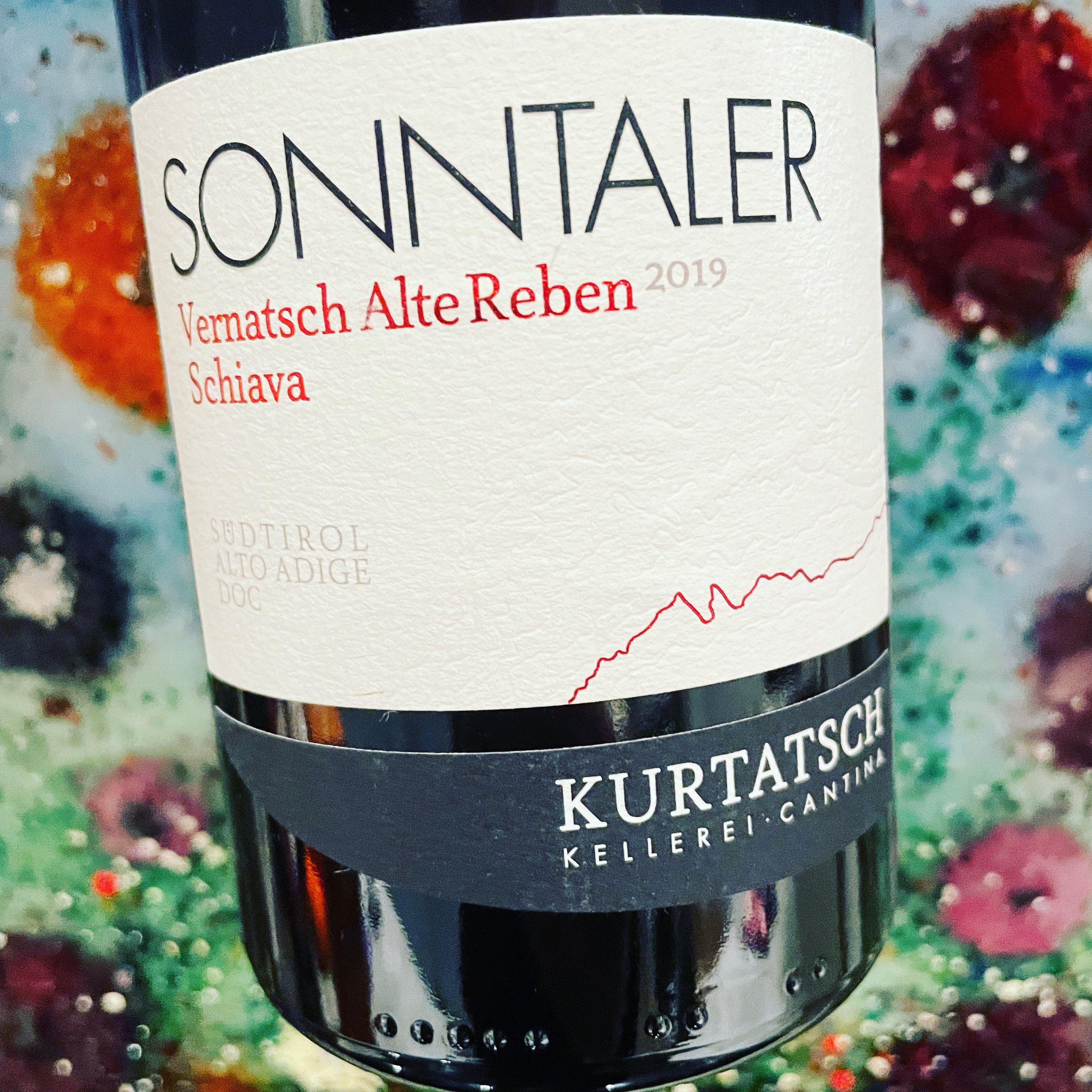
After a somewhat focused Part 1, we can inject a little more diversity via the second half of July’s drinking at home. Champagne, Slovakia and Alto-Adige (or Südtirol if you insist), then Alsace and the Pays Nantais are followed by the Swiss Vaud (another wine from a producer featured in Part 1, as promised), winding down with Friuli and Burgundy. I’ve noticed a couple of sparkling wines in there. I’m quite shocked at how few I’ve drunk this “summer”. Whilst I’m one for drinking whatever I want whenever I want, I can’t help thinking that the weather has played a part.

RÉSONANCE 2014 EXTRA BRUT, CHAMPAGNE MARIE-COURTIN (Champagne, France)

Dominique Moreau makes this lovely Côte des Bar Champagne in the village of Polisot, with a 2.5-hectare contiguous parcel of vines not far from the River Seine. In fact, this part of the region is now known as the Barséquanais. Most of her vines are Pinot Noir, with a little Chardonnay. All are certified organic, but Dominique’s viticulture and winemaking go much further than that, into biodynamics and natural wine philosophy. She is undoubtedly one of the major emerging star Growers in a region which has become somewhat the centre of the so-called Grower Revolution in quality.

Résonance is made from old vine Pinot Noir grown on Kimmeridgean clays (like Chablis next door). It spends three years on lees with vinification in tank. No dosage is added on disgorgement. The result is certainly dry, but very characterful. There’s a lovely balanced blend of apple freshness and red fruit aromatics, seasoned with a little salinity on the finish. This is simply a glorious Champagne, I don’t care if it’s only Dominique’s “entry level”.

This came from The Good Wine Shop (Kew location). I would have been back a few weeks ago were it not for Covid. They have one of the best Grower Champagne selections in the UK. Les Caves de Pyrene imports Marie-Courtin and they are an alternative source for all of Dominique’s wines, depending on what they’ve shipped at any time.

ORANZOVY VLK 2019, VINO MAGULA (Slovakia)

I keep buying wine from this 10-hectare family estate at Suche Nad Parnou in Western Slovakia, northeast of Bratislava, and every wine seems to get a little more exciting. This is, as the name might possibly give away, an “orange”, “amber” or skin contact wine. The blend is Rizling Vlassky (Welschriesling), Veltlin (Grüner Veltliner) and Devin, the latter a variety indigenous to Slovakia’s western hills and deriving from a cross between Traminer and Roter Veltliner.

The vines are grown on the highly calcium-rich soils in two valleys close to the village. Farming is biodynamic. Skin contact gives the wine its orange hue, more akin to the colour of rust. It smells clearly of mandarin citrus and tastes like Seville Orange marmalade with its bitter orange finish. It starts out tasting a touch tannic but this softens as the wine warms and rounds out in the glass. The result, after the cold edge disappeared, was rather delicious and I recommend not serving this too cold. No sulphur was added and this gives the wine its bright, lively quality which I find always appears in the best amber wines.

Imported by Basket Press Wines. OV will set you back £29.50.

VINO ROSSO LEGGERO 2018, PRANZEGG (Alto-Adige/Südtirol, Italy)

I was going to purchase my annual dose of Foradori’s “Lezèr” but then I saw this, another light summer red. Pranzegg is a favourite producer from the region among people I know, but I’ve rarely drunk their wines. I wasn’t even aware that they were imported into England until I saw this. Martin Gojer took over his family’s tiny estate, just 3.5-ha of vines, in 2008. He is based at Bolzano (or Bozen for German speakers), about 50 km below the Brenner Pass into Austria.

Martin and his wife, Marion, farm biodynamically, and they see their farm as a holistic ecosystem which they aim to be self-sustaining. They are a shining beacon of ecological awareness in a region dominated by co-operative cellars, albeit some rather good ones. We have a blend of Schiava and Lagrein, two of Südtirol’s traditional varieties, so what’s not to like?

To create this light touch red wine with a bit of texture the direct press juice of these two red varieties is fermented on the skins of already fermented white grapes. The result has a unique quality. Whilst the colour is pale for a red wine, almost like that of a darker-hued Rosé, there’s a bit of tannin and the kind of bite you get in a good Vinho Verde. Otherwise, it tastes like a white wine. The bouquet is all red fruits (pomegranate comes to mind), and with a touch of CO2 on the palate, it’s extraordinarily refreshing (just 11% abv here). As the wine warms slightly the fruit amplifies into lovely cherry juice, but in this case do serve chilled.

Imported by Newcomer Wines, purchased from Littlewine.

CRÉMANT D’ALSACE BRUT ROSÉ « MR PINK » 2018, LUCAS & ANDRÉ RIEFFEL (Alsace, France)

Lucas Rieffel is a member of the Mittelbergheim School, an extraordinary group of artisan winemakers producing wines among the most exciting in Alsace, and sharing ideas and wines to move the whole village forward. If we know Mittelbergheim as a centre for Natural winemaking in the Bas Rhin, it is down to this group. If we are speaking of excitement, as well as sheer quality, and about the feeling generated on tasting a new cuvée for the first time, my first bottle of his pink Crémant must be right up there. I hope it isn’t anywhere near my last.

Lucas and his father are best known for their steely biodynamic wines made from Riesling, and some rather good Pinot Noirs on the same level from different sites around the village. This Crémant Rosé is pure Pinot Noir. The vines are all thirty years old or more, initially aged in foudres before bottling. The wine sees ten months on lees, this being disgorged in May 2021. The idea, I think, is not to make a wine with a great deal of lees-age autolytic character, but rather what we have here. Pure raspberry fruit dominates, but it clings to a spine of mineral steeliness.

I would say that this is one of the best couple of bottle-fermented sparkling wines I’ve drunk through our eighteen month Covid ordeal. It combines a fruitiness rarely seen from a lees-aged sparkling wine with the house style, a firmness of purpose and real focus.

At £28 from Littlewine I say it compares well to anything I’ve drunk for the price, including some more expensive English fizz. A lesson in value and pleasure, sheer joy to drink.

“JE T’AIME MAIS J’AI SOIF” VIN DE France [2019], VINCENT CAILLÉ (Loire, France)

This wine comes from the Muscadet/Pays Nantais part of France’s Loire Valley, Vincent Caillé being based at Monnières. He’s the fifth generation to farm here, in charge of the family estate since the mid-1990s. His major contribution has been a focus on quality coupled with the introduction of biodynamics in a region once considered too wet by many.

However, a few years ago a challenging vintage saw massive crop losses due to the double-whammy of hail and frost followed by some disease. This resulting wine has an element of innovation to it, being a blend of the traditional Muscadet grape, Melon de Bourgogne, with Colombard, Grenache Blanc, Macabeu, Roussanne and Marsanne.

If some of those varieties don’t look very “Muscadet”, then you might have an idea what happened here. Vincent is seen as a bit of a torch-bearer for biodynamics and low intervention practises in the region and plenty of growers, far and wide, rallied to his aid. The brilliant label, which seems to channel Ubu Roi, was specially created by a local artist. The wine was such a success that it has become a regular cuvée in the Caillé portfolio.

Like Muscadet, the wine is clean and fresh, but somewhat broader than the wines of that appellation (except for those aged in oak). Imagine the flavour of a juicy, ripe, Galia melon with a twist of lime on the finish, along with a tiny lick of pebbly texture. In other words, a simple wine giving great summer refreshment.

This was £22 from Bin Two in Padstow.

DORAL “EXPRESSION” 2019, CAVE DE LA CÔTE (Vaud, Switzerland)

I wrote about this forward-looking co-operative’s entry level Chasselas in Part 1 of July’s ”Recent Wines” (the article below this one if you wish to check it out). I suggested that it may not be as profound as some of the best Chasselas made biodynamically elsewhere in the country, but Chief Winemaker Rodrigo Banto has captured the essence of the variety as a clean and fresh, tasty aperitif wine. I purchased this particular bottle because I’ve never tried this grape variety before, but in the same way that I was slightly, but most pleasantly, surprised by the simple freshness of the Chasselas, I was surprised at how I liked this one even more.

Doral is a cross between Chasselas and Chardonnay. The intention was to create a wine with the fresh herbs and citrus qualities of Chasselas along with the breadth and class of Chardonnay. I don’t think this wine has any pretentions towards Burgundy, but it does indeed manage to give a nice rounded amplitude to the typical qualities of Vaudois Chasselas (which you may or may not appreciate).

The colour is an attractive green-gold, the bouquet is of crisp apples, lemon and perhaps even kiwi fruit. The palate is where, perhaps, the Chardonnay comes in. The added breadth encompasses peach and maybe a little apricot, but you get the idea. I think you might in fact guess that this was not a crossing, but a blend of the two varieties. I’d be interested to know what anyone else thinks?

This can be had from Alpine Wines online for £22, or from a few independent retailers who, as I said in Part 1, are beginning to see the value of listing a few Swiss wines. My bottle came from The Solent Cellar.

CHARDONNAY 2019 « I VINI DI JACOPO », NEC-OTIUM (Friuli, Italy)

Here we are more precisely in Friuli di Colli Orientali with what at first appears to be an unassuming negoce Chardonnay. It’s made by Christian Patat, who might be familiar to a few afficionados. The wine is made from any surplus of grapes from Ronco del Gnemiz, and there is also a tenuous connection with the very high end Miani cuvée, which is now rather expensive – some grapes come from this source on occasion as well.

The fruit comes, geographically speaking, from Buttrio, Rosazzo and San Zuan, so close to the Roche Manzoni near the Slovenian border. Different wines appear under this label each vintage depending on what grapes become available. The Chardonnay cuvée has no pretentions to seriousness. In fact, it’s quite light on its feet, despite a 13% tag on the label. However, it does combine a mountain freshness (which it fairly oozes with), alongside a salinity which could fool you into believing an influence from the Adriatic. The overriding impressions are of sweet lemon citrus and honeysuckle. For around the £18 mark it certainly delivers real value for money. The Ronco del Gnemiz estate Chardonnay can be had, by the way, from a retailer near me, for £62.50.

Imported by Astrum, purchased at (in fact, recommended by) The Solent Cellar.

BEAUNE 1ER CRU « LES BOUCHEROTTES » 2012, LE GRAPPIN (Burgundy, France)

I sadly have to admit that the Côte d’Or’s Premier Cru wines are now almost beyond the pocket of someone who now devotes all his time to writing about wine rather than earning a proper living, and I’ve rather cut off the “freebie” route in my desire to only write about wines I truly like a lot. I have to rely on that thing we call “the cellar” – thank goodness I have one. There are still some bottles left of older vintages, but they are diminishing. Mind you, Andrew Neilsen did say it was a while since he’d drunk a ’12 when he saw my post on Instagram, so maybe he’s not so well endowed with his older vintages too?

Boucherottes is what I call one of those classic Beaune Premiers. Back when I drank Burgundy with greater frequency Beaune was considered largely downmarket by the connoisseurs, with a few notable exceptions. Certainly, compared to the famous villages of the Côte-de-Nuits, and even compared to the red wine 1er Crus of neighbouring Volnay and Pommard. But I always loved the smooth sensuality yet unprepossessing restraint of some good Beaunes from decent vintages, exemplified in my purchases of Jadot’s “Les Ursulles”.

I guess I’d never tried a Beaune Boucherottes until I bought a six-pack of Andrew’s 2011 vintage but this following year has always seemed, at least to my palate, a little more open for business. This is why it might surprise some that it’s still going strong.

You get silky-smooth Pinot fruit with hints of sous-bois development. One might call it suave, intended as a compliment. Nice length yet not a shouty wine at all. Modern winemaking but with an old-fashioned sensibility, perhaps. It shows how good a winemaker Andrew was even way back then. It was also affordable for mere mortals in multiple-bottle quantities. I don’t begrudge Andrew what he charges today, taking account of costs, and I still think this cuvée is very good value indeed. We can only feel lucky he still has access to the fruit.

Purchased direct from Le Grappin on release.

Posted in Artisan Wines, Natural Wine, Wine | Tagged , , , , , , , , , , , , , , , , , , , , , , , , , , , , , , , , , , | 2 Comments

Recent Wines July 2021 (Part 1) #theglouthatbindsus

In the first half of July, I crawled into a corner of European wine which spilt out a little from Trink Magazine’s “umlaut wines” domain, but only just. I think the eight wines I’ve written about here are perfect for summer, not that the weather here in the South of England was always everything one might wish for during these two weeks. For those who crave a little more diversity, you will find that in Part 2, and for those who are with me on this page, so to speak, there will also be a little more of the same.

We begin in Hungary, before travelling to Austria’s Burgenland, Baden in Germany and French-speaking Switzerland. Then we try two more German wines before a return to Burgenland, finally finishing back in Switzerland, but this time in a rarely seen part of Deutschschweiz.

EASTERN ACCENTS 2019, ANNAMÁRIA RÉKA-KONCZ (Eastern Hungary)

This is my last bottle of Annamária’s wine until the 2020 vintage arrives in the UK, hopefully in early autumn (although with the current delays to delivery one cannot be certain). I’m almost certainly shooting myself in the foot to say this, but famed as I am for my drinking diversity, this is one of the few producers I would (indeed will) devote a whole order to when they do arrive.

Eastern Accents blends 70% Hárslevelu with 30% Királyleányka from Annamária’s organic vineyards at Barabás, close to the Ukrainian border, on the Northern Great Plain. The vines average between forty and sixty years of age. The first variety is macerated on skins for five days, whilst the second sees a two-week semi-carbonic maceration.

The result is so fresh and fruity, with good acidity. This is balanced by texture from the maceration on the skins. No wood is used for this cuvée. What you get is an orange or amber wine, but not the ponderous tannic version. This is lively but with bite. It’s a pure joy to drink and at just 12% abv, very easy to drink too. All in all, a remarkable producer who is beginning to find a cult following and not just in the UK.

Imported by Basket Press Wines.

PUSZTA LIBRE 2020, CLAUS PREISINGER (Burgenland, Austria)

Claus sits like a lord surveying his domain from the balcony terrace of his ultra-modern winery above Gols at the northern end of the Neusiedlersee. It’s somewhere I had hoped to be at some point this year…such is Covid life. Claus makes some very serious wines, and some tasty varietals lower down the pecking order, but this cuvée is just a marvel of simplicity, to be drunk by folks with joy in their hearts, not the most serious of wine collector types.

Puszta Libre is a life-affirming, zippy red blend, of Zweigelt and St-Laurent. There’s nothing added here, not even sulphur. You serve it cold as a beer and drink it like fruit juice (and with 11.5% alcohol, that’s not difficult). One of the vendors says “this wine may be finished before you open it”. Well put. It won’t last long, and frankly, with a wine like this, that is all you need to know.

Imported by Newcomer Wines, this bottle purchased from Littlewine. Just £19!

SPÄTBURGUNDER ROSÉ 2018, ENDERLE & MOLL (Baden, Germany)

Florian Moll and Sven Enderle farm at Münchweier, on rich limestone and sandstone soils on the slopes below Baden’s Black Forest. Working together since 2007, they have made a name as two of the rising stars of German Pinot Noir, using a low intervention approach, transforming some of the region’s oldest Pinot vines into quite spectacular wines, if perhaps unfairly under the radar in the UK market.

Whilst many might ignore their Rosé, that would be a big mistake. Pinot Noir can make exceptional pink wines, especially when they are not a mere afterthought. This version is darker in colour than what has become fashionable for Rosé these days. In fact, I’ve seen lighter colour in some reds. It’s also a wine which hits 13% abv, making this very much a gourmand wine, not a “slurp in the sun” effort.

The wine is clearly Pinot, both on nose and palate. The fruit is built around a core of mineral acidity which gives it a “rosé” character, and it’s deceptively easy to drink, despite the alcohol level. Highly recommended for something a little different, especially for those who believe Rosé is not just for summer.

Another wine available via the Newcomer Wines/Littlewine combo.

CHASSELAS 2019 “VIN DE PAYS”, CAVE DE LA CÔTE (Vaud, Switzerland)

The Cave de la Côte is based at Tolochenaz, near Morges, just west of Lausanne on the north shore of Lac Léman (Lake Geneva). They are a large co-operative operation and farm, via their members, vineyards stretching all along this part of the Vaud, towards Geneva. For many Swiss wine snobs, they might say that this comes from the “wrong side” of Lausanne, the steeply terraced vineyards of Lavaux, to the east of the city, having somewhat more kudos. This is not the point.

In 2003 this adventurous large co-operative appointed Chilean winemaker Rodrigo Banto as Chief Winemaker and he has transformed the operation here into almost certainly the best co-op in the Canton of Vaud, and one of the best in the whole of Switzerland. His major contribution was to change the mindset whereby the winemakers worked with whatever fruit came in. By working alongside growers in the vines, quality has been transformed.

I won’t pretend this particular bottle is more than an easy-going co-operative wine, albeit one that has been well made. It’s flinty, pebbly, herbal. It can work as a food wine, but it makes an even better aperitif. Whenever we visit Geneva friends we always sit down before dinner with a civilised bowl of nuts and a bottle of light white wine, which is most often a Chasselas from one of the villages on La Côte. There’s zip, a CO2 prickle and apple freshness, with a touch of peach blossom. The finish has a savoury twist.

Whilst I recommend this as an aperitif wine, it went well on this occasion with a Japanese-style vegetable curry. In some ways it’s the essence of drinkable Swiss wine, updated with modern winemaking methods and without the outrageously high yields of old. It has the rare quality found in so few Swiss wines as well – affordability. Joelle at Alpine Wines says “this is the best entry-level Chasselas we could find” and I don’t doubt her. At £16.20 surely worth a try?

Rodrigo has introduced a range of natural wines, which go under the label “Nu”. These will cost a little more and can be had from the same importer as this wine in the UK for closer to £25. I shall be featuring another very interesting wine from this co-op in Part 2. There’s enough interest in Swiss wine to last a lifetime and I can’t understand why more wine lovers don’t make the effort to explore them.

The Cave de la Côte is imported by Alpine Wines but a few of their wines are increasingly found distributed by Alpine in several small independents who want the odd Swiss wine to enliven their list. I grabbed this from Butlers Wine Cellar in Brighton. It may currently be out of stock but Joelle writes that more is expected soon. Equally, try The Solent Cellar or contact Joelle at Alpine for stockists.

SCHIEFERBLUME 2018, RITA AND RUDOLF TROSSEN (Mosel, Germany)

I won’t re-introduce the Trossens. I’ve posted and written about plenty of their wines before. They are as legend in the Mosel as are the likes of Ganevat in Jura, at least among lovers of natural wines. This long-biodynamic estate is based at Kinheim in the Central Mosel. The couple have been farming here without chemical inputs since the 1970s, using no added sulphur for the past decade. Their purest of pure Rieslings have been an inspiration to other producers for a long time, and the other varieties they grow are certainly not inferior in my opinion.

They cultivate their Riesling vines on the grey and blue slate of what were once highly unfashionable slopes, and certainly a terrain which is difficult and back-breaking to work. The key to their success is old vine stock, biodynamic cultivation and pretty much zero intervention in the winery. Perhaps as important to Rudolf is the spiritual side of wine, something I can see he deeply appreciates as a farmer of vines. I have a great deal of admiration for all of his wider philosophical beliefs and I admit that helps me appreciate the wines more.

Schieferblume blends Riesling from three sites, translating the slate terroir into a summer meadow with a solitary peach tree providing aromatic shade in the glass. Just off-dry to my palate, it is vibrant, harmonious and drinking so well. When I placed my last mixed order, it was hard to resist getting more of this, though in the end I opted for something “Trossen” I had not tried. But frankly, Rudi can’t fail!

Predictably another import from Newcomer Wines, but as for availability, it’s possible that only Littlewine has some left at present.

PINOT NOIR 2018, SCHWÄBISCHER LANDWEIN, WEINGUT ROTERFADEN (Württemburg, Germany)

If you want a regular buy Pinot from Germany, this is one to consider. The region of Württemburg is one better known for mixed farming than for vine specialisation, and perhaps it took a couple whose parents were not winemakers to specialise here, at Vaihingen/Roßwag, 30km northwest of Stuttgart. Hannes Hoffmann and Olympia Samara farm four hectares on steep terraced slopes on a bend above the River Enz. They may not have had family working in wine, but Olympia has worked with Claus Preisinger and Hannes with Dirk Niepoort.

The vines are old but they are vinified rather simply. Some destemmed bunches and some whole bunches infuse gently for three-to-four weeks, ensuring minimal leaching of tannins from the skins, but not minimal flavour. Ageing consists of ten months in large old oak before bottling, of course without fining or filtration. Just a minimal amount of sulphur is added at this stage.

The initial impression is of bright cherry and raspberry fruit with a reasonable level of concentrated fruit acids. Of the last bottle I drank (July 2020), I said “sings like a choir of angels”. Okay, that’s quite florid for me (actually, I may have been quoting someone else), but boy this is good. This bottle, a year on, has greater depth, perhaps with slightly less vivacity, but it’s still fabulous.

Newcomer Wines/Littlewine. A mere £26 for a bottle of joy.

WAITING FOR TOM ROSÉ 2017, RENNER & RENNERSISTAS (Burgenland, Austria)

This is another estate in the blessed location of Gols, this time with a winery on the western edge of the village. Stefanie, Susanne and Georg make wines of which I would say their greatest quality, across the range, is excitement. This comes through a lack of fear when it comes to experimentation, but this is backed with a rather quiet meticulous attention to detail. This has been achieved through truly getting to know their vines and terroir before experimenting. For the Renner family, soil health is key and it shows in their wines.

We have here a pink wine which has a little age. To be honest I was surprised when I saw the vintage because I’ve not had the bottle “that long”. The current vintage in the UK appears to be 2019. The wine is something of an old friend. The blend is around 70% Zweigelt and 30% Blaufränkisch, direct-pressed. The juice is aged eight months on lees in used barriques.

Biodynamic farming and minimum intervention create a perfect summer wine. Even now, this older vintage tastes of strawberries and cream with a raspberry acidity peeking through. It’s smooth, dry, has a little lees-induced texture and is the colour of strawberry juice. Still working its magic.

The 2019 will set you back £24 from Littlewine and is also available from Newcomer Wines.

RÄUSCHLING 2018, BECHTEL WEINE (Eglisau, Switzerland)

Eglisau is hardly a famous region for viticulture, even in Switzerland, yet within its fifteen hectares of vines planted north of both Zurich and the Rhine, it is home to two somewhat famous winemakers. One is the retiring Urs Pircher, the other is a rising star of Swiss wine, Mathias Bechtel.

Mathias swept to fame as a member of the influential Junge Schweiz-Neue Winzer movement, before he started to take home the big prizes. His small estate occupies land rising to 470 masl, on mostly marine deposits covered with river sand and gravels, rising above the river and sheltered by forest. Like many young winzer without family vines to inherit, he started out with a rented plot in 2014 and didn’t have a proper winery until the 2019 vintage. Nevertheless, he still managed a “Grand Gold Medal” for his 2015 Pinot Noir in the “Mondial des Pinots 2017”. Much of his wine is currently made from bought-in grapes whilst he is reorganising his small vine holdings, according to Dennis Lapuyade (artisanswiss.com in an excellent article about Räuschling, highly recommended).

Räuschling is an old Swiss-German variety, at one time also common in parts of Alsace, and once very much seen as a workhorse grape for mass produced jug wines. It’s a cross between Gouais Blanc (know as Gwäss in Eastern Switzerland) and the Jura’s Savagnin variety. I may be wrong, but I don’t think you’ll find it, certainly not in commercial quantity, very far from Zurich nowadays.

So how come a rising star is concentrating on a variety not known for making serious wines? The truth is, that as with many other so-called lesser varieties, it’s all down to yields, care in the vineyard, and attention to detail in the winery. When an effort is made, Räuschling can produce aromatic dry white wines with a little more fat on the bone, and with a capacity to age to greater complexity.

This is exactly what Mathias Bechtel achieves here, something considered atypical (although neighbour and mentor Urs Pircher’s Räuschling is of equal fame, but I have sadly never tasted it). There’s a crispness, but allied to something more complex, rounded out via ageing on lees in acacia wood. Do you know arrowroot biscuit? It’s here. There’s also a little stone fruit and pear. Altogether very much my kind of white. It’s just a little different, and for me that adds to the excitement.

We often talk about how beautiful Swiss vineyards can be, focusing on the terraces of Lavaux, or the Alpine slopes of the Valais. I’ve never visited Eglisau but from photographs this tiny enclave above the Rhine looks equally idyllic. I wonder whether I might get there one day?

Whilst Räuschling is undergoing a bit of a revival, the best is not remotely cheap as compared to the wines of old. Alpine Wines is the importer and they list this for £37.45, which is about 25% more expensive than Mathias’s possibly better-known red wines. However, it is very good and quite uniquely so for a wine made from this variety. For the adventurous, perhaps, but only because of the price. You won’t find the wine itself in the least bit disturbing. On the contrary. To all Fall fans, Räuschling Rumble!

Posted in Artisan Wines, Austrian Wine, biodynamic wine, German Wine, Hungarian Wine, Natural Wine, Swiss Wine, Wine | Tagged , , , , , , , , , , , , , , , , , , , , , , , , , , , , , , , , , , , , | Leave a comment

Intoxicating by Max Allen (Book Review): Ten drinks that shaped Australia

From the late 1980s onwards, I became increasingly interested in Australian wine. I used to think I liked some cool wines, but what transformed my knowledge of the country, by its focus on Australia’s artisan producers, was a book I’ve mentioned many times. Max Allen’s “The Future Makers” (Hardie Grant Books, 2010) is a big old tome, and I could not be more grateful for the friend who gave it to me as a present, sending it via his uncle, from Melbourne. It must have taken up a sizeable part of his luggage allowance. I would argue that there still is no better book on Australian wine, especially if you are interested in smaller, low intervention producers. Exactly the same producers who were at that time beginning to be imported into the UK.

We jump forward a decade, to the summer of 2020, and I am now following Max on social media, and I see that he’s a new book due out, called “Intoxicating: Ten Drinks That Shaped Australia”. Published by Thames & Hudson Australia, it is inexplicably not available for direct sale in the UK and this time I was blessed with help from a generous acquaintance in New Zealand, who I know from Tom Cannavan’s Wine Pages Forum. This very kind man sent a copy over with his wife, who whilst visiting family here posted it on to me around a month ago. Thankfully, Intoxicating is available in paperback, running to around 250 pages, but still, the generosity of people who share a love of wine knows no bounds (even if it took up rather less space in the suitcase).

The book is divided into ten chapters, each one highlighting a drink which has a place in Australian history and folk lore. You certainly don’t need to know every drink, nor necessarily want to drink it, to be drawn into this incredibly well researched and totally enjoyable book. Allen’s style is always engaging and he matches this with very deep knowledge, not bad for a guy who was originally born in England, though benefiting from Australian family until he moved out there in (I think) his twenties.

If the book gives a nod towards a chronology, the first chapter starts us off before the colonial period. What Allen does immediately is dispel the myth that alcohol was unknown to the indigenous people before the British introduced it. In particular, he introduces Way-a-linah, fermented from the sap of a tree known as the cider gum. The fermented sap produces (still) a mildly alcoholic beverage which apparently does taste a little like mild cider. Sadly, this tradition is at risk from climate change. The trees are very sensitive to too much heat so that even the parts of Tasmania where the trees are most prolific are at risk of becoming too warm.

As you read the book you will, I hope, be pleasantly surprised that one of several strands which run through it looks at issues around alcohol in relation to the original inhabitants of the continent, especially how the narrative has been shaped by the colonial masters to portray the aboriginals as drunkards and unable to consume alcohol without negative effects. That’s a narrative which completely ignores one place of alcohol in our own culture, as a crutch for people who have been deprived of hope. For native Australians, that deprivation has been of more than just hope. It has been of land, identity and soul.

When the first settlers arrived, life was pretty tough…and not just for the convicts. Failing to learn from those already farming the land, the British came close to starvation, but they soon sorted out their priorities and established (via one particular regiment) a spirits-racket. The drink of choice was rum, though not rum as we know it. Rum brought into Australia came mostly from Brazil. It wasn’t the golden spirit distilled from molasses we enjoy today, but aguardente, distilled from sugar cane juice. In Portuguese it means “burning water”.

The more adventurous reader might attempt to make a modern version of a drink invented by Colonel Thomas Davey, Lieutenant Governor of Van Diemen’s Land, in 1815. It’s a blend of beer, aguardente rum, brandy, sugar syrup and lime juice. It went by the name of “Blow My Skull”.

Chapter Three covers peach cyder. Actually, Allen takes us on a journey around the traditional tipple of many of the different immigrant populations into Australia, but peach cyder became a popular drink due to a surfeit of peaches and as the author makes his own apple cider, he gives it a go. It’s a nice story, which I won’t spoil, except to state something we all know. Peaches can make a fine distillate.

It might surprise some that Champagne not only made its way to Australia, but it did so in some quantity. Even more surprising is who drank it. We read the story of Mrs Bond’s brothel, founded in Melbourne in the 1850s, where archaeology finds Champagne bottles outnumber any other type of drink by many times (along with hundreds of oyster shells). The title of the chapter is “The Salthouse Champagne”, which refers to the wreck of The William Salthouse, which sank in the treacherous entrance to Port Phillip Bay in 1839. Some bottles were retrieved in 1982 and, in 1994, subsequently tasted. James Halliday was on hand to write about it in the Weekend Australian, describing them, according to Allen, as “particularly notable”.

From here on in we begin to read about drinks we’ve probably heard of, if not always tasted. Aussie classics like Seppelt’s Angaston Bitters, 1930 Dalwood Cabernet (the birth of Australian Fine Wine), Victoria Bitter (a beer with which I have had my own personal relationship), and McWilliams Port. Although you will rightly assume that the author touches on the historical importance of fortified wine in Australia’s drinks history, this particular chapter provides an interesting foray into “aboriginal drinking” and the Native Australians’ relationship with grog.

The penultimate chapter brings us up to date. Kanga Rouge was not part of the famous Monty Python sketch, it really existed. Trouble is, the wine was a joke. But the 1970s saw the beginning of a revolution in Australian wine, a revolution which led to popularity in the UK beyond the dreams of the corporates who eventually began to dominate Australian Wine. In the late 1980s and early 1990s (if my recollections are accurate), a BBC2 programme called “Food and Drink” had millions of viewers, my very young self being one of them.

Oz Clarke and Jilly Goolden introduced us to wines bursting with Australian sunshine, ripe fruit seasoned with oak (mostly real oak in those early days rather than chips or essence). We never looked back, or at least we didn’t for about a decade. I recall vividly the first bottle of Aussie Chardonnay I purchased (Rosemount), who we drank it with and the look on our faces. Rosemount was very soon joined by Penfolds in my wine racks, which made the classic reds of South Australia, from Grange at the top all the way down. We will come back to Penfolds.

Some think we in Great Britain are cheapskates. The story of Australian wine in the UK certainly does nothing to dispel that suggestion. A mass market for Aussie sunshine was established, but over the years that sunshine fell in value, especially to the supermarket buyers who saw Australian wine as a cheap drink to market to the masses in quantity.

When wine from countries like South Africa, Chile and Argentina became available for even less money, any pretence at loyalty evaporated. The market is king, always the problem for a near industrial product, much of it arriving in tankers to be bottled at the docks, made by increasingly large corporates. The artisans Max Allen wrote about in “The Future Makers” still found a market in the UK, albeit a niche one, but certainly a decreasing one too.

Australia has since found its saviour (perhaps) elsewhere, in China. In 1995 Allen quotes figures showing exports of wine to China were a mere 1% of that exported to the UK. In 2019, he says, wine exports to China were 150 million litres, worth $1.2 billion. Staggering, and dwarfing the relatively miniscule quantities of Aussie wines which now come our way.

I recently read that yet another name synonymous with Australian wine in this country, Brown Brothers, had decided to exit the UK market completely. Just a few years ago I could go to the annual “Australia Day” trade tasting in London and taste well over twenty wines from this large family company.

Ironically it appears that Penfolds has, after an absence of many years, made a comeback here. I think Majestic Wine lists around nine lines, although not all the once-famous “bins” of old. But Australian wine is changing at the corporate level.

Christopher Rawson Penfold and his wife planted their original Magill Estate at the foot of the Mount Lofty Ranges, outside Adelaide, in 1844, thus starting what became a great Australian tradition by which doctors who believed in the health benefits of red wine became the producers of some of the country’s finest labels.

Since the 1840s Penfolds has gone through so many owners, it really is a lesson in the corporate world of Aussie wine. Southcorp…Fosters…Treasury Wine Estates. Penfolds may be back in the UK, I’d quite like to know how that happened. But like all of Australian corporate wine, the real market is seen as China. However, markets come and go. At the bottom of the Penfolds range has long been a wine named, in a way, after the company’s founder (via the cottage on his estate). It’s called Rawson’s Retreat. I’m sure you’ve heard of it? If I remember correctly, it was a single red blend, although now it’s a brand with several product lines.

Anyway, I recently read (on Vino Joy News, a site dedicated to China’s wine market) that Rawson’s Retreat destined for China will now contain wine sourced in South Africa. This is admittedly mainly down to the current spat between the two countries which has led to a 218% tariff being imposed on Australian wine exports to China. I am led to believe that the Rawson’s Retreat you can buy for £5 in some UK supermarkets will not move in the same direction, or maybe not yet, not that I imagine too many readers of Wideworldofwine will be overly concerned.

Perhaps the reappearance of Penfolds in the UK might just be dipping a toe back into an old market, just in case, although I know that China’s wealthiest wine lovers won’t be unduly hit by 218% worth of taxes on their Grange. Such taxes ultimately only benefit the super-wealthy because they decrease the competition from plebs like me for the unicorns.

The final chapter of Intoxicating brings us back, in a fascinating way, to what the future might hold, not in terms of markets so much as in terms of what gets made. This chapter looks at (inter alia) wine from native grapes. Yes, there are native Australian grapes. Of course, all the vinifera vines were brought to Australia mostly from Europe and The Cape. That is well documented. What even few wine experts in Australia know is that there are native species.

There’s a lovely story in there, which I won’t narrate, but it ties everything together. It embodies a spirit of adventure, an open mind, and a desire to look at Australian drinks culture with a much wider perspective than that of the colonial boozer and his descendants. What after all, as the author points out, is the difference between the French/European concept of terroir and the aboriginal “connection to country”? In sub-titling the last chapter “Drinking the Future” the author acknowledges that in a country populated for a couple of centuries by invaders who paid scant regard to the agriculture of its native inhabitants…until now…when it comes to alcoholic beverages, there’s “so much more to learn”.

I would suggest that for anyone with the slightest interest in Aussie booze, or indeed in Australia and its culture, this book makes essential reading. Although I said that the book is not available in the UK, that is not completely true. Amazon has it as an e-book for Kindle (£12.10) and also seems to be listing (as of Tuesday, at 16.25) a single copy from an Amazon Seller, second hand, for £23.93 (as of 21 July).

A Kindle edition of The Future Makers is also available (£10).

There’s one other book I would say is essential reading if you want to expand your understanding of Aboriginal Culture in Australia. It’s one of the most famous books to come out of the country in the past decade, so I apologise to the many readers who will know it.

Dark Emu by Bruce Pascoe (Magabala Books 2014, new edn 2018) is a well written but scholarly refutation of the “hunter-gatherer” tag which, was always applied to Australia’s Aboriginal peoples. If you suggest a people does not have a settled status on the land it becomes so much easier to dispossess them of it, but aside from this, Pascoe shows that we can learn a great deal from Aboriginal wisdom, especially when it comes to regenerative agriculture and the creation of a balanced ecology in a time of climate crisis and change. So much of what he discusses is as applicable to viticulture as to all other forms of agriculture in Australia.

Posted in Artisan Wines, Australian Wine, Wine, Wine Books, Wine Writing | Tagged , , , , , , , , , , | 1 Comment

Recent Wines June 2021 (Part 2) #theglouthatbindsus

Part Two of June’s wines begins with a country I have drunk too little of since our Lockdowns began. I hope to be purchasing some more Georgians this summer. Next up, two English wines in a row before a first-time experience for me, a Portuguese Petnat. Then we head a long way east, into Austria (two wines, both sensational), Czechia and Germany, parts of Europe which appear to feature strongly as I drink my way through July as well. Although these articles are written to highlight the most interesting wines drunk at home during the month, I will end June with a brief mention of a couple of bottles we drank in a restaurant on the very last day of the month…because I have to!

TSOLIKOURI ORKHVI 2017, NIKOLADZEEBIS MARANI WINES (Imereti, Georgia)

If American painter, John Wurdeman, is the outsider who brought international attention to Georgian wine via his Pheasant’s Tears winery in Signaghi, in the Kakheti Region of Eastern Georgia, Ramaz Nikoladze is the Georgian who became an unlikely ambassador for his country, via his hooking up in the mid-2000s with the Slow Food Movement in Turin. He went on to open Tblisi’s famous natural wine bar, Ghvino Underground, and has now done so much more for his country, including as founder of “Qvevri Renaissance”.

It all began when a Japanese journalist suggested that his traditionally made Qvevri wines were worthy of Slow Food’s attention. Ramaz is unusual, in that the Qvevri tradition had not been quite as prevalent in the Central region of Imereti as it was and still is in Eastern Georgia. Also, quite unusually, his clay vessels were buried out in the open rather than in a winery, though they now live indoors since these past five or six years.

This particular wine is a little different though. Ramaz makes it from Tsolikouri vines owned by his uncle in Lekhumi, less than a hectare with an age range of thirty to one hundred years old, planted on mainly limestone soils. There is no skin contact here and the grapes are pressed directly into qvevri (no stems). Fermentation lasted around eighteen days using indigenous yeasts, and then the juice spent six months in the same qvevri, before racking into clean ones before bottling.

The result is very clean, fresh and zippy. It might shock you if you are expecting an “orange” wine. However, I guarantee you will be stunned…in a good way…by its vivacity. So alive. Another side of Georgian qvevri winemaking, equally brilliant.

Tsolikouri has always been the most planted variety in Western Georgia, and as such was much prized for its supposed quality in the former Soviet Union, no matter how industrial its production may have been back then. Apparently, it was Stalin’s favourite grape variety. Please don’t let that put you off. It’s imported by Les Caves de Pyrene. This wine has a mega reputation in some quarters and a lot of people want a bottle. I have no idea what the current Tsar thinks of it, probably not a lot, Georgia being far from his favourite country.

« A FERMAMENT » SAUVIGNON BLANC 2018, CHARLIE HERRING WINES (Hampshire, UK)

Tim Phillips makes this play on Tom Phillips’s “A Humument” from vines planted in his walled vineyard near Lymington. This brick-walled site protects the vines enough here to ripen Sauvignon, and even Riesling, like nowhere else I know in the UK. The site really is something of a paradise. Anyway, if you recall, it was English Wine Week back in late June, so this bottle seemed highly appropriate.

Tim’s wines generally benefit from time. He won’t release wines before he deems them ready, this being just one more detail in a whole string of quality-focused decisions which inform the winemaking of this perfectionist. The nose is clean with notes of gooseberry and nettles. There’s sufficient acidity to suggest holding this a little longer, maybe another year. Nevertheless, it’s already quite astonishing.

You get a blend of purity and intensity. The freshness explodes on the tongue. You could almost imagine the fruit was distilled, not fermented. It has that kind of pure essence which you’d expect from an eau de vie, except without the alcohol (Tim’s wine has 11% abv). It sits on the tongue for a very long time. If you appreciate acidity as the defining core of a wine, you’ll love this, a wine as lovely as its label.

Tim’s wines are in remarkably short supply. They are occasionally available from Les Caves de Pyrene, and I’ve seen the 2017 currently on the Littlewine site (a good bet for drinking sooner than the 2018, perhaps). The Solent Cellar, Tim’s local indie wine merchant, often has a few bottles when he releases something.

“END GRAIN” 2019, TILLINGHAM WINES (East Sussex, UK)

We continued English Wine Week with another of England’s most innovative artisan winemakers, Ben Walgate. Tillingham is his rather smart project (vineyards, hotel with rooms, restaurants on site) just north of Rye, close to the Kent border and within sight of the Sussex coast. Tillingham is becoming the wine tourism destination, so much so that following significant attention from the national press, I was unable to book a stay there. They are apparently full for seemingly some months to come.

Nevertheless, long time readers will be aware that I have followed this project from the beginning, most importantly watching the wines themselves evolve. There are a host of different cuvées to select from every year, including some spectacularly good wines with bubbles, but End Grain is a favourite. It’s a still wine made from a base of Ortega (28%), Madeline Angevine (33%), and Bacchus (36%) with a tiny 3% of Müller-Thurgau.

The key to this blend is skin contact. Ten days for the Ortega, less for the Madeline Angevine and Bacchus. The overall ageing and blending sounds way too complicated to elaborate in detail. There’s a little time spent in oak for part of the blend, stainless steel for other mixed parts, but the Ortega component spends longer in concrete vat before all four varieties are blended before bottling without fining/filtration and just a tiny addition of sulphur.

The wine is cloudy, the colour of “Robinson’s Lemon Barley” for all old-school Wimbledon fans. The fruit component, which combines with the acidity, is beautiful elderflower and lemon zest. This rides on a tasty salinity, all of which quench the thirst, but the whole wine is grounded on the texture added from the skin contact, not too much so that the balance is maintained even at a low 10% abv. Not one for the “serious-minded” drinker. You need a lighter soul and a sense of joy. Drink on a warm day, outdoors if possible.
As with Tim Phillips’s wines, you sometimes need to hunt for them. Les Caves, and a selection of independent retailers they supply, will often have them. I have also seen some Tillingham bottles on Littlewine.co (though a search today found none). But they are fashionable, though more is available and more widely than in the case of the Charlie Herring Wines.

PET-NAT ROSÉ 2020, QUINTA DA RAZA (Minho, Portugal)

Quinta da Raza is a Vinho Verde specialist, established at the end of the eighteenth century, whose wines I have never come across before, but this bottle was recommended by a couple of the guys at The Solent Cellar in Lymington. It’s a co-fermented cuvée of Vinhão and Padeiro grown at around 250 masl in the sub-region of Celorico do Basto, in the far south of Minho’s Vinho Verde zone.

Vinification uses wild yeasts for a spontaneous ferment, with the light pink colour coming from the Vinhão without extraction. The partner variety, Padeiro, gives the wine its aromatics. These are fresh red fruits, raspberry and strawberry, with a nice brambley edge on the finish. You’d say it’s a simple wine, mostly on its fruit, although the bottle contains the lees which, as with most petnat wines, are not disgorged, and these give just a touch of texture. Altogether rather nice, a lovely picnic or beach wine. Super-refreshing, quite tight, lots of bubbles and a frothy mousse.

This wine is imported by Raymond Reynolds. If you are in Portugal you can, allegedly, purchase this for 9€. Here you will have to pay British prices, more than twice that, but we have to accept these sad facts of life and live with it. It is still, within a UK context, good value.

WEISZE FREYHEIT 2017, HEINRICH (Burgenland, Austria)

There are few places on this planet where I would rather be than on the shores of the Neusiedlersee, and naturally Gols would be where I’d wish to spend much of my time. There’s just something about this relatively unprepossessing place that produces an unusually large concentration of very fine winzer and winzerin, even for this prolific part of Austria. Prolific that is in terms of fine wines and very fine natural wines at that.

Gernot and Heike Heinrich took over the family winery in 1985, and they farm around ninety hectares, quite a large holding in the region. They are noted proponents of biodynamics, and indeed were founding members of “Respekt”, an Austrian biodynamic certification body.

The wine is called “white freedom”, which of course refers to both the low intervention approach they follow, and their freedom to create the wine exactly as they would wish. The main variety in the wine is Weissburgunder (Pinot Blanc), grown on fossil-rich limestone soils with sandstone and mica-schist. To this is added just 3% of Muskat Ottonel for aromatics. Around 25% of the juice sees a fortnight’s skin contact, but ageing on lees for 21 months after fermentation, in large used oak, adds to the textural qualities here.

The bouquet strikes a first note of citrus, but the palate is quite different, with, for me, peach and Galia melon. The acids are very fruity, with a hint of sharpness but overall rounded and softened. You get texture but not too much, it’s well integrated. But such words are dull…this wine is just transformative and transcendental, really something special. I poured a taste whilst cooking and immediately filled the glass on the first sip. I drink a lot of really good wines but this is one which is just that few centimetres taller than most. Next level, so to speak. No added sulphur either.

Heinrich is imported by Indigo Wines. They may be available retail via their “The Sorting Table” web shop.

NEJEDLÍK ORANGE 2011, DOBRÁ VINICE (Moravia, Czechia)

Out of all the wines I’ve enjoyed from the Czech Republic over the past few years, this “unicorn” wine has to be the most unique. Petr Nejedlík is based in the Moravian village of Novy Saldorf, on the southeastern edge of the Podyji National Park. He farms without using any chemical treatments on his 15 hectares of vines.

The grapes used in this cosmopolitan blend are Chardonnay, Pinot Blanc, Riesling and Sauvignon Blanc, grown on granite, sand, silex and quartz. The winemaking is much less “international”, though. It’s a rare expression of Czech qvevri vinification. Petr uses vessels imported directly from one of Georgia’s most acclaimed qvevri makers.

Initially you will get a real sense of Fino Sherry on the nose. This broadens out as the wine warms in the glass and on the palate into something akin to dry orange marmalade, whilst retaining the salinity you will have encountered in the bouquet. The wine is still very fresh, even after a decade, though I’m not sure how recently it was bottled from the qvevris.

This is one of those wines which will appeal very much to lovers of Vin Jaune, although it is, of course, quite different. It transcends what anyone would expect, as it does any old-fashioned notions of quality. It’s just complex and long and rather wonderful. I drank my first bottle of this back in December 2019, and promptly made it my “skin contact WOTY”. If anything, this second bottle, drunk a year and a half later, was even better than I remember it. This is good…shhhh! A bargain at £35 in my very humble opinion.

Basket Press imports. No idea how much, if any, they have left. It’s certainly still up on their web site.

SCHILCHER FRIZZANTE [2018], ÖSTERREICHER PERLWEIN, STROHMEIER (Styria, Austria)

Franz and Christine Strohmeier make astonishingly good natural wines at St Stefan ob Stainz in that part of Southern Austria known as Weststeiermark, famous for its rare grape variety, Blauer Wildbacher. There are just over 330 ha of this variety, almost unique to this sub-region, but the grape comprises around 60% of the 500+ hectares planted here.

The Strohmeiers warrant a mere four lines and two words in Stephen Brook’s first edition of The Wines of Austria (Infinite Ideas, 2016), yet ask any wine lover who knows the region and they will be among the first artisan winemakers to get a mention.

Blauer Wildbacher makes Schilcher, often interestingly described as a Rosé. Schilchersekt, in its sparkling form, is quite popular in Vienna and beyond, but this wine is made “frizzante”, less pressure and fewer bubbles. I personally find this style closest to my taste on account of having just the right amount of fizz for this fairly uncompromising variety (which reminds me loosely of some of the red frizzante wines I’ve drunk in Piemonte and Emilia-Romagna).

The vines are planted on what the locals call “opok” soils. They look just like schist/slate but are in fact a mix of clay and silt, which you may know from Maria and Sepp Muster’s famous “Vom Opok” Sauvignon Blancs. The Blauer Wildbacher grapes see a ten-hour maceration, giving the wine a rust colour. The second fermentation in bottle gives the wine its bubbles and gentle sparkle, rather like a petnat.

The wine seems to embody every taste sensation going. “Red fruits and girders” wouldn’t be too outrageous. Someone called it “dry Irn-Bru” but that might be a cultural reference too far for non-Brits/Scots. The palate has fruit wrapped around the acidity, though which fruit(s) exactly, I can’t say. The finish is dry, a little salty and mineral in texture. It can be served cloudy, using the dead yeasts in the bottle, but I would recommend trying a glass where the bottle has been stood up…clear before cloudy, just to see that remarkable colour. Thereafter, give it a gentle shake.

I’m not going to lie, I praised this bottle on Instagram and immediately worried it would sell out, after the feedback, so I ordered some more, getting in before anyone reads this and shares my enthusiasm. The friends we shared it with had never tried Schilcher in any form before (oh my!) and I think they rather liked it. Though be warned, my love of Austrian consumables probably goes beyond what is deemed normal in Great Britain.

Both Littlewine and Newcomer Wines stock Strohmeier in the UK.

WEHLENER SONNENUHR RIESLING SPÄTLESE 2009, JOH JOS PRÜM (Mosel, Germany)

Going classic here to prove a point. If you are going to buy these wines, give them a chance to mature. For many, this Bernkastel-Wehlen estate is the top of the pile in the Mosel. For others who don’t really get these wines, and probably drink them too young, they look on somewhat nonplussed. Stephan Reinhardt in The Finest Wines of Germany (Aurum Press, 2012) says “To drink a Riesling from Joh Jos Prüm is to enjoy a springtime of the heart and mind”.

The Sonnenuhr site at Wehlen is a steep slope on the Bernkastel side of the river, bookmarked by the very obvious sundial on the cliff face from which it takes its name (best seen from the opposite bank, on which you may well be cycling if you hired your bicycle over the bridge in Kues and are pedalling along the Mosel cycle trail).

The vintage in 2009 was unquestionably warm here, in fact hot and dry. It had the potential for producing wines of greatness. This Spätlese is quite delicate for a year like this, but it also has breadth and a lot of depth. The floral bouquet emphasises what I mean by delicate. It’s nose-fillingly beautiful, just to smell it. There’s no petrol. The palate is dryer than you might think, especially the way the spätlesen have been going (is 2020 going to prove an exception?). The palate seems to me to have a combination of brioche and mellow lime. There’s such length here, I can’t describe how long it stays in the mouth. If this isn’t fine wine, I’m not sure what is. A feast for all the senses.

This was purchased from The Sampler a very long time ago.

I mentioned that I wanted to highlight a couple of wines we drank in a restaurant. That restaurant was Plateau in Brighton, one of my favourite places before Covid, but this was our first time there since March 2020. I was struck by how the food was even better than ever. A sad reflection of our times is the fact that the wine list (including a separate list now called “unicorns”) was a little smaller than before, but what it lacks in quantity it makes up for in quality.

We began with a bottle of Joiseph “Fogosch” 2019, Luka’s glorious Grüner Veltliner from Jois in Burgenland. After glugging that rather swiftly, we moved on to Sin Titulo 2018 from Victoria Torres Pecis on La Palma (Canary Islands). This light red is as amazing as the Fogosch white and I couldn’t have chosen two more exciting bottles. Although this cuvée changes with the vintage (2016 was white, but 2017 was a red made from Negramoll), I am assuming from the taste that this was also made from Negramoll? I was brought down to earth when told that the “unicorn wines” are not available for takeaway – I really wanted that red. Sic transit gloria mundi. Both wines are coincidentally imported by Modal Wines. I could not recommend these, and indeed all of the wines made by these two “star producers”, more highly.

Posted in biodynamic wine, English Wine, Natural Wine, Wine | Tagged , , , , , , , , , , , , , , , , , , , , , , , , , , , , , , , , , , , , , , , , , , , , , | 1 Comment

Recent Wines June 2021 (Part 1) #theglouthatbindsus

I always try to emphasise that my “recent wines” articles are meant to highlight the most interesting bottles I’ve been drinking at home. June is a case in point, more so than usual. Part 1 begins with a style of wine I rarely drink, but this example was very fine. Next, wine in a tin. It gets a mention because it is by far the best can of wine I’ve tried. We then move through interesting Bairrada, Rheingau and Alsace Pinot Gris, all marked by points of difference to the norm. Czech wine is always interesting, and the one I drank in mid-June was a dry botrytis wine. We reach the end of Part 1 with a glorious Ribolla from Napa, but in the first half of June we managed a week away and I must finish with a brief mention for just a few of the very many bottles we consumed that week. In their case, I have mostly highlighted the best.

PINTIA 2004, BODEGAS PINTIA (Toro, Spain)

Many readers will have drunk Toro in the past and experienced a big and powerful wine, perhaps not as tannic as Ribera del Duero, but full of very ripe fruit and alcohol. The biggest name in Ribera del Duero is, of course, Vega Sicilia, and Pintia is their wine in Toro, an appellation which lies west of Ribera del Duero, and immediately west of neighbour, Rueda. Toro does at least boast altitude. Vines grow between roughly 600-to-850 masl, so cool nights can stop the wines becoming too unbalanced. In the late 1990s the region underwent significant investment from some of the biggest names in fine wine, both Spanish and French.

The main grape variety is the Tinta de Toro, aka Tempranillo. Its wines seem to become more muscular as they move west, so that the grape’s expression in Toro is quite different to that in Rioja. But this is partly about extraction and oak ageing, influenced by a Duero mindset and the praise of certain wine critics of the era. So, this is indeed a muscular red, which hits 15% abv, somewhere that I generally believe a table wine doesn’t need to go.

Yet what we have here is unquestionably very fine indeed. Garnet with purple legs, doubtless colour derived from its cold maceration and pumping over during fermentation. The wine goes through its malo in new oak before twelve months of oak ageing (70% French oak, 30% American). The result is a blend of dark cherry and a meaty stew, but with top notes of strawberry coming through. At seventeen years of age this is still structured, though not overtly tannic. Unquestionably fine and powerful. Properly aged, one cannot deny this wine’s beauty.

I’ve had this so long I really cannot recall where it was purchased. Guesses would narrow down to The Sampler or Berry Bros & Rudd.

THE LIBERATOR CHENIN No 5 (Swartland, South Africa) (250ml can)

Richard Kelley MW is the man behind both importer Dreyfus Ashby and the Liberator range of South African wines. He’s one of the most knowledgeable people in the UK when it comes to South African wine, with a massive range of contacts built over many years. He’s fashioned this range of good value wines with more than interesting labels from fruit sourced at good addresses. These wines are not your usual commercial fare, despite their reasonable pricing.

This particular wine is available in bottle, Chenin which comes from a rather well known producer, but that name having been mentioned, I was hypnotized to forget it (I genuinely have). We’ve all seen this marketing before. Famous name has some grapes he doesn’t want, so out comes an anonymous bottle supposedly packed with “Grand Cru” fruit. Most of us will run a mile at the merest whiff of such promotion. But I think we can safely assume this is no dodgy ruse because the wine is genuinely damned good.

Wine in a can seems to be a new trend, but most are definitely aiming low, both in terms of consumer and price. Putting a decent wine in a can is an experiment which has worked rather well in this case. This Swartland Chenin is punchy but superbly balanced. You wouldn’t really expect complexity in a tin, and you don’t get it, but this goes a bit beyond refreshing and satisfying. As I said above, in my introduction, the best wine in a tin I’ve tried by quite a long way.

In a bottle this retails widely for around £11. At this price it represents genuine great value. In a tin it’s a bit more expensive, £5 for a third of a bottle, but its convenience for the beach or picnic gives it extra appeal. The size is just right, either for one person desiring those large glasses you get served in a wine bar, or between two who want one of those 125ml glasses the posher places charge the same for. Rick has done especially well here. Take the Riedel “O”s rather than the plastic cups for this one.

Created and imported by Dreyfus Ashby, available in many indies, including The Solent Cellar and Butlers Wine Cellar.

BAGA 2018, THE FINEST WINES AVAILABLE TO HUMANITY (Bairrada, Portugal)

I’m sure many will have already read my piece on Darren Smith’s “TFWATH” label, wines made by this roving winemaker increasingly all over the globe. This collaboration really got Darren Smith’s career going. Working for Dirk Niepoort in the Douro, Dirk sent him off to their Bairrada operation, Quinta de Baixo, where Niepoort makes, among other gems, the accessibly priced Lagar de Baixo from the Baga variety.

Darren, with the help of Niepoort’s manager at Baixo, Sergio Silva, has made a style of Bairrada often found in the past but less so more recently. This means a short fermentation avoiding wood (in this case, updated to stainless steel). Less extraction gives a vibrant, bright, wine without that woody character Bairrada exhibited in the 1980s. With just 12.5% abv it’s an altogether lighter, quite elegant, wine, but it does have a little texture to add a touch of food-friendliness. The fruit is all red cherry and plum, but it has a pleasant savoury edge.

It’s really tasty and very good indeed. As I work my way through the wines Darren has made so far, there is nothing to restrain my determination to try everything he makes. And as my article highlights, there’s plenty more exciting stuff to come. This bottle was bought direct from Darren. You can find his wines at The Sampler, Spring Restaurant at Somerset House, and Lechevalier (Tower Bridge Road), and you can taste at Westgate Street Market by London Fields, where Darren has a stall on a Saturday. Outside of London, contact Darren direct via info@tfwath.com . If your interest has been piqued, you can read my article here.

I heard today that Darren’s Listán Blanco, made with Victoria Torres Pecis on La Palma, and which I praised in a previous article, is down to its last hundred bottles! WIGIG!

TERRA MONTOSA 2018, WEINGUT GEORG BREUER (Rheingau, Germany)

Weingut Georg Breuer, based at Rüdesheim in the Rheingau, has been in the increasingly capable hands of Theresa Breuer since 2004, when her father, Bernhard, passed away. Today she has over thirty hectares split over more than 150 parcels, of which around four fifths are Riesling vines. At the top of the Breuer pyramid are the Cru wines, single sites of great stature such as Rauenthaler Nonnenberg and Rüdesheim Berg Schlossberg. Terra Montosa is a kind of second wine for the Rüdesheim crus, made since 1990 from a combination of sites just below “GG” level. The name, of course, translates as “steep ground”.

The 2018 vintage was excellent here, a hot year, yes, but the vines are on deep phyllite, clay and quartzite slate. The richness of the vintage is therefore balanced by the intense mineral flavour and texture surely derived from this terroir.

Yellow plum fruit and a lemon acidity kick off the palate’s journey. The richness wells up but is kept in check (the wine is dry, of course). It has tension. I appear to have completely ignored the obvious ageing potential of what was my first whole bottle of this delicious 12%er. Next time I buy it, I will try to keep it longer. I am confident it would have got even better, but what a wine at this level shows is just how Theresa Breuer, in almost seventeen years, has built on the work of her father and taken this Rheingau estate to another level.

Imported by Indigo Wines.

PINOT GRIS “M” 2017, MAISON LISSNER (Alsace, France)

Domaine Lissner is at Wolxheim, in what used to be the wild frontier of Alsace winemaking, close to Mutzig and Molsheim (now that frontier of innovation has moved a long way north). Théo Schloegel is the winemaker, though he works in both vineyard and winery with the lightest of touch. The culture is of both biodynamics and biodiversity, with a great deal of interest paid to the teachings of Masanobu Fukuoka (I speak about Fukuoka so often I really should write about him this year).

The vines look wild, but then so is the flora and fauna. There is one winter pruning, but following Fukuoka, the cuttings are left where they fall. In the summer there may be a little shoot repositioning, but that’s about it. After about seven years the team found, as have others, such as those who manage Meinklang’s Graupert vines at Pamhagen in Burgenland, that the supposedly rampant vines find an equilibrium here.

This is Pinot Gris, but very different to the Alsace norm. The “M” stands for maceration, so this wine has colour extracted from the variety’s reddish skins. In fact, this is more of a red wine than a rosé based on colour alone. Whole berries ferment, with zero interventions. After a four-week maceration the juice was pressed into demi-muids and some 500-litre barrels. No sulphur is added to the wine.

The wine indeed tastes like a light red. There’s a little spritzy prickle on opening, the result of carbon dioxide used in lieu of sulphur to protect the wine. It doesn’t initially taste of Pinot Gris, the red fruit spectrum hitting the tongue. Allowing the wine to warm in the glass and mouth, it broadens and the aromatics become more familiar. The fruit then becomes a little spicy. It’s a hidden gem, I love this wine.

The beautiful label is taken from manuscript of the Abbey of Mont St Odile, which I recall visiting many decades ago on a very misty day, high above the vineyards. Sadly, these great illuminated texts, moved to Strasbourg “for safety”, were destroyed when the city was shelled by the Prussians in 1870, but copies remain.

The wine comes from that perhaps unparalleled Alsace portfolio of Vine Trail.

WELSCHRIESLING “BOTRYTIS CINEREA” 2019, PETR KORÁB (Moravia, Czechia)

The man from Boleradice may make some of the best petnats in the Czech Republic, but he can also make some pretty good still wine too. Following the Authentiste  Charter of Moravian natural viticulture, he farms biodynamically with minimal intervention. Petr is at the forefront of moves in the area to save Moravia’s old vineyards, and generally the vine age benefits from this. He also has a holistic approach to his work and lifestyle, incorporating viticulture into a mixed farm.

For this cuvée, Koráb uses the variety’s better-known name, Welschriesling (as opposed to Moravia’s “Vlassky Ryzlink”). The cuvée comes from thirty-year-old vines, the grapes picked late, in early October. About 25% of the bunches will be affected by botrytis, and whilst the wine is fermented dry, there’s a botrytis character which accompanies the wine’s richness. The other facet of this wine is its texture, which derives from ageing on lees.

The bouquet is surprisingly rich when swirled in the glass, and this is accompanied by slowly developing honey on the nose. There’s no cloying on the palate, though. In fact, the wine is dry, clean, and refreshing. The texture accentuates this. You certainly don’t notice that it has 13.5% alcohol. This went down particularly well paired, counter-intuitively, with a spicier than usual biryani on a humid day. Delicious.

Of course, Basket Press Wines is the importer.

RIBOLLA GIALLA 2017, BENEVOLENT NEGLECT (Napa, California, USA)

George Vare planted these vines in the Bengier Family Vineyard in Napa’s Oak Knoll, vines which he smuggled in a suitcase, so the story goes, brought from Josko Gravner’s vineyards in Friuli. Whichever way the vines got there, they are a welcome addition to a wine region rather full of more classic French varieties.

Three refugees from America’s East Coast came out west to make wine (including Ben Brenner at Rutherford Wine Co and Matt Nagy at Maybach), achieving success (many 100-pointers in Matt’s case) but not satisfying their joint passion to make interesting, low intervention, wines that express place more than corporate ideologies. The result here is a skin contact wine which saw fifteen days fermenting under a submerged cap and then ageing in old oak for fifteen months with no added sulphur and very little topping-up.

Tasting this wine in January 2020 it was clean, mineral and stony. Good enough to prompt me to buy a bottle. In June 2021, wow, it had really blossomed. There’s almost confit orange, toasted nuts…the palate is quite unique. It still has an innate stoniness but the skin texture has added spice (ginger) and more hazelnut. Fresh on the tongue but broadening on the palate, this is just so good. In fact, I’ve yet to taste a BN wine that doesn’t rate “brilliant” and, at least in Napa terms, this is a total bargain at £38. If, however, you are looking for a 100-pointer, stick with Maybach.

Imported by Nekter Wines. Their exceptional Californian range goes way beyond the usual fare of corporate collector’s wines.

Now we come to the wines drunk whilst away. The first trip to see my family since early November last year coincided, fortuitously, with my brother’s birthday. I chose to take my last bottle of Vilmart Grand Cellier d’Or 2006 from Premier Cru vines at Rilly-la-Montagne, which was on peak form, though the delicious Black Chalk Classic Brut 2016 from close to Winchester in Hampshire was not put to shame. Black Chalk has become a family favourite so I know with whom I have to share most bottles I purchase. Later we drank another English favourite which I would put at a similar level (for both class and interest), Langham “Corallian”, this Dorset producer’s classic cuvée.

However, the finest sparkling wine drunk during that week was sipped and admired outdoors a few days later, with close friends. When I began to become seriously interested in Grower Champagne, the two obvious sources (Selosse and Prévost) were soon joined by a couple more, Bérêche and Ulysse Collin. The latter Collin wines were quite new to the UK at the time, mid-2000s, and could be had for around £50/bottle in Selfridges Department Store, not always noted for keen pricing in its very good wine department. Oh, for those days!

Ulysse Collin “Les Maillons” is a single vineyard at Barbonne-Fayel, from which is produced a « Rosé de Saignée », one of the finest wines in Olivier Collin’s portfolio. He also makes a Blanc de Noirs from the same site. It’s situated in the Coteaux Sezannais, and Olivier owns around 2.5ha of this vineyard (just less than a third of its acreage). Yields are kept low and the vines are now pretty much all over forty years old. No wonder this wine is concentrated. It goes on and on as you savour its brilliance (brilliance in both senses of the word).

The base vintage for this three-grape blend based on Pinot Noir, is 2015, disgorged 2019. It has a dark colour for a pink (sic) Champagne, and has gained some complexity in bottle. Red fruits dominate (we are talking specifically raspberry and pomegranate on a bed of cherry). This wonder of a wine is now not far short of three times the price it was what seems not that long ago, so it was a privilege to share a bottle. You will find Rosé Champagnes of a similar quality, and you will find a few of them for less money, but I don’t think you will find any in this style to beat it.

Another sparkler of real interest was made from a variety you would never suspect of being capable of making such a thing. Vallana Brut Rosé Metodo Classico is made from Nebbiolo, and seriously, it will surprise you.

Going bubble-free, best still wine of the week was surely Jean-Pierre Rietsch Brandluft Riesling 2015 from Mittelbergheim. Jas Swan’s “Sif” Weissburgunder (Katla Wines) from the Mosel gained the approval of another wine nut for being the perfect beach wine. Finally, a stunning classic red from The Cape, Boekenhootskloof Syrah 2007 is surely one of the finest of all South African wines you can buy. I use the itals to emphasise this as something I need to shout about. Buy it, age it, enjoy.

Best fortified? Equipo Navazos La Bota de Fino 68, of course. There were some other stunning wines but space surely forbids their inclusion. The good news is that I went out and bought a few of them, so you’ll get to read about them at a later date.

I think that’s enough enthusiasm for now. Part 2 to follow…

Posted in Artisan Wines, Czech Wine, Fine Wine, Natural Wine, Sparkling Wine, Wine | Tagged , , , , , , , , , , , , , , , , , , , , , , , , , , , , , , , , , , , , , | 2 Comments

Paradise Regained – Visiting Tim Phillips

A few weeks ago, I had the opportunity to drop by to see Tim Phillips for a couple of hours. We met at his walled vineyard which he rather aptly calls “Clos Paradis”, a short drive from Lymington in Hampshire. As I rarely have time go there more than once or twice a year these days there’s always quite a lot to see. We then retired down the road to the winery for a bit of tasting.

Tim always gets my brain going, and he likes to explore similar subjects, and perhaps that’s why we get on well and he values my comments on the wines he’s making. I think we would not exhaust the conversation over a whole day, but on this occasion an early dinner engagement cut short our fascinating time together.

Tim Phillips Ghostbuster with some bio-preps (no nasty chemicals here)

For anyone who doesn’t know, Tim began his career in South Africa, producing some very impressive wines made under his Charlie Herring Wines label (some still available and they are crackers). On returning to the UK, he was the recipient of some amazing luck when the walled garden of a large 19th Century house came on the market. Originally for a ridiculous price, seeing as there was no house attached, but later the owners saw sense and Tim had himself a vineyard.

The winery is housed in a small agricultural building a short drive away, but with enough land for Tim to develop along ecological lines, with a large pond, a coppiced bit of woodland (with a family of deer) and, now, an adjacent field which Tim is planting with some trees. He seems to have a lot of help from the local Jay population, with a good number of oak saplings springing up.

Last time I visited the vineyard Tim was considering lowering the trellising for some of the vines and this is now underway. His Riesling, Chardonnay and Sauvignon Blanc have now been joined by, I think Tim said, around 100 Pinot Noir vines. They had a difficult start last year, due to lack of rain, but this year they appear to be thriving. It will be a few years before we see any wine from them and whether Tim will make his first “English” Charlie Herring red wine, or whether they will go into a sparkling wine, we can’t say. Whichever it is, it will be exciting.

After a good look around the vineyard and, I must say, spending a while allowing the new chickens to befriend us (so tame), we headed through into the orchard. The old ladies are still resplendent, looking straggly but majestic. Tim is adding new apple trees as well as other non-fruit species to enhance the space, and the tennis court is slowly disappearing under nature’s advance.

One of Tim’s beautiful old apple trees

Tim has been very much taken with the teachings of Masanobu Fukuoka, especially that part of his philosophy which advocates leaving cuttings, or otherwise returning their nutrients directly to the soil. It’s part of Fukuoka’s natural farming (shizen nōhō) method, a subject about which we both feel passionately interested. Of course, viticulture is a balance, and there are risks involved in leaving cuttings on the ground, but being in the vineyard twice a day, early morning and evening, allows Tim be in very real contact with his plants and the terroir/microclimate. It means he can spot any problems and deal with them swiftly.

Chanelling Masanobu

The last of the bottled cider (2017) has gone. Les Caves sold it through in a matter of days and if there’s any in retail you will count yourself lucky to find some. I tasted the 2020 cider which has been on Chardonnay skins, six months in the egg. It remains as refined as the red wine-infused bottles, Tim clearly making all his cider to taste like an apple version of Champagne. The Chardonnay skins impart an uncanny, well, Chardonnay flavour…and a little texture, at least right now. This is one to look forward to.

For the first time Tim is making a still wine from his Riesling (rather than sparkling). 2020 saw a third pressed off the skins and two-thirds crushed, with the following three months on skins. It’s in a barrel now (old wood, from 2012). At the moment it has amazing depth but Tim will know intuitively (and by constant tasting) when it’s ready.

A bit of a treat was to try the wine Tim has made from the fifty-year-old Seyval Blanc vines of a near neighbour. I’ve written about the variety recently. Breaky Bottom in Sussex makes the benchmark sparkling wine from this variety, a wine which is remarkably refined. It was the first variety I made wine from but it was a pretty poor effort, largely because for a variety of reasons (weather and the vines not having been pruned to fewer bunches) the alcohol level was too low and the acids way too high. Naturally I wasn’t going to chaptalize.

Tim’s wine is lovely. Right now, there is no dosage. With 5g/l, which Tim proposes after it’s had 24 months on lees, it will give it a bit of breadth on the tongue, and probably take away some of the tarter acids which my wine was plagued with.

Now to releases. There will, of course, be more cider ready for sale at some point as disgorging of the 2018 is underway. Expect availability from December, says Tim. The 2020 Sauvignon Blanc looks promising, perhaps a little different to some of the previous releases. I drank a bottle of Tim’s 2018 Sauvignon Blanc last week and it went very well with, of all things, a spicier than usual paella.

The Seyval Blanc will I imagine be a micro-release when it comes, as the vineyard owner retains the majority of it. Tim also promised a tiny release of sparkling Riesling in September of this year, but it will be truly limited. He promised I’d get one bottle…one bottle…for which I should probably be grateful, though two bottles would more than double the joy.

There was another TP treat in store. There’s an experimental sparkling Sauvignon Blanc from the 2015 vintage. Not sure what is planned for that, but I truly hope it sees the light of day [a day after I wrote this, I saw a post from Tim on Instagram, followed by a message to me where Tim said it won’t. It failed to make the grade and “is now compost”. I still wish he’d bottled some for me to judge in a couple of years].

All of Tim’s wines are remarkable, and I really don’t care much what’s in the bottle so long as I get one. However, in the years that I’ve known Tim I have seen his fan base grow from a number of locals to a truly national following. The battle for bottles can only get ugly. If you follow Tim on Instagram you’ll see that between my visit and publishing this piece, quite a few people have been visiting, no doubt staking their claim. I’m not at all surprised. The secret has been out for a while. These are remarkable wines from a magical place made by a very fine winemaker. One of our best.
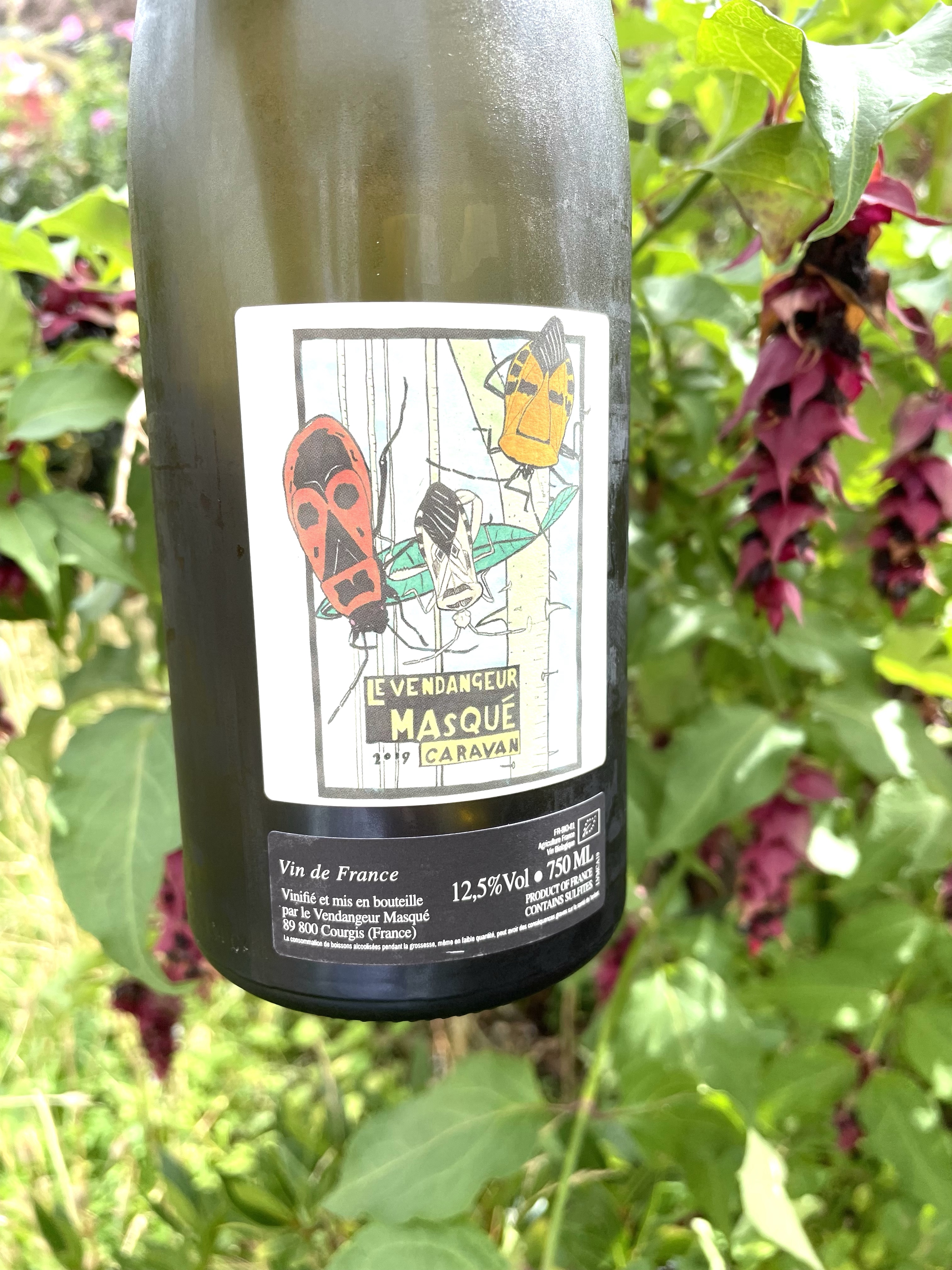
Posted in Artisan Wines, Cider, English Cider, English Wine, Natural Wine, Wine | Tagged , , , , , | Leave a comment

Paradise Lost – A Eulogy for Two Great Natural Winemakers

I’m sure that most readers will know by now that this year has already seen the loss of too many winemakers. The death of one who meant a lot to me happened in tragic circumstances on 5th May, Pascal Clairet of Domaine de la Tournelle. Then, just a few days ago I learned of the death, on 17th June, of another of natural wine’s brightest lights, Dominique Belluard, in similarly sad circumstances. Pascal was only fifty-eight, Dominique a few years younger.

I had wanted to write something about Pascal earlier, but I know his family had requested that people left it a little while. I’m not really sure how much readers really want to read about the circumstances around the deaths of these undoubtedly great men, and in fact I don’t propose to go there. Yet these two deaths, especially coming so close together, have genuinely affected me, even more so than I imagined they would.

As a way of showing my enormous respect for these two individuals, I want to write something about what they, their domaines and their wines, have meant to me over the years. This is in no way meant to lessen the passing of others. Merely that Pascal and Dominique’s wines were always up there among my very favourite, and will continue to be so as long as they are available for me to drink. Opening a bottle now will have a special meaning.

Pascal Clairet ran Domaine de la Tournelle in Arbois with his wife, Evelyne. He had worked for the Jura Region’s Comité Interprofessionel before properly starting the domaine in 1995. Although the winery is outside of Arbois now, the Tournelle HQ is a rather attractive town house right on the bank of the River Cuissance in the centre of Arbois (at 5 Petit Place). It is here that the couple’s fans would head to the tasting room, beside the incredibly popular summer-opening Bistrot de la Tournelle, effectively in their garden by the water. Nowhere in France reminds me of a Viennese summer Heuriger quite so much.

The last time I spoke to Pascal at Dynamic Vines, February 2020

I can’t exactly pinpoint when I first got to know the wines made by Pascal and Evelyne, but on reflection it must have been quite early on. I do know that the first wine I bought from them was their zero added sulphur Poulsard, L’Uva Arbosiana. It’s a delightful wine with amazing fruit plus a savoury edge, glouglou before I knew the term existed.

I can remember those first bottles, transported home in a cool box for fear that they might spoil in transit. I’d been visiting Arbois pretty much every year since the late 1980s, either to stay a week, or simply on the way home from visiting close friends in Geneva via the more scenic route. I always bought plenty of wine but these were some of the first edgy natural wines subjected to my overloaded boot in the height of summer. They didn’t spoil, and in fact nor did bottles I subsequently bought at Antidote Wine Bar, off London’s Carnaby Street, in even hotter summer temperatures, either (the Clairets are partners in this lovely Central London bar and restaurant with a wine shop now upstairs).

One occasion I drank L’Uva was particularly notable. It was on the final day of the Crowdfunding project for Wink Lorch’s Jura Wine book (published 2014), and a group of fellow Jura addicts (not quite so numerous back then, but definitely growing) got together at the sadly now closed Terroirs wine bar, near Trafalgar Square. The plan: to take to social media in what was a successful attempt to generate more pledges.

Wink taught me a valuable lesson that night and with that very wine…that when a natural wine shows signs of some reductive notes on opening, just splash it into a carafe to give it some air. Wink shook the carafe, duly covered, pretty vigorously as well. I don’t recall an occasion since where this hasn’t worked.

Of course, Domaine de la Tournelle produces many other lovely wines which perhaps one would say even surpass “L’Uva”. As with most Jura producers, even the relatively small ones, lots of different wines are made. Savagnin here is exceptional, with both “Savagnin de Voile” and a magnificent and complex Vin Jaune being as good as anyone’s. The Trousseau from “Les Corvées”, a wine that goes down easily yet ages well, gaining complexity over the years (always worth grabbing in magnum from the tasting room) should always be on the purchase list.

The last Tournelle wine I drank (back in April) was the “Cul de Brey” red. This is a blend of three varieties in more or less equal parts: Trousseau, Syrah, and the rare Petit Béclan. Glorious juice from happier, pre-Covid days.

The last time I saw Pascal was at the Dynamic Vines tasting in February 2020. I told him we were planning a trip to Arbois that summer and that I was hoping to visit them. “Of course, give us a call” he said in his distinctive French. Of course, it never happened.

Domaine de la Tournelle is imported into the UK by Dynamic Vines.

Although I would say that I got to know Domaine de la Tournelle first, Domaine Belluard followed close, and after coming across what was the nearest natural wine producer to where I was staying on a summer holiday in the Alps, I quickly discovered that some of their wines were being imported back home by the great catalysts for natural wine in the UK, Les Caves de Pyrene. Les Caves’s Doug Wregg has written about Dominique eloquently on the “Les Caves” blog, and I know he shares a deep passion for the estate. We both believe these wines have been personally transformative, and always transfixing.

Dominique, unlike Pascal, came from a wine family. He joined his father, Albert, and brother Patrick in the mid-1980s. His father died in 2011, after which he parted ways with his brother, buying out his share in the domaine.
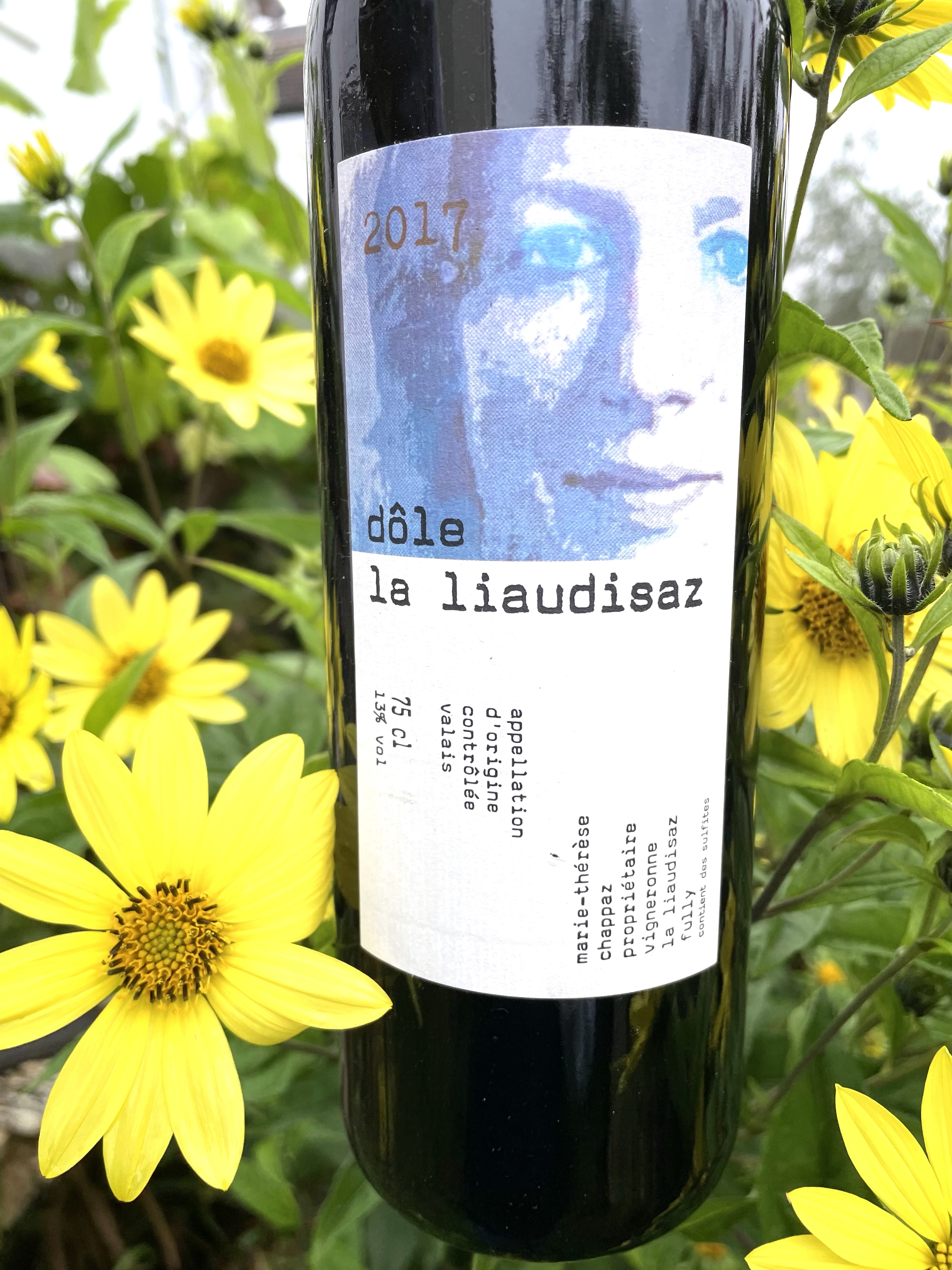
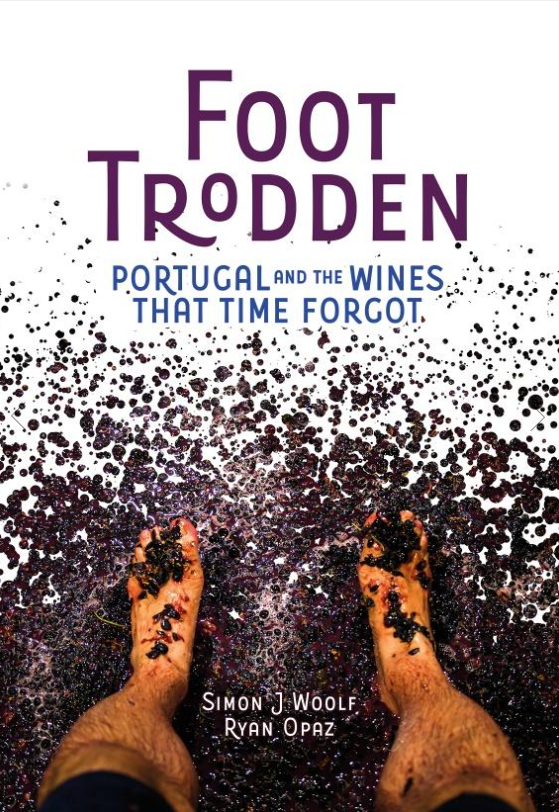
Although Dominique grew other varieties (Mondeuse, some Altesse, and at one time some Petite Arvine), the variety here is Gringet. This autochthonous grape is certainly used by other producers in the Savoie sub-region of Ayze, but mostly for traditional method sparkling wine under the Crémant de Savoie appellation.

Dominique became a star on the basis of his still wines made from the grape. “Les Alpes” is a fine wine by any stretch of the imagination, but it is clearly surpassed by “Le Feu”. This is Gringet grown on a steep (in places very steep) two-hectare site strewn with glacial sediments. The grapes are fermented (since 2004) in concrete eggs, some in rather unusual eggs encased in diamond-shaped concrete tanks according to Wink Lorch (Wines of the French Alps, 2019). Like many other biodynamic vignerons, he believed in the value of the motion created by these ovoid vessels during fermentation, dispersing the lees throughout the juice.

I admired Dominique so much. I know he had to face a litany of problems and issues over the years, none of them that I know of his own making. Same with Pascal. As with the wines of Domaine de la Tournelle, I’ve enjoyed these wines on so many wonderful and special occasions over the years. One cuvée which I have perhaps drunk more than the others is the gentle, low dosage, “Les Perles du Mont Blanc”.

“Perles” usually shows a very characteristic flavour and bouquet of ever so slightly bruised apple, whilst retaining a mouth-watering freshness. It contrasts nicely with the stricter “Brut Zéro” (off limestone). With two-years on lees (six months more than “Perles”) it is formidably ageworthy, but I’ve a soft spot for the younger “Perles” cuvée. There would rarely be an occasion when I saw it in a restaurant in France and didn’t select it as the first bottle.

“Perles du Mont Blanc” was the last wine I drank in France, although I’ve drunk Belluard at home since the Lockdowns began. That last trip to France was to stay at an apartment owned by friends in Oberkampf (Paris 11th). We were there to see the last date on our son-in-law’s short tour of France but after we bade the band goodbye as they headed off to Prague, we had scheduled in a day for ourselves.

We spent the late afternoon and early evening sipping several wines at Septime La Cave but we had booked a meal at a new restaurant near to The Bataclan which we’d never noticed before. We had planned on a quiet dinner with maybe just one more glass each, but there on the list was “Perles”, irresistible juice with which to sign off from the City of Lights. Little were we to know that, having visited France every year for it must be decades, I would be writing this almost two years later, bereft of French culture on several levels.

If we love wine, we have many passions. However, some of those passions become something more. These wines and their producers become a meaningful, almost constant, part of our lives. For me, Gut Oggau and Rennersistas in Burgenland would be described thus, as would Alice Bouvot and Domaine des Bodines in Arbois. And indeed, there are others in other places. The wines of Pascal Clairet and Dominique Belluard occupied that pedestal as well.

As I write, I don’t know what will happen to these two domaines. At La Tournelle, Pascal’s wife Evelyne was his equal partner in the winery, both having enological qualifications, although Pascal was the man in the vines. Although he had mentored some of today’s younger stars of the northern Jura, he was not one for delegating a lot of the work…work which made the fruit which enabled the wines to sing with such joy.

Dominique had taken on some help a few years ago, Yann Pernuit. Yann has been seen as a bit of a rising star in his own right, but I am not sure the extent of his involvement in Domaine Belluard. Dominique’s partner, Valérie, was behind the domaine’s administration.

Whatever happens, and I sincerely hope both estates find a way to move forward, both of these men will be missed. Genius is certainly an over-used word, but both Pascal and Dominique made remarkable contributions to their respective appellations. They will be missed by wine and they will be very much missed by me.

In many ways it seems as if there have been an almost overwhelming number of changes in natural wine in both of these regions of Eastern France in the past few years. As Alsace’s low intervention wines seem to thrive, Savoie and Jura have been unusually hit by frost and hail, domaine sales at the highest level, and indeed vignerons passing on. The post-Brexit, Covid, era has not been kind to we lovers of these two regions. One can only hope for better times ahead.

Posted in Arbois, Artisan Wines, biodynamic wine, Jura, Natural Wine, Savoie Wine, Wine, Wine Heroes | Tagged , , , , , , , , , , | 4 Comments

The Finest Wines Available To Humanity

The Finest Wines Available to Humanity is not some deluded statement of intent, at least I don’t think so, but is taken from the cult 1987 film, Withnail and I. Withnail says “we want the finest wines available to humanity, and we want them now”. It is perhaps this most famous line, or at least most knowing, that Darren Smith has chosen to pillage for the name of his wine company.

Darren has worked in the wine trade for many years, including a spell at London’s innovative The Sampler, and as a wine writer and journalist. In 2018 he took the ultimate step, after working a number of harvests, to become a winemaker. Since then, he’s worked around the globe. So far, he’s released wines working in collaboration with three producers, in La Palma (Canary Is.), Bio Bio (Chile) and Bairrada (Portugal). The wines are all at least organic, hand made and easy to drink. The first bottle I tried was so good that I bought the rest of his currently limited selection. There is certainly a wine from Georgia on the cards, with a couple more collabs ready to bottle soon, and Darren is also starting to sell some of the wines from his collaborators.

Darren’s initiation into winemaking came from working with Dirk Niepoort as an intern at Quinta de Nápoles in the Douro. Already a big fan of Niepoort’s Poeirinho, a wine made from the Baga variety, he ended up being sent down to the Niepoort vineyards in Bairrada (and Dão). The work was punishing, but like most newcomers to wine production, he’d fallen in love and knew this was what he wanted to do. Of course, the key to hard work is lots of play too, and this was a period when Darren’s palate was educated with, indeed, some of the finest wines available to humanity.

The result of this period was a collaborative cuvée Darren made with Sergio Silva, Niepoort’s vineyard manager down in Bairrada. It comes off old vines grown on the chalky soils of Quinta da Baixo. The idea was to make an old style Bairrada, by which I mean a short fermentation (albeit updated to stainless steel), giving less extraction, lower alcohol (12.5%) and overall a lighter and more elegant wine with finesse. But there’s also a nice bit of texture to chew on the way down. With lots of red cherry and plum as a bonus, it’s extremely tasty.

Interestingly, I’ve drunk Niepoort’s “Lagar de Baixo” Baga from the same vintage, and they do taste remarkably similar, but that’s no bad thing as the Niepoort version is such great value, and a good example of a woefully under rated variety. What both wines share is a delicious lick of acidity. This focusses the freshness and lifts the wine, making it quite easy to drink. Whatever the experts may say about the oak monsters of our world, drinkability has to be a hallmark of any great wine. I’m not saying Darren’s Baga exhibits “greatness”, but it is a great bottle as far as satisfaction goes.

At around the same time as he ventured to Portugal, Darren began what is currently a two-wine collaboration with Viki Torres, on La Palma in the Canary Isles. Regular readers will be no strangers to Victoria Torres Pecis, whose wines I discovered a few years ago, via the portfolio of Modal Wines. I’ve rated Viki’s wines highly enough to call her the new star of the Canaries (see my article here , where you can read more about Viki’s story and her wines).

La Palma is the most westerly, and fifth largest, of the main islands in the archipelago, but it rises almost a full seven thousand metres in height (that’s more than 4,000 metres below the sea and 2,426 metres above it), making it one of the steepest islands in the world. The vines are literally grown on the slopes of one enormous, and indeed active, volcano, whose crater is a full ten kilometres wide. This means that the vines grow on black volcanic ash soils, known here as “picón”, at altitudes up to 1,200 masl. Viki’s base is at Fuencalliente, near the island’s southern tip, but she farms vines in different parcels all over the island, and some are way up at those heights (which makes for a long harvest of around three months to bring in grapes from all those varied microclimates).

The first wine I drank from Darren was his collaborative cuvée of Listán Blanco (aka Palomino Fino in its homeland of Jerez), which he made with Viki in the 2019 vintage. It comes off the black soils from plots in the southeast and southwest of the island. It was shockingly good. Darren said of Viki’s wines that they are like a cave-aged goat’s cheese (of which plenty are made on La Palma) as compared to a triangle of Dairylea, which analogy readers outside of the UK might be a little nonplussed by, though I’m sure you get the idea.

I can say the same of this Listán. It’s a saline beauty, dry but with apple freshness, with (you don’t expect this) notes of honey as well. It creates a lingering finish and, with minimal sulphur added, it has a real vivacity. You don’t really expect, and half don’t believe, that it contains 13% alcohol. Delicious stuff.

There’s another (white) wine Darren made as a collab’ with Viki, called Is That the Milky Way? I’ve yet to try this one, but the photo on the label shows the inspiring view of the Milky Way, which can be seen in the night sky above the clouds on La Palma with the naked eye. It’s made from Albillo Criollo. Darren’s Albillo cuvée comes from a vineyard called Barranco Pinito, up at 1,000 masl, which forms one side of a steep ravine. Unusually, this is in the south of La Palma, because most of the Albillo is up on the north side of the island. Viki doesn’t farm these vines, which are outside the DO, and Darren purchased their grapes from a local farmer, making the wine at Viki’s place.

The fourth wine wearing Darren’s “TFWATH” label comes from far away Chile. It’s a collaboration this time with Roberto Henríquez, who farms in the Itata Valley of Bio-Bio. I’d already tried Roberto’s amazing wines via Wines Under the Bonnet, his UK importer. The variety is País, the classic “peasant” variety of Chile, brought over by the colonisers from Spain, originally for use by monks for their Communion wine, four hundred years ago. It’s probably the same variety as Listán Prieto, originating in the Gredos Mountains where some of the world’s finest Grenache is now being made. Interestingly, another place you’ll find the variety is on the Canary Islands, some cuttings having been presumably sold when the fleets touched land there en-route to South America.

The original wines made from the variety would have been very simple and rustic, and they remained so for almost all of the four hundred years-or-so that they have been cultivated in Chile, very much disdained by the forward-looking large producers who felt that Cabernet Sauvignon and Sauvignon Blanc, etc, were a somewhat safer and more commercial bet. País was well and truly ignored…except by a few.

Roberto Henríquez originally trained in agronomy and worked as a vineyard consultant, so he knew where there were plots of very old vine País. Through tasting these wines, given to him by the farmers, he was able to understand the variety and its qualities, and most importantly, to bring those qualities to the fore in his own wine, making all the right decisions based on quality alone.

Henríquez got a taste for natural wines when working in The Loire (he’s also worked in South Africa and Canada, so has quite wide experience outside of Bio-Bio). His own País cuvées (Rivera del Notro and Santa Cruz de Coya) are pretty sensational for this variety. The latter vineyard comprises vines over 200 years old up at an altitude of 350 masl. I’m wondering whether Darren’s País comes from this 3-ha site? He describes his cuvée as coming off “black basalt sand, dry farmed and unfiltered”. At least we know he found the grapes for his collaboration after a drive along dirt roads near the backwater village of Millapoa, which is where “Coya” comes from.

So, these are Darren’s four wines. So far. I mentioned Georgia, and I saw in one of his regular updates that a trip to Western Georgia is in the offing for Darren. The lucky man is going to make a collaboration in Imereti, with Baia Abuladze. She makes wine with her sister, Gvantsa, both having a commitment to traditional winemaking methods, which (not always the case in Imereti) includes using “Churi”, the Imeretean name for Qvevri.

They are making wine to the east of the Sairme Mountains in a region with a unique microclimate, particularly with the high solar intensity caused by the higher angle of the sun’s rays. I’m expecting another special wine from Darren, assuming he can get to Georgia for this year’s harvest. The Abuladze sisters’ wines are as far as I know only available in the UK via tasteofgeorgia.co.uk , but Baia made the 2019 “Forbes 30 under 30” List, and is clearly a name to watch in her own right.

Before Georgia there will be a couple more wines to sink your teeth, I mean tongue, into. Bottling soon will be a Moratella Rosado 2020, made in collaboration with Monastrell and Garnacha specialist Julia Casado. Julia is a very small-scale artisan producer (@ladelterreno) in Bullas, a region in the province of Murcia which more or less fills the gap between Jumilla and the sea in Southeastern Spain. Naturally it’s a region of old and neglected vines, perfect for Darren’s preferences.

Next up after the Rosé will be Mollar Cano 2021 from Peru’s Mala Valley. This is a wine Darren made with Pepe Moquillaza. If you don’t know Mollar Cano, you may well have tasted the variety under the name of Negramoll, from the Canary Islands. It originated (probably) in Andalucia and ended up in the Canaries on the way out to South America, like so many other varieties.

Pepe is interesting in that he’s well known for producing a revered Peruvian Premium Pisco called Inquebrantable (which translates as “Unbreakable”). In Peru a lot of very basic, often poor, wine is made as a by-product of the Pisco industry. Pepe has turned this on its head and is at the very forefront of quality, natural, wine in Peru, a tiny segment of the market but sure to gain ground. It will be very exciting to taste the new Peruvian wine from Darren.

So where can you find The Finest Wines Available to Humanity? The first thing to say is that quantities are pretty small…and running out every week. There are a couple of London retail locations, one market, where Darren can be found on a Saturday, or you can contact the man himself (when he’s around in the UK), perhaps via his Insta (@tfwath).

Those retailers are The Sampler branches and Lechevalier, a wine bar and shop on Tower Bridge Road. You can also try them at two restaurants: Skye Gyngell’s Spring at Somerset House and the immaculate Leroy in Shoreditch. One of the best ways to pick up the wines is to head to Westgate Street Market, in London Fields, if it’s not too much of a hike. Darren is there on Saturdays, and there’s usually a chance to taste. Otherwise, especially for everyone outside of London, drop Darren a line and he can arrange to send out the wines, with the usual shipping of course. They come directly from London City Bond (LCB). On Instagram he’s @tfwath or go to info@tfwath.com.

I’m only a couple of wines in on my journey but I cannot see myself wanting to miss any of Darren’s upcoming releases. Mind you, a word of warning. I am far from being the only one to be getting acquainted with these wines.

Posted in Artisan Wines, Natural Wine, Wine | Tagged , , , , , , , , , , , , , , , , , , , , , , , , , | 2 Comments

Recent Wines May 2021 (Part 2) #theglouthatbindsus

Part 2 of May’s most interesting wines drunk at home begins with two stunning wines, from the Jura and Burgenland (the second of those a fellow blogger coincidentally chose as his wine of the month for May). From here we swing over to Portugal, then Franken in Germany, Savoie (just south of Lac Léman), and Burgundy, finishing with a familiar friend from Alsace.

LE ROI DES 8 CÉPAGES [2017], DOMAINE L’OCTAVIN (Jura, France)

Alice Bouvot continues to make the most innovative wines in Arbois, and I’d even put her ever-growing negoce range a step up from ex-vigneron (?) Mr Ganevat. The innovation comes from using or blending grapes from different regions which Alice harvests herself, making the wines wholly “naturally”, including with no sulphur additions. It kind of figures that the labels are always equally innovative, but this one is next level too, a line drawing of her favoured gnome as “Roi” with a painting-by-numbers chart for us to colour it in, should we wish.

This cuvée is Riesling, grown by Philippe Brand at Ergersheim in the Bas Rhin (Alsace), directly east of Strasbourg. The grapes are transported back to Arbois and are give two weeks maceration on skins before ageing in tank. This was bottled in May 2018 and three years in bottle had not wearied it one bit.

The grape variety gives itself away on the nose with beautiful Riesling scents, quite evolved. The palate is very interesting. High-toned fruit acids are still evident but there’s a really nice depth to a wine you might assume would be lighter from the bouquet. But the flavours of chilli and ginger which mix with the lime citrus make for something quite different again. There’s finesse, but “Roi” definitely has a rebellious side too. I love this so much, but it might scare the unaware.

Imported by Tutto Wines.

GRAUBURGUNDER 2019, RENNERSISTAS (Burgenland, Austria)

Rennersistas, now “Renner und Rennersistas” since brother Georg joined the team, operate from their father’s original winery right on the western edge of Gols, as you approach from Neusiedl am See, at the top end of said lake. (I discovered that if you write GOLS in capitals it will be mistaken for the acronym for “Global Organic Latex Standard”, in case that comes in useful some time).

I do recall Stefanie telling me some time ago that they were going to move away from single varietal wines, once they had fully understood what vine stock they had and how the terroir affected it, towards producing more interesting blends. I pray, having discovered this wine for the first time, that they keep making varietal Grauburgunder (Pinot Gris). Fellow blogger Alan March declared it his Wine of the Month for May and were I so inclined, I cannot think of one to top it, though Alice Bouvot’s Riesling would be its equal.

The fruit comes from a new vineyard only planted in 2017 (this is the first vintage), and is fermented on skins for four days, and this was evidently enough to extract sufficient colour to make the wine a clear cherry red or magenta (though oddly described as “amber” on the retailer’s web site). The colour was a shock, but the wine divine. Ageing is in old wood, on lees.

The bouquet is of red fruits, but in the way that a Blanc de Noirs has the same kind of nose, the palate definitely cries “white wine”. Especially if you close your eyes. You will taste both redcurrant and cranberries, with the kind of edge you get in cranberry juice. The alcohol, at 12.5%, is just perfect. It’s a truly versatile wine. I’m shooting myself in the foot big time here because it will be my own fault if I can’t get some more.

Available from Littlewine and Newcomer Wines.

FITAPRETA TINTO 2019, ANTONIO MAÇANITA (Alentejo, Portugal)

I think you will see a sudden influx of Portuguese wines into these articles in the coming months. After getting behind Simon Woolf’s project, a new book on the Wines of Portugal, I thought I ought to make an effort to drink more of them. I have enjoyed many Portuguese wines in the past, and even visited the wine regions in the north, but sometimes a country drops off the radar for whatever reason.

I’ve actually met Antonio Maçanita a few times, a really nice guy, but it was always to taste the wines he makes on Pico Island with his Azores Wine Company. Those wines are hand crafted artisan gems, made from grapes grown on some of the most rugged and windswept volcanic terroir in Europe. The pair of Alentejo wines (this red and a white) are quite different, more commercial perhaps (on tasting the red). However, they are significantly cheaper. If you only drink natural wines, I don’t think this will be for you, but if you are seeking something fairly inexpensive (although £15.50 isn’t inexpensive for most consumers), this may provide an interesting experiment.

Antonio has partnered with Sandra Sárria to make a cuvée from forty-year-old Aragonez (aka Tinta Roriz, aka Tempranillo) (40%), blended with Alicante Bouschet (30%), Trincadeira (20%) and Castelão (10%). The vines are all grown on schist and granite.

Fermentation is in small vats with 15-20 days post-fermentation maceration. It’s quite different to the wines I normally drink. Alcohol is up at 14.5% and the wine is suitably dense and dark to match, and has thick violet legs running down the glass. The nose is of dark, spiced, fruit whilst the palate is equally dense, and earthy. It’s viscous and I can’t help thinking a degree less alcohol would have suited my taste, but that’s my purely subjective assessment. I think age will assist in balancing it. You get liquorice and eucalyptus.

In sum – it’s a very well-made wine at the top end of what I’d call commercial. Commercial or not, I do think if I’d aged it I’d have found more nuance. I do know a couple of people who have loved this, and although it’s not my thing it’s good to leave the comfort zone.

Purchased from Butlers Wine Cellar.

“LE ROUGE NU” 2018, MAX SEIN WEIN (Franken, Germany)

This is my third bottle, but first red, from this relatively unknown 3.5-hectare estate at Wertheim-Dertingen, in Franken (Franconia). It has already furnished me with some very good old vine Silvaner…or should that be “Sylvaner”. You can see from the name of the wine that Max has decided to go Français, and he carries this through to the grape varieties. Instead of using its common German name, Schwarzriesling, he uses its more common French synonym, Pinot Meunier, for the main grape variety, and there’s also just a touch of Pinot Noir (I’m told), not Spätburgunder.

I’d suggest that the red here is equal to the whites. If you enjoy good Meunier. The simplest way to describe this is plum coloured raspberry juice with strong notes of strawberry on the nose. However, it’s not one-dimensional. There’s also a nice hint of “forest floor” coming through in the 2018. It’s another bottle of total glouglou for quenching that thirst. Fresh, zippy acidity and mouth-filling fruit. Joyous…you get the idea.

As well as this 2018 there is also the 2019 vintage available right now, which will certainly feature in my next order.

Discovered and imported by Basket Press Wines.

“1515” 2016, LES VIGNES DE PARADIS, VdP des ALLOBROGES (Savoie, France)

Dominique Lucas, based at Ballaison, made this 100% Chasselas cuvée from one of the least known regions for the variety, which has been grown for centuries south of Lac Léman (Lake Geneva) as well as on the northern (Swiss) shore of the lake. There are various AOP designations in the short stretch between Geneva and Evian-les-Bains, including Crépy, Marin, Marignan and Ripaille.

In this case, Dominique uses the regional Vin de Pays (now IGP) designation, Allobroges. However, in this part of Savoie there is no one making wine quite like Dominique’s. I’m not the first to suggest his Chasselas stands with the best wines of France. Having finally given up his family vines in Burgundy, he can now concentrate on his special project here in Savoie.

“1515” comes from the appellation of Marignan, a tiny sub-region near Sciez, almost on the lake, just east of the promontory on which sits the beautiful and much visited medieval village of Yvoire (you can take a lovely boat trip across the water to Yvoire from Geneva). The grapes come off slopes at between 350 to 400 masl, all gravel with clay.

Ageing is in a mix of large old wood and concrete eggs, vinification following meticulous sorting. Dominique not only uses biodynamics but also several other more mystical measures. You probably know his “Kheops” (sic) Chardonnay is made in a concrete and oak pyramid aligned to the points of the compass. He also plays classical music to the wines (he’s by no means alone in trying this), believing sound waves calm the wine. But then it’s nice to have some music in the winery and perhaps Napalm Death might scare the juice?

This is perhaps the weightiest of the five Chasselas cuvées here, and it’s perhaps less mineral than some. But it is built around a filigree lacework of acids which wraps around gorgeous pear flavours, with maybe a hint of pineapple. It does have a classic mineral texture on the dry finish though. More than anything else, I think this particular Chasselas proves that the variety is capable of ageing, something few give it a chance to do. It’s clearly the attention to detail at every stage which creates the possibilities. It’s up there with Ziereisen’s top Gutedel and a lot cheaper (under £30 for this vintage when purchased, pre-Brexit). Try it before you dismiss Chasselas.

Imported by Les Caves de Pyrene, but quantities are fairly small (3,400 bottles of this in 2016).

BOURGOGNE ALIGOTÉ « LA CHARME aux PRÊTRES » 2017, SYLVAIN PATAILLE (Burgundy, France)

Sylvain Pataille, like many a traditional Burgundian winemaker who remains glued to their patrimoine, was born in Marsannay from where he now farms from a base near the church. This is another biodynamic farmer whose red wines have proved both increasingly excellent, and equally remained excellent value, for twenty years, getting better all the time.

Also a specialist with Aligoté, in which he has a remarkable belief, Sylvain is finally seeing that variety get some of the credit it deserves. Whether or not this has been precipitated by the shocking price of Côte d’Or Chardonnay at almost any level now, the very best Aligoté is now getting decent prices, and one or two have become genuine unicorn wines, highly sought after (says a man who just bought some De Moor Plantation 1902).

The winemaking here is natural, no additions except sulphur, added only if necessary at bottling and in tiny amounts. Several different Aligoté are made and this one comes from the “Aligoté Doré” clone. Most of the acidic Aligoté readers will have drunk, perhaps mixed in a Kir, is made from Aligoté Vert, the most common clone in Burgundy. Aligoté Doré was made famous by Aubert de Villaine in his exceptional Bouzeron Aligoté. It’s a different beast.

Significantly lower yields, a tendency of the clone, improves both aromatics and concentration. That Pataille’s vines for this cuvée were planted in 1949 on a gentle east-facing slope rising to 300 metres, in red soils over classic Burgundian limestone, gives this wine the best possible start. Twenty-four months in old oak rounds it out and some bottle age mellows it further.

This wine has a remarkable affinity to Chardonnay, for a moment, then it flits back to Aligoté, and seems to make this pendulum switch gently, on the palate, down to the end of the bottle. There is no piercing acidity, just a sensual smooth mouthfeel, but the wine is steeped in the fresh mineral texture of limestone. There are now a good number of fine Aligoté, but this is up there with the very best.

From The Solent Cellar.

PINOT NOIR “NATURE” 2018, LUCAS & ANDRÉ RIEFFEL (Alsace, France)

The Rieffels make this Pinot from a number of parcels scattered around below their home village of Mittelbergheim, where their winery/tasting room sits on the main street, almost opposite Jean-Pierre Rietsch. They are one of a group of winemakers which David Nielson (“Back in Alsace” blog) has dubbed the Mittelbergheim School…with good reason because the winemakers involved share experiences, taste together and have a very similar outlook, whether that be on natural winemaking or the graphic design of their labels.

“Nature” is one of three Pinots under the Rieffel label, and is the most glouglou of the three. Fermented for around two weeks in stainless steel, as whole bunches, the wine then gets just eight months in older oak before bottling the following spring. With no additions, including zero sulphur, the wine is protected by an injection of CO2 (which, don’t worry, the wine absorbs, leaving just a mouth-tingling freshness). Pure as it’s possible to get, this is like fruit juice, albeit with a very surprising 13% alcohol. The wine is quite light though, lifted, zesty. What kind of juice? Strawberry and cherry for me. Wine should be fun and this is!

This cuvée came from Littlewine (littlewine.co). Just £26. I plugged this very same wine when I drank a bottle last year, but it’s well worth a repeat recommendation. As they say, if it’s worth Tweeting, Tweet it twice.

Posted in Aligoté, Alsace, Artisan Wines, Austrian Wine, biodynamic wine, Burgundy, German Wine, Jura, Natural Wine, Neusiedlersee, Portuguese wine, Savoie Wine, Wine | Tagged , , , , , , , , , , , , , , , , , , , , , , , , | 4 Comments