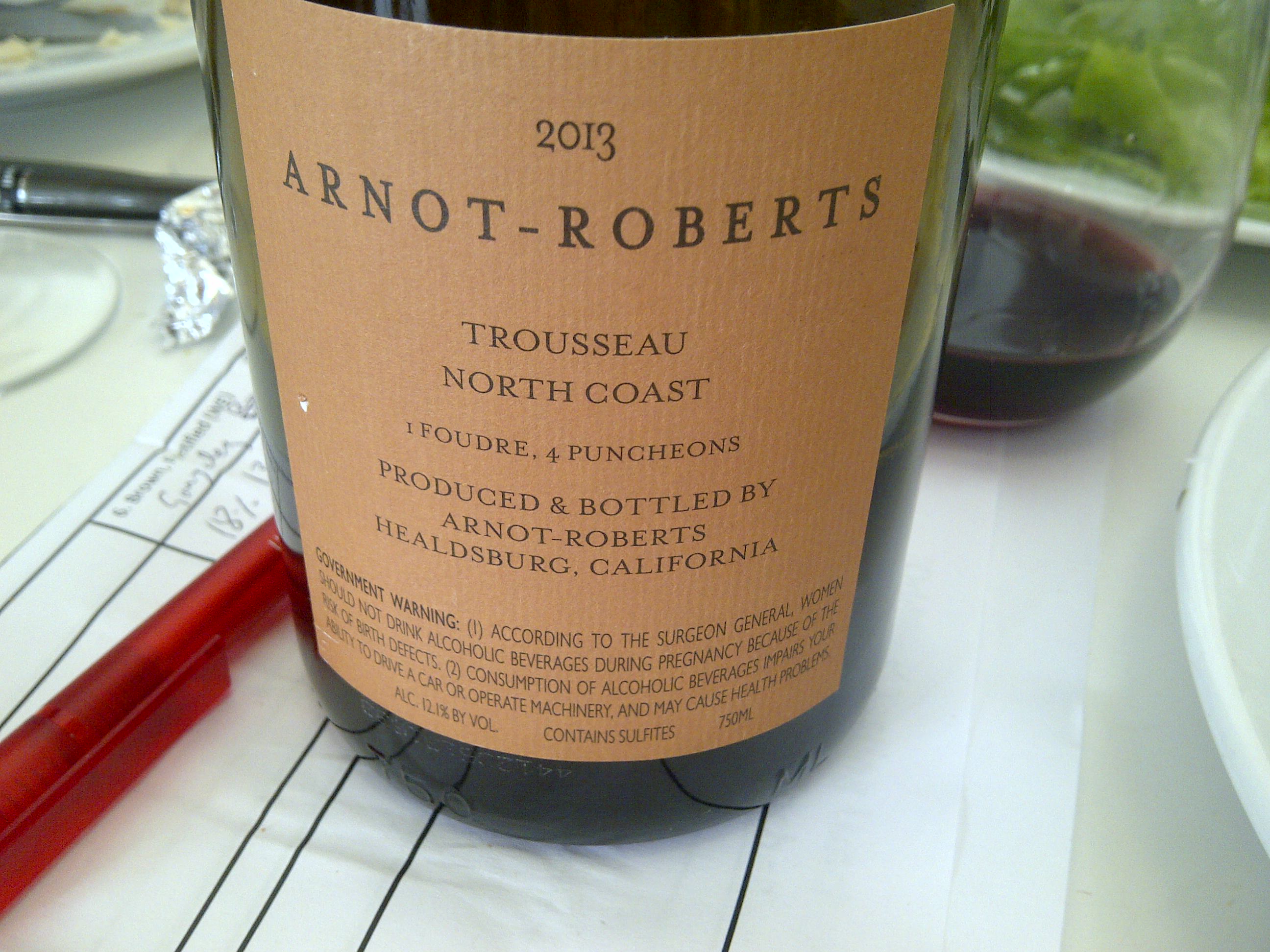
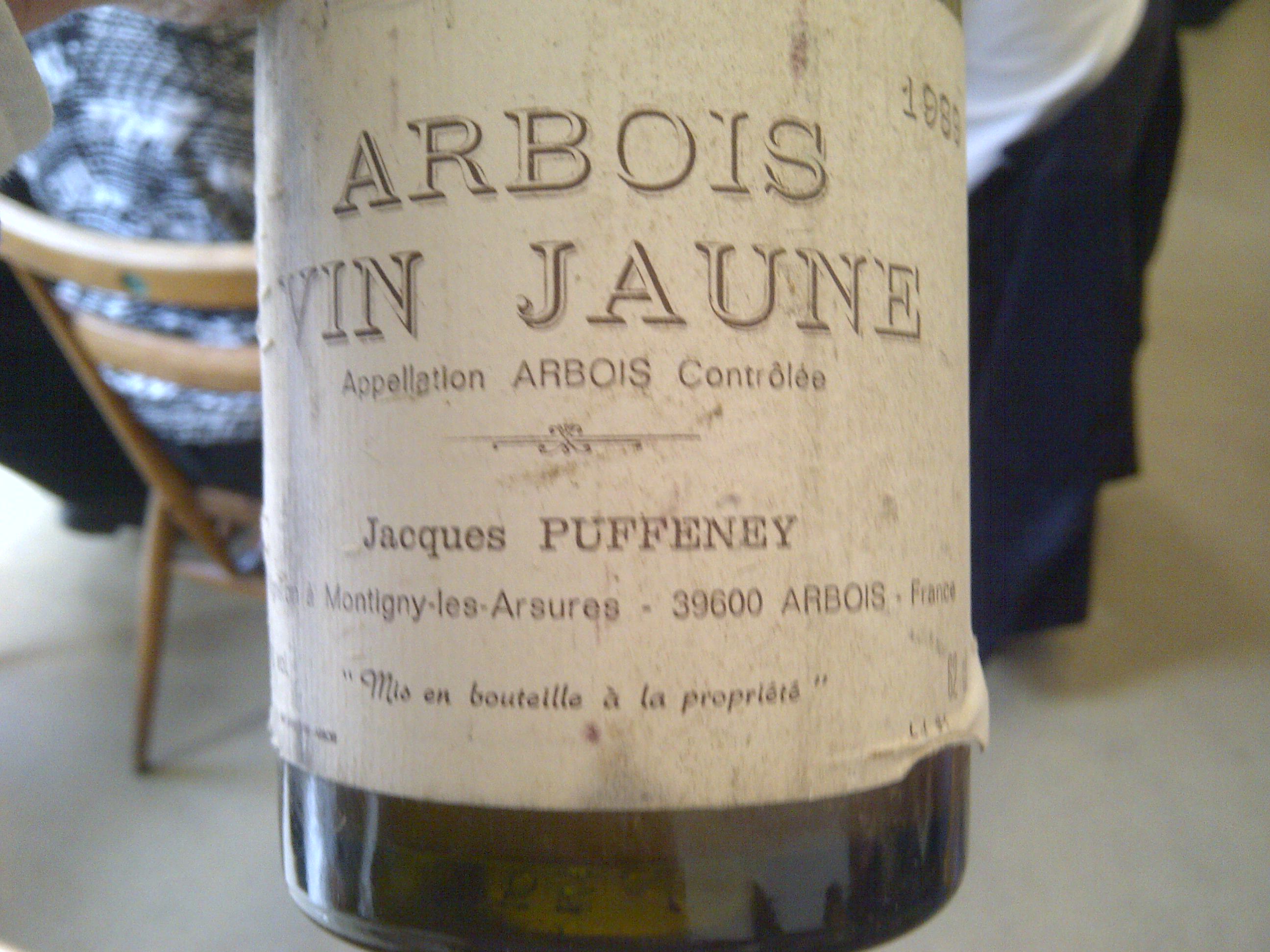
The Contenders (Arbois Week)

As my latest week in Arbois begins to fade a little from memory, or more realistically how many articles is it reasonable to write on one subject, I thought I’d mention a few producers who I’ve got to know only in the past couple of years, but who seem to be forging a bit of a reputation for themselves, both in the region and internationally.

I should admit straight away that all of the producers mentioned below make “natural wines”, wines with very little intervention and, sometimes, without even the addition of sulphur at bottling. That said, they all share a consistency of quality and, in my experience, reliability, though some of their wines may have required time in a carafe/decanter (and a shake) to get rid of a bit of reduction on opening.

One of the best ways for people in the region to try new producers of wines which are at least organic (either Ecocert Certification or in conversion) is at the event held in March each year, Le Nez dans le Vert. The event, which also attracts top names as well as new ones, allows a limited number of wines from each domaine to be presented by an increasing number of producers. There is a public day and a trade morning, and it is one of the prime ways a lot of these young producers have reached the main metropolitan and international markets and audiences. When you visit some of the names below you won’t find flashy, hi-tec wineries and tasting rooms – the one I visited at the end of this latest trip, L’Octavin (see below) basically makes wine in a large double garage. But you will often find that well over half their production goes overseas.

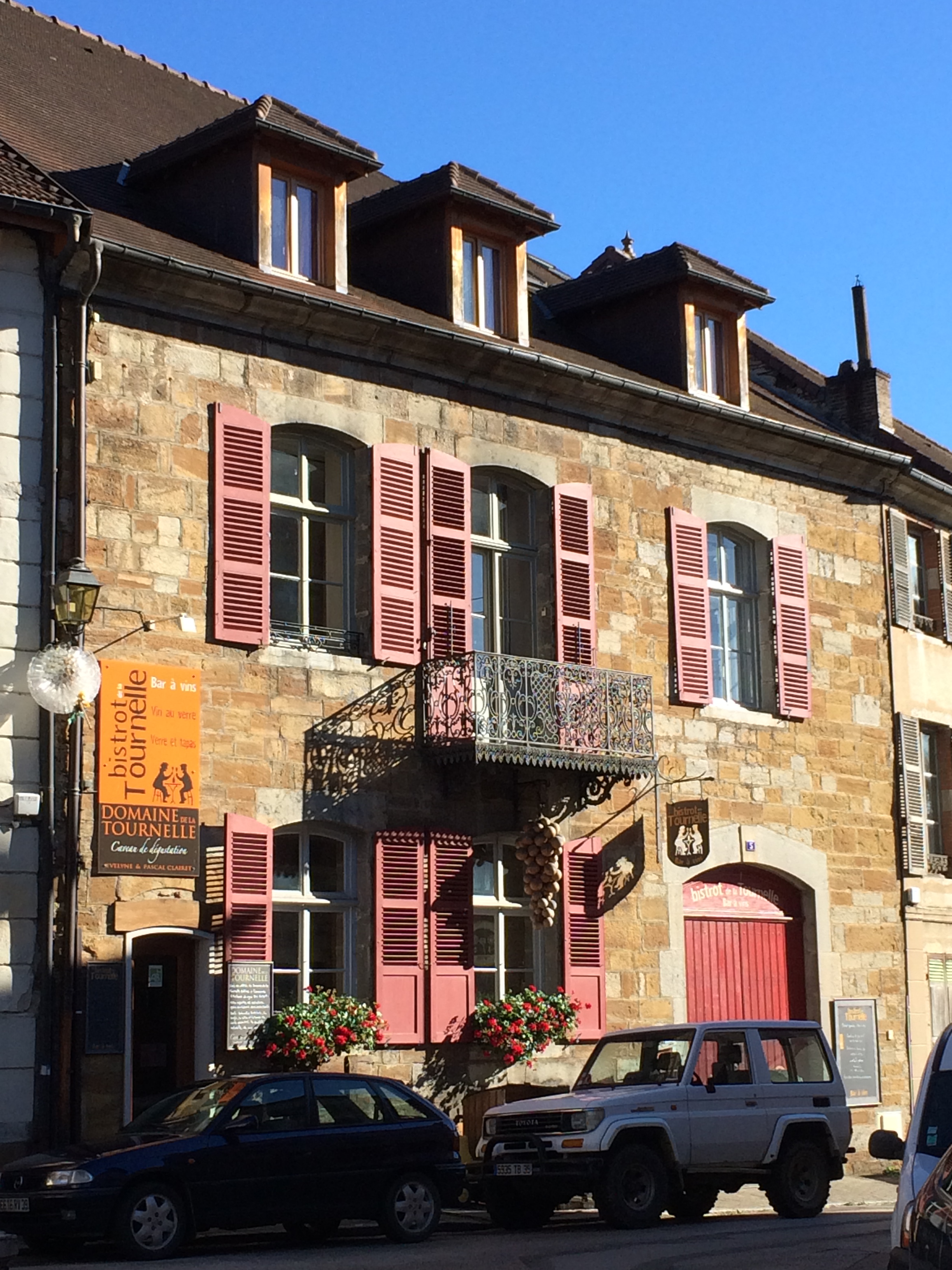
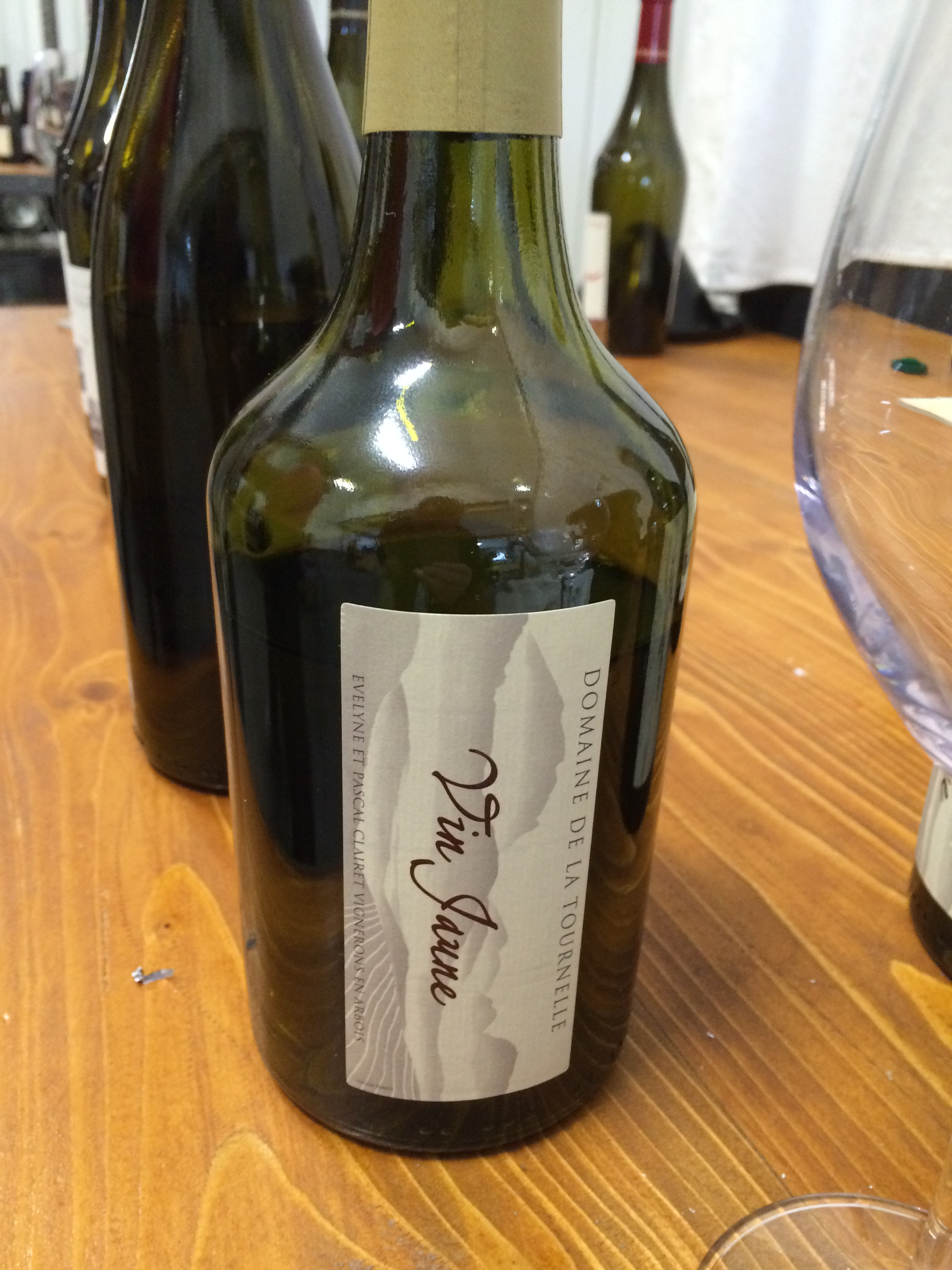
Domaine de la Tournelle

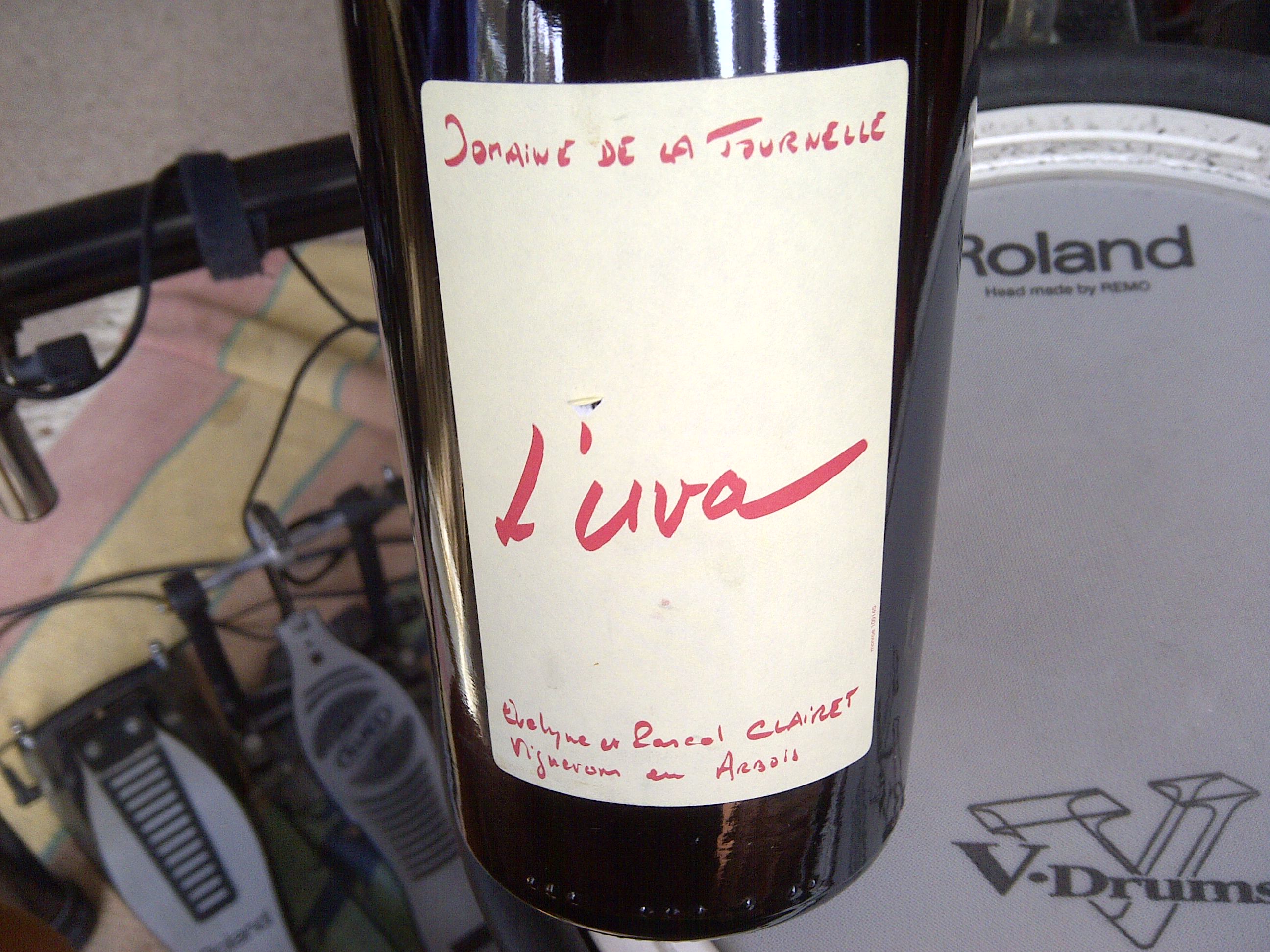
I’ve known the wines of Domaine de la Tournelle longer than the others listed here, having drunk their gorgeous light red, L’Uva Arbosiana, at Antidote Restaurant in London over a few years (they also do “take-aways”). This vibrant Ploussard (they use the Pupillin spelling) is made by semi-carbonic maceration and no sulphur is added. It is recommended that the wine is transported and kept at 14 degrees or below, although I have taken bottles home from Antidote in summer heat without ill effect. From Arbois, use a cool box to play safe.

Brighton and Hove-20140418-00327

The domaine produces a full range of Jura varieties,  including Vin de Paille and Vin Jaune. They produce Savagnin, both topped up and under flor, and several classy Chardonnay bottlings. But this is a domaine where it pays not to forget the Trousseau as well. Aged in older wood, this wine will gain complexity in bottle.

Brighton and Hove-20131107-00164

As I’ve already written in a previous Arbois article, Pascal and Evelyne Clairet also run the Bistrot de la Tournelle from the pretty riverside location of their Central Arbois chais and tasting room. It’s the perfect place to sit in the sunshine and drink a bottle of Uva Arbosiana with some tasty small plats.

Jura 2015 Dave 225

Domaine des Bodines

This Domaine is about four years old. Alexis and Emilie Porteret have most of their vines close to their home and winery, which is very easy to miss but it does have a sign, just outside Arbois town limits on the road from Dôle. They have now expanded a little, and like so many Arbois winemakers, have managed to find some vines near Pupillin.

The domaine first came to my attention in 2014, via their Pétillant-Naturel “Red Bulles” (Bulles cropping up a lot in the names of these bubbly wines). The wine’s reputation doesn’t rest on a witty title, however. It’s a great expression of Poulsard, easy to drink, refreshing. I was very pleased to find some this year as September isn’t strictly a good time to find a wine mostly consumed after bottling in Spring and early summer. They do need drinking, but in my experience they’ll last nicely into the autumn. With a pét-nat you can either stand it up to drink it clear on the fruit. or you can shake up the sediment for a more savoury, yeasty glass, as the wine undergoes its bottle fermentation without disgorgement.

I have only obtained, in addition to the Red Bulles, some Chardonnay and Pinot Noir so far, but I’m planning to work my way through the Bodines list when I can. I’ve heard great things about their non-Vin de Paille and there’s some wine set aside for, if it works out, some Vin Jaune (a few years off, perhaps 2018).

image

Domaine Hughes-Beguét

I have a special affection for the wines of Patrice Beguét (the Hughes part of the domaine comes via English wife, Caroline), as he is possibly the most friendly and hospitable Jura producer I’ve visited. I try not to be demanding of the time of busy people, especially when they are getting ready for harvest, but in 2014 we spent a wonderful morning in his cellar, beneath the family home in Mesnay.

090

Patrice and Caroline gave up careers in Paris to make a home just outside Arbois, almost within sight of the towering limestone cliffs of the Reculée des Planches. Patrice has vines at Mesnay, but also more vines in Pupillin, where he has had much encouragement from the likes of Pierre Overnoy. Commited to biodynamics and natural wines, this young man makes so many different cuvées it’s hard to keep track.
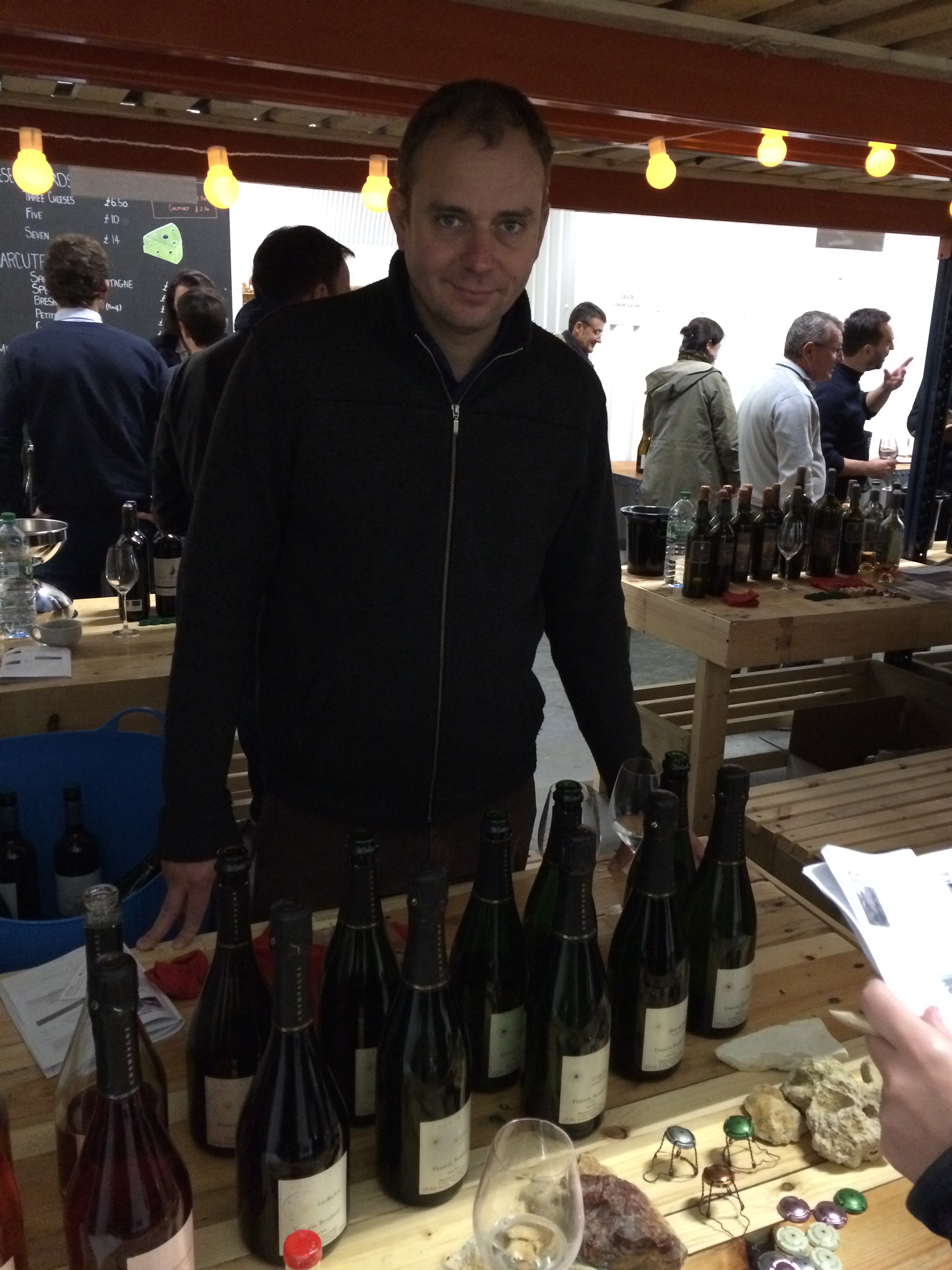
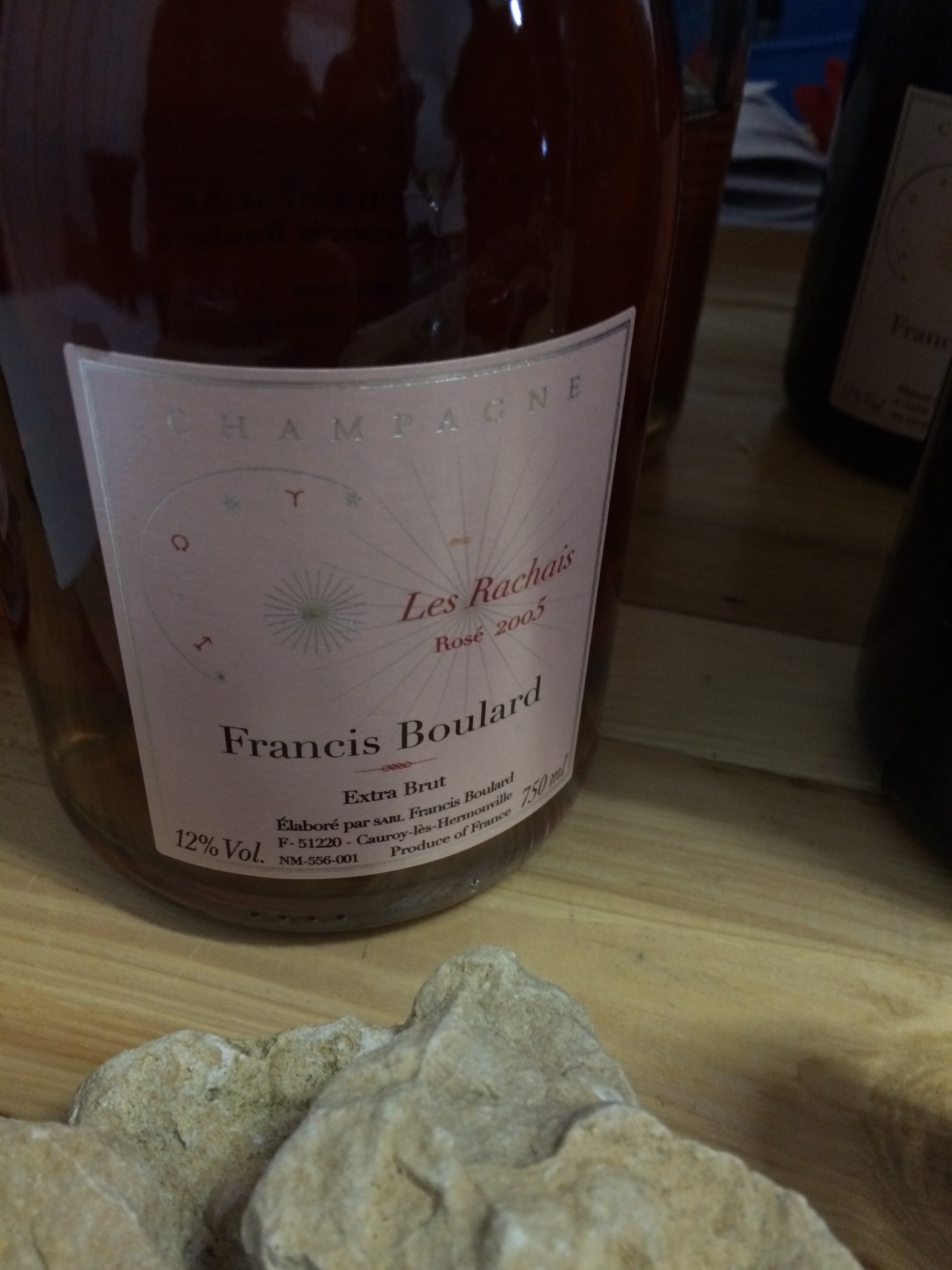
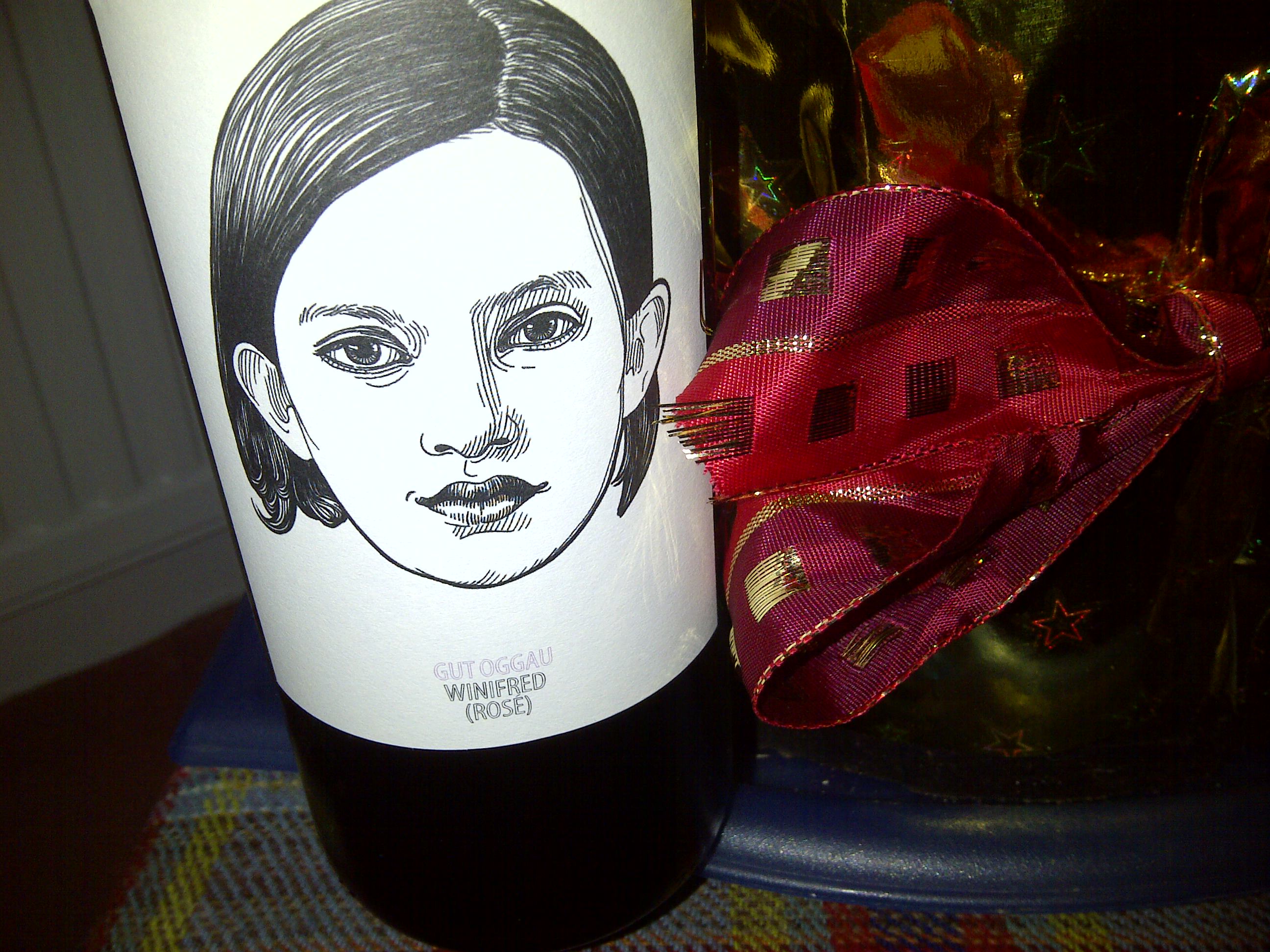
The clever names now prevalent in the natural wine sphere, whether in Jura, The Loire or elsewhere, reach new heights here. Straw Berry for non-Vin de Paille, Pulp Fraction for a bled pink, Très orDinaire for a fruity ouillé Savagnin. The very good pét-nat is called Plouss Mousse (no guesses for the grape variety there).

Brighton and Hove-20150507-00115

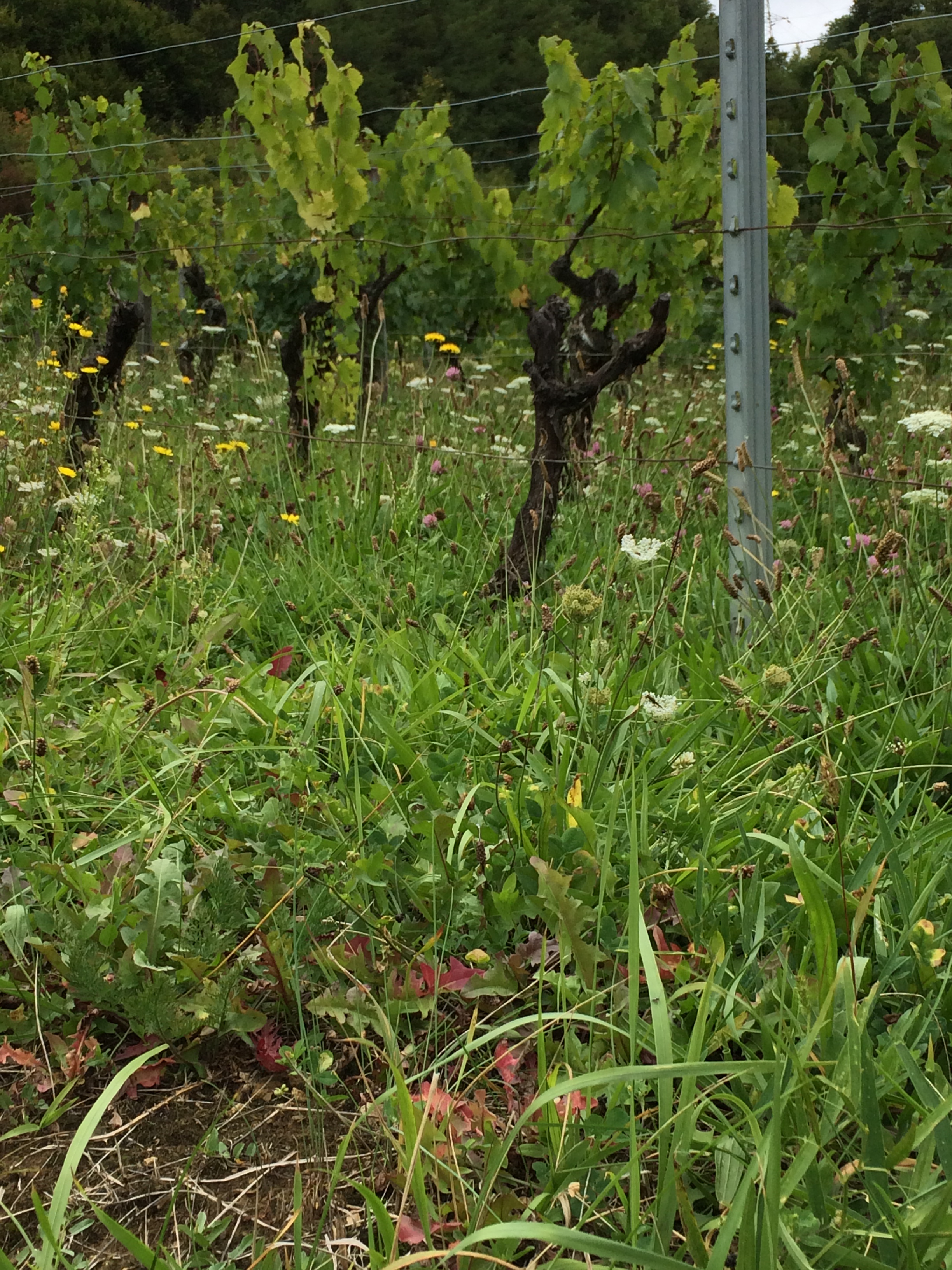
Patrice certainly also has a serious side, displayed through his two top reds. Champ Fort is a Ploussard made from this vineyard of exceptional beauty, all wild flowers, on slopes above Mesnay. Côte de Feule comes from one of the more well known, and exceptionally well-orientated, sites on the sun-trap slopes which face south from Pupillin (the Plouss Mousse comes from a lovely untidy patch over the stream to the east this slope – we had a wonderful walk around Pupillin’s vineyards with a hand drawn map on which Patrice had marked all his plots for us). These contrasting reds show the effect of the different terroirs very well indeed, and they are serious wines capable of ageing.
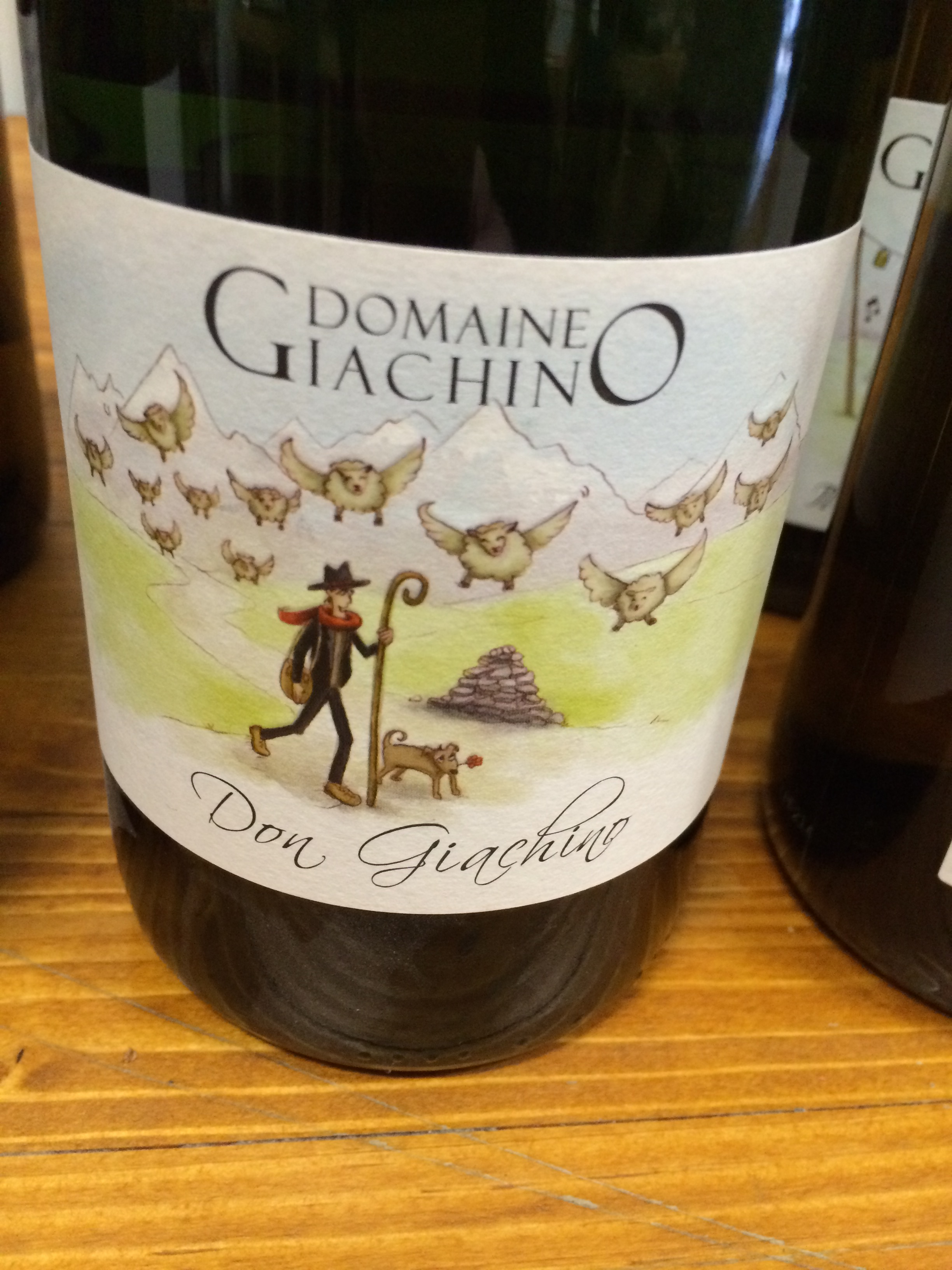
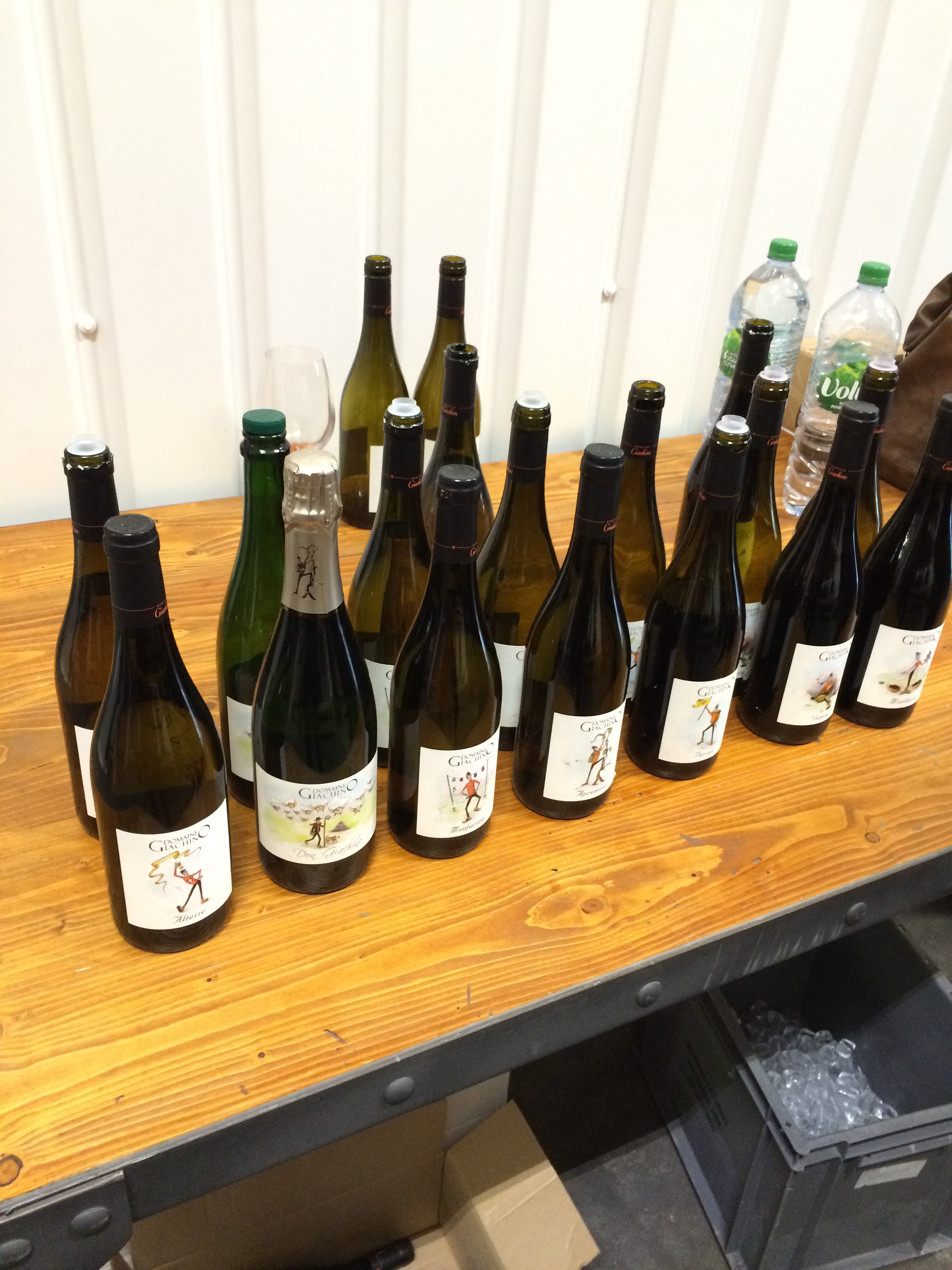
Patrice and Caroline give the impression (whether true or not) that they have found their own personal paradise. One or two of their wines have been imported into the UK (The Wine Society were first off the mark, and one cropped up earlier this year at a tasting at London’s Planet of the Grapes). I really hope they achieve the genuine success they so truly deserve.
IMG-20141016-00621

Domaine Ratapoil

This domaine is slightly out of place here, in that I’ve not visited Raphaël Monnier, nor have I bought his wines in the region. But I have bought his tasty Ploussard “Partout”, and the slightly more serious Pinot Noir “L’Ingénu” from innovative UK merchant Solent Cellar. The domaine is based way north of Arbois at the very edge of the AOC, at Arc-et-Senans, with vines spread widely around this area – both near Arbois, at Vadans (off the Arbois road to Dôle), and at Buffard where the River Loue forms a tight, Mosel-like, meander east of Arc-et-Senans (if lacking the continuous steep, vine-clad, slopes of the German river).
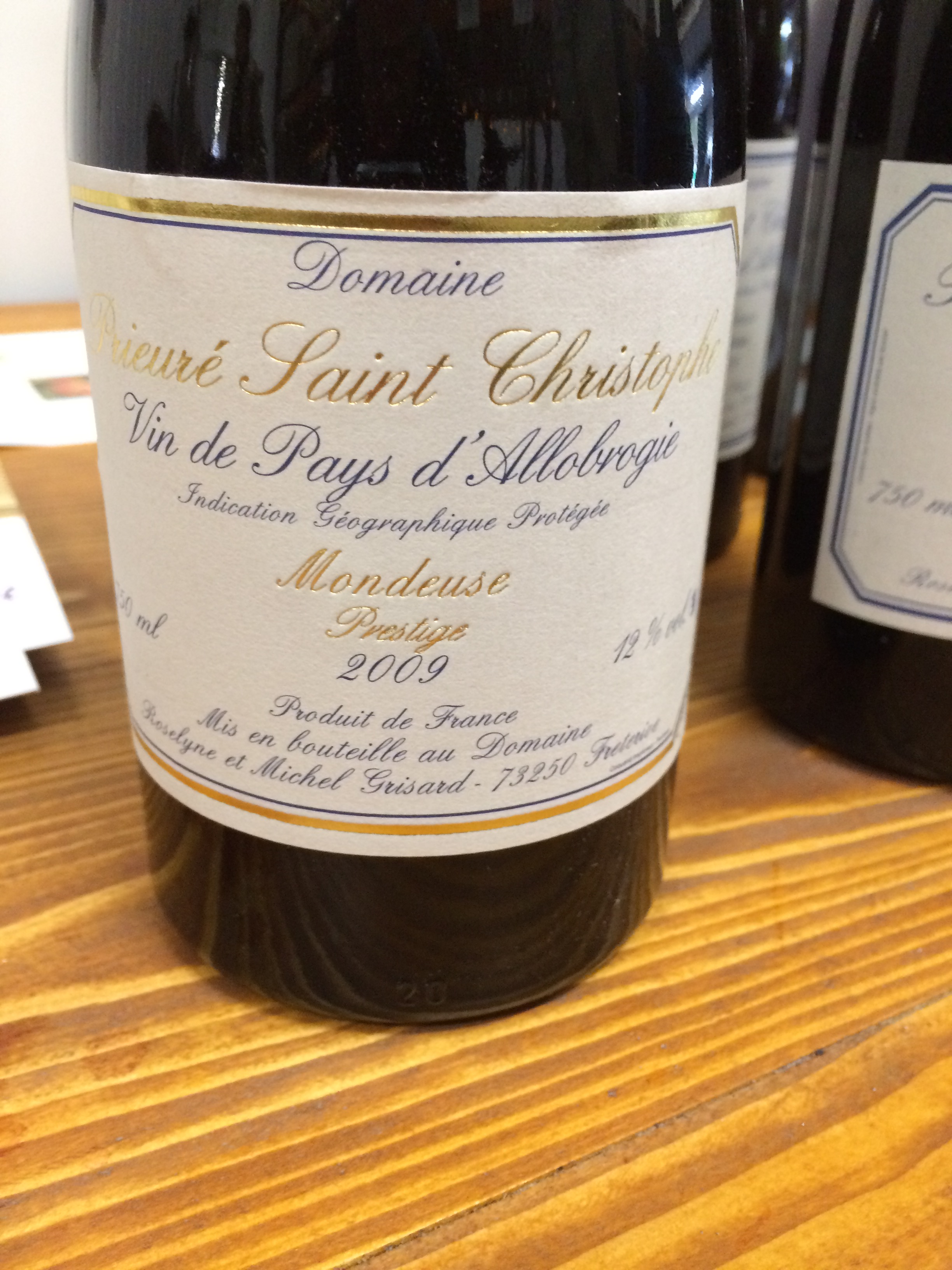
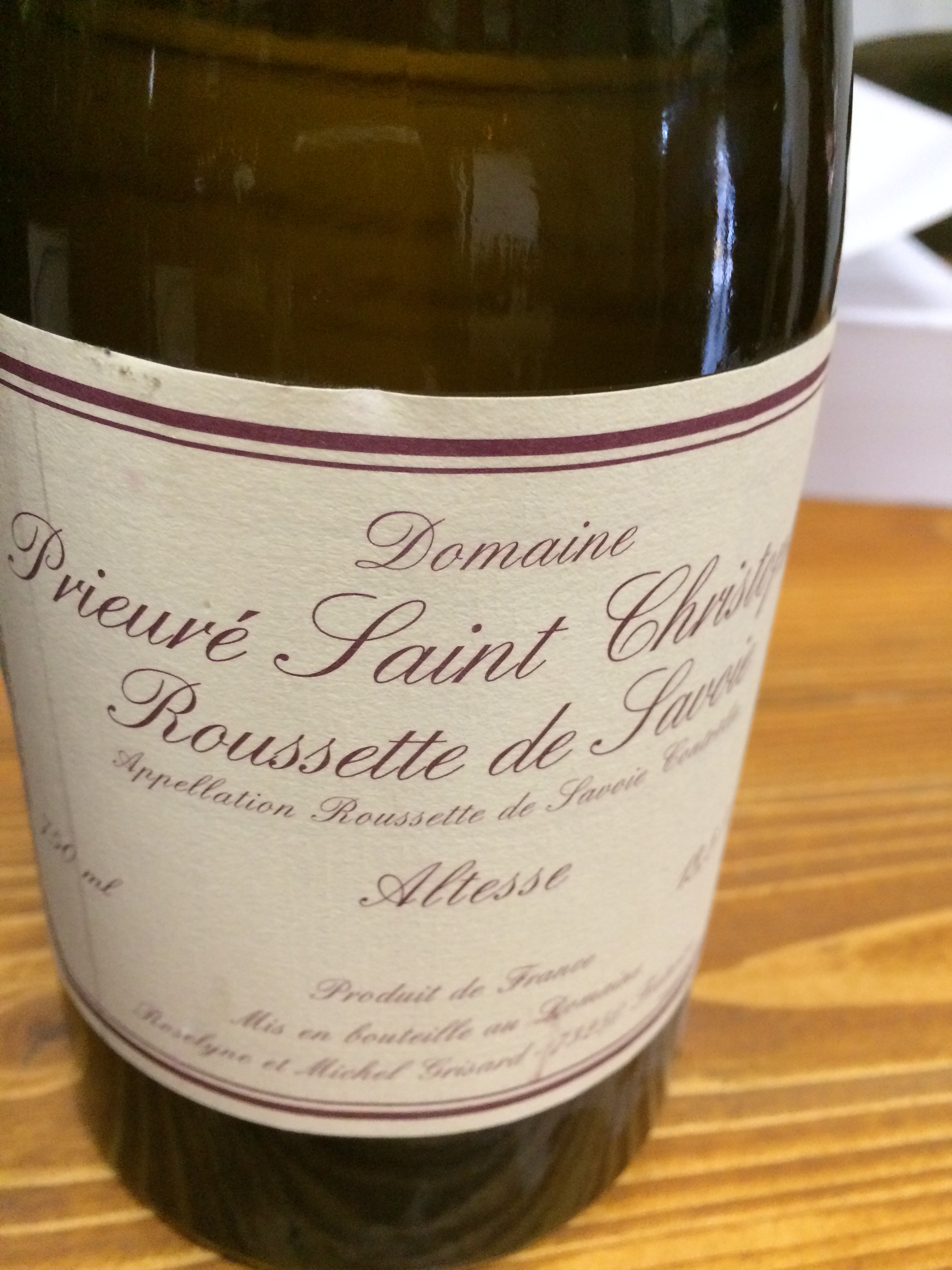
Brighton and Hove-20140504-00354

I only hear nice things about Raphaël, and I’m looking forward to trying more.

Domaine L’Octavin

I made my first visit to L’Octavin this year. One of my discovery wines of the 2014 trip had been their red with the long name, “Boire du Trousseau n’est jamais une Corvée“, which we drank whilst entertaining friends in Arbois. It had leapt out of the bottle as one of the freshest natural wines I’d tasted all year.

IMG-20140908-00547

I first met Alice Bouvot, who runs the domaine with Charles Dagand, during this year’s harvest. Despite a forthcoming trip driving to Savoie and back in a day, Alice graciously offered to meet me at their garage winery on the other side of town the morning after, on our last day in Arbois. We were up bright and early for the drive home, but Alice turned up at 8.15am as promised, looking as if she really deserved a couple more hours sleep. It’s typical of how helpful and accommodating people are in this region.

image

Alice, thank you so much for that visit

Many of the cuvées at L’Octavin are named after characters in the Mozart Operas the pair love (Commendatore, Pamina, Reine de la Nuit…). Not all. Their pét-nat is called “Foutre d’Escampette”, which my translation would be “F-about” (being as mild as possible). Their unusual white Poulsard is called “Cul Rond à la Cuisse Rose” (somewhat ruder), which displays a certain cussedness perhaps stemming from the hard time they’ve had establishing themselves.

imageimage

Not only have the dullards in charge of the agrément for the AOC been giving them trouble (all the domaine’s wines are now released as Vin de France with no obvious detriment to sales), but that came on top of difficulties over their original name. It seems that the Californian label, Opus One, felt that “Opus” should be reserved for them alone, and that a tiny producer in Eastern France who made wines with a musical connection should not be allowed to use this word. That is why “Opus Vinum” was changed, I presume due to the pressure of lawyers and money, and L’Octavin was born. I’ll be honest, the new name sounds better and they will find that their rise to stardom will not now be hampered by the hassle of threats from corporate law suits. Wonderful wines, so full of life. Such dedicated farmers. I hope they get their just rewards.

image

Domaine Christelle & Giles Wicky

Another producer who I don’t know all that well, but having drunk their delicious Cotes du Jura “Clos de Jerminy” two weeks ago, it had a similar effect to the Trousseau from L’Octavin I mentioned above. One of those wines where you just wish you had a magnum, or a second bottle, sitting in front of you (and with only 12.8% alcohol, we’d probably have drunk a second).

image

The Wickys farm in the region known as the Sud Revermont, south of Lons-le-Saunier. It’s a region not much known for viticulture these days, despite the fame of  Alain and Josie Labet, whose lovely wines were known abroad long before their children, in particular Julien, took over the running of the family domaine in the first years of this Century. Of course, it also happens to be home to perhaps the Jura’s most famous vigneron currently, Jean-François Ganevat, who’s based a few kilometres south, near Rotalier.

image

The wider Sud Revermont is one of the parts of the Jura region to watch. Ganevat continues to push the boundaries of experimentation under the Vin de France banner (Gamay blended from Beaujolais, ancient autocthonous Jura varieties…), and the younger Labets continue to gain greater recognition. But I’ve also had lovely wines from Peggy and Jean-Pascal Buronfosse, especially their Côtes du Jura “L’Hopital”, and I yearn to find a solitary bottle made by Japanese couple Kenjiro and Mayumi Kagami, of  Domaine des Miroirs at Grusse. Those who read the wonderful year in the vines BD by Etienne Davodeau, “The Initiates” (ComicsLit 2013) will have met them fleetingly on page 227.

Brighton and Hove-20140921-00576

Heading further north again to finish this brief look at the region’s exciting new domaines, here’s a short list of those who are firmly on my radar but whom I’m yet to pin down with a visit:

Domaine de la Loue, Catherine Hannoun’s tiny domaine near Port-Lesney.

Les Bottes Rouge. Jean-Baptiste Ménigoz was a former partner of Raphaél Monnier (of Ratapoil) before setting up with his wife between Grozon and the D469.

Domaine Renaud Bruyère. Renaud works with partner Adeline Houillon, sister to the famous Emmanuel who is now in charge at Domaine Overnoy. They are the hot new names in Pupillin.

Les Dolomies. Poligny, if it is quite as dynamic as Arbois, has thus far hidden that fact from me, but in the rural hinterland of Passenans, Celine Gormally is gaining a bit of a reputation, enough of one that I tried in vain to find some of her wines this year (I get the impression that visitors are not particularly encouraged, yet Celine has already managed to achieve broad export success).

Of course, the Jura region has at least a couple of dozen more established producers who perhaps merit exploration first if you have not yet got to grips with the region, not to mention those, like Philippe Bornard in Pupillin, who probably seem more “established” to me than to some others (Philippe has been at it since the distant past of 2005).  But that is surely enough to be going on with for France’s smallest viticultural region. Bon exploration! Drink and then visit. I’ve yet to meet anyone who has not enjoyed this rural idyll, despite a few jokingly negative remarks from Parisian friends who probably still see this region as a rural backwater. Perhaps backwater is a gross insult, but I think the peace and quiet which goes with all that great food and wine is why we love it so much.

image

Posted in Jura, Natural Wine, Wine, Wine Travel | Tagged , , , , , , , , , , , , | 5 Comments

Fine Sense of Balance

The third article in my Arbois Week highlights my favourite restaurant in the town, La Balance Mets et Vins. There’s a fascinating section about Arbois gastronomy in Wink Lorch’s Jura Wine, telling the story of how Arbois was once a major stop on the old Paris to Geneva route. It already boasted two restaurants with a Michelin Star before the Jeunet family renovated the former Hotel de Paris. Jean-Paul Jeunet is now, and has long been Arbois’ most famous restaurant. The food and service are exemplary, and it holds two Michelin Stars.

La Balance, at 47 rue de Courcelles, is a bit further out on the edge of town, towards the Maison Pasteur. It took me a few years to dine there, partly because of its location (though it is in fact a mere five minute walk from the centre of Arbois, the casual visitor might not pass it unless they were heading to the Pasteur Museum), and partly because we began staying in Arbois with small children, before they were old enough to be successfully introduced to the delights of eating out in Europe.

Jura 2015 Dave 201

Back when Jeunet obtained their first Star, La Balance was one of the two Arbois establishments that already had one, but the restaurant appears to have disappeared from the culinary map, and with that its Star, until its revival as a restaurant in the late 1990s. Today, Thierry Moyne is in charge, and oversees the most innovative and exciting menus in the region, with a wine list which attempts to match the finest as well. This won’t surprise anyone when told that the restaurant has received considerable backing from some of the local winemakers. Arbois’ restaurants, with the exception of Jeunet, have not always provided a spotlight on the region’s best wines, though thankfully this is changing fast.

The difficulty at La Balance is the choice of direction to take. The Carte is always good, with specialities like cuisse de pintade, filet de truite et sauce au comté and, of course, coq au vin jaune et aux morilles, all also available as choices on the Delices de Saison and Menu Gourmand options. The coq au vin jaune comes in a casserole dish with a rich sauce, two large pieces of chicken of a colour and firmness of texture far removed from most British fare. Served with rice, it’s very filling, though when I ate it last week I’d started with the very good, but thankfully small, tartare de carpe.

Jura 2015 Dave 203                          Jura 2015 Dave 204

tartare de carpe                                                           coq au vin jaune

The classic choice at a restaurant which, unusually, draws attention to its wine list is the “L’Improvisation Mets et Vins”. It’s a degustation menu of eight courses from amuse bouche to dessert for €65, each accompanied by a small glass of wine (an extra €26 at the time of writing). The menu itself is (like all the food at La Balance) based on local ingredients in season. The wines are exceptionally well matched and, in addition to Crémant or red/white selections, you can expect a little Vin Jaune and/or Vin de Paille. It’s always a treat to be presented with something like Stéphane Tissot’s Spirale “non-vin-de-paille”, and the specific matches may differ around the table depending on what course options each diner has chosen – it means that in generous company you can taste even more wines.

Jura 2015 Dave 202                          Jura 2015 Dave 207

Last week I chose the Delices de Saison menu and, after a Crémant from the biodynamic Domaine de la Pinte, we drank a rare bottle of Tissot 2009 Amphore Savagnin, an orange wine, the colour of Lucozade with serene scents of citrus, a texture of skin contact and a very well hidden punch of 15% alcohol which you only notice as you try to leave the table. A fabulous wine, at €54 only about €20 above domaine prices (and, as you all know by now having read my previous Arbois posts, it is only available in tiny quantities for a few months every year). Before coffee we were served a single berry of Tissot Poulsard macerated in Macvin.

Jura 2015 Dave 208

The food at La Balance is very well presented. The sourcing policy, which if they were in a large metropolis would be called “locavore”, of using local ingredients, in season, really shows in their flavour. Arbois  finds itself with new restaurants every year, with an exciting prospect due to open soon on the Place de la Liberté in the centre of town (wine list compiled by Wink Lorch so I can’t wait to try it). Gourmets will also want to try Jean-Paul Jeunet for that more formal Michelin experience. But I can’t imagine I’d miss a meal at La Balance when staying in Arbois. They even have that rare thing, a vegetarian menu, which I’m told really highlights the freshness of the produce.

La Balance Mets et Vins, 47 rue de Coucelles, 03 84 37 45 00, http://www.labalance.fr

Closed Monday in July/August, but closed on Sunday too for the rest of the year (festivals such as the Biou excepted). They close for a well earned break between early December and early February annually. They always recommend booking.

Posted in Jura, Wine, Wine and Food | Tagged , , , , | 3 Comments

Watching Stéphane Tissot

We first visited Domaine André & Mireille Tissot in Montigny-lès-Arsures in the early 1990s. We were staying nearby and we found our way to their small tasting room down a hill behind the church, where we were entertained by a very friendly André and his wife, Mireille. Then in wandered a young man who they introduced as their son, Stéphane who, after completing his viticultural studies in Beaune, had returned to the domaine after stints abroad with Brown Brothers in Australia and in South Africa.

Jura 2015 038

Offspring of winemakers habitually do a stage or two abroad nowadays, and you’ll find all sorts of people from California, South Australia and so on working a harvest in the Jura now. But back in the 1990s that was quite unusual, especially in this quiet region, somewhat cut off (or so commentators thought) from the “progress” being made in the major regions of France Viticole. Perhaps the closest we get to this is Jean-François Ganevat working as cellar master for Jean-Marc Morey on the Côte de Beaune. At that first meeting, there was certainly a glimpse of a searching intelligence and a forceful focus on quality that has made Stéphane one of the region’s star vignerons today.

Jura 2015 Dave 198

There are a lot of Tissots around Montigny and Arbois. Indeed, long before our subject made his name, Arbois boasted not one but two shops owned by Domaine Jacques Tissot, alongside those of Henri Maire and the large, quality conscious, family-run domaine, Rolet Père et Fils. Most are descended from Maurice Tissot, who started out in Montigny-les-Arsures in the late 1950s. All have done well, although Maurice’s youngest son left the region to found the best estate in Buzet, Domaine du Pech (now run by daughter Magali and partner Ludovic Bonelle, and which, because they have had problems with their AOC Panel – their wines are just too good for Buzet in my opinion – deserves our support).

Stéphane has been firmly in charge of the domaine since the 1990s, and works with his wife Bénédicte, although the domaine retains the name of his parents who, although retired can still be seen pottering around the village. The domaine has now grown, from the few hectares planted by André to 50 hectares. After making the domaine fully organic, with Ecocert Certification in 1999, Stéphane has embraced biodynamics (Demeter, 2005). It was all just part of his quest to experiment and to get the best out of his grapes and terroir.

Jura 2015 Dave 222

The first experiments with the market do not now seem so profound, but at the time the delineation of individual vineyard names for Jura wines in a somewhat Burgundian manner, were quite unusual in a region where even knowing the grape variety in any given bottle was often a case of serious detective work. Stéphane began in earnest with his Chardonnays and soon we were introduced to the different terroirs and locations of La Mailloche, Les Bruyères, en Barberon and then later, Sursis from near Chateau-Chalon.

As the range expanded we saw another style of wine which pretty much started here – what I can only clumsily call “Not Vin de Paille”. Vin de Paille, the long-famous straw wine of the Jura made from dried grapes requires (inter alia) 14% alcohol, don’t ask me why! Many producers wish to make a lighter dessert wine with dried grapes. The wine which contributed most to Stéphane’s fame in those early years was “PMG” (an acronym which roughly translates as “for my gob”, presumably as opposed to the “gobs” of those in authority). It’s made from partially fermented grapes with around 400m/g of residual sugar. That the domaine can charge €68 currently for a half-bottle is testament to it’s success.

But for half that price we can (thankfully) buy “Spirale” (white grapes) and “Audace” (from red Poulsard grapes), made in broadly similar styles and showing a refreshing lightness and fruity flavours.

One of the most popular Jura styles, often the unsung hero making up a good 50% of the production of many domaines, is sparkling Crémant. Yet again, Stéphane innovates. His two top sparkling cuvées are the complex “Indigène”, where yeast from fermenting Vin de Paille is used for the second fermentation via the Liqueur de Tirage, and “BBF”, a low dosage sparkler which sees oak and is aged for over 50 months before release.

The limits of experimentation here know no bounds, and the domaine’s next trick was amphorae. First they started making a Chardonnay, “en Amphore”, macerating the grapes for six months in terracotta amphorae made specially for them in Vaison-la-Romaine in the South of France. In contrast, and contrast is the key experiment here, Stéphane also makes a red from Trousseau which undergoes a much longer maceration in Georgian Qveri. Both wines are rare, with a usual limit on purchases of two or three bottles. They are available from mid-November and sell out early in the New Year. Arbois restaurants are a good bet for latecomers, and we had a lovely orange and earth scented Amphore 2009 in La Balance last week. But beware – you will be totally unaware that this wine contains 15% alcohol until you come to walk home.

Jura 2015 039 Jura 2015 040Jura 2015 Dave 207Jura 2015 Dave 202

The two most recent experiments are very different. If fame came initially from those early single vineyard Chardonnays, Stéphane had a plot just north of Arbois which he was sure could produce grapes of the very highest quality. Planted at high density to restrict yields, the “Clos de la Tour de Curon”, easily visible below the tower from the edge of town, produces a Chardonnay on chalky, partly terraced, soils with a southerly exposure which may well be destined to become the Grand Cru of the region. At a whopping €60 a bottle, there is evident ambition here.

Jura 2015 027

The latest trick takes this man who can’t seem to stand still a way down south. The domaine’s Vin Jaunes, never being likely to follow the herd, come as not one but three separate cuvées – “en Spois”, “La Vasée” and “Les Bruyères”. They represent either different soil types or exposures, and they are very different from each other (en Spois is usually the most forward of these long-lived wines which don’t deserve to be touched until, at the very least, ten years from harvest).

Before long those wandering eyes caught a glimpse of a small plot in Chateau-Chalon, that most famous source of the “Vin Jaune” style (wine aged under a veil of thin  flor for 60 months and sold, after the Percée Festival, in the seventh year after harvest). I bought my first of his production this year and will not likely open it for some years, but as with everything at this domaine, early tasting notes suggest a distinguished addition to the Chateau-Chalon tradition, a wine of typical finesse which one day will accompany a chunk of 24-month-old Comté and perhaps a few fresh walnuts.

According to Wink Lorch (Jura Wine, Wine Travel Media, 2014), Stéphane has promised his wife that he will not expand beyond their current 50 hectares, though it’s hard to see him standing still. He’s now one of the most influential faces, both in the region and as an ambassador overseas. More importantly, he’s been the catalyst for so many young winemakers who are beginning to make a name for themselves. His generosity in mentoring will be one of his lasting legacies. So many wines I now buy are made by people who worked for him, or who he actively encouraged and helped.

For me, personally, it is gratifying to see that this domaine, which I visited almost (but not quite) by accident so long ago, now presents such an international face for this profoundly bucolic region in Eastern France. I hope that the domaine continues to be so spectacularly successful in the next thirty years and beyond as it has been in the decades since I have known it.

Although the information in this article comes from my own research and my long knowledge of the domaine, I would like to thank Wink Lorch, whose wonderful Jura book, mentioned in the text above, allowed me to check one or two specific factual details in addition to those found in the sources produced by the domaine. As one of the finest wine books written on any specific wine region, it is an essential purchase for anyone wishing either to visit the Jura region, or simply to try its wines and other produce.

If you have not already seen it, the article preceding this one covers the town of Arbois and its attractions, and those of the surrounding countryside.


Posted in Wine, Wine Agencies | Tagged , , , , , , , , | 3 Comments

Between the Wood Smoke and the Water – Arbois Week

I began visiting the Jura region in Eastern France more than twenty-five years ago. It began as a day trip from our then fairly regular wine visits to Burgundy, and then as a stop-off en route to Geneva by the scenic route. Then a few house rentals followed and Arbois has (I hope) become a regular annual trip for us. I’ve just returned from a week there.

Despite the wine world being full of regions I hardly know, and many I still long to visit, Arbois increasingly seems like paradise, and writing about it doesn’t please all those who would like it to remain a secret. Whilst towns like Beaune are now crowded with wine tourists, and the Côte d’Or’s wine route is likewise one stream of traffic for much of the year, the towns of Jura, a mere hour’s drive away, retain a country calm which once existed further west.

So, over the next week I will write a few articles about this region which I’ve come to hold so dear. Before talking about the wine, and the food, I thought I’d introduce my own little corner of paradise. For Arbois seems to encapsulate everything I want from a relaxing holiday in the countryside. Fantastic walking in forest and vineyard, spectacular scenery, wonderful food and wine, and never being far away from the sensory delights of the scent of wood smoke and the sound of a fast flowing river.

Jura 2015 Dave 197

Place de la Liberté from outside the Tissot shop

The town itself contains a surprising number of attractions, not all of which leap out immediately at the casual visitor. One of the best ways to orientate yourself is to pick up a town map from the Tourist Office (located opposite the large edifice of the Church of Saint-Just). There’s a marked circuit, about an hour long, but the most interesting parts of the walk are those which link St-Just with Pasteur’s House (a secluded route by the River Cuisance), and in the opposite direction, that which passes through the old Faramand winemakers’ quarter and over the river by the Tour Gloriette.

Once you have got to grips with the compact layout of Arbois, it’s time to explore. First, its museums. It took me a while to visit them and each one turned out far better than my initial reticence had suggested, though don’t expect The Louvre. Pasteur’s house (Maison Pasteur) is fascinating, both because it’s pretty much as it was when France’s most famous scientist lived there, and because his laboratory upstairs has also been preserved. The Jura wine museum in the impressive Château Pécauld on the opposite side of town is not large, but on two floors there are well thought out displays on local winemaking and its attendant traditions. Then there’s the lovely townhouse which is now the Musée Sarret de Grozon, home to one of the region’s important families during the Napoleonic era and afterwards. Unfortunately it’s only open for a few weeks every year (check website but usually July to September on certain days). They often have temporary exhibitions in the rooms. A tip is that this year, because we’d been to the wine museum, our receipt seemed to get us in gratuit.

Jura 2015 018

Wine Museum, Château Pécauld

After the culture comes the inevitable shopping. Arbois is unusual for wine lovers. Long before Burgundy had much more than the Faiveley shop in Beaune, various local producers opened shops in the town, following the lead of major local negoce, Henri Maire. Over the years the number has grown, but there’s no doubt in my mind that the best of these is right on the corner of the Place de la Liberté, that of Domaine A&M Tissot. Arbois has a good number of Tissots, all originating from one Maurice, who started out planting vines near Montigny-les-Arsures in 1957. Domaine A&M Tissot is now run by Stephane and his wife, Bénédicte and, to most international observers, is the best of them. The domaine is now biodynamic, and one of a handful of the most experimental and quality conscious in the region (I’ll be writing a post on the domaine in the coming days).

The existence of the “producer” outlets in town stifled any more general wine shops for a long while, although the various food shops always stocked a selection of local wines. That changed when the well known sommelier at the famous Michelin-starred Jean-Paul Jeunet, Stéphane Planche, set up Les Jardins Saint-Vincent (49 Grande Rue, just round the corner from Tissot, currently only open Thurs-Sun). Planche specialises in “natural wines”, of which Jura is very much a leading region. I’ve made some exciting discoveries in this shop and, in the region, it is probably only matched by Epicurea in Poligny which is one of the region’s best cheese shops and also specialises in natural wines.

Jura 2015 Dave 223

There are a few other shops which really should not be missed. Hirsinger, pretty much opposite Tissot on the “Place”, is (this surprises many people) one of the most famous chocolatiers in France. Chocolate and cakes can be purchased in the shop, or consumed with a beverage at one of a few tables outside.

Brighton and Hove-20140920-00573

A couple of doors away is the Cave du Comté, principally a place to buy local cheeses, but they also sell local charcuterie and Morteau sausages, local artisan beers and preserves etc.

A short walk up the other part of the Grande Rue and you’ll soon find Philippe Gonet’s Vins et Vinaigres (at number 16). There are a few local wines and oils, but it’s the vinegars Gonet makes from local grapes which are the stars. Not inexpensive, these are some of the finest French vinegars I’ve tried. The vinaigre du vin jaune is probably the most famous, but we also love the scented poulsard.

Continue up this part of Grande Rue and fine (and good value) local cheeses (principally Comté, Morbier and Bleau de Gex) can also be bought from the delicatessen section of the Arbois co-operative (just up the hill from the Champ de Mars car park).

When I first visited Arbois you had pretty much two options for dining, the aforementioned Jean-Paul Jeunet (with two Michelin Stars) and La Finette on the edge of town, which my memory suggests serves a decent, if basic, selection of dishes around sausage. Jeunet is a fine restaurant, if slightly lacking in atmosphere on a quiet night. However, if you want to sample the local speciality, coq au vin jaune, there’s no better place, and probably no better poulet (de Bresse) in town. The food here is of a standard you’d expect of a two star, if more “traditional” than what you may be used to in London, New York or San Francisco.

But in the late 1990s La Balance (La Balance Mets et Vins to give it its full name) was revived (47 rue de Courcelles). This restaurant isn’t cheap, but it has introduced some exciting, innovative cooking, a vegetarian option (pretty much unknown in much of Franche-Comté), and a great selection of local wines, several of which will be paired with the various dishes so beautifully if you take the “improvisation” menu with the added sommelier dégustation.

Jura 2015 Dave 201

There are several new restaurants which have opened recently in the town, and I haven’t visited them all, but the one place I’d recommend in addition to Jeunet and La Balance, is the Bistrot des Claquets (on Place Faramand). They generally have a single “plat” with starter, a buffet and something like a tarte for dessert, and they serve a selection of mainly natural wines. The plates may not match, and service can be a little brusque (maybe it’s me), but the food is hearty and genuine. A sign of this is that, as Wink Lorch so accurately states in Jura Wine (the essential guide to the Jura region), “this is where you should bump into a famous vigneron or two”. Indeed, not just locals – the occasional Burgundy and Beaujolais producers have also paid visits here – it’s a good place to try newcomers’ wines.

Jura 2015 022

One of the town’s nicest domaines, La Tournelle (5 Petit Place, close to the Tourist Office) also has a tasting room and a bistro. Although I’ve had the chance to adore La Tournelle’s wines on many occasions, I’ve yet to find their tasting room open. But in summer, up to around 1 September, weather permitting, their wines can be enjoyed along with small plats in the Bistro de la Tournelle, next door, right by the flowing Cuissance, a beautiful setting in dappled sunlight.

Jura 2015 115

Bistro de la Tournelle

With all this food and wine, you really need to walk off some calories, and as is fitting for paradise, there is some lovely walking. The Tourist Office has a map, well worth the €5 cost, called Jura L’inattendu – Arbois Vignes et Villages (at 1/25,000 – the useful IGN Série Bleu map 33250 for Salins-Arbois is the same scale). The walks I have enjoyed most are listed below:

1. La Châtelaine and the walk to the Fer à Cheval along the top of the Reculée. Castle ruins, mountain goats (if you are lucky) and great views down (so long as you don’t have bad vertigo and it’s not very wet and slippery).

2. The Source of the Cuisance and the spectacular waterfall,  the Cascade des Tufs at Les Planches. A short stroll but the waterfall is well worth seeing. You can walk on and clamber up to the petite source and make a circuit back. Sadly the caves here seem to have been closed for some time now.

Jura 2015 067

Cascade des Tufs

3. The walk through the vines from Arbois to Montigny-les-Arsures (home to many of the region’s most famous domaines). If you walk back to Vauxelle from Montigny you can extend this walk by picking up a track which turns, for a short distance, into the GR59 before another lovely track drops down through woodland to the wine village of Mesnay (the IGN map mentioned above is essential for this extension).

Jura 2015 043

Harvest, south of Montigny-les-Arsures

4. The Hermitage and Pupillin. As you wander around Arbois you might notice a chapel sitting half way up on the wooded hill. This can be reached via a steep in parts but not too strenuous walk which starts on the Champagnole road (D469) where, a hundred metres or so after the Pupillin turn, there is a small shrine. There are old steps through the forest and abandoned terraces, a sign (as elsewhere) that man once farmed land now abandoned to the trees.

Jura 2015 Dave 209

Above the Hermitage you hit a road and if you turn right at the bins (!) you will see a viewing platform with a perfect view over Arbois (the same can be said for the Croix de Dan which provides spectacular views over Poligny).

056

Viewing Platform above the Hermitage

Continue from here along the road and you will find the markings for another section of the GR59. One direction goes to the Reculée des Planches and the other will eventually lead you towards Pupillin, on a plateau a few kilometres from Arbois. If you have the energy there are nice walks among the vines here (see the Jura L’inattendu map). The village has its own coterie of famous vignerons (and, in Le Grapiot, an increasingly well regarded restaurant, when open). But if you want to take the easy route back to Arbois, there’s a nice path (the old road). Look out on the right just a way outside the village where it dips into the trees.

Jura 2015 064

If you do happen to visit Arbois in early September, do make sure to have a look inside the Eglise St-Just. One of the region’s special festivals is the Fète du Biou. Taking place on the first Sunday in September, a large constructed bunch of grapes (made up of individual bunches supplied by all the producers) is paraded through the town, and then hung high in the church crossing, where it oozes juice and fermenting smells as a sort of offering for a good harvest. It supposedly echoes the return of the Israelites to Canaan with the “Eschol“, though what came to my mind the first time I saw it was Poussin’s painting “Spies with grapes from the Promised Land” (aka Autumn) in The Louvre. The region’s other famous festival is the Percée du Vin Jaune, the symbolic opening of the first Vin Jaune cask 6 years and 3 months after the vintage. But this takes place in different villages each year on the first weekend in February, when the region is perhaps at its shiveringly coldest.


Posted in Dining, Natural Wine, Wine, Wine Agencies, Wine Travel | Tagged , , , , , , , , , , , , , | 8 Comments

Spice Oddity #2 (Without Major Tom)

The second Spice Oddities at the India Club was a perfect example of how far some wine lovers will go to select truly “different” wines, odd in their origins (to a degree) but certainly not in their flavours. All seven wines today were attractive. As far as the difficult task of food matching went,  most people thought the wine which provided the best overall match was a Vinifera/native hybrid from Missouri!

As always (it has been the case since the 1960s) the India Club provides a combination of wonderful food at incredible value, less than £20 with service for the most expensive set meal. A selection of starter dishes, four main dishes with rice, breads and chutneys. The main clashes  were the lime pickle and chilli bhajis, the latter being pretty hot and impossible to match with wine for some considerable time after eating it…yet they are so good.

image

The Wines (all wines tasted blind)

Dry River Gewurztraminer 2006 The colour and nose suggested New World but the bottle neck didn’t provide sufficient clue to the origins of a wine we all spotted by grape variety. It wore its 14% alcohol really well, assisted by being off dry. As time went on this wine seemed to grow sweeter. It also seemed to provide one of the better food matches on the day, so a well thought out selection. Nice bottle age too.

image

Champagne Du Mont-Hauban 1999 Demi-Sec This was very much a bottle fermented wine from Northern Europe, and its tight and persistent bead and advanced autolytic character single it out as Champagne. But no one guessed it was demi-sec because it had become dryer over time, though not dried out. A very nice wine on its merits, but possibly not the best food match. It was also, though obviously aged and with an oxidative note, surprisingly sprightly for a 1999.

image

Hatten Wines Anggur Rosé, Bali Possibly the most unusual wine we’ve had at any Oddities lunch, Spice or not. Unlike some Balinese wines, this is made from home grown, not imported, grapes. It was actually quite drinkable, and I’d take it over one of the big branded pink wines we see on offer in UK supermarkets, and indeed over some of the acidic bottles professing a southern French origin I’ve mistakenly bought in French ones. Only 11% alcohol. Pleasantly fruity, if simple. I’d like to say I nailed this exactly…and, actually, I did, but claim no big prize – sometimes a focussed analysis of the wine (which yielded “simple but pleasant”) is less important than knowing the travel movements of the man who brought it.

image

Bolney Cuvée Noir Brut 2010, Sussex This has seen the odd outing before. It’s a genuine crowd pleasing red sparkler, which seems a contradiction in terms. 12.5%, Dornfelder, frothy and fruity. Another wine where thinking outside the box for food matching might not have been the best idea, but a lovely wine in its own right.

image

Plavac 2010, Tomic, Croatia It took a long time to get close to identifying this, with guesses of Gamay, and even Rondo and a more westerly location, though Croatia finally got a mention. The grape mix is largely the best known of Croatia’s red varieties, Plavac Mali, along with lesser Plavacs. A fruity wine feeling balanced (13.1%), with a softness and little tannin, nothing to clash too much with the food. Plavac is the child of Zinfandel (in its current guise of  Tribidrag). Softness without high alcohol.

image

Norton 2010, Augusta Winery, Missouri This one foxed us all, but this hybrid between vinifera and native varieties was not in the slightest bit “foxy”, the problem with many non-vinifera wines from the United States. Guesses from my direction included Virginia, but frankly no one expected Norton from Missouri (although “Norton’s Virginia Seedling” is the grape’s full name). Fruity, smooth, and even tasting a touch sweet…ish, this may not win any prizes for complexity, but it provided a double education. First for the grape, and second as a match for “curry”. The vote wasn’t completely unanimous, but most (including me) had this as the best match for today’s dishes.

image

Renski Rizling 2011, Dveri Pax, Slovenia It must be said that since starting these various Oddities lunches I’ve managed to get to drink quite a good number of wines from Croatia and Slovenia, two of the countries seen as offering great potential within Europe. And Dveri Pax is a winery many will already know, a least by name. Based in Stajerska Slovenia/Podravje up near the border with Austria’s Styria region, they make a range of good value varietals (according to Jancis and Hugh’s World Wine Atlas). The wine was light, quite fragrant with a dry delicacy which made me think first of Northwestern Spain (Godello), and then Austrian Gemischter Satz (which, let’s face it, I think of way too often) with a bit of bottle age. This wine was not high in acidity and no one would really guess “proper” Riesling as the variety. Pleasant, light and fragrant, but not challenging for wine of the day.

image

As well as the pleasures of the restaurant, India Club also boasts a bar, equally as old fashioned. The coffee may be made from a kettle, but it’s nice to be able to sit and digest/chat for a while. Thanks Warren for organising and to everyone who provided the wines and entertaining conversation.

image  image

Warren as Ben                                  Bill for six

image

Pass the Norton…pleez!

Posted in Wine, Wine Agencies, Wine and Food, Wine Tastings, Wine with Curry | Tagged , , , , , , , , , , | 5 Comments

More from Germany (Howard Ripley)

The second instalment of Howard Ripley’s Germans was presented at Middle Temple Hall Yesterday, comprising the dry whites and reds, with a few strangers thrown in for good measure (one of which was my Wine of the Day!). I don’t profess as much expertise in German wine as I might with some wine regions, but I hope my notes are of some value to those who couldn’t make it.

imageimage

There is still a sense that British lovers of German wine have quite a conservative attitude to the dry whites. I can understand both sides of the argument. I love the lower Pradikats for their poised perfection, wines which seem to express a side of the Riesling grape which pretty much no one else can replicate and which, for me, finds its apogee on the steeply slated slopes of the Mosel, (Saar and Ruwer). I’m at one with those who lament their apparent passing, in the search for the supposed sophistication of the dry.

Yet I can also appreciate the dry wines, exemplified none better than Philipp Wittmann’s Morstein (Rheinhessen) which I wrote about at the “Wimps” lunch recently, one of my white wines of the year so far.

What was going to be interesting at this tasting, regarding the 2014 Grosses Gewächs whites, was whether they were going to be ripe and balanced. On the whole the wines clearly managed this, for my palate, though I do prefer a touch of acidity and texture. The people at HR certainly believe that the wines, as the year has progressed, have begun to show “better and better”.

Of twenty-three white wines the first thing to note is that you get what you pay for. The top wines were clearly, for me, the ones to buy if you can afford them (and, of course, grab quick enough in some cases). The two Keller whites (Kirchspiel and Hubacker) showed potential and demonstrated class, as did Hermann Dönnhoff’s Hermannshöhle (the Dellchen was a bit tighter for me and less easy to assess, but I was tasting very early in the day).

image

Of the less exalted bottles, wine number one always appeals to me, and I know from experience that it keeps very well – von Schubert’s Abstberg Superior. My discovery this year has been Julian Haart (Mosel), and I enjoyed both the Piesporter Goldtröpchen (good value) and the slightly more expensive Wintricher Ohligsberg, though with the caveat that the latter, to my pleasure, had something of a note of young Champagne on the finish, minus the bubbles of course. The wines of Thomas Haag at Schloss Lieser continue to impress my own tastes, and Schäfer-Frölich, though the Felsenberg strangely had a hint of Sauvignon Blanc gooseberry on the nose (a lot of wines seemed to have clearly defined grapefruit and lime).  Of course, those two producers can’t be termed “less exalted”, but they are by and large affordable, for now.

image

The German reds were a mix of 2013 and 2012, and were not consistently to my Spätburgunder taste. But again, there were wines I liked a lot. The not too expensive Schloss Lieser 2012 had a nice colour and softish cherry fruit, and my first ever taste of von Schubert’s 2012 was a pleasure (though I’ve a long history of appreciation when it comes to the white wines from the Grünhaus). I also like Ziereisen, having enjoyed the Jaspis Alte Reben Pinot, Syrah and Tschuppen already this year. But the 2012 Schulen won out among the less expensive of their wines, the Rhini (which I think sees about 30% new oak) being worth the considerable premium.

Another new name which impressed, and which merits a particular mention, is Daniel Twardowski. I admit I’d never heard of this producer, though the price suggests I clearly should have. My tasting note included the banned phrase “…young Burgundy” (sorry).

I enjoyed the Kellers (Dalsheim Bürgel and Flörsheim Frauenberg), and was also impressed by Thomas Studach’s wine from Graubunden, but the wine of the tasting for me was fellow Swiss couple, Daniel and Marta Gantenbein’s Pinot. Someone remarked that the nose was better than the palate. This might have some truth, but in honesty I liked both and the bouquet, after all at the very least 50% of the pleasure with this grape, was amazing. A masterful wine. But it was also, by a good way, the most expensive wine on show yesterday. Not more than a couple of years ago it used to cost around £30/40 retail. Now the (much higher) price is almost immaterial, tracking down odd bottles being close to impossible (though I do know someone who proudly owns a personal allocation, lucky man). If you can afford £350 in bond, give it some thought. Some years ago we put on a dinner at The Ledbury where Gantenbein Chardonnay and Pinots were put up against some pretty good Burgundy, and with age they held their own.

image

A few general observations. Many of the reds were pretty pale. This is no sign of a lack of quality, and who wants their Pinot Noir to look like Syrah, but there were occasional wines which on the day seemed a little thin, and often these were also of lighter hue. Will they be wines to drink fairly soon?

I also need to be educated in Pfalz reds by someone. I often find these wines the hardest to like with the one (very big) exception of Friedrich Becker down in Schweigen (who Stephan Reinhardt calls “not really representative”). His vineyards are not only “pretty much in France”, some of them actually are, if I recall correctly. You’d expect this warm region, at least in German terms, to produce reds I’d like, and in 2015 I’m not sure it’s because everything is over cropped and machine harvested, nor because Dornfelder is still the most planted red variety. There may be a tendency to dark, over oaked Pinots, but, as I say, I need a few lessons here.

It’s also worth noting the labelling of these German reds. Some producers stick religiously to Spätburgunder, whilst others go for Pinot Noir. I’m not sure there is any consistency with this (size/age/type of wood used etc). Whichever the case, I find the production of this grape in Germany completely fascinating and absorbing, especially seeking out the different terroirs (slate, limestone, clay, volcanic etc). And I think we in the UK do need to look forwards rather than conservatively backwards in appreciating the quality of red wines Germany is producing. The sixteen German reds on show today were a privilege to taste, probably the most I’ve done in one go.

Naturally Howard Ripley doesn’t have all the best wines (I missed the J&B tasting, lacking the stamina for both), but they do have a brilliant selection and unrivalled knowledge (which makes them my choice for an overview). Other producers I’ve been drinking of late whom I think offer great value include the whites of AJ Adam (Dhron, Mosel) and a very inexpensive red from Thörle (Rheinhessen – Saulheimer Kalkstein 2012).

image

As a final note, it’s worth remembering that Howard Ripley will attend the VDP Auction next week (and indeed the Bernkastel/Mosel, Nahe and Rheingau Auctions), and they offer customers the opportunity to bid for the rarities up for grabs there (contact HR for more information). As always, far greater insight on these wines than I am able to give can be found on http://www.moselfinewines.com .

Posted in German Wine, Wine, Wine Merchants, Wine Tastings | Tagged , , , , , , , , , , , | Leave a comment

Finesse and Verve at Verveine

It’s easy right now to completely lose the plot with visiting new London restaurants, so many exciting places seem to have opened in the last twelve months or so. But I’m also getting behind everywhere else. The New Forest used to be a culinary backwater, unless you counted Chewton Glen, but now there are several restaurants of national repute.

There is one, however, which may have slipped under the national radar, though I know a few Londoners who have come back with ecstatic reviews – it’s Verveine in Milford-on-Sea. The chef-patron is the extremely talented David Wykes whose experience spans the UK and French Michelin-starred establishments. The restaurant has been open for five years and specialises in Fish…some of the finest fresh landed fish you’ll eat. In fact you have to walk through the fishmonger’s shop before reaching the restaurant out back (on the web site it is actually called “Verveine Fish Market Restaurant”). Don’t let that put you off.

If you dine a la carte you select your starter from the menu and then your main course fish from a blackboard selection (about 18 or so choices last night). You then consult the menu to decide which way you’d like it coooked/served, from a selection of four options.

image

After a cheeky little aperitif of Ganevat’s rare, and delicious, Crémant du Jura before we got in the taxi, we arrived to an amuse bouche of radishes in mackerel pâté and “edible soil”, served in a small flower pot. A witty touch but also showing an attention to detail followed up throughout the meal.

image

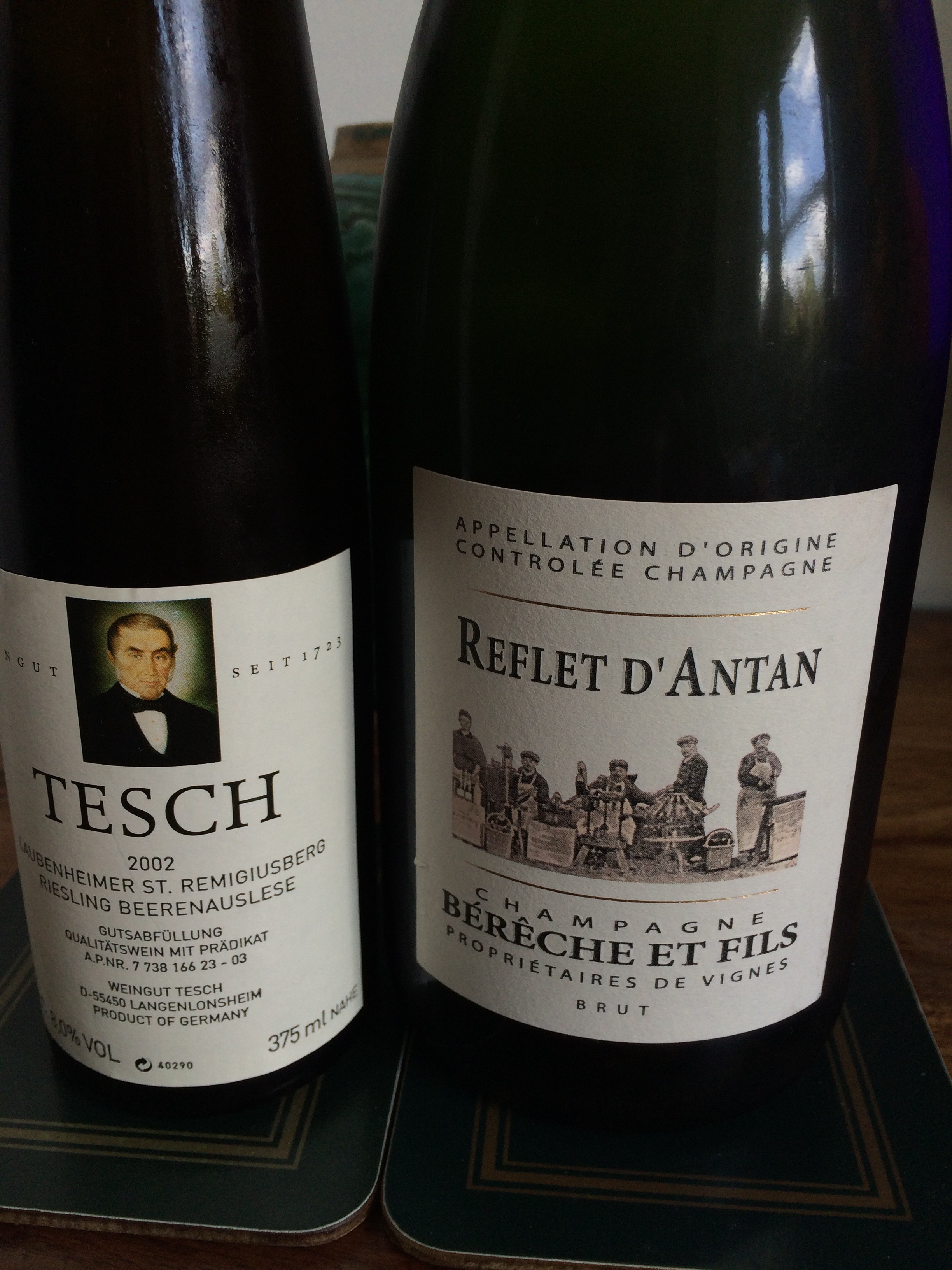
Assorted starters (lobster for me) were accompanied (we were able to take our own wines by special arrangement so I’m not sure what their corkage policy is) with what is almost certainly the best bottle of Champagne we’ve drunk this year, Raphael Bereche’s Reflet d’Antan (disgorged September 2011 from 2/3 2007 base with 1/3 from the perpetual cuvée and bottled with a 6g/l dosage). It combined richness with freshness, a rare trick and a rare treat. Although I’m unashamedly biased when it comes to Bereche, my high opinion was shared, and this did seem an unimpeachably splendid bottle.

image

Two of us chose turbot and two chose halibut, and I think my turbot was cooked to perfection, the best piece of fish I’ve had for a long time, anywhere. It went well with Raveneau’s Chablis 1er Cru “Les Butteaux” 2005. I’ve never had this wine before. The usual Raveneau class with genuine depth, evolving complexity and a lightness too. Another heavenly wine.

imageimage

The main courses at Verveine are a hard act to follow, but the desserts are inventive too. That said I was concentrating too much on my Tesch Laubenheimer-St Remiguisberg 2002 BA which was concentrated and exquisite. This, the first bottle of Tesch to pass my lips, lived up to expectations for one of the Nahe’s new breed, though it seemed about ready to drink now without the need to wait a lot longer.

The final touch with coffee and teas was a selection of petit fours, including fudge in edible “plastic” wrappers and small meringues flavoured (gently) with fisherman’s friend lozenges and served in a “ff” paper bag.

Verveine bakes its own bread twice daily, and much of the vegetables and herbs used in the cooking are grown in the restaurant garden – you can see the raised beds through the glass doors.

Service is good too. The senior member of the waiting staff, Agnes, hails from Hungary. She combines serving the food with professionally dealing with the wine. She wasn’t the slightest bit fazed, indeed she almost seemed pleased, when we asked to drink the Bereche from wine glasses.

No qualifications required, this is fine dining standard food at Verveine. The restaurant is only about the size of a decent living room seating around thirty-plus covers, and it’s not cheap – we paid £50/head for three courses plus coffee, without buying any wine. But it was worth it and very good value for the quality. Despite the urgent need to try  Lime Wood, Angela Hartnett’s place near Lyndhurst, I’m equally keen to head back to Verveine as soon as possible.

Verveine Restaurant, 98 High Street, Milford-on-Sea, Hampshire SO41 0QE

Tel: 01590 642176   web site: http//www.verveine.co.uk  email: info@verveine.co.uk

Posted in Dining | 3 Comments

Not With a Bang but a “Wimps” Lunch

This is the way the world ends, or at least I hope so. Wimps lunches are so called because they are for people who only like one bottle each for lunch (although they actually allow for ten bottles between each table of eight). They take place every month at La Trompette and are organised through the http://www.wine-pages.com wine forum. This month was the turn of Austria/Germany.

As usual, the event is as much about the food and company as it is about the wine, but we didn’t do badly on that front. We actually managed twelve wines, one being a replacement for the TCA affected 1976 Grünhauser in the list below.

1. 2007 Wittmann Westhofener Morstein Riesling GG, Rheinhessen

2. 2005 JJ Prüm Wehlener Sonnenuhr Auslese, Mosel

3. 2001 JJ Prüm Wehlener Sonnenuhr Auslese, Mosel

4. 1994 JJ Prüm Wehlener Sonnenuhr Auslese, Mosel

5. 1989 Von Schubert Maximin Grünhauser Abtsberg Spätlese, Mosel

6. 1976 Von Schubert Maximin Grünhauser Abtsberg Auslese 46

7. 1913 Walter Siegel Forster Kirchenstück Auslese, Pfalz

8. 1989 Von Schubert Maximin Grünhauser Abtsberg Auslese 133

9. 1996 Von Schubert Maximin Grünhauser Abtsberg Auslese 55

10. 2008 Muhr-Van der Niepoort Spitzerberg Blaufränkisch, Carnuntum

11. 2003 Ruster Eiswein Weingutshof Landauer, Burgenland

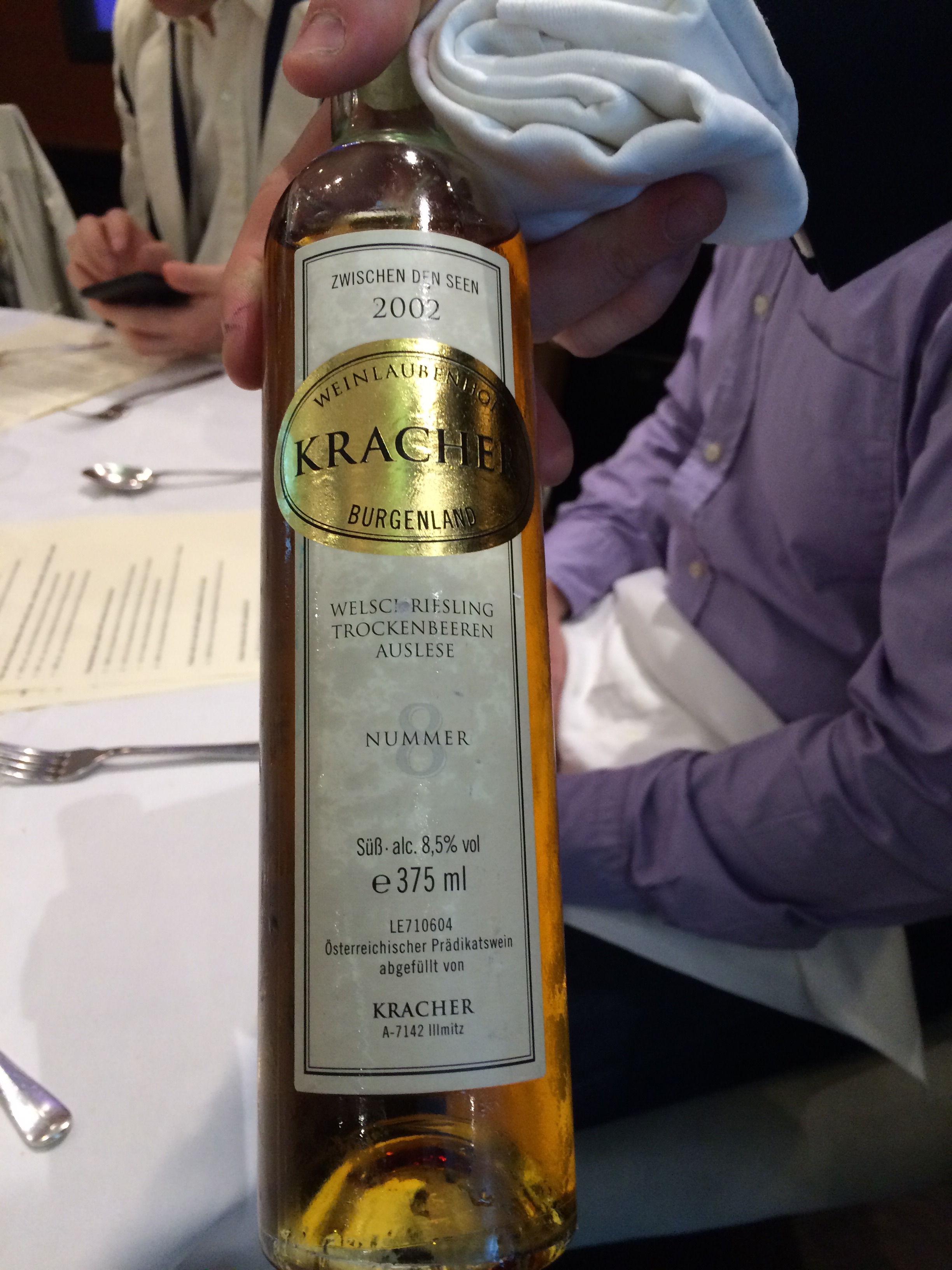
12. 2002 Kracher Welschriesling TBA #8 Zwischen den Seen, Burgenland

image

Most of the wines shone to some degree. Other than the corked (if not irredeemably) 1976 (wine 6 above), the red Niepoort was quite disappointing. It was lovely six months ago yet this bottle tasted a bit dilute and lighter. The only other red on the day (on another table) tasted much better – an unusually big, especially for its age, 2004 Zweigelt from Johann Schwarz with some input from Manfred Krankel.

imageimage

For me, the wine of the day was the first to pass my lips, the Wittmann Morstein. Refined in the extreme, it started quite rich but the minerally tone took over. Claude Kolm attributed the very special terroir characteristics to the limestone soils of the Wonnegau. As others have said, it’s one of the most exciting areas in Germany right now and this beautiful wine shows why. I wish I had a few bottles.

image image

The Prüm Auslesen were fascinating to compare. The 2005 seemed quite a bit too young for me, but at the other end of the age scale the 1994 was classy. The only problem here was the food pairing, the scallop starter (with bonito cream, pickled cucumber and wasabi). It had, ironically, been perfectly matched with the Riverby GV last week, but the wines today overpowered it, and the acidity of the dish grated. Lovely dish, lovely wines, but no meeting of souls.

image

The next five wines ended up as a quartet of Von Schuberts surrounding a museum piece 1913 from the Pfalz. Aside from the corked 1976, these were marvellous wines, with the Grünhausers an embarrassment of riches, each with something distinct to offer.

image

The Kirchenstück was in many ways a miracle, deserving of a paragraph of its own. That it was drinkable would have been enough but it was more than that. It’s sugars, which had undoubtedly sustained it on it’s journey were now, by-and-large, all gone in terms of sweetness. Madeira brown in colour, the nose was complex, both powerful and haunting at once (though a couple of people broke the spell exclaiming “cornflakes”). The slightly caramel-honey palate lingered and lingered. It’s not often I get to try a really old German wine, but it was a privilege. To think, the kind person who brought this is also absailing for charity at the Olympic Park on Monday. What a guy!

image

I mentioned the Blaufränkisch as the only disappointment of the day. A shame as it was our solitary red and it was paired with the dish of the day, veal rack with späetzle, sweetcorn and ceps, with fine aromas and flavours compensating for the wine. Yet it’s a red that has won praise from critics, so a duff bottle…maybe.

imageimage

With a dessert of crème fraiche tarte with passionfruit the two dessert wines provided a real contrast. The western side of the lake gave us a fresh Ruster Eiswein, with a lightness contrasting its sweet richness, and good acidity. The Kracher, from the eastern side of the Neusiedler See, was typical of this wine/grape at this sort of age. The acidity has diminished but not the sweetness and you are left with a sweet honey richness. Although La Trompette’s wine team thought it the best of the Krachers on show, I actually loved a taste of a Kracher Chardonnay on another table, younger and fresher.

imageimage

As usual, a wonderfully congenial time was had by all who made it yesterday. If indeed the world were to end after such a wonderful array of these wines, I’d be pushed to complain.

image

Posted in Austrian Wine, Dining, Fine Wine, German Wine, Wine, Wine Tastings | Tagged , , , , , , , , , | 3 Comments

The Rudest Word in Wine

MINERALITY

For some it’s not even a word. It’s not in my dictionary. Yet few concepts in wine, not even terroir, excite the angry to expletives more than this harmless word can!

image

For some the idea that there’s a mineral quality in some wines, almost akin to those fruit flavours we find in tasting notes from Parker to Pigott, is proposterous. We see very long, learned, articles written by scientists explaining with just a hint of impatience that whilst wines may contain traces of compounds which mirror those in bananas, blackcurrants, linden and lovage, there is absolutely no way that the “soil to glass” transfer metaphor used so evocatively by Rhone expert John Livingstone-Learmonth can be literally true. Minerals exist in wine, but in a range from a few parts per million to parts per billion.

Yet the idea that we can taste something “mineral” in our wine still persists. A wine book written in 2014 contains the following, a description which paints a believable picture of a well tended patch of old vines in the middle of a sunny slope. The wines made from this idyllic plot:

“…tend to have a lovely salty minerality…as the vines are encouraged to cultivate deep roots that engage with the bedrock, processing its minerals through living soils”.

The most cited example of minerality in wine must be that of Chablis. Everyone knows that mouthfeel which makes Chablis so different to almost any other Chardonnay wine. It tastes nothing like a Puligny or a Meursault, or a Chardonnay from Napa or Marlborough. A good Chablis actually tastes as if they’d taken the fossilised sea creatures which make up the region’s soils, ground them into powder, and dissolved some in every vat.

It’s not just Chablis and its chalk. Volcanic soils often give wine a mineral flavour which, at its extreme, can smell like iron filings, or sometimes taste how we’d imagine wet terracotta might taste. Valpolicella, Etna Rosso and Marcillac from the Aveyron in France come into this category.

Then there’s Riesling, from the slate soils of the Mosel, Saar and Ruwer, where slate forms not just the bedrock, but litters the surface of the vineyards. Here, mineral geekery hits new heights as different types of slate are distinguished on the palate by experts. The non-expert is aided by the use of wine names such as Schieferterrasen and Vom Blauen Schiefer by Lower Mosel producer Reinhard Löwenstein (Heymann-Löwenstein). As Stuart Pigott (see below) says about Reinhard, he loves his slate, and is always quoting the Bob Dylan line, “everybody must get stoned”.

image

And whilst we’re in Germany, anyone who begins to appreciate Spätburgunder starts to identify those from the parts of the Ahr where it grows on slate and those from Baden’s Kaiserstuhl (volcanic), as opposed to the limestone of the Cote d’Or. To suggest that such differences have nothing to do with the soils and bedrock of each region, merely being the product of factors such as climate or winemaking challenge logic.

Some of you will already have noticed a big flaw in the narrative, especially those who read Alex Maltman’s article on wine and geology in World of Fine Wine this summer (WFW 48). Despite the quote above, about vine roots delving deep, it seems that vines may take most of their nutrients from the soil above the bedrock, and these soils often bear little relation to the underlying rock type. As Maltman says:

“By definition the bedrock is pretty much intact, apart from perhaps some fissures that may conserve supplementary water into which deep roots may tap: It is the overlying loose material, the soil, that is largely used for water and nutrition. And almost invariably, the age of the soil will be unrelated and vastly younger than the bedrock” (original itals).

image

Alex Maltman is Professor of Earth Sciences at Aberystwyth University in Wales, and he does get around on this subject. He’s the go-to guy for geology and wine. In a very good article written by Chris Simms in New Scientist (9 May 2015), entitled “Grape Expectations”, he reminds the author that despite minerality becoming a wine buzzword there is no known process by which vines take up minerals from the soil and transfer it to the wine. Furthermore, by and large, excepting sodium chloride, Maltman points out that minerals have no detectable taste.

Barry Smith, who specialises in the multisensory perception of flavour at the University of London’s School of Advanced Study, really puts us in our place in the same article. He tells Simms “The idea you can taste minerals from the soil is absolute rubbish”. How do we come back from that?

Well, I suggest two ways. Imagine first that you are on holiday in Aosta’s Valgrissenche and that you have purchased a bottle of the local white wine, Vin Blanc de Morgex et de La Salle. The co-operative’s Cuvée Rayon will do. You are on a nice walk up to the refuge called Mario Bezzi at the top of the valley. Half way up you stop for lunch, wedging the bottle in the icy stream that flows down from the dwindling glacial ice you will later navigate before reaching your goal. Sitting in the warm alpine sunshine, listening to the warning calls from a family of marmots on the other side of the valley, you uncork the bottle and sniff. It has a purity akin to Evian water with a light infusion of herbs. When you taste it…there’s something unique. To confirm your palate’s signals you take a small rounded stone from the stream and lick it. Exact match, the mouthfeel is identical.

image

But note, “mouthfeel”. What we have here is not the flavour of the pebble. The geologist will tell us that the pebble has no taste. It’s that feeling on the tongue and around the mouth. Mouthfeel is something we get from all wines. It can be oily in the case of a big Alsace Pinot Gris. It can come from the tannins in a young Pauillac. It can come from the acidity of a Franken Silvaner, or the sweetness and acidity of a Sauternes in a strong botrytis year. But wherever it comes from, the taste of that Blanc de Morgex can be described in no better way than “mineral”.

So if it isn’t actually minerals you are tasting, then what is it? We can look for explanations, but I don’t think there’s a definitive scientific one. In his 2014 book on Riesling, “Best White Wine on Earth”, Stuart Pigott has written a very good section on minerality and mouthfeel (pp 34-39). He talks about potassium, one of the minerals present in wine, working with the wine’s acidity to give a salty minerality. He mentions sulphurous compounds created during or after fermentation, and there are other choices made at the time of fermentation which may come into play, such as yeasts. But at the end of the day, his following quotation sums up my feelings as well:

“A lot of nonsense is talked about the mineral taste of wine, which is a real part of Riesling, but also rather mysterious”.

My own view is that science may provide the answers in the future as to why wines sometimes taste in a way which encourages us, we just can’t help ourselves, to use the term “minerality”. But to be honest, I don’t think it matters one bit. You see, what is minerality but a perfect metaphor for what we are tasting in a Chablis, a Wehlener or an Etna Rosso.

What is the point of a tasting note? It’s not really there to provide a technical analysis of the chemical composition of the wine in the glass. It’s there to paint a picture of a vibrant, living thing which can thrill our senses of smell and taste like few other forms of nourishment. Wine is there to feed the soul as well. It may sound pathetic, but who reading this hasn’t taken one sniff of a wine and found themselves transported to a heaven of sensual pleasure and, if lucky, a profound recollection of their previous encounter with that scent and taste, a true Proustian moment. Wine, in this respect, has the power to be transformational.

All we want from someone else’s description of a wine is a sense of that experience summed up in a few crafted phrases. A picture painted in vivid colours. I think that the term “minerality” on these occasions conveys, as a metaphor, something that we all understand. And for those lucky enough to have climbed the slopes of the Doctor above Bernkastel, or Achleiten on the Danube, to have walked the Grand Crus of Chablis, or to have driven in search of the lost vineyards of Marcillac among the wooded hills south of Conques, it’s a word capable of transporting us back to those places.

To those able to understand a metaphor, minerality conveys the essence of something very real. But it is just that, a metaphor, so let’s remember that when we see it used in a tasting note.

image

Posted in Minerals and Wine, Wine, Wine Agencies, Wine Science | Tagged , , , , , , , , , , | 8 Comments

Trompetting Riverby

Those with long memories may remember that I attended a tasting of Riverby Estate’s Marlborough wines at Butler’s in Brighton late last year, here: https://wideworldofwine.co/2014/12/01/riverby-estate-tasting-butlers-brighton/

Yesterday I attended an even larger Riverby Estate tasting at London’s La Trompette restaurant, with estate owner Kevin Courtney. It included, as its centerpiece,  a vertical of eleven vintages of Riverby’s Chardonnay, never before attempted by Kevin, among nineteen wines tasted in total.

image

Several lessons were learnt by a knowledgeable group of wine lovers. First, New Zealand Chardonnay can age, and really well. Second, that we are not yet familiar in the UK with every class producer in the country. Actually, Riverby are direct neighbours of Cloudy Bay, and their vineyards are among the earliest planted, and best sited, in Marlborough. We also learned the importance of clonal selection. And finally, we learned not to judge wines purely by price. These are award winning wines in New Zealand and elsewhere (including some top Decanter WWA medals), yet they rarely cost more than £20 retail per bottle.

List of wines and food matches

With canapés – 2012 and 2014 Eliza Riesling, 2014 Sauvignon Blanc, 2013 Sauvignon/Semillon

image

With raw Orkney scallops, bonito cream, pickled cucumber and English wasabi – 2014 Gruner Veltliner

image

With crayfish and buttermilk chicken wings, späetzle, girolles and sweetcorn – 2004, 2005, 2006 and 2007 Estate Chardonnay

image

With john dory, peas, samphire, lardo di colonatta, butter lettuce and lovage oil – 2008, 2009, 2010 and 2011 Estate Chardonnay

image

With suckling pig shoulder, white polenta, cavalo nero, turnips and muscat grapes – 2012, 2013 and 2014 Estate Chardonnay

image

With St Felicien, Reblochon and Swiss Challerhocker – 2013 Estate Pinot Noir and 2013 Reserve Pinot Noir

image

With petits fours – 2012 Noble Riesling

It would be tiresome to post a tasting note for each wine. All wines performed well with the exception of the 2010 Chardonnay which was reductive and didn’t improve in the glass, no doubt a phase. Some wines were slightly tight to begin with, a facet of age and screwcap, but everything blossomed, changing in the glass for the better. There was no wine here I wouldn’t buy myself and the standard is incredibly high over the whole range.

My highlights began with the Gruner Veltliner. I’ve only tasted this a couple of times but I do recall telling Kevin last winter it had massive potential. The vines are young but it impressed everyone with its poise and focus.

image

Of the Chardonnays, my favourites included the 2004, yes, an eleven year old NZ Chardie. It tasted fresh, not fading at all. A remarkable contrast to many an expensive bottle of premoxed Burgundy we’ve all experienced. I also loved the 2008, not that it was as good as some of the wines around it on the day, but because it seemed to have everything in place to become better and better, a wine with such potential. I think it focussed everyone on Marlborough Chardonnay, its forgotten variety after Sauvignon’s domination of the region in the eyes of consumers.

Of the younger wines the 2013 and 2014 really impressed. The estate style is one of restraint, and the wines are never overtly tropical or oaky. To a degree, the 2013 breaks that rule. It’s a bigger wine, but it’s still balanced. The 2014 was only bottled in March and it’s lovely now. Not remotely near its full potential, yet fine and elegant on the day.

Of the two Pinots, the Reserve bottling is clearly the more impressive (on the right below), and impressive it is with its already integrating oak and smooth texture. It put the basic estate Pinot under its shadow, yet I know from experience that the cheaper wine is a lovely fresh glugger, full of gentle fruit. One to drink whilst allowing the Reserve to blossom into something even better.

image

We ended with the 2012 Noble Riesling. Riverby first became famous back in New Zealand for their stickies, with best dessert wine in show at the Air New Zealand Awards for several vintages. The 2012 is one of the lighter Noble Rieslings they’ve produced, with just 128g/l of residual sugar (the norm is around 200g/l) and clocking in with 9.5% alcohol. The sweetness is gentle, not cloying, and is balanced with a pure backbone of acidity. I’d have gone for a third pour if it hadn’t all been snaffled, and its taste lingered throughout my journey back to Victoria Station.

image

As ever, La Trompette provided food of a level above its single Michelin Star. The suckling pig was well up to the usual standard. One attendee who knows his food reckoned the scallop dish was his best starter of the year.

Riverby Estate’s Marlborough wines are imported into the UK by Black Dog Wine Agencies, Cheshire. They are currently available through Butler’s Wine Cellar in Brighton and Loki in Birmingham. La Trompette is available to anyone who can find Turnham Green on the District Line. Those who can are in for a treat from one of the less well-known restaurants of this excellent stable, which includes The Ledbury, The Square and Chez Bruce.

Many thanks to Charles Taylor for organising the event, and to Kevin Courtney for generously supplying all the wines.

image

Riverby owner, Kevin Courtney. Catch him at the Oxford Wine Festival this weekend (21-22 August, Oxford Union).

Posted in Dining, Fine Wine, New Zealand Wine, Wine, Wine Agencies, Wine Tastings | Tagged , , , , , , , , , , | 3 Comments