Recent Wines (October 2015)

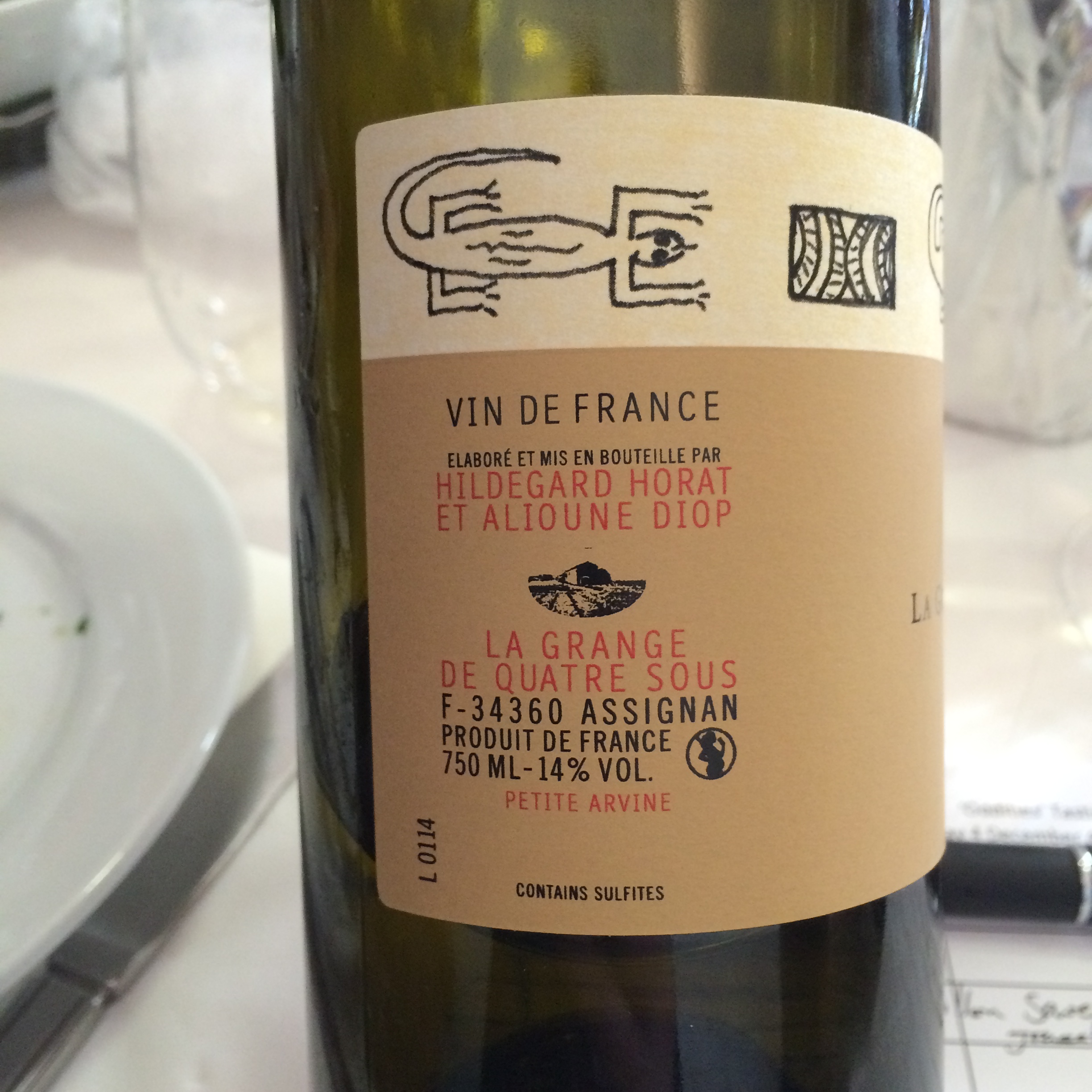
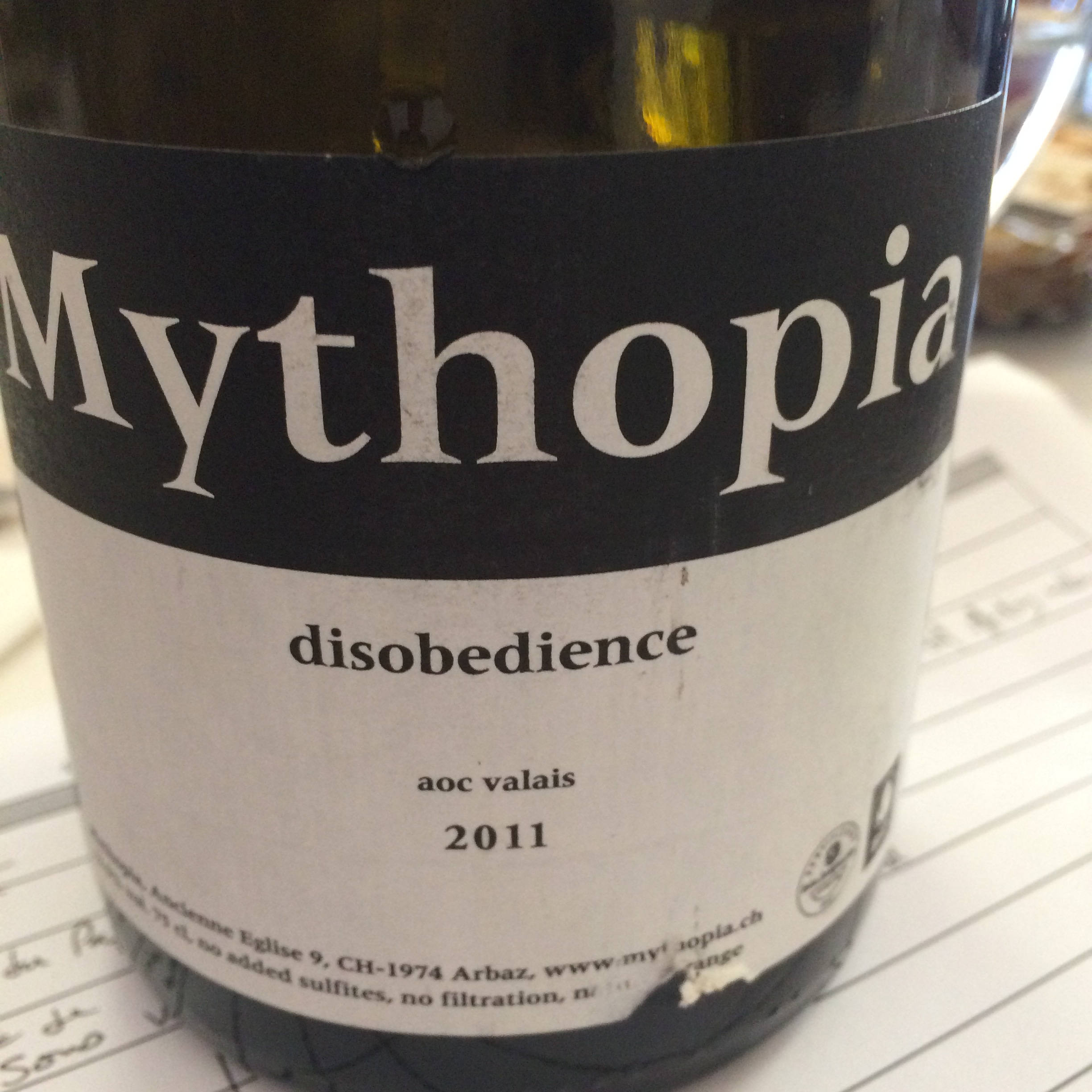
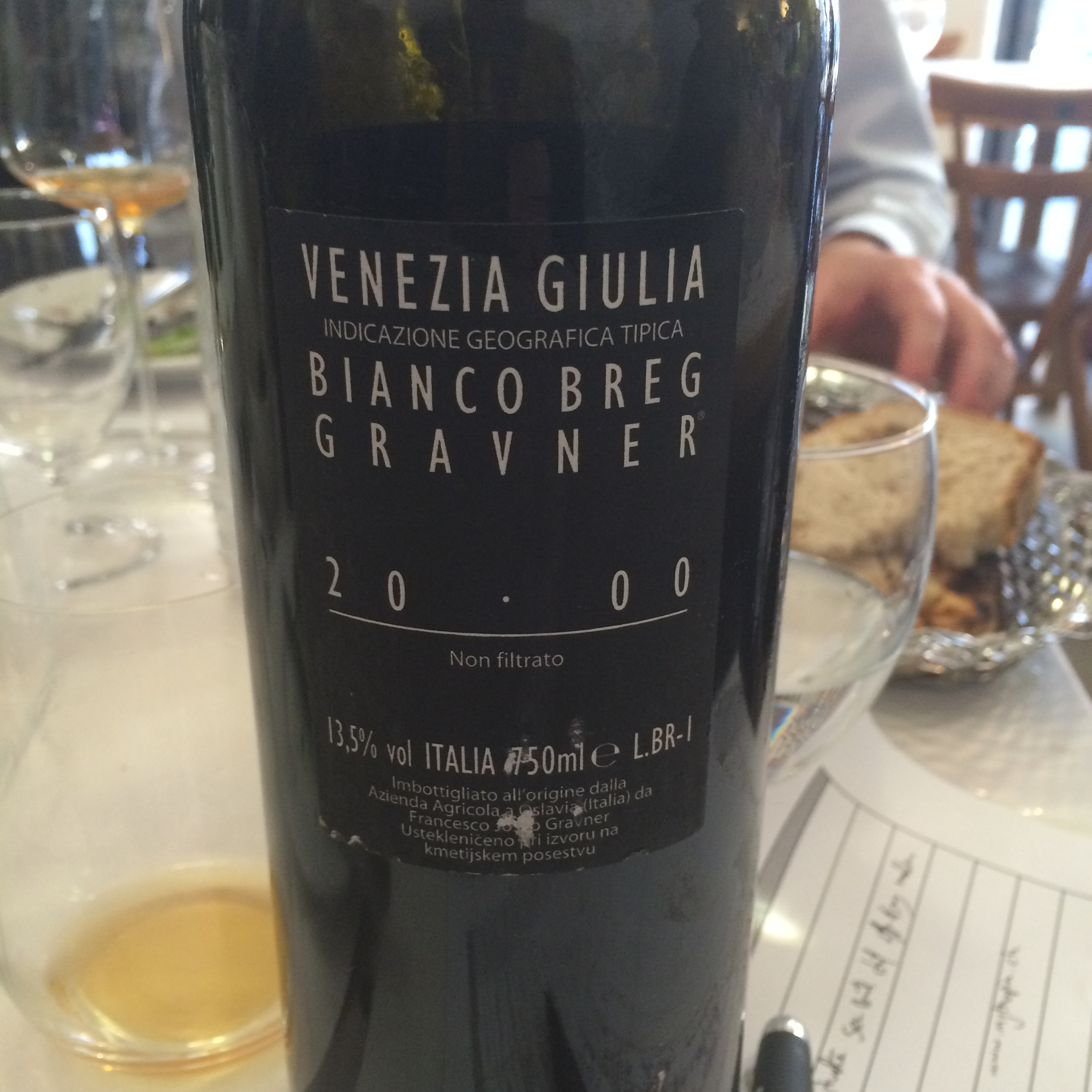
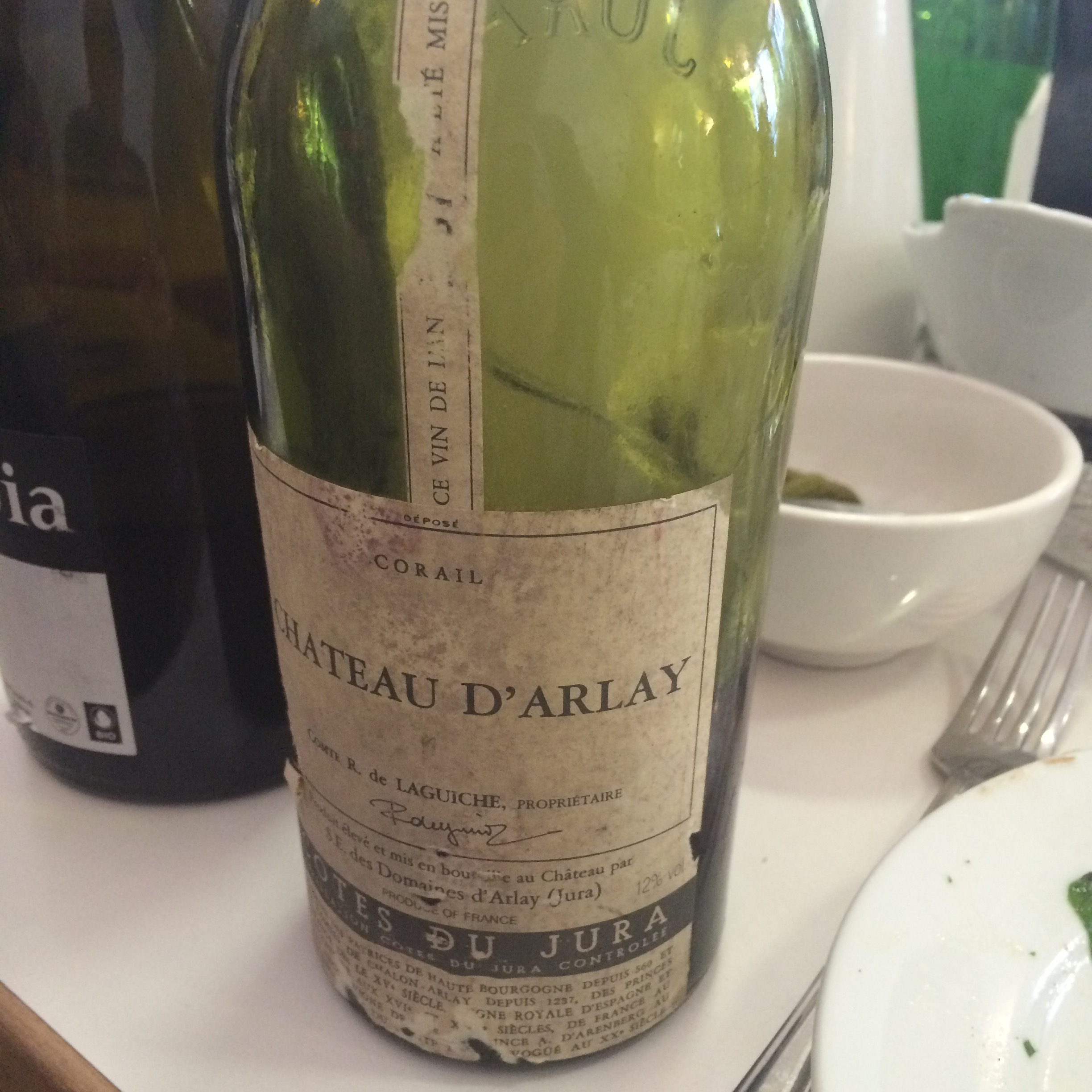
I rarely write about the wines I drink at home, but in light of the last post, and the one on the Oddities lunch, I thought it might interest or amuse some readers. For some people who I know read this blog it will just seem like the normal run of midweek wines. To others, it may merely confirm me as a lost cause. The following were drunk over the past week-and-a-bit.

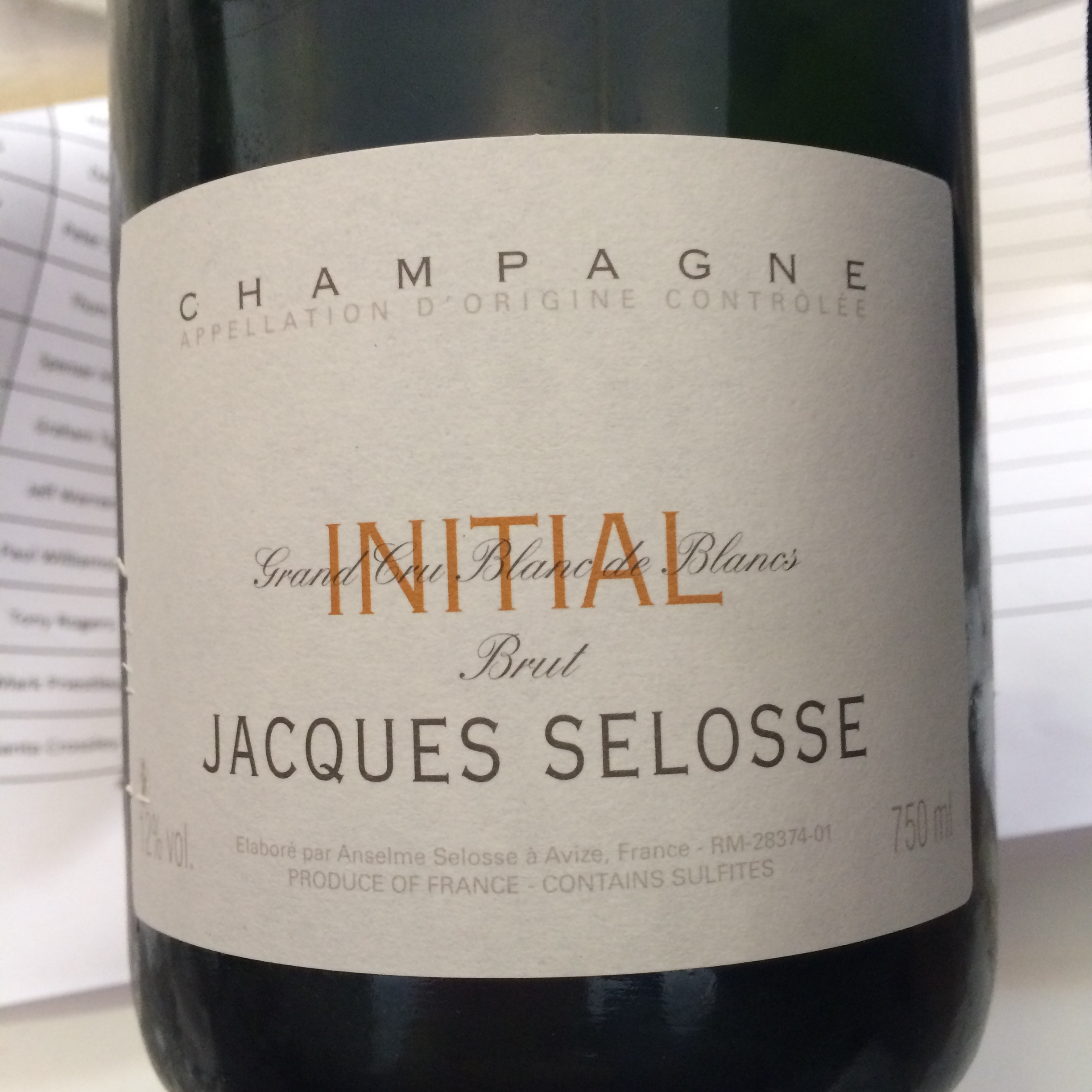
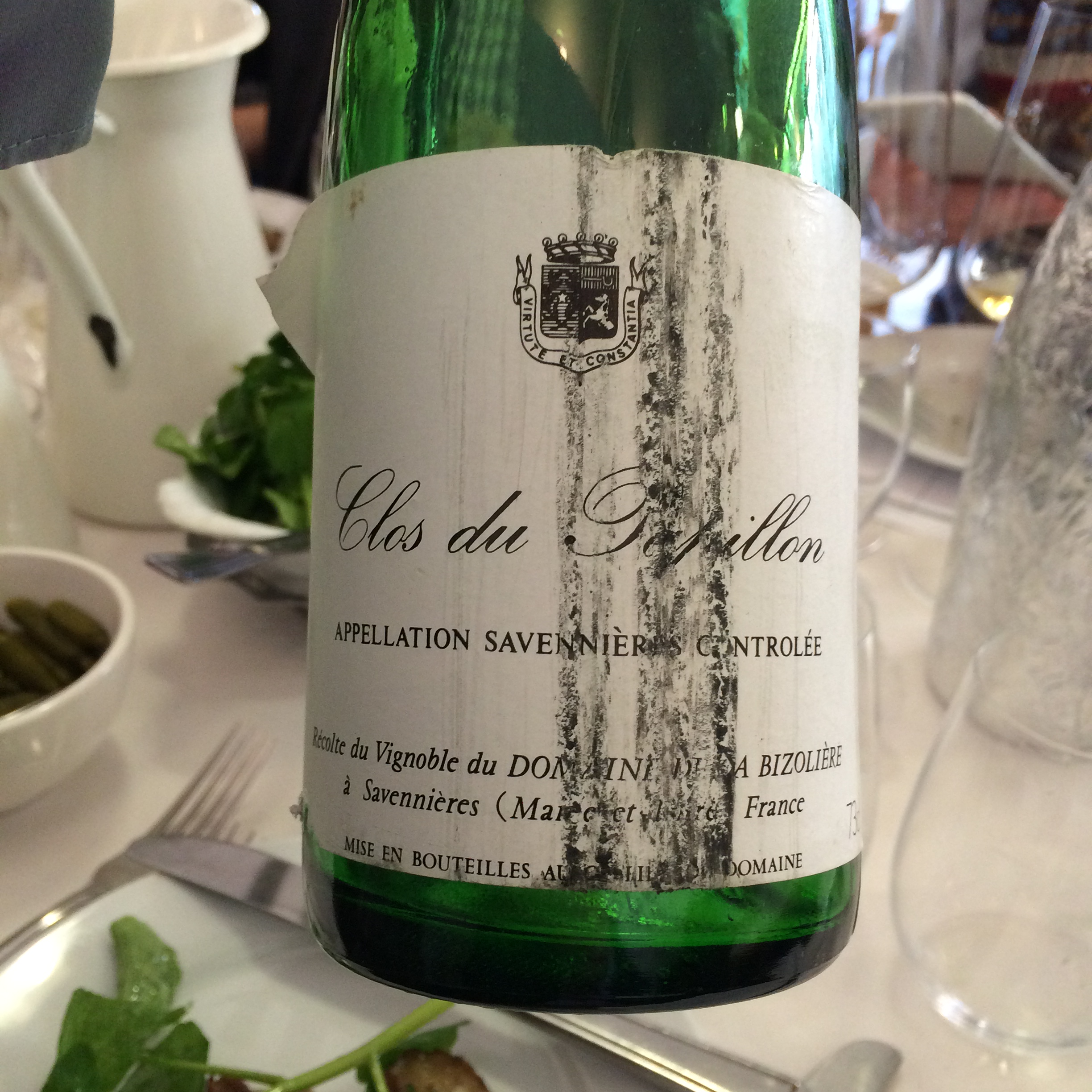
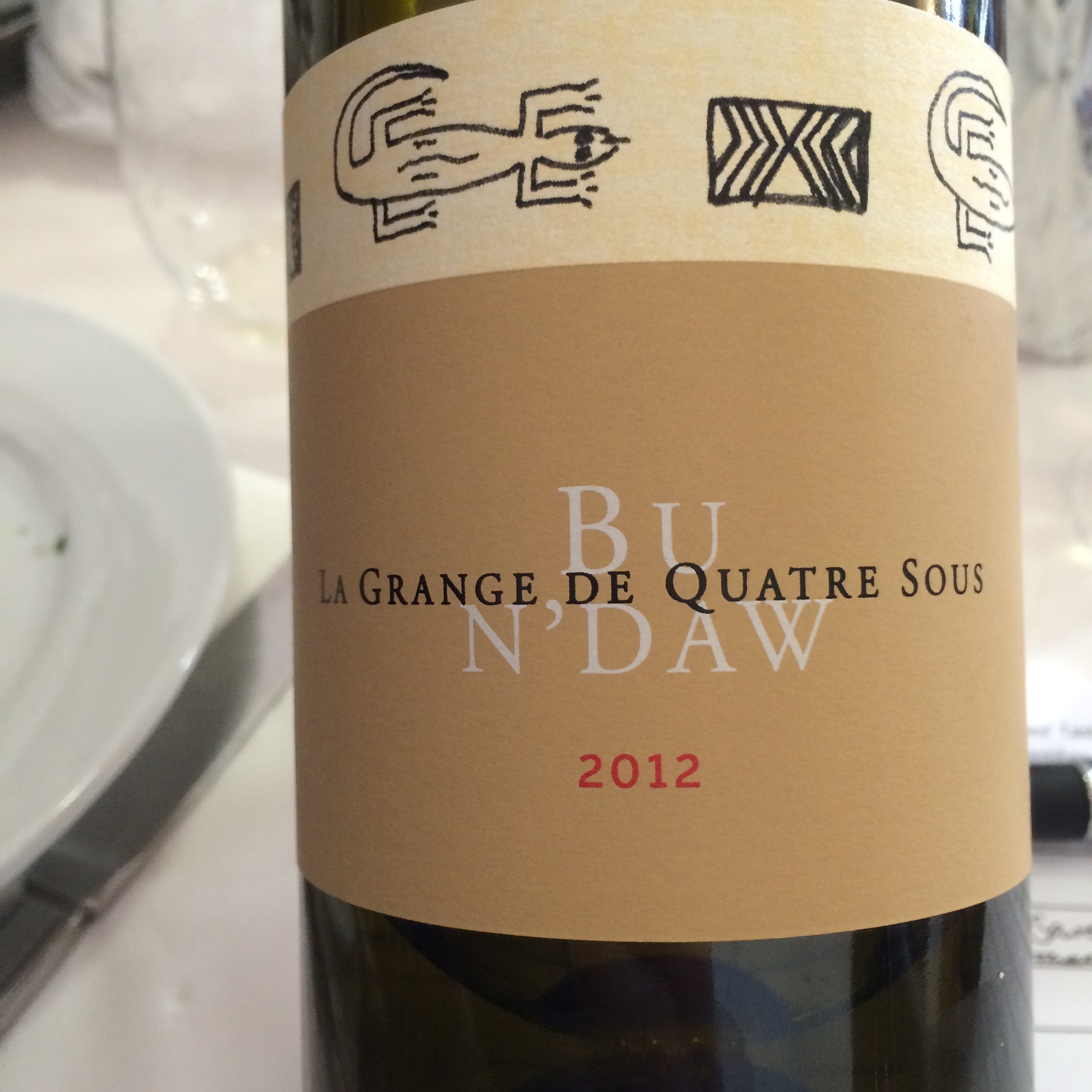
Two Swiss wines is unusual, even for me. I love Swiss wines and drink them whenever I can (Alpine Wines is a really good source for UK mail order/online sales). But we were lucky that Swiss friends came to stay recently, generously lugging half-a-dozen bottles in their suitcase (which they replaced on the way back with British beer).

Humagne Rouge du Valais 2014, Lamon & Cie was on paper a cheapish negoce version of a lovely Swiss grape variety capable of quite serious wines on occasion. 13.2% alcohol here (the Swiss tend to go for accuracy), the cherry colour of Gamay, it was both simple and rustic, but in a good way. Smooth on the palate but with a nice bitter finish, it was an excellent glugger. That’s what you want on a dull Tuesday night in October.

image

Lavaux “Coup de L’Etrier” 2014, Jean & Pierre Testuz looked of a similar type. I’ve enjoyed Testuz wines before and this came in a light bottle with a none too elegant, somewhat old fashioned, label. Yet the wine was delicious. The slopes of Lavaux, and the Crus clinging to steep terraces down to the lake between Montreux and Lausanne, are a UNESCO listed World Heritage Site, and vie for the title of the most beautiful vineyards in Europe. Their wines, however, are not so highly regarded outside Switzerland. In my opinion this is unfair. Chasselas is capable, from these sites, of both flavour and tension, with a sprinkling of carbon dioxide to add a prickly freshness. Citrus and straw with a good touch of quince on the finish. A wine of personality. As I’d not had a Lavaux wine for a good twelve months, my pleasure was all the more pronounced. Not a “fine wine”, but lovely nevertheless.

image

Beaujolais 2011, Yvon Métras . A producer who needs little introduction, one of the legends of Beaujolais. But in the UK at least, it’s about ten times easier to find Foillard than Métras. This wine looks more like a Burgundian Pinot Noir than Gamay, yet it has a lovely, concentrated, cherry nose bursting from the glass. Note the vintage. The wine (labelled Beaujolais but effectively a “Villages”) is in perfect harmony. This is another wine where the savoury twist on the finish completes a palate which is otherwise pure smooth fruit. Is it serious stuff, good fun, or both? The latter, I think. It suggests there’s no hurry to open any younger bottles…if you can resist them. Masterfully made yet for enjoyment, not intellectual contemplation.

image

Muscadet de Sèvre et Maine Sur Lie “Cuvée Excellence” 1999, Château du Coing de St-Fiacre . How can this be so good, 1999 Muscadet? There are a few people for whom this is a really stupid question. They have tried the likes of Luneau-Papin’s L D’or bottlings many times. This wine is yellow-gold. The nose is quite suggestive of Riesling, Chenin, and perhaps a little white Rioja. There’s citrus, nougat and curry spice in here, and the palate finishes its mineral journey with a little touch of orange. I only bought this bottle (and one which preceded it) a year ago in London, after someone brought one to one of our Oddities lunches. A treasure as much as any supposedly finer old bottle. These older Muscadets are well worth looking for, and they can still be found at Loire specialists. Complete bargains.

image

Blaufränkisch “Hochäcker” 2009, Mittelburgenland DAC, Weninger . Weninger, not to be confused with the similarly named Vienna producer, is one of the best producers of Blaufränkisch in Middle Burgenland. I’ve become a big fan of this grape over the past few years. When done well it seems to have the fruitiness of a grape like Gamay with additional savoury depth. This isn’t one of Weninger’s more expensive wines, yet a few years in bottle shows how the grape can develop. There’s characteristic pepper, and brambly fruit, still quite crunchy, but an added leafy complexity. It’s nicely balanced at 13% alcohol. Really hitting its stride. Austria is one of a handful of the most exciting places for wine in Europe at the moment, yet this is not a new producer, nor a new wave wine. Weninger has distilled the best out of Blaufränkisch without trying to make a souped-up oak bomb.

image

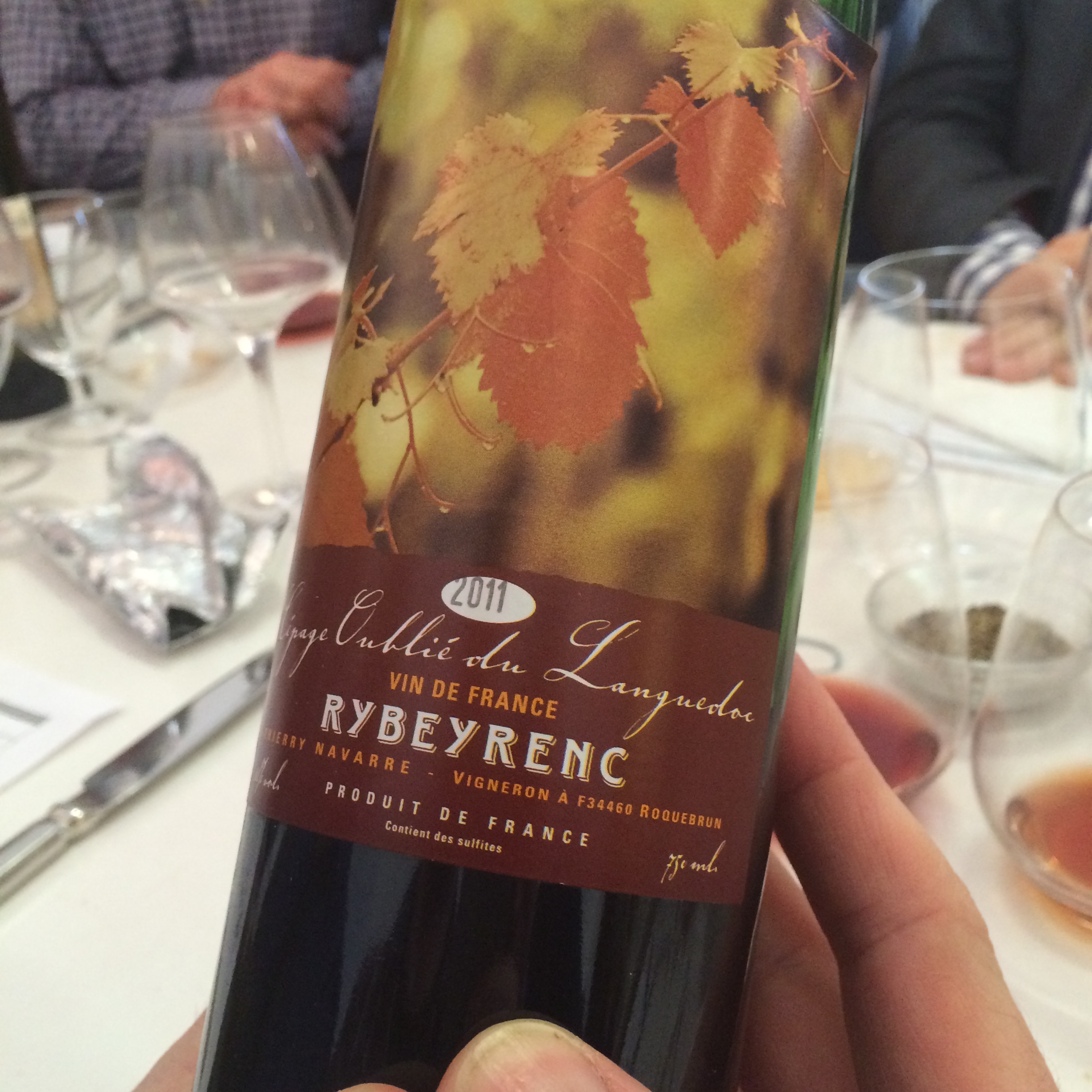
Le Vin des Amis 2014, Vin de France, Mas Coutelou . Jeff Coutelou makes some of the most exciting natural wines in the Languedoc at Puimisson, just north of Béziers. Every different cuvée is really well thought out and lavished with individual attention. Whilst I love his more expensive wines (at least those I’ve tried), the Vin des Amis must be one of the most satisfying wines I’ve drunk this year (2013 and 2014 vintages). Purple, with intense berry fruit, it has a beguiling freshness and even lightness which conceals its 13.5% alcohol. It’s usually a blend of Syrah and Grenache with a good dollop of Cinsault (though I’m guessing there’s no set formula). As the name suggests, it’s not really meant for keeping, though I think a year or so will do no harm whatsoever. We drank this on the first night of winter – well, the day after we put the clocks back. As a wine for pure pleasure it’s exceptional. It is very much one of those wines Pascaline Lepeltier (see previous blog post) describes as a wine for drinking with friends. In essence what wine should be – simple but pure pleasure. Yeah, should’ve bought a case of the ’14.

image

**The Coutelou wines are available from RobersonWeninger’s Hochäcker probably came (having aged it a bit myself) from Fortnum & Mason , though Alpine Wines (see below) stock Weninger. The Muscadet was from The SamplerThat 2011 vintage of the Métras was from Solent Cellar. I have bought the 2014 from Vintrepid. Métras may sometimes be available at Roberson. The Swiss wines are unavailable in the UK but Alpine Wines has these bases well covered. In fact, they are a really good source for, especially, Swiss and Austrian wines.

Posted in Swiss Wine, Wine, Wine Tastings | Tagged , , , , , , , , , , , , , , , , | 3 Comments

On Quality…(again…)

Although I have been banging this drum a bit, it’s hard not to. It’s like a mid-life crisis as all the certainties in wine I believed in seem to be getting replaced by a wholly different philosophy, or at least to a degree. Not that this is bad. Indeed, it’s really exciting.

My thoughts here are occasioned by a piece in World of Fine Wine 49, written by New York Sommelier Pascaline Lepeltier MS (more about her in a moment). It struck a chord, and it confirms that I’m far from the only person developing a new philosophy of wine quality.

When we as individuals measure quality in wine we do it incrementally. What I mean is that we start at the so-called bottom and work our way up. This may begin with wine as a mere alcoholic beverage which we drink at parties for inebriation, and which we may then come to appreciate as an accompaniment for food. Once we take notice of wine for its potential qualities other than the alcohol, we start to explore up a chain which, if we are lucky enough to be moderately well off, in money or friends, might lead us to the established peaks of wine appreciation. Grand Cru Burgundy and Bordeaux, Champagne’s luxury cuvées, perhaps Napa, Brunello, Barolo and Rioja in their finest forms.

IMG-20141208-00693

If we show a certain spirit of adventure we might explore the best wines of Priorat, Alsace’s Clos St-Hune, Huet’s sweet delights, or perhaps, for the really adventurous the finest wines of Germany via Prüm, Keller and Egon Müller. And for some people, that’s the journey’s end. Satisfied to be home, they happily drink these wines for the rest of their lives. That’s absolutely fine. I’m not knocking it. If I had some Haut-Brion in my cellar I’d be very pleased. But for a few people it’s not the getting there that matters, but the journey…and perhaps this can lead to the discovery that there are other, wider, ways of enjoying the juice we love.

This weekend Marina O’Loughlin, one of the best restaurant critics writing today, published a supplement in the Guardian Newspaper listing her favourite 50 restaurants (although the cover said “Top 50” she did make it clear it was her favourite fifty, something critics failed to take account of). It’s a personal selection, subjectivity at its best rather than cold objective assessment. I wondered about my Top 50 Wines. I could fill such a list with vintages of top Bordeaux alone, but I wouldn’t, and even then something like Chateau Talbot 1978 would make the cut where other more famous names wouldn’t. It’s because a time or a place mean more than clinical analysis, like those old Carpenters’ hits I love because my parents played them endlessly on the car stereo when we drove off on our holidays. The old cliché is true: there are no great wines, only great bottles.

Tower Hamlets-20150129-00741

As I’ve said before on this blog, I don’t want to drink the same thing every night. Just as I might prefer to see Luigi Rossi’s Orpheus at the Sam Wanamaker Theatre (as I will later this week) rather than Aïda at the arena in Verona, I might just want to drink something from Burgenland for a change.

But you have to be careful. Drinking widely makes you look at wine in a different way. You look at a wine’s intrinsic qualities and you start to notice a different set standing out rather than those which merely excite high critical scores from the established professionals. Things like purity, freshness and excitement, and even that much abused term sure to bring down ridicule, “honesty”. Thankfully there are others who have come to the same conclusion, and if you are as lucky as I am you find them and become friends. If some of them are wine merchants you have a source for these (often new) wines/producers. And that’s the thing – whole new wine communities are being born which almost completely bypass the old ones.

Wandsworth-20130824-00058

Back to Pascaline Lepeltier. If you don’t know her name, you may know that of the restaurant where she made it, Rouge Tomate in New York. Rouge Tomate got a name for innovation at the highest level. I’m guessing that some people might stop here and think “ah, yes, he’s going to talk about one of those young New York Somms who have filled their lists with trendy wines from Jura, or unripe Californians”?

Pascaline, as her name might suggest, is French and grew up on the outskirts of Angers. She studied philosophy and, as we all know how conservative these things are in France, was supposed to become a philosophy teacher. Well, to a degree, she did, but in order to teach a different philosophy she had to return to school as a 24-year-old, in a classroom with 16-year-olds, and then fly away to America. That takes a particular dedication and determination.

IMG-20150527-00165

And what is this philosophy? It’s one of biodiversity and ecology, that great wine is made in the vineyard. Also, that great wine needs not just an understanding of chemistry, biology and economics, but also critical thinking. That critical thinking led to an understanding that the wines she liked best were those which saw the least manipulation. It’s refreshing in a world where fine wine is getting ever more expensive that Pascaline says she found the “wines I felt close to were also very affordable…were made to be drunk among friends, not to be speculated in for financial gain”.

Pascaline moved to America in large part because ten years ago it was clear that France was just not ready for the idea of a female Sommelier (though I think we were a little more open in the UK where some excellent female Somms were already working in London). In New York Rouge Tomate founder Emmanuel Verstraeten gave Pascaline the opportunity she needed, seeing in her the potential to become one of the world’s finest in her trade. Not that there weren’t setbacks – I really can picture the white middle class men telling her to wear makeup and high shoes as feedback when she entered the Best French Sommelier Competition. But working at the red tomato, and with the team working on the Health Through Food Programme, she found a place for the philosophy of wine she’d begun to develop. Wine began to reflect the philosophy behind the food.  Her mission was to eliminate the disconnect behind eating sustainable food, and the restaurant’s wine list. Wine can reflect something other than pure economics, often the economics of big business – there can be a connection with place, culture, history too.

image

What we are talking about here is drinking wines with a story worth listening to. Wines rooted in “place”, made by passionate people. Wines which want to promote personality and individuality above sameness – wines not merely trying to be a better (sic) version of their neighbour’s. This poses a danger. These stories are a marketing man’s bread and butter. It’s very easy to peddle a false tale which portrays a mass-produced wine, available in many thousands of bottles, as the product of the small artisan’s hand, and there are people out there who do just that. They won’t fool the wine obsessive, but they may fool the mildly curious.

That aside, we are beginning to see a parallel universe in wine appreciation. There are those who have deep pockets, or deep cellars, who continue to appreciate old classics, and who cannot see why these young whippersnappers have suddenly made stuff like Natural Wines, Amphora Wines, Californian Trousseau and Catalan Sumoll as fashionable as a beard in Hoxton. But for people who don’t have that sort of wealth or cellar, they are understanding that wine can still be exciting, and what is more, it can be more in tune with a healthy and ecologically aware lifestyle which younger people are increasingly following.

IMG-20150327-00024

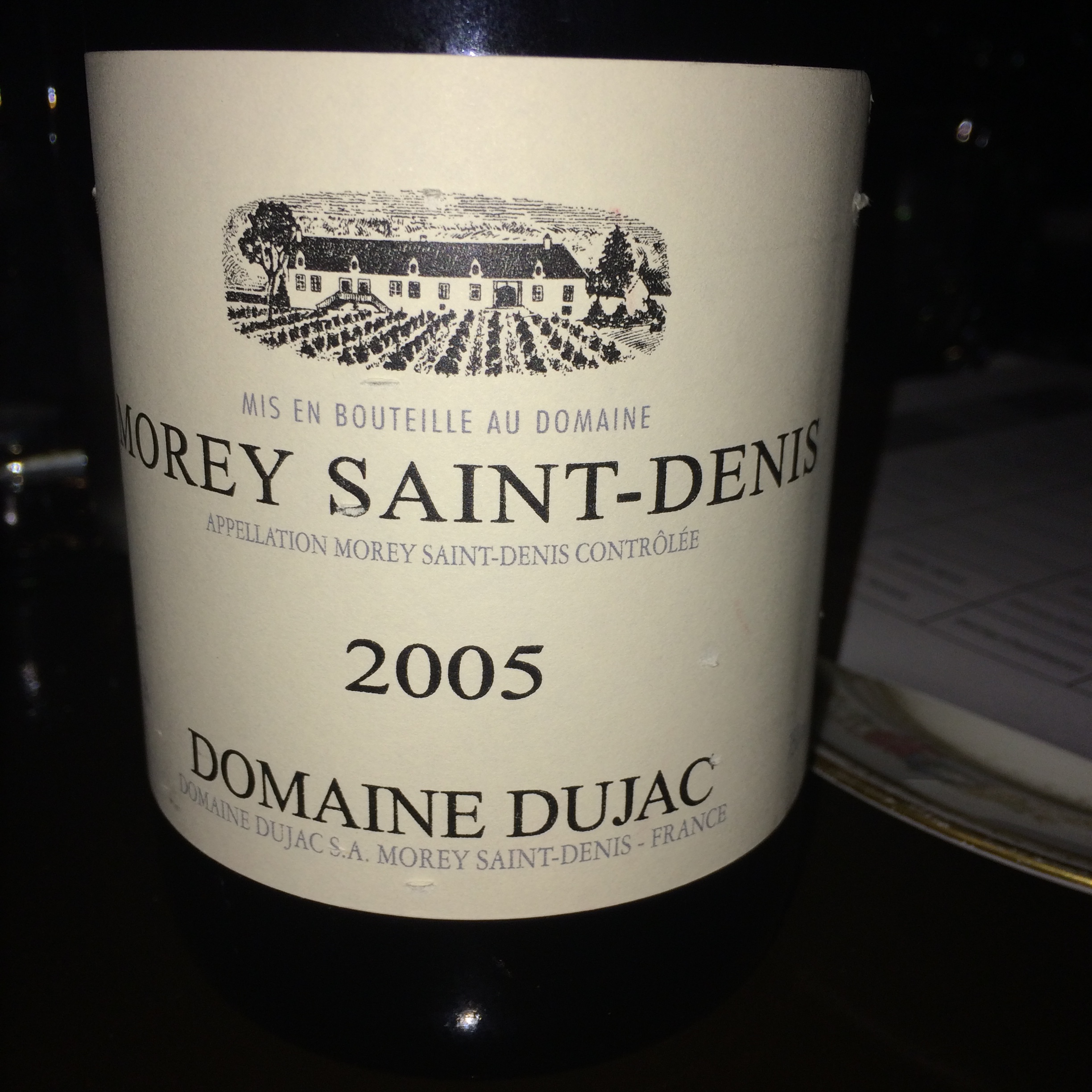
What is interesting for some of us who grew up in that old world of fine wine certainty is that we are also finding that the excitement in all these new wines, made by artisans who have a passion for both their wines, and for the place they grow the grapes, is actually greater than the staid certainties of what we knew before. That doesn’t mean that there are no innovators in the classic regions, far from it with most of them. It just means that after more than thirty years of enjoying wine, people like me can feel young again, enjoying the same kind of excitement as when we tasted our first Australian Chardonnay, or our first bottle of Domaine Dujac.

The explosion of the new is something akin to when Punk Rock burst into our lives in the 1970s. It’s surely no coincidence that so many of the new breed of winemakers express a “punk” ethos and attitude. Punk met with resistance at first but became embedded in the mainstream. It became watered down, yet its finest practitioners are now as firmly set in music history as those who we later, and unfairly, deemed dinosaurs, again slavishly following the fashion of the day. In music I enjoy The Clash and King Crimson, Handel and Berio, and in wine I’m the same, open to what’s good whatever it looks like.

Brighton and Hove-20140418-00327

What the producers who follow the philosophies outlined above will achieve will, I think, redefine our perceptions of quality, of what is fine wine. The Periodical in which Pascaline Lepeltier’s article appears may seem a bastion of conservative wine values, but this is very far from the truth. Her article may be preceded by photos from a black tie Penfolds Dinner, but you will also find articles in WFW49 on Arnot-Roberts, “Modest Revolutionaries” (as the heading proclaims) in California, and on one of Galicia’s regions of the moment, Ribeiro, with a photo of the cult producer Emilio Rojo (who would even have heard of this tiny, if exceptional, producer a few years ago?).

No, it’s not just a band of metropolitan wine geeks from Paris to San Francisco who are getting excited by the real “new world” of wine. It’s seeping into the mainstream, like punk on the BBC. There’s no stopping it. Wine did not die when en primeur got stupid. That merely helped us to realise that you don’t need to spend hundreds of dollars on a bottle of wine, but you do have a choice of literally hundreds of bottles which will give you no less enjoyment than those expensive classics. So no need to learn your 1855 Classification any more, just get out there and learn who is truly committed to making the best wine possible from their patch of this planet, in a sustainable way so that we can enjoy it, and our children also.

image

WHY IS ALL THIS IMPORTANT? Because at the end of the day if there is nothing else besides the classics we can no longer afford, then fine wine appreciation dies along with people like me, for all but a few wealthy collectors. The fact that there is evidently far more to fine wine than the 1855 and the cadastral maps of the Côte d’Or gives us hope that wine will have the capacity to fascinate our children, and perhaps their children, for many decades to come.

Brighton and Hove-20141219-00703

The article Sommelier in New York by Pascaline Lepeltier appears in the current edition of World of Fine Wine, WFW49, 2015 Q3 – see www.worldoffinewine.com for details on how to subscribe.

Marina O’Loughlin‘s favourite 50 restaurants in the UK appeared in The Guardian, 24 October 2015. I love the very personal nature of her choices, and in any case, anyone who appreciates the Quality Chop House on London’s Farringdon Road deserves my admiration.

The photos throughout this piece are some of my own favourite wines…but are categorically not intended to mean that they are “The Best”.

Posted in Fine Wine, Philosophy and Wine, Wine, Wine Hobby | Tagged , , , , , , | 10 Comments

Fizz – The Sparkling Wine Show

My first visit to Fizz, the sparkling wine show put on at Church House within the precincts of Westminster Abbey, sponsored by Glass of Bubbly Magazine. It was nasty and wet yesterday and I had the beginnings of what has become an equally nasty cold, but it was worth dragging myself up to Victoria. I won’t pretend everything I tasted was good, indeed there were some disappointments, not least down to serving temperatures (way too cold in some cases) and bottle condition (too many pours from bottles devoid of bubbles), but equally I made some real discoveries. Excuse me sticking to those, there’s not enough time to moan about the others, though I’ve an idea that a couple of wines in particular were let down by the last of those gripes.

image image

I wanted to hit the English producers – there were a good few on show. Four stood out from what I tasted. I know Bolney Estate very well – I can reach their winery and cellar door in 15 minutes from my home, and I’ve bought several of their wines from Waitrose, including a good few bottles of their still Pinot Noir, this year. I really do need to pay them a proper visit (not just their shop) and devote a separate piece to them. I’ll just mention two wines here.  The first was their new release Blanc de Blancs 2010. Great vintage, potentially great wine. It’s actually pretty good now, one of the best wines of the day, but it will surely grow in complexity.

I refused to pass up the opportunity to sip one of my favourite wines of their range, the red sparkling Cuvée Noir. This is a Dornfelder. Think dark brambly fruit with a bitter twist, yet fun and smooth with no rustic edges. I’ve taken this wine to several tastings and lunches and everyone loves it. No one guesses its source.

image

Bolney are probably a little bit in the shadow of the likes of Ridgeview and Nyetimber, unfairly in my view, yet their Pinot Gris has recently been served to First Class passengers by British Airways. Do seek them out, their top of the range wines, still and sparkling, in particular. And don’t forget to try the Cuvée Noir.

Hampshire’s Meon Valley is home to not one but two of the best English producers on show, but they make contrasting wines.  Meonhill was planted in 2004 by  Avize Champagne producer, Didier Pierson. The vineyard grows Pinot Noir and Chardonnay, and Didier showed his Grande Réserve NV (50:50 PN/Ch), Chardonnay NV and Rosé. The latter is a blend of 50% Ch, 35% PN plus 15% PN as a tank-aged red wine. The Reserve is mainly 2010 base with 2009 and 2008 reserves, whilst the Chardonnay is largely 2009. The key to the wines here is long lees ageing, five years approximately in bottle. The range is quite serious but not lacking freshness. Very good, nicely put together wines.

The wines of Exton Park are quite a contrast. They have 55 acres planted and first came to the market in 2011, the same vintage as Meonhill. I’ve not visited Exton but they do seem to be well funded. The key note in these wines is freshness. Indeed, they really knock you back and have instant appeal.

The Brut Reserve is 60:40 Ch/PN with just 15 months on lees. Cleansing citrus lemon freshness. The Blanc de Noirs (100% PN) is rounder in the mouth but still refreshing. A food wine. A rosé is made from 70% PN with 30% Meunier. It’s the opposite of the Meonhill, being made from gently pressed fruit to give its colour (a press lasting 5-7 hours under nitrogen). It gives it crunchy red fruits.

image

Exton Park’s rare vintage pink – the pale one

A 2011 Vintage wine is Exton’s first vintage release, just disgorged this March after longer lees ageing. As with the Bolney BdeB, it promises complexity. I was also able to taste a really interesting 2011 vintage pink. Originally winemaker Corinne Seely (of Coates & Seely fame) wanted to make a rosé for owner Malcolm Isaac’s birthday, but a stash was kept to see how it would age. The answer is very well indeed. It hasn’t been commercialised but I understand they will sell some of the 700 bottles they have at Exton Park if anyone is interested.

These are elegant wines with fruit and freshness, seeming to err towards a particular house style, but one which, within the context of quality, should bring wide commercial success.

image

Last but not least among the English producers, Gusbourne. Although based in Appledore, Kent, Gusbourne owns vineyards across Kent and Sussex. This is increasingly seen as essential for the premium producers in this country, to mitigate frost or rain damage – oh the vagaries of the English summer! This is another producer whose still red Pinot Noir increasingly finds its way into my wine racks, but yesterday they were showing their Brut Reserve, 2010 BdeB and 2012 Rosé. These might be the best known of the English producers on show, and will need no introduction to many readers. But if you’ve not yet come across them, add them to your list.

Away from England I really enjoyed the specific Champagne of Henri Abelé which this Reims house produces from Les-Riceys fruit. The group of small villages called Les Riceys, along with vines in the nearby village of Avirey-Ligney, are two of the secrets of the  Côte des Bar sub-region now known as the Barséquenais. They provide some exquisite Pinot Noir fruit, and one or two very famous and exclusive Champagne Houses have contracts down here, though they don’t always trumpet the fact. Les Riceys is also home to another secret, the often hauntingly beautiful and long lived still wine, Rosé des Riceys. But with only fizz on show, this pink Aubois cuvée, “Le Sourire de Reims” was new to me, and on tasting yesterday looks like a wine I’ll seek out for closer examination.

image

It’s a single vineyard PN which undergoes a very short maceration (36-48 hours), and is then aged for at least ten years – I tasted the 2003. The wine is then not released until it has undergone a further six to 12 months’ post-disgorgement ageing. It has a lovely colour (see above), and real character and personality. Not for those who prefer bland anonymity in their pink Champagne, though.

One of my star finds was lurking on the Vintage Roots stand, the Franciacorta wines of Barone Pizzini. The “Animante” NV is a blend of 78% Ch, 18% PN and 4% Pinot Bianco. It was good but the “Satèn” cuvée was stunningly good, even initially when it was too cold, and as it warmed up it filled the glass with a brilliant nose and amplified complexity. (Satèn means the same as Blanc de Blancs in Franciacorta, and although Pinot Blanc is permitted, the Pizzini Satèn is 100% Chardonnay). The wine’s gentle bead is the result of another Satèn regulated characteristic – the wine is bottled with 4.5 atmospheres of pressure rather than the more usual 6.

image

I enjoyed the nice Rosato 2011 (100% Pinot Noir), but the Riserva “Bagnadore Pas Dose” 2008 was on a par with the Satèn, and I’m not sure which I liked best. The “Bagnadore” is a 50:50 split between Ch/PN, aged for six years. It’s probably more complex than the Satèn, both being impact wines which seemed to be garnering praise from not just me, but everyone else drawn to the table whilst I was there.

image

The Pizzini wines were actually recommended to me by Nik Darlington of Red Squirrel (regular readers probably saw my piece on the Red Squirrel portfolio tasting at Black’s Club in Soho a couple of weeks ago). It was good to have the chance to focus just on their sparkling wines, though I didn’t try bottles like their Nantais fizz (aka Sparkling Muscadet) that I already know, good as it is.

Ca’ di Rajo produce a really nice Prosecco Extra Dry by the charmat method of tank fermention usual for this DOC. But they also make a really interesting bottling called “Le Moss”. It’s an unfiltered, bottle fermented,  dosage free, frizzante. It has a very autolytic nose, more yeast influenced than fruity. It’s also quite unique on the palate. Whilst the straight Prosecco is the wine with commercial appeal, this “cloudy Prosecco” will appeal to the adventurous. Nik said he thought it’s almost “more like a craft beer than wine”. A great description, and when a lot of “natural wine” tastes a little like cider, even more fitting for an unusual wine which nevertheless does not.

Red Squirrel have a habit of getting me to try a brilliant wine and then telling me they only have four bottles left and I’ll have to wait for the next vintage. Luckily the 2014 vintage of the Vondeling Rurale Méthode Ancestrale Pétillant Naturel from Voor-Paardeberg, South Africa, is on its way. I think this is my first South African pét-nat, and it may even be a South African first. 100% granite-grown Chardonnay is fermented in tank and then transferred to bottle under crown cap, where the fermentation finishes. It has 12% alcohol, and is really “mineral”, clean and refreshing. Very good indeed.

I couldn’t refuse a sip of Red Squirrel’s Cava, Parxet’s Titiana, one of the absolute stars at the previous portfolio tasting. I also tried their good value Champagne, Gratiot-Delugny’s Brut Réserve. This is a Meunier-heavy wine with 20% PN, dosed at around 7-8g/l. Good value if you can find it around £25 retail. Also worth mentioning is the Jus de Raisin Pétillant, an alcohol free sparkling grape juice from Domaine du Landreau (Loire). Quite similar to an alcohol free version of Clairette de Die, quite a bit of sweetness but refreshing too.

image

ND, MD of RS

Plenty more on show, such as the lovely Lambrusco Reggiano Concerto of Ermete Medici on the Vinumterra stand, and possibly more commercial offerings from Paul Mas, Fortant and Cono Sur, plus some wines I didn’t get round to, such as Louis Bouillot’s Crémants de Bourgogne. I’m also sorry I didn’t have time to visit the Bancroft Wines stand. But a good day’s tasting, and luckily the cold only really kicked in when another delay of 40 minutes on the train sapped my remaining energy. But who would complain after a day out drinking fizz! Not me.

image

The hall, and, unexpectedly (only just spotted that), a major wine personality

Posted in Wine, Wine Agencies, Wine Merchants, Wine Tastings | Tagged , , , , , , , , , , , , , , , | 2 Comments

Dynamic Day in London

There is a lot going on in the world of wine in London this week. Monday was no exception, but I’m so glad I decided to choose the trek down to the Spa Terminus for Dynamic Vines‘ 10 Year Anniversary Tasting. Of course, my choice was never in doubt. I wasn’t going to forego the chance to meet up with the people behind two of my favourite producers, Domaine de la Tournelle (Arbois) and Gut Oggau (Oggau, near Rust), though it was also nice to bump into some visitors I didn’t know would be there.

image

Regular readers will know that Domaine de la Tournelle is one of my favourite Arbois producers, but I do have a habit of visiting the region around harvest time these days, and they are resolutely closed when they need to focus all their energy there. So it was not only really great to taste through a few of a range I know pretty well already, but to say hi to Pascal and Evelyne as well. The Clairets are both two of the most sympa individuals in wine, laid back and friendly, but at the same time determined to make the best wines possible from their eight hectares.

Jura 2015 Dave 221

I can recommend all of their wines without hesitation, from the brilliant natural Ploussard “L’Uva Arbosiana” (very light colour, sensual gorgeous fruit) to the complex Vin Jaune 2007 (my first taste of this). Buy from Dynamic, or try them at Antidote restaurant near Carnaby Street (which has been getting a lot of really good press of late). Pascal and Evelyne are partners in this London venture.

image image

Pascal and Evelyne with their 2007 Vin Jaune

If any other domaine has been written about in abundance on this Blog, it is probably Gut Oggau. The domaine with possibly the best wine label concept in the world is run by husband and wife team Stephanie and Eduard Tscheppe-Eselböck in the village of Oggau, just a couple of kilometers north of Rust on the western side of the Neusiedler See. They  have literally constructed a family of wines which aim to express terroir (mainly limestone or schist here) over grape variety.

image image

Eduard took me through a good few of the range – a lovely, cloudy, bottle fermented sparkler in the mould of a pét-nat, the fresh white Theodora, the Bertholdi red 2013 (from Blaufrankisch grown on limestone and schist), the Josephine red 2012 from magnum (a blend of the red-fleshed teinturier Roesler with Blaufrankisch grown on limestone) and the wonderful (if presumably rare) sweet version of Josephine. Same grapes as the dry one, 12% alcohol.

image image

Eduard and Stephanie

To read more about why I love these wins so much, see “All’s Gut in Oggau“.

It seems a very long time ago since the very first time I tried the wines of Francis Boulard. Francis at that time made the wines for the family Champagne firm of Raymond Boulard, but in 2009 he struck out on a resolutely natural path with his daughter Delphine, and now also with son, Nicolas. The vineyards in the Saint-Thierry massif, the valley of the Marne, and near Mailly on the Montagne de Reims, approximately just 3 hectares, are, from this year, farmed 100% biodynamically. Since I last tasted Francis’ own wines a couple of years ago they seem to be even better. Complex, mineral but really refreshing, all wines are dosed lightly, and a very strict pruning regime ensures grapes grown even in cooler sites ripen regularly.

image

Nicolas Boulard

The range kicks off with a NV, Les Murgiers, which comes in both zero-dosage Brut Nature, or Extra Brut (3-5g/l) forms. 70% Meunier, it’s refreshing and clean. First pressing juice is fermented in a variety of sizes of old oak, unergoing batonnage and malo. An excellent aperitif wine.

More serious is the Grand Cru from Mailly. Mainly Pinot Noir with 10% Chardonnay, this also comes as EB or BN, sees wood fermentation and has 30% reserve wines. This wine will accompany food.

The vintage wine on show was the 2006, a stunning vintage making a broad and rich wine whose 3g/l dosage also makes this, when it has aged, a good food wine match, perhaps covering richer dishes than the Mailly.

There was none of Francis’ absolute cracker, Petraea, to taste, but I was able to finish on the Les Rachais Rosé. The white version was Francis’ first biodynamic masterpiece, and it appeared in the book “1001 Wines You Must Try Before You Die” (2008 edn, Quintessence Books, Ed Neil Beckett). The pink was really good. Massale selection Pinot Noir from a sandy/limestone plot on the Massif de Saint-Thierry, it is dosed very low at 2g/l. For me, it could not be a better accompaniment for a side of salmon. There are red and orchard fruits, with peach and apricot, but an additional complexity too in this 2005 version. Delicious.

image

One of the stars of the Dynamic Vines range, albeit made up of delicious but expensive bottles, is Emidio Pepe, who will need no introduction to the more up-to-date followers of the Italian wine scene. The Pepe family has been active in the Abruzzo hills since 1899, but Emidio founded the domaine of his name in 1964. Three generations of Pepes now work this 15 hectare estate around the foot of the Gran Sasso mountain.

The whites on show included my favourite, the Pecorino 2012 (£60), which is totally unlike any Pecorino you’ll find elsewhere. Complex notes of curry spice and a wonderful mouthfeel make this a must try if you can afford a bottle. I’ll admit that none of the Pepe wines are cheap. The lovely Trebbiano d’Abruzzo 2012 seems restrained after the Pecorino but is no less fine. For many, the star of the range is the red Montepulciano d’Abruzzo. This was available to taste in 2012, 2003 and 2000 vintages. The 2000 is a very fine wine, but it will keep for a lot longer. Dynamic actually have a host of back vintages available, if at serious prices, going back to the 1970 Montepulciano d’Abruzzo Riserva (£646). I’m guessing that’s one amazing wine!

If I write about any more wines in detail I may lose the reader, but there are a few names worth exploring. You’ll probably know that I think Savoie is about to make an appearance and I tried two good producers – Domaine Giachino, whose attractively labelled wines impressed a lot for their lightness/freshness, and Domaine Prieure Saint Christophe, whose winemaker, Michel Grisard, is known as the Pope of Mondeuse (why always “Pope” in France!). He showed some older Mondeuse from 2009 and 2005, from tank, old wood and a new wood cuvée, but he also makes a good Persan and some nice whites.

image image

image image

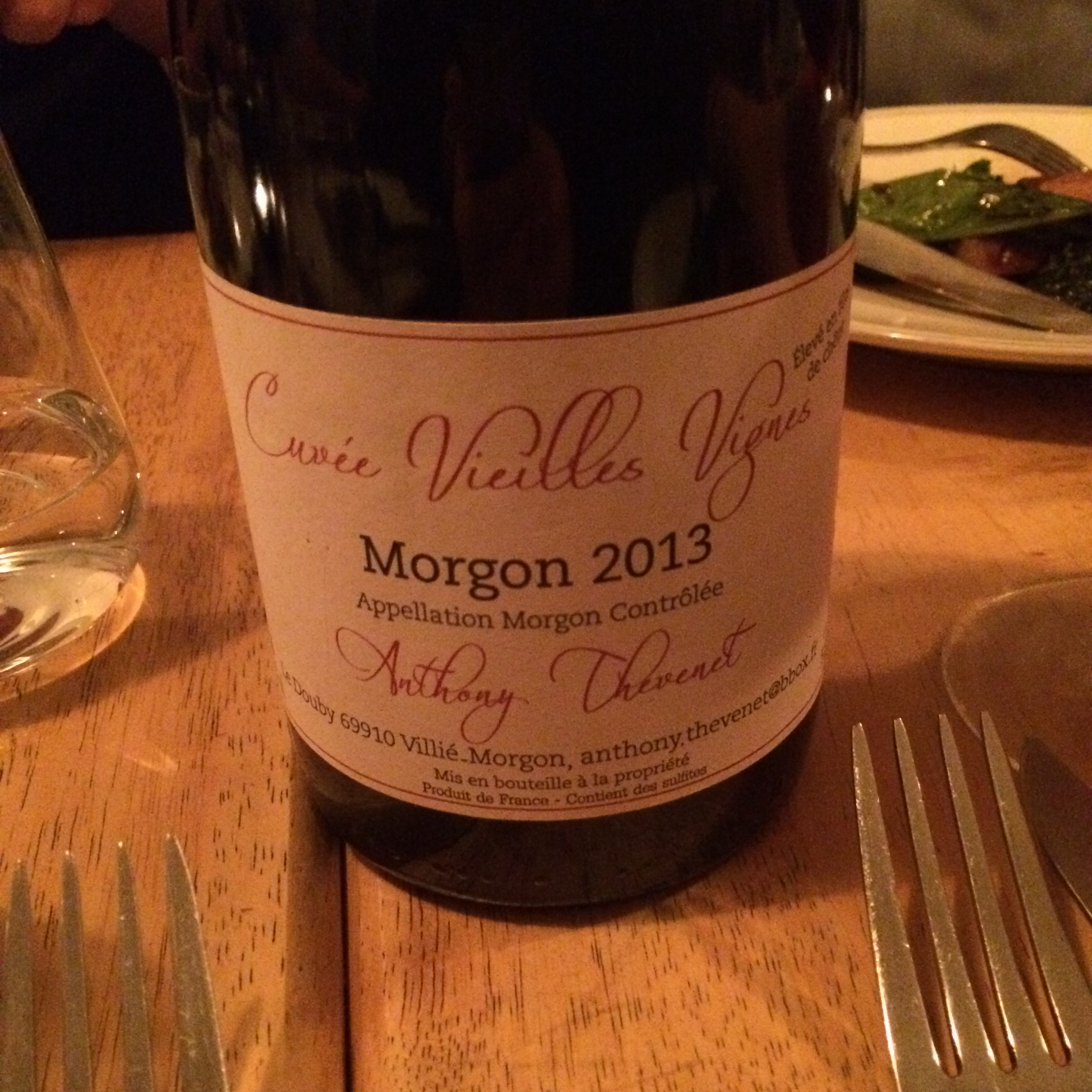
Dynamic Vines combine big name producers (Josmeyer, Radikon, Nicolas & Virginie Joly) with the new stars of natural wine (Julien Courtois, Emmanuel Giboulet), alongside some producers whose star has not yet risen above the wine press radar quite so much (Domaine de Velloux, Anthony Thevenet, Le Casot de Mailloles). Whatever your taste, if it is of the “natural” persuasion then Dynamic’s range will have something you’ve never tried before. Judging by the positive responses I was hearing, you may find a few of them in an independent wine merchant near you very soon. I hope so.

Posted in Austria, Jura, Natural Wine, Wine, Wine Agencies, Wine Merchants, Wine Tastings | Tagged , , , , , , , | 4 Comments

SHOddities – Reaching Perfection in Food and Wine

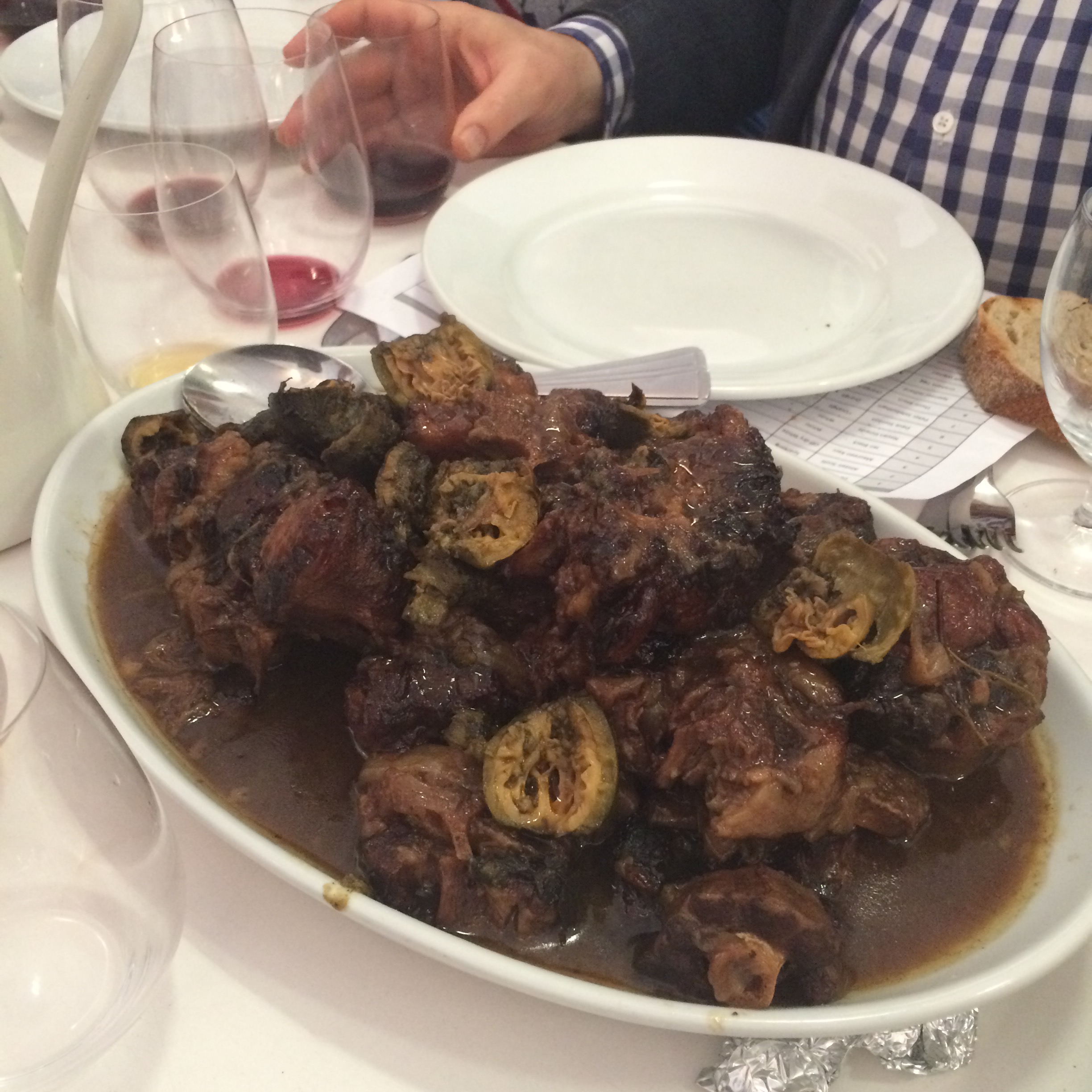
Whilst Oddities, our tasting lunches at Rochelle Canteen, have previously elicited a random selection of wines in terms of geography, we decided to focus this one on the Southern Hemisphere (hence the “SH”). The wines were as far from “shoddy” as you could get. Indeed, many attendees felt this was our best yet (they said that last time). It may have been helped by the decision to go with a sharing menu which, for a main course provided a very large shoulder of braised lamb of such exquisite quality it brought some of us close to tears…and bursting. Served with a potato gratin, it was preceded by a crab salad and broccoli starter and followed by an apple and blackberry crumble, also magnificent. The lamb truly highlighted the careful sourcing of meat at Rochelle Canteen. We loved it to bits.

image

Note the near religious expectation of the main course

The wines were too good not to mention them all, though I’ll keep the notes short for each. If some don’t seem as “odd” as usual, I think that’s a good thing. The quality was pretty high and the bar will be difficult to leap when we next meet in December. All wines served blind.

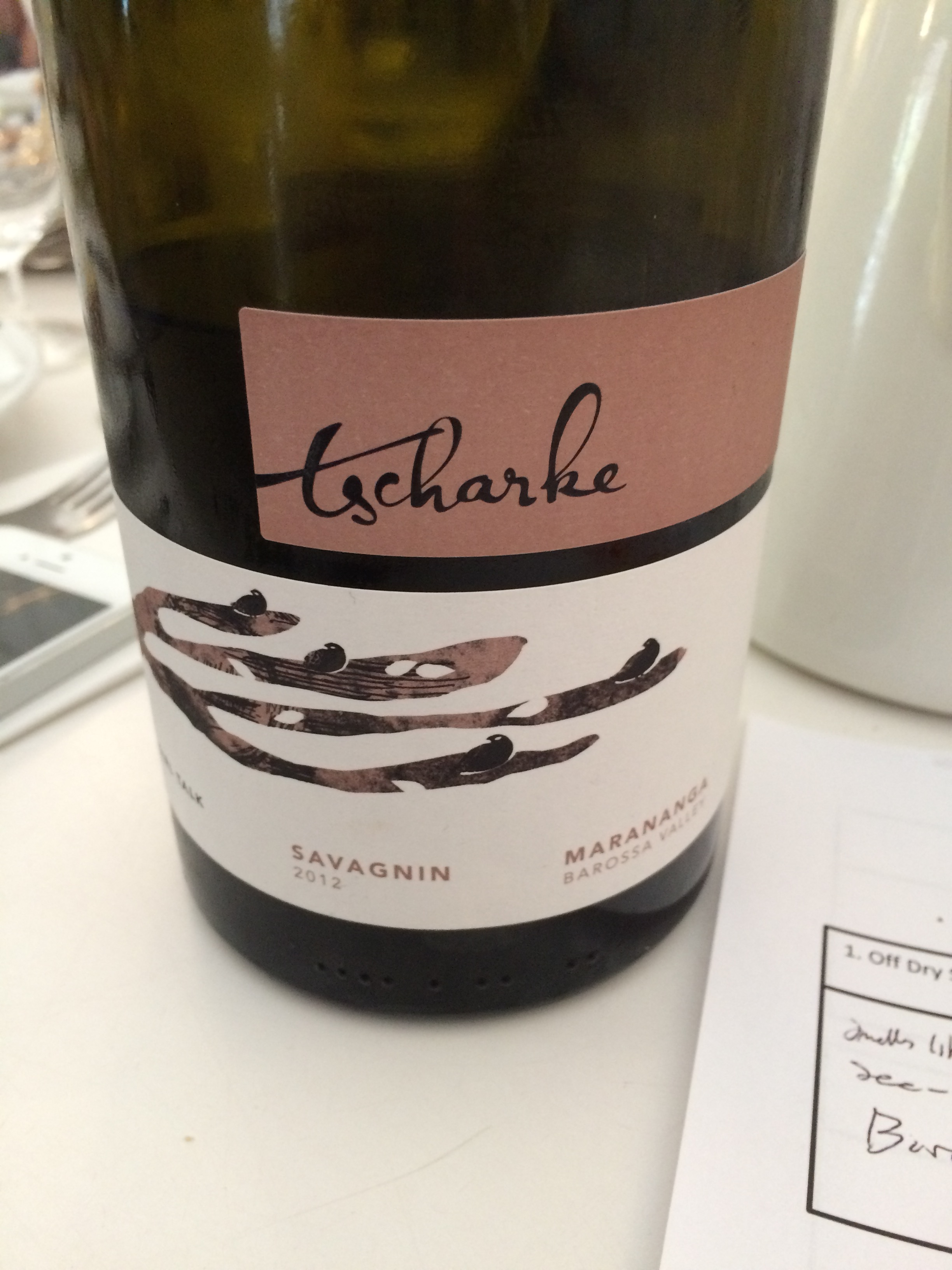
Damien Tscharke “Eva” Savagnin Frizzante 2014, Barossa and Girl Talk Savagnin 2012, Barossa 

Two Barossan wines which could not have been less Barossan, to be honest. The low alcohol (7%) frizzante 2014 was fresh and grapey. We all assumed it was a Moscato, but it was indeed made from the same grape as the second Tscharke wine, once thought to be Albarinho. Neither tasted remotely like a Jura Savagnin. The dry still wine was fresh and light, if lacking in a surfeit of character, both wines being nevertheless clean and fresh and a fitting aperitif.

image image

Farrago Chardonnay 2010, Kooyong, Mornington Peninsula

I did eventually get this, Kooyong being one of my favourite Mornington producers. It’s not especially Chardonnay-like at first, in a New World context. It has that great freshness which the marginal climate of Victoria’s Mornington benefits (or suffers?) from. Not an odd wine, indeed a very good wine, but one which deserves to come up when naming the top Aussie Chardonnays, for sure. 13.5%. For me, one of Australia’s purest Chardonnays.

image

Boekenhoutskloof  “Experimental Production” 2004, Cape

Not sure exactly where Mark Kent got his grapes for this from. As the label says, 45% Grenache Blanc, 33% Sémillon, 22% Viognier with 200% new oak. This was left and aged slightly oxidatively and bottled in 2010. A really fine and complex wine, not at all overburdened by oxidative notes, nor by oak. Very nice, harmonious, and serious.

image

‘T Voetpad White Blend 2013, Eben Sadie, Swartland

A blend of Chenin, Palomino, Muscat and Sémillon, 14% alcohol so quite big and young, but another really classy wine which was nevertheless in balance. A really nice example of why Eben Sadie is a master, blending seemingly disparate varieties into something finer than its constituent parts. One of the Sadie Family’s Old Vine Series.

image

Ochota Barrels “5VOV” Basket Range Chardonnay 2014, Adelaide Hills

Fewer than 400 bottles of this were made (ours was numbered 240). Just 12.4% alcohol, a portion of this was aged under flor giving it a lovely slightly nutty complexity without a full-on Jura-like tang. A lovely wine, potentially slightly lost after the previous two whites initially, but coming back to it, I wanted to glug a bottle in isolation. A nice hint of salinity cleaned the palate for the half time break and the reds.

image image

“Little One” Basket Range Petit Verdot 2014, Gentle Folk Wines, Adelaide Hills

The reds began with a real cracker, a wine I’d not heard of. My initial thought was “tannic Gamay”, but it turned out to be yet another wine from this exciting region of South Australia, one of my Wines of the Day, and a couple of people had this as their top wine. Truly delicious, and as my co-organiser said on Twitter, “would never have guessed Petit Verdot”. The man who brought it described it as “breezy”, very apt, Tony. Gentle Folk Wines are a bit of an enigma, see their web site here to see whether you can glean any more information than I did. One to seek out. Brought in by Les Caves de Pyrene, I’m told.

image

McWilliam’s Private Bin 35 Claret 1967, Riverina

I remember on my first, late 80s, visit to Australia tasting some lovely old wines at McWilliam’s Hunter Valley winery. It was a sheer treat to have the privilege of tasting this beauty from Hanwood, in the far north of NSW. Very much an old wine, brick red as the photo shows, but still haunting and by no means dead. 26 fluid ounces on the bottle, imported (but probably bottled at source) by Avery’s. Wow!

image image

Pinotage 2010, Kidnapper Cliffs, Hawkes Bay

Our first New Zealand wine, which surprised me a little. I once had a New Zealand Pinotage many years ago, possibly made by Nick Nobilo, though I may well be wrong about the maker. But there certainly is some planted, both in Hawkes Bay, and up around Auckland. These vines were previously bottled under the Te Awa label. I believe Te Awa own Kidnapper Cliffs. Another wine where it became pretty difficult to spot the grape variety, though spotting Pinotage would not be one of my strengths. Why difficult? Well, it was certainly very good, but it had something quite Syrah-like about it. Strange, given its location in prime Syrah territory.

image image

Rutherglen Shiraz-Durif 2009, Stanton & Killeen

A big boy, for sure, but beginning to resolve nicely into a wine with a smooth palate of rounded fruit and a nice meaty texture, with a nose to go with it. This had been re-decanted into another bottle so I didn’t get the alcohol, but it was no shy and retiring type. I think the wine reflects the Australian chap who brought it very well (meant as a compliment, Max).

image

Meerlust Rubicon 2001, Stellenbosch

Not an “oddity” as such, but yet how often do we get to drink wines like this at maturity? I was concerned (my wine, this one) when I looked at some recent notes on Cellartracker ranging from mild disappointment to “drink up now”. I don’t think this bottle fitted those concerning descriptions, most attendees yesterday suggesting it had plenty of time to run. I’m pretty pleased I didn’t substitute another. The blend of the three main Bordeaux varieties probably made it one of the best matches for the lamb shoulder, but it really did have a sort of claret-like quality to it as well. Not quite wine of the day, but for me it performed well above internet-fuelled expectations.

image

Sparkling Shiraz 1994, Great Western, Seppelt

The key, again, to the oddness of this wine is its vintage. Age had mellowed it. It was served technically too cold, but in some ways that worked out well. It was surprisingly refreshing to begin with, but changed and became more complex (in a Sparkling Shiraz context, of course) as it warmed.

image

Joseph The Fronti III, Primo Estate, Soth Australia

Our first dessert wine hailed from the company famous for its Moda Amarone (sic), made from Cabernet and Merlot fruit grown in Clarendon and McLaren Vale. Primo Estate‘s “The Fronti” is a rare and unusual fortified (18.5%), blending Muscats of varying types from Rutherglen, Barossa, McLaren Vale and the estate’s own Virginia Vineyard. I understand that there have been six releases in the past 30 years, I-VI. This No. III reputedly contains wines up to 130 years old, though its base is Joe Grilli’s 1981 Frontignac. An exceptional wine which wears its alcohol level very well – you might almost think twice as to whether it is fortified, so seamless is its structure. Long on the palate as the legs on the glass, and lovely.

image image

Mazuran’s Old Tawny Port NV, Auckland

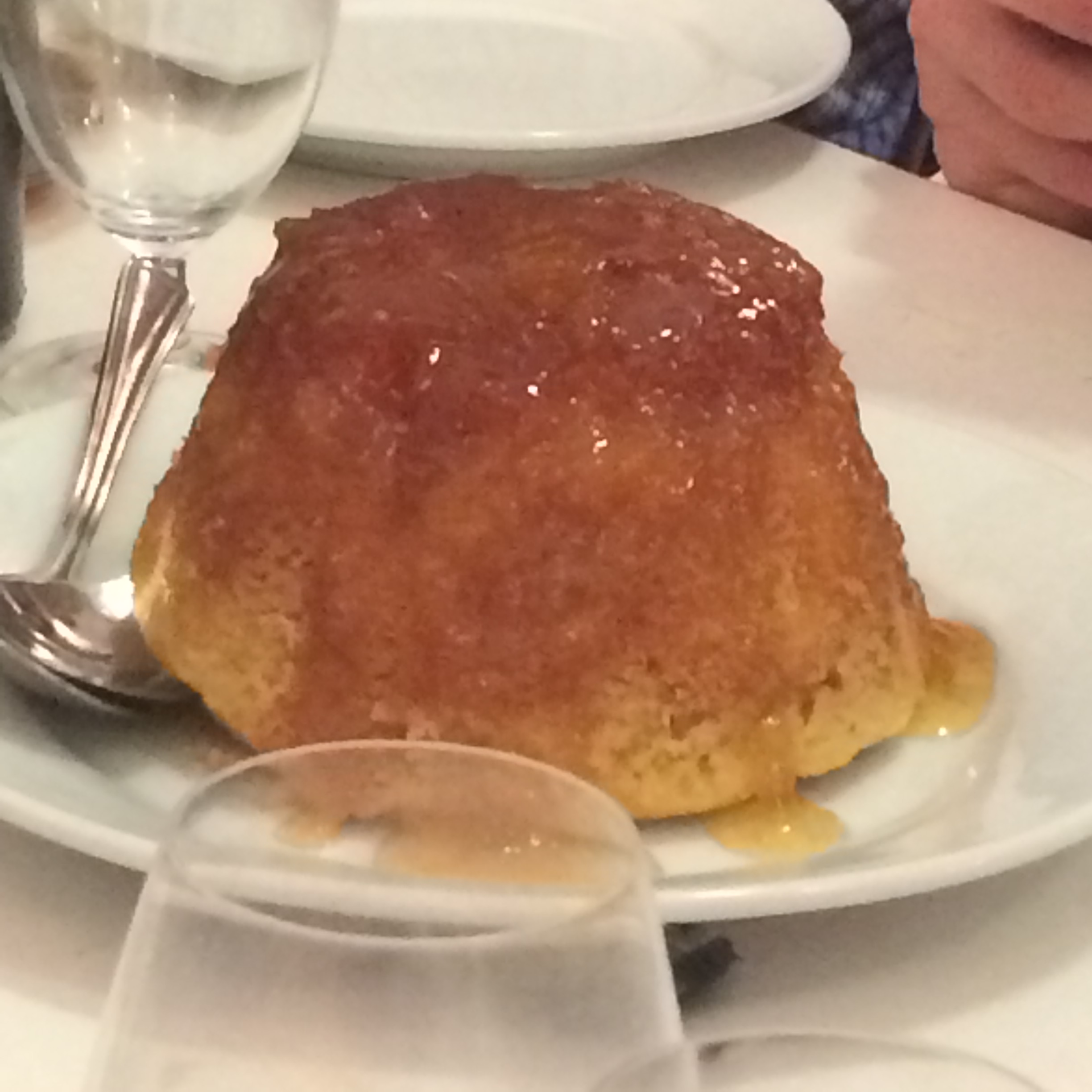
This really stumped us. Brown as a Rutherglen Muscat, sweet and sticky as a sticky toffee pudding, it’s made from some unknown and non-vinifera vine varieties grown up in humid north of New Zealand, very probably the reason for such vine plantings. Fortified to 19%, wines aged for 40-years and made by a company, Mazuran‘s, which, to be honest, no-one today is listing among their most well known New Zealand wineries. Those who had heard of this Henderson producer asked whether they were still going (they were founded in 1938, by Croatian emigré George Mazuran). I’m glad they are. It just goes to show that sometimes you can indeed make a silk purse from a supposed sow’s ear of vines. One key to the quality of this wine may be that Mazaran claim to be the only NZ winery distilling their own spirit for fortification.

image

Several wines today were certainly “odd”, others less so, but I’m hard pushed to say that many stood head and shoulders over the rest in terms of both quality and enjoyment, all being pretty excellent. For myself, of the whites the Sadie and Mark Kent’s experiment thrilled me, the Petit Verdot was really nice as a stunningly good every day wine, and the McWilliam’s brought back very happy memories in a roundabout way. Another great Oddities. The stickies both had that warming quality all good stickies have, pure sensual pleasure, which with the food and company summed up the day.

image

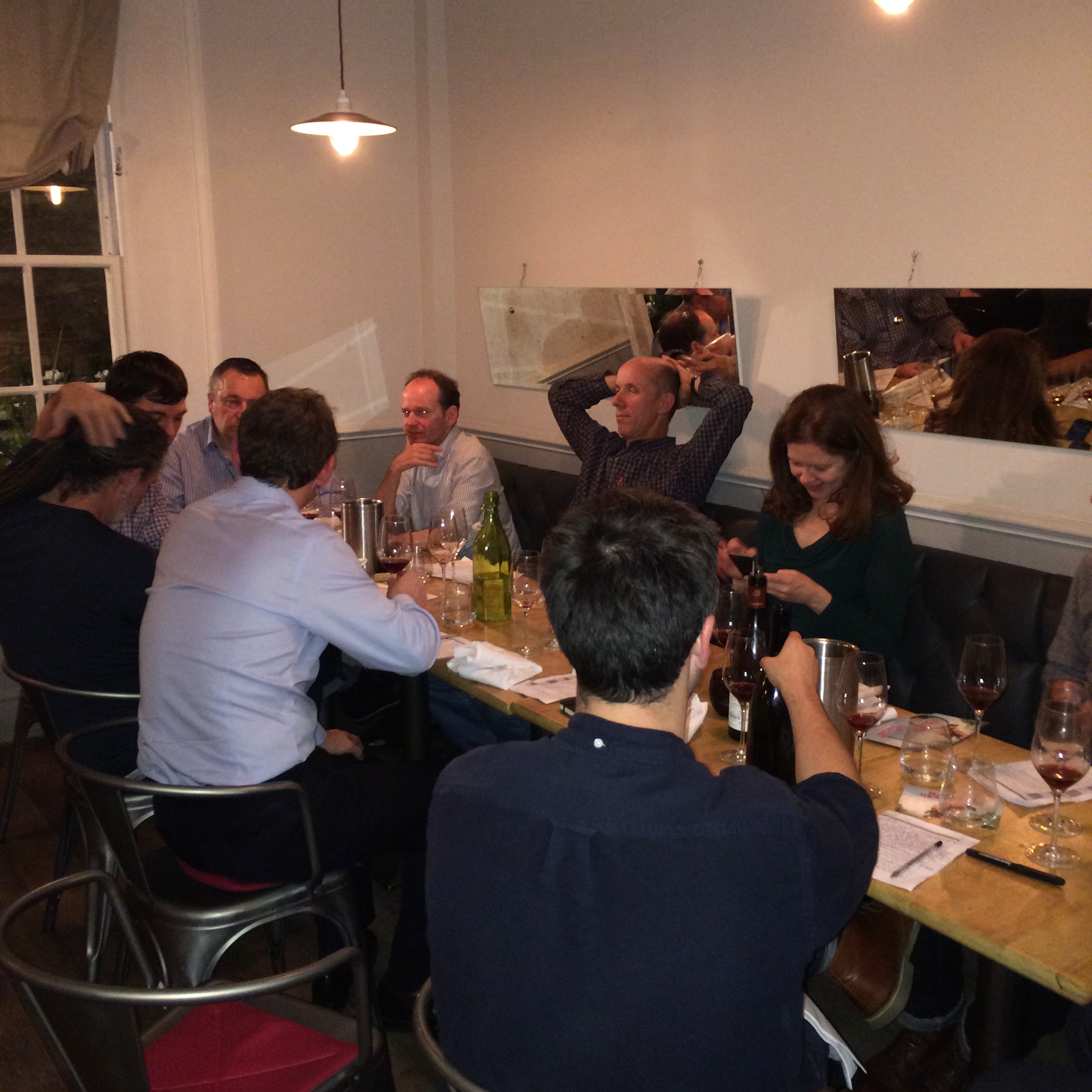
Some of the odd people who attend these lunches

image

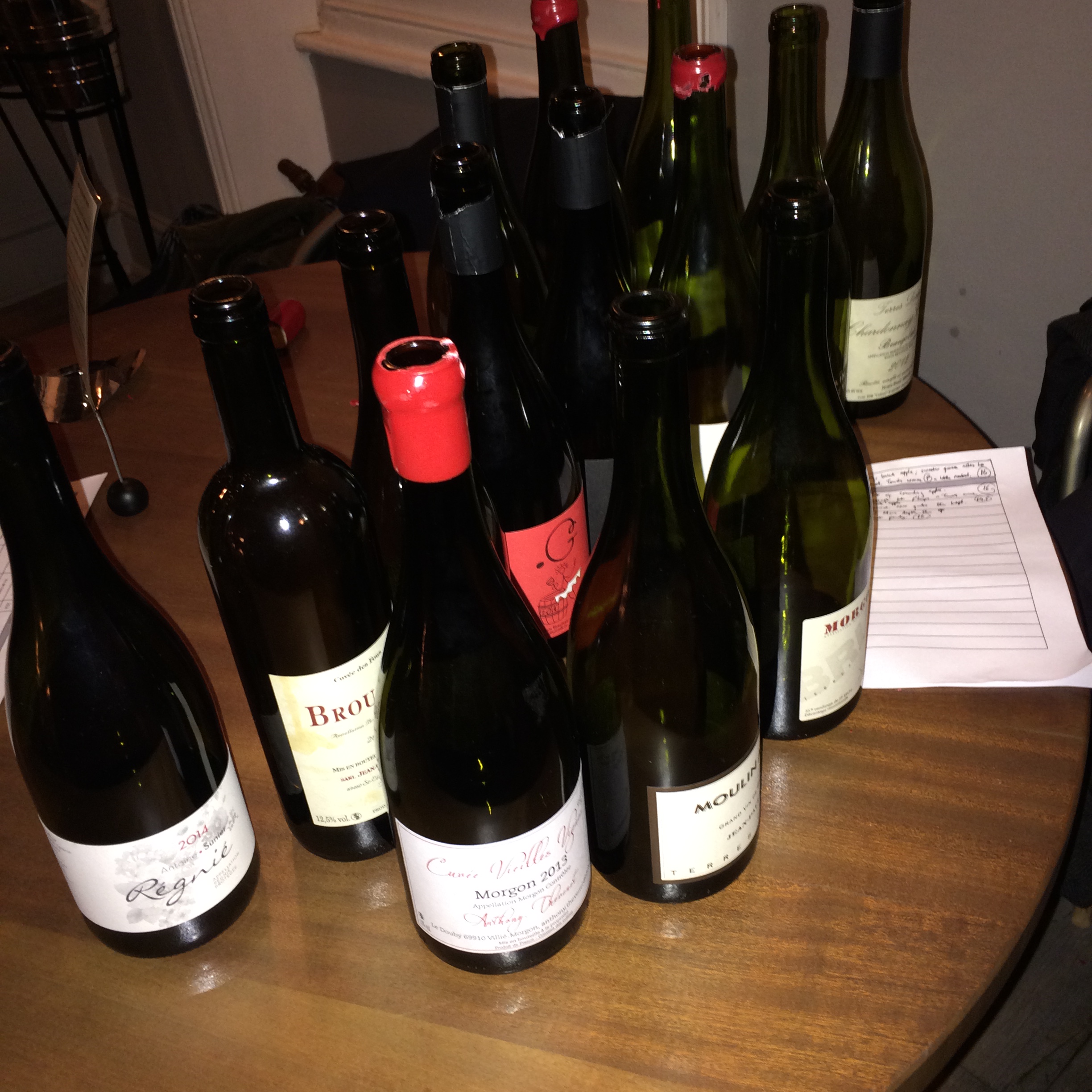
All but two of the empties

Posted in Wine, Wine and Food, Wine Tastings | Tagged , , , , , , , , , , , , , , , , , , , , , , | 1 Comment

Fourth & Church, New Wine Venue in Hove

I was invited to the launch party of Fourth & Church last night, a new venue with a strong wine focus in Hove. To call it a wine bar is a bit of a misnomer, because the focus will be on food as much as wine. It fills a niche which Hove lacks, and although Brighton has one or two, and F&C has a rival in the Paris Wine Bar, almost over the road, there’s nothing quite the same in this bustling restaurant quarter.

image

Wine bars were, in the parlance of the time, all the rage in the 1980s, but they had two drawbacks which never allowed them to rival the pub as a place to spend the evening. Generally, though not always, the wine was poor. It might have been marginally better than the ubiquitous dry white wine measure from a long opened bottle that you would find down at the pub, but not a lot better. Add to that poor food and you only had a winning formula so long as fashion allowed. Once the shoulder pads and wide ties were out the wine bar’s days were numbered.

imageimage

The classic wine bar has always existed in Spain. I’ve never found eating dinner at 11pm in Madrid, Barcelona, San Sebastian or Salamanca an easy proposition, so the tapas bar was always a life saver. The idea of having a plate or two and a glass of Fino was great fun, and meant that my Northern European constitution was able to survive, even when I’d enjoyed an afternoon siesta following a bottle at lunch time.

Tapas bars haven’t really struck a chord in the cooler English climate, although saying that, there has been something of a new coming in London, doubtless down to the ressurgence of interest in dry Sherry styles, especially among wine obsessives. But some years ago another influential scene was germinating in Paris, largely around the natural wine movement. For purely licensing reasons small independent wine shops began serving simple plats of food – cheeses, charcuterie and patés, to go with wine poured on the premises. Nowadays a trip to Paris isn’t complete without an evening or two trawling around these bars, many in the hippest parts of the city.

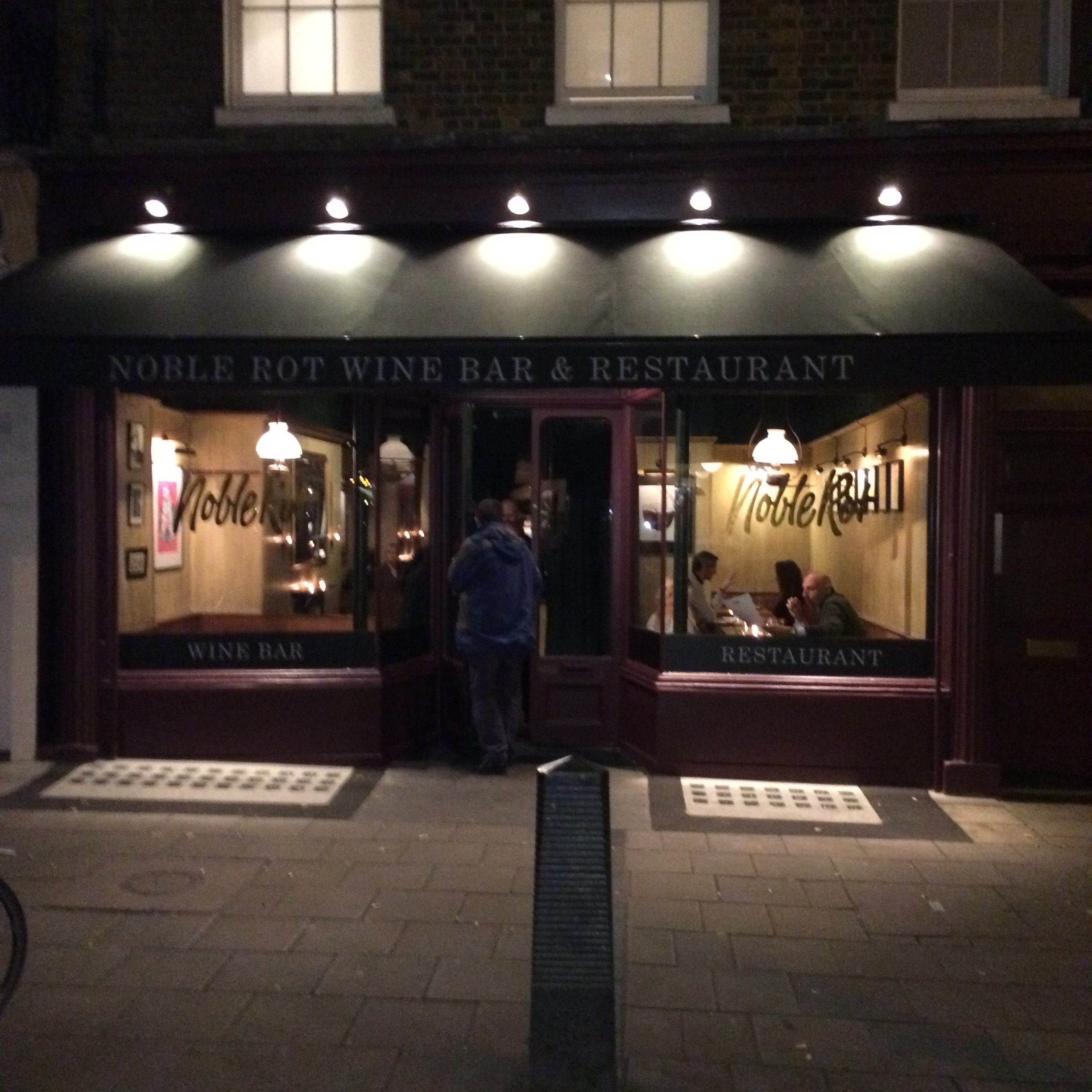
London was slow off the mark, but today there’s a real scene developing too. Indeed, bars like Sager + Wilde and their associated Mission bar, or the Vinoteca chain have secured fame in a very short space of time, and the guys behind the highly acclaimed wine and culture magazine, Noble Rot, are due to open their own bar in “Mid-Town’s” Lambs Conduit Street very soon.

Can Fourth & Church bring that tradition to Hove? Well, they have every chance. The people behind this new venture have a mixed food and wine background, with strong links to the kitchen at Brighton’s highly acclaimed vegetarian restaurant, Terre à Terre. The other side of the partnership is Henry Butler, who runs the two Butler’s Wine Cellar shops in Brighton. Butler’s is one of the country’s best independent wine merchants, stocking a truly eclectic range of wine from independent producers and is well known on the London wine scene.

This ensures that not only will the food on offer be of a very high  standard (if last night’s canapés are anything to go by, it will be really good – visually as well as tasting good), but the wine offering will be the best and most interesting in Hove. Cheeses will be from Neal’s Yard Dairy, a very promising sign. I also saw some really interesting craft beers and spirits on the shelves.

image

The ground floor of the venue is bright and spacious, with standing tables giving plenty of space. The idea is that the clientele can wander in for casual nibbles and small plates to accompany a bottle of wine or two from the shelves, or other beverages. The venue also doubles as a wine shop, and it will surely become the most exciting off-licence in Hove.

imageimage

Downstairs there’s a professional kitchen, and a private room, as yet not quite finished, which will be used for private hire, groups wanting a bit more space, and wine tastings. The tie-in with Butlers will bring their wine expertise to Hove. They plan a Loire wines tasting soon, with Portugal and California in the pipeline.

image

Fourth & Church has a soft opening tomorrow, Saturday 17 October, and selected days the following week. This attractive new venue is at 84 Church Street, Hove, BN3. They are close to Fourth Avenue, hence the name.

image

Three partners in cr…Hove

Posted in Wine, Wine and Food, Wine Tastings | 2 Comments

Exploring & Tasting Wine – Berry Bros’ Beginners’ Bible

I’m sometimes asked to write about wine for beginners, but where to start? My answer is that it needs a book. There are many of those, of course. I often find one thing or another I don’t like about them, but it’s hard to judge when you are not, in fact, a beginner. Yet a few weeks ago I bought a copy of the book brought out to complement the courses put on by London merchant, Berry Bros & Rudd, out of their historic premises on St James’s Street. The book, called Exploring & Tasting Wine, seems to me a little different from what I’ve seen before. It may well be all that you need to get to grips with the subject to begin with (though you could consider Jane Parkinson’s “Wine & Food” to cover that subject in more detail), and it is by no means necessary to attend the Berry Bros course to get the most out of the book. Indeed, as Berry’s Wine School Head, Rebecca Lamont, says in her Introduction, “…not every wine-lover is in reach of the heart of London”.

image

There is a lot of mystique around wine, and wine knowledge. At dinners it isn’t rare by any means to meet intelligent people with responsible jobs and a healthy interest in all sorts of subjects who say they know nothing about wine, and yet they drink it in restaurants, take a bottle to a dinner party, and perhaps have a rack of a few bottles at home (usually placed rather frighteningly next to their hot oven).

This book is really just what these people need. It helps to build a framework around which a little knowledge will help the drinker to work out what they like to drink and why. Onto the simplest beginnings (for me it included Bordeaux, Chateauneuf and the newest thing at the time, Australian Chardonnay) you are then able to build a world of vinous pleasure.

The first twenty pages of Exploring & Tasting Wine cover an introduction to wine tasting. Topics include essentials like balance in wine (components like tannin, alcohol, acidity etc), the flavour spectrum and how wine is made. Already we see the three key elements coming together which make this book so attractive to beginners. First, colourful diagramatic representations of the concepts discussed (see the flavour spectrum diagram in the photo below). Second, the text, which is no dense essay but easy to digest chunks clearly set out. Third, we have the photos. Some of these matt images (by Jason Lowe) are beautifully evocative, of a type which does make you want to be “there, now”, but many are helpfully illustrative of a winemaking processs, or vineyard work.

image

There are maps too. Some have suggested that these are the book’s only weak point, but I disagree. This is not a Wine Atlas. The maps used are all clear and concise, and give enough information for a beginner, who would probably prefer a cartographical snapshot over a detailed cadastral carte of, say, the Côte-de-Nuits Crus with contour lines and spot heights.

image

The heart of the book can be found in the five chapters, or “Sessions” on major grape variety groups (for example they group Sauvignon Blanc/Chardonnay/Sémillon together in one session, Cabernets Sauvignon/Franc and Merlot in another). The usual analysis of aromas and flavours is there, of course (with more use of diagrams), but with plenty of interesting background information. This is for me part of what makes the book so stimulating. The company’s wine experts, many being Masters of Wine, contribute valuable insights. It’s nice to see a bit of digression. Catriona Felstead MW has a page about preconceptions that Riesling will be sweet, Barbara Drew asks indeed “What is Sweet?”, and Demetri Walters MW discusses how ancient methods are being rediscovered, among many others.

image

What the book doesn’t attempt to do is go too far. There’s a little bit of science, but only enough to explain a process clearly, described as soundbites, such as the nine or ten lines explaining how fermentation works. You don’t get pages on many of the worthy grape varieties which the adventurous wine explorer will come to appreciate (though you do get a few paragraphs along the lines of “Also Try…Zinfandel” at the end of the Syrah/Shiraz Section). Neither do you get to learn about many of the less well know wine regions of the world. But this is a book aimed primarily at people with no prior knowledge, for whom Vin Jaune production criteria or the legal grape varieties for Liguria’s various DOCs might be geek-facts too far.

image

The last section covers choosing and enjoying wine, everything from food matching, serving wine, glasses and storage. Appendix I is a very useful blind tasting crib sheet which I’d suggest is highly useful even for so-called experts, whilst Appendix II adds in some more maps, EU Wine Law Facts, the various Bordeaux Classifications (hmmm!) and the answers to the fun quizzes which follow each session, testing the knowledge learned.

Exploring & Tasting Wine is nicely produced, somewhat in the style of Berry Bros’ first publication, Jasper Morris MW’s essential book on Burgundy (albeit in a different format). Like that work, it has a contemporary matt feel throughout, the text is clear and easy to read and there are enough photos here to paint a picture of how beautiful the world of wine can be without turning a practical guide into a coffee table book. You even get a free tasting notes pad, slipped into the front cover. It won’t replace a good cellar book, but is doubtless useful for those attending a course at St James’s.

Maybe the best thing about this book is that I don’t think it’s actually just for absolute beginners at all. I’ve enjoyed a decades-long passionate affair with wine, probably amounting to an obsession in some ways. I certainly found useful information here, along with things I already knew explained in a different way. And some of the digressions are well worth reading on their own terms. Excellent.

Exploring & Tasting Wine (A wine course with digressions) is published by Berry Bros. & Rudd Press, 2015. It runs to 240pp and costs £30 from Berry Bothers’ Web site, www.bbr.com

Posted in Wine, Wine Books, Wine Hobby, Wine Writing | Tagged , , , , , , | Leave a comment

Reader Reminder – The World of Wine is Wide

At the Red Squirrel Event, which I wrote about recently, I spent quite a bit of time tasting in the same cramped spaces as Peter Richards MW. He’s quite distinctive, as a tall chap, easy to spot on the circuit, but I don’t know him and have never had reason to interrupt his concentration. But had I managed to read a paragraph from his pen in the current Decanter Magazine, I might have passed a comment.

The current edition celebrates the magazine’s 40th Anniversary, and I suppose it fits in that they asked forty key contributers (not me, alas) to name their wine of 2015 (so far). Peter Richards is Chair of the Decanter World Wine Awards Panel for Chile, and he chose a Chilean wine I certainly knew nothing about, Bodegas Re, Velado Single Vineyard Pinot Noir 2009, Casablanca.

The story of this wine bears repeating, and I hope Peter won’t mind me extracting this information from his entry in order to allow lovers of the unusual to hear about it. It is a wine, as he says, which “laughs in the face of terroir and other geekery”. The Bodega originally had a host of barrels earmarked for a pink wine. Then came the tragic 2010 earthquake, sending what one presumes was a stack of casks rolling around a shed somewhere. When they were finally recovered it was discovered that some had formed a layer of flor-like yeast.

Now the world has just rediscovered flor. Sherry is popular once more among wine “geeks” thanks to people like Equipo Navazos, and we are even reading about the flor’d-up Vin Jaunes from my beloved Jura in the National Press, heaven forbid. But is the world really ready for what Peter Liem and Jesús Barquin in their 2012 book on Sherry term Biologically Aged Pinot Noir?

Peter Richards called the wine unique, but to make it his wine of 2015 it must also have been exceptionally good. It was, because he says “Tasted blind alongside Montrachet, Morey-St-Denis and Haut-Brion, it stole the show. Mind-blowing”.

I don’t suppose I shall get to try this wine, although I see there should be some in the UK, albeit north of £50 for a bottle. But this is just one example of how the perception of what is fine wine has spread way beyond classic regions and styles. The forty writers selected for this article include a few who have chosen what I suppose one might call expensive trophy wines. A favourite writer of mine, known for his inquisitive and open wine mind, nevertheless selected a Rousseau Chambertin (though I thank him personally for reassuring me that Rousseau “did impressive triage in that year” – I don’t only drink weird wines and do have the odd Rousseau 2004).

But, looking through the forty wines, it is both refreshing and perhaps remarkable how many esteemed wine writers have chosen more unusual examples. It’s as if a once conservative profession is waking up to an almost hidden magnificence of (and I’m quoting examples taken from the Decanter piece) Zierfandler (Brook), Bierzo (Kemp), Teroldego (Guibert), Godello (Evans), Sylvaner (D’Agata), Picolit (Baudains), Kekfrankos (Gellie) and Cape Chenin (Rose)(to name but a few).

It may just be coincidence, but another DWWA Regional Chair for South America, Patricio Tapia (Argentina) also chose a fairly unusual wine, one of the single vineyard offerings (in this case from a 0.8 hectare plot of 90-year-old Listan Negro) from Suertes del Marqués. Now I’m pretty sure that most of the people who take time to read my Blog have possibly heard of this Tenerife producer, even if they’ve not tried one of their wines. But think about it. This year you could have read about Suertes in the Financial Times Magazine, in Decanter, or in a very good appreciation of the domaine by Tom Cannavan, either on his Winepages site or in this very issue of Decanter.

Just stop to think. Four or five years ago, would you have thought someone would list a wine from Tenerife as their wine of the year? Or one made from Listan Negro? My guess is that if you go back five or six years you would find hardly a single wine trade insider, merchant or writer, who had tasted this producer’s fabulous wines. I think that’s how fast the world of wine has changed.

Why? I think that wine from all around the world has improved quite dramatically over the past decade, building on the success of many of the well known New World producers who showed that you can make a living from quality wine outside the traditional, classic, wine regions. But an even bigger catalyst has been the market. As it has broadened and grown, there are just too many people chasing the icons. By icons, I don’t just mean the Latours and the Coches, but pretty much any producer from a classic region in France and Italy (for starters) who gets a good name.

The growth of the market has made the once supreme wine royalty and their heirs unnatainable luxuries for the ordinary wine lover, notwithstanding that the Bordelais have whole vintages lying almost unsold in Bordeaux. So it’s a damned good thing there’s a whole world out there for us to explore.

The analogy which comes to mind is the time when the powers of Western Europe woke up and discovered a New World full of riches, which they brought back to enrich their own lives and culture. Of course, these days we can pay for the vinous treasure we find without the pillage and plunder of those early explorers of South America, the Far East, India and the Caribbean. And many of those treasures are, as with Tenerife…or Bugey, Beaujolais, Friuli, Savoie, Granada and Catalunya, much closer to home. Yet all of a sudden there’s a “New Australia”, and a bunch of young winemakers finally transforming South Africa. And, poignant given my focus here on the comments of the two relevant Decanter Awards Regional Chairs for the Continent, a sudden rush of really interesting wines from Chile and Argentina which are neither soupy Syrah nor thick, alcoholic, Malbec – where did they all come from?

So, drink widely and, as the motto on the back of that Red Squirrel tasting list said, “don’t drink alike”. I like that.

IMG-20150620-00219

Posted in Wine, Wine Hobby | Tagged , , , , , , , | 2 Comments

A Wing and A Prayer (Actually Making Some)

So, I’ve spent decades drinking it, swanning around wine regions, poking my nose into dozens of wineries on several continents. I’ve even got some vines growing in the garden, yet up until yesterday I’d never tried my hand at actually making wine.

Now, most interested wine addicts follow the route of a good many people I know, they go and help out a winemaker. Take all my mates who pop off down to Beaune to drink copious quantities of beer with Andrew and Emma Nielsen at harvest time. Some, if considered sober enough, are actually let loose in the vines and then, as a treat, allowed to sort, tread on and tip bunches of grapes into vats (trying not to fall in at the same time). Those who held back just a touch on The Kernel and those Trappists may even come away with more than just a rudimentary knowledge of winemaking, alongside their hangover.

I’ve often thought about helping Andrew, but an old man’s back, a growing inability to consume beer in quantity, and an increasing desire to be in bed by the time most young people start seriously enjoying themselves these days (remember “last orders”?), means I’ve never offered my services (despite the odd gentle prod). So when a friend got to the top of the Allotment waiting list and found his plot had vines, and he turned to me with a “you know about wine, Dave” look, I kind of knew we were in for some fun.

The first task was to try to identify the grapes. Twitter is full of experts who can all walk into a vineyard and distinguish Grenache from Syrah, or Cabernet from Merlot, so I thought a few pics of grapes and leaves and I’d be sorted. Not so easy. We never got a firm identification, though one or two suggested Seyval Blanc. Although that’s the educated guess I’d have chosen too, we can’t be sure.

image

The weather this year has been pretty mixed on England’s South Coast. Hot early in the summer, things kind of deteriorated through July and August, so we were not looking at mega-ripe raisins. That said, a couple of weeks of fine weather, barring a day of rain, meant healthy grapes (only a few insects and snails to worry about).

image

Picking went well with a crack(ed) team of four, and after three hours we’d filled seventeen bins. We weren’t treated a lunch of chicken chasseur washed down with a bottle or two of last year’s vintage lovingly made back at the cuverie though. We just had the pleasure of retiring to the shed to brew up coffee and down a couple of Vegemite rolls, plus the bar of dark hazelnut one of the team thoughtfully brought back from the nearby Waitrose.

imageimage

So, by the beginning of the afternoon we had loaded up the tractors (er, hatchbacks) and set off for the Brighton Permaculture “winery” at Stanmer (winery is a total misnomer as these were the first grapes to reach a facility which normally presses apples for cider and apple juice, but as an experiment it will hopefully help open more possibilities for the people who run it).

imageimage

The big advantage of the Permaculture facility, aside from plundering the knowledge of the extremely helpful and super nice guy, Stephan Gehrels (Eco Schools Project Manager, but also the man who makes the cider), was access to a press. A hydro press might not actually be a Bucher or a Willmes, but let’s face it, three bar of pressure wins over a bucket and a potato masher every time.

IMG_0351 IMG_0355

Making a cake!

Apple pressing was in full swing up at Stanmer, so we drew an enthusiastic audience, both the volunteers and public seeming fascinated that some grapes had arrived. The pressing bit was actually great fun, although running around cleaning and sterilizing buckets to catch the juice, placing the bunches in the press, and generally avoiding getting sprayed was almost as tiring as the picking. We finally obtained about 70-80 litres of juice from four pressings. The cake remained moist with even some unbroken berries, so I don’t think the extraction was too hard, just as well because we didn’t have a destemmer.

IMG_1420 IMG_1414

Ah, science, kids!

We had hoped to make the wine as naturally as possible, including the use of natural yeasts and no sulphur. Our first realisation was that we needed to chaptalise, oh English summer! The second was that we needed some yeast to get the fermentation going. We have three lots of pure juice with lees sediment and one into which we have dumped a load of grapes for a skin contact white. I was so tempted to find a small amphora at the garden centre, but I figured lining it with beeswax might best wait until next year.

image

We all need goals!

So now we have to wait. First to see whether it will ferment, then settle and clear (the juice did look brown after pressing but we know all about how that will clear, right?). I’m expecting at best a very acidic, low alcohol, beverage which I will hesitate to call wine (and the law might almost be on my side there) – but we shall have to see what the chaptalisation does. I swing from expecting a disaster to thinking that it can’t be hard, can it? I mean, a lot of what I seem to drink these days is natural wine made by winemakers who insist they just allow the wine to “make itself“.

One thing’s for sure, I have surprisingly got the bug. Now, I don’t have the sort of funds which will allow me to buy a wine estate, but I’m pretty keen to see whether Plumpton College have any short courses. Next year (I hope there is one) I plan to be much better prepared. For better or worse I’ll keep you all informed of how it goes. In the meantime, if anyone spots an old corking machine in a French vide grenier sale…

**Special thanks to Stephan, without whose help and volunteering to come on board, this project would not have got off the ground. Brighton Permaculture Trust is a charity working for greener lifestyles and sustainable development, including a lot of work in schools (which is part of what Stephan does). Follow the link and see what they do. They deserve our support.

Posted in Wine Agencies | Tagged , , , | 4 Comments

Squirrelled Away in Soho

It’s around 1pm on Wednesday and I’m walking through a big black door in Soho, entering the tight confines of a hallway to a very old town house. One young lady vets me, another locates my name on a list and hands me a badge with my name on it. I climb a somewhat rickety stairway and enter the first of three crowded rooms on the first floor. The noise being made by the throng of people, all clutching expensive wine glasses sloshing various hues of fermented grape juice, suggests a really good party in full swing. This is Red Squirrel‘s Portfolio Tasting at Black’s Club on Dean Street.

Most wine tastings for the trade are hushed affairs, taking place in large, light-filled rooms, and to be quite frank, the largely male, middle-aged, trade tasters at some of these events regard chatting as, at best, mildly impolite when there’s a morning’s hundred wines to work through. But Red Squirrel are a bit different. Nik Darlington started this new agency out of a spare room in 2012 out of a desire to see the wines of Liguria gain wider recognition. Three years later the business has grown from this eclectic beginning. The wines remain quite eclectic, though not for the sake of it, living up to the company slogan, “Don’t drink alike”.

image

The tasting was well attended. Plenty of the younger crowd of bar owners, savvy sommeliers, bloggers etc. I started off in a back room smaller than my bathroom, vying for the spittoon with David Williams, Rosemary George, a blogger and a MW, and then almost clashed heads at the spittoon in the next with Helena Nicklin. Judging by Twitter the turnout must have pleased Nik.

Red Squirrel showed 100 wines, with many producers present to pour them. Don’t expect a tasting note on every one, but at the same time, a short piece would not do justice to the best wines on show – so please bear with me. By the end you should get the idea that I tasted some lovely new discoveries and had a great time. Everything below is seriously worth checking out if you are even mildly adventurous.

That first room, somewhat cramped by a large day bed backed by an even larger mirror (we are in Soho), contained the starting point for Red Squirrel, two producers from Liguria. Five wines from Francesca and Roberto Bruna began with three Pigatos of increasing complexity, all fresh. Majé, the lightest, Le Russeghine more complex, and U Baccan an altogether more serious, yet wild, expression of the grape variety which is seen as distinct from Vermentino in this part of Italy. A blend of mainly Grenache and Syrah, Pullin Rosso, was nice, but the ethereal Rossesse Riviera Ligure di Ponente was my star for originality, pale with hints of cherry, redcurrant and Earl Grey tea. Little colour, yet not a rosé, a truly different take on table wine.

There’s a nice looking recipe from Emily Scott for a lemon sole pairing with the Pigato Le Russeghine on the Red Squirrel Blog, a simple recipe which sounds just perfect for this wine from Emily’s description.

image

Altavia is their second Ligurian producer. For me, their Rossesse, with a touch more colour and body/concentration, impressed me even more on the day, though I keep thinking how I really need to study a whole bottle of both. Bruna’s 12.5% to Altavia’s 13.5% might well sway me over lunch. Altavia produce one of the most unusual terroir-grape variety pairings I’ve come across, a Ligurian Touriga Nacional called Thend (sic). A 2005, still primary. Not wholly sure this is legal in Liguria but it sure was impressive, and ageworthy, but probably a bit chewy at present.

One other wine deserving mention (although the three wines in this room from Bodegas Arribes Del Duero, near the border with Portugal, were all good) is effectively a sparkling Muscadet – a Méthode Traditionelle Melon from Frédéric Guilbaud. Fresh, non-aggressive, 12%, very enjoyable.

The next room showed four producers of a frighteningly high level of excitement. Vinteloper is the label of David Bowley (Adelaide Hills). Nine wines were shown in his absence, including two very different Watervale Rieslings of real interest, eclipsed by three very different Pinot Noirs. The Adelaide Hills Pinot 2013 is a real Aussie with mint and eucalyptus in the background. The 2014 version is gentler, fresher, less muscular. The Odeon Pinot, from Lenswood, is more serious and complex. The 2012 has the makings of a very fine wine indeed, smooth and concentrated, though just shy of £60 on the retail list.

Kloster Ebernach (not to be confused with another well known German estate with a very similar name) has an Aussie connection. Martin Cooper, whose wife is German, started out in his native Western Australia, put in stints in Burgundy and the Finger Lakes, and ended up at the less fashionable end of the Mosel, making what some might call highly fashionable, modern wines. Martin showed a nice Pinot Blanc and an equally nice Riesling Halbtrocken (he told me he also does a Feinherb). The two wines I liked best were Das Antwort Ist Riesling (The Answer is Riesling), a nicely labelled (see below) Auslese with 65g/l r/s, and his Experimental Orange Riesling. This has 13% alcohol, sees 40 days fermentation in wax-lined barrels, 100% malo, and has a really lovely nose.

image image

Martin and one of his un-Germanic labels

Eschenhof Holzer is from Austria’s Wagram Region, and was represented by Arnold Holzer who makes the wines with brother Matthias. The whole range here, new to me, was a revelation, with some excellent Gruner Veltliners, Roter Veltliners and Zweigelts. I can only really single out two wines, though all seven tasted really merit comment. The Orange is fermented in open steel for three weeks and the 2013 then saw 18 months in small French oak. A lovely skin-contact wine made from rare Roter Veltliner, with one of the “noses of the day”. The 1995 Gruner Icewine was made by Arnold’s father and left, hidden away. Incredibly complex on nose and palate, a stunning one-off which I think Red Squirrel have taken all of. Body, length, balanced acidity, it has it all right now. Moreish in a way that detests how this comes in halves -it should have been bottled in magnums! Everyone wanted Arnold to just keep on pouring.

image

Arnold and his lovely Wagrams

The biggest queues in this room were at the Emil Bauer table, but I think the wine names had something to do with this. Alexander and Martin are the fifth generation to run this Pfalz estate. Of course, quality is to the fore, but the brothers have also reinvented the range with some irreverent labels: Bullshit Grauburgunder, Asshole Sauvignon Blanc, My Merlot is Not The Answer, and Sex, Drugs, Rock & Roll Riesling. German wine is certainly changing. These wines may not yet be in the very top rank, but they are fun and will appeal to younger drinkers. They are also very good.

image

Clos Cibonne, in the hills overlooking Toulon, is unusual in that they concentrate on the rare Tibouren grape. Their two Cuvée Tradition wines are very good, the pink being a serious food wine, quite savoury with a nice acid finish. The red is peppery, bright and structured with tannins, but also showing real individual character. It reminded me (just a little, mind you) of the much more expensive Chateau Simone from Palette. Both Tradition cuvées have 10% Grenache added to 90% Tibouren.

image

One of the stars of the tasting came from Spain, Alella in fact, and is a style I buy very little of – Cava. Don’t be put off, Parxet Titiana is not like most other Cava’s you’ll have tried. This vintage dated 2011 is made from Pansa Blanca, hand picked, very cold fermented (giving it an amazing linear freshness), to give a wine which underneath the bubbles has fresh citrus, stony pear and a garrigue-like (what is Catalan garrigue?) herbiness. The blurb says that Alella’s sandy-granite soils elevate the acidity. It certainly elevates this wine way above the dull offerings we so commonly find under the Cava name. A star in the making here. I hope that Red Squirrel went long on this producer. At £16.99 retail, a real bargain. My favourite retailers, please take note!

image

Just time for a couple of Italian estates to end on, certainly producers in the “last but not least” category. Franco Mondo is run by the founder’s grandson Valerio, from the town of San Marzano Oliveto, near Asti. Three nice Barbera reds were shown, but they were eclipsed by a delicious Monferrato Bianco, made from a blend of a third each Cortese, Favorita and Chardonnay. The nose was more complex that many pure Cortese, with fruit, herbs and spice, complementing a round, mouthfilling palate.

image

Tenuta La Pergola (Cisterna d’Asti) was a great place to finish. Four wines, all very nice, but the first of them perhaps being one of the half dozen-or-so best wines on show – the Grignolino. I have a soft spot for these secondary (actually, let’s say third-tier) Piemontese varieties. I seek them out in restaurants in the region, and in shops like The Sampler and Vini Italiani in London. This just might be about the nicest Grignolino I’ve tasted for a long time. Different to many, it’s very pale indeed, and ethereal (like Bruna’s Rossesse). More of that Earl Grey or green tea thing going on (not sure where it comes from but Cédric Bouchard’s saignée pink Champagne, Le Creux D’Enfer, has the same thing and I love it). It’s not a weakling, however. The deceptive pale colour packs 13.5% alcohol, so when Oli North on the Red Squirrel Blog extols its virtues as a lunchtime wine, remember that some of us might need to share the bottle, unless an afternoon nap is in our plans.

image image

La Pergola also showed two nice examples of varieties not often seen from Piemonte over in the UK, Bonarda and Croatina. I finished with a wine not listed, a beautiful strawberry scented, gentle and fresh Freisa, another variety I have a soft spot for. It was very tempting to ask for a glass to slug back, to remind me of sunny days in the Monferrato Hills, before I struck out into London’s afternoon drizzle, but thankfully my whole journey home was refreshed by the aromas emanating from my Algerian Coffee Stores (just round the corner) purchases, rather than an alcohol induced snooze on yet another delayed service from Victoria.

A very good tasting, and a few hours well spent in exploring the boundaries of the London Wine Universe. The Red Squirrel portfolio has shaped up to be one of the most interesting and adventurous in the UK, and if you want something different this is a great place to look.

image image

There are actually two, no three, Red Squirrels in these photos

Posted in Wine, Wine Agencies, Wine Merchants, Wine Tastings | Tagged , , , , , , , , , , , , , , , , , , , , | 3 Comments