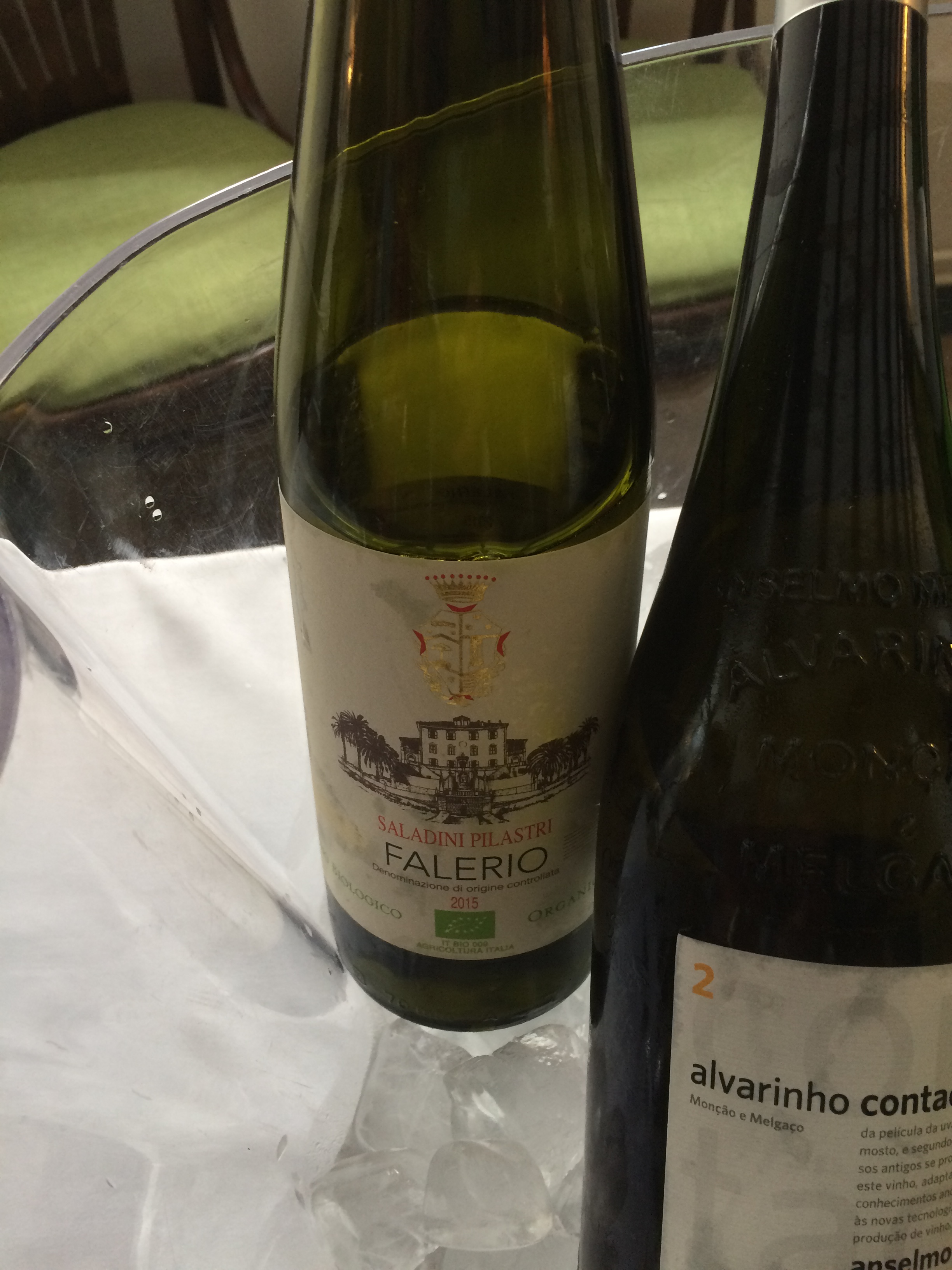
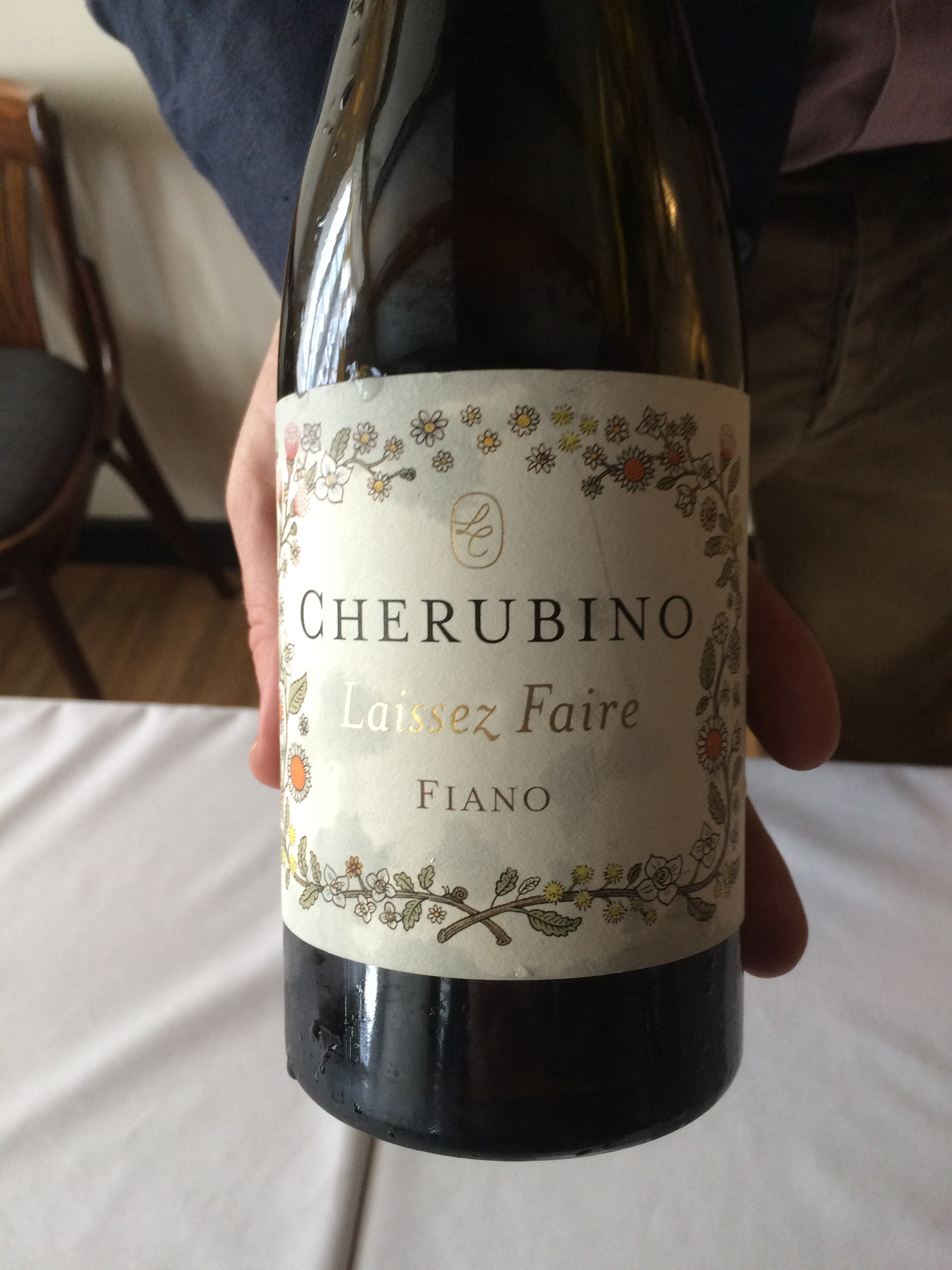
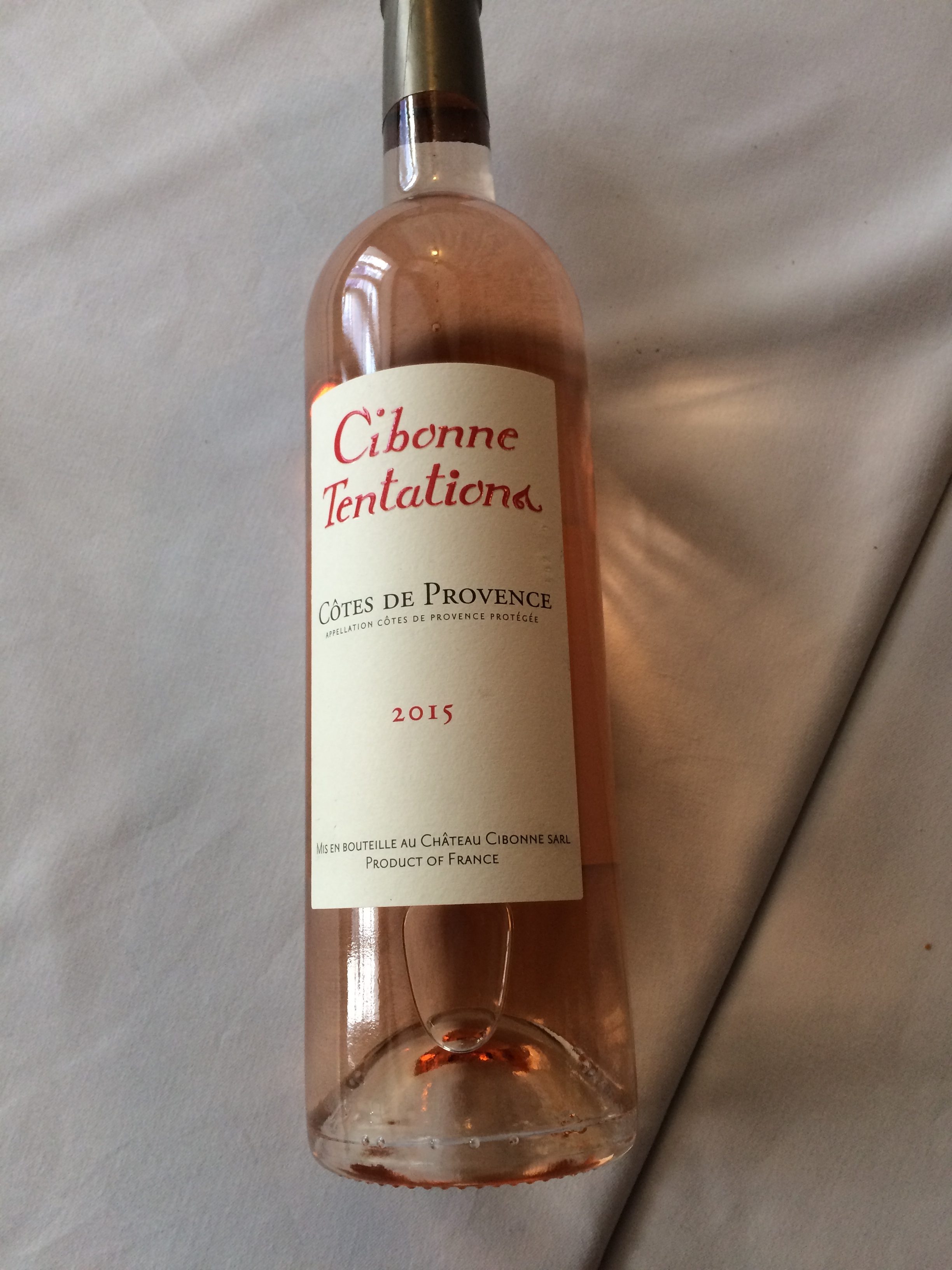
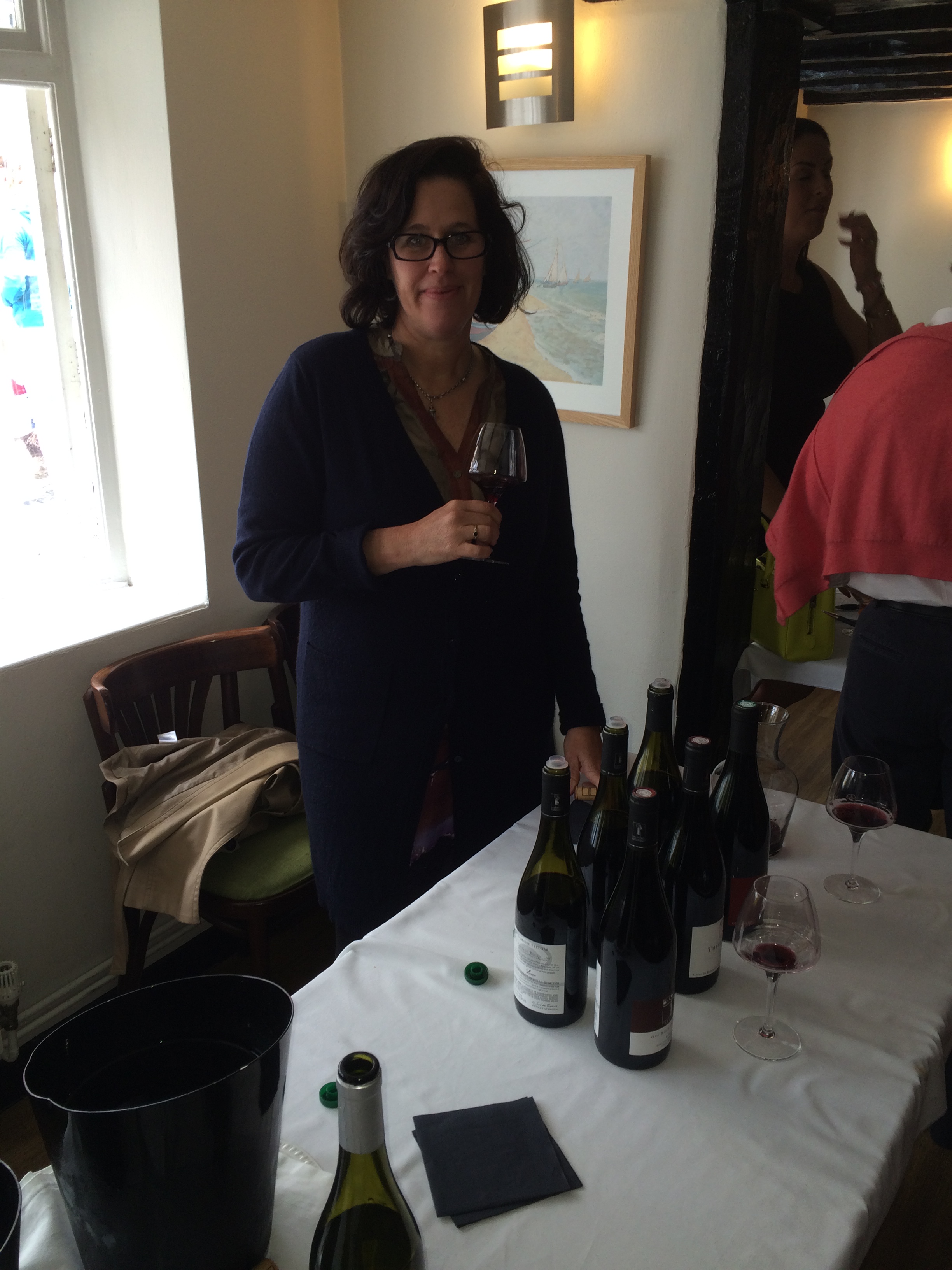
Oddities #10

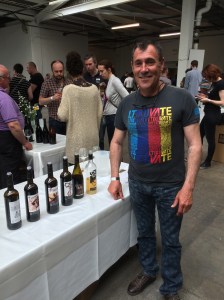
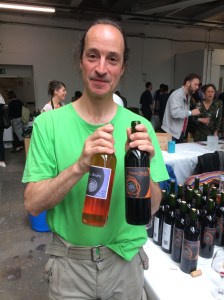
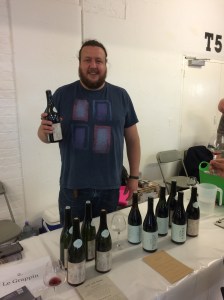
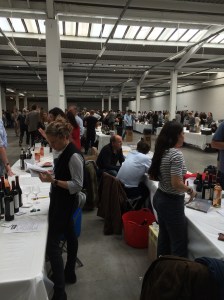
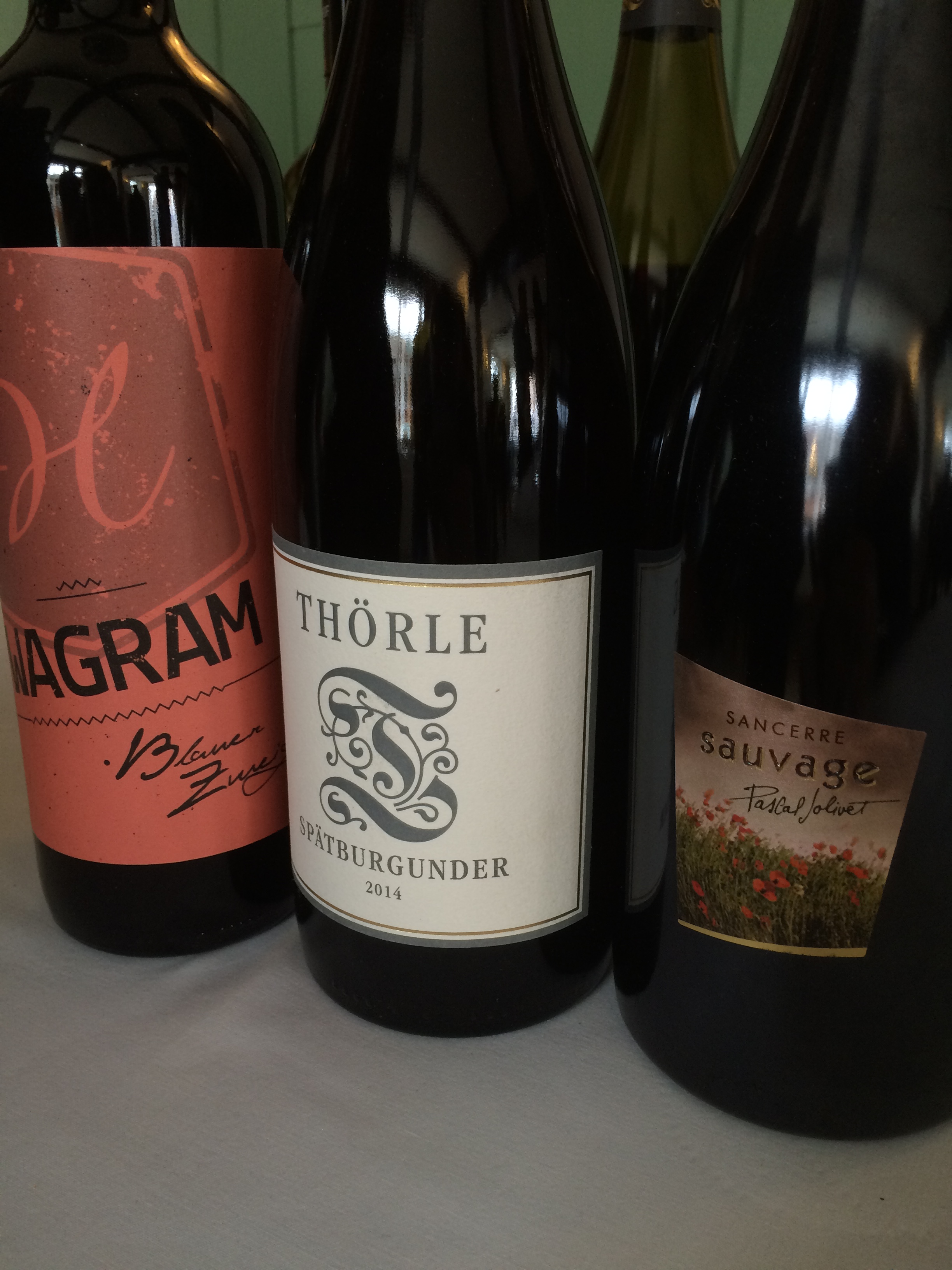
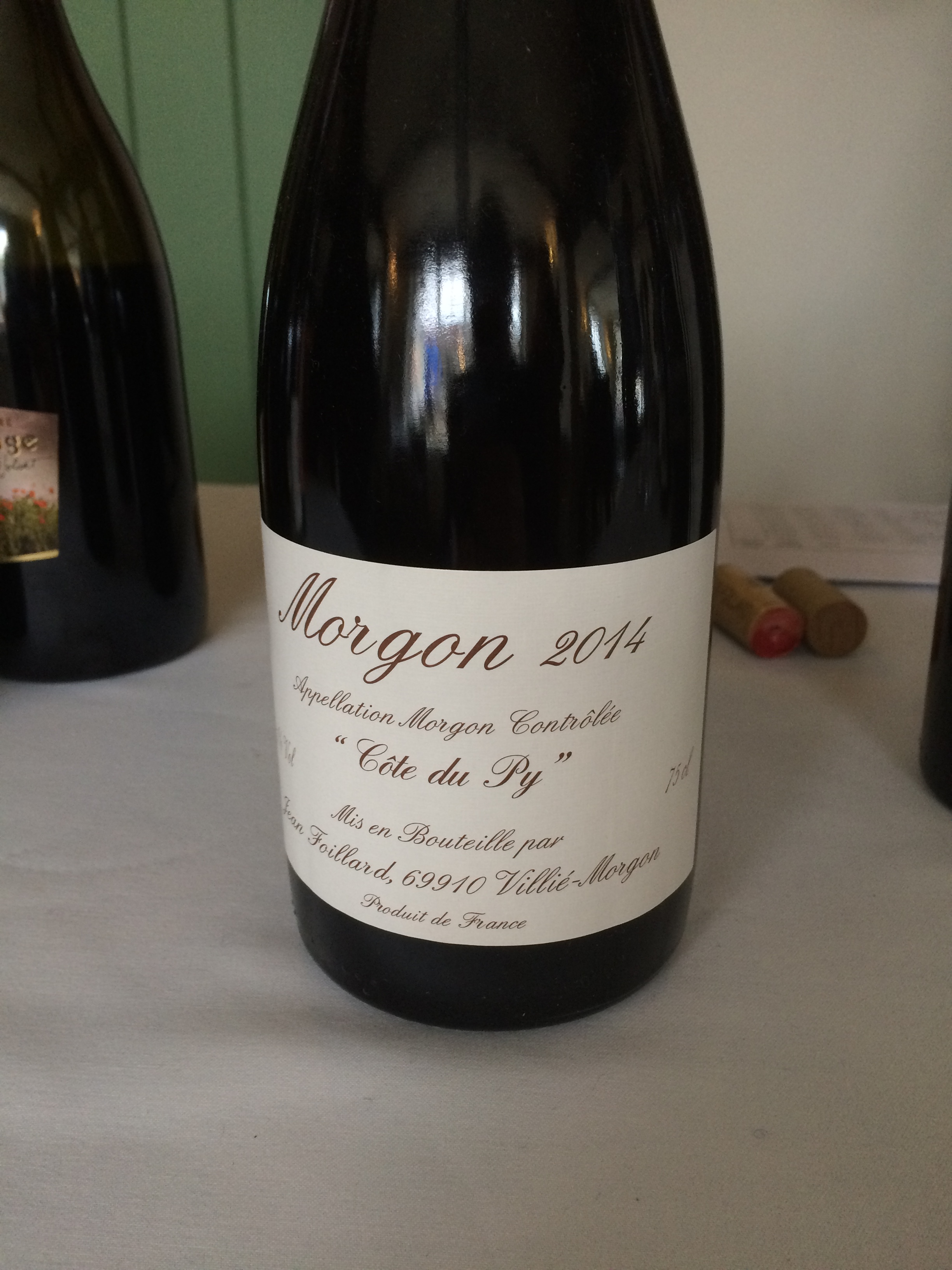
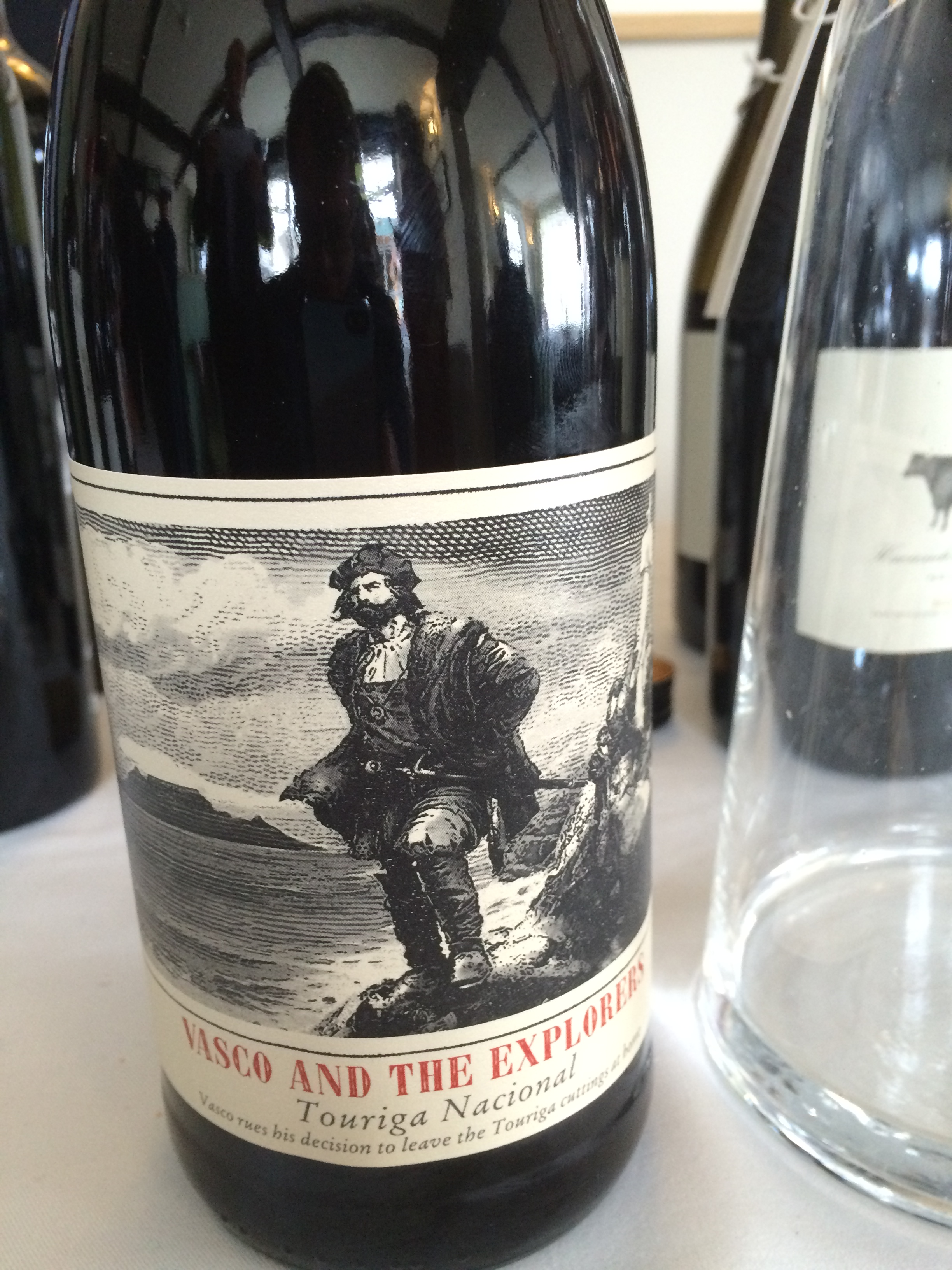
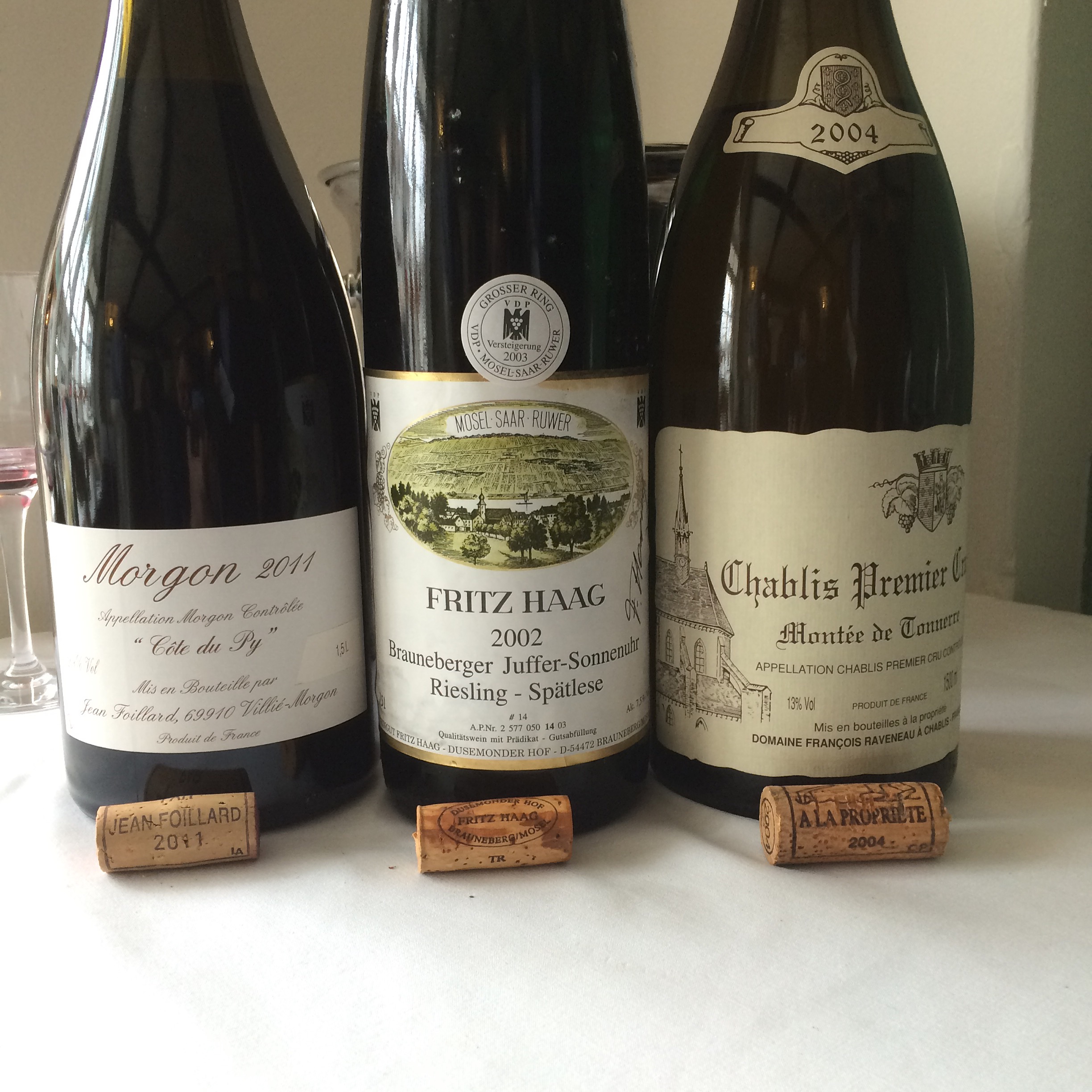
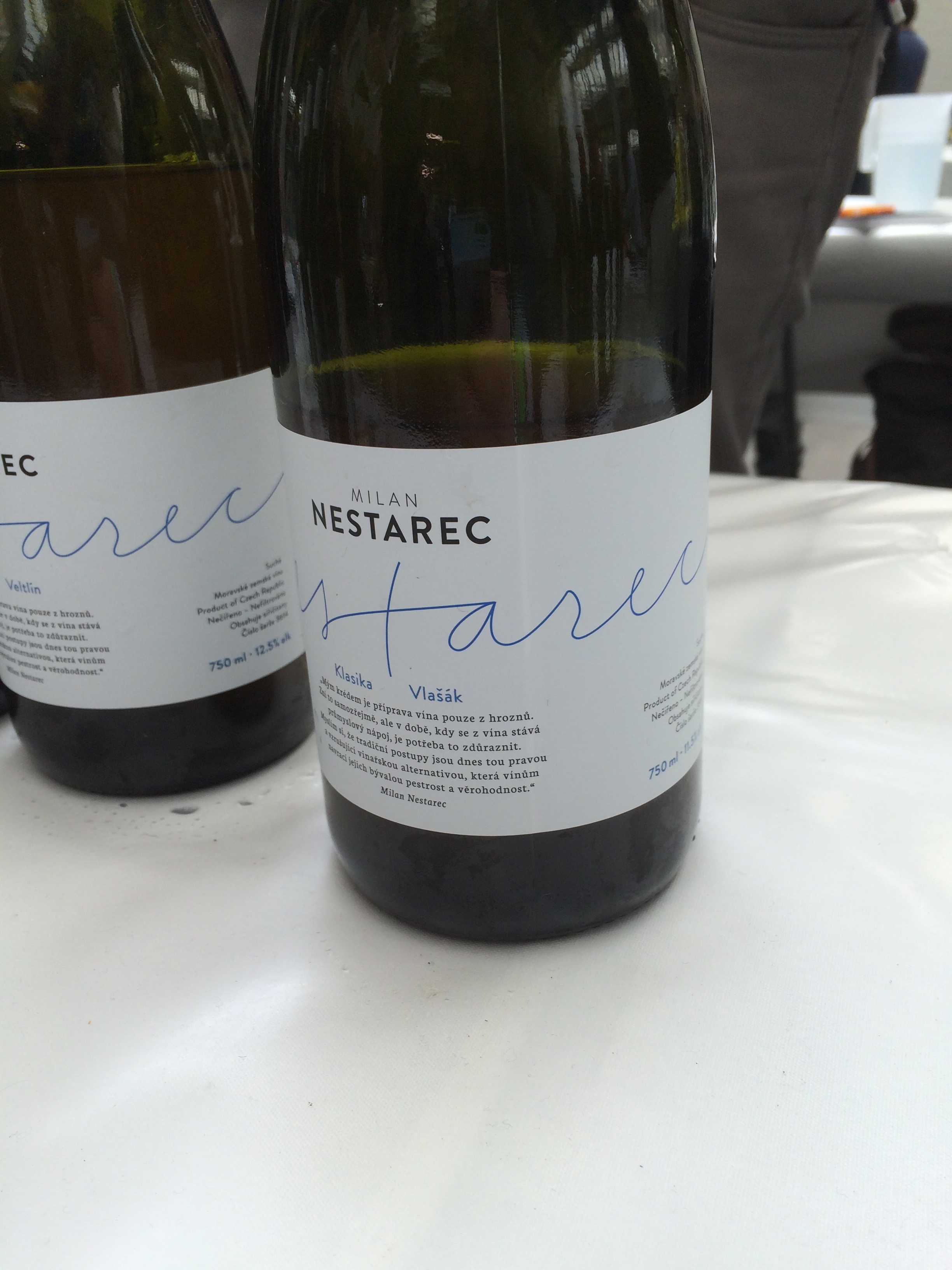
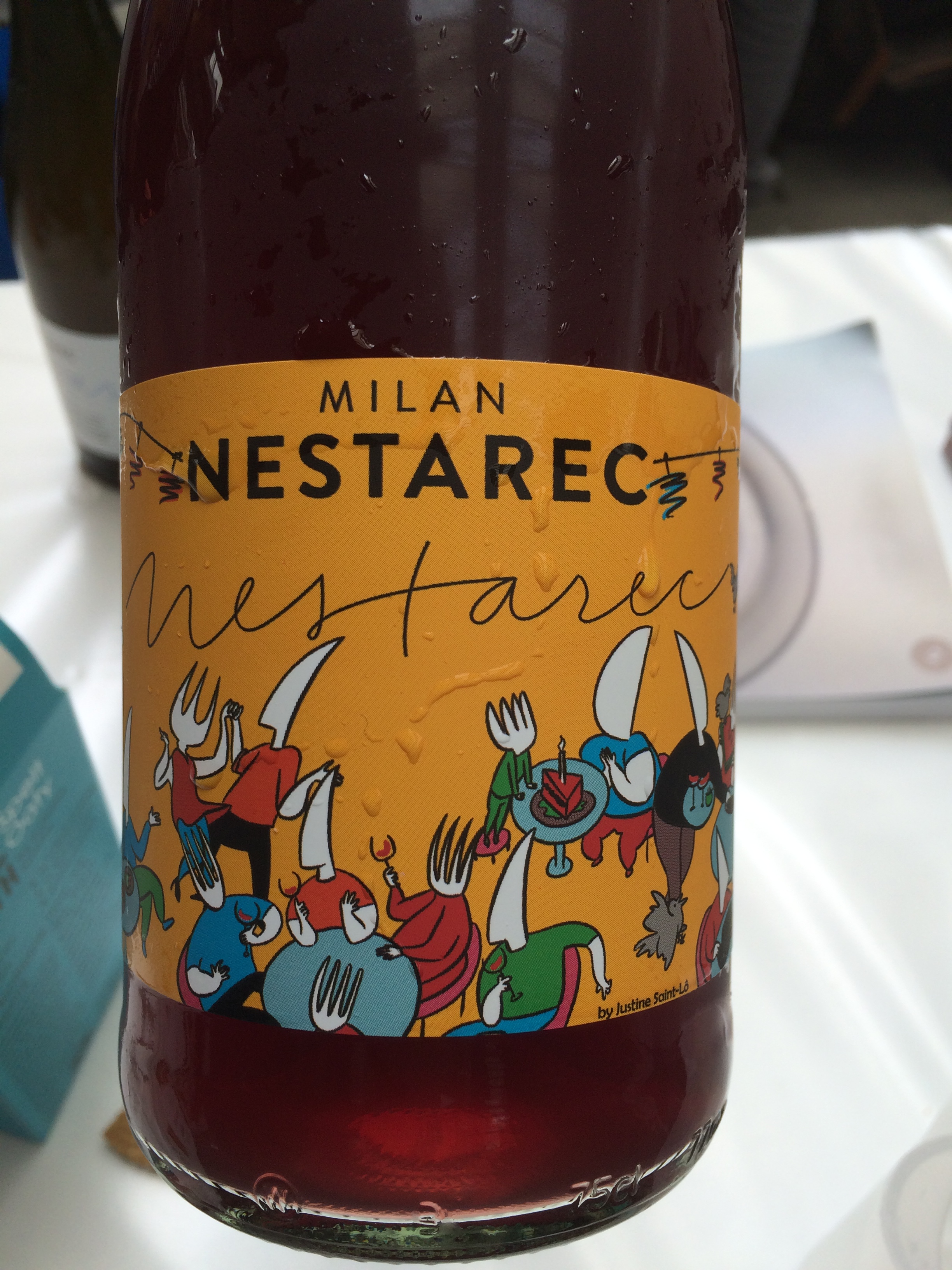
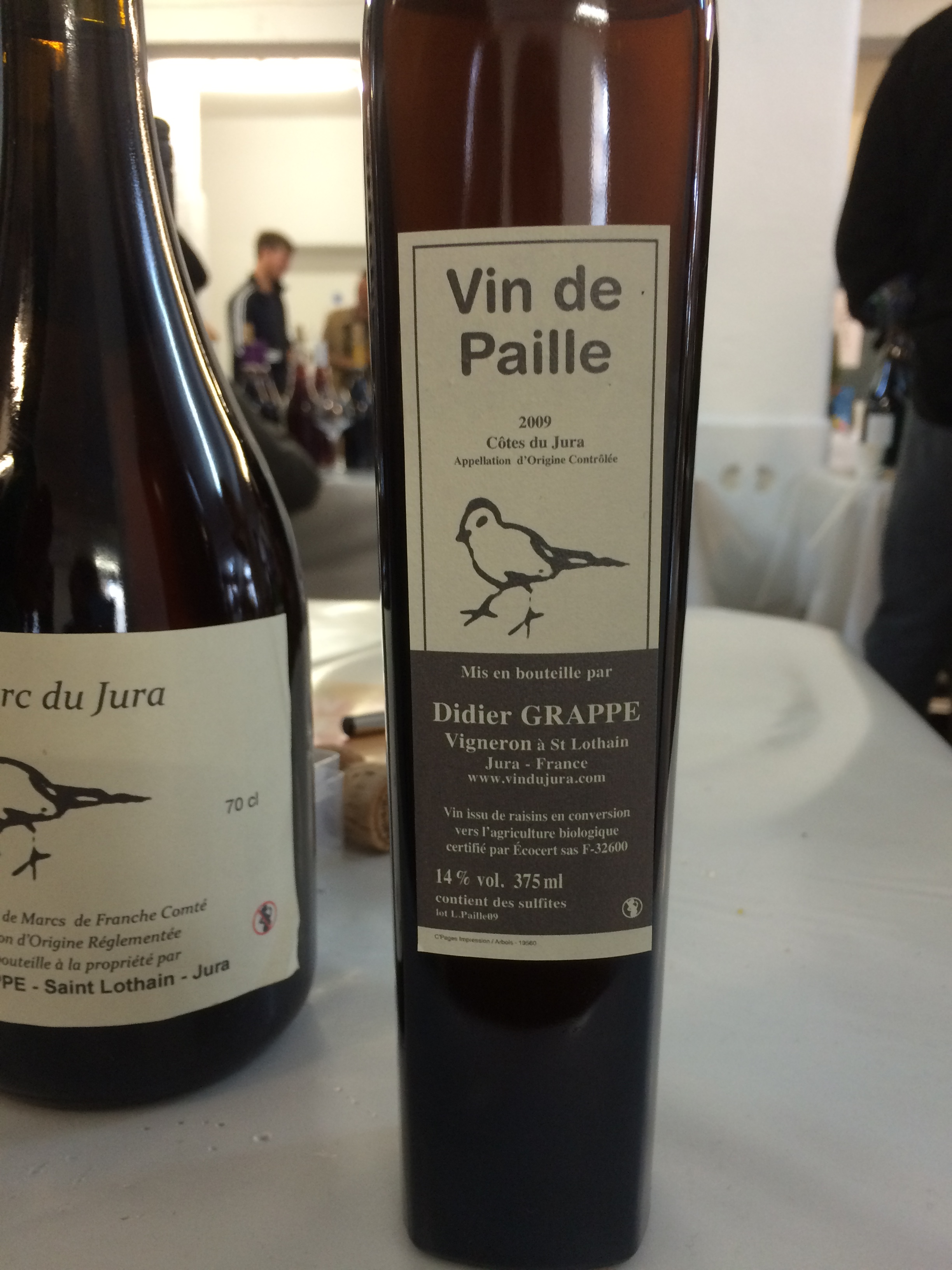
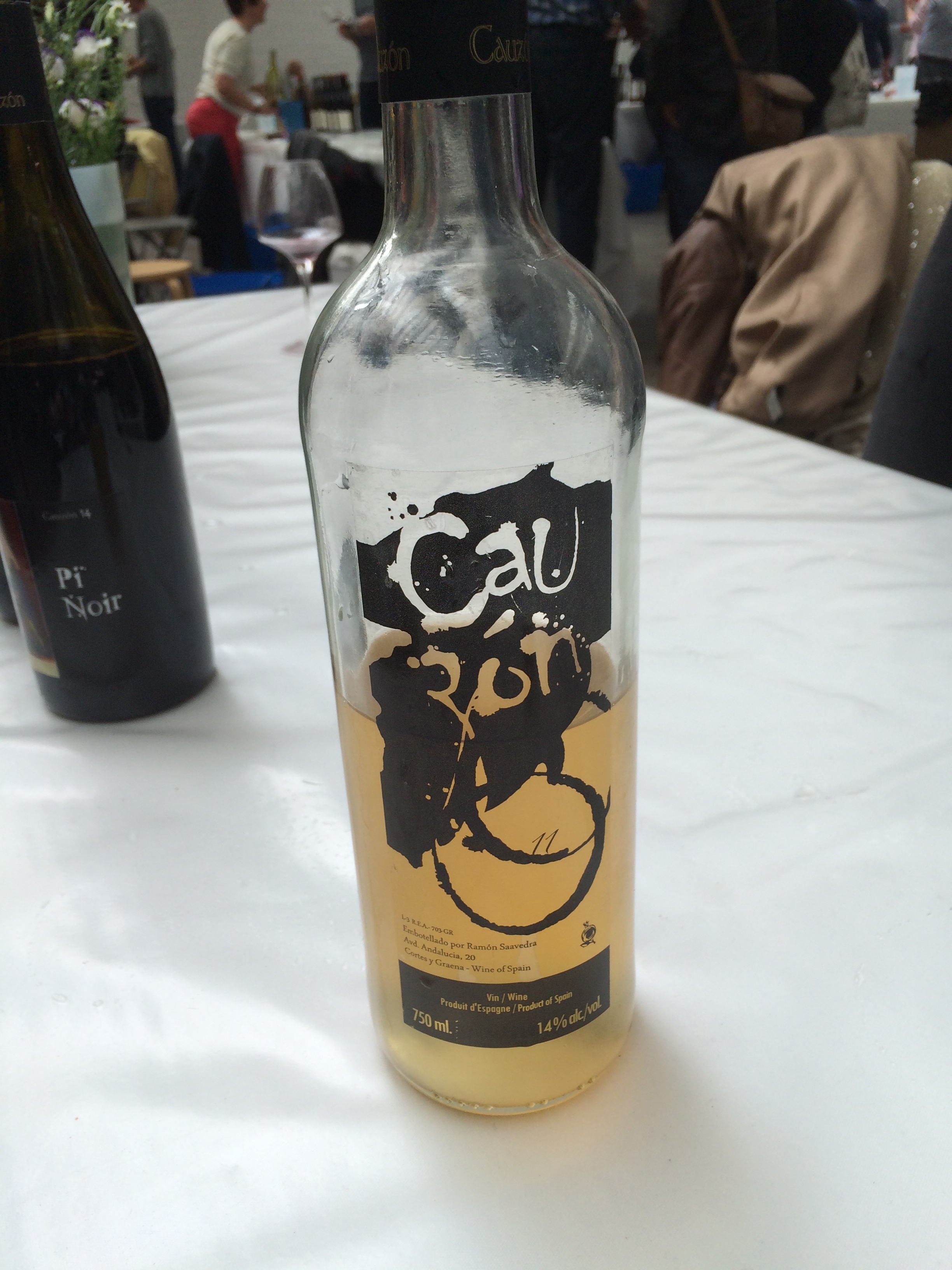
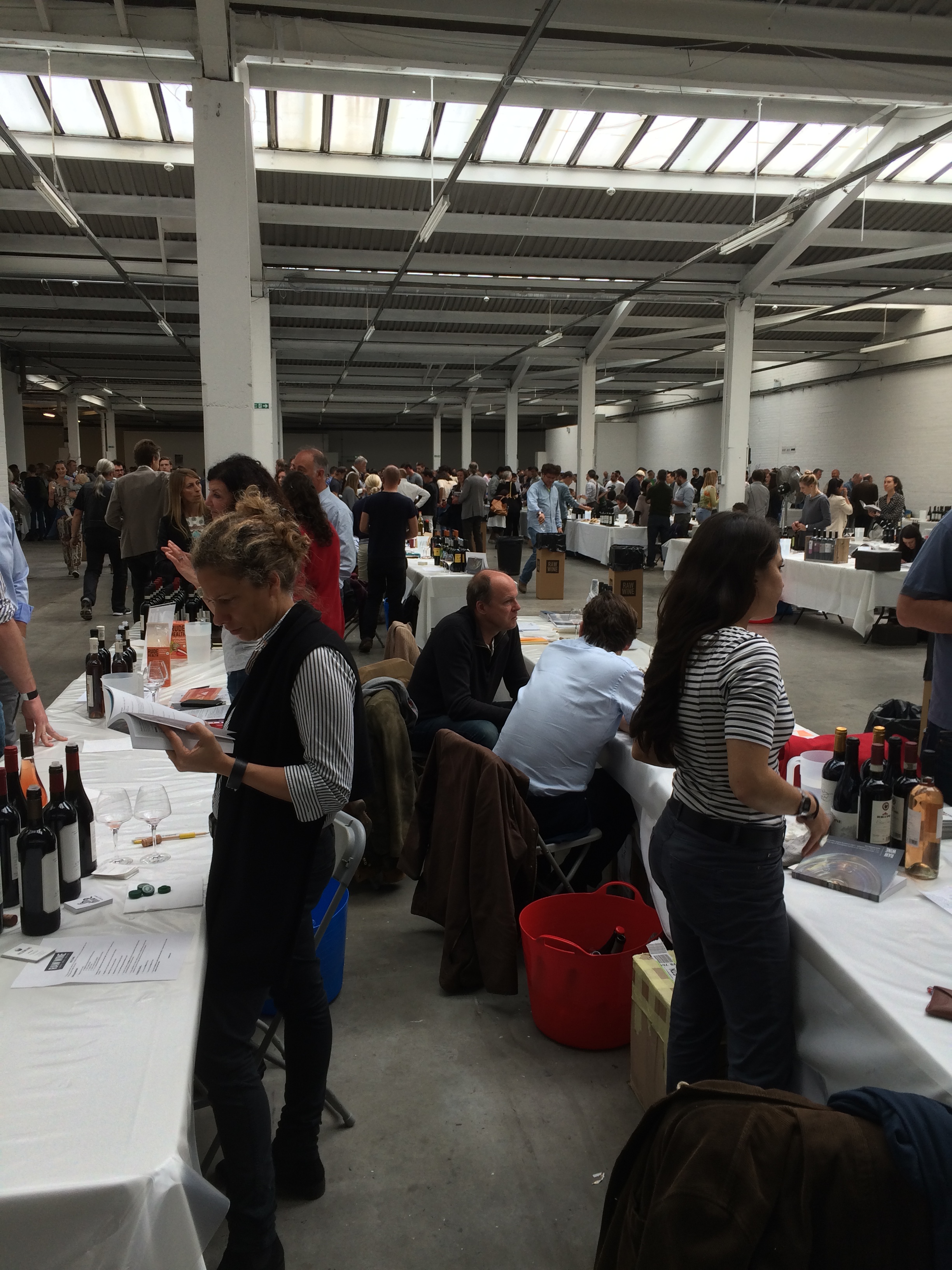
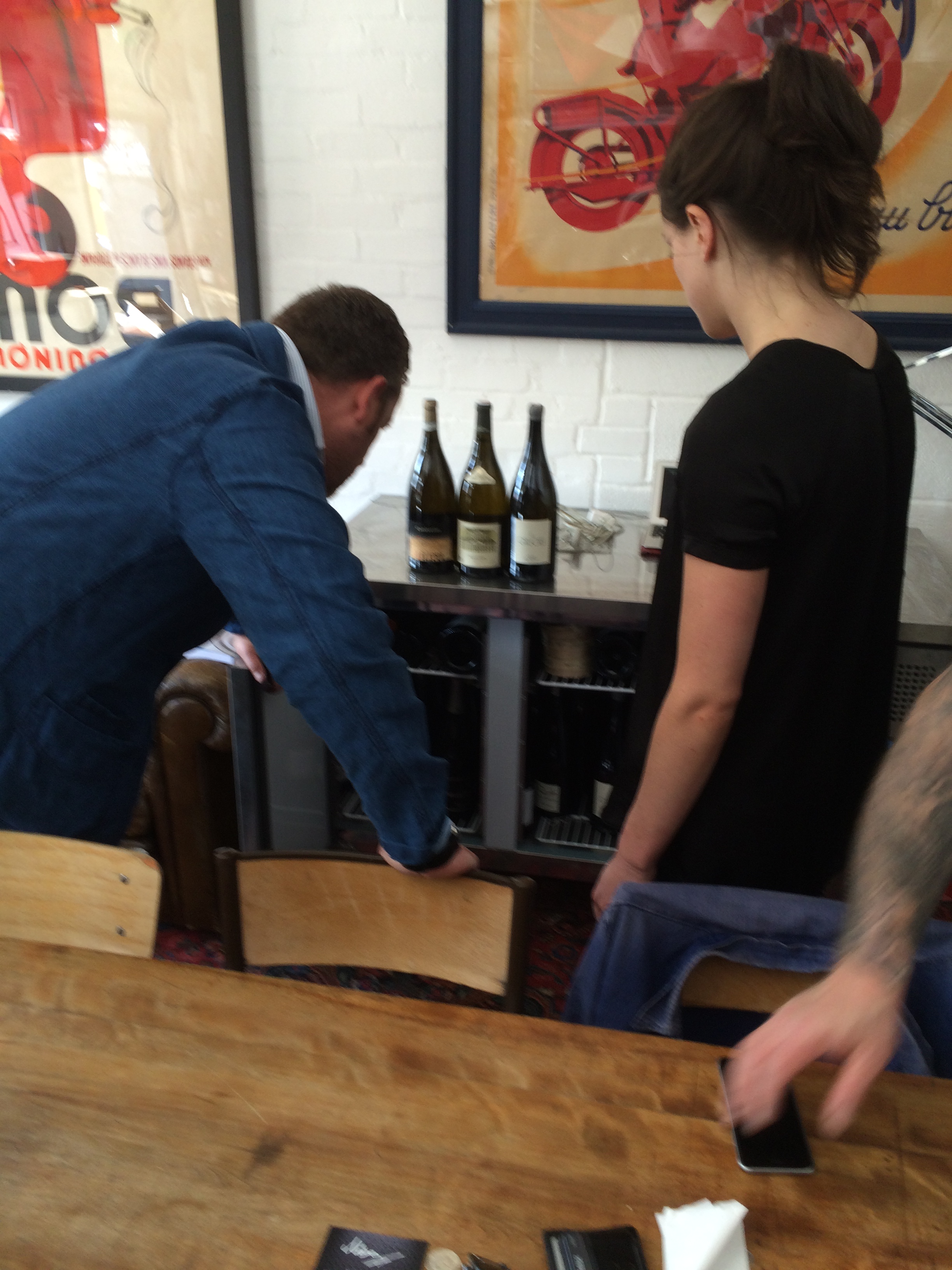
Yesterday’s Oddities Lunch at Rochelle Canteen was a landmark of sorts, our tenth in a line of exciting events which take place every two months. Over those months we’ve drunk around 150 bottles of so-called oddities, ranging from wines some might not think odd at all, like a few of Champagne’s less visible wines or an old Burgundy, to yesterday’s stranger offerings – from Bali and Namibia.

In December the bar was set very high. Christmas joy was in the air and a few quite special wines appeared: a 1978 Clos du Papillon, a 2000 Breg from Gravner, the unicorn Mythopia from Switzerland, and a stunning (against all odds) 1990 Chateau d’Arlay from Jura, alongside my offerings from Selosse and Equipo Navazos. But as these lunches prove, there is a long and meandering river of vinous treasures and I’m sure more will continue to flow. They may not always be the brightest jewels in the chest, but that should not distract from their lustre. Every wine yesterday was tasty, and I enjoyed them all. Some may have been better than others, but there was no wine I’d not take to a tasting myself, or a dinner party, so long as the other guests were as open minded as the people who come to these events.

Of course, it’s easy to ignore wines like these if you can afford to drink large. The wines of regions like Italy’s Oltrepo Pavese, or grapes such as Veneto’s Raboso don’t figure highly on many wine lovers’ bucket lists. And I’m sure many would snigger at drinking sparkling wine from Bali, perhaps choking at the thought of Namibian Shiraz. More fool the fools. The Balinese sparkler was well made and would offend few if served blind as an aperitif. The Namibian Syrah? Well, see below.

image  image

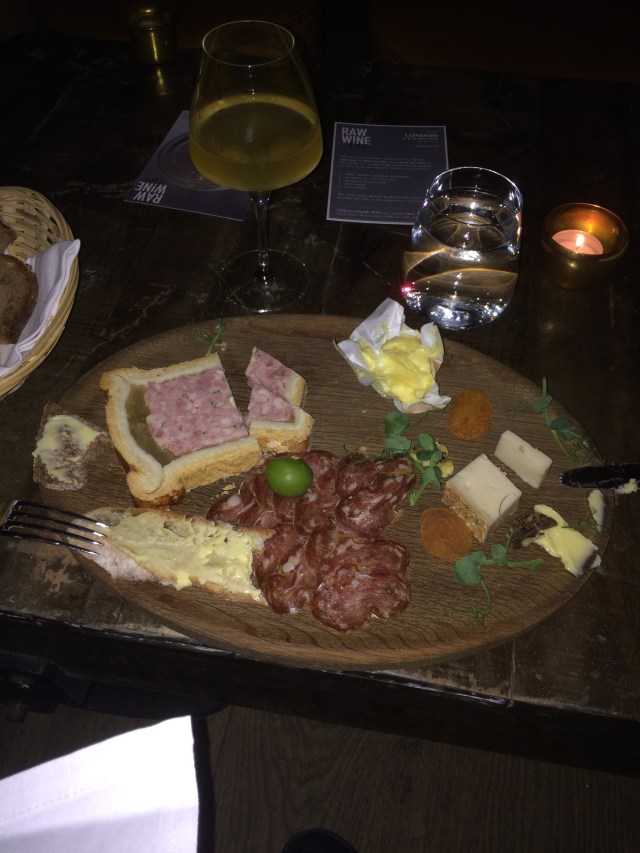
The Canteen                                                         Venison Pie

This month’s bunch

Taika 2012, Costers del Segre, Castell d’Encus – This is a sparkling Semillon/Sauvignon blend from grapes grown at 1000 metres altitude in the Penedès mountains of Costers. You might remember we had this estate’s glorious Pinot Noir at the post-Vinoteca Tasting lunch at Quality Chop, a few weeks ago. No UK distribution, but tiny production. This didn’t quite match the Pinot, but it’s a lovely wine.

image

Tunjung Brut NV, Hatten Wines, Bali – The grape on the label of this sparkler claimed to be indigenous to Bali, but I’m assured it’s actually Chasselas, which I can well believe, after that fact was revealed. I won’t pretend this was as good as the Spanish sparkler which preceded it, but it was astonishingly well made in context. As I said above, you would be happy drinking it as an aperitif unless you were very mean spirited…or a wine snob. I’ve had many less appealing sparkling wines in my years of taking one for the team (aka vinous exploration). And it’s not even the first Balinese wine we’ve had at an Oddities!

image

Burg 2008, Marcel Deiss, Alsace – Sometimes I stray from the script of Oddities. The reason we serve the wines blind is for pure entertainment. Although I am happy to play the idiot by failing to spot a wine I know well, or coming up with the worst possible guess, I did nail this, at least as far as a Deiss field blend. I had no idea which one, and guessed 2004 – it did have a lovely degree of maturity but retained freshness. It was complex in a sort of unassuming way, as Deiss’s wines so often are, transcending grape variety. I love them, and it reminded me (I’ve said elsewhere I’m overdue another Alsace trip) that I’ve not drunk one for a while. One of my personal favourites on the day.

image

Fiano 2013, Don Chisciotte, Perluigi Zampaglione, Campania – This one was brought by one of our resident some-time winemakers, and was possibly the most distinctive wine of the day. Seven days skin contact has produced a wine of texture which is dry and almost tannic on the finish. More dark straw than orange, erring towards golden. I can almost smell its complex scents now. This is one wine I’d like to share an evening with, my idea of a Valentine wine actually. One you could really get to know better.

image

Watervale Riesling 2012, Clos Clare, South Australia – Clearly the least odd wine of the day on the surface, but scratch beneath. First, it’s a domaine many of us have heard of, yet is almost never seen in the UK. Second, it was to a certain extent slightly atypical. Although a few people guessed Watervale (especially our super-palate wine merchant, Mr Vintrepid), and we all guessed Riesling, it was more developed than many a fine example from this region. No searing acidity, but instead, lovely integration of all its elements.

image

Provinage 2010, Henry & Jean-Sébastien Marionnet – Always a pleasure to drink this distinctive wine in its distinctively shaped bottle, always therefore embarrassing when I fail to spot it. Pre-phylloxera Romorantin which ages like Chenin in some ways, and is consequently hard to spot unless the relevant lobes are on top form. Jaqueline Friedrich talks (in WFW 50) of taking a different Romorantin to a dinner party. She mentions its acidity, which when young can be very pronounced. But with age, it softens. And this wine is not exactly from Cour Cheverny, but a little further west, and is labelled as a Vin de Pays du Loir et Cher. Being made from the fruit of ungrafted vines, it is one of a dwindling number of wines unique in this way. If you get a chance to drink it, grab it. It’s good, too!

image

Combe Trousseau 2014, Stolpman Vineyards, Ballard Canyon, California – A Cali-Trousseau again. What a strange ring that phrase has. Not Arnot-Roberts this time, but one of Rajat Parr and Sashi Moorman’s collaborations. It was Parr who first convinced Peter Stolpman to bung in an acre of Trousseau, and a little more has followed, so much do the Stolpmans love it. As did we. A wine of the day contender, light and fruity but with an edge, reminding me a little of Frapatto. Bigger than a Jura, but paler, hiding its 13% alcohol well. Meant to ask where to find it? I know Sager + Wilde nabbed some. This sort of wine is Oddities in a nutshell. Different but brilliant.

image

Neuras Shiraz 2009, Namibia – Or Rande der Namib Wüste, as the label says. My guess here – old Rioja (don’t fall off your seat!). I think someone else tried Musar (a better guess, I admit). Neuras’ vines are planted by cold water springs, and although proximate to the Namib dessert, they get gentle Atlantic breezes. The netting, protection not from birds but from baboons, and even the leopards which sometimes stalk them, also cuts out 25% of uv light. The grapes avoid baking, and the wine is matured in French oak, bottled unfiltered. I think this wine would astound most people, and not only for the fact that it is made at all. Actually, I did guess Namibia after we had established the continent, but only as an educated guess from reading far too much about wine in my life. This was brought along by a French wine journalist/educator, so don’t say the French only know French wine again. How she got hold of it, I don’t know, but it was a real privilege to try it. Very good.

image

Montebuono 1990, Lino Maga, Oltrepo Pavese – Effectively from the other side of the Po from Pavia, a DOC blending Barbera with other grapes, in this case plenty of Croatina (aka Bonarda). My guess was Marzemino, which wasn’t too far wrong. Really a good example of how such unfancied varieties can age into a mellow wine with a good degree of complexity, and one especially food friendly (12.8% alcohol seemed perfectly balanced for this). This is a wine which, for me, doesn’t always show best in line-ups like this. You have to try to imagine what drinking it over a couple of hours would be like.

image

Raboso del Piave 2010, Bonotto Delle Tezza, Potesta – Another obscure Italian DOC, this one from Veneto. Piave produces plains wines from east of Venice and south of the Dolomites. There’s a lot of simple wine made from French varieties, but the the local grape is the Raboso. As with the Pavese wine above, you see the qualities of a well made local wine when it has the chance to take on a little bottle age. Another wine showing food friendly character.

image

Rubin 2010, Uniqato, Bulgaria – Rubin is a cross between Syrah and Nebbiolo. The obvious question is why bother? But for whatever reason it was done, you can’t fault the wine. Uniqato is a brand of the Damianitza winery. It comes from the Trakiiska Nizina region (not part of Bulgaria I’m familiar with, but I do remember Damianitza from the first time around, back in the 1990s). This has 14.5% alcohol and it’s quite big. The grapes are harvested at surmaturité (leaving 3.5 g/l residual sugar after fermentation) and popped into a mix of French and Bulgarian oak for ageing into a rich, smooth wine.

image

Forcallà 2013, Rafael Cambra, Valencia – A slight anomaly here. I can find this wine on sale at merchants in Europe, but can find no mention of it on the producer’s web site, nor on that of the company I believed import it (Indigo?). It’s a local Valencian grape variety, if my German is on form, which tasted to me like a modern Spanish wine. I don’t mean as if it were from International grapes, though it doesn’t surprise me that Cambra grows plenty of those, but it was modern in style. Quite a bit of tannic structure on a big frame, though a not over the top 13.5% alcohol kept it from any flabbiness. Could need time?

image

Passopisciaro 2008, Etna, Sicily – The Passopisciaro vineyards are in Contrada Guardiola, mainly on the northern side of Etna at between 550-1,000 metres above sea level. This is their entry level wine, made from mainly Nerello Mascalese which is vinified in stainless steel before ageing, and malo, in large oak. It’s a big wine, weighing in at 15% alcohol. Yet it’s balanced and, at over seven years old, showing good maturity. I think I’d like to see a bit less alcohol as it does show on nose and palate. But 2008 was, I think, seen as a very good year here, and the vines even for this cuvée are between 80-120 years old. Overall, it’s a classy intro to this top Etna producer, and more easily affordable than the vineyard designated wines, a step up though they often are.

image

Von Lindenwingert Pinot Noir 2012, Weingut Sprecher Von Bernegg, Jan Domenic Luzi, Graubunden, Switzerland – We are onto the unofficial wines now. This always happens…”I just happen to have…”. I’m very glad this popped out of a bag. I’m a massive fan of Daniel Gantenbein’s wines from this bit of Eastern Switzerland, nestled below Austria’s Vorarlberg and Liechtenstein. But sadly his wines have doubled in price over six or seven years. I kick myself for not buying at £50/bottle for future drinking. It’s hard to find producers in the same class, although there are decent wines in this string of villages. Luzi has only been working his grandmother’s few hectares since 2008, and the sources I’ve read suggest he’s fanatical about quality. It shows. Not Gantenbein quality yet, but really one to watch. For me, another WOTD contender.

image

Fenestra Port, Silvaspoons Vineyard 2004, Lodi, California – I drank a half of this 18% alcohol, Touriga blend, last year, not that I spotted what it was. Smooth, rich, slightly sweet, it very much does what it says on the bottle. Not a wine of complexity, but at a decade it has a nice softness and warmth…but not too much – Lodi is in the Central Valley, but due to cooling breezes it is not a super-hot AVA by any means. I’d always encourage wines like this to be brought along to finish on nicely, although it was not quite all over…

image

Blanc de Blancs, Yarden Winery, Golan Heights, Israel – We do see one or two Israeli wines at these events, and they are always well chosen. This is a classic BdeB made from Chardonnay. It helps that Golan possesses easily the region’s coolest vineyards (it sometimes snows up there in winter), and this has a profile typical of many Champagnes: 12% alcohol, fresh, zippy, acidity and a mixture of mainly apple with a touch of brioche. Not a fine wine to challenge the finest of France, but more than a creditable effort.

image

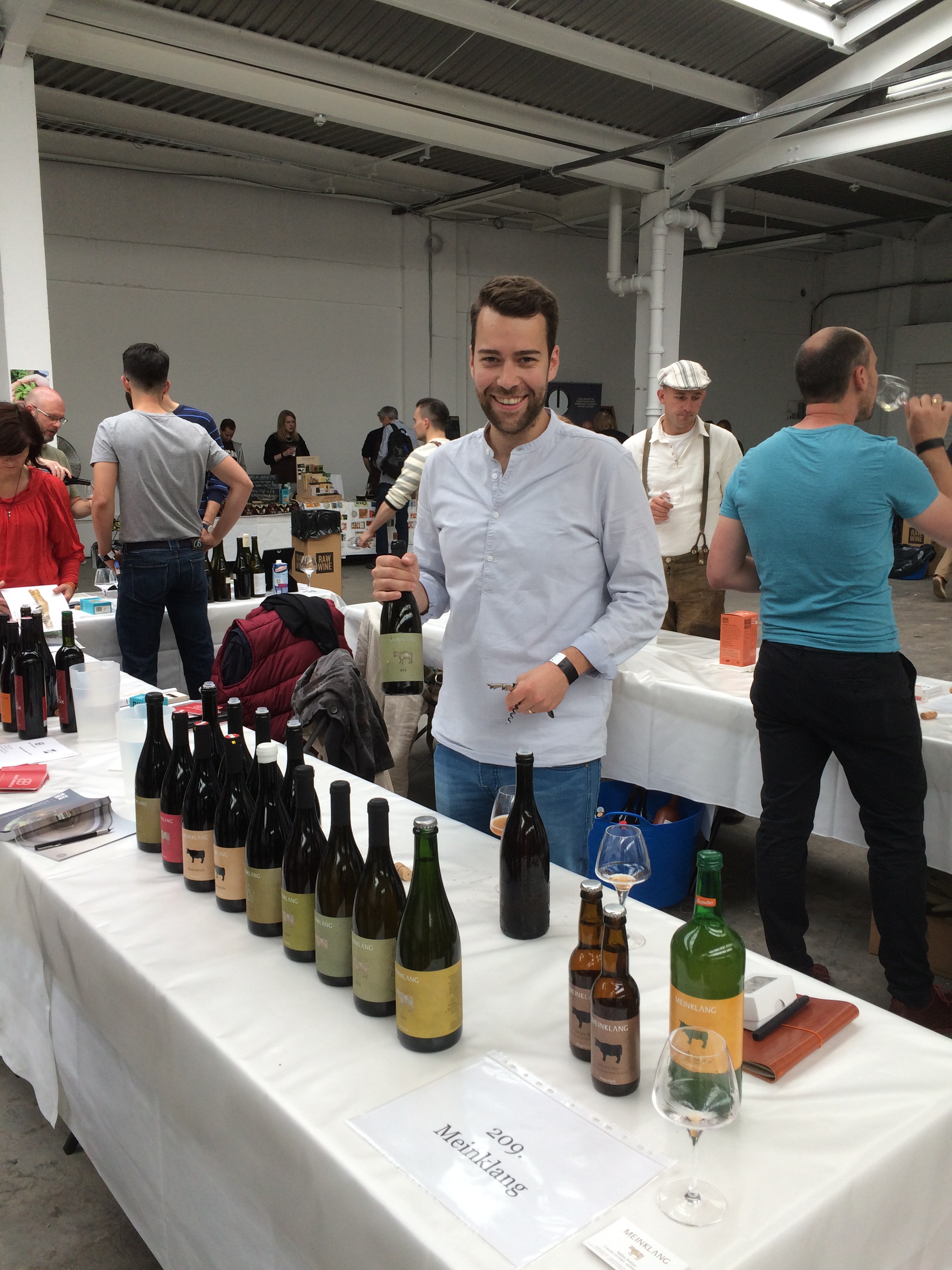
So you see, nothing disappointing at all. Half of us repaired to Winemakers Club, under the arches on Farringdon Street, where I was able to sample Vinochisti‘s E3 Dry Erbaluce, Meinklang‘s magnificent “Konkret” (a skin contact wine made in a concrete egg, cherry wood brown and really quite mindblowing), and the exquisitely fresh Chardonnay from Domaine des Marnes Blanches, rising star of the Sud-Revermont (that’s Jura). For me, that was the time to head towards the crowded, four carriage, train home. Anyone with a pad to lend me close to St-Paul’s…?

image  image

image

The only Grand Crew we saw all day (ouch!)

Posted in Oddities lunches, Wine, Wine Tastings | Tagged , , , , , , , , , , , , , , , , , , , , , , , , , , , , , , | 5 Comments

Sweaty Gym Shoes on Hot Tarmac

The Tasting Note as a form of wine critique is not new. It was around long before Michael Broadbent first published his detailed observations. He reputedly has over 90,000 of them in his famous notebooks. But Broadbent certainly established this concise analysis of a wine’s colour, bouquet and palate as the gold standard of wine criticism. Then, in the 1980s, we in Britain experienced a new form of tasting note from the extrovert vocabulary of Jilly Goolden, on BBC TV’s Food and Drink Programme. I must thank Tim Atkin, via an ancient Times article, both for the Goolden wine description which I’ve nicked as the title for this second piece on wine writing, along with the suggestion that British Food Writer Delia Smith had once called that show “the most disgusting programme on television”. Around that time, the most famous living wine critic, Robert Parker, was also honing the form, with his gobs of sweet berry fruit and his hundred point scoring system,

In my last Blog Post I tried to justify the existence of the Wine Blogger. As a species we are often writing about a breadth of wines which do not get much attention from many of the established wine writers, in the established wine press. There is a market for these wines, exciting wines of personality from outside the classic wine regions, and we are able to bring such wines to the attention of eager consumers, and to lead them to where they might make new discoveries. In this second part, I’d like to describe why this new world of wine requires a new kind of wine writing, and why the tasting note, as we know it, might be a moribund vessel for conveying the information the new consumer craves.

The new breed of wine consumer has an open mind. They are prepared to try anything which sounds interesting, and they have a glass half full approach to wine contemplation. It’s not about what qualities the wine might lack, it’s about the positives in the glass. The new consumer wants to be stimulated, occasionally shocked as well. Not for them the certainties of the same old thing, although she (and increasingly nowadays it’s she as well as he) is as interested in nuance and subtlety as any wine pro.

The tasting note form began, I think, as a personal observation which, when published, acted as a good little snippet of information which would help the wine lover know what to expect from their bottle and, they hoped, when best to drink it. It can work especially well when describing the same wine as it has evolved over time, in describing perhaps a vertical run of vintages of the same wine, and perhaps even a group of different but closely associated wines, in order to differentiate them. But over time it developed into something very different. It became an expression of the subjectivity of the critic. Not only was it shaped by the tastes and prejudices of the writer, but in its language, it expressed ever more complex organoleptic sensations. Whether the reader also found accacia blossom, or was it linden flower, who knows? I’m not sure some of the writers producing these works of High School poetry really cared. Bung on 99 points and your description would surely find itself on the shelf tickets of several wine stores. The tasting note became, in some cases, not so much about the wine as about the critic.

The tasting note, with its fruit compote of strawberries, raspberries and loganberries, was fine for those who wanted to be told what the wine tasted like. But it is tempting to wonder whether the “TN” would suffice for some instead of actually drinking the wine, and if one did drink it, then would we really get some of the more fanciful scents and flavours. Don’t misunderstand me. Some scents, like cherry for instance, are pretty easy to spot, although whether they are black, morello, or was it maraschino, who can say? But many tasting terms are fanciful to many readers – even my own description of Vin Blanc de Morgex, “like licking a pebble freshly taken from a mountain stream” (which I swear relates to a mouthfeel/texture thing, not minerality!). It’s purely subjective because, unlike me, the reader does not have a mountain stream filled with pebbles near at hand.

But there are good and bad tasting notes, as in all things. All of this is very abstract, so I’ll give some more concrete examples. TN number 1 talks of a “waxy, nutty nose…Creamy texture…concentrated peachy fruit…Ample body…clean, fresh, zippy finish…” Nothing wrong with that. It’s descriptive without verbosity. Yet what does it really tell us about the wine? It comes from Decanter’s 2016 Italy Supplement, and an article about sparkling wines. Maybe it was an over zealous sub, but look at the wine’s name – Fongaro, Lessini Durello, Metodo Classico Brut. Nothing here tells me anything about the wine’s composition, nor the producer, nor exactly where it comes from, unless I’m a smart alec who knows Lessini Durello is a sparkling wine DOC covering Verona and Vicenza provinces.

Another style of tasting note appears on page 154 of World of Fine Wine 50 (December 2015). It’s written by that poet of the vine, Andrew Jefford. I can’t quote much of the note as it takes up a whole page column. It tells me nothing, in either a technical sense, nor in a plainly descriptive sense, about what its subject, Château Latour 2000, actually tastes like. But boy, is it writing! “…a kind of velvet bomb, quietly ticking inside…Quarternary rivers have come and gone…The great coffee-coloured serpent of the Gironde…no ten minutes at Latour is like any other…Congratulations then on spending your money on half an infinity of chances”. I think many of us can spot Jefford’s finest without attribution. You read it in awe of the words, and he paints a picture like Turner. You almost wallow in writing like that. You become as if curled up on the sofa with a hot mug of coffee, no, a glass of old Boal, a log fire roaring in the grate. But there’s another kind of tasting note, too.

TN number 3 and we are back in Decanter’s Italian Supplement. The first article there is by Monty Waldin, and it’s called Natural Heroes, focusing on the natural wine stars of Italy. It’s not really a TN as such, because the wine gets seven lines at the bottom of the page. But in a box above, Waldin uses four paragraphs in a narrow column to introduce its maker (in this case, Angiolino Maule from Veneto). He talks about Maule’s struggle to buy his vineyard, his philosophy, his methods, and his belief in the future of the natural wine movement.

One page later, TN4: Waldin does the same for Stefano Belloti from the Monferrato sub-region of Piemonte, whose A Demûa Monferrato Bianco I bought on the basis that a wine merchant told me it was her favourite orange wine of 2015. But if you read Waldin’s story of how Belloti left the city for a tiny plot of his grandfather’s land in the Tassarolo Hills, eventually creating a farm as close as possible to a self-sustaining living organism, then I reckon you’d be tempted to try a bottle.

What we have here is a different kind of writing, one which tells the reader a story. It’s a story about a place, about people, about a particular way of life, with its struggles. It tells us why the people have persevered, and what they have created as a result. It matters little that, in Belloti’s case, that blend of Timorasso, Verdea, Bosco, Chasselas Musqué and Riesling, fermented on skins of grapes picked from vines over 100 years old, tasted of nuts, flowers and herbs with a salty-citrus aftertaste.  “But they might not like it”, you say. “We need to tell them what it tastes like so they don’t waste their money”. But the modern wine lover simply seeks the adventure of discovery. Their questions are not “what does it taste of?”. They want to know “is it an honest expression of the land on which the grapes were grown?”, and “was it made according to a particular philosophy by an individual with a love and passion for what they are doing”? If so, if they like the story, then they will want to undertake the voyage of discovery. Sometimes, drinking a wine for the first time can be a little like hearing some wonderful music for the first time, or seeing a great film. You don’t always want a spoiler. Have you ever tasted a wine you know nothing about and been stopped dead in your tracks, thinking Wow!?

My own belief, based on spending far too long with other wine lovers who have a similar sense of wine being a wonderful adventure, is that they want to feel…like I felt the first time I arrived in Tokyo, or Kathmandu. Like I felt the first time I heard Aladdin Sane, or the last moments of Gotterdammerung. Wine is capable of moving us, even if on a level that’s trivial in comparison to life’s really important issues. And what pleasure we get if we have a story about the wine with which to enhance our pleasure, rather than some example of banal verbosity which says nothing, albeit with a flourish.

Wine writing is about one thing – communication. The critic tastes the wine, and then must describe the essence of it to the reader. But what is that essence? Is it a string of similes or something else? I agree with Mike Steinberger, who in that same (and current) World of Fine Wine, says that “(t)he worst wine writing, of course, typically takes the form of tasting notes”. And I’m just like Terry Theise in an article which follows in the same edition, when he says that in “contemplating the billions of words written about wine” he wants to “understand what it all amounts to, and whether it is helpful or illuminating”? Theise’s conclusion – “I can’t shake a dogged suspicion that it’s chasing its own tail”.

Do all those long lists of fruits, flowers, spices and minerals, appended with a mark of certainty, a score out of a hundred, actually mean anything to the average wine consumer? Perhaps to some, if they have no opinion unless it’s one validated by the critic. Do you never enjoy a film that the critics disliked? Or a book? Or a record you love, but which was panned because it happened to be out of fashion? When we take our head out of the proverbial, well okay, ground (to be polite), might not people just want a story, the truth without fanciful embellishment – The Story. I’m certain that it’s what the modern consumer desires.

Posted in Wine, Wine Writing | Tagged , , , , , | 3 Comments

Video Killed the Radio Star

The New Year is a good time to reflect, a good time for manifestos too. At the back end of 2015 there seemed to be a lot of talk on two topics. First, we saw some negativity towards wine bloggers from some of the more senior members of the wine writing fraternity (using that word deliberately). At the same time, a few writers, especially in North America, were asking questions about the future of wine writing, and wine criticism. I think the two subjects are linked, and I’ll tell you why. In this first part I’ll tell you why I think animosity towards, and criticism of, wine bloggers is misplaced. In part two I will tell the wine critics why I think much wine writing is dull and outdated, and where the way forward lies. As a clue, it doesn’t involve the tasting note as we know it. Nor scores. I didn’t say it wouldn’t be controversial.
The Internet, and the Wine Blog as part of that, has revolutionised the way people read and learn about wine. The old criticism of this democratised space has always been that you can have anyone spouting forth on wine, and we just don’t know how much knowledge they have. How do we trust the wine blogger? Wine writing used to be a small, closed shop. Highly regarded individuals had all the print sources sewn up – book deals, newspaper and magazine space. Occasionally, a newcomer appeared. Jancis, and Robert Parker, were both new kids on the block once, hard as that is to imagine.

After a brief proliferation of wine writing in the 1980s and 1990s, on a scale never seen before, many of these opportunities to write about wine sadly dried up, along with some fine newspaper wine columns. So those who had made it found even less work to go around than before. Many of the most prominent took their readers into the new realm of cyberspace. Jancis was without doubt the most successful in terms of critical acclaim, via the wonderful Purple Pages. Robert Parker went from wine guru to Internet brand as well. But established writers like Clive Coates (Burgundy), and John Livingstone-Learmonth (Rhône) also migrated some content to their web sites in order to supplement their print work.

Then along comes the wine blog. It was, to be fair, a natural extension of what some of the most prominent wine writers had created, as the Internet went mainstream. Successful web sites, with their tasting notes, articles and discussion forums, proved there was, and is, an appetite for wine on the web. At first, a few highly knowledgeable individuals merely took part of that format and ran with it. Jim Budd‘s Loire expertise via Jim’s Loire, Chris Kissack‘s Loire and Bordeaux knowledge via The Wine Doctor, and Wine Terroirs (Bertrand Celce), the first place I began to read about the natural wine movement in France, were just three. The wine blog was born.

Perhaps the exemplar of successful wine blogging has been Wine Anorak, Jamie Goode. With his scientific background, and easy writing style, he was eventually able to give up the day job and go full time. He’s now considered one of the major wine influencers in Europe and beyond. Books and judging wine competitions, along with a column in a national newspaper, supplement a web site which includes one of the most readable blogs on wine.

But for every blogger of Jamie’s stature, there are several more people writing without the same deep knowledge of the subject. Some are aware of their limits and are just doing it for fun, others perhaps not. None of us has the right to ignore the charge of vanity. But I don’t think the professional wine critics who are so exercised by the proliferation of wine writing on the Internet can tar a whole genre with that brush. Readers are perfectly capable of working out who has a deep knowledge to share, and who merely has a passion for the subject, with perhaps more to learn.

What I think has changed in wine over these past few years, and has perhaps gone unnoticed by some of the wine writers, is how the market for wine is splitting. When I was younger, if you became interested in wine, you became interested in the classics. People bought fine wines from a relatively small wine world, compared to today. This was without question true before California and Australia kicked off the New World wine revolution.

Now, those classic regions, at their best, are producing wines which only a relatively small cross-section of society can afford to buy, whether to drink or to invest in. This hasn’t stopped younger wine lovers developing a passion for the subject. Lucky for them, this has coincided with the greatest single effect of that New World wine revolution. Wine growers all over the world have seen that if you make good, interesting wine, you can sell it at a profit, and at the same time gain great satisfaction, perhaps even fame, from doing so. I don’t write about the outer reaches of the wine world in order to satisfy those who seek the obscure. I do it to highlight the fantastic wines which are increasingly being made all over the world, from all sorts of grape varieties once considered useless – because no one had thought to devote any care and attention on them before.

People new to wine have grown up in a world where the Internet and Social Media are at the centre of their daily lives. My son and daughter can hardly imagine the world I grew up in – three TV channels, no mobile phones, Internet, or Facebook. By contrast, I wonder how many young people today use a library, or in some cases even, read books in print form? These people turn to electronic media first. They are savvy at seeking out what interests them. What interests them is new and exciting wines which taste like they have their own personality.

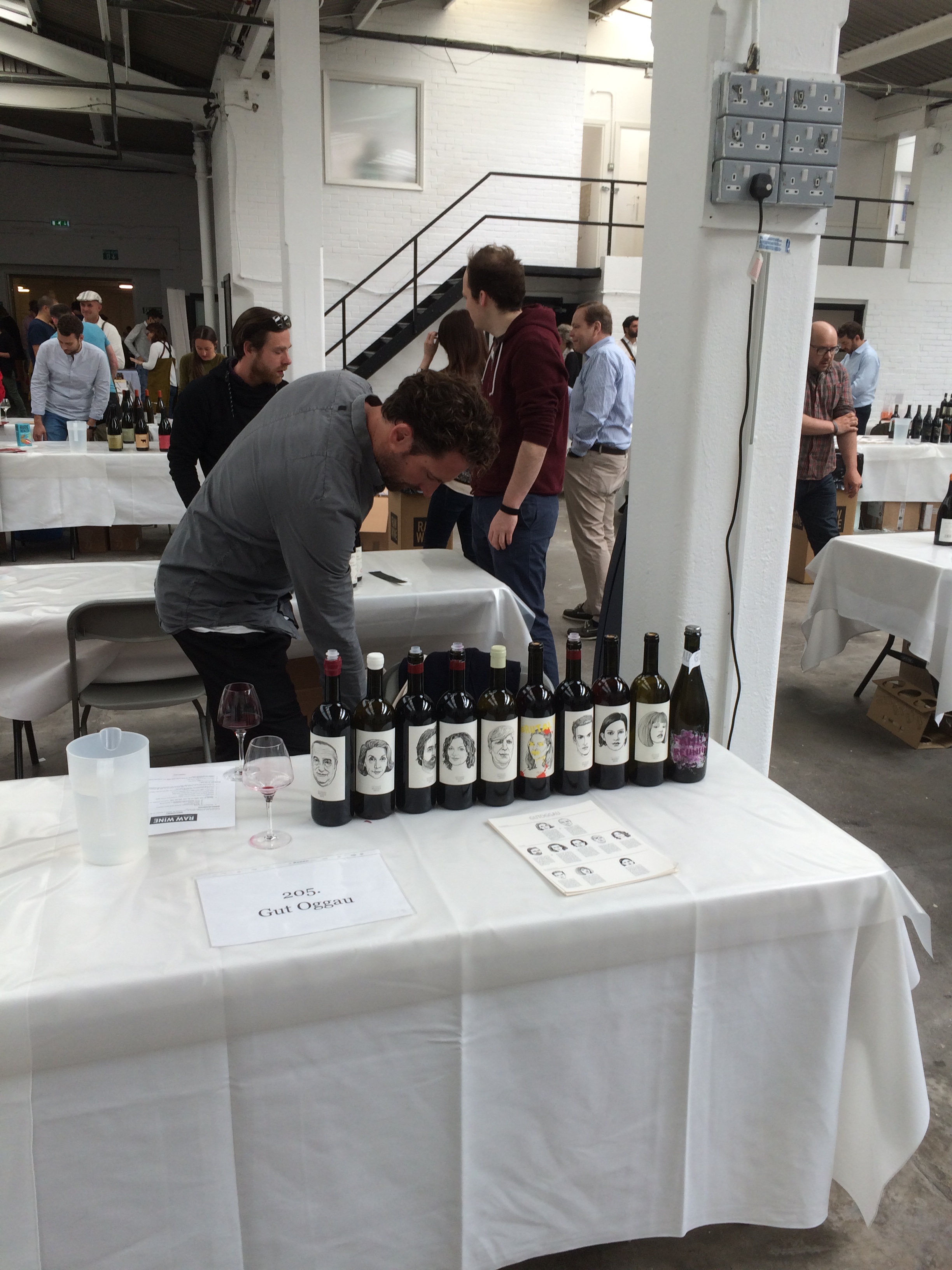
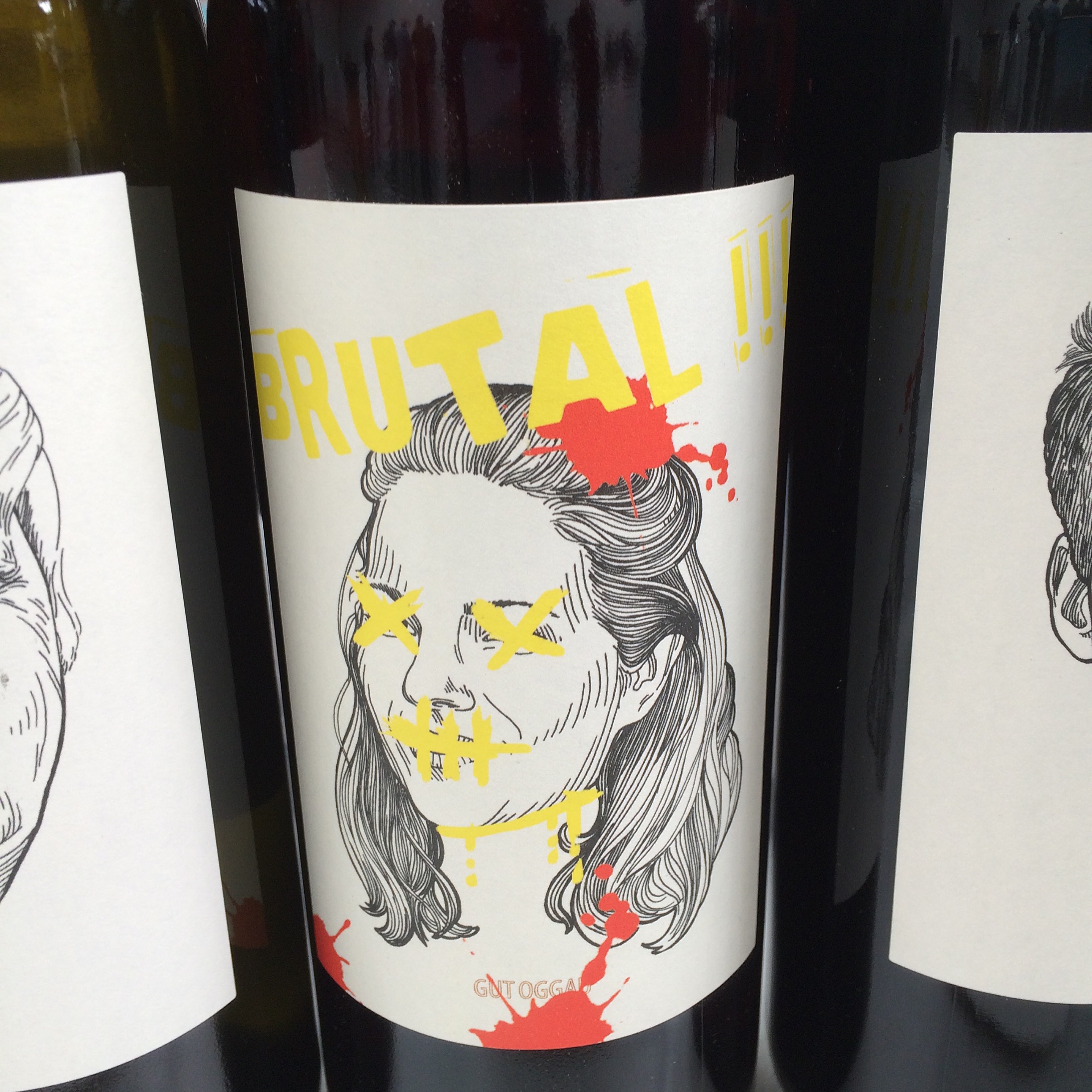
Luckily our cities are full of a new breed of wine seller, independents who are adventurous enough to stock these sort of wines. What people want is to read about them. These consumers can’t afford Chateau Palmer or Rousseau Clos de Bèze, but they can afford Ar. Pe. Pe., Ganevat and Foillard. They want to be introduced to Gut Oggau and Julie Balagny, not Screaming Eagle or Grange. They also want something to blow their mind like Clos d’Ambonnay, or Cristal, but at fifty quid a bottle – Bérêche, or Cédric Bouchard, perhaps. They want somewhere they can read about these wines, not merely a commercial Chilean Chardonnay or Argentinian Malbec as a sop to their sub-£50 price range. And they can indeed read about them. Social Media, whether it be the Blogosphere, Twitter, Facebook or Instagram, is awash with wine, and the appetite for discovering wine has never been so great.

So, many wine blogs are fulfilling a need which is only satisfied occasionally in the National Press, or in wine magazines. Of course, I am far from suggesting that there aren’t any established wine writers filling these gaps. There are, and increasingly so. The more astute can see how the wine world is developing, in the same way that some of our most prestigious merchants, like Berry Brothers, have transformed and widened the range they offer. But there is an inescapable perception that many are not, or at least are not fully committed to the cause. There’s still a great deal of prestige to be gained by writing about the gods of wine, as we saw a couple of weeks ago when the great and the good flocked, brandishing their valuable invitations, to taste the new release from Krug (2002). Good luck to them. There’s less prestige to be gained by suggesting wine regions like Beaujolais, Jura, Penedes, Collio, or the less fashionable parts of California, are among the most exciting places on Planet Wine right now.

So what’s my point here? Criticise poor writing by all means – whether in print or online. Criticise my own opinion, if you will. But please don’t criticise wine bloggers as a species. There are many who have a lot to talk about, and the knowledge to do so with authority. There’s not enough work in print, and it’s hard to break into remunerative wine writing. But the reason we bloggers have an audience, and some blogs have a fantastic audience, is that we are able to service the needs of that audience without recourse to advertising, or subscriptions. This means we can write about the sort of things which no magazine wishing to attract full-page ads from major producers will cover (though there are exceptions). We can also use our detailed knowledge in specialist or niche areas to be ahead of the game in a way that the writer constrained by the annual round of Bordeaux and Burgundy tastings and visits just cannot. We can see the potential for Gruner Veltliner in Marlborough, or the chance that Savoie might just follow Jura into mainstream acceptance in a year ot two. And if our readers are excited by the wines we write about, we can tell them where to buy them.

In the next part I will tell you why I think a lot of wine criticism has become moribund. The tasting note, once the wine critic’s main tool for enlightening the masses, has surely had its day in a form which lists endless fruits and spices, wrapped in a little technical jargon. Perhaps now, we need a different way of writing about wine which will interest and engage the reader. Wine writing which, instead of instructing the neophyte as to what they will experience if they purchase any given wine, will merely inspire the reader, through the story told, to just go out and try it. In other words, adventurous wine writing to satisfy the adventurous wine consumer. This person is out there, and, with growing confidence in their own tastes, they are increasing in number. And there are already wine writers who know that.

Posted in Wine, Wine Writing | Tagged , , , , , | 1 Comment

Waterloo Fish-n-Fino

A group of wine lovers from the Wine Pages forum used to partake in dinners we called “Fizz & Chips”, combining that traditional English stalwart, fish & chips, with sparkling wine (okay, to be honest it was most often very fine Champagne). One of the earliest venues for these events was what is arguably London’s finest fish & chip shop, Masters on the Waterloo Road, a short walk from the station.

We were back there on Friday to try a different pairing, “Fish-n-Fino“. Well, we also had a few Manzanillas, the odd dry Pedro-Ximenez, and a couple of Palo Cortados to round things off, in place of dessert, but you get the idea. Most of us chose the simple option of cod and chips, both delicious and fresh. The more adventurous added a side order of mushy peas. Thirteen wines were to accompany, almost all hitting 15% alcohol. I didn’t see anyone stumble out at 3.30pm, but I can’t in all honesty say that my own liver was feeling on top form by the time I got home, not drunk but feeling a touch tired.

But the serious part of the event, to see whether this wine style is a good accompaniment to this food, was a resounding success. First, I think we were all quite surprised at just how different to each other pretty much all the wines proved to be. Second, we were thrilled (but not surprised) at the very high quality of the wines. Sherry never needs to prove itself to most wine lovers once they have got to know it, yet one can’t fail to be very pleased when such a large bunch of wines perform so exceptionally well. And finally, not only did the wines, taking out the two Cortados we saved for post-prandial conversation, prove a great match for the food, I think most of us would say that they provide a better match for fish & chips than Champagne does.

The thirteen wines we drank are listed below. How to write something interesting about each one is always difficult without sounding dull (I really must write on the death of the tasting note), but I’m sure you’d like to see which wines were brought along by the participants. I have a suspicion we shall repeat this later in the year, though I’m in favour of limiting us to one bottle per person next time. Buy these wines with confidence, unless you just can’t get on with the style.

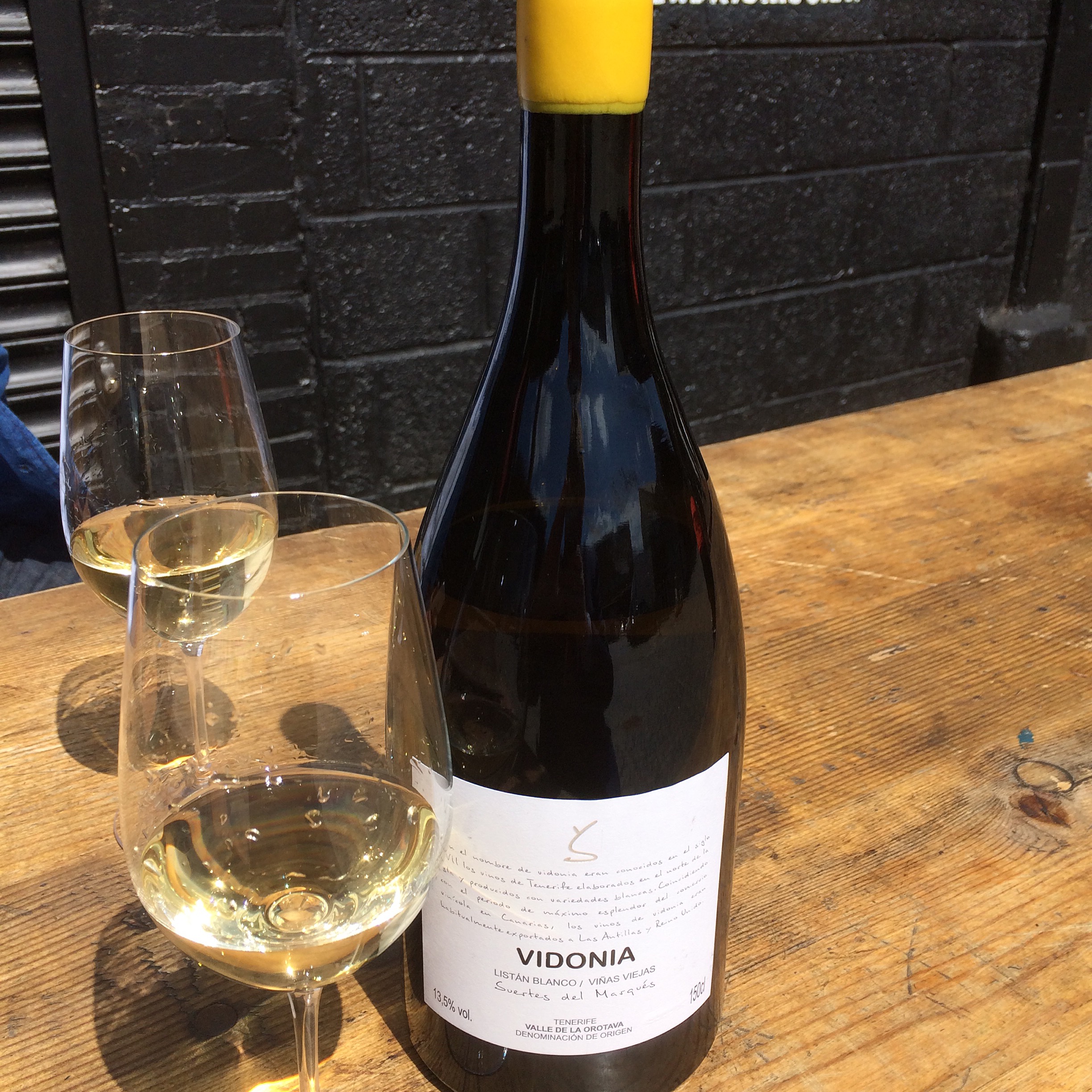
1. Gonzalez Palacios Solo Palomino 2013 – A dry table wine to begin with, unfortified at 13.5% alcohol. It comes from the town of Lebrija, one of the outlying towns still within the Marco de Jerez (about 30km north of Jerez itself).  Lebrija is known as the capital of Flamenco, so I’m told, more than for Sherry production, but the wines from here do often show a distinctive style. Palomino table wines have improved to the point where they are worth seeking out. If you can’t find Equipo Navazos’ Florpower series, this wine is a more restrained example, less complex but refreshing.

image

2. Bodegas Malaga Virgen Fino Lagar de Benavides – Malaga Virgen is the bodega. This comes from Montilla-Moriles (not Malaga), is 100% Pedro-Ximenez (for which Montilla is best known), and spent eight years in solera. This wine registers 15% alcohol, yet it is unfortified, and a good example of dry PX, something which seems to have almost disappeared from the UK market except in specialists. Montilla being generally warmer than Jerez, and PX being a variety which ripens easily, this is the reason these wines do not require fortification. It is what makes them unique in comparison to Jerez finos, and therefore well worth trying to find.

image

3. Valdespino Inocente Fino – This was probably the first fino I began buying regularly. It comes from one of Jerez’s great historical firms. There’s evidence of the family making wine as far back as 1430, though Valdespino is now owned by the equally important (for the future of Sherry) Grupo Estévez. Inocente is reputedly the last Sherry to undergo cask fermentation. The great chalky flavours of the Macharnudo vineyard northwest of the town combine with the wine’s rich, yeasty character to produce something quite unique. I could think of fanciful comparisons of the type often used for winey Champagnes, but I’m sure most readers know this wine. If you don’t, then try it now.

image

4. Lustau Puerto Fino – Lustau was formed in 1896, but its fame is more recent, perhaps dating from the 1990s when their Almacenista range gained fame and popularity in the UK and USA. This Puerto Fino hails from what has, to some, become the other Sherry town, El Puerto de Santa Maria. It’s certainly reminiscent of the sea, with a real iodine note, crisp, light and elegant. Some people attribute Riesling-like qualities. This bottle was a perfect example, and although it doesn’t always top lists of the finest wines of the region, it was an excellent match for the battered cod. Quite fortuitous that this is the photo with the food in the background.

IMG_0797

5. Bodegas Tradicion Fino – You don’t often find these wines in the UK, but it’s a sort of secret that London’s upper class grocer, Fortnum & Mason, uses Tradicion for its own label range (indeed, the whole of their own label range uses some highly distinctive producers). This wine has a much bigger, rounder, nose than the Lustau, and although we all said that the former went so well with the cod, we agreed that this one needs food. Tradicion’s wines are all released with twenty years age, at least, and it shows. Though the irony, given the name, is that this bodega has only been releasing wine for a dozen years. A true wine of personality, but then aren’t they all!

image

6. Emilio Hidalgo La Panesa Fino Especial – This was one of my favourites, a wine I’d never tried before. Round, smooth and delicious, the longest finish so far. It’s a 15-y-o fino and they work hard to keep the flor alive. It was certainly the oldest fino on the market, at least before Equipo Navazos came along. This shows in its sheer complexity. It hails from a Solera begun in 1961. Many have called this the greatest fino being made today, sitting on the outer edge of the style, not quite breaking into fino amontillado territory. It is released with no interventions (filtering or clarification). There’s little more I can say. It was a real treat. It doesn’t come cheap, but really, it’s a bargain in comparison to other fine wines.

image

7. Equipo Navazos La Bota de Fino 54 – This hails from the Inocente solera at Valdespino, the grapes from the Macharnudo Alto vineyard. Many will have followed this Sherry negociant since they began releasing selections privately, in 2005, and later commercially. The whole purpose of the venture appears to be to highlight the wines from individually special soleras. Every wine has not only a distinctive character, but I would say that they go beyond distinctive, they stamp their personality in ways which Sherry drinkers have rarely experienced before. Some EN releases appeal to me more than others, but I have yet to try one (they now approach sixty releases under the EN label, not all traditional wines of Jerez any more) which is not world class. The 54th release is a saca of June 2014. It’s fine and precise, just showing a touch darker colour than the Innocente. A fino of genuine personality, not shy and retiring, but solid and outgoing.

image

8. Gonzalez Palacios Flor de Lebrija Frasquito En Rama – En Rama wines are bottled directly from the cask, unfiltered. The style is becoming increasingly popular, so much so that Gonzalez Byass now release an En Rama version of their famous Tio Pepe brand. This is another wine from Lebrija, where Bodegas Gonzalez Palacios is based. They can’t label this as a Manzanilla, but whereas Sanlucar gets the winds off the sea, this bodega, set on top of a hill, also gets the breezes which stimulate the activity of flor, and keeps it alive. This fascinating wine has a sort of savoury-sweet quality and a touch of umami.

image

9. Hidalgo-La Gitana Manzanilla En Rama – The first of our real Manzanillas, this one also bottles en rama, and this is the latest (2015) bottling. The straight La Gitana bottling is one of Sherry’s great success stories, yet it is a fairly young wine. One London merchant has called the en rama version “La Gitana on steroids”, though I’d argue not in the traditional sense when we usually describe wines. There’s still restraint here, and it has the classic nuts and citrus zest, plus Sanlucar’s ozone. Just amplified a bit. En Ramas are worth seeking out, and the versions of both La Gitana and Tio Pepe are very good wines. Wine experts often counsel consuming all biologically aged (under flor) styles of Sherry soon after bottling, and even more so with en rama bottlings. On the experience I have with Equipo Navazos bottlings, I would say this is not always the case by any means. But perhaps here, the freshness and lively texture is at least as attractive as any complexity which might follow with time.

image

10. La Medallas de Argüeso Manzanilla – This wine, averaging around four years of age, is a very high quality Manzanilla of genuine freshness. There’s both citrus and a little apple complexity, and the nose is soft. Although easy to lose when in the company of so many big personalities, it is this wine’s gentleness and freshness which you notice. I can’t help but think this would suit me on a hot summer’s evening. I also can’t help but mention the label, indicative of this 19th Century producer. It seems to mirror the wine perfectly.

image

11. Equipo Navazos La Bota de Manzanilla 55 – saca of November 2014 from Miguel Sanchez Ayala, the same bodega where Jesus Barquin and Eduardo Ojeda drew their first bottling of an Amontillado which began the majestic Equipo Navazos story. The average age of the solera is 6-7 years. The colour is dark and there’s little sign of really pronounced acidity. Instead it’s mellow, complex, a little saline, certainly intense, which befits an exclusive wine. Truly beautiful, but perhaps beyond our expectations of normal Manzanilla. For me, and this is a very personal opinion based on my relationship with this wine over several bottles, Manzanilla #55 is quite profound.
image

12. Lustau Palo Cortado, Berry Bros & Rudd – Like Fortnums, another source of fine own label bottlings. We are into a different territory here with dark wines hinting at caramel and butterscotch, where the intense richness is balanced by still-fresh acidity. Just a slight touch of spirit. But I can’t tell you a lot about this bottling, nor its age. Berry Bros seem to be selling an own label Cortado from a different producer now. It tastes old in its complexity, but retains a certain youthfulness.

image

13. Pedro Domecq Sibarita Palo Cortado – This is very old Sherry, the average age of the bottled wine reputedly 60 years old. It is also rare, only fewer than 400 cases having been bottled for each year of production (I believe that this was eventually made into an oloroso brand and that it now sits in the Osborne stable, after the breakup of Pedro Domecq’s Sherry holdings). As such, it is very intense blending caramel along with orange citrus into a wine of great complexity yet genuine smoothness. There is almost something sweet about it. This bottle was so sedimented that it was not far removed from the grounds in a cup of Turkish coffee, though after the meal and all those wines I don’t think it upset anyone. Indeed, it rather made up for the lack of dessert. A fascinating finish to an enjoyable lunch.

image

* Of invaluable assistance in factual research for this article was Sherry, Manzanilla & Montilla by Peter Liem and Jesus Barquin (Manutius, 2012). This is essential reading on these wines, a mine of information which also manages to convey the authors’ passion for the subject as well as deep scholarship.

For purchases see liquidcuriosity.ie (UK and Ireland) and sherryguide.net (elsewhere), as well as the usual sources.

Posted in Sherry, Wine Tastings | Tagged , , , , , , , , , , , , , , , , , , , , , , | 3 Comments

Bugey Wonderland

I remember a very long time ago playing a game when travelling around France. It involved trying wines which back then had almost never made their way over to the UK. Entraygues-et-du-Fel, Crépy, Irouléguy, Ripaille, Saint-Pourçain or Aprémont, for example. The keen-eyed among you will notice that three of those are Savoie wines. I’ve said many times that Savoie is set to follow Jura, into fashionability, it’s just a matter of time. But now it seems that Savoie’s younger sibling is not too far behind, albeit on a massively smaller scale.

The dispersed region of Bugey lies in France’s “first” département, Ain (the one without the “s” and the “e”), roughly between Bourg-en-Bresse in the west and Chambéry in the east, with the long Lac du Bourget and the town of Seyssel (well known for its AOC sparkling wines) forming a firm eastern boundary. It’s a land of traditional polyculture, more dairy than vines. In fact, the viticultural area numbers only around 500ha of vines, most on glacial deposits on the slopes of narrow valleys, in what we might call the pré-Alps. Vines have been planted here supposedly since Roman times, but the region became VDQS in 1957, and AOC only as recently as 2009.

Traditionally, Bugey was made up of eleven individual Crus, but today you are only likely to find three of note. That said, Montagnieu (which you may find with an “x” appended in older writings), Cerdon and (to a lesser extent) Manicle are all making waves in ways which you would not expect from what many still see as something of a rural backwater, and everything is being done by a little more than a dozen serious producers.

The Cerdon Cru, lies in the north of the region, west of Bellegarde (the last Autoroute exit before you hit Geneva, providing access to the south-eastern side of the Jura chain). The most interesting production comes from a regional speciality, the gently sparkling wines made by the Méthode Ancestrale.

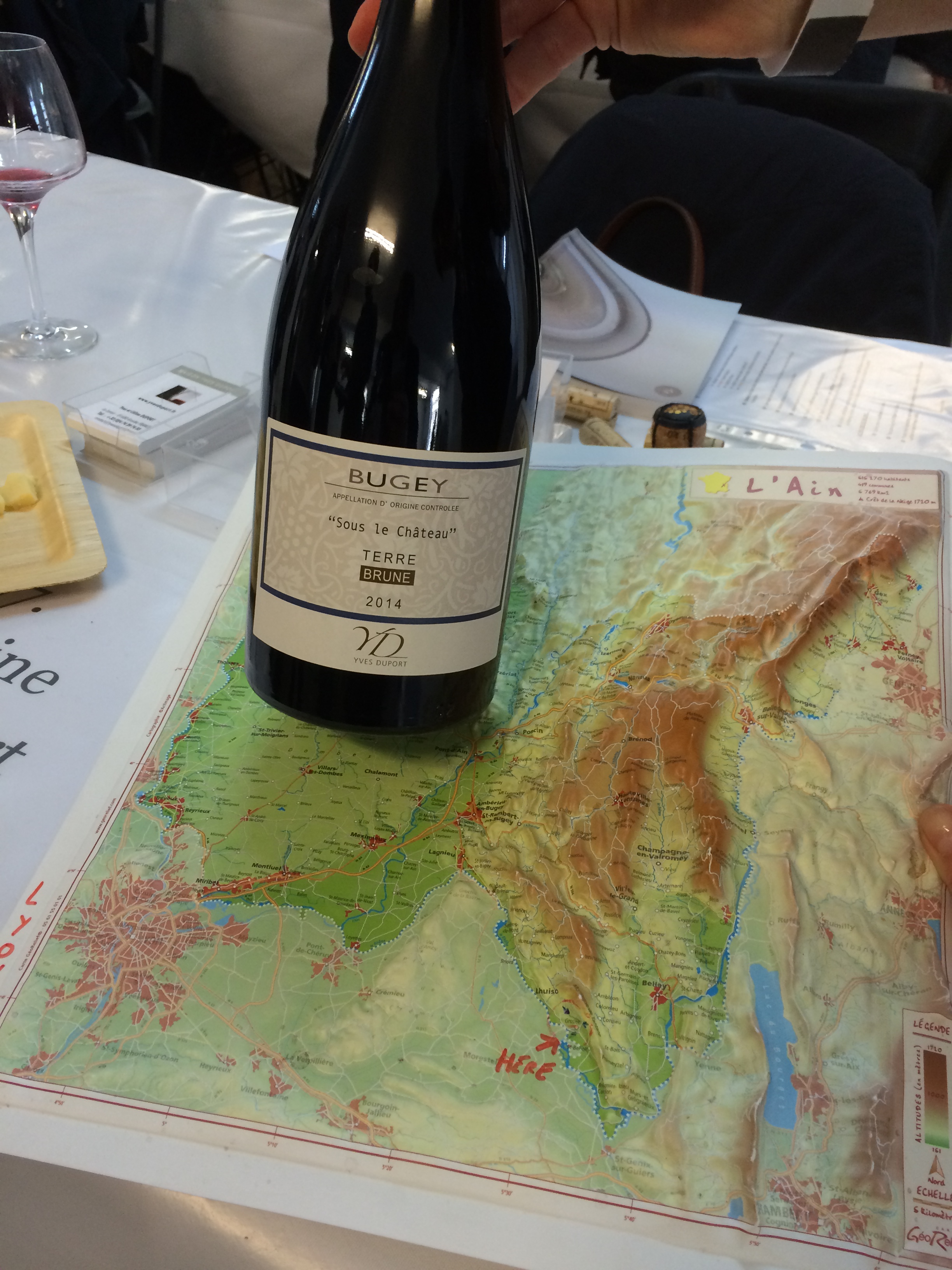
A little way to the south of Cerdon lies Montagnieu. This is perhaps the best known of the Crus, making the greatest variety of wines. It is also home to the producer making the biggest splash in export markets, Franck Peillot (the link is to a piece on the wineterroirs blog from 2010), whose 6ha domaine is just outside the village of Montagnieu itself. Here, in this Cru, you will find the whole range of Bugey wines – sparklers made by the Méthode Traditionelle, an array of whites from Chardonnay to Altesse, and several reds made from Gamay, Pinot Noir, and the very interesting Mondeuse, a speciality of nearby Savoie.

Manicle tends, from the little I have seen, to be primarily focussed on white wines.

The future for Bugey may lie in two directions. The first is with the Reds from Mondeuse. Although there are some good reds from Gamay, and the beginnings of some remarkably fine Pinot Noir, it is this characterful Savoie grape which the region will hopefully make its own. The best Mondeuse I’ve tasted is from Franck Peillot, the bottle I drank last night being the catalyst for this article. Peillot also makes exceptional Altesse (the true Roussette), along with Pinot Noir and Chardonnay. Although the region is not as similar to the various Savoie Crus as you might imagine (in terms of micro-climates, geology and altitude), Peillot clearly has an affinity for the Savoie varieties, and it would be fair to say that proud as Franck is with his Pinot, most critics rate his Mondeuse as the top wine (and they rate it highly). The Altesse doesn’t come far behind.

image

The other direction is a little more obscure, yet from a wine much abused in the past, it has become almost a cause célèbre of Bugey. It is made by the Méthode Ancestrale, a form of bottle fermentation without disgorgement. Sounds familiar? It is the method made popular by dozens of tasty pét-nats from Touraine to Jura. Much Bugey-Cerdon is Demi-Sec and more pétillant than fully sparkling. Made with either Gamay or Poulsard, or a blend of both, it’s a light and refreshing wine which, for comparison, brings to mind Italian Brachetto from Acqui.

So who are the names to look for? Certainly Franck Peillot for Montagnieu wines, and these have been available in the UK at forward thinking merchants like Winemakers Club. For Bugey-Cerdon, the best I’ve tried was from Cécile and Vincent Balivet who farm at Mérignat (just south of Cerdon itself), though the wine in the photo below was purchased in France.

image

Patrick Charlin is another Montagnieu producer whose name gets mentioned, especially for very high quality Pinot Noir, as well as sparkling Montagnieu Brut, which is also a speciality of Yves Duport (one of the region’s several biodynamic domaines – something which seems to be a characteristic of the most quality conscious and successful producers). For more Cerdon wines made by the ancestral method, also look for Patrick Bottex, Raphaël Bartucci and Domaine Guinet-Rondeau. Jean-Christophe Pellerin’s name has come up a few times, but I can’t claim to have caught sight of his wines yet.

There are also some larger producers. One, Maison Angelot, now run by Eric and Philippe Angelot, was the source of the first ever Bugey wines I purchased in an autoroute service station near Bresse. Their black labelled Mondeuse is a wine which seems to turn up at a lot of restaurants in the wider region, and we always order it when dining in the village where Geneva friends have a weekend/summer place. It may not match Peillot’s Mondeuse, but it’s a serviceable (like the restaurant Bois Joli itself) intro to the region’s reds.

image

You might also come across Domaine Monin, who became known for something which was once one of Bugey’s big sellers, Roussette de Bugey. There isn’t actually much of the white grape, Roussette, left in Bugey now, and the name came over time to describe a wine style, not the grape variety. In fact, Chardonnay became its common base. I’m not sure where this stands now, in the post-AOC regime? **[edit: Wink Lorch has kindly added clarification to this question, see in particular her comments of 04/08/2017]. It sounds a bit to me like Australian White Burgundy, Californian Chablis, or (if you are ancient enough to remember it), Spanish Sauternes. I’m pretty sure that any Roussette de Bugey you see today will be made from that grape variety, aka Altesse. Monin now major on Chardonnay, Gamay and Pinot Noir. The region also boasts a number of small co-operatives.

image    image

Finally, there is another anomaly, the fate of which I have not been able to ascertain – Pellin Rosé. Made by another well known regional producer, Varichon & Clerc (who own, or owned, the well known Royal Seyssel sparkling wine brand found in many a French hypermarket in my youth), Pellin proclaims it’s origins in the Méthode Ancestrale. But according to Wink Lorch’s chapter in Wine Report 2007, it is (or was) made from Gamay grapes bought in, and presumably not necessarily from the region. Again, there was nothing wrong with the wine itself when I tried it many years ago, but I can’t see that it would fit in with the AOC regime without locally sourced fruit.

image

It took a long time for Bugey to achieve AOC status for its wines, and there were a few hiccups along the way. There is no doubt that achieving the AOC has been a positive influence, enabling the best producers to be taken more seriously in France just at the time when a raft of never before heard of wines were starting to establish themselves. The Bugey wines were an ideal fit in the new wine bars of Paris, and in some commentators’ opinions it pretty much saved the region, surely one of France’s most obscure.

Cerdon, especially, is precious to those who make a fine version (fine in the quality and typicity sense, because there is no attempt here to make fane wane). A lot of so-called Cerdon was, according to several writers, made by the infamous “bicycle pump” method, whereby cheap still wine is made fizzy by the introduction of carbon dioxide, rarely leading to fine bubbles, nor fine quality. As we begin to see more Bugey-Cerdon on export markets, protected by its AOC status, I hope that this lovely, if pleasantly frivolous, wine will gain more friends.

So, as they say here in corny-ville, let’s Bugey!

Posted in Sparkling Wine, Wine | Tagged , , , , , , , , , | 8 Comments

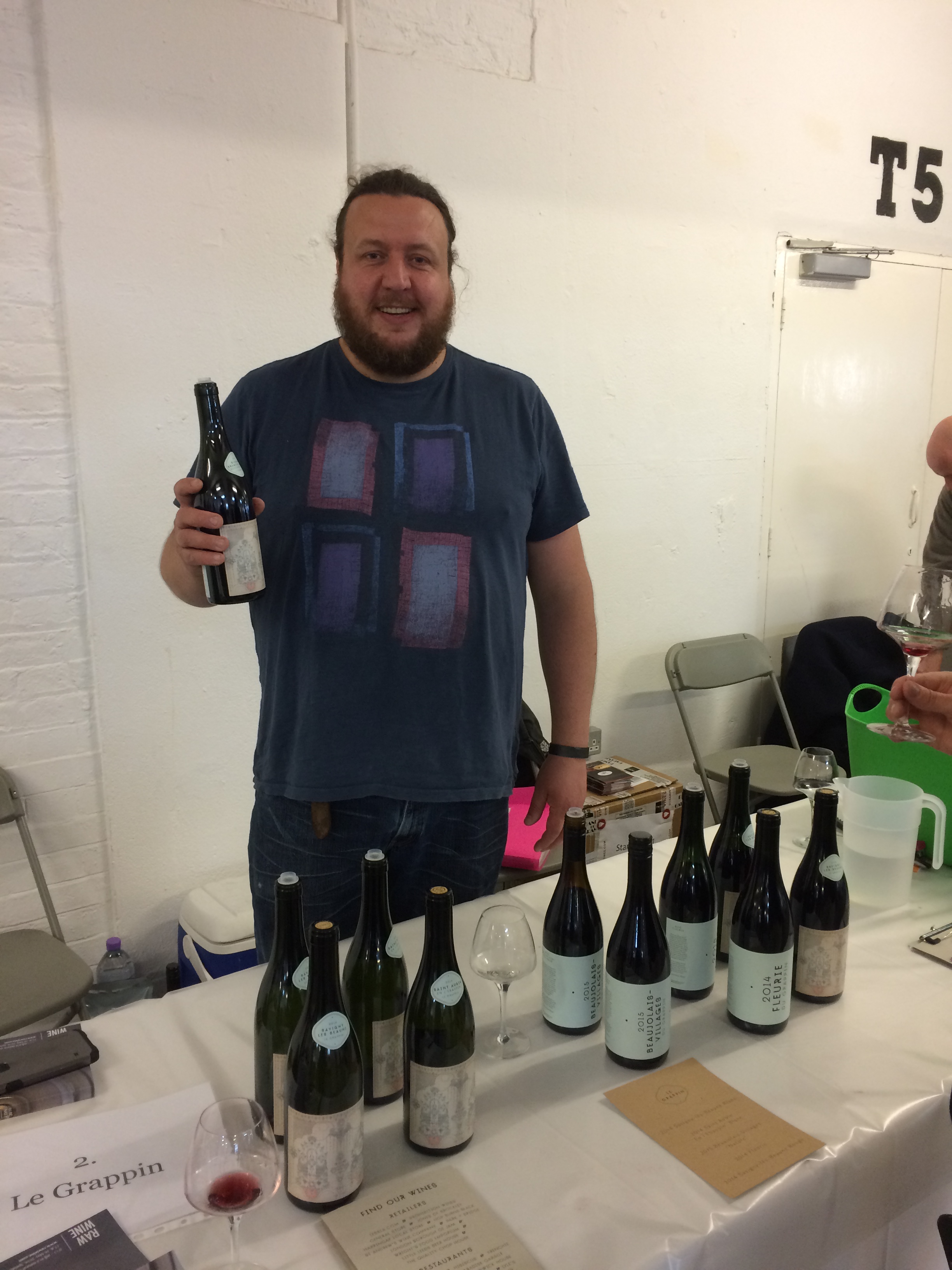
Chop Chop – Post Haisma/Le Grappin Lunch

Nine winoholics, or at least that’s how one sometimes feels in failing to follow the “Dry January” dictat,  had a table booked at Quality Chop House on Farringdon Road for a post-Vinoteca tasting lunch (it is work, you know). As we weren’t drinking First Growths, wall to wall Burgundy, or Clos Rougeard (which you could read about elsewhere this week, and last week…, written by the wine writing giants), I thought I’d give you some notes on what we had. As someone remarked, it was a bit like an Oddities lunch, but without the odd wines. Nevertheless, many of the twelve bottles we consumed don’t see the light of day too often.

Lanson Noble Cuvée 1989 – Dark and evolved, but still fresh, quite limey. Decent acidity but real depth, drinking really well. It’s the kind of Champagne to which people apply the word “vinous”. Someone mentioned this might be available at a good discount from a UK supermarket empire, so if you are prepared to risk the bright lighting, there may be a bargain to be had? Or not. But from a good source, superb.

image

Agrapart 7 Crus – A NV wine based on seven sites, four GC and three PC. This is typical of Agrapart’s bracing mineral style. These are biodynamic wines drawn from the chalky Côte des Blancs (Agrapart is based in Avize). The wines are almost rapier-like and this lovely example provided a perfect contrast to the more rounded-out Lanson.

image

Clos Hauserer Riesling 2004, Zind-Humbrecht – One of Wintzenheim’s Grand Cru sites, the Clos being part, if my memory is correct, of the Hengst vineyard. nicely aged (I’ve had many delicious 04s in recent years) into a smooth wine with impressive length. The acidity is diminished, but it is savoury, and at a guess appearing less off-dry than it may well have done several years ago (I didn’t see the ZH sweetness indice on the back label). This went well with the “salmon with horseradish” starter some of us ordered.

image

Rudesheimer Berg Roseneck Spätlese Alte Reben 2004, Leitz – This was in some ways characteristic Rheingau. Still quite a bit of sweetness, so it must have been at the riper end of the spectrum when made. Only 7.5% alcohol, another nicely rounded out wine, but in this case I was just desperate for a touch of acidity to balance the sweetness. Interesting to contrast these two Rieslings from the same vintage.

image

ACUSP Pinot Noir 2013, Costers del Segre, Castel d’Encus – This is very high altitude Pinot, partially fermented in old stone vats dating back to the twelfth century, no less. A lovely wine from our resident Catalan expert, always guaranteed from Charles. Light, and the colour of pomegranate juice, but totally precise and great fresh fruit. He handed over some Sumoll on Wednesday (along with some oh so delicious pannage pork), and perhaps I need some of this lovely wine too. [No photo – conspiracy theorists who think I want to keep this a secret are only 25% right, though it does retail at €40].

Chambolle-Musigny 2010, Hudelot-Baillet – Amazingly approachable now, more so than just about any good village wine from the Côte de Nuits that I’ve had from this vintage. I didn’t find depth and complexity, but I did find smooth fruit, some body and length. Am I wrong to think I’d glug this now if I had some?

image

Côte Rotie “Terres Rôties” 2007, Jean-Paul Brun – I think most people could see that this was a Rôtie made by someone outside the region (many will know Brun’s Beaujolais wines), and it was in many ways the least typical version I’ve ever had. But that should not detract from the fact that this was a really interesting, and enjoyable, wine. Dark colour, dark fruit, with some spice and fruitcake, and then blackcurrant pastilles and black olives. I try to avoid strings of descriptors like that, but in this case it seems apt to let loose. Someone on my table called it “a magnum in a bottle”. Absolutely spot on, Alex! It also went extremely well with our lamb.

image

Rioja Vina Real 1975, CVNE – My note says “old, aromatic, gorgeous”. Nothing short of a treat. A few years ago we all seemed to drink cases of very old Rioja, often from Lopez de Heredia and CVNE. There seems to be less about these days, so it’s always a treat when someone delves into the deepest part of their cellar and finds one. Sometimes you can end up being disappointed where storage has been careless, but it’s always worth the risk.

image

Rosso Toscana “Le Cupole” 2004, Trinoro – Another 2004, this time the Cabernet Franc based wine from Tenuta di Trinoro, based in Southern Tuscany’s Val d’Orcia. I’m not sure of the exact grape mix of the 2004, but usually it’s around 50% Cabernet Franc, plus or minus a few percent, with added Merlot at around 30%, the rest made up of varying quantities of Cabernet Sauvignon, Petit Verdot, and even Cesanese and Uva di Troia. So a real Super Tuscan. Quite brambley, though I might well not have identified this as a Tuscan wine blind. Quite resolved now, I’d say.

image

Chateau Musar Rouge 1996, Bekaa, Lebanon – There’s a bit of a debate at the moment among Musar lovers as to what the younger generation will do with this iconic red. Will they release the wines earlier than the current seven years they spend resting? Will they change the winemaking, in order to relieve the wine of its characteristic wildness? This wine, as if to send out a plea if they’re listening, was one of the real highlights of the day. Perhaps, in Musar terms, it’s still a baby. But one providing massive pleasure now whilst giving an insight as to where it might go. Lots going on here, kind of “three men in a boat”, as someone alluded to. Mellow, smooth, stupendous. No ’96 left in my cellar, which is a stark lesson to all.

image

Mullineux Family Straw Wine 2008, Swartland – I think this was the first release. Like most, I drank through that original purchase, yet I kept back one half to see how it might age. For starters it was quite a lot darker than my previous bottle. No oxidation though. It’s very much in barley sugar territory. Nice, impressive even, and tasting quite strong (for its 10.5%). It did improve over time, but it didn’t match the second dessert wine I brought along.

image

Riverby Estate Noble Riesling 2011, Marlborough – If you’ve been reading my Blog for a while you probably remember the Riverby lunch at La Trompette, and even further back, a Riverby tasting at Butlers in Brighton. I’ve met Riverby’s owner, Kevin Courtney, on a couple of occasions, and the whole range is pretty impressive for an estate hardly known over here. But although they are well regarded in NZ and Australia, their dessert wines are rightly lauded everywhere, and regularly win trophies in the prestige wine competitions in their home country. This 2011 has 11% alcohol. It tastes like honey drizzled on pineapple and sweet grapefruit, concentrated yet light and not remotely cloying. Rich, totally delicious, this is a fantastic wine by any measure.

image

A really nice afternoon – great wines, good food and perfect company. As one man said, after a while you begin to stop noticing those hellishly uncomfortable, and tiny, benches at QCH. Feeling a warm sense of contentment on a chilly afternoon, yet retaining the ability to venture out into the cold afterwards with no ill effects. After such a great tasting as well…a perfect day (although my team went on to lose at football that night, and soon after the final whistle a taxi drove through my neighbour’s front wall – thankfully no one was hurt, other than the vehicle and the wall).

imageimage

Posted in Dining, Fine Wine, Wine, Wine and Food | Tagged , , , , , , , , , , , , , | Leave a comment

Off to See the Wizards of Oz(gundy)

It’s that time of year again, and despite telling you in my last post that I wasn’t going to join the wall to wall wallpaper of 2014 Burgundy Primeurs Week, you know that when it comes to the annual Vinoteca Tasting, I’m going to make an exception. As usual, it’s a chance to sample the wines of the two Ozgundians, Mark Haisma and Le Grappin (aka Andrew and Emma Nielsen). Mark also showed the wines of Vincent Paris again, alongside those from the new venture in Romania Mark is connected with, Dagon Clan. We were also treated to an introduction to a young artisan from Gevrey who shares some space with Mark, Jérémy Recchione.

So, what do we think of 2014 in Burgundy? The introduction to the 2014 vintage review in Decanter this month described it as a “challenging year that has yielded some classic reds and beautifully approachable whites”. That is indeed a very broad generalisation, but in all generalisations lies a grain of truth.

image

Beginning at Le Grappin, I tasted five whites, starting with their tasty Macon Blanc, sister wine to the Fleurie we have already bought. It comes from vines near Péronne, just north of Clessé (so classic Macon territory). I can foresee Andrew working more and more with fruit from down here, a clear source of value as well as quality. This was followed by four Côte de Beaune whites – Savigny, St-Aubin, Santenay and Beaune, the latter two, premier cru. I’m not sure everyone agrees with my favourites, but the St-Aubin “En L’Ebaupin” appealed a lot. I stayed several times in La Rochepôt many years ago, and this site sits right up on the northern edge of the Saint-Aubin AOC, just over the hill from that village. It’s lovely what Andrew has done with this fruit. Probably harder to make than my other favourite white, the Beaune “Grèves”. But all the whites were very good. You could buy any with confidence.

image   image

Andrew doing his thang!                                   Mark working the floor!

I hope that in saying that the Reds fall more into the “classic” camp, it won’t seem like a negative. But Andrew’s Savigny red and his Beaune “Boucherottes” were quite different from the 2013s. The depth does not appear to be there at this stage, yet they are perfumed, elegant, and without any doubt a very creditable pair. I’m really reticent to judge them at this stage of their life, and with my relative lack of experience compared to the true Burgundy pros. But I think they will be delicious.

Of course Andrew and Emma faced one genuine difficulty in 2014, and that’s the price they had to pay for the grapes. It’s a credit to them that they have kept prices from rising more at the consumer end. Perhaps the best way to try Le Grappin’s wines is to purchase one of their Sampler Cases, a little over £200 all in for a bottle each of the six Côte de Beaune wines. Or find them at one of the London markets they attend, where they also sell their increasingly famous “bagnums”, along with the Macon and Fleurie.

Mark Haisma showed a long list of wines, but I started off with a taste of what he’s doing in Romania, in Dealu Mare, with little doubt the country’s most dynamic and exciting sub-region, east of the Carpathian Mountains. There were three Dagon Clan wines. A white called “Clar”, meaning Clear, is made from Féteasca Alba aged in oak, of which 50% was new. Then a pink, called “Har” (meaning Grace). This is a blend of 75% Syrah and 25% Cabernet Sauvignon. The red, called Jar (meaning Amber, hope I’ve got that right) is composed of 60% Féteasca Negra and 40% Pinot Noir, with some new oak.

image

These are naturally commercial wines, but very well made. The rosé is the simplest, being soft and smooth and a wine I’d be happy to sip in summer. The red has a bit more bite and a super nose. It’s a bit more serious and a lot more interesting. For me, the White was the star of the three. It seemed to have a degree of complexity and this local grape seems of very high quality, especially as handled by Mark.

The wines from the Mark Haisma stable in Gevrey were very much in the usual mould – very high quality with good fruit to the fore and, in many cases, an exquisite bouquet. I tasted far too many to note them all, so what was especially good or interesting? In the latter category I thought the Aligoté was an exemplar. Brilliant nose and no overarching acidity. Not cheap for good Aligoté, though. The other interesting white was the Viognier 2015. This is a Vin de France, though it does hail from the Northern Rhône. Mark wasn’t very specific as to where his secret stash is located, but he was prepared to say “higher altitude”. Detectives away! 14% alcohol, but so fresh you’d probably not guess.

image

Turning to the Burgundian wines I’d recommend most, this gets difficult as everyone has their own favourites. Mark’s Nuits “Charmotte” was bright in all senses. I enjoyed contrasting the Volnay (truly gorgeous nose but light on palate) with the Pommard 1er “Les Arvelets” (less aromatically friendly, but good body and a pleasant earthiness, more serious). Everyone was extolling the virtues of the Clos de Bèze, but as it was an oldie, it’s unfair to play that card. I tasted a delicious Bonnes-Mares, which impressed with it’s colour and didn’t look back. The Morey was superb as always. I never know whether it’s just me, but this particular wine has something, a tiny something, that truly appeals.

image

Onto the Cornas. Pretty much everyone is calling 2014 a white wine vintage in the Northern Rhône. Some critics have even gone into print suggesting we drink the Reds from the off (or “right from the gate” – Jeb Dunnock on “erobertp…”). John Livingstone-Learmonth recommends them for their “delightful pleasure” (on his “drinkrhone” site).

The standout wine for me, here, was the Vincent Paris Granit 60. A big step up from the “30” as always, but more so, I think, in this vintage. But then I also like what Mark does with Cornas, and his 2010 still stands out among the increasing number of producers bringing this village to market now. The wine on show yesterday was just so approachable you’d not believe it. Whether that means it will be an uncharacteristically short-lived version, I have no idea, but I’d be happy to drink it sooner than usual.

image

Before curtailing this post before it becomes a jumble of tasting comments, I must mention those wines from Jérémy Recchione. I really wanted to chat with him, but the usual crush of the small room at Vinoteca, and a lunch appointment, stopped me from doing that. I think he owns no vines, so in that respect he’s like Mark. The whole range from the Bourgogne upwards was pretty impressive from someone who looked so young. I’d love to spend more time trying these wines, and perhaps that might happen next trip. In the meantime, try them if you get a chance, though I didn’t get any prices. There seems to be some potential here and I wish him and his partner every success.

image

The crush at this tasting, even in the morning, is testament to the popularity of the two Aussies, both of whom are really nice blokes who know what they’re doing with their grapes. To be honest, with my train twenty minutes late, I had less time than I’d have liked. But it doesn’t matter. The key with all wine is to trust the producers you like, and the wines I tasted yesterday, from a somewhat difficult vintage, did confirm that strategy.

image


Posted in Burgundy, Rhone, Wine, Wine Agencies, Wine Tastings | Tagged , , , , , , , , , , , , | 2 Comments

A Prod in the Right Direction

With the rising prices of Burgundy and Bordeaux, and perhaps the current “out of fashion” status of the latter, there has been a sudden explosion of articles about a so-called new investment opportunity, Barolo. It’s a region of mainly smaller independent producers and some older, larger firms, coupled with an increasingly well defined and mapped terroir in Barolo which makes Burgundy lovers wriggle with joy. Nevertheless, good Barolo is both expensive, and ageworthy, by which euphemism we mean that if you buy a good one you’d best leave it a decade, or maybe two.

But Barolo has a sister region…or is it a little brother? Really, I don’t think Barbaresco is either of these. Kerin O’Keefe, in her 2014 book on the two regions, calls them the “King and Queen of Italian Wine”, which sounds good to me. To place Barbaresco behind Barolo may be fair enough to some degree. The wines of Barbaresco are released a year earlier than Barolo, and they are often approachable earlier too. Except in a few well known cases, Barbaresco rarely commands the price of a Barolo of equivalent quality, despite the fact that the Barolo zone is well over twice the size, in hectares planted, than the smaller Barbaresco zone.

All of these things I see more as advantages, rather than negatives, to the wine lover looking for an excellent value Nebbiolo. And where better to find that value than one of Italy’s finest and best known wine co-operatives – The Produttori del Barbaresco, or as it is more affectionately known to those who hope to hide its identity, The Prod.

This week I opened a bottle of the Produttori’s generic Barbaresco. It was a 2004, an excellent vintage and, at just over a decade old, at a good age to sample it. Would it be over the hill, dried out and dead? Obviously not. Although characteristically brick red at the rim, the core was still a deep garnet red. The nose was certainly recognisable as Nebbiolo. There are many interpretations of this, from the classic “tar and roses” to the “black cherry and violets” of this one’s back label. Some find liquorice, coffee and spice as well. But there’s always a beautiful fragrant top note underpinned by a profound, deep bass. Here we had plenty of tannin still, but the fruit and texture wells up and comes through on the finish. Delicious.

image

The Produttori has around fifty members who farm just over 100ha of vines (more than one fifth of the DOCG), all Nebbiolo. They produce about half-a-million bottles of wine most years, under the watchful eye of the eminently experienced General Director and all round Nebbiolo expert, Aldo Vacca. However, it’s not really the generic Barbaresco bottling where this co-op scores highest, nor with its excellent Langhe Nebbiolo. Their secret lies in the range of single vineyard bottlings, the Barbaresco Riserva Crus, which represent possibly the finest values in the whole region. These are fine wines, capable of ageing like the top crus of Barolo, but they cost a fraction of the price.

Produced since 1967, the nine individual Crus are Asili, Montefico, Montestefano, Muncagota, Ovello, Pajè, Pora, Rabajà and Rio Sordo. They may not trip off the tongue like the famous Barolo crus, but I’ll bet a few ring a bell. It’s a roll call of some of the DOCG’s best sites.

These are wines for laying down. They are also wines which express their own individuality. It would be unfair to try to rank them, because each vintage has different conditions, so one year one site might win out, another year bringing a different winner…if you score wines out of 100. If, like me, you don’t, then you just enjoy comparing their differences. And you can reasonably hope to do this because they don’t cost the earth.

image

What do they cost? They are all reasonably easy to get hold of and you can find the Langhe Nebbiolo for around £15, the generic Barbaresco for around £25 and the Crus for around £45/bottle in the UK. If you are very keen you might be tempted to invest in one of the rare collector’s cases they produce. You get a bottle of each of the crus in a nice wooden box. There are currently a few cases from the 2009 vintage I’ve seen knocking around at £320. That’s a significant saving.

It’s worth noting that interest really seems to have begun to pick up again in Barbaresco, as Italy and her overseas markets recover from the international slump at the beginning of the decade, and as the word gets out about the quality and value of the wines being made in the shadow of Barolo. The mapping and delimitation of the individual sub-zones of the region has helped too, allowing the wine to appeal to serious wine lovers in a way that the generic blends of the larger bottles might not have. There are currently, I believe, 66 of these crus, dividing a production zone of less than 500ha. Yet one shouldn’t shun the wines blended from multiple sites. For starters, some of the delimited sites are much better than others. And one only has to look west to Barolo to see some lovely, successful blended wines. Unlike in Burgundy, and certainly in Alsace, it will be time and the market which will decide which are the Premier and Grand Crus of Barbaresco, as seems to be happening already in Barolo.

Of course, instead of buying bottles at home, you can always pay them a visit. The region of Piemonte is one of the most under rated in Italy, and only a devoted coterie of Nebbiolo fans seem to venture there. Wine tourism is pretty well developed for tasting visits (the Produttori is easy to find in Barbaresco, close to photo opportunities outside Gaja’s premises on the same street, and several decent restaurants). The scenery is lovely, whether the Langhe Hills around Barolo and her sister villages, with their wonderful vistas and vineyard walks, the impressive hills and villages of Barbaresco’s DOCG (centred on Treiso, Neive and Barbaresco itself), or the more compact, steep slopes of mainly Moscato and Barbera around Mango and Nizza Monferrato, in between. Alba is the centre of what is one of Italy’s finest regional cuisines, certainly not limited to the famous white truffles. As for accommodation, Piemonte is peppered with Agriturismos, offering bed and breakfast and, in many cases, an on-site restaurant as well. Many, if not most, of these are on wine properties, some belonging to famous names. Why more tourists from the UK don’t visit, I don’t know, other than for the attachment we have to Tuscany. Worth a detour, as they say.

The Produttori del Barbaresco is at Via Torino 54, 12050 Barbaresco CN. Call them on +39 0173635139. Or check out their web site (link in bold above).

image

Posted in Italian Wine, Piemonte | Tagged , , , , | 4 Comments

And Now For Something…

I rarely write about the wines I drink at home, but this week social media has been awash with one thing, Burgundy en primeur. Well, that’s not entirely true. Those lucky wine writers big enough to be invited to the launch of Krug’s 2002 vintage have been sharing their adulation too. But I have to buy my own Krug, or sidle up to a nice wine friend, so even if I am granted a taste of the ’02, it won’t be for ten-to-fifteen years, when it actually starts to become ready to drink. So I thought I’d be different.

That seems to fit nicely with a post by fellow Blogger, Steve Slatcher this week on his Winenous Blog, where he discusses the difference between tasting and drinking. I go to tastings, as you know. If I need to decide which 2014 Kabinetts to buy, then tasting through sixty bottles requires a particular focus and method, but enjoying wine at home is where the real pleasure lies. As my palate has moved away from bigger blockbusters to more subtle bottles, I find that the differences between the two activities increases. Of course, we all know that wines we enjoy over an evening, when the wine develops nuance in the glass, so rarely stand out in a tasting line-up where that nuance is lost in the speediness of  the four s’: swirl, sniff, sip and spit.

So here are a few bottles I have enjoyed since Christmas. Of course, there have been others. Just as I actually love Burgundy and Krug, I’ve also enjoyed wines by Bollinger, and indeed several others. But they are not the interesting bottles.

Arbois Pinot Noir 2013, Domaine des Bodines (12.5%)

This domaine, run by Emilie and Alexis Porteret, is just on the edge of Arbois on the road to Dôle. Their holdings are small, under 4ha, but they are really getting a great name for themselves, aided by their snappily named pét-nat, Red Bulles. Since I discovered them in 2014 I’ve had a string of delicious wines. This Pinot is very fruity in the best natural wine tradition, and the fruit bursts out from the glass. Just a touch of appley acidity might make it a challenge for more conservative tastes, but for me this is delightful, in the best sense of the word. Gluggable. One bottle is hardly enough.

image

Gamay “Cueillette” 2014, Vin de France, France Gonzalvez (11.5%)

At the three Beaujolais dinners last year France’s wines did well, but they didn’t shine as much as others. Yet in drinking them at home, they have been truly lovely, and I think some of the major wine writers have already discovered them. Quaffable cherry fruitiness, though not ephemeral at all. It’s Fresh and persistent. France is taking her place, alongside fellow female winemaker Julie Balagny, at the exciting tip of the New Beaujolais adventure. Striking labels too, as with Julie. The guys need to step up on this front.

image

Time Flows 121bC 2012, Vignaioli – Contra Soarda, Veneto (13.5%)

This is a skin contact Vespaiolo which would never win a medal in a wine competition, yet over Christmas lunch it unfolded like one of those lovely “Slowfilm” productions (anyone see the Sleigh Ride real time journey in Northern Norway, best thing on TV all Christmas!?). Very dry, textured, yet with an underlying richness. On the surface it appears simple, even dilute. Underneath there are layers which slowly reveal themselves. Haunting, lovely, and perhaps also profound.

image

Mokka & Dunkle Beeren Zweigelt 2012. Christoph Edelbauer (14.5%)

Most Zweigelt is of a more gentle nature than this blockbuster from Langenlois in Austria’s Kamptal (just east of Wachau). This is dark in colour and the bouquet almost brings to mind a sweet wine. But with the power there’s a touch of restraint and complexity, though the mouthfeel shows a thickness of texture I’ve not encountered with this grape variety. Do I like it as much as Claus Preisinger’s lighter Kieselstein? Perhaps not, but this is really well worth a go to see how far you can take Zweigelt.

image

Riesling Sekt Brut, Maximin Grünhauser, Mosel (12%)

This gets a mention as an oddity I picked up in Bernkastel. For all Riesling’s delicate finesse, this is rarely translated into the sparkling version. I won’t argue this completely breaks the mould, but that Saar steel gives a certain precision to a broad wine. The Grünhaus makes some of my favourite German wines. I’m not sure how easy it is to find this outside Germany, but I hope I’ll find more next time I’m down that way. One of those sparklers which works well with food.

image

Etna Rosso “Allegracore” 2013, Fattorie Romeo del Castello (13.5%)

Not a Sicilian producer I’d heard of until this was recommended by a wine friend whose knowledge of the shelves at Winemakers Club is unrivalled (thanks Tony – he also recommended the Vespaiolo above). This is mainly Nerello Mascalese, which really is one of my favourite Italian grape varieties. It’s very pale. The nose is on that cranberry tissane spectrum. It’s not remotely like you’d imagine a wine with 13.5% alcohol should taste – real delicacy, very beautiful. Another wine which would die in a mass tasting, heading for the highly uncommended bucket. How wrong they are!

image

Wiener Gemischter Satz “Nußberg” Alte Reben 2012, Wieninger (14.5%)

For GS fans, this is one of the big sites, a kind of Viennese Grand Cru. Look at that alcohol! Not one of your light and spritzy Gemischters here. Very serious, old vines, darkish yellow, complex in every way. This performed much better than Wieninger’s Bissamberg, which I took to an Oddities lunch a while ago. 2012 was a very hot and dry year in Vienna, as the high alcohol suggests, but the Wieninger vines are cultivated biodynamically here and they coped well with the stress. There are nine varieties which make up this wine, including rarities like Rotgipfler and Zierfandler.The palate is broad but the minerality of the terroir keeps it focussed. Tiny quantities. You’ll find few more impressive versions of a Gemischter Satz, though due to the hot vintage it is not entirely representative.

image

Arbois Pinot Noir “L’Ingénue” 2014, Domaine Ratapoil (11.5%)

Like the Porterets of Bodines, Raphaël Monnier is one of Arbois’ young winemakers, trying to survive with around 2.5 ha of vines, and he’s only been going for around five years so it’s a great achievement to find his wines in the UK. He’s actually based way north of Arbois, near the World Heritage site at Arc-et-Senans, by the river Loue. His wines are all characterised by certain traits common to many natural wines – more than anything, a bright fruitiness which many might find almost overwhelming. Indeed, someone remarked about a week ago on Twitter that they didn’t really get on with this cuvée. This bottle, from a single parcel called en Paradis, was really nice. For me, Raphaël’s Poulsard is even better, but for a taste of this young vigneron do pick up one of these if you see it. Definitely a Domaine I shall keep up with.

image

What am I drinking now? Figuratively speaking, because it’s 11.30am and I don’t have a glass in hand…I’m half way through a bottle of Barbaresco, but I think there’s another Blog post in that.

Posted in Austrian Wine, Jura, Natural Wine, Wiener Gemischter Satz, Wieninger, Wine, Wine Tastings | Tagged , , , , , , , , , , , , , , , , , , , | Leave a comment

New Glasses – Should’ve Gone to Spec Savers

You’d have thought that the readers of the Daily Telegraph were as au fait as anyone with the appropriate stemware for Champagne. In an article on 27 December written by Camilla Turner, the author recommended flutes over the bad old coupe. That may sound old hat to fellow wine obsessives, but the article is interesting because it brought up some research, which has been knocking around for a while, by Professor Gérard Liger-Belair at the University of Reims, on how the bubbles in our favourite wine influence taste.

Liger-Belair wrote a great article in Tong Magazine (Issue No 4, back in Winter 2009), titled The Science Behind The Bubbles. It’s well worth digesting if you can get hold of it. I don’t propose to paraphrase what is a complex article, but the analysis does confirm what we all know – that in a flute the bubbles will rise more vigorously and for longer than in a glass which is both wider and shallower, like that 1960s/70s abomination, the coupe (with all its connotations as to origin etc).

Although many factors affect the mousse and bead of Champagne (including age, serving temperature, etc), there is no doubt that the flute can be the perfect vessel in which to admire the spiralling fliers, the strings of bubbles which flow from the very bottom to the top of the glass, where they break on the surface and give off their aromas. They do this by helping to bring chemical compounds in the wine to the taster’s nostrils, a process which has been verified by ultra high-resolution mass spectrometry.

Find out more about Professor Liger-Belair at phys.org – Champagne Physicist Reveals the Secrets of Bubbly.

So far, so good. Camilla Turner’s suggestion that if your Champagne is not tasting good (keeping aside the possibility that what you bought cost a tenner at a large supermarket), “it could be in the wrong glass”, holds true for recommending flutes over coupes. But if you read this Blog, you may be aware of a trend to use larger glasses for Champagne, especially when partaking in the practice, heaven forbid, of drinking Champagne throughout a meal (and let’s set aside the sacrilegious propensity of some Champagne geeks to carafe a bottle from time to time…okay, guilty).

So I thought I’d run through a few ideas I have on the subject. I can certainly claim extensive research, including comparisons using one Champagne in three glass types. But I don’t claim to be right. Two of the Champagne lovers whose opinions I value most retain a clear preference to use a flute, albeit one of Riedel’s finest. So what are the options?

image

Left to right: A Heal’s flute, John Lewis tulip, Riedel “Chianti” and Zalto Universal. I’m afraid I didn’t have a coupe to hand.

The flute itself has many advantages when serving Champagne as an aperitif to lots of people. Aside from the reasonable cost of providing a dozen or two flutes, they also accommodate a smaller quantity of wine (easily topped-up) without seeming mean, and the wine will remain fizzy for longer. It is also easier to avoid spilling the wine than if serving in a larger glass, like the Riedel, when gripping a flute in the same hand as a plate of canapés.

A good alternative to the flute is the tulip. This begins at its base with a deep and narrow space for the bubbles to get going before widening out more than the flute to create a small bowl. Then it tapers to the rim, to create the tulip flower shape. This allows for a steady train of bubbles like the flute, but with a much enhanced aroma spectrum, with more and different aromas coming to the fore, at least for me.

image

I mentioned Riedel. Their Vinum range glass, variously called “Riesling/Sangiovese”or “Chianti” has kind of become an industry standard for tasting Champagne in competition conditions. This is the glass used by Tom Stevenson and his team at the Champagne & Sparkling Wine World Championships, which is establishing itself as the pre-eminent arena for selecting the finest fizz every year. But this glass has also been in use for several years in some of Europe’s finest restaurants for serving Champagne with food. I can remember the revelation of being served Clos des Goisses in such a glass at The Ledbury in London many years ago. The glass, preferably when filled to between a quarter to a third full, clearly enhanced the winey nature of perhaps my favourite Champagne of all, or to sound slightly more technical, its vinosity. This is down to the larger bowl and wider rim, but go any larger and you risk the same problem as the coupe – the bubbles dissipate far too quickly. The larger Syrah or Burgundy glasses in the same range just don’t work as well.

image

Of course, vinosity isn’t something everyone wants from a Champagne. First of all, to many, Champagne remains just an aperitif, something to wet the palate and stimulate the tastebuds before the so-called serious business begins. Equally, when tasters remark on how a fine Champagne tastes like fine White Burgundy, critics will say that if they want to drink a Bâtard-Montrachet, they’ll drink the real thing.

That’s fair enough, but some of us see Champagne as a wine in its own right, just like any other. We want to explore all its nuances and possibilities. A larger glass enhances that journey, highlighting different aspects and facets of the wine. The bubbles subside more swiftly, and the aggressive carbon dioxide hit of the flute is replaced by something altogether more gentle. Without quite as many bubbles, the aromas of the bouquet and the multiple flavours on the palate are more pronounced. Personally, I find that not only does this enhance the possibility of enjoying Champagne with food, it actually transforms the experience.

image

So, having established a subjective rationale for trying Champagne in a larger glass with food, is there an alternative to the Riedel Chianti glass? Recently, I’ve been exploring the options provided by Zalto. Zalto’s Champagne glass has a bit of a marmite reputation among Champagne lovers, but I love it to bits. It has a long, fine, stem and a relatively small bowl. However, the half dozen I own are kept strictly for best. They are almost literally as light as a feather and I really fear breaking them. If it’s delicacy in Champagne you want to show off, this delicate glass is the place to pour it. But I also have a stash of Zalto Universals.

image

Zalto’s featherweight Champagne glass

 After using a variety of Riedel and Schott glasses for different wine styles, the Zalto Universal has been almost revelatory in the way it lives up to its name. It seems to enhance quite a variety of wine styles, and it seems to work pretty well for Champagne with food as well. It has a larger bowl than the Riedel, although as you will see in the photograph near the top of this post, it tapers quite sharply to the lip, so that the circumference of the rim is not over large. The main difference between the Zalto Champagne glass and the Zalto Universal, obvious from the photos, is the deeply pointed base of the former. This helps to generate the train of bubbles I mentioned in relation to the tulip (there’s a great scientific explanation of how this works in the Tong Article).

It’s really just a question of experimenting and deciding which you prefer, but please do experiment. You may decide, like my two friends, that the flute is really the one for you. But you might find that sipping your Champagne with food brings a new dimension to your appreciation of this versatile wine, and that doing so from a wine glass enhances the experience.

What types of Champagne go with food? Perhaps look for bigger wines like Clos des Goisses, Selosse, or anything which tends towards being slightly oxidative in style. Wines from perpetual reserves (often called soleras by the journalists, though many of the producers really dislike this term) work well, and there’s no better example than Bérêche’s Reflet d’Antan cuvée. Along with Goisses, many other single vineyard wines work well as they are generally very expressive of place or terroir. For something less expensive than the Krug pair, try Taittinger’s Folies de la Marquetterie. My own personal taste is very much to use Chardonnay, or Blanc de Blancs, Champagnes with food, but that may just be my personal preference. Many of the grower wines from the Côte des Blancs fit the bill. Pierre Péters’ Les Chétillons would be high on my list. And whatever you do, don’t forget the pinks!

image

What should I eat with Champagne? Champagne is more versatile than you might think. I’m sure it’s not difficult to imagine it with some monkfish, or a lovely piece of turbot. But take a look at Michael EdwardsThe Finest Wines of Champagne (Fine Wine Edns/Aurum, 2009). Chapter 9, Champagne Gastronomy, not only lists some of the author’s favourite tables in Champagne, there is also a host of food suggestions, dishes created by the region’s innovative chefs. Local cheeses and andouillettes, game (especially rabbit), pork, poultry, along with pretty much anything you’d cook in a Champagne sauce, in addition to many fish dishes, are all enhanced by Champagne. Especially with the edge slightly taken off the wine by serving in a larger glass. Even wild boar is suggested, and I’d be reaching for a nicely aged bottle from Selosse to go with that dish.

image

Ooh, turbot! Verveine Restaurant, Milford-on-Sea, Hampshire. We drank Bérêche’s Reflet d’Antan with it.

Where can I buy my glasses? Not as silly as it sounds. Flutes are easy. Take your pick between a charity shop and a much finer model from someone like Riedel. In between you’ll find a good thin flute at department stores like Heal’s or John Lewis (for British readers). The key is thin glass and a thin rim, so the kind of glasses once given out by petrol stations in the UK won’t do. Neither, sadly, but in my honest opinion, will the heavy cut glass models you got as a wedding present. We have two large Dartington models which would hold about half a bottle each, and take two people to lift. They have yet to see the light of day.

Tulips are easy to find these days, and Riedel probably make the best in general production. John Lewis used to sell the best value version, lovely shape, thin. For some reason they stopped making them, but the four I have left are by far and away the most frequently used glasses for sharing a bottle of Champagne as an aperitif with a couple of friends at home.

Zalto glasses are less commonly seen in the UK than fellow Austrians, Riedel, although as their fame grows one sees them in more and more restaurants as the months go by. For all Zalto glasses, contact Daniel Primack of Winerackd (sic), working out of the Winemakers Club premises on Farringdon Street, London. Daniel has a nice little piece on his web site as to why the wine glass is important.

 Before leaving you, I would just like to share this little gem, the Beer Anorak Beer Glass, designed by Daniel with “Wine Anorak” Jamie Goode. After all, we Champagne fanatics do drink beer as well. This glass had a very small production run, though there may be a few left. It’s so easy to be sceptical about how this odd looking glass can really enhance our enjoyment of beer. But it worked for me, and also for the occasional beer drinker in our house. I love it. It’s especially good for the aromatics.

imageimage

NB – all photos of Champagne bottles are completely gratuitous. Other Champagnes are available should you prefer not to drink these. Indeed, there’s a whole world of fine sparkling wine out there to try, regions and countries far too numerous to list. It would be a real shame to restrict your exploration of these lovely wines to a glass sipped mid-conversation in a crowded, noisy, room whilst balancing a plate and a fork.

Posted in Wine, Wine and Food, Wine Glasses, Wine Science | Tagged , , , , , , , , , , , , , , | 7 Comments