Recent Wines April 2024 (Part 2) #theglouthatbindsus

Part 2 for April is, somewhat similarly to Part 1, made up of a mix of the wines I usually drink and a bottle which doesn’t feature very often these days. We begin in Jerez, zip around Europe via Côte-Rôtie, Alto Douro and Hungary’s Great Plain, before a long-distance flight to Gippsland in Australia.

La Bota de Fino 68, Equipo Navazos (Jerez, Spain)

This is a bottling of June 2016 (6,500 bottles to be precise) from a solera at Valdespino. The grapes all came from the single site of Macharnudo Alto. The average age of the wines on release was between ten and eleven years old, the casks selected from criaderas 1-3. It was, of course, bottled unfiltered and without additives.

This is an old EN Fino, as those familiar with their Bota numbers will be aware, and it has had eight years in bottle resting in…I’d like to say my cellar but this was introduced into my Brighton cellar and it has now spent the past two years in three others, finally settling here in our new house. All I can say is that although I sadly don’t have any Vintage Port, nor very much Bordeaux these days, perhaps it’s for the best.

For all the old fuddy duddy folks who say the Fino is not for ageing, I say drink this. They are simply wrong! The yeast influence does feel strong here, making for a pungent, spicy, wine of enormous complexity and some considerable intensity, though it’s a very different intensity than that of its youth. “Muted” would definitely convey the wrong impression, although the restrained beauty of the sound made by a muted trumpet might be an apt analogy. In fact, I see that EN themselves suggest “connoisseurs may age [it] for many years”.

This sensational wine would be hard to track down now, I presume. This came directly from the producer on release, but Alliance Wine is the UK agent for Equipo Navazos. You could take any current release Fino and age it like this.

Côte-Rôtie 2005, Michel & Stéphane Ogier (Rhône, France)

I used to be a big drinker of the wines of the Northern Rhône. I remember my first visit to the vineyards of Hermitage, Condrieu, Château-Grillet, Cornas and Côte-Rôtie with great affection, as I remember those wonderful bottles of Georges Vernay, Auguste Clape, and especially Gérard (at that time) Chave. The wines of Michel Ogier sort of became a Chave substitute. I began buying them as I had to stop buying Chave. It helped that his wines used to be sold by Waitrose, at least at their key London locations. A fair few were purchased during their “25% off all wine” promos back in the day (along with the odd Prestige Cuvée Champagne).

This 2005 harks back to the days when Michel was still pretty much at the helm of the domaine, albeit with his son, Stéphane, effectively making the wine. The Syrah fruit is a blend from the two larger sites of Côtes Brune and Blonde. To this is added a splash of Viognier, and the Ogier Viognier has always been quite special in my view. Not one of the naysayers, I am convinced that the seasoning with this white variety does make a difference, whether here in the Northern Rhône or at one or two special producers in Australia.

At nineteen years old this is, I think, fully mature, but magnificently in its prime. The colour is purest translucent ruby, the fruit on bouquet and palate ranges from raspberry high notes to a plummy base. If there is any hint of bacon then the fruit smothers it, perhaps unexpectedly. It’s smooth and clean, the tannins having given way to a soft, velvet, texture. Splendid sounds a good word to describe it. It was my last of their 2005s, and despite some critics giving this a drinking window up to 2020, this is the best 2005 I’ve drunk from this father and son team. Indeed, I think it was my best Ogier wine so far.

My sources for Ogier were the Waitrose food hall in the basement of John Lewis on Oxford Street, but their web site no longer lists Ogier (the overall range has changed considerably from those halcyon days), but also Berry Brothers & Rudd. They continue to stock much of Stéphane’s now expanded range of cuvées.

Uivo Rabigato Branco 2022, Folias de Baco (Alto Douro, Portugal)

What a contrast to the previous wine, you might think. True, but make no mistake, this is a cracking wine and one that offers remarkable value. Despite the undoubted quality of the Côte-Rôtie above, you couldn’t really say that about it. Like the red version of this I drank back in March (Renegado), this hits well above its weight/price.

Tiagio Sampaio makes these wines in the Alto Douro’s Cima Corgo. It’s fascinating that even though the Douro is now much better known for unfortified wines (mostly red, it must be said) than it once was, the steep slopes of the Cima Corgo do grow some of the best fruit for Port, the region’s more famous wine.

This white wine is a field blend, but the dominant variety is the autochthonous Rabigato. The soils are schist-based. The wine was fermented in stainless steel and then aged four months on lees, then a further four months off the lees. It’s a natural wine and was bottled unfiltered.

Now, I can’t say I can pinpoint the exact location for these grapes, but I know Cima Corgo is pretty hot. This white, however, is super fresh, cleanly mineral, with citrus zip. The bouquet seems to blend an array of garrigue-type herbs with a wafting note of violet. Unusual but pleasant. Just a tiny addition of sulphur here.

Not only does Tiagio follow biodynamic practices, the vineyards of Folias de Baco are part of a wider project for biodiversity and wildlife restoration in the Upper Douro.

This was purchased from Cork & Cask, Edinburgh (£22). The importer is Modal Wines.

Kékfrankos Diófás 2019, Sziegl Pince (Hajós Baja, Hungary)

As Blaufränkisch, its name in Austria, this variety is just beginning to gain justified wider recognition as a producer of fine red wines. Kékfrankos, its name in Hungary, has always been a mainstay of that country’s red wine scene, arguably producing its finest red wines too.

This wine comes from Hungary’s Great Plain, a region with sandy soils, once best known for supplying the country’s urban workforce with high volume, cheap wine. Things are obviously changing. The couple synonymous with Sziegl Pince began grape farming when, as postgraduates in their very early twenties, they were given a parcel of old vines as a gift in 2012. They have since increased their holding to 8.5 hectares.

A profound love of their home and its nature means that no synthetic chemicals are used to make the wine, and the vines never saw the industrial farming of the Soviet era because the sandy soils weren’t suitable for mechanised farming. Diófás is a single site, one of the best plots they have. The fruit ripens without loss of acidity, which needs to be retained in the best wines made from this variety. Fermented via a mix of crushed fruit and whole clusters in open vats, ageing is 18 months in used oak. The wine then rests in bottle a further 18 months before release.

The bouquet is lovely, nice peppery, crushed cherry. The palate has good juicy fruit, but there’s also a bit of grippy tannin. It makes for a nice food wine, but equally it will age further. I think this is a very impressive wine, especially for the price. £25 from Basket Press Wines.

I tasted this late last year and it really impressed then, even more so as a whole bottle drunk at home in late April, after a little more time resting. I think it has now sold out, and I can’t find it at any of the retailers who stock the Sziegl Pince wines. However, more may arrive in the UK. This is very highly recommended, and would surely cost more if it was an Austrian Blaufränkisch with a louder label.

Tonimbuk Amphora Granite 2020, Nikau Farm (Victoria, Australia)

New Zealand native Dane Johns continues to plough his own very special Australian artisan furrow at his family’s farm, where he lives with wife Hannah, in Gippsland, SE Victoria. The farm totals 95 acres, but there are just two hectares of vines right now.

Dane started out in wine, after a decade working as a Melbourne barista, working with William Downie, and first became known individually for his Momento Mori label, mostly using Italian varieties. From the start Dane followed a zero-zero approach to additives, including a no-sulphur regime. It perfectly reflects Dane’s approach to his first career as a musician, making electronic music but using analog equipment.

Tonimbuk is the district, amphora is the vessel and granite is one of the soil types, among several, in the vineyards. The wine is a blend of Pinots Grigio and Gris (listed as separate varieties, I’m not sure why), Chardonnay and Sauvignon Blanc. The result is an amber wine of some complexity, a wine you’d probably guess spent time in amphora. That said, it isn’t too overtly textured. Adjectives which come to mind are alive, generous, vibrant, with hits of orange and ginger. Ironically, this is an easier drink than the 2019 “Tolone” Riesling, my last Nikau Farm wine. I loved that wine’s individuality, but with 10% abv it was quite lean and bony, probably not for the uninitiated.

However, all of Dane’s wines are thought-provoking, and perhaps deliberately challenging. This is almost certainly why I would place him in a clutch of Australia’s most exciting winemakers, pushing boundaries with wines of genuine personality. UK prices are somewhat steeper than back in Australia (I can tell you from having bought Dane’s wines there as well). I was lucky as The Solent Cellar had this discounted from £45 down to £35 (perhaps a tough sell), though I think I got the last bottle. I’ve seen Tonimbuk for £60 in other stores here.

The abovementioned Tolone Riesling is still available (the web site says two bottles) at The Solent Cellar. £48, but that is reduced from £65. If you want something really different…

All of Dane Johns’s wines, including Momento Mori as well as Nikau Farm, are imported by Les Caves de Pyrene.

Posted in Artisan Wines, Australian Wine, Hungarian Wine, Natural Wine, Portuguese wine, Rhone, Sherry, Wine | Tagged , , , , , , , , , , , , , , , , , , , , , , , | Leave a comment

Recent Wines April 2024 (Part 1) #theglouthatbindsus

The catchup continues. We are right back in April for my “Recent Wines”. Two parts, the first showing wines from Franken, Hampshire, Burgundy, Burgenland and Jura.

Silvaner Thüngersheim Rothlauf GG 2019, Weingut Rudolf May (Franken, Germany)

I seem to be unusual in that I do quite like Silvaner. Of course, it has changed rather a lot over the decades, from the afterthought of the 1980s and 90s, where under-ripe fruit so often gave us shrieking acidity. Now we have Silvaner with a Grosses Gewächs, or Grand Cru, designation if you like. How do such wines stack up against the similarly designated Rieslings?

Weingut Rudolf May is based at Retzstadt, about 20km north of Würzburg. The estate was originally founded on just 2-hectares in 1998, but it has grown to 17 ha. This expansion hasn’t been at the expense of quality, in fact just the oppostite. Most would recognise them as a top domaine. They make some of the very finest Silvaner in Germany (some argue the finest).

The key may well be the soils here. If Silvaner can’t match Riesling on a world stage, Franken’s fossil-rich soils reveal themselves in the wines through a deep minerality. The regime is organic with sulphur additions kept to a bare minimum, but otherwise the wine is simply made with low intervention.

The bouquet is pear and apple fruit, with a more floral note rising above, the palate has weight (and 13% abv) but is nicely poised and balanced. That mineral texture comes through as pebbly and chalky. The acidity is tempered. This is fine and majestic. It will age further but to me it has that tension right now that is thrilling. Surely a wine that should convert the unbelievers?

Imported by Howard Ripley, my bottle came from The Solent Cellar (£46).

Promised Land Riesling Brut Nature 2017, Charlie Herring Wines (Hampshire, England)

Tim Phillips is (I think) unique as a pioneer of Riesling in the UK. The books will tell you it can’t be done, but Tim’s Clos du Paradis vineyard combines heat-retention and wind protection of the brick walls of a large Victorian kitchen garden with a unique location, just inland from The Solent with the protection of the Isle of Wight. The island itself is famous for its horticulture, and the stretch of coastline to its immediate north might be a “race” to make sailors careful, but it is protected from the wind, and indeed provides a notable bird sanctuary.

This is sparkling Riesling, bottle fermented by the traditional method. Farming is organic and “natural”, Tim being a long-time follower of Masonobu Fukuoka’s regenerative ideas. In fact, Tim is probably the most deeply thoughtful vine grower I know when it comes to how to farm grapes in such a sometimes trying climate.

The wine spent four years on lees and was bottled with minimal added sulphur. The first thing you might notice is rapier-like acidity. Yet this is a fine spine of acid, delicate, like frost. Add in white flowers, lemon citrus and a textured mineral base, and although you would still call this “young”, it is amazingly refreshing.

Yes, this will age, and I kind of wish I’d given it longer. Not that it wasn’t brilliant now, merely that there are never too many bottles of these to stock up on. It is undoubtedly a real achievement to have created this.

Although this bottle came from Tim direct, it will, when available, appear locally at The Solent Cellar, and also via Les Caves de Pyrene, who continue to support Tim’s work. Otherwise get in on Tim’s open days, although you will have just missed one.

Gevrey-Chambertin Vieilles-Vignes 2006, Domaine Bachelet (Burgundy, France)

I was an early purchaser of the wines of Domaine Bachelet. This was back in the days before natural wine, and when Burgundy was more or less affordable, at least for the best “village” wines. I’m pretty sure I picked up on this producer from a wine tv show Jancis Robinson had back then, which featured the famous American importer/agent Becky Wasserman, who worked with Denis Bachelet, in his twenties at that time and very much seen as a rising star.

The Vieilles Vignes was always seen as a special wine and also something of a bargain. Genuinely old vines made up for a lack of Premier Cru designation. It must be said that 2006 was not what one might describe as a top vintage, certainly lacking the caché of the preceding 2005, but a good number of very good wines came out of it, especially from top names. I bought a good spread of Fourrier 2006, and Lafon if I recall, which have thus far proved delicious.

I would say that this didn’t match the Fourriers, perhaps being slightly tired. But the cellar is cold and as it warmed the fruit that was there did assert itself. Yet it was still enjoyable. You learn so much from a wine like this, even though it may have already peaked. It’s still getting 90+ from the points merchants but it probably isn’t one to keep in the unlikely event you have some. The thrill of this comes from the fact that so few of us, assuming I know my readers, can afford wines like these too often now.

I’m not totally sure where this came from but I think Domaine Bachelet can be had from Berry Brothers.

Maskerade Rosé 2021, Gut Oggau (Burgenland, Austria)

Another rarely drunk domaine, rarely only because of increasing prices. Gut Oggau makes some of my favourite wines, definitely in my favourite half-dozen producers. Oggau is a small village just up the road from Rust, on the western shore of the Neusiedlersee. Stephanie and Eduard Tscheppe-Eselböck run perhaps one of the most advanced estates in Europe when it comes to thinking about natural wine, regenerative farming and eco-system creation. Although they have not adopted every aspect of these methodologies, the biodiversity here is telling, as is the kindness to both humans and nature which oozes out of this wonderful couple.

What of this wine? The Maskerade cuvées are field blends, from sites which they had recently taken over at the time of this vintage. Although organic, the plots were undergoing conversion to the full Gut Oggau way of working. Stephanie and Eduard said that the vineyards were “holding a tiny bit of their beautiful personalities back”, hence the idea of the masks on the labels. Time will indeed reveal their true personalities and vineyards and wines.

This is a delicate, quite pale, Rosé. Both bouquet and palate reveal exquisite, gentle, raspberry fruit with strawberry following on the finish. You will certainly also identify a touch of cranberry which adds the smallest hint of bite to the finish. It’s a natural wine and there is the merest hint of funk, that adds personality. But this itself is enveloped in an elegant exterior. Refreshing yet also ephemeral.

Bottled in a useful litre size, this cost around £40 from Dynamic Vines in Bermondsey. Also try Antidote Wine Bar’s shop in Central London and Feral Art et Vin in Bordeaux.

Arbois Vin Jaune 2006, Domaine de la Pinte (Jura, France)

I’ve often said that Domaine de la Pinte is one of the unsung producers in the Jura Region. The estate was established in the early 1950s and became the first fully organic producer (other than the small farmers who couldn’t afford chemical inputs) in Arbois. Bruno Cofi took over (from the famous Philippe Chatillon) as estate manager/director in 2009 and began conversion to biodynamics. Bruno moved to Anjou in 2016, but he was in charge for the making of this wine.

La Pinte makes a range of mostly good value wines with some real stars. If I’m in Arbois I will never fail to get some of their Melon à Queue Rouge and the L’Ami Karl Poulsard. They also began some very interesting skin contact experiments in the later 2010s.

I’m also a fan of the Vin Jaune here. In fact, if you visit the domaine, or their shop in Arbois (just opposite Maison Jeunet), you can usually pick up some old bottles. I have some from the 1980s, and have even seen (but can’t afford) my birth year. But current releases are definitely worth grabbing and laying down, and I would suggest they age very well.

This has, with time, become an elegant Vin Jaune which I would suggest is drinking well right now. Off classic Marnes Bleues soils (Cretaceous blue marls), yielding a mere 20hl/h. Aged sous voile in a very special underground cellar (which you can visit), it is nutty and full of ginger and curry spice when young. Over time this 2006 has become very smooth, almost velvet-textured for a Vin Jaune. However, it has all that classic VJ intensity you’d wish for.

I’m always happy to point people towards Domaine de la Pinte for great quality-to-price value, although it’s fair to say that Vin Jaune prices have risen a lot, a mix of increased costs, frost and hail, plus of course the inexorable rise in the fashionability and cult status of all things Jura. That said, this bottle was purchased at the domaine and current vintages (for example, the 2016) there will cost around €60. You can do a lot worse.

Posted in Arbois, Artisan Wines, Austrian Wine, Burgundy, English Wine, German Wine, Jura, Natural Wine, Wine, Wine Agencies | Tagged , , , , , , , , , , , , , , , , , , , | Leave a comment

Noble Rot and the Poulet

Four of us decamped to Noble Rot Soho for, if perhaps not a wild Real Wine after party, certainly a brilliant evening of food and wine. It was actually my first time at the Soho location, despite being almost a regular of sorts at Lambs Conduit Street when we lived in England. There they had, and still have, surely the best value lunch menu in London, and the same is available at Soho.

All four of us are avid Jura fans and I won’t lie, we were there for the Roast Chicken, Morels and Vin Jaune, the Noble Rot rendition of Poulet aux Morilles et Vin Jaune, that has to pass my lips at least twice on any visit to The Jura.

The Soho venue, at 2 Greek Street, occupying the former site of the famous Gay Hussar, is somewhat smaller than the original Noble Rot, and it is worth noting that the largest table seats only six (though the private dining room upstairs can accommodate ten), and booking is essential. However, the cooking here is of a very high order. Head Chef is Alex Jackson, though Stephen Harris’s executive eye ensures that the most fastidious critic is thrilled (as they have been).

We chose to select something “interesting” from the list as our aperitif, so we went for a Greek sparkling wine, Domaine Karanika Extra Cuvée de Réserve 2017. This is a bottle fermented Xinomavro sparkler (so a blanc de noirs) made by Laurens and Annette Hartman-Van Kampen. It was bottled in January 2018 and disgorged December 2022 with zero dosage. The estate is in Amyndeon in Macedonia, Northern Greece. It’s a small biodynamic domaine making boutique wines of high quality. This was zippy, with lovely red summer fruits, apple-fresh acids, crisp but easy to drink. No additives are used and sulphuring is very low. Not having had a lot of ageing post-disgorgement, it is very much in an aperitif style, but definitely delicious and certainly showing some developed complexity, and Xinomavro seems to work exceptionally well in a sparkling wine here.

De L’Avant, Maison Maenad, Côtes du Jura 2021 is something of a find on the list. I had managed to locate some in France, from my friend Russell at Feral Art & Vin in Bordeaux, but the chaps at Noble Rot have applied their fingers to the pulse once more. Irresistible, seeing it on the list here. Tutto Wines have begun to import it.

For this cuvée we have forty-year-old Chardonnay vines planted in “Les Varrons”, a site made famous by the Labet family, of course. The soils here are red clay. The lady behind this wine is Canadian native, Katie Worobeck, who had worked five years with the Ganevats previous to starting her own small label. I say small. There’s a plot of Chardonnay with a little Gamay in Les Varrons, plus now three more hectares in “Au Carre” in the forested hills above Grusse, both of course in the Jura’s Southern Revermont. Her winery is beneath her home in Orbagna.

I strongly advocate trying Katie’s wines. This is up there with the best Jura Chardonnays that money can buy (although there are a handful of better ones which on the whole you need more than just money to get hold of them). I’m increasingly frustrated by the unicorn nature of so many Jura wines now, but it’s possible that Tutto might have some of Katie’s wines left. Expect to pay 50€/bottle at Feral, who have several cuvées.

That said, I have to tell you, this restaurant has a truly exceptional dedicated Jura section on the wine list.

The food should not be forgotten here. We chose a number of small starter plates, but the Choux Bun, with chicken liver parfait, Tokaji jelly and walnut is definitely not to be missed. But what of the main event. I count myself a connoisseur of this dish, so many different versions have I partaken of over the decades. I’ve even made it myself, although I‘m always let down by the quality of the chicken in the UK. It should be noted that, like any chef in France, the chicken is cooked in a Savagnin table wine, Vin Jaune being way too expensive. However, finishing the dish with a decent glug of Vin Jaune is essential in my view. Maison Rolet in Arbois sells Vin Jaune in a half-Clavelin, which I always used to find an ideal size and quality for the purpose, enough for the dish and for a “cooks share” whilst it is in the oven.

This version is way above the quality of any attempt I’ve tried before in the UK, and certainly far better than anything I’ve made. In France, it isn’t always the Michelin-starred chefs who make the best versions. This is partly because the dish needs a hearty quality, and a generosity. I always remember the variation we used to eat at the now closed La Balance in Arbois, where a very generous quantity of rice helped soak up the rich sauce and alcohol, and where chunks of chicken came on the bone. There was a nod to that style here.

Time to confess that my favourite three foods, context being all, are Nepalese Momos, a plate-hanger of a schnitzel in Vienna or Burgenland, and Poulet aux Morilles et Vin Jaune in Arbois. So, I was a happy man and I can’t wait for another opportunity to eat this again. If I can make one comment of a less than glowing nature, it didn’t quite have the concentrated Savagnin essence as the best French versions, which could be to do with a decent glug of VJ to finish? But I am not complaining.

As for Vin Jaune, a friend had arranged a byob of something rather special. Marius Perron Château-Chalon 1983. It’s a small, 3-hectare, domaine which was taken over a little over a decade ago by Marius’s son-in-law, and the wines have become somewhat invisible. The only source for Marius’s now legendary wines is at occasional auction. So, this was a treat. It did not disappoint. Words are superfluous. If you like “Vin Jaune” this would thrill your tastebuds.

A good stroll back the Fleet Street was well in order after a very rich dinner (finished with cheese, of course), although it was more a stroll than the staggers home I may have managed from time to time in Arbois. I can’t recommend both Noble Rot Soho, and this particular main course highly enough, although many readers will be well ahead of my game on this. In many ways the ultimate wine geek’s restaurant.

Posted in Artisan Wines, Dining, Jura, Natural Wine, Restaurants, Wine, Wine and Food | Tagged , , , , , , , , , , , , , , , , , | Leave a comment

Real Wine 2024 (Part 3)

There are six producers here in Part 3 so I’ll have to be a little more general, especially as one or two twisted my arm to taste quite a few wines. We are also all over the place here, in Czechia, Georgia, Italy, France, Portugal and Spain, but there are some cracking wines with which to finish off my coverage of the wonderful Real Wine 2024.

PETR KORÁB (Moravia, Czechia)

It was nice to catch up with Petr again, my first time since visiting him in 2022. This guy is a force of nature. I’d challenge anyone to find more exciting wines in the hall, and he makes so many that there’s plenty to satisfy anyone’s eclectic tastes.

Petr with his Orange on Leaves

I want to focus on just three wines from the fair, although to be honest anything his importer, Basket Press Wines, has at any given time will be worth a shout. First, a wine I’ve never seen before, Mala Hora 2022. This is a single vineyard varietal Chardonnay. It’s pictured in the livery of Petr’s more “serious” wines, which are not as exciting labels as those reserved for his more experimental bottlings, but he tells me it will have a new and different label when released. With a small hint of French oak, this has great salinity and freshness. Very good indeed. I can’t wait for it to arrive.

Dark Horse is a red petnat, comprising Blaufränkisch and Orange Traminer on skins (and aged oxidatively), plus a little Hibernal (a local variety). It’s one of my current favourites from Petr. Dark fruit aromas and a little brambley bitterness, very clean, the bubbles are “gently crazy” (that was my note, whatever it means). It is brilliant, get some before it’s gone.

Orange on Leaves 2023 is a Koráb classic. It is a rare cuvée in that it is made regularly (some others are “here today, gone tomorrow, the next day…”. We have Gewurztraminer, Rhine Riesling, Welschriesling and Traminer which are macerated together on dry vine leaves, I think for around four months in acacia. Orange in colour, it really does smell and taste of oranges with a lemon acid spine. Very aromatic, very unusual, but in a good way.

These wines are among the finest natural wines of Central Europe and compare to any of the stars of European natural wine. I sometimes expect to find a quality dip due to the enormous number of wines Petr makes, but I haven’t yet. Basket Press Wines is the importer.

NIKA WINERY (Kakheti, Georgia)

This winery was founded by artist Nika Bakhia in 2006, in Kakheti, Eastern Georgia. This is both natural winemaking, and traditional, using Qvevri for fermentation and ageing. The winery is young, but the vines are old and Nika suggests they were never chemically treated because the smallholder farmers couldn’t afford to.

I tried wines I’d not tasted before, in this case wines which I’ve not (yet?) seen listed by importer Basket Press Wines. Piccollo & Niccollo is 100% Rkatsiteli from Kardenakhi, a small appellation in the far southeast of Kakheti. The colour is somewhere between orange and mahogany, and it is pungent, like a plum brandy. Both fruity and a little textured (less than I expected), it is surprisingly lovely. One year on skins.

Toco Poco 2020 is also made from Rkatsiteli. This is named after Nika’s daughter, Antonia Maria. More classic amber in colour, there is just eight months on skins. Silky smooth, quite elegant.

Ma Fille also contains Rkatsiteli, but is blended here with Mtsvane. The source is a very stony single vineyard called Tsagaphi. Nine months on skins in qvevri, it is amber-coloured and has definite tannic structure. I find it better not to really chill these wines if you have a cool cellar. The fridge just accentuates the tannins. I know this kind of wine isn’t for everyone, but it is a classic artisan Georgian orange wine.

If you found Nika quiet, Zainab (of Basket Press) told me he was feeling quite under the weather. He was certainly more restrained than what we have come to expect from the Georgian contingent. It was also rather a shame his carefully decanted red wine was corked, which he told me before I sniffed it (it sure was).

ANGIOLINO MAULE/LA BIANCARA (Gambellara Hills, Italy)

I have known Emma Bentley since well before she became a member of this family based in the Gembellara Hills, near Soave in The Veneto. Of course you could accuse me of bias therefore, but for the fact that this is a famous estate, and her father-in-law is one of the great names of Italian natural wine. Nevertheless, I do get on very well with Emma so it is always a genuine pleasure to taste these wonderful wines.

Garg “n” go 2022 is Garganega frizzante. This is a must for summer, an exciting interpretation of this variety which is the mainstay at La Biancara. Bottle-fermented, it is a pure-fruited fizz, but with an elegant smoothness.

Masieri 2022 is a fruit-forward, simple (in a good way) Garganega, but the wine is given considerable interest by the fruit’s rather savoury edge.

Sassaia 2022 is a selection from this single vineyard located around the family home, at around 150 masl. It has a gorgeous juicy plumpness, but nice refined acids to match. It’s probably capable of ageing, but hard to resist now.

Pico 2021 is a vineyard on top of the hill, at 300 masl. The vines here were harvested in late October. The result is quite different, savoury and herbal, yet also fruity. Ageing is in large oak (neutral) after a little skin contact. There are three different plots within the vineyard and these batches are made separately and blended to taste before bottling. No sulphur is added. You really get that classic Garganega peach and apricot fruit more commonly found in sweet Soave recioto wines. This is the richness of the late harvest fruit, but the wine is dry.

Monte Sorio 2017 is indeed a sweet wine. From volcanic soils, the grapes dry on vertical nets to produce a truly stunning dessert wine, like a Recioto di Soave (which can itself be brilliant), but a natural wine (no added sulphur). It is bottled with 86g/l of residual sugar, but the acidity doesn’t make it seem at all cloying.

Rosso Massieri 2022. Emma suggests that this wine is soon to be no more. A shame from my point of view, although yes, this is really a white wine estate. My reason for regret is that this is a Merlot, although it is blended with T’ai Rosso (the grape formerly known as Tocai Rosso, but which is actually Grenache, vines originally brought from France and planted about 24 years ago). It’s a simple red but all the better for it, and of course in a different league to the rather indifferent Merlot we are used to from the wider Veneto. That makes it something special. Silky, smooth fruit. I’m hoping Les Caves have some.

LA CUVERIE AURÉLIEN BEYEKLIAN (Bugey, France)

This is a new Bugey producer to me, but the wines were more than promising, indeed exciting (even given my tendency to get very excited about Bugey). Aurélien is located at Gravelles in The Revermont, the northern sector of Bugey where the wines nod more towards Jura than Savoie. Before starting his currently organic estate (in conversion to biodynamics), he apprenticed with Bret Brothers in Mâcon, Southern Burgundy. Before that he was globetrotting with the International Red Cross.

Three wines were shown. First, the one which sits in my cellar, Patchwork Chardonnay 2022. Fresh and light, don’t expect “Burgundy”, but do expect a degree of sophistication in an extremely appealing wine.

Gloussard Plouplou 2022 is Ploussard (aka Poulsard), all the better for being made from a variety which is almost disappearing from Bugey, something I lament. The fruit sees a two-week whole bunch maceration. A pale, luminous wine, fruity, really interesting personality.

Cerdon Rosé NV is a gently sparkling wine made from 80% Gamay and 20% Ploussard. Cerdon is an almost unique style of wine with low alcohol (9% abv for this one) and off-dry (although the balancing acidity gives it a freshness which take the edge off the sweetness of the residual sugar. It is really refreshing. For this reason, I think we should all be drinking crates (sic) of it through the summer. Especially now, in strawberry season, the wine tasting of strawberries more than anything else. Bugey on down, as they say.

UNCONDEMNED WINES, QUINTA DO MONTALTO (Lisboa, Portugal)

“Uncondemned Wines” is the project of Montalto winemaker Andre Pereira, and makes use of the profuse scattering of old and often abandoned “backyard” vineyards in the area mostly to the north of Portugal’s capital, Lisbon. Once, everyone had a small vineyard from which to make the family’s annual consumption, but Portuguese society is no different to any other in Europe, and times have changed. It’s not unusual for these vines to be between 100 and 150 years of age.

I’d planned to seek this producer out, but as one is walking around the Fair, there’s always a whisper. “Have you tasted…”. This was one of those, a few shouts from friends I bumped into. Portugal really is starting to get some proper recognition and a project like this is the reason why. Old, autochthonous, vines, traditional vinification, and amazing prices for the quality.

Uncondemned Ourem Branco is a yellow-gold Fernao Pires (90% with 5% Arinto and 5% other varieties) with texture, apricot fruit, hints of honey and ginger spice. Very long. Uncondemned Ourem Red is mostly Trincadeira, but contains a raft of grape varieties, both red and white. This is a traditional blend known in the past as “palhete”, effectively a field blend co-fermented to make a palish red. This style pretty much died out but has been reinvigorated, finding favour with younger natural wine drinkers.

These are minimal sulphur natural wines, imported into the UK by Portuguese Story.

BODEGAS COTA 45 (Jerez, Spain)

There was a time when Jerez was deeply unfashionable yet commercially successful. The profile Equipo Navazos generated changed that. Now it seems that Jerez wines are deeply fashionable yet commercially dying. It’s a shame because in the past decade or so many of the wines have become genuinely world class. Ramiro Ibáñez built his bodega, famously now, in an old boat repair shed on the Guadalquivir River in 2012. His palette is the white albariza soils, “45 metres above sea level”, which help create one of the world’s most distinctive terroirs. The desire is merely to create an expression of unfortified Palomino Fino which expresses the salty intensity of this terroir.

Any of these wines will provide an experience equal to any famous classic wine. It’s just a question of trusting your palate. Caserío de Miraflores Alta is lifted, dry, Palomino which just tastes like the soils under sunlight from which it comes. That dusty, chalky, texture, that lemon citrus acidity, that profound length. I’m pretty sure most readers will know what I mean, but if you don’t, then selecting one word I would choose intensity. But it’s intensity with restraint and elegance.

Pandorga 2021 is something of a departure. It’s made from Pedro Ximénez (PX), and was described to me as a new take on the variety. You are starting to see some unfortified PX now, though not nearly as much as Palomino. The natural sweetness is mirrored by a low, 11.5%, abv. The bouquet is full of apricot fruit more than the kind of raisined fruit you get from a more unctuous, fortified, PX. What you do get is hints that are balsamic, rich and savoury as a counterbalance.

That’s the end of my roundup from Real Wine 2024 (well, except for the after party, more of that, briefly, to come…we went to Noble Rot Soho for the P-aux-M&VJ). In three parts I hope I’ve covered some interesting producers. I can only scratch the surface, and I try to mix the known and the unknown. I wish I would bring you more producers, and I could if I completely ignored all the friends I saw there. I hope that what I’ve written has either brought back some happy memories from this wonderful event, or whetted your appetite to go next time around.

Real Wine always has an excellent food court, but even better is the on-site shop and I never leave Real Wine without a full rucksack. I know I can order, but there’s something about grabbing some of the best bottles you’ve tasted before someone else has snapped them up.

Posted in Artisan Wines, Czech Wine, Georgian Wine, Italian Wine, Natural Wine, Portuguese wine, Sherry, Spanish Wine, Wine, Wine Agencies, Wine Festivals, Wine Tastings | Tagged , , , , , , , , , , , , , , , , , , , , , , , , , , | 4 Comments

Real Wine Fair 2024 (Part 2)

Part 2 from Real Wine 2024, five more producers, and as I’m way late with this, let’s crack on…

NATALIA & PHIL HARRIS (Sussex, England)

Okay, so technically these wines are billed as “Natalia Harris” but I’m going to give Phil, Natalia’s husband, billing. This is partly because I know nothing about Natalia but I do know Phil graduated with an oenology degree from Plumpton, has worked for Olivier Humbrecht in Alsace and as a vineyard manager at Davenport, and is a three-time UK pruning champion.

This very nice couple have a vineyard on their farm at Westfield, near Hastings, where they also have sheep and rams. Two-hectares of Ortega, Chardonnay, Bacchus and Pinot Noir were planted in 2019. Certified organic, their philosophy goes much further, including a no-till regime, mowing and weeding being carried out by the sheep. Will Davenport helps supervise the winemaking.

The first vintage here made just 800 bottles of an Ortega/Bacchus blend, the other two varieties being destined at present for a traditional method sparkling wine. Bottled at Davenport’s winery in East Sussex (soon to move to Kent according to Henry Jeffreys), I tasted one of the few remaining bottles and it was exceptional. Aromatic, fresh and fruity. Hopefully the 2023 may yield double the number of bottles.

I noticed that even though this couple have not made the recent books on English Wine, there is a glowing quote from Jancis Robinson on their web site. JR doesn’t often come up when we talk about English still wine from a small artisan operation. Well, her palate is not wrong. This is also an example of something Les Caves de Pyrene seem to be doing more and more of (Doug Wregg’s influence, perhaps?). That is championing small, home-grown, artisan talent. They did it with Ben Walgate and Tim Phillips, and before that with Ancre Hill. It is much to be encouraged. I’m always saying that it’s the outliers who drive the change that will become the normal in a decade’s time.

Wonder how they got Quentin Blake to design the label? Nice.

BEN WALGATE (Sussex, England)

As for Ben, well he was here too (as was Tim, but at the time cleaned out of wine he wasn’t pouring). Since I last wrote about Ben he has parted ways with Tillingham and is making negoce wine (since April 2023) in premises in the middle of Rye, one of the South Coast’s most beautiful small towns (well worth a visit, I can assure you, if you want to go and seek out Mr Walgate).

Walgate & Co is now the name to look for. Ben brought his 2022 wines in bottle from Tillingham when he moved, and he made wine from 15 tons of grapes at the new winery from the ’23 vintage. He’s fermenting in fibreglass (same tank supplier as Daniel Ham), and I believe that vintage yielded 22,000 bottles spread over nine wines.

I tried five of them (and bought one to bring home…I love his Meunier). The sparkling Blanc de Noirs is a 50-50 blend of Pinots Noir and Meunier, I think from the 2019 vintage. It’s generous and vivacious. Dosed at 20g/l and bottled at a slightly lower “5-bar pressure”, its classical method combines with just a little bit of “difference” you will enjoy.

Cuvée M 2022 (M is for Maggie) is a blend of several varieties including Ortega and MT, very aromatic, a little skin contact, mineral (chalky), citrus, spice and a hint of bitter marmalade.

Rosé 2022 is Meunier matured in a German Füder. Big on cherry aromatics, a wine pressed after three weeks resulting in an elegant juice which has proved so amazingly popular. Very wide appeal for this.

Meunier 2022 (the one I grabbed from the shop) actually contains 20% Pinot Noir. Mostly fermented in concrete, it has that lovely dusty strawberry juice quality that singles out other good Meuniers (try Max Sein Wein from Germany via Basket Press Wines). There’s a mineral texture so you get a wine that has a lightness to it but also a serious element.

Last to taste, the Pinot Noir Reserve 2022. The Reserve came from a three-barrel selection of fruit sourced in Crouch Valley, Essex (best PN in the UK…probably) and Shotley (Sussex). In fact, it is all from German “Spätburgunder” clones, very possibly a better bet for a still wine in the UK. Pressed directly into barrel, it’s all spicy red cherry. Textured now, it needs keeping a while, I think. Only 1,000 bottles made, so if you do keep some, you’ll be one of the lucky ones.

I managed to catch Ben and Tim Phillips together. They always have lots to chat about.

CASTAGNA (Beechworth, Victoria, Australia)

If Beechworth makes several of the finest wines in the whole of Australia (trust me), then the Castagna family are one of those producers. I first met Julian Castagna many years ago through Tim Phillips, and then later his sons as they became regulars at Real Wine. Adam was looking after dad at RW24.

Although I may have consumed my last bottle of Castagna this year, I am pleased to keep on top of what they are doing, albeit more expensively, today. As I said, this outpost of viticulture on the edge of the Australian Alps in NE Victoria is truly up there with the very best.

Alex and dad…plus, in case you can’t place exactly where Beechworth is.

If Castagna is best known in the red department, do not, whatever you do, ignore the Chenin. There may no longer be a Castagna Savagnin (oh how we loved it), but grab this. It comes from their own Beechworth plots. It’s not a Loire lookalike, but nor is it a stereotypical Australian (or what you might imagine one to be).

The other white is Ingénue, a 2021 Viognier. It does rock out 14% abv, yet isn’t heavy, very unlike some of the Cali-monsters I recall from the 1990s at similar levels and above. Almonds and violets, so pretty classic.

The first red is Adam’s Rib. Although this is a blend (Nebbiolo and Syrah with a little Sangiovese in 2021), it’s a wine for those (like me) who really want to explore Victorian Nebbiolo. It’s not Piemonte but it is spicy with cloves, and it is one of the less expensive Castagna reds (the pure Nebbiolo is called Barbarossa).

Un Segreto 2018 is also a blend of Syrah (40%) with Sangiovese. It’s a mid-weight, mostly cherry-fruited, red with a dusty bite which is echoed in its slightly ferrous bouquet. If you want 100% Sangiovese, go for La Chiave 2018. This has the vibrancy of fruit grown in a cooler region than you might suppose Beechworth is, and whilst it is very much an original, it is also grounded in the essence of Toscana.

Genesis Syrah was the first Castagna wine I drank. Those who know me will know I have praised certain Aussie Shizzas to the heavens, but this is my favourite (and labelled very firmly Syrah, not Shiraz), albeit a subjective and personal statement to make. It is Deep and brooding, yet equally as fresh as you can imagine. It is seasoned with 2% Viognier (like the best). It may not seem much, but like a good chef, an alchemist winemaker knows its worth. If you don’t believe me, check out what the big-name Aussie writers have to say. You’ll find they agree. If there’s one wine from the fair you whack away for a decade-plus…

The mighty Genesis!

JAUMA WINES (South Australia)

James Erskine’s Jauma wines were in that first wave of Australian Natural wines to hit our shores all those years back. His wines have not gone away, and in fact they are better than ever. The label for these small batch wines was created in 2010 when Erskine ditched a career as one of Australia’s most lauded sommeliers to make wine in McLaren Vale, near Adelaide. We now have Jauma wines from the more recent hub of natural wine innovation, Adelaide Hills, as well. Cooler climate than The Vale, and perhaps more stylistically diverse.

We got to taste Chenin from the Blewitt Springs sub-appellation (“grown by Lulu”), Sauvignon Blanc “Somewhere on Another Hill” from McLaren Vale and Origins Arneis. All have their uniqueness. The SB is a maceration of destemmed fruit. The Arneis…well, proof that this variety has a bright future in Australia outside some bland Piemonte lookalikes, this being cloudy and ffffunky for you, with a so-juicy mouthfeel.

Audrey’s Fairygarten 2022 is carbonic Clarendon-sourced Shiraz. It’s bright and plump, and undoubtedly a little bit crazy. But Jauma wines are always edgy like this. They are what Jamie Goode would call “smashable”, and that is the essence of this kind of natural wine. Castagna’s Genesis Syrah is an icon, irrespective of it being a natural wine, one for the cellar. Jauma is wine to grab from the shop on the way to the beach, and no less good for that.

MAX SEIN WEIN (Baden, Germany)

I’ve long been a champion of Max Baumann’s wines so it was good to actually meet him…sort of. Real Wine is tiring for producers, especially first-timers, so I’ll forgive Max for not being as warm as most other producers, who mostly seem to remember me. Doubtless young Max thought WTH is this old guy I don’t know (don’t you agree, he does look very suspicious of me in the photo). Still, the wines I tasted were on great form, all wines I had never tried before.

First up, Hauswein.  This is now the entry level wein here, a blend of MT and Sylvaner (if Max is still spelling it the French way). It sees mostly neutral oak and it’s a very appealing easy white with great acid freshness and a trademark zingy finish.

3 Taler is a different rendition of Sylvaner, more serious. The fruit here is big, not something you can always say about the variety, and the reason why it has such an awful reputation with people who have been put off by wines of a decade or so ago. This does have the producer stamp of vivacity too though.

NB is so enigmatically named because Max labels his wines as Landwein, so he’s not allowed to tell you that the fruit comes from the 45-year-old vines of the Neuenberg. I can. It’s a direct press bottling with a little skin contact, very elegant, substantial in a way but you wouldn’t call it “big”. Possibly the kind of restraint that shows ageability. Only 12.5% abv.

These are all excellent white wines at their different levels of seriousness, and all show how Max’s winemaking is coming on with experience and vine age. But let’s not forget, this man makes cracking red wines too, as my “Recent Wines” have revealed and will continue to do so.

Yeah, caved and got a tea towel…I know, but we did need some new ones…but I did suggest aprons next time around.

Posted in Artisan Wines, Australian Wine, English Wine, German Wine, Natural Wine, Wine, Wine Agencies, Wine Festivals, Wine Tastings | Tagged , , , , , , , , , , , , , , , , , , , , , , | 1 Comment

Real Wine Fair 2024 (Part 1)

Some readers might have wondered why I’ve been silent since my last article on 24 April. After a decorating blitz on our new home we finally moved in (after exactly a year of building work). Then our son came to visit from a far away land, and we also went out west for a few days.

I plan to begin with the Real Wine Fair. Perhaps it has slipped from your memory after so long, but it was a fantastic event and arguably the most important in the calendar for lovers of natural wine. We are all very grateful to the team from Les Caves de Pyrene who pull this all together, and also for throwing it open to all the wonderful growers who work with other small importers as well. I think I shall split up the producers I found most interesting into three short parts so you can read them relatively quickly.

I have also been remiss in not reviewing Honey Spencer’s first book, Natural Wine No Drama. As I’m usually quick off the mark with book reviews it is especially frustrating that I haven’t managed to get this one online.

Then we still have my “Recent Wines” from both April and May, with plenty to look forward to there. Hopefully relative normality will return by the time I get to write about June’s wines. Let’s get going…

KELLEY FOX (Oregon, USA)

Kelley is a good person to begin tasting with. I see her only at Real Wine, but she’s easy going yet very much on top of her game, knowledgeable, astute, particular, yet very warm. She started her project in the Willamette Valley with her father in 2007, and this time she was in London with her daughter, Violet. Perhaps we shall look towards continuity, though Kelley has many more vintages before her.

Kelley with daughter, Violet, and Caleb (of La Garagista)

I began with the Mirabai Pinot Noir 2021 which is an elegant, lighter, rendition of the vintage. Kelley always works to express each individual year. From two sites, Weber plus 30% Maresh in the Dundee Hills, the scent is purest strawberry, the palate has a touch of mineral texture. Ageing is in used Burgundy barrels (228-litre).

The Carter Vineyard Pinot Noir 2022 was, I think, newly bottled. Ken and Karen Wright (Wright Cellars) own this historic site in the Eola-Amity Hills AVA. There is more strawberry fruit here and great restraint. A lightness pervades the wine, an almost ethereal quality, yet it is grounded too. With 30% whole clusters, it saw around ten months in tight grained used oak barrels from Burgundy.

Moving to white, the Durant Vineyard Chardonnay 2022 is exquisite. From a site in the Dundee Hills, the fruit was picked on October 13th. A bouquet of tropical fruit is underpinned by an attractive minerality on the tongue, and finishes with a long lemon line of perfect acidity. Kelley says it is less rich than the 2021. Just 225 cases were made, and I really wish I had some.

Nerthus 2021 is a mostly skin contact wine made from Pinot Gris (50%) and Muscat (30%) both fermented on skins, plus 20% old vine Riesling, all from the Willamette Valley. If you think Kelley is all about Pinot Noir and Chardonnay, you must try this (I also bought, as I always do, a bottle of her lovely Pinot Blanc from the shop at the Fair). A transparent mid-pink colour, it has a floral bouquet with peach and apricot fruit on the palate. It’s super-fresh, disguising its 13% abv. Kelley says “I think if it were a rock it would be rose quartz or pink amethyst”. I think if it were a wine it would be amazing, which it is. For me, Kelley’s wines are very special.

LA GARAGISTA (Vermont, USA)

If Vermont is something of an outlier within the American wine scene, what Deirdre Heekin and Caleb Barber have created on Mount Hunger in the Chateaugay Forest, and at Lake Champlain, is very important. They began to show what can be achieved with non-Vinifera and hybrid varieties as soon as they began working here, coincidentally in 2007, same year as Kelley Fox started out on her own.

There is nothing this couple make which I wouldn’t buy, and indeed drink with pleasure and interest. Fleurine for example. Cider and wine blends are not new but this is a 50:50 blend of Frontenac Gris with 45 apple varieties. The new cider innoculates the fermentation and the result is not disgorged. Fabulous.

Ci Confonde is their petnat. Here, 100% Frontenac Gris (a pink-berried mutation of the hybrid Frontenac created in Minnesota’s horticultural research center, first propogated in 2003). Its good disease resistance means it does well in Vermont’s damper climate. Its peachy colour belies its appley fruit in a gently sparkling wine that is cloudy (unfiltered). A La Garagista classic.

Next, two wines I hadn’t tried before. Native Love is from the Home Vineyard, and blends six varieties all co-planted on the one site (Frontenac Noir, Gris and Blanc, Le Crescent, Marguette and St Croix). It’s a pale cherry red (nose and palate) field blend. Found Love is 100% Le Crescent (a white vinifera variety created to withstand very cold temperatures from parents St Pepin and Elmer Swenson). This wine spent seven years under flor in glass demijohns (bottled 2020). The influence of the biological ageing is deep, but depth does not mean heaviness in this case. Nutty and mineral, both thought-provoking and tasty at the same time.

KOPPITSCH (Burgenland, Austria)

The Koppitsch family are long-time favourites, and I profiled them in July last year, so I won’t take up time introducing this Neusiedl-am-See producer, except to note that they are now no longer adding any sulphites at all to any of their wines. I tried some of the newer cuvées at Real Wine.

Maria Koppitsch

Abendrot is a blend of seven red and white grapes, all off limestone. It fittingly shimmers like a summer sunset. Most of the grapes undergo a direct press, with some of the white varieties seeing a little skin contact. A pale and lovely wine which is softly fruity. I do like this a lot.

When Life Gives You Lemons comes in both white and red versions. The white is from Sauvignon Blanc which has seen 5/6 days carbonic maceration, then was foot-trodden and spent 4/5 days on skins. Ageing was in used barrique. It’s both savoury yet fresh and zippy Not your average savvy blanc! The red “Lemons” is made from carbonic Pinot Noir, and is fruity and very approachable.

Aeon Weiss 2022 was totally unknown to me. This is a blend of Grüner Veltliner and Pinot Blanc off sandy soils closer to the lake. The philosophy with this wine is to allow it to do whatever it wants. It is aged in barrique without any topping-up. Bottling was just before the full moon. It has a savoury sourness, but I mean that in a good way.

Happy Anniversary is the new version of their cuvée formerly known as Perspective Rot, made to celebrate their 10th anniversary. You could say this is a more serious bottling, with several years ageing potential. The blend is Blaufränkisch and St Laurent.

I had to taste the latest Petnat of course, just to cleanse the palate. Blaufränkisch is, this time, blended with Syrah, to make a wine I don’t like to miss out on purchasing. The two varieties are co-fermented so there is no blending required before bottling. It’s packed with strawberry fruit, yet it is youthful. It’s a petnat that will happily age a bit, whatever the generalisations usually made about this style.

LUKA ZEICHMANN (Burgenland, Austria)

We all probably know Luka (who I almost didn’t recognise from behind, not having seen him for a few years) from his Joiseph wines. He now has a project making wines from vines located around an hour further south of Jois, inherited from his grandparents (he also buys in some local organic fruit). These wines are all labelled in Croatian, a nod to the Croatian minority in Austria from whom Luka is descended. I tasted some of these wines at importer Modal Wines’ Edinburgh Tasting in November last year, and here I got to try three more.

Ujca Hendrik Vino Za Legend is made from bought-in grapes which were a field blend of Blauburger and Zweigelt, the latter undergoing a whole berry fermentation. It’s a light red, fruity and tasty. I like the packaging. Retails for around £28.

Gora Bijela 2018 is a big step up. From Luka’s own fruit, it’s made from Pinot Blanc with a little Traminer. It’s very complex, indeed possibly one of the most potentially complex Pinot Blancs you will have tried. The soils are iron with quartz, very hard to work. Only one 300-litre barrel was made of this concentrated and structured white wine. A great wine, though it does retail for £45.

Gora Plava 2018/19 is effectively the matching red (also £45). Blaufränkisch dominates with 5% made up of Blauer Portugieser, Zweigelt and Cabernet Sauvignon, but all from a single site. The importer calls it “equally serious and fun”. In some ways this wine expresses the wilder side of Luka’s personality

It looks like Luka will be concentrating more and more on these wines of his own, hardly surprising given the stellar quality. But they are certainly more expensive than the Joiseph cuvées, which are still available.

Posted in Artisan Wines, Austrian Wine, Natural Wine, North American Wine, Wine, Wine Agencies, Wine Festivals, Wine Tastings | Tagged , , , , , , , , , , , , , , , , , , , , , , , , , | 3 Comments

The Solent Cellar – Like a London Wine Shop in a Sleepy South Coast Town

I am working through my list of feature articles about some very special wine merchants. I’ve written about Feral Art et Vin in Bordeaux, and Butlers Wine Cellar in Brighton. Next up, The Solent Cellar in Lymington, Hampshire. Lymington is, it’s fair to say, a sleepy conservative town on the south coast, on the edge of the New Forest. There are many second home owners, and a number of yacht marinas, plus one of the ferries which ply over to the Isle of Wight. It is certainly an attractive town, and on a Saturday there’s a great street market which would give a good French market a run for its money.

Simon and Heather Smith used to work for Majestic, although in Dorset and Surrey, not in Lymington (the Lymmo store is of a more recent vintage). Heather also trained at the famous cookery school, Ballymaloe, in County Cork, Ireland. They both felt a bit constrained by the narrowing range of their employer, and opened Solent Cellar in a prime location at the top of Lymington’s main street in 2011.

With family in Lymington, I used to pass the shop fairly frequently, but I resisted going in for some time. First, I thought I had enough wine shops to stay loyal to, but I also rather stupidly underestimated what I might find inside. It didn’t take very long, once I had crossed the threshold, for this shop to become one of my favourite wine retailers in the country, and so it remains to this day.

Aside from the adventurous nature of the wines on the shelves, Simon in particular has become one of those rare retailers who I know I can trust 100% with any recommendation. Every wine he suggests I buy hits the spot because he’s taken the time and trouble to get to know my admittedly odd tastes. Perhaps because he shares many of them.

To be fair, I think it has worked both ways, as I have definitely introduced Simon to all sorts of things. Not least among these, the Jura in France (both its wines and the place). Simon now has a far better collection of Vin Jaune than I can boast, and his passion for poulet aux morilles et Vin Jaune is certainly equal to my own. Not to mention the Bugey and Swiss wines, among others, which have appeared on the shelves, though I wonder whether they regret my cajoling there. Is Lymington ready for Bugey? I think the regular summer listing of Tim Wildman’s petnat Astro Bunny may be down to a bottle I took down a few summers ago.

I asked Heather and Simon how wine retailing had changed over the time they’ve been trading. When they opened, they were the only non-supermarket wine retailer in the town. Now there’s competition [of sorts] but increasing the amount of wholesale business, converting the shop garden for events, plus external events and tastings, has given Solent Cellar a far greater profile in the town. Today about 60% of the business remains retail, 30% wholesale (mostly pubs and restaurants) and 10% the rest (including online sales and wine sold at the pop-up shop and garden events).

The pandemic saw a massive change in shopping habits, says Heather, and as a small retailer Solent Cellar was able to adapt and respond quickly and flexibly, with deliveries and online sales (their online shop launched back in 2015). As Heather and Simon agree, convincing people to spend a bit more than the supermarkets charge was a challenge but the pandemic helped customers to see the value of good knowledge and good, personal, service. It helped create even more loyal customers. In a town with many second home owners who came down, often from London, in Lockdown, they were perhaps more used to buying quality wine and seeing the value of paying a bit more than the usual Tesco fodder. This established a market that has remained loyal.

Simon says “for me, the biggest achievement is still being here after thirteen years and still growing. The biggest challenges are all the red tape after Brexit which makes importing ourselves that much harder. Also, finding good staff and developing their knowledge isn’t easy. We now have a great team of three alongside Heather and myself”.

That team consists of “Simon C” who came from managing at Majestic (confusing to have a shop manager also called Simon), Kate (currently doing her WSET Level 2) and Cam “who previously worked in the wine trade in Scotland, another great addition to the team, as well as being our Whisky Girl”.

Becoming a direct importer is one way many retailers are helping their margins and therefore keeping prices down. If done well, this can bring in unique offerings, but it does require constant travel, both to keep relationships going and to find new suppliers. Solent Cellar has managed to get a good foothold in Chablis, Provence and The Loire. Their Château Maravenne Provençal Rosé wines are massively popular in the summer, especially at the Lymington Seafood Festival where it’s pretty much the house wine. The Chablis from Domaine Gueguen are really popular wines too.

Some of Solent Cellar’s own imports, including, on the left, the first Rosé shipment for summer

This year staff have already visited Champagne, The Loire, Rioja, Piemonte and Provence. These may sound like perks. They are work, but yes, it’s a nice thing to be able to do for your staff. Of course, the trade tastings in London are shared around as well, which means staff get a chance to broaden their palate, and have some input in what is taken onto the list.

Simon hits the nail on the head about another big challenge. “One of our suppliers said that £15 is the new £10. We’ve always wanted to keep our regulars happy with a good range of every day wines alongside our more specialist offering but it’s a real challenge to find bottles we are happy to have on the shelves at £10-£12 now”. That’s why direct importing helps. In addition to the estates already mentioned “we began last year working with Gael Felix in Quincy and Domaine de la Croisée in Pouilly Fumé. We’re excited as they are just starting out but are making some fantastic wines”.

Solent Cellar stocks a great range of some of the Loire’s finest names, Sanzay, Guiberteau and Alliet for example (check out their deep Loire offering, I could easily buy a case of just Loire wines from this shop), so adding in a couple of new and dynamic producers from the same wider region to the list of those they import themselves is a smart move. It means they can group wines together to bring in mixed pallets, which naturally cuts costs.

Just part of the Loire selections

Simon thinks The Loire is the last of the French classic regions where you can buy fine wines at affordable prices, and wines which are genuinely value for money. I would add that at least right now, frosts aside, the ripeness now being achieved with Cabernet Franc is really showing what potential this variety has.

I asked Simon what he’d like to sell more of? “Sherry never seems to quite enjoy the comeback always hinted at in the press. German wines are also under appreciated, both dry and off-dry styles. I’d like to sell a bit more Aussie but it seems to have fallen out of favour, and darker Rosé wines, because I like a challenge.”

I wondered whether there’s a big increase in the market for English wines? Heather says that the tourists often want to try a local wine, and there has been a noticeable increase in the market for English Sparkling Wine. “When we get any of Tim Phillips’s Charlie Herring Wines that sparks a lot of interest, especially online. We sell a lot of Langham and Black Chalk. Domaine Hugo is now listed too, among others. However, they also sell a fair bit of Champagne, especially the Les Riceys producer, Gallimard, which is pretty much like their House Champagne (I have a few magnums myself awaiting a forthcoming event).

Italy is also an expanding part of the range, and the shelves are packed with so many interesting bottles. Tuscany, of course, does well, but Piemonte, especially the outliers like Carema and Gattinara (which Simon and Heather visited this winter) are gaining traction.

What of outside events? Tasting events are very well attended, as are regular garden events. The walled garden behind the shop makes for a very special place for food popups and as Heather says, “we try to open wines which customers might not normally try. It’s a nice way for a larger crowd to enjoy a few glasses of wine with food in a less formal situation than a tutored tasting. Bottles are always available to purchase on the night.”

“The Lymington Seafood Festival allows us to reach a much wider audience. If the sun shines, we sell lots of Rosé, and many of the wines we ship from the Loire are also seafood friendly. We also now have the chance to use a bigger venue at the Coffeemongers Roastery on the edge of town, where we can put on tastings for more people than can fit into the shop. We are doing a rum tasting there this Friday (26 April)”.

I had to ask about Jura. Heather: “We probably have a ridiculous amount of Jura wines for such a traditional town like Lymington. We do love a challenge”. I’ve always been impressed by the commitment here to Jura wine, partly because I think it was my own enthusiasm that helped nudge Simon and Heather towards their first visits to the region (they are now old hands). That photo of Vin Jaune bottles is astonishing because I doubt anyone else retailing wine in the UK could match it (and I’m not sure it’s even comprehensive).

Shhhh! Some VJ

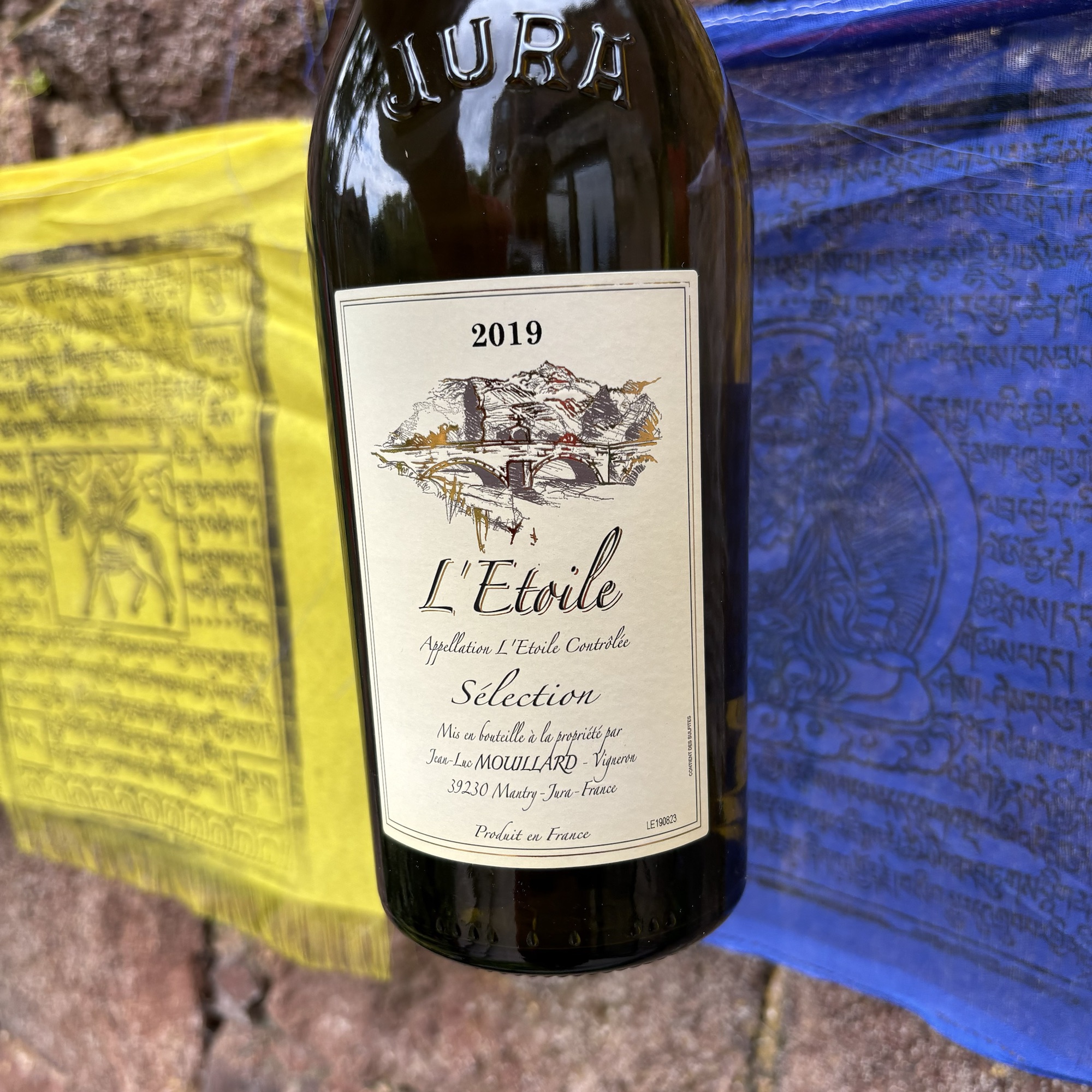
Of course, some wines are available in such tiny quantities that they sell quickly, but I can always find bottles to buy from the Jura. A recent visit to the region has led to them adding Domaine Mouillard, including their Château-Chalon, which I have yet to try. Of the same estate’s L’Etoile, Simon says it was “recently delicious with a roast chicken followed by a cheese board”. That is classic L’Etoile, for sure.

What else do the Smiths like to drink at home? Beaujolais, especially Foillard, German wines (they usually stock Falkenstein, Prum and a few auction bottles from the likes of Lauer and Schaeffer etc). The most recent German wine I opened from Solent Cellar was an excellent Sylvaner from Rudolf May. Heather professes to like lighter reds at this time of year, Mencia, Gamay and Nebbiolo, but “always Sherry, especially Fino/Manzanilla, there’s always one chilling”. The couple have run the Sherry Half-Marathon in Jerez a few times, and try to get down there most years. Simon is currently on a deep Chenin Blanc journey (Les Terres Turones Montlouis and Guiberteau Saumur Blanc getting special mentions).

Among the most impressive bottles from the shop recently have been Marie Courtin Champagnes, which they both describe as “Absolutely stunning”. The fabled unicorn, Rousset Jura Aligoté, got a massive thumbs-up at the last staff event, along with the Domaine Chanzy Bouzeron Clos de la Fortune VV, a star wine they introduced me to last year (I’d never tried it and as an Aligoté lover I can tell you…).

The Solent Cellar is at 40 St Thomas Street, Lymington, Hampshire, SO41 9ND, tel 01590 674852

Closed Sundays and Bank Holidays, opening times via their web site:

 thesolentcellar.co.uk .

They have given me at least ten years of friendly service and excellent advice, and as I have said before, they are just like a London wine shop in a sleepy but very pretty town in the New Forest. If you are in the vicinity, definitely pop in, but do check out their web site, especially if you have similar tastes to mine and like buying wine from really nice people. It is worth much more than a mere detour.

Posted in Artisan Wines, Jura, Wine, Wine Agencies, Wine Heroes, Wine Merchants, Wine Shops | Tagged , , , , , , | 1 Comment

Missing Out – Tutto Wines Trade Tasting in Edinburgh

One or two of my readers may be aware that I have been struck low with a virus this week. Not only has that meant an involuntary wine detox, but it has also tested my addiction to writing, just at a time when I was expecting to knock out three more articles before Real Wine comes around at the end of the month. One of those was to be on the Edinburgh Trade Tasting of Tutto Wines, held on Tuesday this week. I just couldn’t drag my coughing and spluttering body out of bed but I thought that I’d still give Tutto a bit of a plug.

It’s not because those nice chaps Alex and Jack had been kind enough to allow me to elbow in on their trade clients (though it was indeed very kind of them). I’m writing purely out of self-interest. Tutto don’t, unlike many importers who sell to individuals (in Tutto’s case via their Tutto a Casa online shop), deliver to private customers in Scotland. This means that to grab their wines I have to persuade the Edinburgh Wine Trade to stock them. You see, Tutto sells a whole bunch of producers who are essential to my cellar.

Although this article is merely a selfish attempt to grab these wines, of course it is of just as much interest to my wider readership, which is after all somewhat stronger in England, the USA and Australia than it seems to be in Scotland.

Another reason for being seriously pissed-off at missing the tasting is that it was held at Montrose, the new venue just opened by the team at Edinburgh’s famous Timberyard. It’s in an old 19th Century pub around the back of Calton Hill, about a fifteen-minute walk from Waverley Station. It’s on Montrose Terrace, which is actually part of the A1. By all accounts the Timberyard team has made a good job of the conversion of this listed building, and they are putting out food to match.

Anyway, back to Tutto. They showed a little over twenty wines from their ever-expanding portfolio (more of that later), plus a couple of the Savoie beers they bring in. This was a mix of the big guns (Cossard from in this case Chiroubles, Lambert from Anjou, Robinot’s Jasnières, and of course Anders Frederik Steen from the Ardèche) with some good value gems from Banyuls, Sicily, Lazio, Hérault and Ardèche once more.

If I were to single out one thing only that I like and admire about Tutto, it is this. Many importers have the really big names sewn-up. What Tutto excel at is finding the new, hip, trendy, cool but most importantly goddam brilliant producers that hardly anyone has heard of. They do it time and time again and it proves that they really know their sh…tuff.

What I thought I’d do in this very short piece is list a selection of producers from Tutto Wines’ portfolio that I suggest are worth looking out for. Attendees at the tasting will have had a sniff of a few, but others didn’t make it up to Scotland, which might well be because they just sell out too quickly and they are awaiting a restock. It can’t be because the guys don’t think Edinburgh is savvy or cool enough for them. So here we go:

Manon Farm (Adelaide Hills, South Australia): Monique Millton and Tim Webber (yes, Monique is a daughter of the famous NZ Millton wine family) have a small (under 5ha) farm up in the “Hills”. They are pretty much unknown in the UK, although a flick through Honey Spencer’s new book shows she, as ever, has her finger on the pulse. Tutto sells three wines from Manon Farm, showing just their Rosato on Tuesday. I wonder how many tasters knew its geek factor, but it isn’t expensive.

Lambert Spielmann (Alsace, France): I won’t say much about Lambert. My very last article praised one of his superb “New Alsace” cuvées. Rising star is, in any case, becoming a bit tired and over-used. But innovative will do. Makes wine from a tiny domaine scattered around Epfig and nearby hamlets/villages in a sub-region of the Bas Rhin that is the beating heart of natural wine Alsace.

Yannick Meckert (Alsace, France): Tutto really do have a nose for Alsace. All their growers are more than worth a try, but they recently took on Yannick, whose wines I already knew through his now curtailed association with Du Vin Aux Liens (imported by Glasgow’s Sevslo Wines). Not only has Yannick worked with some fine natural wine producers around France, but he has also made Sake in Japan with Terada Honke (respect!). He has 3.5ha around Rosheim and I could go on at length about the man’s future potential.

The wine made by Yannick below is not, I think, one of Tutto’s, but it does betray some early YM-style branding

Maison Maenad (Jura, France): Tutto have, I think, ten Jura domaines and as you will know my particular love of the region, you’ll know this is hard for me. I’m choosing Katie Worobeck’s domaine at Orbanga because you may not know her wines yet, but they will soon have every unicorn chaser in East London asking for an allocation (thankfully I have a secret, non-UK source, at least for the odd bottle). Katie was born in Canada but worked with the Ganevats for five years before she found her old vines. This is a producer who will sort those who trust my ability to be ahead of the game and those who don’t.

Tutti Frutti Ananas (Banyuls, France): This collaboration turns out quite simple but super-tasty wines from the barren and stony hills above Collioure, near where the Pyrenees literally plunge into the Mediterranean. I think they grow their red grapes on their own small plot, but buy in the white grapes (Grenache Gris and Vermentino). They make the wines with the better known “Les 9 Caves” co-operative. The wines are made in an old garage in the town. Vibrant stuff for a good price (for natural wine). Nice packaging too.

Domaine de Kalathas (Tinos, Cyclades, Greece): For me, subjectively, one of the two best natural wine estates in Greece (the other being Ktima Ligas). They are based on Tinos, an island in the Cyclades ravaged by winds. The wines, the product of very old bush vines off sandy granite, seem to distil that turbulence and come out intense with energy. The winds make for disease free natural winemaking, not that the island doesn’t have other issues (like bush fires…and property developers…and more bush fires). These wonderful wines have, I admit, become somewhat more expensive than they were before the B-word severed the Channel link, but wonderful they are, nevertheless.

Le Coste (Lazio, Italy): This isn’t a small estate. They (being Gianmarco Antonuzzi and Clémentine Bouveron) farm 14ha near the Lago di Bolsano, at Gradoli. They’ve also been making natural wine here for around twenty years, and they make (and Tutto imports) over twenty different bottlings, plus some rather fine olive oil if it’s a decent harvest.

Testalonga (Liguria, Italy): I had to include the Ligurians. Okay, forget some of the beaches, but have you seen how beautiful this small region is? Testalonga is the label of Antonio Perrino in the region of Dolceacqua (not to be confused with the exceedingly hip South African Testalonga label). I think Tutto lists his “Bianco”, as well as the wine for which the region is synonymous, Rossese di Dolceacqua. These are semi-aromatic reds, foot trodden and with the potential to age a very long time, which I kind of doubt a single bottle that reaches the UK ever will. The grape is known as Tibouren in Provence, which lovers of the wonderful Clos Cibonne will know.

Cascina Tavijn (Piemonte, Italy): Nadia Verrua makes wine in a place I know very well, the Monferrato Hills in the Piemontese province of Asti. The rolling hills here are very beautiful and its alure as a destination for wine tourism remains woefully under-appreciated. Viticulture and winemaking at this estate have been called “rustic”, but that should only be taken as a compliment. Zero added, the wines are characterful and soulful, and they remind me of the kind of wines the really old timers used to get a tear in their eye talking about when they’d been to Beaujolais before the Nouveau debacle.

Other names you will know, but may not be aware that Tutto is a UK importer, are Arpepe (Valtellina), Domaine L’Octavin (Jura) and the late Julie Balagny (Beaujolais). I would wonder at the thinking behind any wine retailer who wouldn’t be jealous to have all three on their shelves, although sadly in the case of Julie, there must be very little left now?

So, if we include the three above, that’s ten producers. All of them deserve to appear somewhere in any budding natural wine metropolis. I’d be very grateful if they did…plus any others you tasted on Tuesday and fell in love with, but which I missed out on trying. Let’s see! I missed out on Tuesday, but you don’t need to.

Posted in Artisan Wines, Natural Wine, Wine, Wine Agencies, Wine Merchants, Wine Tastings | Tagged , , , , , , , , , , , , , , , | 1 Comment

Recent Wines March 2024 (Part 2) #theglouthatbindsus

For the second part of my bottles drunk at home in March we have six different wines, all from different regions, and indeed all different sources to those drunk in Part 1. We begin with a sadly rare grape variety from Piemonte, the white Nascetta. Then we have a wine from one of my favourite young Alsace producers, one made in a very interesting way. We have a superb pétnat from Lorraine, a relatively inexpensive Pinot Noir from California, a “ginger” wine (it’s a thing) from the grandfather of Czech/Moravian natural wine, and to finish, a Bourgogne Aligoté which I know is a favourite of many of those who follow this blog. Part One is a hard act to follow, but this group of wines had a good stab of doing so.

Nascetta del Comune di Novello 2020 Langhe DOC « Arnaldo Rivera », Terre del Barolo (Piemonte, Italy)

Nascetta is a rare Langhe native variety, pretty much only grown now in the comune of Novello in the Langhe Hills. It fell so out of favour that it was often used as a table grape, but someone must have decided to give it another try, and for me it does at the very least rival Arneis, the best known of the local varieties for dry whites. It has small berries, is classed as semi-aromatic, but for me is more interesting on the palate.

Terre del Barolo is a large co-operative whose Barolo wines often appear in the supermarkets. Arnaldo Rivera was Mayor of Castiglione Falletto, where they are based. He was a teacher, but he founded the co-operative in 1958. The cantina makes a premium varietal range from single sites to honour him.

Made in stainless steel to retain freshness, it is quite aromatic with a floral note developing, along with a whiff of beeswax. The palate is waxy, with ripe apple and pear acids, over time softening as hazelnut comes in. There’s a little bit of texture, possibly from a lees element, and it is savoury enough for food matching with a medium body and 13% abv. Interestingly, Nascetta is said to age well in oak and the profile of this wine makes me interested to taste one that has seen oak.

I doubt this is a “natural wine”, but the variety was irresistible to try, and I thought within the context of Piemontese white wine, this was pretty nice. Not expensive either, £22 from The Solent Cellar.

Chien Noir/Chat Blanc 2021, Lambert Spielmann/Domaine in Black (Alsace, France)

Ex-musician Lambert Spielmann’s wines, and even his domaine name, are riddled with music references and riddles (I’ve just bought tickets to see The Stranglers, Lambert). He has approximately three hectares of vines around the villages of Dambach-la-Ville, Epfig, Nothalten, Obernai and Reichfeld, and he’s one of Bas Rhin’s rising stars.

This is a newer cuvée from Lambert, and it has a neat twist to it. It is made from 40-year-old Pinot Auxerrois grapes grown on clay, direct pressed, but the juice was infused with Pinot Noir skins from the previous vintage for a week before pressing into vat. The result is a fantastic cranberry juice colour, so bright it looks radioactive. The bouquet is all cranberry, strawberry and raspberry with just a hint of lemon from somewhere.

Fruit and acids intermingle making this extremely refreshing, but there’s a little texture too. It’s just a brilliantly conceived wine, and it sports another very cool label designed by Fred Bouchet. Many of you will know that these cuvées also come with a recommended track to listen to, always worth checking them out. This one is “Was Romeo Really a Jerk” by Emir Kustorika (2007), a Serbian actor/director/musician possibly best known for his film “Time of the Gypsies” (1988), for which he won Best Director at Cannes the following year.

Imported by Tutto Wines, this bottle originally purchased from Noble Fine Liquor. Tutto has an online shop, Tutto a Casa, in which Lambert’s wines appear sporadically. They say they deliver to England and Wales. For Scotland we have to pray that some fine Edinburgh or Glasgow retailers will order some (please!). Tutto has a trade tasting in Edinburgh next week so help me here, someone!

Pet’ Native Blanc 2021, Maison Crochet (Lorraine, France)

Lorraine isn’t perhaps very well known as a wine producing region, certainly not outside of Eastern France, but as somewhere with no reputation it is attractive to very independently minded winemakers. I first got to learn about this producer through Vanessa Letort (Du Vin Aux Liens). Vanessa has moved her base from Alsace to start a vineyard not far from the Crochet domaine at Bulligny, 30km south of Nancy, close to Toul. Although Toul now has an appellation (formerly VDQS), this domaine eschews the AOC in favour of Vin de France designation.

They are an organic domaine which the current generation has converted to making natural, low intervention, wines. They also practise sustainable viticulture and use only very low doses of sulphur. I think this is my third Crochet wine and probably the one that has thus far shown the best. It’s a pétnat made from 100% Auxerrois from a vineyard called Mont-le-Fou (mad or crazy mountain). They say it is from a “terroir limoneux profond”, which is alluvial silt.

The fruit is entirely direct pressed, with no additives, no filtration and fermented with native yeasts. This cuvée can be disgorged or not from the bottle it undergoes its second fermentation in, depending on customer preference. This one had no apparent lees or cloudiness. It has subtle bubbles, a floral bouquet with yellow fruits, with similar fruit on a saline, mineral, palate. In essence, I’d call this a lovely dry peachy lemonade but with 11% alcohol. If that sounds appealing, well it is. And Maison Crochet deserves to be better known. If they were near Sélestat or Arbois, they would be.

Only circa 1,000 bottles were made of this cuvée but it was very good. I would definitely buy it again. The importer is Sevslo in Glasgow, and I found it in their retail outlet, Made from Grapes, in the same city. I am hoping some Crochet wine may make its way to Edinburgh, but Sevslo now has their new web site up and running and you can purchase wine there (www.sevslowine.com ). Massive respect to Séverine of Sevslo for importing these wines.

Central Coast Pinot Noir 2021, Land of Saints Wine Company (California, USA)

The fruit for this Californian Pinot comes mostly from Santa Maria Valley, a source I remember from my first tastes of Cali PN many decades ago. We also have fruit sourced in Edna Valley and Arroyo Grande, in effect from the counties of Santa Barbera and San Luis Obispo, generally known as the Central Coast. We are lucky that we are a way away from Napa fruit prices here, but fruit off these mostly volcanic soils (with granite and riverstone) can make good wine if handled well.

The Land of Saints project joins Angela and Jason Osborne (of A Tribute to Grace fame) with Manuel Cuevas (C2 Cellars). They take the fruit from the three sites mentioned and vinify it with 20% whole clusters. Each site is vinified and aged separately in used barriques, blending taking place in tank just before bottling.

The bouquet has ripe cherry fruit, the palate, which has some body, doubling up on the cherry fruit but with a spicy liquorice note, not overwhelming but a with sort of pin-prick intensity, on the finish. Alcohol is listed as 13.6% but the juice is balanced and bright with a pleasant mouthfeel. It’s definitely warm climate but errs on the right side of reasonable restraint.

There were a little over 2,000 cases of this 2021 (I think the 2022 has appeared by now), so it’s hardly small production, but the volume allows this to translate to a UK price after shipping, duty and several margins, of £27. I think that’s not bad really for a tasty Californian Pinot Noir, very well made but with wide appeal. Purchased from Smith & Gertrude (Portobello), imported by Lea & Sandeman.

Ryšák 2020, Jaroslav Osička (Moravia, Czechia)

The grandfather of Czech natural wine makes many wonderful cuvées from his small winery cellar and beautiful vineyards (he farms around just three hectares) in the Southern Moravian wine village of Bílovice. It’s a bit like the profusion of cuvées one finds in Alsace here, but this one must come close to topping the interest list. Ryšák means “ginger” in local dialect and it’s an actual wine style, somewhere between an orange/amber wine and a Rosé.

This is a blend of equal parts Pinot Noir and Pinot Gris, grown and vinified without any additives or manipulations. This is another of those wines you would probably buy on its colour alone. If you took such a punt, you’ll not be disappointed.

The grapes see a short maceration of five or six hours followed by a whole berry co-fermentation in vat.

On first sight it looks pretty much like a Rosé, albeit in the darker spectrum towards a pale red. But when you look deep into the glass you do see a sort of ginger hue, unless I’m imagining it. What will then strike you pretty swiftly is the bouquet. Strawberry yoghurt with a hint of tinned peach. Now I live close to a famous gelataria, and these flavours are known to my palate, but this fruity but dry wine is delicious on another level.

Chill it down…not too much, just as you’d chill a light red wine. I don’t think “gorgeous” is too strong a word to describe it, a wine that looks, smells and tastes fantastic. And, of course, if you want to try Czech natural wine then Jaroslav is the guy who more or less started the movement. His son, Luboš, along with some of his wines, will be at the Real Wine Fair in London at the end of April.

In case you thought Jaroslav was isolated in Moravia, he was a teacher at the local wine school for many years, and he gathered around him a posse of similar-thinking natural wine talents who form one of the most exciting natural wine movements in Europe today. He cites Jura wine as a major influence, specifically Pierre Overnoy, with whom he shares some similarities.

This wine came from Basket Press Wines and I believe they have now taken delivery of the latest vintage. It may well be available to try at Tobacco Dock, if you are going.

Bourgogne Aligoté 2021, Du Grappin (Burgundy, France)

Du Grappin is the negoce label of Andrew and Emma Nielsen’s Le Grappin domaine. The fruit for these wines is bought-in, but they have significant control over the viticulture and harvesting (many friends and acquaintances that I know have done a harvest or two with the Nielsens and lived to tell the tale, of hard work and fun).

The Aligoté fruit for this wine comes from a site called Perelles le Haut, at La Roche Vineuse in the Maconnais. It’s a south-facing slope of white Bathonian Limestone, 80-year-old vines of the Aligoté Doré clone giving small berries and tiny yields.

Hand-harvested and foot-trodden, the slightly golden-tinged grapes see a very slow press into large old oak vats to ferment. Ageing is a full nine months on lees. The terroir info should give some indication of some of the wine’s qualities. Instead of high acids common to some wines from this variety, we have rounded and ripe fruit with a hint of southern sunshine. There is also a super streak of minerality from the lees ageing, although this is not the version labelled “Skin”, which sees skin contact. If the bouquet has something of a warm spring sunset about it, the finish on the palate is pure dessert apple. If you were ever to call an Aligoté “lush”, then this would be the one, after a couple of years in bottle.

For me, this type of Aligoté is a world away from the battery acid Aligoté of old, wines sometimes only fit to form the base of a Kir, a foil for the sweet liqueur (though it must be said, I am missing drinking Kir, I’ve not had one for ages). At this price it is very much worth seeking out, but not to use as a mixer.

Another purchase from Smith & Gertrude (Portobello, Edinburgh), for £22. Newcomer Wines has recently signed up Le Grappin and will hopefully stock some of the Du Grappin bottlings.

Posted in Aligoté, Artisan Wines, Californian Wine, Czech Wine, Natural Wine, Wine, Wine Agencies | Tagged , , , , , , , , , , , , , , , , , , , , | Leave a comment

Recent Wines March 2024 (Part 1) #theglouthatbindsus

March began with some stormy weather, then up here in Scotland we had some marvellous spring days bringing floral profusion to our little rain shadow just outside Edinburgh. As I type, at the end of the month, we have wetter and colder days. Freezing wind and rain this morning and bright sun this afternoon. Frankly, the weather is all over the place, and as usual, so is my wine drinking.

Well, almost. For the first part of my home drinking for March we have one wine from South Africa, but two from Germany (technically the same region but it would be hard to imagine two wines more different in style and philosophy). To complete the first half of the case, we have a Jura Savagnin, a South Australian Fiano, and a Portuguese red field blend.

Drinking quality seems really high right now. All of these were good, and I’d even suggest that there are four “wine of the month” contenders already. In some ways the wine I’d recommend you trying isn’t one of them. It’s the last wine, the Portuguese red. It’s wild and exciting, and it retails near me for under £20 (a few pounds more in London, it seems, but still cheap as chips used to be).

Smaug the Magnificent 2017, Blank Bottle Winery (Western Cape, South Africa)

Pieter Walser’s Blank Bottle Winery got a prominent mention in my article earlier this month on Butlers Wine Cellar (20/3 or 3/20 for my American readers). I drank this back on 5th March and it is, like the dragon in the story, magnificent.

Pieter blends Roussanne, Grenache Blanc and Gris, and Verdelho, plus a splash of Chenin, sourced from around Voor Paardeberg, a small wine growing district within Paarl, Western Cape. It’s a really characterful Cape Blend style. Very complex, you could identify tangerine and lemon pith, greengage, garrigue-type herbs and a lemon-beeswax texture. In some ways this complex picture doesn’t begin to explain what is going on in this nicely aged bottle. My family found Laalmohn, which is the Nepali name for the Indian honeyed sweet, gulab jamun, but I’m guessing only a minority of readers might pick that up.

The label, by Pieter’s young son, is equally as magnificent as the wine. Imported by Swig, the currently available 2021 vintage will cost around £30 (probably the best price) from Butlers Wine Cellar. If they have sold out, try Lay & Wheeler, or of course Swig direct. Definitely worth granting it a little bottle age though.

Bombacher Sommerhalde Spätburgunder “R” GG 2011, Bernard Huber (Baden, Germany)

Huber must rank among the finest producers of Spätburgunder/Pinot Noir in Germany. Bernard split from the Malterdingen co-operative in 1987 and soon developed a reputation for quality, and became one of the pioneers who have led a genuine quality revolution in German red wine.

Julian Huber now works the winery. They grow their Pinot Noir on shell limestone in a part of Baden called Breisgau, close to, but distinct from, the volcanic Kaiserstuhl directly to the southwest. This cuvée is made from a “Grand Cru” site keeping yields extremely low. The wine is fermented on the skins and aged on its fine lees, matured of course in oak.

It’s a cuvée that needs time, which this bottle, a gift from a friend some years ago, has benefited from. Very smooth on the palate, both here and on the bouquet, we get cherry, plum, blackberry and raspberry. It’s not all fruit as there’s a tangible spice note as well. Complex, long, smoothly satisfying to both the intellect and the soul. It becomes very gourmandise, quite savoury in the glass (which should be a proper burgundy stem). The best “Pinot” I’ve drunk for a very long time, from anywhere.

Savagnin de Voile 2010, Domaine de Saint-Pierre (Jura, France)

I’ve been lucky to have followed Fabrice Dodane for many years. He took over this estate, of which he was manager, just outside of Arbois, more or less in the direction of Dôle, after the untimely death of its original owner, Philippe Moyne, in 2011. The six-or-so hectares he farms are split between the villages of Vadans, Saint-Pierre and Molamboz, but the winery is in nearby Mathenay.

After first converting the domaine to organics, Fabrice swiftly moved on to making natural wine, using only a small amount of sulphur just in his white wines, and only when deemed absolutely necessary. This wine is of course aged in barrels in Fabrice’s “dry room” (separate from the conventionally aged wines), where a layer of flor develops, similar to Vin Jaune. There it ages, oxidatively, for six years. So, you will see that we more or less have a mini-Vin Jaune.

How does it differ, other than in the ageing requirement? The bouquet is certainly similar, with hazelnut, lemon peel and curry spices. The palate is smooth now, very smooth. You get spiced apple more than anything. I’d say that whilst there is intensity here, it isn’t quite the powerful intensity you get in his VJ.

That is in no way putting this down, in fact just the opposite. It has moved from precision to generosity and is truly stunning. Such flor-aged Savagnin is perhaps a little more versatile at the table, and certainly costs less than Vin Jaune. Why it didn’t become one, I have no idea but if it were not deemed to meet Fabrice’s (quality?) requirements, this is still a remarkably fine wine. If you have any, you are very lucky indeed. My only bottle, but I do have some Saint-Pierre Vin Jaune stashed for even longer ageing.

I think Fabrice’s wines have become extremely expensive now, rather quickly too. Imported by Les Caves de Pyrene. It may cost you more than some estates’ VJs for the most recently released vintage of Fabrice’s “Sous Voile”, but in my opinion, worth it.

Trio Sauvage 2020, Max Sein Wein (Baden, Germany)

Max Baumann runs his own tiny vineyard at Dertingen. According to Max this is still technically Baden, but it’s a lot closer to Würzburg, which is in Franken, hence you will often see his location described as Franken. Trio Sauvage is, like all Max’s own wines (there are also family vineyards which he may come to take over) designated as simple Deutscher Wein (without appellation, by choice).

If all this looks like simple wine, don’t be fooled. Max has a growing reputation even outside Germany. His low intervention philosophy comes from the people he has worked with, not least his revelatory spell at Gut Oggau in Burgenland.

This cuvée is made from just under two-thirds direct-pressed Silvaner with equal parts Chardonnay and Pinot Gris, those two varieties being macerated on their skins for ten days. Like the Huber wine above, the terroir here is also shell limestone, which does impart a great minerality to this white, but it was also aged ten months on lees in oak, which sediment makes its own contribution. The nose is floral at first and then rounds out to a buttery note, perhaps the second variety in the list, skin contact Chardonnay, coming in a little later there? The palate has great salinity, with lemon-fresh acids and a good bit of texture, not obtrusive though.

The finish has a nicely piquant peppery spiciness, and this helped it go especially well with a Kashmir Pepper-spiced aduki bean and black lentil bake topped with thinly sliced potatoes, baked in the oven. Despite the heat of the dish, the wine still felt very much “alive”.

Imported by Basket Press Wines, £30. Max makes some very impressive red wines, often preferring Pinot Meunier to Pinot Noir. He makes some of the most impressive Meunier still wine I know. His white wines are no less worthy of our attention. The prices are creeping up as people realise Max is a guy to watch.

Jade & Jasper Fiano 2021, Unico Zelo (Riverland, South Australia)

Laura and Brendan Carter source their fruit for this Fiano from the Riverland in North Eastern South Australia. It’s right on the border with Victoria, from where it continues into the Murray-Darling region. When Aussie wine made an impact here in the UK, in the 1980s, much of the wine from the irrigated vineyards up here was labelled South Eastern Australia, and indeed these regions, along with Riverina (also in Victoria) were the source of much bulk wine, later shipped in tanker and bottled in Warrington etc.

Times have changed a little. Melbournites now compete for the dwindling water resource of the Murray River with the unhappy farmers to the northeast, but Riverland has, partly as a consequence, seen a new role for wines of quality, if also remarkably good value (because the vineyards are cheap). Among these new quality wines, we are seeing more and more so-called “alt-varieties”, wines made from grapes other than the international star varieties so well known under the Australian sun.

Quite a few of these varieties are more drought-resistant and need less, if any, irrigation. A good example is Brad Hickey’s ZBO (Zibibbo/Muscat) which I buy when I spot it. Fiano isn’t one of these “Mediterranean” varieties, it is a classy white one from Piemonte, but it does seem to thrive there. It is also a variety which has been receiving quite wide acclaim throughout South Australia, especially as a few famous names have some planted, not least Jeffrey Grosset in the Clare Valley.

This is turning into a long entry for what is a fairly simple wine, but one which is nevertheless really worth trying. It’s a good example of what will surely be one of Australia’s many “futures” (ie alternative varieties) for wine.

Moving on…Laura and Brendan make very good natural wines using sustainable farming methods off ancient sand and limestone in Ngawait Country, as they identify the First Nation owners of this land. The label says “sharing memories of spring time”, hence my choice of photo backdrop. The label also suggests that this wine is “aromatic, juicy and textural”. It’s all those things, plus waxy, floral, savoury, with hints of white peach and spring blossom. There’s citrus acidity but the wine doesn’t lack sunshine weight of fruit, and at 12.5% abv it is nicely balanced.

I’d call this very good value for £22 at Cork & Cask, Edinburgh. The importer is Berkmann.

Uivo Renegado Vinhas Velhas 2022, Folias de Baco (Alijó, Northern Portugal)

I’ve said recently that I’m looking more to Portugal for really good value natural wines, and it would be very hard to find one that fits that bill better than this one does. Tiego Sampaio took over his grandparents’ vines near Alijó in the upper reaches of the Douro in 2007. These are old vines, many over 80 years of age, at between 550 to 700 masl, growing on clay and slate/schist.  He has since grown his holding, acquiring scattered parcels from disinterested families with smallholdings, to around 10-ha.

Renegado is made from more than twenty autochthonous Portuguese varieties, approximately half red grapes and half white, co-planted as a field blend. Picked in September, by hand, the fruit was meticulously sorted in the vineyard. Fermenting all the grapes together in traditional granite Lagares, following a three-day maceration, the wine is then aged six months on lees in cement tank (95%) and 2-to-3-year-old chestnut cask (5%).

What we have here is a pale red which is delicious drunk chilled. You get vibrant red fruits to the fore with just a little texture. I always imagine that’s the cement, but of course the lees do their part. The bouquet is very much cranberry juice, the palate adding in redcurrant and strawberry, lots of strawberry in fact. Nice acidity too, the high-altitude vineyards allowing for cold night time temperatures even in what we imagine is the hot baking Douro summer. It’s a juicy, simple, natural wine, but boy is this good! And at 11.5% abv it goes down a treat even before the sun (goes down).

I paid £19 from Cork & Cask for this one. Imported by Modal Wines, I’ve seen this listed in London for £22-£23. Still a bargain in today’s market.

Posted in Arbois, Artisan Wines, Australian Wine, German Wine, Jura, Natural Wine, Portuguese wine, South African Wines, Wine, Wine Agencies | Tagged , , , , , , , , , , , , , , , , , , , , , , , , , , , , , | 1 Comment