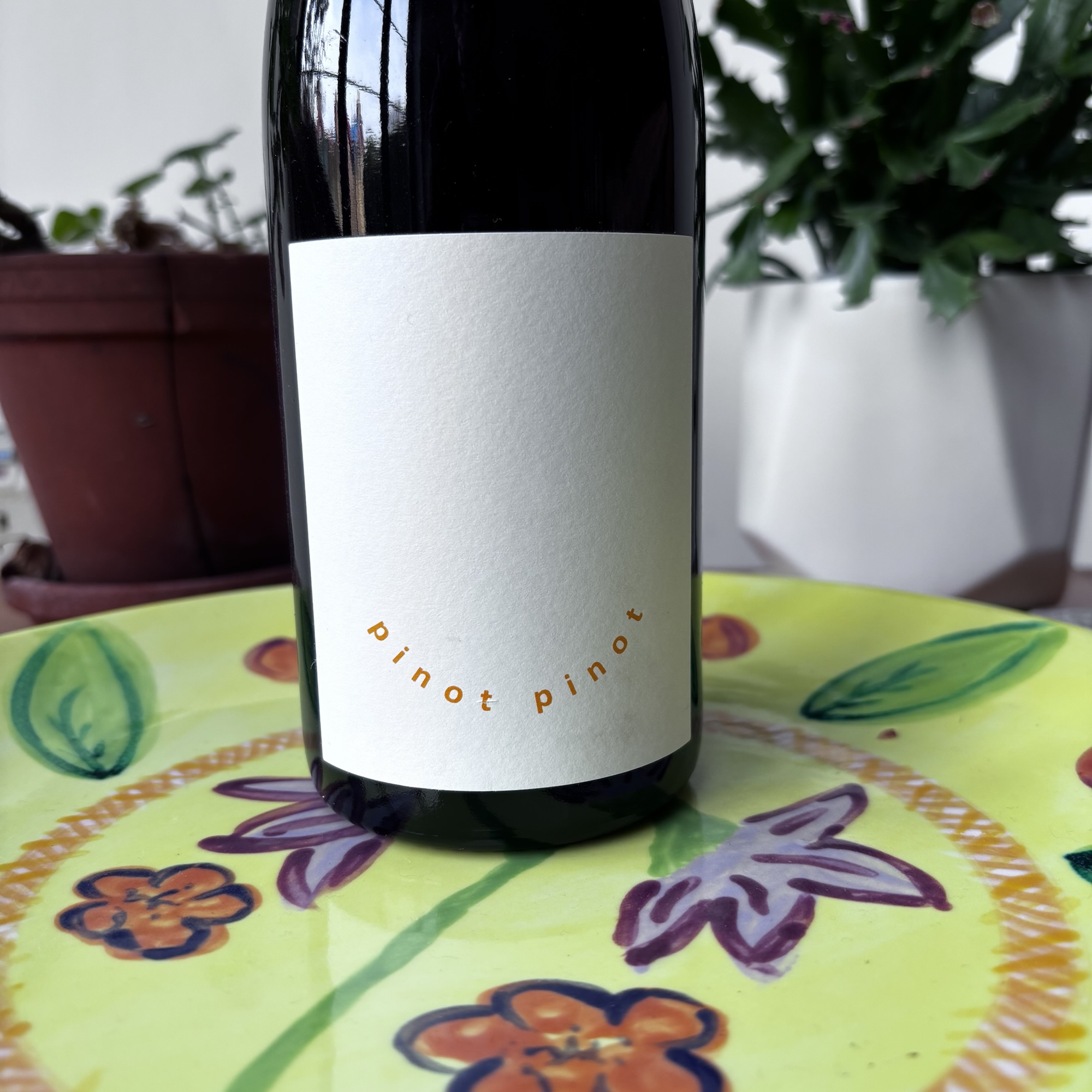
My recent wines for March display my usual eclectic tastes. Whilst this first part contains two wines from France, albeit Jura and Loire, there’s also a bottle each from Luxembourg, Baden in Germany, Northeastern Italy and Kent in England. You can be sure to find the same scattergun approach to drinking in Part 2. The six wines here range from fully natural for four of them, with various elements of regenerative viticulture to the fore now, to two wines which are made from organic grapes with that term I don’t really like using, but I will anyway, low intervention winemaking. This is where elements of what we would call “natural winemaking” are used but it isn’t always clear how far they go with the rest.
As you probably know by now, I prefer my wine without the chemicals, but I’m not a fundamentalist. Nor, in truth, can I really afford to be. Anyone who shops for fruit and vegetables will know the dilemma all but the most privileged face when choosing what to insist is organic and what to buy within budget that isn’t. Most of the wine I have drunk over the past few years, and to be fair most of the bottles in my cellar, are natural wines which would now cost me at least £30, more often £40.
Translate these prices into a monthly wine budget and that clearly is unsustainable for most people (you’re looking at pretty much £400/month). Is that what the average young wine lover spends in London? Just putting it out there, because I have seen all sorts of nonsense written recently about why young people are drinking far less wine, especially in restaurants where the markups are…well, we all know. It isn’t difficult to see that wine, at the level you and I drink, artisan wines made by individual or family winemakers, is very quickly becoming unaffordable.
That said, there is still value out there. It can often be had from emerging producer nations or regions, and from producers who want to turn to exports for the first time to diversify their market (although exporting to the UK is far from easy post-Brexit). In Part 2 you’ll see a very decent wine from Austria for under £10. If I can find wines like this to supplement my shrinking wine budget, I shall.
A couple of the wines here in Part 1 sit either side of £20 (the Alto-Adige and Loire wines). It is notable that these are the wines here that you couldn’t call “natural wines” perhaps, but they are making an effort. With several wines here costing £30 and over, they are (for me at least) welcome additions to my cellar.
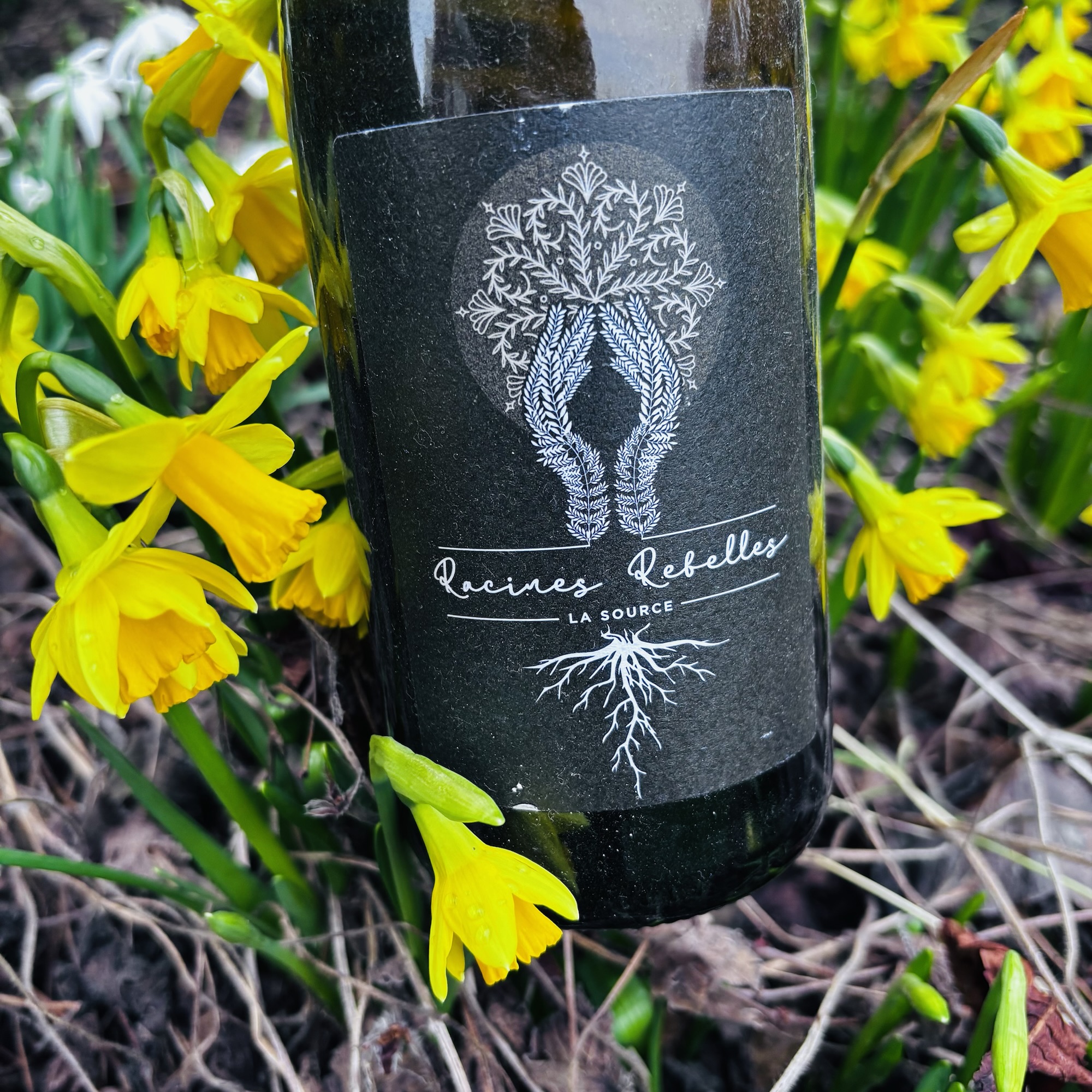
Pinot Blanc “La Source” 2022, Racines Rebelles (Moselle, Luxembourg)
You may have read about Kaja Kohv in one of my “Tips for ‘26” articles published this month. I won’t therefore spend too long on her story, but she was born in Estonia, moved from sommelier to working in Beechworth (at Giaconda), then with Abi Duhr in Luxembourg before securing a few hectares of reasonably old vines to work near Grevenmacher on the Moselle. The vines, on limestone in this part of the river valley, are worked biodynamically.
For this rather exceptional, in my view, Pinot Blanc the fruit is 50% direct press with the other 50% macerated for three days. Ageing is for eight months on lees in 500-litre oak with no pumping or stirring etc. The result is clean and precise, certainly fruity, but even more mineral. It’s not just that “mineral” texture, it’s also very much a mineral vibe all over this wine. All viticulture and winemaking is natural, though I’m not sure whether sulphur is added. If so, it must be a tiny amount.
Kaja’s production is very small and I am yet to spot her wines in the UK. Feral Art et Vin in Bordeaux old town has been the source for my bottles. If you can’t find these wines (as well as Pinot Blanc she also has Elbling and Riesling planted, and apples for cider) then remember the name “Racines Rebelles”. I’m sure someone will pick her up for UK distribution, if they haven’t already without my knowledge.
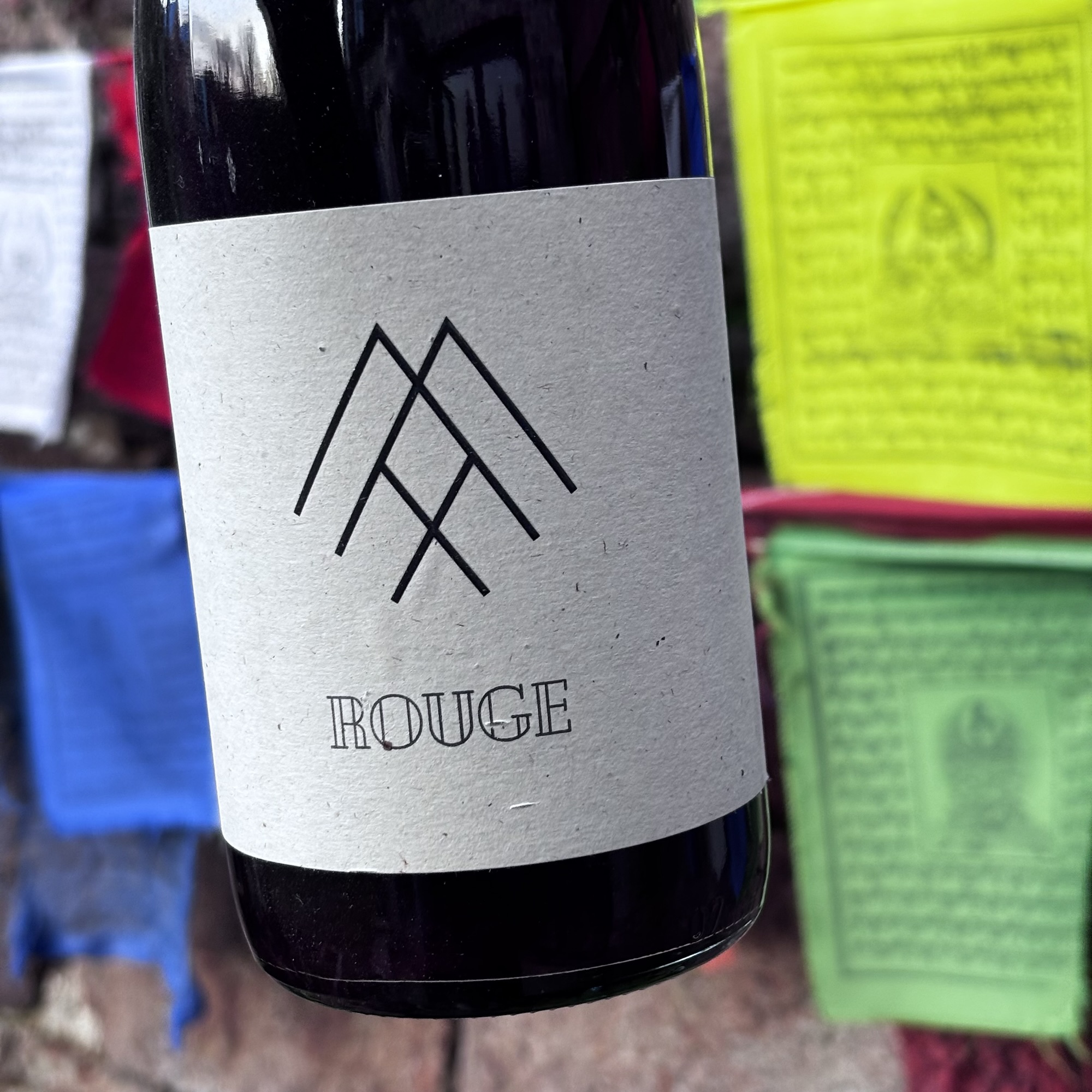
Rouge 2021, Max Sein Wein (Baden, Germany)
It’s a while since I’ve drunk one of Max Baumann’s wines, but I would usually include one or two bottles in any order from his UK importer (who I must admit I’ve also not ordered from for a while). Max makes natural wines, I think influenced very much by his time working at Gut Oggau in Burgenland.
This cuvée is a 50:50 blend of Pinot Meunier and Pinot Noir. I know from drinking varietal Meunier from Max that he’s a particularly good exponent of that variety. This blend is made via whole bunch fermentation in used oak, making good use of the lees to impart real freshness, a little texture, and protection.
I’d call this light, fruity and juicy, with excellent concentration. This has had a few years in bottle now, but it has begun to shine without diminishing in fruitiness. I am sure it’s at least as good as the bottle I drank a year ago. That fruit is perhaps mostly sour cherry with a little raspberry.
It’s worth noting that Max’s wines are undergoing a bit of a rebrand, or perhaps just a “rename”. Everything was previously bottled with a French name. From the 2022 vintage this wine has become Rote Freundschaft. New releases will be available from importer Basket Press Wines. Contact them for details and availability.
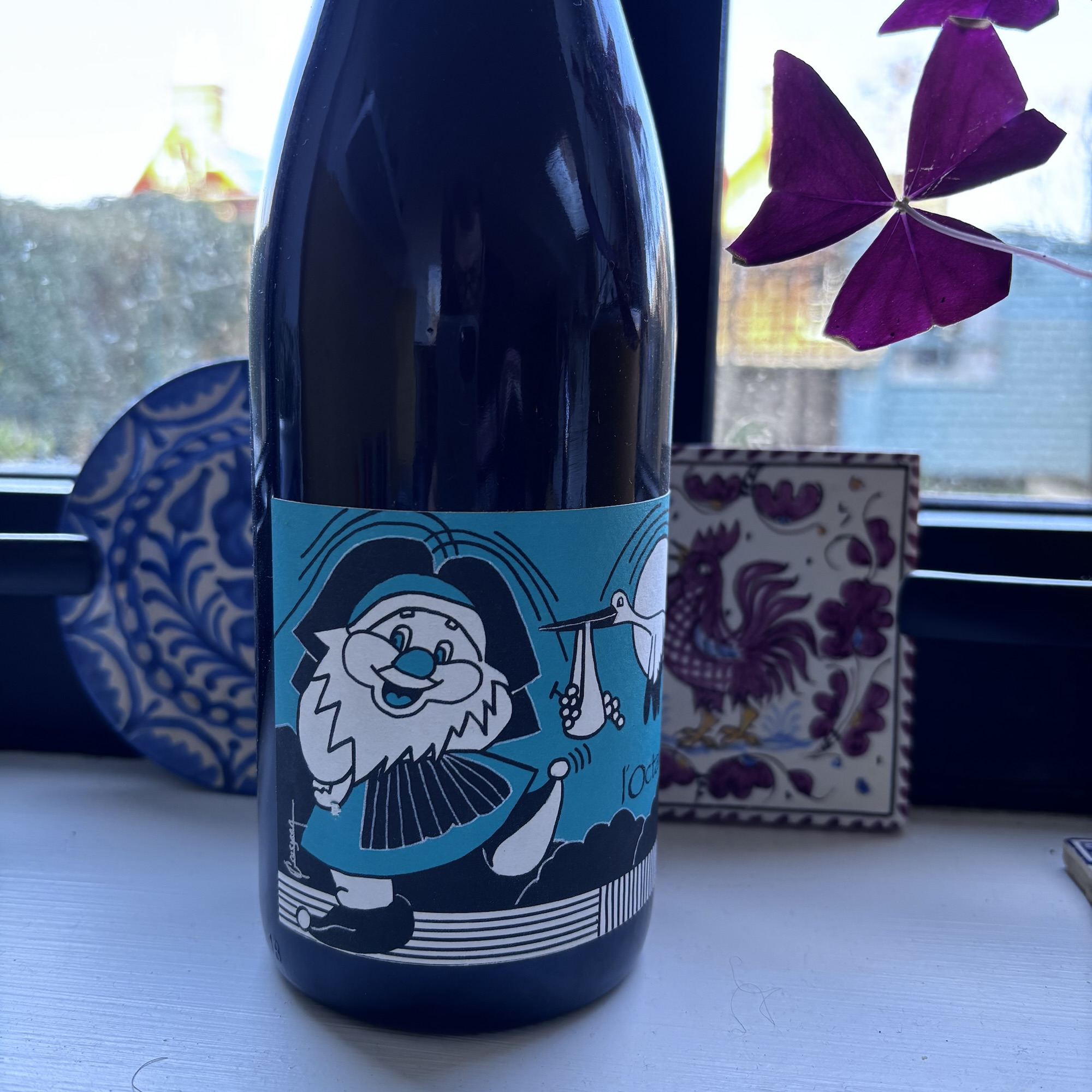
Cigogne 2022, Domaine L’Octavin (Jura, France)
Alice Bouvot was one of the first Arbois artisan producers to start to make negociant wines, a useful string to her bow with Jura vintages being increasingly affected by climate chaos (hail and frost in abundance). As a result, her “gnome labels” are pretty recognisable on any retailer’s shelf, bringing joy to many of us that would lurch towards grabbing one without a second thought.
Cigogne is a blend of half Gewurztraminer and half Pinot Gris. Alice is not shy about where she sources her bought-in fruit, and these come from the impeccable source of her friend Marc Humbrecht’s vineyards in Alsace.
The fruit underwent a whole-bunch fermentation, with four weeks on skins before a very light and gentle pressing. The skin maceration brings out the colour from the skins, the gentle pressing avoids the astringency you might otherwise get. The colour is therefore a pinky-orange tinge. The bouquet is lovely, being floral and full of tropical fruits. Very perfumed. The palate, for me, seems somehow to combine peach and strawberry with a little spice and a little texture. I doubt very much I shall taste a wine that is more vibrant this year.
I think this encapsulates pretty well why I adore Alice Bouvot’s wines. It should be noted that these are proper natural wines, and this unfiltered cuvée will be cloudy unless you stand it up for a day or so to let the lees sediment settle.
Alice’s wines are imported into the UK by Tutto Wines, who usually have a good selection of them most of the time. I think Cicogne was listed for £38, but it has probably sold out. If you do happen to be in Bordeaux looking for Racines Rebelles, then you should check out what Octavin stock Feral Art & Vin has on the shelf, first checking their limited opening times very carefully.
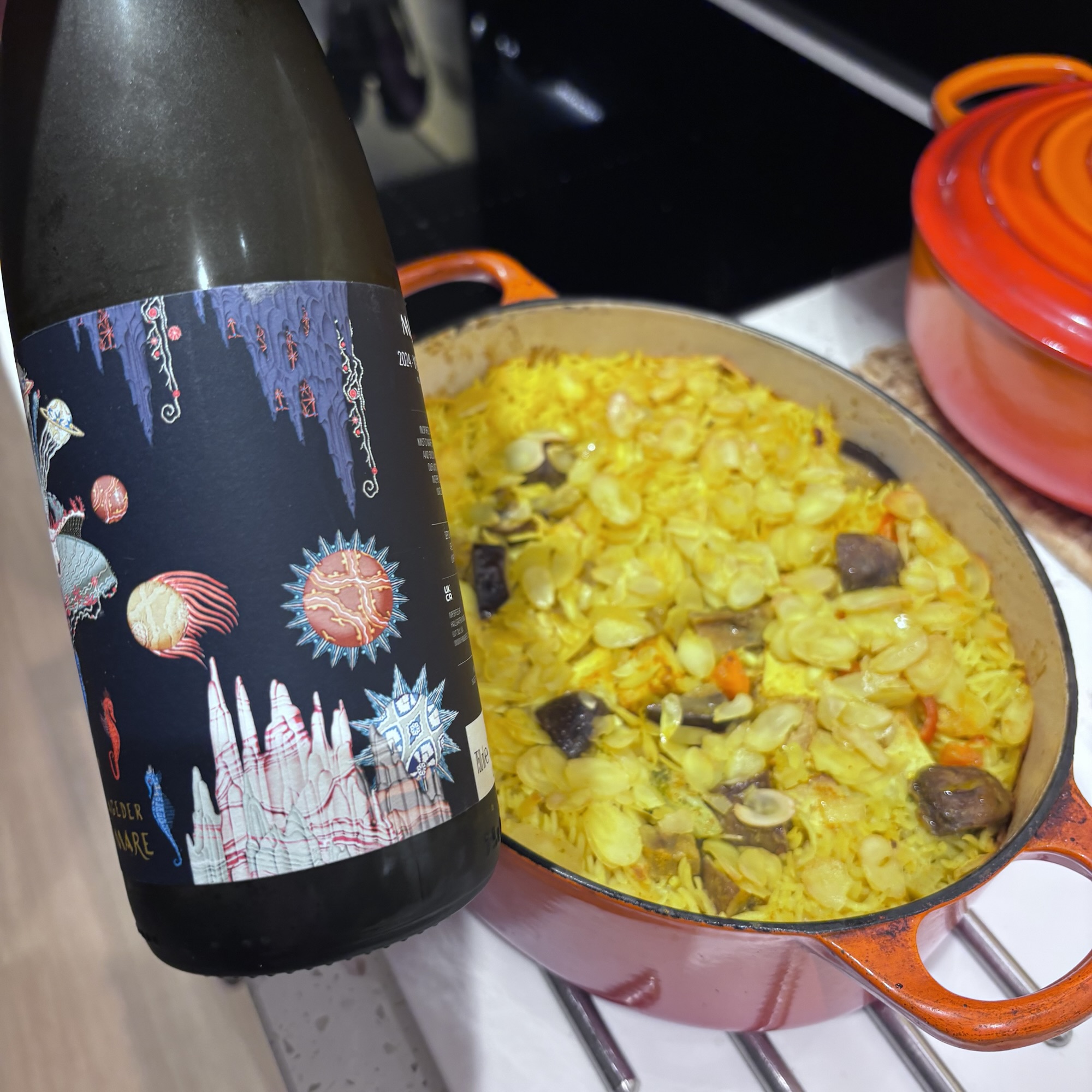
Misto Mare 2024, Alois Lageder (Trentino-Alto-Adige, Italy)
Now this is an interesting wine. Lageder was probably one of those family producers we all bought wine from back in the day. I suppose that it was my interest in natural wines, and through that to the natural wines from Northeast Italy that (especially) Les Caves de Pyrene imported, that took me away from them. However, times change, and wine certainly has over the past twenty-to-thirty years. All of Lageder’s own vines are now certified organic, but this wine is made from purchased fruit, coming from thirty “vintner partners currently in conversion to organics or biodynamics”.
Labelled not as DOC but as Vigneti Delle Dolomiti Bianco, it is made from fourteen varieties, red and white, from the wider Alto-Adige. Pale yellow in colour (the red grapes vinified white), it has an interesting bouquet. We found apples and pears, lemon and a gentle floral note. It is medium-bodied (just 12% abv). It isn’t complex but it is a very nice, balanced, spring wine, with a little delicacy to recommend it.
At only £19 this is well worth investigating. A good choice for picnics and parties, excellent value, and a nice package as well (see photo). Imported by Hallgarten Wines, this bottle was another recommendation from The Solent Cellar.
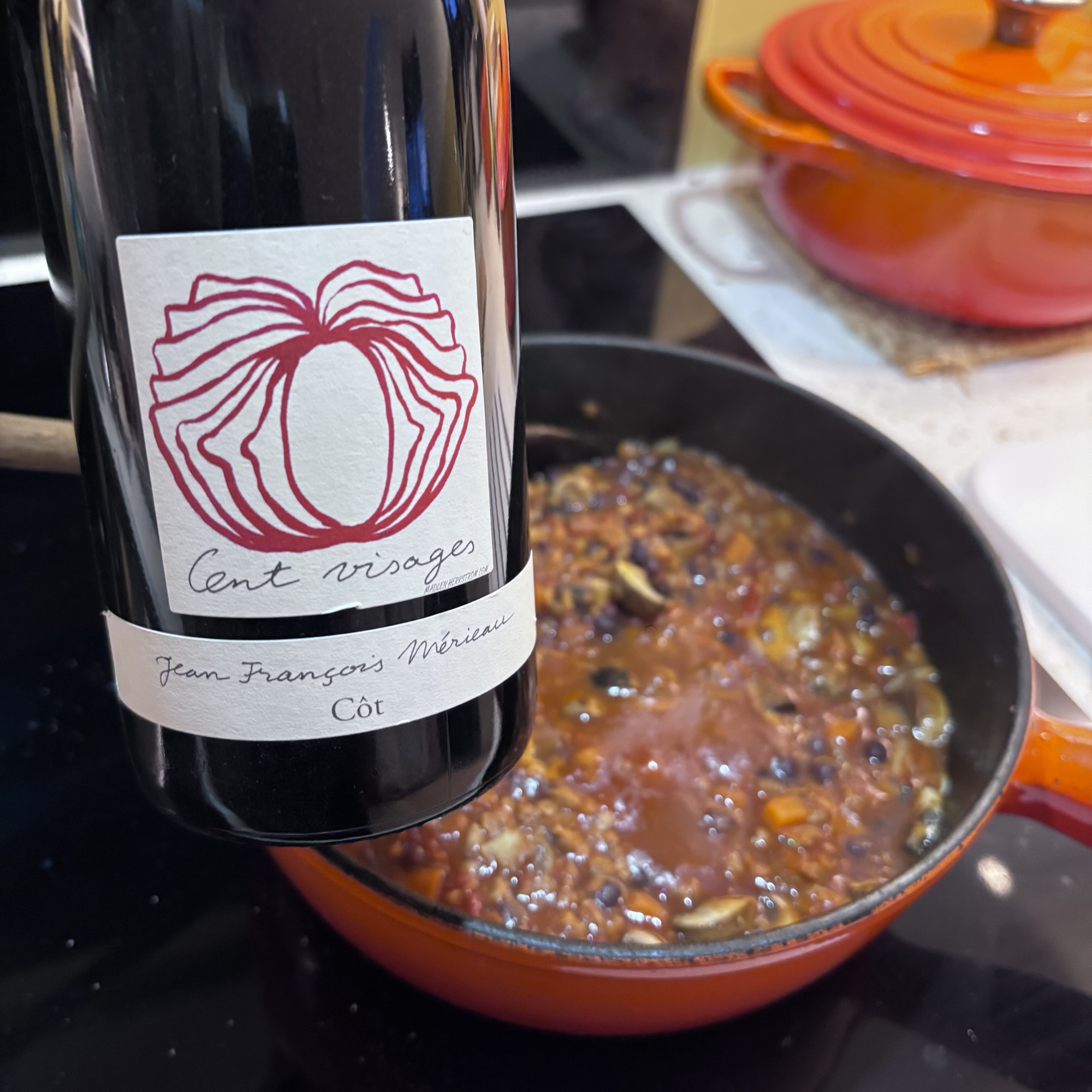
Cent Visages Côt 2023, Domaine Mérieau (Loire, France)
This domaine is at St Julien-de-Chédon, which is close to Montrichard, east of Chenonceaux in the valley of the River Cher. Jean-François Mérieau farms a total of 4 hectares of vines, and this wine comes off 2.5ha where the vines are fifty years old, and are situated on clay and limestone. Côt is, of course, the local synonym for Malbec, which has long been indigenous here.
When I was young and more capable of cycling around Touraine, I used to come across Côt quite often, but few if any UK wine merchants were interested. A shame, because in the days when ripening Cabernet Franc was usually problematic, Côt often provided a gentler, certainly less tannic and astringent, red to glug. Gamay has also regained some interest in the region as well. In most cases these varieties can still be purchased at more affordable prices than the now lauded Francs, and the super-fashionable Pineau d’Aunis (which once used to make mostly pallid wines when it was overcropped and can now make some of the Loire’s most hauntingly beautiful wines).
A six-month cuvaison extracts plenty of colour and the bouquet shows distinctly dark and brambly fruit, but it is no Argentinian heavyweight. There’s just 12.5% alcohol here. The palate certainly shows the concentration of dark fruits, but it is also savoury and sappy, with fresh acidity lifting the dark fruit. If you think you don’t like Malbec, I would still try this. Loire Côt is very different, and it also bears not much resemblance to Cahors either.
I’m not sure what the viticulture adheres to here. All I know is that this was fermented on indigenous yeasts. It cost £22 from Solent Cellar, and I think they might import this themselves. It seems pretty well-priced to me. It’s the kind of interesting wine you might be tempted by on a restaurant wine list, as well as for the table at home.
Pinot Pinot 2023, Sophie Evans (Kent, England)
Sophie is a relatively new name in English wine, but she has been gaining plenty of plaudits. I was happy to include her as one of my “Tips for ‘26” (see Part 1 of those articles, published just a couple of weeks ago). Following her wine studies in the UK, she started working with Melanie and Michael at 2Naturkinder in Franken. This is where she made and bottled her first wine, which is still available.
Sophie has since managed to acquire a single hectare of vines in Kent, although she does hope to expand a little. She has gained attention partly for her adherence to the tenets of regenerative viticulture. I remember Tim Phillips telling me she had been to chat with him because he was one of the few wine farmers alongside Sophie who were using various herbal tisanes and tinctures to combat diseases. But this would only be a part of the plans Sophie has for the future regeneration of her land and its sustainability as a vineyard.
The thinking here doesn’t stop at regenerative farming. Sophie seems to be constantly examining her methods, and one aspect which relatively few “natural wine” producers focus on is packaging. Her labels are simple, of course (an understatement, see the photo below), but she is currently looking at recycling and reuse, for example boxes and bottles. It’s funny, but I try to recycle my sparkling wine bottles back to someone who can use them, and I wonder whether more winemakers could think about this. Naturally if you have a tiny production that must be easier.
The fruit for Pinot Pinot came from an unnamed “friend’s beautiful vineyard”, this time in England although somewhat further north than Kent. The biodynamic grapes, the “new classic” of Pinot Noir and Pinot Gris, were hand-destemmed and foot-trodden. Co-fermented, with a week macerating on skins before pressing into stainless steel, the result is pale, light, briskly acidic but with lovely red fruit which is joined by a little mineral lick rather than real texture. A delicate wine (only 10% abv), but really beguiling. It is capped-off with just a tiny addition of sulphur.
This is really nice. I can see a strong resemblance to the wine made from the same grapes in the same vineyard by the man who provided these for Sophie, but that is meant as a compliment. Sophie is part of the growing roster of English natural winemakers at Wines Under the Bonnet. This bottle cost £35 from Spry Wines in Central Edinburgh. I also have a bottle of her Rotling, made in Germany, sitting here, and that came from Ali at Communiqué Wines.