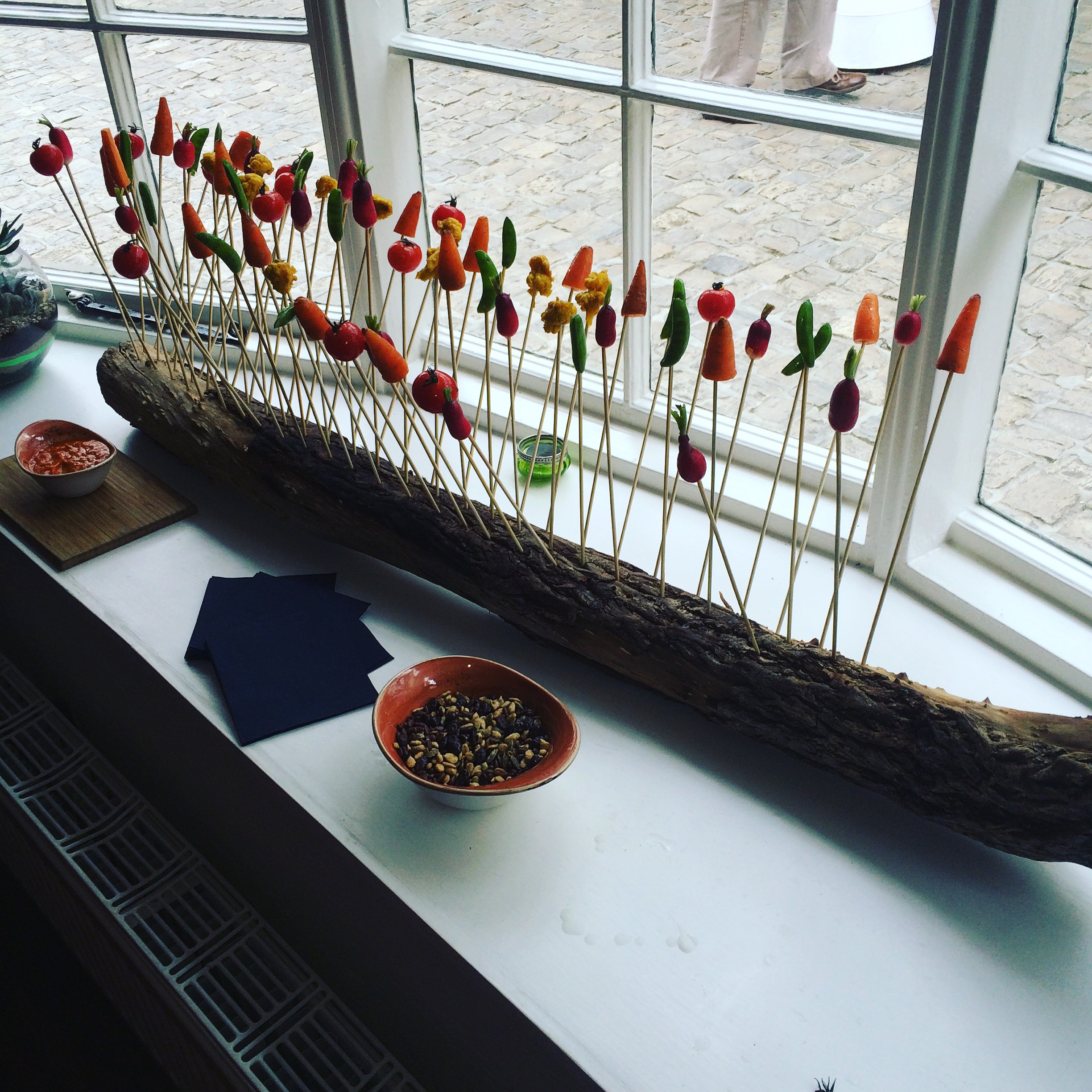
Raw Part 1 – The Austrians

There were nearly 220 wine producers exhibiting at the Raw Wine Fair this past Sunday/Monday. The Old Truman Brewery, off London’s Brick Lane, is an excellent venue for an event like this, but even so it was necessary to get there as it opened to have time to get around a few dozen tables before the crowds made it hard to taste, and even harder to spit. I managed only a little over three hours of concentrated sampling before I felt the need to adjourn to the Unfiltered pop-up at Super Brick (see previous post), and on returning a little after 2pm, the Old Brewery was heaving.

A small word about “Raw”.  The Fair was created by Isabelle Legeron MW, author of Natural Wine (CICO Books, 2014), and long time champion of natural wines. Raw, as explained on the cover of the Fair’s guide/catalogue, is an adjective meaning “in a natural state; not treated by manufacturing or other processes”. The wines at Raw Wine Fair are low, or no, intervention wines. They are also, it follows, very low in sulphur, or in many cases, have no added SO2. They cause some wine classicists to mock, or to go into fits of apoplexy, and it is true that some natural wines are highly volatile, some even verging on vinegar. Yet the best producers create a product which often transcends prosaic description, forging wines of true beauty, the like of which one rarely finds in more interventionist winemaking, except in the very best wines, which cost the earth.

This back label (below), from the Spanish producer Vinos Ambiz, seems to encapsulate the Raw philosophy very well. Click on the photo to enlarge it if you can’t read the type. I particularly like the section called “This wine underwent the following processing”. I think putting “processing” in capitals is a lovely touch of irony.

image

As for “the Earth”, and earth, the winemakers at Raw have a deeply symbiotic relationship with their land, and believe in retaining a balance in nature, and in their working environment. Some, like Stefano Belloti (who I wrote about in my pieces on the Real Wine Fair and the film Natural Resistance), and the Austrian producer Meinklang (see below), even practice mixed agriculture, farming cereal crops, fruit and livestock (Meinklang are perhaps at least as famous for their beef in Austria as for their wine). Others plant trees in the vineyard, or cover crops between the vines, in order to encourage a diverse ecosystem, something which is not always popular with the neighbours (look at recent incidents in Languedoc-Roussillon, specifically the vandalizing of plantings at Mas Coutelou – see fellow blogger and Coutelou helper Alan March’s piece here).

***********************************************************************************

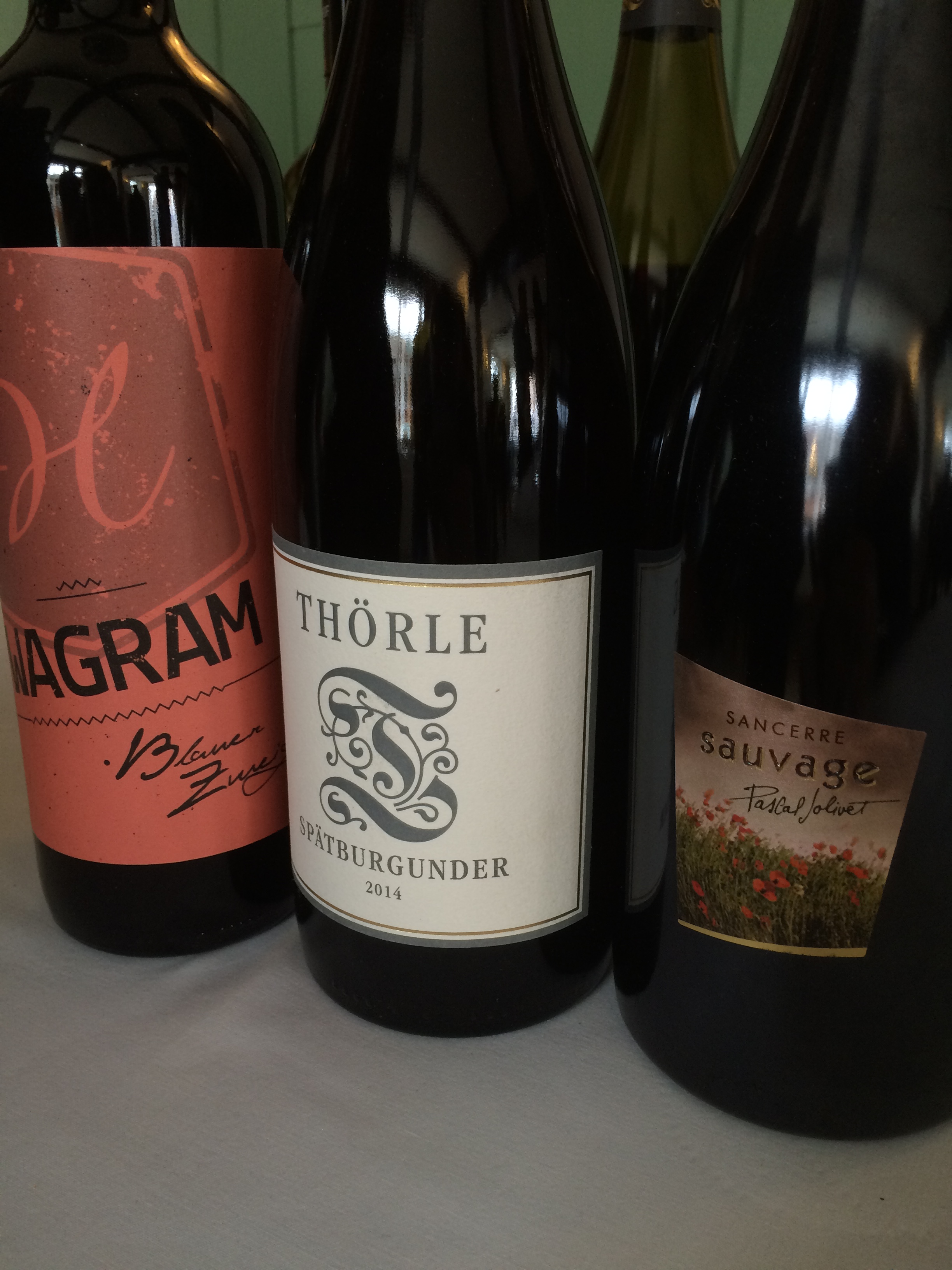
On arrival I headed straight for Austria, tasting my way around these tables before spreading my wings elsewhere, so in Part 1 of my Raw round-up I’m going to talk about four of my current favourites from here. I’ve said it before, but whilst Austria doesn’t lack for established stars, there is also a genuine groundswell of exciting producers, many of whom follow the philosophy behind the Raw Wine Fair. Ten were showing on Sunday, and four of them rank among my current favourite Austrians. I’ve written about them before and make no apology for introducing you to their new releases. Rest assured that the second part of my Raw round-up will feature a good few winemakers I haven’t written about, including one or two new discoveries.

Weingut Claus Preisinger

I’ve been buying Claus’ wines from Newcomer Wines for some time, but this was the first time I’d met him. He’s quite confident, yet in a quiet way, just like his wines. Winemaking here is low intervention and biodynamic, although if you look at pictures of his modern winery in Göls (Burgenland), you might be forgiven for thinking the opposite.

Claus was showing his Erdeluftgrasundreben Grüner Veltliner 2015, and the 2015 Pinot Blanc of the same name. Both were delicious, and, when tasted with the 2015 Blaufränkisch Kalkstein, showed the real freshness and fruit of the vintage – though remember that many of the 2015s on show at the Fair were either very recent bottlings, or, as in many cases, samples. Going on the taste Preisinger’s Blaufränkisch Erdeluftgrasundreben 2014, for example, there’s more on the nose, the product of having settled down a bit. This is a lovely wine, even just to look at. None of Claus’ lovely Zweigelt, nor his formidable Saint-Laurent, were available to try, but he is very pleased with his 2014 Pinot Noir, a variety increasingly favoured by some of the younger Austrian producers.

Gut Oggau

I should probably keep this short. Gut Oggau would be hard to challenge for the top spot as my favourite Austrian producer. This time last year I was basking in similar sunshine to today, down in Rust, just a few kilometres away from Oggau on the western shore of the Neusiedler See. Do I wish I was back there now? Yes!

Again, the 2015 vintage here looks very good indeed. Throughout most of Austria 2014 brought some challenging conditions. 2015 began with a lovely Spring and early summer, as we saw ourselves. The rains which came in mid-August were welcome, and were followed by more warm weather. Many producers described the 2015 harvest as “fairly relaxed”, which we all know, coming from wine makers the world over, means they are happy.

image

Eduard was there to take me through the new wines, and I won’t deny my bias, making objectivity quite difficult. But Winifred (rosé), bottled only last Wednesday, was the height of seductive freshness, which again one could see throughout the range on taste.

The wine I had never tasted before was “Brutal”. Brutal is a project spanning several countries, where nine winemakers have banded together to make a natural wine under one label. Domaine L’Octavin, the Arbois producer I have written about a few times, is also involved. Gut Oggau’s “Brutal” bottling is made from Roesler, a grape which is obscure even by Austrian standards. It’s a red cross between Zweigelt x (Seyve Villard x Blaufränkisch), named after Leonard Roesler, a former director of Austria’s oldest viticultural college. This bottling is pinkish-hued, darker than Winifred, and lives up to its name, yet it is refreshing and vivant, which I guess the the intention. The label, distorting one of the traditional Gut Oggau family images, bears the imprint of this iconoclastic project. This is another biodynamic domaine farmed by genuine thinkers with a passion for their 14 hectares of vines.

image

Gut Oggau is imported by Dynamic Vines in the UK.

Christian Tschida

Tschida is based in Illmitz, on the opposite, eastern, side of the Neusiedler See to Gut Oggau. Christian is a big personality, and when he’s wearing his leather jacket, perhaps a little daunting too. His philosophy is “let it run”, which, for his wines, means he won’t bottle them until he deems them ready. This can be up to five years after the harvest, so it is wise not to take his little joke seriously when he gives you a sample and says he will be bottling next week!

I only tasted the 2015 Himmel Auf Erden (Heaven on Earth) wines (white, pink and red). The white blends Scheurebe with Pinot Blanc (mineral peach stone); the pink, Cabernet Franc with some skin maceration giving more texture than most rosé; and the red, blending Cabernet Sauvignon and Zweigelt. These are supposedly Christian’s “every day” range. At over £30/bottle they are expensive in that context, but they are lovely wines and are more affordable than the wines in the upper part of the range. Christian does like to crack a joke and pull your leg, but make no mistake, the wines are serious.

Christian Tschida’s wines are available at Newcomer Wines. Note that Newcomer are in the process of moving from the Shoreditch Box Park pop-up retail units to a permanent store opposite Dalston Junction Overground Station. Thanks folks, a pain for me to get to, but I hope you thrive there.

Meinklang

Regular readers will know that this is my producer of the moment. You can read a little about the background to this Pamhagen estate, right by the Hungarian border, here, where I also taste some of the wines they make over in Hungary, on the vineyard slopes of the extinct volcano of Somló.

At Raw, Niklas Peltzer was showing the delicious Foam sparkler (a bottle-fermented pét-nat), two of the Graupert wines (Pinot Gris and Zweigelt), and their Burgenland Blaufränkisch, to begin with. The Blaufränkisch is the same wine I drank at Brighton’s Terre-a-Terre restaurant last month, simple but fruity and good value. The Graupert wines are made from relatively unkempt vines, left semi-wild, deliberately so. These vines produce small, thick skinned grapes. Already darker in colour when pressed, the juice is further macerated on the skins giving greater texture in both red and white. The aim, with a little bottle age, is greater complexity too.

image

Niklas

Meinklang make a very good still Pinot Noir (and also a Pinot Noir frizzante called Prosa, which I just have to find), but the wine I’d been aching to try was the Konkret Red. It’s the brother of the white “Konkret”, the first Meinklang wine I tried. The grape variety is Sankt Laurent, vinified in a 900 litre concrete egg. The concrete’s porosity is meant to allow micro-oxygenation of the wine. It adds a silky texture, which is certainly evident on the palate. But there’s a kind of ferrous, mineral, sandy texture as well, and it doesn’t lack bite. Quite a “wow!” wine, and worth the wait.

Last but not least, a special edition wine with no name, as yet, and I was told I was one of the first to taste it. Concrete egg, three months skin contact, hand bottled, pale orange, fabulous. I’ve no idea what they will call this but I’ll look out for something new…although Meinklang’s range is large enough already. What I didn’t taste, I thought it might wreck my palate, was their beer. It’s made from spelt. I’m guessing that mentioning it will mean it’s all gone before I get back up to London to claim some. Such is life.

image

No name, just like Arya Stark!

Meinklang wines are imported by both Winemakers Club and Vintage Roots, both importers stocking different wines in the range.

Part 2 of my report on Raw will follow soon.


Posted in Austria, Austrian Wine, biodynamic wine, Natural Wine, Wine, Wine Tastings | Tagged , , , , , , , , , | 2 Comments

See Emily Play

Emily Harman will be too young to recall the Pink Floyd single of the title, but although her Unfiltered pop-up at Super Brick, off London’s Brick Lane, is probably the most fun idea I’ve seen all year in the world of wine, the wines themselves, all served out of magnum or larger, are entirely serious.

image  image

The pop-up was set up to coincide with the Raw Wine Fair, and has been acting as the perfect post-tasting venue. It’s in a motorbike repair garage come studio on the edge of Cooperage Yard, the car park opposite the Old Truman Brewery, now the venue for Raw. The wines come by the glass, you can buy the whole magnum, or just a beer, accompanied by some cold cuts (I went for a tasty cheese platter).

image  image

born to be wild…and Tony Rogers rummaging, under Emily’s watchful gaze, for a magnum

The main event is the magnum selection. We were tempted by a few, including some serious Keller GG, and Ganevat (There was also some Le Soula, Zidarich and Billecart-Salmon Champagne spotted), but sitting outside in the glorious May sunshine we made exactly the right choice in Suertes del Marqués‘ Vidonia Blanco 2014. The grape variety is 100% Listan Blanco from three individual plots at between 350-500 metres above sea level in Tenerife’s Orotava Valley. It’s a wine I know really well in bottle, but it’s amazing how a magnum opens a much bigger window on the wine. You see it develop in a completely different way to a bottle, over an hour or more, as it warms and breathes.

image

Tom Cannavan (on Winepages) wrote an excellent profile of this increasingly famous Tenerife producer back in April, and he described the Vidonia (2013 in his case) as “like a fine Meursault”. I know exactly what he means. There’s very fresh, but balanced, acidity backed by genuine depth. Its body is wrapped in nuttiness but the texture is fresh and lively on the tongue. Overall, the most apt of adjectives is elegant. I am not sure I could have chosen a better bottle (er, magnum) if I’d selected it myself.

The markups are very reasonable. Vidonia retails for between £21 to £25+ by the bottle, so with the magnum premium you are probably looking at up to £60 retail. I think we paid £77 between us, so a bargain.

I’m afraid the pop-up ends tonight, with the Raw Fair itself, but if you do read this and have a quiet Monday evening planned, just head down to Brick Lane instead (open 5pm until “late”). I don’t think you’ll regret it, and I’m guessing a bit of a party will be going down on the last night. It will be interesting to see whether Emily’s Vinalupa has any similar exciting ventures like this planned. I hope so.

image

Posted in Natural Wine, Wine | Tagged , , , , , , , , | Leave a comment

Raw (and Wriggling)

Okay, another corny quote, from a film this time (guess?), but seriously, I’m wriggling with anticipation for the Raw Wine Fair this weekend at Brick Lane’s Old Truman Brewery (public day, Sunday 15 May), especially after the success that was the Real Wine Fair a month ago. There are all sorts of events going off around this second fiesta of natural wines in London, and last night I visited the official Raw Wine pop-up in the basement of the London Edition Hotel (in Berners St, off Oxford St).

image

London Edition

The pop-up is open until the end of the week. There’s a good selection of wines by the glass, including “skin contact”/orange sections, plus perhaps the largest selection of natural wines by the bottle that I’ve ever seen, including a fair number of older or mature vintages. This is all under the watchful, enthusiastic and hospitable eye of Severine Perru, Jura native and Wine Director at New York’s well known Lower East Side wine and tapas bar, The Ten Bells. The food at the pop-up has a lot in common with a typical French bar à vins, offering cold meats, cheeses, pork pie and Scotch Egg, and also good bread.

image

cold platter

On arrival one descends from the tall-ceilinged grandeur of the hotel lobby into a basement, which at first seems very dark, lit mainly by soft up-lighters and small table top candles. A selection of low tables with leather sofas are the seats to head for. Without a reservation they found us a space at 6pm, but by 8pm it was very full so a reservation might be in order. There are winemakers on hand every night this week, and their wines are added to the by-the-glass list if they are not there already.

image

by the glass or bottle,  the winemakers’ wines, changing every night

Accompanied by Dave Stenton, who wrote the Argentinian article published here recently, we managed to get a taste of each other’s selections. We began with two sparklers to quench the thirst of a muggy London day. The “Saperlipopet” from Damien Bureau (Anjou, Champ-Sur-Layon) is a very clean Chenin sparkler, refined and elegant with good acidity, yet a softness as well. The second sparkler was the very different Lambrusco dell’Emilia of Denny Bini. Denny has a tiny vineyard, a couple of hectares if that, which form Podere Cipolla. This really is good stuff, frothy blackberry and blackcurrant fruit with a rather special intensity.

image

Denny Bini’s super refreshing Lambrusco

Next, a real treat, Vinos Ambiz Albillo 2014. This is an orange wine from Spain’s Sierra de Gredos. To get an idea what it might be like, have a read of the blog post by Fabio from Vinos Ambiz (28 April this year). He sent one bottle of Garnacha for the Wine Advocate tasting of Gredos wines. He says “I was satisfied that my quality is remaining constant. My Garnacha 2014 was ranked 118 out of 118 [wines submitted], with 80 points. Well, I don’t expect them to understand wines like these. The orange Albillo has more in common with apricot beer than the kind of wine they appreciate. Suffice to say, it’s bl**dy wonderful stuff. Amazing, in fact. Only 279 bottles were made in 2014, but the 2015 gave a more promising 1,500. If it’s on taste at Raw, see whether you agree with me.

image

not so orange with the flash in the darkness – Vinos Ambiz Albillo

A couple of reds followed. Damien Bureau’s Chenin sparkler impressed enough to tempt us to try his Pinot d’Aunis “La Poivrotte” 2014. A lover of hyper-clean wines might flinch as there’s certainly some volatility, but as with all natural wines, fresh acidity and outright fruitiness combine into a wine of supreme glugability. It’s the sort of wine which you can treat like a fruit juice, making it both a wonderful picnic beverage, and great for the kind of charcuterie and cheese platter you can see I devoured with relish.

image

Bureau Pinot d’Aunis and Cauzón Carbonicus Tempranillo (again, bad flash)

By way of contrast, Bodegas Cauzón‘s “Carbonicus” 2015 is Tempranillo, but hardly like any Tempranillo I’ve had before. Cauzón is based at Cortes y Graena, in Granada Province, high in the hills. The vines, a mere 2.5 hectares, are around 1,200m above sea level, and the mountain freshness is apparent. This particular wine is fermented by carbonic maceration for 18 days and at around six months of age is quite dark in colour, yet fresh and light, though rich at the same time. Another really impressive wine. There’s a cuvée made from older vines by a more traditional fermentation, which I hope to be able to try at Raw itself.

image

Ramon Saavedra of Cauzón, with Severine Perru

This is just a tiny selection from a truly enormous list of wines to try, and to be honest I could easily go back several times, if I had the time. The wines by the glass are around the £7-£9 mark, with a few exceptions. The bottles may not look cheap at the top end, but if you don’t have mature versions at home it’s a great opportunity to try some of the masterpieces of the natural wine world. The food is perhaps a little more expensive – you can get cheese for around a fiver but it’s a small piece. The meats are a little more generous, for less than £10, and the duck which I ordered was very good. That tranche of pork pie was £10, and the whole platter came with bread, olives, dried apricots and a few walnuts. The best thing about the pop-up is the atmosphere once it starts to fill up. Lots of enthusiastic fellow lovers of non-intervention wines, a gaggle of winemakers to answer questions, and Severine and her staff to offer a genuine welcome. And you get used to the darkness.

Posted in biodynamic wine, Natural Wine, Wine | Tagged , , , , , , , , , , , , | 1 Comment

Is It All Tosh? (more on subjectivity)

There is a thought provoking article in World of Fine Wine 51 (2016 Q1) on subjectivity in wine appreciation. It was written by Steve Slatcher, who I’ve never met, but know quite well through the wine discussion forum on wine-pages.com. Steve’s background is in physical sciences with experimental psychology (PhD, fracture mechanics, Cambs), and then software engineering, but as a wine writer he also runs the website/blog, winenous.co.uk.

The article in World of Fine Wine is on a subject close to my heart. We are taught, via the WSET courses, that wine tasting, and thereby wine appreciation, is something of a science. We taste as wine professionals, or as committed amateurs, to a clearly defined set of rules, approaching how the wine looks, smells and tastes following principles developed to make the task as objective as possible. To that extent, perhaps, some people come to think of wine tasting as a wholly objective task for the trained professional, whether with his WSET Diploma, or her MW or MS qualification. I should probably admit to having gained my WSET Diploma, and so I know the rules I’m supposed to apply.

Of course, the unqualified, wine obsessive, amateur knows a few things about wine as well. She knows that scores can’t be wholly objective because our palates differ from other palates. They also differ physiologically from day to day (whether we are tasting on a root day, or whether we have a minor cold or a touch of hayfever). We also know about grade inflation, the temptation to mark a wine higher because it will get your tasting note onto a neck tag, or, through unconscious bias, because after a lovely winery tour the producer took you for a delicious meal. I’m sure that such hospitality doesn’t work on any blatant level, but the unconscious bias created by being treated nicely is no different to any other unconscious bias – I’ll tell you, it is really hard to be even non-committal about dull wines when you’ve been treated well, and every wine writer has to focus on the fact that this is exactly the reason why you got that slap-up meal and a case of samples to follow.

I won’t go into the larger universe of subjectivity in wine tasting – one man’s raspberry is another’s cranberry, and one woman’s vibrant, life-filled natural wine is another’s dodgy cider (more of this type of discrepancy later). In a way, I’m less sure that subjectivity in what a wine smells or tastes of is particularly important. Tasting notes filled with fruits, or the use of ubiquitous words like mineral, are pretty boring – take out every mention of cherries in a Beaujolais  tasting and you’ve probably cut the word count pretty significantly, although I will accept that a Burgundy lover may be interested whether his Beaune 1er Cru smells of strawberries or raspberries. As with the interpretation of art, music or poetry, a bit of subjectivity never hurts. It’s in the assessment of quality where subjectivity is our enemy, especially, when it asserts itself as objectivity.

Steve Slatcher looks at the science of perception, and at the aesthetic concepts on which wine quality, and its appreciation, are based. He also goes into bias and prejudice in far greater detail, and covers a far wider set of prejudices, than my sketch above attempts. The article itself is well worth reading if you can access a copy. It’s the kind of article that WFW does so incomparably well. His conclusions, balanced as they are, nevertheless come down on the side of subjectivity. He argues that “any attempt to make objective statements about the quality of wine is fraught with problems”. But he goes on to propose that the consequence is that we should “equally respect everyone’s opinion on how a wine tastes”. Quite rightly, he exhorts consumers to “[t]rust your own palate”. Understand what you like and don’t defer to a higher authority is also very much my own philosophy…and that in no way negates the value of wine writing. It is from knowledgeable wine writers that we take our own knowledge, and that we hear about exciting new discoveries, or changes, for better or ill, at producers we thought we once knew well.

There is a sentence tucked away in Steve Slatcher’s article which gets to the core of my own concerns about subjectivity in wine appreciation. He points out that when a group of wine professionals assess wines together, they don’t always agree. Indeed, he directly alludes to the divergences not uncommon in World of Fine Wine itself which have often been the subject of discussions on wine forums. In some cases, that disagreement is fundamental. In the same edition of World of Fine Wine, there are tastings, inter alia, of the wines of Roussillon/Collioure, and South African white blends. And in these tastings there are a couple of wines which I know well, and indeed have a fondness for. Their assessments make interesting reading.

The Roussillon tasting didn’t go especially well for the producers. The wines were generally marked positively by Andrew Jefford who, living in the region, presumably has quite a bit of experience of these wines. The other two participants appeared to mark the wines with less generosity. The specific wine I know and like from this tasting is Segna de Cor, an entry level type of red made by the talented Marjorie Gallet at her Roc des Anges estate, based at Latour de France in the Agly Valley.

Andrew Jefford liked the 2012: “…great fun…big, exuberant, fleshy”, giving it 88 points (equivalent, in the WFW scoring system, to a very good wine with some outstanding features). For another taster, it was ” [d]rying and angular…[j]ust dried out and overmanipulated in style”, and worth a miserable 76 points (a sound but dull or boring wine of little or no appeal). The assessment by Jefford puts this wine three scoring brackets higher than the second taster .

In the second, South African, example, it was Andrew Jefford’s turn to be turned off by a wine I know and, on all occasions I’ve tried it, had enjoyed – Mullineux Family’s Swartland White, 2011 (a blend of Chenin, Clairette and Viognier). Two tasters gave it 90 and 88 points respectively (90 points being “outstanding wine”). Jefford found a “heavy, dank nose” instead of “wild and funky”. He found “some sort of fermentation issue”, with an overall assessment of “not a success…though drinkable in certain contexts”. For Andrew, it was worthy of just 79 points. That’s hardly the same wine as that tasted by Andreas Larsson and Jancis Robinson.

Now, I’m not criticising any of the tasters here. I taste a lot. Sometimes my conclusions coincide with those of other tasters, and sometimes they don’t. My peers respect my opinion, and I respect those of the whole WFW panel (although some tasters have greater experience in certain areas than others, and much as I really admire Andrew Jefford, his assessments of Champagnes almost never seem to coincide with mine). Indeed, for the kind of wine lover happy to pay for an expensive subscription to World of Fine Wine, such differences can be fascinating. For the wine novice looking for greater certainty, however, they would find it better expressed elsewhere – the lone-tasting wine guru.

I’m being unfair to single out the examples I have, but one can’t hide them away. When it comes to assessing a wine’s quality, there is often such a spread of opinion that the objectivity of the process itself is called into question. You have to give credit to these writers, who have been prepared to allow such divergences to appear in print, stating clearly that one man’s faulty or dull wine is another’s joyous expression of fruit and terroir…well, almost. But if we can see the subjectivity at work here, why did we ever allow ourselves to place trust in any single wine guru (or god)? Now, as the pendulum swings in so many areas of wine, generally back towards restraint over bombast, from near-mono-culture to greater diversity, from new oak to cement, and from indiscriminate use of chemicals to lutte raisonnée and way beyond, could it not swing back in terms of our (over)reliance on points? Please!


Posted in Subjectivity in Wine Tasting, Wine, Wine Science, Wine Writing | Tagged , , | 2 Comments

Spring Treats – Four Recent Wines

Another rare foray into what I’ve been drinking at home amid the dust of a seven week building programme. It’s partly an excuse to tell you about the wine we drank on Sunday, but as is often the case, a flick through the cellar book shows a few nice, yet unusual, wines to go with it.

Arbois Savagnin 2009, Domaine A&M Tissot shows just how on form Stéphane has been this past decade. This is made from prime Savagnin which undergoes 30 months ageing under a veil of flor without topping up. It was bottled in 2012. The current vintage on sale is, I think, 2011. Although we walked out to Montigny-les-Arsures during last year’s harvest to look at the amphorae in action, this bottle came from the domaine’s Arbois shop, on the central Place de la Liberté. To describe it, you’d think I was talking about a Vin Jaune – nuts, citrus acidity, a fino-like quality, a certain restrained plumpness (perhaps the 14% alcohol). Yet they sell it for around €21 at the shop, far from one of their more expensive wines, and a bargain. With their cheapest Vin Jaune retailing for around €45 in France, and much more in the UK, this is one to seek out, and to lay down for a little while, if you want to try the “VJ” style without the investment. It’s just a glimpse of what that longer-aged wine becomes, but it’s also a lovely wine in its own right.

There is little doubt, even among established wine writers now, that the Tissots have made this into a world class wine domaine, and a large one for a family to run, having recently topped 50 hectares. At my last count they were producing just shy of thirty different wines, without adding the various alcools. But even as they grow, they seem not only to retain quality, but the wines get better and better. For what it’s worth, my favourites are probably the immaculate range of single vineyard Chardonnays, including the special Clos de la Tour de Curon, and the Savagnin En Amphore, of which I’ve written about a couple of times in the past twelve months. Oh, and those mind blowing sweet wines…and the Crémants, oh the “BBF” and “Indigène” Crémants…

image

A white wine which could almost not be more different is the Sieveringer Ringelspiel Wiener Gemischter Satz 2014 from Jutta Ambrositsch. I think regular readers know I’m partial to Vienna’s field blend. I don’t deny that the location of the vineyards attracts me, and the heurigen taverns which sell the local wines along with often hearty food on the green edge of the city’s suburbs. But the Gemischter Satz wines are refreshing, light, fruity, often with a slight spritz or prickle to them. There’s a sharp acidity, which might not please everyone, but if Vinho Verde’s or Txacoli’s lightness and zing is your thing, then you’ll enjoy this as well. Jutta’s Ringelspiel (one of three single vineyard versions but, as far as I’m aware, the only one imported into the UK) explodes with flavour, has a touch of Riesling about the nose, and a palate which is slightly reminiscent of sparkling wine when it has gone a little flat (perhaps a faint chalkiness), yet very much without the dullness. I believe there are at least twenty grape varieties in here, all co-planted on this site.

Jutta favours the principles of biodynamic farming and natural winemaking, and this wine proudly proclaims its vegan credentials too (its winemaker is vegan). It tastes (as a consequence?) clean, bright and alive. She may be young, but Ambrositsch has been mentored by Fritz Wieninger (of Bissamberg), who, along with Franz Mayer (Mayer-am-Pfarrplatz and Rotes-Haus, Nussberg), were between them largely responsible for the commercial and critical revival of the Wiener Gemischter Satz field blend wines in the past twenty years, both being devoted to this unique viticultural patrimony and its traditional expression. Jutta Ambrositsch represents the next generation, along with winemakers like Stefan Hajszan (Hajszan Neumann) and Rainer Christ. Her production is tiny but her wines are worth seeking out.

image

“Tschuppen” 2011, Ziereisen is Blauer Spätburgunder (aka Pinot Noir) from the most southerly vineyards of Baden. So southerly, in fact, that you could walk the nine or ten kilometres to Basel from Efringen-Kirchen, and the Ölberg, where Ziereisen’s vineyards are situated. Ziereisen has a very good reputation for Pinot Noir, but this is mainly based on the selection wines from their Jaspis range, such as their Jaspis Pinot Noir Alte Reben (they also make one of Germany’s best Syrahs in this range). Tschuppen is more modest, in both  intent and price, but it’s a lovely wine, good value, and a repost to those who joke about German Spätburgunder, in terms of both price and quality. Sheltered by the Black Forest, red grapes ripen well here, hence the Syrah, but the Pinot clones Hanspeter Ziereisen insists on now are resolutely German and Swiss, unlike those who have followed the fashion for the Dijon clones. Another peculiarity of this estate, rarely seen among Germany’s top producers, is the rejection of the Qualitätswein designation in favour of the basic Landwein. This allows them to focus on what makes great German red wine without too much regulatory restriction.

The Tschuppen is above all fruity, with both cherry and strawberry in evidence. Think a Burgundy village wine, perhaps from the Côte de Beaune. It’s only 12% alcohol, but the fruit gives it a roundness, and there’s a savoury quality too, perhaps coming from the bottle age. With more than five years in bottle this was on song and showing no tiredness. Remember, elsewhere in this part of Europe this was not considered the finest of vintages. Along with the sheltered vineyards of the Markgräferland, it’s testimony to the attention to detail of this estate in all aspects of viticulture and winemaking. I get the feeling that Ziereisen are sometimes forgotten on lists of the finest producers in Germany, but that may simply be because they have a focus on red wine (half of their vines are Pinot Noir). If the quality, and value for money, of an estate’s entry level wines define its overall quality, then Ziereisen is right up there.

image

Arbois “Très-orDinaire” 2012, Hughes-Béguet is a wine which I keep thinking will tire. A relatively cheapish Arbois Savagnin made in the ouillé style, it falls perhaps into the camp of Patrice Béguet’s fun wines (like the barrel-fermented pink, Pulp Fraction and the pét-nat Ploussard, Plouss Mousse, both of which I love), rather than showing his more serious side (the single vineyard Ploussards from vines in Pupillin (the Côte de Feule), and at Mesnay (Champ Fort) where Patrice, his wife Caroline Hughes and the family live). And a lovely young family they are. There is still the air of a family starting out as vignerons here (they began in 2009). The wines are all well priced compared to some of the older stars of the region, and a visit to their cellars beneath the family home by Mesnay’s church is likely to result in an enthusiastic hour spent talking and tasting, which many winemakers with a greater reputation find hard to spare. Patrice in fact makes so many different cuvées, it’s a miracle all the wines seem to retain such a focus. All of them are worthy of purchase, and he even makes a lovely Macvin (I’m not usually a big fan), and has some distillates of pressed grapes ready for an eau-de-vie at some point (really promising stuff).

The Très-orDinaire 2012 is certainly darker, of a more golden hue, than it was when I first tasted it, back in 2014. But it was so good then that I’m glad I bought just enough that I still had one final bottle to drink a few weeks ago. A scent of fresh lemon blends with hazelnut in a modern twist on Savagnin. The initial impression is uncannily like Alsace Riesling, with a steeliness, before the nutty element kicks in. It has retained most of the freshness of its youth, but now shows an unexpected depth. Lovely. I didn’t visit Patrice last year, but I certainly hope to go back later this year.

image

Other wines which gave great pleasure last month included Henri Gouge’s Bourgogne Pinot Blanc, Ch Caronne-Ste-Gemme 2005, a Markus Molitor Kabinett and Colet-Navazos’ delicious Xarel-lo Extra Brut 2011 sparkler, all worthy of attention. But the four wines above provide exceptional value and great flavour, as well as something a little different. If you can find them, enjoy.

The wines of Stéphane and Bénédicte Tissot (Domaine A&M Tissot) are often found at Berry Bros & Rudd and at the two branches of The Sampler in London (South Kensington and Islington).

Jutta Ambrositsch is imported by the Austrian specialists, Newcomer Wines, currently in the Shoreditch Boxpark). Although this is the only one of her Gemischter Satz they bring in, they do also stock several other wines from her small Viennese holding.

The wines of Ziereisen can be found at one or two small merchants. This one came from Winemakers Club, but I think Vinovero in Leigh-on-Sea (Essex) may have some. Hedonism (Mayfair) often have some of the pricing Jaspis bottlings.

I’m not currently aware of anyone importing Hughes-Béguet into the UK, but I’m sure someone will correct me if this is not true. Some of them were imported by The Wine Society, and I did come across one at a tasting at Planet of the Grapes last year as well.

Posted in Austrian Wine, German Wine, Jura, Natural Wine, Vienna, Wiener Gemischter Satz, Wine | Tagged , , , , , , , , , , , , , , | 1 Comment

My New Austrian Klangers

My introduction to Austrian wine, and the reason I became such a big fan, was the wines of the Danube (Kamptal, Kremstal and above all, Wachau). Producers like Präger, Hirtzberger and Knoll formed a part of my cellar long before I first cycled the Danube path. But they, along with the sweet wines of the late Alois Kracher, also acted as an introduction to what I think is one of the most exciting and experimental wine countries in the world right now, and that’s saying something. Whilst the epithet “The New” is attached to Australia, South Africa and California with some frequency in the wine press, there’s at least as much going on in Austria, and it’s only just peeking over the radar for much of the traditional wine media.

There’s no doubt that some of London’s dynamic new wine merchants have got the Austria message, not least Dynamic themselves who import the exciting wines of Gut Oggau, who I ceaselessly bang on about. And of course there’s Austrian specialist Newcomer. I’m on an Austrian roll right now: I was at Newcomer yesterday, picking up a few favourites, whilst today I took delivery of a box of Heidi Schröck, another favourite, from Alpine Wines.

Relatively new to me is Meinklang, who are becoming another of my cherished experimental Austrians, though “Austro-Hungarians” would be more accurate. I’ll explain later. I’ve not tasted the whole range yet, not by a long way, and I look forward to tasting what they bring along to the RAW Wine Fair next month, but I’m already impressed with the wines. It’s getting through some of the mystery surrounding the domaine that I’m also looking forward to. So in anticipation of meeting them at RAW, here’s a little introduction.

The first Meinklang offering to come my way was a glass of “Konkret”, proffered at Winemakers Club (under Holborn Viaduct on Farringdon Street). They import the wines (along with Vintage Roots). I thought I knew who Meinklang were – the winery of the Michlits family. Their biodynamic, Demeter certified, domaine is at Pamhagen, on the eastern side of Neusiedler See, right on the border with Hungary. As well as wine, they grow fruit and cereals, and farm cattle – they’re quite well known for their beef in Austria, so I’m told. They make a range of wines here, and I drank their pretty Grüner Veltliner just last week at Brighton’s famous vegetarian/vegan restaurant, Terre-a-Terre.

But the Michlits family have another side, one that involves that bit of mystery – a touch of cross-border winemaking. They came by some vines in the Hungarian region of Somló, a small old wine region in Northwestern Hungary, slightly closer to Lake Balaton than to Pamhagen. Nagy-Somló, is the wider name for the dispersed vineyards here, but Somló itself is a volcanic hill which rises from the plain. Photos of it remind me a little of Baden’s similarly extinct Kaiserstuhl. This was once all part of the Austro-Hungarian Empire until the end of the First World War, and the Michlits family owned vines here before the Iron Curtain came down at the end of the Second. Today’s generation, Werner and Angela, had a very strong desire to make wine from Somló grapes again. The hill itself is planted with a range of grape varieties: Olasz Rizling, Furmint, Hárslevelú, and a grape very special to this particular region, Juhfark.

Like the Grüner I drank last week, the glorious “Konkret Weiss” I mentioned above is made from their Austrian vineyards. Or is it? Several Austrian wine shops appear to think it’s from Burgenland, but unlike some other wines in the range, its label doesn’t say so. It’s a remarkable wine, almost the colour of cherry wood, very much in the mould of a skin contact wine. The concrete egg has a certain porosity, and concrete of all types is coming back into fashion. Many producers say that their wines age a little more slowly in concrete, and the egg shape apparently allows for a freer movement of the liquids and solids during fermentation. You may have seen the photos of the concrete eggs at the Michelini Brothers’ SuperUco winery in Dave Stenton’s Argentina article, published here last week. The grape variety in Konkret Weiss is Traminer. I’ve also read about a red version, made from Sankt-Laurent. I’ve yet to try it, but it should be on taste at RAW (see below).

image

From the Somló vineyards I’ve so far managed to find the Hárslevelú 2014 and the Juhfark 2012, or should I say the H14 and J12. The wines are thus labelled presumably because the grapes are harvested in Hungary and then trucked back to Pamhagen to be vinified. They have no Austrian designation, such as Landwein, the back label merely stating that they are “biowein gewonnen in Österreich”. The idea is no different to London Cru shipping grapes back to their urban winery. In theory it’s also not all that different to Friedrich Becker making some of his gorgeous Pfalz reds from old monastic vineyards over the border in Alsace, although he’s allowed to label them as Pfalz, perhaps due to proximity to the border (his Saint-Paul single vineyard Spätburgunder is a Pfalz Grosse Gewächse, so arguably Alsace’s first Pinot Noir Grand Cru, of sorts). The same is possible on the Slovenian-Italian border, where Brda and Collio meet, of course.

image

The Juhfark is pretty unique, not only to this region, but in flavour too. Repeated acquaintance might easily enable you to spot it in a blind tasting. It has a lemon-citrus acidity, and then a roundness which I  have seen described as “honeyed”, even though the wine is dry. For me, there’s a sort of smokiness, allied to that texture so often found with wines grown on volcanic soils (think red Marcillac, though it isn’t  quite the level of iron filings you get with that wine – perhaps there’s a hint of Etna there but it’s hard to draw comparisons). Whoever wrote the current Hungarian section in the latest Mitchell Beazley World Atlas of Wine states that the grape “needs aeration and age to shed its harshness”. This bottle, at three-and-a-half years has a little age, but splashing it into a carafe is not a bad idea.

There’s also a very tasty pét-nat in the range, called, appropriately, Foam. Meinklang make a large range of wines from their Austrian holdings of around 50 hectares, as well as fruit juices and some interesting looking beer. At RAW they will be showing the following wines on Stand 188:

H13, Foam 2014, Graupert Pinot Gris 2014, Burgenland Red 2014, Graupert Zweigelt 2013, Blaufränkisch 2013, Konkret Röt 2012 and Pinot Noir 2013.

According to the above mentioned Wine Atlas, other producers of note in the Somló region are Kreinbacher, and Hollóvár.

So to tell the truth, I am not a lot further along the road of discovery for Meinklang than most of you out there. But I’m looking forward to the journey. I’ll be heading straight for their stand at RAW, along with those other Burgenland producers, Gut Oggau, Christian Tschida and Claus Preisinger. I’ll be sure to let you know how I get on.

UK importers:

Vintage Roots 

Winemakers Club


image

Posted in Austria, biodynamic wine, Hungarian Wine, Natural Wine, Wine | Tagged , , , , , , , , , , , , | 11 Comments

Nuevo Argentina – The Maverick Michelini Brothers

The following article was contributed by Dave Stenton. Dave is the other half of the partnership behind the Oddities lunches at Rochelle Canteen, which regular readers will see written up on this Blog. He also organises regular wine dinners, such as the three “New Beaujolais” events which we both sourced wines for last year. Dave shares with me a similar outlook on wine – we both enjoy the fine wine classics as much as anyone, but we also revel in the thrill of exploring the outer reaches of the wine world, and in the potential purity, and expression of something fundamentally different, in so-called natural wines. Dave has a particular interest in The New Argentina, having made multiple trips to the country and having visited most of the major wine regions. This article is based on his most recent visit in January 2016.

**********************************************************************************

Mid-summer in Buenos Aires. The nights are hot and sticky and the thunderstorm that will bring brief respite from the humidity is still a few days away. Few red wines suit this setting, least of all the big, bold reds that are Argentina’s stock in trade. But the wine I’m drinking is different. It’s a carbonic maceration Bonarda. Just 11% alcohol, and it combines the juicy exuberance of Beaujolais with the earthy, ferrous flavour profile of Marcillac. It’s refreshing. And delicious. It’s a wine that would stand out in any context. But in Argentina it’s revolutionary.

That was January 2013, and my introduction to the Michelini brothers: a winemaking dynasty with roots in Italy’s Le Marche region, determined to redefine South American wine. The four brothers – Matias, Gerardo, Gabriel and Juan Pablo – have a burgeoning collection of solo projects – Passionate Wine (Matias), Gen del Alma (Gerardo and wife Andrea), and Blanc de Alba (Juan Pablo and sommelier Agustina de Alba). They also make wine collectively under the labels Zorzal and SuperUco.

MatiasGerardoMichelini  MatiasMicheliniBiodynamicSoil

Matias & Gerardo                      Matias with some biodynamic soil

SuperUco is also the name of the brothers’ new biodynamic bodega in Los Chacayes, close to Tunuyán in the Uco Valley. Most wineries in Mendoza are massive. Faced with Argentina’s infamous inflation it makes little sense to save; better to invest in infrastructure. SuperUco bucks the trend. The building is octagonal and no more than 20 paces in diameter. Approach from the east and its asymmetric concrete pillars are framed by jagged Andes peaks. The compact interior is filled with terracotta amphorae, concrete eggs and oak barrels in varying proportions.

SuperUco_TheViewFromTheVines  SuperUco_Interior

SuperUco: view from the vines and interior              

The wines range from relatively mainstream – Zorzal’s Terroir Único range – to wildly experimental. Alongside the aforementioned Bonarda, in the experimental category there’s a Torrontés fermented on its skins for two months, a co-fermented carbonic maceration blend of Malbec and Pinot Noir and, in Chile’s Maule Valley, they blend Mourvedre, Grenache and Riesling. Unusual blends are a hallmark. So too are high acidities and low alcohols.

“Always freshness, always tension,” says Gerardo, when asked if the diverse range of wines they produce share a ‘signature’. I point out that neither term is readily associated with Argentine wine (although this is changing). “We drink a lot of wine from Argentina but there is not much that we really like,” is his response. Such frankness doesn’t always endear them to the neighbours. But it explains the brothers’ urge to experiment and ignore traditions. Other winemakers and growers may raise an eyebrow at some of the more outlandish production methods, but they don’t dismiss the brothers entirely. “A journalist friend of ours who has visited lots of the other wineries, said, ‘Be careful, a lot of people are watching you, copying you, and trying to make wines the same way’,” says Matias. Egg-shaped concrete fermentation vats illustrate the point. De rigueur in Argentina now, but absent from the country prior to 2011, when the Michelinis had their first ones built.

GerardoMatiasMichelini

Gerardo and Matias with an egg

The Michelinis push geographical as well as metaphorical boundaries. They make a Chardonnay in Chubut, Patagonia, a region below the 42nd parallel. They have also planted Chardonnay and Pinot Noir at 2,000 metres in Mendoza, 500 metres higher than the region’s next highest vines. They may make wine in Peru in the future. “You have to try new things, and break rules, in order to progress,” says Matias. It doesn’t always work out. “We lose some of the production [when we experiment] but that’s part of the learning curve; and ultimately it leads to better wines.”

“We feel like we are in pre-history. This is not Burgundy. We don’t have three centuries behind us,” says Gerardo. “It is only in the future that we will fully understand this place.” One place in particular that generates real excitement amongst Mendoza’s winemakers is the sub-region of Gualtallary. For once, the Michelinis align with their peers. “Gualtallary is Argentina’s Grand Cru,” says Gerardo. “It’s a magic place: all the varieties grow well there, not just reds but also Sauvignon, Chardonnay. Place is more important than variety: that’s the magic of Gualtallary.”

ArgentinasNewWaveWhites

Some of the most striking Michelini wines are white. “Uco Valley has the potential to make really good whites,” says Matias. “Once people understand the opportunity, we will see many more great white wines from here.” The brothers’ portfolio includes: Agua de Roca, an intensely mineral Sauvignon Blanc that’s drawn comparisons with André Vatan’s Sancerres; a blend of Sauvignon, Semillon, Chardonnay and Viognier picked when most other winemakers are still on their summer holiday, hence its name, Verdes Cobardes (which translates as Green Cowards: hail is a perennial threat in Mendoza); and JiJiJi, a Chenin Blanc with the crunch and bite of young Vouvray.

The above whites – and several of the brothers’ reds – have alcohol levels between 10-11%. The global trend for more refreshing, lower alcohol, wines shows no signs of abating. But few wine lovers consider Argentina as a source of them. The Michelinis are acutely aware of this ‘right time, wrong place’ predicament. “It’s more challenging to sell wines like ours because of people’s preconceptions about Argentine wine,” says Gerardo. “But that makes it more interesting. We like a challenge!” They will have help: the next generation of Michelinis – the brothers have 15 children – are already producing wine. And Gerardo is confident: “We feel the future is good. Step-by-step Argentina will show a different side of itself.”

TastingAtSuperUco  SuperUcoInterior2

Tasting at SuperUco

For links to some of the Michelini projects, see:

zorzalwines.com

passionatewine.com

For UK stockists of their wines, see:

thesampler.co.uk

selfridges.com

winedirect.co.uk

slurp.co.uk

Handprints  ArtworkOnEgg_CloseUp

Hand prints                                                    SuperUco logo

Posted in Argentina, Wine, Wine Travel, Wine Writing | Tagged , , , , , , , , , , , , , , , , | 3 Comments

The Real Deal Part 2 (Real Wine Fair 2016)

Regular followers will have read the first part of my article on the Real Wine Fair at Tobacco Dock last weekend (see here). There I concentrated on just three interesting producers who might not be among the most well known at the event. If I write about everyone I tasted and liked it would make for a very long (and perhaps dull) article. So here, in Part 2, I’m going to give a more general roundup of everything else (by country or region), sprinkled liberally with a few photos. Even then, with all the names mentioned here, I had to miss out so many, especially producers I know well. I didn’t get to taste any from Alsace, much as I like Mann, Frick and Binner, and I tasted few Loires, despite them being the first region for natural wines which sparked my interest all those years ago.

FRANCE

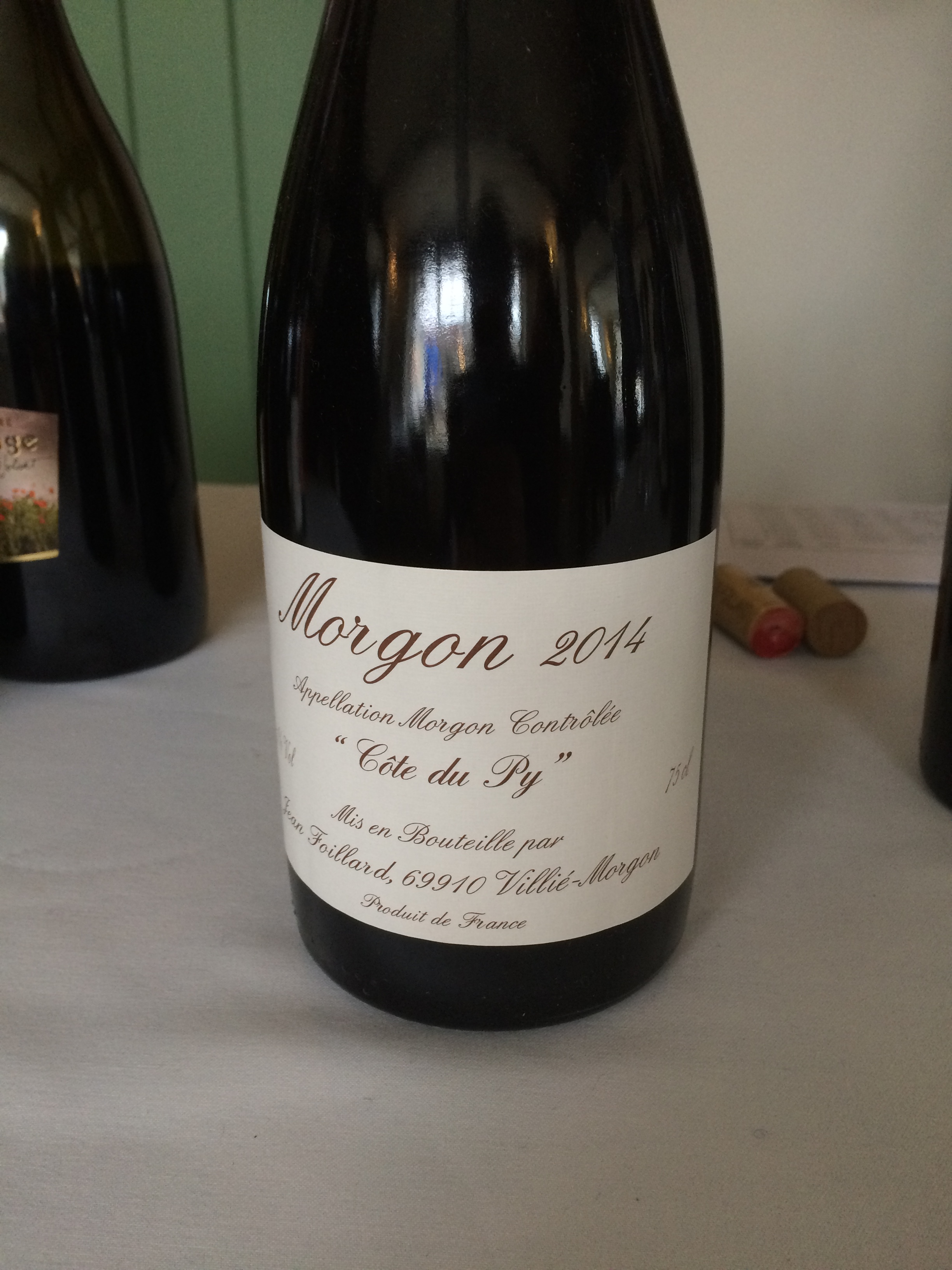
Beaujolais: Just a quick visit to these tables. I like Rémi Dufaitre (Dom du Botheland), having bought their wines in Paris last year, and I did really want to try the new vintages of Foillard and Lapierre. The Foillard 2014s are superb, especially the Côte du Py, and Lapierre’s Raisins Gaulois 2015, always a great value bottle, is excellent, and possibly a signal for this vintage.

image

                                                       Foillard

Burgundy: A few seasoned naturalistas told me they were missing out Burgundy, but with four exciting domaines I have not tasted in depth for some time, I didn’t. Alice de Moor was there, showing her Aligoté (seriously good), a Chablis (Vendangeur Masque) and a lovely Ardèche Chardonnay 2015, just bottled and (I think) on its way right now. Domaine de la Cadette (Vézélay) make great little wines (in a good sense) from one of the Yonne’s least known regions. Try them all. Domaine du Corps de Garde (Jean-Hugues & Guilhem Goisot, Côtes d’Auxerre) are one of the first domaines I bought from Les Caves de Pyrene. Their wines are genuinely brilliant, often mineral and crystalline. Last but not least here, Julien Guillot’s biodynamic Vignes du Maynes (Macon) presented an exemplary range including some Beaujolais I’d not tried before. But the Macon-Cruzille wines (Aragonite white and Manganite red) represent the peak of their output, some of the most “living” wines in Burgundy (which also age well, indeed preferring a few years in bottle).

image  image

De Moor                                             Alice

image  image

Les Vignes du Maynes

Jura: A massive array of Ganevats on offer (I counted ten at one time), but of course the fans were crowding around Anne (J-F’s sister) and her husband, making this one of the most difficult stands to taste at. You either adore this iconic producer or you wish he’d add some sulphur. I’m happy to be in the former camp, but I’m objective enough to see why cuvées like Madelon and “Y-à-Bon” scare some people. I did bring home some of the cheapish Le Jaja de Ben, which is one of his wines containing some of the ancient Jura cépages, plus Gamay. Ganevat makes this as a negociant wine, hence the price (about £15 UK retail), but it’s soft and fruity and might provide an intro for those who want to try him out. I’m increasingly enamoured with his Chardonnays above all others, but I missed out on the £50+ Cuvée du Pepe – I just hate crowds at tastings. A quick word too for Julien Mareschal of Domaine de la Borde in Pupillin. These look a good value range which I plan to explore in more detail.

image  image

Anne and husband, Ganevat (no Jean-François today)

image  image

Loire: Alexandre Bain was showing several different cuvées. Bain’s Pouilly-Fumés are guaranteed to get me back onto the Sauvignon Blanc. Jo Landron was showing his impressive moustache, and his Muscadets always get me excited. I was cross not to try those of Benoit Landron as I heard good reports. I had to shun a dozen producers I already know here, but I did visit La Coulée d’Ambrosia (Layon). A tasty pét-nat followed by some interesting Chenins (one made Vin Jaune style, sous voile).

For a detailed look at Nicolas Carmarans, See Part 1 (link at top of page).

ITALY

Another fruitful exploration. I began the day with a good slug of cloudy Prosecco di Valdobbiadene from Floris Follador’s Casa Coste Piane (another bottle that came home on the train). Perhaps these wines are well known to many of you, but they are amazing. I only learnt recently that these cloudy Proseccos are known as Col Fondo (Mina Holland in #nobrot10). I have long loved the wines of La Stoppa (Piacenza). Fellow Blogger Alan March (amarchinthevines.org) said that the Macchiona 2007 was his wine of the day. I think it blends Barbera and Bonarda like it blends the flavour of black olives with smoky bacon aromas. A wonderful wine…but they make a great range, including stunning Malvasia, too. Bera (Canelli, Piemonte) have something in common with La Stoppa, my having discovered them on what may have been my first ever trip to Les Caves’ Artington warehouse near Guildford. Every wine here is a winner, but I adore their most frivolous – they make one of the best half-dozen Moscatos in the region. A first for me were the wines of AA Filippi from Soave, shown to me by Emma Bentley (another wine blogger and consultant). They have some of the highest vineyards in Soave, planted with very old Trebbiano Di Soave and Garganega. Very good value wines.

A more in depth tasting with Stefano Bellotti can be seen in Part 1 (link at top of page).

I will not mention the Sicilians, I love them all (including at the end of two months, I hope, Salvo from Agrigento who is managing the building work at my house). I wrote about Sicily here and I’d only be more or less repeating myself. That said, that article didn’t mention de Bartoli whose wines from Marsala and Pantelleria have to be tasted. Bukkuram, their Passito di Pantelleria, even comes in a (just about affordable) 25cl bottle, perfect for the train home, a dark unction of rare beauty. No Foradori, you ask? I confess, I forgot, but thankfully it’s coming to a wine shop near me very soon – the Pinot Grigio Amphora was wine of the day for another friend, and it would be hard to argue that anyone can do Teroldego better.

image  image

image

                                                Emma Bentley for AA Filippi

image  image

Occhipinti                                          Vino di Anna

image

                                                                       COS

SPAIN

The cream of the crop here included Forja del Salnès (Rias Baixas) – I think most people know their Cos Pés Albarino, but the whole range is impressive.  I think in Spain they are better known for their reds. From a similar part of the country, Mengoba (Bierzo) were equally impressive. But the star of the Spanish cohort for me was Daniel Landi, whose Méntrida Garnachas from high altitude plots are possibly the most elegant wines from that grape I’ve ever tasted. Almost dumbfounded me. Daniel was also showing the more weighty but still massively impressive wines of Commando-G. My favourite here (not listed in the catalogue) was the high altitude Rey Moro parcel (2013). 14.5% alcohol rested very lightly on this wine. Again, last but not least, Recaredo‘s Cavas. This is how Cava ought to taste, and as with the Coste Piane Proseccos, this is as far removed from supermarket Cava as you can get.

image  image

Daniel Landi, star of Spain           Commando-G

image

                                                            Commando-G

BEST OF THE REST

USA: Clos Saron (Sierra Foothills, California) make an interesting range and a few of their wines, the Blue Cheer Carignan/Cinsault, Out of the Blue Cinsault, and the Pleasant Peasant Carignan, are all of special interest (but they’re expensive). Beckham, and Kelley Fox, got good press elsewhere but I didn’t taste them. You can read about La Garagista from Vermont in Part 1 (link at top of page).

Australia: Patrick Sullivan was pouring (liberally) a selection of his own wines. I loved the wild and wacky “Haggis Wine” (“all the shit that isn’t good enough to go anywhere else” or words to that effect, said a slightly wobbly Patrick, but it’s bl**dy good nevertheless) and I was also taken with the “New World Wine”, a Pinot Noir/Malbec blend. Amazing labels here. Patrick was also pouring wine from some of his friends and I tried and loved the Barossa Shiraz “Romanee Tuff” from Tom Shobbrook (wanted to try that for some time) and Anton’s Domaine Lucci Wildman Blanc (late-picked Sauvignon Blanc with a tad of noble rot – seriously!).

image  image

Patrick Sullivan in full flow

image  image

Patrick’s Haggis and Tom’s Romanee Tuff

image

                                                         more Tom Shobbrook

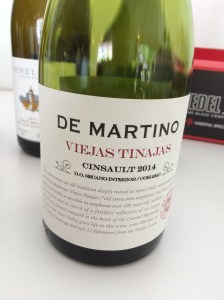
There was so much more I didn’t get to try, including the Georgians (I’m told that the Sunday night party was so wild most of them never made it back for Monday), the Friulians (but seriously good), De Martino (Chile), and worst of all, South Africa (I can vouch for Radford Dale‘s value and for Testalonga). No, worst of all was my failure to taste any Austrians (you know how much I adore Austrian wine), but RAW will have Christian Tschida, Gut Oggau, Meinklang and Claus Preisinger for starters, so all’s not lost.

I hope you weren’t disappointed I failed to mention a favourite. I did my best though. Even after spitting most (but not all…) of my pours, and just one beer afterwards, I was just about in a good place for the journey home (focused on the need not to break any of my heavy stash). A great event, fun, lovely wines, if not for all tastes. One well established blogger said of the Loire cohort “there were gems but the hit rate was very low”. This only proves that we all have different tastes and different perceptions of how a good wine should taste. I think there’s a divide which would be hard to bridge between those who grew up on affordable wines from the classic regions, and those new to wine this decade who are just discovering how exciting the hobby can be. I don’t doubt that there is clever marketing at play with some of these clued-up and social media-savvy producers, but there is also no doubt that the producers here preach a different philosophy, which strikes a chord with a public more willing to experiment than perhaps at any time in the history of wine. Despite the prohibitive cost of most good wines from regions like Bordeaux and Burgundy, there have never been more interesting wines for the ordinary (non-oligarch) wine lover to try and buy.

image

Posted in Natural Wine, Wine, Wine Agencies, Wine Tastings | Tagged , , , , , , , , , , , , , , , , , , , , , , , , , , , , , , , , | 3 Comments

The Real Deal (Part 1)

I was at East London’s Tobacco Dock yesterday for the Real Wine Fair. This is an event for natural and low intervention, organic and biodynamic, winemakers organised by Les Caves de Pyrene, the wine agency who were first responsible for promoting a complete portfolio of these wines in the UK. The two day fair, showcasing more than 160 producers, goes hand-in-hand with Real Wine Month, promoting artisan producers through independent wine shops and bars throughout the UK, and which (presumably by coincidence) leads up to the other major natural wine event in London this year, RAW Wine (15/16 May 2016).

The Real Wine Fair this year was a far cry from the first event Les Caves organised in a small, sunny, room in West London some years ago. The Tobacco Dock venue has its negatives  (the usual Sunday engineering works on both Underground and Overground certainly made getting there a bit complicated for some producers unaware of closures), but it provides a good tasting environment up until the point when the post-lunch crowds on the public day make it a bit of a tight squeeze. The food court was excellent, and even better was the well stocked on-site Caves de Pyrene shop – I managed to lug six bottles home with me, but I rather wish I’d opted for a suitcase.

image   image

main room at Tobacco Dock and the Caves de Pyrene shop on site

I certainly didn’t get round anywhere near all 160 producers, each showing (at a guess) an average of five cuvées, but I spent a good four or five hours tasting. So in this Part 1, I plan to mention three interesting producers I spent more time with, and then in Part 2 I shall give a more general picture of what else I tasted.

I’ll begin with the most unusual. There were, without doubt, plenty of weird (and usually wonderful with it) wines on show, but the prize for the most unusual portfolio might well go to a winery from a place that even I’ve never tried wine from before – Vermont. The North American wall of producers was pretty exciting, lots of interesting wines, and I see a few of the established wine journalists have already been mentioning one or two on social media. But perhaps La Garagista Farm and Winery were just a little odd for those more esteemed pens.

Garagista are located on Mount Hunger, just east of Lake Champlain. Their stand had a very helpful hand drawn map to help us out, because my North American geography was certainly not up to locating them with certainty. The philosophy here is both that of natural wine and biodiversity in the vineyard, and on the wider farm homestead. It’s very much a community based philosophy as well.

image

ah! Vermont

The wines are distinctive, not merely because of their origin, but because of the grape varieties used up in the cool climate of Vermont (cool? temperatures can reach -30 in a bad winter). Five wines were on show, and they were presented by chief winemaker Dierdre Heekin and one of her team, Caleb Barber.

image

Caleb & Dierdre

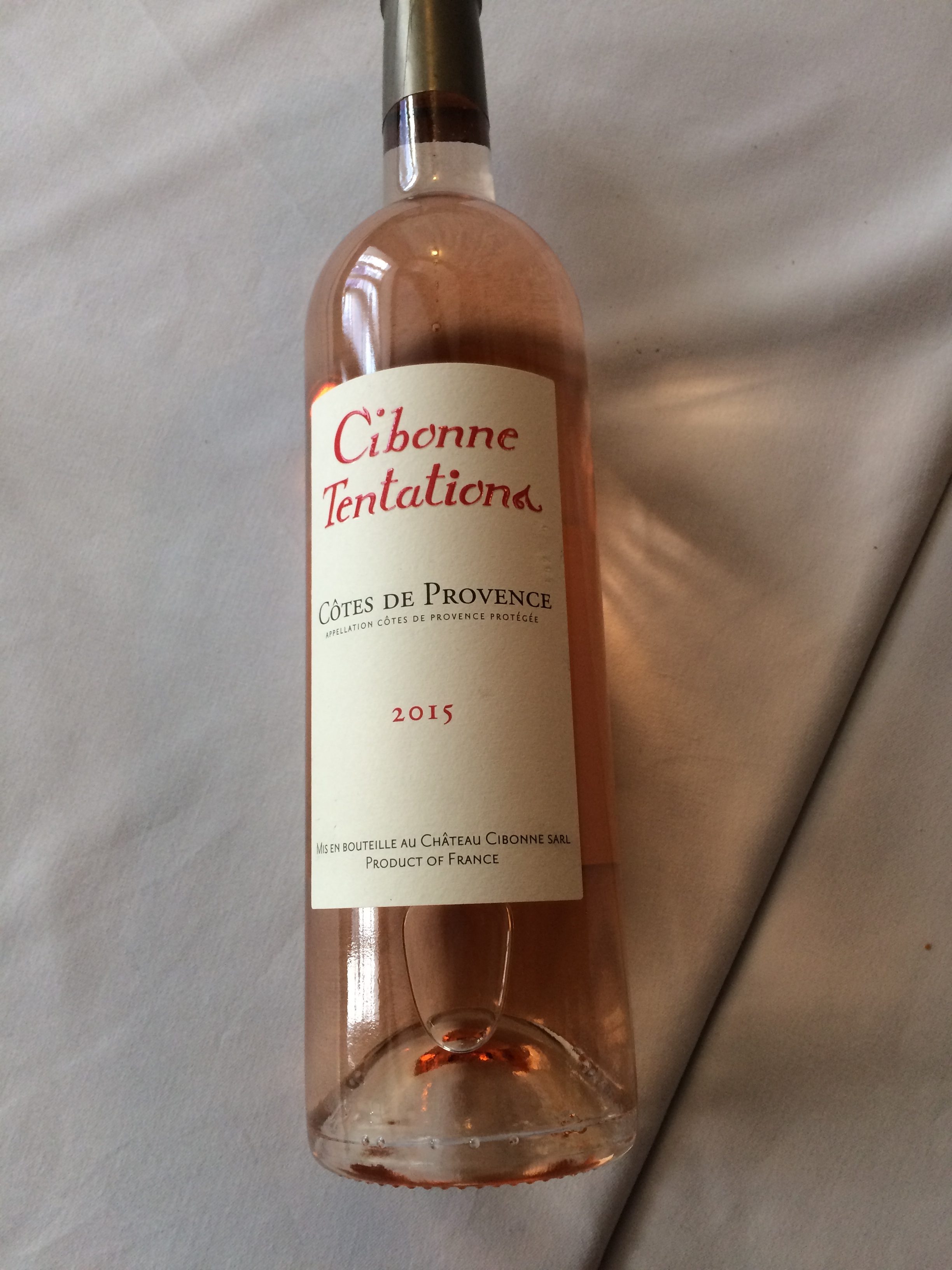
Grace and Favour 2015 – this is a crown cap sealed pét-nat, bottle fermented but without disgorgement. A great example of the genre, relatively simple but refreshing and lively. Made from Black Muscat, there’s enough of the Muscat family’s aromatics to identify it. Great fun, and indeed, it was one of the half-dozen wines which made it home with me, as much for its unique provenance as anything else. The only negative, this retails in the upper 20s (£ Sterling), making it substantially more expensive than some pretty good European pét-nats.
image

Harlots and Ruffians 2014 – this is a 50:50 blend of La Crescent and Frontenac Gris (and I’m sure you’re keen to know that La Crescent comes from a cross between St Pepin and ES 6-8-25, with that well known stalwart of English table wine, Seyval Blanc, back in the parental lineage). We are, after all, looking at grape varieties able to withstand such freezing winters. La Crescent is variously known for Germanic tasting wines and, occasionally, something more akin to Sauvignon Blanc. This wine might be seen as a cross between the two, and was perhaps less interesting (and extreme) than the next wine…

Vinu Jancu 2014 – the name intrigued me. It’s Sicilian dialect for dry wine, and it undergoes five weeks’ skin maceration. It exhibits the usual texture of a skin contact wine, also evident in the onion skin colour. It’s also cloudy, but very fresh and very interesting. My favourite of the two whites.

image  image

Damejeanne Rouge 2014 – Another US developed cold climate hybrid, Marquette, combines with 10% La Crescent to make a wine that has some of the flavour characteristics of Pinot Noir, with quite concentrated cherry fruit, along with a slightly bitter or earthy finish so often seen in wines made from hybrid vines (similar to the Luckett Vineyards wine from Nova Scotia which we tasted at the last Oddities lunch).

Loups Garoux Rouge 2014 – the pick of the two reds, a single site wine from their West Addison vineyard, almost beside Lake Champlain. Served from carafe, this is really intense. There’s concentrated blackcurrant with cherry, and a bitter elderberry (Caleb’s take)/redcurrant (my less educated take) on the finish. Frontenac Noir is the grape variety.

A really interesting range of wines from a state not well known for its wines (I believe this producer is the state’s only exporter). Worth exploring, partly for their obscurity for sure, but also in their own right.

I’ve written about Stefano Bellotti and Cascina degli Ulivi (Piemonte) before, but until yesterday I’d only tried his skin contact white, A Demûa. A chance to taste the range and meet the man was a privilege and a treat. Stefano took over his grandfather’s vines in the mid-70s, converting to biodynamic practices a decade later. His farm is one beautiful integrated ecosystem, with mixed crops and husbandry complementing the vines. If you want to see a little of Stefano, and to get an idea of the problems he has had with the wine authorities for creating this beautiful, chemical free, piece of Northern Italy, watch Jonathan Nossiter’s film, Natural Resistance.

image

Stefano

Bellotti Bianco “Triple A” Vino da Tavola [2015] – sealed under crown cap, light sparkle, 100% Cortese from Tassarolo. 12.5%, light filtration and a touch of sulphur. A simple wine for happy quaffing, perhaps, but still a good (and lively) introduction to Stefano’s stable.

Gavi 2014 – Stefano does attain the DOC sometimes. You wonder why, considering so much Gavi is dull, and this certainly isn’t. South facing slopes on red clay, 100% Cortese (as the DOC requires). What you notice is the freshness with this wine, and that for such a renowned natural winemaker (substitute “notorious” if you are a local bureaucrat) you don’t get anything scary or odd. It’s just a lovely, well made wine, no flash, no hype.

A Demûa 2014 – so nice to taste the new vintage of this. It’s here that Stefano leaves the box, perhaps more than with his other wines. It’s a blend of Timorasso, Verdea, Bosco, Chasselas, Musqué (Chossellot) and Riesling, sold as a Monferrato Bianco. These are seriously old vines (some more than 100 years old). “Demûa” is dialect for “fun and games”, and that’s what this is. Nine months of skin contact creates an onion skin colour, more texture and scents of flowers. The palate has nuts and a saline lemon finish. Stefano counsels (well, ably translated as he speaks little English) serving this not too cold, at cellar temperature rather than from the fridge. Simply stunning. Another of the wines I brought home, even though I shall get more next month.

Filagnotti 2013/Montemarino 2013 – these are two single vineyard Cortese. Montemarino (Monferrato DOC) is one of the highest hills of the Gavi zone. The wine undergoes three days maceration and is aged in 15hl oak, old of course. An elegant wine from grapes grown on limestone.  By contast, the Filagnotti (Gavi DOCG) vineyard is on red clay, exposed South West, and ageing is in 25hl acacia wood, on lees for around 11-12 months. They are again both 100% Cortese, and therefore a great advertisement for the existence of terroir: two beautiful, if subtly different, wines. Perhaps the Montemarino has more floral elements, the Filagnotti more typically almonds.

image  image

Bellotti Rosso “Triple A” [2014] – the red version of the first wine tasted. This is a Dolcetto/Barbera blend from multiple sites. A rich, dark red, sealed like the Bianco under crown cap, 13.5% alcohol and no added sulphur. Just like you’d imagine (good) natural wine to be, joyful quaffing for rich Italian food.

Dolcetto Nibio 2008 – a nicely aged single variety made from a very special local strain of Dolcetto (Nibio means red stalk, reminding me of Jura’s special red-stalked Chardonnay), a biotype which Stefano thinks has been around Tassarolo for a thousand years. It’s a tannic wine, despite its age (it has forty days’ maceration and a year in old oak), and it is meant to represent an example of the traditional red of the region, despite the relative lack of appreciation for Dolcetto in contemporary Piemonte. Sappy and delicious.

Mounbè [2009] Piemonte DOC – Pure Barbera from Montebello, also with a nice amount of bottle age, and my personal choice of the reds tasted. It gets a few months longer in wood than the Dolcetto, and wood of differing sizes. The wines may be quite structured when young, but this has aged beautifully, the kind of Barbera which, despite the temptation to reach for a Nebbiolo on such occasions, would partner Piemonte’s rich game cuisine so well.

image

Stefano Bellotti has had a sort of myth created around him, a contadini at odds with officialdom and a champion of natural wines. Yet he doesn’t shy away from using a little sulphur, and he’s not averse to happily sharing his vision of biodiversity with visitors. His wines are just lovely. They are clearly different, yet there’s nothing weird about them – although the A Demûa is a touch unusual. I almost can’t quite put my finger on why I’m more drawn to Stefano’s wines than so many others…but I am.

image

The last producer I want to highlight today is Nicolas Carmarans. Nicolas doesn’t have a web site. He makes wine in one of France’s poorest yet most beautiful departments, Aveyron. His domaine is located near Montézic (near the reservoir lake of the same name), by the River Truyère, just north of Entraygues. We’re a little northeast of the glowing pink-stoned city of Rodez here, and just west of the barren but beautiful Monts d’Aubrac.

Nicolas used to run the Café de la Nouvelle Marie in Paris, which some long time followers of the French natural wine movement may recall. He and his family moved full time to take on just over 3 hectares of Chenin, Fer Servadou, Negret de Banhars, Cabernet Franc and Malbec (a very typical local mix) from which he makes a range of fine Aveyron IGT cuvées.

image

Les Carmarans

Selvès Blanc 2014 – is a nice pure Chenin which tastes fresher than many Loire versions. A bit more mineral perhaps, no pear or quince, and too dry for tarte-tatin notes. It’s a wine which initially strikes as quite simple, then some complexity builds in the glass. A grower, as they say. Given time you’ll love it.
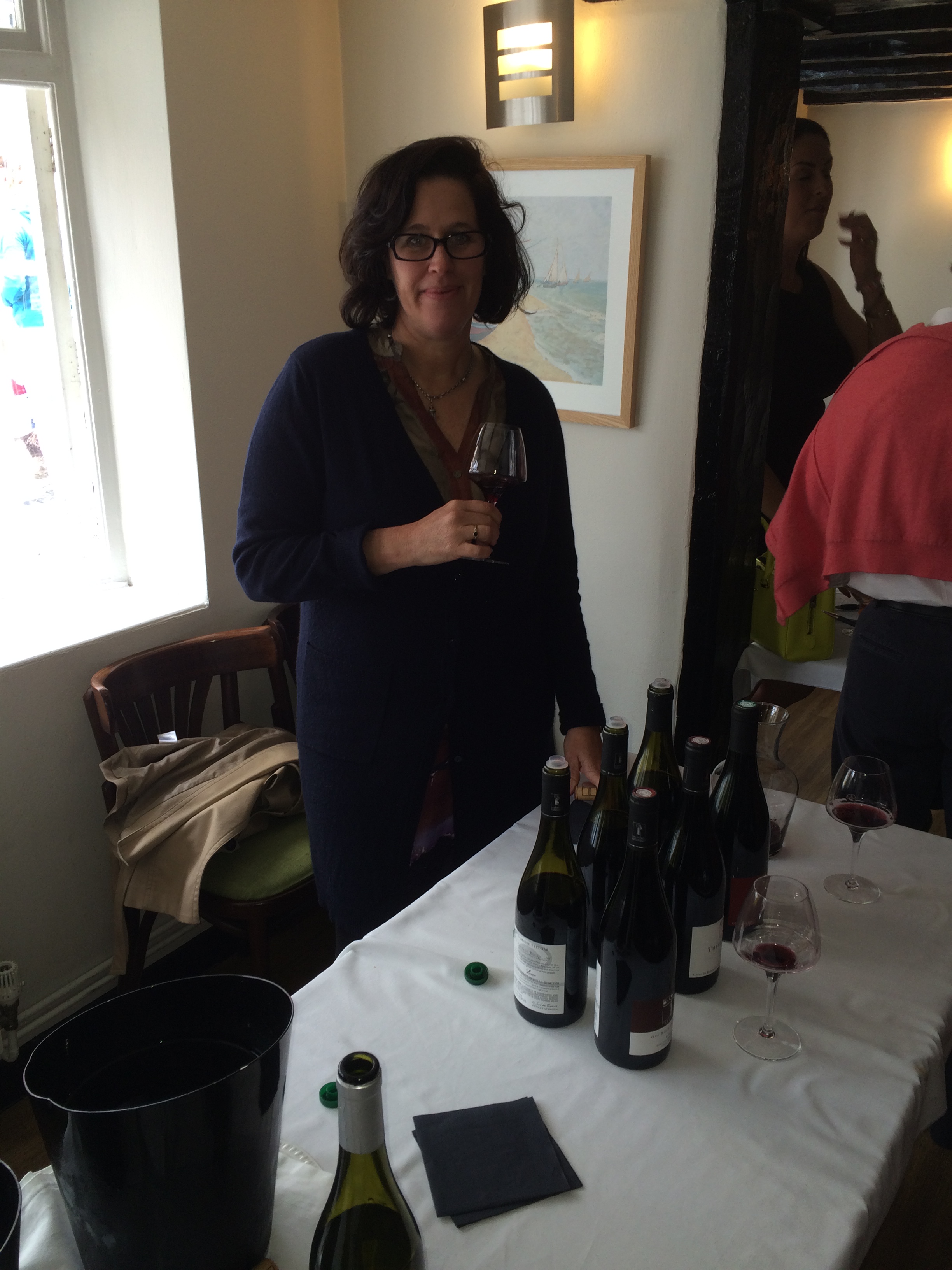
Mauvais Temps 2014 – I didn’t ask “why the name?”, but this vineyard is part of a large 20 hectare slope where the vines were killed by the terrible frost of 1956 (see link to article below, where I found this fact). It is a red blend of 60% Fer, 30% Malbec and 10% Cabernet Franc. This is very approachable and drinking nicely now. It’s kind of an entry level red in some ways, but that’s not a criticism. It’s a wonderful wine, I’m almost tempted to borrow a Parker phrase for the amount of tangy fruit (but I won’t). In fact, this is another wine which accompanied me on the train home.

Maximus 2014 – is pure Fer Servadou, the unique grape of the region. This cuvée is from granite soils. There’s that iron filings note in evidence, the one you also get with Marcillac reds, which somehow evokes the volcanic soils quite common around here. But the fruit is really concentrated too, quite dark fruits with a brambly edge. This is a lovely wine, though it might well benefit, get even better, from a little age.

L’Olto Rouge 2013 – this has benefited from even one extra year in bottle. Again, 100% Fer, but from argilo-calcaire (limestone) soils this time. Quite brooding, if that’s not too indistinct a descriptor? A lovely wine, drinking now (for me, though I can’t claim expertise, it has less potential to age than the Maximus, which is reflected in price – though all these wines are great value, nothing pushing above £20).

The excellent Wineterroirs Blog has a very good article on Nicolas from January 2012, to which you can link here if interested.

Do visit Aveyron if ever you can. It’s rural and tranquil in a way which much of France used to be thirty years ago. The wines of Marcillac are reasonably easy to find in the UK, less so those of Entraygues(-et-du-Fel) and Estaing. But amid the deep river valleys and heavily wooded slopes you will discover the old village of Conques. The village and its restored abbey church are enough of a draw, as is the abbey’s treasury containing reliquaries of rare beauty. But amid these treasures is one of the finest examples of religious art in Western Europe, the Majesty of Sainte-Foy (Saint Faith), a golden statue, almost life-size, of the enthroned child martyr covered in rare gems (just about anything you can imagine from sapphires and pearls to emeralds and topaz, along with cameos and intaglios from classical times). Of unknown date and origin, Bishop Bernard of Angers was worried in 1010 that it might be just too beautiful as a religious object. It certainly has that level of beauty. An astounding piece of craftsmanship.
image

Posted in Natural Wine, Wine, Wine Agencies, Wine Tastings | Tagged , , , , , , , , , , , , , | 6 Comments

Oddities (April)

A dozen wine obsessives congregated once more at Rochelle Canteen on Friday in order to taste another batch of weird and wonderful wines from out of the way regions. I think we might have surpassed ourselves in terms of wine regions, if the first two wines were anything to go by. I’m not sure that the wines themselves quite scaled the peaks of some of our previous encounters – there were no Gravners or Selosses – but equally, I didn’t hear anyone express any great negativity about the wines either. Add to that the food, many saying it was the best Oddities meal yet (which is something I hear every time we visit Rochelle Canteen) and everyone left feeling happy and sated. I will readily admit that I was even less restrained when it came to the food than the wine.

image   image

In any event, the beauty of these lunches in not the Parker Points esteemed wine writers and Masters of Wine might award the wines (though both come to these lunches from time to time and always show restraint in relation to such vulgarity). It’s the act of discovery which counts. Making a rarely, if ever, encountered wine your wine of the day, discovering more evidence that a far off country can do wonders with a classic if normally regionally constrained grape variety, or even better, finding a brilliant £13 wine that’s available in a well known London wine shop: all of these came to pass.

1. Chöying White 2016, Laurie Lange, Kathmandu, Nepal – Laurie Lange is an American who spends part of the year studying in Kathmandu and the rest guiding tours in Alaska. She’s turned her hand to wine after success with mushrooms, and plans to take on beer as well. The grapes come from India, via the street, and we think they could be the table grape, Thompson Seedless. The vinification vessels are 9 litre water containers of the type you see in offices, or doctors’ surgeries. The first time I tasted this it reminded me of Vaudois Fendant/Chasselas. This bottle was more aromatic, but with a chalky dryness. It shows a creditable 13.5% alcohol, which most people picked up on, and there’s a touch of skin contact in the colour, there being a tinge of onion skin. There’s also much less acidity than when I tried this in Kathmandu, so it may not be a long keeper, though still very fresh. I’m sure Laurie will keep me up to date. It’s a creditable effort and if anyone had any suspicions that it was “home made” they didn’t voice them. Laurie has an off-dry rosé bubbling as I write. [We’ve just bottled our own white here and there’s a bottle in the fridge waiting for the sun to dip below the yard arm. I’m sure it will be less appealing than this was.]

image

Laurie’s Chöying – it means “body of qualities” in Tibetan)

“White Buried” 2013, Luckett Vineyards, Gaspereau Valley, Nova Scotia – We get a few wines from Canada to taste, but this is my first ever wine from NS. The 100% L’Acadie grapes (me neither) are vinified in Hungarian oak, placed underground in the same terroir as the vines. Just 200 cases are bottled. Some guessed a hybrid grape variety but that was about as far as we got, other than (eventually) Canada. It’s a fresh medium white with a slightly smoky nose, replicated on the palate, the oak being mostly, but not wholly, integrated. Very nice to try this. When wines of unusual origin taste good the concept of these lunches is vindicated…and we learn just a little more about wine.

image

“Imathia” White 2014, Chrisohoou Estate, Naousa, Greece – This was one of my top wines on the day, brought along by Jason (Theatre of Wine). Quite “Greek” (it’s from the northern Greek province of Central Macedonia), though not quite sure how we define that? Also quite Chenin-like, if obviously not Chenin…which must sound very cryptic. It probably just means “suitably different from what we usually encounter”. I think we’d realised by this stage that guessing the wines was going to be unusually tough this month. A fresh, minimum intervention, white made from the Priknadi grape (another variety I was encountering for the first time). Lovely, herby with citrus, 13% alcohol. I’d probably pair this with risotto, despite mixing Greek wine with Italian cuisine.

image

Dr Loosen Ürziger Würzgarten Riesling Alte Reben Reserve 2011, Mosel – What? You say! An Oddity? But this is a wine not commercially released, which underwent 24 months ageing on lees. Made as a dry wine as an attempt to replicate the wines Ernie’s grandfather made, this is a real success, a super wine. Dry, without petrol notes, just what I insist on calling great minerality in its texture and dryness. Many, myself included, put this as either a New Californian, or New Zealand Riesling. Totally threw us, but an unqualified success. I do rather wish I had a few bottles.

image

Rkatsiteli 2012, Kakhetia, Georgia – We were unable to decipher the estate name from the Georgian script (sadly the English script, as you will see, does this nice wine few favours). A touch of sweetness on the nose might deceive, but the palate is dry, textured by skin contact but not as much as many, see photo (I would say it actually tasted more like a traditional white wine than the often almost tannic style of some orange wines), and it had an unusual freshness, good length and concentration.

image   image

Stapleton & Springer “Blanc” Pinot Noir and Stapleton & Springer “Orange” Pinot Noir, both 2014, Moravia, Czech Republic – These two wines, forming a pair, are both available (I believe) for £13.75 btl/£12.50 case, from London’s Lea & Sandeman. Pinot Noir vinified en blanc is rare, but not unknown. Vinified as an orange wine is really unusual. Both wines are lovely, but most of us were very impressed by the latter…although to be fair, I’m not sure it was exactly orange in colour. There was definitely a touch of pink. Lovely strawberry nose which eventually gave the variety away despite what we could see. Amazingly gluggable and refreshing. This would have made most people’s top four, I think. Must grab some. They also have a couple of cuvées which retail at around £3 more, and which look interesting. See here.

image

“RPM” Gamay 2013, El Dorado, California – Made by Arnot-Roberts and Rajat Parr, this was another contender. More structured than much Beaujolais, quite a serious wine. It’s far from the first really good Californian Gamay I’ve sampled in the past couple of years, but made without too much hang time it keeps itself quite taut. Yet another example of Roberson’s skilful selection of these New-Cali wines, and I’ve yet to taste a wine from either Arnot-Roberts, or Rajat Parr, which was anything less than exciting. A great combination.

image

Ruché di Castagnole Monferrato 2013, Montalbera – Sorry about the blurred photo here. I’ve had this wine a good few times, most recently I think at one of Warren Edwardes’ spice oddities lunches. I like it a lot, although I didn’t recognise it on this occasion. It seemed a bit fatter than I remember, and also lacking quite the brambly bite on the finish which might have brought a glimmer of recognition. Or perhaps I was concentrating too much on the wonderful Wiltshire Duck which was sitting in front of me? Anyway, I’ve recommended this wine before so I’m happy to do so again. The same producer makes a delicious Freisa too.

image

Humagne Rouge 2009, Simon Maye & Fils, Chamoson, Valais (Switzerland) – I was perhaps more disappointed here than by any other wine. I’ve had it a few times before and it was lovely, like a smoky Syrah-like red with concentraed fruit. Humagne is, of course, one of the signature grapes of the Valais, and although I drink more Swiss wine than many, I so rarely take them to tastings. The fault here was a certain hollowness in the middle. It may well have closed down, as a couple of people suggested. A shame.

image

Chianti Classico Brolio 1964 (?), Barone Ricasoli, Tuscany – With the date indecipherable, we relied on Antoine’s memory. It was the first ever fine wine he bought, so it was wonderfully kind of him to share it. It was on its last legs, to be fair, but not wholly shot at all, and at least 50% spotted it was Sangiovese (to be embarrassingly honest, the other 50% thought it was Nebbiolo!).

image

Brunello di Montalcino 2006, Altesino, Tuscany – What is my problem today? I thought this was Barbaresco, and I wasn’t completely alone there. Altesino is the first Brunello I bought, early 1980s vintages after a tasting with David Gleave at the old Winecellars in Wandsworth. Maturing nicely with poise, and not showing any of the real bombast of some modern Brunello (among its fans, 2006 is seen as an elegant vintage in Montalcino, lacking the power and fat of some). It grew on me too. I’ve not bought Altesino for ages but I’m told (thanks Shon) that it can be well priced at auction these days. This is approachable now but will mature.

image

Cuvée “Longo Mai” 2009, Domaine des Hautes Collines, St Jeannet/IGP Alpes Maritimes, Provence – This IGP sits up above Nice, and is even tinier and less well known than Bellet, though it shares the equally rare Braquet grape variety with that AOC. This cuvée also includes Cabernet Sauvignon, Grenache, Merlot and Syrah, all vinified separately before blending and transfer to glass bonbonnes. These are left outside (as sometimes happens in Banyuls at the other corner of Southern France), usually on a rooftop here, before three years of oxidative barrel maturation. This wine divided opinion quite sharply. Some people said they didn’t get it. It was probably, by a whisker, my personal wine of the day, so there you go. Unusual, complex and thought provoking, even before discovering its method of production.

image

Campania Rosso IGP 2011, Azienda Monte di Grazia, Tramonti (Amalfi Coast) – 90% Tintore with 10% Piedirosso from old vines, made with minimum intervention just inland from the Amalfi beaches, yet far more exciting than many wines flogged to tourists. The vines are actually 120 years old, and the result is far too serious for undiscerning tourists, for whom a “mere IGP” might be misleading. A nice touch of age here, which I suspect those centenarian vines merit. It also has that iron filings and earthy note which you find in nearby (red) Lacryma Christi (though those wines are most usually 100% Piedirosso, the minor component here).

image

Ajaccio AOC Cuvée Faustine 2004, Comte Abbatucci, Casalabriva, Corsica – Another thing we don’t often get treated to, a magnum of Corsican wine with more than a decade under its belt. It’s a blend of Niellucio and Sciàccarello, made by a family directly descended from Napoleon Bonaparte. Their now biodynamic domaine dates back to 1950. A wine with evident age to it, most had a stab at an old Tuscan (well, Niellucio is Sangiovese), but we thought it older than 2004. There was a move towards Corsica as its origin once Tuscany was rejected. Think old Chianti with a bit more bite. Very enjoyable, and a generous bottle for our final red.

image

Galilee Mount Hermon Dessert Muscat 1990, Yarden, Israel – Made at Yarden’s Golan Heights Winery from Muscat à Petit Grains grown in Galilee, it’s rich but not heavy, quite sweet but not cloying. 14% alcohol. It’s actually a good wine which is readily available in the US for very little money. These two halves had received the kind of bottle age I suspect this wine rarely manages and it was still fresh. A nice wine with which to finish the meal, and no great complexity to interfere with the sheer indulgence of our delicious rhubarb crumble. Sometimes the simple wines make the best matches.

image   image

image   image

image   image   image   image


Posted in Oddities lunches, Wine | Tagged , , , , , , , , , , , , , , , , , , , , , | 6 Comments