Jura Week 3 – Fête du Biou at Vadans

The Fête du Biou is a rather special festival at harvest time in the Jura Region. It takes place in Arbois on the first Sunday in September, with a smaller version in Pupillin on the third Sunday. What is much less well known, and I’ve not seen it publicised in the UK, is that the same festival also takes place in the village of Vadans on the first Sunday after the Saint’s Day of St. Maurice, patron saint of the village church.

The Festival of the Biou celebrates an obscure biblical story of the return of the Israelites to Canaan. Spies were said to have been sent out to survey the land and they returned with an enormous cluster of grapes, known as the Eschol, borne on a pole. There’s a famous painting by Poussin in the Louvre illustrating this (The Spies with the Grapes from the Promised Land). So every year the vignerons of the region get together and donate some fine looking red and white bunches which are made into a large cluster of grapes, just like that in the photos below. On the day of the ceremony the chosen producers go around the town or village in procession with the Biou, in the same way as they process with a cask for the Percée du Vin Jaune at the beginning of the year.

The Percée , linked to the festival of St. Vincent (patron saint of wine growers), and celebrating the release of the new vintage of Vin Jaune, has the major disadvantage of taking place in the coldest weeks of the year, in a region known for its tough winters. In whichever town in the region the Percée is held each year, vast crowds attend [although there will be no Percée in 2017]. In Arbois, the Biou Festival is only slightly less well attended. After the procession of the vignerons in their costumes, accompanied by all the pomp of a rural parade, the Biou itself is blessed in the Eglise St-Just, where it then hangs above the transept, eventually filling the church with the smell of just fermenting grapes.

The procession is a big thing in Arbois. The whole town turns out with thousands of visitors, and this year with heightened security it was almost impossible to drive in. Pupillin’s affair is somewhat smaller, although the village has seemingly established a welcome tradition that women vigneronnes carry the Biou – in Arbois it’s all very much a masculine affair.

But on Sunday 25 September we were invited to Vadans to witness the third of these festivals, an altogether smaller affair, but none the worse for that. Where on earth is Vadans, you ask? Arbois’ vineyards spread out from the town in several directions. Those up towards Arc-et-Senans and Port Lesney, to the north, are beginning to get some recognition now, via the small clutch of exciting producers up there. Vadans lies more or less west of Arbois, along the road to Dôle, close to Molamboz, Montmalin, St-Cyr, and a little way past the slightly better known Villette-les-Arbois. This is really a bit of a quiet corner of the Arbois vignoble, but there’s no lack of vines.

There are few producers around here you will have heard of, although Jean-Baptiste Menigoz at Les Bottes Rouge is at Abergement-le-Petit, on the other side of the D469. Joseph Dorbon is the largest viticulteur in Vadans and he has just three hectares of vines, although the larger Domaine de St-Pierre in nearby Mathenay has 6ha. One name you will have heard of is Puffeney. Frédéric Puffeney is the nephew of the newly retired “pope” of Montigny, whose small domaine produces less exalted, but equally less expensive, wines. I think his Crémant is one of the first to sell out, unsurprisingly for around €8/bottle.

One producer you won’t have heard of is Madelon Peters and Marcel Hendrickx, a Dutch couple who have settled in the village. Marcel is just starting out on the road as a vigneron, with a couple of plots of his own vines as well as some bought in fruit. The domaine doesn’t even have a name yet, though Domaine Marcelon has been mooted – it combines the couple’s names, but also translates as “little warrior” (derived from the Roman, Marcellus), quite apt as Marcel was one of the spear carriers at the Vadans Biou Festival this year, having carried the Biou itself in 2015.

Madelon and Marcel were the reason we were in Vadans, and it was to their house that we retired after the Marseillaise sung by the children, the speeches, and the drinks and cake (all the villagers club together to provide these) behind the Mairie, which followed the church service. It’s nice that it is the young wine producers who carry and guard the Biou as they move in procession around the village, and it’s the village teenagers who prepare and serve the food and wine under gentle supervision of the older producers. Everyone was very merry, and I had to endure some post-brexit ribbing with a certain stoicism, and the occasional wobbly old lady, but a fun time was, as they say, had by all. There’s no doubt that it’s really nice to experience events like this in rural France. You get a sense of the strong community which exists, as it certainly does in Vadans, and you can enjoy seeing the importance of the traditions which bind communities together. As the video shows, it’s all pretty informal and lighthearted, and we were made to feel very welcome as a part of it.

The Biou Procession and drinks, plus an amusing video showing off the prowess of the village band

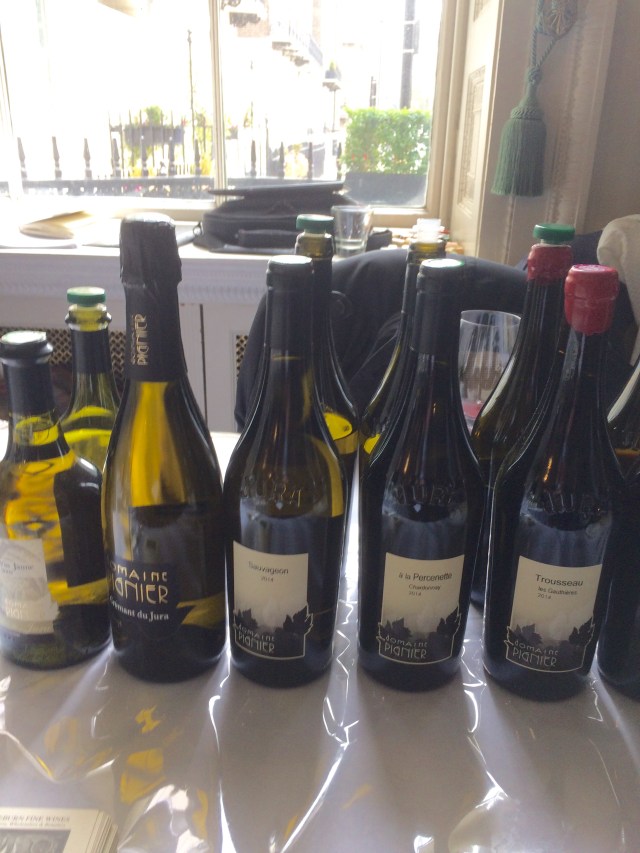
Chez Marcel, we tasted a number of cuvées from 2015 and 2014 still awaiting bottling, and a little new must in vat. Marcel is still learning, and he’s a determined advocate of a non-interventionist approach to winemaking. This has led to a few issues, his 2014 Chardonnay not yet having gone through its malolactic, and a little brett on some Trousseau from 2014, but the wines we were able to taste showed genuine promise.

This was especially true of the bottle of red from bought in grapes which Madelon had given me to try a few days earlier. It’s a very nice Trousseau, well made with good fruit. A Pinot Noir/Trousseau field blend had been in tank for two days and had not yet begun its fermentation, but the juice tasted of pleasant cherry flavours, definitely showing potential. Whilst the 2014 Chardonnay in tank clearly needs its malo, another Chardonnay in wood previously used for two fermentations showed nice colour, although there was a little cloudiness due to moving the barrel whilst still on the lees. Again, I shall look forward to trying it when bottled.

                                               Marcel’s cellar, and his very nice Trousseau 

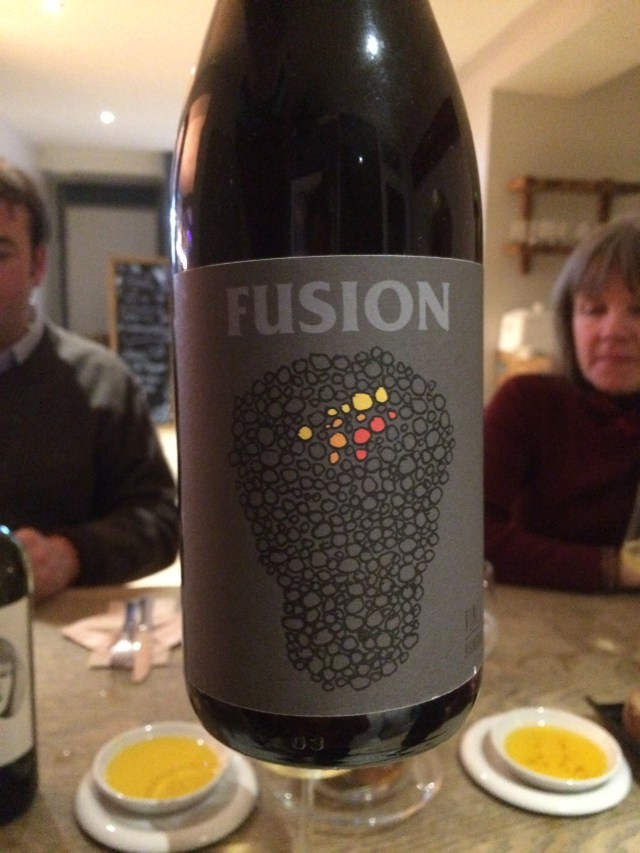
Marcel clearly knows what he’s doing, having helped out, and learnt from, two very highly regarded Arbois winemakers, André-Jean Morin at Domaine de la Touraize in Arbois (who is also, incidentally, a Biou carrier in the Arbois procession), and Frédéric Lornet, an experienced producer in Montigny-les-Arsures. The grapes for the lovely red we drank from bottle (see photo above) came from André-Jean. The wines are not commercialised, and this itself would be a big decision for Marcel, not least because of the vast amount of admin it would entail. But everyone must start somewhere, and it was interesting for me to see the work of someone who is a little (maybe a lot!) further along the road than I am as a winemaker. I’m looking forward to seeing how this small domaine progresses because I have a hunch that Marcel is quite serious about making the best wines he can, and I believe he has the determination and empathy to succeed.

img_1843

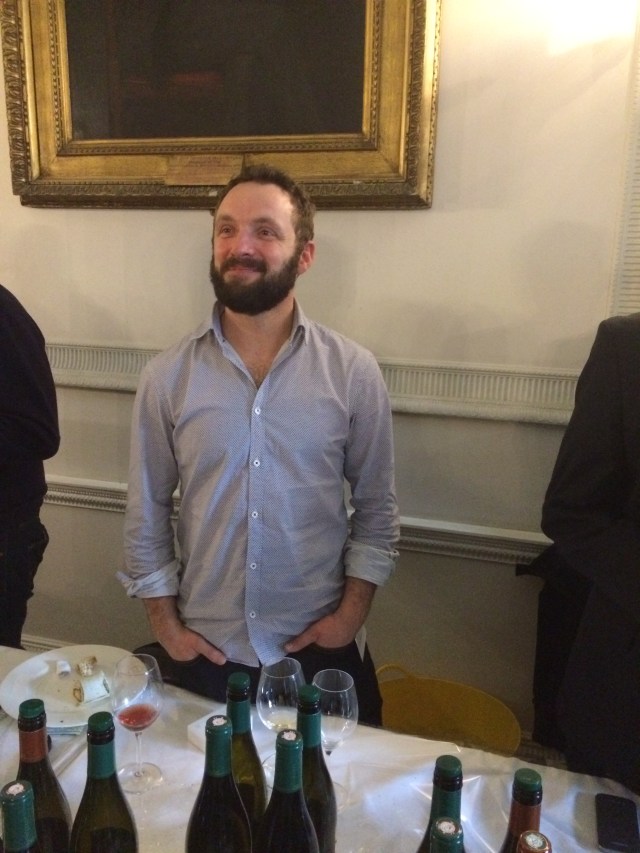
Marcel himself – sorry it’s so big, Marcel, couldn’t resist…


Posted in Jura, Wine, Wine Festivals, Wine Tastings, Wine Travel | Tagged , , , , , | 2 Comments

Jura Week 2 – Hughes-Béguet

If Domaine de la Tournelle has now established itself firmly among the top names in Arbois, Domaine Hughes-Béguet is one of a select band of young producers who will one day gain similar recognition. Patrice gave up a job as an IT Consultant in Paris, took the Wine Diploma at Beaune, and took over what has now grown to around four hectares of vines in Pupillin, Arbois, and his home village of Mesnay. He is committed to biodynamic methods, and is Demeter certified, quite unusual for such a small producer. In a region where biodynamics and natural winemaking are hardly a rarity, few are as committed to all aspects of ecology as Patrice, and few young vignerons work as hard as he does too. His only help is an intern, and in fact you can tell how busy a life he leads with two young children – he’s had no opportunity to update his web site.

The domaine is easy to find, right next to the church in Mesnay, a village which is more or less connected to the eastern side of Arbois. There’s a large hanging sign, somewhat like an English pub sign, and the cellars are right under the house. Despite the large number of cuvées Patrice makes from his small vine holding (I think he may be trying to cut back, but there are hidden gems awaiting the light of day), the cellar is neat and tidy even at such a busy time of year, tanks and larger wood kept clean, racks of bottles at the other end.

The treat for us was that Patrice had already harvested many of his grapes. He said they were very ripe, and healthy, a trait typical of vines treated with biodynamic preps, and he had been worried about the grapes swelling from the rain and the risk of encroaching disease. We were able, therefore, to taste our first 2016s straight from tank, just as they were beginning their fermentation.

img_1819

Patrice Béguet feeling impish about the quality of his 2016s in tank

The Ploussard juice set aside for the 2016 pétillant naturel had a lovely fresh grapefruit flavour with a good lick of residual sugar (of course, it will ferment out dry). In fact, every tank sample tasted pure and fresh. The juice for the 2016 Ploussard itself had a ripe raspberry note, and already registered 2% alcohol. It will have a longer maceration. The Ploussard from Pupillin’s Côte de Feule had been picked the previous day and was already starting to ferment (a sign of good ambient yeasts). Even now you can perhaps see a different dimension to this must from such a renowned site. It always ages well, and I still have the odd bottle from 2011 and 2012.

The top Trousseau grapes from Les Corvées had not yet been picked, but those from Feule, and from Champ Fort (Patrice’s vineyard in his home village, Mesnay) had been. He used a tiny bit of Ploussard juice to get the fermentation going quickly, and he says they will have quite a long maceration. There’s already a hint of spice in there along with a touch of cassis.

You could happily drink these musts, and they have none of the potentially gut-rotting acidity that you can get when tasting some wines from the tank (none more gut-rotting than the Seyval Blanc we made last year).

                                                 Some samples from tank and barrel

2015 was Patrice’s best vintage to date. The wines have massive potential, and Patrice is very happy because it was the first vintage he felt he could bottle every wine without the addition of sulphur, and with no filtration either. This is normal for his reds, but a first for his whites. Patrice said that he sees a different wine emerge after those interventions and to be able to release the wine he has lived with through its élèvage, unchanged, is so satisfying. Above all, the wines keep their brightness of fruit and Patrice feels this is a big evolution in his winemaking.

I must say something about the new wine labels. The original Hughes-Béguet label was quite plain, and although a nice label doesn’t signify a nice wine in the bottle, it does help create a pleasing package and a good overall impression. The new label is an early twentieth century lithograph used by Patrice’s grandfather, who had a licence to distill Gentiane, a spirit made from the gentiane’s root, and Patrice has adapted it for the domaine. Very nice indeed.

img_1864

New label

Patrice has always used wordplay for the names of his cuvées, and now we have a new set since I last visited him in 2014. “So True”, a typical French verlan, for his Trousseau; “Oh Yeah!” for his topped-up (ouillé) Savagnin with a Charles Mingus album connection; and “Straight No Chaser” (more Mingus) for the Chardonnay. I think the pink pét-nat remains as “Plouss’ Mousse” (being a Ploussard), and in true Burgundian fashion, the single vineyard reds, Côte de Feule and Champ Fort, remain the same as well. There’s also a barrel maceration cuvée called “Orange was the Color of her Dress”, another Charles Mingus song, showing where Patrice’s musical loyalties lie.

A final note – we drank the 2015 Ploussard pictured above with friends, accompanying an aromatic couscous dish with roasted vegetables, and it was delicious. There’s a slight spritz of protective CO2, then fresh fruit all the way. It’s a beautiful colour and, although it’s quite a light wine intended to be enjoyed among friends, it did the dish justice.

Hughes-Béguet wines have been quite hard to find in the UK. The Wine Society did import a couple some time ago, but the good news is that Les Caves de Pyrene are now importing the whole range from Patrice and Caroline, so British wine lovers will have access to them, including the stunning 2015s, when shipped (this importer has the most impressive Jura list in the UK). But if you do venture to Arbois, a warm welcome here is guaranteed, by appointment of course. If you don’t speak confident French, don’t worry, Patrice speaks excellent English.

090


Posted in biodynamic wine, Jura, Natural Wine, Wine, Wine Tastings, Wine Travel | Tagged , , , , , , , , , | 6 Comments

Jura Week 1 – Domaine de la Tournelle

I’ve just got home from my annual Jura trip. For the past three years I’ve visited the region around harvest time. It’s a chance to see what the current vintage is like. It’s less easy to visit busy producers, but thankfully a few of my favourites know me well enough to make time to see me. I’m grateful for their generous welcome. A few had begun picking and a few were about to do so. 2016 will be a tough year for some, but those who sort their grapes will make good wine – there is disease, including some mildew and rot, and some Asian Fruit Fly (drosophila suzukii) attacking the thin skinned Poulsard. If you follow social media, sorting has been the over riding message through the whole of France this year. But the unaffected grapes are healthy, and the old adage that good producers will only release good wine, whatever the vintage, holds true as ever.

Through the next few days I shall post several articles. I’ll begin by profiling some producer visits, I’ll write about a well known festival in an unknown location, and will finish off with some general chatter and news about Arbois and the region as a whole. I hope you enjoy another short trip into Jura.

img_1852

The pleasant garden, and the tower hidden by the tree, form the backdrop to Domaine de la Tournelle’s summer bistro on the banks of the Cuisance (open through summer to the first weekend in September in fine weather)

I won’t deny that when I got a message from Evelyne to say that she could fit in a visit to Domaine de la Tournelle despite hectic harvest preparations, I was especially relieved as well as happy. I did taste with Evelyne and Pascal Clairet at Dynamic Vines’ last London portfolio tasting, but the Domaine is one of my very favourite Arbois producers and I was especially keen to grab a few bottles for my cellar. In the end we tasted for an hour-and-a-half, despite me asking to be thrown out when we’d overstayed our welcome. Evelyne is one of the most relaxed and friendly winemakers in the region.

With Jura wines it is traditional to start tasting reds before whites, building up to finish with Vin Jaune, maybe a Vin de Paille and even a Macvin. We started with the latest vintage of the first Tournelle wine I ever drank, L’Uva Arbosiana 2015. It’s a carbonic maceration Ploussard (the Clairets use the “Pupillin” spelling for this pale red grape) aged in foudres for three or four months and then bottled without sulphur. Transportation at 14 degrees or under is recommended. Although I’ve had the odd bottle show reduction, which always goes away with time open, or a shake in a carafe, I’ve never had a bottle spoiled through heat exposure, and one or two have travelled with me at well over 14 degrees. My theory is that a uniform temperature is safer than a variable temperature for all wines, but especially so for natural, unsulphured, wines. There’s always a touch of CO2 which protects the wine, in any case. The bottle we tasted on Friday last week was very much alive with fresh red fruit, and no sign of any reductive note. This is a glugger in the very best sense, and followers of my blog will know it’s a wine I’m happy to glug fairly frequently when I can get it .

Discussing the harvest, which La Tournelle were about to begin, Evelyne said that at the end of a period of very fine weather they had experienced about 100ml of rain the previous week. Not only were some berries in the region quite big as a result, but so were the pips. Evelyne was prepared to make sure only fine and healthy fruit was used, the kind of meticulous detail which has cemented the domaine’s reputation in recent years. Gentle pneumatic pressing is another winemaking practice at this address, which can be key if the pips are to be kept intact.

The Trousseau here comes from the “Les Corvées” vineyard, which stretches north from just outside Arbois towards the Trousseau heartland around the village of Montigny-les-Arsures. The 2014 has the classic darker fruit profile of this grape, and even more than usual of the attractive spice notes that often come with it. But the domaine’s Trousseau is always one of the fresher and livelier versions, and there are some red fruits here as well as those dark fruits. Really vivant. Freshness is, for me, the real hallmark of the Domaine de la Tournelle wines across the whole range. Some producers try to go for a heavier profile with Trousseau, and you then get a different kind of complexity. Evelyne and Pascal want to make wines to drink rather than contemplate. I already have a few bottles of the ’14, so I was pleased to find that they were not completely out of magnums. At less than the price of, say, a bottle of decent middling Barolo, a magnum of the Corvées is a bargain as well as a thing of beauty.

img_1830

Evelyne Clairet who, with Pascal, form the team behind Domaine de la Tournelle in Arbois

Moving on to the whites, the Terre des Gryphées Chardonnay (2013) sees a very gentle pneumatic pressing of whole clusters, followed by vinification in old wood on lees for two years, topped up regularly. The wine unfolds slowly in the glass, yielding more and more complexity. It shouldn’t be served cold, ideally at 12 degrees centigrade. It’s a classic Jura blue-grey marl Chardonnay with a mineral streak and that house freshness. It looks like around a third of their 2016 Chardonnay has been lost to mildew, but others have been harder hit.

There are two styles of Savagnin at La Tournelle, as at most Jura domaines these days. It’s more than a hunch that the ouillé (topped-up) version is Evelyne’s favourite wine in their range. Fleur de Savagnin is a beautiful wine every time I taste it, and the 2013 is no exception. Purity is the only word you really need to describe it, although you could say it combines a citrus freshness and acidity with a little nutty complexity which sits just beneath that layer, if you wanted to be a bit more verbose. We drank a bottle of this earlier in the week with friends and it truly is the reine des blancs of Arbois.

The Savagnin de Voile 2012 is described by Evelyne as very much the little brother of the Vin Jaune. There is truth in this, because the domaine only ends up keeping around a third of the Savagnin barrels aged under the voile of yeast for Vin Jaune. The rest, after three rather than the seven years ageing the Vin Jaune sees, are bottled to create this cuvée. As the wine is a potential Vin Jaune from the start, selection is strict and it’s more a question of stylistic evolution and the voile which decides what happens to each barrel. It’s a very fine wine.

The current bottling of La Tournelle’s Vin Jaune is 2008. It’s one of the freshest VJs on the market, a style I like very much. Some Vin Jaune is fatter, some even ponderous, but Evelyne and Pascal stick to their house style. It’s lighter and fresher, but it doesn’t have an overbearing acidity, which means it is truly enjoyable on release if you really can’t wait. That emphatically cannot be said of all VJ. Of course, if you are patient you will be rewarded, but not everyone can be.

I’m often asked what to do with Vin Jaune. First, don’t serve it chilled. Cool is okay if it’s winter, but it needs warmth to open up and show the complexity which makes it one of the world’s unique wines. Some people will tell you to drink it with a local dish like coq au vin jaune et morilles, but I personally would drink a nice Savagnin such as Tournelle’s de Voile with that. I’d also hesitate to cook with Vin Jaune (at €40-50/bottle), using a similar Savagnin instead. Some chefs do just that and finish the dish with a little Vin Jaune after removing from the heat. My suggestion is to drink Vin Jaune with Comté cheese, perhaps “three ways” with a plate of young, not so young and old Comté, along with a few fresh walnuts. Let the wine shine, as indeed it does, quite literally, in the glass.

The whole philosophy at La Tournelle is based on respect for the environment. No chemicals are used and biodynamic preparations are applied as part of a holistic approach to viticulture and winemaking, which includes making wines which make you happy to drink them, rather than pensive and inward looking. That’s not to say they’re not complex. They are, but on a wholly different level. Please excuse my enthusiasm.

Domaine de la Tournelle’s tasting room and summer bistro can be found at 5 Petite Place, Arbois, just a minute from the Tourist Office and the church of Saint-Just.

Their wines are imported into the UK by Dynamic Vines .

In addition, Pascal and Evelyne have a stake in Antidote Restaurant and Wine Bar in Newburgh Street, off London’s Carnaby Street, and several of their wines can always be found on the list there. Winesearcher shows further stockists, including many in the United States via their East and West Coast importers.


Posted in Jura, Wine, Wine Tastings, Wine Travel | Tagged , , , , , , , , , , , | 2 Comments

More odd bottles (and a few not so odd)

The last ten days worth of drinking, I mean wine exploration of course, has ranged from the sublime to the sublime, and from the very obscure to very classic. If the wines get more (sort of) normal over this period, guess what, we had family here for a few days.

We began with a couple that were probably in the “odd” category for most people, but I have to say that the first wine here was stunning, quite a revelation. Héjon erjesztett 2012, Adam and Julia Hegyi-Kalo is  Hungarian Grüner Veltliner from Szomolya, near the famous Eger. Julia’s father is Imre Kalo, famous for extreme non-intervention winemaking with miniscule grape yields. Adam and Julia, following their mentor, go for long skin contact and long ageing in old wood. The wine is the colour of something nasty when you are dehydrated, which comes from one hundred days of skin maceration. It smells of apricot tarte-tatin (very nice indeed) and really takes up texture from the skin contact. Despite a cheap, dodgy looking, cork, it’s astounding. Seriously good. 14.5% alcohol, imported by Winemakers Club.

image

Riesling 2013, Apostelhoeve, Louwberg-Maastricht, Netherlands – I’ve had a few Dutch wines. A Pinot Auxerrois a couple of years ago smelt of runny cheese and went down the sink, but more recently the examples which have come my way have been tolerable. This one, purchased in Amsterdam last summer and kind of forgotten was actually pretty good. If I’d known how good I’d have saved it for an Oddtites Lunch.

The vineyard is on the River Jeker, on gravel, silex and loess. This part of The Netherlands is not exactly hilly, but at least it’s lumpy, providing some semblance of a slope or two. I first came across the producer in Tom Stevenson’s Wine Report (sadly no longer published), where Ronald De Groot listed Apostelhoeve as one of the top Dutch producers, and cited their Riesling as an exception to the rule that the country doesn’t do well with this grape variety. This one is appley with a hint of pear, very fruity-fresh without being lean. And it does smell of Riesling. A lot better than I expected, pretty decent in fact, and I don’t think it was a lot more than €10-12. Reminded me of a good Luxembourg example. Yes, The Netherlands can make good wine. 12% alc.

image

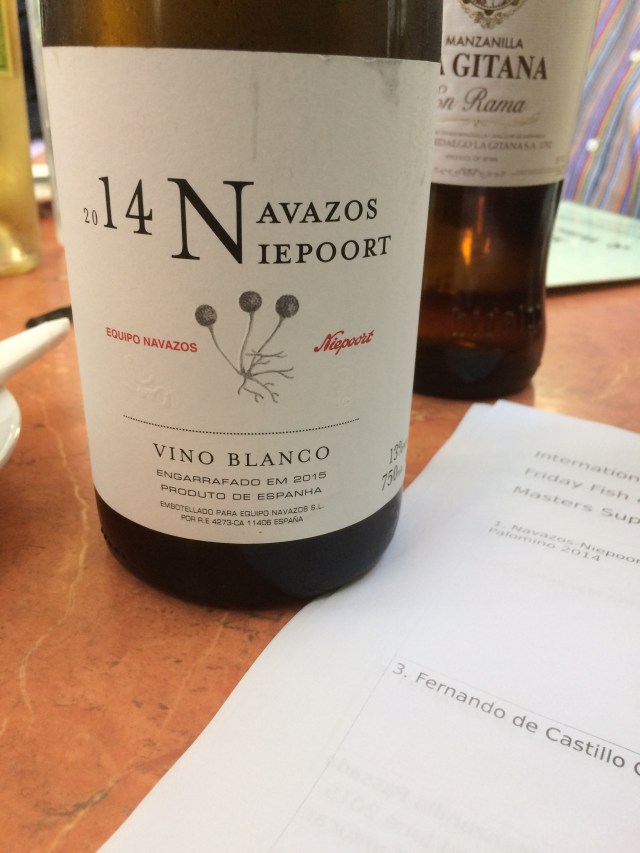
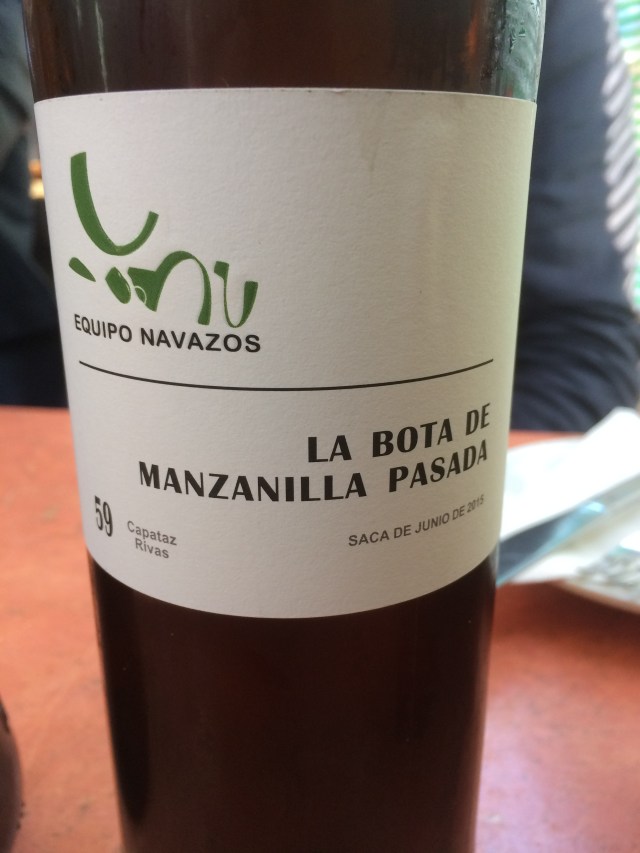
Navazos-Niepoort Blanco 2012 – Having just topped up on the 2014, I thought it would be a good idea to sample one of my diminishing stash of 2012s. Most readers probably know this is a collaboration between Dirk Niepoort and the Equipo Navazos team, a 100% Palomino Blanco table wine from the chalky Albariza soils of Jerez. When released, this was citrus fresh (I don’t think it sees a malolactic fermentation). Now it has the colour of one of EN’s older Fino, the nose is fino-like, but mellow and this is echoed on the palate. There’s an elegant softness. It’s a cousin to Florpower, but less wild, perhaps a little more refined being another way of approaching it. It has become a complex and lovely wine, very much a food wine too, with the weight and complexity to go with a very wide range of cooking, from something like paella to mildly spicy dishes and white meat or fish. Very versatile. 12.5% alc.

Postscript: I have read that Dirk has left Niepoort (since this summer). If true, I sincerely hope that this lovely wine continues to be made. If you see any of the 2014 magnums, grab some.

image

Brain de Folie Vin de France, Les Vignes du Mortier, Boisard Fils, Loire – This being a Vin de France there’s no vintage, but I’m led to understand that the current bottling is 2015. It’s a Cabernet Franc made by carbonic maceration and as a “natural” wine by a small domaine based in Saint-Nicolas-de-Bourgeuil. No sulphur is added at bottling and the wine is pale red, quite light, quite appley, but think apple and blackcurrant crumble. Juicy Fruit, as James Mtume sang back in the early 1980s! The vineyard is in Brain-sur-Allones, but Brain de Folie is slang for a hangover. The recommendation from Simon at Solent Cellar to drink this chilled was spot on. It proved perfect on one of those baking hot, 32 degrees, end of summer days we had last week, but its freshness will make it delicious through autumn. 12.42% alc, so precise!

image

Enkircher Ellergrub Riesling Spätlese 2013, Weiser-Kunstler, Traben-Trarbach, Mosel – Just about straw coloured, quite tropical on the nose, and it has a decent fruity acidity balanced by quite a bit of sweetness for a spätlese right now. Still pretty youthful so it’s kind of frisky, not quite settled down. I don’t do scores, but the fact that this is generally a 90+ scoring wine which can be had retail for under €20 says everything about the quality and value coming out of the Mosel. Whilst not at the top of my very personal list of favourite producers from the Mosel, you get nothing but excellence from Weiser-Künstler, and this bottle was no exception. 7% alc. Purchased at the incomparable Weinhaus Pörn in Bernkastel, probably the best wine shop on the river.

image

Chianti Classico 2011, Riecine – This is the bottling for London department store Fortnum & Mason. Fortnums are not the only wine seller to take their own label wines from very good producers, but they are pretty innovative in both the wines they release under their own label and the producers they choose. There’s always a little intake of breath when they release a new one, signifying a pleasant surprise. There’s a Franken Silvaner from Horst Sauer, an Alsace Grand Cru Riesling from Bruno Sorg, A red Priorat from Alvaro Palacios, a Barolo from Vajra’s Albe vineyard and a Valpolicella from Corte Sant’ Alda.

Not all of those I haven’t listed are quite as interesting, but my favourite is almost certainly this Chianti Classico from one of my favourite Chianti domaines, Riecine, based near Gaiole in the (southern) heart of the Classico region. The wine is quite dark and the nose has hints of coffee or liquorice along with the darker cherry fruit. It is rich on the palate and still has softening tannins. It’s still grippy and very much a food wine, but it has clearly matured a bit since bottling. Very impressive for an “own label” wine, or as Fortnums say, “House Selection”. 14.5% alc. Normally £17.50, the current vintage is on offer at £15.75. Quite a bargain, although their web site doesn’t say when the offer ends, and it’s not always bang up to date.

image

Brut Réserve NV, Taittinger, Champagne – Okay, some regular readers might think posting about this wine is a little boring (I don’t write about every wine I drink). But I have a great deal of affection for Taittinger. Okay, it may be for their Comtes de Champagne prestige cuvée, which I’ve probably been lucky enough to drink more frequently than their entry level NV of late, but this is good. There’s still 40% of the house’s classic Chardonnay in the blend and it does come through to give a clear house style. You do get some brioche, but there’s bags of freshness and elegance too. This was a gift, and I am not sure what the base vintage is, but it’s drinking nicely after a few months rest in the cellar. I’ve cellared the odd bottle of Taittinger’s 2008, by the way, but the quality is still there in the Brut Réserve. Widely available, as they say.

image

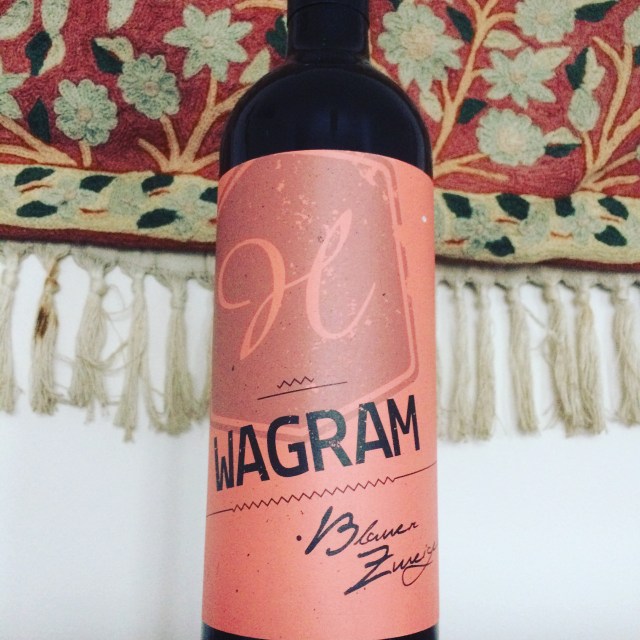
Grüner Veltliner “Handcrafted” 2015, Martin & Anna Arndorfer, Wagram – Yet another Wagram producer putting their region on the map, this time based in Strass. Actually, both Martin and Anna’s families have a background in wine, Anna’s father being the very highly respected Karl Steininger. The younger generation have embraced more minimal intervention in vineyard and cellar and if this wine is anything to go by, are making exciting new wines.

Slightly cloudy (but clearing somewhat in the glass), fresh nose, but there’s a soft touch on the palate tempering the acidity, what I call a chalky minerality with a touch of salinity (others feel minerality doesn’t exist). I’m not sure I’m getting the traditional black pepper on this GV but there’s certainly something on the finish which reminds me of quince with a touch of grapefruit rind. This wine is brought in by Les Caves de Pyrene, but some of Martin and Anna’s other wines are available from Alpine Wines (online). Definitely a producer to explore further. 12%.

image

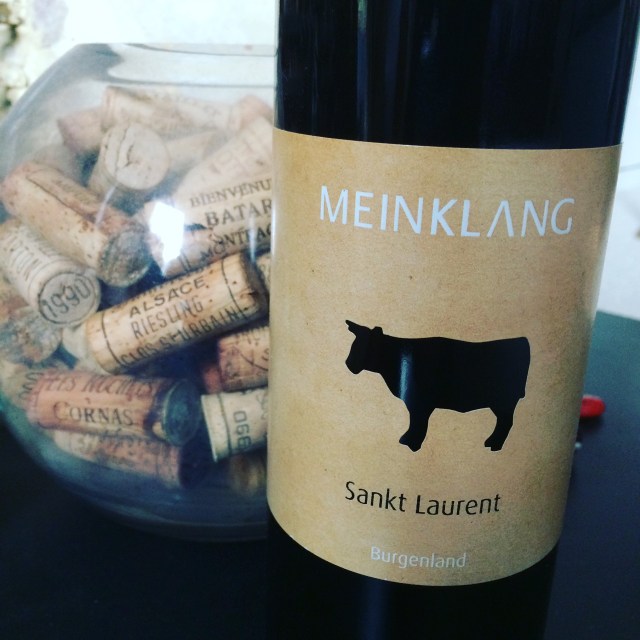
Oh yes, mustn’t forget the beers. The Stockholm Lager (another great beer from Solent Cellar) has a nice citrus twist on the finish, the Beavertown “Quelle” is a Farmhouse Pale which is one of the nicest tinnies I’ve tried from N17’s finest (nice artwork too, as always), and The Kernel Table Beer is almost certainly my favourite pre-wine dinner tipple (only a little over 3% alc prevents peaking too soon), and ranks alongside Meinklang’s Urkorn-Bier as my favourite ale. I also can’t resist a record of the month this time. Nick Cave’s Skeleton Tree is a deeply moving record, made at a time of deep personal tragedy. It’s got musical depth and fathoms emotional depths. Cave has long been mining a rich seam of creativity with Warren Ellis and the rest of the Bad Seeds.

Coming next…let’s see how 2016 in Jura is shaping up, Arbois bound (where my wine lies waiting silently for me…).

Posted in Wine | Tagged , , , , , , , , , , , , , , , , , , , , , , | 9 Comments

A Crush on You

When I wrote about the Red Squirrel portfolio tasting the other day, I promised to devote another piece entirely to the wonderful Okanagan Crush Pad. I think most of us are probably au fait with what the concept of a crush pad is, a place geared up to make wines for a number of, perhaps, small producers. This has worked to a point in places like California, where creative small labels make use of winemaking facilities on a contract basis. The first such facility I heard of, which came to fame in the mid-2000s, was the eponymous Crushpad in San Francisco. Set up in an industrial neighbourhood in 2004 it grew to a 45,000 case operation before spiralling out of the wine scene six or so years later. But the concept was established, and it led to many similar contract wine facilities all over the world. Although not the same, London Cru’s urban winery is a kind of cousin, doubtless inspired to a degree by the concept.

Okanagan Crush Pad began crushing grapes five years ago, in 2011, and differs from many of those similar facilities in that viticulture and winemaking are all part of a single vision. Along with contract crushing they also make wines of their own under the Narrative and Haywire labels. Okanagan Valley, in British Columbia, Canada, is a 120 mile long chain of rivers and lakes with glacial deposits forming benches, experiencing warm summer days (up to 35 degrees celsius), cool nights, and winter temperatures which may not reach the levels below zero you’ll find over in Niagara, but still promises annual lows of -10 degrees celsius. The winter snow tends to sit on the vines through the cold months, and average rainfall is about ten inches per year, higher in the north and a bit lower in the south, but that’s pretty low. The southern end of the valley stretches towards Washington State, over the US border.

Crush Pad was founded by Christine Coletta (who I tasted with) and Steve Lornie, the home team more or less completed by winemaker Matt Dumayne, a New Zealander who has also worked in Australia, California and Oregon in his journey ever northward.

image

Christine at the Red Squirrel Tasting (Winemakers Club, London, 6 September 2016)

Winemaking philosophy here is “natural”. You might therefore be surprised to know that Alberto Antonini has a role as a winemaking consultant, whilst Pedro Parra, from Chile, is viticultural consultant. He’s the man who introduced precision viticulture, digging exploratory pits all over the Garnet Valley Ranch, a 120+ hectare site which will eventually form the heart of the Crush Pad’s operation, initially with about 28 hectares to be planted to vines.

Grape growing is organic, and the grapes have to be completely healthy, that’s the key to the success of low intervention winemaking, especially when aiming for low sulphur levels. Virtually no oak is used in the winery, concrete being the preferred vessel. There are small and larger concrete tanks, and some Italian amphorae (800 litre), which seem to impart a freshness the world over. In this Canadian Valley the more extreme northern climate seems perhaps to enhance this, and the wines exude freshness above all other qualities.

Christine showed me four wines from their growing portfolio, one delicious sparkler, one white and two reds. The Narrative Ancient Method 2013 sparkler (£40) is a Chardonnay sourced from John and Maria Cerqueira in Oliver, self-styled “Wine Capital of Canada” due to the high concentration of wineries in the town. As the name suggests, it’s made by the same method known in France as “Rural” or “Ancestral”, the same as is used for many pét-nats. It’s bottled whilst the primary fermentation is still underway, without filtration, and with zero dosage. It has a great bead and the nose is very fresh. It doesn’t of course have the depth of a Blanc de Blancs Champagne, such as David Levasseur’s, which I liked so much at the same tasting. There are no older reserve wines here, it’s not made in the same way, and it’s only three years old. But it really makes up for that in nervosity, and that freshness. A lovely wine. I want to drink it again, as I can’t stop wondering whether it was really as good as I remember (I’m sure it was).

image

Haywire Free Form White 2014 (£35) comes from a steep 3ha slope in Trout Creek Canyon. It’s Sauvignon Blanc fermented in stainless steel, but it has over five months skin contact, reached 13.5% alcohol and was bottled with no filtration and no additives (including sulphur). It also doesn’t undergo a malolactic fermentation, hence (in part) the amazing zip and freshness. Orange in colour, the nose is impressively wild. A touch of salinity seems to meld with tropical fruit. It’s Sauvignon Blanc of a very different kind. It’s odd…the technical data mentions nothing of it but you’d really think this was made in amphora. The “Haywire” label is meant to signify something unpredictable. At this winery, risk taking seems to bring the desired result.

Haywire White Label Gamay 2014 (£23) comes from a site called Secrest, farmed by Brad and David Wise, 15ha situated on a mountain bench at just under 500 metres above sea level. The soils consist of alluvial deposits with coarse gravels and limestone. As with the Sauvignon Blanc, the Gamay is picked late (October) and fermented in open-top concrete. The maceration is pretty long, four weeks, thereafter going into different concrete tanks for eleven months before bottling. The wine smells and tastes of both cherries and raspberries. There are some tannins which give grip, but generally there’s an underlying smoothness, and of course a characteristic fresh lick of acidity. 12% alc.

Haywire Cannonview Pinot Noir 2013 (£35) comes from Trout Creek, like the Free Form White. The vineyard, Cannonview, consists 2ha on south facing terraces which benefit from the cool air off Okanagan Lake in the growing season. Subsoils are limestone, again. Fermentation is in concrete using around 25% whole clusters and skin contact is once again the norm – around 30 days before pressing, when the juice is moved into one concrete tank and left on its gross lees for 14 months before bottling. Skin contact considered, this wine is pale. It reminded me a little, in the light of the Holborn arches, of a Rosé des Riceys in its elegant, gentle hue. It smells wild, with a bit of maturity on the nose. The palate shows red fruits, given a definite edge by the concrete. You don’t really notice you are getting 13.5% alcohol.

There’s also another wine in the Red Squirrel portfolio, Haywire Switchback Pinot Gris 2014 (£23), which comes from Crush Pad’s home vineyard near the winery. Fermentation is in egg-shaped concrete, again producing a wine with a mineral edge.

You’ll note that I’ve not really made a qualitative assessment of each wine. Suffice to say that the wines really impressed, as did Christine Coletta, in both her knowledge and the vision she sets out. I also think that a good number of you will be aware of the buzz these wines created at Raw Wine 2016 earlier in the year. It’s difficult to say which wines I liked most, but committing myself I’d say that the Gamay was wonderful for what it was, not attempting complexity but winning hands down on purity and fruit. It’s also well priced, comparative to good Beaujolais. The Narrative Ancient Method Sparkler also impressed, quite dramatically, then you know I love my pét-nats. But I don’t want to miss out the Sauvignon Blanc. This will perhaps appeal most to the more adventurous. It’s a wine which is a bit like a spirited horse, capable of being ridden but maybe a touch unpredictable. Just my assessment.
For a link to my main article on the Red Squirrel 2016 Portfolio Tasting follow the link at the top of this article: “Red Squirrel”.

I’m sorry to have splurged out so many words in the past few days. I’m off to Arbois soon, to breath in the harvest, and to seek out a few wines and producers who, even with the massive growth in availability of Jura wines in my home market, are still pretty hard to find. I hope to have plenty to write about when I return.

Posted in Canadian Wine, Wine, Wine Agencies, Wine Tastings | Tagged , , , , , , , , , , , , | 4 Comments

It’s a Wonderful Life

I’m of an age, well, not too old, where I still remember as teenager sitting around with friends listening to vinyl, discovering together a passion for bands we’d never heard before. I guess people with a passion for all sorts of things gather together to share, like book clubs, or art groups who gather round a model to draw from still life. But passionate wine lovers often do it with style, or perhaps excess, depending on your perspective.

Some of our wine drinking, that which doesn’t go on behind closed curtains in the privacy of our own homes, or by the side of our Tuscan swimming pools (joking there), takes place at organised events, such as the regular Oddities lunches which Dave Stenton and I put together. But sometimes a mate just happens to be flying into London and a group of us go out for dinner. Sometimes? Quite often, my family reckon.

I wrote earlier in the summer about one such dinner at 28-50 when a friend, let’s call him Professor B, flew in from Spain. This week we were able to enjoy his company for a second time this summer. We were back at 28-50’s Marylebone outpost again, chosen because the food is good, they understand serving fine wine and, in certain situations can be persuaded to let long standing customers bring a stash of bottles (for a reasonable corkage fee, of course).

After a glass of the restaurant’s La Guita Manzanilla to whet the appetite and quench our thirst on what turned out to be one of the hottest days of “summer”, we began in the customary way: a bottle of fizz. We taste blind with a quick reveal, and pretty much everyone nailed this as a Côte des Blancs Chardonnay. I guessed Diebolt-Valois but said it would probably turn out to be Salon. I laughed when it was revealed to be their sister house, Delamotte Blanc de Blancs 2004. I’ve had this several times, though not recently, and I’m a massive fan of both this cuvée (a big step up from their NV BdeB), and this vintage of it. Very much classic Chardonnay with good fruit and a decent bit of maturity. I loved it. It’s one of the (relative) bargains of the region.

image

The first still white was a real mystery, especially when told it wasn’t a white Rioja, nor even Spanish. I don’t think any of us guessed it was Portuguese, but it was a white Bairrada 1994, Quinta das Bageiras. I think it’s made from Maria Gomes with Bical. There’s a dry lemony citrus and a herby note. The colour suggests age but it’s still remarkably fresh. Quite profound in its way, and a real reminder how we forget Portugal as a source of classic, high quality, whites which have something different to say. Okay, this vintage is not going to be commercially available today. I’m not sure they even have a UK importer, although I think US readers would be in better luck. Such old wines are a treat. “Vinho Premiado” indeed!

image

Our second white was from a producer in the Côte de Beaune who has become something of a darling of the wine fraternity. He goes by the friendly acronym of “PYCM” – Pierre-Yves Colin-Morey. In just a decade P-Y has managed a near impossible task for Burgundy, building a domaine of nearly ten hectares, plus bought in grapes as a micro-negoce, from around Puligny, Chassagne, Meursault and Saint-Aubin. We drank a Chassagne Caillerets 1er Cru 2010 which we thought was older (I’ve probably drunk too much taut and mineral Roulot from this vintage), but was a truly lovely drop, drinking now but no hurry. P-Y is the eldest son of Marc Colin, and has wine running through his veins. He’s shaping up to be one of the stars of the future.

image

Our first red was my own offering for the evening. There seemed a degree of certainty as to the origins of this wine, though we were not in fact in the Northern Rhône (exactly what they were meant to think, LOL, as they say). Tim Kirk makes, in my opinion, one of the finest wines blending Shiraz with Viognier in the world. That’s saying something, but the first twenty years of my life in wine were spent adoring the very finest wines of the Northern Rhône, until the regular purchase of them became prohibitative. The nose is just so refined here (I do apologise for eulogising my own wine, it seems in poor taste, but I was so captivated by it). Everything about the Clonakilla Canberra District Shiraz-Viognier 2005 seemed to fall into place as I’d hoped. Fruit, structure, softening tannins, maturity and length. Several people have since told me how highly they rate this 2005 vintage, but Tim continues to produce stunning cuvées outside the National Capital, over towards Lake George. It’s a cliché to say that this tastes just like a top (I mean top) Côte-Rotie, but it does.

image

Guado al Tasso 1995, Antinori is one of a breed, the “Supertuscans”, to which that epithet has been self-granted by a few too many wannabe examples. Yet this blend of mainly Cabernet Sauvignon and less Merlot, with a tiny smidgen of Syrah deserves that honour without doubt, on the basis of this well aged bottle. It has weight but it isn’t big, nor blowsy. The blackcurrant fruit of the Cabernet comes through nicely, in an elegant way. It hails from the estate of the same name in Bolgheri (previously Tenuta Belvedere), and was probably seen in the Antinori stable as a replacement for Sassicaia when the company had to give up the marketing of that icon. It may lack, as Nicolas Belfrage MW suggests in his last book on Tuscany (Aurum Press, 2009), “the subtlety of Sassicaia or the opulence of Ornellaia”, but at over twenty years of age it’s a majestic beauty. And if Winesearcher is to be believed, you can probably pick this up for around £65/bottle, taxes included. Not bad at all.

image

All the wines so far may, to people who know my current drinking habits, seem pretty classic, but I don’t think it unfair to say that for the attendees on Wednesday night, they were ever so slightly off-piste. That can’t be said of the last red. Don’t think that just because I have a section of Bordeaux in literally the darkest and deepest recesses of my small cellar which seems rarely to see the light of day, I don’t like it. I do. It’s just that a bottle of Ganevat from Jura, or an Austrian Grüner is always closer to hand, and probably more to the taste of those I drink most wine with these days. But when a good Bordeaux comes out it’s a real treat for me, especially when (as usually happens) a so-called lesser vintage comes up trumps.

Léoville-Las-Cases 1994, St-Julien was the first vintage at this so-called “super second” that Jean-Hubert Delon had a hand in making. In 2010 James Lawther MW described the wine as “Restrained and backward in style. Plenty of dense extract. Powerful – even robust – tannic frame.” (The Finest Wines of Bordeaux, Aurum, 2010). Today it has shed any backward quality, yet as a maturing wine it still shows classic restraint. The core of the Châteaux’s vines are located between the village of St-Julien and Château Latour. Some people attribute a Pauillac quality to Las-Cases as a result. I’m not expert enough in the nuance of the gravelly hummocks sloping down to the Gironde between these communes to comment, but there’s still a nice, and really classical, sedate but structured, feel to this bottle. Exceptional for a ’94, I’d say. One attendee got this spot on, wine and vintage. There may have been a small element of “read the man, not the wine” to his achievement, but I don’t under estimate him for it. This blind tasting game is tough, but sometimes highly rewarding. Well done Ray!

image

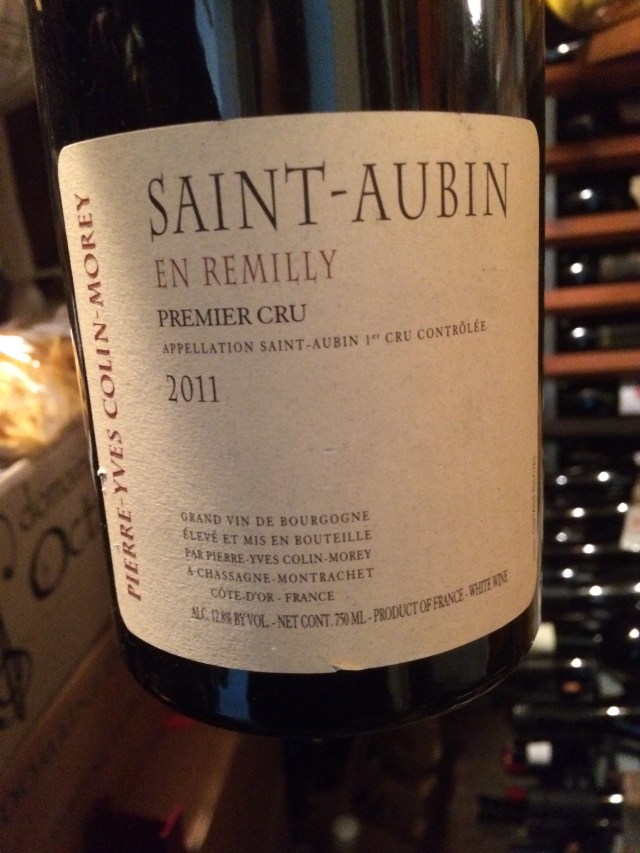
Well, that looks like we’re done…except you probably know by now what happens every time a group of wine fanatics get together. “I brought this as a backup. We may as well open it if you would like to try it”. Well, all I can say is that the generosity of wine lovers is without equal. Mr PYCM, who unfairly still remembers his corked wine from least time (which he generously replaced from the 28-50 list), pulled out another from the same stable. Pierre-Yves Colin-Morey St-Aubin 1er Cru “en Remilly” 2013 was delicious. Thanks Ian. Of course we all got the producer in ten seconds, but I was especially pleased. This St-Aubin is at the more affordable end of P-Y’s holdings, it’s a nice site in what is without question one of the up-and-coming villages of the Côte de Beaune now that land in the “Montrachets” is so expensive. I’ve got some 2011 of this, which I must open. The ’13 was drinking beautifully.

So another good evening. The food at 28-50 always provides a great base for the wine without dragging our attention away from that focus. That’s not faint praise, the cooking is solid here without trying to be trendy or nouveau. A charcuterie platter, burrata (a simple cheese blending mozzarella and cream) with girolles and salad, and belly pork were my choices. The evening was only slightly spoilt by the coincidence of another Southern Rail strike (there was one on the day of our last get-together), affording me a longer than usual trek over to a Thameslink station and an extended train ride home. It was my own fault. I’d drunk too much, but thankfully not by a lot. At least a couple of people said they regretted the post-dinner pint, which being an out-of-towner with a crap train service precluded.

Posted in Dining, Wine | Tagged , , , , , , , , , | Leave a comment

It’s GGs and Reds Time Again

Howard Ripley’s tastings are always a contrast to many of the other Autumn events on the calendar. First of all, you can guarantee sedate surroundings, this time in the Pensions Room at Gray’s Inn, tucked behind High Holborn and the most northerly situated of Legal London’s Inns of Court. When you arrive early, as I did, you will also find all the wines laid out in neat rows, plenty of spittoons, wafers and water, and seemingly just the right amount of light. What you can’t control is the weather and Wednesday must have been one of the most glorious days of our strange English summer. The ice was melting in the ice buckets. But the early bird tastes well cooled wines in peace and quiet.

This tasting was my first opportunity to sample the dry wines from 2015, along with the 2014 reds. It is also customary to show the pradikats from JJ Prüm here as they are not bottled, I think, when the other pradikats are shown.

What was my overall impression of 2015? There’s no doubt that there have been some very positive comments and something of a buzz around the dry Rieslings from last year’s harvest. Martin Zwick (of the Berlin Riesling Cup etc) tasted the wines in Berlin and was very positive – “Bottom line, simply mind-blowing vintage and some of the best ever produced at the estates”. Mosel Fine Wines’ review of the April VDP tasting was similarly positive but with reservations – “Vintage 2015, Great Yes…But”. It’s a small vintage and the wines have immediate appeal, but acidities and sugar levels are both high.

Claude Kolm tasted the wines in Wiesbaden for his Fine Wine Review and he notes the high acidity, also commenting on high alcohol, especially the further south you go. He draws a comparison with 1990 but notes that Helmut Dönhoff, whose memory goes back further, drew comparisons with 1975 and 1971. Claude made another point, worth bearing in mind. It was very hot in Wiesbaden and with the high alcohol levels, it made tasting them in too high temperatures problematic. Thankfully, with the white wines almost untouched and sitting in ice, that did not pose a problem for me, despite the unusually hot September weather in London.

I’m not going to run through all the wines, and those I do mention I don’t intend to go into detail. You don’t need a string of tasting notes which attempt to say something different about each wine just for the sake of it, looking for nuance where it may exist, but not in a way that will stop you falling asleep by the end. What I think you want to know is what I think of the wines, and which ones I liked most. I am happy to let on, even though we are not looking at wines produced in prodigious quantities, especially in 2015. But be aware that I have my prejudices and passions.

Although I tasted the Grosse Gewächse whites first, I’ll start off here with the JJ Prüms. There’s not an awful lot to say, you know they will be good…but maybe there is. First of all, the wines were pretty stunning, but almost unbelievably, you’d have no problem drinking the Kab (Wehlen) and Spätlesen (Graach and Wehlen) now. People talk endlessly about so-called sulphur levels (w-rong) and reduction in these wines. I’ve always had little problem drinking the Kabinett and at least the Graacher Spätlese young, though I do try to age them, honest. But I genuinely think these are very approachable, with the Kabinett and the Graacher Spätlese showing (to me, at least) no obvious reductive qualities. Obviously Wehlen’s Auslese is not remotely ready to drink, but the others, yes, definitely if you feel the urge. They are really good as well.

image

The dry whites were not only tasted cool, but I didn’t spot any above 13% alcohol, with a fair number at 12.5% (I didn’t scrutinise every bottle). There is no doubt that quality is high, almost uniformly high from Howard Ripley’s stable, which goes to show the expertise they have in selecting their German estates. (Prices in brackets are for six bottles, in bond).

Peter Lauer, from the Saar, is fast becoming a favourite of mine and they showed his Kupp Fass 18 GG, (Ayler) Schonfels Fass 11 GG and Saarfeilser Fass 13 GG (all £117). My own favourite wine was the Schonfels. Interesting, then, that the 2014 version of this wine was described by the Mosel Fine Wines site (Jean Fisch and David Rayer) as “a strong candidate for dry wine of the vintage” (1 November 2015). On balance, Peter Lauer might get my vote for producer of the day, and not bad when you consider giving the wine of the day accolade to the third wine tasted. In my joy I didn’t even photograph it!

On the Fass numbers for Lauer’s wines, he is not alone in producing different bottlings from very small parts of each site, aiming to show changes in either the colour and composition of the slate soils, or microclimatic nuance. It might mean that each bottling is small, and it can make it complicated for the consumer over concerned about which wine he or she is getting. But from my limited experience, I think it’s both justified and worthwhile.

The Grünhaus showed two dry wines, with the Abtsberg a notch up from the Herren, justifying its very small price difference (£96 to £108). My deep affection for von Schubert’s wines goes back a long way, certainly into the early 1990s or longer, and this is not the last you’ll read of this Ruwer estate today.

Another very firm favourite, since both of the Ripley tastings last year and my own visit to the Mosel last summer, is Julian Haart. Julian only set up his winery in 2010, with no vines to his name (at least he now owns a hectare or two). This was too early for him to appear in Stephan Reinhardt’s 2012 book on German wines, probably the current bible on the top producers. But he does have a close family connection to the Reinhold Haart estate in Piesport (Ripley showed two of these wines as well).

Julian Haart’s only wine today was the (Piesporter) Goldtröpfchen (why the brackets…must get the nomenclature of just the vineyard name right for GGs), but what a fabulous wine. Probably “rounder” than the precise wines of Peter Lauer, but certainly showing restraint and class (£126).

image

Thomas Haag must be one of the best producers on the Mosel at the moment, working from the imposing pile that is Schloss Lieser, just upriver from Bernkastel. We had the Juffer GG (£111), and the Niederberg Helden (same price). I always like the Helden. It’s a large vineyard on a very steep slope on blue slate just outside the village of Lieser. It tends to produce wines of restraint. The 2015 is no exception. It reminds me of lime and something saline right now. Imagine a toned down version of the flavours on the rim of a glass of margarita – well, not quite, perhaps my imagination is running wild, but you might get what I mean.

image

Schäfer-Frölich showed well. In fact Sebastian Thomas, Ripley’s German expert, seems to have a strong liking for these wines, which the astute purchaser will take note of. Tim Frölich is another of Germany’s young superstars, this time from the Nahe. Of the three wines shown, the Felseneck stood out (naturally, at £192 it was his most expensive on show), but I also liked the Dellchen a lot (£165). A lovely nose, I think I found ginger along with the citrus.

We were now firmly in the territory of superlatives. Dönnhoff‘s Hermanshöle showed its usual class (for me) (£186), Robert Weil‘s Gräfenberg (£165) was pure, mineral, citrus and grapefruit, and Klaus Peter Keller‘s Hubacker was spicy and powerful (interesting that Reinhardt claims this wine was bigger in the past than the more delicate versions in the vintages before his book was published. I found this bigger and broader than what I have tasted before)(£180).

image

As for the (mainly) 2014 reds, my reaction was interesting. Those of you who know me will be aware that I do like German reds, especially those who are less keen on Spätburgunder and pull my leg about it. Suffice to say that I consider such people philistines! That said, I was not quite as impressed with the wines overall considering my expectations of the vintage. I don’t mind if the wines are generally pale, but one or two were very pale indeed. I found some lack of fruit in some wines too. But then we are trying to judge 2014s at less than two years old for a vintage which I’m told saw the highest median temperatures, on average, in a hundred years. There were no big heat spikes and the wines should taste ripe. Not all of them did, but it could be down to extraction, or more likely mere youthful tannins?

Ziereisen are right down in the southern part of Baden, at Efringen-Kirchen. Much further south and they’d be in the suburbs of Basel, well, almost. Hanspieter Ziereisen is definitely one of the region’s top producers of red wines, eschewing chaptalisation despite the cooler climate here, as the winds whip in, up the Belfort Gap. Four wines were shown. I’m quite a fan of the inexpensive (£60) Tschuppen. I’m sure I’d buy this, but I don’t think the ’14 was showing as well as some previous vintages. A 2011 drunk in April this year was like a nice fruity Cote de Beaune village wine, which is praise from me. The 2013 Rhini (£132) was a big step up, showing presence and the stuffing for ageing, whilst not losing the fragrance of this sheltered limestone site.

Top wine here, the Jaspis Pinot Noir (£168), was from the 2013 vintage as well. The Jaspis wines are usually barrel selections, the top wines of the estate. This was showing very brightly and with a promising softness. I think the reason they label some wines as Spätburgunder and others as Pinot is, as with several German red wine producers, an attempt to distinguish the wines stylistically. The ones labelled Pinot are meant to be more Burgundian. Often I’m sceptical that German Pinot, or any other Pinot for that matter, tastes quite like Burgundy. But there can be a certain affinity between the two at Ziereisen, and that’s probably due to the location, soils and climate in this southerly outpost of Baden. I’ve also come across a Jaspis Pinot labelled Alte Reben, an impressive wine with good concentration, but I didn’t see it on Wednesday.

At the end of the line of reds were the two Kellers, the Dalsheim Bürgel and the Flörsheim Frauenberg. Keller’s wines are impressive but, expensive (£186 and £264 respectively). They are very highly regarded in Germany, and open minded consumers should age them and try them. But with prices as high as this, the Frauenberg being well over £50/bottle with duty and VAT, you are asking a lot of commited Burgundy drinkers. That’s why, for me, Ziereisen offers a nice half way option.

image

I said we’d be talking about von Schubert again before we part. I remember tasting Dr Carl’s red last year and being impressed. The 2014 is, for me, the best Spätburgunder yet from this address. It’s fruity but has bite, and it just seems in perfect balance. At £114/6 IB this is comparable in price to a good Bourgogne Rouge, although I’m not making a direct stylistic comparison. I’m not yet ready to put the Maximin Grünhaus Sekt up on a pedestal, but I find the red here surprisingly impressive for what it is, and very much to my taste. This was my very personal red of the day. Could the 2015 be even better when bottled?

image

There we have it. Another excellent Howard Ripley event, professionally executed. Nice to see several acquaintances, and to try some fantastic wines. 2015 for the dry whites, and indeed at JJ Prüm, gets my endorsement, although with the wine pros queuing up to echo my sentiments, you don’t really need me to tell you that. Vintage of the decade…we shall have to see, but whether to buy is not an issue. It’s when to drink them? They will be hard to resist.

image

Posted in German Wine, Wine, Wine Agencies, Wine Merchants, Wine Tastings | Tagged , , , , , , , , , , , , , , , , , , , , | Leave a comment

Nuts in Farringdon

Many readers will know of 67 Pall Mall. It’s a members club for lovers of fine wine. On the edge of the City, on Farringdon Street, under Holborn Viaduct in the arches long ago occupied by Oddbins’ Fine Wine shop is another kind of club.

At Winemakers Club you can buy and taste wine, eat, sometimes even “dine”, or watch a band. A very different kind of club. And you don’t have to pay to join this one. They must be nuts!

It’s a space often used for tastings too, and on Tuesday importer and agent Red Squirrel hosted their annual portfolio tasting here, New Frontiers. These guys are nuts as well. It’s not the name, which let’s face it would be up to my usual poor standard of punning, but because they take more risks than most to bring some of the world’s more unusual wines to their customers.

This is why I was very pleased to see some of the big names in the world of wine writing present. I hope they enjoyed the wines as much as I did.

I do want to address one issue brought up on social media – that the room was too dark to see the wine. Actually, the space resembled perfectly a traditional underground wine cellar, where I’m sure many of us regularly taste. The light of a solitary bulb or candle doesn’t put me off at Mauves or Vosne, and it was not quite that dark, but then I’m not so fixated on what the wine looks like in bright light. I’m not using the WSET scoring system (sorry guys – I do actually have the Diploma). So the dark venue didn’t bother me. It was no darker than some other tastings, like Haisma/Le Grappin for example. That said, it’s a perfect excuse for some of the photos being a little dark…

Anyway, onto the wines. I largely stuck to the new wines in the portfolio, so you won’t see notes for Vinterloper, Clos Cibonne, the Ligurians, Parxet Cava etc. I’ve written about these and others elsewhere (link at bottom), and suffice to say they are all worth trying. Below are what I would like to think is the best of the new stuff, but as with all tastings like this, you can’t always try everything. I can think of one winery I sadly missed – Ahrens Family. There’s always one.

Champagne A Levasseur

This was a good start, perhaps an under statement. This Marne grower is in the village of Cuchery, which is a little to the west of the main Reims-Epernay road, up in the Parc Régional. Founded by Albert Levasseur in the 1940s, this small producer (with just 4.2 hectares) is now run by the very able David, his grandson. The entire production is organic, and amounts to around 35,000 bottles per year.
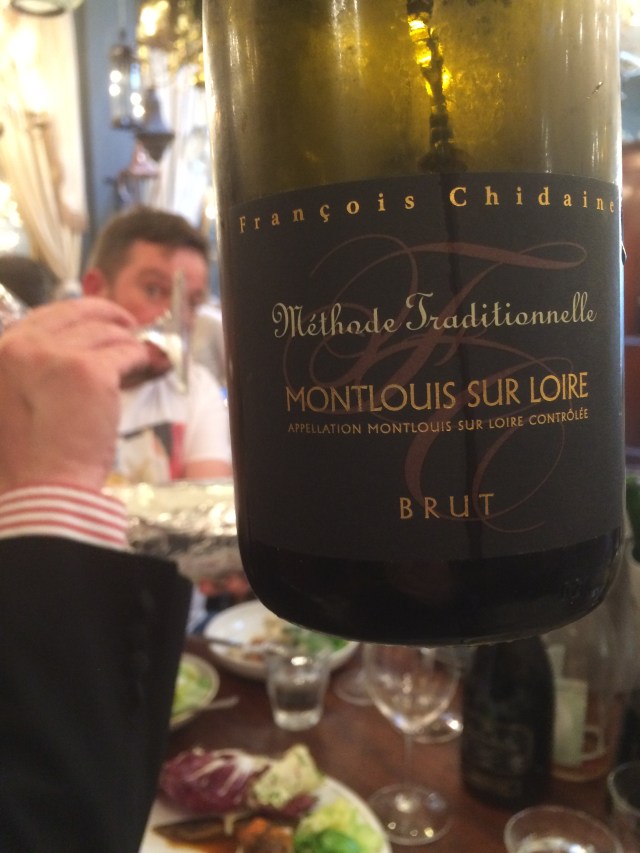
Five wines were on show: a fruity Brut (9g/l), a precise and one year older Brut Nature, a Blanc de Blancs from Marne Chardonnay, an Extra Brut from 100% Pinot Noir, and a cuvée called Extrait Gourmand, a pink containing blended in three year old red wine. My favourite was the Chardonnay, but that’s probably my own tastes coming through. The rosé would make a very good food wine, fresh but with real presence. David, a very affable chap, recommends it with spicy food and sushi. The wines are not cheap (the Brut is only £35 but the single variety cuvées are £65 retail, the pink £40, the latter being a relative bargain I suppose), but quality is high and I count this a discovery.

image


Chateau L’Argentier, Sommières, Languedoc

This producer is based in the hills more or less between Montpélier and Nîmes, just north of Lunel. Run by the Jourdan family since 1937, there are 45 hectares on the estate, of which 24 ha are currently under vine. They have kept all the old concrete vats here, and I’m sure that’s one of the reasons that the wines have an earthy authenticity, most pronounced in the really grippy Cinsault. It’s a vielles vignes cuvée, which shows real character. There’s a Coteaux du Languedoc made from a blend of 40% of both Syrah and Grenache with 20% Carignan, with more colour and depth and less rusticity. I like both wines but slightly preferred the Cinsault (£16).

The top cuvée is the Sommière, a new Languedoc denomination, and L’Argentier were the first to release under this label. They were showing that first 2011 here, based on 70% Syrah with 20% Carignan, the remainder Grenache. It comes from a 2.2 hectare single site on very thin soils and just 500 cases were made. It’s a deeper, darker, wine with the Syrah gently dominating. A step up, but only £22 for a wine which is in no hurry to be drunk.

image


Château Combel-la-Serre, Cahors

This is one of a growing band of Cahors producers who prefer to make their wines from pure Malbec, but the wines here bear little relation to the big and brassy Malbecs we often see out of South America. In fact “pure” is a perfect description of Julien Ilbert’s wines. He’s been bottling since 2005, and has been organic since 2013 (certified 2015). The vineyards, totaling 26 ha, are on different topsoils, but all having as their base the limestone of the causse above the Lot Valley.

The opening wine is called Pur Fruit du Causse, and served from magnum it had a purity you’d be surprised at (£32 mag/£16 btl). A lovely, fresh, wine. I want some of this! The Cuvée Château is less mineral, very slightly softer, and perhaps this is because there’s more topsoil on this site (yellow/red clay). The top wine is Au Cerisier (cherry tree). This is from a small parcel on very hard limestone. It has a mineral and saline savouriness, very impressive (£25).


Pasaeli, Izmir, Turkey

I’m increasingly impressed by the Turkish wines I’m tasting. They are beginning to make inroads into the UK market thanks to people like Pacta Connect and Sarah Abbott MW. I just hope their President doesn’t go and completely mess it up for them! Pasaeli was founded in 2000 by Seyit Karagözoglu, sourcing indigenous grape varieties from vineyards in Anatolia and Thrace. All of these wines are truly distinctive.

The whites on show were a Yapincak white from a vineyard 200 metres from, and facing, the Sea of Marmara, on the Asian side facing the European shore. These are old vines trained in a traditional gobelet bush style. A wine for mezze. Çalkarasi makes an aromatic rosé with fresh acidity.

My two favourites were the red wines. 6N 2014 is 82% Karasakiz with the addition of 18% Merlot. Fruity, very distinctive, although the plummy Merlot does make itself known, as always with this grape. The top red, if only by £1 (£18) is 100% Papazkarasi. It’s not too tannic (undergoes soft punchdowns), and whilst Seyit suggests drinking it young, this 2013 is not going to fall apart soon. This is a very interesting grape, also very distinctive, apparently well regarded in the 1960s and only now coming back into favour. Let’s hope others keep flying the flag for Turkey’s autochthonous varieties. If you want to try genuinely new flavours, this is a good place to come.


Bioweingut Diwald, Großriedenthal, Wagram, Austria

Martin Diwald is the second generation to be running a pioneer of organic viticulture in Austria (organic since 1980). He farms 20 ha in 43 different sites in this increasingly quality focused region to the East of Krems. Martin is not only the neighbour of Arnold Holzer, whom Red Squirrel devotees will know very well. They are also best mates since childhood. The focus here is a little different though, and Martin was showing seven wines.

First up, a very good Sekt, bottle fermented and made from Grüner Veltliner, two years’ lees ageing, 13% alcohol. Usually this is pushing it for sparkling wine, but it didn’t seen too alcoholic. It has a freshness and a little weight. Then come the still Grüners, three bottlings representing a village blend and two different sites. Goldberg is a Danube-facing terrace on warm loess, Alte Weingärten a high plateau with nearby forest and overall a cooler site.

Fuchsentanz is a fruity Riesling, Zündtoff Maischegärung #2 a very different one. It’s an orange wine with 20% Grüner blended in. Ten days skin contact, then into used barrels, no filtration and a tiny bit of sulphur at bottling. Very good indeed, though at £45 it should be, but then they only made 350 bottles of this in 2015.

The final wine of the lineup was the Grossriedenthaler Löss red (from Zweigelt). This is another skin contact wine, but it is aged in acacia, very large barrels of between 1,300 and 2,700 litre capacity. This means they impart no “oak” flavours whilst allowing gentle oxygen ingress. The nose is pure cherry. At £16 this is good value.

These wines are what Martin calls “northern style”. They’re not too big, restrained, food friendly. Diwald make a brilliant addition to the Red Squirrel range, sitting beside Arnold Holzer. There’s still a rich vein to be mined in Austria.


Eschenhof Holzer, Großriedenthal, Wagram, Austria

Some of you will know that Arnold Holzer’s wines form a regular part of my drinking, in particular his Zweigelts, which for me, along with those of Claus Preisinger, I consider some of the best value drinkers on the market. So I’m not going to take you through Arnold’s wines this time, but I had to stop to say hello and to taste The Orange.

Holzer didn’t make an orange wine in 2014, and this 2015 was only bottled five weeks ago. It is made from an intriguing Austrian rarity, Roter Veltliner (they make a couple of more classic whites from this grape, which despite the name is not a red grape, at £15 and £30). It has a whopping 4 to 5 week maceration and pretty much zero intervention. £40…but if the guys at Red Squirrel HQ don’t save me a bottle I’ll be seriously pissed off. It was, albeit by a narrow margin, my Wine of the Day!


Valdonica, Maremma, Tuscany

Tim Manning is the very able genius winemaker at this Maremma estate. Winemakers Club devotees will know Tim, not only from his occasional off-season stints in the shop, but also for his personal wines made under the Vinochisti banner, which Winemakers sell. You may remember that I swoon every time I try a version of his dry Erbaluce. The Valdonica wines take fewer risks (I’m guessing Tim wants to keep his day job), but they’re still superb. Mersino and Ballarino are both lovely Vermentinos, the latter made with a third of the grapes fermented on their skins before both parts see a year in steel tanks before bottling.

Arnaio blends 90% Sangiovese with Ciliegiolo, whilst the year older 2012 Saraggio is 100% Sangiovese. This latter bottling is made by fermenting small parcels separately with an average of 30% whole clusters for 5-6 weeks. The wine then sees 18 months in barrique, 15-20% being new wood. The latter is a more structured, serious, wine capable of ageing (£30). The Arnaio is more youthful, and an attractive £19.

As always, you can’t go wrong with anything made by Tim Manning. His love for wine was fuelled by working for Oddbins, before he managed somehow to wangle a job as assistant winemaker at Riecine under Sean O’Callaghan, so his CV is pretty impressive. With his own label wines at Winemakers Club and Valdonica with Red Squirrel, the UK market is twice lucky.

image


Bellwether, Coonawarra, South Australia

In Vinterloper, Red Squirrel have one hell of a South Australian producer. Now they have another to look out for in Bellwether. Sue Bell founded this micro-winery in Coonawarra, making wine from bought-in grapes, but now sources more widely. There’s a very classic 2009 Coonawarra Cab’ (excellent with seven years age, think iron and eucalypt plus tannins, £30), a Wrattonbully Shiraz-Malbec, and a Vermentino (not sure where that comes from?). My favourite wine of the bunch was a Tamar Valley Tasmanian Chardonnay (£30). The nose, not immediately obvious as Chardonnay, was amazing, more appley cool climate than most so-called new world examples. No malo for this wine, but whilst the freshness almost stuns the palate, it isn’t over acidic, nor under ripe.

image


Dal Zotto, King Valley, Victoria

Heading northeast we are into Victoria’s high country where Otto and Elena Dal Zotto settled in 1967, having emigrated from Prosecco country. Originally tobacco growers, the wine came twenty years later. The focus is on traditional northern Italian varieties, and winemaking is now in the hands of one of their sons, Michael.

The two whites on show contrast Piemontese and Veneto varieties. The Arneis has stone fruit and a bit more weight than many Italian versions. It’s a grape which seems to suit Aussie upland viticulture very well. The Garganega is fruity with an almond touch on the finish. Like the Arneis, it’s fresh but mouthfilling. Not sure I see many Italian single variety versions of this grape, but I’m absolutely sure it’s my first Aussie Garganega.

Their Barbera is paler than most Piemontese versions of yet another grape which seems to do remarkably well in Australia. It’s also more fruity than you may expect, but it still has that characteristic bitter bite on the finish. The final wine in the lineup was their Sangiovese. Definite brick colour here. No need in Australia to plump up the wine with some dark, satanic, Merlot. Savoury.

image


De Kleine Wijn Koöp, Western Cape, South Africa

It is pretty kleine as there are just five members of this coop. But they are not five ordinary men. There’s Edo Heyns (editor of Winelands magazine), JD Pretorious (winemaker, Steenberg farm), Jan Solms and Rohan Etsebeth (both designers) and Faan Rabie (a videographer). Everything here is in Afrikaans, but the wines are as far from old fashioned as you could imagine. This is minimal intervention winemaking as natural as possible. The two wines I tasted were fairly simple, but very pure and direct. Kreatuur No 3 Die Grenacinrah is 90% Grenache with a tad each of Cinsault and Syrah, whilst Liefling is a 12.5% alcohol pure Syrah. With a couple of designers onboard you’d expect decent labels too…

image


Okanagan Crush Pad, Okanagan Valley, British Columbia, Canada

Having failed to introduce readers to the wines of the Okanagan Crush Pad in my articles on the Raw Wine Fair earlier this year…because I just ran out of time to try them, being waylaid at the end of the afternoon by some folks from Vermont, I’m not going to let you down again. But the thing is, these fabulous wines deserve a spotlight they probably won’t get at the end of what is already a very long article. So I’m going to give them a slot of their own, some time after I write up Wednesday’s Howard Ripley German Tasting. I hope you can bear with me. Do give it a look when it comes. The wines are worth it.

If you want to explore some more of Red Squirrel’s portfolio, here is a link to their October 2015 Tasting at Black’s Club in Soho.

Posted in Wine, Wine Agencies, Wine Merchants, Wine Tastings | Tagged , , , , , , , , , , , , , , , , , , , | 1 Comment

Post Holiday Blues Amelioration

When you’ve been somewhere nice and hot on holiday (see previous post) you really want summer to linger back home, and more or less that’s been the case, barring a few heavy showers. The parasol has been up and the occasional day taking three meals outdoors has been so relaxing. It’s not as if I have a right to feel low. Autumn has a couple of wine trips in store, but there’s nothing like coming home to a few nice, summery, wines.

Rotgipfler 2014, Thermenregion, Johanneshof Reinisch (Austria) – Rotgipfler is a grape variety I’d hardly heard of three or four years ago. The grape is a speciality of the area around Gumpoldskirchen in the Thermenregion, just south of Vienna (where a little is grown as well). A cross between Roter Veltliner and Savagnin varieties, there are less than 130 hectares in Austria, but that small planting creates some super wines and, having now tasted a good few examples, I’m convinced it’s a top quality grape.

Johanneshof Reinisch, since 2009 run by Johann’s three sons following his untimely death, is based south of Gumpoldskirchen, in Tattendorf. They are something of a Rotgipfler specialist. They make plenty of other wines from their extensive 40 hectares, but this variety may be the cream of the very impressive crop here.

They make some single site Rotgipflers, but this bottling is a blend from different vineyards. The nose is fruity and spicy and you might guess Pinot Gris. There’s good acidity and freshness, but a bit of structure too. That, and some richness, comes from a bit of skin contact (but not too much). It’s a dry richness making it very food friendly. It increases in complexity through the bottle and finishes with almost a ginger note. This is very good indeed. 12.5% alcohol.

image

Vino Rosso 2014, Domaine Lucci (Adelaide Hills, South Australia) – This has one of the least forthcoming labels of the year (though at least it has a label – see the final wine here). But most readers will know this is one of Anton van Klopper’s enigmatic creations from the Basket Range of the Adelaide Hills. The minimalist label echoes the minimalist approach Anton has to winemaking, adding nothing but grapes. Anton has done his time with some industry big names and he knows how to make wine, but his fame comes from the truly exciting stuff he’s dripping out under the Lucy Margaux and Domaine Lucci labels.

This red is a real enigma. The grapes which go into it can be, depending on your source, “a blend of Bordeaux and Burgundy grapes” (what he told Max Allen six or seven years ago), to 60% white varieties (Chardonnay, Riesling and Sauvignon Blanc) with the other 40% being Merlot and Sangiovese. This latter blend is what most people would go with for the current vintages.

The wine is fruity in a soft brambly way, yet with crunchy acidity. Simple and fresh. There’s very little equipment in the winery and everything goes into wood, or the ceramic eggs. There’s no cooling, nor heating of must, and no intervention (although I understand that a little sulphur has been used for the 2015s). File under “hardcore biodynamic” (Max Allen) and natural. These are wines at the edge, yet very accessible. Alcohol content unknown.

image

Pinot Grigio “Fuoripista” 2014, Vigneti delle Dolomiti IGT, Foradori (Trentino, Italy) – Elisabetta Foradori is perhaps better known for her Teroldego and Nosiola, made biodynamically in the Trentino region of Northeast Italy. 2014 is, I believe, the first vintage of her skin contact Pinot Grigio and forms a tiny part of her production (8,000 bottles from perhaps 2 hectares, from a total of 40 hectares), from the alluvial soils of the Campo Rotaliano .

The wine is nothing like the Pinot Grigio so ridiculed by so-called wine experts around the world. In fact, it’s not even quite the same as the traditional ramato style for which the region, and northeast Italy generally, is known among more clued-up wine lovers. Pinot Grigio/Gris skins have a pink pigment and light skin maceration produces a “coppery” tinge to these wines, but Elisabetta has given this bottling eight months on skins in amphora (Spanish tinajas, in fact). The bouquet is beautifully scented, the palate textured and mineral/saline. There’s also more colour than a mere ramato shows. It’s a truly lovely wine. It has an ethereal quality, despite being a wine of some presence. My only comment to Elisabetta – for a biodynamic producer who cares and thinks profoundly about nature, how about going a little easier on the heavy bottles to cut your carbon footprint? But keep making wine as great as this. I don’t use that word lightly. (11.5% alcohol).

image

Bota de Fino 54, Equipo Navazos (Jerez, Spain) – The 54 has proved a superb bottling over time, yet on opening this I wondered whether it was starting to tire, whether its acidity was on a downward path, and whether I needed to drink my last remaining bottle soon. Yet drinking this over two evenings, I was astounded at how it woke up on the second night, showing an astonishing level of complexity not present the night before. This may well not surprise many fine wine drinkers. A wine changes personality over time for all sorts of reasons. This became very complex in its tertiary flavours and aromas. Little citrus now, much more in the way of spice and umami.

The 54 is from Valdespino, and the grapes hail from the Macharnudo Alto region, of course. It’s a 2014 bottling, from the same casks which have already provided Equipo Navazos with six Fino bottlings, a rich seam. The wines making up this bottling are around ten years old, I think, perhaps not ancient for EN. But the complexity with age is there. With an older Fino it’s recommended not to drink it too cold, perhaps ten degree and warming in the glass. Lower temperatures will mask the complexity. Truly world class, but also seeing this wine evolve is almost filmic. Pretentious as it sounds, each EN release does seem to have its own narrative. (15% alcohol).

image

Trousseau 2013, North Coast, Arnot-Roberts (California) – This is something of a unicorn wine. I know one or two out there will feel a tinge of jealousy in the same way as if I were bragging about some Coche-Dury Meursault. I did have to work hard to get a small allocation of this wine, a few bottles destined for a rather well known London wine bar (shhh!). And this is my last bottle.

Arnot-Roberts are one of the trendiest producers of the moment, and their base is Healdsburg, northern Sonoma’s exciting wine hub which has, for many, supplanted Napa’s St. Helena as the place to visit for its bars and boutiques. Nathan Roberts and Duncan Arnot Meyers went to school together, and whilst Meyers had a spell in pro-cycling, they ended up back together as drinking buddies. The drinking was usually whatever exciting European wines they could get hold of, and this inspiration has led them to seek out old vine, often neglected, European varieties in northern California..

Of course no one had knowingly planted the obscure Jura variety, Trousseau, in the Golden State, but Trousseau is the same grape as the minor Port variety, Bastardo. The Luchsinger family had planted a block of “Bastardo” in Lake County to add to a “port style” wine, and its relative success led others to plant some, but it’s this Lake County plot which provides the grapes for Arnot-Roberts’ “North Coast” labelled cuvée.

The wine is quite pale, but not close to rosé. There’s a nice strawberry note on the nose. It also has a touch of Jura bite giving a slightly darker edge to the palate, but it is overall softer than many of its French counterparts. It’s a lovely wine, satisfying and gluggable, not complex, but at the same time a wine you want to savour slowly. That’s not only because you don’t know where the next bottle is going to come from. (12.1% alcohol).

image

Vipava Rosé 2014, Batic, Sempas (Slovenia) – Batic is a smart biodynamic producer based in Sempas in the Vipava Valley, which at its western end borders Italy’s Gorizia (somewhat southeast of Collio). There are two things which strike you immediately about this wine. First, the bottle. It may be an attempt at sophistication, but I can’t help being reminded of other unusual bottle shapes which, especially in Italy, have rarely denoted a quality wine. The second complicated factor – the bottle has no label. Thankfully it does have a neck tag, but this sets out the producer’s philosophy, echoing their rather similar web site, without telling you much about the wine.

This is a pity because the wine is lovely, and very good indeed. It’s made from a blend of high density (almost 12,000 vines per hectare) Cabernet Sauvignon (97%) with 3% Cabernet Franc, from the Vogrsko vineyard at Brajda. The soils are clay-marl and the vines are 25 years old. The wine has an orange tinge as much as pink, and a nose blending orange blossom with darker red fruits. Again, it’s a wine with more body than you expect from such a refined nose. Quite a surprise, this is a pink wine which combines genuine drinkability (you could glug it quite swiftly without difficulty) with quite a presence. Dry but fruity, this is just how you wish Rosé d’Anjou would taste, but so rarely does. (12.5% alcohol).

Pacta Connect bring this wine into the UK, and I only mention it because I grabbed this bottle from their store at Brighton’s Open Market. People often complain at being unable to find wines from Slovenia and Croatia in the UK despite the awards these countries seem to win and the press they get. Pacta Connect specialise in wines from the Adriatic, and increasingly from Turkey too. Their web site is woefully out of date, I’m not sure when they last touched it, but don’t let that stop you exploring their wines. These wines need a bit more exposure.

image

And now for something completely different…I always like to mention a good beer and when it comes from one of my favourite Austrian wine producers, all the better. Meinklang urkorn-bier is made mainly from spelt, so I’m told (Urkorn means ancient grains, or heritage grains, a collective name for enkorn, emmer and spelt). It’s a biodynamic pilsner style beer at 4.7% alcohol. It’s really good, trust me. The only problem is that I don’t think Winemakers Club have any left, but hopefully they’ll get some more. It has proved as popular as this Austrian producer’s wonderful wines.

image

Posted in Wine | Tagged , , , , , , , , , , , , , , , , , , , , | Leave a comment

City of the Pomegranate

image

I’ve just spent a week in Granada, my first visit to that beautiful Spanish city, crowned by one of the most beautiful buildings I’ve ever visited, the Alhambra complex. Of course, Granada is so much more than just the Alhambra and alongside the monuments to the city’s Moorish and Sephardic past, there’s a thriving food and drink culture. Everyone has been asking me about the Sherry. Jerez was not such a tempting drive in temperatures reaching the upper thirties in the day time and rarely dipping below twenty-seven at night. I drank just one glass of Fino, it turned out to be Tio Pepe, in a tapas bar. In those temperatures a tube of beer was welcome for its volume (a couple of local beers proved tasty, Alhambra, and the darker craft beer, Sacromonte). But Andalucia does have a thriving wine industry, quite small scale, and with a focus on natural wines too. Vinos auténticos!

image

If you ask someone who is already interested in Andalucian natural wines for the name of a wine producer, the chances are you will get Barranco Oscuro. Manuel Valenzuela arrived in the Sierra de la Contraviesa, in the Alpujarras range, in 1979. It claims to be the highest viticultural regional in Europe. The land here had never been worked with chemicals and after a time Manuel began to undertake a wholly non-interventionist approach to making wine, even leaving fermentation to its own devices. He farms 12 hectares and from them produces a vast number of cuvées (I know of twenty), but as his labels state, “European legislation prohibits us from informing you about the origin of the grapes or the vintage of this wine. Ask the person who sold you this bottle“. We’re talking the equivalent of Vin de Table or Vino de Mesa.

This first wine from Barranco Oscuro shows the unique nature of Manuel’s production. You’d be disappointed if you expected them all to be made from obscure local varieties. It’s true that he did revive the use of the Vigiriega grape, but in pioneering red winemaking in the Alpujarras, he’s planted many French varieties, and some of the more ubiquitous Spanish ones too. This bottle takes it from the top. El Pino Rojo is Pinot Noir, but it has 16.5% alcohol. He may be high in the Sierra de la Contraviesa (over 1,350 metres for the highest vines), but as I can attest, it gets pretty hot in summer. The landscape of schist with some clay is dry and quite barren. The key to this wine is to cool it a little. At least this is what I did, drinking it in early evening temperatures in the mid-30s centigrade. It took the edge off the alcohol and made it surprisingly refreshing. Delicious!
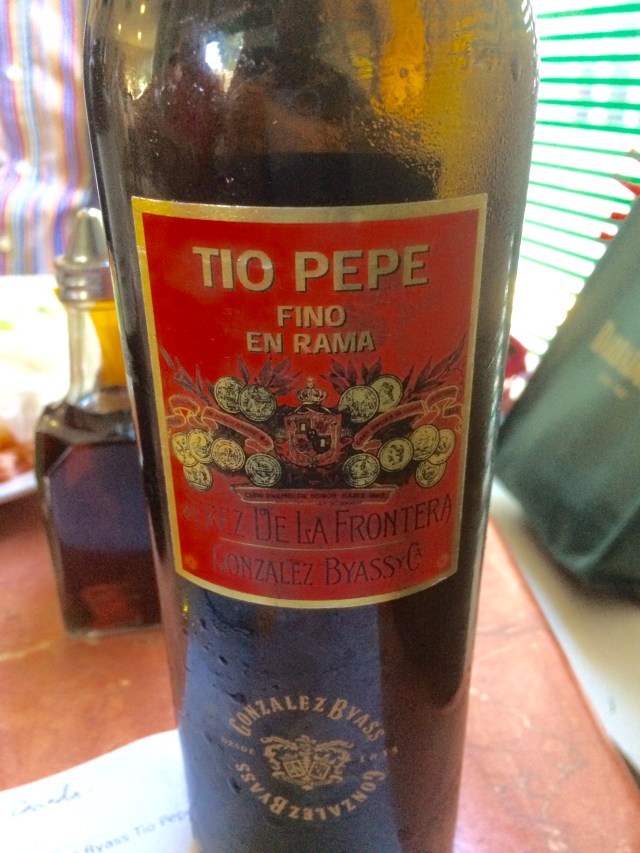
image

The advantage of travelling with three vegans (there’s a thriving vegan food scene in Granada) is that the vegan restaurants seem to sell a lot of natural wines. Paprika, on the edge of the old Albayzin district , combines quite inventive dishes with a small but well formed wine selection, and it’s a minute away from the well known deli-wine shop, Al Sur de Granada, another good source for local wines. It was at Paprika that I drank perhaps my wine of the week, Purulio Blanco Joven from Bodega Torcuato Huertas. It’s said that Manuel Valenzuela kickstarted the revival of Alpujarras winemaking, and it’s true that so many people have indeed benefited from his help and experience. Torcuato Huertas is one of them, although he has been immersed in wine since childhood, having helped foot-tread his grandfather’s grapes.

Again, the stereotype is broken – old guy making non-intervention natural wines, yet he introduced French grape varieties (Cabernet Franc, Sauvignon Blanc), and new oak barriques. The vineyards here are located on the northern side of the Sierra Nevada, near to Guadix. They are also at altitude, around 1,000 metres, but rather than the schist in the southern valleys, there’s more sand and alluvial deposits with Mica, quartz, basalt and iron. The wines are taut, saline and fresh, hard not to call “mineral”. The blanco joven is made from a blend of Sauvignon Blanc, Macabeo and Palomino, plus minor additions…and it’s orange. It starts off with a fragrance of ripe apricot before the palate kicks in as I described above. Its 13% alcohol doesn’t really make itself noticed. It’s quite sublime, a complexity wholly different to that you expect from a more classic wine. Maybe that’s why I loved it. To the dubious reader, not a whiff of any cider-like volatility.

Barranco Oscuro quite fittingly gets a second wine in the “holiday top-4”. This time it’s a red blend based on Tempranillo, Garnacha, Cabernet Franc, Cabernet Sauvignon and Merlot – Tempranillo y Màs. It’s a  tinto crianza  which tastes quite seamless as a blend, although I did seem to get a hint of each of those varieties as I drank through it (maybe I was just fooling myself). It’s a lovely, rich wine, full bodied with a long dark-fruited finish. It’s also one of their wines I’d never come across before, so I was all the more pleased to see it in a couple of places in Granada. Barranco Oscuro is a gem of the Alpujarras and it’s good to hear that Manuel’s son, Lorenzo, is working at the winery. Hopefully the succession here is secure.

I was very pleased to find Bodegas Cauzon‘s Blanco 2015 on the shelves at Al Sur de Granada. I first met Ramon Saavedra at the Raw Wine popup at the London Edition Hotel back in May this year, and then again, a few days later, at the Raw Wine Fair in East London. We had to communicate in his little French and my even less competent Spanish, but he was very friendly. So much so that I was sorry to get as far as Granada and be unable to take up the invitation to drive up to Cortes y Graena, again high up in the Northern Sierra Nevada. Ramon has just 2.5 hectares of vines. Most of these produce red wine from Syrah, Tempranillo and Cabernet Sauvignon, plus a few local rarities, but the blanco is made from a blend of Chardonnay, Sauvignon Blanc, Viognier and Torrontés. It’s the colour of pale apple juice, cloudy and, being unfiltered, it has some pretty large clumps of yeasty sediment. With its clear glass bottle and clear label, it looks a bit like one of those pét-nats you can drink clear or cloudy depending on how you store them. Scary to look at, it’s actually 12.5% of refreshing white(ish) wine with a mineral/stone fruit palate. Easy to drink with a view towards the Alhambra, come 6pm on a hot August afternoon.

The delicatessen/wine shop Al Sur de Granada is at the top end of the Calle  de Elvira (No 150), on the right just before you get to the Moorish Arch. In fact it’s much more than a deli, being at various times of the day an organic wine bar and restaurant, with a good selection of locally grown produce. Open, in theory, 10am-4pm and 6-11.30pm (I think they might shut at 3.30 and not the advertised 4pm in summer). The name, meaning South from Granada, references a book (pub 1957, since 2003 also a film by Fernando Colomo) by that famous historian of Spain, Gerald Brenan. The book is autobiographical and charts his complicated life as a demobilized soldier in the years after 1919, in a village in the Alpujarras.

Before visiting Granada I read Granada – The Light of Andalucia by Steven Nightingale (Nicholas Brealey, 2015). It combines a history of Granada with a captivating description of an American family’s move to the Albayzin district just over a decade ago. Nightingale is a poet and novelist, and he uses a poet’s sensibilities to appraise the rise and decline of Moorish and Sephardic culture in this great city, and the impact of the conquest by the Catholic Monarchs, Ferdinand and Isabella. I loved this book, and plan to read it again now I’ve been there. By coincidence, we discovered that the carmen Nightingale bought and renovated was only metres from where we were staying. [Note slightly different title for US market]

We stayed in the Albayzin district in an apartment found on airbnb. Here’s a link  . The view of the Alhambra at the beginning and end of this article was taken from the long living room, a constant companion for the week, and possibly the best view I recall having from a holiday rental. The Albayzin is effectively a village within a city, a series of tiny lanes, many a mere metre wide, snaking across a hill. It contains many churches, hidden Moorish architecture, small museums, and the beautiful houses known as carmens with their hidden gardens, oases of calm in the summer heat.

Other recommended (but smaller) sites to see include the Madraza de Granada (side of Cathedral, 2€, do not miss), the arab-era bathhouse on the Carrera del Darro and the Corral de Carbon (a Nasrid-era corn exchange). The Alhambra itself is magical. The complex contains the famous Nasrid Palaces, the Alcazaba fortress and the Generalife (where the famous water gardens are located). Ticketing is complicated so consult an up-to-date guidebook. Buy tickets online, in advance – you still have to collect tickets before entry and timings are reasonably strict. But remember, parts of the complex are free, including a small but worthwhile museum in the Palacio de Carlos V. We went up there three times.

If you are in Granada with a car, try to visit the white villages of the Alpujarras, some of the most beautiful in Spain. We lunched at L’Atelier restaurant in Mecina, in the Taha Valley, about 20 minutes east of Pampaniera (via Lanjaron). It’s a tiny place so booking is advised (they have a few rooms). Don’t be put off by it being vegetarian/vegan, the cooking is inventive and good. There is nice easy walking from the next hamlet, Fondales, with its flat-roofed Berber-style houses. Follow the trail signs in the village.

P1050883


Posted in biodynamic wine, Spanish Wine, Wine, Wine Travel | Tagged , , , , , , , , , , , , , , , , , , | 4 Comments