Raw Wine 2017 – Part 1

IMG_2813

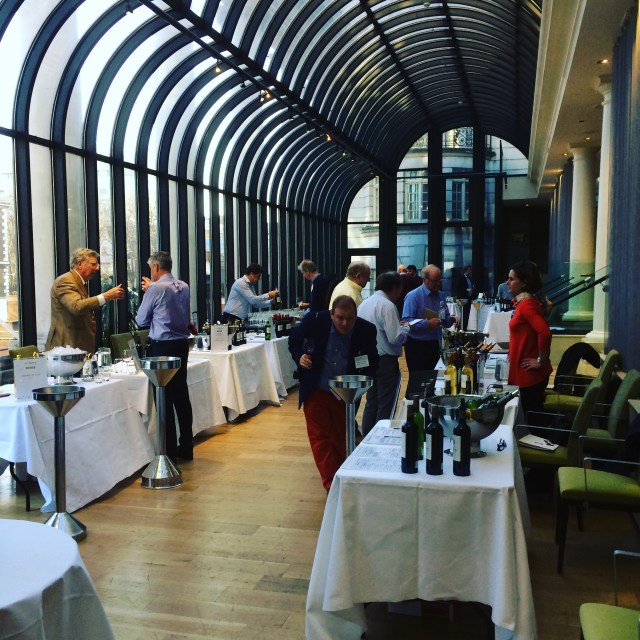
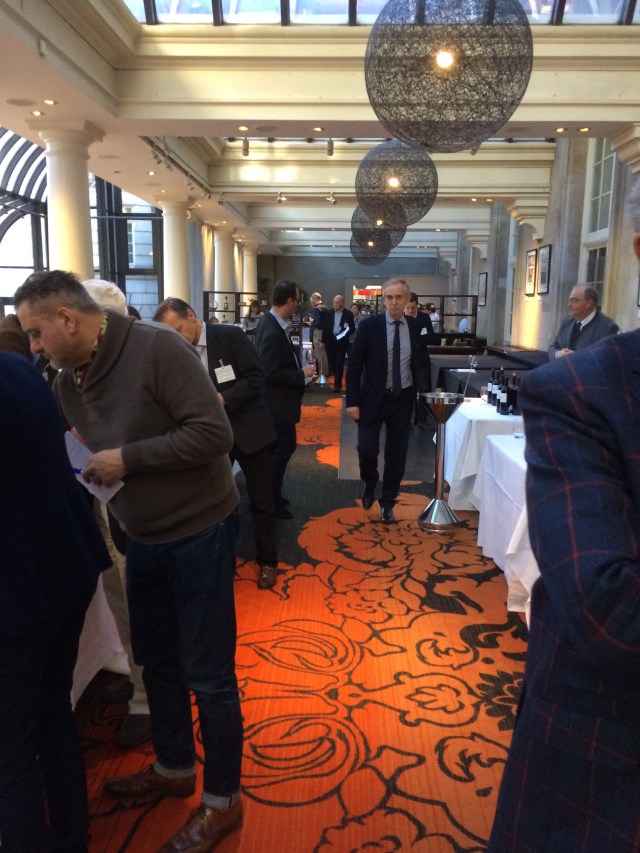
In the run up to last weekend there was palpable excitement in the London wine fraternity, and doubtless beyond. Raw Wine was in town. Raw, founded and run by Isabelle Legeron MW, is one of the two big annual “natural wine” fairs. Whilst many wine trade people still knock natural wine, the immense popularity of these big wine tastings (Real Wine is the other one) prove without doubt that, especially among younger drinkers, natural wine is a genre to be reckoned with. The fact that people like myself, and fellow blogger Alan March, were among the oldest people there (and I’d like to state categorically that I’m not old), shows how out of touch many of the older generation of wine professionals may be.

Raw’s main stated aim is to promote transparency in wine – tell us what you are putting in it. Contrary to what some assume, the producers at Raw are not all at the extreme end of natural wine, far from it in some cases. Yet if you visit Raw you generally get to taste purity, in wines that seem somehow alive compared to many dull commercial offerings. That is the potential of natural wine. It’s also usually refreshing and, a word I use a lot, gluggable. That’s why so many people new to wine enjoy it, without pretense. And it is new and different. That is really at the core of what puts off more conservative palates, brought up since the 1980s on oak, tannin and thick “over ripe” fruit.

There is doubtless a little rivalry between Raw and its competitor, the Real Wine Fair (which takes place in May this year), and Raw had put in place a few tweaks for the 2017 edition. First, a change of venue. On the whole, the space at 180 The Strand was an improvement on the Truman Brewery. Not too many tables in direct sunlight, a reasonably large space, and quite a reasonable food offering upstairs. I hear it was horribly crowded on the public day (Sunday), when many producers ran out of wine quite early, as some did on Monday. However, the Trade and Press day was a lot better on the floor, and we could grab a quiet lunch break in relative comfort upstairs.

The problem the organisers had last year was the theft of glasses, which left them in a difficult position. Apparently someone even took a suitcase full. The remedy was to charge a £5 deposit. Fair enough, but it had unforeseen consequences to which I fell victim. Around 4pm I was talking in depth to a producer. He’d run out of most of his wines and we were discussing a future visit to taste. I’d put down my glass along with a pile of brochures and my tasting book. When I went to scoop up my things my glass had gone. Someone, in the general ruck, had seen a way of making some money. I was told at the desk that one person had tried to cash in five glasses. I told them one was probably mine. As another attendee said, what a shame for this to happen at an event where the exhibitors, at least, promote positive human values.

As always at big events like this, it is impossible to taste everything. I’m going to split this up into two parts, as I usually do, to prevent fatigue for me as well as the reader. Even so, I have counted 33 producers I would have liked to have tasted that I didn’t visit. These include the likes of Alexandre Bain, Cornelissen, Emideo Pepe, Riecine, Foradori, Radikon, Gravner and Vionnet, and especially Claus Preisinger (but I’ve written a fair bit about Claus recently). I’m guessing most readers will know those. You’ll also know some of the estates I write about, including some I do so several times a year. But I know that among them, in these two Blog posts, you’ll find some exciting new names as well. In Part 1 I’ll begin with Austria, Switzerland, and North America, and in Part 2 we’ll put the rest of Europe.

The Austrians

Rennersistas (Burgenland)

Rennersistas are two brave young ladies, Susanne and Stefanie, from Gols. From the 2015 vintage they took over their parents’ 14 hectares, which their father had begun working in 1988. Their parents must be unusually confident in their talented offspring because the first thing they did was to change the wines completely. Not only are these all natural wines, but no sulphites are used or added.

In a Hell Mood 2016 refers to father, Helmut, who one can imagine having a small fit on tasting the first wine they made, from the thankfully ripe and plentiful 2015 vintage. This is their pét-nat, a blend of Pinot Noir and Chardonnay. I didn’t try a better pét-nat all day.

Waiting for Tom 2016 is a rosé which name checks two influences on the girls, Tom Lubbe (NZ/Matassa) and Tom Shobbrook (Barossa Valley). It’s a salmon pink, cloudy, Zweigelt which is just like pure juice and so refreshing. Several people said this was their favourite wine on their table. Its joyous simplicity speaks volumes about the winemaking here.

Two 2016 whites contrast Weissburgunder (aka Pinot Blanc) with Welschriesling. The former, nicely rounded fruit but so alive, just shaded it over the latter wine, soft and appley. A Waiting for Tom red blends Pinot Noir, St-Laurent and Blaufränkisch, fermented with some whole bunches on the bottom of the tank. There is some early picking too, and boy is this fresh. This is a hallmark of all the wines. There’s also a very fruity Zweigelt and a Blaufränkisch which has a bit of additional spice.

I was sorry not to be able to get to a tasting of these at Newcomer Wines as part of the activities surrounding Raw Wine Week (lots of popups, dinners and tastings around London’s natural wine haunts), but here at the Fair they were a revelation. I really enjoyed the wines, so much so that their Weissburgunder was my one purchase at the in-fair shop. I’m sure the infectious enthusiasm of their creators helped a lot.

Rennersistas are imported by Newcomer Wines. The 2016s should be arriving in June. These were samples, so their fine performance here is all the more remarkable. I shall be purchasing some myself when they arrive.


Gut Oggau (Burgenland)

Stefanie and Eduard, winemakers in the tiny village of Oggau, next to Rust, appear frequently in my Blog, and as you probably know, are one of my favourite half-dozen Austrian estates. I’d been forewarned that they had run out of wine early on the Sunday, and as I had been devoting the morning session to new producers, I shot over to Table 58 straight after lunch. Even then, there were only three wines to taste when I was there.

Two whites – Theodora 2015, which I buy a lot, is a wild natural wine with real character, which blends Gruner Veltliner with Welschriesling. It’s slightly spritzy to begin with (which I like), and is off-dry. It comes in at only 11.5% alcohol. This wine ages nicely, but it’s a cracker when opened young, like a bracing cold shower in Tokyo’s humid summer heat. Emmeram 2015 is quite a contrast. Round and rich (especially in ’15) Gewurztraminer from limestone. If you are not a Gewurz fan, this is one to try. If you are…

The red was Josephine, from 2013. This blends the rare Rosler variety with Blaufränkisch. It’s a nice elegant wine with dark fruit and a touch of spice, with grip to go with it. Gut Oggau’s wines somehow taste biodynamic. They have a very special life in them, which is either something you identify with, or you don’t. In some ways it transcends everything else when tasting them. I don’t know how they do it.

Dynamic Vines imports Gut Oggau. I’m sorry I don’t have a decent photo from this time, but my Blog is spattered with them, like the wine splattering from the very small spittoons we were using. Their labels are unique as well, so I’ve dragged one over, in case anyone is reading about them for the first time.

image


Alexander Koppitsch (Neusiedlersee)

Eight wines were on show from this producer, completely new to me. Alexander and his wife took over an estate with over 500 years of history in 2011 and, like the Rennersistas, moved swiftly to low intervention methods. Most of their vineyards lie on the exceptional soils of the Leithaberg, on the northwestern side of the Neusiedlersee.

We began with their Authentisch wines, a Zweigelt aged in acacia, and Rot No 3 (both 2015). The latter blends 60% Zweigelt with Syrah and St-Laurent, plus a tiny bit of Blaufränkisch, aged in large wood. Both were in a pure fruit style.

The three white wines were all more complex. Welschriesling Maischevergoren ’15 has two weeks on skins to give colour and texture. A Gemischter Satz (2015) field blend mixes Gruner, Muscat, Pinot Blanc and Sauvignon Blanc with a handful of other local varieties and a few very rare ones. This mixed site was planted in 1934 and, like much of the fine Gemischter Satz from Vienna, it has potential to age. Weissburgunder had a lovely nose on a 2016 bottle sample, whilst the warmer vintage 2015 was less acid but had a nice richness to it.

The reds here are equally impressive for an unknown producer. I tried the varietal BlaufränkischSt-Laurent and Zweigelt, all from the Unfiltriert range. All 2015s, the first of these was the most complex, but the other two were nice fruity examples of their respective grapes.

At the end of the tasting Alex pulled out the pét-nats. Called “Pretty Nuts”, there’s a St-Laurent and a Pinot Noir and they are just lovely. Real summer lunch wines to slosh in a glass beaker. Sadly, like so many Austrian producers, the Koppitsch family lost a lot of grapes in 2016 (60%), and there will only be around 300 bottles of each of these (we tasted samples as the rest of the wine is not yet disgorged).

These wines are available in three of Vienna’s more interesting wine shops, but they don’t currently have a UK distributor. I think they deserve one, if anyone has a hole in their Austrian portfolio.


Meinklang (Burgenland)

Okay, here we go again. Yes, the Michlits family also make some of the most frequently appearing wines (and beer) in this Blog. But if you don’t know these wines, then you really have to try them. Ultra environmentally aware, their Pannonian estate near Pamhagen on the southern side of the Neusiedlersee not only grows wild vines left to regulate themselves, but also ancient grains (like spelt), fruit orchards, and grazes a famous herd of Aberdeen Angus cattle.

With apologies to regular readers, here’s a short precis of the Meinklang universe. Vines in Hungary, on the strange volcanic stub of a plateau called Somló, produce a stunning wine from the rare Juhfark variety, labelled as J13 (for the 2013 vintage). The Austrian vineyards produce, among others, the famous Graupert wines. The vines here are left wild. Rather than over produce, in time they self-regulate to produce excellent grapes. On taste yesterday was the magnificent Graupert Pinot Gris 2015.

Konkret is a pair of wines made in concrete eggs. They both have that texture which is a little bit like amphora without the full on “licking a terracotta pot” sensation. Konkret White is more of a pale orange colour, made from Traminer. Konkret Rot is St-Laurent. Both were 2014s. These are expensive but truly exceptional wines. I have all the above in my cellar (though J12), along with the Graupert Rot (from Zweigelt).

We finished the reds with a very pure fruited Zweigelt 2015 before out came the FoamFoam is a pét-nat style. It comes in white, red and cider. Buy all three. The two wines come from the Graupert vineyard with a year and a half on lees. The white is a regular chez-nous, but the red (95% St-Laurent) is gorgeous, like a brambley real Lambrusco. The cider comes in at just 7% alcohol and is as refreshing, zippy and frothy a cider as you have ever tried. For good measure I have a Meinklang Urkorn-Bier in the fridge as a reward for finishing Part 1 tonight.

Meinklang’s wines are currently split between Winemakers Club and Vintage Roots in the UK. Apart from the wines mentioned above, both importers stock a few more oddities, and the family’s range of value varietals.

IMG_2757


Albert Mathier & Fils (Valais, Switzerland)

The Mathier family farm their vines at Salgesch in the Valais (Wallis in Swiss German). This is some of the most beautiful vineyard scenery in Europe, and the two-and-a-half hour walk from Salgesch to Sierre is one of Switzerland’s best known vine trails.

The simplest wine here is also one of the most effective. Forestier 2015 is a pale, vibrant, cherry-packed Pinot Noir. It contrasts with the darker Cornalin 2015. Cornalin is a very good local variety, perhaps only topped in the region’s local varieties by Humagne Rouge. This is a much darker wine, still in the cherry spectrum but black cherries with a bit of nutmeg and spice. The finish has a slightly rustic grip which is not unappealing. Bring out the charcuterie.

The final red is Vinum Lignum Salconio 2013, altogether aiming to be more serious. It’s a blend of Syrah, Merlot and Cabernet Franc, certainly of interest, but whilst I like much of the very good Syrah produced in the region, the other two reds appealed more. It might be something to do with the oak on this cuvée.

Petite Arvine is my favourite Valais white variety, which is most often vinified dry. Here, as Aphrodine 2015, it is distinctly off-dry with a bit of residual sugar and richness, but it retains its freshness. I liked it despite a previous preference for the dry style of Petite Arvine, which tends to mineral. The nature of this cuvée could perhaps be in part down to the very warm 2015 vintage.

There are two amphora wines here, quite unusual for a Swiss producer, and they use original Georgian kvevriAmphore Blanc 2012 is a blend of the rare local variety Rèze with Ermitage (a local synonym for Marsanne). After ten months maceration on skins the wine is amber-orange and highly textured, but softening. Spice, herbs, honey and tea tannins all come through. A sophisticated and complicated wine which I imagine might not appeal to everyone, but if you like orange (like the Georgians, the producer prefers the term amber) wines, you won’t find too many Swiss ones. Slip it into a blind tasting.

Amphore Noir 2012 is 100% Syrah in this vintage. It’s tannic and grippy, but refreshing too. It has exactly the same texture as the blanc. Maceration in the terracotta makes it seem like a blend of blackcurrant fruit with soil. That may not sound appealing, but I assure you that to the adventurous palate it is. The rarity of amphora reds makes this appealing in itself, but it is a well crafted example. Mathier’s passion for the kvevri wines of Georgia shines through.

Albert Mathier & Fils is imported by Alpine Wines (they are currently out of stock of all his wines but expect more soon, contact Joelle or Ben for details).


The Scholium Project (California)

Much has been written about Abe Schoener and his unusual project to produce singular, striking, single vineyard wines from some of the (often) hidden corners of Northern California. There used to be a bewildering range of wines which trickled into the UK. Of late the range has shrunk, but the wines remain both fascinating and challenging, in a good way.

The first wine here is one of my favourite Scholium whites, Michael Faraday 2014. Made from 100% Chardonnay from a vineyard at the base of the Sonoma Mountains, owned by the Matthiasson family. It’s totally unique. Don’t think California, think Jura. This Chardonnay has not been topped up whilst ageing, and it has aged under flor. The effect isn’t as striking as a Jura wine aged sous voile, but it’s there. It isn’t a world away from Brash Higgins Bloom, Brad Hickey’s wine from McLaren Vale in Australia. Astonishing! Horribly expensive though (£60+ retail).

So is the rather famous The Prince in his Caves 2015 Sauvignon Blanc, also from Sonoma. We are in the territory of skin contact here, and it’s like no other Sauvignon Blanc you’ve tasted before. Fermented in puncheon, then two whole years in barrel. In this vintage regular drinkers will be pleased to know it’s back to its old wild self. Others should approach with caution, but prepare to be delighted.

1 mn 2015 is made from 125-year-old Cinsault from Lodi, planted on its own roots (ie not on American rootstock). Whole clusters, just simply delicious. Babylon 2013 is a more complicated red. It comes from the sandy and rocky Suisun Valley, which I’m told (no, never heard of it) is somewhere between Sonoma and Napa. The variety is Petite Syrah, but made gently, with no heavy extraction, and then just left alone in barrel for three years. There’s a lightness which would shock any of the old guys schooled on 1990s Petite Syrah, fashioned as a Zinfandel lookalike.

Scholium are imported by The Sampler. The only wine currently in stock from those tasted at Raw appears to be the Michael Faraday, although they list other equally fabulous Scholium wines. Have a chat with Ben to see what’s due in when, and curse that you missed last weekend’s Scholium tasting in-store.


Okanagan Crush Pad (Okanagan Valley, Canada)

You may have read about the Crush Pad last year when I tasted them at Winemakers Club’s Vaults Tasting. This increasingly highly regarded crush facility has been going for around five years. Native New Zealander Matt Dumayne makes the wines, joint-founder Christine Coletta proudly travels with him to show them off. Their success is helped in no small part to their twin consulting team of Alberto Antonini and Pedro Parra. Matt will tell you how amazing a viticulturalist Parra is. “You plant the vine variety Pedro recommends on a particular site and three years later the wine will taste just as he says it will”.

The Crush Pad makes its own range of wines in addition to acting as a contract crush facility, Haywire (pure, refreshing, natural wines), and Narrative (from more specific Okanagan sites). Some stainless steel is used, but they specialise in  large format amphora and concrete, the latter a range of impressive, black, concrete eggs from Nico Velo in Italy.

Christine brought out a lovely selection for Raw. Waters and Banks Sauvignon Blanc 2015 and Switchback 2015 (the latter a Pinot Gris) are both whole bunch fermented in 4,500 litre concrete and spend eleven months on lees, but there is no skin contact. They both have good colour, but are in the straw spectrum. All wines here go through malolactic. Both are tasty whites with personality.

Free Form White 2015 is the same fruit as the Sauvignon Blanc but kept on skins for nine months with two punchdowns a day. It is high toned, cloudy from early unfiltered bottling, and shows the kind of success this producer is getting from what is quite brave winemaking for Okanagan.

Free Form Red 2015 and Waters and Banks Pinot Noir 2015 also  both come from the same fruit. Waters is made simply, fruit coming from granite and limestone, four weeks on skins and then straight into concrete for eleven months. Fruity. Tasty. Free Form, like its white partner, gets 40% whole bunches into 800 litre amphora for nine months before it is pressed. Altogether different in texture and complexity.

Narrative Ancient Method 2015 is a pét-nat (made by the same method as the French Ancestrale wines), 100% Pinot Noir from a 300 acre block currently planted to 20 acres. It’s the first crop off this site and they are really pleased. It’s a concrete egg wine full of fruit and texture. After a natural fermentation it spends eight months on lees, in bottle, before disgorgement and is very good. Foamy, with apple dominating citrus plus just a little pear skin and pebbles.

This is a small selection of the wines Okanagan Crush Pad produce. Crush Pad is imported by Red Squirrel.


Part 2 will follow in a few days, featuring wines from Italy, Spain, France, Slovenia and Greece.

Posted in Austrian Wine, biodynamic wine, Canadian Wine, Natural Wine, Neusiedlersee, Swiss Wine, Wine, Wine Agencies, Wine Festivals, Wine Tastings | Tagged , , , , , , , , , | 6 Comments

Saint-Chinian – Not All Schist!

I was at the Saint-Chinian Tasting at the Maison de la Région Occitanie in London’s Cavendish Square this week. It was quite a small tasting, just fourteen producers present, with a few of the names I know being absent. I didn’t see any fellow wine writers during the three hours or so that I was present. I’m not wholly sure why, for example, Spain seems to have leaped in popularity recently, yet Languedoc seems to plod on without exciting the wine writing fraternity, on the whole, right now? Well, I think such a view might be a mistake, but more of that later.

IMG_2741

THE SAINT-CHINIAN APPELLATION

St-Chinian, located just northwest of Béziers, was created as an AOC in 1982. It is spread over twenty villages, from Vieussan in the north to Cruzy and Quarante in the south. St-Chinian itself sits about in the middle, on the River Vernazobre, a tributary of the Orb as it flows south to Béziers and the Med. It is this river which broadly divides the appellation. To the north of the Vernazobre is largely schist (apart from the eastern sector), whilst south of the river is all argilo-calcaire (basically limestone with clay to you and me). North of the river the land is more rugged as well, with vineyards reaching 600 metres, often protected by quite mountainous terrain.

As well as AOP St-Chinian, two Crus have been created for the villages of St-Chinian-Roquebrun and St-Chinian-Berlou. These are both in the northern (schist) sector, one on either side of the north-south flowing River Orb. There is also a preponderance of Vins de Pays d’Oc (IGP). Some of these are for grapes grown just outside the AOP area, but many are wines made from varieties not permitted for St-Chinian red, pink and white. Some are made from international varieties, others from rare or not so rare local varieties that have been excluded from the appellation wine.

The permitted grape varieties for St-Chinian AOP are Grenache, Lledoner Pelut, Cinsault, Mourvèdre, Syrah and Carignan (red), and Grenache Blanc, Marsanne, Roussanne, Rolle, Clairette, Viognier, Macabeu and Bourboulenc (white). St-Chinian is the Languedoc’s fourth largest appellation, and a massive 83% of the annual production of 110,000 hectolitres (off 6,000 hectares of vines) is red wine. 13% is rosé and just 4% white.

THE ISSUES

If this tasting demonstrated anything, it is that one should emphatically not look for typicity in this AOP. Surely that flies in the face of the whole idea of the AOC/AOP philosophy? Well, perhaps, but we’ve already seen that St-Chinian is based on two very different types of soils and sub-strata. Terroir is one of those difficult concepts. I think sometimes terroir comes through, and at other times we see the influence of winemaking much more strongly. On the evidence of this tasting, there are quite noticeable differences between the wines on schist and the wines on clay-limestone. But such differences may well be enhanced, or indeed lessened, by other factors such as altitude and viticulture, and winemaking.

One good example of the former is the decision when to pick, with several producers picking some varieties very early, for freshness. An example of the latter would be the use of carbonic maceration on some specific varieties (often Carignan in particular), which can have quite a pronounced effect on the softness of the resulting wines in some cases.

There are some broad generalisations to be made about the producers whose wines were on show. They are all family run, with between 30 to 50 hectares being the average land holding. There is certainly a focus on trying to make good wines, which comes from a pride in the AOP, and a belief that this land is capable of quality. Many of them are also organic. As more than one producer said, the climate here means that pests and other diseases are not a problem most of the time. As one of them said, as well, “we don’t own the land, we rent it from our children”.

So why are we not talking more about St-Chinian? It does after all have the potential to establish its uniqueness. Well, first of all the split between schist and limestone doesn’t help. The story which some would like to tell is all about the schist, where journalists could draw parallels with Priorat, over the border in Spain. First of all, things are never that simple. If it were, we wouldn’t have the differences between the Côte de Nuits and the Côte de Beaune, nor between the Médoc and St-Emilion. Second, Priorat has built its fame on Grenache. Grenache has become, if somewhat surprisingly, a fashionable variety. St-Chinian is a blend of grapes, and not always the same blend. Many of the top wines are based around Syrah.

CONCLUSIONS

As the Languedoc as a whole moves inexorably towards classifying its individual crus as separate AOPs, Saint-Chinian needs to be able to find something to shout about that is unique. Having a spread of different styles is not a bad thing in any way, but it does mean that a simple message for the journalists is hard to find.

Saint-Chinian is a region of hard working family estates, many of whom have been working the land for several generations. This is actually quite a contrast to one or two neighbouring sub-regions, where incomers are getting all the publicity, perhaps because they learnt self-promotion in their former careers, or they have the money to invest in such self promotion. The buzz always seems to be around outsiders, and in the UK of course, there is always a focus on our own nationals when they have set up wine estates, as one or two have done down here.

I think this is still an appellation finding its way. There are a lot of (top) cuvées which are very much as you might expect, especially the Syrah dominated reds from the schist. Such wines need a bit of age, and food. There is little if any new wood being used, but the tannins are still big, if ripe. They are without doubt impressive wines. But it is true to say that there are many such wines across the Languedoc, so they have plenty of competition.

These type of wines were certainly in the majority over any easy drinking reds, but there were one or two pleasant versions from that camp as well. They often contrast with the prestige wines in their alcohol content. It should be remembered that the wine world is now moving away from high alcohol, and producers should be wary of equating 14.5% alcohol and tannin with something which will necessarily gain recognition in Paris and London. Freshness and balance are key to wines with higher alcohols, and it was nice to see that this quality shone through in the best wines.

I am also increasingly impressed with Languedoc’s whites. The best from St-Chinian, here, showed that when the producer knows how to retain freshness without merely picking too early and losing concentration, then they have a lot to offer. Rolle and, perhaps counter-intuitively Viognier, both seem to bring something to the table. I hope to see more of these whites.

And although the IGP (former Vins de Pays) category is not a sure fire guarantee of an inexpensive but tasty wine, when it comes to the general “d’Oc” designation, we did at least see some signs that producers might fashion something of genuine interest, not merely bland Cabernet Sauvignon, Merlot and Chardonnay.

Overall the best wines, those chosen below, were very good. Anything I have said above should be viewed in that context. The freshness and balance of the best reds is the key to future success, but making some more lovely white wines will only serve to complement, not distract from, the appellation’s potential to win friends. Could it be that all St-Chinian needs is one or two younger names to spice things up a little, to add a little energy and draw attention to the terrain and the wines?

Perhaps St-Chinian is an appellation which is hard to pin down? Let’s see. I won’t profile all of the producers present, even though there were just fourteen. Those below include my personal, subjective, favourites overall, along with one or two where I felt individual wines are worth highlighting.

THE PRODUCERS

Chateau La Dournie

I begin with La Dournie because they are the St-Chinian producer I know best (they are imported into the UK by Leon Stolarski Fine Wines). They make a nicely refreshing salmon-pink rosé from Cinsault, but their red wines are much more serious. All their vines are on schist, north of St-Chinian itself. There were three cuvées on show. Classic is 50% Syrah with equal proportions of Grenache and Carignan. Tannins are soft, so it is approachable now or over two-to-three years in the 2015 vintage. Etienne 2013 ups the Syrah to 65%. It’s a good step up, with a spicy finish contrasting with quite intense, crunchy, berry fruit. Elise 2013 is a beauty, a selection of the estate’s best Syrah (90%) with Grenache. The fruit is soft (cherry with brambley crunch), but the complexity comes via flavours of garrigue herbs and tapenade. This has a good decade before it, and is impressive.

Domaine Les Eminades

Another organic estate, in the village of Cébazan, south of St-Chinian, 14 hectares run by Patricia and Luc Bettoni. There’s a nice white made from Grenache Blanc and Marsanne, and four reds. This domaine has a range of soil types, and their top cuvées are well differentiated. Le Sortilège 2014 had a lovely nose, fresh acidity and a mineral texture, but was trumped by Vielles Canailles 2014. The cuvée is so named “old rascals” because the vineyard is planted with Carignan dating from 1902. Only 2,600 bottles of the 2014 were made. The Carignan here is so different to the soft-fruited carbonic version we see in some of the other wines. A wine of real interest.

Château Bousquette

This Cessenon domaine is based on the River Orb. It’s a very old estate dating from the 1750s, organic since 1972. The soils are clay/limestone. All the wines I tasted were red, all of varying levels of interest, and alcohol. The top wines will age, and need food. My main reason for mentioning Bousquette, though, is for their cheapest wine, Mas des Huppes. This 2015 blend of Syrah, Grenache and Mourvèdre smells a little tough on the nose, and you get 14% alcohol. But there’s a nice softness on the palate. The ex-cellars price for this wine is just 6.50€. It shows that whereas some estates are all about ambition when it comes to extracting tannins, structure and concentration, there are gluggable bottles out there which cost very little, and perhaps over deliver as a result.

IMG_2720

Domaine Boissezon Guiraud

This is a Roquebrun domaine,  with 58 hectares based on schist in the north of the AOP, and with sandy clay and limestone at Causses et Veyran, where their white wine is produced. It was current owner Michel Guiraud’s grandfather who planted most of the vines in 1900. Their cuvées are particularly apty named. Les Petits Cailloux 2015 is a fresh, saline, wine fashioned out of Roussanne/Marsanne in equal proportion. I really think you would place it as a Côtes du Rhône on the nose. There’s a bright salmon-pink rosé, and a red, Les Cerises 2015, which not only smells and tastes of concentrated cherry, but even looks like bright red cherry juice.

Their best wine is named Comme à Cayenne (2015). Cayenne was a big prison in the region. The vineyard is very hard to work, and the label depicts the ball and chain of the chain gang. This is a blend of Grenache and Carignan, 80-year-old vines, and built to last (they recommend to 2023).

Domaine des Jougla

The Jougla family farm this 30 hectare organic estate near Prades-sur-Vernazobres. Situated pretty much at the centre of the appellation, their vineyards are mainly on schist, but also limestone. This estate was also planted in 1900, and boasts five wooden casks dating from this time. It is fair to say that this is one of the best known addresses in the region.

Thus far, the whites of St-Chinian have only had a passing mention, but here things are different. As we saw above, only 4% of St-Chinian’s overall production is white wine, and in fact whites didn’t get AOC status until 2005, well over 20 years after the appellation came into being. So far then there has been little focus on white wine, yet there is potential.

Jougla’s white, Les Tuileries (2015), is intense and floral. Although it contains Grenache Blanc, these qualities come from Rolle (the intensity) and Viognier (a rich, in some cases almost tropical, fruit and florality). Harvesting is early, and the result tastes both fresh and very complete, nice to drink now. It was the best white wine of the day.

The reds from the estate begin with Initiale 2014, schist grown Grenache, Mourvèdre and Syrah plus carbonically macerated Carignan to add softness. Simple smooth fruit, but nice. Ancestrale 2013 is, by way of contrast, off limestone. It blends the first three varieties from Initial without the Carignan. They began making this cuvée in 1986 and are proud that it will see its 30th anniversary. Here we get much more complexity with deeper and darker fruits. With the top wine, Signée 2013, we are back on schist. It is blended from Grenache, Syrah and Carignan, aged in wood (used). 14% alcohol, harmonious and complex.

Vignoble Belot

This is a 35 hectare domaine beside the River Vernazobres at Pierrerue, just east of St-Chinian. The Belot family’s wines seem to boast quite a worldwide distribution, though they are not one of the best known St-Chinian domaines in the UK. The most interesting wine here was called, appropriately, Best of Belot (2013) (in English). Made from 90% Syrah and 10% Grenache, with equal use of carbonic maceration and traditional vinification. The key here is very gentle handling and care – no pumping over for example, just light pigeage. Ageing is in larger demi-muids. This vintage showed some maturity, and I liked it.

IMG_2725

Mas Champart

Mas Champart is another of the domaines which you may have heard of. They are based in St-Chinian but their 15 hectares of vineyards, in the southern sector, are mainly on limestone and clay. The top wines here are pretty good. Côte d’Arbo 2015 has a fresh and savoury quality, and Clos de la Simonette 2014, at 14.5% alcohol, is a big wine from low yields which has power and fills the mouth. But they also make two lesser wines of interest, which show a different side to what some producers are doing.

The Vin de Pays/IGP category has not been much in evidence so far in this tasting, but Mas Champart makes a couple. The white is made from Terret Blanc and Grenache Gris, grapes not permitted for the AOP. Terret was once widely planted in Southern France for producing grape spirit. It is very resistant to drought. Here, harvested late and undergoing malolactic fermentation, it has a lot more on the nose than the Terret wines I remember decades ago, and it’s also fresh, and rounded.

The red Vin de Pays is different again, using a grape variety we would describe as “international”. Cabernet Franc forms 70% of the blend (with the more common Syrah and Carignan – although Syrah itself is an interloper in the Languedoc, lest we should forget that). This wine has spice and a bitter touch on the finish. The Cabernet Franc is very much in evidence.

Château du Prieuré des Morgues

Another estate which I’d not heard of, they have 12 hectares of Pays d’Oc and 24 hectares of St-Chinian. The two IGP wines, both white, were nice and fresh. The Domaine des Aspes 2015 is 55% Chardonnay/45% Viognier (yes, freshness in Viognier, achieved by early harvesting). Domaine des Aspes Cuvée La Mouline 2015 is 100% Viognier, with a touch more richness but nicely restrained. These are simple yet well made.

The red St-Chinians are under the Château du Prieuré des Morgues label. The 2013 was a run of the mill decent St-Chinian, the Grande Réserve is composed of 70% Syrah with Grenache and Mourvèdre made from 40-50 year old vines aged in one- and two-year oak. Smooth and rich, though with a touch of alcohol on the nose. This 2013 hinted at the more powerful style of red which some people might expect from St-Chinian.

Domaine de Pech Ménel

I thoroughly enjoyed these wines. I’d never heard of the estate and, when asking others for names (both good and less good) in the region, Ménel didn’t come up. First, the white, labelled simply Blanc de Pech Ménel. Fresh but with a touch of richness, this was not trying too hard. The blend is Grenache Blanc, Rolle, Roussanne and Viognier. The best St-Chinian whites do seem to end up being a careful blend, where different varieties are harvested at different times. And the role of Rolle (which we know better as Vermentino, but naturally the French wish it to go by its French name), and Viognier, seem significant in those better examples. The Viognier is often harvested very early, but sometimes with a green harvest too. It gives concentration but helps avoid high alcohol levels.

The reds here were nice, in ascending order of quality. The Château Vallouvières 2009 tasted like it has potential with a bit of maturity, but was trumped by Château Pech Ménel 2009, a blend of 60% Syrah, 23% Grenache and 17% Carignan. It was one of the “Vins Virtuoses” which I shall mention next. It was virtuous indeed.

VINS VIRTUOSES DE ST-CHINIAN

This is a group of wines judged by a panel of outsiders each year (since 2011) which are intended to express the best of the appellation. They are all top wines from the selected domaines, so that they do express one side of St-Chinian. As we have seen, there are several sides to this region, which has more to offer than just big structured reds.

There is no doubt that the 18 wines selected are impressive. There were quite a lot of similarities between them, and I don’t claim to be sufficiently expert in these blends to be confident in my judgements, but there were three wines I liked more than the others.

Clos Bagatelle “La Terre de Mon Père” 2014 is rich, with sweet ripe fruit. 60% Syrah with Grenache and Mourvèdre cropped at just 20 hl/h from chalky clay and schist.

Château Milhau Lacugue “Les Truffières” 2014 is even fruitier, softer, perhaps slightly less structured. 80% Syrah, plus Grenache, from chalky clay. This is imported into the UK by Yapp (Mere, Wiltshire). Yapp call this blend “hedonistic” and they are quite right. But the fact that these virtuoso wines don’t say everything that’s to be said about St-Chinian is exemplified by the absence of this domaine’s Cuvée Magali. This particular wine, which I have tried, is quite accurately described (again) by Yapp as “lip-smacking”. Definitely not complex, but great value at a little over £11 (2016 prices), as versus £15 for the Truffières.

Domaine Canet Valette is one of the stars of the appellation. “Cuvée Maghani” 2014 (don’t confuse with Milhau Lacugue’s “Magali”) is pretty tannic at the moment, but has both the potential for great age, and to develop as one of the most complex wines of the day. An equal blend of Syrah and Grenache cropped at just 20 hl/h again.

IMG_2740

FOOD PAIRING EXERCISE

An interesting food pairing exercise was devised by Fiona Beckett, offering two or three different wine matches for four regional ingredients – anchovies, artichokes, spicy chorizo and Roquefort cheese.

Anchovies are intensely salty and you’d guess they need a clean white or a rosé. The wines provided here were okay as matches, but neither inspired me as wines. Not wishing to upset Fiona, nor show myself as ignorant, I’d nevertheless reach for Manzanilla.

Artichoke apparently contains cynarin which reacts badly with oaked whites and reds (I shall remember this). In any event, the star match was a wine I know, Clos Bagatelle Blanc 2016. It’s a nice and clean £10+ white, which I think Vino Vero in Leigh-on-Sea (Essex) stock.

Spicy Chorizo did demand a red, and one with oomph!…and freshness. Domaine Rimbert is another well known St-Chinian estate, and their Travers de Marceau 2015 was grippy and young enough not to be cowered by the spice, but with plush soft fruit and without the hard tannins that chillies fight with. Try The Sampler (South Kensington or Islington).

The surprise here was the Roquefort pairing. Naturally we will be thinking sweet wine here, Sauternes or similar. I’m not sure too many Brits will think of red wine with Roquefort, though I guess some might have been interested by the Canet Valette “Maghani” I tried among the Vins Virtuoses. One of the several local cooperatives, the Cave de Saint-Chinian, makes a cuvée called “Le Secret des Capitelles Blanc (2015). As Fiona said, this wine would go well if using the cheese in a salad, or with pears (a combo I’m known to enjoy, matching a certain fruit sweetness with the lactic bitterness of Roquefort). This wine is dry, but it has a real softness to it, and something almost pear-like. It worked well, and it’s cheap too.

Merchant plug – I have no connection with this merchant, other than as an occasional customer, but probably the most interesting specialist range of Languedoc-Roussillon wines available in the UK can be found at Leon Stolarski Fine Wines, online only at lsfinewines . Well worth checking out.


Posted in Languedoc-Roussillon, Wine, Wine Agencies, Wine Tastings | Tagged , , , , , , , , , , , , , , | 7 Comments

Bérêche Night

Several times each year a group of friends, who all share an avid interest in the wines of Equipo Navazos, get together for dinner at 28-50 Restaurant in Marylebone (London). Most of the time we don’t drink Sherry at all, instead sharing old bottles and other things of interest. Naturally we begin with a nice Champagne, but last month we decided to engage with a trio of wines from Bérêche. This producer has been my own favourite Grower Champagne for many years, but these days hardly a month goes by without someone telling me that it is their own personal favourite too. It also happens, by coincidence, that Raphaël Bérêche is a fan of Equipo Navazos, and our friend from EN likes Bérêche, although they’ve never met.

How is it that this small Champagne producer, founded in 1847 in the tiny hamlet of Craon de Ludes on the crest of the Montagne, has come to be so popular? After all, you don’t find them in many of the books on the region published in English, although they get a small mention in my 2008 copy of Juhlin‘s Guide. The company is now run by Raphaël and Vincent Bérêche, who have effectively taken over from their parents. The vignoble has grown to a little under ten hectares of vines, based on the Montagne de Reims and in the Vallée de la Marne. A good number are classified premier cru, but they have no grand cru sites, and few of their vines are situated in what one might call the most traditionally propitious locations.

I have come to know Raphaël a little over the years (I’ve only briefly met Vincent once, and Raphaël seems to be the face of Bérêche when it comes to publicity). He is one of the most impressive winemakers I know. He is on top of what he is doing, whether it comes to equipment in the chais, or techniques for ageing (he firmly believes that the second fermentation should take place under real cork to enable the wine to produce both finer bubbles, and texture). He is also constantly experimenting with things like dosage, trying to find the minimum amount of sweetness he can add without getting it wrong. But even more importantly, Raphaël is one of a newer breed of winemaker who understands that wine is made in the vineyard.

This cliché is oft repeated in the wine world, but it is worth noting how revolutionary such a philosophy would have appeared in Champagne even a decade ago. I recall so well on my first visits to the region how shocked I was to see rubbish strewn over the vineyards, the result of the dumping of Parisian garbage over the vines as some sort of fertilizer. Maybe not such a bad idea after the War, when it might have been made up largely of potato peelings and discarded lettuce leaves. Not so much in an age of Evian bottles and Intermarché bags.

Bérêche isn’t biodynamic, or even fully organic, but herbicides are eschewed and pesticides kept just for emergency use. The philosophy is to work with nature. The soil is worked by a team of nine full-time employees, that’s about one hectare per man (the team reaches around 40-strong at harvest). Fermentation is in wood, and ageing on lees is generally for “as long as it takes” without commercial consideration trumping quality (a shortage of Reflet d’Antan in recent years has been down to a decision to extend ageing). Malolactic is surpressed. The wines are generally both fine and complex, starting even on release. As well as the estate’s own vines, Bérêche also now produces a small negociant range (called Crus Sélectionnés), but these wines are of such quality to be pretty much indistinguishable from the estate wines.

At our February dinner we drank three Bérêche wines. Reflet d’Antan is generally considered the prestige cuvée from this producer. It’s relatively unusual in that it is made from a base year with significant additions from a Réserve Perpetuelle. Some might call it a kind of solera. Raphaël doesn’t like to use that description, but you get the idea. This reserve, kept in 500 and 600 litre barrels, was begun in 1985.

This edition of Reflet has a base of the 2008 vintage, disgorged in October 2012 and bottled with a dosage of 6g/l. It has been aged under cork, of course. It has the patina of age, four years and four months post-disgorgement, and the complexity to match. There is, first and foremost, a hint of an oxidative style here, but few would carp. You get a host of dried fruit, including fig and date, plus a refined nuttiness (hazelnuts…). But you also get a clean line of acidity, and (dare I say it) minerality. Let’s not forget that 2008 is a wonderful vintage. For me, this is one of the most impressive Champagnes you can buy, and also one of the most striking. It is not usually a difficult wine to identify blind once you know it, if you are on form that is, although there are a couple of other wines you might mistake it for. I came to Bérêche after Vilmart, and there are occasional similarities, which may derive from the use of oak, if perhaps not from the proximity of these two fine producers (Vilmart is just along the ridge, at Rilly).

img_2667

In contrast to Reflet, we had the Beaux Regards Chardonnay next. The fruit all comes from two sites in Ludes (1er Cru). Les Beaux Regards was planted in 1964, Les Clos in 1970, so these are mature vines. Vinification is again in wood, and this wine, from a 2006 base, was disgorged in 2009. It has a real depth of colour as one might expect from its age, yet there is no loss of freshness at all alongside its undoubted complexity. Although our previous wine is great value, it is reasonably expensive. But this cuvée will give as much pleasure to most people, a marvelous wine with such length. Just over 3,000 bottles made.

img_2668

We finished our flight of Bérêche with Raphaël’s rosé. Campania Remensis (meaning poor soil) is a wine composed mainly of fruit from Ormes – around 65% Pinot Noir with Chardonnay, and around 5% red wine, Coteaux Champenois, from Ormes as well (Ormes is way over west, almost on the edge of Reims and next door to Vrigny, where Egly-Ouriet has a famous old Meunier vineyard). This bottle was from a 2010 base, disgorged 2014, and dosed at just 3g/l. There’s a very fine and elegant line of acidity set off by lace-like fruit. A real note of pomegranate comes through beyond other red fruits. This pink does add a touch of richness with age, though my preference is to drink within five years of disgorgement. This was singing.

img_2669

It would be remiss of me not to mention the other wines we drank. A Bourgogne Rouge 2005, Mugneret-Gibourg from Vosne-Romanée was yet more evidence that this is a very good year for red Bourgognes, and there’s no hurry to drink them.

img_2671

Then a bit of a surprise, a wine from a producer we didn’t know. Châteaneuf-du-Pape “Domaine Condourcet” 1966, Les Caves St-Pierre came from a hot summer, yet it was a restrained 13.5% alcohol, which would be unusually low in this AOP today. Caves St-Pierre was founded in Châteauneuf in 1898, and it is fair to say that they have never been one of the most well known producers of this appellation. Yet the wine seemed remarkably youthful, and holding together well. Someone remarked that it was “more Rioja than Rhône”. A pleasant surprise indeed.

img_2672

We often do the wines at these dinners blind and for the next wine we reverted to that formula. Most of us guessed the grape variety, and my more specific guess was Spanna, having Vallana’s old vintages in mind. It was in fact Barbaresco Bricco Asili 1982, Ceretto. Like all good old Nebbiolo it was the nose which shone most brightly, a lovely haunting scent which reminded me of why the old guys used to speak of tar and roses. The palate was partly affected by a swirling sludge of very fine sediment not unlike what came out of our pond last weekend when we dug it out. But it didn’t taste like pond water. Lovely wine.

img_2674

Our oldest wine of the evening was, as if you didn’t guess (and some of you may guess who brought it), Rioja. In fact, Rioja 1958, Marques de Riscal. You’ll note I don’t say whether this is a Reserva or a GR? There is no visible designation on the label, but as it was probably released and marketed in the early 1970s, it will be one or the other. Its provider was worried about its condition, but such wines are always the height of fascination. The colour seemed good, at least in the relative dark of the restaurant. The nose was pure soy/umami, and a very specific Japanese funghi that I remember gorging on whilst very jet-lagged one evening in Nikko (very odd dreams, if I recall). For some reason, Nina Simone came into my head (“…My baby don’t care for high-toned places” – but in this case, I very much did!). A treat.

img_2675

To finish off (for me, at least), another blind wine. Smooth and dark, very much younger. Very rich on the nose, pretty certain it’s Syrah. The wine tastes very concentrated, both youthful, but also there’s a softness and plush quality to the fruit. Certainly a warm vintage, but extremely well made, and fine. It turns out to be Saint-Joseph 2009, Domaine Chave. I’d forgotten that someone had promised to bring this. Gérard Chave always made a fantastic St-Jo, and it was almost an insider secret, which Yapp’s occasionally managed to bring in. Gérard’s son, Jean-Louis, has really concentrated on this wine, tweaking the vinification and working hard in the vineyard. It is now a wine to (at least partly) satisfy the pangs of one time lovers of Chave’s red Hermitage, who can no longer afford or justify its cost. It will easily age a decade from bottling in most vintages, although if I had any 09s I’d be tempted.

img_2678

Altogether one of the most convivial evenings this group of friends has had. As one put it, it wouldn’t really matter what we drank. The fact that these occasional dinners often provide some of the year’s wine highlights is just a bonus. Much as I love Bérèche, it is often the case that it is me bringing them. I only brought the Reflet d’Antan this time, and I never get to drink three in one go, except when tasting at Craon (where I’m always driving). Thank you, guys.

28-50 Marylebone Lane looked after us really well, as usual. I was an acquaintance of one of the original founders of 28-50, and have been a customer since they opened in Fetter Lane (was it 2010?). Staff and management have come and gone, but somehow the attentive service, attention to detail, and willing wine service, seems to remain. Not every restaurant appreciates a group of wine obsessives, with the odd winemaker and wine writer, pontificating over alcoholic grape juice whilst using up a load of clean glasses. It’s a really friendly place, and has become my favourite of their three venues in London.

FOOTNOTE

I also had a great lunch yet again at Noble Rot on Lamb’s Conduit Street just over a week ago. Their set lunch menu, £16 for two courses/£20 for three, must be one of the best value meals in London right now. The food is very good without being pretentious (brilliantly fresh Hake was the main course when we went), and their wine list is very good. We drank Domaine Guiberteau Saumur Blanc “Clos de Guichaux” 2014, very young of course (still some oak in evidence), but in that rare way that makes dry Chenin Blanc so tempting and refreshing. I will admit that our guests might not have liked it quite as much as I did, but I know a couple of people who have been hoovering this up off the list every time they go there.

img_2683

Posted in Champagne, Fine Wine, Wine | Tagged , , , , , , , , , , , , , , | 4 Comments

Rolling Back More Swiss Wines

I am lucky to have friends in Geneva who appreciate wine, and whenever I’m there, they ply me all kinds of Swiss wines. Rather than internationally known superstar wines (the finest Swiss wines are only a little less expensive in Switzerland than in foreign markets), they tend to be the kind of wines locals would drink.

Many Swiss are fiercely proud of their own Canton. Indeed, I’ve been warned never to take a Vaud wine as a gift when dining in the Valais, and I’m not sure whether that was a joke – I think not. But luckily our friends are open minded, so on my recent trip I was able to sample a wide selection of every day Swiss wines from all over the country. These are not fine wines, as such, but they give an idea of the diversity that you will find if you explore Swiss wine.

Gamaret-Garanoir “Legende” 2014, Domaine du Centaure, AOC Genève

It’s worth expanding on this wine a little more than those which follow. If you find yourself in or near Geneva and with a car, you could do worse than spend an afternoon in the rolling, gentle, hills to the west of the city, that part of the Genève AOC which is known as Le Mandement. There are vines all around the villages of Choully, Satigny, Peissy and Dardagny, stretching up to the French border (where there are some small crossings giving easy access from France) and south beyond the Rhône, to Bernex, Lully and Soral, bordering the Genevois sub-region of Entre Arve et Rhône.

Domaine du Centaure is a fairly typical 20 hectare family estate, based at one of the prettier villages, Dardagny (most of the vines are on a hill overlooking the château). They would be considered one of the best producers in the village, certainly one of the oldest . They, like many others here, make a bewildering array of cuvées (around 25 at last count). Gamay and Pinot Noir are specialities, but Claude Ramu also follows the regional tradition of using more unusual new red grape varieties which are becoming ubiquitous in Western Switzerland. In this cuvée it is Gamaret and Garanoir.

Gamaret is a cross between Gamay and Reichensteiner, and Garanoir is a clone of Gamaret. This one is aged in oak, but it’s not massively intrusive. It tastes like Gamay with a bit more structure and a different perfume. It has the structure to age a few years, but it’s drinking now as a fresh wine on the medium to light side. With the oak, it’s worth giving it some air, in a carafe or at least with the cork out for an hour.

Claude also makes several more quite interesting wines. Try the rosé made from Pinot Noir and Gamay. This is a pale, almost orange colour, which used to be called Oeil de Perdrix (partridge eye). This name has now been reserved for the famous pale wines made around the Lac de Neuchâtel, but the style is still common in Le Mandement, and can be as delicate as its colour suggests. Also take a look at his Aligoté. It is, after all, a grape whose star is rising all over France, and the best of the reasonable amount of this grape planted around Geneva can (though not always) be very crisp and tasty.

img_2530

I should really mention a few other domaines from this part of the Genèvois, in case you go wandering. Domaine  Dugerdil (Sophie, there is more than one), Domaine Les Hutins, Domaine Les Faunes (Frédéric and Ludovic Mistral) (all at Dardagny), and Domaine des Curiades (Lully) all make wines I’ve enjoyed. I was treated to a really good tasting at Domaine Les Faunes a couple of years ago. Their cellar is open for a couple of hours most days, as is Domaine du Centaure (see their respective web sites for opening hours). Domaine du Paradis (Satigny) gets plaudits but I’ve never tried their wines. Domaine des Abeilles d’Or is one of the few Geneva estates imported into the UK, available via Alpine Wines.

There’s a fairly good co-operative in Satigny, the Cave de Genève, with an on-site shop (although it’s a bit industrial around Satigny, and the cave co-operative is no exception). The photo below is of one of their prestige cuvées, Infini 2014, from their “Les Passionnés” range. It is quite typical of the top of the range efforts from many Swiss producers in Vaud and Geneva, in that it’s a blend of Bordeaux varieties (Cabernets Sauvignon and Franc with Merlot) wrapped in new oak. The chewy blueberry/blackberry fruit is impressive but time is needed to soften the tannins and integrate the oak. Yet this co-operative makes an enormous range under five or six different labels. I once bought a very nice tasting case promoted by a Genevois newspaper magazine, where the wines were all pleasant quaffers, and relatively inexpensive by Swiss standards. Alpine Wines (see link above) import a range of wines from this co-operative.

img_2697

The Genevois vignoble is largely an area of family domaines. You should be able to find the brochure of the Vignerons Encaveurs Indépendants de Genève, along with a vineyard map, at tourist offices in Geneva. Most domaines can be visited, some requiring an appointment, but the majority have an open cave for part of the day (often late afternoon in the week and Saturday mornings). Most are generous with tastings, but there is an expectation that you will make a purchase if you take full advantage of this generosity.

Goccia Bianca, Bianco di Merlot Ticino 2014, Cantina Sociale Mendrisio

No, not a mistake. Switzerland’s Ticino region is Italian speaking. In terms of wine production, it is the country’s fourth largest (behind Valais, Vaud and the Genèvois), but almost all its wine is red. What Ticino is famous for is Merlot, planted there after phylloxera. Some is very good, but almost all of it is very expensive. This wine was not, I think, quite in the price bracket of some of those reds. Neither was it the finest wine I drank last month. But it was very decently made, not completely unlike an Entre-Deux-Mers, though that’s doubtless auto-suggestion because the grapes are so different. A little bit of white flowers comes through, and the palate is dry and on the lighter side. But come on! How often do you get to try a white Merlot? Oh, apparently Tesco, one of the UK’s largest supermarkets, sell one for £3.95. Never mind!

img_2540

Gamay 2015, AOC Genève, Domaine des Lolliets/Dunand & Fils, Soral

The village of Soral is over on the left bank of the Rhône, a few kilometres after it exits Lac Léman. This Gamay is the only wine I’ve tried from the domaine, but they seem to get good press reviews. There’s a lot of weedy high yield Gamay produced in the region. Whist this may not show the wild exuberance of the Beaujolais I tend to drink, this is clearly a well made wine, in a modern style, with more concentration than many. Enjoyable.

Zürcher Clevner “Turicum” 2013, Weinkeller zum Stauffacher

This wine was quite mature, surprisingly so given the vintage, but again, I don’t get to try many wines from the Zürich region. Labelled as both Clevner (don’t confuse with Alsace Klevner, nor Klevener) and Blauburgunder, this is, of course, Pinot Noir. Pinot is now the most widely planted red grape in the country, and is capable of world class quality (especially in the eastern Canton of Graubünden/Grisons, where Daniel Gantenbein fashions tiny quantities of the best Pinot in Switzerland around the village of Fläsch). This cooperative makes Pinot Noir from all over Eastern Switzerland, and there’s a lot of decent stuff to sample. This wine was difficult to judge on account of its maturity (posssibly heat affected), but it appeared to be at the simple end of the spectrum. [This wine is spelt “Gürcher” on the Vivino App, but Zürcher on Swiss retail sites).

img_2544

Fendant “Treize Étoiles”, Caves Orsat, Martigny (Valais)

Fendant is considered the typical white wine of the Valais, and is their name for the Chasselas grape. I’m going to stick my neck out and say that Petite Arvine is my favourite white variety from Valais, but there is no doubt that Fendant is synonymous with the region.

Caves Orsat is a large producer, founded in the 1870s, now owning 30 hectares under vine but also taking grapes from many local growers. It is both the tradition, and the bane, of Swiss wine that there are thousands of small scale grape growers who tend small plots, albeit with care. So the other side of the industry, to that of the artisan vigneron, is larger producers on whom these owners of tiny parcels rely. Such producers usually have various ranges, from fairly simple wines produced with relatively high yields, and usually with chaptalisation, up to a premium range.

This wine doubtless belongs to the former category, especially as it has no visible vintage on the label (becoming less common, but not unusual). In that respect, it is a simpler wine than the various Chasselas I wrote about in my last article, tasted at the Lavaux Vinorama Centre, near Rivaz (Vaud). Nevertheless, this wine shows typicité, and the freshness you expect from the grape variety. After a while you get a nuttiness and a slightly bitter note on the finish, which I sometimes think of as quince with a hint of the skin of a hazelnut.

Yet these wines do have a real affinity with hard cheeses, especially a gruyère, which makes them excellent for raclette and fondue. Usually light in alcohol at this level, they will also accompany a lunchtime quiche, and similar dishes.

Chasselas “Grand Cru” 2015, Domaine Châbles/Martial Neyroud, Montreux (Lavaux)

I have a confession, something I don’t fully understand about Lavaux wines. Yesterday I listed the Lavaux crus and stated that Dézaley and Calamin are designated as “Grand Crus”. This is what the literature and the vineyard maps clearly state. So I’m at a loss to know why this Montreux wine is so labelled?

This is a wine I brought back to Geneva from Vinorama. It is at a simpler level, similar to the first Chasselas I tasted there (see previous article here), but a step up from the previous wine. Pretty much the same dry wine with a nice lifted zip which doesn’t come across as too acidic. Herby, nutty, with a tiny twist of lemon or grapefruit. It has a touch more colour. The cheaper Chasselas are usually very pale. As well as the food matches suggested for the previous wine, I think this will stretch to plainly cooked fish, such as salmon. But it does pretty well as a preprandial appetizer – in Geneva a Chasselas aperitif is pretty much de rigueur. It would be wrong, and rude, not to…

Humagne Rouge “Escalier de la Dame” 2007, Yves Granges, Saxon (Valais)

Yves and Elisabeth Granges make wine around Saxon, between the Valais Crus of Fully and Chamoson. Humagne Rouge is a speciality of the region, and is possibly my favourite autochthonous Swiss red variety. Sometimes Humagne Rouge can taste a bit like a rustic Syrah with a touch of Nebbiolo. It also reminds me a little of Aostan Fumin. In fact, this grape is also found in Aosta, but called Cornalin d’Aoste there (confusingly, there’s an attractive red variety called Cornalin in Valais, but it is quite different).

The best Humagne Rouge have earthy tannins, deep cherry notes and a bit of spice, and they can age too, especially when from one of the best sources. This wine was enjoyable, and did exhibit some of the characteristics mentioned above, but once more, this bottle was getting towards the end of its plateau of maturity. If you are in the Valais you will find some very good Syrah and Pinot Noir, but it would be a shame not to try a Humagne Rouge (nor indeed a Cornalin).

img_2618

Sherpa Rouge 2012, Vins des Chevaliers, Valais

Vins des Chevaliers made the first Swiss red I ever tasted, nearly thirty years ago now. It was the classic Valais red blend of Pinot Noir and Gamay, called Dôle. The proportions of each grape in the blend can vary, but most people will tell you that the more Pinot there is, the better. Dôle can be insipid, insubstantial, and with a confected bubblegum note, but it can also be very good. Back at the end of the 1980s this producer’s Dôle didn’t really impress, but it has improved.

The wine below is one of a pair, specially made with 2CHF from each purchase going to the Swiss Sherpa Foundation. It is labelled in a way you will often see in Switzerland, an “Assemblage Rouge”, or in some cases the fancy sounding “Grand Assemblage de Nobles Cépages” (as with that Cave de Genève cuvée above). Such wines don’t always back up their claims with grape details, and you can take a bet that these wines will also be oak-bound if you drink them young. We do at least know that this wine is a blend of Pinot Noir and Humagne Rouge. Rugged, like the people it helps support.

The Valais region has a long connection with Nepal’s Sherpas, and although not a Sherpa, and not from Nepal, the Dalai Lama (who does have strong connections with Switzerland, and a Himalayan connection too) owns a vineyard here. It’s one of those wine facts which is absolutely useless to anyone, but it’s a nice story. The vineyard is called Les Amis de Farinet, and it claims to be the smallest vineyard in the world, less than two metres square and consisting of just three vines. These are, purportedly, Chasselas and Pinot Noir, but don’t ask me of which variety there are two vines! Blended (presumably in tiny proportions) with grapes from other vineyards, about a thousand bottles are produced, raising $35,000 every year for charity.

img_2619

Petite Arvine2015, Cédric Flaction, Saint-Pierre-de-Clages (Valais)

Saint-Pierre-de-Clages is in the lower part of the Rhône Valley, between Martigny and Sion. Cédric Flaction is quite restrained as far as Swiss winemakers go. He only makes fifteen or so wines. There’s a certain mineral restraint to them, but coupled with a little opulence straining at the leash. This gives them a certain tension.

As Humagne Rouge is my favourite Swiss red variety, so, I think, Petite Arvine is my favourite white. Expect a touch more weight than a Chasselas/Fendant. In the best bottles there will be a touch of the exotic (here you might find pineapple, often apricot too), and a combination of creamy fruit with salinity on the tip of the tongue as the wine lingers there. This wine is by no means one of the more expensive made from this grape variety (this was purchased in a smart Geneva store’s wine department for CHF 26). Producers always suggest their wines will age, and Flaction reckons 5 to 10 years for his Petite Arvine. I’m not sure many people will give it that long, and every Petite Arvine I’ve drunk has been under five years old.

img_2695

There are plenty of wines mentioned here, but for a small country which grows over 200 grape varieties, this doesn’t even scratch the surface. A tiny proportion of Swiss wines are exported, all estimates seem to suggest under 1% of production. The Swiss are avid wine drinkers, and they import much more wine than they produce. Couple that with their strong currency, and the high costs of relatively small scale mountain viticulture, and it’s no surprise that we see little in the UK. It will not be getting any cheaper, after the post-brexit fall in sterling.

But despite these rather depressing facts, I would still urge you to try Swiss wine. Only today, a wine loving friend said they’d never tasted a Swiss wine. The country has so much to offer which is so very different to what you might be used to that it is a big shame to ignore Switzerland completely. I am happy to admit that I have a romantic attachment to Swiss wine, but then, for me that’s half of what wine’s all about. As well as these fairly simple wines, Switzerland does produce a good number of genuinely fine wines, and boasts a number of internationally recognised producers whose wines grace many a smart wine list all over the world. Go forth and drink them.

IMG-20140729-00472

Posted in Swiss Wine, Wine | Tagged , , , , , , , , , , , , , , , , | 3 Comments

A Lavaux Affair

Let’s face it, if you are the kind of wine lover who reads a wine blog you are probably an inveterate romantic who adores being in the vineyards as much as drinking the wine. Something in that bucolic scenery gets the heart racing. When you think of the most stunningly attractive vineyard topography your mind and soul may wander wistfully to the Côte d’Or, the Douro, maybe the rolling Langhe, or perhaps (for some) even the châteaux of the Médoc as you drive along the D2 north of Bordeaux. My guess is that few of you will be pining for Lavaux, and some won’t even quite know where or what it is.

Lavaux is the region in the Swiss Canton of Vaud which stretches from just east of Lausanne, around the shore of Lac Léman (Lake Geneva to most Brits) to Montreux. It is the major vineyard of the six  Vaud sub-regions in terms of quality. The vineyards in between Lausanne and Montreux sit on incredibly steep terraces, so steep that they amaze most first time visitors. It’s not really a surprise that these terraces, created by monks in or before the 11th century, are classified as a Patrimoine Mondial, or World Heritage Site, by UNESCO (2007). Fourteen villages span about 40km of vineyards with 760 hectares under vine.

The following villages, from west to east, are identified as individual Crus: Lutry, Villette, Epesses, Calamin, Dézaley, St-Saphorin, Chardonne and Vevey-Montreux. Calamin (a 16 hectare vineyard area south of Epesses) and Dézaley (a somewhat larger area of 54 hectares between Epesses and Rivaz) are designated as Grand Cru for white wines (slightly different rules for reds).

img_2592

I’ve visited the vineyards of Lavaux a number of times, but on my last trip I decided to check out the visitor centre, Lavaux Vinorama, just west of Rivaz. In a modern bunker of a building there is a tasting room, extensive shop (selling around 250 Lavaux wines), and a small cinema. This is an excellent introduction to the wines of the region. First of all head downstairs to the cinema to see a very good (and award winning) film about the vineyard year up on the steep terraces. It is shown in several languages, but if no one is there the staff are happy to switch the showing to one you can understand (ours was almost in Mandarin Chinese). The commentary is occasionally a little simplistic, but that is understandable as it’s a film for the general public, not specifically for wine obsessives. Nevertheless, it is beautifully shot, giving a picture of this special environment via a journey through the vineyard year, and you will warm to the individual producer it follows. The split screen approach (below) does work.

Next, head upstairs and have a tasting. You have to pay a fee depending on which tasting package you select, and to a (UK) tourist the fee might seem quite high. The “expert” selection is 22 CHF for five wines (three white and two red, around £20), but the pours seemed pretty generous – enough for me to have two good tasting mouthfuls and my three companions all to have a small sip each as well. In fact I was asking for less wine by the end (we wanted a walk afterwards, the paths are steep, and they didn’t provide a spittoon). You get some nibbles in with the price (bread and cheese straws), and small platters of cured meats and cheeses are available to buy. Alternatively you can select one of the cheaper tasting options, and wines are available by the glass to drink as well.

It might surprise people to see the number of grape varieties grown on these slopes, and then to find that the regional speciality is the lowly Chasselas variety. The unique location means that the steep terraces capture the bright sunlight reflected off this vast lake, which in any event, on account of its mass, keeps the microclimate warmer than it would otherwise be. This micro-climate allows the Chasselas to ripen properly, and this seems to make a big difference to the wines’ potential. Of the five wines tasted, the first three were all Chasselas. The tasting notes are below:

Epesses 2015, Domaine de la Maison Blanche – Vines grown on clay soils. Green glints in a bright wine, clean grapefruit bouquet, fresh and light with genuine elegance, fruity with a quince-like twist to the finish, pleasantly bitter, dry. Quite simple but a thirst quenching aperitif style with 12% alcohol.

img_2559

Calamin Grand Cru 2014, Domaine d’Aucrêt (Cully) – Some limestone in the soils here. More colour, weight and gras than previous wine, and some mineral texture too. Nicely dry with slight prickle. More serious, this wine will age. 12.3% alcohol.

Dézaley Grand Cru 2014, Antoine Bovard – Clay and well drained limestone soils in this cru, vines close to the Rivaz end. Evolving slowly, but the nose is again more complex than the previous two whites, with a Chardonnay-like element, uncanny. Then something more flowery appears and persists. The palate is fuller, creamy and nicely textured. An extra half a percent alcohol as well (13%). This is from a top producer and I was told it would age a decade. Whilst many Swiss wines are best when fresh, I’ve no reason to dispute that suggestion.

img_2565

Plant Robert de Lavaux 2014, Patrick Fonjallaz (Epesses) – I know I like squeezing music references into my posts, but this has absolutely nothing to do with the Led Zeppelin singer. It’s a rare Swiss variety grown only in this one small location near Epesses. Coverage is estimated at between two and four hectares in total. It looks a little like Pinot Noir, but the nose is unusual, blending both cherry and blackcurrant. It tastes more of bitter cherry, very fruity but with reasonably pronounced acidity and medium body. I won’t pretend I’ve found a Pinot substitute, but it is always a treat to try an unusual and rare variety (I think I’ve just got Completer to go now, for Switzerland, but at around 90 CHF a bottle it may be some time before I try that).

Chardonne Grand Cru “Cardona” 2014, J-F Neyroud-Fonjallaz – This is a red blend from grapes which are common in the Vaud regions, but three of them may be unknown to some readers: Gamaret, Garanoir, Gamay and Diolinoir. It’s aged in old barriques for 12 months. Darker and denser than the Robert, there is a strong blackcurrant flavour, which is slightly reminiscent of Margaret River Cabernet. The fruit is fresh and crunchy, but under that you find a smooth palate. A little bit of coffee comes through on the finish.

The reds are very different to much of what we are used to drinking because these Swiss varieties are only occasionally seen outside of their national borders. You often need to get used to them before appreciation materialises, but they are well worth the effort. Winemaking is generally of a very high quality at private family domaines in Switzerland. Many are fairly easy drinking, although in some the use of new oak can be excessive.

The national treasure is Chasselas (also known as Fendant in the neighbouring Canton of Valais, but known here in Vaud by its common name). Derided in France, where it is only AOC on the French side of the lake, as a rarity in Alsace, and of course in Pouilly-sur-Loire, in Switzerland it seems capable of extremely good quality. Although some might accuse it of blandness, and this is possibly true in cheaper versions which seem ideal for dishes like fondue, raclette and simple lake fish, the better wines, with low yields and careful vinification, are very classy bottles. You might be surprised.

Lavaux Vinorama is nicely placed above the lake. Walk up the steps behind the Centre and you will reach the Lavaux vineyard paths, marked with the easily picked out yellow direction signs the Swiss use. Rivaz is the nearest village, just a few minutes to the east, then comes St-Saphorin, generally held to be one of the prettiest villages in Switzerland. Much longer walks, such as the 11km between Lutry and St-Saphorin, are clearly marked, and there is also the Conservatoire Mondial du Chasselas, at Rivaz, for the true believers. Maps are available in free brochures at Vinorama.

Contact and Travel

Lavaux Vinorama is at Route du Lac 2, CH-1071 Rivaz. This is approximately 400m west of Rivaz on the Route D2.

Full details of access, opening times and tasting packages are set out on the web site at http://www.lavaux-vinorama.ch or you can telephone +41 21 946 31 31. Manager Monica Tomba and the rest of her staff are fluent in English as well as French (and very probably German). Note that, aside from June to October, the Centre is closed Monday and Tuesday.

Individuals can just turn up for a tasting etc, but groups must book in advance.

Vinorama has an adjacent car park, but it is accessible by train from Geneva. You take a (Brig-bound) train to Vevey, which takes about an hour. Then you take a very short local train ride back to Rivaz, from where the walk to Vinorama is under ten minutes. Swiss Federal Railways has a useful journey planner on its web site – http://fahrplan.sbb.ch/bin/query.exe/en

The best source for a selection of Lavaux wines in the UK, and for Swiss wines in general, is Alpine Wines. See http://www.alpinewines.co.uk

Posted in Swiss Wine, UNESCO World Heritage Sites, Wine, Wine Tastings, Wine Travel | Tagged , , , , , , , , , , , , , , | 5 Comments

Viñateros – A Spanish Wine Revolution

It has been, unusually, two weeks since I’ve posted an article. This has largely been down to my trip to Switzerland, which I’ll be writing about soon. I apologise if you therefore end up being bombarded with articles this week. But first I’m going to write, not before time, about one of the best tastings of the year so far, Viñateros – Spanish winemakers at Tate Modern’s new extension on London’s South Bank.

This particular group of producers, and their seven importers, all share a belief that wine is made in the vineyard. Some of the producers below are pretty well known to those who have an interest in contemporary Spanish wine, whilst others may be new to some readers. Not all of them make “natural wine”, but they all have a profound respect for their land. Many, indeed, follow a path which is so far fairly rare in Spain – a focus on, and promotion of, individual vineyard sites. Vineyard classification has become a real cause among many forward thinking Spanish producers, so this tasting was timely in showing off what some can achieve with unique and individual parcels.

What else did we learn from this tasting? It won’t surprise many that Garnacha provided significant evidence of its rebirth as a wine of scent, restraint and elegance – against all odds after its Parker-era incarnation as a large blob of jam on toast. It may also be of no surprise that the whites really shone. Spanish white wine has come of age, even though the world at large may not yet realise it. The whites performed really well across the board.

There are more than a dozen producers I want to highlight, just under fifty percent of those showing last Tuesday. In fact, there were few, if any, producers not deserving of a mention. I hope that by not spending too much time on each of them, I can avoid making this article tedious. But I know that means not doing true justice to those I write about, not to mention those I don’t. I didn’t even taste the Cavas.

Although the tasting was indeed a great success, I will say that the room (in the new extension to Tate Modern) was quite small, very crowded, and pretty hot. It took more stamina than usual, not just to taste the wines, but to force a path through to each table. If anything could be improved upon for next time, it might be to give the producers a bit more space.

Rafael Palacios

A bit of a superstar to start with, then. With As Sortes from both 2015 and 2012, plus the new O Soro on show, you’d be right in thinking I was in heaven. But remember, those wines really do need ageing if you want to drink them at their complex best. However, despite being warned off by those who wish to keep it a secret, do not discount Rafael’s Louro. This is not As Sortes to be sure, but it’s half the price. The 2015 is classy and fresh, and well worth investing in…for drinking, that is, not for profit. Rafael Palacios is imported by Indigo Wine.

img_2624

Envínate

Envínate produces wines from several regions, and I did taste and enjoy some of their other offerings (my favourite being the Albahra 2015 from Almansa). But they are probably best known for their wines from Tenerife, one of the Canary Islands with its dark volcanic rock and ground hugging vines. Táganan comes in Blanco and Tinto, the 2015 Blanco being a blend which tastes of spicy apple and ginger with a lovely finish. The red (2014) has plump dark cherry with a bit of funk on the nose, the palate being full of juicy fruit. Only a touch more expensive is Benje, a 2015 parcel at 100 metres’ altitude, smooth but with a lick of tannin. Contact Indigo Wine for details.

img_2625

img_2626

Fedellos do Couto

A less well known producer, perhaps, but we are staying on the Atlantic, this time in Galicia and Ribeira Sacra. These wines all undergo forty day (approx) macerations, quite long but with no heavy handling. Everything is done in small batches, with gentle pressing.

Conasbrancas 2015 is a co-planted field blend based on old vine Godello aged six months in old wood. This showed very well. There were three reds, in ascending order of price. Cortezada (also 2015) is young vine Mencia which sees 12 months in old wood, but is still fruity. It’s lighter and easier than Lomba dos Ares 2014, which is quite funky and very grippy (it might need to soften a bit). Top of the range is a lovely wine, very possibly one of the best Bastardas I’ve drunk. Pale, with a gentle softness (2014). This is yet another Indigo import.


Daniel Landi

Daniel is no new name to readers of my Blog. He’s something special, a top winemaker and a really thoughtful human being. His pure Garnachas/Grenache from Méntrida/Cebreros (Castilla y Léon) are some of the most lovely being made in Spain right now. Daniel was showing three of his more expensive wines: Cantos del Diablo 2014 from a one hectare plot at 800m on granite; El Reventón 2013 from slate/quartz; and Las Iruelas 2014 from a 1ha site on slate with red clay. These magnificent wines, all in need of time, show clear terroir differentiation.

Dani’s other treat was his 2015 Uvas de la Ira (ie The Grapes of Wrath). Like Palacios’ Louro, this is a village wine made from 4.5 hectares of Garnacha on granite, which costs significantly less than the tiny single parcel bottlings. There’s more upfront fruit, and again, it’s a relative bargain for anyone wanting to dip a toe into this producer’s world. Indigo Wine is the importer.

Comando G

This is a joint venture between Fernando Garcia and Daniel Landi, this time imported by Les Caves de Pyrene. There’s a full range, again, all red, which follows a rough trajectory from what they like to call “village wine” up to their Grand Cru equivalents (with prices to match…almost). La Bruja de Rozas (2015) starts the range. I’ve already had a bottle of the 2015 this year. It’s a Viños de Madrid, from Rozas de Puerto Real, Garnacha grown at 850 metres on granite. Dark, concentrated, great value. I slightly preferred it to Mataborricos Tinto 2014, but that could merely have been familiarity.

Las Rozas 2014 is the “premier cru”. Grenache grown at 900m on granite, it is beautiful and ethereal. Perhaps the value sweet spot. Crunchy fruit, the epitome of “new Garnacha” freshness. Drink in three to five years, perhaps. The two “grand crus” are Tumba del Rey Moro and Las Umbrias. Both were shown in the 2014 vintage. The former is a half hectare plot at 1,100 metres on granite. Stunning, quite pale and packed with Cherry fruit. Las Umbrias is of a similar size, grown just 100 metres lower, on a bed of granite with red clay. This is the more restrained of the two right now, but seems to have enormous potential. Both are very fine wines.

img_2629

Abel Mendoza

This lovely Rioja producer is based in San Vicente, in the Alavesa sub-region. At the very end of last year I tasted my first of their wines, a delicious morello cherry, unoaked, Jarrarte Tinto Joven 2015. 14.5% but light on its feet. Six wines were presented on Tuesday, three red and three white. A Graciano “Grano a Grano” 2012 is the most expensive, dark purple, almost black, with a violet nose. Jarrarte 2010 was less oaky but still youthful, and an interesting zero sulphur 2014 cuvée of Guardaviñas was dark and leggy, complex, concentrated and tannic.

Good as the reds are, it is the whites which are a revelation here. They presented three varietal wines. Viura 2012 is beautifully pure and fresh, but has grip. Malvasia 2015 is oak fermented, and the nose is wonderful, complex, with lots going on. A Garnacha Blanca 2015 has less on the nose, yet the palate is very intense, white flowers, citrus and herbs. These are some of the best new white wines from the Rioja region I’ve tried in a long while. Abel Mendoza’s UK Agent is Alliance Wine.

Celler Pardas

I’m grateful to my friend and Spanish wine aficionado Charles Taylor for having introduced me to this grower, and indeed to the tasty Sumoll grape, a couple of years ago. They are a small family producer, based at Torrelavit in the Alt Penedès (where Alt has no negative connotations, thank goodness!), northwest of Barcelona. They have an interesting philosophy. The vines are dry farmed, untilled and unfertilised. They believe that austerity of this kind forces the vine both to adapt to, and to fully express, the terroir.

Two whites to begin with. Rupestris 2015 is a blend of Xarel-lo, Xarel-lo Vermell, Malvasia and Macabeo, beautifully refreshing with medium body. Then there’s a pure Xarel-lo (2013) from old vines. Despite the extra time in bottle this is zippy with a fresh prickle on the tongue, very good.

Then three reds. Sus Scrofa is from 2016, cheap, 12.5% alcohol, crunchy fruit with lots of glugging pleasure. Collita Roja is the wine I know best, 100% Sumoll. I still have one bottle left of this 2012, which is even more fresh than the previous red wine, albeit with a bit more alcohol, giving it weight. Negre Franc 2011 is mainly Cabernet Franc, with some Cabernet Sauvignon and Merlot. It’s a wine traditionalists will be more at home with than the vibrant, fruity, Sumoll bottlings, with big fruit and tannins to go with it. Yet it is distinctive, with a haunting nose, and classy length. Brought in by Indigo Wine.

Nin-Ortiz

It always pays to talk to people at tastings like this. I asked Jo at Indigo for one recommendation to try and she pushed me towards this Priorat producer, who I’d never tried before. Good call, thank you!

There are two very good whites here. A Carignan (Cariñena) Blanco, Planetes 2014 was a really tasty starter, much more complex than I expected. But Selma de Nin 2011 is even more complex. This is a blend of Roussanne, Marsanne, Chenin and Parellada. You are going to pay over £40 retail for this in the UK, but it’s one of the most complex biodynamic whites I tasted, and well worth it.

There were two vintages of Planetes red, 2013 and 2014. The former is 70% Garnacha/30% Cariñena fermented with stems and aged in 3,000 litre foudres.  Rich, with a tannic grip. The 2014 is just 40% Garnacha with 60% Cariñena. It’s a touch darker with a concentrated nose of red and dark fruits, pretty grippy. The top of the range red is called Nit de Nin. The blend is similar to the Planetes but the vines are very old, up to 100 years. 2013 and 2014 were on show. Massive wines with the structure born out of the schist for which the region is so well known, but with equally massive potential to age. And I certainly suggest giving them the respect they deserve.

As almost an afterthought there was another red, Garnacha made in amphora under the Planetes label. The nose reminded me a little of COS (from Sicily), that earthiness with a touch of dust. Very attractive, and I’m glad I spotted it.

Terroir Al Límit

Indigo seem to be importing a lot of wines getting mentioned here. I promise they didn’t pay me. But obviously I’m going to mention this particular Priorat producer. The project was originally a joint venture between Dominik Hubre and South African star winemaker, Eben Sadie. Sadie has moved on, but the wines are still world class. I won’t mention them all, but the reds are very mineral and concentrated. The fabulous (and fabulously expensive) Les Maynes was shown in the 2014 vintage. It’s kind of off the chart for me. Yet you can enjoy Terroir Històric for a whole lot less, normal money in fact (although the 2015 was presented in a 3 litre bottle here). It has a terrific nose, is smooth and relatively low in perceived acidity.

The Terroir Històric Blanco is very fresh, whereas by contrast Terra de Cuques 2014 is a singular white with a nose which reminded me of mustard, a more complex proposition for the adventurous. Needless to say, these famous wines are highly sought after, but once again, the tasting proved that the supposedly lesser offerings from producers like this are well worth trying – it’s not all about the stratospheric prices for fine wines which would benefit from a decade or more in a dark cellar.

Suertes del Marqués

A producer I hold a great deal of affection for, Suertes has been part of my life for almost as long as I can remember, although in truth they’ve only been making wine from Tenerife’s Valle de Orotava since 2006. The first introduction I had was through 7 Fuentes. The 2014 is palish and juicy, a great introduction to the range, and to Listàn Negra and Tintilla, two of the island’s autochthonous grape varieties.

Solana (2014 here) is a step up, 100% Listàn Negro spending 12 months in neutral oak. A bit more colour, fruit and acidity balanced in a lively red. El Ciruelo 2014 is a parcel of old vine Listàn, just over 2,500 bottles made. There’s just more going on here, especially on the nose. Softer than La Solana, yet more complex. Los Pasitos is a tiny plot, just a quarter of a hectare at between 400-450 metres altitude, planted on clay over volcanic rock with the rare Baboso Negro variety. Worth seeking out, this has a very particular smokiness, a unique style.

The entry level white, Trenzado, is blended from several varieties (though largely Listàn Blanco) from plots all over the estate. Nevertheless, some vines are up to 150 years old, and quality is pretty special for a wine at this level. There’s a fresh high note to the nose and the wine has a simple but very exciting tangy flavour. Vidonia (2015) is increasingly one of my favourite Spanish whites. It’s not silly money (around £25 UK retail), it tastes rather like Meursault (it’s not just me, others have agreed), yet it is 100% lowly Listàn again, blended from four parcels where the vine age is around 130 years old. Polished and complex with citrus and buttery nuts. A serious recommendation for anyone who’s not tried it. But then again, if you see the Trenzado in magnum…Indigo yet again.

4 Kilos

Whilst Tenerife’s wines are positively of the moment, the wines of Mallorca have probably been knocking around in the UK for a while longer, and M&S were even selling one, from the larger producer, Macià Batle, a while ago. 4 Kilos are in a slightly different league. In order of increasing cost, 12 Volts (2015) is in some ways a bruiser, blending local varieties Callet and Fogoneu with Cabernet Sauvignon, Syrah and Merlot, all aged for 9 months in a mix of old oak barrels and foudre4 Kilos (2014) is 100% Callet grown on red soils. It sees 14 months in new oak, has a high toned nose with structure to age, and a powerful concentration at this stage. Grimalt Caballero is mainly Callet, seeing 14 months in 600 litre French oak. About 1,000 bottles are usually made. I find these wines quite powerful for my taste, yet they are not overly alcoholic, and there’s no doubting their class. Oh, seems like Indigo import these, again…

img_2648

Equipo Navazos

Okay, you don’t want to read about EN yet again, and in any event the wines on taste here are all wines I’ve written about several times. The two sparklers are very good, and I seem to have a preference for the slightly less expensive Extra Brut Xarel-lo 2013 at the moment, over the Chardonnay Reserva (currently 2012).

Florpower was represented by the 2010/MMX cuvée, Bota No 44. This I didn’t taste there, but it is green gold, quince on the nose with a nice citrus palate, and holding up very well. I’m scraping the last few bottles of this and the 53 “Mas Allà”  out of the cellar this year, wishing I’d bought more. Bota 67 (“Mas Acà), which is a 2014 (MMXIV) bottling, has interestingly moved to screwcap.

You might notice a 2015 Florpower in the photo below. Rather unfortunately this was empty when I got to the stand. I understand from Jesús that this will probably be bottled and shipped in the summer, the bottle here being a sample. I was sorry to have missed out on a taste, but I’ll be sure to buy some as I’ve not missed a Florpower yet.

The 2014 Navazos-Niepoort Blanco was on show too. This is drinking superbly right now, but don’t be too greedy. It will age well. I bought a few magnums, if you find any, I’d do likewise.

Equipo Navazos are imported by Alliance Wine. I was hoping to try some of the PX Solera 1918 from Ximénez-Spínola on the same table, but it had all been snaffled. Instead, Phoebe from Alliance kindly poured me a crazy wine as compensation. It was from Bodegas El Lagarto and was their Luby Albarin 2014. Actually, the fruit here is good, very pure. There’s a mineral texture too (okay, soil-to-glass transfer is not possible, say the scientists, but this sure tastes like it was grown on limestone over volcanic rock to me, just coincidence and auto-suggestion I suppose). But there’s also something a little wild and on the edge. Fascinating. Suitable for vegans too (but don’t take one to Vegas!).

img_2665


img_2666

A few more wines demand a brief mention. Look out for the wines of Loxarel from Penedès. They are imported by Carte Blanche. I tasted several cuvées, but an unusual Amphores Xarel-lo 2015 stood out. It sees five weeks in amphora, and it was nice and fresh, but with a bitter finish.

Indigo’s Zárate showed a spectacular Rías Baixas Albariño called Carralcoba (2015). It’s made from 70 to 100-y-o vines and they produce about 2,500 bottles of it. One of the whites of the day. Sadly my photo is too blurred to post.

Pagos de Villavendimia showed a bottle without a label. It turned out to be a very oxidative style of Verdejo from a blend of vintages in a solera begun in 1948. Right on the edge, old school, a real pleasure to try, and great to see this sort of thing being made as a labour of love (ask Carte Blanche).

img_2649

Telmo Rodrígues was showing a selection of his own wines, and those of the family Rioja house, Remelluri. This great man has done more, perhaps, than anyone to promote terroir and the single vineyard movement in Spain. In keeping with my plugging of the Spanish whites, his fresh and peppery Valdeorras, Branco de Santa Cruz 2013, is very good value. Remelluri  Blanco 2013 is somewhat more expensive, but it has a line of fresh acidity balancing the body, presence and nascent complexity which used to be seen all too rarely in the region’s white wines. No wonder, there’s a host of varieties in the blend (including Viognier and Chardonnay if my memory serves me), but you may pay up to £50 or more for the pleasure.

There are still plenty of domaines I’ve not mentioned – Coto de Gomariz, Dominio do Bibei, and Bodega Mustiguillo come to mind. But I think I’ll leave it at that. I hope that the sheer breadth and depth of the quality on show comes through. A couple of years ago, I don’t think I’d have envisaged that I’d find Spain quite so exciting. The world of wine is becoming far too wide when it comes to in-depth research of the drinking kind.


Posted in Spanish Wine, Wine Agencies, Wine Tastings | Tagged , , , , , , , , , , , , , , , , , , , , , , | 3 Comments

Austria’s Sparkling Again (Sekt not dregs and…)

Monday 7 February, I should have been at the Wines of Austria Tasting at London’s Institute of Directors. I wasn’t. Never mind, I’m still going to write about Austrian wines, but some of the Austrian wines you don’t often hear a great deal about. When thinking about countries which produce fizz, Austria is not usually near the top of the list. Let’s face it, it probably wouldn’t figure at all on some people’s lists.

This is hardly surprising. I read recently that in 2015 only 3,000 bottles of Austrian sparkling wine were imported into the UK, and indeed only a fraction of production goes outside of Austria. Of those 3,000 bottles, I think that my wine friends and I drank quite a significant proportion.

Sparkling wine used to be a niche product within Austria. It tended to be made by large specialists, none perhaps better known than Schlumberger, based in Vienna. Apart from one particular regional speciality, of which more later, the family wine producers who have transformed Austrian wine in the 21st Century generally ignored the sparkling option. This has all changed. Many are now approaching the style with serious intent.

There are those who have embraced Sekt as a quality product, for example Schloss Gobelsburg in the Wachau, and Fred Loimer in Kamptal. But up until now, these producers have been hindered by a lack of regulation. Sekt could be made from 35 different grape varieties and from several variant methods. About the only thing fixed was the minimum pressure level (at 20°C) of 3,5 bar (the same minimum as for Champagne, although your average bottle of Champagne might have 5-7 bar, 3-4 bar being more typical of a French Crémant). For such producers, the new three-tier system (see link at bottom for more information) for a new designated protected origin (PDO) for Sekt, just in force, will help them establish their wines on the market, should they go down this route. Especially as one of the most important facets of the new regulations stipulates minimum ageing (on lees) requirements at each level of the quality pyramid.

However, it is not really these quality Sekt wines which I’ve been drinking. As always, regulations are rigid, and they don’t always take account of the innovations already underway, the kind which smaller producers are driving, and which slip under the radar. So how the new regulatory environment, overseen by Austria’s new “Sekt Committee” (with the same standing and authority as Austria’s regional wine bodies), will affect these young guns, remains to be seen.

My first exploration of Austrian Sekt was through a series of wines made by the industry’s doyen, Schlumberger. The wines are made by the “Méthode Traditionelle”, and generally light and fresh, as exemplified by the nicely marketed Cuvée Klimt, and the Rosé, in the photos below. One of the other well known producers of Sekt, whose wines are generally available in the UK, is the Steininger family. If you are in Vienna, do look for Fritz Wieninger‘s Cuvée Katharina Rosé Sekt (they like to mix their languages). It’s a Champ…er, I mean traditional method blend of Pinot Noir and Zweigelt, a delicate pink colour, quite lacy, dosed at 5g/l. As far as I am aware, this is not one of Fritz’s wines which is imported into the UK.

img_2511

My next taste of Austrian sparkling wine was that regional speciality I mentioned,  which even some Austrians find strange, and one frankly dismissed by most wine writers. Yet, perhaps typically (for someone who discovered and enjoyed wines like Bugey-Cerdon in the early 1990s), I find it quite beguiling. It’s called Schilcher.

Schilchersekt is made from one grape variety, Blauer Wildbacher, which is almost unique to its region of production, Weststeiermark (Styria), in Southeastern Austria, towards the Slovenian border. The wine it makes is equally one of the world’s unique wines. Blauer Wildbacher can make a dry, still, pink wine, even a red on occasion, but the pink sparkling style is equally well known, and has something of a cult following. The only one I’ve had more than once is that of Langmann. The acidity is characteristically high, and the dryness is compensated by a very fruity strawberry and raspberry nose, replicated on the palate. Strohmeier‘s version has more than a hint of orange blossom and more citrus. The high acidity is what puts the pros on their guard, but frankly this is a gluggable fizz which will appeal to many of the Pét-Nat lovers who read this blog.

img-20150514-00127

This brings us neatly onto some of the other Austrian sparklers I’ve been drinking. Some of these are even labelled with the French term, “pét-nat”, others alluding to the méthode ancestrale used to create these wines. Now, Susan Barrie MW states in Decanter’s 2017 Austrian Wine Supplement that “most of the better [sparkling] wines are made by the traditional method”, but not being tied to the quality doctrines of the Institute of Masters of wine, you’d not expect me to agree completely with the near black and white certainty of that statement.

The most extreme of these wines is undoubtedly Kalkspitz from Christophe Hoch. Christoph makes wine in the part of Kremstal just south of the Danube, at Hollenburg. The soils here are chalky, and his sparkling wine is high in acidity, very mineral, and with a bit of salinity. The pressure, at a little under 3 bar, is too low for PDO accreditation, not that I presume Christoph would seek it. He treads his own path. It’s not for everyone, though if you read my blog you’ll know I like it enough to have drunk it several times. To be honest, it’s a great wine to take somewhere to provoke a reaction. You get apples, pears and red berries, and there’s even a touch of Marmite in the mix, a genuine Marmite wine.

img_1958

Meinklang, based in Burgenland’s Pamhagen, on the Hungarian border southeast of the Neusiedler See, make two lovely sparklers which I know well. Foam is made from Pinot Gris as a somewhat yeasty, orange-hued pét-nat. It’s a fun wine, yet with serious intent. Prosa is quite different. Made from Pinot Noir, 10.5% alcohol to Foam’s 12%, it has juicy strawberry fruit and a sweetness balanced with acidity, which makes it a perfect wine for summer picnics. It’s rather quaintly stoppered with a string-tied cork, rather than Foam’s more traditional (for the type) crown cap, and it is styled as a frizzante. It’s dangerously bottled in clear glass, but this really is a wine to pop open when you get it home, after a spell in the fridge.

img_2513

img_1881

The story we are reading seems to be one of an iconoclastic approach to making sparkling wine. Old favourite Claus Preisinger, is one of several young winemakers around Gols who are worth following. Ancestral is his take on pét-nat with just 9% alcohol. It’s vinified as a blanc de noirs from the St. Laurent grape variety. Light, as the alcohol suggests, but with clean red fruits and, as someone said on Vivino, “totally f***ing smashable”. The 2015 is, I believe, sold out, but 2016 will be on its way.

After some of the above, the final wine in my Austrian sparklers roundup might seem quite ordinary to some. The grape variety is Grüner Veltliner, which is not particularly unusual for Austrian sparkling wine. Often blended with Chardonnay in some of the méthode traditionelle wines, here it sits on its own in a magnificent brut cuvée from Martin Diwald in Grossriedenthal (Wagram). He’s Arnold Holzer’s best mate and neighbour, for those of you who need your memory jogging. This is a lovely fruit-driven wine, yet with great balance (it has weight but it’s not heavy or cumbersome), and a Grüner savouriness (maybe the much over used umami?). I only drank this for the first time quite recently, sharing a sample bottle, but I have ensured I get some when it’s delivered.

img_2263

For those who wish to explore further, including those who want more information on the new regulations and quality regime for Austrian Sekt, follow the link to the Austrian Wine web site’s Sekt page (with a further useful link in the third paragraph therein).

UK sources for Austrian sparkling wines include Alpine Wines (Steininger, Schilchersekt, Strohmeier, and Stift Klosterneuburg), Newcomer Wines (Preisinger, Hoch), Red Squirrel (Diwald), Clark Foyster (Schloss Gobelsburg), Roberson (Ebner-Ebenauer from Weinviertel, which I’ve not yet tried), Winemakers Club (Meinklang Foam), Vintage Roots and Wholefoods Warehouse (Meinklang Prosa, only occasionally at the latter) and Oddbins (Loimer). Check out your local independent too.

Oh, one more thing, here’s an article on Austrian wine which doesn’t mention the Austrian Wine Scandal of 1985, where a number of wines were adulterated with diethylene glycol (anti-freeze in popular parlance). It was over thirty years ago, and didn’t extend beyond a few large producers trying to cash in on the vogue for cheap but sweet. I only bring this up because the insistence of British wine writers in mentioning this in almost any article on Austrian Wine must get right up the noses of the hard working, and very “clean”, producers of today. It’s a bit like writing a restaurant review and mentioning BSE every time there’s beef on the menu. Stop it, please!


Posted in Austria, Austrian Wine, Sparkling Wine, Wine, Wine Agencies | Tagged , , , , , , , , , , , , , , , , , | 3 Comments

Back to the Future

I do write the occasional Review of a wine book, or DVD, though I haven’t done so recently. I haven’t actually read any new wine books for a while, not since Stephen Brook’s Wines of Austria, and that was almost a year ago. I’m actually quite shocked by that, it’s unlike me. I have one or two on my “to read” list, but I am constantly re-reading or dipping into older books. It was doing just that, whilst undertaking a bit of research for a recent article, that I picked up The Future Makers by Max Allen.

Max Allen is not all that well known in the UK, but is far more widely read in his native Australia. He’s written several wine books, and had various columns, and it seems he recently joined AFR (Australian Financial Review), though he appears to be well protected by their paywall. I got to know his work initially via copies of Austalian Gourmet Traveller. Back at Christmas 2010 an Australian friend flew over with a 400pp+ doorstep of a book called The Future Makers. I lapped it up, and even now, six years on, it’s still one of the most enjoyable wine books I’ve read this decade. I’ve read it cover to cover three times now. Most of my wine books manage just twice.

At that time I was just coming back to Australian wines. Like many I had begun appreciating wine just before the Australian wine revolution hit the UK in the 1980s. The Oddbins chain had already begun to popularise the country, and brands such as Rosemount with their oaky Chardonnay, and Penfolds, with their Koonunga Hill and other reds, were on the lips of everyone I knew who went as far as actually discussing wine. There was a place off The Strand, in London, called The Australian Wine Centre, where I’d occasionally slink off to in my lunch break and come back with bottles such as Parker Coonawarra Estate, St Hallett Old Block Shiraz, Charles Melton Nine Popes, or McWilliams Elizabeth Semillon.

As we all got older, the lustre wore off many of these wines. Elizabeth excepted, the alcohol wore us down a bit. These “sunshine in a glass” wines were just too big for our ageing palates to sustain an interest for very long. There was a period during the 1990s and early 2000s when I bought little Aussie wine. The exceptions were South Australian Riesling (Grosset etc) and the more restrained genius of Canberra District’s Clonakilla, and what I always thought were rather special wines, Jasper Hill (Heathcote).

Two things happened towards the end of the 2000s. The first was a trip to Australia which included my first visit to Melbourne, and Victoria. I visited several wine regions around the bay, including Yarra, but I really fell in love with Mornington Peninsula. Both as a place, and as a wine region, and especially Kooyong and Ten Minutes by Tractor. We managed quite a bit of sampling over the few days spent there, and I was able to appreciate especially the Chardonnays and Pinot Noirs in situ. These wines were not always lower in alcohol, but there was always freshness, and often, restraint.

The second thing that happened as a result of that trip, was that on my return I began to seek out new names, producers who seemed to be making wines with great fruit, but with a similar freshness to that which I’d experienced on Mornington, yet which seemed to be lacking in some of the bigger, oak-influenced wines I’d fallen out of love with. Early discoveries included Castagna, Sorrenberg and Giaconda (all Beechworth), plus Bannockburn and then By Farr (Geelong).

As the decade reached its end I was starting to hear other names, often from South Australia. Anton van Klopper (Lucy Margaux/Domaine Lucci), William (Bill) Downie, Luke Lambert, Timo Mayer and eventually Tom Shobbrook. It was when I wanted to read about the last of those that I returned to Max Allen’s book. Everything is there. Back in 2010 Allen was visiting, and had built relationships with, most of the people who now constitute modern artisanal Aussie wine. Over the years it has proved a wonderful resource. Not all the new names are here, but of the many artisans who we see gaining popularity today, a good number were getting established or just starting out when Allen wrote The Future Makers.

The book actually begins with a disclaimer. Allen suggests that Australian wine is a turbulent industry. He warns that by the time we read his book, several producers may well have closed down, or sold up. It is a testament to his knowledge, to how firmly his finger was on the pulse, that very few have. It is also a testament to the popularity of the artisan winemakers who form so large a part of his book. They have proved, indeed, to be the people who have made the future, at least in so far as they are the dynamic drivers of modern Australian wine. As the large multinational corporations which had taken over Aussie wine in the 1980s and 1990s hit the wall, unable to grow their businesses in difficult market conditions, constrained by the cost pressures of large volume production, it was the artisans who kept the flag flying, especially as guardians of quality and diversity.

Part I of the book is called The Big Picture, and sets the scene. Changing climate (higher temperatures, less water) has challenged industrial winemaking, on which this country began to rely for ever growing exports of their sunshine in a glass. One way to conquer these threats of nature was for people to rediscover the old traditions and winemaking methods, whilst looking for new grape varieties more at home in hotter, drought prone, conditions.

Part 2 is a run through the wine regions. There’s always a précis of what’s going on, then a discussion of the best producers, some of whom are covered in a paragraph or two, whilst others are given a special section of a whole page, or two. Although not all of the producers featured would remotely fit into the broad category of “natural winemakers”, there is a thread of sustainability running right through. Allen’s affinity with the natural wine movement is clear (you’d have been able to attend talks by him at “Rootstock”, the big Australian natural wine fair, last year). In Allen’s own words, he focuses on “the newcomers and old-timers, the artisans and entrepreneurs, the ratbags, larrikins and dreamers putting the heart and soul back into Australian wine“.

It’s a great book. Now for the rather disappointing bit. I’d have loved to say that you can pick up this wonderful book at a famous online shop beginning with the same letter as the author’s surname, but you can’t. Unless you are willing to please some hopeful seller who has the temerity to ask £399 for a used copy. They do happen to be able to sell you a copy for Kindle for a mere £12 though. The physical book is actually really attractive, printed on nice matt finish paper with plenty of photos. But I guess if your book shelves are already heaving with wine books, Kindle may be the answer.

Having read dozens of wine books over the years, this would almost certainly make it into my desert island dozen, so if you do happen across it in a second hand book store, or on some obscure online site, it’s worth grabbing a copy. Australian readers might well have greater luck on that front. If you are thinking of flying home with one, do beware – it’s going to take up almost one-and-a-half kilos of your baggage allowance. It makes my friend’s gift even more generous.

Max Allen – The Future Makers, Hardie Grant Books, 2010, hard back, ISBN 978 1 74066 661 9

image


Posted in Australian Wine, Wine, Wine Books, Wine Writing | Tagged , , , , | 2 Comments

Muy Generoso

Generoso usually refers just to a dry fortified wine, but in this case it refers to our Sherry lunch on Friday where we drank largely wines of a darker hue, Amontillado, through Palo Cortado and Oloroso, to PX. Of course, it also applies in equal measure to our generous host and hostess who laid on a sumptuous feast to go with those wines. After a couple of excellent Fish & Fino lunches at Masters near Waterloo, we felt it should be the turn of the darker wines. As our host quite rightly said, we (almost) never think that the place of these wines is at the table, but they really do go so well with food, as I think we proved. Even with the high levels of alcohol, the fact that you can happily sip them means you don’t need to come away rolling down the road. And a half bottle of any one wine goes easily around nine or ten people, so long as you have a plentiful supply.

We arrived to a pincho of anchovy and a glass of Equipo Navazos Florpower Bota 57 MXII. This is EN’s unfortified Palomino which has had (in this case) 30 months under flor. This is a delicious wine. Think of a cross between 1970s Don Cortez (bear with me here) and, as someone said, old Domaine de Chevalier Blanc. It’s not the wildest of the Florpower bottlings. It has some colour to it and is unmistakably from the chalky soils of the wider Jerez region. Winey citrus with a softer chalky texture, and above all, life. It really has vivacity, refreshing the palate without high acidity. At home we usually drink this with food, but here it proved itself as a perfect aperitif.

For our first course we were treated to crab meat, both brown and white, and we got underway with two super wines. Cuatro Palmas Amontillado, Gonzalez-Byass is at the pinnacle of this firm’s output. First released in 2011 (this was bottled in 2012), the Cuatro Palmas (it only goes up to four) is so fragrant, quite extraordinarily delicate, and even with a slight hint of fino in there. Such complexity so early in the meal showed the sort of lunch we were about to have. One of my wines of the day.

We paired it with Rey Fernando de Castilla Premium Amontillado. Altogether darker, with a very deep nose, almost coffee or chocolate in there. Perhaps the Cuatro Palmas was the better match for its greater delicacy, and of course it is a spectacularly fine wine in its own right, but neither wine was put to shame in its place on the table. A very strong opening pair. The photo below shows the contrast in the colour of these two wines.

The next flight contained two more Amontillados to go with a terrine of duck, made with a glug of Palo Cortado, and we were really getting to see just how much variety lies in this style. Amontillado is a Sherry style that I generally drink less of, especially as my palate has developed a love of the Palo Cortado in recent years.

Williams & Humbert “Jalifa” Amontillado is a 30 year + wine with nice balance, a citrus fresh style initially, despite its age, and with a little saltiness on the palate too. This famous old firm has had its ups and downs, especially at the time of the Rumasa breakup in the 1980s, but it is now back in majority private ownership. The firm is not generally known for its Amontillados, but Jalifa is of a quality commensurate with its VORS status/age.

Sandeman Dry Amontillado was a really fascinating bottle. Sandeman is still active, and of course they are still present in the Port industry, but their Sherry brands are owned, I think, by Sogrape. This bottle was purchased at auction and is thought to be, from its label, a 1980s bottling. Potentially this might have been one of the simpler wines of the lunch, yet venerable bottle age (or something) had given it Marmite, truffles and a kind of earthiness, with surprising depth.

The next course was a Cazuela de Chorizo, and I should say at this point that absolutely everything that could have been was made by our host, including not only the terrine of the last course, but amazingly, the chorizo in this one – totally home produced and cured. It was delicious, the salt leeching out into the broth, so as to give chorizo sausage which had a gentleness to which I am probably unaccustomed.

Next up was Equipo Navazos Bota de Amontillado Viejisimo 49, La Bota “A.R.”. I think most would agree it was the most intense wine of the day. It was my top wine and featured up there for some others as well, but not everyone went for such a dominant sip. The wine for this saca of 2014 came originally from Gaspar Florido, via a sojourn at Pedro Romero in Sanlúcar. The wine, as the “Viejisimo” label would suggest, is very old – 55 to 80 years. “AR” stands for Ànsar Real, the name of the solera from whence it came. Even the EN web site calls this the most savage of the wines from this solera, and even more intense than its sister, the Palo Cortado 47. It is also a single cask wine, not a blend. Personally, I’d say this is the finest Amontillado Sherry I’ve ever drunk. A half bottle is very expensive, but there are still some around, and I would argue this is of a quality comparable to any great fine wine from anywhere in the world.

The Equipo comes in at 22% alcohol, so a half bottle does go a long way. By this stage, there were many bottles circulating. I had to be unduly restrained in order to live up to my responsibilities for recording the feast, and I did manage to keep the wines in order. I think at this point we might have been drinking some wines with different courses. But by now we were moving on to our one Palo Cortado and four Olorosos.

Dos Cortados Palo Cortado, Williams & Humbert was the second wine of the day from this stable (and the only one I managed to take a completely blurred photo of). It’s a 20 year old wine, but despite the intensity of the “49” which preceded it, it was not put to shame. This is because, by way of contrast, it is quite opulent (but not flabby) for a Palo Cortado, dry and with an unusual hint of bonfire on the nose.

Bodega Cooperativa Católico Agrícola Oloroso comes from Chipiona, a small town on the coast about five miles southeast of Sanlúcar. Cooperative wines are not often seen marketed as such in the UK (though they support many an “own label” brand), and this one was imported by Warren Edwardes’ Hyde Park Wines, a source for several of the more unusual wines here. The nose is curious as there’s something sweet to it. Unfiltered, there’s a good texture on the dry palate, and  spice, perhaps a bit of nutmeg and ginger.

Next, another wine Warren imports, and one also from another of the small Sherry towns, Lebrija. Lebrija is in the far north of the region, and about 20-25 miles inland, not far from the Rio Guadalquivir. It isn’t technically part of the Jerez DO, having been granted its own Lebrija DO, so that is what you’ll see on the label, not “Jerez”. There’s no doubting the quality of Gonzalez Palacios Lebrija Old Oloroso, but it isn’t made from a solera system like most Sherry, being bottled from individual butts as required. It’s a bronze coloured wine with a clean, high toned, nose and a little bit of a kick to it (though not quite the full mule). The palate gives hints of caramel and raisins without sweetness. It’s quite sedate. By now we were on to some serious lamb and roast potatoes, and none of these wines were showing any hint of jarring with the food.

Bodegas Tradición Oloroso came in the livery of the Fortnum & Mason bottling. Tradición, an exceptional Jerez-based bodega marketing only VOR and VORS wines, is not otherwise seen that often in the UK. Fortnum’s interesting own label range is the best place to find them and, although prices have risen indeed over the past couple of years, they are still exceptional value. Although technically a 30 year old, the truth is that you are drinking a wine with an average age of more like 45 years. It’s relatively full bodied, and quite intense again, perhaps not the savage intensity of the EN, but nevertheless on its own you’d be struck by that feature. And it contrasts to that Amontillado perhaps by being a man in late middle age sat back in a battered leather armchair with a glass to sniff. The EN is sitting upright with an espresso.

Our final dry wine was Valdespino Don Gonzalo Oloroso VOS. This is dry and mineral in texture but also with dried raisins and a richness coming through as the wine sits on the palate. It was a really good wine to end with. Not as fine perhaps as several of the wines we’d consumed, but a fascinating and complex bottle which can be had for around £30. It makes just as good a match as an old Rioja with a slice of pink lamb, or at least in the opinion of the nine Sherry lovers at this table. It also went equally well with the Spanish cheese selection. In the photo below, the hard cheese on the right is a Payoya goat, the small blue in the centre being also a goat cheese from the Jerez region. The two larger blues were “Picos” cow and goat blends from the Picos de Europa, part of the beautiful jagged Cantabrian mountain chain in Northern Spain.

Were we finished…not at all. We were almost ready for some sweet wines, after, of course, a small palate cleanser of the Navazos-Niepoort Blanco 2014. I took one of these to the last Fish & Fino lunch, which I think gave sales a mini-boost, hence the appearance of a bottle here. But then with a dessert of vanilla ice cream with delicate profiteroles, we were able to contrast a Pedro-Ximénez with a Moscatel.

PX Solera Fundación 1830, Bodegas Navarro is dark and treacle thick. Oranges, raisins and Earl Grey on the nose, pruney/figgy on the palate, from a solera begun in 1830, though containing wines with an average age of about 25 years. How can a wine with so much sugar, velvety rather than acidic, not be cloying? But it isn’t. I note that I last drank this back at one of our Spice Oddities lunches in June 2015. I think it was probably in its perfect place here with the ice cream, rather than with the kulfi sticks of that lunch, though I note that I had been too full to indulge in dessert back then. Despite a gargantuan feast, I wasn’t too full, nor had I drunk too much. I was pleased to be able to pour some of this full 75cl bottle over my ice cream as well as into my glass. This is a Montilla-Moriles, from the region southeast of Córdoba, famous for its sweet wines.

Gutiérrez Colosía Moscatel was a surprising contrast. Despite the intense sweetness of both wines, PX and Moscatel are clearly different grape varieties. We perhaps rarely drink these sweet styles today, even more rarely two together. Nice as they are, it is possible to have too much of a good thing. But once your palate becomes accustomed to the sweetness, trying another proves that even here, there is great variety to be had. Gutiérrez Colosía is based in El Puerto de Santa María, the Sherry region’s third town, so to speak, after Jerez and Sanlúcar. This is sweetly honeyed and soft, with the characteristic aromatics and concentration on the palate of sun-dried Muscat grapes. Another wine with a distinctive tea note lingering in there.


So, what did we learn that we didn’t know already? Well, the main point of this lunch was just for a bunch of us to have a nice time, let’s be honest. But we did learn that the generoso style is a surprisingly good match for a whole raft of Spanish inspired dishes. After a few fish & fino lunches it was only fair to give these boys and girls a chance.

We think of biologically aged Sherries with food all the time, but I wonder how many of us these days reach for an Amontillado, Palo Cortado or Oloroso for the table? We also learned that if you sip these over four hours you won’t notice the alcohol half as much as you might think. All the half bottles here evened out the alcohol intake, so that I actually felt better than after many a lunch where I’ve consumed a bottle-and-a-half of red after an aperitif. The lunch was an unqualified success, and I certainly would not turn down an invitation to repeat it one day.


Posted in Sherry, Spanish Wine, Wine, Wine and Food | Tagged , , , , , , , , , , , , , , , , , , , , , , , , | 1 Comment

The Emperor’s New Clothes are Real

This is just a quick shout for Newcomer Wines, the Austrian specialist wine merchant who used to be in Shoreditch Boxpark. The emperor in this case is, with typical corny humour, naturally one of the Habsburgs, and whilst in the story, those new clothes were somewhat ephemeral, in this case their new store opposite Dalston Junction London Overground Station is very much the real deal.

The Boxpark shop was very well situated for me, and for any other fairly regular diner at Rochelle Canteen. I passed it every time I dined there before the move, and I can hardly remember an occasion when I did so without popping in for a bottle or two. You’d think a shop which only sold Austrian wine would be a crazy idea, but the more I wrote about them, the more my friends came to agree it wasn’t. From the best value glugging wines of people like Claus Preisinger, up to the rare gems of Christian Tschida, the shop developed an often eclectic and always interesting range.

The Boxpark sits on prime real estate dirt, and won’t be there forever. Equally, the little wine shop in a shipping container was a good idea but never big enough. The new store at 5 Dalston Lane is three or four times as big, and has three sections. When you walk in there’s a bar. Next comes the wine selection, whilst out back are a few tables. In the evening the shop becomes a bar where you can buy a bottle and drink it, and also eat, small plates of Austrian meats, cheeses and so on.

The second difference with the new store is that the wine range has expanded. This means both more Austrians, and also a small but well formed selection of wines from other countries. The intention is to broaden the appeal of the place as a local neighbourhood wine bar destination, as well as a mecca for lovers of Austrian wines. There are now 200 lines to choose from, a significant increase on what was available in Shoreditch. If diners take to the Zalto glassware they can also purchase some of those to take home, along with a small selection of beers, Austrian chocolate, and, occasionally, pretzels.

I’m guessing you’d quite like to know what I left with? A mix of wines from old favourites, plus one or two that Toni Tossmann recommended to me. A couple from Milan Nestarec, the Czech producer whose wines I loved at Raw Wine last year, were top of my buying list (the two pét-nats from the “Forks and Knives” series), as I’d noticed that Newcomer had begun to stock Milan’s wines.

Then three wines from Claus Preisinger. I think I got one of the last couple of the 2015 Ancestrale, an ancestral method sparkler made from St-Laurent at just 9%, and vinified white. Then the interesting Puszta Libre 2015, which is a carbonic maceration red meant for early drinking, and finally a red I’d not tried before. Kalkundkiesel  is a blend of five varieties: Blaufränkisch, Zweigelt, St-Laurent, Müller-Thürgau and Welschriesling. This has lovely fresh acidity but is also soft and rounded at the same time (the acids aren’t sharp). The fruit, both dark and plummy, is ripe and sappy without making the wine heavy. It weighs in at just 12.5%.

Claus makes some more expensive wines. Those labelled Edelgraben (from the vineyard of the same name) are all amphora wines, more expensive and very impressive, but there are only two or three people making such good everyday wines as Claus in Austria today.

Christian Tschida needs little introduction to many. His wines are some of the most expensive in the Newcomer range, especially as he has a penchant for bottling in magnums. But the Himmel auf Erden (Heaven on Earth) white is one of his less expensive wines. It’s a peachy blend of Scheurebe and Pinot Blanc with a dry mineral texture.

img_2434

Last but not least, my first bottle from Andreas Nittnaus. There are several Nittnaus’ around Göls, where Claus Preisinger is incidentally based as well, at the northeastern corner of the Neusiedler See. You might have come across Matthias. Andreas is brother to Martin and has recently begun to make wines under his own label. My choice, recommended by Toni, was his Blaufränkisch “Tochter” (daughter). If seven bottles had not been the limit for my small suitcase…

Before visiting, I had rather regretted Newcomer’s move. I used to live just up the road in Stoke Newington once, but even so I’d got it into my head that Dalston Junction was difficult to get to. Yet a twenty minute bus ride from the City was all it took, probably shorter than that when the roadworks are finished. The new shop has lost a little of the cool glamour of the Boxpark, and I do rather miss the little techie bits and pieces they had there : i-Pads and interactive screens. But they can clearly offer much more in the new location and next time I won’t imagine it as an awkward trip. Certainly quicker than getting to some of the restaurants out west I occasionally go to.

One unexpected bonus was lunch. Newcomer don’t do food at lunchtime, but my family had recommended a vegan cafe which turned out to be just around the corner, literally two-to-three minutes away. Fed by Water serves, among many dishes, enormous and delicious calzone, and one of those, which I only just managed to finish, kept me going for the rest of the day. Nice people too.

Newcomer Wines is at 5 Dalston Lane, London E8. Check out their website here for opening times etc.

Fed by Water is at 64 Kingsland High Street, London E8

Posted in Austrian Wine, Natural Wine, Neusiedlersee, Sparkling Wine, Wine, Wine Agencies, Wine Heroes, Wine Merchants, Wine Shops | Tagged , , , , , , , , , , , , | 2 Comments