Recent Wines (Autumn 2017) #theglouthatbindsus

This latest case of “wines drunk at home” is titled “Autumn”, but to be honest the weather has been so unseasonably warm recently that you would almost think it was summer here. In fact someone was laughing at me on social media for drinking the Partida Creus included here the other day. I’m not sure where they were at the time, but it was pushing past twenty degrees in Southern England, and for mid-October that’s remarkable. There’s a slight caveat on the “drunk at home” theme this time because three of these, at the end, were taken to dinner with some friends and family. I’m sure you’ll let me off.

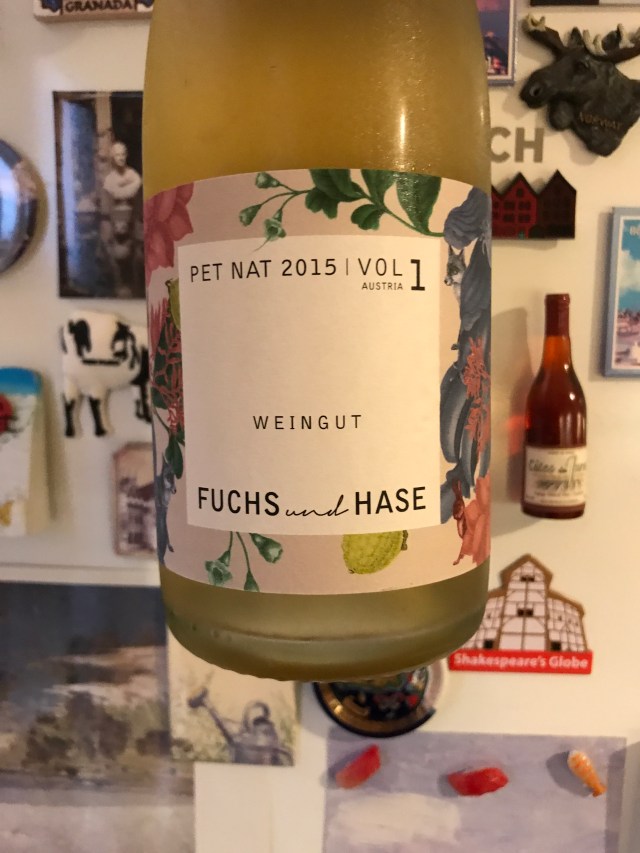
Pét-Nat Vol 1 2015, Fuchs und Hase (Kamptal, Austria) – This is a collaborative effort between Martin and Anna Arndorfer (whose delicious Vorgeschmack blend didn’t quite make this case) and their friends and fellow Kamptal producers, Alwin and Stefanie Jurtschitsch. It’s a blend of Müller-Thurgau, Grüner Veltliner and Gelber Muskateller. It’s fermented on its skins and bottled whilst still fermenting. It’s certainly a simple wine, but that doesn’t mean it lacks a lovely bead and a good frothy mousse. Nor does it detract from a linear purity with mineral acidity and a little chalkiness on the palate. Glug it!
8F025786-9BEE-41B9-A57D-A4430972AC28


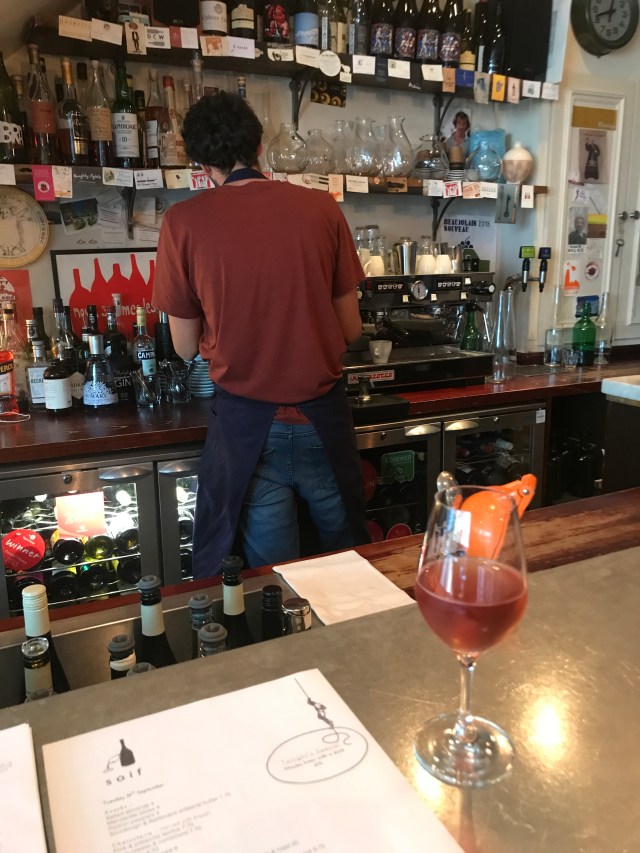
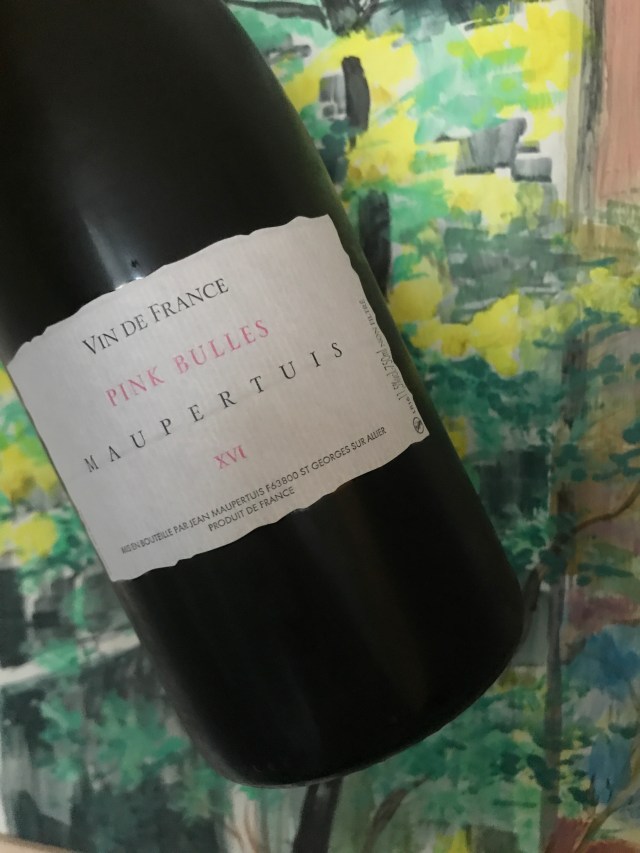
Pink Bulles XVI, Jean Maupertuis, St-Georges-sur-Allier – Another pét-nat, this time French. It’s an unfiltered pink made from Gamay. The nose is red fruits, and it starts out frothy at first. It’s another wine with a rapier-like spine of acidity, refreshing of course, but it’s the bags of fruit that balances it. Almost fruit juice (though it does have 11.5% abv). It gains in texture as you drink it, and that’s even before the yeast sediment arrives in the glass. Both this and the above wine came from Solent Cellar, although the Austrian is relatively widely available, and Noble Fine Liquor should still have some of this pink bubbles left. With the weather we’ve been having, I’d grab some, but to be honest it will taste just as good in the middle of winter.
979F4858-3701-4AF1-977B-3056F830044B


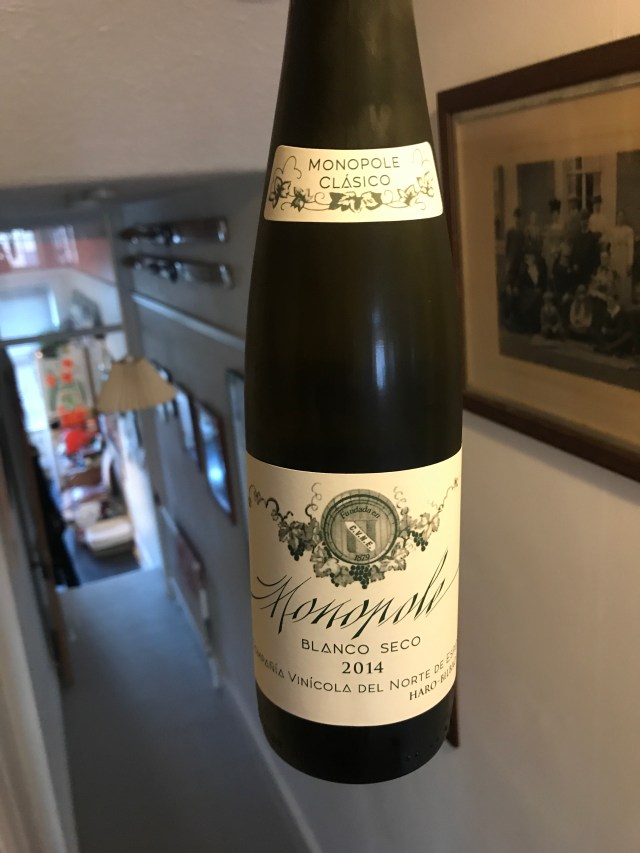
Monopole Clásico Blanco Seco 2014, CVNE, Rioja – So, CVNE Monopole, has he gone mad? This certainly looks like the cheap white Rioja in the tall bottle, but the very observant would notice a small neck label proudly proclaiming “clásico”. This is a return to the methods used to make white Rioja at the company forty years ago. Blending Viura (90%) and Palomino, it is aged in old oak, and then the trick (for which special permission had to be obtained), there is an addition of a small amount of Manzanilla (sourced from Hidalgo) which adds bite, body and structure.

Whereas modern Monopole is pretty light and fruity, this is dry and saline (albeit with orchard fruits). More body and more complexity round this out, a wine with a genuine heritage. Production is quite small, I think, and this goes with a RRP of around £25. I managed to find some for £21, and so might you if you are canny. But even at £25 it would be money well spent.
624A68E4-54BC-4CC2-9EA1-7B0DAC1DDD9F


Cortezado 2015, Fedellos do Couto, Ribeira Sacra – This wine, imported by Indigo, is described by one retailer as “one of the best values in Spain”, and whilst right now there would be an awful lot of challengers for that accolade, there is no doubt that for about £20 you get a cracking wine. It’s made, of course, from Mencia, coming from a single site on the steep slopes up to 500 metres above the Sill River in this beautiful part of Galicia.

It’s made in simple fashion with fermentation in steel and plastic, and ageing in large, old, wood. Its character comes from those slopes of sandy schist and the wet and windy Atlantic climate which makes the region just about marginal at times, but certainly one where vintage variation can be expected.

The fruit is dark and red, with cherries and plums, but equally you get spicy pepper and almost a whiff of hickory smoke. Although 13%, it never seems more than medium bodied, so the terroir comes through without hindrance. It makes for a versatile wine. You can use it instead of a Pinot Noir, or you could break it out for the barbie. Fedellos do Couto has been so ubiquitous this year that it would be easy to overlook it. Don’t.

37B06314-606D-4778-ADF1-FA3CA6BEAD51


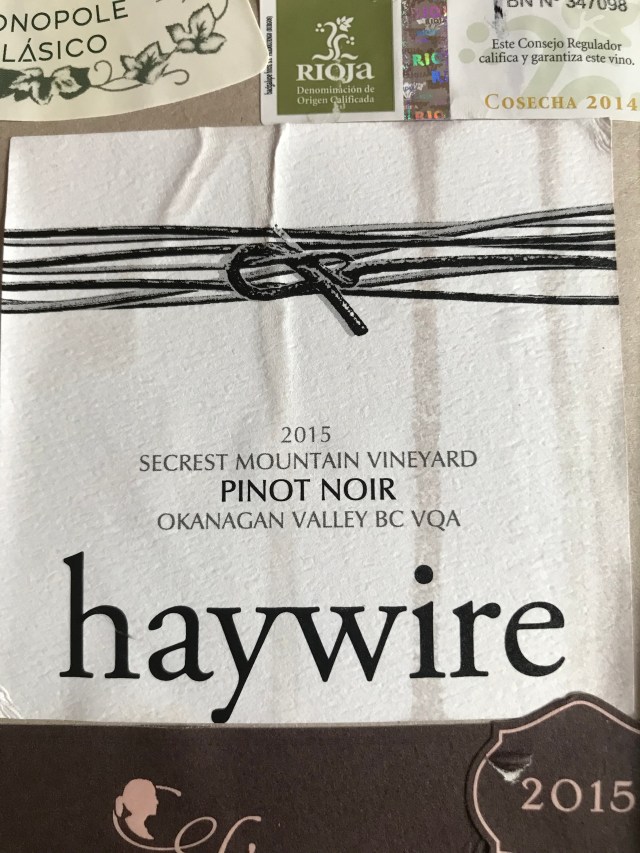
Haywire Secrest Mountain Vineyard Pinot Noir 2015, Okanagan Crush Pad, Okanagan Valley – I’ve written about the Crush Pad wines quite a bit recently. I also keep saying that I like their Gamay best out of the reds, but it’s all about memory, and when I drank this Canadian Pinot I had to think again.

The Secrest Vineyard is a 35 hectare site above Oliver. Both fermentation and ageing is in concrete, but the fruit is ripe and concentrated when it goes in. So in the glass you first get berry fruits and a touch of spice, and then some texture underpinning it. This is not Burgundy, far from it, but Matt Dumayne has made a cracking wine for drinking on its fruit. With 13.5% abv it’s no little weed either, but the fruit-packed mouthful says “enjoy” rather than “pontificate”. Again, Christine and Steve have shown the potential of the Valley in different ways to those trying to make classical Cabernets, etc. Red Squirrel bring over a whole raft of the Crushpad’s wines.
4A3FA1AB-4E46-4175-8DCC-0199B1011265


Chardonnay “Les Brûlées” 2015, Domaine de Saint-Pierre, Mathenay (Jura) – This estate has been owned for about five years by its former vineyard manager, Fabrice Dodane, who originally came on board in 1989. I have seen the vineyards, which mostly lie just outside Arbois, between St-Pierre-sous-Vadans and Vadans itself (where we know people), but until this year I’d not tried this estate’s wines. Wink Lorch, in Jura Wine (2014) describes this Chardonnay as “reminiscent of slightly old-fashioned village Burgundy”, yet whilst I see exactly what she means, I think the wine may have come on a bit since Wink was tasting for her book, and now that Fabrice has his feet more firmly under the table.

What makes this particular wine, I think, is the terroir. Around Arbois and beyond you will find a constant discussion about the affects of the different marly clays (known as Marnes in the region). But as you head from Arbois towards Dôle you find some interesting outcrops of limestone, which really suits Chardonnay (although Stéphane Tissot’s “Les Amants” comes from plots on both clay and limestone, I’m convinced the limestone fruit makes this wine).

Biodynamic fruit is aged in 500 litre old oak barrels, topped up constantly. The terroir really comes through in a wine of great purity. It actually surprised me to see 14% on the label as it tastes fresh and even relatively light for the alcohol level. I think this is down to the minerality.

Domaine de Saint-Pierre was, without doubt, well under the radar in the UK until 2017, but now I keep seeing odd bottles in all the best wine shops. Expect to pay £25 to £27. I actually bought some more of this, so fascinated was I. I also have some “Les Corvées”, a co-planted blend of Pinot Noir and Ploussard (sic), but Wink mentions in her book that Fabrice makes a Melon à Queue Rouge, and I’m going to look out for that on my upcoming trip.

E37F04B0-6780-4241-A4A4-DB0F5742FBA8


Le Zaune à Dédée, Anne & Jean-François Ganevat (Jura) – Rather provocatively subtitled “Grand Cul Classé”, this wine’s wonderful irreverence belies its unexpected class (the fact that it costs around £40 should give you a clue). The varietal blend here is a highly unusual one of two different wine regions entirely (Savoie and Jura), Gewurztraminer and Savagnin, bottled as Vin de France under the Ganevat negoce label. Both varieties are aged sous voile with no additives (not even SO2), and with skin contact.

On first sip I won’t deny that it tastes a little unusual, but in a few seconds you see what it’s all about. Darkish colour, highly perfumed (the Traminer comes across a little more than the Savagnin here), it’s fresh, alive and quite extraordinary. One of those wines that you find hard to describe in mere words, but it is quite astonishingly good. At just 12.5% it is versatile too.

CA3CD22B-D027-4A23-AC02-8BA85FA1150B


Spätburgunder 2010, Friedrich Becker, Pfalz (Germany) – When I’m in Alsace next week I’ll be driving up to Schweigen to see Fritz Becker, and I had this entry level Pinot knocking around and thought I’d try it. Fritz is acclaimed, in Germany at least, even if his fame has not travelled to the UK quite as much, as one of the country’s best red wine makers (I’d love to ask Anne Krebiehl why he didn’t make her “Top 20” in her Decanter Spotlight on Spätburgunder this month?). Although he’s based in the Pfalz border village of Schweigen, and although his wines are all under German wine law, most of his vines occupy some wonderful sites in Alsace, France. They are the old monastic vineyards on the border, once cultivated by the Abbey of Wissembourg.

This Spätburgunder is smooth and quite rich. It bears some of the hallmarks of the vintage and it is drinking well now, though with more in the tank. There’s lots of silky fruit, and richness, plus a little of Pinot Noir’s typical earth and leaf development. Delicious and, if I’m honest, even better than I’d hoped after a few years in a cool dark place. It has put me right in the mood.

B2FEEC9A-E241-4435-8059-2F9BC9B8A49A


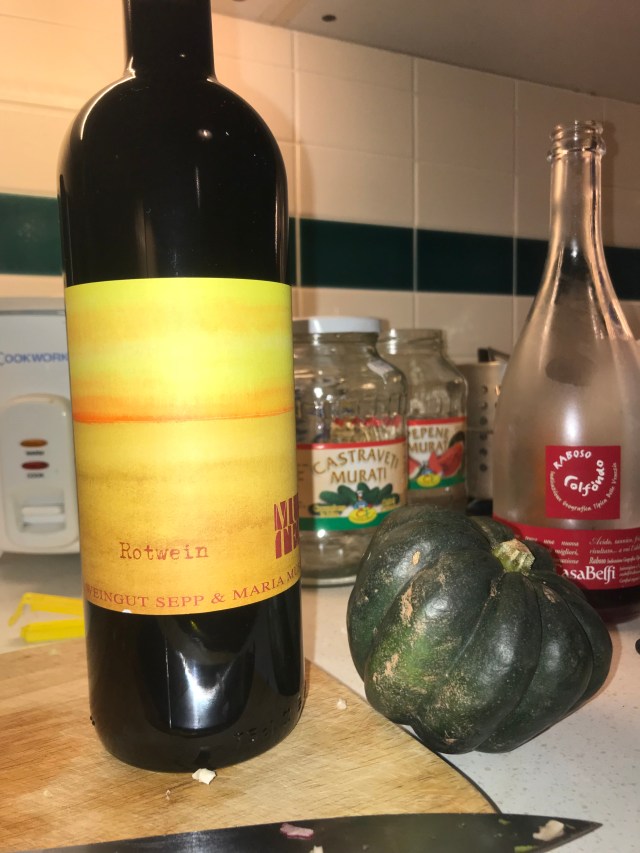
Rotwein 2011, Sepp & Maria Muster, Südsteiermark (Austria) – Sepp and his wife Maria make what I would describe as highly charged wines in Styria, near the Slovenian border. By “highly charged”, I suppose I mean with energy. I know, it sounds awfully new age but when you taste them, you can’t help but feel there is something vital there. Of course, they work biodynamically, and adhere to a non-intervention approach, attempting to let the terroir shine through. I suppose their ten hectare farm must have special terroir.

This entry level red is quite dark and dense to look at. The bouquet is full of concentrated scents of blueberry, bilberry and blackberry, yet the wine is lighter than you expect on the palate, quite sappy too. The blend is Blaufränkisch, Zweigelt and Blauer Wildbacher. This latter variety is a local speciality which is the signature of Schilcher Sekt. That rare  sparkler from Western Styria is highly acidic (I love it, but I know others find it hard going), and the Blauer Wildbacher adds a touch of acidic bite to this  still wine red cuvée. “Rotwein” has few pretensions to complexity (not least in its name), but there’s a nice touch of spice and pepper too. If you like really sappy wines from Northern Italy, you’ll love this.
E24E44BF-D422-46C6-A7FC-D5994E59097C


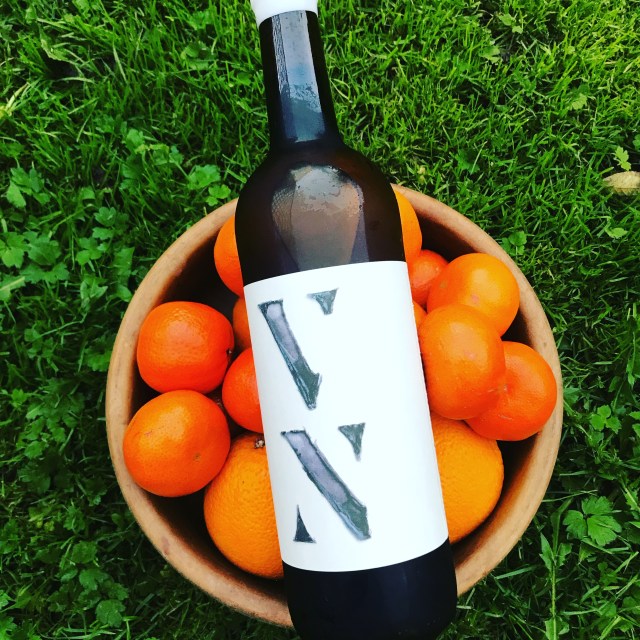
Vinel.lo VN Blanco 2016, Partida Creus, Penedès – Partida Creus was founded by two Italians, Massimo Marchiori and Antonella Gerona, who left careers as architects to make some of the region’s most singular wines, wines which could not have received more praise among natural wine enthusiasts since they burst on the scene. This is a blend of typical Catalonian varieties, Garnatxa (Grenache Blanc), Macabeu, Moscatel, Parellada, Xarel-lo and Vinyater (a rare autochthonous grape similar to, and often mistakenly equated with, Xarel-lo). Partida Creus also make an Ancestral Method fizz from the same varieties, but this is the still version.

It’s very fruity, the fruit coming to the fore as it warms up a little, but it’s oh so zippy as well, with fairly high acidity which bounces around the palate. It will pretty much cut through anything, but the fruit and freshness takes the edge off the acids. It’s as if this were the very wine for which the word “drinkable” was invented, or so it seemed on an unseasonably hot evening in October after a long and frustrating drive. Just 10.5% abv as well.
5C2100E0-605E-4047-A78E-7FB53230FC4A


Savagnin “Pourquoi Pas?” 2015, Domaine de la Pinte, Arbois – This biodynamic Savagnin is cultivated on the marnes bleues soils around Arbois. After picking, the grapes are macerated on skins for three weeks in concrete vats before pressing. No CO2 is added, neither is there filtration. The wine is therefore a beautiful autumnal orange colour and slightly cloudy for me (I had to lie it down in the fridge). The gentle bouquet has nuts and spices, citrus peel and generous fruit.

This is an experiment. I first tasted it with Laura Seibel at the domaine’s Arbois shop last year and she told me how it was her idea, after having helped make wine in Georgia. Only around 100 cases were made but this is a real success in every way possible. I love it. It’s a shame that there will be no 2016 when I’m in Arbois soon, as I would be adding several bottles to my order, but I understand there is a 2017 in the making with longer skin contact.

Domaine de la Pinte is the oldest biodynamic estate in Jura. In the past few years I think they have moved to another level, and this experiment exemplifies that. Kudos to Laura.


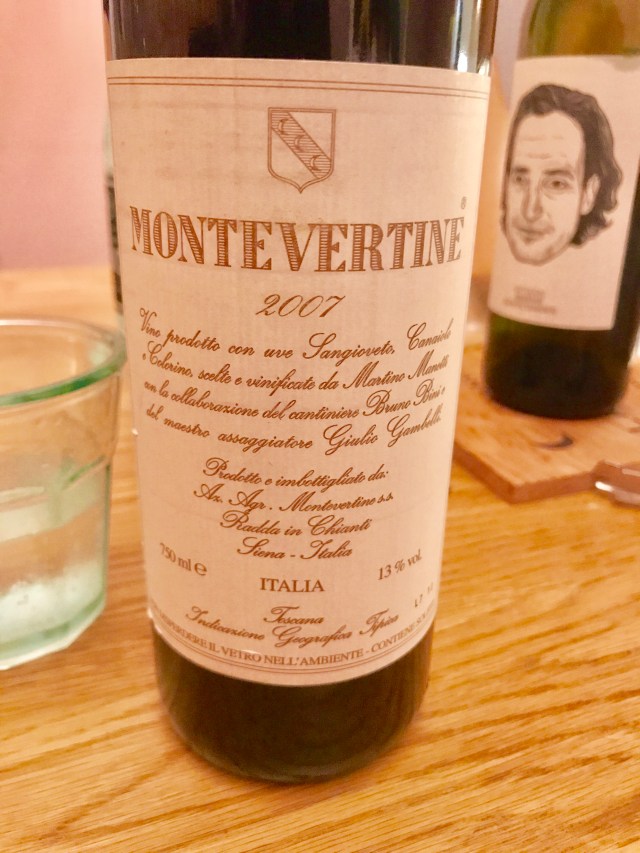
I usually try to keep it to twelve “recent” wines. But we are compromising this time, with a very quick mention of three more wines. The first couple are the pair I took to dinner with friends a few weeks ago. Montevertine, Rosso Toscana 2007 was the wine of the night in good vinous company. Classic Tuscan all the way through,  Sangiovese with Canaiolo and Colorino playing a minor role. Dark cherries with hints of tobacco and violets, relatively rich and smooth, drinking extremely well, yet I know this will get better and go on for many years.

Gut Oggau Emmeram Weiss 2015 is unusual among this producer’s wines in that it is a 100% varietal, a Gewurztraminer. It’s the Gewurztraminer to open for people who say they don’t like Gewurztraminer. Off limestone soils, it has a lemony note and fresh acidity, but this is balanced by an inconspicuous 13.5% alcohol. No chubbiness, just refreshing wine with a heavenly scent from one of my favourite producers anywhere.
24499C16-EAB7-476A-BDED-FE3C7F9F8F0B


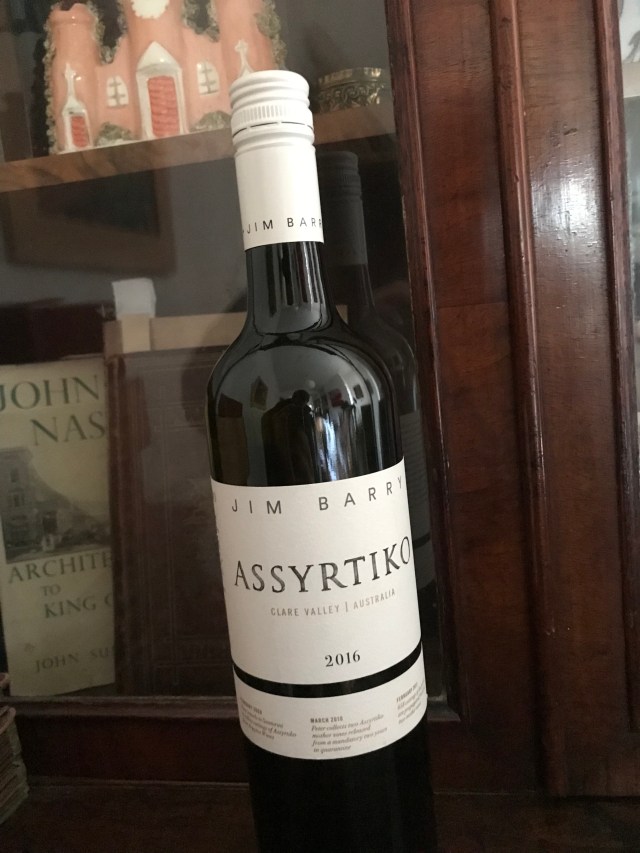
The last wine here is a bit of an oddity. Some of you may have seen it around. After a holiday trip to Santorini by Peter Barry in 2006, he was determined to bring Assyrtiko to Australia. It has taken ten years of quarantine, grafting and experimenting to produce the first commercial vintage of Jim Barry Clare Valley Assyrtiko 2016. It’s not exactly like a Santorini version. It lacks that true windswept, volcanic, minerality and a little of the acidity that marks Santorini Assyrtiko in youth and sets it up for ageing. But there’s more fruit. It’s a nice counterpoint to Clare Riesling. Only 500 cases were released of the 2016, so we have been lucky to see obtainable quantities in the UK (there are still a few bottles around).
0F194C9C-211D-45E6-9BBE-D2AFD0AC329A


Posted in Artisan Wines, biodynamic wine, Natural Wine, Wine | Tagged , , , , , , , , , , , , , , , , , , , , , , , , , , , , , , | Leave a comment

‘Tis Fine, ‘Tis Noble and ‘Tis Sweet to See

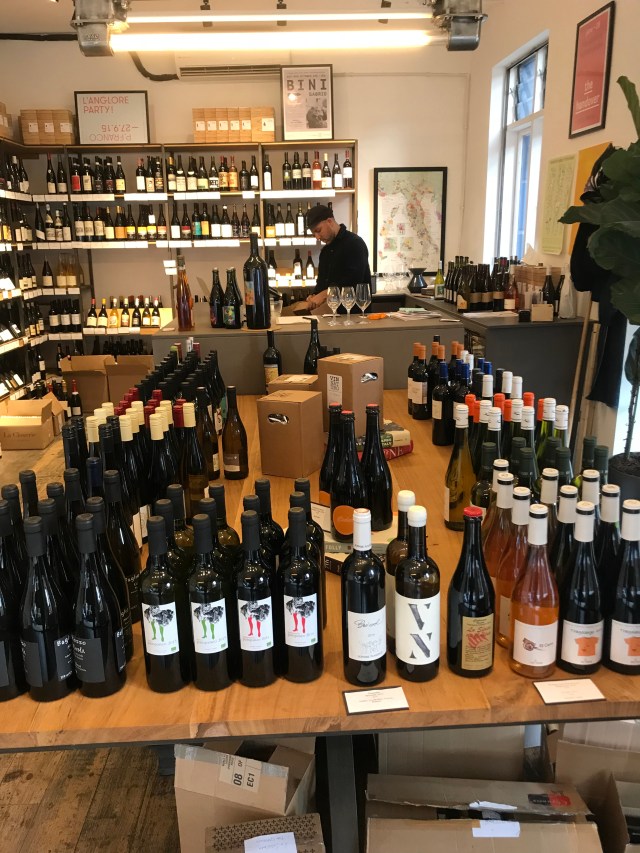
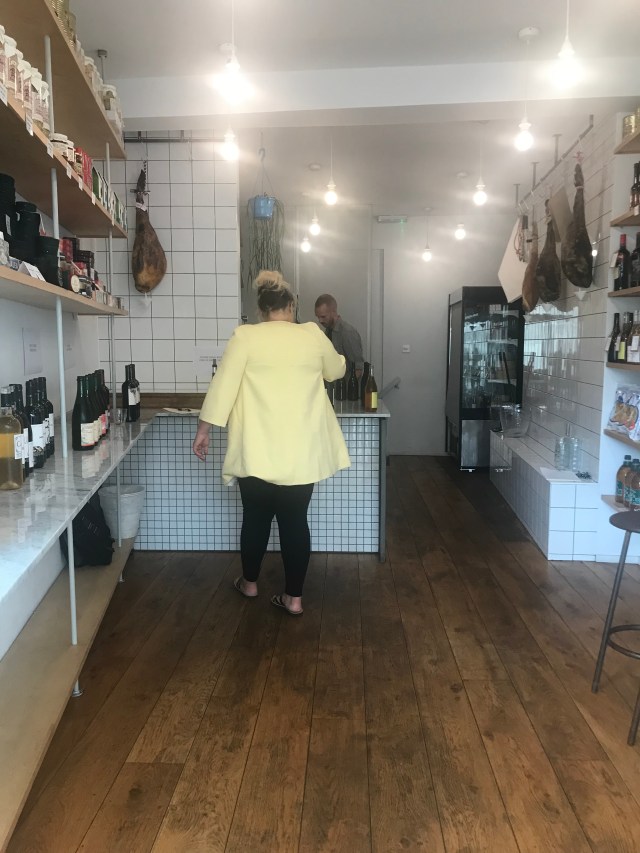
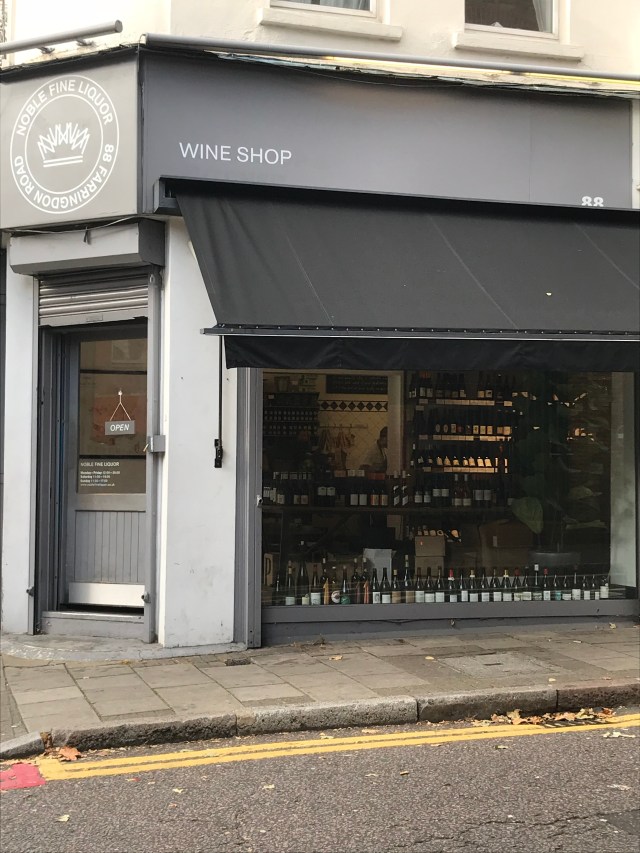
There are two London wine stores right now in the Noble Fine Liquor stable (not quite yet a chain, perhaps), and another that doubles as a bar and kitchen, and they have quickly created an enviable reputation for themselves, based on their focus on what they agree is a loose term, natural and authentic wines.

Having taken the opportunity to pop in to the store on Farringdon Road, near Clerkenwell, a couple of weeks ago after the Out of the Box Tasting, I can see what the fuss is about. Their web site claims they started out “because the local bottle shop we wanted did not exist”. That would be a tad corny, were there not some substance behind the comment.

There are, of course, places in London which do major in similar wines, not least Winemakers Club which is just down the road, but another shop of this quality, reminiscent of perhaps Les Papilles or Le Verre Volé in Paris, is very welcome, even on London’s relatively crowded wine scene.

1D3704F6-AC6D-45BB-9026-1F96120863F9

The Farringdon/Clerkenwell store takes up the corner of the site occupied by Quality Chop House at 88-94 Farringdon Road. In fact the wine store is open to the QCH deli via an archway, so the two are physically connected, and the friendship stretches to a nice plug for NFL on the QCH web site.

What can you expect in store? Well, first of all Noble Fine Liquor does, justifiably, claim to have the best Jura range in the UK. There’s a big selection, from new names like Domaine Saint-Pierre to rarities such as Domaine L’Octavin (I spotted a few bottles of ULM, or “Ultra Long Maceration”, which is pretty hard to source here). You’ll find a few Ganevats, and the amazing Domaine de la Tournelle, alongside relative newcomers to London like Marnes Blanche, Les Dolomies and La Touraize, among many.

The ULM comes via the excellent ultra-natural wine importer, Tutto Wines, and it looks like a good few more wines on the shelves might come from the same source. Like Gergovie  Wines in Maltby Street, Tutto specialises in zero sulphur bottles.

Another hot area on the shelves has to be Austria. Newcomer wines (in Dalston) and Dynamic Vines in Bermondsey have done so much to bring Austria to our attention these past few years, but it is nice to see the country has another champion in London. Arndorfer, Tschida, Muster, Werlitsch, Preisinger, Gut Oggau and  Andreas Tscheppe give  just a flavour of what’s on offer here.

Other stars, some rarely seen on London shelves, include Mythopia (the Swiss estate between Sion and Brig in the Valais), Ar Pe Pe (Valtellina), Agrapart, Bérêche and Cédric Bouchard (Champagne), Zeireissen, Peter Lauer, Maximin Grünhaus, JJ Prum and Keller (Germany), De Moor, Alexandre Bain, Bruno Schueller, Pierre Frick, Vignes du Maynes, and the ubiquitous Foillard (France), but this list does not do justice to what they have sourced.

Also take a look at some under the radar producers such as Gilles Berlioz (Savoie), Franck Peillot (Bugey), No Control (Auvergne) and Eric Bordelet’s delicious “sidres”. The Partida Creus Vinel.lo VN Blanco I drank last night came from here too, but the Partida Creus wines don’t hang about these days. All in all, the range is pretty impressive, and shows a deep knowledge of the natural wine scene.

394363F9-CC60-4282-BF93-B88C12196176

I got an incredibly warm and friendly welcome at Noble Fine Liquor Clerkenwell, and as far as I can tell the only thing it has against it is that it’s not the easiest place for most of us to get to. But it is worth the effort. It’s about half way between Chancery Lane and Angel Tube Stations (probably about fifteen minutes walk from each), and a little closer to Farringdon (Tube and Overground). But once there you have the choice of lunch or dinner at Quality Chop House (and I believe QCH are still offering a “no corkage” deal on Monday nights), or you can head down Farringdon Road to the aforementioned Winemakers Club (under the arches of Holborn Viaduct). They offer a selection of cold plates (charcuterie, cheeses etc). Check out their “drink in at shop prices” occasional offers.
The other Noble Fine Liquor store is on Broadway Market, London E8 (just north of the Regent’s Canal and south of London Fields), and they are also behind the shop, bar and kitchen (as it is styled), P Franco, on Lower Clapton Road, E5, which has a reputation of being one of the five or six best “natural wine” diners in the capital.

Posted in Artisan Wines, Austrian Wine, biodynamic wine, Jura, Natural Wine, Wine, Wine Agencies, Wine Merchants, Wine Shops | Tagged , , , , , , | Leave a comment

Ribera Del Duero

This is the Tasting I alluded to in my last article. Ribera Del Duero may be one of Spain’s top winemaking regions, but the wines do have a reputation for tannin, and a lack of approachability when young. Not too long ago, when I mentioned to a wine trade friend that I was coming to this Tasting, he plied me with a story about a trip he went on, organised by the Consejo a few years ago, which involved, he said, lining up at nine in the morning to taste wines so tannic that after five or six out of a hundred his palate was shot to bits.

Although these wines don’t fit into my normal drinking pattern, it’s more than educational to attend Tastings like this. Let’s not forget that there was going to be a focus on organic/biodynamic wines, and on less oaked wines. Could this region dispel the myth that with one eye on Bordeaux and the other on Napa, they have no eyes left for Spain?

For me, there were faults aplenty. Not oxidisation, brett, volatility and the like, but lack of fruit and consequent poor tannin management. It was a bit like a high jump competition, where the bar is set by a pretty consistent level of tannin and you are trying to find wines with enough fruit to jump the bar. I tasted a lot which just fell back, or maybe the pole vault is a better metaphor as the oak in my mouth was like the bar snapping on the contestant. One winemaker there told me he thought there was just too much fruit on the vine which was not ripe enough for the oak regime it faced in the cellars.

But, getting out of the way three paragraphs of apparent negativity, I can say that there were wines which cleared the bar, and even one producer who managed to achieve it with all of their four wines on show. After swilling and spitting through maybe a dozen wines without hope of finding one to my taste, one invariably came along, and so what joy it brought. I know most of these wines were young, but I do have experience tasting tannic youths, and good young Bordeaux tastes very different to some of these over ambitious wines. This all makes the successful wines stand out even more. It is interesting to see who the importers of these wines are, because their buyers must have palates far more in tune with mine than some others.

Why do my views matter more than those of the largely older trade professionals at this Glazier’s Hall Tasting? Because my question to the Consejo and the Ribera Del Duero producers is “who is going to buy these wines”? Of course the likes of Vega Sicilia will have collectors after them, but the run of the mill wines, which need a decade to become approachable? Younger drinkers are looking elsewhere, to lighter wines, natural wines, vins de soif and glou-glou. I would suggest that commercial success is more likely to come from emulating the sort of wines I’ve picked out here. They don’t lack tannin and structure, but they offer more than just that.

Ribera Del Duero is in northern central Spain, north of Madrid and roughly between the towns of Peñafiel in the west and San Esteban de Gormaz in the east, following the valley of the River Duero as it heads towards Portugal (where, of course, it becomes the Douro). Most vines are at between 750 and 850 metres altitude on complex soils (clay, gravel, sandy silt), and the main grape variety is Tempranillo, known locally as Tinto Fino (or as one attendee rather disparagingly said, “Tinta del País by the peasants”). But there are other varieties allowed, with a fair bit of Cabernet Sauvignon and Merlot, among others, in the blend.

The very top producers, wishing to emulate the great Vega Sicilia, sought to do so by very reduced yields from the region’s old bush vines, yielding intense wines of relatively high alcohol levels, which then go into small oak, often new, for an extended period. But the best growers are beginning to understand that long oak ageing may not produce wines for drinking in the medium term, and a refreshing return to older oak has been accompanied by another look at viticultural practices.

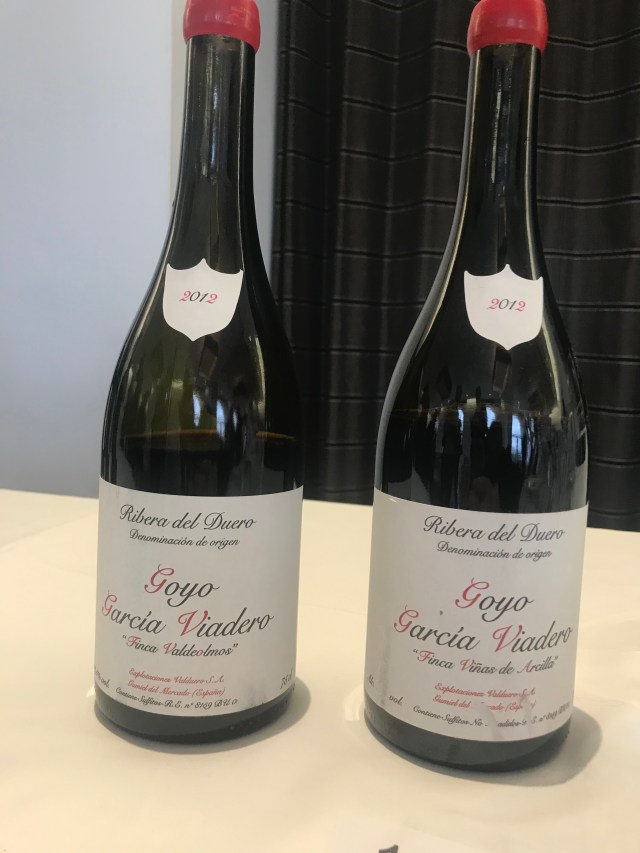
If so many wines seemed to disappoint, I may as well begin with the wine (actually two wines) which I would champion as my wine(s) of the day. In fact this pair were nothing short of brilliant, and I commend Raeburn Fine Wines (who import a number of good Ribera Del Dueros) for finding them.

The producer is Goyo Garcia Viadero, both wines come from the 2012 vintage, and both are from different sites. Finca Valdeolmos (13.5% abv) is 90% Tempranillo with 10% Albillo, and sees 42 months in oak. Finca Viñas de Arcilla differs only in that it is 100% Tempranillo and has a tad more alcohol (14%). Admittedly these are wines with bottle age, but the long period in oak has not killed the fruit (from very old vines), which still has a lovely strawberry edge to it. Smoothness, certainly concentration, is present, but there’s elegance too. The family owns some of the old caves in the region traditionally used for winemaking, and their naturally cool temperature is perfect for the stability of these wines.

This is a tiny producer, based near the town of Roa in the central western part of the region. The wines are very much “natural”, though I doubt that this fact would come to mind when tasting them, nor the fact that they have no added sulphur. I’m not sure that the many tasters who were raving about these wines all registered that fact. Pierre Overnoy of Pupillin is supposed to have particularly inspired Goyo.

They were positioned before Peter Sisseck’s Pingus 2012, and I know many who headed directly toward Wine 123 were dissapointed by its no show. They needn’t have been if they nudged left, to Wines 121 and 122.

7FE1678D-7B80-4D5C-84BC-8AF180A0DBCD


I actually began tasting at the table representing Tim Atkins MW’s Top 45 Wines. These are intended to be Tim’s interpretation of the best from the region. Tim’s experience in tasting tannins is considerably greater than mine, and he should be commended for his efforts. Seven of his 45 grabbed me more than the others, as I said, sticking their head above the tannin parapet, clearing that bar of oak.

Bodegas Pagos de Morgar Morgar Vendimia Seleccionada 2013 was my favourite of the wines which saw less time in wood (12 months in a mix of French and American oak), but this 100% Tempranillo is made from vines over 60 years old. Surprisingly, it was one of the few wines seeking distribution which I rated. No current importer.

Pago De Los Capellanes Reserva 2014 (Tasting Sample) is from very old vines at Pedrosa de Duero on clay and limestone. The oak here is unusually 300 litre French oak barrels. Plenty of brightness and good rounded fruit. The oak here is a bit heavy at the moment, but having liked it, another taster confirmed my opinion, and we both would love to see how this sample appears when bottled, and after a bit of age. I felt it has a lot of potential. Importer – Enotria.

Bodegas Félix Callejo produced an unclassified wine called just Felix Callejo 2014. This saw 15 months in oak after malo in new French oak. It showed a nice nose and no lack of fruit. Its only fault, one widespread in Ribera Del Duero, was the big heavy bottle. Okay, you want to tell the world this is serious wine, and it is indeed good, but a ten ton bottle is indicative of old thinking. Imported by Anthony Byrne Fine Wines.

Bodegas Pingon Carramimbre Altamimbre 2014 managed 20 months in oak without drowning the fruit. This Reserva is made from the oldest vines and they seem able to manage the new oak regime, all down to that vibrant fruit. Distributed by Amathus Drinks.

Dominio de Es Viñas Viejas de Soria 2014 is mostly Tinto Fino with just 5% Albillo, its organic fruit fermented slowly with 50% stems left in, then seeing 20 months in two barrels from DRC. The vines here are pre-phylloxera, planted on clay and sand. There was genuine elegance in this wine, and I liked it, but I couldn’t help wondering whether the tannins drown that elegance a bit, at the moment. I’d cellar it and wait. Imported by H2Vin.

Bodegas Hermanos Pérez Pascuas Viña Pedrosa Reserva 2012 had a lovely nose, and the wine was not as impenetrably dark as some. Bright, lively and fresh, the tannins are silky, and not too obtrusive. Nothing harsh here. Distributed by Bancroft Wines.

Bodegas Vega Sicilia Valbuena 5-year 2012 gives its 100% Tempranillo thirty-six months in wood (a blend of new and old, French and American), then two years in bottle. This is ostensibly made from “young vines” (but on average 35 years old). It’s suave and sophisticated, of course, and worth its reputation. If these guys can manage their tannins, why can’t some others? You probably don’t need me to tell you this is good…if you can afford it. Speak to FMV.
 

The remainder of the Tasting, the “open pour” section, was organised in order of oak usage, with a few rosados at the beginning. A word should be said in favour of the pinks. All those I mention here were very nice, wines I’d be happy to drink. In fact I did wonder why there were so few. The first two were 100% Tempranillo from 2016 – from Cillar de Silos (importer FMV) and Bodegas Arzuaga Navarro (OW Loeb) see no oak. Dominio Del Águila Picaro del Águila Clarete 2015 is a blend of Tempranillo, Garnacha, Bobal and Albillo, with 12 months in oak (and an extra year in bottle over the other two). It shows more complexity for a rosado. Indigo Wines bring this in.

C912C76C-80CD-4BCF-BA1F-DA1852C26A8B


I mentioned a producer whose four wines entered were all worthy of a mention. The producer in question is Bodegas Fuentenarro. Cuatro Meses 2015 has a mere four months in oak and retails for between £10 to £15. Slightly lean in the Ribera Del Duero context, but this wine still has fruit, and that’s its purpose. A great restaurant wine. Fuentenarro Crianza 2014 is less gluggable, with 12 months in oak, but there’s more fruit here and a touch more concentration. Fuentenarro Reserva 2011 shows that even with two years in oak the fruit (from old vines) can shine through. We are beginning to see class in a wine that retails for less than £25. Finally, Fuentenarro Gran Reserva 2010 begins to show some maturity on the nose, with the development you expect from a Gran Reserva with a price tag of £35. Congratulations Les Caves de Pyrene for sourcing this producer.


In a nice overall selection from Indigo Wines I stumbled upon Quinta Milú Reserva 2016. Now don’t ask me how a Reserva (12 months in oak then 36 months in bottle if I am correct) can be a 2016? I tried to double-check all the vintages and did find at least one error in the catalogue. Anyway, this was a nice wine, but it needs a bit more time, I think.

Bodegas Tionio Austum ECO 2015 was one such wine where the catalogue gave the vintage incorrectly (as 2014). 100% Tempranillo, six months in oak, and biodynamic viticulture and winemaking, which I only just noticed, but may account for my note that this had more fruit than most of the wines tasted, and was vibrant and alive. So no cliché there, then. Oops, and this is imported by Red Squirrel who I can’t seem to stop praising at the moment. How embarrassing.


Dominio Basconcillos Ecologico 6 Meses 2016 is another nice, fruity, wine and the fruit here is smooth. This “cosecha” sees just six months in oak, and is 100% Tempranillo.  I was a little shocked to see that it has 15% alcohol, but the fruit and freshness balances the alcohol nicely, at least on one sip. But it pays to check before you down the bottle. Vintage Roots is the distributor.

The above wine benefits from not having too much tannin (6 months in wood) to manage, and the alcohol gives it some extra gloss. Bodegas El Lagar De Isilla Crianza 2012 probably has a different reason for its smoothness and lack of harsh tannins. It may have spent 14 months in oak, but this is a 2012, so there’s bottle age too. It hasn’t dried out and still tastes of fruit. The 94% Tempranillo is rounded out with 3% each of Cabernet Sauvignon and Merlot. Good length too. Distributed by Stone, Vine & Sun.

Dominio Del Águila made the last of the rosados I mentioned above. Their Pícaro del Águila 2015 blends Tempranillo, Garnacha, Bobal and Albillo, with 20 months in oak, and it certainly has structure and tannins. But there’s also plenty underneath that, and I thought it had much more potential to age (and, it has to be said, it has one of the day’s more adventurous and attractive labels). Distributed (again) by Indigo Wines. The same estate (and importer) showed a Reserva 2013, which saw “35” months in oak, made from organic old vines. It was a little bit more grown up, tannic but with a sweet fruited nose, and also with potential to age.


At the end of the day, despite all my caveats and criticisms at the beginning, there were plenty of very nice wines. Spain at the moment is so exciting, indeed it has a claim to be the most exciting wine producer in Europe right now. But Ribera Del Duero is one of the country’s “classic” wine regions, and perhaps it isn’t top of the list when we think of excitement and innovation.

All that said, we are beginning to see some real innovation over in Rioja, on many levels and from both a younger generation of wine growers and also from some of the more traditional names. The era of the winery is giving way now to the era of the vineyard, both in how the vines are managed, and how the winemaker wishes to express his or her terroir. In order to get ahead of the game, the producers of Ribera Del Duero could look to their neighbour and do the same.

In speaking to those with far greater knowledge of this region than me, I get the impression that this is what needs to happen. Those who are already thinking in this direction are perhaps the ones whose wines register with a modern palate. If some wines seem stuck in a “nineties” frame of reference, others seem to look forwards. Or backwards, perhaps. Just go out and taste those fantastic wines from Goyo Garcia Viadero!

This Ribera Del Duero Tasting took place at Glazier’s Hall in London on Tuesday 10 October 2017, and was organised by Westbury Communications.

92D4D415-302D-4F3C-B868-CCC4DF4B5BB4

Posted in Spanish Wine, Wine, Wine Agencies, Wine Tastings | Tagged , , , , , , , , , , , , , , , , , | 2 Comments

Otros Vinos – The Full Monty

I went to a Tasting yesterday, which I hope to write up next week. What stood out about it was that so many wines were almost identical. Of course, that helped the best wines, the really good ones, to stand out above the rest. On Monday this week Otros Vinos held its Portfolio Tasting of small estate Spanish wines at Furanxo Delicatessen, in Dalston. What made this tasting very different to the other one is that here pretty much every wine was unique.

It makes it so much harder to choose your favourites when you are faced with such diversity, and you can’t just do what I did at that other tasting,  “sip-spit-sip-spit” my way through a batch of tannic reds until I found the good ones. You have to give every wine a fair chance. But when you do, in the case of Otros Vinos, what glories you get to taste. In fact such were the many gems on the counter that I can’t leave my conclusions until the end.

For the adventurous wine lover (and bear in mind that caveat – I know most of you are, but there might be a few lovers of more traditional wines reading this), this has to be one of the most exciting small importers in the country at the moment. Many wines are quite extreme in some respects, with plenty made with skin contact, or in amphora. Several are blended from lots of varieties, some grown at very high altitude, and most are natural wines which are not shy of being edgy (I mean in terms of flavour profile, not quality). But that’s where you find fulfillment, out on the edge of our wine galaxy. Most of the producers below work “naturally”, with no, or little, intervention.

Vinos Ambiz (Sierra de Gredos, Madrid/Ávila)

Have you ever been to Ávila. I recommend it, an intact medieval walled city with 80 towers and nine gates in the hills northwest of the Spanish capital. I spent less than a day there once, and I’d love to go back (and it’s not too far from one of my favourite places in Spain, Salamanca).

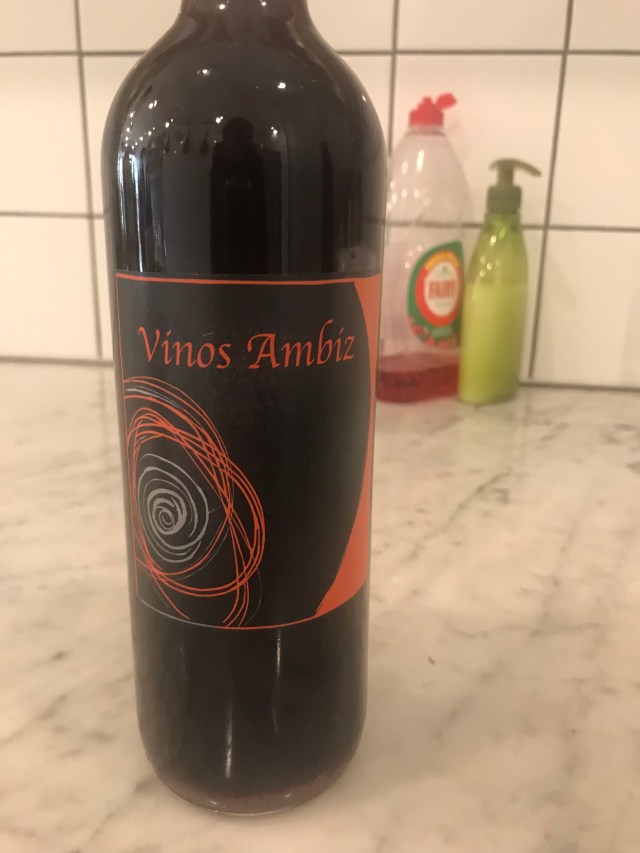
The wines from the Gredos are getting a reputation. What drew me to Otros Vinos initially was spotting that they imported three fantastic producers I’d only encountered in Spain. I met Fabio Bartolomei in person first at Raw Wine two years ago in London, and then again last year. Since my first encounter with his wines (and again, in Granada in summer 2016), I’ve become even more of a fan. Fabio makes wine in the old co-operative cellars at El Tiemblo in the Sierra de Gredos.

This all makes it really difficult to say which of his wines I like best, because I like them all. But on Monday I tried a wine I’d not had before, Tempranillo Carbonic Maceration 2016. Cloudy cherry in colour, a nose of bright cherry fruit, and then a palate that hits you like a slap in the face. The purest of cherry juice. Total glou-glou, a brilliant wine for when you need to down some refreshment after a long day’s work.

Two of Fabio’s orange wines vie for my affection. Alba 2016 is Albillo, and Doris 2016 is Doré. These are very tiny production wines (I’m not sure about Alba but just 700 bottles of Doris were made in 2016). The latter is savoury, a lovely wine with bitter mandarin orange on the finish. The former (Alba) has less texture and seemingly more fruit. It comes across as more refreshing, but perhaps Doris may be better with food. I call it a tie between them.

If you want to explore further, Fernando at Otros Vinos has some of Fabio’s Airén Carabaña (only 250 bottles made), Garnacha, conventionally fermented Tempranillo, a wild Sauvignon Blanc (which has a taste like peppers), and a very unusual wine called Malvar Tinaja 2016. This is another microvinification, in eight small, unglazed, amphora (as is the Sauvignon). It’s made from 100-year-old vines and sees four months on skins, and it takes savoury to another level. I would not call this wine “entry level” in that respect. I would call it quite inspired, though that caveat above applies especially for this wine.

27D23305-FE23-466A-B993-425B14ED799E

Ambíz Carbonic Tempranillo

Bodega Cauzón (Graena, Granada)

Cauzón lies east of Granada, just south of the A-92, on the north side of the Sierra Nevada. The winemaker here is the very talented Ramon Saavedra, who tends vines at roughly between 1,100 and 1,200 metres altitude. Days here are still hot in summer, but night time temperatures plummet, helping to lengthen the growing season as well as providing the benefits of a large diurnal variation in temperature. This is another of the producers I’d enjoyed before I knew about Otros Vinos. Their wines are not too hard to find in Granada.

Up until Monday I had drunk two wines on more occasions than the others – Cauzón Blanco, currently in the 2016 vintage, which starts off very refreshing before a bit of texture comes in on the back palate, on the finish, and Cabrónicus (2016), a delicious pale red. This bottle showed very slight reduction, but I was one of the early birds at the Tasting, and I can vouch for the deliciousness of this wine, which would benefit from a carafe, and serving ever so slightly cool.

My star of the day from Cauzón turned out to be Degraciano 2016. Think cranberry juice but nicer, and a bit more concentrated. A rush of pure fruit makes this a zippy pale red. There was six hours of skin contact, effectively, in that half of the juice was direct pressed and half saw 12 hours on skins. Again, definitely serve cool.

Any of Ramon’s other wines are worth trying, and Fernando has another five. For my own tastes, I’d choose Pinoir 2016 and Cauzón Tinto 2016, which I think is pure Tempranillo.


Clot de les Soleres (Piera, Barcelona)

This estate can be found just southwest of the Muntanya de Montserrat, in Catalunya. Carles Mora Ferrer is now one of my favourite Otros Vinos producers, and Fernando had eight of his wines on show.

One of the stars of the range is the Xarel-lo 2015 “pét-nat”, which is a very fruity sparkler sealed under crown cap. The fruit really seeps through the rapier-like acidity, making for a genuine glugger. If you want a still white, perhaps try the Chardonnay 2015. It’s a very different take on Chardonnay, more like a cross between Jura and Chablis, but in fact that doesn’t do it justice at all. There’s also varietal Xarel-lo and Macabeu from 2014.

My wine of the tasting from Soleres was the new to me Cent 2, 2016. It’s a very pale red (it looks a little like a Rosé des Riceys if you know what I mean), with a bouquet of juicy strawberries and other red fruits. The palate is quite concentrated, and it ends up with both a haunting quality, and a real “zing” as well. It’s another very refreshing wine, but I’d not call it merely simple, not at all. Fantastic!

If you try one other wine from Soleres, perhaps it should be the Cabernet Rosat 2013. This is perhaps more orange than pink, but it dials up the fruit even more. Carles is a bit of a Cabernet specialist, and there was a very nicely evolved Cabernet Sauvignon 2011, and a Cabernet Sauvignon Anfora 2014.


Los Comuns (Priorat, Tarragona)

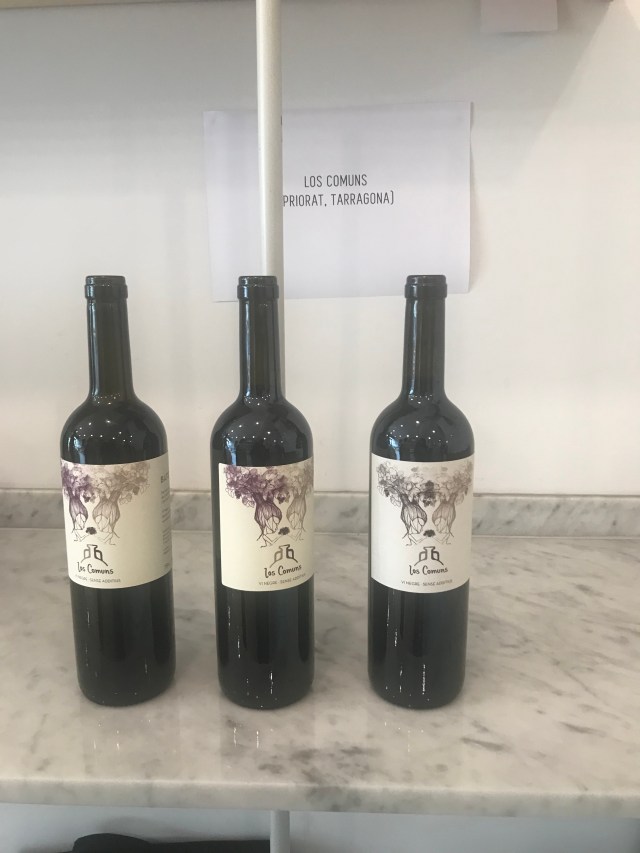
Los Comuns is a new addition to the Otros Vinos range. Jordi Escoda and Augustí Perelló were childhood friends who got together much later to make pure wines near El Molar, close to the border between Priorat and Montsant, but labelled without either DO. Most of their vineyards contain Cariñena, with some Garnacha and Cabernet Sauvignon, and production is currently between 3,000 and 4,000 bottles per vintage.

Four wines are imported: Estrem, Bateta, Torts and Carinyos (all 2015). Perhaps begin with Carynos. It has a meaty 13% alcohol, but it’s very fruity to match. The rather stunning Torts comes in at 15% abv, but it doesn’t taste that alcoholic, being in good balance. It’s darker than the previous wine, with plump rounded fruit complemented by a nicely bitter finish.

These wines have little in common with the blockbuster vinos we have come to associate with Priorat, ever since Scala Dei released its 15-16% monsters into the world in the 1990s.

836D24F9-2BDF-43C3-843F-53FB5956CEFE


Costador Terroirs (Conca de Barbera, Tarragona)

These are the wines more often called “Metamorphika”. They are almost without exception must try wines, not least for the unusual packaging, but also for the sheer “brilliance” of definition between them. Most of the wines see some time in Amphora (and “Brisat” is an old Catalan word meaning skin contact), and then go into old wood, some of it oak, some of it acacia.

Xarel-lo “1954” 2015 is pale and dry, and a nice take on the autochthonous Catalan variety. Metamorphika Sumoll Blanc Brisat 2015 is a rare example of an extremely rare grape variety. You may find the lovely red Sumoll grape variety vinified as a white wine sometimes, but this is the true Sumoll Blanc, a variety of which there are just a few hectares left in Spain.

There are several more “Metamorphika” wines in their characteristic pots. Neither Metamorphika Chenin Blanc 2015 nor Metamorphika Viognier 2016 taste as you’d expect them to, although the Chenin (from a tiny parcel) has lovely balance, and the Viognier is nicely perfumed, over a chalky texture which grounds it. My own favourite white (ish) wine is the Moscat Brisat 2016, which has changed from a greyish to a black pot for this new vintage. It has a great Muscat nose, is dry, with plenty of that “Brisat” texture, and just 11% alcohol.

Don’t discount Macabeu Brisat 2016, nor Metamorphika Pinot Noir which is a rare 100% amphora fermented and aged Pinot, very different. But my favourite red is Metamorphika  Sumoll Negro 2015. Please don’t buy all of this as I don’t have any myself. Sumoll is a minor Catalan grape variety, which also seems to crop up in the Canary Islands. It’s a palish, bright, cherry coloured red with a rich cherry nose and texture. You might be totally nonplussed as to why I like this variety, which I’ve tried from several producers, but I do think it’s one of those strange grape varieties which has real potential. It’s very versatile as well.

I finished with Metamorphika Carinyena Ámfora 2016 which is a bit of a beast (14.9% abv), but it has a degree of freshness which stops it being heavy.


Viña Enebro (Bullas, Murcia)

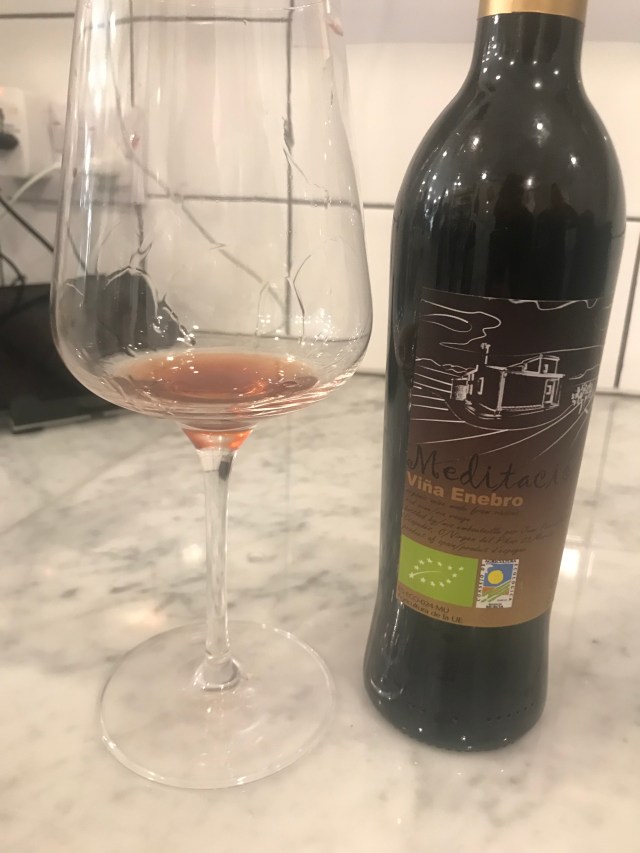
Just one wine tasted from this producer in Murcia, near the coast, directly southeast of Madrid. Vino Meditacion 2009 is a late harvest wine made from grapes which are hung in a loft to dry for nine weeks. It comes in at 18.5% alcohol, with so much sugar fermented out that it is almost dry. The nose is very concentrated toffee and coffee with a mild cigar note – very complex. Then a very interesting note of almond essence grows (highly attractive to a Bakewell Tart lover like me). Very long! A wine for sipping.

20E957CC-78A5-4FE9-89B4-5B9AD7F2DFE1


Marenas (Montilla)

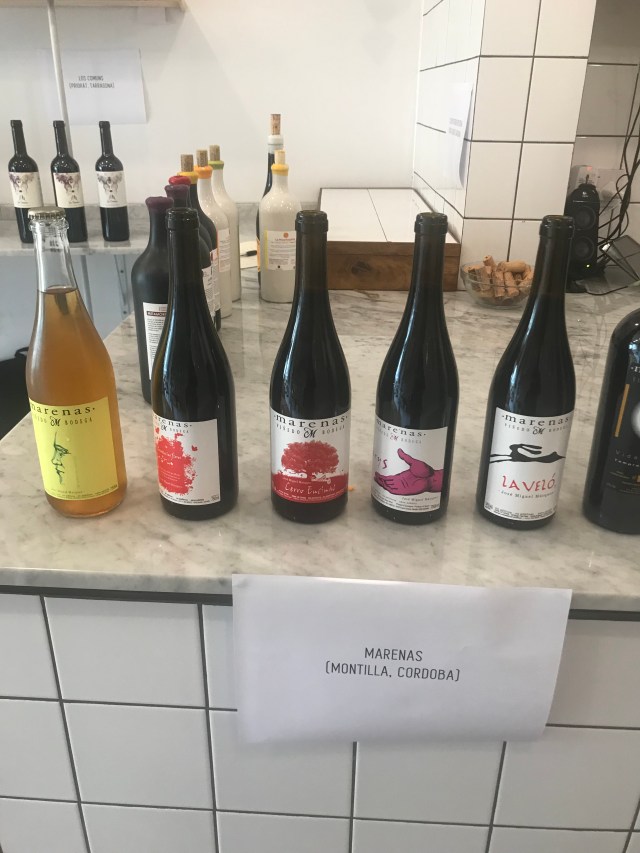
This Andalucian producer may be based in the region for Montilla, famous for Sherry-like wines from predominantly Pedro-Ximenez, but José Miguel Márquez Herrador likes to play with other varieties too. He has some Tempranillo and Monastrel, but Harys 2014 is something very different – try reading it backwards. It’s 100% Syrah fermented in stainless steel, and although it doesn’t taste exactly like the Syrah we know, it’s very nice.

Madiacapa 2015 is Pedro-Ximenez. The destemmed fruit was fermented with no temperature control. It reached 12% abv but still had a little residual sugar, which led to it being bottled under crown cap, in case it refermented. It didn’t become a pét-nat as it happened, but it’s an unusually zippy, dry-ish PX.

Vides Bravas 2006 (that’s not a vintage typo) shows age in its colour, has sweet fruit on the nose and 14% alcohol. It’s a blend of Syrah and Tempranillo from a single site called “Pago Cerro Encinas”, and just under 5,000 bottles were made. A nicely mature red from Southern Spain which somehow tastes more elegant than you’d expect.

I have to mention Asoleo 2015. It’s a dessert wine which I’ve enjoyed before, made from Moscatel, and available in half-bottle. Palish brown, it has a stunning Muscat nose and it tastes so smooth, like sweet liquid caramel. It has just 8% alcohol, so it’s not fortified. Its sweetness means it won’t be to everyone’s taste, but it’s very moreish. I could, on this dull October afternoon, sip some right now with a slice of Madeira Cake or a crème caramel.

5DC66A46-061F-4219-9624-1BD2D0924622


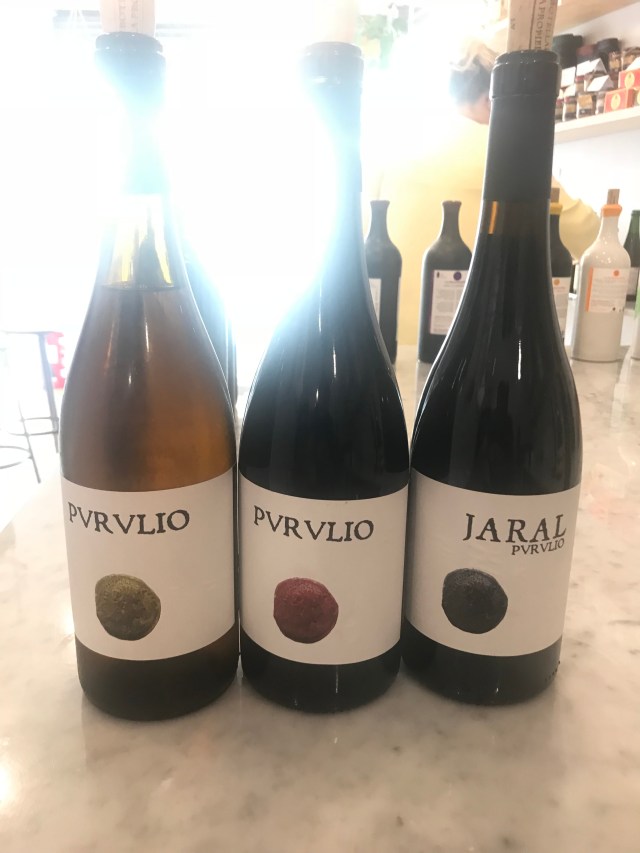
Purulio (Marchal, Granada)

Purulio is the third of the wines Otros Vinos imports which I already knew from my forays in Spain, and a very enjoyable night at a pre-Raw Wine appetizer a couple of years ago. Torcuato Huertas was a farmer, but also happened to be the nephew of Manuel Valenzuela, of the famous Andalucian producer, Barranco Oscuro. It was helping with the pruning there in the 1980s where he decided to return to his grandfather’s old vineyard.

He now farms just three hectares in the Valle de Alhama, on the north side of the Sierra Nevada. So the diurnal temperature variation and the acidity-building cool nights in this high altitude location has just the same effect as at Cauzón (see above).

All three wines on show are equally worth seeking out. Purulio Blanco 2016 is sour but fruity. It comes from mainly clay soils at 950 metres altitude. Ten varieties make up the blend (including non-natives like Chardonnay, Sauvignon Blanc and Viognier along with locals like Palomino, Macabeo and two different Muscats/Moscatels). Everything apart from the Moscatels sees a week on skins, then some juice goes into stainless steel and some into 225 litre barrique.

Purulio Tinto 2014 is, for me, the “drink now” red with a cherry colour, fruity but with some ripe tannins, texture and length. It’s a blend of Cabernets Franc and Sauvignon, Merlot, Petit Verdot, Pinot Noir, Garnacha and Tempranillo, which see a week’s maceration before pressing and turning into barrique for a year.

Jaral 2013 is a lovely brick red colour which reminded me slightly of Nebbiolo. It’s ageing well, with fruit to the fore but building complexity. It’s from vineyards higher up on the plateau, at around 1,200 metres. Snow is normal up here in winter, and I wonder whether this, just as much as those diurnal variations, gives this lovely red its special character. When I bought some earlier this year, Fernando lamented that it rarely gets given the time to mature. After tasting it again this week, I’m not sure I’ll be able to hold off with mine.

61B1E6DD-339B-48AB-AF56-B0C4A34FE1EE


Verdevique (Alpujarras, Granada)

Verdevique is another high altitude estate, this time in the unbelievably beautiful Alpujarras, to the south of the city of Granada. They possess 22 hectares, around half of which is mixed agriculture and the rest is vines. There are nice still wines, Tinto Cosecha 2015 and Jaen Blanco 2015, but for me the star here is the sparkler.

Brut Nature 2012  is, as it says on the tin, a zero-dosage sparkler, bottle fermented, and made from a very interesting local variety, Vigiriego. The vines here are at extremely high altitude, around 1,380 metres. There are several claims to Europe’s highest commercial vineyard (from both Spain and Switzerland), and this is one of them. The vines see very cool evenings and nights, but also good solar radiation in the thinner air. The soils are nutrient rich but mineral (there’s a fair bit of shallow slate here), and whilst rainfall is very low, the vines feast on the winter snow when the thaw comes in spring.

All of this impacts the finished wine. There’s a freshness, purity and bright acidity which, combined with the lack of dosage, makes for a very well defined, dry fizz. The bead is fine as well. There are just 3,000 bottles made of this “natural sparkling wine”, which, with 30 months on lees before disgorgement, has just a hint of complexity to go with the almost bracing freshness in the glass. It’s one of a handful of my favourite Spanish sparklers, for several reasons, not the least being that it’s ridiculously cheap.

If you are thinking of getting a mixed case from Otros Vinos, you’d be happy (assuming that required sense of adventure) if you grabbed a couple of Ambíz (say Alba or Doris, and the carbonic Tempranillo), Cauzón’s Blanco and Degraciano, Clot de les Soleres’ Xarel-lo pét-nat and Cent 2, …then Metamorphika Sumoll Negro and Moscat Brisat, Purulio Blanco and Jaral, Verdevique’s Brut Nature sparkler and whichever takes your fancy from Marenas (I’d probably go for the crown-capped PX). That’s a mixed case to stun your wine friends with, especially those for whom Spain means Ribera del Duero, and those meaty, oaky, Pago wines. Enjoy!

8C394137-2302-42C6-8940-9E2F0245D051


Posted in biodynamic wine, Natural Wine, Spanish Wine, Wine, Wine Agencies, Wine Merchants, Wine Tastings | Tagged , , , , , , , , , , , , , , , , , , , , , , , , , , , , | 2 Comments

Out of the Box 2017 (Part 2)

In this second part of my write-up of the Out the Box Tasting at The Crypt on the Green, Clerkenwell (Tuesday 3 October), I’m covering wines from Basket Press Wines, Nekter Wines and Swig. For a bit more of an introduction to the Tasting, and to read about the wines shown by The Knotted Vine, Modal Wines and Red Squirrel, follow the link to Part 1 here.

For anyone who didn’t read Part 1, the Tasting was characterised by a lot of new producer names, and this certainly carries through, perhaps even more so, to the wines shown by the three small importers featured here. As I said in Part 1, the room was not especially crowded, although such a large space can be misleading as to numbers. If you didn’t make it, or were waylaid at the higher profile events around town, do read on. These guys deserve a shout as well. Their wines should be better known.

BASKET PRESS WINES

Basket Press was set up by Jiri Majerik and Zainab Barrodawalla, Jiri being Czech. Both have extensive but very different wine trade experience, and they set out to introduce more Moravian wines to the UK. Moravia is a region in the south of the Czech Republic, close to the Austrian border and the Austrian Weinviertel Region (and also right up on the border with Slovakia). It’s where most Czech vineyards are situated, south of Brno, on mainly rolling limestone hills with a broadly benign climate.

Many readers of my blog will already know one Moravian producer, Milan Nestarec, whose wines are often available via Newcomer Wines in Dalston. Here I’m featuring five out of eight producers on show, only one of whose wines I’ve tried before. I think they give a good enough reason to explore Czech wines further.

Stapleton-Springer don’t sound Czech. Craig Stapleton is a former US Ambassador to the Czech Republic, and Jaroslav Springer came on board as winemaker. The speciality here is Pinot Noir, which makes up 75% of their fairly extensive 22 hectare plantings. Three wines were on show, all worth trying, but the one I’ll mention is the most unusual. Orange de Pinot Noir 2016 is a wine I first tried at one of our Oddities lunches and was immediately taken with. This 2016 is a pinky orange colour, and a bit of a fruit bomb – you almost taste wine gum. But underneath that is skin contact texture. I’d say, of the three, it certainly has the least “varietal character”, but it does have plenty of character of its own. A very nice wine.

Ota Ševcík makes natural wine in Southern Moravia and was a founding member of the Autentisté wine growing association. He’s also a Pinot specialist (the Čtvrtě vineyard here is renowned as one of the best Pinot Noir vineyards in Moravia), but only one of the  wines tasted included Pinot Noir.

Pinoty 2015 blends Chardonnay, Pinot Blanc and Pinot Gris into a juicy white that has 24 hours skin contact. This contact is in barrique, after which the juice goes into larger oak for eleven months, before resting for a further six months. There’s a touch of almost “car sweet” pineapple fruit which makes it refreshing. Blanc de Noir 2015 blends Pinot Noir and Pinot Gris into a wine which has a smoky nose and a mouthtingling zip.

Richard Stávek runs a mixed agriculture farm in Southern Moravia, and alongside his biodynamic wines, his family breed goats, grow fruit and keep bees. On show were a white and a red, Spigle-Bocky (2015) is the white and Zwan (2015) is the red. Zwan blends Zweigelt and Andre (a local crossing of Blaufränkisch and St Laurent, which gives soft tannins and good acidity).

I also got to try a wine not on the list, Bakon 2015, a skin contact red from the rarely seen Baco Noir variety. I’ve come across this hybrid variety mentioned in France before, the brandy grape Folle Blanche being the vinifera parent: it’s a vinifera x rupestris (ie American vine) cross. Some of you may have come across Baco Noir in Canada, where it seems to crop up in most of that country’s wine regions. Here, in Bakon, it ages in a variety of sizes of old wood of different types. Darkish-hued and peppery/spicy, it was very attractive.

Tomáš Čačík  makes a varietal Frankovka (the Moravian name for Blaufränkisch) from a tiny estate of just a few hectares. He seems to be very focused on quality, but his wines don’t reflect this in the price. His Frankovka 2015 is quite a light and peppery version, very attractive. He was also represented by a Cabernet and a Pinot Blanc, a name to watch if prices remain reasonable.

Jaroslav Osička is another member of the Autentisté group of Czech natural winemakers. All the wines shown were white, a Gewurztraminer, Pinot Gris and a Chardonnay. The latter was my favourite. It comes out of a tiny plot of around three quarters of a hectare near the town of Velké Bílowice. The vines average over 20 years in age and the gentle slopes of the vineyard are at around 250 metres. It was described to me as “Jura-style”, and I suppose it did have a slightly nutty, and ever so slightly oxidative, note which we Jura lovers never really know whether it is the winemaking or the terroir (Chardonnay often tastes ever so slightly like Savagnin around Arbois if you go with the “terroir” theory).

It sees three days on skins in old oak, 10-15% whole clusters, then three months on gross lees, followed by two whole years on fine lees. This makes for a fairly complex wine of, I would say, real class. It had genuine presence. It was done the honour of being served from a decanter, which I’m sure would be sound advice for anyone lucky enough to grab a bottle or two. It was a very difficult choice as I was quite thrilled to discover these Moravian wines, but I think this Chardonnay was my wine of the table from Basket Press.


NEKTER

Nekter is very new, only being set up last year by former management consultant Jonothan Davey (sic), with the aim of bringing over new producers from California, a task so far pretty much left to Roberson for the UK market, along with South Africa and Australia. Nekter have fifteen producers on their books, all making minimal intervention wines, and I will concentrate on four of them, to give you a flavour of the Portfolio.

Keep Wines is an interesting producer. To whet your appetite, it is run by Jack Roberts (Assistant Winemaker at Matthiasson) and Johanna Jensen (formerly with Scholium Project and Broc Cellars). Pedigree established, let’s move on to the five wines tasted.

Blanc Blend 2016 comes out of Napa’s Yolo County and comprises 85% Picpoul which, being slightly less ripe (in brix) than hoped, had 15% late harvested Grenache Blanc added. There’s a touch of the orchard fruit about it, lively, appley, with crunch but without excessive acidity. Just 11% abv.

El Rino 2016 is a varietal Albarino from the Sacramento Delta. It was bottled when just 80% through malo, with the fermentation finished in bottle. So you get a touch of CO2 and a lot of freshness, with an ever so slightly sour note on the finish, which serves to add something interesting to what is a fresh, summery, wine.

Rose 2016 is a pale salmon blend of 85% Syrah and 15% Mourvèdre. The nose was very muted, yet in the mouth it was very refreshing indeed, all fruit and zip.

Two varietal reds rounded off their wines. Counoise 2016 is made by carbonic maceration in stainless steel, with just 12% alcohol to its name. It is light and refreshing with that “country wine” quality, approachable but still rather exciting. Carignane 2016 is fuller in body with a bit more grip and a touch of spice. Take your pick.

The labels, in case you are wondering (photos below) are of what remains of the Norman era Beverstone Castle in Gloucestershire, where Jack Roberts’ father grew up.

Benevolent Neglect is the label of a couple of East Coast emigres who began making wine in 2013, seeking fruit from old vineyards in Carneros/Sonoma and Mendocino. Eaglepoint Ranch is at 1,800 metres above the Ukiah Valley in Mendocino County, whilst Las Madres is one of the most highly regarded Syrah vineyards in Sonoma.

BN Syrah 2015 is elegant, with violets on the nose and classic blueberry fruit. Grenache 2015 comes from the aforementioned high altitude vineyard at Eaglepoint Ranch. It has elegance but a juiciness as well. This is also another source for a varietal  Counoise (2015). They describe it as a fun wine for everyday drinking, but that doesn’t tell the whole story. A year ago they were far from happy with how this was turning out, but took the decision to give it another twelve months. It worked. Very bright, the nose is high-toned and all cherries and berries. There is a little tannin there, but there’s enough fruit to balance it. Another country wine, one for really simple dishes, but that is in no way putting it down, rather the opposite.

Illimis is Latin for clarity. Lucinda Heyns has worked at Jordan and Mulderbosch, as well as in California, but has now established her own label in South Africa, making wine with fruit sourced from Elgin and Darling. Elgin Chenin Blanc 2015 gets eight months in old oak. You get peach, pear and apricot plus a touch of salinity and a real whip of zingy acidity, which makes this very attractive. Darling Cinsault 2015 is made from fairly old (40 years +) vines, but by carbonic maceration. This gives off a multitude of red berries, but with a nice savoury finish. Light and fun, and, like the Chenin, very refreshing.

Captains of Trade has proved the hardest to research of all the wines tasted at Out the Box this week. I couldn’t even find any background info on the Nekter Wines web site. I was told that the wines are made at Oak Vale, a well known winery on Broke Road, Pokolbin, in the Hunter Valley, and that’s about as far as I got. But I found some lovely wines on taste from this Australian label.

There were three wines from Orange in New South Wales, all labelled From Sundays (2016). They are all suffixed with an explanation: “Juiced”, “Carbonic” and “Skins”, and it was the last of these which I liked the best. It’s made from 100% Pinot Gris (all three are), with a pinkish hue, more of a “ramato” style than an orange wine, exactly. There’s a little texture, but plenty of fruit too.

A red Pinot Noir, Milla 2016, comes from the Adelaide Hills. Then there were two more wines from NSW’s Hunter Valley. Lucky’s 2015 is 85% Syrah (it says, not “Shiraz”) with 15% Pinot Noir. It’s a blend which was quite popular in Australia in the 1980s, though not seen so much today (but I think it’s starting to make a comeback). Maurice O’Shea’s famous Hunter Valley Burgundy often blended the two together, and Pinot Noir does tend to take on a very different character in this warmer and more humid region. This version, from Captains of Trade, is relatively cheap and excellent value.

The Beast 2016 is an example of a variety, Verdelho, which also had a bit of a reputation at one time in these parts, in fact all over Australia’s wine regions. It fell out of favour, but this egg-fermented skin contact wine is exciting, and shows what could signal a comeback for the grape variety. It combines the tropical fruit of Aussie Verdelho with a touch of texture to provide a bit more interest. Lovely wine.

Finally, Paserine, who had three wines from South Africa on taste, two reds from Tulbagh (Union 2015, a blend of 50% Syrah with Carignane and a bit of Mourvèdre, and Marathon 2015, a Bordeaux blend of, unusually, 42% Cabernet Sauvignon, 51% Petit Verdot and a 7% dash of Carmenère), plus an Elgin Chardonnay 2015. 

My slight favourite was the white. The cool climate fruit is quite intense. It has various elements. Creaminess probably comes from the 16 months spent in barrel, with weekly lees stirring. Then you get purity of fruit, with even some ginger spice adding a savoury character. This probably comes from the cool climate, mediated by the sea breeze which rolls up the vineyard slopes. Elgin is a great terroir for cool climate Chardonnay and the minimal intervention the Paserene version sees makes this previously unknown to me producer well worth seeking out.


SWIG

I tasted a few wines from the Swig (or should it be SWIG, or even, as I’ve seen it spelt, SWiG?) stand at the Dirty Dozen Tasting at The Vinyl Factory in Soho a few weeks ago, but not many. As on that occasion, this was one of the busiest tables. I got to taste a few more wines but I had to give up on taking photos, and I didn’t manage as many as I’d have liked. I did manage to add seven more producers to those Swig wines I tasted at The Dirty Dozen (a mere three, but you can follow the link to that Tasting in Part 1). Swig do the rounds with some gusto – as they say in their introduction in the catalogue, they do indeed have “a few more trade shows under the belt than some of our fellows [sic] here”. As a result, they are one of the better known importers at this Tasting.

Swig were showing a really broad selection of producers from a wide spread of countries, and their portfolio shows the kind of wonderful mix put together by true enthusiasts, rather than people who just sit here in the UK waiting for the missing Saint-Joseph or Gavi to turn up as a sample. I don’t know the people involved, but you get the impression that they’ve all got dirt under their finger nails on occasion, and grape juice stains on their feet.

BK Wines are probably best known in the UK for the interestingly named One Ball Chardonnay, which I did taste at The Dirty Dozen. Three more BK offerings were poured on Tuesday: Skin n Bones Red 2016 (an Adelaide Hills Pinot Noir) and Waning Crescent 2016 (Syrah from the same source), plus my favourite, Skin n Bones White 2016. This is a varietal Savagnin out of Lenswood. It’s much lighter, and indeed fruitier, than many Jura examples, but it’s really tasty in that gluggable sense you always get with the BK label, and it comes in at just 11.8% abv too, as if to underline its purpose.

Domaine Gournier makes wines which, on this showing, are not going to set the senior critics on fire. Yet the rest of us are really going to get interested when we see a blend of Rolle (aka Vermentino), Riesling and Pinot Gris from the Cévennes. The Gournier estate is quite large, and its various wines are available from a number of different importers, but their Mas Bres Stella Blanc 2015, which is the name of the above blend, is fruity and fresh, and would make a good talking point over lunch. It has the advantage of costing a little over £8 to the trade, making it inexpensive for a wine which might prompt some discussion among wine lovers.

There has been quite a bit of a Sylvaner revival in Germany recently. Of course, there was always a focus on the grape in Franken, both dry and sweet, but Weingut Stefan Winter is based in Rheinhessen. Dettelsheim-Hessloch is not one of Germany’s best known wine villages, but Stefan Winter has been putting it on the map. His achievements are recognised through the estate’s membership of the prestigious VDP organisation. Sylvaner 2016 is herby more than fruity, and mouth cleansing without the overt acidity of some examples. Although at the lower end of the Winter portfolio, it’s a very good example of this (in my opinion, though I know I’m in a minority) under rated variety.

Fratelli Collavo is a Prosecco producer in the Valdobbiadene sub-region, producing biodynamic wines. Two wines were tasted. Prosecco Collfondo is bottled on the lees without disgorging. It means the sediment remains in bottle. The consumer has a choice, either to stand it up and pour carefully for a clear wine, or to be adventurous by just pouring it into a carafe and giving it a bit of a shake (or a rest) for oxygen to work its stuff. Sealed under crown cap (like a pét-nat), this blend of Glera, Bianchetta Treviso and Perera is fun. Just a very different kind of fun to a £5 supermarket Prosecco.

Prosecco Brut 6.0 “Rive di Refrontolo” is 100% Glera and bottled under cork, like Champagne. It’s perhaps a more serious wine, from one of the new single site DOCG designations. Apple and peach flavours and a nice, elegant, bead. Both wines are good, both very different. Again, take your pick.

Vinedos Ruiz Jimenez is a Rioja producer near Aldeanueva de Ebro, southeast of Calahorra. Swig had both a red and a white on their table. The red is pure Garnacha, but the white is, unusually, Tempranillo Blanco. It has rounded, plumpish, fruit and, oddly, given the unusual grape variety, tastes just like a really good white Rioja should. I know people who have fallen in love with its pretty label, and then with the wine in the bottle.

I finished Swig with two South African producers. AA Badenhorst Family Wines are clearly not one of the new unknowns to be discovered at this Tasting. Their wines are rightly renowned. Swig were showing the two Secateurs wines from Swartland (the white Chenin and the red blend, from the 2017 and 2015 vintages respectively), and the Papegaai 2016 red, which is a Cinsault. I have a particular soft spot for the final wine from Badenhorst, Brak-Kuil Barbarossa, which is another wine I discovered via our Oddities lunches.

Brak-Kuil Barbarossa 2015 is made from the Barbarossa grape variety. What, you ask? It’s a variety (or possibly “varieties”) once found in France and Italy, perhaps very old and some say named after the Holy Roman Emperor of the same name (or perhaps it just refers to its beard-staining possibilities if one tends to dribble?). How it turned up in South Africa, and how it became “legal”, I don’t know, but Adi Badenhorst has fashioned something quite unusual out of it.

It’s tannic and meaty at its core, so you think “country wine”. But it’s surprisingly pale considering the initial palate, and the fruit is more red than black. It suggests that something will emerge a few years down the line that is not yet present, only hinted at. I may be wrong – I think 2014 was the first vintage so we don’t know what it has to offer. But there’s a very strange vibrancy and “life” in this wine. I can’t quite put my finger on it.

Pieter H Walser founded Blank Bottle Winery after (you probably know the story by now) a woman came to him asking for a red wine, “anything but Shiraz, I don’t drink Shiraz”. He poured her a glass, naturally she loved it and bought three cases. It was naturally a Shiraz he’d served her. The philosophy behind Blank Bottle (and the name) is take no notice of what’s on the label, only what’s in the bottle. Would that we all did that!

Orbitofrontal Cortex 2016 is a blend of around half-a-dozen white varieties from the Western Cape. It’s a famous wine now, at least in wine geek circles. For me, it’s one of those wines which illustrate the perfection of a blend where each part comes together perfectly, revealing different facets within a coherent whole.

Kortpad Kaaptoe 2016 is more linear, more savoury too. Maybe not quite as appealing to me as the previous wine, but then that would be a tough ask. It’s still very good, and made from 100% Fernao Pires (aka Maria Gomez in Bairrada, where it’s an important variety).

Both of the above whites are sourced from Swartland. The red comes from Breedekloof, in the Breede River Valley between Wellington and Worcester. My Koffer 2016 is Cinsault with smokey fruit, a pale colour and bags of juice in the mouth. These wines have a worldwide following now, and deserve much more recognition in the UK, where certain names tend to dominate from South Africa.


Posted in biodynamic wine, Natural Wine, Wine, Wine Agencies, Wine Merchants, Wine Tastings | Tagged , , , , , , , , , , , , , , , , , , , , , , , , , , , , | 3 Comments

Out of the Box 2017 (Part 1)

Out the Box groups together seven small, independent, wine importers to give them a group platform in the ever competitive and crowded British market. This market may be both of these things, but it has also grown enormously over the past decade. With the uncertainties over the future, especially with the massive devaluation of our currency over the past year, and rising inflation, small importers need a platform to promote their wares.

The 2017 Tasting took place in the spacious Crypt on the Green in Clerkenwell, one of London’s hidden “villages”, between Farringdon and Islington. During the three-and-a-half hours I was there I could not say that the room was crowded. It’s true that there was at least one very big Tasting across town which clashed – at this time of year there are so many Tastings, almost every day. Whereas in some previous cases you will have been able to read about a tasting like this one from numerous sources, I have a suspicion that write-ups of “Out of the Box” might be slightly more limited. I hope to give you a good flavour of the very exciting stuff on show.

If you persevere with my articles, you’ll find more than fifty wines selected for inclusion from those I tasted. And indeed, these form the majority of those I tasted. I may well have missed out some gems, but very few sips were unworthy of comment. As you read on, you’ll also notice that many of the names here may be unfamiliar, and some of the wines will seem downright unusual. Out the Box certainly pushed at a few boundaries.

In order to make this Tasting a little more digestible, I’ve split it into two parts. Part 1 (here) covers three importers: The Knotted Vine, Modal Wines, and Red Squirrel. Part 2 will follow with Basket Press Wines, Nekter and Swig. Maltby and Greek were also at the Tasting, but I did them justice at the recent “Dirty Dozen” tasting in Soho (see my article here), although I did spot that they had some of the elusive Sigalas oak aged Assyrtiko from Santorini, which was so annoyingly glugged dry at the Vinyl Factory event.

THE KNOTTED VINE

This is a new importer to me. It is based in London and is headed up by David Knott. His passion is for wines of purity, “clean wines that allow varietal grape characteristics to shine in the glass”. He appears to know what he’s doing.

Architects of Wine is the label of Dave Caporaletti. Knotted Vine import two wines, a Chardonnay (Adelaide Hills) and a Riesling (Clare Valley), both made with minimal intervention. Only 900 bottles were made of Skin Contact Riesling 2016. But this 12%er is so well defined, light on its feet yet concentrated too. Very “natural”.

Damon and Jonathan Koerner are a Clare Valley team, with most fruit coming from their own Gully View vineyard. The Clare Red 2016 is a nice blend, but I preferred La Corse Red 2016, Sangiovese, Malbec, Grenache and (hence the name) Sciaccarello. Very juicy, quite light and zippy for a red, not unlike some of the wines out of Corsica.

David Franz is actually the son of Peter Lehmann (not that his surname gives it away), and he tills the earth in that same Barossa Valley where his father made his name. These wines are quite exciting. They have great fruit without it being drowned in either alcohol or oak. Possibly my favourite of the four was Long Gully Semillon 2015. The vines are 130 years old, I’m told. Picked early for freshness (which shows in spades), the juice spends a year on lees for texture and complexity. But it’s so refreshing (all lime and greengage).

Plane Turning Right 2013 refers to Bordeaux’s Right Bank (Merlot with Cabernet Sauvignon and Petit Verdot), is fruit packed, and not like any Saint-Emilion jam I know. Grenache 2015 comes from Adelaide Hills this time. Quite pale with reddish fruit, plus bitter cherries on the finish. Despite 14% abv, this is actually pretty elegant. You’d never guess it packs a punch. Back to wider Barossa, Georgie’s Walk 2012 is pure Cabernet Sauvignon with a deep, dark fruited, bouquet and nice concentrated fruit.

I drink a lot from Austria, as you know, but I’ve never come across Barbara Öhlzelt from Kamptal. Not surprising because although she’s been making wine since 2014, Knotted Vine is her first importer outside of the German speaking world. Try her Kellerweingarten Grüner Veltliner 2016 which is mineral, but quite fruity too for this variety. A nice softness as well.

Armas de Guerra (Weapons of War) refers to the tools used to maintain a healthy vineyard when not using synthetic chemical treatments. Based in Bierzo, in Northwestern Spain, I tasted a red and a white. Godello 2016 is quite exotic, from 45 to 55-year-old vines grown between 450 and 600 metres, delicious. Bierzo Tinto 2016 is pure Mencia, not as immediately appealing as the white in some ways, yet a nice savoury, chewy, and bright red.

El Mozo is a small family enterprise in Rioja Alavesa, nine hectares of old vines in 18 small plots at Lanciego. Rioja Alavesa “El Cosmonauta y el Viaje En El Tiempo” 2016 boasts a fetching red “cosmonaut” label. Pale, with some tannin, which hides (at this stage) a wine which I think has a lot of potential to age into something very elegant. The other reds I tasted from El Mozo were good, but this blend of Tempranillo, Garnacha, Viura, Malvasia and Torrontes had something extra.

Vinos Mar 7 is based in the centre of Sanlucar, but I’ve never heard of them. They don’t appear in Peter Liem and Jesús Barquin’s Sherry book. But the three wines on show were very nice. My favourite was the Manzanilla Pasada which was salty and savoury, with a bit of extra body.


MODAL WINES

Modal Wines’ manifesto is to “source unique wines with the right mix of edge, character, balance and drinkability”. The Modal offering at this Tasting was smaller than most, but none of the wines I tasted here disappointed. The most interesting producer I found was Slobodne from Slovakia. I’d be doing a disservice not to mention all four of their wines on taste.

Oranžista 2015 is 100% Pinot Gris with 10% skin contact. Pale orange colour with a distinctive bitter orange flavour (a bit like dry Lucozade). Cutis Pinoter 2015 is also Pinot Gris, but with 100% skin contact. Broader on the nose, this is pinkish-orange. It really retains its freshness, there’s a little texture on the tongue, and it finished with the bite of marmalade peel. Deviner 2013 blends the local variety, Devin (a Gewurztraminer/Roter Veltliner cross), with Traminer and Grüner Veltliner. This has no skin contact, and is aromatic, clean and fresh. A lovely white. Cutis Deviner 2014 is the same blend, but far more extreme. One for orange wine aficionados – I loved it. All four wines come from Hlohovec, in the Trnava Region of Southwest Slovakia.

Modal also imports wines from Joiseph who are based at Jois at the northern end of the Neusiedlersee, not far from Neusiedl-am-See. The most interesting of their low intervention offerings was a wine often more associated in our minds with Vienna. Ruhe in Frieden 2015 is a Gemischter Satz. It comes from an old co-planted vineyard and had three weeks on skins, so there’s a bit of texture. Only 240 bottles were made, aged in four 50 litre demijohns. The name translates as “Rest in Peace”. The vineyard was in poor condition when the family took it over, and it is no longer in production. But the wine is extraordinary for its type if you ever get to taste a not inexpensive bottle.


RED SQUIRREL

Red Squirrel is one of my favourite small importers, so I know their wines well. This is why I’m not going to write about wines I’ve covered before, but sticking to new producers was impossible when faced with new wines from old favourites. Still, my two stars here were both wines I’d never tasted, but had been aching to try.

I began with Vinterloper as I have to mention the Park Wine pair. These are bottled in 50cl beer bottles with a crown cap, and intended for picnics etc. A brilliant idea from David Bowley in the Adelaide Hills – top marks for really thinking “out(side) of the box”. The white is Gewurztraminer, but a version that is fresh and zingy with a touch of texture. The red is Dolcetto. Serve it chilled, and quaff it out of the bottle if you dare.

Bioweingut Diwald is well known in my house, especially for Martin’s Sekt this summer, and for all his Grüner that we saw in Japan in August. Maischegärung Zündstoff 2016 is an orange Riesling to rival his mate Arnold Holzer’s orange (Roter Veltliner) wine. Despite the skin contact, which some argue takes away varietal character, I’d argue that you know this is Riesling. Lots of minerality and character come through.

Okanagan Crush Pad seems to be appearing on my blog a fair bit at the moment (we had a Gamay and Pinot Noir a week ago, see my last post), so I will only mention one of their wines today. Haywire Free Form White 2015 is a slightly cloudy Sauvignon Blanc of genuine individuality, partly because it has all of nine months on skins (that’s up from five months for the 2014). It comes from the limestone and granite of the Waters & Banks Vineyard in Okanagan’s Trout Creek Canyon. Unique, I’d say, and delicious, so long as you like a lovely sour touch on the finish. For me, really exciting stuff. All of the Crush Pad’s wines are well worth buying.

If Château de Bel is unfamiliar, you don’t follow me on Instagram. I’ve drunk both of Olivier Cazenave’s entry red and white wines, Echappée Bel, recently, and for £15 they are excellent value. Here, we are leaping up in quality and perhaps doubling the price. But these are well worth it! Bel en Blanc is, like the red which follows, and like all Olivier’s wines, a “multi-vintage”. It’s 100% Muscadelle, gorgeously fresh with beeswax and melon among the many flavours coming through (a bottle would, I’m sure, yield a lot more). Franc de Bel is pure Cabernet Franc. Pure in both senses, smooth and rich, and mouthfillingly bright. Made in a solera, I believe. Can’t wait to buy some.

Château Combel-la-Serre is Julien Ilbert’s rapidly praise-garnering Cahors estate, with 26 hectares up on the causses at Saint-Vincent-Rive-D’Olt. The purest of 100% Malbec, no oak, Burgundy bottles, these all signal an attempt to make something different. Try, for example, La Vigne Juste Derrière Chez Carbo 2016, carbonic maceration Malbec with vibrant colour, smooth fruit and a lightness of touch which you only get in Argentina from the new wave, and almost never in Cahors. It doesn’t lack body, but the amazing fruit lifts it.

How many of you have been to Liguria? It really is a lovely region, not only the vineyards on the steep coastal fringe, but also the densely wooded mountains which act as a barrier with Southern Piemonte. When I tasted a Ligurian wine the other week at “The Dirty Dozen”, I wrote that Red Squirrel is my usual port of call for Ligurian wine. Just try these.

Bruna may just produce the best Pigato in the region. Red Squirrel import three Bruna Pigatos from single sites, plus a “Vermentino” just to prove that although they are genetically identical, so we are told, the two “varieties” act differently in the Arroscia Valley. Pigato “Le Russeghine” (2014) is said to be the most varietally expressive of the three. Compared to most Pigato you come across in the region, it’s in a different class. I really love this wine.

Altavia make wines in the area around Dolceacqua, which is located on the western edge of Liguria, near the French border, and have done so since the 1970s. This Rossese di Dolceacqua Superiore Riserva 2012 is palish cherry-coloured, a medium to light wine with a rounded mouthfeel. It’s not complex as such, but quite unique. Altavia used to make a remarkable Touriga Nacional until the authorities cottoned on. Red Squirrel still have a little, I believe (2007 was the final vintage). One to stump the wine buffs, perhaps?

Ahrens Family are by now pretty well known. Albert Ahrens was winemaker at Lammershoek before helping to found Blank Bottle. He now makes wine at Wildepaardejacht beneath the De Toitskloof Mountains, near Paarl. Try the intense fruit of his Black 2015 for an insight into the Ahrens philosophy, which is one firmly rooted in place. This 2015 is 70% Syrah with Carignan, Grenache, and tiny additions of Marsanne and Roussanne. Okay, it’s 14% abv, but it just unfolds more and more different flavours from all the components. Some wines are spat out swiftly but I was forced to linger over this. Not one for the 100-wine tasting bench team to assess, though it certainly has that “sit up and take notice” presence.

So many great wines on show at this table, but I must end on the high of the Azores Wine Company. Some will have read the article in Decanter recently, or read the “Volcanic Wines” book by Canadian, John Szabo MS, and already know about the revival of winemaking on the Azores. On the island of Pico there are currently just 12 hectares, and they have been granted UNESCO World Heritage status for their unique low curved walls which protect the vines from searing Atlantic winds, and the equally uncommon way in which the vines are trained so that the grapes grow, protected, within a “basket” of wood and foliage (similar to training found on Santorini).

The white on show was Arinto 2016, a light wine with a mineral flavour, plus a herby citrus finish. The red Isabella a Proibida 2015 is so named because the Isabella grape variety (there are a few other co-planted varieties in this cuvée) is Vitis Labrusca, not Vinifera. These “American” varieties are technically banned for wine production within the EU, although I know of such vines in France, in old co-planted sites. Perhaps the UNESCO status, and the importance of Isabella to the history of wine in the Azores, has led to a certain acquiescence on the part of the authorities. I do hope so.

It’s a Marmite wine. I know one RS employee who doesn’t like it one bit. I do, not least for its historical importance. It’s basically fruity, juicy, a little acidic (but not sharp), and hardly complex. It’s also expensive. But what price cultural history. Bravo for importing half-a-dozen wines from this remote place. Do check out Red Squirrel’s Azores wines. They really deserve exploration if you are a serious wine lover.

Posted in Natural Wine, Wine, Wine Agencies, Wine Merchants, Wine Tastings | Tagged , , , , , , , , , , , , , , , , , , , , , , , , , , , | 2 Comments

J’ai Soif et J’ai Faim

Around ten minutes walk south of Clapham Junction runs Battersea Rise, a busy main road in what just about counts as Outer London down here. Much like hundreds of others of its kind it possesses a string of cafés and small restaurants along its length, but one of them is a real gem. There are, of course, increasing numbers of really exciting neighbourhood bars and restaurants popping up all over London, but what Soif has going for it from the off is being part of the same group of restaurants originally run by Oli Barker (who went on to found Six Portland Road) and Ed Wilson, and which also includes Terroirs, Toast and Brawn (and used to include The Green Man and French Horn on St Martin’s Lane before it sadly closed a couple of years ago).

I’m sure a lot of readers have visited Soif, probably many times, since it opened back in 2011 (hard to believe it was six years ago). But if you haven’t, you might guess from the Terroirs association that the emphasis here is on wine, small plates and a buzzing atmosphere. The wine comes, of course, from Les Caves de Pyrene, and is unashamedly natural. It’s just the thing for such a lively place, which was thankfully empty enough to take walk-ins at six o’clock on a Tuesday evening, but packed an hour or two later.

Soif, Like Terroirs, always offers a good selection of wine by the glass, and having endured a few transport issues in getting down there I really needed a cold glass of something fizzy. The Roc’ Ambule pét-nat pink from Domaine Le Roc in Fronton, Southwest France did the job. You don’t see a lot of pét-nats made from the Negrette grape, but this is simple, fruity and dryish, but most importantly, refreshing. It was also the only by-the-glass sparkler on the list which I had never tried, and going for something new is always a good move in somewhere like Soif.

Jean-Luc and Frédérik Ribes have been making wine in Fronton since 1988, and their wines have a surprisingly wide UK distribution for this relatively little known region close to Toulouse (Berry Bros, Lea & Sandeman and even Harvey Nichols usually have some, especially the red “classique”), but this pét-nat came from Les Caves, who also sell it in magnums. For such an established producer in a fairly conservative region it’s good to see them succeeding with the low intervention and no additives route.

IMG_0571

Roc’ Ambule rosé pét-nat from Domaine Le Roc, Fronton

We had a heated debate about which bottle to order, and I managed to persuade my very discerning friends to order something unusual (then, having done so, I worried they wouldn’t like it). Vini Estremi is a cuvée of Vin Blanc de Morgex et de la Salle from the Mont Blanc Co-operative.

Morgex is sited a little to the west of  the town of Aosta, in the valley of the same name (although the river which runs hrough the valley is the Dora Baltea). The vineyards are all on the slopes of the surrounding mountains, rising up to 1300 metres in places, in the direction of the ski resort of Cormayeur, and Mont Blanc. These are some of Europe’s highest vines. Even in Autumn these slopes can be snow covered, and the Blanc de Morgex variety (also known as Prié Blanc) is trained on pergolas, both for the regulation of sun exposure, and for frost protection.

The wine is quite unique. It’s simple, with mainly lemon citrus and grassy, herby, notes. There’s an uncanny similarity to mineral water, albeit alcoholic mineral water. There is the faintest hint of texture, which I once described as like licking a pebble from a mountain stream (trust me). But it’s both gentle and invigorating. Thankfully, it seemed to be appreciated.

Aosta’s wines were almost never seen in the UK at one time, but they have been starting to appear in the past few years. There is a bewildering array of varieties, both autochthonous and international, ranging from Switzerland’s Petite Arvine, late harvest Chardonnay, passito Muscat, lovely Fumin, Pinot Noir, and even surprisingly high quality Nebbiolo from the eastern end of the valley. The Aosta region is Italy’s tiniest, and what the locals don’t guzzle goes down well with the winter sports enthusiasts. But unlike in Savoie, where much wine was (and occasionally still is) produced with undiscerning tourists in mind, Aosta’s small production has long been, for the most part, well worth seeking out (preferably in situe if you like mountain scenery, marmots, and small artisan wine producers who still rarely see many foreign visitors).

IMG_0572

A side benefit of meeting up with friends at Soif on this occasion was that I could grab a copy of the new “Media Highlights” brochure from Okanagan Crush Pad, which, alongside other venerable publications, contains some of my observations on the wines produced by this exciting crush facility in Canada’s most versatile wine region.

This was because one of the people I was meeting works for Crush Pad’s UK importer, Red Squirrel, and he thoughtfully brought along a couple of bottles of OCP’s own Haywire wines. My favourite red on this label is the Okanagan Valley Gamay Noir (2016). I recently read a really interesting article by Jon Bonné on Gamay from outside of Beaujolais, which was the catalyst for some praise of Canadian Gamay on social media. There’s no doubt that Okanagan Crush Pad make a delicious version. To quote myself here, it doesn’t attempt complexity but wins hands down on purity of fruit.

I managed to snaffle an open bottle of Haywire Secrest Mountain Vineyard Pinot Noir 2015 as well, also from the Okanagan Valley AQA. This is quite big for Pinot Noir (13.5% abv), with dense, quite dark, fruit. Not the subtlest of Pinots, but really lively and good with the charcuterie we were eating by that stage of the evening. I often read reviews which seem to focus praise on the crush pad’s white wines, and indeed their fantastic fizz, but don’t neglect to try the reds.

We finished the evening with a Negroni for dessert. That may give a further clue to the happy couple I spent the evening with (many congratulations due). Soif is a great place to go for natural wine, a very wide selection of small (and some not so small) plates, and a surfeit of bonhomie when the place starts moving, although I would like to think a lot of that was generated by my fellow drinkers. Soif is, as they say, (well) worth a detour.


Posted in Dining, Natural Wine, Wine | Tagged , , , , , , , , , , , , , | 1 Comment

Dirty Dozen at the Vinyl Factory

There are a dozen wine merchants in this group, who were showing wines at The Vinyl Factory in Soho on Tuesday last week. How dirty they are, I’ll leave you to assess, but the dirt in question is terroir (presumably). Their manifesto claims:

  • We are committed to wines of integrity and authenticity
  • We believe in wines that speak of their terroir
  • We select winemakers that cherish their vineyards and the environment
  • We choose small over large and real before synthetic
  • We import wines for people that care, made by people that care

We can all agree with that, can we not? Within the framework of those commitments there was, to be fair, a very wide range of wines, from the cheap and fairly commercial, and the fairly smart and expensive, to the unusual and “out there”. But even in the cheaper range there were many wines of interest and with character, wines you wish would turn up on many a restaurant list when you are wading through the Cabernets and Malbecs (to be fair, there were one or two surprisingly tasty Malbecs on show).

The list of exhibitors was as follows: Roberson, Clark Foyster, Flint Wines, SWIG, Maltby & Greek, Raymond Reynolds, Indigo Wine, H2Vin, Astrum, Forty Five 10º, The Wine Treasury, and Top Selection. As is always the case with a big tasting like this, you have hundreds of wines on offer. I had around four hours to devote. I read on social media that one wine writer had just fifteen minutes! Still, it was nice to see a few fellow scribes, including some of the older generation, so you’ll probably get a few other takes on this event.

The wines I mention below, listed by importer, are those I really liked or found interesting. To those importers for whom I didn’t list many wines (or no wines in the case of two), I apologise. Such events are very hit and miss, and time flies, not to mention the fact that yet again the table hoggers were out in force. Plant yourself in the middle, knock back some bevvies and chat to your mate. Maybe there should be a gong? I probably spent more time at the Indigo table than any other, but then they were more attentive than most, and pushed so many wines of interest under my nose. And I did taste a lot of wines. I worked hard.

Hopefully the photos below give a flavour of the event.

Roberson

Roberson has a name for California, and justly so. Who has done more to reintroduce these wines into the UK, and to reinvigorate what is available! Matthiasson Linda Vista Vineyard Chardonnay 2015 is lighter and only 12.9% abv, delicious and good value.

They showed a couple of Beaujolais. I love 2014 in this region and Domaine Piron-Lameloise Chénas Quartz shows its elegance. Quite light, not as mineral as I recall the 2015 was at a tasting earlier this year (odd, vintagewise), but lovely fruit. Julien Sunier Morgon 2015 showed some of the characteristics of this riper vintage. I like it a lot. His 2015 Fleurie was one of my wines of the day at that big Bojo Tasting back in June. This felt restrained at 13%.

The first of many Austrians I tasted was Ebner-Ebenauer Zweigelt Alte Reben 2013 from Weinviertal. This old vine cuvée was luminous, high toned/perfumed and with sweet fruit, showing a slightly bitter finish.

Back to America to finish, Broc Cellars Happy Canyon “Coucou” Cabernet Franc 2016 is a light, pale, red with bags of fruit. Very simply labelled, a classic glugger in the natural wine vein. Tasty!


Clark Foyster

I have fond memories of drinking Jacques Picard Brut Réserve at 28-50 in Mayfair many times. This Jacques Picard Brut Nature is dry and steely, and pleasantly invigorating. Gusbourne Estate Sparkling Rosé 2013 from one of Kent’s best fizz makers, is a complete contrast, but no worse for that. Pale salmon-hued,  light summer fruits, fresh but with a bitter note on the finish. It’s made from 100% Pinot Noir, delicious, both fun but serious at the same time.

Heading down to Burgundy, you can find a nice Aligoté without the searing acidity once associated with this variety which is currently making a comeback – Charles Audoin Bourgogne Aligoté 2015 is possibly a product of the vintage, but it reveals another side of the variety here.

Clark Foyster imports a few well known Austrians (Moric, Pittnauer…) and Prieler Leithaberg Pinot Blanc 2015 from the slopes of Western Burgenland may be the least well known (although Prieler has been in Fortnum & Mason for years). This has nice round fruit and a waxy finish with perhaps a touch of quince. Argyros Estate Santorini Assyrtiko 2016 is fatter than some examples, but has great mineral/citrus fruit and freshness too.

A final white came from Kakheti in Georgia, Vita Vinea Kisi 2015. This blends more lemon citrus with a tropical note, a plumpish mouthfeel and a chalky dry finish.

Staying with Georgia, Orgo Saperavi 2015, also from the Kakheti region, is dark as hell (though darker still was to come at another table). Powerful, but with surprisingly smooth fruit, and a bit cheaper than the Kakheti white, above. And back to Greece, a very nice Xinomavro, dry and tannic but with quite a mature nose and a big personality, Diamantakos Estate Naoussa 2013.

To finish here, two very different wines. Helmut Lang Samling 88 Tba 2005 is smooth, sweet and concentrated and would have been a nice wine to end on, but we were all blown away by a Madeira, HM Borges Boal Colheita 1995. Coffee/toffee, caramel and everything else. Very reasonably priced and very moreish, you can’t go wrong buying this.


Flint Wines

Les Caves used to import Peter Pliger’s wines and I bought them quite regularly. Now Flint have him and I was really pleased to taste his classic Kuenhof Riesling Kaiton 2015 from Eisacktaler in Südtirol. Maybe a bit bigger fruited and thereby less mineral than some vintages but still vibrant. I remain a fan.

I’d really wanted to try the Martin’s Lane wines from Okanagan Valley in Canada. As annoyingly happens at events like this, some wines get snaffled, maybe by the same people who take up a spot centre table and don’t move for half an hour. So there was no Martin’s Lane Fritzi’s Vineyard Riesling 2014 to try. Thankfully there was some Martin’s Lane Naramata Ranch Pinot Noir 2014. This has real depth on the nose, smooth round fruit and elegance despite a certain plumpness. Very interesting, though fairly expensive. It’s the first vintage for this new estate, which is aiming high. For now, talk to Vagabond or Uncorked if you want to try them from a retailer.

There was also a little Domaine Arlaud Hautes Côtes de Nuits 2014. It’s a domaine whose wines I’ve liked for some years, and it surprises me that they are not a little better known among the many Burgundy obsessives I know. Okay, this is “Hautes Côtes”, but it’s nicely perfumed with more elegance than you might expect, as well as that certain restraint and a touch of earthiness.


SWIG

I wanted to mention Richard Böcking Riesling 2015 from Traben-Trarbach on the Mosel in part because it was possibly my “picture label of the day”. It has to be said that bright and shiny labels seem to be the thing these days, but this is more classical, or do I mean “romantic” (see photo below).

One wine with a very bright label will be well known to all of you who visit the wine fairs. BK Wines One Ball Chardonnay 2016 is the new vintage from this jovial Adelaide Hills label. At 12%, it is a typically light and refreshing natural wine, great fun. For drinking and not “analysis”, which seems refreshingly to be in vogue as well these days.

At the other end of the spectrum, if you want a world class version of a Burgundian grape variety from Australia, then the Mornington Peninsula is probably the place to go. I have to say that on my only visit there I completely fell in love with the place, and there are many worthy applicants for the title of best Pinot. Yabby Lake Single Vineyard Pinot Noir 2013 would be in with the mix. A fine dry year in Mornington. The wine is palish and very perfumed. There’s still a little tannin to give structure and it will certainly improve over, say, five years. But it’s good!


Indigo Wine

I did taste rather a lot at Indigo, but some merchants really make an effort to get their wines out there much more than others do. For what it’s worth, I appreciate being recognised and having some interesting stuff I’ve never tried pushed under my nose.

I tasted quite a few South Americans, many with some sort of Michelini Brothers connection. I admit I don’t drink a lot of South American wine, but I have featured the Michelini Brothers before and Dave Stenton contributed an article on this blog about a visit to see them a while ago (see here). If you also look at the recent Decanter Tasting of Argentinian Reds, these brothers seem to be at the heart of everything exciting in that country.

One of their winemakers produced Escala Humana Livvera Blanco “El Zampal”  2016 from Argentina’s Uco Valley. It’s 100% Malvasia with 25 days on skins in cement. You get all of this on the nose and in the mouth. Another Uco Valley wine is Triangle Wines Salvo Semillon 2017. Made from 120 year-old vines, 60% fermented in steel, 40% in egg on skins. Triangle Wines is a project between Gerardo Michelini and Indigo Wines. Both of these are well worth seeking out.

Antonio Madeira Dão Branco 2015 comes from high vineyards and a complanted field blend of around twenty varieties. Winemaking is minimal and it’s pale, fresh and dry. Indigo have plans to import a number of single vineyard wines from Clemens Busch, but in the meantime Clemens Busch Dry Mosel Riesling 2015 is a pretty good introduction, 11.5% and not much money for the quality.

Back to Argentina with another Triangle Wines – Salvo Malbec “El Peral” 2016 (Uco Valley again). 100% Malbec in concrete egg, dry but fruity, young and fun. Over the Andes to Chile, Rogue Vine Jamón Jamón Semillon Itata Valley 2016 has a touch of Muscat added, all old vines. Amazing nose, dry and lemony with a hint of Muscat florality. Altar Uco Blanco, Gualtallary 2015 is 90% Sauvignon Blanc/10% Chenin, oak aged with another beautiful bouquet, on the palate showing lemon citrus and a pleasing salinity.

Back to red, I’ve heard a bit of chatter about the next producer – Frederick Stevenson Dry Red, Barossa Valley 2016 is a blend of Carignan, Syrah and Grenache. Low intervention, smoky but with gentle fruit coming through. Refreshing red at just 12% abv, very un-Barossa in that respect.

Off list again for the Livverá Malbec 2015,  which may weigh in at 14% but has brilliant fruit. Tinta Tinto Syrah, Casablanca 2016 is a nice Chilean project by a husband and wife team who do everything, including making handmade, hand drawn labels. But what stands out with this wine is the bouquet – the purest Ribena you’ve ever smelt, and you’d be fooled into thinking it was non-alcoholic until you taste (13.7% abv).

I couldn’t walk away without a sip of Daniel Landi Uvas de la Ira Méntrida 2015. I love this wine, and what value as an intro to one of Spain’s great winemakers. The Garnacha is exquisitely perfumed, and there’s just a touch of tannin for structure. Indigo did show me some exciting wines, but maybe I’d go for this, still, as my wine of the day from their table.


Maltby & Greek

Maltby & Greek do what they say on the label, being specialists in Greek wines, mainly from indigenous varieties. I always regret the lack of wide distribution for wines from Greece, and I’d seriously commend these guys for wines at all prices.

I began by tasting two traditional method sparklers, Domaine Kariniki Brut Speciale 2015 and their Cuvee de Prestige Nature 2014. The wines come from Amyndeon in Greek Macedonia. The “Speciale” is 100% Xinomavro from vines grown at 650 metres altitude. It has a classic profile, rather like a good Crémant, and similarly priced. The “Nature” is a zero dosed Assyrtiko-Xinomavra blend. For an extra pound or so you get a bit more interest on nose and palate, rounder and a touch fatter too (and 13% as opposed to 11.5% abv).

From Agealea, in the Peloponnese (which I don’t know) comes Rouvalis Winery Asprolithi Roditis 2016. I generally like the Roditis grape variety. This is soft, simple and very cheap, probably sub-£10 retail. Also on the softer side is Robola Co-operative San Gerasimo Robola, Cephalonia 2016. One of the many island wines M&G sell which you rarely see in the UK.

One of the big names in Greek wine (for quality) is Alpha Estate. Alpha Estate “Axia” , Amyndeon, Macedonia 2015 blends Sauvignon Blanc with Assyrtiko. Do I prefer it to a good Assyrtiko tout-court? Maybe not, but I’d buy a bottle of this unusual blend to give it a go on the basis of this taste.

I wanted to end my white tasting with a pure Assyrtiko I know but see all too rarely – Domaine Sigalas Barrel Assyrtiko 2015. I know their Santorini “unoaked” version very well, but this version is a little different. It was all gone, sadly. But M&G stock several Sigalas wines, one of the top producers on Santorini.

Along with Assyrtiko, my other favourite Greek grape variety is Agiorgitiko. Ktima Kokotou “Three Hills” 2015 comes from Stamata (Attica), and blends that variety with Cabernet Sauvignon. This is cheap (again, guessing under a tenner retail), and has a nice bright red colour, a simple fruity palate, but with a touch of bitter cherry on the finish to add character. A bistro wine, and the kind of thing I’d relish finding in the type of local restaurant where the wine list is otherwise average.

There were some much more well known reds down the list (more Sigalas and a couple from Alpha Estate) but I ended with a couple of sweet wines. Nopera Winery Sweet Muscat, Samos 2013 is classic Samos Muscat – not complex but sweet and concentrated (and 13.5% abv), but with enough freshness to stop it being cloying. Domaine Sigalas Vinsanto 2006 is a Santorini blend of Assyrtiko and Aidani. This is a step up and classy. Darker than the Muscat, the nose has complexity. The sweetness is figgy with hints of dark brown sugar, slightly caramelised. The palate is balanced: both unctuous and yet not sickly. And it’s only 9% alcohol.


H2Vin

H2Vin showed some interesting wines, and I’ll readily admit I’d like to mention more. But some of them most of you will already know (Larmandier-Bernier, Alphonse Mellot, Jiménez-Landi, Clos du Caillou, La Vieille Julienne etc). You may know the following four as well, but if you don’t…

Xavier Frissant Fié Gris “Les Roses du Clos” 2016 is as tasty an example of this Sauvignon Blanc parent as you’ll find. The books will tell you it originates in Bordeaux, where it is sometimes just called Sauvignon Gris, but it is at home in the Loire (and in pockets around Saint-Bris in Burgundy). This seems like a souped up “SB”, with lots of intense gooseberry and a whiff of cat’s pee! Fresh and bracing, in some ways both “old school” and new.

Jurançon is under appreciated, but the dry version even more than the sweet. Camin Larredya Jurançon Sec “La Part Davant” 2016 blends two-thirds Gros Manseng with Petit Manseng and a touch of Petit Courbu. It undergoes a maceration pellicullaire before fermentation in a mix of stainless steel and foudre before resting on lees. This gives Jurançon Sec its texture and greater complexity. A textbook example of a wine we should all drink from time to time.

Domaine Bargylus Blanc 2010 is from the by now quite well known Syrian estate. It’s my first taste of the white. Note the vintage, this has bottle age. The vines are grown on the slopes of Syria’s coastal mountains and this blend of Chardonnay and Sauvignon Blanc is quite mineral with lime citrus and a herby note in the background. Where we used to pray for those working at Chateau Musar in Lebanon, now we must send our thoughts out to those working here. Nice to see this on show (I didn’t spot the red?).

The last wine here is from an old favourite, who I first discovered on Adnams’ list in the 1990s, and have latterly mainly picked up in France. Elian da Ros Côtes du Marmandais “Vignoble d’Elian” 2014 has vibrant, dense, brambly fruit with a bitter twist. Some might say “rustic Bordeaux” but there’s more going on here and the winemaking is quality. More than your usual “country wine”, and a producer to follow if you don’t already know him.


Astrum Wine Cellars

Astrum has a good selection of Central European wines to pair with its well regarded Italian offering, and its newcomers from the New World. Huber Grüner Veltliner “Obere Steigen” 2016 comes from the old family producer now under the care of young Markus Huber (10th generation), in Reichersdorf (Traisental). He makes some nice wines, which crop up in unusual places (he makes Waitrose’s own label Grüner). This is more intense, a classic version, very fresh and mineral, with a hint of black pepper.

They also have a few wines from Johanneshof Reinisch in Thermenregion. I’ve had many of this producer’s wines and never a dud. But I would really recommend you try one of Austria’s more unusual, rare, grape varieties in this Johanneshof Reinisch Rotgipfler Satzing 2015. The grapes are from the famous Gumpoldskirchen vineyards, on limestone and clay/loam. It just explodes in the mouth with citrus and tropical fruit plus a more developed note of grapey richness.

Another side of this producer is in their non-autochthonous varietal, Johanneshof Reinisch Pinot Noir “Grillenhügel” 2010. Vines on this limestone (mainly) hillside site are around twenty years old. Fermentation is in large oak after relatively late harvesting, with around 16-18 months ageing in barrel. Lighter than the 13.5% alcohol might suggest, there’s good fruit and emerging complexity. Bring on the game, I could drink this now.

When I want Cique Terre I usually think of Red Squirrel, but the local co-operative is worth a look as well as the independent producers, though as it’s Cinque Terre don’t expect a bargain. I did really like Cantine Cinque Terre Cinque Terre “Costa da Posa” 2016. On these ridiculous slopes around 300 growers farm tiny plots adding up to about 60 hectares. 70% Bosco, 20% Albarola and 10% Vermentino go into this. It rests on the lees but is bottled early after five months or so, giving a bouquet of herbs, honey and wild flowers, with a palate which is brisk and zippy yet surprisingly full-bodied. A mineral finish rounds it out nicely. Looks nice too, yellow straw with bright glints.


Forty Five 10º

This is an Italian specialist. In Italy I’m continually flitting between Piemonte, Tuscany and Sicily, without managing to focus on more than one at a time, but if I were to choose a favourite Italian producer, then Castello di Ama would be in the running. Castello di Ama Chianti Classico Riserva 2008 is brick red with an amazing nose. This stuff ages really well, even the normale, and although many would love it now, it will mature further, though will peak fairly soon.

Dark cherry and tobacco notes from a blend of 80% Sangiovese with Cabernet Franc, Merlot and Malvasia off limestone and clay at between 400 to 530 metres altitude. Fruit is 100% destemmed, all varieties are fermented separately, after which it goes into barrel (20% new oak). Long on the finish, and for me, as classy as Classico Riserva gets. Now, of course, Ama do not produce a “Riserva” as such, so this is rare as well as very good.

IMG_0559


Top Selection

I’m off to Alsace soon, and I’ll be staying in Andlau, so I couldn’t neglect to try the wine of an Andlau producer. Andlau is in the Bas Rhin, further north than some of the most famous wine villages, though not less endowed with  fine terroir and producers in my humble opinion. The village is unusual because the geology of the surrounding vineyards, though complex, contains a lot of Silurian and Ordovician schist. The Vosges are mainly granite with gneiss and even sandstone in places.

Gressser’s Crémant cannot express the complex terroir like his Grand Cru still wines, but there is a brightness to this biodynamic sparkler, Remy Gresser Crémant d’Alsace NV. Quite appley on the nose, it’s a pretty wine, fresh and with a lightness of touch. I think this is made from Pinot Blanc, the standard for the region’s sparklers, although there’s quite a bit of Chardonnay planted (mainly) for Crémant these days.

IMG_0560


Posted in Wine, Wine Agencies, Wine Merchants, Wine Tastings | Tagged , , , , , , , , , , , , , , , , , , , , , , , , , , , , , , , , , , , , , , , , , , , , , , , , , , , , , , , , , , , , , , , | 2 Comments

Gut Oggau Family Reunion

Many family reunions are fraught with tension, petty jealousies and conflict under the surface. This particular family reunion was the happiest I have ever attended.

Gut Oggau is probably known to many who will read this article, but for those who do not yet know this Austrian producer, they deserve a very brief introduction. Based at Oggau, on the western shore of the Neusiedlersee in Burgenland, they use minimum intervention and biodynamic practices with the aim of expressing their different terroirs through all of their wines.

Eduard and Stephanie Tscheppe-Eselböck have come up with a unique concept for expressing their different bottlings – a family. There are (usually) ten wines in the family, split into three generations (three children, five “parents” and two grandparents), each with a unique label depicting a head shot of the family member.

IMG_0480

The Tasting, on Monday this week, took place at the Bermondsey premises of Gut Oggau’s UK importer, Dynamic Vines. There was an opportunity to taste a previous vintage of almost every family member, after which Eduard and Stephanie gave a tutored tasting and talk on the unique 2016 vintage. Why family reunion? Because, as with so many Northern European wine regions in recent years, 2016 in Burgenland was dogged with frost and hail. Gut Oggau lost half of their crop. The result was that they decided to blend their family into just three wines: one red, one white and one rosé.

I’ll talk about the remarkable wines Gut Oggau made in 2016 in a moment, but first an introduction to the family, via those older vintages.

The entry level at Gut Oggau is, in my opinion, no less worthy of purchase than the more expensive wines. Take Theodora, for example. She’s a young white with a bit of attitude, no better expressed than in 2015. Eduard and Stephanie decided she was ready for bottling before all the sugar was fermented out, so they put the wine into a heavy bottle under crown cap. The 2015 Theodora isn’t fizzy, but it does have the prickle of dissolved CO2. A blend of Grüner Veltliner and Welschriesling, it retains the characteristic freshness this wine shows in all vintages. I can’t recommend it more highly.

IMG_0482

Atanasius (2015) is the red from the younger generation, and the 2015 is vibrant in colour and fruit. The fruit, Blaufränkisch and Zweigelt, is really good here. The wine demands glugging. Sadly, Winifred, the rosé, wasn’t present, although this is one of the most beguiling wines of the Gut Oggau stable.

IMG_0483

Four of the parents’ generation were present. The two whites are Emmeram (2015) and Timotheus (2015). Emmeram is a Gewurztraminer like no other. At 13.5% alcohol you might think “here we go”, but there’s acidity and that hallmark Gut Oggau freshness, a lemon note from the limestone terroir (who can recall that appropriately named Alsace lieu-dit which combines limestone and lemons?), and great length. It was actually my first time tasting Emmeram and I bought a bottle. I shall open it for friends who might not like Gewurztraminer. Timotheus has a bit more weight and complexity than Theodora, without the youthful zip. As his bio says, “refined but with substance”.

The two parental reds are Josephine (2013) and Joschuari (2014). Josephine is always one of my favourites. It comes from lower, south facing, slopes, which were some of the worst hit in 2016, although they are the sunniest vineyards Gut Oggau farms. Expect sweet fruit but a little bite and backbone, and a touch of tannin. Josh has a real luminescent quality with sweet cherry fruit. It is 100% Blaufränkisch from higher (c.300m) slopes on limestone, and also slate, which you can detect in the added mineral bite on the finish, I think.

The grandparents are Mechthild (white, 2015) and Bertholdi (red, 2015). These are the top of the range, and pretty expensive compared to the younger generation. Mechthild has some skin contact, and texture which adds complexity, but there’s still a nice round mouthfeel. There’s wax, honey, flowers and a citrus note in a complex wine, and you get a lovely slightly sour or bitter note on the finish which adds a savoury quality. Bertholdi is structured, with tannins, yet the fruit is so bright you would happily drink this now, especially at a restrained 12.5% abv. They are both made using a very old beam press, and to me they appear the most classical of the Gut Oggau family.

What of drinking dates for these wines? Both Eduard and Stephanie say they make the wines to be drunk on release, and the freshness and vibrancy they possess all through the range bears this out as sensible advice. But they will age. I have a couple from 2011 and 2012 which I must drink soon, but I have no worries. Like all your own family members you feel empathy towards, when they come to stay you do not always want them to leave.

Before moving to 2016 I’ll mention one other wine. Gut Oggau contributes a cuvée, made from just one barrel, to the Bar Brutal series (commissioned by Bar Brutal, Barcelona’s legendary natural wine bar and produced by a number of natural wine estates across Europe). Gut Oggau’s Brutal (I purchased the “just in stock” 2016) is made from an unusual variety called Rösler. It was created in 1970 by Dr Gertraud Meyer, and named after Leonard Rösler, head of Austria’s oldest viticultural college, by crossing Zweigelt, Seyve-Villard 18-402 and Blaufränkisch. It is unusual it that it has pink flesh (a teinturier variety). It has high extract, high resistance against fungal disease and is also frost resistant (said to be able to withstand temperatures down to -25 degrees celsius). When you open it, expect a brutal response to match the label.

IMG_0491

As I said earlier, 2016 posed very big problems in this part of Burgenland. An early vegetal cycle was struck by heavy frosts in spring, and summer hail. Thankfully, Eduard and Stephanie described autumn as “peaceful, forgiving and warm”. Nevertheless, 2016 delivered a much smaller quantity of fruit, down 50% on a normal harvest, yielding around 13,000 bottles in total.

So the decision was taken to blend, for the first time, just three wines, one of each colour. This was a decision particular to the vintage, and, as Eduard said, would not necessarily happen again in similar circumstances. I think the three wines are quite remarkable, and take Gut Oggau to a different place. It’s neither a better place, nor a worse one, but these wines do have a special quality about them.

IMG_0497

Family Reunion White 2016 had just a couple of hours on skins before direct pressing. There is a little structure, and for me a little note of skin contact on the nose, but not too much extraction. Mainly you are getting fruit freshness. There’s also a bit of minerality. Limestone soil predominates this cuvée as the gravel soils on the flatter land were more frost struck, so suffered greater losses. There’s that lemony note again to give the taster a clue. The composition is Theodora, Timotheus, Emmeram and Mechthild.

Family Reunion Rosé 2016 has a remarkable colour, and is probably more of a light red. It’s the Rösler grape which is responsible. Josephine‘s vineyard was the hardest hit by hail in 2016, hence the decision to blend her remaining fruit in with Winifred. Very strict selection, and direct pressed grapes have made a special wine. There’s a bit more structure, from the Josephine limestone, which I think adds to the real thirst quenching quality of this wine. It truly explodes in the mouth.

Family Reunion Red 2016 blends Atanasius, Joschuari and Bertholdi. This is made almost in the same way as the white (a technique they are generally moving towards anyway): a little skin contact but mostly direct pressing, of Blaufränkisch and Zweigelt. There’s a smokiness on the nose, but no less fruitiness to match. Freshness shines through – imagine an English summer pudding with the fruit at its very best.

This is the bit where, to some, I shall go over to the dark side. What I find in these wines is an energy and vibrancy which, in my experience, is the hallmark of careful, studied, but also intuitive biodynamic application in the vineyards, matched beside virtually no intervention in the cellar. The wines make themselves, more or less, and that is the intention. The wines all share another quality – focus. You taste each family member and you recognise them in any vintage. This is the terroir speaking. But in these blends you also see their individual contributions. That’s what makes them so fascinating in 2016, and I found the wines quite inspirational. They confirm Eduard and Stephanie as two of my most revered winemakers.

For 2017, the wines will return to the usual family format.  It was a very early harvest, and indeed is already gathered in at Gut Oggau. I look forward to tasting those, and I very much hope to do so in Oggau. If you are interested in a holiday or wine trip around the Neusiedlersee, read my article here.

Eduard and Stephanie in full flow at Dynamic Vines, under the railway in Bermondsey 

Posted in Austria, Austrian Wine, biodynamic wine, Natural Wine, Neusiedlersee, Wine, Wine Tastings | Tagged , , , , , , , , , , , , | 1 Comment

The Secret Garden and The Pig

Tim Phillips isn’t a name many of you will have come across. Tim has several winemaking strings to his bow, with projects in South Africa and in Italy, but Tim’s current focus is very different. Clos du Paradis is not in France, but on the South Coast of England. It’s a two-hundred year old walled garden in Hampshire, once belonging to a country house, but long neglected.

When Tim purchased the site (for around a tenth of the original asking price) in 2007 it took him two weeks of bramble clearing to get from front to back. In doing so, he uncovered a greenhouse (of which, more later) and a large well, and in the process restored a Victorian microclimate sheltered from the wind, well drained (on a bank of gravel 80cm below the topsoil, not the usual Southern Counties chalk), and warm enough, due to the heat retention of the red brick walls, to ripen Chardonnay, Sauvignon Blanc and Riesling. From these three varieties Tim began making very limited quantities of organic wines in 2008, using “natural wine” cellar processes.

Tim Phillips studied winemaking at Elsenburg, near Stellenbosch, between 2002 and 2004, and he’s been making wine in South Africa since 2006, currently in the Upper Hemel-en-Aarde at Spookfontein. I first met Tim at a Castagna Tasting a few years ago – the Julian Castagna connection comes from him working a vintage there in 2005. The Italian connection comes through meeting Tom Shobbrook, via Julian Castagna, and visiting him in Tuscany, and thereby getting to know Sean O’Callaghan, then at Riecine. This has in turn led to Tim starting up his own Italian project. Everyone and everything seems interconnected these days. Riecine was such a hub of creative winemaking when Sean was there.

When I first met Tim at that Tasting with Julian Castagna he was offering his English wines through a leaseholder system, whereby members of the scheme paid money upfront for bottles. This got round excise issues, because with an initial production of just a few hundred bottles per vintage the costs associated with actually selling the wine were prohibitive.

My visit to “Clos du Paradis” this week coincides with Tim’s registration with the duty and excise authorities, and from October he should be in a position to market and sell the wine. Not that I expect him to have any problems selling it. He has at least one local wine shop clamouring for bottles, one natural wine bar in London which has put in a request, …and me! He’s also exhibited at RAW in London, the Natural Wine Fair Isabelle Legeron MW organises.

The vines in the “Clos” are generally trained with good ground clearance on a fairly high trellis, although later plantings have been lowered a little. The grapes look very healthy, with just a touch of downy mildew at the top of the canopy in one or two places (the result of spraying too low). The preps Tim uses are just sulphur (small quantities), equisetum (horsetail), nettles and willow bark. He also uses salicylic acid spray (a bio prep also, oddly, used in topical anti-acne medicines, but which Tim says is very good in treating mildew), and quartz silica, which aids stabilisation of plant metabolism. He eschews the use of copper.

Tim has also purchased an adjoining field, which is his next project. He has a very old apple tree in the vineyard and the field has unearthed several more. His latest venture is sparkling cider, which will add another much needed revenue stream, and he’s already putting tea plants by the wall in the vineyard, with more planned for the walled part of the field. That’s an interesting idea for diversification.

I mentioned the greenhouse. This long, sunken, building is, as Tim discovered, positioned perfectly so that even in mid winter it avoids the shadow of the nearby house by just a couple of centimetres. Its current use is twofold. First, it’s a perfect place in which to bring on new vines, all propagated from his own stock by way of massal selection. But it’s also a perfect place to fully ripen a large Chardonnay vine. This is the source of the liqueur for the second fermentation of his classic method Riesling.

Tim’s winery is a few minutes’ drive down the road. It’s pretty small, a converted shed with a new roof for making the wine in, and another outbuilding for storage and an office (the storage ranges from Tim’s red Ducati to a nice vertical of empty Chateau Latour). Next to the winery is an enormous pond, excavated by Tim, all surrounded by mature trees to create a nice secluded working environment. Everything is fairly small scale, to match the small production, although Tim recently splashed a few thousand Euros on a spanking new basket press to replace the much smaller, older, model.

The bonbons/demi-johns contain Chardonnay for the sparkling wine dosage.

We were able to try three wines. The first was a bottle of the sparkling Riesling, not yet dosed. There were four of us tasting, three being wine professionals, and we thought it was great. This bottle was one held back from a batch which is currently at Wiston Estate for disgorging and dosing. Dosage will be around 6g/l. I can see the logic, but without dosage this was fresh and a little floral, and with no more acidity than a wine connoisseur could cope with. Unanimously declared delicious. I really look forward to trying the finished product (I’ve put in my request), but current production amounts to 135 bottles per vintage. And with Tim being a big fan of magnums, that’s even fewer units.

Tim disgorging, pouring and tasting the sparkling Riesling

There was no Chardonnay to try, but we did get to taste a couple of vintages of the Sauvignon Blanc. These are bottled in 50cl format, which is a nice idea. The 2014 had a week on skins, was quite ripe and even a touch fat. A very interesting wine, much much riper than you would expect from English Sauvignon Blanc, not that I recall ever trying one before. The 2011 was quite developed. The fruit side blends flavours and aromas of greengage, apple and gooseberry with a touch of Sherry on the finish, this latter touch not in the least bit off-putting, although it is possibly past its prime.

The 2014 Sauvignon Blanc, and a couple of Tim’s South African wines with something I’m sure we all recognise from La Garagista in Vermont

With so little wine made you might be wondering why I’m writing about this “Clos du Paradis” venture? Well, aside from the fact that it is an interesting project and a beautiful vineyard, and you can’t deny that it does look rather attractive in the photos, I have a hunch that we might be hearing a lot more about Tim Phillips’ English venture some time soon. You might also see his wine in a natural wine bar in London before the year is out. What is this Blog for if not to make sure you hear about things before anyone else? The wines won’t stick around long.

The exquisite packaging design for the paper in which the wines come

And what of the Pig? Recently I’ve been writing about the New Forest as a culinary destination, with trips to half a dozen local restaurants. The place I’d not yet visited was The Pig, just outside Brockenhurst and not far, in fact, from Lime Wood, which we visited a month or so ago.

Set among beautiful grounds, The Pig is a small country house hotel, not as large (or smart) as Lime Wood, but hardly less attractive. One of five “pigs” in the group (two in Hampshire, one each in Dorset, Somerset and Devon), this one has thirty bedrooms and a very popular, packed on a Wednesday, restaurant. The food is pretty much all sourced locally and is highly recommended. We gathered in the very attractive bar for a bottle of Hambledon Première Cuvée and substantial and superior appetizers, moving into the restaurant for, in my case, cod cheeks and belly pork (although the pigeon two of the party ate looked really good).

We were treated to a bottle brought along by friends of Sadie Family “Skerpioen” 2015, a field blend of Palomino and Chenin Blanc from vines over 50 years old, fermented in concrete egg. Lovely floral nose with lots of salinity and very long, this is yet another classy Sadie wine which will go on for years. My first time drinking this. From the list I ordered Phillippe Farinelli’s Corsican red Corse Sartène 2015, Domaine Saparale, which showcases Corsica’s Sciacarello variety blended with Nielluccio, Corsica’s home grown variant on Sangiovese.

The wine is perfumed with smooth darkish fruit and medium weight. It’s a nice, characterful introduction to Corsican wine from one of the island’s best independent wine estates. It is in fact rather a bargain retail (Yapp Bros in Mere imports Domaine Saparale), at a little over £16. The only issue I have is that it appears on the wine list here at £47. In fact I was tempted to order a Jasper Hill Georgia’s Paddock Shiraz (retail £46.25 from Yapp) but at £104 on the list it seemed just a bit over priced. But to be fair the food, by way of contrast, is reasonably priced. It’s just a pity that real wine lovers have to subsidise those who will happily go for some of the cheaper wines on the list.

But that’s a minor, and ongoing, moan. The food was very good, as was the service (if a little inexperienced at times it was nevertheless always courteous and enthusiastic). We moved outdoors after dinner, to sit by a log fire, sipping a Sepp Moser Pinot Blanc tba 2015 from Burgenland, and a variety of digestifs. A perfect ending to a really relaxing evening. The Pig really is a wonderfully laid back place to dine, with a very nice vibe and welcoming staff. I’m really looking forward to going back. Soon, I hope!

Posted in Dining, English Wine, Wine, Wine and Food | Tagged , , , , , , , , , , , | 2 Comments