Our House (Taittinger)

Many of you will know that I have something of a thing for Grower Champagne. It comes from an interest in wines which express “place”, terroir wines, I suppose. But that doesn’t mean I ignore the so-called Grandes Marques. For almost as long as I can remember I’ve had a special relationship with Taittinger, perhaps ever since I visited their impressive chalk cellars in Reims (which, along with Ruinart, are probably the best in the city).

The whole philosophy behind a Grande Marque like Taittinger is that they claim to be able to reproduce wines in the same style every year. This is certainly true of their non-vintage cuvée. Their literature plays down vintage character, and yet Taittinger produces four very fine vintage wines. It’s just that two of them are not labelled as such.

This is because the whole of the marketing at Taittinger is to tell a story, one of ever decreasing elements in each wine which, logically, ends with a single vineyard at the Château de la Marquetterie, at Pierry, near Epernay, which Pierre Taittinger purchased after having been billeted there as a cavalry officer during WW1. I have no issue with this. It’s a good story to tell.

I was pleased to be able to go to this Taittinger Tasting at Solent Cellar in Lymington last Friday, and to taste through six wines from the range, tutored by Kevin McKee of  Taittinger’s UK agent, Hatch Mansfield, where his role is UK Director – Family Taittinger.

A3DF15D7-DCEB-4362-AB74-4FD7693E63B4

Kevin McKee, UK Director – Family Taittinger

A little history first. As I mentioned above, the Taittinger family became involved in Champagne when Pierre Taittinger acquired the vineyard at the Château de la Marquetterie after WW1. In the 1930s Taittinger went on to purchase the old Champagne House, Forest-Fourneaux, changing its name to Taittinger.

Pierre went on to establish the name of Taittinger, basing operations in Reims at the Butte Saint-Niçaise. Below the ruins of the Benedictine Abbey of Saint-Niçaise are the deep UNESCO “World Heritage” chalk crayères dug in Gallo-Roman times, which provide perfect conditions for making and storing Champagne.

The part of the Taittinger story they don’t emphasise is the company’s recent history. It gets in the way of the astonishing fact that not only is Taittinger one of the only family run Champagne Houses today, but it is (probably) unique in being run by the family named on the label. In 2006 Taittinger fell prey to a takeover by an American consortium with support from the French banking group, Crédit Agricole. In 2008 Pierre-Emmanuel Taittinger managed to regain control of the House and now runs it along with his children, Clovis (exports) and Vitalie (marketing). Loïc Dupont has been Chef de Caves for 30 years. Although nearing retirement, the succession has been well in hand for some time.

Taittinger has the advantage, rare among the Grande Marque Houses, of vineyard ownership. The company is the second biggest owner of vines in the region, and their own estate provides half of their required fruit. This, along with the great work done by Pierre-Emmanuel and his team, has had a dramatic impact on both quality and consistency.

2E86BCA7-9AC8-40D6-8399-0EAE99445420

We began with the Prestige Rosé, a non-vintage rosé d’assemblage. Fifteen percent of still red Pinot Noir from the Montagne de Reims is added to control colour. This, like the wine which follows it, is in a lighter, fruity style. It offers consistent easy drinking as an apéritif, with refreshing red fruits. As a wine marketed in a clear glass bottle, further ageing might be risky except in dark conditions, but I’m not sure it needs it.

Brut Réserve is effectively cut from similar cloth. It’s light and fresh with just a hint of complexity, clean and easy going, always elegant. The blend is usually around 40% Chardonnay, 35% Pinot Noir and 25% Meunier, and the wine we were tasting was from a 2012 base. This is Taittinger’s most important wine, production being around 70% of their 6 million bottle total. A lot of work has gone into Brut Réserve over the past eight or so years to improve consistency, and in this style I think it offers good value.

Expect clean citrus fruit, with developing brioche if you keep it six months or so after release. It is released after three years on lees, but whilst they will tell you all these wines are ready on release, I think we know that a little post-disgorgement ageing can improve them further, so long as the conditions for ageing are pretty good.

The Brut Vintage we tasted was the interesting 2009. Interesting because I’ve bought some of the 2008 and this wine is in contrast quite rounded at this stage, though still young. It is comprised of equal proportions of Chardonnay and Pinot Noir with five to six years on lees. It will peak before the 2008. The next vintage to go on sale will be 2012 (which I’ve not seen but someone on the Wine Pages Forum mentioned they’d just bought some).

The story continues now with wines which are sourced from increasingly smaller selections of vineyards. Prélude, or more formally Prélude Grands Crus NV, is not in fact a non-vintage wine, or not according to Kevin McKee (my own assumption has always been that it is more or less fruit from one vintage).

I’ve always liked Prélude. It’s made up of fifty percent each of Pinot Noir and Chardonnay, the former from the Montagne and the latter from the Côte des Blancs. The cuvée was created for the millennium, the first release (magnums only) being from the 1996 vintage, whilst the current vintage we tasted is 2012. There is depth of fruit here, and a lovely fresh bouquet. The balance is really very good, with rich Pinot fruit and delicate Chardonnay. As a personal preference I will say that I often prefer Prélude to all but the best “vintage” cuvées at Taittinger. Those who benefited from Solent Cellar’s offer on the night (reduced to £36) were smart.

03B31FD3-0CEF-4A1A-AC01-37BDB4DCDB9E

Of course, I’m not counting Taittinger’s Comtes de Champagne there. This wine is one of my favourite prestige cuvées. Hand crafted finesse and, with age, considerable complexity. There is always a sense that this wine has had extended lees ageing, and in fact it sees nine or ten years on lees, but what drives it for me is always a pristine, almost crystalline, mineral acidity. This Blanc de Blancs is from Chardonnay fruit grown exclusively in some of the best sites on the Côte des Blancs. The 2006 tastes quite magnificent but do not be fooled. With decent ageing it will get very much more sophisticated and complex.

32831D1D-F5A5-49F7-8CE0-01B190317D3E

Although Comtes is not shy of food pairing, it is usually drunk on its own. If you want to drink Taittinger with food, my recommendation would be Folies de la Marquetterie. I like everything about this single vineyard wine. It comes, as I’ve said before, from the rather unique chequerboard vineyard, planted with alternating plots of Pinot Noir and Chardonnay, which surround the Taittinger family home, the Château de la Marquetterie near Pierry, in the valley of the Cubry, southwest of Epernay.

F3FBB1E5-4DF9-478E-BCC5-87543FD54088

Folies is the vineyard numbered 2 on the Larmat map (reproduced from Peter Liem’s essential Champagne (Mitchell Beazley 2017))

Folies is different from the other Taittinger wines, not only in that it is a single vineyard, single vintage, cuvée, but in that it departs from Taittinger’s easy to drink style. It is broader than the rest of the range with more body, but it does retain the elegance of the House.

The vineyard is steep, and all the work here is done by horse. Around 20-to-25% of the fruit goes into 4,000-litre oak for the first fermentation, which must add to the weight. But the fruit is often quite exotic, as expressed on the nose. There is a very slight weighting of Pinot Noir over Chardonnay (55:45 in this 2012), which it seems to me is enough to give a Pinot character to the overall blend. For me, this extra weight along with its unique type of complexity (increased with age) makes this a gastronomic Champagne matched by few others.

Of course, 30,000 bottles produced makes it relatively easy to find in the UK, and with retail offers around £50, it makes it something of a bargain too (you’ll be lucky to find Comtes under £100, sometimes more like £110, at best). Even if, like me, you have a bit of a thing for the growers, you should forget this is made by a Grande Marque and take it on its merits, as a brilliant single vineyard, terroir, Champagne.

A4864C50-5CFA-404F-9A3C-B8B5D9A46640

This is not the whole of the Taittinger range. Nocturne is a “sec” with double the dosage of the Brut Réserve. There is a pink version of Comtes, and Taittinger Collection is a limited edition, artist’s label, late disgorged vintage wine. The last release I saw was a 2002, released in 2011, but it is not the most recent (I understand a 2008 was released in time for the Rio Olympics in 2016).

Taittinger’s wines are all widely available and it is just a matter of finding the keenest prices, which are often found in the various supermarket “25% off six bottles” offers. I don’t see any significant discounting this Christmas, although it has happened in the past.

Taittinger’s Reims cellars are open to visitors at: 9, Place Saint-Niçaise, Reims (follow the rue du Barbatre east from the Cathedral and you are pretty much there). They are generally open seven days during the warmer months, with some weekend closing at other times.

Taittinger web site

Hosted tours (French or English) are charged, but they include a film and a tasting, for which different options are available. This is probably the best Champagne House tour which combines spectacular chalk cellars below the city with an accessible commentary for non-experts. There’s a little romance (when I went, albeit many years ago, they oddly kept the gyropalettes hidden), but I can recommend a visit here.

8D30BD3E-5A87-460A-B464-6EE123C47B93

7942FC9F-B7C6-478B-9A72-F5C57C2640DC

Posted in Champagne, Sparkling Wine, Wine, Wine Agencies, Wine Tastings | Tagged , , , , , , , , , | 3 Comments

The Plumpton Riots (Keep Calm and Carignan)

Do excuse my continued obsession with obscure musical puns in the title, and also excuse me writing about something a little different today. Last week I had the pleasure to visit Plumpton College in Sussex. It was only my second visit and my first since the brand new Wine Centre building opened. I was there for a lecture by Professor Barry Smith, going under the title “Why Wine Tasting is Hard“.

Some of you may know Barry Smith from his writing in World of Fine Wine. Others may have come across him as a guest judge on Masterchef, or from Saturday Kitchen, or indeed from his radio work. Professor Smith works at (and is co-director of) the Centre for the Study of the Senses at the University of London’s School of Advanced Study within the Institute of Philosophy.

The lecture was both fascinating and entertaining, and Professor Smith (I’m pretty sure “Barry” would be okay) is very much at ease making a difficult topic both entertaining and easy to understand without dumbing it down. I’m not going to reproduce the whole lecture, though I’ll give you a flavour of it along with a few interesting conclusions, but after the lecture I was treated to a tour of the Wine Centre by the Head of Wine Studies, Chris Foss. I’m sure you will also be interested in hearing about that, with a few photos thrown in.

One of the key questions wine professionals, whether sommeliers, wine trade members or winemakers, ask themselves is why we find wine tasting easy and most other people don’t. In fact many people, including those in popular journalism, are so sceptical of wine tasting that they constantly run it into the ground, and even among the pros there is a certain negativity towards those who take the entertainment aspects of wine tasting a little too far. In many quarters it is certainly seen as an elitist hobby.

What is easy to forget is that wine tasting needs to be learnt. In fact only the other day I read that going on a one-day wine appreciation course can increase spend on wine by an average of 12% per bottle. I can believe that. If you begin to appreciate quality you soon realise that by spending a little more, wine quality can rocket.

Professor Smith gave an apposite analogy about how we can grow to appreciate classical music. First we hear the loud noise of the orchestra as one soundscape. Only with experience do we begin to single out individual instruments and to hear what they are contributing. That is indeed a lot like getting to grips with wine tasting.

D52AF6E7-8971-4407-A8EE-FBDC6EDD16AE

A good part of the lecture looked at the neuro-science aspects of wine tasting and appreciation. The Dijon Hypothesis suggests that everyone does taste more or less the same things in wine, but that some people just don’t know what they are tasting, the failure of reflective cognition.

A study of sommeliers and non-tasters under MRI showed, perhaps counter-intuitively you might think, that it is the non-tasters who show the greatest brain activity when sipping a wine. This is because the brains of the sommeliers are attuned as to what to look for, whereas the non-tasters’ brains are all over the place, trying lots of different pathways to identify something they don’t know.

What we generally more experienced tasters do all know is that wine tasting is based on recollection and building an easily accessible database of reference points, although this does not mean that we can order these in a way that enables us to nail a wine time and time again. This is probably why we get it so blatantly wrong, calling our Rioja a Chianti, or whatever.

The sensory task is to pick apart what the brain has built, and indeed to overcome external factors which impede our ability to do so. Apparently aircraft noise impedes our ability to taste sweet, sour and salt, yet our taste of umami is enhanced. This may well be why some people like to drink tomato juice on a plane but nowhere else, and why you always get tomatoes in airline meals. Apparently Lufthansa provide noise reducing headphones during meals! And apparently the food tastes better!

So when we taste we use all our senses (scientists have identified somewhere between 22 to 33 of them, not just five) in order to build a profile of the liquid, and also to build expectations based on thousands of sensory snapshots. It’s a complicated process. The novice doesn’t know where to begin, and when we start telling them we are getting Madagascan vanilla, cloves, kirsch and leaves rotting on the forest floor there’s no wonder they are confused. But it is clear that even with a little help and encouragement, people can learn to taste. Then it’s just a matter of time, experience and data processing. However, a little time spent teaching the basic skills (and why it is worth acquiring them) benefits not only the individuals, but very probably the wine trade too.

What I’ve reproduced here is a mere snapshot, perhaps even an incoherent one, of this fascinating lecture. If you get an opportunity to hear Barry Smith speaking, I can recommend him. This was the first of the Plumpton Lectures, initiated by Tony Milanowski. In the New Year they have Joe Fattorini, followed by John Atkinson MW of Billecart-Salmon (UK) Ltd, who will be talking about terroir in Burgundy and Champagne. Both look interesting. The lecture I attended cost £10, and included substantial nibbles and some Plumpton fizz.

FA894E69-D9F3-447E-8DAB-5EAF259BE324

Plumpton College is the only place in the UK to offer degree level education in a variety of wine studies, from undergraduate Winemaking and Wine Business to an MSc in Viticulture and Oenology. There are also shorter courses as part of the Wine Skills Programme, ranging from an intensive week on viticulture or vinification, to a one day a month option. As I said, after the lecture I was able to take a tour of the facilities at Plumpton, and to find out a little more about what they do.

The Wine Centre has ten staff, including a resident winemaker, with up to a hundred students on the undergraduate programmes and a further twenty or so postgrads. They are thinking of adding brewing, distilling and cider making to the BSc in Drinks Business and Production curriculum.

Tony Milanowski, who I mentioned as the lecture series organiser, runs an outreach programme which delivers around 150 events each year to the UK wine industry, along with wine masterclasses. In addition, pure research is undertaken at Plumpton, for example work is currently ongoing on climate change, including the use of oils to delay bud burst.

Many of you will know that Plumpton is also a working English winery, with about 8 hectares of vines, some under replanting at the moment. Production usually sits around 30 to 40,000 bottles, except that frost and fruit fly (dropsophila melanogaster) dramatically reduced output this year. There are two sparklers and several still wines (red, pink and white blends, plus varietal Bacchus, Ortega and Pinot Noir).

Plumpton College Winery

Since 2015 there has been a project on skin contact, with First Contact, a Schönburger left on skins for around ten days (vintage depending), followed by ten months on lees in barrel with weekly stirring. I believe there is an exciting project under wraps to go the whole traditional Georgian hog in the future.

I’m very pleased to say that the English and Welsh wine industry has been supportive of Plumpton. The impressive little research winery was funded by Sussex newcomer, Rathfinny Estate (near Alfriston), where we saw some experimental microvinifications in progress.

Research Winery at Plumpton

So that was a great two-for-one or BOGOF offer, with the lecture and the tour. The nibbles included Plumpton beef and Plumpton pork, and most people managed a glass or two of The Dean sparkling blush. This is not only very good indeed but remarkable value (£23 from Waitrose Direct or from eight local branches).

Plumpton College has various sites in Sussex but the wine facility is on the main campus at Ditchling Road, Plumpton, a few miles northwest of Lewes.

Plumpton College Wine web site

3C243AE9-3995-41A8-BA22-9D95A8B89389


Posted in English Wine, Tasting Wine, Wine, Wine Science | Tagged , , , , , , , , , | Leave a comment

Zoo Time – Wide World of Wine Awards 2017

To be completely honest, I’ve never really been a great fan of Awards. Well, not since I used to fill in the NME’s Musicians of the Year Poll, which I can tell you was a very long time ago. The problems with the awards you get in the wine press are twofold. First, you gotta be in it to win it, and the number of wines that I like that enter competitions like the IWC or DWWA can usually be counted on the fingers of a one-armed, three-toed sloth. Anyway, if you’ve read this Blog all year you already know which wines I’ve loved. So we’ll skip the wines and stick with those selling the wine – the retailers and importers.

The second problem with wine awards is the subjectivity of the judges. So-called “Retail Awards” usually pick really good merchants, but rarely those at the cutting edge, those doing today what the established retailers will be doing tomorrow. Whatever they tell you, all our decisions are affected by unconscious bias if we are lucky, and sometimes conscious bias too. But sometimes we can make a virtue of bias. Bias is especially useful if both the tastes of the judge and the tastes of the reader are outside the mainstream, and they both coincide.

So these awards may just be a bit of pre-festive fun, and I’ll not pretend they have any clout out in the mainstream of the wider world of wine. But on the other hand, if I dish out a bit of praise, you not only get to find out who I like to go to for all the brilliant wines I drink, but maybe you’ll have time to check them out for some holiday drinking too. With a bit of nostalgia for those NME Awards of old, in the words of Dave Vanian and The Damned, here we go now…

The Frank Carter Award for Heaviest London Wine Shop 

London is awash with brilliant wine shops, whether you want the classics or the obscure, and this award was incredibly close to call, so much so that I’m going to give it to two shops, and the crazy thing, brilliant for wine lovers, is that they are within walking distance of each other.

Winemakers Club is a bar, a shop and a venue under the Holborn Viaduct on Farringdon Street, which in the past was the London Wine Mecca that was the original Oddbins Fine Wine store. The shop part is dark (actually, it’s all dark), and smaller than probably most of the wine shops we know and love. But John and his team win here because, out of sheer bloody-mindedness, they plough their own furrow. So you’ll find the kind of stuff here you might never expect to find. But you are also just as likely to be recommended a wine you’ve never heard of, only to find a month or two later that it’s on everyone’s lips.

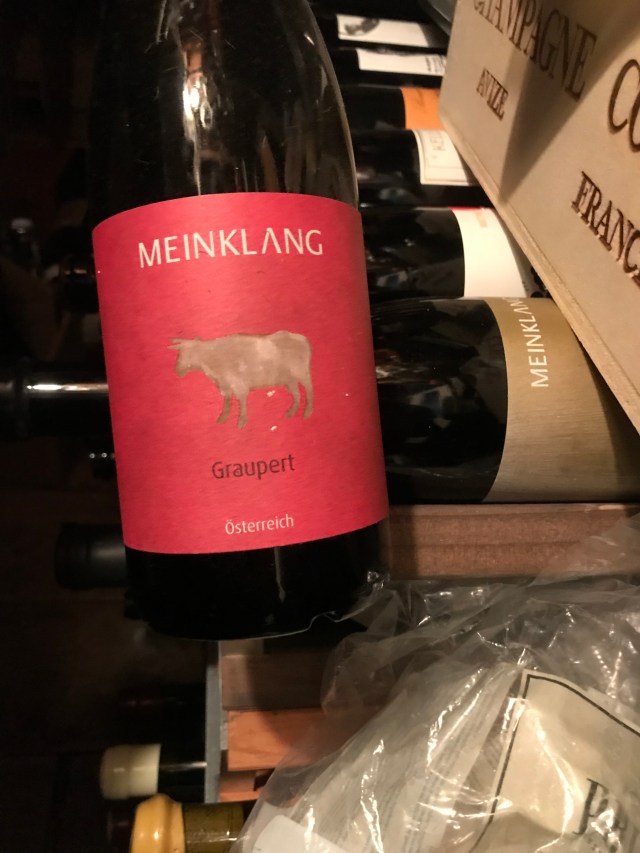
Marnes Blanches, Vetter, Romeo del Castello, Sean Callaghan, Guccione, Hegyikaló, Vinochisti, Shobbrook, Vionnet, and especially Meinklang are all names whose UK profile has been raised immeasurably by Winemakers Club. But they seem to have new wines every time I visit. This is a solid team of good people, and if you get to know them, the bar is one of the most hospitable in London.

website: here

image

Noble Fine Liquor has a couple of shops, and the bar/kitchen P. Franco, but it’s the shop at 88 Farringdon Road that I know. It shares a site with Quality Chop House about fifteen minutes or so north of Winemakers club, so if you remember a suitcase you can easily shop at both.

I didn’t actually discover NFL until this year, but there’s little doubt that no shop has a better selection of natural wines in London, which is a pretty bold statement. This is especially true of their Jura selection, and although wines sell out quickly when only available in tiny quantities, at least you have a small chance of finding L’Octavin, Domaines de la Tournelle and St-Pierre, Ganevat, Labet and Les Dolomies.

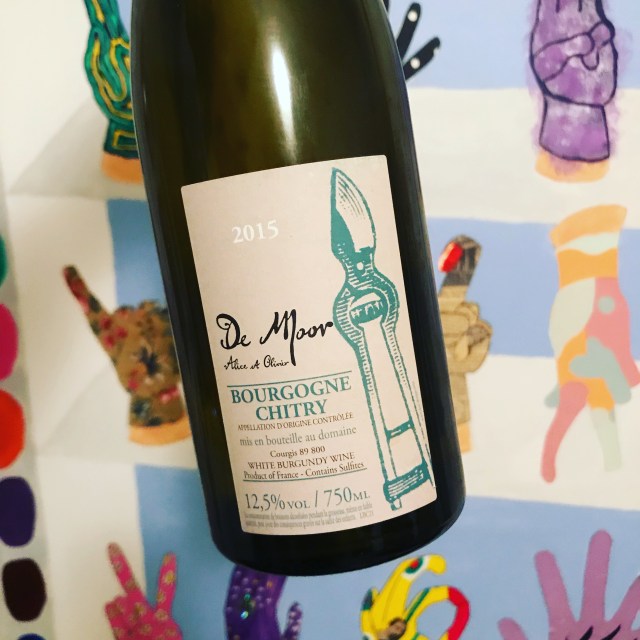
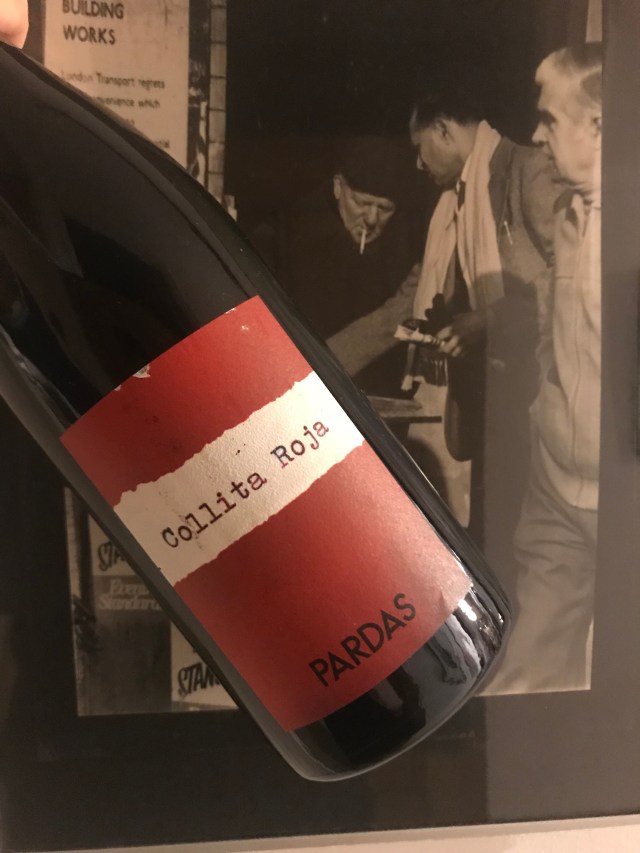
From elsewhere you might find Envinate, No Control, Julie Balagny, Partida Creus, De Moor and Schueller. They also have a fine selection of Grower Champagnes such as Bérêche, Agrapart, Suenen, Lassaigne and Prévost (to name all too few). Even those who prefer more classical wines will not be disappointed. If I’m wholly honest here, NFL is the one shop I feel uneasy about recommending to anyone who doesn’t know it…because I just know you are going to buy all the stuff I want for myself.

website: here

F2EA84F8-C8DE-4932-8BF0-17E38958C720

The Rammstein Award for Downright Dirtiest Wine Country Specialist

This can only go to Austrian specialist Newcomer Wines out at Dalston Junction. Although we all miss the old Boxpark shop in Shoreditch, there’s a bit more space in Dalston, and so the range has expanded, and outside of Austria too. Austria as a tiny country now punches well above its weight in wine. We mustn’t forget the classics from the Wachau, but it’s the new wave natural wine revolution which has grabbed the world’s attention (well, the tiny bubble of a world I live in). Although Savoie will still benefit immeasurably when Wink Lorch’s book eventually comes out, I predict a riot for Austria in 2018.

Most of the stars of Dalston need little intro to regular readers, but if you haven’t tried Preisinger, Jutta Ambrositsch, Tschida, Jurtschitsch,Wenzel and company, joined now by the likes of Nesterec (Czech Moravia), Mythopia (Valais) and others, then you should get on a bus. The new producer of the year was the Rennersistas, Stefanie and Susanne, who farm around the northern edge of the Neusiedlersee. Wild wines which scream life, not yet perfect but somehow all the better for it. Like Newcomer.

website: here

img_2431

The Carte de Sejour Douce France Award for the Place to buy Wine in Paris

This must go to the the Cave Des Papilles on rue Daguerre in Paris’ 14th Arrondisement. People keep disagreeing with me, but I find it really inconveniently located, with the kind of opening hours that are slightly odd and best checked before you go (lunch closing is usually 1.30 to 3.30). But it’s worth the journey. Even with all the other wonderful wine shops in that city. It has to be natural wine heaven, but then so are Septime, Verre Volé, the Caves du Panthéon and others. What makes Papilles stand out is the kind of unicorn wines you may be lucky enough to find on the shelves.

Métras, Guillot, Schueller, Rietsch, Valérie Frison, or Bodines, Monnier and Menigoz from Jura, not to mention Catherine Hannoun’s pét-nat which I spotted online the other day. The house Champagne is from Emmanuelle Lassaigne of Montgueux, for goodness sake. This is why you take two suitcases on Eurostar, one empty. #glouglou

Anyone else remember Rachid Taha’s first band?

website: here

img_2074

Best shop in Paris, shhh!

The Robert Fripp Award for London Wine Shop Not Actually in London

This award is for a wine shop which would be up there with the best if it were in London, but it’s not. In the same way that Robert Fripp would receive his due acclaim if everyone just looked beyond the obvious. It feels slightly odd giving this award, first because I have two brilliant wine shops where I live (Butler’s Wine Cellar and Ten Green Bottles both of which I love dearly), and secondly because I seem to have bought around 50% of my UK wine purchases from Solent Cellar in 2017 (slight exaggeration, but still), and I’m probably not done with them yet. The shop in question is in Lymington, on the edge of the New Forest.

Solent do not pretend to be a “Papilles”. They do have to cater for the locals, though I must say that through the hard graft of regular tastings they are building a local clientele for the wines they like to drink, and there is always a large and eclectic offering of “real wine”. Visiting the shop is always better than looking at the web site, but you need to go further and cultivate a relationship with Simon and Heather.

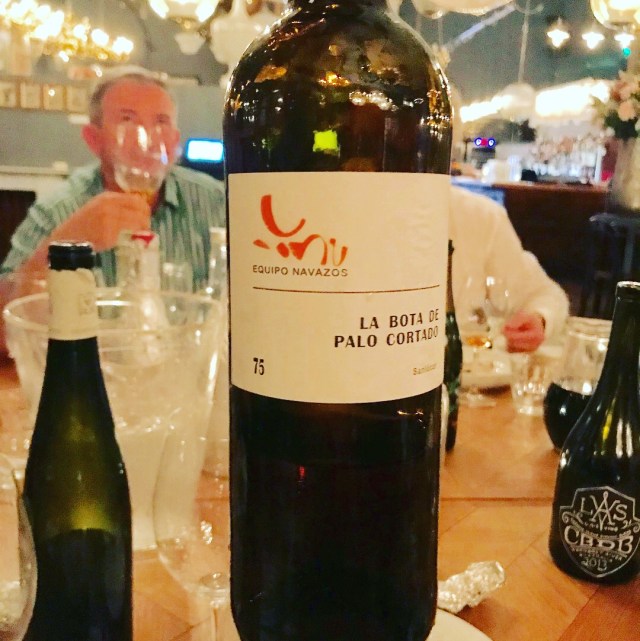
Ganevat appears often, and I was swift enough to grab some La Zaune à Dédé this year, and an even greater coup was the COS Zibibbo en magnum in the summer, available almost nowhere. They always have a few Jura, including Vin Jaune, and a good Loire and Burgundy offering. Fine Wines here are usually well priced, and Champagne is also worth exploring (Bérêche Reflet D’Antan, Vilmart Coeur, Vve Fourny, Clouet to name a few). They often have a few nice magnums (Foillard and Equipo Navazos last time I was in, for example), and they also stock my favourite gin, Dorset’s Conker. But that’s just a small taste of what you will find in this pretty little shop. Great Saturday Market in Lymington too.

website: here

New Forest-20130827-00067

The Goat Award for Young Guns Going For It Importer of the Year

They’d probably have been insulted if it was the Wham! Award. In a market near to being saturated with small and interesting wine importers it was really hard to choose a winner here. Red Squirrel get the gong because they are small but brave. They have really looked deep and asked searching questions as to whether they can actually sell some of the stuff they import, and then said what the hell!

Diwald and Holzer, Bellwether and Canada’s Okanagan Crushpad are all producers who have an established name among their customers now. But whoever decided to bring in wines from the Azores Wine Company, Bruna (Liguria) and Pasaeli (Turkey) must be some kind of crazy genius who deserves to succeed.

But not only does Red Squirrel push the boundaries every year, I think they are also being rightly seen as an inspiration to others. I can’t wait to see what they bring in for 2018…Icelandic Romorantin, Nick?

website: here

106EFED8-0E35-4F00-B02E-AA6E5C5256FD

The Iron Maiden Monsters of Rock Award for Established Superheroes

It has to be Les Caves de Pyrene. They have been around for a long time now, and every year they seem to grow. Some people now see them as more establishment than rebels, based purely on the fact that they can sometimes seem to have natural wine all sewn up. That totally ignores what Doug and the team do every year, both to promote natural wine as a whole (I can’t tell you how much I will miss the Real Wine Fair in 2018), and in being behind so many of the bottles of natural wine which are creeping into nearly every independent wine shop in the country. If anyone in UK wine deserves a Lifetime Achievement Award it is Doug Wregg, though he doesn’t do it alone.

The key, I think, to the success of Les Caves has been in spotting an up-and-coming region or country producing exciting natural or biodynamic wines before the competition. They clearly got onto the Jura bandwagon before the band was formed and the wagon was built. They are not far from where I’d like them to be with Savoie, but I think Austria is getting some attention behind the scenes. Doug, if anyone can sell Silcher-Sekt and the Blauer Wildbacher grape, you can (I saw you at Strohmeier the other day).

The CdP list is enormous, and covers everything you can imagine. A good place to begin is with a trip to their warehouse shop at Artington (next to the Park & Ride), near Guildford. And remember that there’s a lot more out back than is on the shelves. Make a morning of it.

website: here

IMG_3256

Real Shopping

Les Caves’ shop at the Real Wine Fair is always too tempting to ignore

The Manu Chao Clandestino Award for Tiny Importer of Wines from the Coolest Wine Country of the Moment

Where is all of a sudden making the coolest wines in Europe? Spain, of course.  That bastion of tradition took a very wrong turning indeed when it decided to pander to those who wanted new oak, high alcohol and modern wines. But that seems to have left a gap for people to buy vines in unproductive terroirs known in the past for high yields and dirty winemaking, where the old vines lay neglected and unappreciated.

Then along comes Otros Vinos, with a portfolio probably smaller than any other award winner here. Don’t worry, you can easily fill a mixed case of bottles to try just by reading the article I wrote on their portfolio tasting at Furanxo in Dalston Junction back in October (use the search function on the right). If you prefer, you can walk over to Furanxo next time you visit Newcomer (about five minutes), where a limited selection of Otros Vinos’ wines are on the shelves. You’ll find the full list of stockists on the Otros Vinos web site, which includes Burgess & Hall, Noble Fine Liquor and Theatre of Wine.

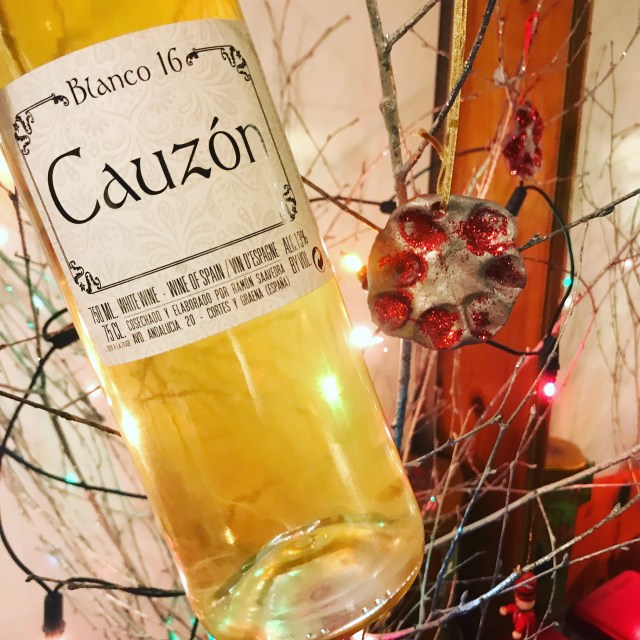
Don’t miss the wines of Ambiz, Purulio, Cauzón and Costador to name just four. Look out for Costador’s “La Metamorphika” flagons,  and I can’t help but mention Clot de les Soleres’ pet-nat too.

website: here

IMG_3043

Some of Otros Vinos’ wines at Furanxo, 85 Dalston Lane

There are just a few more Awards left to go as our glittering evening draws to a close.

The Algiers Award for Totally Out on the Edge Wine

This goes to Tutto Wines for some of the weirdest tasting but most exciting wines I’ve had this year. And they also import Balagny and L’Octavin, both absolute favourites. With the taste to grab those two, you feel in safe hands so long as you are prepared to put on the blindfold and go where Alex and Damiano take you.

Olek Bondonio, Skerlj, Marco Fon and Jean-Pierre Robinot may be more familair to some than others. Ar-Pe-Pe will be familiar to all. Like all small importers, they get a parcel and it goes in days, so worth keeping a careful eye on your emails once you establish contact.

Are Tutto, like Algiers, the guys who are inspirationally different but who not enough people have heard of?

website: here

img_1957

The Men Who Will Not Be Blamed for Nothing…Doing it For The Whigs Award for Extreme Innovation in the Wine Trade goes to one man (who probably has a dog) called Rupert Taylor and his Uncharted Wines. Few wine lovers will have heard of Uncharted, but Rupert is the man who has probably done more than any other to bring wine on tap to the UK.

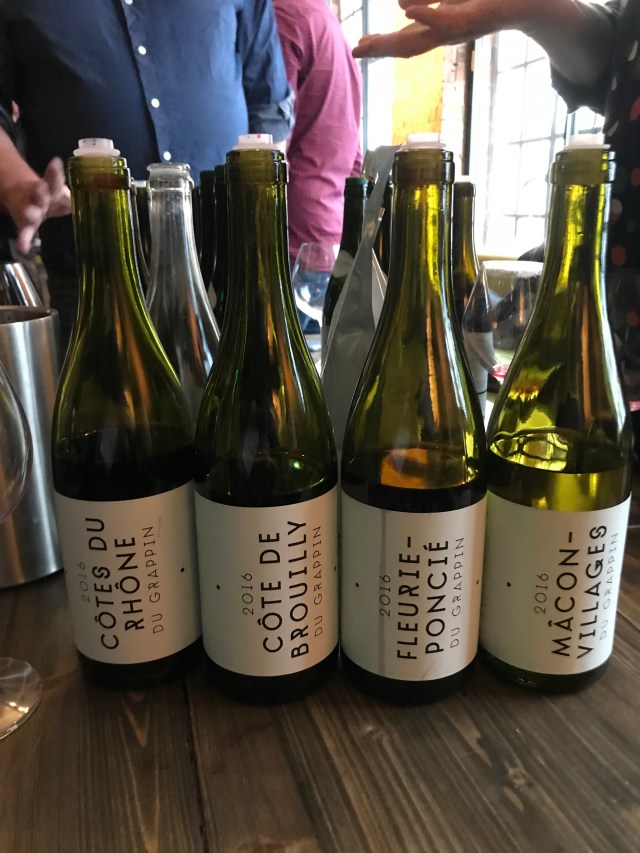
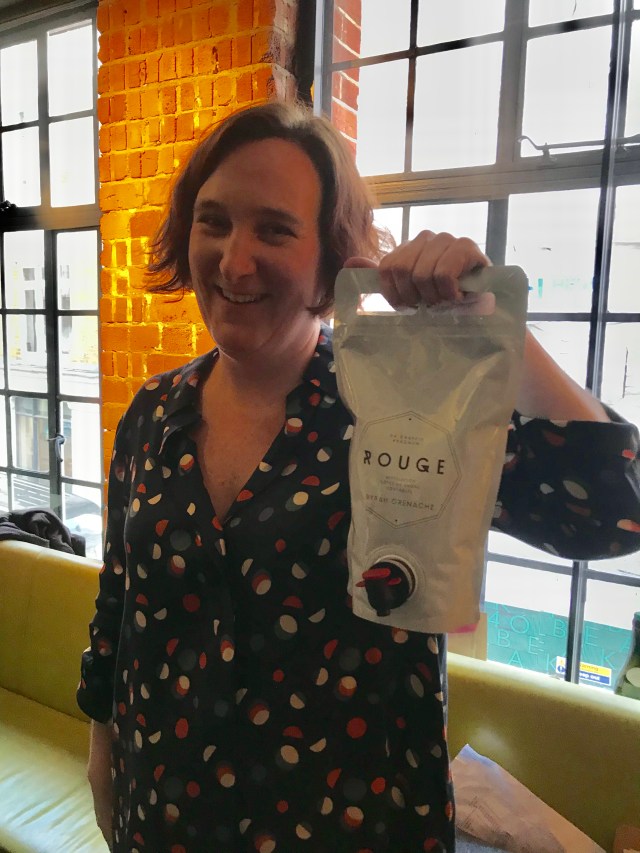
Wine on tap makes buying wine in a bar just like buying beer. It’s hard to imagine that the result could be very appealing, but in the same way that Andrew and Emma Nielsen revolutionised the wine in a bag concept with their Du Grappin brand (sitting right alongside their fine bottled Burgundy), Rupert has shown that the wine on sale in a bar can not only be decent, it can be downright consistently good (as it should be). And it’s easy to serve as well.

Rupert developed the idea at OW Loeb, and whilst Uncharted Wines are not yet well known, they will be. Because this way of serving wine fits in so well with the way in which young people are enjoying wine today, in a social environment, interchangeable with beer or gin.

Follow Uncharted Wines: on Twitter (@Uncharted_Wines) and Instagram (uncharted_wines)

The Sultans of Swing Award for Best Traditional Portfolio Daddio

I won’t pretend I never enjoy the classics, and those who purvey (let’s use a more sophisticated word than “sell” or “flog” here) such wines are numerous in England. There are the bastions of excellent tradition like Berry Bros, and the relative newcomers like Uncorked (who themselves have been much awarded in recent years, being favourites of some higher profile wine scribes). But I’m giving the gong to Howard Ripley Wines. My reason is simple. They specialise in Burgundy and Germany, and what two finer locations can we head for when we want a little classicism and tradition?

Although many of their customers pack out the Burgundy Tastings they lay on, zealots jumping on the Grand Crus like vultures for tiny allocations, the more sophisticated palates head for the German Tastings, usually held in the sedate surroundings of one of London’s Inns of Court. Here we sample in relative leisure the cream of German estates. Those of us with stranger tastes hardly require use of our elbows to get to the best of that country’s finest new names, and indeed some of her finest red wines too (a relative secret about which the Burgundy boys know nothing…yet).

Howard Ripley Wines are perhaps the best example here of how diligence and hard work can gather together a portfolio where every wine by every producer justifies its place. And whilst we are all chasing unicorn wines from Grusse, Sion, Vézelay or Illmitz we should not forget that there were always brilliant, if unfashionable, wines to be had in Germany too.

Julian Haart, Peter (Florian) Lauer, Julg, Schloss Lieser and Ziereisen are among my own favourites…if you can stop sipping the Prum and Keller.

website: here

IMG-20150610-00195

The Lonely Goat Herd Award for Merchant High on a Hill in the Wilderness

The last award here goes to an online merchant based up in Yorkshire which, because they don’t get down south very often, don’t get anywhere near the attention they deserve. When a London merchant (albeit a very good one) implies they are doing something new importing Swiss wines, you wonder what an importer that began by importing those very wines long ago is doing wrong in their marketing.

Alpine Wines used to be known as Nick Dobson Wines, but Nick sold the business to Swiss National, Joelle Nebbe-Mornod a few years ago. The portfolio has grown and covers areas which are only alpine at a stretch, but the heart of the matter is still Switzerland, along with Austria (where they bring in a few nice alternatives to the wines offered by Newcomer).

One of the pleasures of the Swiss wines at Alpine Wines is trawling through and coming across some lovely obscurities, but I appreciate that Swiss wine is new to a lot of people. Alpine Wines do put together different taster cases, but from their Swiss producers look out for Marie-Thérèse Chappaz (Fully, Valais), Simon Maye & Fils (Valais Syrah and Humagne Rouge), Badoux Vins (Aigle, Vaud) and Domaine Grand’Cour (Geneva).

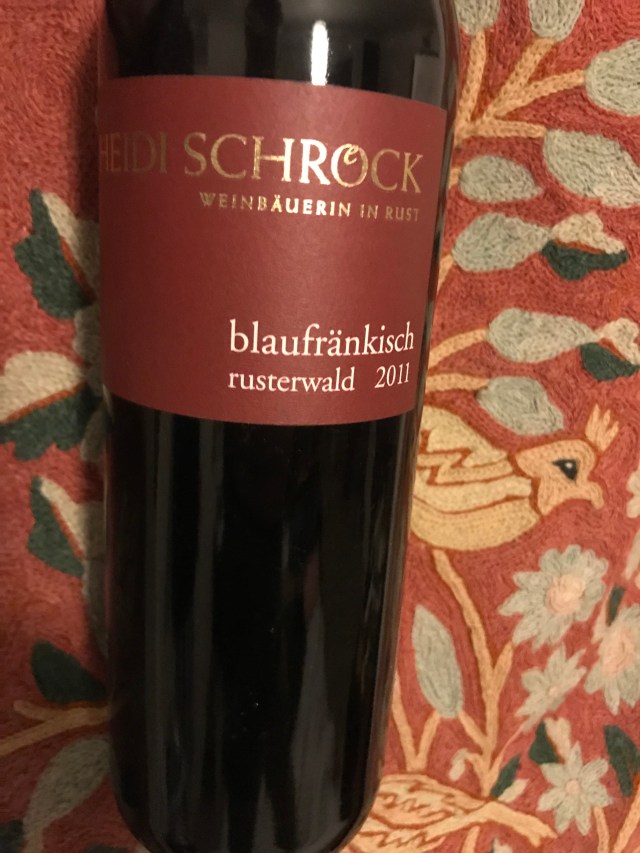
From Austria one very subjective personal favourite is Heidi Schröck (Rust), and then Rainer Christ (Vienna), Martin & Anna Arndorfer (Wagram) and Leo Alzinger (Wachau). But from both Switzerland and Austria, if the wine is made from a grape variety you don’t know, then do try it. Both countries have some wonderful autochthonous varieties. Alpine Wines’ web site is not the easiest to navigate but in its nooks and crannies you’ll find some fascinating liquid.

website: here

Vienna 2015 326

These Awards are, of course, just a bit of fun. But the serious part is remembering that all of the above are trying to sell really interesting wine to a market which, at its heart, is still fairly conservative. We may see all our friends drinking wines like these, but we are still at the fringe, and the market for Real Wine is actually quite crowded, though the positive is that it undoubtedly seems to be growing.

Decanter Magazine has, in its latest issue, an article with the headline “The Most Exciting Wines of 2017”. They list seventy-five. With all due respect, I think we could probably come up with a far more exciting list if we went around all the retailers and importers mentioned here. This is why we need to spread the word.


Posted in Natural Wine, Wine, Wine Agencies, Wine Merchants, Wine Shops | Tagged , , , , , , , , , , , , , , , | Leave a comment

Liem and Larmat – A Perfect Combination

147

Like most people, I imagine, I came to appreciate Champagne first as a celebratory drink. Most often it was the non-vintage wine of a well known Grande Marque, or occasionally a vintage wine, consumed several years too soon. But in the days before autoroutes would take you right through France, Champagne (the region) became a convenient, and frequent overnight stop. As these journey breaks somehow came to encompass an extra day for exploring Reims, Epernay, or the Montagne, I began to appreciate Champagne, the region and her vineyards, and in particular, two things about it.

First, I realised that whilst the Grandes Marques usually blended their wines from multiple sources creating something which claimed the whole to be greater than the sum of its parts, there were hundreds of small producers bottling wine from their own few hectares of vines. Not all were as good as each other, but some were certainly good enough to distinguish the attributes of their different parcels.

Secondly, I came to appreciate Champagne as a wine in its own right, and I came to this through following the lead of the locals and drinking it throughout a meal. When you drink it as an aperitif you fail to appreciate its versatility with food, because there is a Champagne somewhere that will go with the majority of dishes.

679E77B2-FF86-4496-B93C-7F251B512E5D

I own several books on Champagne, but this year Peter Liem has published one which I think is different to all the others. Champagne (Mitchell Beazley, 2017)  is firmly focussed on terroir and so it is a book about those who grow grapes and make wine which expresses a particular vineyard, or perhaps a small number of sites where each plot contributes discernibly to the cuvée. This categorically does not limit us to “Grower Champagne”, because plenty of the Grandes Marques make site specific wines.

The book, in making terroir its focus, also celebrates Champagne as a wine, in all its diversity, and indeed takes this diversity as a mark of quality, rather than one over-arching single standard by which Champagne should be judged. To push the terroir point further, Liem has included in the package, published to the general public for the first time since they were produced in 1944, the maps of Champagne created by Louis Larmat for his Atlas de la France Vinicole: Les Vins de Champagne.

B7BD9505-46A6-4D2D-ADCD-36C53EE5D887

These colour maps come as separate fold-out sheets housed in a pull-out drawer, a second drawer containing the book. For a map geek like me they provide a cartographical bounty beyond my dreams. I’ve seen some of these maps in one or two tasting rooms, though possibly in facsimile as only 150 original copies of the Champagne part of the Atlas Vinicole were produced at the time.

Other books on the subject tend to focus more on the process of making Champagne. That requires so much space as to make viticulture a bit of an unwanted intrusion. This despite the modern mantra that wine is made in the vineyard, one espoused by all of the finest producers the world over these days. As a consequence pretty much all I ever learnt from those books was that the Champagne Region is based on chalk. Whilst I’ve since been told a more nuanced story by producers, I had no idea of the sheer diversity of soil types in the wider region, not least the vastly different types of chalk alone, which affects the fruit produced above them. I learnt a lot about geology, yet you should not suppose that this is solely what the book is about, nor that its approach is in the slightest bit dry.

Champagne divides into three parts. Understanding Champagne does cover the usual history and winemaking, but also features chapters on “The primacy of place” and on farming methods, including organic farming and the increasing interest in biodynamics.

The Place comprises eight chapters , which among other things break down the region into more sub-regions than the casual Champagne drinker will be aware of. Aside from the usual distinction between the Barséquannais and the Bar-sur-Aubois in the Côte des Bar, we also have The Grande Vallée made distinct from the Valley of the Marne, and the introduction of the Coteaux du Morin as the distinct sub-region to the north of the Côte de Sézanne. You will also come to appreciate the growing importance of the Coteaux Sud d’Epernay and the once densely planted Vitryat.

In these chapters Liem talks us through individual wines made within the different terroirs of these sub-regions, and in doing so he is able to describe in real terms what the land contributes to each of these cuvées. This is how he brings the terroir alive. Each chapter ends with a list of recommended “Single-Cru and Single-Vineyard” Champagnes from each of the major villages in each sub-region, which are usually wines created by producers discussed within the chapter.

A1434F71-EE19-4F2B-81DF-A70600E5B599

I mentioned above that by no means all of the site specific wines in this book are created by small artisanal growers. My own introduction to single vineyard Champagne came via the oft ignored Champagne House of Philipponnat. Their Clos des Goisses is still my favourite Champagne, and a photograph of it features on both my business card, and as one of the changing header photos on this site. Taittinger’s “Les Folies de la Marquetterie” has always been another (more affordable) favourite, yet I had no idea that Roederer’s “Cristal Rosé” was such an exemplar of Cumières Pinot Noir (with added finesse from a proportion of Chardonnay from the Côte des Blancs).

The final part of the book covers The People. Here, you don’t get the lengthy profiles you’ll find in some other books (Michael Edwards’ The Finest Wines of Champagne is a good source for these). Neither do you get any rankings of different wines and producers, as you get in the well known “Champagne Guides”. This section attempts to briefly introduce the individuals behind the exciting revolution which has been taking place in the region, and Liem has chosen both growers and négociant houses who he considers have “contributed to illuminating issues of terroir and advancing contemporary themes…”. Offhand, I cannot think of anyone he’s left out.

698D597A-2CC5-47FF-8FD5-E7DCBD6E8DBD

I will say straight off that this is my Wine Book of the Year (up to this point I’d probably have chosen John Szabo’s Volcanic Wines, and of course I’m looking forward to Luis Gutierrez’s new book on the new generation of wine producers in Spain, the English Language edition of which is due to come out in December).

It is a beautifully put together book, with lovely photographs by Gentl and Hyers. Any criticisms would in reality be not only subjective, but irrelevant. It did sometimes frustrate me that the beautiful photos generally only have a caption when they are a portrait of a wine producer. Several times I thought “where’s that?”.

There are several “insert” sections to emphasise a point, and whereas they are a useful focus, they do occasionally split up the thread of the general narrative in annoying places, so that you have to find where the argument continues and go back to the insert when you can better draw breath. And I think Peter could have written a little more about the Côte des Bar, where perhaps more than any other sub-region, there has been a grower revolution in what was once Champagne’s backwater. But then again, on the Côte des Bar subject I’m thankful that I’m not the only person who adores well aged Rosé des Riceys, especially those of Olivier Horiot and his single vineyard bottlings, which gets a whole page.

9A032785-0950-4D0D-9CA8-DE046F1FCCFC

Nevertheless, minor points like these aside, I doubt that anyone who truly wants to get under the skin of Champagne, both the region and the wine, will find a better source, and a more readable and enjoyable source too. Peter Liem has lived in Champagne for many years, and his web site, ChampagneGuide.net, is one of the most renowned sources of information on the region’s wines and producers, but his experience goes back much further. He is, of course, also one of the organisers for La Fête du Champagne, an event which began life in New York and is probably unparalleled as an exclusive Champagne Tasting.

I only weep at the wines he describes and recommends. Many I know, of course, others I have heard of and long wanted to taste, whilst several are completely new to me. When I first became interested in (or possibly addicted to) site specific Champagnes I was probably seen as a little odd. But so what, I could afford to buy a good many of these wines back then! Prices have risen inexorably. £30 single-site wines now cost £50, and the £50 treats of old soon reached £100 (I’m thinking specifically of favourites like Clos des Goisses and Pierre Péters’ Chétillons).

Producers who a decade ago were relatively unknown names, occasionally spotted on the shelves of The Sampler in Islington, and those of a few similar pioneers selling Grower Champagnes, are now praised as the stars who, along with a select coterie of Chefs de Cave from several Grandes Marques, are moving the whole of Champagne forward, making the wine so much more relevant and meaningful for the twenty-first century wine lover. Champagne is no longer just bubbles to spray about frivolously at a big event, but a genuine wine, like any other, as versatile as any other, and like the best wines from any region, just as expressive of place as any other.

I know it’s expensive as wine books go (£60 rrp in the UK, though I did find a hefty discount at a well known online retailer), but if you love Champagne you need this book.

7C9EAEBD-5449-49E1-A185-C2A01AB3131B

Posted in Champagne, Sparkling Wine, Wine, Wine Books | Tagged , , , , , , , , , | 8 Comments

Red, White and Orange Friday at the Draper’s Arms

Bereft of the pleasures of intensive shopping on Black Friday I was forced to settle for a long lunch at the Draper’s Arms in Islington with seventeen wines (one was corked) among seven of us. We were all slightly wobbly when we left at around 5pm, but we’d had a fantastic time. Why did I ever think I’d have done better fighting for a new TV at Argos…not!

Before parading the very interesting wine selection, almost eclectic enough to resurrect the ghost of Oddities, I must talk about the pub. This has been one of the most talked about of that much-maligned genre of restaurant, the gastro pub (how I loathe that term) since it opened around eight years ago. One of its original owners is Nick Gibson, at that time with Ben Maschler, whose mother has been telling Londoners where to eat for as long as I can remember. I think it also got quite a lot of publicity for being in Islington, or rather Barnsbury, which is Islington’s most affluent part, and where eating out has become something of a profession, almost, for many local residents.

When you go to eat somewhere for the first time, and you’ve heard so much about it, your expectations are high, but there’s always that tiny fear of disappointment. In this case that was tempered by total trust in the man who booked it, and indeed disappointment was far from my mind. The meal surpassed expectations.

We began with three Lindisfarne rock oysters each and didn’t look back. The table shared several starters – bitter leaves with ricotta and clementine; lamb scrumpets with Roscoff onion puree (a must order dish); ox heart tartare with dripping toast; and smoked mackerel with potted prawns and an apple and celeriac remoulade. My main course was a whole grouse on a puree of beetroot with wild mushrooms, and a share of some forerib of beef, enormous plates of which others had ordered. We all took cheese, and shared in some delicious gingerbread pudding. All ingredients were very fresh and prep was well executed with a feel for flavour combinations.

We had arranged to make this a BYO lunch, for which we were charged corkage by negotiation, although how much that was down to the booker knowing Nick, I’m not sure. Without corkage you can probably eat to relative excess here for £50(ish) plus wine, and the pub’s own wine list is pretty decent (they had Andrew and Emma Nielsen’s Beaujolais-Villages Nouveau on by the glass, which plenty of people were ordering). Service was spot on, and decanters and larger glasses were supplied. The glasses might not satisfy the most picky out there, but they were adequate. I didn’t hear anyone complain. In fact the whole lunch was so good everyone was asking when we can do it again.

We began with one of Robbie’s classics, Chablis 1er Cru “Butteaux” 2012, Raveneau. This is always a real pleasure to drink, combining pristine minerality with almost buttery Chardonnay fruit at this stage. It will age but it was lovely and everyone kept coming back to it. Chablis doesn’t really get to exhibit longer length than this at Premier Cru level. We had a 2011 at The Sportsman in Seasalter last year, and a 2005 at Milford-on-Sea’s Verveine the year before (among other occasions), so it has become my own personal Raveneau soft spot.

E0769539-4550-4BE0-86B5-B51E7C99A93F

We had quite a few Jura wines on the table and the first was Céline and Steve Gormally’s Côtes du Jura Chardonnay “Les Combes” 2012. The Gormallys farm down in Passenans, between Poligny and Lons-le-Saunier. Les Combes is a barrel fermented, topped-up (ouillé) Chardonnay which was initially reductive, but over time it blossomed. This couple, whose production is less than 10,000 bottles per year, have become rising stars of the natural wine scene, perhaps not so well known as others, so if you see their wines (perhaps in Paris at Les Papilles), snap them up.

AC585D15-2C85-47B8-A020-A12C00E1DE34

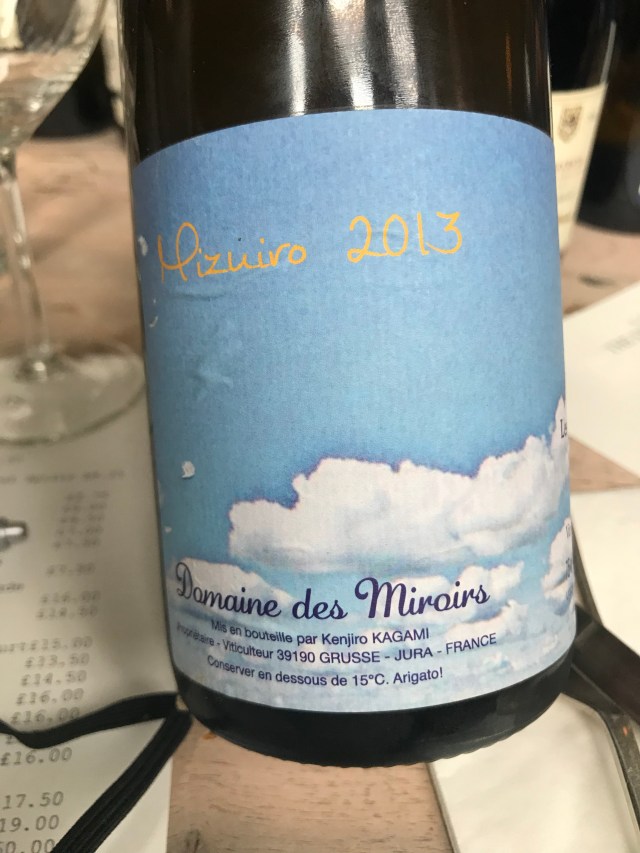
Another white Jura, and a bit of a unicorn wine (and producer) came up next. Thanks for bringing it, Tony. My first taste of Kenjiro Kagami’s Chardonnay Mizuiro 2013 Les Saugettes, Domaine des Miroirs, and it was my own personal white wine of the day. Ever so slightly cloudy juice smelt of fresh citrus with a salty edge. The palate reinforces this, with incredible but focused salinity, and a real mineral core. Zero sulphur wine off marl and limestone near Grusse in the southern part of the Jura region, this is pretty unique.

Kenjiro and Mayumi are almost impossible to visit and their wines are almost as difficult to find, but for Jura insiders, this couple run one of the real cult domaines. Kenjiro worked first in Alsace with Bruno Schueller for several years, and then with Jean-François Ganevat, who helped him find a small vineyard. There is some kind of magic to the tiny quantity of wines they produce from just three hectares down there. Arigato to you too, Kenjiro-san.

B64DA373-EA0C-4D64-9801-A7CE7B1EE490

Old wine is always hit and miss, and with that old chestnut, the 1970s German wine made from obscure grape varieties, even more so. When the next wine tasted pretty decent, despite a colour that, whatever gloss you put on it, was brown, we only expected it to last a while before fading. In fact it didn’t fade. Krughof Bornheimer Schönberg Beerenauslese 1978 is one of those blends I remember well, Siegerrebe and Optima, from Bornheim in the heart of the Rheinhessen.

Siegerrebe is known for high must weights…in fact I read that the variety holds the record for the highest must weight recorded in Germany, in the 1971 harvest in the Pfalz (326 Oechsle, twice the lowest permitted sweetness for Trockenbeerenauslese). Optima is similar, and interestingly often likened to Ortega (Ben, who brought this along, is making English Ortega in qveri not too far from me…I cannot wait!). This is why you often find these grapes blended to Beerenauslese and Trockenbeerenauslese prädikat levels in Rheinhessen during this period. The resulting wines are sweet and without real complexity, and yet with age they take on a richness which is altogether rather appealing.

CED8E9E7-216D-42FC-BBBE-4C5E3DAD4B0C

Rosé des Riceys is an AOC which few people have come across, even real wine geeks. I did so by chance in the 1980s when friends honeymooned near Chablis and I visited them on the way south. I stocked up with bottles from Morel Père et Fils and even went back a couple of times in succeeding years. Once I even found some from the same producer in Wholefoods on Kensington High Street in London.

I always had a soft spot for this quite unique Pinot Noir made around three hamlets which, as Les Riceys, are much better known now as the southernmost village in the Côte des Bar, and thereby in the whole Champagne appellation. In fact, it is the largest producing village when it comes to Champagne in the whole appellation, but only 350 hectares are delineated for the rosé. My interest was always in how, as it aged, this rosé (more a pale red) showed notes of tea leaf and mild woodsmoke beside the strawberry fruit. Haunting, rather like Cédric Bouchard’s rosé Champagne, Le Creux d’Enfer. Then along came Olivier Horiot, and he has taken Rosé des Riceys to another level.

Rosé des Riceys “en Valingrain” 2006, Olivier Horiot is one of two site specific Riceys wines (the other is called “en Barmont”) Horiot makes alongside his better known Champagnes (remember that Olivier originally set out to make still wines, not sparklers, and he makes a very good red wine, as well as a Champagne from the almost extinct Arbanne grape). The key to Rosé des Riceys is age. Even in the hands of the master, in youth it can be one-dimensional, a simple pink Pinot.

Age (and biodynamic farming) bring forth a wine which is altogether much more sophisticated, and it must be said, subtle too. As I suggested above, the fruit is haunting, and the texture of cold tea tannins adds something nearly unique from this southern patch of Champagne terroir, which is nevertheless relatively far north for still Pinot (yes, I know we have Coteaux Champenois, but that’s another discussion).

Alongside a strawberry bouquet, with tinned strawberry acidity, there is rosehip too. You know me, I don’t usually go in for florid tasting notes, but you do want to know what this tastes like. The wine is long, tailing off gently like an extended fade on a recording of a haunting melody. In fact a perfect accompaniment might be Yann Tiersen’s island recording, Eusa, with its sounds of the sea and birdsong. But be warned, Horiot’s own description for this wine is “very discreet”. A wine best consumed in an environment conducive to contemplation. Fewer than 2,500 bottles/magnums. Serve cool, not cold, and not young!

24226A4A-845D-4513-89FA-546553765BA4

Polish Hill Riesling 2013, Jeffrey Grosset is almost without question Clare Valley’s, if not Australia’s finest Riesling. What of the 2013? It’s very intense. The lime citrus fruit is just like real fresh lime, or Rose’s Lime Cordial, and the tight mineral texture enhances its acidity. In my view this is in desperate need of a decade more in bottle, but then I wrote back in August about a lovely 2004 we took to a dinner and a ten-to-fifteen year old Polish Hill is my own benchmark for drinking this particular cuvée. It is quite hard to thoroughly enjoy in this youthful state, but one can admire it enough to know it is a vintage to buy, born out by the marks given by critics.

8D1CBCC6-1FA8-42BB-9F99-AAA7BB84DB56

It may not have gone unnoticed that my trip to Alsace last month has reinvigorated my love for the region, especially through the excitement of its natural wine producers. Domaine Gérard Schueller Pinot Noir “LNO12” 2008 is a superb example of what I’m talking about. Gérard’s son, Bruno, makes the wines now, from a vignoble just southwest of Colmar, in the village of Husseren-les-Châteaux, close to Eguisheim. They have been biodynamic, and have experimented with low sulphur, since the early 2000s.

This wine is best described as “wild”. If you like exploring the outer edges of wine, head here. It’s cloudy, but the nose punches ripe summer fruits like raspberry and strawberry, maybe a bit of cherry too. Whatever, the fruit is exuberant. It’s “glouglou” but at the same time, it has that subtle sophistication you get with the Riceys above. Vaughn said it reminded him of Binner, which triggered the same response for me, because after a much laughed at appreciation of Alsace Pinot Noir for years (Ostertag, Muré etc), the revelatory “natural wine” Pinot for me was Christian Binner’s. I’ll be tracking this down, and more of Bruno Schueller’s bottles.

DAAC6247-3923-4FC8-BB48-A35B8A4DE244

It would have been sad not to drink a bojo-noovo at such a fun lunch, and we got one. And not one of the ubiquitous producers we’ve been seeing in London either. Beaujolais-Villages Nouveau 2017 “Cuvée Fanchon”, Guy Breton epitomised all that has improved with Nouveau. First, it’s a “villages”, which speaks for itself in quality. Second, whilst you get that bright cherry fruit with a touch of cream on the nose (no bubblegum and no cherry cough sweets), you also get a touch of structure and even light tannins. In other words, a bit of grip. I’ve had far fewer this year than last, but this is one of the best, and there’s certainly no need whatsoever to drink this up by Christmas.

5223B86F-7F97-4876-8EE8-84304682F562

We followed this with another Beaujolais from the other end of the spectrum, Jean Foillard Fleurie 2010. As everyone drools over photos of his Morgons on Instagram, the Foillard Fleurie all too often gets overlooked. But when I was extolling the virtues of the 2010 last year, they told me at the domaine that “this is exactly what we are drinking at home right now”.

My last couple of bottles of this had been truly majestic, so when this appeared pretty closed I was very disappointed. Into a decanter it went and still very little to make it stand out. The advantage of a long lunch (and what makes a tasting note from a single snatched sip almost offensive) is that with time this truly blossomed, to at least where I’d hoped it would arrive when I opened it. A genuine lesson in the need for patience sometimes when it comes to wine.

95E15D93-5473-4783-A024-D72D8DF0A066

I drink quite a bit of Ganevat and I love his wines, but let’s face it, if we see another Instagrammed bottle we might all scream. But whilst I’ve drunk lots of the crazy blends, the wonderful whites, and the Pinot Noirs over the past few years, a Ganevat Poulsard has been a rare sighting.

J-F Ganevat Poulsard Cuvée de L’Enfant Terrible 2014 is made from vines on local white and grey marls down in Jura’s Sud Revermont near Rotalier, planted in 1959. It starts out closed (like the Fleurie), but is fresh and concentrated. The fruit is more cherry-like than some Poulsard, but with cherry tart acidity and, like the “Miroirs” above, great salinity (maybe a mark of terroir?). It clearly needs quite a bit more age, but it will be magnificent. Very impressive.

FFF3DF9C-1202-41D6-8706-157191C97AB8

Kelley Fox Wines is a producer which seems to have had plenty of press coverage this year. The wine which I seem to read about most, the one getting the best accolades, is Kelley Fox Maresh Vineyard Pinot Noir 2013, Dundee Hills, Oregon. Whilst the past decade has seen New Zealand Pinot Noir trying to establish itself as the number two to Burgundy, Oregon’s wine regions have been quietly building a reputation for wines of subtlety and sophistication, often with biodynamics and natural wine methods to the fore.

Kelley has been a winemaker for nearly two decades, but she is also a meticulous viticulturist. I’ve read that the vines in the Maresh vineyard (one of three single sites she makes) are touched only by her during the growing season, from canopy management to spraying her biodynamic preps. The vines are old (40+ years), and the wine has a real majesty about it, not a swagger but a more demure way of holding itself. Certainly elegant. You get 13% abv, but also a wine of great silky fruit without any obtrusive weight. You are also left with a sense of vibrant freshness. It’s just as impressive as they are telling you in those glowing articles, really. It was my red of the day.

16EC2C7D-1A09-45FC-BB7D-6FB88B8B1F92

Sammarco 2005, Castello dei Rampolla is a Panzano Cabernet Sauvignon Super Tuscan blended with Sangiovese and Merlot in smaller quantity, made in concrete before ageing in a variety of large wood, then in bottle for a year or two before release. This 2005 was delicious, dark in colour with smooth, rich and sophisticated, fruit overlain with leafy aromas. Tannins are by this stage still present but well integrated and fine. Much more classical in profile than the wines we’d been drinking, which actually made for a nice bit of variety. Its quality made it not out of place in such an eclectic lineup.

120E05CD-0167-48C1-B7F3-284B798B6E53

The Rampola was probably a perfect introduction for another majestic red which appeared a little more weighty that its relatively demure 13% alcohol might have suggested. Ridge Monte Bello 2004 is no bruiser, of course, but age has mellowed and matured it into a wine which still has structure and real depth, but alongside that you get true complexity (though for Monte Bello it is probably still entering early manhood rather than middle age).

The grape mix here is 76% Cabernet Sauvignon with 13% Merlot, 8% Petit Verdot and 3% Cabernet Franc. The grapes all come from dry-farmed blocks in the Santa Cruz Mountains, where limestone forces the roots to seek out moisture deep in the fissures of the rock. Cabernet’s blackcurrant fruit is to the fore, but there’s also spice and cedar, with tannins sitting smoothly beneath, not assertive but reassuringly adding structure. It is quite like Bordeaux for a moment, and then it’s something very distinct. And delicious, especially with the magnificent forerib of beef they served up, which thankfully was too much to eat for those who had ordered it.

4540274C-CCA7-4B25-BEA3-CF81BFD6ED71

Ooh, a signed copy!

The next bottle had been open a while, but it hadn’t passed me so I’d not tried it. Dario Princic Ribolla Gialla 2013 might in some ways not have been the best thing to drink after the Ridge. Its tannic and textured skin contact side was amplified at the expense of its more gentle side. It was quite tight, with acidity to the fore and only a little of the orange peel scents which add subtlety. In any case, I think that this is another wine which would benefit greatly from a bit more bottle age, but that said, it was still very good. One of Friuli’s finest, and on its own a star. But better with the cheese than the beef.

B2DD91AC-CC85-4A01-982F-B4A522B56057

We were then treated to a very rare wine indeed, one which you may heave read about on my Blog before. But whereas I only had one bottle, a man I know somehow managed to get two from the winery (it clearly says one per customer on the web site, but having the chance to drink it again, you’ll get no complaints from me, Brad). There were only 35 cases (420 bottles) made of Brash Higgins Bloom 2008. This is sous voile Chardonnay aged eight years under flor from South Australia’s McLaren Vale. It was inspired by Jura’s Vin Jaune, but being made from Chardonnay in a very different climate, is a very different wine. And yet it does nod towards Vin Jaune, just with a few more horsepower.

It’s an exciting wine and so so complex. You get nuts, orange citrus and an iodine salinity which gives it the whiff of an island malt, a fanciful suggestion but I know Brad Hickey, the winemaker, gets that too. It’s bottled in a squat 700ml format which also nods to Jura’s clavelin, and like Vin Jaune, the oxidative, or biological, ageing means it will last a good few days in the fridge, as a biologically aged Sherry would. It comes in at just under 15% abv.

Naturally this is sold out, but I know Brad a little and he tells me that the next vintage will be out in May 2018. He also told me the other day that Vagabond Wines in London will be taking some of the other Brash Higgins wines in the New Year if you are interested in trying any (some are more conventional, others less so but all those I’ve tried have been very good). For me, Bloom is off the scale.

C0CCD49C-C7CA-4C3B-9908-4CC3C2B702A9

Last but not least we finally had a sweet wine to go with the gingerbread pudding, which it accompanied perfectly. Sweet Jurançon is one of France’s least appreciated dessert wines, but I’ve long believed it to be one of her best. Of course, I admit I’m swayed by the beautiful scenery of this vignoble, just beside Pau, as vine clad, gentle, slopes stretch towards the outlying foothills of the Pyrenees.

Clos Lapeyre “Magendia de Lapeyre” Jurançon 2002 is made from the small-berried Petit Manseng variety. The grapes see no botrytis, but are left to shrivel (raisin in French) on the vine. As they do so the water in the juice evaporates, thus concentrating sugars. Picking is in several tries through November for this “selection”. After ageing in wood, and then in stainless steel vats, it will benefit from long bottle age (as here), where flavours are concentrated.

A good Jurançon will have ripe stone fruit (apricot or occasionally peach) with the slight texture of the stone inside it. Sometimes these scents will be overlain with a hint of fresh cream, sweet lemon curd or, in others, marmalade. The Magendia has a touch of pineapple too. The palate is rich and exotic, but there’s also acidity to make it refreshing and stop any cloying. As I said, it went well with the gingerbread pudding, and with the cheese (Roquefort and Foie Gras are the most often cited pairings). If it lacks the weight and sweetness of Sauternes (and of course it lacks the botrytis element) it has that extra dimension of lift on the finish.

B4EFA91E-93AC-441F-8CD7-EE1787BE05D3

It was the diversity of the wines which made this lunch, but what was perhaps a surprise was how, despite this diversity, pretty much all the wines found their match on the table. I must say that the company, a small group of extremely adventurous wine lovers with only one or two working in wine, made the lunch such a success. I don’t think anyone brought any prejudices to the table, or if they did they kept quiet. That’s why it all went so well. To those of you I’d not met before, it truly was a pleasure.


Posted in Dining, Natural Wine, Wine, Wine and Food | Tagged , , , , , , , , , , , , , , , , , , , , , , , , , , , , , , , , , , , , , , | 2 Comments

Terre Magazine

In the digital age print media struggles with wine journalism. Whilst newspapers cull their wine columns, the old established Wine Press, or at least those magazines that remain, are forever trying to come up with new ideas to increase revenue, such as wine (and wine list) awards, premium subscription online services, branded tasting events etc. For generalist publications the field is smaller than it was. This is true for the specialist wine press too – I’m sure one or two readers might miss Tong Magazine for its often in depth coverage and sometimes more scientific slant.

But if you can find a niche, then you can fill it. One such success story is Noble Rot, founded by Dan Keeling and Mark Andrew back in 2013, now on its fifteenth quarterly edition. Its wine coverage may have moved steadily upmarket over the intervening years, but it retains its irreverence, humour, and great graphic design which make it worth spending £9 on four times a year.

Lovers of natural wines have had to make do with online sources, largely a range of very good Blogs, if they want to source information on this growing genre. It’s true that Francophones have been able to read Le Rouge et Le Blanc. Begun in 1983, this French Publication continues its focus on sustainable wine production, not only in France but elsewhere. A subscription outside France is €58, and the current Issue has articles on Marcillac, Champagne Leclerc Briant, and Nicolas Carmarans, as well as on domaines in the Val d’Aosta and Switzerland’s Valais (among others).

The founders of TERRE MAGAZINE, Editor Rachel Signer, illustrator Erika DaSilva and food and lifestyle photographer Katie June Burton had clearly been mulling over a gap in the English speaking market for print on “natural wine and heritage food for some time, before the magazine saw the light of day, and its first issue, this autumn (or should I say fall, it being published out of the USA), following a successful Kickstarter Campaign to source the funds to launch.

1C9E23AD-C421-4CAA-8B62-A9D518370774

The magazine promises to be “art driven”, and it is true that there is clearly an eye for design and for visual stimulation within the production values of Terre, but this would be to detract from the quality of the articles. Whereas, as friends keep telling me, Noble Rot is great fun and entertainment but not all of the articles are quite serious, the content here, on the whole, is aimed at informing and educating along with the entertaining.

My favourite articles in Issue 1 include Chad Stock (Omero Cellars, Oregon) on why he’s okay with Brett (brettanomyces) and VA (volatile acidity); Deirdre Heekin (La Garagista, Vermont) defending (more than adequately) hybrid vines; Rachel Signer writing about Julien Guillot’s Domaine des Vignes du Maynes; and Sam Basger writing about Analemma Wines, a name I’ve only recently discovered, founded by Steven Thompson and Kris Fade in the Mosier Valley, Oregon.

6CDDAC30-6A92-423D-B1B5-694CDF8CD794

Becca Turner’s beautiful artwork accompanies Deirdre Heekin’s article on hybrids in Vermont

There is more, of course. I now particularly want to find a bottle of “Horses”, the first pét-nat from America’s Long Island, made by Macari from their North Fork vineyard (some of the grapes come from Horsehead Bluff, but there’s an obvious nod to Patti Smith in there too). Yet there is just one negative thing I have to say about Terre Magazine, and that concerns its length, or rather lack of it.

15036BE0-189A-482B-9069-6C0B5A67FF8D

Horses, horses, commin’ in from all directions…

With Noble Rot you get over 100 pages for your £9. Le Rouge & Le Blanc is somewhat thinner at around 40 pages, though it approximates to A4 in size, and its plainer style with just a few black and white photos and a very occasional map means there’s more text. With Terre you get plenty of colour photos and illustrations which enliven and complement the text, but in a format a little larger than A5, you are kind of wishing for just more pages (I counted twelve articles in all, whereas the current Noble Rot boasts twenty three).

This in itself would not be an issue at all were it not for the price. I grabbed my copy from The Remedy in London’s Fitzrovia the day after its arrival, and I might therefore have been the magazine’s first UK customer. As such, there was a slight confusion over the price, the only information to hand being the price in Dollars. At £22 I felt that Terre is quite expensive for what it is.

That said, I hope this short article does come over as supportive of Terre and what these three ladies are trying to achieve. The whole concept is really exciting and this first issue is well executed. There is only one article I might have had second thoughts about including, but only because I’m not a female chef and have no call for polka-dot trousers. But then I certainly support writing that caters to a readership often ignored in the mainstream Wine Press.

I know that the magazine was born out of a real passion for both natural wine and so-called heritage foods, and I know that there is already a growing interest in the UK. I enjoyed reading it and the only thing which might (I only say “might”) put me off buying every single issue would be the price. The quality of both the design and the writing cannot be faulted. I do wish Rachel and the team every success.

7F973F41-A2FA-472A-A497-013E255EDF17

Everyone wants to read more about the Magician of Macon’s monastic vineyards

If you want to grab the first ever Terre Magazine in the UK you should head along to The Remedy in Cleveland Street, London W1. This, as far as I know, is the only place in England where you can currently find it. It is also available in Scotland via Raeburn in Edinburgh, as well as Bar Brutal in Barcelona, Paris, Copenhagen and Australia (though in Summertown, which is on the edge of the Basket Range, east of Adelaide). Distribution in North America can be viewed on their web site here. I know that the magazine is sold out at the publisher, and the web site doesn’t seem to have any details about subscriptions, although they can be contacted via terremag@gmail.com . In which case, if you want a copy, it might be worth being swift (and, indeed, checking availability before making a journey). I was very happy to get mine.

The next Issue of Terre Magazine is promised for late Spring 2018.

Posted in Natural Wine, Wine, Wine Books, Wine Writing | Tagged , , , , , , , , , , | 2 Comments

Ultravino Piemonte at 67 Pall Mall

There were two good reasons to head up to London on the train yesterday lunchtime, despite a long morning drive beforehand, to taste Ultravino‘s Piemontese offerings at 67 Pall Mall. Just as well there were two reasons, as the Tasting, in the club’s basement room, let visitors see very little of this renowned and expensive London Club for wine connoisseurs (I was hoping to nose around but I got the feeling that non-members were being politely chaperoned away from the club areas).

However, thankfully there was a second, better reason.  Ultravino is a Piemonte specialist, based not so far from me, in Bognor Regis, West Sussex. Their aim is to promote “under-the-radar boutique producers” from Barolo, Barbaresco and the increasingly interesting (to Nebbiolo drinkers) Roero. The only instances where they fail in this aim are where their producers have now become already very much on the radar of Nebbiolo lovers.

Nebbiolo has been very much on my mind. Beginning the Nebbiolo season, as autumn closes on winter, reminded me how I’ve allowed my stocks to diminish without sufficient replacement (I seem to swing like a pendulum between Piemonte and Tuscany). Some people I know have just come back from an interesting and informative trip to the region, which I’ve been reading about on Wine-pages.

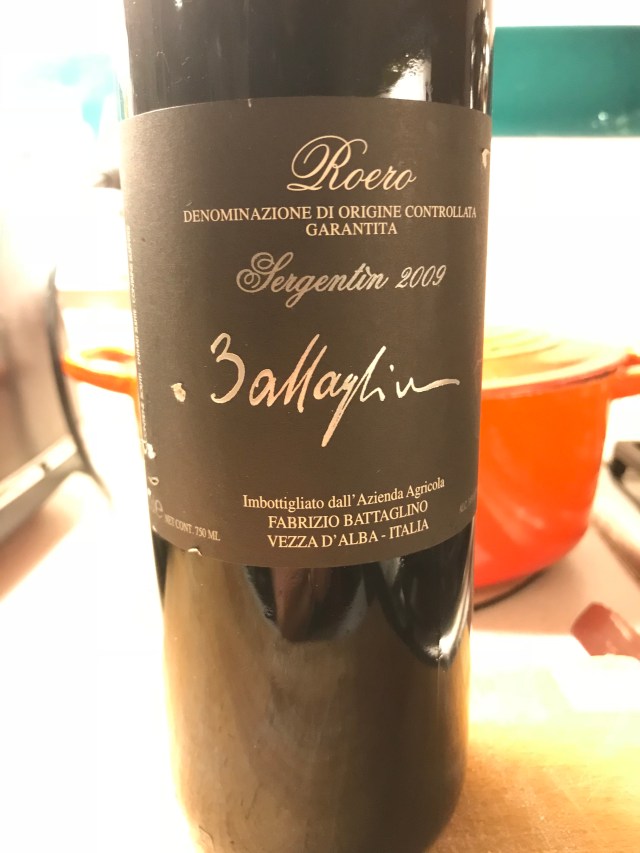
I also drank my first Piemontese wine of the season last week, Fabrizio Battaglino’s Sergentìn Roero 2009, and it looks like I may drink some more Nebbiolo on Friday. So a good reason to make the effort to attend this Tasting, and it was well worth that effort.

Relief maps are becoming quite common, and these well positioned reliefs of Barolo and Barbaresco were perfect to locate producers’ vineyards.

ROERO

Maybe Roero needs a geographical introduction. It’s only just north of the Langhe (north of Alba and Bra), but I’m amazed how many people ask where it is. Its wines have been quietly gaining a reputation for a decade or more, first via white grape Arneis, and now much more for the Nebbiolo reds. Some wines can be more earthy and lack quite the elegance of fine wine from the two “B”s, yet you can also find lovely perfume here from sometimes lighter wines, perhaps more delicate (which can make some of the tannic young wines seem weedy after Barolo’s finest). This is put down to a much higher proportion of sand in Roero, than in the Langhe to the south. Let them age and that elegance comes through, on nose and palate, in wines from the best producers.

Cascina Val del Prete

The family name here is familiar, Roagna, though I don’t know that Mario Roagna is related to the more famous producer of that name. His parents were sharecroppers who bought a well sited amphitheatre of vines in the 1970s. Mario brought organics and then biodynamics to the picture, and his son Giovanni brings experimentation. This domaine, based at Priocca, is now seen as one of the best in Roero.

Roero Arneis Luèt 2016 comes from water retaining clay soils, more clay than is usual in Roero. It sees one-and-a-half days on skins before fermentation in stainless steel (which is the standard vessel for the Arneis in the region). Arneis rarely makes wines of great complexity, but it is a nice grape and a good alternative to the more widely seen Cortese of Piemonte’s eastern and southern vineyards. This one is quite concentrated with quince, pear and almond.

The red wines here rise from the lightish, young vine, Roero Bricco Medica 2013, concrete fermented, where the concrete softens the tannins (increasingly, producers are seeing the benefits of concrete again), via Roero Vigna di Lino 2013 named after Giovanni’s grandfather (40-y-o vines spending 16 months ageing in barrique), through to Roero Riserva 2013, a selection of the best grapes from the best part of the hill, fermented in steel and then aged 24 months in second year barrique. Quite structured, yet as Roero wines tend to become ready to drink earlier than their more famous neighbours, this should drink into the mid-2020s.

18559D96-DF68-485C-AD16-EE35FAAABF79

(Don) Giovanni, Val del Prete

Cà Rossa

This is the project of Angelo Ferrio, a quiet and thoughtful man who produces some truly under the radar cuvées from some of the top sites. The Arneis here, Roero Arneis Merica 2016, is a fresh and drinkable wine, but the reds are more serious.

Roero Valmaggiore Audinaggio 2015 has a lovely nose. It’s pretty tannic right now but for an entry level 2015 it is impressive. Remember, Sandrone makes a Valmaggiore, so as a location it gets the seal of approval from one of the wider region’s more expensive producers.

Roero Mompissano Riserva 2013 is a bigger and even more complex wine which sees 30 months in large oak. The soils on this site are what are known locally as “white soils”, containing marble. The nose has genuine depth developing and the potential is obvious. To show that potential, Angelo had his Riserva 2010 open. Of course, it still needs much more time, but you are sipping a potentially profound wine from this great vintage.

                           Angelo Ferrio and his Cà Rossa wines from Roero

Giovanni Almondo 

There were two Arneis here. Roero Arneis Bricco delle Ciliegie 2016 is made from vines between 35 to 60 years of age. It’s refreshing with a pear-like finish, dry and textured. Roero Arneis Le Rive del Bricco 2016 is an old vine selection from the same vineyard which is more concentrated, almost a touch tannic, and clearly with the potential to improve in bottle.

Although known locally perhaps as a white wine producer, the reds here are made in an intentionally elegant style. The Roero Bric Valdiana 2015 exemplifies that approach, coming from 75% sandy soils (the rest being limestone and chalk). Aged in large oak, only 4,000 bottles are produced.

8E2EAD3D-6E56-40B8-B456-DB84665E1C4E

BARBARESCO

Giorgio Pelissero

This is a producer saddled with the modernist tag in the past, although the new French barriques tend to be used far more for his top wines. It is also true that Treiso, where Pelissero is based, has a reputation for elegant wines, compared to those of Neive, and Barbaresco itself. On the whole, the late harvest in 2013 produced quite classical wines in Barbaresco, and there is a certain tannic structure to them, no doubt accentuated by the oak in this case. But it is clear that underneath the tannins, that renowned elegance resides, alongside genuine personality waiting to emerge.

Barbaresco Nubiola 2013 blends fruit from six vineyards which then see stainless steel for fermentation before 18-20 months in large oak. The fruit is smooth under the tannins and it has a nice weight. Barbaresco Tulin 2013 is a single vineyard near Treiso made in a traditional style but with a lovely sweetness on the nose. Effectively, you get more tannin, albeit fine tannin, and more depth here. The fruit underneath is lovely and fresh.

Barbaresco Vanotu 2013 was their most expensive wine on show, from a vineyard closer to Barbaresco itself where there is more sand. It showed softer tannins, and also illustrated the Pelissero reputation for elegance.  Barbaresco Vanotu 2010 served from a 3-litre bottle was gorgeous, even now, though you would not want to waste it by opening now.

Paitin

The Pasquero family are rightly famous for their part of Serraboella, and the estate is named after that singular plot within it, Sorì Paitin. The wines have a reputation for ageing well, but I have also heard them described by some Piemonte fans as pretty oaky. I’m not sure that this is not sometimes their tannic structure, which aids their longevity, showing through.

Barbaresco Serraboella 2013 does not appear oaky. In fact it is a well priced entry level with a nose already developing nicely, and a certain smoothness underneath the tannin. Barbaresco Sorì Paitin 2013 has that extra degree of concentration you’d expect from this parcel within the cru. I think the drinking window of 2020 – 2030+ is quite conservative in this case. Someone elsewhere was talking about “pomegranate” in tasting notes. This is a wine where I’d definitely use pomegranate, along with rich cherry.

The apogee of the list is Barbaresco Sorì Paitin Vecchie Vigne Riserva 2011, which is from the very oldest vines in the parcel, from where the family’s first vines were planted in 1796 (obviously replanted since!). This is a very impressive wine for me, and the tannins seem somehow softer, perhaps due to the plush underlying fruit. 2011 was seen as an excellent vintage on release, but one which might drink well early on, I think.

To press the point we were treated to an off-list Sorì Paitin Riserva 2004 from magnum. It is still tannic, but coming into its own. My fears that 2004 is drinking before 2001 are making me rethink my planned Barbaresco for lunch on Friday…

BAROLO

Palladino

Palladino is not a name I know, but I’m pleased to have become acquainted with their wines. They use the old Cappellano winery in Serralunga where they make quite traditional wines, fermenting in concrete and ageing in “botti”. What I liked about the wines here was their ease of drinking, quite forward but not lacking anything as a result. But as the Tasting brochure says, rather atypical, with their well integrated tannins, for Serralunga Barolo.

The opener here is Barolo del Comune di Serralunga d’Alba 2013 which is a blend of vineyard sites which spends two years in Slovenian oak. Although they put a drinking window on it of up to 2028, I think this will be enjoyable well before that.

Barolo Ornato 2013 and Barolo Parafada 2013 were both enjoyable and, for £190/6 in bond, far more reasonably priced than the bigger names. The former is off clay and chalk with no sand in the soil. It shows salinity and an earthiness, but complexity too. The latter, of which there are at 3,500 bottles, 500 more than the Ornato, is very elegant. It sees a year in French barrique, then a year in older tonneau. That said, there’s power there too.

Livia Fontana

Livia Fontana is much better known in the USA (and, apparently, I learnt, in Scandinavia) than in the UK. They are based in Castiglione Falletto, with some pretty famous sites. Donato Lanati consults, so there is obvious ambition.

Off-list we began with Langhe Arneis 2016 from vineyards in Roero. It was the fruitiest of the Arneis I tasted and I really liked it. Nice precise definition as well.

Three reds began with the only non-Nebbiolo red of the day, Barbera D’Alba Superiore 2014. This was dark-coloured, with deep cherry fruit and a lick of brambly bitterness on the finish. From a site near the family home, it sees two years in oak and then up to 18 months in bottle before release, and I would suggest it is one of the “superiore” style of Barbera that will benefit from ageing. Four or five years for it to mature, I’d guess.

Barolo Villero 2013 is one of several famous crus of Castiglioni and as such it gets three years in older oak and further bottle age. It’s a pale wine with a bouquet that’s quite developed, yet elegant. Lighter on the palate than some, but in a good way. Barolo Bussia Riserva 2011 has an even deeper nose and combines elegance and power…perhaps more elegance than I expected from the broad shoulders of Bussia. We were also treated to a taste of the Bussia Riserva 2010, another very elegant and admirable rendition of this vintage.

Carlo Revello & Figli

Carlo appears quite fierce in some ways but he is a very thoughtful winemaker, now based in Santa Maria in the La Morra zone, working with his son, Erik, after the family holdings were split with his brother in 2016. He has vines in Rocche dell’ Annunziata, Giachini and Conca.

The vines for Langhe Nebbiolo 2016 were planted in 1960, on chalk and clay, and the grapes are fermented in horizontal rotary fermenters, before ageing in barrique. But this is a lighter style of Nebbiolo, which will age for sure but will also be approachable soon. I think the old vines show here. A promising start.

Barolo 2013 continued that promise. I’d read a note that someone who had recently drunk the 2012 (in Verduno) and 2013 of this wine, both within a week of each other, had felt the 2013 surpassed the previous vintage with ease. Not having a 2012 to compare it to, I really liked this 2013 with its high toned nose, and mouth coating tannins. The same rotating fermentation vessels are used but the Barolo grapes get four days skin contact.

There was a Riserva on show from the same vintage, Barolo RG 2013. “RG” stands for the components of the blend, originating from Rocche dell’ Annunziata and Giachini. It’s an incredibly impressive wine, but very tannic. A Rocche dell’ Annunziata Riserva 2005 was poured from a 3 litre format. It was a good vintage to choose, the nose very voluptuous.

The wines here showed tannin and structure, but also personality and they made me want to try more of them in a dining environment.

E Pira & Figli

This producer is probably better known by the name of the lady behind the operation, Chiara Boschis. Chiara farms around 8.5 hectares in the wider region, but with some spectacular sites including a near-perfect slope forming part of Cannubi. She has been joined recently by her brother, Giorgio, formerly of Borgogno. I suppose this is the least “under the radar” of Ultravino’s producers, and of course Chiara’s wines are available in other places, but always in tiny quantity. So it is good to find another source.

Chiara is famous for many things, but perhaps more than anything, for the meticulous attention to detail that this Economics graduate has brought to this estate, and probably more than anywhere, in the vineyards. Since taking over in 1990 she has invested in new sites, and Barolo Mosconi 2013 might be the first vintage from this site which I believe was purchased that year. Velvet would be my main descriptor here, albeit the proverbial velvet glove hiding an iron fist.

If you were impressed by MosconiBarolo Cannubi 2013 is something else. A 1.5 hectare parcel on sandy soil, a little altitude and a near perfect southwestern exposure make this one of the best sites in Barolo (the whole region, not just the village). Even at this stage it is elegant and majestic, and even though you’d not be thinking of popping a cork before 2025 at the very earliest, preferably longer. It would be the wine I’d wish to walk away with, although preferably one from a vintage more nearly ready to enjoy.

You can see Chiara’s Cannubi plots shaded in pencil if you look carefully at the map (right above the vineyard name on the pale brown patch)

La Briccolina

This is another producer completely unknown to me, but there is a sad story to be told. Tiziano Grasso began bottling his own wine, albeit in tiny quantity (around 3,000 bottles per year) in 2012.  He sadly died this summer, leaving his wife and son to continue his work. There were two wines on show, and Barolo 2013 was slightly corked. Not irredeemably corked, so it still tasted quite decent and was an interesting wine.

Barolo 2014 most certainly wasn’t corked, and perhaps explained why the 2013 had indeed seemed so fascinating. This is good! Fresh on the attack, there is fruit and well managed tannins, the latter softened by ageing (this time) partly in cement (some wine was also aged in old wood). It is quite old fashioned in some ways, a wine where you get roses on the nose if not tar. Spicy too, a wine for truffle season if ever there was one. All that from a vintage only just bottled (release of the 2014 is planned for spring 2018, but there were only around 3,000 bottles made).

The grapes are from old vines (50 years plus) planted at the top of the Briccolina hill, which is a south and southeast facing amphitheatre reaching around 320 metres above sea level, at Serralunga. Tiziano’s sad loss is a real blow, because I get the impression that critics were just beginning to notice his wines. Hopefully his family will be able to continue his work.

E027763D-FCEF-4F82-8B84-B3AFCF2B282E

What conclusions could be drawn from the tasting?

  1. 2013 seems to have produced some very good wines, perhaps quite high in tannins, but many here were both attractive to “taste” and showed real potential. Some tannins were very dry, but most were well managed.
  2. Talking to the producers, they were naturally quite enthusiastic about 2015, but could not contain themselves over 2016. Those I spoke to here seem to give it  “best ever” status, with a massive smile on their faces.
  3. 2017 is a vintage they were more guarded about. Reactions were along the lines of “well, in our case we were lucky and missed most of the frost”, and if you listen to some you’d think that all the hail fell on Treiso. Maybe it did?
  4. This was an extremely enjoyable tasting. Not all the producers were under the radar. I already knew the wines of Pelissero and Paitin quite well, and Chiara Boschis not quite as well as I’d dearly love to. But the rest were relatively under the radar, and certainly every one had something worth buying.
  5. Palladino’s wines were interesting for me, and also La Briccolina, I think because the wines may have been a little atypical, but also had something different about them. I was also impressed, from the producers I didn’t know, with Carlo Revello, particularly liking that 2013.
  6. Roero may not yet be on the lips of all Nebbiolo lovers, but it should be soon. The wines generally have a different profile to Barolo and Barbaresco, but then so do the equally discoverable Nebbiolos of Gattinara and Valtellina, and Roero arguably has more  producer “names to watch”. As the two “B”s rise in price, this will be somewhere to look for good drinking, perhaps more so than the “Langhe Nebbiolo” of all but the top producers from the more famous zones.

Ultravino should be very pleased with this tasting.

1C48971B-7489-4D0A-AD61-562BA5B3E939

Downstairs at 67 Pall Mall, a good central location for a tasting, though I wouldn’t have wanted this rather small room to be any busier than it was by 3pm. The picture was taken before 2pm as we got under way, near perfect conditions for tasting!

Posted in Fine Wine, Italian Wine, Piemonte, Wine, Wine Agencies, Wine Merchants, Wine Tastings | Tagged , , , , , , , , , , , , , , , , , , , , , , , , , , , , , , , , | Leave a comment

Brunswick House – Some Classical Wines in a Classical Setting

It had been a while since I was at Brunswick House in Vauxhall, so I was very pleased to be back, even on a miserably wet night, earlier this month. When I’ve been before the food has been exceptional, largely because the sourced ingredients match what the kitchen does with them. This was also a chance to catch up with friends I’d not seen for a while, but who habitually drink what one might call more classical wines than I often write about. Yet there will be plenty here to interest everyone. I think, in fact, we’ll begin with the wines this time.

We managed a couple of aperitifs before the food began to arrive. We serve all the wines blind at these events, only for a laugh, but I think the first was already revealed when I got there. Dönnhoff Oberhäuser Brücke Riesling Spätlese 2004 is a wine which was possibly unfairly criticised by the man who brought it, but I saw his point. It has a pretty good attack and really suggests some complexity. The problem is that this didn’t really last very long. Everyone agreed on that, but coming in from the rain, it still made a nice refreshing glass, not too sweet but needs more length.

F37F3527-97B1-4A70-BD6B-0C5B0DF49393

Joseph Perrier Cuvée Joséphine 2002 was my offering for the evening, part of a batch from London merchant Jeroboams which quite a few of us bought into at the time. It’s fair to say that others have had mixed experiences, but my last bottle was very good, hence my decision to give it a go. It was quite rich and evolved after an initial reticence. I have one bottle left and will drink soon. Good, but not a patch on the last 2002 I took to a wine event, the magnificent Pierre Péters Les Chetillons. Whilst the latter wine should be good to around 2030, I wonder whether the Joséphine is more likely best by 2020?

7D87652A-7C35-46B1-944C-5066855061B9

The next wine was fun to try to guess, and after initially suggesting it might be Swiss, I suggested Loire. It was in fact from Margaret River, and based on a blend of Chenin Blanc, Viognier and Sauvignon Blanc. LAS Vino CBDB 2013 is a wine I’d heard about but never drunk, and it may be worth seeking out (I think the current vintage may be the 2016 though). LAS stands for something like Luck (of the weather), Art (of making wine) and  Science (which underpins it). The man behind the label is Nic Peterkin, whose dad is behind Pierro and whose mum is Vanya Cullen’s sister, so he’s Margaret River Royalty.

The 2013 is nicely evolving. You get honey and almond, then a creamy peachiness to the fore, but also some tropical fruit too. I’d love to grab a bottle as it’s really quite distinctive.  It doesn’t lack freshness, despite about 14% abv, and it costs around £40 from Liberty Wines. I wasn’t sure what CBDB stands for. Apparently it’s Chenin Blanc Dynamic Blend, but it somehow got me humming Talking Heads’ Psycho Killer. Obviously thinking of CBGBs. Wonder whether that was intentional?

A5AF6088-3F5A-4BEB-8B38-EFCCD117B349

Things turned a little serious next, although as a consequence the wine (if not the vintage) was not too difficult to guess. Lopez de Heredia Rioja Blanco Viña Tondonia 1973 is a beautiful iteration of a wine which almost never fails to amaze, especially when given the requisite cellaring. You really would not believe how fresh this is. Waxy and with some salinity on the nose, the palate is honeyed, and so so long. Stunning! The man sitting next to me said “maybe a fraction light on the finish”. I think he was being a bit picky. You can still source the 1973 GR for a small fortune, and the 1999 for around £300, but the current vintage, 2004, is usually around £30 retail (and might be had for less). It is, potentially (assuming you keep it), one of the bargains of the wine world. I’m just waiting for the next vintage of the Rosado to come along.

AB6E39F2-D3F0-451E-B01B-0103BA58574D

The next wine was obviously Sherry, but even this pretty knowledgeable bunch could not quite decide which type. It was a luminescent bronze colour, mellow and scented, but at the same time so fresh. Darker than a Pasada for sure, yet with a lightness on the palate. I was quite firmly thinking Amontillado, though certainly Equipo Navazos. In fact it was Equipo Navazos Palo Cortado Bota 75, probably the most elegant Palo Cortado I’ve ever drunk. It turns out that the juice here is exactly the same as that which went into the first edition of the EN Table Wine, Florpower, from Hijos de Rainera Pérez Marín in Sanlúcar.

At just 18% alcohol, moderate for a Palo Cortado, this shouts breed and finesse, and indeed even those who find EN bottlings quite a shock should appreciate the elegance of this one. In fact it combines a smooth middle with something quite floral on the finish. In this instance, to say it lacks the intensity usually found with ENPC is merely to suggest that this allows a whole different dimension of Palo Cortado to become apparent. It was quite a revelation.

A13CDFFB-0CDF-4E98-8D73-82302BF94A98

I’m going to have to zip through the reds a bit more quickly, and unfairly. Artadi Rioja Grandes Añadas 1999 was clearly a modern Rioja, wasn’t it? Well, I was thinking Super Tuscan to begin with. The nose was very much cherry and raspberry, with a touch of stalk and quite a bit of oak. Don’t get me wrong, the nose was in fact the best part. The palate was much more dumb, a phase perhaps?

5AA7B64B-1285-49C2-981D-2AB650F9842A

It was put to shame by my red of the night, Produttori Barbaresco Riserva Paje 2004. Most went with Barolo but soon guessed The Prod when directed to its neighbour. Anyway, this is way more delicate than the tar and roses cliché, more fruity (raspberry), with that lovely cold tea note. A gorgeous wine which I’d suggest is drinking now, but in the early part of full maturity, with a bit more to give.

95A9B5D3-A72F-43F7-A8B8-F4F476E03F41

Three classic Bordeaux followed. Château Giscours 1966 came as a Berry Bros bottling and was a privilege to drink. It contains two-thirds Cabernet Sauvignon, which has doubtless sustained it as it gave us a good twenty minutes of good fruit before fading rapidly (longer, I think, than anyone expected).

1589EF1E-0462-49E2-905F-6E03DFB7257D

It was tough for Clos du Marquis 1983 to follow it. I’d had some bottles of the 1982, which I really enjoyed, and generally 1983 produced some under rated wines just lacking the longevity of the preceding year (that was my experience, not shared by all critics). This was nice to drink but, as with many 1983s at this level, it is approaching the end of its drinking window.

I bought a few wines from the vintage of the next bottle, it being still available, if not in great quantity, when I began to appreciate finer wines. It’s a vintage which I, at least, found quite distinctive. This enabled me to guess the vintage of  Château Giscours 1975, and as it was a backup for the 1966, the property. There is something hard about a lot of ’75s, almost like a full stop after the upfront fruit. Very nice, though, and it didn’t fade like the ’66 (this bottle was under the Château label). I’d be very happy if I owned a few bottles of this.

Our last wine of the evening was a classic red from Burgundy which I kicked myself for not getting near to identifying exactly. It’s a producer I used to drink quite regularly up to a decade ago. De Montille Pommard “Pezerolles” 1er Cru 1996 is classic Hubert, with that firmness of structure which Pommard exhibits ramped up another notch. In light of the producer and the wine, it really does need a good half-decade more in the cellar, but yet I found it hugely enjoyable, especially as it warmed up and the underlying fruit began to peek out.

I’m sure I have some 2001 of this. I had a look but it must be buried somewhere. On this showing of the 1996 I didn’t feel I needed to look too hard.

374900B2-398E-47D2-A502-C0EF0001C5E1

An immensely enjoyable evening of wines was matched by some exceptionally nice food. Red Mullet tartare, Stonebass pan fried with artichoke and black garlic, Venison and Pork Trotter Ragu, and well aged English Longhorn Beef (two porterhouse and two tomahawk steaks of some depth between us) were all highlights. The beef was mouthwateringly immense, and the small dish of ragu was very rich and filling (but you just know you’d love to come back for double helpings some time).

It is true that the service was probably a little slow, but then we were eight of us. The only surprise of the evening was the bill. We’d asked for a set menu (and arranged BYO), and it is true that the beef was an optional extra, but I walked away paying twice what I’d previously paid at Brunswick House, which is a reminder to know what you are paying for. So it turned out to be an expensive Tuesday night out, but with the quality of the wine, the food and the company, the bill was something I was able to get over after the initial shock.

Brunswick House is at 30 Wandsworth Road, London SW8 and open every day for lunch, and dinner (but closes 5pm Sundays). Nearest Underground is Vauxhall, and if you get the right exit, it’s only a couple of minutes or so to walk.

The restaurant is part of a warehouse selling antiques and architectural salvage, much of it going to restaurants etc. If you want a flavour of the quirky but very attractive dining room, take a look at the front page of their web site below.

Check them out at brunswickhouse.co


Posted in Dining, Fine Wine, Wine | Tagged , , , , , , , , , , , , , , , | Leave a comment

Eastern France Part 5 – Bérêche, Champagne

I can tell you two things about my relationship with Bérêche which will inform your reading of the rest of this article. First of all I will name you my favourite four Champagnes. They are Péters Chétillons, Philipponnat Clos des Goisses, Taittinger Comtes and Bérêche Reflet d’Antan. Okay, there are a few others, and if someone gave me Clos du Mesnil more often…but keep it simple. The other fact you should know is that Champagne is the only wine where I could survive on just one producer. No guesses for which.

Bérêche was founded in 1847, so has a proud history from a time when the idea of “grower champagne” was a long way from conception. If a Champagne producer is lucky, every few generations someone will take over who has the drive and vision to take them to another level. Bérêche is most fortunate in that the current fifth generation, in Raphaël and Vincent, has two such people.

5AD8B25E-C517-4992-9CE9-B9349B646B15

Two young men, with their father, who have grown to become two of the most creative people on the Montagne, with great sensitivity for their terroir

Bérêche & Fils owns around nine hectares of vines. Some are around their winery which sits up on the ridge at Craon de Ludes (or Le Cran). Some sit down in the west of the Marne Valley, at Mareuil-le-Port (not to be confused with Mareuil-sur-Ay). The rest of their vines are at Ormes, which is on the Petite Montagne, not far from the better known Vrigny.

The reason why it is worth detailing this information in this instance is that more than anything else, Bérêche is a producer of “terroir wines”, or certainly of wines where the different terroirs can clearly be seen to contribute to a blend. In fact both of those words, terroir and wine, carry equal weight. These are not just terroir Champagnes (a difficult concept for some aficionados to agree with), but they are also wines.

Every April an event takes place called “Terres et Vins de Champagne“. This was the first professional tasting in the region itself which allowed the trade to taste the vins clairs (still wines, before second fermentation) from a host of producers (now over twenty growers). Raphaël Bérêche was one of the main driving forces behind this event, which is now seen as part of the wider, emerging, idea for a “Printemps des Champagnes“.

This belief that Champagne can, and should, express the terroir on which the grapes were grown just as much as any still wine is central to what the brothers are trying to achieve here. The front page of their web site expresses it thus: “The beginnings of every wine takes place in the vines”. This is not always a popular idea in a region where the large Marques blend their wines from a wide, and often unspecified, area. It is the rallying cry for the “artisan grower”, differentiating his product as a wine of place. But, of course, we all know that in wine, quality begins with meticulous vineyard work.

2E26EF43-EBBF-4603-B9DC-084050D5462A

It is always a pleasure to visit Bérêche no matter who is there. We most usually see Raphaël, but he was in London with Vincent, pouring at Peter Liem’s very exclusive event at The Savoy, so it gave us the chance to taste again with Catherine, their mother.

The first wine to taste is always the Brut Réserve. Not only does it give the measure of the producer, setting the tone as well as quality, but in my experience if you don’t appreciate the entry level you often find something lacking further up the range. That said, Bérêche Brut Réserve is not a run of the mill “NV”. This one is from the 2014 base, disgorged in July 2017 and dosed at 7g/l, The highest dosage of all their wines. It combines really great fruit from (broadly) equal parts of the three main varieties.

Naturally this wine is not so much a terroir wine in that it blends fruit from every location where they have vines, but nevertheless it is possible to identify what each brings to the blend. For me this is especially the minerality of Ludes fruit and the richness coming from the Pinots off sand and limestone at Ormes. The mineral backbone and precision is amplified by the house producing non-malolactic Champagnes, but they also all have, to a greater or lesser degree, a certain rounded richness. This may be in part down to using 60% oak for fermentation, and (unusually for a wine at the entry level) 30% reserve wines from their perpetual reserve (rather like a solera system). Brut Réserve sees 24 months sur lattes.

Les Beaux Régards is a pure Chardonnay wine, this sample being from a 2013 base, disgorged March 2017 and dosed at just 3g/l. This wine is from two plots of old vines at Ludes on the Montagne. It is quite different to a lot of Chardonnay from the Côte des Blancs, balancing real fruit precision again with a rounded quality (it is aged in 350 litre barrels). A wine which needs more ageing than I fear it gets (I’ve been as guilty as anyone), but capable of some genuine complexity when it gets it.

All of the Bérêche cuvées apart from the Brut Réserve do their lees ageing (32 months for this wine) under cork. Raphaël always stresses how important he feels this is to the gentle development of the wine as it undergoes this crucial lees ageing, and Catherine is no less keen to stress the point.

What is the effect of ageing under cork? Oxygen intake is different, but not necessarily in the way you would think. Research suggests that initially oxygen exchange is lower under cork, although it increases exponentially under natural cork the longer the wine is aged. This is why the Brut Réserve is aged under crown cap (for two years), whereas some wines here are aged eight years or more.

593DD4D8-2085-43A7-9A31-ABF2551AD357

Le Cran is the vintage wine. The cuvée blends two plots near the winery, Le Cran itself facing west, towards Ludes and St-Jean, facing east towards Mailly.  The former is Chardonnay and the latter, Pinot Noir, and Chardonnay slightly dominates the blend (60:40). The soils in both plots are chalk and yield quite high acid juice, but 84 months ageing adds complexity. As with Les Beaux Régards, production is just between 3,000 to 4,000 bottles, but in a normal vintage.

When out in the vines near Ludes I’d noticed whole vineyards of unpicked black grapes. Pinot Noir tends to bud and flower early, and guess what, 2017 was another year of terrible frosts. The problems really occur when spring comes early and the vines wake up, only to be hit by a return to winter in these northerly climes. When this is accompanied by later rains and rot sets in, this is devastating. The Bérêche family lost 30% of their crop, not as bad as some, but they still found some plots wiped out completely.

The grapes on the vines, which look so puzzling to the casual observer in the November sunshine, are actually part of a second crop which are nowhere near mature enough to make wine. If you have already lost a large proportion of your crop you can’t afford to pick them, so they await disposal at winter pruning.

B2789A91-CA62-45FF-8D66-43983536DE16

You can clearly see what looks like a full crop here, near Ludes, but this photo was taken on 3 November

Campania Remensis is one of my favourite Rosé Champagnes. Pink Champagne may not be fashionable, but consumers were for years asked to pay a premium for fairly anodyne rosé wines. Now, producers like Vilmart, Péters, Cédric Bouchard and Bérêche are making wines with character and finesse, and in the case of this wine, there’s a textured (almost earthy) note, and real elegance too. Thirty-six months on lees, this doesn’t need drinking soon. The 3g/l dosage sees the gentle red fruits come to the fore. Mainly Pinot Noir, there’s also 30% Chardonnay in the blend, colour coming from 5% Coteaux Champenois Rouge.

Returning to the idea of terroir wines, it was perhaps a natural progression for Vincent and Raphaël to make still wines. The difficulty with Coteaux Champenois is always the price. Such wines are necessarily expensive to make and the general wine lover will always appear to find better prices for Pinot Noir and Chardonnay still wines elsewhere. But that perhaps is not the point. Those who truly love Champagne see a place for these wines (as we do for Rosé des Riceys from the Côte des Bar).

678C1227-A590-4204-A73B-EB8C3BBE5494

There are two Coteaux Champenois – the red Montées (75% Pinot Noir and 25% Meunier from Ormes, planted in 1965) and the white Monts Fournois (Chardonnay from Rilly, planted 1961). The former is the same wine used to colour Campania Remensis. When there is so much fine sparkling wine here, I can quite understand a reluctance to buy these still wines, but I’m guessing you will be hard pushed to find two such masterfully made and well delineated still wines from the Montagne de Reims.

The last of the Champagnes made by Maison Bérêche is Reflet d’Antan (I know I missed out the Pinot Meunier Rive Gauche). I didn’t taste it, but nor did I the Reflet, which is so rare that a bottle isn’t opened very often. As I said at the top of the page, Reflet is one of my very favourite wines from the region. It comes out of the Réserve Perpetuelle, begun in 1985, and is a blend of Chardonnay and the two Pinots in the proportion 30:35:35. It spends 41 months on lees under cork, and is currently bottled with 6g/l dosage.

This is a rich wine, in large part from the “solera-syle” ageing in 600 litre oak which effectively increases the age of the blend, and from the richness of the juice which goes into the reserve to begin with. You get quite a nutty hit and also more dried fruits than fresh ones. It is one Champagne where the adjective “honeyed” is not out of place. There is nuance, of course, but that is perhaps not the point. It is a little different, a wine of truly singular character and personality. It is also a Champagne of great length. Bottle age mellows it magnificently.

Even with the dosage being slightly higher than the majority of the wines at Bérêche (bar the Brut Réserve), and all my comments about richness, it finishes very dry with texture and extract. For me, amazing, and generally still good value compared to most prestige cuvées (my last bottle purchased retail in the UK this year was £85 and you may even squeeze a bottle or two for less).

Raphaël and Vincent have also begun to work as micro negociants, being very careful in what they select. The Crus Sélectionnés are not a range set in stone, but a Collection is released each year to represent Côte, Montagne and Vallée. For the 2016 release there is Côte from Cramant (2007, 4,000 bottles); Montagne from Verzenay (100 magnums of 2002, and 1,000 bottles and 100 magnums of 2004); and Vallée, this latter being a non-vintage wine with 4,990 bottles aged 66 months in cave and 2,371 bottles aged 60 months. I’ve a particular liking for the Côte from previous releases, and I enjoy seeing what Raphaël can do with fruit from the Côte des Blancs. The 2005 Côte had more than ten years ageing (you read that correctly) and there might still be some knocking around in the UK. Remarkable!

If you are beginning to explore this producer do try everything you can, although all of the wines genuinely benefit from time in the cellar, more time than I’ve probably had the patience to give them in the past. A word of warning – there is more often than not no wine to sell at the domaine and several friends have been disappointed. Their UK agent, however, is Vinetrail, who generally has stocks. Individual wines are often available at the usual good independent wine shops.

You’ll pass the Bérêche premises on the brow of the hill at Craon de Ludes on the Montagne de Reims. If you are coming up from Reims, or indeed if you are frustrated at having driven past, driving from Epernay, do beware of the speed camera (facing uphill on the Reims side) as the speed limit is very low.

Check out their web site here

9E20763B-8AC1-4A13-B1D5-997B97FE828A

Posted in Champagne, Sparkling Wine, Wine and Food, Wine Travel | Tagged , , , , , , , , , , , , , , , , , , | 2 Comments

Eastern France Part 4 – Domaine des Bodines, Arbois


This year we paid a shorter than usual visit to Arbois, and it must be said that the beginning of November isn’t the best time to visit. The Toussaint holiday takes away at least a day, some shops and restaurants are closed and wine producers are often away too, taking advantage of the school holidays in some cases (the Clairets of Domaine de la Tournelle, a “must visit” for me, were in warmer climes). But in any event, I was lucky to be able to visit Domaine des Bodines, whose winery is just outside Arbois on the road to Dôle. They have, over the past couple of years, slipped effortlessly into my favourite half-dozen Arbois producers, and there is plenty of hot competition.

Domaine des Bodines is the project of Emilie and Alexis Porteret. Like so many of the truly inspirational vignerons in the Jura Region, they had no background in wine when they decided to embark on this road. It sometimes seems as if this clean start allows a different way of looking at things, without the weight of tradition or family practice. I’m thinking here of people like Patrice Béguet (Hughes-Béguet) and Jean-Baptiste Ménigoz (Les Bottes Rouge), to name just a couple more.

The person the Porterets see as their adoptive wine father, the abovementioned Pascal Clairet (La Tournelle), was in a  broadly similar position himself back in the early 1990s, and this may be why the Clairets, who are a truly wonderful and warm couple, have been mentors in one way or another to so many young Jura winemakers. The co-operative attitude among the younger Jura wine producers goes a long way towards helping them get off the ground (as well as moral support there is an equipment sharing co-operative which means impossible investments can be put off until they are well established).

As Wink Lorch says in Jura Wine (2014, the seminal work on the region), the Porterets were very scared as to how they would sell their first commercial harvest of around 8,000 bottles. Now there are few importers of Jura wines who would not love to have them in their portfolio.

A few things have changed at Bodines since Wink’s book. First of all Alexis no longer works part-time at Domaine de la Pinte, enabling him to devote all his energies to home turf. Secondly, although the size of the domaine has only increased a tiny bit, they no longer farm the vines they had from Catherine Hannoun, over near La Pinte, but they have taken on a little Savagnin and Chardonnay at Poligny. Production has risen to around 15,000 bottles a year now everything is fully productive.

Another reason the domaine is more work for Emilie and Alexis is their conversion to biodynamics. They began with organic conversion, but have used biodynamic preparations for five years (La Prêle, or what we call horsetail, is used in the spring as an excellent biodynamic fungicide known to Pliny the Elder, silica in summer is sprayed on the leaves, and they use the traditional cow horn buried for six months before dynamising in water, to promote soil life) but Emilie said that the cost of certification is prohibitive for young producers with a five hectare estate.

The newest plan is to use a horse for the vineyard work. If you follow Bodines on Instagram you may have seen Emily’s first experience of horse ploughing. She’s had a lot of support from Alexandre Bain (Pouilly in the Loire). Emilie described all of these activities, especially using a horse, as “bettering ourselves”, and you can see that the pursuit of excellence is embedded in everything they do here. A horse doesn’t compact the ground like a tractor does, nor does it harm the vine roots thus shortening the life of the vines. Of course, it doesn’t pollute what in this case is theirs and their children’s back garden either.


Before tasting in the small cellar we headed out into the vines. The Porterets are very lucky, because their main vine holding is right outside their house and chai. The land slopes gently upwards to a small ridge (planted with Trousseau on its highest part), from where there are views over towards Villete-lès-Arbois and Vadans. Towards Arbois is a beautiful copse, and nearby vines are not treated chemically. In the autumn sunshine the air was fresh and the location idyllic.

The soils up here are on argilo-calcaire (clay-limestone) and the traditional mix of marnes found around much of the town. The vines were planted by the previous owner, co-operative vigneron Jean-Paul Crinquand, in 1983, which Emilie says is nice because that’s the year she was born. They have all five Jura grapes in Arbois to go with the white varieties I mentioned in Poligny.

The pleasure of seeing the vines is in understanding where and why different varieties are planted in different places, and here, seeing the ploughing between rows, which the Porterets (on their terroir) believe helps the vines, especially with drainage (the vines have always been ploughed here, even before Emilie and Alexis took over). On the way back we briefly met Alexis and his father, who helps out when he can in the vines.

The chais boasts a range of small tanks in the first part at ground level, some fibreglass and some stainless steel, all purchased secondhand because, as Emilie said, starting from scratch is frighteningly expensive.


In the Jura tradition, without comment, we began with the reds. Pinot Noir 2017 was harvested at the end of August and was direct pressed. It is very fruity, with both strawberry and raspberry present. It also tastes very pure. 2017 was a difficult harvest in terms of quantity but everyone here seems happy with the quality.

Trousseau 2017 was still macerating. The plan was to draw it off to press two days after our visit. They like to make a “lasagne” (that’s how Emilie described it), layering whole bunches with stems, bunches without stems, and then bunches with stems again. The aim is to do absolutely nothing. There is no pigeage or remontage, no added CO2, nor anything else. The wine pretty much makes itself at Domaine des Bodines.

Maceration Savagnin is a wine I was really looking forward to trying, one of the Bodines wines I’d yet to taste. It undergoes a four month maceration now. They taste continuously, and have decided that up to six months maximum is enough, so that they can keep plenty of fruit as well as the maceration textures, and not too long a maceration (they went up to eleven months whilst experimenting) also allows the balancing of Savagnin’s natural acidity with that texture. This juice was also going to be pressed at the end of the week, undergoing a very gentle pressure. It’s always hard to make proclamations based on juice, though in Jura at least I have a modicum of experience. But for me, this tasted thrilling.

We then moved to the barrel room next door, and just a little below ground level. Chardonnay 2016 is very fruity and fresh for the variety. I really have a soft spot for Bodines Chardonnay. It doesn’t lack body at all in 2016, but it does have real focus and a mineral edge. It spends two winters in wood before being put back in tank for blending, so expect release perhaps next spring, or maybe later (looking at the ’15 below).

4F043850-AFC6-47A2-BD06-CBB92DBE7978

Savagnin 2016 was affected by the cold winter of 2016/17 in that temperatures reached -13 celcius, and fermentation stopped, not recommencing until March this year. In my experience, this is not totally uncommon in the region, where January and February can famously be bitterly cold. I even know of one case in Arbois where fermentation didn’t begin again for a year, though I don’t know the fate of that particular wine. This Savagnin has some nuttiness developing nicely, and it seems rounder than the Chardonnay right now.

Chardonnay 2015 is certainly a product of that warmer vintage, being fatter than the 2016, without losing that mineral freshness. Both are appealing, and the ’15 naturally tastes more complete with the extra year. It will be bottled very soon.

We finished in the barrel room with a very nice Savagnin 2015 which will also be bottled soon. Emilie says they like to do as little as possible so that the wines make themselves, which means they are also very particular about when they bottle each cuvée. This Savagnin is ouillé, or topped-up, and it retains freshness and vibrancy. It’s one of the most popular wines from Domaine des Bodines.

7F09C4C8-626B-4FCC-8A40-2EC7E079BAA1

You really feel there is a nurturing spirit at work here, but then Emilie is an arts graduate who trained in childcare. I got the impression that she has a deep feeling for her wines, and a deep understanding of them, unusual in one so young, but it really shines through, spending a couple of hours with her.

We moved out into the sunshine to taste from bottle. In some ways this was the disappointing part of the visit, but only because there was so little to taste, and indeed to buy. The wines are in such demand that Emilie only had two wines to open for us.

Névrosé 2016 is a pale red, very much in the Jura Ploussard tradition, except that this is made from Pinot Noir. It is from a precocious plot which we saw on our vineyard walk, lower down the slope and looking more or less eastwards. It has all the refreshing qualities you’d expect from a wine best served cool. It’s fruity and soft. But it does pack 13.2% alcohol. Like the wine below, don’t expect any fining or filtration to strip the life out of the wine, so you will also get some fine sediment swirling around in the bottle. Stand it up for a couple of days, and likewise, if you decide to chill it a little in the fridge.

Pinot Noir 2016 is still very young. Emilie said that she didn’t really want to sell the 2016 yet, but that she feels sorry when people come a long way to visit and there is no wine left (remember that the 2015 Chardonnay is still in barrel here).  This Pinot underwent  eight months maceration, one third whole bunches and two thirds destemmed. This eight month period was kind of accidental, according to Emilie, because it was too cold to press the juice initially. It has only been in bottle two months, hence their reluctance to let it leave, but I promised to squirrel it away and not touch it.

71220D2C-FF2E-435C-9A34-80CCD62CAEBF

In any event you might be remarkably lucky to find some 2015 in the shops. I even tracked down some of their Ploussard “Red Bulles” pét-nat in the region. This is the first Bodines wine I ever tried, about three or four years ago and I’ve managed to buy a bottle or two every year since. It’s one of the region’s best pét-nats, although the roll call of fine examples seems to grow every year. Ploussard/Poulsard just seems perfect for fresh and fruity sparkling wine.

Emilie proved to be one of the most welcoming hosts in the region, in line with everything acquaintances had said about her. On a visit you certainly learn an awful lot about this patch of terroir, and how this young couple, just in their thirties, work here. There is a very strong philosophy, more one felt passionately than intellectualised. It entails respecting the vineyard as a living entity, allowing the wines to form of themselves, naturally, without unthought out interventions. And I think they care very much about how their wines are appreciated too, and are keen to know where they end up. It struck me as not dissimilar to wishing to stay connected to your children when they leave home. I think the wines are wonderful.


Animals play their part here too. Each family member, parents and children, has a chicken as a pet and a donkey will be arriving soon.

Domaine des Bodines is right on the Route de Dôle, immediately as you are leaving Arbois on the left (the sign is large but easy to miss). Call (0)3.84.66.05.23 or contact via domainedesbodines@gmail.com . Visits by appointment, although if you are largely interested in purchasing wine it may be best to ask if any is available.

Bodines has much of its distribution abroad, where a lot of their 15,000 bottles seem to end up. The excellent Selection Massale in California seem to stock the wines, and they are  currently listed in the UK by Les Caves de Pyrene, although I’m not sure what their current stocks are. The Cave des Papilles in Paris has, in the past, been a source, at least for Chardonnay and Pinot Noir. Epicurea in Poligny is a good bet, unless the Jardins St-Vincent is open in Arbois (see below). I’d like to think that these wines might crop up a little more widely in London before long.

ARBOIS UPDATE

Those who have an interest in visiting Arbois and the region can find a lot of information in articles from previous trips on this blog, especially those written in 2016 and 2015 (use the search function). But it felt appropriate to add a small update here.

We dined at La Balance on our first night, and some readers might be aware this restaurant has changed hands. In my opinion it is (on that showing) very little changed from what it was (it was always a breath of fresh air to go there). We drank André-Jean Morin’s Domaine de la Touraize Savagnin 2014. It’s aged under flor but very fresh as well as nutty. Not as big as some, lighter than those more complex sous-voile wines which often get described as “mini-Vin Jaunes”. I really enjoyed his pét-nat earlier this summer (see in “Recent Wines- Summer ’17, Pt 2”), and I definitely plan to sample more of this producer, who was new to me in 2017.

Sadly Les Claquets was closed whilst we were in town, but it does appear to be open otherwise, despite rumours it might close down, and indeed, seems to be open lunch and evenings (it was due to reopen two days after we left).

Also closed, as usual, was Stéphane Planche’s Les Jardins St-Vincent but Stéphane did mention as part of a conversation on social media that he will be opening Fridays and Saturdays. This, despite all the “domaine” shops in Arbois, will bring joy to all the natural wine lovers visiting the town. I did spy Stéphane in Arbois, but he looked resolute (he may have been carrying a battery charger), but I have been told that if he’s around he will open up specially (he’s been back consulting at Jean-Paul Jeunet for a while, and that’s where one might track him down).

Finally, I know of at least a couple of readers who have done some of the walks I’ve mentioned before. We did the long walk to Pupillin again this time (climbing up past the Hermitage overlooking the town before taking part of the GR59 through the forest to the village). This time we also explored the walk to Les Planches, the nearest village to the Cascade des Tufs. This is marked towards the Allée du Roi de Rome after which it is a rocky path along the western ridge of the steep cliffs which lead to the Fer à Cheval. Possibly not a walk for icy conditions, but safe otherwise, quite up-and-down with an occasional scramble, but very enjoyable. We saw mouflons up close as we descended to Les Planches. The Arbois Tourist Office sells a very good map detailing several excellent walks for €5 (called Arbois – Vignes et Villages).


Left to right:- Touraize Savagnin sous-voile at La Balance, Les Claquets in Place Faramand and Hirsinger, Arbois’ internationally acclaimed chocolaterie-confiserie. No visit to Arbois is complete without a big slab of Comté and a visit to Hirsinger.


Posted in biodynamic wine, Jura, Natural Wine, Wine, Wine Travel | Tagged , , , , , , , , , | 4 Comments