Recent Wines February 2022 (Part 2) #theglouthatbindsus

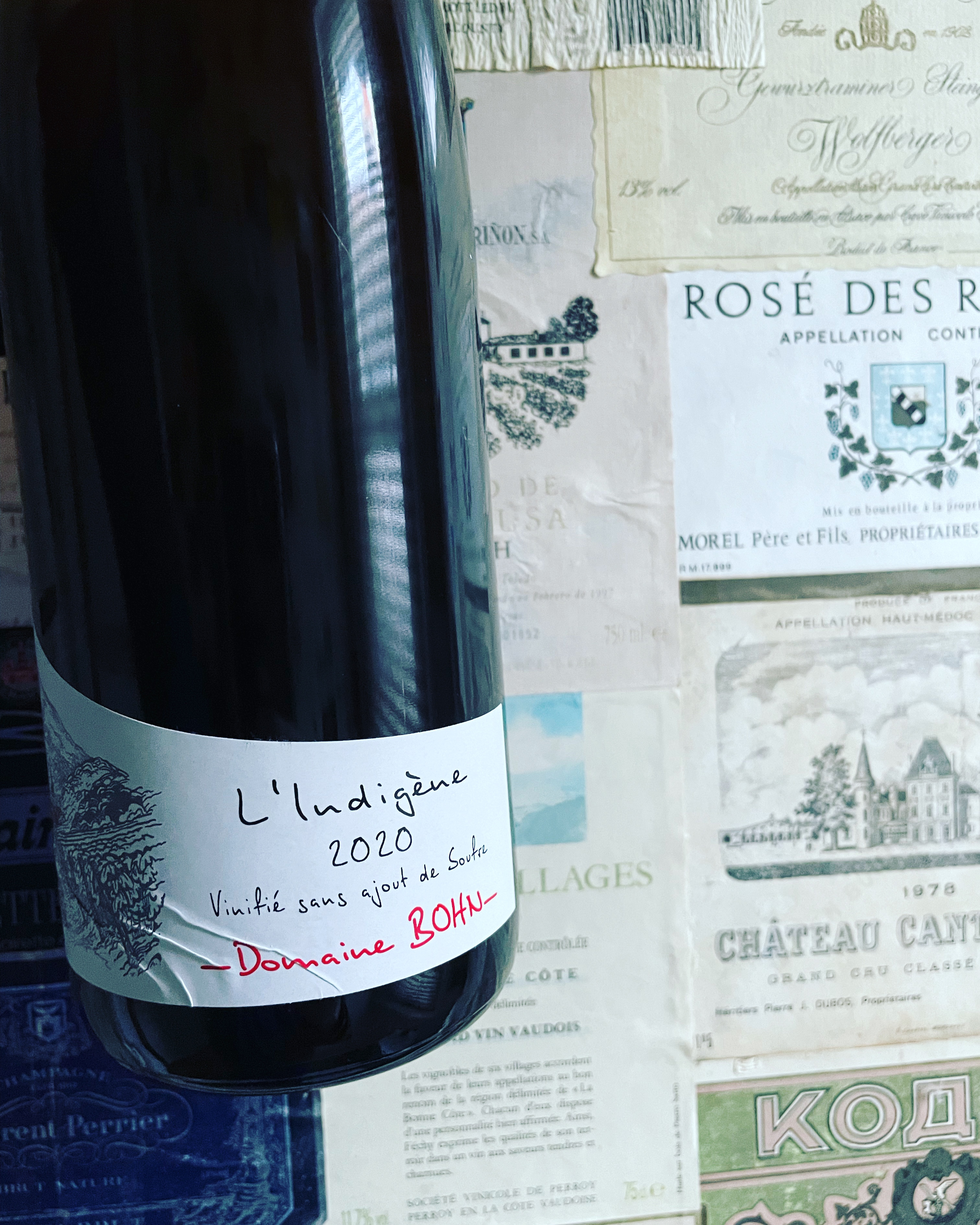
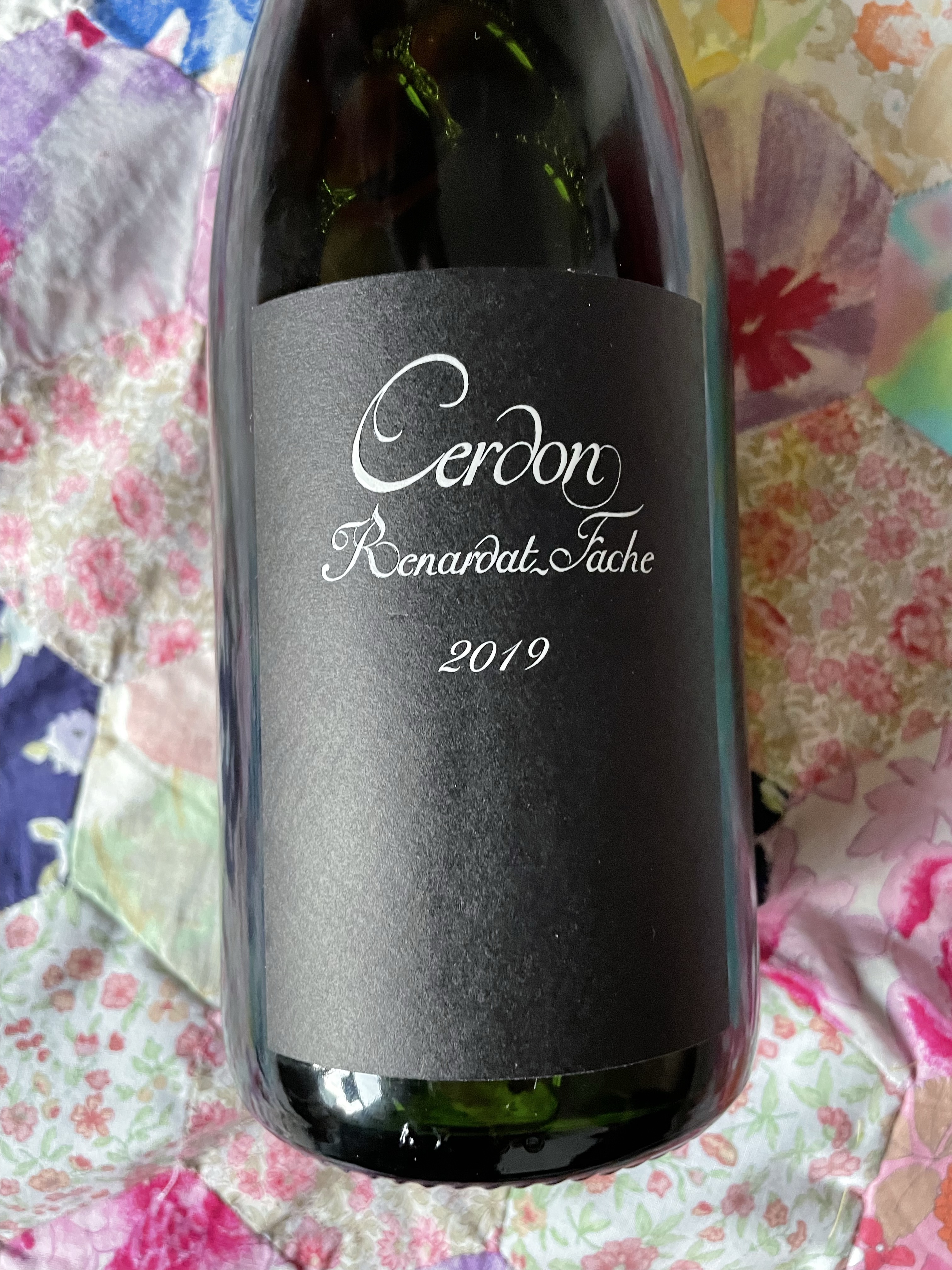
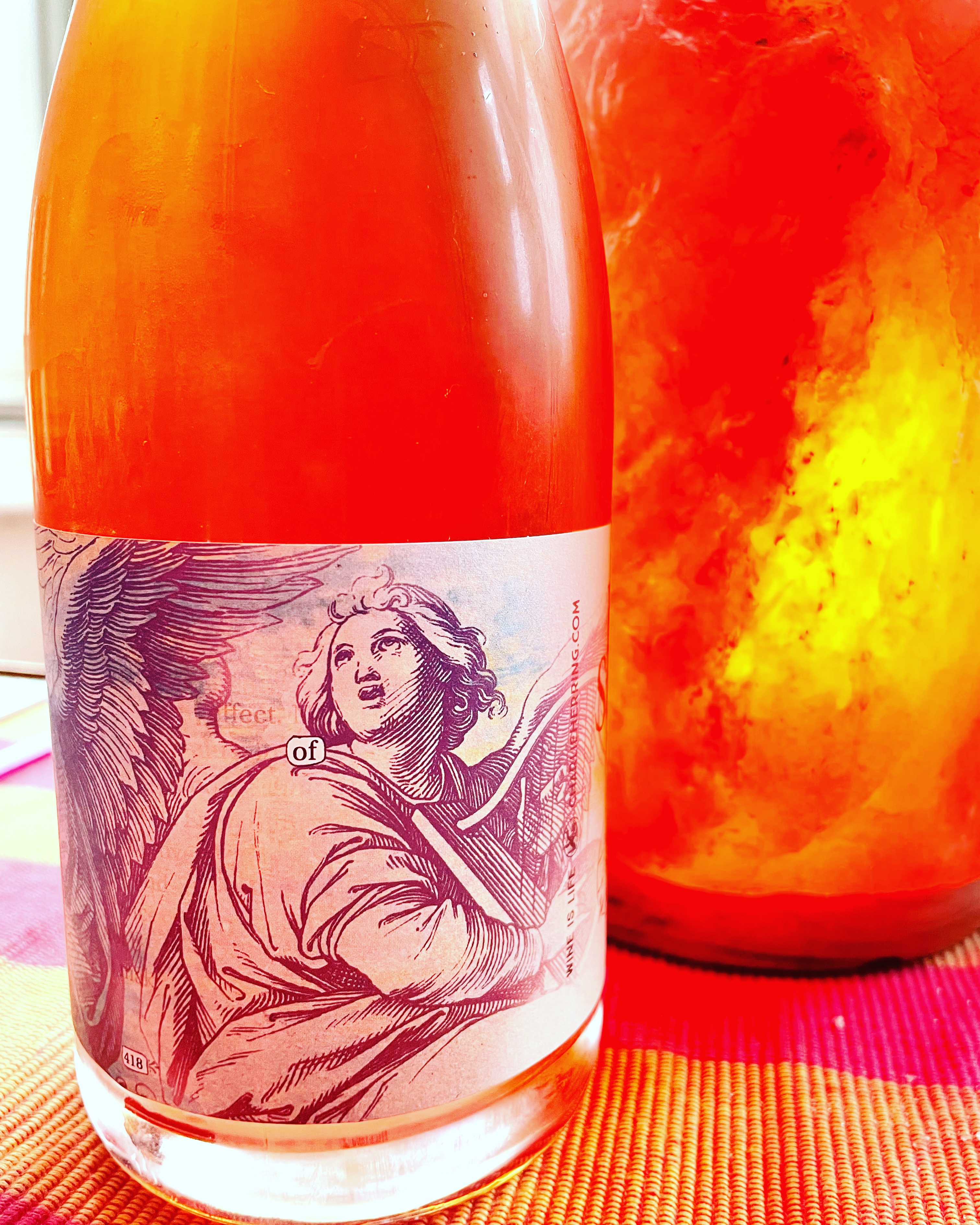
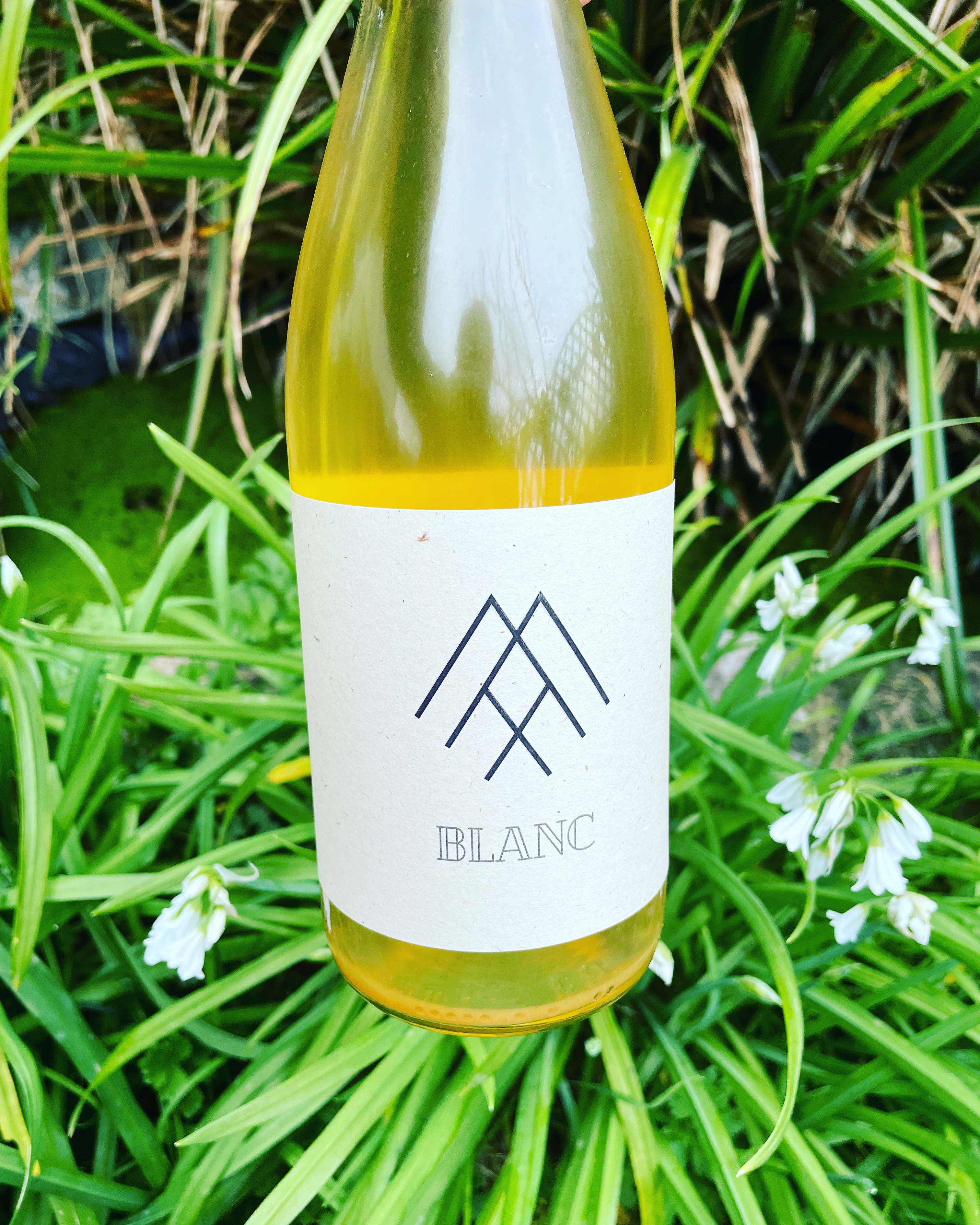
The second part of the most interesting wines drunk at home during February really does contain some crackers. It would be impossible to single out a wine of the month from this part alone, hard enough even to choose a Top 3, although I guess I’m going to have to if we all make it through to the end of the year. Starting strong with a cheeky Bierzo, we then go Mosel, Jura, Hungary, Burgenland, Savoie and Sanlúcar. Every single bottle would thrill fellow wine geeks for sure, although I guess a few people will be slightly nonplussed at one or two. That said, a good friend who has been relatively conservative in her wine tastes up until recently was, I think, rather astonished by the EN Manzanilla. Well, you would be!

“VO” MENCIA 2016, VERONICA ORTEGA (Bierzo, Spain)

Veronica Ortega Camacho makes wines as good as I’ve tasted in Bierzo, and I was an early fan, even visiting the region in 1989. The vines grow around Valtuile de Abajo on limestone, quite rare in Bierzo which is known for its slate. Version Original is 100% Mencia, from vines over fifty years old in a vineyard located near San Juan de la Mata.

The juice rests overnight on skins and maturation is in large oak vat for sixteen months. At most, the wine sees a partial malolactic so that the lively acidity of the grapes is retained. This, for me, is significant. The early freshness of Mencia in Bierzo has been lost, in many cases, to higher alcohol. This wine packs 13.5% abv but it retains a lightness and freshness which is largely a result of the acid balance.

Still, you get good legs on this dark cherry red wine, along with cherry fruit and a high note of mountain herbs. Violets appear later. The finish allows a little spice and pepper to kick in. It goes nicely with the wine’s rather attractive ferrous texture. I’d have guessed part of the wine was made in amphora but although Veronica does use those vessels, I am sure I read that she doesn’t for VO. Only 3,500 bottles were made of this cuvée in 2016. I’d say the wine has years left in it, although its youthful side paired well with a Moroccan-style spicy stew. Love it.

Imported by Vine Trail, but I’ve also seen Veronica’s wine at Littlewine.

SCHMETTERLING 2020, MADAME FLÖCK (Mosel, Germany)

A few readers will have seen that I enjoyed another wine from Madame Flöck quite recently, one called Mad Dog Warwick. That was back in December, and if you want to read a little more about Rob Kane and Derek-Paul Labelle’s project out of Winingen, take a peak there so I don’t have to repeat it all here (Recent Wines December 2021 (Part 2), published 12 January 2022).

Schmetterling is another micro-cuvée, made from vines on the steep slopes of the Terrassen Mosel. Sub-titled “Apollo’s Cruvée” (sic, yes, “cruvée” , for reasons I’ve been completely unable to discover), it is a blend of Müller-Thurgau, Kerner and Riesling. After clambering around on the steep terraces the organic hand-picked fruit from very old vines undergoes a spontaneous fermentation, and is then aged in old barrel (20% of the wine, on full solids) and 80% in stainless steel on lees, all for six months.

The bouquet has surprising depth, majoring on an unusual but exciting vinous spice. The palate explodes with the tiniest micro-bubbles of CO2 you could imagine. They prickle around the mouth carrying the brightest of bright acidity across the tongue. Grapefruit, lemon and pear is my take on the flavour. A fun wine, very offbeat and (I know I must be the millionth idiot to say this) flöcking tasty.

£31.50 at Butlers Wine Cellar. If they get any of the next vintage I shall be straight on it. Even the guys have completely sold out of wine. A few more cuvées in the UK would be nice (hint).

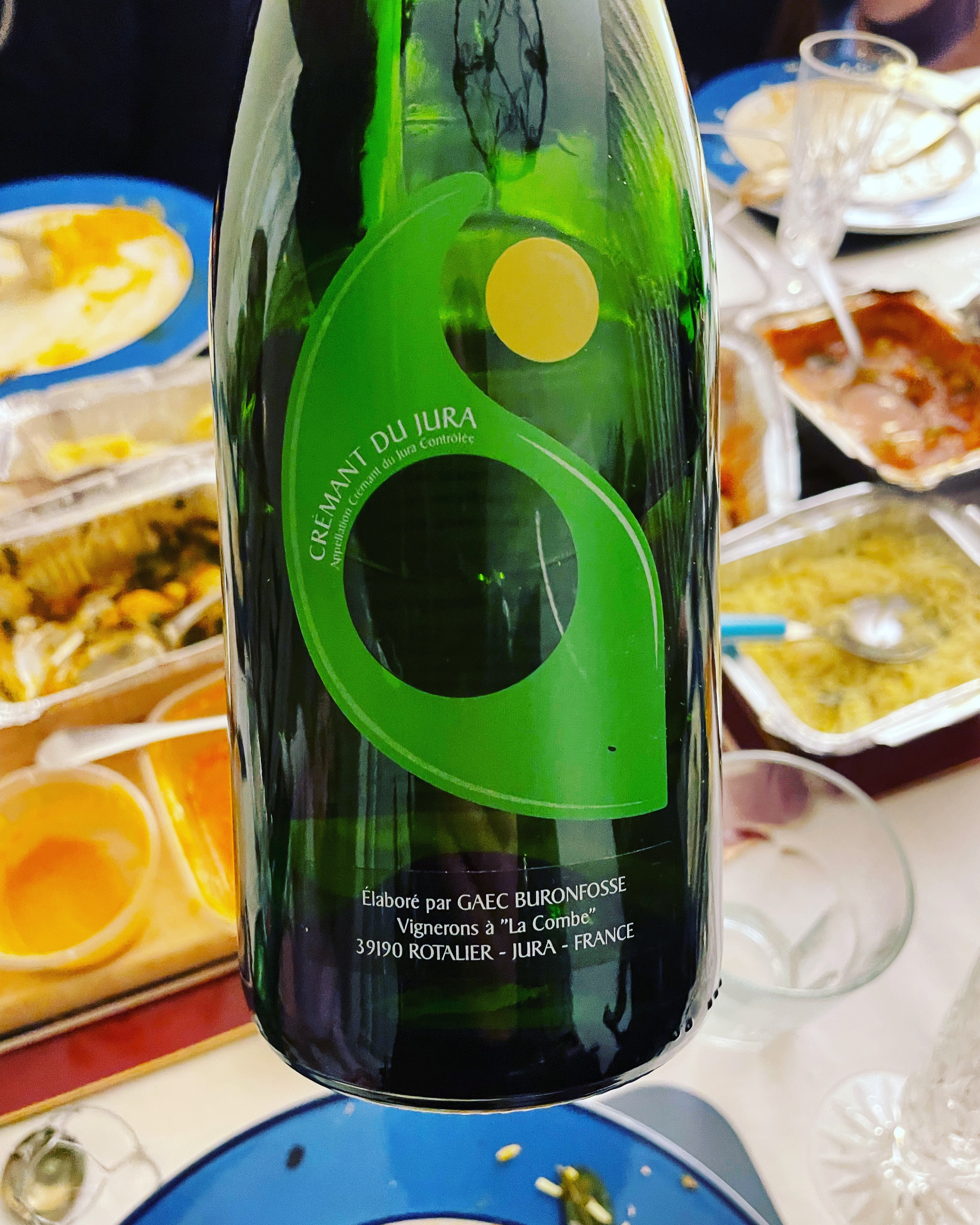
“ELLE AIMÉE” VIN DE FRANCE [2018], DOMAINE L’OCTAVIN (Jura, France)

This is one of Alice Bouvot’s domaine wines from the vineyard called “En Arces”, a site where wines have also been bottled by Domaine de la Touraize and Jean-François Ganevat. Alice, however, blends Chardonnay with Pinot Noir here to create a singular cuvée from red and white grapes. Despite two months of “infusion” as she calls it, the wine shows a very pale strawberry colour on pouring. The bouquet and palate are closer to bitter cherry with red fruits, a touch of citrus in the acids, and a little earthiness as well. Plenty going on, especially as the wine evolves in a nice Zalto Universal.

This isn’t a wine you can really sit on the fence over. For one thing the shimmering acidity might startle a few people, and without added sulphur the fruit is naked and fresh. I simply adore it. It’s vibrancy going off the scale, a wine which genuinely makes you feel alive. It might not be a cure for depression but this sure is going to lift anyone who’s been having a tough day.

Alice is one of the hardest working vigneronnes I’ve met, especially going it alone now. I can only admire her strength of purpose and mission. She knows exactly what she wants her wine to be and to become. What an impressive human being.

Domaine L’Octavin is imported by Tutto Wines, often available via their Tutto a Casa online shop.

FREILUFTKINO 2019, ANNAMÁMIA RÉKA-KONCZ (Barabàs, Eastern Hungary)

The main issue with Annamária’s wines is eeking out the bottles I buy over more than merely two or three months. I generally have to hope their UK importer manages to get another shipment. Buy more, you say. Well, I would, but my tastes are eclectic and wide. But that said, there is a loyalty building for the wines of this young lady, who lives with her husband in a part of Hungary from which you can see (and freely cross, at least for now) the border with Ukraine.

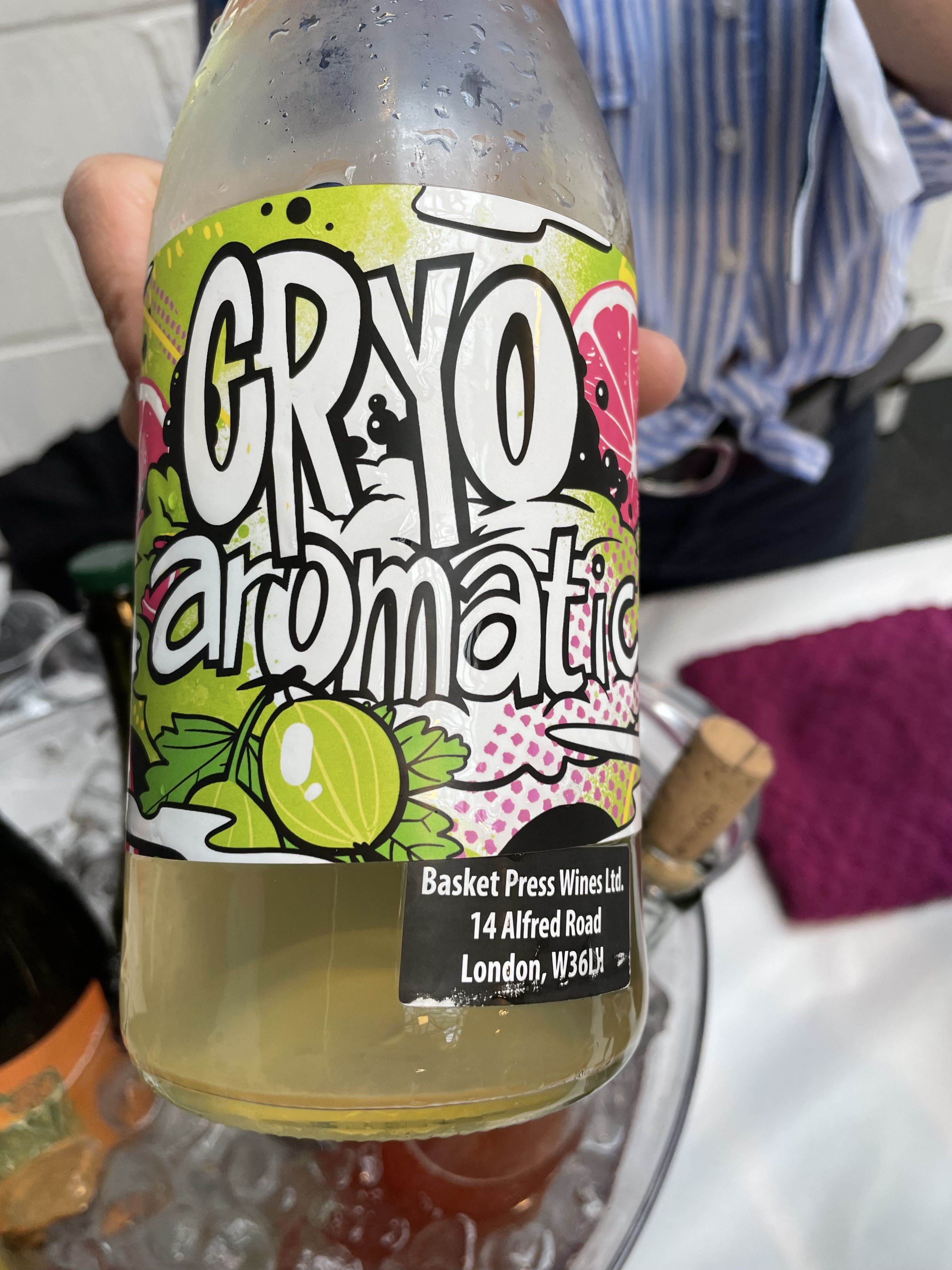
Freiluftkino translates from the German as open-air cinema. I’m sure Annamária will tell me why they chose that name at some point. It’s a bottle-fermented sparkling wine comprised of Királyleányka (which you’d think I could spell without triple checking by now), Rhine Riesling, Furmint and Hárslevelü. The grapes from the 2019 vintage were fermented in stainless steel. The wine saw one year on the lees before being hand disgorged and the liqueur de tirage was made from the must of the 2020 vintage.

The soils here are highly complex with deposits of rhyolite, andesite, dacite and tufa, which give the wine a steely, mineral character and texture. The impression is of a wine with focus. The colour is bronze-gold, the bead very fine. The bouquet is complex, or at least becomes so as the wine warms. The palate changes over time as well. I wouldn’t say it starts out fruity as such, but there’s definitely an element of spice which arrives to make you take notice.

I would say that what this cuvée gives, rather than great complexity at this stage, is something unique, definitely exciting. The importer suggests this would be a celebratory drink, but if you like pairing sparkling wines with food, this will definitely interest you equally as much. I shall try to keep my second bottle to allow it to develop, though I’m not holding out any hope it will remain unopened for as long as I’d like.

I am not sure whether Basket Press Wines has much left, but for £26 you get a very interesting blend, smart bubbles and something delicious to trick and surprise your friends with.

“PERFECT DAY” 2020, PITTNAUER (Burgenland, Austria)

It always comes back to Gols, that singular wine village on the top end of the Neusiedlersee where a profusion of exciting biodynamic producers seem to turn out wines as exciting as any I know – although my bias comes from my love for the region and people just as much as the wines.

Gerhard and his wife, Brigitte, run the 17-hectare Pittnauer estate here, Gerhard having been somewhat thrown in at the deep end age 18. He farms a range of both local and international varieties, with an outlook that is equally international. The Pittnauer wines do have a reasonably high profile outside of Austria, which is never harmed by some very innovative and cool-looking labels.

Perfect day is, like the previous two wines, made from an interesting blend. Chardonnay makes up the larger part (40%), with Muscat Ottonel (30%), Grüner Veltliner (20%) and Traminer (10%). Each variety is treated separately, some seeing skin contact, some seeing some oak, etc. The varieties are only blended together just before bottling, which is done without filtration.

The bouquet is quite unusual, with the Muscat’s floral aromas riding a wave above Grüner and Traminer spice, rounded out with what I presume to be Chardonnay’s fruit. The palate has a linear citrus spine of acidity and some lees-contact richness underpinning. The whole bottle is refreshing in so many ways. I think it’s an excellent summer wine, but every day is summer here when it comes to wine.

This bottle came from Butlers Wine Cellar (£23.50). Perfect Day has been stocked by The Wine Society in the past.

PERSAN 2017, DOMAINE GIACHINO (Savoie, France)

Although Mondeuse is the red grape variety most people will know when thinking Savoie, Persan is in my experience quite capable of being its equal. It originated in the Maurienne Valley, but declined, as did viticulture in general, as the route along the River Arc became more industrialised, the Fréjus Tunnel becoming one of the major transport routes between France and Italy.

According to Wink Lorch  (Wines of the French Alps, 2019) Persan fell to a mere 3-hectares, not assisted by the fact that the Maurienne Valley was left out of the appellation for Savoie wines, probably because the authorities thought viticulture was more or less dead and buried there. They were wrong. The vineyards of the Isère are seeing a real revival and Persan is in the vanguard, at least for quality.

Domaine Giachino is located close to Champareilan. Although this is not all that far south of the well-known vineyards of Aprémont, south of Chambéry, it is in fact just outside the departmental border of Savioe, in the department of Isère. Brothers Frédéric and David Giachino are in charge of the domaine, now joined by Frédéric’s son Clément and his wife, a lovely young couple who I was lucky to meet just before Covid hit back in 2020.

The Domaine has grown to around 15-hectares, mostly farmed biodynamically, with some holdings in the aforesaid Aprémont Cru, but they also have developed a nice side-line in the Alps’s more exotic and obscure varieties alongside Persan.

The Giachino Persan is a fairly full-bodied 13% red, yet there’s no hint of heaviness, nor I think rusticity. For me, it’s a lovely smooth red with a bit of tannin and dark berry concentration lifted by delicious fruit acids. The terroir is special, the vines being grown on the limestone scree from the collapsed Mont Granier, which covered the surrounding land when it broke up in 1248. The wine’s liveliness is doubtless also enhanced by the low sulphur regime the Giachinos use to make vibrant natural wines.

As an aside there was another major landslide on the mountain on 9 January 2016. The scree which slid off the mountain, estimated to be around 70,000 cubic metres, was stopped by a barrier of trees only 300 metres from Entremont-le-Vieux.

Again, I was warned that this was a cuvée capable of ageing, and I probably opened it three years too early. That said, it was unquestionably delicious and I shall definitely be buying it again. Not only for its uniqueness.

It’s probably worth mentioning that it is the Giachino family whom Michel Grisard decided to entrust the vineyards of the iconic Prieuré Saint-Christoph to on his retirement. This bottle was purchased in France, but the domaine’s very astute British importer is Dynamic Vines.

LA BOTA DE MANZANILLA 71, EQUIPO NAVAZOS (Jerez, Spain)

Another article, another EN, which hides the fact that I am slowly running out of these wines, and our exit from the EU and the subsequent rocketing price of direct imports is to blame, although at some point I shall head off to one or two retailers for replenished supplies.

This Manzanilla was a bottling of January 2017, 100% Palomino Fino grapes from Sanlúcar, which Edouardo Ojeda nurtured having retrieved casks from a number of different sources in the town. The different wines have an average age in cask of seven years.

Like many EN biologically aged wines it is darker than you might be used to, and obviously the age of my bottle post-bottling is a factor too. You wouldn’t like this if you like your Manzanilla fresh and light, rather than deep and profound. It certainly has Manzanilla salinity though, not quite off the scale levels any more, but salinity-a-plenty nevertheless. It doesn’t lack vibrancy, but it is contemplative, whether sipped with cashews, drunk with a cauliflower and almond soup, or sipped again with the cheeses, all of which service this bottle performed perfectly (I took it to dinner in Oxford).

I’m sure you know by now, Equipo Sherries are much more serious, and perhaps startling, than the commercial offerings from this sacred triangle. I’m beginning to wonder whether, like other fine wines, it is almost a crime to drink these wines too young? I shall have to ask Edouardo’s partner in EN, Jesús Barquin…who happens to be a Professor of Criminology in his spare time.

Once more, purchased direct but the UK agent, Alliance Wine, will have the current Botas.

Posted in Artisan Wines, Natural Wine, Wine, Wine Agencies | Tagged , , , , , , , , , , , , , , , , , , , , , , , , , , , , , , | 8 Comments

Recent Wines February 2022 (Part 1) #theglouthatbindsus

I am hoping that March will see me capable of easing myself into wine life with a few well-judged trips to London in March, and perhaps even elsewhere, but until that happens, I can only give you another round of “Recent Wines” to entertain you with.

With seven wines in each part for February, Part 1 will cover Northern Italy (two wines), Sanlúcar in Spain, the Mosel, Southwest France, a very different wine (kind of, but not technically, wine) from South Africa and my first Georgian wine of the year (although I’m hoping to have tripled the number of Georgian wines in my cellar by the time you read this).

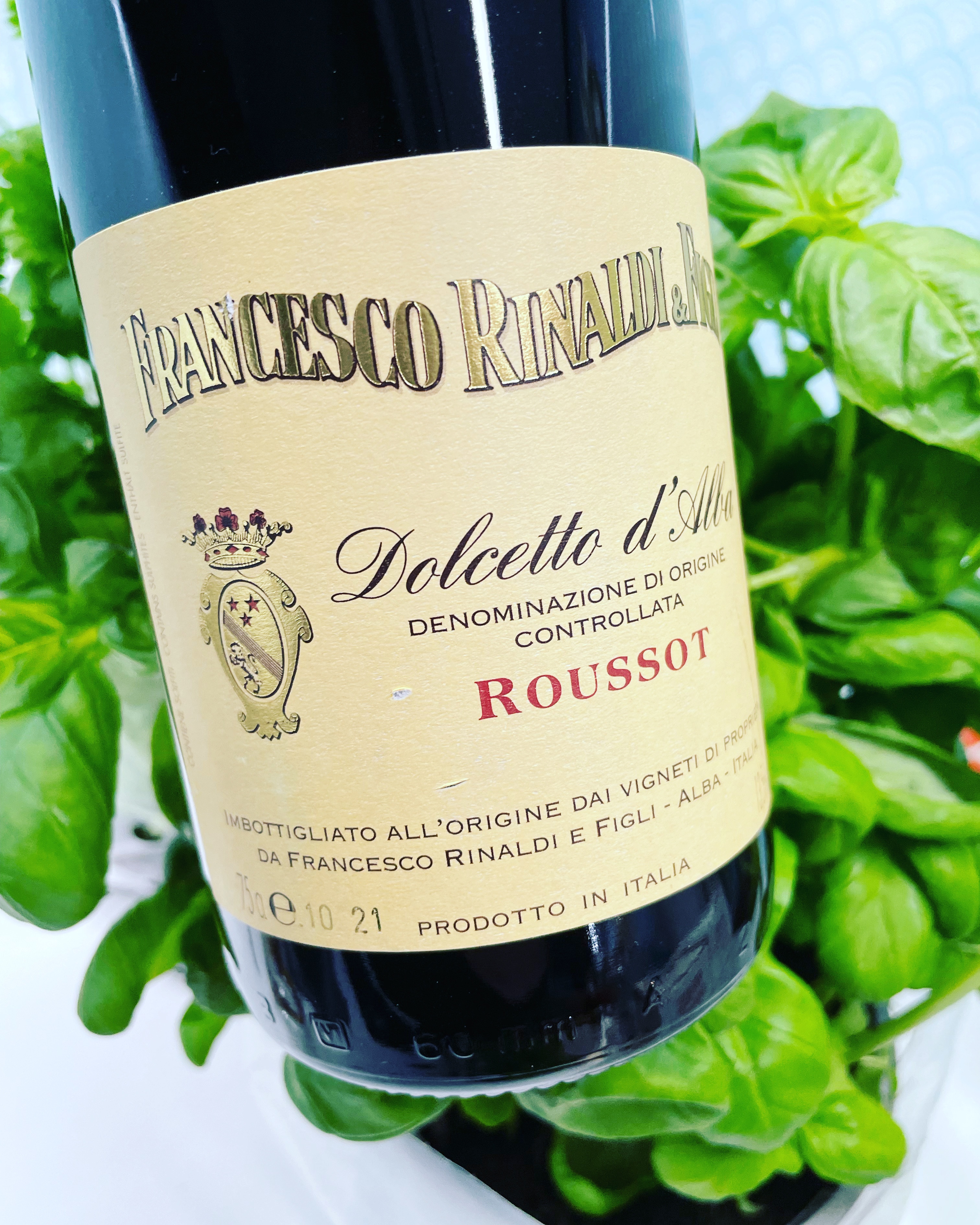
“UVAGGIO 2017, COSTE DELLA SESIA DOC, PROPRIETÀ SPERINO (Piemonte, Italy)

When I was considerably younger one of the first wine tastings I went to at Winecellars (the original firm run by David Gleave and Nicolas Belfrage, in Wandsworth, London) was given by Tuscan star Paolo De Marchi. Paolo inherited the 8.5-hectare Sperino estate at Lessona in Northern Piemonte and has now installed his eldest son, Luca, to make the wine there. He’s doing a remarkable job, and perhaps in some ways the wines are even more interesting today than those now made on the family’s Tuscan estate, Isole e Olena, at Castellina in Chianti.

Uvaggio is something of a traditional local blend of Nebbiolo with Vespolina and Croatina (made up as 65%, 25% and 10% respectively). The wine has a lovely pale ruby hue. The bouquet is spicy, and this is mirrored on the palate alongside red fruits and a certain lick of concentrated fruit acidity. There’s a tiny hint of earthy texture that some might call “mineral”, which centres the wine. Despite 13.5% abv it doesn’t taste alcoholic, retaining a lightness. Although not a natural wine it does claim to be vegan.

I’d say that this 2017 is youthful, and could certainly develop, but it came into its own after time in the glass and with food. I’ve not drunk this wine for a number of years but I definitely plan to grab some more soon when back in stock.

I purchased this from Butlers Wine Cellar. The importer is David Gleave’s Liberty Wines.

“A DEMÛA” 2015, CASCINA DEGLI ULIVI (Piemonte, Italy)

Our second wine, also from Piemonte (somewhere I have been trying to retrieve my focus on) was the last wine I had which was made by one of the greatest natural winemakers I’ve had the privilege to meet a few times. Sadly, he died in 2018, but this magnificent wine showed what a genius he was.

Stefano Bellotti ran a mixed farm in the Gavi region, believing that polyculture enhanced a whole ecosystem. As well as vines, he grew the plants used for his biodynamic vine treatments, alongside food crops and animal husbandry on what I’d guess you would call an old-style contadino holding of around 22-hectares.

The key to enjoying Stefano’s unique wines is to realise that they are wines to keep. They develop remarkable nuance over time, and they are wines of subtlety, not power. A Demùa is a blend of Timorasso with Verdea, Bosco, Riesling Italico and Chasselas. It has a very dark orange colour, the result of a long 90-day maceration on skins (and presumably the bottle age here).

The voluminous bouquet is redolent of candied orange peel with a touch of bitterness too, something in the “Italian herb seasoning” ballpark. The palate is very zesty with a degree of richness, which builds over time. This shouldn’t be served too cold, for sure. The gorgeous aromatics would be too clipped.

I would argue that the result here is something profound. Although I can be pretty complimentary about wines I like on a fairly regular basis (they have to be pretty interesting to make the cut in these articles), I’d like to think that I don’t argue profundity too often.

It’s also a unique wine on many levels…including that remarkable colour. It’s enough to sort the wine lovers from the gluggers, for sure.

This wine came from Les Caves de Pyrene (£32 at the time). Stefano’s family are continuing his work, though it may still be possible to find wines he made himself. He was no less a superstar than those well-known names from Jura, Burgundy, Savoie etc.

LA BOTA DE FLORPOWER 84 (MMXVI), EQUIPO NAVAZOS (Jerez, Spain)

In our house we try to hold back the odd bottle of Florpower. It is all too easy to guzzle it on release, though perhaps many would say that’s the way to go. I find the wines age in an interesting way, but then I feel no different about the Finos and Manzanillas made by this exemplary bottler. Whilst the region is now producing a firework display of exemplary Palomino wines, especially in this unfortified category, I think Florpower still manages to demonstrate exactly why the idea of making table wine from the Palomino Fino variety has taken off.

The Palomino grapes were harvested from the “La Baja” sector of the famous Pago Miraflores at Sanlúcar and the wine was aged nineteen months under flor. This comprised eight months in 600-litre casks and then eleven months in vat. The longer period in stainless steel makes for a gentler result.

Bottled in June 2018, the wine was still remarkably fresh three years and eight months later, although the colour has deepened, for sure. The bouquet is redolent of limes and, oddly, reminded me also of Chablis. Perhaps rather than a grape variety comparison, it is the terroir which creates such a similarity? It certainly has what I can’t avoid calling a fantastic mineral texture topped with a slightly creamy citrus note. Any obvious influence of the flor is now quite mild.

Purchased direct. The UK agent is Alliance Wine.

GRAACHER DOMPROBST RIESLING KABINETT 2018, WILLI SCHAEFER (Mosel, Germany)

It is said that Christoph Schaefer aims for light and elegant wines. This is true, but whatever he aims for, he is now making some of the best wines on this stretch of the Mosel, at Graach and Wehlen, and consistently so. He harvests relatively early to preserve freshness, but this also preserves acids so that the sugar levels of the Prädikat wines, especially at Kabinett level, are never too sweet-tasting. This is an estate where detail is important. These are, in reality, natural wines. Native yeasts, no additives, ageing in old füder and minimal sulphur, is the regime.

Domprobst is a vineyard which sits on the steep slope above the village of Graach on the Mosel’s right bank. The tiny Schaefer holding produces wines which, perhaps first and foremost, are wines of focus. The 2018 is 8% abv, and certainly has a lightness to it, but that’s not to deny the fruit its sweetness. Of course, the wine has acidity too, the kind of acidity which lets you know that this is a young wine and one you should perhaps have aged longer. Domprobst is a rocky, slate site, making wines noted for their ability to age, and Schaefer’s vines here are around 60-years-old and 70% ungrafted. A friend recommended carafing it, wise words. Five years more in bottle would be good, or possibly longer, although in reality this vintage will not be quite as good as the 2019.

However, this is indeed a lovely wine and one which, for me, is what great Kabinett is all about. Precision, focus, an ethereal lightness and a balance between acids and sugar. How can this style be so ignored by the public as a whole, and how can such quality remain such remarkable value?

Purchased from The Solent Cellar in Lymington.

PETIT MANSENG SEC 2018, IGT COMTÉ TOLOSAN, DOMAINE D’AUDAUX (Southwest France)

Domaine D’Audaux is an estate created by Jamie Hutchinson and his wife, Jess. Jamie was co-founder of London’s Sampler wine shops whilst Jess worked for Charles Taylor Wines. Audaux is a small village close to Navarrenx, which in wine terms is in the old region of Béarn/Jurançon, although Jamie has classified his wine as IGT. The couple moved their family out to this part of France because, in Jamie’s words, he wanted to make wine, fish and eat pig and duck.

This cuvée is made from Petit Manseng, a variety which in nearby Jurançon is reserved for the sweet wines, for which that region is famous. This is also Jamie and Jess’s first vintage. I had this time taken the advice given to age it at least a touch after purchase, although having known Jamie a little over many years (and wine lunches) before he left our shores, I had been having difficulty holding back on the cork.

I’m by no means therefore the first to praise this wine, and some far greater wine royalty has beaten me to that honour. Yet I can only repeat that, especially at three-and-a-half years old, this wine is superb. It’s actually hard to believe that it was made as a first vintage, by an Englishman with no formal winemaking qualification.

The fruit is from three sites, all hand harvested and rigorously hand sorted. The wine was made in 3-to-5-year-old barrels which had previously been used for White Bordeaux. Ageing on lees has given the wine remarkable depth, and a little age has given it a serious side. You get freshness but a sort of creamy fruit as well. The Petit Manseng is very fragrant too. An unqualified success.

Alas, you will be very lucky to find any 2018 on the market retail. The Sampler has the 2019 for just under £27, and although I’ve not tasted it yet, it does claim to have 30% less added sulphur than the 2018.

WANDERLUST PIQUETTE [2021], RESTLESS RIVER (Hemel-en-Aarde, South Africa)

Restless River is something of a cult winery launched by Craig Wessels and his wife Anne in 2012, situated in the Hemel-en-Aarde Valley, north of Hermanus on Walker Bay. Despite the proliferation of famous names around Walker Bay, the region still has its feeling of remoteness in places, and most certainly a cool climate. It has become, of course, a by-word for Pinot Noir and Chardonnay.

“Wanderlust” is a label Craig and his wife have created to feed their creative side. It carries principally one-off cuvées, always distinctive. Nothing could perhaps be more distinctive than this one, which is not strictly a wine at all. Piquette was, by tradition, a beverage fed to the vineyard workers, made by running water over the marc of pressed grape skins, producing a second fermented beverage of lower concentration and alcohol.

In this case the skins in question are those of the Restless River Premium Chardonnay and Pinot Noir, and the water is direct from the “pure” mountain springs nearby (so hopefully not sheep country). The result of this second pressing is bottled with its lees sediment, a little like a petnat, and with low (7%) alcohol.

We get a pale red beverage with some nice “frizzante-style” bubbles, the colour being somewhere between strawberry and rhubarb. Imagine a sparkling mineral water infused with concentrated red berry fruits with an added herbal edge. Water into wine, so to speak and totally smashable, as Jamie would say (and it really is). Being me, I opened this absolutely perfect hot summer aperitivo in February. I shall be trying to find some more because I cannot think of a better wine (sic) to drink late morning on an August (or hopefully sooner) weekend.

This bottle, number 326 of 2,450, came from Butlers Wine Cellar in Brighton. £13.95 (shhh!).

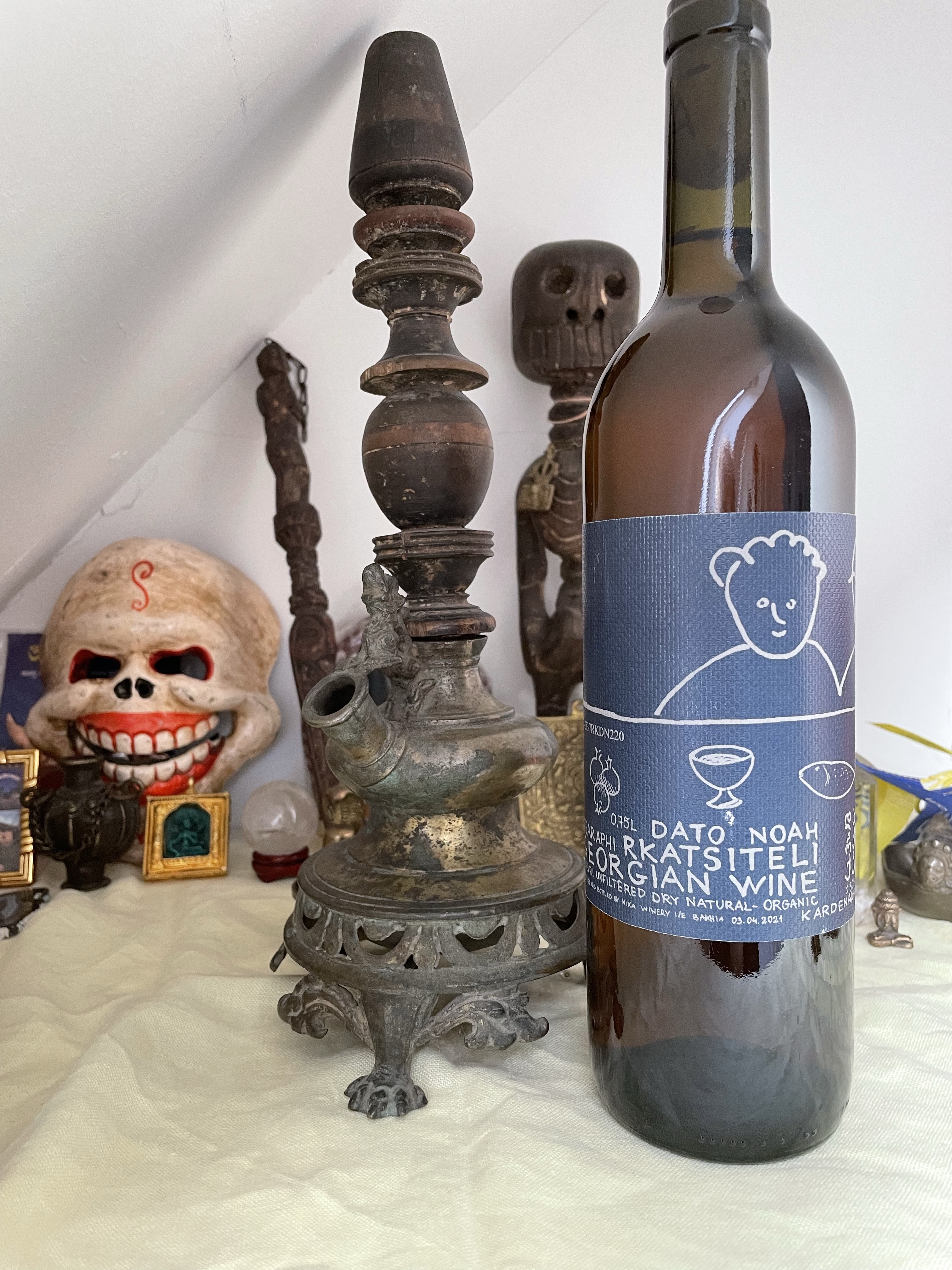
“ANNA” 2019, NIKA WINERY (Kakheti, Georgia)

In 2006 Nika Bakhia bought some vines near the abandoned village of Anaga in the wine region of Kakheti in Eastern Georgia, and in fact Anaga is not too far from being the furthest point east where vines are grown commercially in the country. In very general terms, Kakheti is seen as the cradle of Qvevri winemaking in Georgia.

 The family now owns eight vineyards in the Alazani Valley and follow a regime which does not use any synthetic chemical treatments. Pruning is minimal, and the grass between rows just gets an occasional trim. This particular cuvée, named after Nika’s wife Anna, is from their Tsaraphi vineyard, which contains deep rooted old vines on rocky soils. The field blend consists of five varieties: Saperavi, Cabernet Sauvignon, Rkatsiteli, Mtsvane and Khikhvi, so I’m sure a few readers will realise that there are white grapes as well as red in this bottle.

The wine starts out with a lovely, soft and gentle bouquet of cherry and red fruits, with a floral element riding over the top as if blown gently on a breeze. The palate is a slight contrast, dry and grippy as you would expect from a red wine made on its skins in qvevri. It is textured and what I tend to call a little ferrous. It will age, for sure, but it is quite lovely now, combining a little earthiness with a feel that is unique to the vessel in which it was made. It seems somehow “sprightly” too, despite 13.5% abv on the label.

This estate is new to the Basket Press Wines portfolio. There are three wines imported and I grabbed a bottle of each to try, although I hope to try the two orange/whites sooner, at their upcoming trade tasting. £25 seems a good price.

Posted in Artisan Wines, biodynamic wine, Natural Wine, Wine, Wine Agencies | Tagged , , , , , , , , , , , , , , , , , , , , , , , , , , , , , , , , , , , , | Leave a comment

Recent Wines January 2022 (Part 2) #theglouthatbindsus

If Part 1 got January off to a strong start, Part 2 goes down equally different paths. We begin with a well known Blaufränkisch from Burgenland before veering right across Europe to Alentejo. Then back we go to cooler climes for a more traditional Hungarian wine than those I’ve been drinking of late. A rather beautiful Jura Chardonnay follows, and then that Wiener Gemischter Satz I promised in Part 1. We finish with a very unusual Swiss sparkling wine before ending on a classical note, a 2013 Burgundy from a producer I’ve tried to follow since their inception and who I shall be able to try another wine from the previous vintage at one decade old later this year.

BLAUFRÄNKISCH JOHANNESHÖHE 2018, PRIELER (Burgenland, Austria)

Johanneshöhe is a site made up of iron-rich loams on the western side of the Neusiedlersee, near the family’s base at Schützen. Georg Prieler represents the current generation in charge here. The vines are on the lower slopes of the Leithaberg, which is classic Blaufränkisch terroir. Yet these loams don’t give the wine as much mineral or ferrous bite as the slopes slightly higher up the hillsides, especially when on slate and Musselkalk (the fossil-bearing limestones). What the loams do impart is a bit more weight.

The result here is a wine which is a touch fatter than some…well, not fat as such, just a little flesh on the frame. The fruit is velvet smooth, rich (almost a kind of fruitcake richness) and spicy, although as they use large format older oak you don’t get that “step too far” thing going on which some misguided producers, more often in other regions, end up with. Plums and darker fruits are the order of the day. It isn’t really tannic but as I suggested, it does have structure. The abv, 13%, is well balanced and the wine is big and spicy enough for winter food without any heaviness.

Although this is a single site wine, it is towards entry level for Prieler. For the ultimate expression of the grape at Prieler, try their Goldberg Cru. However, I would say that at £18.99 from The Solent Cellar this is excellent value. Especially when it’s a Christmas present from your brother-in-law. Clark Foyster is the importer.

PROCURA NA ÂNFORA 2018, SUSANA ESTEBAN (Alentejo, Portugal)

In the second half of last month, we spent several days down in Lymington, helping out a family member who had been in hospital. Finding ourselves short on wine I needed to grab an extra bottle and was recommended this Portuguese wine. It’s a Vinho Regional Alentejo, a traditional field blend, with vines around eighty-five years old, planted high up at 700 masl.

Susana Esteban comes from Northern Spain, but she is perhaps best known in her role as winemaker at Quinta do Crasto between 2002 and 2007, as that Douro estate became pretty well known outside of Portugal. She then started work as a consultant, and spent two years searching Alentejo for suitable vineyards of her own before finding two plots near Portalegre in 2011.

The winemaking definitely has a nod to the past, with the wine made in Talhas, the traditional clay vessels of the region. The wider revival of their use is only hampered by the difficulty in finding them, as it has become clear that they give the region’s wines a good deal more soul than some of Southern Portugal’s more “international-style” efforts. They must surely impart the mineral texture and slight earthiness in the wine, which combines nicely with the stone fruit aromas and flesh. Acidity is zippy and the alcohol, only 12.5% (perhaps the altitude of the vines helps here) makes the result rather attractive. There is weight but it’s subtle. The Talhas also give that slightly dusty finish which is not obtrusive but grounds the wine and adds interest. It’s not one of these “international” whites the region seems to enjoy offering up.

Turned out to be an excellent recommendation from Simon Smith at The Solent Cellar.

TOKAJI FURMINT 2017, SZEPSY (Tokaj, Hungary)

I have several Furmints in the cellar, from both Hungary and Austria. I’d happily have more. I’m afraid I don’t agree with the person on Twitter who was putting the grape down a week ago. I think when done well, it manifests exciting flavours and is seriously under rated. Even by members of the wine trade, though I’m pleased I’m not alone in appreciating its virtues.

Istvàn Szepsy is the eighteenth generation of his family making wine in Tokay/Tokaj, but the wine made by all those previous generations was likely to have been the sweet wine for which the region was (at some times justly, but in the later 20th Century perhaps unjustly on occasion) famous. After the fall of communism and the redistribution of land back into private hands, the opportunity to restore the name of Tokaji wine was firmly grasped. Yet did the world, which had moved on, really want another sweet wine? Even fine Sauternes was a hard sell, let alone an expensive to produce sticky from Central Europe.

The answer for families like the Szepsys was to make a dry table wine alongside the sweet wines, from the same grape varieties. This is pretty much the same idea as that which has taken off in Jerez/Sanlúcar, with the Palomino grape, in recent years. This wine is 100% Furmint taken from a range of different terroirs, aged in (mostly) used oak.

The scent is like pure quince with a whiff of something almost flinty. If you were under the impression this wine might be sweet, the bouquet would disabuse you of any such notion. The palate has rounder stone fruit flesh and texture, with added pear and quince lingering on the finish. It is perhaps a more classical rendition of the variety than I’m currently drinking but it’s a lovely wine which will age further, yet is nice (and indeed impressive) now. Despite being over four years old it doesn’t taste aged, no doubt down to the mineral freshness. Extremely well made.

You can find this for £30 at The Solent Cellar, but feel free to pay £55.80 for exactly the same wine at a Central London wine shop if you prefer!

CHARDONNAY “LA PERCENETTE” 2016, DOMAINE PIGNIER (Jura, France)

The Pignier family farms around 15 hectares at Montaigu, a little to the south of Lons-Le-Saunier. Lons is a sleepy town, famous for just two things. The first is that it was the birthplace of Claude-Joseph Rouget de Lisle, the man who wrote La Marseillaise (although he wrote it in Strasbourg, of course, he is commemorated by a statue in the town made by Bartholdi, the man who also designed the Statue of Liberty). The second claim to fame is that this is where I purchased my first wine, a Vin Jaune, made by Alain and Josie Labet…another story from a different time.

The domaine has been in the family since the late eighteenth century, but very much as a mixed farm. Viticulture became the main preoccupation in the 1970s. Their heritage is maintained in some of their winemaking and storing facilities, including their ageing cellar, housed in the 13th century Cellier des Chartreux.

François Pignier bought Les Percenettes in 1990, and it is the largest of their single sites. They decided to use the Chardonnay from it to make their first ouillé wine, previously having made their white wines oxidatively (without topping up the barrels). Another change brought about by the current generation of siblings was biodynamics, with Demeter Certification coming in 2006. There are many more fashionable young natural winemakers working in the region, but hidden out here in one of Jura’s less densely planted sectors, the current generation of Pigniers have been quietly making delicious low-intervention wines for close to thirty years.

This cuvée sees twelve months in used oak pièces, and is structured like an old stone tower, yet is equally bright and floral. The fresh acids cling to a saline spine which is extremely refreshing, though which at the same time makes you sit up. On the finish there’s a hint of honey and apple, just enough to add another layer of interest. There’s a reason this wine tastes a little different, and I would say exciting, which I haven’t yet revealed. The Chardonnay clone* in question here (*allegedly but debated) is Jura’s rare Melon à Queue Rouge. These golden berries with occasional pink tints, and red stems when ripe, usually make wines of exceptional finesse in the right hands, wines which emphasise the brighter side of Chardonnay.

Okay, I confess this month has been a month where rather a lot of wines have come from the same retailer. Just the way it has worked out. This wine was also from The Solent Cellar. £35, and good value even at that price.

GEMISCHTER SATZ “KRAUT & RÜBEN” 2017, WEINGUT CHRIST (Vienna, Austria)

In Part 1 I made a rare foray into a single varietal wine from Vienna’s vineyards. Here, we are back to the traditional field blend of the region, known as Wiener Gemischter Satz. The Christ family has a four-century history of winemaking at Jedlersdorf, in the capital’s 21st District. Like most of the winemakers here, they operate a heuriger inn, where you can sample the wines with good home cooking, always a treat if you ever get the opportunity.

The operation is run today by Rainer Christ. He looks after a fairly significant 25-hectares of vines. The sources of this cuvée are the two named sites, Kraut and Rüben, which are on the Bisamberg hill, on the right bank of the Danube, on the northeast edge of the city. The soils here are a complex mix including glacial deposits and the vines are old, up to eighty years of age. Production is low intervention and this cuvée could be termed a natural wine (it’s certainly vegan), with no synthetic chemicals used in its biodynamic production.

Christ makes several Gemischter Satz blends but this one, containing Grüner Veltliner, Muscat, Pinot Blanc, Riesling and Sauvignon Blanc, grown and picked together and co-fermented, sees extended skin contact during fermentation before maturing on its gross lees. It is, therefore, effectively an orange wine.

The colour, in truth, is more burnished gold than orange. It is savoury, mineral, and shows a hint of lime on the finish. It’s something a little different to the lighter and slightly spritzig GS wines many will have tried. That said, it is lifted by a little dissolved CO2 on opening, but the miniscule bubbles do dissipate. The tingle on the tongue is refreshing, before the more complex flavours and textures of skin contact take over as it grows in the glass.

This cost just over £35 from Alpine Wines. They only get a small allocation of this particular cuvée from Rainer Christ, but it’s well worth grabbing a bottle, to try a quite different interpretation of the Austrian capital’s traditional field blend.

BLANC DE BLANCS DEMI-SEC 2016, LA MAISON BLANCHE (Vaud, Switzerland)

La Maison Blanche was originally part of a 15th century estate in the appellation of Mont-sur-Rolle, one of the better-known wine villages in that lesser-known part of the Vaud Canton, on the north shore of Lac Léman, between Geneva and Lausanne. The same family has been there since being given the property for military services rendered in 1528. The vineyards here are not terraced, like those in the UNESCO Heritage Site of Lavaux, to the east, but are gently sloping, rising from the lake shore, mostly south facing.

This is an unusual sparkling wine on several levels. The basic fabrication method is not one of them, being a straightforward traditional bottle-fermentation with disgorgement. What makes this wine pretty unique are grape variety and finishing. The variety, as you might possibly guess given the region, is Chasselas. More unique is what they used as the dosage. Chasselas is very dry, but a liqueur made from elderflower (fleur de sureau) helps turn this into a demi-sec (they do make a Brut version as well). The wine was fermented in stainless steel before lees ageing in bottle but I’m not sure of the disgorgement date.

Nevertheless, at over five years old this bottle had kept its freshness whilst attaining a little depth. Perhaps depth isn’t the point here, though. Demi-sec it may be but it has acidity enough to tame the sweetness. Although some may recommend it as an aperitif, it would go very well with fruit desserts. For those who don’t like their sparkling wine too dry, it has enough presence for wider application…adventure calls (we drank it with my elderly parents, with a typical potato and cold cuts meal).

I think the resulting wine is a little less sweet than you might expect. There’s a bit of that Chasselas herbal thing going on, but you can definitely smell and taste the elderflower. It’s not really powerful, but it does add a lifted florality. It is a truly singular wine. This is the second bottle I’ve drunk, the first being served as an aperitif at a barbecue last summer. Everyone I know who has tried it was both impressed and pleasantly surprised, though of course there would be people who can’t abide sweetness in sparkling wine. If you like wines like Bugey-Cerdon, try this.

Available for around £42 from The Solent Cellar and imported by Alpine Wines.

BEAUNE BOUCHEROTTES 1ER CRU 2013, LE GRAPPIN (Burgundy, France)

I can’t remember whether 2013 was the second or third vintage of Le Grappin, but this was the second vintage I bought from Andrew and Emma Nielsen. I bought my first Boucherottes from Le Grappin’s cellars in the subterranean powder store located within the walls of Beaune’s old town. I’d never come across this particular Premier Cru before, though it must be said that there are many to choose from under Beaune’s own AOC. It’s not one of the better-known sites. It sits on the slope just below the larger and better-known Clos des Mouches, and yet it has furnished me with some beautiful wines since I discovered it.

Of course, Le Grappin began as a négociant, although they had significant input into the viticulture of this plot from the beginning. The grapes, after hand harvesting with careful selection in the vineyard, made their way swiftly inside the town walls and went into wooden vat to ferment. Then, after very gentle pressing, maturation took place in seven oak barrels.

Out of the several 2013s from this site I’ve already drunk, this was the best bottle. I should add that I do recall Andrew suggested I should drink the 2013s before the 2012s, and I took him at his word. This bottle was singing beautifully, despite it being a less-well regarded year for the Côte de Beaune. Yields were small, partly as a result of hail damage for many producers here, but the fruit Andrew, Emma and the team were able to bring in was carefully sorted for healthy grapes.

Any tannins the wine held have smoothed out by now. The fruit is characteristically raspberry dominated, but with strawberry and some cherry in the mix as well. That fruit is still remarkably bright without any tertiary notes dominating. The texture is silky smooth, like any good Beaune, and it lingers long on the palate. A well-made, feel good, Red Burgundy with soul.

Purchased direct. Although costs and, to a degree, the market, have put these wines beyond my price range, I don’t begrudge Andrew and Emma from making a living. Outside of Covid times at least I get to taste the range in London, along with the wines of Mark Haisma and Jane Eyre. I would scontinue to argue that all three make glorious wines which are, in the context of fine Burgundy today, still good value.

Posted in Artisan Wines, Natural Wine, Wine, Wine Agencies | Tagged , , , , , , , , , , , , , , , , , , , , , , , , , , , , , , , , , , | 3 Comments

Recent Wines January 2022 (Part 1) #theglouthatbindsus

Dry January! I don’t know what it means to you but it patently doesn’t mean a month without alcohol to me, although equally we don’t drink every night here. In my case Dry January does mean a bit of a creative hole. I’ve not written anything since I completed my roundup of wines drunk during December 2021, last month on 12 January. Actually, having a bit of “time off” has been good. It has been a busy month, but I’ve also been able to listen to a bit more music than usual. I won’t lie though, after two years of working hard in active cooperation with the muse, I really had run out of things to write about.

Whilst I hope that the muse returns, I can at least tell you what I drank during January. Fourteen wines, seven of them in this Part 1. Seven more will follow next week. The usual eclectic mix here consists of one from Alsace, one from Beaujolais, a South African from the Western Cape, a juicy Moravian, a more classical Burgundy, a wine from the Pfalz and one from Vienna.

VIEILLE VIGNE SYLVANER 2015/16, JEAN-PIERRE RIETSCH (Alsace, France)

Down towards the end of the main street in Mittelbergheim, in the village perhaps most synonymous with the revival of the Bas Rhin into a centre for natural wine innovation, sits the winery and tasting room of one of the men most responsible for this revival, Jean-Pierre Rietsch. His ever-changing range, with their ever-changing artist labels, is a beauty to taste through, and there is much difficulty in selecting wines which are supposedly “better” than others. J-P does his absolute utmost to strive towards perfection with every wine he makes, within its own context.

The old vine Sylvaner comes from different plots around the village, planted on argilo-calcaire terroir. Produced without additives and with minimal interference, a blend of the two named vintages sees ageing on lees, different ageing periods adding nuance and complexity. Alcohol is a perfectly balanced 12.5%, residual sugar comes in at 2.2 g/l and residual sulphur a mere 1.6 g/l.

The result is zippy, lively, totally fresh despite its age, but with some old vine and lees complexity (and texture). It balances on a tightrope between citrus and biscuity, savoury, food-friendliness. As far as Sylvaner goes, it might be one of the “kindest” I know. It has stature but, as with most examples of the variety, no pomposity, nor pretention. Contemplative and among the finest examples of Sylvaner made in France.

This was purchased at the winery, but Wines Under the Bonnet imports JPR into the UK.

“MINOUCHE” 2019, JULIE BALAGNY (Beaujolais, France)

There are many delicious wines from this reinvigorated part of Southern Burgundy, and indeed there are a good number of natural wines which would not unduly trouble those more used to classical flavours. Balagny, one of my absolute favourite winemakers in the region, does not make wines like this. I was going to say that she takes her wines wherever they want to go, but it would probably be more accurate to say that she allows them to wander where they will. Like any good parent, however, she does keep a watchful eye on them, ready to step in when needed.

This wine is bottled as a Vin de France and comes from two Gamay parcels close to the Cru of Saint-Amour. The grapes were grown by two amis of Julie, Jerôme and Gilles Courtois, but the wine which Julie made very much bears her stamp. I know plenty of people who I’d give a good chance of spotting this was a Balagny wine blind.

Whole bunches receive a cold soak, without any manipulation before its carbonic fermentation, a slow and gentle pressing to follow. Ageing is in old oak barrels with zero added sulphur (as with all Julie’s wines). The result is definitely a fruit bomb. Gamay cherries explode on the palate and in the nasal passages. No way is it one-dimensional, though. The mineral edge is fairly pronounced and there’s a touch of spice in there too. “Lovely” is how I’d describe it, in the best sense of that word. The 2020 is on sale now, but this 2019 is singing.

Tutto Wines imports Julie Balagny.

“AIR CARROTS OF PAGNOL” 2018, BLANK BOTTLE WINERY (Western Cape, South Africa)

Another wine from the vast creative talents of Pieter Walser.  It’s also a wine which has a story to it. Pieter’s stories can be long, so I will try to paraphrase. In 2010 he made his seminal Manon des Sources (the Pagnol connection). When he bottled it in 2012 the owner asked for a private bottling to sell himself, but for whatever reason the bottles sat unsold for seven years. Pieter bought them back and they sold out immediately.

Jump forward a few years and Pieter is at a film festival in the South of France where a documentary about his Blank Bottle project is a finalist. Lo and behold, one of the judges turns out to be Nicola Pagnol, the author’s grandson, who didn’t threaten to sue over the “Manon” name…phew! Of course, that doesn’t explain the “Air Carrots” and I am to this day none the wiser.

The wine itself is a real beauty, made from Grenache Blanc and a little Grenache Gris, sourced from Wellington and Swartland. It was tank-fermented and aged in old oak, but notably seeing plenty of skin and lees contact.

The colour is a very limpid green-gold. The bouquet sings of herbs with beeswax and ripe quince. The palate is fleshy and textured with stone fruits and pear. It has a gorgeous southern (warm) bitterness which rides upon a wave of fresh, fleshy, fruit…rather as I imagine Pieter on his surfboard paddling swiftly away from yet another shark encounter (another of his fabulous yarns). I’d probably rate this my favourite Blank Bottle wine of the past year.

Imported by Swig Wines.

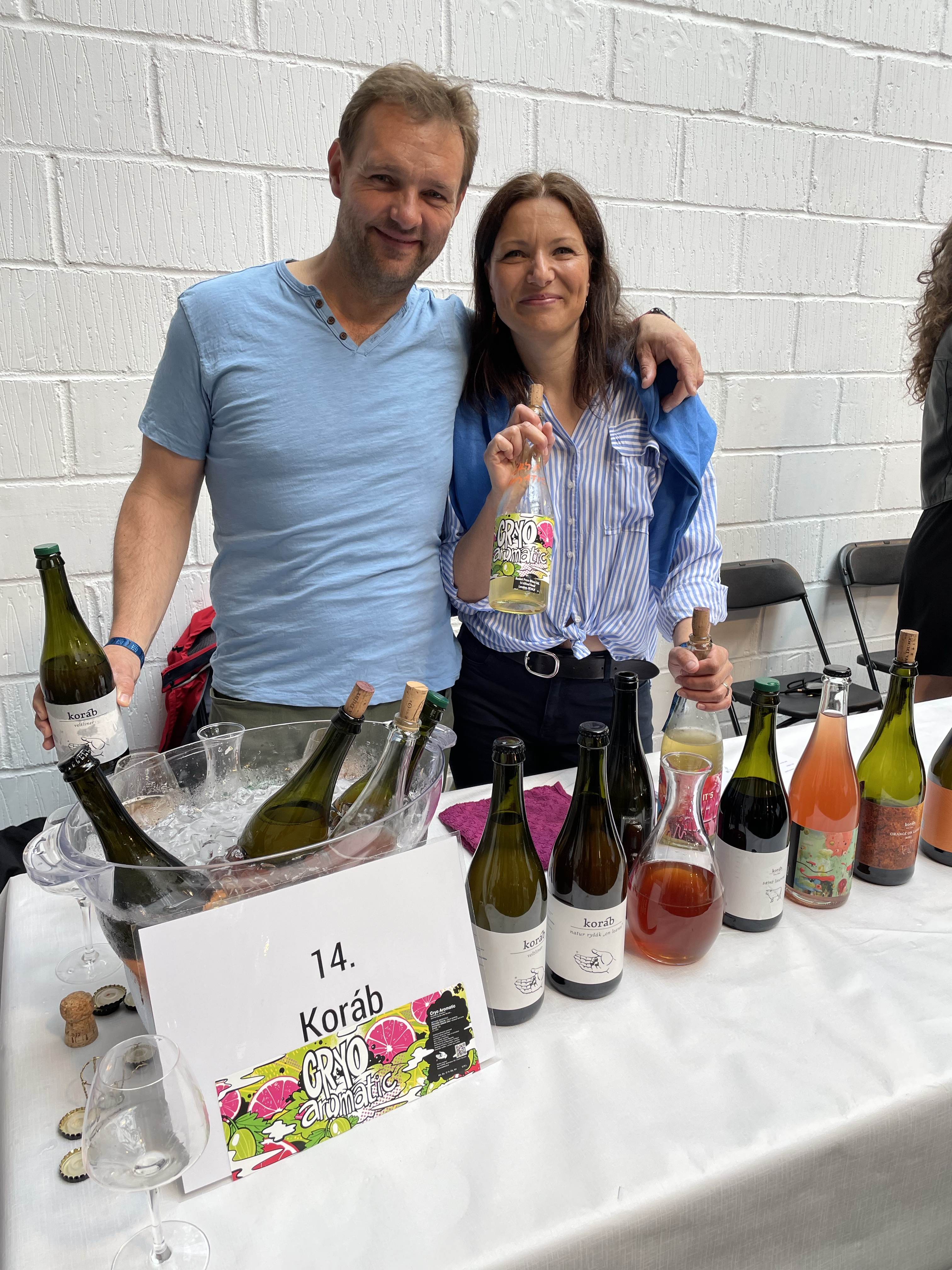
SAINT-LAURENT 2020, PETR KORÁB (Moravia, Czechia)

I apologise that I’m currently drinking a Koráb wine every month. Have any of you taken the hint yet? It’s often his petnats which I guzzle but this red is so good I definitely plan to buy more. Truly glouglou. Petr’s vines date back to 1936, 4-hectares owned by the family with a little rented. Most of them are original Czech clones, which he is actively trying to preserve. As these are natural wines (and Koráb has used biodynamics since 2008), the purity of these clones comes through. Even though the vines are old, Petr manages to emphasise freshness above all else, through his hands-off methods.

This is fairly dark in colour, with a purple rim, suggestive of brambly fruit scents merely to look at the glass. Actually, the bouquet is more redolent of cherries with violets. It’s on the palate where the darker fruits come in, predominantly blackcurrant, with all the juicy power of the acids that fruit usually erupts with. Despite what I’ve obviously highlighted as good acidity, the fruit is almost sweet, and certainly intense whilst remaining light on its feet.

Take a less fashionable variety, treat the fruit with the utmost respect, and the result speaks eloquently. Fresh and fruity with a little plumpness to round it out, it’s a wine that brought me tears of joy. At the end of the day this is no fane wane, it’s a fun wine for any occasion. But what fun!

Imported by Basket Press Wines.

FIXIN “LES CRAIS” 2010, DOMAINE BERTHAUT (Burgundy, France)

This is one of two January Burgundy reds. In Part 2 we shall drink a lovely Beaune. This bottle comes from Fixin, at the very north of the Côte de Nuits. The estate has since been renamed Berthaut-Gerbet, after Denis Berthaut’s daughter took over the management and winemaking at the domaine. Back in 2010 it was run by Denis with his son, Vincent. But under both regimes, this has been a consistent and very good value address in Fixin, and one of those producers responsible for the elevation of the village into one most people truly interested in Burgundy now take much more seriously.

“Les Crais” is a lieu-dit of 1.7 hectares, of which the family owns 1.4 ha. The elevation is low, it’s hardly a fine hillside site, yet it does boast good drainage, and old vines, planted here as far back as 1946, with some new plantings in 2002. The wine undergoes a classic Burgundy élevage, spending fifteen months in oak of which around 20% is new. This doesn’t seem too much for this top vintage, with the caveat that it does add a certain structure to fruit which probably would not want to see a great deal more new oak than was used.

After eleven years there is a little brick red colour around the rim, but the rest of the wine in the glass looks very dark ruby for its age. The bouquet is spiced cherry, very attractive, whilst the palate retains a degree of tannic structure. It’s drinking nicely, especially with air and food. Do I want to age my Fixin a lot longer? Personally, perhaps not, because I like this wine just as it is. It kind of gives a nod to a more rustic era whilst showing the advances in winemaking which make these once unfavoured wines highly palatable.

In that respect it’s a typical good Fixin, very well made and still with more to give if you want to keep it. Purchased at the domaine.

GRÜNER SYLVANER ALTE REBEN 2016, WEINGUT FRIEDRICH BECKER (Pfalz, Germany)

Fritz Becker’s estate is at Schweigen-Rechtenbach, right on the border with Alsace’s far north, and his best vineyards occupy a beautiful slope down to the French Abbey of Wissembourg. In fact, those monastic sites, planted to Pinot Noir in the main, are actually inside France. Becker is famous for his Spätburgunders, and it is all too easy to pass his other varietals by. It would be a mistake, as this wine demonstrates.

Grüner Sylvaner is the variety’s official name, not often seen nowadays but used very deliberately here. Its colour is so limpid green that you cannot ignore it. Initially, on first sniff, it has the surprise steeliness of a cooler climate Riesling (because the Pfalz can be fairly warm for Germany, hence its ability to fully ripen Pinot). The bouquet broadens and increases in interest with air, just as over time in the glass the palate does likewise.

Here we have almost shocking lime, at first. Then in comes stone fruit, herbs and an underlying mineral texture. The backbone is well defined but the fruit adds enough flesh, skin contact to the fore, perhaps. At over five years old this Sylvaner still tastes super fresh, but it has obviously developed. It’s this really well-formed spine which is responsible for its relative youthfulness, but it’s a cracking wine, as brilliant in its own way as that of Jean-Pierre Rietsch, above.

Another wine purchased at the domaine. If you do visit, don’t just look at the Spätburgunders.

WIENER RIESLING 2018, WIENINGER (Vienna, Austria)

I guess you mostly see me drinking the Gemischter Satz field blends from Austria’s capital, and in fact I’ve got one of those for you in Part 2. However, I have a long relationship with the wines of Franz Wieninger, and I tend to buy them at all levels, top to bottom. It’s quite nice to be able to introduce one of the less expensive varietal cuvées here.

Wieninger is “the” pioneer of the Viennese vineyards and he and his family own an incredible 50-hectares of vines on both the Bissamberg and Nussberg sides of the Danube. Although Wieninger is not a “natural wine” producer as such, the wines are made with great care and respect for this beautiful terroir, north and northeast of the city, using biodynamic methods throughout.

This is a paler, lemony, dry Riesling, deliciously balanced with citrus freshness (a definite squeeze of fresh lemon) balanced with something peachier with a touch of yellow flesh. There is slightly more fruit from Bissamberg’s loess and slightly less from the chalky limestone sites they farm on Nussberg, where their unmissable summer pop-up heuriger looks over the city, one of my favourite views on this planet. The grapes see a five-hour pre-fermentation maceration followed by a very gentle press. Fermentation is in stainless steel, where temperatures are kept cool to preserve aromatics. The wine then rests three months on its lees in tank (no oak) before bottling.

This is a subtle wine, not really complex but it has that lovely Riesling freshness, and mid-weight fruit, which makes for a fascinating glass. More than merely “glugworthy”.

This bottle came from The Solent Cellar, but it is widely available. I’ve seen it in Butlers and Selfridges, and I think Liberty Wines import.

Posted in Artisan Wines, Natural Wine, Wine | Tagged , , , , , , , , , , , , , , , , , , , , , , , | Leave a comment

Recent Wines December 2021 (Part 2) #theglouthatbindsus

Part 2 of my “Recent Wines” for December 2021 covers the more interesting wines we drank at home over the latter part of the month. This includes Christmas and New Year’s Eve, although you wouldn’t know…a dearth of posh wines with maybe one exception. You just get the usual eclectic bunch. Three Germans (all different regions), two English wines (one sparkling, one still), and one each from the Jura, Burgundy and Czechia.

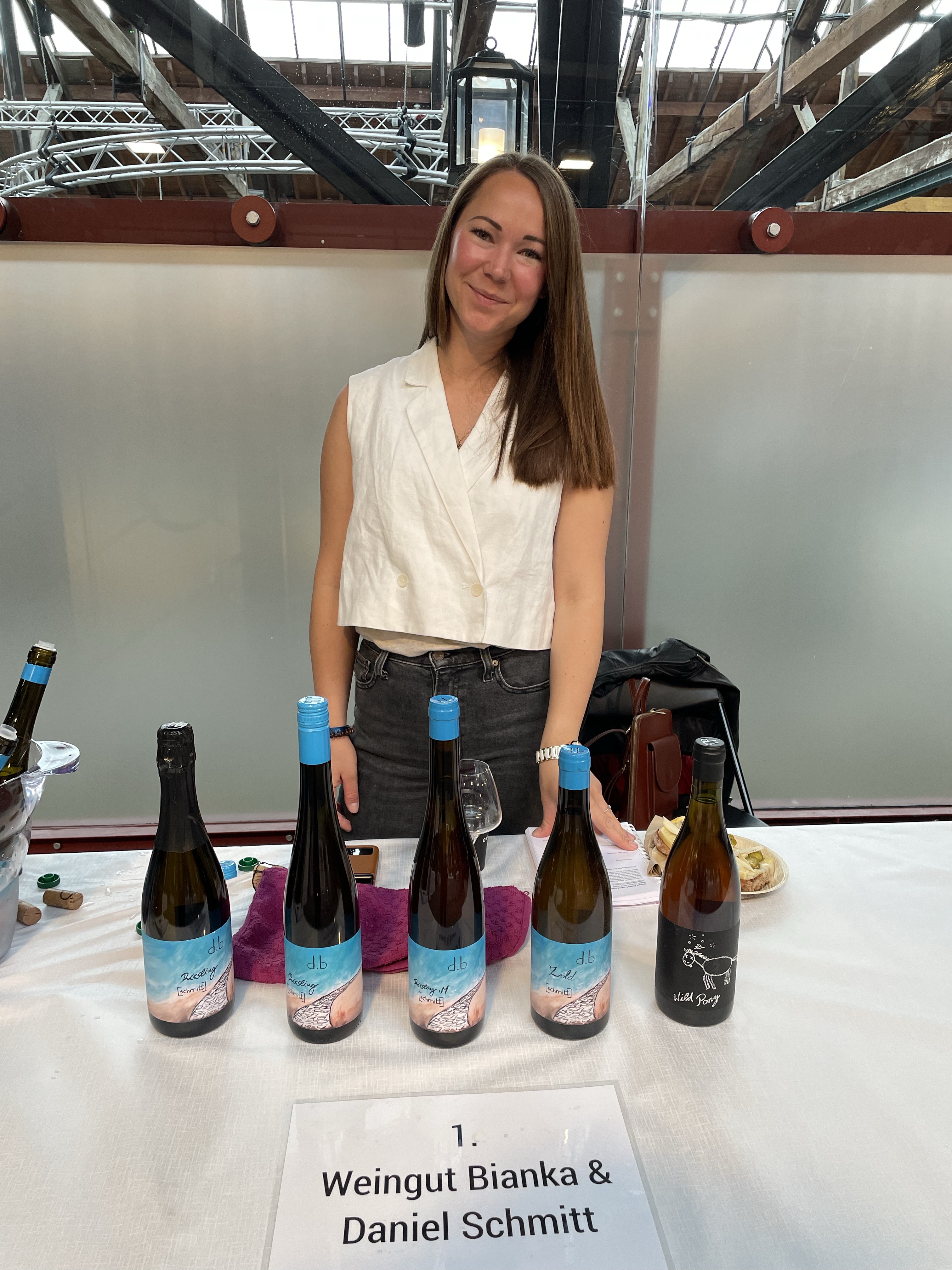
SYLVANER “ZÖLD” 2018, BIANKA & DANIEL SCHMITT (Rheinhessen, Germany)

This dynamic couple from Florsheim-Dalsheim make their “Sylvaner” using the variety’s French name, and the Landwein designation, despite their famous location. The wine is made with minimal intervention, the fruit grown biodynamically, the only input really being the decision to macerate for four weeks. Sylvaner does enjoy a bit of skin contact if the fruit is ripe and clean.

The wine starts out in the glass with a touch of froth, and a colour almost resembling cloudy apple juice. The apple colour is mirrored very much on the nose, with a striking fresh apple bouquet. The palate runs the spectrum of green and yellow fruits with some noticeable texture coming from the skins. However, with all that fruit balanced by the textural element, the finish is more savoury than sweet.

B&D call this a “green, filigree, fruit bomb” and it certainly is. At just 11.5% abv you can imagine how easily it goes down, but at the same time it’s maybe one for those seeking joy rather than seriousness. Truly fun.

From The Solent Cellar. Imported by Les Caves de Pyrene.

PINOT NOIR “TSCHUPPEN” 2015, ZIEREISEN (Baden, Germany)

Located in a sheltered spot close to the Swiss border in the far south of Baden (at Efringen-Kirchen), Hanspeter Ziereisen produces several of Germany’s finest wines, at least in my opinion. People often comment that the conditions here are similar to Burgundy, but that’s a bit of a red herring. Ziereisen has moved away from Burgundy clones and small oak in recent years and these wines can be a kind of German/Swiss hybrid in terms of their taste profile.

This cuvée is very far from being expensive, released as a Bädischer Landwein and described, in actual fact, as a Blauer Spätburgunder. It comes from young vine fruit grown in a pretty cool terroir (Tschuppen is a single site), yet protected from the winds that whip down from the northeast.

The soils are a mix of jurakalk mit löss and when the grapes came in around 70% were destemmed in 2015. A spontaneous fermentation took place in stainless steel, the wine seeing six weeks on skins, then ageing took place in large oak füder for 24 months. The wine was bottled unfiltered and sulphur limited to just 0.7g/l.

The bouquet is gorgeous cherry fruit, balanced on the palate by the remains of the wine’s tannic structure, now much softened after six years post-harvest (but still evident). The fruit on the palate is in the dark cherry spectrum, and the wine overall has a nice velvet texture. This really is a bargain at around £20, though of course availability in the UK is reasonably limited.

This bottle came via Butlers Wine Cellar, but Ziereisen is imported by Howard Ripley.

CÔTES DU JURA « POINT BARRE » PLOUSSARD 2016, PHILIPPE BORNARD (Jura, France)

One of the star names in the village of Pupillin, just outside of Arbois, the domaine is now being run by Philippe’s son, Tony, who last time I looked was building a new winery, the domaine having outgrown the family home now. Tony’s father was something of a legend back in the day though, but all the stories which echo around his presence shout joyous fun. Of course he’s still very much there in the background.

Point Barre is made from vines over sixty years old, the fruit being destemmed but fermented as whole berries. It starts out quite feral in the glass (same as the previous two bottles I’ve drunk of this) and one wonders how it passed the Côtes du Jura appellation panel. Perhaps they are more open-minded in the Jura? You would probably guess this was a “no added sulphur” wine.

If I haven’t lost you there, then you would certainly enjoy this great example of natural Ploussard. The bouquet shows ethereal red fruits, with a definite strawberry note, for me. If that suggests a greater softness than some more cranberry-inflected Ploussard, you’d certainly notice that softness on the palate. The texture is faint but dusty, and therein you do taste a bit of cranberry and redcurrant in the zippy acidity. If I were to sum up this wine in a couple of words, I’d use soulful and pensive, which is how the best Poulsard/Ploussard ought to taste.

Another purchase from Solent Cellar, imported by Les Caves de Pyrene.

DORSET CHARDONNAY 2018, LANGHAM (Dorset, England)

This is Langham’s first still 100% Chardonnay and they did choose a rather fine vintage from which to release it. The vines grow on south-facing chalk in their Crawthorne vineyard, off the A354 between Dorchester and Blandford Forum (not far from Puddletown and Milton Abbas). The approach here is fairly low intervention with spontaneous fermentations, no fining/filtration and no animal-derived additives (so the wine may not be a “natural wine” in some people’s book but it is vegan).

The style is deliberately “fresh” and remains so even after three years ageing. The lemon freshness is enhanced by some more exotic fruits creeping in. This fruit is bright but also creamy and the texture is dry with a little bit of extract.

It’s a wine that’s not aiming for Burgundian complexity or weight but is perhaps, with its summer freshness, something uniquely English and all the better for it. A wine with its own unique personality. I’m impressed with this, really enjoyable on its own terms. I’m a fan of the estate’s sparkling wines and I shall certainly try to buy the next vintage.

Another wine from The Solent Cellar, also available from other independents including Lea & Sandeman in London.

“CUVÉE DAVID PEARSON” 2015, BREAKY BOTTOM (Sussex, England)

I would challenge anyone to name a more perfectly situated English wine estate, sitting as it does, enfolded within a hollow (“bottom”) of beautiful Sussex Downland just south of Rodmell, and a longish pebble’s throw from the sea. Peter Hall has turned his small start-up estate, which he planted in the mid-1970s, into one of a handful of the finest wine producers in the country.

You will most likely have seen me post reviews of other Breaky Bottom wines, including cuvées containing Seyval Blanc, a variety which the Hall family has elevated above any other English example I can think of. “David Pearson” doesn’t contain any Seyval Blanc, instead being a blend of Chardonnay, Pinot Noir and Pinot Meunier. Peter generally makes two different cuvées per year and the names are a nod to family friends. David Pearson was a long-time member of the BB team who sadly passed away in 2019.

This is a very pure example of a wine which, despite extended lees ageing of around four years, has a purity and freshness off the scale, a trait of this producer, which is why I love the wines so much. The blend is 70% Chardonnay, the Pinot varieties adding 15% each to the whole. Of course, along with the freshness you do also get that creamy brioche of aged traditional method sparkling wines. I’d go so far as describing this as magical now, but you can certainly see the path to further ageing.

This came from Butlers Wine Cellar, straight from Breaky Bottom itself.

CORTON GRAND CRU LES MARÉCHAUDES 2006, DOMAINE CHANDON DE BRIAILLES (Burgundy, France)

The de Nicolay family estate has grown in stature over the years. Always providing stunning value, with some hidden gems (like the tiny “ Île des Vergelesses” vineyard), this century the quality has progressed even further, as have the domaine’s green credentials. This is good news for one of the most maligned sections of the Côte d’Or’s Grand Cru terroirs, Corton. They are one of the few producers which have made genuine terroir wines from the hill.

Their progress has been a result of increasingly low intervention viticulture and winemaking. This is a wine fermented with whole clusters in wooden vat, undergoing gentle pressing and ageing in mostly older oak (maybe 20% new oak at Grand Cru level).

Maréchaudes is situated just below Bressandes on red soils with limestone. It tends to drink a little sooner than the other GCs here, but this shouldn’t make it of lesser quality. My take on this bottle is that, rather nicely, it combines, or perhaps juxtaposes, the velvet smoothness of some Beaune wines (thinking more the Premiers) with the texture of Côte de Nuits limestone. This makes for a delicious and interesting bottle, although there’s that niggle with me that, as with a lot of 2006 wines I’ve drunk, they are not quite able to give as much as I fervently hope the 2005s will…at some point in their evolution. And guess what folks, this is a “natural wine” (well, they add a tiny bit of sulphur but nowt else). Don’t tell your conservative drinking friends, because they will never guess.

I’ve had this a fair while in the cellar but I’m pretty sure I purchased it from Berry Bros & Rudd.

“MAD DOG WARWICK” 2019, MADAME FLÖCK (Mosel, Germany)

Madame Flöck is the creation of two guys, Rob and Derek, who come from the US and Canada respectively. They met in the Barossa when making wine there in 2016…so the Terrassenmosel  at Lehmen and Winningen was the obvious place to set up a partnership together, right? Well, the guys do look a little crazy in their photos, but I think as one married a Mosel fräulein from the winemaking Schmitt family (Materne Schmitt, Winningen, I think?), at least reading between the lines, such a move wasn’t so crazy.

What really matters is that these guys really know how to do exciting stuff with Riesling. Mad Dog comes from just a couple of terraces at Winningen. This is how they tend to measure their vineyards, not in hectares. The cuvée is named not after someone like the infamous Aussie Bushman, Mad Dog Morgan, but “after the bloke who introduced us”. The vines, aged between thirty and eighty years old, are at the top of a hill in a small side valley, facing west. The westerly winds keep the vines disease free, and minimise botrytis, at the same time ensuring a longer, cool, ripening. The guys have repositioned the shoots and retrained them to assist in retaining acids, very much what they are after.

Limpid green-gold, the nose is almost as limey as a Clare, a really deep-rooted lime bouquet. There’s more lime on the palate but before you hit lime overload some nice grapefruit pops its head up. Ooh, and is that quince as it tails off? That’s mingled into the textured, mineral finish, long and dry with a lick of acidity to balance a hint of richness which shows up late in the day but adds an extra dimension.

Like another young winemaker with talent, Jas Swan of Katla Wines, Rob Kane and Derek-Paul Labelle are making good use of the opportunities to create truly exciting wines in the Mosel. I remember Rudolf Trossen telling me a few years ago that the Mosel is ideal for young winemakers because no one wants to farm the steep sites anymore and they can be had “almost for free”. It seems that a few intrepid souls have taken up the challenge and boy is the wine world better for it. I cannot wait to try more Madame Flöck.

This bottle came from Butlers Wine Cellar. They’ve sold out, I think, but may have some of the Schmetterling bottling, which I am yet to try, a blend of Müller-Thurgau, Riesling and Kerner.

“IT’S ALIVE” 2020, PETR KORÁB (Moravia, Czechia)

I imagine a few people might raise an eyebrow at me drinking Czech pétnat on New Year’s Eve, rather than some fancy Champagne, but to be fair this was with dinner, not to toast the New Year. I’m far too old now to be bothered to stay up past midnight…most years. In any case, the Champagne rack is getting increasingly empty and most of the stuff is too expensive to replace, but that’s not the reason we drank this. Koráb makes some of the best wine with bubbles in Central Europe, especially if you are a fan of natural wine.

This particular bottle is made from a field blend of a number of varieties, including Pinot Blanc, Chardonnay, Neuburger and Grüner Veltliner, situated on Petr’s four-hectares near the family winery at Boleradice. Winemaking is simple (if biodynamic methods can ever be called simple) and non-intervention in every respect where possible, especially in keeping this pétnat’s sediment in the bottle. Pre-bottle ageing is in robinia casks.

The fizz here is gentle, more akin to a frizzante than a fully sparkling wine. We have a simple wine in some respects, but take that as a compliment. There’s no autolysis or any of that. The sediment provides texture in the glass, unless you stand the bottle up for a few days and pour it carefully, but I like a bit of gunk in the glass. It adds to the fun. And it is fun, a juicy, fresh, reasonably acidic wine but tempered by a softness on the finish. I certainly enjoyed my last wine of 2021.

Koráb’s UK importer is Basket Press Wines.

Posted in Artisan Wines, German Wine, Natural Wine, Wine, Wine Agencies | Tagged , , , , , , , , , , , , , , , , , , , , , , , , , , | 4 Comments

Recent Wines December 2021 (Part 1) #theglouthatbindsus

HAPPY NEW YEAR!

I love writing about wine, more than any work I’ve done in the rest of my life, but like everyone else, it’s still hard to start tapping out on the keyboard after a long Christmas break. The weather, too many mince pies, Covid blues (and I haven’t even caught it yet), whatever the reason, I can’t even feel the effects of my morning mug of strong black coffee. January is surely the time to hibernate (or ski if you can afford to). However, looking at the wines I need to tell you about today, in the first part of my December roundup, the sheer excitement of them certainly helps to generate some much-needed enthusiasm for the task.

Eight wines here and eight more to come in Part 2, we have a Pinot Noir from Eglisau, a strong start, you will agree, no? We then look at one of the new-wave of Jura producers, then my first 2020 from Annamária Réka(-Koncz), and a Grower Champagne that everyone loves. Next, the wine I chose as my “Wine of the Month” in my Review of 2021, a rare appearance of Bugey-Cerdon, a deliciously different Barossa red and, to finish, a well-known Tuscan producer’s attempt to work outside of the box, using amphora.

BLAUBURGUNDER 2018, BECHTEL-WEINE (Eglisau, Switzerland)

This comes from the tiny Deutschschweiz appellation of Eglisau, not too far from Zürich, and is made by one of German-speaking Switzerland’s rising stars, Mathias Bechtel. A few of you will have noticed that his Räuschling white was one of my wines of the month in my Review of 2021, published just before Christmas.

Blauburgunder is the Swiss (and Austrian) name for Pinot Noir, and although you will find some wines using this nomenclature in Northeast Italy too, more producers, even in these regions, will stick to the French name. What I’m unsure of is whether the Blauburgunder name is developing an identity for local clones (cf producers in Germany increasingly using Pinot Noir or Spätburgunder to denote French/German clones).

Whatever the case, this is another lovely wine from Mathias, and one which very much has its own personality. There is a touch of richness and smoothness, but it isn’t in any way weighty, this despite a surprising 14% abv on the label. The cherry-dominated bouquet is fascinating. There’s a little spice and grip but no tannins to speak of, yet you would call it well-structured. It lingers on the palate. I have a couple more of these so I shall try to save one for a few more years to check how they age.

Find Mathias Bechtel’s bottles, when available, at Alpine Wines. He doesn’t make very much.

SAVAGNIN OUILLÉ “LA PIERRE” 2017, CÔTES DU JURA, LES GRANGES PAQUENESSES (Jura, France)

Winemaker Loreline Laborde describes this exquisite gem as evoking “the duality between minerality and exoticism, tension and generosity”, and there in one short sentence, you have it. Loreline started out just over a decade ago with a couple of hectares and it would be fair to say that her reputation has gone stratospheric in that short decade, although she hardly makes enough wine to hit superstar status, despite having doubled her vine holdings to 5 hectares in the years since.

Loreline comes from Southern France and cut her teeth in the Rhône, most notably working for Laurent Charvin in Châteauneuf-du-Pâpe. She naturally fell in love with the Jura, as we all do, and bought her small farm in the relative backwater of Tourmont, west of Poligny. Here, as well as tending her vines “naturally”, without chemical inputs, she reputedly looks after goats and chickens…and Amazone, her horse which ploughs the vine rows. Thanks to Laurent Charvin, her exports began to take off before any local trade, but the French, especially the Parisians, have caught up.

It’s an “ouillé” cuvée, ie topped-up rather than aged oxidatively, here in barrels which are a few years old. At four years old this wine is still packed with freshness, starting with the lime zest on the nose, underpinned by acidity and two other notable elements on the palate: a slightly salty taste and a mineral texture. Forget about fruitiness, this is all about the tension. But, a big but, it is also unquestionably a sensual wine. Above all, it’s a thrill to drink and worthy of all the plaudits others have heaped upon it. This is certainly one of the most exciting producers in the whole Jura region at the moment.

Loreline’s wines are imported by Vine Trail.

“A CHANGE OF HEART” 2020, ANNAMÁRIA RÉKA-KONCZ (Barabas, Hungary)

Okay, so if you don’t know that this winemaker in Eastern Hungary is one of my favourite new names of the past couple of years, then I apologise for not repeating for the umpteenth time her biography. This bottle was the first I had drunk from her 2020 vintage, newly imported a month before. I’d had to wait a while because, despite buying a good few ARK wines, they disappeared swiftly. You won’t thank me for saying that the first shipment this year has more or less sold out already and I wonder whether the importer might wish I hadn’t been such a stalwart supporter of this producer in print?
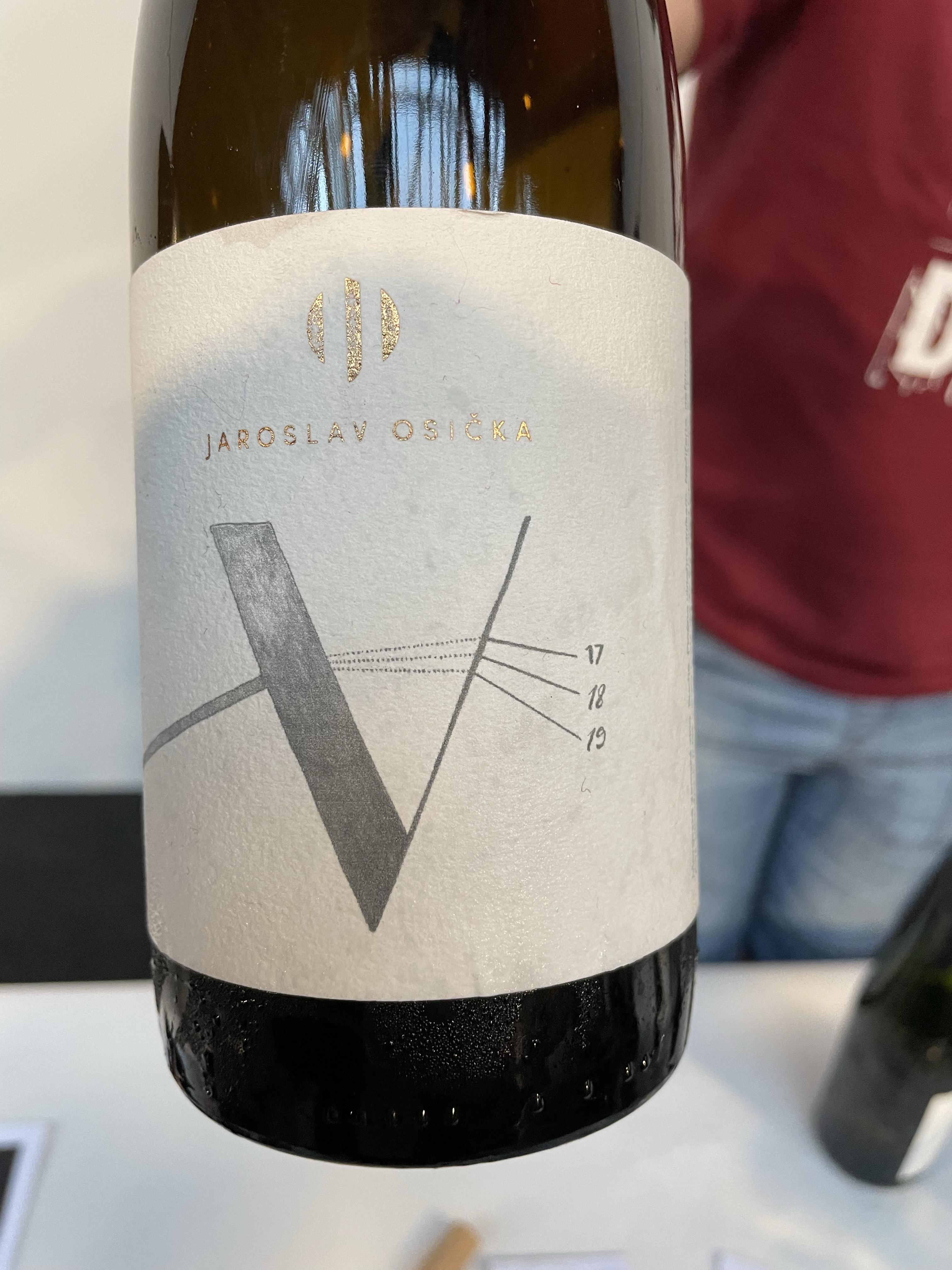
The colour really hits you, a beautiful, luminous, cherry red which appropriately hits the nose with a deep and vibrant cherry bouquet. It promises such pleasure…and then actually over-delivers on the palate. Zippy but not frivolous, and yet another unique view of Kékfrankos (aka Blaufränkisch).

I would say that Annamária Réka appears to gain confidence with each vintage I have tasted. It seems to me that the winemaking is under control, yet Annamária is not afraid to push the boundaries. This is such a joyful red wine, more than anything else. Then comes the deflating realisation that this small producer made only 1,750 bottles of this cuvée in 2020.

Basket Press imports ARK, and I do hope that they can squeeze another shipment for the UK. These wines are becoming very popular indeed, not least in my household, but I hate to see them all snapped up by restaurants where, of necessity, they will cost at least double the retail price. I’m all for sharing.

BULLES DE COMPTOIR #9 “TRADITION” MV, CHARLES DUFOUR (Champagne, France)

This Champagne is adored by so many people in the trade who I know, and part of the appeal must have something to do with Charles being a great person. Charles really got hold of his own destiny when the family estate he had run since 2006 was divided up amongst the family four years later. He wound up with six hectares, which he farms from his base at Landreville, in the Côte des Bar, more specifically in that part of the Barséquanais which lies on the right bank of the River Seine.

Bulles de Comptoir is Charles Dufour’s entry level wine, an Extra Brut but unusual perhaps in that the current vintage is combined with wine from a solera-style perpetual reserve. Number nine (each Bulles is numbered) is from 2018 fruit harvested across several sites, and containing Pinot Noir, Chardonnay, and some rare (in Champagne) Pinot Blanc.

These 2018 grapes were blended with wine from a perpetual reserve which at that time contained vintages 2010 to 2017. It was bottled in October 2019 and disgorged in January 2021. If this degree of multi-vintage complexity were not enough, Dufour has magically united different terroirs around Landreville, Essoyes and Celles-sur-Ource, all with varying shades of clay and limestone. Dosage is less than 2g/l (Extra Brut).

Dufour is, despite what some have portrayed as a slightly rebel image, one of the most thoughtful young growers in the Aube. His focus is very much on the soil, not only as terroir, but as a living ecosystem. The result is beautiful. Darker than some wines from 2018, doubtless because of the reserve wines here, you can convince yourself you are tasting terroir, even at this level and knowing it is not a single site wine. And “wine” it is, vinous but fresh and lovely. I think, in fact, this is a wine where you can taste its soul.

This bottle came from Littlewine, although I’ve more frequently bought Dufour in France, in times when they actually allowed us into the country. I may also have found his wines in The Good Wine Shop (Kew branch), but certainly at Les Papilles (Paris). Although Grower Champagne is becoming horribly expensive in the UK, this is one great wine that remains affordable (for a few) at £42.

“IS THAT THE MILKY WAY” 2019, DARREN SMITH (La Palma, Canary Isles, Spain)

Darren Smith made this wine, released under his “The Finest Wines Available to Humanity” label, at Vikki Torres’s winery, but not from her grapes. The name comes from the clear night skies so common on the south side of La Palma (apparently, according to friends who are there as I type, it’s cloudier and wetter in the north most of the time). The photo on the label gives a good idea, and it reminds me of the skies I have seen from the Himalayas, with millions of stars visible to the eye.

The grape variety here is Albillo Criollo, most of which does grow in the north of this small volcanic island (a volcano currently active, as you may well know). However, this batch was purchased from an old-time grower in the south, from a vineyard called Barranco Pinto. At 1,000 masl, the grapes cling to the side of a steep ravine-like gash of volcanic rock, with little topsoil.

The wine, which I chose as December’s wine of the month in my Review of 2021, was a revelation. It’s most certainly savoury, yet with a hint of exotic fruit as well. Its slightly darker hue is suggestive of some maceration. It begins life in the glass, on pouring, as something quite remarkable…and then just gets better from there on in, assisted by a finish as long as the Mont Blanc Tunnel.

I chose this to serve to a well-known wine consultant friend. You know, choose something offbeat, that they wouldn’t have tried before. I think they liked it no less than I did. A brilliant wine, but a unicorn in a true sense. Only a few hundred bottles were made and I’m led to believe that they are all gone. I don’t know whether Darren will return to work with VTP again, but he continues to travel the world making truly exciting wines, so far, a little under the radar.

Darren Smith’s wines are mostly sold online, direct, via his TFWATH web site: https://www.tfwath.com/ and also on Saturdays at Westgate Street Market in London Fields, but check before travelling because, you know, it’s winter…he may not be there. Also try The Sampler, Leroy in Shoreditch and Spring Restaurant at Somerset House.

The magical wines of Victoria Torres Pecis are imported, in equally finite quantities, by Modal Wines.

BUGEY-CERDON “RÉCOLTE CÉCILE” NV, DOMAINE PHILIPPE BALIVET (Bugey, France)

I imagine that a few years ago only a tiny number of people in the UK would have tried Bugey wines, but they have unquestionably become a little better know more recently. I got to know them because Geneva friends have a weekend place over the border in a village blessed not only with a cable car, but also a small restaurant around ten minutes staggering distance away. A nice place to eat, but with a generally uninspiring wine list, Bugey being an exception. My first taste of this tiny region in Eastern France were bottles of red, mostly Mondeuse, but slowly I got to know Bugey-Cerdon, an appellation for sparkling wines made by the Méthode Ancestrale, which makes them, of course, a very early type of Pétnat.

Wink Lorch’s book, The Wines of the French Alps, is the only true fount of knowledge for the region. Today you zip past on the impressive A40 between Lyon and Geneva without noticing it (although I do recall one of the autoroute service stations along the stretch near Bourg-en-Bresse sells an assortment of local produce, including Bugey wine), but as the map in Wink’s book shows, you can still pass through Cerdon, and indeed Mérignat where the Balivet family farm 7 hectares, if you exit onto the old N1084. The slow route goes through what can still properly be called “Old France”, with steep wooded slopes and ancient farms, tranquil being the operative word.

Vincent and Cécile Balivet, brother and older sister, now run the estate. What is unusual about Balivet is that they still have some Poulsard planted, which makes up around 10% of their vignoble.  This Jura variety used to be more widespread in Bugey but it has become all too rare to find it now. “Cécile” in fact blends a small amount of Poulsard with the far more common Gamay. The vines are grown up to 500 masl on steepish slopes, with no synthetic chemicals used (Wink suggests that father, Philippe, blames chemical treatments for his own health issues).

Bugey-Cerdon is usually off-dry, something accentuated in this case by the wine’s extraordinary fruitiness (strawberries and raspberries), and by the low alcohol (7%) leaving residual sugar unfermented. However, the wine also has a lightness, freshness, acidity and vivacity which counterbalances any sweetness. No sulphur was added to this particular bottling. The pinkish colour is remarkably attractive, it must be said.

A good Bugey-Cerdon, which this undoubtedly is, makes a perfect accompaniment for lighter desserts, especially if red fruits are involved, but the wine is very versatile. Who doesn’t wish for a light, low alcohol, wine with small bubbles to refresh the palate on a hot day, not to mention to drink in the hot tub if you are so-inclined.

I try to grab a bottle or two of this whenever I’m in Eastern France, Vagne in Poligny often being a good bet for a couple of different Balivet cuvées. In England the wines are imported by Vine Trail. I’ve been trying to get hold of another producer’s Cerdon for some years, Renardat-Fache. I finally managed to squeeze a mere couple of bottles into a friendly retailer’s order just after I got back to the UK in November, so watch this space, and get to know Bugey.

DRY RED 2018, FREDERICK STEVENSON (Barossa, Australia)

I’ve no idea why winemaking genius Steve Crawford goes by the name of Frederick Stevenson, but he’s not alone in the alias game, so maybe it’s an Aussie thing and we are left out of the joke? But he is a genius of sorts. It’s not merely that his wines are always rather good. In this case, the wine is not one bit a stereotypical Barossa, and it’s all the better for it.

This cuvée is usually known as “Piñata” after the lovely label. The grape mix is a good wedge of Mourvèdre, slightly less Cinsault and Syrah, and about 5% Grenache, planted on wind-blown sand over clay, the grapes being dry-farmed biodynamically on the Ahrens family’s Ahrens’ Creek property at Vine Vale. The juice is vinified in concrete tank using whole bunches and native yeasts.

The result has that “made in concrete” feel to it. Lighter than pretty much any Barossa red wine you’ll find, it majors on crunchy fruit. The weight (and the 12.5% abv) is perfect to go with the crunch. The effect is accentuated by the two months the juice spends on its skins, but there is no heavy extraction at all. Steve is all about texture, and this wine has plenty.

You get gorgeous red and darker fruit flavours. There’s a little tannin, but the wine is just alive and leaps onto the palate without the tannins restraining the fruit. Added to this, I reckon you might find a whiff of nutmeg, and a perky herbal note. The feel (but not the taste) of the wine reminds me of really good Loire red wine with an Antipodean twist. Steve clearly learnt a lot about these varieties working in France (he also worked in Germany, but that’s another story), and that knowledge and experience has been put to good use and built upon back in South Australia, where he’s been for a decade now.

The bottle came from Seven Cellars in Brighton. The importer is Indigo Wines.

DA-DI 2019, IGT TOSCANA, AVIGNONESI (Tuscany, Italy)

I drank so few Tuscan wines in 2021 I could never reveal the shameful number. It’s embarrassing because twenty years ago people knew me as something of a fan. I think the slowness of the region to take up the low intervention torch has had something to do with it, that on the back of an increasing “internationalisation” of the region’s wines, including some estates I used to follow. A lot of Merlot and small new barriques.

That said, I bought this wine from a producer who definitely makes a mix of international-style and more traditional wines because I’d heard it was not only worth trying, but also great value.

Da-Di is made from organic Sangiovese in amphora. I think it’s not hard to see that this Tuscan variety is not just suited to clay, it’s probably a lot more suited to it (at this level) than some form of vanilla oak flavouring. The vessels are actually made from Tuscan clay, and the name supposedly means “earth” in Mandarin (though not on my version of Google Translate, it must be said). I don’t know whether this means that the wine is aimed at that market, but I’m glad some came westward.

I am not sure this can truly be called a terroir wine, because we have no indication of the terroir from whence it came, but no mind. The fruit spent 45 days macerating on skins and then a further 90 days in amphora. The result is not really any significant complexity, after all, it cost just under £20. That said, I thought it was rather nice, hence inclusion here. Cherry fruit predominates, with some other supporting red fruit flavours.

The amphora gives the wine a characteristic freshness which disguises the alcohol (13.5% abv). This means it’s pretty refreshing and easy to glug back all too quickly. It wasn’t perhaps as obviously an amphora wine as, say, a COS (Sicilian). That said, for the price I can say that this was pretty interesting and well worth trying. There’s plenty of wine that’s way less interesting in this price bracket.

Purchased from Butlers Wine Cellar (Brighton and online).

Posted in Artisan Wines, Natural Wine, Wine, Wine Agencies | Tagged , , , , , , , , , , , , , , , , , , , , , , , , , , , , , , , , , , | Leave a comment

Review of the Year 2021

My Review of 2021 will be a little different this year. It has been a tough year for many parts of the wine trade, especially so for small and specialist importers, not to mention restaurants and the rest of the hospitality trade. Dealing with smaller harvests from your producers, persuading them to continue to export to the UK with all the added hassle and paperwork now involved, and then the delays in receiving wine due to shipping and Customs problems are all bad enough. Add to that a downturn in restaurant trade and poor importer, you are probably tearing your hair out.

For many wholesalers and retailers their business has changed. Wholesalers have (mostly) embraced selling to the public, whilst many retailers I know have somehow managed to build a successful online presence, enough to offset lost restaurant sales. Equally, with people dining out less, they have been drinking more at home. A small ray of hope, especially as retail customers pay before delivery, not (in some cases) too many months after.

You won’t be surprised that I am not going to offer up any wine merchant of the year awards. Frankly they are all working very hard to keep the UK market almost as vibrant as it was before the pandemic (and Brexit). I must say, though, because I know these folks will be reading this article, that I am nothing but apologetic for my pathetic purchasing. Last year, and it seems in the first part of 2021, I bought quite a bit of wine. Of late I’ve been able to buy almost nothing. If I did buy wine from you in the second half of 2021 you are lucky. If I didn’t, then (you all know who you are, I hope), it is me who is unlucky.

Trends for 2022? I don’t really care. All I know is that there are areas of my cellar which need replenishing badly. These are Grower Champagne, Alsace, Jura, Bugey, and in general Germany, Austria, Switzerland and Northern Italy. However, as with my “want list” of records when I was a teenager, and my travel plans as they stood on the cusp of 2020, many of these wishes have slipped beyond fulfilment now.

BOOKS

I continue to read voraciously, and this year I have been able to read some great wine writing. As those who read my last article will know, every year yields up a few gems from the Infinite Ideas Classic Wine Library. For me, the pick of the bunch would be Anthony Rose’s Fizz (which I reviewed last week) and Matt Walls’ book on The Rhône (reviewed in March). The series isn’t always on the nail, but the sections of my wine library where these books reside grows every few months.

Another couple of books deserve mention, although the second isn’t a wine book. Camilla Gjerde’s self-published book We Don’t Want Any Crap in Our Wine is a focus on a selection of women natural winemakers. It was a joy to read, helped by an excellent selection of subjects (including Alice Bouvot, Elena Pantaleoni, Catherine Hannoun, Jutta Ambrositsch and Ariana Occhipinti), plus some lovely photos. The author is well worth supporting (camillagjerde.com, £26 UK).

My other mention is a book on cheese. I’ve read many books this year but I’m not going to tell you all of those I liked the best in other subject areas. However, cheese kind of goes with wine, and Ned Palmer’s A Cheesemonger’s History of the British Isles (reviewed last February) is a story-based paperback which I am pretty sure to read again next year. Trust me, it will make you buy cheese, unless you are vegan.

Whilst we are on the subject, it is frustrating that European readers can’t get a copy of Max Allen’s latest book. “Intoxicating” is a brilliant look at the wider Australian drinks industry, booze culture and its history. You would find it fascinating and, in my opinion, there’s no better writer in the Antipodes writing today when it comes to drinks.

If have to name my Wine Book of the Year, then there is only one real candidate. Already a previous winner for his Amber Revolution (annoyingly now out as an updated second edition with, inter alia, fourteen new producers added, which I will have to find the money for next year), Simon J Woolf has joined with Ryan Opaz to write Foot Trodden, another self-published book, on the wines of Portugal.

First, this work is immaculately produced and special mention must be made of the brilliant photography of Opaz. Woolf is a compelling writer on any subject, able to blend a story with the required facts and analysis. But most of all, this is a wine book which is just right for the time. Always under-appreciated, Portugal seems finally to have gathered a critical mass of younger artisans who have a focus on their country’s traditions, whilst equally having learnt lessons from modern European wine. This is the perfect time for these stories to be told. I am sure that Foot Trodden will do the same for Portugal as Amber Revolution did for “orange” wines. Especially if it persuades more importers and retailers to give the wines a go.

I should perhaps also mention Masanobu Fukuoka’s One Straw Revolution. Certainly not new, I wrote about this wonderful little book back in August, yet the review still managed to make it into my top ten most read articles of this year (see below).

WINES

At Christmas time you will see every wine writer on the planet listing their wines of the year. Many of them will be boasting of the fabulously expensive bottles they managed to consume, most of these totally out of reach of mere mortals. You will know, because you read my “Recent Wines” articles every month, that I was no less guilty than any in drinking the odd bottle of Dom Pérignon, Langoa-Barton or Clos des Epeneaux. You really don’t want to read about that kind of stuff, do you!

This year I plan to simply list a wine of the month, so twelve in total, and in the spirit of those monthly Recent Wines articles, the wines I choose will not be the most shouty, expensive or boastful bottles, but those which were the most interesting, stimulating and joyful. Don’t worry about December, I’ve already drunk the wine I know I would choose, and anyway, we might open Grand Cru Burgundy on Christmas Day (move along, nothing to see…).

Why the musical pairings? Well, music means no less to me than wine. The pairings are purely an emotional response to the wine, a mood thing, nothing more. Nor are the tracks all new. They are merely pieces I seem to have listened to a lot in 2021.

January

Just one month in and this is going to be difficult, isn’t it! But no mentions in despatches, one wine only or else we’ll be here all month, so here we go. Actually, it wasn’t too hard. “The Wizard” 2018 by Annamária Réka-Koncz was the last bottle of this wonderful winemaker’s wines I was to drink before her UK importer, Basket Press Wines, was able to bring in the new vintage this autumn. Off volcanic soils in Eastern Hungary, it’s a field blend of local white varieties plus Rhine Riesling with one day on skins in cask, finished in tank. Bitter orange with a mineral tightness. I think I am my own worst enemy because I feel I have contributed to these wines selling out all too quickly. Imported, as I just said (but worth repeating) by the always exciting Basket Press Wines.

Musical Pairing: Sad Waters (Nick Cave, Idiot Prayer)

February

Joschuari Rot 2011, Gut Oggau. Oggau lies north of Rust, a couple of kilometres as the bicycle pedals. On the Nieusiedlersee’s western shore. This red wine is made from Blaufränkisch on a mix of limestone and slate. Forty-year-old vines give complexity whilst the terroir gives the wine an almost-frightening freshness. Ten years old and life affirming. The vines for the “middle generation” wines are maturing and although the wines are getting correspondingly more expensive, they are increasingly capable of ageing to near perfection, never dulling from their vibrant youth. Dynamic Vines and Antidote Wine Bar fly the flag for Gut Oggau in the UK.

Musical Pairing: Mcdonald Trump (Lowkey, Soundtrack to the Struggle Part 2)

March

“Cul de Brey” 2015, Domaine de la Tournelle. I have been a passionate advocate for this Arbois domaine for a very long time. My sadness at the loss of Pascal Clairet was palpable, made worse because I saw him not all that long before his passing. However, I don’t select this wine out of sentimentality. It’s a unique blend of Trousseau, Petit Béclan and Syrah which underwent a light press before an extended 30-day maceration. The result (with zero added sulphur) is a pale, red-fruited, cherry bomb of a wine, soft fruit with perfect texture. By coincidence another wine you should find at Dynamic Vines or Antidote.

Musical Pairing: Cold Genius Awakes (the Frost Scene) (Henry Purcell, King Arthur)

April

“Commendatore” 2013, Domaine de L’Octavin. We drank a good few of Alice’s wines this year, but this one had rested in the cellar since my first visit to her old garage winery in an Arbois backstreet very early in the morning a number of years ago. Remember my article “The Visitor”, from August? Well, this is one wonderful person I desperately want to visit again but whether she will ever have the time to see me, who knows? Commendatore is Trousseau from 50-y-o vines in “Les Corvées”. Eight-month maceration in tank, mellow and stately, very contemplative in its softness. Alice’s UK importer is Tutto Wines.
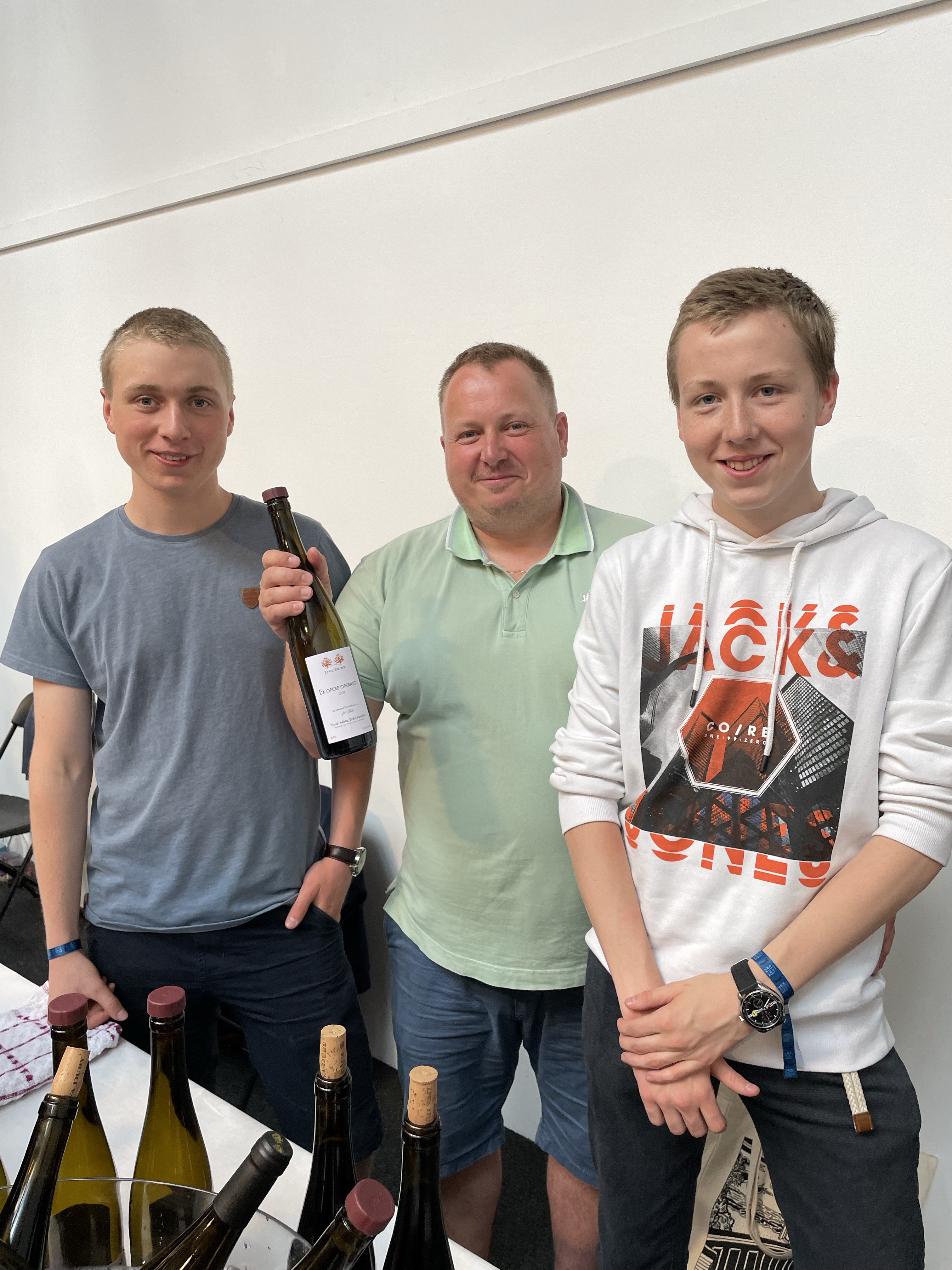
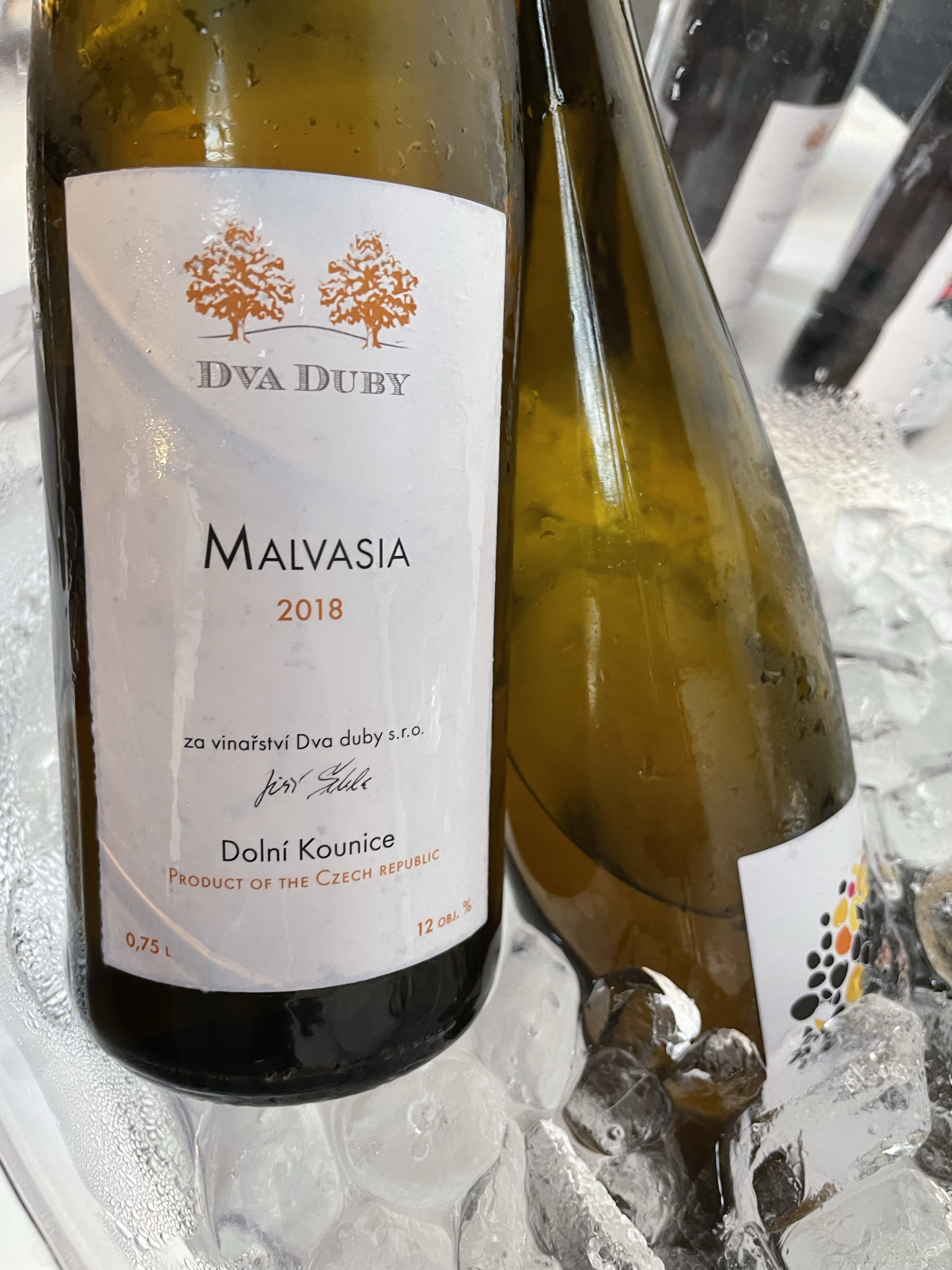
 Musical Pairing: Zombie (Fela Kuti, from the album Zombie)

May

Grauburgunder 2019, Renner und Sistas. Just over half way through May we opened a new wine from the Renners. Although they have professed an interest in exploring blends more, this Grauburgunder is a new varietal. Four days on skins, my bottle was a bright cherry red but it tasted almost like a white wine. Pure Heaven, for just £24. It was an absolute certainty that I would have been in Gols this year were it not for Covid. At least moments like this can still happen. Purchased from Littlewine, also imported by Newcomer.

Musical Pairing: Damaged Goods (Idles, from The Problem of Leisure, A celebration of Andy Gill & Gang of Four)

June

Schilcher Frizzante [2018], Österreicher Perlwein, Ströhmeier. In some ways Styria (specifically Südsteiermark) has been a forgotten region within Austria, but lately that has changed…big time. Yet there remains a quintessentially Austrian grape variety grown in tiny quantity there, Blauer Wildbacher. The wine it makes, Schilcher, is an acquired taste for some but I love it and no more so than in this “frizzante” version from Franz and Christine Ströhmeier. Macerated ten hours for a rusty hue, second fermentation in bottle, this gentle sparkler hits you with red fruits and girders. Dry, saline…drink the first glass clear and then agitate for a cloudy second. Periodically available via Newcomer Wines and Littlewine (littlewine.com).

Musical Pairing: Fists of Fury (Kamasi Washington, Heaven and Earth)

July

Räuschling 2018, Bechtel-Weine. If I went for a Swiss wine in 2021, despite some gems from the Suisse Romande, then it had to be a wine from Deutschschweiz. Its time has surely come. Mathias Bechtel makes wine in Eglisau, one of Switzerland’s smallest appellations (15 hectares) not far from Zürich. This man is one of the country’s rising stars, most well known internationally for his Pinot Noirs, off complex soils at approaching 500 metres above sea level. However, this white variety is Eastern Switzerland’s maligned grape. Bechtel makes something fairly unique out of it, more fruit, more weight, a hint of arrowroot, stone fruit and pear. As usual, taking an unloved variety seriously, treating it with respect, pays dividends. Alpine Wines imports Bechtel.

Musical Pairing: Mushroom (Can, Tago-Mago)

August

Rakete [2019], Jutta Ambrositsch. Jutta makes wine from a patch of soil which ranks among my favourite four stretches of vineyard on this earth. Of course, I love all her wines but Rakete is one which I would aim to drink every year. It’s a field blend, of course, and it comprises of St-Laurent, Rotburger, Blauburger, Merlot, and assorted white grape varieties. They are all close to 50 years old, on Vienna’s Kahlenberg. A four-day maceration in steel tank, no filtering and the admonition to shake before opening. Pure cranberry juice. Chill it well. Littlewine/Newcomer again. Okay, they are getting a lot of hits but don’t blame me. These genuinely are my WOTM choices.

Musical Pairing: Eleggua (Daymé Arocena from the album Cubafonía)

September

Si Rose [2016/17], Christian Binner. Most people drink Binner’s two-vintage blend on release. How would this old vine (PG 35%, Gewurz 65%) cuvée age? Christian uses 100-y-o large oak casks and each element is treated differently as to time on skins, from eight days to eight months. The colour is pale orange, fruit is peachy, maybe apricot and citrus, and powerful (I don’t just refer to the 14% alcohol here). Complex, a wine for reflection and surely one of Alsace’s finest? This time we turn to Les Caves de Pyrene for acquisition.
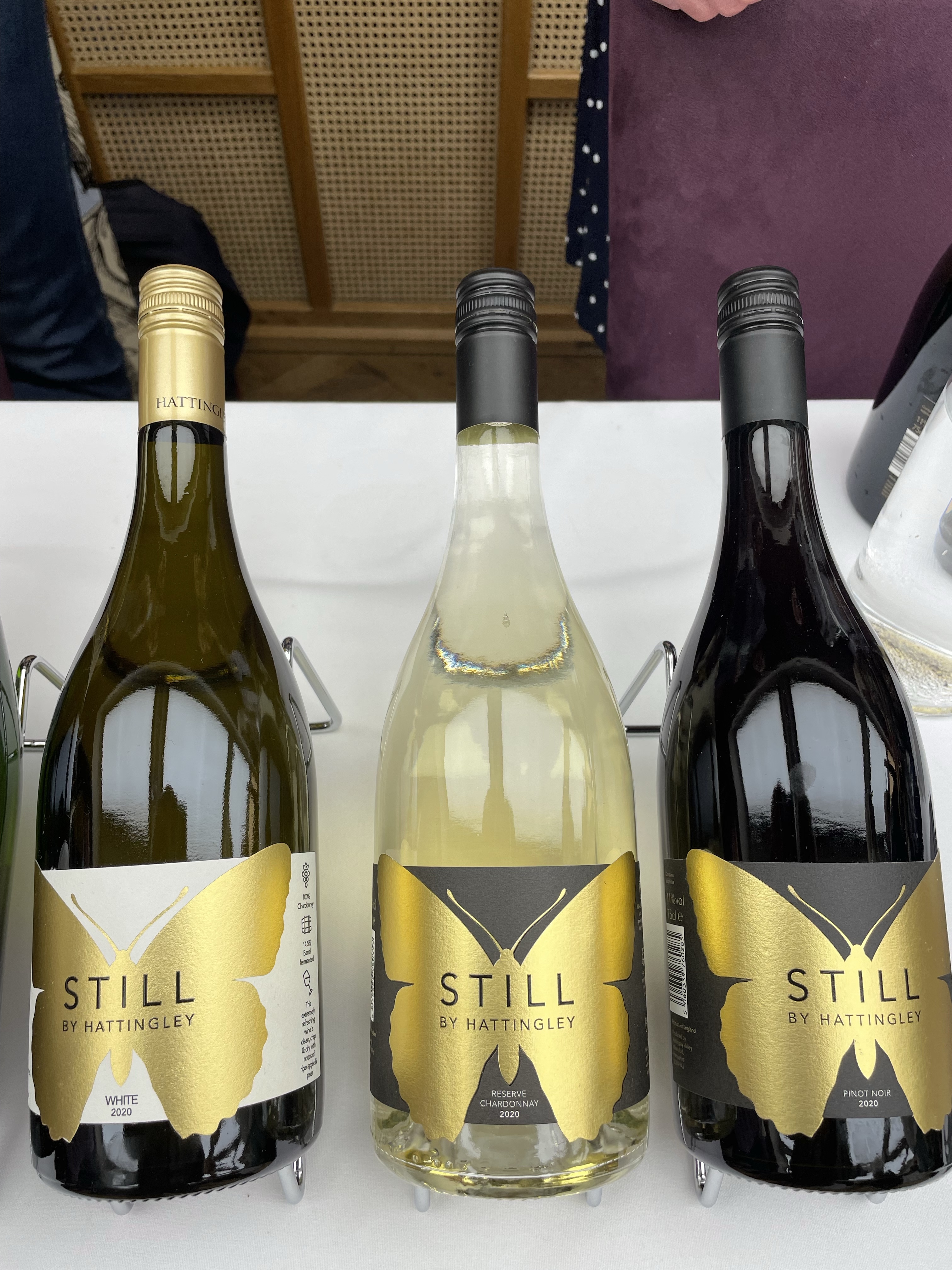
Musical Pairing: Alabama (Neil Young and the Stray Gators from the live album of 2019, Tuscaloosa)

October

Red Z’Epfig [2019], Lambert Spielmann. Another Alsace wine, but this time from a new rising star, one from the north of the region. He farms a mere 2.5ha around Epfig. The focus is ecology, looking at the terroir as one living ecosystem. In this wine he takes Pinot Noir off limestone and blends it with Pinot Gris off clay. A two-week maceration (whole bunches), then nine months in large old wood results in a gorgeously scented wine, red berries and spice. The lightness of touch in the winemaking in this fruity and zippy red cloaks 13.5% abv. A producer to follow. Another import by Tutto Wines.

Musical Pairing: Wetin Man Go Do (Burna Boy, African Giant)

November

Khukri Rum XXX. For much of November I was in Nepal. I drank some wine, but not really the kind of wines you want to read about. I did drink a lot of Khukri Rum though, and although they make finer versions with greater age, this standard version is the equivalent of Beaujolais here – something to glug (though I’ve never drunk hot Beaujolais and a hot rum punch really does banish the cold in the hill country). It has quite a hit of vanilla sweetness and 42.8% alcohol. As they say, made with fresh Himalayan spring water, matured in wood “amidst the cool highland climate”. “The original Himalayan dark rum”. Produced in Kathmandu since 1959.

Musical Pairing: 108 Decapitations (Ugrakakarma, Mountain Grinders EP (vinyl only) but also on a Metalhammer Magazine Sampler CD  #296)

December

Is That the Milky Way? 2019, Darren Smith. I’m writing this in the week before Christmas, but with all due respect to what might be opened over the somewhat muted (it seems) festivities, this bottle gets the final nomination for 2021. Darren made this wine at Vikki Torres Pecis’s winery on La Palma (Canary Islands) from fruit he bought from an old timer. The Albillo Criollo grapes were growing in a steep ravine in the south of the island (this variety is usually only found in the north). Released under Darren’s frankly exciting “The Finest Wines Available To Humanity” (TFWATH) label, it is both savoury and just a little exotic too. It begins great (ie not merely good) but then gets even better over the course of the bottle. Sadly, it is all gone, but Mr Smith is doing exciting stuff in some of the wine world’s farthest corners. Watch this space.
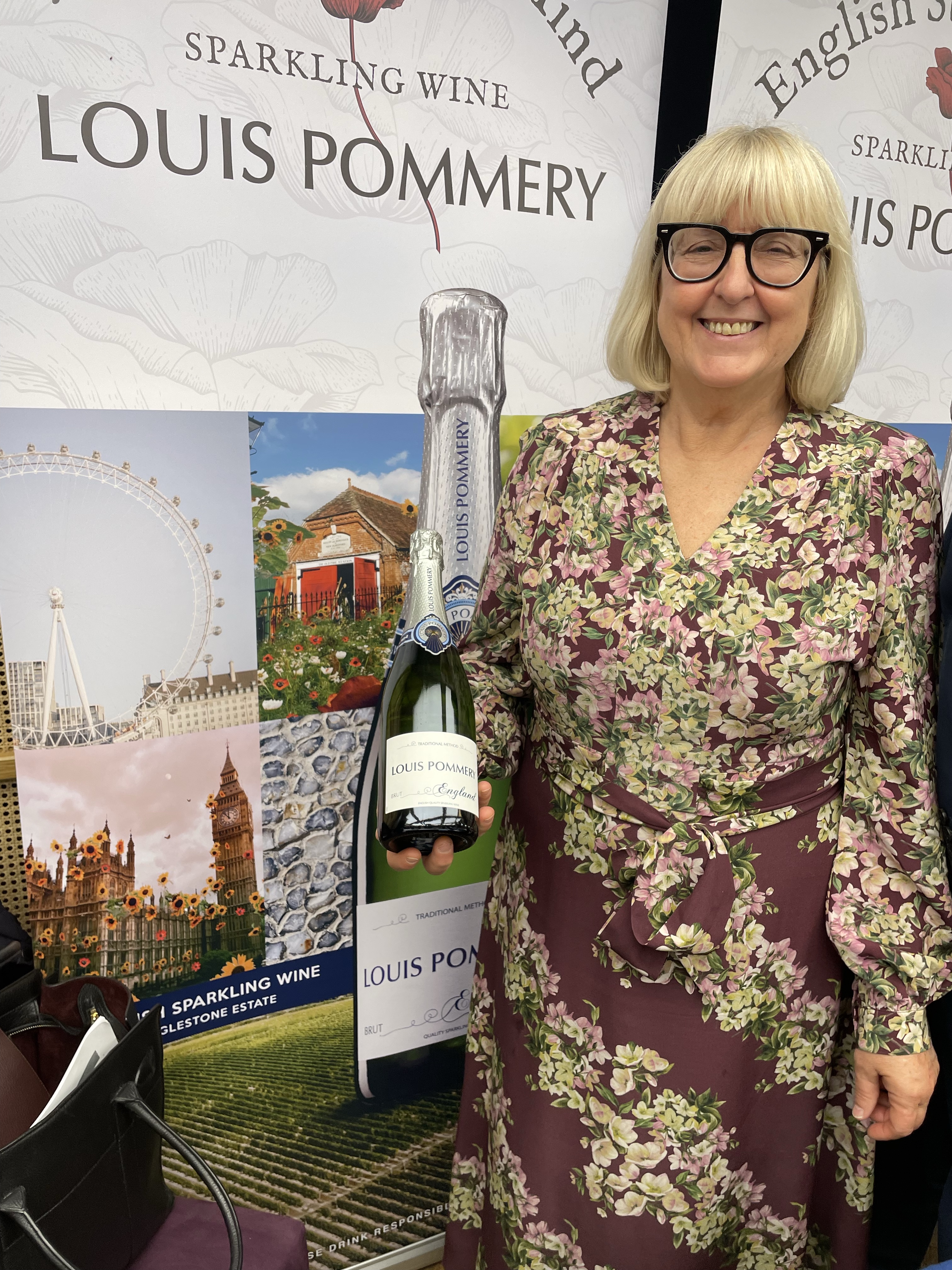
Musical Pairing: Pick Up Your Burning (Sons of Kemet, off Black to the Future)

I hope the music wasn’t too obscure to some of you. It’s just a bit of fun. I want to finish with a look at my Blog. Wideworldofwine exceeded my expectations this year. From a fraction under 40,000 views last year my stats have taken an even bigger leap, currently set to top 52,000 today. That is a number I’d never have dreamt of when, in my first full year of writing (2015), I managed 7,188. A little more than half of those visitors are from the UK but I have also built a healthy audience in the USA (a big increase these past 12 months), France, Australia and, of course, Nepal (which is not a country particularly well represented in the drinks writing fraternity).

Fifty-thousand is a milestone, I think. Perhaps I should quit now, whilst I’m on top. The longer Covid continues to impact my own writing, both around events here at home and from a travel perspective, it becomes harder to find inspiration, or at least inspiration of a kind that will equally inspire my readers.

I thought I would finish my Review of 2021 by listing my ten most popular articles over this year. The month/year, in that order, in brackets is when I published the article. I guess that in theory this list should be informative as to why an amateur like me has a readership, and perhaps what makes my articles different to others. A few older articles really are perennial favourites, but equally many here were written in 2021.

  1. Extreme Viticulture in Nepal (11/19)
  2. Tongba – A Study in Emptiness (01/16)
  3. Victoria Torres Pecis – The New Star of the Canaries (08/19)
  4. Pergola Taught (02/21)
  5. Paradise Lost – A Eulogy for Two Great Natural Winemakers (06/21)
  6. Central Victoria Part 2 – Bindi (12/19)
  7. Field Blends and Gemischter Satz – Why Should We Get to Know Them? (03/21)
  8. The Collector (05/21)
  9. Grower Champagne… (01/21)
  10. The One Straw Revolution – Masanobu Fukuoka (Book Review) (08/21)

Although it didn’t hit the Top Ten in terms of the numbers, the article “Appellations – Who Needs Them?” was only published on 6 December, and has seen the kind of reader hits which, had it been published earlier in the year, would almost certainly have seen it race up the charts.

What I hope, more than anything, is to have entertained you throughout the year, and helped affirm that wine is a joyous thing, food for the heart and the soul. Even more so in the very difficult world in which we seem to live now. One in which, for me, sanity is only retained through sharing the joy of food, wine and music with family and friends, even if it has sometimes only been on a tiny screen. And indeed, sharing these things with so many loyal readers. A very big, genuine THANK YOU! And Cheers!

Posted in Artisan Wines, Christmas and Wine, Natural Wine, Review of the Year, Wine, Wine Agencies, Wine Books, Wine Writing | Tagged , , , , , , , , , , , , , , , , , , , , | Leave a comment

Fizz! – Review of Anthony Rose’s New Book on Sparkling Wines

Christmas is always a time when people like me and you turn to new wine book releases. My trip overseas meant I wasn’t able to review this book in time for most people’s Christmas lists, but for those reading in more affluent countries this might be in time to prompt you as to where you might spend any welcome book tokens, or to cheer you up with some wine reading to compensate for the Christmas jumper or the three chocolate orange gifts.

Anthony Rose is both an established and highly accomplished wine writer, in print almost everywhere from Decanter to The Oxford Companion, as well as being a senior wine judge at home and overseas. Perhaps eclipsing all this, for thirty years he wrote one of the best three wine columns in a UK newspaper, in The Independent. He’s equally a skilled photographer as well, and all the pictures used in this review were taken by him and used with his Copyright Permission.

Anthony is also an expert in sake, and in 2018 he published “Sake and the Wines of Japan”. I recommended this at the time and three years later I would repeat that it would, with ease, be in my highly personal top ten wine-related books of the past five years. That book was published by Infinite Ideas, and it is to this publisher’s “Classic Wine Library” series that Rose returns for Fizz! – Champagne and Sparkling Wines of the World.

This Classic Wine Library seems to grow and grow, replacing the old Faber series in covering the breadth of the wine world. The books in the series tend to follow what I call the “student textbook” format in most part. By this I mean that they start off by addressing the subject generally, including history, regulatory frameworks, viticulture and winemaking perhaps, before delving down to specifics via countries, regions, appellations etc, as appropriate.

Such a format could be rather dull, as with some of the texts I had to use for my WSET Diploma in the 1990s. These books are no less informative than any required textbook, but the best works in the series combine facts with a compelling narrative. It is this which makes a clutch of books in this series stand out from the others. Rose’s Sake book stood out as being of this type, a godsend for me as I am a big fan of Japan and had really just set out to try Japanese table wines. In fact only Covid stopped me attending the sake course Rose ran in London, and from visiting London’s own sake brewery, Kanpai (in Peckham). This book is just as easy to read, obviously written by an author with journalistic credentials, and with a nose for a story as well as for a good wine.

One word about books on sparkling wine in general. Lovers of these wines are blessed with a number of accomplished writers. Some of us wish Tom Stevenson hadn’t completely turned his back on Alsace after writing the seminal work on the region in 1993, but he remains one of the most well-regarded writers on sparkling wine, to many perhaps the most prominent. Peter Liem’s boxed tome on Champagne (with its wonderful maps) remains essential too, as in my opinion does Michael Edwards’s sensitive and deeply knowledgeable work in World of Fine Wines’ “The Finest Wines of…” series (Aurum Press). Many books circle the periphery of this core, like, to mention but one, “Bursting Bubbles” (2017) by Robert Walters (which covers part of the so-called Grower Revolution).

So, what Anthony Rose needed to achieve to enter this crowded field is something different. What he attempts to produce, and I will say now, succeeds in doing admirably, is a work which covers this increasingly broad (we are talking both geographically and stylistically) subject area via both a convincing overview and a concise drilling down into the detail. He does it within this broadly textbook style, whilst taking the reader along via a strong narrative.

Fizz! begins, as one would expect, with a brief history of bubbles in wine. This introductory section, which also covers winemaking techniques, aspects of sparkling wine viticulture (including a really useful summary of grape varieties used for sparkling wine production, very useful if like me you rate Trepat or Pinot Blanc as a sparkling wine variety), and an overview of wine styles within the genre, is excellent. It somehow seems concise and focused but at the same time broad in scope. The author achieves this through text, very good diagrams where useful, and the text boxes highlighting both central and peripheral aspects of the story which we have come to expect from the Infinite Ideas format. This takes up the first seventy-five pages.

The remaining 280-or-so pages before the Glossary and Bibliography come under the umbrella of “Country introductions and profiles”. Here, Australia/New Zealand, England, France, Germany and Italy all have their own chapters, along with Central and Eastern Europe, South Africa, Spain and Portugal, USA and Canada and, importantly, Japan and China. For completeness the book ends with some appendices on Champagne.

Sheep in Nyetimber’s Tillington Vineyard, West Sussex

First up, in each chapter, you generally get a survey of the sparkling wine regions within each country followed by a segment on the major producers. By major I don’t mean in volume terms. I think that Rose’s primary focus is on quality, though many large producers do require coverage. I would say, for example, that in the chapter on England Rose includes all of my favourite producers, none of whom are large in volume terms…although he does miss out a personal favourite, and important name, in Wales. However, a book like this has to have some element of personal selection, so it is good fortune that the author’s opinions do more than broadly concur with my own here. If you want to read just one chapter (as opposed to a whole book) on English Sparkling Wine, then this is your man.

The chapter on France is by its nature very broad. Here we get Champagne in all (well most of) its glory. The hardest job in this book must have been to fit Champagne, a wine on which countless books have been written, within a work on the whole world’s sparkling wines. To his credit, Rose manages to do this pretty well, giving prominence without allowing it to both dominate and overshadow the rest, despite its obvious pre-eminence within the genre.

Without doubt the producers included, or excluded, in the profiles must have given the author nightmares. We get prominent Houses like Bollinger, smaller Houses like Veuve Fourny and Growers. Now inexplicably Anthony doesn’t include a producer profile for Bérêche, although joking aside, they do get a couple of mentions elsewhere, in particular within the boxed text on perpetual reserves for which this producer is notable. This is an example of how Rose does have his finger on the pulse of what’s happening within the region, though equally within the limits he must surely have been told to impose by his editor. In a region with thousands of producers of all sizes he includes those whose contribution goes beyond merely the wines they make.

Champagne at its most bling! Armand de Brignac at Cattier

Anyway, there’s still space to run through the rest of France in this chapter, although as a fan of many of this country’s Crémant wines, I might have hoped for the inclusion of a greater number of producers. Whilst books on Champagne will continue to appear, books on other French wine regions often treat sparkling wines as an afterthought, and as books on Jura are rare, and Alsace non-existent, the often-brilliant sparkling wines from these regions get hardly a look-in. That said, Rose does include the finest fizz in the Jura, from Stéphane and Bénédicte Tissot (in Arbois). Missing, however, are the finest sparkling wines of Alsace, perhaps because they are made by small producers up in villages like Mittelbergheim (Jean-Pierre Rietsch and Lucas Rieffel, to cite two examples), the very talented equivalents of the Champagne Growers in comparison to the Dopff et al “Houses”.

Italy is covered in as much detail as this great sparkling wine producing nation demands. With such a diversity of styles and regions, Italy’s chapter is, I think it fair to say, more evenly covered than the chapter on France, dominated by the long shadow of Champagne.

Other parts of Europe are generally seen as less important so I have no intention to criticise the commensurate size of the chapters here. The geek in me wants to moan that the author didn’t highlight the best Sekts in Germany (the wines made from Riesling in the Mosel by Florian Lauer’s father in the 1990s and released over the past half-dozen years or so would, for me, give Weingut Peter Lauer a right to a profile) and the finest Sekt made in Austria (for which I claim validation of my opinion from Gault-Millau) in Marion Ebner(-Ebenauer)’s 2010 Chardonnay.

Nor does the author take full account of what I see as a remarkable revolution in artisan natural wine pétnat production, specifically that taking place in Czech Moravia, led perhaps by the unstoppable Petr Koráb (though mention is given to Czechia’s exciting developments). But here we are speaking of the outer fringes of the wine world, areas undoubtedly for further research and study by the totally obsessed (meaning me).

Pétnat does get covered, largely in the early sections on winemaking methods. Bottle-fermented, often using the “méthode ancestrale” or variations thereof, Pétillant Naturel has become an important style, not only in France but increasingly in almost every place which puts bubbles in wine. With its often-natural wine aesthetic, it is reeling in young consumers for whom anything approaching truly fine Champagne has become economically unviable, with even good Grower Champagne topping £50/bottle now. However, if you want a resumé of the best petnat wines on the market you will need to look elsewhere (probably, to be fair, by being a regular and attentive reader of Wideworldofwine). I might be slightly prone to overestimating its importance in the future of sparkling wine.

I feel bad about making even some tiny criticisms of this book. I feel especially cagey about commenting on Anthony Rose’s approach to petnat sparklers because he did tap my brains on the subject (for which he kindly acknowledges me in the “Thanks” section, which the overly keen-eyed may spot). So blame me if you disagree with anything thus related. Of course, the temptation of any reviewer to express their own views and to supplement the author’s observations with some of their own is irresistible. My book reviews, as regular readers will know, are never purely focused on the work reviewed. I do like to spill out over the edges.

The main point to remember is that I didn’t spend months researching and crafting a work which an editor may well have asked me to cut down into a format that would be economic to produce and which would avoid getting bogged down in debate and detail which would not assist its attractiveness to the general reader. This whole series attempts to cover subjects in a way which would interest both the expert and the novice, the wine obsessive and the casually interested.

We must step back from minute detail and look at the book as a whole. In doing this, we see that Anthony Rose’s new book on sparkling wine covers all the bases in a thoroughly approachable and readable way. It should be essential reading for all WSET students, not least because of the breadth of coverage and the clear explanations of everything you need to know about production methods and the increased spread, and popularity, of fine sparkling wine throughout the whole wide world of wine. It is equally manageable for those merely interested in enjoying, and exploring further, perhaps the fastest growing and most successful wine style of the 21st Century.

So that’s a “definite buy” then. The combination of an excellent overview with drilled-down detail when required is certainly “a winner”, as one might say. It’s yet another book from this series which I would imagine few serious wine lovers would want to be without, especially when combining subject and author.

Fizz! Champagne and Sparkling Wines of the World by Anthony Rose is published by Infinite Ideas Publishing as part of their Classic Wine Library Series. It has a publication date of 2022 but I believe it has been available since 29 November this year (2021). It will appear in major book stores with a decent specialist drinks section, probably less so outside London, but it is equally available on the Infinite Ideas web site.

Important Note: This Review used a pdf file of the book kindly supplied by the author in order that I might publish the review before Christmas. My own hard copy has been ordered but is yet to arrive. Reading a pdf is not my favourite way of enjoying a book, but my point is that in this format it’s easy to miss things. If any of my minor points of difference with the author’s coverage are as a result of missing anything, I apologise sincerely.

Posted in Champagne, English Wine, Petnat, Sparkling Wine, Wine, Wine Books, Wine Writing | Tagged , , , , , , , , | 5 Comments

Appellations – Who Needs Them?

I was reading an article on the Littlewine web site the other day, about the group of excellent biodynamic producers they currently stock from Steiermark (Styria), in Austria, and I was struck by one comment, that all of these producers’ wines are by-and-large bottled simply as table wines (Landwein in German), existing outside of the Austrian appellations for the region. This is equally true in many other Austrian regions, Burgenland is a good example, where many of the finest, and certainly most innovative, producers are outside the supposedly prestigious DAC regime.

The phenomenon is far from being restricted to Austria. France has long been at the forefront of appellation rejection. Whilst many other countries in Europe are seeing the same phenomenon (German producers really have embraced the idea recently), taking a look at France is a good way of beginning to explain what is going on.

The appellation system, originally known in France as Appellation Contrôlée, came about in 1935 when the INAO was formed within the French Agriculture Ministry, and in 1937 when Baron Le Roy, a wine producer (and by coincidence a lawyer) in Châteauneuf-du-Pâpe, proposed a series of rules for producers in the Côtes-du-Rhône. This formed the birth of a system, based of geographical boundaries, which became the template for controlling most aspects of wine production throughout France. This would include rules on grape varieties, ageing periods and so on.

Germany, of course, had a very different system based on a mixture of grape ripeness (Prädikats) coupled with an array of confusing names which sounded like vineyards (though some were and some weren’t). A digression down this path would take us way too far off-topic. In many other parts of Europe (Italy, Spain, Portugal and so on) rules came to be developed along similar lines to the French concept.

Such rigid rules in France were supposedly aimed at protecting the consumer, so that if a wine said “Burgundy” on the label, it came from Burgundy, as defined by its many and various appellation boundaries. Such a claim was a nonsense because as well as failing to address quality within these rules, neither did they address fraud. Wine adulteration was ubiquitous, at least until the EEC (and then the EU) more or less curtailed such activities. But maybe not, if we believe the CRAV activists in the South of France.

Whilst the appellation system didn’t address quality as such, it did address “typicity”. Local tasting panels for each region or appellation would assess the wines in order to determine whether each wine was typical of the appellation. As the panels tended to be made up of big-name producers, co-operative winemakers and negotiants in large part, what was “typical” would certainly often exclude innovation, and may well enshrine mediocrity.

Does anyone recall the new appellation of Buzet, in Southwest France, appearing on our UK shores in the late 1980s or early 1990s? If I recall correctly, the only commercial producer at that time was Les Vignerons de Buzet, the local co-operative cellar. There was nothing wrong with their wines, and they represented decent value, but they were not remotely as innovative back then as perhaps they are today, or claim to be.

Knowing the Tissot family in Arbois a little, I became aware of the wine made outside the co-operative in Buzet by Magali Tissot (a cousin of Stéphane) and her partner, Ludovic Bonelle. The red wine in question, from their Domaine du Pech (planted by Magali’s father in the late 1970s), was originally bottled as a Buzet AOC until it was refused the appellation. As a natural wine, it is certainly different to the Buzet norm, but I have never drunk a faulty bottle. In fact, I would say that this wine stood head and shoulders above what the co-operative was producing when the wine was first rejected by the region’s supposedly skilled tasters. One might wonder what we should surmise by lack of typicity? In any event, the wine’s name changed to reflect its rejection: Le Pech Abusé?

Nowadays it is, as I have already said, pretty common for French producers to make wine outside of the appellation rules. This has been dramatically assisted by the replacement of the lowest level of wine, Vin de Table, with the “Vin de France” designation. Vin de France was originally viewed with some suspicion by consumers. It was brought into being largely as a result of pressure from France’s major volume producers (the big producers always have the greatest influence and run the show, pretty much).

The 1980s onwards saw a big expansion in the production of Vins de Pays, a tier (once two tiers) below the AOC (and now falling under the EU’s IGP rules). Vins de Pays were often wines made in a similar region to one or more AOC wines, but perhaps aside from higher allowable yields, the big difference pertained to grape varieties. When Vins de Pays took off in Languedoc and Roussillon they were predominantly a vehicle for planting the so-called international grape varieties in regions where the appellations restricted producers to traditional varieties.

So, even though we did see Vins de Pays made down there in the south with local varieties such as Terret, which might not be allowed in the local appellation wines, the big swell in planting was of grapes such as Merlot, Cabernet Sauvignon and Chardonnay. It’s fair to say that the south has pulled back somewhat on these so-called international varieties as many producers realise that, as global warming kicks in, there are more drought resistant varieties to play with.

Yet Vins de Pays failed to tackle one issue which the larger wine producers felt was putting them at a disadvantage in global markets. That was regional blending. Remember, this was the time of the great expansion of Australian wine across the globe. Australia was the bright star everyone wanted to emulate, and Australia had no laws in place stipulating that a bottled wine needed to come from a specific location.

Of course, many Australian wines did, with prestigious estates situated in named wine producing regions like the Hunter Valley in NSW or Yarra Valley in Victoria. It was simply that Australia’s larger producers would source wine from wherever they wanted, using any fantasy name they chose. Such a name could point to a particular vineyard site, Jacob’s Creek being a prime example, but the wine didn’t have to come from that site.

If this sounds like a recipe for dodgy dealing, it wasn’t. Jacob’s Creek was, and always has been, a pretty decent commercial wine, and certainly labelled more honestly than “Burgundy” or “Claret”, a great Aussie wheeze for many decades. But where the Aussies really scored was with their top wines. The old “Grange Hermitage” (now simply “Grange”) developed by Max Schubert through the 1950s does still contain fruit from the original Magill Estate, home of Penfolds in South Australia, but the largely Shiraz (with some Cabernet Sauvignon) fruit has always come from other sources as well, some from the vineyards of wider South Australia and a little from out of State.

It was this inter-regional blending which attracted some of France’s big names, but many of these were volume producers who perhaps wished to hedge against the weather and fluctuations in grape prices. It’s possible someone wanted to make a French Grange, but I’m not sure one has emerged, at least in the sense of which I am talking, since Vin de France came into use just over a decade ago.

Vin de France has two possible advantages over Vin de Table for the producer, and these apply equally for the large negotiant and the small artisan. Bottles of Vin de France are allowed to be labelled with both vintage and grape varieties. This was not allowed for “Vin de Table”. Vin de France is, nevertheless, still not allowed to say where the grapes came from (although the producer’s name and address, or at least their postal/zip code, will appear).

Vin de France has been a saviour for many innovative, small, producers, principally for three reasons. First, if your wine doesn’t fit within the stylistic brief of “typicity” as dictated by a regional panel (occasionally out of mere jealousy for your methods and philosophy, because some fellow vignerons are occasionally capable of pettiness) then Vin de France is a refuge, and one not usually a disadvantage to well-known artisans who have a faithful following.

Secondly, as recent vintages have dealt many smaller producers a really poor hand of frost and hail etc, Vin de France has enabled them to purchase grapes from friends in other wine regions. Some producers, like Ganevat in France’s Jura, have developed a negotiant arm, producing AOC/now AOP wines from their own vineyards whilst making Vin de France from bought in fruit. Ganevat’s bought in fruit often comes from Alsace (although not exclusively), but he also uses these cuvées for the wonderful, rare, autochthonous varieties with which the Jura region is scattered and which have escaped the Jura’s appellations. The De Moors in Chablis follow a similar path.

Others, such as fellow Jura artisan Alice Bouvot with her Domaine L’Octavin, have removed all their wines from their respective appellations. Alice’s bought-in grapes (often but not always from Savoie and Alsace) and her fruit from her own vineyards around Arbois are all labelled Vin de France. This is for the third advantage of the VdF designation…bureaucracy. If you are a regional star with a no-compromise philosophy, and especially if you can sell your output with relative ease, then why bother with the form-filling, and with the animosity from those whose methods you don’t agree with and whose wines do not get the attention yours do on the international stage?

Alice is always out

In fact, many producers who reject AOC in favour of Vin de France sell more wine internationally than they do in France, where a more conservative and ultimately less educated (though they don’t think so) wine public is still largely wedded to the appellation as God. It is not unusual to see some French Vins de France made by artisan natural winemakers more frequently in Tokyo, Berlin, Melbourne and San Francisco than in much of France, although there are exceptions. There are plenty of bottles in Paris of course, but they are all hidden under the counter for wine bar owners to share exclusively with their mates.

The UK has been remarkably receptive to “Vin de France”. Of course, it’s not all good news. The whole Brexit situation has turned some producers away from we Brits, mostly because of extra paperwork but occasionally for other more personal reasons (when you have little wine to sell then the easiest avenues to market appeal more). Others, thank goodness, have stood by the supportive small merchants (and of course, Les Caves) who import them, even though allocations may be tighter now. Yet the key to success for these appellation-rejecting producers is new consumers.

Younger wine lovers are less bothered about classic wine appellations, which they sometimes wrongly tar with the brush of fusty conservatism. They base their purchases on what appeals to them, which may sometimes include the packaging, but their critics are way off the mark when they suggest that such younger drinkers are merely slaves to fashion and marketing, and a colourful label (as if your average small artisan has more astute marketing nous than the agency employed by the massive producer, hey folks, surely not?).

So, what is the future of the wine appellation? I think a world where appellations have a role to play will be with us for a long time. Where they work well, they really help the budding wine lover explore a region, and this is as true for Bordeaux as it is for Burgundy…BUT (in my opinion), at the top level. Differentiating Pauillac from Margaux, or Meursault from Puligny, is a worthwhile pursuit for anyone lucky enough to be able to afford the wines of those appellations. It’s just that you can’t tell me that any given wine labelled Chablis is better by definition than any Vin de France emanating from that particular part of France.

I would respectfully suggest that the concept of Appellation in France (and by extension elsewhere in Europe) needs to evolve to remain relevant to new wine lovers and producers alike. If Appellation remains a refuge granting unearned prestige to under-performing wines, then today’s better educated consumers with their fingers on the pulse will simply reject them. This will not only damage dull wines and their makers, but will ultimately damage the reputation of all producers and wines within an appellation.

Appellations need to find ways to include a region’s best (or at least most internationally lauded) producers, should those producers wish to be a part. In some places the horse has well and truly bolted, but in others (Bordeaux, Piemonte and parts of Germany provide examples) there are still producers who would wish for inclusion rather than rejection. Appellations, for all their faults, do nevertheless signal a certain prestige, and acceptance, for many producers.

Not all Bordeaux is fusty and crusty

They need to professionalise their appellation tasting panels to ensure that petty rivalries and overly conservative attitudes no longer prevail. They also need to consider the place of innovation. Is fermenting in a concrete egg so different to the concrete tanks used widely in the 1970s? Is the freshness of ambient yeast strains, the liveliness of a wine protected perhaps by a little carbon dioxide rather than sulphur, and the texture imparted by a little skin contact or an amphora, going to make a wine so atypical that it cannot be admitted to an appellation, no matter how good or exciting it might be?

In Italy’s Chianti Region the DOC(G) rules were modified to allow a number of non-autochthonous grape varieties into the blend of Chianti, even into its “Classico” heartland. Many would argue that in an attempt to placate modernist producers, the authorities allowed a traditional wine to be changed in what many considered a negative way. Did Merlot strip Chianti of its tradition and soul? To cover the arguments would take a page, but many would say that in allowing Merlot in the mix (and in the introduction of new oak barriques), making Chianti “relevant to the modern world” was a bad move. So the arguments are not always straightforward.

How far to allow modernisation and innovation is undoubtedly a question for those who formulate the rules, in the case of French wine the INAO. It probably doesn’t matter a lot to the new consumers, but it is those very consumers who will be the future, who will make or break appellations. Fashions may come and go, but if you make a wine like Muscadet, you may well only remember the last part of that statement. Recovering a reputation can take a generation.

Prestigious wine regions do not feel challenged right now, yet as their wines leap in price, out of the reach of we mere wine obsessives and into the realm of just the wealthy collector, a time may come, sometime in the future, when very few people will know the best wines from the classic regions. If all that remains for younger wine lovers is to get to know a region or appellation through its cheaper wines, then what future do those appellations have? Certainly consumers, robbed of the most prestigious bottles, will only be able to taste wines which may conform to appellation rules, but which have no built-in requirement to be, frankly, any good. In such cases the Burgundian-related adage of “producer, producer, producer” is the best rule anyone can follow.

Me, I just buy any wine that’s good, whether defined by an appellation or designated as a table wine. But then I’m not the kind of consumer appellations are aimed at. However, all is not lost for the appellation as a concept. Despite the rejection of appellation by so many innovators in Europe, the “New World” has begun to embrace it. Canada, the USA, New Zealand and even, to an extent, Australia, have all moved at least in part down a path leading from complete freedom to some appellation strictures, even if it is left to producers as to whether they choose to work within them or not.

That sounds positive, surely? But South Africa, that hotbed of innovative winemaking in the twenty-first century, does provide a different approach, perhaps nuanced, but one that might act as a warning to those whose first thought is not directed merely at making the best wine possible from a unique terroir, without recourse to the constriction of rules for rules sake. It’s a topic which will doubtless provide hours of future contemplation for those of us inside the bubble, and perhaps less so for your average wine drinker, who probably could not give the proverbial two hoots. And that, Mr appellation administrator, is your potential problem.

One of the producers who inspired this article, Ewald Tscheppe (Werlitsch) from Styria

Posted in Artisan Wines, Wine | Tagged , , , , , , , , | Leave a comment

Food for a Change…the Wonderful Cuisine of Nepal

As some readers probably know, I’ve been in Nepal, hence the quiet month of November. It was a last-minute rush, to see family, as soon as the country came off the “Red List”, and perhaps timely looking at how the pendulum of travel restrictions seems once more to be heading in the wrong direction again. Now, I did drink wine in Nepal, but (aside from the home made) it was all from Chile.

I don’t want to disrespect Chilean wine, but these few bottles were all of a type we might have been drinking twenty years ago (and others doubtless still are). They were rich, oaky, bottled in heavy glass and none were below 14% abv. All decent, even good within their context, but wines I’d call higher end commercial examples.

We did drink plenty of alcohol, however. Nepal has its own “craft beer” industry, making increasingly good examples to supplement the brands I’ve written about before (Gorkha, Sherpa, Everest…). No Tongba this time but we did buy a brilliant home-made Chang from a farmer’s market. Rum is a Nepalese speciality and the more I drink the Khukri brand, the more I like it. It may not be in the mould of the fine old rum many will drink back home, but as one rarely consumes fewer than two bottles in one sitting, just as well. A hot spiced rum (cloves, ginger) is very effective against the cold winter nights (daytime temperatures in Kathmandu in November hit 22/23 Degrees Celsius, but drop thirteen or fourteen degrees below that when the sun goes down around 5.30pm).

One new addition to evening drinking was Nepal’s first blended malt whisky, Bandipur, named after a rather beautiful hilltop village on the way to Pokhara. Expensive for Nepal, but still under £30/bottle and it was excellent. These various beverages all made up for being unable to source any Pataleban wine. Everything seemed to be sold out, and the past couple of vintages have had their problems. Seems we were too early for the 2020s.

The alcohol aside, the real star of our trip was, as always, the food. I’m a fan of all Asian cuisines, but that of Nepal is vastly underrated, usually forgotten overseas (as is that of Pakistan) amid the domination of the Indian cooking (both regional, and the generic) which we see so much here in Great Britain. There are actually some rather exciting Nepalese restaurants in the UK. Edinburgh in particular has many, and in Gautam’s and Solti, owned by the same family, two I can recommend highly having dined in both this autumn.

Several people asked for more photos from our trip. I’m reticent to put up too many tourist snaps, but I feel confident that some regular readers will be interested in some of the dozens of dishes we ate, both in Kathmandu and at the Namobuddha Resort a few hours from the capital, where we stayed in small cottages on a hillside with perfect views (not always guaranteed) of the Himalayas spread before us. I hope you enjoy them.

Kathmandu nightscape from the roof of Craft Inn, Panipokhari

The classic

Namobuddha Resort and the road to Dhulikhel. Namobuddha Resort grows almost all of its own organic produce on a nearby farm. In Nepal terms it provides enough luxury with far more authenticity than many grander spots, set in a beautiful hillside garden with the finest views you could wish for (weather permitting)

Craft Inn, Panipokhari. Very spicy Keema Noodles, vegan burger and battered mushrooms. Not all food is vegan but they make their own seitan (and Kombucha, hemp milk etc). Check opening, currently only for bookings.

Siddhipur Sweets & Chat House (Lalitpur)

A Chat House isn’t somewhere you go to talk…the centre of the nine photos above is a “Samosa Chat” (sometimes Chaat), basically chickpea curry on an open samosa, one of Nepal’s classic styles. Below it sits a plate of momos, Nepal’s (and Tibet’s) national dish and one of the world’s finest foods, deceptively simple but very addictive.

This shop and cafe is probably a little out of the way but the food, and sweets (mithai in Nepali) are genuinely sensational.

The dishes above are at C-YA Vegan (@amruthaz_vegan_food_service), certainly Kathmandu’s finest fully vegan restaurant, in Jhamsikhel. There really is no meat in the dishes above.

Bandipur Whisky and Chang (in Nepal most often just brewed with rice, brown rice in this case. At 6-7% abv it can creep up on you, especially as a good one goes down like fruit juice).

Sam’s Bar in Thamel (Kathmandu). It’s my favourite bar in the city but it is usually rammed, a sad sign of Covid’s effect on the tourism industry in that part of Kathmandu which is tourist central.

The Walnut Tree in Lazimpat, an excellent new discovery.

One of the finest maize-based snacks on the planet

There are many photos on my IG feed if you need a Nepal fix…

Posted in Nepal, Wine Travel | Tagged , , , , , , , , , , , , , | 1 Comment