Recent Wines December 2022 (Part 1) #theglouthatbindsus

Straight from my Wines of the Year we move swiftly on to the wines I drank at home during December 2022. I say wines, but of the eight bottles which form Part 1 (lots consumed in December), one is a Sake (but from London!). The seven wines are from Rheinhessen, Champagne, Moravia, Sanlúcar, Leicestershire, Savoie and Eastern Hungary. It doesn’t get any less eclectic in Part 2, I must warn you. And yes, you did read Leicestershire correctly, a very interesting producer I’m just beginning to get to know.

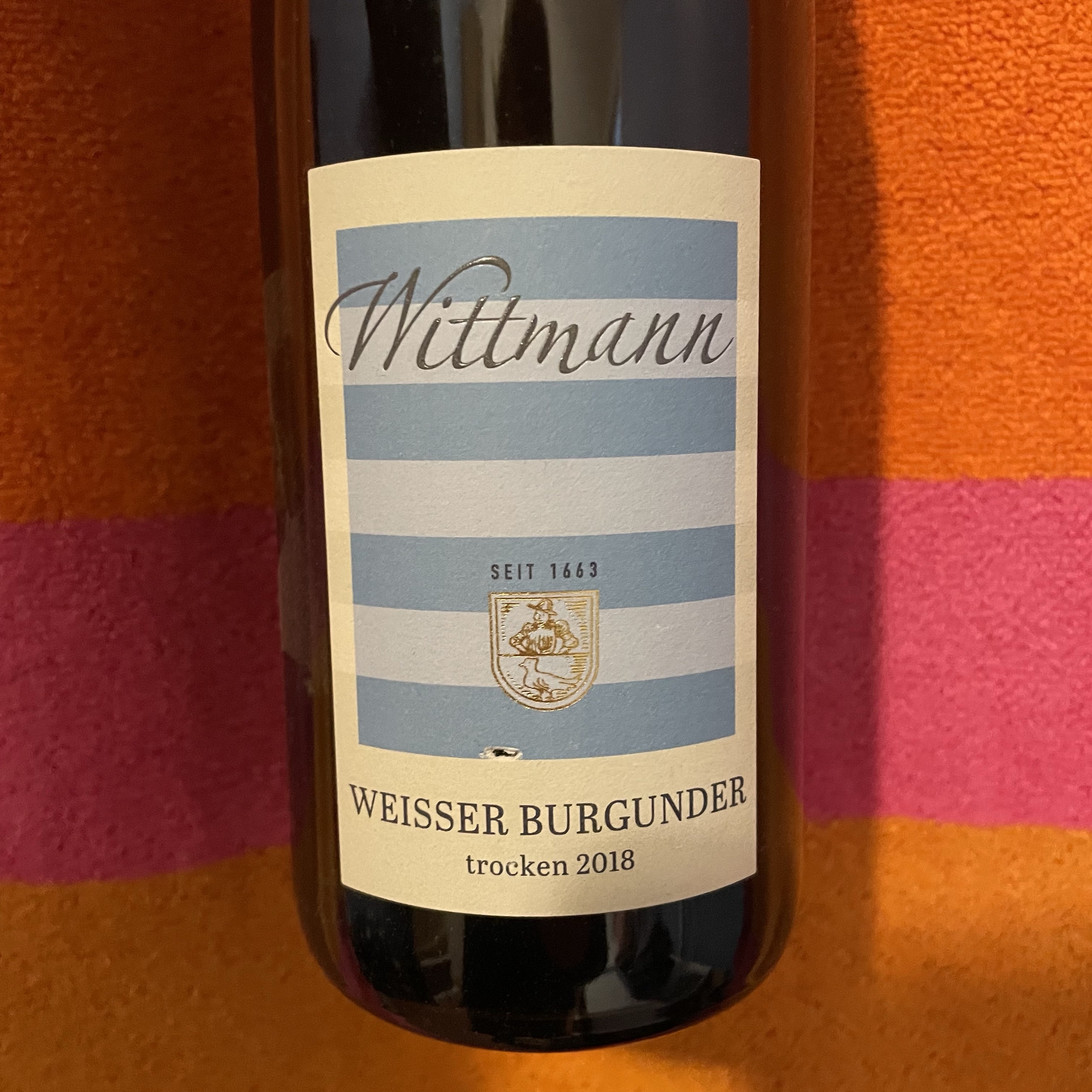
Weisser Burgunder Trocken 2018, Weingut Wittmann (Rheinhessen, Germany)

The Brilliant Philipp Wittmann (Stephan Reinhardt’s description) heads up the family winery, now a leading VDP member, which goes back to the mid-1600s in the famous village of Westhofen, in the Rheinhessen sub-region of Wonnegau. Wittmann is best known for the fabulous Riesling Grand Cru bottlings, including Morstein and Kirchspiel, but Weisser Burgunder (aka Weissburgunder or Pinot Blanc) is close to Philipp’s heart. If you want proof that this variety can produce genuine class, try this relatively inexpensive version.

The whole estate has been biodynamic since 2004. The grapes for this cuvée come from predominantly chalky soils on classic sites. You’ll find this lemony, waxy and stony, with a pebble-like texture. In the glass, initial apple acidity is replaced with pear and apricot as it opens out, all the while backed by a ground bass of mineral texture.

Although most would drink this on release, my experience of buying a bottle or two every year is that it will benefit from 12-24 months in bottle. It’s a hidden gem of a wine for, I think, around £15 for this 2018. Wholesale stockists are Howard Ripley and Roberson. I usually pick mine up from The Solent Cellar, though it is only periodically in stock.
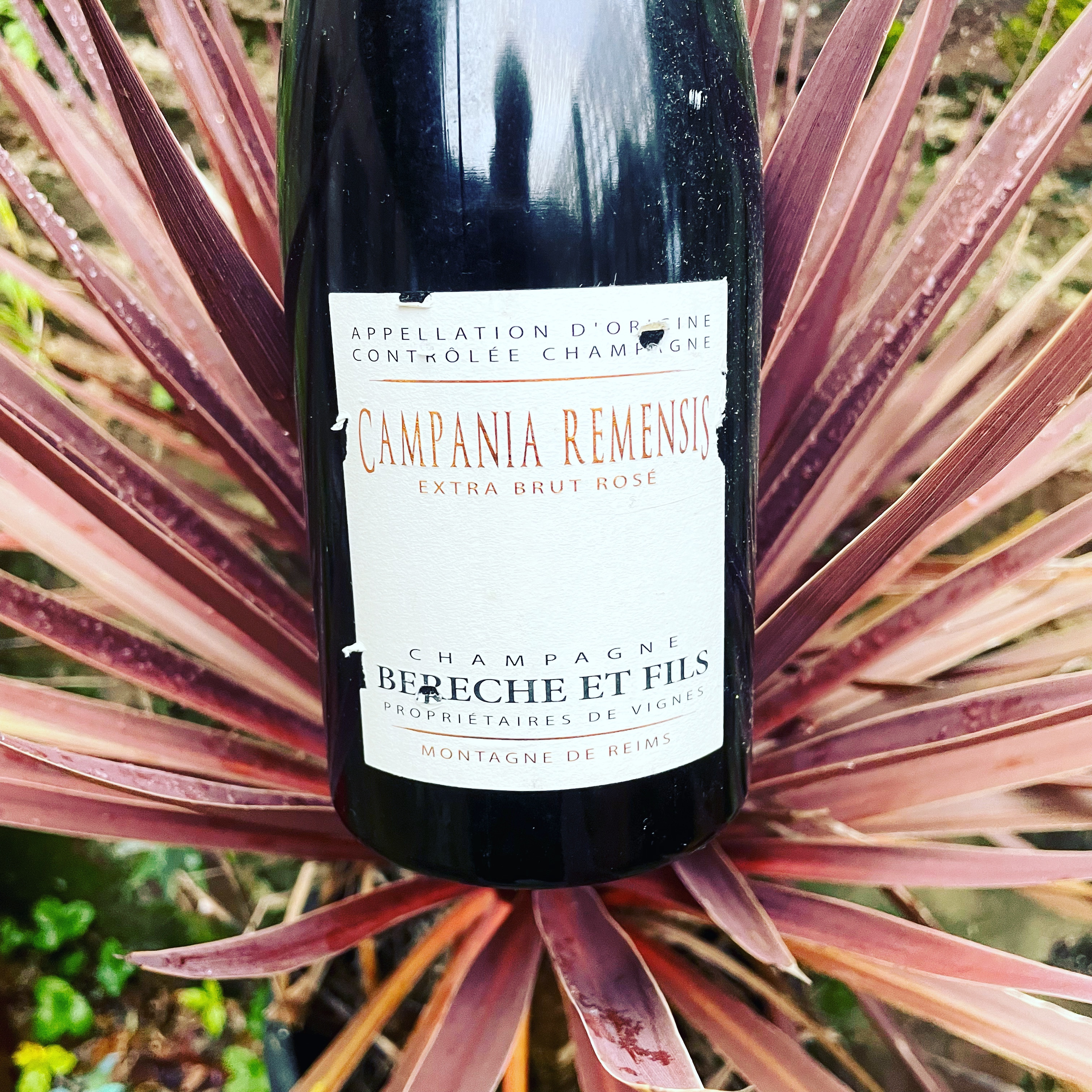
Campania Remensis Extra Brut Rosé 2010, Champagne Bérêche (Champagne, France)

Whether BĂ©rĂŞche remains a “grower” or now qualifies as a micro-negoce as well remains a moot point among those I speak to, but for the many years I have idolised these wines made at Craon de Ludes on the Montagne, I have always concentrated mostly on the estate-grown fruit. I have long considered RaphaĂ«l and Vincent’s wines among the absolute finest in the region, and this, their RosĂ©, would rank amongst my top four pink Champagnes.

The grapes come from a specific 0.7ha site at Ormes, west of the Montagne, and the blend comprises 60% PN, 30% Ch and 5% PM (=95%) with the addition of 5% “Coteaux” rouge. This all undergoes spontaneous fermentation in both oak and small vats with lengthy (36 month) lees ageing. Fruit picked in 2010 was disgorged in May 2014, dosed at just 3g/l.

A darkish salmon pink, the bouquet is redolent of fresh ripe strawberries but there’s a savoury spiciness alongside the fruit on the palate. Like all Bérêche wines, it has a nice spine of well-focused acidity and great length. Also, plenty of post-disgorgement development but it retains freshness. My last bottle of the Rosé, sadly. From Vine Trail.
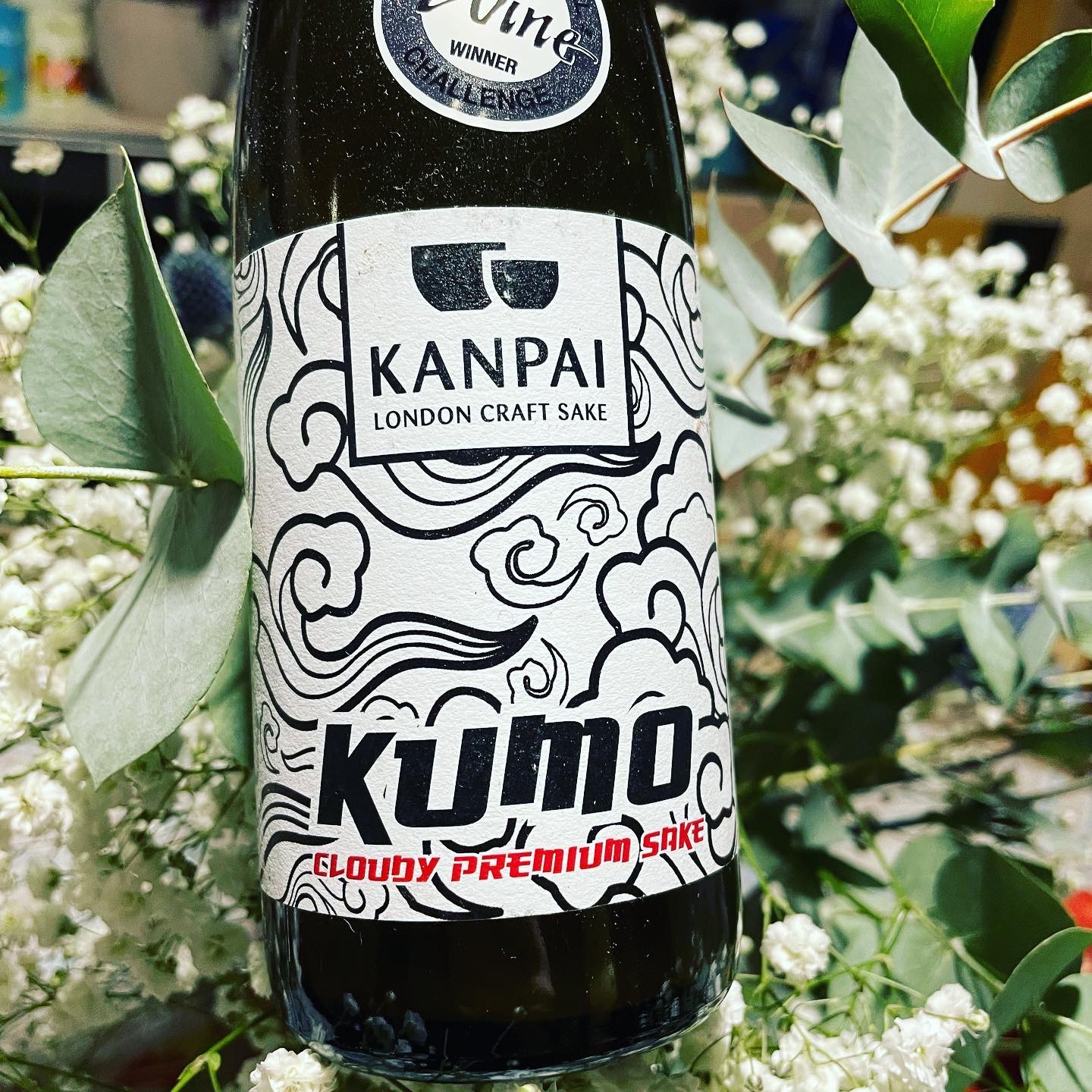
“Kumo” Cloudy Premium Sake, Kanpai (London, England)

Kanpai is one of two sake producers I know of in the UK (the other being in Cambridgeshire). They are based in Southeast London, at Peckham. Lucy and Tom Wilson set it up in 2016/17. Their product is all what one would call “Premium Sake”, vegan-friendly and like natural wine, without any added sulphur.

Kumo is a cloudy (kumo is Japanese for cloud) nigori junmai, nigori indicating cloudy (using a wide-mesh filter) and junmai meaning pure rice sake without added alcohol spirit. The rice is polished to 70%, which may mean little to the uninitiated, and to be frank matters not one bit for the enjoyment of this sake, but polishing ratio talk is the ultimate geekiness for sake aficionados. You get a lovely pure taste alongside a leesy texture, a touch of acidity and a milky/yoghurt-like finish. Very smooth and deceptive (15% abv). You can either drink this style cool (circa 10 degrees as we did) or heated warm to 40 degrees. Be sure to invert the bottle before opening to distribute the sediment.

If you haven’t tried sake this is a fairly traditional style to begin with. Kanpai’s products are mostly found in London. You can visit the brewery or buy direct from the web site. This bottle came from Cork & Cask in Edinburgh. I can highly recommend further research via “Sake and the Wines of Japan” by Anthony Rose (Infinite Ideas, 2018).
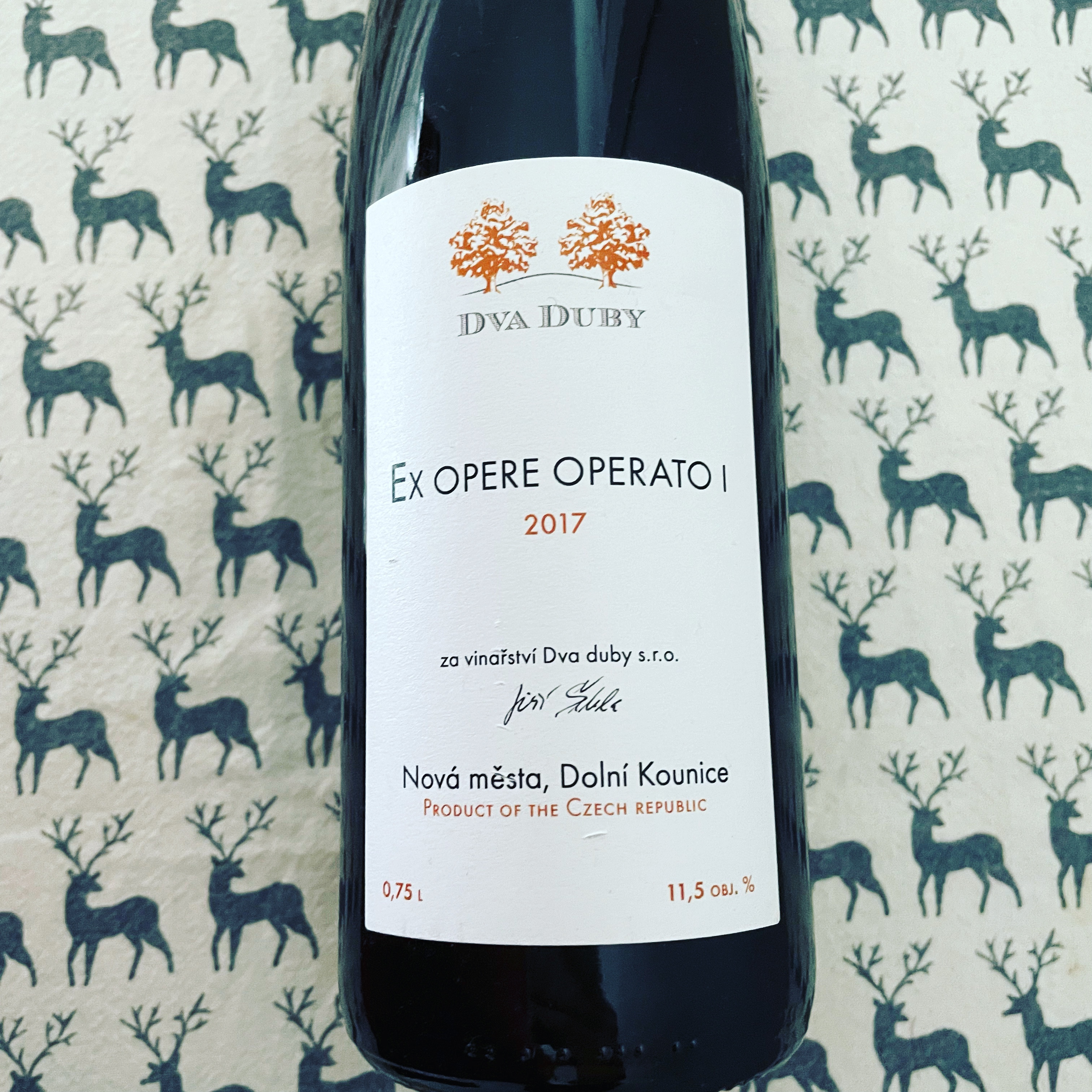
Ex Opere Operato I 2017, Dva Duby (Moravia, Czechia)

Jiři Šebela farms in the valleys around Dolni Kounice, close the the Austrian border in Southern Moravia. This is rocky, volcanic, terroir and the red wines from these biodynamically-produced hillside vines are remarkably intense. They have that characteristic mix of iron and blood which is common among volcanic wines.

The grape variety here is St-Laurent, farmed and made as a natural wine with only a little sulphur added at bottling. Lowish alcohol and the terroir make this an overtly fresh wine, in some ways not overly complex yet brimming with personality. You get a rare combination of intensity and lightness. Dva Duby was partly founded by Moravian guru Jaroslav Ošicka, so you know we have a producer worth checking out. I’m a big fan of these wines.

Imported into the UK by Basket Press Wines.
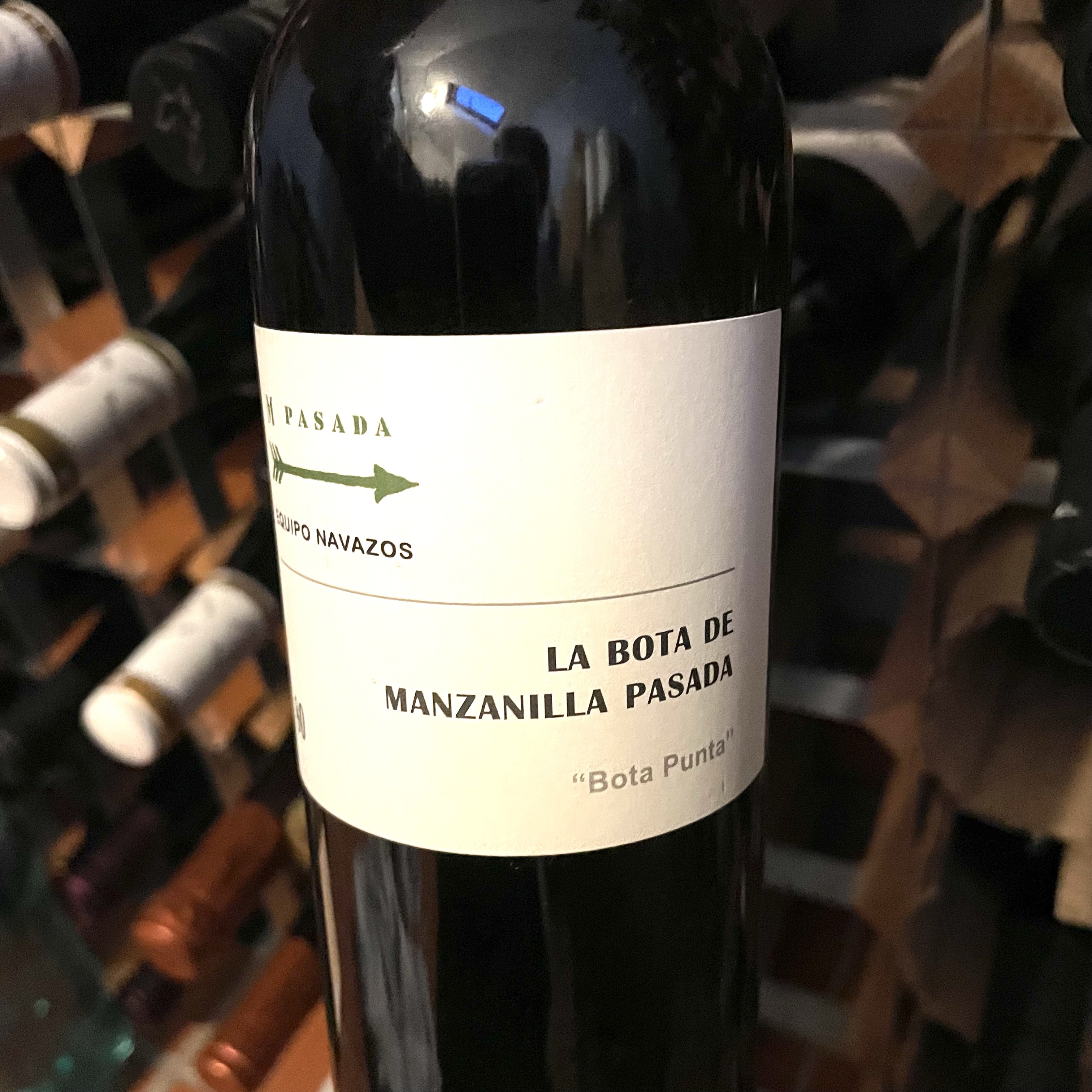
La Bota de Manzanilla Pasada « Bota Punta Â» 80, Equipo Navazos (SanlĂşcar, Spain)

This Manzanilla Pasada comes from a long line of fine releases including Bota’s 20, 40 and 60 before it. This is a saca of December 2017, a thousand 50cl bottles taken from a single cask at the very end of this solera at Hijos Rainera Peréz Marín. The butt was filled to the “tocadedos” level, ie well over 5/6ths of the cask. The flor is therefore only a very thin layer, kept alive only through sporadic topping-up. The average age of the Sherry in this rather singular cask was fifteen years old.

The thinner flor means this pasada has more oxidative notes than is usual for a biologically aged wine. There is also 16.5% alcohol. The result has a little more weight but it hasn’t sacrificed elegance and finesse. The bouquet reflects the chalky texture layered on the palate, along with nuts, lime, quince and a tiny balsamic note. This is a complex wine and it needs air. Also, not one to serve chilled, but just cool. A direct purchase, but EN’s UK agent is Alliance Wine.
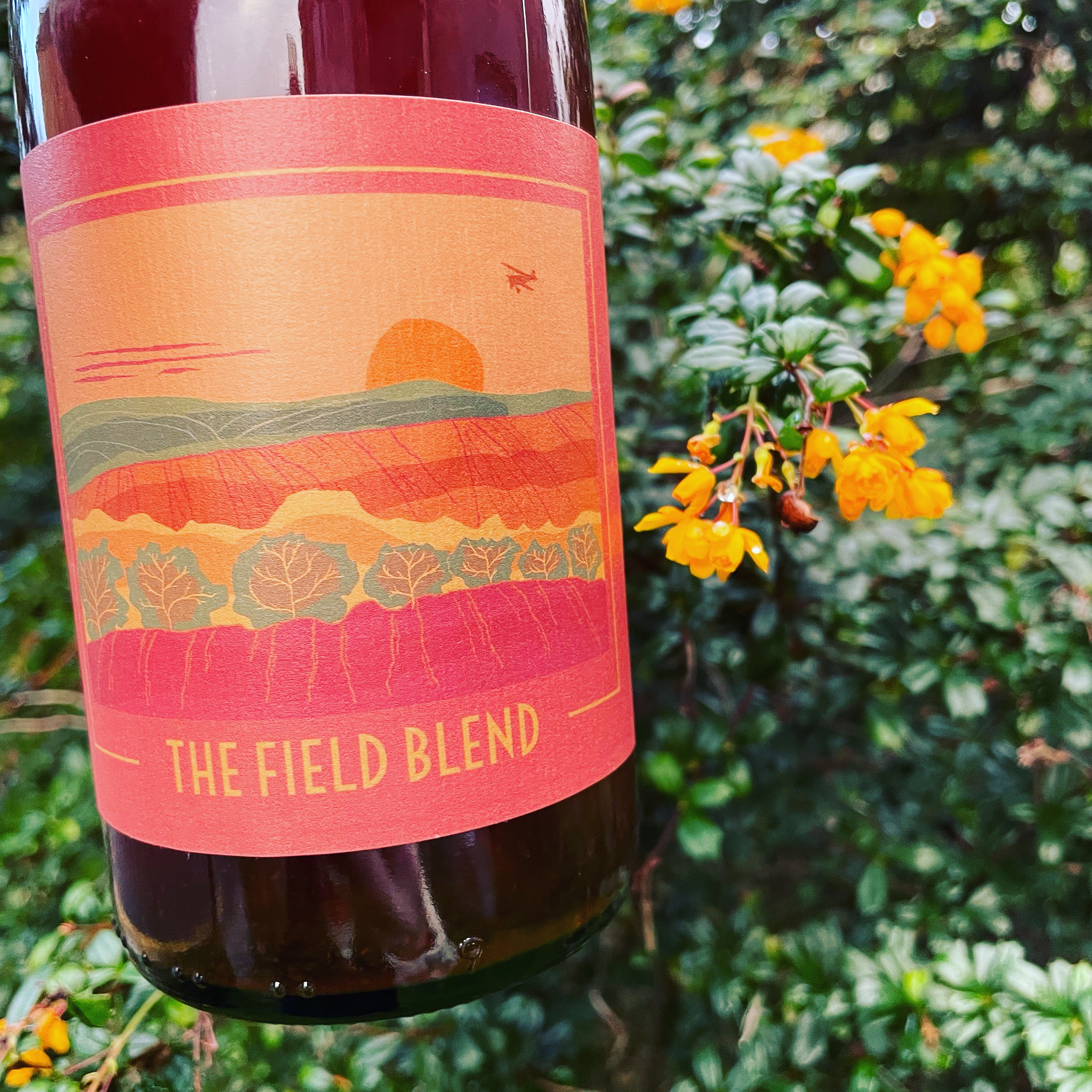
Field Blend 2021, Matt Gregory Wines (Leicestershire, UK)

I’d been hearing about this crazy guy making wine up near Loughborough, in the East Midlands, long before I got to try any. Late last year I heard he was about to get a deal with an importer I buy from when I can, so I was finally able to get my hands on some of these. I had spotted that Matt had worked in North Canterbury with my favourite NZ producer, Theo Coles (The Hermit Ram), which frankly only piqued my interest more. Matt also makes wine in Piemonte, but I’m yet to get hold of any of his Italian bottles. Jamie Goode has (he met Matt in NZ with Theo as far back as 2019).

Field Blend is what it says on the label, a more-or-less co-planted blend of Seyval Blanc, Bacchus, Pinot Blanc, Pinot Gris, Regent and Solaris. It calls itself a pink more than a light red, but it’s kind of somewhere around the darker Rosé spectrum. It has the fruit of a red wine and the refreshing qualities of a white and clocks in at just 10% abv. Although most people would call this a summer wine, I am not averse to wines like this in winter. I may not be able to match my wife in sea-swimming in the North Sea throughout the year, but that doesn’t mean I can’t do “bracing”, and this wine’s fruitiness keeps its head above the waves. I’ve a couple more from Matt to try. This was pretty exciting stuff. Good luck to Matt with the weather around there.

ÂŁ18.65 from Uncharted Wines.

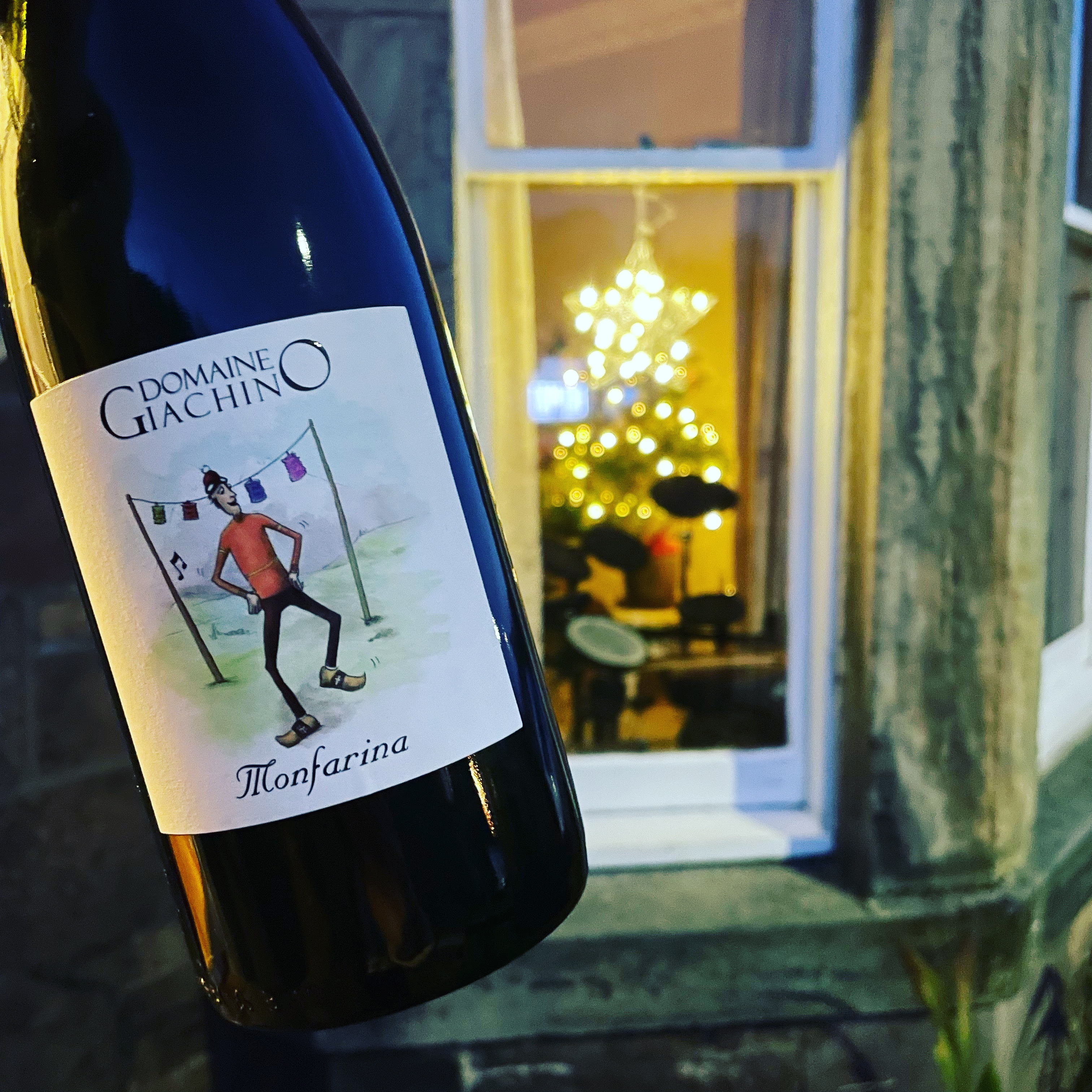
Monfarina 2020, Domaine Giachino (Savoie, France)

This estate is based in the hamlet of La Palud, above Chapareillan near the famous Col du Granier and to the west of the Isère river. Run by David and FrĂ©dĂ©ric Giachino, the brothers are now assisted by FrĂ©dĂ©ric’s son, ClĂ©ment, who I met in London a couple of years ago. I’ve purchased their wines for some time, including their “PrieurĂ© Saint-Christophe” label, the vines for which they were selected to take over, via a rental agreement, from the region’s most famous vigneron, Michel Grisard, when he retired a few years ago.

Monfarina is Giachino’s entry level white wine, made from what is usually considered the region’s workhorse variety, Jacquère. The vines for this cuvée grow on the scree slope of Mont Granier, which collapsed in 1248 with significant loss of life locally. The legacy of this tragic event, a very fine terroir for viticulture.

If the wine is relatively simple, it is classy. Biodynamics are practised at the domaine. The wine has great texture from the limestone scree and you get apple blossom, apples, gooseberry and more. Wink Lorch (Wines of the French Alps, 2019, p192) suggests there might be small amounts of Mondeuse Blanche and Verdesse in the mix, two autochthonous varieties which are seeing a glimmer of a revival.

ÂŁ24 from Cork & Cask Edinburgh, the importer is Dynamic Vines.
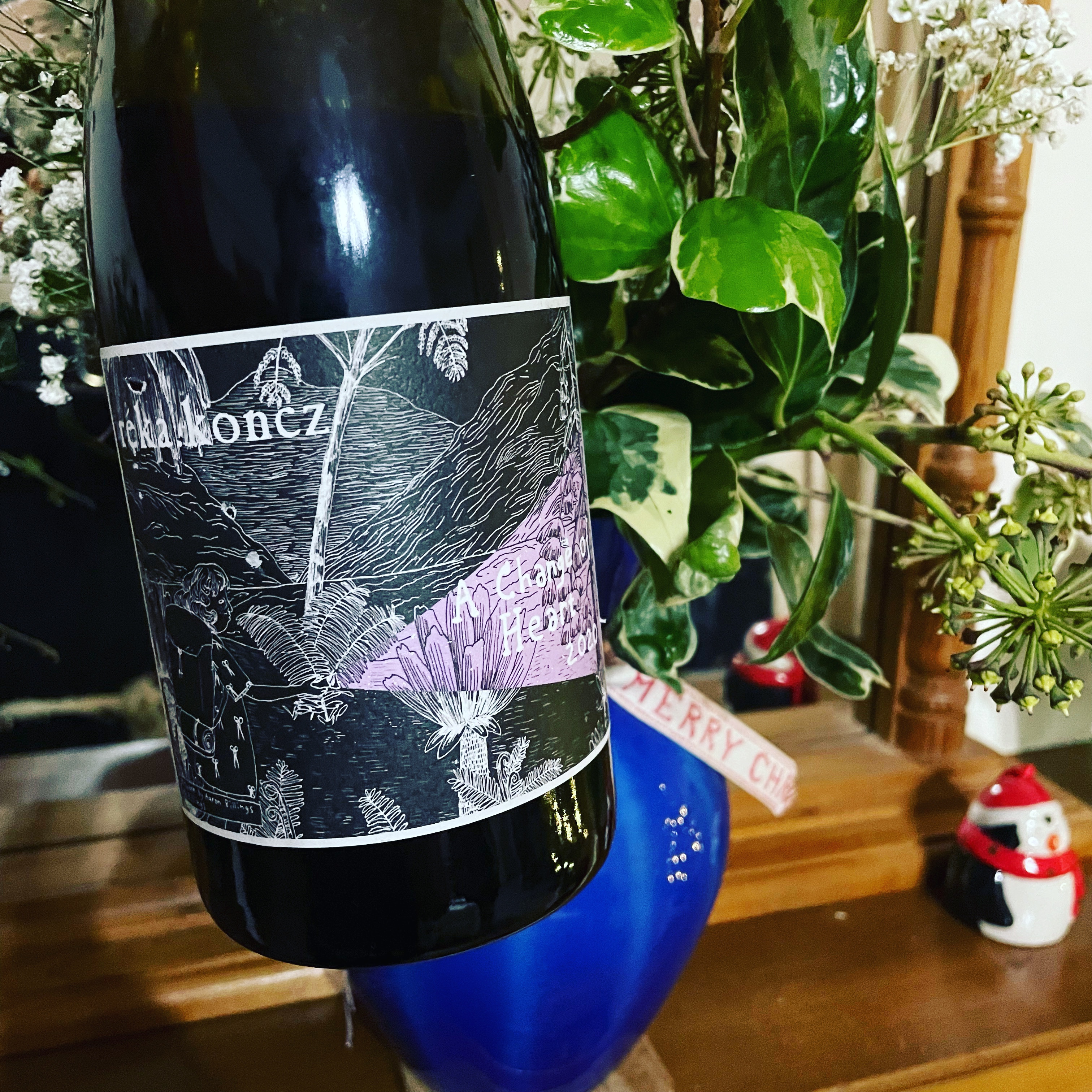
A Change of Heart 2020, Annamária Réka-Koncz (Eastern Hungary)

Who would have thought a few years ago that one of the producers I drink most often would be a complete unknown making wine in Eastern Hungary, right up on the border with Ukraine. Maybe you get fed up with reading about these wines, but I like them so much for a number of reasons. Firstly, of course, they are very good. Secondly, they are affordable, and thirdly, this is a producer I discovered near the beginning of their journey into export markets and have travelled along an increasingly confident path with her. This is pertinent because her new vintage will be arriving in the UK fairly soon and there will be a window of availability once more.

This red wine is made from Kékfrankos (aka Blaufränkisch), and I first drank this vintage almost exactly a year ago. Has it matured? Well, it retains that freshness typical of the variety (when not over-extracted), and it has not lost any fruit. The bouquet is still vibrant cherry and the palate also has some dark fruit lurking beneath. Perhaps the acidity has toned down a little. It feels just a touch more bedded-in.

Only 1,750 bottles made, of which I snaffled three. Imported by Basket Press Wines.
Posted in Artisan Wines, Natural Wine, Wine, Wine Agencies | Tagged , , , , , , , , , , , , , , , , , , , , , | Leave a comment

Wines of the Year 2022

My Wines of the Year were meant to follow my Review of 2022, in the first few days of the New Year, but I was struck down with the nasty “Not Covid” virus, which frankly lasted longer than my bout of real Covid did. So, somewhat delayed, here we have them.

I’m broadly following the same format as last year. This means a wine selected from each month. These are not the poshest wines I’ve drunk. Okay, one is a classic Burgundy, but frankly I don’t want to see another list of Pétrus, DRC and DP Plénitude. I’m not in any way trying to knock people who are wealthy enough to drink (and then write about) these wines, not even those journalists who can’t afford them but whose status leads to them being invited to taste them. Lord knows in the past I’ve had my opportunities. It’s merely that those are wines which no normal wine lover can afford, and the majority of my readers are, I know, ordinary, if passionate, wine lovers. The wines I’ve selected here are almost all wines which you can go out and buy, albeit potentially a more recent vintage. Some of them are priced well under £30.

I’ve obviously got my favourite producers, and I’ve tried hard not to include all of the obvious ones, those I bang on about every other month or two. So, no Gut Oggau, no L’Octavin, no Réka-Koncz. I’ve also tried not to repeat what I wrote last year, although whilst no wines are duplicated, some producers are (interesting). This has made it even more difficult to make my selection, and I had to make some hard choices. First, there are not twelve but thirteen wines. We call it a “baker’s dozen” in the UK. It simply means that I just couldn’t choose between two wines from November, so I decided to include them both. One producer has two wines (May and October). Again, I’d have liked to avoid that, but in all honesty both wines deserve inclusion. I did have to stop this list being half-filled with Alsace though.

So, here we go, thirteen wines from 2022. Not the “finest”, but those I found the most interesting, stimulating, exciting, and with the best stories to tell, so-to-speak. Also, I hope, not the same old wines as trotted out in other people’s selections.

Where possible I’ve listed the importer and/or retailer. All of these are wines drunk at home and will have appeared in one of my “Recent Wines” articles throughout the year. The relevant month and part are listed in case you wish to read a little more because it’s not my desire here to repeat a whole tasting note or give fuller details about production etc.

January – Vieille Vigne Sylvaner (2015/16 blend), Jean-Pierre Rietsch (Alsace, France)

J-P is a producer of whom I’m a long-standing fan. Based in one of the most exciting wine villages in Alsace (Mittelbergheim), Sylvaner may be much maligned but this is probably the terroir that produces the best in the region. The argilo-calcaire soils and lees ageing produce a wine of profound minerality, yet it is also one of the kindest Sylvaners on the palate you’ll taste. Stunning with some age. This came from source, but the UK importer is Wines Under the Bonnet. Find it in “Recent Wines January 2022 Pt 1”.

February – “VO” Mencia 2016, Veronica Ortega (Bierzo, Spain)

Veronica’s wines impressed me when I first tasted them in numbers in March 2020 at the large Viñateros tasting. This is 100% Mencia from very old vines off limestone (not slate). Gorgeous ferrous cherry flavours, violet bouquet and mineral texture. Purchased from Vine Trail, you can find it in “Recent Wines February 2022 Pt 2”.

March – Field Blend 2018 “Skin Fermentation”, Hermit Ram (N Canterbury, New Zealand)

Theo Coles makes my favourite wines in New Zealand and this one comes from his Limestone Hills vineyard in one of the most talked about, newer, cool climate regions on the South Island. It’s a zero-additives wine blending five international (both red and white) varieties, which see six weeks on skins. Intoxicating wafts of red fruit. Imported by Uncharted Wines, and found in “Recent Wines March 2022 Pt 1”.

April – Complètement Red 2020, Lambert Spielmann (Alsace, France)

I can’t help thinking that Lambert is a star in the making, although to be fair I could say the same of rather a lot of young winemakers in Alsace at the moment. Based in Epfig, this cuvée is made from 25-y-o Pinot Noir from Nothalten, fermented as whole bunches. It’s a pure, zero-added sulphur, wine with bright red cherry and hints of spice. Imported by Tutto Wines, see “Recent Wines April 2022 Pt 1”.

May – “Ambero” 2020, Petr Koráb (Moravia, Czechia)

The first of Petr’s wines to feature here, a skin contact Orange Traminer from vines near Boleradice, where we stayed later in the summer. The 2020 saw extended lees ageing in robinia (false acacia) casks (I think the ’21 moved to ceramic vessels). I noted peach, tarte-tatin, Lucozade…and amazing depth. Imported by Basket Press Wines, see “Recent Wines May 2022 Pt 2”.

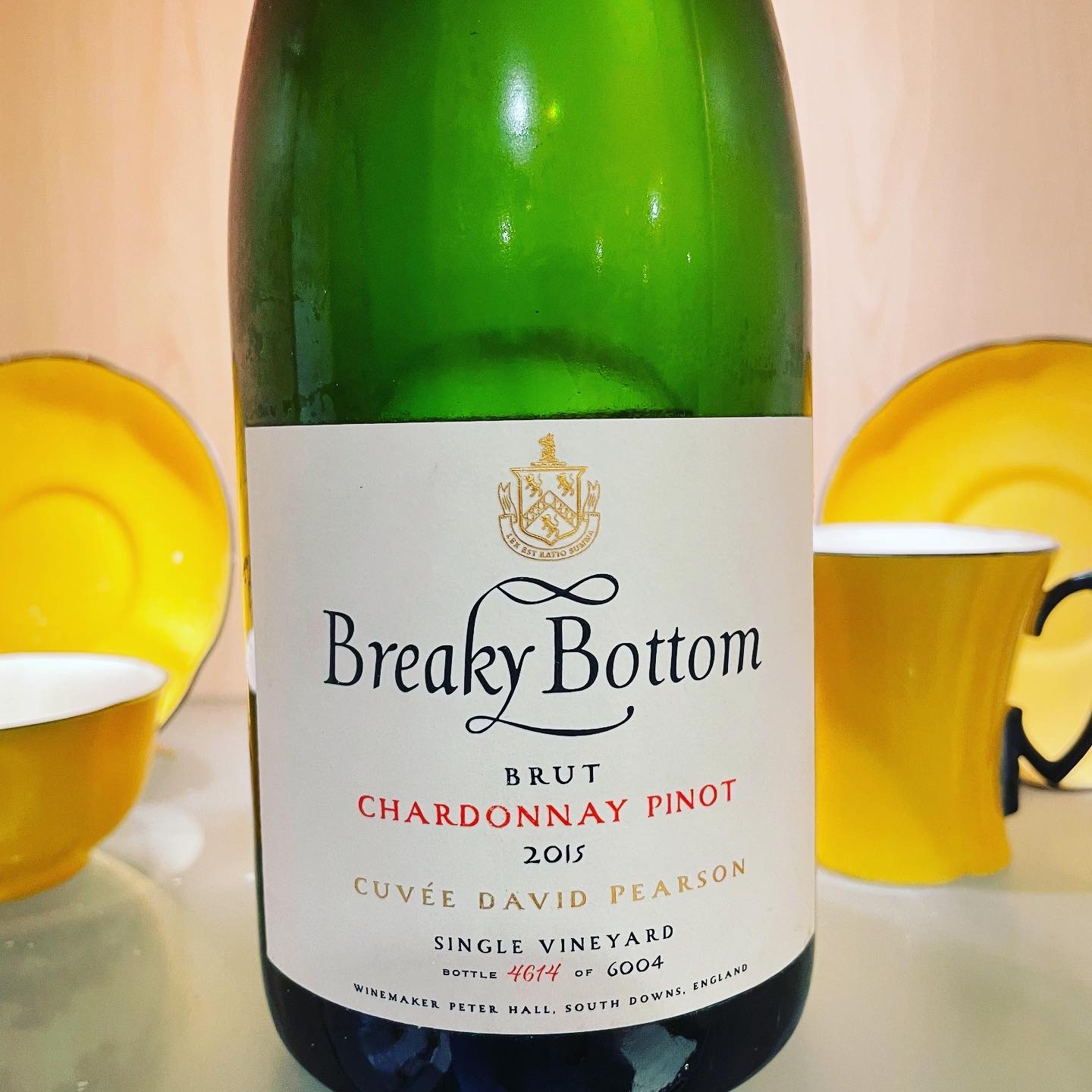
June – Cuvée David Pearson 2015, Breaky Bottom (Sussex, England)

I made my first visit to Peter Hall’s idyll of a vineyard folded within the South Downs last year so it’s not surprising I drank a good few bottles of Breaky Bottom. “David Pearson” is a blend of the three major Champagne varieties. It has a filigree spine of brittle acidity, like a frosted spider’s web, on which hangs intense fruit. You can buy older (and more expensive) bottles, but this is a remarkable wine, all the more so for what I paid (£35.50 from Butlers Wine Cellar, Brighton, and they still have some). See “Recent Wines June 2022 Pt 1”.

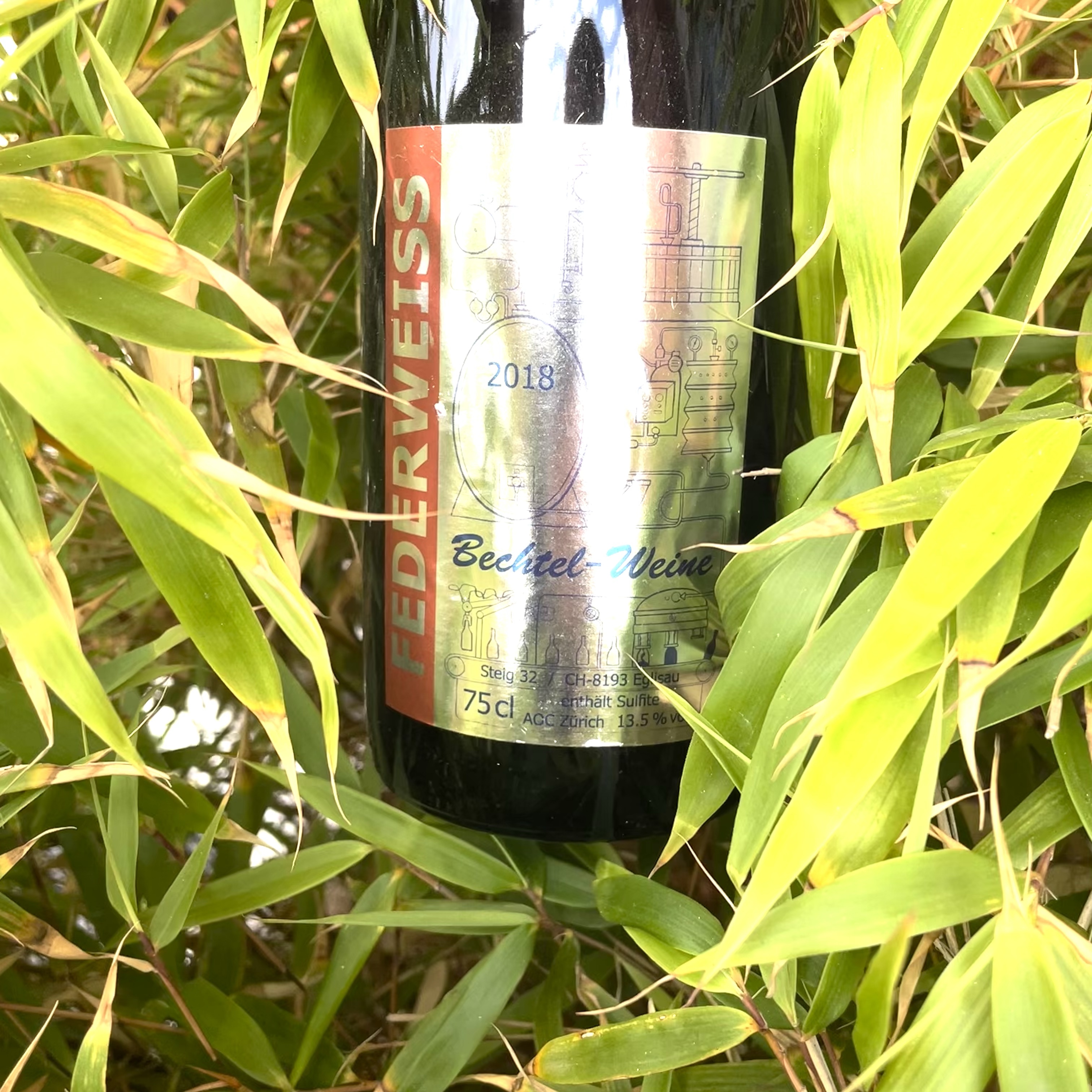
July – Federweiss 2018, Bechtel Weine (Zurich, Switzerland)

Mathias Bechtel is one of the rising stars of Swiss wine. Based in the tiny Zurich sub-region of Eglisau, with vines reaching up to 500 masl, he’s best known for his stunning, and mostly expensive, Pinot Noir cuvées. Federweiss is the name most usually given to a “Blanc de Noirs” cuvée of no special note, but Mathias makes his as an orange-tinged Rosé via a light berry maceration which is mineral and fruity. Available periodically from Alpine Wines, see further “Recent Wines July 2022 Pt 2”.

August – Neuburger 2018, Joiseph (Burgenland, Austria)

Luka Zeichmann is the winemaking partner of an exciting venture based on vineyards around Jois, at the top end of the Neusiedlersee (the cellar is a trek south, in Unterpullendorf). Neuburger is a rare variety, once considered a peasant grape but now seeing a lot of interest. This is textured with pear fruit and considerable complexity with age. One of those wines with thrilling tension. Only 800 bottles made. Imported by Modal Wines (£38 for the 2020 currently), see “Recent Wines August 2022 Pt 2”.

September – Tolone Riesling 2018, Nikau Farm (Gippsland, Victoria, Australia)

Nikau is the home farm of Dane Johns and his wife, Hannah, whose Momento Mori wines you may know. The 1.5ha of vines currently in production have never been sprayed. There’s a touch of Chardonnay in here too, all off silica and sandstone exposed to the weather off the Bass Strait. Seeing 48 hours on skins, the mere 500 bottles made are both singular and remarkable (and show only 9.3% abv). Light, quite acidic, but something else. From Les Caves de Pyrene, see “Recent Wines September 2022 Pt 2”.

October – Raspberry on Ice 2021, Petr Koráb (Moravia, Czechia)

Blending Pinot Noir and Saint-Laurent, Petr’s second offering here is probably the most joyous wine I drank last summer. I was introduced to it under the trees on the green outside his winery, but have since drunk all too few bottles at home. It’s just the purest pale raspberry juice with a hidden 12.5% kick, the most complete embodiment of gloglou you could imagine. It was imported by Basket Press Wines. I hope Petr made some more in 2022. See “Recent Wines October 2022 Pt 1”.

November – Bugey Cerdon 2019, Renardat Fache (Bugey, France)

I love this wine for its simplicity and for forging ahead despite its unfashionability (a demi-sec sparkling pink) and the ignorance of the public as to just how perfect this style is for summer (and just 8% abv). Bugey is a sleepy region between Jura and Savoie, but this artisan producer exports to Japan. They, at least, know great wine when they sniff it out. An Ancestral Method, bottle-fermented, blend of Gamay and (rare nowadays, but very traditional) Poulsard in this “Black Label” estate bottling, with zippy red fruit. The acids counter the residual sugar. Imported by Raeburn Fine Wines, see “Recent Wines November 2022 Pt 1”.

As I said, I can’t split November’s top-two, so we also have:

Superglitzer 2018, Rennersistas (Burgenland, Austria)

Stefanie and Susanne have since been joined by Brother Georg in taking over their father’s well-established winery on the edge of Gols, on the top eastern corner of the Neusiedlersee, and they have turned it into a fine natural wine estate on a par with the many other estates following this path in this singular village. Superglitzer was new in 2018. Blending Blaufränkisch, St Laurent and Zweigelt with a drop of Roessler, it’s a light red with fruit, depth and spice. As I said in my original note, you can always trust a Renner wine to put a smile on your face, this one especially. Imported by Newcomer Wines, see “Recent Wines November 2022 Pt 1”.

December – Morey-St-Denis “Clos Solon” Vieille Vigne 2006, Domaine Fourrier (Burgundy, France)

This is the only so-called classical wine in my list, I suppose. It was also my penultimate bottle from a domaine I have adored as much as any over the decades since I discovered the wines of this region. I used to visit every year until I came to prefer the quiet of Arbois to the increased traffic around the Côtes. These wines are expensive now, but back around the mid-2000s this single vineyard’s old vine cuvée was considered especially good value, relatively speaking of course. Smoky, savoury, this is not at all showy, just beautifully balanced, almost understated. Perfect with Christmas lunch. Purchased from The Sampler (Islington) in London around the time of release, see further “Recent Wines December 2022 Pt 2”.

A few more things remain to be said before we begin embarking on another year of wine. I often try to bring in my other passion, music. I’ve been so much focused on my vinyl collection that it is certainly impacting the wine budget, as has whisky. Moving to Scotland, I’ve definitely increased my appreciation, and consumption, of whisky, but really good whisky gets expensive. I’ve been drinking widely here, but for very subjective reasons I’ve been getting to know and enjoying the different bottlings from Kilchoman, an authentic farm distillery at Machir Bay on Islay’s wild west coast.

For what it’s worth, going back to the music, my album of the year is Dublin band Fontaines DC’s “Skinty FĂ­a”. I’ve also been listening to Stanley Clarke, Dream Theater, Robben Ford and Green Tea Peng (among a few hundred others). The opportunities to purchase vinyl are worryingly numerous within striking distance of where I live. Edinburgh is less frequented on the touring circuit than Glasgow, but my gig of the year was, without doubt, seeing Wishbone Ash perform Argus in its entirety on the 50th anniversary of its release (Queen’s Hall, 28/10/22).

I like to tell you what I want to be drinking in this coming year. It occasionally encourages the odd importer to be brave. My tastes only change slowly so I still want more Bugey, Alsace and Swiss wine in my cellar please. I would also love to see more Japanese wine imported. I don’t mean the obvious labels, but the artisan wines which one is seeing reach Scandinavia, and even France, I notice. I continue to find real excitement in Hungary and Czech Moravia and I hope to widen that interest out into more Slovakian wines and further afield. I think 2023 will also be the year when a new raft of Jura names you’ve never heard of will begin to appear.

When it comes to fingers on the pulse, I think our once broad-church wine scene is losing out a little. There are many reasons, not least new markets picking up our allocations. Brexit, with its increased and complex paperwork for producers as well as importers, is the main reason we have to fight for what we do get. There’s a kind of symbiotic link between Japan and Scandinavia in that both seem to be right on the button, especially in spotting talented new natural wine producers in the field.

That said, I am eternally grateful that we do still have importers like Les Caves de Pyrene, Basket Press Wines, Vine Trail, Newcomer Wines, Tutto Wines, Indigo, Wines Under the Bonnet, Uncharted Wines and others, and we have an ever-growing throng of wonderful indie wine shops, which have even grown in number in 2022, despite the economic climate. Let’s support them. Use it or lose it, as they say.

Wishing all my readers a very happy, healthy and prosperous 2023.

Posted in Artisan Wines, Natural Wine, Review of the Year, Wine, Wine Agencies | Tagged , , , , , , , , , , , , , , , , , , , , , , , , , , , | 7 Comments

Review of the Year 2022

I shall tell you my Wines of the Year in my next article, following last year’s popular format of twelve wines, one from each month. First, here, I’ll list the dozen most popular articles of the year on wideworldofwine. A few readers might be tempted to check them out. You’ll also get to discover my books of the year. Although we have a winner, there are most definitely a silver and a bronze as well. I’ll also recap on one or two wine trips or vineyard visits, along with my tasting of the year. If any of that sounds interesting, read on.

Top 12 Most Read Articles

The following are the twelve most read articles between 1 January this year and the time of writing. These stats are only as accurate as the fact that these articles were searched for, or linked to, directly. There were around 9,500 further general site visits where I can’t distinguish what was read, almost certainly whatever was the current new article at the time.

  1. Tongba, A Study of Emptiness (04-01-2016)
  2. Tourist Jura – A Brief Guide to Arbois and Beyond (29-07-20)
  3. Extreme Viticulture in Nepal (27-11-2019)
  4. Breaky Bottom – A Different Perspective on English Wine (15-03-2022)
  5. Food for a Change…the Wonderful Cuisine of Nepal (30-11-2021)
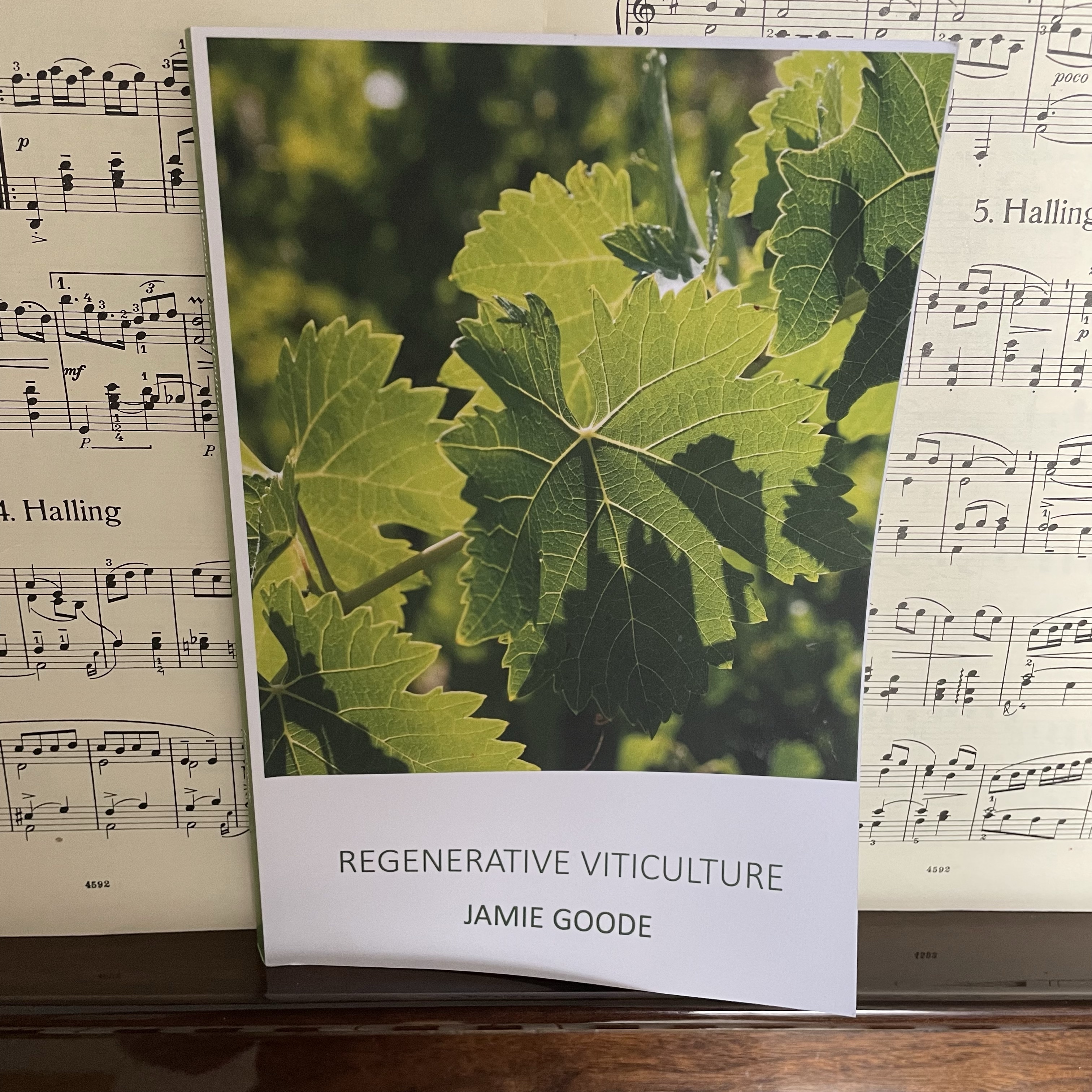
  6. Regenerative Viticulture by Dr Jamie Goode (Book Review) (07-06-2022)
  7. The One Straw Revolution (Masanobu Fukuoka) (Book Review) (18-08-2021)
  8. Paradise Lost – A Eulogy for Two Great Natural Winemakers (21-06-2021)
  9. Pergola Taught (16-02-2021)
  10. New Wine Leaders 1 – Christina Rasmussen (03-08-2022)
  11. Appellations – Who Needs Them? (06-12-2021)
  12. Central Victoria Part 2 – Bindi (15-12-2019)

Tongba is a Tibetan drink brewed from a millet paste. It has very little alcohol but except for at altitude, it seems to have a mildly hallucinatory effect, and induces a strong need to lie horizontally. I say except at altitude because the last time I drank it there was no such effect, and I was on a mountain in Nepal. The article has been a favourite since I wrote it in 2016, and I suppose this is because it gets picked up by a different type of reader, not necessarily a wine lover. It has been read 1,299 times this year.

The Arbois Guide is now more than a couple of years old and may have a few inacuracies. La Balance, my one-time favourite restaurant there, has finally closed, and I know some opening hours have changed. Jean-Paul Genet is now called Maison Genet, I think. I’ve not been back since 2019, though we used to visit pretty much every year before Covid. Hoping to get there soon, though 2023 looks pretty busy already.

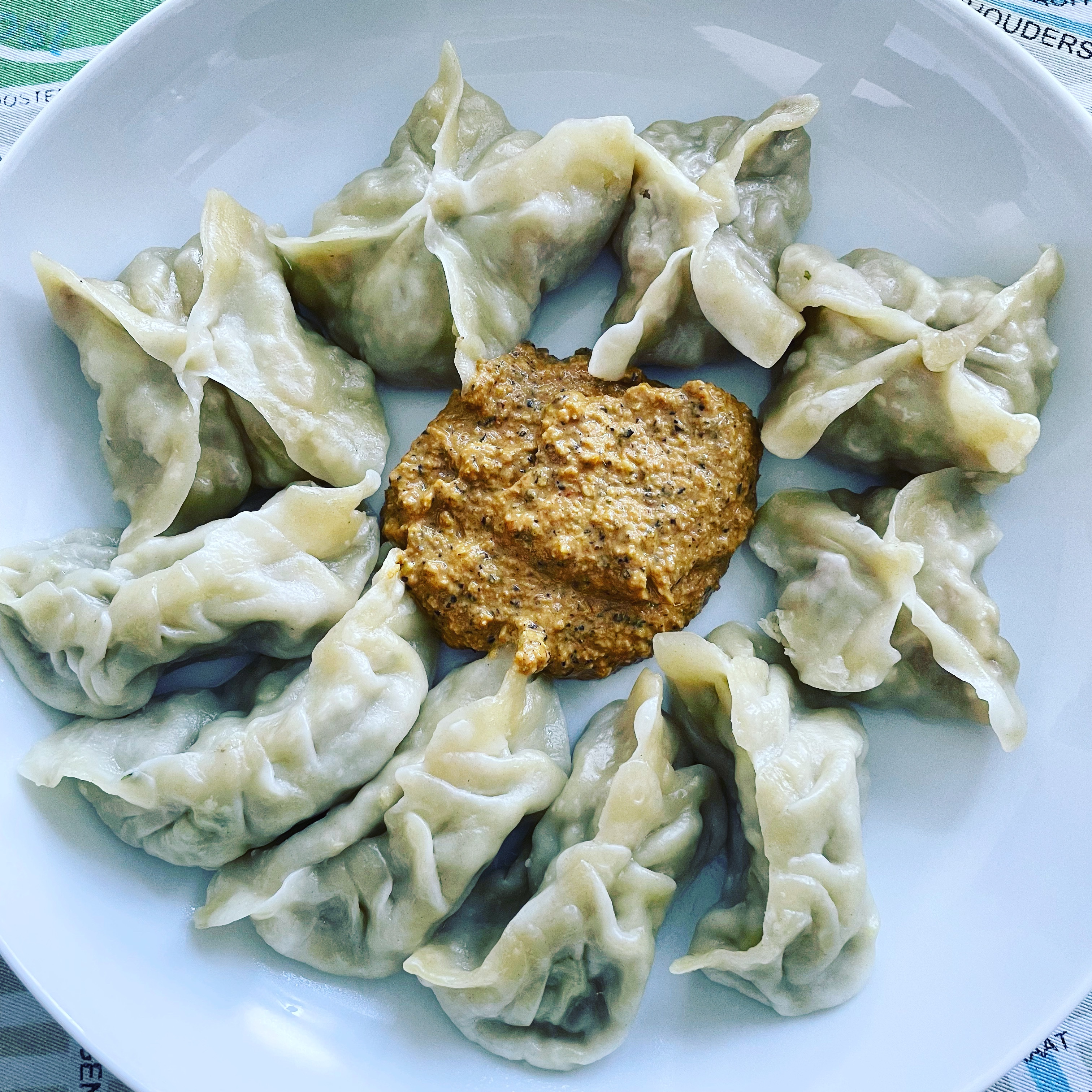
As someone lucky enough to have been to Nepal quite a number of times (we have a number of strong connections with the country, including family ties), I’ve written a few popular articles. That in which I wrote about the Pataleban Vineyard, a little way west of Kathmandu, has remained popular and hits the #3 spot, and I’m equally pleased to see the article I wrote about Nepalese food last year up there too at #5 (a surprise). I am a very big fan of this cuisine (or cuisines to be accurate), the glorious Momo being possibly my favourite dish in the world. Britain has some outstanding Nepalese restaurants, Edinburgh having a special concentration. Perhaps a future article.

Momos – they may look simple…

Between those two articles at #4 we have an article about my visit to see Peter Hall at Breaky Bottom this year, in March. More of this later.

Two book reviews made it into my top dozen for popularity. It won’t surprise many to see my review of Jamie Goode’s book on regenerative viticulture there. Perhaps it was more surprising to see the seminal work on this subject appearing beneath Jamie at #7. Masanobu Fukuoka’s small book is not only highly instructive, it’s also a lovely read (in translation).

Finally, we have five very different articles forming the second half of the list. Paradise Lost is a eulogy for the sadly departed natural winemakers Pascal Clairet and Dominique Belluard, both of whom sadly took their own lives during the Covid pandemic. I cherish the bottles of Belluard I own, but Pascal’s death saddened me a great deal. His wines were among the first natural wines I drank. I had only been chatting with him in February 2020 when he came to London for his importer’s winter tasting. He died that May (as indeed did another great Jura vigneron, Lucien Aviet. Lucien was 84, Pascal only 58).

My last photo of Pascal, London, Feb 2020

Pergola Taught was an article I was inspired to write by Trink Magazine, the greatest new wine resource to come out of the pandemic years, and covering what they call “umlaut wines” (Germany, Austria, Switzerland and Alpine Italy). It does what it says on the tin – it looks at the renewed interest in the pergola. Who would have thought an article about a vine training system could be so popular.

For anyone who doesn’t know Christina Rasmussen, well we live in an age of the “influencer” and she is one of the very few who could, if they so wished, truly own that name. Among many achievements she co-founded Little Wine, and she has also now planted a vineyard. The specific title hints at more to follow. There are in fact a number of individuals I’d like to write about. The modesty of some, combined with lack of time, and now distance, has stopped me in my tracks, but I shall try to twist some arms next year.

Christina and Phoebe at the annual Bojo tasting a few years ago. They do love Gamay.

Appellations…who does need them indeed? It began with the “Vin de France” natural wine rebels and spread. If you are creative, experimental and focused on quality then why comply with outdated rules which hold you back and encourage mediocrity, whilst patently not upholding quality?

Finally, Bindi. If there is one “absent” wine producer that I wish I could see imported into my country it would be this one. Michael Dhillon makes some of the very finest wines in Australia from complex but magnificent terroir in Victoria’s Macedon Ranges, within striking distance north of Melbourne. I know a few readers will have tasted these wines, but if you haven’t, I promise you they are up there with the very best that large country has to offer. I visited Michael towards the end of 2019.

BOOKS OF THE YEAR

It will not be a surprise to anyone that my “Book of the Year” was Jamie Goode’s Regenerative Viticulture. Although he’s allegedly writing an in-depth tome on the subject, something with more detailed science, this is the book I felt was the most important of 2022. It’s an easy-to-read paperback/soft cover of just a little over 160pp, the text brightened up by plenty of colour photos. Jamie is a scientist by training, but a gifted communicator above all. So, if you want to get a handle on this buzz phrase, this is your man.

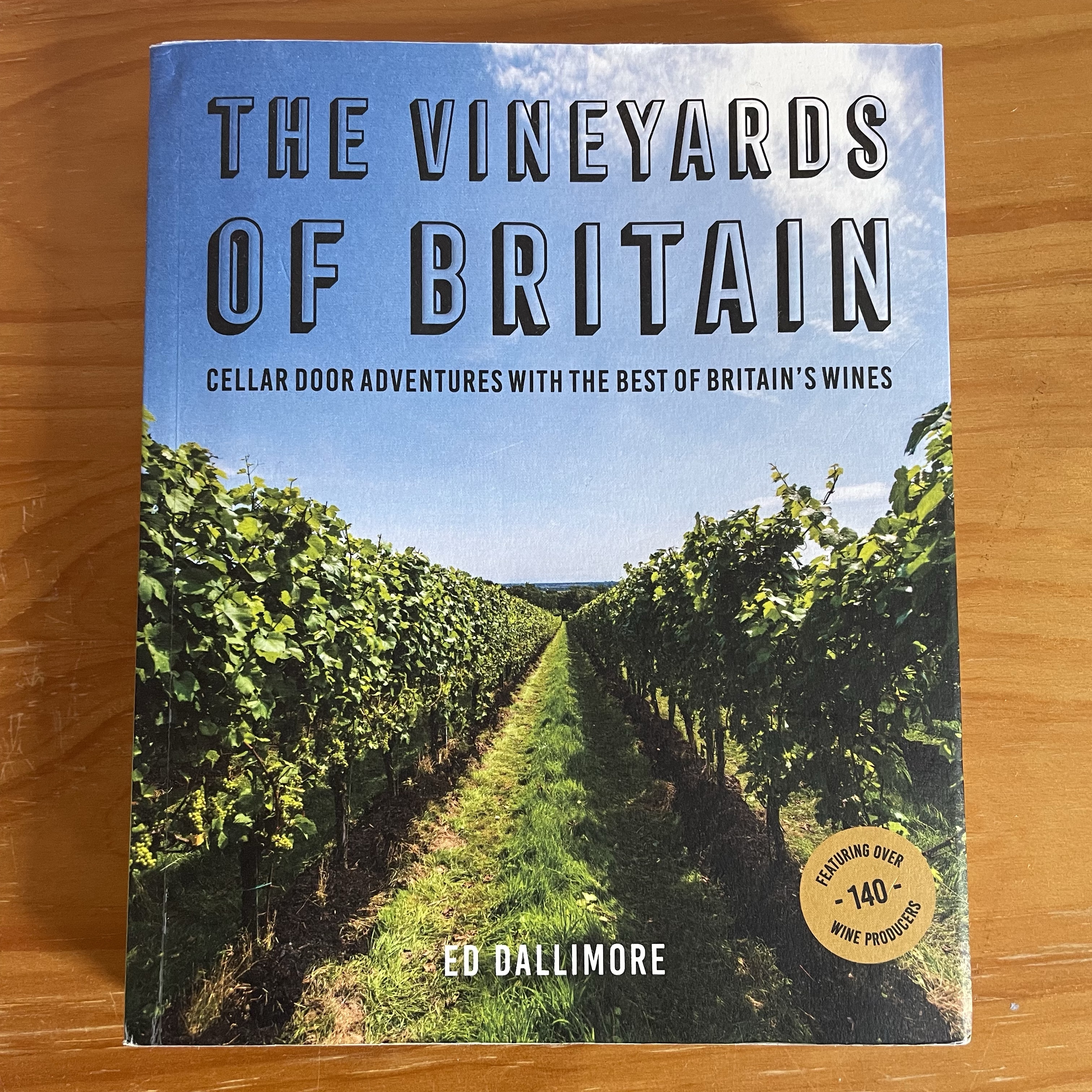
I said that this year there is a Silver and a Bronze, but in truth I can’t split them. Ed Dallimore’s The Vineyards of Britain may not be comprehensive, but he does visit a lot more vineyards than any author before him (somewhere close to 140 appear in this book). The book is greatly enhanced by some superb photos, most of them taken by Ed himself. I’m really turning more and more to English and Welsh Wine, especially as the momentum is building up in the low intervention/natural wine category. I discovered some important new names here.

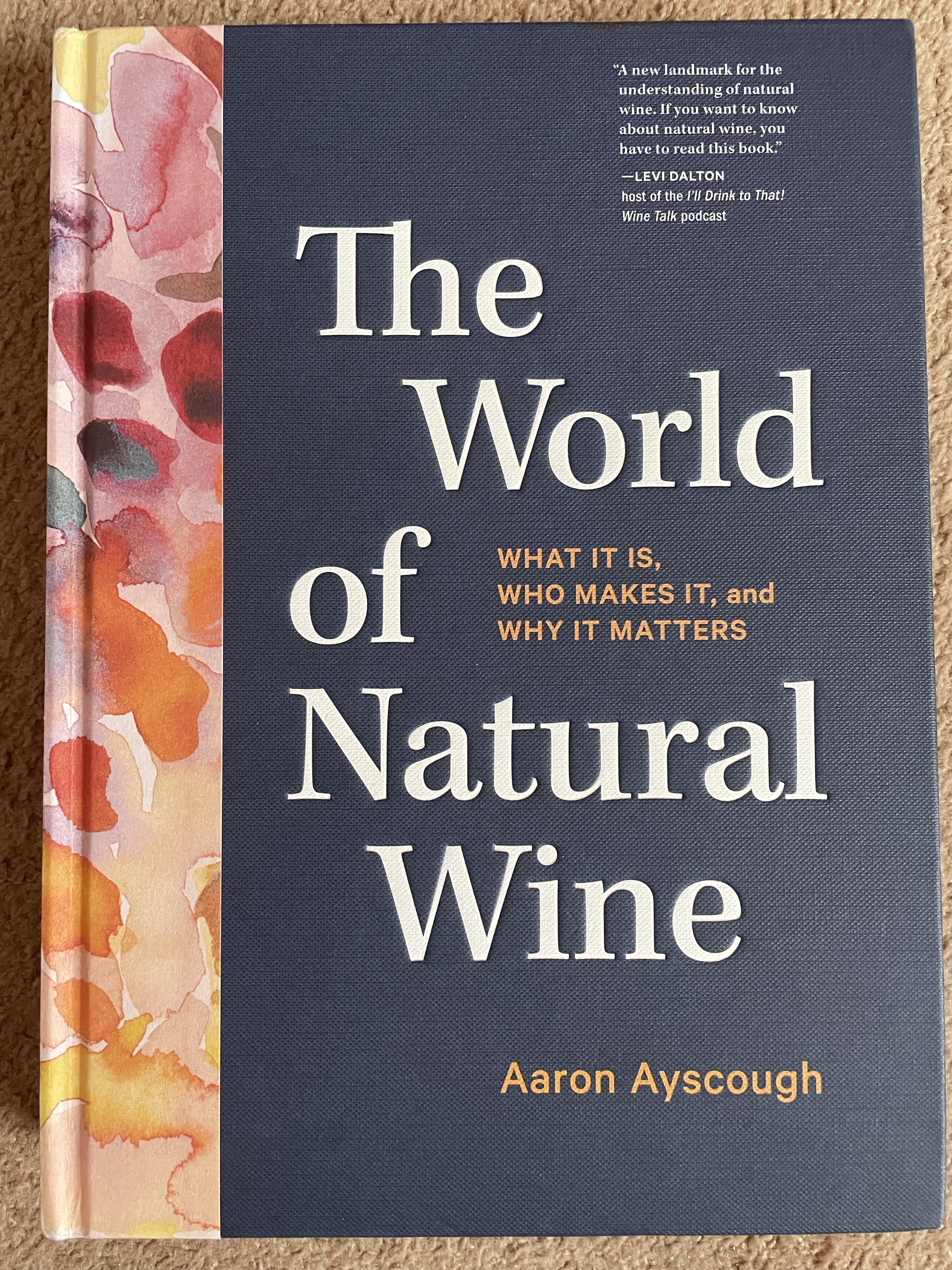
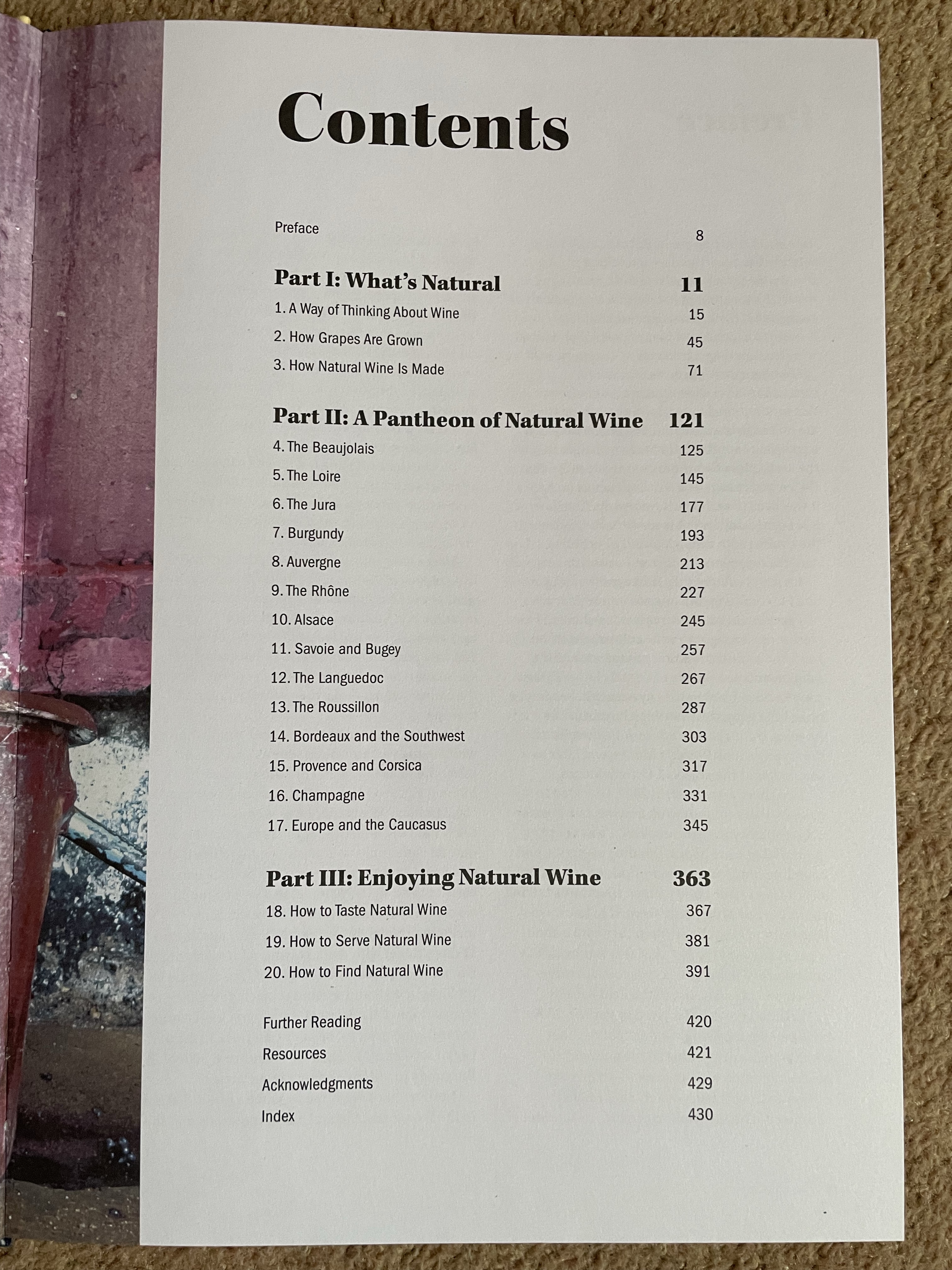
I have followed Aaron Ayscough for a long time. He was the first person to introduce me, via his blog, to the natural wine scene in Paris. His long-awaited The World of Natural Wine is a large-format hardback which covers just about every angle you can think of on French natural wine, from viticulture and winemaking, the wine regions (with key producers and recommended wines) and final chapters on how to taste, serve and find natural wine. He only dips his toe outside France, into five other European countries plus Georgia, but it is for his unrivalled knowledge and insights into his adopted France, the country which more than any other popularised natural wine, that you will buy this book.

WINE TRAVEL

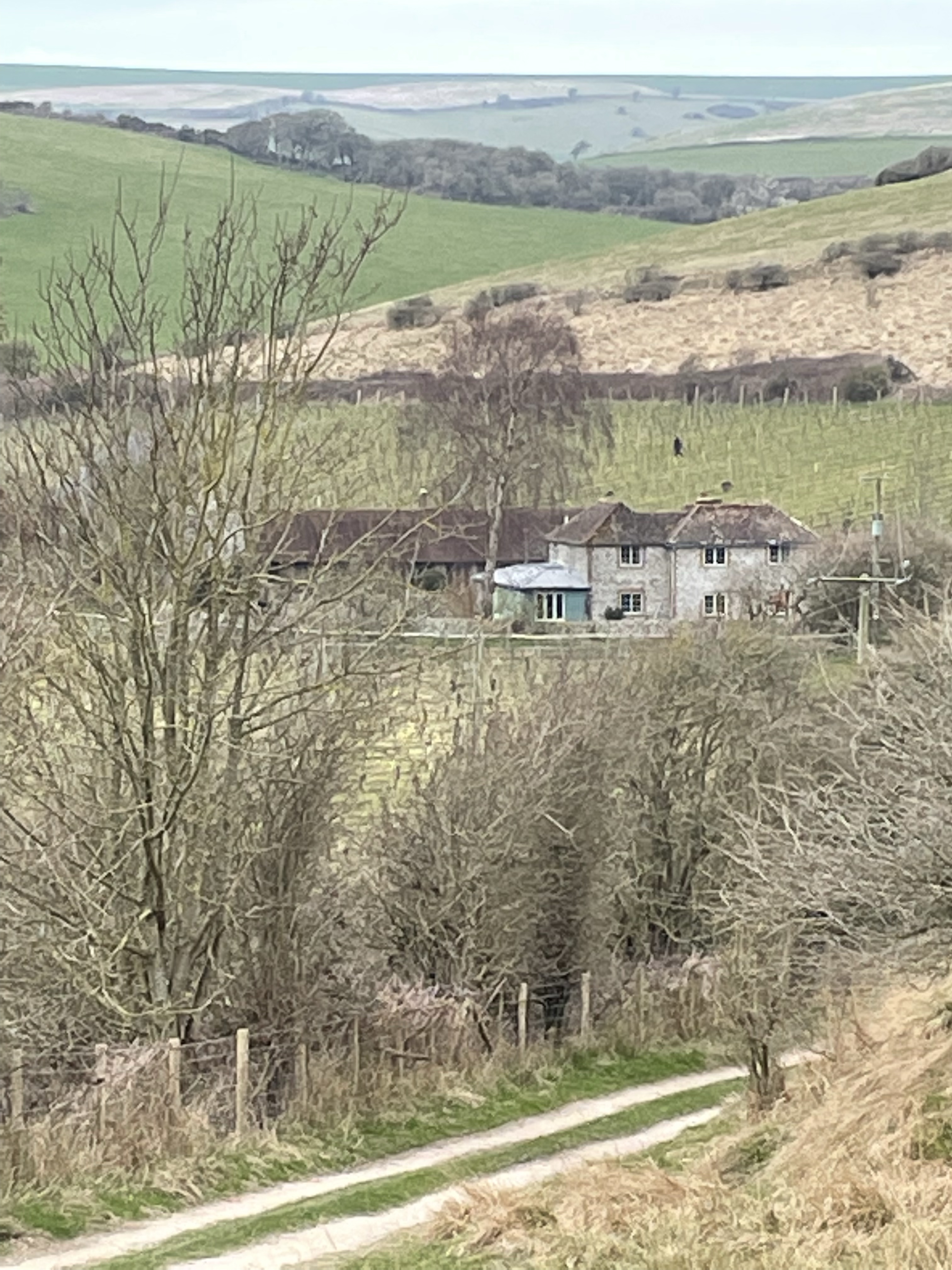
Wine travel can be far-flung or close to home. I made one visit very close to my then home in the first quarter of the year. I’d been drinking the wines of Breaky Bottom for a very long time. After all, Peter Hall had been farming his vines here on the South Downs since the mid-1970s (although I don’t go back quite that far). I’d never visited, but I had walked several times along the South Downs footpath which passes above and along the side of the vineyard, house and winery. Nestled in a chalk hollow (Bottom), this is for me unquestionably the most beautiful vineyard location in England. The wines are its equal.

As always, the most special visits are insightful. I was invited along with friends of the Halls, Henry Butler and his wife, Cassie. We tasted, we chatted, we walked the vines and we chatted some more. Every bottle of Breaky Bottom I have drunk since has been even more meaningful. That’s what the best vineyard visits do for you. It’s as much soaking in the atmosphere as learning the facts. He may hate me for saying this, but Peter Hall is a truly remarkable man, and I do not say that lightly.

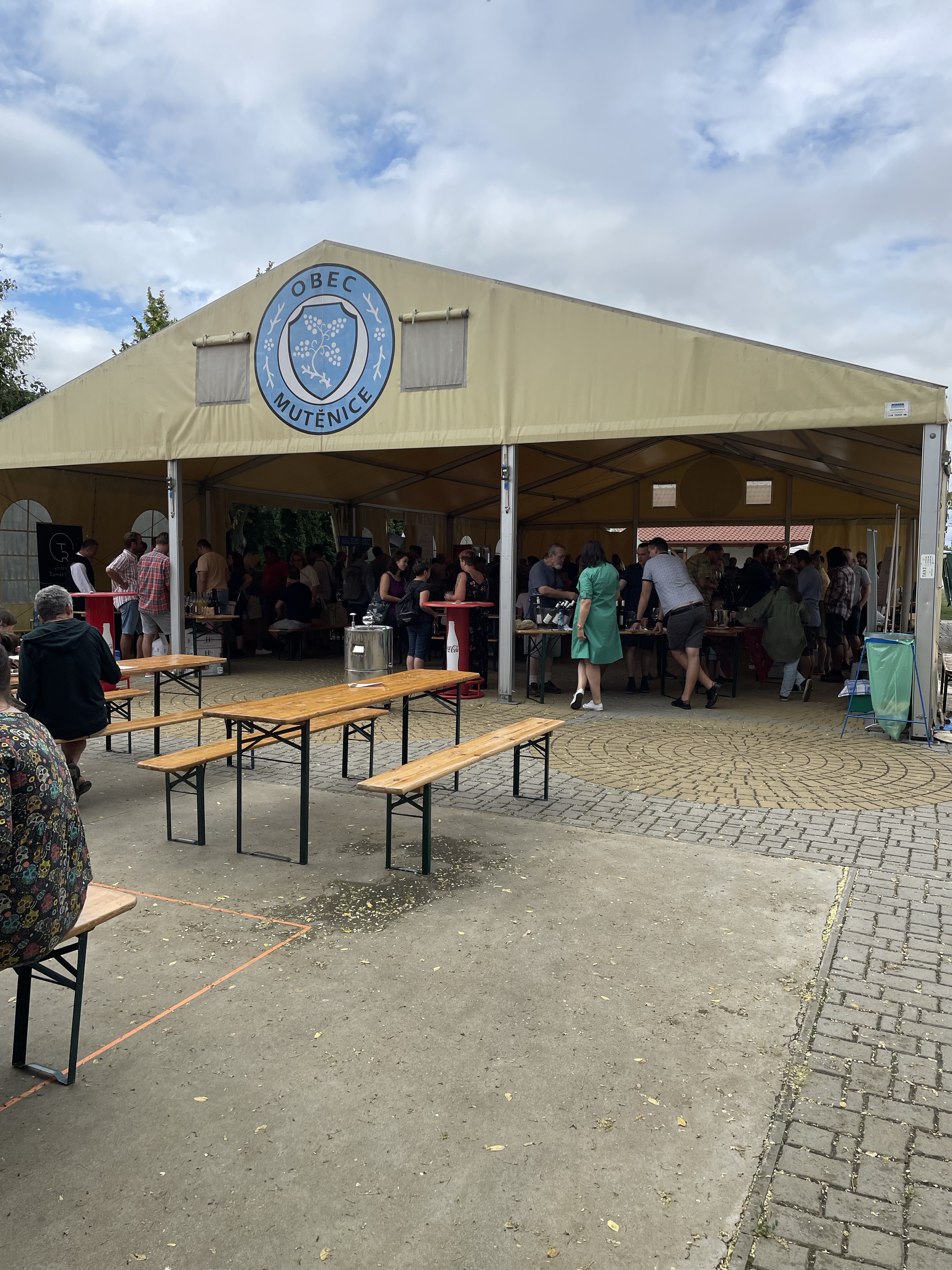
I had been invited to Autentikfest, Moravia’s natural wine festival, before Covid struck, but it took until 2022 for me to be able to go. We were invited by the UK’s Czech wine specialist, Basket Press Wines (although it’s always good to make clear that flights and car hire were paid for by ourselves and we stayed in a room belonging to winemaker Petr Koráb). We visited four producers (there’s an article about each of them, all published in August), prefaced with one about the festival itself. Each and every visit was as good as it could have been and there’s no doubt that Czechia’s natural wines are arriving in style.

The main tent at Autentikfest

After the festival I headed over to Rust for a couple of nights in order to fit in a visit to Gut Oggau. This is a Top-5 producer for me. I mean not just in Austria, anywhere. Their wines are magical, as are their creators, one special couple in what they have achieved. Actually, not only their wines but their restaurant in Oggau as well. This article follows the Moravian batch (published 19 Sept).

I did manage a few other visits in 2022, and there’s never time to mention every one of them.

TASTINGS OF THE YEAR

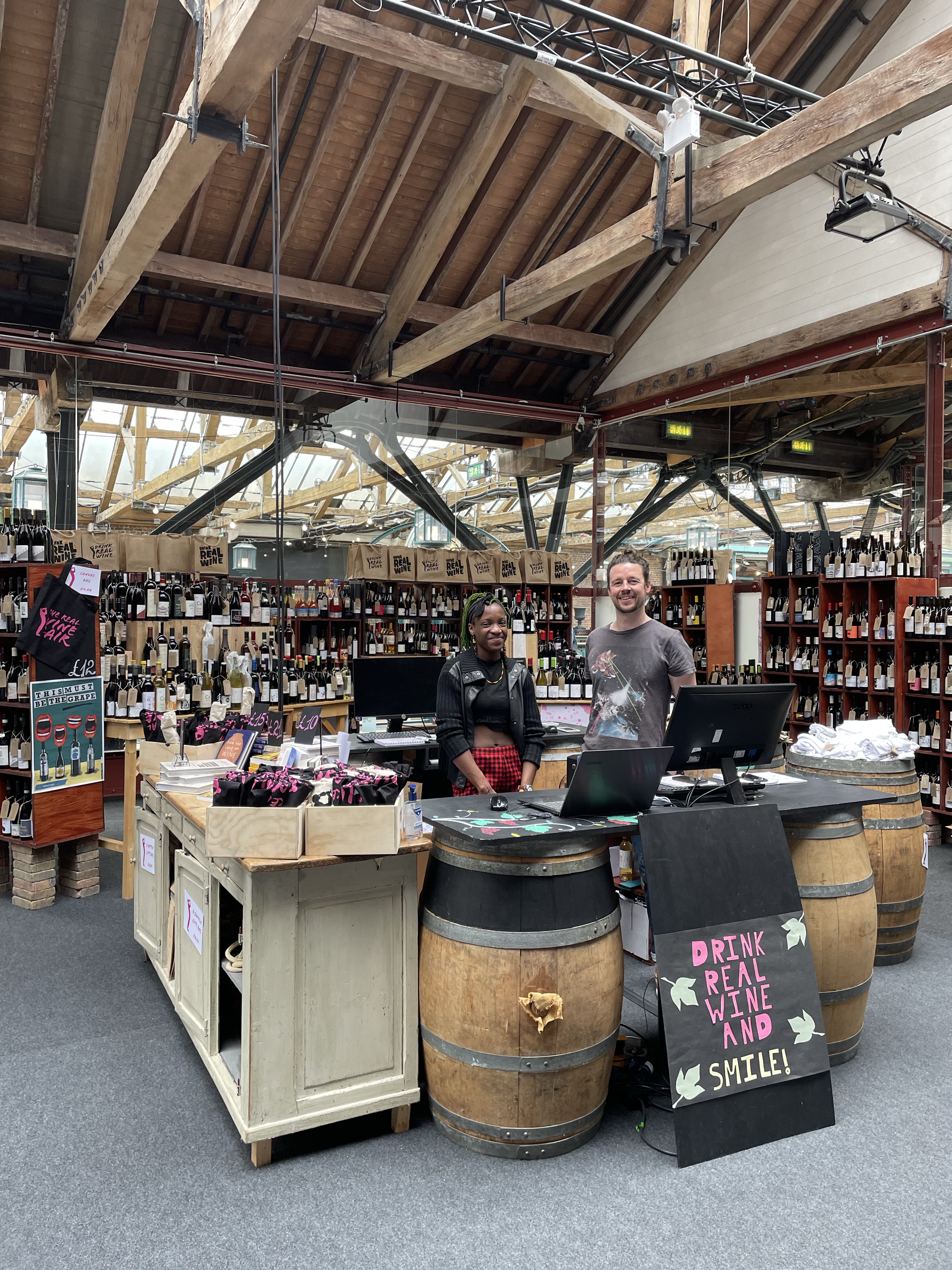
I think for many, the tasting of the year would be the Real Wine Fair at Tobacco Dock, organised by Les Caves de Pyrene. I think it meant even more to people after the Covid break. It wasn’t my first tasting after the Covid pandemic had eased, but it was the first one where literally everyone was there. I could easily have chatted all day on the trade day and tasted no wines. As it was, there was plenty that was new alongside old liquid acquaintances. Very tiring but it could not be bettered. Especially seeing Doug Wregg and Wink Lorch again after a couple of years.

Basket Press Wines also held a portfolio tasting in March, a chance to try their whole range (much more than just Czech wines). I should also give a shout for the Cork & Cask Winter Wine Fair just gone, in Edinburgh. It was my first tasting since moving up here at the very end of August and it was thoroughly enjoyable and very well organised…but massively popular, making it slightly more difficult to taste “professionally” (think I saw only one other person spitting). Thanks India and team for such a warm welcome.

SPECIAL IMPORTER MENTION

I wanted to make one special mention of an importer who has really captured my imagination this year. I’m always wary of doing this because I don’t want to upset others, both those who I have managed to buy wine from and those who I would certainly have bought wine from had I been able to afford to. Of course, throughout the year you can see from my monthly “Recent Wines” articles where I’ve been getting my wine from, with direct purchases from people like Newcomer Wines and Basket Press Wines, and indie wine shops extraordinaire, like The Solent Cellar (Lymington) and Butlers in Brighton. They all provide an excellent online service, and a friendly voice at the end of a telephone when required.

That merchant I’ve singled out for special mention is Tutto Wines. I don’t know the folks who run Tutto very well but I know their wines. I guess my favourite person on their list is Alice Bouvot (L’Octavin), along with Julie Balagny, whose Beaujolais has a special place in my heart too. My most recent discovery from Tutto has been Lambert Spielmann, having been nudged in his direction by David Neilson (Back in Alsace). He’s a rising star with a fascinating selection of music-related labels on exciting wines. I keep telling people that Alsace, especially its northern (Bas Rhin) part, is the most exciting wine region in France right now for low-intervention winemaking. There’s an abundance of new talent, but I’ve taken to Lambert’s wines. We have much in common and visiting him is firmly on my radar.

Lambert’s “Red Z’Epfig

Tutto continues to innovate and have a finger on the pulse, even when it’s a faint pulse. Case in point, The Doubs, that part of France where 99% of experts will tell you they don’t make wine. They do, and there are a few worthwhile producers. One is George Comte in Émagny. This is a producer who the fearless explorer will find more than interesting. Tutto has some older vintages too. If you like the Jura old-timers take a peek at something similar. Burgundy prices though.

I have published 49 articles so far this year before this one makes it a round fifty. That’s one more than last year, though not as productive as the 64 articles written in 2020. We shall have to see what 2023 brings. I shall certainly enjoy bringing you my wines of 2022, but that will most likely have to wait until the first article of the New Year.

“I was born with a heart of Lothian” as the song goes. Well, maybe not born in my case, but I am a fast learner.

Have a great Christmas. Hope to see you all in 2023 for my Wines of the Year. To all of those wine friends I am missing, it’s rather wonderful up here, you know!

Posted in Artisan Wines, Natural Wine, Review of the Year, Wine, Wine Agencies, Wine Books, Wine Festivals, Wine Merchants, Wine Science, Wine Tastings, Wine Writing | Tagged , , , , , , , , , , , | 2 Comments

Recent Wines November 2022 (Part 2) #theglouthatbindsus

Part 2 of December’s wines (and a cider) drunk at home starts off in Czech Moravia, then we hit closer to home with Hampshire, try a brand-new Sherry (bottled in a flute!), before the run home with Burgundy/Tuscany/Burgundy.

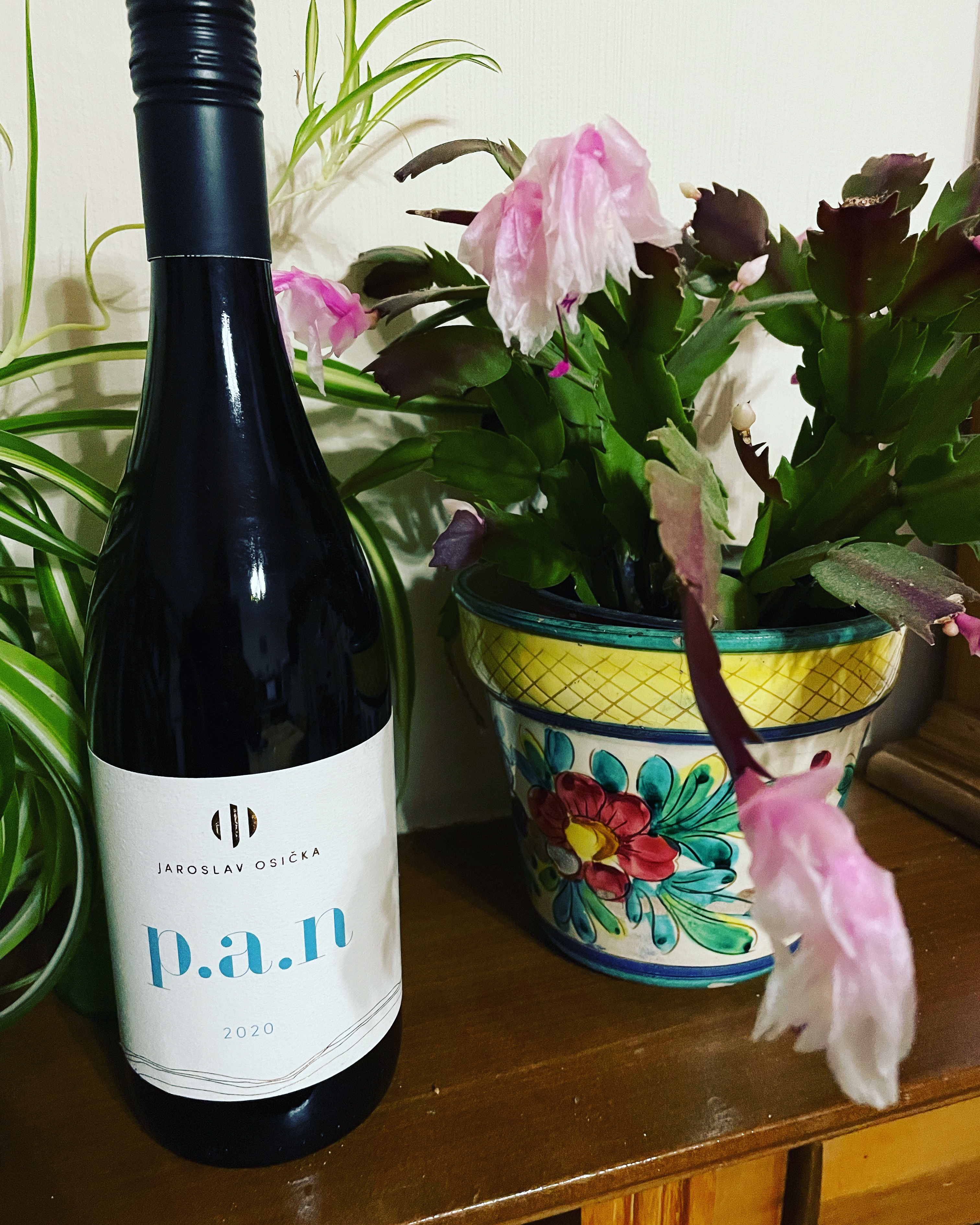
“p.a.n” 2020, Jaroslav Osička (Moravia, Czechia)

Will I ever stop telling you about the time I visited this legend of Czech natural wine this summer? You know, I’ve spent more time in The Jura than any other wine region, but I’ve never met Pierre Overnoy, nor Jean-François Ganevat (though at least in his case I’ve met his sister a couple of times), but at least I’ve met this guy. A couple of hours with him taught me a lot, including the importance of humility.

Now working with his son, Luboš, he still farms the same small domaine at Velké Bílovice with as much thought for the fauna he shares these slopes with as for his vines. The result is wines which clearly have soul as well as substance. He is certainly one of perhaps three Czech producers I feel should be up there on the international stage with all the other greats in the field. Increasing numbers of sommeliers are coming to the same conclusion.

This is a blend of Pinot Noir and André. Developed in Moravia in the 1960s, André is a crossing of Blaufränkisch (aka Lemberger) and Saint-Laurent. The André grapes in this blend come from a site, Panský, only planted in 2014. When the vines are mature there may be a varietal cuvée to look forward to, but currently these grapes are blended with Pinot. On my summer visit I tried the 2021 from barrel (3-4-y-o oak), and this is the previous, but current, vintage in bottle.

Garnet red in colour, it has a lifted cherry bouquet. The palate has the same vibrant cherry fruit, but with a savoury edge to the finish. The acidity is noticeable, but it’s that concentrated fruit acidity which is really nice. I think this is a wine you’d find really interesting. Vibrant. It’s also under £20 a bottle, just £19.50 from Basket Press Wines.

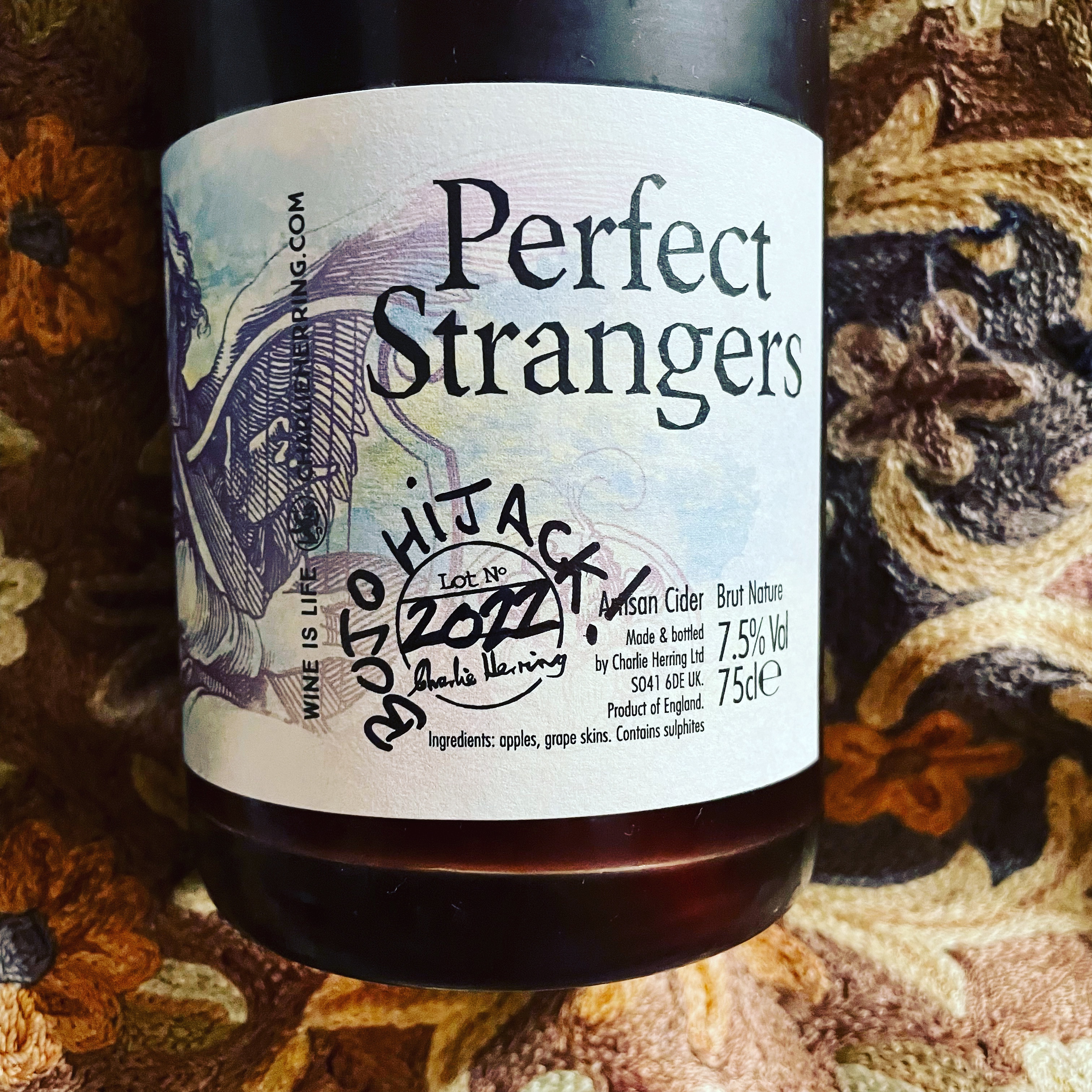
Perfect Strangers “Bojo Hack” 2022, Charlie Herring Wines (Hampshire, England)

Tim Phillips is not only a perfectionist and a wine philosopher, but he’s also an inveterate experimenter, which makes having a relationship with his wines and ciders so exceptionally exciting. His secret plan for 2022’s Beaujolais Nouveau Day was to release a cider from newly pressed apples with the idea that it could be sold inexpensively, by the glass, at the Bojo celebrations.

Tim has made cider before by adding a dash of his own South African Shiraz to the bottle, rather as Tom Shobbrook did in Australia. That is what we came to expect from Perfect Strangers. Next level for Tim was to ferment his apples on his Pinot Noir skins. The crush was on 12 October, immediately after harvesting from the orchard. Pressing was on 29 October, so after just over two weeks spent on the grape skins. Bottling was just in time to be ready on Bojo Noovo day.

The result was raw and fresh, in fact as fresh as you can imagine possible. I can imagine some could find it a bit left field, but you cannot deny it’s a crazy idea that has really worked. I loved it, and in fact I wish I’d got more than one bottle. It shows 7.5% abv, which whilst low for wine is actually higher than many ciders, so that alongside the freshness and rawness of it, there’s no lack of substance. Definitely genius at work.

This bottle came directly from Tim. I know his local indie wine shop, Solent Cellar, had some for their Beaujolais Nouveau night. I suspect it all went, so it’s probably one to jump on next year. They do nevertheless have some of the 2021 Perfect Strangers (SA Shiraz dosed) for £18 at the time of writing.

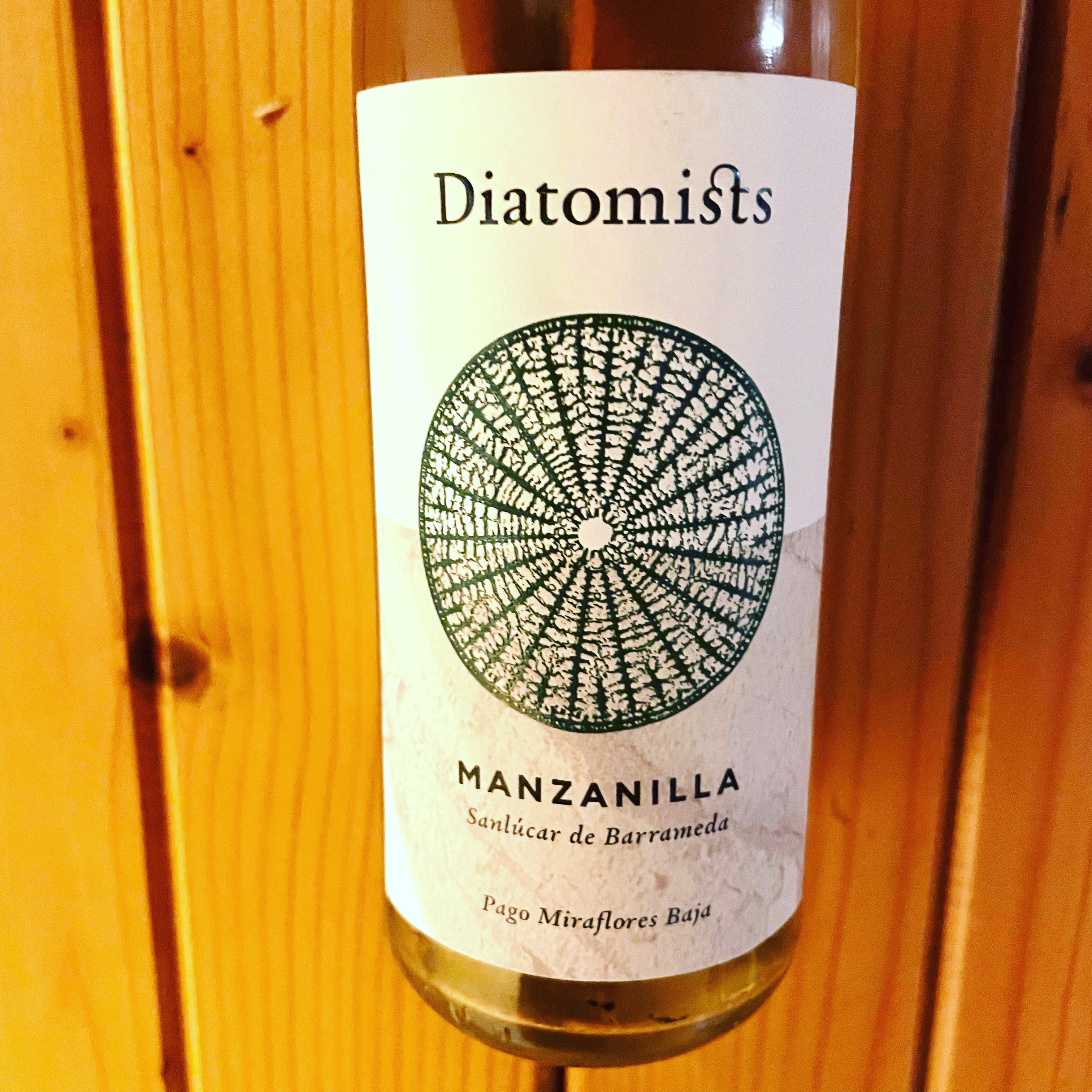
Manzanilla, Diatomists (SanlĂşcar de Barrameda, Spain)

Only a couple of articles back I wrote a piece about Diatomists, whose wines I tasted for the first time at the Cork & Cask Winter Wine Fair in Edinburgh in November. If you want to read more about this new Sherry bottler, and to get some more details about this particular wine, take a look either for the article in the most viewed list (to the right), or search Diatomists using the search box above it.

Suffice here to say that this is a single vineyard Manzanilla from Miraflores Baja, a site with especially fine albariza soils producing very fine grapes with a characteristic chalky-mineral streak. The colour is pale yellow and the bouquet doubles as both floral and saline. The palate unquestionably has that expected saltiness, but it is also surprisingly fruity for a Manzanilla. This is exactly what they have intended. It’s also fairly smooth as well, something a little different but extremely appetising.

Cork & Cask, Edinburgh, is my source, although I’ve since seen it listed by other independents. The Manzanilla is £12.95 for a lovely 37.5cl flute bottle. The other Sherries in the range (Amontillado, Oloroso, “Medium” and PX), are all £17.95 per half.

Love and Pif, Recrue des Sens/Yann Durieux (Burgundy, France)

Yann Durieux has four generations of winemaking in his blood, and in fact legend has it that he bottled his first vintage age thirteen, but that has not stopped him following a unique path to fame, at least in the natural wine fraternity.

Yann was mentored at the famous Domaine Prieuré-Roch, where he began making the wine in 2008. After a couple of years Yann began to create his own cuvées from vines in the then very much under-appreciated Hautes-Côtes-de-Nuits. Such are the boundaries between appellations on the Côte d’Or that despite this lowly origin for his vines, his neighbour is the famous DRC. The vines sit below the abbey of Saint-Vivant, from which one of the famous appellations bottled by the DRC is of course named.

This is a completely natural wine, aged in vat, and made from Aligoté. I like this grape, and in fact I wrote an article about Aligoté in 2018 which, although perhaps a little dated, remains a popular read even today. So, bearing that in mind, I’d say that this is the finest bottle of Aligoté I have drunk. It is bottled as Vin de France, but a batch code suggests the vintage may be 2015. I know I’ve had it a long time. It reminds me more of Chardonnay than the usual profile of Aligoté with that cliché of searing acids. This is especially noticeable in its smoothness and velvet mouthfeel. It also has a kind of “unpasteurised” freshness to it. The depth and length here are close to profound.

Certainly, the age of the vines (45 years plus) has made its mark, as has prolonged bottle age, and initial skin contact and lees ageing. It’s one of those wines I’d planned to save to open with someone who would really appreciate it. You know how it is, sometimes you are wondering what to open and you just think what the hell…

This was purchased in the natural wine shop, Les Jardins de St-Vincent in Arbois, at some point before the Covid pandemic.

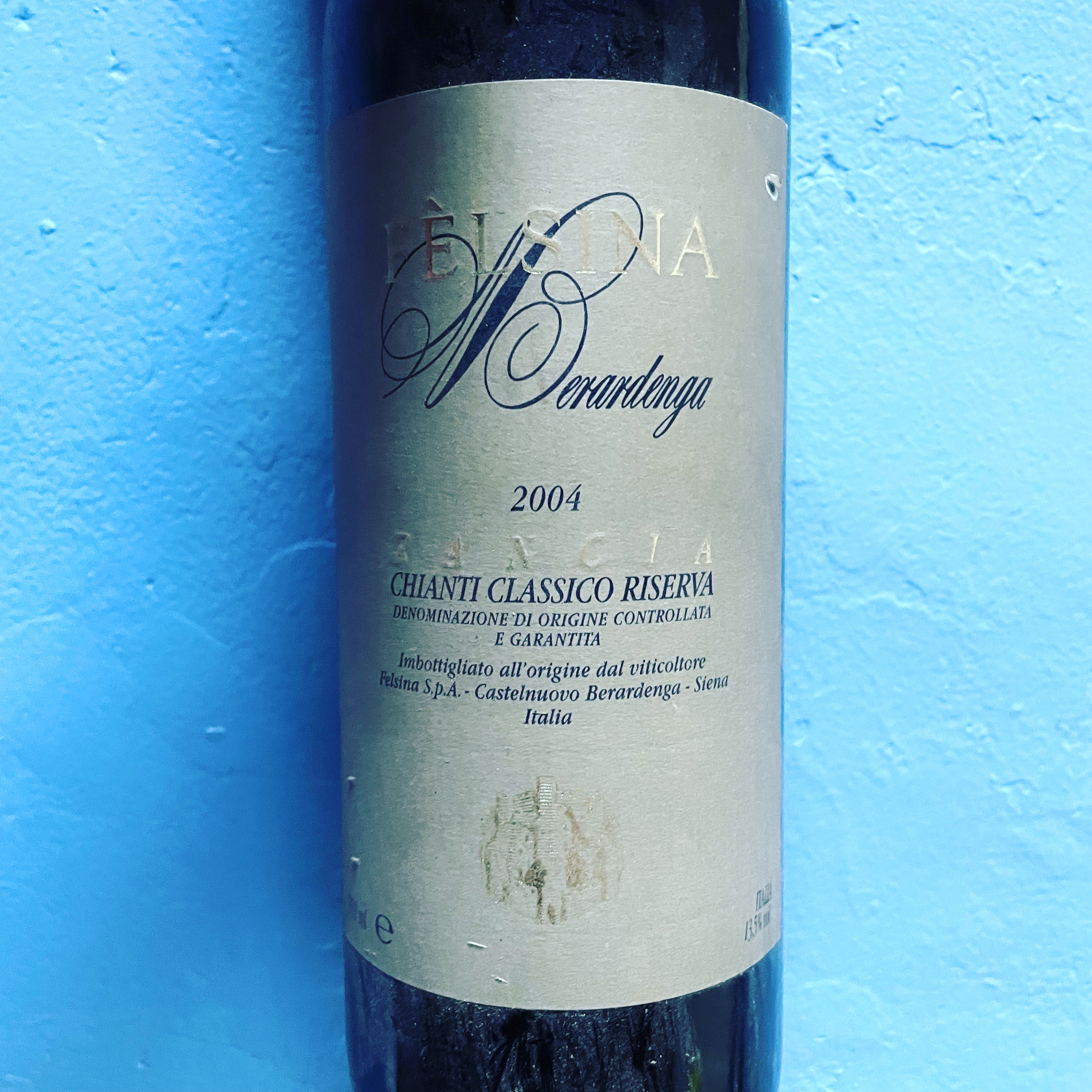
Chianti Classico Riserva “Rancia” 2004, Fèlsina Berardenga (Tuscany, Italy)

Here we have another wine, rather like the Aligoté above, which I opened without guests, wondering whether it would be over the hill. Crazy! This is one of the great Classico estates and Rancia is the single vineyard Riserva. The estate has been in the hands of the Poggiali family since England last won the World Cup, something I can now sadly say with no fear of being wrong.

Made from 100% Sangiovese, so no Merlot to see here folks, the wine is pure essence of the variety at the heart of the Chianti region. The vintage, certainly in the village of Castelnuovo Berardenga, was an exceptionally good one, but I had heard mixed reports of ’04 Rancia. Some of my Tuscan-mad friends, who are very picky indeed, had mentioned bottles either out of condition or over the hill.

This was nothing short of magnificent. Vines for Rancia are at 400 masl on limestone-derived alberese soils, more than 50 million years old, with galestro marls. They produce grapes which see a twenty-day maceration with punchdowns. Ageing is in new French oak for 18 months, followed by eight months further in bottle before release. The result has a classic brick red rim with a darker core, some cherry fruit but an abundance of tobacco and spice. There’s still a tiny bit of tannin, which coats the tongue with the fruit riding on top. The palate is complex and savoury, but that fruit has a sweetness which comes through.

Where from? I’m not sure. The Sampler, possibly, but it has been cellared by me since release.

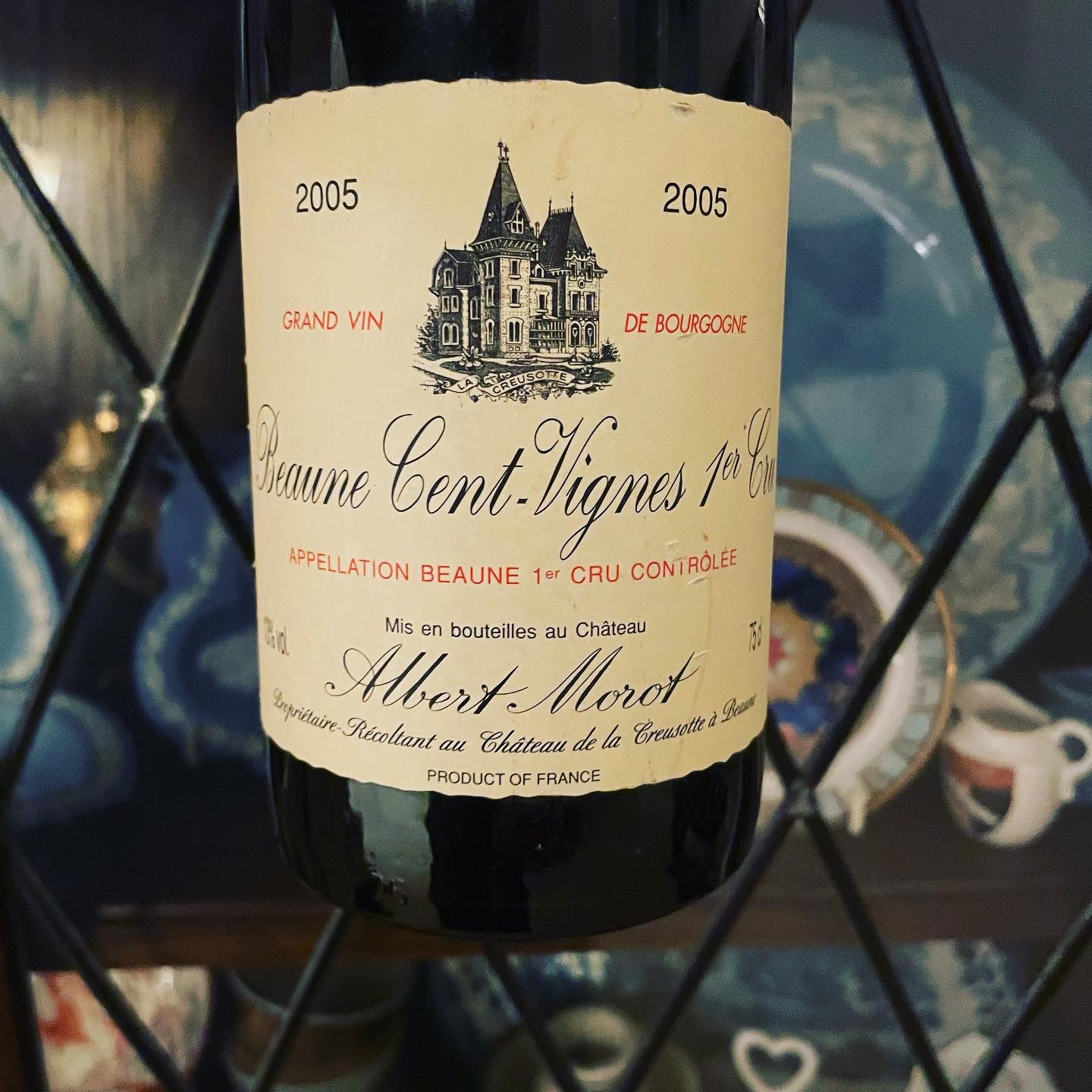
Beaune 1er Cru “Cent Vignes” 2005, Albert Morot (Burgundy, France)

I’ve always had a soft spot for a raft of Premier Cru vineyards from Beaune. Of course, they often lack the structure, might, complexity and seriousness of the red wines from the Côte-de-Nuits, but the best, with age, from a good vintage, can have a silky-smooth texture which envelopes the fruit. If they lack structure, they can nevertheless often have a lovely sensuous quality to them.

Albert Morot is a leading name on the Côte de Beaune, but aficionados would not place the firm in the top rank. The 8-ha they farm is all in Premier Cru sites (so whilst they have no Grands Crus, nor do they grow vines in the village AOPs). Cent” Vignes” (spelt singular by Morot, but plural for the official AOC, and by author Jasper Morris) is an easy to remember vineyard name, yet it is not considered a producer of the finest wines, with Morris saying that it can suffer in drought years (which 2005 was), and that its light and sandy limestone can produce wines which “lack punch” and can “lack energy if the fruit gets overripe” (Inside Burgundy, BB&R Press, 1st edn 2010).

I’ve seen some tasting notes in this wine’s early years calling it forward, so things didn’t bode well. Yet it was far better than I expected. It’s certainly still going strong, even having travelled by lorry to Scotland a dozen weeks previously. There’s no tannin to speak of but the wine still has definition. What it also has is gentle, Beaune-like, plump cherry fruit on a smooth and silky palate. No old-fashioned farmyard or chicken shit thing going on, just the slightly faded cherry, which went down very nicely indeed.

This bottle came from Majestic Wine, bought on release. No idea how much it cost.

On a final note, we also drank another bottle of Breaky Bottom CuvĂ©e David Pearson 2015. I don’t plan to say much as I’ve written about this wine before, but boy is it drinking well and I really am starting to be very content that my BB stash is well stocked.

Posted in Artisan Wines, Cider, English Cider, Natural Wine, Wine, Wine Agencies | Tagged , , , , , , , , , , , , , , , , , , , , , , , , | Leave a comment

Recent Wines November 2022 (Part 1) #theglouthatbindsus

How the year flies by! That’s rather a cliché, but this year does seem to have passed very quickly for us with our move to Scotland taking up rather a lot of the time. But I do look forward to this time of year, not only because it will be Christmas soon, but because it’s a time when I can begin to reflect on the past year’s drinking, reading and other wine-related activities. In the coming weeks I shall write about my wines of the year, always in my case the most interesting wines I’ve drunk, not the poshest or most expensive. It’s also pleasurable to reflect on what you readers have found most interesting on this site over the past twelve months (my chance to delve into the stats).

First, however, we have a few wines from November to write about. It’s a short drinking month in some ways, but with twelve wines selected I shall still divide it into two parts, six bottles in each. It makes it far easier for you to skim through. Part 1 covers the first half of the month with wines from The Jura, Burgundy, Mosel, Bugey, Burgenland and England. The last of these is a very old friend which I may well have mentioned in other articles but haven’t managed to drink for a year or two.

Corvée de Trou-Trou 2018, Domaine L’Octavin (Jura, France)

This cuvée was many years ago now my first taste of a wine from Alice Bouvot and formed the start of a genuine passion for her wines. We were staying in Arbois, in the tiny little house we used to rent there (sadly now sold…we were given an option to buy it and only Brexit put us off). We were cooking a meal for friends visiting from Geneva and I remember it was the time of the Fête de la Biou, when an enormous bunch of grapes is hung in the church to celebrate the harvest. Hirsinger, Arbois’ famous pâtissier, makes an enormous “tarte de la biou” and we bought one (more than 40€ for a dessert is a lot, but this was worth it). Not sure what we ate otherwise, but this wine from L’Octavin is what we drank.

Although a Vin de France, as are all of Alice’s wines, you can guess that this is a Trousseau, originating in her plot of 40-y-o vines in the Arbois lieu-dit of Les Corvées, one of the town’s best-known sites which sits on the slope between the main N83 north and the D107 route to Montigny-les-Arsures. This is, of course, a natural wine, or as Alice puts it on the back label, a wine made from “pur jus de raisin”. Brick red with darker cherry glints in the sunlight, the bouquet is high-toned cherry essence and the palate adds in some plum. There’s certainly a touch of volatility but when the nutmeg and cloves kick in you soon forget about all that. Challenging but, dare I say, magnificent too. Two months on skins, bottled in spring 2019.

Domaine L’Octavin is imported by Tutto Wines in the UK. The current vintage is 2020.

Saint-Aubin 1er Cru « En Remilly » 2011, Pierre-Yves Colin-Morey (Burgundy, France)

Before we discovered Arbois we used to stay in Burgundy every year, though this really is going back into the mists of time. Initially we stayed in a very basic chambre d’hôte at La Rochepôt and Saint-Aubin was just a walk or a short drive over the hill. Its wines fascinated me, but back in the 1980s the village wasn’t really considered in the slightest bit posh. This was, after all, a good seventeen years before “PYCM” became a well-known secret to Burgundy lovers. Now his bottles can command very fancy prices.

Pierre-Yves, the son of Marc Colin, set up a negoce operation with his wife, Caroline Morey in the mid-1990s, and by 2005 he finally broke from his family domaine and set up on his own. Six hectares grew to fifteen, with vines in Chassagne, Meursault and Saint-Aubin. Although based in Chassagne, it is their St-Aubin wines I know best.

This 2011 Premier Cru tastes fresher than I could possibly have imagined. It was made with careful fruit selection, grapes being picked if anything on the early side (we have a very satisfying 12.8% abv here). New oak is around 25% for this particular wine and Pierre-Yves tends to favour a larger barrel than many (350-litres being his norm). This leads to less overt oak, especially over time.

This bottle smells as fresh as it tastes, and one isn’t surprised by the green-gold colour suggestive of a much younger wine. There is not one hint of premox here. There is still a buttery note, although the oak is very well integrated. This buttery texture sees a lovely counterpoint in soaring jasmine aromas. The palate is almost unctuously smooth, as fine Chardonnay can be with the weight of wood behind it, but there’s enough lemon-fresh acidity to balance it. Very long, very fine.

This came from Uncorked near London’s Liverpool Street, in the days when you could walk into the shop and grab a bottle of PYCM. I’ve seen later vintages at eye-watering prices, but I can see why. This may be the oldest I’ve had from Pierre-Yves, cellared since release, and it was everything White Burgundy so rarely is at 1er Cru level. And from Saint-Aubin!

“Mad Dog Warwick” 2019, Madame Flöck (Mosel, Germany)

I last drank a bottle of this vintage of Rob and Derek’s “Mad Dog Warwick” (named after the mate who brought this winemaking partnership together) back in December last year. It’s mighty hard to track down, coming from just a couple of terraces above Winningen, but I wanted to see whether this could age a bit, and the answer, as the guys might have said when they were originally working together in Australia’s Barossa, “obvo”.

The key to this wine, as with many made by young winemakers buying vines on steep slopes few people want to farm (Rudolf Trossen once told me you couldn’t give them away at one time), is that the vines are often old. In this case certainly over 40-years. In addition, these vines are in a side valley, once neglected, but windy enough to keep them disease free, and also botrytis free. Climate change means it’s a touch warmer than when this land first became marginal. This is all very much assisted by very particular canopy management to ensure the retention of acidity.

“Warwick” is a lovely dry Riesling, and in fact it is almost more like a Clare Valley version, albeit with German terroir. Grapefruit with quince and a hint of lime, 12% abv. This was from Butlers Wine Cellar (Brighton) from where I’ve sourced all my Madame Flöck, but quantities are small and this is currently out of stock. Well worth keeping your eyes open for the next vintage.

Bugey-Cerdon 2019, Renardat-FĂ che (Bugey, France)

I was introduced to Bugey some decades ago by friends nearby. Back then, the wines were generally not much to shout about, but there were some interesting oddities, one being the ancestral method light sparkling wine, Bugey-Cerdon. In the intervening period Bugey has become home to some gifted young winemakers, many with a preference for very low intervention viticulture and winemaking,

I have long asserted that Bugey’s time will come, but more in hope than expectation. Despite a healthy fifty pages being devoted to Bugey in Wink Lorch’s seminal “Wines of the French Alps”, one has to admit that the region is neither large enough, nor are there enough wine producers, for it to take off in the way that the nearby Jura has.

Alain Renardat-Fàche established this 12.5-ha domaine at Mérignat by turning his own father’s mixed farm (with Gamay-based sparkling wine) into a fully-fledged wine estate following wine studies in Beaune. It is now run by his daughter Christelle and his son, Elie. It is he who makes the wine whilst his sister deals with marketing, pretty successfully judging by the dozen or more export markets where you can find their wines.

There is a negoce Cérdon (grey label) and this black-labelled estate bottling. The former is 100% Gamay, but the family are keen to include the traditional Poulsard in their estate cuvée, a variety which has almost died out in Bugey, but of which they still have around three hectares themselves. The usual 30% Poulsard was increased to over 40% in the 2019.

As I said, this is a méthode ancestrale wine, bottle-fermented but by using refrigeration technology first developed in the Diois, a lightly sparkling wine could be made with an arrested fermentation, leaving between 50-60g/l of residual sugar in the wine. The result is a light and frothy pale pink wine with the sweetness disguised by deliciously brisk but restrained fruit acids. Yes, I know this is yet another 2019 I’ve written about before (April this year), but this is a very high-quality version of a unique gem, and now available in the UK via Raeburn Fine Wine. My bottles came, of course, from The Solent Cellar (Lymington). It’s still up on their web site so presumably they have at least one. If you haven’t bought it by Christmas, it’s mine.

“Superglitzer” 2018. Renner und Rennersistas (Burgenland, Austria)

You know, I think Superglitzer might just be the best name for an individual cuvĂ©e I’ve seen in many years, and its label is just perfect. No matter that when I first saw it, I thought it would be a white, possibly sparkling, wine. It’s made by my favourite people in Gols (which is saying something as it’s probably the village with the highest concentration of natural wine mega-stars on the shores of the Neusiedlersee).

We have here a blend of the three super red varieties of the region, Blaufränkisch, Saint-Laurent and Zweigelt, allegedly with a splash of Roesler, a complex 1970s crossing of Zweigelt with, if you really need to know, Klosterneuburg 1189-9-77 (= Seyve Villard 18-402 x Blaufränkisch). More useful is to visualise it as a ruby red with a darker, purple, core. The scent of red fruits is joined by spice on the nose, with the palate still showing brisk acidity. We drank this with a spiced North African dish and it wasn’t too fruit-driven for the spice level. The zesty freshness complemented the mild spice, and 12% abv is just spot on.

As I think I said on IG at the time I drank this, it’s hard to think of another producer whose wines put quite as big a smile on my face (Bouvot, Oggau, Spielmann?). The massive fun factor perhaps reflects the personalities of its makers.

This bottle came from Littlewine back when they had their online shop, but Newcomer Wines is the importer for the UK, from whom you can buy direct.

Cuvée Noir Brut NV, Bolney Estate (Sussex, UK)

As English Sparkling Wine goes, this must be one of the more unusual. Bolney is an interesting wine estate sited not far from the A23, around fifteen minutes by car north of Brighton, so when I lived down that way it was one of my most local producers. They make good quality white and pink sparkling wines and a range of still wines at various price points, and I believe they also do some contract winemaking. It’s effectively a quality producer who, for some reason, can fly a little under the radar, at least in the circles I move in. Then again, I’m pretty sure they’ve no idea who I am either. The heritage is certainly there. Current owner Sam Lintner’s parents planted vines here fifty years ago.

Cuvée Noir is perhaps not what you’d expect, though. First, this traditional method sparkling wine is red. It’s made from the Dornfelder variety, more commonly used in parts of Germany for everyday still wines. They don’t really shout about this on their web site, but they shouldn’t be shy. I think there are many people like me, like “us” in fact, who might seek this out if we knew about it.

The concentration of red and dark fruits is amazing, very aromatic with cherries and deeper blueberry aromas. The palate is made creamy by the purple mousse, with, like the Renner wine above, a mix of concentrated fruit with a spicy twist of black pepper. You drink it chilled, but frankly it’s versatile, good for summer picnics or bbq, or with a cheese platter on a November evening. It’s a good deal lighter than say an Australian Sparkling Shiraz. It reminds me more of the old fashioned “sparkling red burgundy” I occasionally drank in the first flush of my twenties, but that might be before most people’s time, and as a bottle-fermented wine, this is way better quality.

Cuvée Noir is great fun and I reckon a lot of readers would find it really interesting as well. Now where did I buy it? I wish I could remember. Certainly you can buy from Bolney Estate direct.

Posted in Artisan Wines, Natural Wine, Wine, Wine Agencies | Tagged , , , , , , , , , , , , , , , , , , , , , , , , , , | 2 Comments

Diatomists at Cork & Cask Winter Fair – A New Name in Sherry

Diatomists is a completely new name in Sherry to me. I think I remember spotting some Sherry in unusually-shaped half bottle flutes on the shelf behind the counter in the Cork & Cask shop in Edinburgh, but Cork & Cask’s Winter Wine Fair was the first time I’d tasted them. Immediately on walking into the Fair, there on my right at Table 1 was Antonio Morenés Bertrán, Diatomists Sales Director and Founder, who by coincidence I had bumped into just that morning.

The name is unusual. What is a Diatomist, indeed what is a diatom? Diatoms are single cell algae that form complex patterns when they fossilize, and a diatomist is one who “masters the art of diatom arrangement”. Diatoms are the reason why the soils of wider Jerez are unique. They lock in sparse moisture providing essential water reserves for those very hot summers.

Jerez and the wider Sherry-producing regions have long focused on the Bodegas which make the wine. Labels like Equipo Navazos began to highlight the best vineyard sites in their exceptional fine Sherries, and a new wave of producer has followed in their footsteps, placing the vineyard and viticulture at the forefront. This has often gone hand-in-hand with producing a more modern style of Sherry. This style emphasises the individual terroirs of the region, and especially “fruit”, something that may previously have gone unremarked about the versatile Palomino grape variety.

Diatomists set out to emphasise the floral and fruit elements in all their styles. Wines are aged in barrel but created to preserve freshness. The emphasis on the terroir means that all the wines here are from a single vineyard (Pago). This, for all bottlings apart from the Pedro Ximénez (PX), is the Miraflores vineyard at Sanlúcar. The PX is, of course, from Montilla.

Manzanilla de SanlĂşcar

From Miraflores Baja, this lower part of the pago is at around 50 masl or below. The grapes are 100% Palomino Fino, sourced from growers selected for the quality of their fruit. The solera, consisting 500-litre Spanish Chestnut barrels, is 30 years old and this individual wine has an average age of five years. The standard abv for Manzanilla, 15%, is present. This is conventionally farmed fruit, and the wine underwent a light filtration.

I bought a bottle at the shop after the Fair and drank it a couple of nights later. It is indeed a fruit-driven Manzanilla, smooth and perhaps less acidic than most, but it’s lack of austerity doesn’t mean it lacks the salinity we associate with the style. Being biologically aged (under flor) it has that salty tang and I’d identify it as Manzanilla for sure. It proved to be an excellent food wine, and a few centimetres left for the next day enhanced a paella no end. This retails for just ÂŁ12.95 for 37.5cl, the rest of the range retailing for ÂŁ17.95/half bottle. It may be the cheaper option but don’t let that put you off, because it’s very good and a little bit different. I think you’ll be intrigued by its sheer fruitiness.

Amontillado

This comes from what Antonio called his Singular Bota range. I can spare the marketing description because the wine speaks for itself. This is from a solera of over 100 years of age, and this wine is over 12 years old. It is fortified to 18% abv.

You do not get many dry Amontillado wines that are as obviously fruity as this. It’s a style I used to skip but this was one of my favourites of the five Diatomists wines I tasted. Dried apricots and toast, their notes say. I can’t disagree. Naturally with an Amontillado there’s a certain nuttiness as well, along with a nice lick of salinity. Freshness and depth combined.

Oloroso

This oloroso is also aged for 12 years, from a similarly old solera. This time the abv reaches 19%. Maybe I’m used to the enormous concentration of the Equipo Navazos Sherries, but this was quite easy to drink. I’m not saying it lacks concentration, just that the smoothness and fresh fruitiness are to the fore. It makes a nice contrast. It shows more citrus character than the Amontillado, but the depth comes from the silky texture on the tongue. The finish is more characteristically oloroso, with hazelnuts and vanilla pod coming through, plus a touch of caramel, but dry. Great length.

Medium

Here we have a style which many confirmed Sherry lovers might be unsure about on paper, but in this case, it works quite magnificently. It’s another wine with 19% abv and with 80 g/l of residual sugar, aged for 19 years. This time I’m getting walnuts, and a Proustian memory of my wife’s homemade Seville Orange marmalade (it’s almost that time of year too). That marmalade flavour on the palate is a mix of sweet (on the attack) and slightly bitter (on the finish). I was really won over. The big positive is that it isn’t too sweet and it’s not at all cloying. In fact, the balance is what makes it attractive to someone who probably hasn’t sipped a “Medium Sherry” since I was in my late teens (and that purely because it was alcohol). Now dare I buy one?

Pedro Ximénez

If the “Medium” does fall down my list it would only be because I will find it hard not to grab a PX, preferably before Christmas. Taken from a solera over 200 years old over in Montilla Moriles, this sweet PX has been aged for five years. Alcohol here is a natural 15% and there are 420 grams of residual sugar per litre. Again, I don’t normally buy PX. I find it goes pretty well on ice cream, but I can’t really afford ÂŁ17.95 for a half bottle of sauce, and the amount one can often drink is limited to a thimble-full. This one is somehow different.

It has that concentrated raisin and fig nose and palate. It’s certainly very concentrated yet not cloying, which I usually find with PX. There are two reasons, I think. First, it’s not one of those full-on, pow in the nostrils, PXs. There’s a subtlety here. Secondly, there is acidity. How many times does a PX seem to be devoid of any acids whatsoever? I’d love to see a tech sheet and compare the acidity to others. The finish is lovely because the sweet raisins give way to spices, definitely nutmeg, possibly ginger, which was a pleasant surprise when fig and raisin are all you often expect to find.

These are Sherries well worth trying. I shall be looking to get another Manzanilla, and an Amontillado, plus a PX if I can stretch the budget without having to give up that Vin Santo I promised myself as another Christmas treat to go with the hidden Panforte stash. I was very impressed, and it’s great to see a new name in Artisan Sherry appearing on the shelves of independent retailers.

All styles are currently available at Cork & Cask, Edinburgh.

Posted in Artisan Wines, Sherry, Spanish Wine, Wine, Wine Festivals, Wine Merchants, Wine Shops, Wine Tastings | Tagged , , , , , , , , | Leave a comment

Cork & Cask Winter Wine Fair (Part 2)

Part 2 of the Cork & Cask Wine Fair notes follows on from where we left off in Part 1. It is back there that you will find my introduction if you haven’t already read it. You’ll find some nice bottles from Modal Wines and Wines Under the Bonnet if you take a look.

I promised a look at the fine Sherries from Diatomists. This will follow, but it will take at least a week to publish if anyone is waiting for that.

DYNAMIC VINES

Theodora 2021, Gut Oggau (Burgenland, Austria)

I suppose regular readers would expect me to re-iterate my enormous enthusiasm and passion for Gut Oggau, especially if you happen to have read my article about my visit to the estate in August this year. I had an exceptional tasting over dinner back then, but among the many wines tasted I didn’t get to try the new vintage (2021) of Theodora. The last time I drank this Grüner Veltliner and Welschriesling blend from the Western shores of the Neusiedlersee was the 2020 vintage, back in April. With just a couple of hours on skins you get a vibrant white with flavours of melon and spice. This latest vintage is sensationally good. The only downside is that even as one of the less expensive Gut Oggau cuvées, it will still cost around £40. It’s certainly worth the money for me, but a tough ask for many impoverished Brits. All I can say is please try to taste it.

Cahors “Le Combal” 2017, Cosse Maisonneuve (Cahors, France)

Matthieu Cosse and Catherine Maisonneuve have been farming around Prayssac, within the Cahors AOC, since 1999, specialising in the Cot variety (aka Malbec) for which the appellation is famous. “Le Combal” comes from the chalky gravels of the Lot Valley’s river-terraces, fermentation in stainless steel, subsequent ageing for a year in used barrels. It’s a fruit-forward wine but with some complexity. A wine to drink on the lovely fruit that is still there after its extra time in bottle, but yet a wine which will certainly age further. It’s too long since I’ve bought this producer’s wines, which is why I recommend this. For £24 you get something with a touch of seriousness, yet that lovely natural wine zip as well. And a more savoury side to Malbec is most welcome.

INDIGO WINES

Graue Freiheit 2020, Heinrich (Burgenland, Austria)

Heinrich is one of many excellent natural wine producers in Gols, on the northern shore of the Neusiedlersee. There’s definitely something in the water here, when you run through the names in the village (and nearby) who uphold a non-interventionist approach in the vines and cellar. Gernot and Heike Heinrich have been doing their own thing since 1985, long before some of the new stars appeared (or in some cases were even born). They converted to biodynamics in 2006 and helped found “Respekt”, the Austrian certifying body.

Bottled in a terracotta flask, this is a very interesting, unique style, blend of Weissburgunder (Pinot Blanc), Grauburgunder (Pinot Gris), Neuburger, and Chardonnay. The soils are crystal-laden schist and calcerous clay, with fermentation on skins in amphora. Ageing is for 17 months in large old oak. No sulphur is added. Unfiltered, shake before serving, and see what you taste. It’s a complex whirl, for sure. Around £40/bottle. Well, I have some…

Cathedral Pinot Noir, William Downie (Victoria, Australia)

Downie makes this Pinot by blending fruit from the Mornington Peninsula (70%) with 30% grapes from the more inland (but cool-ish climate with cold night temperatures) King Valley. All the fruit is destemmed and goes into a mix of stainless steel and wooden open-top fermenters. Ageing is for a relatively short two-months in stainless steel. The fruit is all red berry with a spicy twist. Acids are fresh and I think it speaks of the Mornington’s maritime climate. There’s even a touch of sea salt (well, salinity, minerality, whatever you wish to call it). It certainly has that definition which you get from coastal fruit in Victoria. Very nice, though it costs around £30. Aussie wine prices are not all bargain basement as you find in the bulk imports. This isn’t natural wine, but it is finely crafted artisan wine.

Rioja Reserva 2014, Remelluri (Rioja, Spain)

Indigo has always been “the” great Spanish specialist for me. I know there are others, but Indigo has a finger on the pulse. Much of their Spanish range is incredibly forward looking, and in terms of their own list, Remelluri seems slightly conservative, despite being one of the great forward thinking, experimental producers in the Rioja region.

The estate’s flagship wine is the Reserva. The vinification is not really out of the ordinary, but the grapes (mostly Tempranillo with small additions of Garnacha, Viura and Malvasia, grown between 500-to-700 masl) are immaculate (farmed organically). It sees 17 months ageing in oak and then three years in bottle before release. This means the oak influence is there but not dominant. It will, of course, enjoy further bottle age if you allow it. I must add that I’m a massive fan of their Blanco as well. This red Reserva will cost around £30, which does again show great value for a serious wine.

THE CIDER TABLE

This table represented a trio of artisan/natural cider makers but was staffed by Robbie Fleming, who makes cider over the water from me, in Fife, and whose products I’m yet to try (sadly not being shown). My first desire was to try a couple by Little Pomona, which was launched in 2017 by Susanna and James Forbes towards the start of what I see as the British craft cider revival. Their original Thornbury farm in classic Herefordshire cider country has 120 trees split between four varieties of apple. They have since moved their operation to Brook House Farm, just south of Bromyard (in time for the 2019 harvest), where they have opened a tasting room.

Bright Lights is new from 2021, mostly made from Bramleys, but there’s a secret added ingredient, a little locally grown pear. It is exactly as the label says, a cider with very bright acids, a real palate cleanser, with a great deal of purity. The Bramley “cattle prod” (they say) acidity was toned down by adding a touch of 2020 Dabinett and Michelin from barrel, followed by bottle conditioning (as they call it in the cider world) to add a little sparkle. Exceptional. £15.

At least as good was Hard Rain Hot Pink, made from Kingston Black apples, but by a unique and almost lost method. The second pressing is used, in other words a pressing of the pomace. The result used to be known as Ciderkin. This version adds in Chinook hops from the field next door, owned by Brook House Hops. The result is then bottle conditioned with local organic blackcurrant cordial. You get a 4.5% drink which is the perfect summer refresher. The hops bring grapefruit notes, the apples, acidity, and the cordial adds a riot of dark fruit. ÂŁ10 makes it what some might call a no-brainer.

“In Touch” is a “keeved” cider made by Pilton Cider at Shepton Mallet in the heart of England’s other famous cider county, Somerset. Keeving is an artisanal way to make sweet, or semi-sweet, cider with just apples. The method prevents all the sugar being converted into alcohol. The fermented keeved cider here, made from Egremont Russet apples, is soaked with the skins of Regent red grapes. The result is a low-alcohol cider (4.5%) with light apple flavours and a definite hint of wine (Tim Phillips does a similar trick in Hampshire with his version of “A Fermament” macerated on his Pinot Noir skins). Off-dry, smooth, quite lovely in fact. £9.95.

I always have so many wines I want to buy at Cork & Cask that I rather neglect the ciders. I must put that right. I am, as you know, a great lover of petnats, and these ciders are pretty much interchangeable for social slurping.

ROLAND WINES

Bergkloster Riesling 2020 (Rheinhessen, Germany)

This is made from mostly direct press fruit with a little time on skins. The bottle I tasted was slightly reductive, and a taster next to me wasn’t impressed (“farmyard”, she said). I don’t mind reduction, it usually blows away. The grapefruit-like fruit here was plumpish in a wine of 12% abv, and once the nose cleared of slightly off odours it had a quite exotic bouquet of kiwi and peach. £19. Don’t be put off.

Kovidinka, OszkĂ r Maurer (Serbia)

If you haven’t yet tried Serbian wine, Maurer is a name to look out for. The first offering is his delicious orange wine. It comes from vines approaching a hundred years old near the Croatian border, on mostly loess and limestone. Kovidinka is the autochthonous grape variety. All methods are natural in terms of inputs, and these old bush vines are also cultivated by horse. Skin contact lasts for six days, with eight months in large format oak for ageing. Zero sulphur is added.

The bouquet hints of apricot, peach and lemon, the colour being very peach-like. The palate reflects stone fruit, citrus and oranges, with a textured finish and a herbal twist. ÂŁ19.

Crazy Lud 2021, OszkĂ r Maurer (Serbia)

The second wine from Maurer is another old vine blend, this time of Blaufränkisch, Kadarka, Cabernet Sauvignon and Prokupac, here off mostly volcanic soils in the Szerèmsèg Region. Once again, old bush vines produce very low yields and the grapes undergo a seven-day cold soak to leech out colour before fermentation in 350-litre old Hungarian oak casks. All varieties are fermented separately and blended at the end. There is no fining/filtration but a little sulphur is added here at bottling. The result, from a cool vintage, is a refreshing fruity red with zippy acids. Possibly not quite as “different” as the orange wine, but still very good. Around £20.

Zweigelt, Martin Obenaus (Weinviertel, Austria)

Back into Austria now, and the region, in the northeast of Lower Austria, which stretches from close to Vienna as far as the Czech border with Moravia. Weinviertel is still quite underrated as a region, but the profile of top producers like Ebner-Ebenauer (Falstaff Magazine Winemaker of the Year 2022) is changing this. Here we have a fairly simple red made from a variety which is also underrated, but when vinified concentrating on the fruit can produce some of the best glugging wine in Austria. Bright cherry fruit combines with fruit acidity to give us a 10.5% abv light red for easy drinking. Simple yet super-tasty. Around ÂŁ18.

Strekov 1075 “Fred” #9 (Strekov, Slovakia)

Strekov 1075 is the label of one of Central Europe’s great characters, fellow drummer Zsolt Sütö. The region itself is Strekov, with vineyards at around 150 masl on clay and loam soils over a bedrock of limestone and marine sediments. I’ve often seen people say this is a Blauer Portugieser wine, but there is actually more Alibernet (a Cabernet Sauvignon x Alicante Bouschet cross) at a ratio of 30% to 50%. The remaining 20% is the local Dunaj variety.

Half the Portugieser was foot-trodden, but all the rest was destemmed, and fermented in open top vats. Then, the Portugieser (fermented separately) went into 300 and 500-litre Zemplén oak whilst the rest was aged in 2,500-litre Austrian oak. After six months the wine was bottled without fining and filtration, and without any added sulphur. Zsolt uses a number to denote vintage and I think (??) #9 is from 2020. It has ripe cherry fruit and an earthy touch. Personally, I think this wine is brilliant, love it. For me, one of the best two producers on Roland’s list. £25.

Rét 2021, Alex & Maria Koppitsch (Burgenland, Austria)

This is my other favourite producer on Roland’s list, one I go back a little way with, even before they had their first British importer (they since changed to Roland Wines and it’s fair to say they now have a wider retail distribution). This is a lovely family operation making natural wine in the town of Neusiedl-am-See (accessible on the train from Vienna and the local station has a cycle hire shop right next to it. You can easily get to Gols and beyond if your legs are good and the wind off the Pannonian Plain isn’t too strong).

Rét is the entry level red wine, the name expressing the region’s Hungarian heritage. It’s a blend of 80% Zweigelt and 20% St Laurent off gravel, farmed biodynamically. The vines have a very reasonable age of thirty years. It sees eight days on skins, the varieties being fermented apart, and then six months on lees, varietal blending occurring at bottling. No sulphur is added. I drank one recently and to describe it perfectly I must borrow a great term from one of our best tasters, Jamie Goode: “smashable”. Especially at £23.

Kadarka, Bott Frigyes (Garam Valley, Slovakia)

Frigyes was possibly the first name in Slovakian wine I came across. This is another biodynamic producer making wines in relatively small batches off complex volcanic soils with Andesite, Chalk and clay on rolling countryside at around 250 masl. The Kadarka is harvested last of the varieties and half was fermented on skins and half destemmed. Each part was fermented separately before being blended together into 500-litre oak for nine months.

Red fruits (raspberry, strawberry) dominate, along with something a touch darker. The palate has a more complex nuttiness, with tobacco and a little cherry fruit. The colour is magnificent, the bouquet deeply fruity and the palate really interesting, not simple. Around the ÂŁ26 mark.

THE CORK & CASK TABLE

Here we have a few wines presented by the Cork & Cask team because the importers couldn’t be present. It was a good mix, but I want to highlight four wines, the first of which was very possibly my WOTD.

VulkĂ n Nr 2, Meinklang (Austria, Hungary)

I’m not sure how this works, but you probably know that Meinklang is based in Austria’s Burgenland, at Pamhagen, but have some parcels on the Somlό Massif, an ancient volcanic plug in Central Hungary. The grapes here are from Somlό. Nevertheless, this is bottled as an Austrian Table Wine. It’s the second release of this “still wine” version of Vulkàn (there’s a fizzy “Foam”), Nr2 being from, presumably, 2021. The two varieties here are Hárslevelű and Juhfark. A zippy but soulful wine with a touch of CO2 and a whole backbone of tense minerality. Refreshing, yet savoury more than fruity. Definitely my kind of wine (I bought one because Meinklang’s UK agent Stone Vine & Son don’t usually import this, but Cork & Cask went out there, fell in love, and got a few cases added to their pallet). Be swift! c £27.

Rosso di Montalcino 2020, Casanova di Neri (Tuscany, Italy)

Affording decent Brunello these days is almost impossible, but a good “Rosso” can be a perfectly acceptable alternative, and may even be more to our liking, with less (if any) new oak. This Sangiovese has had only 12 months ageing and I think benefits from it because it keeps the freshness I so like in the variety. The nose has great typicity and you can identify the grape, a pleasant experience for me because I drink far less Tuscan wine than I used to. Classy, and probably ought to see a bit more bottle age. £32.

Beerenauslese “Terrassen” 2020, Domäne Wachau (Wachau, Austria) (37.5cl)

I saw a very interesting article recently, asking (inter alia) whether Austria’s most famous wine region is falling behind, stuck in a conservative past and, rather like Bordeaux, is resting on that fame and the prices its top wines still command with the older generation. This Domäne (sic) has, to some extent, moved with the times more than a number of the bigger private estates, despite its very long history (est 1774). I should add that the terraces from which this wine comes are some of, for me, the most attractive vineyards in the world. The region also boasts one of the best cycle routes through vineyards in Europe.

This wine is quite traditional, a sweet, botrytis, Riesling with Pinot Blanc, Grüner Veltliner and Muskateller added, grapes harvested in November, with just 9.5% alcohol and sold in half-bottle. Farming is organic and the wine is certified vegan. Honey, lemon and good acidity, not at all cloying, qualities which make Austrian Beerenauslese good to drink from the off. There’s an open quality to the harmonious fruit and acidity. You’ll get complexity if you cellar it, but ageing will not follow the same profile as a Mosel Beerenauslese, which usually starts with way higher acids and needs age to balance that. Mind you, the producer says drink after 6-8 years. Whatever you do, you get a good deal, a proper dessert wine, for a touch over £20 for 37.5cl. It’s expensive to make.

Rivesaltes Grenat 2018, Immortelle (Roussillon, France) (50cl)

Rivesaltes Grenat is an appellation for Vin Doux Naturel made from the region’s old bush vines. Fermentation starts in a 500-litre open-top barrel. Fortification takes place after five days, arresting the fermentation, leaving plenty of sugar in the resulting wine. The combination of the sweet, ripe, fruit that has not fully fermented and the bite of the fortifying spirit makes this a unique sweet red, with 18% alcohol.

After 12 months ageing you get concentrated red fruits with cherry and clove. The received wisdom is that these are the perfect wines to accompany chocolate desserts, and this is true, but they also go extremely well on their own. As a smooth and sweet after dinner drink, it replaces a liqueur pretty well, and it will indeed last forever. There used to be a fair bit of VdN knocking around from 90-100 years ago at one time.

*NB Some retailer sites will tell you this is made from Grenache, as “Grenat” would suggest. However, the Immortelle web site confirms this as 100% Mourvèdre. £24 or thereabouts.

Posted in Artisan Wines, Cider, English Cider, Natural Wine, Wine, Wine Agencies, Wine Festivals, Wine Merchants, Wine Shops, Wine Tastings | Tagged , , , , , , , , , , , , , , , , , , , , , , , , , , | Leave a comment

Cork & Cask Winter Wine Fair (Part 1)

I am slowly getting to know the wine retailers up here in Edinburgh, and the first one I got to meet, thanks to a recommendation and introduction, was India Parry-Williams. India, along with Jamie Dawson and Chris Mitchell, the original founder, run Cork & Cask, a neighbourhood craft beer and wine shop in the Marchmont area of South Edinburgh. The shop has been going since 2013, in a part of the city, south of the Meadows, which looks pretty smart, but has a nice mixed population of families, young people and students. The kind of place with lots of great cafés and a good vibe. Cork & Cask is especially interesting for me because along with conventional wines they sell a very good range of natural wines, all sourced from some of the most interesting small importers I already know.

I was down there on Saturday for the Cork & Cask Winter Wine Fair. Well over a hundred wines were on taste in the local church hall, along with local independent spirits and some fine craft ciders. The Fair seemed a massive success, judging by the number of people there and the smiles of contentment as people sampled the wines. It’s probably too much of a well-kept secret that these wine fairs are the alcohol equivalent of an “all you can eat” buffet. £10 gets you a glass, a tasting booklet and a pour of every wine, cider or spirit you care to sample. These can be boozy affairs, especially when the office boys turn up in London, but this one was just happy and chilled, at least when I left mid-afternoon. Still, I was one of the few taking copious notes.

I met and sampled the Sherries of a new producer for me, Diatomists. Founder and Sales Director Antonio Morenés Bertrán was pouring samples of the five wines available, and I thought that these were interesting enough to merit an article on its own. I drank the Manzanilla on Sunday, and frankly I’d like to drink them all at some point. They are, I would say, quite “different”. Fruit driven expressions of (the PX excepted, of course) the Miraflores terroir at Sanlúcar. So, you’ll have to wait for Diatomists.

Below I shall run through my favourite wines brought to the fair by Modal Wines, Wines Under the Bonnet, Dynamic Vines, Indigo Wines, and Roland Wines along with a few ciders and an assortment presented by the Cork & Cask team where the importer was not present.

We’ll begin with Modal Wines. Nic brought ten wines with him and this presented a dilemma. I know Nic quite well and I like his wines, but he’d gone and brought wines I don’t know at all. So, with apologies, I shall comment on them all. The notes will be shorter as a consequence. He didn’t bring any Joiseph, from Burgenland, and I have been blatantly advocating for Cork & Cask to restock some of these.

Because my original article came in at over 5,000 words, I’m going to have to split it into two parts if you are going to have any chance of getting through all the wines (I promise it’s worth it). So Modal and Wines Under the Bonnet make up Part 1, with Dynamic, Indigo, Roland, the ciders and the rest in Part 2. Diatomists to follow after that.

Also note, the prices are just a guide. They were listed in the booklet but some appear possibly to be ex-VAT and others inclusive of tax. I’m sorry if a few may cost more in the shop.

MODAL WINES

Folias de Baco Petnat Curtido (Douro, Portugal)

This was an excellent wine to begin with, especially as I’d just tasted the Sherries and a real palate cleanser was just what was required. This is a 10.5% abv orange petnat, lightly sparkling and made from Moscatel with 5-6 days on skins. It comes from deep in the Douro Valley, on a small plateau at 700 masl. It’s not the baking Douro we all think about. The vines are blessed with an altitude which allows the grapes to get cool at night. The larger diurnal range helps keep the acidity which the red grapes lower down don’t see. Pale orange, refreshing but the floral bouquet of the Muscat is contrasted by a little bite and structure on the palate. Just a little. £23.95, a lot of glugging for your money. Loved it.

Mas d’Agalis Le Grand Carré (Languedoc, France)

60% Terret Blanc with Chenin, Vermentino, Clairette and others from Lionel Maurel. Maurel favours a gentle “infusion” method with light extractions. The result is a more lifted and elegant kind of Languedoc white made in stainless steel with no additions (incl zero added sulphur). Clean, mineral, saline and £22.95.

L’Archetipo Litrotto Bianco (Puglia, Italy)(1 Litre)

As it says on the label, a litre of lovely skin contact glouglou wine from a producer of otherwise largely single varietal wines from Salento, made from autochthonous grape varieties. Viticulture here is, according to Nic of Modal Wines, one of the most extreme forms of regenerative farming he’s seen. Varieties include Falanghina, Fiano, Verdeca and Marchione. Excellent easy drinking for under £25.

Little Bastard 2021, Staffelter Hof (Mosel, Germany)

Jan Matthias Klein blends 55% Riesling with Sauvignon Blanc, MĂĽller-Thurgau, Muscat and a splash of Bacchus. A little cloudy, like apple juice, the bouquet is floral but the palate lives up to its name unless you like a bit of acidity (which of course I do). Super-refreshing, but potentially challenging for those new to natural wine. Needless to say, I generally buy it when I see it (as I did recently). ÂŁ25.95.

L’Equinox Wines “To Maike and the Rest” (Swartland, South Africa)

This is the first time Modal Wines has ventured outside Europe, and it’s a wine from a young South African producer. Swartland Chenin with seven days on skins and then aged in barrel. Drinkable citrus-tinged fruit with a dry herbal finish. The Modal blurb mentions “clarity”, very apt. A new wine which I think will do really well. ÂŁ32.

Folias de Baco Renegado (Douro, Portugal)

Another super-good value light wine from Portugal. Whether it’s a Rosé or light red I don’t know but it’s a typical field blend of twenty-plus co-planted varieties, half red grapes and half white. Everything gets picked and macerated together and what you get is juicy fruit with vibrant acidity, and just 11.5% abv. Easy going but not simple, chill it down a little and smell it develop in the glass. At £18.95 that’s just ridiculous.

Clos Sauvage “Fauve” 2021 (Beaujolais, France)

This is labelled Beaujolais-Leynes, Leynes being a village in the very north of the region, close to, but north of, the Beaujolais Crus (Macon is almost as close as northerly Juliénas). David and Sophie Devijnck harvest their white grapes in St-Véran and their red in the Beaujolais-Villages AOP on the regional border, at around 450 masl. This is 70% whole bunch fermented, but 30% of the Gamay is destemmed, giving a bit more texture and perhaps adding the spiciness you get along with the cherry fruit. The couple aim to incorporate their vines into a completely mixed farm, creating one whole ecosystem. The wine is lovely. About £30.

Majer Red, Slobodne (Hlohovec, Slovakia)

Slobodne’s “Majer” wines (a red and white) are entry level, but more than that because this top Slovakian producer is trying to create multi-vessel blends to best express the terroir they farm. This red blend consists mainly of Blaufränkisch, with Cabernet Sauvignon and Alibernet, the latter a crossing of Cabernet Sauvignon and Alicante Bouschet. The fermentation vessels include tank, barrel, amphora and concrete eggs. It isn’t complex but it’s really drinkable. I hope to grab some next visit to Cork & Cask, assuming it doesn’t sell out. £26.50.

Barbera del Monferrato 2019 (Piemonte, Italy)

Barbera often excels in the Monferrato Hills, where it may get the best sites (rather than Nebbiolo). The soils are Terra Rossa, great for this variety and you get more depth and better balance than with many versions of the Barbera variety from elsewhere. It’s fruity and savoury. The elephant in the room is 15% abv. You may shy away from that, but I can say the wine is certainly in perfect balance and very attractive. It’s only around £25 too.

Aglianico 2014, L’Archetipo (Puglia, Italy)

This second wine from L’Archetipo is made from a vastly underrated variety, Aglianico. It’s capable of great age, and note that this one is from 2014. Valentino Dibenedetto has created a wine where the tannins have softened yet the wine, remember, made via a strong focus on regenerative farming, has energy and vitality in abundance. Aged in stainless steel, then 18 months in old oak, it was bottled in 2021. You will find cherry fruit with hints of violets on the nose, and the cherry palate has a touch of liquorice.  I know why this is one of Modal’s best sellers – it costs just ÂŁ26. This wine is fittingly dedicated to Masanobu Fukuoka and Rudolf Steiner. If you want to compare a genuine natural wine with ones made from conventional farming and viniculture, then this would be a good choice.

WINES UNDER THE BONNET

Domaine Hugo Sparkling Wine (Wiltshire, England)

Hugo Stewart’s association with winemaking genius Daniel Ham has yielded amazing results (Daniel now makes his own “Offbeat Wines” from Domaine Hugo’s new winemaking facility near Salisbury as well as Hugo’s two cuvées). This is one of the most high-profile “natural wine” estates making English Sparkling Wine, and 2021 is only the first release, based on 2018 fruit. This is also very much a wine which relishes vintage variation and will not taste the same every year. The blend is Chardonnay, plus three Pinots (Noir and Meunier plus some Gris), creating a wine which is elegant, erring towards delicate, certainly classy. I tasted these at Real Wine in London earlier in the year. They were very good then but an extra six months in bottle has worked its magic. Okay, at £50/bottle it’s not cheap but then again, have you seen the price of some ESW nowadays! Top tip for Christmas.

Brand “Rot” (Pfalz, Germany)

The latest release of the red Landwein from the Brand brothers (Daniel and Jonas) is described by them as a “not-nouveau”. Foot-trodden Portugieser grapes make up the lion’s share, with some carbonic maceration Cabernet Franc (maybe 15%). The reason there’s no vintage on this is that some older Cab Franc may go in as well. Originally bottled last November, the guys decided it needed more time, so didn’t release it as a “Nouveau”. They recommend drinking it chilled, in the park, which is fine if you live on the sunny East Lothian coast as I do, but maybe indoors is better in wet and windy England. Still, nothing is added here, a great easy-going natural wine. As the label says, “shake and wait”. 10% abv, around £25.

Amélia Barbier Cabanes Rouge (Languedoc, France)

The cheapest wine I tasted at the fair is from the foot of the coastal massif of La Clape, close to Narbonne, near the salt pans. It’s a simple blend of Grenache, Syrah and Merlot, fruity with a little spice and a touch of tannin. Added interest comes from a salinity which could be because the proximity of salt pans and the sea is auto-suggestive…or I might really be able to taste that minerality. It’s not going to set the house on fire among a group of wine “buff(er)s”, but for only £14.50 you really cannot go wrong. It’s not a natural wine as such (lutte-raisonnée) but it does have low sulphur addition.

Château Barouillet “Monbazar” 2019 (Bergerac, Southwest France)

It is certainly true that I do not drink enough sweet and off-dry Chenin Blanc anymore, and this wine signals just how stupid I am. This 45-hectare estate at Pomport has been run by Vincent Alexis since 2010, when he persuaded his father that they should bottle their own wines. Around 60% of their production is red and white dry wine under the Bergerac AOC, but this cuvée blends Chenin (50%) with Muscadelle, Semillon and a little Ondenc. It’s an old school blend reminiscent, in flavour, of Monbazillac more than the Loire, a little lighter, more floral and a bit less intense than much purely varietal Chenin. It has sweet, raisiny, fruit but nice acids and lifted florality. I’ve enjoyed this producer’s petnat, Splash, several times, and this is at least as good. £23, another bargain.

Posted in Artisan Wines, Christmas and Wine, Cider, English Cider, Natural Wine, Wine, Wine Agencies, Wine Festivals, Wine Merchants, Wine Shops, Wine Tastings | Tagged , , , , , , , , , , , , , , , , , , | Leave a comment

The World of Natural Wine by Aaron Ayscough (Book Review)

Occasionally a wine book can be eagerly-awaited for quite some time, and The World of Natural Wine by Aaron Ayscough is one of them. Aaron has been on my radar for many years, via his blog “Not Drinking Poison” (originally “…in Paris” which I believe he started in 2010). He was a resource for many of us just a few years getting into natural wine in the earlier part of this century. He always seemed to have his finger well placed on the natural wine pulse through his knowledge of the early proponents in France, and the Parisian (initially) bars and shops which took up those wines and promoted them.

Aaron has worked as a sommelier in North America, and France, then as a journalist with articles in as prestigious publications as The New York Times and Financial Times. He has also gained hands-on experience, working at wine estates making natural wine in France, especially in the cradle of natural wine, the Beaujolais hills.

When Aaron’s first book dropped through my letterbox, I had an idea what to expect, but this is a heavy hardback with excellent design and production values. The kind of book which impresses from the off. Of course, wine books are quite expensive for a number of valid reasons, and this one will cost you £31.99 in the UK, where it will compete with some other pretty notable volumes released recently. As I hate having to read to the very end of a review in order to see what the reviewer thinks, I shall state right here that it’s worth the money. Many, like me, will find it essential reading.

That said, the purpose of my review is to explain what this book is, and perhaps what it is not. I don’t feel the need to be critical of the detail, especially not the choices made by the author regarding who or what to include. There may be a few producers I’d wished to see (especially one or two in any event mentioned in passing, and one whose cellar appears in a photograph on page 96), but it’s Aaron’s choice. There are also what I call minor omissions, such as a couple of important natural wine festivals (in Strasbourg and in Moravia) which do not appear on the festival list.

My only real surprise aside from those was that where, towards the end of the book, the author gives recommendations for natural wine shops, bars and restaurants in a section called “Natural Wine Metropolis”, he doesn’t include Vienna and Berlin, which for me have thriving natural wine scenes probably at least as healthy as Rome, Montreal and Chicago, but then I guess he has to spread the love for the transatlantic audience, fair enough.

But I hope Aaron doesn’t take those comments to heart. This is a review of what’s in the book, and what is there is brilliant. With no disrespect to other authors, if you want to get to know natural wine generally, and to learn about how it developed, in France and in Paris, you’ll not find a better explanation. Where the book goes further is a bonus. If one wants more, that’s a positive.

The book begins at the beginning – What’s Natural? being the title of Part I. Here we discover, if we didn’t already know, that natural wine requires a totally different approach and way of thinking to conventionally produced wine. It’s what all natural wine lovers learn, usually in a lightbulb moment, and what those implacably indifferent, or antagonistic, towards natural wine find so hard, set as they are in their conservatism and prejudice. This is no short intro, but thirty pages packed with history, anecdote and people, divided by twenty-six subtitles and vignettes.

What better to help us understand this overarching necessity than an explanation of how natural wine is made, both in vineyard and cellar. This follows next. The author is very much an advocate for the purest forms of natural wine, one aspect of this being zero added sulfites. Fear not if he can appear uncompromising. Later on, in talking about natural wine importers and retailers, Ayscough does accept, and not at all grudgingly, that people trying to create a business from selling natural wine may not realistically be able to have such a strict approach. That said, of course, in the UK we know that Gergovie Wines and Tutto Wines have proved they can find a market for only natural wines made without the addition of sulphur.

I’m sure I read somewhere that Aaron was studying winemaking. For sure his technical knowledge seems confident, and although I, like plenty of professional readers, have a good knowledge of viticulture and winemaking, I still learned some things I didn’t know.

Part II, A Pantheon of Natural Wine, is the meat of the book, taking up around 225 pages out of circa 430.  This comprises fourteen chapters, thirteen of which cover French wine regions, with only the latter stepping outside France and into “Europe and the Caucasus”, which means just less than twenty pages on Spain, Italy, Czechia, Austria, Georgia and Germany.

So, this is the first place to outline what the book is not. You will read extensively about natural wine in The Beaujolais, The Jura, or Roussillon, and in fact any other French wine region where natural wine is made. You’ll be introduced first to three “Wines to Know”, which perhaps epitomise natural wine in each region. Then you get profiles of the major names, interspersed with relevant sections on local tasting salons or festivals, forerunners to natural wine production etc. There’s always a page on local dining in each region, where natural wine tops the wine lists, and then a page or two of “Legends in the Making”. You’ll know many of these producers, perhaps, but some not so well.

Ayscough is most at home in France, where one feels his knowledge is considerable, and where his relationships with many of the producers are even quite personal. This is, of course, what makes the book so valuable. I’m sure that in some other countries, in fact some more than others, the author has travelled less and met fewer producers. In France it seems there’s almost no one he doesn’t know.

I don’t suggest this is bad. For a start, a comprehensive guide to natural wine covering every country where you find it would be way too big. As the author says emphatically himself, this is not a buying guide. Equally, he clearly feels, correctly, that natural wine in Europe (discounting Georgia, which is an altogether different case, along with the post-Soviet States, where natural winemaking grew out of the home-use winemaking which survived in the Soviet era) began in France. That history is well detailed throughout this book. For writing on natural wine in other countries, especially in North America, Australia and New Zealand (and indeed the UK, where it may be only just post-nascent, but it is there if you look), one must venture elsewhere…or wait.

When Aaron ventures to other countries one senses a slightly decreasing level of experience from west to east, but I don’t intend that to sound disparaging. I mean, for Germany he includes the one essential family, the Trossens, and to be fair a lot has happened in German natural wine in the last three or four years. Nevertheless, I was thrilled to see the Czech Republic included, and although the sheer breadth and vivacity of the natural wine scene there doesn’t come across, the three winemakers mentioned (Petr Nejedlík, Jaroslav Osička and Richard Stávek) are exactly the three to highlight if you are going to stop there.

The only country I feel really suffers from lack of space is Austria, but again, you cannot have everything when an author is likely restrained by the publisher (as so many are). Austrian natural wine has benefitted from a unique set of catalysts, in particular a new and younger generation taking over family estates at a broadly similar time, and all of them working to erase the memory of the Austrian wine scandal, which did so much damage to the image of Austrian wine. They are succeeding magnificently. The new Austria deserves a book all of its own, I feel, especially as it has gone from new natural wine frontier to a country which has done so much to establish natural wine within Europe in what is a shockingly short amount of time.

So, to sum up Part II, you get a very detailed coverage of France with, insofar as I can tell, no major omissions (what some others might call minor omissions I call the acceptable subjectivity of the author. Regular readers will know my own star producers). Because France has been at the centre of natural wine in Europe, you can’t fault this approach from a journalist who has been at the heart of this scene for over a decade.

By the time we reach the end of Part II we only have around 70 pages left, but Part III Enjoying Natural Wine is no less important than the region/producer profiles of the preceding part. It is divided into “how to taste natural wine”, “how to serve natural wine”, and “how to find natural wine”. All three require explanation.

The tasting and serving bit of Part III contains practical advice, but all couched within that framework we’ve already discussed, the need to think in a totally different way about natural wine, including its place in our lives. Like many older people who came to natural wine after half a life drinking conventionally made wines, I took time to leave behind the baggage. One suitcase contains the idea that wine is special, somehow elevated above other forms of nourishment. Of course, it is special, but now I think not perhaps in that way.

There’s also a rucksack, so to speak, containing a load of posh glasses. I still use my Riedels, Zaltos and Schotts. I don’t pretend that the glass doesn’t have a marked effect on how a wine can taste, and I still enjoy my mostly natural wine at home from my Zalto Universals, but I’m less obsessive over what we used to call “stemware” these days. I enjoy wine just as much out of a Duralex tumbler now, if that’s what it comes in. It does help that the generally lower alcohol levels in natural wine (well, mostly) encourages me to consume them more like a thirst-quenching beverage than a holy experience, to be sipped slowly in silence. Let’s face it, you could do little else with some of those old oak monsters.

That change in appreciation of natural wine also reflects a political side to the movement (hate calling it a movement but I can’t think of an alternative). I mean in a very general sense. Bordeaux is mostly made by either very posh people, or large corporate bodies, at least those owning the production. Burgundy has a more “paysan” past, but the cost of land has inevitably led to ultimate ownership being, in many cases, out of the hands of the families who farmed these vineyards in the last century, at least in the Côte d’Or and much of Chablis. For both regions, maximising profit from fine wine is overwhelmingly the desire.

Natural winemakers most often identify with a paysan past, “paysan” in French of course having a very different connotation than “peasant” does in class-ridden Britain. Not all of them have leftist views, of course. Some French wine regions famous for natural wine appear staunchly right wing, at least at election time. But they do all share a common appreciation of the value of working hard to live off the land, and most of them enjoy a good meal more than they crave vast sums of money. In fact, those making fortunes from natural wine are sadly not the winemakers, but more often those who manage to hoard their Miroirs, Overnoys and Leroys for speculation and profit.

The final Chapter of the book, “How to Find Natural Wine” is massively useful. Although the author says this isn’t a buying guide, you will nevertheless find info here about importers and retailers, plus bars, restaurants and Salons/wine fairs which major in these wines. There’s a city guide covering some major European centres with a natural wine culture, plus a few in North America.

As I say in my intro, this is the only part of the book where I feel like vocalising that something is missing in the omission of Vienna and Berlin. Vienna’s natural wine culture promotes the city’s own natural wines, along with other nearby regions (especially Burgenland, whose natural winemakers are often found in a selection of Viennese haunts, like Weinbistro Mast). Berlin’s natural wine culture is one of the most youth-orientated I know.

There’s a page too on visiting winemakers. I wish more people would think a bit before they visit. As I’ve written myself (The Visitor, article on this site, 26 August 2021), it is especially true of small artisan wine producers that they are emphatically not sitting around all day waiting for people to turn up. Their time is money. They may commonly not have wine left to sell from their tiny production, and if they opened up their range for every wine tourist turning up at their cellar they would be broke within a year. I feel like slapping every person I hear who suggests that they are there merely for the visitor’s convenience simply because they commercialise a beverage. Rant over!

There’s a further reading section, which highlights those books already written on natural wine along with several not strictly on the subject, but which cover the natural wine producers pretty well whilst covering a specific region, or wine style (especially recommended by me from this second group would be Wink Lorch’s Jura book and Simon Woolf’s “Amber Revolution”).

The final pages list resources by country under the sub-headings of importers, bars & restaurants, and wine shops. The cities covered here are in North America (including Canada), Great Britain and Ireland, Australia, and New Zealand.

Thankfully (not always the case these days with publishers cutting costs) the book has an Index.

Postscript: After reading through this review I had a few more thoughts, especially regarding natural wine in France. The landscape has changed so much in the past decade. When I first discovered natural wine, like Aaron, France and Paris were my lodestones. It helped that my wife and I speak French and had been travelling to France together since the mid-1980s, visiting wine regions since the beginning. In those early 2000s, natural wine producers were exceptionally welcoming, pleased that a couple of foreigners knew what they were doing.

Likewise in Paris, where we have long had friends, there were a very limited number of places to try these new wines. A few bars, some the new “caves-Ă -mangers” and a handful of shops (back then I used to visit “PanthĂ©on” and “L’Insolite”, then Verre VolĂ© on the Canal St-Martin and the shop in Oberkampf). Hardly any actual restaurants we knew had natural wines. But of course these places were magnets for people just like me.

Today the world of natural wine has expanded. More places have begun to specialise in natural wines. Of course, we discovered new venues (Septime La Cave, Clown Bar, and Camille Fourmont’s La Buvette were always favourites). At the same time, more people discovered them too. Crowds thronged the pavements and cherry pickers, especially from my own country, hoovered-up all the most critically acclaimed wines. Such wines became known, for obvious reasons, as unicorns. They began to disappear under counters, reserved for close friends of the owner.

Such a state of affairs soon transferred to London. Whereas I could find the wines of Overnoy-Houillon freely available on the shelves of the American chain Wholefoods for a time, soon even when I knew the importer, I wouldn’t be able to buy the wine (Domaine des Miroirs, the tiny estate run by Kenjiro and Mayumi Kagami at Grusse in the southern sector of The Jura, is the classic example).

The mood towards my fellow countrymen has changed as well, largely as a result, I feel, of Brexit. French vignerons and Parisian bar owners seem less well disposed towards us, even though in so many respects we are all on the same side. Speaking French, and having a wife with a great accent, unlike me, helps, but once the staff who might remember you move on, there is sometimes an invisible wall there.

Out in the regions even the Jura, which I have been visiting for over 35 years, is more difficult to arrange visits within. Here, harvests have been terrible for many recent years, a combination of frosts and hail, and I compound my own problems by living by my own example…”please, don’t open a bottle just for me, but if you have a few bottles to sell me that would be amazing”. Alsace seems to remain the most open of the natural wine regions to visitors, but then the producers here have lived off German wine tourism through times when the rest of France didn’t want the wine. It does now.

I think that this is why I began to venture towards new natural wine frontiers (hence my coverage of first Austrian, and then Czech, natural wine). The new frontiers are always most welcoming and you can get to know the best wines before they become over-subscribed.

I think that my point here is that Aaron’s book is important as a document of a wonderful story, especially that of the rise of natural wine in France. In a way it is a snapshot of a world which is to some extent out of reach for many now, not helped by the increasing restrictions on European travel, for Brits at least, in a post-Brexit, post-Covid, world with a spiralling cost of living. But only to some extent. That world is still accessible to a degree, and these wines are worth making the effort to seek out and enjoy. Whether you are fully immersed in this world, or quite new to it, I cannot think of another resource as helpful as Aaron’s book.

I think it’s a book most regular readers of Wideworldofwine will want to read.

The World of Natural Wine (What it is, Who makes it, and Why it matters) by Aaron Ayscough is published by Artisan Books, New York, a division of Workman Publishing Co (2022). In the UK it will cost ÂŁ31.99 from two of the major online retailers. US price is $40, or $50Cdn.

Posted in Artisan Wines, Natural Wine, Wine, Wine Books, Wine Merchants, Wine Travel, Wine Writing | Tagged , , , , , , , | Leave a comment

Recent Wines October 2022 (Part 2) #theglouthatbindsus

The final eight wines from October include a few which are unusual, even by my standards, though for different reasons, and actually, one isn’t a wine. We have a smart Oregon Pinot, A Furmint from Austria, an Austrian red from a couple whose wines had been out of my physical reach for a while, a wonderful Czech cider, a German Spätburgunder, a magnum from the “Drinking Against Sinking” project and a very good value Mencia blend from Ribeira Sacra in Galicia.

Cuvée Laurène 2007, Domaine Drouhin (Oregon, USA)

Twice recently I have opened a wine I purchased long ago thinking that it might be past its best, and been pleasantly surprised. The first of these is a wine I bought so long ago the small London wine shop where I found it has long gone. It’s the product of Burgundy negociant Joseph Drouhin’s North American arm, which had been founded as long ago as 1987. That’s twenty years before this vintage, proving that they were very much ahead of the game.

The large, 225-acre, Drouhin estate in Oregon lies in the Dundee Hills, overlooking the Willamette Valley and the Cascade Mountains. Once the new frontier of North American winemaking, the Drouhin scouts chose well. The Dundee Hills has become rather crowded now with plenty of big-name estates making the most of a climate which favours the Pinot varieties, Chardonnay and Riesling. The soils, mostly basalt with red loam as topsoil, favour Pinot Noir especially.

This wine was made by Veronique Drouhin-Boss from an assemblage of barrels from their best lots. Cuvée Laurène was first released in 1992 so not only did the vines have plenty of time to mature, but the style of the cuvée had time to bed down. The result, when given fifteen years ageing, was magnificent.

I knew Laurène has a reputation for ageability but there comes a time when you lose your nerve and think a wine may have sat there too long. On opening it has a nice scent, even in the bottle. The colour had a classic brick red rim and in the glass the bouquet developed into a lovely cherry bass note. Next to emerge was an earthy note with spice escaping skywards, just captured fleetingly in the nasal passages. Autumnal, but definitely focused.

Robert Parker predicted some years ago that it would drink through to 2022, but I would say this is not quite fully mature, though I’d imagine I can go a bit further than Mr Parker with Pinot maturity. By now it has become a stately wine which could rival many Burgundies, not that this is what it’s all about. I found it sublime.

Domaine Drouhin’s Oregon wines are, I believe, now imported by Berkmann Wine Cellars.

Furmint 2019, Heidi Schröck & Söhne (Burgenland, Austria)

Heidi Schröck was the first Burgenland producer I visited, on my first trip to Rust. Her cellar lies on the edge of the magnificent main square of the town, worth planning a trip to for a host of reasons, even if you weren’t a wine lover. I’ve been lucky since then to purchase Heidi’s wines from, I believe, three different sources in the UK, but I’ve added a fourth since moving to Scotland.

Heidi has run her ten-hectare family estate since 1983, and since my visit she has been joined by her twin sons, Johanne and Georg, hence the estate’s subtle change of name since I last wrote about one of her wines. This bottle’s purchase also coincides with Heidi being named Falstaff Magazine Winemaker of the Year, a well-deserved accolade in my opinion.

It comes from two sites farmed by Heidi near the shores of the Neusiedlersee, called “Turner” (no idea?) and Vogelsang. The vines have seen no herbicides nor pesticides, as is increasingly the case in this fragile ecosystem so essential for bird life (which is far more diverse than just the large numbers of storks who nest on the town’s chimneys).

Furmint is, of course, a Hungarian variety, but it has always had a presence in Rust because the town (and its Royal Charter) dates back to the time it was technically part of Hungary, within the Austro-Hungarian Empire, this despite being relatively close to Vienna. The variety fell from favour and plantings were much reduced in previous decades, but it is now almost fashionable again. There are certainly a number of very talented winemakers here who use Furmint now.

The soils in these two vineyard sites are predominantly loam, with sand and gravel, plus a bit of quartz interspersed, which over many years I’ve come to believe does affect the wines in terms of a kind of mineral focus. This cuvée is both fermented and aged in large (1,500-to-2,000-litre) acacia barrels, spending eighteen months on fine lees. That adds the lovely texture we get. It has Riesling-like precision with its focused fruit, acids and salinity. I really think occasionally Furmint does a pretty good impression of Riesling until it opens out into something different.

Beneath all that you do get fruit coming through. All taken together, it’s a lovely wine for the price. I had wondered whether a 2019 would have tired a bit, but not at all. The vintage was excellent for its sugar/acid balance on this (western) side of the lake.

This excellent wine cost just £19 from local merchant, Lockett Brothers, via Liberty Wines. Unfortunately, it is currently the only Heidi Schröck wine they stock, but it’s a pretty good place to start.

Ret 2020, Alex & Maria Koppitsch (Burgenland, Austria)

We stay in Burgenland, and on the shores of the Neusiedlersee for our next wine, but we move north and a little east, to the town of Neusiedl-am-See itself. I’ve known Alex and Maria for a few years, Maria a couple of years longer having first met her at London wine fairs. I immediately engaged with the wines, and said so quite vocally at the time. Due to their initial choice of importer, Koppitsch wines didn’t quite get the UK distribution I had hoped for. Now I’m lucky to be able to get my hands on a number up here in Scotland.

The farming and winemaking here are biodynamic and increasingly “natural”. Ret is one of the Koppitsch entry level wines, fun and easy drinking by design. We have 80% Zweigelt blended with 20% Saint Laurent, from thirty-year-old vines off the gravels sloping down to the lake. The grapes were destemmed and fermented on skins over eight days, most going into stainless steel, but with some of the Zweigelt seeing acacia barrels. As a side note, I’m sure that it hasn’t gone unnoticed how plenty of Czech and Austrian producers are using acacia more and more, either alongside or instead of oak.

The wine sits on its lees for 16 months before blending the three different parts together prior to bottling. At this stage 5mg of sulphur is added, the only chemical manipulation the wine sees. The result is certainly not complex, but the Koppitsch’s can do more complex stuff with other wines intended for ageing. This is glouglou pure and simple, low alcohol (10%), gorgeously refreshing, made lively by a hint of CO2. The fruit, as always when this increasingly popular grape blend is done well, is zippy strawberry and raspberry juice with an undertone of blackcurrant and dark cherry playing minor roles.

I hope that now that the excellent small importer, Roland Wines, has the Koppitsch agency in the UK we shall see these beguilingly thirst-quenching wines grab more indie shelf space. I have also managed to top-up on their pink petnat, a long-time favourite.

“Play na ná nánana” 2020, Utopia Cider feat Milan Nestarec (Sudkuv Dul, Czechia)

I’ve written about the ciders of Utopia before. This is not exactly a new idea, but it is a new departure for Eva and Ivo. We know there are ciders which have wine added to them, cf Tim Phillips’s Hampshire gems and equally, those produced by Tom Shobbrook in Australia. The “Play” series goes one small step further. Utopia’s apples, from their orchards in the Josafat Valley are pressed, fermented and bottled, where they are blended with grapes from a Czech wine producer.

Each beverage (neither wine, but not exactly cider) in this series has a (kind of) musical title, and a recommended track to listen to whilst drinking it. “na na nanana” features Welschriesling and Rheinriesing on skins from Moldavian star, Milan Nestarec. There are a number of other bottlings in the series using the wines of other producers, but I think so far this is the best, and very possibly the best thing I’ve tasted from Ivo yet (though the newly imported Utopia Drinking Vinegars, which I tasted at Autentikfest in Moravia this summer, match the ciders, a real revelation, probably the most exciting new product I’ve tasted for some years).

The cider is lightly sparkling, gentle and not at all aggressive. The skin contact element does show through, giving texture, yet it is unobtrusive. Like all similar products, there’s a definite wine element. If you are a cider purist you do need to be aware of that, but I myself find this and similar products innovative and exciting. With 7% abv this is almost non-alcoholic, and goes down like a very refined gently sparkling natural apple juice (we are very much in zero additives land, and that means no sulphur added too). Trust me, you need more of this than just the odd bottle added to a mixed case (my error).

Utopia ciders and vinegars are imported by Basket Press Wines. For anyone tempted, the track paired with this cider is at sptfy.com/nananana. “Live is Life” might not be so much my bag, but don’t let it put you off the drink, which is brilliant, and costs under £15 for a superbly crafted, artisan, product.

Schweigener Spätburgunder 2013, Weingut Friedrich Becker (Pfalz, Germany)

Fritz Becker Junior (Kleine Fritz) may farm in the Pfalz, but you literally could not get further south in that region. So much so that those of his vineyards near his base at Schweigen which spill down the hill towards the Abbey of Wissembourg are in France. Those vineyards are technically in Alsace, and worthy of Grand Cru designation, but Becker’s wines are all subject to German wine law and labelling, whether they come from the French or the German side of the border.

This requires the labelling of those wines in a way which can only hint at the French names for those sites. Things are not so difficult with this cuvée, the grapes coming from vines on the German side and designated not by single site but as a village wine. It’s a good way in to sample the wines of this top producer, because the single vineyards are somewhat more expensive than the £26 or so you will pay for the current vintage.
This “Schweigener” shows an attractive ruby red colour with mostly cherry and lighter red fruits on a nicely perfumed nose. This then develops further with a forest floor bouquet, hinting at pine needles on dry earth. Despite its age it has a little structure still, and I know others have been surprised at this wine’s structure when younger. I would say this hasn’t completely reached its peak but the fruit is abundant.

The vineyard has limestone soils and the vines are approximately between 30-60 years of age. Fermentation is for three weeks in open vat followed by 16 months ageing in barrique. The Becker family usually buys barrels from Burgundy (the region which remains Fritz’s inspiration), but he’d rather buy a good quality used barrel than a cheaper new one.

When we read about German Spätburgunder there are often a number of names mentioned, but you find that the Becker name generally comes up only when the true aficionados (or the German writers) are writing. Becker’s top wines are hard to source (we are talking the special selections above GG level), and the prices are beyond almost everyone I know. However, I just love the wines he makes which fall within my price range, which is pretty lucky really.

Weingut Friedrich Becker’s wines are usually available from both The Wine Society and German specialist, The Wine Barn. Expect to pay around £30 for this in a current vintage in the UK.

Pinot Noir Nature 2021, Lucas & André Rieffel (Alsace, France)

As a nice contrast to the Becker wine above, we are looking at a Pinot Noir from Alsace. Although Mittelbergheim is in the more northerly sector, the Bas Rhin, we are still a little over an hour by car from Schweigen. We are also in a somewhat different place philosophically as well. Fritz Becker makes wines which are individual and express his wonderful terroir, for sure, but they do take their inspiration from Burgandy. Rieffel, father and son, are making a very Alsace-focused wine, expressing both their own unique terroir and their natural wine philosophy.

Mittelbergheim is, of course, noted as potentially having some of the finest Pinot Noir terroir in the region. The variety can now be designated Grand Cru from neighbouring Barr’s “Kirchberg de Barr” (as well as from Hengst at Wintzenheim) from the 2022 vintage…so long as the wines follow the rules.

This wine comes not from any posh Grand Cru, but from vines below the village, sloping towards the main road. It is fermented as whole bunches in stainless steel and then goes into used barriques (though like Becker, also from Burgundy) for around eight-to-ten months before bottling.
“Nature” is the most easy-drinking of the three (I think) Pinots they make. The aim is to emphasise the fruit over all else, and in this they succeed magnificently. As it says on the label (“Nature”), the wine is not only neither fined nor filtered, but sees no added sulphur. Carbon dioxide is used as a protection against oxidation.

You get an explosion of bright cherry fruit on both nose and palate. The acidity is all pure fruit acids and there is a faint prickle from the CO2. The finish, carried along by all this liveliness, lasts as long as some fine wines, but it is trying to be nothing more than fruity fun.

I drink this quite often. I find it irresistible. It tastes of a sunny afternoon spent in the shadow of a cherry tree, although its lightness does mask 13% alcohol. That’s only half a degree less than many a serious Burgundian Pinot. The overall frivolity does trick you into glugging this back, trust me. Don’t go operating machinery, as they say, after finishing a bottle. You will definitely want to finish it.

This was ÂŁ29 from Cork & Cask in Edinburgh and is quite widely available through a range of indie wine merchants.

“Drinking Against Sinking” MV, Petr Koráb (Moravia, Czechia)

In Part 1, I wrote about one of Petr’s more frivolous and fun wines, Raspberry on Ice. This magnum is slightly more serious, both as a wine and in its purpose. Drinking Against Sinking was a movement among mostly European winemakers (plus one in Argentina) where they made wine, all with the same label (which they could download), profits going to local businesses, like restaurants and retailers, hit by Covid during the first part of the pandemic. All the wineries involved (including Koppitsch from Burgenland, whose “Ret” I wrote about above) were either natural wine producers, or at the very least organic. A worthy cause. There wasn’t a great deal in the UK, but I managed to bag a mag(num) from Petr’s UK importer.

I must say that Koráb has bottled one of his most impressive wines yet under this label. It’s a field blend of grapes coming from three consecutive vintages. First, we have the juice from his Natur Rysek 2016, macerated over winter. Then comes Orange Traminer, with six months on skins, from the 2017 vintage. Finally, Ryzlynk Vlassky from 2018, grapes picked with a touch of botrytis.

Although you will read elsewhere that this is an “orange wine”, the colour is more of a dark yellow than pure orange, and the smoothness and lack of tannins is commensurate with what you’d expect from that colour. Petr did say he’d made this to age, and yes, maybe it will last longer, but I thought it would make a good wine to open for a Halloween weekend gathering of a few family and friends…I was quite blown away. It was brilliant. Smooth mouthfeel with just a little texture, a little exotic, floral, peachy, with poise and panache.

Basket Press Wines, Petr Koráb’s UK importer, had a few of these. If there were 75cl bottles, even I wasn’t swift enough, but the magnums have all left their warehouse now. That said, a persistent search might throw up a few independent retailers who still have the odd magnum if their customers have no idea what it is, and how good it should be.

Lalama 2017, Dominio do Bibei (Ribeira Sacra, Spain)

Ribeira Sacra is in Galicia and stretches east from Ourense, and close to Pontevedra, all the way as far as the boundary with Bierzo (which is in Castilla y Léon). Some Godello is grown for increasingly sought-after white wines, but this is mainly red wine country. The terroir, to a degree, dictates this, being based on the steeply-terraced granite and slate slopes of the small DO’s twin rivers, the Sil and the wider Miño.

Dominio do Bibei is the producer, under the guidance of Javier Dominguez, with consultancy from star names in Northwest Spain, Raúl Pérez, René Barbier and others. As with most reds from Northwest Spain, the main variety is Mencia. This variety came to justifiable prominence in Bierzo a couple of decades ago, producing fragrant red wines with medium body. In my view it went through a dark period, in both senses, with extracted, tannic and carelessly oaked wines appearing from some sources. I think that has been dialled back somewhat, to most people’s relief.

Along with 90% Mencia there are a couple of interesting varieties in the blend. 7% is Brancellao, an autochthonous variety in the wider region, easy to ripen and which buds early. It’s a variety with generally quite high sugars and low acids. There is also 2% Alicante Bouschet in the mix, a teinturier variety (ie a red grape with red flesh, very uncommon in vitis vinifera). If you taste a pure varietal made from Alicante Bouschet (Portugal makes most of the best, with a few from the South of France) you will notice how incredibly intense the colour is. It’s usually used to beef up weedy reds, though this isn’t the case here. It’s probably why this wine is a little darker than much Mencia, though, because I’d definitely not place Lalama in that former over-extracted category.

Still, this vintage nevertheless packs 14% alcohol, despite it coming off north-facing slopes in a region that is unquestionably more Atlantic than Mediterranean. That said, I’ve seen other vintages of Lalama with around 12% abv. It’s quite potent, but it has a beautiful perfume. It has seen 18 months in a mix of barrique and foudre but the oak is pretty well done. It’s not overtly oaky. There is a smooth, rich, mouthfeel and cherry fruit coats the palate.

In many ways this is not a complex wine, and with 55,000 bottles of it produced each vintage one might not expect it to be, but the rich and tasty fruit is enough to make it attractive to drink. I’ve seen notes suggesting this 2017 will go to 2024, but I found it good to go now. My bottle (not my first, so obviously I quite like it) came from The Solent Cellar, and I think cost somewhere between £25-£30, but there is none currently listed online. I’m not sure of the importer, although it could be Lay & Wheeler. It certainly has a decent UK distribution, ably pedalled by Bibei’s export team.

Posted in Artisan Wines, Austrian Wine, Czech Wine, Natural Wine, Wine, Wine Agencies | Tagged , , , , , , , , , , , , , , , , , , , , , , , , , , , , , , , , , , | Leave a comment