
If any wine lover were asked to name the most essential wine book they need on their book shelves, or as a part of their wine library, however large or small, I would guess they would say The World Atlas of Wine. The first edition, written by Hugh Johnson, appeared under the Mitchell Beazley imprint (now part of Octopus/Hachette) in 1971. Since then, it has seen a further seven editions, the 8th Edition being published in 2019.
Over this period, hard to believe it’s 55 years ago when the world woke up to that first edition, the “Wine Atlas” as it has become known, even though it is no longer alone in that regard, has undergone radical changes, as the world of wine has itself changed, and yet it has remained true to the concept of that first edition. Wine is about people and places, and what the Atlas did was to marry clear and precise cartography to the wine in the glass. We could at last see in detail where wines came from, and the topographical geological, climatic and other elements which informed the wine in our glass.
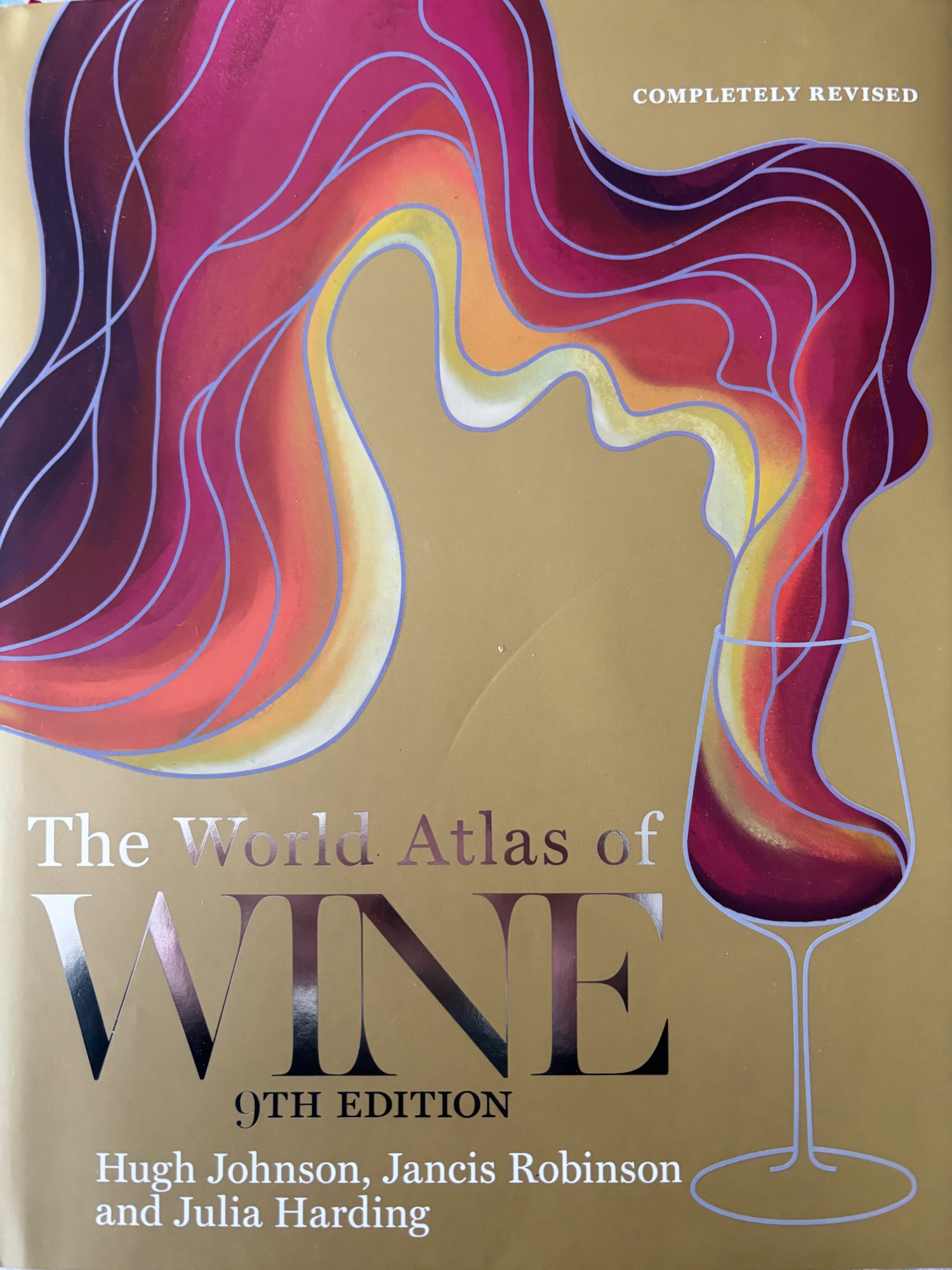
First among the major changes was Jancis Robinson coming on board, for the 5th Edition in 2001, and now for the new 9th Edition we also have Julia Harding getting her name on the cover. Julia has worked with Jancis on this and other projects for many years now, making her own noted contribution as editor of the maps, which were created by Cosmographics with a number of cartographic editors.
Of course, in truth this book is a wider collaboration than just those three, and it would take me too long here to list all of those regional and national experts who have also contributed so much to this revamped new edition. I will say that we do have some younger additions among the new contributors, which bodes well.
I can’t remember the first of these wine atlases I owned. I know that at least two editions went to a charity shop on being replaced, something I very much regret. However, as my wine obsession began around 1982, I suspect I owned the Second Edition (1977) as well. I do still own the 5th Edition and all those subsequently published, and this allows me to track some of the changes made over time as new countries, even continents, gain space, and the book has expanded.
For this 9th Edition, a further sixteen pages are added, bringing it up to 432pp. Some of the new maps in the new 9th Edition include Scandinavia/Northern Europe, The Azores, Southeast England, Volcanic Loire, Valtellina, Aragon and Calistoga, which hint at the ever-evolving selection of bottles we might find on the wine shelf (although Scandi wines may be quite hard to find, there is no doubt that the region deserves mapping for its evolving wine industry). But in addition to the new maps I keep finding many an amendment to the old ones too.
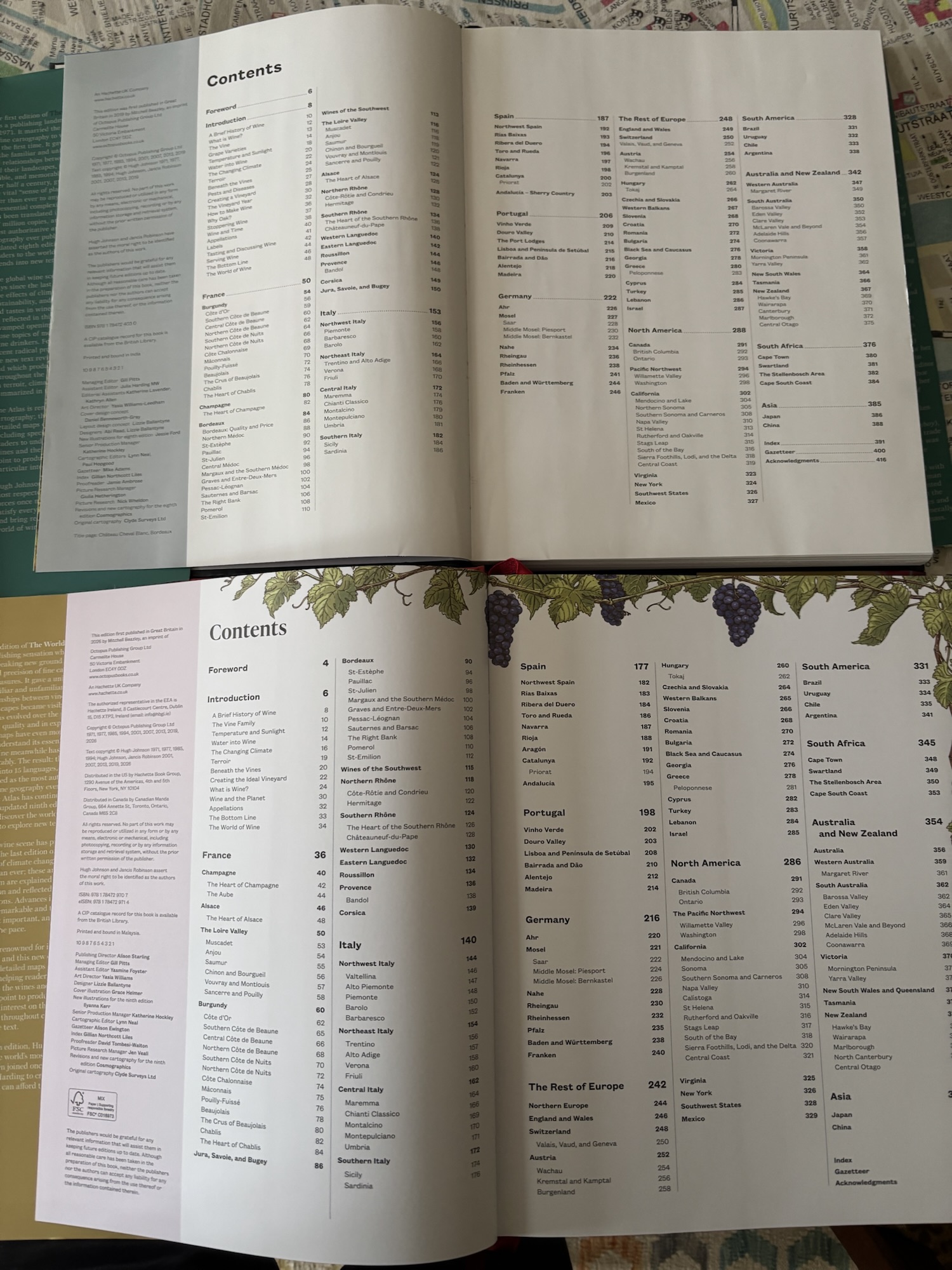
Contents Layout 8th versus 9th edn
Naturally another change has been the price. It’s an expensive work to reproduce, and it’s probably worth mentioning that the previous 8th edition has already been translated into at least 15 languages, and total sales even before that edition was published approached five million copies. The 5th Edition cost £35. By the 8th it had risen to £50. The new 9th has a RRP of £60. I got mine for £40. Much as I use indie book shops for pretty much every book purchase I make, a saving of 33%, or £20, was too much in my case to ignore. I can only apologise to the authors.
My job is to enthuse you to buy this new edition, even if you have a well-thumbed and almost but not quite worn-out copy of the 8th (me!). No, they’re not paying me to sell copies. This is a project I truly believe in, of course. I only received my copy just before the weekend, so I can’t claim to have read it. What I have done is compared it with the previous edition page-by-page, and dipped into the text when I can tell it has been expanded. As I write this review, I have reached page 94 in my cover-to-cover marathon read.
I will just mention a selection of things I’ve noted in this review, because I don’t want to bore you. I hope what I do comment on gives a useful flavour of how the new replaces the old.
The first things to note are overall impressions. If we begin with the cover, the gold is very striking. They will have a difficult job finding something equally as striking for the 10th Edition. But then again, who knows what we might think striking in six-or-seven-years-time? One thing I have never thought about the 8th Edition, despite using it pretty much weekly, is that it looked dated, but now I do. This is partly because of small changes to the typography and layout. A different typeface for the main titles is the most obvious, but to a heavy user like me the tweaks made to the text in the Gazetteer makes a massive difference. Whether it is a slightly bigger point size, spacing, or the welcome darker print, I’m not sure, but thank you.
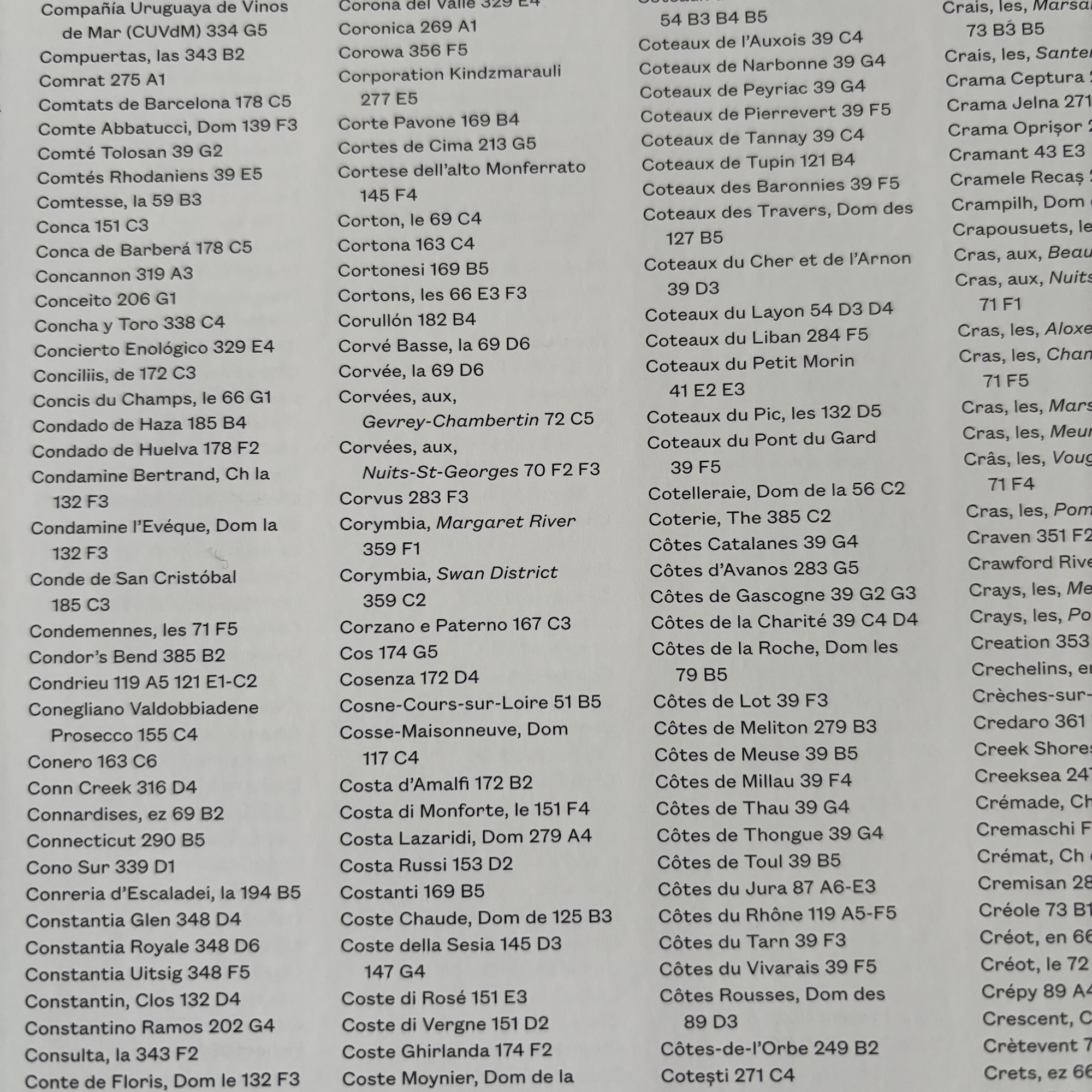
The introductory section remains in place, covering the history of wine through vineyards, winemaking and production data, although it has been subtly re-ordered and changed, including a bigger focus on the issues which are affecting viticulture today, especially those which result from climate change, among other factors which keep the world of wine so dynamic.
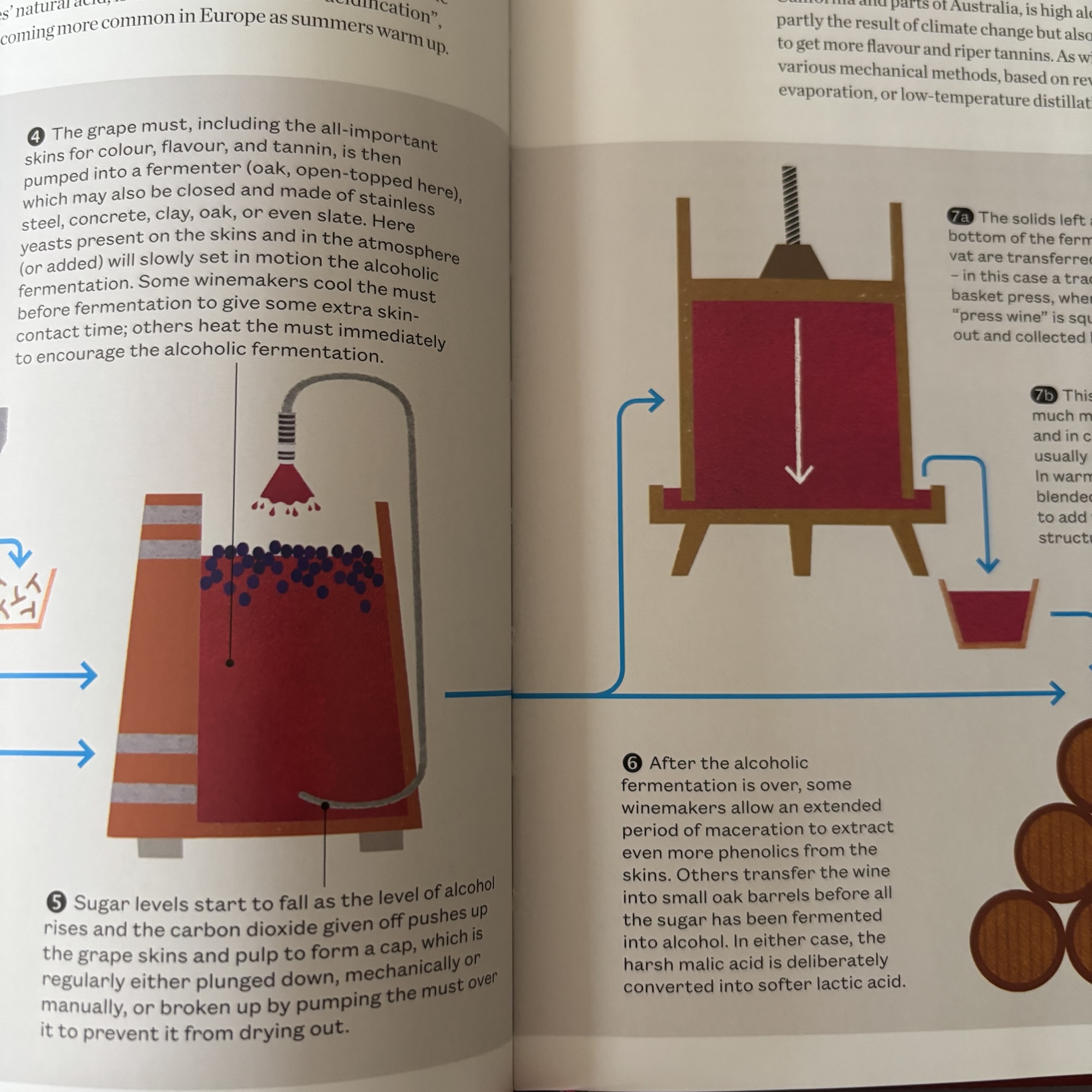
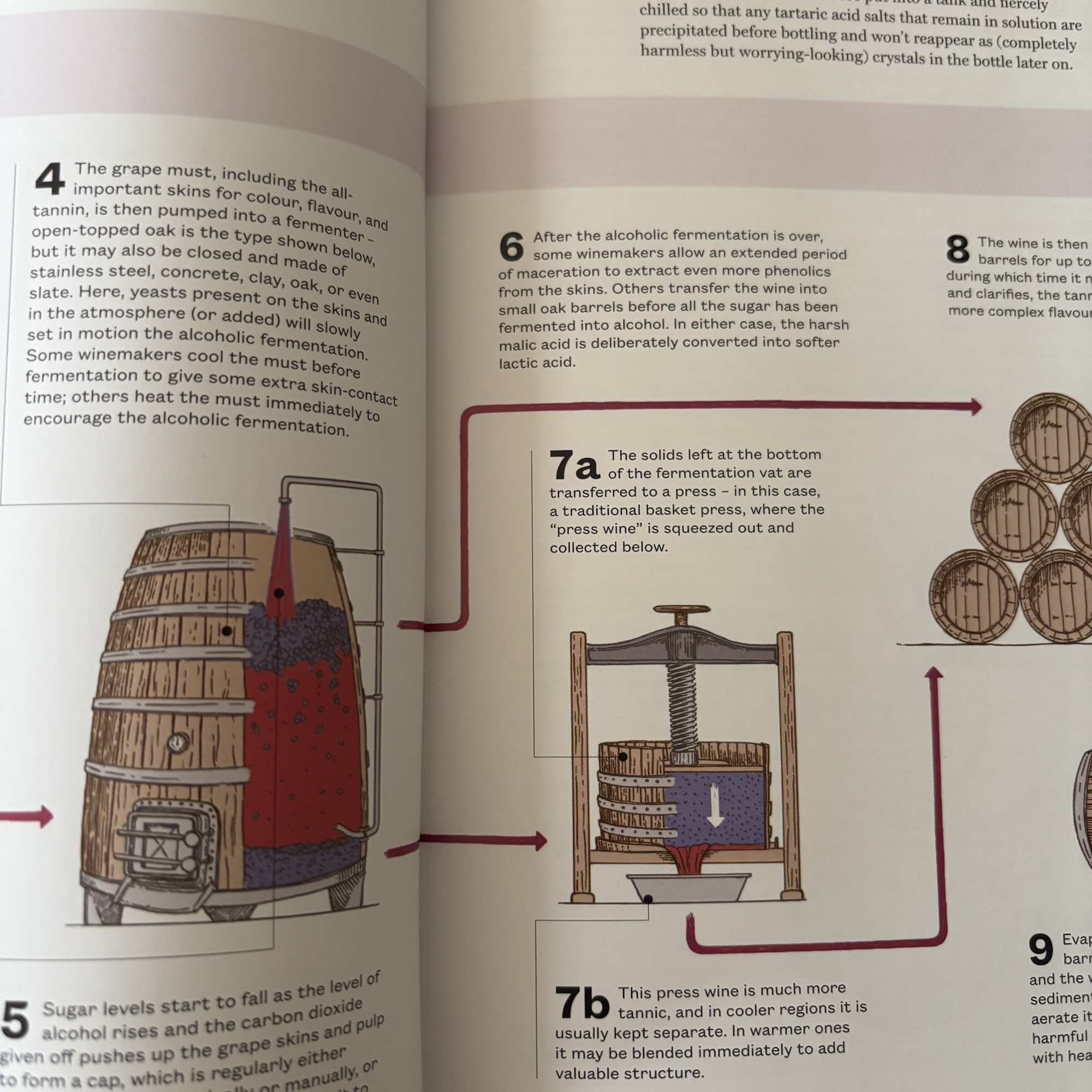
Updated Illustrations 8th edn versus 9th edn
Whether intended or not, there’s a nice nod to our changing tastes (“our” meaning fellow wine obsessives) in the main photo at the start of the section on France, which begins the “atlas” proper. The last edition used a photo of Château d’Yquem in Sauternes, whereas for this edition we have a beautiful shot of the village of Château-Chalon in the Jura. Who would have thought Château-Chalon would get such a photo at the start of the world’s most famous wine book. It is a very photogenic village, but still…
The photos overall cannot go without comment. The easy path would have been to keep the same photos, more or less, but we have a new set now. They are, at least to me, exquisite. The list of photographers is endless, including many supplied by producers, but it was nice to see that Mick Rock, a favourite of mine, has a few in there. If you want to see more of his work, check out Wink Lorch’s books, or the pics he’s recently been putting on Instagram of English vineyards.
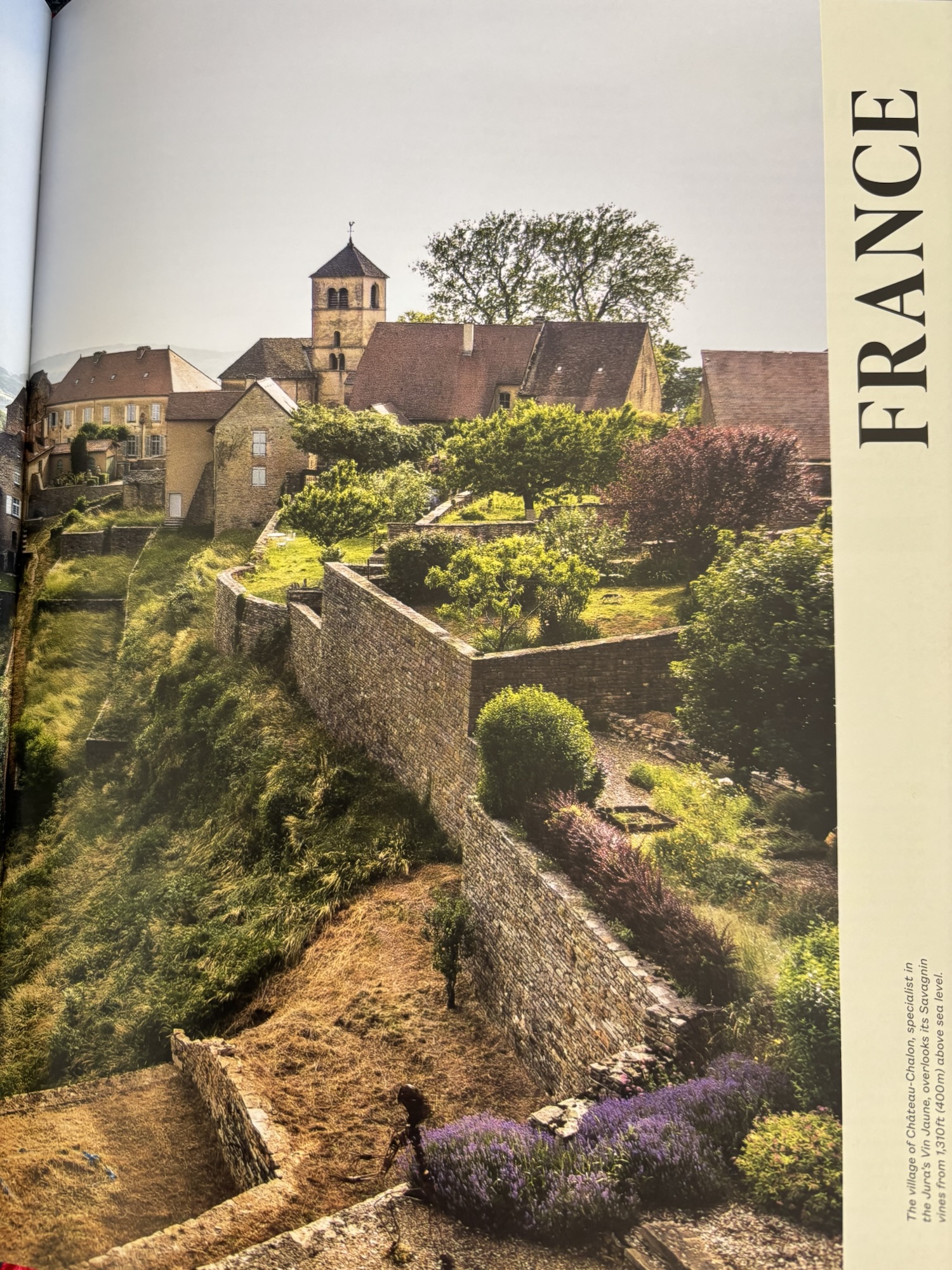
Magnificent Château-Chalon by Clement Leonard introduces France (part of the photograph)
France has been somewhat reordered, which (I may be mistaken) I don’t recall having been done before. Notable expansion has rightly taken place for Champagne via a bit more focus on the Aube. The Loire seems to have been spruced up, and I already mentioned the map of “Volcanic Loire”, which features four sub-regions (St-Pourçain, Roannaise, Forez and Auvergne) which are beginning to interest more people as quality leaps.
Languedoc’s map now includes Grès de Montpellier, which the text calls “often overlooked”. In fact, it wasn’t on the map in the 8th Edition, although it was only a “Complementary Geographic Denomination” back then, becoming a full Appellation from the 2024 vintage. Overall, the maps look clearer, and it might often take a second glance to notice some of the changes which keep them fully up-to-date.
Take a close look at the Muscadet map on p53, as an example, or the Bordeaux Region map on p91 where the ridiculous change of name from Blaye to Blavia is not an April Fool joke, nor an attempt to catch out plagiarists. Some say that the producers didn’t like their appellation sharing a name with a nuclear power station, and it wouldn’t be the first time a French appellation has changed name for the same reason. Mind you, they might take a little comfort from the fact that China and its Châteaux owners might wish to deter any strike on the Blaye facility if things go nuclear in the near future.
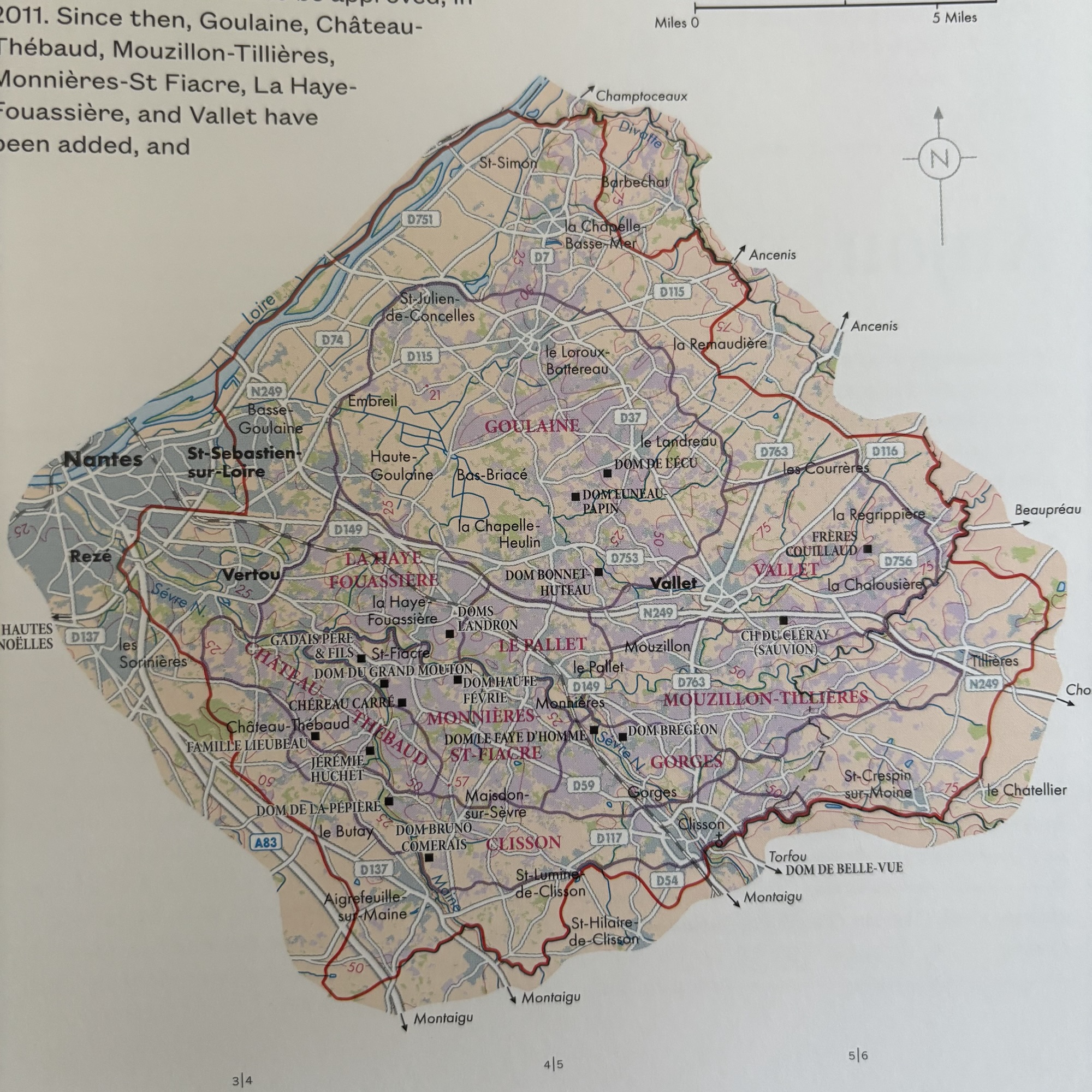
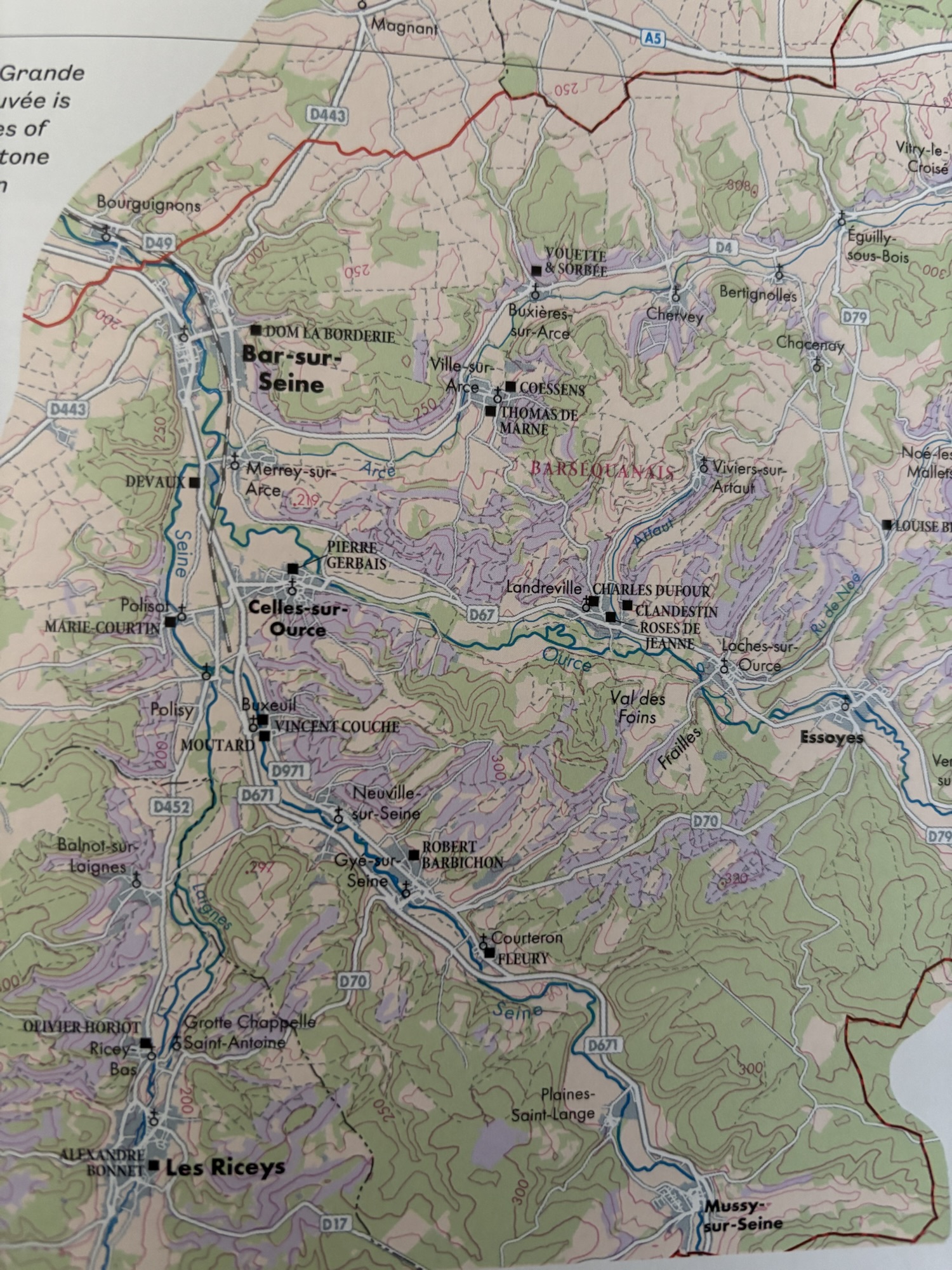
One amended map (Muscadet) and one new map (Champagne’s Aube)
So far, in France, Alsace perhaps seems to be the least changed in terms of text additions. We do have greater acknowledgement of the role of Pinot Noir in Modern Alsace, but it would also be nice to see Crémant get a plug as well, although I will be the first to admit that Crémant d’Alsace is not uniformly fine. Personally, I think modern Alsace has a lot going on in the Bas Rhin, where young producers are possibly making this the most (certainly one of the most) dynamic of French regions, via natural wine, championing new blends, and regenerative viticulture in all its forms.
Moving on, Italy has a new focus point on Alto Piemonte, not via substantially new text, but via a heading…which makes a big difference. One of the greatest changes in Italian wine since the last edition might well be the increased popularity of Piemontese wines made outside of Barolo and Barbaresco, and from grape varieties other than Nebbiolo.
When the 8th Edition came out, I certainly didn’t have two different producers’ Pellaverga in my cellar, along with Freisa, Timorasso and others. But sticking with Nebbiolo, the new Valtellina map perhaps reflects the much greater interest this region, hidden away over in Northeast Italy, is seeing, justly, if on the back of Barolo’s superstar status these days (new book on “B&B” from David Gleave about to hit the shelves too!).
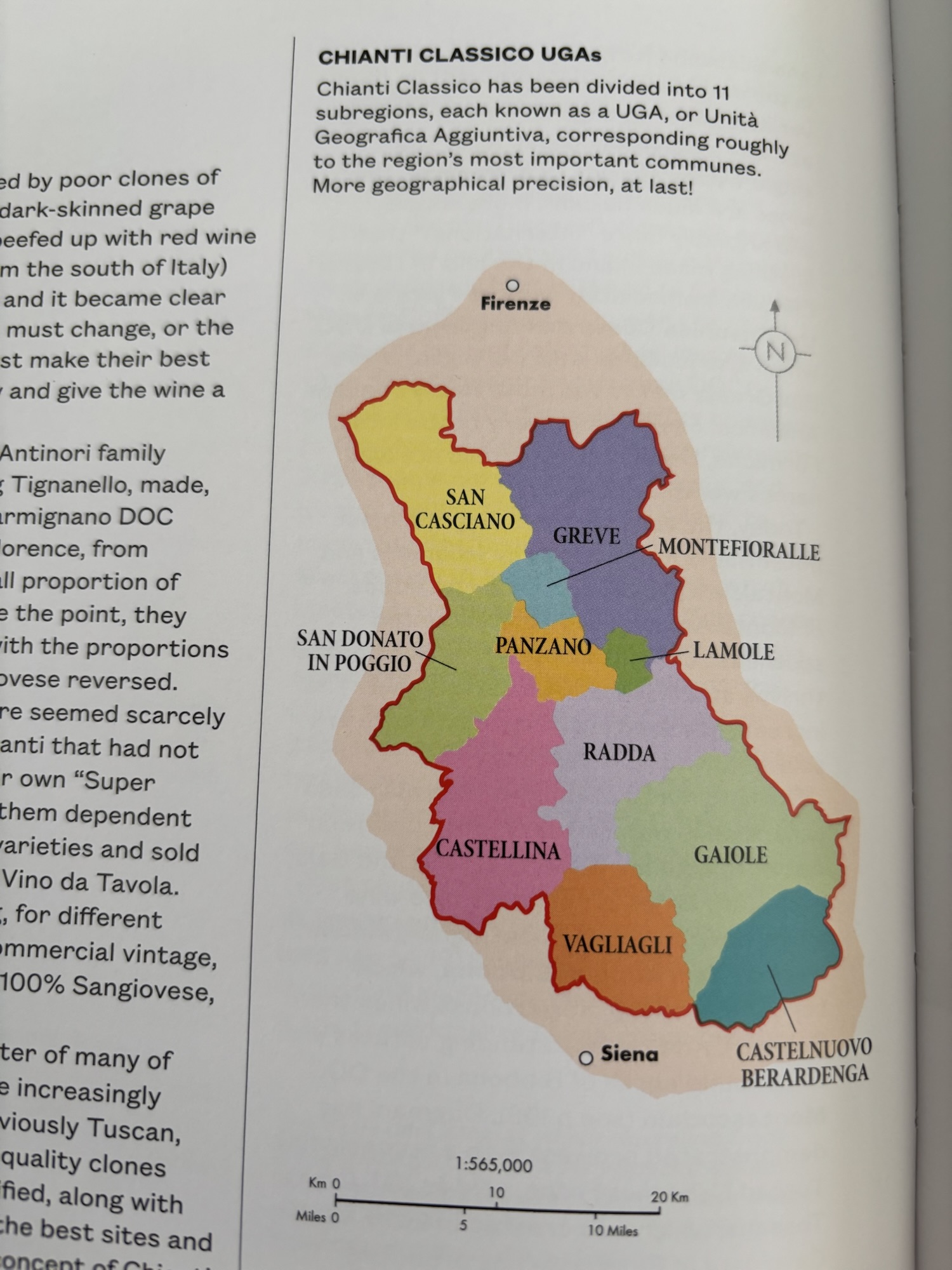
More changes in Italy faithfully map out the changes in wine laws in the past few years, such as the new Unità Geografica Aggiuntiva (UGA) in Chianti Classico. The main maps of Sicily and Sardinia have been amended too, the latter making it easier to read where this has been done. Greater clarity in the already exemplary cartography is a feature of this edition.
Spain gets a new map, Aragon, covering the DOs west of Zaragoza, reflecting the overall move in Spain to higher altitudes for quality wine production. The map now called “Rioja’s Heartland” is about twice the size it was, which also increases coverage past Logrono. Spain is really making a comeback now, a country producing excellent wines in the mid-price-range and finally getting recognition for it. Perhaps the 10th Edition will give greater prominence to the Canary Islands for their groundbreaking wines (not now just Tenerife), but perhaps I’m being greedy. They do get a jealously guarded half page.
Andalucia now no longer has the appended “Sherry Country” in its heading. Whilst fine Sherry has made something of a comeback, thanks to the likes of Equipo Navazos and others, the still wines coming out of Andalucia now rightly get their share of the focus. The sub-heading “Bodegas and Banquets” of the 8th edition has seen a subtle change to “Bodegas and table wines”. New text, a fair bit of it, introduces the wonderful wines of the hills above the Costa del Sol, and Granada, even if they are not yet ubiquitous on our high streets.
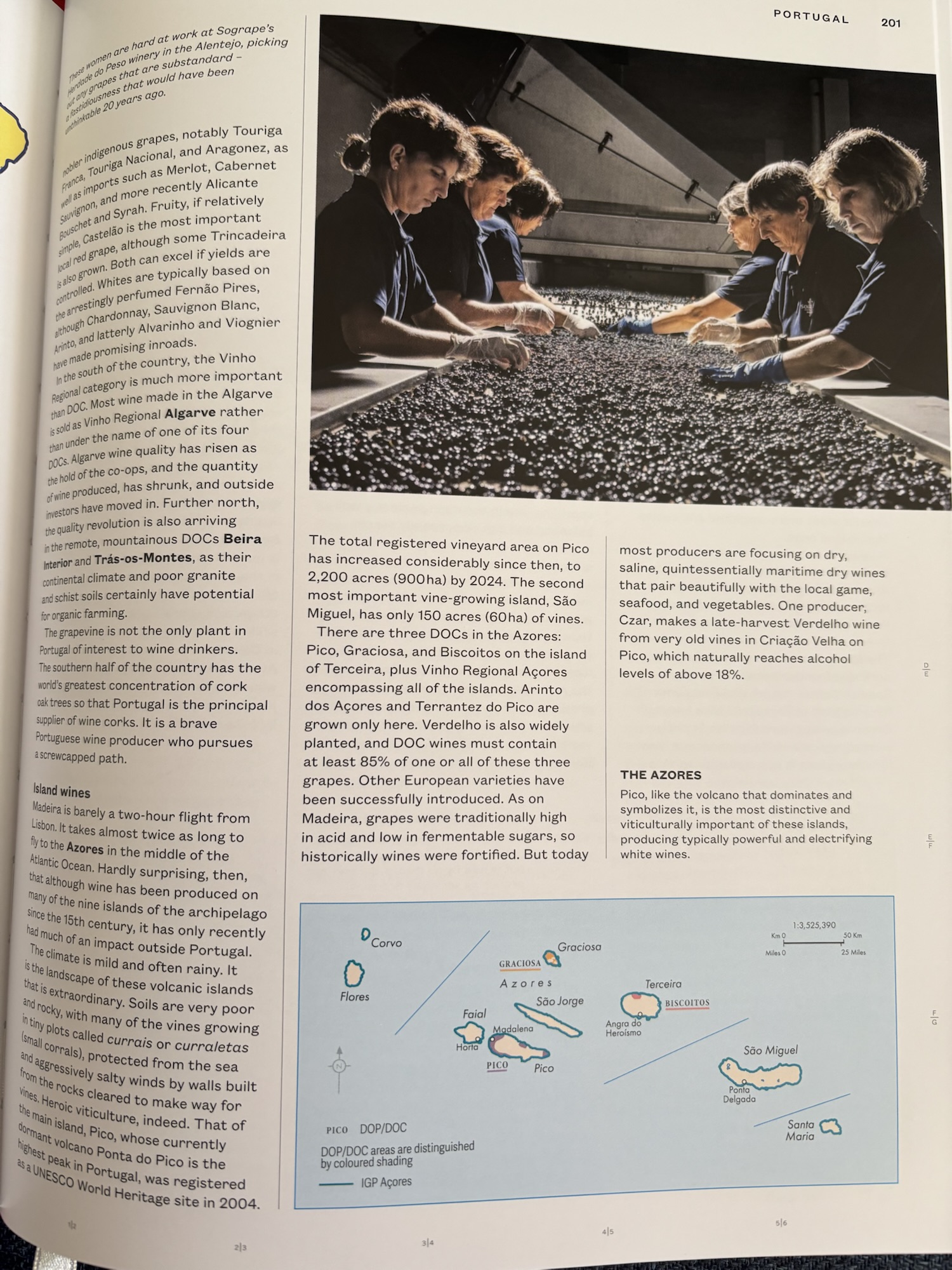
Likewise, for Portugal, The Azores gets its first small map to acknowledge the impact its wines are now having on export markets. Of course, I don’t mean in volume (volumes are tiny), but I doubt anyone who has tasted the Pico-made wines of Antonio Maçanita will have come away unmoved, and there are other producers to try now as well. As an aside, somewhat easier to find are Antonio’s unfortified table wines made in the Madeira archipelago. Not only are they well worth seeking out, but they may well add a significant string to Madeira’s bow as fortified wines sadly continue to lose their wider popularity.
England is much changed, both viticulturally and in the Atlas. We have a brand-new map of Southeast England, enabling a better focus on the producers in this part of the country, although the way things are going the authors may need a new map, of Essex, in the 10th Edition, by when England’s red wines might be in a similar place to where its sparkling wines were on publication of this edition.
My only minor gripe, minor because I acknowledge these things are subjective, is that the two maps of England list “notable producers”, yet fail to contain three of my favourite half-dozen (and I am certain, favourites among many other wine professionals), yet there are a few names on the maps of whom I am wholly ignorant from reading the five books I own on English and Welsh wine. Don’t worry Tim, Matt and Adrian, we love you!
I’ve probably overstayed my welcome by now, already having passed my optimum word limit, and I’ve not even scratched what they used to call the “New World”, but suffice to say the increased prominence of countries once excluded, or merely touched upon, by the Atlas in its early editions is fairly represented. Some headings have been amended, either to better represent a region (North Canterbury, NZ), or to include vineyards not previously given focus (New South Wales “and Queensland”). The latter is a subtle change, but I feel that a wine region (in this case a whole State’s regions) moving from an afterthought in the introduction to getting part of their own chapter signals arrival well enough.
The 10th edition might see similar promotions for Peru and Bolivia, and perhaps Nagano will get its own map alongside that of Japan’s Yamanashi, thus giving Japan’s exciting emerging wines parity (at three pages) with China. I can think of a few other countries which may or may not have a higher profile next time round, but you never know. I mean, Czechia is massively underrated, and Albania and Armenia are showing potential on my palate as well. You never know what might erupt onto the wine scene in the future, as New Zealand did when I was buying my first Wine Atlas.
Flipping back to Asia, India currently warrants a column but you never know, a map of at least India’s viticultural focal point, Maharashtra, may appear one day. India is, after all, one of the few countries with a major population where wine consumption is growing. On a more personal level, I would like to see, in light of Bhutan getting a mention, the acknowledgement of Nepal’s serious wine producer, Pataleban. Sited west of the capital in the Kathmandu Valley, they grow a range of both hybrid, and increasingly, vinifera vines with initial help from Japan, more recently from Germany and Austria. The son of the owner is currently working the vintage in Austria’s Wachau.
What comes over with this 9th Edition of the World Atlas of Wine is how impactful the changes that result from the latest updating are. From the cover to the typography and layout, from the unfailingly unmatched cartography to the way the work reflects the myriad changes in all aspects of the world of wine, spanning from wider trends to tiny details. Even Palestinian producers get a tiny mention for the difficulties they are facing, and to be fair the UK is seeing some Palestinian wines coming in via importer Nabeeth Wines and Spirits.
If it is hard to see those producers faring much better in the future, we should remember that Lebanon has overcome terrible viticultural adversity and now sends increasing numbers of producers’ wines into our market. And when looking at the geopolitical effects on wine, goodness, The Wine Society has even managed to make available wine from Ukraine in the past year. So, our wine world keeps expanding and the authors of the Wine Atlas do a wonderful job of keeping on top of all the changes and trends.
In the top right-hand corner of the front cover are the words “Completely Revised”. It’s the publisher trying to tell you that even if you own an older edition, you need this new one. Well, in my honest opinion you do. Other general works, most notable Pascaline Lepeltier’s “One Thousand Vines”, complement the Atlas, and if you read my recent two-part Building a Wine Library articles you will find many specialist books which expand on the contents of this Atlas, whether country-specific, on viticulture, on vineyard management or geology and more. Indeed, as the authors point out themselves on page 9, Hugh Johnson’s own The History of Wine is seminal, as are works like The Oxford Companion to Wine but there’s nothing quite as essential, as all-encompassing, and equally as easy to digest, as The World Atlas of Wine.
The 9th Edition was published on 23 September by Mitchell Beazley, with a RRP of £60. Those who need to might find it available for less via a well-known organisation which some claim is less committed to paying UK taxes than our great indie bookshops…but sometimes needs must. However you buy it, I suggest you do so. Now I’m off to finish reading it…properly. I may be some time.
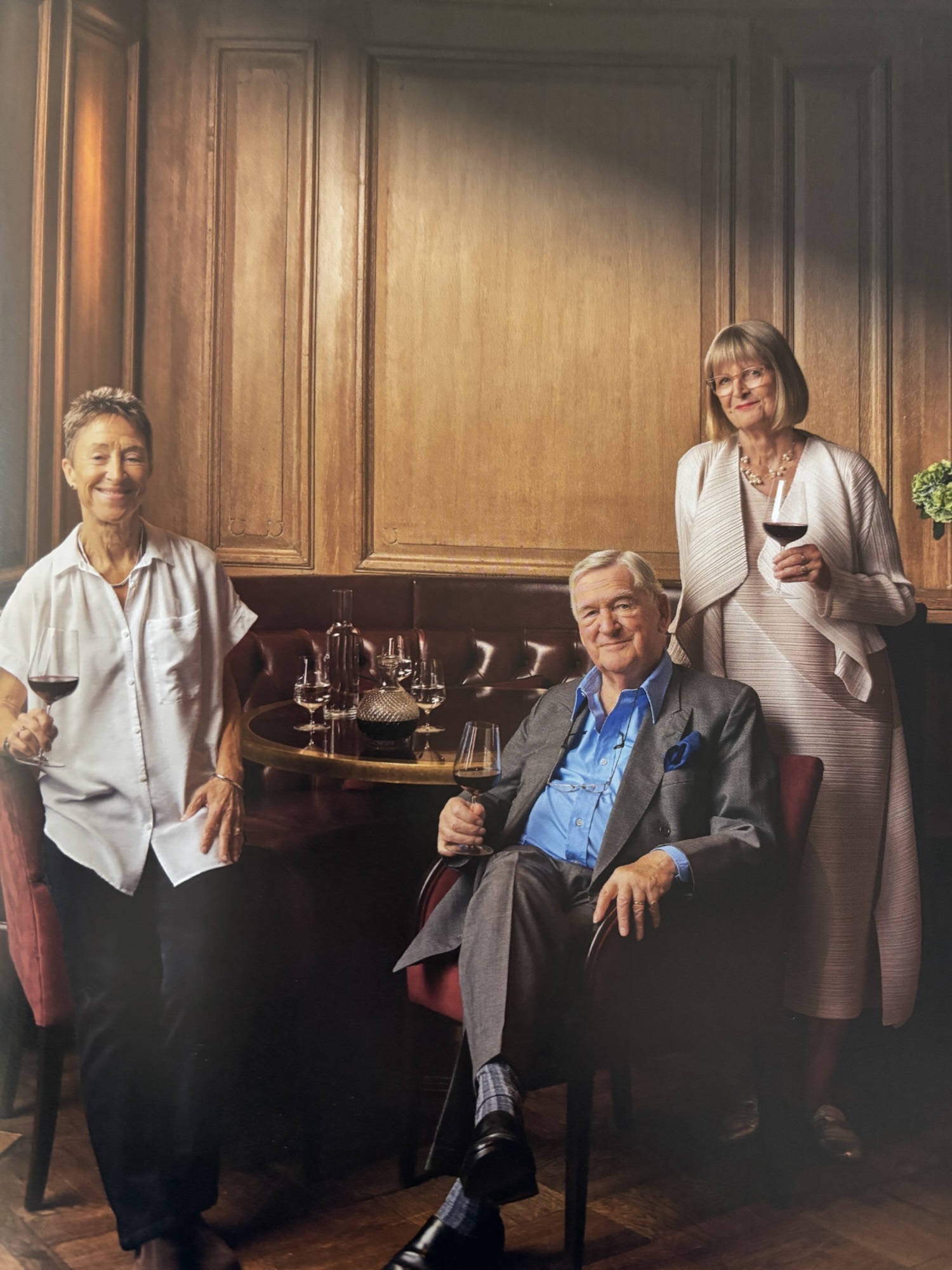
Julia Harding, Hugh Johnson and Jancis Robinson, photographed at 67 Pall Mall by Chris Terry


