
The second batch of wines we drank at home through August is an altogether different selection from those in Part 1. Whereas there we had several Austrian and Czech wines, here we are leading from the top with a very fine Chablis. It is followed by an unfortified wine from Madeira, an Aostan red, an unfortified Palomino from Jerez and a rare red Swiss grape from the slopes of Lavaux. We end Part 2 with an interesting, albeit slightly fatigued, Catalan and then, for the bonus wine, a rather superb white Côtes-du-Rhône. Part 3, for we have an extra article for August, will hopefully follow next week.
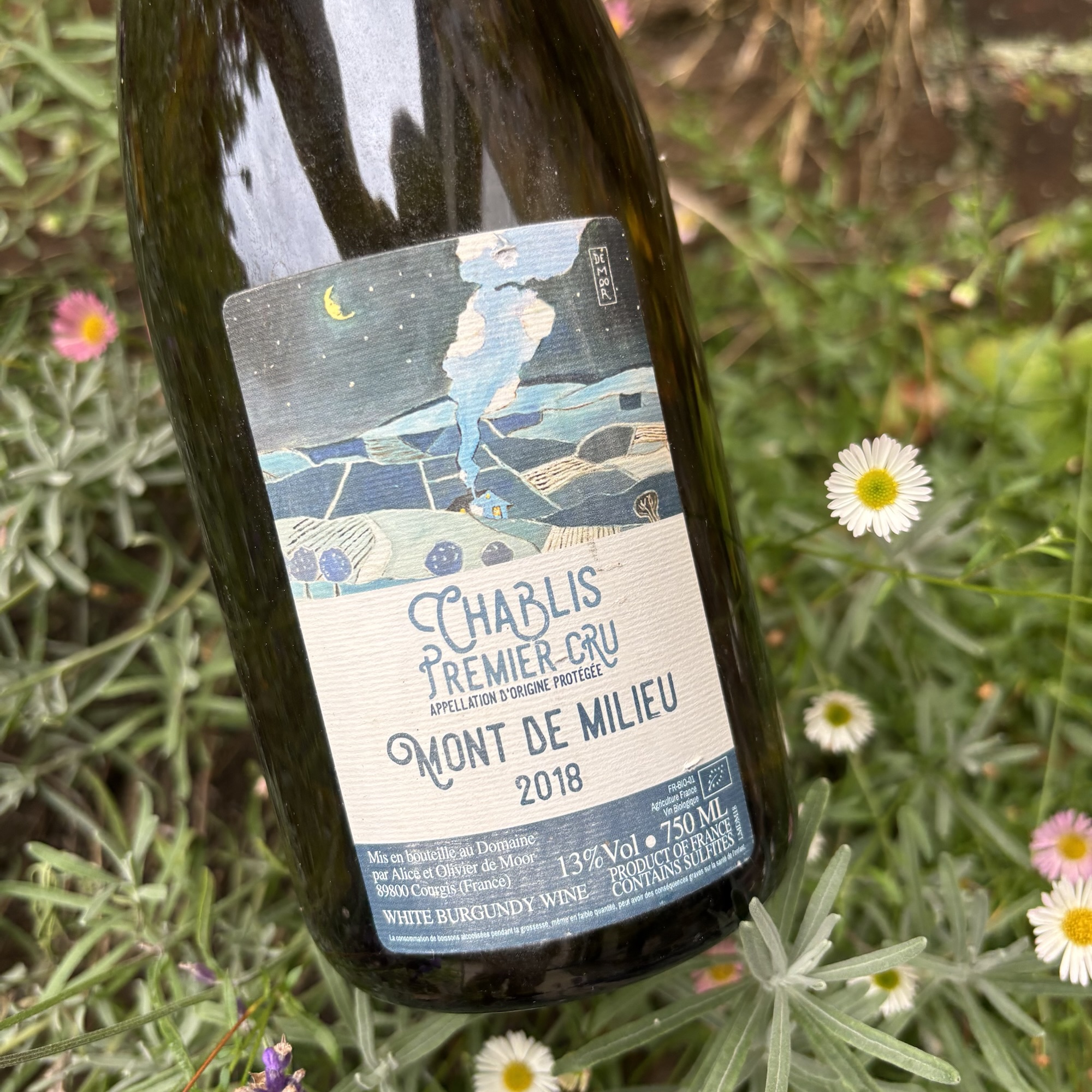
Chablis 1er Cru Mont de Milieu 2018, Alice & Olivier De Moor (Chablis, France)
I’ve been lucky enough to drink the wines of this amazing couple for certainly a couple of decades or more now, having chanced upon their “Humeur du Temps” in the Berry Bros warehouse shop near Basingstoke sometime around 2010. Since then, I’ve been lucky to try most if not all of their range and every wine has been wonderful. They are based at Courgis, southwest of the town of Chablis itself, where they make textbook biodynamic and natural wines of genuine class and depth.
Mont de Milieu sits on a rounded hill to the east of the town, close to Montée de Tonnerre, which itself abuts the row of Grands Crus, a small valley separating this pair from even greater fame. Fermented in old oak and aged in oak for eighteen months on lees, 2018 was a rather fine vintage here. The fruit from these 90-year-old vines was harvested in mid-September, with the vines having been worked by horse.
The bouquet has real breadth, smoky, mineral, lemon peel and rounded orchard fruits appearing. It has lovely poise and balance at eight years old, and the long finish is saline. I could almost taste oyster shells were it not for being told categorically by those in authority that I can’t. But as you’d expect, this was sensational, biodynamic wine that is alive in every meaningful sense, language which I hope no one can quibble with.
This came from Les Caves de Pyrene and is my last De Moor. I’d like to add “for now”, but the 23/24 vintages appear to cost somewhere around £50-£55 here, perhaps €40 in France if you are lucky.
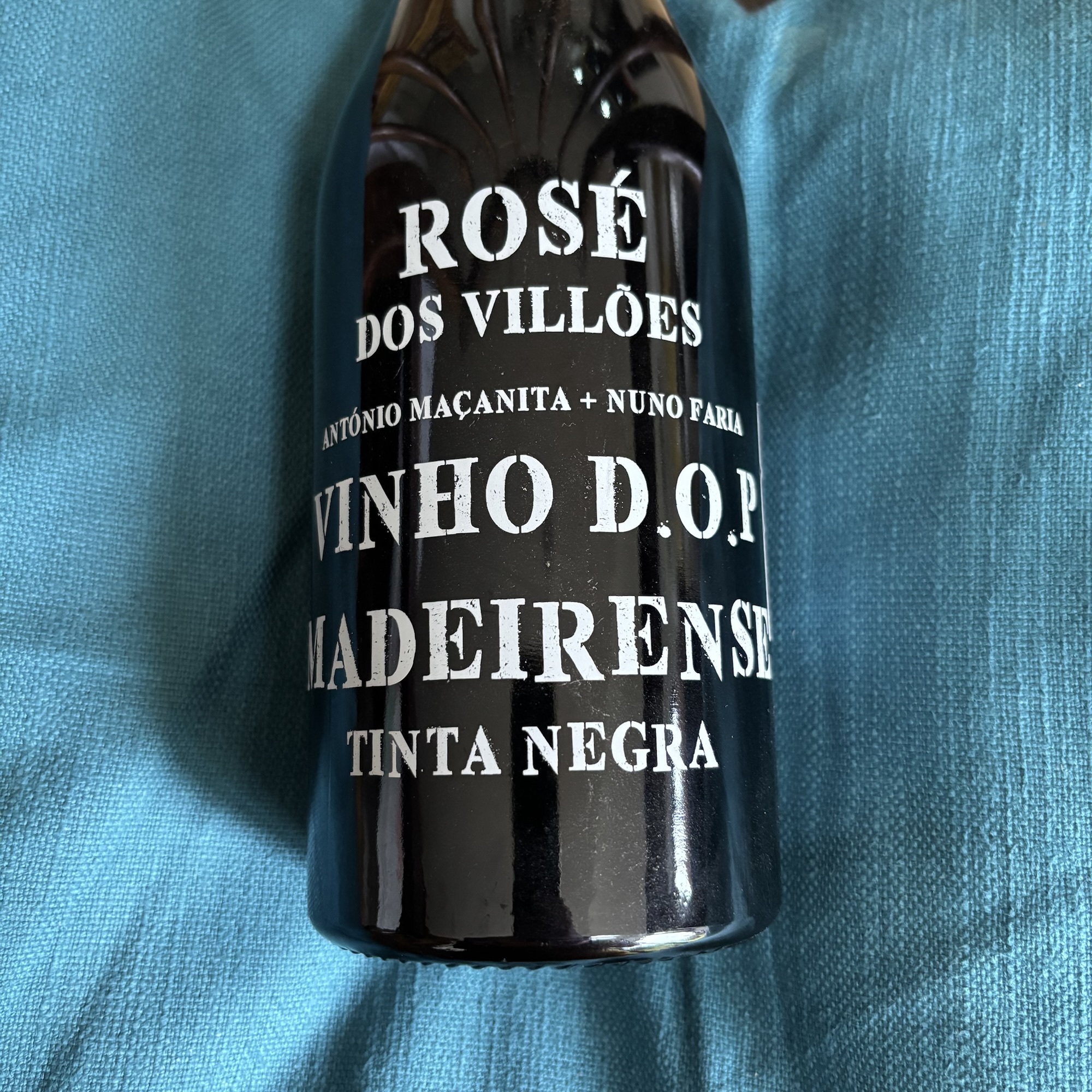
Rosé dos Villões 2024, António Maçanista & Nuno Faria (Madeira, Portugal)
António may be known to you via either the fine wines he makes in the Azores, on Pico, or perhaps from those he makes on the Portuguese mainland. He gets about a bit. These past few years we have started to see some excellent bottlings from Madeira, made in partnership with his friend, Nuno Faria, a restaurateur on Porto Santo, in the Madeira archipelago.
Porto Santo lies off Madeira’s northeastern coast, not far but long enough to make it a two-and-a-half-hour ferry trip, although it’s a popular day trip excursion from Funchal, apparently. It tends to be noted for its nine-kilometre sandy beach.
This wine is made from Tinta Negra (which they say has nothing to do with Tinta Negra Mole, the much-abused Madeiran blending variety). As an unfortified wine it appears under the Vinho Madeirense DOP. Tinta Negra is an old variety, once used to tint white wines. The vines here are 80 years old, trellised close to the ground and protected from the winds by low stone walls called muros de crochet, much as Antonio’s vines in the Azores are. The soils are dry and chalky and everything in the vineyard is done by hand. The only treatment is a limited application of copper/sulphur.
The resulting wine is a very pale Rosé, with just a hint of pink to it. The nose is of very fresh and ripe strawberries, quite an ethereal bouquet which reminds me of one or two very pale pink Grower Champagnes I know (you might guess which I mean). The palate has an almost unique flavour, dry yet like a boiled sweet, flavoured with red and tropical fruits. Despite its lightness it was an excellent choice for the saffron-infused Mediterranean fish stew we’ve been knocking out this summer.
Imported by Indigo, this came from Cork & Cask in Edinburgh and cost £25.
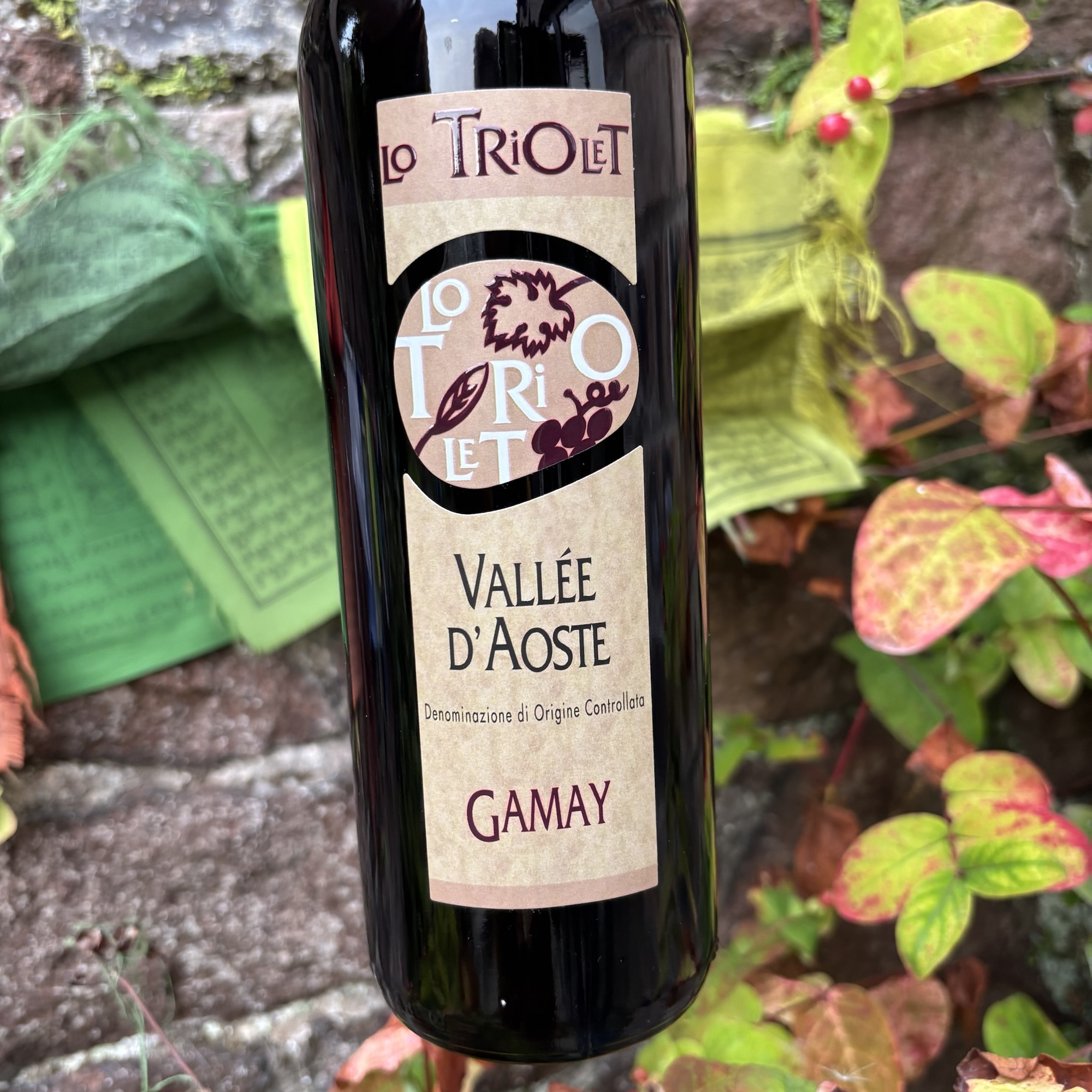
Gamay Vallée d’Aoste 2023, Lo Triolet (Aosta, Italy)
This is my penultimate bottle of Lo Triolet wine and I’m plugging them like mad, because I’ve been told their importer, known better perhaps for less adventurous bottles, is dropping them. I’d certainly like someone to pick them up. They were probably never the right fit for a more commercial portfolio and Aosta is hardly well-known, even among Italian aficionados.
This Gamay is planted in Marco Martin’s 5-hectares of mountain vines near Introd, which sits south of the Dora Baltea River and the Autostrade, in the western part of the valley, conveniently close to the road up the Valsavarrenche into the Gran Paradiso National Park.
People are often surprised to find that Gamay is planted here, but it is quite common, and records show there are around 17 ha of it under the DOP. The profile is quite different to Beaujolais, with more strawberry than cherry fruit. In fact, I’d call it fat and fruity (despite vines at altitude, it hits 13%, remembering it may not be hot but there’s a lot of sunshine). It is fermented in stainless steel, and Marco’s methods are pretty low intervention, and despite that fatness, and a degree of concentration, it isn’t at all heavy. I’d say it’s a deliciously simple wine, but emphasise delicious.
It’s also very good value too, at £16 from The Solent Cellar. I might have had the last bottle.
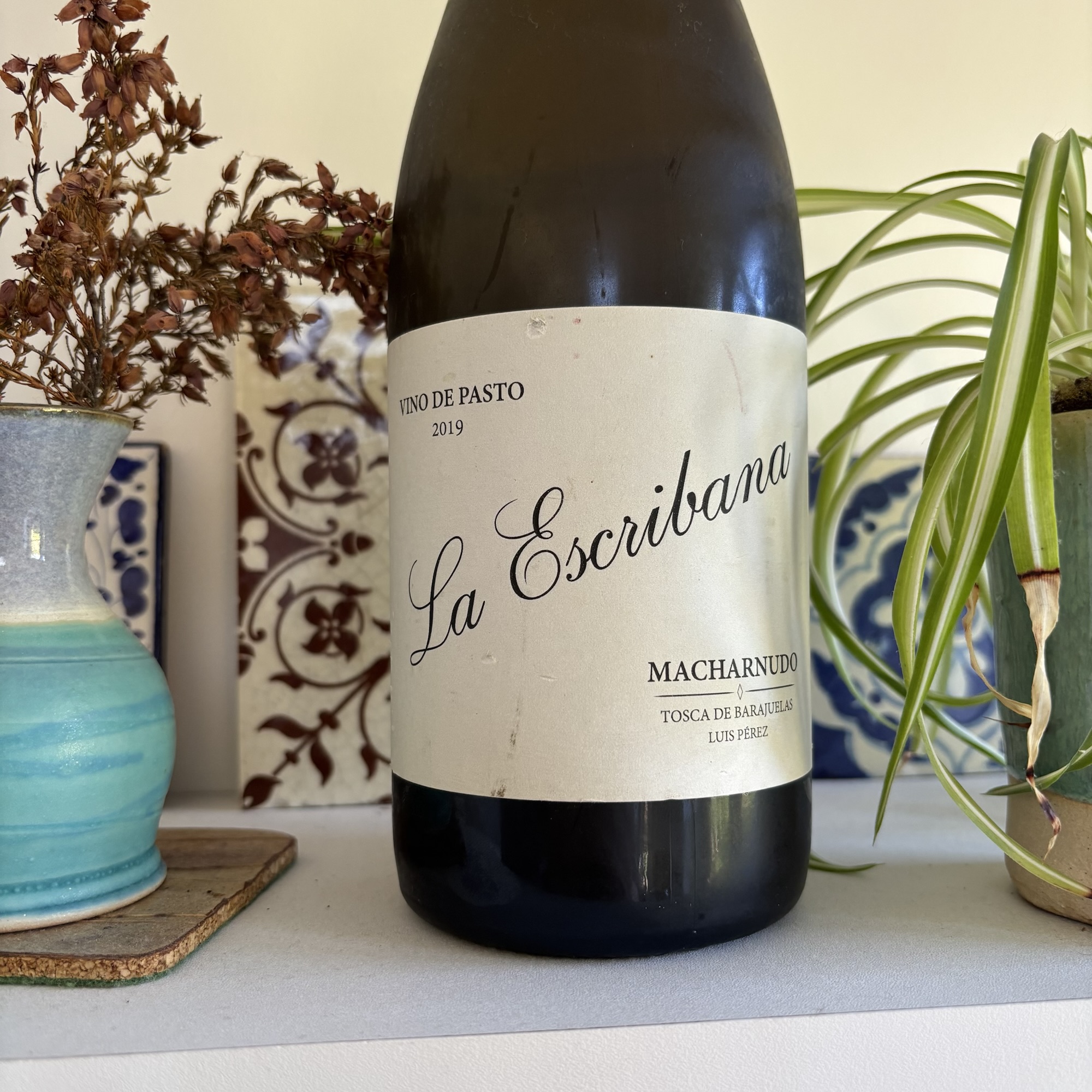
Vino de Pasto “Escribana” 2019, Bodegas Luis Perez (Jerez, Spain)
The bodega of Luis Perez was founded in 2002 with the intention to harvest the Palomino Fino grapes from a single hillside, Cerro del Obispo, which rises to 100 masl within the famous vineyard of Macharnudo, a 56-ha “pago” about five kilometres northwest of Jerez de la Frontera. The soils here are about 65% white, chalky, albarizo. Farming is organic. Luis used to be oenology professor at Cadiz University and winemaker for Domecq. His son Willy has worked with his father from the start.
A Vino de Pasto is just an unfortified table wine, and the designation appeared in 2018, L’Escribana being one of the first two wines to use it. Such wines were very common before phylloxera but more or less disappeared in the 1930s, but Palomino table wines are making a roaring comeback. The key difference is that such table wines used to be cheap, but today’s version is usually somewhat more expensive than the fortified wines of the region.
This is fermented in stainless steel, then aged twelve months in 80-year-old Sherry Butts under a thin veil of flor. Although unfortified, the wine reaches 14% abv naturally in the hot sun of Jerez, so there is a beautiful richness. It acts nicely as a counterpoint to the salty mineral element that gives the wine freshness, along with a nutty, oxidative, note on the palate. The same richness is evident in the wine’s beautiful, lingering, bouquet.
This is a wonderful, complex, white wine. Genuinely thrilling to drink. Imported by Indigo Wine, the bottle also came from Solent Cellar but it is NLA there. Try Indigo for current stockists. The Sourcing Table in London stocks the cheaper “El Muelle de Olaso” Palomino from Luis Perez for £23.50.
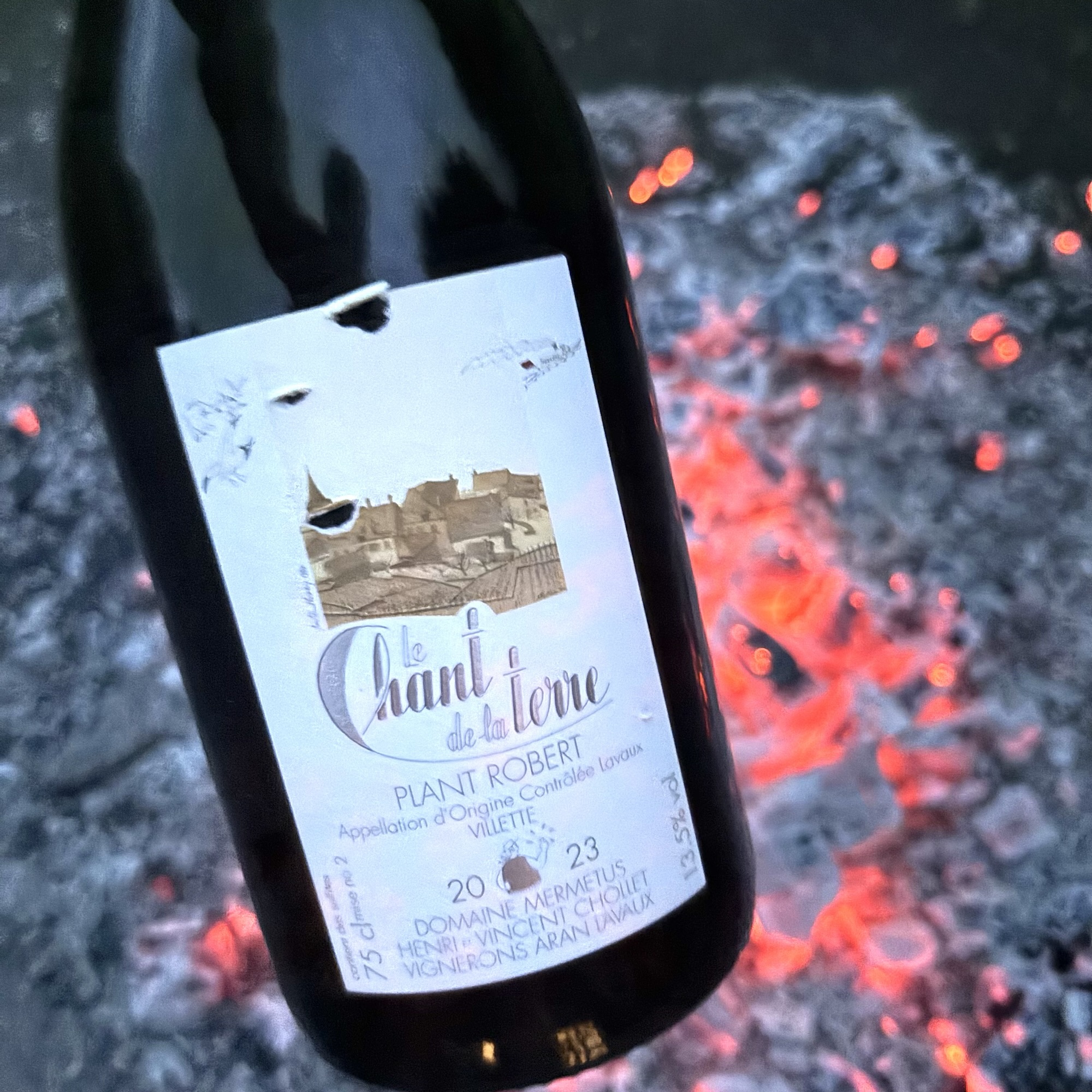
Plant Robert « Le Chant de la Terre » 2023, Domaine Mermetus (Lavaux, Switzerland)
We are in the village of Aran-Villette on the terraces of Lavaux, in Switzerland’s Vaud Canton, just east of Lausanne. Mermetus is an organic/biodynamic producer, with its family winery run by Henri and his son, Vincent Chollet, along with Vincent’s wife, Valerie. They have around 7 ha of vines on the UNESCO-listed terraces here. They took over from Henri’s father in 2000. Their vines are spread across the lakeside, but they all sit high on the slope at its steepest points.
They specialise in a host of local varieties and appear to make thirty-seven wines from them. Plant Robert is perhaps the heritage variety of Lavaux. It is technically a cousin (or biotype) of Gamay, although it naturally bears more of a resemblance to the Gamay found elsewhere in the Vaud than to Beaujolais. There are around 30 ha of it in the region, and if you find any it is definitely worth grabbing. Farming at the domaine is organic with Swiss “Bio-inspecta” certification. The wine undergoes whole berry fermentation on its skins followed by maturation on lees in a mix of oak and stainless steel.
I’ve drunk a good number of bottles of Plant Robert before, but not this one. It was recommended to me by someone in the Lavaux Vinorama just outside of Rivaz, which I have recommended several times before as a place to stop at en-route from Geneva/Lausanne to the Valais or the Grand St-Bernard. It Also makes a great day trip from Geneva, either by car or train, and there are lots of well-signed vineyard walks on the terraces for an after lunch stroll.
The nose shows nice cherry and raspberry notes with a touch of herbs and peppery spice. The palate is surprisingly peppery yet it is also smooth, rounded, silky and ripe. It’s not so much complex as characterful, with its own distinct personality. Definitely satisfying. Alcohol sits at 13.5%. Annoyingly (for you) I can’t recall what it cost, but it was certainly affordable if not cheap.
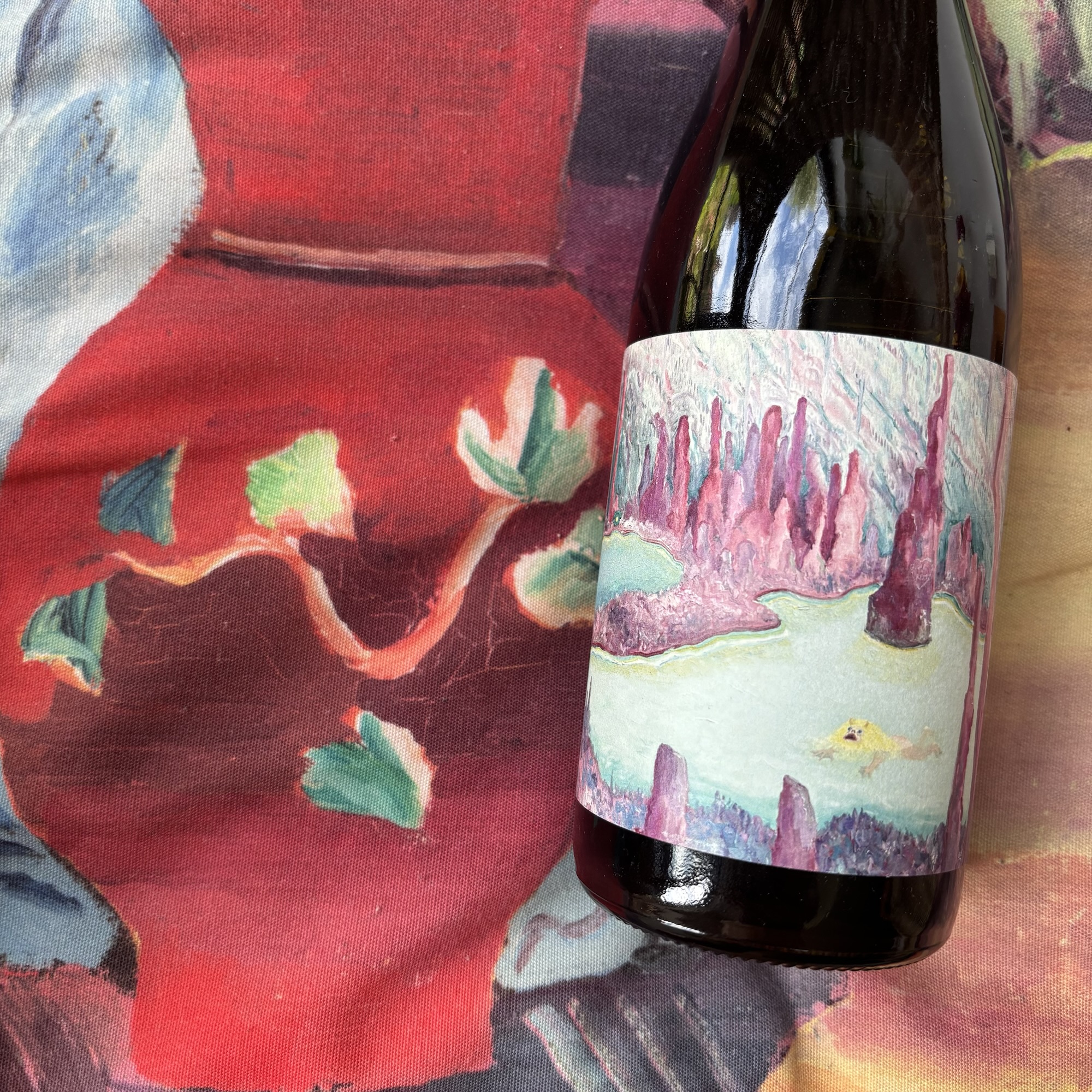
Hot Girl Summer 2022, Château Baby Girl (Catalonia, Spain)
I always stress that these articles feature the most interesting wines I’ve drunk in the preceding month, not necessarily the best. This means that I might write about a wine that is faulty, or past its best, if the wine is interesting enough, and this is definitely one of those.
It is made by Fernando Berry who runs Otros Vinos. This small importer has one of the most interesting ranges of Spanish wines you’ll find and I definitely suggest trade folks reading this check out his portfolio. This wine, here in its second vintage, is made in partnership with the Catalan natural wine producer, Clot de les Soleres.
It’s a field blend of eleven varieties, including (inter alia) Chardonnay, Xarel-lo, Cabernet Sauvignon, Macabeo, Garnacha and Malvasia. Most fruit was lightly foot-trodden and infused with direct press Chardonnay and Macabeo. Fermentation was in stainless steel. It’s a fully natural wine with no added sulphur.
I had to try it because, well, Fernando is a top bloke and the label is amazing. To be honest, it was quite volatile and had probably been too long on a too warm shelf. To look at it was browning quite a lot. But the signs were there. Some zippy grapefruit, for example. I am sure this would have been fabulous on release. It came from the Futtle Brewery in Fife. I’ve previously bought little hidden gems in their shop/bar in Dundee. They do make exceptional organic beer, which I usually get to taste at the Cork & Cask wine fairs (they stock Futtle among their pretty much unrivalled selection of local beers). For more information about any subsequent releases, contact Fernando at Otros Vinos.
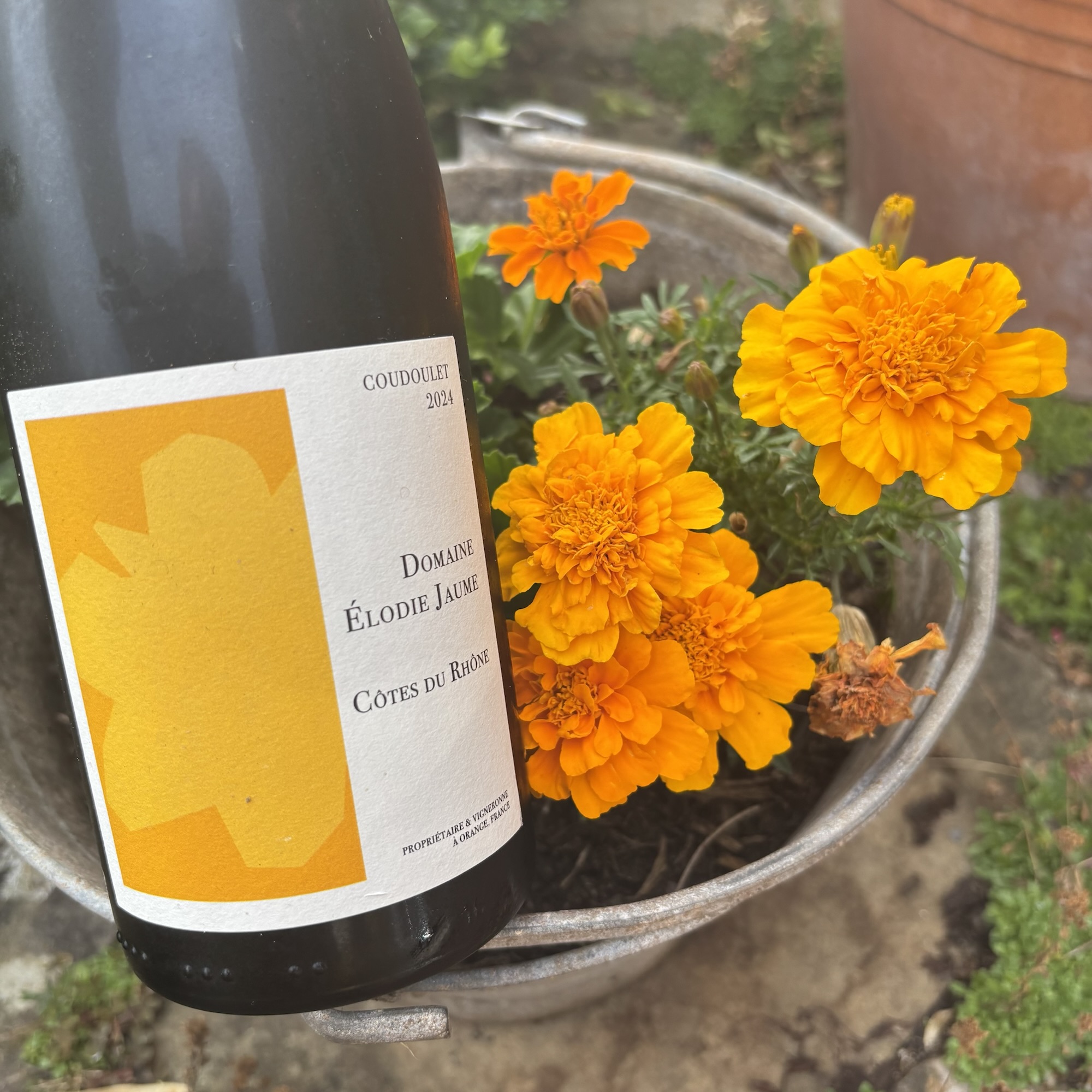
Côtes du Rhône “Coudoulet” 2024, Domaine Élodie Jaume (Southern Rhône, France)
Élodie is a young winemaker who has for the past eight years been transforming the family estate, formerly (up to 2023) called Domaine des Chanssaud, based within the appellation of Châteauneuf-du-Pâpe. The red and white CDR wines are made from the well-known Coudoulet vineyards adjoining the senior appellation.
This Blanc is a blend of Clairette (80%) and Grenache Blanc (20%), made from biodynamically farmed vines of 25 years of age. Made in stainless steel, it has a very noticeable freshness but also intensity. Despite definitely not seeing oak there’s also a creaminess and richness, with alcohol sitting perfectly at 13.5%. There’s a bit of white flowers and stone fruit going on here on the nose. The palate is more intense and gets increasingly savoury, but it remains very refreshing. A firm stony base feels like a peach stone, but the fruit and freshness rides over it. It also has a certain energy, as in the best biodynamic wines.
I’ll be honest here, I love this. Only 6,500 bottles were made and it cost me £24 from Cork & Cask (Edinburgh). The importer is Modal Wines. They have the 2025 for £28 and the red sibling from 2024 for £24. The 2024 red Châteauneuf is £52. The price of this makes it one you should really seek out.


Ha, I was looking at some wine lists here the other day and picked out the Elodie Balme as one to get, now I must. Good luck getting the de Moor for 40 euros though, no chance from what I can see.
There’s a lot of new ones here to me though so thank you as always, I hope the Lo Triolet do find another importer.
LikeLiked by 1 person