More from Germany (Howard Ripley)

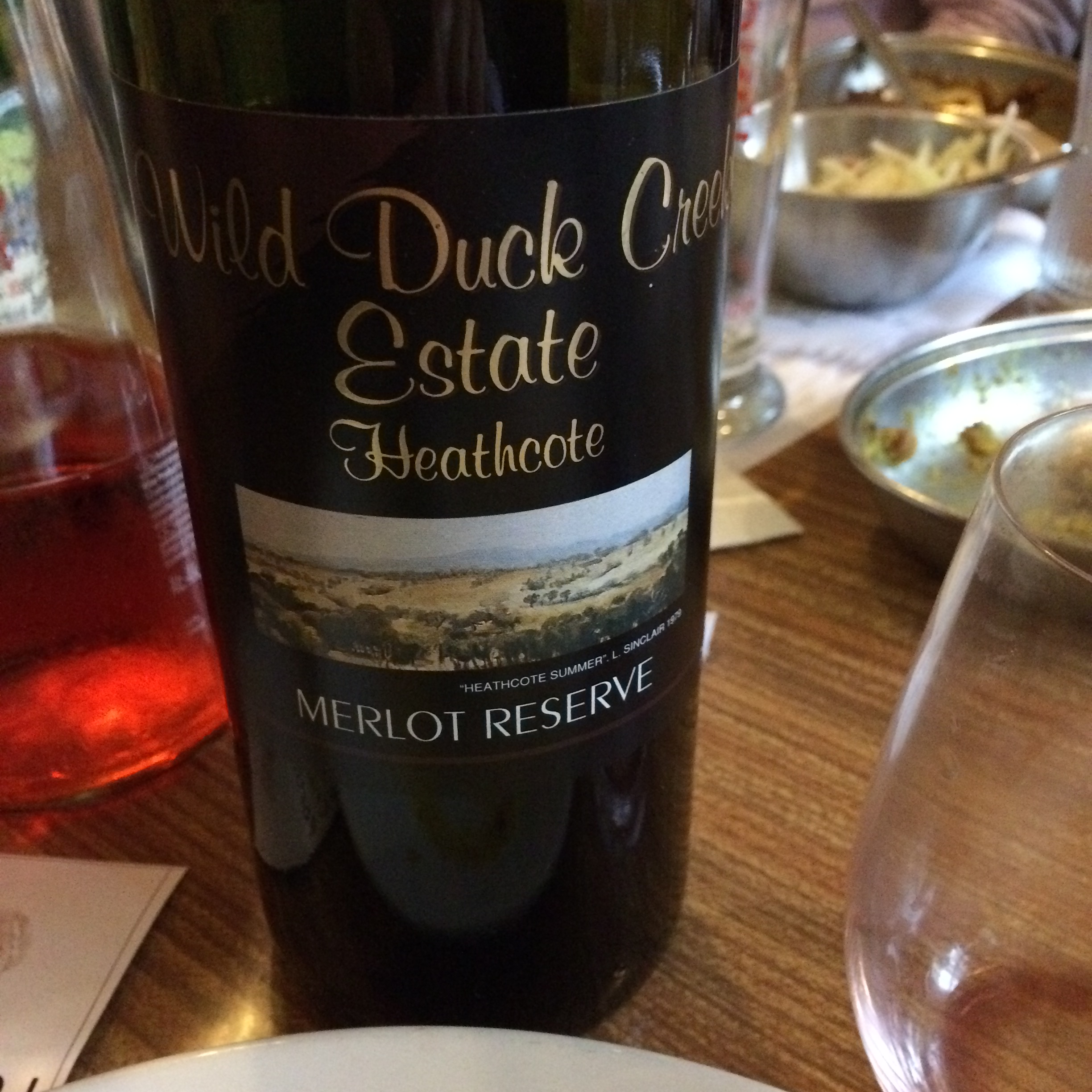
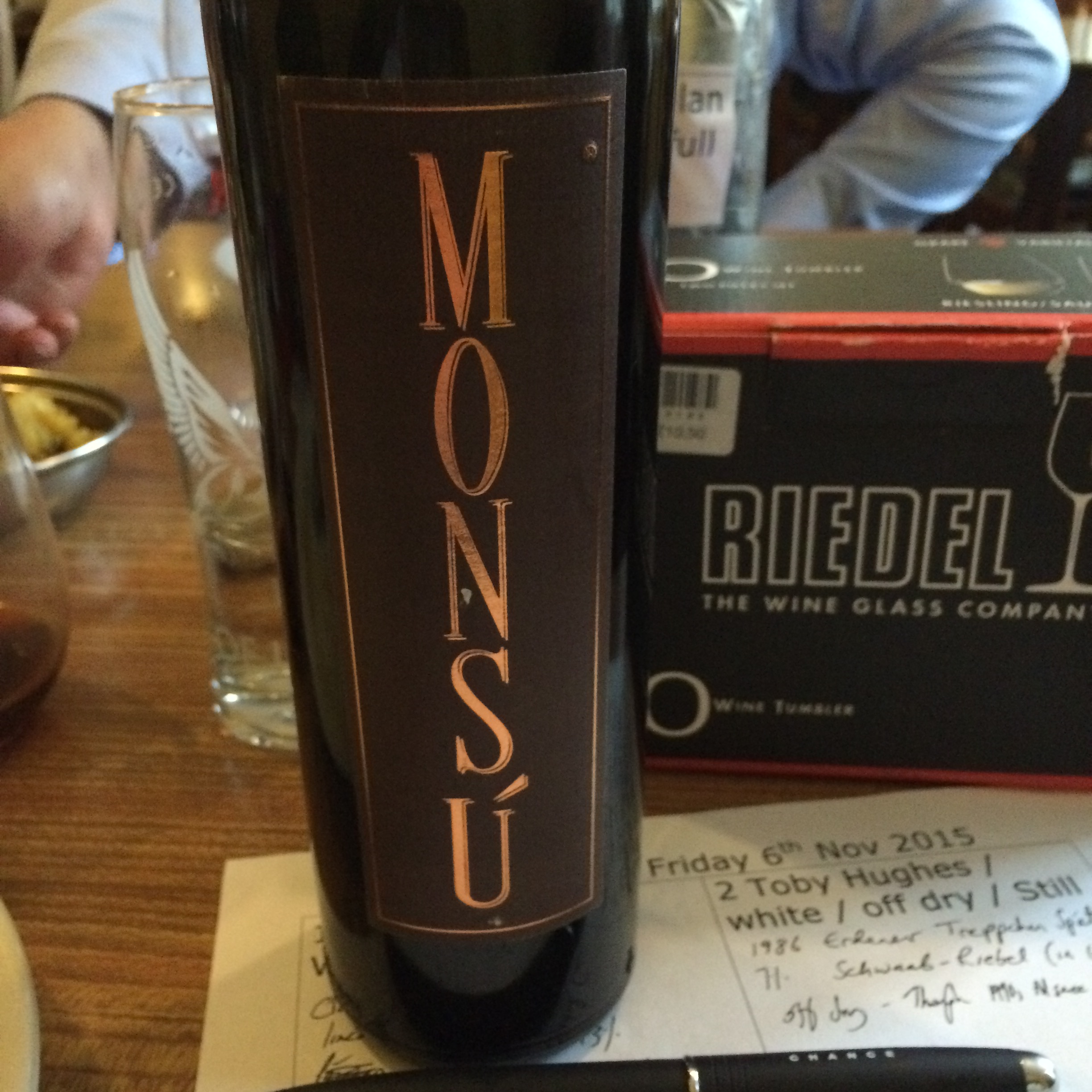
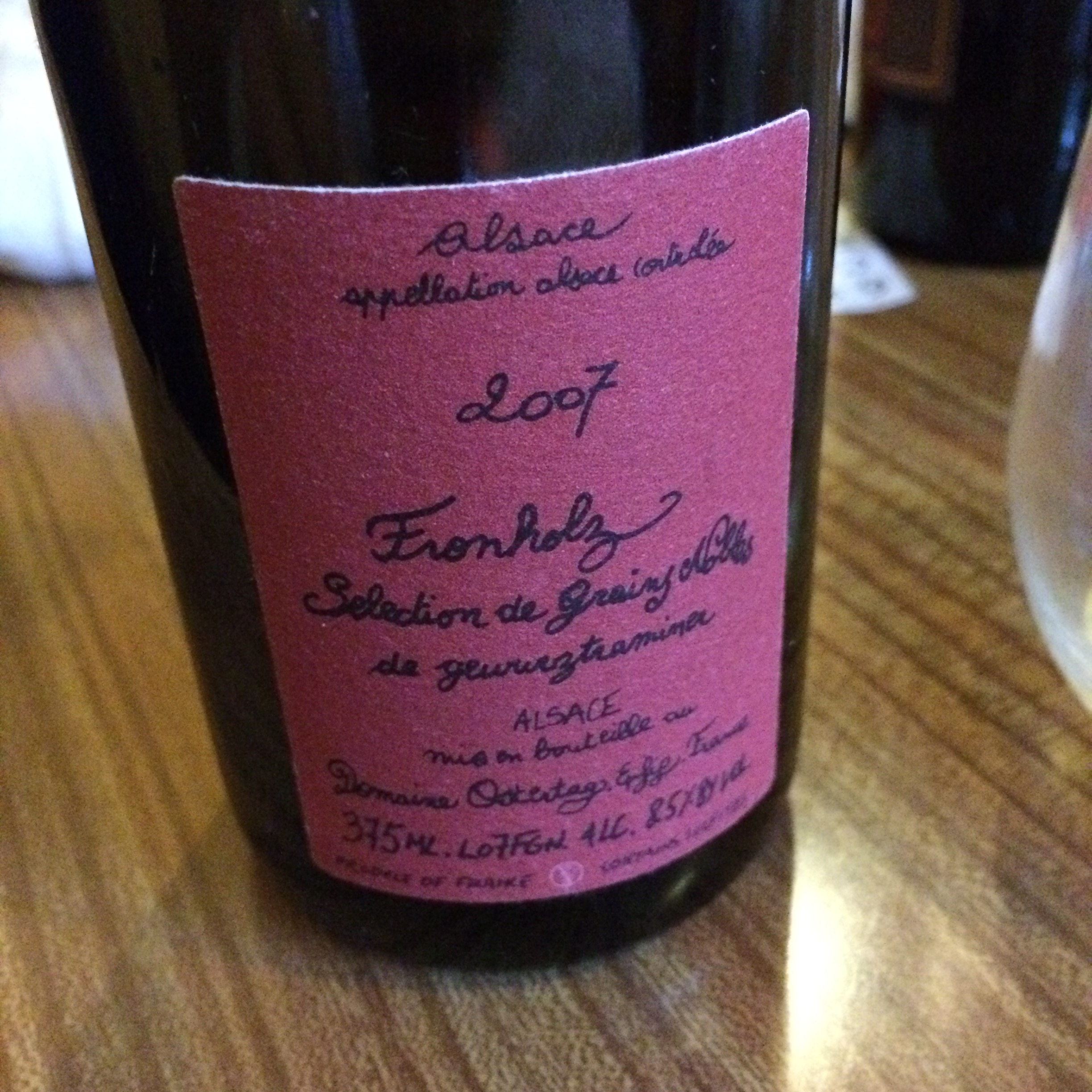
The second instalment of Howard Ripley’s Germans was presented at Middle Temple Hall Yesterday, comprising the dry whites and reds, with a few strangers thrown in for good measure (one of which was my Wine of the Day!). I don’t profess as much expertise in German wine as I might with some wine regions, but I hope my notes are of some value to those who couldn’t make it.

imageimage

There is still a sense that British lovers of German wine have quite a conservative attitude to the dry whites. I can understand both sides of the argument. I love the lower Pradikats for their poised perfection, wines which seem to express a side of the Riesling grape which pretty much no one else can replicate and which, for me, finds its apogee on the steeply slated slopes of the Mosel, (Saar and Ruwer). I’m at one with those who lament their apparent passing, in the search for the supposed sophistication of the dry.

Yet I can also appreciate the dry wines, exemplified none better than Philipp Wittmann’s Morstein (Rheinhessen) which I wrote about at the “Wimps” lunch recently, one of my white wines of the year so far.

What was going to be interesting at this tasting, regarding the 2014 Grosses Gewächs whites, was whether they were going to be ripe and balanced. On the whole the wines clearly managed this, for my palate, though I do prefer a touch of acidity and texture. The people at HR certainly believe that the wines, as the year has progressed, have begun to show “better and better”.

Of twenty-three white wines the first thing to note is that you get what you pay for. The top wines were clearly, for me, the ones to buy if you can afford them (and, of course, grab quick enough in some cases). The two Keller whites (Kirchspiel and Hubacker) showed potential and demonstrated class, as did Hermann Dönnhoff’s Hermannshöhle (the Dellchen was a bit tighter for me and less easy to assess, but I was tasting very early in the day).

image

Of the less exalted bottles, wine number one always appeals to me, and I know from experience that it keeps very well – von Schubert’s Abstberg Superior. My discovery this year has been Julian Haart (Mosel), and I enjoyed both the Piesporter Goldtröpchen (good value) and the slightly more expensive Wintricher Ohligsberg, though with the caveat that the latter, to my pleasure, had something of a note of young Champagne on the finish, minus the bubbles of course. The wines of Thomas Haag at Schloss Lieser continue to impress my own tastes, and Schäfer-Frölich, though the Felsenberg strangely had a hint of Sauvignon Blanc gooseberry on the nose (a lot of wines seemed to have clearly defined grapefruit and lime).  Of course, those two producers can’t be termed “less exalted”, but they are by and large affordable, for now.

image

The German reds were a mix of 2013 and 2012, and were not consistently to my Spätburgunder taste. But again, there were wines I liked a lot. The not too expensive Schloss Lieser 2012 had a nice colour and softish cherry fruit, and my first ever taste of von Schubert’s 2012 was a pleasure (though I’ve a long history of appreciation when it comes to the white wines from the Grünhaus). I also like Ziereisen, having enjoyed the Jaspis Alte Reben Pinot, Syrah and Tschuppen already this year. But the 2012 Schulen won out among the less expensive of their wines, the Rhini (which I think sees about 30% new oak) being worth the considerable premium.

Another new name which impressed, and which merits a particular mention, is Daniel Twardowski. I admit I’d never heard of this producer, though the price suggests I clearly should have. My tasting note included the banned phrase “…young Burgundy” (sorry).

I enjoyed the Kellers (Dalsheim Bürgel and Flörsheim Frauenberg), and was also impressed by Thomas Studach’s wine from Graubunden, but the wine of the tasting for me was fellow Swiss couple, Daniel and Marta Gantenbein’s Pinot. Someone remarked that the nose was better than the palate. This might have some truth, but in honesty I liked both and the bouquet, after all at the very least 50% of the pleasure with this grape, was amazing. A masterful wine. But it was also, by a good way, the most expensive wine on show yesterday. Not more than a couple of years ago it used to cost around £30/40 retail. Now the (much higher) price is almost immaterial, tracking down odd bottles being close to impossible (though I do know someone who proudly owns a personal allocation, lucky man). If you can afford £350 in bond, give it some thought. Some years ago we put on a dinner at The Ledbury where Gantenbein Chardonnay and Pinots were put up against some pretty good Burgundy, and with age they held their own.

image

A few general observations. Many of the reds were pretty pale. This is no sign of a lack of quality, and who wants their Pinot Noir to look like Syrah, but there were occasional wines which on the day seemed a little thin, and often these were also of lighter hue. Will they be wines to drink fairly soon?

I also need to be educated in Pfalz reds by someone. I often find these wines the hardest to like with the one (very big) exception of Friedrich Becker down in Schweigen (who Stephan Reinhardt calls “not really representative”). His vineyards are not only “pretty much in France”, some of them actually are, if I recall correctly. You’d expect this warm region, at least in German terms, to produce reds I’d like, and in 2015 I’m not sure it’s because everything is over cropped and machine harvested, nor because Dornfelder is still the most planted red variety. There may be a tendency to dark, over oaked Pinots, but, as I say, I need a few lessons here.

It’s also worth noting the labelling of these German reds. Some producers stick religiously to Spätburgunder, whilst others go for Pinot Noir. I’m not sure there is any consistency with this (size/age/type of wood used etc). Whichever the case, I find the production of this grape in Germany completely fascinating and absorbing, especially seeking out the different terroirs (slate, limestone, clay, volcanic etc). And I think we in the UK do need to look forwards rather than conservatively backwards in appreciating the quality of red wines Germany is producing. The sixteen German reds on show today were a privilege to taste, probably the most I’ve done in one go.

Naturally Howard Ripley doesn’t have all the best wines (I missed the J&B tasting, lacking the stamina for both), but they do have a brilliant selection and unrivalled knowledge (which makes them my choice for an overview). Other producers I’ve been drinking of late whom I think offer great value include the whites of AJ Adam (Dhron, Mosel) and a very inexpensive red from Thörle (Rheinhessen – Saulheimer Kalkstein 2012).

image

As a final note, it’s worth remembering that Howard Ripley will attend the VDP Auction next week (and indeed the Bernkastel/Mosel, Nahe and Rheingau Auctions), and they offer customers the opportunity to bid for the rarities up for grabs there (contact HR for more information). As always, far greater insight on these wines than I am able to give can be found on http://www.moselfinewines.com .

Posted in German Wine, Wine, Wine Merchants, Wine Tastings | Tagged , , , , , , , , , , , | Leave a comment

Finesse and Verve at Verveine

It’s easy right now to completely lose the plot with visiting new London restaurants, so many exciting places seem to have opened in the last twelve months or so. But I’m also getting behind everywhere else. The New Forest used to be a culinary backwater, unless you counted Chewton Glen, but now there are several restaurants of national repute.

There is one, however, which may have slipped under the national radar, though I know a few Londoners who have come back with ecstatic reviews – it’s Verveine in Milford-on-Sea. The chef-patron is the extremely talented David Wykes whose experience spans the UK and French Michelin-starred establishments. The restaurant has been open for five years and specialises in Fish…some of the finest fresh landed fish you’ll eat. In fact you have to walk through the fishmonger’s shop before reaching the restaurant out back (on the web site it is actually called “Verveine Fish Market Restaurant”). Don’t let that put you off.

If you dine a la carte you select your starter from the menu and then your main course fish from a blackboard selection (about 18 or so choices last night). You then consult the menu to decide which way you’d like it coooked/served, from a selection of four options.

image

After a cheeky little aperitif of Ganevat’s rare, and delicious, Crémant du Jura before we got in the taxi, we arrived to an amuse bouche of radishes in mackerel pâté and “edible soil”, served in a small flower pot. A witty touch but also showing an attention to detail followed up throughout the meal.

image

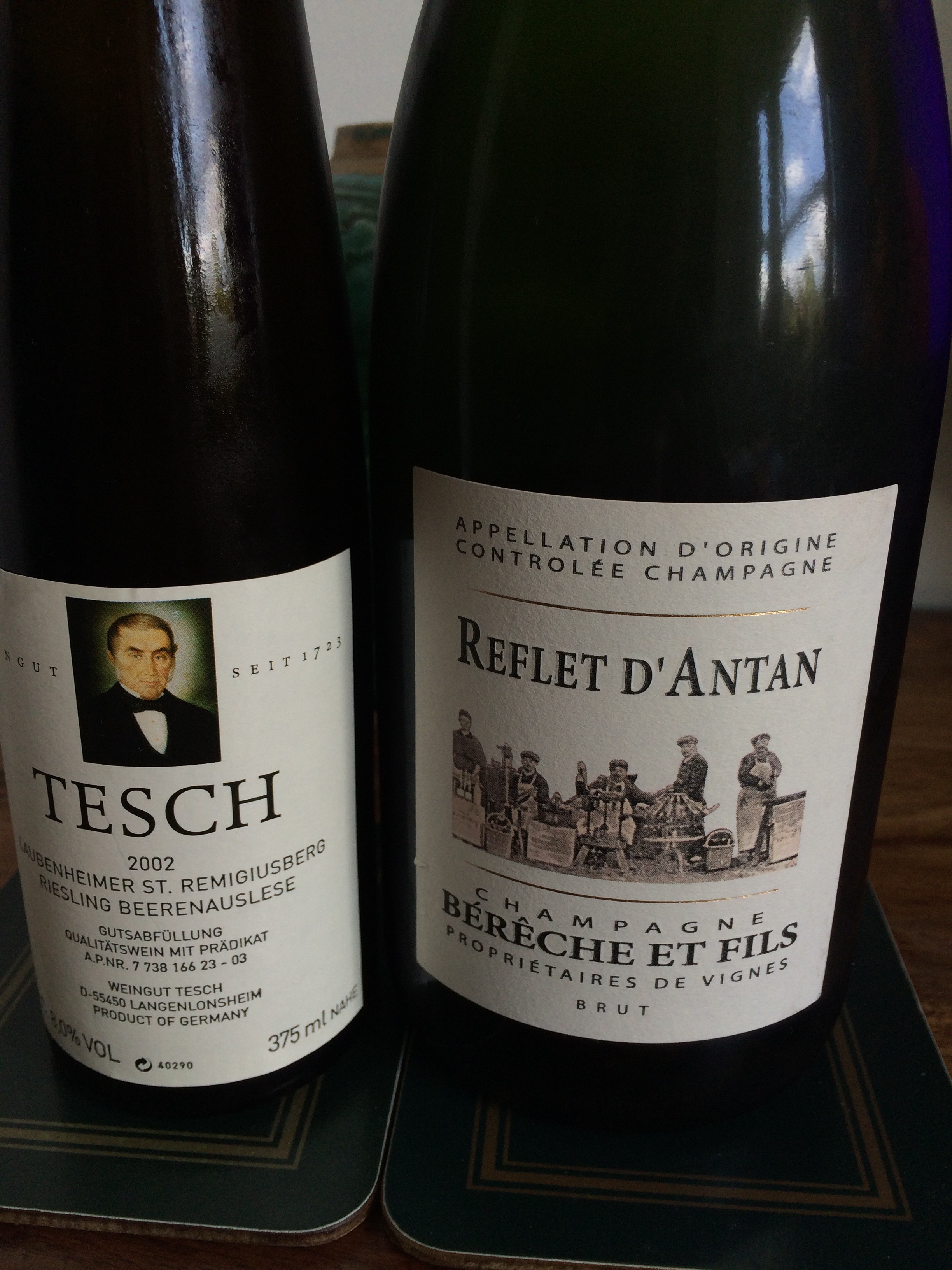
Assorted starters (lobster for me) were accompanied (we were able to take our own wines by special arrangement so I’m not sure what their corkage policy is) with what is almost certainly the best bottle of Champagne we’ve drunk this year, Raphael Bereche’s Reflet d’Antan (disgorged September 2011 from 2/3 2007 base with 1/3 from the perpetual cuvée and bottled with a 6g/l dosage). It combined richness with freshness, a rare trick and a rare treat. Although I’m unashamedly biased when it comes to Bereche, my high opinion was shared, and this did seem an unimpeachably splendid bottle.

image

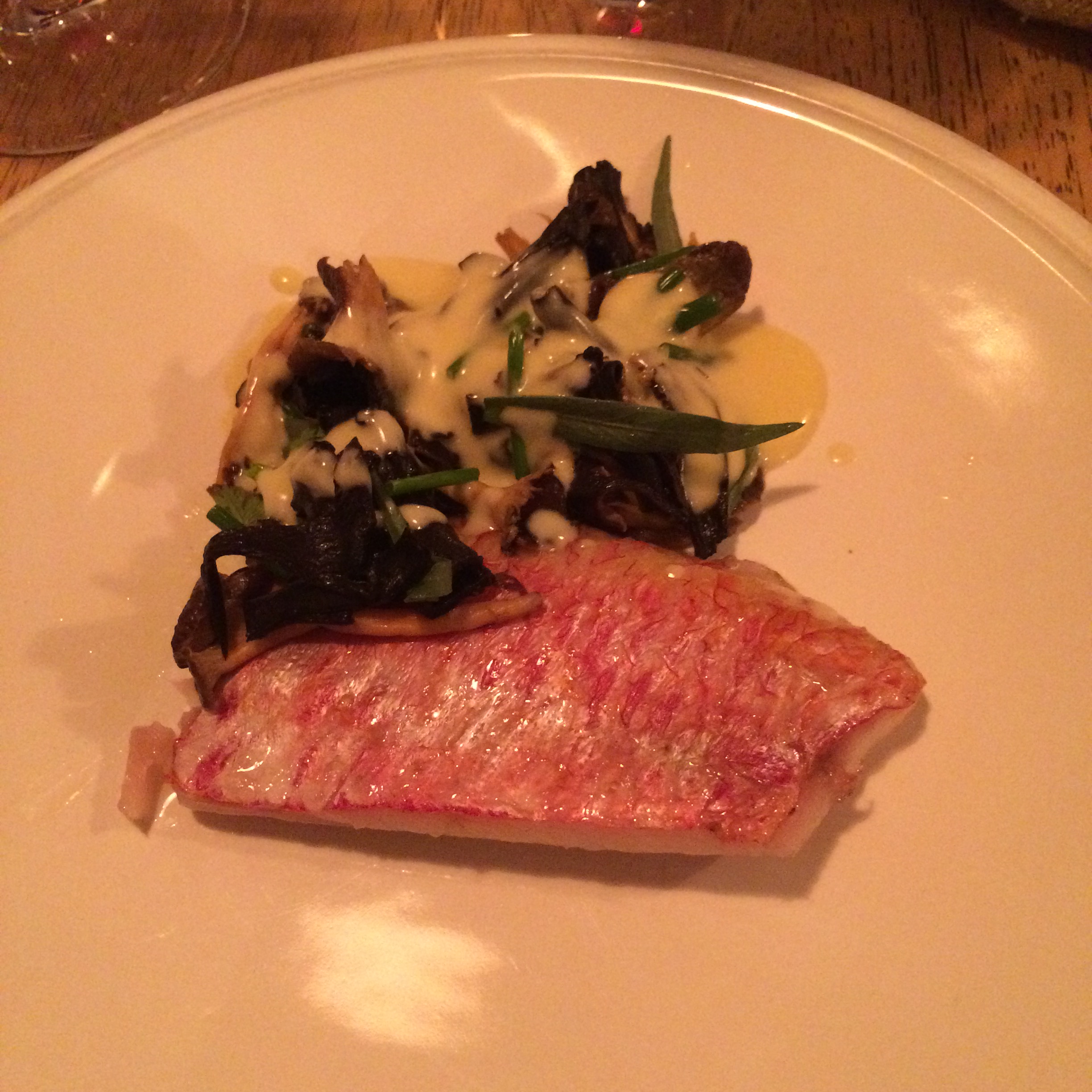
Two of us chose turbot and two chose halibut, and I think my turbot was cooked to perfection, the best piece of fish I’ve had for a long time, anywhere. It went well with Raveneau’s Chablis 1er Cru “Les Butteaux” 2005. I’ve never had this wine before. The usual Raveneau class with genuine depth, evolving complexity and a lightness too. Another heavenly wine.

imageimage

The main courses at Verveine are a hard act to follow, but the desserts are inventive too. That said I was concentrating too much on my Tesch Laubenheimer-St Remiguisberg 2002 BA which was concentrated and exquisite. This, the first bottle of Tesch to pass my lips, lived up to expectations for one of the Nahe’s new breed, though it seemed about ready to drink now without the need to wait a lot longer.

The final touch with coffee and teas was a selection of petit fours, including fudge in edible “plastic” wrappers and small meringues flavoured (gently) with fisherman’s friend lozenges and served in a “ff” paper bag.

Verveine bakes its own bread twice daily, and much of the vegetables and herbs used in the cooking are grown in the restaurant garden – you can see the raised beds through the glass doors.

Service is good too. The senior member of the waiting staff, Agnes, hails from Hungary. She combines serving the food with professionally dealing with the wine. She wasn’t the slightest bit fazed, indeed she almost seemed pleased, when we asked to drink the Bereche from wine glasses.

No qualifications required, this is fine dining standard food at Verveine. The restaurant is only about the size of a decent living room seating around thirty-plus covers, and it’s not cheap – we paid £50/head for three courses plus coffee, without buying any wine. But it was worth it and very good value for the quality. Despite the urgent need to try  Lime Wood, Angela Hartnett’s place near Lyndhurst, I’m equally keen to head back to Verveine as soon as possible.

Verveine Restaurant, 98 High Street, Milford-on-Sea, Hampshire SO41 0QE

Tel: 01590 642176   web site: http//www.verveine.co.uk  email: info@verveine.co.uk

Posted in Dining | 3 Comments

Not With a Bang but a “Wimps” Lunch

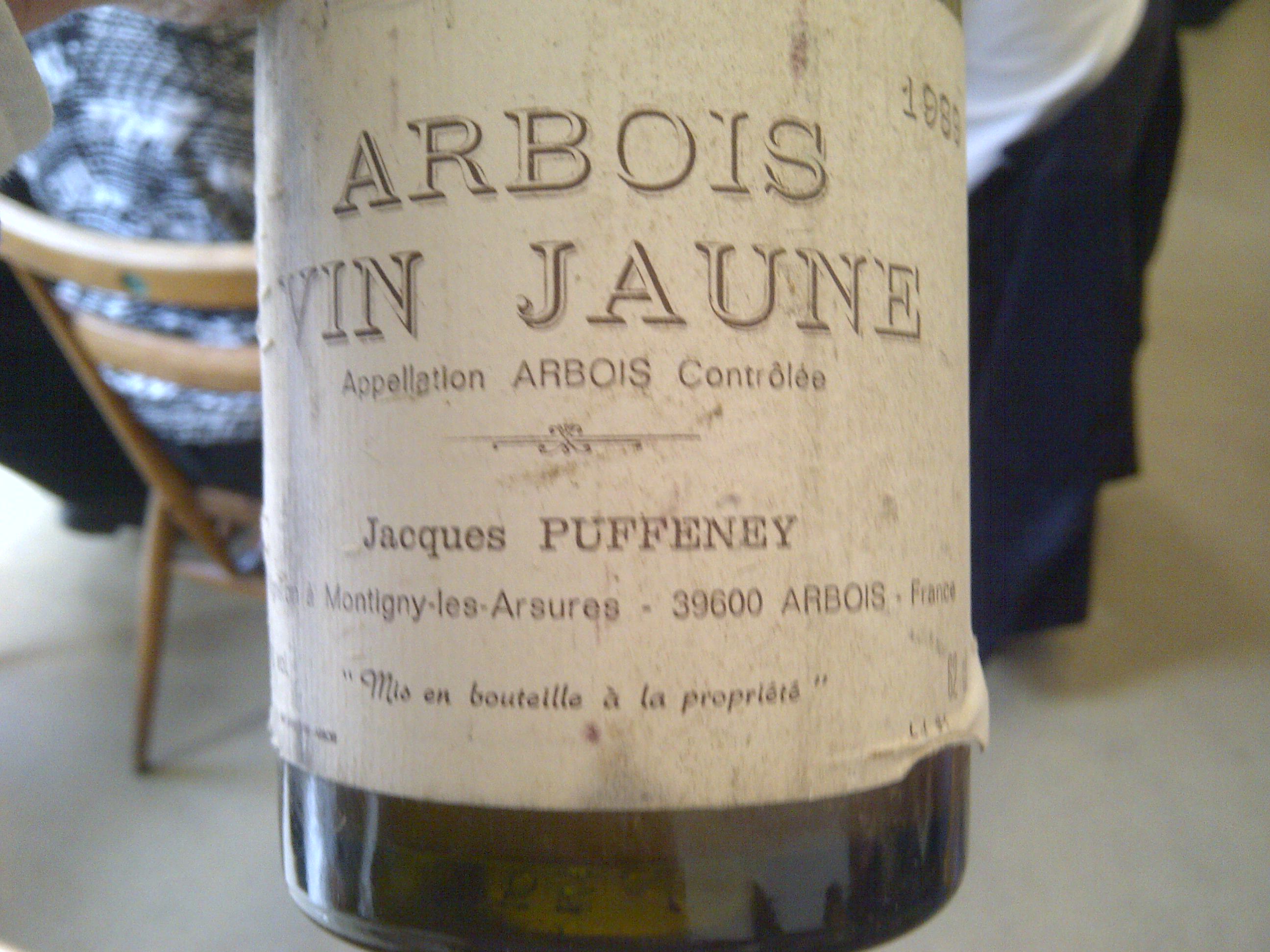
This is the way the world ends, or at least I hope so. Wimps lunches are so called because they are for people who only like one bottle each for lunch (although they actually allow for ten bottles between each table of eight). They take place every month at La Trompette and are organised through the http://www.wine-pages.com wine forum. This month was the turn of Austria/Germany.

As usual, the event is as much about the food and company as it is about the wine, but we didn’t do badly on that front. We actually managed twelve wines, one being a replacement for the TCA affected 1976 Grünhauser in the list below.

1. 2007 Wittmann Westhofener Morstein Riesling GG, Rheinhessen

2. 2005 JJ Prüm Wehlener Sonnenuhr Auslese, Mosel

3. 2001 JJ Prüm Wehlener Sonnenuhr Auslese, Mosel

4. 1994 JJ Prüm Wehlener Sonnenuhr Auslese, Mosel

5. 1989 Von Schubert Maximin Grünhauser Abtsberg Spätlese, Mosel

6. 1976 Von Schubert Maximin Grünhauser Abtsberg Auslese 46

7. 1913 Walter Siegel Forster Kirchenstück Auslese, Pfalz

8. 1989 Von Schubert Maximin Grünhauser Abtsberg Auslese 133

9. 1996 Von Schubert Maximin Grünhauser Abtsberg Auslese 55

10. 2008 Muhr-Van der Niepoort Spitzerberg Blaufränkisch, Carnuntum

11. 2003 Ruster Eiswein Weingutshof Landauer, Burgenland

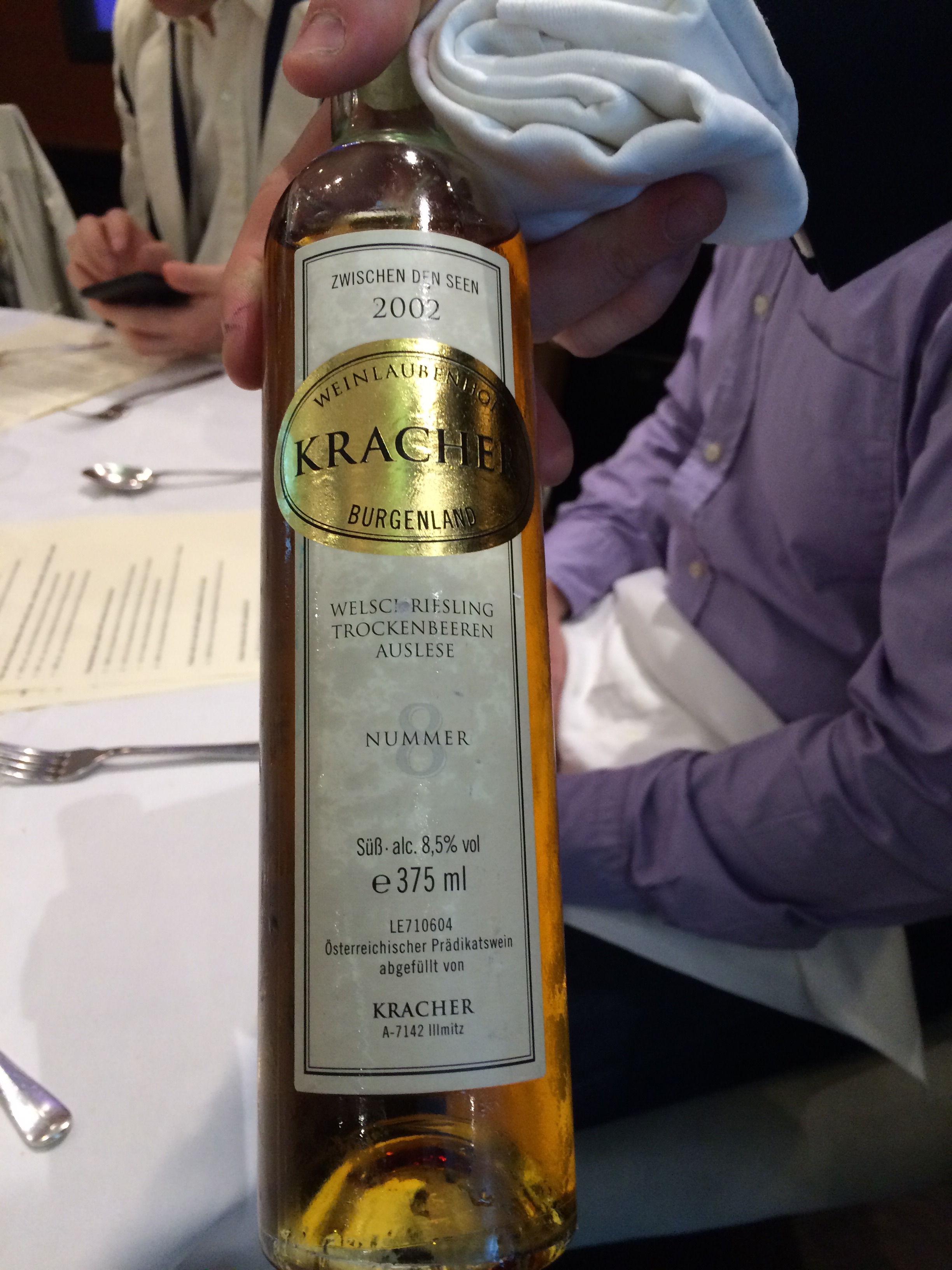
12. 2002 Kracher Welschriesling TBA #8 Zwischen den Seen, Burgenland

image

Most of the wines shone to some degree. Other than the corked (if not irredeemably) 1976 (wine 6 above), the red Niepoort was quite disappointing. It was lovely six months ago yet this bottle tasted a bit dilute and lighter. The only other red on the day (on another table) tasted much better – an unusually big, especially for its age, 2004 Zweigelt from Johann Schwarz with some input from Manfred Krankel.

imageimage

For me, the wine of the day was the first to pass my lips, the Wittmann Morstein. Refined in the extreme, it started quite rich but the minerally tone took over. Claude Kolm attributed the very special terroir characteristics to the limestone soils of the Wonnegau. As others have said, it’s one of the most exciting areas in Germany right now and this beautiful wine shows why. I wish I had a few bottles.

image image

The Prüm Auslesen were fascinating to compare. The 2005 seemed quite a bit too young for me, but at the other end of the age scale the 1994 was classy. The only problem here was the food pairing, the scallop starter (with bonito cream, pickled cucumber and wasabi). It had, ironically, been perfectly matched with the Riverby GV last week, but the wines today overpowered it, and the acidity of the dish grated. Lovely dish, lovely wines, but no meeting of souls.

image

The next five wines ended up as a quartet of Von Schuberts surrounding a museum piece 1913 from the Pfalz. Aside from the corked 1976, these were marvellous wines, with the Grünhausers an embarrassment of riches, each with something distinct to offer.

image

The Kirchenstück was in many ways a miracle, deserving of a paragraph of its own. That it was drinkable would have been enough but it was more than that. It’s sugars, which had undoubtedly sustained it on it’s journey were now, by-and-large, all gone in terms of sweetness. Madeira brown in colour, the nose was complex, both powerful and haunting at once (though a couple of people broke the spell exclaiming “cornflakes”). The slightly caramel-honey palate lingered and lingered. It’s not often I get to try a really old German wine, but it was a privilege. To think, the kind person who brought this is also absailing for charity at the Olympic Park on Monday. What a guy!

image

I mentioned the Blaufränkisch as the only disappointment of the day. A shame as it was our solitary red and it was paired with the dish of the day, veal rack with späetzle, sweetcorn and ceps, with fine aromas and flavours compensating for the wine. Yet it’s a red that has won praise from critics, so a duff bottle…maybe.

imageimage

With a dessert of crème fraiche tarte with passionfruit the two dessert wines provided a real contrast. The western side of the lake gave us a fresh Ruster Eiswein, with a lightness contrasting its sweet richness, and good acidity. The Kracher, from the eastern side of the Neusiedler See, was typical of this wine/grape at this sort of age. The acidity has diminished but not the sweetness and you are left with a sweet honey richness. Although La Trompette’s wine team thought it the best of the Krachers on show, I actually loved a taste of a Kracher Chardonnay on another table, younger and fresher.

imageimage

As usual, a wonderfully congenial time was had by all who made it yesterday. If indeed the world were to end after such a wonderful array of these wines, I’d be pushed to complain.

image

Posted in Austrian Wine, Dining, Fine Wine, German Wine, Wine, Wine Tastings | Tagged , , , , , , , , , | 3 Comments

The Rudest Word in Wine

MINERALITY

For some it’s not even a word. It’s not in my dictionary. Yet few concepts in wine, not even terroir, excite the angry to expletives more than this harmless word can!

image

For some the idea that there’s a mineral quality in some wines, almost akin to those fruit flavours we find in tasting notes from Parker to Pigott, is proposterous. We see very long, learned, articles written by scientists explaining with just a hint of impatience that whilst wines may contain traces of compounds which mirror those in bananas, blackcurrants, linden and lovage, there is absolutely no way that the “soil to glass” transfer metaphor used so evocatively by Rhone expert John Livingstone-Learmonth can be literally true. Minerals exist in wine, but in a range from a few parts per million to parts per billion.

Yet the idea that we can taste something “mineral” in our wine still persists. A wine book written in 2014 contains the following, a description which paints a believable picture of a well tended patch of old vines in the middle of a sunny slope. The wines made from this idyllic plot:

“…tend to have a lovely salty minerality…as the vines are encouraged to cultivate deep roots that engage with the bedrock, processing its minerals through living soils”.

The most cited example of minerality in wine must be that of Chablis. Everyone knows that mouthfeel which makes Chablis so different to almost any other Chardonnay wine. It tastes nothing like a Puligny or a Meursault, or a Chardonnay from Napa or Marlborough. A good Chablis actually tastes as if they’d taken the fossilised sea creatures which make up the region’s soils, ground them into powder, and dissolved some in every vat.

It’s not just Chablis and its chalk. Volcanic soils often give wine a mineral flavour which, at its extreme, can smell like iron filings, or sometimes taste how we’d imagine wet terracotta might taste. Valpolicella, Etna Rosso and Marcillac from the Aveyron in France come into this category.

Then there’s Riesling, from the slate soils of the Mosel, Saar and Ruwer, where slate forms not just the bedrock, but litters the surface of the vineyards. Here, mineral geekery hits new heights as different types of slate are distinguished on the palate by experts. The non-expert is aided by the use of wine names such as Schieferterrasen and Vom Blauen Schiefer by Lower Mosel producer Reinhard Löwenstein (Heymann-Löwenstein). As Stuart Pigott (see below) says about Reinhard, he loves his slate, and is always quoting the Bob Dylan line, “everybody must get stoned”.

image

And whilst we’re in Germany, anyone who begins to appreciate Spätburgunder starts to identify those from the parts of the Ahr where it grows on slate and those from Baden’s Kaiserstuhl (volcanic), as opposed to the limestone of the Cote d’Or. To suggest that such differences have nothing to do with the soils and bedrock of each region, merely being the product of factors such as climate or winemaking challenge logic.

Some of you will already have noticed a big flaw in the narrative, especially those who read Alex Maltman’s article on wine and geology in World of Fine Wine this summer (WFW 48). Despite the quote above, about vine roots delving deep, it seems that vines may take most of their nutrients from the soil above the bedrock, and these soils often bear little relation to the underlying rock type. As Maltman says:

“By definition the bedrock is pretty much intact, apart from perhaps some fissures that may conserve supplementary water into which deep roots may tap: It is the overlying loose material, the soil, that is largely used for water and nutrition. And almost invariably, the age of the soil will be unrelated and vastly younger than the bedrock” (original itals).

image

Alex Maltman is Professor of Earth Sciences at Aberystwyth University in Wales, and he does get around on this subject. He’s the go-to guy for geology and wine. In a very good article written by Chris Simms in New Scientist (9 May 2015), entitled “Grape Expectations”, he reminds the author that despite minerality becoming a wine buzzword there is no known process by which vines take up minerals from the soil and transfer it to the wine. Furthermore, by and large, excepting sodium chloride, Maltman points out that minerals have no detectable taste.

Barry Smith, who specialises in the multisensory perception of flavour at the University of London’s School of Advanced Study, really puts us in our place in the same article. He tells Simms “The idea you can taste minerals from the soil is absolute rubbish”. How do we come back from that?

Well, I suggest two ways. Imagine first that you are on holiday in Aosta’s Valgrissenche and that you have purchased a bottle of the local white wine, Vin Blanc de Morgex et de La Salle. The co-operative’s Cuvée Rayon will do. You are on a nice walk up to the refuge called Mario Bezzi at the top of the valley. Half way up you stop for lunch, wedging the bottle in the icy stream that flows down from the dwindling glacial ice you will later navigate before reaching your goal. Sitting in the warm alpine sunshine, listening to the warning calls from a family of marmots on the other side of the valley, you uncork the bottle and sniff. It has a purity akin to Evian water with a light infusion of herbs. When you taste it…there’s something unique. To confirm your palate’s signals you take a small rounded stone from the stream and lick it. Exact match, the mouthfeel is identical.

image

But note, “mouthfeel”. What we have here is not the flavour of the pebble. The geologist will tell us that the pebble has no taste. It’s that feeling on the tongue and around the mouth. Mouthfeel is something we get from all wines. It can be oily in the case of a big Alsace Pinot Gris. It can come from the tannins in a young Pauillac. It can come from the acidity of a Franken Silvaner, or the sweetness and acidity of a Sauternes in a strong botrytis year. But wherever it comes from, the taste of that Blanc de Morgex can be described in no better way than “mineral”.

So if it isn’t actually minerals you are tasting, then what is it? We can look for explanations, but I don’t think there’s a definitive scientific one. In his 2014 book on Riesling, “Best White Wine on Earth”, Stuart Pigott has written a very good section on minerality and mouthfeel (pp 34-39). He talks about potassium, one of the minerals present in wine, working with the wine’s acidity to give a salty minerality. He mentions sulphurous compounds created during or after fermentation, and there are other choices made at the time of fermentation which may come into play, such as yeasts. But at the end of the day, his following quotation sums up my feelings as well:

“A lot of nonsense is talked about the mineral taste of wine, which is a real part of Riesling, but also rather mysterious”.

My own view is that science may provide the answers in the future as to why wines sometimes taste in a way which encourages us, we just can’t help ourselves, to use the term “minerality”. But to be honest, I don’t think it matters one bit. You see, what is minerality but a perfect metaphor for what we are tasting in a Chablis, a Wehlener or an Etna Rosso.

What is the point of a tasting note? It’s not really there to provide a technical analysis of the chemical composition of the wine in the glass. It’s there to paint a picture of a vibrant, living thing which can thrill our senses of smell and taste like few other forms of nourishment. Wine is there to feed the soul as well. It may sound pathetic, but who reading this hasn’t taken one sniff of a wine and found themselves transported to a heaven of sensual pleasure and, if lucky, a profound recollection of their previous encounter with that scent and taste, a true Proustian moment. Wine, in this respect, has the power to be transformational.

All we want from someone else’s description of a wine is a sense of that experience summed up in a few crafted phrases. A picture painted in vivid colours. I think that the term “minerality” on these occasions conveys, as a metaphor, something that we all understand. And for those lucky enough to have climbed the slopes of the Doctor above Bernkastel, or Achleiten on the Danube, to have walked the Grand Crus of Chablis, or to have driven in search of the lost vineyards of Marcillac among the wooded hills south of Conques, it’s a word capable of transporting us back to those places.

To those able to understand a metaphor, minerality conveys the essence of something very real. But it is just that, a metaphor, so let’s remember that when we see it used in a tasting note.

image

Posted in Minerals and Wine, Wine, Wine Agencies, Wine Science | Tagged , , , , , , , , , , | 8 Comments

Trompetting Riverby

Those with long memories may remember that I attended a tasting of Riverby Estate’s Marlborough wines at Butler’s in Brighton late last year, here: https://wideworldofwine.co/2014/12/01/riverby-estate-tasting-butlers-brighton/

Yesterday I attended an even larger Riverby Estate tasting at London’s La Trompette restaurant, with estate owner Kevin Courtney. It included, as its centerpiece,  a vertical of eleven vintages of Riverby’s Chardonnay, never before attempted by Kevin, among nineteen wines tasted in total.

image

Several lessons were learnt by a knowledgeable group of wine lovers. First, New Zealand Chardonnay can age, and really well. Second, that we are not yet familiar in the UK with every class producer in the country. Actually, Riverby are direct neighbours of Cloudy Bay, and their vineyards are among the earliest planted, and best sited, in Marlborough. We also learned the importance of clonal selection. And finally, we learned not to judge wines purely by price. These are award winning wines in New Zealand and elsewhere (including some top Decanter WWA medals), yet they rarely cost more than £20 retail per bottle.

List of wines and food matches

With canapés – 2012 and 2014 Eliza Riesling, 2014 Sauvignon Blanc, 2013 Sauvignon/Semillon

image

With raw Orkney scallops, bonito cream, pickled cucumber and English wasabi – 2014 Gruner Veltliner

image

With crayfish and buttermilk chicken wings, späetzle, girolles and sweetcorn – 2004, 2005, 2006 and 2007 Estate Chardonnay

image

With john dory, peas, samphire, lardo di colonatta, butter lettuce and lovage oil – 2008, 2009, 2010 and 2011 Estate Chardonnay

image

With suckling pig shoulder, white polenta, cavalo nero, turnips and muscat grapes – 2012, 2013 and 2014 Estate Chardonnay

image

With St Felicien, Reblochon and Swiss Challerhocker – 2013 Estate Pinot Noir and 2013 Reserve Pinot Noir

image

With petits fours – 2012 Noble Riesling

It would be tiresome to post a tasting note for each wine. All wines performed well with the exception of the 2010 Chardonnay which was reductive and didn’t improve in the glass, no doubt a phase. Some wines were slightly tight to begin with, a facet of age and screwcap, but everything blossomed, changing in the glass for the better. There was no wine here I wouldn’t buy myself and the standard is incredibly high over the whole range.

My highlights began with the Gruner Veltliner. I’ve only tasted this a couple of times but I do recall telling Kevin last winter it had massive potential. The vines are young but it impressed everyone with its poise and focus.

image

Of the Chardonnays, my favourites included the 2004, yes, an eleven year old NZ Chardie. It tasted fresh, not fading at all. A remarkable contrast to many an expensive bottle of premoxed Burgundy we’ve all experienced. I also loved the 2008, not that it was as good as some of the wines around it on the day, but because it seemed to have everything in place to become better and better, a wine with such potential. I think it focussed everyone on Marlborough Chardonnay, its forgotten variety after Sauvignon’s domination of the region in the eyes of consumers.

Of the younger wines the 2013 and 2014 really impressed. The estate style is one of restraint, and the wines are never overtly tropical or oaky. To a degree, the 2013 breaks that rule. It’s a bigger wine, but it’s still balanced. The 2014 was only bottled in March and it’s lovely now. Not remotely near its full potential, yet fine and elegant on the day.

Of the two Pinots, the Reserve bottling is clearly the more impressive (on the right below), and impressive it is with its already integrating oak and smooth texture. It put the basic estate Pinot under its shadow, yet I know from experience that the cheaper wine is a lovely fresh glugger, full of gentle fruit. One to drink whilst allowing the Reserve to blossom into something even better.

image

We ended with the 2012 Noble Riesling. Riverby first became famous back in New Zealand for their stickies, with best dessert wine in show at the Air New Zealand Awards for several vintages. The 2012 is one of the lighter Noble Rieslings they’ve produced, with just 128g/l of residual sugar (the norm is around 200g/l) and clocking in with 9.5% alcohol. The sweetness is gentle, not cloying, and is balanced with a pure backbone of acidity. I’d have gone for a third pour if it hadn’t all been snaffled, and its taste lingered throughout my journey back to Victoria Station.

image

As ever, La Trompette provided food of a level above its single Michelin Star. The suckling pig was well up to the usual standard. One attendee who knows his food reckoned the scallop dish was his best starter of the year.

Riverby Estate’s Marlborough wines are imported into the UK by Black Dog Wine Agencies, Cheshire. They are currently available through Butler’s Wine Cellar in Brighton and Loki in Birmingham. La Trompette is available to anyone who can find Turnham Green on the District Line. Those who can are in for a treat from one of the less well-known restaurants of this excellent stable, which includes The Ledbury, The Square and Chez Bruce.

Many thanks to Charles Taylor for organising the event, and to Kevin Courtney for generously supplying all the wines.

image

Riverby owner, Kevin Courtney. Catch him at the Oxford Wine Festival this weekend (21-22 August, Oxford Union).

Posted in Dining, Fine Wine, New Zealand Wine, Wine, Wine Agencies, Wine Tastings | Tagged , , , , , , , , , , | 3 Comments

All’s Gut in Oggau

Many wine lovers will have heard of Rust, a lovely old town on Austria’s Neusiedlersee, southeast of Vienna and bordering Hungary. If they don’t know it for its famous storks which swoop majestically over the town and breed on its chimneys, they will have heard of Ruster Ausbruch, its golden dessert wine made from nobly rotten grapes on the slopes above the shallow lake’s extensive reed beds. The next village to the north, they probably will not have heard of…that’s Oggau.

Rust is the kind of chocolate box town (or technically a  free city, but if size matters let’s stick to town) which people love or hate, a bit like Bernkastel on the Mosel. Personally I love it. You can imagine Haydn or Mozart swaggering out of one of its inns after a few jugs, not so fanciful as Haydn spent around forty years working for the Esterházy family up the road in Eisenstadt.

Vienna 2015 114

Rust is a great place for a few days holiday from Vienna. Great restaurants, some superb wine producers, boat and bike hire, with ferries over to Ilmitz, and other winey destinations, which will carry your bike too. But you probably know that if you read my blog regularly…so back to Oggau.

Vienna 2015 324 Vienna 2015 313

Gut Oggau is the producer in Oggau making some of Austria’s most exciting wines, so one has to ask why they get little mention in the Austrian wine guides? One reason is probably because they make natural wines (shock!). Low intervention winemaking isn’t new in Austria, far from it. It’s a country well ahead of some in this respect. But one gets the impression that the establishment, as with all things it seems in this country with its Habsburg past, is torn between liberalism and innovation on the one hand and an innate conservatism on the other. It’s not so far removed from the way some established anglophone wine writers ignore these type of wines, despite the avid interest from consumers and the proliferation of small independent wine merchants in London (and Paris, New York, San Francisco et al) selling them.

Gut Oggau’s wines are biodynamic (certified by Demeter), and they are also released not under an Austrian DAC, but as Österreichischer Landwein, like the difference between AOC and Vin de Table, or more accurately, the new Vin de France moniker which a lot of innovative winemakers have turned to there. But these are not the most interesting things about the wines.

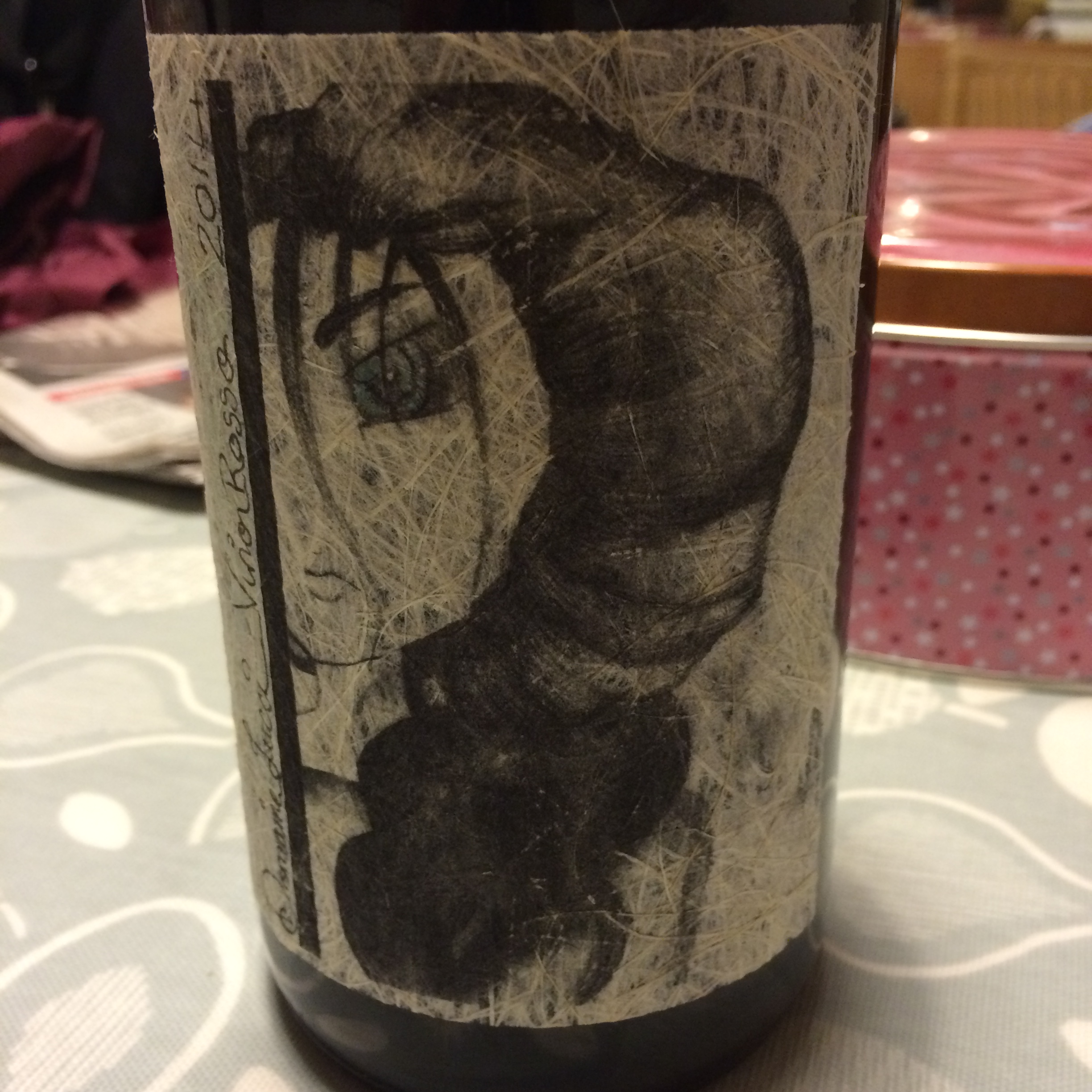
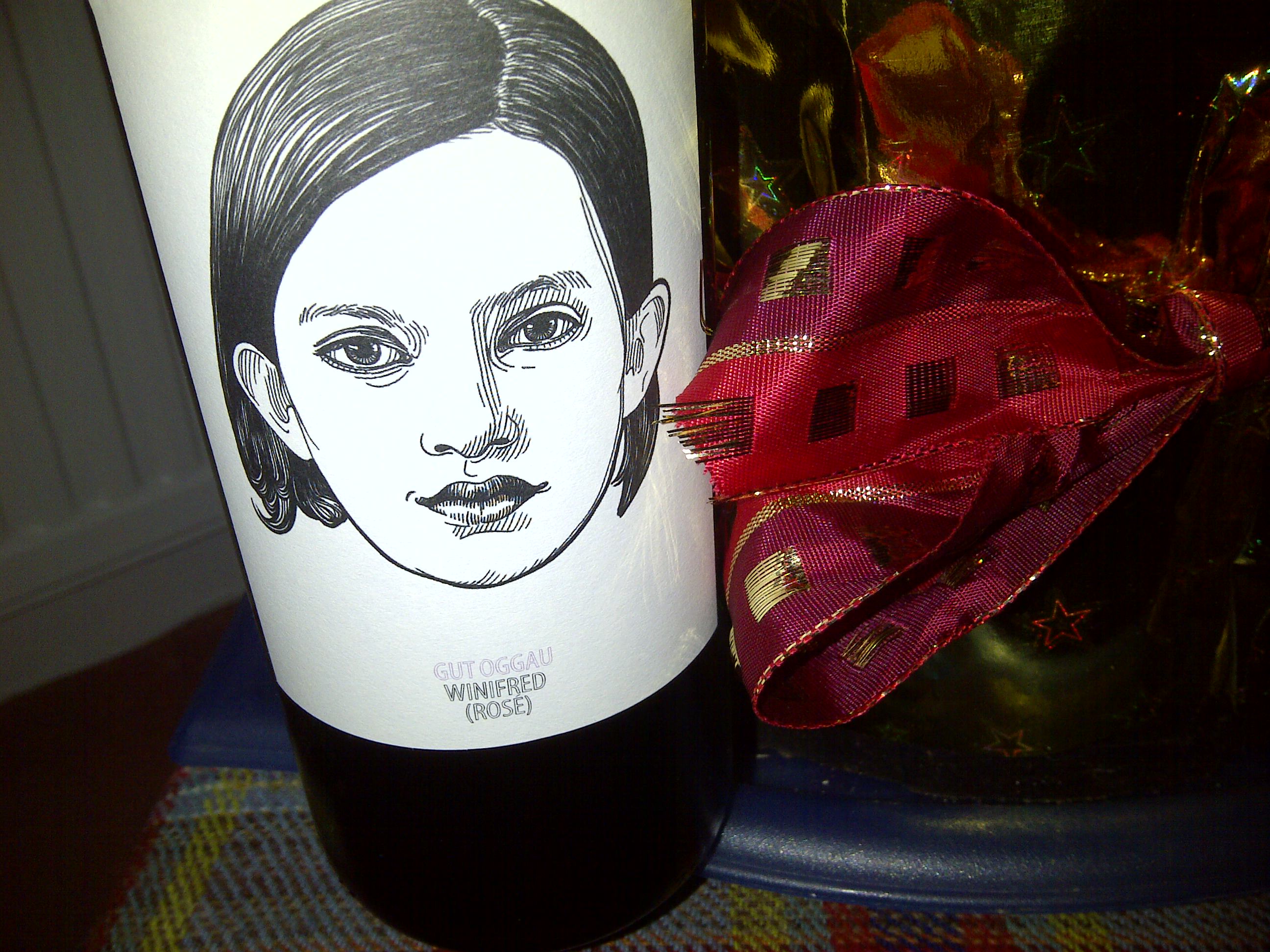
The concept for the varied list of wines created by Eduard Tscheppe and Stephanie Tscheppe-Eselböck is that of a family. Each wine is named after a family member from one of three generations, and so each wine/person fits into a family tree. The theme is given life by the highly distinctive labels created by German design agency Jung von Matt. I’ve counted nine family members, though there might be more lurking. As each family member ages, so do the line portraits on the label. This mirrors the wines because they all come from designated single vineyards, so as the vines mature so do their avatars…genius.

image

I currently have three of Eduard and Stephanie’s wines. Theodora is a fresh Gruner Veltliner/Welschriesling blend, tending to a soupçon of spritz in her first summer. I plan to drink the 2014 soon, before that’s lost. The Joschuari I have is the 2011. This is a silky Blaufränkisch made for food. Obscurely, my favourite family member right now is Winifred. Described as a rosé, but some might think a pale red, there’s fresh red fruits, spice, and that characteristic crunch (a blend of Blaufränkisch and Zweigelt). If the much hyped Provençal pinks of the moment leave you cold, this is pretty much verging on the profound. It’s a nice wine with which to begin a light lunch outdoors and then sink into a deckchair to savour the last glass as the shadows approach.

Brighton and Hove-20141219-00703

So, appetite whetted, where can you buy them? Sadly it’s not easy, but it’s not impossible. You can, of course, go to Oggau. It’s not as hard as it sounds. Though finding the right bus from Vienna’s central bus station took a little ingenuity, it’s only a couple of hours down to Rust, via Eisenstadt. I’d recommend staying and hiring bikes in Rust as it’s only a few kilometers up the road from Oggau, and there’s more to do. But if you visit Gut Oggau in summer you can eat at their Heuriger.

In the UK you can purchase Gut Oggau from Dynamic Vines, for which see my last post. If you can’t get to their shop on a Saturday give them a call. If they’ve sold out (fewer than 20,000 bottles of the whole family are produced every year and this is now pretty much a cult domaine worldwide), check out the list of restaurants they supply. I have bought Winifred in Winemakers Club on Farringdon Street, in the arches under Holborn Viaduct . I’m not sure they have any right now, but if you annoy John enough he may wangle some more. One or two others list some on Wine-Searcher, including Wine Bear. I’ve not seen Richard for a while but he’s a very helpful guy and well worth contacting as well.

Gut Oggau are at Hauptstraße 31, A-7063 Oggau. For visits and tastings call +43 (0)664/2069298. Email is: office@gutoggau.com but I generally find that with a busy wine domaine you are far more likely to elicit a positive response from a friendly phone call than an email. An appointment is required.
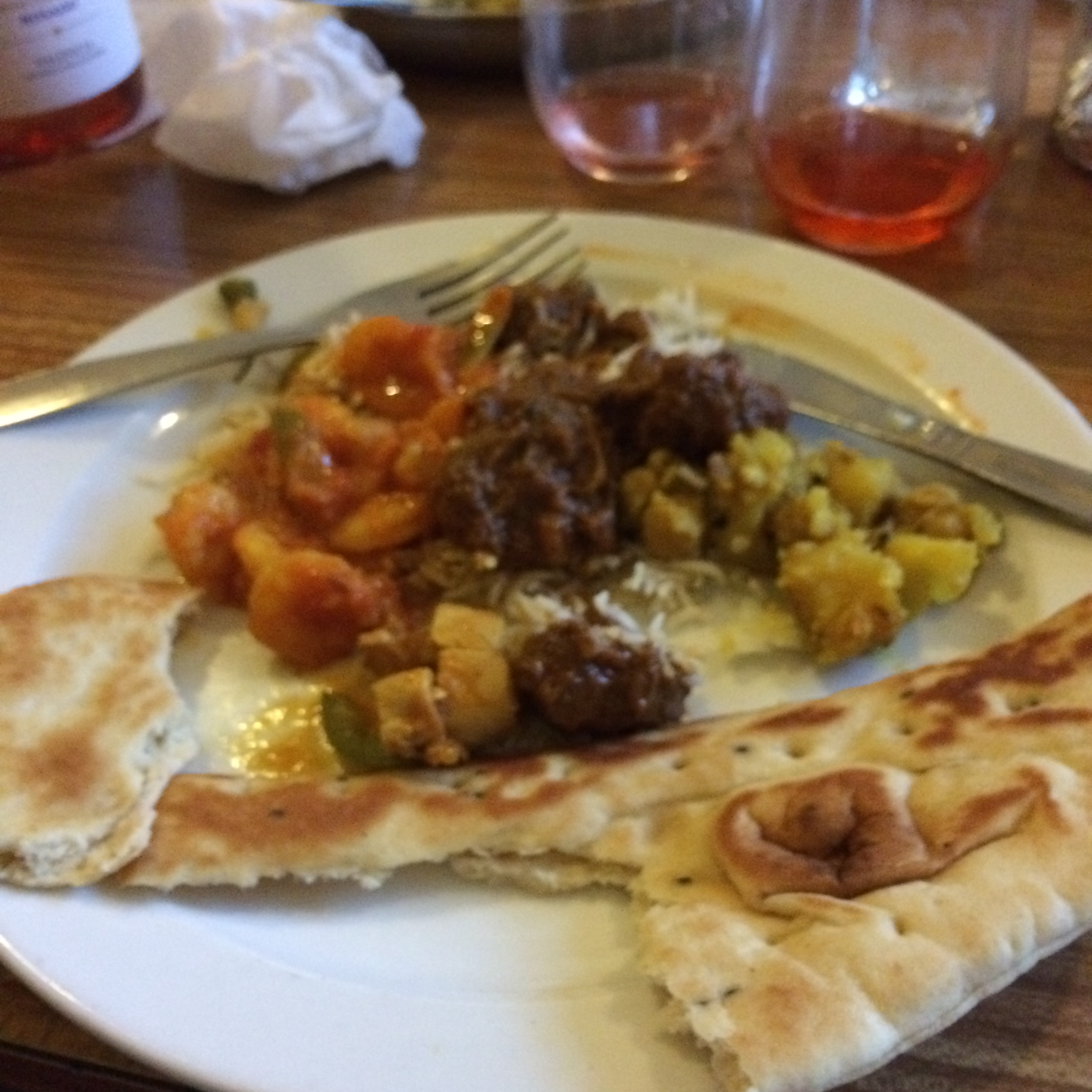
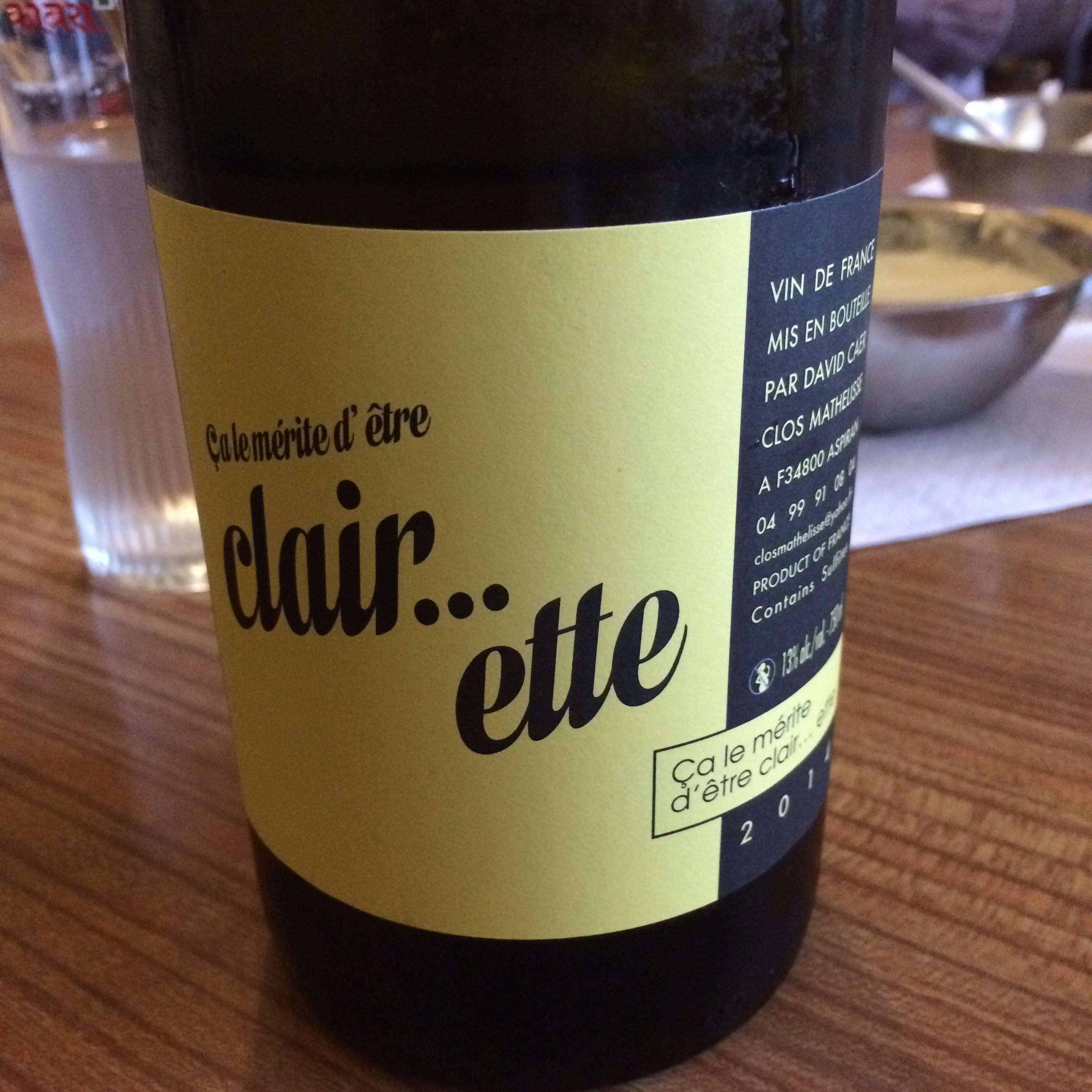
The Heuriger (tavern) is open (2015 info) Thursday to Sunday, 12.00-22.00 until 30 August, and then from 4 September to 27 September from 16.00-22.00 on Fridays and 12.00-22.00 Saturday and Sunday (details on Gut Oggau web site – http://www.gutoggau.com/ but please check re opening/booking before arriving).

Note on “Natural Wines” and “biodynamics”:- There’s no legal definition of what is a natural wine. Indeed, many producers who intervene in vineyard and winery with chemical pesticides, fungicides, herbicides, insecticides, synthetic fertilisers and wine additives/processes strongly dislike the implied insult to them which such a term might suggest. But winemakers thus described will have a philosophy of low intervention, both in the field and the vat room. They believe in transferring the flavour of their vines into your glass by manipulating the wine as little as possible. This means many things, but there are a couple of important things which go beyond certified organic viticulture and winemaking.

  1. The natural winemaker will want to use the ambient yeasts found on the grapes in the vineyard and in the winery to start and complete the fermentation if possible. They believe that these yeasts are part of their terroir and so will best express the land they work. They will therefore try to avoid a yeast supplied by another company, which may be designed to affect the wine in a certain way; and
  2. The natural winemaker will be wary of adding a lot of sulfites (please don’t argue over sulfites/sulphur dear reader). Sulfites are wine’s disinfectant. They can stop bacterial spoilage and are often added during winemaking and/or at bottling to keep the product, inter alia, stable in the bottle. Some producers use no sulfites at all, others use as little as they can. All of the Gut Oggau wines I currently own contain, I believe, between the low and higher 30s in terms of g/l of sulfites (expressed as total SO2). Some critics consider natural wines to suffer from an uncommonly high level of spoilage, implicitly due to their sulfite regime. This was probably once true, but my experience shows spoilage has decreased dramatically, even when wine is stored above the recommended 14 degrees for wine with zero added sulfites. A hint of apple freshness may be detected quite often, but I see this as a matter of taste as to whether you like it or not.

Biodynamics is a very large subject, but in (very) brief terms it is an extension of organic agriculture, whereby the producer follows the philosophy of Rudolph Steiner, and applies the nine biodynamic preparations he prescribes as an alternative to chemical vineyard applications. In addition, work in the vineyard and cellar is carried out according to a biodynamic lunar calendar (created by Maria Thun a little over fifty years ago and perpetuated by her son, Matthias). The Demeter Association is an internationally recognised certifying body for biodynamic viticulture, and Gut Oggau is a member.

Posted in Austria, Austrian Wine, Natural Wine, Wine, Wine Labels, Wine Merchants, Wine Travel | Tagged , , , , , , , , , , | 3 Comments

Out and About…Spa Treat…

Very few of the thousands of tourists who pack Borough Market on a Saturday know about what also lies to the south, still within the shadow of The Shard. But those who venture past Bermondsey Street and hit Druid Street will see another market settled beneath the railway arches which flow into the shiny new concourse of London Bridge Station. There are some familiar names, like O’Shea’s Butchers, St John Bakery and Neal’s Yard Dairy, among the micro breweries, and Jensen’s Bermondsey Gin distillery, all packed with eager weekend imbibers.

If they were to wear out a bit more shoe leather they’d find themselves in the strung out warren of arches which stretch from Spa Road to Dockley Road and Lucey Way, and form the southern bit of Spa Terminus. This is the collective name for the location of around twenty businesses, some of which will be known to Borough habitués (Mons Cheesemongers, Monmouth Coffee) and others equally worth exploring (The London Honey Company, The Ham & Cheese Company, and the wonderful Kernel Brewery are here). Some of the arches are for distribution only, and some of these businesses can be found on nearby Maltby Street as well.

Almost the last business, situated on a path behind a metal gate along Lucey Way, is the near mythical Dynamic Vines, the object of my trek. Near mythical because this wine importer allows itself face-to-face direct contact with the public only through it’s Spa Terminus arch shop for four hours on a Saturday (10am to 2pm). That’s not easy for someone who, living outside London, is only rarely in town on the weekend. And today I had an event near King’s Cross which was due to end at 1pm (and you guessed, it over ran).

image


image

I made it at about twelve minutes to two o’clock, but it was well worth it. The object of my pilgrimage, the wines of Austrian cult producer Gut Oggau (the subject of a blog article next week) were sitting on the shelf amid other cult wines from people like Luca Roagna and Emidio Pepe. I could really have done with half an hour to browse, but I did get a good pour of a lovely rosé.

image image

Poured blind, I had this as a Poulsard. The colour was just right with that slightly orange tinge to the pink, and it even had a nose which reminded me of Hughes-Beguet’s Macvin without the added spirit. No way was it a Bordeaux Rosé from Chateau Le Puy (based in Saint-Cibard, northeast of St-Emilion and Castillon)! A quite extraordinary wine, undoubtedly (quite) good value, even at £40, though not really recommended for the Bordeaux classicist.

Dynamic’s list is pretty amazing if you like to seek out the kind of new, “natural”, and, er, dynamic wines taking over all points north, south and east of London. If you are one of London’s exciting new wine shops, bars or restaurants, you probably know that. If you are able to get down to Spa Terminus on a Saturday morning, do. You’ll find plenty of other places to explore at the Terminus, and on nearby Druid Street and Maltby Street (which has already gained a reputation as a sanctuary for Borough Market emigrés). Hopefully you’ll have more time than I did today and, with a bit more leisure, will end up far less knackered.

Dynamic Vines are at Arch 4 Discovery South, entrance on Lucey Way. There’s a useful map of the arch locations on the Spa Terminus web page http://www.spa-terminus.co.uk. As I said above, current retail opening is just 10.00 to 14.00 on Saturdays. Dynamic’s web site has a list of the wide and varied restaurants they distribute to, which range from some conservative classics to those at the cutting edge of gastronomy.

Here are a few photos of the businesses around Spa Terminus and Druid Street…

image image


imageimage


image


…and a rather large, upside down, stylus (vinyl is back).

image


Posted in Natural Wine, Wine, Wine Agencies, Wine Merchants | Tagged , , , , , | Leave a comment

Bags, Kegs and other Prejudices

When I were a lad…the wine box was synonymous with pretty cheap wine. There was a name which sounded made up, what looked like cheap packaging, and a liquid not always likely to convert a young beer and whisky drinker to wine. It was the same if you went down under. The Australians were certainly putting something a little better in their bladder packs, but it was never meant to appeal to anyone lapping up Grosset Riesling or Henschke Shiraz.

In the 1990s my prejudices were challenged when a small Piemontese producer gave me a bag-in-box version of their Barbera, which proved not only delicious but also a very convenient way to enjoy the wine on the second leg of that holiday. But I wasn’t converted.

The prejudice against alternative packaging hasn’t really gone away among people who’d call themselves serious wine lovers. This has never been helped by the dross we’ve probably come across at a family bbq or party. We’ve seen everything from wine in cartons, cans, small plastic bottles on aircraft, and even a plastic glass with a plastic film over the top. For me these wines are usually only marginally better (perhaps I’m being a little unfair) than the original alternatives – the plastic bottle in the French supermarket and the plastic container filled from a petrol pump at a French co-operative that some of us may remember.

Recently I’ve come across two new packaging ideas which I think have a lot more going for them; the #Bagnum (a 1.5l wine bag of red, white or rosé from wider Burgundy) being marketed under Andrew and Emma Nielsen’s du Grappin label, and Prosecco in a keg, marketed by The Wine Keg Company.

What do these packaging ideas have going for them? Naturally, the “Eco” angle is really important, especially in terms of cutting down on the weight of glass and therefore on the carbon footprint of the transportation stage of delivery. Equally, the ease of serving for large events, where a lot of by-the-glass pouring is required, and they are perfect for events where glass can’t be used or is banned for whatever reason.

What most people who scorn such packaging might not know is that so much of the cheap wine they buy in a supermarket actually arrives in the UK in a tank, either by road or sea. This cuts down transport costs, but why then do they bottle it on some decidedly unromantic industrial estate for it only to be consumed within twenty-four hours of it being plucked off a supermarket shelf, by someone who’s been sold the dream of the artisan vigneron instead of a virtually industrial process?

Also, how many people are aware that far less of the glass we put out for recycling actually gets turned into recycled glass than we might imagine? It’s amazing how hard it is to penetrate the world of recycling to get hold of good, up-to-date statistics, but we appear to import so much more glass than we can ever use again, and a lot of it is even re-shipped abroad, not the most eco-friendly way to get rid of our empties. We really could do with waking up to the alternatives for wines destined for swift post-purchase consumption.

If you couple this with the idea that the wine in such alternative packaging can be improved, and can actually be pretty good stuff, then it’s surely only a matter of time before we start to take some forms of alternative (to glass) packaging more seriously. If the wine is good, then there’s no reason to be embarrassed drinking from a bag or a keg.

Du Grappin‘s selection is a real shock to those expecting cheap, over sulphured, plonk in a bag, if the red I tried last week is anything to go by. It’s Gamay, largely from plots around the Cote d’Or, near Morey-St-Denis (where David Clark sourced Gamay for his Passetoutgrain),  and south at Paris L’Hopital (a village west of Santenay/Dezize-les-Maranges). It’s fresh, fruity, excellent slightly chilled, not lacking in colour. Delicious, in fact. The du Grappin rosé is made from 40-year-old Gamay from near Fleurie in the Beaujolais (as well as Andrew’s wonderful Cote de Beaune wines, he makes a very good Fleurie as well, available bottled). The white is 25-year-old Chardonnay from the Macon village of Péronne (half way between Lugny and Clessé). There’s also a range of du Grappin wines in refillable bottles (with a Grolsch-style flip-top closure) and larger formats for the trade.

image

The catalyst for this article was getting in touch with Louise Oliver, after hearing about her company at a local business event. Louise runs The Wine Keg Company from Brighton, where I’m based, but she also studied for a Wine Business Degree at nearby Plumpton College. As part of that degree she wrote a dissertation on alternative packaging. I know I’m a sad wine obsessive, but it’s an excellent analysis of the subject and I truly enjoyed reading it. Naturally, Louise looked at kegs in some detail.

Louise has clearly realised that there’s a whole new world of consumers out there who would love to drink wine, but  do not necessarily share the kind of stuffy, awe inspired approach that so often comes with worshipping the bottle as the cork pops. She’s not the first to recognise this, but in the past alternative packaging has always looked at margins and therefore the wine has not been able to appeal to the more discerning drinker. Being a popular wine, but also a quality DOC wine, Prosecco bridges the gap.

Lighter wines can be just the thing for summer festivals and other events, and Prosecco fits the bill perfectly. It’s a fun wine, refreshing too. The keg system delivers a glass of Prosecco in exactly the same way as it delivers a pint of beer, allowing large numbers of people to consume Prosecco by-the -glass (or indeed Prosecco cocktails, or any still wine) without creating a pile of empties, corks and foil for someone to cart away at the end of the day. A 20 litre keg will give 160x125ml glasses from a tap with remote cooling, and it will keep it’s pressure for six weeks.

10599414_10153308769378942_3976438667239988668_n (2)Schema impianto fusti

Although it’s probably not the way to deliver a DOCG Prosecco wine from the Cartizze hill (where the formality of the bottle and cork is perhaps more appropriate, and the prestige producers would wish to retain a certain image), you are getting a DOC wine from the keg, 100% from the region’s Glera grape variety, where before you might have been served an industrial plonk, made from the old “pompe bicyclette” method, with its large bubbles which dissipated within a minute or two. Prosecco at heart is a fun wine and I see nothing wrong with, and a lot to be said for, drinking it from a keg, so long as it’s fresh and fizzy. And there’s no reason why this method of delivery shouldn’t make for a more affordable glass. Prosecco isn’t a bottle-fermented wine like Champagne, but it still comes to market in the same heavy bottle made to keep in all that pressure. To save all the energy used to make the bottles and transport them is admirable, at least for a proportion of the product.

So, this particular wine obsessive has no problem buying a few bagnums to drink at home, or take to the beach, on a picnic or a long walk. And no worries grabbing a glass of Prosecco from the bar when I next require my thirst quenching at a festival or concert. It’s all about looking at the packaging with open eyes and realising how the wine within is better than it once may have been. I mean, we resisted screw caps on wine for long enough, and now, even if we retain a little reticence for that closure on wines we want to cellar for a decade or more, do we really need a heavy glass bottle for wine which will effectively have a shelf life measured in weeks or months rather than years? It would be good to see us starting to accept what people like the Nielsens, and Louise Oliver, are doing, so long as the quality of the wine matches our expectations. We can only judge that by trying it.

Thanks especially to Louise Oliver for letting me read her dissertation, and also to Andrew and Emma Nielsen for supplying more information about their alternative packaging and the philosophy behind it…and for making sure I got to try a Bagnum before I could make it to the market to buy some.

Du Grappin wines can be found at Brockley and Herne Hill markets (except 29 Aug – 20 Sept) and at a host of other venues in London, where you’ll also find refillable bottles (filled from 20litre kegs). See their Facebook page. A number of shops sell the Bagnums, including Prohibition Wines, Hop Burns and Black, and Market Row Wines. A number of restaurants have their 5litre bag-in-box.

For The Wine Keg Company see http://www.winekegco.com (where you’ll find their address and opening times in Brighton), or call Louise on 01273 602687.


Posted in Wine, Wine Agencies | Tagged , , , , , , , , , | Leave a comment

Seventh Heaven (Oddities #7)

We reached our seventh bi-monthly Oddities lunch at Rochelle Canteen yesterday, and I think for many of the regulars it was possibly the best yet. Of course, the food was exceptional (hake fritters followed by rabbit for me), and it’s somehow hard to beat the venue when the throw open the long glass doors in warm weather (and London was perfect yesterday). But the wines were also on top form and the jovial banter of blind tasting made all seem well with the world.

image image

As every wine deserves a comment I’ll avoid any more small talk, but I must say that the thought which people put into selecting their wines is appreciated.

Scholium Project “Blowout” 2014, California – Verdelho and Gruner, vinified and then carbonated (yes!) in tank, yet it was refined, refreshing, with a very fine bead and brisk acidity. One of my wines of the day. My blind guess was Savoie!

image

Le Clos des Cyprès Vin d’une Pluie 2012, Ctx Languedoc-La Clape Blanc – A refreshing blend of Clairette, Roussanne, Marsanne and Picpoul, picked (by an attendee) during a thunder storm. It seemed to have the precision and electricity of the lightening conveyed into the bottle.

image

Crama Girboiu “Epicentrum” 2014, Romania – Smelt strongly of Muscat on the nose with acidity and backbone supplied by Aligoté. Fruity but also a little hefty, decent, possibly fresher in winter?

image

Forjas del Salnes “Cos Pès” 2013, Vinos Atlanticos (Galicia) – 100% Albarino, but not typically so. In fact I thought it had a bouquet remarkably like vanilla fudge, but it was stunning on the palate. A skin contact white (sic) that didn’t look like one. Only 12.5%, another clear contender for my wine of the day. Impossible to find, yet it retail for less than £12, which is amazing value.

image

Channing Daughters “Clones” 2014, Long Island – A real blend here consisting Chardonnay, PG, Gewurz, Tocai Friulano and Muscat. Although the Chardonnay component is 60%, the Gewurztraminer, for me, is the grape you notice first. One of those blends which doesn’t necessarily make a better whole, but I’m sure everyone enjoyed trying this. You don’t see it on the shelf every day.

imageimage

Szaraz Szamorodni “Hetszolo” 2006, Tokaji Region, Hungary – Marker pen on the nose was the first shout, then, for me, burnt apple and a hint of mushroom. A dry wine which you expected to be sweet or off-dry. Very good indeed, and if we thought the Galician was a bargain, this (and the 2006 seems still available on Winesearcher) will cost you about £5. There’s no hurry to drink up. 50cl.

image

Bodegas Puiggros “Sentits Blancs” 2013, Catalunya – A white Grenache (Garnatxa) with a heft of alcohol (14%) and rich fruit. Quite complex as it evolves and warms. I had this as a Viognier-Chardonnay blend from somewhere like Israel, which only goes to show how little I know…or remember (I do really like Mediterranean whites, though on a hot day 14% can be a bit much).

image

Kalleske Plenarius 2012, Barossa – Kalleske have been growing grapes in the Barossa since 1838, but Troy Kalleske has been making real waves, especially with Shiraz. This newer wine is a single vineyard Viognier, about a week’s skin contact, low (12.5% but tasting rather more like 6%) alcohol, almost like an oddly orange-tinged apricot fruit juice, somewhat cloudy. Obviously I took this, and it is certainly an odd and even provocative wine. Lines were drawn between the noises of appreciation and those who just said “no”. If Solent Cellar ever get any more I’ll certainly grab one, though not a case (they did have their Clarry’s GSM last time I looked). As an aside to those who asked, I think retail this was probably closer to £20/btl.

image

Radford Dale “Thirst” 2015, Western Cape (S Africa) – A wine that pretty much does what it says on the label, in that it quenches it. Light cherry, no real guesses what the grape is. 11.5%. Simple but really tasty. And that label’s well designed too. Chill it.

image

Passionate Wine “Via Revolucionaria Bonarda Pura 2013, Argentina – This was impossible to guess. We had Mondeuse, Nerellos, Marzemino and Refosco. The last was nearly right. Bonarda Pura is an apt description. Only 10% alcohol, Mendoza fruit. For me it’s one of the new wave of wines giving Argentina the edge over Chile (without forcing us to drink jammy Malbec).

image

Forjas del Salnes “Goliardo Loreiro” tinto, Rias Baixas – Another of those wines you’re never going to identify unless you’ve drunk it. And even when you have, you will be pushed to identify it again. But that said, it’s a lovely wine. The vines are about 100 years old, the variety rare. Crunchy red berries and (cough) minerals from Rodrigo Mendes, the only known grower of the grape.

Cavas Weinert “Gran Vino” 1989 – Another from Argentina but quite special due to its age. A smooth old wine, holding up remakably well. Claims to be 100% Cabernet Sauvignon, though cellartracker has it as a “Bordeaux blend”, which on taste seems right. You don’t need to be a lover of classical Bordeaux to appreciate it. In sedate maturity.

image

Lungarotti “Rubesco” Rosso di Torgiano Vigna Monticchio 1977, Umbria – Not one or two of us shed a tear of recognition and memory when this was revealed, so many having bought it from places like Majestic in the early days of our wine journey. Mostly Sangiovese and Cabernet Sauvignon, with a bit of local colour thrown in, so in some ways one of the original “Super Tuscans” (well, Umbria’s close enough). Still good today.

image

Domaine de Ravanès “Le Prime Verd” 1999, Murviel (Languedoc) – Despite it being sixteen years old this was pretty oaky and hard to penetrate, but it’s obviously very good with a rich and dark purple hue and great concentration. Of course, as a 100% Petit Verdot the colour and a slightly peppery hint made it hard to guess (Marcillac was one shout).

image

Maydie Tannat Vin de Liqueur 2009, Pierre Laplace, Madiran – Effectively a sweet, fortified, Madiran. I called it “darkness on the edge of town”. Concentrated but great balance giving it an unexpected freshness.

image

Muscatel Madeira, est 1840-1850 – Good provenance, pre-phylloxera Moscatel which, like every old Madeira I’ve ever tried tastes so much younger, vital and full of life (if also sediment and cork, but I’m not complaining. A stunning end to the lineup, and my third contender for wine of the day – although one couldn’t fail to give the crown to this wine and its generous provider.

image

After a quick palate cleansing beer around half of us repaired to Winemakers Club (Farringdon Street), where we sank back in the cool of the arches under Holborn Viaduct to savour four more bottles as diverse as a Colli Orientale del Friuli Merlot, a Calabrian “Mantonicoz” with skin contact, a Sesti Rosso di Montalcino, and for the last men standing (see the state of that photo below), a Marco de Bartoli Zibibbo from Sicily. The last was a great palate cleanser, but I’ll admit, perhaps a bottle too far (not sure how I avoided having a hangover this morning).

Hope to be there again in October so watch the Winepages Offline Planner for details soon.

image image image image image

Posted in Wine Agencies | 9 Comments

Beaujolais Just Got Serious

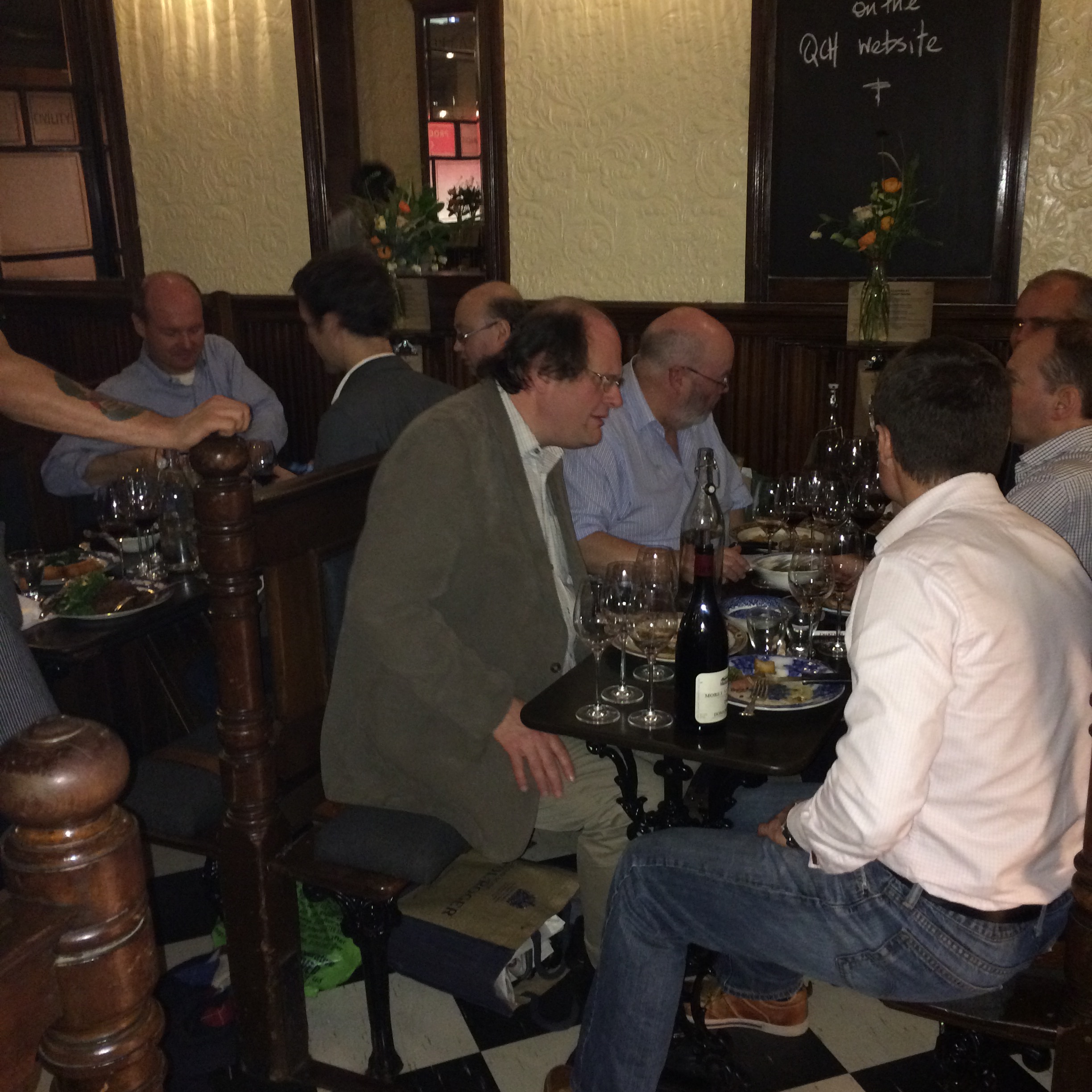
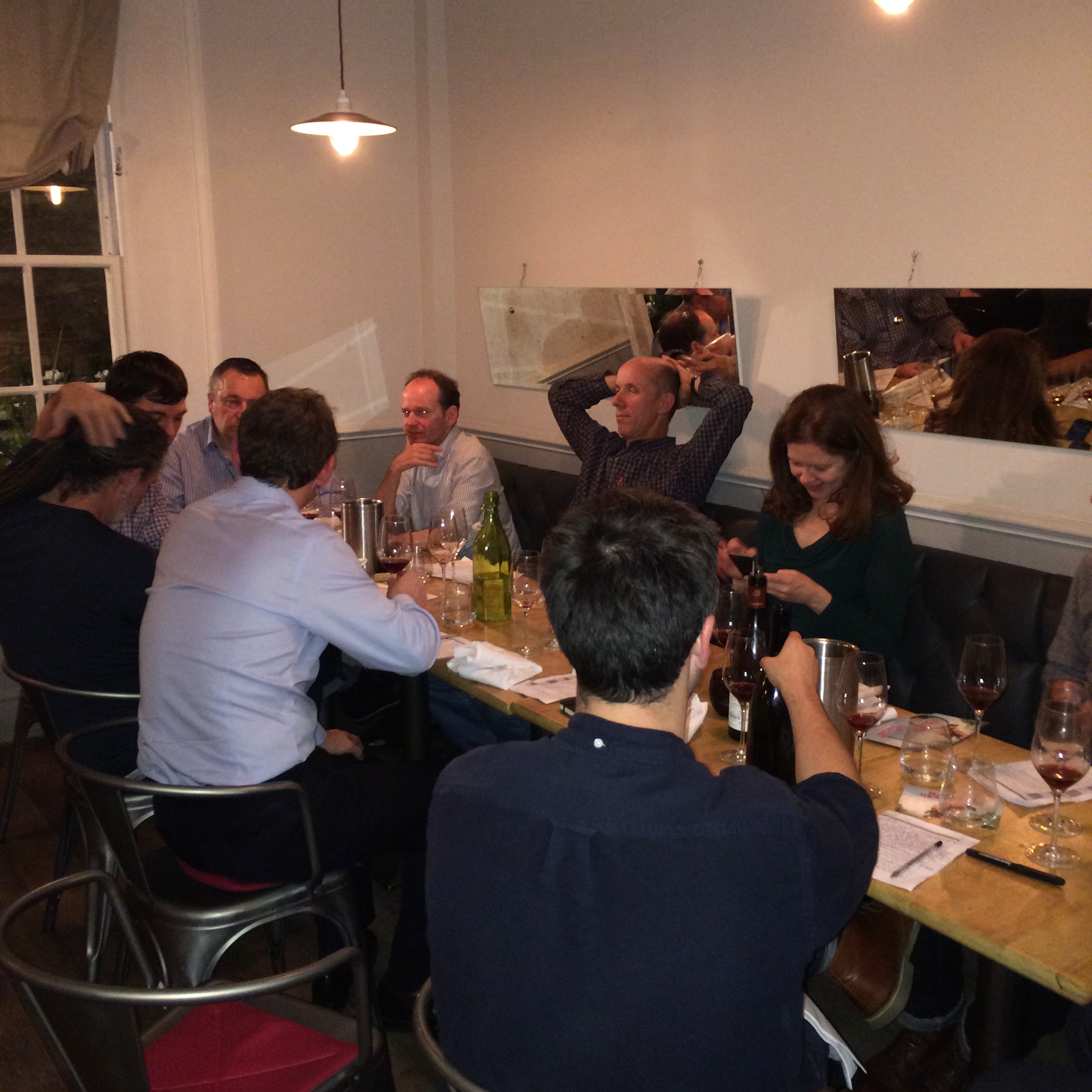
Well, it’s been that way for a while, but having participated in a very exciting Beaujolais dinner a few weeks ago (see post of 17 July) at The 10 Cases, we felt the need to explore some more of the region’s wonderful wines again. This time, the venue was Farringdon’s Quality Chop House, taking advantage of their “no corkage” deal on a Monday night. As ever there, the food was exemplary, great value, and the welcome was very warm.

We began with the first pair of Beaujolais-Villages, from Laurence & Rémi Dufaitre (Domaine de Botheland) – their cuvees Prémices and L’Air de Rien. These made a wonderful start to the evening. Fun wines brimming with fruit, most preferred the 2014 Prémices, with three out of ten (including me) going for the 2012 L’Air. This domaine has limited UK availability (these bottles were sourced in Paris), but they have been touted as new stars from the region. I have no doubt, on these and previous bottles of other cuvées, that this is true.

imageimage

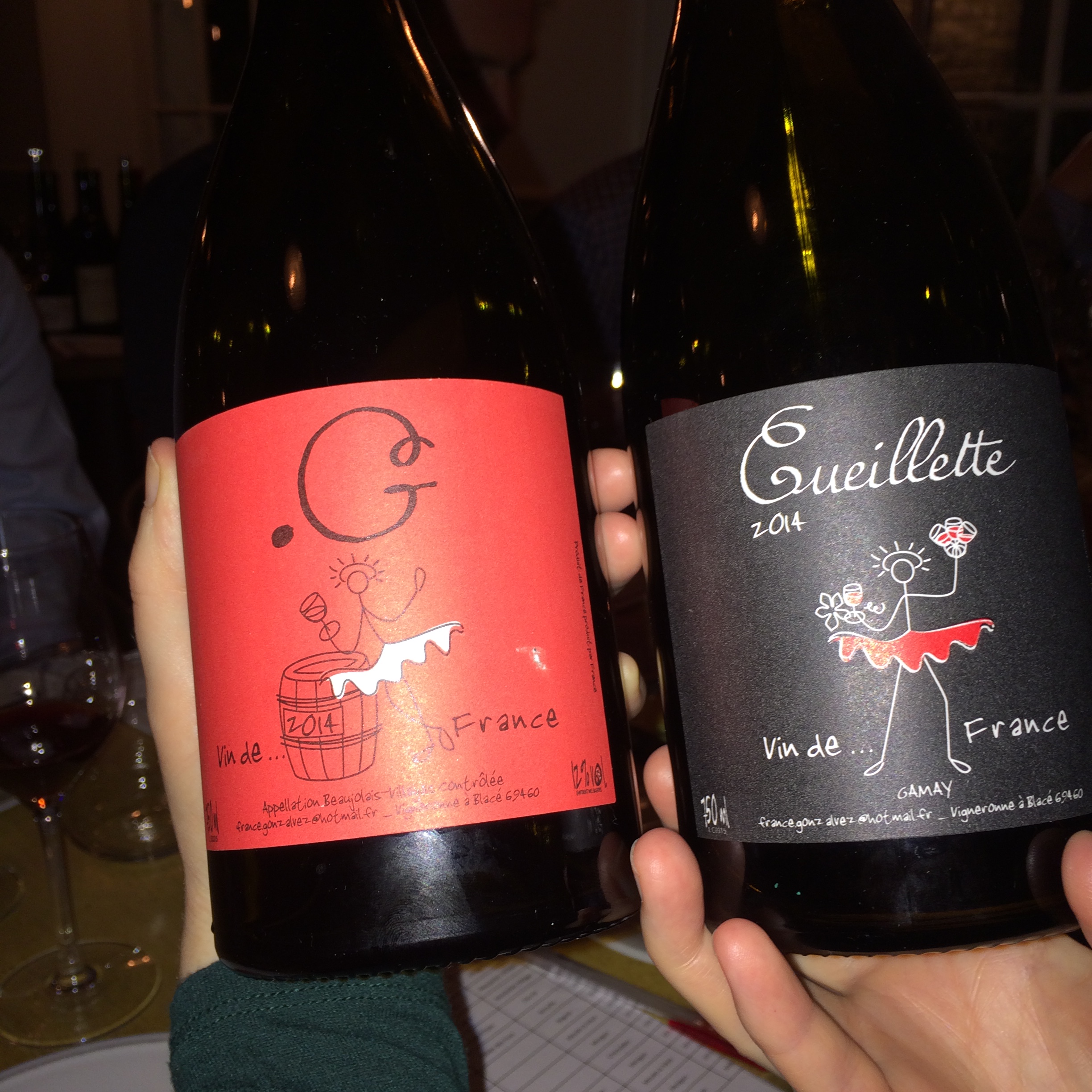
The next two wines, both 2012s, were from France Gonzalvez and Yvon Métras. The former was very stinky “Villages” to begin with, barnyard being the most pleasant term used. It did blow off, but the wine didn’t recover 100%. The Métras, a Beaujolais tout court, was singular and masterful. It didn’t concern me that the bottle was cloudy, having been carted around London all day. It had real presence and astonishing “life”.

imageimage

Next, two flights of Fleurie, the first consisting of two 2014s from Le Grappin (the Beaune micro-negoce of Andrew Nielsen) and Jean-Louis Dutraive (his Le Clos de la Grand Cour Cuvée Vieilles Vignes). The wine from Le Grappin has a great colour, very smooth, obviously showing some of the extra vigour of 2014, but really well made and showing extremely well alongside Dutraive’s wine – new to me, but very classy. Both provided a nice contrast to the natural inclination of the preceding wines, and indeed a hint that 2014 will provide some excellent prospects where the power potential was well handled, as here.

imageimage

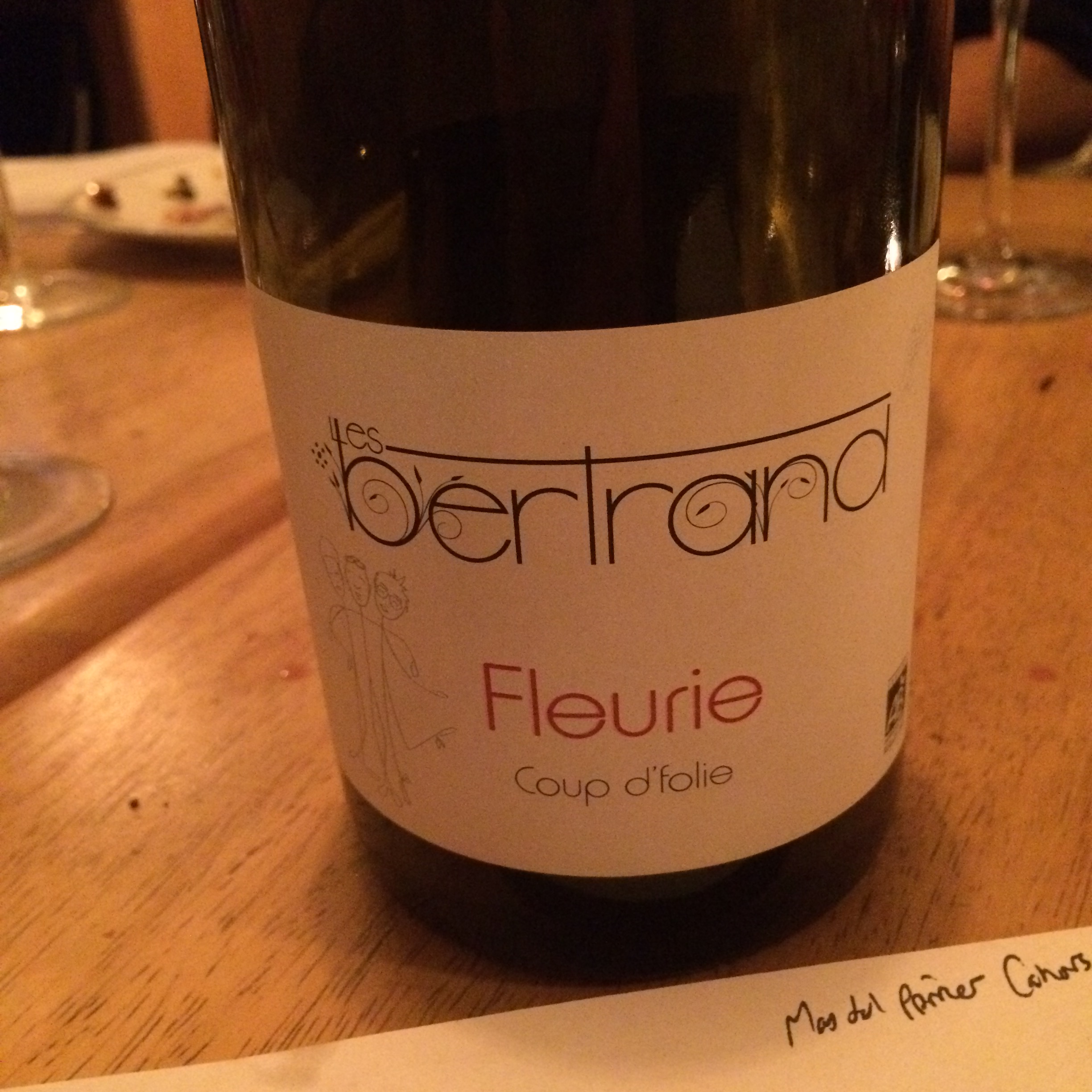
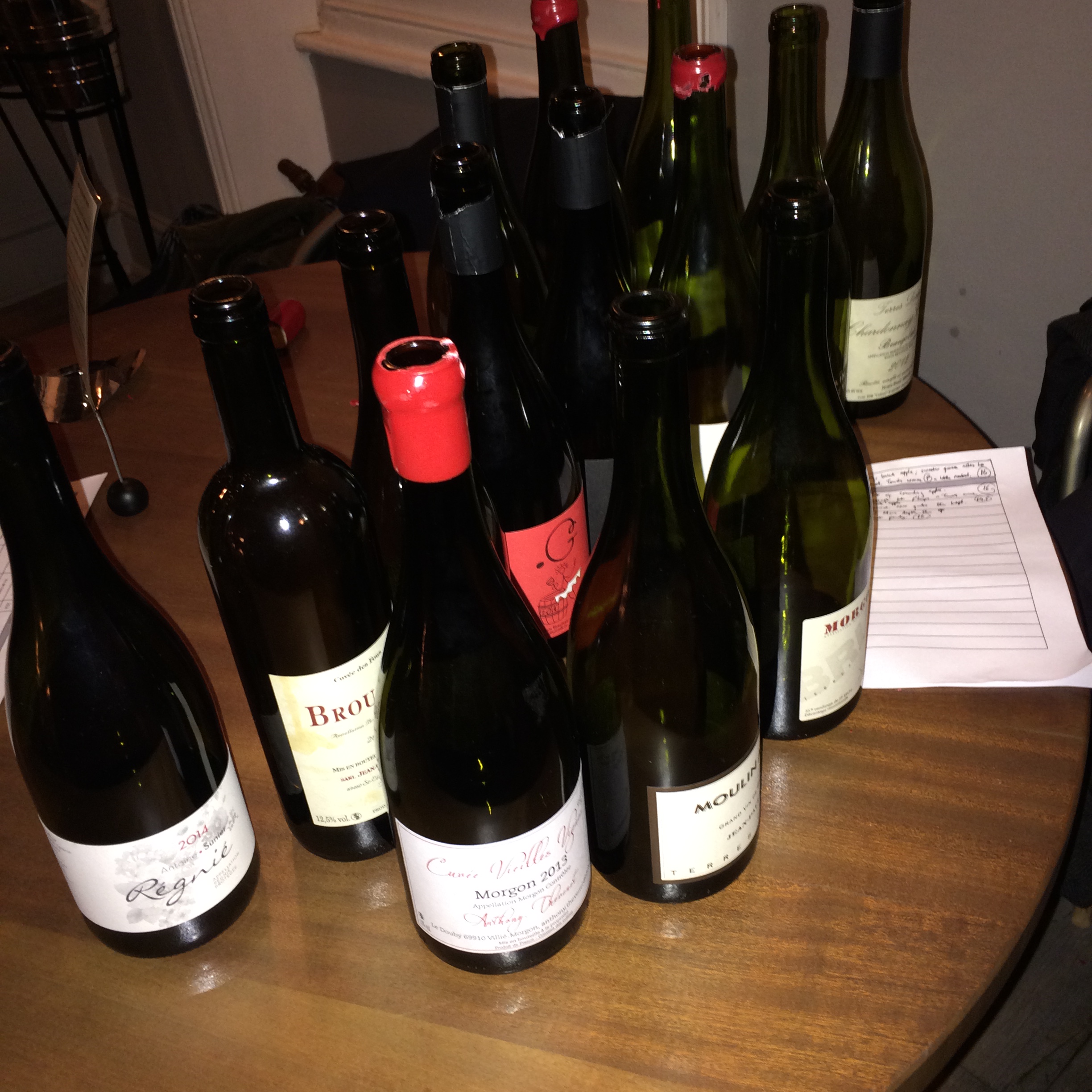
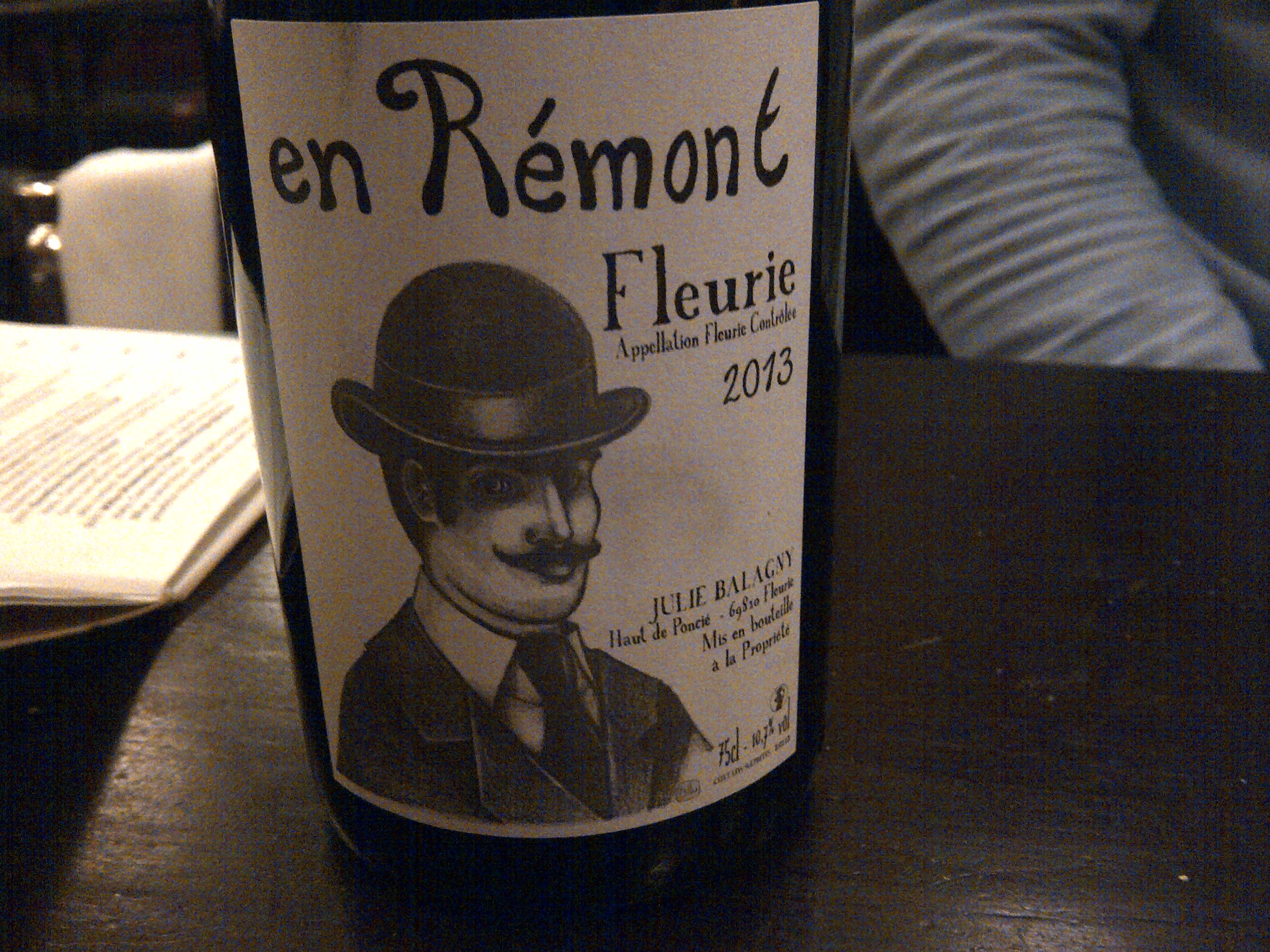
The second pairing of Fleuries were both from the region’s secret star, Julie Balagny. This young woman worked with Yvon Métras and they remain close associates. Her wines are no pale copy of that icon of “natural” winemaking, and she clearly has something new to say. The Carioca 2011 was fresh and delicious, yet someone said it had been through a bad phase not that long ago, perhaps providing further evidence that these wines will both age and evolve. The Fleurie En Rémont “Jean Barrat” was at first hard to interpret. I thought it was too old initially, but I’m now sure it was merely a big 2009 which had a certain monolithic quality. Highly intriguing nevertheless. Another wine which improved in the glass. I believe it was Julie’s first vintage, possibly her first wine, so her fans were very pleased to try it. I’m not wholly sure how I prised the bottle away from its Parisian owner. The 2011 may have won on the night but I’m kind of half regretting giving the empty 2009 bottle away (only joking Oli, unless you forgot it?).

imageimage

The next pair might have been, just, the least successful pairing overall. The second France Gonzalvez of the night was her Côte de Brouilly 2013, which for me was a bit stiff. We’d paired it with Jean-François Ganevat‘s Cuvée Madelon  2013. This wine wasn’t as popular as I’d thought it would be, even with the confirmed Ganevat fans. Very funky, I probably liked it more than anyone else prepared to voice an opinion, but I do think J-F is always pushing to say something different with all his cuvées. His Pinots and Chardonnays often taste far less weird than people expect, but this cuvée does push the envelope, it’s true. For me, cliché as it is to say it, the guy’s a wine genius, like Métras. Less sure on the label front though.

imageimage

One cool and amusing touch with Gonzalvez – the label says both “Côte de Brouilly” and “Vin de…France”, a play on her name, which nevertheless half fools people. How does she get away with it?

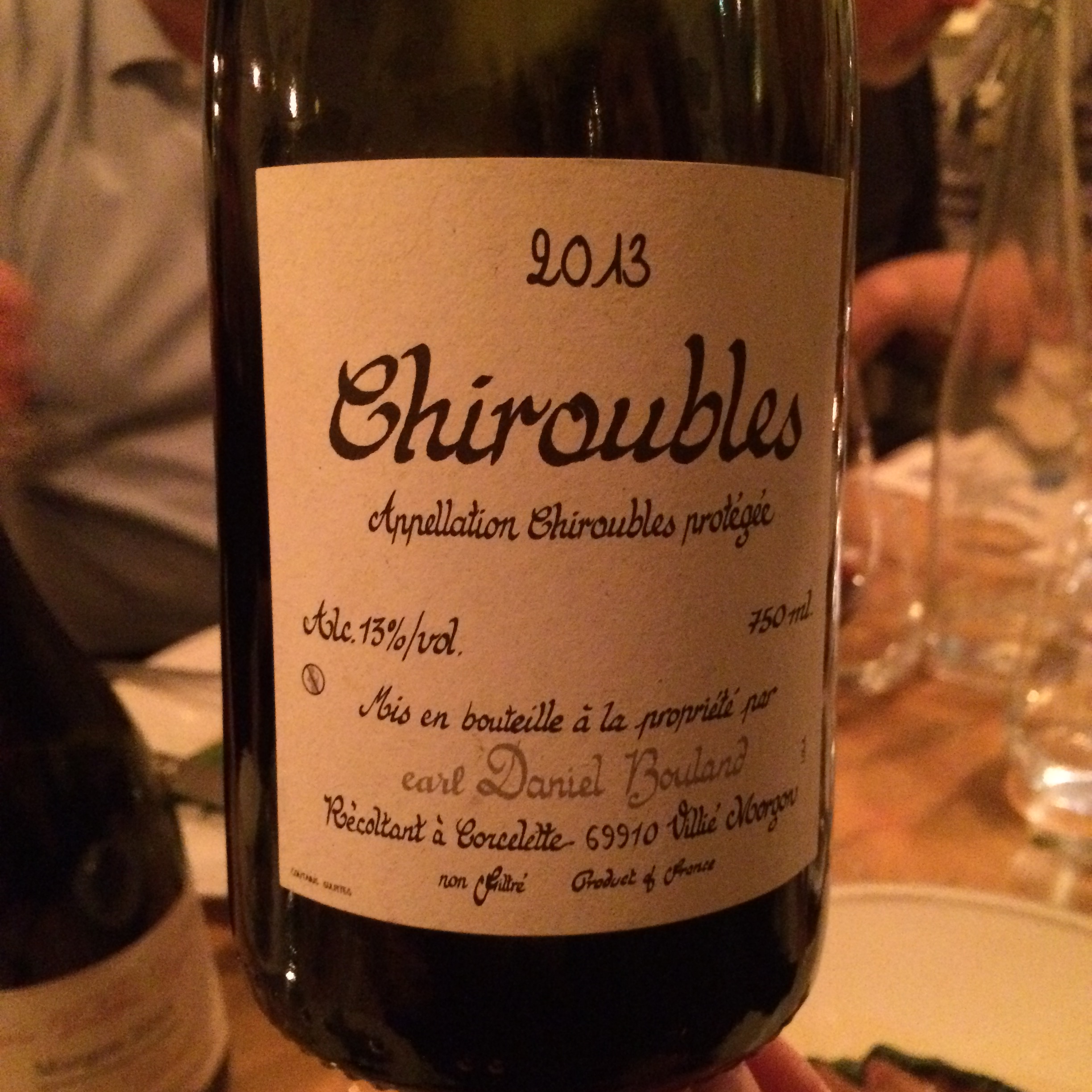
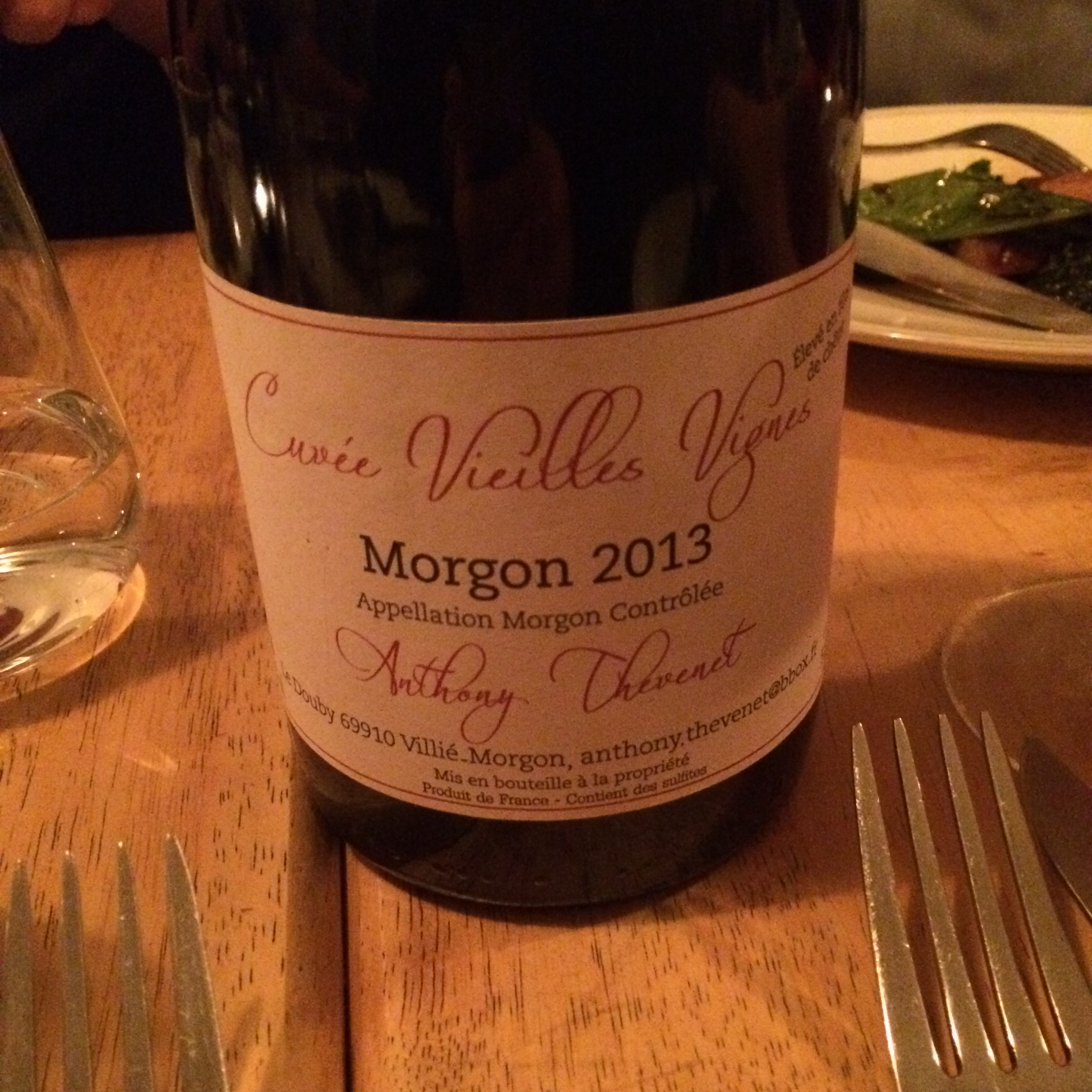
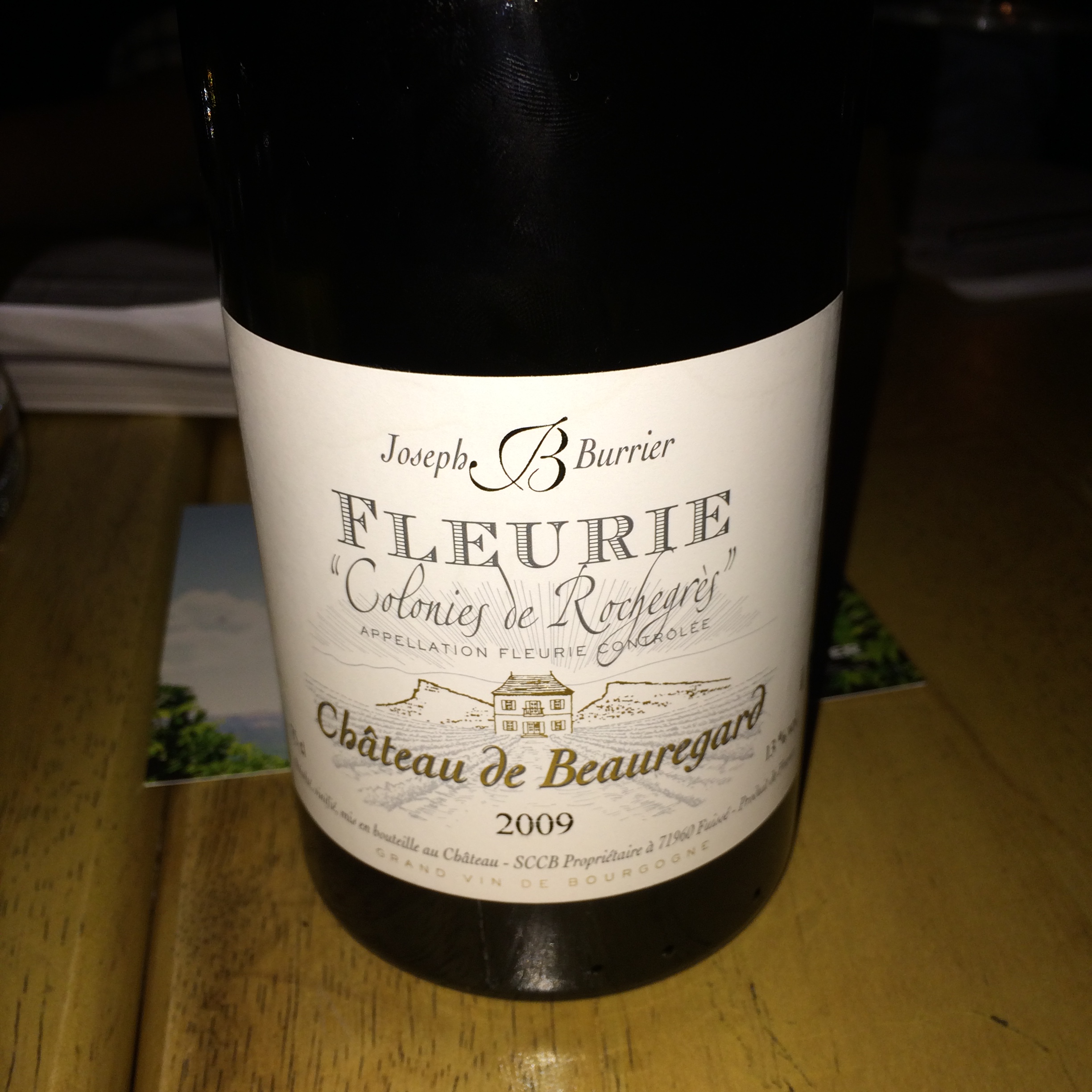
We finished the official flights off with a couple of Foillards from 2009. The straight Morgon Côte du Py was a contender for Wine of the Night when almost no wine failed to show well. Stunningly good. The Côte du Py 3.14 from the same vintage was not showing quite as well as the straight Morgon, but simply because it’s a fine wine just entering its stride – it should improve over a decade on this showing. It’s altogether a different sort of Gamay to the expected Beaujolais norm, but still clearly of the family.

imageimage

We ended up drinking a du Grappin red #Bagnum before I left, and it’s amazingly good wine to find in a bag (of which I shall have a lot more to say in due course). It’s made from Gamay entitled to the new Coteaux Bourguignons AOP. Delicious, especially slightly chilled. In fact the evening was pretty humid in London and we did chill most of the wines a little bit, worrying about the heat. But nothing seemed spoiled.

If the tone of this post seems less frivolous than usual it may be in part down to eating and drinking quite a lot and then getting home at 12.30am on a Monday night (ouch!). But it’s also down to recognising that not only is Beaujolais fun to drink, it’s also becoming a serious proposition. The wines are genuinely under priced for the quality but I’m not sure they can remain that way.

imageimage

Emma Nielsen models the summer’s must have accessory, the wine bag #Bagnum, available at a Saturday market near you (beware of fakes and counterfeits).

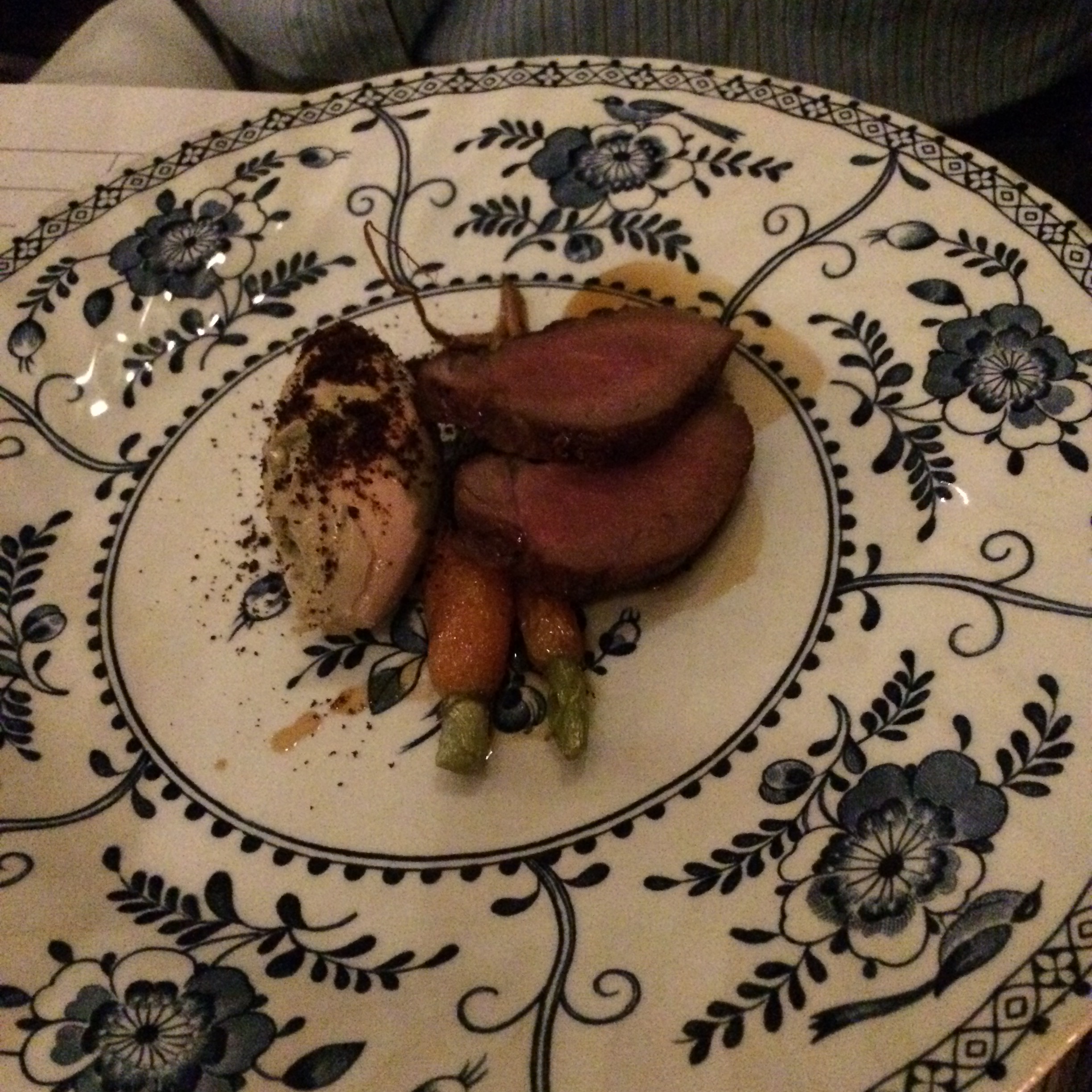
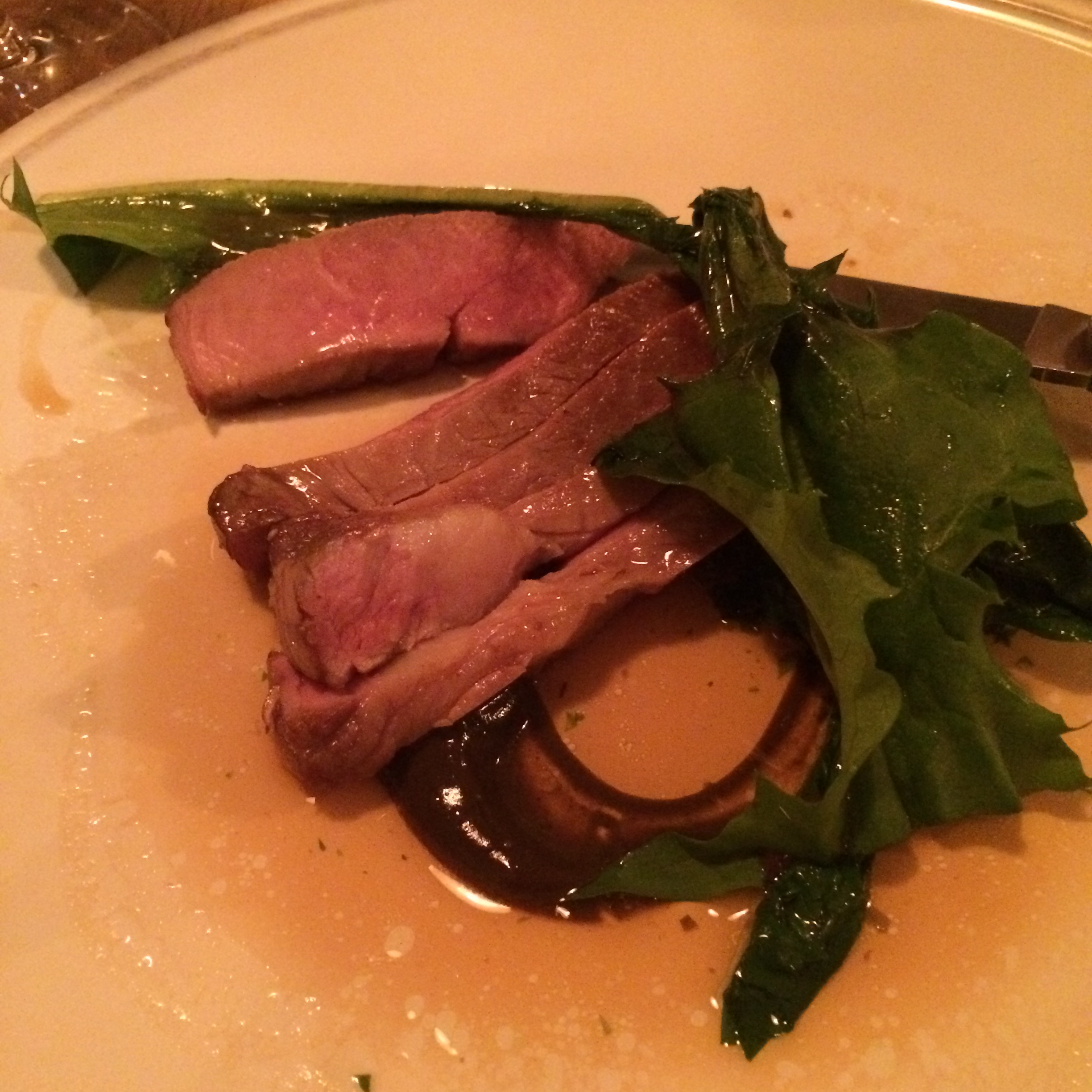
A final comment on the food…QCH really do make it difficult to choose what to eat. The Gloucester Old Spot for my main course was really good, although everyone was pretty ecstatic about their dishes, especially the monkfish dishes (starter and main), and the very filling (under statement) mince on toast. The bill, as ever, was totally reasonable. Although the tables are about as wide as a decorator’s plank, I still suggest it’s one hundred per cent worth slogging up Farringdon Road towards Mount Pleasant. At least it’s not hard to hear the person sitting opposite, as can sometimes be the case in the cathedrals of gastronomy (the campaign for a hearing loop in Michelin-starred restaurants starts here!).

Before leaving, to avoid complete disappointment for those expecting something frivolous, a silly photo…

image


Posted in Beaujolais, Wine, Wine Agencies, Wine Tastings | Tagged , , , , , , , , , , , , , , | 2 Comments