Dirty Dozen at the Vinyl Factory

There are a dozen wine merchants in this group, who were showing wines at The Vinyl Factory in Soho on Tuesday last week. How dirty they are, I’ll leave you to assess, but the dirt in question is terroir (presumably). Their manifesto claims:

  • We are committed to wines of integrity and authenticity
  • We believe in wines that speak of their terroir
  • We select winemakers that cherish their vineyards and the environment
  • We choose small over large and real before synthetic
  • We import wines for people that care, made by people that care

We can all agree with that, can we not? Within the framework of those commitments there was, to be fair, a very wide range of wines, from the cheap and fairly commercial, and the fairly smart and expensive, to the unusual and “out there”. But even in the cheaper range there were many wines of interest and with character, wines you wish would turn up on many a restaurant list when you are wading through the Cabernets and Malbecs (to be fair, there were one or two surprisingly tasty Malbecs on show).

The list of exhibitors was as follows: Roberson, Clark Foyster, Flint Wines, SWIG, Maltby & Greek, Raymond Reynolds, Indigo Wine, H2Vin, Astrum, Forty Five 10º, The Wine Treasury, and Top Selection. As is always the case with a big tasting like this, you have hundreds of wines on offer. I had around four hours to devote. I read on social media that one wine writer had just fifteen minutes! Still, it was nice to see a few fellow scribes, including some of the older generation, so you’ll probably get a few other takes on this event.

The wines I mention below, listed by importer, are those I really liked or found interesting. To those importers for whom I didn’t list many wines (or no wines in the case of two), I apologise. Such events are very hit and miss, and time flies, not to mention the fact that yet again the table hoggers were out in force. Plant yourself in the middle, knock back some bevvies and chat to your mate. Maybe there should be a gong? I probably spent more time at the Indigo table than any other, but then they were more attentive than most, and pushed so many wines of interest under my nose. And I did taste a lot of wines. I worked hard.

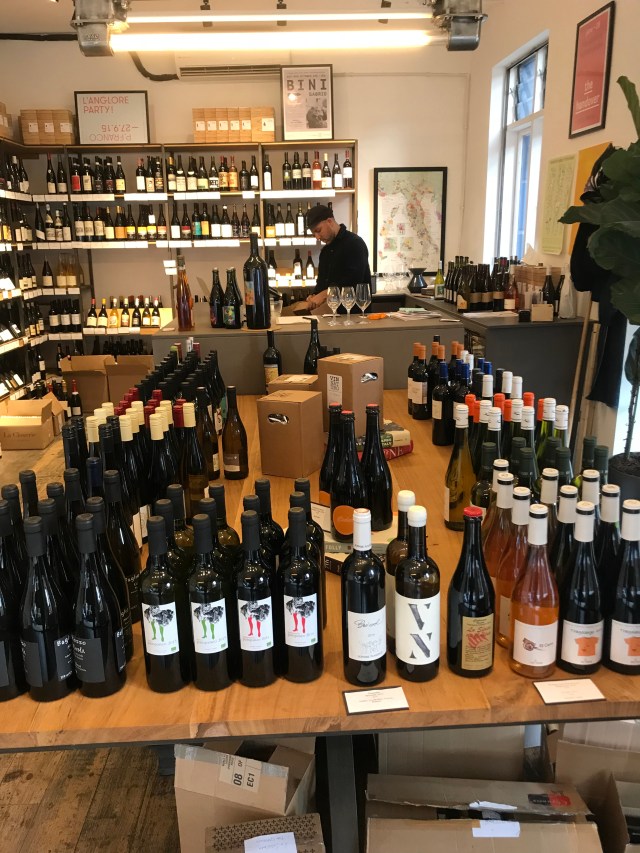
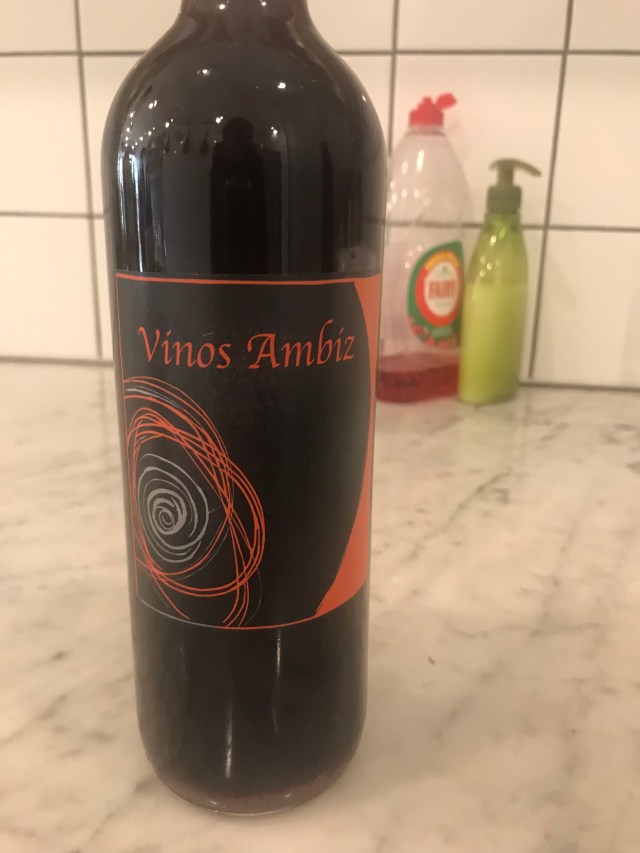
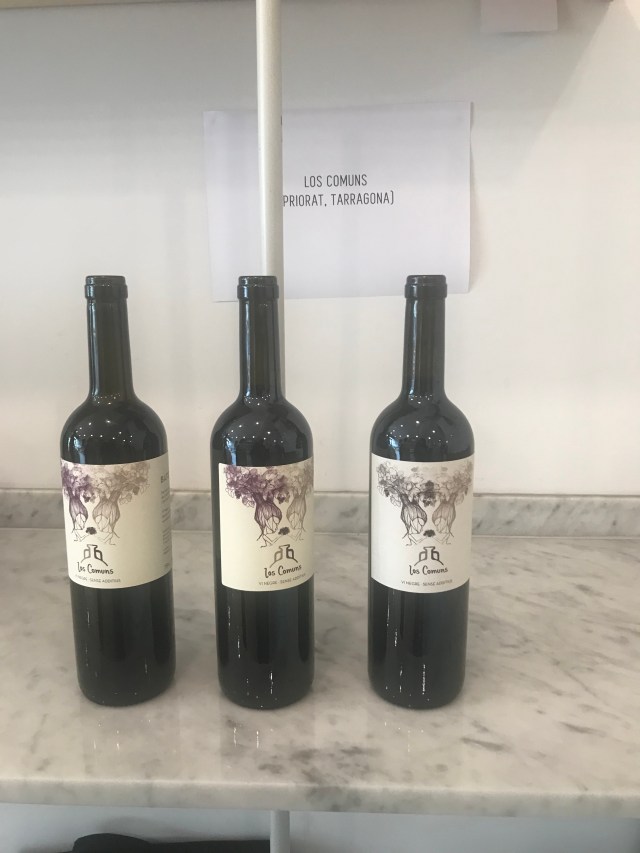
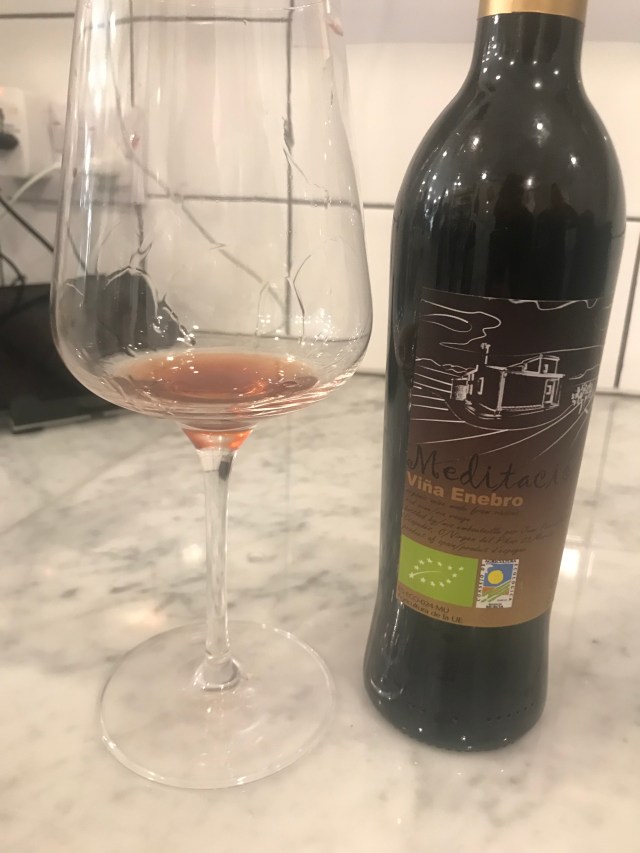
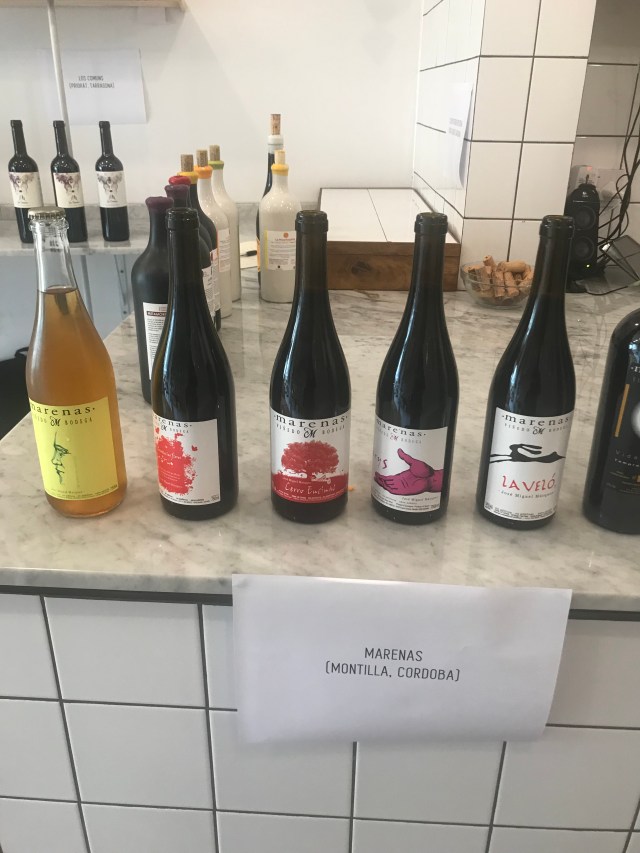
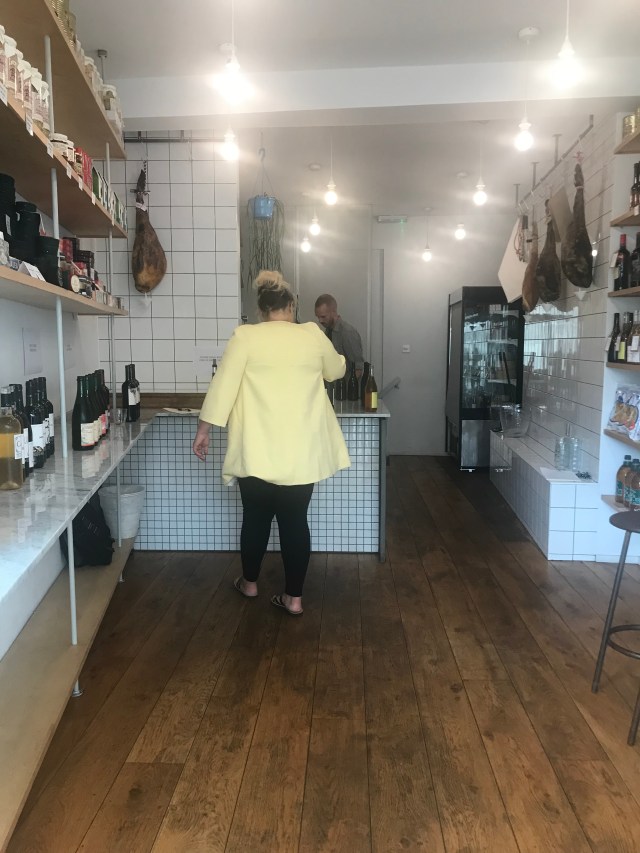
Hopefully the photos below give a flavour of the event.

Roberson

Roberson has a name for California, and justly so. Who has done more to reintroduce these wines into the UK, and to reinvigorate what is available! Matthiasson Linda Vista Vineyard Chardonnay 2015 is lighter and only 12.9% abv, delicious and good value.

They showed a couple of Beaujolais. I love 2014 in this region and Domaine Piron-Lameloise Chénas Quartz shows its elegance. Quite light, not as mineral as I recall the 2015 was at a tasting earlier this year (odd, vintagewise), but lovely fruit. Julien Sunier Morgon 2015 showed some of the characteristics of this riper vintage. I like it a lot. His 2015 Fleurie was one of my wines of the day at that big Bojo Tasting back in June. This felt restrained at 13%.

The first of many Austrians I tasted was Ebner-Ebenauer Zweigelt Alte Reben 2013 from Weinviertal. This old vine cuvée was luminous, high toned/perfumed and with sweet fruit, showing a slightly bitter finish.

Back to America to finish, Broc Cellars Happy Canyon “Coucou” Cabernet Franc 2016 is a light, pale, red with bags of fruit. Very simply labelled, a classic glugger in the natural wine vein. Tasty!


Clark Foyster

I have fond memories of drinking Jacques Picard Brut Réserve at 28-50 in Mayfair many times. This Jacques Picard Brut Nature is dry and steely, and pleasantly invigorating. Gusbourne Estate Sparkling Rosé 2013 from one of Kent’s best fizz makers, is a complete contrast, but no worse for that. Pale salmon-hued,  light summer fruits, fresh but with a bitter note on the finish. It’s made from 100% Pinot Noir, delicious, both fun but serious at the same time.

Heading down to Burgundy, you can find a nice Aligoté without the searing acidity once associated with this variety which is currently making a comeback – Charles Audoin Bourgogne Aligoté 2015 is possibly a product of the vintage, but it reveals another side of the variety here.

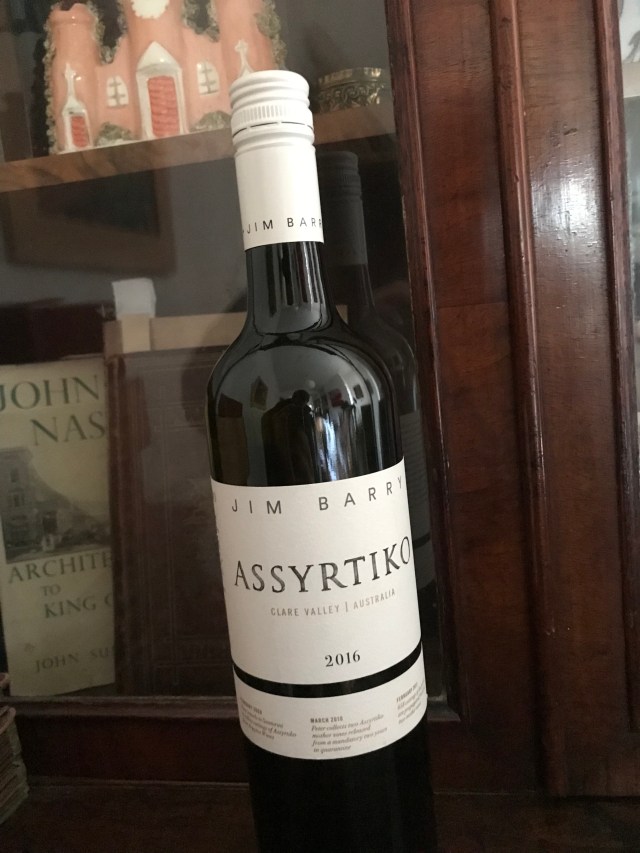
Clark Foyster imports a few well known Austrians (Moric, Pittnauer…) and Prieler Leithaberg Pinot Blanc 2015 from the slopes of Western Burgenland may be the least well known (although Prieler has been in Fortnum & Mason for years). This has nice round fruit and a waxy finish with perhaps a touch of quince. Argyros Estate Santorini Assyrtiko 2016 is fatter than some examples, but has great mineral/citrus fruit and freshness too.

A final white came from Kakheti in Georgia, Vita Vinea Kisi 2015. This blends more lemon citrus with a tropical note, a plumpish mouthfeel and a chalky dry finish.

Staying with Georgia, Orgo Saperavi 2015, also from the Kakheti region, is dark as hell (though darker still was to come at another table). Powerful, but with surprisingly smooth fruit, and a bit cheaper than the Kakheti white, above. And back to Greece, a very nice Xinomavro, dry and tannic but with quite a mature nose and a big personality, Diamantakos Estate Naoussa 2013.

To finish here, two very different wines. Helmut Lang Samling 88 Tba 2005 is smooth, sweet and concentrated and would have been a nice wine to end on, but we were all blown away by a Madeira, HM Borges Boal Colheita 1995. Coffee/toffee, caramel and everything else. Very reasonably priced and very moreish, you can’t go wrong buying this.


Flint Wines

Les Caves used to import Peter Pliger’s wines and I bought them quite regularly. Now Flint have him and I was really pleased to taste his classic Kuenhof Riesling Kaiton 2015 from Eisacktaler in Südtirol. Maybe a bit bigger fruited and thereby less mineral than some vintages but still vibrant. I remain a fan.

I’d really wanted to try the Martin’s Lane wines from Okanagan Valley in Canada. As annoyingly happens at events like this, some wines get snaffled, maybe by the same people who take up a spot centre table and don’t move for half an hour. So there was no Martin’s Lane Fritzi’s Vineyard Riesling 2014 to try. Thankfully there was some Martin’s Lane Naramata Ranch Pinot Noir 2014. This has real depth on the nose, smooth round fruit and elegance despite a certain plumpness. Very interesting, though fairly expensive. It’s the first vintage for this new estate, which is aiming high. For now, talk to Vagabond or Uncorked if you want to try them from a retailer.

There was also a little Domaine Arlaud Hautes Côtes de Nuits 2014. It’s a domaine whose wines I’ve liked for some years, and it surprises me that they are not a little better known among the many Burgundy obsessives I know. Okay, this is “Hautes Côtes”, but it’s nicely perfumed with more elegance than you might expect, as well as that certain restraint and a touch of earthiness.


SWIG

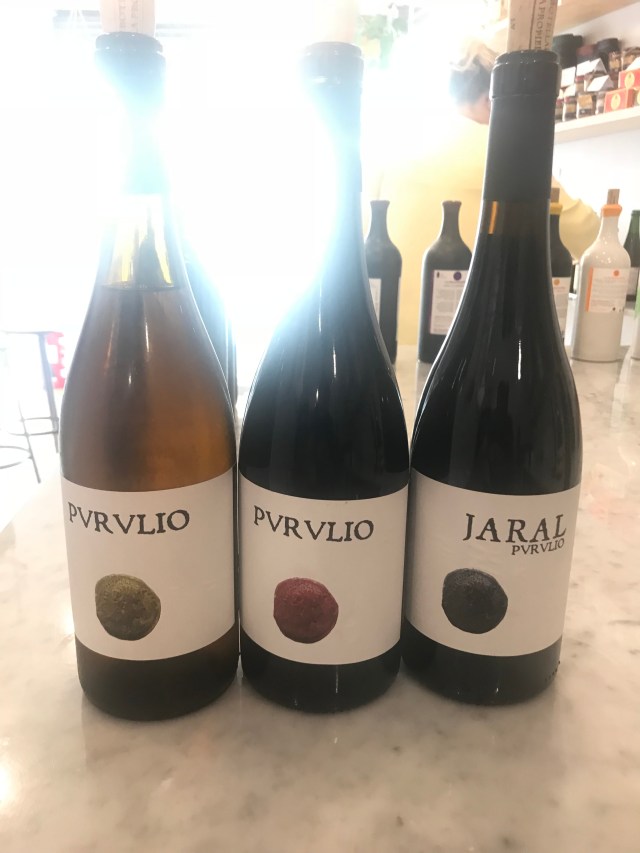
I wanted to mention Richard Böcking Riesling 2015 from Traben-Trarbach on the Mosel in part because it was possibly my “picture label of the day”. It has to be said that bright and shiny labels seem to be the thing these days, but this is more classical, or do I mean “romantic” (see photo below).

One wine with a very bright label will be well known to all of you who visit the wine fairs. BK Wines One Ball Chardonnay 2016 is the new vintage from this jovial Adelaide Hills label. At 12%, it is a typically light and refreshing natural wine, great fun. For drinking and not “analysis”, which seems refreshingly to be in vogue as well these days.

At the other end of the spectrum, if you want a world class version of a Burgundian grape variety from Australia, then the Mornington Peninsula is probably the place to go. I have to say that on my only visit there I completely fell in love with the place, and there are many worthy applicants for the title of best Pinot. Yabby Lake Single Vineyard Pinot Noir 2013 would be in with the mix. A fine dry year in Mornington. The wine is palish and very perfumed. There’s still a little tannin to give structure and it will certainly improve over, say, five years. But it’s good!


Indigo Wine

I did taste rather a lot at Indigo, but some merchants really make an effort to get their wines out there much more than others do. For what it’s worth, I appreciate being recognised and having some interesting stuff I’ve never tried pushed under my nose.

I tasted quite a few South Americans, many with some sort of Michelini Brothers connection. I admit I don’t drink a lot of South American wine, but I have featured the Michelini Brothers before and Dave Stenton contributed an article on this blog about a visit to see them a while ago (see here). If you also look at the recent Decanter Tasting of Argentinian Reds, these brothers seem to be at the heart of everything exciting in that country.

One of their winemakers produced Escala Humana Livvera Blanco “El Zampal”  2016 from Argentina’s Uco Valley. It’s 100% Malvasia with 25 days on skins in cement. You get all of this on the nose and in the mouth. Another Uco Valley wine is Triangle Wines Salvo Semillon 2017. Made from 120 year-old vines, 60% fermented in steel, 40% in egg on skins. Triangle Wines is a project between Gerardo Michelini and Indigo Wines. Both of these are well worth seeking out.

Antonio Madeira Dão Branco 2015 comes from high vineyards and a complanted field blend of around twenty varieties. Winemaking is minimal and it’s pale, fresh and dry. Indigo have plans to import a number of single vineyard wines from Clemens Busch, but in the meantime Clemens Busch Dry Mosel Riesling 2015 is a pretty good introduction, 11.5% and not much money for the quality.

Back to Argentina with another Triangle Wines – Salvo Malbec “El Peral” 2016 (Uco Valley again). 100% Malbec in concrete egg, dry but fruity, young and fun. Over the Andes to Chile, Rogue Vine Jamón Jamón Semillon Itata Valley 2016 has a touch of Muscat added, all old vines. Amazing nose, dry and lemony with a hint of Muscat florality. Altar Uco Blanco, Gualtallary 2015 is 90% Sauvignon Blanc/10% Chenin, oak aged with another beautiful bouquet, on the palate showing lemon citrus and a pleasing salinity.

Back to red, I’ve heard a bit of chatter about the next producer – Frederick Stevenson Dry Red, Barossa Valley 2016 is a blend of Carignan, Syrah and Grenache. Low intervention, smoky but with gentle fruit coming through. Refreshing red at just 12% abv, very un-Barossa in that respect.

Off list again for the Livverá Malbec 2015,  which may weigh in at 14% but has brilliant fruit. Tinta Tinto Syrah, Casablanca 2016 is a nice Chilean project by a husband and wife team who do everything, including making handmade, hand drawn labels. But what stands out with this wine is the bouquet – the purest Ribena you’ve ever smelt, and you’d be fooled into thinking it was non-alcoholic until you taste (13.7% abv).

I couldn’t walk away without a sip of Daniel Landi Uvas de la Ira Méntrida 2015. I love this wine, and what value as an intro to one of Spain’s great winemakers. The Garnacha is exquisitely perfumed, and there’s just a touch of tannin for structure. Indigo did show me some exciting wines, but maybe I’d go for this, still, as my wine of the day from their table.


Maltby & Greek

Maltby & Greek do what they say on the label, being specialists in Greek wines, mainly from indigenous varieties. I always regret the lack of wide distribution for wines from Greece, and I’d seriously commend these guys for wines at all prices.

I began by tasting two traditional method sparklers, Domaine Kariniki Brut Speciale 2015 and their Cuvee de Prestige Nature 2014. The wines come from Amyndeon in Greek Macedonia. The “Speciale” is 100% Xinomavro from vines grown at 650 metres altitude. It has a classic profile, rather like a good Crémant, and similarly priced. The “Nature” is a zero dosed Assyrtiko-Xinomavra blend. For an extra pound or so you get a bit more interest on nose and palate, rounder and a touch fatter too (and 13% as opposed to 11.5% abv).

From Agealea, in the Peloponnese (which I don’t know) comes Rouvalis Winery Asprolithi Roditis 2016. I generally like the Roditis grape variety. This is soft, simple and very cheap, probably sub-£10 retail. Also on the softer side is Robola Co-operative San Gerasimo Robola, Cephalonia 2016. One of the many island wines M&G sell which you rarely see in the UK.

One of the big names in Greek wine (for quality) is Alpha Estate. Alpha Estate “Axia” , Amyndeon, Macedonia 2015 blends Sauvignon Blanc with Assyrtiko. Do I prefer it to a good Assyrtiko tout-court? Maybe not, but I’d buy a bottle of this unusual blend to give it a go on the basis of this taste.

I wanted to end my white tasting with a pure Assyrtiko I know but see all too rarely – Domaine Sigalas Barrel Assyrtiko 2015. I know their Santorini “unoaked” version very well, but this version is a little different. It was all gone, sadly. But M&G stock several Sigalas wines, one of the top producers on Santorini.

Along with Assyrtiko, my other favourite Greek grape variety is Agiorgitiko. Ktima Kokotou “Three Hills” 2015 comes from Stamata (Attica), and blends that variety with Cabernet Sauvignon. This is cheap (again, guessing under a tenner retail), and has a nice bright red colour, a simple fruity palate, but with a touch of bitter cherry on the finish to add character. A bistro wine, and the kind of thing I’d relish finding in the type of local restaurant where the wine list is otherwise average.

There were some much more well known reds down the list (more Sigalas and a couple from Alpha Estate) but I ended with a couple of sweet wines. Nopera Winery Sweet Muscat, Samos 2013 is classic Samos Muscat – not complex but sweet and concentrated (and 13.5% abv), but with enough freshness to stop it being cloying. Domaine Sigalas Vinsanto 2006 is a Santorini blend of Assyrtiko and Aidani. This is a step up and classy. Darker than the Muscat, the nose has complexity. The sweetness is figgy with hints of dark brown sugar, slightly caramelised. The palate is balanced: both unctuous and yet not sickly. And it’s only 9% alcohol.


H2Vin

H2Vin showed some interesting wines, and I’ll readily admit I’d like to mention more. But some of them most of you will already know (Larmandier-Bernier, Alphonse Mellot, Jiménez-Landi, Clos du Caillou, La Vieille Julienne etc). You may know the following four as well, but if you don’t…

Xavier Frissant Fié Gris “Les Roses du Clos” 2016 is as tasty an example of this Sauvignon Blanc parent as you’ll find. The books will tell you it originates in Bordeaux, where it is sometimes just called Sauvignon Gris, but it is at home in the Loire (and in pockets around Saint-Bris in Burgundy). This seems like a souped up “SB”, with lots of intense gooseberry and a whiff of cat’s pee! Fresh and bracing, in some ways both “old school” and new.

Jurançon is under appreciated, but the dry version even more than the sweet. Camin Larredya Jurançon Sec “La Part Davant” 2016 blends two-thirds Gros Manseng with Petit Manseng and a touch of Petit Courbu. It undergoes a maceration pellicullaire before fermentation in a mix of stainless steel and foudre before resting on lees. This gives Jurançon Sec its texture and greater complexity. A textbook example of a wine we should all drink from time to time.

Domaine Bargylus Blanc 2010 is from the by now quite well known Syrian estate. It’s my first taste of the white. Note the vintage, this has bottle age. The vines are grown on the slopes of Syria’s coastal mountains and this blend of Chardonnay and Sauvignon Blanc is quite mineral with lime citrus and a herby note in the background. Where we used to pray for those working at Chateau Musar in Lebanon, now we must send our thoughts out to those working here. Nice to see this on show (I didn’t spot the red?).

The last wine here is from an old favourite, who I first discovered on Adnams’ list in the 1990s, and have latterly mainly picked up in France. Elian da Ros Côtes du Marmandais “Vignoble d’Elian” 2014 has vibrant, dense, brambly fruit with a bitter twist. Some might say “rustic Bordeaux” but there’s more going on here and the winemaking is quality. More than your usual “country wine”, and a producer to follow if you don’t already know him.


Astrum Wine Cellars

Astrum has a good selection of Central European wines to pair with its well regarded Italian offering, and its newcomers from the New World. Huber Grüner Veltliner “Obere Steigen” 2016 comes from the old family producer now under the care of young Markus Huber (10th generation), in Reichersdorf (Traisental). He makes some nice wines, which crop up in unusual places (he makes Waitrose’s own label Grüner). This is more intense, a classic version, very fresh and mineral, with a hint of black pepper.

They also have a few wines from Johanneshof Reinisch in Thermenregion. I’ve had many of this producer’s wines and never a dud. But I would really recommend you try one of Austria’s more unusual, rare, grape varieties in this Johanneshof Reinisch Rotgipfler Satzing 2015. The grapes are from the famous Gumpoldskirchen vineyards, on limestone and clay/loam. It just explodes in the mouth with citrus and tropical fruit plus a more developed note of grapey richness.

Another side of this producer is in their non-autochthonous varietal, Johanneshof Reinisch Pinot Noir “Grillenhügel” 2010. Vines on this limestone (mainly) hillside site are around twenty years old. Fermentation is in large oak after relatively late harvesting, with around 16-18 months ageing in barrel. Lighter than the 13.5% alcohol might suggest, there’s good fruit and emerging complexity. Bring on the game, I could drink this now.

When I want Cique Terre I usually think of Red Squirrel, but the local co-operative is worth a look as well as the independent producers, though as it’s Cinque Terre don’t expect a bargain. I did really like Cantine Cinque Terre Cinque Terre “Costa da Posa” 2016. On these ridiculous slopes around 300 growers farm tiny plots adding up to about 60 hectares. 70% Bosco, 20% Albarola and 10% Vermentino go into this. It rests on the lees but is bottled early after five months or so, giving a bouquet of herbs, honey and wild flowers, with a palate which is brisk and zippy yet surprisingly full-bodied. A mineral finish rounds it out nicely. Looks nice too, yellow straw with bright glints.


Forty Five 10º

This is an Italian specialist. In Italy I’m continually flitting between Piemonte, Tuscany and Sicily, without managing to focus on more than one at a time, but if I were to choose a favourite Italian producer, then Castello di Ama would be in the running. Castello di Ama Chianti Classico Riserva 2008 is brick red with an amazing nose. This stuff ages really well, even the normale, and although many would love it now, it will mature further, though will peak fairly soon.

Dark cherry and tobacco notes from a blend of 80% Sangiovese with Cabernet Franc, Merlot and Malvasia off limestone and clay at between 400 to 530 metres altitude. Fruit is 100% destemmed, all varieties are fermented separately, after which it goes into barrel (20% new oak). Long on the finish, and for me, as classy as Classico Riserva gets. Now, of course, Ama do not produce a “Riserva” as such, so this is rare as well as very good.

IMG_0559


Top Selection

I’m off to Alsace soon, and I’ll be staying in Andlau, so I couldn’t neglect to try the wine of an Andlau producer. Andlau is in the Bas Rhin, further north than some of the most famous wine villages, though not less endowed with  fine terroir and producers in my humble opinion. The village is unusual because the geology of the surrounding vineyards, though complex, contains a lot of Silurian and Ordovician schist. The Vosges are mainly granite with gneiss and even sandstone in places.

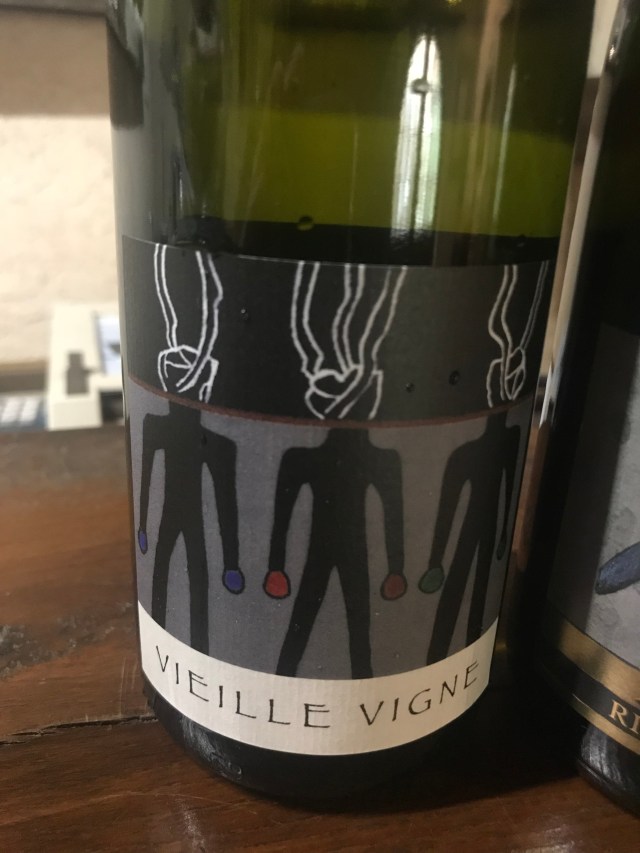
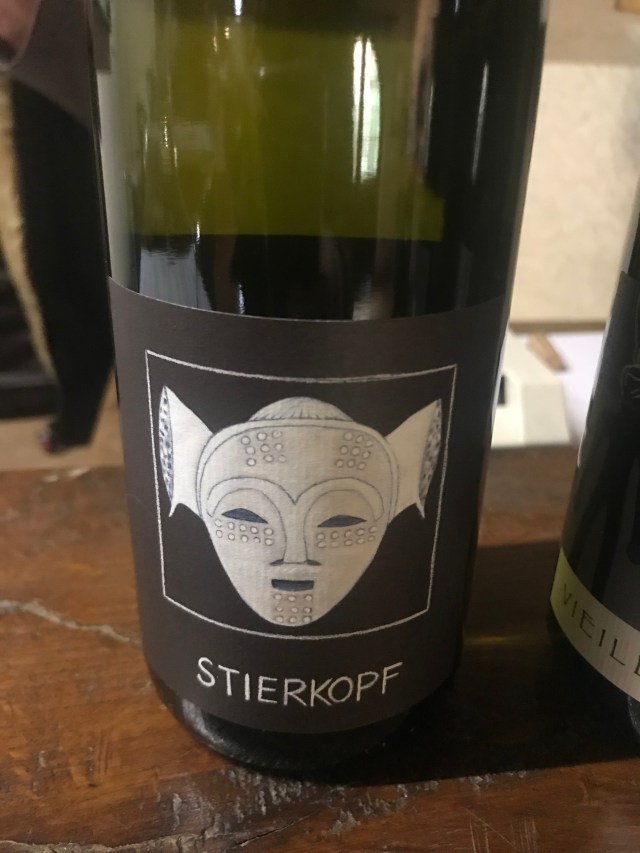
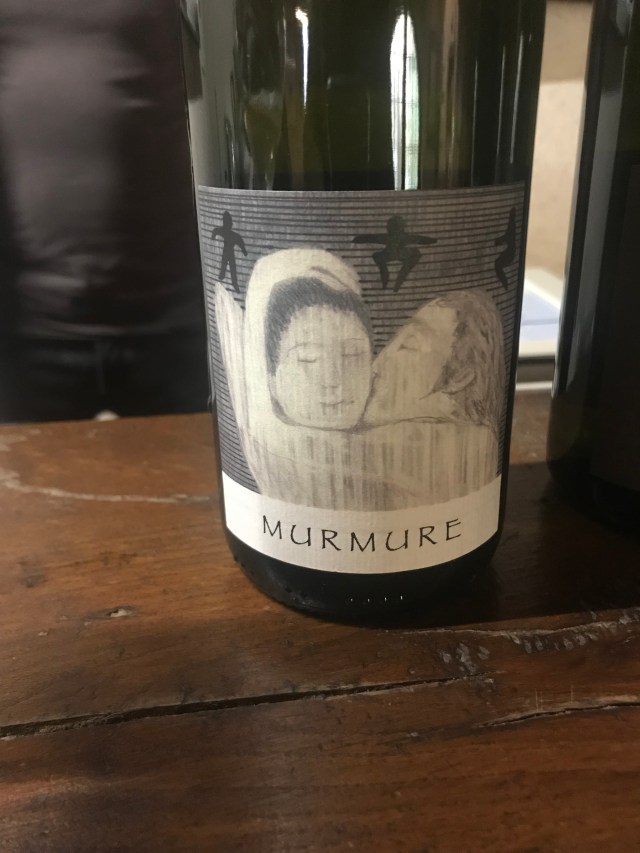
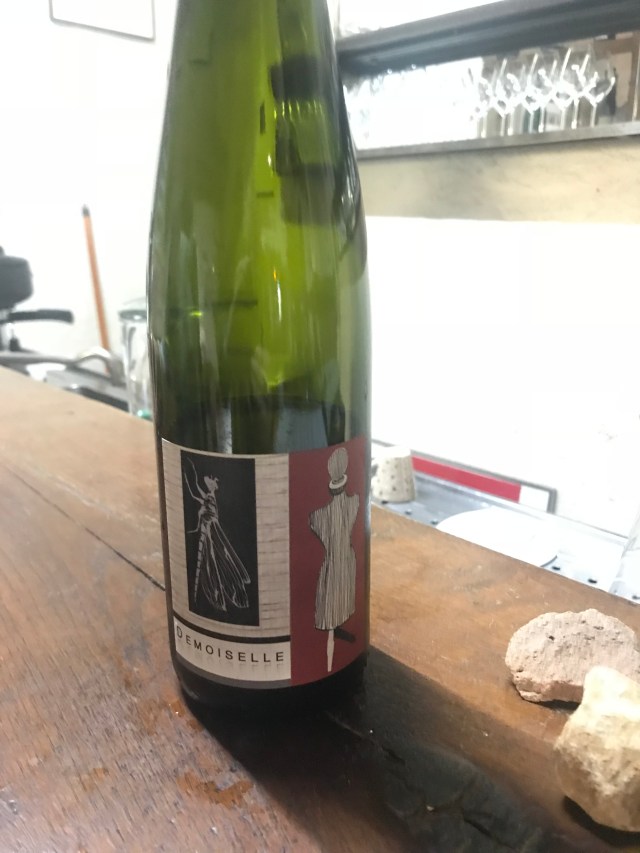
Gressser’s Crémant cannot express the complex terroir like his Grand Cru still wines, but there is a brightness to this biodynamic sparkler, Remy Gresser Crémant d’Alsace NV. Quite appley on the nose, it’s a pretty wine, fresh and with a lightness of touch. I think this is made from Pinot Blanc, the standard for the region’s sparklers, although there’s quite a bit of Chardonnay planted (mainly) for Crémant these days.

IMG_0560


Posted in Wine, Wine Agencies, Wine Merchants, Wine Tastings | Tagged , , , , , , , , , , , , , , , , , , , , , , , , , , , , , , , , , , , , , , , , , , , , , , , , , , , , , , , , , , , , , , , | 2 Comments

Gut Oggau Family Reunion

Many family reunions are fraught with tension, petty jealousies and conflict under the surface. This particular family reunion was the happiest I have ever attended.

Gut Oggau is probably known to many who will read this article, but for those who do not yet know this Austrian producer, they deserve a very brief introduction. Based at Oggau, on the western shore of the Neusiedlersee in Burgenland, they use minimum intervention and biodynamic practices with the aim of expressing their different terroirs through all of their wines.

Eduard and Stephanie Tscheppe-Eselböck have come up with a unique concept for expressing their different bottlings – a family. There are (usually) ten wines in the family, split into three generations (three children, five “parents” and two grandparents), each with a unique label depicting a head shot of the family member.

IMG_0480

The Tasting, on Monday this week, took place at the Bermondsey premises of Gut Oggau’s UK importer, Dynamic Vines. There was an opportunity to taste a previous vintage of almost every family member, after which Eduard and Stephanie gave a tutored tasting and talk on the unique 2016 vintage. Why family reunion? Because, as with so many Northern European wine regions in recent years, 2016 in Burgenland was dogged with frost and hail. Gut Oggau lost half of their crop. The result was that they decided to blend their family into just three wines: one red, one white and one rosé.

I’ll talk about the remarkable wines Gut Oggau made in 2016 in a moment, but first an introduction to the family, via those older vintages.

The entry level at Gut Oggau is, in my opinion, no less worthy of purchase than the more expensive wines. Take Theodora, for example. She’s a young white with a bit of attitude, no better expressed than in 2015. Eduard and Stephanie decided she was ready for bottling before all the sugar was fermented out, so they put the wine into a heavy bottle under crown cap. The 2015 Theodora isn’t fizzy, but it does have the prickle of dissolved CO2. A blend of Grüner Veltliner and Welschriesling, it retains the characteristic freshness this wine shows in all vintages. I can’t recommend it more highly.

IMG_0482

Atanasius (2015) is the red from the younger generation, and the 2015 is vibrant in colour and fruit. The fruit, Blaufränkisch and Zweigelt, is really good here. The wine demands glugging. Sadly, Winifred, the rosé, wasn’t present, although this is one of the most beguiling wines of the Gut Oggau stable.

IMG_0483

Four of the parents’ generation were present. The two whites are Emmeram (2015) and Timotheus (2015). Emmeram is a Gewurztraminer like no other. At 13.5% alcohol you might think “here we go”, but there’s acidity and that hallmark Gut Oggau freshness, a lemon note from the limestone terroir (who can recall that appropriately named Alsace lieu-dit which combines limestone and lemons?), and great length. It was actually my first time tasting Emmeram and I bought a bottle. I shall open it for friends who might not like Gewurztraminer. Timotheus has a bit more weight and complexity than Theodora, without the youthful zip. As his bio says, “refined but with substance”.

The two parental reds are Josephine (2013) and Joschuari (2014). Josephine is always one of my favourites. It comes from lower, south facing, slopes, which were some of the worst hit in 2016, although they are the sunniest vineyards Gut Oggau farms. Expect sweet fruit but a little bite and backbone, and a touch of tannin. Josh has a real luminescent quality with sweet cherry fruit. It is 100% Blaufränkisch from higher (c.300m) slopes on limestone, and also slate, which you can detect in the added mineral bite on the finish, I think.

The grandparents are Mechthild (white, 2015) and Bertholdi (red, 2015). These are the top of the range, and pretty expensive compared to the younger generation. Mechthild has some skin contact, and texture which adds complexity, but there’s still a nice round mouthfeel. There’s wax, honey, flowers and a citrus note in a complex wine, and you get a lovely slightly sour or bitter note on the finish which adds a savoury quality. Bertholdi is structured, with tannins, yet the fruit is so bright you would happily drink this now, especially at a restrained 12.5% abv. They are both made using a very old beam press, and to me they appear the most classical of the Gut Oggau family.

What of drinking dates for these wines? Both Eduard and Stephanie say they make the wines to be drunk on release, and the freshness and vibrancy they possess all through the range bears this out as sensible advice. But they will age. I have a couple from 2011 and 2012 which I must drink soon, but I have no worries. Like all your own family members you feel empathy towards, when they come to stay you do not always want them to leave.

Before moving to 2016 I’ll mention one other wine. Gut Oggau contributes a cuvée, made from just one barrel, to the Bar Brutal series (commissioned by Bar Brutal, Barcelona’s legendary natural wine bar and produced by a number of natural wine estates across Europe). Gut Oggau’s Brutal (I purchased the “just in stock” 2016) is made from an unusual variety called Rösler. It was created in 1970 by Dr Gertraud Meyer, and named after Leonard Rösler, head of Austria’s oldest viticultural college, by crossing Zweigelt, Seyve-Villard 18-402 and Blaufränkisch. It is unusual it that it has pink flesh (a teinturier variety). It has high extract, high resistance against fungal disease and is also frost resistant (said to be able to withstand temperatures down to -25 degrees celsius). When you open it, expect a brutal response to match the label.

IMG_0491

As I said earlier, 2016 posed very big problems in this part of Burgenland. An early vegetal cycle was struck by heavy frosts in spring, and summer hail. Thankfully, Eduard and Stephanie described autumn as “peaceful, forgiving and warm”. Nevertheless, 2016 delivered a much smaller quantity of fruit, down 50% on a normal harvest, yielding around 13,000 bottles in total.

So the decision was taken to blend, for the first time, just three wines, one of each colour. This was a decision particular to the vintage, and, as Eduard said, would not necessarily happen again in similar circumstances. I think the three wines are quite remarkable, and take Gut Oggau to a different place. It’s neither a better place, nor a worse one, but these wines do have a special quality about them.

IMG_0497

Family Reunion White 2016 had just a couple of hours on skins before direct pressing. There is a little structure, and for me a little note of skin contact on the nose, but not too much extraction. Mainly you are getting fruit freshness. There’s also a bit of minerality. Limestone soil predominates this cuvée as the gravel soils on the flatter land were more frost struck, so suffered greater losses. There’s that lemony note again to give the taster a clue. The composition is Theodora, Timotheus, Emmeram and Mechthild.

Family Reunion Rosé 2016 has a remarkable colour, and is probably more of a light red. It’s the Rösler grape which is responsible. Josephine‘s vineyard was the hardest hit by hail in 2016, hence the decision to blend her remaining fruit in with Winifred. Very strict selection, and direct pressed grapes have made a special wine. There’s a bit more structure, from the Josephine limestone, which I think adds to the real thirst quenching quality of this wine. It truly explodes in the mouth.

Family Reunion Red 2016 blends Atanasius, Joschuari and Bertholdi. This is made almost in the same way as the white (a technique they are generally moving towards anyway): a little skin contact but mostly direct pressing, of Blaufränkisch and Zweigelt. There’s a smokiness on the nose, but no less fruitiness to match. Freshness shines through – imagine an English summer pudding with the fruit at its very best.

This is the bit where, to some, I shall go over to the dark side. What I find in these wines is an energy and vibrancy which, in my experience, is the hallmark of careful, studied, but also intuitive biodynamic application in the vineyards, matched beside virtually no intervention in the cellar. The wines make themselves, more or less, and that is the intention. The wines all share another quality – focus. You taste each family member and you recognise them in any vintage. This is the terroir speaking. But in these blends you also see their individual contributions. That’s what makes them so fascinating in 2016, and I found the wines quite inspirational. They confirm Eduard and Stephanie as two of my most revered winemakers.

For 2017, the wines will return to the usual family format.  It was a very early harvest, and indeed is already gathered in at Gut Oggau. I look forward to tasting those, and I very much hope to do so in Oggau. If you are interested in a holiday or wine trip around the Neusiedlersee, read my article here.

Eduard and Stephanie in full flow at Dynamic Vines, under the railway in Bermondsey 

Posted in Austria, Austrian Wine, biodynamic wine, Natural Wine, Neusiedlersee, Wine, Wine Tastings | Tagged , , , , , , , , , , , , | 1 Comment

The Secret Garden and The Pig

Tim Phillips isn’t a name many of you will have come across. Tim has several winemaking strings to his bow, with projects in South Africa and in Italy, but Tim’s current focus is very different. Clos du Paradis is not in France, but on the South Coast of England. It’s a two-hundred year old walled garden in Hampshire, once belonging to a country house, but long neglected.

When Tim purchased the site (for around a tenth of the original asking price) in 2007 it took him two weeks of bramble clearing to get from front to back. In doing so, he uncovered a greenhouse (of which, more later) and a large well, and in the process restored a Victorian microclimate sheltered from the wind, well drained (on a bank of gravel 80cm below the topsoil, not the usual Southern Counties chalk), and warm enough, due to the heat retention of the red brick walls, to ripen Chardonnay, Sauvignon Blanc and Riesling. From these three varieties Tim began making very limited quantities of organic wines in 2008, using “natural wine” cellar processes.

Tim Phillips studied winemaking at Elsenburg, near Stellenbosch, between 2002 and 2004, and he’s been making wine in South Africa since 2006, currently in the Upper Hemel-en-Aarde at Spookfontein. I first met Tim at a Castagna Tasting a few years ago – the Julian Castagna connection comes from him working a vintage there in 2005. The Italian connection comes through meeting Tom Shobbrook, via Julian Castagna, and visiting him in Tuscany, and thereby getting to know Sean O’Callaghan, then at Riecine. This has in turn led to Tim starting up his own Italian project. Everyone and everything seems interconnected these days. Riecine was such a hub of creative winemaking when Sean was there.

When I first met Tim at that Tasting with Julian Castagna he was offering his English wines through a leaseholder system, whereby members of the scheme paid money upfront for bottles. This got round excise issues, because with an initial production of just a few hundred bottles per vintage the costs associated with actually selling the wine were prohibitive.

My visit to “Clos du Paradis” this week coincides with Tim’s registration with the duty and excise authorities, and from October he should be in a position to market and sell the wine. Not that I expect him to have any problems selling it. He has at least one local wine shop clamouring for bottles, one natural wine bar in London which has put in a request, …and me! He’s also exhibited at RAW in London, the Natural Wine Fair Isabelle Legeron MW organises.

The vines in the “Clos” are generally trained with good ground clearance on a fairly high trellis, although later plantings have been lowered a little. The grapes look very healthy, with just a touch of downy mildew at the top of the canopy in one or two places (the result of spraying too low). The preps Tim uses are just sulphur (small quantities), equisetum (horsetail), nettles and willow bark. He also uses salicylic acid spray (a bio prep also, oddly, used in topical anti-acne medicines, but which Tim says is very good in treating mildew), and quartz silica, which aids stabilisation of plant metabolism. He eschews the use of copper.

Tim has also purchased an adjoining field, which is his next project. He has a very old apple tree in the vineyard and the field has unearthed several more. His latest venture is sparkling cider, which will add another much needed revenue stream, and he’s already putting tea plants by the wall in the vineyard, with more planned for the walled part of the field. That’s an interesting idea for diversification.

I mentioned the greenhouse. This long, sunken, building is, as Tim discovered, positioned perfectly so that even in mid winter it avoids the shadow of the nearby house by just a couple of centimetres. Its current use is twofold. First, it’s a perfect place in which to bring on new vines, all propagated from his own stock by way of massal selection. But it’s also a perfect place to fully ripen a large Chardonnay vine. This is the source of the liqueur for the second fermentation of his classic method Riesling.

Tim’s winery is a few minutes’ drive down the road. It’s pretty small, a converted shed with a new roof for making the wine in, and another outbuilding for storage and an office (the storage ranges from Tim’s red Ducati to a nice vertical of empty Chateau Latour). Next to the winery is an enormous pond, excavated by Tim, all surrounded by mature trees to create a nice secluded working environment. Everything is fairly small scale, to match the small production, although Tim recently splashed a few thousand Euros on a spanking new basket press to replace the much smaller, older, model.

The bonbons/demi-johns contain Chardonnay for the sparkling wine dosage.

We were able to try three wines. The first was a bottle of the sparkling Riesling, not yet dosed. There were four of us tasting, three being wine professionals, and we thought it was great. This bottle was one held back from a batch which is currently at Wiston Estate for disgorging and dosing. Dosage will be around 6g/l. I can see the logic, but without dosage this was fresh and a little floral, and with no more acidity than a wine connoisseur could cope with. Unanimously declared delicious. I really look forward to trying the finished product (I’ve put in my request), but current production amounts to 135 bottles per vintage. And with Tim being a big fan of magnums, that’s even fewer units.

Tim disgorging, pouring and tasting the sparkling Riesling

There was no Chardonnay to try, but we did get to taste a couple of vintages of the Sauvignon Blanc. These are bottled in 50cl format, which is a nice idea. The 2014 had a week on skins, was quite ripe and even a touch fat. A very interesting wine, much much riper than you would expect from English Sauvignon Blanc, not that I recall ever trying one before. The 2011 was quite developed. The fruit side blends flavours and aromas of greengage, apple and gooseberry with a touch of Sherry on the finish, this latter touch not in the least bit off-putting, although it is possibly past its prime.

The 2014 Sauvignon Blanc, and a couple of Tim’s South African wines with something I’m sure we all recognise from La Garagista in Vermont

With so little wine made you might be wondering why I’m writing about this “Clos du Paradis” venture? Well, aside from the fact that it is an interesting project and a beautiful vineyard, and you can’t deny that it does look rather attractive in the photos, I have a hunch that we might be hearing a lot more about Tim Phillips’ English venture some time soon. You might also see his wine in a natural wine bar in London before the year is out. What is this Blog for if not to make sure you hear about things before anyone else? The wines won’t stick around long.

The exquisite packaging design for the paper in which the wines come

And what of the Pig? Recently I’ve been writing about the New Forest as a culinary destination, with trips to half a dozen local restaurants. The place I’d not yet visited was The Pig, just outside Brockenhurst and not far, in fact, from Lime Wood, which we visited a month or so ago.

Set among beautiful grounds, The Pig is a small country house hotel, not as large (or smart) as Lime Wood, but hardly less attractive. One of five “pigs” in the group (two in Hampshire, one each in Dorset, Somerset and Devon), this one has thirty bedrooms and a very popular, packed on a Wednesday, restaurant. The food is pretty much all sourced locally and is highly recommended. We gathered in the very attractive bar for a bottle of Hambledon Première Cuvée and substantial and superior appetizers, moving into the restaurant for, in my case, cod cheeks and belly pork (although the pigeon two of the party ate looked really good).

We were treated to a bottle brought along by friends of Sadie Family “Skerpioen” 2015, a field blend of Palomino and Chenin Blanc from vines over 50 years old, fermented in concrete egg. Lovely floral nose with lots of salinity and very long, this is yet another classy Sadie wine which will go on for years. My first time drinking this. From the list I ordered Phillippe Farinelli’s Corsican red Corse Sartène 2015, Domaine Saparale, which showcases Corsica’s Sciacarello variety blended with Nielluccio, Corsica’s home grown variant on Sangiovese.

The wine is perfumed with smooth darkish fruit and medium weight. It’s a nice, characterful introduction to Corsican wine from one of the island’s best independent wine estates. It is in fact rather a bargain retail (Yapp Bros in Mere imports Domaine Saparale), at a little over £16. The only issue I have is that it appears on the wine list here at £47. In fact I was tempted to order a Jasper Hill Georgia’s Paddock Shiraz (retail £46.25 from Yapp) but at £104 on the list it seemed just a bit over priced. But to be fair the food, by way of contrast, is reasonably priced. It’s just a pity that real wine lovers have to subsidise those who will happily go for some of the cheaper wines on the list.

But that’s a minor, and ongoing, moan. The food was very good, as was the service (if a little inexperienced at times it was nevertheless always courteous and enthusiastic). We moved outdoors after dinner, to sit by a log fire, sipping a Sepp Moser Pinot Blanc tba 2015 from Burgenland, and a variety of digestifs. A perfect ending to a really relaxing evening. The Pig really is a wonderfully laid back place to dine, with a very nice vibe and welcoming staff. I’m really looking forward to going back. Soon, I hope!

Posted in Dining, English Wine, Wine, Wine and Food | Tagged , , , , , , , , , , , | 2 Comments

Japan Part 2 – Mountain Air and Vineyards

It is likely to be a very small minority of my readership that is not now aware that Japan makes wine, and some of it pretty tasty too. Even customers of our upmarket UK supermarket, Marks & Spencer, have been able to buy a Grace Vineyards Koshu since 2014. So it will not really surprise many that on my recent trip to Japan I went to explore some of the vineyards, though naturally I had other reasons as well to head up into the mountains beyond Nagano – more of that later.

Koshu is, in the opinion of most who know the country, Japan’s best indigenous (white) grape variety. Until relatively recently, most of the grapes grown in Japan for wine production have been hybrids, able to withstand the hot and humid summers and prodigiously cold winters. Many wines used to be fairly sweet at one time and some still are, but Koshu, albeit a table grape, essentially makes subtle and perfumed dry wines which, once you get used to their unique flavour, can be very appealing. The scents and flavours which may be familiar are both floral and (gentle) citrus, making for a delicate dry wine with a rounded finish. But what seems unusual is an additional element which is slightly mushroomy or musky.

Koshu’s heartland is in a region called Yamanashi, southwest of Tokyo on Japan’s main island, Honshu. I travelled to a different region, northwest of Tokyo, to Nagano, and then up into the very similarly named Yamanouchi district. If Yamanashi is Japan’s oldest and best established wine region, the valleys around Nagano arguably come second. The Shinkansen, or bullet train, whisks you from Tokyo Cental Station to Nagano in not much over two hours. Catching a local train from Nagano up to Yudanaka you are in a different world to the urban conurbations of the lowlands, but an altogether familiar one. Surrounded by tree-covered mountains, the lower slopes are adorned with fruit, in particular crisp green apples, peaches the size of a small squash (crisper than we know, but so good), and grape vines.

The paper parcels are to protect the grapes from summer rain showers. The vines are trained high to allow air to circulate in the high humidity.

Some of the grapes you see are destined for the table. They boast large berries almost the size of greengages. But there are also vinifera varieties too, in surprising number.

Between Nagano and Yudanaka is the old market town of Obuse. Its fame lies partly as the place where Hokusai worked in his later years. It is also well known for sake, and for its two beautiful temples on the eastern edge of town: one, thatched, dates from the 1400s in its present form, the other boasts one of Hokusai’s finest works on its ceiling. The Hokusai Museum is unmissable, among several sites of interest in this attractive old town, and it is worth spending a whole day here.

On the northern edge of Obuse is Domaine Sogga (aka Obuse Winery). It’s open for visits, and for tasting (payment required, with different tasting packages). The Domaine is under new ownership, and whilst the new owner was happy to give me an extensive tasting, he was remarkably reticent that I didn’t write in detail about the project, nor that I publish any photos I had taken of the bottles in his tasting room. His explanation was that he didn’t think the wines currently very good, but whilst I make no claims they are wonderful, I think he’s mistaken.

I will merely list the vinifera varieties Domaine Sogga has planted: Chardonnay, Petit Manseng, Albariño, Cabernet Franc, Petit Verdot, Pinot Noir, Barbera, Merlot and Cabernet Sauvignon. All wines produced are from estate grown fruit, many without any chemical treatments. I’d like to tell you what they all tasted like, but again, I feel under embargo, and as I was firmly told, “you can’t buy them in the UK anyway”. But if you go to Obuse (and I certainly recommend you do), you might find a visit here more than interesting. There are wines here which are no less good than many slightly commercial South American wines, for example, and others which are no worse than some perfectly drinkable English wines from our more northerly vineyards. There are some interesting sparklers as well.

Before I leave Obuse it is worth mentioning that if you want to get out to the winery and temples you may prefer some form of transport. Just over the road from the Tourist Information Centre is a bike shop, and you can hire bicycles there. The owner speaks no English, but the girl in the Centre came over and helped us rent them for a couple of hours.

There is another way to get to know the wider region’s wines, albeit a more expensive one, the North Shinano Wine Valley Train on the Nagano Dentetsu Railway. A one hour and twenty minute ride through the vineyards to the north of Nagano leaves the city at 11.01 every Saturday, arriving at Yudanaka just before 12.30. You get to taste the wines of four estates with commentary, at around £50pp (at current exchange rates).

IMG_0417

Yudanaka is the gateway to the massive Shiga Kogen ski area, which in summer provides popular hiking. I was staying in the small village of Shibu Onsen, just on the edge of Yudanaka, which boasts pretty shrines and temples, and a number of hot baths. The oldest and most beautiful bath house dates back more than two hundred years, to a time when Japan was yet to open its doors to The West. The bath house in Studio Ghibli’s “Spirited Away” is reputed to be modelled on it.

As well as the fine walking, much in ancient forest (but beware, there be bears), which can be accessed from here (the Shiga Highlands are a UNESCO Biosphere), Shibu Onsen is also one of the nearest villages to the Jigokudani Yaen-Koen, better known to us here as the Snow Monkey Park (you may well have seen them on television, probably with David Attenborough narrating). Here you can watch the wild Japanese Macaques bathe in the hot spring, and generally create a very appealing type of havoc around your feet.

This is no zoo. Although you pay a few pounds to enter the park, which itself entails a twenty minute walk through the forest to get to, this is just a river valley with an open air hot spring. The monkeys are lured by the hot water (temperatures descend to -10 degrees in winter and the water in the pool is 41 degrees centigrade, warmed by the volcanic activity of this still active mountain region), and by food put out for them, but they are completely wild, and their appearance cannot be guaranteed every day.

We turned up early one morning to the “no monkeys” sign, but after waiting for a little over an hour in the park Visitor Centre, sheltering from the rain, the skies cleared and down the valley came around one hundred monkeys, including many newborn babies clinging to their mothers. Eye contact is best avoided, especially with the males, but the monkeys generally ignore the dozen or more tourists, so you can get very close. It was one of life’s unforgettable experiences.


IMG_0357

Do be warned, there are bears around here in the mountains. Walkers in Japan often carry “bear spray” as a last resort, although the mere sound of humans approaching is usually enough to scare the animals away (you will find chimes to clash together along the marked trails). When there are other people around it’s never a problem, but on a wet day when the trails are deserted there is always an ear pricked for a heavy rustling in the undergrowth.

We stayed in Shibu Onsen, near Yudanaka, at the wonderfully friendly Koishiya Ryokan, in one of their traditional tatami rooms (with futons). They have a restaurant serving locally sourced food and western-style dishes, local wine, beer and sake, and some of the most decent coffee I’ve had in Japan (from a rare “Synesso Hydra 3” machine). The staff will shuttle you to the Monkey Park, to and from Yudanaka Station, to local Onsen (which you have to try), and in our case, even to the local laundrette, where they made sure we knew how to operate the machines. Check them out via expedia, tripadvisor, booking.com or Airbnb.

The Information Office at Yudanaka Station is another great source for maps and brochures, and the friendliest help imaginable.

Koishiya Ryokan, Shibu Onsen – local beverages and dishes, our traditional tatami room and local landmarks.

Posted in Japan, Wine, Wine Travel | Tagged , , , , , , , , , , , , , , | Leave a comment

Japan Part 1 – Tokyo, the Wedding and a ’88 d’Yquem

Much as I love visiting any country where there are vineyards, two of my favourite places, Japan and Norway, are not well known for their wines. This is not strictly true, of course. Japan is slowly gaining at least a little recognition for home grown wine, and the wine scene there, especially in the big cities, is thriving no less than in any of the other major urban centres of the world. More so, perhaps, with so-called fine wine, and natural wine, popular in equal measure, especially in Tokyo.

I’ve visited Japan many times, but not for a few years, and not since I began writing this Blog. So I thought you might be interested in a couple of articles on my recent trip to Japan. I shall be writing about things viticultural in my next piece, after we travelled to Nagano and beyond, but here I thought I’d give a brief flavour of Tokyo, where we spent a few days to attend a wedding.

I had hoped to be writing about a visit to another new vineyard in Nepal after that. You might remember I visited Pataleban Vineyard and Winery not far from Kathmandu last year, which claims to be Nepal’s first wine estate. However, family circumstances meant we had to leave Nepal after just 48 hours, so that will have to wait for another time and visit.

I remember the first time I came to Tokyo, the sense of sheer wonder at both how familiar and how different it seemed. The juxtaposition of the ultra-modern with the ancient is what strikes one first. But the Japanese have a long tradition of the theatrical, and this is reflected in daily life. Life seems at times to be one big ritual in Japan, and nowhere is this more so than at a Japanese wedding. This was not a traditional Shinto ceremony in this case, but one which reflected a Western Christian ceremony, but with added theatre.

How can I explain an order of service which would be familiar to anyone from Britain, yet where the aisle of the chapel was a raised glass runway, and where at the end of the service each guest was provided with a balloon. The roof of the chapel opened completely to the sky, wholly unexpectedly, and we were all required to loose our balloons to wish luck to the bride and groom.

The festivities which followed, in the wedding venue’s large ballroom, involved speeches, music, videos and dancing. They also involved a very good multi-course dinner with prodigious quantities of alcohol – at one point I had Champagne, gin & tonic and red Bordeaux on the go at once!

The centrepiece of the meal, in vinous terms, was a 1988 Château d’Yquem (the bride’s birth year) served from a 5 litre format. Actually, it was decanted into silver teapots with a very narrow spout. It had to go around 80 guests, but the bride’s father had brought along a good quantity of the same vintage in bottle, so there was more than enough to go round. In total I managed five modest glasses, which is by a long way the most d’Yquem I’ve drunk in one sitting.

What was the wine like? Well, from a format this large it still tasted remarkably young, and I’d say it has a minimum of twenty years in it, but quite possibly twice that. It wasn’t especially sweet, and it wasn’t the most botritised Sauternes I’ve drunk recently, by a long way. But it was very classy. Mango and apricot were the main fruit flavours, slightly honeyed, which blended with a caramel/toffee note, very smooth. Concentrated and complex, but not what I’d call unctuous. Utterly magnificent. It’s easy to grovel in awe when you taste the giants of wine, Krug Mesnil, Latour or Leroy and Leflaive etc. But superlatives here are genuine. After all, who doesn’t secretly love a really good stickie?

Here are some photos I thought might be interesting to share.


We had a few days in Tokyo around the wedding, and used them to eat and drink, as you do. I won’t drone on, but here are a few more photos giving a flavour of just a few of the things we did. The outdoor “food court” venue, Commune 2nd, between Omotesando and Gaienmae Metro stations (off Aoyama-Dori) has a lively atmosphere with different food shacks, interesting wine and craft beer. 8ablish is an excellent vegan restaurant, but very good on its own merits too, off the same road, but in the direction of Shibuya. The wine list here errs towards the natural, and although we went local, I was tempted by some Martin Diwald Grüner. This Grossriedenthal producer appeared on another list where we dined too, so he must have a good Japanese importer.

Left to right, row by row: Donated wine at Meiji-jingu shrine; 8ablish, including Grace Koshu, invariably the first wine we end up drinking in Japan; typical natural wine bar (a close look and you may spot some wines you know); example of the posher side of wine; some pics of the outdoor food and drink venue, Commune 2nd. Click to enlarge.

8ablishwww.eightablish.com at 5-10-17 (second floor, up the steps) Minami-aoyama, Minato, Tokyo 107-0062.

Commune 2nd – Check out the Time Out Tokyo review here.

Posted in Japan, Wine, Wine Travel | Tagged , , , , , , | Leave a comment

Recent Wines, Summer ’17, Pt 2

A forlorn attempt to catch up with recent wines before I take a summer break. What to leave out is so difficult, but after a bit of reluctant pruning, here are the most exciting and interesting wines I’ve drunk at home over the last six or seven weeks. It’s a mixed summer case I’d love to repeat all over again, were it not for all the new and different wines I’ve got lined up for when I return to the keyboard, hopefully before summer finally disappears.

Grüner Veltliner Brut NV Austrian Sekt, Martin Diwald – Martin makes a range of exciting wines at Großriedenthal, in Wagram. This is one of the fizzes I’ve been drinking this summer and every bottle has been pale and frothy, with a gentle mousse and bead. Quite floral, not complicated, just deliciously refreshing. Neither is it expensive. Solent Cellar had this, via Red Squirrel.

IMG_3558

Morillon “Vom Opok” 2013, Werlitsch, Steiermark – Staying in Austria, we are in South Styria, a land of rolling countryside and Ewald and Brigitte Tscheppe, working in harmony with that beautiful land. Ewald makes mainly Sauvignon Blanc and Chardonnay, Morillon being the old Austrian name for the latter. This pale wine is not for oak lovers, but although only 12.5% there is a touch of richness too. Delicious. You will usually find some Werlitsch wines at Newcomer in Dalston.

IMG_3572

Muscadet de Sèvre et Maine “Terre de Gneiss”, Guibert/Caille – One of the best Muscadets I’ve had for a while, and I’ve had some good Muscadets. Christelle Guibert, Decanter’s Tasting Director, has got together with Vincent Caille, and made this wine in a concrete egg. What makes it stand out? The lees give texture, there is more fruit than many Muscadets, and there’s a mineral intensity, as you’d expect from the name. Less than 2,000 bottles were made, although this has been available in quite a few UK retailers this summer.

IMG_3605

A Demûa 2014, Stefano Bellotti/Cascina degli Ulivi – Stefano will hate me calling him a Piemontese viticultural aristocrat, but he makes some of the finest artisanal bottles in the east of the region. The Filagnotti vineyard near Gavi is planted with 100-year old vines, a blend here of Riesling, Timorassa, Verdea and Moscatella (the latter is not a Muscat variant, but an old variety of Chasselas). Pale orange, soft, and gently thought provoking. Pure biodynamic loveliness. Les Caves de Pyrène sold me this.

IMG_3610

Morgon Côte du Py Réserve 2010, Jean-Marc Burgaud – Quite dark and mellow now, with intense cherry fruit but without losing that Morgon “Py” structure. Majestic and impressive. Perhaps this producer should be given a bit more attention. On the few bottles I’ve had, I’d say these wines are at the more concentrated end of the Beaujolais Cru spectrum, but without losing a really nice freshness. I bought this bottle in Paris, but I think Berry Bros import Jean-Marc into the UK.

IMG_3620

Weissburgunder 2015, Rennersistas, Burgenland – These two sisters, Susanne and Stefanie, have only been making wine (in Göls, on the northeastern side of the Neusiedlersee) since the 2015 vintage. Their wines are a work in progress, but their infectious enthusiasm, and those we all tasted at Raw this year, make me certain they are a name to follow. Most impressive, for me, are their wines made from Pinot Noir, yet this Pinot Blanc breaks the mould of this grape variety. For starters, it’s cloudy. The colour is a greeny yellow. But when you taste it, the lively fruit (apples) is really alive. Definitely a natural wine, not at all conventional, but exhilerating, absolutely. Newcomer wines get small stocks of these wines from time to time.

IMG_0056

Himmel auf Erden 2014, Christian Tschida, Illmitz – I’m sorry, more Austrian wine, more Neusiedlersee wine. I didn’t realise when I began writing this! Christian Tschida’s “Himmel auf Erden” (Heaven on Earth) wines sit at the lower end of his range, in terms of price, but the quality is very high. The white blends Scheurebe and Pinot Blanc and has a straw colour. There are solids in this unfiltered bottling. The fruit is peachy on the nose and a little nutty on the palate. It’s a fresh summer wine, but it develops a lot as it warms in the glass. Very long. Newcomer Wines are again your best bet.

IMG_0119

Bourgogne Aligoté 2014, Goisot, Saint-Bris – The Goisots in Saint-Bris are long time champions of the Auxerrois, in northern Burgundy. They are perhaps better known for their Chardonnay and Sauvignon Blanc from white grapes, but their Aligoté always ranks in my favourite half dozen in Burgundy (without paying silly money). This 2014 proves the grape benefits from a bit of age. The grape variety’s natural acidity has toned down, and you might be surprised at the little bit of richness which has replaced it. Jean-Hughes and Guilhem have, like most vignerons in the wider region, been devastated by hail and frost in recent vintages. A friend phoned them and was told they have nothing to sell at present. Please support them. Butler’s Wine Cellar in Brighton had just a few bottles left.

IMG_0158

“Les Dix Bulles” Pétillant Naturel, Domaine de la Touraize/A-J Morin, Arbois – André-Jean Morin started out in 2010 after leaving the Arbois co-operative. This remarkably fresh pink pét-nat is quite light, frivolous even. Redcurrant Ploussard fruit has a hint of raspberry too. The mousse is frothy and it has lots of CO2 to keep it fizzing away. I drank this in the garden the day after a plethora of smart Champagnes, and in those circumstances it was no less enjoying in its simplicity. From the domaine, brought back by friends.

IMG_0194

Melting Potes 2016, Le Vendangeur Masque – A bit of an enigma, this, so let me explain. Back to Northern Burgundy, this time the village of Courgis (Chablis) and Alice and Olivier De Moor. Like the Goisots, they were wiped out in 2016. Friends in Southern France gave them some grapes so they could make some wine, and three cuvées were produced. This one blends Grenache Blanc, Clairette and Viognier. It’s a lightish, fresh, Vin de France, made with the same care they use to make their domaine wines. A delicious tribute to the generosity of their potes. Another domaine to support in hard times, when the nature they nourish has bitten them badly. Solent Cellar got just one case. Enquiries also to Les Caves. I get by with a little help from my friends!

IMG_0197

La Bota de Florpower “Más allá” 53, Equipo Navazos – This is a 2010 bottling which had an extra ten months in barrel. I like to keep the odd bottle of these back to see how they age (I still have one bottle of 44, believe it or not). You’d expect this “unfortified fino” of a table wine to be past it. Wrong! In the words of The Stranglers, “golden brown, texture like sun”. The nose is still chalky, and there’s a flor-like freshness…still. What it has gained is an unexpected richness and complexity. Did I read Julian Jeffs recently stating that Jerez etc table wines will never be great? If my memory serves me correctly there, I suspect he’s never tried an older Florpower. Unique. Alliance Wine is the importer of Equipo Navazos in the UK.

IMG_0241

“ULM” Vin de France, Domaine de L’Octavin – Alice Bouvot makes some of the most exquisite wines in Arbois in a plain garage on the edge of town, not far from the natural wine hangout, Bistro des Claquets. “ULM” is an acronym for ultra long maceration, and is a co-vatted blend of red and white (Pinot Noir and Chardonnay) grapes. The result is a palish red which has a strong bouquet of strawberry and raspberry, mirrored very gently on the palate. Acidity is quite fresh, and the long finish lingers, even when the bottle is empty. Contemplative. This bottle came from the domaine, but Tutto wines is the UK importer. I think this is pretty sensational, but I’m guessing that the many who think I’ve really gone over to the dark side will now have their fears confirmed.

IMG_0245

I’m not quite sure what I shall be drinking over the next month! But cheers to whatever you are doing. I shall hopefully manage to post a few pics from my adventures to Instagram, with luck, and hope to be posting more articles here by the second half of September.

IMG_0030


Posted in Wine | Tagged , , , , , , , , , , , , , , , , , , , , , , , , , | Leave a comment

One More Cup of Coffee (‘fore I go)

Well, not quite, but in about a week’s time I will be on a break for a month. Fingers crossed I might be able to catch up on recent wines before then, but meanwhile, in today’s article, there’s a bit of a wine fix (a pretty good one) at the end, but before that I’m going to stray off subject and talk about…coffee.

I find a strong appreciation of coffee among wine lovers. Some prefer tea, although in such cases it is usually fine teas. I don’t find too many impassioned wine lovers who are totally undiscerning when it comes to other beverages. I’m not really a tea person, except when it comes to Japanese green teas, and my occasional cup of Himalayan Blue from Marriage Frères. But I do find myself getting more and more interested in coffee, which is why I grabbed the chance to visit one of the new breed of small batch coffee roasters last week.

Coffee Mongers is based at Lymington Enterprise Centre. The man behind the operation, Tarek El-Khazindar, has more than a couple of decades’ experience. He began as a coffee trader in Paris in 1984, and managed a green coffee trading operation in London from 1996. Now he buys high quality beans in relatively small quantities for his own business.

We had a good look around – a guided tour isn’t officially part of a trip to buy coffee here, but a tour and a tasting before buying felt somewhat familiar, a great idea. In the small trading unit the beans are kept up on the mezzanine. We compared the different origin beans, all different in colour, look, and especially smell. As with wine, each cup of coffee has its own aroma, but whereas grapes are more neutral when picked, green coffee beans really show their quality, and qualities, even before roasting.

Down below is the gleaming Bühler roaster (having a day off when we visited, ouch!). It’s a Swiss model which is so heavy the forklift was almost out of its depth when it was manoeuvred in. If, like me, you get just a little bit excited by the gleaming stainless steel of a new Champagne Press, you’ll find this quite thrilling too. A very expensive piece of kit, of course. Much of the roasting process is computer controlled, but the end of any roast is always judged by the roaster (as Gareth, our guide, pointed out, thirty seconds too long can ruin a whole batch). The black handle at nine o’clock on the roasting drum allows access to a sample of the beans.

IMG_0206

Bühler Roaster – they have refrained from calling him Ferris

The photograph below shows the contrast between the unroasted green beans and the finished product. Each origin of coffee gets a different approach, and they have a very nifty small roaster in which they can experiment, partially with the length/intensity of roast, but also with different blends.

IMG_0203

Coffee Mongers concentrate primarily on four blends – Brazilian (mainly Santos), Colombian, Javan and Mocha. Each of these costs £5 for 250g at the unit (£6.50 online), a step up from supermarket coffee, but still good value for the quality. You can take these as beans, or have them precision ground for your brewer of choice in their rather flashy £3,000 grinder (on the right).

They are also introducing single estate coffees, and when we visited they had a Rwandan estate on sale. This was somewhat more expensive, at £7.50 per 250g, but it’s a lovely coffee, really complex and fruity. I am already well aware of where the coffee bug can lead, as a customer of Algerian Coffee Stores in Soho’s Old Compton Street, and I’m not planning to begin blowing the wine budget on coffee any time soon. That said, you really do move a step up with the single estate coffees, but then the proprietorial blends they do are really good as well. We came away with a selection, including the Rwandan.

A visit to Coffee Mongers is not too dissimilar to a winery visit. We only really went to buy some coffee, having been made a cup of the Brazilian by a friend a couple of weeks ago. But Gareth, who was on duty last Friday, spent time showing us around, and more importantly, gave us a tasting (which is how we came to buy some of the brilliant Rwandan). We learnt many new things about different origin coffee styles, not least that smoother blends (like their Javan) are the ones to choose if using a non-dairy milk substitute (like soya or almond). A higher acid coffee, like the Colombian , works far less well. If you really have to put anything in your coffee, of course.

Coffee Mongers also sell a number of coffee peripherals, including the kind of ceramic filter cones you can buy for a whole lot more up in London. A visit to one of these places would really interest any coffee loving wine aficionado.

Coffee Mongers are at Unit 13, Ampress Lane, Lymington Enterprise Centre, Lymington. Another place to add to your New Forest trip. Monday to Friday only (closed weekends).

We drank some extremely good wines at the weekend, one as an aperitif, and the other three at The Shipyard, a Lymington Restaurant I’ve written about several times before, where the fish and seafood comes right off the dayboats.

The aperitif was Larmandier-Bernier “Latitude” Extra Brut 1er Cru NV. This is a pretty dry Champagne (just 4g/l dosage), made from 100% Chardonnay. The dominant flavour is a kind of orange citrus with summer flowers, fresh with a very fine line enhanced by the lovely bead. You’ll probably find it a little lighter than their “Longitude” cuvée. Expect to pay between £35 and £40 retail.

IMG_0217

We opened up at The Shipyard with a really fine old Jeffrey Grosset Polish Hill Riesling 2004 from Clare Valley in South Australia (under screwcap). Arguably Australia’s most consistently fine Riesling, the Polish Hill bottling is notoriously tight when young. At thirteen years we are beginning to see how it ages, but it is still very fresh. Anyone who has ever tasted Rose’s Lime Cordial will recognise it in this wine. Delicate and dry, but with a steeliness characteristic of the grape variety, this is fantastic, with complexity growing in the glass as it warmed. And what a colour, vibrant lemon-lime being the only words to describe it.

IMG_0230

IMG_0226

These mussels were cooked with harissa, fennel and chorizo in a tomato sauce, delicious. The wine was not a perfect match for the food, but both were so good that, frankly, no one cared.

Miani Chardonnay 2013, Friuli Colli Orientali is one of those wines which clearly demonstrates that we should not forget Northeastern Italy when looking for world class Chardonnay. From Buttrio, where Enzo Pontoni has been working since the mid-1980s, this wine is a beautiful green gold, very fine with a mineral core and velvet fruit. Indeed, some have argued that Pontoni is Italy’s finest white winemaker, yet how many fashionable names supplant him when commentators are talking about Italian whites? A bottle of this beauty will probably set you back over £50, but it really is that good.

                                     The fish is a whole sole, so beautifully fresh.

The final wine on Saturday night was from one of my favourite producers anywhere. L’Uva Arbosiana 2015, Domaine de La Tournelle (Arbois) is 100% Poulsard. It gets one month of carbonic maceration in open cylindrical vats, before ageing for between three and four months in foudres and old barrels. Bottled in spring with 900 to 1,200 mg/litre of natural carbon dioxide, the wine is unfiltered and no sulphur is added. Evelyne (Clairet) recommends transporting at 14 degrees or below, although I’ve latterly found that’s a cautious recommendation.

L’Uva can be a bit reductive. I once saw Wink Lorch sort it out by vigorous shaking in a decanter, and that certainly worked. Decant it if you can. There will otherwise be a good bit of CO2 dissolved in the glass, but a good swirl and allowing the wine to open out enables it to give its best…a very fruity wine which is deceptively simple. Ploussard/Poulsard has a haunting quality, whereby the smooth fruit develops an extra dimension with age and air (at least when made well), which I’ve described on many occasions as ethereal. The scent of fine tea and cranberries/redcurrants sometimes gets in there.

Don’t think such an apparently simple wine can’t age. The previous night, by coincidence, an online acquaintance in Sydney had opened the 2014, and had said it was singing. I will always adore this cuvée. Quirky, sometimes a little difficult to begin with, for me it epitomises the creativity of its producer, and how natural wine can not only beguile the senses, but also challenge the intellect.

IMG_0227

Posted in Coffee, Wine | Tagged , , , , , , , , , , , , , | 3 Comments

Wimps! (Champagne & Chardonnay)

Wimps is a wine lunch. It was one of the early examples of what people who inhabit internet forums call an offline, where people who meet online actually get together, flesh and blood. “Wimps” isn’t an acronym. It was coined by its founder, Keith Prothero, as a lunch for people who could only manage a bottle each at that time of the day (although, to be fair, the rule is ten bottles between each table of eight). It’s attendees all sign up through Tom Cannavan’s Wine Pages Forum, where most (but not all) of them spend at least some time talking about wine with fellow wine lovers. We bring the wine and the restaurant does the cooking, a (very) posh form of BYO.

For many years Wimps was hosted very generously by The Ledbury, but understandably after they got their second star it became very difficult to allow 32-or-so wine lovers to enjoy a cheap (for The Ledbury) fixed four-course lunch and bring their own bottles, when the place was full every day. So Nigel Platts-Martin (co-owner) generously moved us down to La Trompette in Chiswick a few years ago, and the institution that Wimps has become continues to thrive there, hosting lunches once a month, each on a different theme.

Some people go every month, almost religiously, whilst many others go perhaps once a year. There is usually at least one person there for whom it is their first time, but they are always made to feel very welcome. I hadn’t been to one myself for a long time when I attended the July Champagne and Chardonnay lunch last week. In the time I’d been absent the cooking at La Trompette had gone up another notch, and the wines were as wonderful as ever (not one dud on the day). The company was as good as ever too, a real mark of Wimps. My notes follow, but if you read through and fancy an outing at Wimps, click the link below to check out the August Lunch (each lunch is listed individually on the “Offline Planner” of the Wine-Pages Forum, and you need to register there to get onto the thread and sign up for a seat). It’s currently only £65 all in (no extras, not even a tip), a genuine bargain.

Wine Pages Offline Planner Wimps Link

At the time of writing, the link therein to future lunches appears to be broken. I’m sure it will get fixed.

WIMPS CHAMPAGNE & CHARDONNAY LUNCH, LA TROMPETTE, 28 JULY 2017

Wimps lunches always include extras like water, coffee, bread and an amuse-bouche or small starter with the first wine. We began with Truite et anguille fumée, radis noir, avocat and raiforttwo pieces forming two perfect mouthfuls to go with NV Jacquesson Cuvée 736. These numbered cuvées are now well established for their quality/price ratio. The 736 was released in 2012, so this has been well cellared. It was based on the amazing 2008 vintage, bottled at just 1.5 g/l dosage. It’s delicious, fresh and with a nice line. Lemon citrus with biscuits and nuts supporting.


Langoustines rôties, beurre blanc au concombre, and verveine provided our main “starter” dish, delicately done with the cucumber adding a distinctive and cooling note. In many ways this was where the wine fireworks happened. 2000 Pol Roger Cuvée Sir Winston Churchill was more than a solid opener. This cuvée always has a certain style and stature, which even a vintage like 2000 can’t erase. It did have to battle the two (which then became three) Vilmarts, but was enjoyable in its own right.

2004 Vilmart Coeur de Cuvée was up against 2004 Vilmart Grand Cellier d’Or. You’d think this would be an unfair match, but the Crand Cellier d’Or is a beautiful wine when on song, and the 2004 is drinking now. It had nice development and was very much a “Vilmart”, but with a touch of restraint compared to the Coeur at this stage. A wine currently showing balance.

Initially the Coeur ’04 was bigger, with its wood ageing showing through more. It took time for it to show magnificence, but by the finish it had surpassed the baby brother. It still needs time, but it will make a very good Coeur. I said “three” Vilmarts. We were four tables for this lunch, and one of the others sent over a glass of the 2002 Coeur. I think I sadly drank my last bottle this year. At the time I got a sip it outdid both of the 2004s, perhaps not unexpectedly. Stunningly good!


Pain Perdu, ovoli cèpes et girolles and truffe noire was my dish of the day. Someone joked it’s really posh mushrooms on toast. I disagree. The fungi were top class and the truffle came through nicely. Someone said it was an Australian truffle. It was a bit more pungent that the Wiltshire truffle I had at Lime Wood (see recent article). I thought this dish impossible to improve.

We were temporarily over to the still wines next, the Chardonnays. Three very different yet wonderful bottles. 2002 Chablis Grand Cru Vaudésir, Domaine Billaud-Simon comes from a producer I’ve enjoyed a lot in the past. There was certainly development and complexity, but also freshness beneath the mellow flavours. It is so unusual to find a honeyed note in Chablis but this had it. Superb!

Next we were treated to two very different Meursaults. 2010 Meursault “En La Barre”, François & Antoine Jobard was still quite structured with the nose developed a little more than the palate. Still youthful, though with the faintest note of butter, butterscotch even. 2012 Meursault Les Chevalières, Henri Germain was quite different, quite mineral for a Meursault, and leaner/lighter. Limey and fresh too. In fact, a good old fashioned White Burgundy in a way. My nostalgia for this, and my love of the Chablis made it difficult to decide which was wine of the flight, without any criticism of the Jobard. My mind changed several times on the day.

We were also passed a pour from a magnum of 1996 Meursault-Poruzots, François Jobard which was very good, but bigger all round. Just like I remember Meursault when I used to stay in the village. In a magnum it had kept very well, tasting a bit younger than twenty years old.

IMG_0180


Carré de porc d’Iberique, navets, polenta et prune Reine-Claude was our final savoury course, with melting pork cut from the rack. And here we returned to Champagne with two late 1990s bottles. It’s rare for me to see a magnum of 1998 Palmer & Co Brut Millésime. It’s quite old fashioned, I suppose, dosed at around 11 g/l. Perhaps “traditional” is a better word, because I do not intend anything derogatory. Actually, the dosage doesn’t taste as much as 11 grams, perhaps the magnum effect, which also ensures a certain structure. A treat, even in supposedly more exalted company. Also, it was a match for the pig.

The Palmer was paired with 1999 La Grande Année, Bollinger. Now many of you will not have the highest regard for 1999 as a Champagne vintage. Others will know how successful this wine was in 1999. First, you notice the freshness, unusual for the vintage and, more recently, for this particular cuvée in general. It tastes considerably younger than, for example, 2000 does. Its energy makes it really enjoyable, but over time in the glass it develops complex flavours too. Delicious, with lasting impact which, good and enjoyable as the Palmer was, it could not match.

Now at this point I realise I’ve not got a photo of the Bolly. It’s hard to keep on top of things with all that food and wine washing around. But I have got a pic of a rare 1989 Trillennium Reserved Cuvée, Veuve Clicquot, which was utterly delicious for a wine that previous drinkers of this ’89 on the table had described as “tired” (not actually using such polite language – I’ve never had one, nor the similarly labelled 1988 and 1990 versions). What I don’t have though, is a formal tasting note for it. Oops! There was also a 1998 Nyetimber swishing around too, a wine from the first period at this English domaine, when it was fast establishing a name for Champagne-challenging quality. Another successful bottle, and proof that at its best, Nyetimber can certainly age.


Dessert was perfectly judged in both food and wine. A small piece of Tarte de nectarine, glace à la feuille de cassis et fruits was accompanied by 1983 Barsac 1er Grand Cru Classé, Château Climens. The nectarine tart had sweetness and a little acidity, but the contrast of the blackcurrant leaf in the ice cream made this among the best desserts I’ve had at La Trompette. Not over complicated, but subtle, it provided the right level of sugar rush to wake me up. The Barsac was lovely. Of course, 1983 was not especially fancied on release, but it happens to be the first vintage I bought, being on sale in the region the first time I drove down to Sauternes and Barsac (and wider Bordeaux). It wasn’t too sweet and it wasn’t too unctuous. Quite remarkable for its age, and for the vintage, I’d say, though I’m no expert on these sweet wines.


I thoroughly enjoyed being back at Wimps. Thanks go to the team at La Trompette, and to a kitchen which is cooking to a very high standard, more than worthy of its star. I can thoroughly recommend a trip to this part of Chiswick (although from Central London I’d say that Turnham Green on the District Line is probably the closest London Underground station at 10-15 minutes’ walk). A great lunch, great company, and wonderful generosity, as ever, with the wines.

IMG_0176

Posted in Champagne, Wine, Wine and Food | Tagged , , , , , , , , , , , , , , , , , | 12 Comments

Recent Wines, Summer ’17 Pt1

As usual, I’m way behind in describing the best I’ve been drinking at home, but I hope that the selection below will make interesting reading. But first I do want to mention Solent Cellar‘s Sicilian Evening last Friday. It’s because the COS Zibibbo 2014 made an appearance, in magnum, again. This is the wine which more people claimed as their “wine of the day” at the Real Wine Fair this year than any other.

It amply lived up to its billing, although some people found the amphora textures a little different. The nose is beautiful Muscat (flowery and grapey), but you can see from the colour that it will have texture from the ageing “in pithos” (amphora). Because the grape variety has that grapey, floral, nose you might not expect what comes on the palate, but over time it evolves into one of the most complex Muscats immaginable (Zibibbo is a synonym for the Muscat of Alexandria strain). Doug Wregg, of importer Les Caves de Pyrène, described this on IG as “sensational”, and it really is.

After that, COS’ delicious Nero di Lupo (Nero d’Avola) had a tough job, but acquitted itself well (as always, in the lighter and astonishingly fragrant style which often comes as a surprise to those used to “big boy” Neros). As did a Ciro Rosso Classico Superiore from Antonie Scala. This is a delicious organic version of the rare Calabrian grape Gaglioppo. With typical Southern Italian body, black fruits and plums, it is smooth, but also balanced. Great value at £14, somewhat less expensive than the Zibibbo! Among other wines by the glass they also had Vino di Anna Palmento, but I’ve had quite a few bottles of that this year. And as the rain was biblical, the reds seemed more appropriate. But if you need some more pinks for the summer weather when it returns, Solent Cellar have a pretty good selection.

Pasta with Sicilian toppings was by Bedda Co of Winchester.


We’re heading back a couple of months now, to one of the best wines I’ve drunk all year, in terms of value for money at least. Arbois Chardonnay “Les Amants” 2011, Domaine A&M Tissot is not, as far as I know, available in the UK, and the 2011 has sold out at the producer. But this is a reminder of how good Jura Chardonnay can be without reaching for a bottle of “Tour de Curon“. It really is gorgeous right now, mainly defined by its mineral line, but not without a little richness. It’s a blend of top parcels off the characteristic clays of Arbois, with some vines on limestone. There’s tension between butter, citrus and hazelnuts, and it’s oh so long.

I mentioned I’d bought some to a friend. Instead of saying thanks for the recommendation, he rather stunned me by his reply: “It is rather good, isn’t it. I went long on magnums”. To which I can only answer “looks like I’m a fool again, I don’t like it” (with apologies to Tom Petty). Why didn’t I…………

IMG_3099

Cabronicus 2016, Bodega Cauzón

This is one of the gems imported by Otros Vinos. Made by Ramón Saavedra at Cortes-y-Graena in Andalucia, this became a firm favourite after my Granada trip last year, though I had already met Ramón and tried a couple of his wines earlier in 2016. As the name suggests, it’s made by carbonic maceration, giving a wine both earthy and fruity. It comes off sandy alluvial soils up to 1,000m up the north side of the Sierra Nevada, where temperatures are kept in check by altitude and cool nights. This nevertheless reaches 13%. The fruit is pure bright cherry and strawberry, and is (we think!) 100% Tempranillo. Saavedra is a bit of a guru, in the mould of Stefano Belotti. Strictly no additives, just grapes and possibly spiders. Otros Vinos sell by mail order, but you can find many of their wines at Furanxo deli in Dalston.

IMG_3126

Grenache “A Tribute to Grace” 2013 (Lot 1, Los Olivos), Angela Osborne, Santa Barbara Highlands

This was tricky to track down, but Roberson had a bottle left. The quality is just as high as I’d been led to believe. Quite alcoholic (14.5%), yet it didn’t taste like a big wine, the fruit was developed plums overlain with red summer fruits. Very long, not in a way that showed massive complexity, but rather a wine with amazing fruit to the fore.

Angela is a New Zealander making wine in California, and this wine is a tribute to her grandmother. You can read all about her in Jon Bonné‘s The New Claifornia Wine. You really should try this!

IMG_3170

“Ancestral” 2015, Claus Preisinger, Burgenland

You know Claus, of course. He’s one of my favourite producers, based in Gols at the northern end of the Neusiedlersee. Only last night was I drinking his deliciously quaffable Zweigelt. This is, as it says on the tin, a ancestral method bottle-fermented sparkler, unusual in that it is made from the Saint-Laurent grape variety, vinified as a white wine. It has a sort of bronzy hue, very fresh on the nose, very dry, quite acidic, but in a refreshing way. Simple, of course, but the kind of wine that, were I a bit younger, I could say “really smashes it” without causing too many chortles. Available from Newcomer Wines (until it’s gone!).

IMG_3193

Forks & Knives Red 2014, Milan Nestarec, Moravia

This Czech producer is getting a bit of a reputation in the UK. This companion to the white Forks & Knives is really a dark pink, gently sparkling, light wine made from a grape variety called Suché. The sparkle has diminished to a gentle fizz, but I still really liked it (in fact, a bit more than the white version). The fruit is juicy and soft, and there’s enough acidity to give it lift. I would like to try a recent bottling, though I’m not just adding it here because of the label – it’s tasty as well as unusual. Newcomer Wines import Nestarec.

IMG_3274

Cseresznyeérés 2014, HegyiKaló, Hungary

Another wonderful wine from this equally wonderful estate at Eger. Adam and Julia make wines which, more than anything, I’d describe as beguiling. Not that they are always as haunting as this one. Cloudy pale red, with a bouquet of red fruits and tea, the palate is quite soft and the fruit lingers forever. Serve it just chilled (but not too cold) and savour it. Its simplicity and purity is its complexity, if you know what I mean. Winemakers Club import HegyiKaló. All their wines are worth trying, but this is a little different. Let it grow in the glass.

IMG_3364

Vino Tinto [2014], Pvrvlio, Alpujarras

Another wine from Granada Province, made as a simple table wine by Torcuato Huertas whose vines, like Cauzón, are on the north side of the Sierra Nevada mountains, in this case the Valle de Alhama. After making wine for home consumption and helping out at Barranco Oscuro, he planted just three hectares on red clay, at altitudes between 900m and 1,200m. Like that previous wine (Cauzón), the vines benefit from temperature reduction at night. There is very little rainfall here. Like so many of these natural wines from this region (there are exceptions, for sure) it doesn’t feel as alcoholic as the 13% on the label, but then 13% is quite restrained for Southern Spain. These mountains make wonderful wine terroir. Once more, no additives. Otros Vinos, again, is the importer.

IMG_3393

Rosé for Albane NV, Pierre Péters, Champagne

I’ve written about the stunning Péters Cuvée Les Chetillons a few times in the past year. It ranks as one of my favourite of all Prestige Cuvées. For Albane is a cuvée I’d not tried before. They take their signature Chardonnay, from some of their top sites, and blend in a little rosé de saignée, making a wine between salmon pink and orange-pink, very attractive. Fresh and “mineral”, with delicate red fruit, framed by a very fine bead. A very elegant pink Champagne, I really loved it and will buy more. From Solent Cellar (not currently on their web site but I swear they had some at the weekend).

Red Bulles Vin de France, Domaine des Bodines, Arbois

Alexis and Emilie Porteret’s provocatively names pétillant naturel pink sparkler is bone dry but packed with ripe and concentrated red fruits (redcurrant, pomegranate and raspberry), with a mineral note, and perhaps the faintest earthy texture. It’s made from Ploussard in Arbois. The bubbles are persistent, the producers are really nice, all their wines are delicious…phew! I’ve written about this couple enough not to repeat it all again here, and for them to have a UK importer by now, so thank you Les Caves de Pyrène. Walking distance from Arbois if you are in the region.

IMG_3445

Côtes du Jura 2012, François Mossu

Mossu is one of the old timers of the region, but almost unknown in the UK (unlike his peers, Overnoy and Puffeney). In Jura he’s known as “The Pope of Vin de Paille”, and it’s hard to argue anyone makes a more complex and concentrated version of that rare sticky. He’s based at Voiteur, one of the villages in the Château-Chalon AOC. This wine is a traditional Savagnin, biologically aged under flor, so it has nutty depth, but also surprising lightness, plus citrus-mineral freshness. Just 12.5%. Really good. No UK importer as far as I’m aware, this one came from the domaine, via very kind friends who visited recently (as a thankyou for my recommendation).

IMG_3449

Côtes du Jura “La Cabane” Pinot Noir 2016, Les Dolomies

I’ve wanted to visit Céline and Steve Gormally for a couple of years, but have never quite made it to Passenans, not far from Lons-le-Saunier in the southern part of the region. They only have a few hectares, but their reputation is growing. This has raspberry/strawberry scents with smooth, juicy, fruit. Light, yet not lacking for body (only 11% abv), it’s a perfect vin de soif. I have an idea there may be a UK importer this year, fingers crossed. I also have their Trousseau “En Rollion” to try soon.

IMG_3546

Blaufränkisch “Rusterwald” 2011, Heidi Schröck, Rust (Burgenland)

Rust is a beautiful town on the western shore of the Neusiedlersee, famous for its summer nesting stork population, and chocolate box houses. Heidi is one of Austria’s most welcoming winemakers, and this Blaufränkisch is concentrated cherries, dark and smooth now, with great length. Savoury, but not lacking in fruit, with more body than her entry level version of the grape. I’ve never not adored a Heidi Schröck wine, but I warn you, I’m biased. From Alpine Wines.

IMG_3553


Posted in Wine | Tagged , , , , , , , , , , , , , , , , , , , , , , , , , , , , , , , , , , , , , , , , , , , , , | Leave a comment

New Forest, New Culinary Destination

I’ve written about New Forest restaurants before, but it is clear that this rather beautiful part of Southern England is currently developing a gastronomic reputation to rival any in the country. It is certainly now possible to spend a week there dining at an excellent restaurant every night, and should you wish to go the whole hog and double up with lunch as well, then you could do that too.

Last week I did exactly that, though just on one day. I’ll provide some links to past pieces on other New Forest dining at the end of this article, but here I will concentrate on Lime Wood outside Lyndhurst in the heart of the New Forest, and Elderflower, in the attractive Georgian town of Lymington, on the coast. I’ve written about Elderflower before, but we hadn’t been for quite a while before last week.

One of the joys of the New Forest is the chance to cycle, mainly off road on gravel tracks, through woodland whose quiet is only disturbed by bird song and the occasional swish of rubber on stones. I rode out from Brockenhurst with a couple of friends for what turned out to be a leisurely 45 minute cycle to the back entrance to Lime Wood. Plus point – no worries about driving after lunch, minus point – having to cycle after lunch.

Lime Wood is a luxury hotel set in many acres of grounds (if you are driving, it’s off Beaulieu Road on the  eastern edge of Lyndhurst), but its restaurants are run by Hartnett Holder & Co (that’s Angela Hartnett of infinite fame, and Luke Holder). Luke worked in London, but also at the 3-Star Enoteca Pinchiorri in Tuscany. The main restaurant at Lime Wood is billed as “Italian”, although the fine dining experience takes it away, a little, from what we might expect from Italian cuisine.

IMG_0073

I will say straight away that the cooking here is very good indeed. We got off to a very good start with aperitifs on the terrace, whilst we awaited a fourth dining companion who preferred to arrive by car. Prices are fairly steep, but we were given complimentary olives and spiced nuts. Then we moved to the restaurant terrace for lunch. The carte is very good, but there is an extremely good value set lunch menu (£25 for three courses with a two-course option at £19.50). I chose a herb-crusted rabbit anti-pasti (with crispy trotter and romesco sauce)  followed by “double agnolotti” (guinea fowl, burratta and parmesan cream with a very generous shaving of Wiltshire truffle). For dessert I needed a sugar shot of Eton Mess, one of the best I’ve had.

The wine list consists around 800 bins. To most people reading this Blog it might appear a little dull, mostly made up of classic wines from classic varieties at prices which will doubtless give comfort to the hotel’s wealthy clientele. You need to dig a bit. We needed a lighter (but not too light) red with medium weight plus a bit of fresh acidity to match what we were eating. Instead of going with Sangiovese, I found a Schiefer Blaufränkisch 2015 from Austria’s Burgenland. I’m pleased to say it went down very well, and came in at £41. We were not tempted by the DRCs (up to £10,000 for the 1997 RC), nor even some SQN Grenache at a slightly more affordable £465. It was, after all, only a light lunch.

IMG_0077

Overall impressions? The location is lovely, and we really enjoyed dining outside by the ornamental ponds. The food is very good indeed. The three dishes I chose were all exceptional. The food is described as more like home cooking than restaurant food, a claim I’d normally be suspicious of, but here I can see what they mean. If I have two criticisms, it is that my espresso was cold and that one of our waitresses over lunch was as miserable as sin (I have no idea why, though one uncommunicative waitress didn’t remotely spoil the delicious food). So no Ledbury levels of service to match the highly accomplished cooking, but I’m very keen to go again. I’d love to see a bit more invention in the wine list, but I can see that I’m not a typical Lime Wood customer.

Did I crack on the way home? No, but two-and-a-half glasses, including apero, was not excessive…and there were only a couple of gentle hills to negotiate, neither of them an imaginary Mont Ventoux. The food was elegant and, despite what it might look like, not at all heavy.

Our dinner venue was Elderflower, on Quay Street, Lymington. Elderflower and The Shipyard both serve delicious food made from scrupulously fresh ingredients and it is very difficulty, as an unbiased outsider, to say which I prefer to dine at when we are in Lymington. The cooking of Andrew Du Bourg (formerly Head Chef at Chewton Glen and Club Gascon), at Elderflower, is very inventive, and is more accomplished than a glance into his relatively small restaurant might suggest. Andrew is gaining a reputation beyond the region, and one of the very best ways to experience the sheer inventiveness of his art is to try the dessert called “Close but no cigar”. A smoked chocolate cigar is served on an ashtray, with chocolate and whiskey mousse, and coffee ice cream.

I ate “Essence of the sea”, a scallop starter, followed by a BBQ Rose Veal rack, then a selection of cheeses and “The grape vine” (all the dishes have names, a theme and a story), a grape vine parfait, with burnt meringue and ice made from Hattingley sparkling wine.

We started our evening with friends and a bottle of Stéphane and Bénédicte Tissot’s Crémant du Jura “BBF” (Blanc de Blancs en fût). This is a marvelous wine which is as exciting and complex (with age) as any Champagne. We were able to take our own wines (pre-arranged, and with corkage, although Elderflower has a decent wine list), and we drank a wine with each course.

We were lucky, considering climatic events in and around Chablis over the past few vintages, to drink a bottle of Bourgogne Chitry 2014 from De Moor. It was one of a very few bottles Alice was able to sell to our friends on a very recent visit. It’s on a level with all their other wines (a high level indeed), though as you might expect, it has more acidity and a bit less weight than their Chablis cuvées.

With my veal we opened Williams Selyem Sonoma County Pinot Noir 2000. This was sensational. I knew it had impeccable provenance when I bought it, but you never know. This was fully mature with a haunting Pinot Noir nose (cherries and detritus), but with structure and freshness too. Very long on the finish and everything I’d hoped for.

With the cheeses (including some nice Munster) and desserts we drank Ostertag’s Fronholz Gewurztraminer Vendanges Tardives 2007, from near Epfig in the Bas-Rhin. I picked this up some years ago at Berry Bros’ factory outlet near Basingstoke. It’s the source of some real bargains. It isn’t always easy to find the right occasion to drink a really nice VT Gewurz. This was beautiful. At only 12% alcohol, it was neither too sweet, nor did it lack for acidity, albeit gentle acidity. It was the perfect time to open it.

Below are a few photos of the food. My wife is vegan, and Andrew is not only happy to cook for her, but comes up with the most amazing creations every time we dine there. The tall object in the starter in the first photo is not a large mushroom, but is in fact a pickled sunflower. This illustrates the sheer inventiveness of Andrew Du Bourg’s culinary art.

Another thing Elderflower has going for it is the level of friendly service. Front of House is Julien Bailly, a Frenchman who is both warm and welcoming. Approach him for wine recommendations, and he always has an opinion on which dishes he currently likes best. He will explain all the dishes and their complexities to you, you really wouldn’t want for a warmer welcome, and from the rest of the team as well.

Elderflower is on the left as you walk down Lymington’s cobbled Quay Street (at the bottom of the High Street/St Thomas’ Street hill) towards the quay.

There are plenty of places to stay in and around the New Forest, from the very luxurious (Lime Wood, Chewton Glen etc) down to Airbnb and the many camp sites among the trees. But it is worth mentioning that Elderflower has three en-suite rooms, which might come in handy after the Tasting Menu and a few digestifs.

Another option is the Thatched Cottage Hotel in Brockenhurst. This is worth a look because it’s just three minutes walk from Brockenhurst Station (from London Waterloo). You have to change at Brockenhurst for Lymington, although it’s also just fifteen minutes in a taxi. You can check out the Thatched Cottage Hotel via the link here, and note that it has a very special gin bar (300 gins, flights available and open to non-residents), of interest, certainly, to many of my friends. You might be aware that there are several locally produced fine gins from Hampshire and Dorset, Conker being a personal favourite.

It’s also just one minute from one of Brockenhurst’s cycle hire shops, though a warning: the main road down from the M27, the A337 via Lyndhurst and Brockenhurst,  to Lymington is busy, so unless you are a pro it’s worth getting a forest map and sticking to the tracks and minor routes.

The folks behind the Thatched Cottage Hotel also run Escape Yachting. If you want to explore various ways of getting out onto The Solent, or for a sail to the Isle of Wight and back, or even one of their special themed wine/gin tasting trips, follow the link in their web site (above).

For those whose sea legs are less developed, Lymington has its own ferry services to the Isle of Wight. It’s a nice day trip over to Yarmouth, but better to travel on foot or bicycle. If you are used to Dover to Calais prices, you may be a little surprised at what Wightlink need to charge to keep the route going, especially if you don’t pre-book your crossings.

More Links

Elderflower Restaurant

Lime Wood

Previous article on Verveine fish restaurant at nearby Milford-on-Sea

A previous visit to Elderflower (with the cigar dessert)

The Shipyard Bar & Kitchen

A previous article on a meal at The Shipyard

*Remember, click on any of the photos, especially of the food, to enlarge them

The cycle route between Brockenhurst and Lyndhurst, mainly on gravel tracks though the trees, and below that, yachts by Lymington Quay.

Posted in Dining, Wine, Wine and Food, Wine Travel | Tagged , , , , , , , , , , , , , , , , , , , , | Leave a comment