Vineyards of Hampshire – London Tasting February 2020

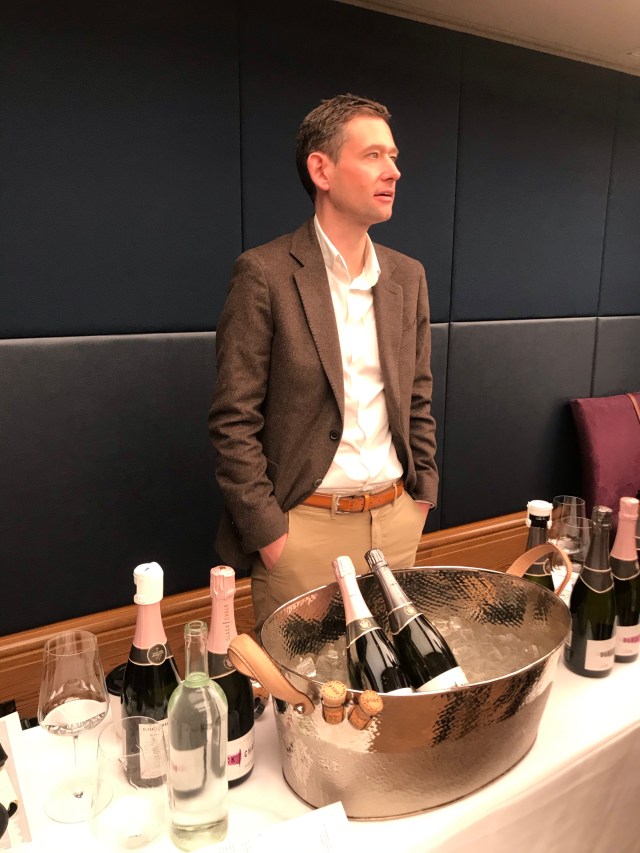
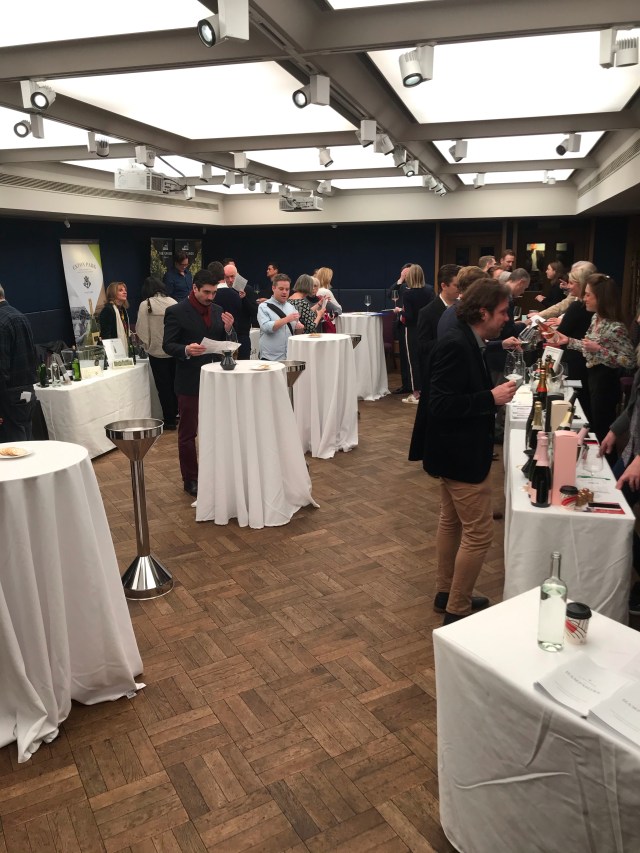
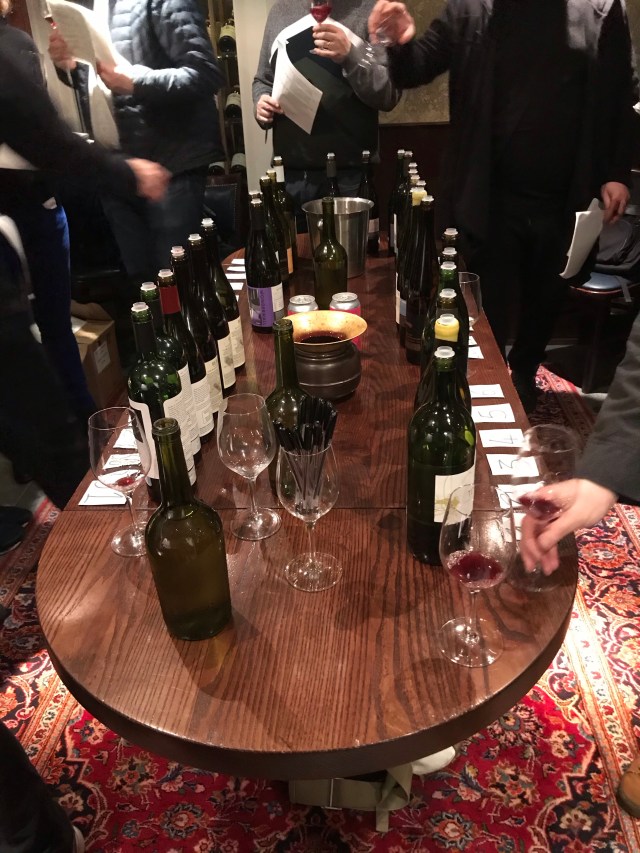
The Vineyards of Hampshire group held their sixth annual Trade and Press tasting at 67 Pall Mall on Tuesday. The eight producers present last year were joined this time by one new member, The Grange, which is the vineyard of the well known Grange Festival venue for opera, dance etc. The format of the tasting hasn’t changed, but what has changed is a noticeable, steady, step up in quality across the board.

It is fair to say that I have a few personal favourites, but I think it would be unfair to be too overtly subjective in this article. There were a range of vintages and styles on show, but every wine has something good to say. In some ways this isn’t surprising. This group is self-selecting, and so presumably membership is based on mutually perceived quality. But what is pretty impressive is the quality through diversity on show here.

This may just be a snapshot of English wine, and principally English Sparkling Wine at that. But these tastings provide a great opportunity to taste nine estates together, helping us gauge overall progress. Would that other counties could get it together in this way. Where can we taste the wines of Sussex, Kent, Dorset…? Indeed, you’d think that there would be more promotion, via press and trade tastings, of English and Welsh wine as a whole. Perhaps there is, but I just don’t get to hear about them? Certainly we should see a lot more at the London Wine Fair.

Prices quoted are recommended retail.

BLACK CHALK

Jacob Leadley is the man behind Black Chalk. The wines have been made, as several more wines on show have been, at Hattingley Valley Wines, but Black Chalk is evolving as the wines themselves are. As well as honing a very singular style of white and rosé sparkling wine, Jacob is building a new winery to service the thirty acres of Test Valley vineyard the team manages. There is already a shop, and vineyard tours can be booked on the Black Chalk web site. Both wines produced undergo partial malolactic, which helps to create a magical balance and tension between crispness and fruit intensity, in wines I find stunning, authentic and boundary pushing. Wines of the highest quality.

Black Chalk Classic 2016 – Newly released (in fact their web site still lists the ’15), the blend is 46% Chardonnay, 32% Meunier and 22% Pinot Noir. This has the explosive freshness of relative youth with equally explosive fruit. The overriding quality is crispness, but not so much acidity (although it has that), but crisp fruit and texture. When you begin a journey through the tasting room with a wine like this it wakes you up and helps focus the palate. £35

Black Chalk Wild Rose 2016 – Some of you will know that I made Wild Rose 2015 my sparkling wine of the year in my annual review back in December 2019, the first time I’d named an English wine, and the first time I’d failed to name a Champagne for this “accolade”. You didn’t have to take my word for it. Writers as diverse as Jamie Goode, Victoria Moore and Susie Barrie are among the many who have heaped praise on these wines. With 41% PN, 38% PM and 21% Ch, this is even more explosive than the “Classic”. The spine is firm, it has elegance and great length. The raspberry fruit reminds me of the Scottish ones, such freshness. There’s strawberry too. A very tentative sour note on the finish adds a little savouriness. £40

UK agent – Graft Wine.

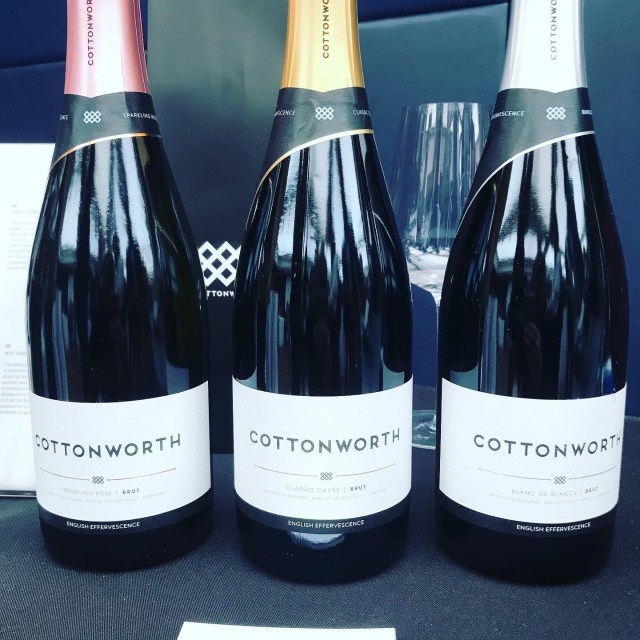
COTTONWORTH

Whilst my purchasing of English Wine is mostly dictated by retail availability, Cottonworth is alongside Black Chalk in being the English producer I drank most sparkling wine from in 2019. The Liddell family source their fruit from the chalk terroir of their own estate. They did initially make the wine in the estate’s dairy, assisted by Hattingley Valley’s Emma Rice, but Emma now makes the wines over at Hattingley’s own state of the art winery in Lower Wield, near Alresford.

Classic Cuvée NV – This is from a 2014 base, circa 38% PN, 52% Ch and 10% Meunier. It’s noticeably a little softer than the Black Chalk, perhaps a little broader too. Apples come through first, then a slightly nutty element transforms to toast and brioche. £33

Rosé 2015 – This is a classic red-fruited sparkling rosé, very fruity indeed. Pinot Meunier makes up just shy of half the blend, with almost as much Pinot Noir. A splash (5%) of Pinot Précoce (aka Frühburgunder in my garden) finishes the blend. If you want something very fruity, this is a good choice. In fact, it’s a firm favourite with my parents. £36 (well priced).

Blanc de Blancs 2014 – This is classic Chardonnay off chalk which saw four years on lees. With this we have a little autolysis, and signs of further development in the bottle, with more to come, and yet this is a wine which still exhibits a fresh purity. Nicely judged. £45

UK Agent – Berkmann Cellars.

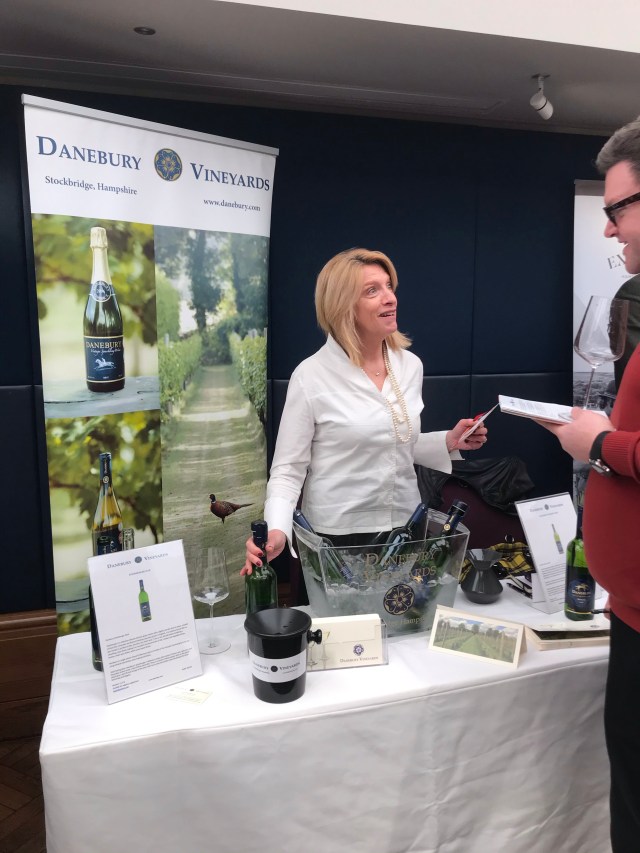
DANEBURY VINEYARDS

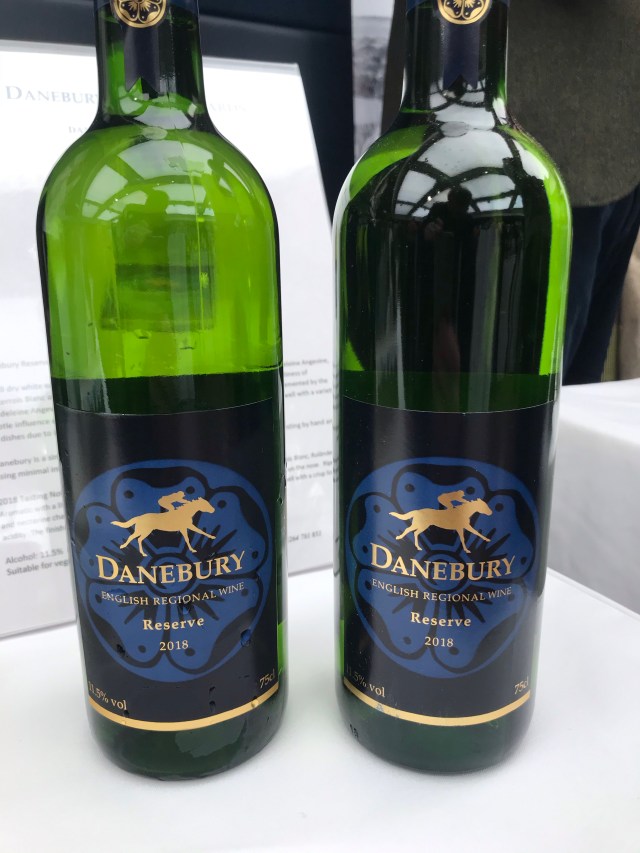
Danebury is, I think, the furthest west of the producers in this group. They are over near Stockbridge, in fact the vines are in an old paddock on Stockbridge Racecourse, between Winchester and Andover. It’s a small  seven acre single vineyard estate which has been around for more than twenty years, making just four wines, still and sparkling. Viticulture is organic, and winemaking works on minimum intervention, which includes adding very low doses of sulphur.

I really felt for Danebury because of their four wines, the bottles of their Cossack Brut sparkler and Madeleine Angevine still cuvée had gone missing in transit. This left just two wines to taste.

Schönburger 2018 – I do recall this grape variety being mentioned back in the 1990s, when I was doing my WSET Diploma, but you don’t see much of it. It’s a 1979 crossing from Geisenheim, of Pinot Noir with Chasselas x Muscat Hamburg. This version is true to type, soft and nicely creamy. There’s a little glazed pineapple on the nose, a touch of weight falling short of plumpness and nice fruit. Not a complex wine but both interesting and refreshing. Very English, and a little different. £12.50 (a remarkable price).

Reserve 2018 – Here we have a blend, 30% Madeleine Angevine, 30% Schönburger, 38% Pinot Auxerrois and 2% Pinot Gris. Like the wine above, it comes in at just 11.5% abv, making it a very pleasant dry summery wine. £13

London Agent – Wineservice Ltd.

EXTON PARK

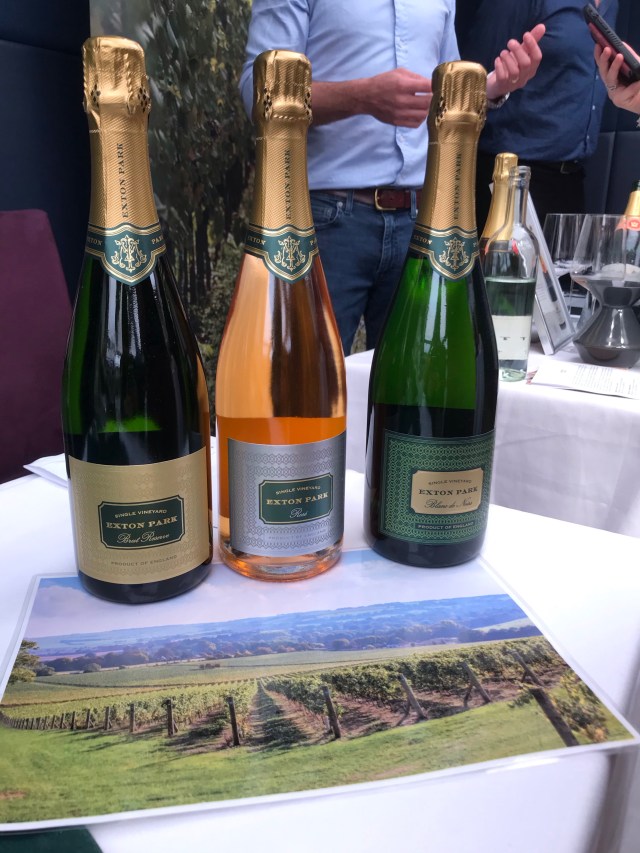
Exton Park has a fairly large 60 acre (24ha) vineyard situated on chalk downland roughly between Winchester and Portsmouth, close to Southampton. The team is led by inspirational winemaker, Corinne Seely, who despite her French heritage succeeds in making not only very English wines here, but more importantly wines which obviously express the terroir of the vineyard. I tend to think of these wines like a Champagne Grower in terms of philosophy (very terroir focused), but yet displaying a sense of place which is clearly not Northern France.

Blanc de Noirs NV – This I suppose is the entry wine for the range. It comprises 100% PN which saw two-and-a-half years on lees. You get lovely fruit ripeness with a little breadth on the palate, but at the same time it doesn’t lack precision. £32

Rosé NV – There’s a 70-30 split between PN and PM. You get a lot of red fruits coming through on the bouquet and palate, with the freshness of whole bunch pressed grapes. The pressing is slow and gentle over seven hours to minimise extract of any harshness. There’s a nice hint of bonbon, which adds an extra layer of fruit without any sense of it being confected. It makes for a nice summer bottle (or even better, magnum). £32/£75

Brut Reserve NV – A simple 60-40 split between Ch and PN, blending fruit from 2011, 12, 13 and 14, bottled in 2015 (hence it has had considerable post-disgorgement ageing). This is possibly the English classic blend with the greatest depth you can taste, with apologies to one or two well known producers of more expensive NV cuvées. It is building complexity, thanks to those reserve wines, and will continue to do so, but it still has amazing freshness considering the age of the components and the time spent on cork. £30, or £65/magnum.

There was no Pinot Meunier single varietal cuvée this time, but do keep an eye out for a future release of that particular Exton Park gem of a wine.

UK Agent – Friarwood.

THE GRANGE

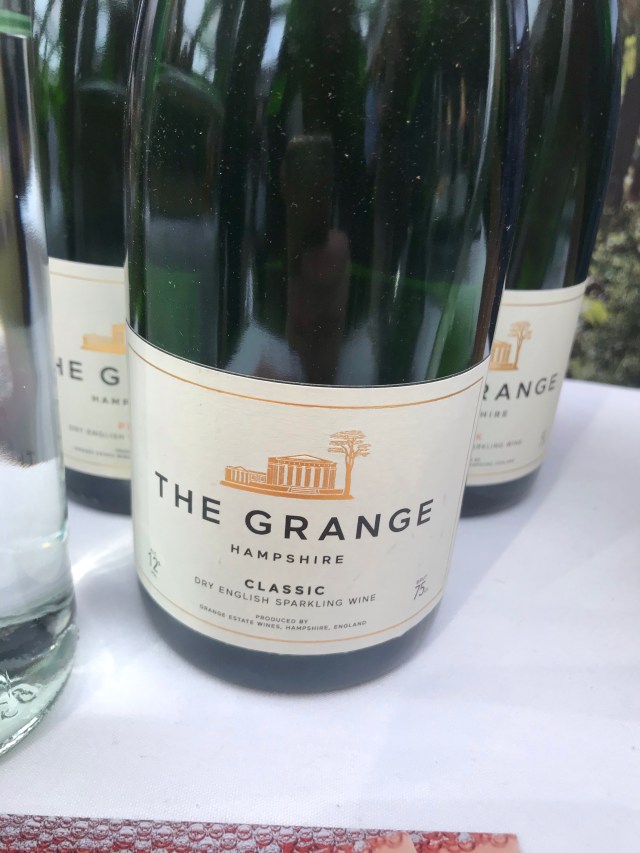
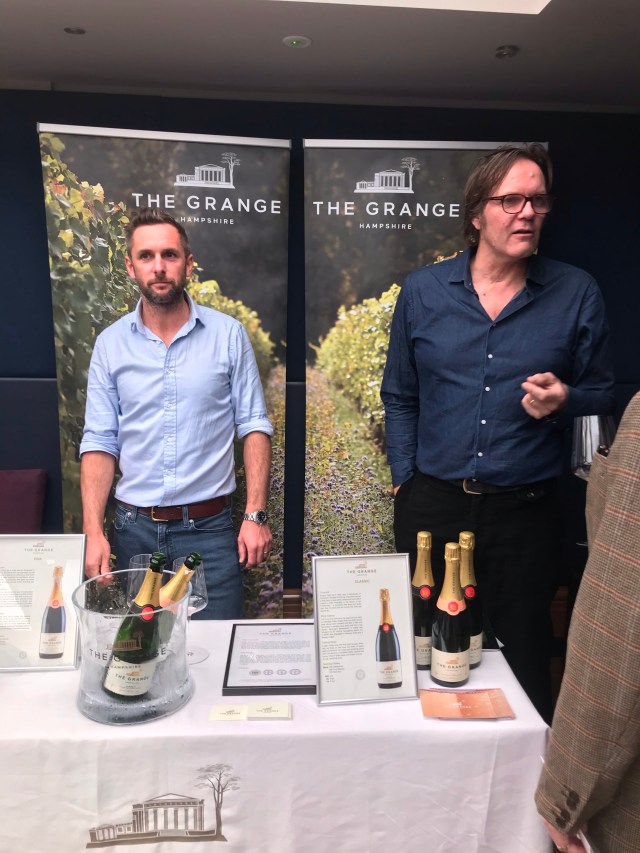
These are the new boys, at least as far as Vineyards of Hampshire is concerned. The vines are on The Grange Estate at Alresford. The vineyard is called Burge’s Field, though it does amount to around 10.5 hectares, on south-facing chalk by the River Itchen. The wines are made by Emma Rice at Hattingley Valley Winery, around three miles down the road.

The first small harvest here was 2014 (around 1,500 bottles made in total). The vintage on show was 2015, where production doubles to 1,500 bottles of each wine. Production may double again for 2016, after which the number of bottles made will increase more slowly.

Classic 2015 – The Classic Cuvée is slightly Chardonnay dominant (55%), with 27% PM and 18% PN. It was very interesting to try this for the first time. The juice is partly aged in oak, and it does have a rounded out quality, and certainly a little texture, although it sees three years on lees too. Twelve different base wines are blended here, and 60% is put through malo. As well as breadth of flavour it shows a nice spine of acidity beneath. £31

“Pink” 2015 – Meunier dominates this blend (58%), with 40% PN and just 2% Chardonnay. Even on the rosé you get a touch of oak, but perfumed elegance dominates. £31.

These are both lovely wines and are well priced for those of a fairly new producer. They currently have no UK agent and the wines are mostly sold locally, and indeed through the Grange Festival. You can enjoy the wines at the opera, and I’m also told they will put a case in your boot to take away. At an advantageous price, it might be sensible to grab one.

HAMBLEDON VINEYARD

Hambledon is England’s oldest commercial vineyard, at least in the post-Roman era. It was established in 1952 by Sir Guy Salisbury Jones, a key figure in English wine. It would be silly not to mention that Hambledon village is also the cradle of English Cricket. The rules of our national game were laid down here in the 18th Century, including the addition of a “middle stump”, brought in after one famous bowler with the endearing name of Lumpy Stevens placed the ball between the two stumps three times in a match without removing the bail (thereby being denied a wicket ea.

Hambledon’s vines are on what is known as the Newhaven Chalk formation (not that they are remotely near to Newhaven). This particular seam goes under the English Channel and comes up again in the Paris Basin. The same chalk, with a very high (and favoured) Belemnite content, mirrors almost exactly that found on Champagne’s Côte des Blancs, south of Epernay.

Hambledon Vineyard has a remarkable 200 acres under vine, but much of this was only planted in 2018 and will take time to come on stream. What I will say is that the wine world has noticed a dramatic leap in quality at Hambledon over recent years, and many now consider their wines among the very best from England’s vineyards. Malolactic fermentation is allowed in full here, and the updated winery is now state of the art and, unusually, fully gravity-fed. The winemaking team is led by former Champagne Duval-Leroy Chef de Cave, Hervé Jestin, who is now a leading consultant on sparkling wine and biodynamics.

Classic Cuvée NV – 56% Ch dominates, from that famous chalk, blended with 17% Meunier and 27% Pinot Noir. It spends three years on lees, resulting in a fresh, textured wine with a savoury touch. Using a cricket metaphor, it shows great line and length (sorry, and I do hope I’ve not used that one before…). Dosage is a very well judged 4.5 g/l, a level which has come down considerably in more recent times, a very good move. £28.50

Première Cuvée NV – The Chardonnay gets upped to 73% here. Although the 24% PN and 3% PM add character, the Chardonnay fruit does dominate, adding real elegance which lifts this above the very nice “Classic”. The base vintage is 2013, with some 2010 reserves added. Dosage is low at 2 g/l, and it saw five years on lees. This rounds out and gives greater depth to the fruit, and the finish has layers of savoury flavours, including a touch of umami. Perhaps some salinity too. £49.50

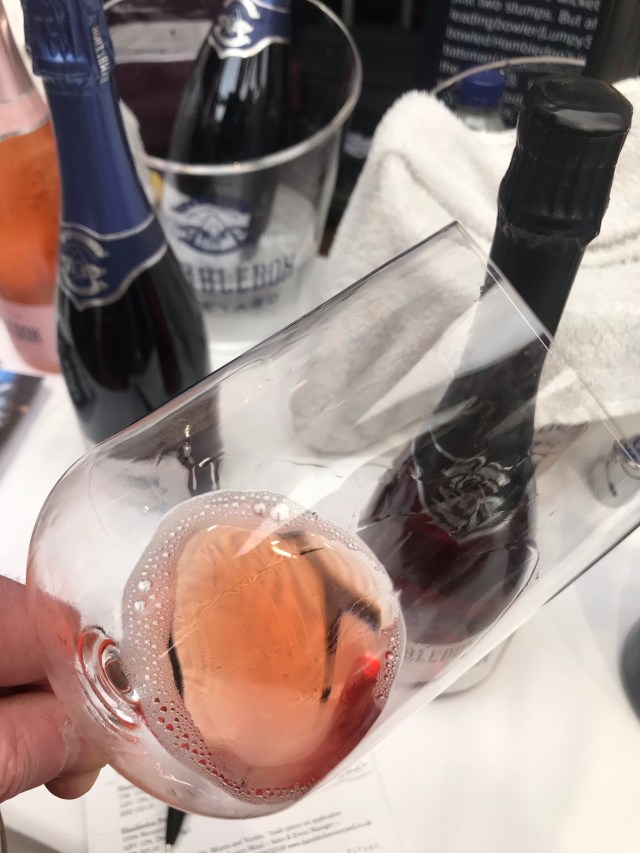
Première Cuvée Rosé NV – This wine is 100% Meunier. The colour in the bottle, which I failed to capture properly in a photograph, is amazing, almost more clairet than traditional pale pink. This is very much a gastronomic wine. It has an earthy and smoky core which I love, and also something of a still wine quality despite the bubbles. Definitely a wine I’d like to drink at home, although it’s not cheap at £69.50.

UK Agent – Fields, Morris & Verdin.

HATTINGLEY VALLEY

Simon Robinson conceived Hattingley Valley almost two decades ago, but without wishing to be mean to Simon, the name we associate with Hattingley today is that of winemaker Emma Rice, who joined in 2008. There may be a couple of better known names in English Wine, but this Plumpton College graduate, one of the first to take the BSc course at the UK’s “wine university”, is up there with the very best, as her “Winemaker of the Year” accolades in both 2014 and 2016 prove. She makes, or helps make, several of the other producers’ wines shown here, along with their own wines off chalk vineyards planted in 2008, near Hattingley Village in East Hampshire.

One important thing to note about Hattingley which I might not have mentioned before. Viticulture and winemaking here is very thoughtful. The new winery, finished in 2010, is not merely state-of-the-art, but was also designed to build ecological principles into all stages of the winemaking process. This seems common sense, but a decade ago it was pretty much cutting edge. Four wines were on show.

Classic Reserve NV – This is the latest release of the Classic. 53% Ch, 31% PN and 16% PM is the blend, using a high 23% of reserve wines. The result is a fruit-driven entry to Hattingley Valley, but rounded out nicely with those reserves and 19% used oak. The oak shows less than you might expect, but it adds depth. £30

Rosé 2015 – This new vintage won gold at the International Wine Challenge 2020. The core is 85% PN, assisted by 13% Meunier and a 2% splash of Pinot Précose. It’s pale and vibrant with a fruit focus. It also saw 12% oak but you don’t notice any real oak influence, so well integrated it is. Very “alive”, classy indeed. £36

Blanc de Blancs 2013 – 100% Chardonnay, with four years on lees and a further 17 months on cork. It’s a very attractive, fresh, Chardonnay, but partly fermented (around 7%) in used Burgundy barrels, it has great depth as well. It has a very fine mousse, not something I always feel needs noting. This wine will age magnificently, if only it is given that opportunity. The 2011 vintage BdeB won the World Champion Trophy in Tom Stevenson’s prestigious Champagne and Sparkling Wine World Championships 2017. £47.50

Entice 2018 – This is a rare still wine from Emma Rice, made from that quintessentially English variety (well, German, but I think we have stolen it), Bacchus. The bouquet has that classic Bacchus nose of grapefruit and freshly mown grass, but this 10% abv wine is sweet. Not cloyingly sweet, but fresh and light, and in some ways a perfect reflection of what an English summer picnic with strawberries needs. £22.50 (half-bottles)

Hattingley Valley also makes a rather fine Aqua VitaeI know it’s fine because I’ve tasted it before, but I also know that tasting it at this point would have destroyed my palate’s analytical faculties for the wines which followed. If you fancy a very different English distillate, then try it. It’s made from five times copper pot-distilled Chardonnay from the 2015 vintage and costs £45.

UK Agent – Enotria & Coe.

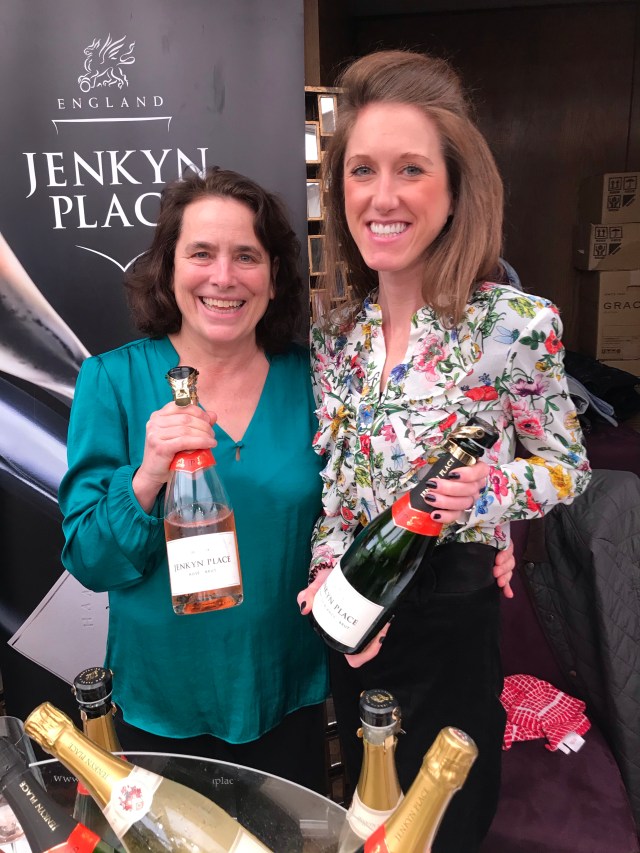
JENKYN PLACE

Jenkyn Place is a former hop farm which Yorkshireman Simon Bladon converted to vines in the 1990s. There are around 5 hectares (12 acres) of the three classic “Champagne” varieties on the North Downs, near the village of Bentley. The wines are made by another famous maker of English wines, Dermot Sugrue (of Wiston and his own Sugrue-Pierre). These sites are a little different, chalky but with greensand over marlstone, at around 100 masl. The greensand is said to give the wines a unique, more rounded, profile than pure chalk, a quality which becomes more evident with age.

The vines here are relatively young, plantings beginning in 2004, with more vines going in during 2007 and 2010. But as a producer, Jenkyn Place is clearly maturing with the vines, and in Sugrue, they have a very safe pair of hands. The vinification is fairly consistent, using stainless steel. Even at entry level, the wines see at least three-and-a-half years on lees before disgorgement.

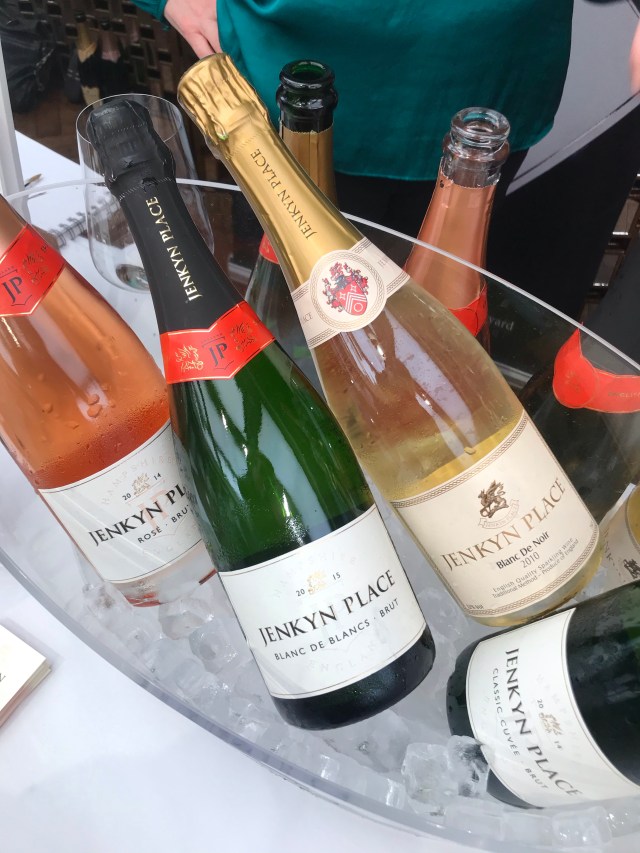
Classic Cuvée 2014 – 65% Ch, 25% PN and 15% PM (as listed, but which obviously makes more than 100%, but I think the Meunier figure may be wrong?). It is dosed at 8g/l and no malolactic is undergone. It’s a very nicely balanced blend, harmonious, and in the case of this cuvée the dosage, higher than many these days, is well judged. There is also a vinous quality which is often lacking with entry level wines. £29.50

Sparkling Rosé 2014 – Unusually older than many English pinks on the market, there is also 32% Chardonnay joining the 52% Pinot Noir and 16% Meunier here. Again, no malo and good lees ageing gives us a red fruits-forward wine with a big soft mousse and fine bead. The colour is beautiful, reflecting a softer flavour of nevertheless intense raspberry. £35

Blanc de Noir 2010 – No malolactic here either, this is an even blend between Pinot Noir and Meunier. It’s a very gastronomic wine with a savoury intensity, depth and a broad and softer flavour. It has aged very well indeed and retails for a remarkable price given its age. £35

Blanc de Blancs 2015 – This Chardonnay was again dosed at 8g/l, all the Jenkyn Place wines receiving a broadly similar level of liqueur. With this cuvée we get a slightly different approach in the winemaking. Around 10% of the wine sees oak and also malolactic. That 10% oak does come through in the wine’s texture, and it has a real creaminess which accentuates the Chardonnay character. The alcohol level here is worth noting, only a very accurate 11.78%. In fact the Blanc de Noir (sic) at 12.2% is the only one of these wines which tops 12%. £39

UK Agent – New Generation McKinley.

RAIMES

Augusta and Robert Raimes are the fifth generation of farmers on their land, situated at Grange Farm, Tichbourne, near Alresford in the South Downs National Park. The wines are made up the Road at Hattingley, by Emma Rice, but there is a genuine sense that this is an operation with the family at its centre. The viticulture, and indeed the ageing process for the wines, is noticeably carried out with love and passion. There are currently 10 acres of vines, planted in 2011.

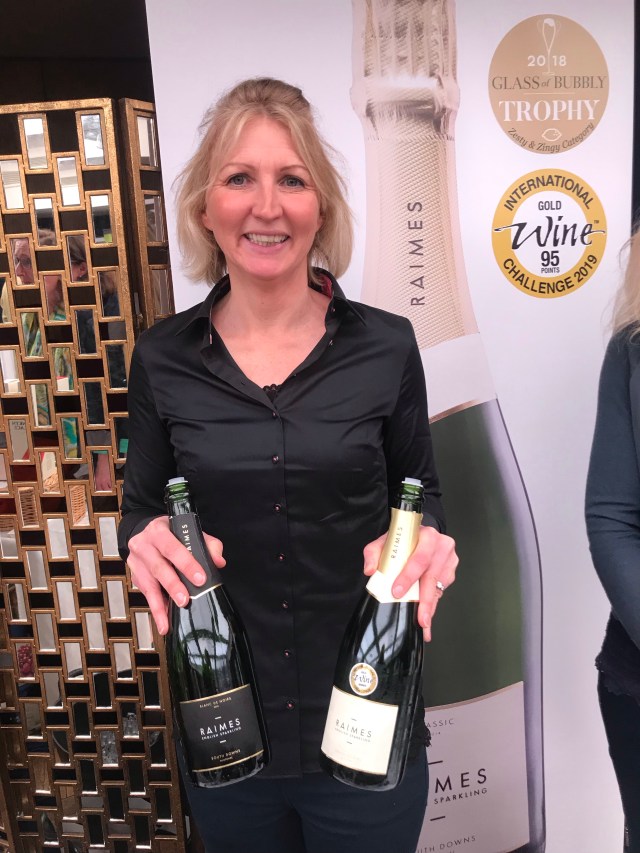
Before describing the wines I must apologise for taking no photos here. It was because I got into a very nice conversation with Augusta, who was my final exhibitor in the tasting round. Sometimes you get too engaged with a passionate owner, and the conversations moves from vines and wines to ideas…I have found what I hope is a nice photo from the 2019 tasting as a mild apology for my omission.

“Classic” 2014 – I tasted this exact cuvée a year ago and this time around it has definitely matured further. With just over half the blend being Chardonnay, with 29% PN and 20% PM, it has the kind of depth and intensity you’d expect from a “Tripple Gold Medal” winning wine (Including Gold at the IWC). It was disgorged in January 2018, so it had both long lees ageing and some considerable further time on cork. It has a mellow softness now, with complexity. It was dosed at 11 g/l, and these days they might lower that a little (the two wines below were dosed at 8g and 6g respectively), but it is perfectly in balance, nevertheless. It is a classic, perhaps different to some of the wines I tasted, but certainly none the worse for it. Variety is good! £30

Blanc de Noirs 2016 – This 2016 vintage wine was disgorged in September 2019 after 29 months on lees. It also has a kind of mellow softness, which is a developing trait at Raimes. It also shows that Emma Rice doesn’t remotely make wine by numbers, reacting gently, without too much intervention, to terroir and vintage. The blend is almost fifty-fifty PN/PM, slightly in favour of the Pinot Noir. £35

Vintage Rosé 2015 – This is beautifully pale, a very delicate colour, complemented with a lovely soft and frothy mousse. 58% PN is joined by 20% Meunier and a nice dollop of 22% Chardonnay. I was told, although it wasn’t listed, that 5% of the “Pinot” is Précose. I always like to see this early Pinot in tiny quantity as it has been part of English wine for a long time. It’s certainly advantageous in cooler summers, and growing it myself, I just have a soft spot for it. I guess it may fade out with climate change, though.

This rosé is the driest of the Raimes wines, with that 6g/l dosage. It shows a big smack of lovely strawberry fruit, with a slight sourness on the finish. I mean that in a positive sense. It makes for a mouthful which is savoury as well as fruity, though “fruitiness” dominates. It just adds interest. Of all the wines on show, this is one which can very easily fulfil a role as a summer aperitif and also a wine at table, not an easy combination to achieve. £40

No UK agent. Contact Augusta Raimes (info@raimes.co.uk). They have a web shop and list (mostly local) retail outlets and restaurants which stock their wines. Like many of the producers here, they offer vineyard tours.

Conclusions

As I said at the top of this article, I am impressed. Not merely because the wines are good. We all know English Sparkling Wine has come of age. I mean because I can see continued development and improvement at all of these estates. Even if the wines are just finely tweaked, the producers in the Vineyards of Hampshire grouping all share a desire to work towards greater perfection. This is a positive sign for English wine.

That Positivity has occasionally been lacking throughout English (and Welsh) wine. At first the fizz was fresh and fruity but vine age, lack of reserve wines and other factors (not least the weather) conspired to hinder complexity in the wines. That is seemingly in the past. Some of the wines here are truly very fine, and a few may well be called “world class”. None are, shall we say, made for the coach parties.

I was surprised at how my own personal tastes seem to veer even more towards the pink wines this time. With a few exceptions, this has not generally been the case for me with Champagne and other sparklers. The pink wines from this tasting were way more elegant, fresh and fine, than many wines I taste in the French Crémant category (exceptions exist again, of course).

Within this market segment of English sparklers there are, of course, those quintessentially English pinks, all strawberries and cream, picnic wines but not “complex”. But the wines I’m drawn to here are the more gastronomic wines, sparkling wines which perform well with food, perhaps with white meat, or even game, should you care to be adventurous. This is a small category but one where quality is remarkably high, although so (of necessity, I admit) are the prices, quite often.

I look forward very much to next year’s event, but in the meantime, come on Kent, Sussex and Dorset!


Posted in English Wine, Rosé Wine, Sparkling Wine, Wine, Wine Agencies, Wine Tastings | Tagged , , , , , , , , , , , , , , , , , | 7 Comments

Recent Wines January 2020 #theglouthatbindsus

Dry January…I write about wine, so that’s not going to happen, is it! I can’t even make you roll around on the floor laughing at the tired old joke about sticking to dry wine, because in the dozen most interesting wines drunk at home during the first month of the year profiled below, I think you will find some residual sugar in one or two. As for Veganuary, I have to come clean and admit to eating a bar of milk chocolate, all in one go, with the kind of gluttony reserved normally for those who need a serious sugar hit after a long tasting without a lunch break. Come to think of it…

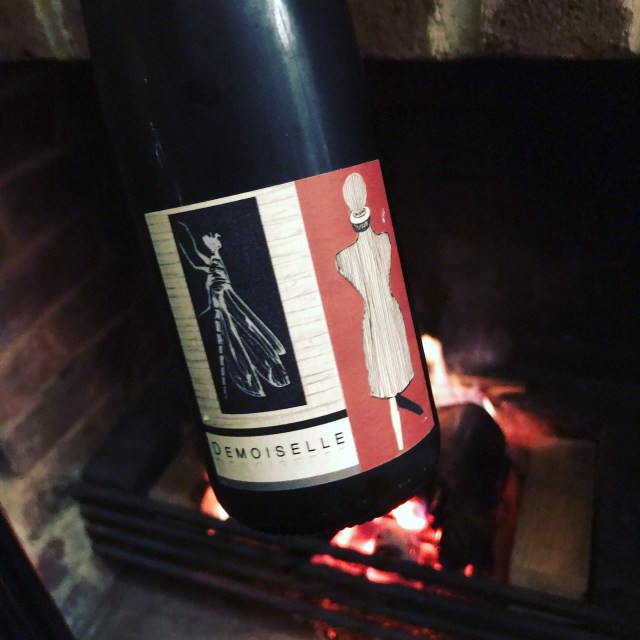
GEWURZTRAMINER “DEMOISELLE” 2016, DOMAINE RIETSCH (Alsace, France)

I’m hoping to get to Alsace this summer, and as if to reinforce that wish in my mind I began 2020, on 1 January, with a wine from probably my favourite producer in that beautiful region, Jean-Pierre Rietsch of Mittelbergheim. This Gewurztraminer was from Jean-Pierre’s vines on the argilo-calcaire soils of the Zotzenberg at nearby Heiligenstein (that village is the source of several Rietsch wines).

The key element in this wine’s vinification is the sixteen days it sees on skins, which add colour and a rich mouthfeel. This is followed by six months ageing in cuve. You notice immediately that this is a dry rendition of the variety. In fact it contains 1g/litre of residual sugar. It is a lovely burnt orange colour with a bouquet of a complex fruit mix – both tropical and orchard fruits combine, I think the latter enhancing the dryness and the former, the richness. In other words a slightly voluptuous body but with an acid tingling spine. After all that I could easily have written a one word TN…”Wow!”. A truly magical wine to begin the new decade.

This came from the domaine, but Wines Under The Bonnet imports Rietsch into the UK. I’m not sure they import “Demoiselle”, but any of J-PR’s wines are worth the punt.

7e9eecef-d9ed-44bc-af59-2ba1d88c1c1e

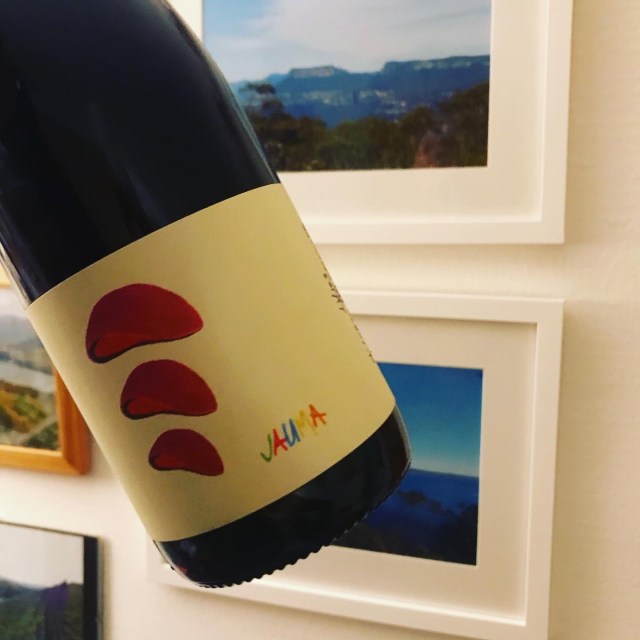
“LILLIES” GRENACHE 2017, MCLAREN FLAT, JAUMA WINES (South Australia)

The Erskine family source the fruit for this absolutely wonderful Grenache from a single vineyard in McLaren Flat. This is a lesser known corner of the Vale, over on its eastern edge, up against the Sellicks Range. Farmed by the Cahill family, the site was originally planted almost eighty years ago. The fruit has a vibrancy surpassing even the freshest South Australian Grenache (let alone the gloupy ones). The bouquet blends strawberry and rose scent, with a cherry accent coming in with the palate. You won’t guess 13% alcohol, which has its dangers with a wine so fresh and gluggable. There is no added sulphur. Delicious.

In a rare case of forgetfulness I cannot remember where I bought this. Maybe someone will remind me. Was it Solent Cellar? It was so good. The UK importer is Les Caves de Pyrene.

033a2793-da50-42dc-9419-47b0c2a8ae14

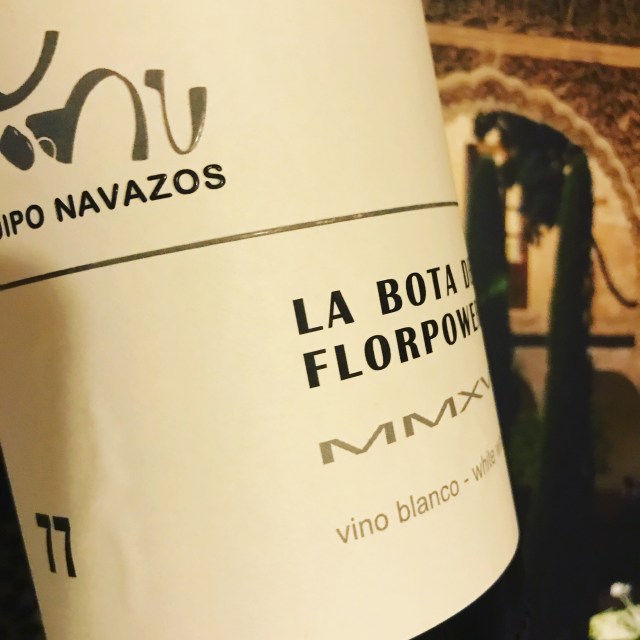
LA BOTA DE FLORPOWER 77 (LMMXV), EQUIPO NAVAZOS (Jerez, Spain)

You wouldn’t expect me to get too far into the new year before popping a bottle of EN, but sometimes a dish calls not for a Fino or Manzanilla but for the team’s Palomino table wine. This was my last bottle of Bota 77. Whilst I quite like newer cuvées for fresh summer drinking (I shall be onto Bota 84 next, the 2016 bottling), this 2015 shows that a little bottle age works well too. In fact these unfortified wines do have the depth to age for considerably longer.

The grape source was the Pago Miraflores La Baja at Sanlúcar. Vinification begins old school with the fermentation in 600-litre casks, after which the wine remains there under flor for eight months. In a bid to retain freshness and vitality it then goes into stainless steel for a further year. It is still under flor, but its influence wains over that twelve month period. Bottling took place in July 2017. This fourth edition of Florpower is perhaps the freshest yet, and I am sorry to see this one leave my life. The aim was to balance biological ageing, terroir and the vibrancy of Palomino in its unfortified form. Even more than usual, I can say that this aim has been achieved, one hundred percent.

Another wine imported directly from Spain. The the UK agent for Equipo Navazos is Alliance Wine.

ab8108cc-70d8-4cc0-b50b-188bb52a5d38

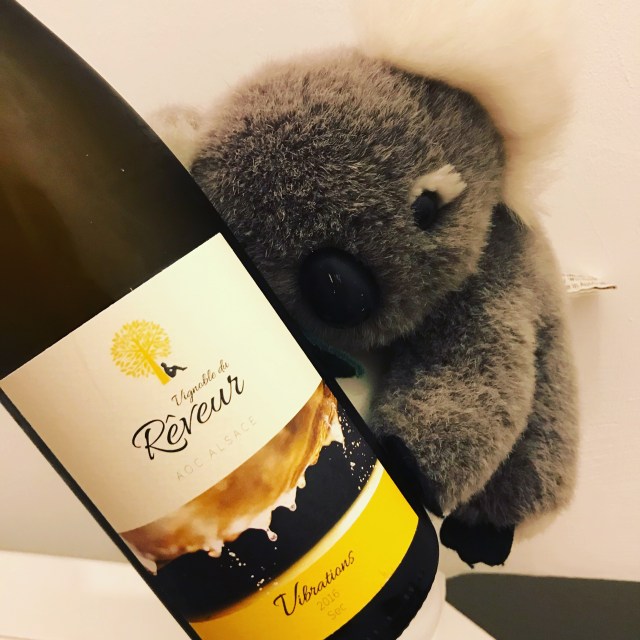
VIBRATIONS RIESLING 2016, VIGNOBLE DU RÊVEUR (Alsace, France)

Mathieu Deiss, along with Emmanuelle Milan, created Vignoble du Rêveur in 2013. The seven hectares of vineyards they tend in Bennwihr (between Colmar and Riquewihr) come through Mathieu’s mother’s family, and it strikes me that this talented young winemaker wanted a project to put his own stamp on, aside from his work with his famous father. Mathieu and Emmanuelle produce six wines, all given fantasy names which are expressive of terroir and winemaking rather than just grape variety.

Vibrations is a pure (in both senses) Riesling from forty-year-old vines on Quarternary alluvial deposits, farmed biodynamically (Demeter). After spontaneous fermentation in old wood without any temperature control, the wine is aged in the same medium, ten months in foudre. There is a 10% part of the must which underwent carbonic maceration, the rest was direct pressed. Minimal sulphur is added to all Mathieu’s wines.

There’s a good colour here, it isn’t pale. The fresh citrus acids are redolent of both lemon and lime, but beneath that lies depth. There’s even the tiniest hint of petrol, but not a lot. Dry, long, vibrant and “vital”, again in more than one sense.

I believe both Swig and Roberson import Vignoble du Rêveur. My bottle came from Butlers, Brighton.

1dc8fb8a-8b01-4e14-ba99-0d3263f503c0

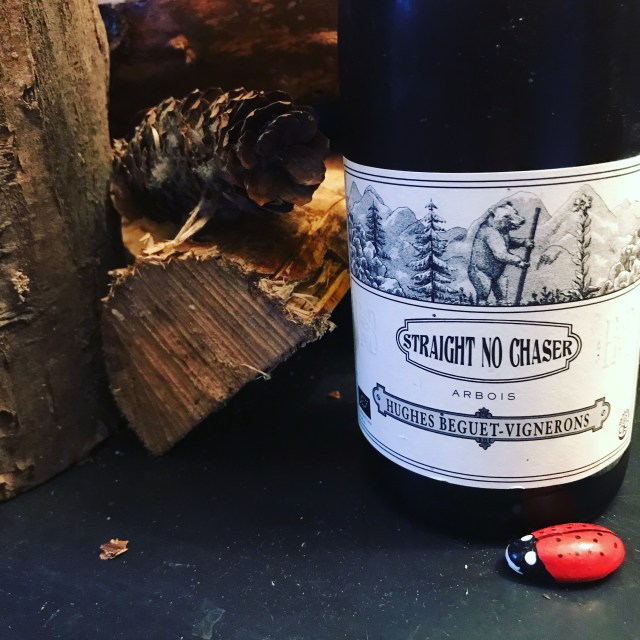
“STRAIGHT NO CHASER” 2015, DOMAINE HUGHES-BEGUET (Jura, France)

Patrice Béguet is next to the church in Mesnay, on the edge or Arbois (certainly walkable from the town centre, perhaps 25 minutes). He was in that first batch of young vignerons, many of whom had no previous experience as winemakers, who came to the Jura Region lured by cheaper land and one or two old timers whom they could tap for knowledge of pre-industrial winemaking, not that much of Jura was ever very industrial. People like Jacques Puffeney and Pierre Overnoy followed a more natural path to winemaking. Patrice gained very early success by gaining the respect, in particular, of Overnoy and the Pupillin faction. His vineyards are split between that village and vines closer to home, near Arbois and Mesnay.

“Straight No Chaser” was described in a Caves de Pyrene blog post as a Chardonnay-Savagnin blend, although when I tasted the wine at Patrice’s back in 2016 he made no mention of Savagnin. Nevertheless, this is a fresh, topped-up, wine with a tiny bit of CO2. The acidity lifts it nicely, though it could be extreme for some used to fatter Chardonnay, and the nose and palate are full of apple scents and flavours. It’s a fresh and lively bottle, just 12% abv. Perhaps it would have been better attuned to summer drinking, but who doesn’t enjoy a bracing Chardonnay in winter?

The name? Thelonious Monk’s jazz standard.

A small number of Patrice’s wines are imported by Les Caves de Pyrene. This wine came from the domaine but if you want to visit please phone ahead. Patrice may well be in his vines.

2219d62d-957f-4777-9c64-5e0e8a959cd6

“HELTER SKELTER” 2019, BLANK BOTTLE WINERY (Stellenbosch, South Africa)

This Viognier from Stellenbosch fruit is one part of the latest pair of wines Peter Walser has made for Brighton’s longest established wine merchant, Butlers Wine Cellar. Its companion is “Gotho”, a 2018 Darling Pinotage which I profiled in my corresponding December Wines article.

As usual, Peter disguises the alcohol content very well (14% abv), but with Viognier one is always particularly grateful for that trick. When it loses acidity it loses interest for me, which is almost certainly why my early enthusiasm for Condrieu in the 1980s waned somewhat as the Northern Rhône began to get warmer. It has varietal character for sure, which comes through on a bouquet of stone fruit (peach), a little pear and a floral element. It is usually the bouquet that suffers when the alcohol gets too big in Viognier, but the Walser winemaking wizardry has avoided that particular pitfall. It’s a bright wine, which could easily convert some Viognier dislikers, if not haters. Probably best not to drink the whole bottle yourself, though.

This wine, and its companion Pinotage (I don’t normally like Pinotage John, but this one’s delicious) are available exclusively through Butlers Wine Cellar in Brighton (two shops, but they do a lot of mail order and sell a wide selection of Blank Bottle wines). The UK importer for Blank Bottle Winery is Swig Wines.

49891103-9983-48fa-988a-d51f2b2391ec

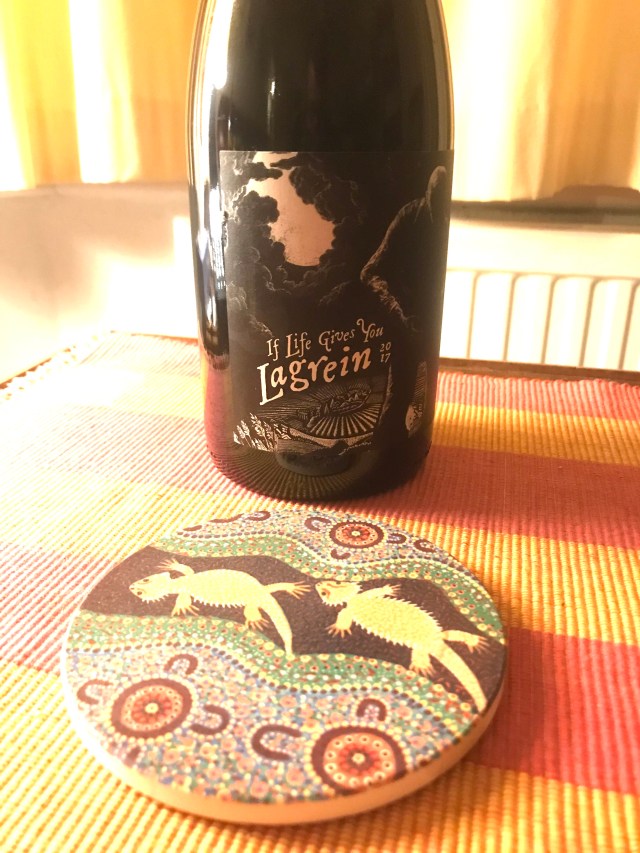
“IF LIFE GIVES YOU LAGREIN” 2017, VINTELOPER (Adelaide Hills, South Australia)

Vinteloper used to make wine exclusively from bought in fruit, then they went and bought a vineyard, and as many of you know, lost it rather too quickly as the latest round of Australian bush fires swept through the Adelaide Hills. I’m very sad for Australia, especially as I have family that has suffered loss of farm land in NSW, but I have followed Vinteloper for several years, loving their wines but never buying quite as many as I wanted to. I’ve been trying to rectify that a little as one small, perhaps insignificant but well meant, nod of support.

Lagrein really is a “vinteloper” in Australia, and is hardly well known in Europe either. The issue I have with a lot of Northeastern Italian Lagrein is a sort of green streak, but it can make lovely dark juice with a little bite and grip. This Aussie version does have a nice bit of a bite to it, but it comes with a dollop of sunshine as well, a lovely combo. Not complex but gorgeously sappy. I loved it, as did my wife, so I went straight out and bought some more. It comes in at 12.7% abv, which I think sums up the freshness/weight of fruit balance. Cheers to David Bowley and his team, and good luck in replanting the Hills vineyard.

Vinteloper is imported by Graft Wine (formerly Red Squirrel). I’m not sure that this cuvée was made in 2018, but the agent may still have some of the ’17.

img_8692

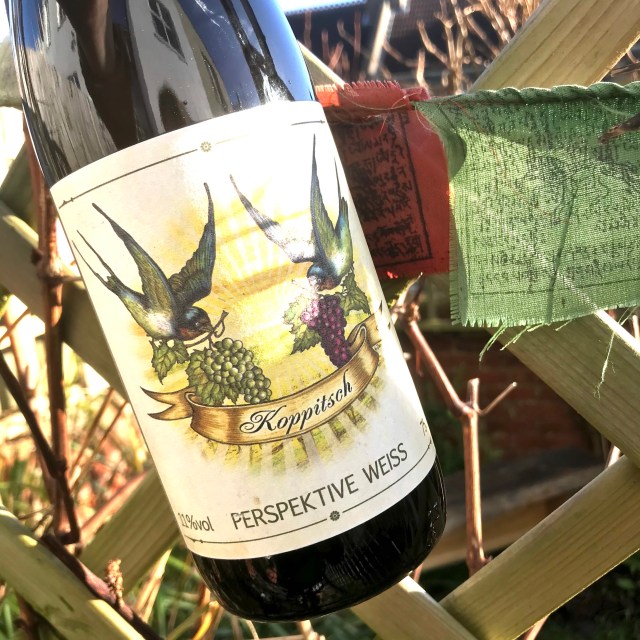
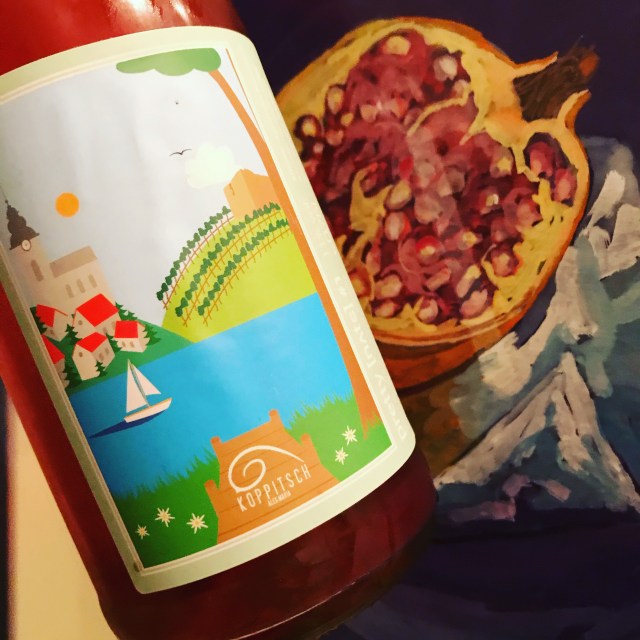
PERSPEKTIVE WEISS [2017], WEINGUT KOPPITSCH (Burgenland, Austria)

I know I’m a regular drinker of Alex and Maria’s wines, and they have never failed to make the cut for my monthly roundups, but perhaps this is my first profile of one of the “Perspektive” wines. Most Koppitsch cuvées, the ones with the cheerful labels, are just a sheer joy to drink. The Perspektive wines are perhaps just a little more serious. They focus on terroir, in particular the limestone soils on the northern side of the Neusiedlersee and in the Leithaberg Mountains. This particular cuvée comes from their site called Neuberg, which is relatively close to the shallow lake. The vineyard forms a very rocky hill with limestone fragments and even some schist clearly visible. The rocky terrain is auto-suggestive of the resulting wine.

This is a blend of Chardonnay (20%) and Weissburgunder (Pinot Blanc)(80%). The Chardonnay is genuine old vine stock (planted 1965), the Weissburgunder being planted in 1985. The family has been tending these vineyards for 500 years. The grapes get a short four hour contact with the skins before direct pressing into 225-litre barriques. The wine then sits, unmanipulated, on gross lees for ten months. A minimal 5mg/l sulphur is added at bottling. Everything here is thoughtfully done, even down to recycled cardboard boxes which are sealed without tape. And Alex and Maria are super nice people, but I must say it is infectious because the Neusiedlersee seems to attract the nicest people in the whole of wine (very much including Tscheppes, Schröcks, Becks, Braunsteins, Renners, Zeichmanns, Michlits’ and Preisingers to name a few).

All that matters little if the wine isn’t good, but no worries here. Apple, honey and lemon hit the nasal passages, with more citrus on the palate (no rough edges). It will age further, but right now it is long and refreshing with a little texture and salinity. The limestone freshness comes right through. This is only labelled as a table wine, hence the vintage in square brackets, but it’s as enjoyable as any DAC wine, more so than many. Drinkability coupled with a bit more intensity than the Koppitsch’s more “fun” bottlings. As it is unfiltered, expect it to be a little cloudy.

Just £23 (if I recall correctly) direct from Fresh Wines, a tiny importer in Kinross (Scotland). They currently list five Koppitsch wines but this one seems to be out of stock. New wines will probably arrive in spring.

img_8711

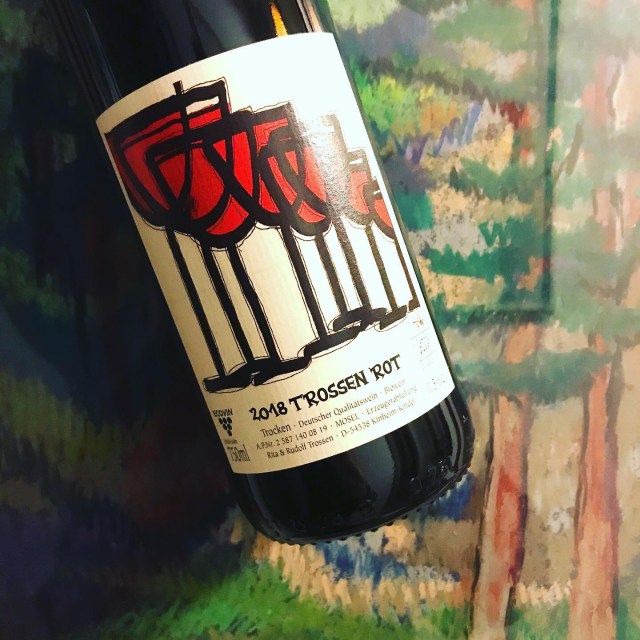
TROSSEN ROT 2018, RITA & RUDOLF TROSSEN (Mosel, Germany)

There are many interesting things you can say about Rita and Rudolf Trossen, but surely the most significant for most readers here is that this was the first estate in the whole of Germany to become biodynamic. Their influence therefore outstrips their production from the slate of the Middle Mosel at Kinheim.

The Trossens are best known for their Rieslings, including those in the “Purus” range, which are fully natural wines with no added sulphur, always pushing the boundaries. This is my first ever bottle of red wine from the Trossens, and to be honest I didn’t know they made one until I spotted it a few weeks ago. It is a blend of Dornfelder and Pinot Noir/Spätburgunder, made under the same biodynamic regime as the whites.

The colour is dark, not quite purple, and the wine is full of dark crunchy fruit and a little undergrowth edginess. It’s a wine to drink cool in summer for a sappy 11.5% thirst quencher, but in January, drunk less cool, it went really well with my dish of the year so far, pickled New Forest hedgehog mushrooms (a wonderful Christmas present) in a cream sauce (vegan, of course) with chestnuts, spinach, thyme and lashings of garlic. The brisk acidity cut through the cream and the weight of fruit balanced what was a very rich dish.

Trossen wines are usually available at Newcomer Wines (Dalston), which is where I bought this. Roberson also stocks it, currently bin-ended with a few pounds off. I want to get some more, though I don’t fancy my chances.

4a27f1ff-b206-41fd-adf3-48cfceb92426

PIESPORTER SCHUBERTSLAY SPÄTLESE 2011, JULIAN HAART (Mosel, Germany)

Another Mosel wine, but altogether different. Julian Haart is one of the rising stars of the Mosel, having made wine for a little under a decade now. He’s blessed with some fine sites, 4 hectares in Piesport and another single hectare nearby in Wintrich, just downstream, around the giant bend in the river, on the best site there, the Ohligsberg. He sits just under the radar in the UK for now, but hopefully not for long.

This Spätlese has a good bit of bottle age, and at over eight years old manages to balance a degree of sweetness with acidity in a wine which errs towards the richer end of the Spätlese spectrum whilst retaining a degree of delicacy. In a sense it is therefore a wine of the vintage, where great harvest conditions in 2011 enabled producers to make fairly rich, even plumpish, wines which were quite fruity. The best were balanced, as is this, but if I had drunk it a year sooner it might have had a touch more acidity, if not tension. Still a lovely wine, though, and certainly not a wine you need to finish up soon.

Howard Ripley Wines stocks Julian Haart, although not this cuvée, which was purchased at Weinhaus Porn in Bernkastel. It’s an unmissable wine shop if you are down that way, and bringing us back to Julian Haart, you might find his “WinePorn” cuvée there too. I can equally recommend the excellent Indian Restaurant opposite, Taj Mahal, which also has another restaurant in Trier.

bdec2cdb-0463-4d43-98aa-a100f58c9469

GIALLO 2016, TOM SHOBBROOK (Vine Vale, South Australia)

Tom Shobbrook is a native of the Barossa Valley, but he went abroad to work with Sean O’Callaghan at Riecine in Chianti. He became one of that very happy band of brothers who have spread around the world making fabulous wines based on the practical biodynamics taught by Sean. Shobbrook returned to Seppeltsfield to make a range of rather tasty, exciting wines, many of them highly experimental.

Giallo is certainly unique. It used to be made from Sauvignon Blanc, but this 2016 blends Muscat, Riesling and Semillon. The individual musts were macerated on skins separately, for between just twelve hours and twelve days, depending on variety. The juice then went into concrete egg for seven months.

In many ways this is known as Tom’s signature wine. It’s very complex, with its yellow (giallo) colour and heady mix of saffron, beeswax, apricot, sour peach and more. It is well textured, but I’d not go as far as “tannic”, and it does have a lot of sediment. Some of the particulate matter is big enough to qualify as “crud”, so I’d advise standing it up for a couple of days before drinking. Stand it in the fridge for a while – it can take chilling but you don’t want to drink it cold. It will cut off the full aromatic experience. It’s a gorgeous, long and complex wine full of sunshine and genius. Rather annoyed it is gone now.

Tom Shobbrook’s wines can usually be found at Winemakers Club (Farringdon, under Holborn Viaduct), but be aware that they do sell out rather easily.

363d40b0-c0ae-4ac4-a3f8-46298ecea8bd

“SANG DE GAILLARDON” [NV], ALEXANDRA MOSSU (Jura, France)

Alexandra’s father, François, has for many years been known as “the Pope of Vin de Paille”, and throughout his long career (he replanted vines on his grandfather’s land aged eighteen) he specialised in both Vin de Paille and Château-Chalon. His three hectare domaine is based at Voiteur, on the River Seille, in the valley below Château-Chalon itself.

François had quite a reputation for being not too forthcoming. He sold his wine from the domaine, mainly to locals and local restaurants, and perhaps grudgingly to the occasional wine writer. But in the past couple of years his daughter, Alexandra, has been (wo)manning the tasting room with her name on the labels, at least the table wines, as winemaker.

Gaillardon is one of the vineyards within the Château-Chalon appellation. It forms the western sweep of the hill opposite that on which the village of Château-Chalon perches precariously, over on the other side of the River Chambon (which joins the Seille near Voiteur). The wine is a field blend, allegedly, of fourteen different varieties. The mainstay (50%) is Trousseau (you can certainly identify it), along with (inter alia) Poulsard, Enfariné Noir, Cabernet Jura, Gallotta, Gamaret, Garanoir, Diolinoir and Isabelle (sic). Notice several Swiss varieties in there. Is the last variety listed perhaps the vitis labrusca Isabella, planted around France after phylloxera, but now technically banned?

As an aside, there is a lovely small, gated and walled, vineyard off a steep path down the left side of the church in the village of Château-Chalon which acts as a vine conservatory for a host of the Jura Region’s autochthonous varieties. It’s well worth a visit if you are in the village and have an interest in viticultural heritage and ampelography.

The wine is quite youthful but probably ready to drink. It’s smooth-fruited, concentrated, and quite long. It lives up to its name (“blood”) in having a slightly meaty and iron-rich element, nothing that dominates, rather a hint and an edge. It is drinking beautifully. I think it’s the first wine I’ve drunk made by Alexandra (maybe the second, but I did have one of François’s Savagnins a couple of years ago, still made by him). I have not tasted the Vin de Paille for several years now, more’s the pity. A visit is in order.

This wine was a gift from friends who visited a year ago. The Mossus do advertise that you can visit the Papal Palace by appointment (Mon-Sat, open until 6pm, English and German spoken). It is one of the last old fashioned Jura domaines, in the true sense. I don’t believe there is a UK importer, heaven forbid.

3810e413-7f09-4d7f-8259-c51aba5d0fcb

The eagle-eyed will have noticed that we are still in January. February is a busy month, both for tastings and other activities, so I thought I would slip this in now, whilst I have time. I’m pretty sure at least one late January wine will sneak into the February roundup, whatever the competition.

Posted in Alsace, Australian Wine, Austrian Wine, German Wine, Jura, Mosel, Natural Wine, Wine | Tagged , , , , , , , , , , , , , , , , , , , , , , , , , , , , , , , , , , , , | 4 Comments

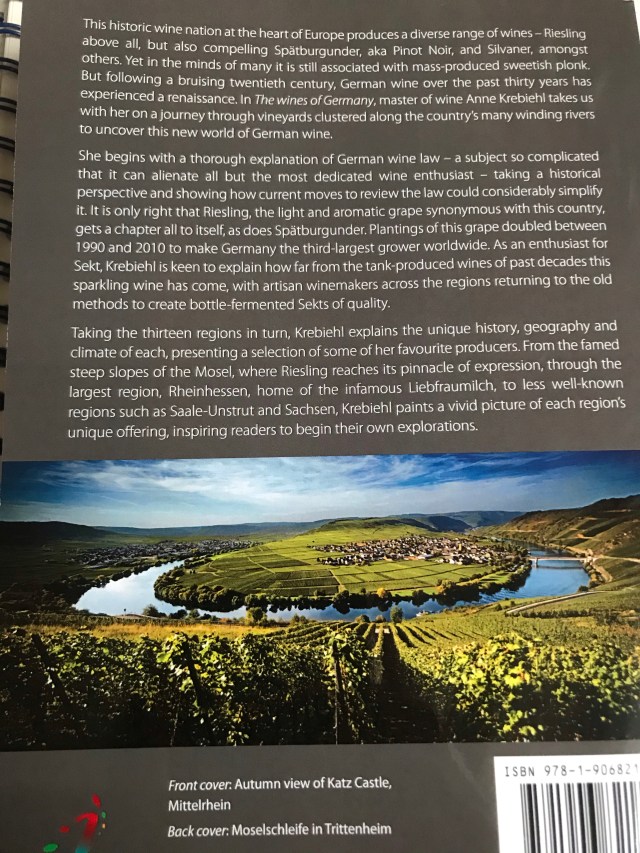
The Wines Of Germany by Anne Krebiehl MW (book review)

img_8753

A new book on Germany is a welcome addition to the wine library of any serious wine lover. There isn’t a lot of literature on German wine out there. My previous go-to for a work on the whole country would be Stephan Reinhardt’s 2012 work in the “Finest Wines” series (Aurum Press). It’s an excellent book, but it is more than seven years old now. That certainly doesn’t make it out of date but Germany’s is a dynamic wine scene, and is changing faster than many outsiders might credit.

We also have one more recent and highly valuable addition to German wine literature, and that is the Member Directory of the VDP (by Katja Apelt). This is packed with information, but of course it only covers the VDP member estates, and does not set out to provide a critical analysis (aside from the presumption of quality which VDP membership may suggest).

Anne Krebiehl is an authoritative voice. She is a Master of Wine (2014), for which famously stringent qualification she wrote an important prize-winning dissertation on the future of premium German Pinot Noir, a subject on which I know of no one with greater comprehensive knowledge. Anne’s also a noted wine judge, lecturer and author of articles in pretty much every major wine publication you might care to think of.

She also has youth on her side. Now I’m obviously not arguing that shall we say “older writers” can’t have their fingers on the pulse, because that would be doing myself down, but as I read my way through wine book after wine book every year it does strike me as likely that the new, usually younger, voices will have had greater exposure to those producers pushing boundaries (and are often less conservative and more sympathetic to the kind of iconoclastic attitudes through which lasting progress and innovation is so often initiated).

Not all of those iconoclast producers are young, it should be stated. There are several clear trends in German wine as we enter a new decade (we are way beyond the growth of dry wines here) and some are being driven by established names. I would categorise two as wine style related – red wines (not merely Pinot Noir) and the re-emergence of quality Sekt.

German bottle fermented sparkling wine, whether made from Riesling, Chardonnay/Pinot Noir, or other varieties, is well covered, with plenty of Sekt producers profiled throughout the book. That might, rightly, lead you to imagine that the author has a bit of a thing for Sekt. That would be the correct assumption, but at the same time, Sekt is a major “under the radar” developing segment. If Spanish Cava is due to see a fightback against Prosecco soon in the budget sector, German quality sparkling wine is surely about to take off at premium level.

A few years ago I was staying near Bernkastel and the apartment had a wine rack. The deal was that you could drink the wines and put the money in a jar. There was Sekt for 3€ a bottle (it probably cost the owner 1,50€). I declined, although I did purchase some of the Grünhaus Sekt from a well known wine shop down the road, which cost a bit more, naturally. If you really want good Sekt I suggest getting hold of some of Florian Lauer’s Reserves. Substantially more expensive, but you’ll do well to taste a more impressive sparkling wine all year. They have done more than anything to turn me on to Sekt.

The other two trends relate to producers. As in Austria, we are seeing a major trend as the younger generation takes over at more and more estates, bringing new ideas and trying out new things. We are also seeing people without a wine background turning to wine, often starting out in the less well known regions where a few hectares are considerably cheaper to purchase. The newcomers invariably show a determination to focus on absolute quality.

So now you know where I’ve set the bar. What I wanted was a book that could naturally satisfy the reader buying their first wine book on Germany, so we need history, geology and geography, and in the case of Germany you really do need a bit of wine law. But I was also praying for a book that covered all of these new topics, gave enough space to new growers and winemakers working in what were once less fashionable regions, and a book that covers the new ways of working. I ask for a lot, don’t I. Before I tell you how well I think Anne did, let us first take a look inside her three hundred pages of text.

Actually, first we will start at the Bibliography. You can tell quite a bit about a book by looking through this section. This one runs to eight pages, and lists (if my counting is up to scratch) 135 works. You get the impression Anne has read, or at least consulted, all of them (not a given with some wine books, I reckon). [By the way, who is Daniel Deckers?  Eleven of his works are listed from between 2010 and 2018].

The book itself begins with a bit of history, then the necessary disembowelment of German wine law, in particular that of 1971. The best illustration of that law comes, in fact, in one of the very useful text boxes, this time in the Rheinhessen chapter, and it tells the story of Liebfraumilch. The growth of this brand symbolised all that was ultimately negative about German wine in the 1970s and 80s. Anne says…”Supported by advertising campaigns, they treated non-wine drinking cultures to a semblance of continental sophistication. Popularity peaked in the early 1980s. The damage was done: Germany was tainted with the cheap and sweet image and lost market share”. From fine racy Riesling to Muller-Thurgau sugar water in a decade – the story of Liebfraumilch and German wine in general. It has taken almost thirty years to right than wrong.

Next comes chapters on first Riesling, second Spätburgunder, and third, on Sekt. So that ticks some of our boxes. This introductory part of the book ends as it should with a chapter devoted to climate change. As the author states, it is both a blessing and a challenge for German wine as a whole, but climate change has had the greatest single impact on the German wine we drink today, certainly in terms of how the wine tastes and where it comes from. If climate change has arguably been positive on the whole for German producers to date, we must not neglect to ask where it is heading?

On Riesling I think Krebiehl hits the nail on the head when she says “[i]t is likely that our personal predilections for acidity determine whether we become Riesling fans or not…[acidity] pulls everything into sharp focus and illuminates every nuance of flavour, creating precision and clarity”. I have probably never seen it put better than that.

On Spätburgunder, Anne rightly relates its current success to climate change, although she does not dismiss the fine historical place that this variety occupies in German wine. Pinot Noir (as some German producers prefer to call it, though this is a complex subject) comes in so many forms. Clonal selection has a major stylistic influence (Dijon, German, Swiss?), as does terroir, the latter being heavily influenced by geology (slate and volcanic soils making just two nice counterpoints to Burgundian limestone). It is particularly rewarding to find an author who is so obviously on top of this particular subject. Some give scant space at all to red wine, despite the glaringly obvious growth in its importance, certainly on the home market but increasingly in export markets too.

Other grape varieties are not forgotten, and the likes of Silvaner et al are profiled in text boxes in what the author deems the appropriate place (Silvaner naturally in the Franken chapter, Gutedel in Southern Baden, etc).

Each Region gets a chapter. Some are of course longer than others and I quite like the idea of approaching the regions in alphabetical order. If you strike out with the famous regions there is the danger that the later chapters can seem like an anti-climax. I should qualify that by stating the obvious, that the book ends in Saale-Unstrut and Sachsen, followed by Württemberg, which are not perhaps the most well known wine producing regions in the country. But I think Anne has addressed the new things happening here very well, and the preceding chapters, on Rheingau and Rheinhessen, are filled with enough star producers to see us through.

So now we come on to the profiled producers. Each region is introduced over a page or several, before those producers the author wishes to include appear. Each one gets from half a page upwards, and each entry finishes with a suggestion of a wine to try (very occasionally more than one, and in one or two cases the suggestion to “try anything”, which I wholly agree with for star winemakers like Hanspeter Ziereisen).

This is where the book succeeds or fails. Now in my opinion it succeeds massively, from the perspective of someone impassioned by the dramatic steps forward we have been seeing in recent years across pretty much all of Germany’s regions. This is down to the number of newer producers included. There are quite a few entries for estates, or just winemakers, with a hectare or two, where the author finishes with a variant on “we shall be hearing an awful lot more about…in the next few years”.

Of those names I was pleased to read about for their lack of coverage elsewhere I would include Julia Bertram (Ahr), Johannes Kopp, Enderle & Moll and Jürgen von der Mark (Baden), the latter being responsible for the reintroduction of the Gemischter Satz field blend into his portfolio, Steffan Vetter (Franken), Daniel Twardowski (Mosel), Anette Closheim (who beside her Riesling makes, inter alia, lovely Cabernet Franc no less)(Nahe) and Bianka and Daniel Schmitt (natural wine from Rheinhessen). These are but a few of the less well known names. There are others who get coverage here, like Sybille Kuntz, Roterfaden, Toni Jost, Eva Fricke or Theresa Breuer, who are better known but are often neglected by other writers.

The almost inevitable other side to the coin is that there are always people left out. In some ways when you find a reasonably big name missing (Weingut Willi Schaefer might be an example) you can generally be sure to find the information you need elsewhere. In any choice of who not to include there has to be a degree of subjectivity.

Personally I find that wholly acceptable. There are some missing estates whose wines I usually find thrilling (2Naturkinder for example) whose exclusion I can perhaps understand. My only real sadness was not to have seen mention of Rudolf Trossen, not wholly for the wines he and Rita make from Kinheim (Mosel), but as much for his influence on, and the esteem he is held in by, a whole new generation of natural winemakers in Germany. I would say that overall, the thriving German natural wine movement is not covered in detail, but that might be for reasons of taste, space, or perhaps the author’s stance on perceived wine faults, a discussion for some future occasion perhaps.

However, I don’t want those latter comments to give the wrong impression as to my appreciation for this book. Anne Krebiehl has put a great deal of work and scholarship into it. She does not shy away from giving us technical information, but when she can she lets her words convey some emotion too. Of Thomas Haag at Schloss Lieser she says  “[i]f acid thrill excites you then this is an estate for you. Purity, precision, luminosity and spine-tingling completeness are the hallmarks of his style”. I think we can sense a little enthusiasm can we not, or, agreeing with her one hundred per cent in this particular case, I certainly can.

I have never met Anne, although we have been in the same room a number of times, but she’s someone I’d love to interview because there’s so much I’d like to ask her. There are points on which we may disagree, including the assertion that Gutedel is known as “Chasselas in Switzerland and Fendant in France” (is it not Fendant in the Swiss Valais and Chasselas in France and French speaking Switzerland, apologies if I’m wrong?). But not much, and I think we both agree that Gutedel is capable of making seriously fine wine, even if it is rarely allowed to.

I should probably mention that there are eight pages of colour photos tipped into the middle of the book. They don’t add a tremendous amount to the package but I’m always pleased to see them for aesthetic reasons, and they are well chosen here. I especially like the last photograph, a line of Riesling berries at every stage of ripeness, every grape picked on the same day in October 2018 in Clemens Busch’s Pünderlicher Marienberg vineyard (Mosel).

There are regional maps towards the front of the book. As with all books in this series, they are perhaps rudimentary, but my guess is that if you are interested enough to buy a book on German wine you may already have treated yourself to a copy of the new edition of the World Atlas of Wine (or own an old one), which contains all the maps you need in their ultimate expression.

The book is published in paperback/soft cover, which as a purchaser of many wine books each year is most welcome. It takes less room on the shelf and is lighter to carry (for reading on the train and taking on the plane), although it doesn’t appear to make it any cheaper unless you seek out discounts. It’s a sad fact that these books are necessarily expensive because of their relatively limited sales. A work on German wine is unlikely to top the best sellers lists.

The Wines of Germany by Anne Krebiehl MW is part of the Infinite Ideas Classic Wine Library (2019, RRP £30). Note that discounts are available from the usual sources, and there is in addition a 30% discount offer from the publisher for WSET students, alumni and approved programme providers (visit the infiniteideas.com web site). It is the twenty-first book published in this wine library series. I have read a number and of those I’ve read I think it’s the best so far, certainly along with Anthony Rose’s Sake and the Wines of Japan. I commend their choice of author, one with a dynamic outlook and a finger on the pulse of the contemporary German wine scene. I have enjoyed this book, and equally as important, I’ve learnt a lot too.

img_8754


Posted in German Wine, Wine, Wine Books, Wine Writing | Tagged , , , , , , | 4 Comments

Calivinification (Red Hot)

Whilst the trade was tasting its way through 2,000 Australian wines yesterday, I was sitting at home writing about California, by way of the Nekter Wines event at The 10 Cases in Covent Garden on Monday. Of course, I know we are all behind Australia at the moment, not least myself with family members directly affected by the fires. I just thought that I’ve written so much about Australia lately that it is time to spread my wings further afield again.

The Nekter event was somewhat smaller, with thirty-one wines on show, but it was no less crowded, being held in the small basement room at The 10 Cases on Endell Street. When I have tasted this importer’s wines before it has always been at a larger event, whether at Out of the Box, or at the occasional tastings they do with friends like Modal Wines and others, most recently in Islington. I had no idea that they import thirty-one wines from California and although I’ve tried a good few in previous vintages it was both a pleasure and quite instructive to sip every one of them in one leisurely sweep. The quality surpassed even my high expectations and I liked every wine on show. This article could easily have been given an alternative title: the best Californian wines you’ve probably never heard of.

The wines were lined up thematically, but I’m going to present them by producer. I think that it made good sense for tasting, but this way may make better sense for the reader. The thirty-one wines came from nine producers and I understand that all the vintages shown are those currently available.

All prices quoted are retail, inclusive of VAT, based on the list handed out at the tasting. They are occasionally rounded up to the nearest pound. But please check as they do not always correspond with the prices listed on the Nekter web site.

img_8743

MATTHIASSON FAMILY VINEYARDS

This is perhaps an appropriate place to begin because some would argue that Steve Matthiasson, along with his wife Jill Klein Matthiasson, has done more than anyone to change Californian viticultural attitudes. This former cyclist and skateboarder has influenced a lot of change here, not least through his war on the heat spike, eschewing canopy thinning and rather risking a spot of mildew than subjecting his fruit to the harsh sunshine of a Californian summer. The result has been a crop of wines with more tender alcohol levels, but with no loss of fruit ripeness. You could even say he’s redefined the meaning of ripeness in a California context. At least among connoisseurs.

Nekter imports the “Tendu” wines from Matthiasson Family Vineyards. Tendu White 2016 is a Vermentino with 10% Chardonnay, from the Dunningan Hills AVA (Yolo County, Sacramento Valley). The soils are gravel and the climate could be called Mediterranean. Fermented with native yeasts in used wood, it sees six months on lees and no sulphur is added. It may be a relatively simple wine but it packs fresh minerality and a little lees texture, and for under £24 it is very good value. 10.5% abv.

Tendu Cortese 2018 is made from fruit sourced in Clarksburg’s Lost Slough Vineyard (which will crop up later) on the Sacramento River Delta’s deep alluvial clay. It’s an interesting take on the Piemontese variety because it is put through malo, giving it a bit of gras, assisted no doubt by picking slightly later (not all that common at Matthiasson). It’s bottled unfiltered too, giving a hint of texture, which elevates a simple £22 wine.

Tendu Red 2018 comprises just under half Barbera, just less than 20% each of Aglianico and Montepulciano, with the remaining 12-13% from a mix of Rhône grapes. These all come from two sites (Muller Vineyard for the Barbera, Windmill Vineyard for the rest) in the Dunningan Hills. Simple élèvage in stainless steel, but no added sulphur. For a red it has lovely zip.

For the 2018 vintage the Tendu wines have moved from litre bottles to 75cl, and they all now have a compostable cork closure.

BENEVOLENT NEGLECT

This is the not uncommon story of a couple of guys, Matt Nagy and Ben Brenner, fed up with making posh Parker-point wines for bankers and hedge fund gurus, who found happiness just letting the fruit do its thing, hence the name of their own label here.

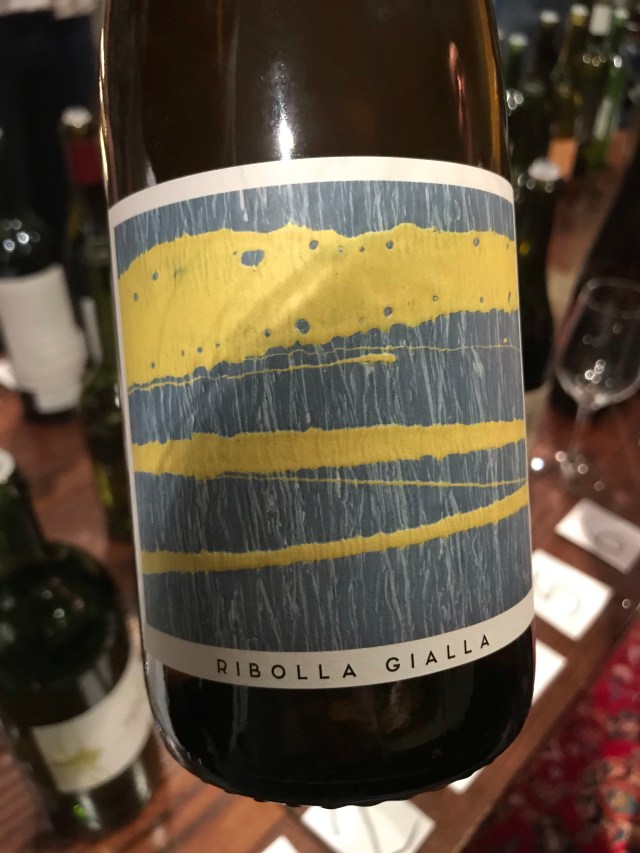
Submerged Ribolla Gialla 2017 is a great example to begin with. From the famous Oak Knoll District, George Vare originally planted these first ever Californian Ribolla vines in the Bengier vineyard. They came from Gravner in Friuli and have been called “suitcase vinestock” for the obvious reason. Mind you, I’m not sure how George managed to plant eight acres from his suitcase, but from this beginning a Californian star was born. Fermentation is for fifteen days under a submerged cap, followed by fifteen months in old oak with almost no topping-up. No SO2 was added. Mineral and stony sums this up, and £35 is a bit of a bargain. It’s only got 12.5% alcohol but there’s beautiful balance.

img_8715

Riesling 2018 comes, possibly surprisingly given the variety, from the Nelson Family Vineyard in Mendocino. The vineyard has been in the family for four generations and the 45-year-old vines give superb grapes. Big lime with a hint of grapefruit balances quite rich fruit, where you get a little pineapple mid-palate too. Stainless steel only. Unusual but wonderfully moreish. There’s apparently around 15.5g/l residual sugar. £37.

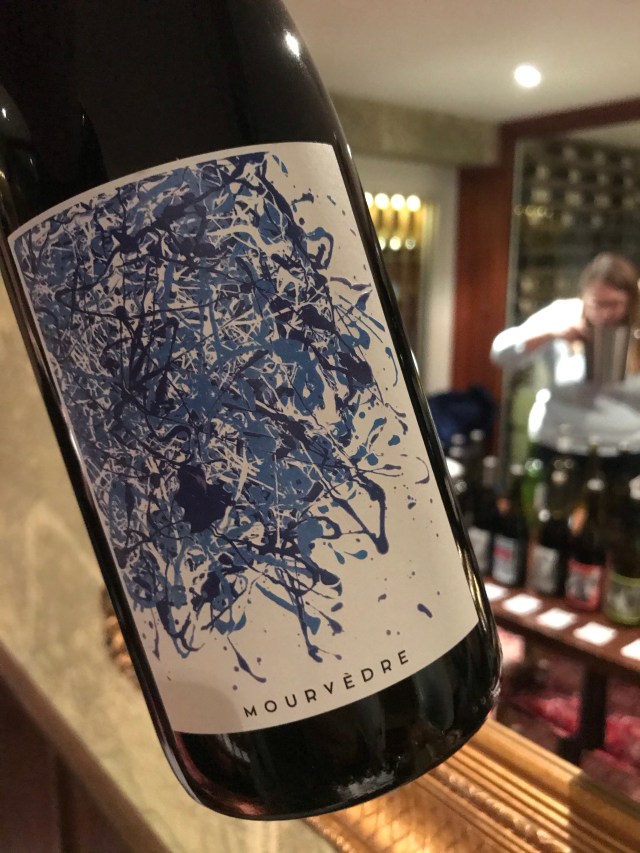
Mourvèdre 2016 comes in part from the Fore Vineyard at over 1,000 metres asl in Lake County, all on red rocky terrain. 40% whole bunch fermentation in Hungarian oak gives a wine with a fresh floral bouquet and a chewy palate. £44.

img_8718

Counoise 2018 shows a slightly different side to this grape, often made light and fruity. Steve Matthiasson planted the Windmill Vineyard in the Dunningan Hills in his younger days, along with Jack Roberts of Keep Wines and Benevolent Neglect’s Matt Nagy. The other half of the fruit comes from Alder Springs in Mendocino. Matt ferments and ages the two separately before blending. It’s a big wine (14% abv), yet has lashings of freshness and acidity, along with a bit of grip, to balance it. Just £27.

Whole Cluster Syrah 2017 is a result of an extended period of skin contact caused by the necessity to leave the wine during the 2017 fires. The result is actually lighter than the 2016, perhaps because the grapes were picked two weeks earlier, or perhaps affected by the skins drying (no pumpovers, less extraction?). Ageing was in one old 400-litre puncheon. The bouquet is atypical of Syrah, but despite the wine’s current structure and 14% alcohol, it somehow still feels quite light on its feet. £58.

DONKEY & GOAT

Jared and Tracy Brandt set up shop in a Berkeley warehouse after a stage with Eric Texier in the Rhône, and a passion for some of the tenets of Japanese permaculture adherent, Masanobu Fukuoka (whose name the deeper readers of my blog will perhaps be familiar with).

Stone Crusher Roussanne 2017 comes from El Dorado County at 750 metres asl. Whole bunches (no destemming) fermented for just shy of two weeks with light pigeage. The juice was basket-pressed gently into old oak for ten months ageing. The skins give a deeper colour and texture, but the wine is nicely rounded out. The finish shows a touch of attractive sourness. £42.50.

“The Bear” 2016 isn’t as big as the name suggests. The lead variety is Counoise, blended with Rhône varieties (including a little Roussanne). The source is El Dorado County in the Sierra Foothills once more, the regime is a mixture of concrete and wooden vat, the varieties fermented separately before blending and then given ten months in old oak. This has a very “sweet” cherry nose balanced by a palate with a bite. A lovely wine, though perhaps it takes a taste to fork out £46/bottle for Counoise. Taste it and you may well be tempted! £46.

Perli Chardonnay 2017 The innate balance and tension in this wine probably derives from the site, the Perli Vineyard being a steep slope devoid of much topsoil at 670m asl on Mendocino Ridge. Apparently yields are kept down by the local bear population! This took six months to ferment before five months ageing in used wood, and there is still 6g/litre r/s left in the wine. It adds richness to balance the steely acids…hence the tension. This comes in at an unbelievably low 11% alcohol too, yet it is almost hedonistic. I’d love to try a whole bottle. £38.

Testa Carignanne 2017 comes from a site planted almost 110 years ago in Mendocino. The terroir is decomposed sandstone. Just 20% whole bunches are used but the wine remains vibrant in every respect, via colour, bouquet and palate. A classic example of Cali-Cari weighing in at a mere 12.5% yet showing perfect balance between ripeness of fruit and thirst quenching ability. £36.

FERDINAND WINES

If you think you know Evan Frazier but are not au-fait with Ferdinand Wines, perhaps it is because he has a day job working as Assistant Winemaker for John and Alex Kongsgaard. He began his career in Roussillon but for his own label he’s firmly taken inspiration from Spain, although the last of the wines here nods towards his Pyrenean beginning.

Tempranillo 2014 Shake Ridge is a rocky site of red soils scattered with solid quartz in Amador County (Sierra Nevada). This wine saw a fairly extended 18 months in oak, 10% of it new, adding toast and spice but not too much. The wine has crispness and bite suggesting a nice balance at five years of age. £37.

Albariño 2018 Vista Luna is a site in the far northeast corner of Lodi, near the border with Amador County, an area which gets its heat ameliorated by cool air from the San Joaquin Delta and the Sierra Foothills. It’s made from organic fruit, fermented in old oak with whole bunch pressing. The wine is left passively on lees for ten months, without any punching down or stirring. What you get initially is a very sunny, bright but rich, bouquet, overtly fruit-driven yet with the merest hint of ginger and nutmeg spice. Deeply interesting. £28.

Garnacha Blanca 2018 This wine also hails from Vista Luna (see above). Handpicked at low brix, the fruit is handled carefully, pressed as whole clusters and aged one year in older wood. Just a little sulphur was added at the bottling stage. It’s as tasty as its Catalan counterpart can be, with a herby and savoury demeanour, complemented by some Californian sunshine. Circa £27.

If you really want to try something different there is also a white wine and a rosé in 375ml cans from Ferdinand Wines. It’s pretty unorthodox using quality fruit (the pink is from 75-y-o Carignanne bush vines) for a canned wine, but these are reputed to be very superior wines in a can. Bring on summer.

BIG BASIN

This is a quality operation where fruit selection is paramount, based on multiple tries and picking fruit at optimum phenolic ripeness for every single site. This means the wines aren’t cheap (the first wine is £35 and the remaining three retail in the £50-£60 bracket). But they do exude class.

Homestead 2014 takes a fruit selection comprising Mourvèdre (35%), Grenache (27%), Carignan (19%), Syrah (16%) and Cabernet Sauvignon from sites in the Mount Harlan and Chalone AVAs on the Santa Cruz Mountains. Each variety is fermented separately in small vats before ageing for just under a year in used oak barrels. It’s a well put together blend, a lovely wine where all the different varieties seem to play their part in a harmonious whole. Freshness and sour cherry were by two foremost thoughts here.

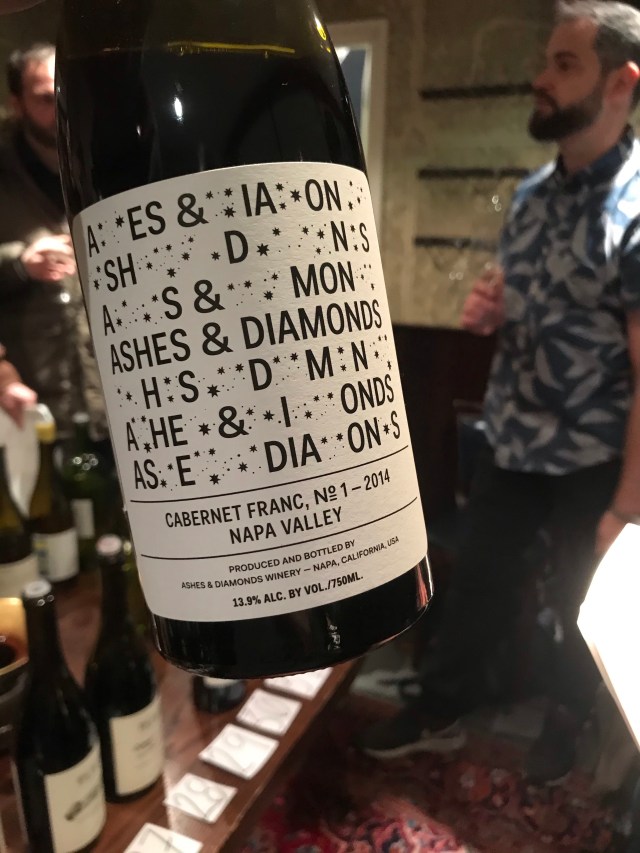
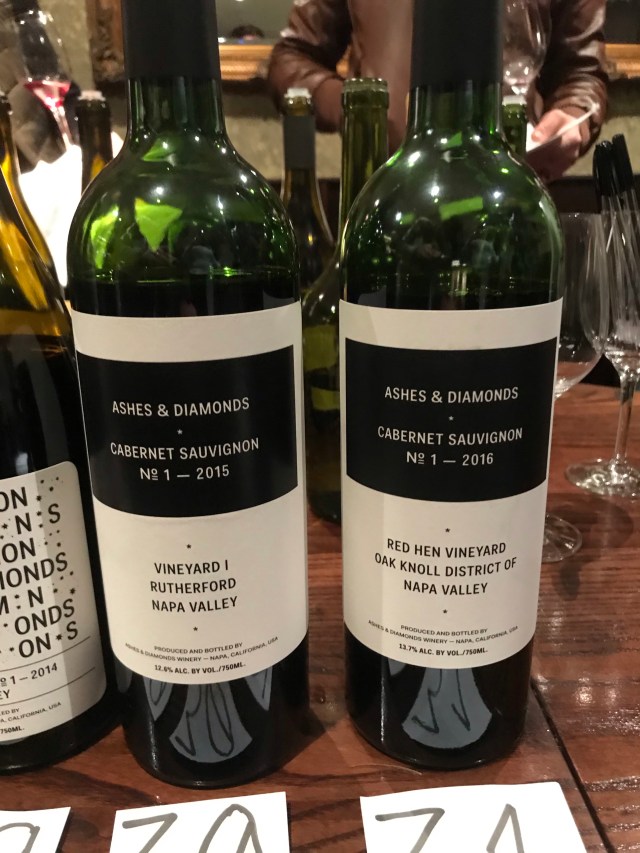
Looking at how much the wines below cost, this could well be a bargain at £35. The three wines below were bracketed at the tasting with the three stars from Ashes & Diamonds, which Nekter had called “Showstoppers – where the air is rare”.

Coastview Chardonnay 2016 comes from a high altitude site in Monterey County. It sees a gentle ferment with an extended period of twelve months on lees. It’s such a complete wine that you may be surprised to find out it is made in stainless steel. It sees no oak. The result is a complex and savoury Chardonnay. The lees have definitely added texture and mouthfeel and it shows signs of considerable complexity to come over the next year or three (perhaps longer?). £54.

Lester Pinot Noir 2015 comes from the Santa Cruz Mountains, more specifically from the Lester family’s vineyard in the Corralitos Hills, just three miles inland from Monterey Bay. Planted on poor sandy and clay loam twenty years ago, the grapes benefit greatly from the famous bay fog which only burns off later in the day, when the sun then lingers into the evening. A high proportion of the grapes are fermented as whole clusters (70%) in open wooden vats, followed by ageing in French oak (25% new). As with the Chardonnay, the aromatics are stunning. Such vibrancy. This is serious stuff, but it is equally a wine which appeals to the sensual side. £61.

Gabilan Mountains GSM 2013 I’d never heard of the Gabilan Mountains but apparently the are in Monterey, south of the bay. The Grenache and Syrah, which together form 76% of the blend, come from the Coastview Vineyard at 700m asl. The Mourvèdre is from the Brousseau site, down at 440m. The two vineyards are fermented separately before ageing together twenty-one months in used French oak. The colour is dark, and a glance at the abv on the label makes you take a second look – 15%. It has that ripe Monterey nose, but it is nothing like those big cropping corporate wines off the valley floor down here. The palate has much more freshness than you’d imagine, though it is quite tannic, even at six years old. £50.25.

img_8739

KEEP WINES

I am a signed-up fan of Keep Wines. I must have told the story before of how Jack Roberts met wife to be Johanna within a few hours of stepping off the plane on his first trip to Napa. Whilst Johanna has worked for Broc Cellars and Abe Schoener, Jack is now Assistant Winemaker at Matthiasson Family Wines. Their own label makes wine from sites which they either farm themselves or are cultivated by Steve Matthiasson.

I must also have a label moan here. I absolutely adored their original labels when I first saw them. They show a castle, I forget where it is, somewhere in the UK, in which it is rumoured that Jack’s father was born. People say “wow!” but I just think how freezing cold those places tend to be. They reckon the label is too funky for the grown up wines they are making these days, yet I’m not so sure the wines have completely lost that little touch of funkiness which first drew me to them back in 2017. Try the Counoise, or their Pinot Meunier (not shown on Monday, so perhaps they have stopped making it?) to see what I mean.

Counoise “David Girard” 2018 This has a gorgeous pale colour with high-toned sweet cherry fruit. Slightly cloudy/hazy, it has a gentle texture in which otherwise is a fruity wine to drink cool in the sunshine. But with 13% abv it’s not that light, and will be a versatile food wine. The fruit, planted on alluvial soils over granite in El Dorado County (east of Sacramento) is forty years old. It is fermented carbonically in a sealed tank for two weeks before being basket-pressed into old oak for just six months ageing. No sulphur is added. Delicious stuff at £32/bottle.

Evanghelo Carignanne 2016 This is a seriously old vineyard with 140-year-old vines in Contra Costa County, which forms the northern part of San Francisco’s East Bay Region. You’ll do well to find it mapped in any wine books aside from Jon Bonné’s The New California. It has been referred to, according to Nekter, as “the land which time forgot”, but this does mean there’s some very old vine stock here. This is a complex Carignanne with a little sous-bois underneath the fruit and, perhaps, an earthy touch. It’s a wine for quite hearty food, coming in at 14% abv and retailing at £46.

Lost Slough Albariño 2015 is from the same site as Steve Matthiasson’s Tendu Cortese, at Clarksburg (Hidden off Highway 5, to the north of Walnut Grove, which I’m sure leaves you none the wiser – look at Bonné, p 287 to see how remote it is). The “blurb” talks of how this wine is “influenced by the old school style of Galician Albariño, as championed by Raul Pérez’s Atelier”. Well, I am something of a Pérez fan. It is picked later when malic acid has receded, basket pressed and aged first in neutral oak for two years, then a further two years in bottle. It exemplifies how the variety can age, and ought to be allowed to. £36.

Windmill Vermentino 2017 Another site we’ve come across before (in Yolo County, if you remember). The fruit underwent a spontaneous fermentation and thereafter it was left on lees for 18 months to mature. We have a fatter, or perhaps deeper is better, wine with rich texture, but all on just 11% alcohol. Juicy with a savoury or sour touch. £37.

Kahn Syrah 2015 This was one of the brightest wines on show. The Kahn vineyard is made up of volcanic soils (perhaps one reason), at 600 metres in the Lovall Valley (Napa), but only accessible from the Sonoma side of the Mayacamas Mountains. The fruit is stunning in its purity, dark with cassis and a touch of eucalyptus, yet very much Syrah. Organic, 14% abv, 50% whole bunch fermented and aged in neutral oak for 18 months. Very impressive at only £46 for a wine from California.

FIELD RECORDINGS

If a wine entices you by its label, then I think you will be hooked on Field Recordings. Each vintage they choose an historical musician to complement their philosophy. Andrew Jones is the man behind Field Recordings. This is a tiny label, of which the “Wonderwall” wines (presumably Andrew is an Oasis fan) are an equally small part. This winemaker with a vine nursery background is also the instigator of yet another “wine in a can” project, Alloy Wine Works.

The two wines immediately below come from Edna Valley. Located south of San Luis Obispo, this is part of the large region denoted as “Central Coast”, though in wine geography terms it is very much “Southern California”. But we know that means little if you benefit from the cold sea air and mist, in this case from Morro Bay, so Edna Valley is actually pretty cool for its southern location.

Wonderwall Chardonnay 2018 comes from Spanish Springs and Coquina. The wine sees around eight months on lees, and ageing is unusually in a mix of both oak and acacia barrels. The oak is American, not French, and 25% new. The result is a wine which has a degree of weight on the palate (abv is 14%), but a nice line of citrus acidity as well. With considerable zip, you’d be unlikely to guess that level of alcohol. Nor, I think, would you guess this retails for just £23.

Wonderwall Pinot Noir 2018 Some of the Pinot fruit comes from Spanish Springs (see above), the rest from three more sustainably farmed vineyards: Morrow View, Greengate and Pooch. Fermentation is in stainless steel on native yeasts, after which it goes into oak for malo and eight months on fine lees. The bouquet strikes as very fragrant and fruity. The palate shows a certain lightness, but only to a degree, as there’s structure too which implies a little more age might benefit it, despite its low price, £25.

Wonderwall Syrah 2018 is just given a broader Central Coast designation, but the individual sites which make up the blend are all in choice locations: Arroya Seco, Paso Robles AVAs, and Stolo Vineyard, in the almost unknown coastal community of Cambria, which does not as yet have a designated AVA. What the sites all share is a rocky terrain. The result is a bright wine where the fact that this sees a third new oak during an eleven month maturation does not really come through on the nose at all. It does on the palate, of course, but for just £25 you get a wine which will mellow into something perhaps more European in style than typically Californian. That despite its avowed 14% abv.

LONG TERM WINE COMPANY

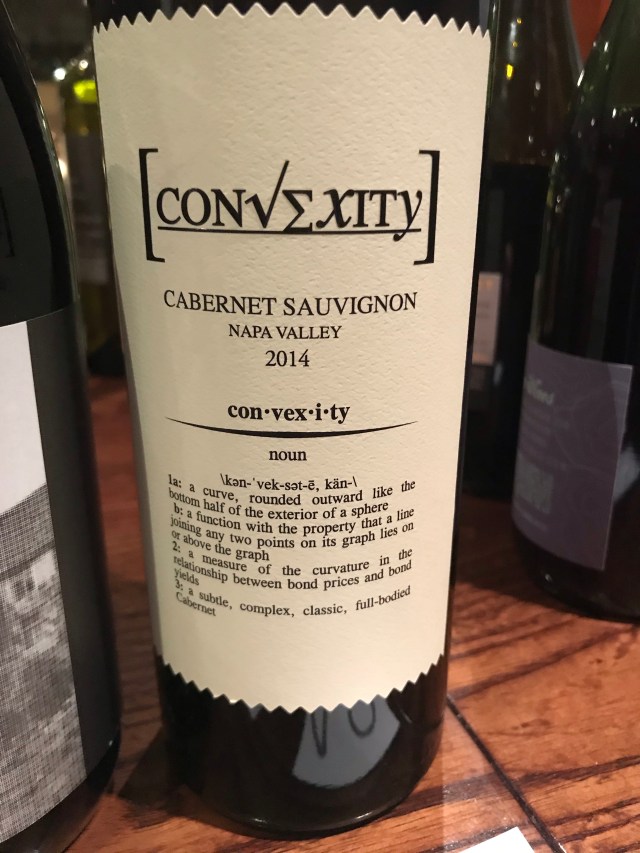
Three friends came together to form Long Term Wine Company and the Convexity label, and they managed to hire Steve Matthiasson to make the wine. You may have gathered by now that Matthiasson plays a part of some distinction in many of these wines. It should be said that few, if any, other wine makers have played such a pivotal role in defining what we now call The New California (post-Bonné, of course).

Convexity Cabernet Sauvignon 2014 The fruit has been sourced from two Napa Valley sites, Red Hen and Vare Vineyards, along with a supplement from the Matthiasson Family’s own vines. What makes this cuvée really interesting is that it is only comprised of 89% Cabernet Sauvignon. In addition to 3% Merlot, 1% Cabernet Franc and 3% Petit Verdot (all very Bordelais), we also have 4% Sangiovese. That latter percentage may not sound a lot but I think it gives the wine a bit of lift and an extra dimension. It has a serious 18 month period in French oak (a third being new) and the result is a surprisingly elegant, leggy (13.5% abv), beautiful, wine which covers several octaves, from sweet fruit to savoury. £65, but still good value.

img_8731

ASHES & DIAMONDS

We end on a high note indeed with Ashes & Diamonds. Khashi Khaledi worked in the music industry but made a life change to wine after developing a passion for, and a desire to recreate, the style of the great Californian (primarily Napa) wines of the 1960s and 70s. In order to achieve this goal, Khaledi has hired some famous names to make the wines. The first two below are made by Steve Matthiasson, the last wine by Diana Snowdon Seysses.

The name Ashes & Diamonds denotes a crossroads in life which Khashi felt he was facing. One choice, as with a seam of coal, could lead to ashes and one to diamonds. A bit like my late change of career to wine writing, then. The diamonds are, of course, all metaphorical.

Cabernet Franc No 1 2014 This is actually a blend of 75% CF with 25% Merlot. The Cabernet comes from what are described as eight “backyard” vineyards in Napa’s cooler south, on a mix of volcanic, clay and loam soils. The Merlot, from Ashes and Diamonds’ own vineyard, is forty years old. The regime isn’t extreme, twenty months in French oak, just 20% new. The key is the fruit, and its sensitive handling (all destemmed and fermented in stainless steel) by Matthiasson. The Cabernet Franc has real freshness but the Merlot rounds it out. The immaculate Cabernet Franc fruit shines right through. £83.

img_8740

Vineyard 1 Cabernet Sauvignon 2015 This is in some ways a classic Rutherford Bench Napa Cabernet, from the region’s once beating heart. The George III Vineyard was used by André Tchelistcheff to make Beaulieu Vineyards’ famous wines, including the 1968 vintage, the tasting of which was so instrumental as a catalyst to Khashi Khaledi’s career change. This cuvée looks to a ripe style, but with an unbelievably restrained 12.5% alcohol. How does Matthiasson do it, especially because, of the mix of French and American oak, 17% and 30% respectively is new. This is very classy and built to last. Despite the low alcohol, it has real presence.

Now I’m not usually inclined to warm to this kind of wine, where great wealth is directed towards creating a wine that may well be very fine, yet is well beyond the purse of most people I know (and I do know a lot of people who spend rather a lot more than I can afford on wine). But I keep thinking of the winemaker, and what he has been given the opportunity to make here. So at £133/bottle I won’t be buying it, even less so in a restaurant, but if you are a little more wealthy, and so disposed, you will not be disappointed (though it must be said that, made “old school”, it would be a crying shame to drink them all too soon, as is so often the way with Napa).

Red Hen Vineyard Cabernet Sauvignon No 1 2016 Directly north of the town of Napa itself, in the south of the Valley, lies Oak Knoll. Being one of the coolest sites you will find a quite different kind of Cabernet here, and 100% Cabernet Sauvignon is what we have in the glass. The vineyard is owned and farmed by Bart and Daphne Araujo, whose famous Eisele Vineyard has, since 2016, formed the name of this equally famous biodynamic estate (formerly Araujo Estate), which I now believe (source: World Wine Atlas, 8th edn) is in the same hands as Château Latour.

The winemaker this time is Diana Snowdon Seysses, and she treated the Cabernet to a 17-day fermentation in stainless steel followed by maturation for seventeen months in wholly French oak, 35% of which was new. In some ways this wine, despite its 14% abv, has a Pinot sensibility. Am I taking too much from the winemaker? The fruit is really intense, but Diana has brought out a more savoury side (herbal) which you don’t usually get in the fruit bombs Napa sometimes produces. Yet again, we have a resulting wine which will age. A mere £102.50 for this one.

img_8741

Some Conclusions

This was an unusual tasting. First of all, California has given me a great deal of pleasure since I read Jon Bonné’s New California Wine back five or six years ago. It helped that London wine merchant Roberson sold a great many of the wines he covered, which were easy to pick up before they sadly closed their retail shop in West London. That said, California forms a very small part of my cellar and I probably possess more wines from, say, Beaujolais or The French Alps than I do from America’s sunshine state.

Tasting through thirty-one Cali wines was instructive. There wasn’t a single wine I disliked, even with alcohol levels topping out at 14% or above for a third of them. I was pleasantly surprised how many saw no, or little, added sulphur and how stable those wines were. But out of all the wines, my favourites invariably showed lower levels of alcohol, which for me in no way appeared to affect ripeness. This doubtless comes back to something I touched on at the beginning – canopy management. It is certainly no surprise that Steve Matthiasson’s name is an almost constant thread.

I should make small mention of the 2018 vintage, which is the current vintage for several wines here. Potentially in California it is a cracker…if you have a taste for restraint and elegance. Generally, average temperatures throughout the 2018 growing season were lower than usual, as much as five degrees in some districts. Harvest for many began anything between ten days and three weeks later than in 2017, That makes a big difference. In parts of Europe even a few years ago that drop in average temperatures  could spell disaster (imagine Bordeaux). In an increasingly overheated California it made for an interesting scenario. Of course, taste the wines first. Generalisations are always of debatable value. But do try to taste. If the wines fit your preferred style it might be just the right time to venture a bit of cellar space for the Californians.

If you must know, my favourites for drinking would be the Benevolent Neglect Ribolla GiallaKeep Wines’ Counoise and CarignanneDonkey & Goat Testa Carignanne, and Big Basin “Homestead Blend” (all very much geared to “drinking”). But you will see throughout my notes that there are many wines I’d love to drink at home or in a restaurant. Of the wines costing an arm and a leg, these are unlikely to pass my lips other than at future tastings, but they scored for being wines one would drink, not merely admire.

Now I genuinely cannot wait for Nekter to show their South Africans and Australians separately. In the meantime, enjoy these Californians. I hope my obvious enthusiasm is validated by other writers who may have attended.

img_8742


Posted in Artisan Wines, Californian Wine, North American Wine, Wine, Wine Agencies, Wine Merchants, Wine Tastings | Tagged , , , , , , , , , , , , , , , , , , , , , , , , , , , , , , | 3 Comments

Binging on the Bogans’ 2018 Burgundies – Eyre, Haisma, Le Grappin et al

The festival of Burgundy tastings (some call it a circus) hits London in January. For some people it is the highlight of the wine year. Importers bombard their customers with invitations to events which overlap, so that some avid fans can attend three or four tastings in a day. And they do. I tend only to go to one these days. This one. I’m no longer in the market for very expensive wines requiring long cellaring, although I’m very much enjoying those I have tucked away.

Andrew and Emma Nielsen’s Le Grappin, Mark Haisma and Jane Eyre were showing their 2018 vintage at Vinoteca City (Cannon Street/Bloomberg Arcade), along with Jérémy Recchione and the Romanian venture of which Mark is a partner, Dagon Wines (formerly Dagon Clan).

Before we hit the wines I think I need to say something about the 2018 vintage in Burgundy. The general view is that it was hot. That cannot be disputed, although most producers will focus on the good news – no hail or frost, a dry summer and fruit in perfect condition at harvest. When you read what consumers are saying the views range from “difficult to judge easily” to “undrinkable”, the latter comment made about the wines of one well known grower on the Côte d’Or. One cynic said it was probably a “best ever Parker vintage”. But the majority considered opinion is that freshness is a quality found in the minority.

However, I only attended this tasting. There’s a reason, of course, well several, but I do feel that all three producers headlining here do produce the kind of wines I appreciate. I was away at the time of their 2017’s tasting last year, and I’m glad I made it yesterday. I was pleasantly surprised. I can agree with the words of a trade professional I know who, after a few qualifying comments, mostly regarding prices, said “some great gear on show, though”. Let us begin.

LE GRAPPIN

Andrew and Emma Nielsen work out of a tiny winery within the walls of Beaune. Their Du Grappin label buys grapes from points south, Beaujolais, Macon and the Rhône. Le Grappin is the main label for their Côte d’Or wines, where they have been lucky to secure long term relationships with the owners of some genuinely under appreciated sites. Jancis has called their wines “pure” and “refined”, and that is indeed what they are. Andrew is an intuitive winemaker, which means he adapts techniques to the vintage. That was important in 2018. I do have an emotional link with this producer. I bought my first pack of Beaune Boucherottes from the (first) 2012 vintage. I don’t buy every year, but that is purely for budgetary reasons, so I have to focus to be 100% objective.

img_8672

For the 2018 vintage, with no serious damage and loss from hail and frost, there are four white wines produced. Personally I think that due to the Le Grappin style, these wines have been a success. All four are very well delineated and differentiated, which is not always easy in a hot year. Savigny Blanc has the most freshness and acidity, Saint-Aubin “En L’Ebaupin” is a little quieter and restrained but has more depth (it’s often my favourite Le Grappin white). Santenay 1er Cru “Les Gravières Blanc” comes back with a bigger bouquet and has a note of salinity, and finally Beaune Grèves has some sweet fruit and spice. There were six barrels made. I think the first three wines would drink well at three-to-four years, whilst the Beaune needs longer. I actually liked every one of them.

img_8654

The red cuvées were all made with whole bunches in 2018, and with minimum intervention (so no plunging or punching down) to pull back on extraction. They were all fermented as dry as possible. The Savigny has a vibrant colour, a rich cherry nose, and quite sweet fruit. It is balanced by a grippy freshness. Santenay 1er Cru Gravières is a new wine from the same vineyard as the white equivalent. The vines are between forty and seventy years old, which must be an advantage in cases of heat stress. That said, the wine is quite deep and rounded.

Beaune 1er Cru Boucherottes is on the Pommard side of Beaune, but it doesn’t have the tannin that some Pommards seem to have in 2018 (according to what I have read). The fruit is in the red spectrum and I thought it was quite promising. It will drink early, though not now. I recall Andrew telling me to drink the 2013 Boucherottes before the ’12s, and those ’13s are drinking beautifully now. So I’m not discounting the same progress for this vintage.

I also tasted the two 2018 Aligoté cuvées. These if anything seem to have more acidity than the previous vintage when I finished my last bottles, so I don’t think they will fade swiftly. The “Skin” bottling was made with half-destemmed fruit and half by carbonic fermentation over seven days on skins. The destemmed portion definitely adds complexity. Fleurie Poncié 2018 was also impressive, probably helped by being a very old parcel of bush vines at altitude. A true Chauvet wine, using concrete to good effect too (a 21 day fermentation with a slow start thanks to overnight chilling, in Beaune). It has real freshness of scent and structure. Organic. I did also taste the Côtes du Rhône, pure Grenache, good value and good tout-court, but less my thing, I think.

The only concern for me really here is the prices (between £147 and £190 for six in bond for the Côte d’Or wines), but it should be accepted that Andrew and Emma charge what they have to. Top fruit comes at top prices. Those of us who can regularly purchase fine Burgundy these days is, let’s be honest, limited to an elite. It’s a shame, but a fact of life. I will pick up odd bottles of Le Grappin where I can, and enjoy Du Grappin as well.

JANE EYRE

Of the three Ozgundians Jane might be the least well known in the UK, but some say the most well known in the region itself. Although I know her wines less well than those of the other two, I have come to realise that I have been seriously missing out, if only because my Burgundy budget is now so slender as prices have risen. Jane’s wines cover a wider price spectrum, starting at £105 ex duty/VAT (translating to £145 all in) for her Fleurie right up to £465 (£575 inclusive of duty and VAT) for her Corton Grand Cru. There are a couple of new wines for the 2018 vintage. All are red here.

96fb28f7-1f26-4c7a-9059-03f20f7ca215

Jane first made Fleurie in 2016. The juice underwent a similar 21-day fermentation as Le Grappin’s in 2018, but with 60% whole bunches. It’s quite dark-fruited and a little smokiness adds interest. Approachable now.

From the Côte we start with Côte de Nuits-Villages from Comblanchien (from two sites, one parcel farmed biodynamically). 100% destemming and one barrel (ie 10% of ten) was new. Elegantly scented, mineral, nice. Unlike some reports, the lesser wines from all the producers here showed no gloopy flabbiness. Gevrey-Chambertin has some oomph, but also brightness. Savigny 1er Cru Aux Vergelesses usually attracts me. It has a bit more weight, roundness and grip. I think it was the first cuvée Jane made back in 2011. Its round fruit makes it appear approachable but give it time.

Santenay Gravières 1er Cru is a new wine, 30% whole bunches and 25% new wood. The fruit is plump and ripe and it’s a bigger wine, for me, than the Savigny. It may drink well in just 4-5 years. Chassagne Montrachet 1er Cru Les Bondues is an very interesting wine. It is effectively a Monopole for Jane as she is the only winemaker to take this patch of 90-year-old biodynamically farmed Pinot Noir vines, which sit amid Chardonnay rows pretty much just over the road from Le Montrachet. The acids are good and the fruit pretty complex. It has that touch of earthiness and textured grip that made me quite a fan of Chassagne reds back in the day, when, not being white, they were cheap as chips.

Jane’s Beaune Premier Cru comes from the famous Cent Vignes, on the Savigny side near the Clos du Roi. Six barrels were made (one new). It has a plump bouquet and you do catch a bit of oak spice, with cherry fruit then something deeper, plummy. The vineyard is farmed biodynamically and no sulphur was added to this cuvée until just a little, two months after the malo.

Gevrey comes back with a 1er CruCorbeaux, a site pretty much directly south of, and abutting the gardens of, the village itself. But more importantly, it also abuts the Grand Cru, Mazis Chambertin. It’s relatively closed now but the fruit is exquisite. You also get more complex spicy notes hinted at. There’s more to come here, it needs time.

img_8659

We finish with the Corton Grand Cru 2018. In 2017 this wine was 100% from “Maréchaudes”, but for 2018 just 60% of the grapes were sourced there. The rest of the fruit came from “Renardes” (30%) and “Bressandes” (10%). The bouquet is wonderfully pretty, Jane attributing the aromatics to the “Renardes” fruit. The palate is bigger than the nose leads you to expect. There’s structure but it does retain a nice lightness and elegance. I’d buy some if I could afford to. Ideally I’d go with a mixed case of the red Chassagne, the Savigny, the Cent Vignes and this Corton.

img_8660

MARK HAISMA

Mark showed a big lineup of wines so I’ll have to restrict any elongated comments to just a few wines, but the range, again, was good and whilst I preferred some wines to others, they are certainly not at all typical of some of the comments surfacing about the vintage in general. But reading what others have said about this particular tasting on wine forums, I don’t think my more positive thoughts are completely atypical.

img_8668

We’ll begin with the pair of wines Mark has called A Bogan in Bogandy. The white is a Vin de France, blending Chardonnay and Aligoté, the red is AOP Coteaux Bourguignons with Gamay and Pinot Noir. Both are fun wines which retail at around £15-£17/bottle, which provides good value. As Mark says, he wants all his bottles to be of a certain quality, but for a fun pair of wines these hit the mark. It was my first taste of the Bogans, though I did spot a 2017 “Bogan Goes Walkabout” on the shelf at Vinoteca, a Vin de France blend of Syrah and Grenache, I think.

img_8665

Mark’s Aligoté is always very popular, and the 2018 more so than ever, possibly on account of the extra ripeness and toned down acids. It comes in at 12.5% abv and both smells and tastes of grape juice. The Côte d’Or kicks off with Saint-Romain, a fresh wine of the hills, before we move down to Chassagne-Montrachet, a wine with perhaps a bit more of a bite, and fruit, whilst retaining freshness. Mark has previously avoided Meursault, but his new Meursault Sous la Velle (from a site close to the town) does not display the traits he seems to dislike about this appellation. It’s very fresh, especially for the vintage, but it does have an underlying buttery essence. I really like it. Chassagne-Montrachet 1er Cru Le Maltroye is potentially a step up in class, very much greengage/reine-claude with mineral texture.

img_8669

Last of the whites to mention is Mark Haisma’s Saint-Peray 2018. This once derided and unsung appellation of the Northern Rhône is now fashionable once more. I say “once more” because one particular wine merchant never fails to remind its customers that Saint-Peray, albeit in its now rarer sparkling form, was Richard Wagner’s favourite “tipple”. Mark sticks to the still version of this Marsanne-Roussanne blend, giving textured stone fruit and a little oily mouthfeel in 2018. I’d say more phat (ie gratifying) than fat.

After the Bogan red (mentioned previously) we moved up a step to Mark’s Bourgogne Pinot Noir which has just a touch more presence. Of the red village wines, Volnay is dark and leggy but the bouquet is nicely floral. Gevrey had been cooled down in an ice bucket but was also quite scented on warming. It has a bit of power, and of the two, for me, the most impressive.

Pommard 1er Cru Clos des Arvelets, presumably somewhere in the Arvelets vineyard west of the village, has big fruit but quite a lot of tannin as well right now. Morey-St. Denis 1er Cru Les Chaffots is a smallish lieu-dit bordering Clos St. Denis. This had also been chilled but seemed to me quite elegant. Echézeaux stands proud with a deep, resonant, nose but closed on the palate, tannic. It has a lot to give, but not right now.

As always, we end with a sip of Mark’s superb Cornas, which is usually capable of longevity but not always given the opportunity. It’s almost a shock moving over to Syrah. There’s depth, from violets at the top down to a deep bass note. Sandwiched between is good fruit, tannin and some savouriness, all stored away. Whether you could approach it after ten years or five I’m not really sure. If I’ve ever drunk one before a decade old, I don’t remember it.

It is always said that you should follow the producer, not the vintage. That comment is usually aimed at poor vintages, the cold and the wet. But it applies to hot vintages too. All three of these micro-negoces have dealt with 2018 in slightly different ways. I’m not prepared to say that the wines of one are better than the others, but I think they have all done remarkably well in this vintage. I naturally preferred some wines to others, but I cannot say that any showed signs of the most frequent criticisms being levelled at 2018 as a vintage. Generalisations are rarely accurate in wine, and never in Burgundy.

JEREMY RECCHIONE

Jérémy and his wife were not in London this year but Mark had lined up half a dozen of their tiny output on the table next to his. Many of you will know that this small artisan producer makes some very finely crafted wines, which would certainly be better known if he made more of it. Most of these wines consist of just one or two barrels, so perhaps fewer than 400 bottles in some cases.

We began with what is pleasingly now the obligatory bottle of Burgundy’s once derided variety, Aligoté. This is in a rounder style and if I would not rate it as comparable to the others already tasted, that is in no way a criticism. It’s a good pointer to the quality here. Bourgogne Chardonnay 2018 is approachable and juicy. I didn’t see prices for the Recchione wines, but if reasonable I’d be happy buying this for ordinary drinking.

img_8656

There’s been a lot of talk, positive I would say, about some of the wines from the Hautes Côtes in this vintage. Here we had a very nice Hautes Côtes de Nuits, with just the right degree of plump fresh Pinot fruit and 12.5% abv. It may have been my favourite out of the six wines shown. I also liked the slightly fatter Côtes de Nuits, but from the back label this bottle turned out to be a 2017.

The last two wines were from fruit sourced close to Jérémy’s home turf towards the northern end of the Côtes de Nuits. Fixin, generally, has improved beyond recognition in the past decade or two, and the Recchione Fixin 2018 is fragrant with high-toned fruit, more so than many Fixin’s I taste. It has a notably savoury finish too. Gevrey-Chambertin seems a little less soft and needs more time. I found it a difficult wine to judge.

DAGON WINES (ROMANIA)

Somewhere along the line Dagon Clan became Dagon Wines, but then I’d not tasted any of their wines since early 2017. I don’t mean to be patronising to say that the wines have improved. They have certainly grown up. I remember their wines as great value drinking, but at this tasting there were some more serious wines as well.

In the easy drinking camp I probably most liked the 2019 rosé called Har. A blend of Cabernet Sauvignon and Syrah with a little skin contact and gentle pressing into stainless steel. Half sees malo and the result is zippy and just 12.5% abv. I also like the entry level white, Cleştar (2018) which has a smooth finish and a bite. Aromatic.

Clearstone 2018 is a big step up, the best white I’ve tasted from these guys so far. It’s the wine which used to be called “Clar”. It is 100% varietal Feteasca Alba, fermented in wood and left to sit on fine lees for six months. It’s both fresh and buttery with a lemon citrus nose. Someone told them that Feteasca Alba is “Romania’s Chardonnay”. I can see that, but this has a little touch of Semillon character as well. I would certainly buy this wine if I see it on a shelf.

img_8662

There are two wines called “Jar”. Jar 2018 blends 60% Feteasca Negra with 40% Pinot Noir. These varieties go well together. With 20% new oak, hopefully the limit, the bright fruit reminds me a little of a rare good Dôle from the Swiss Valais. Smooth fruit, but a grippy finish. I prefer it to Jar SR, which blends Feteasca Negra with Cabernet Sauvignon and Merlot.

img_8663

Gotmerlot 2018 is a wine from a new vineyard and just 367 bottles were made. 75% of the blend is Merlot aged in oak for ten months, at which point 25% Feteasca Negra is added. The colour is deep and there’s an attractive scent of dark fruits. The Feteasca gives a bramble freshness to the rounder Merlot. I reckon it needs five years to fulfil its potential.

The final wine on show was Sandridge 2018. Right in the middle of a vineyard there is a three hectare plot of Feteasca Negra, of which one hectare is on a sandy ridge. That hectare of fruit is harvested separately and fermented in steel tank before seeing three months in oak. Dagon made a single barrel in 2016, and none in 2017, so this 2018 is the second vintage and there are three barrels. This is in some ways the most interesting venture for Dagon because the wine really seems expressive of terroir. This will also benefit from some years in bottle, though at a guess people are likely to buy these and drink them. It will still give much pleasure.

img_8664

I sometimes feel that Dagon Wines get lost amid all these Burgundies, and I have to ask whether a lot of the city folks and burgophiles who buy from Mark Haisma et al are in the market for Romanian wine? That said, this is a good showcase for them and I hope trade buyers grab a taste. I’d stock them, for sure, if I owned a wine shop. Once hand sold they would go really well, of course for the novelty of their location but more for their quality. I’ve long said that Romania is brimming with untapped wine potential beyond the co-operative and factory production, and Dagon Wines is a beacon.

Some Conclusions

Going back to the 2018 vintage in Burgundy, I have increasingly read horror stories from other tastings. It’s as if I had been tasting a different vintage here. The keys to making good wine in 2018 must be managing ripeness and tannins. For negociants who supposedly have less control over picking dates, these folks have done very well. I suspect nothing was left too long on the vine.

I’ve read more criticism of harsh tannins than anything else. Someone pointed out, correctly, that Haisma, Eyre and Nielsen used mostly whole bunches, ripe stalks adding freshness. Stalks can, of course, lower acidities, but they can add brightness and freshness, as well (some argue) as soaking up a little alcohol. I don’t know what other producers did, but the only wines I found overtly tannic were wines where tannin would be somewhat bigger anyway. For example Echézeaux (Corton can be an exception and look how Jane added Renardes fruit from higher on the slope to boost the aromatics) is always going to have more structure, and Pommard has long had a reputation for tannin, even if it does not habitually show it in every vintage.

Over all, the wines on show on Tuesday were balanced. The whites are mostly fresh and have a prospect of drinking at three to five years, as a very broad generalisation. The reds are stylistically varied. Money aside, I would buy these 2018s, though I’d not be inclined to go long. They will in most cases drink earlier than some other vintages, but that’s no bad thing.

Actually, not putting money aside, Burgundy is getting pretty expensive. The producers have to cover costs and make a living. There is undoubtedly greed in the region, though I’m positive there were no greedy people in the room at Vinoteca. The problem, looking ahead, comes with 2019. Another warm vintage but with a smaller crop for most. Some suggest it will be harder to sell for the negociant, but the price pressure on grapes will certainly be significant. I would hope that there is enough loyalty to help these people keep making fresh and exciting wines. When it comes to vintage one can ditch generalisations and reach for the eternal truth in Burgundy, as anywhere – producer is key.


Posted in Aligoté, Artisan Wines, Burgundy, Eastern European Wine, Fine Wine, Wine, Wine Tastings | Tagged , , , , , , , , , , , | Leave a comment

Sydneyside Dining Selection

We ate some wonderful meals during our time away in October and November, but during our last few days in Sydney we visited three very different restaurants which I’d like to write about before I leave the Southern Hemisphere for now. My guess is that the fires are putting many people off heading out to Australia. The coastal highway has just reopened up from Shoalhaven to Sydney but with more winds at the weekend, for how long? Even when we were in Sydney there were days when the smoke was bad enough to preclude a view of the ocean from less than a hundred metres away.

However, when the fires have died down my guess is that there will be quite a strong desire amongst wine lovers and members of the trade to support Australian Wine and Australia in general. Every tourist will be very welcome indeed. Anyway, we really enjoyed each of these restaurants and between them there is almost certainly something for everyone.

The three restaurants in question are Jonah’s, which is north of the city in the area known as the Northern Beaches, at Whale Beach; Dear Saine Éloise at Potts Point (by King’s Cross); and Bodhi in Central Sydney. I won’t bore you with too much detail about the food, just some photos to perhaps whet the appetite for some future visit.

JONAH’S

Jonah’s can fairly be described as a fine dining experience, one which is unquestionably enhanced by its location, with plate glass windows overlooking Whale Beach from high above, views which they do not skimp on when it comes to their web site. What began as a mere shack in 1929 grew into a celebrity haunt and today has an air of seriousness tempered by the fact that it is, after all, Australia…so it’s not “stuffy” in the least. The view is in turn enhanced by the food, which is very accomplished.

43f7b429-6a5d-4884-85db-8d215bfc2fad

img_8261

We drank moderately, a glass of Bollinger GA to begin, then a bottle of Vinteloper Pinot Gris 2019, followed by a half of Henschke Adelaide Hills Noble Gewurztraminer 2016. The Vinteloper was a lovely wine, a blend of Adelaide Hills and Fleurieu fruit, mixing freshness and a little texture at a reasonable 12.5% abv. That’s reasonable for Aussie PG, and Vinteloper always looks for freshness.

I had a nice chat with the sommelier about Vinteloper. It’s not a label I’d necessarily have expected to see in a restaurant like this, but it seems he was personally very keen. Many of you will know that David Bowley’s decade-old operation was badly affected by the Bush Fires which destroyed around half of Adelaide Hills’ vineyards in December. I know that Henschke lost Pinot Noir in the Hills too.

img_8248

There are a lot of UK events raising money for the Rural Fire Service taking place in the UK, especially around Australia Day (26 January). These include wine auctions and raffles, and restaurant events (plenty going on at Wander, the Australian restaurant on Stoke Newington High Street if you want to take a look). An uncanny number of these events include bottles (and magnums) of Vinteloper. I’d urge everyone to help, donate and enjoy in whatever small way they can. Vinteloper is imported by Graft Wine.

The Henschke was deliciously sweet, concentrated, floral, but not lacking in balance. This was a treat because although I’ve drunk a good few of the Henschke wines, I think it was my first Noble Gewurz from Stephen and Pru. I don’t think I’ve ever seen it in the UK. It was undoubtedly one of the prompts for opening the Mount Edelstone 2001 on Christmas Day.

img_8251

This long lunch with friends was spent seated in what I reckon is the best table in the restaurant (right hand corner by the window). The surf and sun provided an unrivalled backdrop, and we were even treated to a large lizard doing its thing in the garden. Although it does seem very smart, you can get two courses for lunch for $89, three for $110, more than reasonable. Naturally you really need transport to get up to the northern beaches, but Jonah’s does have a dozen rooms forming what they describe as their boutique hotel.

Jonah’s is at 69 Bynya Road, Whale Beach, Sydney. Check out their web site here.

DEAR SAINTE ÉLOISE

Dear Sainte Éloise is what I would like to call the Sager+Wilde of Sydney. The similarities are obvious in this restaurant, which is rather a wine bar with innovative food. It was also managed for some time by a S+W alumni, so the similarities are not necessarily shocking. It’s location is near Pott’s Point, on the harbour side of King’s Cross. If you walk to it from Circular Quay, as we did, you pass through the Botanical Gardens and walk up towards the King’s Cross district, an area crowded with backpacker hostels.

ccdfb053-9ead-41dc-b8b0-236588e30d2b

Between the two you pass through one of Sydney’s most interesting housing districts, Wolloomooloo, a mix of 19th Century working class housing and blocks now occupied by a good proportion of First Nation inhabitants with increasing incursions from gentrification. The architecture is worth a look. Climbing up via the district’s steep steps you eventually reach Orwell Street, on the edge of King’s Cross. Éloise gets her name from the George Orwell Novel, Down and Out in Paris and London. You can look up the quotation, but it is quite apt for the impoverished surroundings. Whilst Llankelly Place (the entrance is here, although the postal address is Orwell Street) has a few nice cafes peopled with young workers and tourists, you will certainly see a good few passers by who maybe could not to afford to frequent the street’s establishments.

67a0b48b-a913-41e8-9324-293986758146

Lunch here was so good I would not hesitate to go back. The wine list is extensive and pretty much what you’d expect from any number of London bars specialising in natural wine. Trouble is, whilst Sydney does have a good number of similar institutions (perhaps not quite as many as Melbourne?), they are more spread out.

We opened our imbibing with a Crémant du Jura Frédéric Lambert followed by Ruggabellus Sallio 2017. This latter wine is a blend of 47% Semillon, 37% Muscat and 16% Riesling from the Eden Valley in South Australia.

Based somewhat out of the way at Le Chateley, Frédéric Lambert farms most of his vines at Toulouse-le-Château, to the southwest of Poligny. His Crémant has an extremely good reputation. He uses around 20% Pinot added to Chardonnay, and the wine is allowed two years on lees before disgorgement.

I know little about Ruggabellus. I’d heard about them and had wanted to try something, but this was my first taste. It’s not easy to glean a lot about their wines. This blend is described as an introduction to their skin fermented style, and it certainly had lovely texture as well as fruit. I think I’m getting back into Aussie Semillon, though this wine is a long way from the Hunter bottles we were drinking a week or two previously, and the other varieties certainly shine through here as well. The Ruggabellus web site suggests that the inspiration comes from “the old winemaking techniques used in Eastern European Countries”, which is maybe a little opaque. The wine was very good indeed, and a hundred times more expressive than the web site. In this instance, who cares!

The wine list includes a good by-the-glass selection, with Koerner, Plageoles, Sanchez Romate, Frances Gonzalves, Vincent Careme and William Downie among several dozen available on the day. Take a peek at the pics below for some of the bottles. They also have a few sake on offer.

I’d hoped to be back in Sydney soon, but as travel up and down the coast is impossible right now, that may have to wait. However, when I do get back I shall very much look forward to a return visit here.

Dear Sainte Éloise is at 5/29 Orwell Street (but note, the entrance is actually on the alley called Llankelly Place. The bar is almost immediately on your right as you enter Llankelly Place, look for the small gold name plaque. You can peruse their web site here.

BODHI

This is something a little different. Tucked behind St Mary’s Cathedral, technically on College Street, but hidden by an expanse of concrete, is one of the best vegan restaurants I’ve been to. It serves what we call Dim Sum, or what the Aussies call Yum Cha. Treat yourself to trays and trays of delicious and authentic looking plates, all meat and dairy free (even the one which looks like it has a prawn tail protruding from the parcel).

Unusually, Bodhi cuisine also follows the Buddhist cooking philosophy (of which I was wholly ignorant) of not using onion, garlic, chives, leeks and spring onions. So I’m no Buddhist, apparently, but I would say that these restrictions definitely didn’t have any negative impact on the food. I could happily eat here once a week, and let’s face it, it’s probably affordable for many of us to do just that.

edc279b2-3823-4bf1-a9bc-c703874e3fba

You can dine inside, but we sat out under the ancient Moreton Bay fig trees, providing shade in the middle of a very hot late spring day. Each dish costs between $9-11. We spent just over £20-a-head. Perhaps we allowed our eyes to get the better of us. We did stick to tea, they have a very good selection, but they also appear to specialise in cocktails. We were heading over to the National Gallery of NSW to see the splendid “Supernatural Japan” exhibition, with specially created works by Takashi Murakami, and we didn’t want to feel sleepy from alcohol in addition to a food coma.

Bodhi is at 2-4 College Street, Sydney. You’ll have to nose around to find it, but just head across the concrete patch behind St. Mary’s and look for the fig trees. You can check out their web site here.

There are of course plenty of good places to eat in Sydney, from the classic seafood of Doyle’s and the expensive Japanese cuisine at Tetsuya, to the down to earth natural wine of The Wine Room at the Dolphin Hotel (Surry Hills, closed January), but I reckon the three places above cover a neat spread of the kind of interesting dining which Sydney and her suburbs have to offer. There is, of course, no shortage of restaurant guides to tell you where to go…but you can trust me on these, each filling a particular niche, of course.

756f55f1-4b8c-4eeb-8b48-1643475bcd75

Mural painting detail, Takashi Murakami at Supernatural Japan (Gallery of NSW, ends 8 March 2020)

img_8332


Posted in Australian Wine, Dining, Restaurants, Wine, Wine and Food, Wine Bars, Wine Travel | Tagged , , , , , , , , | 2 Comments

Recent Wines – December 2019 #theglouthatbindsus

I haven’t quite finished my series of articles on Australia, and I certainly hope to write and publish the last of those before the tasting calendar kicks in, which it does in a couple of weeks with Le Grappin in The City (14th) and when Nekter Wines opens their whole Californian range at The 10 Cases in Covent Garden (20th). But first I thought I ought to bash out my regular “recent wines” roundup. The last of these was September’s, as I was away in Nepal and Australia for October/November, so we skip straight to December.

You will have to forgive me again. If my last article was short, I’m not going to be able to keep this one down to my usual dozen wines. If I’m reticent to jump on the “dry January” bandwagon, I’m no different to anyone else when it comes to drinking more in December, though I blame more entertaining than any attempt to get my liver in training for the festivities themselves, which are actually relatively tame here (though we did drink a stunning wine on Christmas Day). I shall just have to try not to waffle on too much about each of the sixteen bottles here. I won’t say “wines” as one is a cider, and I think we shall be reading a lot more about artisan cider in 2020.

BERGWEINGARTEN 2012, PIERRE FRICK (Alsace)

This is a mostly Sylvaner field blend from a lieu-dit near Pfaffenheim, the grapes grown on a mix of brown limestone and sand. The vintage was a warm one, and the rich and ripe fruit (14% abv) was fermented slowly in large old oak. You get a powerful but subtle bouquet with slight oxidative notes, baked apple, cinnamon, and a little orange. It’s less nutty than when I tasted it back in April 2019, with more of the baked apple. The finish is soft and there’s around 16g/litre of residual sugar, though it doesn’t taste “sweet”, just complex. Very much a wine of the maker, and if you like Frick then this is something of a treat.

Imported by Les Caves de Pyrene. I ordered some after the “Ugly Ducklings to Swans” tasting with Doug Wregg at Solent Cellar last year.

f90f4597-096a-42d1-b0ac-a66ff766da49

NEJEDLIK ORANGE 2011, DOBRA VINICE (Czech Moravia)

You’ll have seen this wine before if you read my Review of the Year, because it was my favourite skin contact wine of 2019. It combined development, quality and also a degree of the unusual. The blend is Chardonnay, Pinot Blanc, Ryzlinku (Rhine Riesling, I believe) and Sauvignon Blanc, biodynamic and with five months in qvevri in contact with skins. A small amount of sulphur was added. Delicacy, length, complexity but also freshness. It’s the latter quality which, at eight years of age, makes this wine special among the several superb orange wines I drank last year.

The importer is Basket Press Wines. I thought this was perhaps their last bottle but it’s still listed under Dobrá Vinice on their web site.

889ef93e-d8f6-4e4f-8a8a-d09b3c356a97

WEISSER BURGUNDER 2017, WEINGUT WITTMANN (Westhoffen/Rheinhessen)

I’ve long been a fan of Philipp Wittmann, and this lovely bottle proves the golden rule: look to the producer first. Philipp turned the estate fully biodynamic when he took over in the mid-2000s, and his thirty hectares include some of the region’s finest sites, hitting the heights with Kirchspiel and Morstein. Yet 20% of the Wittmann vines are Weisserburgunder, and Philipp loves this variety.

From his Pinot Blanc grapes he makes a hidden gem. It looks like a glistening green Chablis. It has tension and freshness, but a tiny bit of bottle age has added creaminess too. The terroir comes in via a streak of what tastes like typical “Riesling” minerality, but the label puts us right. It’s the influence of the dirt. I think most people will have sold out of the 2017 (Howard Ripley appears to have some left), but I’m assured that the 2018 is stunningly good too, and I plan to buy some.

img_8418

MONDEUSE CUVEE MARIE CLOTHILDE 2016, ADRIEN BERLIOZ (Savoie)

I always enjoy Berlioz (especially Béatrice & Bénédict right now…but to be serious…). Adrien Berlioz set up his Cellier du Cray at Chignin around thirteen years ago, in his mid-twenties. He’s a distant cousin of the perhaps currently more famous Giles Berlioz, and I think they used to make a joint cuvée together. If you take note of those who know (ie Wink Lorch) you will read that Adrien is becoming one of the most talented winemakers in the region.

This is Mondeuse as I generally (not always) prefer it, ie sappy and grippy with relatively low alcohol (11% here). The fruit is nice, quite dark but lightish. I might have kept this a year longer, but if you like the grippy nature of the wine that won’t bother you. Adrien is sometimes seen as a better white wine producer, and it’s true that some of his whites are genuinely magnificent at their best. But as I said, I like the style of this Mondeuse.

Purchased from Solent Cellar, which usually stocks a selection of Adrien Berlioz.

259d105f-bc98-46eb-9d4f-78f3941ea989

DOLIUM, ZORJAN (Slovenia)

This is yet another wonderful skin contact wine, from Slovenian Styria in this case. Božidar Zorjan is one of the originators of the skin contact revival in the region, perhaps making such wines from his Pohorje vineyards before some of the more, shall we say, higher profile proponents. Zorjan uses qvevri, perhaps no surprise, but he goes further. As a spiritual man with an interest in cosmology, his vessels are buried outside, “beneath the stars”.

Dolium bears no vintage. I’d like to guess that it is not young, no big deal as I know Zorjan ages his wines before release, sometimes for many years. I do know it is made from Muscat Ottonel, fermented in qvevri on skins before transfer to a 1,200-litre barrel for at least a year. It’s above all a wine of depth. There’s fresh lemon striking through honey and a hint of caramel with spice (perhaps cardamon and aniseed). It’s a strange wine. The freshness (quite youthful in some ways) makes it seem simple, but beneath all that is real complexity. Someone described it as “sacred”. It’s not a word I’d choose, but I can see what they meant. Certainly extraordinary. It’s exactly what you’d drink if you are looking for the most interesting (as opposed to best, or best value) wine on a list.

Another one from Les Caves.

9dc6762f-c148-4c00-8039-9482256f9ff3

GOTHUS 2018, BLANK BOTTLE WINERY (South Africa)

This is one of a new pair of wines which Pieter Walser has bottled exclusively for Brighton’s oldest wine merchant, Butlers Wine Cellar. It’s a Pinotage, not it has to be said a variety I buy often, due perhaps to disappointments in the more distant past. The fruit was sourced from Darling. I don’t currently have one of Pieter’s stories to relate about this, except that it is aptly named after Henry Butler’s partner, Cassie (whom some of you will know, if not personally then via the Butlers’ Instagram feed).

This is dark fruited, brambly, with a nice bite and enough acidity easily to balance the 13.5% alcohol. It’s not complex but it does have some concentration. I can’t really think of more I need to say, but I like it and will definitely be relieving them of some more on my next visit. For around £20 it’s good value, a perfect versatile red.

Butlers Wine Cellar of course. Blank Bottle Winery is imported by Swig. The white wine in this pair of Butlers exclusives is a Viognier from Stellenbosch fruit. I shall try my bottle soon.

8e2ee260-0346-4cb1-9cff-3e02a3aa99dd

GRAUPERT, MEINKLANG (Burgenland/Austria)

Another wine lacking a vintage date, though this may be more due to it’s designation as a “Landwein” than any multi-vintage stuff going on here. I’ve had it in the cellar for a couple of years so perhaps it was from around 2016 vintage, perhaps 2015? Meinklang Farm is much more than just a vineyard, and they are perhaps more famous for their beef herd in their homeland. The Michlits family has vines at Somló, in Hungary, makes a range of excellent cheapish varietal wines from Burgenland (Pamhagen is where the winery is situated), and (if you can find it) excellent beer from ancient grains (Urkorn-Bier), along with other wonderful cuvées, some fermented in concrete eggs.

Graupert refers to the viticulture. The vines, in this case Pinot Gris (Grauburgunder), are left wild and untended, bar a little shoot repositioning when required. They don’t prune the vines at all for the grapes making this cuvée. You might think the vines will run wild and create an unharvestable tangle of tendrils, but this isn’t the case. As with other vineyards farmed in this way (there are some in both Alsace and Greece you may have come across), the vines find their equilibrium.

Winemaking is simple – biodynamic, ten days on skins. It’s a crazy wine, deep coloured, very natural yet clean and pure. But despite that, like the Dolium above, it also tastes weirdly complex, and nothing like you might expect from the dark colour and bouquet. Perhaps a wine for the adventurous, but yet another unique wine, and who doesn’t want to taste “unique”?

Meinklang’s wines have a varied distribution depending on cuvée and price, but Winemakers Club in Farringdon, London, usually has some of the most interesting of their bottlings.

8e4c8f52-dcfd-4efa-b769-fe257b844674

STARVECROW NATURAL CYDER (Peasmarsh, Sussex)

You may well have seen me post on this particular artisan cider in the past. It’s made from a blend of estate grown eating varieties, fermented with wild yeasts and aged in old whiskey casks in Ben Walgate’s Tillingham winery shed. It’s naturally sparkling and unfiltered, so you get some texture, yet it is so light and fresh. The bubbles dance on the tongue in a way that those in most sparkling wine rarely do, though here you want freshness above all, and you get plenty of it.

Starvecrow is one of a group of producers at the forefront of the nascent English artisan cider/natural cider revolution, which I notice is being supported by Silo now they’ve moved to Hackney Wick.

This bottle came from Seven Cellars in Brighton but can be found in quite a few good regional independents, and from The Fine Cider Company, whose book “Fine Cider…” came out last October (£16.99, Dog and Bone Books, or a fiver less if you’re prepared to go down the large discounter route).

442b60b7-457d-49b5-8e6e-a63b38bdda45

“LES CORVEES” 2015, DOMAINE DE SAINT-PIERRE (Arbois, Jura)

This is a blend made by Fabrice Dodane at Mathenay, just outside Arbois. The name of the cuvée is that of one of the famous sites of Arbois itself, a southwest facing hillside of marls and gravel which you will pass, close to Stéphane Tissot’s Tour de Curon, if you walk from the town through the vines to visit Stéphane at Montigny-les-Arsures. Les Corvées is perhaps more noted as a Trousseau vineyard, but Fabrice has made a cracking mix of Pinot Noir and Ploussard here, vinified wholly without added sulphur.

The fruitiness is off the scale, and I think of all the Saint-Pierre wines this is drinking the best at this moment. The fruit is plump but balanced by lively fruit acidity, like perfectly ripe cherries and raspberries. We are not talking about one of the world’s finest wines here, but in context it would be hard to assert than this is not the most enjoyable wine you could have opened tonight. Pure fun, pure fruit, pure delight.

Once more we have to thank Sir Douglas and the folk at Les Caves de Pyrene for importing this natural beauty. Another wine I’d like some more of for persistent glugging, please.

7221ef60-84cd-425d-930f-24db435168e3

ARNEIS “ETERNAL RETURN” 2017, ADELINA WINES (Adelaide Hills, Australia)

Adelina is the label of the Gardner family who make wine, appropriately, in the Adelaide Hills region of South Australia. This Piemontese variety is often overlooked by fans of the region’s red wines who might not get further than the occasional Cortese, but I like it. I think it has the purity, at its best, of all the “Alpine” white varieties. This one is characteristically pale but above all, it certainly is fresh. You get some stone fruit and pear, with a tiny hint of apple in the acidity, almost like slaking your thirst with an ice cold mineral water with a squeeze of fruit. What you don’t realise without a glance at the back label is that it packs 13.5% abv, deceptive, although the finish has a degree of tell-tale richness. Arneis translates from dialect as “little rascal”. It lives up to that name.

Imported by Astrum, purchased at Butlers.

7b66e804-37ab-49a8-82a0-a9b34999269a

BOURGOGNE ALIGOTÉ 2017, DU GRAPPIN (Macon, Burgundy)

This was another wine featured in my wines of the year for 2019, based on its amazing value. A few of us were drinking more Aligoté last year and for me, this was the best on several levels. It’s not easy to find, but one way or another we did manage to drink four bottles and this last, opened just before Christmas, was the best of them, benefiting from that extra touch of age.

It comes from a vineyard called Perelles-le-Haut near Macon-Roche-Vineuse. The vines, on Bathonian Limestone, are over eighty years old, a great find by Andrew Nielsen. The grapes undergo a simple manual vinification in large format old wood with six months on lees. This Aligoté is remarkably Chardonnay-like in some ways. It’s classy, noticeably alive and drinking beautifully. Exceptional and worthy of sitting beside the Le Grappin wines from the Côte d’Or.

Purchased direct from the producer. Le Grappin will show their 2018 vintage, along with Mark Haisma and Jane Eyre, at Vinoteca (City) in London on Tuesday 14 January.

1b7c6c49-59a8-4a5d-b8c5-1623b57ba181

THE BOOKKEEPER BLANC DE BLANCS BRUT NATURE 2013, CHARLIE HERRING WINES (Hampshire, UK)

You might well know by now that this is the label of Tim Phillips, whose “Clos du Paradis” walled vineyard is close to Sway in Hampshire. His wines are perhaps the true unicorns of English Wine, almost impossible to source easily, not helped by Tim’s perfectionist bent which means the wines are only released when he thinks they are good and ready. That perfectionism goes through everything he does, from vineyard management to packaging.

The abv here is just 11% and with no dosage this is very dry, but explosively ripe and fresh. There’s no lack of creamy Chardonnay fruit, it’s just nicely corralled by the dry acidity, as if seeping through a filter, gently. The tension is palpable. I know occasion makes a wine, but this was almost certainly the best bottle of this sparkling Chardonnay I’ve drunk.

I know from talking to people at tastings that a lot of you want to try Tim’s wines. One or two have struck off down to the New Forest to visit and he does usually have an open day every year. There are a few indies which have stocked his wines, including nearby Solent Cellar and Ten Green Bottles in Brighton. To find out more about what he does contact him through his web site, charlieherring.com .

a48fcdff-fd73-4836-9011-ebbf470e805f

ZILTINGER SONNENUHR SPÄTLESE 2007, JJ PRÜM (Mosel, Germany)

This vineyard is what I suppose you might call “the other sundial”, although there are several carved into the rocks of the steep sided Mosel River Valley. According to Anne Krebiehl (Wines of Germany, Infinite Ideas, 2019) both sundials at Ziltingen and Wehlen were built by Jodocus Prüm, who founded the estate in 1911, though Prüms had been farming in the area since the 12th Century.

The two sundials are not far apart, both on the right bank of the river between Graach and Zeltingen-Rachtig, and conveniently on the Mosel cycle path if you hire your bikes in Kues (opposite Bernkastel) and head for lunch in Traben (thankfully you won’t see the disasterous, tear-inducing, Mosel bridge until you round the river bend towards Ürzig). As with Wehlen’s vineyard of the same name, it is an exceptional site. The 2007 Spätlese has aged wonderfully, but it isn’t old by any means. There’s some richness and some acidity. It accompanied a Mushroom Wellington perfectly, a versatile wine in perfect balance.

JJ Prüm continues resolutely down the path of Prädikat wines whilst  others pursue the GG Trocken route. I am certainly a very big fan of Grosses Gewächs, but Prüm has a special place in my heart, and my cellar. These wines are a privilege to drink.

Despite the quality, the ordinary releases (as opposed to rarified auction wines) are fairly easy to find and well priced. For a good range of Prüm contact Howard Ripley Wines. This particular bottle out of my cellar originated from The Sampler.

fcf547ed-9301-4cbb-bc68-b29ef5d32464

CHAMPAGNE VINCENT COUCHE CHARDONNAY DE MONTGUEUX (Côte des Bar, Champagne)

Vincent Couche farms around 13 hectares of vines biodynamically, mostly on the Côte des Bar (he’s based at Buxeuil) in the far south of the Champagne Region, but what drew me to this cuvée was its particular source. The vines here are from Montgueux, which is pretty much a solitary hill directly to the west of Troyes. Chardonnay from Montgueux tends to ripen well and early from predominantly south facing chalk, but the terroir seems to help the wines retain freshness and tension as well as ripeness. The result, especially in the wonderful wines produced there by Emmanuel Lassaigne (Champagne Jacques Lassaigne), can be magnificent.

This wine sees 30% oak vinification which gives it a little roundness and gras, I think. Dosage is 6g/litre, so it’s not extremely dry. It’s a fresh, mineral Chardonnay with a savoury touch and a little salinity, very pleasant. The overall quality surprised me from a Grower I’d not previously tasted, nor in fact read about though I had heard the name. It has made me want to try some more of Vincent’s wines. My guess is that he has more of a Pinot focus down south?

Purchased from, and on the recommendation of, Solent Cellar who import it direct. They also stock a Rosé. You may also have tasted the PN/Ch cuvée called Chloé at one of the Raw Wine Events.

276aac72-6b70-4948-bafd-4172c11b7321

PRETTY NATS #1 “PERLWEIN”, ALEXANDER KOPPITSCH (Burgenland, Austria)

The Koppitsch family farms at Neusiedl-am-See at the northern end of the lake, a relatively short cycle from my wine friends in Gols, and usefully where you alight the train from Vienna if heading to this part of Neusiedlersee. I know I’ve told you that before, but obviously I’m hoping it sinks in. It makes a lovely day trip from Vienna. Hire bikes next to the station and head down to Das Fritz on the lake for lunch or dinner by the boats.

This is another producer I’ve drunk plenty from over the past twelve months, and I adore their petnat. The blend is 50% Pinot Noir and 50% St-Laurent, whole bunches into the screwpress and then into fibreglass for fermentation. Bottling is by hand. In spring the bottles are put outside when the nights are still cold, before Alex hand-disgorges them all. You get a fairly simple 11% sparkler, but it’s simply one of the most fun wines I drank last year. This last bottle proves the point that if dogs are not just for Christmas, petnats are not just for summer. I will say one thing, though, it did taste very dry next to a dosed Champagne.

Some of the Koppitsch wines are brought in by the small Scottish importer, Fresh Wines (Kinross). This particular wine is currently out of stock, but you can sign up to get an email when they have the next vintage. Leave some for me.

fcc68c54-3b93-431a-9412-339924d5bd85

MOUNT EDELSTONE OLD VINE SHIRAZ 2001, HENSCHKE (Eden Valley, South Australia)

As someone who drinks a lot of “natural wine” it surprises some that I do drink the classics as well. For some years I’ve not been buying many such wines, but when I pull wines out like this I can appreciate them as much as anything I drink. Henschke do not claim to make “natural wines”, but as with Prüm above, they unquestionably make wines with soul.

We drank this 2001 on Christmas Day and it was stunning. Better than I expected, and that’s high praise (you don’t plan to drink average wine on 25 December, after all). At the time of the vintage these Shiraz vines were about ninety years old, ungrafted onto American rootstock, planted by Ronald Angas in 1912. Dry grown ever since, on Mount Edelstone, the grapes are vinified in a mix of French and American oak for 21 months.

The cork looked old and it required a Butler’s Friend opener (which I think you guys in the USA call an “Ah-so”, though I have no idea why?). Like a classic Aussie Shizza, it had a blend of red and darker fruits with a chocolate foil, and so refined for 14% abv. Concentrated and long, mellowing but not ready to slide down the hill for a while yet. For the best producers 2001 was exceptional for red varieties in this part of South Australia, and for Shiraz in particular, despite crops sometimes well above average. At this stage in its development, I’d say it was the best Mount Edelstone I’ve drunk. A great wine with which to finish a roundup of a great month’s drinking.

This bottle was purchased from The Sampler and rested in my cellar for some years.

img_8500

A little extra…

One final thought and pointer on Australian Wine. I watched, on i-Player, a few days ago an episode of the old Clive James documentary series, “Postcard from Sydney”, filmed in 1990. It’s most interesting for wine lovers because Clive heads up to the Hunter Valley for a tasting at Rothbury. He shows himself to be neither adept at wine tasting, nor knowledgeable, but even more entertaining than the way Clive amiably bumbles along hiding his light under a bushel is that he is tutored by the late, great, Len Evans. If you have heard of Len, but perhaps never seen, let alone met, him it’s well worth a look (and Clive James is always good value in any case). This episode, along with a “Postcard from London” has only been shown very recently, to commemorate Clive’s passing last year, so they should both be up on i-Player for a week or two yet.

Posted in Christmas and Wine, English Cider, Natural Wine, Wine, Wine Agencies | Tagged , , , , , , , , , , , , , , , , , , , , , , , , , , , , , , , , , | Leave a comment

New Year’s Eve at Wild Flor

This might be the shortest article I’ve posted here but it serves the dual purpose of easing me back into typing after the festive excess, and at the same time helping me out with the internet being down for two-thirds of Monday (very nice of my provider to schedule non-urgent work for the day most of the lucky people go back to work). I wanted to share some photos of our New Year’s Eve dinner, and I’ve not got anything coming up that they wouldn’t appear incongruous tacked on to.

Wild Flor, in Hove, is shaping up nicely and right now it seems to inhabit that special place where a restaurant is still good value but the quality of the cooking is heading for firm recognition. Quality ingredients with a degree of innovation à la carte and good wholesome fixed price menus (they are also hot on accommodating dietary requirements) combine with one of the best wine lists in the city for those who appreciate both the classics and something a little less conservative.

You might think “Hove” is a bit niche, but half of London heads down to Brighton for the weekend, and people often ask me where to eat. It’s also no more difficult to come down for a night out than it is for me to pop up to London to dine with friends, which I do quite frequently.

We weren’t too sure where we were going to be for New Year’s Eve, but thankfully we found out in time to nab the last table for their set menu dinner, priced at £80 for a good selection of amuses bouches, four courses and a glass of Champagne. If you think £80 is not cheap, well it was always going to cost a bit more to eat out on this particular night, and yes, I do think £80 is good value for the quality.

Wild Flor always has decent Champagne by the glass. The first time we ever visited it was Pierre Peters, one of my very favourite Growers. On 31 December it was Michel Gonet “Les 3 Terroirs” Blanc de Blancs 2010 which was fresh and delicious. It was the second 2010 I’d drunk in a few days, along with a 2008, and it didn’t taste too young when served as an aperitif, but already had just enough development to take it out of the “young and simple” category. Not a Champagne I know well, I was impressed with the 2010. It’s an Extra Brut, with the 100% Chardonnay fruit sourced from Vindey (Sézannais), Montgueux (near Troyes) and Mesnil-sur-Oger (Côte des Blancs).

img_8546

We also naturally ordered a bottle off the list. I have to apologise here because I had been craving Nebbiolo for a couple of weeks and when I spied Mascarello Barolo Perno (Vigna Santa Stefano) 2011 I had to grab it, especially when I discovered it was the last one they had left. I was lucky that I’d been chatting to someone I consider a bit of a Piemonte aficionado only a day earlier, and he’d mentioned the approachability of the 2011s.

In Barolo 2011 was quite a hot vintage, and if you check out the label you’ll notice 14.5% abv. But the quality which appears to make this vintage is its fragrance. There’s a certain richness, though I’ve tasted much richer Barolo. Perhaps the savoury quality of this lovely wine isn’t totally representative, I don’t know. But if the 2011s generally show a wonderful bouquet, this is an exemplar. The tannins are ripe and whilst I’d not say this is anywhere close to maturity (well, at home I’d leave it a few years), I had no regrets drinking it in a restaurant. It was exactly as I’d hoped, no, better than I’d hoped.

Although pricing it is pretty meaningless, as there’s no more left, I thought £120 was reasonable on a restaurant list. Wild Flor shares the approach I remember so well from the old Connoisseur’s List when 28-50 first opened in London, where relative bargains (or at least surprisingly fair prices) could be had.

img_8539

The food photos below include dishes from the Vegan Menu (V) as well as the Set Menu for the night.

img_8535

Amused…

img_8541

Westcombe ricotta, Jerusalem Artichoke with chestnut mushrooms in hazelnut dressing

img_8540

Roast pear and Jerusalem Artichoke with chestnut mushrooms and hazelnut dressing (V)

img_8543

Gigha Halibut, chive and caviar beurre blanc

img_8542

Gnocchi Sardi, parsley purée, chervil root and white wine sauce (V)

img_8545

Fillet of beef, truffled pomme purée, roast shallot & red wine sauce

img_8544

Celeriac and wild mushroom pithivier, roast shallot & truffle mash (V)

The desserts, blood orange custard tart and baked apple, candied walnuts and pear sorbet didn’t get photographed, but after the wine maybe I’ll be forgiven. My tart was exquisite though.

There was an additional supplementary cheese course for those determined to see in the New Year, and with an Aviet Vin Jaune on the list it was tempting, but then my wife would have had to sit there and watch, and anyway, the VJ would have rendered a thirty minute walk home, all uphill, close to impossible. But it was a great night and an equally great atmosphere.

Wild Flor is at 42 Church Road, Hove BN3. Check out their web site for menus, wine list, opening times, etc, or to book here. It’s about ten minutes by taxi from Brighton Station and less than five minutes from Hove Station (via a Littlehampton train from Victoria).


Posted in Christmas and Wine, Dining, Restaurants, Wine | Tagged , , , , , | 3 Comments

Review of the Year 2019

It’s always an enjoyable task deciding what to highlight from the year just gone, or almost (as I write this on New Year’s Eve). The research for this article, and my initial words, were begun in the week before Christmas and I always try to devote a lot of thought to my annual review. As with everything I write, the caveat is always that it’s totally subjective. I always allow my reaction to wine to be influenced by other factors when I’m not at a professional tasting. Wine is so much about enjoyment with wonderful people rather than the cold sting of  “points”. My assertion is that when so many other things in the world are a bit, well, crap, then at least your glass may as well be half full when it comes to drinking. So below you can read about the wines I recall enjoying most in 2019 (with apologies to any stunning wines I’ve forgotten), followed by a few more categories to (hopefully) stimulate your interest.

I am gratified that this site continues to build its traffic year on year. In 2018 I was amazed to top 30,000 visitors, and the 2019 stats are just a little short of 36,000. It’s gratifying to see that so many people are interested in my opinions and passions. To be frank, that’s what keeps me writing. So I hope that this little interlude, or indulgence, will strike a few chords. Normal service will be resumed in a week. I hope you had a wonderful festive period, whatever you believe in and wherever you are.

FIRST THE WINES

Red Wine – 

Probably the producer who provided the greatest number of brilliant red wines in 2019 (though mostly not at home) was Hanspeter Ziereisen. This wonderful winemaker in Southern Baden, near the Swiss border, will also appear in the white wine category, impressive. I just bought Anne Krebiehl’s Wines of Germany and for this producer her “recommendation to try”, rather than just one wine, says “anything at all”. After my own heart! A producer which excels at every level.

Our visit to Australia recently gave me three outstanding wines from many drunk and tasted – Clonakilla Shiraz-Viognier 2018 is a superstar wine (potentially wine of the vintage, though too young now, of course). Andrew Thomas‘ Kiss Shiraz 2017 will be stunning as well, and every red I tasted at Bindi (I should say every wine) almost made me cry (only partly because they are not currently imported into the UK). However, I can’t omit another Aussie, Henschke Mount Edelstone Shiraz 2001. This old favourite was drinking perfectly, one of the best wines I’ve ever opened on Christmas Day. You know, I’ve never tried Hill of Grace!

I saved a bottle of Rennersistas Waiting for Tom 2015, which I drank last year (Blaufränkisch, St-Laurent and Pinot Noir) and adored it. Who says natural wines don’t age well. My other star Austrian drunk in 2019 was a Gut Oggau Josephine. From France, several Gnome Labels from Domaine L’Octavin (Arbois) were all beautiful. As an aside, I am so happy and relieved that Eduard, Stephanie (of Gut Oggau) and the family are safe after a fire at a friend’s house over Christmas. It puts many things in perspective.

But after all those lovely bottles one red wine stood out above the rest in 2019. In fact it is among the very best red wines I’ve ever drunk. Casse Basse Soldera Brunello Riserva 1990. It was a privilege to drink it with good friends at The Sportsman (Seasalter). Astonishing, and a clear example of how wine can touch the deepest parts of the soul.

img_5649

White Wine – 

I think one white wine also stands out in 2019. It’s always difficult when you know a wine isn’t mature, but the genuine purity of Bindi Quartz Chardonnay 2017, from the Macedon Ranges in Victoria, drunk on a farm in NSW which, as I type, is under threat from the terrible bush fires, was quite remarkable. The Ziereisen white I mentioned above is made from a grape usually sneered at by the uninitiated, Chasselas. Hanspeter’s Gutedel 10 hoch 4 Alte Reben 2016 is something else though. I only tasted this at a Howard Ripley event, but I didn’t spit. In fact, whilst others were ogling the Auction Wines on the next table, I took a second pour.

Another star of a lovely dinner at home with a sommelier friend and her partner, where we drank quite a few outstanding natural wines, some of unicorn status, was Domaine L’Octavin Pamina 2015, Chardonnay from Arbois’ “La Mailloche” vineyard. I’m kind of in love with this domaine’s wines, although I find Alice Bouvot a little daunting as a result. Finally, a general mention for the Aligoté of Andrew and Emma Nielsen’s Du Grappin label. Over Christmas I adored opening one or two of their Le Grappin Burgundies (Beaune Boucherottes 2013 is exquisite now), but these wines from the region’s forgotten white grape have been amazing. It’s generally been a fine year for Aligoté consumption.

Sparkling Wines – 

And the winner is…I really must plug Black Chalk, Jacob Leadley’s new label from Hampshire. The Wild Rose 2015 was my favourite of several wonderful bottles this year. Other accolades to Bérêche Beaux Regards, Jérôme Dehours Terre de Meunier, everything I drank from Lassaigne, Florian Lauer‘s Sekts (and those his dad made) and my only bottle of J-P Rietsch‘s Crémant d’Alsace (just stunning). The best fun all year was had drinking the Koppitsch family’s Pretty Nats (or nuts!) petnat, once I could get hold of several bottles. In fact all of this family’s wines make me so happy. Very much hoping to see Alex and Maria this year.

Orange Wine – 

Amber Wine, Skin Contact, whatever you want to call it. Lots of great Georgians, mostly from Les Caves de Pyrene, and Matthieu Deiss/Emmanuelle Milan’s Vignoble du Rêveur Artisan is amazing if you can find it, but one wine from another source stood out. Dobra Vinice is an estate I know well, insofar as I know wine from Czech Moravia. Nejedlik Orange 2011 is a blend of Chardonnay, Pinot Blanc, Ryzlinka and Sauvignon Blanc. Off the scale complex. Kind of what you hope for plus more, if you are partial to the odd orange (from Basket Press Wines, although this vintage may no longer be available).

889ef93e-d8f6-4e4f-8a8a-d09b3c356a97

Sweet and Fortified Wine – 

I’d been saving Heidi Schröck Ruster Ausbruch 2002 for some years. It finally went, and it just pips Rieussec 1996 to top spot for sticky of the year. I’m ever the predictable one when it comes to fortified wines. Equipo-Navazos gets the gong again, and the best of the year was almost certainly the Bota 51, a Palo Cortado Viejissimo “GF”, sourced  originally from butts at Gaspar Florido, then moved to Pedro Romero. The wines in this old solera are between 50 and 80 years old. I do so adore the singular wines of EN, but maybe someone will buy me some old Madeira in 2020…

There are one or two producers I’ve not mentioned and I’d feel terrible if I failed to do so. My favourite people in Arbois, Domaine des BodinesHermit Ram (Canterbury, NZ) and Kelley Fox (Oregon). All three are joining my select group of wine gods (Gut Oggau, Rennersistas, Octavin etc), people whose wines light up my life.

Last, but certainly not least, Tim Phillips, or perhaps I should say Charlie Herring Wines. Tim makes wine, cider and beer from his walled garden (Clos du Paradis) and orchard in Hampshire, not far from Lymington on the edge of the New Forest. His wines, including as far as I’m aware England’s only bottle fermented Riesling, are made in tiny quantities but they are so pure. Often steely, but oh so pure. You’d think Tim does it by shamanism, but actually I think he has a very good grasp of wine science and trusts his intuition. And of course it’s all about the quality.

Perfect Strangers, Tim’s “cider with a dash of red wine” blend

STARS AND BARS…AND RESTAURANTS

As I write I’m yet to visit the newly opened Silo way out on the edge of London’s eastward spread (as far as hip dining goes), but their Brighton iteration served up exciting food, amazing wines and all with a zero-waste philosophy. It was the most exciting place to eat in 2019.

The gastronomic highlight of my year is invariably what has become an annual trip to The Sportsman at Seasalter for a group of us. We are allowed to take our own wine on this occasion (so long as we share it). It is hard to imagine anywhere (I mean that) capable of serving a better tasting menu. On our 2019 visit I must single out the halibut in Vin Jaune with a single morille, and the pairing of Sussex Rib with my choice for red wine of the year/decade/lifetime (that Soldera). In London a little of the Sportsman magic rubs off on Noble Rot (Stephen Harris remains Executive Chef) and I can’t wait to try their new restaurant on the former site of one of Soho’s great dens of political machination when it opens later this year.

More than honourable mentions go to Mast Weinbistro (Vienna) and the new Wild Flor (Hove), both for their exciting but very different wine lists. Mast is probably my favourite restaurant in Europe (because they have a great wine selection, wonderful atmosphere, and food to match). Wild Flor was where we spent New Year’s Eve (a short piece will appear soon). For bars, well, Plateau (Brighton) is up there with anything London can offer, especially for its wine list, and the best time I had in a bar in 2019 was probably at Septime La Cave (Paris), on a day when we both ate and drank quite a lot…which is what Paris is for.

Sydney…well I’m going to write about three really good Sydney restaurants in the New Year, but just to mention them, Jonah’s (posh), Dear Sainte-Eloise (Sydney’s Sager+Wilde) and Bhodi (vegan dim sum, seriously!). Watch this space.

WINE MERCHANTS AND SHOPS

I bought less wine than I should have in 2019, though I suppose I do still own rather a lot. I still buy regularly from Solent Cellar (Lymington) and Butler’s Wine Cellar (Brighton), supplemented by trips to Newcomer Wines (Dalston, and invariably Furanxo just down the road whilst I’m there), and increasingly to the new wine shop at Antidote (off Carnaby Street), who sell a few choice bottles from the Dynamic Vines range. Solent Cellar is like a London wine shop in a small Georgian town on the edge of the New Forest. It is very much worth the detour.

Dynamic Vines is probably my favourite medium-sized merchant (well, they import Gut Oggau and La Tournelle for one thing), alongside Graft Wines (formed last year when Red Squirrel and The Knotted Vine came together) and Vine Trail. Small Merchant of 2019 must be Basket Press, whose mainly Czech list is inspiring, and getting more exposure, but I also have to mention Nektar and Modal Wines, plus Swig, Indigo, Uncharted Wines, Carte Blanche and, new to me in 2019, 266 Wines (some amazing kit shown at the 2019 Out of the Box Tasting last October, including the remarkable Hiyu Wine Farm from Oregon).

Les Caves de Pyrene surely wins the accolade of best large merchant, and if their portfolio is anything to go by, they are indeed large now. They are responsible for so much that we drink today, either directly or indirectly. I buy more wine from them (directly or from retailers they supply) than any other UK merchant right now. And let’s not forget they have Doug Wregg, who as most of you will agree is just one of the nicest bloke’s on the planet, not just in wine. I only lament that they stopped importing Bindi.

If there is one thing I ought to buy more of in 2020 it is wine from Piemonte, but I don’t want Barolo which needs 20 years. I’m getting a little too old for that. I also learn’t something in 2019. I knew blokes could drink pink wine, of course, but I discovered it is perfectly nice in winter as well as summer. I have mainly a bunch of Austrians to thank for that piece of enlightenment. Well there you go.

TASTINGS

Throughout the year I try to attend as many tastings as I can, although their organisers seem to enjoy bunching them all together at times. It’s not at all unusual for several to be held on the same day, and whereas some people are happy to show their face at several, I generally make a point of doing only one in a day. I miss some, but it suits my focus. And with me it’s always first come first served (take note). There are some tastings, mostly trade/press only, aside from the obvious (Raw and The Real Wine Fair) that I would hate to miss.

Out of the Box, the young importer event usually located in Clerkenwell in early October, has become unmissable. The importers showing tend not to be big names, but this is almost certainly where you will make some amazing discoveries (as with 266 Wines’ Hiyu Wine Farm, mentioned above).

In 2019 there were some other wonderful events, perhaps headed by Newcomer Wines’ and Vine Trails’ Celebrating Common Ground. This brought together wines from Alsace and Germany from two of the UK’s very best merchants. I even got to meet legend Rudolf Trossen, worth the trip to Old Street just for that. I think the other tasting which stood out in 2019 was Les Caves’ “Drinking Outside the Box“. No marks for confusing nomenclature, but this September event was, for me, even better (high praise) than their Real Wine Fair, perhaps on account of it’s more manageable physical size and Marylebone location (easier to get there early doors and get stuck in before the crowds arrived). It was so good I actually wrote three articles about it.

The Les Caves “Box” and Marc Tempé pointing to “Common Ground”

Other plaudits go to the wonderful New Wave of South Africa which was the only trade event in 2019 where we had to queue to get in, so popular it has become, and a small tasting of Blank Bottle Winery, held at one of Henry Butler’s shops in Brighton in early June. Winemaker Pieter Walser, and Damian from importer Swig Wines, came along to pour something like nineteen or twenty samples. Not only did we taste them, but Pieter, possibly the most entertaining story teller in wine, gave us a morning of unparalleled myth, legend and yarns that I may have ever had the pleasure to listen to in a wine shop. You can easily search for any of these events using the search box at the top right of this page, but if you want to be enthralled by Pieter’s wines and a few tall tales, click here.


WINE BOOK OF THE YEAR

I buy quite a lot of wine books and I try to review the best of them on my Blog. There is one clear winner among many great reads for 2019. You might wonder how come the same author that won this highly esteemed accolade in 2017 has won again in 2019? Well, Wink Lorch‘s Jura Wine, the 2017 winner, was not only a well researched gem, but it also hit the zeitgeist perfectly, being published as this remarkable region in Eastern France was shooting to stardom. Her timing was perfect.

As well as being clearly the world’s foremost expert on Jura wines, Wink lives for half the year in the French Alps. Her next project therefore had to cover her home regions. It took a very long time for Wines of the French Alps (also self-published) to come out. The work was completed after a period of tragedy for Wink, who lost her partner before publication. Brett Jones was very much an inspiration for her, and as owners of her two books will know, a great photographer as well. Yet Wink struggled through, and produced a book every bit as near-perfect as the last.

The French Alpine Regions may not be quite as “on trend” as Jura, but those who have tasted the wonderful wines of producers like the now retired Michel Grisard, Jean-Yves Péron, or perhaps the two Dominiques (Belluard and Lucas) already know that there are world class wines to be discovered. If you’ve read Wink’s book, you will be in the vanguard of new discoveries. If you haven’t read my review, click here. The review also contains a link if you wish to buy it.

img_6934

I want to mention one other book. I had been mildly annoying Wink by suggesting that her next project should be a natural extension eastward to Switzerland, but she gently pointed me in the direction of an author I had previously only read in wine magazines and journals, Sue Style. Her The Landscape of Swiss Wine was published in 2019 by Bergli Books, and later in the year Sue sadly passed away. The book does omit a couple of producers I’d have liked to have seen covered, but it’s a lovely book, one sorely needed by myself and my more adventurous wine friends. I’m not alone in appreciating Swiss Wine and Sue’s book will inspire many others to discover the beautiful wines we already know and love. My review can be found here.

Lest you should think I have forgotten, I have to remind you that 2019 saw a new (8th) edition of the World Wine Atlas. Hugh, Jancis and team have as always done a magnificent job. I only got my copy late, on my return from Australia, but although I’m yet to read it cover to cover, a good flick through shows that the amount of updating looks astonishing. It must be the most meticulously put together wine book there is. It’s essential. If you own the 7th edn, then I seriously suggest you upgrade to the eighth.

THE SELF INDULGENT BIT

I write about wine and I’m truly passionate about it, so people are surprised when if asked which I’d give up if forced to, wine or music, I always say wine. I would hate to live without wine but I’m not sure I could live without music. I have remarkably wide and eclectic tastes as well, perhaps mirroring my tastes in wine. For those who managed to get this far in my review of 2019 I’m going to throw in some musical highlights too.

My musical event of the year took place in Vienna, happily one day before the Koppitsch Party at O Boufé’s. I have a love of opera, and I’ve seen performances at Vienna’s famous Staatsoper, but I had never seen a performance at the Theater an der Wien before. I’ve been desperate to see Purcell’s King Arthur for years and in January 2019 I had the chance. In truth I wasn’t feeling too well but it remains my opera highlight of the last decade. So, Gus Christie, don’t say I didn’t tell you.

For a very different musical experience, check out the sheer raw energy of Idles via their recent release A Beautiful Thing, recorded live at the Paris Bataclan. The music sounds violent but this is a band full of love and compassion. A very different set is Nick Cave‘s Ghosteen. I read a review which said that to listen to it you need to be able to comprehend absolute despair and to be able to come out the other side. It is clearly the work of an artist who has lost a child, but there is hope in there, and it is beautiful.

I bought many records from many genres in 2019 (more than bottles of wine? Maybe not), but to listen to all three above would give a fairly interesting summary of what goes on inside my head. If you are interested, yes, I am pretty much hooked on the vinyl revival. I can’t believe how fresh music appears through this medium, especially after the compressed, dulled, passion of MP3 files.

It only remains to wish you all a very happy and successful 2020, and to thank you for reading my articles. Every click is encouragement for me to write more (for sadly there is no financial inducement to do so). To anyone who finds the time in their busy life to read my work, I am genuinely grateful. There are many more words to come out and many bottles to be drunk, books to be read, and vineyards to be visited…I hope…in the coming year. Happy New Year!

Below are some (I stress, some) of the wonderful wine people who have helped me enjoy 2019 like perhaps no wine year before it. Without all of you, producers and wine merchants, I could not have written the many thousands of words of the past year. Some I know well, others hardly at all, but you all played a part.


Posted in Christmas and Wine, Review of the Year, Wine, Wine Books | Tagged , , , , , , , , , , , , , , , , , , , , , , , , , , , , , | 2 Comments

Hunter Valley Part 2 – Andrew Thomas

If you read an article which perhaps just touches on the Hunter Valley you will see several famous names listed as the region’s best known and finest producers, but the chances are that if a couple of producers less well known to you are tacked on at the end, one will almost certainly be Andrew Thomas. The reputation of Thomas Wines is long established in Australia. After all, Andrew’s first vintage for his own label was 1997. Before that he had honed his skills with that great Hunter name, Tyrrell’s, a mile or two down the road. But during the following decades these wonderful wines have gained both international recognition and cult status.

The Hunter Valley as we know it, the area around Pokolbin, began its viticultural story in the 1860s, though vines had been planted not too far away at Wollombi, on the convict road north from Sydney Cove, in the 1820s. Since then the region has seen its ups and downs. A bank crash in the 1890s, the removal of protective tarrifs with Federation, the arrival of downy mildew in 1917 at a time of labour shortage, the misery of the economic woes of the 1960s, all could quite easily have killed off this region’s viticulture. So could the race to the bottom from some quarters in later decades. I would suggest that the current revival of the Lower Hunter as a wine producing region, not just a place for weekend tourists to come to is, more than anything else, down to people like Andrew Thomas, and his unerring quest for quality and terroir expression.

My first Hunter Valley article focused on Gundog Estate, but it is where you will find all my preliminary comments and my brief introduction to the Hunter Valley, and its history and heritage. You can read Part 1 here. This second part will focus on a tasting at Thomas Wines in November 2019.

It was a remarkably hot and sunny Sunday morning when we drove almost to the western end of Broke Road and turned right up Hermitage Road. The weather was a late spring pointer to what is looking like a hot summer, and I coincidentally saw a photograph only this morning of beautifully healthy small bunches developing on Andrew’s vines, but equally some very parched earth. A complete contrast to the squelching mud I was wading through in the New Forest last Sunday.

Hermitage has its own identity within the Valley, and the “Hermitage Wine and Food Trail” lists not only vineyards but also local produce, boutique beer and cider makers, cheese making and a host of other gastronomic and leisure activities, including a newly constructed cycleway. The Thomas Wines tasting room sits just off Hermitage Road on Mistletoe Lane, within a small complex which also houses the Brokenback Bar and The Mill Restaurant, along with several local accommodation options.

The tasting room itself is large, clean, modern and smart, as perhaps befits a boutique producer whose multi-award winning wines represent some of the finest in the Hunter. This is where you first meet Andrew Thomas, whether he’s there or not. One whole wall contains the photograph below, of the man himself in the vines. I think the photo expresses the whole philosophy of the winemaker in one click of the lens. Andrew is known for his single vineyard wines from Semillon and Shiraz, the valley’s two signature varieties. The focus is to make the best wines from these grape varieties in the region. Two varieties…but many different bottlings. Currently there is just one diversion, as in Two of a Kind (below).

72fad8e3-46a7-4821-827c-e471f703272e

Semillon

Some people have suggested that Andrew Thomas has revolutionised Hunter Valley Semillon. The variety is generally under appreciated in the wider world of wine, especially since it became more or less a minor part of the White Bordeaux grape mix. The Hunter Valley is not the only place in the world capable of making creditable Semillon as a single varietal wine, and in fact an increasing number of fine Semillons are coming out of Western Australia. But the Hunter Valley produces a singular style, famous for being an unoaked wine which tastes oaked once properly aged (where “properly” can easily mean twenty years or more). It’s a style which in its youth can persuade a taster that they have Riesling in their glass, and indeed some producers in the distant past labelled their Semillon as “Hunter Valley Riesling”. The long list of Thomas Wines Semillons begins with Synergy.

Synergy Semillon 2019 – this wine is a blend from different sites in the region. Braemore Vineyard, which Andrew has owned for around twenty vintages, forms the core, but the rest are from contract growers. It is important to point out that one of the key elements in Andrew’s success has been his relationships with local growers. A strong bond between grower and winemaker allows Andrew to source the best fruit at perfect phenolic ripeness for each cuvée. It cannot be stressed enough just how important these relationships are to the pursuit of quality.

The wine is fruity and easy to knock back, as you’d expect from a wine which sells at a near ridiculous Aus$20 at the cellar door, for this level of quality. As a good introduction to the range, it shows a tiny bit of residual sugar with citrus acidity not too prominent, and a bit of tropical fruit on the palate.

Two of a Kind Semillon 2019 – Unusually for Andrew, this special cuvée blends Hunter Valley Semillon with 45% Sauvignon Blanc from the Adelaide Hills. It’s a way Andrew can express a different Semillon tradition, the “Bordeaux Blend”. It’s a very nice wine and not one I’d turn down a bottle of. There’s also a matching Shiraz, a blend of 55% Hunter fruit with 45% from McLaren Vale. I didn’t taste it (sold out), but that 2017 made it into James Halliday’s “Top 100 Wines of 2018”.

img_8211

Six Degrees Semillon 2019 – This is another take on the variety, where the fermentation is stopped to create an off-dry wine. Andrew’s inspiration here, interesting in the light of my earlier comments on young Hunter Semillon, is the Mosel.  The result is 8.5% alcohol and around 35g/litre residual sugar. This is balanced by fresh lime acidity and a little apple freshness in a light wine for early drinking. It is rather Riesling-like, but think again and you might guess it’s Hunter Semillon.

Fordwich Hill Semillon 2019 – We now move up a gear. Fordwich Hill is the first of the Premium releases. The vineyard is at Broke Fordwich on the western fringe of the valley. The soils are volcanic, with granite debris washed down from the hills, and the area seems to get a little less rainfall than other parts of the region. The wines tend to have a broader tropical palate, with more stone fruit than lime. This is without doubt a contemporary Semillon. The Andrew Thomas wines seem to exude precision, and even a degree of austerity in youth, and this wine certainly shows precision even with the broader stone fruit style. Everything seems to hang from a delicate, filigree, frame. Just 270 cases produced.

OC Semillon 2019 – The first thing my palate noticed here was a touch more complexity. OC stands for Oaky Creek Road (in Pokolbin, off McDonald’s Road). The terrain here is one of loamy and sandy flats. Andrew says that this site is more suited to producing a classical rendition of the grape, so it is perhaps less contemporary than his other wines. This manifests itself in a steely lime backbone running through a grassy wine with a degree of austerity. Hopefully customers will understand that this is a wine to age a decade or more. One worries that they might be fooled by the $26 price tag, a mere £13 or so for a wine of genuine quality.

Braemore Semillon 2019 – This vineyard, planted near the tasting room on Hermitage Road in 1969, is on flat land made up of alluvial river deposits. After a very warm ripening period the grapes were hand picked in January, whole bunch pressed, and fermented with wild yeasts and left on lees until bottling in May this year. Despite the warm summer this 20th Anniversary bottling of this vineyard still retains a low alcohol level (10.7%) and acidity of 7g/l. In some ways it is more approachable now than the OC, but it really will age magnificently if allowed. You get orange blossom and lemongrass up with the grated lime zest. The acidity is refreshing rather than rasping, and its freshness is off the scale amazing in terms of overall concentration. A classic in the making, for sure. It really does justice to a great vineyard.

img_8213

Braemore Cellar Reserve Semillon 2014 – This may not be a fully mature version of this vineyard cuvée, but at five years old it is just beginning to dip its toes into its drinking window. The bouquet has changed, from a pure and linear citrus to something with a more ethereal edge (lime blossom, springlike). The palate has developed a honey note whilst the citrus element has gone from lemon juice to a rounder lemon curd. The colour is just a touch darker than the lime green glow of youth. To be honest it is lovely now, but in a decade it will evolve to add nuts and perhaps brioche, and the acidity will round out further. But whichever style you prefer, this old vine cuvée is up with the very best Hunter Semillon. The Cellar Selection wines are available to signed up members. Just over 250 cases, or more specifically 512 six-packs, were kept back, at $390/6 ($65/bottle).

Shiraz

Andrew Thomas makes such amazing Semillon that we must not forget that he’s equally adept with Shiraz. The variety in some ways has its Australian home in the Hunter, but it is very different in style here to that of the Barossa or McLaren Vale. It can be a more restrained rendition, with more savoury elements. Historically, these wines could age as well as any in the world, but there was often a leathery element which crept in. They used to call it “sweaty saddle”, a result of brett (brettanomyces), a form of bacterial spoilage.

The result was that whilst the wines undoubtedly aged with complexity, the fruit could be hidden under the saddle. With contemporary Hunter Shiraz the fruit purity of well tended old vines is kept centre stage. The old vines give genuinely intense fruit on both nose and palate, but the savoury nature of the wines, the trait which in my opinion makes them so much more food friendly than the alcoholic fruit bomb style, is not lost.

Synergy Shiraz 2017 – As with the Semillon of this name, this is a blend of different sites, and an introduction to Andrew’s reds. I know one wine writer (my favourite in the UK if you must know) who would definitely call this his trademark “smashable”, as indeed does Andrew. It’s actually whacking out 14.3% abv, but it tastes much lighter, fruity, peppery, and purple-rimmed. Barbecue material.

img_8214

Sweetwater Shiraz 2017 – Sweetwater Ridge is a vineyard at Belford, in the north of the region, planted in 1998 on loam over ironstone and limestone. It’s a vineyard which can be vigorous so the fruit is thinned out more than most sites. Fermentation contains around 10% whole berries to add a fruity zip, and maturation is in 300-litre French hogsheads. The bouquet is very floral, rose petal and violets with an undercurrent of cherry. There’s a little tannin and structure, but there’s also a lovely sweet spot of fruit which suggests that whilst this will age you could broach it now, or soon, if you want to.

img_8215

The Cote Shiraz 2017 – If Semillon used to be called “Hunter Riesling” then Shiraz often went by the name of “Hunter Burgundy” in this part of NSW. The name obviously came from the more savoury and lighter (relatively) style of wine you got from Hunter Shiraz grapes. Pokolbin boasts many historic vineyards, and “Côte d’Or” is one of them, the source of this cuvée, just south of Oakvale. The vines were replanted in 1971 on loam, and this 2017 is the first time Andrew has released a single vineyard wine under this name.

The fruit was destemmed  and given a 48-hour cold soak. It then spent seven days more on skins whilst fermenting, before gentle pressing into 300-litre hogsheads (25% new). The bouquet is all sweet fruit and spice, pretty intense. The palate has structure and supple tannins, with real texture. The fruit is just lovely, but the tannins and the savoury qualities point this towards a 20-year snooze in the cellar if you can manage it.

img_8216

Elenay Shiraz 2017 – The unfathomable name actually relates to the practice of nose to tail eating…”L an’ A” purportedly meaning “lips and arse”. It was originally made from barrels which didn’t make the cut, leftover, but it is no “leftover wine” now, in quality terms. Sweetwater, Kiss, Belford and Dam Block vineyards provide the fruit for this barrel selection wine.

The bouquet here is quite intense violets, but for me (not noted by other tasters) I was definitely getting a little bacon fat forming (my nose is so well attuned to this, partly from my love of older Northern Rhônes, and partly from living in a vegan household). The palate has blueberry and darker fruit, all bound by French oak which sets this out as another twenty year wine. The price, $55, equates to less than £30 at the cellar door. You could be fooled into thinking this is not the serious wine it is.

Kiss Shiraz 2017 – The estate’s flagship Shiraz comes from a vineyard at Pokolbin Estate. The vines, on sandy loam, are fifty years old this year so this 2017 has serious old vine credentials by anyone’s definition of the term. After a 48-hour cold soak it was fermented on skins for nine days before 16 months maturation in the usual 300-litre hogsheads. It was bottled in May this year. It still shows the structure and tannin of oak ageing, but it is spicy as hell and is showing tiny hints of what is possible for the future. This will last over twenty years but may reach its plateau sooner. It would be a shame to drink it now, but if I had to…as the literature says, “Benchmark Hunter Shiraz”. Without doubt the finest Hunter Shiraz I can recall, and I have tried some of the older Mount Pleasant wines in the distant past.

If you can’t bring yourself to see Barossa Shiraz in the same fine wine category as Hermitage or Côte-Rôtie then you probably need to try this. Aus$85, assuming you can get some. Although Kiss sells out on release, or pretty quickly at the cellar door, you can take a look at the Provenance List.  This is a small list of back vintages straight from the domaine, all bottles kept back in temperature controlled cellars, then to wine cabinets in the tasting room when made available for sale. There are some large formats too. Try enlarging the photo for the details of current vintages and prices. I took a 2013 ($130).

img_8470

img_8474

Dam Block Shiraz 2017 – This wine is known as “The Baby Kiss”. It comes from a 0.8ha block just across the dam from the “Kiss” vineyard at Pokolbin. 2017 is its third vintage. The fruit seems a mix of red and blueberry, perhaps more plush than Kiss, certainly concentrated but more approachable. It sees a couple of days fewer fermenting and a month less in oak, but overall the winemaking doesn’t differ a lot. The drinking window is estimated up to fifteen years or over, but it would be less of a waste to broach this sooner. It is only a little over half the price of The Kiss.

img_8217

I think that the top wines here truly are Hunter benchmarks. They are clearly modern wines. Andrew doesn’t seem to allow any faults to get in the way of their expression. Some of the cuvées have an unmistakable mark of the estate on them, yet all are clearly differentiated wines. If Andrew equally manages to illustrate a modern take on the Hunter heritage, it is definitely through allowing the different vineyards to express themselves. At the end of the day they are definitely wines of the vines rather than of the winemaker. They are also stunning.

Thomas Wines is at 28 Mistletoe Lane, on the corner of Hermitage Road, Pokolbin NSW. The excellent cellar door is open every day, 10 ’til 5, bar the usual big holidays of Christmas, New Year and Easter. The entry level wines are free to taste. A fee of $15 per person is charged to taste the premium wines, waived against any purchase. You can link to their web site here.

There’s one more new estate I want to mention here. We didn’t visit Tintilla, which is just round the corner from Thomas Wines. I was aware that my wife’s late Godmother had a relative who made wine in the Hunter but I had no idea who it was and she is sadly no longer around to ask. I only discovered it was Tintilla from her nephew, who we visited later in Sydney. The winemaker is James Lusby whose father, Robert (a vascular surgeon, so another of the Hunter Valley and Australian Wine’s medical men), founded Tintilla in the mid-1990s.

Back in Sydney we drank a bottle of the Tintilla Angus Hunter Semillon 2018, and I’ve just found out that this wine won the Len Sorbello Memorial Trophy at the Winewise Small Vigneron Awards 2019. It comes from Semillon vines grown on the estate’s dry river bed soils on a tributary of Rothbury Creek. The soils drain well, but the grapes need to be harvested before summer rains. This is a wine made with no skin contact and fermented and matured, in classic Hunter fashion, without oak. The style has that lemon and lime nose, with more floral touches too. The palate has a fine line of acidity, but with a touch of richness to ground it. Very nice, though I’m not sure it has any UK distribution. It’s only Aus$30 (a touch over £15) at the cellar door. You don’t need to pay a lot for good quality in the Hunter if you know where to look.

Tintilla Estate is at 725 Hermitage Road, Pokolbin. As well as grapes, the family farm an olive grove too.

c8b82abf-7597-49a7-8470-de8b5f5e0cee

Posted in Australian Wine, Fine Wine, Wine, Wine Travel | Tagged , , , , , , , , , , , , , , | Leave a comment