Ode to a Wine Shop

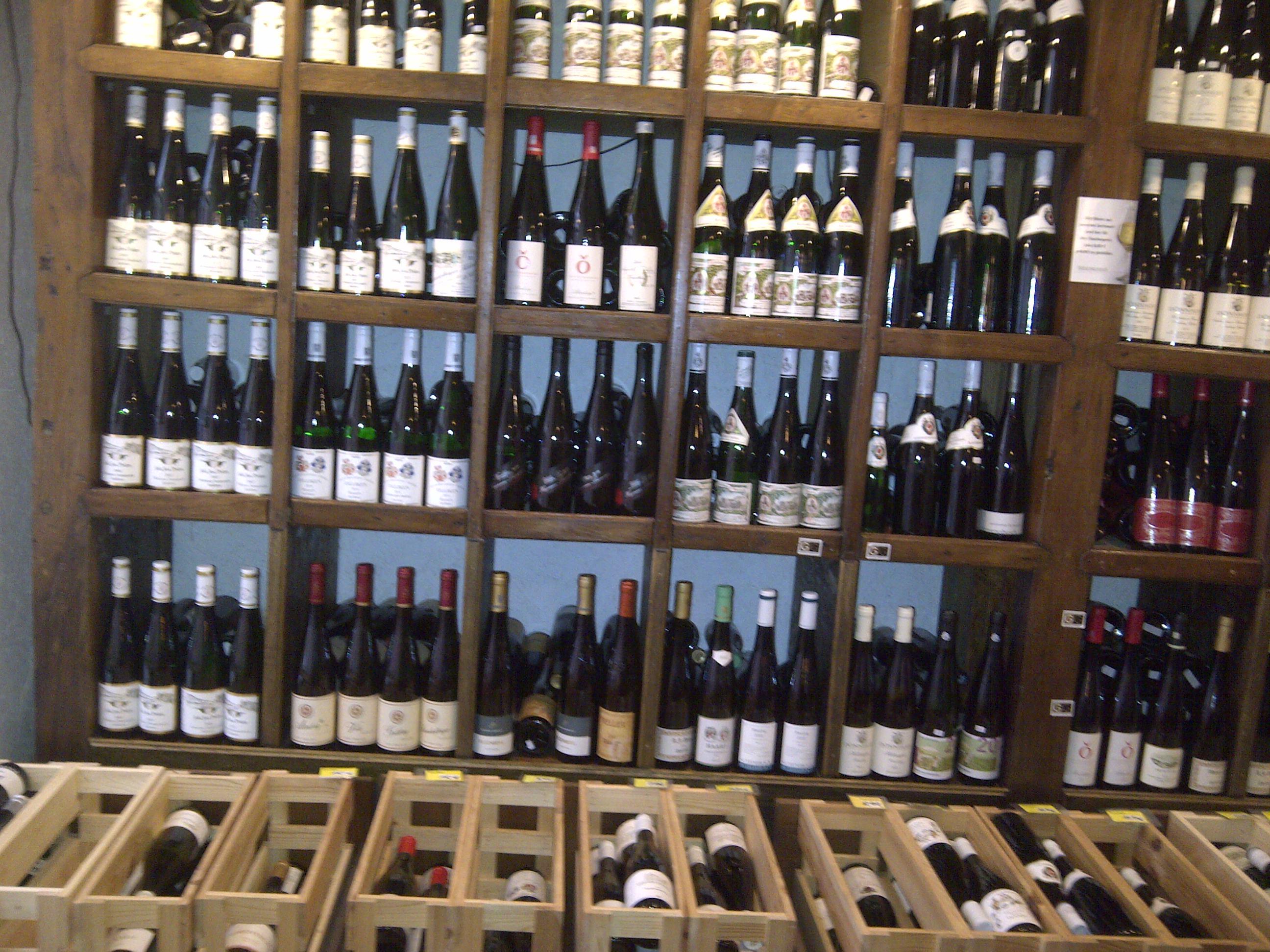
I have just heard the news that Roberson will close their Kensington High Street wine shop on 30 August. This is really sad news, but I do understand the logic. The lease is up for renewal and I’ll bet the landlord is hiking the rent. In any case, Roberson say that a very tiny proportion of their business is conducted through the shop, though I’ll bet that I’m not the only one who buys to try from the shop and then orders online. Anyway, it’s a brilliant shop, full of wonderful bottles and it will be sadly missed by me and many other wine lovers. The collection point at Roberson’s Earl’s Court offices will help some local customers, but not people like me who would buy far too many bottles and then trundle them eastwards to High Street Kensington Underground, thence back to Victoria for the train home.

IMG-20150527-00165

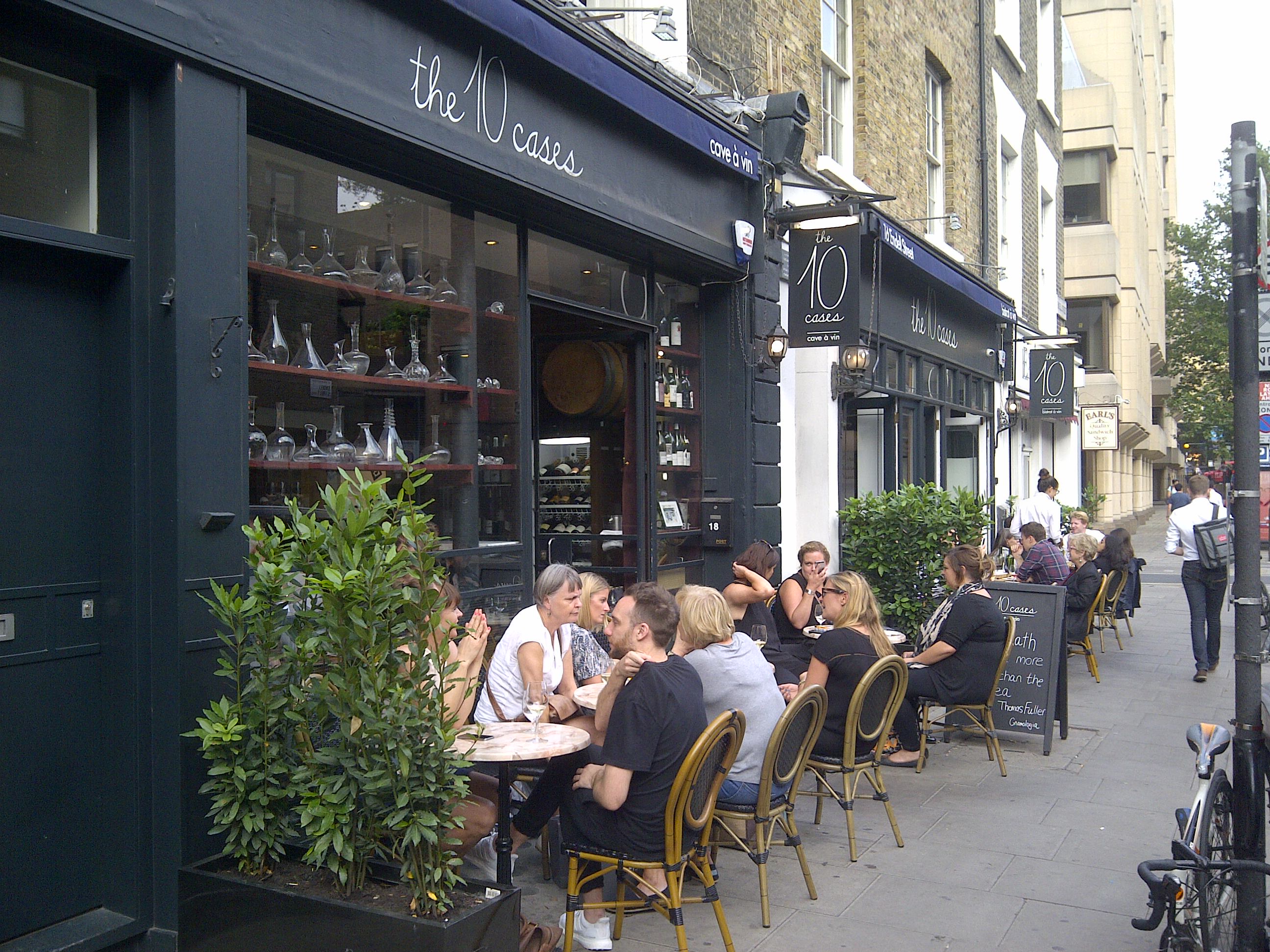
The news made me ponder on my own wine buying right now. The vast majority is done in wine shops. The reason – because these days I’m constantly looking for new wines I don’t already know about. It’s not that I don’t drink my share of the same old Burgundy, Bordeaux and Cote Rotie etc, but just that there’s so much exciting wine and too little time to try it. You go into an exciting wine store and something will call from the shelf, a wine you had never thought of buying. Or perhaps the enthusiastic staff will point something out, especially when they know your taste. It’s so much harder to find such things when trawling through a web list, however good. It’s far more fun as well, and the human interaction element is always fulfilling…it often leads to new wine friendships too.

IMG-20141113-00664

It seems worrying on the one hand that we are seeing wine shops close. I think Planet of the Grapes are closing their Holborn store at some point as well (apologies if I got that wrong). Yet I think we’ve never been blessed with so many really adventurous retailers of wines, and we should be both grateful for that and make use of them. I certainly hope I can get to say my final goodbye to Roberson, who over the past couple of years have become one of my “A-list” suppliers, especially (but by no means exclusively) for the New Californians they import.

It would only be right to end on a positive note by listing some of the shops I find especially exciting places to buy wine at the moment. The top of the list, in terms of a time line, must be The Sampler. They were a game changer for London, though the excellent wine department in Fortnums and some of the other stores listed have been around for longer. Theatre of Wine (two shops) and Winemakers Club (conveniently located just metres from my wife’s office until she stopped working there) have provided some of the most unexpected bottles this past year. Solent Cellar in Lymington and Butler’s Wine Cellar in Brighton must be two of the country’s best wine stores, though there are many other famous ones less well known to me, other than by repute (Byrnes, Loki, Secret Cellar, Wine Bear). Uncorked are rightly very highly regarded, and always easy to stop off at on the way to Rochelle Canteen. As are Newcomer Wines. Not as “fine” a selection of Austrians as some places, yet the “Boxpark” location and the sheer fun of what they sell make them quite unmissable. Vagabond (Fulham and Charlotte Street) and D Vine (Clapham North) have also provided some great bottles.

The list is long, and goes on and on (I bet I’ve forgotten some), but I can’t help feeling very sorry that the Roberson shop won’t be there come September. If you’ve never been, it’s well worth the trouble of popping in before they go.

Posted in Wine, Wine Agencies, Wine Merchants | Tagged , | Leave a comment

Absolute Beginners

Some time ago I wrote a piece prompted by a comment made by Jancis on the lack of young people at the Bordeaux tastings. Now I have young people in the family, my children and their partners. Despite living in a household where wine is consumed with most meals they’d never really shown any desire to drink it themselves, even through university. But now they have their own places to live and their own lives there seems to be a nascent interest, almost as if they feel that drinking wine is more grown up than drinking cider and vodka.

My son and his partner have recently been asking for recommendations as to what to drink. You might think this is an easy proposition for a wine obsessive, but it’s a lot harder than I thought and full of pitfalls – like giving our son a bottle of Champagne from a favourite producer for his last birthday but neglecting to consider that, although they do quite like Champagne, maybe it’s not the right time to introduce Brut Nature.

When I started out I had little experience to go on. My parents drank wine at home, but we didn’t exactly have a cellar of vintage port and cru classé Bordeaux. I remember a lot of Spanish red and something called Spanish Sauternes. It looked like Sauternes and, if rumour is true about sulphur levels in Sauternes in the 1970s, maybe tasted like it too? I think my parents must have had a sweet tooth because I definitely knew the name “Barsac” before I went to university, and there was certainly German wine.

My independent introduction to wine was not promising. I do recall being made ill on either Don Cortez or Hirondelle, and drinking Black Tower at a dinner party, buying the bottle in an off-licence with the person I went with because of the shape of the bottle. After my under graduate years things improved a little. I remember Chianti in fiaschi (my parents had one made into a lampshade, as well as one made from a Benedictine bottle) in an Islington trattoria. Life got so much more sophisticated when we moved on to Mouton Cadet.

Actually, though we might knock it, I think Mouton Cadet might have been the catalyst to my wider wine appreciation of wine. It made me aware of Bordeaux as a wine region, and that interest led me to pick up a book in a sale at Foyles on Charing Cross Road, An Illustrated Guide to Wine by George Rainbird. I’ve never met anyone who has read it, but it captivated me, especially the photos which made me want to visit the vineyards, still an integral part of my passion for wine.

At that time I was studying for the Bar and the area around Fleet Street and Holborn had all sorts of little wine shops, most (aside from El Vino’s) of which are long since vanished. There was Oddbins, of course, where I spent my winnings from a Grand National sweepstake on a bottle of 1978 Chateau Cantemerle and a 1976 Duhart-Milon, and a shop which I think was called Weingott’s where I bought Vieux-Telegraphe, and later, my first Aussie wine, Rosemount Chardonnay (it’s hard to express how different this fruity, oaky, Chardonnay tasted the first time four of us opened a bottle, as revelatory a moment back then as the first Haut-Brion or Ramonet Batard Montrachet).

The thing is, I’m not sure I’d recommend any of those wines today, to someone starting out drinking wine, except maybe the VT if they could afford it…and find an older vintage. I’ve been tempted to try a Mouton Cadet to see what it’s like thirty years on, though it’s not an easy wine to find if you shop in the small independents I visit! No UK stockists on the non-pro Wine-Searcher site, though someone said Morrisons might sell it.

Is it patronising to look for wines with simple fruit flavours? Beaujolais, Aussie Shiraz and Saint-Emilion (that was my more sophisticated way into Bordeaux but I am more of a Pessac-Léognan man nowadays)? Chardonnay for whites, surely they can’t go wrong there? Or do I try to start them early on my own interests – Blaufrankisch, Red Burgundy, Riesling. Oddly, and sadly, as I grow to appreciate German Kabinetts and Spatlesen more and more over time, these wines with their fruity off-dry flavours still seem unsophisticated to palates trying to move away from sweet drinks.

The elephant in the room is cost. I began work in the 1980s when property was almost cheap and with a reasonably good job, a decent disposable income was expected. Young people today have a tougher time. A home of their own seems an impossible dream, rents are exorbitant, and student loans are a millstone we never had. So suggesting they grab a case of Roulot Meursault is not going to get me anywhere.

But what I come back to, perhaps surprisingly given my own wine buying and drinking tendencies over the past five or six years, is Bordeaux. Okay, some Saint-Emilion is 15% alcohol with a propensity towards jammy flavours, but at lower levels there’s still a mix of the savoury with the fruity. And Northern Rhone reds too. My early experiences here were in at the deep end. La Chapelle and “La Sizeranne” soon led to the doors of Chave, Clape and Jamet, yet Crozes-Hermitage offers some lovely wines, and perhaps even more so, Saint-Joseph. Then there’s Beaujolais, one of the most exciting regions in Europe right now…Mencia, Chianti, Mornington and NZ Pinot, and all these “New Californians” Roberson are bringing in. I almost forgot Rioja too, a source of real value and higher quality than the wines we bought back then. But I think I’m settled on what to recommend, for now. Good branded “Claret” like Berry Brothers’, and some of the “Waitrose in Partnership” wines are probably not a bad place to begin, a gateway into more exciting wines at a price which is well above the branded beverages peddled on the 2-for-1 offers, but which nevertheless offer a taste of real wine. The possibilities are endless. My son just needs to get a better paid job (and a wine fridge)!


Posted in Bordeaux Wine, Wine, Wine Agencies | Tagged , , , | 2 Comments

A Bit of a Theise

Terry Theise’s book Reading Between the Wines (UCP, 2010) had been floating just above my radar for a long while. It was the recommendation of Heidi Schrœck about a month ago which acted as a catalyst to make me read it, and it’s quite different to almost any wine book I’ve read.

IMG-20150623-00223

That’s doubtless why the book seems to produce a marmite reaction, people either loving it, or failing to be captivated by Theise’s prose. That prose is very poetic at times and it does become necessary to read between the lines a little. When you do, you find that most of what he’s saying is actually quite clear and straightforward, he’s a man with as strong views as anyone in wine. But Theise is also clearly an aesthete, and someone who, like me, is very much open to being drowned in wine’s sensual pleasures. He admits he’s not the type to actually go out and get his hands dirty making the stuff.

Where Theise strikes a chord with me is in the role he sees for wine in our lives, its potential importance, how we should judge wine, and how we describe it. But he doesn’t really go about this in the normal wine merchant writes biography way – a tale of meeting his winemakers and drinking through ancient bottles in dank, dark, cellars (though when he does stray into that territory it’s always enjoyable, particularly as his growers are all interesting people from family businesses, farming the same plots for generation after generation). His approach is more loosely thematic, and that’s where I think he might lose some readers.

If you see wine as merely a beverage which gets you intoxicated, then Theise will not appeal. Wine for him is clearly capable of the profound. One sentence I like in the new Preface to the Paperback reads “Many wines, even good wines, let you taste the noise. But only the very best wines let you taste the silence.” I love that because I hold it true of many things, like the silence at the end of a piece of music before the audience applauds. But with wine it’s different because with some really big and powerful wines there’s no silence. However, with a complex and subtle Mosel Riesling, a fine Vosne, or a well aged Comtes de Champagne there’s something which doesn’t hit you like a steam train, or a Jimmy Page chord. As so often quoted, silence is a rhythm too. But also the silence he recalls reminds me of a line from Byron’s Childe Harold (Canto III), “All Heaven and Earth are still, though not in sleep”. See what Theise does to you!

Theise admits, like any wine merchant, to keeping an eye on the competition, always fearful that (his words) the opposition’s wine will kick sand in your face. But this doesn’t mean he’s fixed on importing big hitters in the literal sense, far from it. He’s a man after my own heart in seeing greater value (and ultimately, complexity) in wines which don’t shout in a conventional sense, following the old adage that silence is the best way to yell at the top of your voice (Battista).

The key message in this book is to reject all the things which today we are told are essential for the assessment of wine, because wine is not enjoyed by those who consume it in the same way as professionals judge the wine. Blind tasting certainly has a place in my life, but as a game, for fun, where everyone is happy to make an idiot of themselves. Theise quotes fellow star importer Kermit Lynch with saying that “Blind tastings are to wine what strip poker is to love”. I can see the point he’s making.

On the subject of points, Theise is very scathing indeed. He clearly likes Robert Parker as a person, but not the effect that points have on defining a wine, however much the wine critic may plead for us to look beyond the score, to the words. Whilst admitting that points must in some way be useful to consumers “or else they wouldn’t have metastasized as they have”, he suggests “…the system of thought they enforce is a feedback loop in which the reader is infantilized and thus comes to depend on the score”. I can’t really disagree, as someone who does pity, to a degree, the narrow experience of those who only drink the high scoring wines of one omniscient individual.

He sums up his view thus: “…there’s an inherent problem with the notion of ‘perfection’ … because wine is not only judged, it is also used, and enjoyed, in many and varied ways.”
Lest you think Theise is all with the poetry of wine and down on the prose, he nevertheless echoes my feelings again on tasting notes, both their composition and place. He ridicules the endless metaphors of smell and taste we use, where we start off okay with our peaches or gooseberry but fly away with ever more exotic/extreme scents and flavours into the realms of total obscurity. If you’ve been trying to write tasting notes for a decade or three you not only feel (or should) a touch of embarrassment every time you go to type “star anise” or “trampled thyme”, but also immense frustration when you trot out the same stereotypical term for the three thousandth time (in English there is only one word for blackcurrant, so how many times do we grope for cassis as an alternative?).

This is a book where one man’s enthusiasm for wine comes across stronger than many. It’s a genuine deep love, a passion, a life consuming joy and pleasure (the connection wine unexpectedly brings between Theise and his real father (Theise was adopted) is very moving). It comes through in many of the meetings he has with vignerons in France, Germany and Austria. He quotes one winemaker I have met, Laurent Champs, who heads up Champagne Vilmart. Now I love Vilmart’s wines, and I’d count them alongside Bereche as one of my favourite two growers in the region. And I know Laurent to be a thoughtful and sensitive wine grower, but he’s also an intelligent man of the world who travels widely to market his wines. He’s no idle romantic. Theise quotes him talking about the 1996 vintage and the choice of quote seems to strike a chord deep within him. Laurent says of that vintage, it “isn’t a vintage of pleasure, it’s a vintage of desire”. Theise himself says “I loved the deliberate ambiguity of that statement. It’s wise in some way, to understand that desire is deeper than pleasure”.

The depth of Theise’s passion comes over in his seemingly equal love of pleasure-giving “lesser” wines. In a section towards the end of the book he shares those grape varieties he turns to for something other than pure quality in the conventional sense, something more elusive. One of those varieties is Muscat, a grape which he says can “restore to us an almost primordial innocence of the senses”. He relates a story of a father giving his young son a dandelion, and the son being transfixed by “this common little flower, his entire being numinous with delight”. I could imagine myself sitting in the sunshine in Rust, being similarly transfixed by Heidi Schrœck’s delightful, lace-like, Gelber Muskateller, the wine I have convinced myself he was thinking of.

So Terry Theise is very much a wine lover in the same mould as myself – prone, in a transcendent passion for wine, to be transported into flowery prose and concepts which shimmer like heat haze over a summer field of corn. But once you dig beneath the surface of his terroir you find deeply rooted beliefs which direct us to enjoying wine in all its diversity for the innate pleasures it gives. A simple message. I enjoyed the book – thanks Heidi for pushing me into reading it.

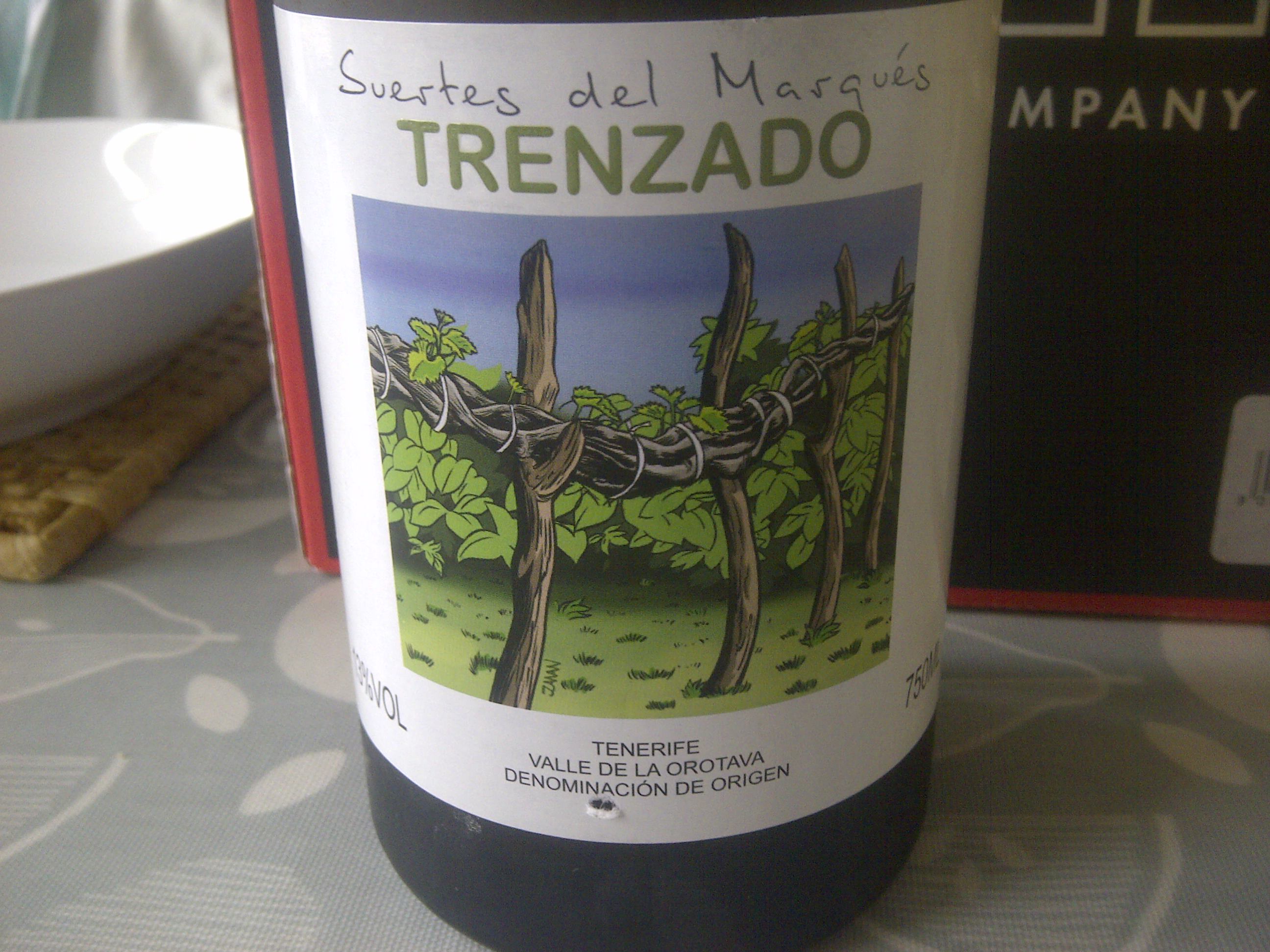
One wine I’ve enjoyed very much recently is Trenzado from Suertes del Marqués in Tenerife. This wine is made mainly from Listan Blanco, not noted as one of the world’s most noble white grapes. Yet this wine is not just well made, it’s concentrated, complex and suggests a real sense of place, something common with all of the lovely wines made by Suertes. How can this simple grape make such a good wine? Care in the vineyard and empathy in the cellar. This is something to treasure over “99 points”, and not something easily conveyed through herbs and fruits. Perhaps after reading between Terry Theise’s wines I appreciated it just that little bit more.

IMG-20150620-00219


Posted in Rust, Wine, Wine Agencies, Wine Books, Wine Writing | Tagged , , , , , , , , , , | Leave a comment

Spice Oddity

Major Thom called Ground Control suggesting the India Club might be the venue at which to see whether the Oddities theme could work for Indian food. As it turned out, the wines were not really very odd (on the whole), but we had a genuinely perfect lunch. The company was perfect too, augmented by the fact that all but one of us had distant memories of eating here more regularly years, even decades, ago. So, to steal another Bowie line from a different song, it was a small affair but far from a god-awful one. The newcomer, by the way, was not a girl with mousy hair but a very nice Frenchman, to whom we enjoyed feeding lime pickle and chilli bhajis and generally educating his barbarian palate (only joking, Antoine)!

The India Club restaurant is up a couple of flights of narrow stairs, above the Strand Continental Hotel (rooms from £25 breakfast included!) on the western side of The Aldwych. It was opened in 1946 and the “time-warp” description is wholly accurate. I am convinced it has not changed one bit since I discovered it in the 1980s, when it used to be full of officials from the Indian High Commission. The independence era photos, the formica-topped tables and the beautifully starched waiters echo a different London, and the nostalgia was palpable for several around the table.

The food

You don’t go to the India Club for gourmet Indian cuisine. Reserve that for Gymkhana, and the now close by Chutney Mary (there’s a wonderful review of the new St James’s venue by Grace Dent in yesterday’s Evening Standard Magazine). The food here on The Strand is aptly described as South Indian home cooking.

IMG-20150619-00208 IMG-20150619-00209

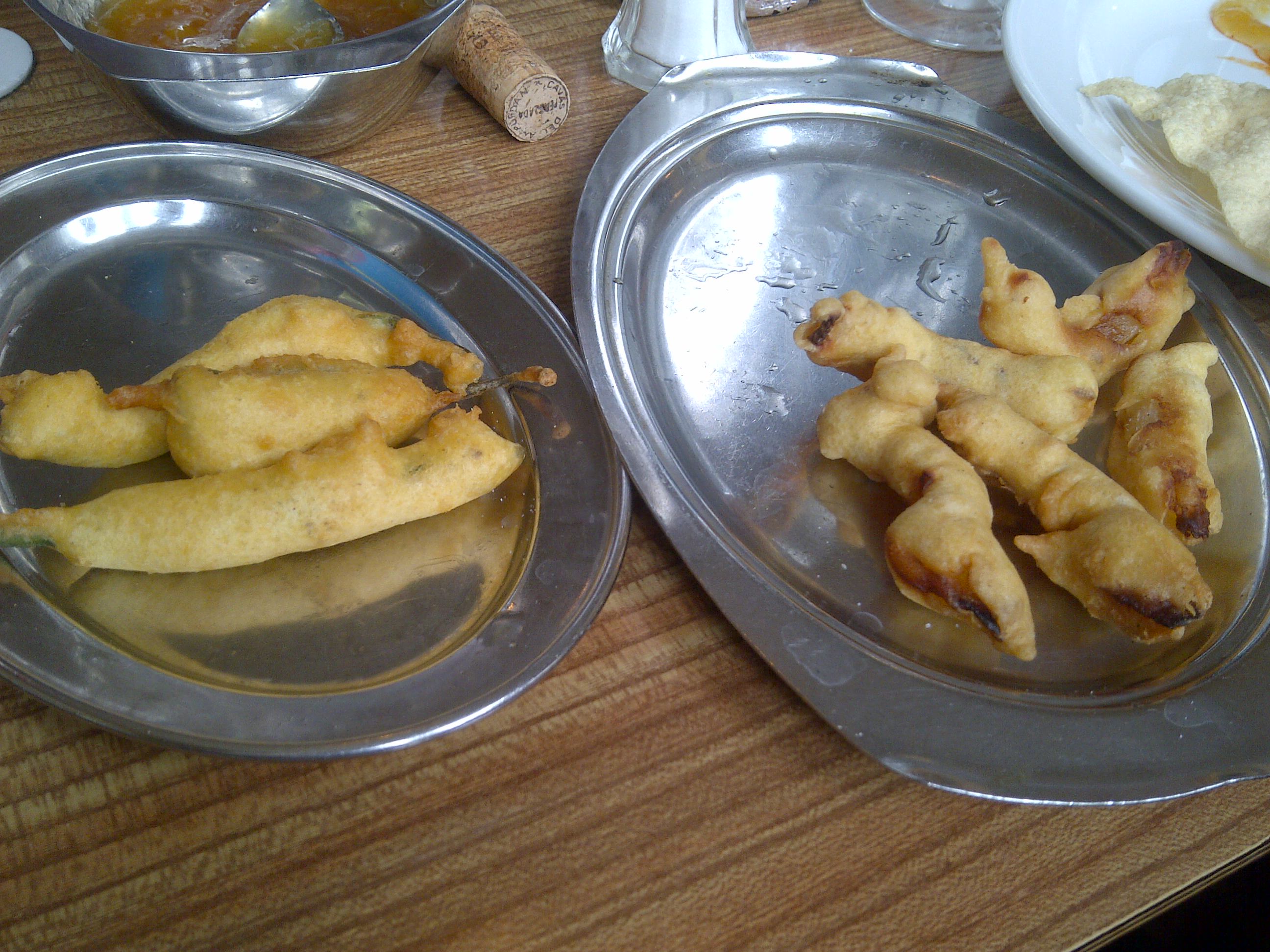
We started out with chilli and onion bhajis with a selection of pickles and dips, plus ubiquitous poppadoms. The entrées were rounded off with a house speciality, a mild masala dosa with sambar. We then ploughed our way through lamb, chicken and shrimp currys with piles of fragrant pilau rice, masoor dal and naans. Some had room for mango and pistachio kulfi on sticks. No one left hungry, and at £20 each including service, it’s hard to put on so many kilos in Central London for as few pounds. As the restaurant’s web site states, diners are permitted to bring their own alcohol. So we did.

IMG-20150619-00211

The wines

The idea was to bring a bottle we thought might accompany the meal. By and large the wines behaved admirably, surprising when you look at the list of what we assembled. The main thing was that none were tannic, but only one was off-dry (the PX excepted, which was not intended as a food accompaniment). Of course, nothing really managed to beat the heat of the lime pickle and chilli bhajis (which were merely batter-cooked raw green chillis). The  “Wine & Spice” frizzante did best on that front, a blend of largely Muscat with Macabeo and other Catalan varieties. It’s slight sweetness and venerable age (a NV but in fact from 2004) helped on that score. But none bombed in the slightest.

  • Wine for Spice Rani Gold, Catalonia 

Just 11.5%, this wine used to be part of the Wine for Spice range marketed by Warren Edwardes’ Hyde Park Wines. No one would argue it was the finest wine at the lunch per se, but it proved you can drink wine throughout an Indian meal. Officially NV, but from 2004. How did this live so long? We tasted the age but no way was it OTH. Gently off dry, the sweetness, what remained of it, nicely balanced the spice (which in itself was well handled throughout the dishes we were served).

IMG-20150619-00215

  • Vincent Girardin Chassagne-Montrachet 1er Cru “Morgeot” 1988

Quite a revelation, lovely aged Chardonnay with a mineral edge, holding up really well. The spiciest food killed it, as expected, but it held its own with the rest. That was my biggest surprise of the day, and it was also my personal “wine of the lunch”. As to the mineral edge, blind I wondered if it was an old Chablis. Though it probably showed a bit too much weight for that, it was hardly plump.

IMG-20150619-00207

  • Guy Malbete Reuilly Rouge 2004

This was almost brown it was so brick red, so we all had this as a 1970s Pinot, with the odd nod to Gamay. It reminded me a little of Arnaud Ente’s Bourgogne Grande Ordinaire, very old vine Gamay from the Cote d’Or which can age well and becomes more Pinot-like with time. The colour may have been in part down to the seal, a nasty little plastic cork. The fact that it was lovely was probably down to it being a magnum. Scents of strawberry and nice, smooth, fruit. A gentle wine, not an aristocrat but like a sedate old experienced farmer in retirement. The estate is now run ably by daughter Florence, which makes that description of this wine from Guy quite accurate.

IMG-20150619-00210

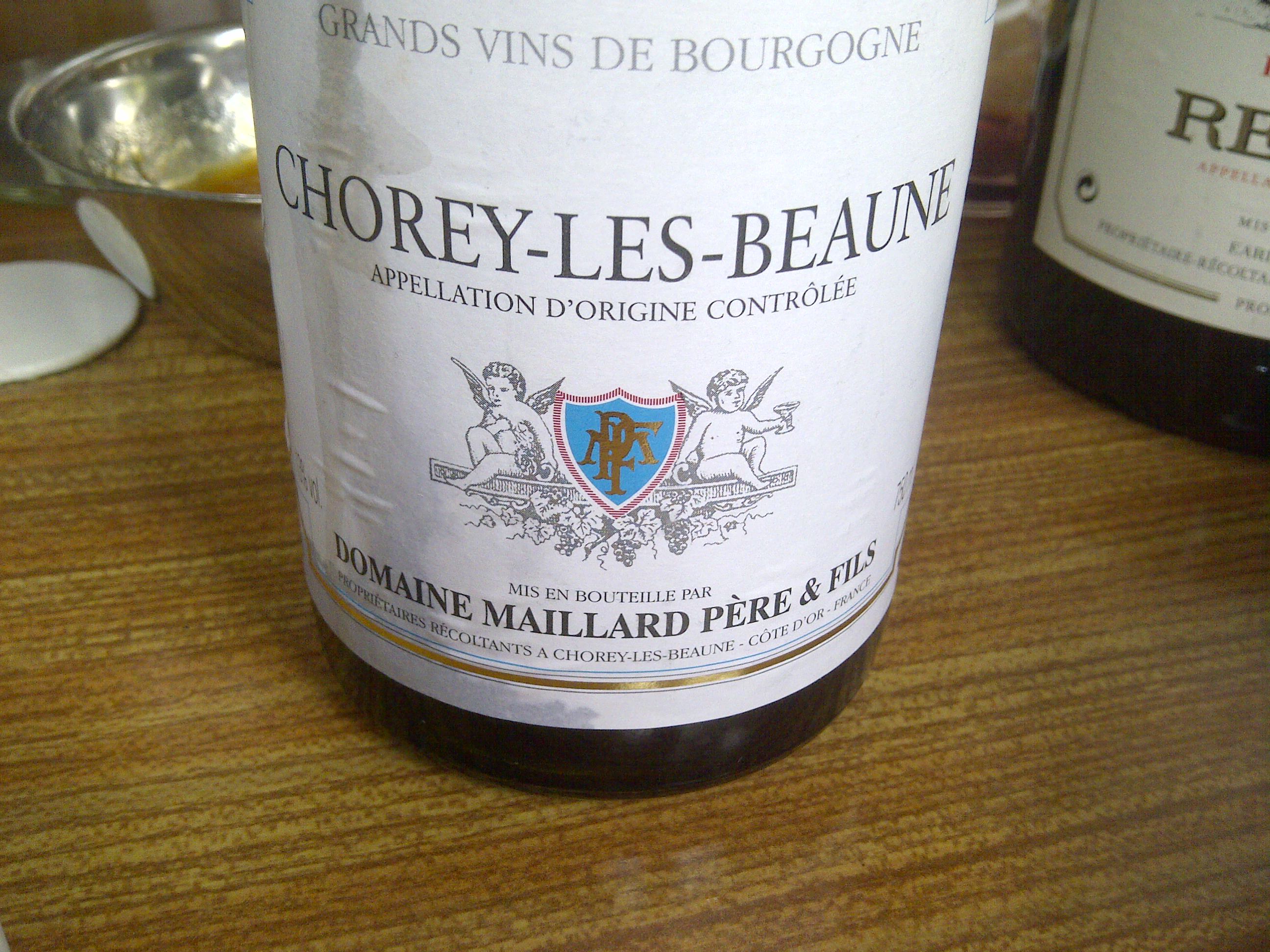
  • Maillard Chorey-les-Beaune 1978

Another fruity, yet gentle, Pinot Noir, this time from one of the least heralded villages of the Cote de Beaune (and indeed the man who brought this reminded us that Chorey only became AOC in 1970 and was before that a Cotes de Beaune “Villages“). I remember 1978, it was one of the first Burgundian vintages I bought. I seem to recall some rot. At the time I’d never have considered cellaring a wine like this (not that I had a cellar in those days, just a wine rack under the stairs). But this proves another of the tenets of the Burgundy lover who brought this along…that even the so-called minor wines from the region can, and will, blossom if they are just given time.

IMG-20150619-00212

  • Valdesil Valderroa Mencia 2012

A darker wine than the previous two reds, tasting blind most thought this either a Pinot Noir or a Gamay. There’s a richness to the fruit and some concentration. Although the fruit has a slight crunch, there are no tannins to fight with the food. It lacked the venerable age of the other two reds but provided a nice contrast to them without clashing, and I felt it did go reasonably well with what we were eating. Made from high altitude bush vines, it’s a good example of a more commercial (around £12 retail) Mencia, offering a nice medium-bodied red with refreshing cherry fruit.

IMG-20150619-00213

  • Navarro Solera Fundacion, Pedro-Ximenez

From Montila-Moriles and a solera founded in 1830, it’s the kind of class PX which the provider is renowned for bringing to our Oddities lunches. Dark and caramelly, figs and raisins, sweet but fresh and not at all cloying (a fault which makes some PX good for just the one, small, glass, but not this one). This was not drunk with the food, and by this stage I was too full (after the second plate of rice) to try a kulfi stick.

IMG-20150619-00214

A great lunch. We can be heroes another day soon, I hope…hit me with your kulfi stick (aarrrghghghgh!)

Posted in Dining, Wine, Wine Agencies, Wine Tastings | Tagged , , , , , , , | 2 Comments

Here’s to Your Good Health!

The ping-pong debate over the health benefits of drinking wine is never far from the mainstream press in the UK, and the same can be said for most other Western countries too. It might not shock anyone that this has pretty much always been the case, and a nice little discovery last week illustrates the point.

A family member, back in the UK for part of the summer, decided to undertake the mammoth task of tidying their room. They have a desk which belonged to their grandfather, and down the back of a drawer they found a clipping from a newspaper. We’re not sure which one, and we are not certain of the date but we think it may be from the late 1940s or early 1950s. It’s titled “Wines and Health” by “A Physician“.

It begins as it means to go on…”When St Paul wrote of ‘a little wine for thy stomach’s sake and thine often infirmities’ he certainly wrote that which the majority of medical men of to-day (sic) know to be scientifically correct”. A great start. The author then goes on to discriminate between red and white wines.

White wines are partly dismissed as temporary stimulants, which escape rapidly through the skin, mucous membranes and kidneys. Red wines, however, are more “tonic” and “persistent”. Then the author starts to describe the particular qualities of individual wines, which is where it gets interesting.

“Sherry, for instance, is as a rule too alcoholic for the sick”, but, Mr Physician says, can be used with soda water in cases where Champagne is “too expensive”. I am not too sure I’ll be trying this with my next batch of Equipo Navazos Fino!

“Madeira is the most gouty of wines…Port is also a gouty wine…but may be taken in small quantities for diarrhoea”. It also enriches the blood, apparently. Burgundy and Claret are recommended after exhausting illnesses, and they are praised as an aid to digestion. The author asserts that Claret is actually the only safe wine for “gouty persons”.

Sauternes is praised for its use in convalescence too, but also in cases of malnutrition. Great, now we know what to ship to the next famine zone instead of rice and water, but with all that sugar in it, perhaps he (come on, 1940s/50s, probably “he”) has a point.

One of the great forgotten secrets of the wine world is revealed in relation to Moselle (sic) and hock (sic) – they “are best for brain workers, who need a digestive stimulant”. So true, nothing beats a glass of Wehlener Sonnenuhr as a late afternoon pick-me-up to get you through that last hour at the desk, slumped in front of the computer.

What about Champagne, perhaps the most written about wine in medical terms? An interesting aside suggests the author was not happy with the pricing of the greedy Champenois. He says “Champagne has often been called the ‘drink of the gods’ and at present and probable future prices it is well named”. The expert tells us it is of great value in some acute diseases and when quick action is needed (quick, call an ambulance and open the Bolly). It also acts when “the digestive processes are slow…But for the gouty individual and the diabetic it is a wicked drink. Those suffering from diabetes should drink claret, hock or dry sherry…” I suppose we are still in the era before the modern Brut style was ubiquitous in the UK and Champagne was much sweeter, though it would probably still suffer from the same admonition, except for the Brut Zero tendency.

This all reminds me of when I was in my twenties and I had a brief sojourn in the Hotel Dieu on the Ile de la Cité in Paris. For a few days I was pretty ill with food poisoning, but after things got a little better I settled down to drink wine with both lunch and dinner as a considered part of restoring my equilibrium (watching the Tour de France on live TV in between helped in that regard too, it all seemed so civilised).

Of course, the modern day physician would probably shudder at the advice above. Even in France, I’m sure wine with hospital meals can’t have survived the post-Sarkozy neo-prohibitionism (and, sadly, that particular hospital within sight of the façade of Notre Dame is now closed, I walked past it just the other week and let out a small sigh of nostalgia). But at least the post-war doctor gives a nod towards more modern attitudes towards the demon drink, finishing with “It will be seen that, judicially used, wines are of distinct value in medical treatment, but they should always be taken with food, and preferably late in the day”. I’m no medical man, but I can’t agree with that last bit. But then I’m not expected in the operating theatre after lunch.


Cheers!

IMG00096-20100727-1519


(above – a decent lunch, The Ledbury)

Posted in Wine and Health, Wine Books | Tagged , , | 1 Comment

The Talented Mr Ripley

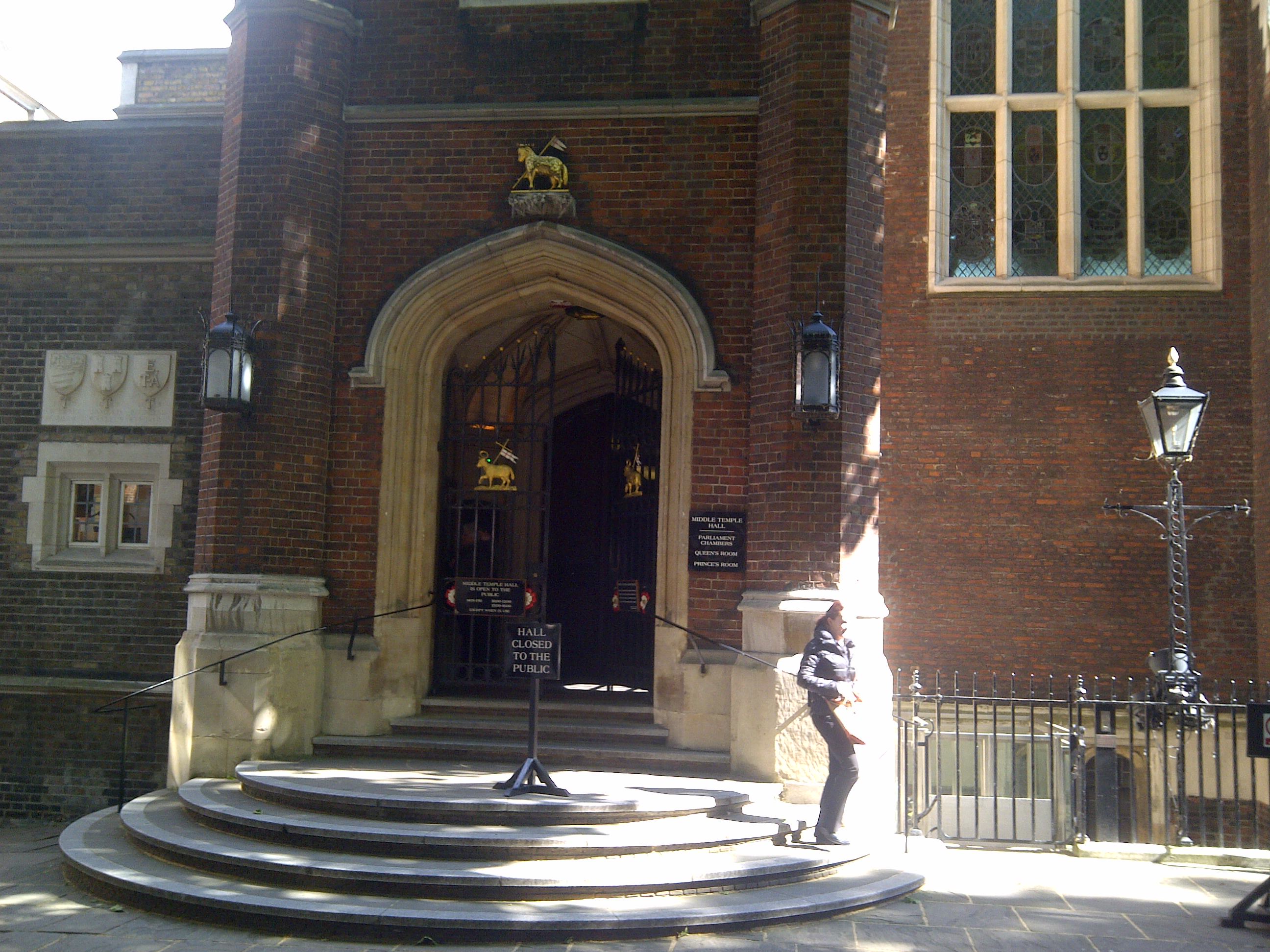
Okay, I admit, my proclivity for really corny headlines has seemingly gone too far this time, but you should not despair. Howard Ripley can be described as nothing less than talented, for he’s assembled much of the cream of German wine into a star studded portfolio, and he has the class to show them off each year in the stately rooms of Middle Temple Hall.

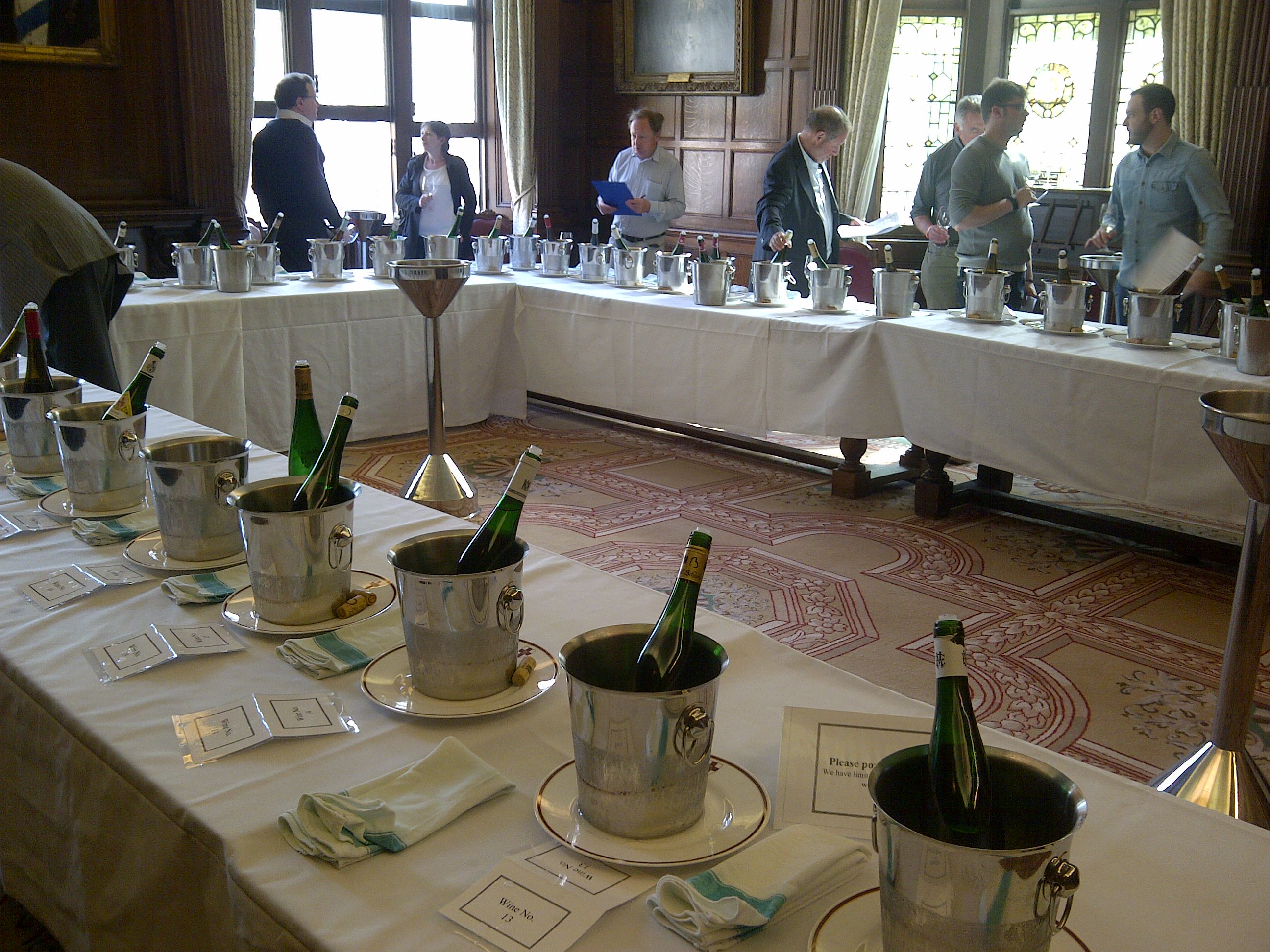
There were a number of tastings on in London yesterday but, having missed out last year, I was very pleased to be able to go to taste Howard Ripley’s 2014 offer. The location was especially nice for me, it’s the Inn of Court to which I belong, though my attendance there is much diminished nowadays. Middle Temple is one of the four Inns of Court to which English Barristers are affiliated. Built between 1562 and 1573, the Hall hosted the first performance of Shakespeare’s Twelfth Night in February of 1602. A nice venue in which to show these traditional wines, once so much more appreciated in the UK. The tasting took place in the Queen’s Room and Parliament Chamber, among portraits of Stuart Kings and Lords of Appeal .

IMG-20150610-00198

A lot has been said about the 2014 vintage, not all of it complimentary, but I take the Burgundian view, that the best producers will release good wines in most vintages, whatever their vicissitudes, and anyway, I think some of the criticism may be a touch over stated. On the whole that truth was demonstrated here, although not every wine shone. One or two had challenging aromas, some lacked poise and definition. But the dry and Kabinett wines shone brightest as a group (though to be fair, far fewer wines of higher pradikats were on show or were produced). As someone remarked, it also seemed to be the Mosel producers who made the best wines over all in this category, despite them having perhaps the most challenging vintage.

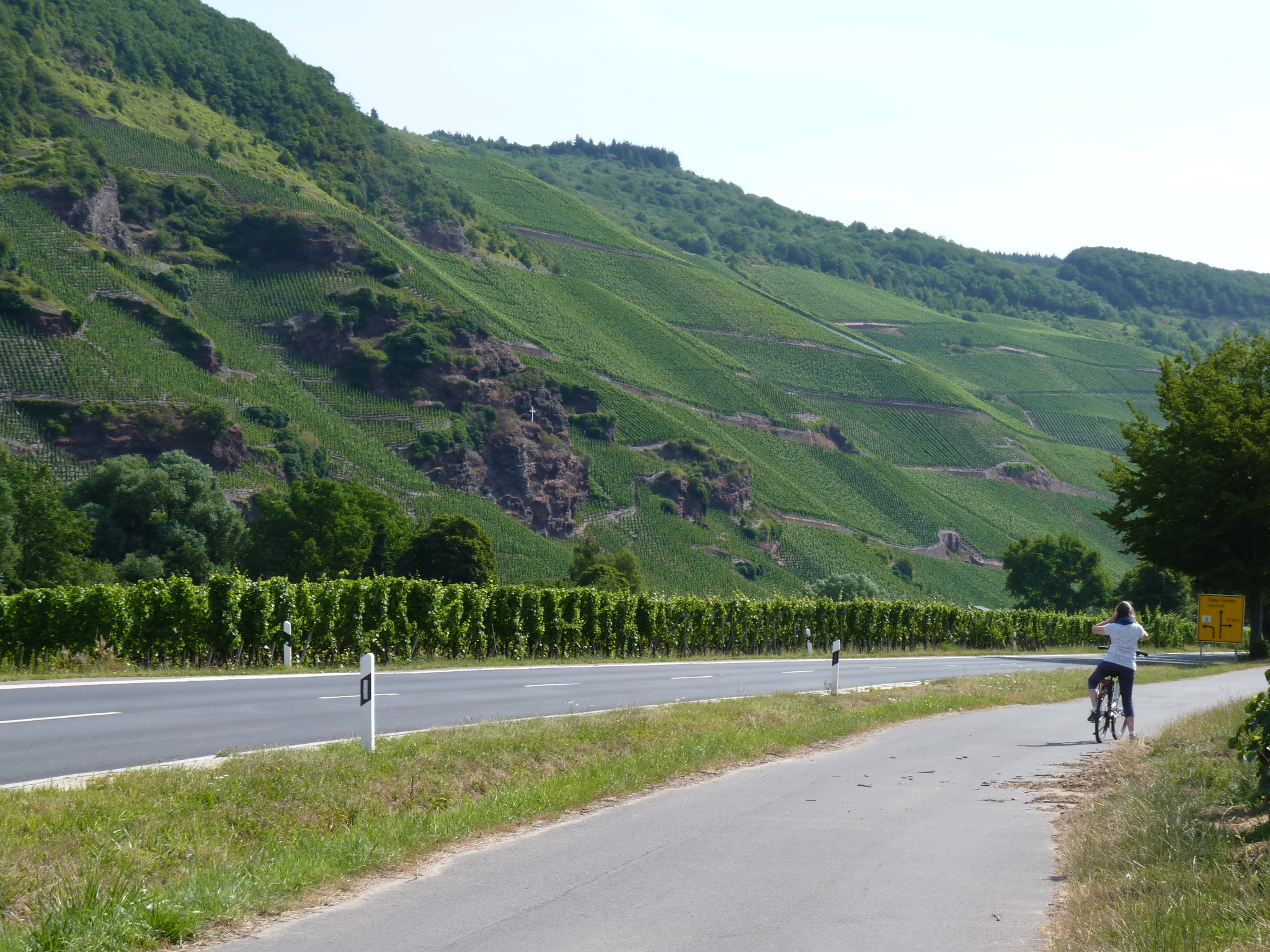
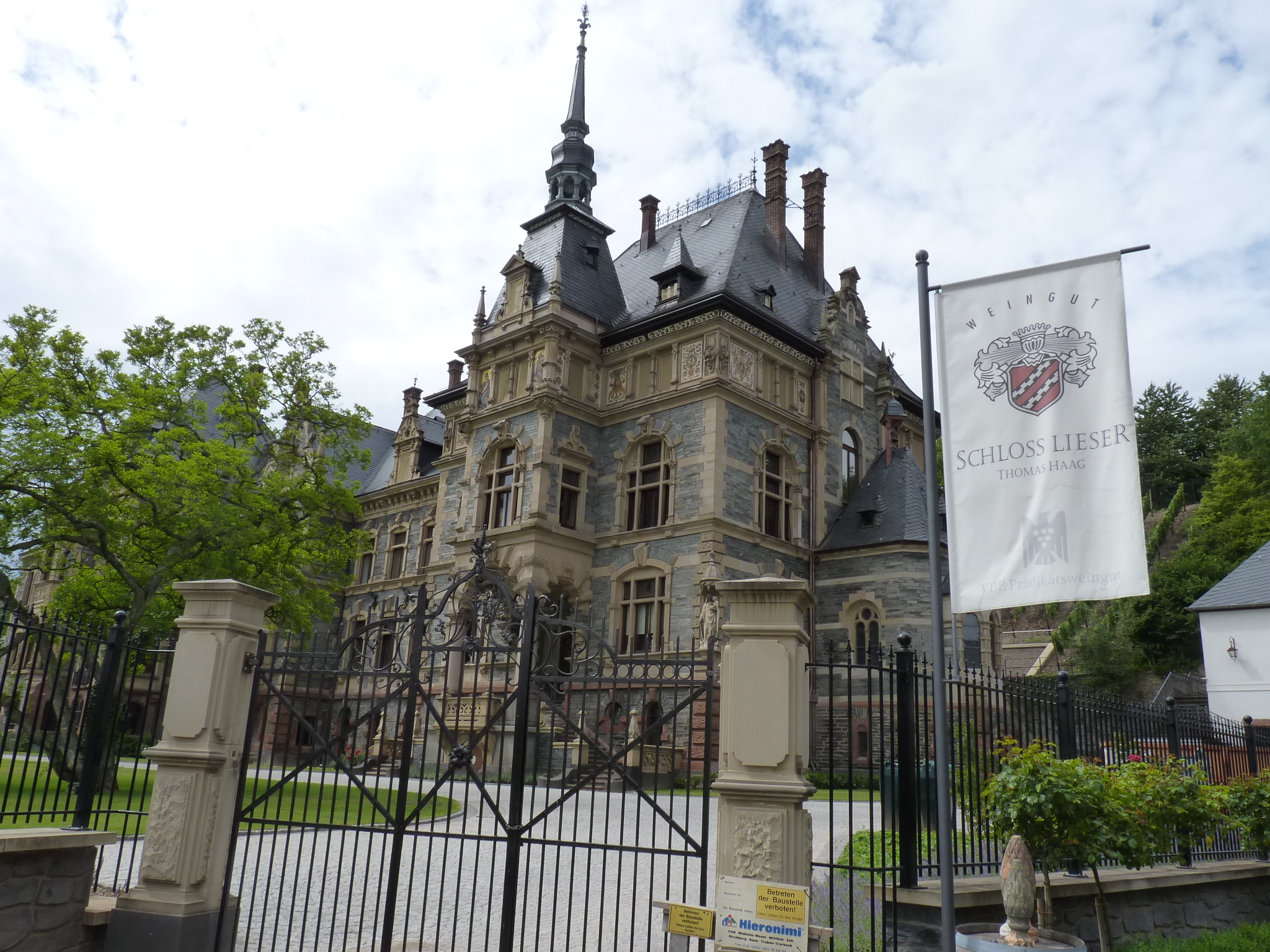
What impressed? Von Schubert’s Abtsberg Kabinett (Maximin Grunhaus) was glorious, but don’t believe me – we go back a long way, and only the other day I truly enjoyed a 2006 Superior QbA. Most people seem to agree that the Peter Lauer wines shone. Not everyone seemed to agree with my liking for Willi Schaefer this year, but again, this is a producer I like. I agreed with some about the very good Schloss Lieser, except that I was getting some very odd aromas from both the Juffer Sonnenuhr and the Niederberg Helden spätlesen, and not (I think) what some generally term sponti aromas. (This was from end of bottle samples, others concurred at time but later tasters did not find such problems on subsequent bottles).

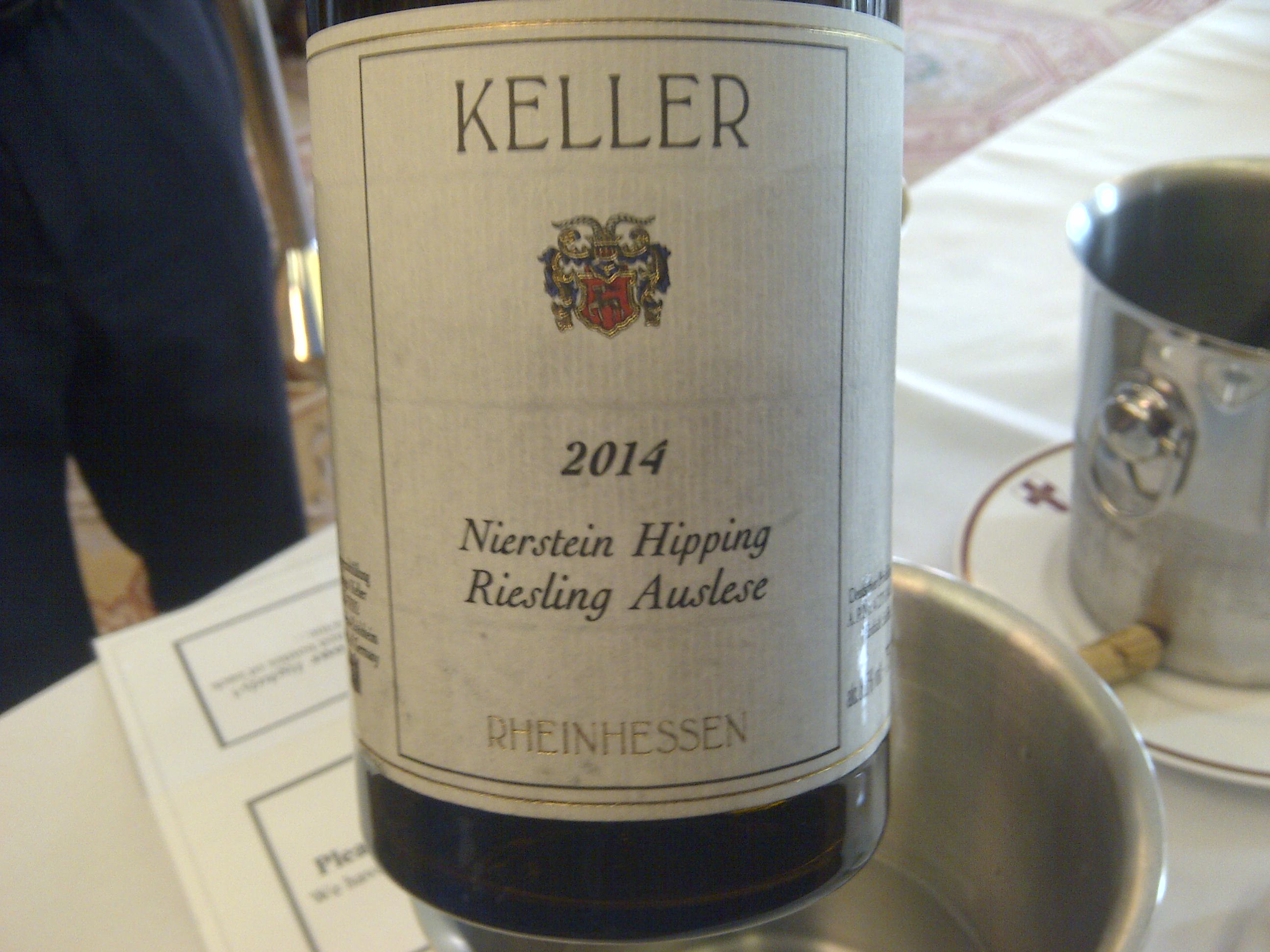
Other successes, well, Keller’s Rheinhessen offerings were, for me, outstanding, though that may not quite apply to the entry level Von der Fels in 2014 (though I often wonder that this can be tough when very young, despite its price). Egon Muller’s straight Scharzhof was very good (as it should be) as well. But you probably knew that.

IMG-20150610-00196


I also liked Donnhoff’s Hermannshohle among the spätlesen. Keller’s Pettenthal was a good step up, though. The two auslesen I liked most (out of the five shown) were Zilliken’s Saarburger Rausch and Keller’s Hipping Goldkapsel.

IMG-20150610-00194

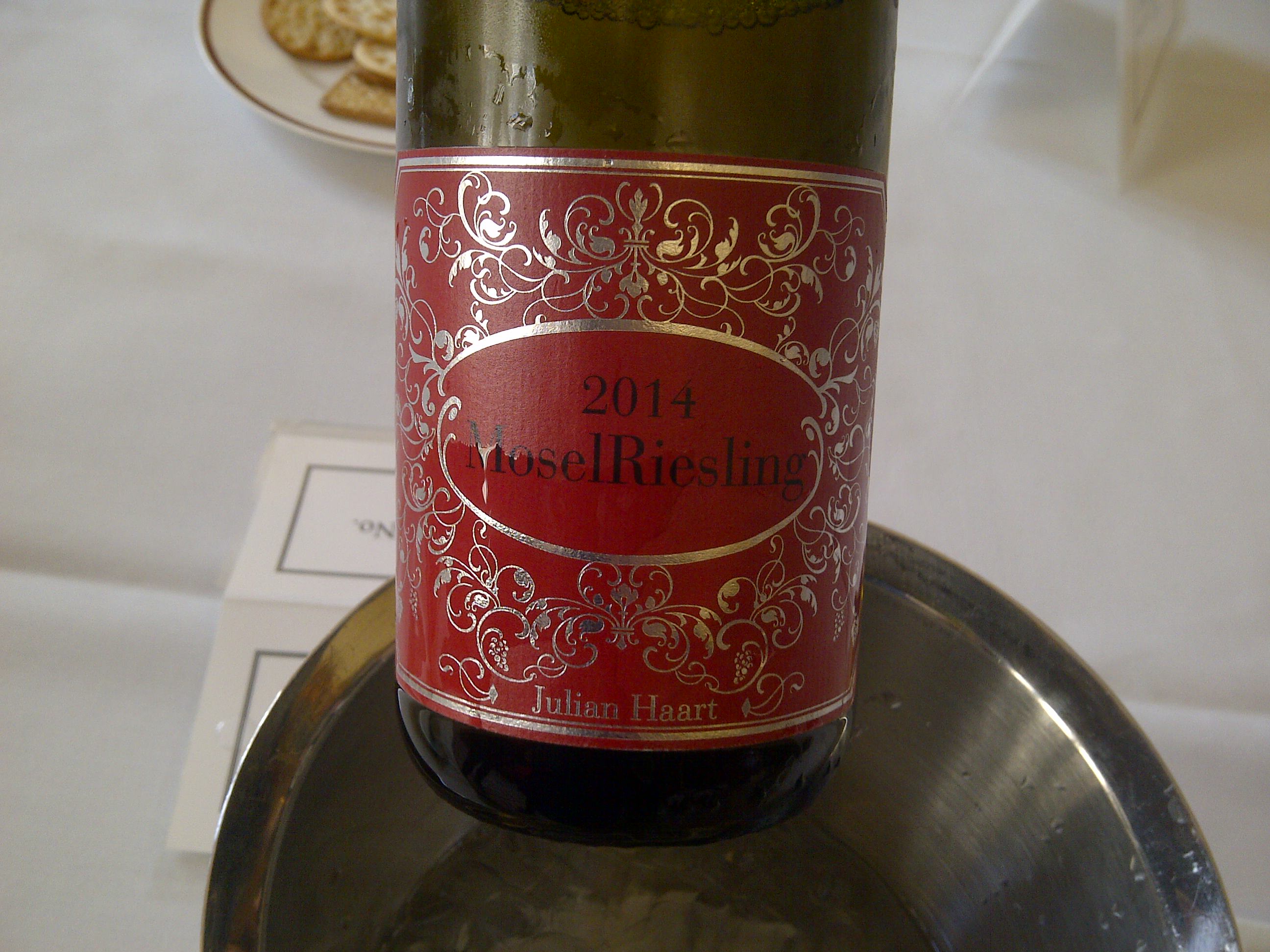
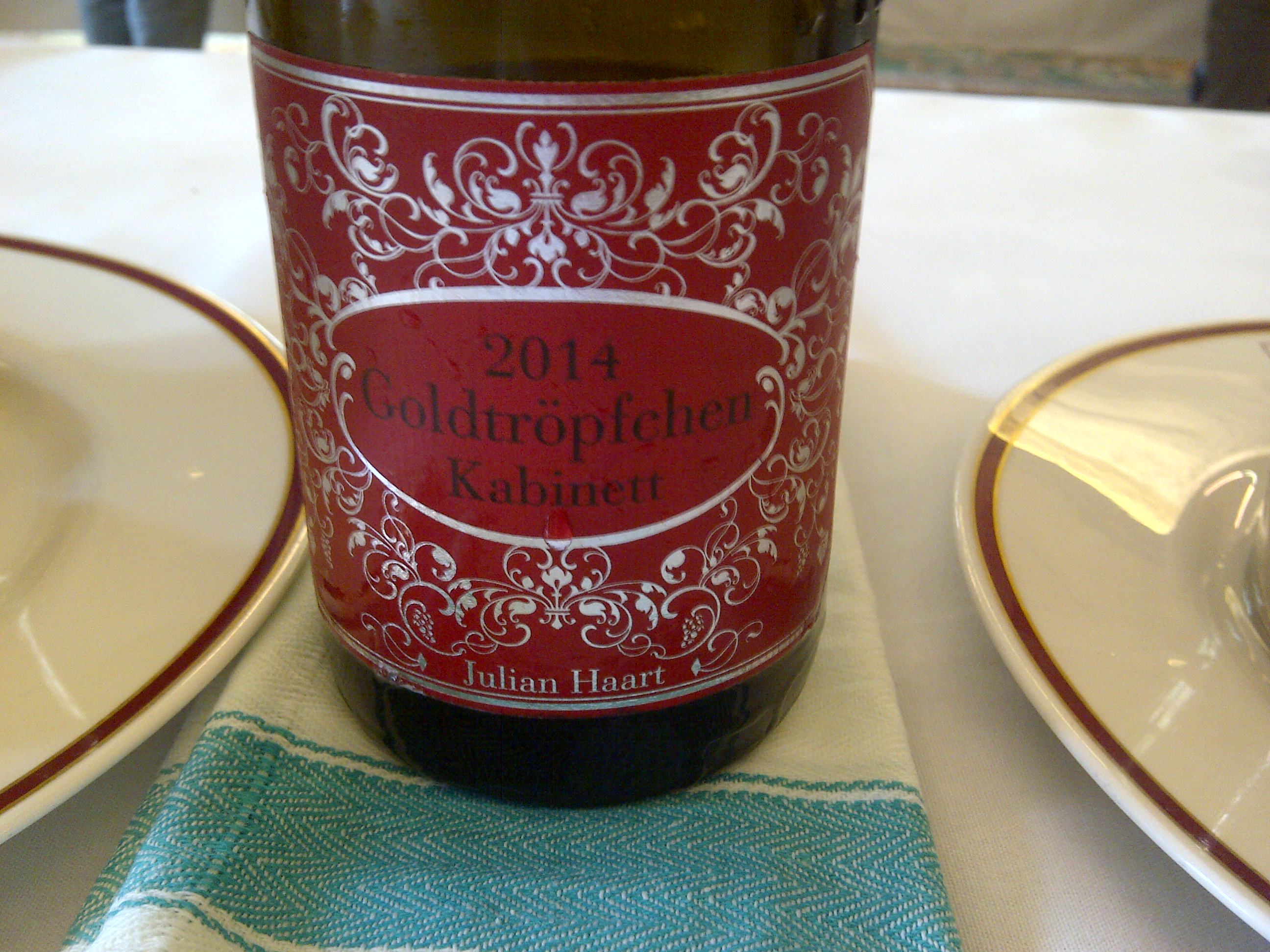
One more name I plan to look out for, Julian Haart. These were new to me, and so special mention must go to those wines, to which I gave consistently good scores.

IMG-20150610-00197 IMG-20150610-00193

To sum up? Altogether I liked the wines. Of course, they won’t compare to some not too distant vintages. But that’s within the context that people are (rightly) calling this a Kabinett (and trocken) vintage…and I love Kabinett wines (and increasingly, the dry wines too). There wasn’t too much acidity, which might suggest the wines will not last the long haul? I don’t mind. Give me Kabs I can glug now.

The one thing you can’t fail to acknowledge is that the prices are astounding…in a good way. For many of the Kabs you’ll pay for a case of six what you’d pay for a single bottle of other “fine wine” popping into your local independent. For the very top wines, well, they are doubtless all allocated by now, but they’re still amazing value for money compared to almost any other fine wine region, not to mention the realistic alcohol levels (which appeal on sunny days like today). Indeed, if the wines do turn out to be less fancied, irrespective of quality, now may be the time to dip in, with a little sage advice. I should add that I’ll be taking that advice, I claim no special expertise in this particular.

I’m hoping to do a bit more research on the ground quite soon, hopefully a case of watch this space.

IMG-20150610-00195

Posted in German Wine, Wine Agencies, Wine Tastings | Tagged , , , , , , , , , , , , | 4 Comments

Do You Keep Péts?

Long before someone other than Dom Pérignon thought of putting bubbles in Champagne and the whole méthode traditionelle was invented, bottle fermented wines were commercialised using the Ancestral Method (aka Rural Method). The plan is that you bottle the wine before the end of the first fermentation and plug it (these days more often than not with a crown cap, as with beer bottles). As the fermentation winds down you are left with a fizzy wine, though not usually as sparkling as a Champagne. According to Tom Stevenson (Champagne & Sparkling Wine Guide 2015) Champagne was all made this way until the late 18th or early 19th Century.

This method, simple as it sounds, has a couple of drawbacks. First, the sediment which is ejected from a traditional method sparkler at disgorgement will remain in the bottle with the Ancestral/Rural Method. The second potential problem facing the producer is the uncertain nature of fermentations. If the fermentation still has a way to go, you get too much pressure in the bottle, leading to a cellar of exploding glass. But bottle too late and you get a still wine, flat in all respects. That’s without thinking about levels of alcohol and sweetness. So whilst this method has always been seen as a poor cousin to “proper” bottle fermentation, and led to such wines having a poor reputation in the past, you can see that to do it well takes a lot of skill and judgement.

Why then are we seeing a real renaissance in this type of wine, under the banner of Pétillant Naturel (pét-nat for short)? These wines have been around as a niche product forever. Probably the first ones I tasted came from that remote and possibly least loved region of France, Bugey, in the form of  Bugey-Montagnieu and Cerdon, but they are also found in many other regions. Some traditional Ancestral Method wines are quite well known, such as Blanquette de Limoux, Clairette de Die, and  Lambrusco (which has been made by this method, often with a cork tied down with string, although most of the commercial stuff we see outside Italy is made in a vat).

The modern pét-nat seems to have taken off in the Loire region of France where there was already a good base of young naturalistes making low intervention wines. From here it has lept to the south of France, to Italy and lately to Eastern France (Jura and Burgundy – sadly a batch of pét-nat being made last year by one good Burgundy producer I know failed, showing how difficult this method can be to get just right).

In her book “Natural Wine” Isabelle Legeron calls pétillants naturels the most exciting thing to come out of the natural wine scene. They certainly provide a new strand of wine to explore. They are of their nature much simpler than Champagne or other traditional bottle-fermented sparklers, and are usually less fizzy (though more so than other merely spritzy wines like Vinho-Verde, Txacoli, or Wiener Gemischter Satz). They provide a really refreshing summer aperitif and the pink and red versions can go really well with cold lunches, so now’s the perfect time to seek them out. They are best drunk young in most cases, some producers suggesting they are best within six months or so of bottling, but my own research has proved that they can last a year or longer in many cases.

How to drink them, cloudy or clear, is the main dilemma? If you want a clean and fresh taste then stand the bottle up in the fridge and allow the yeast deposit to settle to the bottom, pouring slowly and carefully. Some producers will have used a light filtration anyway in order to get rid of some of the sediment. But some people like to drink them cloudy, seeing that as a “natural” state for the wine. The yeast sediment adds a richness of flavour, and although you’ll find bits, it’s a long way from undecanted Port. However you drink them, they are usually cheap enough to let you do so every day in the summer months if you so choose, no bad thing!

The wines listed below are just a small selection of those worth a look at. They show the diversity of what’s out there and they come in all colours. If you find one in a wine shop just try it, though you might ask the merchant how long it’s been on the shelf. Even if they are not totally averse to a little bottle age, heat and light are not their friends.

It’s worth being aware that these wines are often made for fun by young winemakers. They may not make a pét-nat every year, and if they do, they will quite likely give it a different name (a play on words is almost obligatory). They will also be far more likely to have hand sold it to a Parisian wine bar than your local merchant, but don’t give up hope completely.

Pét-Nat-Picks

Moussamousettes – Agnès and Réné Mosse (Loire): Often a staple at Terroirs in London, from the Caves de Pyrene stable. This rosé is the pét-nat I’ve drunk the most, and is also one of the easiest to find…usually.

Touraine Rosé – François Chidaine (Loire): You’ll need to visit Chidaine’s “L’Insolite” shop in Montlouis for this…but then you need to visit Chidaine’s…It comes in with a variety of coloured labels, a fun party wine.

Plouss’ Mousse – Domaine Hughes-Beguet (Jura): This is a little 10.5% alc Ploussard gem but you’ll need to pester The Wine Society to include it in their H-B offering, unless you make the five minute drive from Arbois to Patrice’s cellar door in Mesnay.

Brighton and Hove-20140919-00571

Jura is a happy hunting ground for these wines, and others to seek out include Emilie Porteret’s Red Bulle (Domaine des Bodines), and Philippe Bornard’s off-dry selections (including a Savagnin which even Wink Lorch admits to enjoying (Jura Wine, 2014, p203)).

IMG-20150607-00189

[Wink Lorch’s Jura Wine is the essential guide for discovering the young growers of the Jura region. As you can see with Philippe Bornard’s pét-nats in this picture by Mick Rock, they come in magnums too!]

Glou-Bulles – La Ferme des Sept Lunes (Rhone): One to seek out on the Parisian wine bar circuit, a Gamay pink, maybe see whether Camille has any (La Buvette de Camille).

On Pète la Soif – Jean-Paul Thévenet (Fleurie): This comes with a proper mushroom cork/wire but J-P describes it as a “vin mousseux aromatique de qualité” and it weighs in at just 7.5% alc. Occasionally available from Roberson in London.

Brighton and Hove-20150204-00749

Malvasia – Camillo Donati (Emilia-Romagna): Skin contact galore. Caves de Pyrene may also have their Trebbiano sparkler and Lambrusco.

Groll’O – Olivier Cousin (Loire): We drank this a few days ago, which prompted this post. A frothy, fruity, bone dry red with a lightness which makes it a perfect chiller.

IMG-20150605-00187

Moscato d’Asti – Vittorio Bera (Piemonte): A traditional Moscato which unusually fits into this category, and anyway, it’s damned good.

Other producers to look for include Thierry Puzelat, Frantz Saumon and Pierre Breton (Loire), and Raphael Bartucci (Bugey, where the tradition still lingers).

In Arbois, Les Jardins St-Vincent (49 Grand Rue) is a shop offering a good selection of smaller growers, and they may have a selection of Pétillants Naturels “in season”, including some from other French regions. The owner, Stéphane Planche, was a long time sommelier at Jean-Paul Jeunet and knows the producers intimately. The Bistrot des Claquets (Place de Faramand) offers very simple food and an equally good selection of organic and biodynamic wines. They also often have a selection of the local péts, but they too sell out swiftly. In theory they have a selection of wines for off-sales, but when stocks are low they try to keep them for the diners.

Posted in Natural Wine, Wine, Wine Agencies | Tagged , , , , , , , , | 3 Comments

Rhone Away Success

Things so often happen in pairs, and after reading Matt Walls‘ really interesting article on Saint-Joseph in last month’s Decanter, I was invited by Vintrepid‘s Robbie Ward to a tasting of this appellation downstairs at Planet of the Grapes’ Holborn store last night.

I remember Saint-Joseph from my early days of Northern Rhone exploration. It tended to be mainly negociant bottlings that were available then, and my first ever bottle was Jaboulet’s La Grande Pompée 1982, an El Vino’s staple if I recall.

Around this time Saint-Joseph was undergoing a massive expansion, the area under vine spreading from its heartland both north and south, and upwards, above the slope and onto flatter plateau land. Quality seemed to drop and so, for a while, Saint-Joseph dropped off the radar for serious lovers of Northern Rhone Syrah.

Today things are a little different. Prices for Hermitage and Cote Rotie have risen exponentially, as have those for once unfancied Cornas (Clape aside). Looking for good vineyards at affordable prices, Saint-Joseph’s better sites were a natural target for the region’s younger vignerons. Not that they were all readily available to snap up, as some of the region’s best known producers already had a hectare or two, and are now paying them a bit more attention.

So, could Saint-Jo’ be the go-to address now for really fine but affordable Syrah with a classic Northern Rhone profile? I think last night a few questions were answered in the positive. We didn’t have every producer, just eleven reds of which three were ringers, all served blind. The wines were, in order of tasting:

  1. Hervé Souhaut St-J 2012
  2. Mullineaux Swartland Syrah 2012, South Africa
  3. Yves Cuilleron  St-J Les Pierres Seche 2012
  4. Dard & Ribo St-J 2012
  5. Pierre Gaillard St-J Clos de Cuminaille 2007
  6. François Villard St-J 2011
  7. Zorah “Karasi” Areni Noir 2013, Armenia (Amphora)
  8. Pierre Gonon St-J 2011
  9. Chapoutier St-J “Les Granits” 2008
  10. Chapoutier St-J “Les Granits” 2001
  11. Jamsheed Beechworth Syrah 2012, Victoria, Australia

IMG-20150603-00186


[well, things did get a bit blurry by the end]

Preferring a “glass completely full” approach, I’ll just talk about the stars. The Souhaut was wonderful, very fruity and moreish, and one of the first glasses I drained (small pours, of course). Really alive. The Dard & Ribo likewise was full of life and wins the award for sweetest nose of the night. Not everyone’s cup of Syrah, but pretty popular all round. It was the only wine of the night I had spot-on identified. Although we seem to be on a “natural wine” path here, probably my wine of the night was the Gonon. I had wondered if this was Clonakilla (as a ringer). It still seemed young, with good structure, but with real potential. Of the Chapoutier “Granits”, for some reason I much preferred the 2008 over the 2001. The 08 had some tannin and earth and reminded me of a Cornas a little (Clape Renaissance?). The ’01 was quite dumb in my glass and showed a touch of nail varnish.

Of the ringers, the Jamsheed was as good as expected, and showed again what a lovely place for Syrah Beechworth has become, as if we needed reminding (Giaconda and Castagna come to mind). But perhaps the find of the night was the amphora wine from Armenia, Zorah‘s Areni Noir. Not everyone went for the minty, salty thing going on, with a touch of the vegetal – which makes it sound unappealing, but it wasn’t. Far from it, a really interesting wine which I hope to try a full bottle of some time. Not saying it was better than the Jamsheed, but just different.

IMG-20150603-00185

As well as these wines there were a few pre-prandial sniffs on offer, of which three are worth a mention. Chapoutier Granit Blanc 2004 was nicely mature and complex. A Vin de Table from the Savennières AOC, Christine and Joel Menards’ Domaine Les Sablonnettes “Murmures” (at least I think that’s what I copied from the label but Winesearcher does not list that cuvée) was really good. It’s a Chenin aged under flor for two years and coming in at 14.5%. Classic flor nose, I had it with some certainty as a Jura, which only goes to show!

What was firmly a Jura was Patrice Béguet’s (Domaine Hughes-Béguet) “P for Patrice” Ploussard sample. Almost vibrant orange in colour, a savoury wine for cold cuts on a warm day. I don’t think anyone is importing this right now, though The Wine Society do bring over some H-B wines. We visited Patrice and his English wife, Caroline in Mesnay, a few minutes outside Arbois, last summer. They are as nice people as their wines are wonderful, well worth a phone call for anyone in the area. They are very much “natural wines”. Patrice doesn’t have a winemaking background but he’s had a lot of practical help and encouragement from some of Jura’s very top names, including Pierre Overnoy. A name to watch, I think, having spent just short of two hours tasting through his cave.

Thanks to Robbie, Planet of the Grapes, and all the great wine people present who made this such a fun evening as well as an education. Nice to meet so many new wine professionals too.

Posted in Natural Wine, Wine, Wine Agencies, Wine Tastings | Tagged , , , , , , , , , , | Leave a comment

Smells Like Teen Spirit

Having previously discussed how young people are thinking about wine these days (a theme I’ll pick up on again very soon), I have just heard about a really interesting company set up to sell premium and craft spirits by a couple of young men who met whilst studying in Bristol. They founded The Fine Spirits Company in order to sell premium and craft spirits to an increasingly adventurous and discerning clientel. and indeed they’d fit into the “wine heroes” theme were it not for the fact that they are not selling wine.

Kim Wells and Matt Parsons don’t look one bit like traditional purveyors of expensive liquors (they are young, they have no grey hair and as far as I know don’t speak with deep, gravelly voices). I’m pretty sure they’ve probably imbibed their fair share of less refined spirits on their way to the appreciation of these premium products, though possibly not to the extent of the youngsters I see round my way pouring cheap corner shop vodka into half-full Coke bottles as they enjoy the increasingly sunny half-term evenings down here on the South Coast. What Kim and Matt have clearly done is sussed that after “craft beer” must surely come “craft spirits”, not that the premium spirits revolution has been a secret over the past few years.

Their web site (thefinespiritscompany.co.uk) has a very fine array of gin (their self-proclaimed speciality), rum, whiskies and vodka. Some of their offerings are pretty specialist, some are obscure, but all of them are enticing.

Alongside the whiskies from Japan (including Nikka) there’s a clear (unwooded) whisky from FEW, based in Evaston, Illinois (cheekily named after Frances Elizabeth Willard, a prominent prohibitionist). There’s rum from LSD (this stands for Lost Spirits Distillery, though you might wonder if you follow the link to read about the producer of this particular rum). Also, check out the Black Cow vodka from Dorset, England. Allegedly the only vodka on the market made from milk by a dairy farmer, Jason Barber.

Alongside the rarer and more unusual offerings you’ll also find products from better known names like Adnams, the East London Liquor Company, Suntory even, and the Reyka Distillery, the  multi-award winning Icelandic vodka (the advert they link to is clever). Still no sign of Brighton Gin on the list, but I am sure they’ll get round to it.

Not only is the stock intriguing but their blog (via the web site) is also a good read, as are many of the producer links. It’s a really exciting range, and I wish these young guys all the luck in their new venture. I’m pretty sure that many readers of this blog would be fascinated to try some of the bottles on offer.

Posted in Craft Spirits, Wine Agencies | Tagged , , , , , , , , | Leave a comment

Oddities – May

IMG-20150527-00178

The months go by so swiftly. Yesterday we convened again at Rochelle Canteen for a convivial lunch, aided this time by glorious weather, all the windows slid right open, and London’s sunshine pouring in. As usual, a mix of regulars, occasional visitors and the odd first-timer, but this time the wine really shone like the sun for us. Every wine was truly delicious, and it is just so hard to single out a few from the sixteen bottles opened.

Perhaps the “Champion’s League” spots on the day went to a Greek red from Chios, a Ridge Alicante Bouschet (indeed!), a Coda di Volpe, the almost unicorn Arnot-Roberts Trousseau, a Japanese Kerner from Hokkaido and possibly my star of the show, a Petit Manseng Vin de Pays vinified dry, as profound a wine as I’ve tasted from the greater Jurançon area. But it’s all extremely subjective, so I’ll just list the wines to give those who might fancy trying some offbeat wines in the future an idea of what we are about at Oddities. Perhaps the photos will also help convey the utter confusion yet totally relaxed nature of these occasions.

The Wines

  1. Trapiche Mar y Pampa Riesling 2014, South Atlantic Coast (Argentina)

IMG-20150527-00160

2. Wieninger Wiener Gemischter Satz Bisamberg Alte Reben 2012 (Austria)

IMG-20150527-00158

3. Kerner 2013, Hokkaido (producer not recorded/translated, oops! Anyone?) (Japan)

IMG-20150527-00159

4. Virgile Joly, Bois du Blanc et Tais Toi 2006 (sourced from Tolosan) (France)

IMG-20150527-00161

5. Vidiaperti Coda di Volpe 2007, Campania (Italy)

IMG-20150527-00162

6. Gonzalez Palacios Lebrija Old Oloroso (Spain)

IMG-20150527-00163

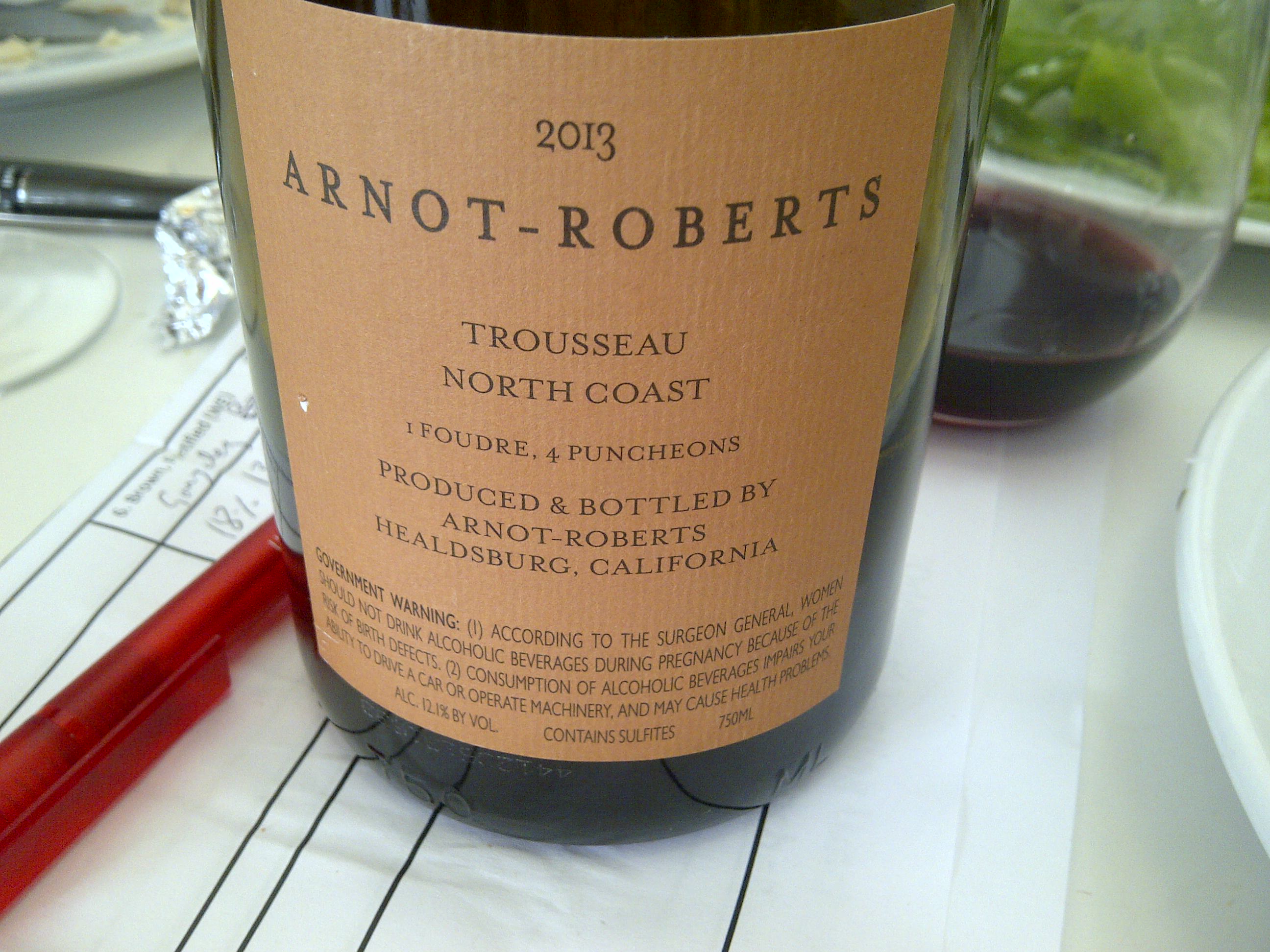
7. Arnot Roberts Trousseau 2013, California North Coast (USA)

IMG-20150527-00164 IMG-20150527-00165

8. Ariousios “Three Years Down” 2011, Chios (Greece)

IMG-20150527-00167 IMG-20150527-00166

9. Zagreus Premium Reserve Cabernet Sauvignon 2006 (Bulgaria)

IMG-20150527-00169

10. Vinarija Bartulovic Plavac Mali 2001 (Croatia)

IMG-20150527-00170

11. Ridge Vineyards Alicante Bouschet 1995, California (USA) (sample)

IMG-20150527-00172

12. Bodegas Malaga Virgen, Moscatel Reserve de la Familia , Malaga (Spain)

13. Luciano Bruni Vin Santo Naturale 1990 (Italy)

IMG-20150527-00173

14. Comte Philippe de Nazel Petit Manseng Sec “Cabidos” 2008, VdP Pyrenées Atlantique (France)

IMG-20150527-00175

15. Changyu Gold Diamond Ice Wine 2009 (China)

IMG-20150527-00176

16. Salvo Foti I Vigneri “VignadiMilo Etna Bianco (Carricante) 2012, Sicily (Italy)

IMG-20150527-00177

(with apologies to the Malaga Virgen, which somehow, and sadly, didn’t make the photo call)

Of course, thanks not only go to the people who brought these lovely wines along, but also to those truly adventurous wine merchants who are brave enough to sell them. Such merchants help those of us who truly know what a really good Bordeaux or Burgundy tastes like to broaden our palates and horizons. And there’s little in wine which is more fun than tasting blind and thinking a Bulgarian Cabernet is just about any grape but, to hit upon Coda di Volpe from somewhere deep in the subconscious, and to hear some pretty astute individuals suggesting the Japanese Kerner came from NE Italy (probably the place from where I’ve had the only really good two or three Kerners I’d tasted before yesterday).

For those wondering about the food, having been eating a largely vegetarian diet for a week, I kept it simple. Deep-fried sweetbreads and a juicy bavette. Rochelle Canteen never fails to deliver, trust me. An Oddities lunch that will be hard to trump.

Posted in Wine Agencies, Wine Tastings | Tagged , , , , , , , , , , , , , , , , , , | 2 Comments