Children of the (Austrian Wine) Revolution

Newcomer Wines is a fixture of London’s  Shoreditch Boxpark, a wonderful retail concept with units sitting inside shipping containers next to Shoreditch overground rail station. The name doesn’t give much away, does it? Newcomer is actually an Austrian Wine specialist, and their Twitter handle and web site proclaims a far more useful description of their purpose – Austrian Wine Revolution (@austrianwinerev).

image

Like the French regions of Beaujolais and Jura, like the so-called “New” California and South Africa, and like Australia’s “Future Makers“, Austria has a bunch of new and younger wine producers who are punching a name for themselves. Some make natural, non-intervention wines, some are reviving old vineyards and varieties. Newcomer themselves call them progressive wine makers.

One facet of the Newcomer experience is their strong engagement with their supplier producers. They have frequent events at which their producers are present, either for mere tastings or for more ambitious events pairing wine with music (and I don’t mean Viennese waltzes!) which just emphasise their desire to engage with their customers, as well as create a new customer base away from the traditional (see their web site, events tomorrow and 17th December coming up).

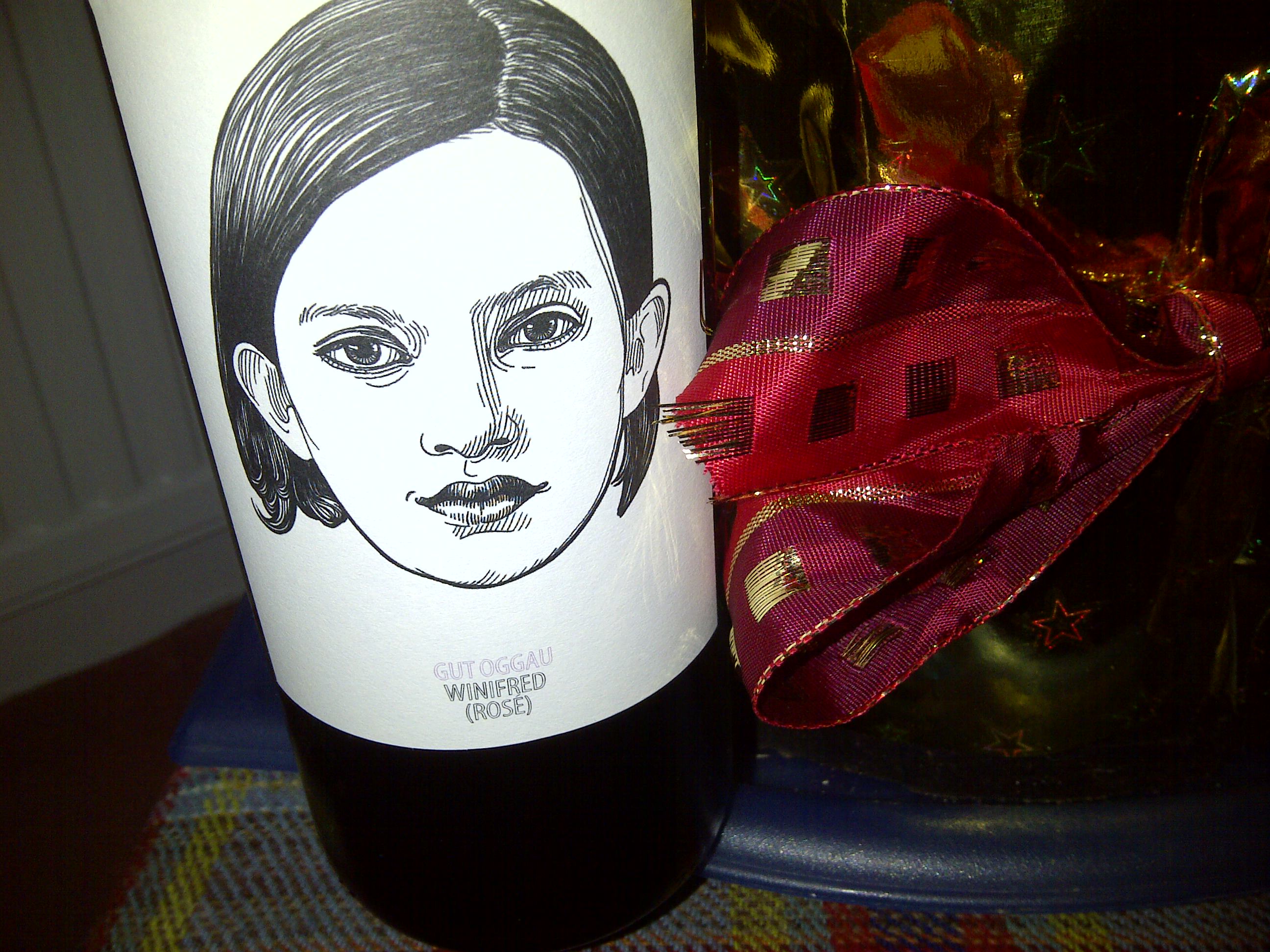
There’s no doubt that Austria is one of the most exciting wine countries to visit right now. Just as the wider drinking public seems to be getting to know Austria’s established stars, there’s a whole bunch of new names to explore, and whilst Newcomer don’t have everyone (like personal favourites Gut Oggau and Heidi Schröck), they are the perfect place to start.

Someone suggested to me that retailing wine inside a shipping container is a bad idea from a temperature control perspective. But the unit itself, with its brick lining, never has the feel of a shipping container, and has never seemed especially hot, even in summer. If I had an initial criticism it was that there just didn’t seem to be all that many producers’ wines for sale. Yet pretty much every time I try a wine from one of them I decide I want to try more from the same source.

image

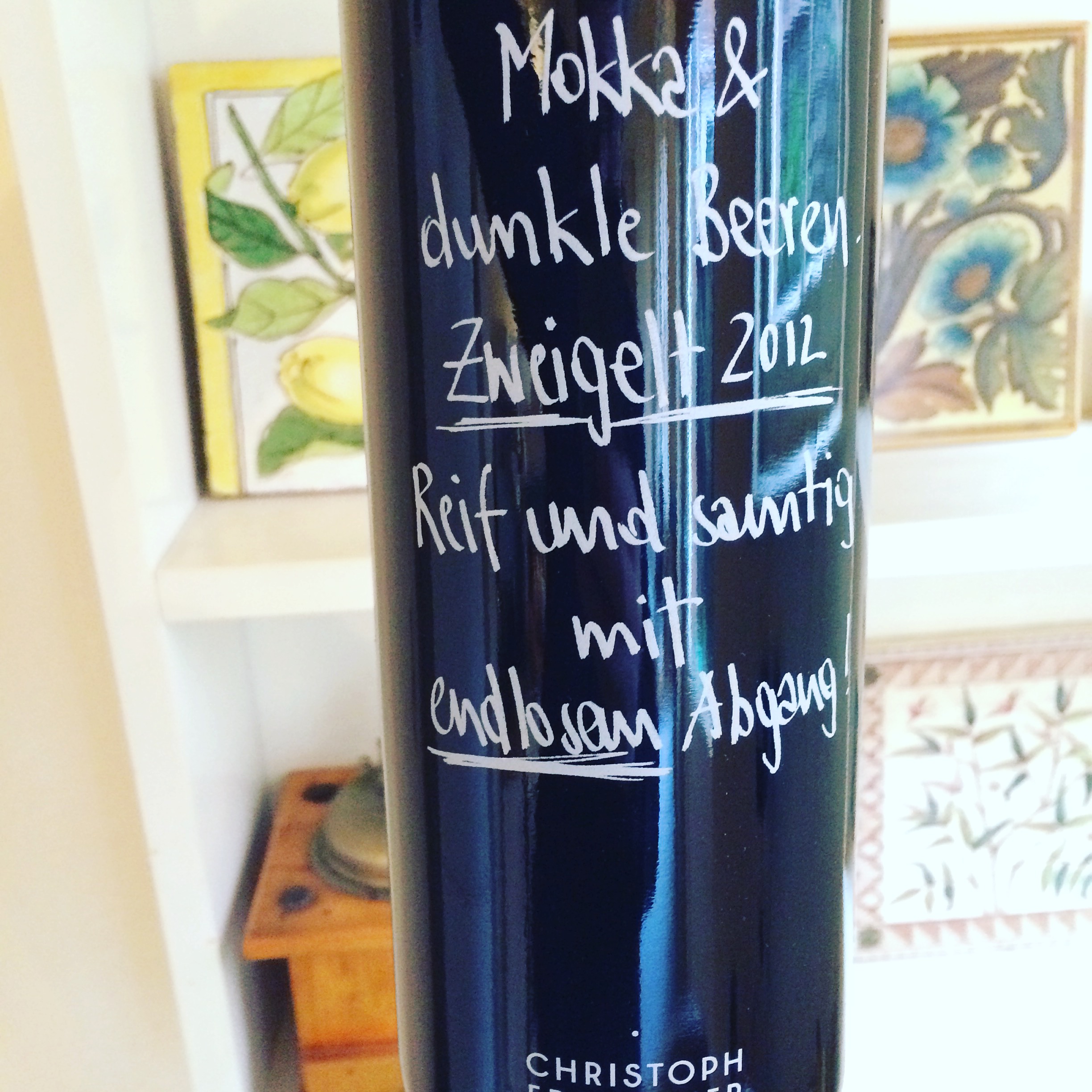
The perfect example is Claus Preisinger. I bought a bottle of his entry level Zweigelt for around £12. For its (somewhat unfashionable) grape variety and price this was so good I had no hesitation in grabbing his £40 skin contact Weissburgunder, along with some more of my original purchase.

The interior of their retail unit (I know, but it’s hard to call it a shop) exudes the sort of modernity you expect from Austrians, despite its tiny size. Technology, from i-Pads to a larger screen, allows the browser to access domaine information, along with pretty, atmospheric, photos of winemakers going about their jobs amid idyllic scenery – in other words a marketing man’s dream. Newcomer proclaim that what’s important is the story behind the wines. So long as the wines taste good, I think they’re right. The story is far more interesting, whether you’re a novice or a wine geek, than a reeled-off lists of fruits and spices.

image  image

The atmosphere is softened, though, by the brickwork, and by the chalk board prices on the walls. And by the bottles. I was worried on my first couple of visits that possibly the main criteria for inclusion on their list was having a funky label. But by now we all know that young growers today see an interesting label design as integral to communicating their message. And let’s face it, with a few exceptions like the wonderful labels of Emmerich Knoll, those labels of the stars of Austrian wine are a little dull (and even Knoll’s are, by their subject matter, conservative). Generally, whilst I’m not going to claim the wines at Newcomer attain the heights of Prager and Hirtzberger at their very best, I think that on most occasions the labels convey the excitement of the wines.

A quick zip around what I think is worth exploring might be useful at this point. But I’ve by no means sampled everything, and if you do visit Newcomer I’m pretty sure that you’ll discover something I’ve not yet purchased. Here are a few ideas:

Groszer Wein – Markus Bach and Mathias Krön  have 16 hectares in Sudbürgenland. They put everything in 1 litre bottles, supposedly the traditional size used forty years ago in Austria. We had some of their Blaufränkisch for a Christmas meal last year and it was lovely, but all their wines are great fun to drink and equally good value.

image

Claus Preisinger – The guy I mentioned above, who farms assorted parcels around the Neusiedlersee and works out of Gols. His Zweigelt might be the best value wine Newcomer sell. Drink it as you would a fresh Beaujolais or a Touraine red from one of the young natural wine talents. His more expensive offerings are well thought out and serious kit.

image

Christian Tschida – Hans and Lisa Tschida are, in Angerhof Tschida,  one of the most famous names in Ilmitz, on the eastern side of the Neusiedlersee, so don’t get confusing them with Christian. He only ranks two (not five) crowns in the Austrian Wine Guide, Vinaria, but Christian is somewhat more avant-garde. No shop-fronted tasting room for him, just a small sign which actively discourages anyone who might keep him from the vines. He fashions mysterious, non-intervention wines which defy the pigeon hole. They are also relatively expensive, like the other Tschida’s. Go on an adventure. The above link is suitably sparse.

image  image

Jutta AmbrositschJutta makes single vineyard wines from some of the most interesting vineyards in Austria. Not only do they look down proudly on the city of Vienna, but some of them consist of the historic field blends which produce Gemischter Satz. This is another passionate winemaker with strong views on farming and winemaking, and it’s her Sieveringer Ringelspiel Gemischter Satz I’d recommend as an introduction. Freshness like few achieve.

image

Davis WeszeliDavis joined forces with the Langenlois wine family, Summerer (now headed by Rupert), to make a range of single vineyard wines under the Weszeli Terrafactum label which, like all those above, shows due respect to the environment in all aspects of farming and production. The wines are all terroir specific, from the village level Kamptal Riesling to the more expensive single vineyard Grüner Veltliners. My recommendation – the Käferberg Reserve, a sort of Premier Cru. But tuck it away. If they have any on taste, you’ll see why.

image

That’s just a selection. I’ve also enjoyed wines from Markus Altenberger, Christoph Edelbauer and others. I’ve yet to pluck up courage to grab a bottle with the oddest wine label I’ve ever seen (for fear of disappointment at a marketing gimmick), Erwin Poller’s “Vom Loess“. If you follow that link you’ll see what I mean! (It’s not shocking).

I will say that Newcomer’s web site doesn’t really give the full idea of what they are trying to do in Shoreditch, and some of the language does come over as marketing that has slightly missed the mark (of “Rotten”, they say “…an extraordinary blend that punks and those in the know will love. Those with their noses in the air will miss this baby by a mile”!). Don’t be put off. I do strongly recommend checking out the bricks and mortar if you are close enough to visit. It’s suitably close to Rochelle Canteen. You get a much better idea of what they are about.

Posted in Austria, Austrian Wine, Wine, Wine Heroes | Tagged , , , , , , , , , | 2 Comments

Oddities 9 – It’s Getting Better (All the Time)

We had loosely termed this the Christmas Oddities, which might be stretching it too far when this ninth lunch in the series took place on 4th December, yet there’s no doubt that most of the people present approached Rochelle Canteen with the sort of excitement and expectation others reserve for Christmas Day itself. The food at Rochelle is a major cause of that excitement, for sure. But there was also a sense that good as previous lunches have been, the attendees (made up this time largely of regulars and others who’d been to at least one previous Oddities) were going to pull out all the stops for this pre-festive feast. And that proved spot on correct.

Alcides and the team in the kitchen offered up a set menu of astounding quality, consisting:

– Pork belly ham, radishes & celery salt                                                                                               – Duck belly rillettes

image                                                                                          – Salsify, Jerusalem artichokes & watercress salad

image

– Braised ox tail, pickled walnut, celeriac mash and black kale

image

– Steamed marmalade pudding with custard

image

The Wines

1. Selosse Brut Initiale NV – This Blanc de Blancs was disgorged in November 2011, so it has had plenty of post-disgorgement ageing, yet first sip introduced a very young wine, quite tight and mineral (I’m sorry but I insist on using this term, discredited in some quarters, for a wine like this). Despite the fine line of acidity here, there’s a big wine underneath. Lucky enough to take the first (QA of course) sip and the last, I probably experienced this wine’s true magnificence more than anyone else. By the end of the bottle I felt it was singing.

image

2. Clos du Papillon 1978, Domaine de la Bizolière, Savennières – If the Selosse posed the threat of a tough act to follow, then this old Chenin matched it. It had amplitude, of course, but it’s a gentler wine, delicious and mellow, honeyed yet with lime and other stuff that the more verbose might chime as acacia, linden, quince and stewed apple, or whatever. Well, actually, not so much of the tarte-tatin in this instance. Graceful is the adjective I think fits best. Technically off-dry but now bereft of any meaningful sweetness, leaving just soft complexity, justifiably considered one of the Loire’s grandest wines.

image

3. Vin de France “Bu N’Daw” 2012, La Grange de Quattre Sous – This must rank as a real oddity, a Petite Arvine made by one of the great rebels of the Languedoc, Hildegard Horat-Diop. Hildegard worked in Switzerland, though not in wine, before moving to Assignan, near the AOP of St-Chinian. This wine is no mere oddity though. It’s intense and powerful for this excellent Valais grape, and the quality is high. Kermit Lynch has called Hildegard’s wines “grand crus”, which is no mere lame compliment. This is good, and for around £20, not over-priced.

imageimage

4. Disobedience 2011, Mythopia – Mythopia, a name redolent of unknown pleasures and mystery. We are in Switzerland’s Rhône Valais proper here, and the village of Arbaz (not far from Sion), but our grape for this wine is generally more well known in the Vaud – Chasselas (aka Fendant here). Picture real mountain vineyards surrounded by alpine pasture. Smell the wild flowers and listen to the pollenating bees. An idyll worthy of the name, no? I hope ginger spice and leaf mould doesn’t turn you off – at the table it induced warm appreciation of gentle complexity from a producer who many natural wine lovers have heard of, but who for most remains myth-ical. An orange wine with around 35 days skin contact, then around two years in old wood. Described by others as chalky, it’s a wine of texture above all. Impressive. Visit www.mythopia.ch to learn more about this special producer/place.

image

5. Breg 2000, Gravner, Gorizia – Some wines remain a myth, others a legend. Breg is such a wine. But our example pre-dates the amphora turn which made Gravner into the creator of a modern wine style born out of deep history (although we all know amphorae have been in use inter alia in Georgia and Portugal for a very long time). This 2000 is a masterful wine, the nose still redolent of skin contact, the colour still gently orange. Where the professional wine writer must justify with some well constructed adjectives, the enthusiast is entitled to substitute “WOW!!!”. That, I’m afraid, says it all. A fifteen year old Breg is, for me, pure privilege, I’m afraid.

imageimage

6. Rosé 2004, Chateau Musar – This Bekaa beauty is hardly a mystery to Oddities attendees, yet will always be welcome at the communal table. Whilst so many know the red, even available in my local Waitrose supermarket, the white and pink provide many of us with as much pleasure, though we may imbibe them less often. A strawberry nose accompanies a lovely acid-fresh palate which lingers long. A testament to many things – perseverence and a vision which brings as much pleasure as it demands respect, to name two.

7. “Corail” 1990, Château d’Arlay, Côtes du Jura – This is a pale red (coral) made from five varieties (mainly about 50% Pinot Noir with Trousseau and Poulsard) is described by Wink Lorch in her book Jura Wine thus: “Corail deserves to be loved for its originality, but is aged far too long in old wood”. Yet for some reason this 25-year-old amazed a largely burg-ophile audience. Despite the grape blend, it was redolent of much older Red Burgundy, many people putting it older by a decade or two. This estate, let’s be honest, has not approached the summits of Jura winemaking, certainly not in the 30 years since I first bought Comte Alain de Laguiche’s wines. Yet somehow this bottle struck a chord with us, and was in fine condition. Lovely.

image

8. Vin de France “Rybeyrenc” 2011, Thierry Navarre – Rybeyrenc is a grape variety. Don’t feel any pangs of ignorance, I’d never heard of it either. There are just two hectares of it in Languedoc. It produces a simple wine of 11% alcohol with vivid strawberry fruit. What it lacks in complexity it makes up for with pure drinkability. The nice thing about these lunches is that we get wines which, like olive oil, rise to the top, and others which provide just as much interest but in a different way. This was such a wine. Have a read of Andrew Jefford (on Saint-Chinian but which opens by touching on on this vineyard) in Decanter. It’s a lovely, evocative piece.

image

9. Jeff’s Bosnian Red! – We sometimes get a chance to drink the product of an English garden, wines made by an attendee. Usually they are better than you’d expect. This white label hails from Bosnia, made by an attendees’s daughter-in-law’s mother. The tradition of home winemaking is a way of life for many, perpetuated even in exile, as with the ancient lady who has a garden full of vines down the road from me. This wine, made somewhere in Bosnia, did stink a little, to be quite honest, but the palate was more than honest, being simple but drinkable. In some ways, more honest than some of the natural wines I drink when they go badly wrong. So we all enjoyed trying this. Certainly not the worst wine I’ve drunk this year, by a long way…and that is saying something very positive.

image

10. Shvo Vineyards Red 2010, Galillee – Quite alcoholic (14.5%), BGSM blend (Barbera/Grenache/Syrah/Mourvedre). Soft, Syrah dominating the nose, some structure, a very pleasant addition to the lunch. Their web site is under construction, and Google Translate wasn’t a great help so further information on this wine was unavailable, but if you want to know more I’d ask for Paul at Roberson. Alternatively, see what Jamie Goode has to say more eloquently and expertly than I can on Wine Anorakhere.

image

11. Perricone “P” 2013, Francesco Guccione, Cerasa – Guccione make lovely wines in Northwest Sicily, about 35 kilometres from Palermo and not far from one of the island’s greatest treasures of romanesque architecture, Monréale. The estate’s winemaking history goes back just eight years, although the family has a longer history as grain farmers. “P” sees about 18 months in botti and is a lovely example of this grape variety, one which was formerly a blending grape only in Sicily, but now can even be found as a sappy new varietal in UK supermarket Marks & Spencer (from large producer Caruso e Minini). This was lovely not for complexity again, but for pretty much topping the tree of drinkability. Place it alongside a Barbera, a Beaujolais or a really good Côtes du Rhône and this wine will likely come out on top. Check out all the Guccione wines at Winemakers Club.

image

12. Vinsanto 2003, Hatzidakis, Santorini – I didn’t guess this blind at all. First attempt, Moscato Passito from Pantelleria, second attempt the same from Valle d’Aosta’s Chambave (well, I know this man is a great Italophile). Dark brown in colour, sweetly moreish, but with really good balancing acidity. Of course, I love this producer’s Assyrtiko, but I’ve never had their Vinsanto, and what a treat. Pure concentrated nectar. It was a match made in heaven for our steamed marmalade pudding, which matched it sip for spoonful in both debauchery and quality.

imageimage

13. Sangiovese 1997, Di Bruno, Santa Barbera – Lunch over, at Oddities you’ll see people shiftily shuffling for their bag to see whether they can pull out their (ahem) reserves. First up, our local lawyer’s obscure Californian, a delicious 14.5% fruity Sangiovese which I would have sworn was an old Rioja, for which consummate ignorance I hang my head. I’ve drunk a few Californian Sangiovese in my time, but none this old, nor perhaps this balanced. As for the producer, new to me.

image

14. Langhe Freisa “Kyé” 2003, Vajra – Next out of the bag, a wine from our specialist Burgundy merchant, from a grape known to excite our own present Burgundy expert. Hailing from high vineyards in the comune of Barolo itself, Kyé undergoes a long fermentation before long (for this grape) ageing in Slavonian oak (12-18 months). The result is the most renowned of all Freisas, and as far as I’m aware, the most expensive (today, approaching £30 retail, a fact which astonished the person who brought this old bottle). It is, indeed, serious Freisa, and quite stunning in its own right.

image

15. Palo Cortado La Bota Punta 48, Equipo Navazos – This hails from a solera at Pedro Romero of Sanlucar. The estimated ages of the wines assembled for this bottling are 50-80 years old, and as the EN marketing says, they provide a real, rare and diminishing opportunity to taste genuine Sherry history. This wine weighs in at 21.5% alcohol. Describing it is difficult. There’s an intensity here like almost nothing else, which some people (not me, for sure) found too much. I’d describe the experience (not the flavours) as more akin to drinking old Madeira. It’s a world class wine, but as with the finest old Red Burgundy or well aged Vin Jaune, fifty percent of the pleasure, at the very least, comes from the profound bouquet. The nose is so good you’d not feel wholly cheated if the glass was whisked away from you. But when you taste the wine you need to ensure it’s the final glass of your session. If you don’t believe that it is possible to measure length not in tens of seconds but in tens of minutes, I suggest you seek out a half bottle of this, or one of its sister bottlings.

image

So which wines were most appreciated? The Selosse, the Loire Chenin from Savennières, Gravner’s Breg, d’Arlay’s light red Corail, Guccione’s Perricone, the Greek Vinsanto of Hatzidakis, Vajra’s super-Freisa and Equipo Navazos’ intense Palo Cortado, at least down my end of the table. The pleasure of Oddities, however, is always the food and the lively debate as we prove our credentials as wine lovers through the pure joy expressed whilst trying all these wines.

image  image


Posted in Dining, Wine | Tagged , , , , , , , , , , , , , , , , , | 9 Comments

When the Snowman Brings the Snow

At this time of year I regularly purchase a packet of humbugs and close my ears to the Christmas songs being played in just about every store on the High Street. But there’s always one Christmas record I enjoy, and always have done ever since I bought the 7″ in one of my first ever picture sleeves, as a child: I Wish it Could be Christmas Every Day, by Wizzard.

The other thing I have tended to close my senses to around this time are the innumerable articles in every magazine and newspaper telling us what to drink at Christmas. The worst thing about them is that they are all practically identical. Christmas “fizz” dominates, of course. You get a few recommendations for Cavas and Proseccos, the usual Champagnes ranging from supermarket own labels to well known Grands Marques (hopefully discounted), and if you are very lucky a few suggestions for something different. This year that’s invariably a couple of English sparklers, as they’ve been getting a lot of press lately.

Next you get the usual array of fortified wines – it is after all the time of year when the press are most likely to drag some advertising out of the major Port Houses. Likewise dessert wines, although Sauternes Estates are probably so unprofitable that they appear rarely to have the funds to splurge like the big Champagne Houses who, in the national press, at least give us something different to look at than the dozens of perfume adverts we see at this time of year (is it just me, or are the TV ads for scent especially bad this year?).

But if I’m honest, I’ve started to lay off the humbug. It would be easy to question why I should drink any differently at Christmas to any other time of year. But there is no doubt that for those of us lucky enough to have a holiday of several days, or more, over the festive period, as drinkers we have two things going for us. First, we have the time to plan what we want to drink a bit more than usual. We don’t come home at Seven and realise we need to grab something from the cellar that doesn’t need chilling, decanting, or standing upright for forty-eight hours before drinking. Secondly, we are often blessed with a few lazy days where we don’t have to do much, certainly not drive.

I’m sure we all buy wines and wonder when we’ll have the opportunity to drink them, yet at Christmas and New Year we also feel able to drink wine at times of the day we might otherwise think beyond the pale at other times of year, despite those cold, nine-o-clock starts tasting in freezing cellars. A shared bottle as an aperitif before lunch lifts the spirits, and when the afternoon can be spent half dozing in front of The Great Escape or It’s a Wonderful Life, it engenders a rare feeling of relaxation to be able to sip something which warms the insides (at least in latitudes like ours – apologies to Southern Hemisphere readers).

But except on occasions like our Oddities lunches, where we always look forward to a few interesting fortifieds, almost the only Ports and Madeiras I drink are during the festive season, aside of course from my beloved Equipo Navazos Sherries – though even here, it’s by a long way the biologically aged styles I drink far more of throughout the rest of the year (Finos and Manzanillas).

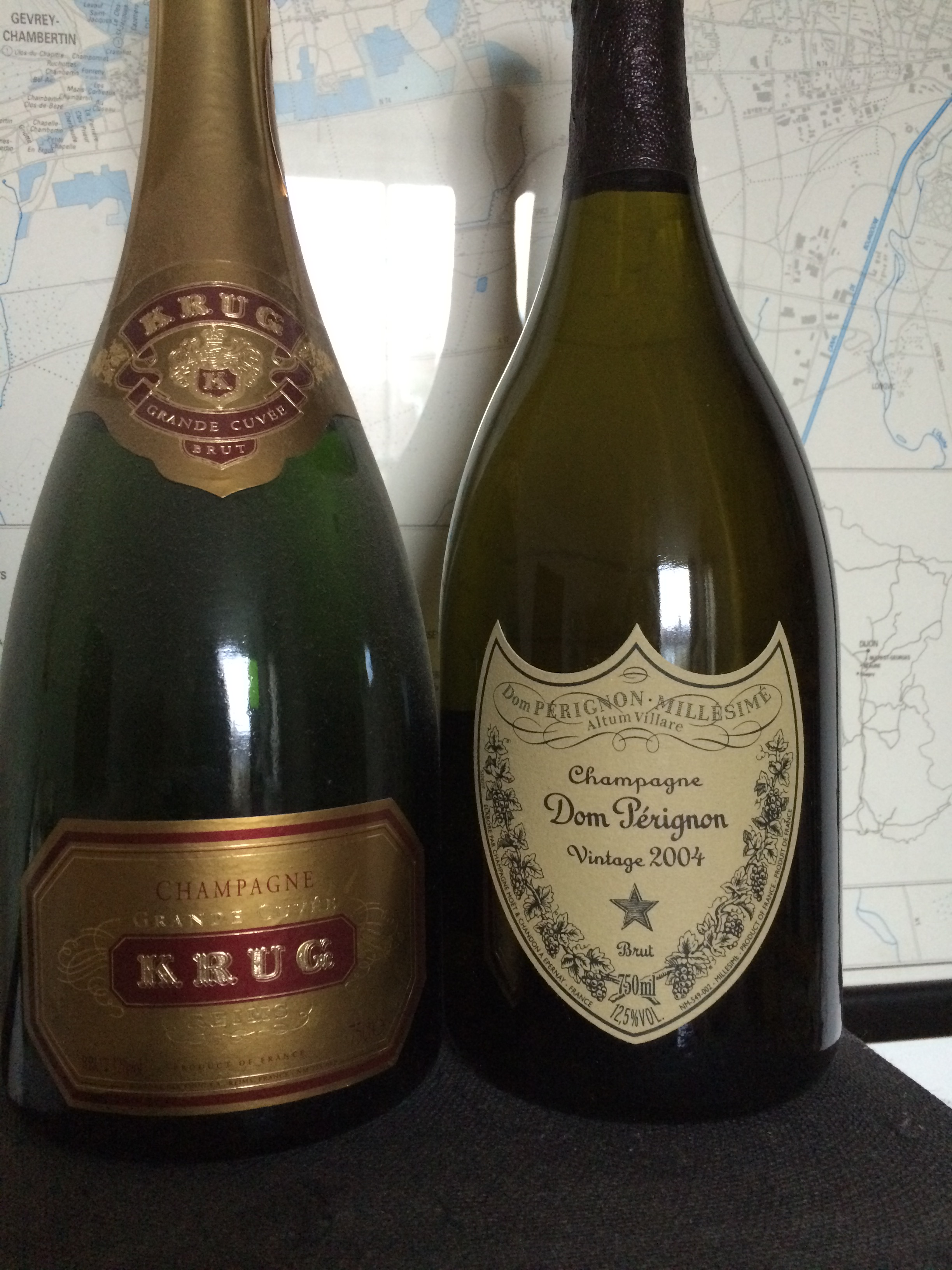
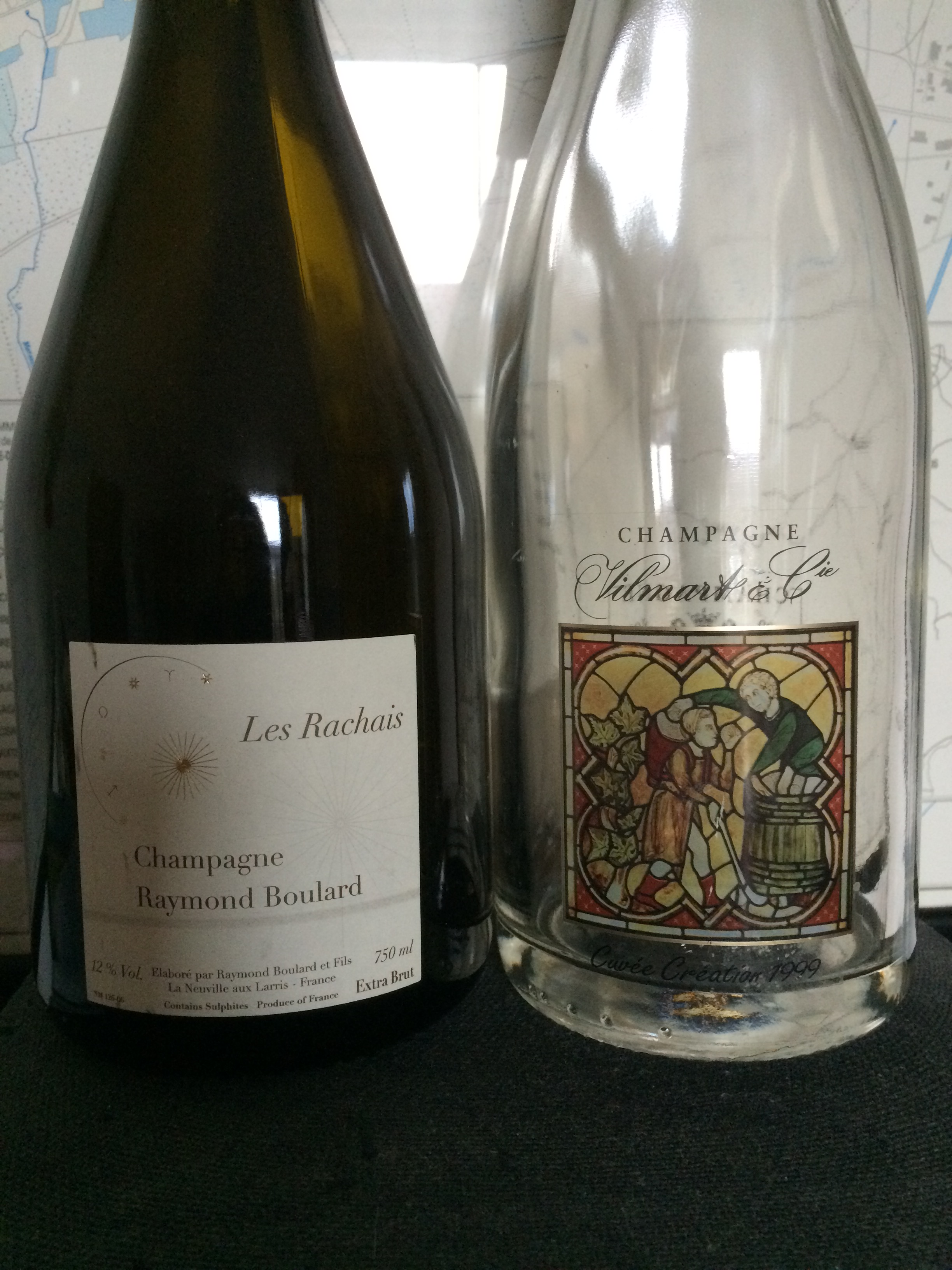
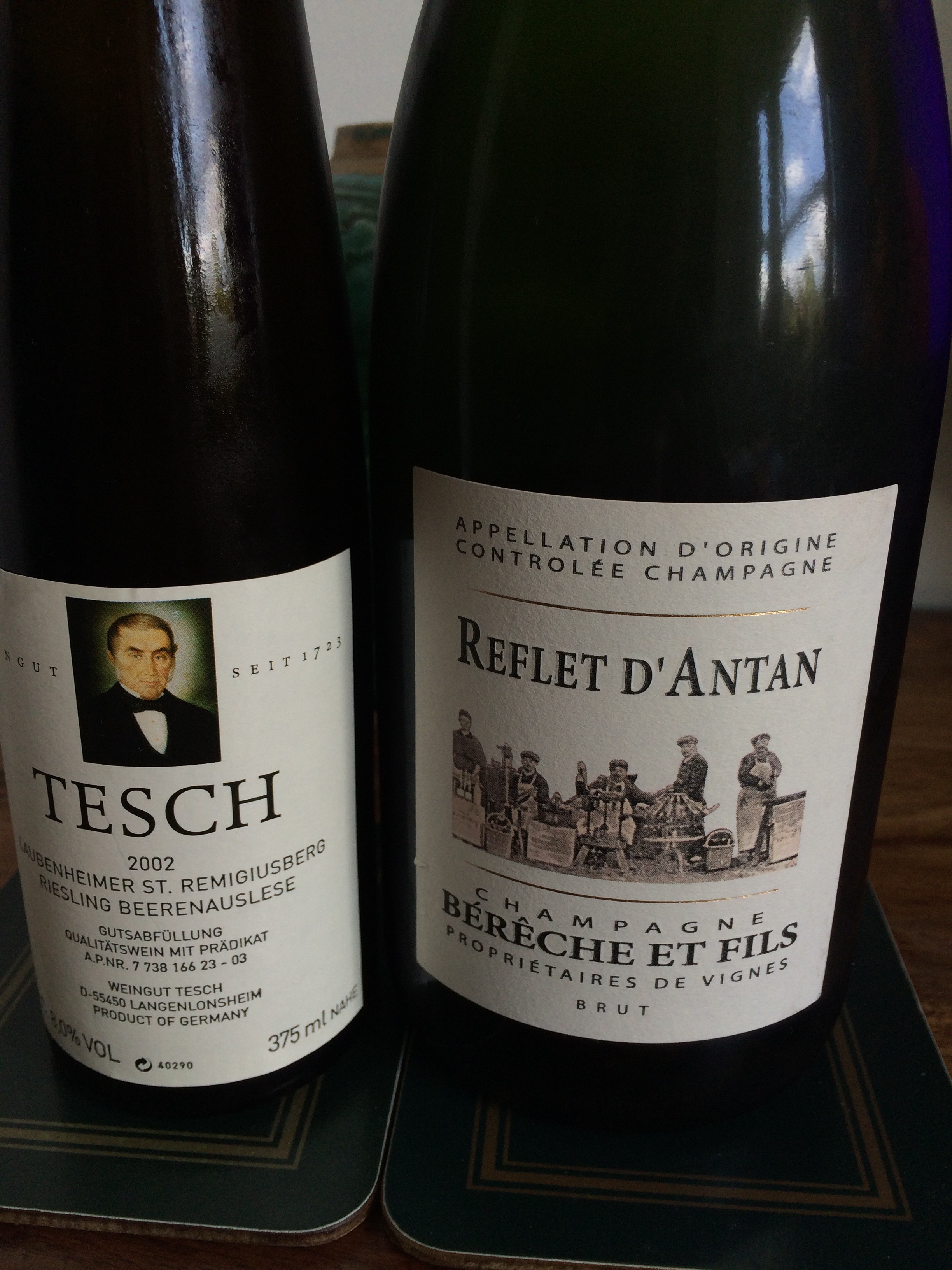
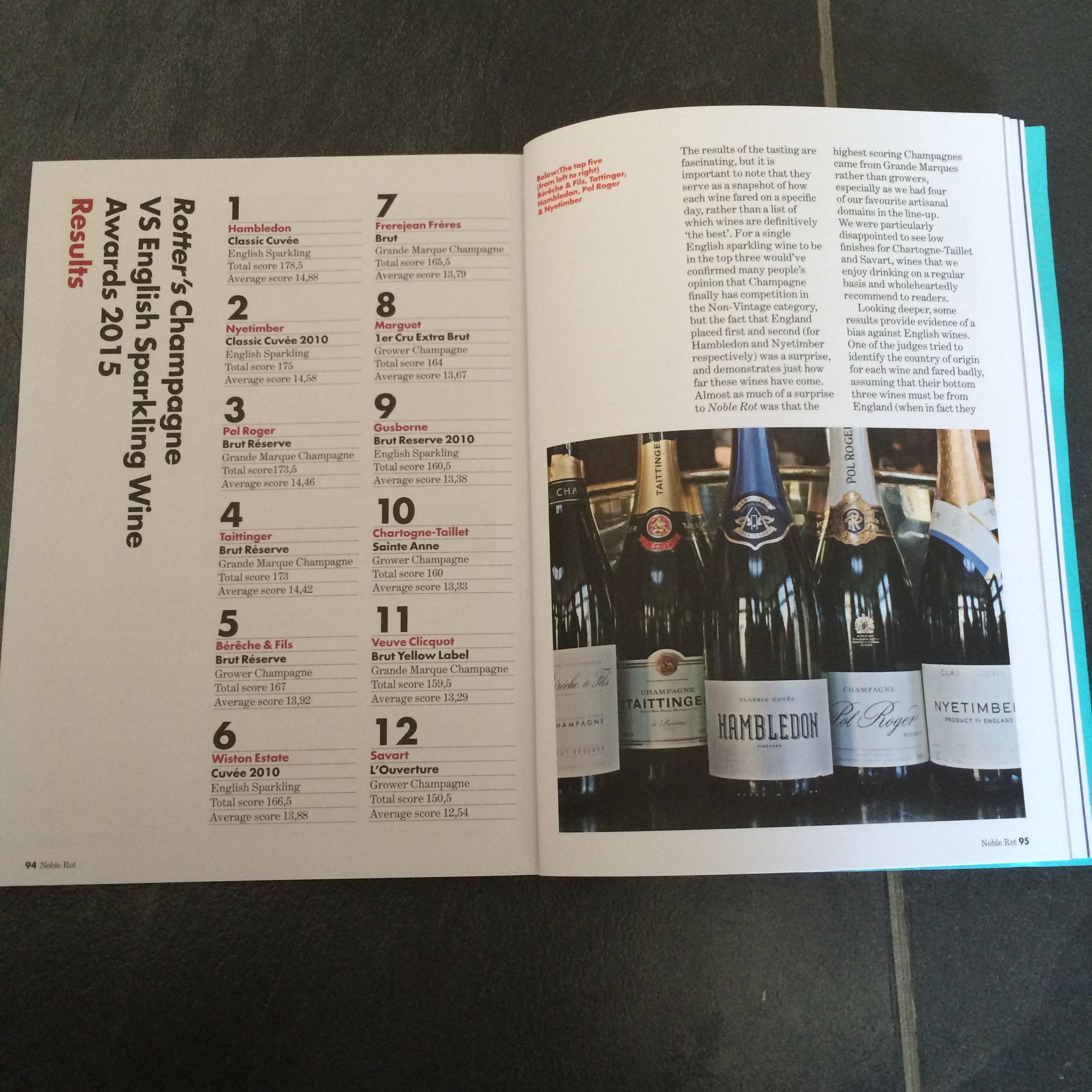
So what sort of things will I be drinking over Christmas and New Year? It’s certainly a time of year we get through a good bit of fizz. For some reason we seem to have drunk fewer bottles of sparkling wine during 2015 than ever before, especially having cut back on the temptation to guzzle a bottle on a Friday night as a nice start to the weekend. So hopefully we are reasonably well stocked. The usual selection of Bérèche will be opened (as popular in our house as those EN Sherries), along with some Vilmart Grand Cellier d’Or 02/04 and some Paul Bara Special Club 2002, which I’ve yet to broach and may be nice when guests come. There’s also some Billecart Salmon pink, and perhaps a Taittinger Comtes 2005, which the experts tell me is drinking beautifully.

image

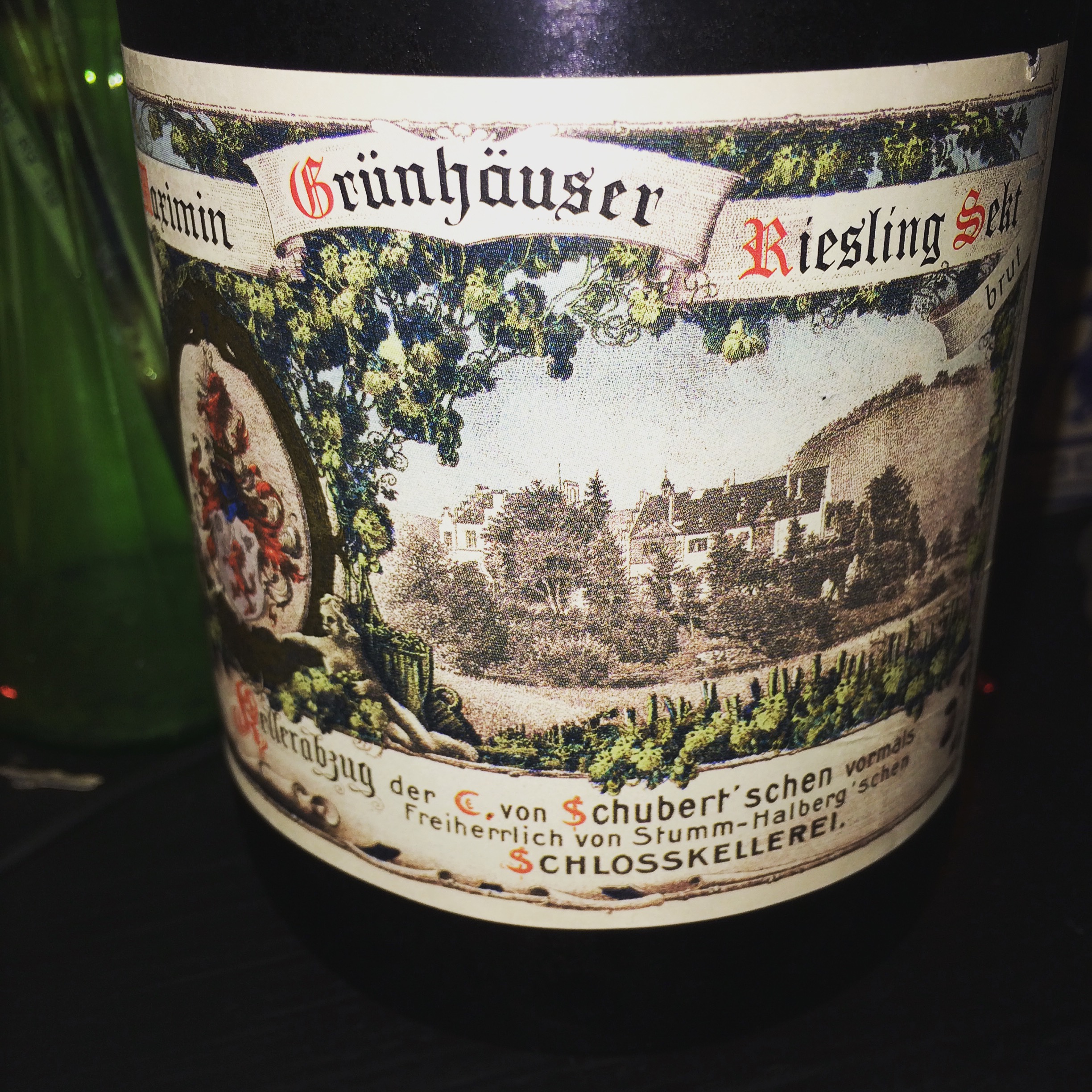
It’s also a nice time to drink sparklers from other regions. For Loire, this means Huet, for Spain this means Colet-Navazos, and for Germany, Grünhauser Sekt. I have a nice selection of Crémants du Jura, but they will be saved for fellow geeks.

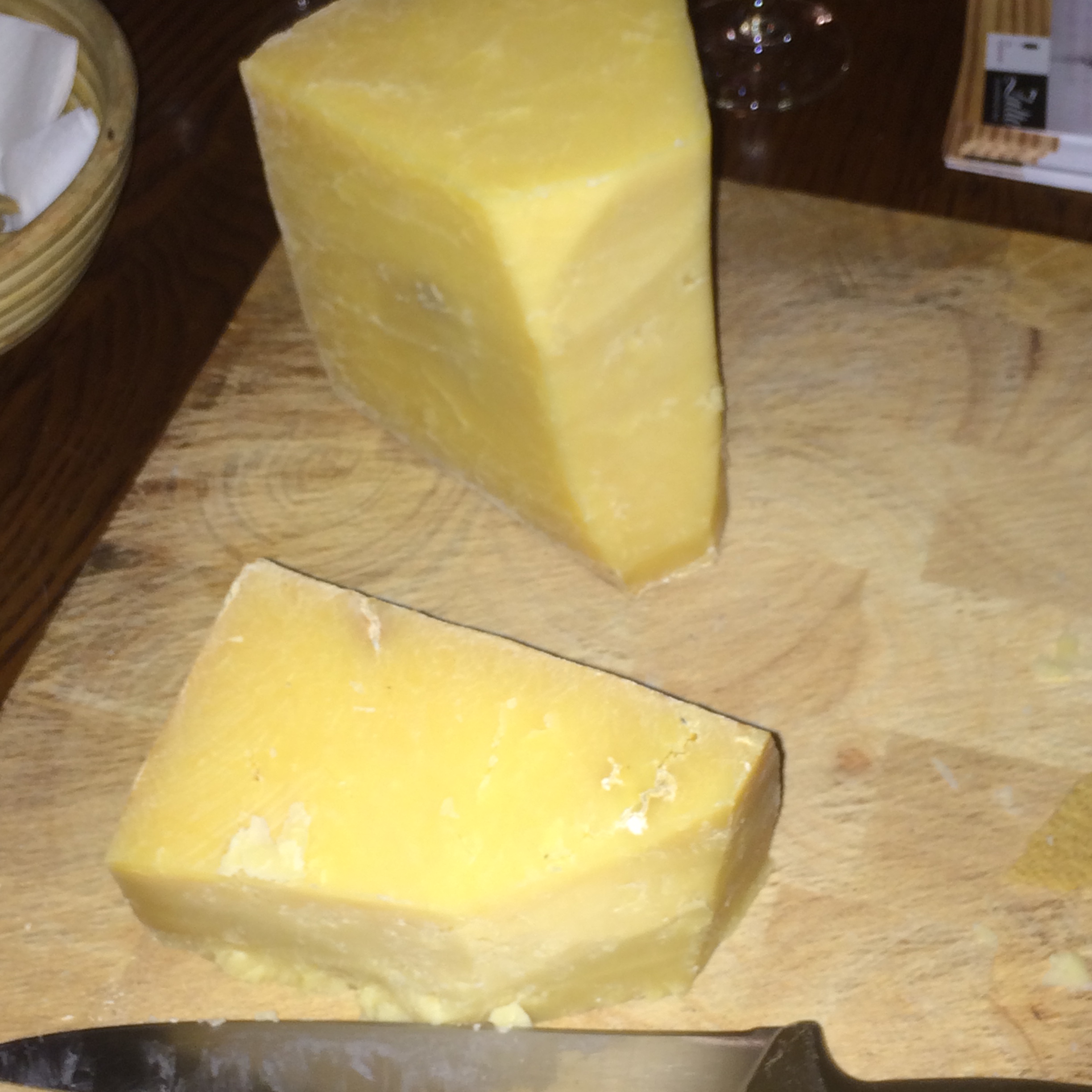
But of the wines I don’t drink often, the festive holiday is a great opportunity to savour some Olorosos and Amontillados from Equipo Navazos and elsewhere. It has become something of a tradition in our home to look forward to a supper of leftovers, nibbled whenever we are a tiny bit hungry after a large sit-down lunch. A cold roast potato with relish or chutney, stuffing, with Stilton and Comté, and a sprinkling of cashews or pistachios filling the available space. Something brown and fortified, yet dry, is perfect sipped over the course of an hour on the sofa listening to the wind blowing down the chimney (First World problems!).

image

Dessert wines sit in a half bottle rack for most of the year chez nous. Occasionally a few see sunlight in the summer, or make it out to a wider audience at a wine dinner, but most of the year they spend in hibernation. Pairing a dessert wine with a traditional Christmas Plum Pudding is really difficult. Most of them just don’t work at all, although I’ve found Banyuls does. Nevertheless, it’s a nice way to finish a meal. I have a small but well formed selection of Krachers, and I’m sure one will get opened. In fact, Austria has pride of place in the stickies rack, and I have been eyeing up some Heidi Schröck Ruster Ausbruch, and some Gelber-Muskateller from Knöll. It means I may not get to open some Vin Jaune, but I’m trying to avoid drinking bottles of this too early, and as they now push €50/bottle, they are strictly rationed (which means brought out to share with like minded Jura-philes).

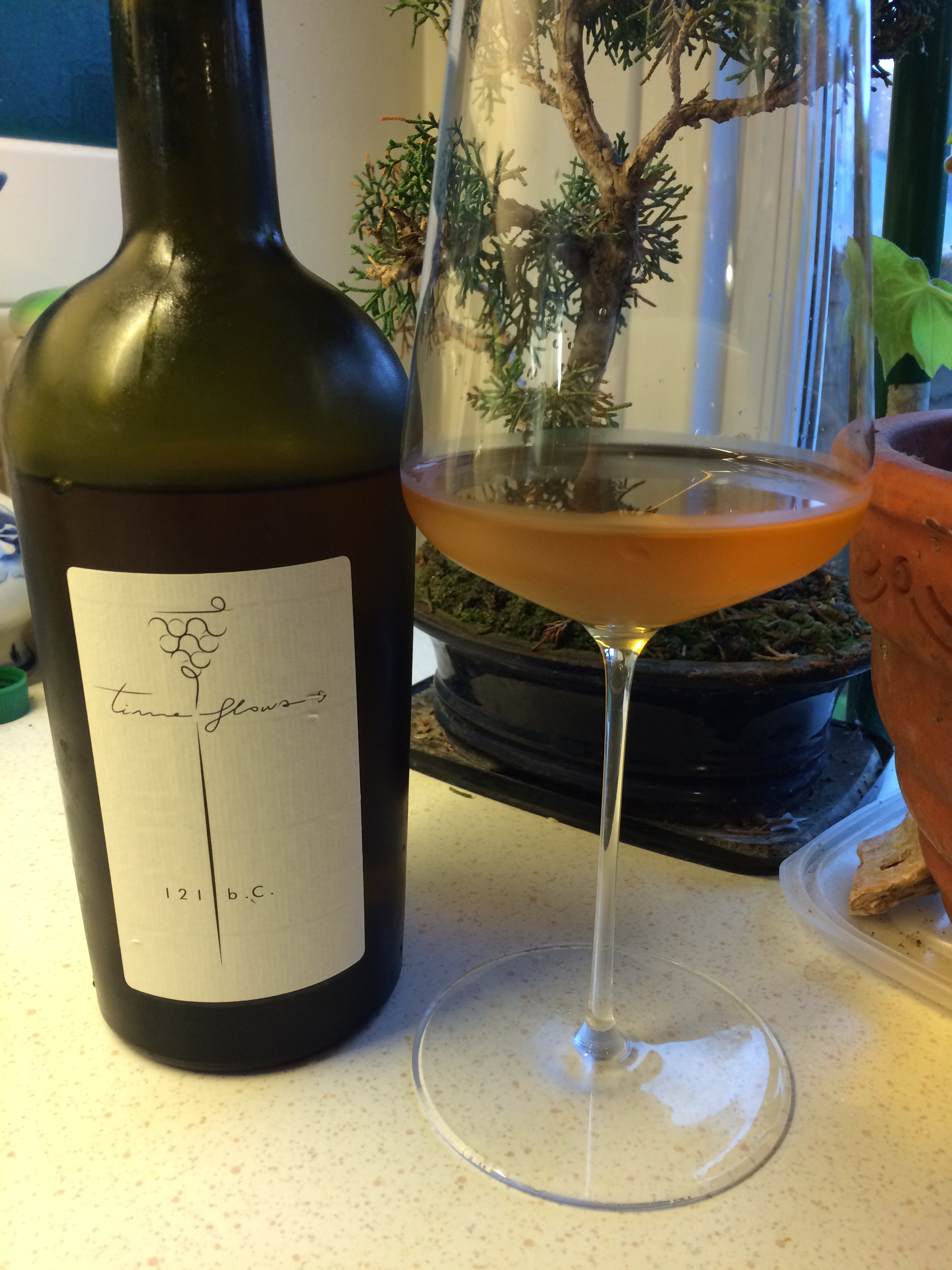
Another style which I think goes really well with a lot of the festive fare is orange wine. Wines made from white grapes with texture and structure imposed by skin contact, and sometimes with the earthy tang of amphora ageing, offer a good match to both fowl and the vegetarian dishes my family enjoy. They are, to my mind, extremely versatile. In fact, at some point a nut roast will be made and I’m contemplating such a match. Not that I need the holiday season to drink orange wines, but still…

Jura 2015 Dave 207

When a lot of alcohol is being consumed it’s quite nice to have a few lower alcohol reds around. This is counter intuitive for many. There’s no doubt that winter is the traditional time for bigger reds, and I certainly still have some of these – Australians and wines from the Northern Rhône, and odd bottles of Beaucastel, a few modern Iberians, or beefy South African Syrah (such as some of Chris Mullineux’s earlier efforts at TMV).

Likewise, I’m no different to any other wine lover who, despite drinking an awful lot less of it than I used to, still thinks of Red Bordeaux at Christmas and New Year. But as age makes us all more susceptible to the effects of alcohol, a nice light red at lunch time can be a very welcome filling to a fizz and fortified sandwich. For those who think Beaujolais is a summer wine, I can tell you that Crus like Fleurie and Morgon usually see the light of day, and Carignan is, in its lower alcohol manifestations, a really refreshing thirst quenching red. I also have a near endless supply of Jura reds, some of which will be sure to be opened. At least when I do open something heavier in alcohol there’s the opportunity to save half the bottle for later…a nice chance to savour a wine after a little more air, so long as it has life left in it to start with.

image

Finally, there’s Burgundy. I probably drink less White Burgundy than many around this time of year. Although Christmas is a time for Chablis for some people I know, I tend to gravitate more to a complex dry Riesling: German, Austrian (Wachau), Alsace or Aussie. But perhaps one of Christmas’ greatest pleasures is the contemplation, over a good hour or so, of a really nice Burgundian Pinot, where, with bottle age, the nose provides at the very least fifty percent of the pleasure. I can do this whether listening to Wizzard on the Christmas “Top of the Pops” show, or slumped in a chair with a copy of Noble Rot (probably lacking the strength at this stage to hold up a copy of World of Fine Wine). Though I can’t bring myself to say “I Wish it Could be Christmas Every Day”. My liver just wouldn’t agree to it.

And to all my wine writing friends, yes, do keep those articles about what to drink at Christmas coming, though the ones I will enjoy most will be those which think a bit further, rather than trotting out the same as everyone else. I hate to admit it, but I shall read them with pleasure.

“And let the bells ring out for Christmas”

IMG-20131225-00225

Posted in Christmas and Wine, Wine | Tagged , , , , , , | 1 Comment

Rotters’ Club

Probably one of the most eagerly awaited openings of 2015 on the wine scene, the guys at Noble Rot (the very alternative wine magazine) finally opened their eponymous wine bar on Lamb’s Conduit Street a little over a week ago. I got my first taste of #nobrot last night, with five other wine obsessives (three trade, three amateurs), and a very good night was had by all.

What does #nobrot actually give you? Located in Bloomsbury, part of the newly branded “Mid-Town” district of London (on a street which looks a whole lot more attractive than when I was last there), Dan Keeling and Mark Andrew have enlisted an A-Team headed up by chefs Stephen Harris and Paul Weaver, who oversee the kitchen. Many UK readers will know this pair from Marina O’Loughlin’s favourite restaurant, The Sportsman at Seasalter, near Whitstable. There are plenty of other young “old faces” around the place, enticed, or stolen, from some of the capital’s cutting edge locations too. Add to that a wine list which builds on its Roberson connections but goes much further, with Mark Andrew relishing the chance to share some really good stuff (and prices are far from gougingly high), and you have what I hope will prove a winning combination.

image

The bar area – the restaurant is through the door ahead

The venue itself, dating from the eighteenth century, is far from swish, though they do plan a refurb in January. But that’s hardly the point when everything else is so close to spot on, and in any case it does have a good atmosphere. They have more space than some of London’s best bar/restaurants, and perhaps more interesting space. We were put in a separate alcove containing a couple of tables, nice and quiet and perfect for half-a-dozen wine geeks to chew the cud over several bottles.

Service was really excellent, though I’m sure that having a friendly wine waitress known to some of us helped on that score. The wines were all exciting, but more on those in a moment. My biggest surprise was the food, which was better than I thought it might be. Not sure why I was surprised, considering the kitchen’s pedigree, but it was good.

imageimage

Slip-sole and pigeon – note I tucked in before photographing – no prissy plated pics here!

I began with slip-sole, served on its own, cooked in a smoked butter (The Sportsman do a variation on this), which was firm and came off the bone easily without breaking up. For main course I had pigeon, cooked red on a bed of stock-simmered lentils with cavalo nero (aka black cabbage). Three cheeses took the place of dessert – a Colston Basset Stilton, a good Brie-de-Meaux, and Lincolnshire Poacher. Others had the main course which has for some reason gained fame in just two weeks – Halibut in an oxidised Bâtard-Montrachet sauce (in this case, 1998 Réné Lequin-Colin). It’s a dish dreamed up with a shimmer of reverence for Coq au Vin Jaune.

imageimage

The famous oxidised Bâtard and last night’s menu

We started off with a stunning bottle of San Lorenzo Verdicchio “Le Oche” 2013. This is a step up from San Lorenzo’s entry level wine for not all that much more money. This estate makes some much more expensive single vineyard wines, but this one delivers major bang-for-buck value, with soaring fruit, freshness and limey length, all at a balanced 13.5%. Delicious and very highly recommended, a producer who invariably over delivers at this level.

image

Our second white was a wine I was very keen to try, Envinate’s Táganan Blanco 2014, from Tenerife. A field blend based around Listan Blanco, it is one reductive wine, and would have benefited from a serious splash decant. Nevertheless, our vigorous shaking helped bring it to life, and what life! If wines can taste volcanic, this did. The acidity is quite high, but it’s needed to balance the immense texture – it’s almost tannic. In the middle sits something silky and chewy. Quite unique.

image

First of the reds was Antoine Sahzay’s Saumur-Champigny Les Poyeux 2012. Sahzay is a Clos Rougeard protégé but his wines seem still to be a little under the radar. This is a wine I want to buy. It was possibly the only red wine of the night I’d have pinned down as to grape variety and broad region. It was the freshest, most alive, Cabernet Franc I’ve had all year, with bright fruit and a very refined finish, yet the best part – an amazing fruit and pencil lead-driven nose.

image

The surprise of the night for me was Piedrasassi Central Coast Syrah 2013. Just 480 cases made of this 14% wine which tasted refined and not remotely blowsy. This collaboration between Sashi Moorman and Peter and Amy Pastan is inky dark to look at and the fruit on the nose is actually sweet, but you get the added savoury complexity of what I called Vegemite (a yeast extract spread beloved of Australians for those who’ve never come across it), but soon amended (on Tony’s prompting) to tapenade. This wine combines real concentration with an elegance usually reserved for top Northern Rhônes. I didn’t even mind the squat, dumpy bottle which I excused from pretentious Californian marketing hype, along with the minimalist front label, on account of the wine being so good.

imageimage

My evening finished with a Greek wine, Foundi’s Naoussa Xinomavro 2009. Xino comes in many styles, and this was a lighter version, not complex but initially very fresh and vibrant. It was a wine I’d have difficulty naming blind, even though I’ve had at least four Xinomavros this year. I might have gone for a Langhe Nebbiolo and then changed my mind to aged Cabernet Franc, though I think others have said Pinot Noir. It took off with all the rush of a jet fighter, but then it hung there like a bi-plane, losing power and finishing short. But the initial shot-rush meant I did enjoy it, despite that criticism. And after all, I don’t think it’s especially expensive.

imageimage

I had to leave for my train at this point, but I believe the others sneaked in a Sylvain Cathiard Bourgogne Rouge 2010? I’m rather hoping someone will come along and tell me what it was like. I thought that even at this level it might be too young when we discussed it, though Mark Andrew said it was drinking nicely.

This was an excellent evening, even though my copy of the latest edition of Noble Rot Magazine, promised me by a young lad working the bar area, never materialised (so I picked one up elsewhere, today). Otherwise, despite the oddly dated style of the place at present, I can guarantee good food and a great wine list for the adventurous, not to mention a chance to explore a part of London which I’m betting few who have not worked around Holborn at some point will know. Just arrive early for a drink and time to explore the wine list at leisure. Booking recommended.

image

Noble Rot Bar & Restaurant, 51 Lamb’s Conduit Street, London WC1N 3NB,                     Tel: 020 7242 8963


Posted in Dining, Fine Wine, Wine, Wine Tastings | Tagged , , , , , , | 2 Comments

Where Have They Been Hiding?

It’s all “New” something at the moment, isn’t it. We had Jon Bonné’s New California, we have been hearing a lot about the New South Africa this summer, and we have our very own New Beaujolais (three dinners in London this year). But what about The New Australia?

Back in 2010 one of the best books written on Australian wine was published. It didn’t get much press here, but Max Allen’s “The Future Makers” (Hardie Grant Books) was the first time I’d read about a movement which sounds very familiar now – young, iconoclastic winemakers, biodynamics, natural wine, and in the case of Australia, perhaps a sprinkling of marginal grape varieties.

Allen tells the story of dozens of winemakers who, far from fitting the stereotype of hippies seeking an alternative lifestyle, are often skilled and trained winemakers, many whom have worked for large corporations, making commercial wines in large quantity. A good example appeared in The Wine Idealist blog recently – Daniel Graham used to make Jacob’s Creek but now makes natural wines for his fledgling Sigurd label. Daniel’s moment of enlightenment came after a trip to Barolo, where he saw at first hand non-interventionist winemaking, and its results.

One of the reasons winemaking has taken a different turn in Australia is the elephant in the room – climate change. With temperatures increasing (a two degree average increase by the time I’m Seventy and a horrifying prediction of six degrees by 2050), the water shortage faced right now by Australian agriculture will be as nothing. Last time I was in Melbourne I saw a demo against the city’s draining of the agricultural watershed, and drought, particularly where water-thirsty industrial viticulture is based, is a reality.

The suggestion that industrial scale viticulture is unsustainable in the long term flies in the face of comments coming out of the Australian wine industry recently – that in order for Australia to succeed the powerhouse of the industry must be strong. The idea of the future being dictated by the old companies making commercial wines in large volumes (albeit alongside a few excellent top cuvées), using large quantities of pesticides and water, is the opposite of what Max Allen is advocating and describing in The Future Makers.

So, who are these Future Makers, and why don’t we know about them? Well, it is true that the New Australians took a while to get over to Europe. In a market dominated by the big firms, and a market where sales of sunshine in a bottle fruity, alcoholic, dense, wines has been shrinking, it hasn’t been easy for them. It’s the rise of the small independent merchant and their associated small distributors which has finally allowed these wines to surface around the UK. The wines, and their producers, fit easily into an ethos which promotes an iconoclastic view of wine in general, and they have customers willing to pay between £20 and £40 for a bottle if the wine is good enough, rather than the £5.99 psychological standard for Aussie wine in the supermarkets, or the £10 stretch of the multiples.

The first three words of Max Allen’s Introduction say it all to anyone who has become familiar with the new stars of Australian viticulture – Anton…van…Klopper. This Adelaide Hills vigneron made just 130 bottles of wine in 2007. He’s now near the head of a list of iconic names who are setting parts of London alight with their wines. The producers I list below are as far from making up a significant percentage of the sales of Aussie wines as they are from the mainstream within their own country. Indeed, these people are viewed with the same sort of suspicion and annoyance in some quarters as biodynamic and natural winemakers are viewed all over the world, not least by the leaders in their own industry, and their company accountants.

image

A bit of a Klopper

Yet these guys (and ladies) are surely the future for Australia. Their mantra is sustainability. If anyone will be able to mitigate the effects of climate change, and therefore to help the industry as a whole survive, it’s these mavericks working at the fringes. Not only are these men and women bringing terroir to the centre of the debate in Australia, but as Max Allen says, “these are the people building a new sense of pride in Australian wine”,  something lost by the big industrials producing cheap blended beverage wines for mass consumption at prices which are only just, if at all, profitable.

There are several wine merchants and distributors/agents bringing exciting New Australians into the UK. Many work in a similar way to the Parisians who have filled their city with exciting Beaujolais, Loire and Jura in the past few years. They seek out the small, under-the-radar producers who are just breaking out to wider acclaim, and secure allocations through loyalty and friendship.

A good place to try New Australians is Winemakers Club, on London’s Farringdon Road, under Holborn Viaduct (where the old Oddbins Fine Wine store brought so much pleasure to so many). The decor is Dickensian, but they have enomatic machines and you can drink in or take away (the venue often has live music gigs and tastings and is a lively place on a Friday night, full of local workers and wine geeks alike). Look here, in particular, for Barossan star, Tom Shobbrook (who learnt his trade with Sean O’Callaghan at Riecine in Tuscany), and Anton van Klopper in his various guises (Domaine Lucci, Lucy Margaux etc). There’s a great friendship between Shobbrook and Winemakers’ founder John, from their respective times at Riecine in Tuscany (they are a great source for Riecine’s wines too), and Winemakers Club sells some exclusive Shobbrook cuvées as a result.

imageimage

A few of Winemakers Club’s Aussies

Other places to try some of these wines on site are the new bars like Sager & Wilde, and Noble Rot’s new place on Lamb’s Conduit Street, near Holborn.

The large importer of biodynamic and natural wines, Les Caves de Pyrene, who have a retail warehouse near the Park&Ride at Artington, south of Guildford, have a good selection of these wines. Names to try include Luke Lambert, Timo Mayer, Sorrenberg, Castagna, van Klopper, and Jauma (James Erskine). They are adding New Australians all the time (check out their list to read about the far out winemaking at Natural Selection Theory!).

I’ve bought Sorrenberg’s fantastic Beechworth Gamay from Vintrepid (see also their Vinteloper, Jamsheed and other corporate defectors, Ministry of Clouds), and both Jauma and Castagna from my old favourite, Solent Cellar. Among their exciting Aussies you will also find Peter Logan’s cool climate wines from Orange.

New Forest-20140524-00381

Julian Castagna at a tasting at Solent Cellar

Red Squirrel, Nik Darlington’s excellent new kid on the block agency, import Vinteloper, David Bowley’s wonderful Adelaide Hills label, and I tried nine of his wines at their recent Soho tasting. Some very fine Pinot Noirs top the range. I’m hoping they may have some at their four week residency/pop-up bar “Nutkin & Co”, at the Curio Cabal coffee shop near Haggerston Station in East London (20 November to 19 December).

I could go on listing dozens of producers which fit the bill, and I’m sure to have missed some obvious names, like Si Vintners, who split their time between Margaret River (near Rosa Glen) and Calatayud in Spain (as Paco & Co). Their labels are something special. Or perhaps Damien Tscharke, making gloriously offbeat wines in Marananga (including Touriga Nacional and Savagnin). But equally, we shouldn’t forget those who were probably catalysts for this movement – Cullen, Jasper Hill, Giaconda, and some of the smaller Barossa stars, even where their wines don’t always match perfectly with the philosophy of the new growers. And I’m doing a disservice to many a small wine merchant too. Pop into places like Theatre of Wine or The Sampler and you will find exciting Australian wines and good advice. But whatever you do, try them. They are every bit as good as all those other “New”s, like California and South Africa.

image

The few Sydneysiders who read this are almost certain to be heading to Carriageworks on 28/29 November for Rootstock Sydney, the city’s natural, organic and biodynamic wine festival. There are always plenty of growers from around the world, but it is the place to find New Australia’s superstars under one roof. Anyone heading over from the UK with their air fare paid is very lucky indeed.

Above all, try to grab a copy of The Future Makers. If anyone tells you no one has yet written about the New Australia, they are wrong. Max Allen did, way back in 2010. It’s still very relevant today.

image


Posted in Australian Wine, Natural Wine, Wine, Wine Agencies, Wine Books | Tagged , , , , , , , , , , , , , , , | 3 Comments

Burgundy 2005 at QCH

I’m sure I was not alone in itching to get a first overview of this highly praised vintage at ten years old. One single wine from a moderate producer is all I’d tried of 2005 Red Burgundy before Monday night, my bottles sensibly tucked away in the least accessible part of the cellar. The idea, put forward and organised by my friend Dave Stenton, was to take advantage of free Monday corkage at Quality Chop House, and look at a dozen wines at village level, to see where they are at, and just how (potentially) good they might be.

The wines were by no means as closed as many of us imagined. The brief summary is that we liked most of the wines, none were faulty (except for the Fourrier Clos Solon 2004 which someone generously brought along for a fun comparison – it was corked to death), and even those that showed less well had obvious potential. There is no doubt, looking at this array of village wines, that 2005 has the potential to be a truly great vintage. Even at village level, from carefully chosen producers. Those who have some stashed away should be in for a treat when they finally get pulled out.

The detailed notes below should give an idea of where we are at with 2005, at least at this level. Many of the wines can be enjoyed now, but most with be substantially better in a few years. If you have a lot of them, then take a look at the earlier drinkers. If you have just a few, keep them locked up a while longer. I hope that expresses not just my view, but the opinions of most of the people present.

Quality Chop House is becoming a regular venue for wine evenings. The food is unashamedly old fashioned, relatively simple in presentation but majoring on fine meat cooked to perfection. My last two meals here consisted of pork and lamb chops, so it had to be a return to their famous minced beef on dripping toast with their equally infamous confit potatoes on Monday. The key for this dish is to go easy on the entrées, and to nibble a bit of cheese in place of a dessert. Even then, don’t expect to jump out of bed with a spring in your step the next morning, but it’s worth it, if filling.

imageimage

Michel Lafarge Volay – This split opinion. We were two tables of five and oddly my table found it very closed, whilst the table we nicknamed “the classicists” thought it majestic and aristocratic. This has obvious potential, but for my taste it requires Lafarge levels of cellaring.

Rebourgeon-Mure Pommard – This was a complete contrast to the Volnay. A touch of age on the nose, one of the most open wines of the night, and generally enjoyed over both tables. The fruit is fine, and the palate almost voluptuous. My only question is whether it will go the same distance as the others? This producer was unknown to me. A real find.

image

Confuron-Coteditot Vosne-Romanée – The contrast it colour between this darker Nuits wine and the slightly paler Beaunes set the tone for the rest of the tasting. There was initially a slight whiff of alcohol, but it blew off and, as it warmed, there was a nice spicy richness, almost sweetness. Opening for business with lots in the tank. Universally liked.

Bruno Clair Chambolle-Musigny Les Varoilles – Inevitably closed, spicy but seemed to lack weight. There was a tiny touch of volatility, though not enough to upset me. A wine which improved in the glass. I do like Clair’s wines, but this wasn’t one of my wines of the night.

Digioia-Royer Chambolle-Musigny – Quite exotic nose, savoury, umami. Opens up voluptuously, but there’s muscle underneath. It’s very good now. It builds in the glass, it would be nice to drink a whole bottle. Very much a seductive Chambolle, very popular.

Robert Arnoux Chambolle-Musigny – A big wine with whopping legs on the side of the glass. There’s some polish here, but also a woody/stalky note which slightly disappoints.

Virgile Lignier Morey-St-Denis – This is apparently Lignier-Michelot’s negoce label, a first for me again. As expected, softer than the domaine wines which followed, very good and enjoyable, but one of the least complex wines on the night.

Lignier-Michelot Chambolle-Musigny – This domaine wine is more serious than the above, but when compared with the Lignier-Michelot Morey-St-Denis our table found a clear comparison, suggesting a producer-led style than terroir-led. Others may not have agreed. The Morey was the most individual of the two. One taster noted a biscuity (digestive) note on the nose, a savoury quality, and maybe some oak poking through?

imageimage

Domaine Dujac Morey-St-Denis – For our table, Dujac’s domaine wine shone brightest. Suave and sophisticated, it begins with a mineral salinity beneath an elegant nose. It has sweetness of fruit and refreshes. It isn’t tannic but it has the restraint of a wine not yet quite ready to go.

image

Jean-Michel Guillon Gevrey-Chambertin Vielles Vignes – Initially unclean on nose, but that dissipates and the wine becomes very attractive. Another under-the-radar producer. It’s a dark wine, maybe some new oak still in evidence. I was getting to like this after half a glass, but I think the slightly farmyardy note came back.

image

Pierre Damoy Gevrey-Chambertin Clos Tamisot – I’m in the very unusual position of being more familiar with Damoy’s Chambertin and, even more so, Clos de Bèze, than their village wines. This was concentrated, earthy, starting out quite dumb, and for me only just beginning to show some progress by the end of the glass. A little too dense to judge properly at the end of the evening.

image

The room voted for Wines of the Night and the result was:

  1. Digioia-Royer Chambolle
  2. Confuron-Coteditot Vosne
  3. A tie between the Dujac Morey and Lafarge Vonay (a clear split between the two tables)

My own top three, for what it’s worth – 1. Dujac, 2. Digioia-Royer and 3. Confuron-Coteditot, though I did really enjoy the Rebourgeon-Mure as well.

Our table decided to cleanse our palates with a lovely Txacoli from Gaintza, off the QCH list, an 11.5% blend of Hondarrabi-Zuri and Gros Manseng. The other table decided to resolutely avoid it (philistines!).

image

No one left disappointed, although a couple of us left feeling the pleasures of the mince just within the limits imposed by nature. I do always feel a glow of satisfaction on leaving QCH, but I don’t always relish the train home (attempting to stay awake whilst digesting the meal). The restaurant always look after us really well, and service is always friendly and helpful. I do tend to repeat this rather often, but it is one of my favourite places to eat in London, especially for down-to-earth, no nonsense, meaty sustenance.

imageimage


Posted in Burgundy, Fine Wine, Wine, Wine Tastings | Tagged , , , , , , , , , , , , | Leave a comment

Perfect Antidote (To Boring Wines)

Regular readers will have seen the notes on our first two Beaujolais dinners at The Ten Cases and Quality Chop House earlier in the year. The third  and final attempt to look at the (mainly) newer or younger growers alongside some old hands took place last night, upstairs at Antidote, near Carnaby Street, in London.

I’ve dined at Antidote before, but it has been getting very good press recently, and I think the cooking has moved up a notch (it was always very good) based on those reviews and last night’s meal, though a good few attendees felt the portions a little small. With a two hour journey home, I was less worried as, to be honest, I felt a lot less stuffed than I often do after a late finishing wine dinner.

The menu was notable for the quality of the ingredients. We ate a set four course menu (varied for those with dietary requirements) of:

Slow cooked organic egg with green leaves                                                                                       Mullet (freshly sourced from St-Jean-de-Luz) with chanterelles and trompettes de mort     Pork chuck (cooked pink) with dandelion, seaweed and walnut purée                                       Goat’s curd & olive oil parfait with pink muscat grapes and vermouth

The bread, from Hedone (I kind of guessed as the two restaurants are connected and Mikael Jonsson oversees head chef Michael Hazlewood in the kitchen) was delicious.

imageimage

The wines, all fifteen of them, presented a quite varied array of winemaking techniques and philosophies. I think I’ll give a few brief comments on each wine this time, but as an overview my initial reaction was that there were fewer peaks than in the previous two dinners. On reflection I found more I liked from my notes than my impression at the end of the evening gave me. My top wines were really good. I think anyone looking at all the wines drunk over the three dinners would find an awful lot to buy. The three dinner format presented an excellent in depth look at what is happening in one of Europe’s most exciting regions. I hope we can pursue this idea next year, though the problem is I can think of too many regions to look at already.

THE WINES

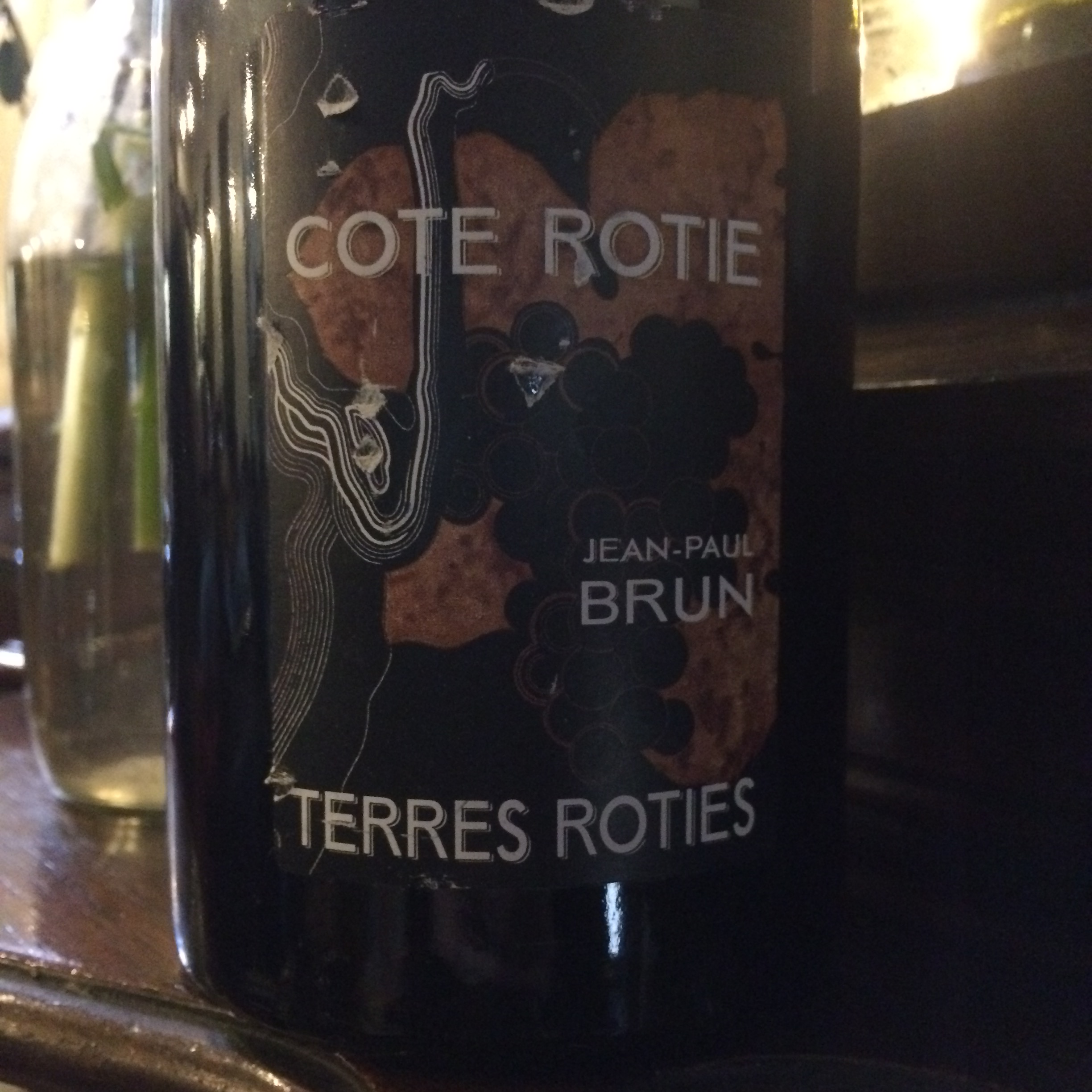
Dom des Terres Dorées Beaujolais Blanc – We had both the 2012 and 2014 here. The ’12 tasted a bit flabby to me and was much darker than the almost rapier-like ’14. I preferred the latter, which was the one that brought back memories of this J-P Brun wine I have not drunk for at least five years. The 2014 made a delicious, palate cleansing aperitif.

Dom Le Grain de Sénevé Roue Libre Vin de France 2014 – This, for me, is a pure vin de soif. Enjoyable, light, with fresh cherries and a slight cheesy note which I didn’t mark down too much as it seemed to dissipate.

Dom Perraud Vin de France 2014 – Another simple, quaffable vin de soif but with a nice nose, and deeper cherry notes than previous wine.

France Gonzalvez Beaujolais-Villages 2014, “Cueillette” and “Point G” – We had both these cuvées. I preferred the more perfumed Cueillette from sandy soils (Saint Etiènne La Varenne, partial carbonic, cement) to the bigger, meatier, Point G (granite at Blacé, later picked, two-thirds aged in older oak – thanks to Dave Stenton for this info). The Point G needs more time for my taste (it’s the second time I’ve drunk it), but others preferred it.

image

Les Bertrand Coup d’folie Fleurie 2014 – This had a Fleurie-like lifted elegance but didn’t, for me, rise above the pack. On the lighter side.

image

J-C Lapalu Cuvée des Fous Brouilly 2014 – Richest wine so far, touch of VA but within acceptable parameters. A wine with stuffing and one which might be spottable blind. Nice, classic of it’s type and maker. I liked it.

Antoine Sunier Regnié 2014 – Brother of Julien, 2014 being his first vintage, this was a wine which split opinion. For me it was middling, and not a patch on Julien’s, which won Wine of the Night at a previous dinner. Others loved it, but one who did said it had fallen apart by the end of the evening. Thankfully I bought some, so will revisit soon.

Domaine Perraud Moulin-à-Vent and Morgon 2014 – My first words on the Moulin were “smells of sock that is definitely not fresh from the drawer”. I wondered aloud on the Morgon whether I’d offended someone – there was a smell of peach blossom and bitter almond which, I’m told, is a classic cyanide pointer. I survived, but several people found these two Perrauds faulty.

Daniel Bouland Chiroubles 2013 – Simply lovely. Universally liked, and so nice to actually drink a wine from this village, let alone one so good. Very elegant. Trouble is, I bought it in Paris and I now have to try to remember which of the usual crowd of bars/shops I found it in.

image

Anthony Thévenet Morgon VV 2013 – Another excellent example, though certainly bigger (and seemingly alcoholic?) than the previous few wines. Grows in complexity in the glass.

image

Dom des Terres Dorées Moulin-à-Vent and Morgon 2011 Fifteen-or-more years ago (is it really that long?) I used to rave about Brun’s wines. They were the first Beaujolais which re-captured my interest in this region, which I’d previously seen as a commercial wilderness (I’d not quite discovered Foillard and Métras at that time). These reds didn’t really do it for me on the night. I was slightly put off by the almond and talcum powder notes I found on the Moulin, and the same talcum and cyanide combination on the Morgon. I did make a mistake in taking a mouthful of the delicious dessert before tasting and I’m pretty sure that was a bad move. The only times Brun has really failed me there has been a suspicion of poor storage, but they always used to need time at village level.

Ch de Beauregard “Colonies de Rochegrès” Fleurie 2009 – Last but not least, I think this wine got lost as a post-dessert offering. It was really good, lovely in fact, if unusual. I got a sweetish caramel note, cake-like (in a good way). Very big legs, rounded. As it opened up it almost reminded two of us of a peaty Malt Whisky. It sounds a very odd description but it was a very complex wine and it deserved to be savoured for a while.

image

So, a diverse list with diverse reactions. At these events we all vote on wines of the night. Although one person escaped without voting (we were twelve), the group vote was: 1. Antoine Sunier Regnié                                                                                                                       2. Daniel Bouland Chiroubles                                                                                                               3. France Gonzalvez Point G

My own wines of the night were:                                                                                                          1. Daniel Bouland Chiroubles                                                                                                              2 (joint) Anthony Thévenet Morgon and Ch de Beauregard Fleurie

But as you can see from the notes, plenty to get stuck into from that half-dozen and more. The previous two dinners can be  accessed via the highlighted links at the top of this post.

Several of last night’s wines were sourced from The Sampler, who are bringing over an increasing number of fine Beaujolais. Many, as always, were sourced in Eastern Paris, which is pretty much the beating heart of modern Beaujolais consumption. I wrote a small piece about some of the bars and shops a few of us frequent (as frequently as we can!) here.

**Some of the wines above were a bit stinky in one way or another. It’s not unusual for these odours to go away in the glass, but many people find that giving them a good shake works, either in the glass or in a carafe/decanter. You can’t guarantee it, but it works wonders much of the time. Some wines merely suffer from reduction, others have a lot of disolved CO2 (which helps protect the wine when using less sulphur). Most of these winemakers ensure scrupulous cleanliness in the winery, but sadly not all and some wines are just plain faulty. But I find the latter quite rare these days.

imageimage


Posted in Beaujolais, Wine, Wine Tastings | Tagged , , , , , , , , , , | 6 Comments

How the Other Half Leflaives

If one only drank the kind of wines which I do much of the time, the ones most normal people think a bit odd, then I would be like those wine makers who only drink their own wines. The palate would be fooled into thinking that what I habitually drink is good, without a benchmark for comparison. I like to flatter myself that when I promote “natural wines”, or wines from new or unusual wine regions, I do so having a sound knowledge of, and a good grounding in, more classic wines. In fact, what I choose to write about here often excludes the classic wines that we drink and the wine dinners and lunches I go to increasingly pursue the new. But occasionally an evening of fine wine debauchery comes along which merits a blog post.

It can sound awful writing about such evenings, where a whole raft of expensive wines are consumed one after the other. But such evenings are not every day affairs for most of the people present, and they are done in a spirit of generosity and the desire to share our treasures with others. I don’t think anyone ever loses sight of how lucky we are. But at the same time, things don’t always work to plan with the wines.

We began the evening, following delayed trains up to London on a dark and damp, if unusually mild, November night, with Dom Pérignon 2002. This vintage still seems very young, but there’s no doubting its class. Very fine but also quite full, if a little tight. I’d say hold onto this, but that’s not really news for those who own some, I think. There’s a touch of the beast about it now, but that will be tamed with more time in bottle. Always a privilege to drink it, of course.

image

The Dom was followed by a Jacquesson 2002, which might easily have been lost after the previous cuvée, yet being closer to readiness it presented a touch more maturity, whilst remaining finely chiselled. Not in the same league, though the freshness had a beautiful palate cleansing effect (a flavour which my detractors and friends alike point out that I am far too often tempted to describe as mineral intensity but which others have described as salty). Most critics suggest this will go to 2018, and that’s about where it would sit on my graph of evolution too.

image

We began our meal proper with Leflaive Puligny 1er Cru “Les Pucelles” 2000 from magnum. For anyone fearful of premature oxidation, no sign of pox at all. It did open a little tight (and cold), but grew in the glass, becoming much more expressive, so that I can recall its flavours now, as I type. On reflection this was probably my joint wine of the evening. With the difficulties presented by premature oxidation of white Burgundy, it is wonderful to be reminded just how magnificent and majestic these wines can be. Poise is a word which comes to mind, like someone perfectly dressed with a small flamboyant touch to show personality. Classic elegance, in other words.

image

If ever you are tempted to be jealous when you see people bragging about drinking a flight of icon wines, never forget that these wines do not always perform to expectations. The old cliché about there being no great wines, just great bottles, definitely applied with the four iconic Rhônes which followed.

The lineup began with Chave Hermitage 1982 in magnum. The last time I had this wine, admittedly from bottle, was a few years ago, when it was unforgettably a sensual bacon sandwich of maturity. Tonight it was not on top form, although hard to work out why. Not actually faulty, just a little dumb (though no TCA). When someone brings a wine like this, you hardly expect a backup, but a 1983 (bottle this time) was duly pulled out. This was better, but there was a touch of smelly sock where you usually expect that whiff of runny bacon fat. Would I have identified these as Chaves blind? I doubt it. But lest you think they went to waste, I for one drank mine, and was very grateful for the generosity of their provider.

imageimage

The next pair were younger vintages of Clape Cornas. The 1996 was, for me, the best of the four Rhônes on the day. It really developed in the glass, moving towards a supple sensuality that you look for in a mature wine from this region. The 1999 was a disappointment (I can say this as it was one of the wines I took), considering the vintage. It had a certain hardness to it, which showed the promise of further development you get with a young Cornas, but also, I think, a certain touch of rusticity. Of course, sometimes our tastebuds aren’t always on top form, but I didn’t hear massive praise or swoons of delight for any of these from around the table.

imageimage

Moulin Touchais 1983 was, by way of contrast, everything one would expect from this well remembered old Chenin. Not as complex as the most concentrated wines of Anjou/Layon, but very dependable. Dark in colour, and mature, yet retaining freshness if not much acidity. The kind of wine where the sweetness balances on the tongue before spreading gently over the whole palate, encasing the mouth in a warmth of concentration.

image

The last wine of the night, and it was very much night, not evening, by this stage, was without much doubt the most concentrated wine I’ve drunk all year. Equipo Navazos Amontillado Bota A.R. No 49 originates from Gaspar Florido, via Pedro Romero in Sanlúcar. The wines used for this bottling are between 55 and 80 years old, and it shows. It may only be a half bottle, but fortified to 22% and with such concentration, a little goes a long way. The perfume is like essential oil, and the length of the wine is truly extraordinary. These bottlings from Equipo Navazos may be rare, and perhaps expensive for Sherry, yet not expensive for a wine of such world class. This small bottler continues to highlight the forgotten riches which lie undisturbed in Jerez. This little half bottle outshone everything which preceded it, although wines of such intensity are for meditation, not carefree consumption.

image

So that’s how a far from average Saturday night goes for us. Blessed with food cooked with great care by perhaps the best amateur cook I know, and company to match, it made for a night of fascinating vinous exploration. But also as a reminder that even the most highly regarded wines don’t always quite live up to the extremely high expectations we place on them.

image

Wines of the night, the Leflaive and the Equipo Navazos for me, but I still thoroughly enjoyed them all.

image

Posted in Fine Wine, Sherry, Wine, Wine and Food | Tagged , , , , , , | 1 Comment

Spice Up Your Life

That seems so long ago, doesn’t it! My life needed spicing up yesterday, one of those mornings, thankfully not coming along too often, when Friday 13th seemed to have arrived a week early. It was our last “curry” lunch before Christmas. Officially it is known as “Spice Oddities”, the brainchild of Wine for Spice founder Warren Edwardes, who is a regular attendee at our Rochelle Canteen Oddities lunches. But I’m usually hopeless at matching wine to hot or spicy food, and although we cook a lot of pseudo-Indian meals at home, we either drink beer or don’t think too hard about which wines we drink, often choosing a cold and fairly neutral white of no great complexity.

The India Club, on the Strand by Waterloo Bridge, is our usual venue. The food is extremely good value with the premium set lunch costing £20 including a reasonably generous tip. I always enjoy it, though whether it was my mood or not, I was not quite so enthusiastic yesterday for some reason. Nothing wrong with the food, but the flavours seemed a touch muted.

image

We began with two whites (all wines served blind). The first was correctly identified as a Southern French dry white. We also got that it was a single variety – linear with mineral freshness and a real purity of line, very dry. It turned out to be Clairette – Clos Mathelisse Clairette 2014 Vin de France, David Caer. It’s a wine in the Natural Wine mould, though in no way cidery. Delicious, in fact, though not complex. A good 13% alcohol.

image

The second white was not difficult to guess as to grape variety, but we were wholly out with origins. Some said New World/Australia, I said Alsace. It was a lovely off-dry wine, petrol on nose, some lime and citrus on palate. It was in fact Erdener Treppchen Spätlese 1986, Schwaab-Riebel, a producer (from Urzig) I’d never heard of. Actually a delicious wine, and only recently purchased from Berry Bros, although I’m told it’s sadly all gone. 7% alcohol, balanced, aged beautifully (I thought it was maybe 1998/99).

image

Next were two wines brought by Warren, both fitting into his view of what enhances Indian food, though one being a bit unusual. This generally means an off-dry frizzante style. In other words, not fine wines, but wines which, like beer, with a touch of fizz and sugar, soothe the warmth and spice of the food.

Velada Moscato Rosado NV, Valencia DO from Spain was simple, pink, frothy, just 5% alcohol. Perfectly fresh, yet simple. I thought it a Brachetto. It appears that the grapes may not be your vrais Moscato Rosa, but perhaps white Muscat with a touch of red wine added. Its strawberry/raspberry fruit was quite nice and only a touch confected.

image

The second spritzy offering I’d had before. With it’s “Lucozade” orange colour and its “Aperol-like” herby nose and bitter orange palate this had to be one of Warren’s famous Lidl specials, Grazzano Sprizz. It’s described as an “aromatized wine-product cocktail with notes of bitter orange” (6.8% alcohol). It’s pretty much the same as Aperol diluted with sparkling water, though again here there’s a touch of the confectionary in the orange. I have a rather unhealthy, if mild, appreciation of this, and having had it several times before it was not too difficult to guess.

image

Both of these went well with the food, and as beverages were both pleasant and refreshing. They are not wines to over excite the wine obsessive, but that’s not the point.

Moving onto the reds, this is often the type of wine we find hardest to match. First we had a dark, plummy red with a good heft of alcohol and a bit of acidity. The plummy business, along with a tiny touch of mint, should have helped us guess Australian Merlot, but I think as everyone had guessed New World, the acidity then threw us as to grape variety (did the majority think Shiraz?). It turned out, however, to be Wild Duck Creek Estate Reserve Merlot 2001, Heathcote. This region, in the North of Victoria, produces, for those who allow themselves to use the term, highly mineral wines with a pronounced freshness. Obvious when you see the bottle. 15% alcohol, though it didn’t taste like it. It was refreshing and very enjoyable, and not a wine we are used to having with a good bit of bottle age.

image

My bottle next, which Warren guessed pretty quickly, or near enough. He said Barolo Chinato. It was, in fact, the same idea but from within the Barbaresco zone – Monsú, Giuseppe Negra. This is pretty much what you get if you take a Nebbiolo, fortify it to 16.5% and age with herbs like gentiane and spices like coriander. The spices are quite prominent on the nose, but the palate is richly sweet and smooth. Ironically, I think this very left field choice might be the best food match I’ve made at one of these lunches.

image

We were left to finish with a treat, a favourite producer and a lovely wine – Gewurztraminer SGN “Fronholz” 2007, André Ostertag. Half bottle, 8.5% alcohol, concentrated, balanced sweetness with lychees. A lovely wine. Not really an ideal food match here, but then we’d finished the meal and it was a great way to end it.

image

So, yet again, we proved how difficult it is to match the product of the fermented grape to Indian cuisine, but at the same time, how easy it is to eat well (in both respects) on The Strand, and equally to get through a few nice bottles on a Friday lunch time.

Posted in Wine, Wine and Food, Wine with Curry | Tagged , | 3 Comments

A Pest – Decide


Recently I’ve been writing about different perceptions of wine quality, and especially the emergence of the “natural wine” scene, which puts the philosophy behind the wine at the forefront for consideration when discussing a wine’s quality and qualities. The over arching buzz word of the moment is sustainability, which not only incorporates the aim of not harming the land which provides abundance, but also of not harming those who work the land, and those who consume the fruits of it.

I admit that I’m not committed completely to a natural wine approach to wine consumption. With a reasonable wine collection I’d be missing a lot of pleasurable wine experiences if I ditched every wine which was not at the very least organic. But there’s no doubt that over the past three or four years a few things have happened which have made me think more widely about exactly what I eat and drink, and whether there is any probability that I could be causing myself serious harm by what I consume (though perhaps the elephant in the room there is alcohol itself, but what the hell!). We are also encouraged, by organisations like the Fair Trade brand, to think about workers – their health, rights, levels of remuneration etc. If we are concerned for a coffee producer in Java or a tea picker in Assam, then we should equally be thinking about the guy spraying a vineyard in Languedoc or Maipo.

An article on The Guardian Newspaper Web Site (29 October 2015, by Andrew Wasley and Amanda Chaparro) brought into the mainstream an issue which has been bubbling around the wine press and Web forums for some time – that of pesticide use in vineyards. Wasley and Chaparro point out that France alone (Europe’s largest pesticide user) consumes 60,000 tonnes of pesticides every year. Fewer than 10% of French vineyards are farmed organically, or without the use of synthetic pesticides, and pledges to halve their use by 2018 (from 2008 levels) have proved so unattainable that the French Government has put back this date to 2025.

There is, it should be stated, no direct proof that agro-pesticides used by the wine industry cause cancers and other chronic illnesses, although there are many studies which do appear to point to links. All that could change when a decision is handed down in the case before the French courts of James-Bernard Murat, whose death sparked the first ever criminal investigation into the potential manslaughter of a vineyard worker through pesticide-induced illness. This case is pretty well known in wine circles, but the article suggests more cases could be in the pipeline if this one, brought by Murat’s daughter, is successful. If so, the possibility exists not only for compensation, but for prison sentences to be handed down.

It has been clear to most serious, quality conscious, wine producers for many years now that irrespective of any potential harm which some agro-chemicals could cause to humans (at any level in the chain), they might actually cause harm to the land on which the vine grows. The movement towards organics and biodynamics in France happens to have been taken up enthusiastically by many of the country’s finest producers, unlikely by mere coincidence. Some regions, being warm and dry are well suited to the avoidance of chemical applications against diseases, especially types of rot. But what often surprises observers is how successfully biodynamics has been introduced by the finest domaines in Burgundy, where the climate can be more varied. Even in that conservative, maritime (thereby quite wet) climate of Bordeaux, a few highly regarded estates punching well above their classification, like Pontet-Canet, have embraced the philosophy.

Often, if you ask a producer why biodynamics works, they will not really be able to explain, at least not in a scientific way. It’s not that they (usually) believe some of the more esoteric practices have a demonstrable direct effect. What they are very good at is showing the difference between land farmed with chemicals and their own soils (usually a difference between a hard base, stripped of life other than the vines themselves, compared to soft soil, spongy under foot, and full of diverse life). Biodynamics appears to help and allow an eco system to thrive, be it through vegetation beneficial to microbial activity or benign insect life which helps combat harmful life forms which strike at the vines.

Before I even began thinking about, or reading about, the natural wine movement, I found that by coincidence a lot of the wine I was buying was from producers following a biodynamic regime. It was also more or less mere coincidence that a lot of wines I began to discover in my search for exciting new wines over the past few years were what would describe themselves as “natural wines”. Three French regions which have seen a really dynamic movement of young growers appear in recent years, namely The Loire, Jura and Beaujolais, happen to be hotbeds for natural wines. Likewise some of the most interesting regions of Italy (Piemonte has an increasing number, Sicily a real core of natural wine producers).

There is little doubt that if you want to find excitement in wine, the likelihood is that the wine will be described by someone as “natural wine”, wine made with as few interventions as possible in vineyard and cellar, and certainly without the use of synthetic pesticides. Of course many people see these wines as faulty, and a fashion. That really does remind me, as I’ve noted before, of punk rock when it burst onto the music scene in the 1970s.

But this isn’t really the point of this piece. I just want to draw attention to the questions being asked about the use of synthetic pesticides, and other agro-chemicals. It’s a debate which needs to be aired, which is why it’s so good to see something under the banner of a mainstream broadsheet newspaper rather than merely tucked away in a wine trade publication. My own explanation and comments may be flawed and simplistic, but my object is only to promote more of that discussion.

I remember an Italian winemaker in Emilia-Romagna being asked why he had stopped using chemicals on his vines. His answer – “for my young baby daughter”. That’s very emotive, but I do remember that statement making me stop and think.

So can great wines exist without manipulation by chemical means in the winery, and without the use of synthetic pesticides in the vineyard? Are the risks of losing a crop due to infestation or disease worth it, economically and in terms of wine quality? Or are the risks of continuing to use these products too great? Are we shortsighted in doing so or are we just scaremongering? That is one of the important questions wine consumers need to ask, and indeed the consumers of all agricultural produce – but only a minority appear to be doing so when it comes to wine.

Yet there is one section of society that is thinking about these issues. Remember all those trendy sommeliers introducing weird wines onto their list at the expense of wines that should rightfully be there by their status? Well, they just happen to be likely to work in restaurants where the chefs are meticulous about the ingredients they use in the kitchen. The sommeliers are just learning to do the same with their wine inventory.

image

No synthetic chemicals were used in the growing of these vines

Posted in Natural Wine, Wine, Wine and Health | Tagged , , | 4 Comments