In August I mentioned one of Vienna’s best natural wine shops, but as part of a roundup, and I didn’t go into any detail, so this time around I thought I should give Enrico a bit of a plug.
Vinifero occupies a narrow shop front on a road you’d probably never venture down were you not in search of a great selection of natural wine, although a few regular readers will note that it’s a mere few minutes from my favourite café in Vienna, Café Sperl.
Enrico Bachechi describes himself as an Önologe, and as well as owning Vinifero he also consults for a number of wineries. You can tell Enrico isn’t Austrian, right? His shop has a very good selection of Italian natural wines, with perhaps a slight emphasis on Tuscany, but you’ll find familiar names beside less familiar ones from all over the world.
Enrico
One thing I particularly like about Vinifero is that the range of Austrian wines is less obvious than some stores. I’m not going to deny that my heart leaps every time I go in a wine shop and see Gut Oggau, Werlitsch, Rennersistas and the like, but here you’ll find some less well known labels.
Top – some of the excellent international wines at Vinifero.
Bottom- some of the local bottles. The eclectic labels to the right and bottom shelf left are from Florian Schuhmann’s experimental Quantum Winery (Weinviertal in Lower Austria)
Vinifero used to be an old Beisl (neighbourhood restaurant) and aside from the ventilation ducts it retains a nice old feel.
I brought back a few Austrian bottles, but the one we drank whilst in Vienna was quite unusual, “Mea” Elderflower Fizz by Hochdeutsch. Hochdeutsch is the label of Julie-Ann Hoch (whose partner, Christoph Hoch, might be known to readers of this blog and customers of Newcomer Wines). Julie-Ann is German, hence the play on words here.
Mea is not exactly a “wine”, partly because of its low (6%) alcohol content, but also because it’s a blend of wine and botanicals, in this case elderflower tea. This lightly sparkling drink is made by blending biodynamically grown grape must (Demeter certified) with biodynamically grown botanicals, both directly filled into bottle to ferment on natural yeasts, in a similar way to a petnat.
The result is super-refreshing, bone dry, and with the feel and weight of a sparkling cider. The elderflower scent and flavours are subtle, which adds to an attractive lightness.
Julie-Ann is based (with Christoph) at Hollenburg, south of the Danube not far from Krems, and around 35 miles west of Vienna. These drinks are very low production but well worth seeking out, just the sort of thing to be guzzling once the weather warms up, but none the worse for being sipped in a minus six-degree Vienna January.
Vinifero is at Gumpendorfer Straße 36, 1060 Wien. Note its limited opening hours, Tuesday to Friday 2pm to 8pm and Saturday 12pm until 6pm. They close Sunday and Monday.
Whilst on the subject of cold Vienna temperatures, we made another trip up into the vineyards, via a walk in the woods. Of course, in winter all the pop-up Heuriger on the Nussberg are closed, even Sirbu which opens again in early springtime (and Mayer-am-Pfarrplatz, which is a good place to end your walk, at Pfarrplatz, before catching the 38A (see below) back to Heiligenstadt, generally opens at 4pm in the winter). It wasn’t always easy walking in a biting southerly wind blowing up from the Pannonian Plain, but worth it to see the vineyards in the winter.
It really is a great way to spend one of your days in Vienna. Just take the U4 Line to its final destination, Heiligenstadt. Directly outside the station exit is the stop for the 38A Bus, which will take you through Grinzing and up into the hills. Alight at the stop called Sulzwies (one stop before Kahlenberg – the bus has an electronic route screen). All you have to do is head down the path just to the right of the bus stop and you are into the Vienna Woods, eventually coming out into the Nussberg vines. There’s more information from our summer walk here. This includes details of a good, I’d say invaluable, map of Vienna and the surrounding woods and vineyards at 1:25,000, some ideas for summer lunches and information about a café at the start of the walk (that’s if you haven’t read it already).
Finally, a photo of some Schilchersekt. If a trip to Vienna isn’t the same without a schnitzel, neither is it the same without a few glasses of this bracing Blauer Wildbacher speciality of raspberry-and-blueberry-tasting frivolity from Styria. Viennese friends can always be relied upon to open some before dinner.
If I were to make a personal recommendation for anyone looking to dine out in Vienna, assuming they share the same kind of wine obsessions as I do, then I suppose I’d have to go with Mast Weinbistro. However, Mast was closed during the week we were there in January, and if you ever find yourself in the same position, then the following pair of restaurants will not disappoint…far from it. The first was completely new to me (a friend suggested it for lunch together), whilst the second is a place I always go to, every visit, if I can.
TIAN
Tian Restaurant (there’s a bistro version as well) is Vienna’s first Vegetarian and Vegan restaurant to earn a Michelin Star, and I’d say that this accolade is more than deserved. It has very much the smart feel of a Michelin-starred restaurant, a clean white interior, fairly sparse, smart tables, comfortable chairs, etc.
Service is also impeccable, attentive but not intrusive, and unusually warm. There was never more than one waiter visiting the table, and none of that multiple hovering which can be off-putting in some smarter establishments when it’s a little bit quiet (no one really likes to be watched whilst they eat).
The format is simple. At lunch you get a menu of eight dishes, described quite simply but each based around a single vegetable, cheese or nut. You pay €89 for four courses, €109 for six courses, or €127 for all eight. We opted for four, but we seemed to get quite a few amuses bouches. The cooking is inventive and creative, and the ingredients are very fresh, as you would expect. What interested me was that our friend is an inveterate carnivore and he seemed to enjoy the experience as much as we did.
Tian describes itself as vegetarian, and the menu as listed does contain various forms of dairy in some courses. However, if you warn them when booking they are more than willing to accommodate a vegan diet with just the same degree of invention.
The best thing about Tian is that the wine list is just as good as the food. A wine (or juice) pairing is available with each menu option (€49/€69/€73), but the list itself covers most bases, from natural to classic, all wines which accompany what are generally lighter dishes. We just opted for our own type of lunch classic, Rennersistas In A Hell Mood (Pinot Noir-based petnat from Gols in Burgenland…which needs no introduction to regular readers).
Tian is at Himmelpfortgasse 23, 1010 Wien, which is probably a ten minute walk around the back of Saint Stephan’s Cathedral. Tian Bistro Am Spittelberg is doubtless less expensive, at Schrankgasse 4, 1070 Wien. They also have another restaurant in Munich. If you fancy a splurge then check it out. Next time we shall probably check out the bistro.
Tian is, I’m sure, the first restaurant from which I have posted a photo from the toilets!
GLACIS BEISL
I’ve been to Glacis Beisl, tucked behind the Museumsquarter, in the old city walls just a short walk from the Ringstrasse, several times now. It is ideally my first port of call in the city, to satisfy my schnitzel craving, although on this trip it provided a nice, quiet, last night dinner for two.
I wrote about Glacis after our August visit, but it’s worth a second plug in order to talk a little more about the wine list. When I tell people that Glacis has an excellent selection of natural wines, they are often slightly surprised. The first reason is that Glacis is quite a Vienna institution, a great example of the Beisl format, which provides fairly simple but substantial food and a “local” atmosphere, but at the same time it is not unknown to tourists.
The second reason is that when you sit down you are presented with a fairly short and limited wine list, albeit one with a selection of wines by the glass, with which most people are satisfied. However, if you ask for the “red book”, you will not only find a more substantial and interesting offering, what’s more, the prices are pretty reasonable, some probably less than UK retail.
In particular, there’s a good multiple bottle selection from Gut Oggau, Claus Preisinger, Reinisch, Werlitsch, Muster and Strohmeier, plus other classic labels from Central Europe (Gravner and Radikon, for example). As in Mast, you can pretty much have a field day for natural wine at Glacis.
Although the photos are frankly not great, I thought I’d reproduce a few pages here to give a taste of what’s on offer. Click to enlarge.
We drank a bottle of AlexanderKoppitsch Weissburgunder 2017 (well, after the Koppitsch party a couple of days before I felt duty bound). It was beautifully aromatic, from old, low yielding vines, a natural fermentation, unfiltered and no additives (including zero sulphur added).
I remember that back in Alsace in 2017 I was drinking Pinot Blanc in restaurants and wondering why I’d more or less shunned the grape for so many years. This lightish Weissburgunder was a very good pairing with a simple but well cooked schnitzel with its traditional accompaniment of waxed boiled potatoes, beetroot and salad leaves. This Pinot Blanc is adorned with the simplest of the Koppitsch labels too, but it is lemony-fresh, with a little texture in the mouth, and very thirst quenching.
The regions around Vienna are particularly good for apricots, especially The Wachau, and you can easily be tempted to choose an apricot-based dessert. The traditional apricot dumplings are pretty filling, but the apricot pancakes at Glacis are just a little lighter. It’s always hard to choose what to drink with this dessert, so I decided on a Kracher Beerenauslese and an apricot schnapps, in the spirit of last night “in for a penny but I still have to get to the airport early tomorrow”.
A tip on apricot jam – I rarely fail to bring back some apricot jam from Vienna, but it is always the brand Staud’s. They come in a small 250g jar (usually with an attractive picture on the lid, maybe a Klimt, maybe the Hofburg) and are readily available, and cheaper in a supermarket like the Billa chain than in the tourist shops. They are less sweet than most brands, and contain a high fruit concentration (60g per 100g). Try some. A nice gift, except that I’m too greedy.
Kracher Beerenauslese
apricot schnapps
Glacis Beisl isn’t initially the easiest place to find, mainly because you have to descend some fairly unprepossessing steps to enter. The restaurant itself has a lovely garden for outdoor dining, though not recommended in winter, an attractive glass room and a darker inner sanctum more indicative of the traditional beisl style.
You can access it via the steps up the side of the MUMOK Museum in the Museumsquarter, or by the road behind – Glacis Beisl is at Breite Gasse 4, incidentally not too far from the Tian Bistro, and equally not very far from the natural wine shop, Vinifero, which will get a plug in my next Vienna article.
To read about my visits to Glacis Beisl and Mast Weinbistro last summer (and a few other Vienna recommendations), follow the link here.
If anyone wondered why I have been quiet, I’ve been enjoying a week in a very cold Vienna. I shall bring back a few tales over the next two or three weeks, but my first article is about a producer I’ve known for a while and always thought deserved a wider appreciation. I wanted to lose no time in giving them a well deserved shout.
Alexander and Maria Koppitsch have given their wines a bit of a reboot, with new labels and a clearer message about their natural wine philosophy. I was happily in Vienna for their popup party at O’Boufés, Konstantin Filippou’s natural wine bar and bistro over near Schwedenplatz, which gave me an opportunity to sample a few of the new wines, as well as to say hello to their makers, and to rather a lot of young people from a host of different countries…O’Boufés was rammed full well before 9pm.
Before I talk about the wines themselves, I think I’ll give you a fairly lengthy introduction to the Koppitsch story. The family itself has been making wine for 500 years, and during that time they can claim to have been natural winemakers at Neusiedl am See, at the northern edge of the lake. In the past, synthetic chemical treatments were either unavailable or too expensive for most ordinary farmers, but when Alexander and Maria took over for their first vintage in 2011 they made a conscious choice to follow the chemical free, natural wine path.
The Koppitsch family farms 6.2 hectares biodynamically. At Koppitsch it is ALL about the soil. This is because they realised that whichever grape varieties were planted on their different sites, there was always a distinct similarity between the wines made from them. The evidence shows that the soils assert themselves, somehow.
As a small aside about the Koppitsch philosophy, I could, I suppose, give you a long list of everything they do to make their business more sustainable. It would be a very long list, but one example will suffice because it’s something I’ve not come across before. All of the boxes they use to ship their wine in are from recycled cardboard AND have no printing on the box. This may make it slightly more difficult for recipients to identify the boxes at a distance, but it clearly shows the depth of thought they are applying to every aspect of wine production.
There are five main family vineyard sites around Neusiedl. Seefeld is sandy, Neuberg on limestone and schist. Prädium and Hutweide have very rubbly topsoil, whilst Schafbühl is on clay.
From these sites the Koppitsch range is divided into five strands. First are the Basic wines, what they used to call Authentisch. These are given Hungarian names to reflect the region’s heritage and history. These wines are the most gluggable. Perspektive is the name for what are opaque wines with all their angles visible. They are wines you can easily dissect, I think. Their origin is off limestone soils, which always give a very distinctive, and often special, result in this region. Freshness with a “mineral” mouthfeel.
Touch is the name they give to the skin-contact wines. These are very much orange wines in the true sense, receiving around a couple of weeks on skins to give wines of texture. The results see a year or a little more in used barrique on gross lees. For these wines a small dose of sulphur is added at bottling. There’s no hard and fast rule for sulphur, though. Alex tastes the wine to determine whether he thinks it requires a small dose or not before bottling.
Aeon (used here to mean eternity) is focused on old family vine holdings. As some go back to the sixteenth century, Alex feels a deep and emotional connection with these sites. Currently, one red wine is produced, using Blaufränkisch and Syrah from Neuberg, and Zweigelt from Pradium, which are aged three years in used wood.
Then there’s Pretty Nuts (sic). This is the label for the bubbles, two wines (reduced from four), labelled #1 and #2. These are bottle-fermented petnats which are just amazing fun to swig. There are four different labels, reflecting the seasons, for each wine, but it’s the same wine. The fizz is all disgorged by hand by Alex.
Pretty Nat #1 was in fact the first wine we tried at O’Boufés, a 2018 sample. This pale pink Pinot Noir/St-Laurent blend is just so fresh, perfect for a hot summer on the beach, but frankly for any time. The fruit is light and fragrant and the wine is zippy with its nice acids licking the tongue.
Maria told me I was tasting the wines in the wrong order, really, but the bar was so full it was more or less a case of going in deaf and blind. I’ll just list them as we drank them.
Touch 2017 is, you’ll recall, a skin contact wine (14 days), and is a Gemischter Satz based on Welschriesling from Neuberg, the remainder of the blend from Schafbühl. The Neuberg site, limestone and schist, gives real mineral intensity and a brightness, which works perfectly for the orange style. Not for the nervous, but this may be my current favourite still wine from the family.
As an example of the entry level at Koppitsch we tried Juh 2018. Juh is “sheep” in Hungarian, the wine coming from the Schafbühl (sheep hill) site, off alluvial clay, to the northeast of the lake, where the Wagram Plateau rolls down towards Burgenland, mixed with a little limestone from the Leithaberg range (which sits to the west of Neusiedlersee). It’s another Gemischter Satz blend, from quite old vines. It has both a little body in the mouth, with a bright touch, presumably from the limestone which will always add a mineral tweak to any wine it appears in here.
Rosza (2018) is the one wine Alex makes from a mix of sites. This is a simple wine, uncomplicated, but the essence of a fresh and fruity rosé with a lick of acidity on the finish. Four grapes from four vineyards make up this blend: Blaufränkisch, Zweigelt, St-Laurent and Syrah. Alex planted Syrah thinking initially of making a modern, international red, yet it clearly wouldn’t fit into his overall philosophy, but it adds something to the blends it appears in.
Perspektive Rot 2016 blends Blaufränkisch and St-Laurent from the Leithaberg hills. Two years in used barrique gives it a degree of complexity already. The bouquet of camphor wood and spice is exquisite, the palate is ripe cherry with a classic Blaufränkisch peppery bite on the finish, which for me makes Blau such a refreshing red at all but the most obscene levels of alcohol. The tannins are ripe and this has genuine zip to it, yet it will certainly age if you wish. There are two additional white wines in the Perspektive range.
You only drank five glasses, the observant will complain. In my defence, we had been to lunch at an amazing restaurant that day (review to follow, of course), and the whole of this trip was one big festival of food and drink. In any case, the wines I’ve listed give quite a nice overview of what Alex and Maria are making.
Now we get to the tricky bit…trying some for yourself. The Koppitsch wines are exported to many countries. Alex Boily, who imports their wines into Québec, was DJ-ing. They have a new found popularity in the past months and there’s an exciting buzz around them. This is probably why you could hardly move in O’Boufés (I think Maria was genuinely shocked and moved by the massive turnout), but they are harder to find in the UK. Their importer here is Jascots, who are, as they say on their web site, suppliers to restaurants, hotels and caterers. What’s more, they only list four Koppitsch wines.
This means you are relatively unlikely to come across them here. If they are missing from the retail environment that’s a shame. Their eye-catching new labels are colourful and attention grabbing, but in terms of wine style they should clearly be sitting on a shelf next to any of the other hip natural wine names from the region. A retail presence would go a long way to increase their profile in the UK.
Alex and Maria are far from flash and pushy, rather they are genuine, modest, people who are not going to be seeking the limelight. They remind me of Alexis and Emilie at Domaine des Bodines in Arbois…young, humble, quietly going about improving their wines every year. I just want to be able to go into a shop and buy half-a-dozen of these lovely wines from time to time, folks!
The wonderful O’Boufés Bistro and Natural Wine Bar is at Dominikanerbastei 17, 1010 Wein, just three minutes from the Schwedenplatz Metro Station. Certainly it should be in your top three or four places to hit of an evening if you are in the capital.
Weingut Alexander Koppitsch is at Eisenstädterstraße 81, 7100 Neusiedl am See. Contact via office@alex-koppitsch.at for visits. You can get a train from Vienna to Neusiedl, and (as you will know if you read my summer articles following my August 2018 trip to Vienna) you can hire bicycles right by the station there. The Koppitsch winery is not too far from the station, but the lake itself and the surrounding bird sanctuary is great for cyclists.
Above left, Emily Campo and The Winestache; above right, Alex Boily from Montreal twisting the knobs.
The evening was organised by The Winestache, Humbuk (wine parties in Slovakia, Czech Republic and Austria), with Alex Boily (Ward & Associates, Montreal), Vino Nudo (Vienna natural wine importer/retailer) and Kirschen Genussquelle (cherry specialist). Check out http://www.thewinestache.com if you haven’t already. The pastrami, by the way, was stunningly good.
Flawless is the latest book by Dr Jamie Goode. It’s slightly unusual. The book is, as its sub-title explains, about understanding wine faults. This is a highly technical subject, but one that is naturally of interest to keen amateurs as well as winemakers and other wine professionals. The question is how to make the subject accessible to those amateurs, and indeed wine pros, who lack a scientific background, whilst at the same time explaining the science, as it stands today, for those who make the stuff.
Flawless is actually a study of faults and taints. Why it is called Flawless, rather than “Flawed” will, I hope, soon become apparent. The distinction between faults and taints is easy to follow. The major faults covered in their own chapters are Brettanomyces (Brett), Oxidation, Volatile Acidity, and Reduction and Volatile Sulfur Compounds. Under taints we have a whole range, including eucalytus and smoke taint, which readers may have come across, although for me, the most important and/or interesting are cork taint (TCA), Ladybug (sic) taint and mousiness (a particular issue with some so-called natural wines).
The author also touches on one taint which is misunderstood, and often completely ignored by producers: light taint. We get just a few pages on light taint, but that’s all it needs. Easy to explain and even easier to avoid, yet Champagne and sparkling wine producers still insist on bottling in aesthetically pleasing clear glass when coloured glass will protect the wine at no extra cost (or faff!). This chapter should come with a free hammer to hammer it home, especially might I say, in Reims and Epernay.
Each of the subjects are covered in quite a bit of detail. The key to the book’s success is how well it explains the difficult science, whilst keeping the casual reader engaged in the wider perspective of the issues. I think Jamie managed to keep me on board almost all of the time, although I have not studied chemistry since the age of sixteen, so this achievement by the author was perhaps something of a feat in itself.
This would be a somewhat pedestrian review if I were to go into any detail about the science and explanations involved. What is more interesting is something the author introduces in the first few pages, something actually quite close to my heart as a lover of this country, the Japanese concept of wabi-sabi.
Put at its simplest, wabi-sabi is a world centred on the total acceptance of transience and imperfection, including the belief that far from spoiling, for example, an object, what is normally perceived as a flaw actually enhances the object, makes it more beautiful. The author uses several examples which show different aspects of the concept.
Take, for example, a walk in the forest. I was transported, when reading the Introduction, to the UNESCO biosphere ancient forest above Nagano in Japan’s Alps, or indeed more recently, on a freezing December day, above Arbois. Imagine the silence. It is so silent that when the birds begin to sing, their song is somehow more beautiful, more profound, than when heard in the bustle and traffic of the town, but we know that the silence will become shattered and the birds will flee.
Another example of wabi-sabi is in music. I love this aspect of the philosophy. The wrong note, whether in Wagner (the famous Liebestod in Tristan is an obvious example), or indeed in pop and rock, can have an unexplained emotional effect which transcends mere musical notation and theory. It’s not always for the good. I know people who almost can’t listen to some music because of its (sometimes dark) intensity, yet others find the same music wonderfully uplifting.
Wabi-sabi applies just as much to people too. Some people prefer conventional beauty, and personality, whilst others see something far more interesting in what others perceive as people’s flaws, especially in the way they look or dress. I sometimes like to think of so-called perceptions of classic beauty as being synonymous with a rigid taste for classic wines (Bordeaux in particular), but that is both unfair and too provocative, and of course I do like fine Bordeaux occasionally.
And so it is with wine faults. Some wines are deliberately oxidative. How many of us have now discovered the fabulous sous voile wines of Jura. What about Brett? A well aged Hermitage with a little brett can be a very (more, even) interesting wine, whilst those of us who like Château Musar have tended to have quite a high tolerance of brett. The reductive matchstick whiff of a Roulot Meursault is something I cherish. Even a modicum of volatile acidity can make a wine somehow more refreshing.
Whilst no one really likes, nor wants, the taints (although Jamie confirms that around 30% of tasters cannot actually taste that very nasty taint, mousiness, and my own experience shows that sensitivity to TCA around a table of wine lovers can vary one hell of a lot), there’s a lot of mileage in the suggestion that so-called wine faults can enhance a wine at lower levels. I think some of the most adventurous, and experienced, wine lovers have felt this for a long time.
What the author has to do in some respects, is to weave a path between what you might call the New World viewpoint, that which suggests any perceived fault (whether perceived by chemical laboratory analysis or by tasting) is to be considered a failure to be eliminated, and perhaps a more nuanced European view.
The classic example of the first approach is that of the Australian Show Judge, whose reaction to any perceived “fault” is the classic “computer says no!”. Their view is very much that European wines have for centuries been riddled with faults, and that the scientific approach of the New World has taught winemakers how it should be done. Of course, the Europeans simply point to the world’s finest wines without feeling the need to comment further.
One of the most controversial “faults” is that which we call minerality. I say “we”, but I know that many writers and wine scientists with a background in plant biology and/or geology get upset at the use of the term. What is most interesting (and enlightening) about the discussion of minerality here is that far from being a result of “soil to glass transfer”, it may actually be a result of reductive winemaking (shock horror).
The idea that minerality could be not something from the vineyard, but something resulting from chemical reactions inside the winery (as Sam Harrop, long time collaborator with Jamie, suggests) , changes the concept completely. It immediately puts minerality up for criticism by those who see reduction as a fault in all circumstances. I adore what I continue to call minerality (for me, a wholly apt sensory description, and not a scientific claim for stg-transfer). I think it can be one of the major complexing factors in wine, and one that can also add refreshment value. But the idea that it might not be the expression of the vine’s underlying geology in the wine is bound to disappoint many.
As I’ve already said, this is a book of science. The author goes deeply (for a lay reader) into the chemistry of what is going on by way of various reactions when these faults and taints affect the wine, although it’s not a true scientific work to the extent that the author does not back up every single contention with a footnote (there are just fewer than sixty footnotes in 214 pages).
Another achievement of this book is the avoidance of “the curse of knowledge”. There’s a really interesting section in Steven Pinker’s 2014 book, The Sense of Style (Chapter 3), where he elaborates on this tendency, which often plagues experts when they don’t remember (in fact, they often can’t possibly conceive) that the level of subject knowledge of the audience may well be way below their own. All writers should read it.
We’ve all been there, myself as a new School Governor faced with dozens of acronyms and a barrage of jargon from the Head Teacher in my first ever meeting. But as my wife rightly pointed out, we are all guilty…in my case using the word petnat at the neighbours recently, occasional wine drinkers who had probably never come close to one before (though at least I didn’t launch into a dissection of the méthode ancestrale versus the méthode traditionelle).
Anyway, Jamie treats us like adults, but he does go to some pains to explain the science without too many digressions into places we ordinary folk can’t follow. Almost without exception, you can read the book as prose, with the argument following a logical progression, so that if we concentrate we stay with him.
There is discussion of what can be done in the winery, from pre-fermentation up to bottling, in order to address these faults and taints. There is also a very interesting discussion of closures, conducted remarkably objectively considering the tone of the debate between cork suppliers and the screwcap manufacturers.
On the other hand, there’s not much discussion of what can be done after opening a bottle that one determines is faulty. I’ve never tried putting a copper penny in wine to rid it of sulfur smells. I have many times (after having been taught this by Wink Lorch) not only carafed a reductive young wine, but shaken it vigorously to get even more oxygen into it. I’d be interested to delve deeper into what happens here because I know it gets rid of reductive elements of most wines if I do this. I just don’t know what else it does to the wine. Things like this are not discussed.
There is some discussion of that thorny subject, natural wine. But not a lot, and here, Jamie plays quite a straight bat with no rash lunges outside the off stump and not a reverse sweep in sight (apologies to readers from non-cricketing nations are due at this point, but I know Jamie is also a big cricket fan). From his other writing, especially on his blog on the wineanorak.com site, we all know that Dr Goode, however much the scientist, is broadly supportive of the natural wine phenomena, and the excitement these wines can bring.
Of course he’s right to steer away from too much discussion of natural wines in the wider context of wine faults. The area is controversial in the extreme, with so much said about the genre which is not wholly based on fact and reality (especially the belief often ejaculated into the debate from some quarters that all natural wines taste of cider). Where there is likely to be prejudice rather than evidence is no place to go in a serious book like this.
So who should read this? Clearly just about anyone making wine who has a good grasp of English. It is also invaluable for a range of wine professionals, including sommeliers, wine buyers, and (of course) wine writers (so we actually have a clue about what we are writing when addressing these issues).
I would also add to this the interested wine lover, or perhaps the passionate wine lover. If the science turns you off, don’t go there, but if you are truly interested to get deeper into what happens inside that liquid as it’s transforming from grape juice into the nectar of the gods (or mere vinegar), then Flawless will not only be interesting, it will be like nothing you have read before.
There are, of course, other books touching on wine science which have been aimed at the ordinary reader. Hugh Johnson paired up with James Halliday in 1992 for “The Art and Science of Wine”, and Bordeaux Professor Emile Peynaud wrote “The Taste of Wine” back in 1983 (English translation, 1987). A quick search on Amazon throws up many more. Even the currently prolific Dr Goode has another book due out on 30 January this year, the Second Edition of The Science of Wine: From Vine to Glass (also University of California Press). But Flawless is unique in addressing in some detail what can go wrong in winemaking, and explaining how, when it does go wrong, it needn’t be the end of the world.
And I do agree wholeheartedly with Jamie when he suggests that wine faults are interesting. He suggests it’s “a rich, nuanced, complicated subject that strays from wine chemistry through microbiology to human perception and quality judgments (sic)”. I think that’s a pretty lucid advertisement as to why a wider audience than merely wine professionals will really enjoy this wonderful book. A book which I think is actually a major achievement. Pretty much flawless. But I shall need to read it a second time for some of the science to sink in more deeply.
Flawless by Jamie Goode was published in late 2018 by the University of California Press. It runs to 214pp and has a rrp of £20 (hardback). It can naturally be found a little cheaper online for those who do not wish to get hold of it via their local independent bookshop.
Flawless has been shortlisted for an André Simon Wine Book Award 2018.
Quite a lot of wines were consumed at home in December, no surprises there, then. I’ve managed to cull it down to fifteen bottles by chopping out those I’ve written about fairly recently, and those that didn’t quite manage to give of their potential. This selection is a little Jura-heavy, on account of pre-trip homework before we headed out to Arbois in the middle of the month, a couple of bottles drunk in the apartment there (which sort of counts under the “drunk at home” banner), and one or two since we got back. But there’s plenty of variety here as well.
Grüner Veltliner “Esper” 2015, Matthias Warnung, Kamptal, Austria
Matthias Warnung has been making the wines at the ten-hectare family estate in Austria’s northerly Kamptal region (just east of Wachau) since 2010. The soils, sited near Etsdorf-am-Kamp, are a typical mix of loess and gravel, making for wines of texture and mineral mouthfeel. Esper is from reasonably old vines, a cuvée of around only 1,300 bottles. The must is fermented in large old oak and then sees a further two years in the same before bottling.
There’s a definite richness to this, and a hint of some skin contact (especially in its golden colour). But it is certainly dry, and has a lovely mineral freshness which livens the palate. Daniel at Les Caves de Pyrene recommended it to me, and it was an excellent call.
Bourgogne Aligoté 2015, Alice & Olivier De Moor, Chablis, France
The De Moors have long made a delicious Aligoté, indeed long before this variety became super trendy. In fact it could probably be said that Alice and the Goisots in nearby Saint-Bris, have done more than most to bring this grape’s qualities to the attention of a younger audience. This 2015 was a bit of a unicorn wine on release, tiny quantities being snapped up and people desperate to secure two-or-three bottles.
You’d probably not expect this kind of freshness and acidity from a 2015, but it is all carefully judged. In any event, 2015 was actually a bit cold and rainy in Chablis, until a very fine September brought the grapes on. The other thing you notice in this wine is the relatively low, 12.5%, alcohol. It must be a contributing factor to how light on its feet this is. It’s a wonderful, fresh, wine (though lacking the acidity levels of old fashioned Aligoté) which definitely did live up to the hype.
En Passant Devant le Château 2015, Les Vignes de Paradis, Burgundy, France
This is another of the incredible wines Dominique Lucas makes, not from his vineyards in the old AOC of Crépy, to the south of Lac Léman and east of Geneva this time, but from the 2.5 hectares he farms in his family’s home region of Burgundy. To be specific, this cuvée comes from a small block right outside the Château de Pommard, hence its name. The biodynamically farmed vines here are over fifty years of age. This cuvée consists of a mere 835 bottles.
What we have, in actual fact, is essentially not very Burgundian. In fact you might easily miss its origin because it’s bottled as a Vin de France, and gives Lucas’s address at Balaison, in Savoie. The grapes undergo a rigorous sorting and this is why the fruit tastes super clean despite the natural winemaking at play here. When you look at the juice in the glass, I’m not sure you’d believe it is Pinot Noir, it’s so purple. It also has an almost gritty texture, but clearly in the fruit. Think smoky cherry with the kind of grippy tannins that are softened by food. It’s a wine of amazing concentration and length. So classy, but not at all snooty.
Côtes du Jura Chardonnay “La Chaux” 2015, François Rousset-Martin, Jura, France
François farms at Nevy-sur-Seille, just outside Château-Chalon. I’ll admit I didn’t know anything about him before this wine was recommended to me. He speciallises in wines from individual parcels. Les Chaux is a 0.4 ha block of 65-year-old vines close to Château-Chalon and this cuvée is made ouillé, in a non-oxidative style. Nevertheless, it gets its lovely mouthfeel and tingly texture from 14 months ageing on fine lees.
Somehow what we have here is a wine that tastes both modern and old fashioned. I remember Chardonnay wines in the past from Jura which tasted a little like Savagnin, quite nutty. The general conclusion was that it was a factor of terroir. The geology of La Chaux is complex, with both limestone and at least two types of marl present in a tiny area. Perhaps the answer lies somewhere there?
I chose to include this wine because it is a little unusual in that respect. The nuttiness gives it something similar to slight oxidation (remember, it’s not made oxidatively), but at the same time it has a freshness which suggests complexity, not a fault. But the friend who recommended it did later tell me they had drank a bottle that was less beautiful than the first. But on a score of a 2-1 Home Win, it gets a mention, with the suggestion that you explore further for yourselves.
Beaujolais 2016, Pierre Cotton, Beaujolais, France
Pierre Cotton is a young grower in Brouilly who took over fully from his father in 2014. Most of his recently enlarged estate is in fact inside the two Brouilly crus, but he also has some vines classified as Beaujolais, further south.
Full carbonic vinification is Cotton’s preferred winemaking method, and he also prefers to use concrete tanks for vinification, but after that it goes into previously-used oak for ageing. The resulting wine is quite dark in colour, so that the juice, tasting of purest cherry, is quite a surprise. There’s a faint prickle of CO2, which lifts it even further. Although you’d certainly describe this wine as fairly light, it does open out to reveal a darker fruit side. It also has a little bit of a bite, well, perhaps just a nibble, on the finish.
It’s really nice, and not totally unlike the pure and juicy Beaujolais-Villages we had from Jean-Claude Lapalu last Monday night (see previous article), a near neighbour of Pierre. I’ve got some of the up-range cuvées from this producer, and I’m very much looking forward to trying them.
The Liberator Episode 16 “Perfectly Flawed”, Swartland, South Africa
The Liberator series of wines is a project of Richard Kelly MW, who owns the UK importer Dreyfus-Ashby, but is also something of a South Africa expert. Episode 16 is made from 2015 Chenin Blanc, found in Tulbagh and made at Table Mountain Vineyards. This wine was aged in concrete and for some reason developed a layer of flor. It must surely be mere coincidence that at 33º of latitude, nearby Cape Town is on the same latitude as Jerez!
Only 353 cases were made. Initially you get a slightly nutty, flor, note, but next a delicious Chenin richness builds and takes over. The flor gives it an added freshness, as with a Fino Sherry, but the qualities of the Chenin Blanc make it a very different beast. It’s light and refreshing, but with depth.
I was really pleased to be introduced to these wines, which all sound very interesting. Episode 17 is a tiny production Pinot Noir (less than a thousand bottles) from the Western Cape, Episode 18 is a somewhat more plentiful (650 cases) Petite Syrah from Stellenbosch. These are well priced wines with good labels, and thankfully they seem to have a pretty wide distribution here in London and the South of England.
Champagne Legras & Haas “Les Sillons” Derrière les Partelaines, Chouilly, France
Legras & Haas has been around for a few decades but I think it is fair to say that only now have they begun to make waves, at least in the UK. This particular cuvée is a blanc de blancs Chardonnay of which a mere 3,600 bottles were made of this 2012 (disgorged April 2017).
Aged for eight months in oak, there are clear hints of it both in the structure and the flavour. It is rich and smooth, and extremely moreish. Fruit flavours range from ripe pear to peach, but these are carried on a stream of fine acidity. A touch of breadiness suggests it is evolving, but it’s basically pretty fresh right now, still youthful with lots more to give. This gift seems to retail for around £70, quite a lot for a relative unknown, but worth it.
A Demûa 2014, Cascina Degli Ulivi, Piemonte, Italy
Okay, I’ve written about this wine from Stefano Bellotti before, but I opened this, my last from this particular vintage, to toast the man whose departure from our world brought a genuine sadness to so many people I know. It’s one thing to make great wine, another to make it within the context of so much stress and opposition from the authorities in Gavi and the wider region, all because you want to respect nature.
To do so whilst suffering from serious illness, an illness which ultimately killed him, does rather cloud my feelings towards those who did not appreciate what Stefano was doing and sought to thwart him. I was lucky enough to meet the man two or three times, and there is no doubt that he was a special spirit, if wholly unassuming and modest. Thankfully it looks as if his work will be continued.
A Demûa is a blend of one of the local varieties rediscovered of late (and known commercially via Walter Massa), Timorasso, along with Chasselas, Riesling Italico, Verdea and Bosco. It’s very much a skin contact wine, a ninety day maceration giving quite a tannic structure, albeit definitely softened with age. There are effectively two elements.
Orange wines often taste of orange, I have no idea why, but they do. In this wine it is unmistakable, that first element being orange citrus and orange peel. Added to this, you get a second element, garrigue-type herbs, which add a different twist of bitterness. I kind of think if you love drinking negronis you’ll adore this, but then my wife doesn’t really drink negroni and she enjoys this as much as I do.
If you don’t know these wines, you have to try them (Caves de Pyrene import), and this wine is quintessential Bellotti. If you didn’t ever meet Stefano, you can do so in Jonathan Nossiter’s film, “Natural Resistance”. His appearances are poignant.
Côtes du Jura Chardonnay “La Chaux” 2015, Les Dolomies, Jura, France
Les Dolomies is the wonderful four hectare estate created by Céline Gormally, working with husband Steve, near Passenans, in the Côtes du Jura southwest of Poligny. The wines are beginning to be sold in shops in the region, but Céline has built an enviable reputation overseas, where much of her small production is exported (Copenhagen’s Noma lists them, a fact that is highlighted every time I read about them, so let’s not stop here).
Winemaking at Les Dolomies is biodynamic and natural. Céline is a former organiser of the Nez dans le Vert organic, biodynamic and natural wine tastings held each year in the Jura region. The soils here, in this enclave south of Poligny, are mainly limestone, coincidentally similar to those at Vadans, where Céline formerly worked at Domaine Saint-Pierre.
This cuvée is very easy to drink and it slips down so well you don’t notice that it shows 13.5% abv on the label (tastes more like 12% to me). The limestone gives wines of pronounced minerality, but it isn’t what you’d call highly acidic. But there is a gentle citrus flavour with just a hint of nuts as well. The overall ambience is one of freshness. It’s just a lovely wine, approachable, slipping down rather easily.
Ploussard “Oeuvre L’Esprit” 2016, Tony Bornard, Jura, France
Tony has taken over the Bornard Domaine in Pupillin from his father, Philippe, but I think he plans to keep his own label going. These are very individual wines which, as a range, display a particular lightness which distinguishes them from Bornard Père’s bottles.
This Ploussard is flavoured with strawberry, raspberry and cherry freshness, which you’d call the epitome of glou. There’s not an awful lot more to say because it’s a simple wine, with only 11.2% alcohol. It’s a wine of rare purity, so delicious. A perfect summer Ploussard which did not disappoint in mid-December. One left, can I manage to hold off until summer?
Arbois Tradition 2016, Fumey-Chatelain, Jura, France
I’m technically cheating here, because I drank this wine in a restaurant, and these monthly roundups are supposed to be for wines I drank at home. I’ve even mentioned this wine before, in the last of my recent Jura articles. But I was very much taken with it, so I am giving it another plug.
Raphaël Fumey and Adeline Chatelain farm 15 hectares at their home village of Montigny-lès-Arsures (about ten minutes’ drive from Arbois) and around Arbois itself. At Montigny they have converted an old farmhouse for their cellars and since the end of the 1990s have been steadily making wines with fewer and fewer inputs.
“Tradition” is an opportunity to taste what is self-evidently the traditional blend of white grapes around Arbois, Chardonnay and Savagnin. In this particular cuvée it is 70% Chardonnay to 30% Savagnin. The Chardonnay is topped-up as it ages, coming off limestone with some clay, whilst the Savagnin is planted on marls and is aged sous voile, in an oxidative style.
The first thing to notice is how subtle this wine is. Both grapes in the blend can be identified. The Chardonnay is fruity and floral, but with a buttery note just creeping in, whereas the Savagnin brings definite hazelnuts and a sharp lick of lime citrus. Acidity is nicely balanced but not pronounced.
Visiting Arbois each year seems like devotion to duty, but I can tell you that there is never enough time and I hope to visit this domaine for the first time at some point in the future.
Arbois “Les Moulins” 2016, Domaine de la Touraize, Jura, France
This is another domaine I’ve yet to visit, although their wines have been on my radar for around three years now. Ever since some friends brought me André-Jean Morin’s petnat to try (really good) I’ve drunk and or purchased a few bottles from local wine shops on each subsequent visit.
This wine is another blend of Chardonnay and Savagnin, around two thirds Chardonnay, but blended at harvest and co-fermented after whole bunch pressing. It comes from a single 0.75ha plot on gravel over marl. Ageing is for one year on fine lees, but topped up (ouillé).
It’s another pleasantly understated wine which has plenty of citrus, but equally a nice savoury note. It’s quite light on the palate and fresh without having pronounced acidity, but it is labelled as 13% abv. It has a slightly lighter feel than the Fumey (not a qualitative comment), perhaps ever so slightly fresher.
André-Jean and his wife, Héléana (eighth generation winemakers here), are in the process of converting their vines to biodynamic farming. They do use sulphur, but only in small amounts, mainly for the whites. Their vineyards in springtime look a riot of wild flowers between the rows. Along with Fumey-Chatelain, if I’d had an extra couple of days in December I’d certainly have tried to pay them a visit (the domaine is on the edge of Arbois, but they also have a small shop in the town, open in summer, not far from the Pasteur Museum, if you are in the neighbourhood).
“Artisan” 2016, Vignoble du Rêveur, Alsace, France
This domaine is run by Mathieu Deiss (son of Jean-Michel Deiss) and Emmanuelle Milan, using grapes from parcels left to Mathieu by his grandfather at Bennwihr (near Kaysersberg). All the grapes are farmed biodynamically. Artisan is a blend of Gewurztraminer and Pinot Gris, given ten days on skins.
So this is truly an orange wine in all respects – colour and an abundance of texture, but not harsh tannins. The overall impression is one of gentle richness. Both of the grape varieties here generally react well to skin contact. The wine is rich but dry, and the three elements you notice on the palate are tropical fruits (especially orange and mango), peppery spice, and a zip of citrus acidity (soft grapefruit). This cuvée is also bursting with energy. I definitely plan to buy more of this, one of my wines of the month. Nice label too (shame about the photo, sorry).
Champagne Val Frison Blanc de Noirs Brut Nature “Goustan”, Côte des Bar, France
Valerie Frison is an exciting new name to me. I tried her Blanc de Blancs “Lalore” for the first time back in June last year. I think I slightly preferred Lalore to this Pinot Noir cuvée, but that is only a slight personal preference. Goustan is still very good. She farms around six hectares of vines around Ville-sur-Arce, just east of the Seine, with just around one-and-a-quarter of those hectares being Chardonnay and the rest, Pinot Noir.
Goustan is a blend of grapes from several small Pinot parcels which are fermented in used oak (in this case, barrels from nearby Chablis). This wine spent six months in wood, on lees, and then 19 months, following its second fermentation, in bottle, before being disgorged in March 2016 (so it has also had a couple of years post-disgorgement ageing before I bought this in the summer of 2018). I am guessing that this is therefore from the 2014 vintage (how’s my maths?).
Initially served too cold, this was dry and firm, the zero dosage showing its teeth. On warming it became rounder, less angular, showing a little brioche, and when the red fruits revealed themselves, they were fresh, pretty and elegant. That initial hardness translated, as it warmed a little, into what many would term a fresh minerality.
I have another bottle of this, which I shall look forward to opening this year, perhaps making sure not to over chill it. I shall also look out for some more of the Lalore, and perhaps some other cuvées from Val Frison. The rosé, “Elion”, made with minimal sulphur, sounds very interesting when described by Peter Liem in his recent “Champagne” tome.
“Trenzado” 2016, Val de la Orotava, Suertes del Marqués, Tenerife (Canary Is)
There are many occasions when a producer you drank quite regularly a few years ago slips out of your cellar purely because so much interesting new stuff comes along. As far as the Canary Isles are concerned, Suertes was my first discovery. Then came Envinate, and before long the volcanic islands theme had taken me further afield, to the Azores, and the fabulous wines of António Maçanita from Pico. I really should not forget Suertes del Marqués.
So what can we say about Trenzado? It is a white blend of mainly Listán Blanco (aka Palomino), with Vidueño and other ungrafted indigenous varieties, grown in the Orotava Valley on the island’s volcanic soils at altitude (300 to 700 metres), in a climate which is partly sub-tropical. Fermentation is 60% in stainless steel, but the other 40% of the must is fermented in concrete tanks, on skins. Ageing is eight months in concrete and eight months in old 500 litre oak casks.
The name “Trenzado” is worth explaining. The cordon trenzado is unique, and spectacular to see (the label doesn’t really do it justice, but photographs abound). A vine is trained to throw out tendrils from the trunk both up and down the slope. They almost hug the ground, twisted around one another in a line, supported by stakes. They are pruned so that fruit forms only at the end of these branches. From a distance a row of vines looks like an enormous millipede crawling across the landscape.
This is not a wine where you would jump to use fruit descriptors. It’s both mineral and herby. It has a fine edge to it, couterbalanced by a massive flavour profile, and I know this wine ages well. Now, in relative youth, however, it is also just so refreshing. Superb drinking now.
December is always a time for drinking lovely wines, but it seems that I enjoyed a lot of really good music as well. So you’ll notice a few CDs and LPs in one or two of the photos. They all come as highly recommended as the wines. As to the photos, some are less good, less in focus, than I would have hoped (if you are viewing them on a computer screen rather than a phone). I shall try harder, but hopefully it’s the text that counts.
I was planning to write my review of December’s wines today, but last night six of us dined at Plateau in Brighton and it was such a good meal that I thought they deserved an unashamed plug.
Plateau is in Brighton’s Lanes, maybe a fifteen minute brisk walk from the station, and just a couple of minutes or so from the sea, right opposite Brighton Town Hall. They are best known for what must be one of a handful of natural wine lists worth travelling out of London for. This is no secret, and it was good to see the place reasonably full on a Monday night in January, when other places, especially the chains, looked empty.
The six of us ranged from vegan and vegetarian to carnivore, and Plateau is well able to cope with any requirements. It’s the sort of place where the chef will tweak a vegetarian dish to make it vegan without any suggestion that it’s awkward, and the result is always very good. Of the three sharing small plates we began with, based on shallots, butternut squash, and carrot, it was the last of these which had been tweaked to vegan that was actually my favourite.
For anyone who doesn’t know Plateau, the food is really quite similar to what you find in quite a few of the Parisian natural wine bars which aspire to something a lot more sophisticated than charcuterie and cheese. I know that most people reading this will be heading there primarily for the wine, but the food is actually some of the most appealing in Brighton. For me, it compares favourably to some of the city’s more vaunted eating places. There is little fuss over pretty plating, but the flavours range from delicious to sensational, at least in my opinion.
Our main courses ranged from bavette steak, bream and chicken to the most amazing cauliflower dish with toasted hazelnuts, hazelnut purée and kale. Most of us went for a cocktail for dessert, cocktails being something of a speciality at Plateau. My Bridgetown comprised Doorly’s 5-y-o rum, antica formula, yellow chartreuse and angostura bitters, quite boozy but pretty delicious. My heart (and soul) said order a second but my head said no! Those of us who went for sesame seed ice cream (non-dairy, as it happens) with a salted caramel sauce didn’t regret it. Cold ice cream and unctuous alcohol is rarely a poor match.
Bream
Cauliflower
Potato side
sesame seed ice cream
But perhaps the important bit is the wines. With two diners sticking to cocktails, four of us drank a couple of crackers. Petr Koráb is one of Czech Moravia’s natural wine pioneers. Plateau list a good few wines from Petr’s UK importer, Basket Press Wines, but this is one of the best on the whole Plateau list if you want an interesting sparkler to kick things off.
Future Sekt is a skin contact wine, and one where the term “orange wine” is very apt. Skin contact here does add texture, for sure, but it doesn’t taste tannic. The plentiful bubbles froth in the mouth, and the flavours lie somewhere between orange citrus, with ginger, a whiff of nutmeg and a few more tropical-type notes.
Choosing a wine to accompany both red meat, white meat, fish and that cauliflower dish might not necessarily be easy, but a not too structured Gamay seemed the consensus, another good choice. Jean-Claude Lapalu Beaujolais-Villages Vieilles Vignes 2017 is pure fruit juice. It’s very fresh, not heavy at all, yet the juice is pretty concentrated. The perfect freshness completely hides 13% alcohol. The old vines add just a little complexity. Should it be aged? I think it’s brilliant now, personally. Lapalu is perhaps best known for his Brouilly cuvées, but this Villages is always a gem.
Plateau is definitely worth the trip down to sunny Brighton, even in the depths of winter when the sunshine is limited, but the crowds of the summer months are absent. I did say that the restaurant was reasonably busy for a Monday night, but there were still one or two tables (it’s always a good idea to book rather than just rock up there). The other thing of note about a Monday is that the volume levels are lower. Some might like it loud, but it did mean we could hear the excellent choice of music quite clearly. They usually spin some decent sounds here.
Bridgetown
Never leave without having a good look at the takeaway wine list. The prices equate to a 25-30% discount on the restaurant list, and there are only a small number of bottles that aren’t on it. I came back with a bottle of Anna and André Durrmann Pinot Blanc Nature 2017, at £18. I visited the Durrmanns in 2017. When I wrote about their interesting approach (see here) shortly after that visit they had no UK importer, but since then those excellent chaps, Wines Under The Bonnet, have begun to bring them in, and Plateau list a couple.
Plateau is at 1 Bartholomews, Brighton BN1. Call for reservations on 01273 733085, and check out their web site here.
I thought I’d finish off my articles from my visit to Arbois at the end of last year with a short update which might be of use to anyone planning a visit to the town in 2019. I appreciate that this may be of limited interest to some readers, but I know that my pieces written about Arbois have been of use to many people in recent years. If you want to find more information, for example on walks, restaurants, wine (and other) shops and excursions, those articles are searchable via the box in the top right hand corner.
Arbois might just be a pleasant antidote to this month’s scrum of Burgundy Tastings here in the UK. What could be nicer than a quiet town with plenty of excellent places to eat, a wonderful and unique wine culture, and surrounded by some of the biggest forests in France. Franche-Comté is actually increasing its forests by around 500 hectares each year, and is the perfect place to take part in what the Japanese so rightly term “forest bathing”, using the fresh air and ozone of the forest to restore calm to our hectic lives.
I can tell you, on a frosty, sub-zero, afternoon high above the town, it was one beautiful icy silence, save for the occasional flock of small birds and the rustle of my six layers of clothing.
What’s more, from Arbois you can be outside the Hôtel-Dieu in the centre of Beaune within an hour-and-a-quarter, if you must, assuming you can find a space to park.
Lovely frosty Arbois night
As so often when we get to Arbois, our first meal will be at La Balance, just a short walk from the central Place de la Liberté (at 47 rue de Courcelles). Under new ownership for a few years now, some people have said they don’t think it’s as good. But they do cook the most substantial and satisfying poulet au vin jaune in Arbois, and the drive from England, always begun with a pre-5am start, makes me very hungry.
The wine list is still pretty good, and this year we drank a brilliant Ploussard from Tony Bornard. Tony has kept his own label as well as now fully taking over the vines and business of his father, Philippe, in Pupillin. I think he’s right to do so. His own label does have its own identity, the wines being light, fresh, and the essence of glou’. He’s proved he can do it, so the reputation of what is now one of Pupillin’s finest domaines is assuredly in safe hands.
I’ve not dined in every local restaurant, but I do know most. However, when friends suggested we head out to the hamlet of Les Planches for dinner at the Castel Damandre I jumped at the chance, especially as a lift was on offer. Naturally I’ve been out to the magical Cascade des Tufs, a ten to fifteen minute drive from Arbois, and the circular walk there takes you past a large and ancient building, obviously now an hotel. But I didn’t know it had a restaurant worth visiting. Our friends had only been there for the first time a few weeks before.
I can now vouch for it as worth the trip if you don’t mind driving. The restaurant was quite quiet (only three tables occupied), but then it was extremely cold outside. The food was good, and we drank a very nice Arbois Tradition 2016 (a 30:70 Savagnin/Chardonnay, blend) from Raphaël Fumey and Adeline Chatelain. This couple revitalised the family domaine in Montigny-les-Arsures, and every wine I try from them shows a steady improvement.
They like their Vin Jaune
Another pleasant surprise was to find the former front of house from La Balance taking charge of the floor at Castel Damandre. A very friendly welcome added to the pleasure of dining there. I’m sure the hotel would be a relaxing place to stay if you don’t mind being away from the town.
One final restaurant recommendation, though in Poligny this time. When we left La Pinte and told Laura Seibel where we were heading, she told us about a new place, La Muse Bouche (60 Grande Rue). It’s directly opposite the Town Hall, on the right, about a hundred metres or so before you reach the central place as you drive into the town. The food is reasonably simple, but well presented and fairly inexpensive. The wine list is short, but they score well for having a good selection of wines from Domaine de la Touraize.
When in Poligny, as I say every year, a visit to Epicurea is essential, both for wine and cheese. It’s one shop you can almost guarantee to pick up some Ganevat negoce cuvées, and the prices are pretty good. It’s also one of the best shops in the region to pick up some goodMorbier, with a choice of “fermier” or “artisan”, both different in texture.
Someone asked me about Epicurea’s shop in Arbois, which is just by the Place de la Liberté, a few doors from Hirsinger. Well, it’s true that they continue to offer a good cheese selection, local beers, cidre (they usually have the Freibourgeoise artisan ciders of the Cidrerie du Vulcain which, if you don’t know them, are sensational), and wine too, of course, but they can’t stock the large range of wines (Jura and otherwise) that they hold in Poligny.
The best news for wine buyers in Arbois is that LesJardins de St-Vincent now appears to be open regularly, on Fridays and Saturdays. JSV is owned by the former Jeunet wine director, Stéphane Planche. Stéphane is possibly the most knowledgeable wine professional in Arbois, and his years at the town’s two-star restaurant were put to good use – he knows all the young growers, and has his finger on the pulse of what is happening in the region.
This makes the Jardins the place to go to discover a few labels you’ve not seen before. Definitely take a punt on some of them. Every year the amazing vibe generated by the region’s success is throwing out new producers. But you’ll also notice some hard to find older names. Sadly, no Miroirs this year, but a few new labels from L’Octavin were on the shelves, and in the section for wines from outside of the region I found a few cuvées from Yann Durieux, so perhaps you can get well “piffed” on one of Burgundy’s finest Aligoté as well.
The shop is at 49 Grande Rue, almost opposite to Epicuria, and close to the small Spar supermarket.
Finally, well almost, although I mentioned this in my article on La Pinte, it is worth repeating. The annual tasting, Le Nez dans le Vert, usually takes place at Domaine de la Pinte every second year. Laura said that after having two-thousand visitors per day at the domaine last time it was held there, it has just got too big for a single domaine to handle. As a consequence, the tasting due to be held this March will take place at Arc-et-Senans. I can’t confirm this as the web site of Le Nez appears only to be showing the details for the 2018 Salon, which was held at the Château de Gevigny, south of Lons-le-Saunier.
Truly finally, we had some sad news at the end of the year. The house we have stayed at in Arbois for far longer than I have been writing this blog is being sold, so is no longer available to rent. I know I’m not the only person to be truly gutted by this, as at least a couple of readers also stay there, one like me, every year for a long time (and both of us considered, albeit fancifully, putting in an offer). If anyone has any recommendations, preferably a small house or apartment within walking distance of Arbois centre (more specifically, walking home from a restaurant after a bottle or two distance!), do let me know.
We began in the 1990s staying up at Vauxelle once Arbois became the destination rather than a mere day trip from Burgundy. It was very convenient in getting to know Montigny-les-Arsures and the best vineyards, but too far for a midnight stroll home. We have looked forward to our annual Arbois visits even more knowing we had the perfect place to stay, so close to the centre of town, and yet quietly tucked away in a row of old vignerons’ cottages. But a new era must begin.
Continuing the Jura series, we visited Domaine des Bodines again in December, after a stimulating first visit in 2017 (see here). Emilie and Alexis Porteret have been making wine from a small plot on the very edge of Arbois, off the road to Dôle, since 2010. Alexis cut his teeth with the Clairets at Domaine de la Tournelle, and after his wine diploma, for a while moonlighting at Domaine de la Pinte. In a short space of time he has converted most of their three hectares or so of vines in Arbois to biodynamics, and has managed to purchase another parcel on the way to Poligny, where conversion is coming along nicely.
I first came across the Bodines wines maybe four years ago, initially via their brilliant petnat Red Bulles, followed by their Pinot Noir and Chardonnay. Both are impressive, and I think even more so if given some time in bottle. There’s a feeling you get with some wines that they have a soul. Knowing the Jura reasonably well, and for so long, I have become quite attuned to the terroir differences, and some wines are truly able to express their terroir, if often fairly subtly. The Bodines wines fall into this category.
Another thing I perhaps fancifully feel I can sometimes do is paint a reasonably accurate picture of the winemaker through their wines. Not always, by any means, but I think I’d built up an image of this young couple as being quiet and thoughtful, but also warm people. We tasted with Emilie on our visit in 2017, but she now works in Hirsinger, the famous chocolatier in town, so 2018 we tasted with husband Alexis.
Alexis Porteret
Anyway, I won’t repeat any more of what I wrote about the domaine last year as you can easily follow that link in the top paragraph, so let’s get on with the tasting. First, after the required walk in the vines, we tasted some 2018s. The vintage is a welcome change from the previous few years. It is plentiful but not over productive. Having a reasonable amount of wine in the cellar certainly makes the artisan vignerons more relaxed. Alexis estimates he may be able to sell around 60,000 bottles from 2018, a big leap from their first harvest (around 8,000 bottles) and the restricted 15,000 or so bottles of the recent, frost struck, harvests.
The reds from 2018 had finished fermenting, but not yet the whites, so we didn’t try those. The 2018 Poulsard was lovely and fresh and Alexis said that the grapes were very clean, with no hint of rot in any of them. The Pinot Noir, harvested in September, had more depth, adding spice and tannin to its pure fruit. It was good to taste such freshness and good, clean, juice, a very good pointer for the vintage.
Next, we adjourned into the barrel cellar for a look at some 2017s. The first wine was the 2017 Côtes du Jura Savagnin from the Poligny parcel, which was a gorgeous, rounded out, wine already. Nutty, but with almost tropical fruit as well. It is the first vintage that these vines have been farmed fully biodynamically, and there is an additional mineral charge. The juice seems very much vivant. Alexis said that he has noticed the biodynamic regime forces the roots to go a lot deeper than they were when he bought the vineyard, which had previously been sprayed with synthetic treatments.
The vineyard is on the region’s traditional marnesbleue soils, whereas the home plot at Arbois is argilo-calcaire. The Arbois Savagnin from the same vintage is markedly different. The first thing you notice is its saline character, and greater mineral bite. There’s also more pronounced citrus, a twist of lemon on the finish. I always argue that tasting wines like this side by side is the biggest argument in favour of “terroir” that you will find. Two wines, same viticulture, same vinification and ageing, totally different flavour profile. My preference? Perhaps the Arbois, although I’d buy both.
All of the domaine’s vines are farmed biodynamically, and some are worked by horse. I think Alexis would like them to own a horse of their own (they have a number of animals, which their children adore). He was at pains to point out that they cost a fraction of what a tractor costs, but he did acknowledge that they are a lot of work, requiring care and attention every day (as Emilie also pointed out when I’d chatted with her two days before).
Frosty vines sloping gently to the crest of the hill called “Bodines”, on the argilo-calcaire soils of the home vineyard
Onto Chardonnay 2017. The Bodines Chardonnay has been brilliant every time I taste one, and it does seem to me that even though the terroir on this side of Arbois is not uniform, it does produce immaculate Chardonnays (as any connoisseur of Domaine A&M Tissot will attest). 2017 was a fairly cold vintage all round and it has produced a wine here that is clean and fresh. It shows lovely balanced acidity, even at this stage as it sits in older oak. It also has a mineral touch, and just 12% abv.
The 2016 Chardonnay we tasted was from new oak. The vanilla oak is still evident on the bouquet and the wine has more spice, but again, the acidity is nice and fresh. You don’t often get much buttery fat over this way, except perhaps in some of Stéphane Tissot’s top of the range Chardonnays. Arbois Savagnin 2016 is really good. I’m less au fait with the Bodines Savagnins, but this is potentially pretty special, very grapefruity with amazingly lively, fresh and refreshing, acidity.
I mentioned that the best wines at this domaine appreciate time, and the 2015 Chardonnay is definitely a vin de garde. It has had three years in oak and now deserves a few years in bottle – how long I can resist is a moot point. Acidity is lower than in all the wines previously tasted, but it still has that Bodines freshness I love so much. It was aged under a tiny bit of a voile, so it has a slightly nutty Savagnin character, which could often be found in Jura Chardonnays in the past.
Next from bottle we tried the Pinot Noir 2017. Alexis bottles each wine when he feels it is ready to be bottled, there is no formula. This wine saw a semi-carbonic maceration, with two-thirds of the fruit destemmed and a third not. This was followed by eight months élèvage and then it was bottled in August. The stems enable the wine to age, through the added structure, and like the Chardonnay, I think this wine could easily age for ten years. However, Alexis surprised me by saying that whilst he acknowledges this potential, he prefers them young.
Finally we tried a wine which I think has the potential to confer star status on this Domaine, their 2011 Vin Jaune. It comes from the first proper vintage at Bodines, but it is not currently made every year. Thus far, there will be a 2011, a 2014 and a 2017, but Alexis did express the hope that with the new Poligny vineyard a Vin Jaune might be possible every year. For 2011 there is a mere 600 bottles.
Some Vin Jaune requires long ageing in bottle, and I would guess that at least 95% of it gets consumed way too young. This is probably because when it appears on a restaurant wine list its prolonged pre-release ageing period makes it look old. That said, some VJ is nice in its youth (Domaine de la Tournelle’s is a good example). This one is still a baby, very discreet on the nose but fresh on the palate. There’s a lovely elegance, which just expresses the domaine so well. Everything at Bodines is just ever so slightly understated…I mean that in a really positive way. As a first attempt this was exceptional, and it will become a wine which people might come to see as one of the town’s most beautifully judged yellow wines in years to come.
The young couple who run Domaine des Bodines, Alexis and Emilie, are not people who shout and jump about over their wines, but in their kind and gentle way they make wines which are perfectly capable of speaking for themselves. These wines, for me, express a quiet passion through a sophisticated if understated elegance, with just that sprinkling of electrifying vivacity which makes me love them more and more with every vintage.
Domaine des Bodines sells a little wine through Les Caves de Pyrene in the UK, and via Selection Massale (Oakland, California) in the USA. I hope that with more wine to sell, they will become more widely available, and more widely appreciated too. They are already firm favourites of those in the trade with Arbois connections.
This article was meant to come out before Christmas but a nasty virus put paid to that. Instead of wishing you all a Merry Christmas, or Winter Solstice (for those of a non-Christmassy persuasion), I shall instead wish everyone a Very Happy 2019. After this tale of Jurassic obscurity I’ve a couple more things to share from December’s trip to Arbois – a visit to Domaine des Bodines, and a little bit of an update for people heading to the region this year.
In my last article I mentioned the grape variety Melon à Queue Rouge. Although it is quite rare and little heard of outside of Jura, it is merely a variant of Chardonnay. However, there is a whole string of indigenous and quite ancient grape varieties in the region, some in tiny scattered plots, and others co-planted with the better known varieties, as was once the way, a great insurance policy against some varieties falling foul of disease or the weather in times past.
It is interesting to speculate as to why this might be the case. You don’t see a host of ancient varieties in regions like Bordeaux, nor Burgundy. The other locations which come to mind where a similar number of obscure, occasionally unidentified, varieties exist in France is in Gascony, and in the Provençal vineyards of Palette (Château Simone). Outside France, we see a similar profusion of obscure varieties in Vienna, where they form a small part of the blend for Wiener Gemischter Satz.
Surely these old varieties have survived because no one has thought it worth grubbing them up and replacing them with a more fashionable variety. Bordeaux was not always the land of Cabernet Sauvignon and Merlot, and the viticultural face of Burgundy has changed dramatically since the 1880s and phylloxera. Vienna’s vineyards produced an under appreciated wine that, until quite recently, was seen more as part of the city’s culture than its gastronomic patrimony.
That said, the ancient varieties were once very much more abundant than today. After phylloxera devastated the Jura vignoble in the late nineteenth century, the area under vine shrank rather dramatically. When replanting took place, on American root stocks, the old varieties were either no longer wanted, or no one had any cuttings. Of course, when the AOCs were granted nearly everyone wanted to replant with the five permitted varieties. After all, why would you want anything else, thinking about the financial side of things?
Jura has always been seen as a backwater by the arbiters of taste in Paris, that is, until the wines of this small and obscure region became the darlings of the natural wine bars in the capital. Even then, it has taken some decades for the region to show outward signs of a greater prosperity. If you had visited Arbois in the 1980s and 1990s you would have experienced a very different place.
Today Arbois is beginning to thrive, as is its sister town, Poligny, yet among all the new wine shops and restaurants there are still dozens of eighteenth century buildings crying out for renovation and occupation. This is why tradition dies hard. Lack of progress seems to have had one very minor benefit…the old varieties have, in some cases, survived.
If you want to see some of these old cépages anciens the place to go is Château-Chalon. Down a steep path behind the church, which eventually leads you to the most spectacular vineyards of the village, you will see on your left a rusty gate in a lowish wall. The gate’s twisted ironwork vine tendrils barely bar your way, but do open it and go in. Just to the right of the gate a sign reads “Cépages Comtois Vigne Conservatoire”. It is one of three sites where a long list of ancient varieties are planted.
If you wish to taste the old varieties it is not as difficult as it might seem. Most producers who have the old vines (Geuche, Mézy, Béclan, Argant, Rèze and, yes, Enfariné are a few examples) will have them co-planted among their other vines. I remember that Jacques Puffeney had old vine varieties in with his nobler cépages, and that they were just blended into other cuvées. Their tiny proportion fell well within the rules for AOC labelling.
Some producers do experiment with new plantings. The Pignier family down in Montaigu, south of Lons-Le-Saunier, has planted Rèze, according to Wink Lorch, along with other varieties. Rèze is, I presume, the same grape as that which is famous for Vin de Glacier in Switzerland’s Valais. There is also evidence that the Savoie red variety, Mondeuse, was planted here in Jura, probably arriving via Bugey (the compliment is returned in that there is Poulsard in Bugey).
The champion of the cépages anciens is Jean-François Ganevat. He claims to have more than forty varieties planted in his thirteen hectares of Sud Revermont vineyards. Several of his long list of wines contain a number of these treasures, although unfortunately he isn’t usually specific about which ones on his back labels. The other difficulty at Ganevat is that the cuvées change. But at least he is keeping the varieties alive.
J’En Veux used to be the one to go for. Does he still make it? Depending on who you read, it is made from either seven or seventeen different varieties. Y’a Bon The Canon is relatively easy to find, at least for metropolitans. That is a blend of Gamay from Beaujolais and old indigenous Jura varieties, as is De Toute Beauté Nature with its opinion-splitting “naked lady” labels. Poulprix is another one to go for now. Okay, it contains 80% Gamay from Beaujolais in this case (these are all consequently bottled under J-F and Anne Ganevat’s negoce label), but 20% comes from 40-year-old Enfariné Noir.
For most people it remains the case that the way to taste these varieties is in a blend. But I have a friend just outside of Arbois who is just starting out as a winemaker. It’s really hard for an outsider to get established in the region because, quite naturally, the locals are desperate to get more vines for themselves (hard, that is, unless you are a rich Burgundian estate that wants to diversify into Jura).
One way to go is to rent vines, which Marcel has done. If you rent them long enough you do get an option to purchase should the owner want to sell. Another way is to pay over the odds, and Marcel was able to purchase a small plot of old vines which were attached to some terrain whose classification had been changed from agricultural to building land. This meant a slightly higher price, but Marcel thought it worth it to get a decent plot of his own.
The recently acquired plot showing the Enfariné Noir vines on the right
Among the Chardonnay, Savagnin and Poulsard vines were a couple of rows (just 2 are – 100 are = 1 hectare so one are is 100 square metres) of Enfariné vines, 50 to 55 years of age. The grape variety gets its name from the fact that its thick red skins become covered in a white, flour-like, yeast bloom quite unlike any other grape. Enfariné had a reputation as being very acidic, and I’m not sure it was ever popular. Today there is supposed to be merely a single hectare panted in the whole region. Genevat almost certainly has the most, but Marcel has gone one step further and made a single varietal wine from it.
The wine in question is a 2017 crémant. It’s not AOC (hence my lower case), nor is it for sale (Marcel doesn’t, at least as yet, commercialise the wines of the nascent Domaine Marcelon). Although this is a very dark skinned variety, the wine is quite pale, a rosé, the result of a gentle pressing (just one single rotation in the small rotary press with no destemming). After experimenting with dosage, Marcel decided on just 1 g/litre. It only saw nine months on lees because of the desire to try the finished, experimental, product, but the 2018 will probably get twelve months.
I was quite shocked at how good I thought the result was. It had a blend of lovely red fruits with a grapefruit finish (but not bitter). The bead was superb. It is quite linear, all held together by a nice firm backbone. The acidity seems perfect for a sparkling wine, but was less pronounced than I expected. It was easily of commercial quality, and I’ve tasted quite a few far less attractive AOP Crémant du Jura. Marcel only managed to make 130 bottles of this in 2017. Yields were a lot higher in 2018, but he carried out a green harvest and estimates he may just manage around 150 bottles.
I know, it doesn’t look pink, a trick of the light, I suppose
Marcel also makes several other wines, including a lovely cherry, prune and liquorice flavoured, deeply fruity, Pinot Noir and Trousseau (30:70) blend from rented vines in Vadans (50-y-o planted on own roots). We tried some 2015, and then the 2014 single varietal Trousseau, which I’d previously tried before bottling (sour cherry, more acidity).
He produces a wonderful white Macvin made from Chardonnay which spent two years in oak. The marc used to fortify it (to 17%) is Marcel’s own, taken to a local alembic, and aged for 12 months before using to mute the wine. The spirit is there in the background and smells refined. It’s very nice, and probably better than the somewhat sweeter red Macvin made from Poulsard (though the latter was a hazy bottle from the end of bottling).
The strong walnut liqueur was probably a step too far on a cold morning before lunch with the empty stomach rumbling, very strong in flavour and alcohol, but interesting. There’s also a glass bonbon of Vin de Paille slowly bubbling away in the warmth of the hallway, which I shall be very interested to taste one day.
We then adjourned to the cellar, in actual fact the garage, to taste the 2018s. Best of the whites was a very attractive co-fermented Chardonnay (40%) and Savagnin (60%) blend from limestone vineyards (more common than Jura’s usual clay marnes around Vadans and Saint-Pierre/Mathenay). The wine is nicely spicy and shows some class from more old vine stock.
Best of the reds was another Pinot Noir/Trousseau blend. It had ten days on skins, and the press wine has been blended back in, though the wine is still pale, with nice cherry fruit.
We tasted the 2018 Enfariné but it has not yet undergone its malolactic and is still a little yeasty. The next day Marcel intended to rack it off its dead yeast cells and return it to a clean tank.
Not all of Marcel’s experiments and cuvées are equally successful. This is the problem for someone just starting to make wine. Marcel doesn’t have a wine diploma so he’s reliant on the advice of neighbours and local wine producers, though their advice is frequent and given generously. But Marcel does seem to have a certain knack. I’m biased, of course. He has become a friend over the past few years and I hope one day to be able to say of his wines “here is where you read it first”.
I only wish there was a case of that sparkling Enfariné I could spread around. I think some folks would be sure I’d got hold of some unlabelled Tissot and was pulling their leg.
We left the annual Jura trip a bit late this year. It was tinged with a little sadness as the tiny house we have stayed in for a number of years is being sold, and so it was our last time there, unless the new owners decide to rent it out. Those emotions were somewhat ameliorated by the weather. This was our first December visit to Arbois and it was seriously cold (minus eight degrees one morning), and the vineyards and forest were bathed in a very thick white frost. My first strong memory of Arbois was wood smoke, and that beautiful scent was everywhere last week, and there were some serious wood piles ready for a hard winter. I’ve always wanted a wood pile.
As usual following the yearly trip to Arbois, my next few articles will focus on the Jura region, but our first producer visit was a morning spent at Domaine de la Pinte with Laura Seibel, and briefly later that afternoon with winemaker Samuel Berger (who took over from Bruno Ciofi a couple of years ago).
This is not the first time I’ve had a bit of a moan about how Domaine de la Pinte is not quite as, shall I say, fashionable as some other producers in the cosmopolitan wine bars where Jura wine is so popular. Particularly in the UK, I find it frustrating that their wines have such a narrow distribution, and what you don’t see you can’t try. A British wine lover would never guess how many interesting and innovative wines they produce. Their wines are also becoming more exciting with every vintage.
A bit of history. Domaine de la Pinte was founded after the last World War by Roger Martin, in partnership with then Arbois Mayor, Marcel Poux. The Martin family owns a large construction company and there was a fortune to be made in this period of post-war reconstruction, hence (presumably) the funds to purchase such a sizeable estate. Later they became a large constructor of the French Autoroute network as well. One result of their expertise can be seen beneath the domaine. They have not one but three large cellars, all made from beautifully dressed stone, which are formed in the characteristic stretched curved arch of the tunnels in the Paris Metro, on which they are exactly modelled.
The idea originally was to make only Vin Jaune at La Pinte, although that soon broadened out. Savagnin is prone to late frost and in some recent vintages there are producers whose Savagnin has been pretty much wiped out, so it was a sensible move. That said, Domaine de la Pinte has a rich history in Vin Jaune, and there are always older vintages available both at the domaine, and in their Arbois shop…for a price. It is said that the domaine may have the largest Savagnin plantings in the world – close to 20 hectares out of a total vignoble of around 35 hectares.
Winter wonderland at La Pinte. Bottom right are Savagnin vines, with the slope up towards Pupillin (behind the trees) to the left of the photo
The domaine began conversion in the late 1990s to biodynamics, around the same time as Stéphane Tissot. This provided a great impetus for biodynamics, and for natural wine, which have both taken hold in the region. The importance of Domaine de la Pinte in particular can be seen when you visit all the younger natural wine producers around Arbois. Many seem to have worked at La Pinte, with Stéphane Tissot, or with Evelyne and Pascal Clairet at Domaine de la Tournelle (several have worked with more than one of them). Since 2009, under the stewarship of Bruno Ciofi, the whole domaine moved to being fully biodynamic. Samuel Berger continues that work.
Berger arrived as director of Domaine de la Pinte in 2016. His dynamism has taken the estate a step further, especially obvious in the range of wines he makes, and in the subtle changes he has instigated. The cellar boasts a large number of concrete tanks, the preferred fermentation vessel, and wood of various sizes, from foudre, through some new 400 litre demi-muids, down to small barrels, with experiments taking place all the time under Samuel.
Around 35% of production is exported (sadly all too little to the UK), with around a third each going into restaurants in France and sold locally.
We tasted our way through a number of 2018 wines in cask, and as other tastings showed, 2018 will likely be a very good year indeed. The wines all had great energy and presence, and this despite the increased (but normal, for once) yields. That production rose dramatically following several frost-hit vintages is great news for Jura vignerons generally. The financial strain of having so little wine to sell has manifested itself in so many ways around Arbois, some potential consequences of that strain being not altogether happy. Thankfully La Pinte is big enough to continue to thrive.
La Capitaine 2018 is a blend of 60% Pinot Noir with 40% Poulsard in this vintage. It comes from the plot of the same name, on the hill towards the N83. The two varieties are kept separate and blended following the malo, after which the wine is fed by gravity into foudre. The wine is very attractive now, although the Pinot dominates with its more tannic structure. It will definitely be a wine to keep.
There’s a little structural contrast with the Trousseau 2018, which is frankly stunning, so expressive, but not so tannic, offering bags of fruit at this stage. There hasn’t been any sulphur added yet, although it is fairly likely Samuel will add a little at bottling. There has been a systematic reduction in sulphur additions at the domaine over the past few years, and perhaps this is one reason that the reds especially have leapt in quality, and certainly in freshness.
We mustn’t forget the whites, though. 2018 will be the first vintage for a while where the white grapes were not adversely affected by the weather. The white grapes at La Pinte are quite exposed, on the hill near the winery as it slopes in the direction of Pupillin. This means that biodynamics gets a nice helping hand from a wind which keeps disease at bay, but it also means that these vines are prone to frosts. This doesn’t matter in winter, when the vine is asleep, but late ripening varieties are very susceptible. Even more of a problem in recent years has been a false spring followed by late frosts, which hit as the sap is rising. Damage can be catastrophic, 2017 seeing 85% loss to frost for the white varieties, but thankfully not in 2018. The Chardonnay 2017, tasted from demi-muid, was rather good despite the tiny quantity, retaining nice tension and line, but plush fruit.
Our final tasting from wood was the Vin Jaune 2006, from a glass-fronted barrel, that is yet to be bottled (though the 2006 is available), showing the voile, and the dead yeast piled on the bottom. The scent was astonishing. If only you could bottle that…beats any diffuser I’ve owned. Vin Jaune is something of a speciality here. As I mentioned before, the domaine originally planned to make only Vin Jaune, and even after diversification in many directions, yellow wine remains a focus.
The Domaine de la Pinte Vin Jaune always has a tremendous amount of spice, quite distinctive. It also ages magnificently – we drank a 1973 a few weeks ago at a BYO Jura Dinner (at The Pig in the New Forest – which you can read about here). 1973 wasn’t even one of the finest years of that decade, but it was a glorious, complex, stately, wine.
This is what a barrel of Vin Jaune looks like. I wish I could show you how it smells
We went on to try a number of wines from bottle. The palate-cleanser was a very linear, fresh, Crémant du Jura 2015 (with no dosage). This was followed by the 2017 vintage of the Capitaine blend, which Laura had opened a day in advance. It was still tannic, but very juicy (14% abv and just 0.5 mg/l of sulphur at bottling).
All the Crémant at La Pinte is riddled by hand in pupitres
One of several favourites here is the Melon à Queue Rouge (2016), a local Chardonnay variant with red stalks. The domaine has a small plot of around 1.5 hectares, one of the largest of the small number of producers who grow this rarity. The wines are usually more yellow than you’d expect from Jura Chardonnay, and this wine has a bouquet which is almost sweet (a MàQR characteristic), with flavours of yellow plum. The palate is totally dry. I recommend trying this if you can get to the domaine’s shop in Arbois (just opposite Jean-Paul Jeunet).
Savagnin 2014 shows just how well this variety can age. This was mellow, and more buttery than one might expect, yet also light and fresh. Savagnin 2011 saw extended barrel age, being bottled in December 2017. An elegant wine with a lovely bouquet showing an ethereal, whispy, smoky, quality. A top quality, totally balanced, wine from a fine Savagnin vintage in Arbois.
Next, a new wine, Sav ‘Or 2017. This is Savagnin with twelve days on skins in concrete with stems removed. It is finished by ageing in stainless steel. It’s their nod to Georgia…orange peel, herbs, good salinity and a bit of texture, plus 14% alcohol (but you’d never guess). The finish is a lovely bitter citrus/orange peel. This is a superb wine, I like it a lot. I think it will age very well, although I’m told it has been available “by the glass” at Barcelona’s famous Bar Brutal recently. It will keep a week once opened, and will offer up a different profile every day.
One of the cheaper wines in the range is Cuvée d’Automne. It’s another recommendation to try. In 2017 the blend is 85% Savagnin with 15% Chardonnay, although 2017 is not the vintage. This is a multi-vintage wine. The Savagnin comes from both 2009 (wine destined for Vin Jaune originally, so under flor) plus topped-up Savagnin from 2010, whilst the Chardonnay is topped-up 2015. Auto-suggestive as it may be, it does have an autumnal glow to it. A fascinating wine.
We finished up with Vin Jaune 2009, which had also been opened up a day in advance for us. Aged in a cool cellar (rather than a warm loft), this is youthful and restrained, yet already mellowing a touch. It has that characteristic turmeric sniff, which probably dominates the nutty profile you might expect. This is very good.
An aside on VJ vintages – There has been a string of good ones. 2008 less so for many, though good for some (the Château-Chalon at La Pinte is very good in this vintage, they own a small plot down there, just a few rows). 2009 made very good wines, 2010 even better (some spectacular), but in very small quantities, and 2011 also very good (and more of it).
With the requirement that Vin Jaune can only technically be sold after 1 January in the seventh year after harvest, though in reality now after the Percée ceremony on the first weekend in February, you will deduce that the current vintage is 2011, but not all producers will commercialise the most recent wine immediately.
As even a few years extra ageing by the consumer is very wise, if you can grab some 2009 from this address, it is well worth doing so. But as I said earlier, you can buy some older vintages here as well. The domaine itself has the 1986 for a little over €130. The first ever vintage of Vin Jaune at La Pinte was 1959, but I was told that the few remaining bottles are not for sale. Just as well, perhaps.
Old VJ – 1973 at The Pig and 1959
The entrance to Domaine de la Pinte is situated off the N83, just a couple of hundred metres from the “Arbois South” junction, on the left, and is well signposted…but please don’t turn up without an appointment. The whole range can be tasted in comfort at the domaine’s shop in Arbois (English spoken), on the rue de l’ Hôtel de Ville, opposite Jeunet, and the Domaine Rolet shop.
At the time of writing Domaine de la Pinte’s UK agent is Liberty Wines, but they only currently list Savagnin 2011, the interesting Poulsard L’Ami Karl 2015 and Vin Jaune.
La Pinte van, labelling machine, old press, new press, concrete tanks, one of the three cellars, tasting bench, secret treasure trove
*note on Le Nez dans le Vert – this is the increasingly well attended natural and organic wine fair held every year in the Jura Region. In the past it has been held every second year at Domaine de la Pinte, who more than anyone has promoted the tasting. Last time La Pinte hosted it they were getting more than 2,000 visitors per day and were unable to cope with the number of cars, and the number of people wandering around the cellars and estate. So in 2019 the event moves (so I’m told) to the Salines Royale building in Salins-les-Bains, much more able to cope with the success that “Le Nez” has become.
**note on the obscure quotation in the title – I’m sure those familiar with The Fellowship of the Ring, the first of Peter Jackson’s LOTR films, will recognise it.

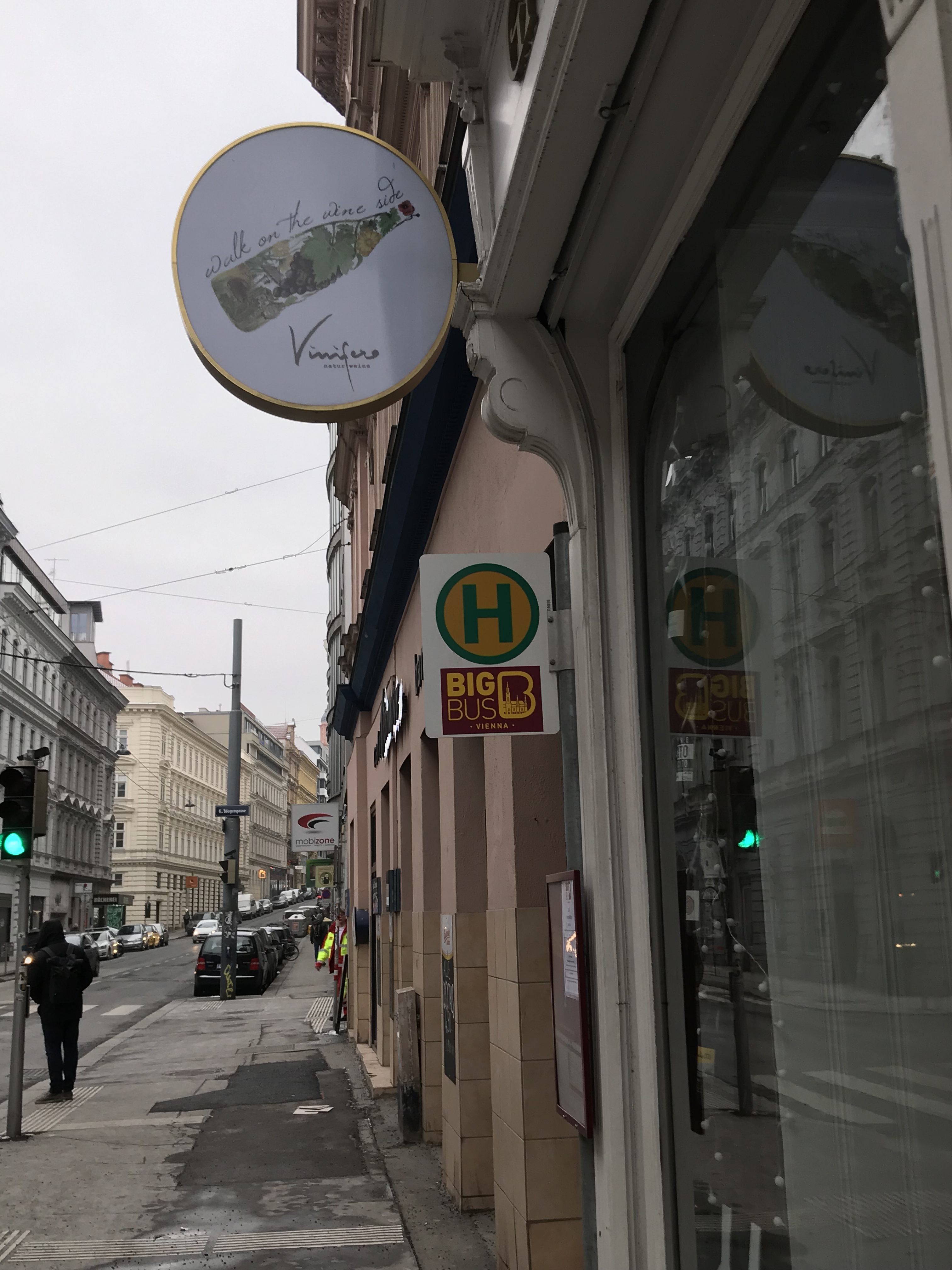
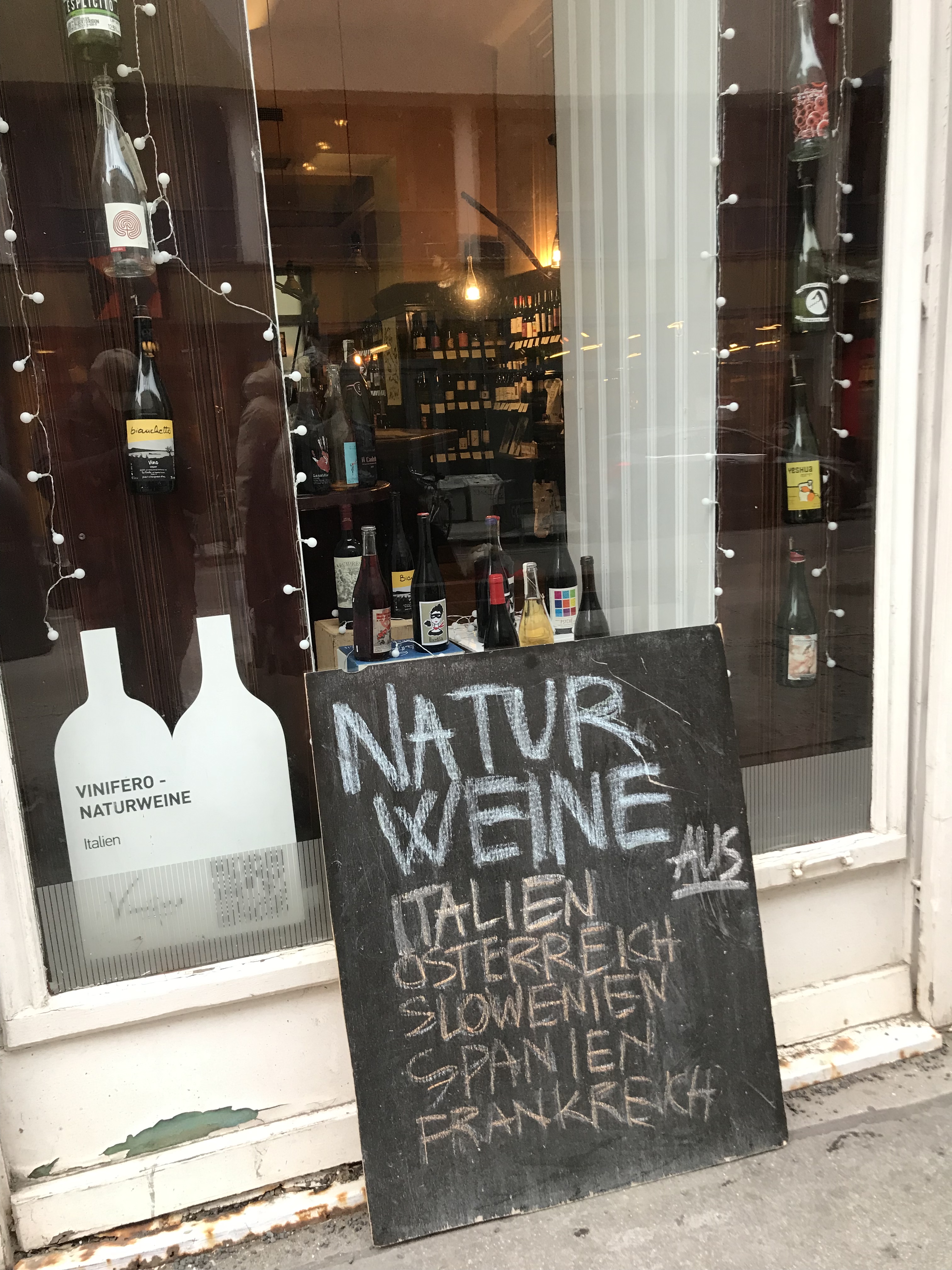
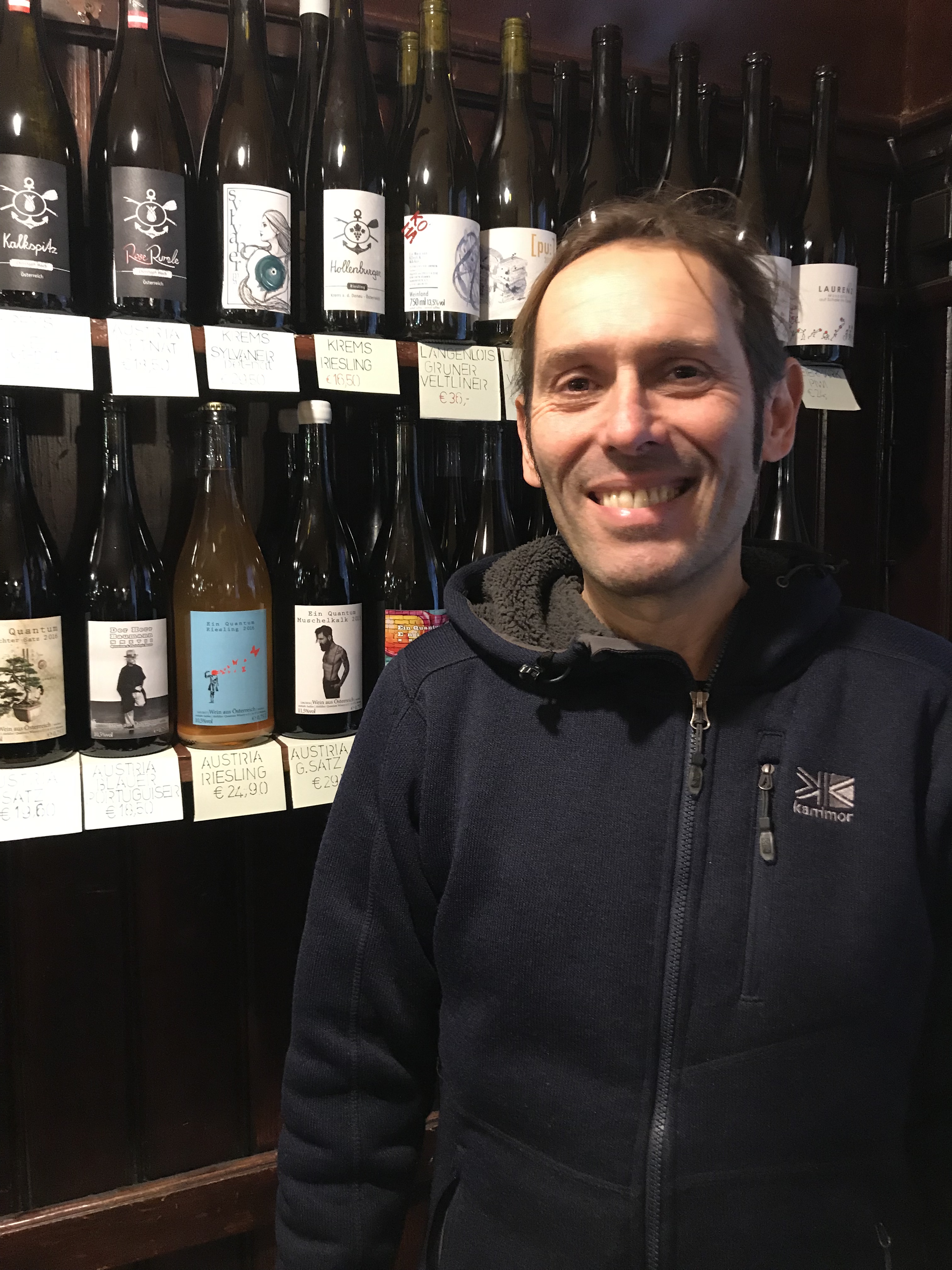
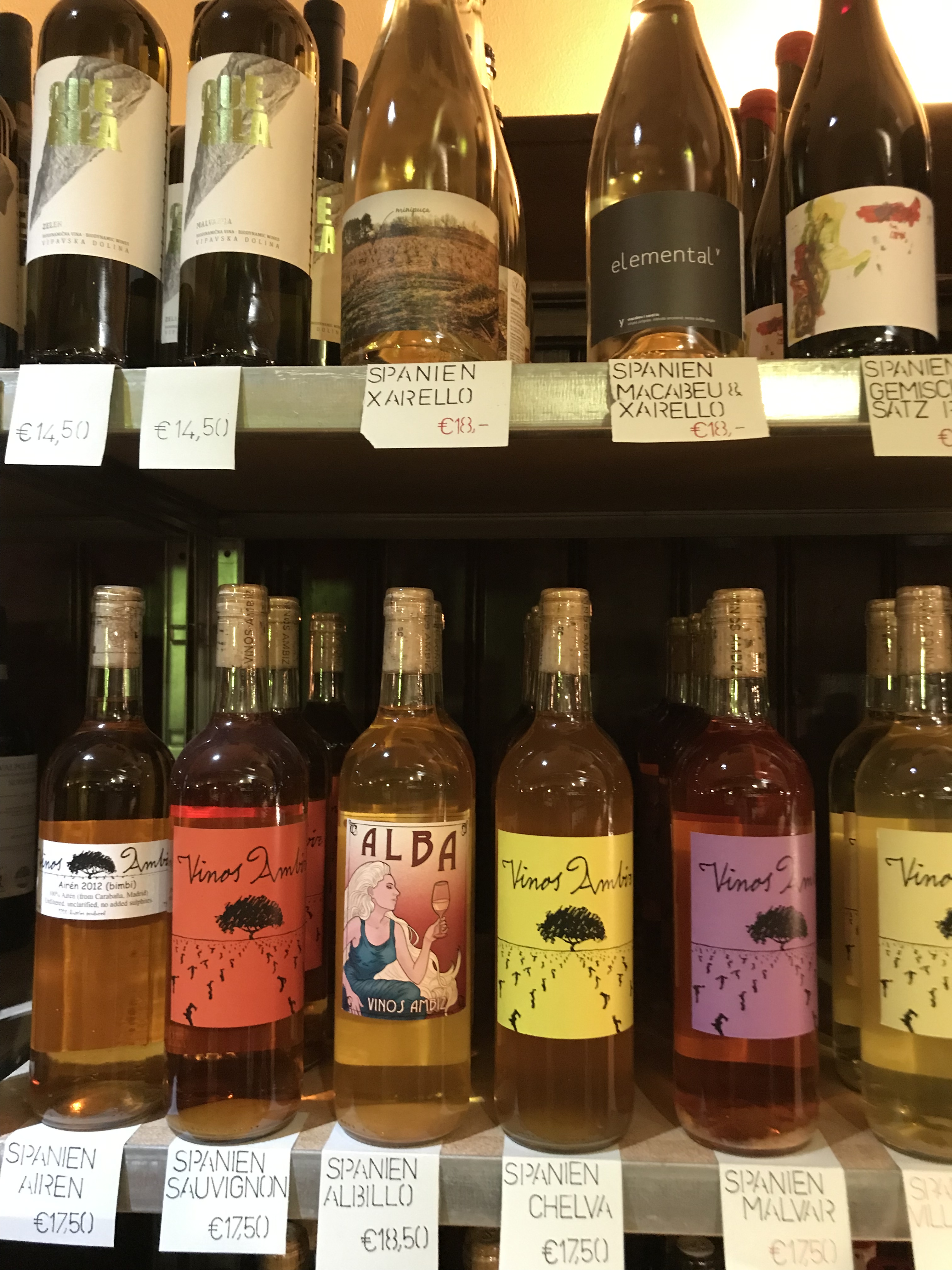
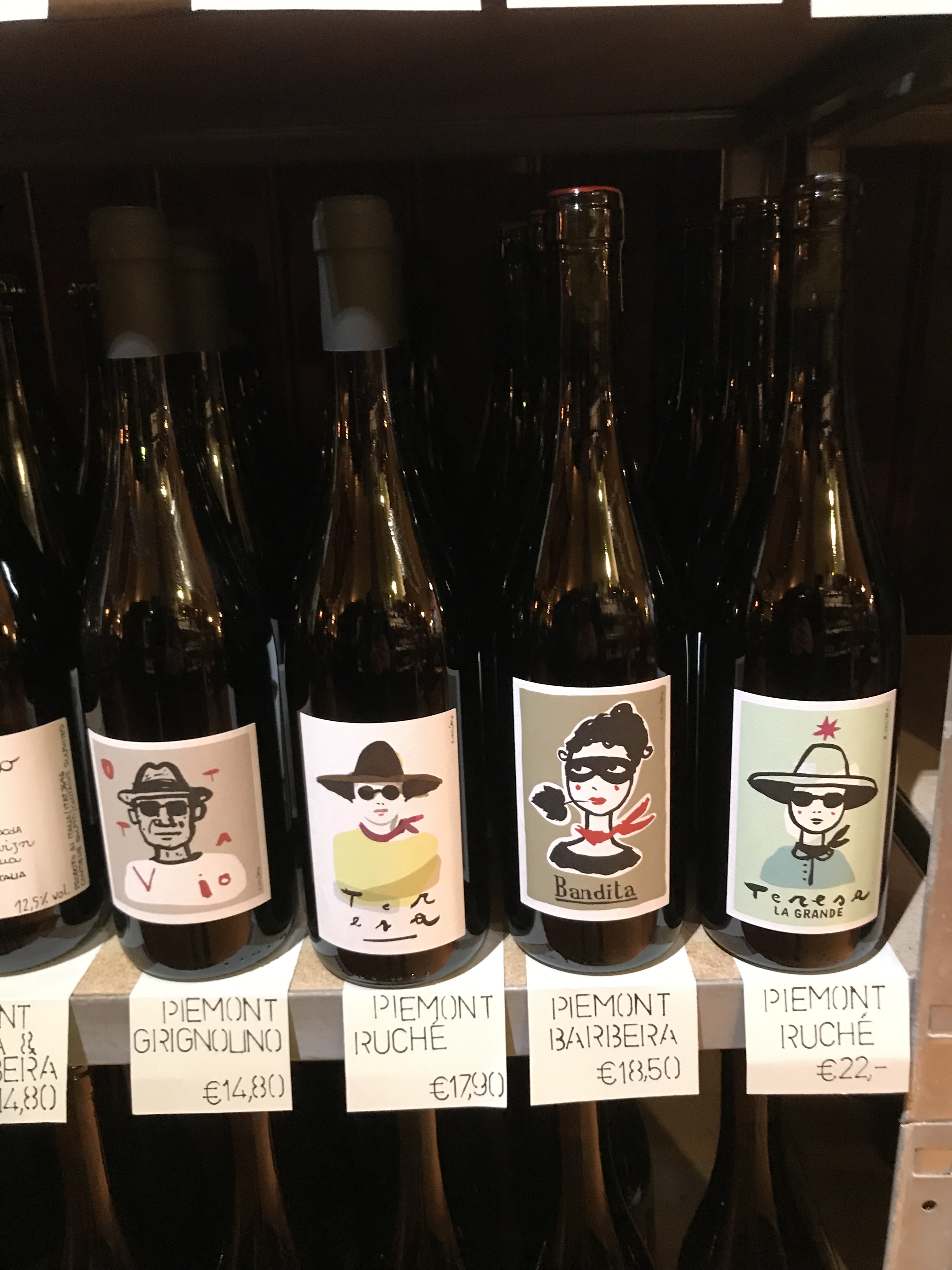
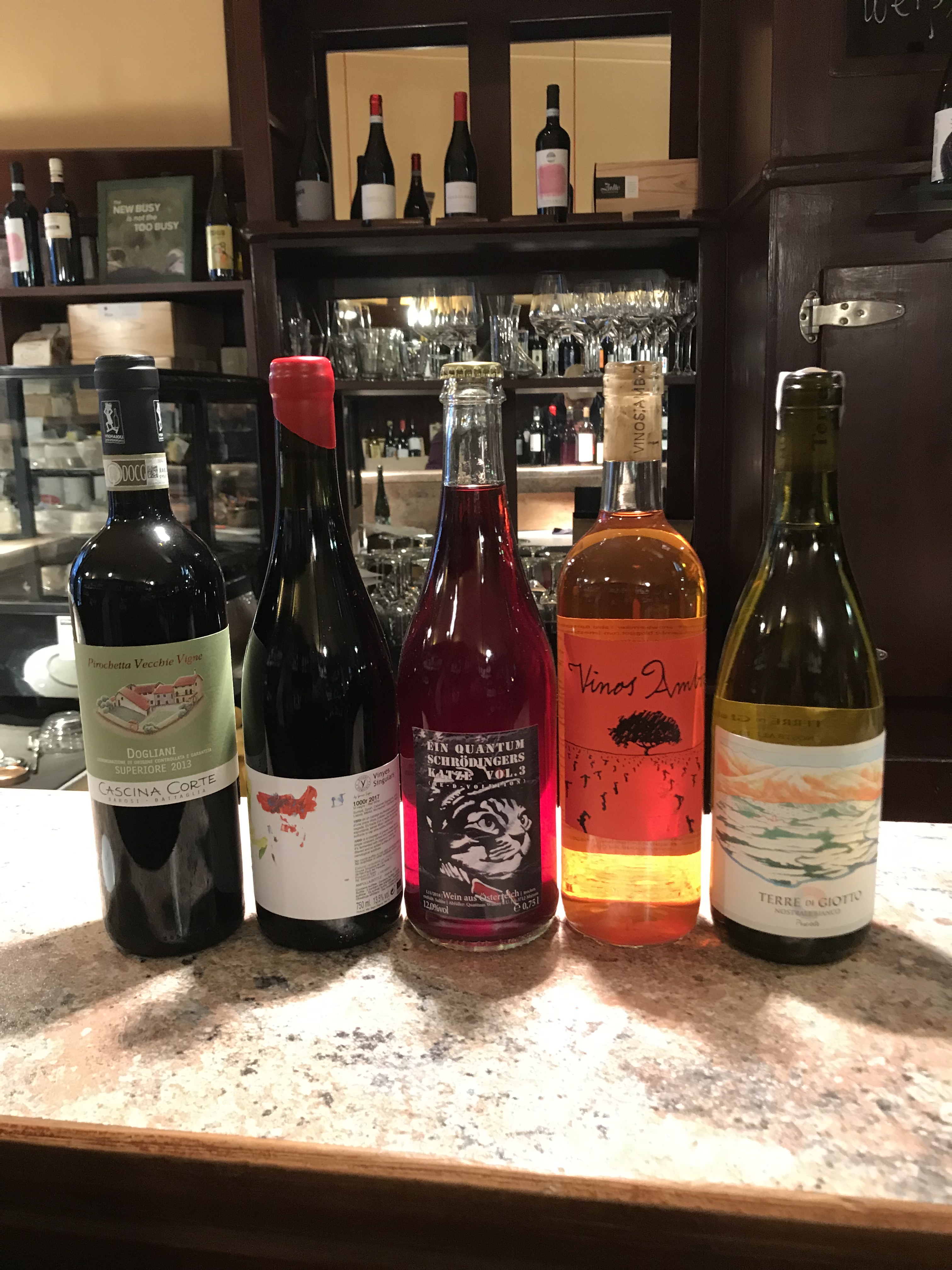
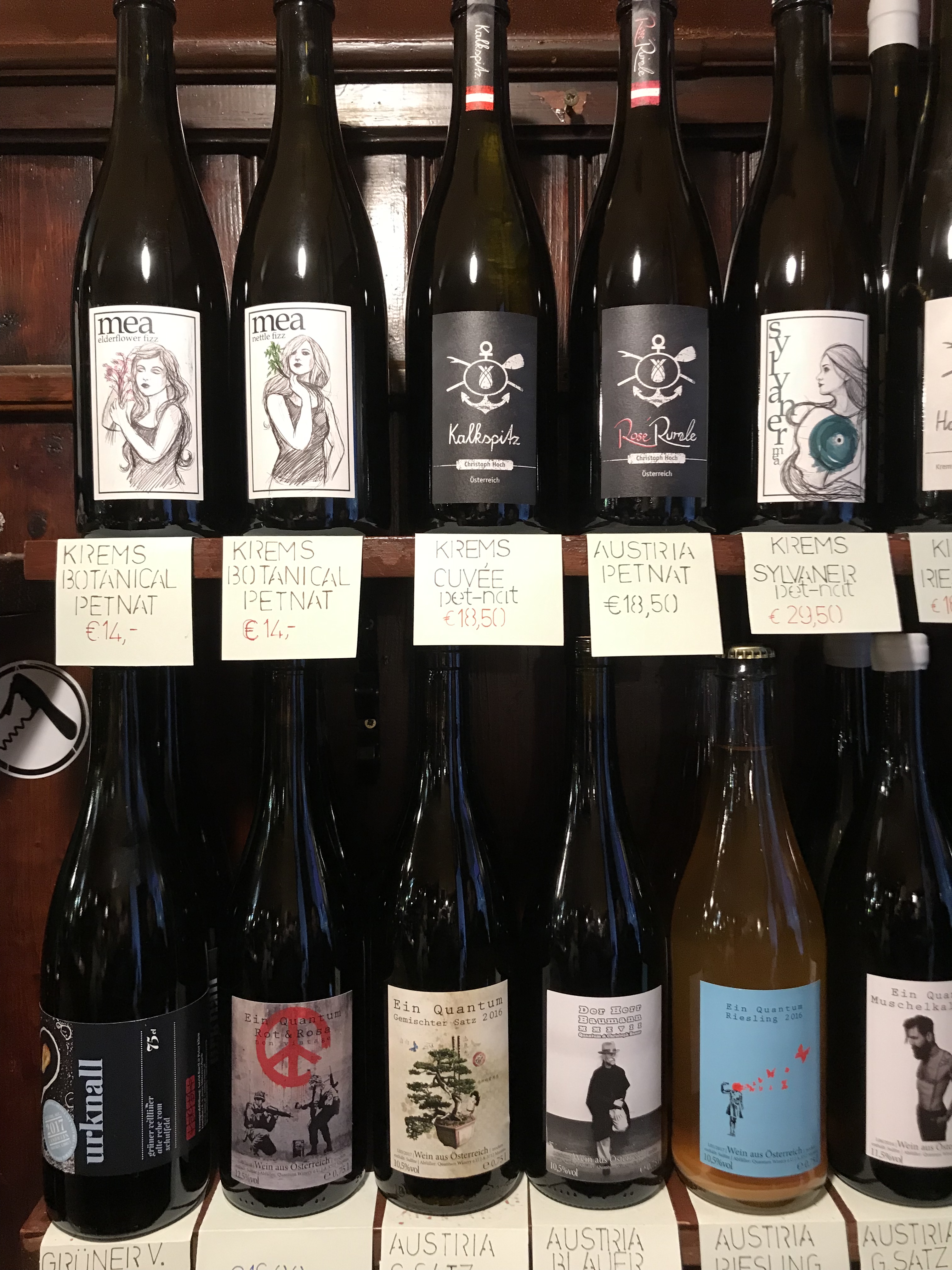
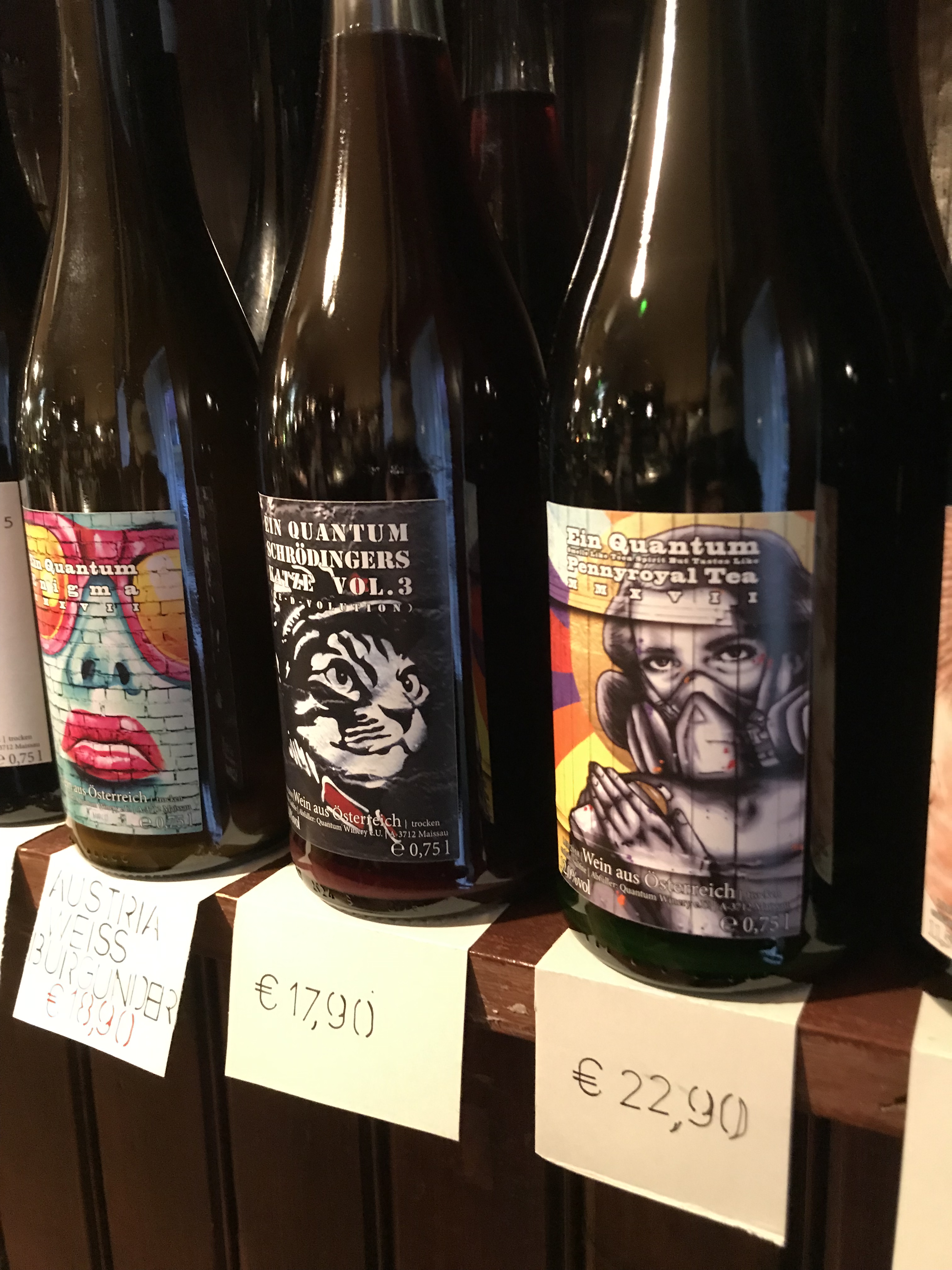
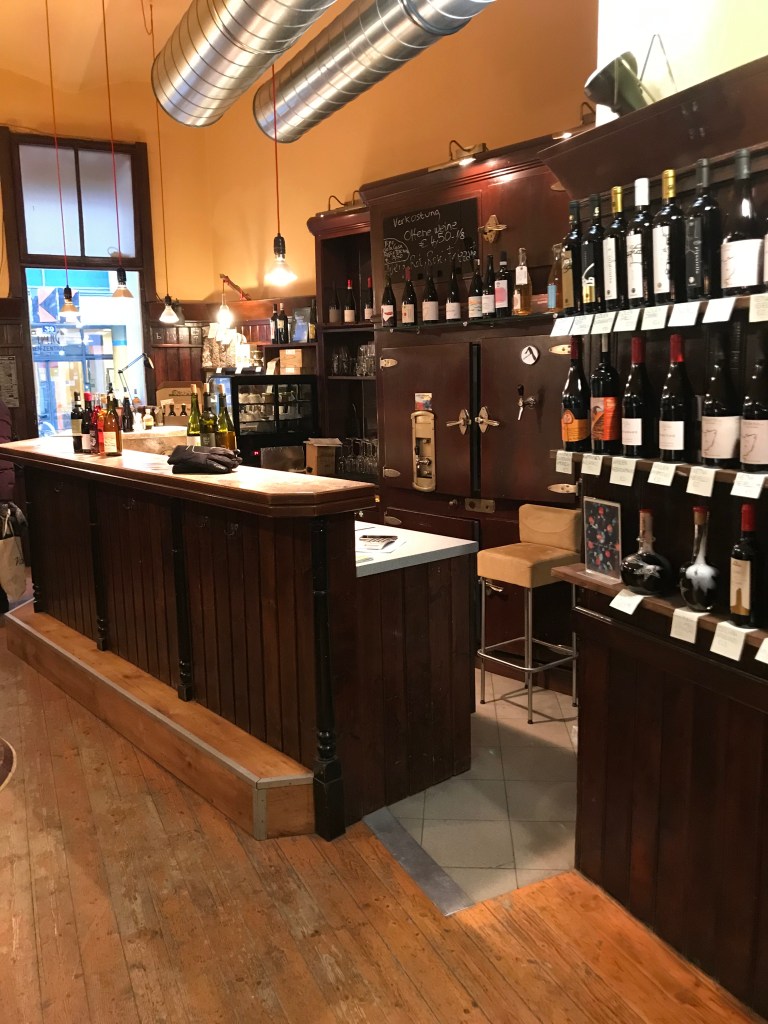
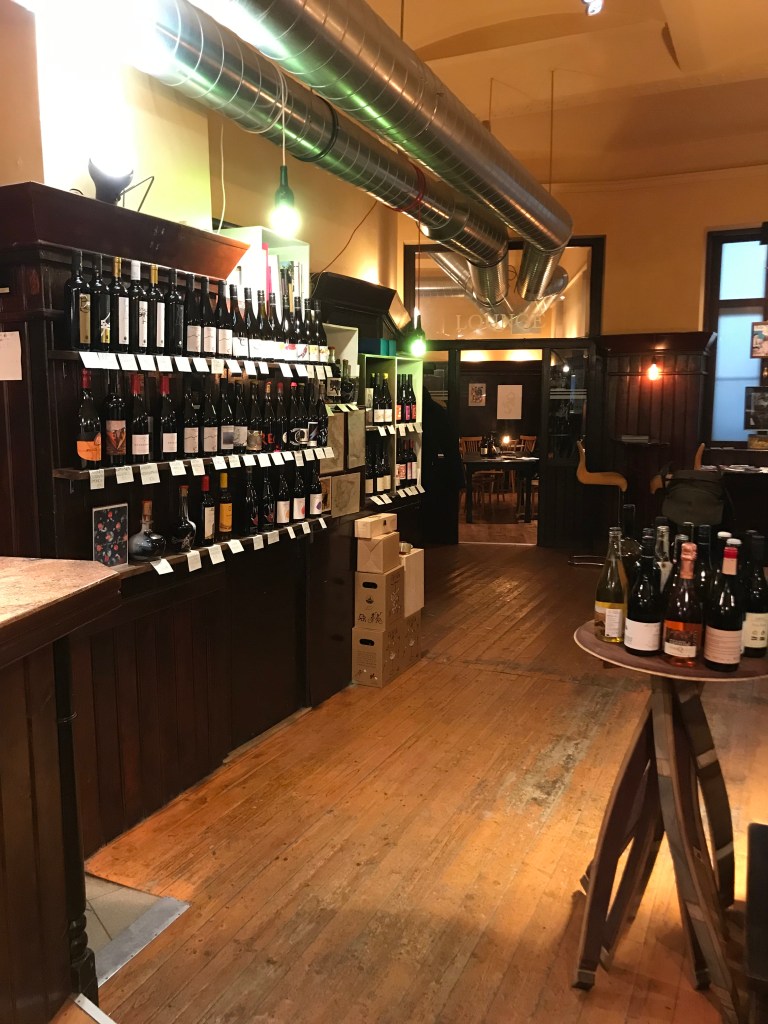
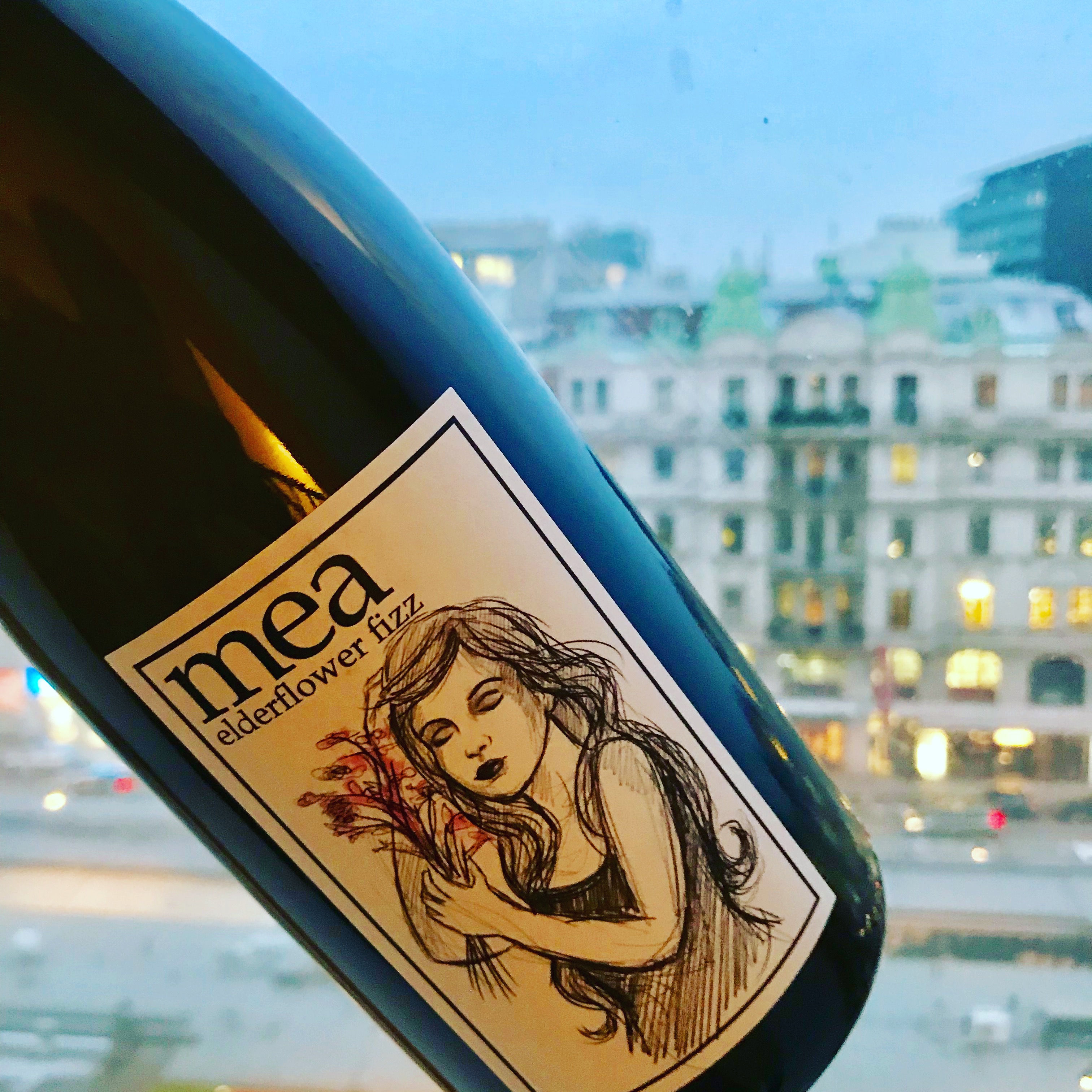
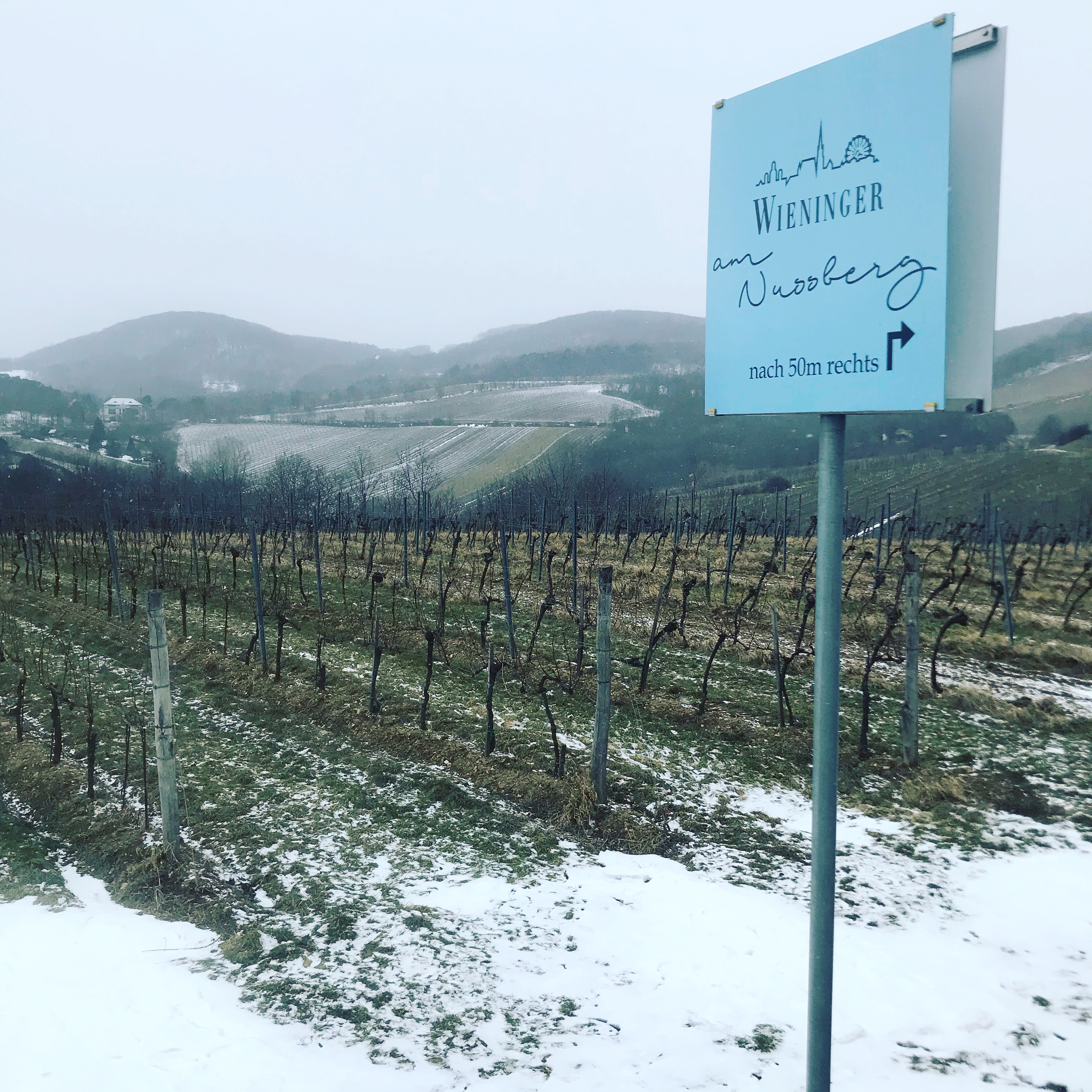
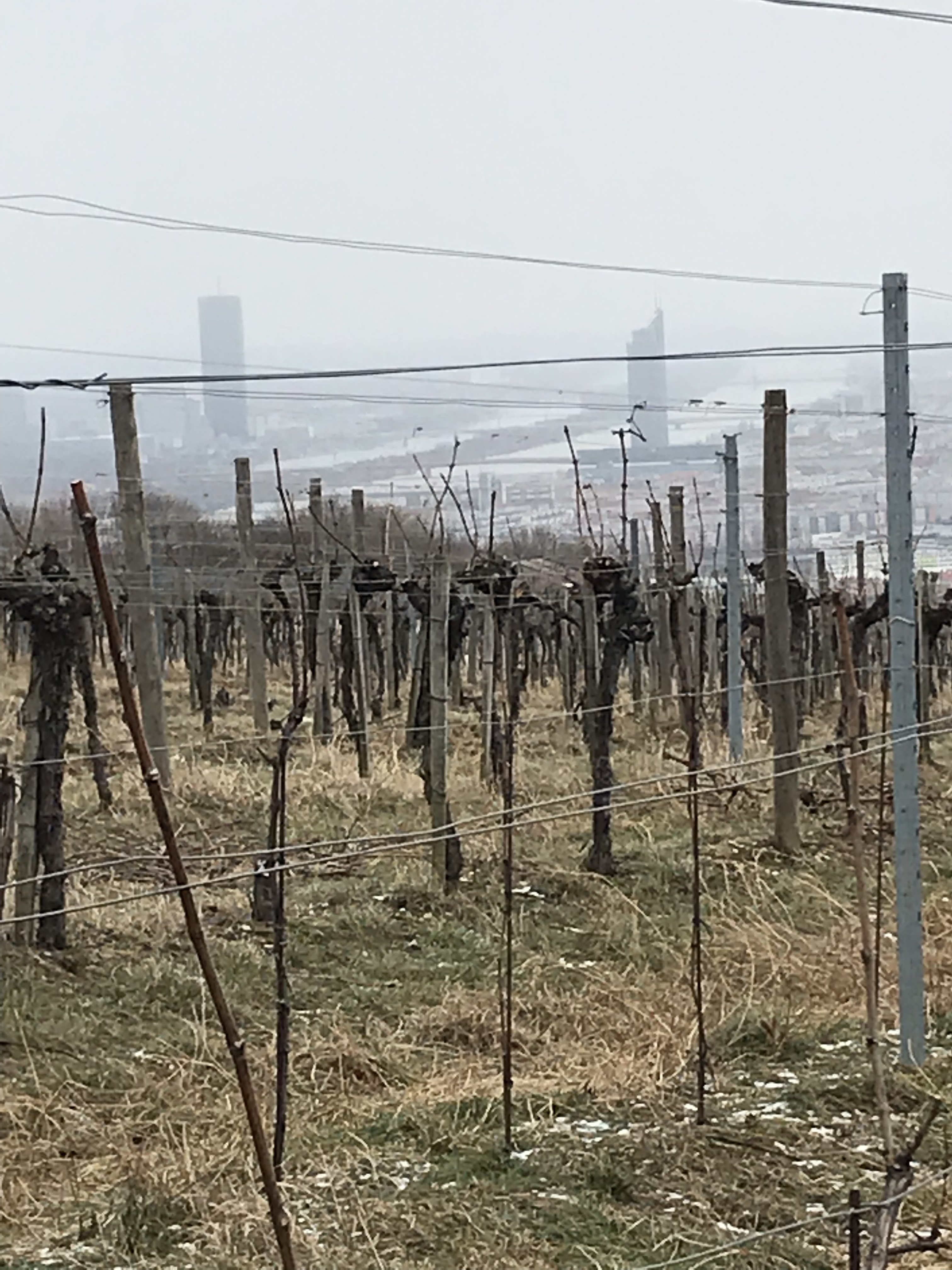
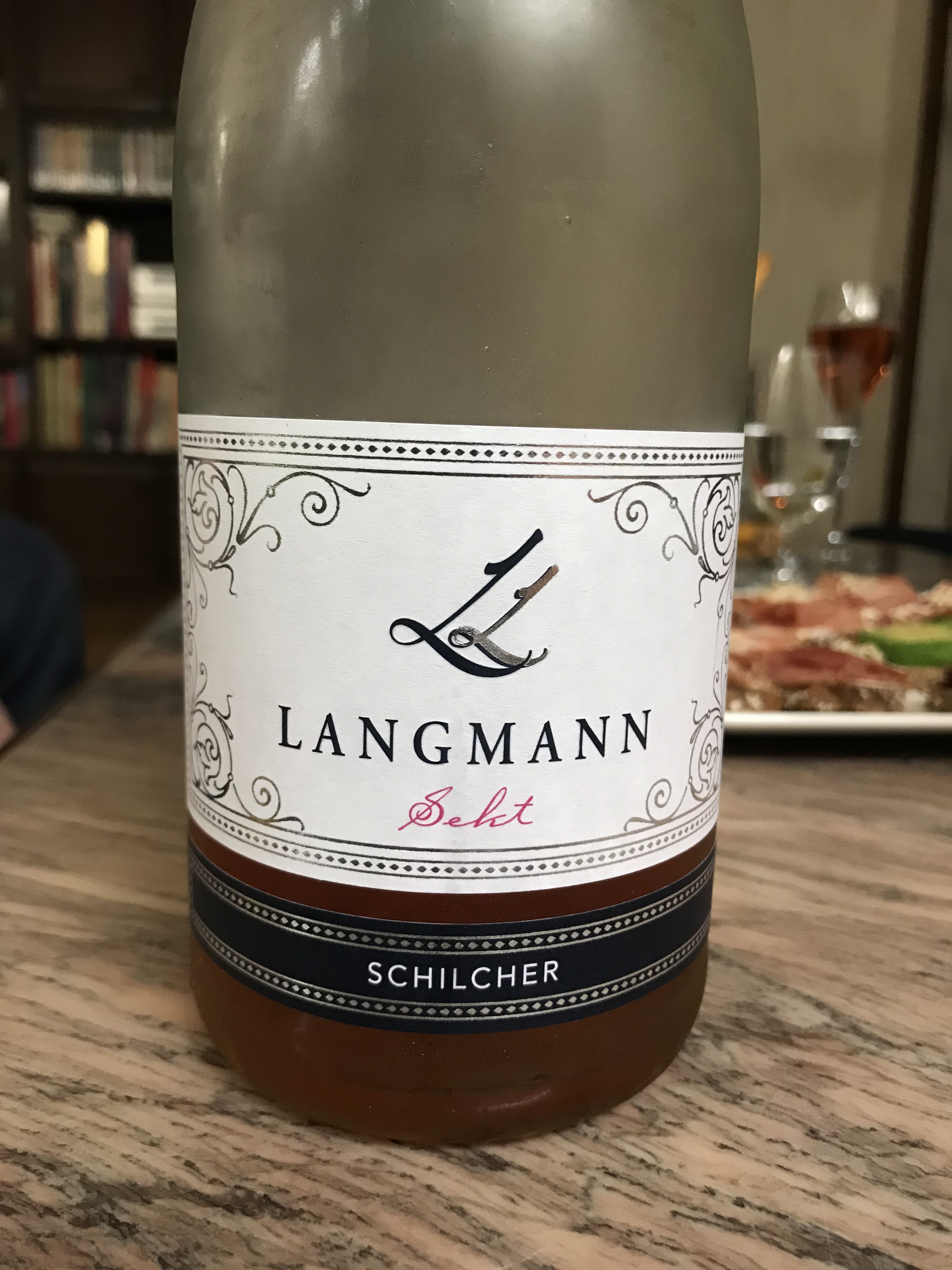
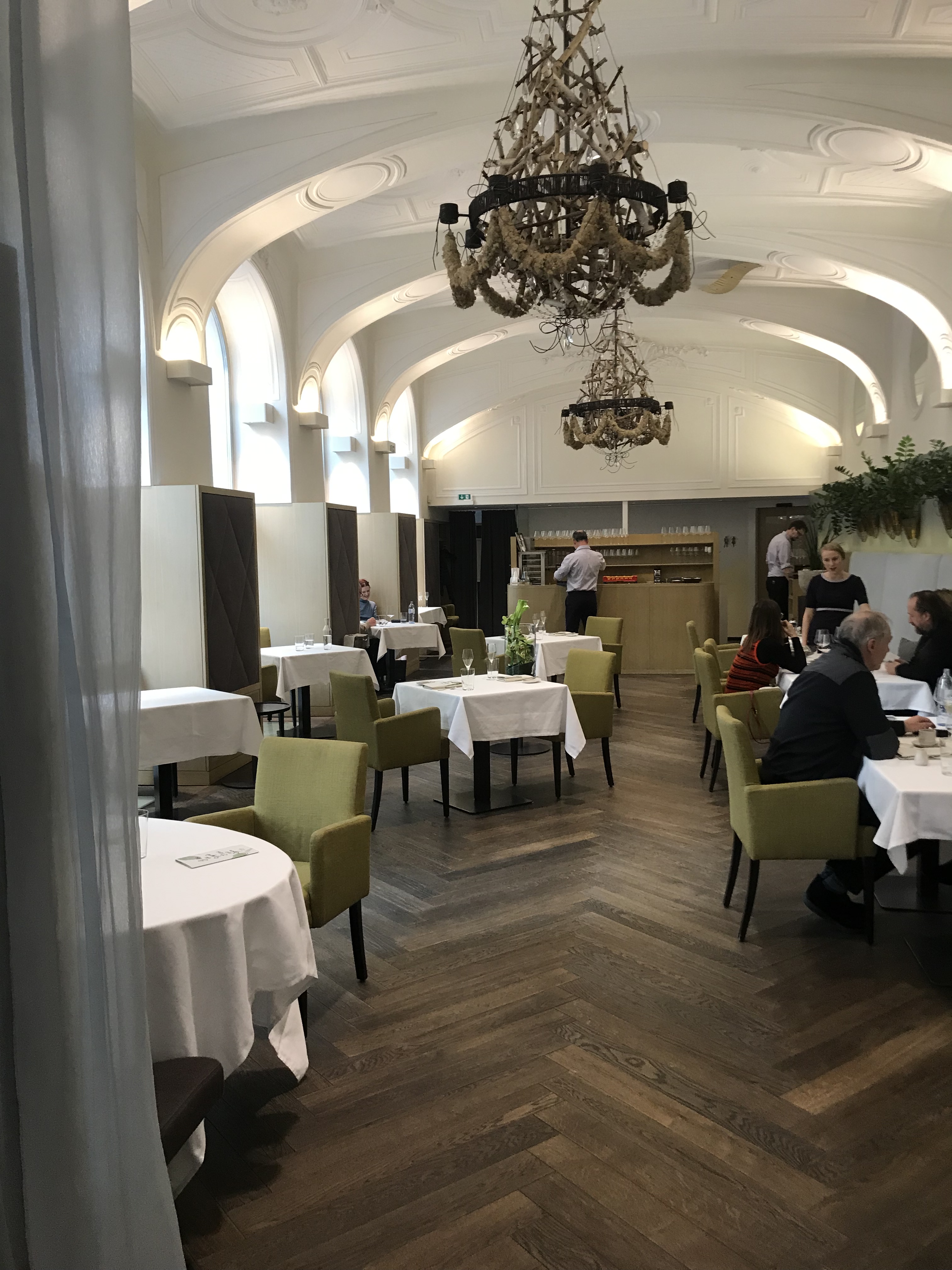
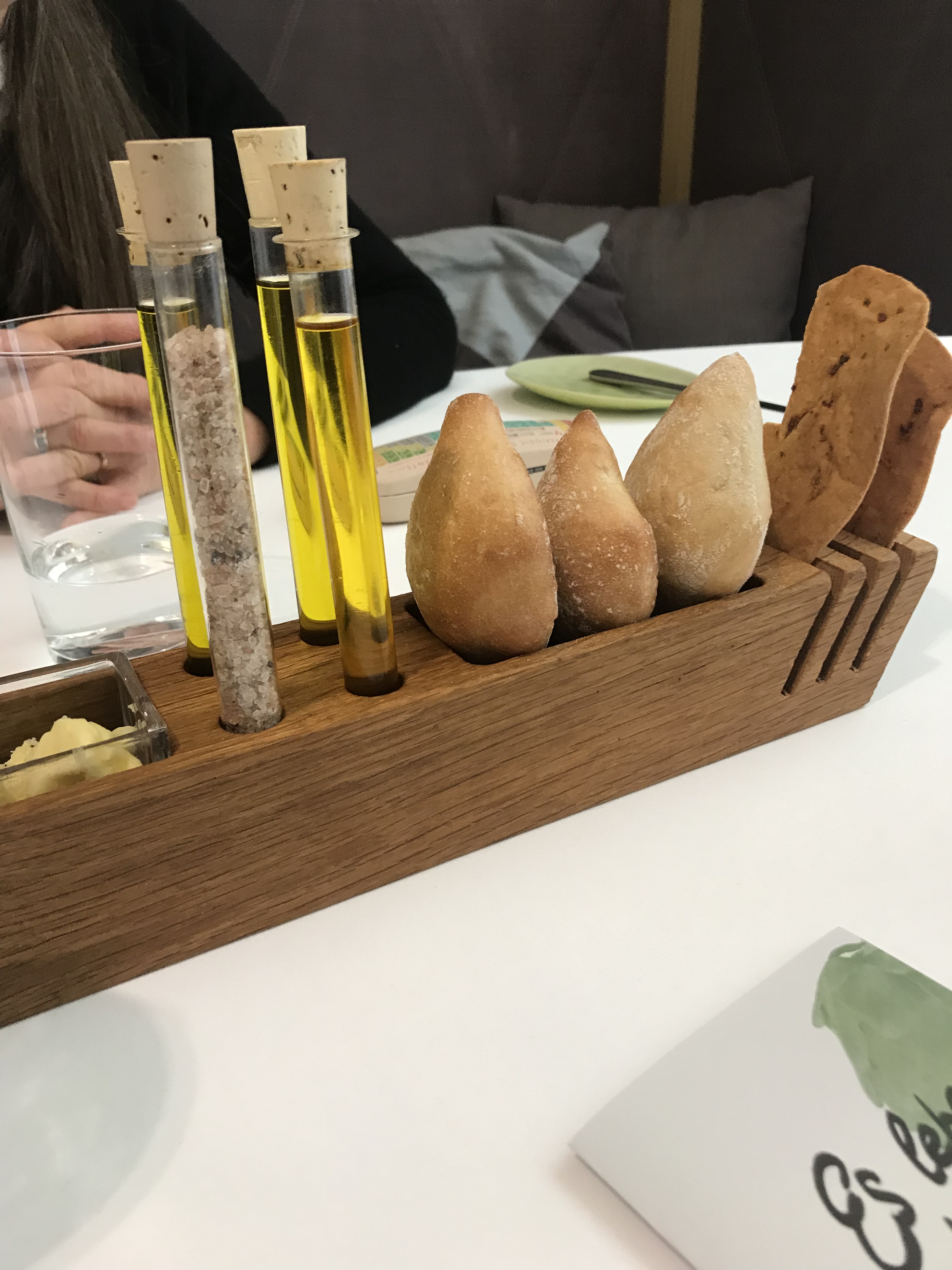
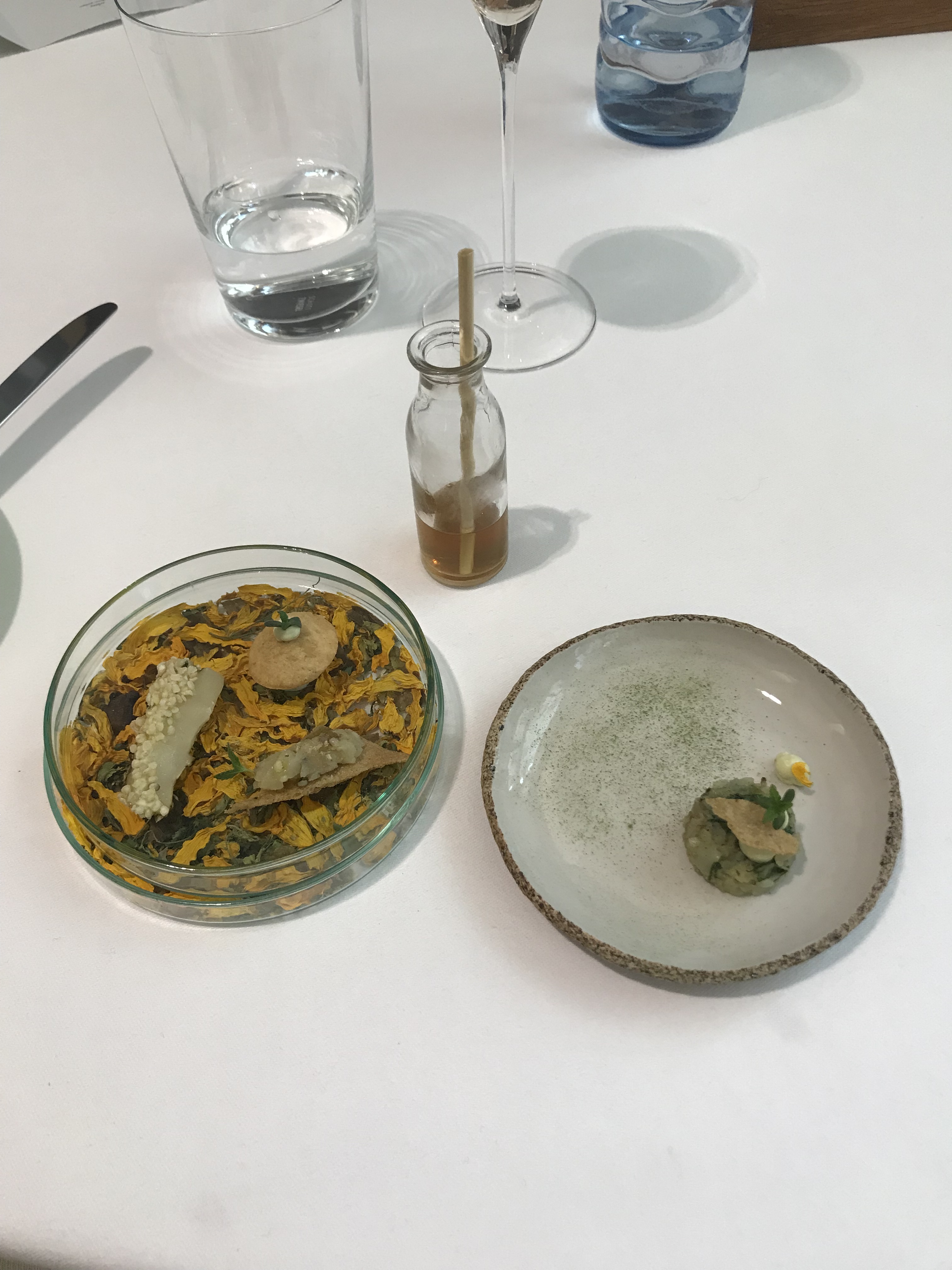
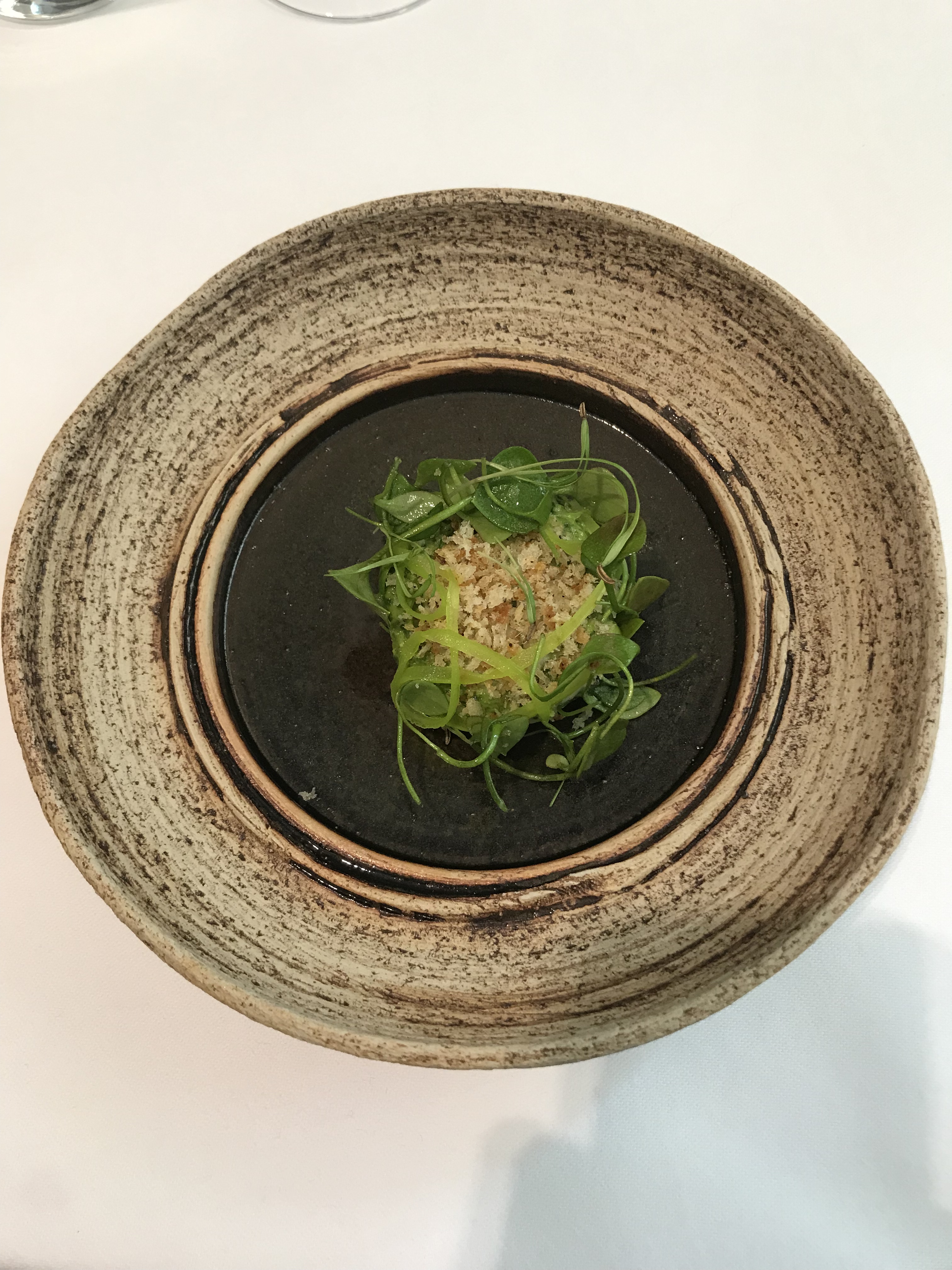

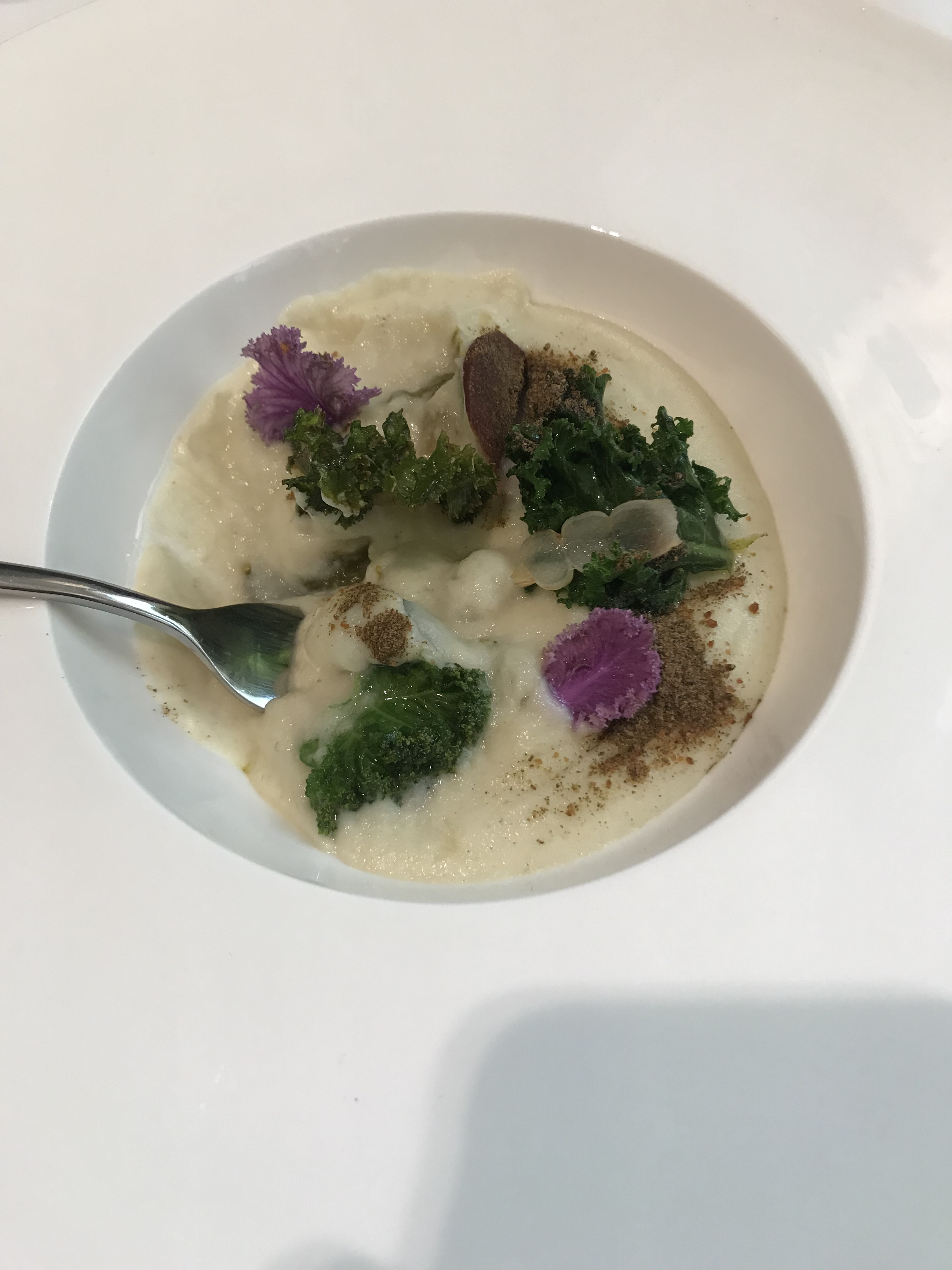


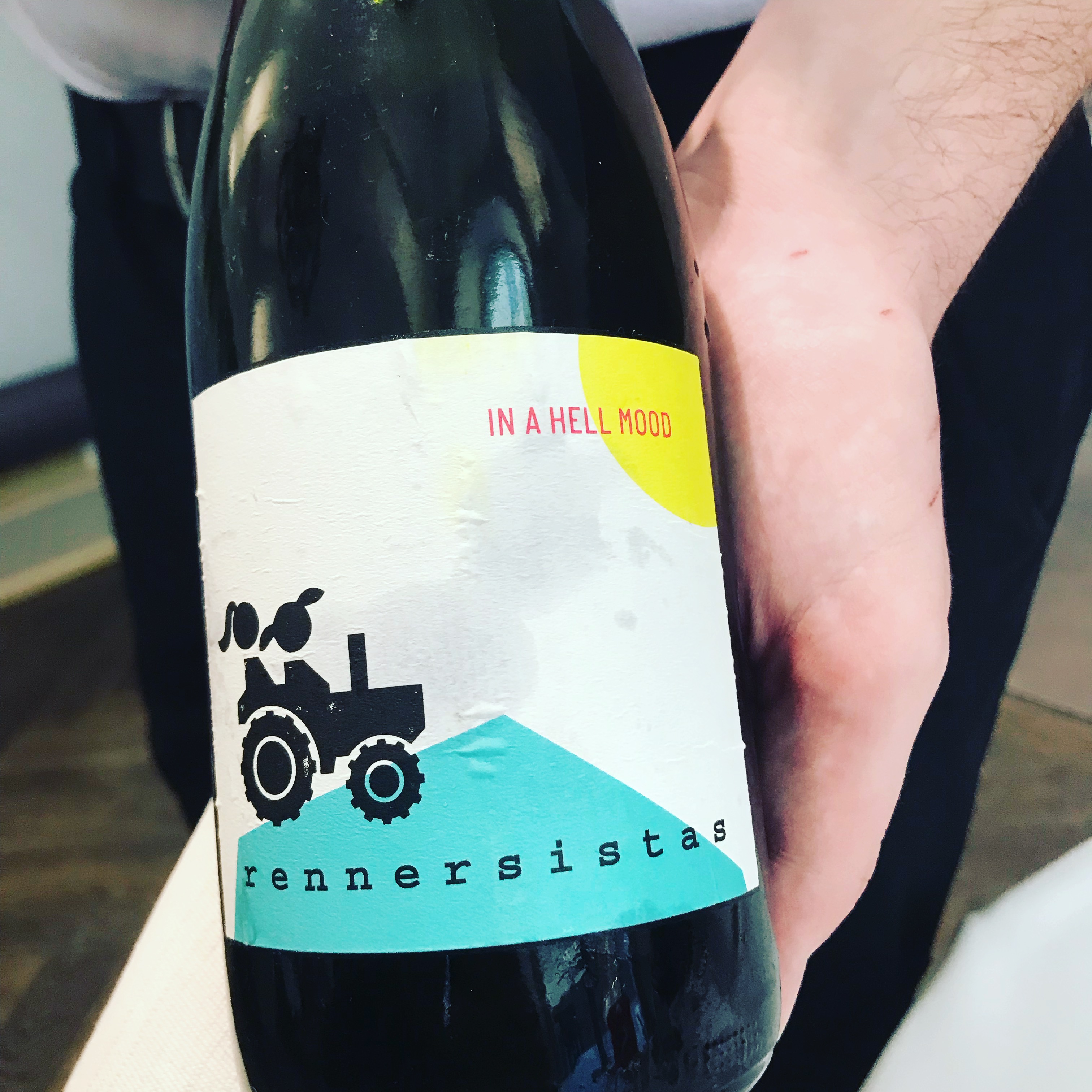


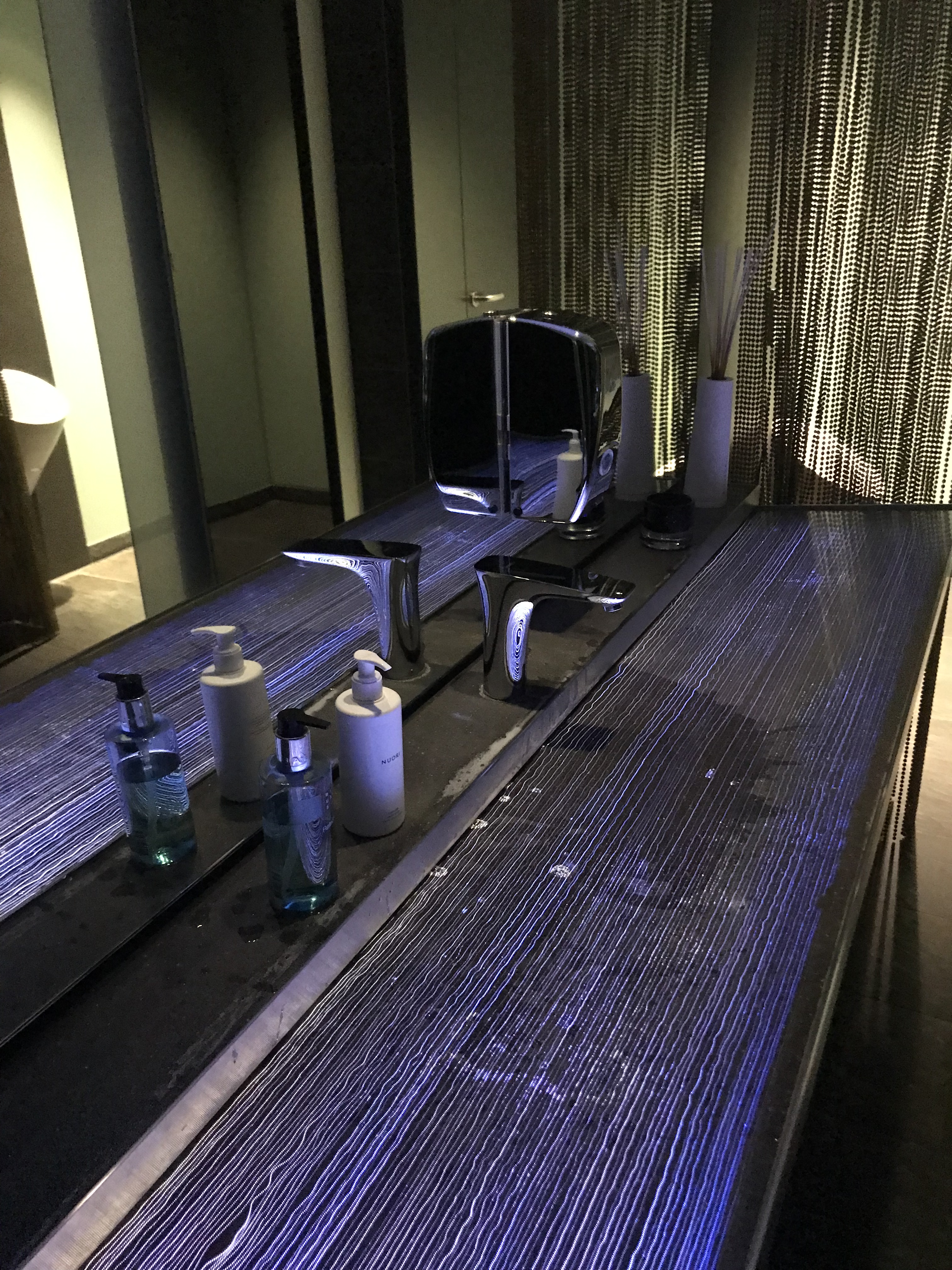
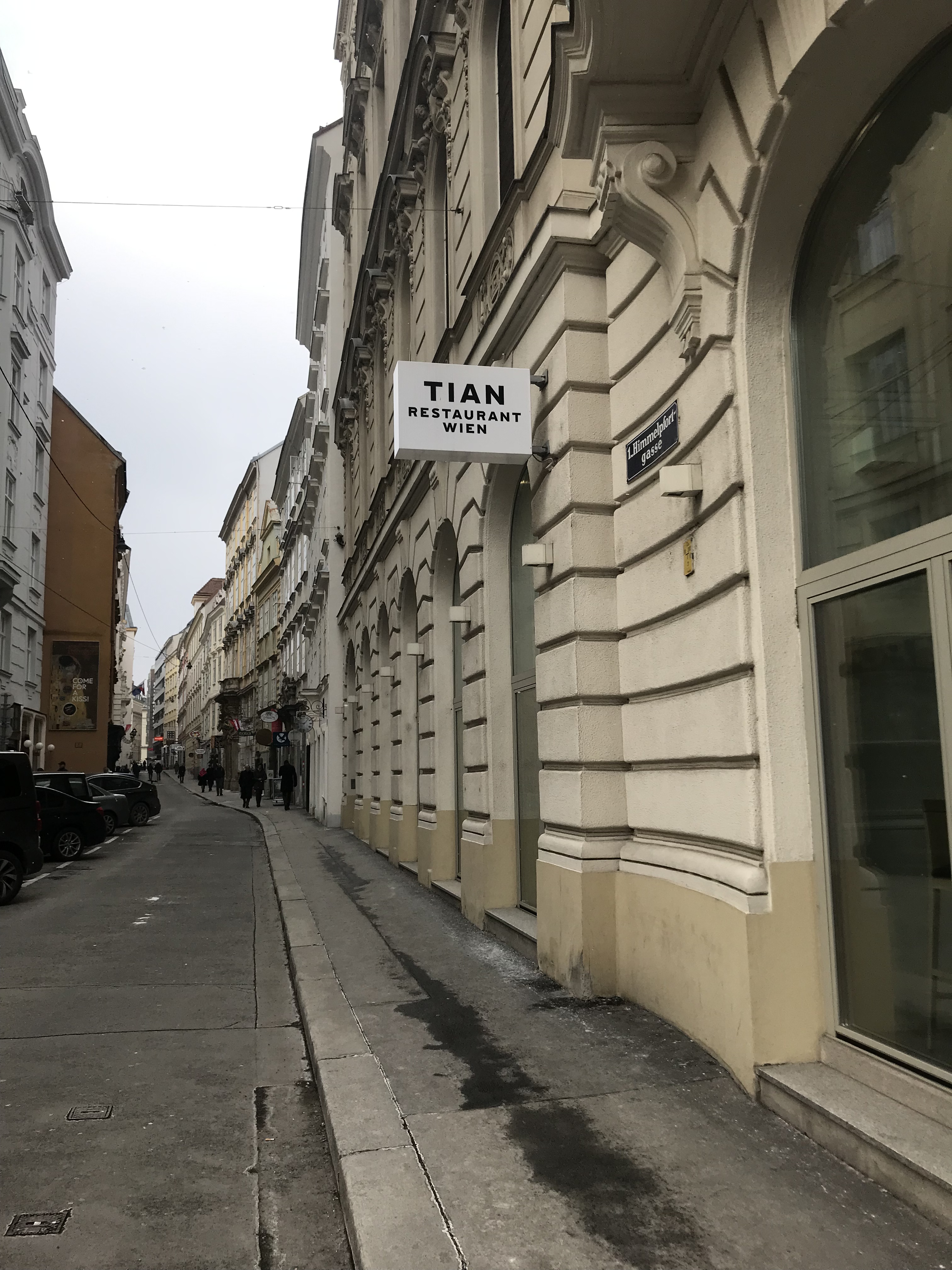
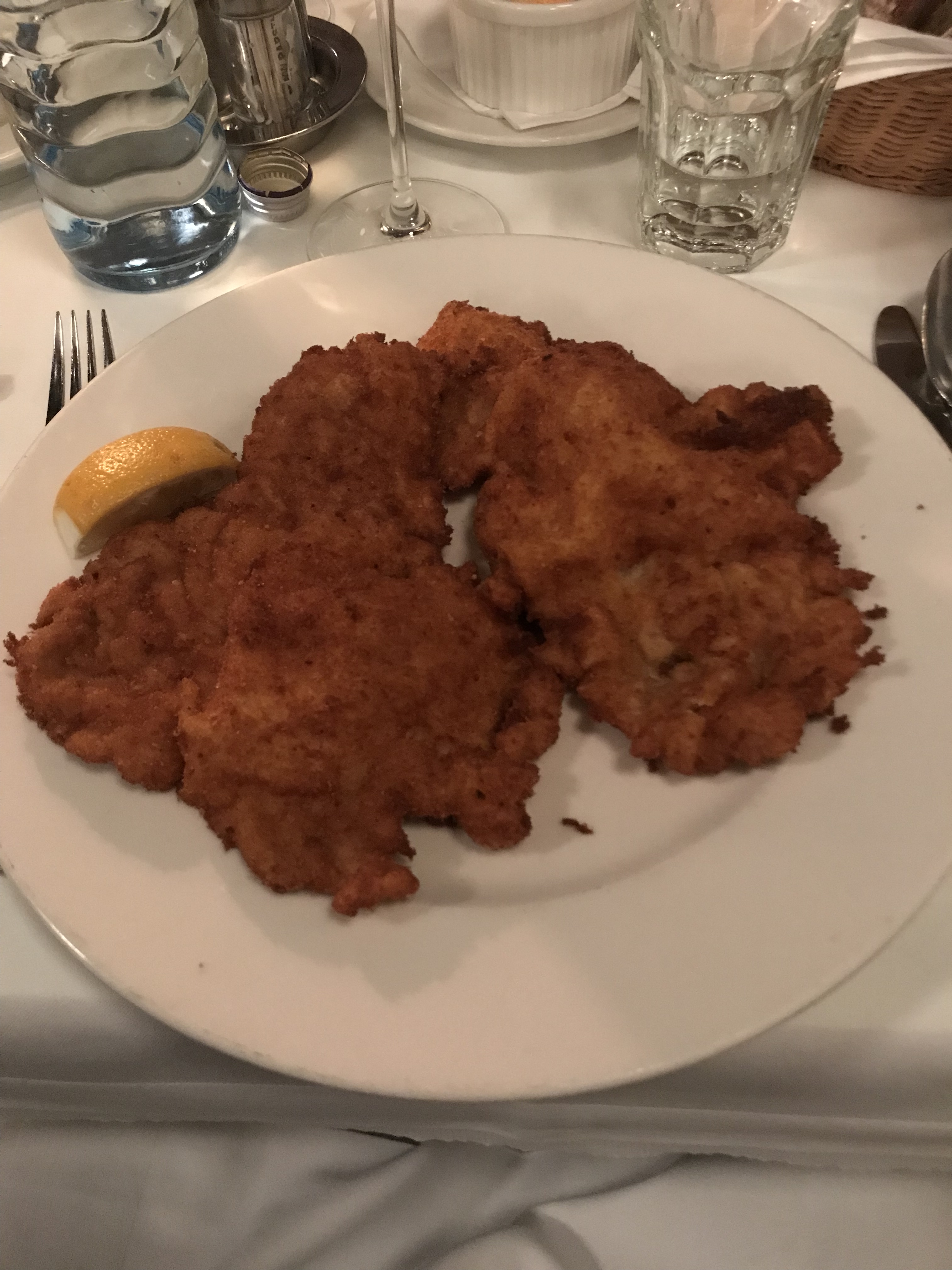
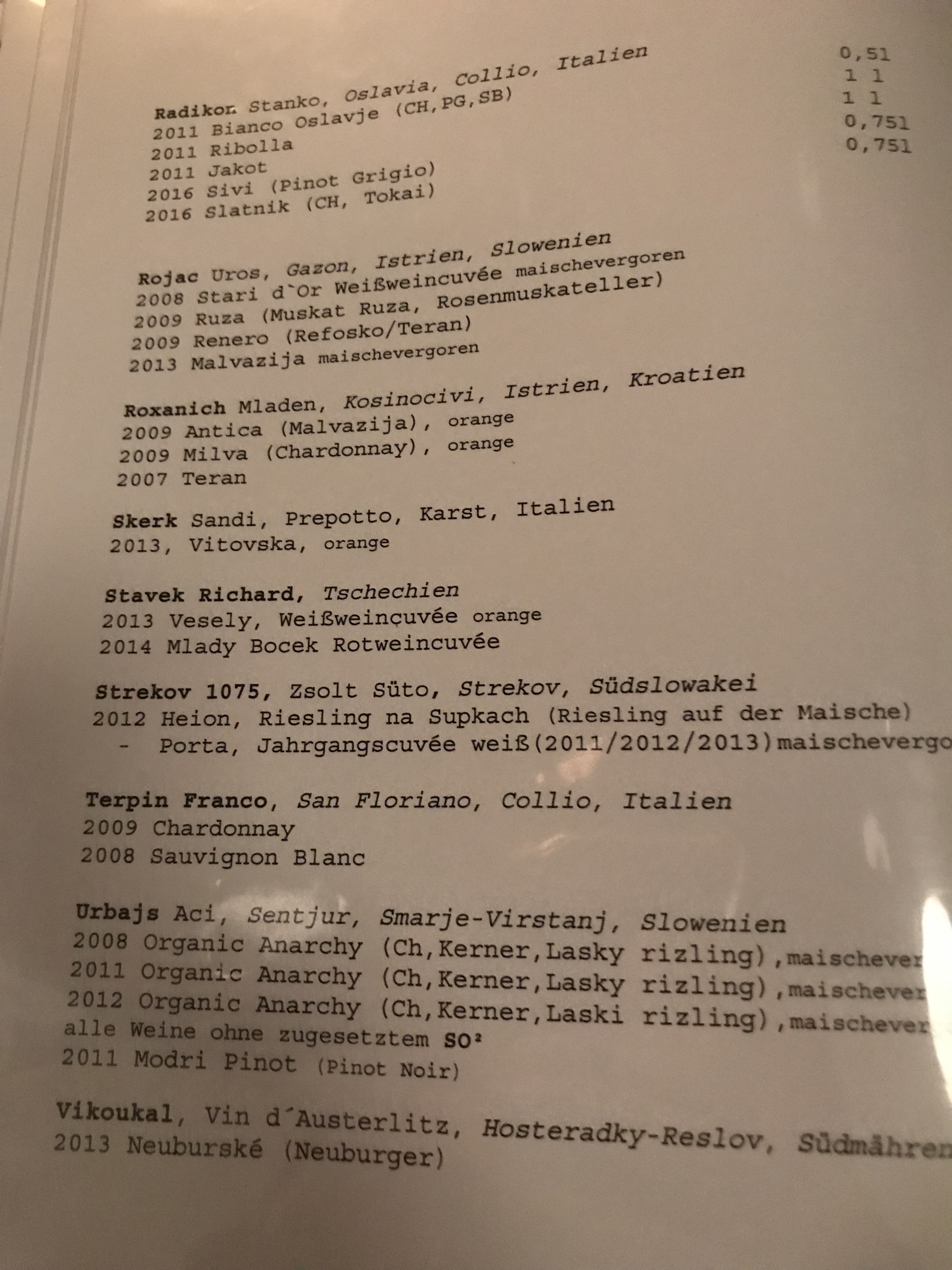

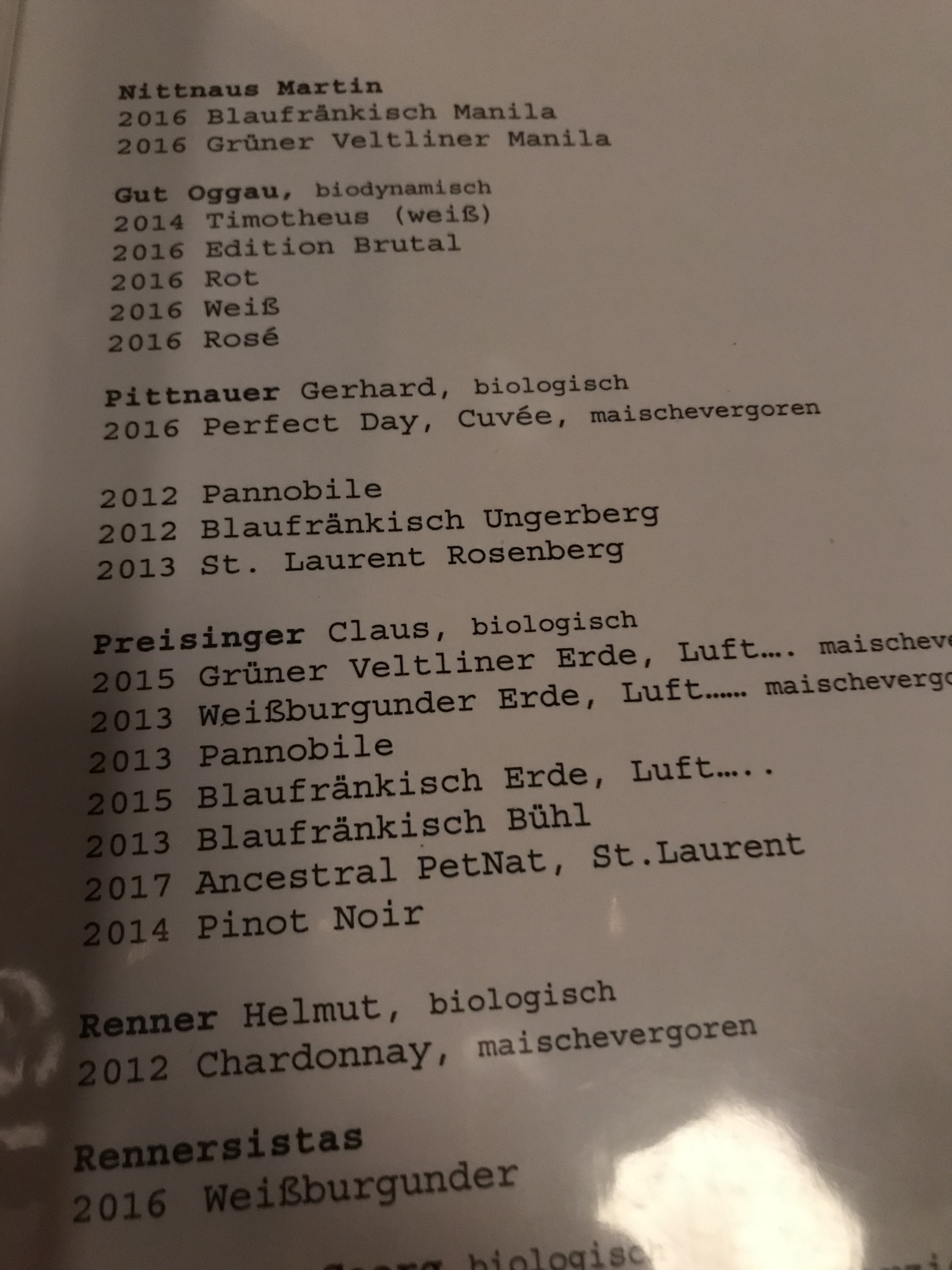
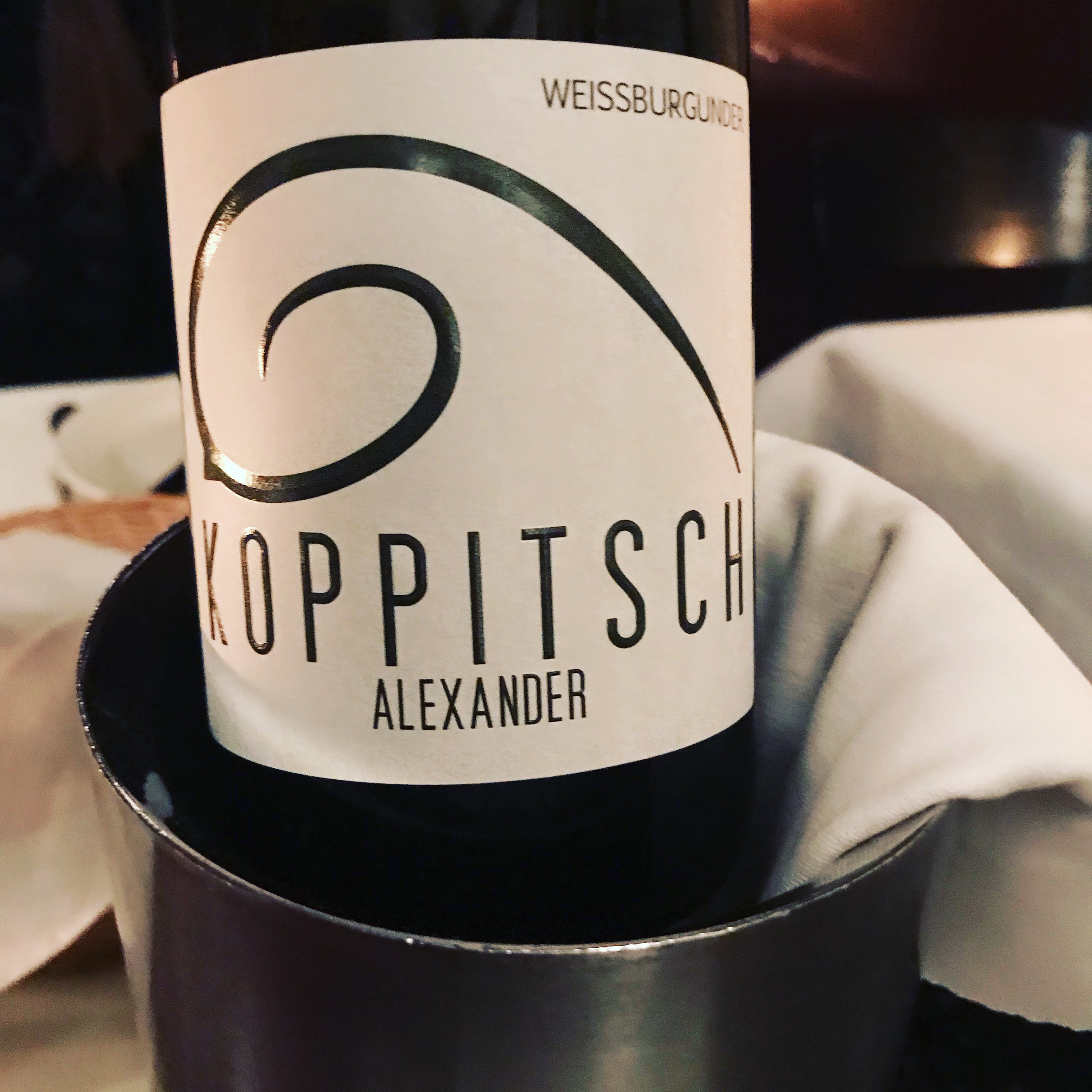
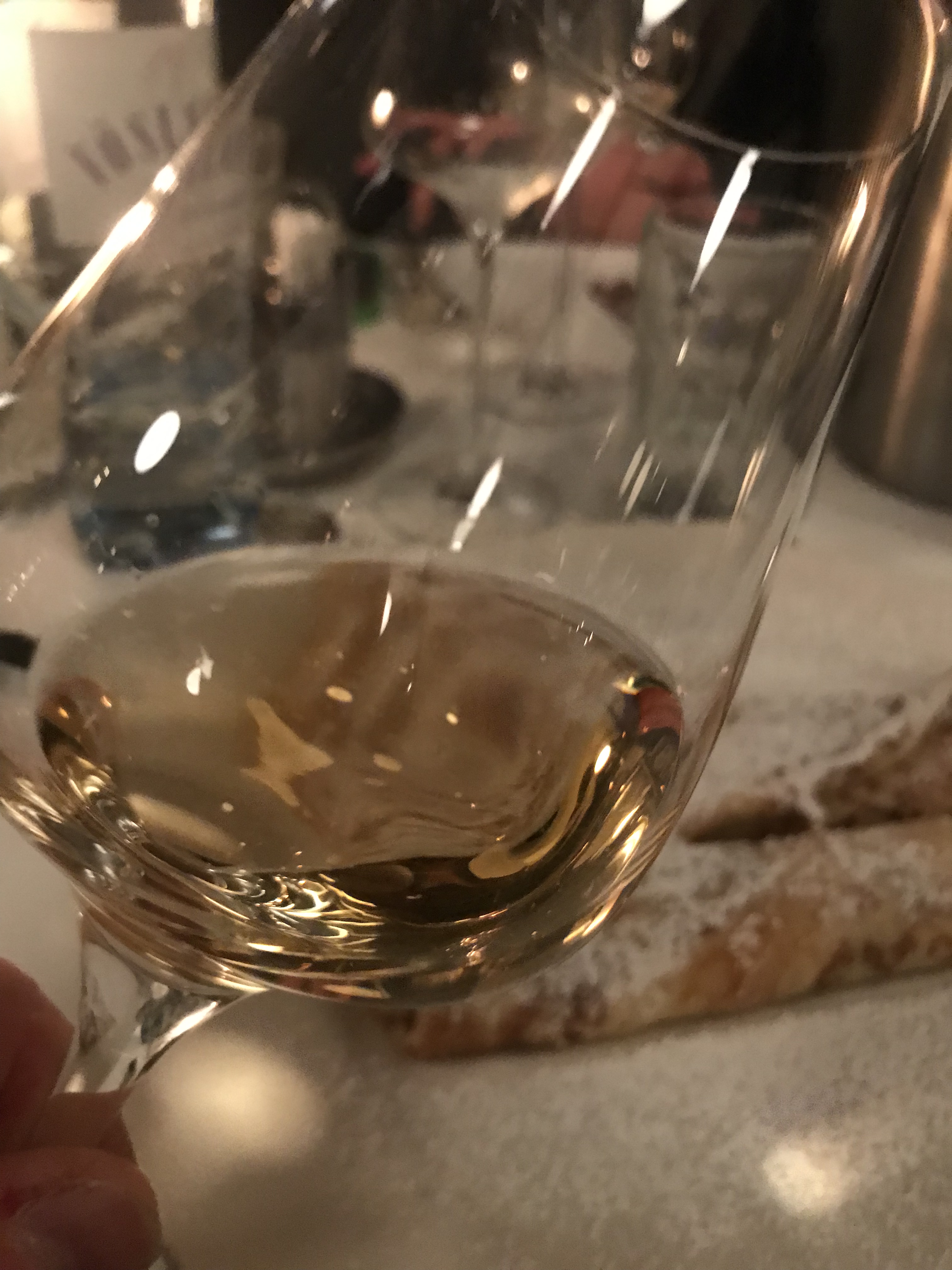
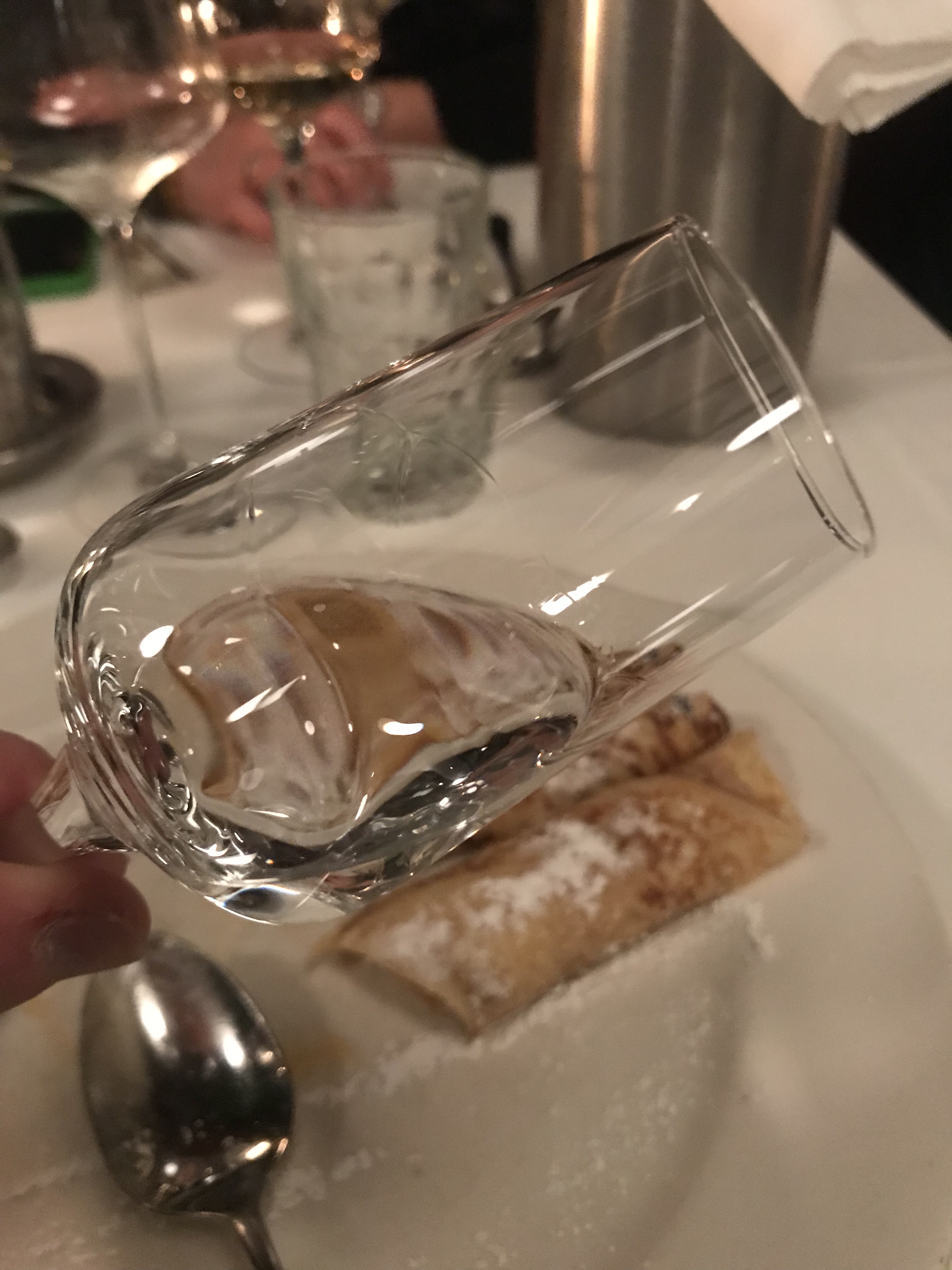
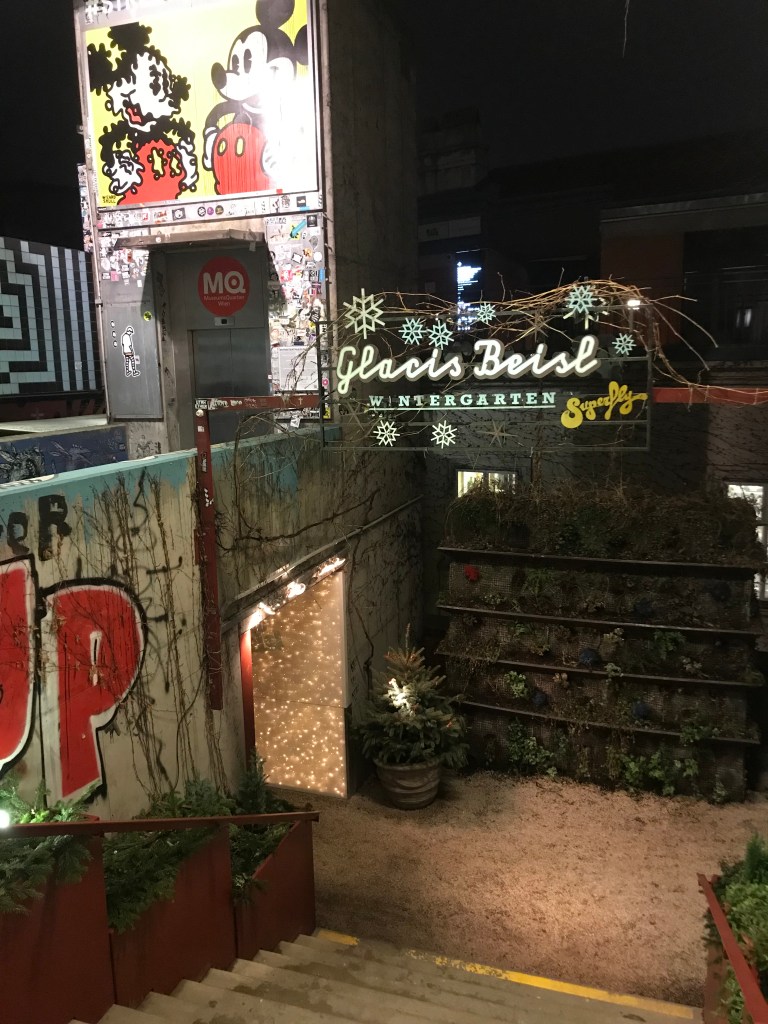
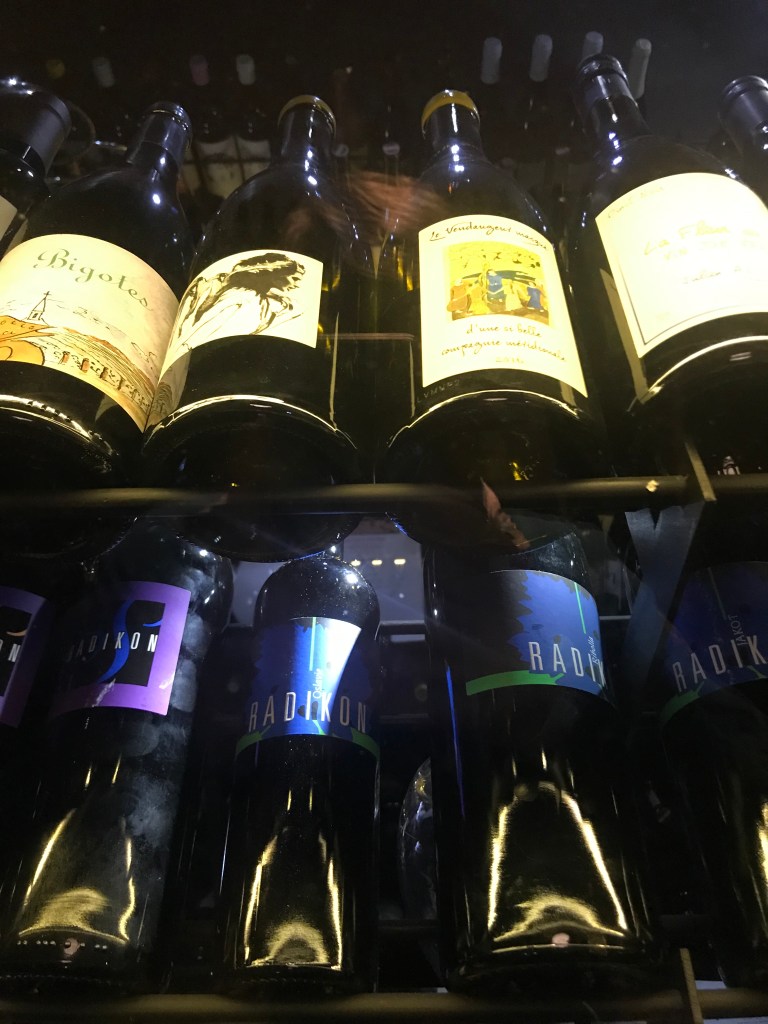

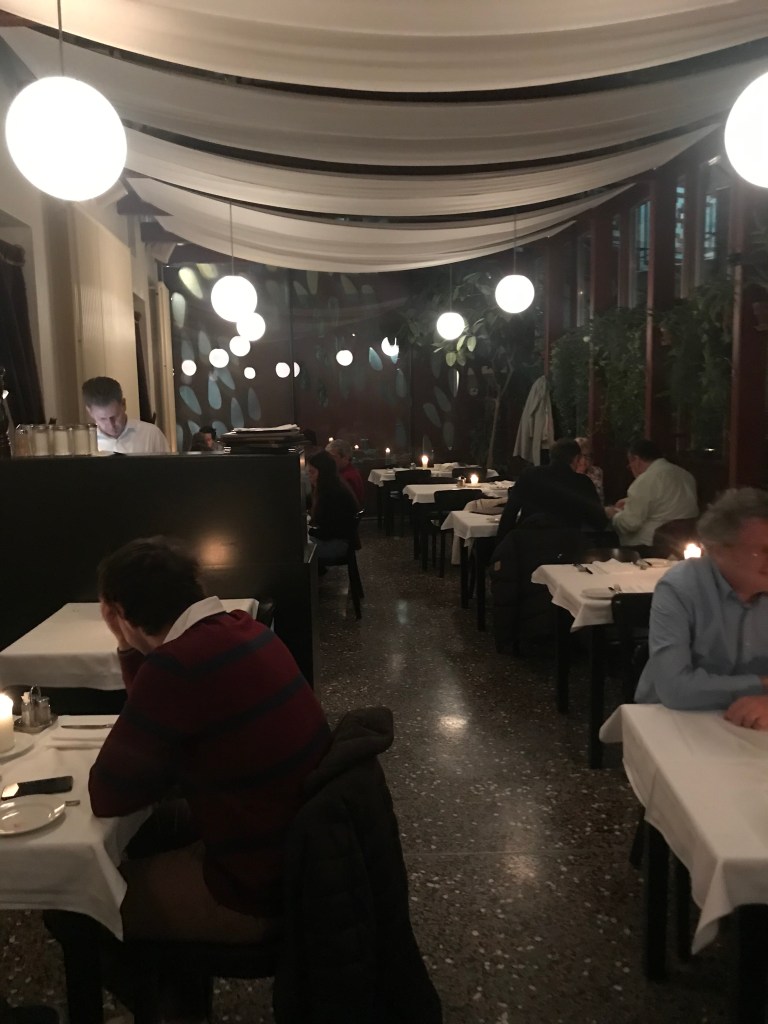
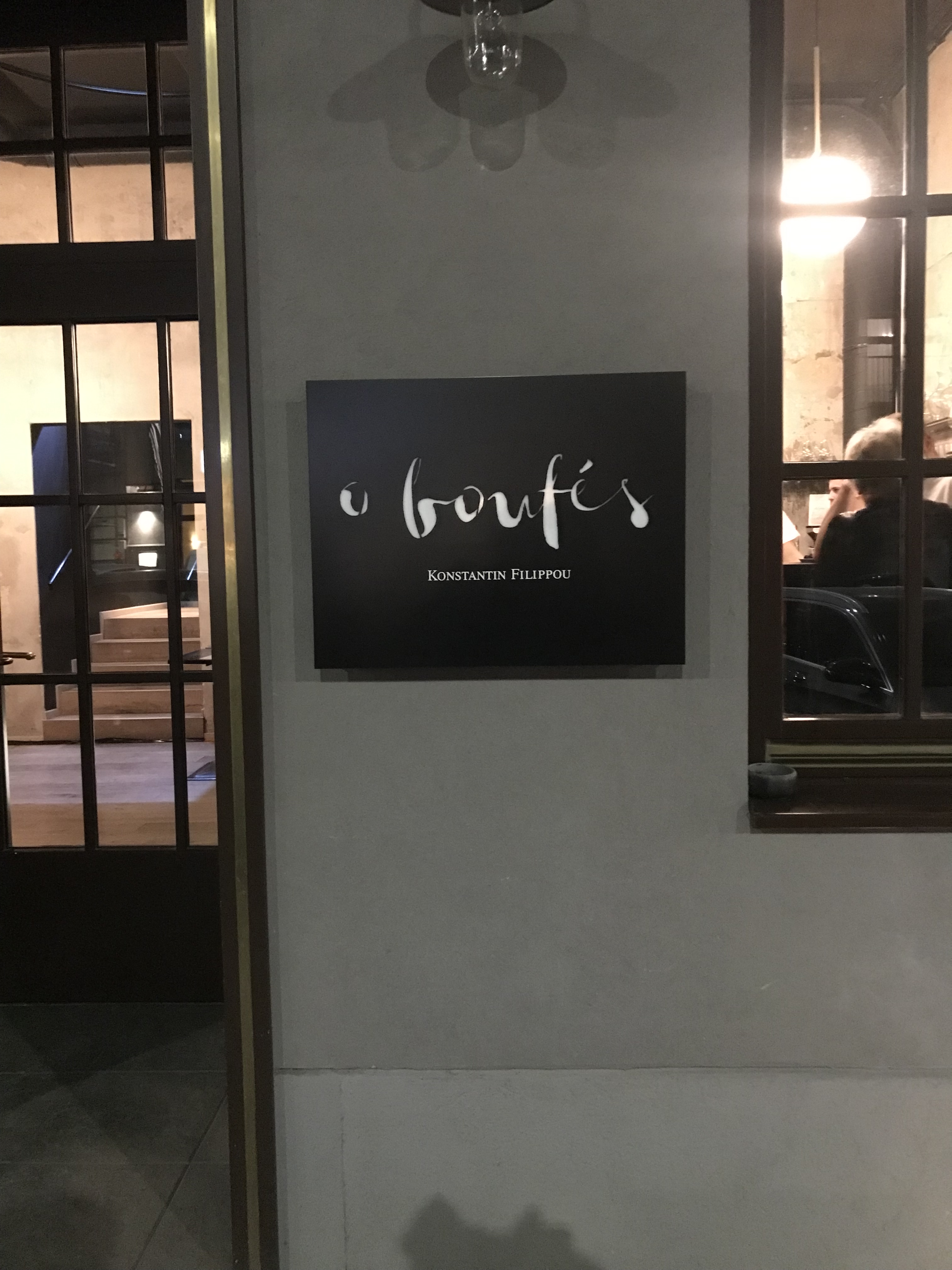
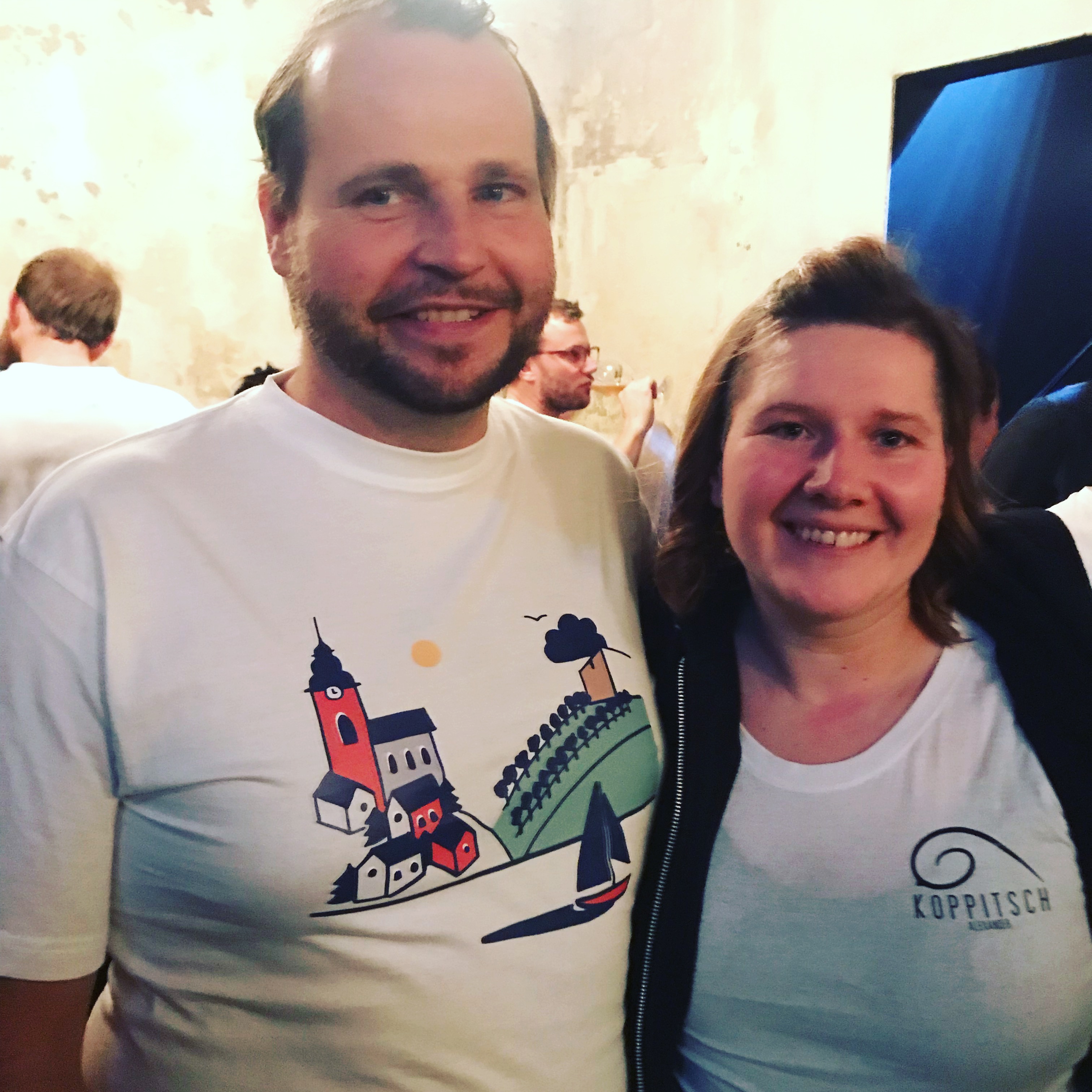
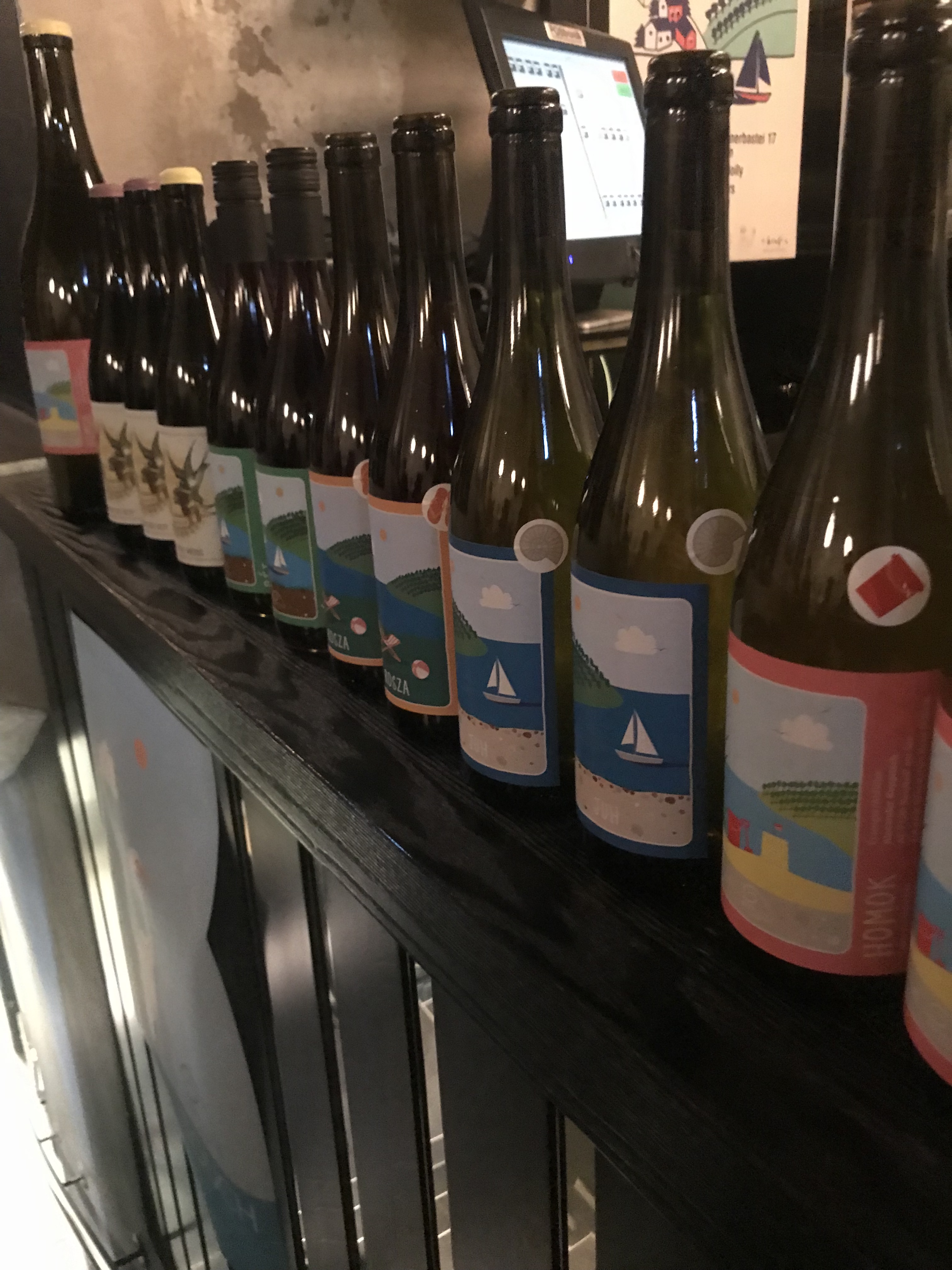
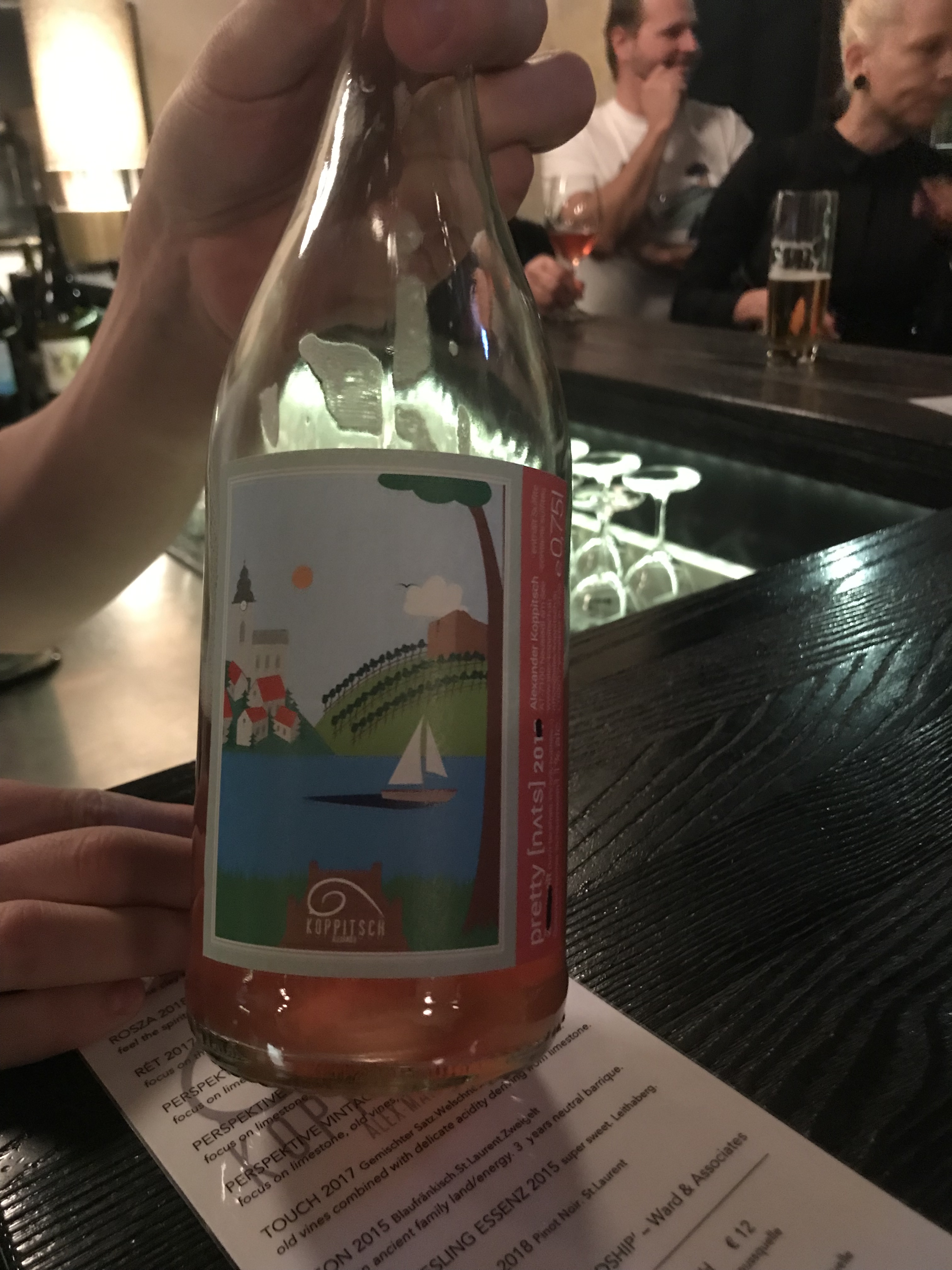
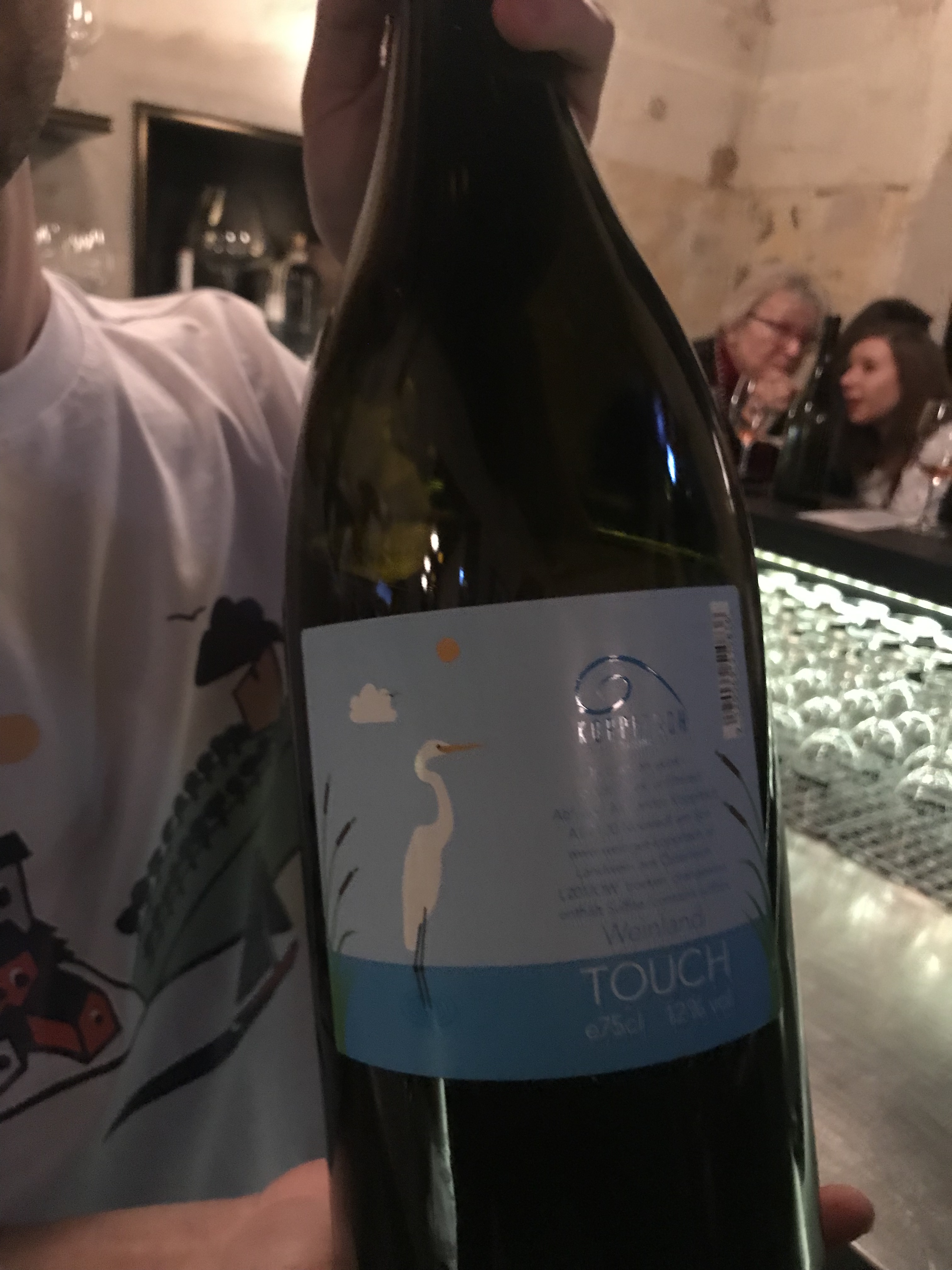
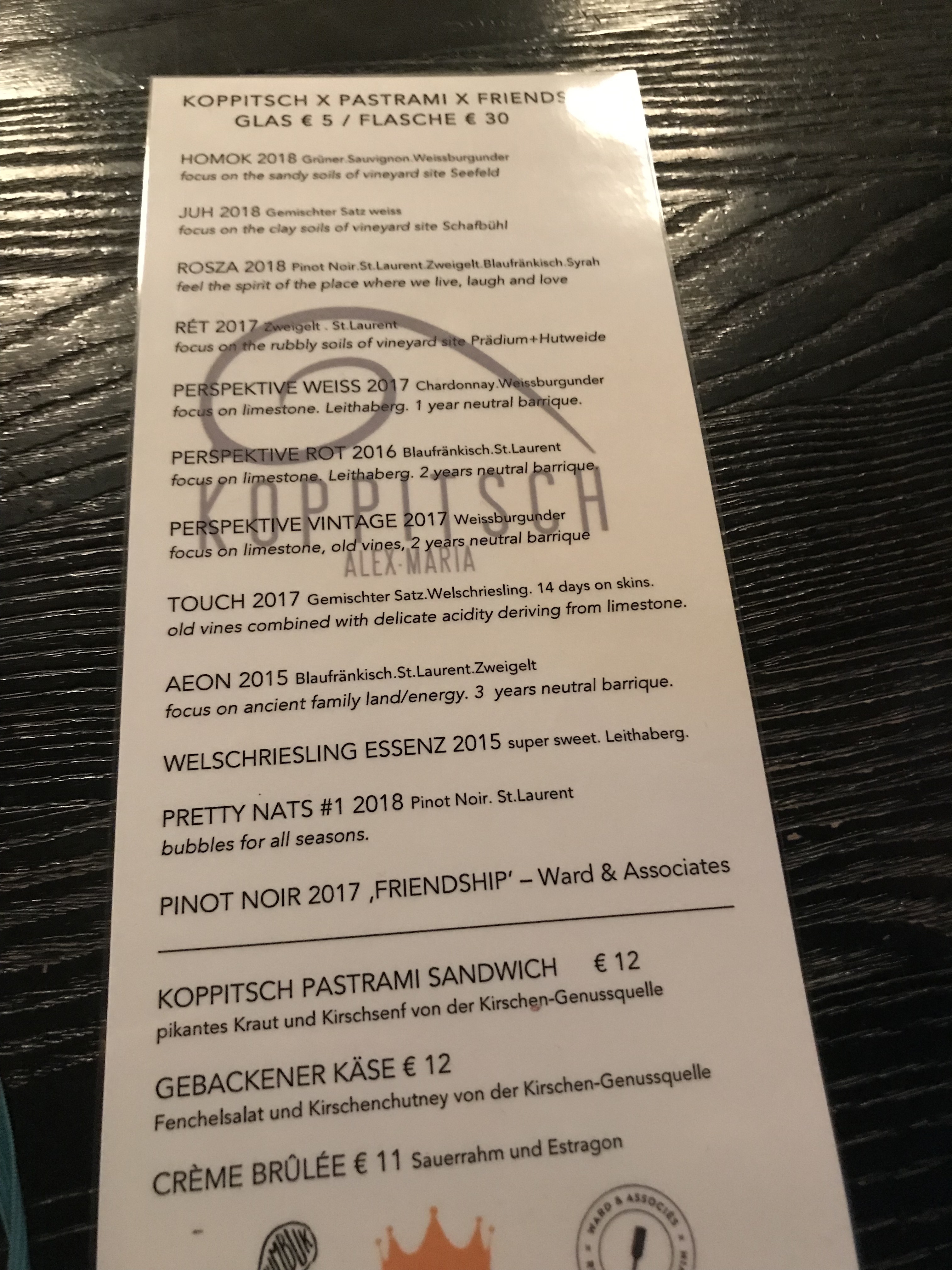
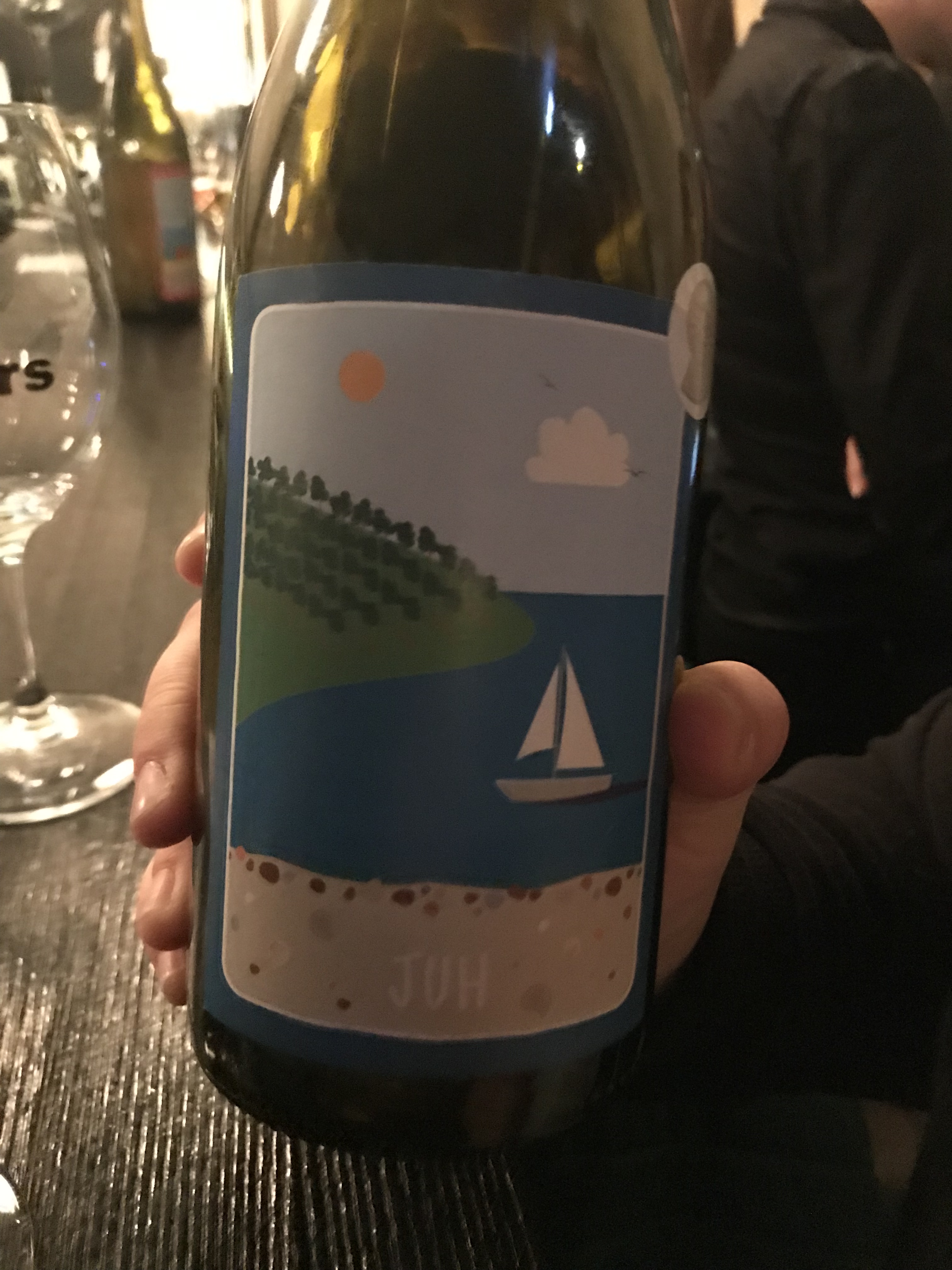
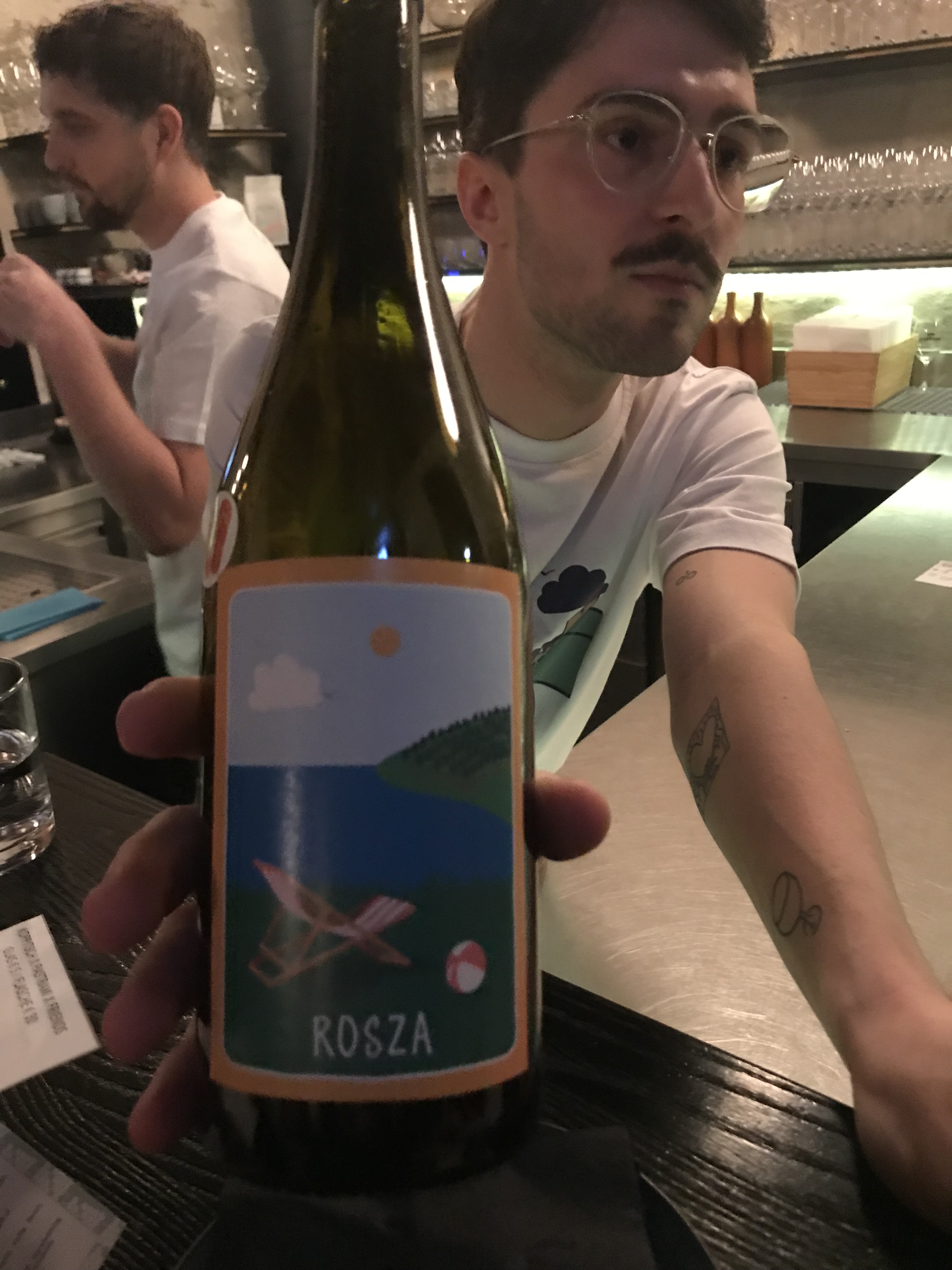
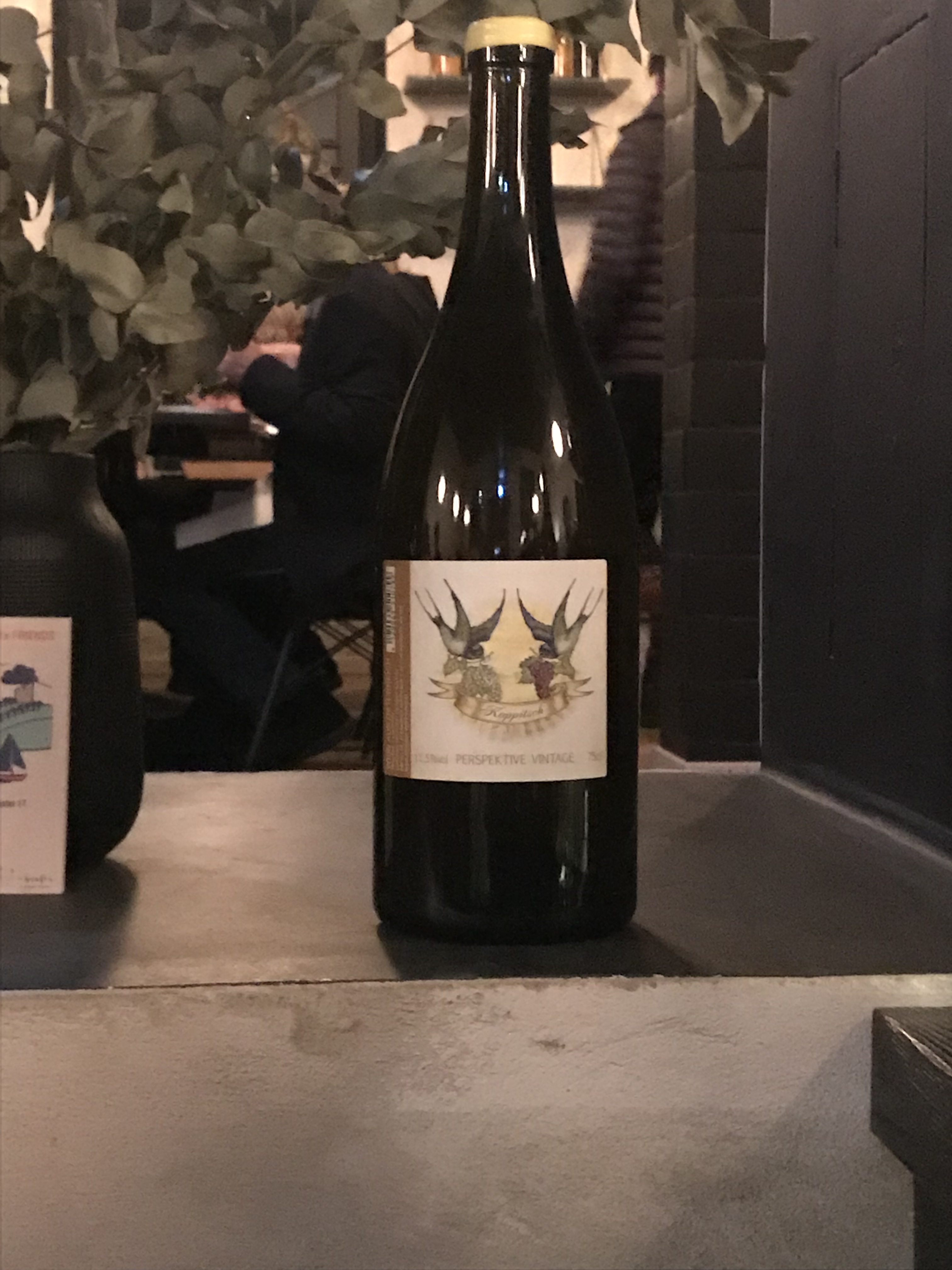
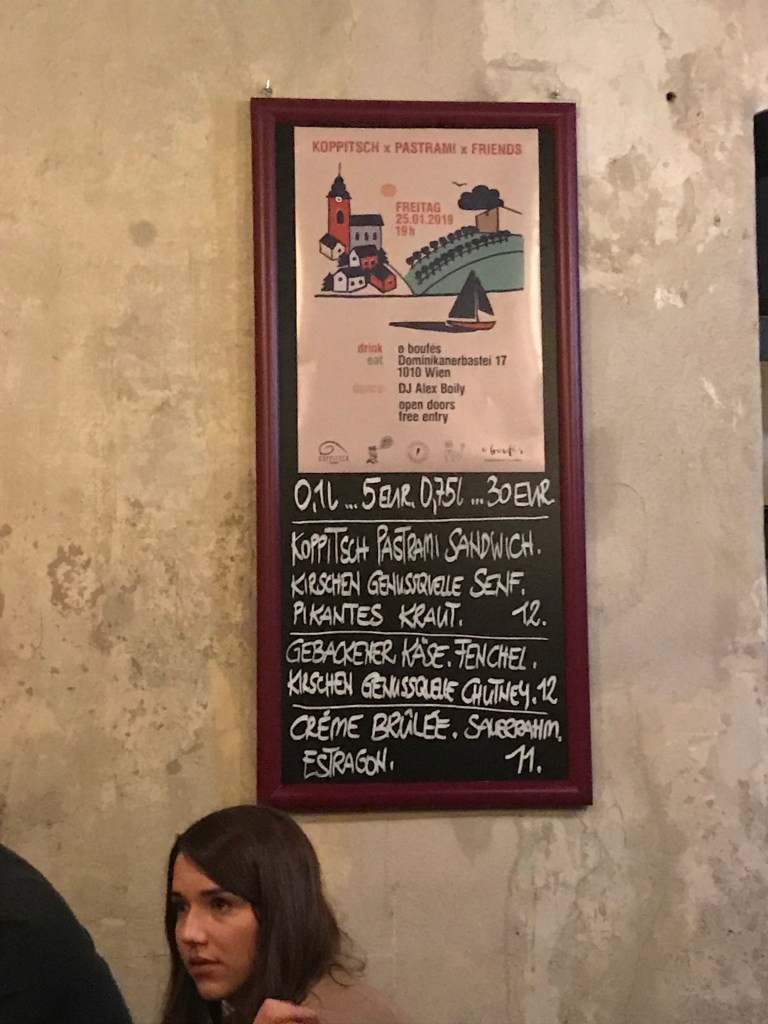
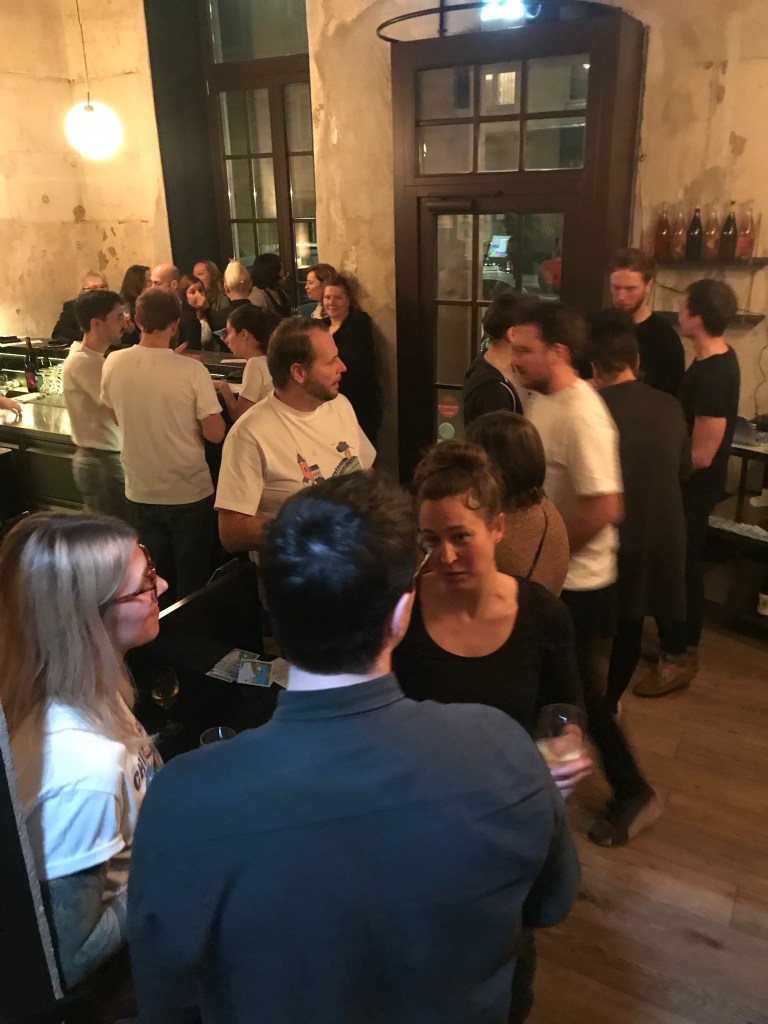
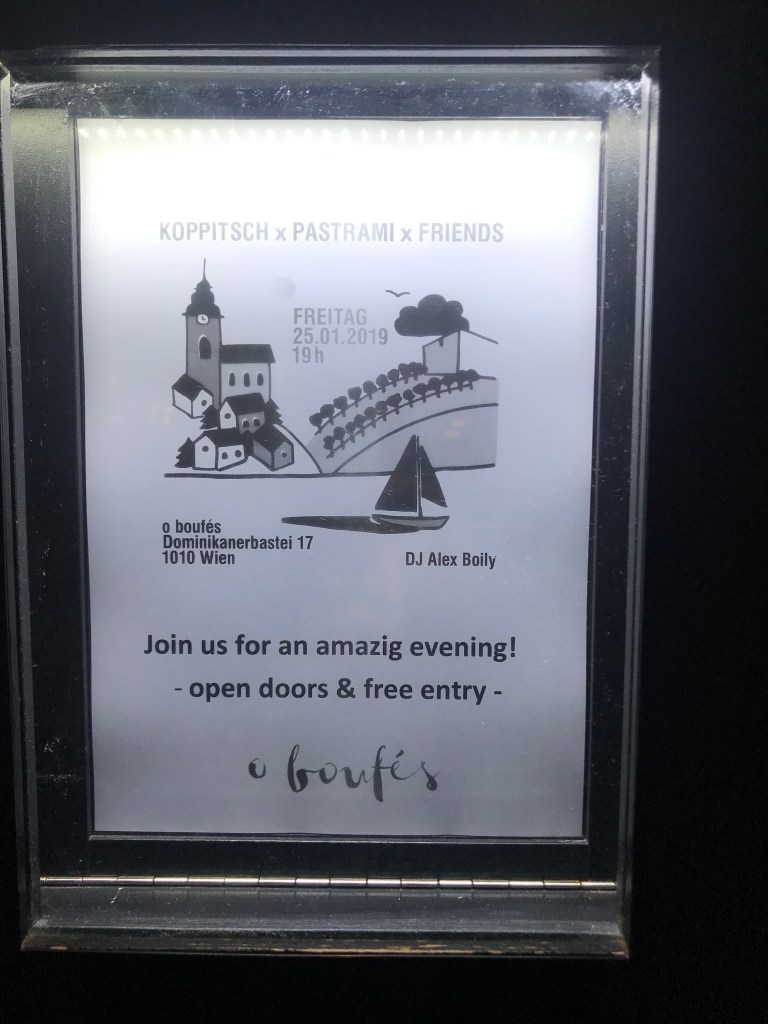
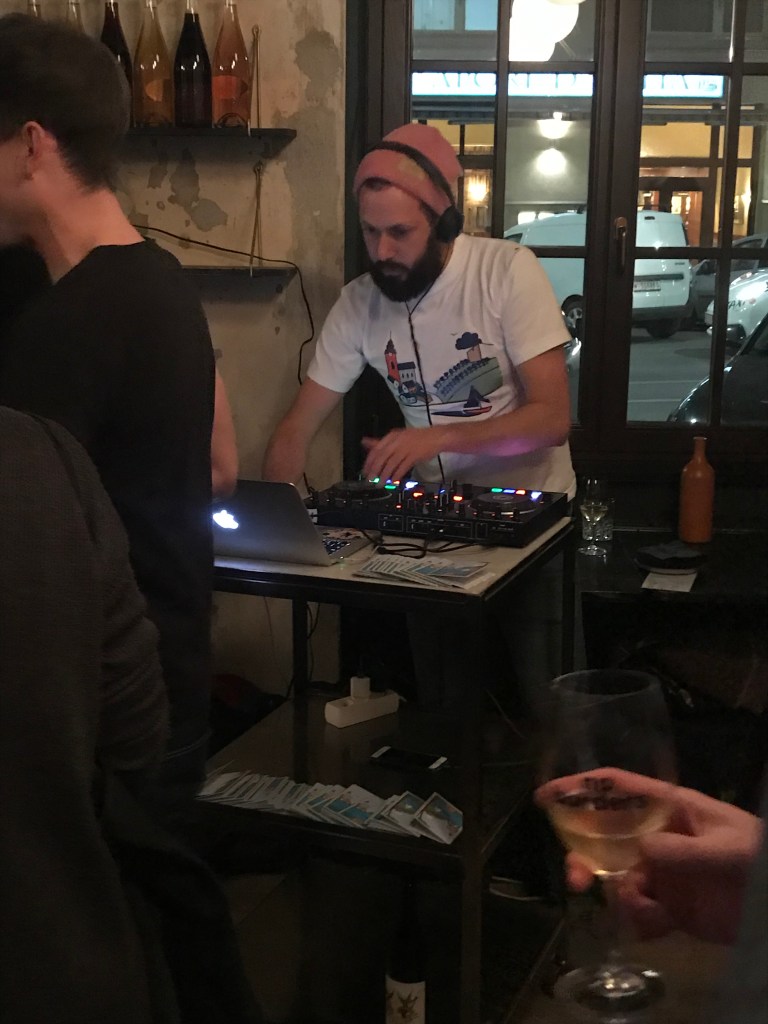
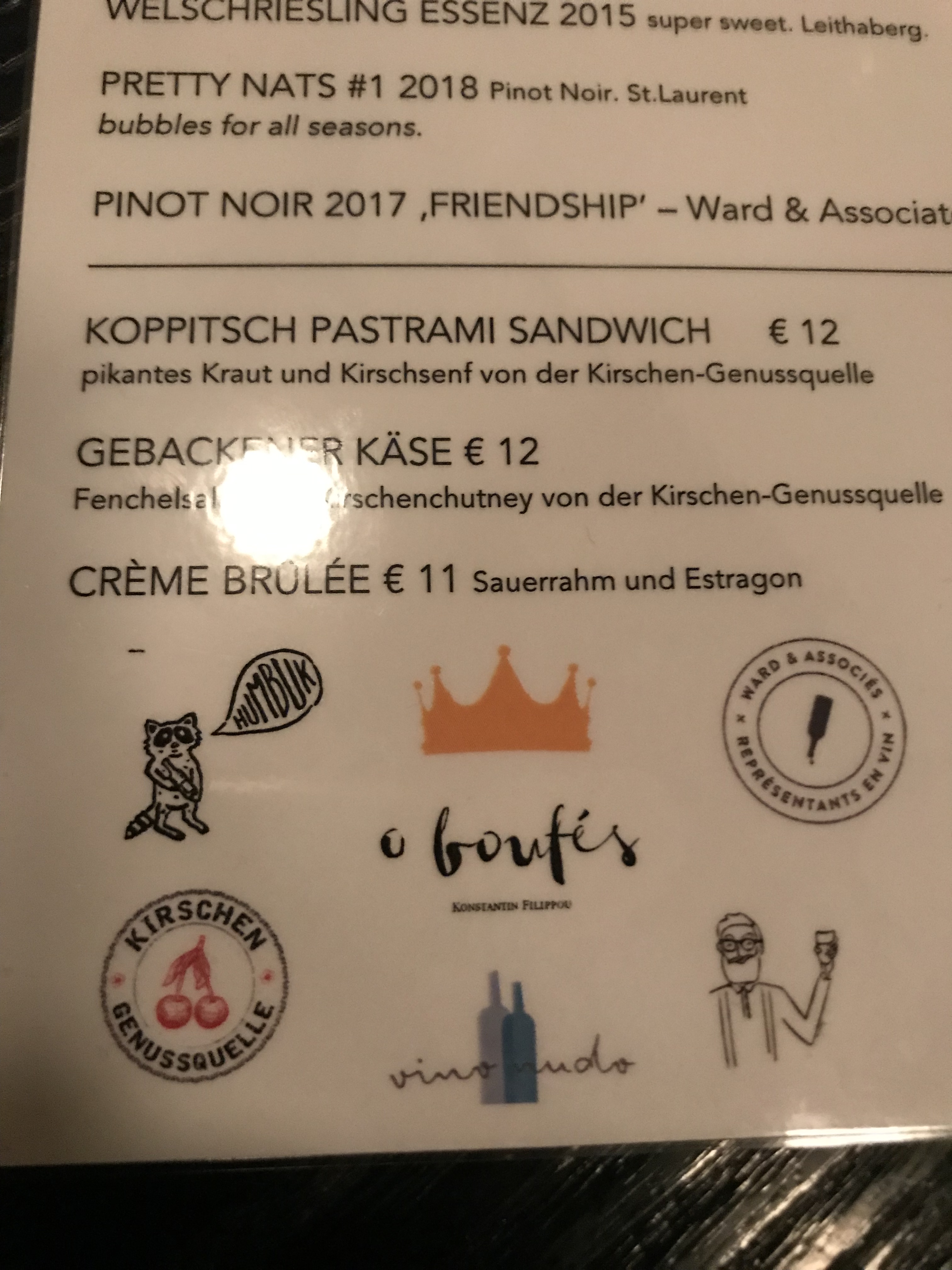
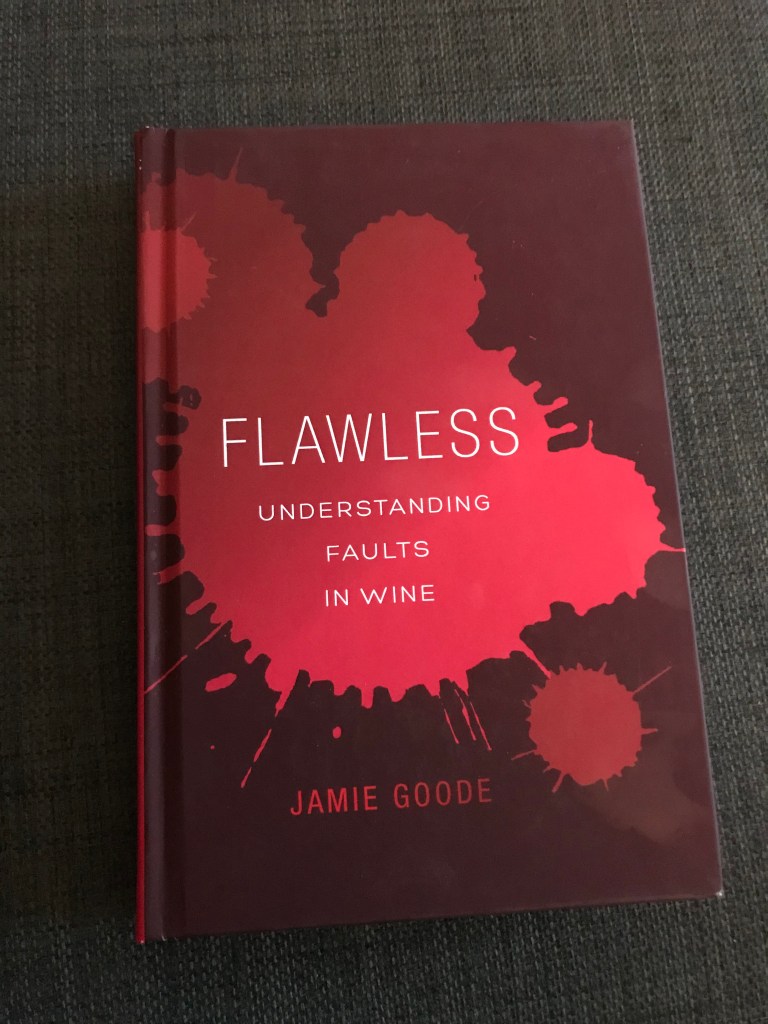


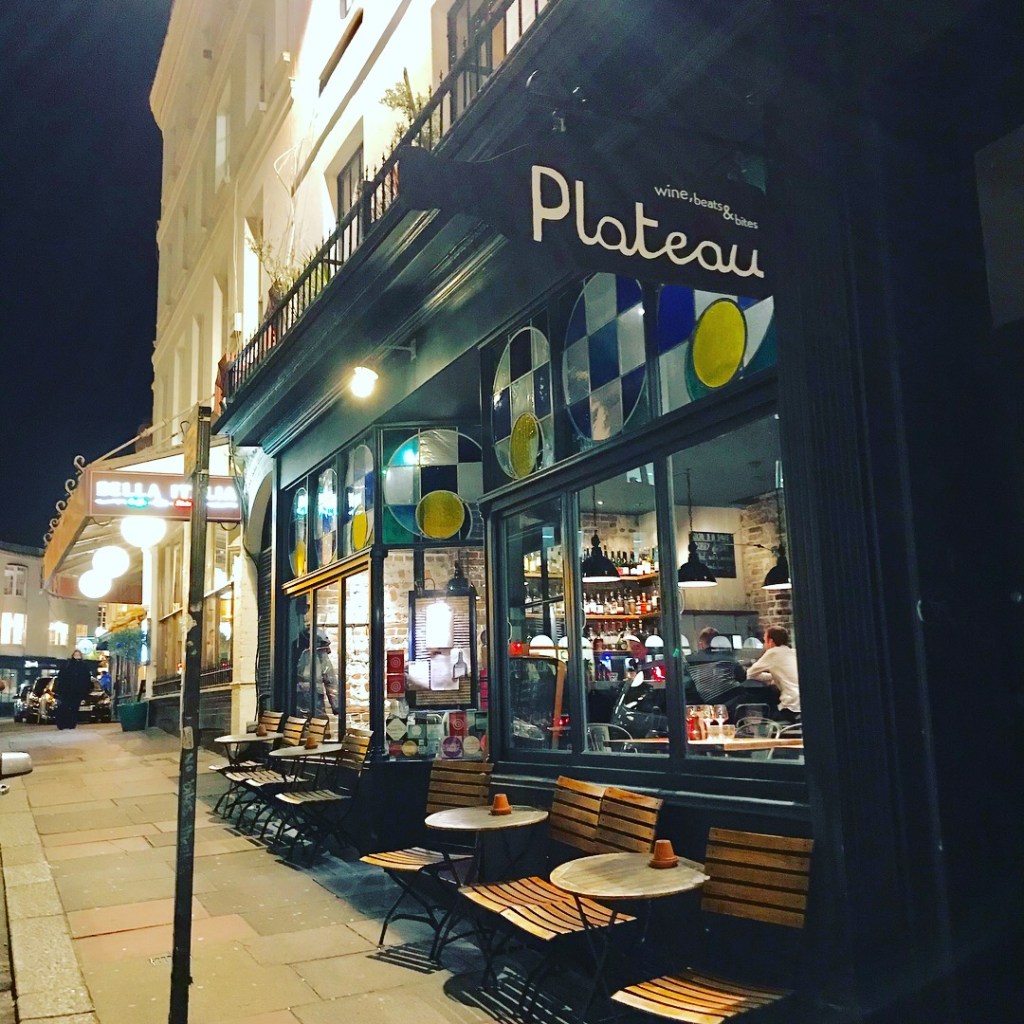
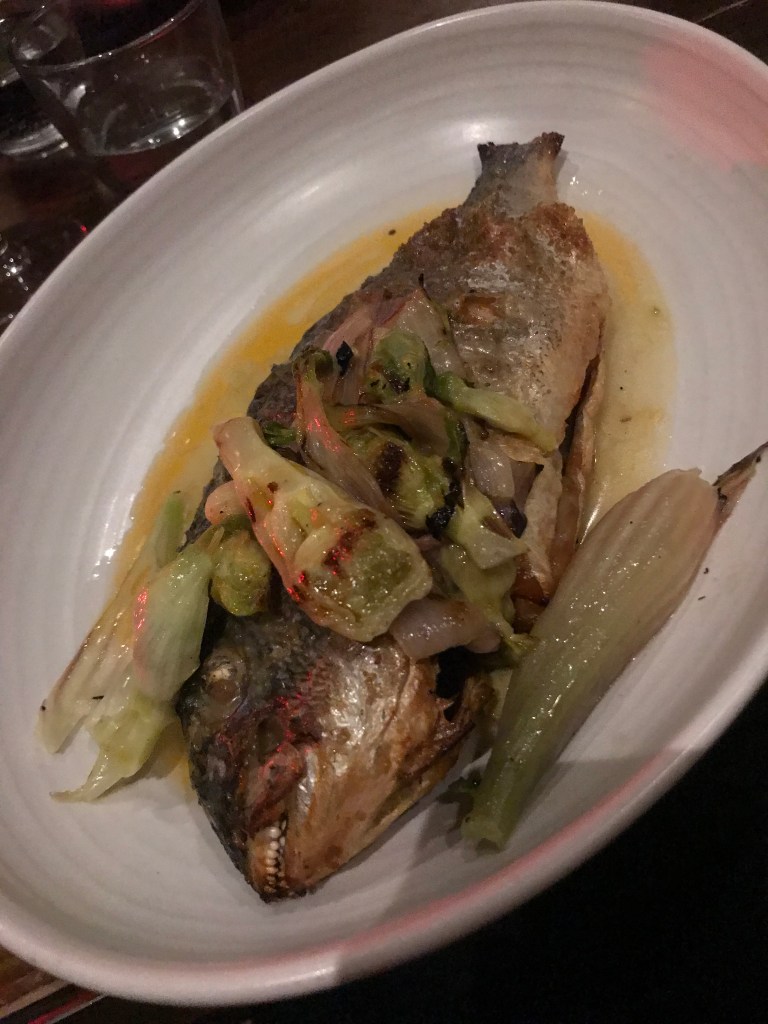
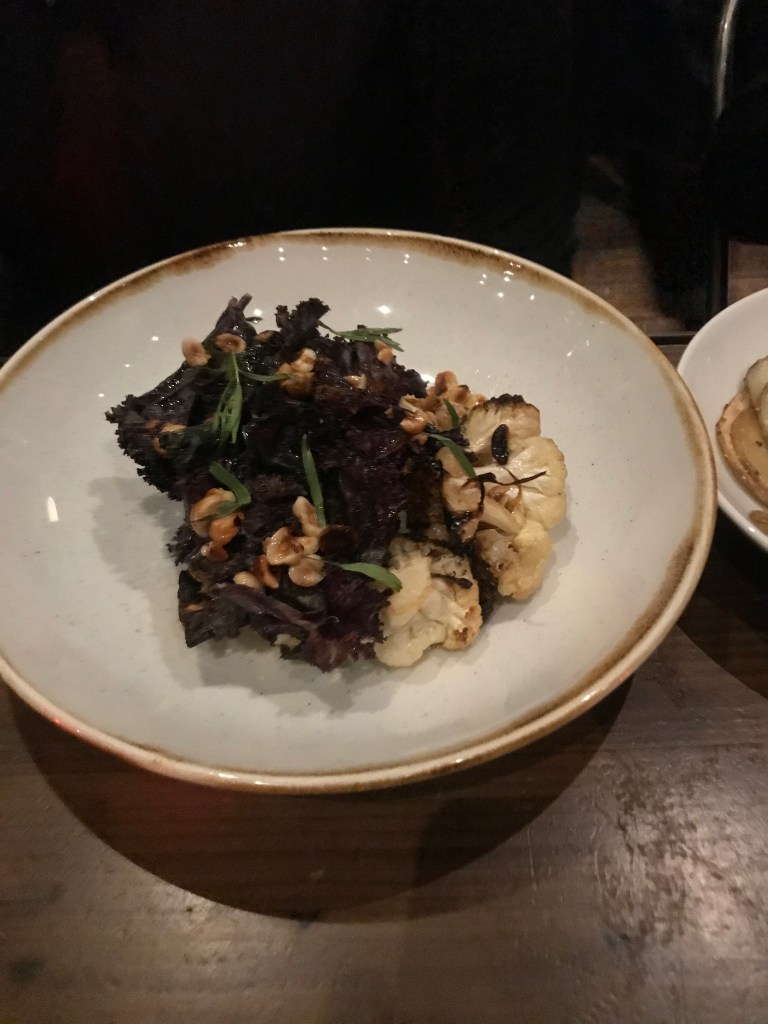
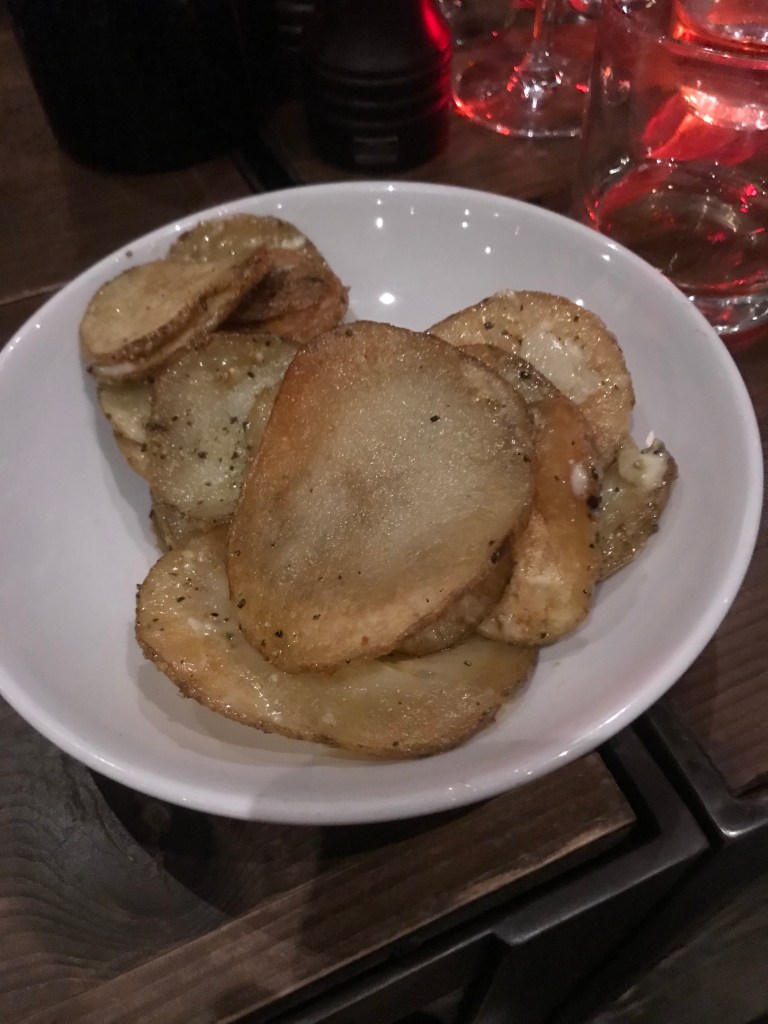
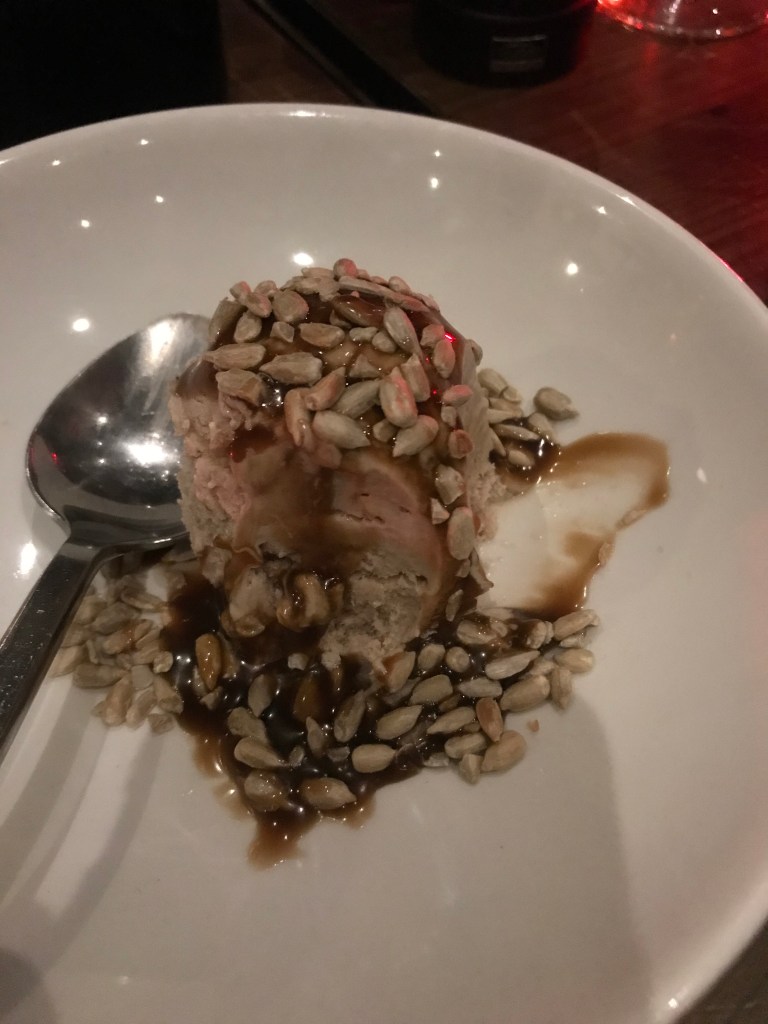


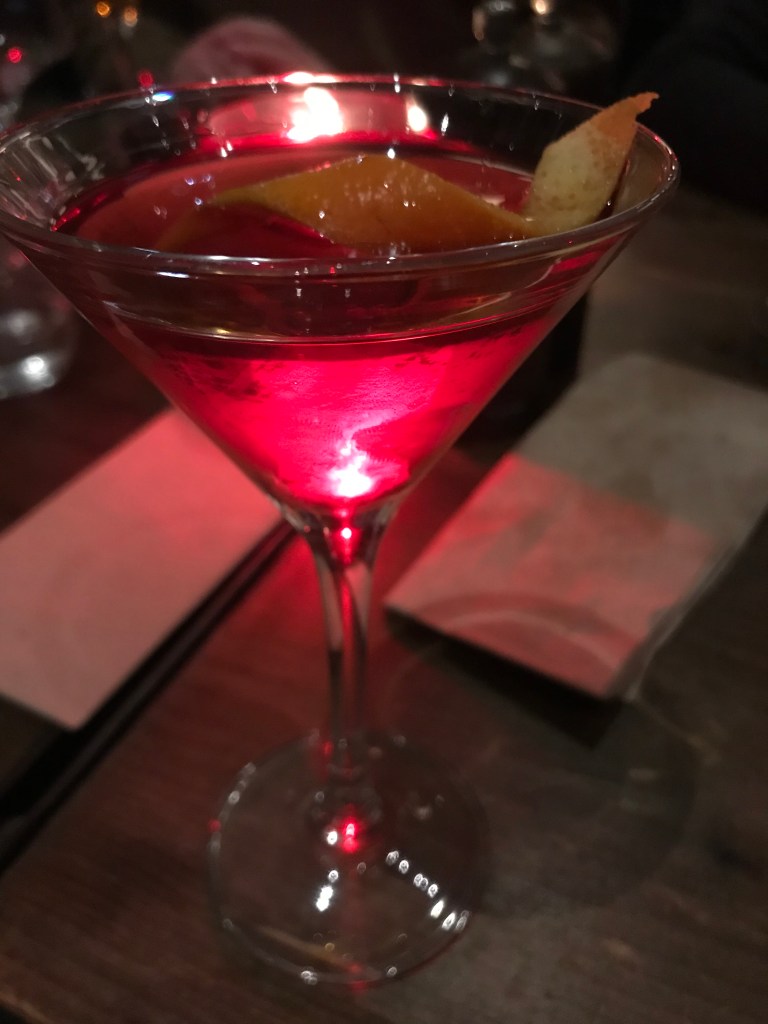

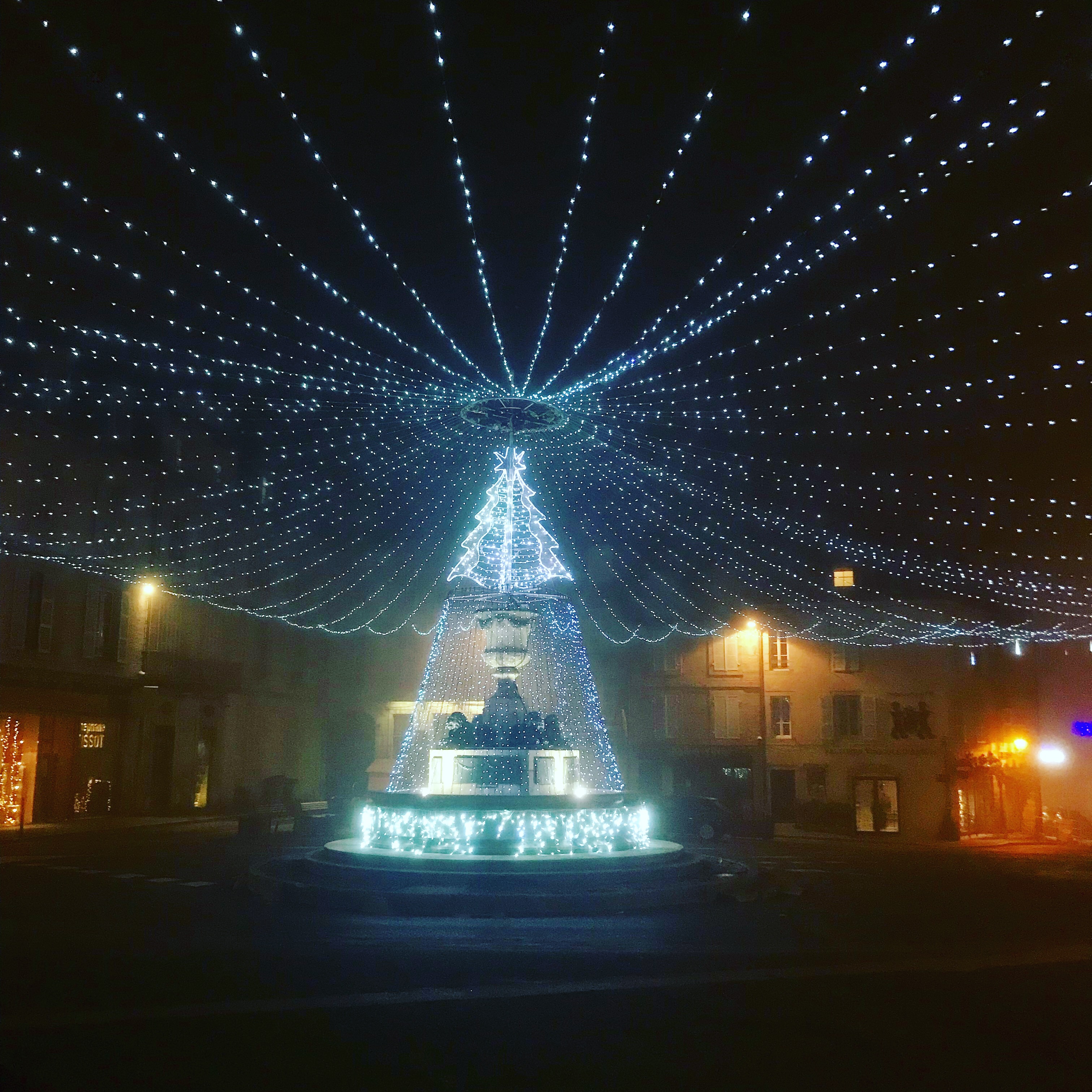


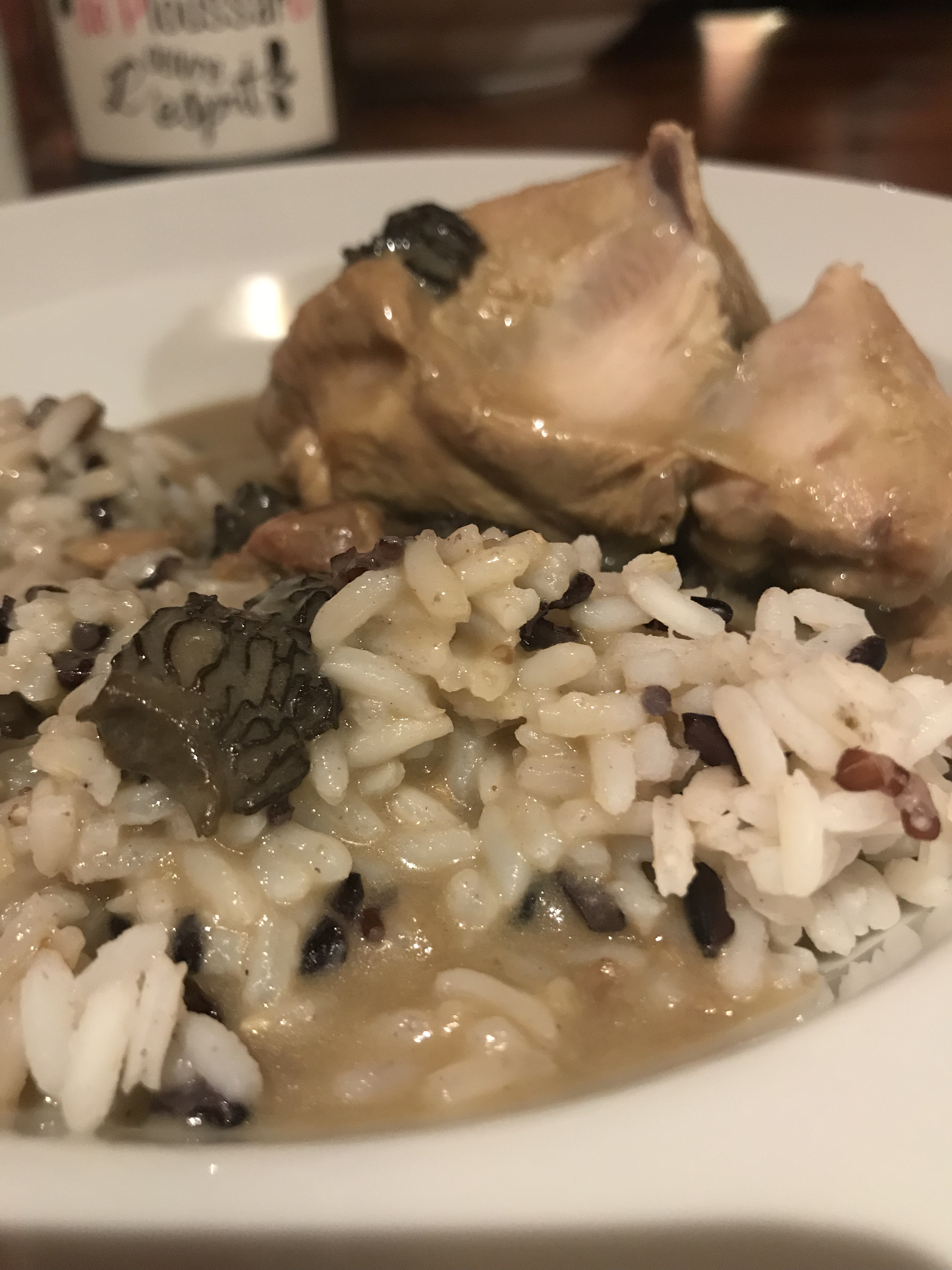
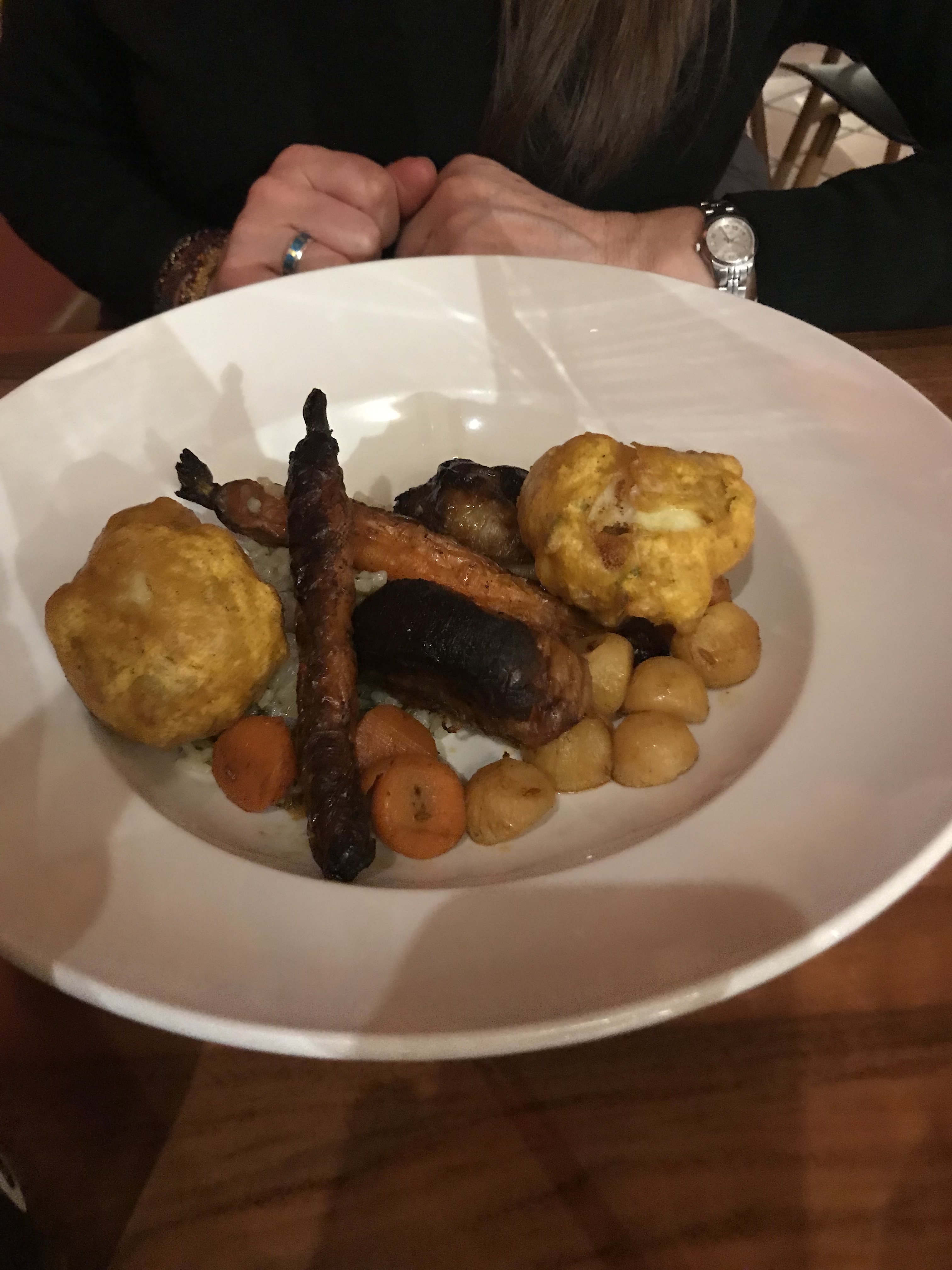
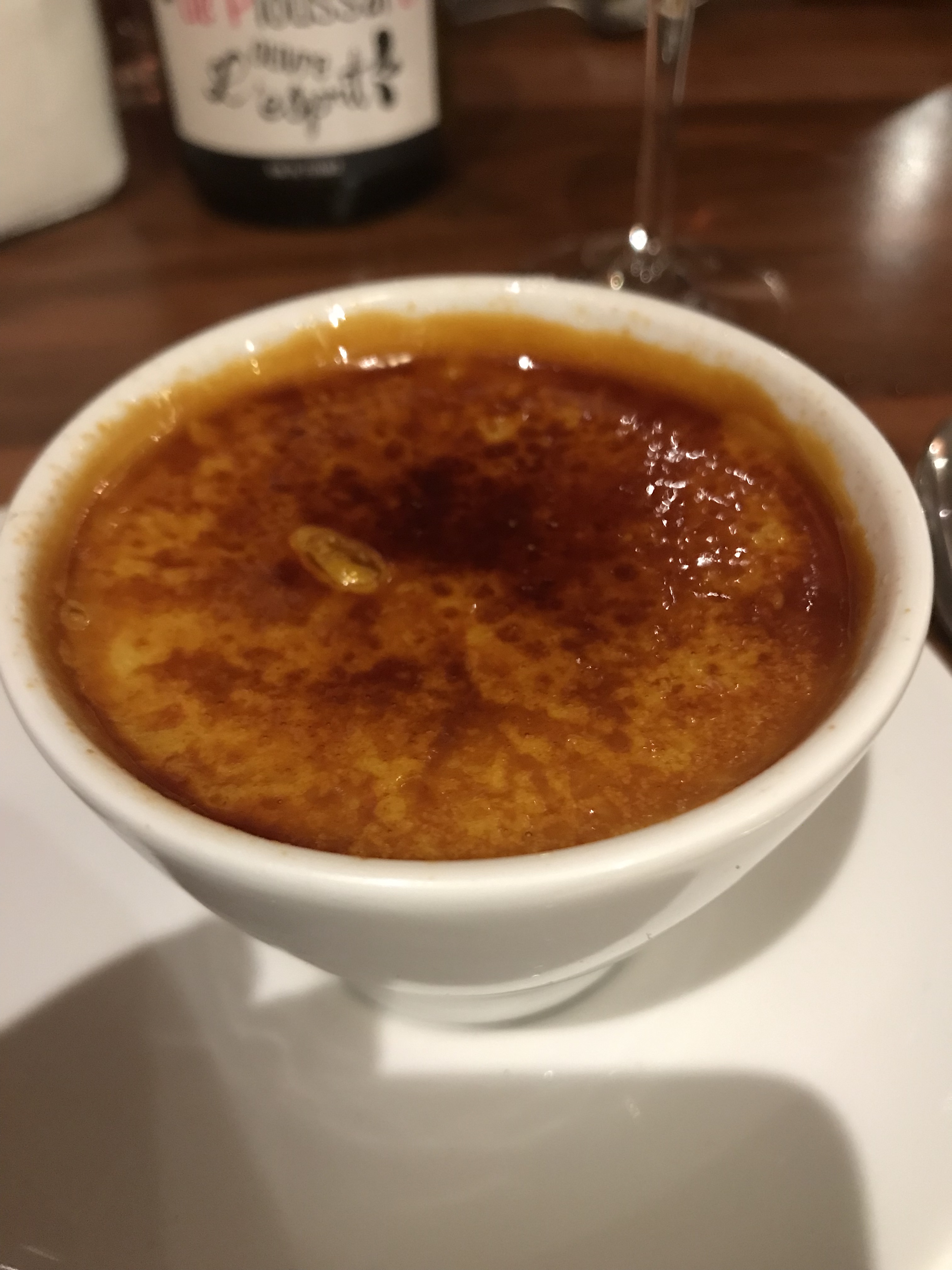


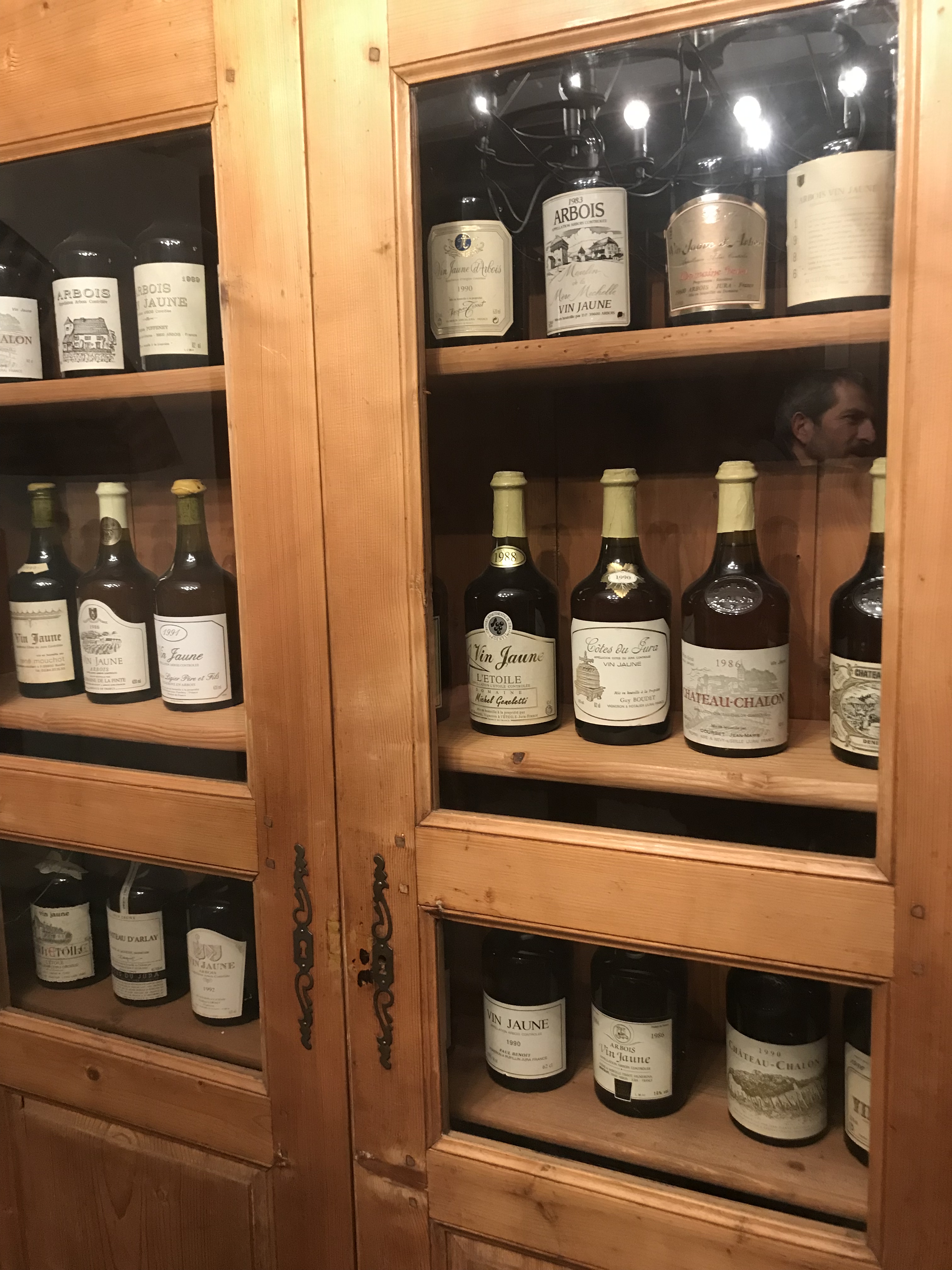
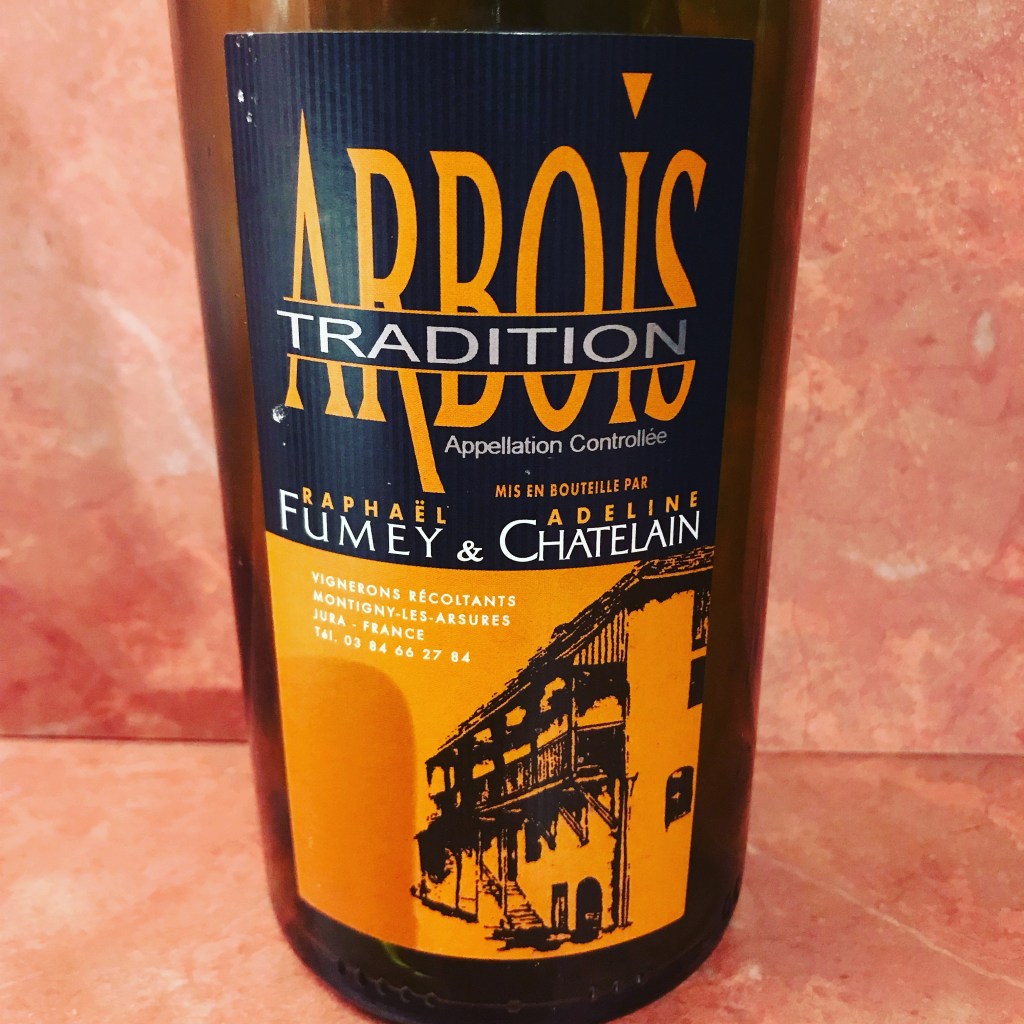
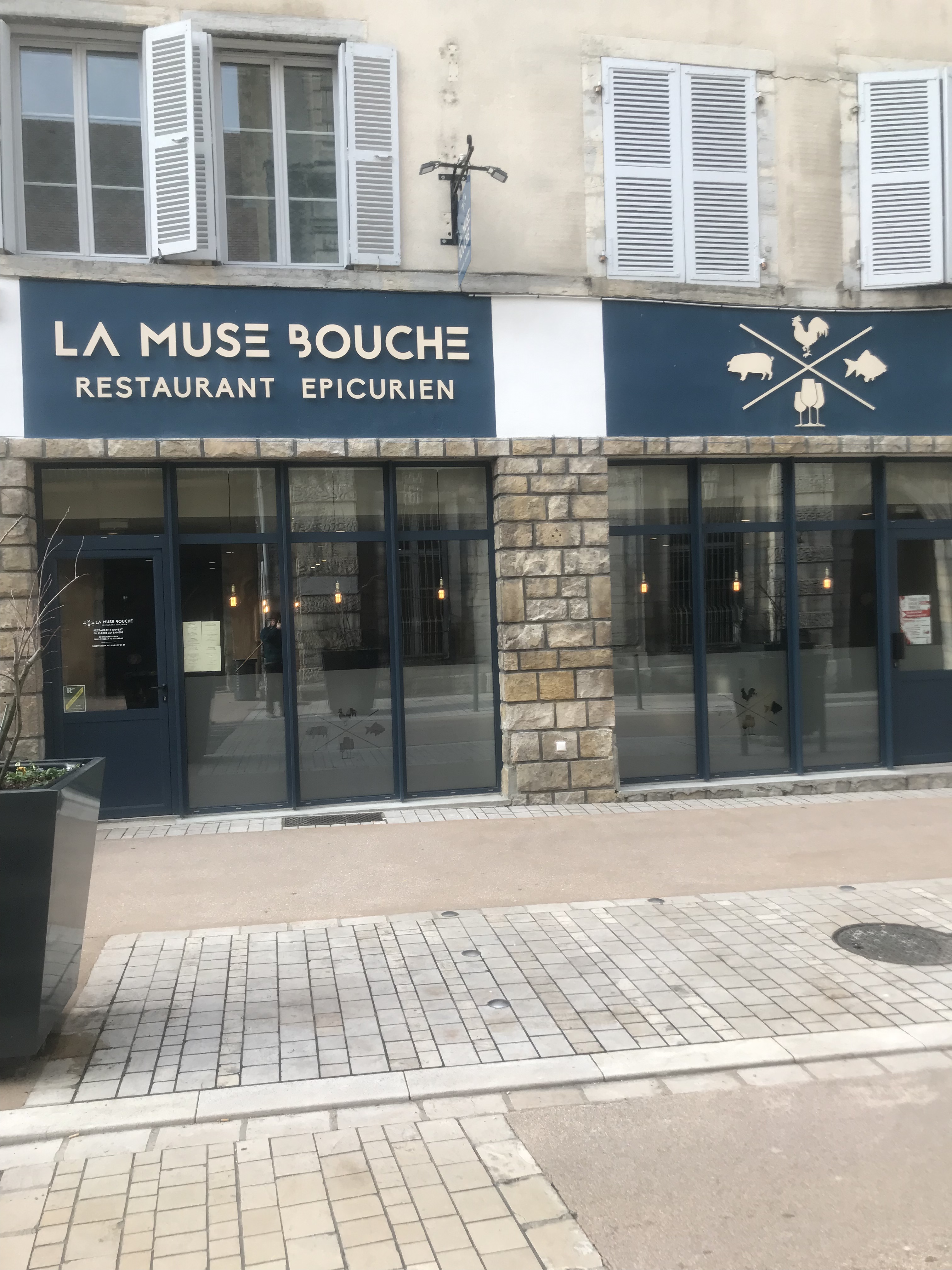


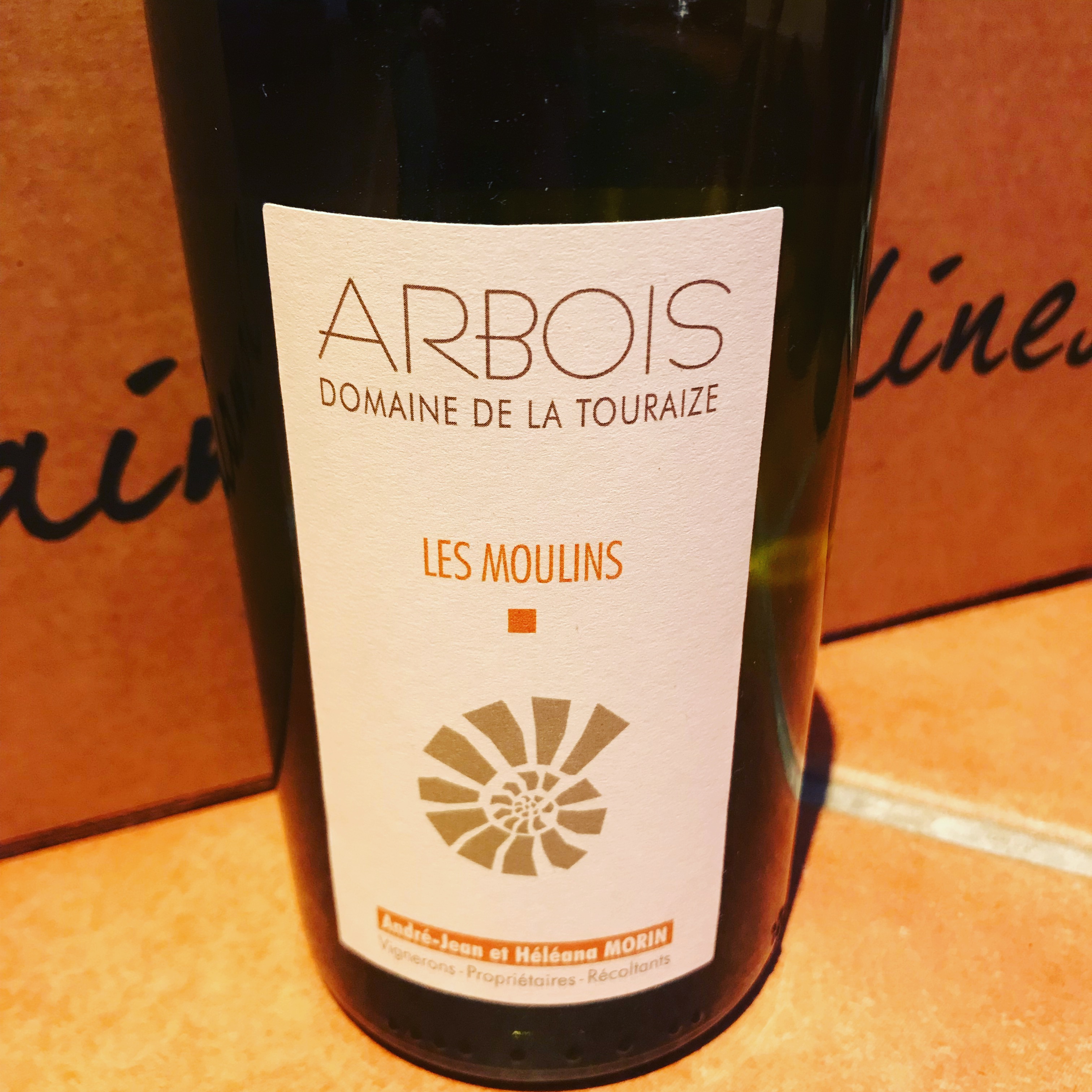
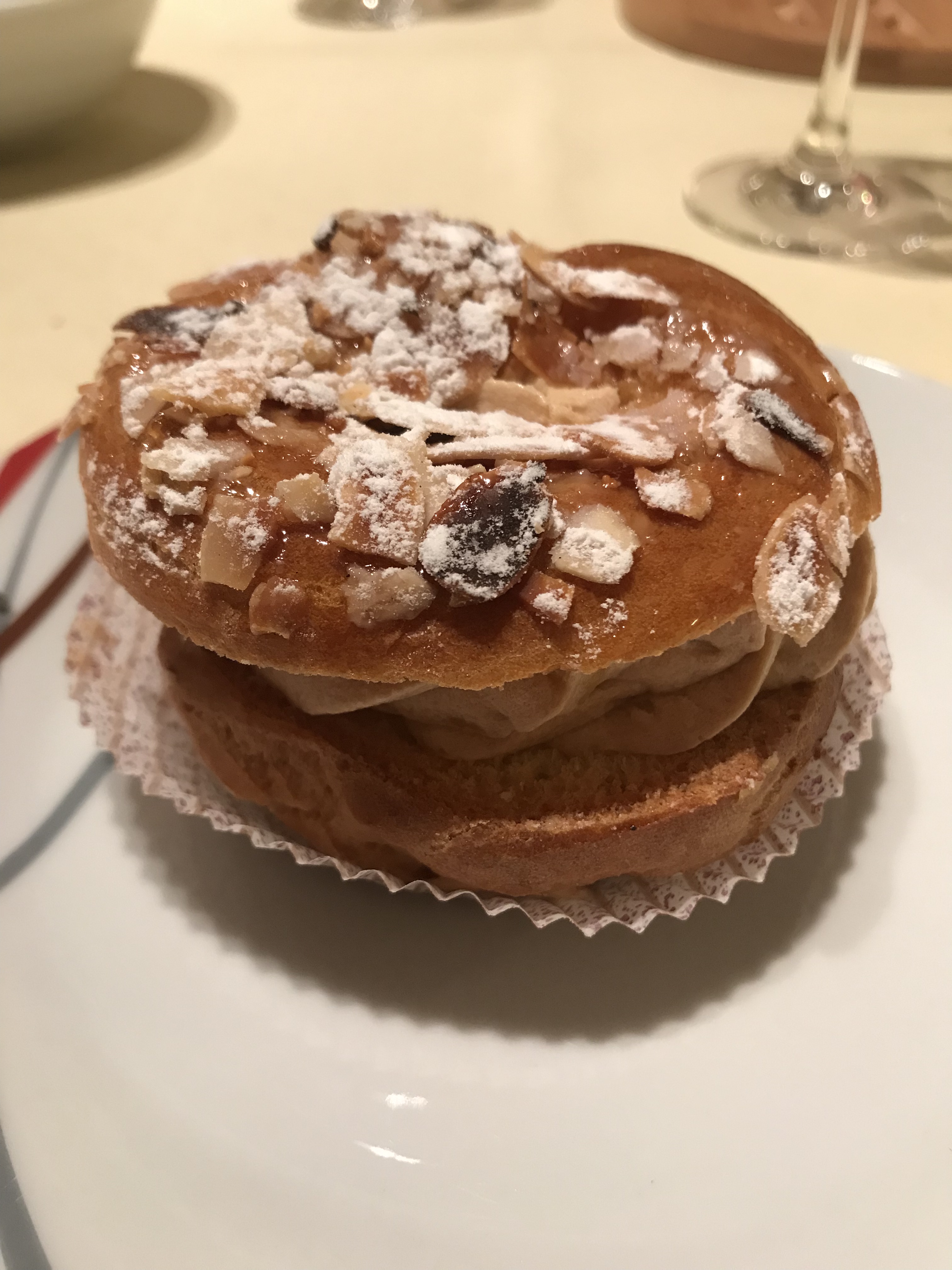
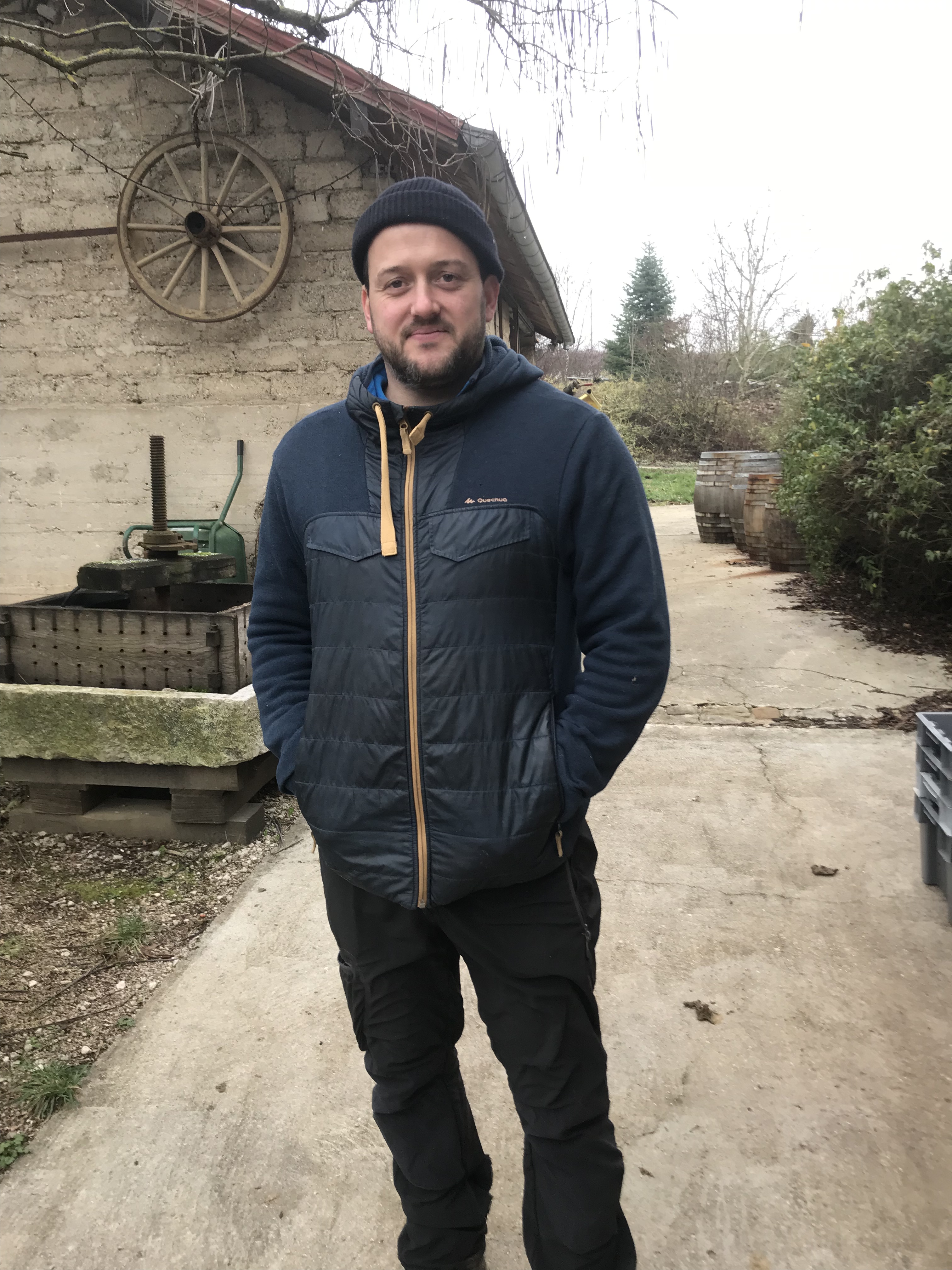
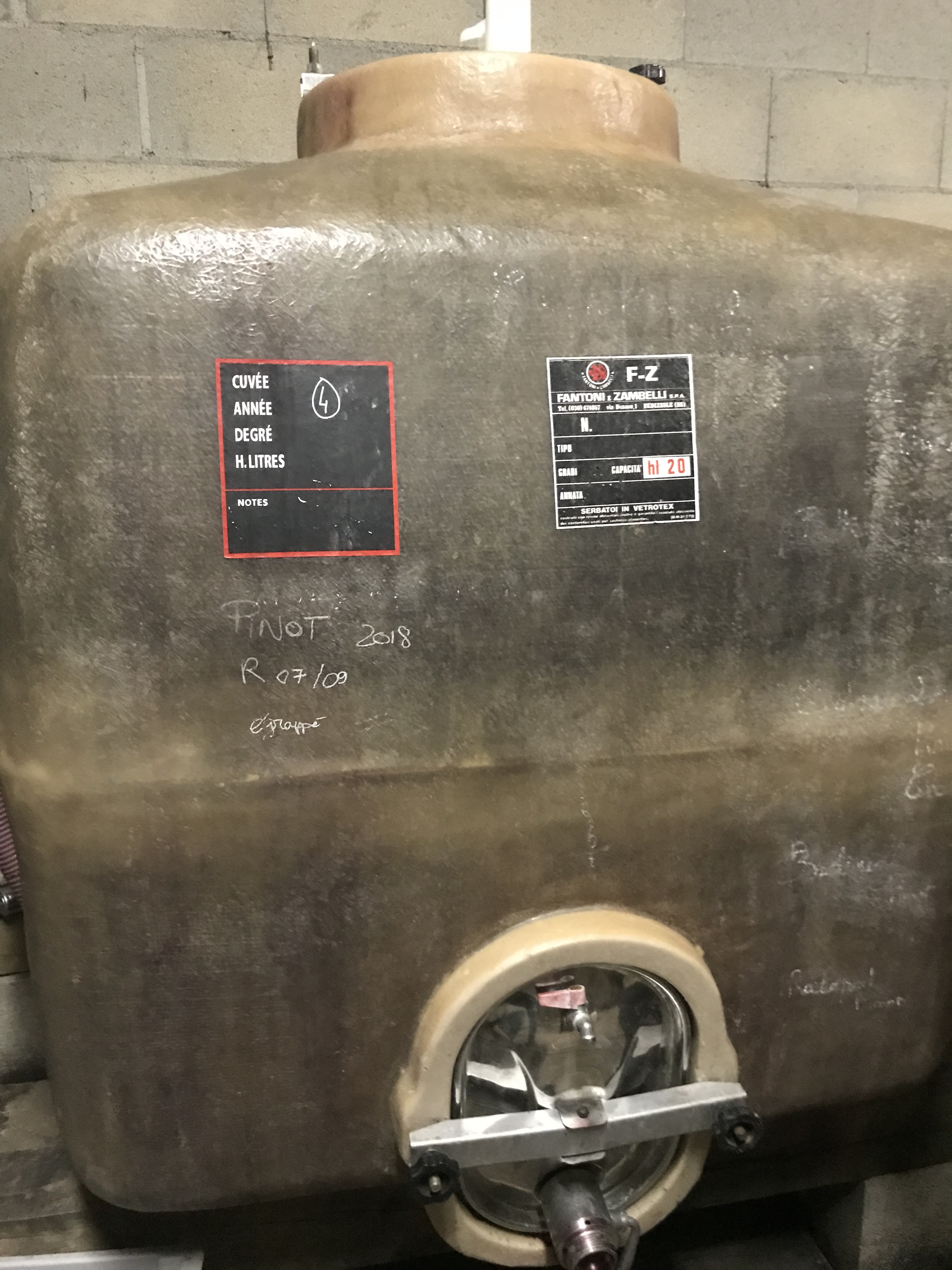

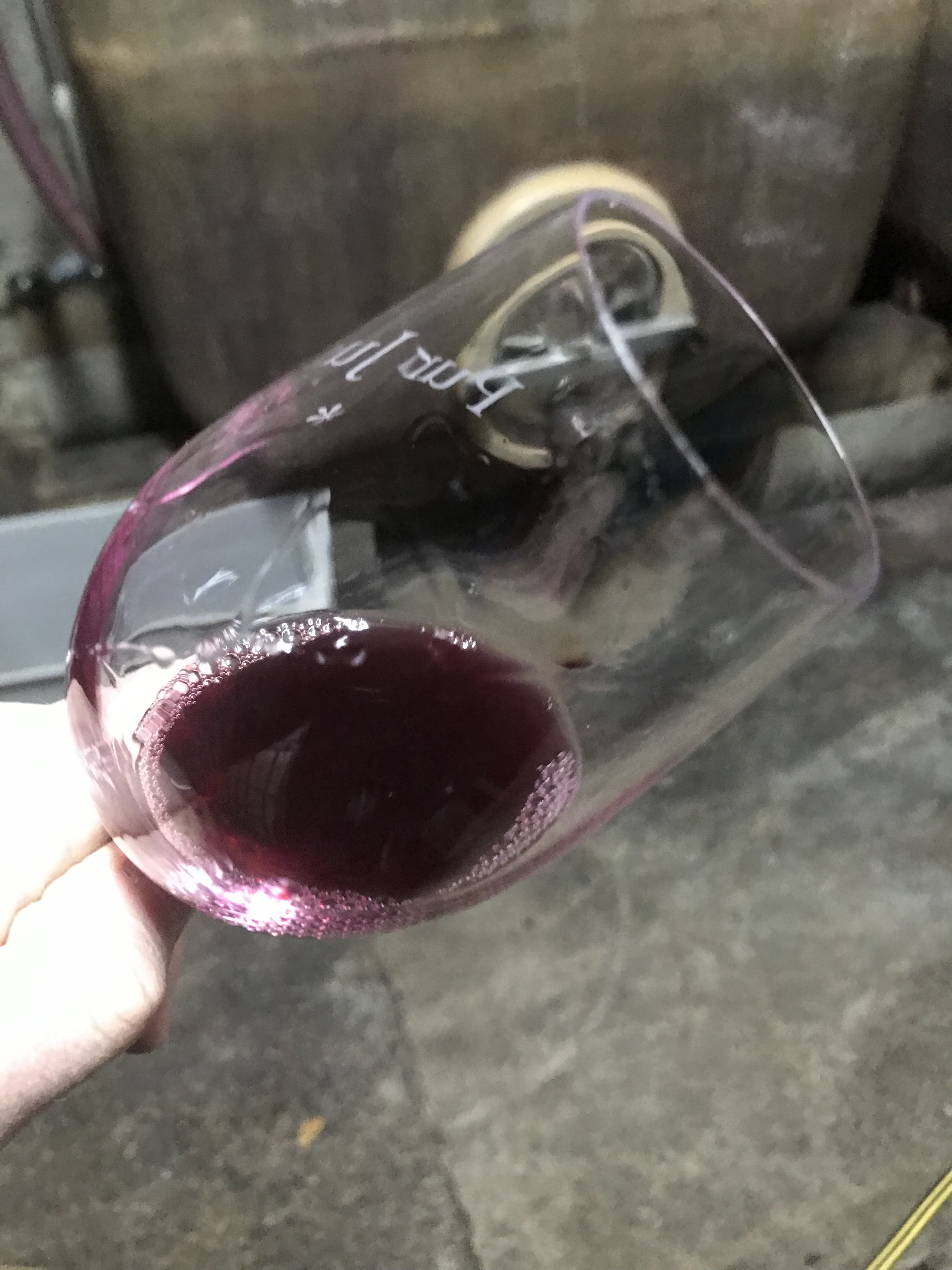

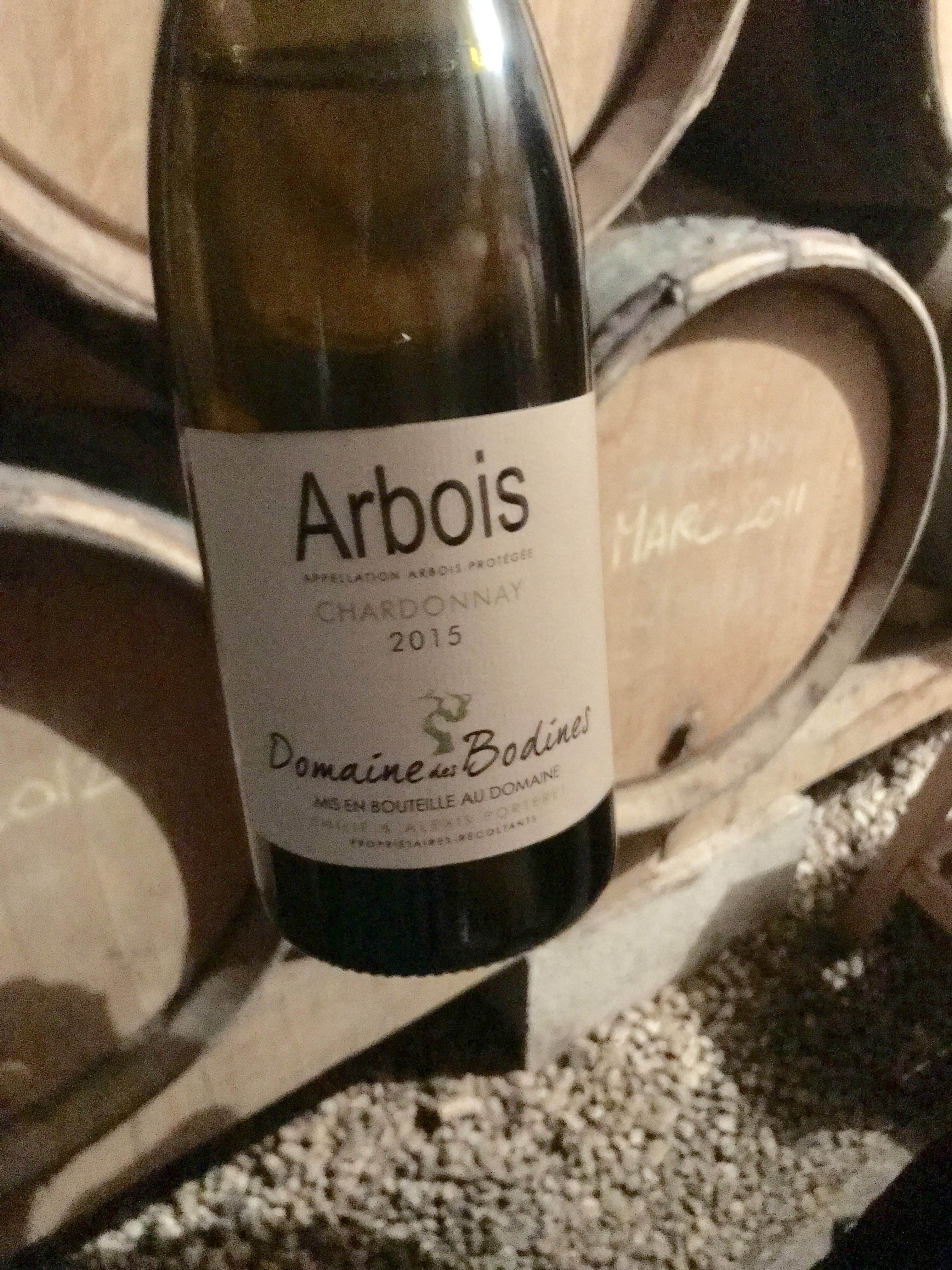
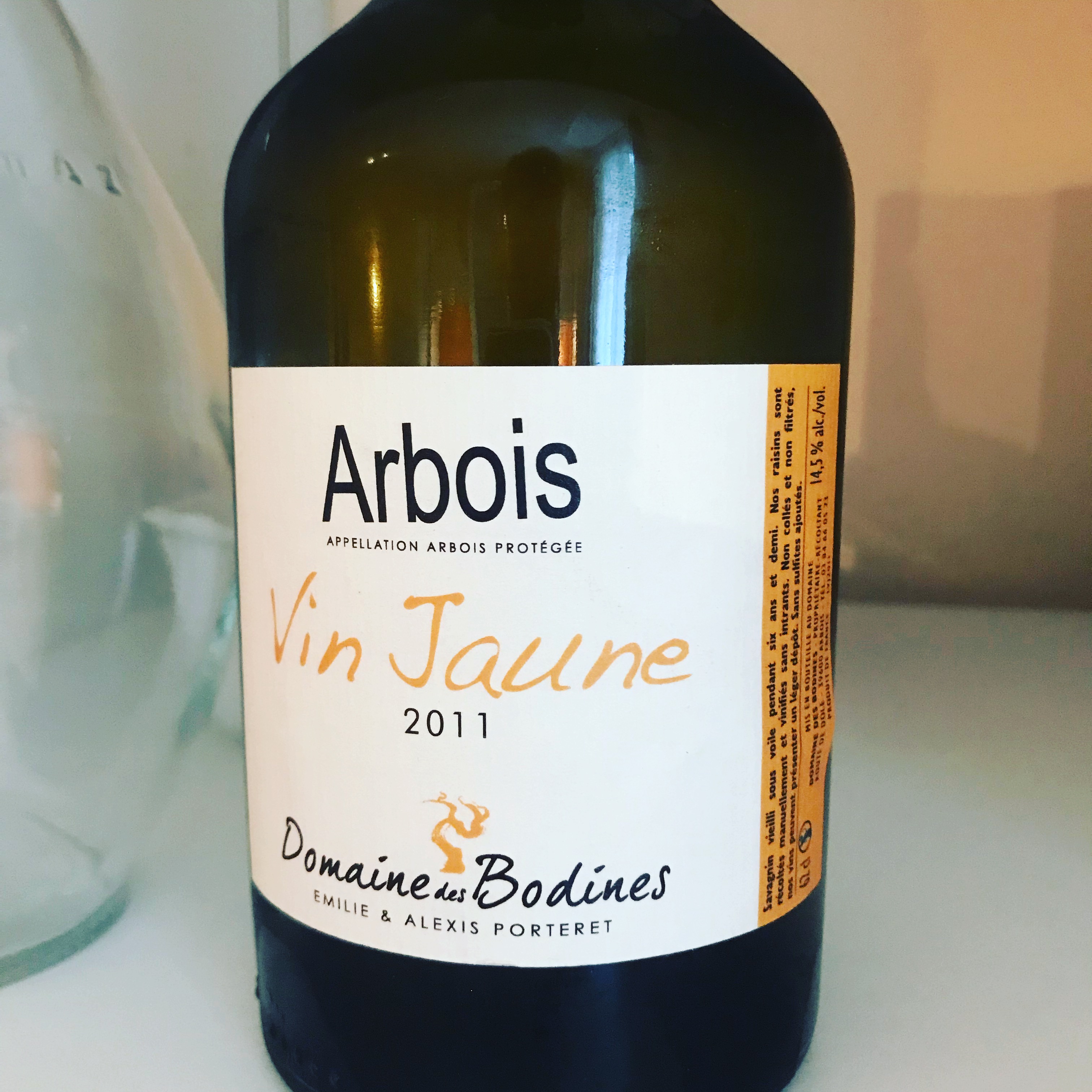
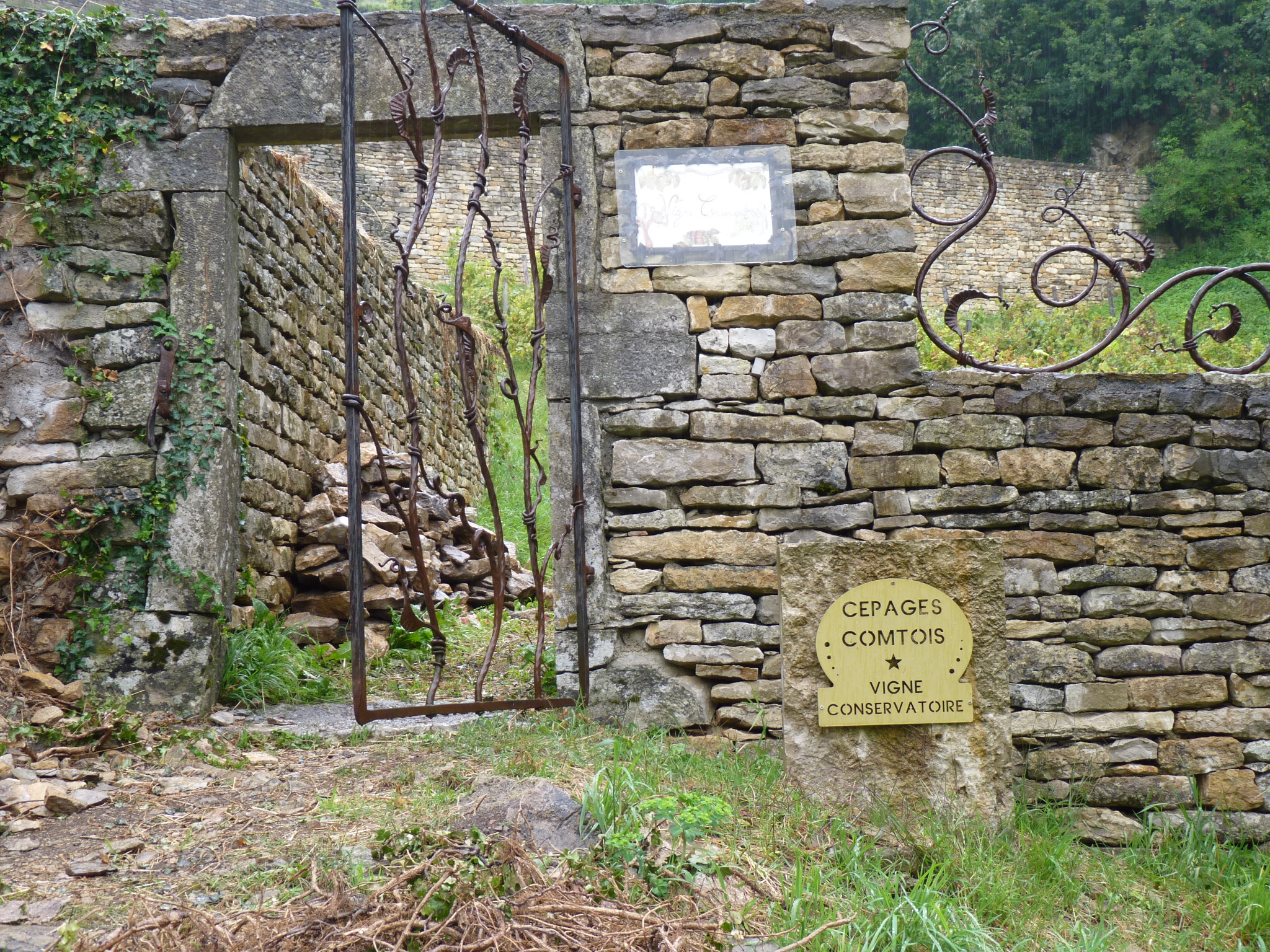


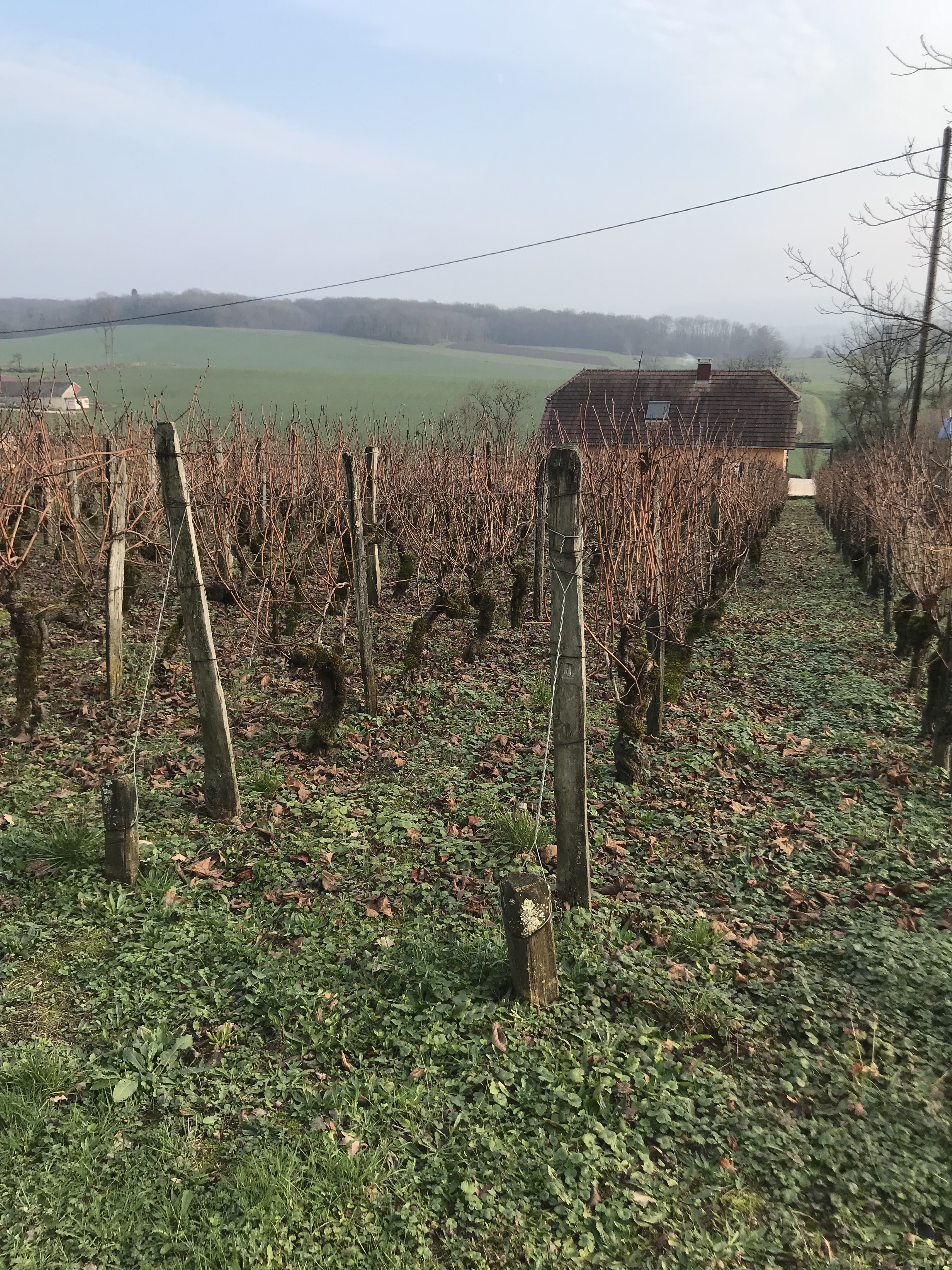
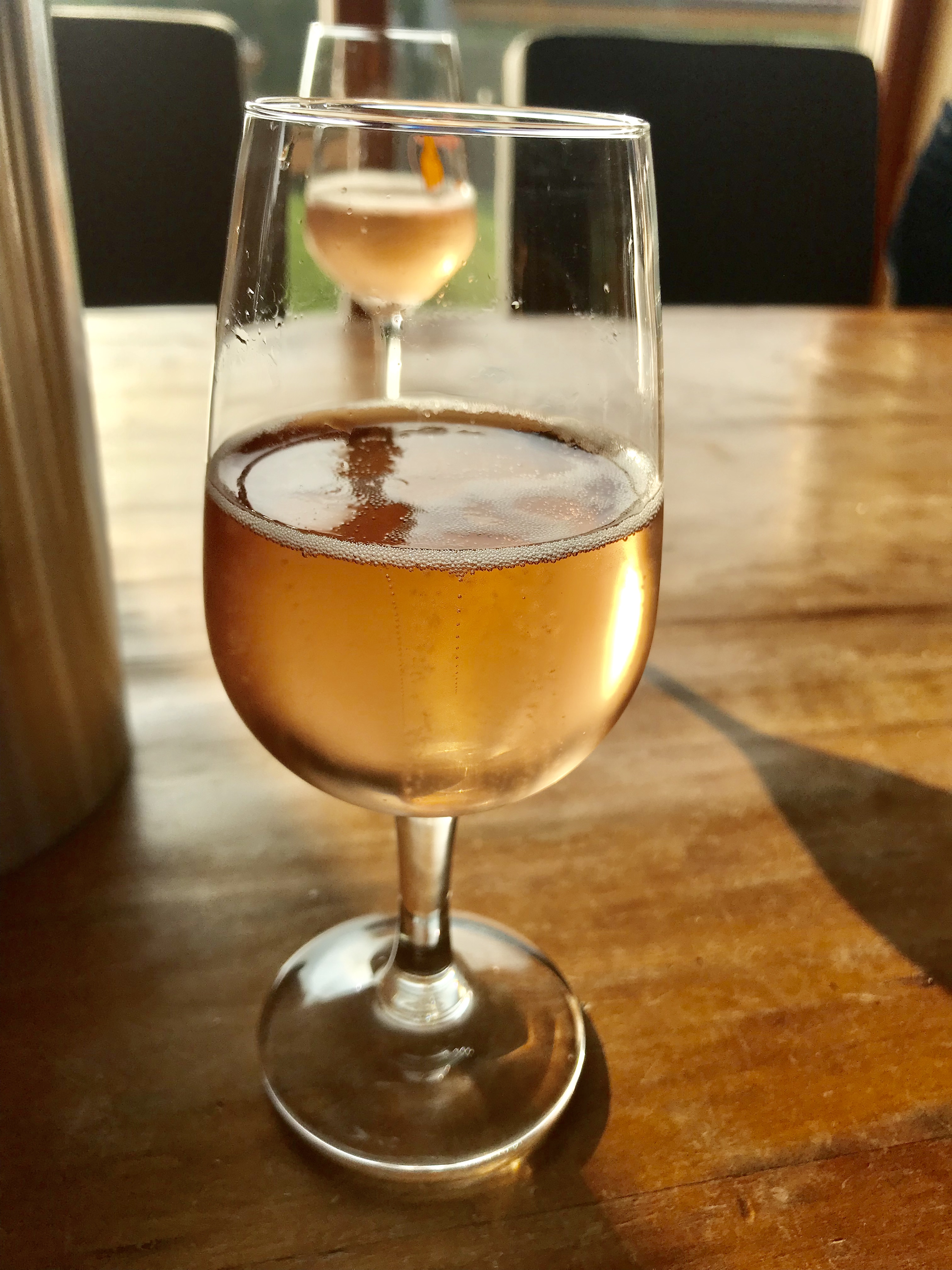


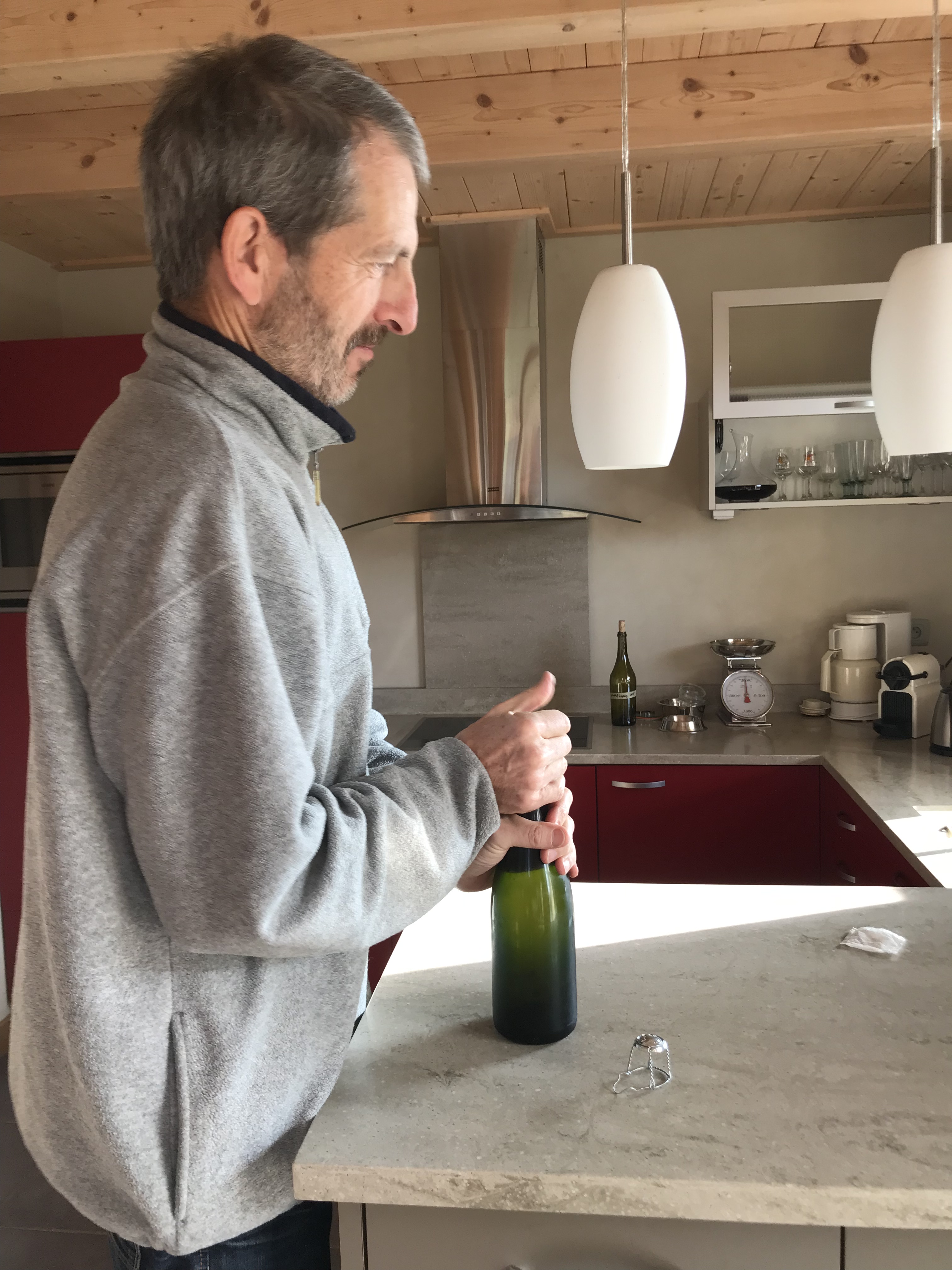


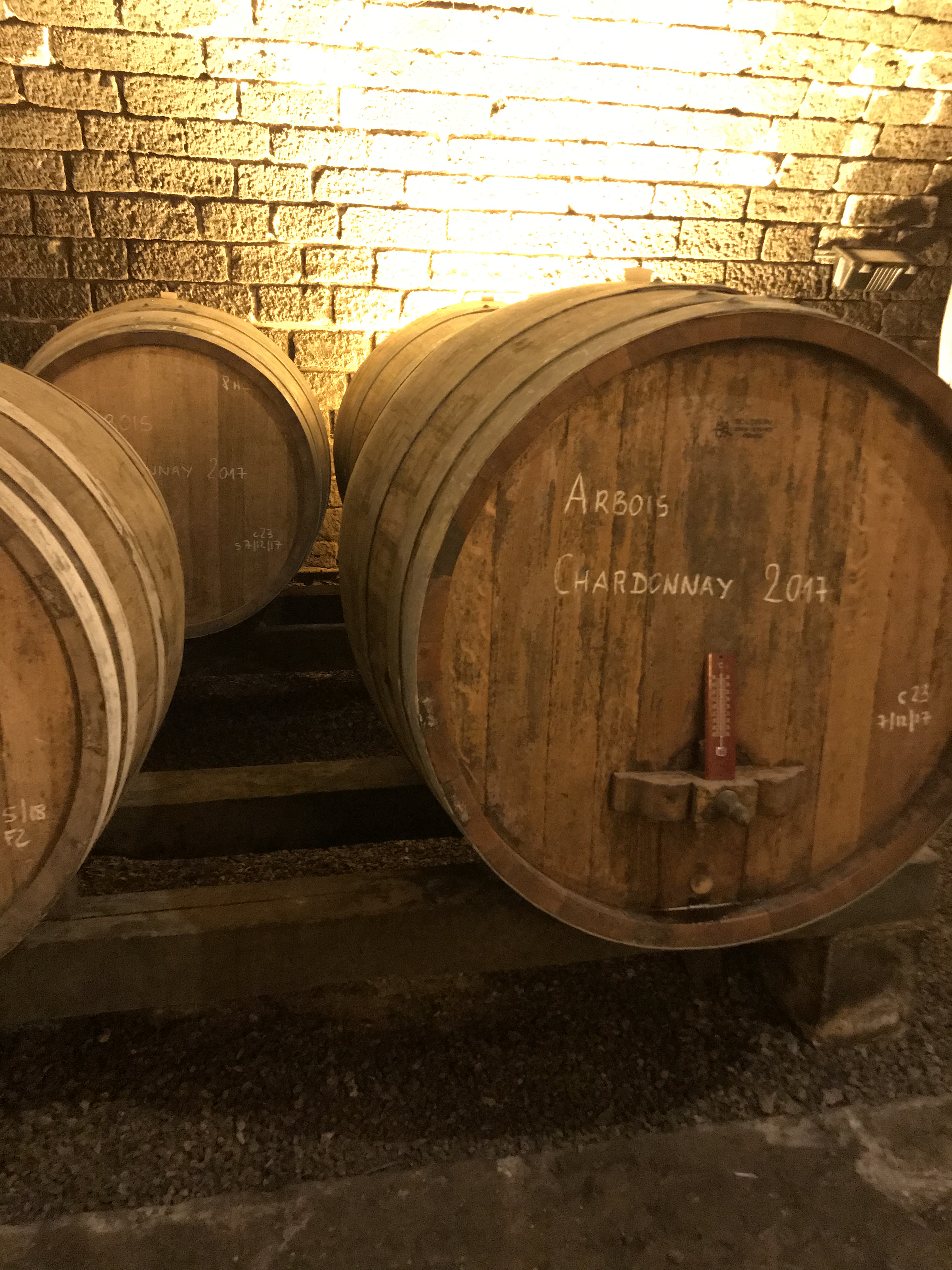
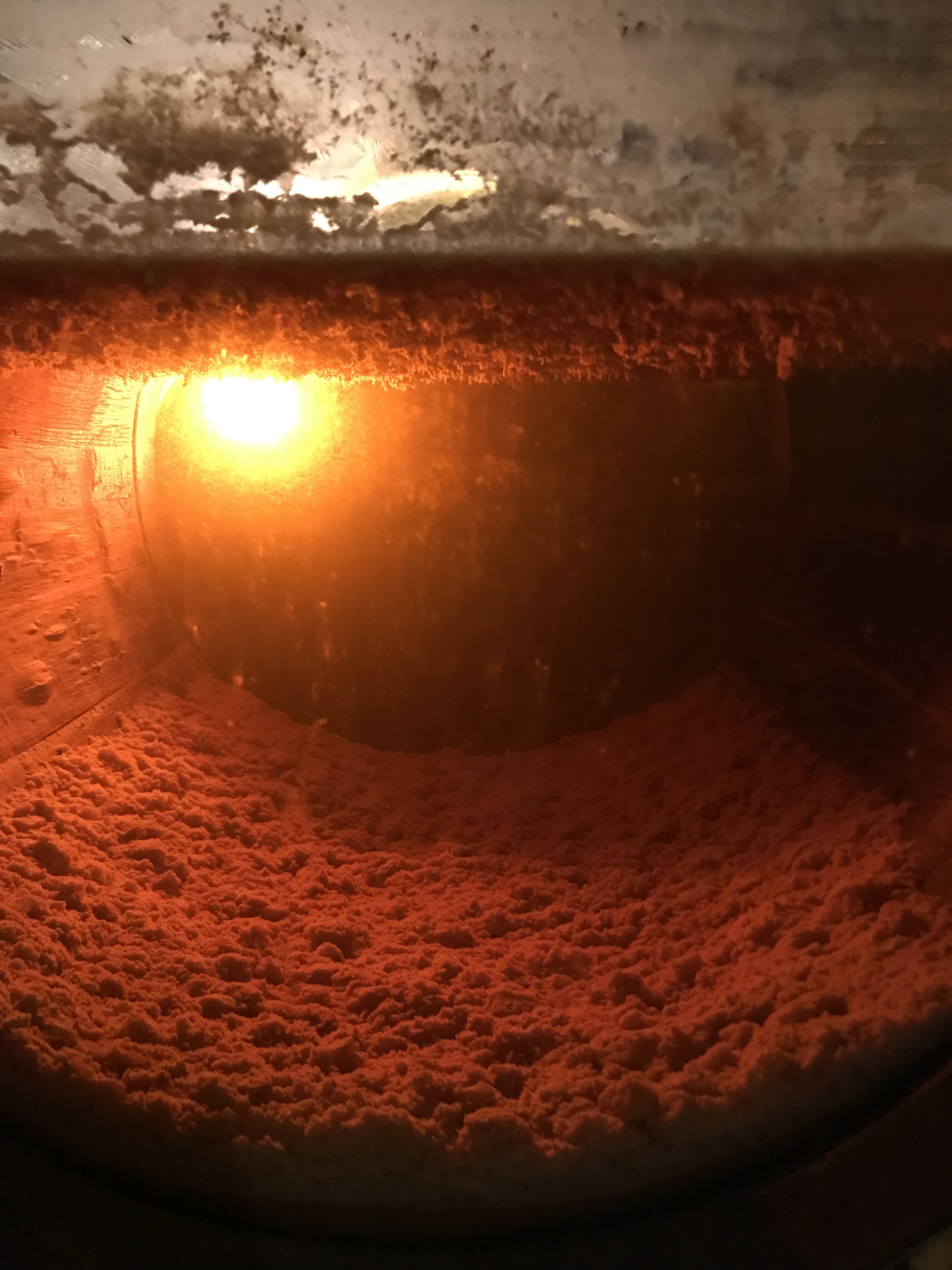


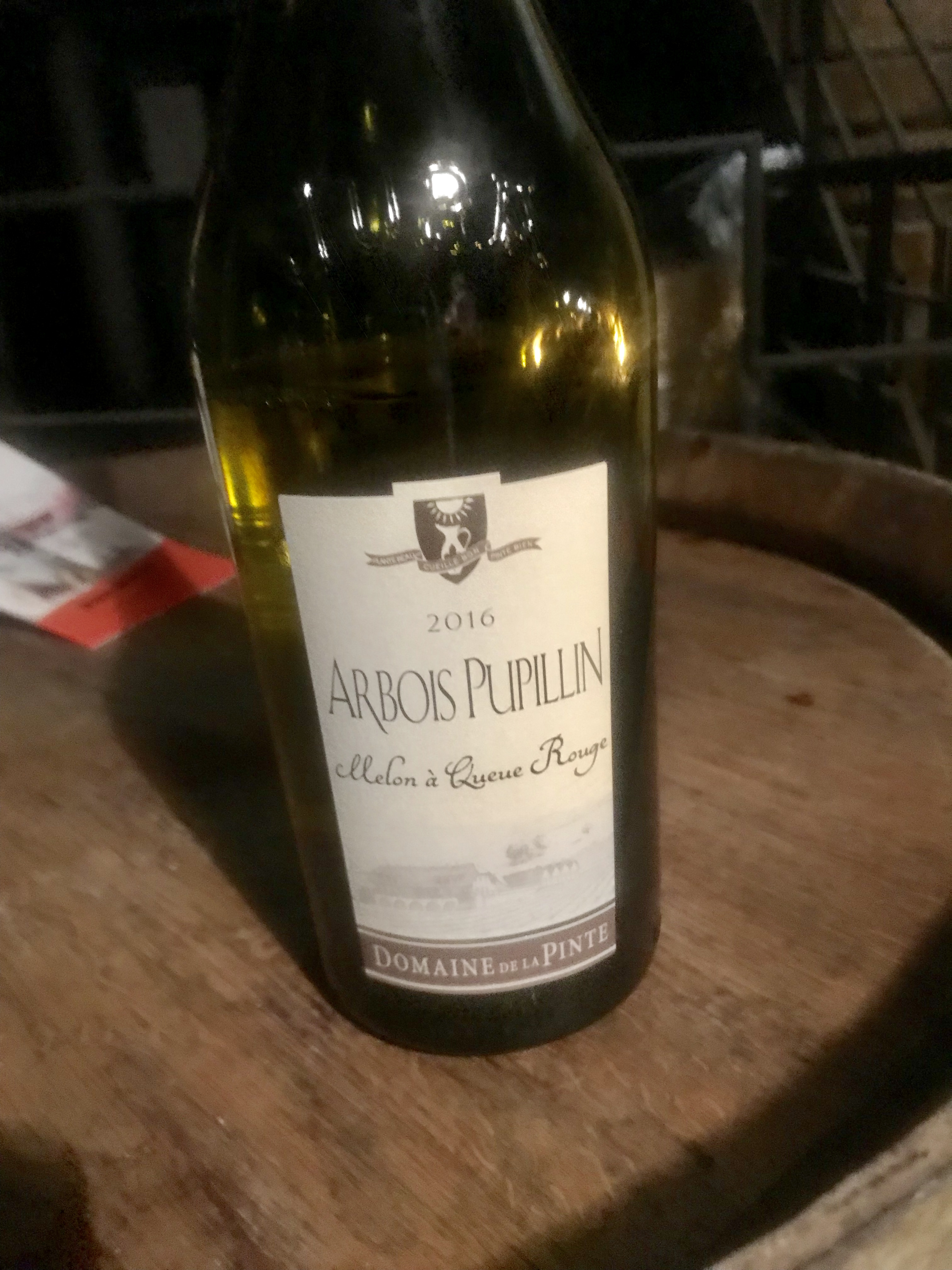


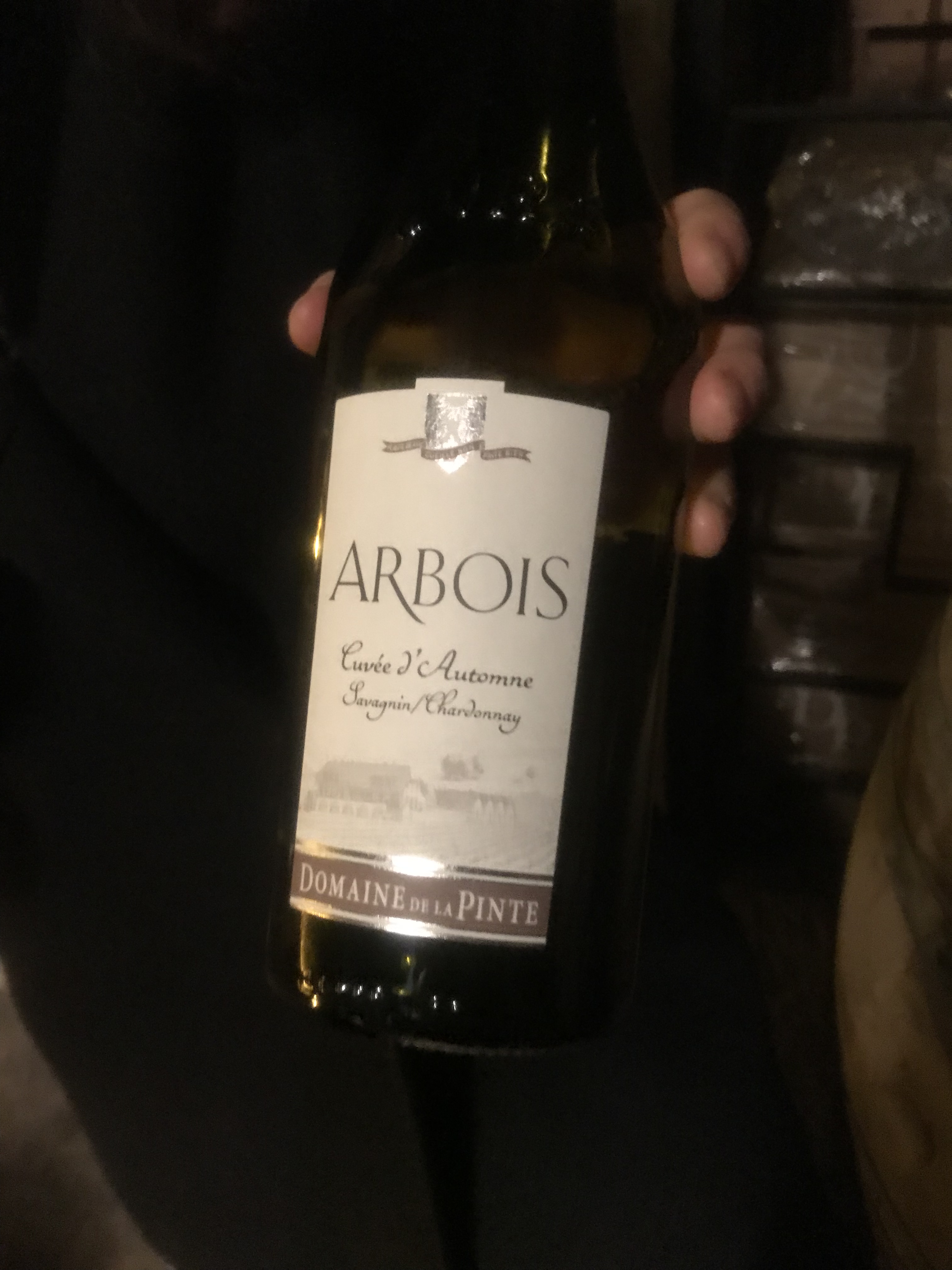
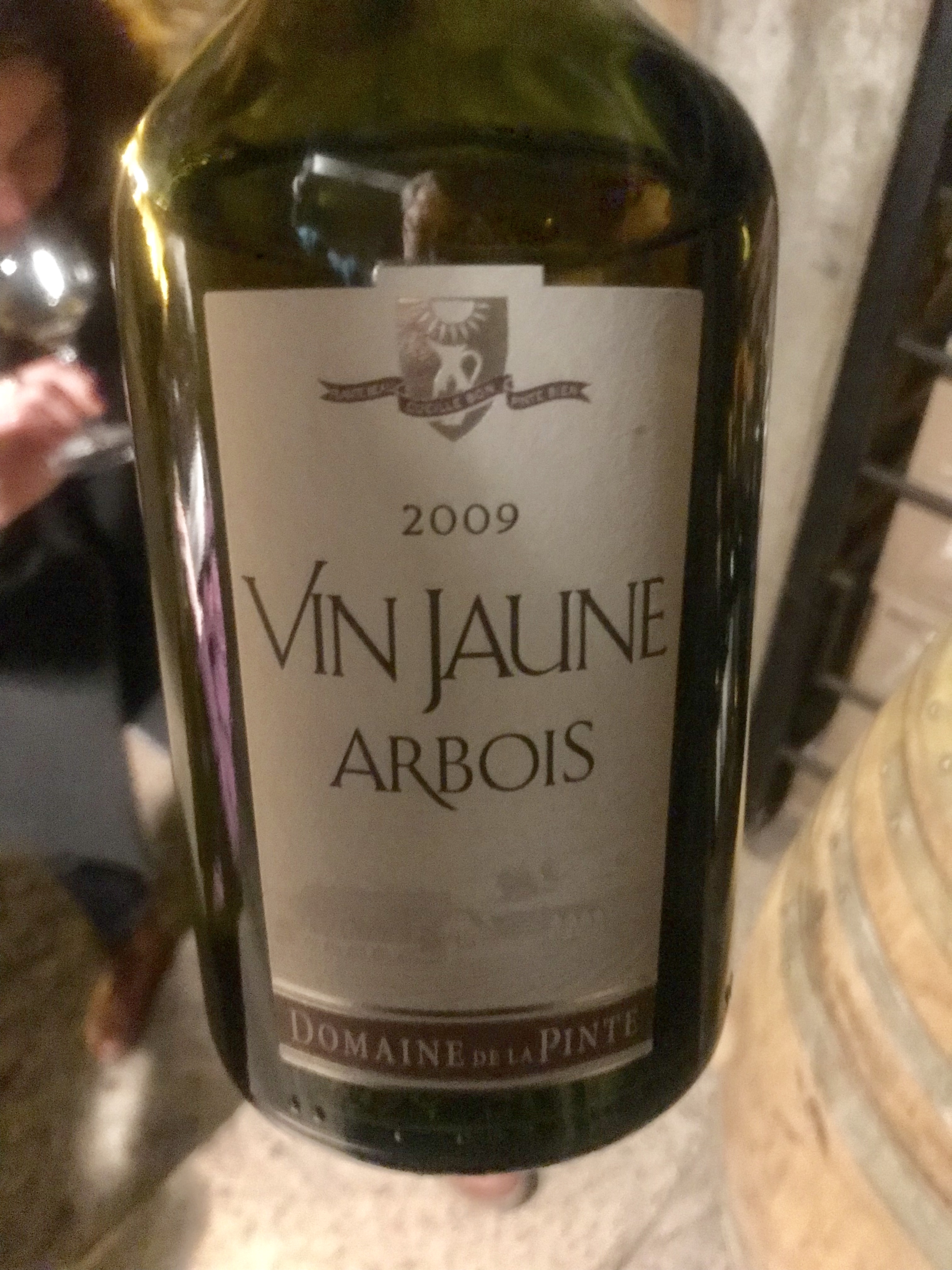


 David Crossley's Wide World of Wine