Wine Prices – A Bit of a Moan

Over the period since Brexit and the Covid pandemic the prices of individual bottles of wine I have bought for years have unquestionably gone up…and considerably. I can think of wines which perhaps cost in the low £30s back in 2020 or 2019 which cost more than £50 today. Many have increased in price by 40-50% in perhaps four years. I’m not the only person to notice. Almost everyone I know who is seriously into wine says the same and some commentators have said so in print.
January is a quiet time in the wine trade, not helped by the “Dry January” which some lobby groups promote, but I wonder how these price rises are affecting sales?

There are so many reasons for these price increases. I’m starting this article almost as a stream of consciousness exercise, both to look at the causes for this, whether there are any solutions for we beleaguered drinkers, and whether we are really going to have to suck it all up and, if we want to keep drinking good, interesting, wine, merely stop buying other things. I’m a lover of vinyl, drink good coffee and read a lot of books, and all of those have gone up in price too. Less appreciably for books, but have you seen the ridiculous prices HMV are charging for new vinyl?

Prices and price increases have always been an issue. Back in the 1980s I was a Bordeaux and Burgundy drinker, although my tastes in Champagne had not yet gone so far as to venture outside of the Grandes Marques. Many of you might be surprised that all of these were reasonably affordable before Robert Parker hyped the 1982 vintage in Bordeaux, and it was only by the last years of that decade that Bordeaux and Burgundy prices began to get truly frightening. Even then, this was mostly at the higher levels.

As the 1990s progressed it seemed that prices for these classic wines couldn’t stop rising. It was the time of Wine Indexes, en primeur and the birth of wine investment. No worries, there were plenty more fish in the sea. Tuscany and Piemonte were both turning out some stunning wines, and there was The New World (sic) to get to know better. Not only that, lesser-known European wine regions were also beginning to make very interesting wines at favourable prices. Those wines had the advantage of introducing us to very new flavours, in terms of both grape varieties and wine styles.

It was during the 1990s that my interest in Piemonte, Alsace and Jura solidified, and also when I discovered Savoie, Aosta, Jura and Switzerland. My desire to seek out the obscure began when I travelled extensively in Europe in 1989. At the time I had thought about writing a book, The Lost Vineyards of France. Today, wines from Aveyron, Bugey, Ardèche, Cahors, Irouléguy and Collioure (to name a few) are all known to most wine fanatics, if not a wider public. They are clearly no longer lost.

The one thing that brought them to wider attention, more than anything else, was Natural Wine. That in itself was a phenomenon born out of a reaction against the way classic wines were being made and marketed, but also a desire by some to return to a more paysan life, one in tune with the vineyard and nature. What we now call sustainable viticulture was very much a part of that early natural wine revolution.

When natural wine came along it was frankly a breath of fresh air. You certainly had to reevaluate what you were looking for in a wine. Early natural wines bought in Paris were very often faulty, but somehow Les Caves de Pyrene in England managed to seek out those that weren’t. Doug Wregg taught me the most important wine lesson of my life, if indirectly. That you don’t always need to look for the “best” wine. Better to enjoy diversity and look for the “most interesting”. In effect, get greater pleasure from discovering something new for less money…at least in the early days.

Of course, these new wines weren’t inexpensive compared to the beverage wines you could find in the supermarket and at certain well-known wine chains, but you could get a wine which was going to challenge and excite the tastebuds for £20, and even more for £30, when the classics had more or less left those price levels behind. This was certainly my experience up to the time of our exit from the European Union.

For a few years before Brexit hit the UK, I was happily paying out around £300 for a dozen bottles of wine, one where each bottle in a mixed case cost on average £25. These were often cutting-edge wines from artisans with a story to tell, and being brought into the UK by a new breed of small- and medium-sized independent importers and wine merchants who were getting out into the vineyards and seeking out new growers. When Brexit hit, the prices increased alongside the cost of paperwork and transport costs.

Post-Brexit we had a litany of pressures, not least inflation at record levels, but also increased taxation on wine. Although politicians have tried to tie the overall cost of living crisis to international events affecting other countries just like us, it isn’t difficult to see the lie in that.

As prices have risen, I have correspondingly had less money to spend on wine. It doesn’t help either that I also want to buy records and whisky. That’s not your problem, but my guess is I’m not alone, and I’m also well aware that I’m lucky to be able to afford to drink nice wine, especially right now.

Complaining won’t get us anywhere. I doubt any political party will reduce taxes on wine and the economic pressures on both winemakers and wine sellers (whether importers or retailers, the latter who are also being hit with astronomical rents and rocketing fuel costs) remain. I would also argue, as most of us recognise, that winemakers deserve to make a decent living from what is not only hard physical work, but work which also creates unique financial pressures with so much at the whim of the weather. Also worth remembering that artisans make less wine than industrial producers so their unit costs are so much greater.

If, like me, you can no longer afford wines which used to cost £30 and now cost £50, what can be done? Let’s face it, I’m not alone in having to ditch the Ganevat and Labet for cheaper labels. That was of course the first recourse. If we simply take the Jura region as one example, for every famous name, or highly expensive micro-producer, there were so many other thrilling wines to be had. There still are, but the Covid lull, importers and journalists travelling less, has meant that some have been slow to appear in British retailers and restaurants (but then who can afford to buy decent wine in restaurants anymore?).

As an aside, Champagne! I love Champagne. Once I discovered Grower Champagne, I became a real geek. You used to be able to find plenty from this genre for £30-£40, and a good many “special treats” for £50-£60. I can’t remember the last time I bought Champagne, other than a few bottles for a party which were certainly drinkable for £35, but nothing remotely special. Even English sparkling wine has rocketed up in price, with some favourites having seen a 20% (occasionally more) price rise in just three years. My favourite English producer’s current releases can still be had for under £40/bottle but not for long, I suspect. As for my great love, Bérêche, well I can see some wines having increased by 60%, taking them well out of my price range.

That’s the sad thing. If you love wine, you develop a strong bond and connection with certain producers and when you can no longer afford their wines it becomes more than a nuisance, but something genuinely saddening. This started to happen to me last year for quite a few producers, many listed in my Review of the Year 2023 as those who have both thrilled and educated me over the years.

What can we do? If we want to keep our purchases within a nominal £20-£30 budget there are thankfully several options.

First, join the wine trade. You won’t get a merchant banker’s salary, but then wine trade people tend to be nice to work with, and your employer will more than likely give you a decent discount. It’s why some wines rarely get out of the stock room, but we can’t be bitter about it. We’d do the same.

We could establish ourselves as famous wine writers. Some of the most famous have admitted they get far too much wine to “taste” themselves. One even admitted a few years ago that they often get home to find a case on the doorstep. I was joking with someone only last week that I seem to average one free bottle a year, though things would have to get even worse than they are now for me to wish to write about stuff that I didn’t like and be nice about it.

The first real option, especially if you are into natural wine, is to widen your net. There are countries whose wines just tend to be cheaper. Portugal must rank top of this list, and much of Spain outside the classic, or fashionable, regions. Equally, although many cuvées from Languedoc-Roussillon can be expensive, there are relative bargains to be found. This can be especially so in some of the smaller appellations where wines often have a specific regional character. This is also true of Southwest France, where some individual producers have been shining beacons for decades without their prices rising significantly.

Some countries’ wines are just not that well known and if producers wish to get a foothold in a large market, they are quite likely to go easy on their pricing. Czechia is a classic example, as are Slovakia, Romania, Bulgaria, some wines from Greece etc. As I keep saying, the best of the Czech artisans often provide a lot of interest and excitement for your money.

Australian wine once provided amazing value before it got very expensive, but today, although I see fewer Aussie natural wines in the UK, there are still plenty which hit a good price point. They are often well-made wines from once unfashionable regions, such as Riverland. Likewise check out South Africa, which still sends a tremendous number of excellent wines to the UK, most of which don’t break the budget.

Next option, look at good producers’ entry level wines. Back when we bought Burgundy the mantra was always producer over vineyard. A decade ago, some of the world’s wine bargains came from Burgundy, a good example being Jean-Marc Roulot’s Bourgogne Blanc. It really does taste several levels above its designation. The 2010 cost me £24/bottle, I think. Now prices are frightening. Le Grappin’s Beaune Boucherottes was another, a classic example of a brilliant wine made from a less fashionable Premier Cru. My first purchase was six bottles, now I can’t afford one.

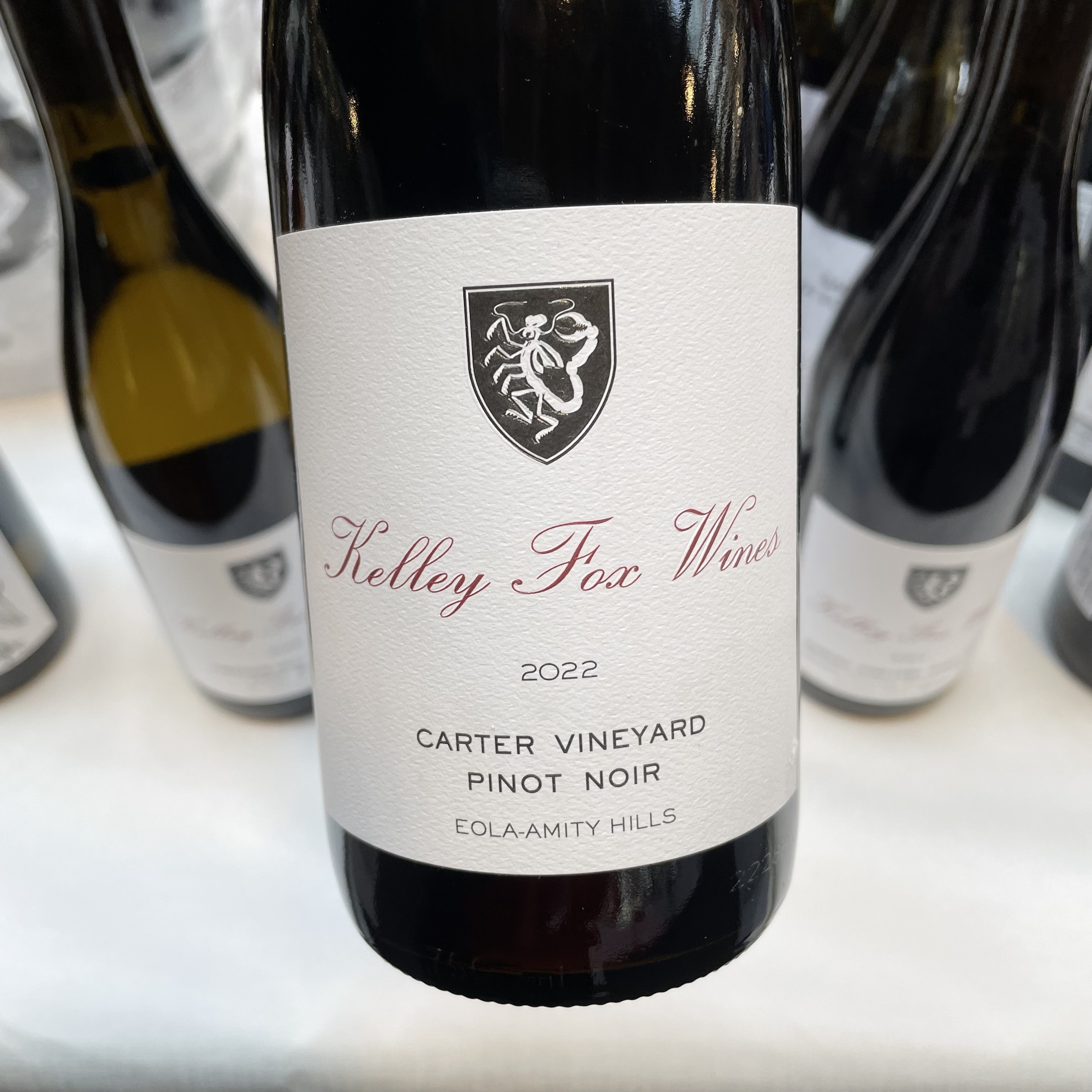
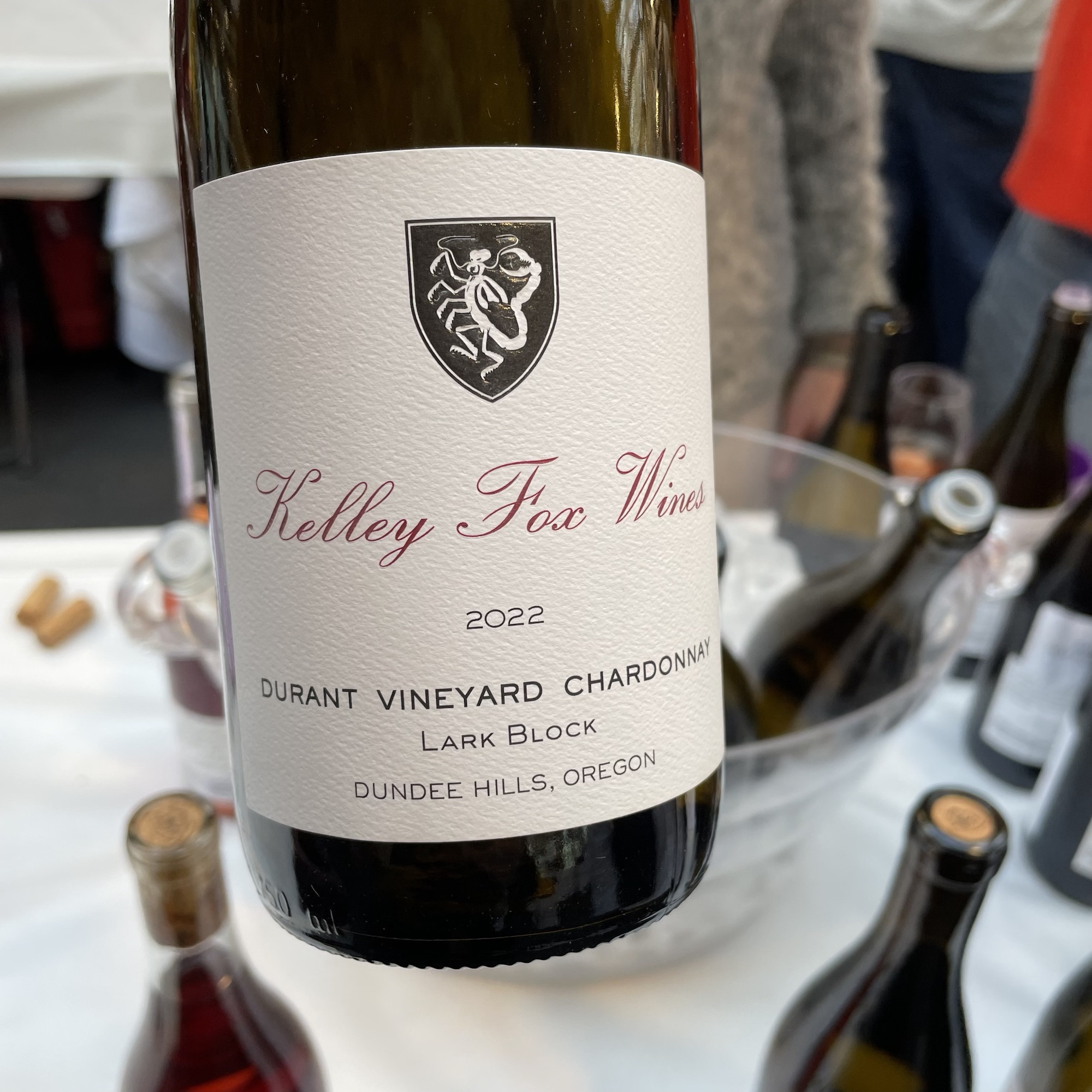
However, I recently drank Hermit Ram’s Field Blend Red (from North Canterbury, NZ) and you can still buy it for under £22. Theo Coles’s Pinot Noir wines from single sites are double that. There are a few bargains like this which remain within reach. Kelley Fox makes a brilliant Pinot Blanc, as, come to think of it, does Philipp Wittman. In the same region as Wittman, Klaus Peter Keller makes a few entry level wines, none more remarkable value for money than his Von Der Fels Riesling. Alice Bouvot (L’Octavin) now prices her domaine wines out of my reach, but her negociant wines can be brilliant, and more affordable, just.

The next thing to do is look at wine regions which have gone slightly out of fashion. If you want thoughtfully made wine but are not hung up on it being fully “natural”, then French regions like Bordeaux are well worth a new look. Whilst the classified châteaux have become the domaine of collectors, oligarchs and PPE millionaires, down the pecking order producers have had problems shifting wine. Plenty of Petits Châteaux are making better wine than they have ever made but prices remain reasonable. Good estates, and some of the entry-level wines from very well-know estates can fall into my nominal £20-£30 price bracket. Sadly, this includes few if any of Bordeaux’s increasing number of low intervention wines.

Other places to look for affordable wine, places where the top wines command stupid prices, can be Piemonte outside of the two Bs, Roero and the other smaller DOCs being good places to look. Chianti Classico (especially at normale level) can also be priced reasonably, with some low intervention wines in this bracket.

Back in France, The Loire is also a good bet. Wines such as Guiberteau and Antoine Sanzay have seen prices for red wines rocket but their Chenin whites, perhaps less fashionable, are no less good. Just two examples. Likewise, The Loire has always been a good source of natural wines and some of the pioneers, whose wines I drank a decade or so ago and then sort of forgot about, have not always seen price rises as large as other regions.

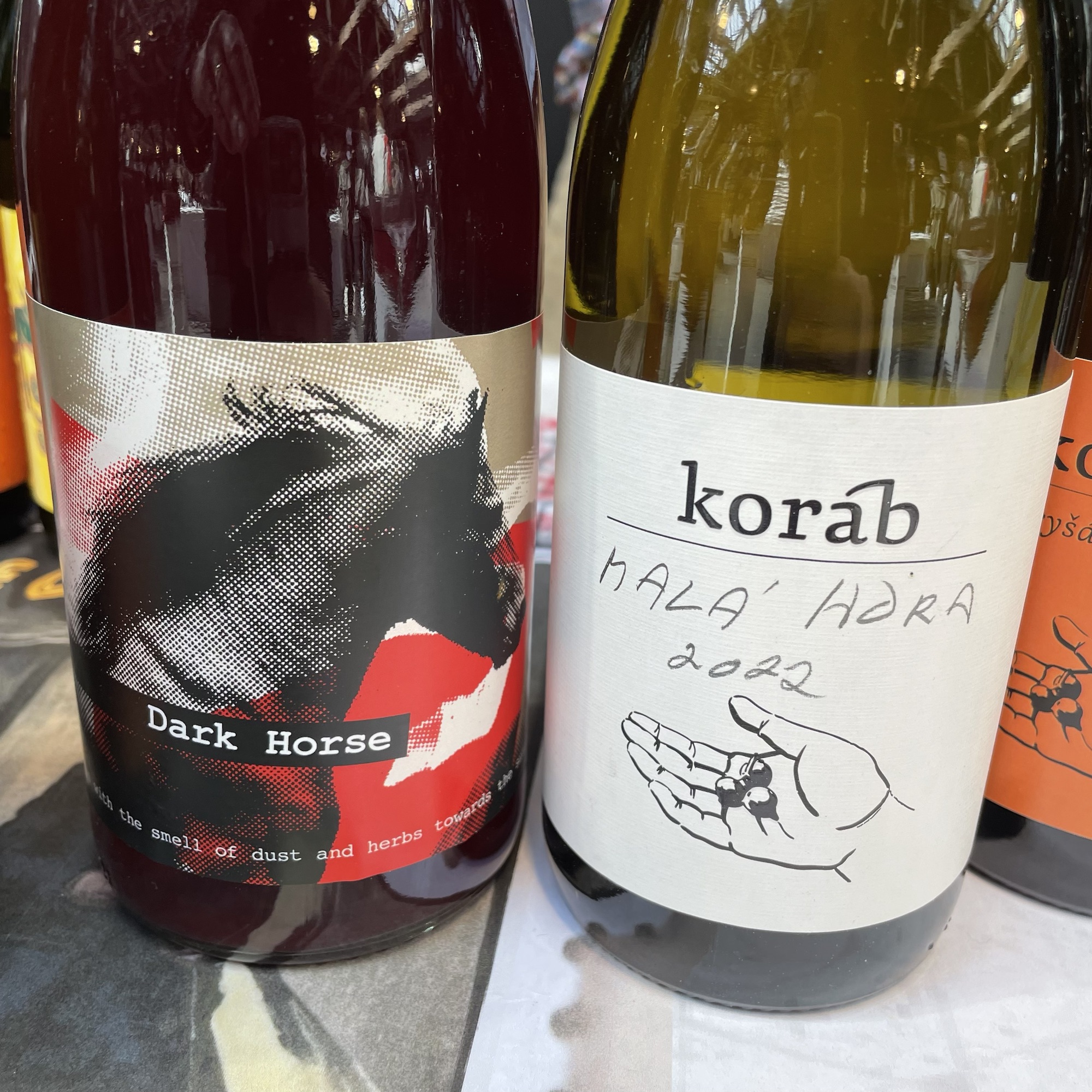
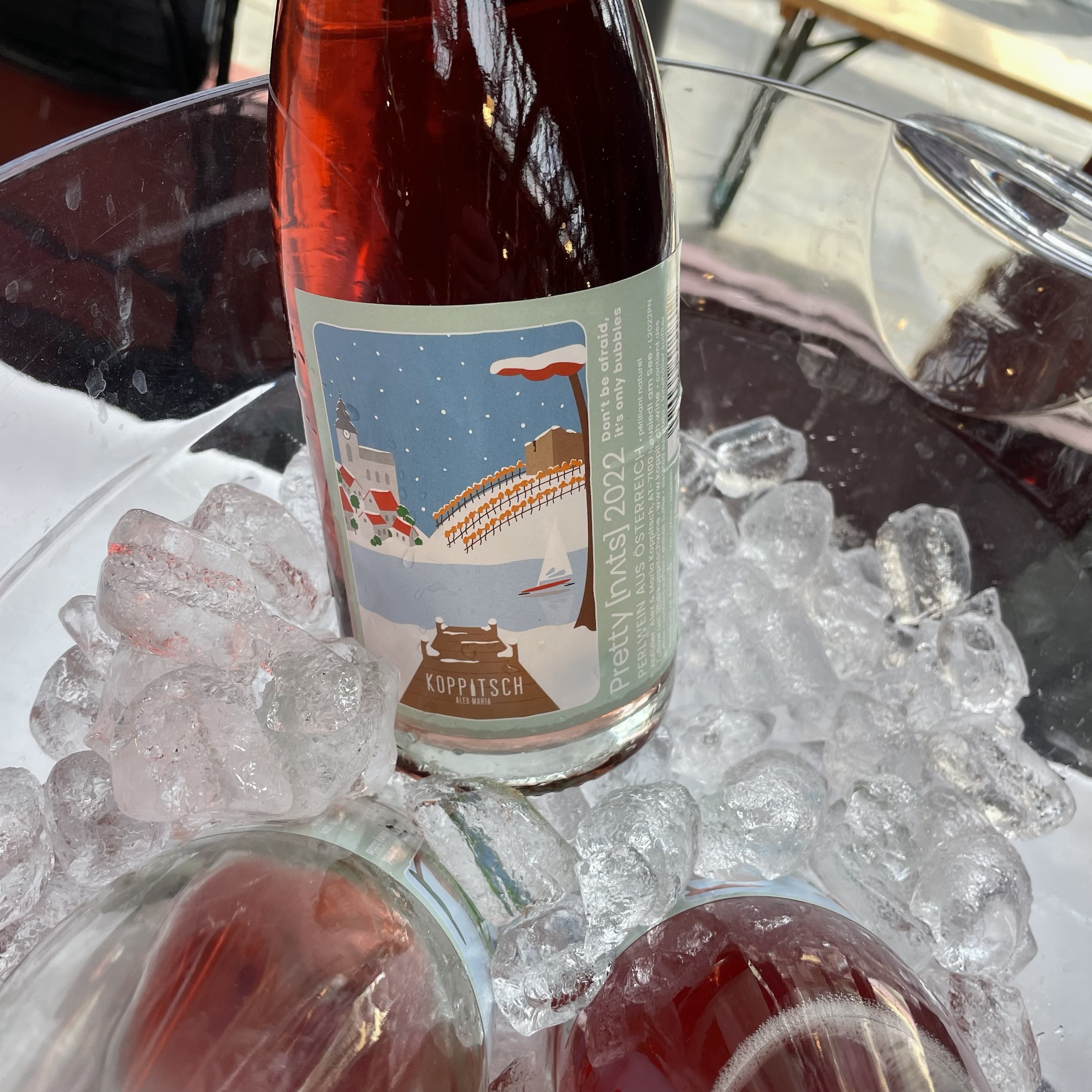
For sparkling wines it’s tricky. There are individual sparkling wines which match good Grower Champagne for a fraction of the price but you do need to taste before you buy in quantity. Many such wines are French Crémants, of which Alsace and Jura seem to provide what I like, although many head to The Loire. Pétnats are also usually cheaper, and I tend to buy quite a few. Petr Koráb from Moravia seems to provide me with several different cuvées every year.

In Germany, prices here have increased more than at any time I can remember. Germany has finally become a little fashionable. That’s good for those German artisans making world class wines, but less easy for those who love those wines. The classic varieties of Riesling and the increasingly world class Pinot Noir/Spätburgunder being made there are running away from us, but there has been a rejuvenation of demand for, and interest in, grape varieties which were once looked down upon. These are often grapes which once made very basic wines (Müller-Thurgau and Dornfelder, for example, and whilst we are here, Zweigelt and Sankt Laurent in Austria).

Rudolf Trossen told me a few years ago that the abandoned, steeply terraced, vineyards of the Mosel outside of the famous villages were selling for so little money that owners couldn’t give them away. Now, such sites here, and in other less well-known regions, are being worked by young winzern with high standards and inventive minds. I often say that Alsace is now the most exciting place in Europe for natural wine but Germany seems to be able to do it cheaper.
As if to prove that wine can still be affordable, I have recently enjoyed a wine from Dorli Muhr in Austria’s Carnuntum that cost me £16. Okay, her basic regional wine is not in the same league as her single vineyard offerings. It’s a smooth and rich blend of Blaufränkisch and Syrah and it’s perfectly acceptable to my palate at any price. At this price it’s a real bargain, at least from my perspective, that of a wine obsessive. I’ve also realised that Beaujolais still gives us wines of genuine value. Perhaps despite its fashionability among wine obsessives it has never quite lived down the 1980s and industrial “Nouveau” among the general public (I think the “new nouveau” is just beginning to wrest back its reputation).

I’m not going to try to persuade you that Swiss wines are good value, but Switzerland makes an interesting case study. Right now, Swiss wines are probably cheaper in comparison to their competitors than they have ever been. This is because the demographic of a market which consumed the vast majority of wines produced has changed, and for the first time ever, Swiss producers are seeking export markets. There are consequently more Swiss wines available on our UK market and whilst some are just way too expensive for the quality, quite a few are not.
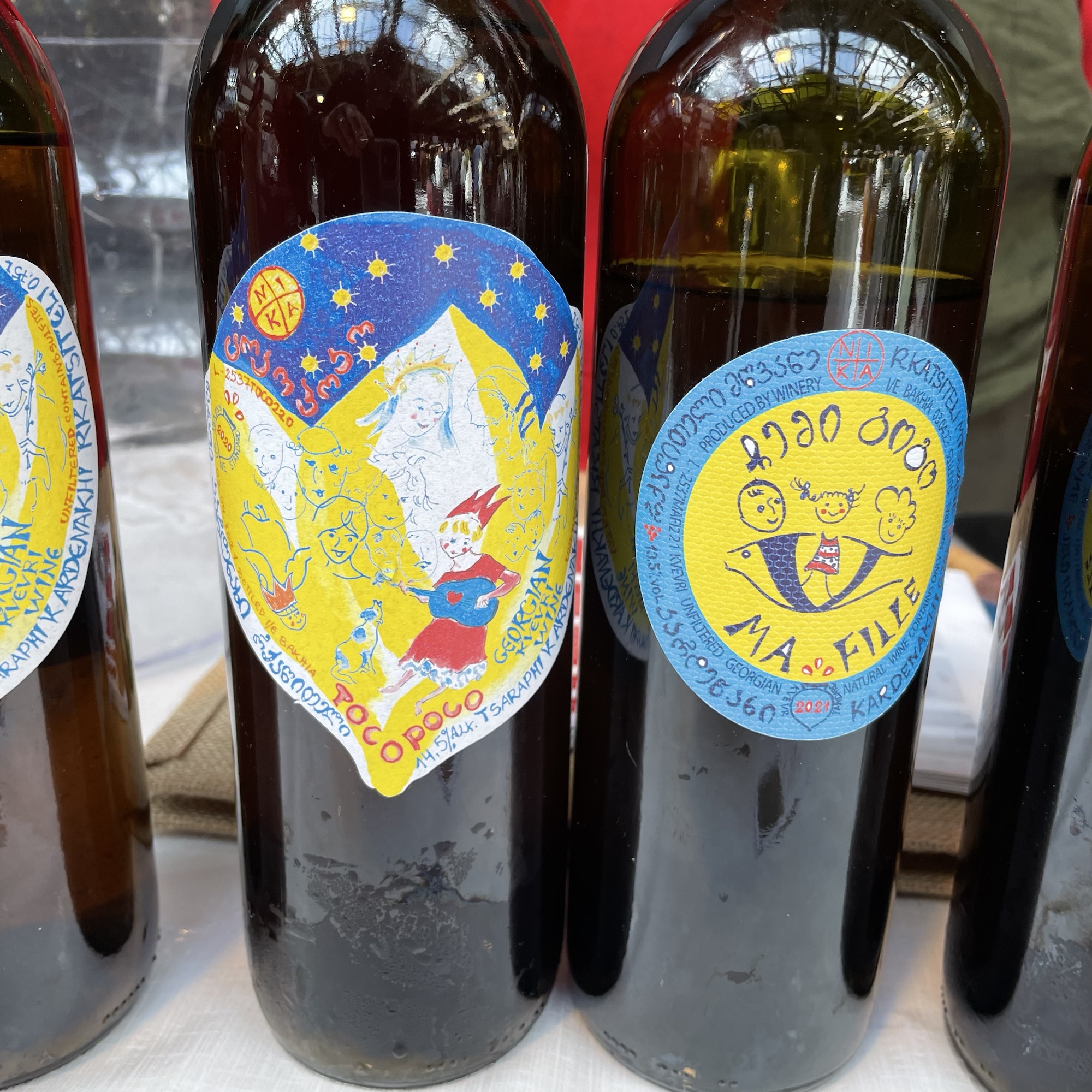

But I’m digressing. I suppose what I’m trying to say is that the wine trade should recognise the difficulties consumers face today in terms of the increased price of wine. It does sometimes feel as if I am being thought of as going downmarket when shopping, for the first time reminding me of the attitudes of certain posh merchants towards the Plebs in the early 1980s. But this applies more to retail. There are importers, and I would say that it is mostly the small, specialist, importers who are in the vanguard, who do seem to recognise the market for interesting artisan wines which are affordable to ordinary wine purchasers. Those of us whose disposable incomes have remained broadly the same when wine prices have sometimes doubled.

To consumers I would say ignore the hype. A certain Japanese winemaker working in Alsace comes to mind. First vintage 2022, tiny production, three wines advertised last week in the UK priced £45, £50 and £55 a bottle (same wines available at a Bordeaux retailer I know for 33-to-36€/bottle, but that reflects costs more than greed, I suspect). I’ve not tried the wines so can’t comment, but… There’s still a lot of very tasty and interesting wine out there. We just have to work harder to find it, just as we have to work harder to find those 70s records we need so badly.

Posted in Artisan Wines, Fine Wine, Natural Wine, Wine, Wine Agencies, Wine Hobby, Wine Merchants, Wine Shops | Tagged , , , , | 5 Comments

Recent Wines December 2023 (Part 2) #theglouthatbindsus

Before we get onto Part 2 of the wines I drank in December, a quick plug for a wine book project close to my heart. Some of you may have already seen that Wink Lorch has launched a Kickstarter campaign to raise money for a companion volume to her Jura Wine (2014). She plans to publish a “Jura ten years on” supplement this year. She’s doing pretty well. I think she raised half of her small target in 48 hours. However, a pledge now will not only ensure that the project goes ahead, it is also by far the easiest way to obtain a copy. If, like me, you have a passion for Jura Wines, I’m sure you will want to be onto this. The campaign has a very short run time, of less than a month, so don’t delay.

Right, December. In Part 1 we visited Hungary, Alsace, Hampshire, North Canterbury (NZ) and Slovakia. Here in Part 2, we have some delicious wines from Jura, Rheinhessen (two, but very different), Alsace and Carnuntum.

“Point Barre” 2020 Vin de France, Tony Bornard (Jura, France)

Tony’s father was one of the people who really built on Pierre Overnoy’s work to make Pupillin as famous as its “World Capital of Ploussard” signs would have it. Philippe founded his domaine in 2005, and is in fact a good friend of Overnoy. Recently, his son, Tony, has fully taken over winemaking. The estate remains a shining beacon of natural winemaking in the village. Tony took over in 2017, having started his own label a few years earlier in 2013. By merging both sets of vineyards, Tony can now farm just shy of 12 hectares. Everything is farmed biodynamically, and these remain benchmark Jura natural wines.

This cuvée is basically a fruit-forward, glouglou Ploussard (Poulsard). The terroir is based on a mix of marls and the grapes see a 21-day whole berry, carbonic, fermentation. The wine is aged in large old oak. What you notice first is that the colour is darker than many of Philippe’s later vintages. However, if it is slightly more grippy and even a little tighter that previously, it is still very much fruit-driven with cherry, blackberry and raspberry all on nose and palate. To this I would add a bit of Moroccan spice and a real vibrancy, which has always been this cuvée’s hallmark.

Very much a “drink or keep” wine, and very much like father, like son. The orange fox is in safe hands. My bottle came from The Solent Cellar, though wines like this disappear in days. Nowadays you will pay (after a little research) probably between £50 and £58 if you can find a bottle. That’s my only gripe, and I can feel and article about wine prices coming on. I think Les Caves de Pyrene is still the importer.

Rötlich 2021, Andi Mann (Rheinhessen, Germany)

This light, 10% abv, red wine comes from one of the newer (at least to me) names in Rheinhessen natural wine. Andi farms at Eckelsheim, where he grows vines with an average age of 30-y-o on limestone and porphyr at around 150 masl. This is an old family domaine, dating from the end of the 17th century, but Andi has introduced a wildly experimental attitude, along with a strict natural wine philosophy. Intensity is perhaps his main objective.

I tasted Andi’s Müller-Thurgau back in November and really enjoyed it. I already had this red in the cellar, and light as it is (10% abv), I found a bright winter’s day to pop it open. The main variety is Blauer Portugieser (45%), with 30% Cabernet Dorsa (a Blaufränkisch x Dornfelder cross), with Dornfelder, Merlot and a little Bacchus making up the rest. Part of the blend was direct-pressed and part was fermented as whole bunches. Ageing was in 2,400-litre vats for 12 months, with no sulphur added at any stage.

We get a very lively strawberry bouquet, and a cherry crunch on the palate. A fresh wine, it has quite high acidity, but is light and refreshing, easy going and tasty. In view of how I concluded on the last wine, this is somewhat less expensive at £24.50 (from Cork & Cask via importer Roland Wines). I would describe it as an excellent summer glugger. Look out for Andi Mann as the days get longer.

Westhofener Steingrübe Chardonnay “R” 2021, Weingut Seehof (Rheinhessen, Germany)

I suppose I should admit that I do try to get a degree of variety into my wine drinking, and it’s fairly unusual for me to drink two wines from the same region in immediate succession at home. In my defence, these two wines could not be more different, at least in terms of style and flavour. This is a serious Chardonnay, and if you didn’t really expect to see one from Rheinhessen, perhaps neither did I.

Florian Fauth makes this wine from a fairly large vineyard which reaches up the slope from the houses of Westhofen, and which happens to lie right in between the somewhat more famous Westhofen crus of Morstein and Kirchspiel. It is, like its neighbours, an ancient vineyard on sandy loam, first mentioned in 1295.

I must say, this was impressive, and, with apologies to the Fauth family, a bit of a surprise (in terms of the variety/location). The bouquet had lots of toasted nuts, and was very Burgundian, but the fruit had a touch of the New World to it (albeit cool climate New World). It was a nose which suggested the wine might be a little young, but the palate showed that it was very enjoyable now, though will doubtless get even better.

It may gain in complexity, but I loved the rich Chardonnay fruit, which had a creamy sweetness to it, though the wine is dry, and saline at the finish. You get a full mouthfeel, but the alcohol (13%) has good balance with the fruit. The wine also has poise. Nothing spills over the edges so to speak.

My bottle came from The Solent Cellar (£25). Other options would include Butlers Wine Cellar (£25.50) and The Good Wine Shop (branches in London) (£28). I think Chardonnay is joining Pinot Noir amongst the grapes to seek out in Germany, almost certainly a sign of climate change, even if it will still very much play second fiddle to Riesling in Rheinhessen, one assumes.

Rouge de Pinot Noir Cuvée Nature 2022, Anna, André and Yann Durrmann (Alsace, France)

Yann Durrmann has taken over at this exciting Andlau domaine where his father, André, inherited the small vineyard started by his own father as part of a mixed farm. Yann has continued the work André began, creating natural wines with, more often now, zero added sulphur (the Cuvée Nature wines). The key to this family’s philosophy lies in the vineyard: ecology, sustainability and biodiversity, of which I’ve perhaps written too often to repeat here.

The Pinot Noir comes off schist and sandstone. It undergoes a four-week maceration before ageing in a mix of stainless steel and older oak. The result is a pale red wine smelling so clearly of our English summer pudding (which blends red and dark fruits encased in a red juice-stained bread case). Like many Durrmann wines, it has a slight funkiness to it, but most people will appreciate the fruit-forward nature and its concentration. There’s a good lick of acidity, of course, and a very nice length. A great picnic wine, or one for lunchtime (with only 11.7% alcohol on the label).

Another wine from Cork & Cask (Edinburgh), £28. Imported by Wines Under the Bonnet. Also potentially available from a good few independents like Gnarly Vines, Forest Wines and Natty Boy Wines.

Carnuntum 2019, Dorli Muhr (Carnuntum, Austria)

A decade ago, I’m not sure I’d drunk a Carnuntum (I think my first record of one was in 2015), but the first bottles I drank from this region of Lower Austria were some of Dorli Muhr’s impressive single vineyard wines, especially those off the Spitzerberg (from where Dorli now makes several cuvées) in the far east of the region, up towards the border with Slovakia.

Carnuntum, named after a Roman City in the region, boasts around 900 hectares of vines, east of Vienna, but south of the Danube. The revolution, if it can be called that here, began in the early 1990s, when red varieties started to take over from the old white field blends.

Dorli Muhr grew up in Carnuntum, before a well-documented international career in wine PR. She began making wine on a small scale in the early 2000s, but her success has led to a growth in production. I think it fair to say that she has the biggest international profile of those producers from the region, although you will likely find one or two other recognisable names here.

This wine is a blend of Blaufränkisch (65%) with Syrah, which come off lower-lying vineyards. The grapes are fermented in large wooden vats and the wine is matured for two years, with only one racking. Although I don’t come across a lot of blends containing these two varieties, they do go very well together. This combines red and darker fruits, a plumpness and smoothness which to a degree is simple but not dull. A nice peppery spice on the finish grounds the fruit.

Dorli converted her estate to organics some time ago, but as I saw her at Autentikfest in Moravia in 2022, the only Austrian producer I noticed at this natural wine fair, I am assuming that these are able to call themselves natural wines as well now. This Carnuntum is certainly an “everyday” kind of wine, but then look at the price: £16 from Smith & Gertrude in Edinburgh’s Portobello. That makes it easy to say you can’t go wrong.

Posted in Alsace, Artisan Wines, Austrian Wine, German Wine, Jura, Natural Wine, Wine, Wine Agencies | Tagged , , , , , , , , , , , , , , , , , , , | Leave a comment

Recent Wines December 2023 (Part 1) #theglouthatbindsus

As I begin writing, I’m enjoying the extra Bank Holiday (January 2nd) we have up here in Scotland. Hogmanay obviously requires more recovery time than New Year down in England. As I appeared to have a large glass of undiluted Aperol in my hand at midnight on 31 December, I can probably vouch for that. Perhaps it was just as well I didn’t spot any Bailey’s, though that very nice Whisky Cream Liqueur I tried back in November (from Arran Distillery at the Cork & Cask Winter Wine Fair) would have been nothing to feel embarrassed about.

It’s quite nice to be able to look forward to a new year whilst everyone is still in a relaxed and festive mood. Yet I still need to look back too, to the wines we drank in December…or at least those worth telling you about. December did see us consume more than our fair share of commercial party fare. Some total dross passed my lips (not to mention someone giving me a bottle of Barefoot Malbec as a Christmas present, a kind thought nevertheless). It does make me feel lucky to be able to drink decent wine, even if I’m more often looking for bargains these days.

The first part of the wines we drank at home last month has wines from Eastern Hungary, Alsace, Hampshire, North Canterbury in New Zealand and Slovakia.

A Change of Heart 2018, Annamária Réka-Koncz (Barabás, Eastern Hungary)

Some of you will know that this producer’s wines come into the UK in fairly limited quantities and they tend to sell out within a couple of weeks, at least via their importer which has an online shop (retailers do sometimes have bottles on the shelves for longer). At the same time, I’ve been known to get through my own purchases well before the next vintage arrives. What was great about this bottle was that I had a chance to try Annamária’s Kékfrankos cuvée with some decent bottle age. At five years of age, I think it must be the oldest bottle of hers that I’ve drunk.

It came from a 3-hectare vineyard but in 2018 Annamária only made 711 bottles of this “Blaufränkisch” (for which Kékfrankos is the Hungarian name). The vines are old, between 50 to 60 years of age. The grapes were 50% destemmed, with 50% whole bunches, going into stainless steel to ferment. It’s a natural wine with no additives etc (I’m not sure about whether it saw a little sulphur or not?).

It has concentrated cherry with darker fruits on the nose, the palate being very smooth now, with cherry fruit and peppery spice. It is still very much fruit-focussed, but it is quite rich and warming (only 12% abv though). Very nicely balanced. I do love the Réka-Koncz wines.

Imported into the UK by Basket Press Wines.

Riesling “À L’Horizon” 2019, Domaine Albert Hertz/Du Vin Aux Liens (Alsace, France)

Vanessa Letort works with several producers for her collaborative negoce label, making a number of cuvées with Frédéric Hertz (Albert’s son), who has been converting this now Demeter Certified Eguisheim domaine to biodynamics and natural wine production. This isn’t the first of those collaborations I’ve tried, and I’ve enjoyed them very much.

Frédéric farms 9.5 hectares with cellars in this attractive, once-fortified, village with two Grand Crus and overlooked by a couple of hilltop castle ruins up in the Vosges, above the vines. The vines used to make this wine are thirty years old, and are planted on a clay and limestone mix. Vinification is simple, with fruit directly pressed and, after fermentation, transferred into old oak to mature for twelve months. The only addition is a little sulphur.

We have a classic Riesling bouquet of prominent lime with floral notes. The palate balances mineral acidity with a richer peach and apricot plumpness in the mouth. Very nice, and also refreshing and vibrant. A few years maturing in bottle has done it no harm whatsoever.

£25 from Made From Grapes in Glasgow or (though sold out, I think) Winekraft in Edinburgh. The importer is Sevslo in Glasgow.

“A Fermament” Sauvignon Blanc 2018, Charlie Herring Wines (Hampshire, UK)

English Sauvignon Blanc! You don’t hear those words spoken together very often, although the variety’s homeland, France’s Loire Valley, isn’t exactly the Mediterranean so the concept isn’t completely daft. What makes growing Sauvignon Blanc in Hampshire possible is the rather special microclimate Tim Phillips farms. It’s a mix of proximity to the sea, with the additional barrier of the Isle of Wight just offshore, and the tall brick walls around his vineyard, which retain and reflect heat. Think Victorian walled garden, which is exactly what we have here. After all, if Tim can ripen Riesling, then Sauvignon Blanc should be a doddle, right?

Well, it’s never quite that simple, yet Tim has become something of an expert with the variety. It’s not a copy-book Loire that he’s making, and certainly nothing at all like a New Zealand version, but instead something uniquely English. It has a colour which suggests a little skin contact, but the bouquet is pristine and clean, with nettles. It both smells and tastes a little richer than the last bottle I drank, a 2017 (back in July 2022). There is still that filigree backbone of brittle acidity, but there is flesh on the bone as well.

Tim is something of a perfectionist, as those who have tried any of his wines will know. I’d suggest, however, that he should not worry because he has got it spot on here. I shall leave what I think is my last bottle of 2018 a while.

Tim’s wines are notoriously hard to source. Aside from Tim’s open days, when what little he has available can be purchased, try Les Caves de Pyrene, and also Tim’s local wine retailer, The Solent Cellar in nearby Lymington. Prices between £30-£36.

Field Blend 2019 “Skin Fermented”, The Hermit Ram (North Canterbury, New Zealand)

Theo Coles makes the wine at Hermit Ram. He’s a great winemaker on two counts. First, he has mastered zero-sulphur natural winemaking in a country where natural wine is pretty rare, even today. Second, he’s a real innovator. I don’t know anyone who experiments more in NZ and in doing so he is consistently nudging the boundaries of winemaking in that country.
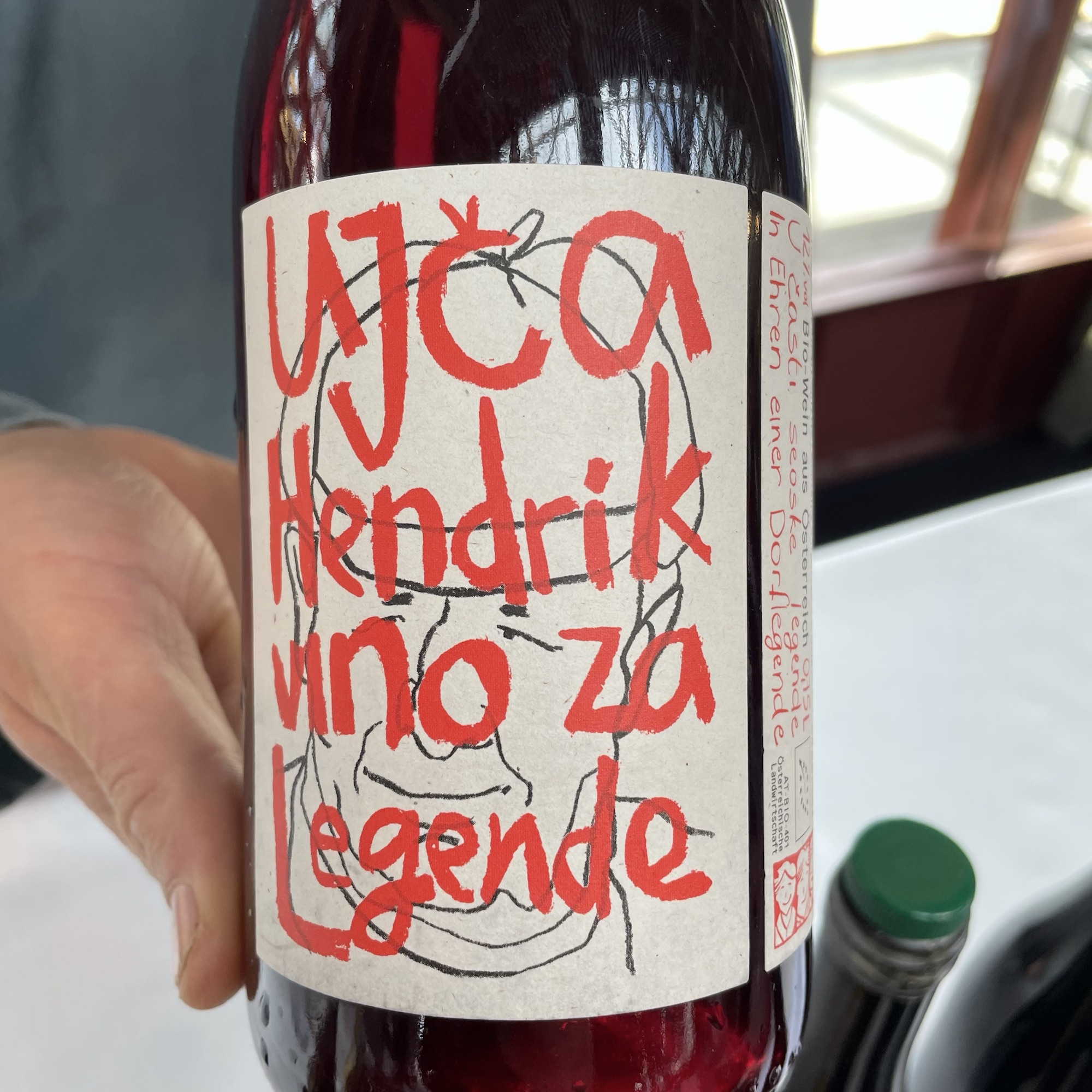
One thing Theo knows how to do well is skin contact. Although you might associate the style more with making white grapes into orange/amber wine, this field blend contains both red and white varieties. We have Pinot Noir, Cabernet Sauvignon, Gewurztraminer, Riesling and Chardonnay. These are all grapes you’ll find at NZ’s corporate wineries, but I’m wondering if harvesting them all together from one site and co-fermenting them is unique in the country?
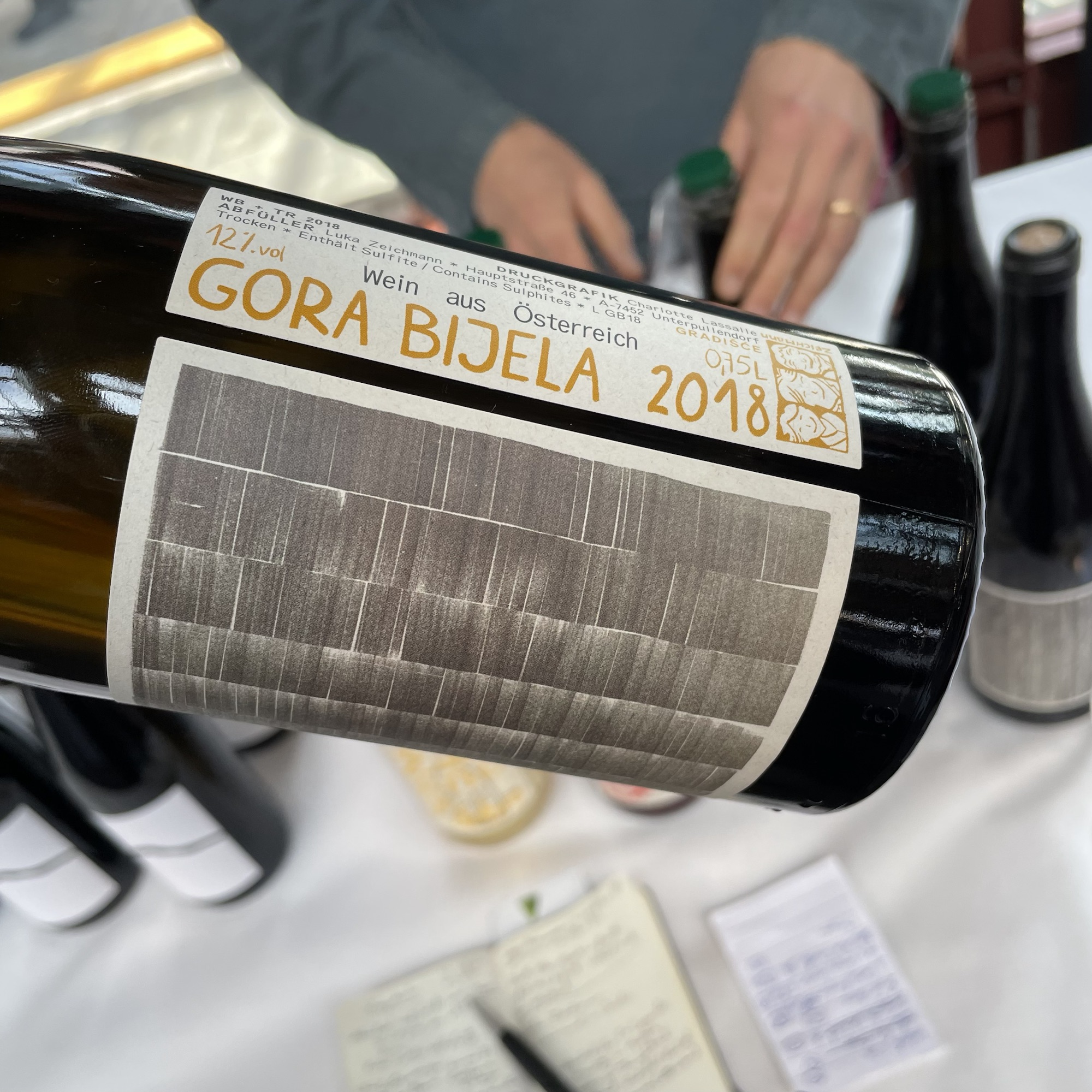
The fruit was all destemmed and fermented on skins for six weeks. Ageing was in used oak barrels, the wine naturally going through malolactic. Zero sulphur was added.

The wine has the feel of a Pinot Noir, especially with the lifted cherry fruit bouquet, yet on the palate all the varieties add something. I can pretend to pick out their characters, though I’d honestly never guess this cuvée’s composition in reality.

Very highly recommended, but do give it time to unfurl in the glass (we used the Zalto Universal which seems to work so well for zero sulphur natural wines, at least in our house). I’d say that this is a bargain, circa £21 for the 2021 vintage I saw recently on Uncharted Wines’s web site. Especially as the single vineyard Pinots from Hermit Ram are getting more expensive.

Oranžista 2020, Slobodne (Slovakia)

The producer calls this (P)artisan wine, and I think that actually describes this pretty well. Slobodne are one of Slovakia’s new star producers, working 17 hectares of vines on a much larger farm at Zemiansky Sady in the West of the country, northeast of Bratislava. This work, to rejuvenate the farm, has been a labour of love for the two sisters, along with their partners, who regained the land after it was lost to them during the Communist era. Everything they do follows organic and biodynamic principles.

Skin contact wines are something of a speciality here. Oranžista, which they began making in 2015, is a varietal Pinot Gris. Part of the crop is fermented on skins and the remainder as whole bunches. This gives us a wine that is very deep orange in colour, but which is both fruitier and livelier than the colour, and indeed its 13% alcohol, suggests. The bouquet is unquestionably dominated by orange scents, and the palate too, but with an almost negroni-like bitter twist.

But I’m over-simplifying things. It is zippy and fruity yet it has depth too. It tastes a little different, perhaps very much like a full-on orange wine might taste but with much more fruit and less (indeed little appreciable) tannin, at least after a few years in bottle. It’s a little different but a lot more than just a little good. Possibly not for everyone, but personally I always think this is a brilliant wine.

The 2022 vintage should be available from Modal Wines for £31.50. It remains one of the best value wines from the Slobodne range.

Posted in Alsace, Artisan Wines, English Wine, Hungarian Wine, Natural Wine, New Zealand Wine, Slovakian Wine, Wine, Wine Agencies | Tagged , , , , , , , , , , , , , , , , , , , , , | Leave a comment

Review of the Year 2023

My Review of the Year 2023 marks a new phase in my life. I can’t really say career, because as far as wine goes, it isn’t a conventional one (and I think, to many working in wine in my new country, they don’t recall me having one). Writing doesn’t sustain me financially, but I feel that the total independence I have does accrue the trust of my readers. When I say “new phase” I mean that having moved to Scotland in 2022, this marks my first full year here, as an immigrant if not quite an exile.

What has changed most is that whilst previously I would have attended several dozen trade tastings a year in London, and a similar number of lunches and dinners organised on specific wine themes, those are thin on the ground up here. Even when they take place, I’m pretty much an unknown to the locals so invitations don’t come freely, as they once did. At least when London comes to Edinburgh, I’m still getting a nice email and an invitation. The contrast is mildly annoying. I’m just a bit sad that Les Caves de Pyrene decided to venture up here when I was in Australia (very bad timing).

Australia (March-April) was most fruitful, not for the usual winery visits, but for discovering the wonderful P&V Wine Merchant in Sydney. I have Jamie at Cork & Cask in Edinburgh to thank for the recommendation. Not only did I discover a whole load of natural wines I’d never seen before, but on walking into their Newtown store (a fifteen-minute walk from where we were staying in Sydney at our son’s place) I saw that co-owner, the legendary Mike Bennie, was putting on a Jura Masterclass and they had one ticket left. See my articles of 29 May (Wines in Australia) and 7 June (Jura Masterclass).

Cork & Cask, which has a shop in Marchmont in the south of Edinburgh, holds a Winter Wine Fair every November. Although we’ve had some of the smaller London importers come up and give excellent tastings (Modal, Basket Press to name two), the Cork & Cask event brings a dozen or so of their suppliers to our capital, and it’s a good chance for me to touch base with people like Wines Under the Bonnet, Dynamic, Vine Trail, Roland, Indigo and more. It’s the second year I have been and even though they make me pay it has generated three articles worth of fabulous wines on both occasions.

Books and Articles from 2023

In 2023 I published 47 articles which by 31 December will have generated somewhere over 40,000 views. That’s a nice increase on last year, and on 2020. It doesn’t hit the high of 2021 (over 52,000 hits), but then I’m guessing people had more time during Covid. I always like to list the most popular articles read in the current year, and the dates of publication (apologies to American readers for confusing you with our quaint British system here) which give an idea of the enduring popularity of some articles.

That Jamie Goode’s latest book appears on this list despite only reviewing it in October shows how popular The New Viticulture has been for my readership (as one would expect). That this should be my Wine Book of the Year may therefore come as no surprise. Jamie’s previous book, Regenerative Viticulture, also featured in the top reader’s hits for ‘23. I hope the popularity of The New Viticulture here is reflected in sales, as it is pretty much essential reading for anyone deeply into wine, not just those who make it.

I would also like to highly commend New British Wine by Abbie Moulton and Vines in a Cold Climate by Henry Jeffreys. Both cover the wines and wine personalities of the UK. They are very different, both from each other and from Dr Goode’s book, which is certainly technical, yet is written in a way that makes the science relatively easy to understand for anyone wishing to significantly increase their knowledge. It’s like a text book that is a pleasure to read.

All three are very enjoyable and engrossing. That there is room for so much literature on the wines of Great Britain (remember Ed Dallimore’s book last year and hopefully one from Ruth Spivey in 2024) says a great deal about everything that’s happening here (or should I say down there). The most exciting developments are not always happening in the most obvious places too. My reviews of all three books are easy to search for on my site.

The list of fifteen articles below, those which had the most reads in 2023, includes some perennial favourites. The Jura article which heads the list is perhaps slightly dated, in that what was our favourite restaurant closed after Covid, but pretty much everything else still holds true. I only wonder whether all who read it actually visit the Jura region and shop the shops…and especially walk the walks? I’d love to know.

This, and the article on Nepal and Tibet’s strange alcoholic beverage, Tongba, seemed to get close to twice the number of hits as everything else. The Tongba article gets a lot of traffic from Nepalese and European travel sites. Finally, I shall mention Breaky Bottom. This English producer has been quiet on social media since Covid, but they recently perked up thanks to one of their younger workers (thank you, Louisa). A recent link to my article about this complete treasure of English wine, set in the most beautiful location I know for an English vineyard, which followed a visit in 2022, seems to have generated an incredible surge in end of year traffic.

The most popular articles on wideworldofwine.co in 2023 were (no long pause)

  1. Tourist Jura – A Brief Guide to Arbois and Beyond (First Published 07/20)
  2. Tongba – A Study in Emptiness (01/16)
  3. Pergola Taught (on pergolas, of course) (02/21)
  4. Extreme Viticulture in Nepal (about Pataleban Estate) (11/19)
  5. Paradise Lost (a eulogy for the late Pascal Clairet and Dominique Belluard) (06/21)
  6. Vin Jaune (06/23 – the top article of all those posted in 2023)
  7. Regenerative Viticulture by Jamie Goode (Book Review) (06/22)
  8. The New Viticulture by Jamie Goode (Book Review) (10/23)
  9. New British Wine by Abbie Moulton (Book Review) (03/23)
  10. Like a Child in a Sweet Shop (Visit to Made from Grapes in Glasgow) (03/23)
  11. Gut Oggau Visit in August 2022 (09/22)
  12. The Hearach (much awaited first whisky from Isle of Harris Distillery) (10/23)
  13. Breaky Bottom (winery visit) (03/22)
  14. One Wine Leads to Another (Alsace collaborative negoce Du Vin Aux Liens) (02/23)
  15. Mike Bennie Jura Masterclass (at P+V in Sydney) (06/23)

Resolutions for 2024

I have never really been one for New Year’s Resolutions generally, which might be one reason my fitness levels slowly deteriorate, and why I don’t have to take the month of January off for lack of wines to write about. If January won’t be “dry”, nor will it be any more vegan(uary) than any other month. I live with a vegan so I am used to a mainly plant-based diet, whilst getting my cheese fix, and occasional other sins (especially my habit of not reading the ingredients on chocolate wrappers) in other ways.

But when it comes to wine, I have recently made a habit of setting out some things I hope to achieve in the following year. There are a few I’d like to share.

The first two relate to my drinking. Ever since I made Foot Trodden by Simon Woolf and Ryan Opaz my book of the year in 2021, I’ve been promising to drink more Portuguese wine. I have no idea why I have failed miserably. Butlers Wine Cellar in Brighton (who will deliver here), and Modal Wines (who even make the effort to come up here) both have some exceptional Portuguese wines. There’s no excuse, and I must try harder.

Equally, I am shocked at how Euro-centric my drinking seemed to become this year. That was placed into sharp contrast during the weeks I spent in Australia in spring ’23. There, I drank wines I have never come across here. I tend to think that good or affordable Aussie natural wines are not as easy to get hold of as they once were, although there are exceptions among importers (Les Caves do their level best). But when my drinking does hit Australia, New Zealand, North and South America and, of course, South Africa (where I should have few excuses), I am always made very much aware that I ought to be making more of an effort here.

My other promise to myself for 2024 is to try to support the growing natural wine scene in this part of Scotland. I can’t afford to buy wine as I once did, but I can write about the scene. Both Edinburgh and Glasgow have their own small importers and they are doing a good job to find new talent out there. But I’d especially like to see both Newcomer and Tutto Wines have a presence in this market, and Swig too, come to think of it. It’s for purely selfish reasons. When it’s hard to get deliveries, I just want to see more of my favourite wines in my local (-ish) retailers. There’s a limit as to how many bottles I can lug up from London every two-to-three-months.

Whilst I’m here, not so much a resolution, but I also need to do more to enlighten some importer or other as to the fact that Michael Dhillon (Bindi, see below) makes wine at one of the very finest estates in the whole of Australia. Definitely top-5, at the very least! I saw a well-known London-based wine person extolling Bindi about a month ago, so I’m not alone.

Finally, a couple of odd lists. The first is a list of people who have been an inspiration to me through my “career” and have in many ways kept my writing going, often as a muse for an article, or for their knowledge (and ability to share it), and in some cases for sharing and validating my own enthusiasms. I wanted to write about all of these people but before I left England I only got around to an article about Christina Rasmussen. So here is a list instead.

  1. Doug Wregg – Les Caves de Pyrene sold me my first natural wines bought in the UK and Doug has been the shining light, bar none, for teaching me to look at and love wine in a different way. He has no idea…
  2. Jamie Goode – Dr Goode is probably the greatest wine communicator working today in terms of teaching an understanding of wine science as well as what matters in winemaking. wineanorak.com
  3. Christina Rasmussen – Wine educator and impassioned advocate for (and practitioner of) sustainable viticulture. littlewine.io
  4. Wink Lorch – Author. For years (from the 1980s) it was just myself and Wink in Arbois, you know. Now look at the place.
  5. Ania Smelskaya – Sommelier, educator, photographer. I challenge you to find any more enthusiastic human being when it comes to natural wine. It rubs off.
  6. Alan March – Alan and I have been on a parallel journey. Different places but same destination. I value his opinions more than most. Blogger: amarchinthevines.org , sometimes at Coutelou in the Languedoc.
  7. Tim Phillips – England’s thinking winemaker. I marvel at his combination of intellect and its application to making astonishing wines where by rights it shouldn’t happen. Charlie Herring Wines.
  8. Valerie Kathawala – I’ve never met Valerie in person, though we used to talk on Zoom a bit. She has planted the seed for quite a few of my articles both during and after Covid. She is co-founder of Trink Magazine, the most valuable resource on wines from German-speaking countries and regions, wines which I think you know I like a lot. I only regret that she once published one of the dullest articles I have written.
  9. David Neilson – The man behind backinalsace.com . He’s to Alsace what Wink Lorch is to Jura and Savoie, and he truly knows Alsace natural wine inside-out. As Alsace is the happening place for natural wine right now, David is your man.
  10. Jiří Majerik – Jiří, along with his wife, Zainab, runs Basket Press Wines. Jiří is Czech. He’s helped me to see how exciting the Czech natural wine scene is. If, one day, people remember I was perhaps the first to preach about these wines, I won’t become rich on it, but I may have cause to thank him even more. Surely, it’s time to discover the likes of Koráb, Osička, Dva Duby, Richard Stávek and others (along with producers in their portfolio such as Magula from Slovakia, Annamária Réka-Koncz from Hungary and “Max Sein Wein” from Germany).

The second list is a simple one. They are all winemakers. David Neilson (see above) is always telling me I shouldn’t have favourites. I’m sure he’s completely right in a professional context, but I’m not your average wine writer in that specific sense. It’s just something I want to do and now seems an appropriate time. They are in no particular order:

  1. Domaine Rietsch (Jean-Pierre Rietsch), Mittelbergheim (Alsace)
  2. Renner und Sistas (Stefanie, Susanne & Georg Renner), Gols (Burgenland)
  3. Gut Oggau (Stephanie & Eduard Tscheppe-Eselböck), Oggau (Burgenland)
  4. Julie Balagny RIP (Beaujolais)
  5. Domaine L’Octavin (Alice Bouvot), Arbois (Jura)
  6. Bindi (Michael Dhillon), Macedon Ranges (Victoria)
  7. Breaky Bottom (Peter Hall), Rodmell (Sussex)
  8. Domaine de la Tournelle (Evelyne and the late Pascal Clairet), Arbois (Jura)
  9. Bérêche & Fils (Raphaël Bérêche), Craon de Ludes (Champagne)
  10. Charlie Herring Wines (Tim Phillips), Lymington (Hampshire)

I have to leave it at ten. I could easily double the list with producers from Jura and Alsace, Champagne, Czechia, Austria, Germany, Switzerland and more, producers whose wines I love and drink when I can. Yet this list is somehow more than one containing favourite producers. The wines made by these ladies and gentlemen have touched me profoundly. They have reached into my soul and pulled on something in there. Some of their wines have brought me close to tears. And the great thing is that they are all wonderful people (although, sadly, I never met Julie Balagny, the only one). I feel more than lucky to have lived at a time when these people are/were making wine.

I hope that 2024 brings you peace, happiness and prosperity, and that your drinking is enlightening and thrilling. Perhaps you may find a little inspiration here, and in my Wines of the Year (previous article). I hope we can continue to enjoy wine, tastings, meals, books and travel together throughout next year and beyond.

Posted in Artisan Wines, Natural Wine, Review of the Year, Wine, Wine Agencies, Wine Books, Wine Festivals, Wine Heroes, Wine Merchants, Wine Science, Wine Tastings, Wine Writing | Tagged , , , , , , , , , | 1 Comment

Wines of the Year 2023 #theglouthatbindsus

Wines of the Year! It could be so self-indulgent, could it not? A dozen posh bottles which no one can afford and will probably never drink. I do have some of that stuff left in my cellar, a kind of reminder of what I used to drink, occasionally, long ago. The reason I hope you will both read and enjoy my take on the WOTY thing is because my criteria is not price, fame, rarity (though because some of these are tiny production wines, they may be rare) but interest. As with my “Recent Wines” articles, from where these wines were taken, the real criteria is simply “what did I find most interesting”? If I found it interesting, stimulating, exciting etc, then perhaps you will. I’m sure you share my enthusiasms.

There are a dozen wines here, one from each month of 2023. As I begin this article, I don’t know what I shall choose from December. The last two wines I drank could both qualify, but embarrassment that all of the first eleven come from Europe may be one of the deciding factors. That there are three English wines among this dozen must say something (I kind of feel sorry for another English producer who was just edged out).

I don’t think the wines I have been drinking have changed that much over last year and I have an apology to make. I’m trying to be honest with this list, not contrived, but I’ve noticed that in 2022 I listed the previous vintage of two exact same wines I list here. I must like them a lot. There is also another, albeit different, Breaky Bottom cuvée here, again. That expresses a lot about how much I love this small English producer.

However, there are no Czech wines this year, and no Swiss wines either. Perhaps even more shocking, there are no wines from Champagne in my 2023 dozen. Don’t read anything into these omissions. I’ve drunk so many, especially the Czech wines, and enjoyed every one of them. Perhaps it has been a time for others to stand out. These selections always end up being pretty tight and hard to choose.

It is unlikely that many, if any, of these will still be available, but I have included the month where I wrote about them, in case you want to search and read a little more, and have listed the retailer and/or importer should you wish to pursue the current vintage.

At the end I indulge myself with a whisky or two. Not all of you will love whisky, but if you do I think these are beautiful drinks at the affordable end of the spectrum, if costing slightly more than your basic ten-year-old.

January: « B…j.l..s » 2021 Vin de France, Julie Balagny (Beaujolais, France)

Julie sadly passed away this year. Many of you will know that she had become my favourite producer in the region, supplanting long-time favourites such as Lapierre and Foillard. In truth, her Cru wines were getting beyond my budget, yet this fruity Gamay, from old vines on the Juliènas border, having undergone a carbonic maceration, is the epitome of what Beaujolais ought to be, and in many ways nicely sums up what was so new and exciting about Julie when she first came to my attention. I drank my last Balagny bottle, a Fleurie, this year as a toast to a great individual, so sadly no Balagny for me next January. Tutto Wines may have dwindling supplies of Julie’s wines.

February: “Table” Vin de France [2019], Caroline Ledédenté (Bugey, France)

Last year a Bugey made it into my dozen (actually I cheated, it was a baker’s dozen of thirteen) Wines of the Year. In 2023 I drank a few more from the region, but in February this bottle from a producer totally new to me grabbed the prize, in a tough battle I can tell you. Caroline trained with the highly respected Gregoire Perron and farms 2-ha (creating a wonderful biodiverse environment) in Bugey’s southern sector, closer to Savoie. The variety here is Molette and it’s a zippy, citrus-imbued natural wine with no added sulphur. 2019 is only her second vintage! This came from the now defunct Noble Fine Liquor in Hackney. If anyone knows Caroline’s UK importer, please let me know. In Australia you may find her at the wonderful P&V Merchants in Sydney. Someone (Mike Bennie, surely) knows their stuff.

March: Seyval Blanc 2018, Charlie Herring Wines (Hampshire, England)

I’m always excited to taste something new from a producer whose wines I love. Tim Phillips had asked me to evaluate some as yet unreleased sparkling Seyval Blancs. I think it was because I know Peter Hall’s Breaky Bottom Sparkling Seyval pretty well, and Tim knows I hold that as the benchmark. This wine has since been released as The Bookkeeper Blanc de Blancs Brut Nature 2018, and one of those will certainly be opened next year. Disgorged 10/22 with 8g/l dosage, it tasted like fresh and crisp Bramley Apple but with more depth, which will develop further. It gets the March vote for the thrill of racy English Seyval which is well on the way to matching Peter’s versions. Rare, as are all Tim’s wines, but he is a rare talent. Contact Tim direct via Charlie Herring Wines. Alternatively, see whether Les Caves de Pyrene can source any.

April: Naturally Petulant Pink 2021, Westwell Wines (Kent, England)

This isn’t Westwell’s “finest” wine in an objective MW/WSET kind of way, but you know how a wine can really hit the spot. The grape varieties are the very three you might find in Champagne, but here Adrian Pike has created something different and new, not merely because it’s a petnat rather than “trad method”, hence its appearance here. Late October harvest, skin maceration (it’s a lovely quartz pink), bottled early (Nov ’21), roughly disgorged, zero added sulphur. Strawberry and lemon meringue with raspberry sorbet. Thrilling, and massively refreshing. Put me well in the mood for our trip to Australia later in the month. Uncharted Wines is the lucky agent for Westwell.

May: Morgon “Côte du Py” 2011, Jean Foillard (Beaujolais, France)

The second Bojo to make the list, but a very different one. Of course, this is a natural wine, one of the daddies of them all. But the naysayers say drink this young because they cannot contemplate a zero-sulphur wine lasting a dozen years. Well, I can tell you… This has “pinoté” (as they say). It tastes like very fine Burgundy, and yet the Gamay is still there when you seek it. As fine as any fine wine I have drunk in the past few years. So good it beat a bottle of Comtes ’06, a Cru Classé Sauternes of the same age, and a bottle from Marie-Thérèse Chappaz, to claim this slot. Probably purchased from The Solent Cellar (Simon and Heather are big fans, and once they had magnums), but long ago now.

June: Schilcher Frizzante Österreicher Perlwein, Franz & Christine Strohmeier (Styria/Steiermark, Austria)

It’s good to have your secret shame out in the open. I have had a bit of a thing for Schilcher Sekt for a lot longer than I have been into natural wine. Bracing acidity and blueberry/blackberry fruit make it the ultimate discovery for any acid hound. This version is only gently sparkling. That makes it less shocking, but in any case, we have one of Austria’s finest winemakers as its creator. Blauer Wildbacher is the rare autochthonous grape variety, first fermented in stainless steel with the second fermentation in bottle. There seem to be a million pin-prick bubbles caressing the palate. Another unique wine brilliantly constructed. Newcomer Wines imports Strohmeier for the UK market.

July: Disorder #4 2021, Annamária Réka-Koncz (Barabás, Eastern Hungary)

I was slightly surprised one of Annamária’s wines didn’t make the cut last year, I certainly drank enough of them. This one does, and this bottle was the first time that I have had UK access to this cuvée. It is 100% Furmint, a variety I only started to appreciate fully as on a par with the world’s finest varieties perhaps five or six years ago. What I love about Furmint is its intense minerality which, in the finest examples also shows depth and complexity. The best are not merely linear. The grapes come from a plot at Mád, and the wine is a collab with Annamária’s close friend, Stefan Jensen, owner of Terroiristen Vinbar in Copenhagen. Old vines, skin contact, volcanic soils, giving orchard fruits and bags of individuality. Basket Press Wines imports Réka-Koncz here but they often last about two weeks once they arrive.

August: Complètement Red Vin de France 2021, Lambert Spielmann (Alsace, France)

As I’ve already said, I compiled this list blind. I had no idea that Lambert’s 2020 made the cut last year. If you asked me which is my favourite of his wines it would probably be another, but this one is very seriously good. That said, serious isn’t really the right word. It’s the most fruit-packed red wine I tasted in 2023, and doubtless 2022 as well. Pale as a Poulsard but unmistakably Pinot, natural wine heaven. Lambert is one of Alsace’s rising stars, yet he hardly makes enough wine to satisfy the locals. Tutto Wines imports Spielmann. They can’t deliver to Scotland, so deep in the wilds of farest East Lothian do I live now (well, 30 mins by train or car from Edinburgh), and frankly guys, I don’t see enough effort being put into getting this producer into Scotland. I need more Spielmann.

September: Cuvée Sir Andrew Davis 2016, Breaky Bottom (Sussex, England)

It’s interesting that there has been a surge in people reading the article I wrote on Breaky Bottom (published 15/03/2022) since it got a mention and a link from Breaky Bottom themselves (who had been a little quiet, post-Covid, on social media but that has changed). My visit there, of which I was writing, ranks among my most memorable to any wine estate, and I already knew the wines made by Peter Hall in England’s most beautiful vineyard location extremely well before I went. To be frank, you could choose any (well-aged) BB cuvée as a Wine of the Year, depending on your budget. The wines are all exciting, and remarkable value. This one is made from Chardonnay, Pinot Noir and Pinot Meunier. It has finesse and delicacy, but paired with the complexity these grape varieties give after long lees ageing. First port of call is always Butlers Wine Cellar. Also available from Corney & Barrow, and indeed by mail order from Breaky Bottom itself.

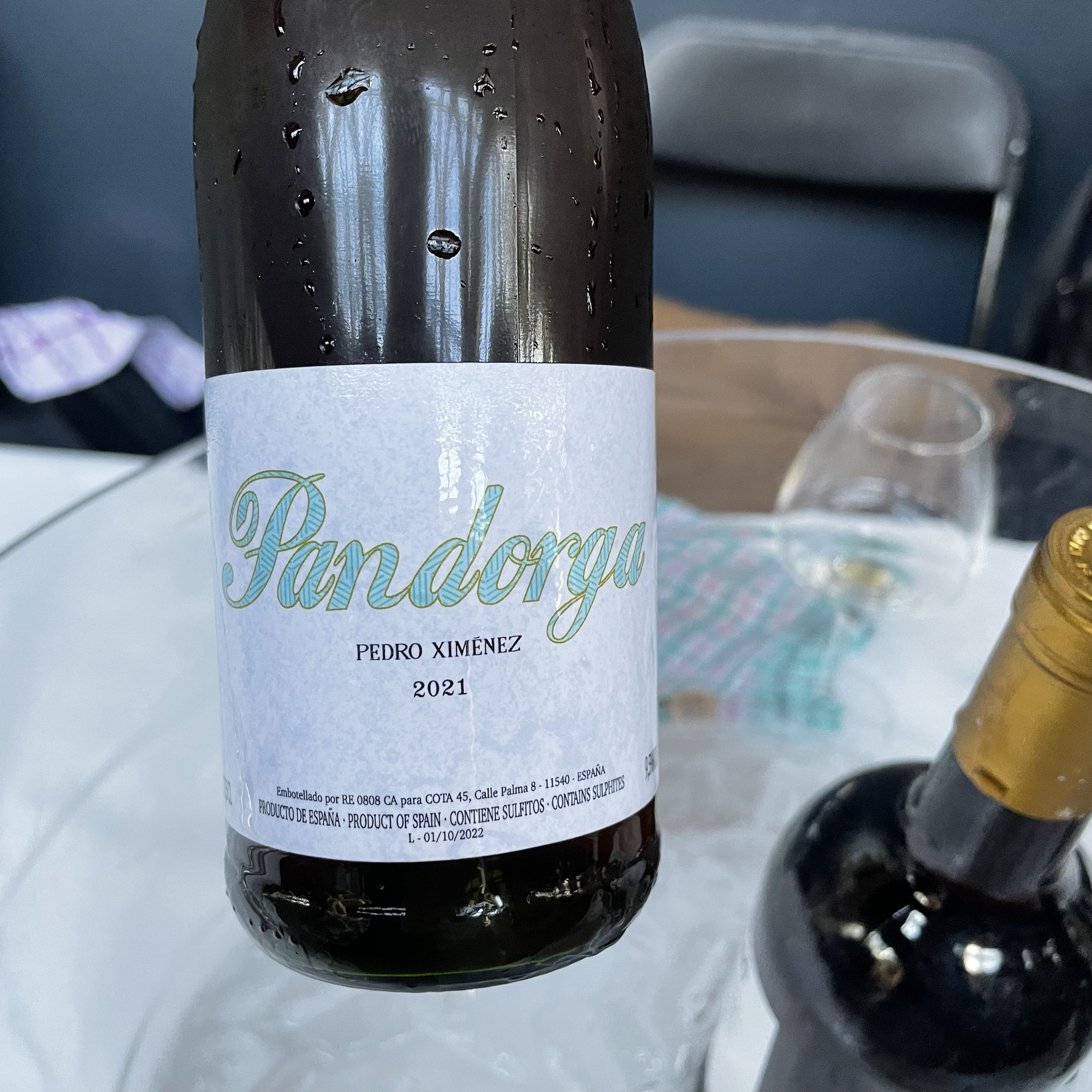
October: “Agostado” Cortado 2017, Bodegas Cota 45 (Jerez Region, Spain)

This is effectively an unfortified Palo Cortado (at 14% abv) from this small bodega near to Sanlúcar. This is Palomino Fino with the addition of a couple of very rare varieties, Perruno and Uva Rey. The fruit comes from a range of top sites but ageing is just for 26 months, under partial flor. Slightly nutty and oxidative, but viscerally mineral, there is apple fruit (slightly bruised) and vibrant lemon. A rich wine with real and magical presence, and certainly in my estimation, world class. It isn’t cheap, but like the wine that follows it, and indeed all fine wines out of Jerez, it is far cheaper than most wines in its class. The Sourcing Table may still have some of this. It may also be available from Les Caves de Pyrene.

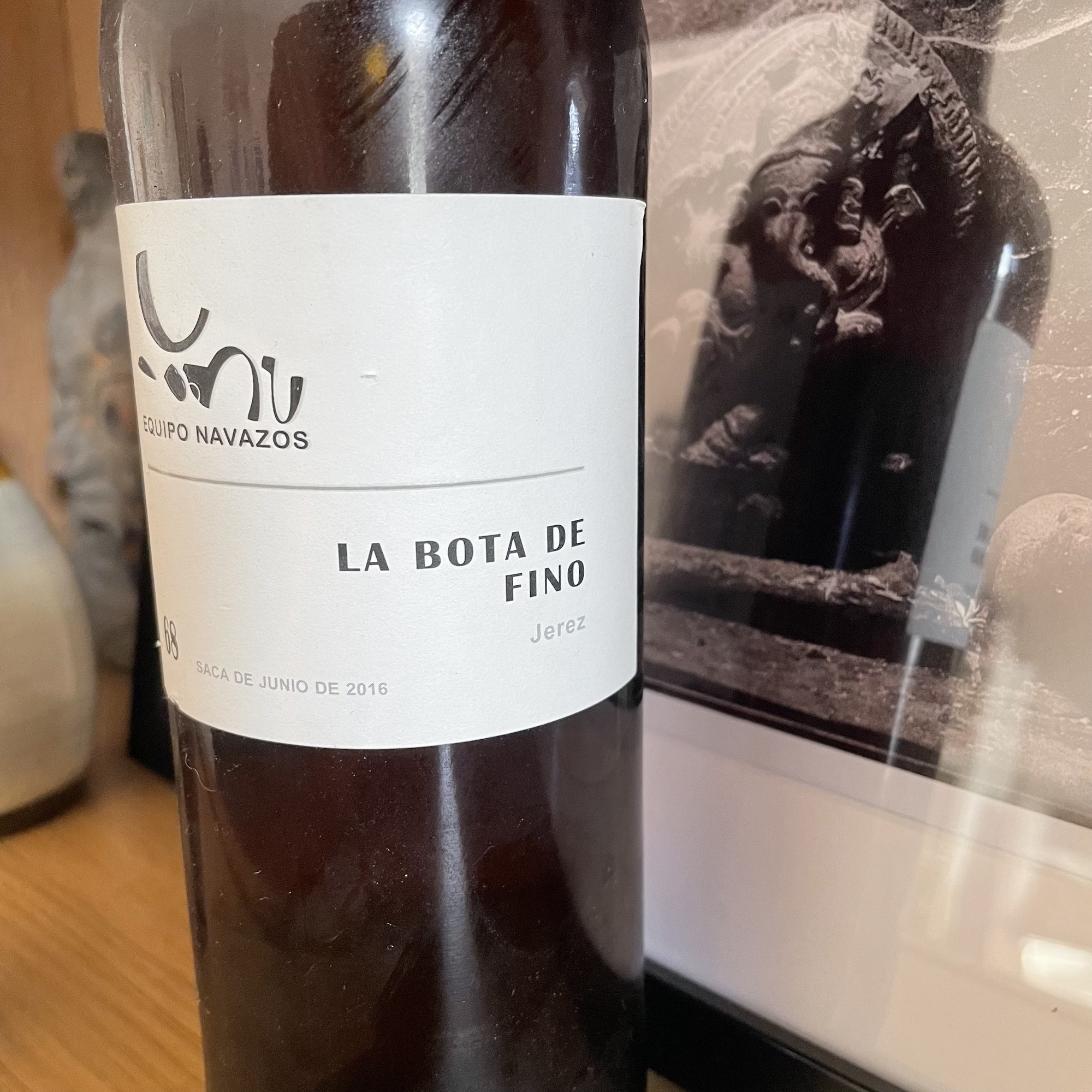
November: La Bota de Palo Cortado 75, Equipo Navazos (Jerez Region, Spain)

As when I used to wait for the Number 73 bus from Stoke Newington to take me to work, you wait for ages and then two come at once. To be fair, this wine did come along more than forty days after the Cota 45, in late November as opposed to early October, but both are unquestionably wines of their respective months. Equipo Navazos is well enough established now that they don’t need my praise, but this Palo Cortado from Pago Miraflores La Baja (Sanlúcar) is a remarkable wine, even by their standards. You get toasted almond and hazelnut, essence of orange, a whiff of Earl Grey tea, a chalky edge, and a glass so scented that if not washed will still give pleasure next morning. What elevates it even further is the delicacy alongside the intensity. I also believe that bottle age (this is a saca of July 2017) has worked some magic too, even if experts doubt the ability of Sherry to age like Port and Madeira in bottle. Alliance Wine imports EN into the UK.

December: Field Blend 2019 “Skin Fermented”, The Hermit Ram (North Canterbury, New Zealand)

What is the point, some may ask, of including another wine I listed in my Wines of the Year 2022? Okay, it was the previous vintage once again, but even so! As I said before, this list was made without cheating and peeking, and the wines are here on their own merits. Even so, the Slovakian wine we drank last night did push Theo Coles’s Hermit Ram close. This wine was chosen because it is pretty unique in a New Zealand context, and even quite unique in a wider wine universe. This field blend comes from the Limestone Hills vineyard in North Canterbury and contains five international varieties: Pinot Noir, Cabernet Sauvignon, Gewurztraminer, Riesling and Chardonnay (six weeks on skins). Perhaps it tastes most like Pinot Noir, yet there’s a lot more to it. A fascinating wine as it unfurls (in our case, in Zalto Universals, which appeared to do it justice). It seems remarkable that whilst this producer puts out some expensive Pinots you can still grab this for £25 from (once again) Uncharted Wines. If anyone is making more thrilling wine in New Zealand I’d like to know.

I also wanted, now that I’m a “New Scot”, to throw in a Whisky of the Year. It proved to be too difficult to select just one, the following pair being too close to call it. I won’t provide notes. You can find them on this site (the second of these got an article all to itself back on 8 October) or elsewhere. They are Isle of Arran Distillery Sauternes Cask Finish and The Hearach, the first whisky release (their gin is already legendary) from the Isle of Harris Distillery. Both were purchased at Cork & Cask in Edinburgh.

Posted in Alsace, Artisan Wines, Austrian Wine, Beaujolais, English Wine, Hungarian Wine, Jura, Natural Wine, New Zealand Wine, Sherry, Spanish Wine, Whisky, Wine | Tagged , , , , , , , , , , , , , , , , , , , , , , , , , , , , , , , , , , , , | Leave a comment

Recent Wines November 2023 (Part 2) #theglouthatbindsus

The second and final part of November’s “Recent Wines” (the wines we drank at home) ranges from a rare Alpine treat from Savoie, a genuinely remarkable Sherry and another nice entry-level wine from a well-known Tuscan estate, to another of those great finds under £20, this time from Australia, and finishes with an old friend from Austria.

Gringet “Les Alpes” 2019 Vin de Savoie, Dominique Belluard (Savoie, France)

A lot of you will have read my piece titled “Paradise Lost”, a eulogy for two French winemakers whose lives tragically ended in the Covid years, Dominique being one of them (article published here on 21 June 2021). On moving to Scotland, I had just a few bottles of Dominique’s wines left in my wine store, and this is important because I feel I spotted his genius very early, and his wines (and where he made them) mean a lot to me.

The late Dominique Belluard farmed a little over ten hectares at Ayze, just north of the River Arve and the A40 Autoroute from Geneva to Mont Blanc, the closest large town being Bonneville, at which point many motorcycle fans’ ears will prick up.  Although he made wine from other varieties, Altesse and Mondeuse, it is Gringet, a very rare autochthonous variety, which took centre stage at Domaine Belluard. Although my first introduction to Domaine Belluard was via the excellent sparkling wines made here, it is the still wines made from Gringet which truly woke me up.

“Les Alpes” is 100% Gringet, blended from several sites (“Le Feu” is the more expensive single vineyard rendition). The soils are mostly on yellow marnes (marls) and limestone, farmed mostly biodynamically and without chemical inputs, but Dominique never aimed for certification. It begins life, after a gentle press, in concrete eggs, which latterly were a new horizontal style, Dominique always experimenting. I think the wine spent a short period in stainless steel too, but was bottled after only one year, with minimal sulphur added. Glass stoppers were used for the still wines.

Although we have a grape variety many will not have tasted, it is very much an Alpine wine. The bouquet is floral and lifted on the breeze, so to speak. The palate is dry, initially herbal but then a beeswax texture takes centre stage. It can only be described as “mineral”, whatever your take on the use of this descriptor. Intensely mineral!

It’s a tremendous wine, especially as it isn’t the top cuvée. One cannot help feeling sadness along with joy when drinking it. This was especially so here. Although I have a couple of the single vineyard “Le Feu” from this vintage (which need a couple of years longer before even considering opening), I think this was my last “Les Alpes” (you can never tell, the state of my temporary cellar here).

This cost a mere £36 when purchased from Solent Cellar on release, imported by Les Caves de Pyrene. Good luck in finding any (I genuinely mean that).

La Bota de Palo Cortado 75, Equipo Navazos (Jerez, Spain)

The EN stash diminishes. I still have a decent amount of Fino and Manzanilla, and a few small-format gems for very special, shared, occasions, but of Palo Cortado there are few left in the rack. That said, this is one wine I will stretch the budget to replenish. I would argue that this bottling will give as much pleasure to the connoisseur as any Bordeaux or Burgundy would to their respective acolytes.

Bota 75 was sourced from Hijos Raneira Pérez Marín in Sanlúcar and it was from a saca of July 2017. Just 3,200 bottles were taken, which does add another reason, besides the unique quality of this wine, as to why it costs a lot (it is still available in one or two nooks for between £45 and £55).

The colour is beautiful, dark yet bright. The bouquet is fine toasted almonds with orange essence. As with all EN bottlings, it is intense and concentrated, something which people new to the brand can find shocking. The palate is rich and smooth with a chalky texture just evident. Maybe you might sense a sniff of Earl Grey tea? It translates the terroir, I think, even in a wine at 18% abv. That terroir is the famous Pago Miraflores “La Baja” at Sanlúcar. The grapes came from two plots with vines at fifty, and eighty, years old.

What you might not expect from a wine which is so demonstrative at your first sniff is the delicacy that endures on the finish (and will indeed remain in your glass for a long time after the wine has been supped). Perhaps this, above all else, is what makes this bottle so fine. It is one of the finest EN bottles I have enjoyed these past few years. Whilst much wine has gone up in price far too much, personally I would pay fifty quid for another bash at it.

Equipo Navazos is imported into the UK by Alliance Wine. The current Palo Cortado release, Bota 121, is a stunning single vineyard, vintage wine from 2010 (unusual in that respect, of course). It comes from the same source as Botas 52, this 75 and 102.

Rosso dei Notri 2021, Tua Rita (Tuscany, Italy)

I used to buy this wine, which as the name perhaps suggests is the entry point for this well-known Suvereto producer, from Les Caves for a number of years, when they were the estate’s importer. I was having a quick lunch at Abbey Fine Wines, in the lovely Borders town of Melrose this autumn and spotted this on the shelf, so I grabbed one. I’m glad I did.

Tua Rita was established in the Val di Cornia, which lies in the northern part of The Maremma, on the Tuscan Coast, way back in 1984. It is most famous, of course, for Redigaffi, a Merlot of astonishing quality but equally astonishing price these days. Rosso dei Notri is somewhat easier on the pocket.

What we have here is another blend of foreign (to Tuscany) varieties, Cabernet Sauvignon, Cabernet Franc (there may be, or have been, a dash of Petit Verdot as well) and Merlot, ripened in the Tuscan sun, yet cooled by the sea breezes. Ripeness with finesse perhaps. This cuvée is possibly the result of the estate’s increase in size, with now over thirty hectares planted to vines from smaller beginnings of a third of that fifty years ago (time flies). But do not let size fool you.

We have a smoky bouquet with plum and blueberry fruit. There are tannins, although they are rounding out already, at least with air, but there is still grip here, a sign of four months in barrique before further ageing in stainless steel. It definitely needs food, I think. It’s a very good wine on its own terms, the product, I am certain, of a fine estate which wouldn’t sully its reputation with anything less than that. You notice the freshness, the fruit, its definition, length and personality, always the sign in an estate’s cheaper wine that it isn’t an afterthought.

This is another wine I would be happy to take to forthcoming family Christmas meals, except that I won’t be making the drive to Melrose over the next couple of weeks. £20.50 from Abbey Fine Wines, Melrose, and now imported by Armit Wines. They have it at £90 for six In Bond.

Bullets Before Cannonballs 2021, Ricca Terra Farms (South Australia)

Ricca Terra Farms is based at Angaston, a town in South Australia on the border between the Barossa and Eden Valleys, well known to many lovers of Australian wine. It was founded by Ashley and Holly Ratcliff in 2003. This couple have quietly become extremely well-known winemakers in Australia (including “Halliday 5-Star” status for their winery), and thankfully their wines are starting to get UK distribution. They do make a lot of different wines.

Bullets Before Cannonballs comes from Riverland, once derided somewhat by UK wine writers in the 1980s and 90s for its irrigated vineyards on the Murray River in the east-centre of the state, much as they looked down on Riverina’s irrigated vines on the Murrumbidgee in New South Wales, part of the same river system.

Nowadays, Riverland fruit is increasingly sourced by quality producers, some of whose wines I have drunk and written about (Brad Hickey’s Brash Higgins ZBO amphora Zibibbo is one example). The Ratcliffs have been one of the driving forces behind this rejuvenation of quality perception in the Riverland.

Bullets is a blend of four varieties, dominated by just less than 40% Tempranillo, with Lambrusco, Lagrein and Shiraz forming the remainder. These are vines the Ratcliffs own, not bought-in fruit, and they are all planted in small plots over which they have total control. All the grapes were hand picked (this is Australia, don’t forget!) and taken to a cool room. After fermentation the wine was aged twelve months in used oak.

This wine is very fruity but it’s also very concentrated. Along with the 14.5% abv, which the freshness and acidity disguises, it has an air of fun with a serious side just peeking out. Fun but not frivolous. It’s plump, but everything is in good balance. As a bonus, the finish has a savoury, liquorice, note adding interest. It is sealed under screwcap, of course.

I’m not pretending it’s the WOTM here, but for £17.50 it is very good value and almost certainly of higher quality than you might imagine for less than twenty quid. My bottle came from Winekraft Edinburgh. Even though I bought it just two weekends ago, I fear it may well be sold out. Hopefully they will get more, but in the meantime the importer is, once again (I think), Alliance Wine, and they will tell you where to find some, I’m sure.

Waiting for Tom Weiss 2020, Renner & Sistas (Burgenland, Austria)

Stefanie, Susanne and Georg are pretty much the life and soul of Gols, despite the water in that village creating a whole universe of natural wine talent around its streets (not least Susanne’s partner, Klaus Preisinger). The 13-hectare Renner vineyard is farmed naturally without systemic inputs, and winemaking is as natural as it can be, bar occasional additions of SO2. Biodynamic certification (Demeter) has been granted now. However, the siblings (Georg joined his sisters from this vintage) go further, creating biodiversity and farming sustainably. The results are, for me at least, thrilling. Helmuth and Birgit should be proud parents indeed (I think they are).

Waiting for Tom Weiss 2020 is a blend of Weissburgunder (Pinot Blanc) and Chardonnay. This pair of varieties are very well suited to blending, and here they make a harmonious natural wine which combines fruitiness and salinity, along with a spritz-like zip. Both varieties shine, giving us melon and pear with a touch of tropical fruit. It’s fantastic for glugging in a bar, slightly funky but not overtly so, but it also has the weight for food.

I genuinely cannot get enough of the whole range this family are producing, and wines keep appearing which I’ve yet to taste (their Gewurztraminer, which looks like a skin contact version from its colour, has been fascinating me for a while). But the Waiting for Tom wines remain core components of their eclectic range.

In the UK, importer Newcomer Wines has the 2021 now listed for £28. French readers can find some 2020 Weiss, and the red version, if they are swift, at Feral Art et Vin in Bordeaux for 22€.

Posted in Artisan Wines, Australian Wine, Austrian Wine, Italian Wine, Natural Wine, Savoie Wine, Sherry, Wine, Wine Agencies | Tagged , , , , , , , , , , , , , , , , , , , , , , , , | Leave a comment

Recent Wines November 2023 (Part 1) #theglouthatbindsus

November has seen me away from home quite a lot, so there are only ten wines we drank at home to tell you about, and nine out of those ten wines were European. At least this focuses the mind on the necessity of drinking more widely in a geographical sense next year, than merely a diversity of European wine regions and grape varieties.

Still, with wines from Rheinhessen, Alsace, Slovakia, Burgenland and Tuscany in Part One, we have four wines from producers you may be very familiar with, plus one sub-£20 bargain. All of them are very good.

Silvaner “Feuervogel” 2018, Weingut Keller (Rheinhessen, Germany)

Klaus Peter Keller is one of the most famous names in German wine, and he has done more than anyone to revitalise the name of Rheinhessen. The wines which made him famous, the likes of Grand Crus Morstein and Kirchspiel, just to name two, are now beyond most pockets (though not so four or five years ago), but there is great value to be had down the pecking order at this 16-hectare Wonnegau estate (including some very good Spätburgunder). The Riesling “Von der Fels” must be a contender for best value dry Riesling in the world.

Silvaner is also recommended, and Feuervogel (firebird/phoenix) adds lustre to the variety for its ability to age. It’s a dry Silvaner made from 70-year-old vines grown on limestone. It’s a wine which the authorities tried to ban as atypical, but in truth it’s a truly amazing wine, especially here with five years in bottle.

The mineral structure is immense, yet this is balanced beautifully with a richness not often found with this variety. The other major parts of the jigsaw are fresh lime and spice, and everything is now blended together in a seamless whole. Forget any preconceptions of the variety, this is a fine wine, and it will age further should you wish. It is already complex.

The pricing for this wine seems all over the place, not helped by the fact that I can’t see a UK retailer for the current 2021 vintage. This bottle came from Solent Cellar a few years ago. They no longer have it, needless to say. I did see a 2018 listed for £60 but I’m pretty sure I paid around half that.

“Murmure” 2021, Domaine Rietsch (Alsace, France)

Domaine Rietsch is my Alsace equivalent of L’Octavin and Tournelle in the Jura, Gut Oggau and Renner in Burgenland, or the late Julie Balagny in Bojo, one of the closest wine producers to my beating heart, and one whose wines set my pulse racing whenever I’m lucky enough to drink one. Jean-Pierre crafts his cuvées in the village of Mittelbergheim, which for Alsace is (or used to be, before Alsace natural wine really took off) natural wine central for this region.

Jean-Pierre described 2021 to his UK importer as one of extremes, very dry but also “the most humid in Mittelbergheim since 1900”. Whilst mildew was inevitable, he described the fruit that survived as “incredible”.

Murmure is a skin-contact Muscat Ottonel made from grapes hardly affected by the mildew that cut the crop of many other varieties. It was picked via two tries through the vineyard and then macerated for thirteen days. It then aged seven months on lees, and no sulphur was added, surely a testament to healthy fruit.

It shows a classic Muscat bouquet, delicate floral scents with a hint of the exotic. The palate has a chalky mineral dryness, and indeed it was harvested off chalky “marnes”. It is also delicate and savoury, with a very low 10% abv. One of the best Alsace Muscats in my opinion.

I think this might have come from Made from Grapes in Glasgow, but the UK importer is Wines Under the Bonnet. Somewhere around £24/£25.

Frankovka 2016, Magula (Slovakia)

The entry for Slovakia in The World Atlas of Wine (8th edn) seems very outdated now, although it does note that Frankovka grows well to the northeast of Bratislava along with a host of white varieties. The top artisan producers of the country have thankfully become even better known since that 2019 edition, and among them is unquestionably Vino Magula, a family winery with 10ha of vines in the Wolf and Rose Valleys near Sucha Nad Parnou.

This is a biodynamic farm, and the labels depict a vine delving deep for nutrients because they certainly won’t get any help from synthetic chemical sprays. Frankovka (sometimes Frankovka Modrá in Slovakia) is, of course, better known to most of us as Blaufränkisch. Harvested in mid-October from vines with extremely low yields, the fruit spent forty days on skins. Ageing was 24 months in a mix of new and old oak, plus a further 12 months in bottle before release. Such pre-sale ageing is rare, but we are lucky in this case because what we have is a gem.

There is very intense cherry fruit on both nose and palate, that’s intense with a capital “I”. The bouquet also has a nice, fragrant, floral note and develops a hint of smoke as it unfurls. The palate manages to combine a velvet smoothness with a focused line of acidity. The finish has a slightly earthy texture and peppery spice.

That’s a lot in a bottle of wine, but this is extremely good. This is a wine which saw decent ageing before release, and then more in the bottle chez-moi, and it is a wine now at or close to its peak. You’ll be pushed to find any left, I’m afraid, and only 1,700 bottles were produced, but it’s one to look out for. I shall definitely be setting an alert for the next available vintage.

No longer currently available, but importer Basket Press Wines usually has a few cuvées from Magula. I took some orange wine in a delivery a couple of weeks ago (you may have seen me review it in my previous article on tasting the importer’s new vintages in Edinburgh). The Frankovka cost around £30, a genuine bargain for an exceptional wine at this stage in its evolution.

Mischkultur 2021, Joiseph (Burgenland, Austria)

Like their UK importer, I was able to get into the wines made by Luka Zeichmann for this partnership quite early, and over a number of years I’ve drunk them often. I still get a thrill when I taste them, but at the same time Luka’s winemaking has matured, without question. Whilst I recently got to taste some of the wines he is now making under his own label, in Mittelburgenland, where his family had vines, the Joiseph wines are more widely available. They hail from around the village of Jois, to the north of the Neusiedlersee, in Burgenland proper.

Mischkultur is a field blend, effectively a gemischter satz, with six varieties harvested and fermented together. There is a little skin contact to add a touch of texture, but the essence of this cuvée is fresh and zippy fruit with fruit-juice acidity. It is also an aromatic wine, with a floral bouquet, but the palate is dry with a savoury element subservient to the fruit. Let’s not forget the dissolved CO2, a good substitute for sulphur, which gives just a faint prickle.

There is no doubt Luka is one of the most exciting young winemakers in the region, and his future lies before him. One wonders what he will dream up in years to come. Mischkultur is one of Luka’s Joiseph wines imported by Modal Wines, who also have four of his new “own-label” wines in tiny quantities. It retails for around £26.50.

Sangiovese 2020, Fattoria di Sammontana (Tuscany, Italy)

This is the entry level Sangiovese from this estate at Montelupo, a property which once belonged to the Medici Dukes. It was purchased by the Dzieduszycki family in the 1860s and is still in that family today. They farm 13 hectares of vines along with around 3,000 olive trees.

This Sangiovese could be made as a Chianti, but it has been declassified to IGT largely because of its production methods. As well as being biodynamic, and a natural wine, it has been aged in glazed cement tanks rather than the traditional wood which Chianti usually sees. There is also no added sulphur. That ageing is for just eight months, although the wine is held back in bottle for a further three months before release.

As intended, this is a pure-fruited wine with a floral bouquet, intended to be drunk young. It may be fruity but it does have a bit of grip, and this helps bring out an earthy note on the palate, which at least hints to me of ageing in cement. This grip is there initially, but it softens as the wine warms and opens. It’s drinking very well now, especially with food.

This is exceptional value for just under £20. I’d love to get some more for drinking with family over Christmas (it has a jolly label too), but Cork & Cask in Edinburgh, where I bought, it suggests they just have only four bottles left. It is another wine imported by Modal Wines.

Posted in Alsace, Artisan Wines, Austrian Wine, German Wine, Italian Wine, Natural Wine, Slovakian Wine, Tuscan Wine, Wine, Wine Agencies | Tagged , , , , , , , , , , , , , , | Leave a comment

Basket Press – New Vintages in Edinburgh

The last of the Edinburgh tastings for November featured some new wines from Basket Press Wines, actually tasted outdoors on a lovely mid-November lunchtime. It doesn’t always rain here, contrary to the myths put about down south. You will doubtless know Basket Press as an importer of Czech wines (and ciders, etc), but their range also extends into Slovakia, Slovenia, Hungary, Germany and Georgia, and it is good to see a small importer growing outwards.

However, they have also taken on some new Czech producers and one in particular is worthy of highlighting. Most readers will know of Milan Nestarec, the first really famous, and widely distributed, natural winemaker from the Czech Republic. Well, Milan is one of the few major names of this genre who Basket Press doesn’t import (his UK agent is Newcomer Wines). Well, Milan’s wife, Mira Nestarec, is now making wine under her own label and Basket Press has been able to take on the role of UK importer.

These wines are so new that they don’t appear to have a profile yet on the Basket Press web site (I think they are mentioned on their Facebook page, but I’m not on Facebook). They are from the just-bottled 2022 vintage, Mira’s first. There are four wines, two red and two white. They weren’t available to taste, but I managed to bag a Riesling and a Cabernet Franc in a small order I put in last week, all the others in that order being wines I tasted here. I shall try one soon, but I thought a few readers might be interested to get in quick!

The wines tasted in Edinburgh were as follows…

Divide 2019, DVA Duby (Moravia, Czechia)

Jiří Sebela makes very fine natural wines at Dolní Kounice, a small town on the River Jihlava in the south of Moravia, where the soils are very special. They are based on Granodiorite, which is magma from the Pre-Cambrian epoch, 700 million years ago. Although these soils are magmatic rather than volcanic ash, they still give wines with that volcanic intensity which we can recognise from other volcanic terroirs like Sicily, or the Canary Isles etc.

“Divide” in this new 2019 vintage is a blend of around 70% Frühroter Veltliner and 30% Müller-Thurgau, farmed biodynamically and made naturally. Each batch is fermented separately in a mix of stainless steel and oak, and ageing was for ten months in oak. That’s a couple of months shorter than usual, and this year there was no skin contact for this cuvée.

It’s very fresh, with apple and lemon citrus acidity, but there’s also a savoury edge that adds depth. Minerality is, of course, the buzzword from the volcanic soils, and you would definitely say that the terroir shines through.

Malvasia 2019, DVA Duby (Moravia, Czechia)

The Moravian Malvasia has nothing to do with the grape of the same name elsewhere (although Malvasia has to be the most widely used synonym for totally different grape varieties that I know). Here, it is a synonym for Frühroter Veltliner. The bouquet is more floral than the previous wine, and the palate has apple, herbs, a touch of structure and texture, and then the finish brings in some salinity. It’s a wine which builds complexity in the glass and it’s always popular in my house, partly because it goes so well with the Asian Cuisine we eat a lot of.

Pur Jus 2021, Max Sein Wein (Baden, Germany)

Max Baumann is certainly a rising star of German natural wine. He worked with Gut Oggau and came back to his smallholding imbued with the philosophy lived by Eduard and Stephanie, and I think their creativity rubbed off as well. Max’s whole range is excellent, and here we have two from his latest vintage.

“Pur Jus” in 2021 was a blend of fewer varieties, here 50% Kerner with 40% Gewurztraminer and 10% Müller-Thurgau. The first and the last were direct-pressed, whilst the Gewurztraminer saw a one-week maceration. Nevertheless, the skin contact is evident in a deliciously spicy wine which has benefited from Max keeping the bottles back a couple of years before release. Quite delicious.

“Sivi” 2022, Kmetija Štekar (Goriška Brda, Slovenia)

Janko Štekar and his wife, Tamara Lukman, farm five hectares of vines, making natural wine in a region of Slovenia that is effectively a continuation of Italy’s Collio. As you may be aware, cross-border viticulture was common even when Slovenia was behind the Iron Curtain, and still is today. The approach here is one of encompassing the whole ecosystem within the winemaking project. They make lovely wines and I’ve always wanted to try Simon Woolf’s recommendation, Janko’s skin contact Riesling, called RePiko. Basket Press imports several cuvées and Sivi is also an “orange” or “amber” wine.

The variety is Pinot Gris/Grigio. It is fermented on skins in stainless steel with a twelve-hour maceration. It was bottled after six months ageing on lees in March this year. It is certainly a skin contact wine to taste, but it has more freshness than texture, as do all the wines in Janko’s “monkey” range. However, it’s also a little enigmatic, harder to describe than most wines. I can only say I found it intriguing enough to buy. I’ll readily admit that I’m not a big fan of the labels and I got a little bit annoyed at myself for probably not buying enough of these as a result. Very good value too at around £27.

Oranzovy Vlk 2021, Vino Magula (Slovakia)

This is a family winery at Sucha Nad Parnou, and one whose whole range I find irresistible. If wine from Slovakia doesn’t quite have the same profile as neighbour, Czechia, there are a few producers, Strekov 1075 (imported into the UK by Roland Wines) and Slobodné (Modal Wines), who are making wines everything as good as those from Moravia next door. Magula is certainly one of those estates.

Farming is biodynamic on mineral-rich chalky soils with very low rainfall. Their rather unique label shows the vine roots having to delve deep for moisture. We have here a beautiful orange wine, from the “Wolf” (Vlk) Valley, which blends Grüner Veltliner, Welschriesling, Traminer and Děvín, the latter a 1958 Slovakian cross between (allegedly) Gewurztraminer and Frühroter Veltliner (the very same “Malvasia” we came across earlier), or from different sources, Traminer and Röter Veltliner.

Anyway, a pointless digression cos there ain’t much Děvín in this. What there appears to be is rust. It looks like Irn Bru and it smells like mandarin orange. It tastes a little like a dry version of Seville Orange marmalade, as did the 2019, the last vintage I bought. There’s a bit of texture, but there’s also a plumpness which develops and takes away the edge as the wine opens. To be fair, it didn’t open a lot outdoors in Edinburgh, but it did a little in my warm mitts, and I really love this Magula cuvée to bits so I know what it is like. Zero sulphur, don’t serve too cold. I also love the label, which I guess is a bonus.

Rouge 2021, Max Sein Wein (Baden, Germany)

Yes, Max prefers to label his wines in French. He’s up at Wertheim-Dertingen, which, between Karlsruhe and Stüttgart, is a kind of hinterland betwixt Baden and Franconia, so not in any of the bits of Baden close to France. I’m not sure why he chooses to do this, although his wines are all outside their appellation, labelled merely as Deutscher Wein, not even Landwein. What I do know is that Max does have a following in France, even in Bordeaux, as that city’s wonderful natural wine shop, Feral Art et Vin, stocks them.

This 2021 is a 50:50 blend of Pinot Noir and Pinot Meunier (previously Meunier has formed the greater part of the blend). Meunier is a grape that Max Baumann really knows how to handle, and his still red wines from the variety are among the best I know. This is a pale red with smooth cherry fruit, but with just a touch of earthiness to ground it. I think it’s one of those wines that you need to pull up the word “purity” for. I’m definitely a fan. It will age and gain a little complexity, and perhaps even more smoothness, although the 2021 does seem more than approachable now.

Impera 2019, DVA Duby (Moravia, Czechia)

The third Duby wine of the day, and whist I do like these wines a lot, this was perhaps on this occasion my favourite. If we look at the name, placing it next to “Divide”, this wine is “Conquer” and it will conquer a few hearts, for sure.

It’s a blend of 70% Saint-Laurent with 30% Blaufränkisch. Although the region where this is made is more famous for Blaufränkisch (Frankovka, locally), this is a cuvée where the grape which is usually the underdog, Saint-Laurent, comes into its own.

This wine sees a month-long skin contact maceration in open-top fermenters. It is then transferred to a mix of acacia and oak barrels for a year’s ageing. Acacia is a local wood here in Moravia and it is becoming very popular. Its tight grain means less oxygen ingress and sometimes the wines possibly seem perhaps more intense as a result. That’s certainly the case here. The bouquet is rich with cherry fruit, and the palate is crunchy. The wine is smoky and savoury, and has depth. It drinks easily yet has a hidden serious side. I especially wanted some of this for my cellar but I bet it won’t hang around.

Kékfrankos Diόfas 2019, Sziegl Pince (Hajόs Baja, Hungary)

If you haven’t heard of the wine region of Hajós Baja it isn’t surprising. In Hungary’s south, on the Great Plain, the sandy soils here provide a lot of ordinary wine for the country’s urban workers. But, as Jancis et al admit in The World Atlas of Wine (8th edn), there are some producers bucking the trend. One is Sziegl Pince, a relatively new addition to the Basket Press portfolio.

This estate was started a decade ago by a young couple, then in their twenties. Having been given an 80-year-old vineyard as a gift from a relative they put every penny they could scrape together into purchasing more plots of old vines, until today they farm close to 8.5 hectares. They farm organically and use minimal intervention in their winemaking.

As an interesting aside, but relevant to this estate, given their acquisition of so many old plots of vines, is that during the Soviet era the old vines here survived because the tractors used for large-scale mechanised agriculture were too heavy. Beneath the sandy soils were a vast network of cellars and they would have been at risk of collapse. As a result, the old vines were left, instead of being pulled-out for replanting.

This is a single vineyard wine from a favoured site that ripens the grapes without loss of acidity. Kékfrankos is, of course, the Hungarian name for the variety we may know better as Blaufränkisch. Fermentation (a mix of crushed fruit and whole clusters) takes place in large open vats, then ageing is 18 months in mostly large oak. It is then given another 18 months in bottle before release. It is so rare today for a producer to keep wine back until they feel it is ready for release, but it is not uncommon in Central Europe among the smaller artisan producers.

The oak is hence nicely integrated. It has some grip and structure, and I may be inclined to keep this a little longer. It’s a winter wine, but is still fresh and juicy. Delicious stuff, and a wine that would certainly cost more than the £25 you’ll pay for this were it from an Austrian artisan winemaker. That said, it would doubtless have a brighter label. Reminder once more not to judge a book by its cover.

It’s always a pleasure to taste Basket Press Wines’s portfolio and it was kind of Jiří to make time for me, with his trusty Coravin, before heading to a trade customer. It’s true, I’ve written a lot about their wines recently, especially the Czech wines, but I’ll say it for the hundredth time, these wines would surprise many who have thus far failed to get on the bandwagon.

Posted in Artisan Wines, Czech Wine, German Wine, Hungarian Wine, Natural Wine, Slovakian Wine, Slovenian Wine, Wine, Wine Agencies, Wine Merchants, Wine Tastings | Tagged , , , , , , , , , , , , , , , , , , , , | 2 Comments

Modal Wines Edinburgh Tasting at Spry, November 2023

Modal Wines held their Edinburgh Trade Tasting on 6 November at Spry Wines which, at 1 Haddington Place, is at the top of Leith Walk. For anyone who doesn’t know Spry, it is a natural wine-focused bar and restaurant which serves very good food by way of small dishes, with an accompanying list of natural wines, dozens of which are available off the shelves at retail prices. Within a fifteen-minute walk from Edinburgh Waverley Station, and opposite Valvona & Crolla, Edinburgh’s fancy Italian deli, Vinyl Villains for second hand records and cds, and the famous Toppings for books, Spry is highly recommended for lunch or dinner (open Tues to Sun from 1-10pm, booking recommended).

Modal had Roman on hand to show 31 wines, ten as a free pour and 21 as a tutored tasting. I have chosen to mention seventeen wines, hoping to give you just enough information to entice you to try them. It’s not that I didn’t like the others, it’s merely that these are the ones which interested me the most. As far as I know, all the wines can be described as “natural”, although some will have what the producers describe as “minimal” added sulphur. In case it’s unclear, the format below goes producer, wine, region.

Possa, U Giancu 2021 (Liguria, Italy)

I’ve tried this producer many times and purchased their wines, so this is a nice one to start with. The grape variety is the autochthonous Albarola, grown right up on cliffs in the beautiful Cinque-Terre. Savoury, mineral and fresh with a little texture and a hint of the sea. Zero additives, including no added sulphur. Ligurian wines hide away but they are seriously worth trying.

Malinga, Hot Rot 2022 (Kamptal, Austria)

This is made from Rötburger, which you may recall from a recent article is the preferred synonym for Zweigelt among increasing numbers of natural winemakers due to the political leanings of “Zweigelt’s” creator in the nursery. It is blended with St-Laurent and a little Müller-Thurgau and Blauburger. It’s one of an increasing number of excellent “glugging” Zw…Rötburgers, full of cherry and strawberry fruit and deliciously fresh fruit acidity.

Domaine d’Ici Là, Au Replat Mondeuse 2020 (Bugey, France)

You know me and Bugey! This newish addition to the Modal portfolio was introduced to me via their Mondeuse Rosé this year.  A young couple, Florie Brunet and Adrien Bariol, run this 5ha domaine from Groslée-St-Benoît in the region’s southern sector. This red Mondeuse is whole-bunch fermented for fruitiness yet as the grapes come from a stony and rocky slope, perhaps this is why the wine nevertheless has structure, and mineral texture. Approachable but with a serious side. Lovely wine. I see Modal has half-a-dozen from this producer now, and I want more. This one should retail for around £35.

La Niverdière, Palimpseste 2018 (Loire, France)

Martine Budé is making lovely wines out of the Chinon appellation. She is a self-taught vigneronne working on her own on an estate founded in 2015. This is a delicate wine, the importer likening it to Pinot Noir in this respect. She uses an infusion technique for winemaking with a very light extraction, and ageing is all in concrete tank. This is silky and gentle, but 13% abv. A very interesting discovery. Also, around £36 I think (retail prices were not given at this tasting, but I will give an approximation where I can find one).

Casa de Mouraz, Vinho Verde Branco 2021 and Dão Branco 2022 (Dão, Portugal)

You may have read that I’m on the lookout for more Portuguese wines and Modal has long been a source for just that. It’s simply that when purchasing from Modal I’ve more often been drawn elsewhere, especially Austria, Germany and France. The biodynamic Vinho Verde was made unfiltered in 2021 especially for Modal, and was aged on lees for 18 months. You really do get some good lees texture and this has way more depth than most Vinho Verde.

The white Dão, also biodynamic, is a multi-grape field blend of twenty or more local varieties based on Encruzado. This ’22 spent a slightly longer 11 months in stainless steel and has energy, salinity and texture. A savoury white wine, around £25. Complexity is hard to come by for that price, but this has it.

Luka Zeichmann, Zuto Vino Je Dobro 2022 and Ujča Henrik (Burgenland, Austria)

You may know Luka’s wines from the partnership that makes “Joiseph” from Jois. He has revived some old family vines about an hour further south, in Mittelburgenland, and also works with a few local growers now, to also produce his own wines. This is a small range of natural wines made in tiny quantity, but Modal has worked with Luka from the beginning, so has been lucky enough to secure some for the UK. I’m pleased to finally try them.

Dobro” is a blend of Chardonnay (two-thirds) and Welschriesling, with a little skin contact on the Chardonnay. It goes into a mix of 200-litre and 300-litre oak. Juicy, spicy and very drinkable, and at just under £30 retail I think this, and the wine below, may be the cheapest pair of Luka’s own range of wines.

Uncle Henrik (I think Luka is writing his labels in Croatian to highlight his family heritage, but I might be mistaken) is made from a blend of Blaufränkisch, Zweigelt, and Blauer Portugieser, the rest being a mix of ten more varieties, all co-fermented from a co-planted field blend. Lightly vinified, the result is pale but bright and vibrant. A cherry bomb on the nose, it’s zippy on the palate, but there’s more here than just glouglou simplicity. Not cheap at £28, but justified because Luka is such a fine winemaker.

Elodie Jaume/Domaine des Chanssaud, Côtes du Rhône « À En Perdre La Souffre » 2022 and Châteauneuf-du-Pâpe Rouge 2021 (Rhône, France)

Elodie Jaume has taken over her family domaine and is converting it to biodynamic, low-impact, farming. This Côtes-du-Rhône, which currently goes under her own label (there is also a domaine CdR) is a zero-added-sulphur blend of 80% Grenache and 20% Carignan, aged in concrete. Very pure red and darker fruits, lots of blueberry richness, and good body for a generic CdR. Impressive, but at the same time £30.

The domaine Châteauneuf (no photo) is 90% Grenache, some vines more than 100 years old, the other 10% apparently containing every other variety allowed in the appellation (now 18 varieties in all). This is another of those appellations where alcohol has reached astonishing levels for an unfortified table wine, but this wine is positively restrained, despite 14.5% on the label. It has some structure but plenty of elegance too. Black-fruited and spicy. Circa £40. From 2023 this estate will be known as Domaine Elodie Jaume.

António Madeira Branco 2021 and Tinto 2021 (Dão, Portugal)

One feels Modal Wines knows Dão. They have worked with this producer for some time. António moved back from Paris to farm in his grandparents’ village, on a mission to rescue Dão’s ancient grape varieties, regenerating old and often abandoned vineyard plots. This white wine, released under the Dão DOP, comes from the Serra da Estrela zone. A multi-varietal blend (15 varieties), it is made, after a cold soak, half in stainless steel, and half in tight-grained oak. It’s herbal, savoury, flinty and fresh. It has both a modern feel but also more than a nod to tradition.

The Tinto is made in a similar way, a mix of stainless steel and oak, from several small field blend plots in the same zone. It’s an earthy red which speaks of its terroir with grip, but I reckon you pair this with some cabrito off the fire and you are away. There are more expensive António Madeira offerings off Modal’s list, but this pair are a good place to start.

Schödl Family (Weinviertel, Austria)

Modal Wines now list quite a range of cuvées from this young family. Like the Renners in Gols (Burgenland), this domaine is now run by the three siblings (Viktoria, Mathias and Leonhard) who converted their parents’s estate to biodynamics and are now very much part of the Weinviertel revival. Roman poured four wines.

Grün Grün Grüner Veltliner 2022 is a blend of plots and a mix of fermentation and ageing vessels. The wine has an aromatic bouquet with a spicy, textured palate. A wine which one supposes will develop even more, given its pristine flavours, but holding just a little back. About £33.

Safari 2022 is a white blend which has a little skin contact. The colour is a pale orange, but it isn’t over-textured, being more “fresh and fruity”. I think this is a little cheaper, around £28.

Sankt Laurent 2022 – this is apparently the wine that did it for Modal. You don’t find too many single varietal Saint/Sankt Laurent cuvées and this does make you wonder why? It is fruity yet with a bitter edge. It has a Pinot-like elegance, and although most will be drunk now, it will age a year or two. £34.

Blanc des Blancs Brut Nature is a very impressive traditional method sparkling wine whose grapes (Mostly Chardonnay with 10% Weissburgunder (Pinot Blanc)) come from Loidesthal in Weinviertel. You think Austria doesn’t make great bottle-fermented fizz? Well one of the best sparkling wines you may ever drink will be a decade-old Chardonnay Sekt from Ebner-Ebenauer, made not too distant from Loidesthal, in Poysdorf. This may not quite reach those heights, but it’s really good and a lot cheaper.

Ten months in a mix of stainless steel and large oak, then twenty months on lees, zero dosage of course. Brioche, creamy, mineral and with a hint of oxidative development from the yeast autolysis. Unlike the other Schödl wines, this has a somewhat dull label, presumably intentionally traditional, but at £44 it could rightly be called very good value. As Champagne prices gouge deep, other sources like this are perfect for those who prefer what’s in the bottle to what’s on it.

Borgatta Lamilla 2016 (Piemonte, Italy)

This is quite a special wine, perhaps appropriately saved until last. Emilio Oliveri is in his mid-80s and has been working two-hectares with his wife, Marisa since the 1960s. Located in the Monferrato Hills, near Ovada, they are a half-hour drive east of what is the often forgotten town of Southern Piemonte, Acqui-Terme (with a weekly market to rival any in the region, and atrocious but fun outdoor opera in the summer…but I’m digressing).

This is a well-aged Dolcetto. Vines planted in the 50s and 60s, old school slow fermentation, aged for a minimum of four years, a little sulphur during fermentation but none at bottling. This is very different to most Dolcetto you will taste. Okay, lots of deep blueberry and cherry fruit, but it is also a structured wine, and quite powerful at 14.5% abv. Imagine it with a winter stew of venison or wild boar sausages. This is very much an echo of a traditional way of winemaking which you hardly ever see today, a past which is rapidly disappearing. And it is only £24 at the cheapest retailer I can find (up to £27.50 elsewhere). There’s also a Barbera at around £30.

This was an excellent tasting in near perfect surroundings, on the day the restaurant is closed. It was a great chance to taste some fantastic, affordable, wines. Now I just need to ask Nic from Modal where I can find them all.

Posted in Artisan Wines, biodynamic wine, Natural Wine, Wine, Wine Agencies, Wine Merchants, Wine Tastings | Tagged , , , , , , , , , , , , , , , , , , , , , | Leave a comment

Cork & Cask Winter Wine Fair 2023 (Part 3): Vine Trail, Southern Spain and Arran Whisky

Parts 1 and 2 of my selections from the Cork & Cask Winter Wine Fair contained wines from six small independent importers. Part 3 Shows some wines from Vine Trail, along with some delicious gems from Southern Spain poured on what I shall call the Cork & Cask table. Then we finish with some whisky and a rather nice liqueur from the Isle of Arran. That concludes this particular event. It should be said that everything on show, in all three parts, is stocked by Cork & Cask in their Edinburgh store (and available for UK delivery). That is an impressive, natural wine-focused, range.

It is pleasing to see that the natural wine offering in Edinburgh continues to grow, and that there is clearly a growing market for low intervention wines. My next port of call will be Spry Wines, where Modal Wines held their annual Scottish tasting for the trade a couple of days after the Cork & Cask Fair.

VINE TRAIL

Vine Trail has one of the most envied lists in the UK. Their focus is mostly France but with increasing diversity coming from Northern Spain and Sicily. They are especially strong (an understatement) in Grower Champagne, Burgundy, Alsace and Jura. To name a few of my all-time favourite producers which Vine Trail import, we have Champagne from Bérêche and Manu Lassaigne, from Alsace, Lissner and Tempé, and from Jura, Labet and Overnoy, to mention only two. That doesn’t even begin to scratch the surface.

Domaine Marc Tempé Riesling Amzelle 2019 (Alsace, France)

Marc and Anne-Marie Tempé farm eight hectares of vines at Zellenberg, all planted on a wide array of soils including limestone, clay, schist, various marls and sandstone. Established in 1993, by 1996 Marc had gone fully biodynamic (he was mentored by Léonard Humbrecht). Viticulture here is described as “fastidious” by his importer. Keys are very long lees ageing and minimal added sulphur (in the case of this cuvée, zero added SO2). These are terroir wines with concentration and ageability.

“Amzelle” Riesling has seen 24 months on lees in large foudres.  It has a floral bouquet and is rounded and rich, with great depth of fruit. Pear flavours appear on the palate, with a spicy finish reminding me of both ginger and cinnamon. The alcohol is up at 14%, but it seems balanced. I think the 2018 strode in at 15% and I’m always criticised for being wary of such toppy Alsace wines as that, but I liked this one enough to recommend it highly. £35

Domaine Bernard Gripa Saint-Joseph Blanc 2020 (Rhône, France)

One of the two most expensive wines I’ve written about from this tasting, but in my opinion worth seeking out. Fabrice Gripa (Bernard’s son) took over at this Mauves estate way back in 1997. He isn’t, of course, the most famous resident of the village, but he’s a star winemaker nevertheless. His reputation may rest with his St-Péray whites, but on this basis his St-Jo’ white is nearly as good.

Fabrice’s Saint-Josephs come off granite soils, whereas the St-Péray comes off loess, clay and limestone. The blend is currently 80% Marsanne with 20% Roussanne, from 30-year-old vines on slopes just to the north of Mauves. Aged in 800-litre demi-muids, of which approx. 10% are new, it is herbal and spicy with a hint of almond on the nose. Attractive now, it will certainly age, although drink one and you will find it hard to resist any other bottles you have…assuming you can afford £42, though I cannot fault the wine, nor the price. White Northern Rhône is altogether very much more impressive these days despite the fight to keep alcohol levels down below 15%.

Veronica Ortega Bierzo “Quite” 2020 (Bierzo, Spain)

I went to Bierzo once you know! It was 1988, the wines were then called “El Bierzo”, and we had to stump up for the Parador as there weren’t many tourists, bar those who passed through Villafranca del Bierzo on the Pilgrim Route to Santiago. Veronica is to the east of Villafranca, near Ponferrada (which we visited briefly) at Valtuille de Abajo, where she has around 6ha planted.

The list of famous wine estates where Veronica has worked is impressive but way too long to list (from Burn Cottage to DRC but that’s not even getting started), but this native of Cadiz (her dad was a bullfighter, apparently) chose the province of Léon to make her own wine. I met Veronica a few years ago in London and tasted her range. Massively impressed, I bought a number of her wines from Vine Trail and from Littlewine when they had an online shop. I went directly to Cork & Cask’s shop after the event, and this was one of the wines I bought.

Quite is 100% Mencia from organic parcels around Valtuille. The soils are iron-rich clay and sand. Winemaking is fairly straightforward, a 15-day cuvaison, then a nine-month spell ageing in a mix of second and third use oak, and amphora. It’s a fruity wine, dark fruits sitting on a deep mulberry bed. It’s also savoury and grippy, but will drink nicely now or keep a year or two. Mine won’t last too long. £24

Cédric Perraud Etna Rosso Goccia 2021 (Sicily, Italy)

I had a phase drinking a lot of Etna wines some years ago, but the best of them just became too expensive, and if truth be known, less good value compared to other regions. The winemakers became stars and prices shot up.

Cédric Perraud, who comes originally from Nantes, on the Loire, began working some old vineyards on Etna in 2014, on the northern and eastern side of the mountain. His own winery began production in just 2017. The grapes for this cuvée come from old bush vines around Randazzo, where Cédric lives.

Goccia Rosso is mostly comprised of the great grape of Etna, Nerello Mascalese, with a little Carricante and Minella. Fermentation lasts just ten days, but on skins, before resting in stainless steel until the following May, to give what is a fresh and fruit-driven wine despite a reasonable 13% abv. It has that brittle spine surrounded by fruit that you expect from the cooler parts of Etna, with a touch of mountain viticulture about it, with vines right up at between 600 and 850 masl. You can almost smell the wood smoke. Yet there is also body here, and some tannin, in what is a natural wine, although a little SO2 is added at bottling. £32

CORK & CASK TABLE

The shop’s own team were pouring a selection of wines on a couple of tables where their importers were in most cases unable to attend. On one of those tables I was particularly interested to try some rather unusual wines from Bodega Vinificante Mahara (Cadiz) which add another new dimension to the wines of wider Jerez. Then, staying with Jerez, I must mention the wines of Diatomists. These are fine Sherries without the price tag of some, which I devoted a whole article to last year (if interested you can search for it, article published 01/12/2022).

Bodegas Vinificante Mahara: Amorro Pet Nat, Blanco and Tinto (Jerez Region, Spain)

Mahara means “crazy”, and the crazy bodega, run by the “crazy brothers”, is situated in the town of San Fernando, with around 5ha of vineyards at Chiclana, Sanlúcar and Jerez, mostly on the white albariza soils.

The Pet Nat is made from Sanlúcar Palomino, which I would imagine will make a lot of readers perk up and take notice. About 9,000 bottles were made and they used the classic ancestral method, but with an unusually long time on lees: four years! It’s a natural wine with just a tiny amount of sulphur added at bottling. Very different, very cool, very nice and well worth grabbing to try if you are anything like me (a sucker for the unusual stuff). £24

Amorro Blanco is a white Vino de Mesa made from Palomino grown, I think, at Chiclana. It has a shorter ageing on lees and it is relatively simple, in essence a salty Atlantic-influenced white wine with all the character that entails. Good, but for me not quite as out there as the Petnat and the red below. But nicely priced at £22, the cheapest of the three.

Amorro Tinto This is a red wine made from Tintilla di Rota, a variety mostly used elsewhere to make simple sweet wines, here fermented dry and aged in fibreglass tanks. The fruit source is the fine albariza soils of Jerez’s Pago Balbaina. This table wine really does have a hint of the ocean about it. A five-day whole bunch fermentation creates a fruity wine, but one with a salty twang on its savoury finish. It is unusual for a Southern Spanish red, not that you see many reds from Jerez, tasting lighter than its 13.5% abv suggests. £23

Three wines here which stand out as unusual and super-interesting, but exceedingly drinkable, are all well-priced, and as in 2022 with Diatomists, Southern Spain has thrown up more little gems.

Diatomists (Jerez, Spain)

As I mentioned above, you can read about the Diatomists project in an article I wrote last year, published on 1 December. In that article I tasted their Manzanilla, Amontillado, Oloroso, Medium Sherry and PX. This time out there were just three on show, the dry Manzanilla, the dry and nutty Amontillado and the super-sweet Pedro Ximénez, possibly my favourites in the range, at least at last year’s tasting.

Manzanilla is from the lower part of the famous Pago Miraflores Baja. The solera is 30 years old, comprised of 500-litre chestnut casks. The wine is dry yet a tiny bit richer and less acidic than many Manzas. Very good, £15 for a half bottle (I do note that these have all gone up in the intervening year but let’s face it, others are to blame rather than the producer or retailer).

Amontillado from a solera that has been going a hundred years, although this wine is only around twelve years old. It is once more unusually fruity for a dry Amontillado, although it has that nuts and salt thing going on that cries out for some fine Brindisa Marcona salted almonds and Perello queen olives. Enough to make the Amontillado-haters change their mind. £20/half bottle.

Pedro Ximenez (PX) is a style very few wine lovers I know drink often, but perhaps Christmas will be the exception. Last year our Christmas Pudding wine, then going well with the leftovers, nuts and nibbles in the evening, was a Vin Santo. Have you seen the price of good Vin Santo now! This PX comes from Montilla Morilles and like most good PX, it has a powerful bouquet. What struck me last year was that this PX actually has some acidity. Okay, it’s really sweet, but it isn’t as overwhelmingly cloying as most. I just wish it wasn’t £20/half, but Isole e Olena Vin Santo is £60/half so I should shut up and stop complaining.

ISLE OF ARRAN DISTILLERIES

Arran is the southernmost of the larger isles off Scotland’s West Coast, although the Kintyre Peninsula and Campbeltown stretch further south, and it is also the largest island in the Firth of Clyde. Its proximity to, and accessibility from, Glasgow makes it a major tourist destination today, although before Arran’s own version of the “clearances” it was a remote island of subsistence agriculture. One is always sceptical of legends of illicit distilling but it seems in Arran’s case these were true and the “Water of Arran” was apparently revered throughout Scotland in the 18th and early 19th centuries.

Arran did have a licensed distillery during the first half of the nineteenth century but it closed in 1837. The new Arran Distillery opened only twenty-odd years ago, on the north coast at Lochranza. More recently, a new distillery under the same management was opened near the site of that 19th century operation, on the south coast at Lagg. In keeping with the island’s tourist potential, a much-awarded visitor centre welcomes those who wish to connect with this island’s whisky heritage. Close to 100,000 folks a year do.

As a rough rule of thumb, the Arran Distillery at Lochranza makes unpeated malts, said to be in the Speyside style, whilst Lagg is making a peated malt more in keeping with the island style of Islay. There has been a revamp of the packaging in recent years and the Arran single malts are very well presented. The Arran releases are of particular interest to wine lovers because they draw on some adventurous cask finishes.

First, look out for my favourite previous release. It’s an Amarone cask finish. Red wine casks are less common and I’ve never come across an Amarone cask before. It has a nice red label in the new Arran bottle and livery, and the cask influence can clearly be identified. I’d say you get cherry and chocolate on the nose and the palate has a very wine-like “red fruits” element. This release may be hard to find but it is still available and usually retails at around £54.

First up at the tasting was the Sauternes cask finish, which is one of my favourites currently on my whisky shelf. Again, although an amateur like me might not identify the cask blind, if you know what it is then there’s a real moment of recognition. For instance, you certainly get the sweeter notes of the whisky enhanced. The nose shows citrus and honey, and the palate has some vanilla. There’s a touch of apricot on the finish. Also, circa £54. These special cask finishes are released at a slightly higher abv, around 50%.

Arran lacked a fine reputation when it opened its doors, but I think these special finishes are lovely bottles. I’ve been hit hard on the Sauternes finish, being unable to steer guests away to other bottles, so I may need to buy another.

I also tasted the Sherry cask finish, called “The Bodega”, the latest release. It’s an 8-9-year-old whisky, and described as a return to the style of some of Arran’s earlier releases. Expect a slightly spicier whisky, but one which still has a nice aromatic sweetness and a little smoke. This cask finish fetish is a dangerous habit to develop. 55% alcohol (cask strength), c £60.

I mentioned the new distillery at Lagg. Here I tasted the Lagg “Corriecravie”. Just 300 cases were released. For this they use Concerto malted barley, and water from Lagg distilleries own borehole. It has been finished in Oloroso cask and was bottled at 55.8% abv. This bottling is more peaty, and more smoky, than the Arran releases, and at just four years old it does have a fiery side (it does taste like a young malt). However, given its age, it is surprisingly smooth as well, and certainly shows some complexity (and meatiness). Oak, smoke, nutty and chocolaty. It comes in at £68. For me, I prefer the Arran releases (and I’d like to try the Port cask finish some time), but I know others prefer the peaty style.

Before I leave Cork & Cask, I have to mention the Arran Gold Cream Liqueur. If, like me, you are partial to that other famous cream liqueur, if the occasion is right, of course, then you really should try this. It’s so many steps up it’s a whole damn staircase better…in my humble but sober opinion. It has enough whisky to bring it up to 17% abv, like its commercial rival, but I’d warrant that probably doesn’t have spirit of the same quality. The Arran is also smooth and creamy, with vanilla fudge on the nose. It actually has complexity, of sorts. I found this exceptional. I should emphasise, in case you are worried about my judgement, that despite all those wines I’d tasted, I was spitting.

Posted in Natural Wine, Sherry, Spanish Wine, Whisky, Wine, Wine Agencies, Wine Festivals, Wine Merchants, Wine Tastings | Tagged , , , , , , , , , , , , , , , , , , , | Leave a comment