I have to admit that even by my own standards we are all over the place with the first six bottles of home drinking for June. We begin not with a wine but with sake, which I wish I drank more of if I’m honest. We then jump to Nelson in New Zealand before an even bigger leap to Europe, by way of classic Bordeaux followed by Jura, a classic for me but perhaps not for those for whom the Bordeaux is their comfort. We then take a flight to China’s Ningxia Province for an interesting red wine before ending our pinball wine journey in Sicily, on the slopes of Etna. Fasten your seatbelts.
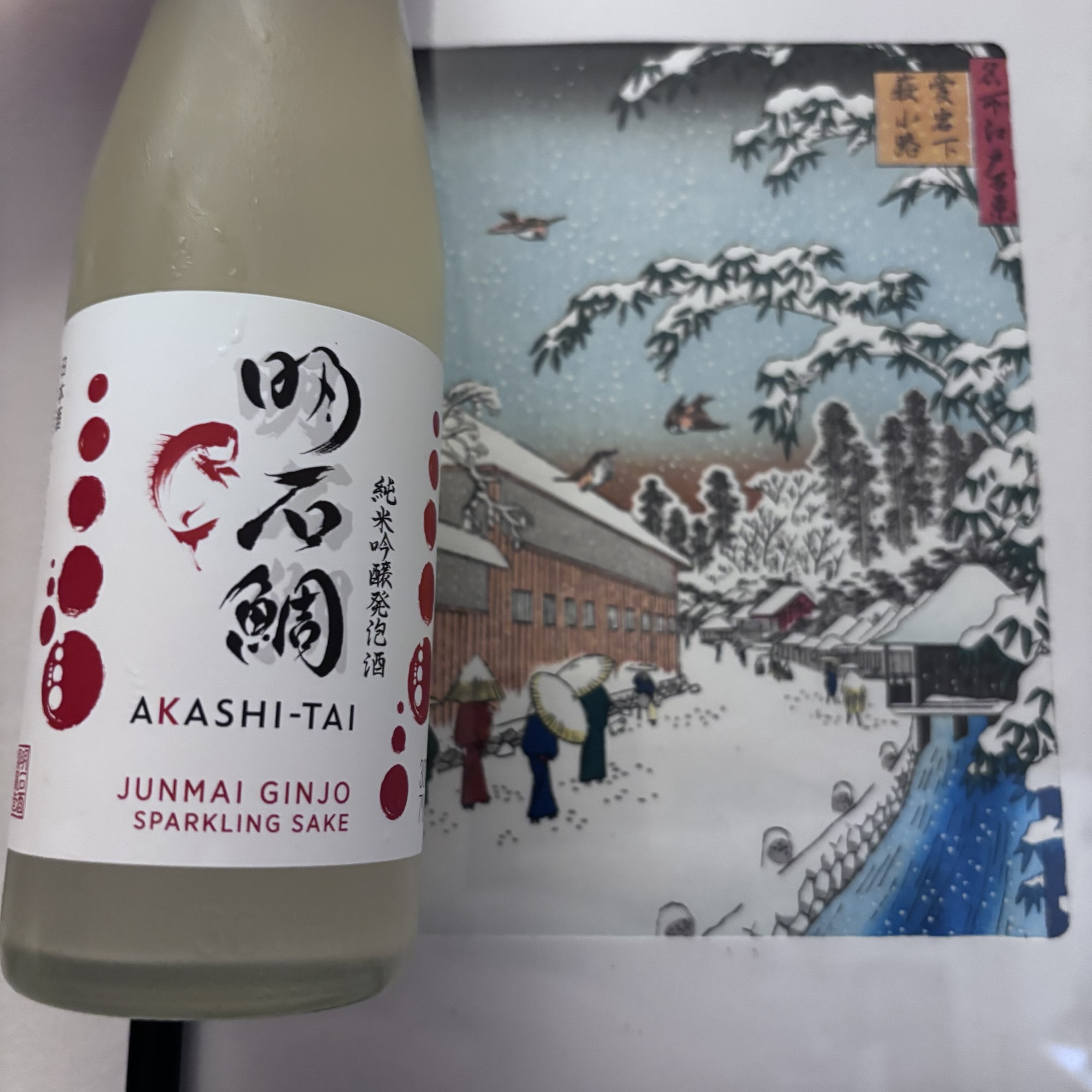
Junmai Ginjo Sparkling Sake, Akashi-Tai (Hyogo, Japan)
This sparkling sake comes from not only one of the best-known producers in Japan, but one that was the first to make a real push to export to, inter alia, the UK. Their sakes are often the first anyone comes across here. Their brewery, one of seventy plus locally, is in Akashi City on Osaka Bay, west of Kobe. The massive Kobe earthquake in 1995 damaged their premises, but it did lead to updating equipment which, through temperature-controlled vats, enables them to now brew sake year-round, instead of just in the cooler months.
The Yonezawa family, in its current generation, now focuses totally on the quality end of the market, with 50% of their product being exported. This is high for Japan. Sparkling sake is a relatively modern style. Older customers would have habitually drunk cheap sake which may have had alcohol added to it, providing a staple inebriator. Sparkling sake, called “happo-seishu”, is seen as a way of attracting younger customers in Japan, but its ease of drinking makes it equally attractive to Western palates.
The rice here has a high, but not the highest, level of polish (each grain of rice down to 60% of its former weight). It receives its second fermentation in the bottle, on lees, to make it sparkling, and as I said, it isn’t fortified with extra alcohol. The result is soft and easy to drink. The bubbles refresh the palate which has gentle creamy rice favours. At just 7% alcohol it slips down very easily. It also has a slight (if very slight) resemblance to a sparkling Moscato, being right in the middle of savoury and sweet, and it’s frothy more than full-on fizzy.
Akashi-Tai is imported by Marussia Beverages in London. I purchased my bottle from Cork & Cask in Edinburgh after an extensive tasting of Akashi sake at their Summer Fair (see Part 3 of my coverage of that event). You can buy it as a 300ml bottle (£18) or as a 720ml (£37). The smaller size is useful if you want to dip your toe into Sparkling Sake, but I guarantee that you’ll wish you had the bigger bottle, which by price comparison is in any case better value.
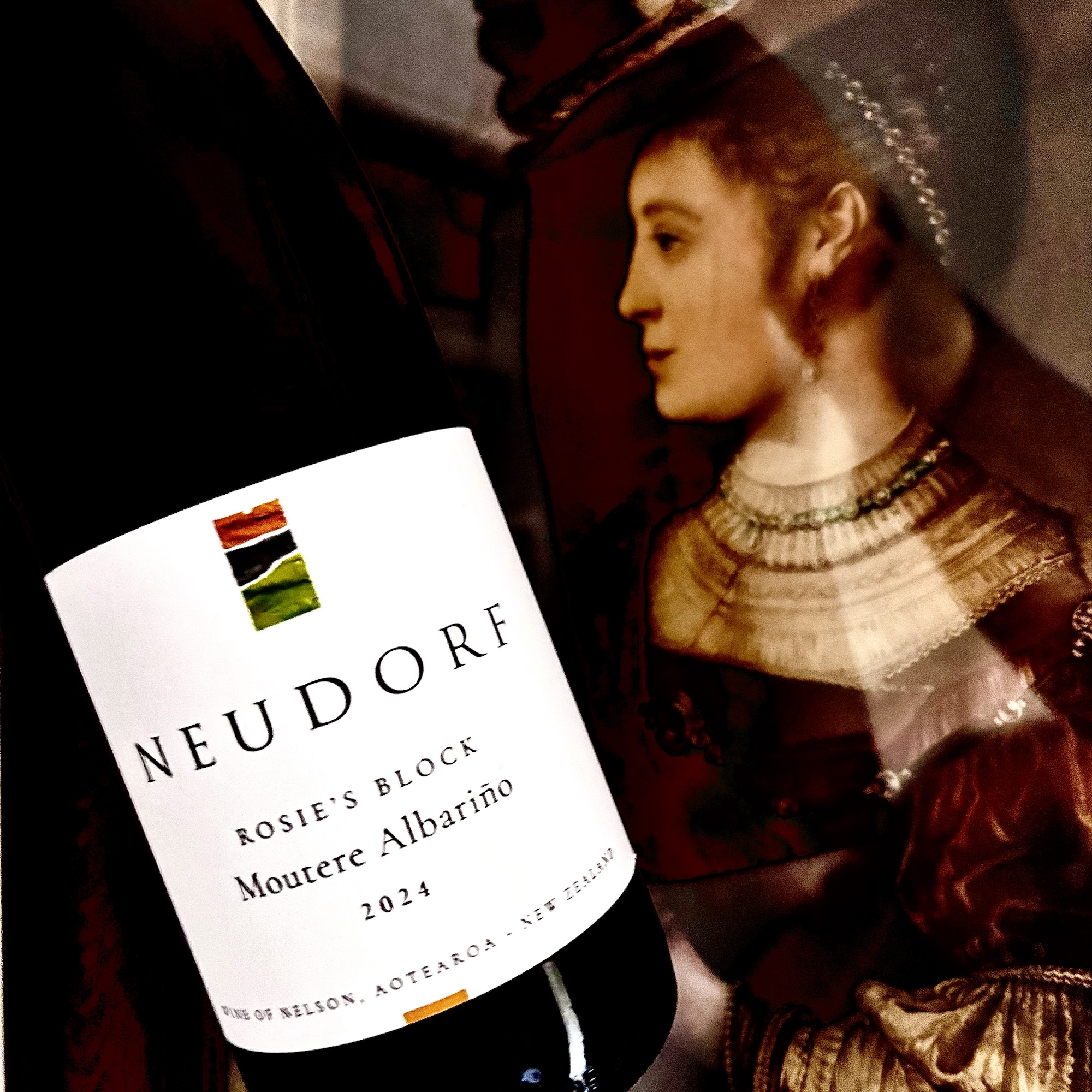
Rosie’s Block Moutere Albariño 2024, Neudorf (Nelson, New Zealand)
Neudorf’s Moutere wines are reasonably well known in the UK, but perhaps not so much this grape variety. The estate was founded by Tim and Judy Finn in Nelson in the 1970s, and the importer is right to say that this couple helped shape the direction of New Zealand wine as we know it today. Tim sadly passed away last year, but his daughter, Rosie, runs the estate with winemaker Todd Stevens and viticulturalist Stef Brockley.
Personally, I have found some lovely Albariño in New Zealand (and also Grüner Veltliner if you are interested in exploring off the beaten track). The Upper Moutere’s clay and gravels do suit the variety, made from low-yielding fruit from a single site, and I think winemaker Todd Stevens has crafted an exceptional take on this Galician grape.
This 2024 is also the tenth anniversary for this wine at Neudorf. It is hand-harvested and fermented on indigenous yeasts, and is bottled unfined and unfiltered. It is fermented and aged in tank, so no oak influence. The result is shining purity of fruit with lots of salinity. But there’s also a degree of richness too, perhaps the 13.5% alcohol giving a clue here. It is wonderfully balanced. The bouquet I’d say is peachy, but you also get lime zest, that salinity, and maybe something herbal but I can’t put my finger on it. It is very good. If you want a cracking alternative to your usual Sav Blanc, take a look. This cost just £19.50 at The Wine Society.
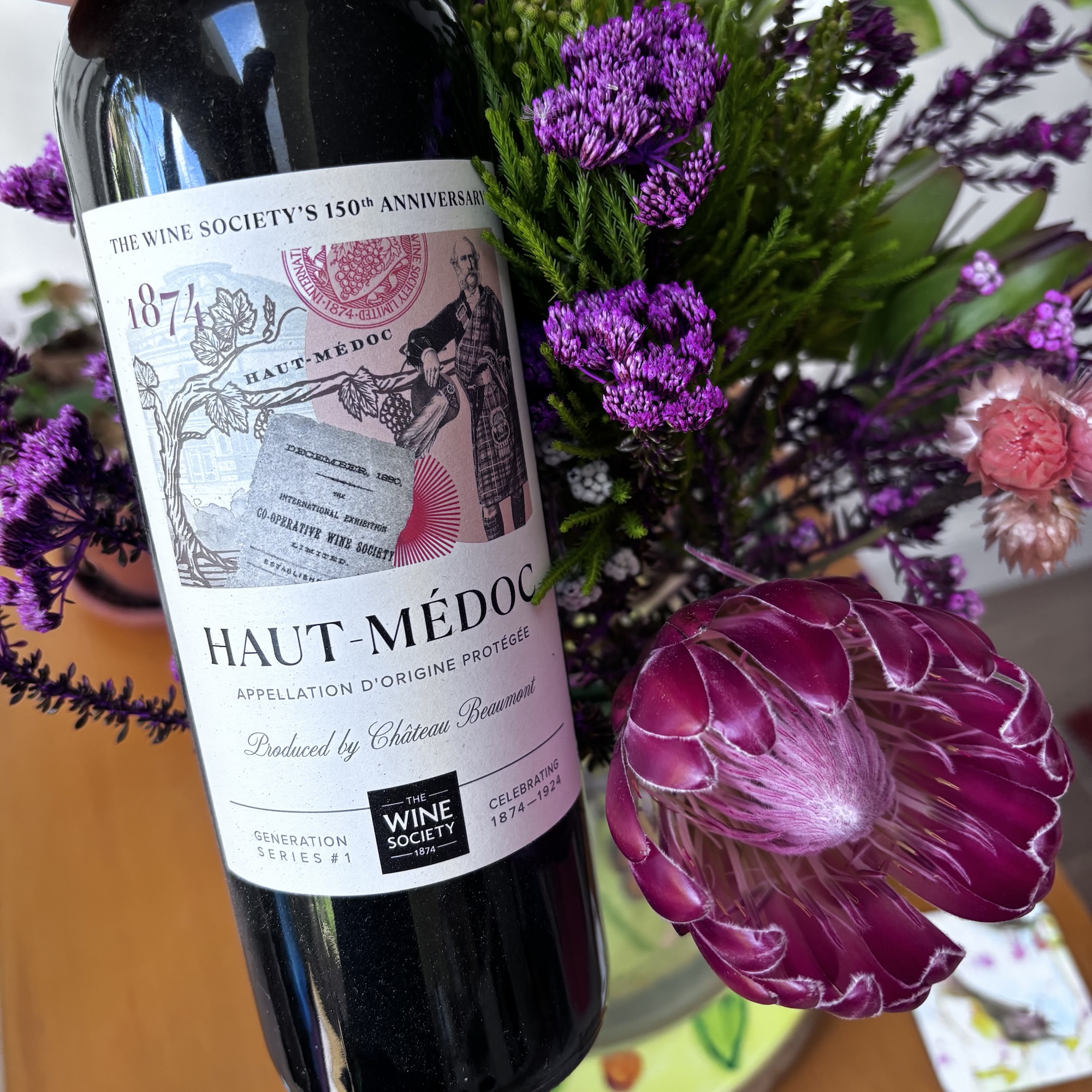
The Wine Society’s 150th Anniversary Haut-Médoc 2019 (Bordeaux, France)
This was the first release (I think) in The Wine Society’s Generation Series, made to celebrate their 150th Anniversary, which was in 2024. Châteaux Beaumont is the producer. They are a TWS stalwart, and indeed have long been a go-to for those in the know. I remember being recommended Châteaux Beaumont as a wine newbie in the…well, a long time ago.
Beaumont is a 150-hectare Cru Bourgeois located near Cussac-Fort-Médoc, on the gravels which stretch between the communes of Margaux and Saint-Julien. I don’t know all the production details. It certainly seems like a Merlot/Cabernet blend, close to 50:50, and it doesn’t have overt oak influence, but perhaps used oak.
It has structure still, but is characterised by a smooth richness with a deep if not too complex (yet) plummy fruit flavour. Alcohol sits at 13.5% but it does remind me of the classic Bordeaux of a bygone age, where alcohol sat between 11.5% and 12.5%. That only goes to show not just how times have changed, but also that they have achieved the holy grail of balanced Bordeaux here.
I wouldn’t argue with anyone who suggested this will keep for a decade, yet I do think it’s drinking very nicely now. This was my second bottle, and it was certainly going in the right direction. I’d buy more but The Wine Society seems to have sold out. That is a shame because I’d recommend you try this at say £20. It actually cost a ridiculous £12.50 (which I had to triple check…it may have been on offer).
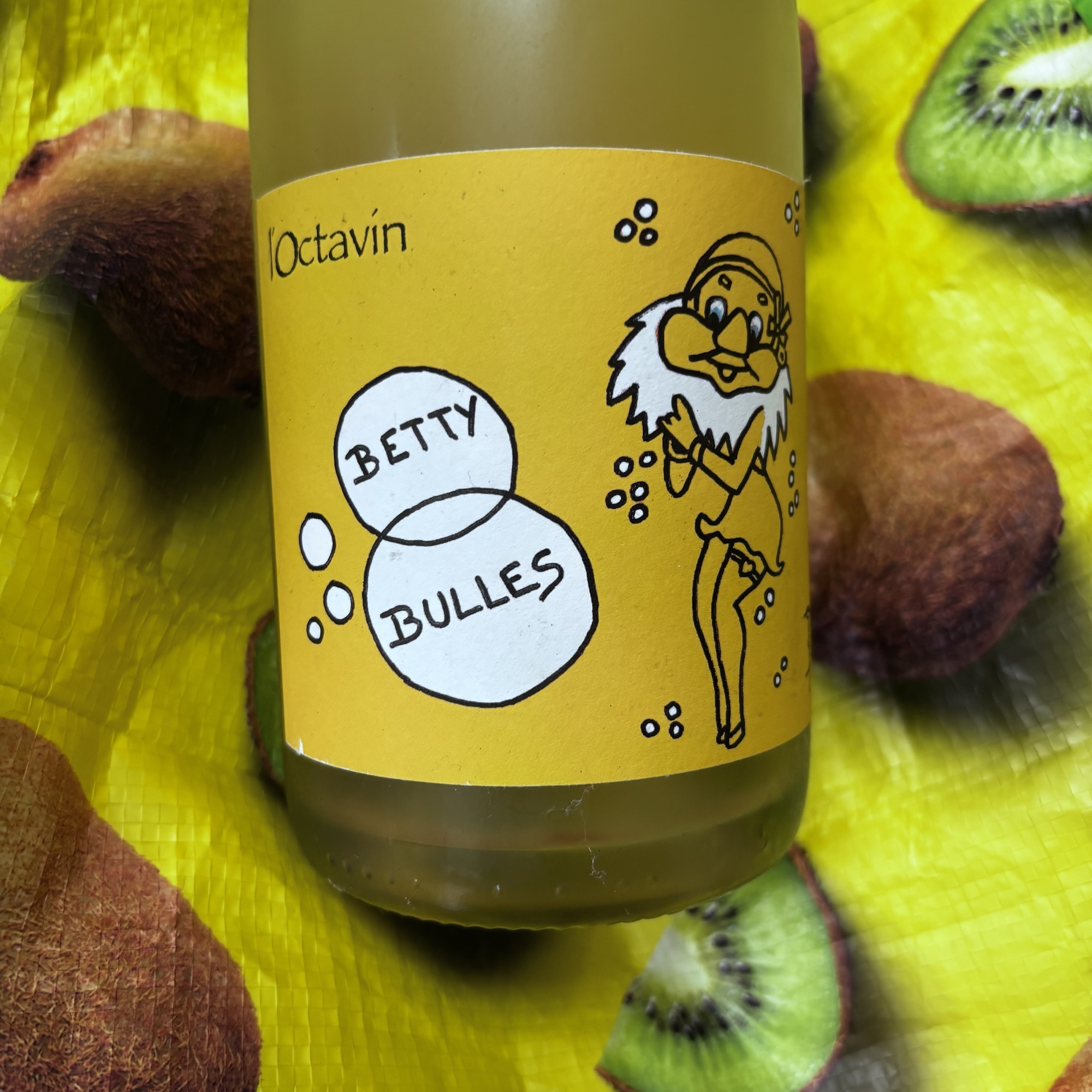
Betty Bulles Blanc 2022/23, Domaine L’Octavin (Jura, France)
Betty Bulles Blanc is a petnat, one of the wines made in Arbois by Alice Bouvot from bought-in grapes, though always naturally-farmed fruit and from her large circle of friends (after all, who wouldn’t want to be friends with this amazing winemaker?). This particular version of this Jura icon is made from 2022 Chenin Blanc with 2023 Vermentino (now called Rolle in France).
As with all of the negoce wines Alice creates, they are liable to changes in composition. Betty Bulles Blanc is a good example, because the current 2024 version is made from Vermentino, Roussanne, Marsanne and Muscat.
The grapes are more generally direct-pressed into vat with the fermentation finishing in bottle. The wine then rests for a few months before it is disgorged. Despite its age this lacks no fizz, for sure. Yellow fruits dominate and the acidity is lovely, just a bit softer than a younger version. It is refreshing, and perhaps I could say gently bracing.
My bottle cost €25 at Feral Art & Vin in Bordeaux, and it seems they are still listing it. If you are down that way, check their Instagram for their July opening. Tutto Wines is the go-to for L’Octavin in England. I say England because I’m not sure they deliver direct in Scotland. They were listing the more recent 2024 I mentioned, but I didn’t see it on their online shop.
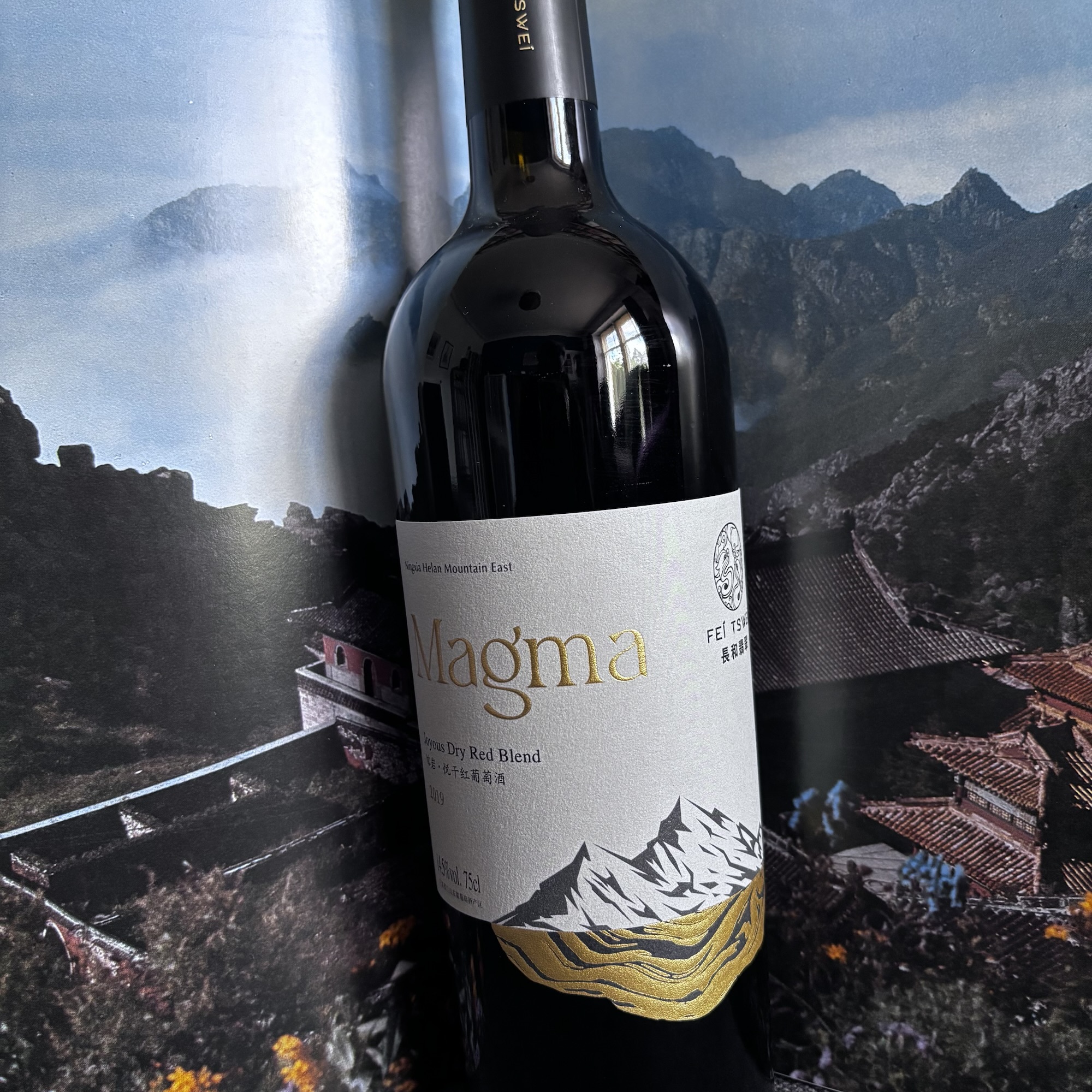
Magma Red Blend 2019, Fei Tswei Winery (Ningxia, China)
A decade ago, China was second only to Spain in area covered in vines, having doubled its acreage over the decade previous to that. Since then, it seems to have dropped back to third place, behind Spain and France. Most of that vineyard area is used for table grapes or dried raisins, but nevertheless, China has managed to establish its place in the world of wine. Perhaps more effectively so than other countries with emerging wine production (Japan springs to mind).
I wouldn’t say you can grab a bottle of Chinese wine from a supermarket shelf yet, but you can buy one from an independent merchant more easily than you can a Japanese wine. This is sad for me because I truly love artisan wines from Japan. Very few Chinese wines have been as objectively exciting for me, but that’s not to say we shouldn’t buy Chinese wine. Far from it. I just wish the wine buyers working for wine importers who are buying Chinese wine should also look to Japan (and beyond Koshu).
This was the first ever Chinese wine listed by The Wine Society, so a big step. Fei Tswei farms 82 hectares, planted in 2013, in the eastern foothills of Helan Mountain. Vines go up to 1,162 masl and are farmed organically. Only estate-grown fruit is used in their wines.
This is a blend of Cabernet Sauvignon, Merlot, Malbec and, somewhat randomly, Dunkelfelder (an early teinturier cross). It has a bouquet which will surely remind you of Red Bordeaux, with lots of cassis. No oak was used here, but the palate does have a little bit of tannin. The cassis fruit of the nose is echoed on the palate, but there’s a slightly tart brambly finish. There’s also some richness and I think you will notice the 14.5% alcohol. Maybe it wouldn’t be wrong to call it quite structured and full-bodied.
If I absolutely loved the Chinese petnat which I’ve bought twice from the same source this year, I would perhaps not give this quite that level of enthusiasm. However, it’s a nice wine and definitely worth the £16 it cost, for which it surely must be worth a try. That petnat was double the price. I believe this Magma Red may be back in stock at TWS.
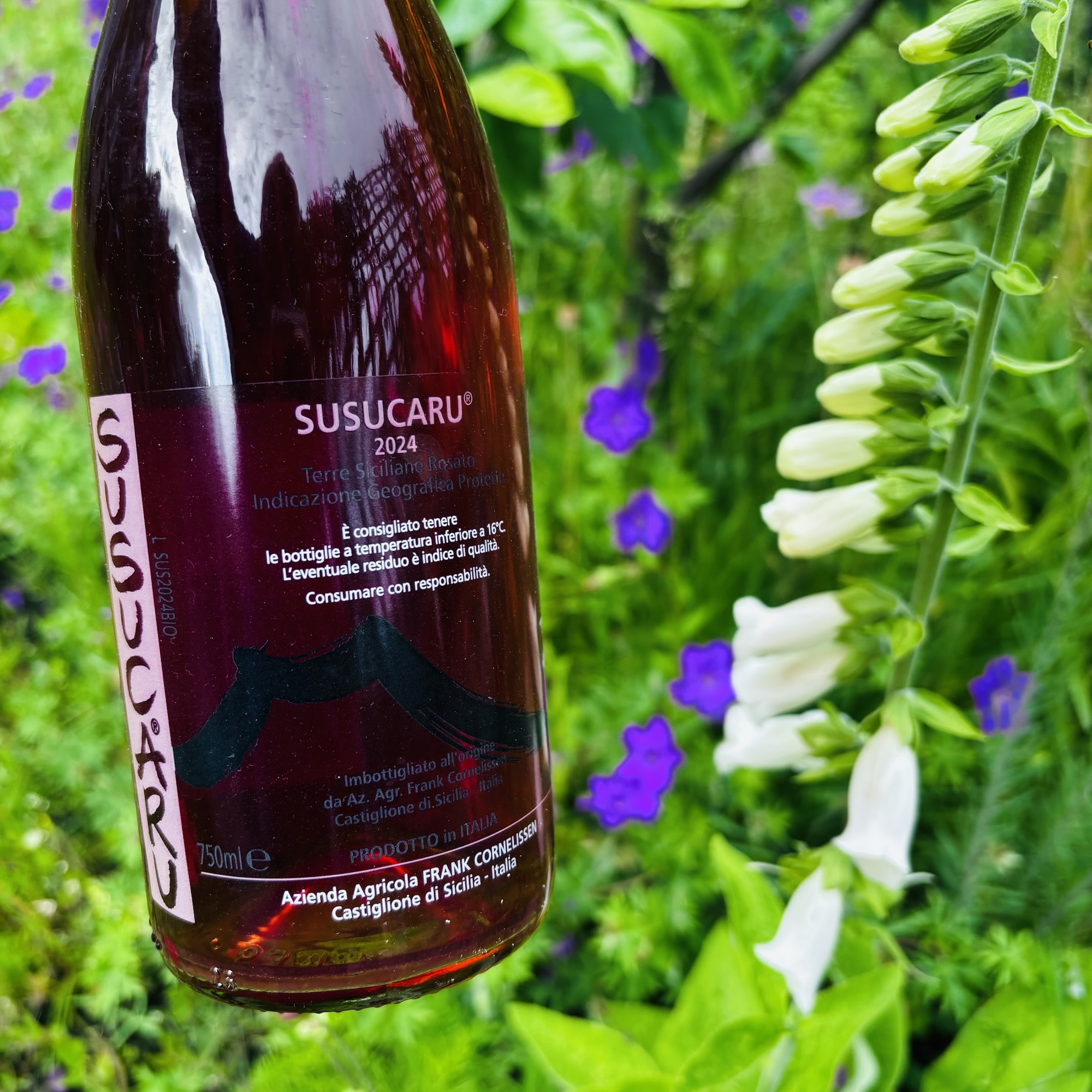
“Susucaru” Terre Siciliana Rosato IGT 2024, Frank Cornelissen (Sicily, Italy)
There was a time, although it was a long time ago, when Etna was a bit of a phenomenon. It burst onto the wine scene and everyone took notice. They realised that like Furmint and Blaufränkisch, Nerello Mascalese was a grape that could make truly great wines. Etna had its volcanic soils, it had altitude for freshness in a hot climate, and it had a kind of thrill which went with the terroir, an active volcano prone to spew ash and lava down its slopes at any moment.
That excitement hasn’t quite survived. This is almost certainly because as soon as we realised how good these wines were, the prices, in most cases, rose accordingly. That’s always a dangerous thing in a wine world where new regions are becoming flavour of the year with increasing regularity.
There at the beginning we had Frank Cornelissen. Frank, a Belgian by origin, was always the so-called enfant terrible of Sicilian wine. I remember reading a quote from Frank at least fifteen years ago about how much he hated the wine trade, so maybe that’s the reason. At the time he was very much a natural wine fundamentalist. These days he’s not quite so preachy, and some people are shocked to the bone by his engineered synthetic corks, but he still makes wonderful natural wines. In many ways better than before, though to be fair I first bought them from under the hot lights of Whole Foods in Kensington, which may not have been the best environment from which to source wines without added sulphur.
Susucaru Rosato is Frank’s entry level. There’s also a Sussucaru Rosso, though for Bianco you need to go to Munjabel, the designation below “Magma”. The Rosato is a blend of red Nerello Mascalese grapes with white varieties Moscadello, Malvasia and Catarratto, planted as a field blend, picked together and co-fermented. Ageing is in fibreglass and epoxy-lined tanks. It’s still a natural wine with zero added sulphites. It smells of red pure fruits and oranges, the palate very much (to me) tasting of strawberries and blood orange. It’s a strangely beguiling combination. There’s a touch of grainy texture that I’d call “minerality” if among friends, but here I should restrain myself lest the rock police are around. It’s fantastic, frankly fantastic (ouch!). I definitely need to experience some again this summer.
Again, this bottle came from Cork & Cask in Marchmont (Edinburgh), where I may just be heading on Friday. They have three left, at £32. What’s the betting you beat me to it? The importer is Raeburn Fine Wines, who I suspect have more. Note that from the 2025 vintage these wines will have a paper label, not the plastic ones which have to this point graced these wines. Cutting the carbon footprint etc.