Basket Press Wines Spring Tasting at Spry in Edinburgh – This is Very Much a New Wine Frontier Now

Monday 18 March was the date for the Basket Press Wines Spring Tasting for the trade, held at Spry Wines, the wonderful restaurant/wine bar/natural wine shop in Central Edinburgh. Now, I know I’ve brought you a lot of articles on this small London-based importer over the past six months, but I’m not going to miss an opportunity to taste more than twenty new vintages, nor to write about them. I was lucky to taste a few new wines before Christmas, but having such a wide range of wines together was instructive. Not least because I think these wines were showing better than ever in what was a fantastic tasting.

Jiri from Basket Press Wines at Spry

There are way too many wines here to give extensive notes on each. What I will do is to give you a summary here, of which were my own personal favourites. You can refer to the entry for each wine below to find out any brief technical details, and you can probably find out even more, including about the producers, on the importer’s own web site.

I ought to point out that Basket Press Wines are much more than an importer of Czech wines. Not only did we have wines here from Czechia, but also from Slovakia, Slovenia and Germany, although they also have wines from Georgia, a producer who I think will be at the Real Wine Fair, along with several represented here. Their star producer from Hungary, Annamária Réka-Koncz, wasn’t represented because her new wines were landing in the UK as we were tasting. Anyway, they sell out pretty quickly, something my readers ought to know by now.

My wines of the tasting? First, Petr Koráb is the king of petnats and his new cuvée, “Dark Horse” is very possibly the best pétnat I have drunk for a year or two. It’s red, but a blend of both red and white varieties. I just bought some more.

Max Baumann (Max Sein Wein from the Baden/Franken border) continues to prove he’s a genuine rising star of German wine. Both his wines shown here were superb, though we didn’t get to try any reds. He’s a Meunier maniac.

Mira Nestarecová is bound to get a lot of interest, being married to Czechia’s first star of natural wine on the export market, but I think her wines are superb. So alive, so concentrated. I don’t usually go wild for Sauvignon Blanc, for instance, but this one stung me. A special project.

Other standouts? Check out the wines from Slovakia’s Magula, Vykoukal (from Moravia, I especially liked their Neuburger and Cabernet Moravia, which got appreciative noises all round). Utopia’s Ice Cider (from the Bohemian Highlands) is, of course, off the scale. You never ever spit this. Jiří, who led the tasting, suggested that Jaroslav Springer are making the best Pinot Noir in Central Europe, not just the Czech Republic. I would not disagree. The cuvée on show here, their “village” wine equivalent, was delicious, and quite different to Mira’s beautiful Pinot.

But I also want to mention the real bargains. Krásná Hora and Basket Press Wines’s new signing, Syfany make wines which may not be the “finest” on the list, certainly not the most expensive, but the quality-price ratio is remarkable. For example, you can buy a better Welschriesling than Syfany’s Ryzlink Vlassky for sure, but not remotely close in price to this one.

The wines in the Basket Press portfolio are all bargains in their way, but prices are without doubt creeping up. It was gratifying talking to other tasters who acknowledged the quality and value, not to mention the excitement these wines bring to the table. It was a good palate calibration exercise, and gave me confidence that my “promotion” of these wines is valid. If you haven’t tried any now is perhaps a good time. Before prices rise further and before the small production wines sell out, as they inevitably do.

Now follows a list of all the wines tasted with three of four lines of explanation. I haven’t included prices but for the trade they range from around £11.50 to just under £20. It is unusual at a tasting like this to be able to say that I would happily drink every single one of the wines on taste, and I have doubtless done a disservice to those wines not mentioned above as “stars”. So read through the wines and see whether any others take your fancy.

Sparkling Wines

Kmetija Stekar “Izi” 2022 (Goriska Brda, Slovenia) – Rebula (aka Ribolla just over the border in Italy), 6m on lees in stainless steel, slightly cloudy, lightly sparkling fresh pétnat style. From a domaine known for their skin contact wines, but their “monkey label” series are made in a fresher style.

Petr Koráb Dark Horse Petnat 2022 (South Moravia, Czechia) – Mentioned above with ebullient praise, a blend of red (Hibernal and Blaufränkisch) and white (Traminer and Welschriesling) grapes, with a whole year on skins for the white varieties, but in an inert glazed ceramic vessel. Disgorged style. Bitter red fruits with a dark side. Love it.

White Wines

Kmetija Stekar “Belo” 2022 (Goriska Brda, Slovenia) – White field blend, 6m on lees in stainless steel. Perfumed, creamy apple merges well with fresh mineral saline acids. Field blend of eight varieties including Chardonnay, Glera and Friulano, plus one you may not have tried, Polsakica!

Dva Duby “Divide” 2019 (South Moravia, Czechia) – 70% Frühroter Veltliner with 30% Müller-Thurgau, one year in mix of oak and stainless steel, on lees. Off volcanic soils, perfumed, lovely fruit, plumps up in the glass.

Max Sein Wein “Les Autochtones” 2020 (Baden, Germany) – Silvaner off shell limestone with a little maceration, aged in large oak. This is toned down Silvaner without the acidity common in many. Smooth, soft-fruit style, very interesting and appealing as a result.

Mira Sauvignon Blanc 2022 (South Moravia, Czechia) – For me, Mira’s wines are quite intense. They come from unpruned vines (cf Meinklang, Lissner etc). Some skin fermentation, 6m in acacia. The unpruned vines give more grapes, but smaller berries, so higher skin to pulp ratio. Think more towards NZ’s Hermit Ram than your average French SB.

Syfany Ryzlink Vlassky 2018 (South Moravia, Czechia) – Note the vintage. 6m in stainless steel on lees and then aged in bottle. Honeyed notes with white peppery finish. Remarkable value, and as with all the wines here, “natural” low intervention juice.

Zdenek Vykoukal Neuburger 2021 (South Moravia, Czechia) – 24 hours on skins, 12m in used acacia (600-litre) barrel, then 6m in stainless steel. Off a steep limestone slope, nice weight and texture, rounded, generous. If you like Neuburger and have noticed the price of some of the Austrian versions, try this.

Skin Contact Wines

Zdenek Vykoukal “Resch” 2022 (South Moravia, Czechia) – An orange wine, 95% Müller-Thurgau with 5% Sauvignon Blanc, 3 weeks on skins, 10m on lees in acacia barrels, before transfer to stainless steel to rest before bottling. Soft and velvety.

Krasna Hora “La Blanca” 2022 (South Moravia, Czechia) – White field blend weighted towards Riesling with Traminer, Neuburger, Sauvignon Blanc, Pinot Blanc and Pinot Gris, 40% of grapes macerated on skins, ageing in oak and stainless steel. Clean, pale, but textured.

Max Sein Wein Blanc 2021 (Baden, Germany) – Max blends Müller-Thurgau and Silvaner off shell limestone for this cuvée, adding a little skin contact for a lovely perfumed wine (tropical fruits and camomile on my nose).

Petr Koráb “Ambero” 2022 (South Moravia, Czechia) – 70% Welschriesling with Veltliner and Traminer aged one year in a 1,000-litre glazed vessel in his remarkably cold underground cellar, to which he adds 30% Hibernal (a red variety) which was aged in barrel. Definitely an orange/amber wine but so “alive” and “vivant”. Bouquet is that clementine juice Tesco sells, good legs, lively acids, textured fruit, savoury finish.

Magula “Oranzovy Vlk” 2021 (Little Carpathians, Slovakia) – The Orange Wolf is classic Magula, and beautifully packaged as are all their wines. Veltliner, Traminer, Welschriesling and Devin, 14 days skin contact, aged in used oak and acacia barrels, stoneware vessels and amphora. Dark but shimmering gold colour, gentle orange nose, both fruity and savoury (like sweet & sour…almost, but not sweet) with rocky salinity.

Pink Wine

Krasna Hora “Pink” 2022 (South Moravia, Czechia) – KH make great value wines. Organic but in conversion to biodynamic, they are indeed a dynamic, family winery with modern facilities and a beautiful vineyard sloping up to ancient forest. 100% Pinot Noir, whole bunch pressed, a rosé with delightful red summer fruits.

Red Wine

Jaroslav Springer Pinot Noir Vintage Selection 2020 (South Moravia, Czechia) – a “village” selection from the Czech Republic’s Pinot specialist, aged in a mix of new and used oak. This is smooth and fruity with definite varietal character. Ripe, and with a savoury touch. Not enormous complexity but I’m buying one.

Mira Pinot Noir 2022 (South Moravia, Czechia) – Like the SB, quite intense and quite different to the Springer above. Darker for a start. Semi-carbonic here, from those small grapes off unpruned vines. Aged in oak. Ripe, smooth, a bit of tannin, very expressive. Mira was a dancer/dance teacher and her labels all feature 20th Century avant-garde dancers.

Krasna Hora Ruby 2022 (South Moravia, Czechia) – A simple but lively red field blend aged in stainless steel using Zweigelt, Pinot Noir, Cabernet Sauvignon, Merlot and St Laurent. Summer fruits, red and dark berries with a bit of flesh. A nice summer wine, which I would chill down a bit. I do like a chilled red. Not just pale ones, so long as they aren’t heavy and have bags of fruit.

Magula “Carboniq” 2022 (Little Carpathians, Slovakia) – A red made as it says on the label, from grapes grown in warm and dry conditions at higher altitude and aged in stainless steel. It’s a single varietal Blauer Portugieser. The result is full of summery red fruits but with a little structure and bite, and it’s sappy and delicious.

Mira Cabernet Franc 2022 (Southern Moravia, Czechia) – This was the first Mira Nestarecová wine that I drank, a month or so ago, and I was immediately impressed. Unpruned vines, of course, partial whole bunches, eight months ageing in 450-litre old oak. The fruit is concentrated blackberry and blackcurrant, perfumed with good fruit acids. Is it as good as the SB and the PN? Yes, but it’s possibly the most subtle of the three…maybe.

Zdenek Vykoukal Cabernet Moravia 2021 (Southern Moravia, Czechia) – Cabernet Moravia is a 1960s crossing between Cabernet Franc and Zweigelt, created when temperatures in Moravia were somewhat cooler. Off limestone soils, the wine sees ten months in old oak and then six in stainless steel. It has that Cabernet Franc green pepper note on the bouquet with juicy red fruits on the palate, a palate which is generous and ripe. Already a fan myself, I heard other exclamations of appreciation in the room. An individual wine!

Petr Koráb Saint Laurent 2022 (Southern Moravia, Czechia) – Aged one year on lees in oak, this is perhaps one of Petr’s more “traditional” wines, and he keeps his old, less wild/more conservative labels for this cuvée. It’s still a generous summery wine but grounded with a spicy, textural, finish. A red worth cooling before serving. Don’t let the label put you off!

Magula Baccara 2019 (Little Carpathians, Slovakia) – Whereas this is beautifully labelled. I just bought a mixed case from Basket Press Wines and this was the thirteenth bottle that didn’t make the cut, partly because I know it so well. A blend of “Rosa” with some Frankovka (aka Blaufränkisch). Named after a famous rose, it does have an unmistakable rose petal element to the bouquet. The palate is mid-weight with vibrant dark fruits. The fine tannins are receding but still there on first sips.

Syfany Frankovka 2018 (Southern Moravia, Czechia) – The wines of Syfany are all relatively simple but inexpensive and amazing value for money. This “Blaufränkisch” had one year in acacia (I could write positively and at length about ageing in local acacia). It has this lovely brightness and zip that makes it so versatile for picnics, parties and definitely restaurant/wine bar lists. I’ve got a few Syfany wines at home because there’s little to compare in terms of QPR, except perhaps from Portugal!

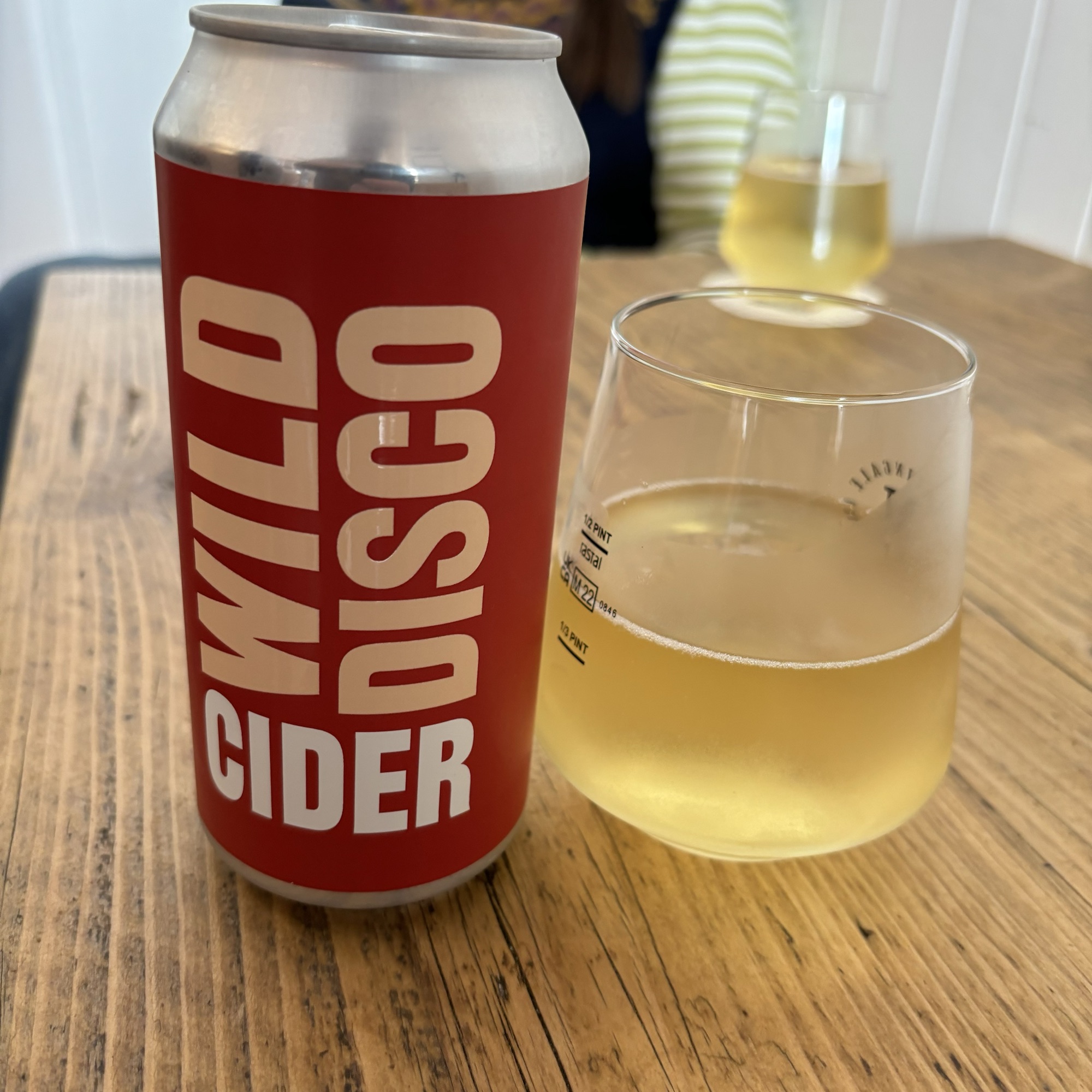
Utopia Patience Ice Cider 2022 (Bohemian Highlands, Czechia) – If the north of the Czech Republic has a name for beer, there are some lovely orchards too. Utopia make ciders of amazing quality but this is the jewel in their crown. Frozen apple juice (from untreated fruit) fermented with wild yeasts, one year in oak. Extremely concentrated, a perfect balance between fruit and acidity…imagine a fine German Auslese but made from apples. A firework display on the palate. At tastings this is a veritable DNS (Do Not Spit). Half bottles keep the price down and spread the joy.

Utopia Drinking Apple Vinegar (Bohemian Highlands, Czechia) – Utopia created a range of very fine vinegars where a cider base (aged itself for 12 months) is aged slowly in oak for twenty more months. It becomes vinegar by the traditional “Orléans” method (without heating). These are macerated with wild berries foraged from the forest. This one is apples, wild cherry and elderflower flavour. It is concentrated, though not thick, and is quite sharp yet the fruit presence makes it drinkable (though perhaps sipping, not glugging). For those who like a cider shot for health, this is perfect, although I used mine as a finish in cooking and also for dressings (I bought one last summer).

For further information speak to Jiri or Zainab at Basket Press Wines, via sales@basketpresswines.com .

Look out for a good selection of these producers at the Real Wine Fair in London in April. See whether our palates coincide. I shall be there.

Posted in Artisan Vinegar, Artisan Wines, Czech Wine, German Wine, Natural Wine, Slovakian Wine, Slovenian Wine, Wine, Wine Agencies, Wine Merchants, Wine Tastings | Tagged , , , , , , , , , , , , , , , , , , , , , , , , , , , , , , , , , , , , | 1 Comment

Butlers Wine Cellar – The Evolving Nature of Wine Retail in Brighton

A lot of you read my “interview” with Feral Art & Vin in Bordeaux last month. I think I mentioned that it was the first in a short series on wine shops which rock my wine world, and for the next three retailers I’m staying in the UK. I want to write about some of the people who have sold me quite a bit of wine over the years, and who have made me want to buy more.

Why wine shops? Well, I do love browsing, for records and books as much as wine. I guess some people like to sit at a computer and order, whilst others like a more tactile shopping experience. I will say that almost every time I go into a wine, record or book shop something leaps off the shelf that I didn’t know I was going to buy when I went in. Not always good for the wallet, but nevertheless it’s worth it for the pleasure of discovery.

I do buy wine direct from importers, many of whom have online shops, but right now my particular circumstances make it difficult to wait for deliveries, and challenging to afford to order a case quantity. Hopefully that will have eased by summer when we finally get to move into our new place. But wine shops add a lot of value to the buying experience. They do a lot in their community (I’ll bet wine shops do more charitable stuff than most), and consumers get an opportunity to go to tastings or other events, where they not only try new wines but will meet fellow wine lovers.

More than anything, for me at least, being a regular customer in a wine shop means a chance to have a relationship with the staff. This can be especially beneficial if they can let you know when things are coming in, and even stick the odd bottle aside until you can make it in person. That doesn’t always work. One retailer, who shall remain nameless, put up a new batch of Jura wines, from a producer I’ve not tried, on Instagram one day after they despatched some bottles to me.

So, who are we covering this month? If you read my “Recent Wines” articles you will notice that Butlers Wine Cellar (they don’t use an apostrophe so I won’t) comes up with some frequency as a source. I probably buy a lot less from them now that I live so far away, but when we lived in Brighton I was often pleased they were on the other side of town (for bank balance reasons). I always argue that people are important, and Henry and Cassie are amazing human beings as well as being talented wine pros. Henry is pretty much a legend in Brighton, that’s no exaggeration.

Butlers was established in 1979 by Henry Butler’s father. He’d been involved in a restaurant in Brighton, but that was pretty challenging with a small baby. He got a job in London in the whisky industry but wine was his real passion, so he set up the Sussex Wine Appreciation Society, effectively a tasting club. Members wanted to buy the wines tasted so the family home became full of boxes. Henry said that one day a stack of them fell on his parents’ bed, and his mum said either stop or get a shop. The famous original Butlers shop on Queen’s Park Road came up and it had a cellar for all those cases, so the company and the name were born.

Some of the original wines were amazing. All so-called classic wines, mostly French, German and fortifieds, but many from pre-War (WWII) vintages and some even dating back into the 1800s. I recall my own first visits in the 1990s when we moved down to Brighton. It was before I’d discovered natural wines, and it was what seemed like an endless supply of well-aged classed growth Bordeaux which first grabbed me.

Around 2000 Henry’s parents separated and Henry bought his father out, taking over the business. From then on, the selection became much wider. Next was a second shop, opened around thirteen years ago (hardly feels like that long). I remember one Brighton wine seller was expanding and looking for new locations. I think that prompted Henry and his wife and business partner, Cassie Butler-Gould, to just go for it.

It turned out to be a good move because the new shop, in Kemp Town’s St Georges Road (just east of the city centre), is in a much better area for passing trade and for retail in general. The old shop was out on its own. When issues arose with the Queen’s Park store during the Covid lockdowns, it was just easy to make St George’s Road Butlers’ base. All the wine in one location, the one which saw the most customer footfall, though leaving premises they had occupied for forty years was a little traumatic.

Henry and Cassie at St George’s Road, Brighton Kemp Town

Butlers began as a retailer noted for Bordeaux above all else. If my memory is correct, I first saw their name in an advert they regularly placed in Decanter Magazine, so when we moved to Brighton it was on my list to visit. Gradually that changed. California somehow became a specialisation. Henry won a trade trip to California, which may have helped. It led to Henry meeting, and becoming close friends with, California specialist James Hocking. You will still find some rare Californian treats hidden away on the list, most being sold online to collectors and fans.

I can remember the likes of Peter Michael wines on the shelf when their importer was virtually rationing it. Henry mentions labels like Donelan, Somnium, Kistler, Moone Tsai and Onda. It’s well worth checking out their range, closer to forty lines than the 200 Californian cuvées they once stocked, but you can still get a bottle of Peter Michael’s stunning 2014 “Les Pavots” (which I remember buying back in its first vintage from Lay & Wheeler) if you have a spare £270. Or maybe an Ovid Hexameter 2013 for £450? Don’t worry, there is much to be had for £20-£40 a bottle. I’m more likely to buy Birichino these days.

There are perhaps three further areas where Butlers seem to have a genuine specialisation, and these are varied to say the least. English Wine, especially the sparkling variety, has been a long-time specialism, which is probably to be expected from a shop near so many great Sussex vineyards. Back in the day, Henry’s parents knew Peter and Christine Hall at Breaky Bottom, and Henry remembers visiting the farm when he was small. Back then it was still wine and pigs rather than sparkling wine and sheep. Henry and Cassie remain great friends with the Halls, and great supporters of their wines. Definitely a source for back vintages at a reasonable price. If it’s not there on the web site, do ask.

Butlers has worked with Ridgeview since the 1990s, also being friends with the Roberts family. They also got on with Dermot Sugrue right from the off. Having sold Wiston through Dermot’s era as Chief Winemaker, they are now championing the Sugrue South Downs wines that Dermot and Ana are making closer to Brighton. Not that these star cuvées need much championing. Henry and Cassie are now neighbours with Dermot and Ana.

Henry insists that to get a listing the wines must be both good, and good value. One new addition they particularly rate (and which I’ve not tried, and although I’ve spotted the label, I can’t find them in any of the four books on English wine I own) is Everflyht, a vineyard at the foot of Ditchling Beacon, the famous steep ascent towards the end of the London to Brighton cycle ride. Worth noting because they are less steeply priced than many of the newer English estates which seem to enter the market at above £50 more often than not these days. The Everflyht Brut is usually retailing for somewhere either side of £30.

Equally, both Henry and Cassie like working with producers they really get along with. In the same way that I have found their relationships with customers matter, so it goes for winemakers. It’s certainly true that Peter and Christine Hall, and Dermot Sugrue (I haven’t met his partner, Ana) are among the most fabulous wine people you could wish to meet.

Then comes Portugal. Butlers has consistently promoted Portugal so I asked why? Cassie says that Henry’s dad began selling Portuguese wine in the 1970s. I remember some veritable gems on the shelf in the 90s. It’s simply the amazing quality and value for money that attracted Henry and his father, and now they like nothing more than explaining the flavours to open-minded customers. It’s also the proliferation of small and “sustainable” producers which appeals.

“They are such food-friendly wines too” says Cassie, and I only refrain from mentioning some of the mouthwatering food matches she describes because I am going to have to start cooking myself pretty soon and my stomach is rumbling. Plus, Cassie’s dad, aunts and extended family live in Portugal now, so they visit more than anywhere else. Cassie says “we will always be a go-to place for Portuguese wines and we never stop seeking out new ones”.

The other area of specialisation is South Africa. Butlers has always excelled in their selection, but I must mention here the amazing Pieter Walser and his Blank Bottle Winery. Although Blank Bottle is imported by the excellent Swig agency, Henry and Cassie have a special relationship with Pieter. Cassie calls Blank Bottle her “Mastermind subject”. Cassie met him first and was very much taken with the wines, and indeed their labels.

Anyone who knows the whole Blank Bottle range (of which many are unrepeated one-offs) will know exactly what Cassie means about the labels, several of which Pieter farms out to his kids, who earn pocket money royalties per bottle sold. It just so happens that the wine inside the bottle matches expectations.

After a boozy lunch in London with a group of South African producers, Henry and Cassie proposed Pieter create some exclusive bottlings for Butlers, which he agreed to. For the next three vintages Butlers had their own bottles, labelled with the likes of Brighton Pier, plus nods to Henry and Cassie (the near legendary Gothus cuvée). The labels are all very apt, although they did have to get a machine gun removed from “It Is What It Is”.

Two of the exclusive Blank Bottle cuvées – It is What it is and Gothus (Pieter’s take on Cassie)

Here’s Cassie: “I can’t say enough good things about Pieter and his wines. I just wish the prices hadn’t gone up so much as they have become a much more premium range. That said, we will always have a range of these wines available. They are really excellent and Pieter is a total dude”! I’ll second that.

Butlers are special in that they are very much a community-based operation. They are very “Brighton”, meaning that in the most positive sense. Being Brighton’s oldest wine shop, and Henry’s amazing local reputation, has allowed them to become part of so much going on in the city, and they have raised more than £50,000 together for local charities, as well as assisting events which have raised many times more.

Their individual commitment to local issues comes via their involvement with Brighton Crew Club, a youth centre/project in a low-income area which provides a safe place for children, food banks and a community hub. They feed many children regularly. Henry is Chair and Cassie is a Trustee, but they are very hands-on with Crew Club.

Cassie says “having had a colourful childhood it has been very important to me to get involved with the voiceless, so I spend a lot of my time working with children and animals”.

Cassie is also an Ambassador for Raystede Centre for Animal Welfare, and is a passionate animal activist. Although she didn’t mention it, I can tell you that I’ve also seen the pics on social media which demonstrate just how much of Brighton’s wild fauna gets fed in their back garden, not to mention their pets, which now includes an adorable rescue dog and a cat which seems to like trying to steal whatever beverage Henry has poured for that particular evening. Cassie again: “I feel passionately about the treatment of animals and the direct link between animal and human abuse”.

Asking the pair what they are drinking at home at the moment, Henry complained he is always buying way too much. He says “I’m really enjoying the wines of Alto Adige from Terlaner and Nals Margreid. I’ve also been drinking a lot of good value Bourgogne Blancs and Aligoté”. For a treat, Henry also admits to often taking something from California home with him.

Saying this, Henry does admit that “at home I drink anything and everything, as is often pointed out to me”. I know what he means! Cassie has shifted from a vodka Dry Martini to Tequila and Margaritas. She’s also playing with new cocktail flavours and dabbling (like me when I can) in sake. With a Belgian mum, she also likes fruit beers, her really guilty pleasure being Fruli Strawberry (I have one in the fridge too, shhh!)

Tastings always feature in the Calendar, a recent very successful tasting being focussed on Piemonte (led by Michael Palij MW). Upcoming events include White Wines from Around the World (with Lenka Sedlakova MW) on 12 April, the Spring Italian Wine Festival at St Mary’s Church on 26 April, and a charity tasting for the Raystede Centre (mentioned above) on 21 June (all details at butlers-winecellar.co.uk ).

The success of tastings at Butlers proves how open-minded and keen Brighton people are to try new things, and of course with so many residents commuting to London there’s a healthy customer base able to afford the more expensive offerings alongside the great value wines which I feel they do so well.

As well as a blog and a podcast, they often have some highly entertaining material on Instagram, not least Henry’s Blind Tasting challenges. Henry is one of the best Blind Tasters you will ever meet, years of experience in quality…and probably quantity too.

I ended asking Henry and Cassie about what trading is like in the current economic climate. Always honest, they didn’t duck or fudge the issues. Costs have gone up and are still increasing, customers are cautious about discretionary spend on alcohol and “some wholesale accounts appear to be in a fragile position”, something every wine merchant in the UK would echo. “However, we dig in and continue to find great wines we want to share with customers, and our tastings are very well attended”.

That last comment doesn’t surprise me. Most independent wine retailers are people who have a passion for what they sell. It’s not a calling in which to make a fortune. They plough a lot back into their community, but that means they have a wonderful reputation, both as people and for what they sell. If their business is split between wholesale to bars and restaurants etc, internet and mail order sales, and retail customers visiting the shop, a whopping 40% of business is direct retail. I think Henry, Cassie and their diverse staff are just so nice to chat about wine with. They certainly deserve our support.

Butlers Wine Cellar

88 St George’s Road (in Kemp Town), Brighton BN2 1EE

Tel 01273 621638

Open Tues, Weds, Thurs 12pm – 6pm, Fri and Sat 12pm – 7pm, closed Monday.

Web Site – butlers-winecellar.co.uk

Posted in Artisan Wines, Californian Wine, English Wine, Portuguese wine, Wine, Wine Agencies, Wine Heroes, Wine Merchants, Wine Shops, Wine Tastings | Tagged , , , , , , | 1 Comment

Recent Wines February 2024 (Part 2) #theglouthatbindsus

This second part revealing the most interesting wines we drank at home during February doesn’t range quite as far and wide as Part 1 (no Japanese wine this time), but there is a good spread mixing the familiar with the less familiar. This is by way of Moravia in the Czech Republic, the Peloponnese, Beaune, Burgenland, Jerez and Eastern Hungary. All good stuff at a range of prices, all worth trying, or in the case of the Beaune Grèves, worth a significant detour to beg, borrow or steal.

Miya 2022, Krásná Hora (Moravia, Czechia)

When I say “drank at home”, this is an exception, but we did take it to a popup dinner with free BYO, so as far as I’m concerned, that’s close enough. Especially so because I love this wine and I’d hate not to share it. I’ve written about the producer in an article about my trip to Moravia in 2022, so you can look that up if you want to find out more. This is a winery with a modern outlook which is keen to export, not surprisingly as they are mates with Milán Nestarec.

Working out of Starý Poddvorov in the south of the region, Marek Vybiral and his nephew, Ondřej Dubas really do operate the most modern artisan setup I have visited in Moravia, yet they do so in a rural viticultural idyll, vines sloping up a hill from the rear of the winery towards ancient oak woodland on the horizon. They have 13 hectares of vines planted on the “beautiful mountain” (as the winery name translates), and they also buy organic grapes from a further five hectares. They are currently converting to biodynamics, but they use no herbicides nor systemic agents.

The vines on this slope were mostly originally planted by Cistercian monks around 800 years ago, but it would be a stretch of the imagination to believe they are that old, and in fact the family mostly farm what we would call international varieties. Much of the vineyard does, however, date back to the Communist era, particularly the 1960s. The soils are all a mix of clay and limestone.

Miya is a Pétnat Rosé made from 100% Zweigelt, and is one of the “Faces” range of wines Krásná Hora makes. These wines bear a passing conceptual resemblance to Gut Oggau’s characters, though without a back story. Miya is the youngest “face”. The labels are pure fun and as well as Miya there are five other very different characters. What you get here is a simple, zippy, raspberry-fruited fizz from direct-pressed whole bunches. First fermentation is in stainless steel tank. A very small addition of sulphur is made. Although this is undoubtedly only a fun wine, simple yet pure and fruity, a wine like this can be just perfect.

We drank it with Sri Lankan food, with its own clean palate of flavours and Miya’s lightness went well. Although fruit-packed, the acidity, bubbles and a slightly funky finish seemed to do the trick. It’s up there at 12.5% abv, but the bottle nevertheless emptied far too quickly.

I loved the 2021. This 2022 is a slightly different shade of pink, and I would say it’s even better than the previous vintage. £21 from Basket Press Wines.

Antiphon 2022, Tetramythos Wines (Achaia, Peloponnese, Greece)

The Peloponnese produces some lovely wines, of which Nemea is perhaps the best known. This wine comes from further north in the peninsula, in the mountains of Achaia, though it is labelled as an IGP, not a wine of appellation. The UK importer of Tetramythos asked winemaker Panagiotis Papagiannopoulos to create a couple of exclusive wines in a low-intervention style made with organic grapes, and this is one of them.

It’s a three-variety blend, the first being that potentially great red grape of the Peloponnese, Agiorgitiko. It is blended with the dark, undoubtedly great, Mavrodaphne and the less well known Mavro Kalavrytino. Fermented in stainless steel and aged only five months, you get a fresh and fleshy bright wine with great fruit, even at 13.5% alcohol. It helps that the grapes are grown in very cool conditions at up to 900 masl, especially with cool, even cold, night temperatures, but achieve full ripeness over a long growing season.

We have plums, blackberry and blueberry fruit on nose and palate, the latter having a smoothness and richness with a smoky touch on the finish. Just for a moment I thought of Nebbiolo, especially Valtellina Nebbiolo. This is a genuine taste of Greece for only £19 from Cork & Cask in Edinburgh. It is quite widely available via importer Indigo Wines.

Beaune 1er Cru “Les Grèves” Blanc 2015, Le Grappin (Burgundy, France)

I have been a great fan of Andrew and Emma Nielsen’s Le Grappin wines from their first vintage, and even though I can no longer afford to buy them I still have some in my cellar. These have aged enough for me to confirm their quality within the Burgundy pantheon. Whilst it has taken the main “critics” a while longer to acknowledge this, I can at least take solace from spotting the talent a wee bit sooner, and I hope my early enthusiasm in print gave this lovely couple a tiny bit of a kick along the way to fame and stardom. I am delighted that Newcomer Wines has just taken on Le Grappin, an excellent match in so many ways.

Andrew and Emma profess to make fine wine from “under-appreciated vineyards”. Les Grèves is hardly under-appreciated among those who enjoy the particular qualities of Beaune, but only 1% of this 31-hectare Premier Cru site is actually planted to Chardonnay. It lies west of the town, with the twenty-or-so hectares of Les Teurons to the south and Les Bressandes (not to be confused with Corton-Bressandes) to the north. Grèves is noted for long-lived wines from Pinot Noir but the Chardonnay has been very well made in the past, if I recall, by Jadot. I know their Beaune wines very well, having once been a strong advocate for their Clos des Ursules, which I miss very much. I don’t know who owns the vines used by Le Grappin for this cuvée?

Six barrels were made of Le Grappin Grèves Blanc in the excellent 2015 vintage. The vines in a single plot were 45 years old at the time. Harvesting was obviously by hand, and the grapes underwent a very gentle crush and press. The juice was settled overnight and then went into 400-litre barrels with the gross lees to ferment (with native yeasts). Ageing was over ten months during which time there was no lees stirring or other manipulation of the wine.

The result is a classic Beaune Chardonnay with great salinity, rounded plumpish fruit showing a fine opulence, genuine depth and a little mineral texture on the palate. This is an all-round triumph, and it is drinking beautifully. I wish I had more but I believe this is my last ’15 white from Andrew and Emma. It must have been in one of their excellent mixed packs bought en primeur/pre-release. The current 2020 vintage on the market retails for around £57, purchased direct from Le Grappin, but their Beaune Grèves can reach up to £80 from some sources.

Rét 2022, Koppitsch (Burgenland, Austria)

This is the latest vintage of Alex and Maria’s low intervention red wine from former pasture/grazing land sloping down to the Neusiedlersee near Neusiedl am See. Rét means meadow in the former Hungarian dialect once spoken here, and not “red” as some people assume. The soils are well-drained gravels and the vines are relatively protected by the winds which whip over the Pannonian Plain from Hungary, though it is windy enough to keep the vines relatively free from disease. This assists the family no end in making their low intervention, natural wines. The shallow lake’s potential for humidity is evidence by the botrytis-affected cuvées made down the eastern shore of the lake at Illmitz, and down the western side at Rust.

The grape blend here is mostly Zweigelt (c. 80%), with 20% St Laurent. It is a light wine, just 10% abv, with a fun label. Zippy, fruity, quite funky with red cherry and blackcurrant fruit on the nose, which combine with apple-fresh acidity on the palate.

The two varieties are vinified separately, fermented on skins and blended just before bottling, after six month’s ageing. You may be able to tell that this has zero or little added sulphur, so it does have a slightly feral nature. So long as you like a bit of funkiness you will have your thirst quenched.

Recommended for spring or summer picnics, it’s a great outdoors red, neither heavy nor remotely ponderous. It’s a lovely, fresh, biodynamic natural wine from an equally lovely family. £24 from Cork & Cask (Edinburgh), imported by Roland Wines.

Fino En Rama Saca Primavera 2023, Fernando de Castilla (Jerez, Spain)

Réy Fernando de Castilla is one of the most highly regarded producers in Jérez, best known for their great aged Sherries in the “Antique” range. They have a bodega right in the centre of Jérez on the Calle Jardinillo. This firm is an exemplary small producer in every sense. Founder, Fernando Andrada-Vanderwilde descended from a family which had been associated with winemaking for two hundred years, when he started the firm in the 1960s. Emphasis was initially on Brandy, but the firm was sold in 1999 and is now run by Norwegian, Jan Pettersen, for a group of investors. Swift expansion into making more Sherries followed.

The En Rama style, translating as “from the vine”, is a relatively new offering from this bodega (first released in 2013). The wine here is taken directly from the cask without fining and filtration (I think in truth there is a minimal filtration for most en rama wines, which the marketing of such wines usually fails to detail, required for stability). Those processes when used on classic bottlings may stabilise the wine, and make it look clear and bright to the consumer, but they undoubtedly strip out flavour as well. En Ramas usually taste fresher than any other style, but many commentators assert that they have to be drunk very young (even younger than Finos in general).

The keen-eyed reader will notice that this bottle isn’t especially young, being drawn from cask in spring 2023. By the time these wines get to market in the UK some time has passed, and this was, to be fair, a Christmas present, saved for a bit of warmth and sunshine and an appropriately Spanish dish with which to serve it.

Fernando de Castilla’s en rama is slightly unusual in that it is a blend of their Classic Fino and their Antique Fino, both aged under flor of course, and bottled at between four and five years old. They generally use one butt of each wine, now only bottling a spring edition. This gives the wine almost two distinct elements, a youthful freshness and a deeper intensity as well, from the Antique Fino element.

We have a colour which is a little darker than many Finos, the Antique element again at play. Of course, one might worry that the colour is down to age and a less aggressive filtration, but the bouquet puts your mind at rest. It is both floral and saline, lovely and fresh, though hinting at some complexity. The palate shows a remarkable lightness for a wine fortified to 15% abv. Yet beneath this is great depth, more perhaps than I’ve tasted in any other en rama Sherry. The palate is nutty and salty too, both preceded by dried fruit of all things. There is also a chalky terroir element, which both grounds and accentuates the Palomino’s acid structure as well. It is described as “vegan”.

I happen to know that my brother-in-law purchased this from The Solent Cellar (£22), naturally now sold out. There is availability elsewhere but you could always wait for the Saca de Primavera 2024. Either way, highly recommended.

Eastern Accents 2020, Annamária Réka-Koncz (Barabás, Eastern Hungary)

I won’t introduce Annamária because I drink a lot of her wines and there’s plenty of information about her on my site, though this appears to be my first “ARK” of 2024. Her vines are mostly around Barabás, right on Hungary’s eastern border with Ukraine. On the very day I opened this I saw news of the new vintage due to arrive in the UK. Hopefully this will be in time for me to taste some in Edinburgh in exactly one week’s time.

Eastern Accents is old Vine Harslevelű blended with about one third Királyleányka (a grape variety I for some reason cannot learn how to spell without checking, but it is a local synonym for Romania’s Feteascà Regală). The fruit sees a five-day maceration followed by a whole berry carbonic fermentation in tank. Just 2,028 bottles of the 2020 were made.

I last drank this vintage in August 2022 and since then I’d say that an already impressive wine has blossomed. The texture has softened somewhat. The wine is plumper, rounder, but it retains a nice acid freshness and cleanness. The plump fruit reminds me of ripe nectarine, which makes it very satisfying to sip on its own, but it also has a savoury edge so it goes just as well with food.

These wines disappear very quickly once they land in the UK, certainly if you buy direct from the importer, Basket Press Wines. That said, you can sometimes find the odd bottle on a retail shelf where the shop’s customers don’t read Wideworldofwine, so don’t know what they are missing.

Posted in Artisan Wines, Austrian Wine, Burgundy, Czech Wine, Greek Wine, Hungarian Wine, Natural Wine, Neusiedlersee, Petnat, Sherry, Wine, Wine Agencies | Tagged , , , , , , , , , , , , , , , , , , , , , , , , , , , , | Leave a comment

Recent Wines February 2024 (Part 1) #theglouthatbindsus

February seemed easier to get through this year, probably because our Lothian weather was strangely less wet and damp than that experienced in much of England, that following an unusually wet January. With no Dry January statement being made in our house, drinking (all of these wines accompanied meals) continued as usual, no binging and no famine. So, we have twelve wines, six of them here in Part 1.

We kick off with a wine from Japan, which I would like to be a less rare occurrence than it is in my drinking activities, few merchants going beyond an obvious Grace Koshu on their lists, even for the most adventurous…yet. Normal service is resumed with an Alsace Sylvaner before the usual eclectic mix of a Dão from Portugal, an unusual crossing from Czechia, a stunning wine from one of the smaller Canary Islands, La Palma, and a grand Australian Shiraz harking back to a former life.

Nagano Furusato Cabernet Sauvignon « Grande Polaire » 2017, Sapporo Breweries (Nagano, Japan)

There was a discussion on X/Twitter this week about wine scores, as crops up from time to time. I suggested that uninflated scores do have a place for many consumers, but some wines do defy scoring. This is surely one. I don’t need a score to validate my desire to try the first red wine I’ve drunk from Japan for several years. You just don’t see them.

Some readers will know I’ve visited Japan quite a few times. It’s a fascinating country, which I always enjoy very much, but I will say that I especially enjoyed a trip to the vineyards of Nagano (written about elsewhere on this site), which can very easily be combined with a trip to see the famous snow monkeys and to venture up into the Japan Alps, all of which we did (and more…add in a Hokusai museum, a couple of very special temples, among many, some cycling and some great food) from a ryokan base in Yudanaka Onsen. Whoever suggested on Google that apart from the hot springs (onsens) there isn’t a lot to do in and around Yudanaka obviously doesn’t use buses and trains in Japan. I digress…

This wine isn’t made by some artisan grower in the hills above Nagano, but by one of Japan’s best-known breweries, a large corporation to be sure. Don’t let that fool you, they are making a serious contribution to the Japanese wine revolution, which people like Jamie Goode and Anthony Rose are keeping an eye on. For readers who are interested, a lot is happening in Japan and at an artisan level it is far more dynamic (in my opinion) than the more often covered China.

I can thank Anthony Rose for some of the facts here, via his Sake and the Wines of Japan (Infinite Ideas Classic Wine Library, 2018), a book which I recommend very highly. The Grande Polaire label was first established in 2003, and one of the vineyards the winery owns is Furusato in Nagano Prefecture. It lies in the Chikumagawa Valley, at around 340 masl, being the smallest they run at 3-ha. Grande Polaire’s winemaker, Masayoshi Kudo, trained at UC Davis in California.

The wine’s profile is pretty much classic Cabernet Sauvignon, with some dark, and some red, fruits. Vanilla suggests oak of some kind for ageing. The tannins are ripe but at this stage perhaps not completely integrated. It comes together nicely though. It’s not at all heavy (13% abv), tasting pretty lively, assisted no doubt by the refreshingly bright fruit acids. Apparently 2017 was a year with very low temperatures through much of the growing season, but the sun shone at the end of the season to ripen the grapes.

This wine, which I think won a Bronze Medal at the IWSC in 2018, would have retailed for only £17, although it appears sadly not to be available any longer. I mean, who wouldn’t want to try a decent red wine from Japan for under £20?

Sylvaner “Rutscherle” 2022, Vincent Stoeffler (Alsace, France)

This Sylvaner comes from old vines cultivated on a hillside facing the Grand Cru Kirchberg, between Mittelbergheim and Barr. The soil structure is mostly marls or chalk. The Stoeffler domaine consists 16-ha of vines, of which 13-ha are close to Barr, Mittelbergheim and Heiligenstein, from which in typical Alsace style they make around forty cuvées. The domaine is moving towards a zero additives approach with eleven bottlings currently seeing zero added sulphur, but others can be termed natural wines, with indigenous yeasts for fermentation, no syntheitic vineyard applications and low intervention in the winery. The domaine has been certified organic for 24 years.

“Rutscherle” is part of the zero-sulphur “Nature” range. Vinified and aged on lees (unfined and unfiltered), this is a very dry Sylvaner with a bouquet of white flowers and fresh citrus. The palate is more herbal, acidity being relatively high (although I see the domaine suggests ageing this for two-to-five years). That said, those acids are quite invigorating. I’d describe it as fresh and mineral right now without enormous complexity, but with the potential to develop in line with their web site’s recommendation. Or, for acid hounds, drink now.

I think this came from Spry Wines in Edinburgh, priced at around £18.

Dão 2018, Álvaro Castro (Dão, Portugal)

When I first got interested in wine, which was a very long time ago, Dão was perhaps one of the most commonly seen Portuguese wines in Britain. Often, we saw wines with quite a bit of bottle age, made by larger companies, but as seems to have always been the case with Portuguese wine, sold fairly cheaply. Those wines were rarely ready to challenge the modern winemaking emerging from the rest of Europe, and equally, more often than not, failed to express the potential of Dão’s old-vine autochthonous grape varieties. Dão lies inland from that other well known red wine region, Bairrada, between Porto and Lisbon.

Two people have changed our perceptions of the region. One is the supremely talented António Madeira and the other is his older mentor, Álvaro Castro. Castro’s mission has been to shout to the world about Dão’s old vine stock, made up of a number of indigenous varieties. Castro began winemaking in 1989. He has been ably assisted by his daughter, Maria, for the past twenty-or-so years and together they have taken their Quinta da Pellada, and Quinta de Saes towards non-intervention viticulture and winemaking. But if you think of Castro as some sort of peasant farmer, he isn’t. He’s a former civil engineer who has collaborated with, among others, Dirk Niepoort.

The wine we have here is one of the entry level wines, most of which come from Saes. There is a combination here of the traditional and the modern. The blend is Touriga Nacional, Tinta Roríz (Aragonês in Spain) and Jaen (more famous further north, in Spain, as Mencia), all off granite at around 500 masl. Fermented in stainless steel (the modern bit) with yeasts from a pied de cuve, it sees eighteen months ageing, which is nothing compared to the Dão wines of the past, in a mix of old and new French oak.

You get vibrant fruits of the forest, both as part of the bouquet and on the palate. In fact, the nose is very aromatic and the fruit on the palate is beautifully concentrated. Fully organic fruit is used. Imported by Indigo Wines, this was purchased from Cork & Cask in Edinburgh, but is widely available. At £17 it really was a bargain. As you see, I’m trying to be true to my word to drink more Portuguese wines.

Hibernal 2021, Petr Kočařík (Moravia, Czechia).

If you just read this blog, you’d be forgiven for thinking Moravia was only peopled by artisan natural winemakers. There is actually a big commercial wine industry in Moravia, and Čejkovice is one of Moravia’s largest wine villages. Thankfully this producer turns out very different fare to most of the commercial operations in and around the district.

Petr Kočařík started out with what he calls a “backyard vineyard”, which he got from his parents as a wedding gift in 1997 (nice if you can get it!). Today he still only farms two hectares but this allows him to apply a natural wine philosophy, avoiding herbicides etc. He also uses minimum intervention in the winery, but does allow some skin contact for most wines, before ageing his white wines on lees in old barrels. The regime continues with no fining/filtration and the addition of the minimum amount of sulphur felt necessary for each cuvée. In all, Petr makes between 7,000 and 10,000 bottles per year. He was one of the early signatories to the Moravian Authentist natural wine Charter.

Hibernal is a crossing of the hybrid variety, Seibel 7055 with Riesling, created in 1944 at Germany’s Giesenheim Institute. To me, the variety in this instance seems to combine qualities of Sauvignon Blanc, Chardonnay and Riesling. The bouquet wafts citrus pink grapefruit aromas, whilst the palate has a little of the steeliness of Riesling with a little honeyed weight, like Chardonnay. A touch of lychee also comes in from somewhere. Its body is fullish (alcohol is up at 14.5%), but it seems to combine freshness and some complexity.

This is very good indeed. It will surprise many who give it a go. I’d not drunk this since my Brighton days and I will certainly buy it again. £30 at Basket Press Wines.

Listán Negro “Las Rosas” 2018, Victoria Torres Pecis (La Palma, Canary Is, Spain)

For me, VTP is one of the best winemakers on any of the Canary Islands. She is one of the few winemakers on the small outlier of La Palma, a solitary volcanic cone which remains very much active, as we saw from the threatening lava flows during the eruption of Cumbre Vieja in December 2021. It was the first eruption here in fifty years and at 85 days, was the longest here on record. Destroying 3,000 buildings and cutting the coastal highway, it was estimated to have caused damage totalling 843 million Euros.

The volcano is, however, the reason for both the island’s fertility, and for the quality potential for its wines, classic volcanic wines from volcanic ash soils. Thankfully, Victoria makes wine out of her family’s old bodega at Fuencalliente (Bodega Matias I Torres) on the southern tip of La Palma, which was unaffected by the lava flows, but work on the vines here is always difficult due to the terrain.

Las Rosas comes from three plots of 80-year-old vines at between 550 to 650 masl. They are all “pie franco”, or ungrafted, on pre-phylloxera roots. They are also, as Victoria says, “rain fed”, but they are as much as possible protected from the buffeting westerly winds which cool the island at these altitudes.

This is a wine of great character, although those mere words underplay the originality (in several respects) of what we have in the glass before us. Fermented in concrete with just 2,346 bottles made in 2018, we have notes ranging from red cherry to coal, with plenty in between. Sometimes it’s pointless trying to describe such an enigmatic wine. On the one hand I suspect a collector of Château Lafite wouldn’t necessarily appreciate it, but it is subtle, translucent, shimmering, yet grounded with an earthiness tied to terroir. You can see I love these wines! Sadly, my last as well.

It is so often the case that a smaller importer gets to find stars overlooked by the bigger names. This is very much the case here, as Victoria’s wines are imported by Modal Wines, who have just hosted a dinner with Victoria at Kiln in London, to coincide with the Viñateros Spanish wine tasting, both of which I’d have sorely liked to go to. If you don’t explore these small importers, you really are missing out, but remember that such wines have a habit of appearing for only a short window. Equally, the word is finally spreading about Victoria Torres Pecis.

Warner Vineyard Shiraz 2006, Giaconda (Victoria, Australia)

This is approximately #105 in the series “drinking the family silver”. Currently paying rent and two lots of Council Tax, I’m buying wine at less than a quarter of what we are drinking, and I think I’ve drunk two-thirds of the wine we brought up to Scotland. Maybe it’s a good thing. I know I have too much of a tendency to stick wine away, to occasionally look longingly at the bottle, but to put off drinking it.

If I bought wine by the case, it would be less of a problem, but I crave variety and so I’d rather have 170 different bottles that fourteen cases which all contain the same thing. What on earth would I write about?

Giaconda is in Beechworth, a region in the hills of Northeastern Victoria. It is crammed with top winemakers who, says Max Allen (The Future Makers, Hardie Grant, 2010) “have made it known they’re out to make the best wine in Australia. Some already are”. Beechworth has several things going for it. It’s cool (the weather, but perhaps some of the people as well). It’s actually a cool region surrounded by hot regions too (Milawa, Rutherglen). The hills here provide multi-aspect planting opportunities, all on a complex blend of granite, clay, sandstone, and sandy loam. Above all, in an Aussie context these vineyards are marginal.

Of those clever winemakers, I would list Giaconda, Castagna and Sorrenberg among my favourites, top-ten for sure, in all Australia. Not bad for one small region with around 130-hectares of vines (not dissimilar to the Rhône’s Hermitage).

Rick Kinzbrunner established Giaconda in 1982, after studying at UC Davis, followed by stints which included working for various top Californian estates, Moueix in Bordeaux, and then Brown Brothers in nearby Milawa. He has around 4-ha of estate vineyards at Giaconda (for Chardonnay, Roussanne, Shiraz and Pinot Noir plus a little (but growing in coverage) Nebbiolo at Red Hill near the town). Rick’s son, Nathan, has been on board full-time since the 2007 vintage, working with Rick’s nephew, Peter Graham.

Warner Shiraz is an exceptional wine, but in my experience it needs ageing. With a bouquet mixing mulberries with good old Shiraz bacon and a palate of spiced plums, this is no longer tannic as such, yet it does retain structure. For a wine labelled with 14% alcohol, it is exceptionally balanced. When I say it needs ageing, well this was my last of three bottles, the previous bottle having been drunk quite a few years ago at a London lunch. It is by far the best of the three, and on the day this was exceptional. It certainly warranted the family silver epithet.

My bottles came from Berry Brothers, in fact from their factory outlet near Basingstoke, some time in the late 2000s, perhaps 2010 at a guess. I can’t recall what I paid? Although Giaconda appears more famous for its Warner Vineyard Chardonnay, I think you’ll have to pay upwards of £70 a bottle for a current release of this Shiraz (still with Berry Brothers). If you can find one of the varietal Roussannes grab it. Arguably they make the finest outside of the Rhône Valley. I haven’t seen their Nebbiolo, though I suspect it would be priced beyond me now. But Australian Nebbiolo can be a dark horse if one can overcome a prejudice for only Piemontese examples. The Chardonnay may be one of not only Australia’s best, on the right day, the World’s.

Posted in Alsace, Artisan Wines, Australian Wine, Canary Islands, Czech Wine, Japan, Natural Wine, Portuguese wine, Wine, Wine Agencies | Tagged , , , , , , , , , , , , , , , , , , , , , , , , , , , | Leave a comment

Rewilding Bordeaux – Feral Art & Vin Three Years On (Natural Wine in that Bastion of Conservative Taste)

Back in March 2021 Russell Faulkner and his wife, Sema, opened Feral Art & Vin in the heart of the old city of Bordeaux. To open a shop selling natural wines, alongside art exhibitions, and indeed to stock around 50% of their wines from outside of France, was a very brave move back then. As lots of people have been talking about the state of the wine trade and the market for wine in the UK right now, I thought it would be a good time to catch up with Russell again to ask him how his venture has worked out.

I explained back in that 2021 article that I knew Russell back in the days when we both used to drink more, shall I say, classical wines. We were part of a privileged group of friends who were lucky enough to enjoy a very generous discount along with free BYO at the restaurants owned by Nigel Platts-Martin, including a monthly themed lunch at The Ledbury. Russell then went to work overseas but we kept vaguely in touch, but more so since he returned to Europe, choosing France rather than the UK for his and his wife’s business venture.

Russell and Sema

I began by asking Russell how a lover of the classic wines of France and Germany became an advocate for natural wines? Russell replied that he’d always liked wines with a more “natural set of clothes”. Many of the wines we drank back in the 2000s onwards, to be fair, came from smaller family producers who took care of their land, and didn’t mess around an awful lot in the winery.

It’s also true, because it is something we shared, that Russell and Sema got interested in Grower Champagnes early on. I think it was Russell who first got me interested in both Lilbert and Pierre Péters, producers whose bottles I remember buying from The Sampler when it first opened in Islington, before later visits to the region. Grower Champagne has been a way into natural wine for many people I know, such was the state of the Champagne “industry” as a whole twenty years ago.

Like me, Russell isn’t a fundamentalist so there are no rules about what can and what can’t be drunk. To do so is to miss out on a lot of great wine, as he rightly says. The big shift for Russell and Sema has been a greater focus on new producers, whether that be from Burgundy or Burgenland. Being open-minded is the key he says, with which I would obviously concur. He sees a lot of new wines which are not really exported (which is why a careful perusal of his shelves and web site are always worth your time).

Why a specialist natural wine shop, and in Bordeaux of all places? “Well, it was a bit of an accident. We arrived in France (nipped in pre-Brexit) with no plans. Originally, we wanted to operate a mixed space with a café…but a restaurant or bar wasn’t really compatible with our family life at the time (with young children), so a small shop with a single wall of around a hundred references allows the other walls to be used as gallery space, combining two of our passions”.

I suggested that Bordeaux appears pretty conservative when it comes to wine, even arrogant and parochial. Is this broadly true? Russell says it all depends on who you talk to and where you go. Bordeaux has more restaurants per capita than anywhere else in France, so there are many boring wine lists containing average wines with questionable farming practices. He suggests the main change came with the arrival of the fast trains from Paris seven-to-eight years ago. With it simultaneously came a new breed of restaurateurs and bar owners, mostly outsiders, and more willing to experiment with new ideas. There were always a few experimenters but far more now.

The big question for many of us would be how natural wine goes down in the city? As Russell says, “well, it’s not Berlin, Paris or Copenhagen but I’d say there’s a growing interest, albeit largely focussed on France”. Linked to the influx from outside of Bordeaux there are plenty of chefs and sommeliers who like to experiment with foreign wines. Sales of German wines are way higher now than in the early days of Feral.

“When we applied for our Licence to import wines directly the Customs helpline seemed genuinely baffled why anyone would want to import non-French wines and our next-door neighbour, who worked for a big Bordeaux negociant, claimed he wasn’t aware that Germany made wine…I think he was only half joking”.

This does rather resonate with me. We have wine loving friends in Paris, who have a fine cellar in their old apartment building, well-stocked with Bordeaux, Burgundy and Champagne (almost exclusively loyal to just one marque because of a family connection). They used to be aware of only Vin Jaune as a wine made in The Jura, and may not have ever tried it. English Sparkling Wine was a bit of a joke to them until I took some over eight or nine years ago.

Of course, you can find foreign wine in Bordeaux, but Russell jokes that it has to be Italian and also (with the occasional standout exception, see restaurants below) start with a “B”.

Asking about the type of customers Feral gets, Russell thinks many regulars are linked to the wine or food trades. He says they have a few regulars who work at quite classical Bordeaux Châteaux, a couple right at the top of the 1855 Classification. But by far the single best way to get new customers, including those from abroad, has been the Raisin natural wine app. I assume most of my readers use it?

Initially Russell wasn’t keen to sell online, saying “It’s very impersonal” (though he does have a few overseas customers he talks with regularly), and there are some “Amazons of natural wine” out there with whom it’s impossible to compete both on range and price. But after feeling they had to go down the online route it now works out at perhaps 50:50 online and in-store. One thing they’ve found is that many natural wine producers value bricks and mortar and some give preferential allocations to real shops. A couple even request that they don’t sell their wines online, which Russell and Sema naturally respect. I’ve heard of this myself, it being far from uncommon.

It would be wholly wrong to forget the art, because that isn’t just a sideline. With a small but rotating selection of wines on one long wall this allows plenty of wall space to be used for exhibitions. Each can last between one month and three, with longer exhibitions in the holidays. Sometimes they will do a fundraiser event (eg Ukraine), and a student expo is coming up where young local talent will be able to sell their works with zero commission.

There is always a vernissage (opening evening) where some natural wine gets poured. It’s usually something not too “feral” with a funkier option under the bar for anyone keen to try it. It’s a good way to get crossover trade. Once a month the artists being shown do an “apero and paint” event, where people can come and paint/make something in that artist’s style and drink some wine at the same time. “We usually charge €35-40 so it’s pretty good value”.

With transport costs, Customs Duty and paperwork making wine all of a sudden so much more expensive in the UK, how do you find things work for Feral, I wondered? The advantage Feral has (aside from French wine duties being a very different ball game) is that “in having an import licence, most wines can, except in a small number of cases, be imported direct”. It cuts out the middle man completely. The downside is Spain, where an exclusive importer brings in a few wines Russell would love to stock but they charge almost the Spanish retail price for them, so he won’t list them.

As for Germany, Russell makes a trip to the Mosel (always a passion) two-to-three times a year, but sadly he says “Baden is that little bit too far”. With regions like Burgundy and Champagne (Feral is always hot on new Growers, from both) “we can also just drive and fill up the car”. But it takes time, so in person trips and visits are usually limited to Jura, Burgundy, Champagne and Mosel.

Interestingly, because it’s the same for us here in the UK, Russell says that the challenge is getting an allocation. “New producers often become cult before they bottle their first vintage in the Insta age and the big overseas importers all have someone working for them on the ground, but customer recommendations are great, and whilst cult is cult, there’s a lot of great wine to go around”.

As I know this man has his finger very much on the natural wine pulse (judging by the stock he puts up on Instagram), I naturally had to ask Russell which up-and-coming producers he’s particularly enjoying, and what outstanding bottles he’s had, more generally, over the past year?

“New finds include Domaine La Mutine in Vézélay, Jintaro Yura in Alsace, Si Tu Sais in Burgundy and Tailleurs Cueilleurs in Bugey…We had a few great bottles in Spain over New Year, with Overnoy Vieux Savagnin 1998 probably the most amazing”.

New Year stars at Russell’s secret location in Northern Spain

The next obvious question is about what is “happening” right now. I always highlight natural wine in Alsace, once-derided varieties made by young growers in Germany, Czech wine, Portugal and Deutschschweiz. Russell identifies “the New Germany”, especially Spätburgunder (Wasenhaus, Lassak, Makalie, Enderle & Moll, Jonas Dostert), along with “new wave” Burgundy (Les Horées, Dandelion, Wolber, Didon, Mutine, Noé). He calls some of those a little mainstream now, though at least half of them won’t be found in Britain.

Si Tu Sais, Domaine Didon, La Mutine

I’m always noticing Feral stocking Grower Champagne I’ve never come across (usually with bright, modern, labels). I got Petit Clergeot (north of Les Riceys), Tom Gauditiabois (at Chezy-sur-Marne), La Rogerie (Flavigny, east of Avize), and Salima & Alain Cordeuil (Côte des Bars, and available, at a price, from Newcomer Wines in the UK) as Feral recommendations.

Salima & Alain Cordeuil

I asked Russell what it’s like living in Bordeaux? “We like it a lot. It’s a good size, not too big nor too small, and a great place to bring up children, and very close to the beaches and mountains. We cycle a lot and there are long bike routes to the sea, and towards Saint-Emilion. There are enough restaurants to keep things varied. Apparently, there are some big châteaux you can go and visit too”.

For visitors, what are your favourite spots for dining?

“I think by far my favourite is Au Bistro near Capucins Market, an unpretentious classical bistro with a daily changing menu. Soif is a great spot with a wonderful wine list. Resources, and its new sibling, Vivant has a Michelin Star but they are very laid back, with good lists too. Tentatzione is a One-Star Italian with one of the greatest Italian lists in France. There are other hidden spots to get a cheap bottle of Rayas or DRC…come into the shop and I’ll tell you where to go.”

Feral Art & Vin is at

22 rue Buhan, 33000 Bordeaux

Opening hours are 2pm – 6.30pm Monday to Saturday and 10.30am – 1pm Sundays.

NB Closed 22 February to 3 March for anyone planning an imminent visit!

Web site – www.feralartetvin.com

Instagram – feralartetvin

Delivery throughout Europe. Not sure that includes the UK any more, sadly.

Feral is somewhere to find an eclectic and exciting range of natural wines, and if you do visit, I’d suggest Russell or Sema be allowed to point you towards wines you’ve not tried. They may well be the kind of wines which will cost a lot more in a year’s time. Especially if they appear some time here in the UK.

Posted in Artisan Wines, German Wine, Mosel, Natural Wine, Wine, Wine Agencies, Wine Heroes, Wine Merchants, Wine Shops | Tagged , , , , , , , , , , , , , , , , , , , , , , , , | 4 Comments

Recent Wines January 2024 (Part 2) #theglouthatbindsus

My wet January continues here in Part 2 with another varied selection of wines, this time coming from Beaujolais, Slovenia’s Goriška Brda, Piemonte, South Africa’s Western Cape, Devon in England and last but not least, Champagne. None of these wines might seem like the peak of their country’s, or region’s, achievements to a more narrow-minded wine lover, but I am minded of a comment made by Robert Macfarlane in his foreword to Nan Shepherd’s “The Living Mountain”. He points out that “to aim for the highest point is not the only way to climb a mountain”. I think this is a good metaphor for learning deeply about wine.

Macfarlane also comments that “most works of mountaineering literature have been written by men”. I think that is interesting too because this was the same in wine for a very long time. Now, women are finding a voice, more and more. I wonder how many different views of wine we are getting now? Certainly, many of these writers are not obsessed only with striking out for the peaks. There’s so much more to discover in the valleys and up on the plateau. As I search for real value this year, these thoughts seem apt. But please excuse my digression. It’s time for some wines.

Fleurie 2018 Clos de la Roilette, Domaine Coudert (Beaujolais, France)

The Gamay grape has been, perhaps, one of the most misunderstood through most of my life in wine. There have been those who have loved it, and if you get the chance try to find an old copy of Arlott on Wine (Fontana Press, 1987, I see copies online for just £3.50). Arlott may be more famous as a cricket commentator but his passion for Gamay was famous.

However, I think Gamay was always seen as a fun grape making fruity wines to supp sooner rather than later. This was so even before industrial Beaujolais Nouveau did for the region’s reputation what 1970s Liebfraumilch did for German wine. Nowadays we know different, especially when it comes to the potential quality of the Crus, and Fleurie (along with Morgon) seems to have gained some sort of crown among them.

This particular Fleurie comes from grapes grown on the border with Moulin-à-Vent, which is where the Clos’s owners felt it should have been placed back in the mid-1920s when the boundaries were drawn. It’s the reason why “Fleurie” appears in pretty small letters on the label. The soils, manganese and clay, impart a greater structure to the wine than is common among Fleuries. We are also blessed with old vines, which with Gamay makes quite a difference.

In the glass we have something which is quite dark in colour for Gamay, something akin to the colour of blackcurrant juice. You would be forgiven (at least by me) for thinking this was Pinot Noir, although it is not nearly as similar to a mature Pinot as the 2011 Foillard Côte du Py I wrote about in my Wines of the Year 2023 Review. The fruit spectrum has the expected cherry, if perhaps darker cherry, plus some lovely plum notes.

To sum up simply, it’s a lovely wine. The retailer suggests (re the 2022 vintage) that the specific soils here help make a Fleurie that ages well, and to me the wine has retained some youthful vibrancy along with a little structure, even at approaching six years old. This cost me £14, a ridiculous bargain at the time. The 2022 can now be had for £25 from The Solent Cellar, which for good Fleurie is still almost a bargain.

Sivi 2022, Kmetija Štekar (Goriška Brda, Slovenia)

When I tasted some of the new vintages from Basket Press Wines in Edinburgh late last year, this was one of the wines which seemed to shout out, not only to me but to my wife, who accompanied me. The part of this producer’s range which I call the “monkey labels” have never quite stood out in previous tastings, perhaps because they have, like their packaging, a subtlety which can be drowned out by bigger wines. Not here.

Janko and Tamara Stekar have 5 hectares of vines in what is effectively a continuation over the border from Italy’s famous Collio. Winemaking here is often as obsessively quality-orientated as it is over in Italy. Sivi is 100% Pinot Grigio, made with the kind of light skin contact the Italians call ramato. Skin contact lasted 12 days during fermentation. Ageing was on the lees but it was bottled after just six months.

We have a natural wine made without any added sulphur. There are fresh acids backed up with really tasty fruit, a mix of pear and something more tropical (orange and mango, maybe). There’s a bit of spice, but blink and you might miss it. The 12% alcohol seems very well judged for balance. The texture from skins and lees ageing is present but not high in the mix, to use a music metaphor. Fun and delicious. We loved it at home in winter, but a summer picnic would be perfect. A reminder to buy more and broaden my knowledge of this producer.

Like Slovakia, Czechia, Croatia and Bulgaria, etc, Slovenia is claiming its place in our wine world. I find it fascinating how in so many countries formerly under collectivised farming there are now emerging artisan wine industries (industry being perhaps not quite the right word) which are giving us some of the most exciting bottles currently available to explore. It really is the time to get out there and try these wines before, like the French, Italian and German wines we love, the prices start to go up and, as is happening with many wines we used to import (Jura being a classic example), other markets become more attractive to the producers.

£27 from Basket Press Wines and in stock.

Roero DOCG 2020, Giovanni Almondo (Piemonte, Italy)

If Barolo and Barbaresco are running away from your budget, then Roero, in the hills north of Alba, is often the place to head. Of all the outlying sub-regions for Nebbiolo in Piemonte, it can so often throw out the best wines, both in terms of value and thrill factor. Those importers who truly know their Barolo have known this for a decade or more.

Roero, of course, can be as expensive as Barolo from some sources, but it is also a DOCG where there is so much value, usually found among small and medium-sized family estates, such as Giovanni Almondo at Montà d’Alba, towards Roero’s northern border.

We have 70-year-old vines here from three sites off soil described as 70% sand and 30% limestone and clay, all at around 320 masl with a southern exposure. The fermentation took place over eighteen days on skins and ageing followed in large Slavonian oak over a further year-and-a-half. The result is a pale-ish red wine with a lovely, gentle bouquet of red berries, violets and liquorice (is that my nasal take on tar and roses?). The palate has a softness too, with smooth cherries, vibrant red fruits and a little grip to finish.

This is perhaps a youngish wine, but you can’t always keep Nebbiolo for decades. It’s nice to have one to drink at just a few years old. I did let it breath well, and although the importer gives a drinking window of “2024 (young) to 2035” I don’t think many would be too disappointed opening it now, as I did. But do choose a decently large glass to get some air in.

This was a satisfying £17 from Smith & Gertrude in Portobello, but it is imported by Lay & Wheeler. Equally satisfying is that you get a pretty nice wine to accompany your roast dinner for less money than many a disappointing supermarket Barolo. Not complex, but it certainly passes the “would you buy it again?” test.

Rocking Horse Cape White Blend 2021, Thorne & Daughters (Western Cape, South Africa)

John and Tasha Seccombe founded their winery in 2012, after John had studied at England’s Plumpton College. This white is classic Cape, a blend (in 2021) of 32% Roussanne, 29% Semillon (a mix of Blanc and Gris), 19% Chardonnay, 16% Chenin Blanc and 4% Clairette Blanche. The grapes come from a number of sites including at Stellenbosch, Franschhoek, the Ceres Plateau, Paardeberg and Swartland, with a variety of soil types, but mostly alluvial gravels and decomposed granite.

This starts out with a whole bunch ferment in old 600-litre casks using indigenous yeasts. Pressing, in an old Vaslin horizontal press allows for just a touch of oxidation. It is described as a low-intervention wine (“no treatments or additions”) and also “vegan”, but some sulphur was apparently added. It was aged in a variety of old French oak, on lees, for ten months, where it underwent a natural malo.

The bouquet mixes apple freshness with more exotic fruits like kiwi, peach and melon, together with a richness and spice that works really well. Very attractive. The fruit-driven palate, with plum and herbs (rosemary, bay) added to the above, also has a touch of salinity to lift it.

I have drunk this wine several times before, but certainly not post-Covid. I’d forgotten how tasty it is. It’s the kind of blend where every grape variety seems to add something, so that you get complexity of sorts even in a young wine. It also tastes nicely different. It highlights the concept of the “Cape White Blend” extremely well. This bottle was purchased at Lockett Brothers, North Berwick’s wine and fine whisky shop (c £24), but down in England it can be found quite widely. Try branches of The Good Wine Shop. The importer is Liberty Wines. One to try if you haven’t already.

Artefact 2021, Castlewood Wines (Devon, UK)

I know I posted a note about this very wine in October last year, and I do try not to repeat myself. It’s just that my observant daughter, who was at the table when I drank it, tracked down what was just about the last bottle of 2021 as part of my Christmas present. As I had failed to find one, I was shocked and pretty damned pleased to be given it, and so I made sure to share it with the giver of the gift.

Castlewood is one of those English wineries which have seemed thus far to have escaped my cellar. I own five books on English (& Welsh) wine, and they don’t appear in any, not even Ed Dallimore’s Vineyards of Britain (which profiles by far the greatest number). Yet this vineyard, below Musbury Hill Fort in Devon, has a fascinating selection of wines in its repertoire, Artefact perhaps topping that particular list.

In 2016 they planted 2ha of Bacchus to supplement what was already a vineyard planted with typical sparkling wine varieties. Luke Harbor is Head Sommelier at the Pig Hotels chain, and as a local boy he had been helping in the vineyard for around five years before he asked to get involved on the winemaking side. Artefact is a collaboration with Luke.

The Bacchus for the 2021 vintage was harvested on 10 October, then crushed and destemmed into two 300-litre Tuscan amphorae. After 21 days on skins, fermenting via native yeasts, the wine was aged 11 months on lees before racking from amphorae into stainless steel, where it rested for three months before bottling (in perhaps English wine’s most distinctive bottle, with a really beautiful label designed by Tommy Gillard). No fining nor filtration was undertaken.

A lovely bouquet showcases grapefruit, mango and guava scents. The palate has zingy fruit acids with flavours of grapefruit, gooseberry and a whisp of leaf tea. The amphorae, and the lees ageing, gives the wine a little texture, of the kind that somehow (don’t ask) reminds me of iron filings, though faint. I really like this a lot, especially now I’ve drunk two bottles. What I don’t understand is why I haven’t come across this producer before. It’s true that only 1,000 bottles of Artefact were made. It was claimed, so my daughter said, that this was the last known bottle for sale (?). Retailed by IJ Mellis Cheesemongers in Edinburgh, Glasgow and St Andrews, for just £22. The 2021 is also sold out at the vineyard. One hopes a 2022 will become available?

Champagne Palmer Brut Réserve NV (Champagne, France)

When I was a bit younger, I was always looking for Palmer Champagne, probably because I recalled reading positive things from Tom Stevenson about this producer. However, it was a marque more often encountered in restaurants than retail. Although I drank this at an hotel, I see now that it does appear in a few small retailers, though I don’t think any I have previously bought from.

One of them, Noble Green Wines, gets it spot on in suggesting that Palmer “produce one of those rare things, truly great value Champagne”. Brut Réserve blends 50% Chardonnay with circa 33% Pinot Noir and 17% Pinot Meunier, most sourced from Grand and Premier Cru sites on the Montagne de Rheims, but fruit is also included from the Côte de Sézanne, Côtes des Bar and the Marne Valley. The key to this cuvée is the use of an unusually high percentage of reserve wines from a perpetual reserve (like a solera).

There is definitely complexity. I’m not sure either how long it had on lees (though here it tastes like it had a decent spell), nor when this bottle was disgorged. It has a nice richness which comes through with hazelnut and brioche, but there’s also crisp red apple freshness with a peachy/apricot undertone. This also suggests it had been resting in the Marine Hotel’s cellars for a wee while, if not too long.

Now we come to price. This Brut Réserve seems to retail, if you can find it, for between £34 to £40 or just over. To be honest, at those prices I’d buy it without hesitation. You can get more for your money if you spend £50, but that’s quite a bit more spread over a case. I can vouch for the fact that you can do a whole lot worse at the lower end of that price spectrum. I paid £84/bottle. It was nice to treat the table to Champagne for our Burns Night Supper, but I do think they are pushing it a little. A bit gouging but what can you expect. The hotel does cater for a lot of American golfers, whose budget may surpass mine. Waitrose sometimes has the Blanc de Blancs for £54, which might well be worth a try too.

Posted in Artisan Wines, Beaujolais, Champagne, English Wine, Italian Wine, Natural Wine, Piemonte, Slovenian Wine, South African Wines, Wine, Wine Agencies | Tagged , , , , , , , , , , , , , , , , , | Leave a comment

Recent Wines January 2024 (Part 1) #theglouthatbindsus

We have a dozen wines from January, divided into two equal parts. Here in Part 1 there are wines from Austria’s Burgenland, NE Italy, Alsace, Eastern Switzerland, a new wine and a new producer to all of us from Czech Moravia, and a soulful, terroir-driven Mosel. So, you see, January doesn’t have to be dry! These wines would brighten anyone’s first month of the year.

Graue Freyheit 2020, Heinrich (Burgenland, Austria)

It seems almost odd that the first wine I drank this year, on New Year’s Day, could be a contender for Wine of the Year already. I suppose something about this wine pressed all the right buttons. Gernot and Heike Heinrich are a couple of experienced natural winemakers in Gols, on the northeastern side of the Neusiedlersee. It’s a village blessed with more stars than most. Off a mix of schist with quartz and chalk, this is a blend of 20% Grauburgunder (Pinot Gris), 50% Weissburgunder (Pinot Blanc), with 15% each of Chardonnay and Neuburger.

The grapes see two weeks on skins in amphora before a gentle basket press. Ageing is for 17 months in a mix of both amphora and large oak, on lees of course. This is a pure, natural wine, and sees no added sulphur. The nose really hits you, but like expensive perfume more than something hard-edged.

The wine is a lovely orange-pink, derived from the pink skins of the macerated Pinot Gris, but the bouquet is a mix of red fruits, a hint of exotic or tropical fruit, and a whisp of tea leaf. The palate has considerable depth at this stage, but there’s also plenty of freshness and a bit of mineral texture. A decent lick of acidity balances it all perfectly. With a very long finish, this wine is quite unique. Bottled with no fining/filtration, we are asked to shake the bottle to distribute the lees, though I like to sneak a taste clean before doing so.

When I say “bottled”, it comes in a flagon. Someone (hi Valerie!) pointed out that these containers are not very eco-friendly, and perhaps that can be argued on weight grounds. However, I’m a sucker for these flasks, and they are always recycled as candle sticks chez nous.

I think my bottle came from Cork & Cask in Edinburgh perhaps a year ago. Indigo Wine is the importer and The Sourcing Table is a good bet for London etc readers.

Refosco 2019 Friuli Colli Orientali DOC, Az Ag Specogna (Friuli, Italy)

Refosco is one of wider Friuli’s autochthonous grape varieties. It’s rare for it to travel to other countries, not just as a planted grape variety, but even as a wine, but it does deserve to be tried. It wasn’t that long ago that I posted about this producer’s Pinot Grigio Ramato, which I have known for many years. That’s what led me to try this red wine.

Specogna are based in the Rocca Bernarda Hills near Corno di Rosazzo in the province of Udinese. The winery was founded by Leonardo Specogna in 1963 on his return from working in Switzerland. His initial small vineyard has now grown to 25 hectares on gentle terraces of mostly marls and sandstone.

This cuvée is made from vines planted in 1998. The grapes are destemmed and undergo a gentle crush after a 15-day maceration. Ageing is in both 500-litre and 250-litre oak for 12 months. It’s a rich ruby red wine with blue-violet towards the rim. The bouquet is deep, dark, fruits with a tiny hint of liquorice. The palate adds in dark cherry fruit with supporting blueberry and a touch of blackcurrant. The finish is savoury, with some tannic grip, and it is very food-friendly. I can’t speak for its natural wine credentials but it is listed as “vegan” and “sustainable”, though I never really like that vague term. One thing I can vouch for (or perhaps two things?), its very good and very interesting.

£22 from Valvona & Crolla in Edinburgh.

“Zegwur” Cuvée Nature 2022, Anna, André and Yann Durrmann (Alsace, France)

It’s true that I do tend to buy a few of each vintage from Yann Durrmann, and have done since I first visited his father in Andlau back in 2017. I’m rather pleased that nowadays I don’t have to travel far to find these wines.

Zegwur is a rather distinctive Gewurztraminer, made, along with all the wines at the domaine now, by André’s son, Yann. This is a domaine which has had a long tradition of truly sustainable viticulture, of which I have seen a whole lot of evidence in the vineyard (among other things, this was the first estate where I saw sheep in the vines). Now, Yann is moving to totally natural wines, the “Cuvée Nature” range all having zero added sulphur.

This Gewurz is off granite and sandstone. 25% of the fruit undergoes a three-week maceration on skins. The result is cloudy, slightly funky, pretty high in acids (remember that this is the current vintage available) and yet it explodes with fruit and a bit of dry extract. Someone said it reminded them of the tropical fruit drink, Lilt, and what a perfect description that is, except this wine is dry. It also weighs in at just 11.6% alcohol. Despite its “natural wine” funk, my good Gewurztraminer-adoring friend loves it (this was the second time we’ve shared a bottle with her). So maybe it’s not as scary as all that. Obviously, I like it, but then I’d rarely drink one of those 15% abv Grand Cru versions of the variety that a wine magazine might recommend.

£28 from Cork & Cask in Edinburgh, but available through the UK importer, Wines Under the Bonnet.

Blauburgunder 2018, Bechtel Weine (Eglisau, Switzerland)

This is the third bottle from this vintage I’ve drunk, and sadly my last Bechtel Wine, for now. You may therefore already know, I’ve said it often enough, that Matthias Bechtel is considered one of the rising stars of Swiss Wine, and that Eglisau is a tiny sub-region of German-speaking Switzerland, on the banks of the Rhine not too far from Zürich. This part of the country is known as Deutschschweiz. Although we are beginning to see a desire among Swiss producers to export growing in proportion to the Swiss home market’s desire to drink less wine (fools), still much of the Swiss wine that comes to the UK is from the French-speaking part of the country (Suisse Romande).

There is undoubtedly a wine revolution taking part in the German-speaking Cantons and I’m always keen to try to find good examples. Bechtel is certainly one of the best and so it’s very pleasing that a range of his wines are in the UK. They doubtless don’t sell like the proverbial hot cakes do, but then as well as having a certain obscurity here with consumers and professionals alike, they are also not particularly cheap. That’s the down side of exploring Swiss wine.

The Blauburgunder is, as you might guess, Matthias’s entry-level Pinot Noir. I said these were expensive, but if this costs around £37, then the top Pinot Noir, named Bechtus, retails for a little short of double that (with a few cuvées in between).

I’m still not sure this 2018 is fully mature. It comes off sun-kissed sandstone terraces above the Rhine, with a micro-climate positively affected by the river’s reflective sunlight. This was equally a warmer vintage for the region. The bouquet is towards the darker fruits end of the spectrum for Pinot Noir, along with a savoury/smoky note. There is still structure to the palate, although almost all of the tannins found in previous bottles have been absorbed. The fruit is good, as is the length. I’d suggest that “entry-level” doesn’t do this cuvée justice at all. Well, I’m definitely a fan. Just as well because I’m not going to pretend I can afford Bechtus, nor the straight “Pinot Noir” at £52+.

Alpine Wines imports Bechtel Weine. They have both the 2019 and 2020 of the Blauburgunder, plus currently a good selection of his other wines. My last bottles of this Blauburgunder came through The Solent Cellar, though they don’t have any at present.

Cabernet Franc 2022, Mira Nestarecová (Moravia, Czechia)

I’m very excited to try the new wines of this producer, especially as it was her more famous husband who provided my first bottles of Czech wines. Of course, Mira is making wine in the same village, Velké Bilovice, in Southern Moravia. This Cabernet Franc comes from 17-year-old vines off sandy soils. This really is low intervention viticulture because these vines are not even pruned (frowned upon by many, yet so many estates are now following this path with great success, not least Meinklang in Austria and Domaine Lissner in Alsace, to name but two). The grapes underwent a short, whole-cluster, fermentation with stems and the wine was aged in old barriques for eight months.

The labels for Mira’s wines are all inspired by her former career, that of a dancer and teacher of ballet. This one depicts Mary Wigman (1886-1973), a German dancer and choreographer who was a pioneer of expressionist modern dance, as well as a cultural icon of the Weimar years.

The wine is deep purple with a magenta rim. The bouquet is dark-fruited with a little spice, the palate a nice mix of blackcurrant and dark cherry fruit. Plenty of freshness comes through zippy acids which seem packed with concentrated blackcurrant (like the blackcurrant pies my mother made), and alcohol is low at 10.5% abv. A very nice intro for me and I’m looking forward to trying more of Mira’s wines.

It’s a concentrated, low-intervention wine with bags of joie de vivre, £29 from Basket Press Wines. There are also cuvées from Pinot Noir, Riesling and Sauvignon Blanc (prices £29-£31).

Schieferstern Purus 2016, Rita & Rudolf Trossen (Mosel, Germany)

I think the Trossens have become a cult producer, but such a thought would horrify Rudolf. He’s been making natural wines around Kinheim-Kindel (spanning the Middle Mosel between Erden and Kröv) since the 1970s, and saw the export market for quality German wine almost collapse in the middle of that decade because of Germany’s plainly stupid Wine Law of 1971 (which promoted mass production of semi-industrial Müller-Thurgau over artisan-made Riesling).

It may have taken decades for German wine to recover its status, but the uneconomic prices obtained for great wines in the meantime caused many hard-to-work terraces to become abandoned, so that back in 2019 Rudolf told me that owners could hardly even give these sites away. Since then, the Trossens have inspired several young winemakers to take up the cause, though I know that times are very hard for these young pioneers of the slopes right now.

Back to Trossen. The “Purus” wines are not just natural wines, but also go the extra step with no added sulphur. Rudolf says that long lees ageing stabilises the wine just fine without it. Schieferstern sees whole bunches of Riesling fermented in 500-litre stainless steel tanks for a lengthy seven months before a further eleven months ageing on lees (as the photo shows, pre-settling). Bottling is without fining or filtration, of course, so expect some fine lees sediment.

The nose is stunning. Lime zest combines with a procession of very fresh apple, apricots and exotic fruits. By contrast the palate is very mineral and stony. Overall, this is pure and stripped back and definitely still very much on the young side. I should have kept it longer, but it’s still a great wine if you love fine German Riesling in its purest dry form. Glorious to drink now, in fact quite a thrill if I’m honest, but it will improve (in the traditional sense) for many years, by which I mean that a wine expert will tell you it will “improve”, but what a joy to drink now (as in who knows what tomorrow may bring?)

My bottle came from Newcomer Wines, the go-to for Trossen, and who have several bottlings in stock. However, The Good Wine Shop (various London locations) claims online to have this 2016 currently in stock for £43 (but don’t quote me).

Posted in Alsace, Artisan Wines, Austrian Wine, Czech Wine, German Wine, Italian Wine, Mosel, Natural Wine, Neusiedlersee, Swiss Wine, Wine, Wine Agencies | Tagged , , , , , , , , , , , , , , , , , , , , , , , , , , , , | Leave a comment

Bulgaria is Back – Edinburgh Masterclass with Jamie Goode

There may be one or two readers who remember the glory days of Bulgarian wine in the early 1990s, but not many, so perhaps I should enlighten those who don’t. There was a time when Bulgarian Cabernet Sauvignon was possibly considered the best value red wine in the UK. During the early part of that decade Bulgaria was the world’s fourth largest exporter of wine to the UK, and at its peak exported well in excess of three million cases a year

Many wine drinkers back then would also have been almost equally familiar with Mavrud, Melnik and Gamza varieties for red wines, and the various types of Misket for whites, along with a very good Stambolovo Merlot, if I recall. What happened?

Bulgaria has extremely cold winters, yet its summers, especially in the southern half of the country, are very warm. This is especially true where bodies of water ameliorate the micro climate, in our case the River Danube and the Black Sea. Bulgaria’s state wineries under communism were quite experimental and had gathered perhaps more winemaking expertise that most other countries under the Russian sphere of influence.

On the fall of communism, it was the large, formerly collective, wineries which began the export drive. But in the period that followed this industry collapsed (for a host of reasons), to be replaced eventually by the private wine estates we have today, land having been restored where possible to its pre-communist owners. It has taken this long for the industry to recover.

In 2007 Bulgaria joined the EU, and this led to an all-round increase in investment in the wine industry. This has led to some very smart looking estates making wine with ambition. On the whole, prices are not as low as in some neighbouring countries, but they still represent very good value. More importantly, I think quality is quite high.

On Monday I was invited to Edinburgh’s Hotel du Vin for a Masterclass organised by wine PR company Westbury Communications, and entertainingly given by Jamie Goode. He presented ten wines, of different styles and prices (in a range of £8.50 to nearly £28 retail). The event was called “Wines from the Thracian Lowlands”, though I’m not sure every wine was from this large PGI.

The Thracian Lowlands is one of just two PGI designations in Bulgaria, the other being the Danube Plain to the north. Forming a line between the two, and running more or less west to east through the country, are the Stara Planina Mountains. Within those two PGIs are 52 designated PDOs (smaller regions/sub-regions), but it is significant that almost none of these (they’ve created as many as in countries like France and Italy) ever appear on a label. It is perhaps as important as anywhere that producer is key.

I suppose the one thing you will want to be aware of is that the above statement needs expanding. Producers exporting from Bulgaria today are mostly large and medium-sized wineries. The largest producer represented here, Vinex Slaviantsi, farms 2,800 hectares, although one or two farm between 25-50 hectares. Bulgaria doesn’t have the kind of developed artisan sector that you find in countries with developing wine industries like Czechia, Georgia, Slovenia or Croatia. Consequently, there is no established, exporting, natural wine scene.

Before tasting the wines, it is worth looking at the grape varieties planted in Bulgaria. Local varieties are outgunned by international ones, a hangover from forty or fifty years ago. Merlot (10,555-ha planted) and Cabernet Sauvignon (10,191-ha) dominate. Some of the best autochthonous grapes can be a mere few hundred hectares, yet some of them seem to provide the greatest interest, and the greatest potential to differentiate Bulgaria from other exporters, along with Gamza, a red variety which is a synonym for the Hungarian grape, Kadarka (once, but no longer, a mainstay of Hungary’s “Bull’s Blood”).

We began by tasting four white wines before moving on to five reds. We finished with an excellent dessert wine.

Sandstone 2022, Zlaten Rozhen Winery (Struma Valley)

We kick off with a blend of 60% Sauvignon Blanc plus 40% Sandanski Misket from a very modern winery in that part of Bulgaria next to North Macedonia, called the Struma Valley (Bulgaria borders Greece and Türkiye/Turkey to the south, Serbia and Macedonia to the west and Romania to the north, with the Black Sea to the east). The SB comes through first on the nose, quite grassy, then the bouquet becomes more floral. Clean and fruity, made in stainless steel, it’s simple but actually very tasty for a wine expected to retail around £10.50. This should definitely be in Waitrose (in the unlikely event their buyers are reading this). Seeking an importer.

Via Istrum Tamyanka 2022, Burgozone Winery (Danube Plain)

This is a 100-hectare estate established 2002 close to the Danube and the Romanian border. Promoting sustainable agriculture, they are much “awarded” within Bulgaria. Tamyanka is an old white variety in Bulgaria, early ripening, a local synonym possibly for Muscat Blanc à Petit Grains. This is a hand-picked selection harvested in mid-September. It’s a really interesting wine because this variety has great potential for dry wines of character (as well as its more usual sweet iterations). Floral but bone dry with a little texture and 12.5% abv. Imported by Delibo Wine Agencies. Retail circa £18.

Cuvée Blanc 2022, Chateau Copsa (Rose Valley)

This estate now boasts an attractive architect-designed converted castle hotel, but its 50-ha of vines were originally planted in 1998, since when it has been in the same family ownership. They grow a mix of international and local varieties and this blend mixes 50% Chardonnay, 40% Red Misket (pink-skinned but most often vinified white) and 10% Sauvignon Blanc, all grown in the Rose Valley, which is also a famous tourist destination known for its Damask Roses and the essential oils they create.

Mountains surround the vines, which counter-intuitively protect the valley from excessively low winter temperatures but also keep the grapes cooler in summer. This is a nice blend with a plumpness of fruit and a smoothness. There’s freshness too. Red Misket has traditionally made wines to drink early, but I think that fruit adds a freshness to the blend. Retail is around £16, imported by The Old Cellar.

Vrachanski Misket 2022, Bononia Estate (Danube Valley)

Established by the Yotov family in 2013, Bononia is in the very northeast of the country with the winery in a former brewery (est 1895) directly on the river bank. The vineyards are luckily 35-50 metres above the river but the climate is ameliorated by such a wide body of moving water. An attractive dry wine with a little florality, and one that is very attractively packaged too. Also look out for their Gamza (an exciting red variety) which has won international recognition (it says here) from Decanter and the IWSC. £15.50, available from The Wine Society and (allegedly, though I can’t currently find it listed) The Old Cellar (which claims the largest selection of Bulgarian wines in the UK).

My photo of this Misket didn’t come out, but I wanted to show what I think is quite good, modern packaging for this tasty wine.

LEVA Cabernet Sauvignon and Merlot 2021, Vinex Slaviantsi (Rose Valley)

Another wine from this central valley on the southern edge of the Stara Planina Mountains, this from a massive operation (the one I mentioned with 2,800 ha of vines, being a merger between two large co-operatives via a worker buyout in 1995). Most of their vines are in the Sungurlar Valley, towards the Black Sea Coast, but this blend of equal parts Cabernet Sauvignon and Merlot is harvested from the source mentioned above.

This reminds me so much of those 1990s reds, it really hit me on first sniff. It’s a simple wine smelling of dark fruits and cherry with crunchy tannins on a textured palate. It’s very commercial, yet the crunch makes it a bit more interesting, and it is quite drinkable. The winery currently has no UK representation, but this would allegedly retail around £8.50. I would be less likely to buy this than the cheaper white wine above (Zlaten Rozhen) but it should nevertheless have commercial appeal.

Platinum Merlot 2018, Domaine Boyar (Thracian Valley)

All of the next four reds are more serious wines and Domaine Boyar is perhaps the best-known Bulgarian winery in the UK. In 1991 it became the country’s first privately owned wine estate. In 2003 they founded a boutique winery named Korten, with “sustainably-farmed” grapes grown in the Thracian Lowlands being selected for small batch cuvées. This wine is a clear step up, much more interesting to the serious wine explorer. The wine’s bottle age gives it some complexity, and I would guess from the nose that this has seen some new oak (though it has integrated well on the palate if that is correct). It’s ripe, modern and very good. Imported by The Old Cellar it should retail around £15.50.

Gramatik Rubin 2020, Rupel Winey (Thracian Valley)

Rupel Winery was founded in 2015, and as well as being relatively new, it also only boasts 26 hectares of vines. Amongst these are planted some of the most interesting varieties in Bulgaria: Nebbiolo, Sangiovese, Vermentino and Marselan alongside autochthonous varieties, of which Rubin is one. It’s a Bulgarian cross (1944 but not recognised until 1961) between Nebbiolo and Syrah, making rich, dark-coloured wines, often with good tannic structure and packed with anthocyanins. Some say Rubin could become Bulgaria’s flagship variety, yet so far there are only a little over 200 hectares planted, almost all in the Thracian Valley.

The bouquet is lovely, with a bit of spice, and on the palate some resin alongside the fruit. It reminds me a bit of some Greek reds grown in the north of that country (directly to the south). I think that’s because some of the local varieties there do have an affinity with Nebbiolo, and if push came to shove I’d suggest this variety is a little more “Nebbiolo” than Syrah. It boasts 14.5% alcohol, yet this doesn’t dominate too much. It’s a distinctive Bulgarian red, and I would definitely buy this. The winery is seeking a UK agent, but estimated retail price is around £20. If that is correct, this would be good enough value to tempt a good many people I know.

Mavrud 2021, Katarzyna Estate (Thracian Valley)

Mavrud is probably Bulgaria’s best known black grape variety. As you will deduce if you know the Greek word “Mavro”, Mavrud means black in Bulgarian. Usually very dry and often tannic, the variety has been the mainstay of old school big reds in the country’s past.

Katarzyna is another winery located in the Thracian Valley, and here they are a mere 2 kilometres from the Greek Border, in the eastern foothills of the Rhodopa Mountain. They were founded in 2012 with 750-ha of vines, 85 ha cultivated organically. 2021 was considered a very good vintage here. Dark in colour, the bouquet is of rich dark plum. The palate has ripe fruit and texture and like the Rubin above, it’s a wine with unique flavours. This makes it all the more attractive to my exploring palate. Not only is this good, it also developed in the glass over the short time I was tasting it. Estimated retail would be around £22, but the winery is currently seeking UK representation.

Oak Tree 2016, Minkov Brothers (Thracian Valley)

Oak Tree is a Bordeaux-style blend of Merlot, Cabernet Sauvignon and Cabernet Franc made by a well-established specialist with international varieties based in the villages of Terziysko, Ognen and Devetak. This wine, with just short of eight years ageing, is impressive. The bottle itself is ambitiously heavy. The wine is bright with a purple hue, lightening at the rim. It smells of fancy oak, but on the palate that oak is nicely integrated.

Overall, this is a very well-balanced red weighing in at 14% abv. I’d go so far as calling it sophisticated, and objectively this is the finest wine of the tasting. What concerns me is that whilst the Rubin and Mavrud wines I tasted were distinctively Bulgarian, this wine was in its essence international in character. It will be up against similar wines from Argentina and Chile, North America, South Africa, Australia and, of course, wider Bordeaux. Such a market is a tough one, even for a wine of this undoubted quality. The winery is seeking UK representation and this will retail a little under £30/bottle.

Disegno Petit Manseng 2019 (Late Harvest), Aya Estate (Struma Valley)

Aya Estate is another fabulous modern winery with vineyards both at Kavarna, near the Black Sea coast, and Harsovo in the southwest, close to the Greek border. It is unusual in the context of this tasting that they are farming both locations biodynamically. Petit Manseng is, of course, considered the finest variety in Jurançon (in Southwest France) for unctuous dessert wines. Manually harvested at the end of October 2019, they have made a delicious wine with just 10.5% alcohol and almost 73 g/l of residual sugar. This isn’t exceptionally sweet, yet it is a lovely bottle.

The bouquet is very attractive, and I for one do think it shows varietal character (but I have been a fan of Jurançon stickies since my wine youth). There is some concentration, as expected from small berries with thick skins, but also a little structure and pleasing texture. Acidity balances sweetness, and as the sugar data shows, it isn’t super-sweet. Its grapiness and perfume enhance the palate. It’s also nicely packaged, as my photo almost shows. I’m afraid the room was dark and the photography was very rushed, so half my label pics were too blurred to publish. Another winery seeking an importer, estimated retail price circa £21.

To conclude, this was a very interesting tasting. We learnt a lot about the resurgent wine industry in Bulgaria, and tasted ten wines which, bearing in mind my level of geekiness, I would buy seven of them quite happily (assuming the pricing given is reasonably accurate). Of the three I wouldn’t buy, there is nothing wrong with them. Indeed, as I said, one was possibly the most sophisticated and well-made wine of the afternoon. It’s just that I’m only now edging back towards Bordeaux itself so international Bordeaux blends are maybe a way down the line for me.

You can clearly tell that Bulgaria has seen a lot of investment in viticulture and wineries, and these bring a modern approach to a country with a long and well adapted viticultural tradition. This is something which will certainly develop and over the next decade we may well see more artisans, and more experimentation with low-intervention methodologies.

Bulgaria’s home market supposedly has a taste for big red wines in heavy bottles. In this it is not alone, although early excesses with this type of wine have already been supplanted in much of Spain, if not in Napa and South America quite yet. But I think Bulgaria has some very distinctive grapes of its own which show great potential. Gamza, which we didn’t taste and which is strictly speaking Hungarian in origin, is especially becoming noticed for lighter style reds which are a move away from what the home market likes, but which more developed international markets might enjoy. The Rubin and Mavrud tasted here show potential for uniqueness, as also do the Misket and Muscat varieties for white wines, if sometimes blended with non-native varieties.

Although few smaller PDOs are found on labels, we have some nice wines here from the Thracian and the Rose Valleys, so perhaps these are regions to keep an eye on.

The key for Bulgaria will be to concentrate on the uniqueness they can bring to the international wine market, whilst keeping in mind that whilst the best wines made from international varieties may be able to sell locally for prices which will pay for their very heavy bottles, international importers will seek to bring distinctive wines to market at a price that will be attractive to consumers, by which I do not mean excessively cheap, just not prices which are way too ambitious. I’m sure the adventurous among us, which I’m sure counts as all my readers, will look forward to seeing some of these wines on UK shelves soon. Well done Jamie and Westbury Comms for highlighting what Bulgaria has to offer.

Posted in Bulgarian Wine, Eastern European Wine, Wine, Wine Agencies, Wine Masterclass, Wine Tastings | Tagged , , , , , , , , , , , , , , , , , , , , , , | Leave a comment

Wine Prices – A Bit of a Moan

Over the period since Brexit and the Covid pandemic the prices of individual bottles of wine I have bought for years have unquestionably gone up…and considerably. I can think of wines which perhaps cost in the low £30s back in 2020 or 2019 which cost more than £50 today. Many have increased in price by 40-50% in perhaps four years. I’m not the only person to notice. Almost everyone I know who is seriously into wine says the same and some commentators have said so in print.

January is a quiet time in the wine trade, not helped by the “Dry January” which some lobby groups promote, but I wonder how these price rises are affecting sales?

There are so many reasons for these price increases. I’m starting this article almost as a stream of consciousness exercise, both to look at the causes for this, whether there are any solutions for we beleaguered drinkers, and whether we are really going to have to suck it all up and, if we want to keep drinking good, interesting, wine, merely stop buying other things. I’m a lover of vinyl, drink good coffee and read a lot of books, and all of those have gone up in price too. Less appreciably for books, but have you seen the ridiculous prices HMV are charging for new vinyl?

Prices and price increases have always been an issue. Back in the 1980s I was a Bordeaux and Burgundy drinker, although my tastes in Champagne had not yet gone so far as to venture outside of the Grandes Marques. Many of you might be surprised that all of these were reasonably affordable before Robert Parker hyped the 1982 vintage in Bordeaux, and it was only by the last years of that decade that Bordeaux and Burgundy prices began to get truly frightening. Even then, this was mostly at the higher levels.

As the 1990s progressed it seemed that prices for these classic wines couldn’t stop rising. It was the time of Wine Indexes, en primeur and the birth of wine investment. No worries, there were plenty more fish in the sea. Tuscany and Piemonte were both turning out some stunning wines, and there was The New World (sic) to get to know better. Not only that, lesser-known European wine regions were also beginning to make very interesting wines at favourable prices. Those wines had the advantage of introducing us to very new flavours, in terms of both grape varieties and wine styles.

It was during the 1990s that my interest in Piemonte, Alsace and Jura solidified, and also when I discovered Savoie, Aosta, Jura and Switzerland. My desire to seek out the obscure began when I travelled extensively in Europe in 1989. At the time I had thought about writing a book, The Lost Vineyards of France. Today, wines from Aveyron, Bugey, Ardèche, Cahors, Irouléguy and Collioure (to name a few) are all known to most wine fanatics, if not a wider public. They are clearly no longer lost.

The one thing that brought them to wider attention, more than anything else, was Natural Wine. That in itself was a phenomenon born out of a reaction against the way classic wines were being made and marketed, but also a desire by some to return to a more paysan life, one in tune with the vineyard and nature. What we now call sustainable viticulture was very much a part of that early natural wine revolution.

When natural wine came along it was frankly a breath of fresh air. You certainly had to reevaluate what you were looking for in a wine. Early natural wines bought in Paris were very often faulty, but somehow Les Caves de Pyrene in England managed to seek out those that weren’t. Doug Wregg taught me the most important wine lesson of my life, if indirectly. That you don’t always need to look for the “best” wine. Better to enjoy diversity and look for the “most interesting”. In effect, get greater pleasure from discovering something new for less money…at least in the early days.

Of course, these new wines weren’t inexpensive compared to the beverage wines you could find in the supermarket and at certain well-known wine chains, but you could get a wine which was going to challenge and excite the tastebuds for £20, and even more for £30, when the classics had more or less left those price levels behind. This was certainly my experience up to the time of our exit from the European Union.

For a few years before Brexit hit the UK, I was happily paying out around £300 for a dozen bottles of wine, one where each bottle in a mixed case cost on average £25. These were often cutting-edge wines from artisans with a story to tell, and being brought into the UK by a new breed of small- and medium-sized independent importers and wine merchants who were getting out into the vineyards and seeking out new growers. When Brexit hit, the prices increased alongside the cost of paperwork and transport costs.

Post-Brexit we had a litany of pressures, not least inflation at record levels, but also increased taxation on wine. Although politicians have tried to tie the overall cost of living crisis to international events affecting other countries just like us, it isn’t difficult to see the lie in that.

As prices have risen, I have correspondingly had less money to spend on wine. It doesn’t help either that I also want to buy records and whisky. That’s not your problem, but my guess is I’m not alone, and I’m also well aware that I’m lucky to be able to afford to drink nice wine, especially right now.

Complaining won’t get us anywhere. I doubt any political party will reduce taxes on wine and the economic pressures on both winemakers and wine sellers (whether importers or retailers, the latter who are also being hit with astronomical rents and rocketing fuel costs) remain. I would also argue, as most of us recognise, that winemakers deserve to make a decent living from what is not only hard physical work, but work which also creates unique financial pressures with so much at the whim of the weather. Also worth remembering that artisans make less wine than industrial producers so their unit costs are so much greater.

If, like me, you can no longer afford wines which used to cost £30 and now cost £50, what can be done? Let’s face it, I’m not alone in having to ditch the Ganevat and Labet for cheaper labels. That was of course the first recourse. If we simply take the Jura region as one example, for every famous name, or highly expensive micro-producer, there were so many other thrilling wines to be had. There still are, but the Covid lull, importers and journalists travelling less, has meant that some have been slow to appear in British retailers and restaurants (but then who can afford to buy decent wine in restaurants anymore?).

As an aside, Champagne! I love Champagne. Once I discovered Grower Champagne, I became a real geek. You used to be able to find plenty from this genre for £30-£40, and a good many “special treats” for £50-£60. I can’t remember the last time I bought Champagne, other than a few bottles for a party which were certainly drinkable for £35, but nothing remotely special. Even English sparkling wine has rocketed up in price, with some favourites having seen a 20% (occasionally more) price rise in just three years. My favourite English producer’s current releases can still be had for under £40/bottle but not for long, I suspect. As for my great love, Bérêche, well I can see some wines having increased by 60%, taking them well out of my price range.

That’s the sad thing. If you love wine, you develop a strong bond and connection with certain producers and when you can no longer afford their wines it becomes more than a nuisance, but something genuinely saddening. This started to happen to me last year for quite a few producers, many listed in my Review of the Year 2023 as those who have both thrilled and educated me over the years.

What can we do? If we want to keep our purchases within a nominal £20-£30 budget there are thankfully several options.

First, join the wine trade. You won’t get a merchant banker’s salary, but then wine trade people tend to be nice to work with, and your employer will more than likely give you a decent discount. It’s why some wines rarely get out of the stock room, but we can’t be bitter about it. We’d do the same.

We could establish ourselves as famous wine writers. Some of the most famous have admitted they get far too much wine to “taste” themselves. One even admitted a few years ago that they often get home to find a case on the doorstep. I was joking with someone only last week that I seem to average one free bottle a year, though things would have to get even worse than they are now for me to wish to write about stuff that I didn’t like and be nice about it.

The first real option, especially if you are into natural wine, is to widen your net. There are countries whose wines just tend to be cheaper. Portugal must rank top of this list, and much of Spain outside the classic, or fashionable, regions. Equally, although many cuvées from Languedoc-Roussillon can be expensive, there are relative bargains to be found. This can be especially so in some of the smaller appellations where wines often have a specific regional character. This is also true of Southwest France, where some individual producers have been shining beacons for decades without their prices rising significantly.

Some countries’ wines are just not that well known and if producers wish to get a foothold in a large market, they are quite likely to go easy on their pricing. Czechia is a classic example, as are Slovakia, Romania, Bulgaria, some wines from Greece etc. As I keep saying, the best of the Czech artisans often provide a lot of interest and excitement for your money.

Australian wine once provided amazing value before it got very expensive, but today, although I see fewer Aussie natural wines in the UK, there are still plenty which hit a good price point. They are often well-made wines from once unfashionable regions, such as Riverland. Likewise check out South Africa, which still sends a tremendous number of excellent wines to the UK, most of which don’t break the budget.

Next option, look at good producers’ entry level wines. Back when we bought Burgundy the mantra was always producer over vineyard. A decade ago, some of the world’s wine bargains came from Burgundy, a good example being Jean-Marc Roulot’s Bourgogne Blanc. It really does taste several levels above its designation. The 2010 cost me £24/bottle, I think. Now prices are frightening. Le Grappin’s Beaune Boucherottes was another, a classic example of a brilliant wine made from a less fashionable Premier Cru. My first purchase was six bottles, now I can’t afford one.

However, I recently drank Hermit Ram’s Field Blend Red (from North Canterbury, NZ) and you can still buy it for under £22. Theo Coles’s Pinot Noir wines from single sites are double that. There are a few bargains like this which remain within reach. Kelley Fox makes a brilliant Pinot Blanc, as, come to think of it, does Philipp Wittman. In the same region as Wittman, Klaus Peter Keller makes a few entry level wines, none more remarkable value for money than his Von Der Fels Riesling. Alice Bouvot (L’Octavin) now prices her domaine wines out of my reach, but her negociant wines can be brilliant, and more affordable, just.

The next thing to do is look at wine regions which have gone slightly out of fashion. If you want thoughtfully made wine but are not hung up on it being fully “natural”, then French regions like Bordeaux are well worth a new look. Whilst the classified châteaux have become the domaine of collectors, oligarchs and PPE millionaires, down the pecking order producers have had problems shifting wine. Plenty of Petits Châteaux are making better wine than they have ever made but prices remain reasonable. Good estates, and some of the entry-level wines from very well-know estates can fall into my nominal £20-£30 price bracket. Sadly, this includes few if any of Bordeaux’s increasing number of low intervention wines.

Other places to look for affordable wine, places where the top wines command stupid prices, can be Piemonte outside of the two Bs, Roero and the other smaller DOCs being good places to look. Chianti Classico (especially at normale level) can also be priced reasonably, with some low intervention wines in this bracket.

Back in France, The Loire is also a good bet. Wines such as Guiberteau and Antoine Sanzay have seen prices for red wines rocket but their Chenin whites, perhaps less fashionable, are no less good. Just two examples. Likewise, The Loire has always been a good source of natural wines and some of the pioneers, whose wines I drank a decade or so ago and then sort of forgot about, have not always seen price rises as large as other regions.

For sparkling wines it’s tricky. There are individual sparkling wines which match good Grower Champagne for a fraction of the price but you do need to taste before you buy in quantity. Many such wines are French Crémants, of which Alsace and Jura seem to provide what I like, although many head to The Loire. Pétnats are also usually cheaper, and I tend to buy quite a few. Petr Koráb from Moravia seems to provide me with several different cuvées every year.

In Germany, prices here have increased more than at any time I can remember. Germany has finally become a little fashionable. That’s good for those German artisans making world class wines, but less easy for those who love those wines. The classic varieties of Riesling and the increasingly world class Pinot Noir/Spätburgunder being made there are running away from us, but there has been a rejuvenation of demand for, and interest in, grape varieties which were once looked down upon. These are often grapes which once made very basic wines (Müller-Thurgau and Dornfelder, for example, and whilst we are here, Zweigelt and Sankt Laurent in Austria).

Rudolf Trossen told me a few years ago that the abandoned, steeply terraced, vineyards of the Mosel outside of the famous villages were selling for so little money that owners couldn’t give them away. Now, such sites here, and in other less well-known regions, are being worked by young winzern with high standards and inventive minds. I often say that Alsace is now the most exciting place in Europe for natural wine but Germany seems to be able to do it cheaper.

As if to prove that wine can still be affordable, I have recently enjoyed a wine from Dorli Muhr in Austria’s Carnuntum that cost me £16. Okay, her basic regional wine is not in the same league as her single vineyard offerings. It’s a smooth and rich blend of Blaufränkisch and Syrah and it’s perfectly acceptable to my palate at any price. At this price it’s a real bargain, at least from my perspective, that of a wine obsessive. I’ve also realised that Beaujolais still gives us wines of genuine value. Perhaps despite its fashionability among wine obsessives it has never quite lived down the 1980s and industrial “Nouveau” among the general public (I think the “new nouveau” is just beginning to wrest back its reputation).

I’m not going to try to persuade you that Swiss wines are good value, but Switzerland makes an interesting case study. Right now, Swiss wines are probably cheaper in comparison to their competitors than they have ever been. This is because the demographic of a market which consumed the vast majority of wines produced has changed, and for the first time ever, Swiss producers are seeking export markets. There are consequently more Swiss wines available on our UK market and whilst some are just way too expensive for the quality, quite a few are not.

But I’m digressing. I suppose what I’m trying to say is that the wine trade should recognise the difficulties consumers face today in terms of the increased price of wine. It does sometimes feel as if I am being thought of as going downmarket when shopping, for the first time reminding me of the attitudes of certain posh merchants towards the Plebs in the early 1980s. But this applies more to retail. There are importers, and I would say that it is mostly the small, specialist, importers who are in the vanguard, who do seem to recognise the market for interesting artisan wines which are affordable to ordinary wine purchasers. Those of us whose disposable incomes have remained broadly the same when wine prices have sometimes doubled.

To consumers I would say ignore the hype. A certain Japanese winemaker working in Alsace comes to mind. First vintage 2022, tiny production, three wines advertised last week in the UK priced £45, £50 and £55 a bottle (same wines available at a Bordeaux retailer I know for 33-to-36€/bottle, but that reflects costs more than greed, I suspect). I’ve not tried the wines so can’t comment, but… There’s still a lot of very tasty and interesting wine out there. We just have to work harder to find it, just as we have to work harder to find those 70s records we need so badly.

Posted in Artisan Wines, Fine Wine, Natural Wine, Wine, Wine Agencies, Wine Hobby, Wine Merchants, Wine Shops | Tagged , , , , | 5 Comments

Recent Wines December 2023 (Part 2) #theglouthatbindsus

Before we get onto Part 2 of the wines I drank in December, a quick plug for a wine book project close to my heart. Some of you may have already seen that Wink Lorch has launched a Kickstarter campaign to raise money for a companion volume to her Jura Wine (2014). She plans to publish a “Jura ten years on” supplement this year. She’s doing pretty well. I think she raised half of her small target in 48 hours. However, a pledge now will not only ensure that the project goes ahead, it is also by far the easiest way to obtain a copy. If, like me, you have a passion for Jura Wines, I’m sure you will want to be onto this. The campaign has a very short run time, of less than a month, so don’t delay.

Right, December. In Part 1 we visited Hungary, Alsace, Hampshire, North Canterbury (NZ) and Slovakia. Here in Part 2, we have some delicious wines from Jura, Rheinhessen (two, but very different), Alsace and Carnuntum.

“Point Barre” 2020 Vin de France, Tony Bornard (Jura, France)

Tony’s father was one of the people who really built on Pierre Overnoy’s work to make Pupillin as famous as its “World Capital of Ploussard” signs would have it. Philippe founded his domaine in 2005, and is in fact a good friend of Overnoy. Recently, his son, Tony, has fully taken over winemaking. The estate remains a shining beacon of natural winemaking in the village. Tony took over in 2017, having started his own label a few years earlier in 2013. By merging both sets of vineyards, Tony can now farm just shy of 12 hectares. Everything is farmed biodynamically, and these remain benchmark Jura natural wines.

This cuvée is basically a fruit-forward, glouglou Ploussard (Poulsard). The terroir is based on a mix of marls and the grapes see a 21-day whole berry, carbonic, fermentation. The wine is aged in large old oak. What you notice first is that the colour is darker than many of Philippe’s later vintages. However, if it is slightly more grippy and even a little tighter that previously, it is still very much fruit-driven with cherry, blackberry and raspberry all on nose and palate. To this I would add a bit of Moroccan spice and a real vibrancy, which has always been this cuvée’s hallmark.

Very much a “drink or keep” wine, and very much like father, like son. The orange fox is in safe hands. My bottle came from The Solent Cellar, though wines like this disappear in days. Nowadays you will pay (after a little research) probably between £50 and £58 if you can find a bottle. That’s my only gripe, and I can feel and article about wine prices coming on. I think Les Caves de Pyrene is still the importer.

Rötlich 2021, Andi Mann (Rheinhessen, Germany)

This light, 10% abv, red wine comes from one of the newer (at least to me) names in Rheinhessen natural wine. Andi farms at Eckelsheim, where he grows vines with an average age of 30-y-o on limestone and porphyr at around 150 masl. This is an old family domaine, dating from the end of the 17th century, but Andi has introduced a wildly experimental attitude, along with a strict natural wine philosophy. Intensity is perhaps his main objective.

I tasted Andi’s Müller-Thurgau back in November and really enjoyed it. I already had this red in the cellar, and light as it is (10% abv), I found a bright winter’s day to pop it open. The main variety is Blauer Portugieser (45%), with 30% Cabernet Dorsa (a Blaufränkisch x Dornfelder cross), with Dornfelder, Merlot and a little Bacchus making up the rest. Part of the blend was direct-pressed and part was fermented as whole bunches. Ageing was in 2,400-litre vats for 12 months, with no sulphur added at any stage.

We get a very lively strawberry bouquet, and a cherry crunch on the palate. A fresh wine, it has quite high acidity, but is light and refreshing, easy going and tasty. In view of how I concluded on the last wine, this is somewhat less expensive at £24.50 (from Cork & Cask via importer Roland Wines). I would describe it as an excellent summer glugger. Look out for Andi Mann as the days get longer.

Westhofener Steingrübe Chardonnay “R” 2021, Weingut Seehof (Rheinhessen, Germany)

I suppose I should admit that I do try to get a degree of variety into my wine drinking, and it’s fairly unusual for me to drink two wines from the same region in immediate succession at home. In my defence, these two wines could not be more different, at least in terms of style and flavour. This is a serious Chardonnay, and if you didn’t really expect to see one from Rheinhessen, perhaps neither did I.

Florian Fauth makes this wine from a fairly large vineyard which reaches up the slope from the houses of Westhofen, and which happens to lie right in between the somewhat more famous Westhofen crus of Morstein and Kirchspiel. It is, like its neighbours, an ancient vineyard on sandy loam, first mentioned in 1295.

I must say, this was impressive, and, with apologies to the Fauth family, a bit of a surprise (in terms of the variety/location). The bouquet had lots of toasted nuts, and was very Burgundian, but the fruit had a touch of the New World to it (albeit cool climate New World). It was a nose which suggested the wine might be a little young, but the palate showed that it was very enjoyable now, though will doubtless get even better.

It may gain in complexity, but I loved the rich Chardonnay fruit, which had a creamy sweetness to it, though the wine is dry, and saline at the finish. You get a full mouthfeel, but the alcohol (13%) has good balance with the fruit. The wine also has poise. Nothing spills over the edges so to speak.

My bottle came from The Solent Cellar (£25). Other options would include Butlers Wine Cellar (£25.50) and The Good Wine Shop (branches in London) (£28). I think Chardonnay is joining Pinot Noir amongst the grapes to seek out in Germany, almost certainly a sign of climate change, even if it will still very much play second fiddle to Riesling in Rheinhessen, one assumes.

Rouge de Pinot Noir Cuvée Nature 2022, Anna, André and Yann Durrmann (Alsace, France)

Yann Durrmann has taken over at this exciting Andlau domaine where his father, André, inherited the small vineyard started by his own father as part of a mixed farm. Yann has continued the work André began, creating natural wines with, more often now, zero added sulphur (the Cuvée Nature wines). The key to this family’s philosophy lies in the vineyard: ecology, sustainability and biodiversity, of which I’ve perhaps written too often to repeat here.

The Pinot Noir comes off schist and sandstone. It undergoes a four-week maceration before ageing in a mix of stainless steel and older oak. The result is a pale red wine smelling so clearly of our English summer pudding (which blends red and dark fruits encased in a red juice-stained bread case). Like many Durrmann wines, it has a slight funkiness to it, but most people will appreciate the fruit-forward nature and its concentration. There’s a good lick of acidity, of course, and a very nice length. A great picnic wine, or one for lunchtime (with only 11.7% alcohol on the label).

Another wine from Cork & Cask (Edinburgh), £28. Imported by Wines Under the Bonnet. Also potentially available from a good few independents like Gnarly Vines, Forest Wines and Natty Boy Wines.

Carnuntum 2019, Dorli Muhr (Carnuntum, Austria)

A decade ago, I’m not sure I’d drunk a Carnuntum (I think my first record of one was in 2015), but the first bottles I drank from this region of Lower Austria were some of Dorli Muhr’s impressive single vineyard wines, especially those off the Spitzerberg (from where Dorli now makes several cuvées) in the far east of the region, up towards the border with Slovakia.

Carnuntum, named after a Roman City in the region, boasts around 900 hectares of vines, east of Vienna, but south of the Danube. The revolution, if it can be called that here, began in the early 1990s, when red varieties started to take over from the old white field blends.

Dorli Muhr grew up in Carnuntum, before a well-documented international career in wine PR. She began making wine on a small scale in the early 2000s, but her success has led to a growth in production. I think it fair to say that she has the biggest international profile of those producers from the region, although you will likely find one or two other recognisable names here.

This wine is a blend of Blaufränkisch (65%) with Syrah, which come off lower-lying vineyards. The grapes are fermented in large wooden vats and the wine is matured for two years, with only one racking. Although I don’t come across a lot of blends containing these two varieties, they do go very well together. This combines red and darker fruits, a plumpness and smoothness which to a degree is simple but not dull. A nice peppery spice on the finish grounds the fruit.

Dorli converted her estate to organics some time ago, but as I saw her at Autentikfest in Moravia in 2022, the only Austrian producer I noticed at this natural wine fair, I am assuming that these are able to call themselves natural wines as well now. This Carnuntum is certainly an “everyday” kind of wine, but then look at the price: £16 from Smith & Gertrude in Edinburgh’s Portobello. That makes it easy to say you can’t go wrong.

Posted in Alsace, Artisan Wines, Austrian Wine, German Wine, Jura, Natural Wine, Wine, Wine Agencies | Tagged , , , , , , , , , , , , , , , , , , , | Leave a comment