October moves us into autumn, and I suppose that whilst my drinking is not always overly dictated by the seasons, there are one or two hints that the wines are changing to match the food. The weighting is likely to move towards the red spectrum, and that appears the case from Part 1. Part 2 will redress the balance a little. But October also saw a Rosé opened. Rosé, as I’ve said before, is not just for summer holidays.
Here in Part One we have a red from Languedoc, another from Portugal (possibly the cheapest wine I bought this year), an Etna Rosato, a very tasty and super-interesting New Zealand red, and to finish, an amphora white, if more a pale gold, from Hungary.
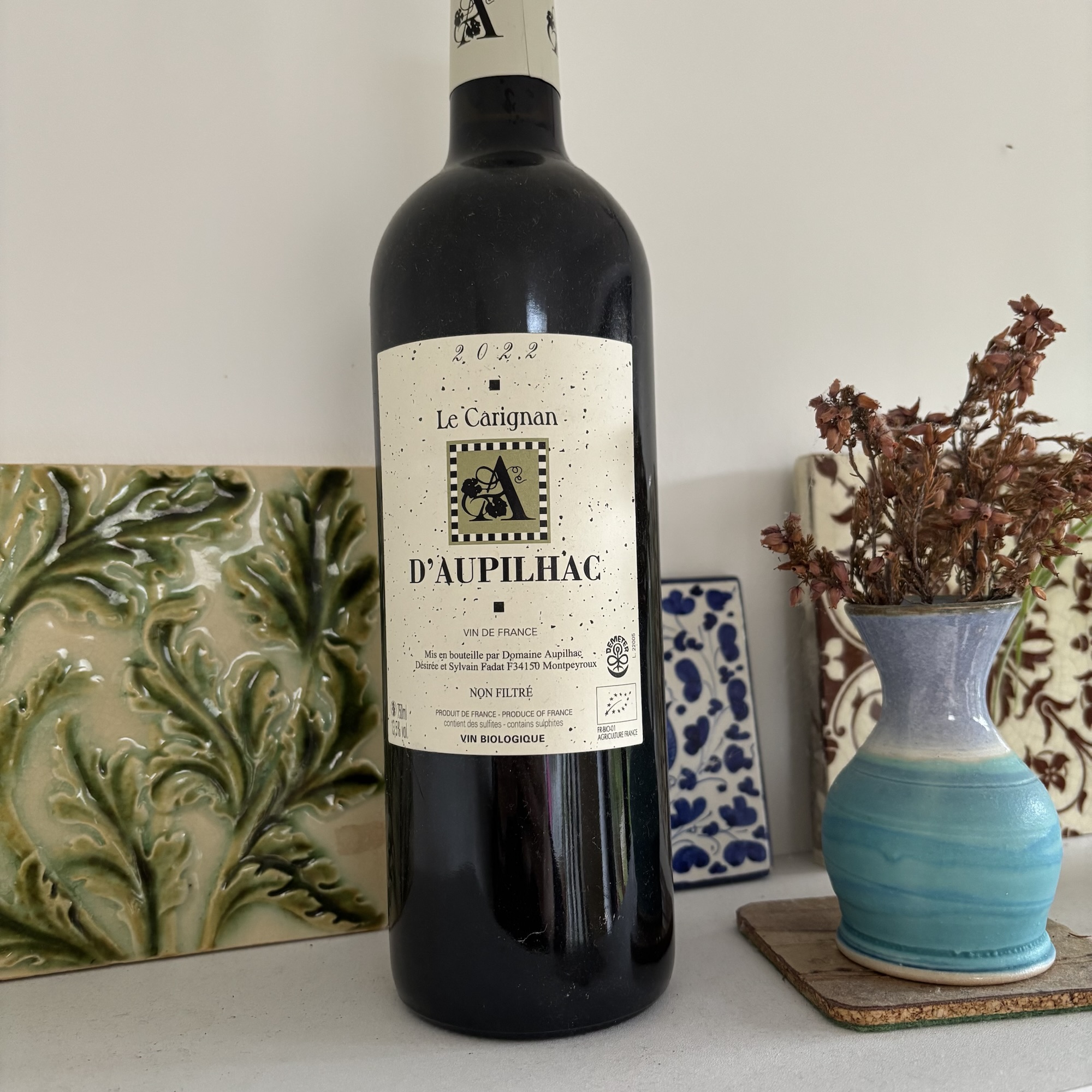
Le Carignan 2022, Domaine D’Aupilhac (Languedoc, France)
D’Aupilhac is a fifth-generation family estate run by Sylvain and Desirée Fadat at Montpeyroux village. Montpeyroux as a sub-region of Languedoc has only recently gained its own appellation, although it has been considered worthy of “cru” status for some time. This domaine is one of those responsible for its appeal, and I think I first bought their wines as far back as the late 1990s (Adnams, I think).
It is limestone country, centred on Mont St-Baudille. Vines are grown mostly at altitude here, and winds blowing off the Causse du Larzac keep disease away, and help keep the night time temperatures down. These three factors give the main variety here, Carignan, a special freshness. Carignan was at one time being pulled out in the region, with just a few mostly natural winemakers keeping faith. Nowadays, the interest is much greater for the local autochthonous varieties than the international interlopers planted in the 80s and 90s.
This Demeter-Certified wine is bottled as a Vin de France, pre-appellation. The Carignan is from old vines and the harvest in 2022 was one of the smallest in years. It was a poor year in some places, but the biodynamic practices of the Fadat family helped produce good fruit. The result is an inky, concentrated wine, both full of sappy fruit flavour and a mineral texture. In some ways you can read it as just a straightforward expression of terroir, one which is satisfying when drunk now. However, it will certainly go another three or four years or more. If you like the concentration this is giving out right now, then no need to wait. This is good terroir here, especially for Carignan.
I bought this bottle from The Wine Society for £23, but it appears to be available now for £20.50.
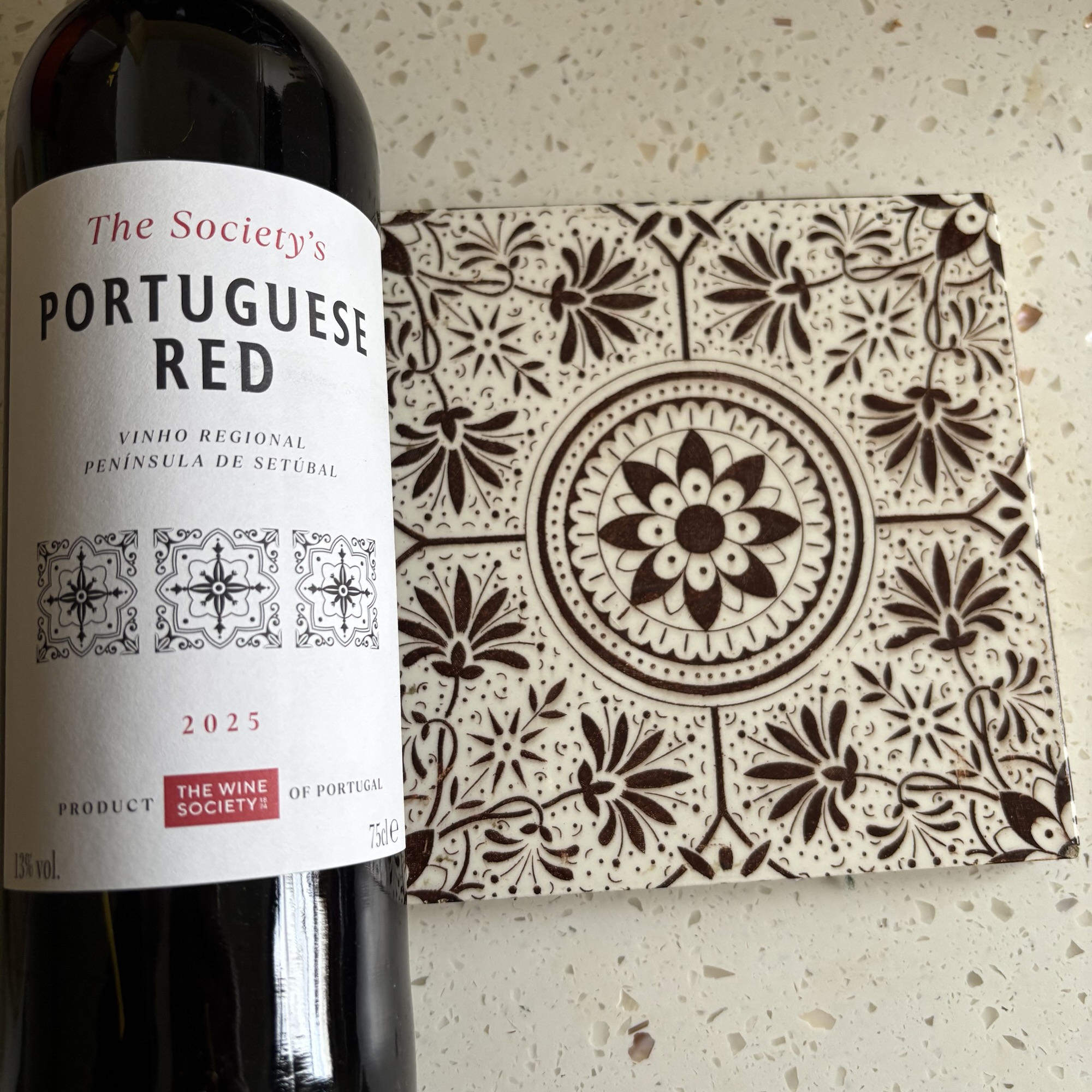
The Society’s Portuguese Red 2025 (Setubal Peninsula, Portugal)
This is the first time I’ve bought an own-label wine from TWS outside of their exhibition range. The exhibition wines always seem to hit the spot, especially for value, and so I thought I’d give one of their basic own-label wines a go. As Portugal is possibly the best value in Europe right now, I thought this would be a good place to start. So, what do we have?
It’s a Vinho Regional Península de Setúbal (IGP), bottled by Casa Emelinda Freitas. This is a family company established in 1920, based at Fernando Pó in Palmela, a local DOP. They are pretty big, farming 550 hectares.
This wine is a blend of Castelão, a variety which is being re-evaluated in Portugal, widely planted but capable of more if farmed well, with Alicante Bouschet. This latter grape is a teinturier variety, meaning it has red flesh, and adds a deep colour to the blend. The soils here are mostly sandy.
The wine does indeed have a dark and vibrant colour. The nose and palate show simple crunchy red fruit, which has that mix of sweet (ripeness) and savoury. The palate has bite and the wine has a chewiness that I’d say helps with food. It isn’t heavy or soupy, despite 13% abv. We paired it with roast vegetables and couscous with a harissa sauce, and it stood up to the heat.
This is a simple wine, and it’s a little nostalgic for me. It hints at wines I would have drunk when travelling in Southern Europe many decades ago, yet is so much better made, of course. I imagine many of you who are able to drink better wouldn’t consider a wine like this, but the combination of simple enjoyment with value here is in some ways remarkable. It costs just £7.50 from The Wine Society.
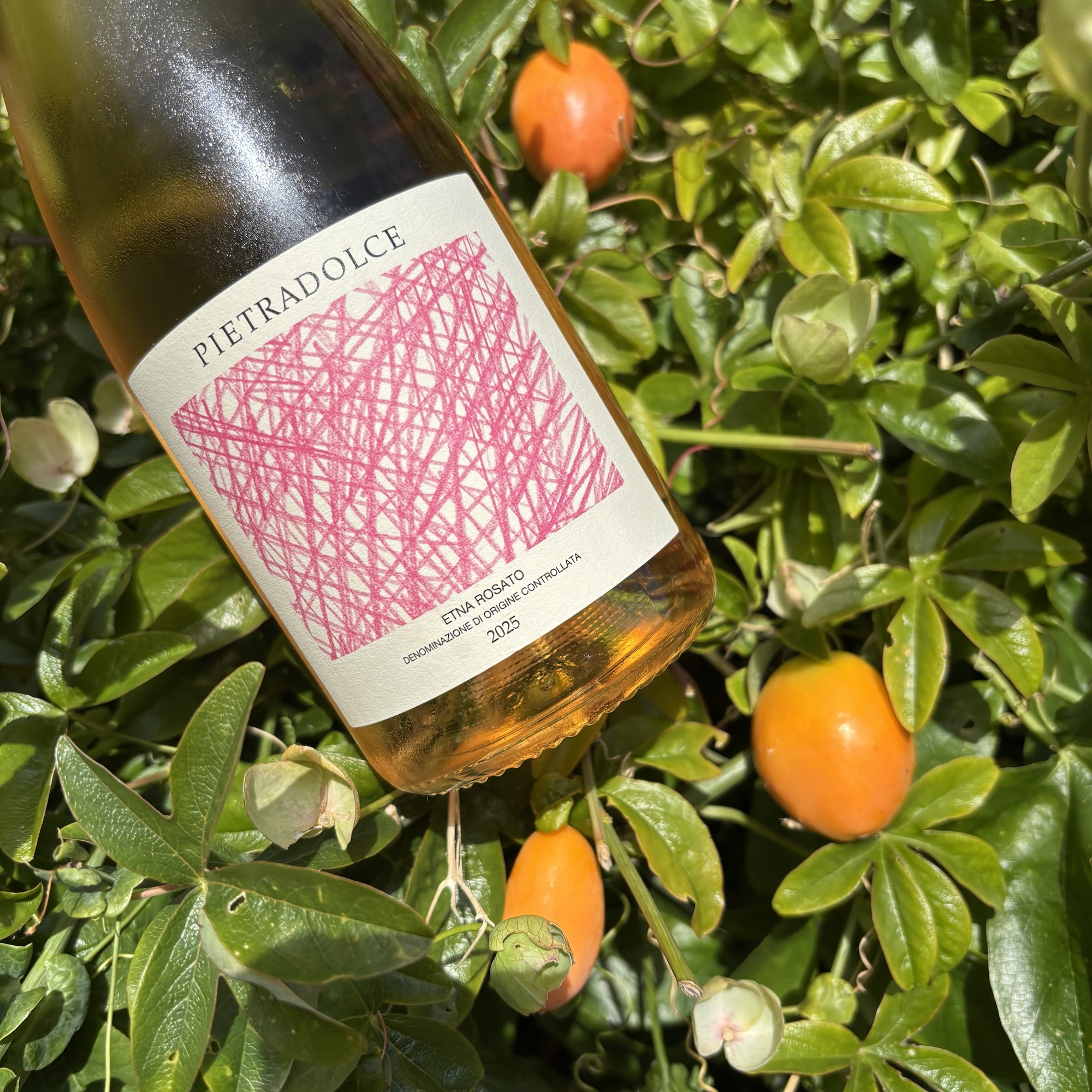
Etna Rosato 2025, Pietradolce (Sicily, Italy)
Pietradolce is based at Solicchiata, close to Castiglione di Sicilia on Etna’s northern slopes. Here, they farm around 30 hectares of vines at altitudes between 650 and 950 masl. The wines are made and aged in a naturally temperature-controlled cellar below ground, the walls carved from lava flow.
This Rosato is 100% Nerello Mascalese off the rich volcanic soils on the volcano’s north side, at around 700 masl. Many of the vines are 120-years-old and are pre-phylloxera. Somehow the wines seem to express this volcanic terroir so well. Of course, the red wines have a real volcanic bite, but the pink wine also has a vein of the same thing. A kind of salinity, but more than salinity. Iron filings somehow come to mind, although I’ve never tasted iron filings.
However, this wine is also packed with fruit, a mix of cherry and strawberry aromas forming the bouquet, the palate adding a bit of white pepper, and blood orange (others say grapefruit) acidity to the salinity I already mentioned. It was delicious. It tasted lighter than its 13% alcohol might suggest.
This is another wine bought in the summer from, you guessed it, The Wine Society but imported into the UK by Armit Wines. It cost £22. Good fish stew pairing material.
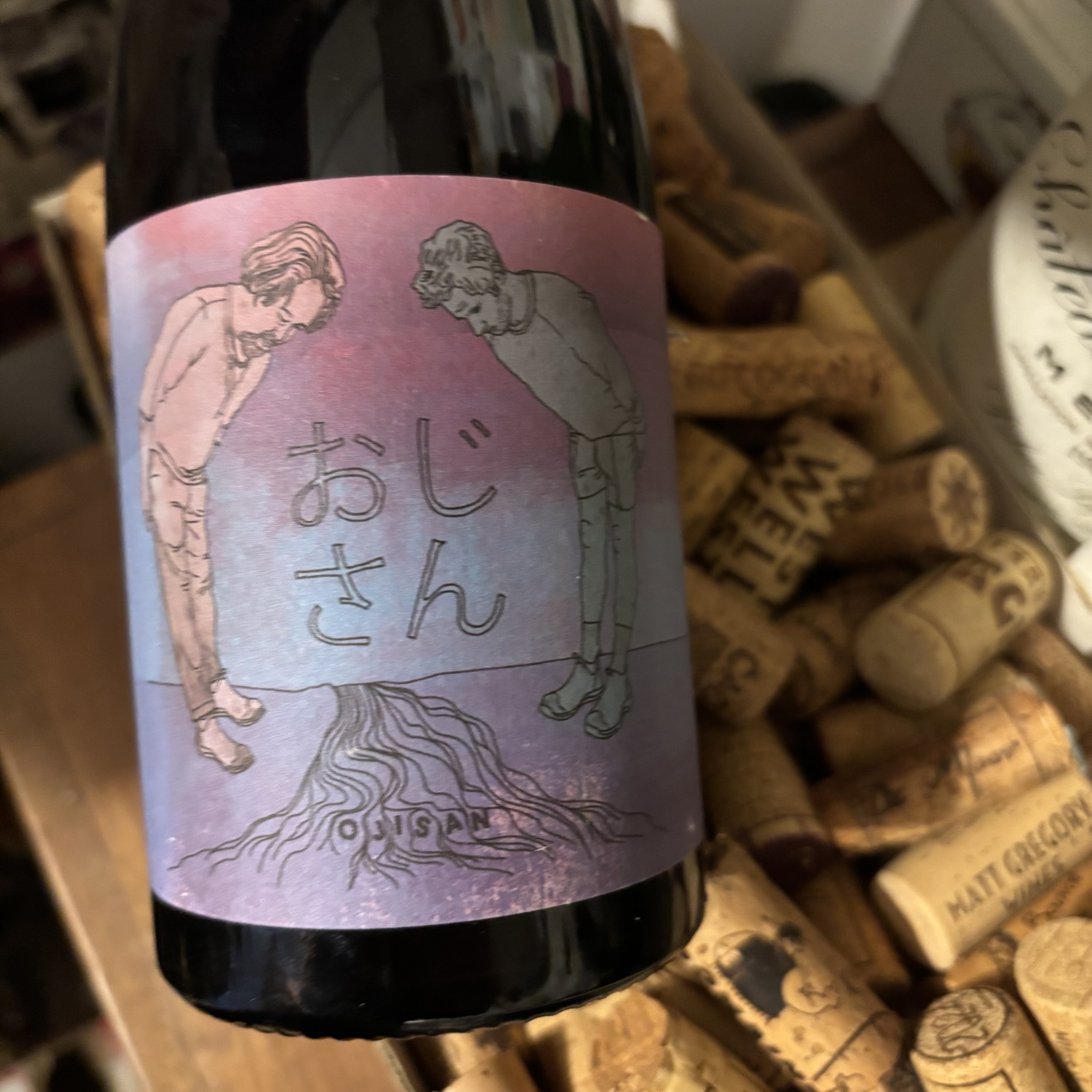
Ojisan Rouge 2023, Alex Craighead and Kazuomi Fujimaki (Nelson, New Zealand)
This is a blend of Syrah and Pinot Noir made in Nelson by Alex Craighead (of Kindeli Wines), who is one of the pioneers of organic viticulture and natural wines in New Zealand, and Kazuomi (“Kazu”) Fujimaki, formerly of Grape Republic.
Grape Republic is based in Okitama (Southern Yamagata in Japan) and is a specialist in natural wines. It was founded by Fujimaki in 2017. He had previously worked as a sommelier and went into winemaking after being one of Japan’s advocates for natural wine. Alex Craighead has been working as a consultant for Grape Republic with Haruyuki Yano making the wines, but Alex and Kazuomi remain great friends.
The name means something like uncle, in the sense that you call someone uncle, which is a bit more respectful than calling someone “grandad”, so it is a play on the ages of the two winemakers, who are presumably depicted showing mutual respect on the label. The wine is, of course, low intervention, and was originally made for the Japanese market. What has turned out to be a remarkable and very successful visit by Modal wines to New Zealand has managed to secure some of this (and its sibling white wine), along with a number of other gems.
The bouquet is very attractive, floating, cherry with a hint of peppery spice from the Syrah. The palate is smoothly seductive, light on its feet (it only weighs in at 12.5% abv). There’s just a bit of crunch on the finish, a mix of fruit and light tannin. It’s mouthfilling and gently refreshes the palate. A real gem of a find, and well-priced at £25. This bottle came from Cork & Cask (Edinburgh). As stated above, imported by Modal Wines.
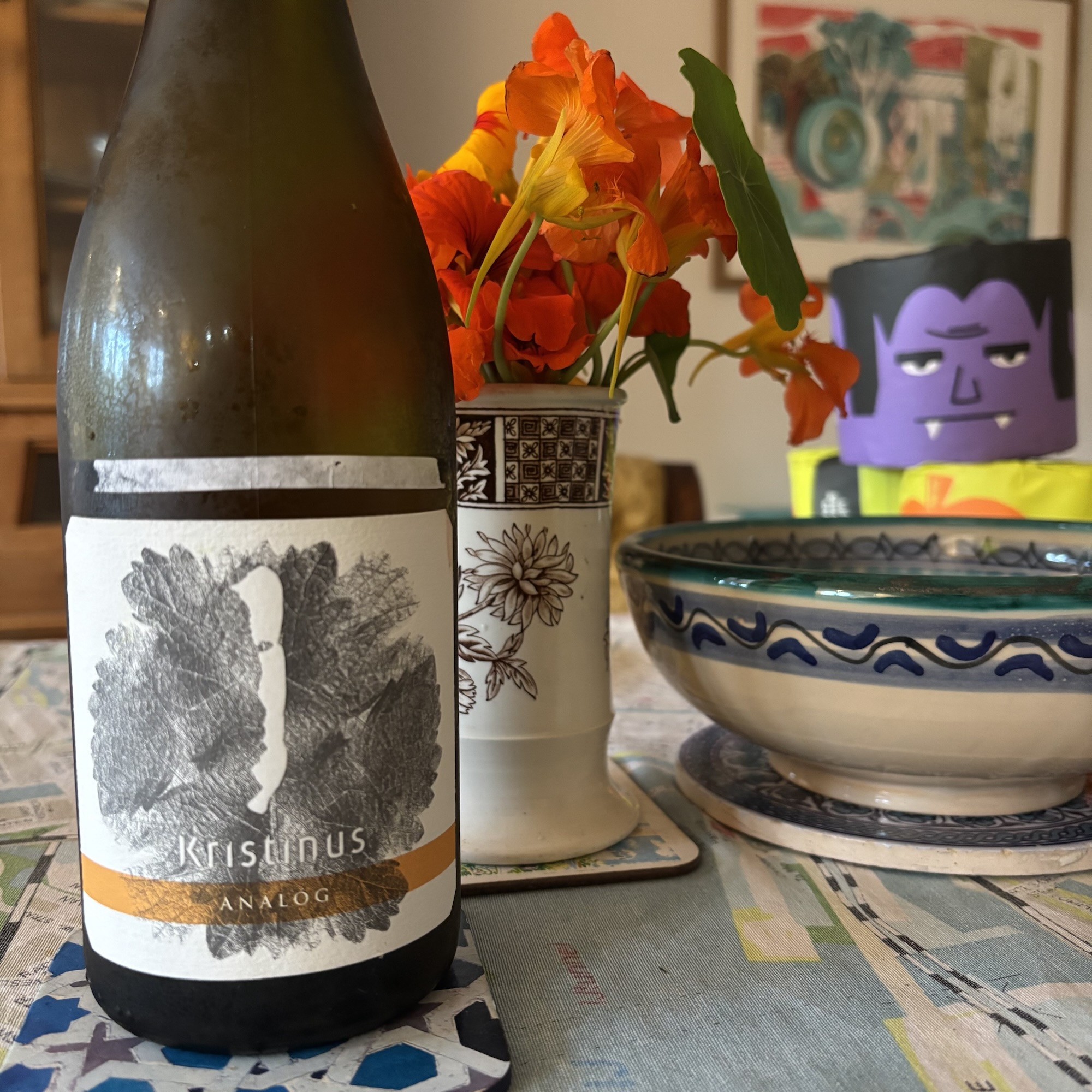
Analóg 2021, Kristinus (Balatonboglár, Hungary)
Florian Zaruba is winemaker for Kristinus, a 60-hectare Demeter-certified biodynamic estate in Balatonboglár, on the southern shore of Lake Balaton, which he runs alongside partner Laszlo. The terroir is based on the complex sediments of the Panonian Sea, layered and forming hills from tectonic activity.
Analóg is a blend (in 2021) of 80% Welschriesling with 10% each of Traminer and Sauvignon Blanc, from a 10-hectare single site on mostly loam, loess and sand. Fermentation and ageing was in amphora for ten months following light skin contact. Just 10 mg/l sulphur was added.
It has a yellow-gold colour, with a bouquet of muted apple, lemon, and (we both got this) pineapple, the latter coming through as the wine evolves in the glass. Another side shows more herbal notes and some texture from the skin contact, but not too much. It’s a wine with two sides, one being relatively straightforward and tasty, the other side showing more complexity bubbling away beneath the surface. I shall be interested to try some of their other wines because this is both nice and interesting.
Basket Press Wines is the importer. Unfortunately, I am not sure of the price and although they have put this new producer up on Instagram, they don’t seem to have added the five wines they’ve brought in onto their web site yet. But they are not expensive. Definitely a producer to explore.