In Part 1, I wrote about wines from Languedoc, Setubal, Etna, Nelson and Balatonboglár. For Part 2 we shall be tasting wines from Piemonte, Vienna, Beaujolais, The Limestone Coast and Southern Moravia. So, if you feel you are being short-changed by a couple of wines in October, at least you are getting the usual wide spread of wine regions. If my cellar took a very small breather last month, I have noticed that by 6th November I’d already opened another five wines, all of which merit selection for the November team.
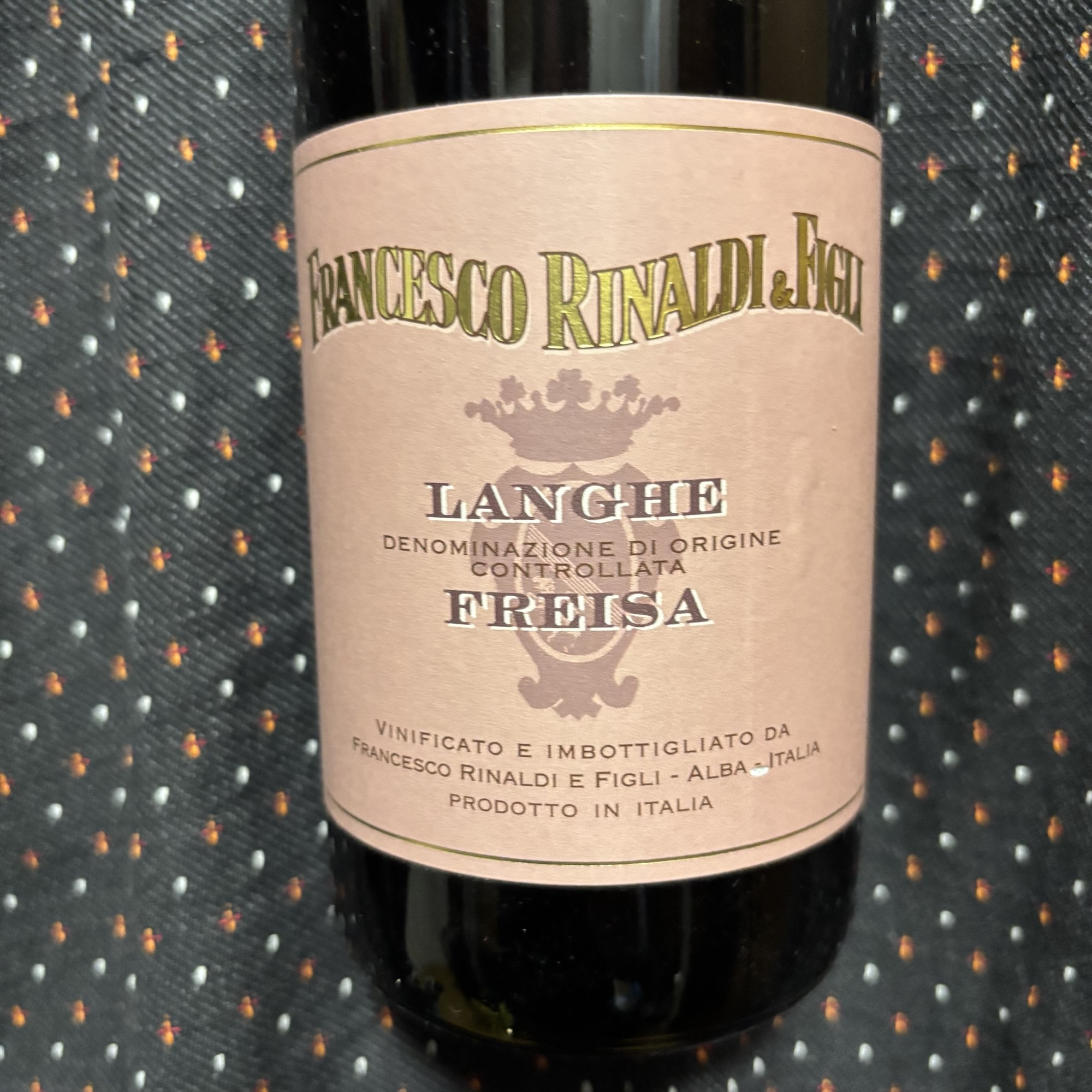
Langhe Freisa 2022, Francesco Rinaldi & Figli (Piemonte, Italy)
There are few wine regions where the phrase “it’s that time of year” are more apt than Piemonte. The wines of Northwest Italy are not just for autumn, but like Mont D’Or cheese, or boeuf bourguignon, an awful lot of us turn our minds to this region when October kicks in. That turning of the mind is mostly to Nebbiolo, but with prices for Barolo and Barbaresco, and even good Nebbiolo (Langhe and Alba) rising ever upwards, perhaps an exploration of other regional grape varieties is a worthwhile quest?
Francesco Rinaldi & Figli has a winery in the commune of Barolo, occupying the original site of the Barale-Rinaldi winery (est 1870). Today the firm is run by brother and sister Piera and Paola, with consultant Gianfranco Cordero onboard. Production is, of course, geared to Barolo, of which they possess some famous sites, but you can find their other Nebbiolos out there, and in fact a rather nice Dolcetto (Roussot) which I’ve drunk a few times.
My memory of Freisa, which I’ve not drunk for a while, is of a lighter wine than this one, and one which was slightly frizzante. It has blue-black fruit and is quite resistant to downy mildew. It is also potentially quite tannic and acidic, and no one would argue it has the nobility of Nebbiolo.
This wine kicks in with 14% alcohol. It saw a five-day maceration of the fruit in stainless steel before a ten-day fermentation. Ageing was for six months in 1,000-litre Slavonian oak. It’s a dark ruby red wine with a bouquet of raspberry fruit and roses. It’s fairly full-bodied, firm and structured, yet the tannins are not dominant. It’s a tasty wine, not a fine wine, nice and sappy and food-friendly. Saying that, I think you could age this another three-or-four years.
This possibly last bottle came from The Solent Cellar and the importer is Astrum.
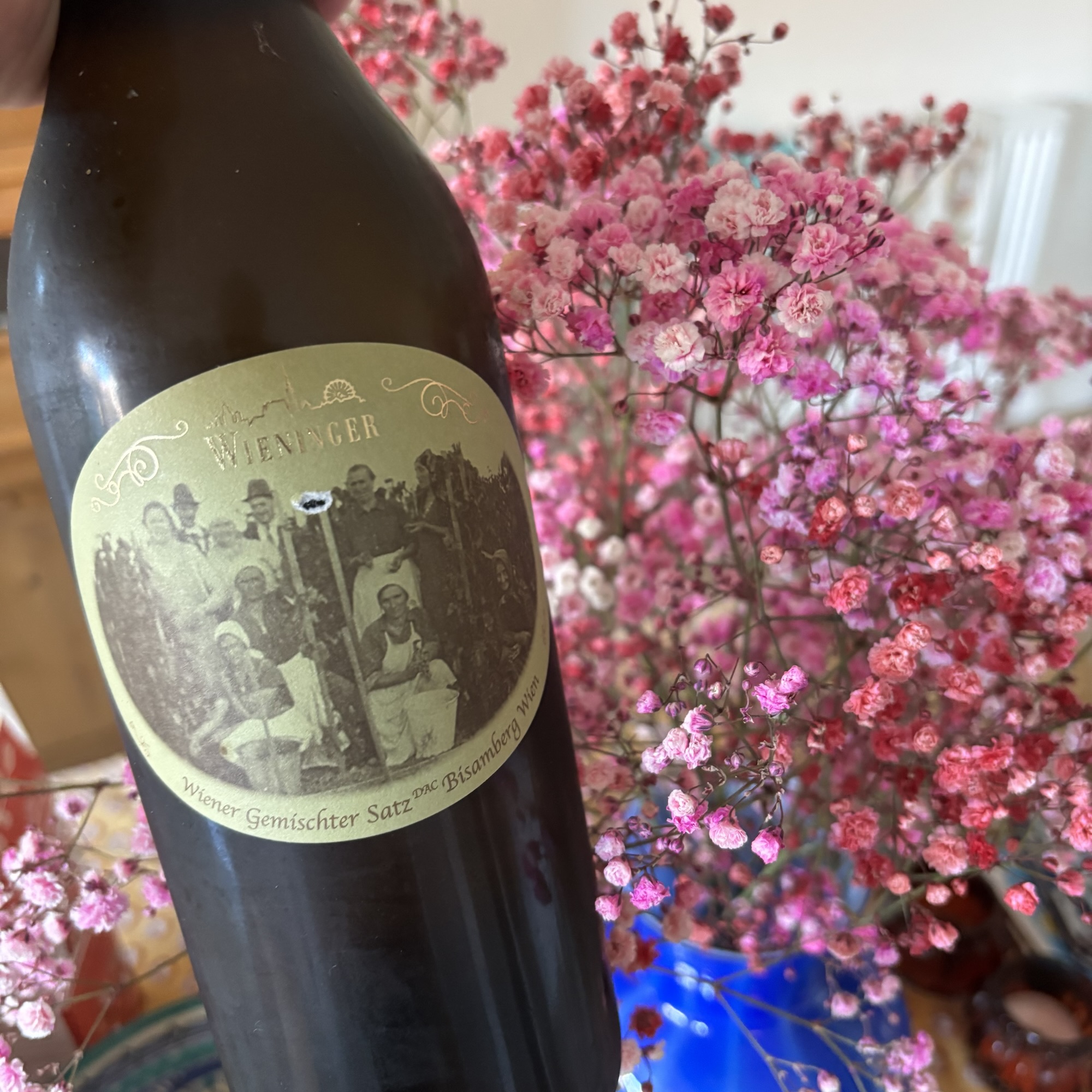
Wiener Gemischter Satz “Bisamberg” 2023, Wieninger (Vienna, Austria)
It’s easy to think of Wiener Gemischter Satz, the traditional field blend of Vienna, as a simple wine, to drink young. A kind of Austrian Vinho Verde. This is far from the truth. Although the vines are co-planted, and the grapes co-fermented, originally as an insurance for different varieties doing better in some years, some less well, the top producers have refined this wine into something of quality and ageability. In fact, the Viennese version of Gemischter Satz has now been granted DAC (Austria’s equivalent of AOC).
Fritz Wieninger is based at Stammersdorf, close to the Bisamberg hill. He has 70-hectares of vineyard, most being divided between the two main hillsides which sit either side of the Danube on the edge of the city, Nussberg (right bank) and Bisamberg (left bank). It is usually rightly said that Wieninger has done more to transform the wines of the Austrian capital than anyone else. His vineyards are all biodynamic. As part of a substantial portfolio of wines, Fritz produces three top-level gemischter satz which are, I suppose, kind of Premier Crus of the genre. There is a Nussberg, a Bisamberg, and Rosengartl, the latter from a special small parcel on Nussberg.
On Bisamberg you get sandy loam soil over a limestone base. The main varieties in the field blend are Chardonnay, Grauburgunder (Pinot Gris) and Weissburgunder (Pinot Blanc). There’s a lot of lemon and (maybe) pear blossom on the nose. The acidity is gentle, and the wine has a lightness and delicacy despite having good body and 13% abv.
I have a few friends who share my love of these wines. They are not in the mould of traditional fine wines, but there’s something special about them. Some producers fashion versions which are exceptional, yet probably are at their best when youthful. Wieninger’s top versions seem to improve with age, indeed for longer than I have given this bottle. Although I originally used to buy them in Vienna (and indeed I spent a day at this producer with a morning in the vines some years ago), I am pleased that they have a UK importer.
Liberty Wines bring them in, and the retailer for my bottle was once again Solent Cellar in Lymington (Hampshire). It cost £28. The vines which look over Vienna are attractive enough, but in summertime, when the popup heuriger bars are open in the vines, especially on Nussberg, they are unmissable. You won’t be disappointed, nor with the wines, I hope.
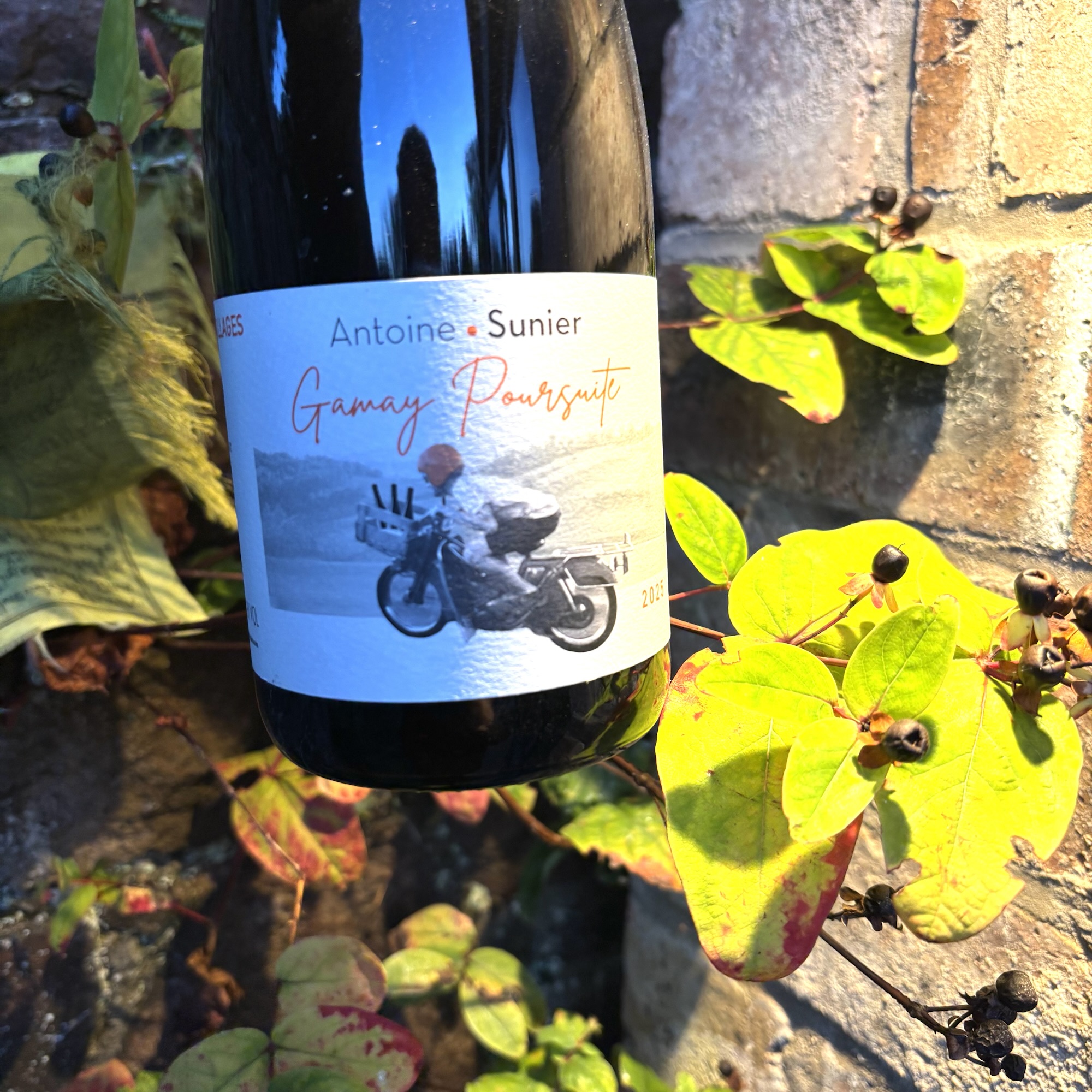
Beaujolais-Villages “Gamay Poursuite” 2025, Antoine Sunier (Beaujolais, France)
The Sunier brothers have made quite a name for themselves individually, as producers of fruity natural Gamay. Antoine is the younger brother of Julien, and he’s based at Regnié-Durette, farming 5.5-ha at Regnié and a further 1.5-ha at Morgon.
The vines for this “racy” cuvée average around 30 years old. They undergo a six-day carbonic maceration, fermentation and ageing being in a mix of concrete and enamel tanks. The result is light and crunchy. The fruit spectrum to me is a bit more strawberry with a little raspberry, rather than your usual Gamay cherry. It’s a light wine (though 12.5% abv), but one with a bit of crunch and bite. Serve cool or lightly chilled. Very easy-going.
You’d assume this is a summer red. We drank it on the first night we tried out the heating before the annual boiler service, and it was still absolutely delicious with a cheesy omelette with the light fading outside. It came from The Wine Society and cost £19. The importer is Flint Wines.
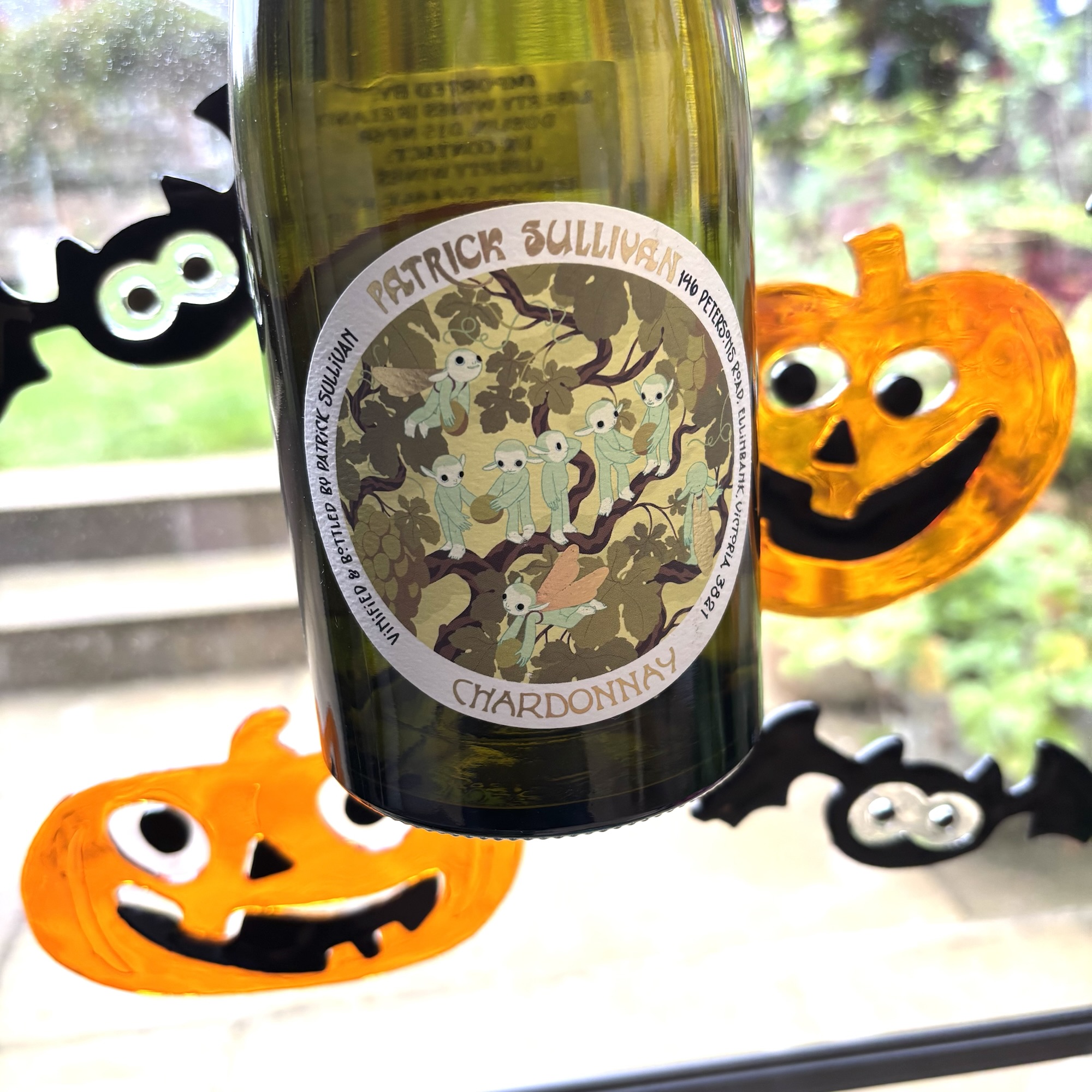
Chardonnay 2025, Patrick Sullivan (Victoria, and South Australia)
This Chardonnay is sourced from fruit grown in South Australia’s Limestone Coast Region, specifically from Mount Gambier, Coonawarra and Wrattonbully on the SA/Victoria border, but Patrick Sullivan is based in the state of Victoria, at Ellinbank in West Gippsland, over to the east of Melbourne. The soils were principally a distinctive volcanic topsoil over limestone.
The fruit was farmed naturally and sustainably. Whole clusters were crushed/pressed and then left to settle in tank. Fermentation was in a mix of tank and oak barrique, around 25% being new oak. The soils seem to be responsible for giving this wine almost unique flavours, very lifted and energised. We found lemon and grapefruit, peach and spice, with hints of (hazel)nut. The palate is mineral, zesty and vibrant. A creamy touch (oak) offsets the mineral texture.
The whole package seems more sophisticated than the price would suggest, and perhaps the label. I love the label. It just doesn’t scream posh wine. I guess this isn’t posh, but it is very good and quality-wise, was a nice surprise.
This was only £20 at Communiqué Wines in Stockbridge, Edinburgh. I think Ali recommended it to me, and I don’t often ignore his enthusiasm. It is another bottle imported by Liberty Wines. I seem to have been drinking quite a lot from the Liberty portfolio of late, from different retailers. I used to buy direct from them in the 1990s/2000s, and it has been nice to reconnect with their wines. A lot of what I’m buying is in that more comfortable £20 range, although going back to Piemonte, they bring in some wines I do yearn for which are substantially more expensive.
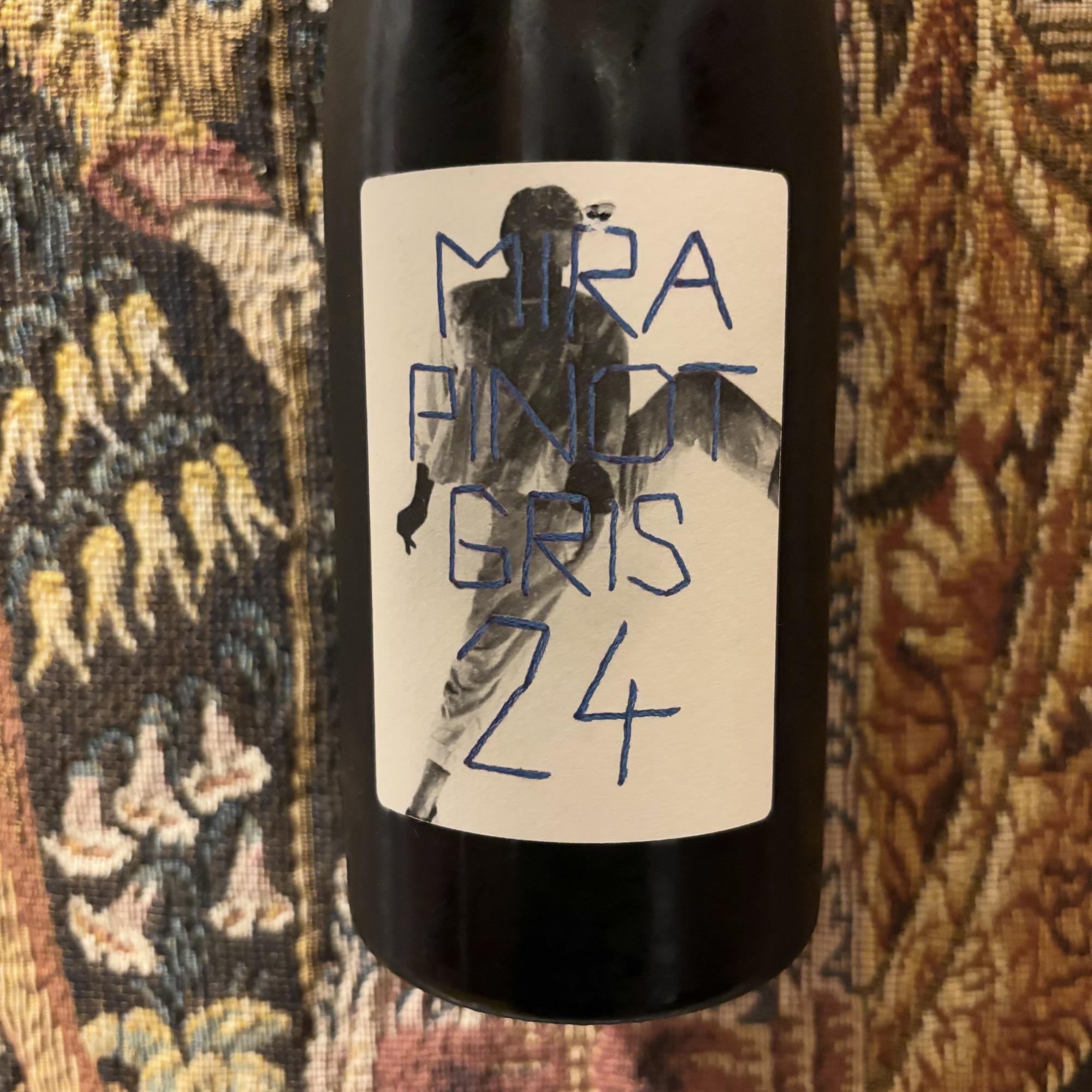
Pinot Gris 2024, Mira (Moravia, Czechia)
Mira Nestarcová is based, along with her so-far more famous husband, Milan Nestarec, in the southern Moravian village of Velké Bilowice. Mira makes a number of varietal wines from a vineyard planted twenty-five years ago on clay and loess. Its unique selling point is that the vines are unpruned. Not a method of viticulture you see a lot, yet I have seen it used to great effect in Austria and Alsace.
This 2024 vintage saw the addition of Pinot Gris to the Mira range. The fruit was direct-pressed, fermented using indigenous yeasts in a mix of used wood and concrete tank. No synthetic chemicals are used in the vineyard, and nothing is added in the winery, including zero sulphur.
Like all of Mira’s wines, there’s some kind of electricity. It’s uncanny that this is a trait through every cuvée and one can only assume it’s a combination of the natural methods and the special type of viticulture she pursues. It’s very fresh and lively. Alcohol sits at 12.5%, which is lowish for Pinot Gris, at least when made by artisans rather than bulk producers. It has a lovely balance.
The bouquet is spicy and herbal. The palate gave me ginger, very specifically on the front of the tongue. There’s quite a bit of mineral texture but on a long finish I tasted lemon zest. It’s hard to be difinitive, this being the only bottle of Mira’s Pinot Gris I’ve drunk so far, but it was up there among my favourites from her portfolio.
This cost £33 direct from Mira’s importer, Basket Press Wines.