
Cork & Cask’s Winter Fair is always one of my most looked-forward to tastings of the year. First, the winter event has more wine than the Summer Fair. But more than that, this is no ordinary “shop” event. Around a dozen wine agencies venture to Edinburgh, most from down in London. It’s a chance to reconnect with people I know and to taste wines from some of the UK’s best independent importers.
As usual, I missed much, but tasted a lot. I tasted at ten out of sixteen tables in a little over two hours before having to head back to a birthday party where, I realised, the early time for dinner was to enable more time for dancing. They do parties properly up here.
Ten tables mean three parts. There will be genuine gems in each of them. Part 1 (here) will cover Alliance, Modal and Dynamic Vines. Part 2 will include Gardiner-Wood, Indigo and Uncharted Wines. Part 3 focusses on Wine Importers, Marussia Beverages, Blind Summit Whisky and Cork & Cask. The latter table contains some of the wines Cork & Cask sells whose agents were not represented themselves. This included bottles from Raeburn and Vine Trail. If one or two agencies are unfamiliar, as they were to me, I shall say a bit about them when I introduce their bottles.
I should add that this is a public event, not a trade tasting. As such, customers want to get their money’s worth and try as much as they can. It is generally a case of me trying to be super-focussed and after an hour really just getting to the tables which aren’t too crowded. My biggest regret was not tasting the whisky from Ardnamurchan Distillery, because I’m a fan despite having bought only a few bottles of their superb output. Some very interesting cask finishes were on show.
ALLIANCE WINE
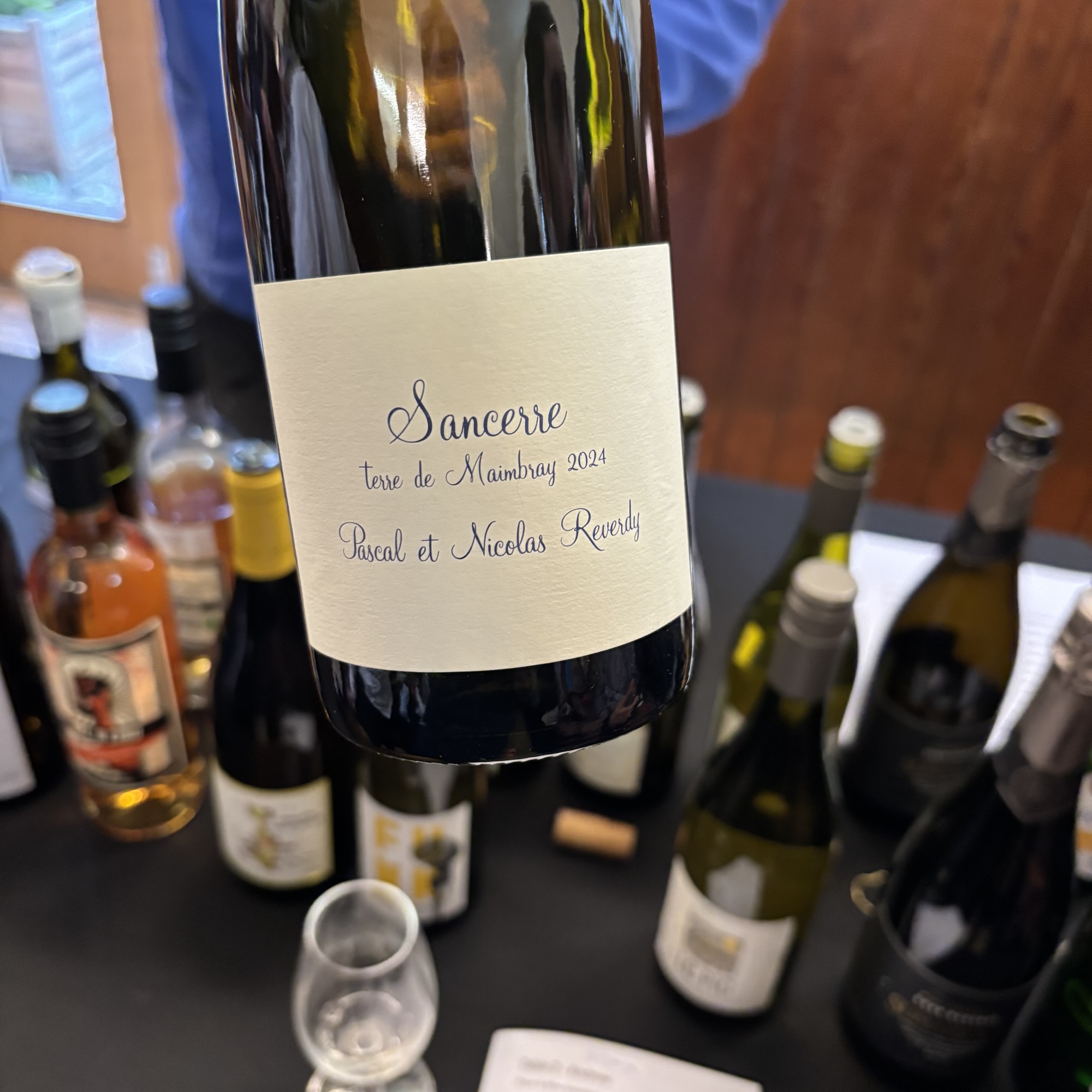
Sancerre Blanc “Terre de Maimbray” 2024, Pascal & Nicolas Reverdy (Loire, France)
I know this label well, but I haven’t bought their wines, nor indeed any other Sancerre, for a good five years. They are based in a hamlet called Maimbray within the Sury-en-Vaux district. Pascal and Nicolas are brothers. The soils for the grapes used here are on classic Kimmeridgian limestone, winemaking described as “sustainable”. Grapes are hand-harvested.
This 2024 is made entirely in stainless steel. It has a floating citrus bouquet, the palate being saline and with a little chalky texture. Good precision. Very attractive, taut. £28
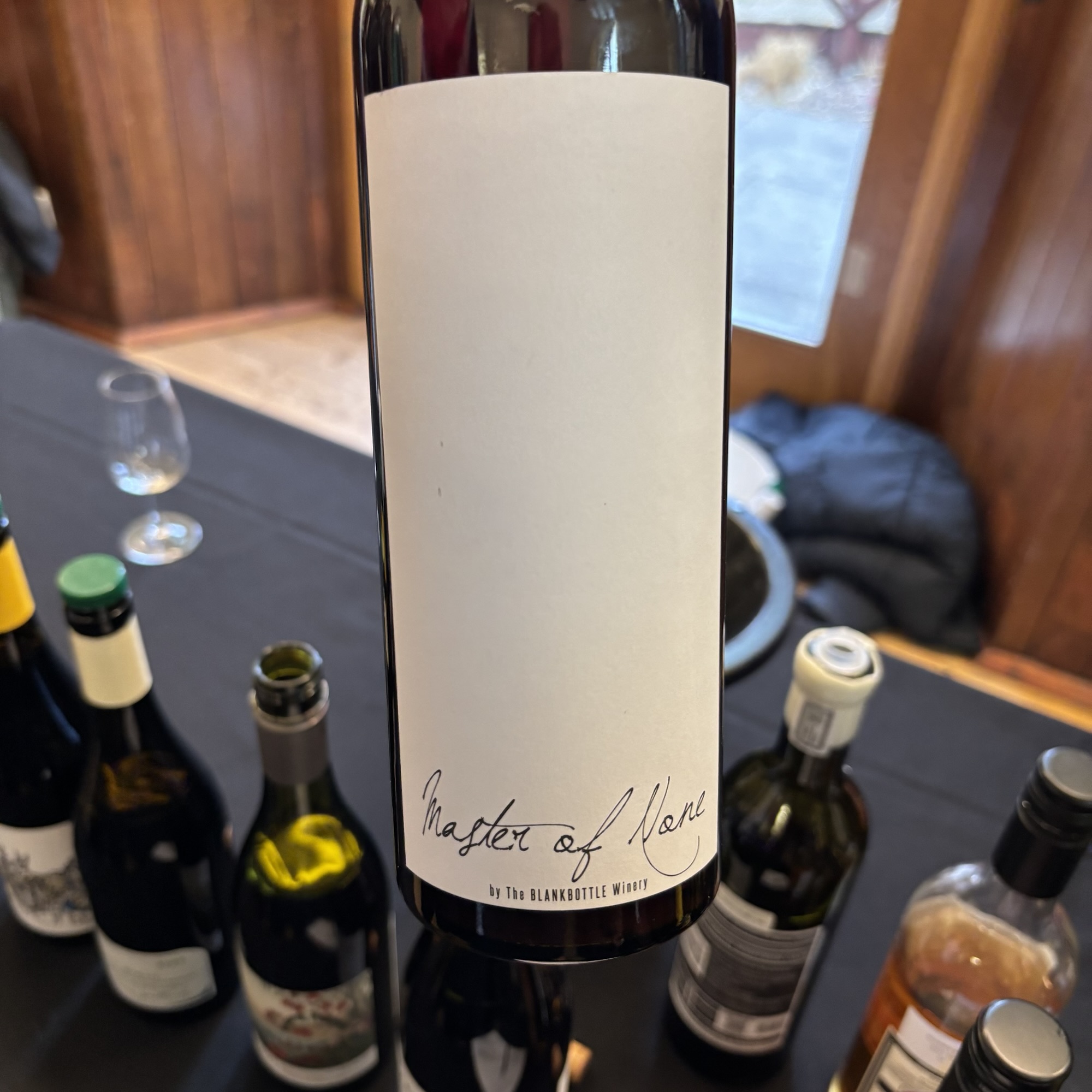
Master of None 2025, Blank Bottle Winery (Western Cape, South Africa)
Pieter Walser has been a favourite SA producer in my house for well over a decade. His modus of working is that all his fruit is bought-in via his wide group of contacts, but these are very much artisan wines with relatively small production numbers. He makes wines usually without disclosing much about their composition but I do know that this is a field blend from eleven varieties, both red and white, from eight plots in the wider Western Cape.
The alcohol here (13.5%) is deceptive. Pieter’s wines rarely suggest anything but medium levels, but then you drink a bottle and can’t easily rise from the table. This has a nice lightness. It’s very fruity, both red and dark fruits. It is the white varieties that give it uplift. Winemaking was in a mix of oak, amphora and concrete tank, red grapes and white grapes only brought together for blending before bottling. A lovely wine. I came home from the Fair with five bottles, and this is one of those I bought. £25. I will say, for a man whose labels can be wonderful (some designed by his children), this one is dull. The wine is not.
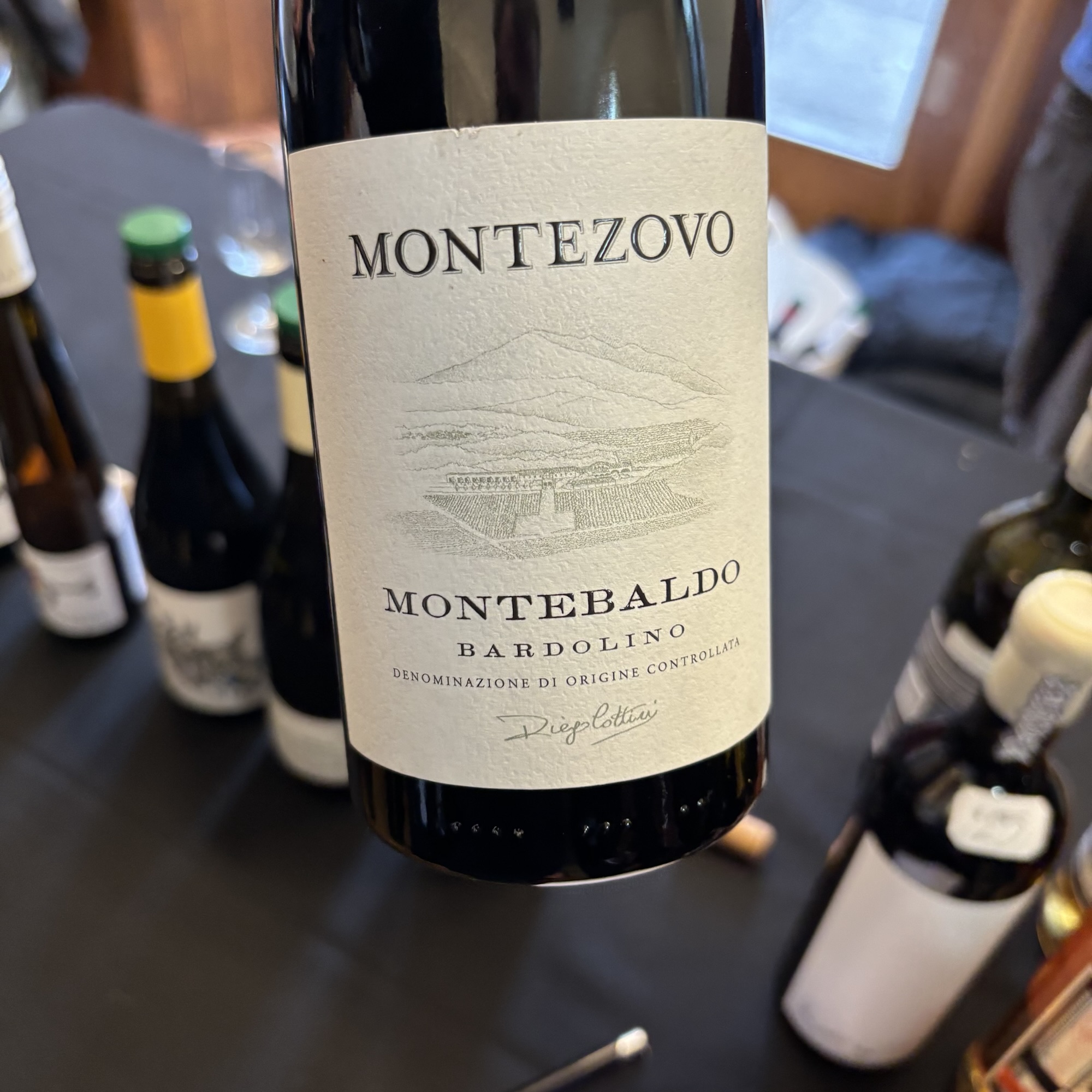
Bardolino Montebaldo 2023, Az Ag Montezovo (Verona, Italy)
This DOC on the eastern shore of Lake Garda doesn’t have a great reputation in the UK, but that goes back to the cheap commercial wines of the 1980s, a long time ago now. Montezovo is a good family estate farming organically, most of their vineyards situated between 550-to-900 masl. This cuvée is based mostly on Corvina, destemmed fruit being gently pressed into stainless steel for fermentation and ageing.
The colour is bright ruby red, the bouquet has lovely clean red fruits. The palate is fresh with a herbal twist which hits on the finish after cherries and strawberries. It’s another wine that tastes lighter than its 13.5% alcohol suggests, yet it is substantial enough for food. I didn’t buy any but maybe I should have. It’s only £17.
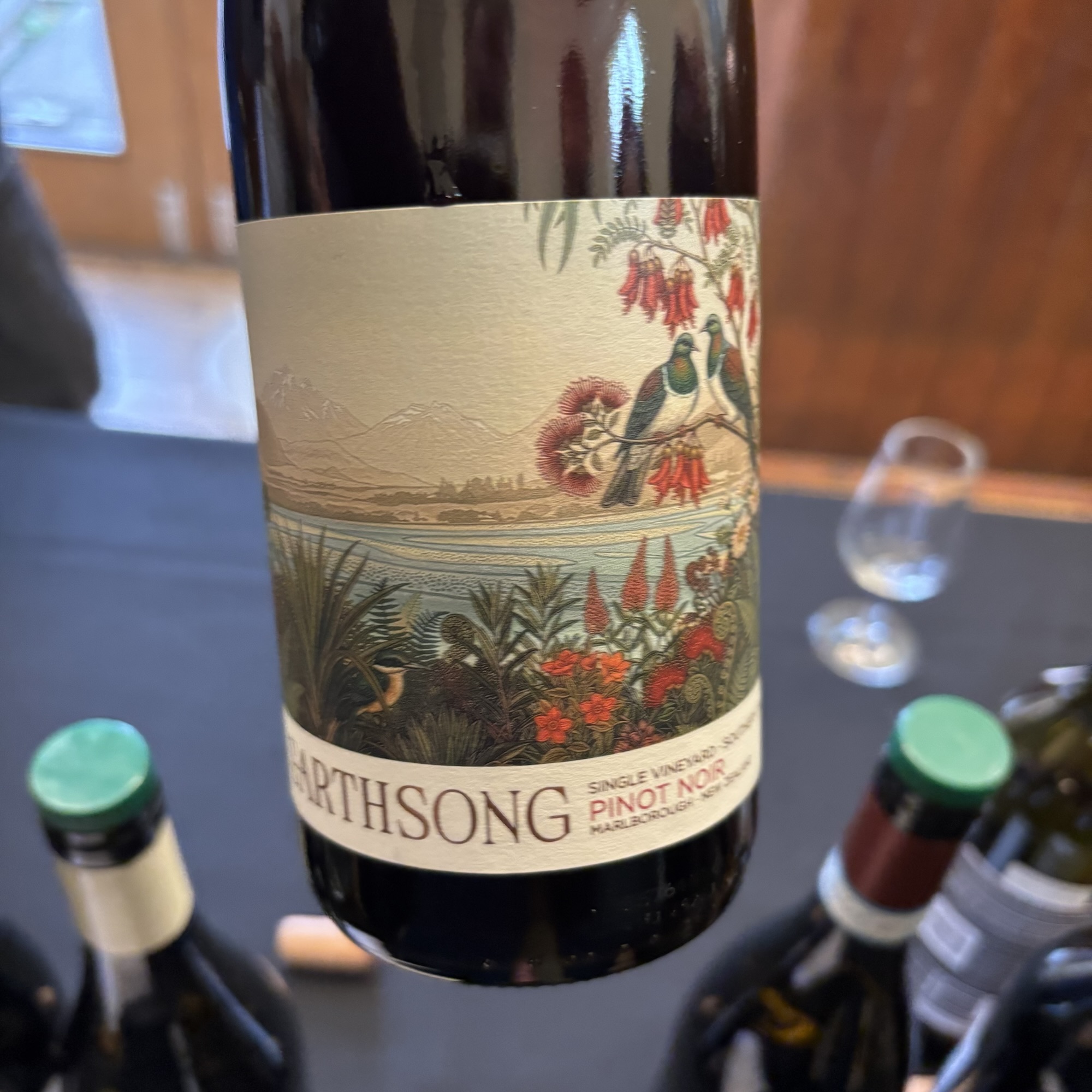
Single Vineyard Pinot Noir 2025, Earthsong (Marlborough, New Zealand)
Earthsong is a project of the people behind South Australia’s Thistledown Wines. In keeping with the label and name, farming follows regenerative practices, including no-till viticulture and using sheep among the vines during winter when they are dormant. This is pale and fruity and almost certainly one of the better NZPN you will find in that bracket just under £20. The attractive label does no harm. There’s also a Single Site Marlborough Sauvignon Blanc (not tasted) for £18.
A couple of other wines worth mentioning…Funkstille Grüner Veltliner from Niederösterreich, which is very good for only £14. There’s a Zweigelt too. Slightly more upmarket but also good value can be found in Pierre Gaillard Syrah “Terres de Mandrin” which is a Collines Rhodaniennes IGT, actually made by his daughter Jeanne, who is based at Crozes-Hermitage. Entry-level Northern Rhône with character for £22.
MODAL WINES
Extra Quality 2022, Marie Copinet (Champagne, France)
This was one of two Champagnes on show and both were lovely. This is a Grower, based at Villenauxe-la-Grande on the clay-chalk soils of the Sézannais. Founded in the 1970s by Jacques Copinet, it is now run by Marie-Laure, his daughter. Her husband, Alexandre Kowal-Copinet is cellar master. Since 2015 Marie-Laure has moved to regenerative viticulture. The vines are certified organic and no synthetic chemicals of any kind are used.
The cuvée named “Extra Quality” comes off a parcel called Brouillet, and is a genuine low-intervention wine, a 50:50 blend of Pinots Noir and Meunier, bottled at just 4g/l dosage. It has immediate freshness but even with a relatively low dosage it is approachable now. Champagne of any quality isn’t cheap these days. At £50 a bottle it is in a crowded market, but the way it is farmed and made shows in the wine and I don’t think too many connoisseurs would be disappointed. A very nice expression of the classic sparkling wine.
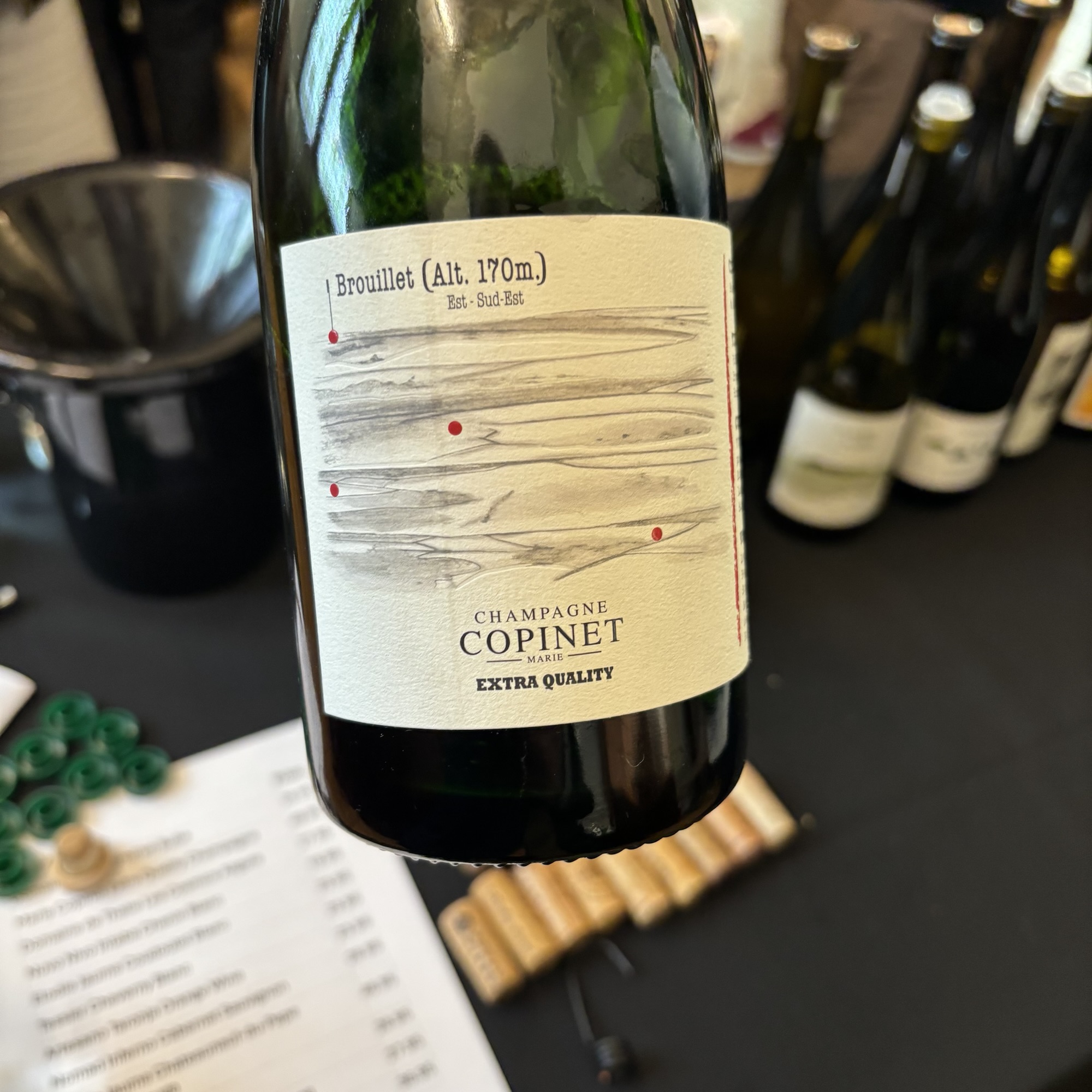
Coudoulet Blanc Côtes-du-Rhône 2025, Élodie Jaume (Rhône, France)
Cork & Cask sells three of Élodie’s wines, two of which were brought to the Modal Wines table by Angelo on Saturday. This white was one of the wines I’d bought before, the 2024 vintage being one of my bargains of the previous fair.
Élodie has taken over her family’s Domaine de Chanssaud. Having established it now as a minimal intervention property to make natural wines, she has renamed it Domaine Elodie Jaume. This new vintage blends Clairette with a little Grenache Blanc grown on clay/limestone terraces close to Châteauneuf-du-Pâpe. Fermentation with indigenous yeasts is in Concrete egg.
The Clairette makes this wine taste different to most white CDR cuvées. It has lovely texture and a savoury, almost bitter, note, but I mean that in a positive way. It’s a subtle savoury bitterness. It gives the wine character and personality. It’s a cliché to say a wine punches above its weight, but I think this does, at £24, albeit certainly not cheap for much “Côtes-du-Rhône”.
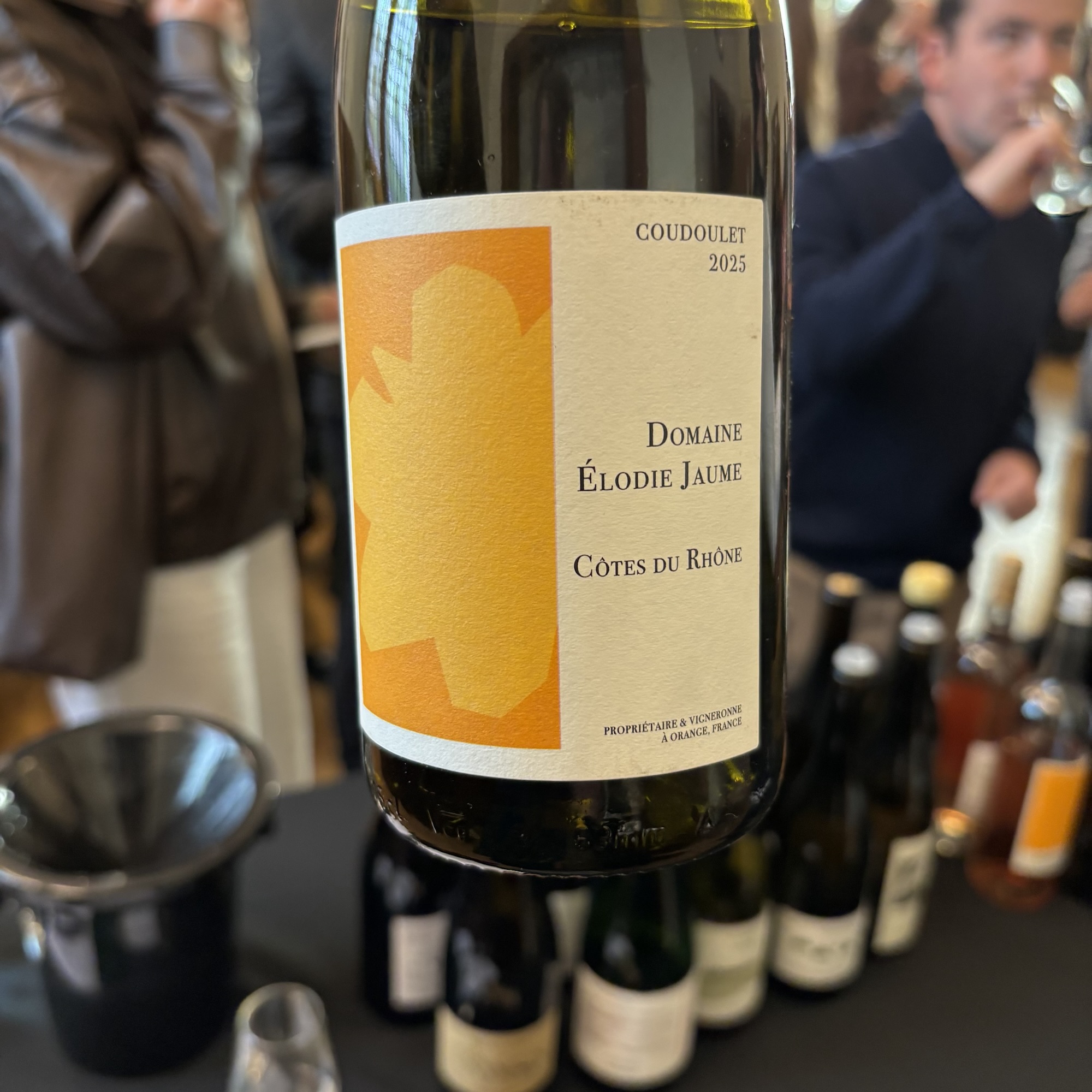
Cheverny Blanc 2025, Domaine Tessier (Loire, France)
Cheverny is over the river from Blois, close to the Renaissance hunting château of Chambord. Founded in the 1980s by Philippe Tessier, he turned first to organics. I remember Philippe and his wines well as a friend’s father had a house close to Cheverny. Under his son, Simon, the direction has moved even further towards low intervention natural wine.
This wine has a base of 80% Sauvignon Blanc with 15% Chardonnay and 5% of the wonderful Menu Pineau. The result is a very fresh wine, very much “alive”. The acids are not shy but the fruit which underpins it makes for balance. It is certainly made more complex by the other components of the blend alongside the Sauvignon Blanc. You get a lot more character than your average Loire SB. Tessier’s wines are always worth a look and fly undeservedly under the radar. This one is £24.
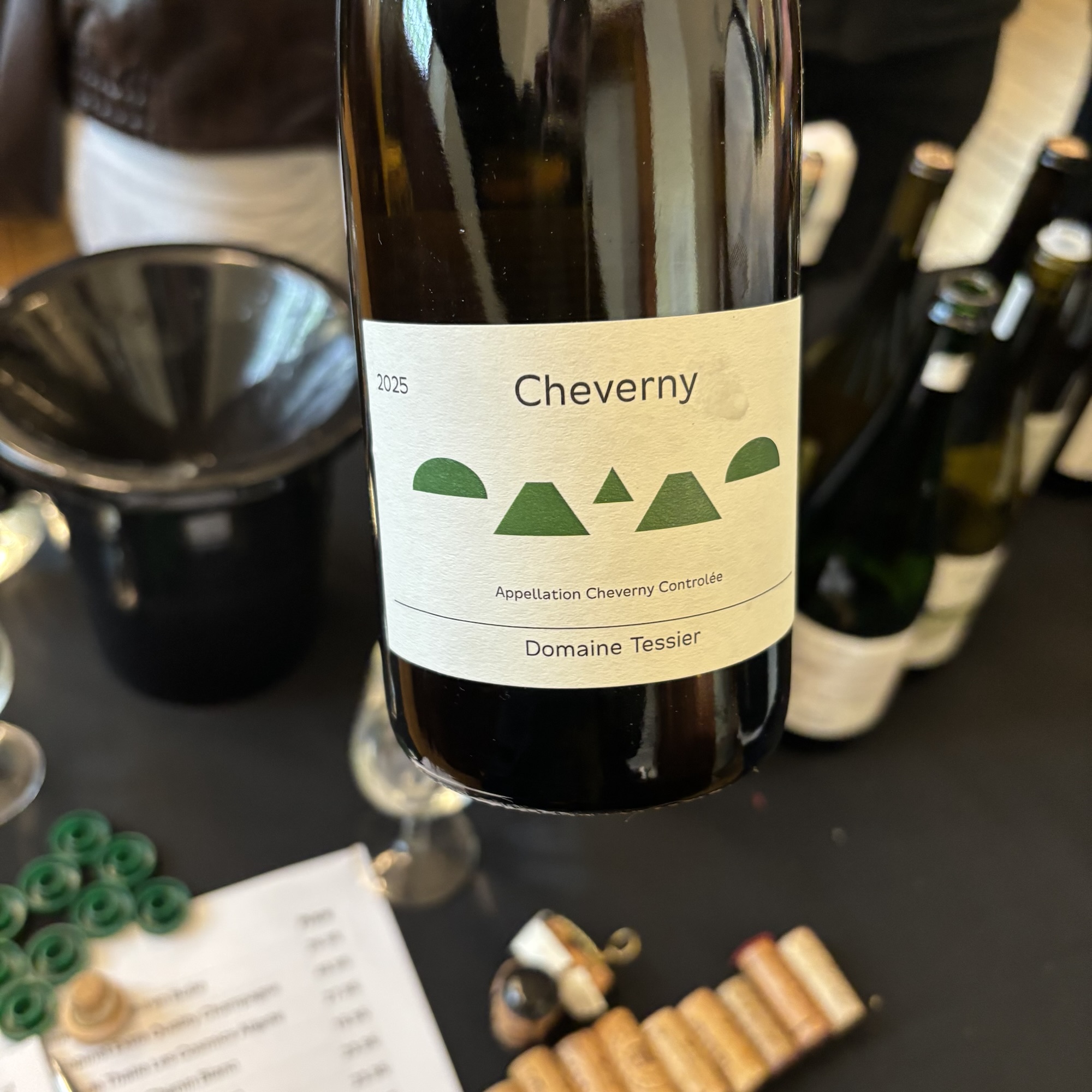
Châteauneuf-du-Pâpe “Cabrières” 2024, Domaine Élodie Jaume (Rhône, France)
Cork & Cask sells Elodie’s red CDR to match the Coudoulet white (above), but this is the senior wine in the range. This 2024 vintage is its first release. Whilst the books will argue about how many different grape varieties are allowed under this appellation, things are made easy here as it is 100% Grenache. The grapes are from old bush vines on sandy soils, not the cliché of round stones which appear in only some of the vineyards. It means this is not your usual Châteauneuf.
Ageing here is out of the ordinary too. Two years in concrete egg, no oak. The result is another face of this occasionally tired appellation. The fruit has intensity, yet the wine is more delicate, less musclebound, than you expect. It still boasts 14% abv, but these days that is low for Châteauneuf Rouge. It does have texture and depth, but it is of course young. It’s the kind of wine you could drink now, but if you are going to spend £47 on a bottle, you might be inclined to age it, despite its overt freshness.
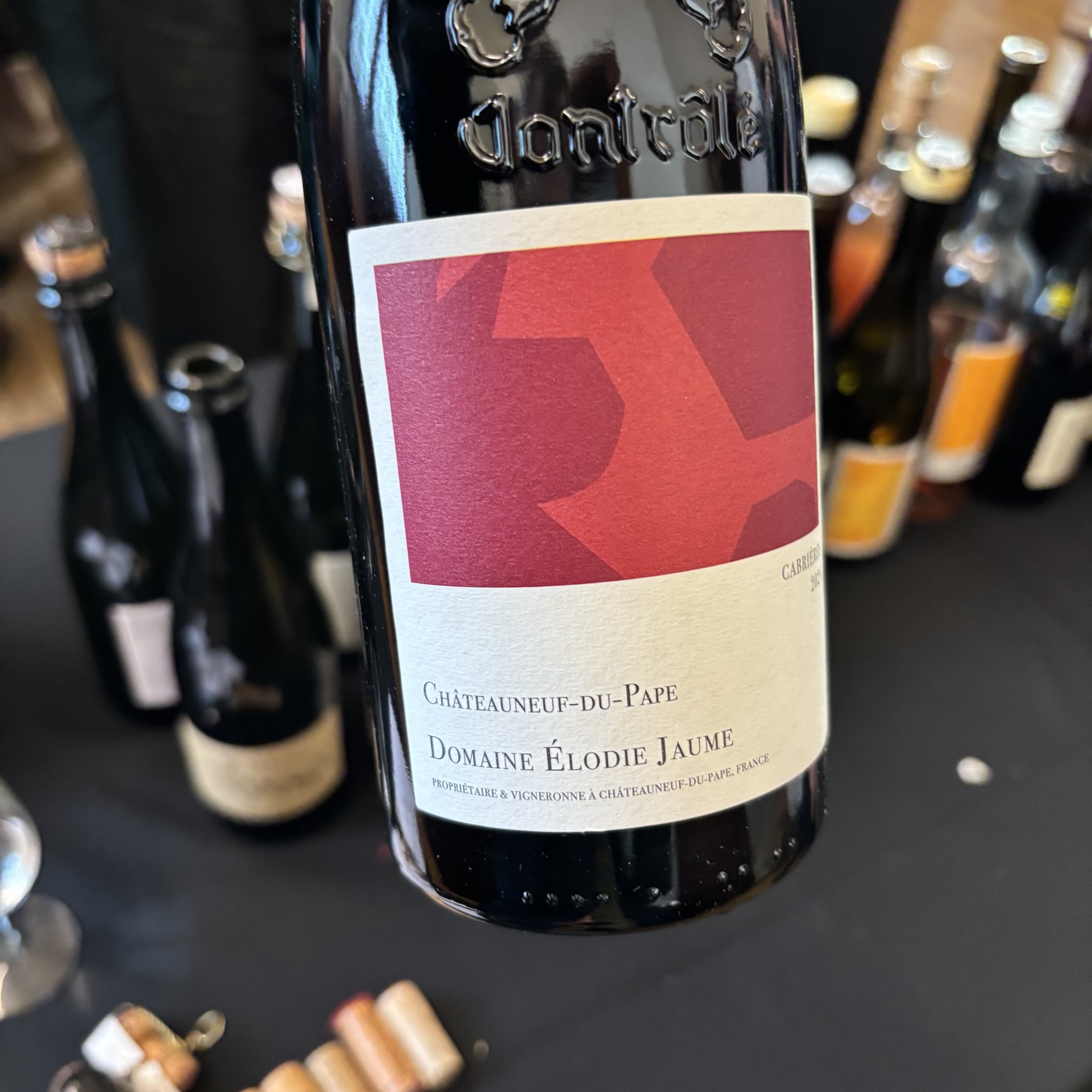
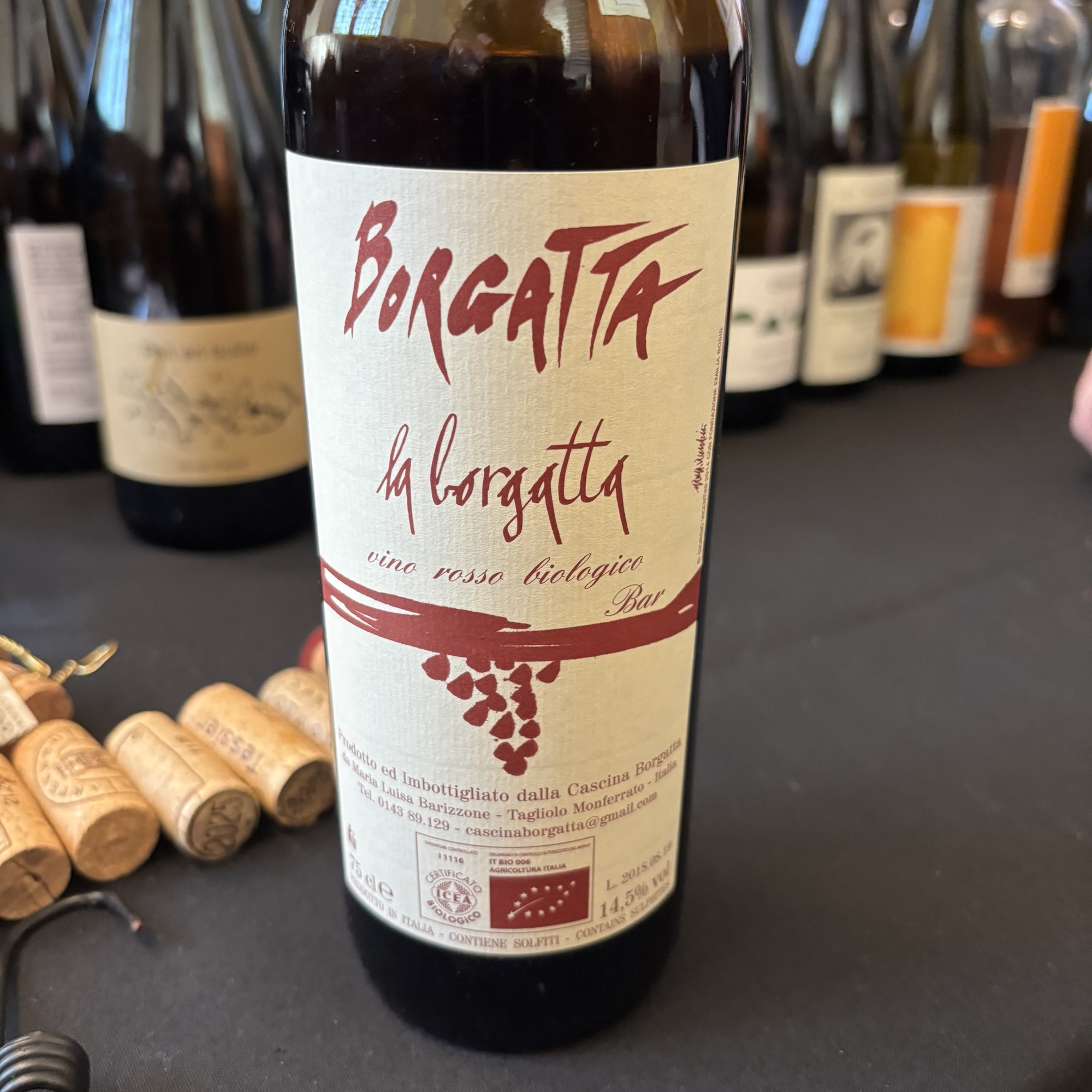
Barbera Borgatta 2018, La Borgatta (Piemonte, Italy)
This is another estate I’ve followed for many years. Very under-the-radar, but wonderful. Emilio Oliveri and his wife make wines which give a sense of what wine in Piemonte was like in the 1960s if it was good. Barbera grown at Tagliolo Monferrato is organic, and the wines are made naturally, with minimal if any added sulphur. Traditional vinification in vat is followed by long ageing before release.
Some would call this earthy or even rustic, but it is not faulty. It’s a wine with vibrant cherry fruit alongside tobacco or leather. The fruit is lifted up by the acids and it has that lovely lick of herbal bitterness and spice on the finish. It does weigh in at 14.5% abv, but it cries out tradition.
I think this couple must be well into their 80s now but are still making wine. It is well worth checking them out whilst they are still going strong. There’s a delicious Dolcetto as well. This Barbera costs £29. I certainly have some.
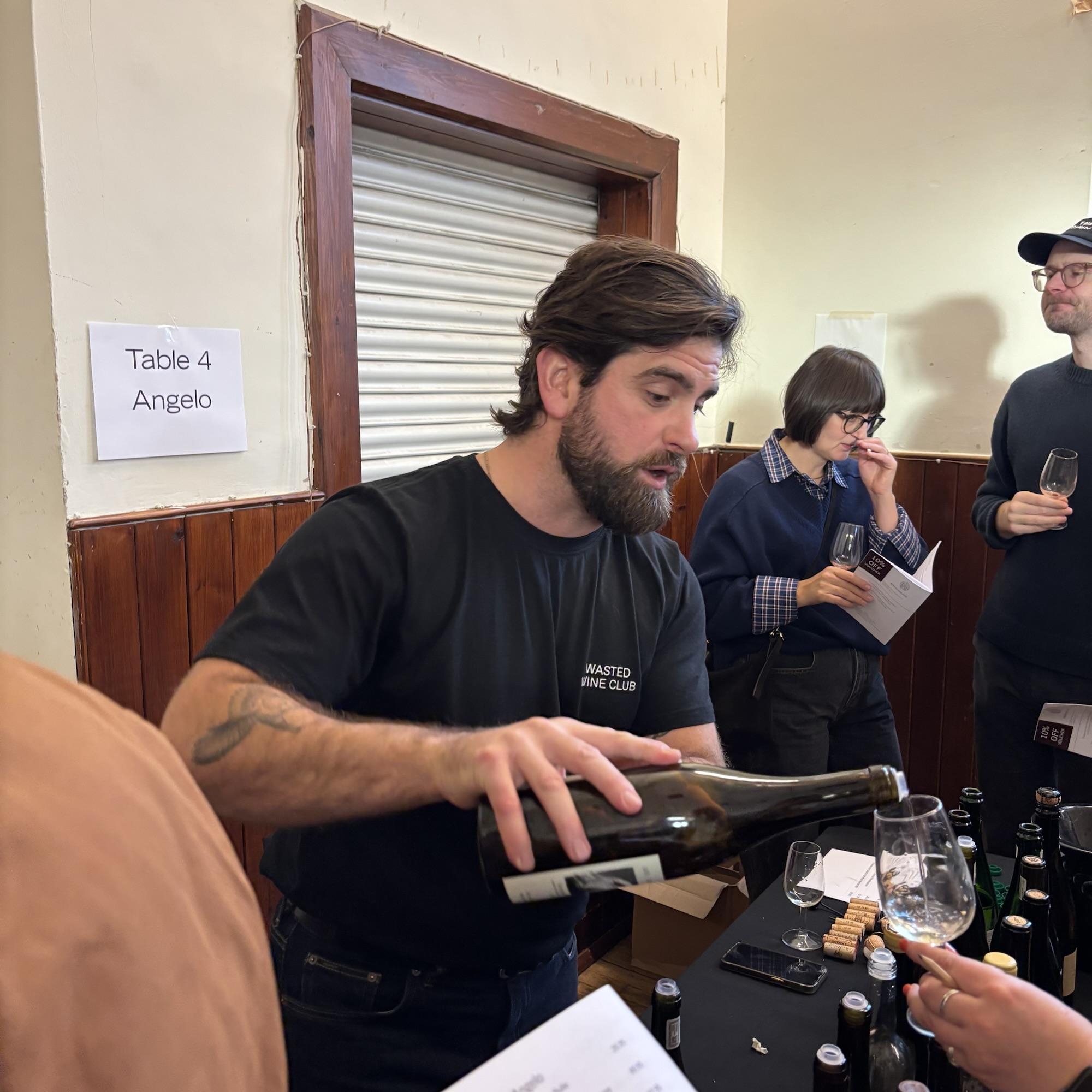
Angelo pouring for Modal
DYNAMIC VINES
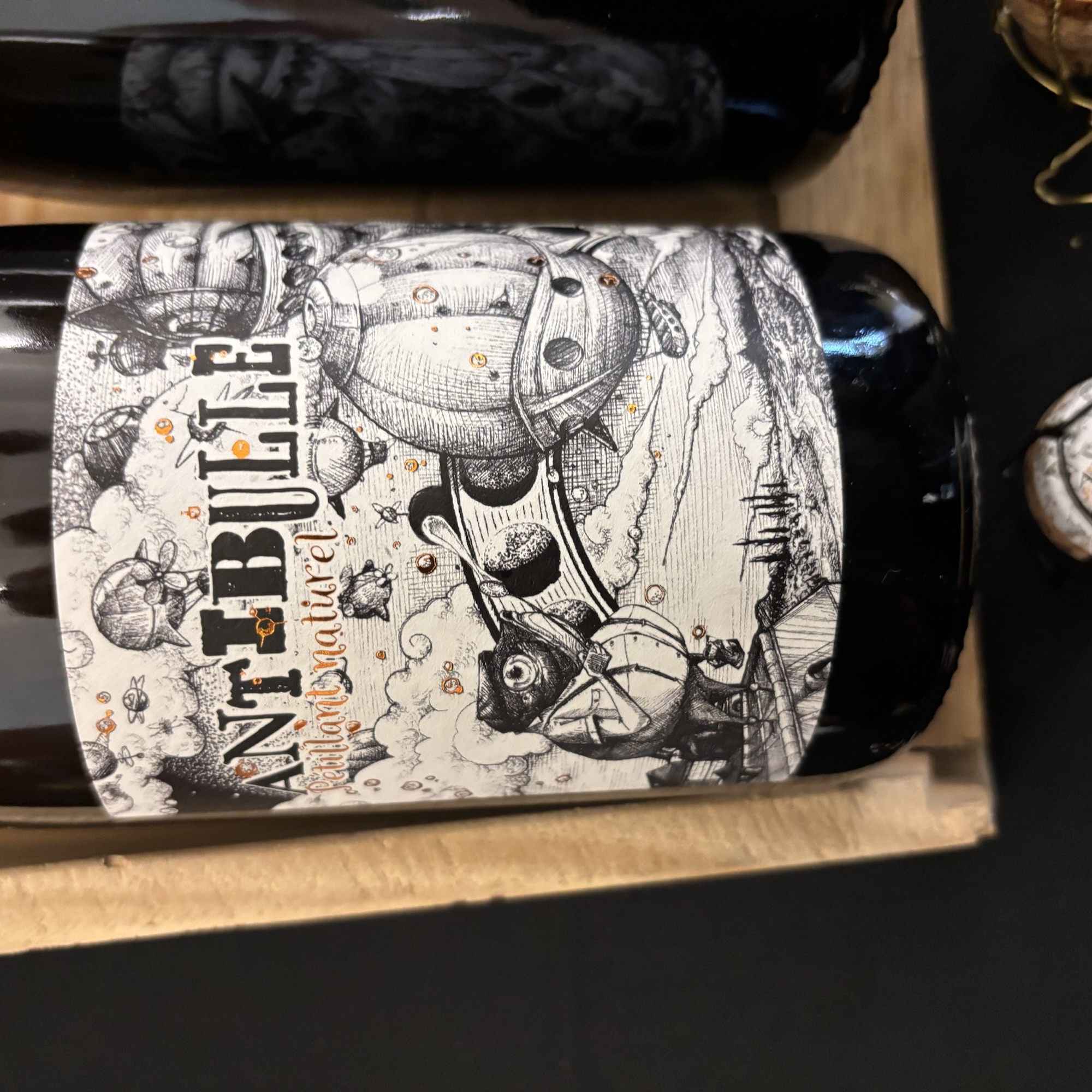
“Antibule” Pétnat Vin de France 2023, Valérie Courrèges (Provence, France)
Jean-Christophe brought some big hitters up to Edinburgh (as in see below) but this was one of the more unusual wines at the Winter Fair. Of course, you all know that “unusual” means I’m very interested.
Valérie is a winemaker with real experience but wanted to work her own vines and apply her own philosophy (biodynamics et al). She also makes wines currently in Cahors as well as here at Cotignac in the Coteaux Varois-en-Provence, home to a few rather well-known names in Provençal wine. This is 100% Rolle (aka Vermentino) which undergoes two fermentations, rather than a single one with a Method Ancestral wine. But unlike Méthode Traditionelle it has a remarkably gentle fizz and much less pressure (hence the name).
Lemon zest and stone fruit is underpinned by mineral texture made naturally with absolutely no additions or manipulations. Rolle gives it a unique taste and profile which, if you like adventure, you might appreciate. £30
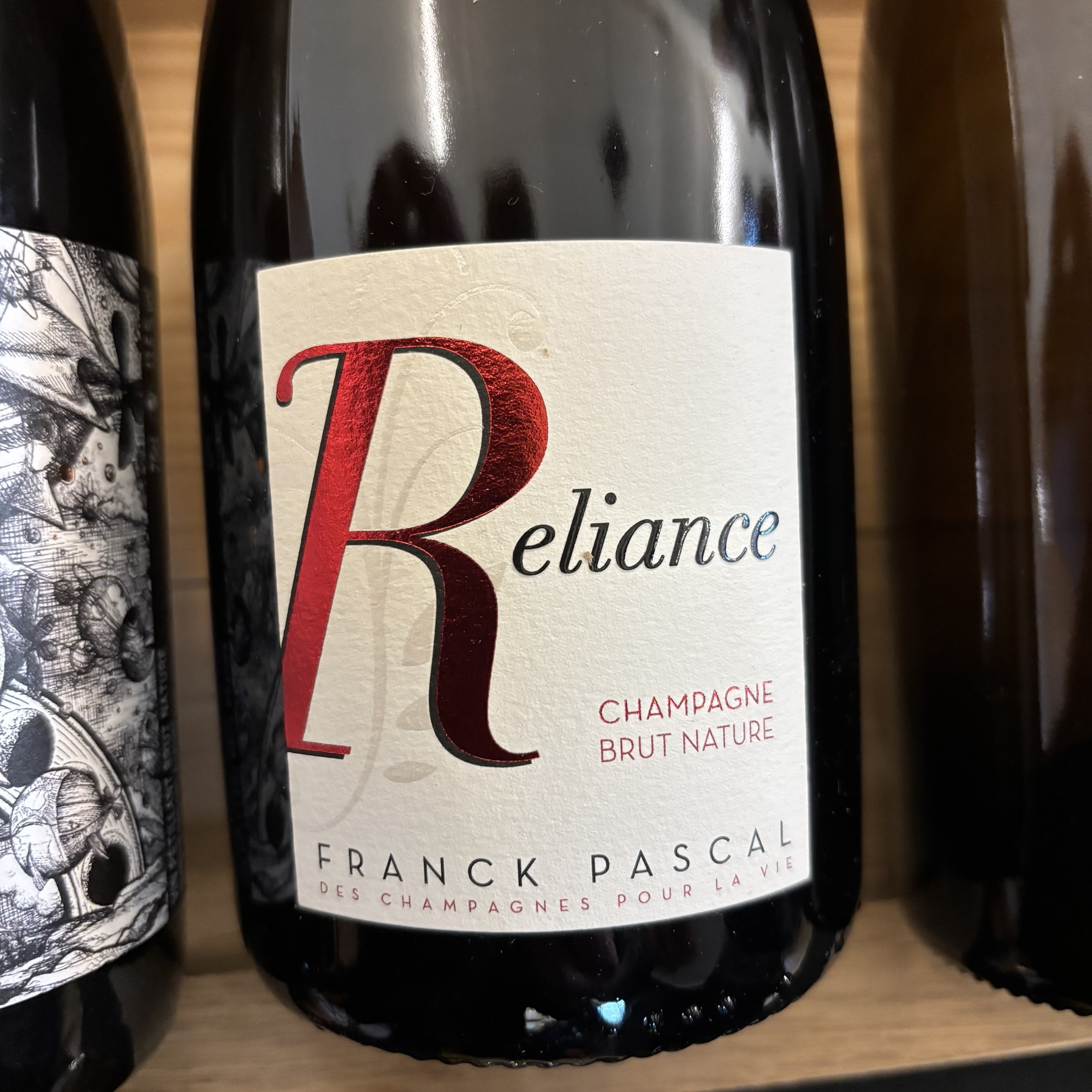
Reliance NV Brut Nature, Franck Pascal (Champagne, France)
Franck took over the family vines in the mid-90s after initially training as an engineer. They are based in the village of Baslieux-sous-Châtillon in the Marne Valley. He moved to biodynamics early on and now makes terroir-driven wines which I have enjoyed for many years (you will guess how many when I tell you that they cost £30 a bottle back then, even in Fortnums).
Reliance is a blend of Pinot Noir and Meunier. Although this is labelled NV we can guess the vintage it is based on because it was disgorged in 2019 after six months on lees, without dosage. It is lively and fresh, an excellent wine but also excellent value. At least once you realise that very good entry level “non-vintage” Champagne will cost around the same price as this does…£50.
Theodora 2023, Gut Oggau (Burgenland, Austria)
A declaration here. I’m always told never to reveal my favourite producers for any region in print. I’m guessing people think the others then won’t send me free wine. But nobody sends me free wine, though one or two, Gut Oggau included, have given me a free t-shirt and a wonderful time when visiting. Anyway, I’ve been a fan of this wonderful producer for a very long time and they make my favourite wines in the world. There, I said it.
Eduard and Stephanie Tscheppe are based at Oggau, which is a small village just north of Rust on the western shore of the shallow Neusiedlersee, not far from Vienna. Their wines, rather like their loyal customers, are a family, with three generations, the characters of each family member being expressive of the wine. Theodora is one of the young’uns. The kids.
We have Grüner Veltliner blended with Welschriesling, grown biodynamically and seeing two hours skin maceration before gentle pressing into used wood. Floral, with melon and tropical fruits on the nose, the palate is bright and fresh with amazing electricity. It’s a low alcohol white, but it seems to last almost indefinitely as I’ve tried bottles with a good bit of age. This has beautiful length.
This costs £43/bottle, which unfortunately for me is the price for Gut Oggau’s entry level wines now. However, I bought one of these, couldn’t not, and I see there’s only one left in the shop at the time of writing.
Atanasius 2023, Gut Oggau (Burgenland, Austria)
Like Theodora (above), Atanasius is one of the younger-generation of the Gut Oggau family. He is a blend of Zweigelt and Blaufränkisch, fermented and aged in neutral barrels. The fruit is very aromatic, lots of ripe cherry, but the palate adds some depth with a savoury element and texture.
In youth this wine is easy going, almost suave, but with age it takes on more depth and a little complexity. That said, if you can stretch up the range you’ll find wines with a greater need for bottle age. Biodynamic, with just a touch of sulphur when necessary, but if this has seen added sulphur I didn’t detect it. The wine is alive. I already have some Atanasius, but I see Cork & Cask also only have one of these remaining. £43

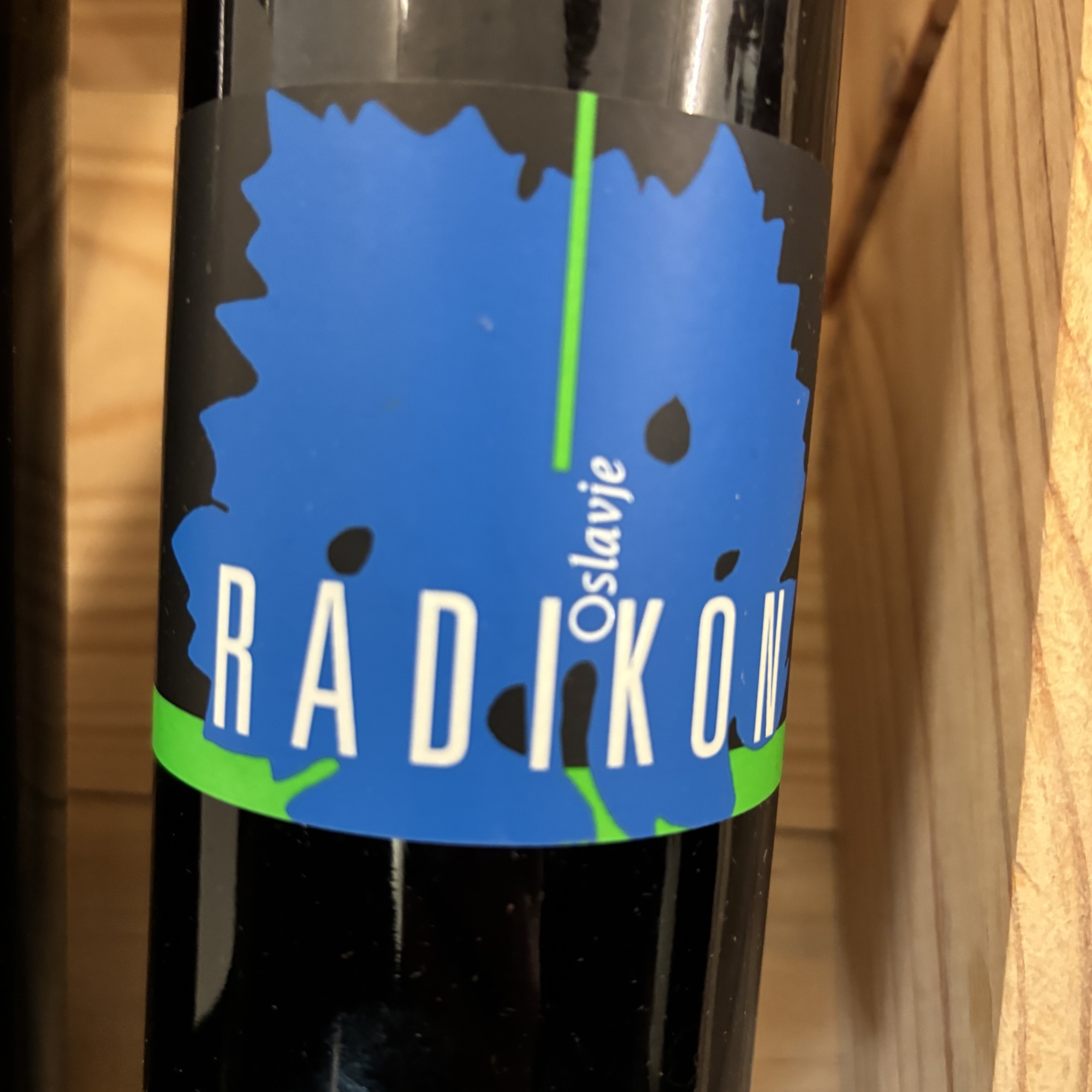
Oslavje 2020, Radikon (Giulia, NE Italy)
This is Sasa Radikon’s classic blend of Chardonnay and Sauvignon Blanc from the part of Giulia (Friuli-Venezia-Giulia) north of Gorizia and right on the border with Slovenia. This is a classic orange wine, indeed from one of Italy’s great producers of skin contact wines. It saw three months on skins, then three years ageing in barrel. If that is not enough, it then sees 18 months in bottle before release. If it doesn’t quite make commercial sense, it is all part of the quality focus at this estate, creating a wine that will age well, but can be drunk on release (and probably is in many cases).
The wine is a very deep amber colour (some prefer the term “amber wine” to “orange wine”). It has a bouquet of orange and honey with a hint of herbs and fresh bread. The palate mixes rich stone fruits with integrated tannins and a nutty finish. The fruit and texture are very well balanced. This is a wine to allow to unfurl in the glass, without too much chilling. It would go with a lot of Northeast Italian cuisine but for me these wines, rather like Vin Jaune, go best with a good selection of firm cheeses. £47
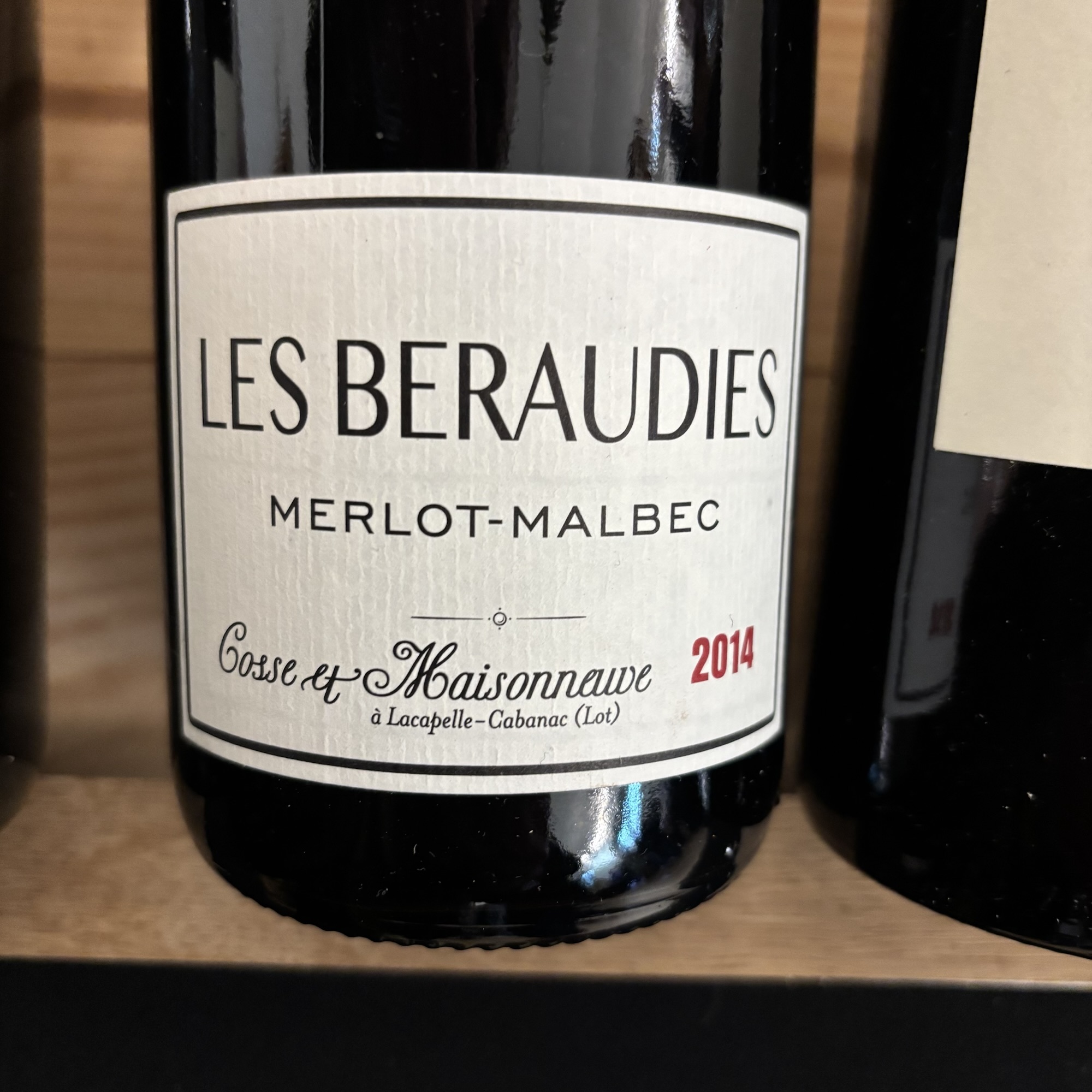
Les Beraudies 2014, Domaine Cosse Maisonneuve (Cahors, France)
Matthieu Cosse is best known first and foremost for his exceptional natural Cahors wines. He also makes some very good wines in Bordeaux now. This wine is a Merlot/Malbec blend made from very old vines in Cahors, off a single site, Beraudies, on limestone. It was fermented in cement. Then it spent three years in old oak followed by another four years in concrete vats. It is now twelve years old.
I think this is a rather fine wine, and you’d honestly never guess its age. It has dark fruit and concentration on the nose, with a savoury note not unlike an aged Côte-Rôtie in some ways. It has grip but is not overtly tannic now. It is rich though, with good body, and I would say a great match for a boeuf bourguignon, or a wild boar or venison stew. £27 is not a lot to pay for such an excellent mature wine.
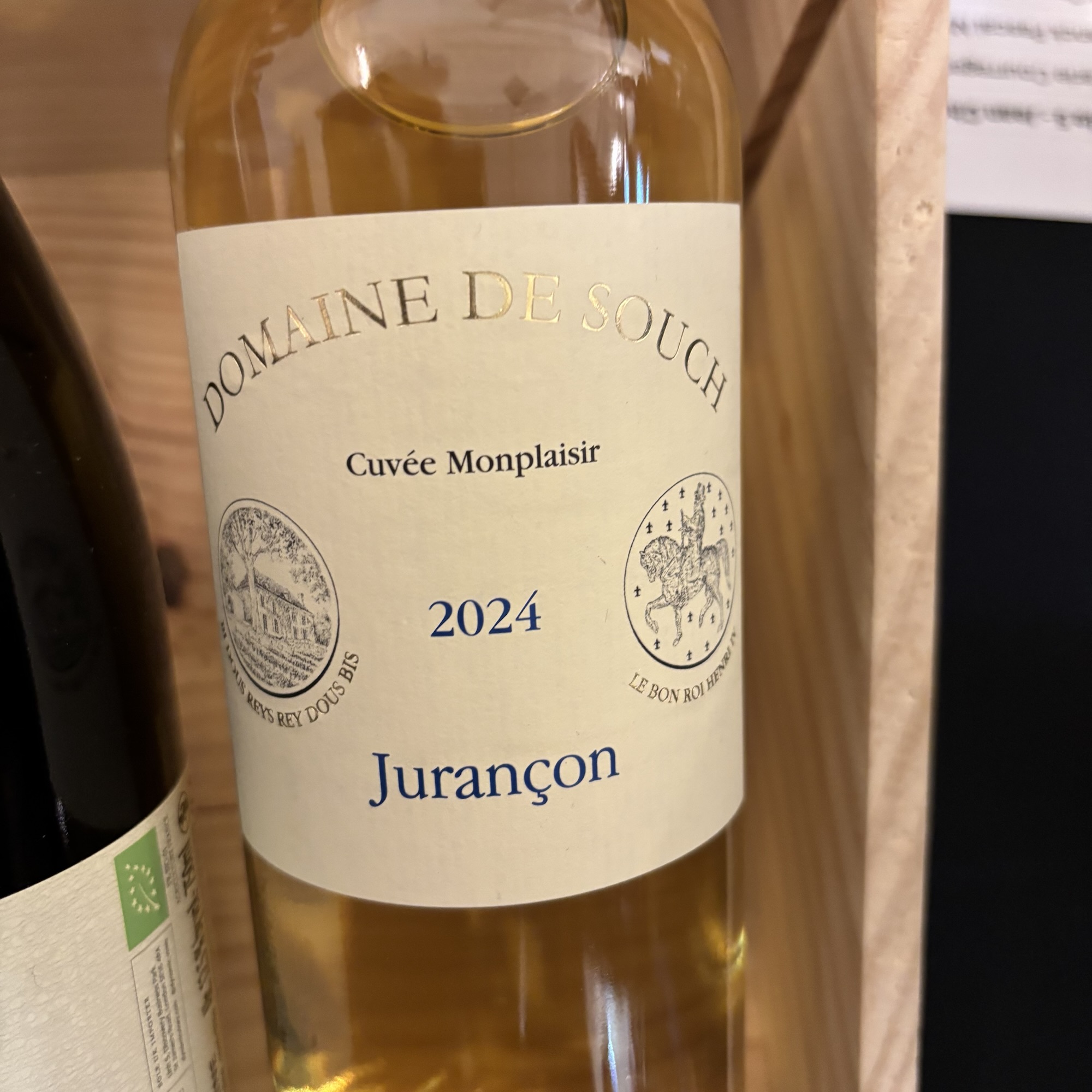
Jurançon Moelleux “Monplaisir” 2024, Domaine de Souch (Jurançon, Southwest France)
This is a wine designed to change your sweet wine plans for Christmas. The estate is biodynamic, with terraced vines facing south in this tiny appellation in the foothills of the French Pyrenees. The blend is equal parts Petit and Gros Manseng from a parcel at about 330 masl. Vinification is in temperature-controlled stainless steel prior to a short spell in oak with lees stirring.
The result is a wine with 65 g/l residual sugar, but the sweetness is supremely balanced by fine acidity. It is made as a cuvée that can be drunk young, and it is absolutely gorgeous now. A lighter style with rich apricot and exotic fruits on the palate and a lovely long honey and lemon finish. But it is nevertheless concentrated and rich, and would age a decade, at least. £38
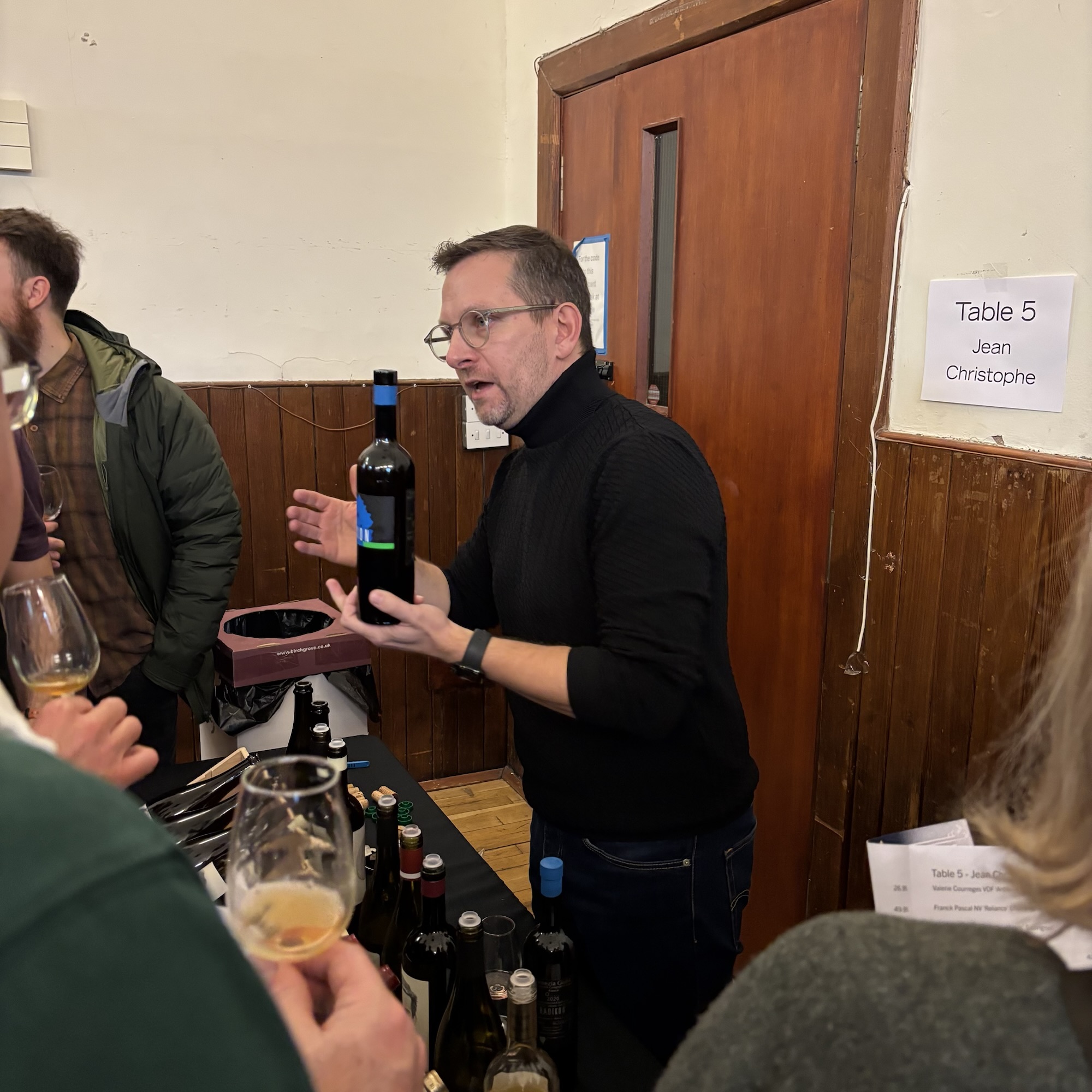
Jean-Cristophe explaining the meaning of greatness in a wine (Radikon)


