
My usual format for Recent Wines (what we drank at home in the previous month) is about a dozen wines split over two parts. Well, in August we drank rather a lot. You will get 21 wines over three parts (seven in each). It’s remarkable to think that there were at least three bottles which didn’t make the cut, and that there were a few times we had a couple of alcohol-free days. We had a lot of visitors, which accounts for the depletion of my cellar and at a rough estimate we drank somewhere between £750 and £800 worth of wine during August. I only hope all our guests appreciated it all. I’m not likely to come close to replacing more than a third, max, in value. September may be a bit sparser.
In the twenty-one wines which will follow over the next couple of weeks, we shall travel all over the wide world of wine, but in Part 1 we have three wines from Austria, two from Czechia, and one each from France and England. August seemed to go by very slowly, something I’m far from complaining about, but I wonder if that was in part down to how much wine we drank? These first seven bottles do seem a long time ago now. Thankfully I’m pretty scrupulous at taking notes.
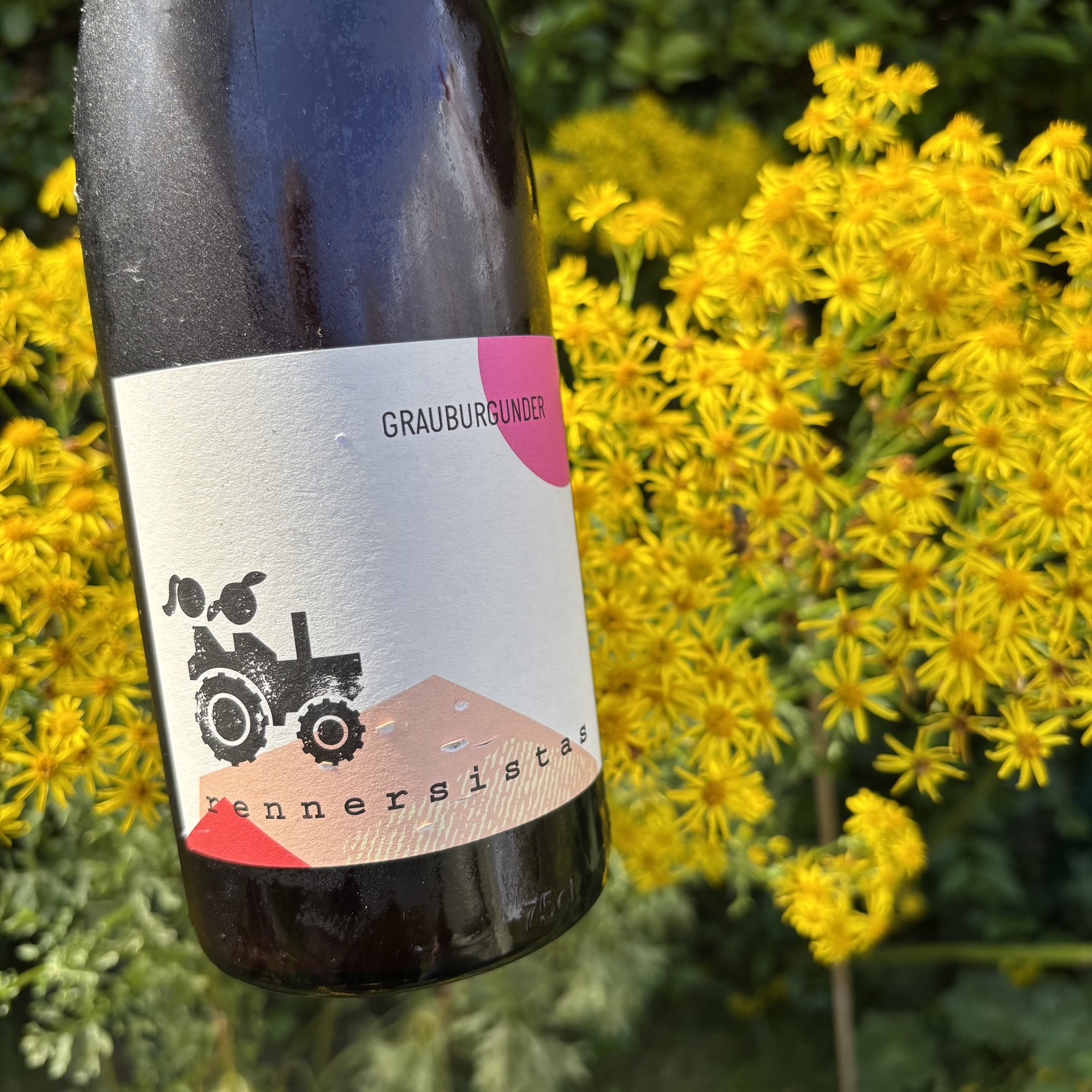
Grauburgunder 2019, Renner + Rennersistas (Burgenland, Austria)
If we are making our focus just the people behind a wine label, which I do think as someone deep into wine is important for me, then the sisters Renner stand up there with my friends at Gut Oggau, Heidi Schröck and Alex and Maria Koppitsch as the nicest people I know in the region. What is more, they make fabulous wine.
Although these days it has become quite normal to macerate Pinot Gris on its skins, especially among natural wine producers seeking to create modern, lighter, red wines, you’ll be hard pushed to find one to beat this. Macerated for four days on skins, it is definitely a pale red to look at, rather than a Rosé, yet it tastes as fresh as a white wine. Biodynamic (Demeter Cert) and natural, it is aged in old oak and clay. At approaching seven years of age the rose petal and raspberry bouquet is stunning, so beautiful. The palate has raspberry, and something more yellow fruit, perhaps peach. The acids are gentle but it’s still fresh and juicy.
Someone said on Insta the other day that they don’t understand why people don’t age natural wines? Well, this proves it’s worth the effort. When you reach wine five here, you’ll see we drank an even older (much older) natural wine, and that was…
Sadly, I don’t think anyone up in Scotland is stocking any Renner wines right now. But the UK importer is Newcomer Wines.
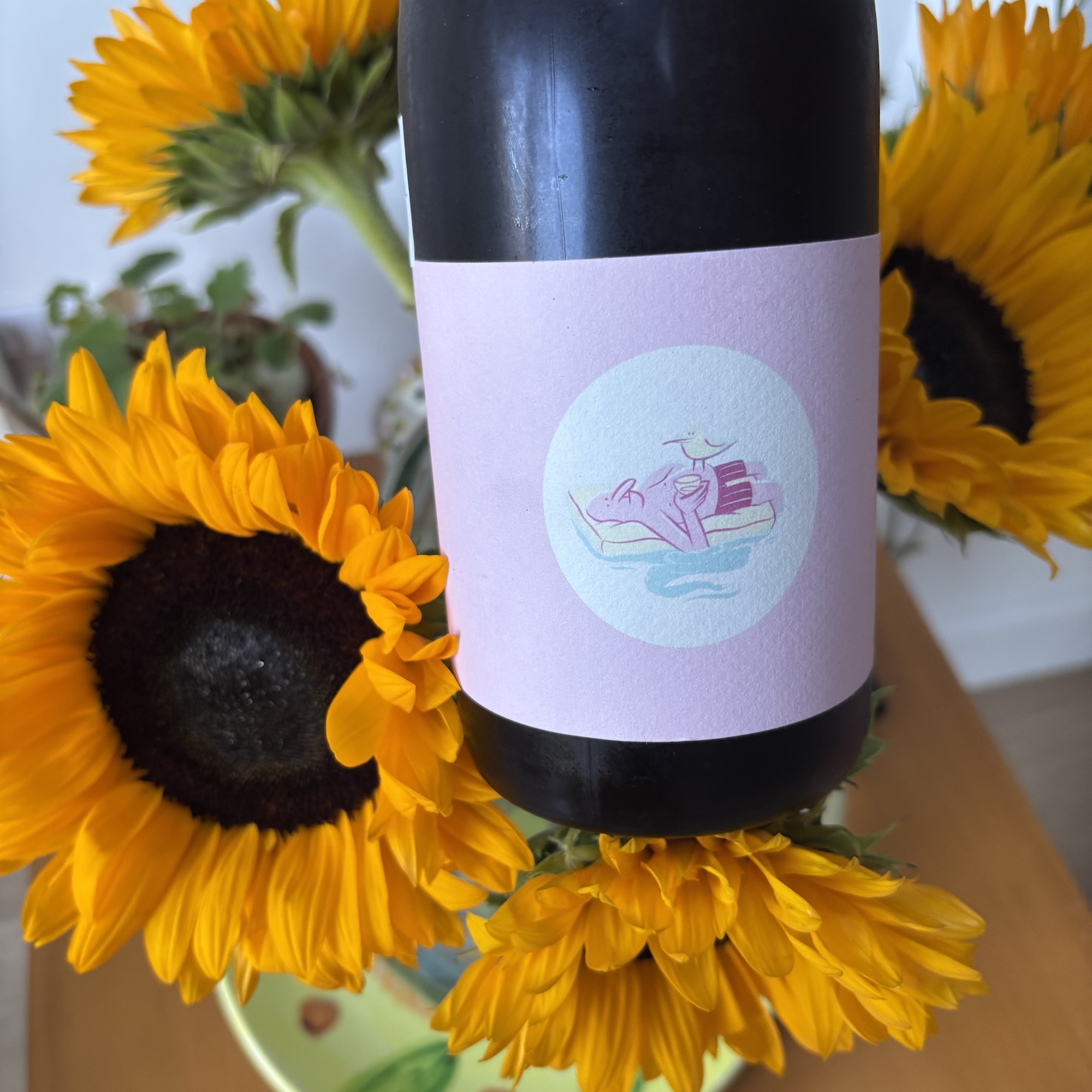
Pétillant Naturel André Rosé 2024, Syfany (Moravia, Czechia)
I have definitely sought out some wines this summer which I have enjoyed in previous years and knew they’d go down very well in the warm summer of 2026. I say warm because I think our hottest day here on Scotland’s East Coast was 26 Degrees Celsius, so none of the southern drought and heatwaves.
Syfany is a family producer which I don’t think you would call “boutique”, as they farm a total of 400 hectares, 36 ha of which are vineyards, but they make excellent and good value wines in Southern Moravia, expressing a goal of “long term sustainability” making wine using “the methods used by our ancestors”. This is effectively low-intervention wine, and where sulphites are added, they do so in very small quantities.
This is a naturally sparkling wine made by the Ancestral Method. The grapes come from a single vineyard called Záhumenice, at Vrbe. It’s an unfiltered dry Rosé, made from a variety developed in Moravia in the 1960s, but also found in Austria. It’s a cross between Blaufränkisch and Sankt-Laurent. It bears some similarities to Zweigelt, which also happens to make some underrated Rosé wines.
As a Rosé it is a little darker than you’d expect, unless you read the label and know the variety. I’d call it a pale red, except you have Tavel to judge it by. The bouquet is something like a mix of raspberry and rhubarb, the latter giving it a nice edge when it appears on the palate. There’s a bit of dry extract and texture too, a fruity wine with hints of Lambrusco (though only hints).
This is imported by Basket Press Wines from whom I buy direct. Last time I looked, Winekraft in Edinburgh listed it for £29.
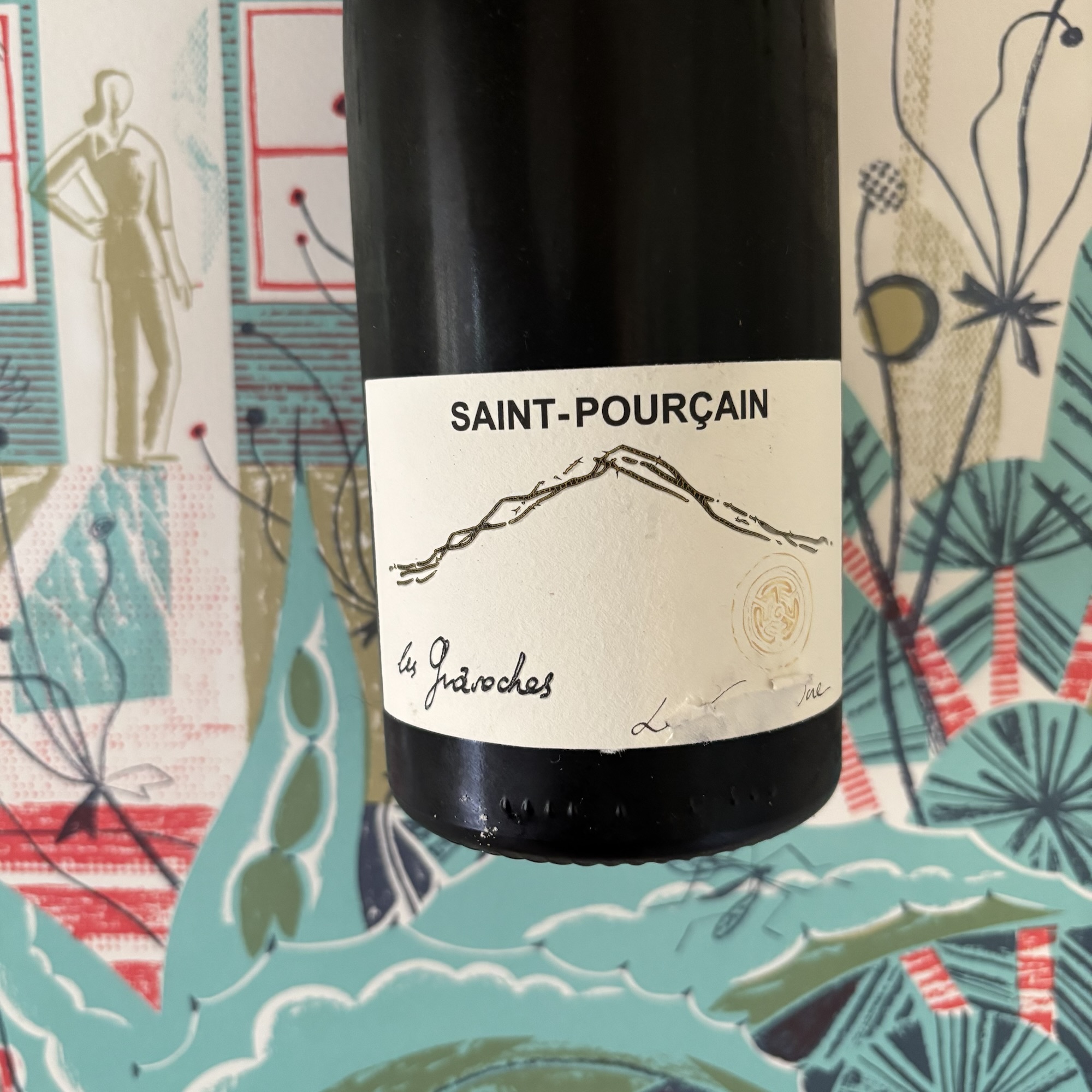
Saint-Pourçain “Les Gravoches” 2023, Les Terres D’Ocre (Upper Loire, France)
I suppose I do have a soft spot for the wines of Saint-Pourçain, which is a small appellation on the River Sioule, which flows into the Allier, which then flows into The Loire, hence its classification, by a whisker, as a Loire Wine. We are 150 kilometres from Sancerre though, and closer in distance to Southern Burgundy’s Mâconnais than The Loire (Mâcon is about 115km as the crow flies).
That affection comes not merely from its obscurity, but because it was one of the first of France’s more unusual so-called “country wine” appellations (it was then a VDQS if anyone remembers those) that I visited. Although there are just 600 hectares in production today, with much of that farmed by the members of the cooperative at St-Pourçain-s-Sioule, the vignoble here goes back a long way, being well documented in the early medieval period, and even as a vineyard in the Roman era.
You might have noticed I drink the wines of Florent Barichard from time to time. Florent has wide overseas experience, having worked in New Zealand and South Africa. He returned to an offer of help from an aunt and uncle, by way of 9.5 hectares of their vines, to get started. His overseas experience led him to follow a low-intervention, natural winemaking route, which includes a very low sulphur regime.
This wine is a blend of 65% Chardonnay with 25% Tressalier. Tressalier, which seems to appear under six possible spellings with every combination of s’s and l’s, is (perhaps for this very reason) more commonly known as Sacy, its Burgundian name. It is mostly confined to the Allier and Yonne, and it originates from the parentage of Pinot and Gouais Blanc (the latter also a parent of Chardonnay if my memory is hanging on in there). It’s an early-ripening variety which often produces pale coloured wines which have both low acidity and low alcohol. Most of your wine gurus would dismiss it, of course, but it does give a certain individuality to wines that contain the variety, both here and in the wider Chablis region (Yonne).
The juice here is fermented and aged for 12 months in 400-litre used barrels. The terroir gives the wine a minerally texture, but it is otherwise quite smooth and even a little buttery. It’s as if the Tressalier provides a citrus lift with lemon-fresh acidity. Just 2,300 bottles were made and I think it’s very nice. Not earth-shattering but well worth giving it a try for something a little different, but not too out there.
The Solent Cellar in Lymington import this themselves. It is normally £26, but if you are quick, you may find it on offer for £20 a bottle.
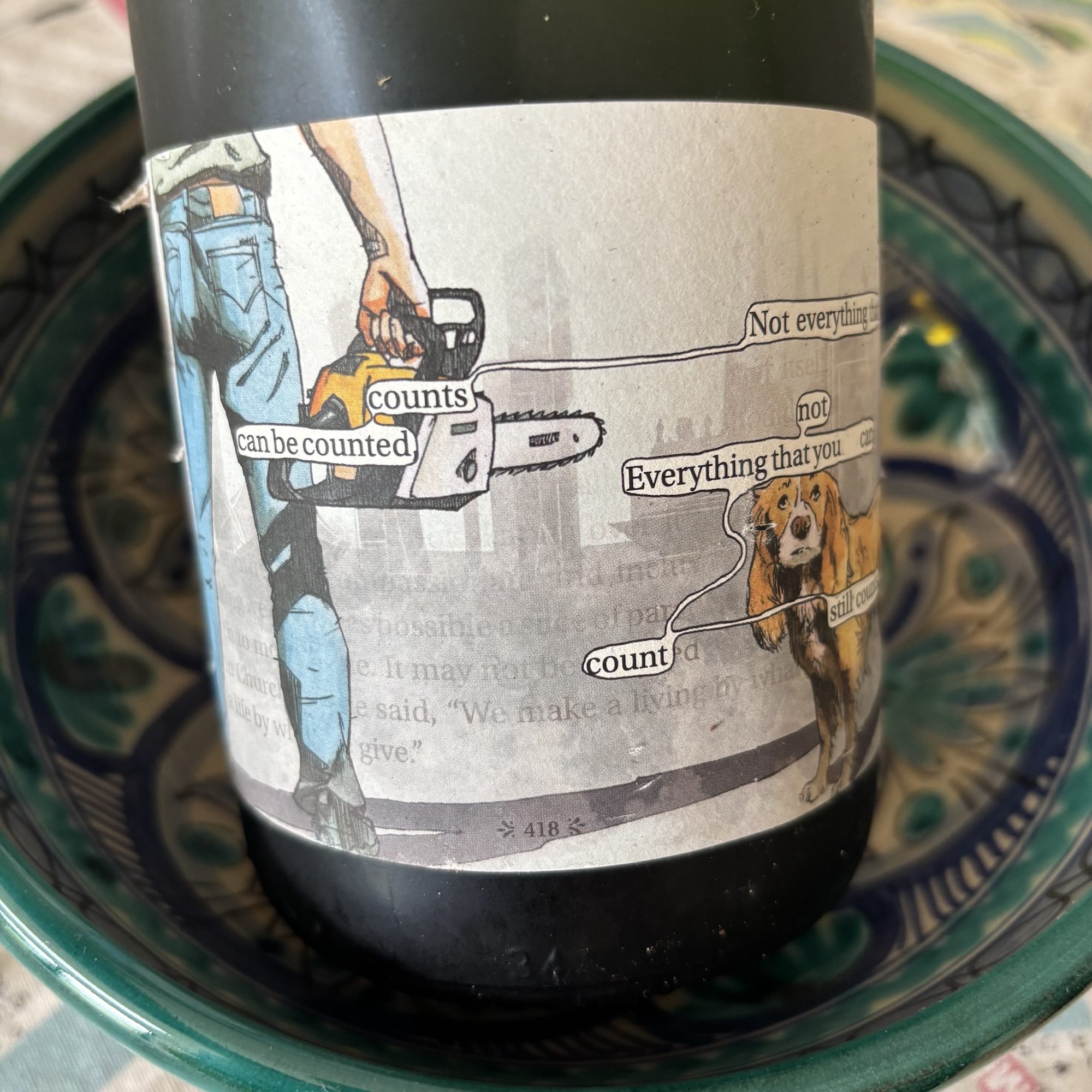
The Bookkeeper Blanc de Blancs Brut Nature 2018, Charlie Herring Wines (Hampshire, England)
Tim Phillips farms a seven-acre smallholding with woodland, orchards dating back to the 1860s, a new addition of goats, and a Victorian walled garden which is home to his vegetables, rescue chickens and his famous vineyard. In the latter he grows, inter alia, Riesling, Sauvignon Blanc and Chardonnay, some of the Chardonnay which he uses for The Bookkeeper, a nod to Tim’s former life in accountancy.
The wine is made by the traditional method, this disgorgement seeing a dosage of 2g/l after five years on lees (and several years in my cellar). It is without any doubt a world class wine, but it is in its youthful stage of development. It has amazing freshness and a steely backbone which still has a rapier-like thrust. Apple and confit lemon supplement the freshness. It’s just a wonder of vibrancy.
There isn’t really another English sparkling wine to compare it to. If some are one-dimensional, and others aim towards two or three dimensions, this is as if from another dimension entirely. There’s a certain similarity to some fine Côtes des Blancs Champagnes in their relative infancy. Stunning, and I don’t regret opening it but at the same time I’m glad I have a couple more in the cellar. This will run.
I’m not sure whether Tim has any of this 2018 left. Possibly still on lees? Solent Cellar lists five bottles of the 2019 on their web site (£44), which is unusual as they are rare as hen’s teeth. Les Caves de Pyrene sometimes has Tim’s wines, and look out if you are in either Noble Rot or their wine outlet, Shrine to the Vine.
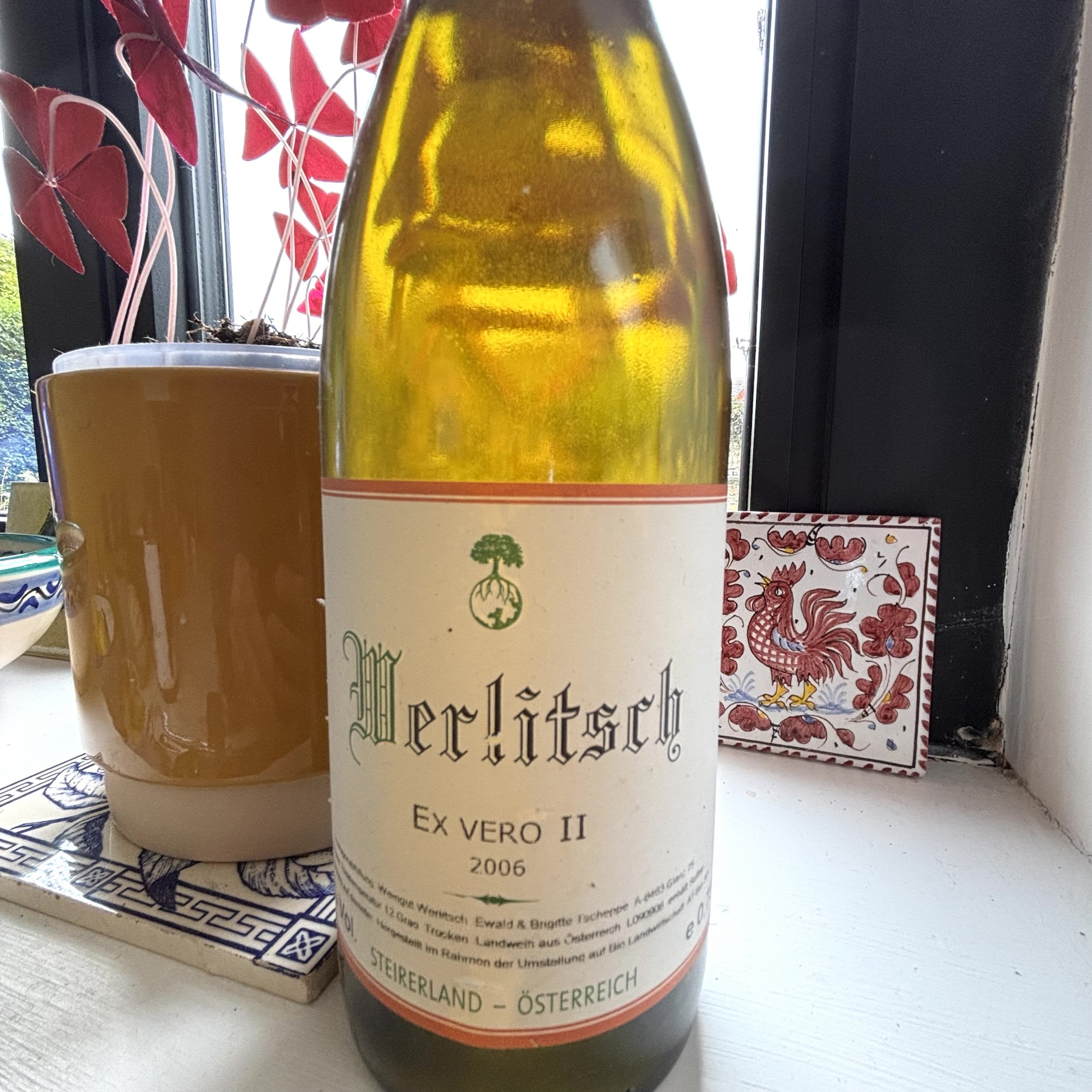
Ex Vero II 2006, Werlitsch (Styria/Steirerland, Austria)
Ex Vero II is certainly a contender for Styria’s finest wine, and wine from this southeastern region is vastly underrated by wine writers who don’t specialise in Austria. Here is a blend of two of the region’s finest varieties, Chardonnay (known here as Morillon) with Sauvignon Blanc. Styria is my contender for best SB in Europe, but you won’t find many people my age making a bold assertion like that.
Werlitsch is the label for the wine made by Ewald and Brigitte Tscheppe. The Ex Vero wines are perhaps the summit of their production, with Ex Vero II and III coming off the steepest, rockiest parts of their vineyards. The vines grow largely on the famous “Opok”, a chalky marl., with the “II” blend off the mid-slope. It spends a long 30 months ageing in oak and is then capable of long bottle age. This bottle is 20 years old, and few people would have faith in a fully natural, biodynamic, wine ageing that long.
The colour is deep gold but glowing bright. The bouquet at first suggests ginger, then stone fruit notes develop, then some yellow melon. The palate has a soft mineral texture, a good lick of salinity, and great depth as it warms in the glass. It has fantastic length. I’m not sure everyone would find the intense complexity of this wine easy to get to grips with, but I absolutely adored it. It’s a wine which is an advert for its terroir, with a singular personality and a sense of place…Styria.
Newcomer Wines is the UK importer. They list the version called Ex Vero II “S” at the moment (with a little residual sugar) for £58. Ex Vero I, grown lower down the slope, is listed for £50.
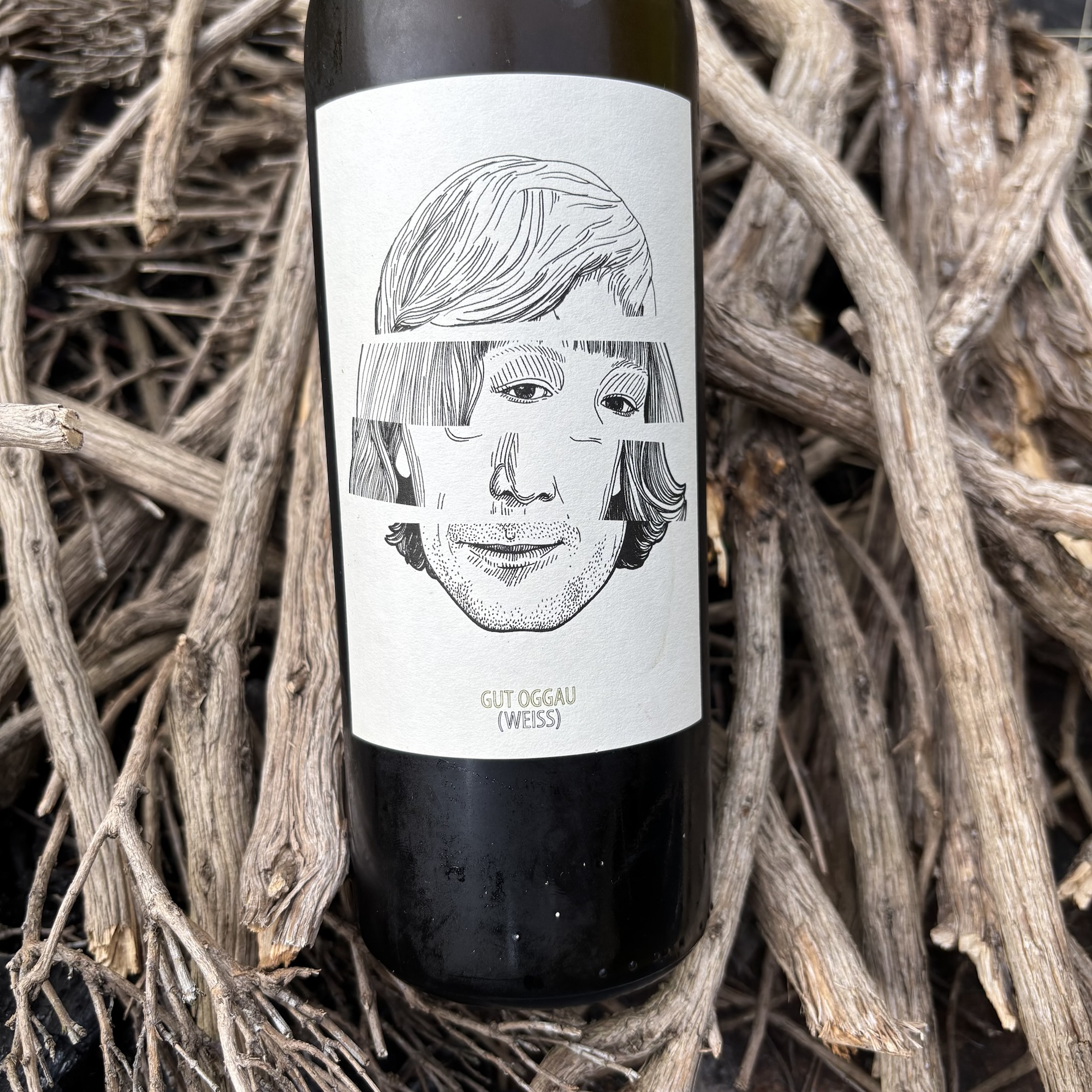
Weiss 2016, Gut Oggau (Burgenland, Austria)
Oggau, a few kilometres from Rust on the western shore of the Neusiedlersee, is home to a remarkable couple who not only make wines with which I have a very strong emotional attachment, but who also run one of the handful of best restaurants I have ever dined at, by way of their summer heuriger at the winery. That attachment grows only stronger as the wines become very difficult for me to afford.
Reading between the lines, 2016 was quite a difficult vintage, with damaging frost and hail, but it was saved by a benign late summer. Nevertheless, the crop was greatly reduced, by 40%, so Stephanie and Eduard decided a slightly different approach, blending together fruit usually destined for other cuvées, which leads to the cut-up print on the label representing each constituent part.
Weiss 2016 uses fruit usually destined for Theodora, Timotheus, Emmeram, and matriarch cuvée, Mechtild. The grape blend, although not considered important to the producer, is approximately 25% each of Gewurztraminer, Grüner Veltliner, Weissburgunder and Welschriesling. Farming is biodynamic and winemaking is natural, with ageing in older wood.
This is packed with electric yellow fruits, herbs and spices. It’s dry, and although it has no dissolved carbon dioxide, it prickles the tongue. It’s a magical expression of the Gut Oggau terroir despite the difficult growing season, and at ten years old it has matured without losing any freshness at all. It has gained a certain stature and I do think it is probably a better wine than it was on release.
Dynamic Vines is the UK agent but my bottle came from the wine shop at Antidote Wine Bar in Central London. I’ve seen it for sale recently for around £100. Beyond my pocket. The cheaper, most recent cuvées from Gut Oggau start just above £40.
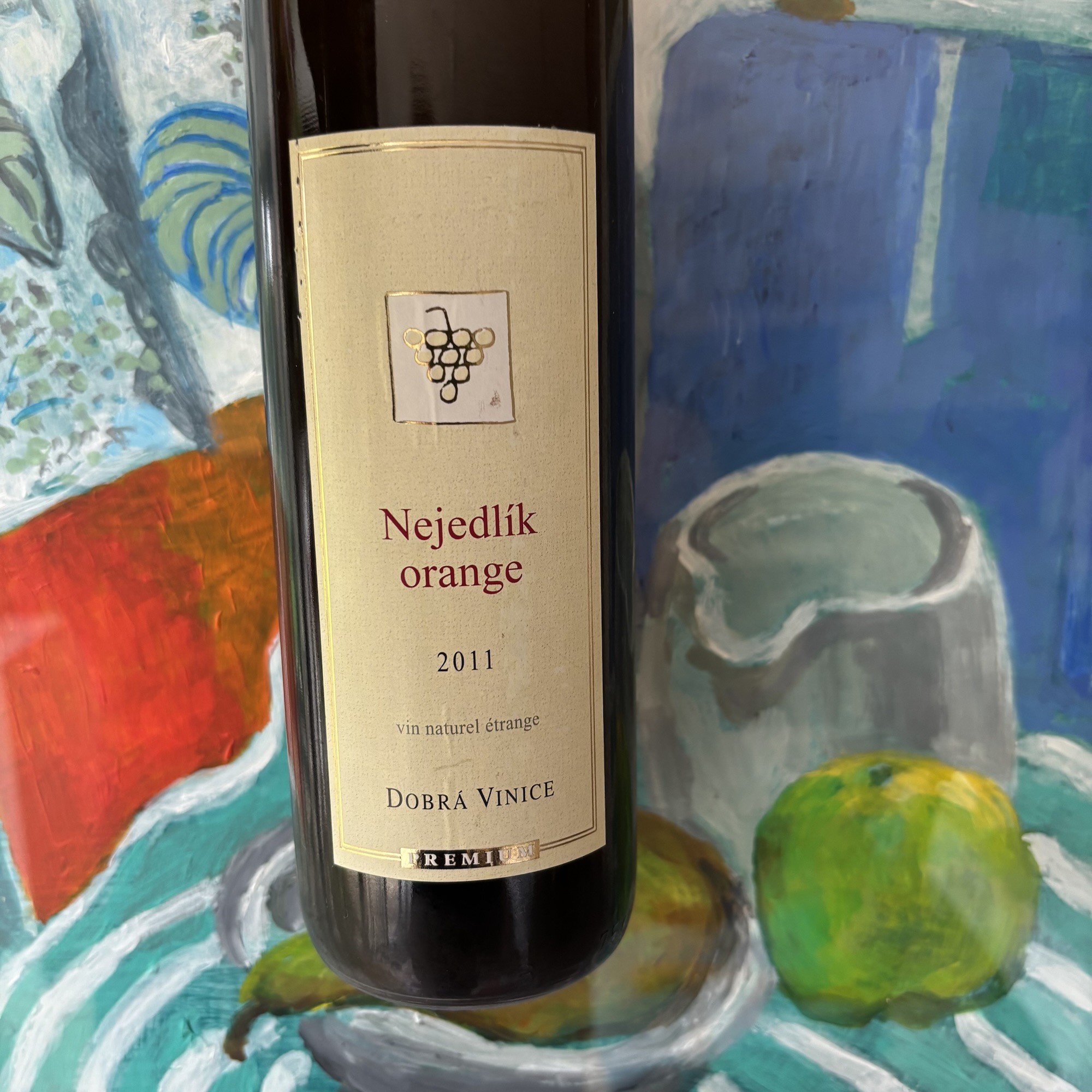
Nejedlík Orange 2011, Dobrá Vinice (Moravia, Czechia)
Petr Nejedlík was one of the true greats who founded Moravian natural wine, still probably the most secret source of exciting natural wine in Europe today. Indeed, some have called him “the” greatest. Sadly, Petr died in May 2023, aged only fifty-five. This is probably the last bottle of this genuinely great wine I shall drink. The previous bottle, consumed at home in early 2025, was almost as good as this one but not quite because it felt like this bottle was tottering on the summit. It might just be the finest wine no one has ever heard of.
The blend here is Chardonnay, Pinot Blanc, Sauvignon Blanc and Ryzlinku (aka Vlassky Ryzlink, or the variety better known as Welschriesling to most of us). Grown without chemical inputs and fermented naturally, it spent 24 months in qvevri and then five months in wood. It is now complex in the extreme. We have a mix of orchard fruits and stone fruit, and fellow drinkers called out ginger, fennel, and white pepper. All agreed a touch of honey, although the wine is dry. But you would call it rich (alcohol sits neatly at 13.5% abv). It has a sort of dry Sauternes quality.
Sadly, I don’t think there’s any around, at least in the UK. Importer Basket Press Wines doesn’t have any, not even in their private stock according to Jiri. I wish more people had tasted this. It would then have been one of those legendary wines people reminisce about in the future. Price – as an experience, priceless.


We’ve been drinking quite a few older natural wines at harvest this year, a 2014 Tue Boeuf Gamay tonight for example, Jeff’s own 2015 Bibonade, some Michel Gahier 2017 etc etc. In good hands these wines are stable and will age very nicely indeed
LikeLiked by 1 person