We finish August’s bumper three editions for the wines we drank at home in the height of summer with seven more varied bottles. We begin with a Stellenbosch Chenin, then move on via another Chablis (a contrast in price to the one in Part 2), a Tenerife white blend and an Albanian Red, a Greek single varietal from the Peloponnese and a Franconian Landwein made by a Brit. We finish with an interesting Jura white blend which helps prove that the region’s co-operatives are catching up with the game.
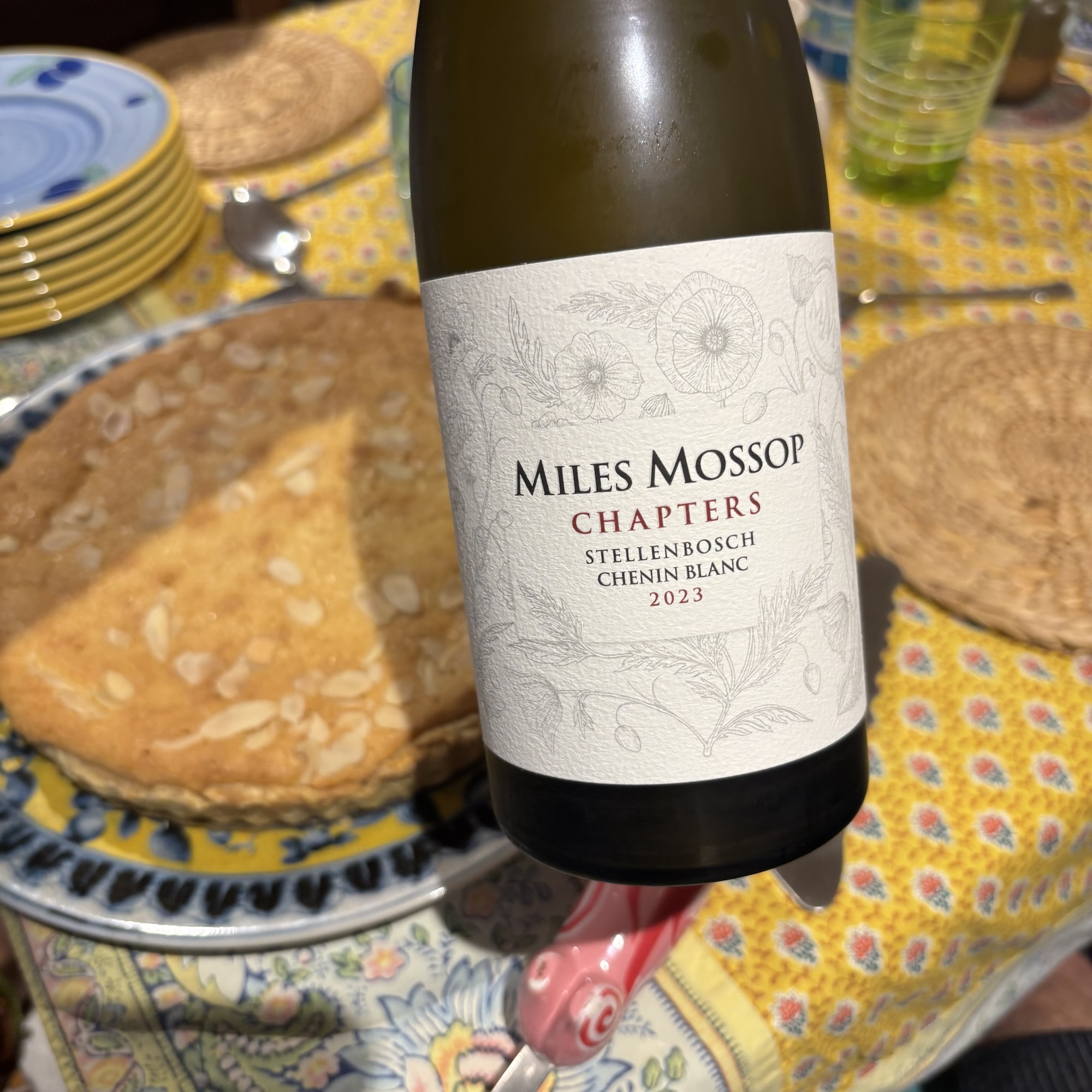
Chapters Chenin Blanc 2023, Miles Mossop (Stellenbosch, South Africa)
Stellenbosch probably epitomises the old-fashioned view of The Cape’s wine industry, one of Dutch architecture and old wine families. But that view would be outdated, which I’m sure you know. New producers, and to an extent new varieties, are as dominant here as the old guard. Once dominant Chenin has been usurped by Cabernet and Shraz, Sauvignon Blanc and Merlot. But tides turn and the value of Stellenbosch Chenin is becoming recognised once more, as it is throughout much of South Africa.
Miles Mossop’s family winery was established in 2004, and his Chapters series is a range of limited release cuvées with a focus on “low intervention” viticulture and winemaking. The Chenin here comes off a 44-year-old parcel of decomposed shale at Bottelary, northwest of Stellenbosch. The soils here would be unique enough to argue for a sub-appellation, but the Stellenbosch name is really too famous to dismiss.
Whole bunches ferment on indigenous yeasts in 400-litre French oak. Ageing is eleven months on lees. The bouquet is lovely with honeysuckle and peach with a mineral vibe. It’s medium-bodied with a perfect 13% alcohol, the palate being textured with stone fruit and freshness, but also showing depth as well. You can definitely sense the mature vines. The combo of freshness and rich depth makes this a very nice bottle.
The importer is well-known South Africa specialist, Dreyfus Ashby, but I bought it from The Wine Society as part of their recent South Africa focus, for a remarkable £19.
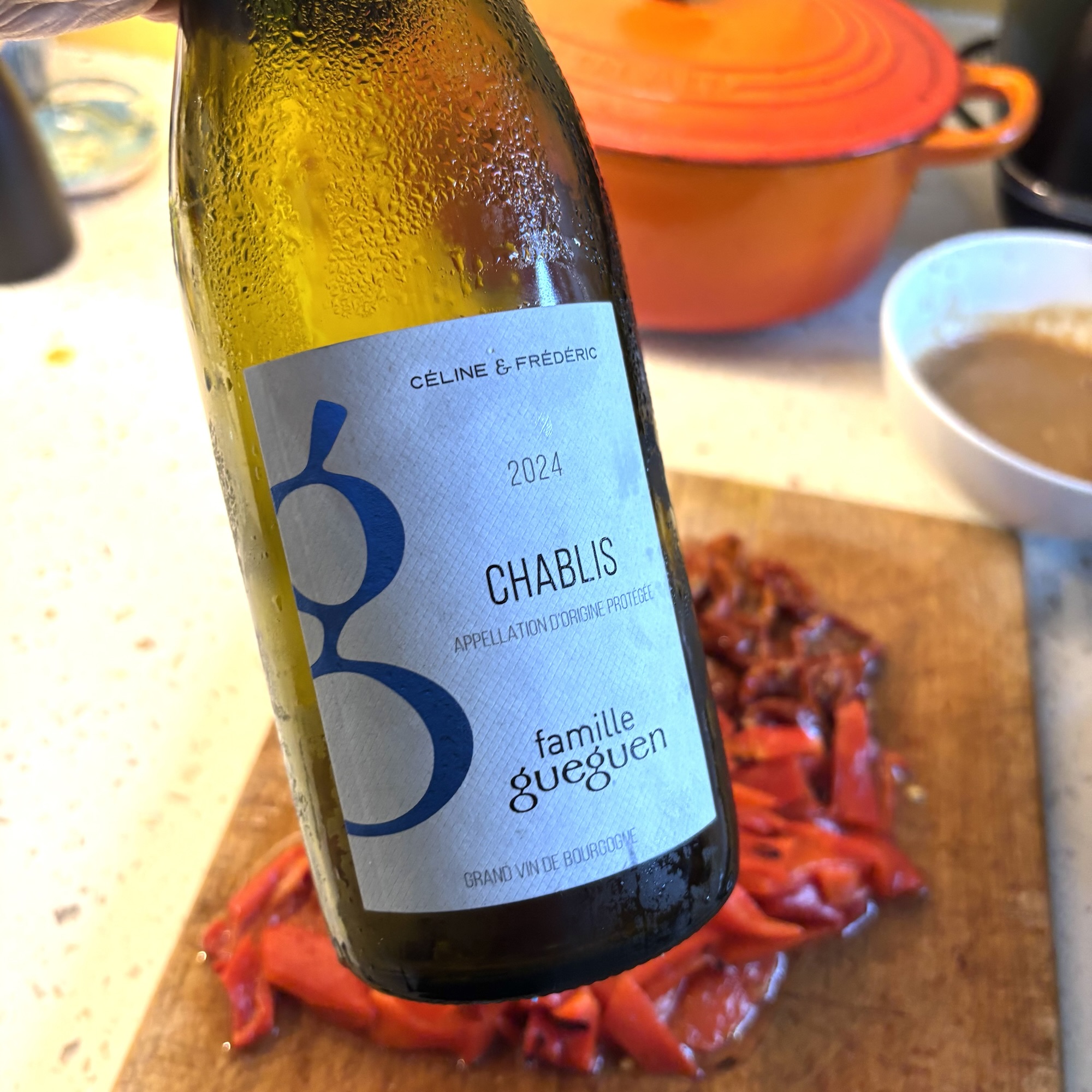
Chablis 2024, Céline and Frédéric Gueguen (Chablis, France)
I’ve drunk this wine a few times, having bought four bottles last year. Why? Well, this is a typical under the radar family estate which makes a range of different wines from a tasty Côtes Salines Bourgogne to some Premier Crus. This village wine is from a 7-hectare parcel they have at Préhy, on Kimmeridgian soils farmed “lutte raisonnée”. In other words, these are not natural wines, but systemic applications are used sparingly and only when necessary.
Grapes see a slow press using indigenous yeasts for fermentation. Ageing is on the lees in stainless steel and the wine goes through malolactic. It gets a light fining. We have lemon freshness and a crisp palate, and there is definitely more depth and development than when we last drank this, in December 2025.
It’s a nice, good value, Chablis. What you don’t get if you are comparing this to the De Moor we drank that featured in Part 2 is a complex natural wine with six years added maturity. I wouldn’t want to compare the two, and for sure, if you can afford it, you buy the De Moor every time. But this wine costs half the price, and it’s identifiably Chablis. In a world full of very good Chardonnay it is, at least for me, always nice to drink Chablis, an appellation where those Kimmeridgian-rooted vines can produce some of the most identifiable Chardonnay in the world.
This came from The Solent Cellar in Lymington. They bring this producer into the UK themselves and they usually stock a range of five or six Gueguen wines. This Chablis will cost you £24 for the new 2025 vintage.
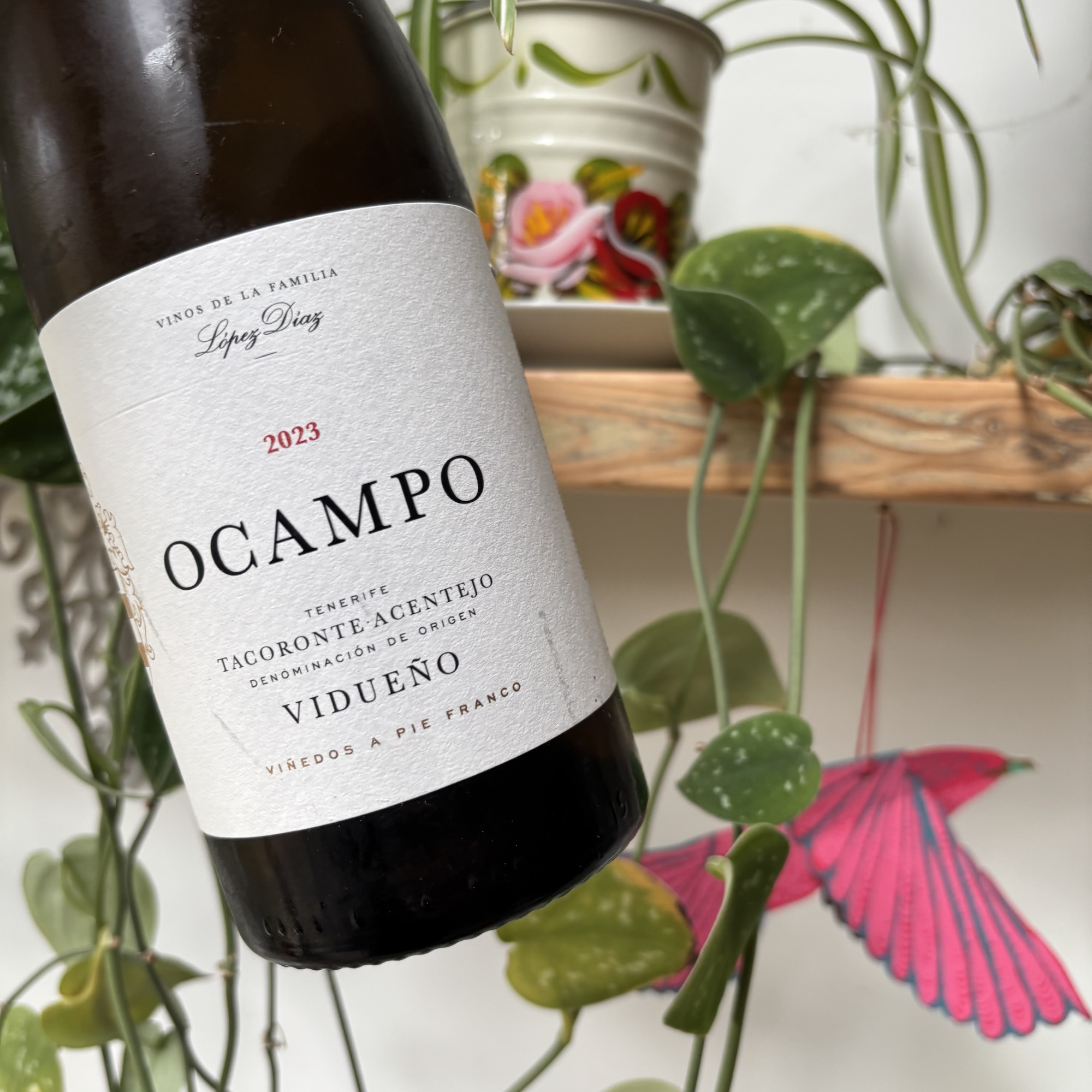
Vidueño Blanco 2023, Ocampo (Tenerife, Spain)
This is a project led by Jonatan García Lima of Suertès del Marqués and Tamerán, Francisco Álvarez de la Paz, and the Lopez-Diaz family, and the wine comes from Tenerife’s Tacoronte-Acentejo region, which covers the island’s northeast corner, based on Santa Cruz de Tenerife. They have created a boutique winery to make low intervention organic wines off the region’s volcanic soils.
This white wine is made from a field blend of Malvasia, Marmajuelo, Albillo, Listán Blanco and others. Fermentation uses indigenous yeasts and ageing seems to be in used wood of different sizes. The bouquet is straight-off saline. With what for us became an unmistakable note of coconut. The palate is lovely. It’s maybe I little lighter than you might expect in a wine of 13% abv, or perhaps I should say more delicate.
That might be because of its mineral freshness, but the mineral side is soft, not hard. This leads you towards something that shows more depth and complexity. It certainly has the potential to age further than the three years maturity it had when we drank it. By the second half of the bottle, we were getting white peach and a touch of fennel.
This is very highly recommended. Aside from the fact that I’ve never had anything less than very good from Jonatan’s hands, this is yet another example of Tenerife keeping ahead of the local competition from the other Canary Islands. The Solent Cellar was yet again the source for this, and it cost circa £35, not cheap but good value for the quality. The importer is, I think, Liberty Wines.
Lyhnid 2022, Kantina Caco (Pogradec, Albania)
Perhaps this wine will only be of passing interest to readers. I’m not sure you’ll be able to get a bottle in the UK or USA. That said, what am I here for if not to introduce obscure wines from obscure countries, and it is clear that just as Albania has changed dramatically, most would say for the better for its inhabitants, even in the last decade, so have its wines. As the country attracts more tourists, it is likely more of us will have a chance to sample them.
Kantina Caco is a family estate at Pogradec, in Eastern Albania. They began making brandy in 1993, and diversified into table wine in 2000. Here we are close to the border with North Macedonia, whose vineyards seem to be more numerous but whose wines I am yet to sample. The vineyards here are close to the beautiful Lake Ohrid, which has started to become one of Albania’s most promising tourist destinations, at least before mass tourism has the opportunity to make it less beautiful. Such fears are not misplaced, judging by current protests against developments elsewhere in the country.
Much of the most modern winemaking in Albania is carried out by nationals returning from Italy, and Caco is no exception, with all their new equipment being imported from there. They make a range of six wines, from what I can tell. Lyhnid is the ancient name for Lake Ohrid and it is a blend of (and forgive me if my Albanian is less than zero here) “Gems” and Merlot. There is certainly a red, seedless table grape called “Gem”, which was developed and planted in California’s San Joaquin Valley.
In any case, whatever the blend ratio, I think this wine actually smells and tastes like Merlot. It’s a smooth and rounded soft red wine, plump with mostly dark fruits, plummy, and with a touch of dark chocolate. It’s an easy drinking wine, quite commercial but well made and very drinkable. It puts out 13% abv. For me, for sure, another bottle of appealing and well-made Albanian wine is of more interest than a similarly commercial red wine from somewhere I know well, and from somewhere I know I can drink better.
What I will note is that this wine, well-made as it is, could not be identified as specifically Albanian. Unlike the crisp Albanian white wine which I drank from Kantina Lundra last November. That was made from an autochthonous Albanian variety, Shesh I Bardhé. But I am eternally grateful to the friends who gave me this to try after two consecutive holidays exploring Albania and the Western Balkans on their enforced 90-day sojourns outside the Schengen area.
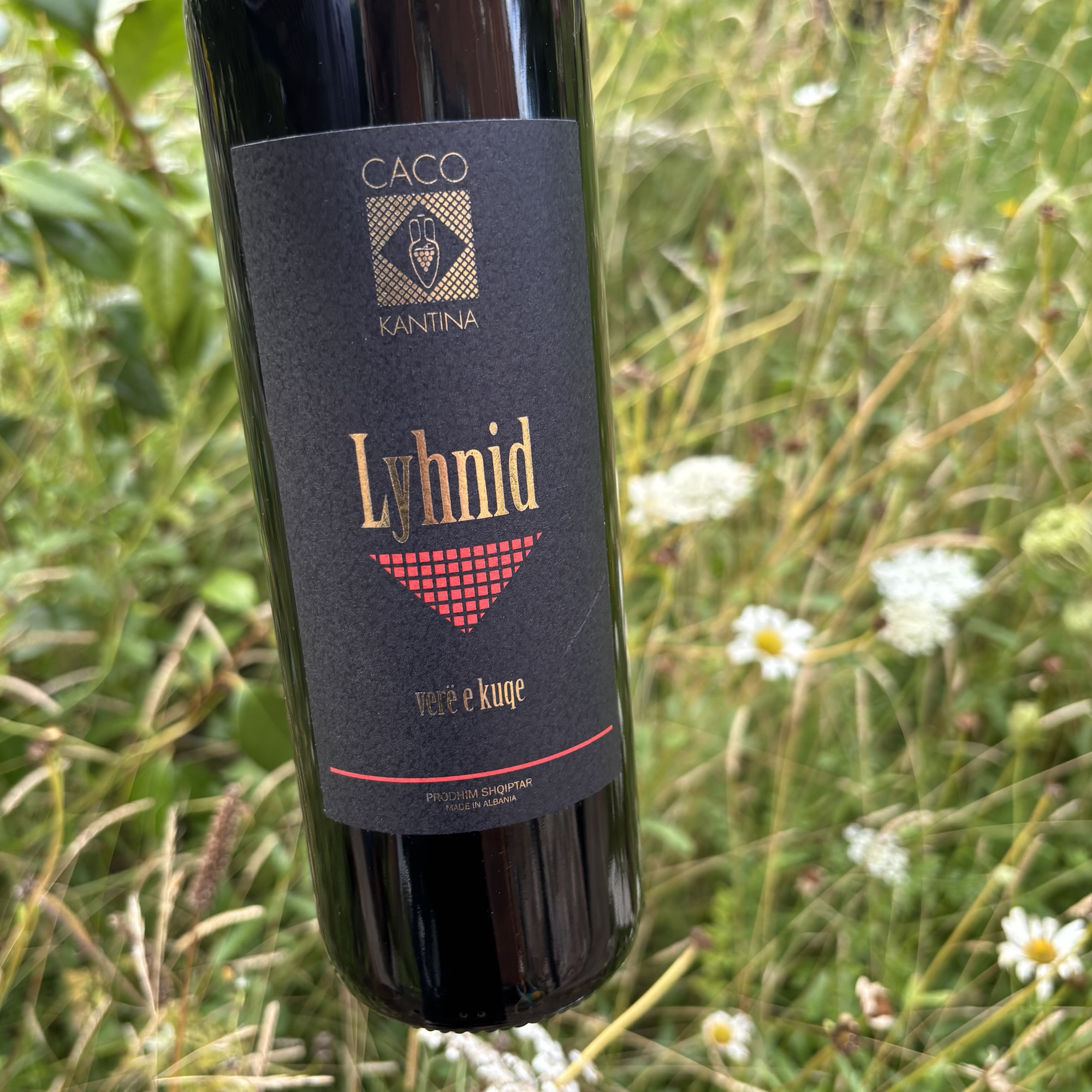
Malagousia 2025, Kanakaris Winery (Peloponnese, Greece)
If Albania’s wines are not to be found in our market, remember that the same could be said of Greek wines until relatively recently, except for a brief hour in the clouds of Great Britain during the late 1990s, thanks to a push by Oddbins in their twilight years. There have always been specialist importers, often those bringing in Greek produce generally, but the wines were mostly distributed to Greek restaurants and delis rather than independent wine shops. Now, we are seeing a much wider distribution for Greek wines. Good indies often have them, and you might even find a bottle in good supermarkets.
The most recognisable white grape variety, at least to those who have a passing interest in Greek wine, would be Assyrtiko. Although grown in many regions in Greece, where regional variations are as numerous as they are for Spätburgunder/Pinot Noir in Germany, Assyrtiko is mostly identified with what tend to be rather fine wines on Santorini.
Malagousia is quite special, partly because it was almost extinct in Greece until it was rediscovered in the 1970s and given to Vangelis Gerovasiliou, one of the country’s now most revered producers. It was called Greece’s Cinderella variety, and nowadays it has become pretty well-known there. Like Assyrtiko, it is capable of making cracking wines.
Kanakaris Estate was founded in 1979. They have 55 hectares of mountain vines growing up to 1,000 masl in the Northwest Peloponnese, in the Panachaiko Mountain Range. This Malagousia is a local clone and is labelled under the PGI of “Slopes of Aigialia”, the fruit sourced between 800-900 masl.
The grapes undergo a 36-hour pre-fermentation cold soak, and post-fermentation the wine goes into used oak to age. No malo takes place, to help the wine keep a profile dominated by freshness. A nice bouquet blends herbs and lemon citrus, with a whiff of peach. The palate is peachy too, with even a hint of tropical fruit, but the freshness I mentioned runs all the way through it, underpinned by soft lemon and a bit of salinity.
This is another wine imported by Liberty Wines. It is widely available through indies, priced £19-£21. This bottle came from Lockett Brothers in North Berwick, just outside Edinburgh. We drank it with a Mediterranean fish stew and the guest we had staying liked it so much he went back for another bottle. Whilst it may not have the complexity of more expensive Greek wines, it’s extremely good value and I’d drink it any time.
Rotling 2023, Sophie Evans (Franconia, Germany)
Sophie makes wine in Kent, as regular readers will know, and she has been making a bit of a name for herself in English natural wine circles, in part because of her interest in various forms of regenerative viticulture and holistic practices. She has also been making wine in Franconia in Germany, with grapes from the vineyards of her friends there.
She picked these grapes with Emily Campeau, a blend of organic Müller-Thurgau and Domina. The latter is a 1927 crossing of Blauer Portugieser with Pinot Noir. In Germany, Rotling is a Rosé made from a blend of red and white grapes, which this is, and it is labelled just as a Deutscher Landwein. Although not co-planted, the two varieties were side-by-side and next to a forest, something Sophie was keen to capture if possible.
The fruit saw a two-day maceration before six months in an old barrel. What you get is an unpretentious wine, closer to the colour of Irn Bru than pink, perhaps, with a delicate rose petal bouquet and a hint of apricot and red berry. The palate has a savoury side with really good acidity, good because it doesn’t over-dominate. Alcohol is lowish, at 11%, but it has plenty of flavour, very tasty.
I am sure this wine reflects its costs when it retails for £30, although I do regret that costs have risen so much. It’s an exciting wine by an exciting, young, British winemaker, but it is not complex, nor does it attempt to be. The importer is Sophie’s UK agent, Wines Under the Bonnet. I bought this bottle from Communiqué Wines in Stockbridge, Edinburgh.
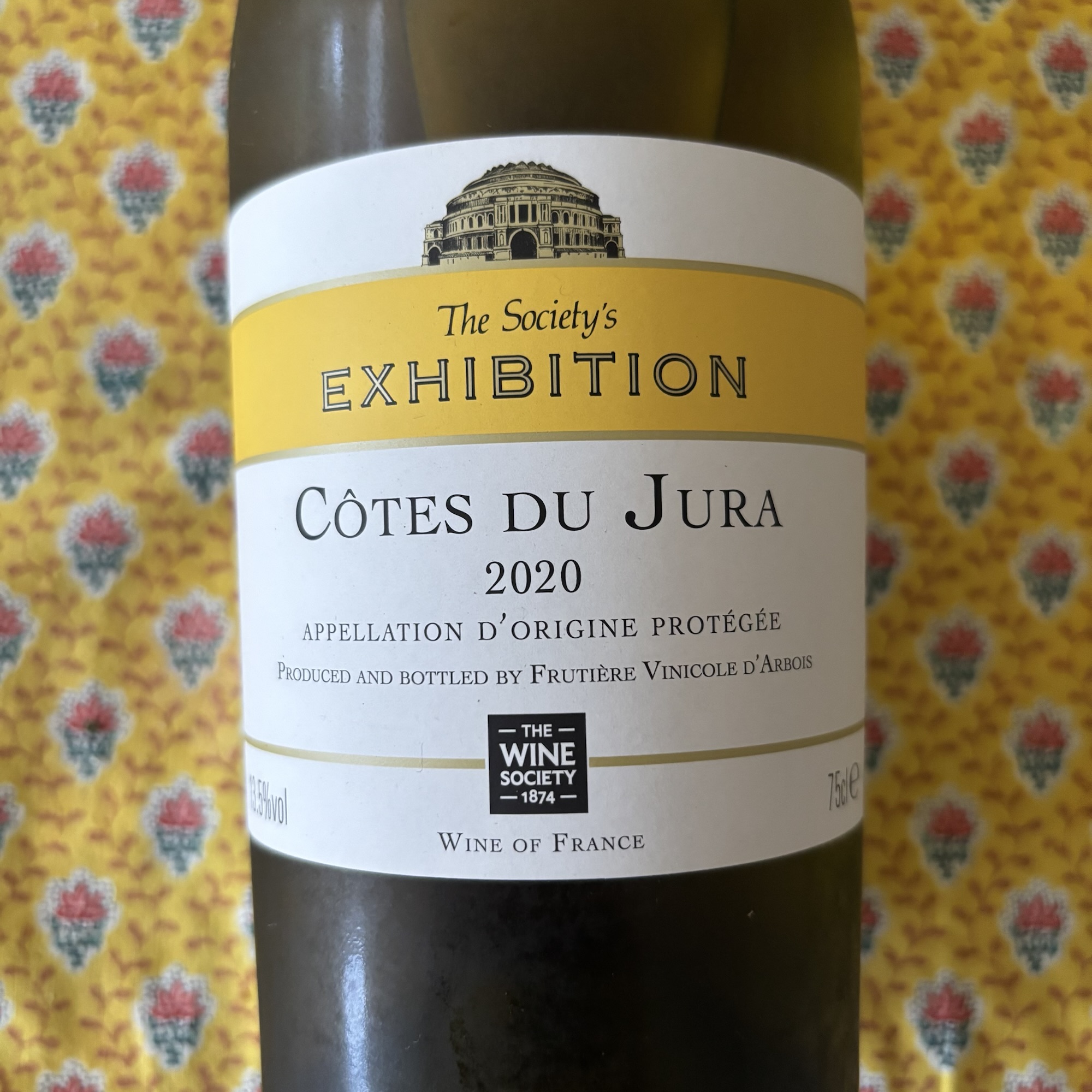
The Society’s Exhibition Côtes du Jura 2020, Fruitière Vinicole D’Arbois (Jura, France)
This wine was brought to The Wine Society by their buyer, Fiona Hayes, who has been responsible for some wonderful wines since she joined the Society in 2024. I think there was some helpful input from Richard Kelley MW, of Dreyfus Ashby. Aside from working with South Africa, Rick is involved, inter alia, with the Jura co-operatives, and knows the region pretty well.
This is the first Jura wine under the Society’s own label. Not before time I hear you shouting from the back row. Well, at least they have come up with one well worthy of their “premium” Exhibition label. It’s a blend of Chardonnay and Savagnin grown by the Arbois co-operative’s members, aged under flor (sous voile) for three years. It does display the traits of oxidative ageing via its nutty bouquet and a palate which combines a salty-lemon zest spike with salted almonds and hazelnuts.
Now, if you are used to drinking top grower wines made in this style you might initially think this is a bit blunt, which perhaps it is, but I would say that I’m opening it a little young. Remember, three years under flor so it is still youthful for a wine of this style. It does have all the elements of both varieties along with those of the oxidative ageing.
I really enjoyed it now because it screams the freshness of youth, but it will age if that’s what you want. And let’s not forget, it cost £19.50, which is honestly a ridiculous price for the quality here. There can be no excuse not to buy this if you are not sure what this oxidised style of Jura wine tastes like, and let’s be honest, most Jura fans would relish the chance to drink a wine like this for what seems like decade old prices.