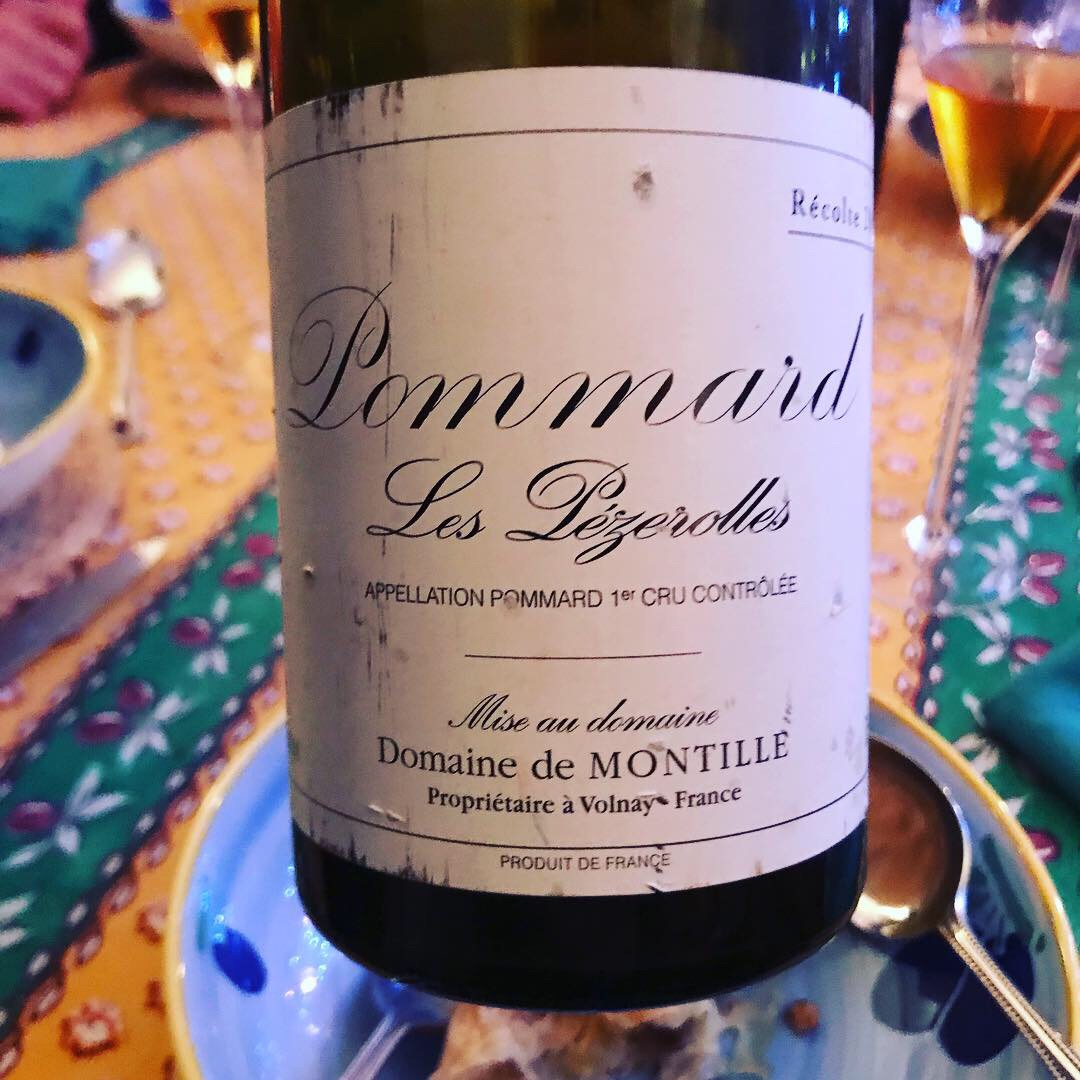
Wines of the Year 2018 and stuff like that

It seems a little early to be doing a review of the year at the end of November, but I suspect there will be plenty of other things I want to write about before the Christmas hangover has disappeared, so now is as good a time as any. If my local record shop can release their “Top 100 List” this week, then so can I, though contrary to trepidation, I won’t go quite that far.

If I did a straight awards article I think I’d be in danger of repeating myself from last year, so I’ll just run through a few highlights to get us going, before we move on to the wines themselves.

Wine has now become established on a par with the food at plenty of places which blur the line between wine bar and restaurant, and whilst I do enjoy top nosh at a fane dayning establishment once in a while, I find myself increasingly more comfortable when I know that the wine won’t disappoint at the £50-a-bottle price point (still an awful lot of money and beyond the budget of many), as opposed to £100+-a-bottle at a two-star. You can find such places in most of the world’s most cosmopolitan cities nowadays, but a few have stood out in 2018.

Berlin’s JaJa I find particularly welcoming. It’s not the city’s most well known bar, but tucked off the main road through the Neukölln District, you’d be pushed to find a more genuine welcome, even when it’s rammed full and the staff are doing a good impersonation of people trying to sprint a marathon. Simple food done well, and a lot of fingers firmly on the pulse of natural wine. Some of the better known establishments, especially those in Paris (and indeed, Berlin), can be a lot less welcoming of strangers.


In the UK you’d be hard pushed to find somewhere as interesting as Winemakers Club. Interesting on two counts – first, the ambience of a very unusual space. It’s very dark, sometimes very cold (it’s one place you know the wine won’t be ruined by over heating), but second, the wine list. At Winemakers they import a lot themselves, so you’ll find stuff you’ve never heard of. Be adventurous, because John and the team have a lot of friends and very deep knowledge.

Winemakers had two bits of news this year. First off, they actually became a real club. Pay a membership fee (somewhat cheaper than 67 Pall Mall) and enjoy various discounts through the year. Secondly, to the joy of many, Winemakers Deptford tentatively reopened its doors. That is very welcome news.

IMG_0041

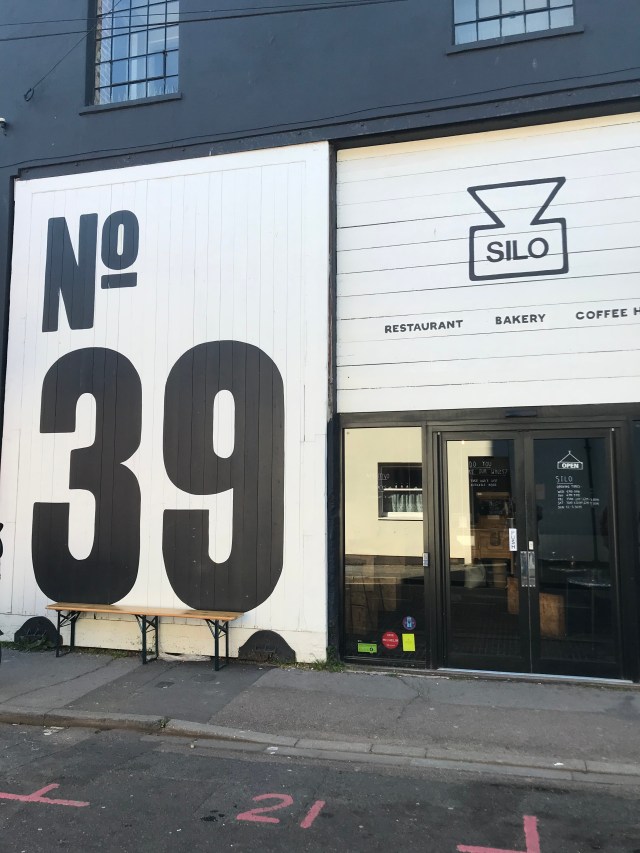
Outside of London, Plateau in Brighton has gained a reputation as one of the most exciting places to go for lovers of natural wines (and hey, if I can regularly train it up to London and back for an evening of wine, then you guys can get down here!). The bar/restaurant list is amazing, and a good part of it is available on the takeaway list for a discount of around 30% on table prices. The bonus with Plateau is that the food is up to scratch, and quite innovative, though not fussy. The only place I know on the South Coast that could potentially match Plateau is zero waste restaurant Silo, also in Brighton. But they just need to get their wine act together a bit more. If Plateau were in London it would be chokka every night…which, actually, it almost always is.

F3594CAF-B546-4323-BDBF-11213237903A

Many readers probably know how much I love Vienna. It’s not only because it puts me a short train ride from some of my favourite producers, but because it is surprisingly well endowed with brilliant restaurants. If I had to choose my favourite meal of 2018 it would probably be the one we had at Mast back in August. The combination of innovative cooking and possibly the best natural list in Vienna makes it the most popular place to go for all the wine trade people I know. It’s just a short stroll, or tram ride, north of the city centre.

Sadly, when I am next in Vienna Mast will be taking their annual holiday, but I’m hoping Glacis Beisl will be open. Glacis is located conveniently round the back of the Museums Quarter, with an attractive garden (though I doubt I’ll be eating out there in January). Ask for “the red book”, their larger wine list if you have time to browse. Glacis is more traditional than Mast in terms of the cooking, but that is no criticism. Especially if you crave a schnitzel. It has been a favourite of mine since my first visit.


Best meals in the UK? The highlight was what I hope is becoming an annual outing to The Sportsman at Seasalter in Kent. It’s a total pain to get to, for me at least, but totally worth it for the tasting menu. At the other end of the scale, I went back to 40 Maltby Street for the first time in a couple of years in October, and wondered why it had been so long.


Wine dinners and lunches form a big part of my year. If I were writing this article a week from now I’m fairly sure that the next one would feature here. Look in on Wideworldofwine next week to see how we got on drinking a load of old Jura. For the wines alone, then Mark Priestley’s Volcanic Wines dinner at Foxlow in London was probably the standout, although no less exciting was the Sherry lunch at Pizarro in Bermondsey back in February, except that most people left that extravaganza fairly inebriated…it’s a wonder any of us remember it.

Tastings of the Year? That’s fairly easy, despite a crowded field. Newcomer Wines‘ first large scale producer tasting at the RIBA in March was a revelation, with the added bonus of almost all of my favourite Austrian producers under one roof. We missed Real Wine in 2018 (do not fear, it will be back on 12/13 May 2019) but Les Caves de Pyrene celebrated thirty years of business with an extensive tasting in September, showing that they are incapable of standing still. On a smaller scale, tasting the wines of Basket Press Wines at Plateau last February was the beginning of a love affair for the unbelievable secrets Czech Moravia has to offer.


Les Caves’ 30th anniversary (“Restyling Wine”)

On a more classical note, anyone who didn’t get to Howard Ripley‘s Great German Pinot Noir Tasting in March missed out on a cracker. German reds have come of age. Tasting Red Squirrel‘s wines is always a treat, and they showed their portfolio at the increasingly popular China Exchange in Soho in September, as indeed did Uncharted Wines. Both have astonishing lists which anyone not acquainted with them ought to explore.


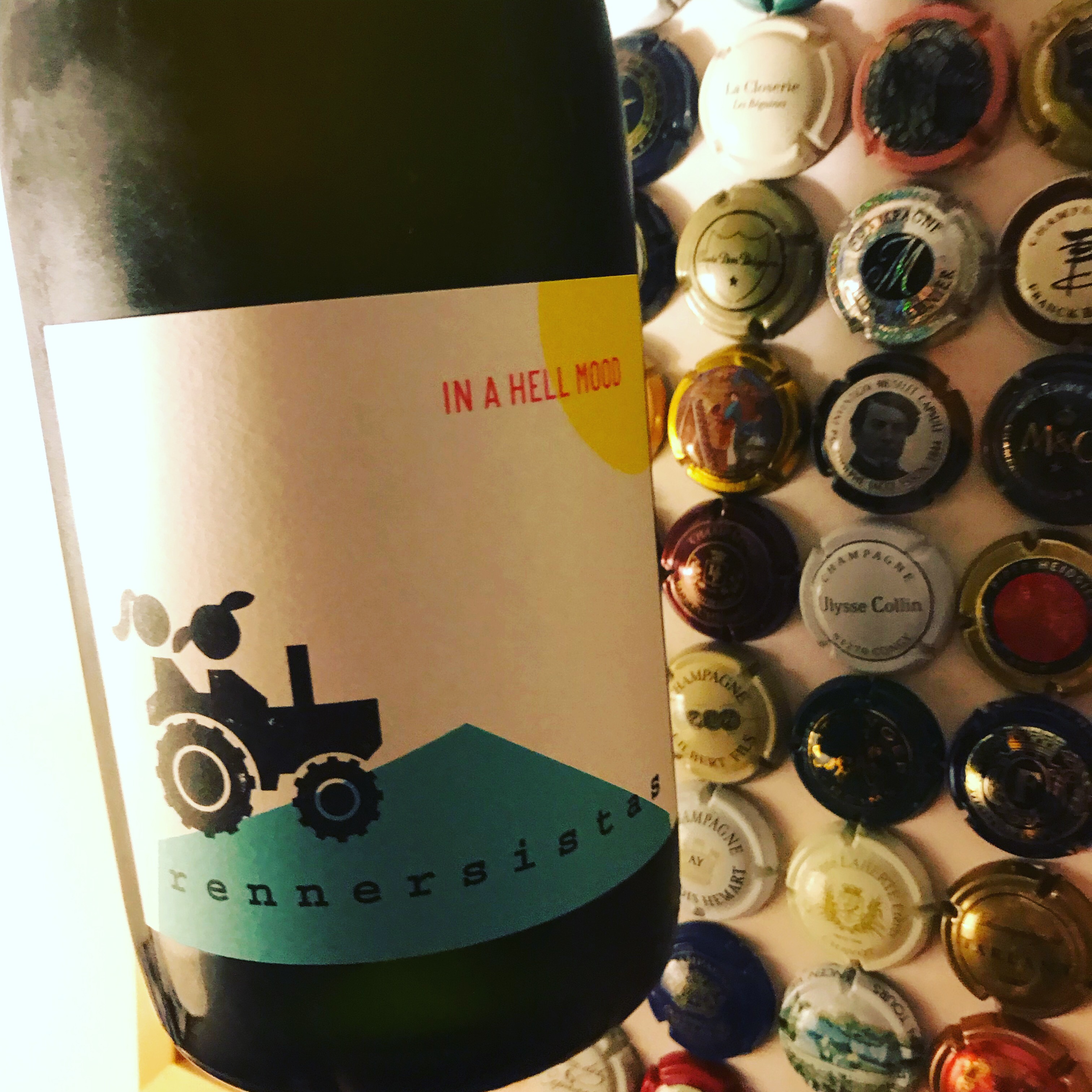
Wine visits? Nothing compared to visiting Weingut Renner (Rennersistas) in Gols on the first day of their harvest in August. In retrospect, cycling around Burgenland on one of the hottest days of summer was not as bad as I expected, but the warm welcome we had from Stefanie (not remotely “in a hell mood” despite the picking team starting that morning) was something special. Tasting the first pressed juice from the 2018 harvest was a treat you don’t get every day.


A couple of days later Georg Grohs hosted us for a morning, and over lunch, at Wieninger (Vienna). I don’t think any producer has devoted more time to me than Georg did, what a lovely man. I’m so pleased one of Wieninger’s single site Wiener Gemischter Satz won a Best in Show award at the DWWA, helping to put these unique wines a little more prominently on the map internationally.

Book of the Year is easy. Despite brilliant work from Jamie Goode, Peter Liem and Robert Walters (Bursting Bubbles is a great read and a fascinating look at a very different side of Champagne), the accolade must go to Simon Woolf for his Amber Revolution. It’s not just well written, entertaining, informative and well produced (amazing for a self-published work), it is also a book of some importance. Skin contact wine is here to stay, so it’s of benefit to all of us that we have such a knowledgeable guide. There’s something very wrong with wine publishing when something like this doesn’t get snapped up by a major. I’ll be reading it again come the New Year. Read my own review from back in July here.

2F47EDF3-594B-46BC-A8FE-98300ADBA52A

As for all the above, I won’t link to them all, but you can track them down and read about them via the search box (top right hand corner on my home page).

Okay, 1,300 words in and he’s not got to the wines yet. Bear with me. I never make New Year’s Resolutions, but I think I’ll make a few this year.

  1. Organise some more wine lunches or dinners. Certainly New Austria needs a plug. Maybe Savoie too (here’s hoping Wink can get the book finished);
  2.  Try to visit Leroy and Brat, plus get along to one of the monthly Wine Pages “Wimps” lunches at La Trompette (didn’t make a single one in 2018);
  3. Pester the usual suspects for another Sherry extravaganza.

And what would I most like in my Christmas stocking? Not a Coravin, I’m afraid, but despite owning way too much wine, I’d bribe Santa for the following:

  1. A six-pack of assorted Swiss whites from Alpine Wines;
  2. A mixed six-pack from Basket Press;
  3. The same from Newcomer Wines; and
  4. A six-pack from New Zealand’s new star, Hermit Ram, via Uncharted Wines.

The following wines were some of my highlights, in no particular order.

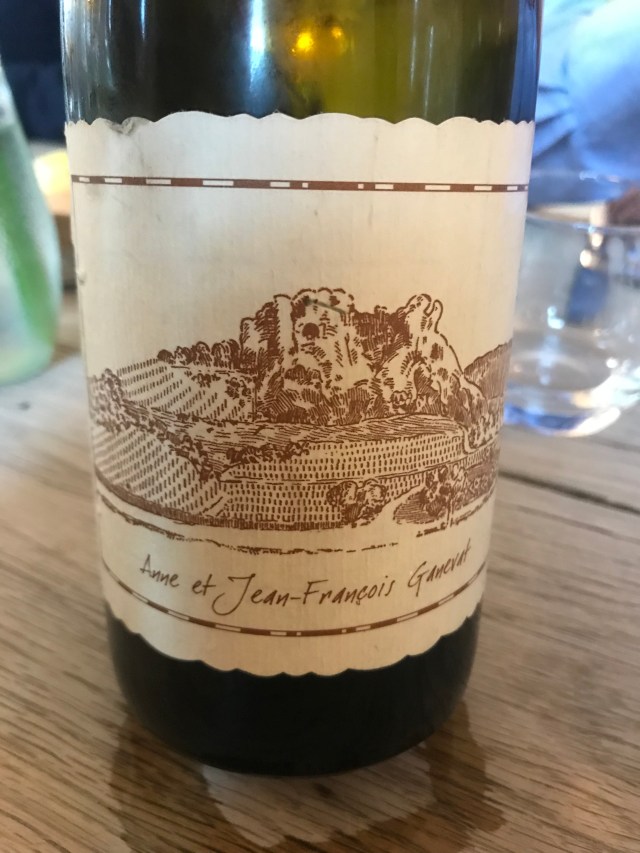
Ganevat‘s Vin Jaune 2003 was the best yellow/sous voile wine of 2018, and I’ll readily admit it is beyond my pocket now. Such intensity and class, but still a baby. As was an even younger 2006 we drank at the sadly now defunct The Shipyard in Lymington, scene of some pretty amazing dinners over the past couple of years (I truly mourn its loss).

Of the many wines from Jiri and Zainab’s wonderful Basket Press I would probably choose (with great difficulty) Richard Stávek‘s Špigle Bočky 2015 from Moravia. Well, what’s in a name? Check it out.


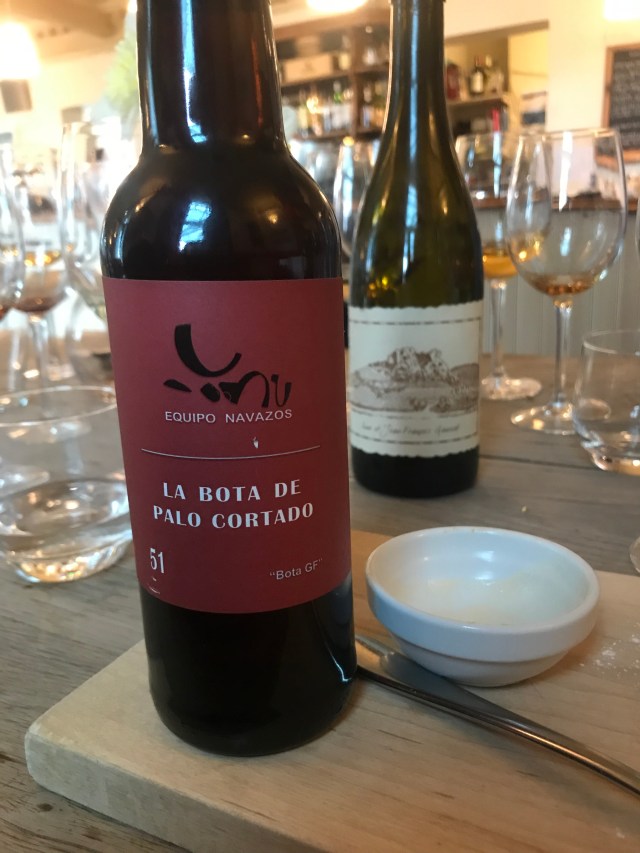
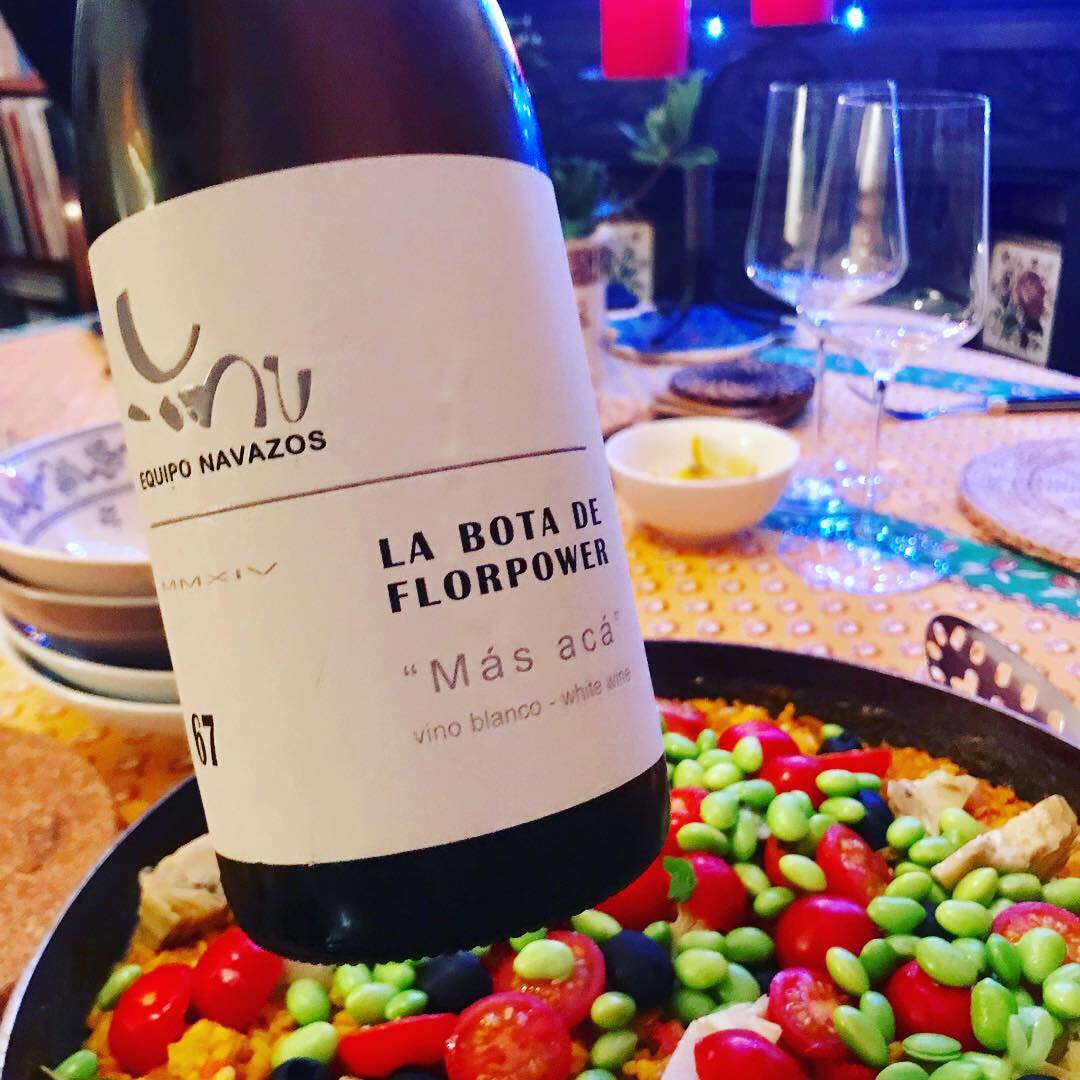
Sherry…I didn’t drink enough Sherry in 2018, yet I did drink quite a bit! It’s usually the case that some marvel from Equipo Navazos wins out, but among too many fine examples at the aforementioned Sherry lunch at Pizarro, I drank Romate “Old & Plus” Oloroso for the first time. Fascinating, unusual, very good indeed.

From Spain, well, there are big names galore I could extol, but what about Costador Metamorphika Sumoll Blanc Brisat, from one of my favourite producers from Otros Vinos. Red Sumoll continues to thrill, but this rare white is amazing.


Sparkling wines are difficult. If I’m not in Champagne, then I think I can concur with Gault Millau in choosing a remarkable long-aged Chardonnay, Ebner Ebenauer Blanc de Blancs Brut Nature 2010. A quite astonishingly fine “Sekt” made by the méthode traditionelle.

93AB7E0C-9ABF-4097-B9A2-546C47019714

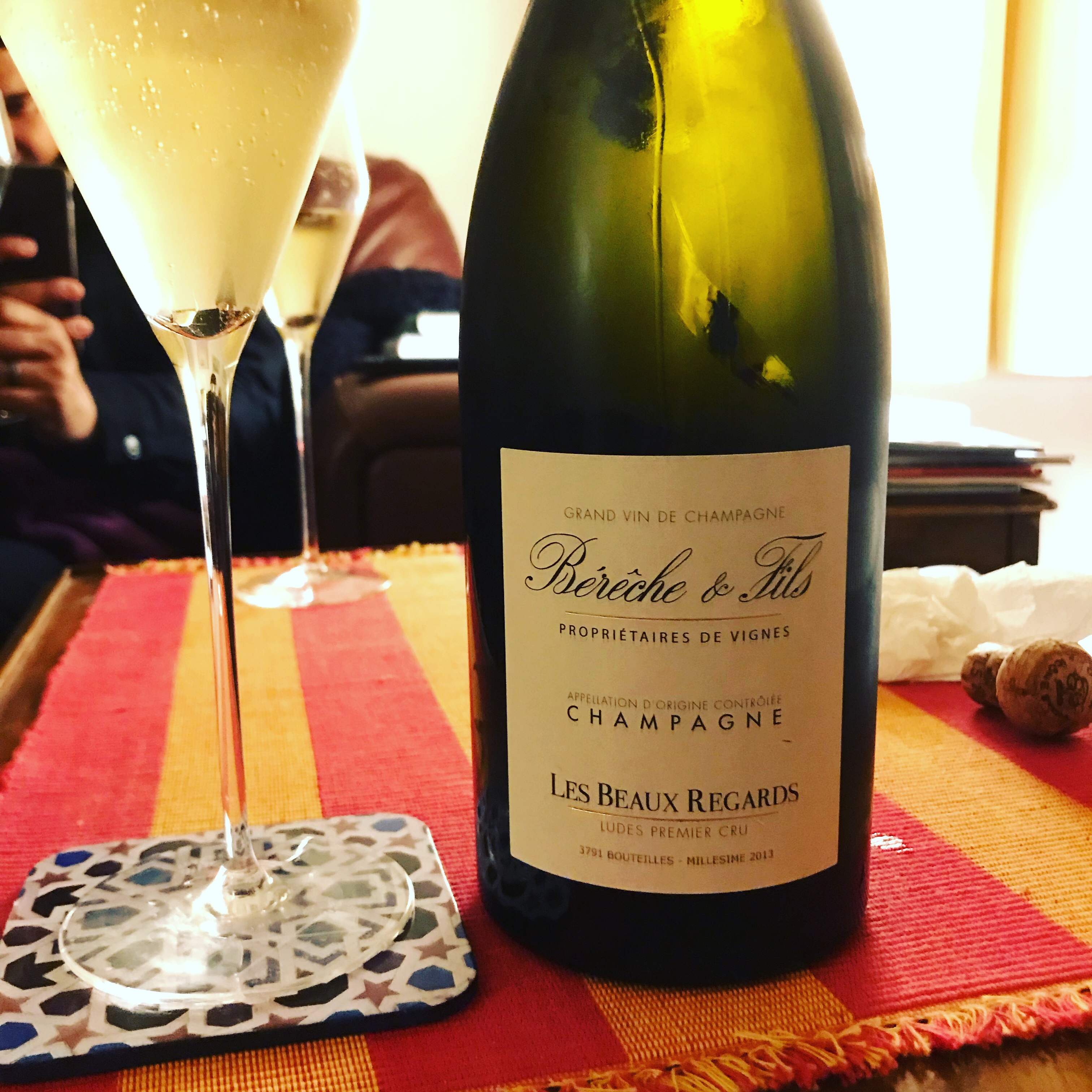
From Champagne we did drink a marvelous Bérêche Campania Remensis in Paris, from my favourite producer so I’m biased. But in that same week I drank my first Champagne from Val Frison. I really enjoyed her Lalore Blanc de Blancs, and I shall be popping her Goustan Blanc de Noirs at some point over Christmas.


Raphaël and Vincent Bérêche get another mention here, but not for a sparkling wine. Some years ago they began serious work on reds, and one of the wines someone brought along to our BYO meal at The Sportsman was the Bérêche Coteaux Champenois Rouge “Les Montées” 2014, from vines at Ormes. Every time I visit the Craon I fail to take home any of this, merely because one bottle of the red equates to a bottle of one of their finest Champagnes, and I am reasonably endowed with fine Pinot Noir. I won’t be making that mistake again.

379994F8-2435-4CFA-B21F-BFC5A03960A1

Somewhat less sparklin’ than the full-on fizz, but still with bubbles, the award for summer fun must go to Strohmeier Schilcher Frizzante, as the tart delights of the Blauer wildbacher grape finally hit UK shores, much to the annoyance of the more serious commentators on Austrian wine, I suspect. If you prefer your summer fun without bubbles, look no further than Domaine de la Tournelle L’Uva Arbosiana, one of the first natural wines from Jura I fell in love with, and that love has not waned one bit.

My discovery of the year was a producer I didn’t know, from a region (Burgenland) I purport to know well. Just shows there’s always something new. The completely anonymous label of the small range from Joiseph does not hint at the wonders within, yet Luka Zeichmann, who has only been making wine at Jois for a couple of years, is a new young star in the ascendant. He’s one of a very strong portfolio at Modal Wines. I tried a few of his wines, most recently at the Out the Box Tasting (always unmissable), but my favourite (I’ve drunk two bottles of this so far) is Fogosch Grüner Veltliner 2016. Frighteningly good.


Keeping the skin contact theme going a while longer, there is no doubt that COS Zibibbo in Pithos 2014 from magnum was a highlight of the year, but what about Brash Higgins? Brad Hickey’s amphora Muscat Zibibbo from Riverland fruit (of all places) was also a wonderful surprise. Bloom, his sous voile Chardonnay, is even better, but none of that rarity passed my lips in 2018 (come on Brad!).


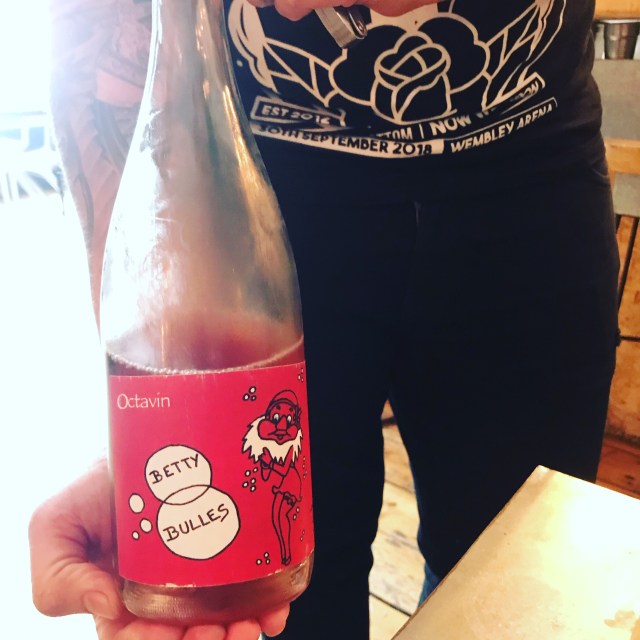
I’m bound to have missed out plenty of delightful wines, like the unusual Betty Rosay from bought in Gamay fruit sourced in Southern Beaujolais by Alice Bouvot of Domaine L’Octavin in Arbois. Surely the best unpretentious wine of the year (pale, delicate, intensely fruity). Then there’s Ben Walgate’s game changing Qvevri Artego (Ortega) from his Tillingham Wines in East Sussex, near Rye. English wines had a strong showing through 2018, but this is different. PN17 seems so long ago, but you know, I think I drank more PN17 than any other single wine this year. Can’t wait to try Col 2017 again.


Oh, then there was this!!!


and these…


That’s what it’s all about, trying something a bit different. 2018 was not a year of guzzling up all the finest wines in the cellar (which it becomes increasingly difficult to say goodbye to when they become far too expensive to replace), more one of new discoveries that crept up on me, and thrilled. I hope you’ve enjoyed reading Wideworldofwine throughout the year (nearly 27,000 views so far this year, already up by 5,000 on 2017, which amazes me). I shall try hard to make 2019 just as interesting for us all.

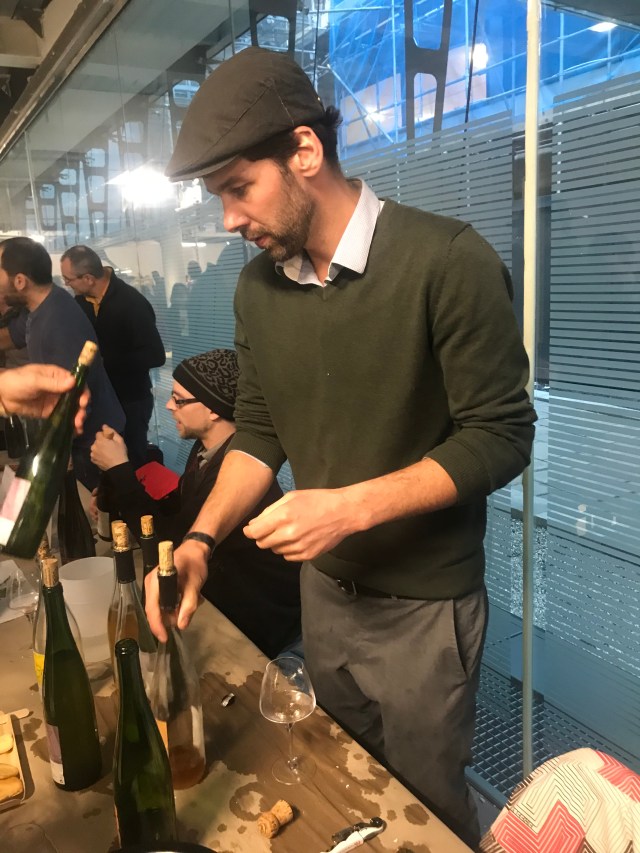
Finally, here are some of the people I really enjoyed spending time with in 2018. Wine really is full of the most amazing, warm, people. Do you recognise any of them? Do you see yourself? If you do, thanks for helping make 2018 so much fun. And all those I’ve missed, especially everyone who lives in Farringdon Street’s Winemakers Club, and those who have cooked such wonderful food, given us a bed, and most likely plied us with several amazing wines in Paris, Vienna and around the UK.


Posted in Artisan Wines, Natural Wine, Wine, Wine Agencies | Tagged , , , , , , , , , , , , , , , , , , , , , , , , , , , , , , , | 1 Comment

Recent Wines October/November 2018 #theglouthatbindsus

Quite a diverse range from the past six weeks at home, although four of the ten wines here are from Jura, perhaps a poor attempt to clear a bit of space for the purchases which will be made in the region very soon. As always, I’ve tried to cull things down (more successfully than usual, this time), so that every one of the wines below is a real cracker in its own way.

Apremont 2017, Domaine Giachino, Savoie

Apremont was the first ever Savoie AOC I tasted, back in the 1980s, I think. This wine is a good step up from those early bottles (from the Château). Most of Giachino’s vineyards are on the slopes of Mont Granier, and the Apremont vines are tucked between the rocks and the shore of Lac Saint-André. Apremont is effectively the first of the better known  Savoie crus south of Chambéry, in that boomerang-shaped viticole known as the Combe de Savoie. The soils here are the result of an enormous landslide in the thirteenth century, formed largely of limestone with some marls.

This wine is 100% Jacquère, which some call the workhorse grape of Savoie. Don’t be fooled. Frédéric Giachino has more than twenty years experience here. The vines, over 25 years old, are farmed organically, and although these are not “natural wines” as such, minimal sulphur is used at the domaine. They also ferment with the natural yeasts on the grape, and age the wine on lees.

Characteristically pale, it’s fresh, fruity (lemon citrus) and with a herby finish, and mineral too. It’s not a complex wine, but it’s truly fresh as a mountain glacier. The domaine claims it has bergamot notes, which I admit I didn’t get. There’s a nice lees texture, though, which adds considerable interest. It is relatively inexpensive considering this is a top Savoie producer.

This 2017 was purchased in Paris, although Dynamic Vines bring it into the UK (currently listing 2015 and 2014, which should not be of concern – the producer suggests that it will keep for five-to-ten years).

E56D5A3C-B2F8-4B27-ACD4-0A4D3DA25A29

Arbois-Pupillin “Côte de Feule” 2011, Hughes-Beguet, Jura

The first time I visited Patrice Beguet in Mesnay (just on the edge of Arbois) I bought some 2011 and 2012 Côte de Feule and set some aside to see how it might age. This vineyard is one of Pupillin’s best, on limestone and marl, with a nice sunny exposure which usually fully ripens the Ploussard, which thrives here. There’s a nice circular walk from the village which takes in the Côte de Feule slope if you ever visit Pupillin.

So, how had it fared? The colour was brick red with an orange glow. The bouquet was autumnal, a little leafy, but still showing some red fruits. The palate had slightly bitter cranberry and redcurrant flavours, pretty mellow now but still with a bit of bite. I’d say this bottle was more or less fully mature, and perhaps best drunk slightly sooner, but I’m glad I kept some. Definitely armchair stuff, sedate.

What I didn’t know when I bought this, is that Patrice’s Côte de Feule was going to become one of the finest reds in the region, a wine to challenge some of the more famous names, from the same slopes even. In recent years I think this wine has got even better, and the new labels are certainly a step forward as well. But if you happen upon an older bottle, you are undoubtedly in for a lovely taste of one of Northern Jura’s finest sites.

258CA02D-377B-4DEF-962F-6D55A7887861

Epileptic Inspiration 2016, Blank Bottle Winery, Elgin, South Africa

I’ve written about Blank Bottle a few times recently, in an article about Pieter Walser’s relationship with Butler’s Wine Cellar in Brighton, and in another article, meeting, and tasting with, Pieter in London recently (Swig Wines’ Portfolio in Soho). Epileptic Inspiration, a name and label which is quite personal to Pieter, is old vine Semillon. Originally unhappy with what was in barrel, Pieter left it and kind of forgot about it. A year later he tasted it, and as is often the way with these things, was amazed at the transformation.

It’s a little bit buttery on the mid-palate, with the lasting impression being honey and lemon with a tiny hint of lime at the finish. Underlying all this, it develops some nutty textures. You’d never guess, from its freshness, that this rather nimble wine piles in with 14% alcohol. It tastes lighter. There’s a lot going on here, and it evolves as it sits in the glass and warms a little. Brilliant stuff! Okay, my daughter thought it was a little weird, so maybe not one to pull out on Grandma’s birthday. Save it for explorers. I’m not sure many people are making more exciting and thrilling wines in South Africa right now.

1141F5AD-C5F3-476D-903F-3AF8CCA447FB

Grand Cellier d’Or 2006, Vilmart, Champagne

Vilmart is certainly a maison of star quality as far as most Champagne connoisseurs are concerned, but many of those will focus (and rightly so) on the top wine there, Coeur de Cuvée. I too adore that wine, but I’ve bought a fair bit of Grand Cellier d’Or in the past as well, and I am rarely any less than thrilled when I open one. This 2006 came from a visit to Vilmart, on the Montagne, in 2012.

Vilmart’s wines always question the old echelle des crus. Their vineyards around Rilly-la-Montagne are all premier cru, yet many would argue that Vilmart makes grand cru wines in all but name. Of course, careful viticulture, careful selection, and fermenting and ageing the wines in wooden foudres, all adds to a harmony between depth and freshness, which Grand Cellier d’Or exemplifies very well without being overwhelmed by the deep complexity which Coeur attains at maturity.

A few technical details: I believe the blend for the 2006 was 80% Chardonnay and 20% Pinot Noir. It had ten months in foudre followed by four years on lees in bottle, and it was disgorged in early 2011 and dosed at 9g/litre.

The 2006 has developed a little more colour over time. The bead is very fine and delicate and, for the vintage, it’s beginning to drink really well. It has depth, as I said. The bouquet is apples, but for me there’s more creamy apricot/peach on the palate. But there’s one more thing to say about this wine which isn’t easy to convey with mere words – it’s such pure joy to drink. Thank you, Laurent.

0DE366B2-DDC0-40F2-A907-63F46D528EE7

Zibibbo in Pithos 2014, COS, Vittoria, Sicily

This wine is more or less legendary. It’s the first vintage of the COS amphora Muscat of Alexandria, bottled only in magnum (there was no 2015 and I only managed to get 2016 in 75cl).

There’s the deep straw-gold of a skin contact wine (seven months on skins in amphora). The nose gives out that clear, floral and musky Muscat fragrance, with a hint of lychee, whilst on the palate you get candied fruit balanced by a more bitter, ever so slightly astringent, spiciness which seems to recreate the texture of the terracotta inside your mouth. There’s also a touch of orange citrus, and a softness too. But whatever you get from the palate, I can assure you that it goes on for a very long time.

I had wondered whether I’d left this too long before opening, but maybe the magnum format helped – this was certainly nowhere near needing to be drunk up quickly. Solent Cellar are still showing four left on their web site, although I’d wager that is an oversight. Les Caves de Pyrene suggested there are no more magnums left from 2014, but this is a new classic from COS and one to follow in future vintages. Every time I tried it, it had the “wow!” factor, none more so than on this occasion.

34ABB45A-FA31-444E-B68D-29BDEDF98858

Arbois Chardonnay “Les Brûlées” 2015, Domaine de Saint-Pierre, Jura

Fabrice Dodane bought Domaine Saint-Pierre, just outside of Arbois at Mathenay, in 2011, but he’d been managing the domaine for its previous owner for more than twenty years before that. He’s still not as well known as some of his fellow vignerons around Arbois, but his reputation has grown very swiftly in the three years since I first tasted his wines.

Fabrice makes excellent Pinot Noir, and a fine Vin Jaune, among others, but I think that perhaps this 2015 Chardonnay may be my favourite from him so far. Its beauty lies in its freshness, allied to a certain richness from the hot vintage, without that richness playing too great a role. What keeps the wine together is a good mineral spine. It does have 14% alcohol, but it’s a good example of balance, achieved through not picking too late and handling the must carefully. It’s stony on the palate, but there’s a smooth velvet texture too. You’d think those two are incompatible, but that’s the interplay between the freshness and richness. Barrel fermented (25% new), like a white burgundy, it has quite a bit of polish.

Fabrice has Chardonnay at Mathenay, neighbouring Vadans and Arbois (which lies very close, to the south), just under three hectares, being his most planted variety. Les Brulées is a site at Mathenay where the soils are more based on limestone (with, unusually, a little chalk) than the usual marnes of Arbois. This limestone, some say, is what can give these wines such freshness. The winemaking is biodynamic and synthetic additive free, with the exception of a little sulphur added at bottling. I’ve read that Fabrice wants to eliminate sulphur, but doesn’t yet feel ready to do so.

Definitely a domaine to watch carefully, and one to give to any friends who are cautious about natural wines. Domaine de Saint-Pierre is quite widely distributed in the usual independents, via Les Caves de Pyrene.

8C72F664-0618-4F29-B0F7-5A4C79B42DEB

Côtes du Jura Trousseau “Les Lumachelles” 2016, Domaine des Cavarodes, Cramans, Jura

Etienne Thiébaud is still in his twenties by my reckoning, but he’s been making wine since his late teens. His small 4.5 hectare domaine is at Cramans, in that most northern part of the region near Arc-et-Senans (and the UNESCO World Heritage Site of the Saline Royale), which seems to yield some of the most singular personalities of Jura wine (think Catherine Hannoun and Raphaël Monnier), who have put some magic into a one time backwater. He also farms some vines at Arbois.

Etienne got his basic training, as so many inspired Jura winemakers seem to have done, with Evelyne and Pascal Clairet at Domaine de La Tournelle. He may be young, but Etienne was lucky to grab some plots of very old vines (many over a hundred years of age).

This Trousseau is another wine to juxtapose opposites. It is quite pale to look at. Sniff it and you get raspberry and light strawberry, plus a touch of underlying ripe plum. All this gets mirrored on the palate. The fruit is soft-textured and rounded, but there is also a bit of unexpected muscle and sinew. This is what binds everything together. This is a wholly natural wine with, in this case, no added sulphur. It’s good-natured and pure, and wholly lacking in pretence – exactly like Etienne, I’m told.

21914F99-B7B4-4DDA-A54E-E5A20E1CE4D3

Bulles de Minière Rouge, Château de la Minière, Touraine, Loire

Château de la Minière isn’t your normal artisanal natural wine producer like those most of us cut our teeth on when we discovered low intervention winemaking – in fact The Loire quickly became the heartland of natural glouglou in the early days. They are more than just a winery, with quite well developed options for tourism (ten rooms/suites in the 16th Century Château) at Ingrandes-de-Touraine, to the east of Borgueil. The estate has been owned since 2010 by the Van den Berghe family. The vines are currently in conversion to organic farming, and generally wine buyers from smaller importers might consider them too big to look at.

I only know this particular wine from Minière, but I wonder whether the other six or seven wines they make are as interesting? I’ll admit I’m not someone who buys a lot of sparkling reds, but I really liked this Cabernet Franc. It’s made by the Ancestral Method – carbonic maceration, then destemmed and pressed, fermented in stainless steel, fermentation blocked by cooling, a little under a year on lees under crown cap, then disgorged and sealed with cork and muzzle.

It’s a dark and frothy wine, with scents of dark fruits and violets. The palate is packed with fruit, with cherries and blackcurrants to the fore. Light (just 11.5% abv) but with a bit of grip and structure/backbone. It’s a fun wine, pure and simple, which the producers suggest consuming within a year of release, but what fun.

0441DB42-C1DB-4296-B23F-F22D262A0CA9

Bulles de Minière among the Bonfire Night selection chez nous

Betty Rosay Vin de France [2016], Domaine L’Octavin, Arbois, Jura

As with so many producers around France over the past few vintages, Alice Bouvot has tried to ameliorate decimated yields by purchasing grapes from other regions. I recall the last time I saw her, she was rather bleary-eyed at 8.30 in the morning, having driven to Savoie the previous day to collect some.

Betty Rosay is a direct-pressed Gamay made with biodynamic fruit sourced from Patrick Besson in Southern Beaujolais. Although Alice is not unique in this respect, her winemaking approach is unusual. She doesn’t aim to produce the same wine year after year, but reacts to the raw materials she has available. This means that L’Octavin wines are always exciting and even when labelled the same as a previous vintage, you don’t necessarily expect the same approach.

Here, we have a different take on Gamay. Being direct (and gently) pressed, the colour is very pale, a kind of orange-pink. The fruit is intense, exploding in the mouth, pursued by a sprinting, zesty, freshness, riding on a thin bed of CO2. This wine is astonishingly good. I could almost cry whilst tasting it. It’s simple, not complex, but the fruit intensity and liveliness make it far more life affirming than many a posh wine. This is stripped back and pure. I really don’t know how she does it.

FB6A9382-222D-4D48-92E2-895B201403C0

Irouléguy 2009, Domaine Ilarria, Pays Basque

A very long time ago I visited Irouléguy, staying in a lovely chambre d’hôte at the foot of green clad hills, eating delicious basque chicken and drinking the local wines. We then headed into Spain, towards Pamplona, over a pass that leads to Roncesvalles (where Charlemagne stopped the Moorish advance). It was very early in the morning, and as we climbed a hunter came out of the forest, rifle in hand and with a small deer draped over his shoulders. That summed up how atmospheric this region is, green and misty and a little mysterious.

Back then its wine was hardly known in the UK, and today that has changed very little. There are, as far as I’m aware, seven independent producers, along with a fairly good local co-operative. The wines can be red, white or pink. The reds, mostly dominated by Tannat, are still, shall we say, ageworthy, though perhaps approachable sooner than most Madiran.

Peio Espil is the current winemaker at Ilarria, a domaine which has been in the same family for centuries, and he has created one of the region’s best estates, owning around ten hectares under vine. This is the estate’s entry cuvée and, as such, is a blend of 55% Cabernet Franc, 25% Cabernet Sauvignon and only around 20% Tannat. It’s still a firm old beast when young. Yapps, who import it, suggest ageing for 5 to 10 years, but this 2009 was still dark, structured and a little tannic (I wouldn’t say rustic, but there’s just a hint of earthiness).

Yields are low at around 25 hl/ha, so the wine tastes quite concentrated, but not at all heavy. It was quite “autumnal”. There’s a whiff of dead leaves in there, but with the nasal zip of bramble fruits. Underneath there’s a hint of ripe red plum. Slightly tongue-staining, you do feel you are getting your daily dose of resveratrol. Yapps recommend pairing it with local dried meats and duck, excellent choices of course. We didn’t drink it with any meat, but it was still a treat well worth waiting for (it had rested many years in the cellar).

It costs about £20 now, probably costing me a little more than half that when this 2009 was purchased, but it’s still very good value today (where the current vintage on sale is 2015). It should be noted, however, that this wine is not vegan, being fined with egg whites, it seems. I mention this because it’s increasingly the case that people reading this Blog are interested in such information.

925F9B68-D022-4E85-B355-1DF0BE9635FC


Posted in Artisan Wines, Jura, Natural Wine, Wine | Tagged , , , , , , , , , , , , , , , , , , , , , , | 4 Comments

Les Caves at Pew Corner

Everyone knows Les Caves de Pyrene, right? Celebrating their 30th Anniversary this year, it is easy to forget, in a country awash with fine young importers of natural and biodynamic wines, that Les Caves were the pioneers. Their portfolio is now available far and wide. They are probably the company who people go to first for natural wines if they own a small independent wine shop or a restaurant. It’s easy to forget that once upon a time their wares were much harder to track down…until I discovered Pew Corner, that is.

It was back in the 1990s, and I’d just moved down to the South Coast from Oxford. Back in those days it was pretty dire for anyone who loved the “out of the ordinary” wines. If you didn’t get your wine from the supermarket, it was more or less Oddbins or Majestic in Oxford, but somehow I found the wines of the Sicilian producer, COS, in a wine bar in the north of the city. My introduction to “natural wine” had been in Paris, via L’Insolite (rue de la Folie Méricourt, close to Oberkampf), but finding those wines, even in London, was very hard. COS was an instant passion, and I soon found out where it had come from.

Back then Les Caves was less focused on purely natural wines than perhaps they are now, but they did have a selection of French Regional Wines which was quite literally a hundred times better than anyone else’s, not to mention the Italians, Australians, even wine from Luxembourg.

Way back in the day I’d spent some months travelling in rural France, sampling wines from Irouléguy, Marcillac, Cahors, Estaing, the Auvergne, Jura, and so many others. I’d discovered Aosta and Liguria in Italy, and “El Bierzo” (as it was then called) in Northern Spain. My dream had been to write a book called The Lost Vineyards of France. It didn’t happen, and in fact today most of these vineyards are very far from “lost”. But here was a wine merchant selling exactly the same wines as I’d discovered a few years before.

I said that everyone knows Les Caves, but what many may not know is that they have a warehouse-come-shop which is open to the public. It’s on a small industrial estate at Pew Corner, Artington, which is just on the south side of Guildford, and finding it is helped by the fact that it is also home to South Guildford’s Park+Ride. The warehouse itself is tucked away round the back of the site, but it seemed easy to find even before a small sign was erected to guide the observant driver.

68AF8FF8-6E84-4512-9C74-425595A1007B

I remember that first time I nervously entered the wooden building, to be warmly greeted by Virginie Champelou (yes, same as the Vouvray clan), and when I went back last week I got that same friendly welcome, even though it must be eighteen months since I last saw Virginie at the 2017 Real Wine Fair. It is quite a bit longer since I’ve visited Pew Corner.

There are rows and rows of bottles on shelves inside. You really need to make time to browse, but the thing to remember is that at least half the stock (probably much more, I’m sure) isn’t on show. The range has grown so much that it would be impossible to put everything out, but it was always so. I think the disadvantage of this is that without prior research you are going to forget things you wanted.

I’d compiled a list before I went, but I still forgot to put on it some Palari from Sicily, and a few other things (Fumin from Aosta, something from Nicolas Carmarans from Aveyron, and a few North Americans…). I’d say that whenever I visit at least half the wines come from the part of the warehouse which is not open to the public, always willingly retrieved by whoever is serving me, but browsing always alerts me to other things I’d not considered.

The best advice I can give to any visitor, aside from going with a list, is to go with a fully charged wallet or credit card. Every visit I spend more than I intended, every visit I get home (thankfully only just over an hour for me) and kick myself that I didn’t buy just a few more bottles. But there’s no limit, large or small.

Of course they charge full retail price so there’s no saving going there if your local wine shop has (or will order) what you want. It’s the main reason I’d not visited for a couple of years – I have one very good merchant (Solent Cellar in Lymington, Hants) who will happily add a few bottles onto their next Les Caves order, and most of the portfolio isn’t too hard to track down in London. But in this case I wanted to grab a few Georgians, a country in which Les Caves has become quite the specialist, and a little extra advice in narrowing it down from a list of Georgian wines kindly supplied by Doug Wregg was needed. And I always come away with something I didn’t know from a staff recommendation (this time Matthias Warnung‘s Esper Grüner Veltliner, thank you Daniel, we’ll be drinking that tonight).

88C10EE3-084F-44AD-9B6D-FE9CC5279903

Virginie (shop manager) and Daniel (her deputy) on duty last week

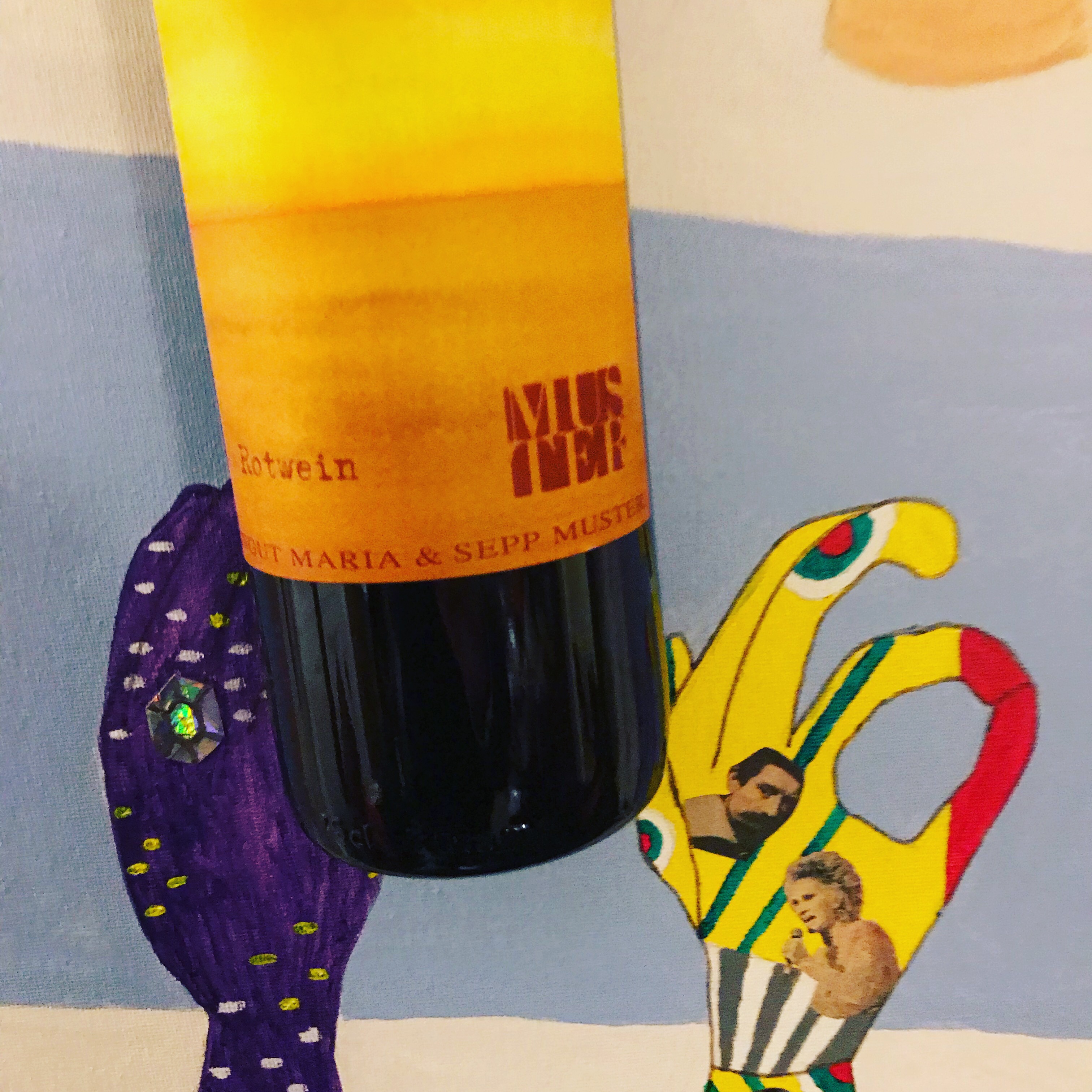
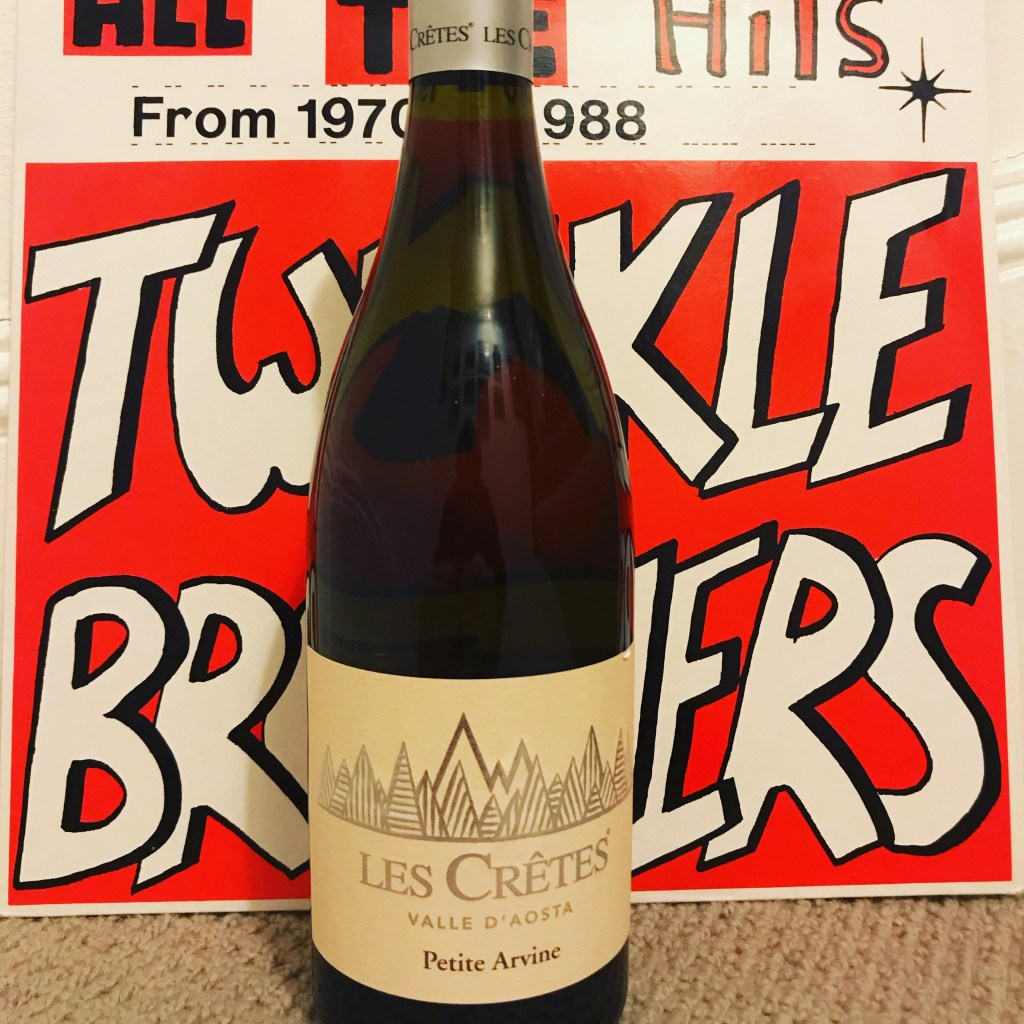
You can see my stash in the photos below. A modest set of purchases, half-a-dozen from Georgia, two different Belluards from Savoie, Sepp Muster, Aostan Petite Arvine, Schueller Pinot Noir from Alsace, and said Grüner. To be fair, I didn’t have room for any of them. No Jura some of you say! Well, Les Caves does have an exceptionally good Jura offering right now, but I’m off to Arbois myself very soon (just thought I’d whet your collective appetite).

For everyone within driving distance, Pew Corner is waiting to welcome you. It’s like Santa’s Grotto but without the tinsel for any true wine obsessive. Come on down.

D4C36EE6-054B-4A20-B075-60D22404EEE0

9D405AFF-E3C5-40CE-A086-837A802BD370

As I mentioned, Les Caves is thirty years old this year. They are holding lots of celebrations, with several at Terroirs  Wine Bar near Trafalgar Square in London. You may well have read about their enormous 30th Anniversary Tasting (if not, see here, where I explore a reasonable chunk of the Les Caves de Pyrene portfolio).

I also should mention that the shop at Pew Corner will be open 9.00am to 6.00pm on Saturday 8 December for their Christmas Tasting. There will be a wider selection of wine than usual to taste, along with what they describe as “some festive treats for your delectation”. Sadly I am unable to go, but it will certainly be worth it, if somewhat busier than usual.

For other opening times, especially in the run-up to Christmas, check out their web site: https://shop.lescaves.co.uk/lescaves-shopfront. Usually they open Monday to Friday, 08.30 to 17.00 (closed weekends), but will be open on some Saturdays in the run-up (including every Saturday in November from 09.00 until just 13.00), undoubtedly helpful if you have to work in the week.

For those who would like to get to know the Les Caves portfolio but live too far away to visit, they do offer some always interesting monthly mixed cases. They are currently suggesting a Thanksgiving themed case alongside November’s monthly offering. 15% off shop prices and with free delivery! I know this sounds unusually like an advert from me, but I can’t help salivating at the wines in the Thanksgiving six-pack (that offer is available just until 22 November). If anyone needs some ideas for my Christmas present…


Posted in Artisan Wines, biodynamic wine, Natural Wine, Wine, Wine Agencies, Wine Merchants, Wine Shops | Tagged , , , | 1 Comment

Tuscan Gems at The Glasshouse

It’s almost two years since I visited The Glasshouse in Kew (right by the Underground Station). On that occasion it was with the same bunch of people who come down to London from all over the UK a few times a year to share their passion for all things Tuscan. These guys even visit Toscana together, and I have to admit they do put my own cellar to shame when it comes to that region’s wines. As was the case on Friday last week.

It’s worth saying a little about The Glasshouse. It is part of the same stable as The Ledbury, Chez Bruce and La Trompette, owned by Nigel Platts-Martin and (in this case) Bruce Poole. Next year it will celebrate its 20th Anniversary, and it gained a Michelin Star way back in 2002. Although you’d describe it as “fine dining”, the atmosphere is nevertheless relaxed and friendly. The food is of a really high standard, as I hope the photos show, but as with the whole NPM stable, nowhere does a wine event quite as professionally as The Glasshouse.

THE WINES

Solosole “Pagus Camilla”, Bolgheri Vermentino 2015, Poggio al Tesoro – What a start. This is stunningly good. The fruit has a touch of ripeness yet it is fresh, dry, stony and aromatic at the same time. The finish shows a lovely salinity. It’s also worth noting the alcohol, 14.5%, but it doesn’t seem chubby in the slightest. The grapes are grown in a seven hectare plot by the Camilla River within the Sondraie vineyard, and the estate has been owned by Allegrini since 2002. I don’t recall a better Vermentino, at least for a very long time. Expect to pay £40+ but the quality is very high.

7F6424BF-9B25-4905-A0B3-5D0DCF5237B9


Panizzi “Evoé” 2013, IGT Toscana – I’m not sure why this wine is labelled as IGT nowadays. It used to be labelled as Vernaccia di San Gimignano, and it is certainly still Vernaccia. The style here is a long maceration on skins, followed by ageing in wood. These wines were all served blind, always fun, though I don’t claim any major successes (unlike some), but it was very clear that this is a maceration wine. With that texture comes, in this case, a dry minerality, but also an unexpected floral note. I did think this was Vernaccia, but put it older than 2013. In contrast to the first wine, this only showed 12.5% alcohol. Still loved it, though, beautifully balanced.

4591CBB8-B150-46D3-911B-916A08ECDFCB


Riecine Chianti Classico Riserva 1988 and Riecine Chianti Classico Riserva 1997 – These were two of the stars of the show, for sure. John Dunkley and his wife bought Riecine, or what then was just a 1.5 hectare vineyard, from Badia a Coltibuono in 1971, and released their first (1973) vintage in 1975. Although no longer around at the estate, Riecine became synonymous with genius Australian winemaker Sean O’Callaghan, but he was only taken on in 1991 as a young intern, so only the second of these wines was made in the O’Callaghan years. Before that, the Dunkleys’ friend Carlo Ferrini was advising, and in fact the last vintage with which Ferrini is associated was 1997.

Although most of us felt that the first wine, the 1988, clashed a little with the otherwise superb cauliflower dish (see below, later), the wine itself was singing. Massively fresh, you’d never believe this is thirty years old. That purity which O’Callaghan seemed to make his own was there back then, perhaps showing the quality of the terroir in this corner of Gaiole. At the time of the vintage Decanter Magazine declared it a great year and praised Riecine Riserva in particular.

I have always had a general preference for Chianti Classico Normale, as opposed to Riserva (let alone the Gran Selezione malarkey). The soul of the Chianti hills lies therein, for me. But this astonishing 1988 shows why Riserva is a valid iteration of Chianti…if you can wait for it to mature. It is only then that Riserva becomes something very different. I wish I had a bottle of this. It would be a wine to save for my 60th.

The 1997 might well have seemed dull by comparison, but it didn’t. You’d be forgiven if you expected it to be reasonably mature, yet we all agreed it is really just transitioning to its secondary phase. I reckon that it tied with the 1988, and with the Barice Brunello below, for wine of the day (a closely fought battle of giants). The amazing longevity of these wines is well worth taking note of. It puts Sangiovese right up there with Nebbiolo, and with France’s most famous varieties.

Mastrojani Brunello di Montalcino 1993 – This wine was fading a little. There is still a bit of fruit, but as it sat in the glass a real aroma of vegetal decaying leaf matter took over, developing quite swiftly. At the same time, a few of us wondered whether it was served in the wrong glass for the wine. It seemed, as one person commented, just a little scalped, although not obviously faulty in any way.


Fontodi Flaccianello 1999, Colli Toscana Centrale – Flacianello Della Pieve is Fontodi’s 100% Sangiovese “supertuscan”, aged for 24 months in new French oak (Allier and Tronçais). The vines are densely planted and trained in the guyot system in the great amphitheatre of Panzano, the Conca d’Oro. It would come as no surprise then that Flaccianello can be a big wine in its youth, yet the richness and ripe fruit make this 1999 not only approachable, but truly delicious. I’m not sure why, but we all thought there was just a tiny hint of brett on this bottle, but if anything, it just enhanced the wine. Bet Jamie Goode has something to say on this in his new book.


Badia a Coltibuono Sangioveto di Toscana 1997 – Two or three years ago people were saying that this vintage was either at its peak or just over. In 2018 I would suggest that it probably does need drinking up if you have any, although of course it will vary from bottle to bottle. There’s a touch of spice but the fruit has largely faded. Initially you get a stately wine relaxing for an afternoon snooze, very pleasant, but to be fair, it did begin to dry out as it sat in the glass.

14FD21F2-F57E-41BD-9D21-F4E7640F3936


Baricci Colombaio Montosoli Brunello di Montalcino 2008 – Although one of the youngest wines on show, this really shone and I’d put it up there as one of my favourite wines of the day. The estate lies in the north of the DOCG, with vines on the famous Montosoli hillside. Interestingly, 1988 was not considered a stunning vintage for Montalcino. There were some contrasting views, with many commentators suggesting they were wines to drink early, but Jancis Robinson astutely noted that it was a vintage in which the best terroirs shone. Well, there are few Montalcino terroirs better than Montosoli.

The colour is lovely. The palate has a hint of dryness, but there’s still classic cherry fruit, silky as well. It’s very “old school”, suggestive of a wine aged in larger and older botti (Slavonian oak, maybe?). If it didn’t quite top the Riecine pair, certainly a WOTD contender.

16689EC9-11DD-4A26-BC76-DD1CAF2CEEAB


Biondi Santi Rosso di Montalcino 2008 – Another 2008, and sadly this was the wine I took along. I say sadly because it was corked. I had figured that despite the vintage, this Rosso is well known to be long-lived, and of a high quality (low yields, 12 months in Slavonian oak). In fact I’d been looking forward to revealing that it was only a Rosso. Who knows what it might have been were it not for cork taint.

71B3AC3A-A402-4C7E-BDD1-1BC108FE2D63


La Porta di Vertine Chianti Classico Riserva 2010 – This is another Gaiole estate, or rather I should say was. After less than a decade, La Porta di Vertine was (I believe) sold in 2016. By this time it had achieved a fine reputation, if perhaps a little under the radar in the UK, for low yielding Sangiovese wines made “naturally”, without additives.

The estate’s vines are on shale and limestone at around 500 metres altitude. The Riserva saw eighteen months in old, large, oak followed by a further year in bottle before release. The 2010 still has a fairly youthful, tannic, structure, enhanced I suspect by being served out of magnum. It’s rich and spicy, and alongside red and darker fruits, it has a lick of mocha or coffee grounds. There is, I understand, 5% Canaiolo blended in with the Sangiovese. Another impressive wine on which to finish the reds, but it will certainly blossom with further age.

E7A3E038-91A6-485E-877E-DFE8B0B96824


Riecine “Sebastiano” IGT Toscana 2001 – This really is becoming a bit of a Riecine-fest! Sebastiano is a Trebbiano-Malvasia blend from old-ish vines (25-to-30 years plus) at around 450 metres altitude on limestone and clay. Biodynamically grown, as with all of Riecine’s production, the wine is made by two different harvesting methods. Some grapes are cordon-cut, on the vine, and left to dry before late harvesting. Other grapes are harvested early and left to dry indoors.

Although labelled IGT, Sebastiano is like a rich Vin Santo, showing lovely deep colour. Where it really scores is in its blend of honeyed roundness and fresh citrus peel acidity, absolute perfection. I used to always drink Vin Santo on Christmas Day, and I wish I had some of this for the next one. Sebastiano is only produced in exceptional vintages, and spends about a dozen years in oak. This 50cl bottle is from a production of just 2,500 litres. An expensive and amazingly complex treat with which to end a brilliant lunch.

THE FOOD

Despite a few wines not showing their best, this lunch was such a pleasure. I know I said that there was an issue in matching the 1988 Riecine with the food, but these things happen. The standard of cooking at The Glasshouse is more than deserving of a Michelin Star. I know I eat “Michelin” far less than I used to, but I can still tell a good one when I see it, and you don’t need my inexperience to tell you how good The Glasshouse is.

We began with a starter of Orkney scallop sashimi with yuzu, white soy, enokis, sesame, ginger and chilli. All the flavours blended well in a deliciously fresh and palate cleansing whole. The sesame oil and soy dominated at first and then other elements, especially the ginger, came through.

DCE3000D-407F-4909-873E-EB32E2A068BD

Second course was a nice touch. One of us is vegan, and ate a vegan menu, but this vegan course was served to everyone. Roasted and shaved cauliflower with cashew milk, black truffle and soused king oyster mushrooms was a treat for us all, a range of subtle flavours. I thought the cauliflower’s well roasted flavour was outstanding, but this may have been what tipped the balance viz wine pairing with very old Chianti.

721E2BD2-A343-4904-9359-E72C30E13970

The main course of Lamb à la Niçoise, with olive oil (and olives), creamed potatoes and violet artichokes shone for me. The lamb was delicious, perfectly cooked, and textured. Pity me though. I have just come back from Yorkshire, eating what are openly described as “Yorkshire portions” on some menus. My stomach is consequently somewhat stretched. My eyes wanted seconds, though my head tells me I need to work on eating less for a while. Those artichokes were delicious too.

3574422E-C169-4118-B992-EE0BB6DE0645

Dessert was chocolate, banana and pecan éclair with dulce de leche ice cream. I love dulce de leche, a confection which is made by heating sweetened milk with sugar until it reduces and caramelises. If you have a sweet tooth, it’s certainly one to increase the heartbeat of any devoted sugar lover. Add in a fresh éclair and, well…late lunch today and I almost can’t look at these photos.

2CAC3599-02DC-4F0E-BF10-4523E435DC70

Of course, this was an organised wine event with a set menu, and byo on the wines, but the standard of cooking here suggests that we should all try to get down to The Glasshouse more often. Check them out here. Whilst you are there, don’t forget to check out The Good Wine Shop, Kew, literally a two-to-three minute walk away.


Posted in Dining, Italian Wine, Tuscan Wine, Wine, Wine and Food | Tagged , , , , , , , , , , , , , , , , , | 6 Comments

40 Maltby Street

London is full of restaurants which are without any doubt “worth a detour” in Michelin parlance, and despite the pressures on our economy they continue to open, for now. What with trying to keep up, which I am failing miserably to do (yet to get to Leroy and Brat, both unforgivable omissions), old favourites get left by the wayside. Not that I’ve been enough times for it to really count as an “old favourite”, but two years had passed since I’d visited 40 Maltby Street when I met a couple of friends there at the end of September, and that was around twenty-three months too long. The surroundings may be far from plush, but the standard of food here is pretty remarkable.

40 Maltby Street isn’t the easiest place to find if you’ve never been, sitting between London Bridge and Bermondsey Stations, among the bars, breweries, distillery, bakers and wine merchants which have congregated around the narrow streets and railway arches south of the London Bridge terminus. It’s a tiny place too, or at least the bit you eat in. The restaurant is actually part of the original warehouse (since moved, I think) for its sister wine merchant, Gergovie Wines.

Gergovie is the icing on the cake here for lovers of natural wines. It’s not just that they specialise in natural wines, but Gergovie only sell wines which are wholly of that genre, shunning all additives including sulphur. It is worth noting that as a consequence the wines here will be suitable for vegans. The Gergovie range is available to purchase on site, and can also be sampled in the restaurant.

A403E90F-B928-490D-BEFB-AE2DF2BE54AC

The Wines

Explosive Materials Brut Nature, L’Égrappille, Auvergne

This just seemed the obvious place to start here, what with Gergovie Wines being named after an Auvergne plateau ten kilometres south of Clermont-Ferrand. We have a sparkling Gamay from the most happening wine region in France, made in the same locale, near Blanzat, on the edge of Clermont.

This producer is quite typical of the region, having taken time to amass just 3.5 ha of vines on the rich basalt which underpins the rugged hills here. The Auvergne was once an enormous viticultural area, as I’ve mentioned elsewhere, but rural depopulation did for the Auvergne as it did for much of France’s sources of cheap wine. That left great opportunities for those seeking cheaper vineyards in many such regions, but the spanner in the works here has been the growth of Clermont-Ferrand.

Although Michelin is no longer the great employer it once was (at one time Michelin employed 30,000 people in Clermont), the city has diversified, and its engineering industries still thrive. This means that there are always pressures on land prices, and if you are an older ex-vigneron with a hectare or two of vines, you’ll get a lot more money from a developer than from a young couple hoping to start a vineyard.

I only mention this history because it is important to realise that those who are making a go of wine in the Auvergne are doing so facing many difficulties, and it puts their hard work in context. Those lucky enough to get hold of a hectare or two are able to benefit from very old vine stock, especially probably the best Gamay outside of Beaujolais. At least there is also a local market, although the wines of the Auvergne are now reaching places those original old timers could only have dreamed of.

Explosive Materials is a delicious sparkling Gamay from Chateaugay, one of the best known (at least among wine obsessives) of the communes of the Côtes d’Auvergne appellation, which just bursts with life…and fun. Auvergnat Gamay often tastes quite different to what we are used to from this variety, with more strawberry and raspberry fruit than cherry. There’s a lightness here, coupled with just 11% alcohol, which makes this a genuinely delicious aperitif. The bottle had 2016 stamped on it, and yet it still seemed remarkably fresh. Highly recommended.

B16E8C20-3A28-4093-87E0-B1DFBE35FA04

L’Éphémère Blanc 2016, Julien Peyras, Languedoc

Julien Peyras has been farming at Paulhan, in L’Hérault, just a little to the northeast of Beziers, since 2007, family vineyards whose fruit previously went to the local co-op. From the outset Julien ditched the chemicals. In fact he’s a member of several organisations which promote fully natural production methods, including zero sulphur.

The grape mix here is Grenache Blanc, Clairette and Roussanne, which is one of the classic white blends of the region. Rather than pure fruit flavours, you get a wine that’s more in the mineral spectrum with herby notes dominating, along with some stone fruit. That doesn’t mean that the wine itself doesn’t taste pure, because it does, remarkably so. It’s quite dark in colour, showing the patina of some bottle age, but it doesn’t fall into the oxidised camp. Instead, the flavours are complex and elusive as the wine changes in the glass. An impressive wine, made by a man who by all accounts is one of the region’s most thoughtful. As Gergovie say on their web site, Julien’s wines show a maturity beyond his years.

B8484A8F-E918-4A83-A544-EE167978ECA0

Brân “L-16”, Raisin et L’Ange, Ardèche

Raisin et L’Ange is the name of the small negociant business run by Gilles, and his son, Antonin, Azzoni. They are based, with a small vignoble of their own, in the Vallée de L’Ibie in the Ardèche. I’ve actually been not too far from here, the closest town being Aubenas, and it feels pretty remote, west of the Rhône, more or less on a level with Montélimar.

Antonin has pretty much taken over making the wines from his father now. They buy in most of their needs, all organic, and as you will now have come to expect, eschew all additives in the winemaking process. Brân, which presumably is not named after the Giant in Welsh mythology, is a blend of Merlot and Gamay off schist. Winemaking is as simple as possible, with spontaneous fermentation in stainless steel, but the wine’s own simplicity is its major plus point.

There’s a mix of red fruits with cherry here, plus a touch of bitter pepper, a little weight (13% abv) and a silky texture. A lovely wine which just slips down nicely. I’m not sure of the exact percentages in the grape mix, but there does seem to me a little more Gamay coming through, with Merlot (or at least typical Merlot) playing a supporting role.

D0D18966-19F8-4F6E-B8D6-E62AB269FE0F

That’s three wines which fall into the category of “drinkers”. I know you’ll read restaurant reviews in which people order smart wines, for which they pay three times retail price, to go with their justifiably lauded Michelin-starred cuisine, but the food here seems to cry out for wines which “accompany”, rather than fight for supremacy. There was also no doubt about it, three of us demolished these wines without any problem. In fact I think we had a glass of something else afterwards, but I have no notes and no recollection, so the wines I’ve listed obviously went down very well indeed.

The Food

Well, I won’t say a lot about the food. I mean, I’m here to tell you about the wines, but the food as I have said was more than excellent. In fact before I went to 40MS this time I was reading around and came across a review by that most reliable of restaurant critics, Marina O’Loughlin. Writing in The Guardian back in 2014, she said “The food that issues from the postage-stamp-sized kitchen is all pretty much faultless”, and I can say without caveat that the same is true today.

There were highlights, of course, and I’d say that the game sausage roll was unmissable, but the long menu chalked up by the bar has the sort of selection where even with a few people sharing, you never exhaust the possibilities. That is especially true of the desserts, which are certainly not an afterthought here, so leave some room. The menu also changes pretty much daily, so there’s little chance of getting bored.

The cooking style here is what I’d call “East London Small Plates”. Sometimes the small plates concept is just annoying, especially when sharing, as there’s never enough and whatever the number dining, if you share there’s always a dish or two with too few pieces. But here, the dishes are substantial enough, so long as your friends are not too greedy. Selecting as many as you can eat soon becomes the main consideration.

With such quality on offer there is a down side, and that is that 40 Maltby Street soon gets packed. I don’t just mean at the weekend, when the surrounding area is a buzz of food and drink lovers and the place is rammed. Even in the week it gets full, the answer being to get in early before all the hard working people fall out of their offices and studios.

Open Wednesday to Sunday, but check times on their basic web site here. No reservations are accepted, so bear in mind what I said about dining early, or at least turning up for a bottle before you order food.

Posted in Dining, Natural Wine, Vegan Wine, Wine, Wine Agencies, Wine Bars | Tagged , , , , , , , , , , , , , , | 2 Comments

Recent Wines (September 2018) #theglouthatbindsus

September saw Southern England’s summer continue (as it has done up until this weekend, but though I type in glorious sunshine the wind has turned and the Nebbiolo season may be about to start). The wines here are therefore still quite summery, but I’m increasingly enjoying lighter wine styles throughout the year. As I get older, less alcohol and refreshment seem to be preferable to inky wines which come as thick as soup. I’ve been restrained and only selected ten of the wines we drank at home last month, but every one is a genuine cracker.

Shan Pan [2017], Cascina Zerbetta, Piemonte (Italy) – This might just be the most unusual wine here. Paolo Malfatti and Anna-Maria Zerbetta farm just three hectares at Quargnento, just west of Alessandria. This is a col fondo sparkler, but we are not in Prosecco here. Nor, indeed, are we drinking Cortese, Arneis or Moscato, but Sauvignon Blanc.

I first tasted this back in May at Modal Wines’ Plateau event in Brighton. I was impressed enough to include it in a few wines I subsequently ordered, not because I thought it complex or anything, just that it seemed a perfect summer wine, which is exactly what it proved to be.

Definitely worth going for the “shake it up” approach to distribute the lees, making the wine cloudy but (in this case, for sure) infinitely more flavoursome. It’s “frizzante”, light, and zesty with a little mineral texture and mouthfeel. The bubbles are quite fine, and light. There’s acidity but it’s far from rasping. We took this to an open air theatre event (an excellent “The Crucible”) and it was picnic perfection. Just 11.5% abv.

Importer: Modal Wines

Bourgogne Aligoté <<Skin>> 2017, Du Grappin, Maconnais via Beaune (France) – As Andrew and Emma Nielsen stray further from their original “Le Grappin” cuvées, from the Côte d’Or, I get more and more excited. Of course the Beaunes, Santenays and others are as wonderful as ever, but Andrew and Emma Nielsen seem to be saying to their biggest fans “okay, we know a lot of you can’t really afford these wines any more but we’ll give you excitement and innovation to compensate”.

That is certainly the case with their Beaujolais cuvées, but this particular Aligoté is perhaps their most exciting wine under the “Du Grappin” label to date. The straight Aligoté, which I’ve written about before, is really good, but this skin-contact version just takes things a small step further. There is no doubt that Aligoté is getting more and more fashionable, and less and less gratingly acidic, but Andrew has hit upon a vinification here that adds even more to the variety.

The grapes come from Perelles-le-Haut in Macon Roche-Vineuse, from south-facing alluvial Bathonian limestone. The vines are 80-years-old. A ten day carbonic maceration, skin contact and nine months resting on lees in old barrels, and bottling without fining nor filtration, gives a wine that has a touch more colour than the straight Du Grappin Aligoté, but nothing extreme. We are not in “orange wine” territory. The nose is pure Aligoté, gently appley with a little lemon citrus. The palate has a bit of grippy texture, without anything like the acidity levels you found in Aligoté of old. In fact, I’d go as far as to say there’s a little richness to it.

It’s hard to describe how fabulous this wine is, because its qualities come through as being just a little bit under-stated, not at all in your face. The texture, and that tad of richness, make it an ideal food wine, rather than anything in the aperitif style (and, heaven forbid, keep it well away from crème de cassis).

The only negative, from my point of view, is just how little Andrew bottled. Most went into cask for Uncharted Wines, so if you see it in a bar or restaurant which is serving it from keg, grab a few glasses. I tasted it from keg at the recent Uncharted Wines portfolio tasting, and it tasted every bit as good from that format as from bottle.

Availability: almost non-existent. Contact Le Grappin direct, or contact Uncharted Wines to find out who has it from keg.

71BBF831-E9F1-4A0C-BA30-A28A57F14C33

[Chardonnay] Vin de France 2015, Philippe Bornard, Pupillin (Jura, France) – I have been quite lucky in bagging a few of Philippe’s wines recently, though none as good as his elusive pétnat, which I also drank in September, at Solent Cellar with a slice of Comté tart. It’s not that I don’t try to buy some wine every time I’m in the region, but he’s invariably sold out. Somehow Simon at Solent Cellar managed to get hold of a selection of Bornards, and what I picked up from him included two Chardonnays from 2015. One is labelled as “Côtes du Jura Les Gaudrettes” and the other just “Vin de France”. My understanding is that they are actually the same wine, but I’ve no idea why the different labels in one vintage. Can anyone enlighten me?

Okay, this is a 2015 and shows 13% alcohol. You just don’t expect such a zippy entry on the palate, but the marls of the Jura, and the additional limestone found in Philippe’s Pupillin parcels, often give that freshness even in a warm vintage. In fact this is very much a Jura wine, especially on the bouquet. You get citrus, but it’s also quite (lightly) nutty, and that woodsmoke you immediately notice in the region when you visit somehow comes out in the wine as well…just a hint. It’s also as close to a pure fruit juice as you can get. You really don’t notice that it’s alcoholic on the palate.

9802B864-24D2-4EDF-B8E2-47DC8123AF65

Klevener de Heiligenstein 2016, Domaine Rietsch, Mittelbergheim (Alsace, France) – My visit to Jean-Pierre Rietsch was one of my highlights of 2017. Indeed, it was my first visit to the region, which I know very well, for quite a few years and all the feelings I have for Alsace came pouring back. I brought back a mixed case from Rietsch. Jean-Pierre makes many different wines, as is the way in Alsace, so I only brought back single bottles. That has its advantages, you get to try more of the range at your own table, but it’s quite heartbreaking to drink a wine like this and know you don’t have any more. The good news – Wines Under The Bonnet are importing Rietsch since the beginning of this year, so the wines are finally available in the UK again.

Heiligenstein is a village just a little way to the north of Mittelbergheim and Barr, in the lee of Mont-Saint-Odile. The village is unusual because it has its own speciality. Klevener is confusingly not the same as “Klevner”, the latter being a synonym of the Pinot Blanc family. Klevener refers to Savagnin Rose (or Roter Traminer in Austria). It’s a white grape with a reddish-tinged skin which does really well on the argilo-calcaire soils of Heiligenstein.

This is one of Jean-Pierre’s zero sulphur wines, wholly “natural” in every way. Vinification includes eleven months ageing on lees in demi-muid barrels. It comes out sunset yellow in colour, and it is pure, focussed and dry. Its characteristic is a nutty, savoury edge, with a tiny bit of richness. There’s a miniscule 0.4 g/l of residual sugar, which perhaps is too small to notice, but perhaps this is what hints at that latter quality. Amazing! I’d actually put this up there among my wines of the year so far (crazy guy), it’s that good. Philosophical winemaking of a very high order.

1D452E9C-0CCC-4B6F-A5AB-5471D4F9B656

Artego [2017], Tillingham Wines, East Sussex (UK) – Ben Walgate is building what is potentially going to be one of the most exciting vineyards in the UK, along with a restaurant, visitor shop and rooms to stay in, at Peasmarsh, near Rye. As his own eclectic vignoble matures, and as his new batch of Georgian qvevri are buried, he’s been sourcing grapes for his initial cuvées.

Artego is, as the name so obviously alludes to, Ortega, which Ben scrounged from Westwell Vineyard, a near neighbour, close to Ashford in Kent. This is the batch which didn’t go into what, at the time, was his only Ortega qvevri. The grapes were lightly crushed into open fermenters and macerated twice-daily by foot for five days. Then the fruit was pressed in small batches in Ben’s basket press. Half of the juice was aged in old Burgundy barrels and half in stainless steel. A tiny bit of sulphur was added, as little as Ben felt he could get away with.

Whereas the qvevri version of Artego has all the texture of an orange wine, with its inherent complexity, this version is quite zippy and fresh. The acidity is reasonably high and the fruit is all apples, with perhaps a tiny lick of grapefruit. Ortega, a Müller-Thurgau x Siegerrebe cross, is generally quite a low acid variety (high must weights make it a sure bet for very sweet wines in some German regions) but I think this fruit was picked reasonably early, preserving a wonderful level of balanced acidity.

It may be that the real geeks among us will find the ever so slightly challenging, certainly complex, Qvevri Artego ultimately more satisfying, and even exciting, but remember, this wine retails for a little more than half the price of the Qvevri version. Only a little over 1,000 bottles were made, so snap it up and enjoy some deliciously fresh Ortega.

Distribution is through Les Caves de Pyrene.

4CA69BDB-04C7-4069-BA2A-2A27A2E86F57

Deviner 2015, Slobodne, Zemianske Sady (Slovakia) – You don’t see many wines from Slovakia’s Carpathian Mountains this good, but I’ve drunk this 2015 Deviner three times this year and I can say quite honestly that it is stunning. Deviner is a blend of Devin (a Traminer/Roter Veltliner cross) with Traminer itself. This wine is grown in Slovakia’s western hills about an hour from Bratislava.

Unlike in some of the former Communist states, when the Wall came down over Europe, in Slovakia agricultural land was redistributed back to its original owners…if you could prove title. Thankfully for sisters Agnes Lovecka and Katarina Kuropkova, they could, from papers that had been hidden away for decades.

Although Slovakia’s reputation currently lags a bit behind that of near neighbour Moravia, in the Czech Republic, there is hardly less of a natural wine movement growing here than in that exciting region. There’s a triangle of concentrated natural wine activity which also takes in Northeastern Austria, though the influences on Slobodne are perhaps primarily more local (in particular from Zsolt Sütó at Strekov 1075).

Six weeks on skins for the destemmed fruit gives this Deviner its flavour, along with what seems like just the right amount of texture. The colour is more straw-gold than orange, and the aromatics combine citrus (grapefruit and lime) with stone fruit (mainly peach). It’s dry and freshly acidic and a real find.

Imported by Modal Wines in the UK (with seemingly good US distribution too).

Côtes du Jura “Balanoz” 2015, Domaine Berthet-Bondet, Château-Chalon (Jura, France) – Another 2015 Jura Chardonnay, this time from further south of Arbois-Pupillin, in the middle of the elongated Jura region, hailing from one of Château-Chalon’s finest producers. I opened this after seeing how well it was drinking at the Jura event I introduced at Solent Cellar in Lymington back in September, from whom I had previously purchased this bottle.

Balanoz is a parcel selection of topped-up (ouillé) Chardonnay. Recommended drinking suggests three-to-five years, but this 2015 has a rounded richness that makes it worth drinking right now in my opinion. It’s a good bit fatter than the Bornard (above), but it does still have acidity to balance it out. It’s more rounded than that leaner wine, and is quite savoury. It also has very good length. Age will mellow it further but personally I think it seems good to go. I hate to use descriptions suggesting this is more “Burgundian” in style than Philippe Bornard’s Vin de France (see above), but I suppose many people would describe it that way.

62001F7C-1A79-4888-9743-20EE6BDAE9DD

Gentil de Katz 2015, Clément Klur, Katzenthal (Alsace, France) – Katzenthal is just south of Ammerschwihr, and west of Colmar, in the southern, Haut-Rhin, part of Alsace. It’s a “Gentil”, the modern name for an Alsace blend, with perhaps more of a quality ring than the older “edelzwicker”.

The blend in this case is made up of 50% Pinot Blanc, with 25% each of Pinot Gris and Gewürztraminer. The bouquet is quite floral and exotic, grounded by a little soft pear aroma. The palate is quite rich and only just dry, and very fruity (peach/apricot perhaps), finishing, well, as the name ironically suggests, gently. This is a wine I come back to from time to time. Klur makes wines that are more sophisticated (he has vines on the Grand Cru Wineck Schlossberg), and he makes a damned good Crémant d’Alsace as well, but somehow this wine just reflects the beautiful scenery from which it comes, whether in springtime or autumn. Soft, gentle, satisfying…and pretty widely available via Alliance Wine (though probably now in a later vintage).

7A18F35E-59AE-4029-B82F-480339139AF4

Pink Bulles Vin de France “XVII” [2017], Jean Maupertuis, St-Georges-sur-Allier (Auvergne, France) – The Auvergne is definitely one of the most exciting emerging wine regions in France. Once massively covered in vines, rural depopulation emptied it (as did war) in the 20th Century, and even before that rural poverty made life difficult here. Cheaper vineyard land has made it a destination for young vignerons starting out with little hard cash but plenty of attitude, talent and an aptitude for hard work.

Jean Maupertuis was one of the first, although he’s hardly that young. He worked in computer science, got interested in wine and left. At wine school in Macon he met Eric Macé, who introduced him to the world of natural wine (via Lapierre, Thévenet and others). He was lucky to be able to rent 3.5 ha of vines around fifteen-to-twenty kilometres south of Clermont Ferrand, back in the 1990s from a vigneron who was soon to retire, and it is these vines which form the core of his small estate today.

Pink Bulles is a pétnat made from Gamay vines over fifty years old. It’s a particular strain of Gamay, known as Gamay d’Auvergne. It has the pale colour of pink grapefruit, and a strawberry scent, mirrored on the palate, rather than the cherry characteristics of the grape in Beaujolais to the north. The bubbles are focussed, quite tight, and this complements the lighter fruit. It finishes fruity and just off-dry. Another brilliant summer fizz, “exquisite” seems the most appropriate description I can come up with. Grab the last few bottles if you can whilst the sun lasts. I’m guessing this is so fresh that any bottles left over until next spring will be pretty interesting as well.

Contact Les Caves de Pyrene.

3B0C9531-4694-4BFE-AED7-163956E71BD5

Schieferstern “Purus” 2016, Rita and Rudolf Trossen, Kinheim (Middle Mosel, Germany) – Kinheim is one the less fashionable villages of the Middle Mosel, yet between Urzig and Erden on the one hand and Traben-Trarbach on the other, anyone who has cycled along here will know that these vineyards, on weathered slate, are still part of that same impressive stretch of vines. What is more, the Trossens have the benefit of owning a large proportion of ungrafted vines over a hundred years old.

Rudolf Trossen has the weather-worn face and classic, permanently affixed, felt hat of one of the older Mosel winemakers, and with the history of wine here, it surprises many to learn that the Trossens have been farming biodynamically since the late 1970s. Few people outside of wine have heard of this estate, but Rudolf has become something of a guru for those wishing to follow a more sustainable, and eco-friendly, path on the river.

Winemaking here is by no means static. The Trossens’ “Purus” range of wines, which have no added sulphur, only date from 2010, initiated as an experiment which worked. Rudolf believes that by giving these wines extended ageing on lees, this helps to stabilise them, something a lot of makers of skin contact and lees aged wines the world over are discovering, to our benefit.

This 2016 Riesling is even more stripped back than the norm on the Mosel as a result of this zero sulphur regime, and seems very precise. And as the name is intended to suggest, it tastes very pure indeed. There’s acidity and dryness, held together by a mineral structure and texture. But there’s also another dimension to the wine, something different, which I can best characterise as “vivacity”. It really does taste alive, as all the best biodynamic wines do.

Is this for everyone? I sincerely hope not, because there’s not enough to go around. But my friends who are more into classic Mosel producers do, on the whole, find these wines as fascinating as I do. Kind of Riesling on the edge.

Imported by Newcomer Wines.

EB16CE8E-EBEC-41E2-96EC-B44E06E0A36C


Posted in Artisan Wines, Natural Wine, Wine | Tagged , , , , , , , , , , , , , , , , , , , , , , , , | 9 Comments

Canevel: It Really Is Time To Take Another Look At Prosecco

Prosecco, what, that cheap supermarket mainstay of every vodka and coke drinker’s Friday night? Has he gone mad? Well, actually, no! A long time ago I used to drink Prosecco from time to time. It actually provided a nice contrast in style to the many bottle-fermented (which in those days we used to call “Champagne method”) sparkling wines, the ones we now know as Crémants, which were produced all over France.

Back in those days, the cheap supermarket fizz of choice was Cava from Spain, especially the black bottle of Freixenet Cordon Negro. These days you’ll pay £8.50 for that particular Cava in Tesco, but a bottle of Prosecco can be had for £6.25, and I’m sure that something will be available for under £5 when the Christmas offers kick in.

Prosecco used to be a grape variety, but they renamed it Glera in order to head off those who would wish to make “Prosecco” in other parts of the world. Prosecco is a lucrative business. But Prosecco is also a wine region. As DOC it can come from any of nine provinces in Northeastern Italy, but as a “Superiore DOCG” it can only come from the hills between Conegliano and Valdobbiadene (north of Treviso) and from Asolo, both in the region of Veneto.

Those hills are especially steep and stunningly beautiful. I’ve never visited, but I can recall quite well how it was photographs of these vine-clad green hills which were a catalyst for my early interest in the wine, before it shot to infamy. The particular bottle I sought out, and subsequently drank many times, was Bisol’s Cartizze (although Carlo, see below, will I hope be pleased to note that I also drank Canevel’s “Vino Spumante Aromatico La Vie” several times around the turn of the Millennium)…along, I will readily admit, with the odd Bellini cocktail, for which Prosecco was famous.

Although Prosecco is tank fermented, by the Charmat method (known regionally as the Martinotti method), often looked down upon by those who ferment in bottle, Cartizze was one of what turn out to be several special crus (effectively large single vineyards) where grapes ripen slowly on complex soils. This Bisol wine, with its almond and pear fragrance, acidity balanced with softness, and around 25g/litre of sugar back then, ensuring it was off-dry, made it stand out against any of its more acidic competitors (Bisol Crede was, and remains, by way of contrast, a rare Prosecco Brut, at 10 g/l sugar).

It was with wines like that in mind that I headed off yesterday to meet Dottore Carlo Caramel (current family head of Canevel) and Andrea Dal Cin (Technical Director and Director of Winemaking for Masi). The 2016 purchase of a 60% stake in Canevel, a great family firm in Prosecco, by the famous quality Veneto producer Masi Agricola, created a stir in the industry.

Masi has its roots in the finest wines of Valpolicella, and more recently is famous for projects in Tuscany and in Tupungato, Argentina, but it also has a green agenda which involves sustainable viticulture, with the removal of synthetic herbicides and pesticides and, over time, decreased use of sulphur in winemaking, along with all sorts of other interesting experiments…more on this later on.

31CF35A4-9CA5-4732-B1E2-5B0EABEAF9A8

The Doctor (Carlo) and Andrea

Canevel was founded in 1979 by Carlo’s grandfather, and from the beginning he wanted to establish a fully integrated production chain. Unusually for the region, when Mario Caramel didn’t own the vines in question, he worked with selected growers to oversee their work in the vineyard, and dictated when to pick. This gave Canevel a level of control over the grapes unlike almost any other producer in Valdobbiadene.

Another unusual step taken by the company was to put the year of production, or vintage, on the label to “inform the consumer”, a rare thing in a region of year-round fabrication for the cheaper wines. Canevel now owns 15 hectares of vines on an estate of 26 hectares (around 25% of its own requirements), and along with the grapes from its fifty chosen partner farmers, now produces 850,000 bottles each year.

With an emphasis on the quality wines of the Valdobbiadene district, Canevel purchased the cru of Faè in 1994, and in the following year they built a new production centre at San Biagio, since updated, in the heart of Valdobbiadene, just a few hundred metres from Cartizze. The whole ethos of Canevel has always been to concentrate on the premium end of Prosecco, and the new joint venture with Masi aims to develop that ethos in a number of different ways. These include single vineyard wines, zero-dosage Prosecco, and organics. Of course, the dream is also to re-inforce the preception of Prosecco, perhaps re-establish it in some markets, as a high quality terroir wine in the eyes of more discerning consumers.

Before moving to the DOCG wines it is worth mentioning that Canevel produces a Prosecco DOC Extra Dry. This soft, refreshing, wine is in some ways astonishing. It tastes not remotely like the Prosecco one usually finds at this level, although it is fair to point out that it would retail at around £11, twice the price of your usual supermarket fare…interestingly when Mario founded the company his wines were always around twice the price of the average bottle on the market.

The wine is typically pale straw in colour and is noticeably more frothy than many sparkling wines. But the bead is fine, it is aromatic and fresh, with 11% abv and just short of 13 grams/litre of residual sugars (the allowed range for Extra Dry is now 12 to 17 grams). A versatile wine, very pleasant. It doesn’t take much to realise that this is a well made wine from a quality producer, despite its apparently lowly appellation.

C8F705CA-E3C1-4914-9AAB-BF064D963402

The next wine we tasted together was Canevel’s Valdobbiadene Prosecco Superiore DOCG Extra Dry. This is the wine which from the very beginnings of the company topped the range. This is also emphatically a wine of the hills, hills with an average height of 300 metres, steep conical slopes to which the vines cling precipitously. The soils here are formed of conglomorates and shallow sandstone, which are especially free draining.

The wine is made by an initial fermentation in stainless steel at a controlled 15 Degrees Celsius, with refermentation taking place in November, similarly cooled over 15 days. This wine exhibits very fresh apple on the nose (rather than pear), with prominent floral, blossom, notes. Coming in at 11.2% abv with 16 g/l of sugars, this has a gourmande quality to it, a wine ideally suited for fish and seafood (and, we discovered, English cheeses). Less dry, but still dry (surprisingly), mineral and balanced.

It is marketed in the embossed bottle of the Confraternita of Valdobbiadene, which is only authorised for used by producers whose production is at least 51% or more of Prosecco di Valdobbiadene.

4E2AE48E-0F6C-400C-B1E3-DA1E8DDF9408

My special interest was aroused by the third wine I tasted, Spumante Dosaggio Zero Vigneto Del Faè. This is a Prosecco di Valdobbiadene Superiore DOCG from a single vineyard at 220 metres above sea level, near Refrontolo. High density planting is on clay, sandstone and marls. The wine is dry, of course (there is no dosage but a natural 3 g/l of sugar remains in the wine), and there’s plenty of dry extract.

The retention of proteins in the wine (always an aim at Canevel) helps to create a lovely mouthfeel, and one-and-a-half months on fine lees rich in aminos (released into the wine by daily stirring) enhances the profile and structure. So this comes across as finely crafted and an excellent example of a classic wine style.

The bouquet here is very fragrant, more apple blossom and a little hint of very fresh apple. The acidity is slightly enhanced, or rather one’s perception of it (total acidity is around 5 g/l), although Prosecco’s characteristic lower acidity does help make it even more food friendly. The finish is long and dry. It is a remarkably versatile wine in my opinion, one made (again) for food, and I wouldn’t restrict this to fish. I think it would go well with rabbit, and other game.

EC6299D0-6489-41F8-9408-0399558CC6A5

Bottling of this cuvée is with minimal sulphur, which brings me onto a topic close to both Masi’s, and Canevel’s, hearts – the Masi Green Project. The idea is to work progressively towards a green and sustainable operation at all levels. Working organically in the vineyards, no herbicides nor pesticides are sprayed. They are instead using plankton preparations, pine oil, and grapefruit oil as fungicides to great effect.

There are also long-running experiments isolating native yeasts for potential future fermentation. Using small 45-litre stainless steel tanks, they isolated 128 strains from their vineyards, over a six year period, with so far one of those strains appearing more promising than any others. In Prosecco production it isn’t really possible to leave fermentations to chance, so using completely random wild yeasts is not really an option, but using selected strains instead of commercial yeasts is the way forward.

The most tangible product of this green project in Valdobbiadene is called Campofalco. It’s a second single site Valdobbiadene Superiore DOCG cuvée, and a Brut wine, which was released at Vinitaly in April this year. Campofalco is the product of the Monfalcon vineyard which, surrounded by woodland, is the perfect subject for totally organic production (no chance of another farmer’s sprays drifting over the Canevel vines). Whilst all of Canevel’s other wines tasted above are made from 100% Glera, Campofalco has 10% Verdiso added. That’s another nice touch, using one of the varieties which (along with Bianchetta, Trevigiana, Perera, Glera Lunga and others) used to cover the hills around Treviso in the days before Glera gained dominance.

Campofalco isn’t (as yet) available in the UK, so I was unable to taste it, but it does represent a major step for Canevel in further establishing the environmental credentials which have so far been lacking in much of the region, at least at the level of the main players (we know about the Col Fondo wines of those smaller artisan producers with “natural wine” leanings) . They are also more than well on their way to shining a light, through these quality-focused wines, on the soul of Prosecco, and it is something very different to what many UK consumers have seen Prosecco become. Something altogether finer.

The three Canevel wines tasted yesterday are distributed in the UK (exclusively through restaurants, it appears) via Berkmann Wine Cellars.

For more information on Canevel, visit their own web site here.


Posted in Italian Wine, Sparkling Wine, Wine | Tagged , , , , , , , , , , , | 2 Comments

Moldova – Didn’t See That Coming

It’s fair to say that many wine lovers would be hard pushed to pinpoint Moldova on a map, let alone realise that it is a country with a very long winemaking history. Sandwiched between Romania and Ukraine, most of Moldova has a continental climate, influenced by the Black Sea just to the south (though Moldova has no coastline, another part of this small country’s history at the hands of bigger neighbours).

What Moldova has, a shock to most people, is 112,000 hectares of planted vineyards, 81,000 hectares being “noble” varieties, where fifty different grape varieties are grown, a mix of indigenous and international. That actually equates to more vines per person than anywhere else in the world.

There are only three  designated Moldovan wine regions, however, and those were only recently mapped and delineated as protected geographic origins. These are (see map below)  Codru, the largest, in the north, Valul Lui Traian in the south, and Ștefan-Vodă (central southeast).

9EB01058-3A46-4473-812B-628C1168FA4D

Why all these vineyards? After all, the Republic of Moldova is Europe’s smallest country. The history of Moldova as a wine producer, the reason why we never heard of her wines even as Bulgarian wines, and then Romanian bottles, hit our shores after the fall of Communism, is one that is linked to Russia. Back in the early 2000s 60% of the wine drunk in Russia was from Moldova, which in the Soviet era was a major supply source for the “mother” country.

In 2006/7 there was a clampdown, following which the amount of wine exported to Russia fell dramatically. Then, in September 2013 Russia banned the import of all wine from this small and very poor country. Ostensibly it was because of traces of plastic in wine, but it has been pointed out that these levels were lower than those found, and tolerated, in Russian drinking water. Of course, it was for more political reasons, similar reasons to those that leave Moldova without any Black Sea ports. Muscle flexing is always the way, it seems, in this region. Nevertheless, this ban had a devastating effect on a country reliant on agriculture, and where wine formed a major part of the agrarian economy.

Moldova has had to adapt, and quickly. It’s quite amazing that it has done so. A London Tasting on 10 October showed just how far Moldova has come, but of course it also showed what needs to be done to really break through in European markets, emulating the success of other countries formerly in the Communist Bloc. I’m thinking particularly of Georgia.

The Tasting was organised by Novus BH Magister, set up in 2016 to bring the wines of Moldova to the UK. They were assisted by Caroline Gilby MW, well known regional expert, whose book The Wines of Bulgaria, Romania and Moldova was published this year. Caroline conducted two masterclasses during the course of the day. Novus, based in Guildford, brought seven producers and their wines to show to trade and press. I’ll let you know how I think Moldova needs to take the next step later, but if these are the best producers in the country, then the potential for sales into Western Europe should be high, especially as the prices seem extremely reasonable.

CHÂTEAU VARTELY

This is a large producer with 300 ha in Codru and Valul, although as a sign of what size can mean in Moldova, they are internally described as “small”. They are privately owned and began production in 2004. If they have a philosophy, it is to hold back on the oak (commendable), in order to produce fresh-styled wines, where possible from autochthonous varieties.

Fetească Regală-Riesling 2017 is clean and well made, more stone fruit than pure Riesling character. It has a dry texture. Rara Negră-Malbec-Syrah 2016 is nice and bright, brambly on the nose with deeper plum-plus-pepper on the palate. Smooth but bitter, 14% abv.


CRICOVA

Double the size of the previous producer, with 600 ha in the same two regions, this is one of the country’s largest wine estates. They have a production facility described as an “underground city” about 100 metres below the surface, with streets named after grape varieties and wines.

The conditions are said to be perfect for the ageing of sparkling wines. I tried “Moldova” 2012, an aged bottle fermented blend of 60% Chardonnay and 40% Pinot Noir. Most of this age must be post-disgorgement because it only claims nine months on lees. I’d have liked to have seen more ageing sur lies, because it was a little fat and lacked the precision of a good French Crémant, but perfectly well made and drinkable. The alcohol was quite high (13%) for a wine from the traditional bottle-fermentation method.

Fetească Albă Limited Edition 2017 had a lovely floral nose, reminiscent of spring blossom. The palate begins softly but then you get a lick of grapefruit acidity. Simple and clean but nice. Viorica 2017 is quite different, with a deeper nose, broader and with less acidity. There’s a touch of Muscat about it, but also stone fruit with a little mineral texture. It finishes with a hint of bitter quince. Viorica is, as those who follow Eastern Europe’s politics, a female first name. Viorica Dăncilă became Romania’s first ever female Prime Minister in January this year.

Fetească Neagră 2016 comes from a 8ha vineyard on the black soils, for which Moldova is famous. It has a deep colour, good legs, and a big dark fruited bouquet…and 14% alcohol. It scores first for its unusual, bitter but ripe, black fruits. It finishes quite tannic, but could be broached now, or aged. It also scores on price – £8.90 to the trade. None of the Cricova wines top £9.


EQUINOX

This is the estate of Constantin “Costia” Stratan, one of the country’s pioneers of modern viticulture. His Elemente 5 2015 is pretty expensive by Moldovan standards, £15.50 to the trade. It’s an extremely tiny production too, just 3,400 bottles of a blend of Carménère (49%), Merlot (17%), Shiraz (sic) (15%), Rară Neagră (12%) and Malbec (7%).

There’s the rich vanilla smell of new oak which immediately sets this out as a “modern” wine. In fact, there is only 25% new oak, but it comes through very sweet. The fruit is nice and smooth, but the tannins suggest that it is well equipped to age. It’s not really my kind of wine, but it’s very well made and could go head-to-head with many Bordeaux-style blends from Chile, or anywhere else for that matter.

C4578A00-FC01-423F-8E57-E663D2002D01

FAUTOR

There were some very good wines here from this Valul lui Traian producer, with 350 ha at their disposal from the Tigheci Hills. The two Altitudine wines are fresh and simple – the white (2017) blends Chardonnay with 20% Fetească Regală, and the red (2016), Cabernet Sauvignon with Fetească Neagră.

Aurore white (2017) is a characterful blend of Albariño and 45% Sauvignon Blanc. The red Aurore (2016) is comprised 100% Rara Neagră. One of my favourite wines overall, and under £10 to the trade, it sees six months ageing in assorted new oak, but that doesn’t dominate at all. I loved the bouquet, reminding me somewhat of Nebbiolo. A touch of tannin stiffens a very good long, savoury, finish.

The top white was, surprisingly, not a local variety here, but Sauvignon Blanc, fermented and aged (with bâtonnage) in new oak again – this Fumé Blanc 2016 has the distinction of being a rare wine made in this style that I like.

The most expensive red (£14.55) is called simply Negre. This 2016 is made from native varieties Fetească Neagră (70%) and Rara Neagră from a small six hectare plot on clay/sand. It is made using micro-oxygenation techniques, fermented in steel and then given the same six months in new oak as the previous two wines. It shouts out bramble fruit on the nose, but more oak seems to come through than on the previous red. Rich, tannic and spicy, impressive, but I preferred the style of the Aurore red, personally.


POIANA

This estate owns just 20 ha in Codru, all farmed organically. The wines are very well made, although the local varieties are clean and do seem almost international in style. This will appeal to the vast majority of drinkers, although the opinion forming minority might look for something a little different.

That said, of the two whites my preference was for the single variety Fetească Alba 2017 (pale, floral with green apple freshness) over the version blended with, and dominated by, 70% Sauvignon Blanc.

A 2017 Rosé was pure Cabernet Sauvignon, from 10-y-o vines on fertile black soil, well made although like many pink wines, it didn’t aspire to more than pleasant dry freshness. Fetească Regală 2017 had an altogether deeper bouquet, quite a broad wine (13% abv) with a stony, mineral, texture.

All these wines are fairly low production, 6,500 to 6,800 bottles, and all are made in stainless steel. I think these would have appeal despite them seeming quite “clean” (or perhaps because of that).

9E7068E7-ADA8-40DB-B3B1-D841DB979B65

SALCUTA

Sometimes it’s hard not to be affected by the way in which a producer or their representative attempts to engage. Of course, the language barrier got in the way in some cases at this tasting, but Dina Pîslaru spent more time than anyone else explaining the wines of Salcuta, and Moldova in general, to me (thank you, Dina).

Salcuta owns 400 ha of vines in the Stefan Voda Region, the sunniest and driest wine region in Moldova, divided between three sub-zones: Salcuta (after which the estate is named), Tenetari and Ucrainca. Founded in 1995, they are intent, despite their size, on making wine just from their own vines. To this end they have established their own nursery for plant propagation.

With such a large production Salcuta makes many different cuvées (quite a few semi-sweet wines of both colours, presumably for local markets), six of which they brought to the UK. Four were white. Chardonnay, Pinot Gris and Sauvignon Blanc were all well made, my favourite there being Pinot Gris 2017, which at £6.20 (to trade) I felt was way better than any similarly priced Pinot Grigio. Sixty days on lees gives it a brightness and texture, whilst it has that pear drop flavour with a touch of richness (13% abv) which seemed to combine a touch of Italy with a hint of Alsace or Baden.

F9323CF9-7D72-4EA8-BD30-0A246E961A1B

My favourite white, indeed possibly my favourite wine, from Salcuta was Riesling & Traminer 2017. Made from 70% Riesling and 30% “Traminer”, it nevertheless tasted a bit like a nice Alsace blend. They kept it simple (stainless steel throughout). Production is a quite high 25,000 bottles, but it’s fresh and nice.

Their pink wine, Tamaiosa de Salcita Rosé 2017, won a Gold Medal at the Mondial du Rosé 2017 in France last year. It blends Pinot Noir (70%) with Muscat of Hamburg, and sees two months on lees, which I suspect is where this wine’s extra mouthfeel and character comes from.

2305514E-1458-4C98-AAA0-EBC6AC6F5096

The one red shown was a very interesting blend, Cabernet and Merlot (40% each) with 20% Saperavi, the well known Georgian red variety. After 18 months in new French oak it gets a year in bottle before release. I tasted Reserva 2015, which had a lovely rich nose with a palate that was spicy, rich and smooth.

BCC7A3D4-94A8-46C3-A33F-3FC920F870C1

TIMBRUS

The final estate is also based in Stefan Voda (the Purcari sub-zone, very famous in Moldova, where you will also find Château Purcari, now a massive wine brand in Central and Eastern Europe and a destination for coachloads of tourists). Timbrus is a little smaller that Salcuta (150 ha under vine). There is international input here, via Spanish co-owner Manuel Ortiz, who is also a renowned oenologist in Spain and south America. Ortiz professes to bring a European approach to all aspects of production, from vine planting to bottle. We certainly have an estate with ambition here, although prices (all under £10 to trade) are realistic.

Timbrus makes a single varietal Saperavi, and Saperavi 2015 (18 months in new oak) was dark and densely fruited. A bit oaky, but ridiculously cheap for the quality. Viorica 2017 is a 100% varietal from that grape variety, which I found tasted a little like Viognier, but with greater acidity and freshness. Rara Neagră 2016 comes from youngish vines, and is a pale and low alcohol (12%) red. Frankly I’m surprised this sees 12 months in new oak (apparently), as it spoils the balance for me of what otherwise I’d have expected to be a quite lovely wine. Fetească Neagră 2016 has 12.5% abv, and is pale as well. There’s a little more body, but also a fair bit of oak (same regime as above).


To summarise what I experienced here at this Tasting…well, I think you can guess.

  1. The wines really were quite astonishingly good for the money in many cases. There were several wines I’d buy, which you can probably guess from my descriptions. I think that the vast number of hectares under vine in Moldova mean there’s massive potential here, especially for really well made wines aimed at those wanting quality and value combined.
  2. Why the obsession with new oak? I suspect that when the pendulum swings for Western markets its movement is slow and takes a while to spot. I’m convinced that by dialling back the oak, wines of greater freshness and personality could be made. The formula of taking autochtonous grape varieties and covering them with new oak does rather hide their unique personalities, and new oak is not, in my view, the answer.
  3. It’s probably all too clear from my notes that I found the native varieties more interesting than the international ones. Every wine producing country on earth is trying to make Cabernet Sauvignon, Sauvignon Blanc, Merlot and so on. Moldova (as with neighbour Romania) has some wonderful local varieties that absolutely deserve to have a place on the shelf, and they also show a point of difference, not to mention regional typicity. I suppose the producers are fixed on the international market, but there’s a lot of competition out there. But remember, I’m writing here as a wine lover, not as a consultant on what the market wants.
  4. Where are the real artisans? Reading around the subject I notice that production is rather dominated by very big estates. Some articles virtually suggest that, as in Napa, many of these are geared up for coach parties rather than independently travelling wine lovers. After the fall of Communism it looks like land distribution saw much of Moldova’s agricultural acres, the large state-owned collective wine farms, falling into the hands of relatively few individuals, the opposite of what happened, to a large extent, in much of Central Europe. Georgia’s Qvevri tradition may in reality be just a tiny part of that country’s output, but it has attracted attention from wine experts and aficionados alike. This has led to a greater focus on the country, and we even have qvevri wines in a couple of UK supermarkets. Communism’s attendant effects here in Moldova mean that, unlike Czech Moravia, or Slovenia, there are no old guys making wine the old way, farming a few hectares in the hills, who can be wheeled out to excite wine writers. Everyone right now wants to be squeaky clean and modern.

So with Moldova we have a country with a vast vignoble, with genuinely massive potential. Whether they can live up to that potential depends on whether they can accurately judge what their target markets (certainly no longer Russia, but clearly the rest of Eastern and Central, as well as Western, Europe, the USA and beyond) want. Hopefully ultra-modern wines will give them an entrance to those markets, but I think that long-term success will depend on finessing what’s on offer. I think this can be achieved through offering regional typicity from local varieties. I do wish them well. They have come a lot further than I think most people realise.


Caroline Gilby MW’s book The Wines of Bulgaria, Romania and Moldova was published by Infinite Ideas in July 2018 as part of their Classic Wine Library.

Posted in Eastern European Wine, Moldovan Wine, Wine, Wine Agencies, Wine Tastings | Tagged , , , , , , , , , , , , , , , , , , , , | 1 Comment

Bruno Paillard and Dosage:Zéro – A Fascinating Release

You may have read my last roundup of the best wines I drank at home during August, under my usual hashtag #theglouthatbindsus, and you might recall that one of them was a Champagne that I readily admit surprised me by its quality. That was Bruno Paillard‘s Première Cuvée Extra Brut NV. As a result of what I wrote (I think) I was invited along earlier this week to the launch of the new cuvée from Bruno Paillard, Dosage:Zéro. All well and good, you think, but as luck would have it, tasting this wine provided not just an insight into a brand new wine from a Maison de Champagne, but also gave me a lot of food for thought on broader issues in Champagne, which actually make for a far more interesting article.

I would suggest that “dosage zero” is in some ways a red herring here. This cuvée is a bit of a departure for Paillard (though a non-dosed wine was made, briefly, some years ago), and is a very welcome addition to the debate about what Champagne is capable of being as we approach the third decade of our millennium. It will help if I get to it and give you some more detailed information about Dosage:Zéro, but for me there’s another angle, and that is more subjective, and has a lot to do with the people.

255150B2-EB5B-48E5-90E5-14250207A9C8

Alice, with Dosage:Zero

I’d never met any of the Paillard clan before Tuesday, although I know quite a lot about Bruno. He didn’t surprise me at all: tall, distinguished, only slightly reserved, and whatever his background he has a slightly patrician air (as perhaps one might expect from a man who founded a Champagne House at the age of just twenty-seven, back in 1981),…but extremely friendly, knowledgeable, thoughtful.

Alice, his daughter, who is now much more than just a major part of the team at Champagne Bruno Paillard, is slightly different in character. I’m sure she possesses the steely determination of her father, but in her eyes and in the way she expresses herself you really sense her passion for the wines. This is a House that thinks deeply about what they are doing and why.

8F7D6096-F562-4F69-8C5A-28B27DF971D5

Bruno

I have a nuanced view about wine appreciation, and wine writing. Objectivity is naturally important when analysing the wines we taste, but I think a bit of subjectivity helps us to get deep into the soul of a wine (where a wine has soul, of course). Understanding a wine and what its maker is attempting to achieve cannot be ascertained by objective analysis alone. So here’s my take on Cuvée D:Z.

In a way I think its label is slightly irrelevant. Zero dosage, or Brut Zero as some choose to call a non-dosed cuvée, brings out heated debate among more geeky Champagne lovers. Despite climate change and riper grapes, there are many aficionados (I’m not one) who are philosophically opposed to zero dosage. “If only they’d added a little sugar (sic)” they say. And it is true that in the old days some of these undosed cuvées were rather angular and lacking balance. Some still are.

Where Bruno Paillard Dosage:Zéro differs is that I think it is a complete wine. It is also a bit of a red herring to tell you that this is a blend of thirty crus. What I think you do need to know is that it is a wine comprised of fifty percent reserve wines, wines which date back to 1985. You also need to know, perhaps just as importantly, that this wine is comprised of fifty percent Pinot Meunier.

This Meunier is sourced (they own around 35 hectares of their own vineyards) from the area around Cumières and surrounding villages, on the right bank of the Marne, with some coming from vineyards in the northern Montagne. Although when we think about Pinot Meunier the first wine that comes to mind might be Jérôme Prévost’s “Les Béguines“, that wine is made from grapes grown at Geux, on the Montagne. The soils are sand and limestone.

West of Cumières, along the Marne Valley, the Meunier-dominated vignoble is planted on clay-rich soils. Meunier around Cumières, however, is grown on a chalky bedrock (I thank Michael Edwards for this information), where the valley opens out and southerly-exposed slopes allow for a riper style of Meunier as well, especially when care is taken in the vineyard and overcropping is frowned on. Paillard’s vines are all organically farmed, with some parcels under biodynamic conversion.

There is clearly a realisation today that Meunier (or Pinot Meunier if you prefer) is capable of true greatness. When I began drinking Champagne in the 1980s there was a sense, fostered in the wine literature, that Meunier was the runt of the litter, a late budding grape that thereby avoided spring frosts (at least before recent vintages), and a grape which could resist the dampness and cold of this northerly wine region. The wine writers of that time suggested that maybe it was best for packing out cheap supermarket Champagnes and all those unknown labels we saw in the French hypermarkets. Oh how wrong the old scribes were.

I would not go quite so far as to assert that D:Z is therefore a terroir wine, a rather bland statement, but I would assert that it is marked by terroir. This terroir character is merely part of the whole package, which also bears the supporting role of the other varieties and of the exceptional reserve wines. Naturally four years on lees with a further six months post-disgorgement helps rather a lot. It is certainly a wine, though.

DB54CE1D-1EF4-406C-905D-D787AC0CD5E6

It is made just from the first pressing, giving very pure juice. Fermentation is mostly, but not exclusively, carried out in small oak barrels. Some of the reserves were also barrel-fermented, and then kept in stainless steel. The reserves add the lovely autolytic character which comes through as a savoury umami note on nose and palate. In fact the bouquet is toasty and nutty, but also has hints of red fruits, very complex. The palate is pleasantly rounded. Paillard describe it as “chiseled”, but I think it’s a broad chisel.

I was lucky to taste this wine (very correctly served in a slightly larger wine glass – this is one for your Riedel Riesling glass or Zalto Universal) fresh from a just opened bottle, and also from a bottle almost empty, and from which the bubbles had mostly dissipated by the time I’d finished talking and got round to taste it.

Fresh in the glass the bead was very fine, the mousse frothy. There’s nice definition but what it so obviously lacks is the angular and harsh acids that can spoil an undosed wine. Without bubbles the wine exhibits a unique (I chose that word carefully) personality, and genuine character. The facet of that character which stands out most is a very attractive salinity, which defines the wine as a Gourmande Champagne. Drink it with food, throughout a meal. Let it warm in the glass (don’t over-chill it in the first place) and see how it develops, both aromatically and on the palate.

Analyse D:Z by all means, but allow your senses to float inside the wine, to get a sense of something more than its component parts. Treat it as you would a fine white wine without bubbles, treat it as a wine enhanced by bubbles, but nevertheless as a wine like any other.

Bruno Paillard Dosage:Zero is, like all of Bruno’s wines, mostly available in restaurants. I think this is a shame, personally. As with the finest Grower Champagne, I like to see this as a wine that would demand my full focus and attention, in surroundings devoid of too many distractions. In any event, I wonder how many restaurant customers will be persuaded to drink this with food – something I would advocate, although I’ve no idea whether Alice and Bruno would agree with me.

Dosage:Zéro is available, as of this week, at one store, Hedonism Wines in London’s Mayfair. It can be had for a little under £50, which I don’t think is bad value at all. I’m quite sure that it is not a wine that will appeal in quite the same way to those who have a fear of gourmande, zero dosage, cuvées, but it is completely to my own taste, and I look forward at some point to grabbing myself a bottle.

I think Bruno and Alice have achieved here a Champagne that stands out as being a little different, a Champagne with its own individual personality, and a wine that is no mere box-ticking excercise in range building. They have, I think, produced something which for me is quite special because of this.

We also had the chance to taste Première Cuvée in its white and rosé versions. The tasting and launch took place at Comptoir Mayfair on Weighhouse Street, close to Bond Street Underground.

7CD41A27-138E-4D26-AB26-6809A7B777C5


Posted in Champagne, Sparkling Wine, Wine, Wine Tastings | Tagged , , , , , | 2 Comments

Take a Quick SWiG

Back on 25th September I was at the Out The Box young importers tasting and I promised to put up some notes on what I tried from Swig at the end of last week, following their joint Portfolio tasting with Uncharted Wines. That turned out to be yet another fabulous event, so I had to split the two merchants, and Uncharted won the toss. Finally, with apologies to Swig, we have the final article from that frantic fortnight. Last, in this case, unquestionably means  but not least. Swig has a portfolio of wines which stretch the imagination as well as any of the other small importers, and they also have a reputation for excellent customer service. This is just a snapshot, from 25 September and 2 October.

Swig manages, rather like Red Squirrel, who also exhibited at Out The Box, to pull in really interesting producers from all over the world, rather than attempting to specialise. You can understand from stalking them on social media that this is a bunch of enthusiasts who want the excuse to live the dream of constant wine trips (South Africa at present). If they find something good they grab it, and thankfully for sales, they do find plenty of the good stuff.

Whilst Swig is not a specialist, they share with Red Squirrel a great list of those South African wines, especially two producers: Adi Badenhorst and Pieter Walser, or if you like, AA Badenhorst Family Wines and BLANKBottle.

ADI BADENHORST, Swartland, South Africa

AA Badenhorst is one label most people who become interested in South African wine will get around to trying very quickly, very possibly via the Sacateurs pair, the red blend (Syrah, Grenache, Cinsaut) or the Chenin white. The range at AA Badenhorst is wide, but all the wines are great value, not least the Secateurs. Adi used to work with Simon Barlow at Rustenberg, and the great work he did there twenty years ago stood him in good stead for what he’s doing today. He’s no johnny come lately.

37662786-B040-441E-8D75-28B330847F2C

The first wine tasted was a Chenin Blanc, a variety which Badenhorst seems intuitively to know with great intimacy. Golden Slopes 2017 is a wine that will be available soon. This is a single site bottling, actually the first vineyard on the property which you see on arrival, planted with old vine stock which Adi found in a pretty poor state and nurtured back to health. This is totally beguiling, mineral, Chenin, with real personality leaping out of the glass. It will age, of course, but boy this is good.

Piet Bok se Bos 2017 is another soon to be available white wine made from Chenin, or “Steen” as it says on the label in this case, the old South African synonym for the variety. The wine itself is named after an old winemaker who lived in an equally old cottage by the side of the vines. The soils here are deeper, with a high silt content, and this is hyper-fresh, with very concentrated fruit and an almost tense, bitter, edge. This 2017 is the first vintage Adi has made of this cuvée.

122FBEB2-D1C5-49B2-A38A-76959DE54751

Papegaai is an incredibly popular wine, and not everyone sipping the white version with pleasure realises it is made, in part, from the Sherry grape, Palomino (there’s also an amazing single varietal Palomino, not shown here, called Sout van die Aarde). But there is also a red Papegaai now, and this is a delicious new 2017 blend (the Swig web site lists it as 100% Cinsaut but I was told otherwise) of 80% Cinsaut with 20% of the Portuguese variety, Tinta Barocca, a grape that has a long history in The Cape. This is another example of the remarkable value Badenhorst provides at the lower end of the range. You get genuine character, and the 14% alcohol just doesn’t show. Crunchy red and darker fruits sum it up nicely.

Yet another wine to look out for soon, which you may not have come across before, is Ramnasgras 2017. This red, as far as I know, is 100% Cinsaut/Cinsault. Although relatively expensive, this is for me a delicious light wine which is best served cellar cool, or even lightly chilled. The colour is a vibrant, palish, red. The nose is quite rich, and fresh. The fruitiness bursts through, strawberry, cranberry and pomegranate, with sweet spice, which gives an all round sweetness to the fruit without the wine actually tasting sweet. Very long, extremely…well, I was going to say impressive, but that sounds too serious. A great wine, but fun as well.


I think there were more than a dozen wines on the Badenhorst table, including several new wines, all well worth exploring, obviously, but I’m going to finish with Geelkapel Muscat de Frontignan 2017. Of course the “Muscat” name refers to the grape variety, not the Languedoc AOP.  “Geelkapel” is another name for the highly venomous Cape Cobra, which is able to transform itself into a colour closely resembling the vibrant yellow of the wine.

This is a blend of Muscat (à Petit Grains) and Muskadel (Muscadelle) picked and trodden by foot as whole bunches before a two week fermentation. The wine shows a quite complex bouquet of tropical fruit (mango) overlain with gentle floral notes (rose petal). The palate is smooth with just a little texture and dry extract, and it comes in at 13.5% abv. It combines real freshness, from the new vintage, with impressive length.

4B9CBB9C-7655-4209-96F0-E5575970087C

BLANK BOTTLE, Western Cape, South Africa

I’ve written quite a bit about Pieter Walser and Blank Bottle. If you’ve not already read my piece written just over a month ago, it may be of interest – follow the link here. Last week I actually got to meet Pieter, and the experience was just as good as tasting his wines (quite a number of which, I should say, I have in my own cellar). He’s a top bloke. The big problem in tasting (and buying) Blank Bottle is that some of the wines only get made once, so there are a lot on the table at any tasting. I’ve tried (not with complete success) to write just about wines I’ve not covered recently.

Moment of Silence 2017 is a white blend of Chardonnay, Grenache Blanc and Viognier (allegedly). It’s not the most complex of Pieter’s wines, but it is super-fruity and quite concentrated, making it a good place to start. It also has possibly the least exciting of the Blank Bottle labels, but I only comment on that because I love Pieter’s labels, some of the most quirky and inventive I know.

Epileptic Inspiration 2016 is a wine with an interesting label, showing a brain scan, and I think it’s a label with very personal connections. The wine is Semillon, fresh and mineral. I think this will also be drinking brilliantly, something I plan to test soon in the comfort of my own dining room.


Rabbitsfoot 2017 is a cuvée I’ve not tried before. The variety is Sauvignon Blanc, and I’d put it right up there with all the best, and most interesting/exciting SBs I’ve drunk this year (which would include the New Zealand example from Hermit Ram that I tried at the same event). Pieter says he hates “green” Sauvignon Blanc, and this wine seems to prove that point. There’s a bit of tropical fruit, and a bit of stone fruit, in a wine that is lush for the variety, but nothing like most tropically fruited New World versions. One for the disciples of Abe, perhaps. Apparently the wine comes from five rows of vines which are more usually eaten by the baboons. Not this time…thankfully.

D37ADF3F-8D82-4837-8190-DFBB18CFE333

Kortpad Kaaptoe was the first Blank Bottle wine I ever bought. It’s made from a variety I think Pieter really likes, Fernão Pires (aka Maria Gomes in Portugal’s Bairrada). The grapes for the 2017 come old vines on sandy soils in Swartland’s fringe, from Darling (just inland from Grotto Bay). This is quite unusual stuff, and my notes say it has a savoury lush sweetness. Swig, on their web site, go for “turkish delight and crystallised pineapple bashed with quartzy stones”. I truly love it.

C53DAE10-6271-448C-95BD-54209ADFF552

Don’t Look Back 2017 is as yet unavailable, but will be worth the wait. It’s Clairette bottled in a flute (Pieter likes to confuse), nice and fresh with a stone fruit and mineral finish. Manon des Sources 2010 is also yet to arrive in the UK, but note the vintage. After one year in barrel Pieter decided it needed seven years in bottle. Don’t ask me what it’s made from, I’ve no idea (and the whole point behind Blank Bottle is that it doesn’t matter), but it is a stunning wine, really interesting, full and big but with flavours which initially have a hint of Riesling (lime and petrol), but then morph to juniper with a hint of dry apricot.


The first of three reds was Misfit 2017. I do know what this is, Swartland Carignan from old bushvines, of which 30% was whole bunch fermented. It has a fruity freshness to it, very brambly with a little crunch to the vibrant fruit, finishing with a herby twist. Jaa-Bru 2016 is quite a contrast. It’s a rather big Malbec in a little dumpy bottle that really packs a punch and attitude (though it is only 13.5% abv), yet retains what can now clearly be seen as that trait through the whole range, “Blank Bottle freshness”.


Last up here, PH.D 2016, which I tasted back at Out The Box. This blends Cabernet Sauvignon, Cabernet Franc and Malbec. It does seem quite a philosophical wine, though doubtless the name is auto-suggestive. Equally, it does taste like a Bordeaux blend in terms of fruit profile and structure, but it is also very pure and precise. A brilliant wine, and though it ain’t cheap, it’s great value.

943BC774-0061-4A45-ABE1-44616CB23AB1


VIGNOBLE DU RÊVEUR, Bergheim, Alsace

This domaine encompasses the vineyards left to Mathieu Deiss (working with Emmanuelle Milan who was pouring the wines for us) by his maternal grandmother. He operates out of his famous father’s, Jean-Michel Deiss’s, Domaine Marcel Deiss, in Bergheim, in the heart of Alsace. Most of Mathieu and Emmanuelle’s seven hectares of vines are in the commune of Bennwihr, near Kaysersberg. Mathieu’s dream has one practical side – to explore and fine-tune the art of skin maceration, and to diminish, and then eradicate, the use of sulphur.

Pierres Sauvages Pinot d’Alsace 2016 is a classic Pinot d’Alsace blend, made from Pinot Gris, Pinot Blanc and some Pinot Noir vinified en blanc. Straight off you can tell this is a terroir wine, one where the variety and winemaking doesn’t intrude. Vinification is in large neutral oak for fermentation and again for twelve months ageing on lees. Saline and mineral.

2F08AAE2-CC37-4877-82F0-65E4B23DAB77

Vibrations Riesling 2016 has a deeper minerality and softer fruit which makes it taste quite creamy on the palate, with a nice touch of lees age texture. It is bottled with 30 ppm total sulphur. Vinification as with the Pinot above.

Vibrations Riesling <Nature> 2016 sees a very similar vinification to the previous two wines, but, as the name suggests, this has more of a “natural wine” liveliness about it and is bottled with no added sulphur. That said, the lemon acidity of the Riesling is fresh and the wine is dry (technically 2g/l of r/s). Very precise with a nice clean palate, vivacious.

La Vigne en Rosé Gewurztraminer 2017 is described as a rosé, but the colour comes from the skins of the Gewurztraminer grape, via a touch of skin maceration. The vinification is also carbonic, so the wine is quite fresh and light. None of the heaviness associated with many versions of the variety. The bouquet is of gentle rose petals, elegant and lifted, but the wine is dry, and despite a surprising 13.6%, it tastes light, with an ethereal quality.

1A83EBF1-64E4-4F82-91B4-B0DB04579FBF

Un Instant sur Terre Gewurztraminer 2017 is a brilliant peak to Mathieu’s range. It is an orange wine, although there is a distinct pinkish tinge from the Gewurztraminer skins macerated in amphora. You’d almost buy it for the colour alone. The bouquet is very complex, sweetish and floral but with a distinct savoury edge coming from the vinification vessel. There is no residual sugar so any perception of sweetness comes just from the richness of the fruit on the palate, and 14.5% alcohol, though do not let that put you off. A marvellous wine.

4727A3A1-7CE0-479E-A97C-1F51426D80C9

Emmanuelle with “Un Instant”

I’ve tasted Mathieu’s wines three of four times in the past eighteen months or so and they are really impressive. I think he has hit upon a style which accords with his fellow young growers (thinking of those in the north of the region), and there is a clear point of difference with his father’s wonderful wines. A name to follow.

CHAMPAGNE COLLARD-PICARD, Épernay, France

Olivier Collard and Caroline Picard sound as if they may be a new tiny “Grower” making wines from a few hectares, but they are actually a “Maison” (founded 1996). They occupy impressive premises on Épernay’s Avenue de Champagne, although the cellars are actually at Villers-sous-Châtillon, not far from Châtillon and Mareuil in the Marne Valley. They farm 15ha which is spread over the Marne Valley (for the two Pinots) and the Côte des Blancs for Chardonnay.

There are eight cuvées in the range, five of which I tasted last week. The range starts with Selection Brut NV, comprised of 50% Pinot Meunier and 50% Pinot Noir. It’s a fruity NV without great pretence at complexity, with a dosage level that’s quite easy to guess (9g/l…I guessed eight). The thing I liked about it was that Collard-Picard make their Champagnes without malolactic, so that even at this level of dosage you still get a nice acidity and freshness.

Prestige Brut NV has the same dosage, but the grape blend is 50% Chardonnay with equal parts Pinot Noir and Meunier. It has four years extended lees ageing, one year in foudres and the rest under crown cap in bottle. There is definitely more elegance here.

Blanc de Blancs Grand Cru Brut NV is blended from Chardonnay sourced from Oger and Le Mesnil-sur-Oger. This is where you noticeably step up to a degree of complexity. The best juice from the first press only is used, and the base vintage in this case is 2014, supplemented with reserve wines. You get some biscuit and brioche, but there’s fresh citrus too. The fruit in this comes through nicely.

Essential Brut Zero NV has the same Chardonnay dominated grape mix as the last wine, but this cuvée only appears in the finest vintages. With a base of 2010, this certainly qualifies under those rules. This wine is given 18 months in barrique, and then four years on lees in bottle, this time under cork, which Raphael Bérêche has convinced me is superior to crown cap, however others may fuss and splutter. It’s a very fine Champagne. Whilst the three previous wines were enjoyable, this is what made me sit up and take notice, and this is the wine that secured the inclusion of Collard-Picard in this article.

Coteaux Champenois Rouge “Terres de Meunier Les Louves” 2014 – Coteaux Champenois used to be a rarity, if not a joke to many, but as with the example of German red wine, the still wines (particularly reds) from Champagne have quietly been improving for some time. Back in June this year I drank Raphael Bérêche’s “Les Montées”, an Ormes red from the same vintage, and it has been one of my reds of the year so far. This Collard-Picard wine, however, is not Pinot Noir, but Pinot Meunier, and a very fine still Meunier it is too.

Les Louves comes from a small individual plot on the right bank of the Marne. This cuvée is only made in very fine vintages, and 2014 yielded only a fraction more than 1,700 bottles. It spent eighteen months in small barriques (both old and new) after very gentle pressing, and there was no filtration. The bouquet is very concentrated, cherry and red fruits, which translates on the palate as very smooth, silky and long.

4805F3A0-53EF-48C9-B118-11B801E980C6

Many more Swig wines deserve a mention, but there’s only time for a few. BK Wines is a creative outfit making exciting wines from single sites around the Adelaide Hills in South Australia. Everyone knows their One Ball Chardonnay, but of the whites my current favourite is definitely Skin n Bones White 2017. It’s made from Savagnin, you see, though admittedly not Savagnin as I’m used to it, but a truly Aussie interpretation of the variety.

The grapes come from Lobethal, near better known Lenswood, which is over the Basket Range, due east of Adelaide. As the name suggests, there’s skin contact here, one month on skins in fact, then nine months battonage. You get sunshine fruit, but equal amounts of freshness, a twist of lemon on the finish, and a lingering nutty and gingery note. But it’s more fruit than nuts, unlike the standard Jura Savagnin Ouillé. The Skin n Bones Red 2017 is good too, made from Lenswood Pinot Noir which sees 100 days on skins before ageing in mostly older French oak. It’s pale and  has an unusual, almost textured, nose. You get the weight of cherry fruit with the zip and bite of more acidic cranberry. Clean but with a wild side.

Everyone seems to be bringing over something interesting from Portugal these days. The Boina range from the Douro fits this category perfectly. The red and white here are relatively inexpensive, but provide genuine interest, especially for those looking for something a bit different on a bar or restaurant list. The white is a co-fermented field blend of several autochthonous varieties which you almost never see on a wine label: Rabigato, Códego, Códego do Larinho (sic) and Malvasia Fina. It seems to combine apple freshness with a nutty, buttery palate.

The red was, for me, the most interesting, made from the somewhat better known Touriga Nacional, although from a vineyard where, in the old Douro fashion, other varieties are co-planted. The nose was fairly muted, but it was all change on the palate with lots going on. It has body, as you’d expect from the variety, but it is really fresh and frisky too, not qualities always associated with Touriga.

99E21041-18DB-4092-9EF3-18A687295A3D

I also need to give a shout out for Claus Schneider Spätburgunder “Weiler Schlipf” 2015. As Swig justifiably points out, this wine has all the fruit of the excellent 2015 red wine vintage in Baden, but as well as this touch of fatness you get masses of delicious smooth summer fruit. This is in effect an entry level wine, but as well as the fruit you get more, with a touch of orange citrus and a very slight leafy undergrowth hint. A simple wine with a bit of added interest, but with its lush fruit, definitely a wine to convert a few people to German Pinot. It’s funny but an independent merchant in the Midlands was telling me on Saturday that another German Spätburgunder is currently his biggest selling red. Who’d have thought!

EB4E1472-504D-4661-B519-97EDC6FBFEA1

Finally, do take a look at the Guy Breton Beaujolais selection (Régnié, Côte de Brouilly and two Morgons). The wines don’t show on the Swig Web Site at the moment, so perhaps they are new to the list. They are excellent wines, as anyone who has tried them, perhaps in Paris, or perhaps the P’tit Max when Winemakers Club had some, will know full well. Swig also sell one of my very favourite English wine estates, Wiston, from just north of Findon in West Sussex. Their wines need little introduction to aficionados of English fizz, and from June 2018 Swig are their UK agent/distributor for the on-trade.

Contact Swig for further information here.


Posted in Alsace, Natural Wine, South African Wines, Wine, Wine Agencies, Wine Merchants, Wine Tastings | Tagged , , , , , , , , , , , , , , , , | Leave a comment