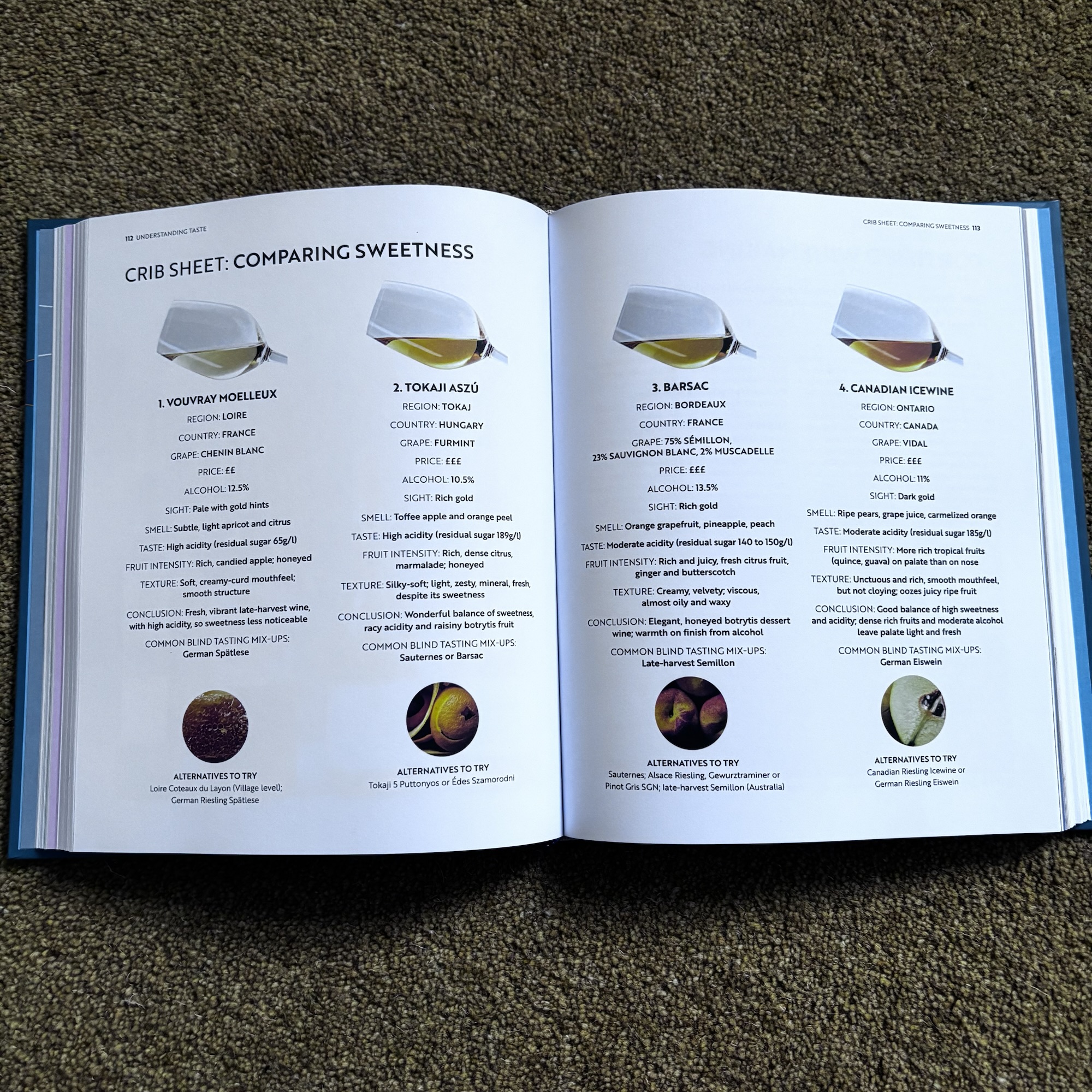
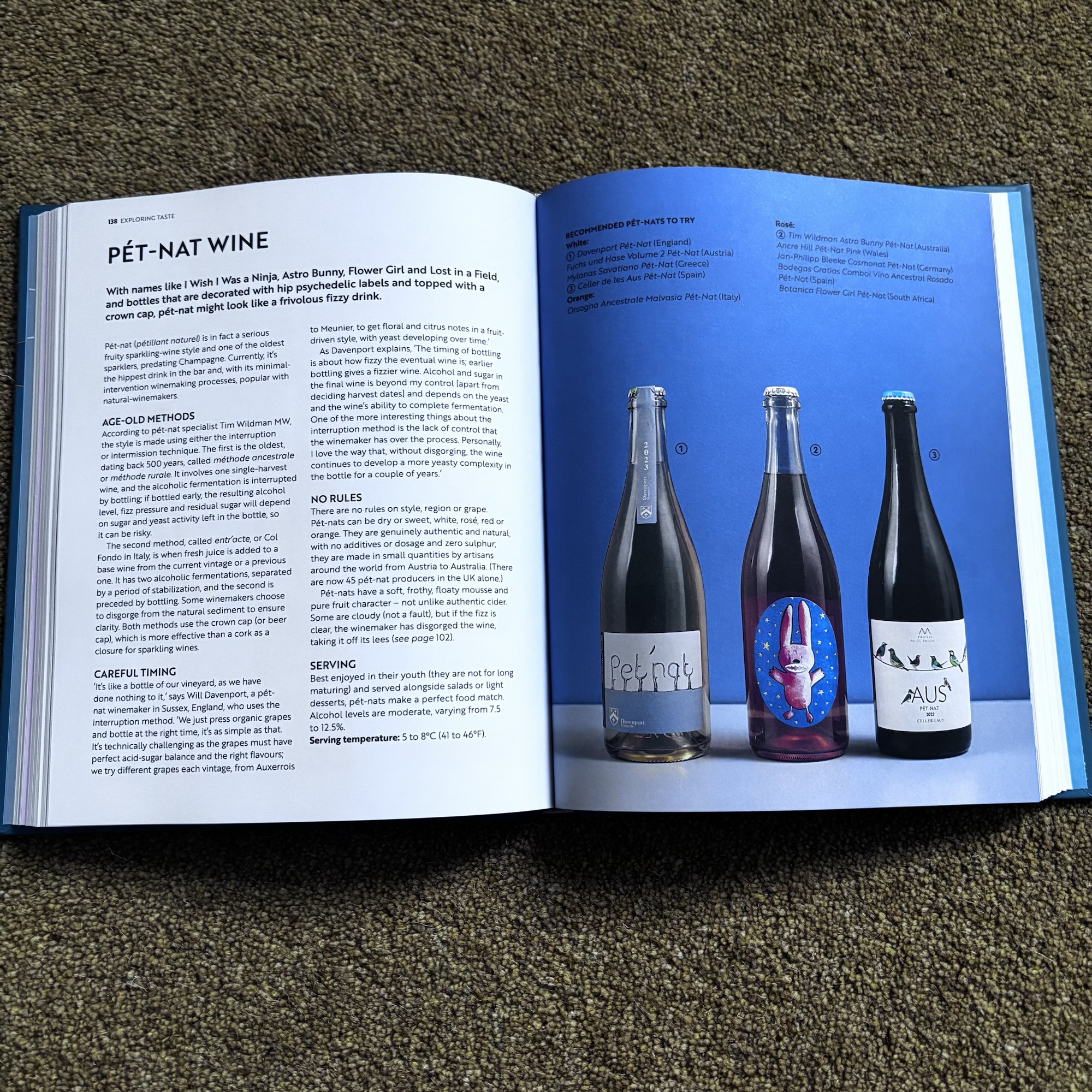
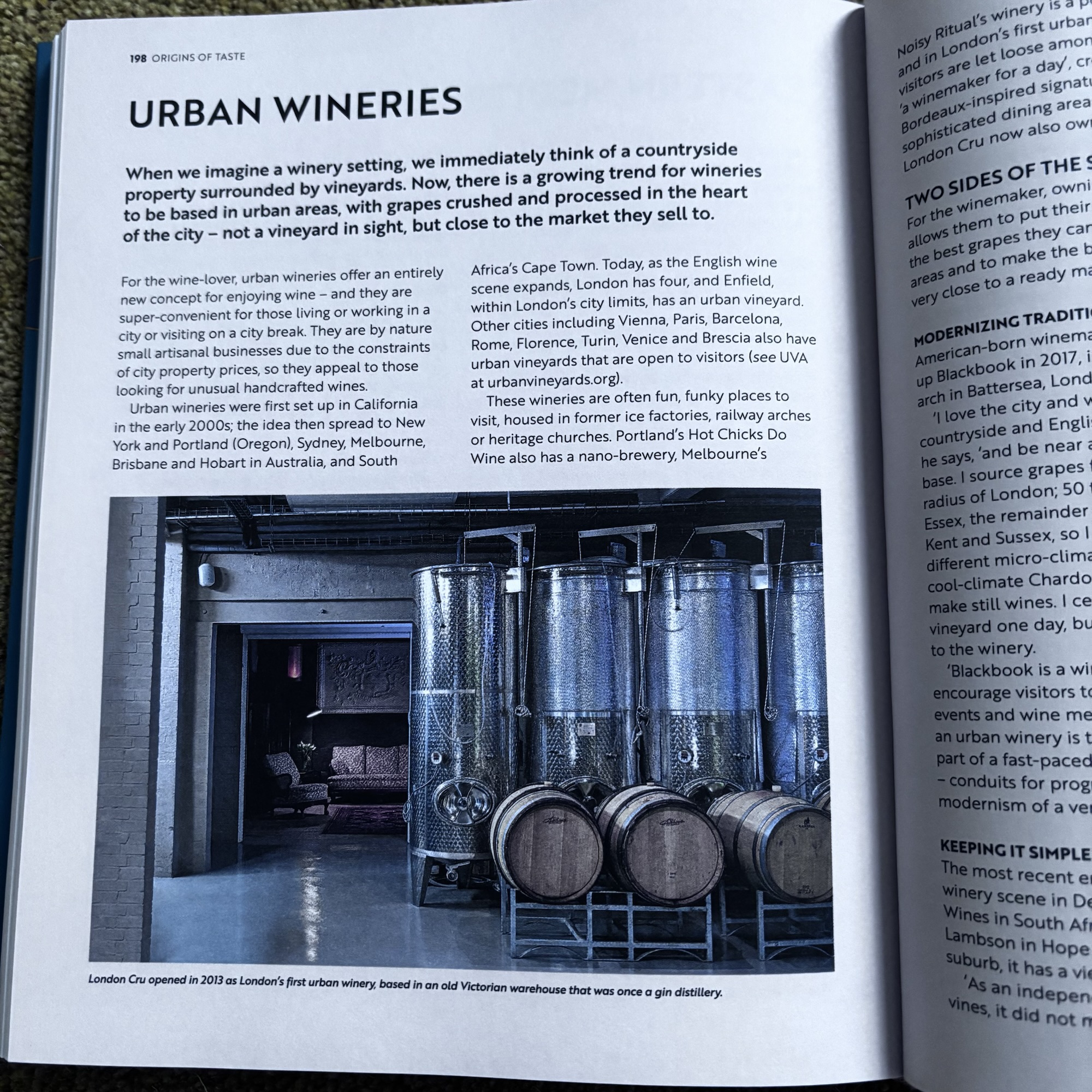
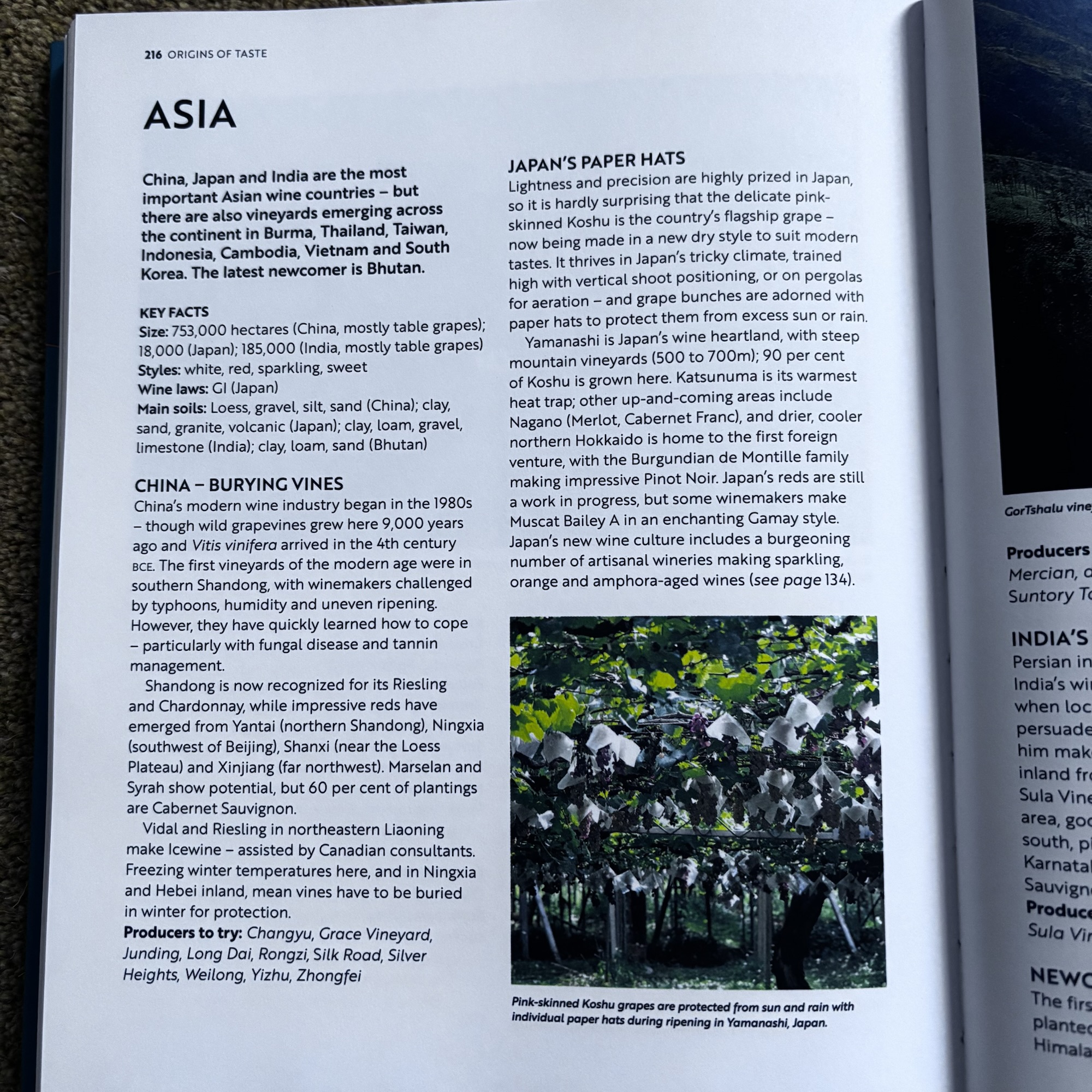
Bordeaux by Georgie Hindle – The Smart Traveller’s Wine Guide (Book Review)

Having read and thoroughly enjoyed Fintan Kerr’s Rioja Guide in the Academie du Vin Library’s The Smart Traveller’s Wine Guide series (see review, 31 March 2025), I wanted to explore these handy little guides further. Although four further titles are coming soon, I think the only other one so far released is Bordeaux by Georgie Hindle.

This guide is perhaps a different proposition to that for Rioja. Bordeaux is a vast region, not that Rioja is small, but it produces a very large range of different wines. So many that perhaps Bordeaux is really a group of different wine regions, tied together by similar grape varieties and to a degree a shared history. Most of the wines produced there, in volume terms, are fairly ordinary, everyday bottles, and many trade on the fame of the relatively smaller number of estates that are without question among the most famous wine labels in the world.

The difficulty for anyone writing a guide which is intended for the traveller is to negotiate a path between, one the one hand, a focus on the region’s “finest” wines and properties, which are mega-expensive, exclusive and rarely easily accessible to mere mortals, but doubtless of interest to us all, and on the other hand, covering that which is affordable and accessible, but which will likely be less glamorous and exciting. It’s a question of balance and insight.

Of course, as a travel guide, we also have to read about restaurants, bars and accommodation. This is at least as important as visiting wine châteaux for most visitors. The options are endless in a city like Bordeaux and its surrounding vineyards, so the guide also needs to cover all of this and more. Saint-Emilion has always provided a lure for tourists, but the wider region’s vineyards, except perhaps as one drives much further north of Bordeaux, within the Médoc, are no longer the desert they once were when it comes to wining, dining and then sleeping it off.

Georgie Hindle has been writing about wine for around fourteen years, starting out on Decanter’s online presence, and she is now Bordeaux Correspondent for Decanter Magazine, as well as being editor of Decanter Premium. She lives in Bordeaux, so she is well placed for inside track knowledge (although a team of five others assisted in preparing the listings in the later sections of the book).

As I intimated earlier, the first part of the guide outlines the history, the wine classifications and en primeur system, geography, grapes and reading a label. This takes up around eighty pages, leaving a further 100 pages, near enough, for the core of the book: visiting Bordeaux and its region(s). Here, in this first part, the author faces, well, more than a century of writing on this very subject.

Overall, Georgie does a pretty decent job of giving us a précis of all the relevant information we need under these headings. I’m not going to make any specific criticisms, because it’s a difficult job she had, and I’m sure that whilst more space would have allowed for greater explanation, and indeed nuance in places, no reader of this “guide” would want this part of the book to take up more space than necessary. Indeed, I’m guessing there was a brief to follow because this first section is exactly as long as the corresponding one in the Rioja Guide.

I only make one comment, regarding an omission. Readers may see the (in my opinion) misleading designation “Saint-Emilion Grand Cru” on wine labels. These wines are, of course, not “classified” properties, as are the Grands Crus Classés etc of 1955 (the year Saint-Emilion gained its own 1855 lookalike), but merely get to append the designation “Grand Cru” for being in their specific locations and abiding by certain appellation rules. So, Saint-Emilion Grand Cru is not really a designation of quality as the 1955 Classification of Saint-Emilion pertains to be.

It confused me back in the mid-1980s when I first visited Saint-Emilion in my mid-twenties, and saw all those temptingly affordable pretend Grand Cru wines. I’m sure it confuses newcomers no less today. Unless they abolished it without me noticing. That would be a capital idea. An explanation would perhaps have been useful for consumers, but I’m sure its omission was for a reason.

For sure, what we do get is an up-to-date description of the region’s designations among the various classifications, 1855 onwards. This is most useful with all the changes, resignations, and litigation etc of the past decade or so, thinking specifically of super-litigious Saint-Emilion, and the ever-confusing array of different Cru Bourgeois designations. So contentious have many of these classifications become that it is hard to keep on top of where various châteaux stand outside of the (very nearly, see para below) set-in-stone 1855. If we don’t know which 1855 châteaux are punching well above their weight, the author of this guide will enlighten us.

Mind you, I did laugh on the “How to read a Bordeaux label” pages. It says “…note that Mouton [sic] does not add Grand Cru Classé en 1855 to make clear it’s a First Growth. Anyone picking up a bottle of Mouton should be expected to understand its rank”. I think it omits those words because it wasn’t classified as First Growth at all in 1855, and had to wait until 1973 to join that club, a matter which has not been forgiven by the relevant branch of the Rothschild family, perhaps?

What’s perhaps the most useful part of this small book follows, the actual guide to visiting Bordeaux and the towns and villages within the wider Bordeaux appellations. We get pages devoted to châteaux tours and tastings, châteaux restaurants (perhaps the biggest addition to wine tourism here in the last twenty years), and a meaty selection of restaurants, bistros and bars in Bordeaux and elsewhere. There are also five Bordeaux wine shops listed, very useful because buying wine at the châteaux themselves is only possible in limited cases.

Saint Emilion gets its own coverage, quite rightly. In a busy town so full of tourists, it is useful to get some recommendations from those who live in the region. In fact, as with the Rioja Guide, there are winemaker recommendations for restaurants dispersed through the text. These do tend to be more towards the top end, when it comes to price, but two separate winemakers recommend Le Saint-Julien, in (guess!) Saint-Julien. It would also appear on my list of restaurant recommendations. Good, traditional, regional food and a good wine list, unless you need to go (very) large. Not very expensive either, relatively speaking.

Another recommendation I concur with is the bistro in the village of Bages, Café Lavinal. In fact, a perfect Pauillac morning would be a visit/tasting at Châteaux Lynch-Bages (one of the best visits available in the Haut-Médoc), popping out via the back door onto the square at Bages to visit the Bages Boutique (maybe consider a bottle of the rarely encountered Lynch-Bages Blanc off the shelf) and then over to the café for lunch.

It might surprise many that it is now possible to stay in guest accommodation in a number of châteaux. Pichon-Baron is not one of those, unless by invitation, but having been privileged to stay in that architectural wonder myself (with a bedroom directly above the famous staircase to the front door), I can say that such an experience is one not to be missed if you can stretch to such accommodation, which will never be inexpensive.

I will also draw attention to Pessac-Léognan and the wider Graves, rightly described on many occasions in this guide in a way that shows what an attractive sub-region it is. Definitely a part of Bordeaux that can get overlooked, but not only is the scenery pleasant, so are the wines, which tend to offer some of the best value in Bordeaux, even arguably it the property includes Haut-Brion in its name, good value existing at all levels of quality.

The problem with Bordeaux, as I stated in my intro, is that the focus is so often on the extraordinarily expensive, not just for wines but also for accommodation and dining. To a degree this guide does have its focus on glamour, but between the Michelin stars you will discover some of the most interesting places to eat and drink. We are also given five wine shop recommendations, among the many which pack this city. They provide an opportunity for tourists who can’t, or don’t have time to, visit the vineyards to buy a bottle or two.

I would say that perhaps if one thing is underplayed, though it isn’t ignored, it is the significant move finally being made in the direction of organic, biodynamic, and “natural” winemaking in wider Bordeaux.

Many UK wine merchants are now working with estates which are looking at sustainable and regenerative, low-intervention viticulture, some even at the highest level of the heirarchy, though many more at properties we might call “petits châteaux”, along with a number of small artisan producers. This movement is increasingly reflected in the city itself. The bar/shop “Au Bon Jaja” (usually known as just “Jaja”) gets a couple of mentions, and they tend to specialise in low intervention wines.

The wine shop Feral Art & Vin in the old part of the city does not get a mention in the relevant section of this guide, though it does boast a number of winemakers (some from the top châteaux) and top chefs as customers for its range of only natural wines, sourced from Bordeaux, wider France and some parts of Europe. Its opening hours are currently limited (check online), but I can’t recommend Feral more highly if natural wine is your thing. It’s pretty unique in Bordeaux. Feral is at 22 rue Buhan, close to the Grosse Cloche.

I think its time to summarise. Georgie Hindle does a good job of summarising the wines, terroir and appellations of Bordeaux in a book and format that is not the place for a lengthy exposition. In fact, she quotes Jane Anson a number of times. Jane is a Contributing Editor to Decanter, and like Georgie, lives in Bordeaux. Her Inside Bordeaux, published by Berry Brothers & Rudd in 2020, is a good recent book on Bordeaux if you need more depth on the wine.

The Guide itself, to both the city and the vineyards, is the really useful part of the book. It is geared to wine lovers and written by someone with both knowledge and passion for the wines and the places. Although much of this part of the book describes, albeit alluringly, places I would not be able to stay at and dine at myself (on account of cost), there is enough here that is relevant to me to make it definitely worth tucking my copy in my rucksack. Especially because it is small, light and inexpensive.

Reading it at home, it definitely made me want to visit Bordeaux again, ironic because we were planning to visit this year, but now we shall be visiting Switzerland instead. Whether the forthcoming Smart Traveller’s Wine Guide to Switzerland will be published before I go, I’m not sure. It also made me want to drink more Bordeaux, though my stocks of mature, classified, Grands Vins has dwindled over the past few years and they are not likely to be replaced at current market prices.

But as this guide explains, there are good, affordable, wines there, sitting somewhere between the famous names and the sea of wine filling the shelves of supermarkets, wine that perhaps trades on the name “Bordeaux” whilst being made by methods a long way from those made by the meticulous top châteaux.

Bordeaux, in the wider sense, does have something for everyone, for both the super-rich collector types and for ordinary wine lovers. I assume my readers fall mostly into that latter category. Bordeaux for the likes of you and me does seem to be making a comeback, and this is often on the back of a realisation by the once very private, stand-offish, occasionally snooty, proprietors that in the modern wine world, wine tourism is part and parcel of the sales pitch. Wine tourism is a feel-good form of marketing that gets a wine region noticed and talked about.

In reality, with a revitalised city at its heart, and finally plenty of options for experiencing not just the wines in-situ, but also the wider concept of “Bordeaux” (I have still never visited the Cité du Vin wine museum though), perhaps for the world’s most famous wine region, now may be just the right time to visit. This guide is not perfect. I think the main reason is the impossibility of writing something both concise and at the same time comprehensive on such a vast and varied wine region, with a multitude of wines and terroirs, which are so famous worldwide that the exclusivity exhibited there is bound to dominate.

But Georgie Hindle has, with the help of her contributors, written a really useful guide to enjoying anything from a long weekend to a more extended visit. For myself, I would not fly to Bordeaux without it. You only need to discover a couple of bars and restaurants, a good wine shop and a couple of châteaux that will give you a tour and tasting and this inexpensive book will have paid for itself.

I think many of us who, for a while, disputed the relevance to us of what seemed like a region of expensive and exclusive wines and wine experiences, might be persuaded by this little book that things are changing. The runes have been read by many estates wishing to widen their customer base and to follow the lead of Napa and many other wine tourism destinations.

Bordeaux, by Georgie Hindle, is published by the Academie du Vin Library as part of the new Smart Traveller’s Wine Guide series. It can be purchased via their web site, http://www.academieduvinlibrary.com , for £12.99, or ordered from good independent book shops. As Lettie Teague of The Wall Street Journal says, it is “packed tight with practical advice and informed opinion”. Definitely worth getting a copy, even if you are not planning an imminent visit.

Posted in Bordeaux Wine, Fine Wine, Restaurants, Wine, Wine Books, Wine Tourism, Wine Travel, Wine Writing | Tagged , , , , , , , , , , , , , , | 2 Comments

Recent Wines April 2025 (Part 3) #theglouthatbindsus

The opening wine from this third and final part of the bumper April edition of Recent Wines (what we drink at home) is a well-aged Burgundy Grand Cru. You might think it’s downhill all the way after that but not a bit of it. All of the five bottles which follow it are both really good, and perhaps in some ways even more interesting. They came from Burgenland, Penedès (a different producer to that in Part 2, and Alt, not Baix), Geneva in Switzerland, Moravia (Czechia, that even older bottle I promised) and Arbois. If I had to choose a favourite, something I try to avoid, it would be hard to better the last wine of the whole month. I always profess to love sharing great wine but I am not sorry to have been able to savour that one over two nights.

Clos de Vougeot Grand Cru 1999, Domaine François Lamarche (Burgundy, France)

This is one of the benchmark domaines on the Côte de Nuits, now run (since 2019) by François Lamarche’s daughter, Nicole, but this 1999 vintage was made under the eye of François. The Clos itself is a high-walled ex-monastic vineyard totalling a substantial 50-hectares. Wines from this GC can be variable in the least, and the Burgundy mantra “grower, grower, grower” is never more important than when purchasing wines from this patch of Côte d’Or dirt.

This is a bottle I’ve cellared since purchase soon after release. As a summary I’d say it is good, certainly impressive, but not among the finest Red Burgundy I’ve drunk, but that said, it is always a joy and a privilege to drink old Burgundy. As with old Bordeaux, my stocks are dwindling and they are not going to get replenished at Grand Cru level.

This was actually not as mature as I’d expected. It opened quite closed, with savoury notes to the fore. As it developed in the glass the fruit comes into view, and nice fruit it is, gentle and soft. Aromas of Marmite and cep grow too. So, the bottle delivered more than I’d hoped, but it took a little time. There are those who will be able to explain this wine to me, the kind of folks I used to lunch with at The Ledbury and La Trompette, including Burgundy’s finest buyer, Jasper Morris. But they weren’t there to help us. It remained an enigma, to a degree, but it was nice to be reminded of flavours that were once somewhat more frequently experienced.

This bottle came from Berry Brothers, I think. You could still find a bottle today but you’d pay £100+ at auction.

Kalkundkiesel Weiss 2022, Claus Preisinger (Burgenland, Austria)

Not that I encourage people to go and visit winemakers, taking precious time and demanding free tastings, but it has to be said that the outside deck on the first floor of Claus Preisinger’s modern winery, looking down over Gols towards the reed beds and the shallow water of the Neusiedlersee, has to be one of the more pleasant places to enjoy a bottle of crisp and textured white wine. Your glasses will likely be resting on Claus’s cool surf board table, and your gaze will remind you of why this is one of the wine world’s most attractive places.

Claus started his domaine aged only twenty, and twenty years later he has been successful enough to expand to a significant 20-hectares. This includes vines in Gols, and also in Purbach, Weiden and Mönchhof, all around the top side of the lake.

Kalkundkiesel (“chalk and pebble”) Weiss is a blend of Pinot Blanc (Weissburgunder), Grüner Veltliner, Welschriesling and Muscat. The grapes spent four days on skins. As a result, the wine is zesty and “mineral”. Ageing was in barrel, eight months on lees, giving a texture that gently exfoliates the tongue, emphasis on gently, though. You get pristine fruit in a zippy white wine that, despite just 11% abv, lacks nothing in body. Nowadays this is one of Claus’s cheaper white wine cuvées, but it’s great value, a superb wine, from a guy who I’ve always considered a genius.

The importer is Newcomer Wines, from whom I purchased it online (£33). I have fond memories of my first visit to Newcomer, then in Shoreditch Box Park. I bought three bottles, one being a Preisinger Zweigelt, the wine that had led me to Newcomer, who have remained one of my absolute favourite importers. My passion for a whole raft of Austrian wines stems from Peter and his team.

Sus Scrofa 2022, Celler Pardas (Penedès, Spain)

Like the old 171 bus I used to get to work in London, wines from Penedès seem to come, after an inordinate wait, in pairs. Whilst I have been drinking the wines of Entre Vinyes (see Part 2) several times over the past twelve months, it is a very long time since I’ve had a wine from Pardas. Certainly, pre-Covid. Finding this was simply down to my preferred shopping method, browsing in-store.

Ramón Perera and Jordi Arnan established Celler Pardas when they bought the Can Comas estate in Alt Penedès in 1996, but they didn’t bottle their own wines until 2004. The whole estate is sixty hectares, but much is forest, scrub and pasture. The name of this cuvée, Sus Scrofa, comes from the Latin for wild boar, which are, as you can imagine, prevalent here.

Sus Scrofa is an entry level red, but quite possibly one of the most tasty entry level wines you’ll find this summer. The grape variety is one that I like a lot and always have: Sumoll. It is grown here on clay and limestone soils at between 200-to-300 masl. This natural wine is fermented and aged for just three months in concrete tanks.

You can talk about the bitter cherry fruit, the nice bit of grip etc, but it all boils down to this being one beautiful, vibrant, “smashable” red, easy to drink in the sunny weather we’ve been having, preferably cellar-cool. We drank this on Easter Sunday when others were maybe pulling out some more “serious” wines, but we loved it. It comes very highly recommended indeed, because it will only set you back £21, from Communiqué Wines (Edinburgh). Imported by those finger-on-the-pulse Spanish experts at Indigo Wines.

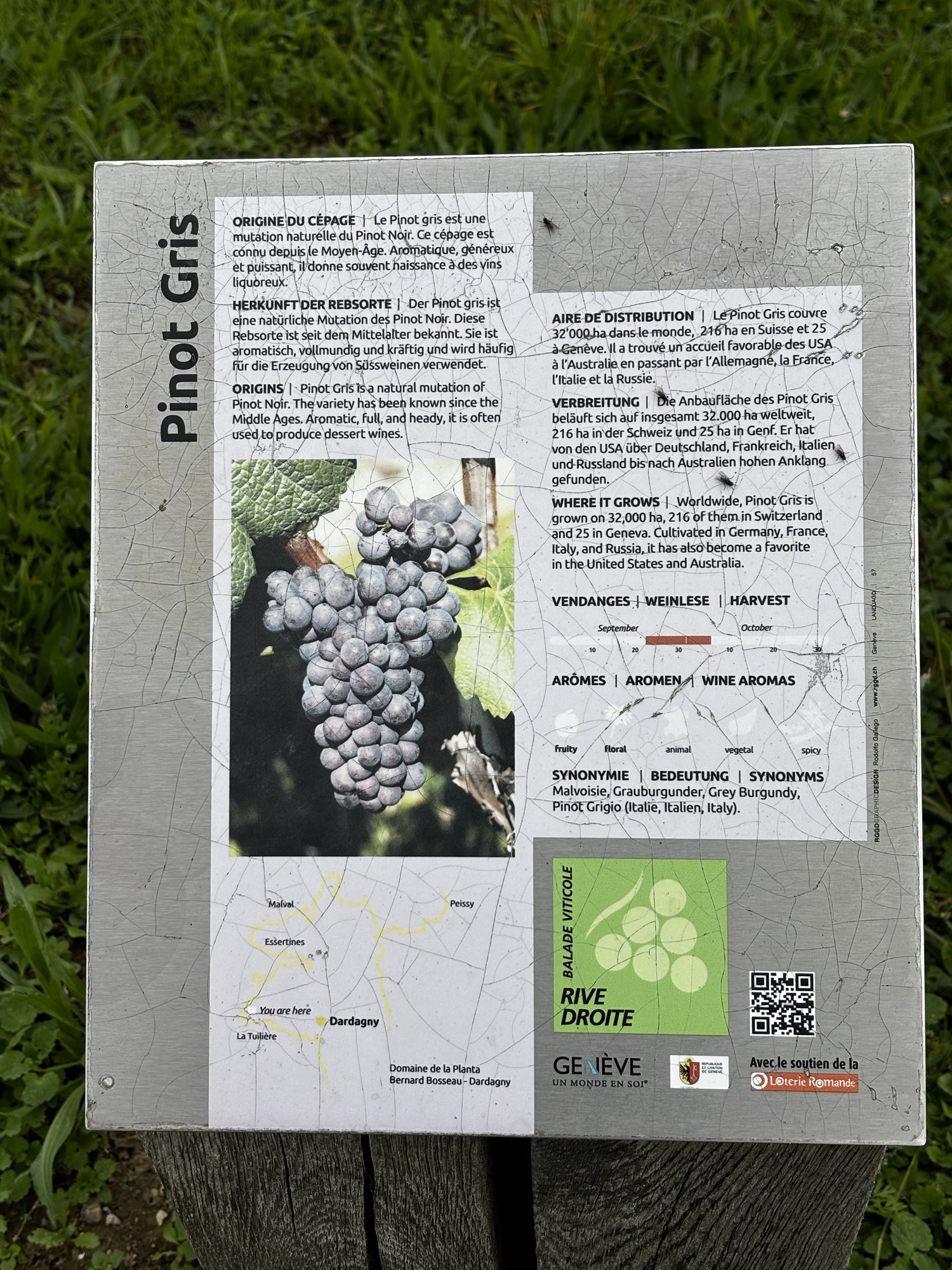
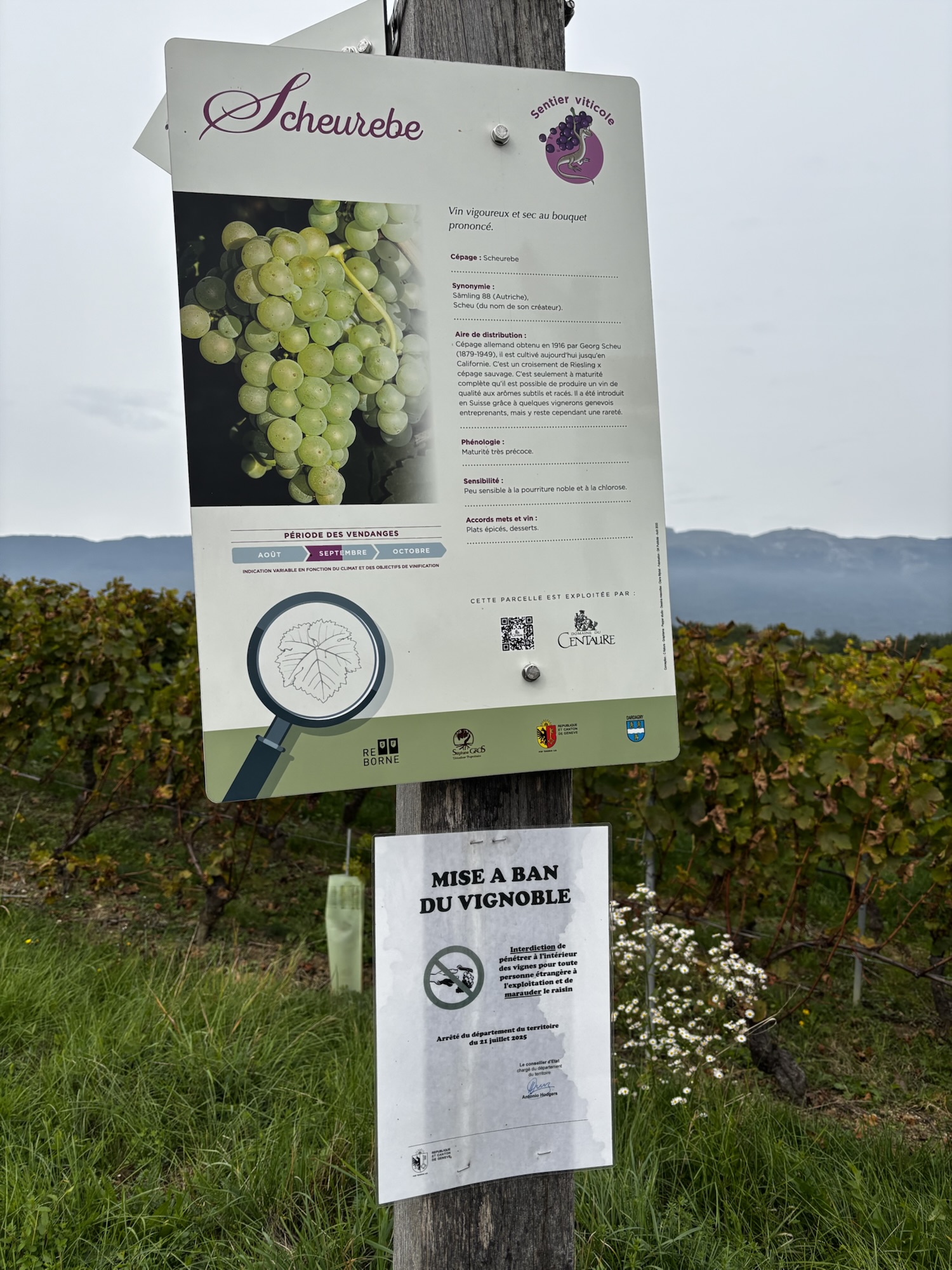
Pinot Gris 2020, Domaine de la Devinière (Geneva, Switzerland)

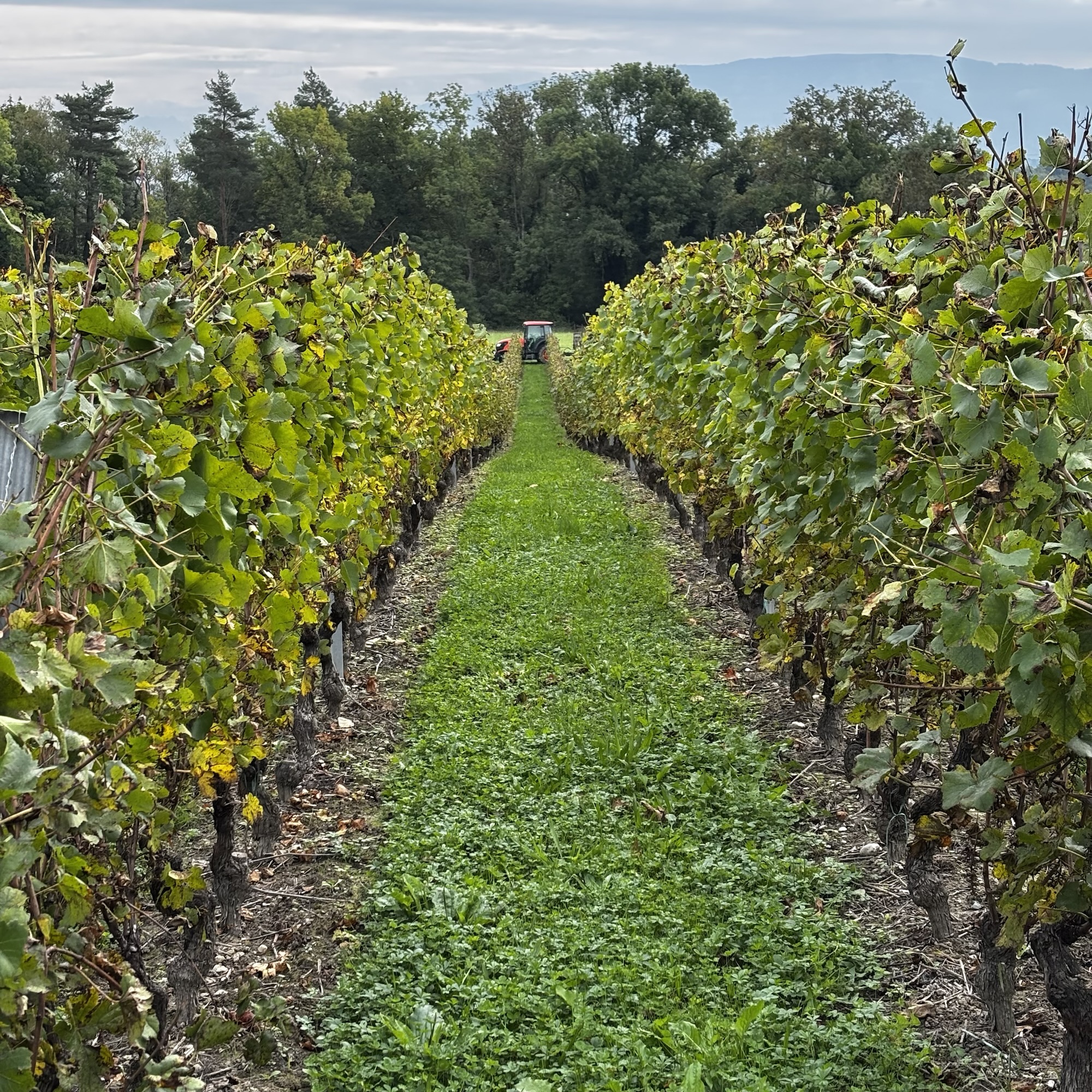
Willy and Camille Cretigny cultivate 13 hectares of vines at Satigny, one of the main villages in the Geneva Appellation, situated on the Rhône’s Rive Droite, to the west of the city. Those who know Swiss wines may be less familiar with those from Geneva than from better-known appellations, such as Valais and Vaud. However, these gently rolling hills make some excellent wines, which at least within Switzerland are becoming more appreciated, although the World Atlas of Wine (8th edn) now acknowledges this, pointing out that these vineyards “have changed more than any in Switzerland in recent years”.

It might also be worth pointing out that although you won’t perhaps have heard of Satigny, it is actually the largest single wine commune in the country. The village is also home to the Geneva co-operative, which is a good place to look for wines at the (relative) value end of the region’s output.

The domaine grows a total of eighteen grape varieties, using organic and sustainable viticulture. They’ve been members of BioSuisse, Switzerland’s main organisation for organic certification since 1995. In 2024 they were named “Rookie de L’Année” in Gault & Millau’s Guide Suisse.

Pinot Gris is a variety that seems to do well this side of Geneva. This one is aged in oak, though as it isn’t overtly oaky, it may well be used wood. It certainly has typicity, being very obviously that variety. It has a richness, smooth fruit (pears and quince), but a very savoury finish. Nice length, dry, it’s a lovely wine. It tastes “modern”. It reminded me a little of some of the nicer artisan PG I’ve drunk in Australia as much as any from Europe.

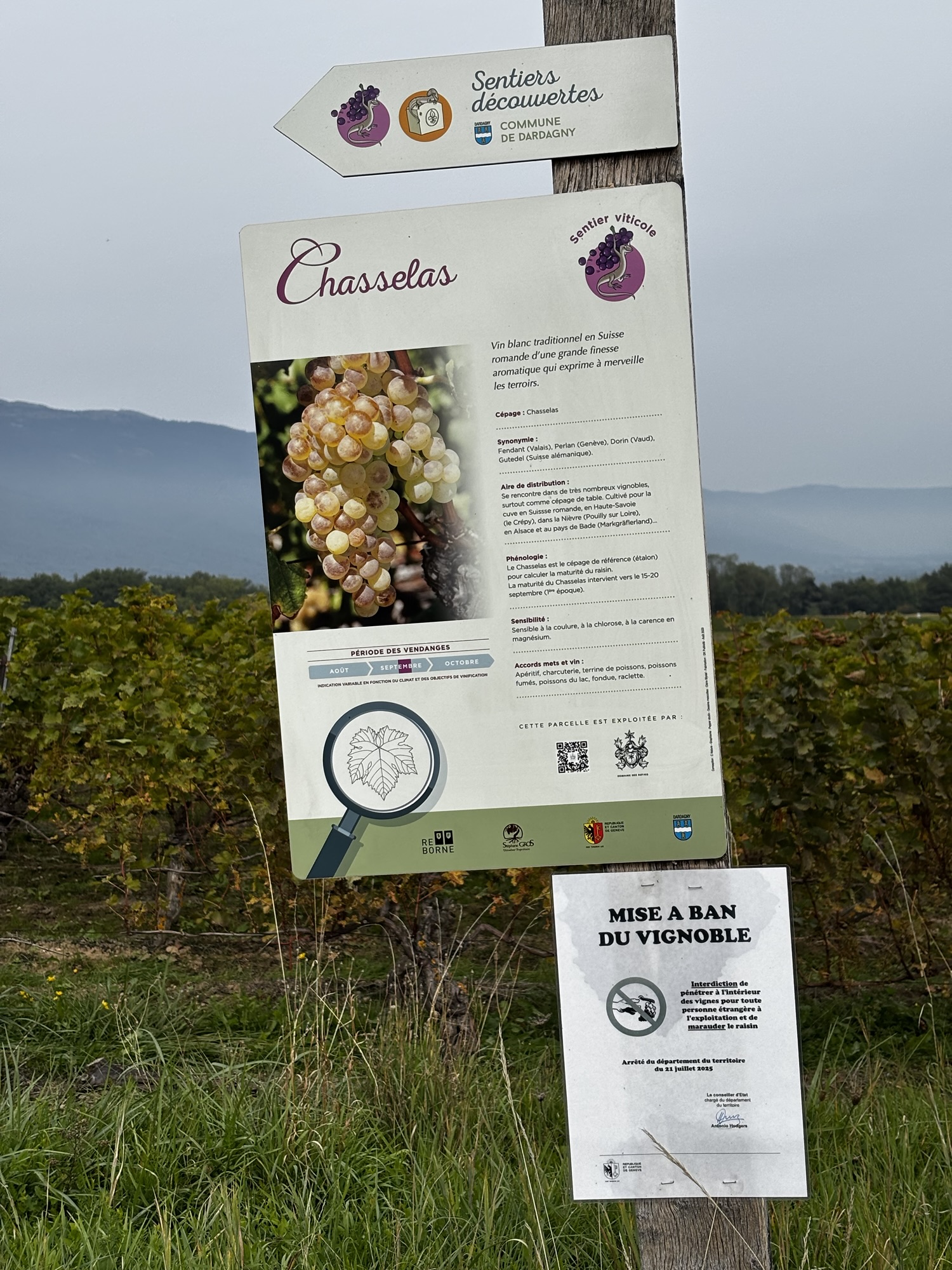
This was brought from Switzerland in a suitcase, a kind gift (with five other bottles) from friends in Geneva when they visited last month. Pretty much your only hope of finding Geneva wine in the UK is via Swiss specialist, Alpine Wines. If you do visit Geneva, the vineyards here make an attractive day out with some nice walks among the vines. Dardagny, the other main Rive Droite village, is my favourite. Domaine des Hutins, based there, is another good choice to visit (best to telephone for an appointment).

Frankovka 2015, Dva Duby (Moravia, Czechia)

In Part Two I promised to add an even older Moravian Wine to the two I profiled there. This wine has been aged for a decade, and it really shows how magnificent these Czech natural wines can be. Jiří Sebela is the man behind Dva Duby, making wine at Dolní Kounice in the hills of Southern Moravia.

This is an old vine cuvée, the vines being over sixty years of age. The vines sit over grandiorite, a coarse-grained (phaneritic) intrusive igneous rock similar to granite, but with more plagioclase feldspar than orthoclase feldspar present. I know my emphasis on the geology might be misplaced, even tedious, but does not grandiorite sound really cool? If you ever find a photomicrograph of grandiorite you may get some idea of my fascination with geology.

If you can’t visit Czechia (or Slovakia) to see some, you may also spot an outcrop of granodiorite near the lighthouse in the Bay of Roses, where the Catalonian Pyrenees fall into the sea (and you can then visit the oldest barrel-vaulted church remaining in Europe, high on a hill above, Sant Pere de Roda/Rodes).

Back to Moravia…this Frankovka, or Blaufrankisch as it is perhaps better known in its Austrian iteration, is aged in a mix of oak and acacia. Maybe you are getting used to this split between barrels in Moravia, where acacia is very popular. All of the Dva Duby wines are natural wines. This is a wine smelling of intense red fruits, mostly red cherries. At ten years old, however, it has taken on a paler colour than any bottle of this wine I’ve had previously, a pale brick red. With wild mushroom, truffle, and autumnal notes, it is sedate.

It makes a strong impression. It has elements somewhere between aged Pinot Noir and, perhaps even more so, aged Syrah, more than what we might expect from a younger Blaufrankisch. It is a genuinely gorgeous wine, and very fine, yet if you buy this on release it will only cost you a little over £30. How many people here in the UK would think to age it a decade? Something to ponder. The importer is Basket Press Wines.

Savagnin Amphore 2016, Stéphane & Bénédicte (Domaine A&M) Tissot (Jura, France)

Domaine A&M Tissot was far from the first Jura producer who I bought wine from when we began visiting Arbois in the later 1980s, but I was beginning to get to know the wines of André and Mireille in the mid-1990s when their son, Stéphane, returned from overseas to get stuck in. In three decades he has transformed a good domaine into a great one.

For me, it is one of the finest in France, though it pains me that UK Jura lovers tend to appreciate some of the more fashionable names. This is surely because Stéphane, aided by his wife, Bénédicte, farms 50 hectares. Nevertheless, the multitude of innovative wines he makes are all biodynamic, natural wines (around 25-30% receive no added sulphur) which range from merely excellent to genuinely world class.

Mireille Tissot passed away in 2023. She was a lovely, warm, lady, though it is very many years since I last saw her. At first, Stéphane’s parents were somewhat nonplussed with what he was doing at what was already the clear leader of all the various Tissot domaines around Arbois. It was a kind of mix of perfectionism and rampant experimentation. We had his sensational hors classification sweet wines, ignoring appellation rules where they impeded quality and excitement. Then some very adventurous manipulations of Crémant du Jura. Later came some terroir-specific Vin Jaune, and a host of different Chardonnays.

Perhaps his greatest innovation was the introduction of amphorae, which were very rare in France back then. A line of them was the first thing you noticed on approaching the winery, down to the left side of the church in Montigny-les-Arsures. It was an approach we most often made on foot after one of my favourite vineyard walks, which also happens to pass beneath the famous 8-ha vineyard Stéphane revived below the Tour de Curon, from which he makes a genuine “Grand Cru” of a Chardonnay.

Both Savagnin and Trousseau are made in Amphora versions. The Savagnin sees five months in these clay vessels on full skins, without the addition of sulphur at any stage. This 2016 was opened perhaps a year before I intended, but it still delivered as much as I wanted. The key for this kind of wine is not to be tempted to open it too soon. It takes time to achieve perfect balance.

The colour is full-on orange, the nose is unmistakably marmalade. Why do so many orange wines smell of oranges in some way? The palate is dry, this accentuated by the texture, but there’s smooth fruit and it doesn’t taste tannic or dried-out. It has rounded-out nicely and is long and impressive, yet it is also lip-smackingly delicious as well. That’s not always the case with skin-fermented white varieties.

I suggested in my intro that this was my Wine of the Month, the best of the eighteen wines presented here over April’s three parts. That’s something I usually refrain from saying until my Review of the Year around Christmastime. It really was a pleasure to be able to enjoy it over two nights. It’s worth noting that the alcohol sits quite low, at 12%. Lower than one might expect. It is well-judged for a wine so in balance.

I purchased this at the domaine’s shop on the Place de la Liberté in Arbois. I’m not sure what a bottle will cost from Arbois today, but Berry Brothers in the UK will sell you a 2020 for £73. Over my budget, but very tempting as I could easily keep that for another five years, tucked away. Berry Bros say that the 2020 is “youthful”, so there you go.

Posted in Arbois, Artisan Wines, Austrian Wine, Burgundy, Czech Wine, Natural Wine, Spanish Wine, Swiss Wine, Wine, Wine Agencies | Tagged , , , , , , , , , , , , , , , , , , , , , , | 2 Comments

Recent Wines April 2025 (Part 2) #theglouthatbindsus

To run through what’s in store in Part Two (of three) of my wines drunk at home in April, we begin in Germany and continue with Jura, Penedès and Champagne. We finish up with two wines from Czechia (or Czech Republic, as many still call it in the UK). I know, two wines from the same region (Moravia) in the same article, that’s a little slack of me, no? Not a bit of it, they are both exceptional wines from older vintages (with a single, even older, bottle to follow next time).

Elbling 2021, Jonas Dostert (Mosel, Germany)

This is a wine which looks, on the face of it, quite simple, but with Jonas nothing is ever simple, or at least in that mildly negative sense. Jonas has been based, since 2018, at Nittel, on that unknown stretch of the Mosel southwest of Trier and the confluence with the Saar. His vines are on limestone here, not your usual Mosel slate (perhaps one of the reasons he makes such amazing Chardonnay).

Elbling is not a variety many outside of Germany will have tasted, perhaps, and there’s a lot of cheap and commercial Elbling in Germany. Here, it is treated with respect. Jonas makes natural wines aiming for freshness and low alcohol, yet wines with poise and tension. His mantra is that the more you do in the cellar the less you taste of the vineyard.

This Elbling is pale, crisp and appley, a very refreshing wine with a steely edge to it, but just 10.5% abv. I must add that it does have some weight to it. More than you’d expect taking what I’ve just said and the low alcohol into account. Just enough weight to give it a presence, something to ponder over and a dimension over and above that refreshment value. This may be because it was aged in wood, albeit used larger oak. That said, it still has a nice brittle quality, something akin to pressing on thin ice with deeper waters beneath.

So far, Newcomer Wines has just brought in this single wine, I think. They list it at £33, but as Jonas made only 861 bottles, it may not last for long. As a 2021, the acids have perhaps subsided a bit but it is still drinking really well. There are other wines available. My go-to merchant in France, Feral Art & Vin lists his blend of Elbling, Pinot Gris and Chardonnay (Karambolage), a Chardonnay/Elbling blend (Pure Dolomite), and from the new 2023 vintage, Chardonnay, and Elbling Alte Reben.

I’ve not tried that old vine Elbling but at least two people have recommended it highly. There is also a Pinot Noir but it’s out of stock, but the Crémant (he’s another German winemaker who uses French over German terms for his labelling) may be available. Really wish I had a lot more Dostert than I do.

Crémant du Jura Brut Nature NV, Domaine Pignier (Jura, France)

The three Pignier siblings who brought this Montaigu domaine (near Lons) to prominence are close to handing over to Antoine’s son, Thibault, the first of the next generation to commit himself to this highly regarded twelve-hectare domaine in the middle south of the region. I mention Thibault because he worked with Marie-Thérèse Chappaz whose biodynamic vineyards in the Swiss Valais are very special to me. The wines continue to be low intervention, natural, wines, following biodynamics too, with just a small sulphur addition before bottling.

The Crémant is an important wine here. According to Wink Lorch (Jura Wine Ten Years On, 2024), it forms 20% of production. This traditional method wine is mostly Chardonnay (85%) with Pinot Noir, all planted on chalky limestone. It spends 18 months on lees and is bottled with zero dosage.

The bouquet shouts freshness first, and the palate is crisp, but there is ripe appley fruit and a quality which I always hear described in France as nervosité (which maybe translates as nervousness or restlessness). It’s a certain kind of tension and it wakes you up. Left to warm in the glass it does develop and some autolytic character evolves. I’d say soft brioche. It hasn’t had years on lees but it still shows class. It’s why I grab a bottle when I see one. Especially as the price is usually in the low £30s, rare now for quality sparkling wine.

The importer is Raeburn Fine Wines. My bottle came from Smith & Gertrude (Portobello).

Macabeu Sotaterra “Oniríc” 2022, Entre Vinyes (Catalonia, Spain)

This is the third wine from Entre Vinyes I’ve found since I received a very strong recommendation for their wines from my mate Alan March. He really hit the nail on the head in that the Entre Vinyes wines are so good, but also so cheap, at least relatively speaking.

Maria and Pep’s story has been told before, but to be brief, they created this project in Baix Penedès’s Foix Natural Park in 2012. A holistic approach ties in the viticulture with nature and ecology, of which they have a deep appreciation. The landscape here is wild and, insofar as is possible, they want to keep it that way.

This is a skin contact wine, Macabeu fermented fourteen days on skins and then further aged on skins for nine months in amphorae buried in the vineyard. The colour is a gentle orange. With low alcohol (10.5%, like the Dostert) this has a delicacy both on the bouquet where it is both floral and fruity, and on the palate. There, you find a mix of citrus (lemon and orange) with some more tropical notes, but also an underlying texture and fresh acids.

It’s remarkable how the texture isn’t very assertive, nor very tannic, considering the length of time on skins. Indeed, this wine’s best attribute is that it is gentle, not aggressive. This is, by coincidence, another wine purchased from Smith & Gertrude, and it cost just £23.50. This time the importer is Modal Wines.

“Le Cotet” MV, Champagne Jacques Lassaigne (Champagne, France)

Emmanuel Lassaigne is the best-known winemaker in Montgueux, the small Champagne enclave close to Troyes. It’s technically in the Aube/Côte des Bar, though closer to the Côte des Blancs in its geology (chalk rather than the Aube’s more usual marls).

You know, it’s funny how relatively recently numerous little pockets of vines within the wider Champagne region, but outside of the well-known “Côtes”, have come to people’s attention. Perhaps this is why the part of Champagne we used to call simply “The Aube” is now known as the Côte des Bar, so that the Aube’s other pockets (as with similar outposts in the Marne) can have their own identity.

The generalisation made by classic wine writers is that the grapes grown on Montgueux’s more southerly south-facing chalk slopes ripen early, and for once they may be right because Emmanuel Lassaigne certainly makes wonderfully ripe and vinous Chardonnay from his small holdings.

That the fruit is excellent has always been a secret, and some larger houses further north wanted to keep it that way according to a story in Robert Walters’s excellent Bursting Bubbles (Quiller 2017). When asked by a visiting beer executive whether a certain famous label used Montgueux grapes they denied using any fruit from outside of the Marne, yet they were (and maybe still are) the biggest purchaser of fruit from this tiny region.

Mind you, Walters also quotes Charles Heidsieck’s famous chef de cave, Daniel Thibault, as saying “If there is a Montrachet in Champagne, it is in Montgueux that we will find it!”

All this is just to set the scene for a wine from a tiny 0.6-ha lieu-dit called Le Cotet, made by a man who would rank among my favourite four Growers in Champagne. The vines are Chardonnay, all around fifty years of age. The cuvée is always made as a multi-vintage blend of two main vintages, the older aged in oak, plus reserve wines from further much older vintages, added by a method called “remise en cercle”, whereby they have been kept not in tank or oak, but in bottle, on lees, before disgorging directly into the blend.

Bottled with zero dosage, the bouquet is all honeysuckle florality. The palate mixes straw, hazelnut and a creaminess which after six years in my cellar (despite three moves) is showing signs of lovely complexity. Effectively, this is a “natural wine”, and it does have real vinosity. One or two Growers make wine which are sometimes likened to White Burgundy, and perhaps this is one. It might appeal less to the purists, but how can you argue this isn’t special?

I bought this from Les Papilles in Paris. They have been great friends to Emmanuel Lassaigne. In fact, they used to (maybe still do) sell their own bottling from Lassaigne for their House Champagne. You can purchase Le Cotet for 84€ there right now (also available in magnum…now there’s a thought).

Divý Ryšák 2017, Richard Stávek (Moravia, Czechia)

Richard is one of the original “gang of however many” when it comes to the Moravian natural wine movement. He has a fifteen-hectare farm which has 4.5-ha planted to vines. My visit to tour his very wild and beautiful vineyards and to taste in his home, just two weeks before I moved to Scotland in 2022, was one of the most thought-provoking, enjoyable and illuminating visits I’ve been privileged to take part in.

Ryšák is the name for a “ginger” wine, a field blend of red and white varieties. Here, it’s a field blend of Blaufränkisch, Blauer Portugieser, Welschriesling, Grüner Veltliner and the hybrid Isabella, from a site on sandy loam, where the vines are all more than 45 years old. Farming is organic and winemaking is natural.

The grapes go into open-top fermenters for just two or three days and then the juice is transferred to used acacia wood for a year. The result is pretty amazing, partly on account of its age (2017!). It is still very fruity and juicy, still fresh, but there’s also a more serious side. A highly unique wine, certainly in style (a few Moravian natural winemakers keep it alive), and one from a unique winemaker as well. If he were in France Stávek would be making “unicorn” wines, highly sought after and sold on the grey market. I’m perhaps grateful he isn’t.

Basket Press Wines is, of course, the importer here and this was purchased direct, from their web site. When they restock (I can’t see any current vintage there), expect to pay £30-£40.

Chardonnay 2018, Otá Ševčik (Moravia, Czechia)

In some ways these Czech natural wines that I’m always banging on about can really come into their own with a bit of bottle age to them. The previous wine proved that (a 2017), and this one does so even more pointedly. Otá Ševčik is one Czech producer I’ve neglected a bit, and I’m so pleased this wine has well and truly put me in my place.

Ota farms a mere 2ha of vines on magnesium-rich, clay, loess and chalk soils at Boretice. As one of the founding members of the Moravian “Authentiste” Group, he farms organically and makes his wines without synthetic agro-chemicals. The importer’s web site bio of him points out that these wines age especially well.

This Chardonnay comes off a single site called Čtvrtě, from which Ota’s neighbour, Jaroslav Springer, makes a very fine Pinot Noir. The grapes undergo a short maceration, 48 hours on the skins, and post-fermentation the wine first spends 18 months on gross lees and then nine months on fine lees. All the wine goes through malolactic, but half is aged in oak and half in acacia, both larger 600-litre barrels.

The colour is a beautiful deep gold. The bouquet is more honeysuckle than more traditional Chardonnay notes, perhaps because the palate is so honeyed and rich. It’s worth noting that for the variety, 12.5% abv is lowish, and the richness, which still seems very fresh, is a lovely surprise. There’s a nice soft texture as well. I could try unsuccessfully to describe this bottle all day, but I can’t help coming back to my original scribbled note: “remarkably like a very good Meursault”.

Well, it was certainly remarkably good. This came from the Basket Press Wines archive and I don’t think they would have any 2018 on their web site. On the basis of drinking this, I will certainly be looking to grab some of this from a recent vintage, hoping I can keep my hands off it for five or so years. I think it retails for £22-£25.

Posted in Amber Wine, Artisan Wines, Champagne, Czech Wine, German Wine, Jura, Mosel, Natural Wine, orange wine, Spanish Wine, Wine, Wine Agencies, Wine Merchants | Tagged , , , , , , , , , , , , , , , , , , , , , , , | Leave a comment

Recent Wines April 2025 (Part 1) #theglouthatbindsus

I promised last time out that April would be a bumper month. We had a couple of lots of wine-loving visitors which nudged the total of wines for the month to above twenty, and the eighteen that made the cut will be covered in three parts, six wines in each. There’s plenty of diversity as usual, from inexpensive refreshment to stately old classics. Here, in Part One, we have a qvevri wine from the Barossa, a superb Savoie Jacquère (a merchant recommendation), a long-forgotten Dão rediscovered, a Martinborough Pinot Noir over ten years old, one of my favourite Alsace wines and a Carricante white wine from Etna.

I hope some of these bottles pique your interest, but I promise that there will be some stunning wines in Parts Two and Three to follow.

Field White 2019, Alkina (Barossa, South Australia)

Alkina is based at Greenock, and their mission is to make “terroir wines” over in the Western Barossa Ranges. Alkina is an indigenous Australian name meaning “moon” or “moonlight”, which they say embodies their respect for the land and the forces of nature. The farm was established by Argentinian vintner, Alejandro Bulgheroni, working with winemaker Amelia Nolan, in 2015. The farm is based on old 19th Century buildings and a vineyard planted in the 1950s. There are 43 hectares, farmed organically.

Field White is made from old vines, those 1950s plantings, fermented on skins with natural yeasts in a 700-litre Georgian qvevri (the estate also uses a lot of Italian amphorae for other wines, so they like clay/terracotta, and I believe some of this wine may have been made in amphora as well). The blend is primarily Semillon, but with 5% comprising Riesling and Doradillo (known as Doradilla or occasionally Jaén Blanco in its native Spain). Post-fermentation, the qvevri was topped-up and sealed. A small addition of sulphur was made immediately prior to bottling.

This is clearly an “orange wine” judging by its deep and luminescent amber hue. The bouquet strikes as lime and green apples, but the palate shouts salinity. The finish is textured and I’m now nervous of calling it a slate-like texture (see my previous article), but it does have a sharpness of texture which I would not describe as acidity. There are acids but they are juicy/fruity acids. Smooth fruit over a textured base.

It seems to me that this bottling is quite unique in Australia in that I could mistake it for a Georgian wine. It does, on second glance, have a Barossa feel, perhaps the 13.8% alcohol (the label says) assists us there. It’s a very good wine. It impressed me enough at the “Clay Wine” tasting in February to go out and grab a bottle. It isn’t really a wine for knocking back, though, more for contemplative sipping. The label art is by traditional artist Damon Coulthard of the Adnyamathandha Nation.

I purchased this retail from Raeburn Fine Wines in Edinburgh, who also import Alkina. Expect to pay between £30-£40.

Avant La Trompête 2022, Vin de Savoie, Camille & Mathieu Apffel (Savoie, France)

I can’t speak for everyone, but I’ve learnt to trust the recommendations of certain wine merchants, one’s who appear to know my tastes. This is a wine from a producer I’d never come across, but I bought it on such a recommendation, and of course I didn’t regret it.

This couple are based at St Baldoph, which is just north of the AOC Aprémont, or if you prefer, just south of Chambéry. Mathieu took over the cellar of a retiring winemaker (Denis Fortin/Domaine de Rouzan) in 2017, Camille joining in 2020. They farm 3ha in Aprémont and a couple of hectares in the Combe de Savoie. Mathieu is a Jura native and worked at Domaine Pignier (one of whose wines we shall meet in Part 2).

Jacquère was always seen as the boring, sometimes workhorse, grape of Savoie but that has changed, and it is mostly through natural winemaking that this has happened. Mathieu converted to organics in 2018 and is now making natural wines with minimal intervention. I don’t know about all his cuvées, but this one has zero added sulphur.

Even from the first sniff you suspect that this has a certain Alpine dryness, and you also get some characteristic herbal notes. Speaking of character, there’s an inordinate amount of it in this wine, way more than you might expect from the variety. Doubtless it’s down to careful viticulture and those methods which leave the wine alone to do its own thing. The wine has some texture, and a lot of tension. It’s a genuinely gorgeous wine, taut but hinting at a restrained opulence.

This was recommended and sold to me by Spry Wines in Edinburgh (£33). Newcomer Wines is the importer. As Newcomer expands outwards from Austria, increasingly into France, they are finding some gems.

Dão Tinto Colheita 2020, Quinta dos Roques (Dão, Portugal)

This is an estate whose wines I drank many years ago, but I haven’t purchased any since perhaps ten or more years ago. I spotted this on the shelf of a wine shop I occasionally pop into (as one does), having failed to find a couple of wines I usually gravitate towards in there. I’m very glad to reacquaint myself with this producer.

The estate, ten kilometres south of Mangualde, was effectively founded, in wine terms, at the end of the 1970s by the Roques de Oliveira family. They persisted with local varieties despite pressure at the time to go international, and their commitment to quality has led to most commentators hailing them as being a major part of the Dão renaissance, along with sustainable and regenerative viticulture in Portugal’s oldest appellation.

Luis Lourenço, a former maths teacher, is now in charge and he has updated the winery but kept the old stone lagares in place alongside the computerised cooling and other modern additions.

This Tinto is a blend of Touriga Nacional, Jaen, Alfocheiro, Tinta Roriz and Tinto Cão, from vineyards at the heart of the region, both physically and metaphorically, on granite for what it’s worth. This red is I suppose an entry level wine. It is fermented in tank and aged in wood, barriques mostly, of which some are new and some older.

You get deep flavours of dark fruits, and intense but silky texture, with a good bit of grip. We drank this with Lebanese-style flatbreads, spiced and with Greek-style yoghurt and pomegranate seeds. It was a very good match. It proves that Portuguese wines are really such good value too.

Much as I try to buy new and different wines, I’m finding it quite hard to stop myself going back for more. Just £21-ish from Lockett Brothers. Quinta dos Roques wines are available through Raymond Reynolds, and I’ve seen various cuvées at Oxford Wine Co, Hedonism, Fortnums, and The Wine Society. I used to buy them from Butlers Wine Cellar in Brighton, who are known (like Raymond Reynolds, of course) as a Portuguese specialist, and they currently list three wines from the same stable.

Martinborough Pinot Noir 2014, Kusuda (Martinborough, New Zealand)

This is a wine I’ve cellared a long time. Hiro Kusuda studied law and then went to work for Fujitsu, but a corporate life was not his dream. He trained at Geisenheim in Germany but decided to settle in New Zealand in 2001, establishing himself in Martinborough, at the southern end of the North Island.

At the time, this region was beginning to get a reputation as the place to watch for Pinot Noir, the original Martinborough Estate (est 1980) blazing a trail to stardom in the preceding decade, along with Clive Paton’s Ata Rangi. Both estates took good advantage of the reasonably low rainfall (for North Island, where Martinborough is its dryest part) and well-drained gravel/shingle terraces.

What perhaps singles Hiro Kusuda out is that he was, as far as I can recall, the first Japanese winemaker to make a big splash on the world wine stage. He shares with a number of his compatriots working internationally a determination to make world class wines. For Kusuda, his real interest was Pinot Noir, of which he has around 4-ha to play with.

Viticulture is really meticulous and at harvest the fruit is sorted berry by berry. This 2014 was aged in French barriques for fifteen months (26% new) and for this vintage he produced 6,221 bottles. Colour-wise, it’s in the paler spectrum for the variety, but not too pale. The bouquet is magical, ethereal, a mix of red fruits, maybe a hint of something darker, and plenty of savoury elements. The palate still has structure but the fruit is smooth and silky. Very long, very impressive. Well worth ageing.

You can still find this vintage around. Mine probably came from Berry Brothers (no idea of the price), who still list some by the case. Lay & Wheeler seem to have bottles (£165). If you do buy a more recent vintage, I presume it will age well if you let it.

Red Z’Epfig 2020, Lambert Spielmann/Domaine in Black (Alsace, France)

As this is one of my favourite Alsace wines from one of my favourite producers, I find it hard to let my last bottle go. Thankfully an order via Cork & Cask in Edinburgh furnished me with some 2023, so this was popped with friends to spread the joy. Lambert has a small domaine of around three hectares at Epfig, with further small parcels at Dambach-la-Ville, Obernai, Nothalten and Reichsfeld.

Most of these parcels are surrounded by nature and Lambert’s focus is very much on things like biodiversity and regenerative farming. He’s also one of the young vignerons in Alsace with an interest in agro-forestry, which I first saw for myself in 2017 at Domaine Durrmann.

This red, despite its allusion to Led Zeppelin, is not heavy. It’s a light and juicy blend of equal parts Pinot Noir and Pinot Gris, a blend which has become somewhat fashionable among the younger producers. You can see why, it’s total glouglou gorgeousness in a glass.

The vines are 30 years old. All the fruit was co-fermented as whole bunches for ten days before pressing into used oak. Ageing therein was for just nine months. It really is all about those vibrant red fruit flavours, which are explosive on both the nose and palate. There’s just enough texture to hold it down on the ground, rather than allowing it to take off like a balloon into the sunset.

If you are wondering how feral it is, yes, a little bit. Not one for the naysayers. But for me it is merely close to the edge, not leaping over it. Also, this is proof that natural wine can age and last as well as conventionally-made wines with all their life-inhibitors.

Lambert’s track to listen along with (there’s always one on the back label, him being a musician as well as winemaker) is Maggy Bolle’s “Les Enculés”. My 2023 from Cork & Cask cost £30. Tutto Wines is the importer.

Etna Bianco 2022, Az Ag Tornatore (Etna, Sicily, Italy)

This is a large producer, the largest estate on Sicily, so its not at first glance the sort of wine you’d expect me to write about. I took a fancy to it in a well-known Italian emporium, in part because I’d not really spotted any Etna white wine for ages. Whilst we are well aware that red wines of genuine class are made on the mountain’s volcanic slopes, the white wines often get ignored.

Tornatore farms a massive one hundred hectares of vines, but this producer, founded back in 1850, claims a commitment to sustainable viticulture which includes renewable energy as well as the usual biodiversity, lower interventions etc.

This bianco is made from 100% Carricante, a variety so autochthonous to Etna that it is claimed to have been growing on its slopes for more than a thousand years. It’s quite rare to find Carricante outside of Sicily. Although it can produce acidic wines from high yields, it is at its best at altitude, and the grapes for this wine come from above 650 masl, near Castigliano di Sicilia. This quality improvement is due to the diurnal temperature variations at this altitude, which allow for a slower and longer ripening cycle, where acids are retained into a later harvest, but are not dominant.

This cuvée undergoes harvest by hand off the slopes of Etna. The grapes are destemmed before a slow and gentle crush. Post-fermentation the wine spends three months on the fine lees. Pale straw in colour, the bouquet has grapefruit, crisp green apple and herbs. The palate is crisp, and others have described it as particularly mineral, with savoury touches, but it also has a little honeyed and creamy texture to it, assisted by that time spent on lees. It’s not a heavy wine (just 12.5% abv) but it isn’t insubstantial.

So, this isn’t a natural wine, and it isn’t an artisan wine, but I did enjoy it and thought it very good value. And I like Carricante. Hence its inclusion here. I can no longer afford to drink £350+ worth of wine per month, and at £22.50 from Valvona & Crolla (Edinburgh) this was worth the punt.

Posted in Alsace, Amber Wine, Amphora Wine, Artisan Wines, Australian Wine, Italian Wine, Natural Wine, New Zealand Wine, orange wine, Portuguese wine, Savoie Wine, Sicily, Wine, Wine Agencies, Wine Merchants | Tagged , , , , , , , , , , , , , , , , , , , , , , , | 2 Comments

Taste the Limestone, Smell the Slate by Alex Maltman (Book Review)

Between 2010 and 2016 I subscribed to wine’s perhaps most serious journal, World of Fine Wine. On occasion I was able to see my own words on their pages, but back then it was, mostly if not entirely, a bastion of classical thinking, at its most extreme in the quarterly tirades against natural wine which French wine luminary Michel Bettane gave in his column. It was probably the cost of the journal which led me to allow my subscription to lapse after six years, but good old Michel didn’t help matters. Despite all of Michel’s musings, World of Fine Wine was, and remains, at the cutting edge of commentary and research on the wide world of wine.

I am grateful to World of Fine Wine for introducing me to two writers whom I might never have otherwise come across. One was Barry Smith, whose work on sensory perception has been of genuine importance to the world of wine, and Alex Maltman, a geologist whose equal passion for rocks and wine goes back to his student days. He now has twenty vines from which he makes wine in his garden in Wales, where he remains Emeritus Professor of Earth Sciences at Aberystwyth University.

Alex has become wine’s geologist, so to speak, so intertwined have his passions become. He has contributed to both seminal works The World Atlas of Wine and the Oxford Companion to Wine. This is his second “wine book”, the first being Vineyards, Rocks and Soils… (OUP 2018). Professor Maltman has become the leading exponent of bringing a reality check to the notion that rocks are directly ingested by vines, and so the direct taste of bedrock cannot be sensed in the glass. Or, as the aforementioned Professor Smith more bluntly put it more generally, “The idea that you can taste minerals from the soil is absolute rubbish” (quoted in Simms, Grape Expectations, New Scientist May 2015).

People once thought that vines lived by effectively eating the soil. The discovery of photosynthesis blew that idea out of the water. As for the soils in a vineyard, they usually bear little relation in time or place to the underlying bedrock, having been deposited, eroded (for example by ice age glacial action), and then deposited anew, much later. And anyway, we know as fact that most rock is neither soluble, nor can it form a gas (via vaporisation). So, we can’t taste or smell it. Even flint, when it strikes in a flintlock rifle, because what we smell (not that I suppose many of us ever smell the discharge of a flintlock these days) is the gunpowder, not the flint.

Nevertheless, one of wine’s fashionable obsessions at the moment is “minerality”. Maltman points out that geology was almost never mentioned by wine writers until relatively recently. I don’t know who began our rush to describe “minerality” in wines, but I do clearly remember Rhône specialist John Livingstone-Learmonth’s “STGT” (soil to glass transfer) club, which he describes (Wines of the Northern Rhône, UCP 2005) as producers like Auguste Clape of Cornas, where “For years, their wines have quietly brought forth the truth about their vineyard…”.

Today, minerals, rocks and strata get a mention in almost every tasting note I read (and indeed many I write myself). Just this week, an Instagram post by my favourite Swiss producer, Marie-Thérèse Chappaz, mentioned an article by Roberto Sironi highlighting the granite her vines rest upon (Fully e Martigny, L’enclave granitica del Valese). But if you read this book, and I hope you will because it’s one of the most exciting and stimulating books I’ve read on any subject for a while, many of your preconceived notions about rocks and wine will be questioned. Just don’t expect the outcome to be simple.

The contents of the book follow a fairly broad approach comprising introductory thoughts followed by a more detailed look at the range of bedrock types on which vines grow around the world. Granite, Tufa and its soundalikes, Shale/slate/schist, clay, and of course limestone.

If you think about it, there are many famous European wines which are completely synonymous with certain types of rock in popular perception. The Mosel and slate, Champagne and chalk (to a degree), Burgundy and limestone, Sancerre and Pouilly and flint, Central Baden’s Kaiserstuhl and volcanic rocks. Of course, let’s not forget Sherry on its white albariza soils, often described as chalk in some articles, but it is in fact “white, marly soils rich in calcareous plankton” called diatoms.

We tend to forget that these certainties often differ outside of Europe, and in any case, to use one example, more Champagne vineyards sit above rocks that are not chalk. To give another example, we often pair Syrah and Gamay with granite. In the Northern Rhône, Hermitage is by no means all granite, neither is Côte Rôtie granite (though Condrieu, planted exclusively to Viognier, is). By far the larger part of the Beaujolais region is not granite, that so-called perfect match with Gamay, although in general it does predominate in the Crus. Such pairings are not wrong per se, but we need to be careful of generalisations.

The content of the book is in places detailed, and we do learn plenty of science, but Alex always expands our knowledge outwards too. The author is able to combine academic rigour with a wider perspective coming from his deep knowledge of wine (viticulture and winemaking). I guess what I’m trying to convey is that Alex writes well, and taking on the science is no burden at all.

We also learn about many of the people who made the discoveries that took geology and viticulture forward. There’s a whole chapter on James Busby, who most wine lovers who have visited Australian vineyards may well have come across (along with those well-versed in New Zealand history). This chapter, however, perhaps tells us more about what he didn’t actually achieve (the man and the myth). Another fascinating story of how wine myths can emerge.

I would also highlight the chapter called “Winescape UK”. All of my readers in Great Britain will certainly find Maltman’s geological journey through our islands extremely helpful, perhaps especially in detailing the mixed geology underpinning Southern England’s sparkling wine production (including the chalk versus greensand debate), and some pointers as to why places like the Crouch Valley in Essex might be that sought after Grail for red wine. You won’t taste the thick layer of London Clay in your Crouch Valley Pinot Noir, but many of its properties combine with the warm, sunny and dry climate here to make red wine production qualitatively profitable.

For rock fans: the book is littered like scree with photos like this

As is typical in this book, it’s not all about the bedrock. Kaolin (continuing the clay theme) is a specific type of clay, and it is perhaps most famous for its use in making fine porcelain, the first European samples having been smuggled out of “Kaulin” in China’s Jiangxi Province by Jesuit priests. It later turned out, fortuitously for the English, French and German fine porcelain industries, that the same clay could be dug up in Haute-Vienne, Cornwall and near Meissen.

But kaolin also has many cosmetic applications. For vines, the spraying of comminuted kaolin particles onto vine leaves not only acts as an effective sunscreen in regions with high ultraviolet radiation, but it also helps promote more even ripening. In Australia’s Granite Belt (Queensland), where an estimated 15% of the crop can be lost to sun burn, it has proved invaluable.

To further question the arguments of those who suggest rocks influence wine’s flavour, the chapter “Four Elephants in the Wine Room” looks at what it says on the tin, four factors which have a major impact on wine taste. These are soils, rootstock selection, choice of yeasts, and ambient factors affecting taste perceptions, all of which could be argued have a far greater impact on the taste of wine than the underlying vineyard geology.

A slice of Coonawarra Terra Rossa

Nevertheless, as writers, we persist with the geology. Perhaps weirdly named rootstocks and commercial yeasts are far less exciting for our readers than rocks, and personally I do think vineyard geology does capture the imagination. It helps paint a picture of the landscape, irrespective of any effect on the grapes grown above it, and today I believe readers are more interested in a wine’s story than in a tasting note. This is, at least, my own modus for writing about wine, by-and-large. If a wine sounds interesting enough, then I feel sure my readers will go taste it for themselves.

All of this said, geology is far from irrelevant, despite science telling us that vines take more life and vigour from gasses in the air, from sunshine and from judicious watering (by rain or irrigation). Geology naturally has a major impact on water retention and availability for the vine, and in some cases soil matter and rain can react with bedrock to exploit fissures and cracks, enabling vines to delve deeper to find moisture. This is especially true in vineyards underpinned with limestone and some clay.

Whilst nutrients from below come via humus in the soil rather than direct transfer of minerals from rocks, there is also the question of mycorrhizal networks (the symbiotic association between a fungus and a plant, the fungus giving the plant moisture and nutrients in exchange for sugars from those plants).

The study of the workings of these networks is in its relative infancy. However, for such networks to thrive, or even exist, you do need to have “living soils” of the type more likely found in a vineyard which has not been sprayed by synthetic pesticides and herbicides, and where the soil hasn’t been compacted by heavy machinery, so that the creatures that keep the soil living can exist and thrive, as opposed to a vineyard the subject of napalm death.

So why do we persist in explaining which rocks vines are planted on top of almost every time we describe a vineyard? The idea that we can taste those rocks is scientifically unlikely at best, but yet there is the power of metaphor. This is what I feel validates the use of descriptions of minerality in all its forms in a tasting note.

We say wines smell of cherries or grapefruit, or taste of quince and melon. Naturally they do not contain these fruits, but at least here there is a scientific basis for such descriptions in the compounds shared between these fruits and the finished wine. Minerality is a more nuanced metaphor, usually coming from either something we find hard otherwise to describe as a smell, and certainly as texture on the palate.

One obvious and often used metaphor, one I remember from my own childhood, is the smell of blackboard chalk in the classroom, something I suspect has been confined to the past by modern classroom technology. It would be easy to suggest that when we say a wine is “chalky”, perhaps we are thinking of a vague recollection of “chalk dust” from a blackboard duster often directed, as a projectile, in anger at a child unable to answer the teacher’s question sufficiently quickly (the least painful of many classroom punishments in the arsenal of our teachers back then). I bet you don’t know that classroom chalk is made from the mineral gypsum (calcium sulphate), so it isn’t chalk in that sense at all. The rock called chalk is not dusty.

To justify my use of mineral allusion I always wheel out my experience, one I will never forget (or perhaps be allowed to) whilst hiking up to a mountain refuge in the Val d’Aosta. For me, this is my own justification for utilising mineral descriptions, despite accepting that you cannot “taste” a rock. You might have read it before, but it’s an oldie and a goodie and so worth wheeling out again.

We had a bottle of local wine, Vin Blanc de Morgex et de la Salle, made from the Prié Blanc variety. Stopping for a picnic lunch, which certainly contained some artisan Fontana cheese, I wedged the bottle in a cold mountain steam which tumbled down from what was an ever-shrinking (on every visit) small glacier. It didn’t take long to chill. Morgex doesn’t have a particularly big bouquet, merely herbal, and it tastes (pleasantly, I should state) like a herb-infused mineral water. However, the wine had a texture which reminded me of the pebbles on which the bottle sat. I couldn’t resist taking a smooth pebble from the water and proving my theory by licking it.

I was not tasting the pebble as such, but my tongue was experiencing a texture. Lucky that the base of the stream wasn’t flint, or I’d probably have cut my tongue. It was also fortuitous that being at some altitude meant the water was less likely to have been contaminated by the local (and then considerable) marmot population. But I think this experience does shine a light on how rocks may have at least a tenuously valid place in wine tasting. I was able to relive that moment with Proustian perfection just last month, on opening a bottle of Morgex I’d fortuitously picked up at Raeburn’s.

“It’s been a long time since I rock and rolled” (Geological Time Chart on p169)

In summary, I feel I need to repeat what I have already said near the beginning of this article. This is a brilliant book. I have to declare an interest in geography and geology. Not only was Geography (along with History) one of my two favourite subjects at school (with associated field trips to areas like the limestone scenery of the Yorkshire Dales and the Jurassic Coast of Dorset very much enjoyed), but I was brought up close to the remains of an extinct volcano, lived for twenty-eight years on the chalk and flint of the South Downs, and now live among more volcanic rocks and sandstones of some complexity in Scotland.

All of that said, I’d go so far as to say that this book would be a stimulating read even for those wine lovers with, on the face of it, much less of an interest in geology than my own. I’d venture you don’t have to be a total wine geek like I am to find it a stimulating read either. In my own case, it’s difficult to contain my enthusiasm. I think a lot of my readers would enjoy it, and I mean “enjoy”, not merely find it illuminating (which, of course, they will).

Taste the Limestone, Smell the Slate by Alex Maltman has just been published (2025) by the Academie du Vin Library, and is available through good independent book shops, via the popular online sources (if you must), or direct from the publisher via their web site at www.academieduvinlibrary.com for £35. It’s a nicely produced hardback of just over 300pp with quality binding and some lovely photos.

My copy was kindly provided by Academie du Vin Library for review, but I hope my genuine enthusiasm speaks for itself. For me it will unquestionably be one of my wine books of 2025.

Posted in Geology and Wine, Minerals and Wine, Subjectivity in Wine Tasting, Tasting Wine, Viticulture, Wine, Wine Books, Wine Science, Wine Writing | Tagged , , , , , , , , , , , , , | 3 Comments

Recent Wines March 2025 (Part 2) #theglouthatbindsus

We have just another five wines for this second part of my article on the wines we drank at home in March. That’s nearly a “Dry March” for me, but I’m anticipating a very “wet” April, as visiting season is now upon us. We start off with a couple of red wines, a lovely Gamay from Bugey and a Pinot Noir from another of Alsace’s finest natural winemakers (see Part 1). Then comes a remarkable wine made in Wales from Somerset fruit, with more than a little hint of Arbois to it. Next is a super Hungarian Kékfrankos, before we finish in the cool climate of the Leicestershire Wolds and a white wine which, in its delicacy, surely exemplifies its terroir. All exciting stuff, I assure you.

Les Noirettes Gamay 2021, Domaine d’Ici Là (Bugey, France)

My third different cuvée from this young couple, Adrien Bariol and Florie Brunet, and I have another (their Chardonnay) in the cellar. It isn’t because they make wine at Groslée-St-Benoît (in France, when I tell people my family name, they often think I’m saying “Groslée”), but because I’ve become rather taken with their wines, and this fits in rather well with my constant proselytizing for this small but lovely region between the Jura and Savoie.

Bugey is made up of two sectors, which are fairly distinct. Domaine d’Ici Là is in the southern sector, which is closer to Savoie. In fact, Adrien and Florie make a very nice Mondeuse, the quintessential Savoie red grape, which was probably the first of their wines I tasted. Gamay is common to both parts of the appellation, in the north taking over from Poulsard these days. The Gamay vines here were planted in 1979, on argilo-calcaire-based soils (a limestone and clay mix).

The grapes are given a short carbonic fermentation before ageing in concrete tank. The result, as you’d expect, has light and zippy cherry fruit. This wine is all about that cherry fruit, which is both bursting with lively freshness, but equally, is focused. Definitely a wine that however simple you find it, is unquestionably sensuous as well.

Imported by Modal Wines, my bottle came from Cork & Cask in Edinburgh, where locals may also find wines from Adrien and Florie at Spry Wines. The current vintage at Modal Wines is the 2023, and costs £30. I think I was lucky enough to pay a pre-Brexity £23 for my ’21!

Granite de Dambach-la-Ville Rouge 2022, Florian & Mathilde Beck-Hartweg (Alsace, France)

As in Part One, we have another wine from Alsace, but this time a red. When I first visited Alsace (at the end of the eighties, and then in the early nineties), most local red wine was light and fairly insubstantial. That has now been turned on its head. As Baden, over the river, began to turn out serious Pinot Noir, Alsace got the message.

 There were always exceptions though (I remember Muré standing out for Pinot grown on the Vorbourg Grand Cru between Soultzmatt and Westhalten), and really, it was just a question of producer commitment to red wine, and being prepared to work to overcome expectations. Just as was the case with Sylvaner, as we saw in Part One.

The Beck-Hartweg vines at Dambach-la-Ville, centred on the Falkstein Grand Cru, are on terroir which has been in the family since 1590, but Florian and Mathilde, in charge since Florian’s parents retired in 2010, have brought in a new philosophy, where living soils and biodiversity are at the heart of everything. As fellow producer Yannick Meckert says in Camilla Gjerda’s book, Natural Trailblazers. “Florian is someone who practices what he preaches”.

It’s worth describing in a short paragraph what this means to Florian. As well as putting biodiversity at the heart of the domaine, it’s primarily about limiting their carbon footprint, whether by agro-forestry, walking, cycling or at worst using an electric vehicle (but Florian has even worked out when a car powered by fossil fuels will, counter-intuitively, have less impact than electric). For these producers looking at these issues, if sadly for us, it means also limiting exports!

This is something I’m coming across more and more, especially from growers in Alsace and Jura. How this squares with other artisan producers who are having difficulties selling all their wine, something caused not by quality, or by large crops, but by crippling costs affecting both producer and consumer, I’m not sure. Nevertheless, increasing numbers of artisan winemakers are no longer keen for their wines to travel the world, whilst others see exports as safer than reliance on moribund local markets.

I digress. The grapes for this red, all Pinot Noir from two distinct parcels called Pfirdel and Rebbronn, which sit at the bottom of the slope, are carefully destemmed before they undergo a one-week maceration. Ageing is for eleven months in stainless steel. It’s a fully natural, zero-zero wine with no added sulphur.

You can tell how ripe the fruit is, and the wine has what I’d call a really nice rusticity to it. There’s a crisp and crunchy structure, which seems to bring to mind “granite” for sure. It looks darker in the glass than much Alsace Pinot Noir, and seems plumper than you might expect from a wine aged in stainless steel. It does have a lovely purity.

You know how I like to drink widely, and these days I’m mostly buying just single bottles, but this is a wine I’d definitely like to drink again, and I’d drink it within days if I had another bottle. It’s youthful, but really tasty. It cost me around £30 retail from Communiqué Wines in Edinburgh, and it is imported by Vine Trail, who have one of the most extensive portfolios for natural wines from Alsace in the UK.

TAM 2023, David Morris/Mountain People Wines (Monmouthshire, Wales, via Somerset)

If you found the third and final part of my article on the Timberyard Spring Tasting in Edinburgh last month, you will have read about David Morris, former Ancre Hill winemaker of course, who was there showing five wines. Three were made from fruit he buys from a friend in Somerset and two were made from fruit grown at his sites in Monmouthshire, a surprisingly sunny corner of South Wales. TAM, which stands for “This Ain’t Macon”, is made from Somerset-grown Chardonnay fruit.

There appears to have been two different bottlings of this wine in 2023. The bottling I tasted at Timberyard had a different label, one which mirrors the three cuvées made from Somerset fruit under the banner “Cowboys Don’t Have Curls”. The bottle I’m drinking, I was told, came from a more assertive barrel, and I believe David used some high-class Stockinger casks. It sports a very different label. The two bottlings are different, but I don’t think strikingly so.

The fruit is all the result of low intervention viticulture. It is shipped swiftly up to the winery, only a couple of hours drive away. Here it is fermented and aged in said Stockinger barrel for 12 months on lees. Alcohol sits at just 10.5%. No sulphur was added, and fewer than 300 bottles were made.

There’s plenty of concentrated lemon and lime fruit and great freshness, but there’s also a deliberate slightly oxidative note. This is why I call this “TAMIA” (this ain’t Macon, it’s Arbois). If you read my Timberyard piece you will recall that I told David this reminded me very much of a Stéphane Tissot Chardonnay. David told me that by coincidence he had visited Stéphane, whose wines I have known since the early 1990s, after he had returned to his parents’ domaine following wine studies and working overseas. Stéphane and his wife, Bénédicte, make natural Chardonnay which, being so pure and clean, you might well not imagine they are “natural” wines at all.

This is a beautiful wine. It knocked me back when I tasted it at Timberyard, and this so-called “more assertive” bottling is at least as good if not better. If you find any, grab it, with the caveat that this bottle cost me £37 at Cork & Cask, and I think the version I first tasted is available at Spry Wines now for £40, both in Edinburgh. For distribution, contact Carte Blanche Wines in England and Wales, and Element Wines in Scotland.

A Change of Heart 2022, Annamária Réka-Koncz (Mátra, Hungary)

Many readers will know that of all the wines from Hungary I drink, by far the most are from this producer, making artisan wines close to the eastern border with Ukraine. I’m very fond indeed of Annamária’s wines, but this may be the first I’ve opened this year.

This is a red cuvée made from Kékfrankos grapes, which is of course the Hungarian name for the variety perhaps more widely known as Blaufränkisch, its Austrian synonym. These are old vines, forty-to-sixty years old, grown on volcanic andesite. Around half the batch received a gentle crush followed by a five-day maceration. The rest are fully destemmed and then layered as whole grapes and crushed berries, then, after 14 days, these are gently crushed in a basket press. Everything is aged in stainless steel.

The bouquet is pure ripe cherries with a strong hint of lifted raspberry. The palate shows vibrant red cherries which prickle on the tongue. This wine has had more than a couple of years since harvest and it’s currently tasting fruit-driven yet with a bit of grip and structure. It has a nice balance between youth and something beginning to mature, and it’s in a good place to drink right now. I love its lip-smacking, delicious, fruit with a classic Kékfrankos bite to end with on the finish.

Purchased direct from importer Basket Press Wines on their online shop, this 2022 cost me £30. They tell me that the new shipment from ARK should hopefully arrive in May or early June. I can guarantee that this red will be among the wines I order from the new vintage when they do.

Hedge Line 2023, Matt Gregory (Leicestershire Wolds, England)

Matt Gregory is one of the bravest winemakers in England, and also one of the most innovative. He has to be because he has chosen to make wine over three hectares of limestone mixed with complex glacial deposits on the slopes at Walton Brook Vineyard, located in the Leicestershire Wolds. This is an area of mainly arable farmland which in effect sits astride the Leicestershire/Rutland border. His bravery goes beyond location because, despite this area’s propensity to be occasionally cold, windy and wet, Matt makes low intervention wines.

Matt farms mostly Pinots Gris and Noir plus Bacchus, along with a mixed 2,500-vine planting of Solaris, Seyval Blanc, Regent and Madeleine Angevine, all farmed organically, although being in the middle of conventionally-farmed arable land, he won’t be able to get certification. It is the last four of those varieties in the mixed planting that make this particular cuvée.

It’s named after a hedgerow Matt is crowdfunding to increase biodiversity and provide wind protection. My father lives in Leicestershire, and I know all too well how the wind can whip across that countryside.

It’s a sad fact that many of the hedges were ripped out in the east of England in order to allow for larger arable fields suitable for mechanisation. Many of the traditional copses of trees have gone as well. They used to provide habitat for birds which in turn ate the insects, but agro-chemicals have caused the bird populations to plumet, with insecticides now necessary to do the job the birdlife did for free, and at less cost to the farmer and to human health. Matt is fighting that trend.

The 2023 vintage was generally a wet one which meant Matt had to work hard to fight disease without synthetics, and I should note that Matt is said to be a master of canopy management. But wind at least helps fight diseases caused by dampness, and a wonderful two-week spell of sunshine in September saved the day, and he ended up with a larger crop than usual.

Hedge Line is a wine of quite unique flavours. In part, this is down to the low 9.5% alcohol. The fruit did see skin contact, but the wine is pale straw in colour and delicate, not tannic at all. It saw fifteen months on lees in tank. Some of you will know Matt worked with Theo Coles (Hermit Ram) in North Canterbury, New Zealand. It’s what flagged-up Matt to me, as Theo is my favourite NZ winemaker. Theo commented on Hedge Line that it “tastes just like my Salty White, cheeky sod”. It does, so a few readers might imagine what this tastes like. As an aside to Theo, teach a bloke your tricks and what do you expect, mate?

Actually, it is a delicate wine, and as much as anything it tastes of delicate English apples. I won’t go as far as to name the variety, but I’m definitely thinking English rather than brasher, crisper, New Zealand ones (seeks appropriate emoji here!). It also has both floral scents and herbal notes, but everything in gentle measure. It’s lovely, and hardly tastes alcoholic at all, a real contrast to what I’m expecting from the 14% abv skin contact white wine I shall be opening in a couple of hours.

This bottle came direct from Matt. Matt Gregory Wines is now with a new distributor, Wines Under the Bonnet. They have added Matt to what is a very fine lineup of small, artisan, UK winemakers. Hedge Line should hopefully be available, Matt says, by Easter.

Posted in Alsace, Artisan Wines, Bugey, English Wine, Hungarian Wine, Natural Wine, Welsh Wine, Wine, Wine Agencies | Tagged , , , , , , , , , , , , , , , , , , , , , | 1 Comment

Recent Wines March 2025 (Part 1) #theglouthatbindsus

March has been a quieter month, so just ten wines, five in each part. It’s not so much the alcohol as the cost of wine now, as my last article explained. That said, with various wine-loving guests coming to stay, starting today, who knows what the cellar will look like by the end of April. Actually, I’m not complaining. I prefer to be able to share good wine. All these upcoming guests usually bring a bottle or two, and I’ve been promised some Swiss wine from our first overseas visitors of the season. I can tell you, that makes me very happy indeed.

Part One, here, starts off with a wine from Aosta, yet another wine region (like Lavaux, Valais, Deutschschweiz…) I can’t really find enough of in the UK. Then we go to Moravia, Alsace, McLaren Vale and Northern Burgundy. As usual, every wine here warrants inclusion, but that last wine is something very special.

Blanc de Morgex et de la Salle 2018, Maison Vevey Albert (Aosta, Italy)

I’ve posted reviews of a number of Morgex etc wines here before, but this is a new producer for me, and a bottle whose label I admit to seeing a few times online, but had never tasted. This is a wine from that part of the Aosta Valley that is closest to the Mont Blanc Tunnel. It’s often stated that this wine with a long name grows “in the shadow of Mont Blanc”, and whilst that isn’t exactly true (in fact, the grapes are often in bright sunshine as the Vevey vines climb well over 1,000 masl), they are not far away, pretty close to the ski resort of Courmayeur.

The variety is 100% Prié Blanc. It is supposedly the first variety documented by name in the region, a true autochthone of the valley. The vines Albert Vevey planted are now quite old, and most of them are ungrafted, grown on their own rootstocks. They grow on steep terraces which are difficult to work and this tiny sub-appellation gets an even tinier mention in the World Atlas of Wine. It’s a wonder any of those bottles that are imported here get bought, but they deserve to be.

Albert’s two sons now run the winery, where they make wines from just this one variety, turning out a small but commercially important for the village, six-to-seven-thousand bottles a year. Generally, you will just find the dry white on shelves, if you are very lucky, as we have here, but under the Morgex et de la Salle label there is also sparkling wine and a sweet wine. Here at Maison Vevey, they freeze the grapes for the sweet wine, like an ice wine (Vin de Glace), and call it “Flapi”.

This dry Morgex is a yellow-green colour, there’s a definite green tinge to it. Not quite Green Chartreuse green, but definitely green. The bouquet shows herb and citrus oil. The palate has a textured dryness. I once published a tasting note on a wine forum of the local co-operative’s Vin Blanc de Morgex, suggesting it tasted like a smooth pebble in a mountain stream. I didn’t convince many, but it’s not so far-fetched as the bottle had been cooled in a stream up above the valley on a refuge walk from just above Valgrisenche, on the edge of the Gran Paradiso National Park.

Think fresh citrus acids, an almost resinous mouthfeel, with a pebbly-textured softness. Some UK sources suggest that this should have been drunk by 2023, but that is just inexperience. Ask anyone in Aosta and they will say Prié Blanc can age for ten-to-twenty years. Its acids keep it alive, and it is never a “fruity” wine. For me, it really reflects its mountain origins. And those mountains! Definitely a region of high-altitude walking, castles, great food, a bit of skiing and Roman ruins, with wines you almost never see outside of Italy. Aosta is Italy’s smallest wine region.

I found this by chance at Raeburn Fine Wines in Stockbridge, Edinburgh. This is why I believe in browsing wine shops rather than web sites, where this probably wouldn’t have jumped out at me. They had it for £26, though I have since seen it on sale for up to £34 at other sources. So glad I grabbed one. I may buy another when I’m next down there.

Riesling 2022, Mira Nestarcová (Moravia, Czechia)

Milan Nestarec is probably making the best wines of his career so far, but his wife, who is producing a range of varietal wines from unpruned vines allowed to grow wild, is hard on his heels. Every one of her 2022s has been wonderful so far, and I have just recently taken delivery of some of her 2023s as well.

The couple make their wines in tandem in the village of Velké Bílowice in Southern Moravia. From vines grown on mostly sandy soils, this organic Riesling is, like all those wines made by this family, a natural wine. Mira adds not even sulphur to this cuvée.

The wine is a delicate pale-yellow colour, with a fresh citrus bouquet. Flavours echo lemon and orange, grapefruit and tart apricot, and I’m not the only one to notice mint as well. The ’22 saw some skin contact, but just overnight. You can’t tell from the pale colour, but there is a tiny bit of texture here. Ageing was six months in acacia.

A mineral, I’d call it “chiselled”, wine, beautiful at the same time. The intense fruit flavour is almost off the scale. Energy, salinity, purity…each one of Mira’s wines seems to top the previous one. Actually, they are all (Sauvignon Blanc, Pinot Noir and Cabernet Franc are available) worth looking for, worth the proverbial detour.

Mira is imported by Basket Press Wines, and I bought mine from their online shop. They are now sold out of 2022 and onto the 2023s, which have recently arrived, and the Riesling costs £33. The label continues the dance theme on all her bottles, Mira having previously been a dancer. The photo is of Nijinsky.

Zellberg L’Hermitage Sylvaner 2020, Patrick Meyer (Alsace, France)

Patrick Meyer inherited his mother’s vines at Nothalten and initially rejected what he thought were her “old-fashioned” ways of making wine. He implemented everything he had been taught at wine school and then pretty much realised the error of his ways immediately, when the wines lacked the character and life these sites had previously given them. They seemed attenuated. Fully converted back to the old ways of doing things, Patrick is now a committed proponent of biodynamics, and is making some of the most highly-regarded natural terroir wines in the region.

Patrick does seem to have an affinity with Sylvaner, a variety that is starting to get the attention that it deserves now. This is partly down to it finally being granted Grand Cru status on the Zotzenberg site (near Mittelbergheim), giving it a better profile, but more importantly, a younger generation of winemakers has looked at this variety afresh and overcome the prejudices of the previous generations, who cropped it high and let the acids go awol.

This bottling, from a favoured plot within the Zellberg site, is rich and nutty with fresh apple acidity. Aged on lees in Alsace foudre, and knocking out 13.5% abv, this is both richly complex and challenging, the latter I mean in a good way. On the edge, perhaps, which makes for a thrilling glass. Zero sulphur was added, of course.

Patrick calls it “dissident”, which not only describes it very well, but might just be the best description of a wine I’ve seen all year. However you care to describe it, it sure lingers on the palate a long, long time.

Purchased from Gergovie Wines, £30.50.

The Green Room McLaren Vale Grenache 2022, Ochota Barrels (South Australia)

I drank this remembering Taras, who left us after a long illness in late 2020. He was one of the key movers in that Adelaide Hills revival which saw it become a hotbed for Australian natural wine, maybe “the” hotbed at the time. Much was made of Taras Ochota’s punk rocker and surfer image, but rather than a stereotypically brash Aussie, he was a softly-spoken and thoughtful philosopher of the vine. A truly innovative winemaker.

Luckily, his work is continued by his wife, Amber, and her team, who made this equally innovative Grenache from the Vale’s limestone and schist soils up at around 550 masl. The vines are pretty old, planted in 1946. Around 65% of the crop was whole bunch fermented (the rest destemmed), with different batches spending between 8-23 days on skins, followed by just two months ageing in old French barriques.

The result, as you’d expect, is a super-fresh wine with shining bright red fruits. These are mostly scents and flavours of strawberries, light and delicate (the abv says 11.1%), but there is allegedly a tiny percentage of Syrah in here (which I can’t confirm). Whatever, there’s certainly a nice savoury, herbal, twist here on the finish. A lighter natural wine, much more delicate than the standard impression of McLaren Vale, and a lovely expression of Grenache in all its vibrant fruity glory. You might hate this descriptor, but ”yum” is pretty apt.

I bought this from Communiqué Wines in Edinburgh. I can’t remember what I paid (and as the shop doesn’t yet have its web site, I can’t easily check). Expect to pay retail around £30 or thereabouts, I think, but there won’t be a lot about as not much Green Room Grenache was made. The importer is Indigo Wines.

Nuova Descriptio 2022, Alice & Olivier de Moor (Chablis, France)

The de Moors are special to me as they were among the first natural wine producers I really got into, first finding their Chablis at the Basingstoke factory outlet of Berry Brothers, of all places. It was love at first taste and for some reason they always had some bin-ended when I visited. At the time, it was probably an adventurous selection for the average BBR customer, but I think Jasper was a big fan.

From their base at Courgis, three-or-four kilometres southwest of the town of Chablis, Alice and Olivier have become pioneers not only of natural wine, but of the whole holistic approach to sustainable viticulture. This now includes having been among the first in France to utilise agro-forestry in a viticultural setting.

Alice and Olivier are so much more than Chablis AOP. They have embraced Sauvignon Blanc, renting vines in St Bris, and Aligoté (their old vine Plantation 1902 is arguably the finest Aligoté now being made, so good that even its £50 price tag seems far from ridiculous these days). They have also managed to make exciting wines on their Vendangeur Masqué label from bought-in low intervention fruit.

Nuova Descriptio is, however, something very special, even within the de Moor canon. It blends Sauvignon Blanc from St Bris, in the Auxerrois, Aligoté (vinified with skin contact) and Chardonnay. Very fruity, this is drinking extremely well right now. There are elements of each of the three grape varieties you can identify, but for me it majors on orange peel and ripe peach flesh with a good soft mineral texture.
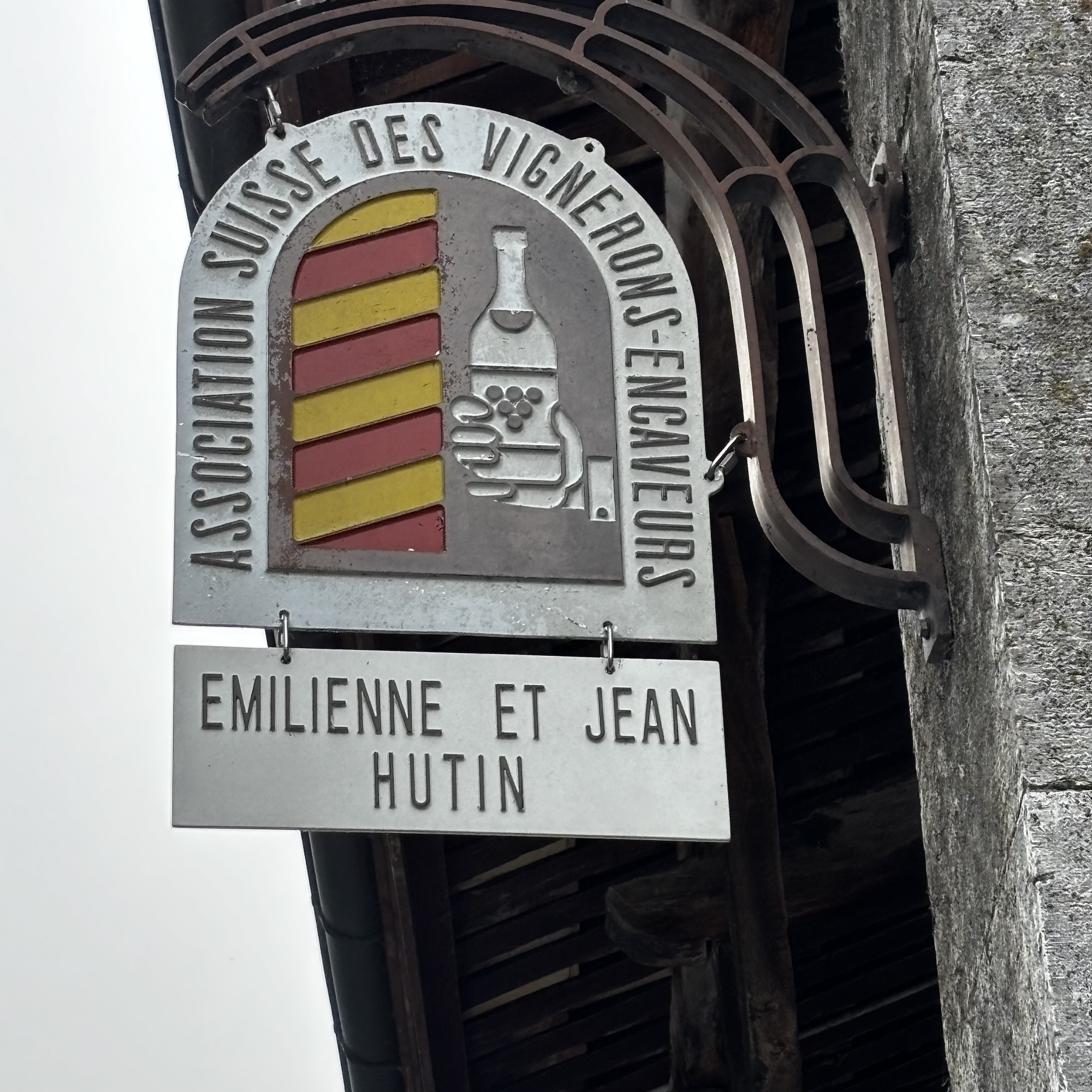
I understand this might be a one-off cuvée, which would be a shame as it is brilliant. My bottle came from The Solent Cellar at Christmastime last year, and I’m sure they have sold out. They got it via importer Les Caves de Pyrene. There are odd bottles knocking around at the £50 mark, and Roberson in London appeared to have some (for £55) when I looked. Hedonism, surprisingly, list it online at £40. It is well worth seeking this particular cuvée out if you can find some.

Posted in Alsace, Aosta, Artisan Wines, Australian Wine, Burgundy, Italian Wine, Natural Wine, Wine, Wine Agencies, Wine Merchants | Tagged , , , , , , , , , , , , , , , , , , , , , , | 1 Comment

Rioja by Fintan Kerr – The Smart Traveller’s Wine Guide (Book Review)

Wine books can be pretty expensive these days, at least the serious wine books you and I read. It’s not always the case. Jamie Goode has found a way to make some of his books affordable, but those published by the big publishers can seriously dent our wine budgets. We buy them because we need (or in some cases, crave) them, to expand our knowledge.

Most of these books remain in our homes, used first for the purpose described above, and then, as we dip in further over time, to check facts or, in my case, research for writing. The number of books we actually take out on the road with us, on a wine trip, is probably more limited. Wink Lorch’s books on Jura and Savoie come to mind as useful books to travel with, but most don’t really lend themselves to travelling light. Even though I’d be unlikely to visit Japan again without Anthony Rose’s book on Sake and that country’s wines in the Infinite Ideas series (now with the same publisher as the book I’m about to review), it’s nevertheless a little heavy for that purpose, and it cost £30.

Now there’s a new series of little books published by the Académie du Vin Library in partnership with the Club Oenologique, under the banner of The Smart Traveller’s Wine Guide. They are a very affordable £12.99 (UK, just $17.95 for US readers). Guides to Rioja and Bordeaux are already available, with Napa, Tuscany, Rhône and Switzerland listed as “coming soon”. There are also, I understand, many more in the pipeline.

The first guide in the series I’ve read is Rioja by Fintan Kerr. I’ve met Fintan on several occasions, even shared a pint with him (as a friend of a friend), but that was all before Covid, when he was running tasting courses in his home city of Barcelona. He still does that, but since then he has become an established expert on Spanish wines in general, writing for various international wine journals, and for the celebrated source of Spanish Wine intel that is timatkin.com .

This small book, measuring about 17x12cm and running to around 180 pages is smartly put together, with a kind of Lonely Planet vibe, lots of photos of people, places, bottles and labels bringing colour to well-set out text, supplemented with a variety of maps.

In the Foreword, written by Victor Urrutia (Chief Executive of CVNE), he says “This book captures the essence of what makes Rioja a place that every wine lover should visit at least once. It should be in every wine lover’s suitcase”. Let’s see whether this is true, and to what extent it would have been an “indispensable” (as the back cover asserts) guide for me on my one and only visit to Rioja so far.

We open up the cover to a map of the whole region, simple and uncluttered, showing Rioja’s sub-regions, main towns and roads, opposite a list of eight major attractions with page references. Such attractions include the Barrio de la Estacíon in Haro, Calatrava’s winery architecture at Ysios and the monastic sites at San Millán de la Cogolla, all high on any tourist’s list of must-see places.

A colour-coded list of contents matches the colour blocks on the right hand (recto) pages of each chapter (though sensibly left off the photos to avoid spoiling the aesthetic). Although the team putting this together have doubtless looked at all the general travel guides out there, I’d say the design is excellent, geared very much for ease of use on the road, the attractive photography whetting the appetite for what you are heading off to see.

We begin with a short history of Rioja from Roman times up to today, as the region is undergoing a number of exciting changes. This is followed by a resume of the Rioja wine classifications, including a little on the regulatory body, the Consejo Regulador. Here, Fintan includes a section on old vines (and why they matter), followed by a personal but well-chosen list of Rioja’s finest wines, with a paragraph or two on each of the twelve he includes.

The chapter on Geography also contains some neat, small, maps of the sub-regions of Rioja (Rioja Alavesa, Alta, and Orientale (formely known as Rioja Baja)). On these are marked some of the major wineries, followed by a chapter on wine styles. Here, we are not restricted merely to the old Joven to Gran Reserva classification, but the author also looks to distinguish traditional and modern wines.

The revolution being undertaken in Rioja has been twofold. There was a period when “modern” meant rejecting the old pyramidal structure topped by Gran Reservas aged forever in mostly American oak, for wines often made in new French barriques, sometimes closer in style to the big wines coming out of Ribera del Duero than the Tempranillo blends we were used to, and sold to us in some of the heaviest bottles known to wine.

“Modern” today is likely to mean something much more subtle. First, there has been a new appreciation of Grenache in the region. It hasn’t supplanted Tempranillo, but as well as becoming more important in some blends, there are also very fine wines made solely from this variety gaining fame today.

Perhaps even more important has been the new focus on site and terroir. Traditionally, Rioja has been a wine made from grapes sourced across the wider region. The idea of the “Vino de Pago”, or delimited single vineyard wine, became established in law in 2003. Although there are only a relatively small number of single sites designated as Pago so far (25 at my last count, but I may be out of date), this has led to a more general appreciation of terroir and with it the establishment of producers making wine from just one sub-region and, more importantly, one village. Pago wines are expensive, but the idea of “Village Rioja” is quite thrilling for wine lovers like you and I, and the wines are infinitely more affordable.

The next chapter is on grape varieties, and as well as the well-known and lesser red varieties, here we can get to know the white varieties, once neglected but no longer. Some of the most spectacular strides in the whole region are being made with white wines. It’s a whole genre which is just beginning to catch fire for dedicated lovers of Spanish wine outside of Spain. Short sections on reading wine labels and vintages then precedes the second half of the book, on visiting Rioja.

The part one might call “on the road” is what sets this small guide apart from other works in a textbook format. Those don’t tend to tell you practical details such as the weather, when Rioja will be busy or quiet, what festivals are on and other things you might decide to do with those you have dragged along and who may not be so wine-obsessed (pretty useful if it’s a family holiday). The information on the towns and villages is short and sweet, but, for example, I defy anyone to look at the photo of San Vicente de la Sonsierra on its hilltop at sunset and not decide to visit (and hey, there are some pretty fabulous bodegas nearby).

There are several “wine routes” proposed (with small maps), of different lengths, plus a directory of the best bodegas to visit. Such visits can be geared to those seeking a full-service tour, like those you get with the bigger Champagne Houses in France, down to visits for a smaller tasting at an artisan producer’s cellar. These all range from famous names known to many who are not especially Rioja aficionados (Murrieta, Riscal, CVNE etc), to artisan producers whose visits sound particularly enticing (like Abeica or Ramírez de Ganuza).

As with any genuine guide to a wine region as a whole, as opposed to just its wines, there are recommendations of places to stay, including Rioja’s renowned luxury Wine Hotels (a bit of a thing here, often either attached to, or run by, one of the Rioja bodegas).

Food is far from forgotten, and you can choose from the best “fine dining”, bodega restaurants, the best tapas in Logrono (for which the town is rightly famous), and where to eat and drink in Haro (Rioja’s other main town). And don’t forget the wine shops, genuinely useful for those who prefer to bring home a variety of producers’ wines.

Finally, before the Glossary, Further Reading and Index, we get another section on individual wines, this time wines to look out for, whether on a restaurant wine list, in a wine shop, or at a tasting. Under various sub-headings which include white wines, joven wines and second wines, these differ from the established greats described earlier. Here we have some featured bottles and further lists of wines which are just a little less famous, perhaps more affordable, and certainly wines which should thrill those discovering them for the first time.

You’ve probably realised that I have answered the question I posed at the top of this review in the affirmative. At under £13 why would you not buy these little books if going on a wine trip to one of the regions covered, even if it’s just to have something light to peruse in the evening after dinner? Certainly, on the evidence of Fintan Kerr’s Rioja Guide, I’d go much further and say that for somewhere I don’t know very well, this guide has opened my eyes to possibilities I was unaware of, so I think it is, as the back cover says, “indispensable”.

What of the other guides in the series? Currently there is also a Guide for Bordeaux, written by Georgie Hindle, and if ever there were a region/city well-served with wine books and travel guides but nothing that combines the two, then Bordeaux is it. It’s another region I’ve not been to for a long time, 2015 in fact, when I was lucky to stay right over that marvellous curved staircase at Château Pichon-Baron. I was meant to be back in Bordeaux this year, but plans may have changed. Nevertheless, I’ll almost certainly read it, having enjoyed “Rioja”.

Four more books in this series are scheduled for 2025 publication according to the publisher. June sees guides on Napa by Maria Hunt and on Tuscany by Paul Caputo. Then, in October, Switzerland gets some well-deserved coverage from Simon Hardy and Marc Checkley. I will be more than interested, as someone who has reasonably deep knowledge of Swiss wine, to see how the authors handle a whole country, one with six major and well-dispersed wine regions (more if you don’t lump all the German-speaking regions together under the Deutschschweiz banner, as many non-Swiss writers do).

Matt Walls extends his Rhône expertise (also due in October) beyond just the wines. Is there anyone writing on the Rhône today who can match Matt’s knowledge, especially of up-and-coming villages, winemaker and co-operatives?

Both of those two guides will be absolute buys for me, and I can hardly wait that long, especially as I hope to be back in Switzerland next year and I only know of one book in English on that country’s wines (by the late Sue Style in 2019).

In the meantime, whether you plan a trip to Rioja, or just want to get back into a region that, like me, you may have let slip off the radar in favour of more glamorous new regions (Gredos and Bierzo lovers, I’m referring to ourselves here), then this little guide comes highly recommended. Its all-encompassing nature has really inspired me to go visit, and I’m sitting here quite jealous of the person I know who is on a trip there right now, as I type. Nice one, Fintan, and also congratulations to whichever individual commissioned this series.

Rioja by Fintan Kerr is one of the first pair of books in The Smart Traveller’s Wine Guide series, part of the Académie du Vin Library, published as a paperback/soft cover in 2024, running to 182 pages. It can be purchased direct from the publisher, or through a range of major chains and independent book stores. To go directly to the Académie du Vin you can follow the link below:

Posted in Fine Wine, Restaurants, Rioja, Spanish Wine, Wine, Wine Books, Wine Shops, Wine Tourism, Wine Travel, Wine Writing | Tagged , , , , , , , , , , , , , , , | Leave a comment

The Elephants in the Wine Room

Occasionally I like a gentle rant, and I was inspired to spout forth on this topic, the price of wine, by a few very different recent experiences. By “wine”, of course I mean the kind of artisan, especially natural, wines which most of my readers are buying. Like every story, it has two sides, and this one is not only about the significant price increases you and I are paying for the lovingly crafted bottles we are buying, or perhaps not buying. It is also about the struggles of the people making the wine, importing it and selling it.

Let’s start at the top. The fact is, although few people in the trade are openly discussing it, that the wines we were buying for, say, £20+ during Covid are now all up there in the thirties. Wines we paid in the thirties for are now frequently in the fifties. Let me give two examples. Excuse me if I’m not specific but I don’t want to appear to single out individual importers.

First, a German wine which I recently paid around £30 for in the UK. This wine, same vintage, was for sale, retail, in France for 16€. That French retailer purchased it direct from the winemaker, using his own transport, but he paid just less than half that price trade, per bottle, to the producer. This highlights the extra costs faced by UK importers.

Second, a wine I was quoted £35/36 for last week. I believe during Covid I bought some of an earlier vintage of this wine (2019) in 2021 or ‘22 from an online wine shop for £19.

So, what are the reasons for these mega-increases in prices? I want to say right away that it is emphatically not importers being greedy. Okay, we know there isn’t a rule as to how much margin an importer (or retailer) takes, but even if a few take a little more than others, no one is getting rich selling wine in the UK. If they were, then we wouldn’t see realignment of stocks, where some producers’ wines take longer than they used to come back in, or as we notice with some importers, the rate at which they take on new producers has noticeably slowed down.

On the retail side, although there are notable exceptions with those shops that specialise in organic, biodynamic and natural wines still shining like beacons if their customer base still has the ability to pay, you might find the range at other shops slightly diminished, with more “value” end wines and some of the more expensive wines discounted more frequently, or delisted.

What is causing this pressure? Brexit was the beginning, I guess. It has put a very much increased administrative burden on both those exporting wine and those importing it here. These extra costs coincided with a time when fuel prices rose dramatically, making transport over long distance by road significantly more expensive.

Then there’s inflation. All of Europe experienced inflation which seemed to peak in 2022, but in the UK it reached 9.1% in June that year, the highest since 1982, and the highest in any of the G7 nations over the same period. Inflation fell to around 2.5% here in late 2024, but is currently running around 3%. Inflation has fallen, but that only means prices are now increasingly more slowly. They are very unlikely to come down in the wine sector.

Of course, there is one other factor affecting wine prices, and that is duty. The UK has a regime for duty on alcohol which is significantly more onerous than that which pertains in the European Union. The latest increases in alcohol duty, initiated by the previous government but being put into law by the current one, see an obvious attempt to penalise wines stronger in alcohol, but the complexity of the rules is mind-bending enough (no other country has such complex rules as the new UK ones), without the increases in prices resulting from them.

The result is a storm from which the consumer benefits not one bit. However, this isn’t all. Before your UK importer places an order for wine from a producer he may have shown loyalty to for many vintages, he or she will be faced with price increases at the cellar door caused by pretty much similar issues to the ones I have already discussed. Energy prices didn’t increase in France and Germany as much as they did in the UK, but those winemakers are still paying more for energy, and, thanks to general inflation, more for their new barrels, presses, steel fermenters, trellising posts, horseshoes, in fact everything they need to make the wine.

As an aside, the ridiculous nature of American tariffs becomes clear when one thinks about all those Austrian Stockinger Casks, Italian concrete eggs, French vertical presses and German tractors the finest US wine producers import, not to mention the expensive harvesting machines they will need to replace their cheap Mexican grape pickers.

American producers are also made to use the same distribution system as for imported wine, so any impact on those distributors will knock back on the home -grown wines. I think the prices of American wines even on their home market will be negatively (for the consumer) impacted by the Trump tariffs. The result could easily be shrinkage in both home production and the home market in the USA.

I’ve talked about UK-side costs, costs which the UK importer’s small margins won’t allow to be absorbed, even when it becomes obvious that sales are impacted. London is a vibrant, and to a degree a resilient, market. Such pressure on sales is possibly more obvious outside of London, initially, where incomes are generally less and the hospitality industry in general is suffering as well. This latter issue can be catastrophic for wine wholesalers who may be waiting for payment on delivered stock. Failure to pay on time destroys cash flow. Failure to pay at all destroys supliers if they are not careful.
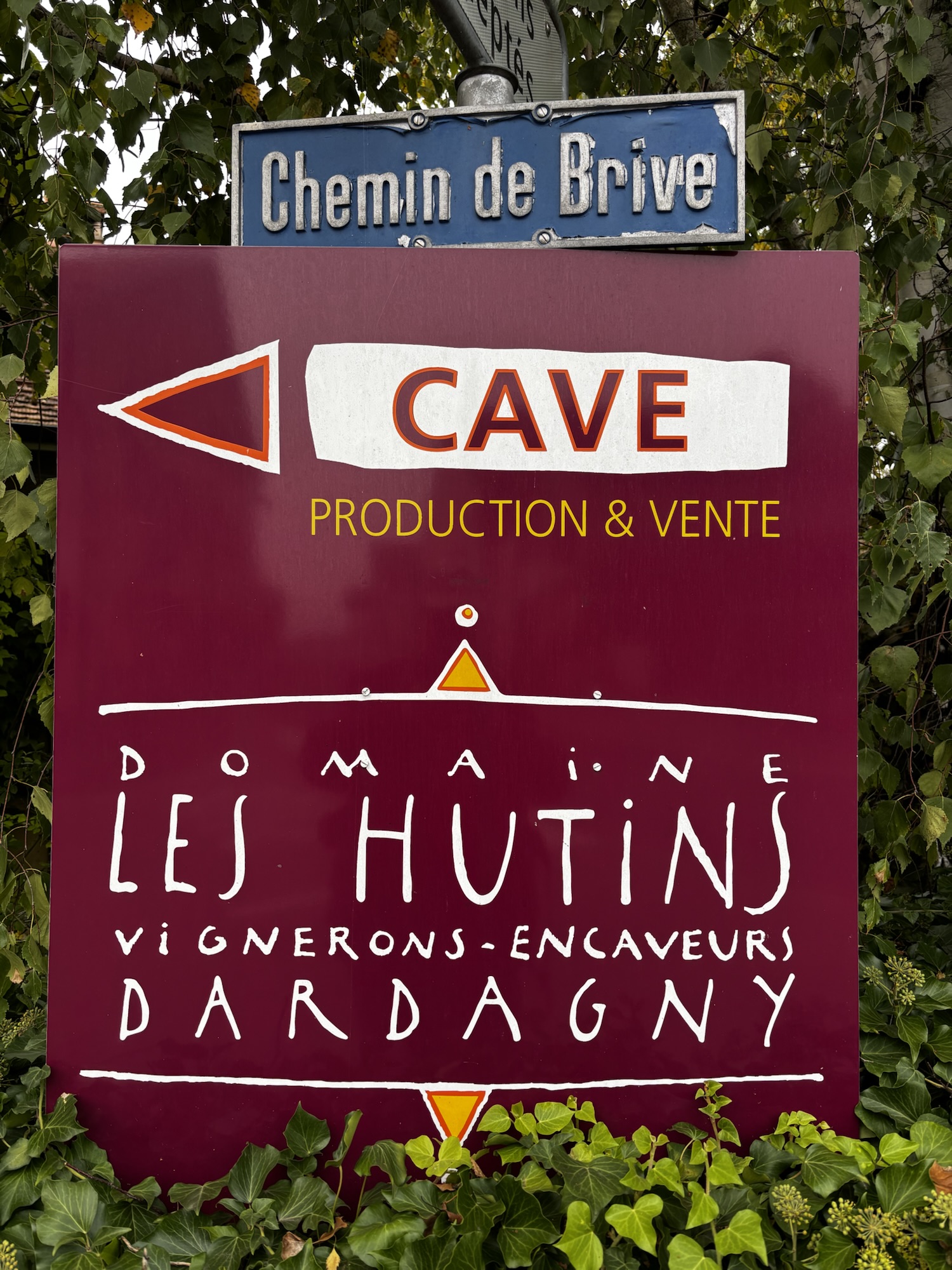
I’ve also touched on producer-side costs. How are these impacting sales? Any evidence tends to be anecdotal. Few producers will openly talk about the situation, but putting together information from several sources, one sees that a genuine crisis is emerging, with even well-know wine domaines being unable to sell all their wine. I know of especially young producers, as well as some more established ones, in Alsace, the Jura, Southern France, Bugey and elsewhere who are struggling because they can’t sell their wines for enough money to cover their costs and to make a living.

I’ve talked a lot about hail and frost in the past, an increasing hazard for many producers in Northern Europe. In Europe’s south it tends to be drought that is the problem. Reduced yields can be absorbed in many ways over the short term, but that becomes even harder to achieve when compounded by all the issues we are discussing here.

One of the stimuli for this piece was an article by one of the people behind Trink Magazine, Valerie Kathawala. Writing recently on the “Invisible Crisis in Germany’s Wine Industry”, she suggests that “two-thirds of independent German wine producers are in trouble”. This is a topic that has never been addressed in Germany, yet a crisis is unfolding. Again, it hits the young, newer, winemakers hardest. They are the most financially stretched with agricultural and equipment loans and they are perhaps under the greatest health stress as a result. They are the future and wine regions cannot afford to see innovative young winemakers going out of business.

A German producer may have some vines in a famous site or three. He or she may sell those wines easily, on allocation. However, for the vast majority, they have less elevated cuvées which they also have to sell. Of course, some producers are lucky, but a good number cannot sell these wines. It has nothing at all to do with quality, and everything to do with price. Perhaps fashion plays a part too, some may argue, yet it is clear many producers in the ever fashionable Jura are experiencing these problems. Selling at a price which doesn’t make them a loss, or, at least if individual wines have to be “discounted”, overall profitability has to be maintained. Without this there is no future, not for wine anywhere.

This all sounds like doom and gloom. In the case of most of us less financially resilient wine lovers we have to tighten our belts. My income hasn’t really increased over the past five or six years and artisan/natural wine prices have, by I’d estimate by between 25% to 40% (and sometimes more like 50%) for the wines I had been buying regularly.

No matter how much we love wine, it is still a discretionary spend. What can we do? My own approach has been on several levels. First, I’m trying not to drink wine on two days each week. In my case, that’s a saving of say four bottles per month, or in financial terms, perhaps £120/month. You can see I’m still far from struggling as much as many.

Then there’s the spend less option. There are some very good value wines, even natural wines, out there. Hot spots include much of Spain and Portugal, and Italy’s less-famous regions (especially in the south, if less so Sicily). I’m also buying, you might have noticed, quite a bit of Czech natural wine. Prices here are definitely rising, but what you can get for your money still makes these wines supremely good value.

Also, let’s not forget those lesser wines, so-called (I prefer entry level), from well-known producers. Take the Domaine L’Octavin negociant wine I drank last month, and featured in my last “Recent Wines” article. Alice Bouvot’s negoce cuvées are usually at least £15 cheaper than her domaine wines, but I know this producer well enough to know that I am still drinking Alice’s wine and the passion and soul that went into making it.

Where I draw the line when buying to drink at home is at the mundane. Even if I’m buying a cheap wine from one of the more interesting supermarket ranges, like the Australian Aranel varietal wine from Waitrose’s “Loved & Found” range (see Recent Wines January 2025 (Pt 1)), it needs to have a story to tell. I think most of us who have an interest in wine and see it as more than a mere beverage want that from any bottle we buy. You can find such wines at indie wine shops, usually by chatting with the staff to find out what’s really interesting or great value.

I don’t want to end just on doom and gloom. At the weekend my wife and I went to eat at a local, family-run, Italian bistro. It’s not somewhere to expect gastronomy, and I’m sorry to say that the wine list is rather mundane, but the friendly welcome is better than in any place I’ve been to since we moved to Scotland. Supermarket Chianti and lazy importer Barolo, however, top the list of the usual suspects at prices few of us would pay if we know the wines.

Nevertheless, they do simple house wines by the carafe or glass. The white is a Verdicchio, and I’m not sure about the Rosato, although it’s quite tasty, the tastiest of the three colours to my palate. On this occasion I had a large glass of red, a generic Italian Merlot. In context it was perfectly drinkable, made nicer by following the main course with the best home-made tiramisu I know, accompanied with a glass of Amaro. £6/250ml for the wine, just over £60 all in for a meal for two. The fifteen minute walk home along the beach, a cloudless sky filled with galaxies of stars and the waves quietly lapping against the shore made for an evening that a bottle of ArPePe, Tignanello or Mascarello would have enhanced, but not significantly more, in context, if I’m honest.

That such simple pleasures exist is perhaps reassuring for those of us seeing our cellars (or wine rooms) shrink as prices continue to climb, but this experience reminded me of two things. First, that immersing oneself in the pleasures of simple wine can, with ease, transport us to a place where we don’t need our unique unicorn bottles to create contentment. That is especially the case if you look at the mark-ups at some restaurants, where finding anything decent, at least for any wine obsessive, under £60 is pretty hard work.

It also reminded me that before my wine affliction, albeit a very long time ago, I had years enjoying very simple wines, whether with a steak-frites on the road in France, spaghetti in Italy, paella in Spain or a chicken kebab in Greece. A host of very specific memories remain from particular meals which cost little, and where the wine we drank was whatever they poured. I think that those experiences are now harder to find, but they are still out there, and the wine is likely to have improved in the interim.

You and I, we can’t help our passion for artisan wines, and I hope to continue to enjoy them for a long time to come, but they might not all be there forever. Carpe Vinum!

Posted in Artisan Wines, Natural Wine, Wine, Wine Agencies | Tagged , , , , , , , | 1 Comment

Recent Wines February 2025 (Part 2) #theglouthatbindsus

Part Two of my wines drunk at home in February doesn’t manage the zero-zero of all different countries, as Part One did, but we still manage to range far and wide in the world of wine. We kick off in Germany’s Mosel, leap over to Australia’s Clare Valley for a different style of the same grape variety, and then jump back to Europe for a complex Alpine white from Savoie.

If those are all white wines, we then move on to a couple of reds, albeit lighter ones. A lip-smacking Jura blend plays next to an enigmatic four-grape mix from Burgenland, both being just perfect examples of the essence of glouglou. Last but not least we have a remarkable 2011 vintage blend from Moravia, an orange wine of a quality that matches the finest wines of this style I know, and at a price to make you weep with joy…if you could find a bottle.

Haart Riesling 2022, Julian Haart (Mosel, Germany)

Julian Haart took over his family’s vines around Piesport in 2010. That he became so well known so quickly perhaps has something to do with his work experience before that point, four different top estates which included Keller and Egon Müller. He has five hectares to play with, and as his importer rightly says, he is “making wines as exciting as any in the Mosel”. Julien is no longer a new star. That falls on others as often as possible mentioned on this blog. He is now an established one.

All of Haart’s vines are on slate, and have decent, if not considerable, age. The regime is organic viticulture, whole cluster pressing, fermentation and ageing in traditional 1,000-litre füder. Julien keeps it as simple as possible with the aim to produce genuine terroir wines.

Here, we are at the entry level, but that at least means relative accessibility early on. The old vines still give complexity. There’s a floral bouquet with some spice and confit citrus. I even found mint. The palate shows great presence and a certain tension. There’s a bit of peach and green apple crunch. You’d think I was describing a top wine. All it lacks is that transcendence top Mosel from a good year provides with age.

At 10.5% abv you will see that it is “fruity” and most would probably call it “dry”, yet that fruit has that sweetness which equates with ripeness. Perfect balance from a vintage said to be high in acids (like 2021), but also very approachable in youth, certainly at this level and quality.

I bought this from The Solent Cellar last year, for a ridiculously great value £24. Naturally it’s all gone. Check out importer Howard Ripley for UK distribution. There are stocks in Europe and the USA.

Polish Hill River Riesling 2017, O’Leary Walker (Clare Valley, South Australia)

I think O’Leary Walker must be having its 25th anniversary this year because it was founded in 2000 by friends David O’Leary and Nick Walker. Both had already had winemaking careers during the heyday of Australian wine, ranging from premium producer, Petaluma to Aussie giant, Hardy’s. They chose Leasingham in the Clare Valley to open their own winery, and in 2010 they were joined by Nick’s son, Jack.

The winery is just south of Watervale, but the fruit for this wine comes from the northeast of the valley, along the Polish Hill River. The geology of Clare is interesting. Where the winery is located, we have mostly limestone, but the north-south running Polish Hill Valley has slate (cf Jeffrey Grosset’s Polish Hill cuvée). The vines are said to struggle and produce long-lived wines which can be austere in their youth. The north of the valley is certainly warmer than the southern end, but we are up on a plateau and at 450 masl upwards the cool nights help create a tension between ripeness and acidity.

We are lucky here to taste a fairly inexpensive Clare Riesling, produced in decent quantities, but with some age to it, pretty much eight years in this case. It’s living proof that you can find very good value Riesling here. It has typical lime fruit dominating, a nice lick of acidity, but nothing overpowering, and a good mouthfeel with a little mineral texture. The alcohol sits at a nice 11.7%.

This isn’t a natural wine, though it does state that it is “vegan”. Don’t expect the sort of complexity, nor the wow factor, that a nice bottle of Grosset Polish Hill provides, but for £16 from Waitrose this was surprisingly good.

Les Abymes “Electrik” 2021, Domaine Philippe & Sylvain Ravier (Savoie, France)

This was a good find and a testament to the art of browsing in a wine shop. I knew nothing about this specific wine or producer, but trust the team in this store, and I realised I’d not drunk anything but expensive Savoie for ages.

Abymes is one of the largest of Savioe’s sixteen sub-appellations (producers are actually banned from calling them “crus”), and it is located to the south of Chambéry, below Aprémont. It’s claim to fame lies in a disaster. Mont Granier collapsed in 1248, submerging several villages, killing at least 1,000 people, and leaving a cliff face over 700 metres high where the mountain had once been. It is, however, on these loose limestone-marl scree slopes that Abymes is planted.

The grape variety here is the Savoie mainstay, Jacquère, in this case from a single parcel farmed organically with no herbicides/pesticides. Fermentation uses only indigenous yeasts. Once derided, Jacquère can make lovely wines when treated with respect, something growers didn’t need to do in the past when a ready-made ski market would drink any local wines going with their après. Here, you are introduced to a lovely bouquet of ripe citrus with peach blossom, and then the palate brings fennel, stone fruits and a dash of lemon. It combines a fullness in the mouth with fresh, citrus acids and a slightly stony texture.

A lovely wine purchased from The Solent Cellar in Lymington, but the last bottle on their shelf, for £19. Try Jeroboams if you’re in London.

Hip Hip J… [2018], Domaine L’Octavin (Jura, France)

This is one of Alice Bouvot’s “gnome label” negociant wines. Most of these are just super-juicy gluggers, and this is no exception, so why buy it? Well, if you know Alice’s wines you will know that if wine is alive, then these bottles are alive and having the time of their lives. She makes some of the most vibrant wines on the planet and whilst her domaine cuvées are increasingly expensive, the negoce bottles are a little cheaper, but made with the same honesty and passion.

This wine comes in several forms, and I believe this one is Poulsard and Trousseau (as the back label cryptically states) rather than just Poulsard (as claimed by some retailers). Deciphering the back label is key to finding the vintage, and the origin of the fruit. Although Alice sources fruit from good friends as far afield as Savoie and the Languedoc, these Jura varieties seem to have an Arbois post code.

As with every Bouvot wine, you get fermented grape juice with absolutely nothing added, or “pur jus de raisin” as she puts it. Red fruits dominate zippy acids, which put up a good fight, making for a wine that tastes like fruit juice. Yet with 13% alcohol, don’t be fooled. There’s a little bit of volatility, 90% of which blows off, but this level of “feral” won’t please everyone. These are, however, pretty unique wines, busy, not sedate. The payoff is purity, emotion, life and soul in a wine which lingers on the palate. Also, despite being as far from a traditionally intellectual wine, it lingers on the mind as well.

From Feral Art & Vin (Bordeaux), expect to pay 26-30€ in France for current vintage, more likely £35-40 in UK retail, where Tutto Wines imports.

Ujča Hendrik [2023], Luka Zeichmann (Burgenland, Austria)

Luka has graced these pages many times with the wines he makes at Jois, in northern Burgenland, in a partnership under the label Joiseph. He is now also making wine further south in the same region, under his own label. There are some wines made from vines owned by his family, and also some wines (as we have here) made from fruit purchased from selected growers. The quality of both is very high, and both sets of fruit are subject to Luka’s extremely high viticultural standards as regards synthetic inputs and so on. The winemaking is the same too, all that differs really is the price.

We have here a field blend of red varieties, which includes as major components Blaufränkisch, Zweigelt and Blauer Portugieser. Undergoing a very gentle fermentation with no additives, it has a lovely pale red colour (though for my eyes it isn’t a Rosé), with scents of strawberry and raspberry. The same fruits appear on the palate in the zippiest way imaginable, carried over the tongue by a faint prickle of carbon dioxide, which addition helps obviate the need for any sulphur.

I’d call it light but not insubstantial, which is just the kind of red wine I’m drinking a lot of these days. You wouldn’t necessarily think that a red wine with as light colour as this one would be one to linger long on the palate, but it does. This is almost certainly because it’s a natural wine without synthetic additions cutting it short. The concentration is in the pure fruit, not a result of the way it was fermented and aged.

£28 from Cork & Cask (Edinburgh), imported by Modal Wines.

Nejedlík Orange 2011, Dobrá Viníce (Moravia, Czechia)

Sadly, in May 2023 Petr Nejedlík passed away. He left behind him, certainly in this wine, one of the very finest examples of skin contact maceration in Central Europe. This wine is something of a Moravian unicorn. Petr Nejedlík was a pioneer of Czech natural wine, not only as a producer, but also as a mentor. Moravia’s most famous winemaker, Milan Nestarec, first visited Petr as a seventeen-year-old in wine school and was suitably inspired. He also learnt a lot from someone who became a close friend.

Milan captures the essence of the man in a kind eulogy he wrote on his web site, where he says “Petr had a tremendous feeling for wine. He put positive energy into it…”, summing up by saying “this country didn’t have a better winemaker”.

I mention all this because almost everyone reading this will know about the likes of Pierre Overnoy, Josko Gravner, and other people who have had a profound influence on their region’s wines. Petr Nejedlík was such a man, and yet he is wholly unsung by the taste makers of Anglo-Saxon wine criticism.

The Dobrá Vinice vines are all planted around Novy Saldorf, a blend of Chardonnay, Riesling and Sauvignon Blanc grown on granite, sand and a silex/quartz mix for this wine. Vinified in qvevri (amphorae) imported from Georgia, where the fruit spends 24 months on skins. Imagine Sherry or Vin Jaune that tastes of marmalade and you get the picture. The flavours are quite unique, but genuinely thrilling.

This bottle is probably my third taste of this wine (I’ve had it at a tasting at Plateau in Brighton and certainly twice at home now). It is likely to be my last. It’s beautifully scented, with orange and orange blossom. The palate is velvet-smooth, very complex and long. It is a natural wine but there was a tiny addition of sulphur. Since my first taste in 2019 this has only got better and better.

This bottle came from Basket Press Wines, the importer, and retailed for the ridiculously cheap price of £35. I don’t think they list it any longer but there is always a remote chance they have a few tucked away in their reserves. A beautiful wine and a beautiful experience drinking it. Petr is no longer with us, but in producers like Jaroslav Osicka and Richard Stavek, we still have some of the original pioneers of Czech natural wine making some equally fine wines down in Moravia. Although maybe not so many quite as utterly unique as this one.

Posted in Amphora Wine, Artisan Wines, Australian Wine, Austrian Wine, Czech Wine, German Wine, Jura, Mosel, Natural Wine, orange wine, Savoie Wine, Wine, Wine Agencies | Tagged , , , , , , , , , , , , , , , | Leave a comment