New Year’s Eve at Wild Flor

This might be the shortest article I’ve posted here but it serves the dual purpose of easing me back into typing after the festive excess, and at the same time helping me out with the internet being down for two-thirds of Monday (very nice of my provider to schedule non-urgent work for the day most of the lucky people go back to work). I wanted to share some photos of our New Year’s Eve dinner, and I’ve not got anything coming up that they wouldn’t appear incongruous tacked on to.

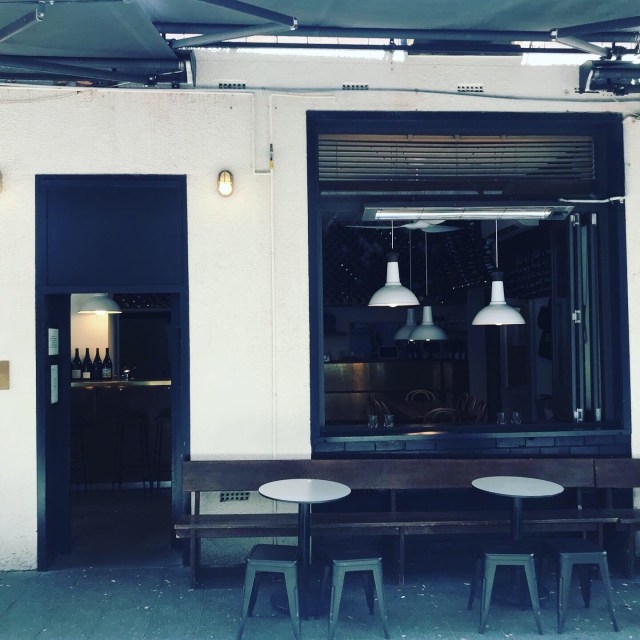
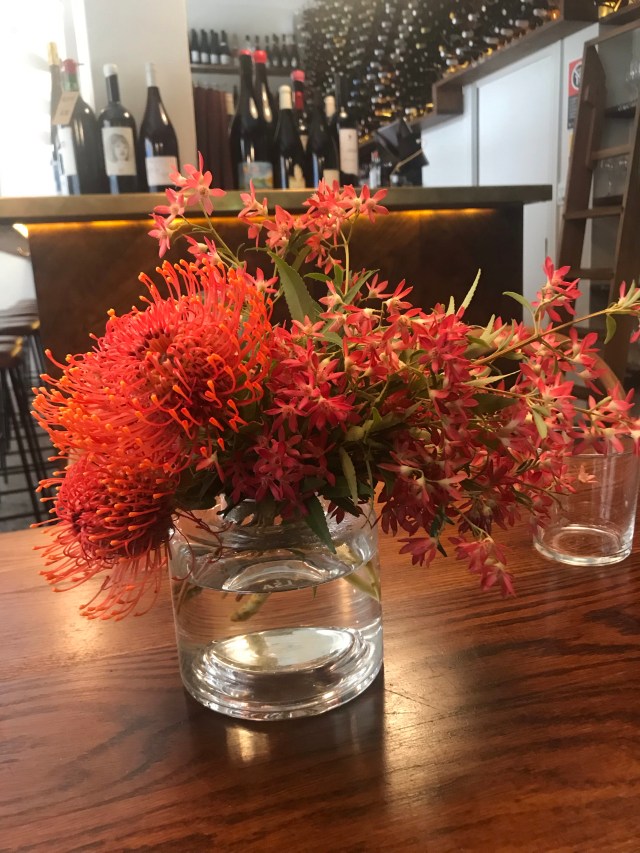
Wild Flor, in Hove, is shaping up nicely and right now it seems to inhabit that special place where a restaurant is still good value but the quality of the cooking is heading for firm recognition. Quality ingredients with a degree of innovation à la carte and good wholesome fixed price menus (they are also hot on accommodating dietary requirements) combine with one of the best wine lists in the city for those who appreciate both the classics and something a little less conservative.

You might think “Hove” is a bit niche, but half of London heads down to Brighton for the weekend, and people often ask me where to eat. It’s also no more difficult to come down for a night out than it is for me to pop up to London to dine with friends, which I do quite frequently.

We weren’t too sure where we were going to be for New Year’s Eve, but thankfully we found out in time to nab the last table for their set menu dinner, priced at £80 for a good selection of amuses bouches, four courses and a glass of Champagne. If you think £80 is not cheap, well it was always going to cost a bit more to eat out on this particular night, and yes, I do think £80 is good value for the quality.

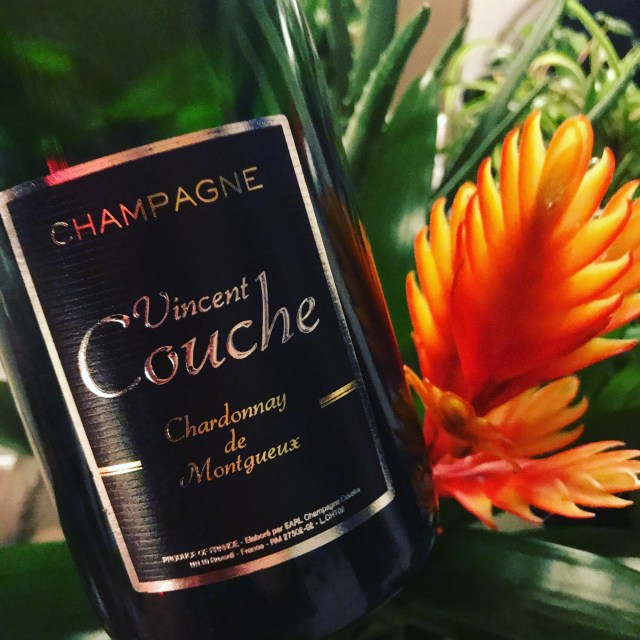
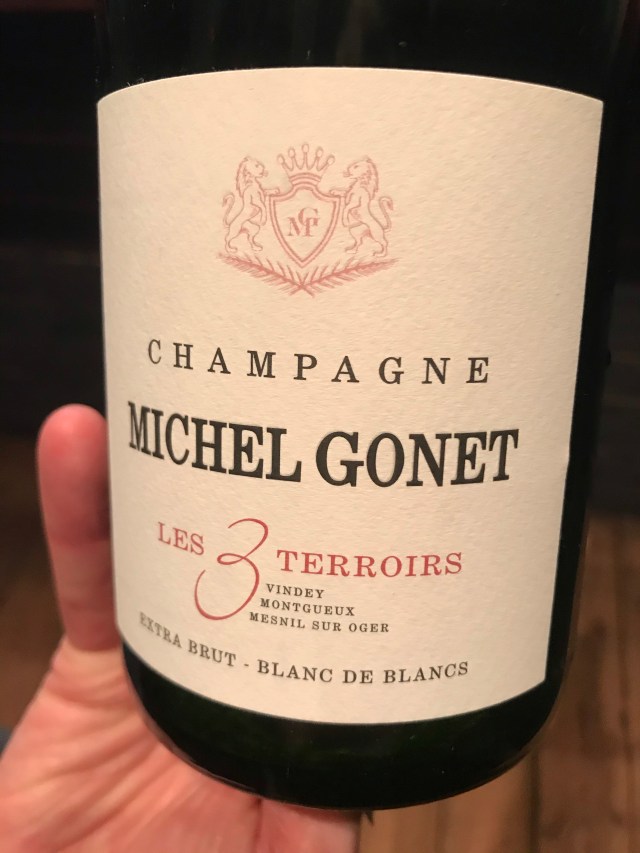
Wild Flor always has decent Champagne by the glass. The first time we ever visited it was Pierre Peters, one of my very favourite Growers. On 31 December it was Michel Gonet “Les 3 Terroirs” Blanc de Blancs 2010 which was fresh and delicious. It was the second 2010 I’d drunk in a few days, along with a 2008, and it didn’t taste too young when served as an aperitif, but already had just enough development to take it out of the “young and simple” category. Not a Champagne I know well, I was impressed with the 2010. It’s an Extra Brut, with the 100% Chardonnay fruit sourced from Vindey (Sézannais), Montgueux (near Troyes) and Mesnil-sur-Oger (Côte des Blancs).

img_8546

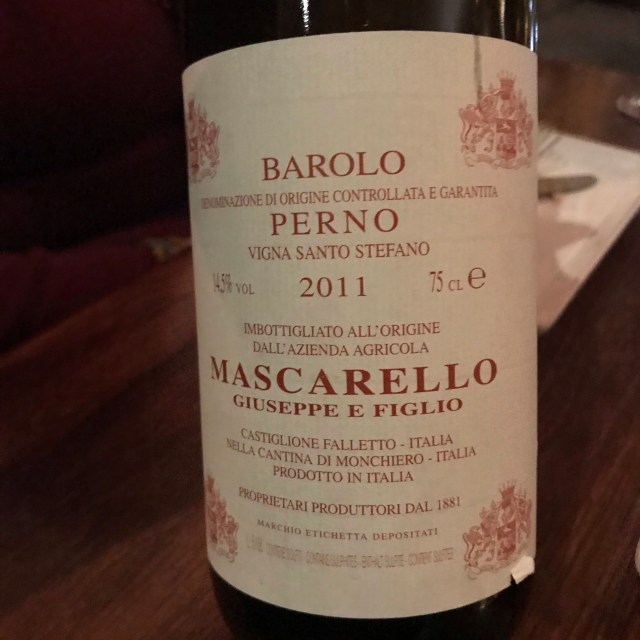
We also naturally ordered a bottle off the list. I have to apologise here because I had been craving Nebbiolo for a couple of weeks and when I spied Mascarello Barolo Perno (Vigna Santa Stefano) 2011 I had to grab it, especially when I discovered it was the last one they had left. I was lucky that I’d been chatting to someone I consider a bit of a Piemonte aficionado only a day earlier, and he’d mentioned the approachability of the 2011s.

In Barolo 2011 was quite a hot vintage, and if you check out the label you’ll notice 14.5% abv. But the quality which appears to make this vintage is its fragrance. There’s a certain richness, though I’ve tasted much richer Barolo. Perhaps the savoury quality of this lovely wine isn’t totally representative, I don’t know. But if the 2011s generally show a wonderful bouquet, this is an exemplar. The tannins are ripe and whilst I’d not say this is anywhere close to maturity (well, at home I’d leave it a few years), I had no regrets drinking it in a restaurant. It was exactly as I’d hoped, no, better than I’d hoped.

Although pricing it is pretty meaningless, as there’s no more left, I thought £120 was reasonable on a restaurant list. Wild Flor shares the approach I remember so well from the old Connoisseur’s List when 28-50 first opened in London, where relative bargains (or at least surprisingly fair prices) could be had.

img_8539

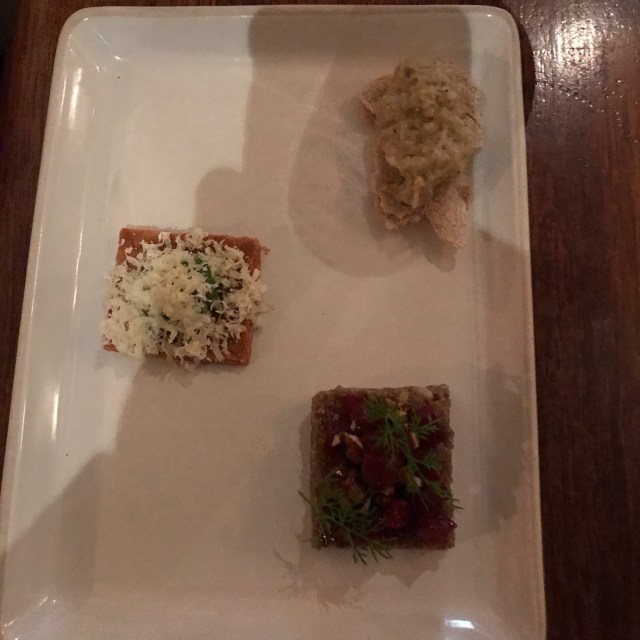
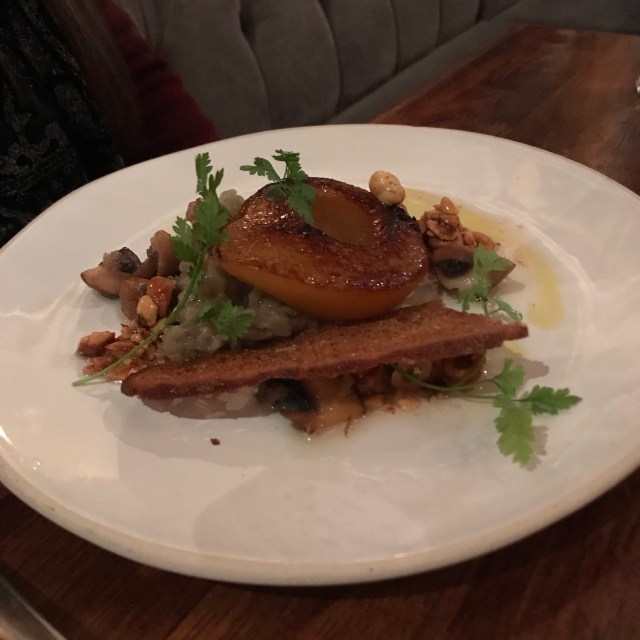
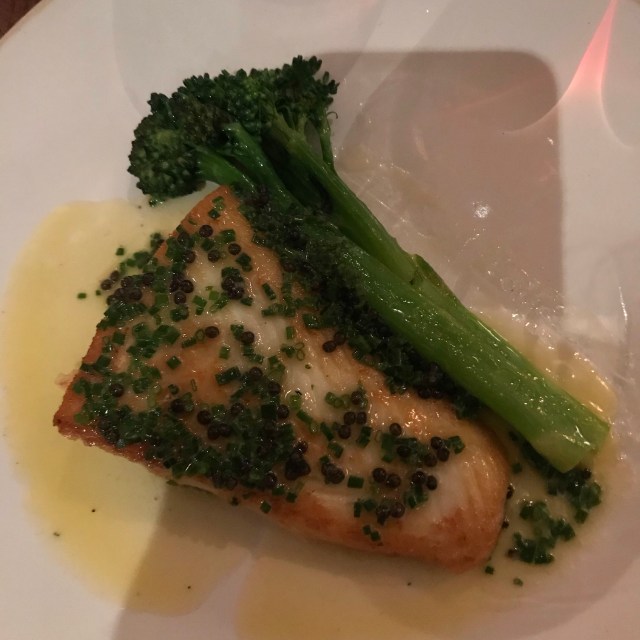
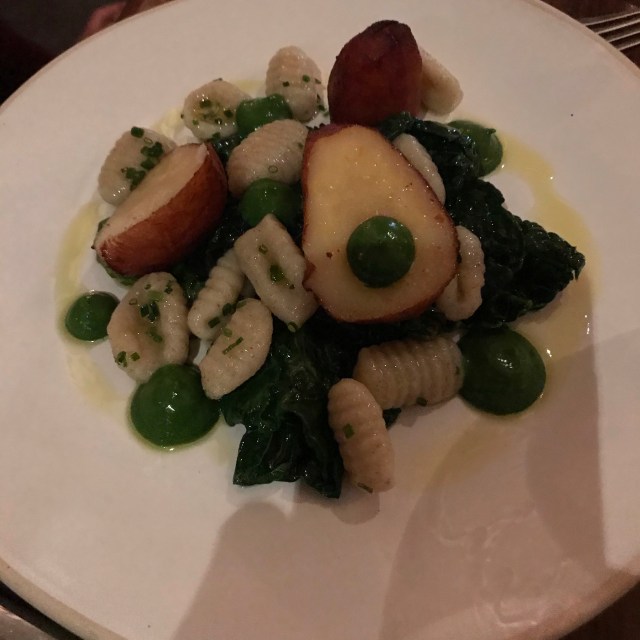
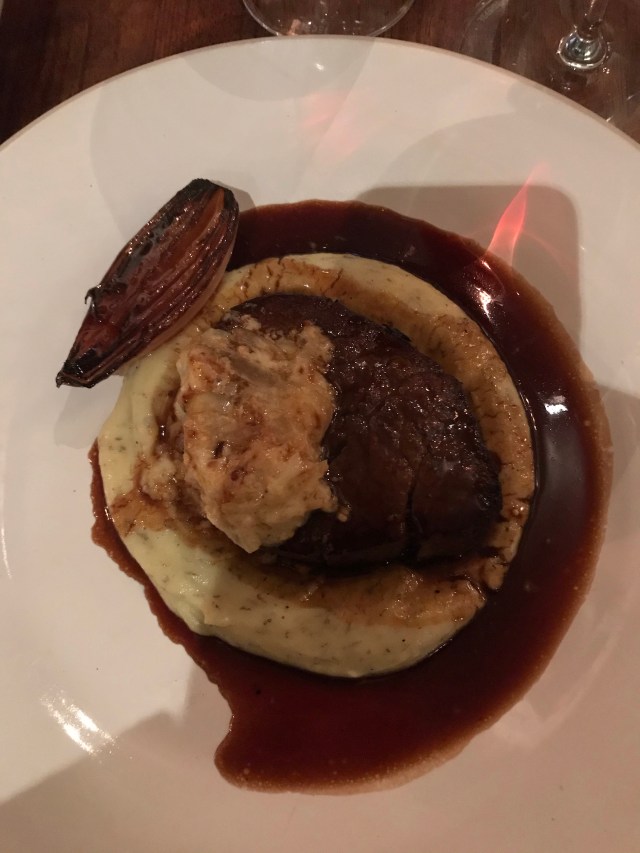
The food photos below include dishes from the Vegan Menu (V) as well as the Set Menu for the night.

img_8535

Amused…

img_8541

Westcombe ricotta, Jerusalem Artichoke with chestnut mushrooms in hazelnut dressing

img_8540

Roast pear and Jerusalem Artichoke with chestnut mushrooms and hazelnut dressing (V)

img_8543

Gigha Halibut, chive and caviar beurre blanc

img_8542

Gnocchi Sardi, parsley purée, chervil root and white wine sauce (V)

img_8545

Fillet of beef, truffled pomme purée, roast shallot & red wine sauce

img_8544

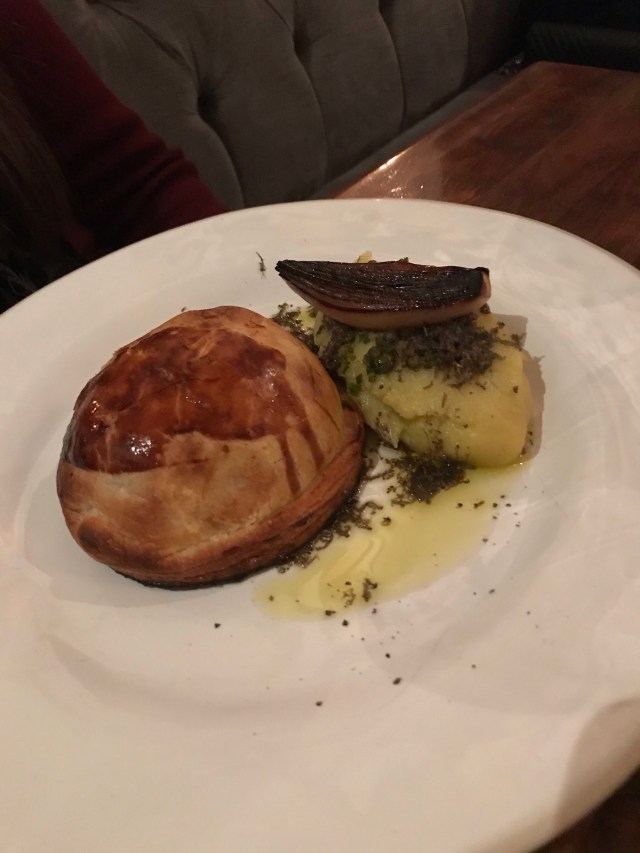
Celeriac and wild mushroom pithivier, roast shallot & truffle mash (V)

The desserts, blood orange custard tart and baked apple, candied walnuts and pear sorbet didn’t get photographed, but after the wine maybe I’ll be forgiven. My tart was exquisite though.

There was an additional supplementary cheese course for those determined to see in the New Year, and with an Aviet Vin Jaune on the list it was tempting, but then my wife would have had to sit there and watch, and anyway, the VJ would have rendered a thirty minute walk home, all uphill, close to impossible. But it was a great night and an equally great atmosphere.

Wild Flor is at 42 Church Road, Hove BN3. Check out their web site for menus, wine list, opening times, etc, or to book here. It’s about ten minutes by taxi from Brighton Station and less than five minutes from Hove Station (via a Littlehampton train from Victoria).


Posted in Christmas and Wine, Dining, Restaurants, Wine | Tagged , , , , , | 3 Comments

Review of the Year 2019

It’s always an enjoyable task deciding what to highlight from the year just gone, or almost (as I write this on New Year’s Eve). The research for this article, and my initial words, were begun in the week before Christmas and I always try to devote a lot of thought to my annual review. As with everything I write, the caveat is always that it’s totally subjective. I always allow my reaction to wine to be influenced by other factors when I’m not at a professional tasting. Wine is so much about enjoyment with wonderful people rather than the cold sting of  “points”. My assertion is that when so many other things in the world are a bit, well, crap, then at least your glass may as well be half full when it comes to drinking. So below you can read about the wines I recall enjoying most in 2019 (with apologies to any stunning wines I’ve forgotten), followed by a few more categories to (hopefully) stimulate your interest.

I am gratified that this site continues to build its traffic year on year. In 2018 I was amazed to top 30,000 visitors, and the 2019 stats are just a little short of 36,000. It’s gratifying to see that so many people are interested in my opinions and passions. To be frank, that’s what keeps me writing. So I hope that this little interlude, or indulgence, will strike a few chords. Normal service will be resumed in a week. I hope you had a wonderful festive period, whatever you believe in and wherever you are.

FIRST THE WINES

Red Wine – 

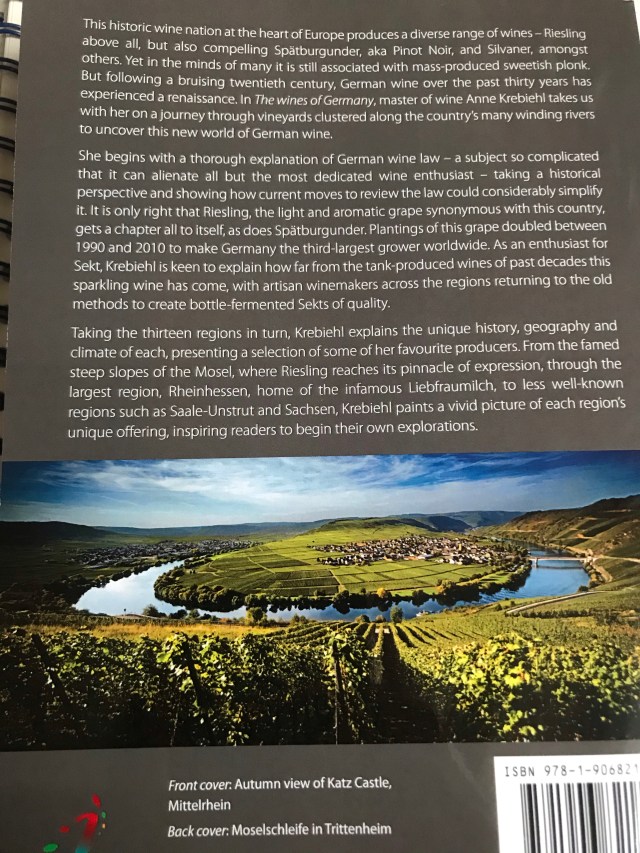
Probably the producer who provided the greatest number of brilliant red wines in 2019 (though mostly not at home) was Hanspeter Ziereisen. This wonderful winemaker in Southern Baden, near the Swiss border, will also appear in the white wine category, impressive. I just bought Anne Krebiehl’s Wines of Germany and for this producer her “recommendation to try”, rather than just one wine, says “anything at all”. After my own heart! A producer which excels at every level.

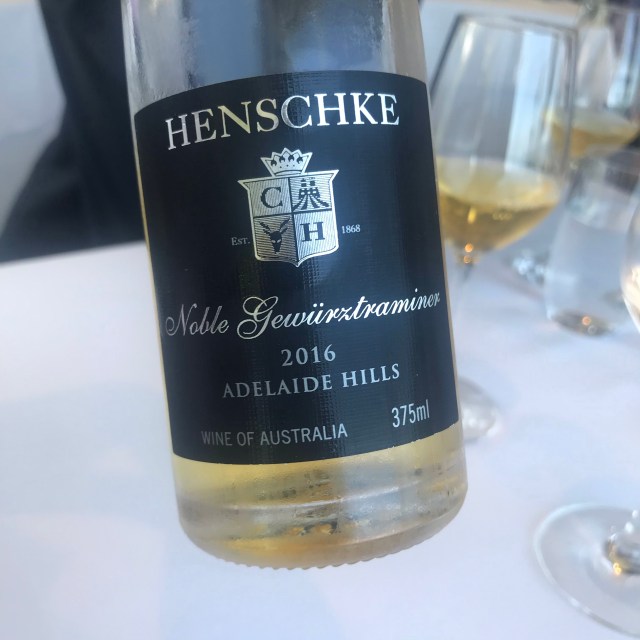
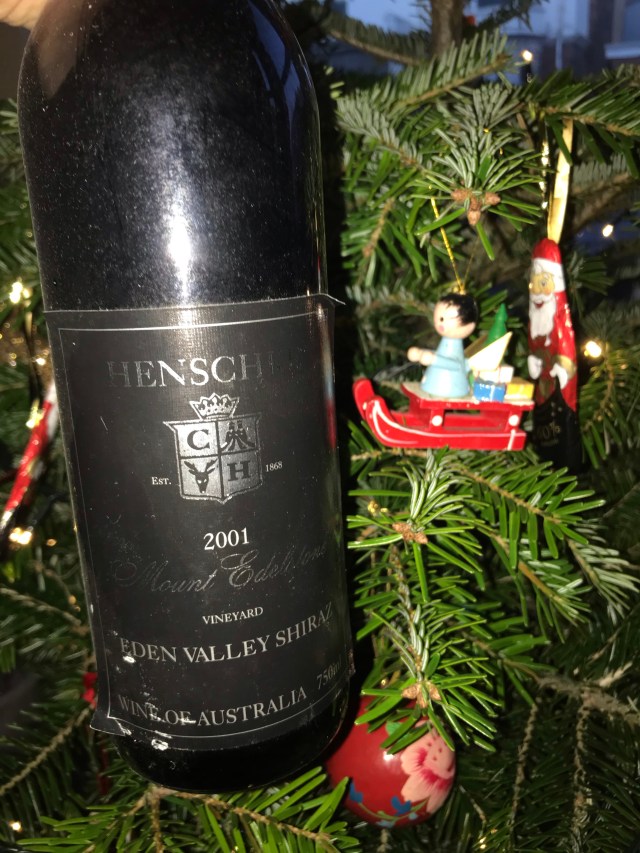
Our visit to Australia recently gave me three outstanding wines from many drunk and tasted – Clonakilla Shiraz-Viognier 2018 is a superstar wine (potentially wine of the vintage, though too young now, of course). Andrew Thomas‘ Kiss Shiraz 2017 will be stunning as well, and every red I tasted at Bindi (I should say every wine) almost made me cry (only partly because they are not currently imported into the UK). However, I can’t omit another Aussie, Henschke Mount Edelstone Shiraz 2001. This old favourite was drinking perfectly, one of the best wines I’ve ever opened on Christmas Day. You know, I’ve never tried Hill of Grace!

I saved a bottle of Rennersistas Waiting for Tom 2015, which I drank last year (Blaufränkisch, St-Laurent and Pinot Noir) and adored it. Who says natural wines don’t age well. My other star Austrian drunk in 2019 was a Gut Oggau Josephine. From France, several Gnome Labels from Domaine L’Octavin (Arbois) were all beautiful. As an aside, I am so happy and relieved that Eduard, Stephanie (of Gut Oggau) and the family are safe after a fire at a friend’s house over Christmas. It puts many things in perspective.

But after all those lovely bottles one red wine stood out above the rest in 2019. In fact it is among the very best red wines I’ve ever drunk. Casse Basse Soldera Brunello Riserva 1990. It was a privilege to drink it with good friends at The Sportsman (Seasalter). Astonishing, and a clear example of how wine can touch the deepest parts of the soul.

img_5649

White Wine – 

I think one white wine also stands out in 2019. It’s always difficult when you know a wine isn’t mature, but the genuine purity of Bindi Quartz Chardonnay 2017, from the Macedon Ranges in Victoria, drunk on a farm in NSW which, as I type, is under threat from the terrible bush fires, was quite remarkable. The Ziereisen white I mentioned above is made from a grape usually sneered at by the uninitiated, Chasselas. Hanspeter’s Gutedel 10 hoch 4 Alte Reben 2016 is something else though. I only tasted this at a Howard Ripley event, but I didn’t spit. In fact, whilst others were ogling the Auction Wines on the next table, I took a second pour.

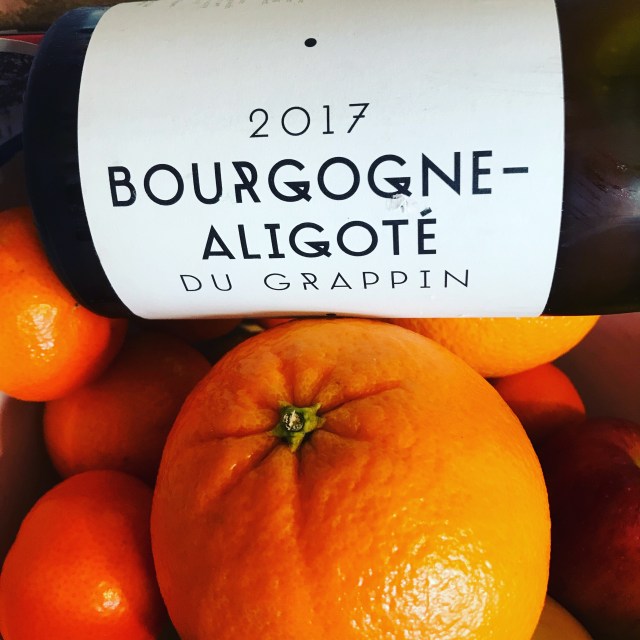
Another star of a lovely dinner at home with a sommelier friend and her partner, where we drank quite a few outstanding natural wines, some of unicorn status, was Domaine L’Octavin Pamina 2015, Chardonnay from Arbois’ “La Mailloche” vineyard. I’m kind of in love with this domaine’s wines, although I find Alice Bouvot a little daunting as a result. Finally, a general mention for the Aligoté of Andrew and Emma Nielsen’s Du Grappin label. Over Christmas I adored opening one or two of their Le Grappin Burgundies (Beaune Boucherottes 2013 is exquisite now), but these wines from the region’s forgotten white grape have been amazing. It’s generally been a fine year for Aligoté consumption.

Sparkling Wines – 

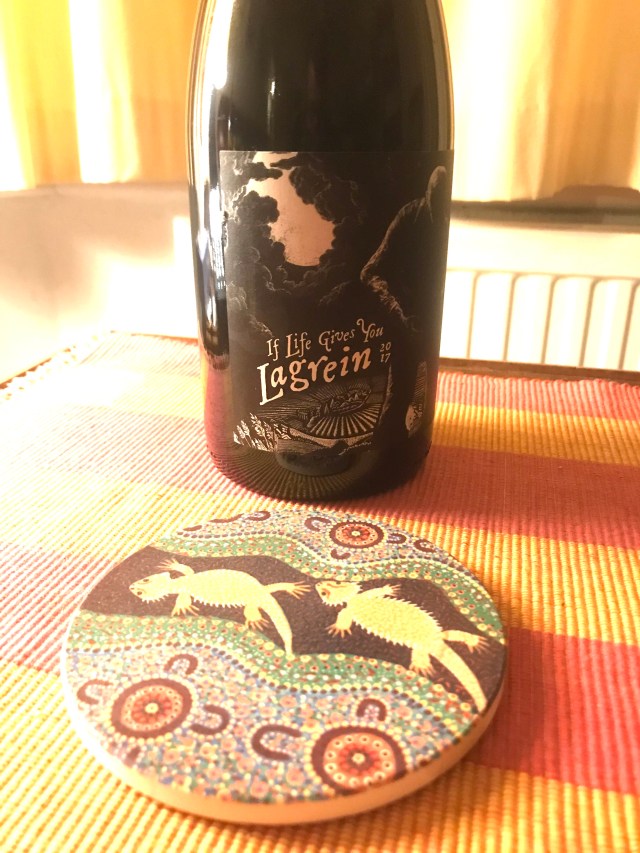
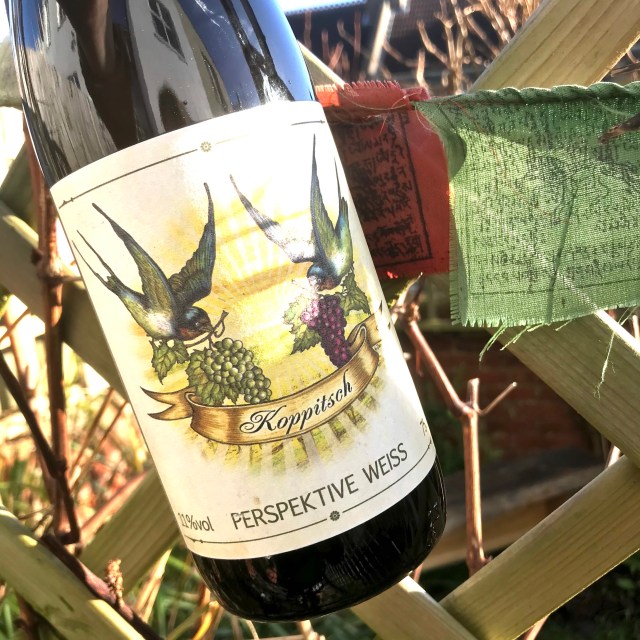
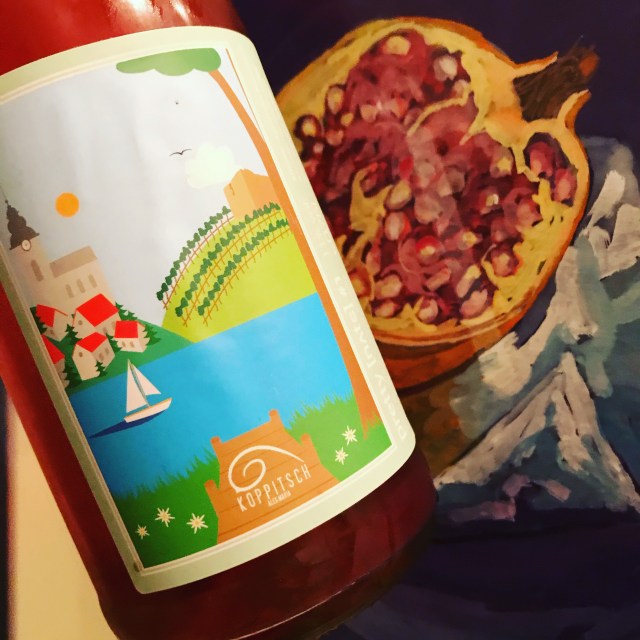
And the winner is…I really must plug Black Chalk, Jacob Leadley’s new label from Hampshire. The Wild Rose 2015 was my favourite of several wonderful bottles this year. Other accolades to Bérêche Beaux Regards, Jérôme Dehours Terre de Meunier, everything I drank from Lassaigne, Florian Lauer‘s Sekts (and those his dad made) and my only bottle of J-P Rietsch‘s Crémant d’Alsace (just stunning). The best fun all year was had drinking the Koppitsch family’s Pretty Nats (or nuts!) petnat, once I could get hold of several bottles. In fact all of this family’s wines make me so happy. Very much hoping to see Alex and Maria this year.

Orange Wine – 

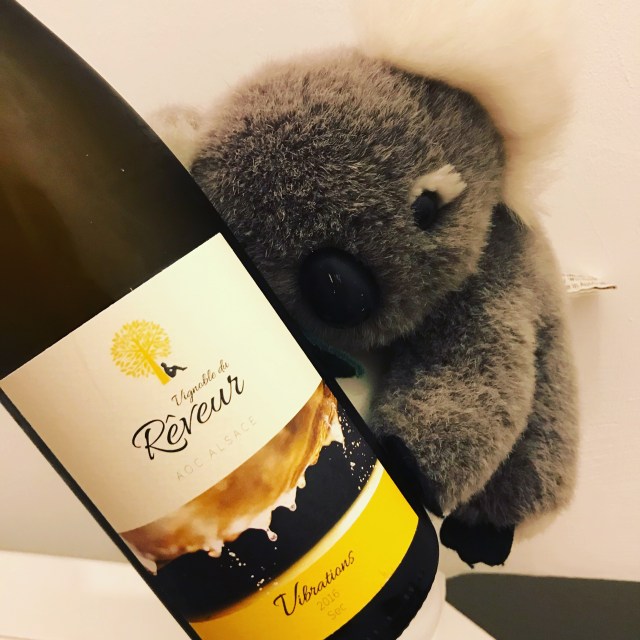
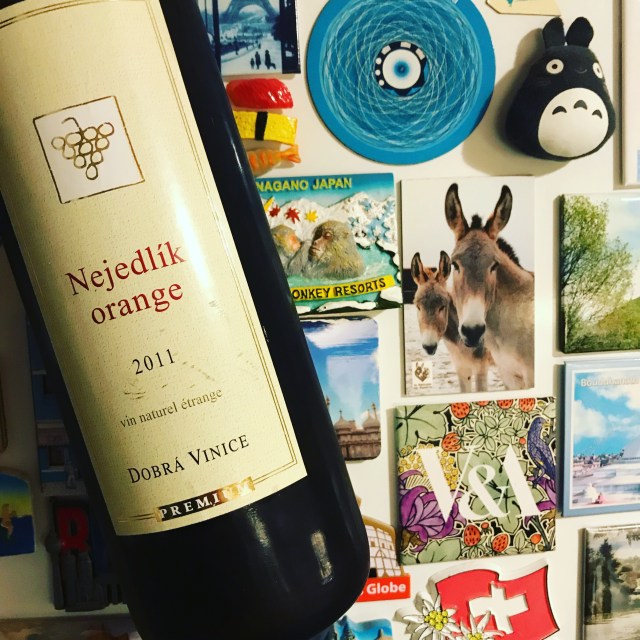
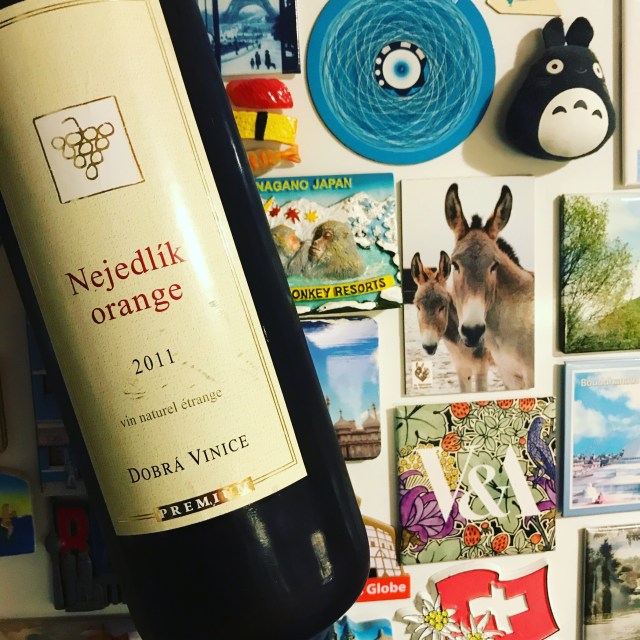
Amber Wine, Skin Contact, whatever you want to call it. Lots of great Georgians, mostly from Les Caves de Pyrene, and Matthieu Deiss/Emmanuelle Milan’s Vignoble du Rêveur Artisan is amazing if you can find it, but one wine from another source stood out. Dobra Vinice is an estate I know well, insofar as I know wine from Czech Moravia. Nejedlik Orange 2011 is a blend of Chardonnay, Pinot Blanc, Ryzlinka and Sauvignon Blanc. Off the scale complex. Kind of what you hope for plus more, if you are partial to the odd orange (from Basket Press Wines, although this vintage may no longer be available).

889ef93e-d8f6-4e4f-8a8a-d09b3c356a97

Sweet and Fortified Wine – 

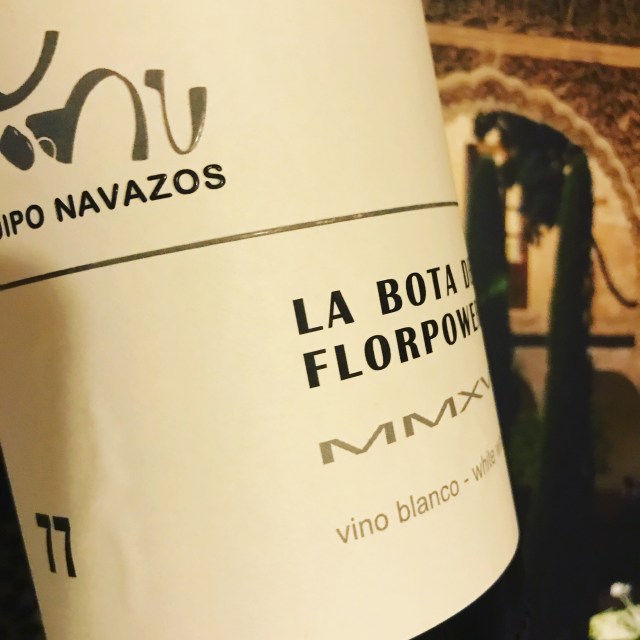
I’d been saving Heidi Schröck Ruster Ausbruch 2002 for some years. It finally went, and it just pips Rieussec 1996 to top spot for sticky of the year. I’m ever the predictable one when it comes to fortified wines. Equipo-Navazos gets the gong again, and the best of the year was almost certainly the Bota 51, a Palo Cortado Viejissimo “GF”, sourced  originally from butts at Gaspar Florido, then moved to Pedro Romero. The wines in this old solera are between 50 and 80 years old. I do so adore the singular wines of EN, but maybe someone will buy me some old Madeira in 2020…

There are one or two producers I’ve not mentioned and I’d feel terrible if I failed to do so. My favourite people in Arbois, Domaine des BodinesHermit Ram (Canterbury, NZ) and Kelley Fox (Oregon). All three are joining my select group of wine gods (Gut Oggau, Rennersistas, Octavin etc), people whose wines light up my life.

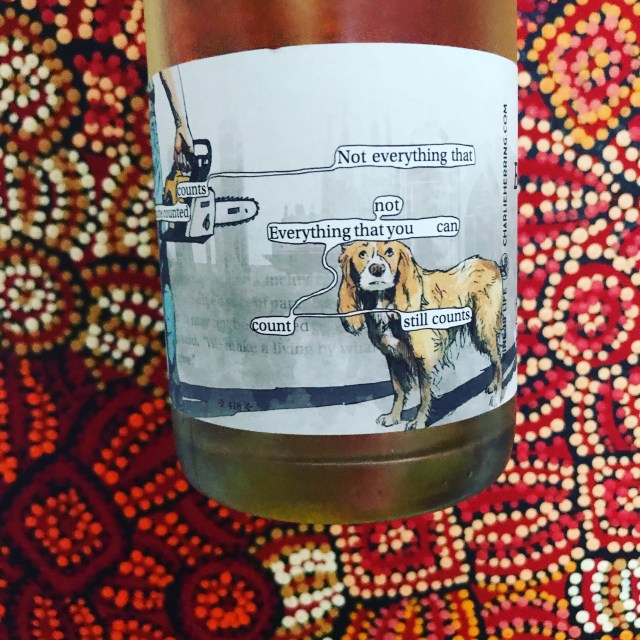
Last, but certainly not least, Tim Phillips, or perhaps I should say Charlie Herring Wines. Tim makes wine, cider and beer from his walled garden (Clos du Paradis) and orchard in Hampshire, not far from Lymington on the edge of the New Forest. His wines, including as far as I’m aware England’s only bottle fermented Riesling, are made in tiny quantities but they are so pure. Often steely, but oh so pure. You’d think Tim does it by shamanism, but actually I think he has a very good grasp of wine science and trusts his intuition. And of course it’s all about the quality.

Perfect Strangers, Tim’s “cider with a dash of red wine” blend

STARS AND BARS…AND RESTAURANTS

As I write I’m yet to visit the newly opened Silo way out on the edge of London’s eastward spread (as far as hip dining goes), but their Brighton iteration served up exciting food, amazing wines and all with a zero-waste philosophy. It was the most exciting place to eat in 2019.

The gastronomic highlight of my year is invariably what has become an annual trip to The Sportsman at Seasalter for a group of us. We are allowed to take our own wine on this occasion (so long as we share it). It is hard to imagine anywhere (I mean that) capable of serving a better tasting menu. On our 2019 visit I must single out the halibut in Vin Jaune with a single morille, and the pairing of Sussex Rib with my choice for red wine of the year/decade/lifetime (that Soldera). In London a little of the Sportsman magic rubs off on Noble Rot (Stephen Harris remains Executive Chef) and I can’t wait to try their new restaurant on the former site of one of Soho’s great dens of political machination when it opens later this year.

More than honourable mentions go to Mast Weinbistro (Vienna) and the new Wild Flor (Hove), both for their exciting but very different wine lists. Mast is probably my favourite restaurant in Europe (because they have a great wine selection, wonderful atmosphere, and food to match). Wild Flor was where we spent New Year’s Eve (a short piece will appear soon). For bars, well, Plateau (Brighton) is up there with anything London can offer, especially for its wine list, and the best time I had in a bar in 2019 was probably at Septime La Cave (Paris), on a day when we both ate and drank quite a lot…which is what Paris is for.

Sydney…well I’m going to write about three really good Sydney restaurants in the New Year, but just to mention them, Jonah’s (posh), Dear Sainte-Eloise (Sydney’s Sager+Wilde) and Bhodi (vegan dim sum, seriously!). Watch this space.

WINE MERCHANTS AND SHOPS

I bought less wine than I should have in 2019, though I suppose I do still own rather a lot. I still buy regularly from Solent Cellar (Lymington) and Butler’s Wine Cellar (Brighton), supplemented by trips to Newcomer Wines (Dalston, and invariably Furanxo just down the road whilst I’m there), and increasingly to the new wine shop at Antidote (off Carnaby Street), who sell a few choice bottles from the Dynamic Vines range. Solent Cellar is like a London wine shop in a small Georgian town on the edge of the New Forest. It is very much worth the detour.

Dynamic Vines is probably my favourite medium-sized merchant (well, they import Gut Oggau and La Tournelle for one thing), alongside Graft Wines (formed last year when Red Squirrel and The Knotted Vine came together) and Vine Trail. Small Merchant of 2019 must be Basket Press, whose mainly Czech list is inspiring, and getting more exposure, but I also have to mention Nektar and Modal Wines, plus Swig, Indigo, Uncharted Wines, Carte Blanche and, new to me in 2019, 266 Wines (some amazing kit shown at the 2019 Out of the Box Tasting last October, including the remarkable Hiyu Wine Farm from Oregon).

Les Caves de Pyrene surely wins the accolade of best large merchant, and if their portfolio is anything to go by, they are indeed large now. They are responsible for so much that we drink today, either directly or indirectly. I buy more wine from them (directly or from retailers they supply) than any other UK merchant right now. And let’s not forget they have Doug Wregg, who as most of you will agree is just one of the nicest bloke’s on the planet, not just in wine. I only lament that they stopped importing Bindi.

If there is one thing I ought to buy more of in 2020 it is wine from Piemonte, but I don’t want Barolo which needs 20 years. I’m getting a little too old for that. I also learn’t something in 2019. I knew blokes could drink pink wine, of course, but I discovered it is perfectly nice in winter as well as summer. I have mainly a bunch of Austrians to thank for that piece of enlightenment. Well there you go.

TASTINGS

Throughout the year I try to attend as many tastings as I can, although their organisers seem to enjoy bunching them all together at times. It’s not at all unusual for several to be held on the same day, and whereas some people are happy to show their face at several, I generally make a point of doing only one in a day. I miss some, but it suits my focus. And with me it’s always first come first served (take note). There are some tastings, mostly trade/press only, aside from the obvious (Raw and The Real Wine Fair) that I would hate to miss.

Out of the Box, the young importer event usually located in Clerkenwell in early October, has become unmissable. The importers showing tend not to be big names, but this is almost certainly where you will make some amazing discoveries (as with 266 Wines’ Hiyu Wine Farm, mentioned above).

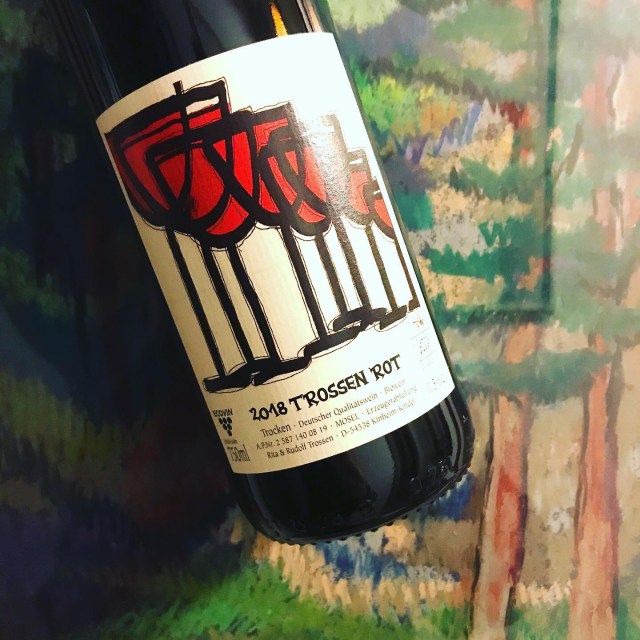
In 2019 there were some other wonderful events, perhaps headed by Newcomer Wines’ and Vine Trails’ Celebrating Common Ground. This brought together wines from Alsace and Germany from two of the UK’s very best merchants. I even got to meet legend Rudolf Trossen, worth the trip to Old Street just for that. I think the other tasting which stood out in 2019 was Les Caves’ “Drinking Outside the Box“. No marks for confusing nomenclature, but this September event was, for me, even better (high praise) than their Real Wine Fair, perhaps on account of it’s more manageable physical size and Marylebone location (easier to get there early doors and get stuck in before the crowds arrived). It was so good I actually wrote three articles about it.

The Les Caves “Box” and Marc Tempé pointing to “Common Ground”

Other plaudits go to the wonderful New Wave of South Africa which was the only trade event in 2019 where we had to queue to get in, so popular it has become, and a small tasting of Blank Bottle Winery, held at one of Henry Butler’s shops in Brighton in early June. Winemaker Pieter Walser, and Damian from importer Swig Wines, came along to pour something like nineteen or twenty samples. Not only did we taste them, but Pieter, possibly the most entertaining story teller in wine, gave us a morning of unparalleled myth, legend and yarns that I may have ever had the pleasure to listen to in a wine shop. You can easily search for any of these events using the search box at the top right of this page, but if you want to be enthralled by Pieter’s wines and a few tall tales, click here.


WINE BOOK OF THE YEAR

I buy quite a lot of wine books and I try to review the best of them on my Blog. There is one clear winner among many great reads for 2019. You might wonder how come the same author that won this highly esteemed accolade in 2017 has won again in 2019? Well, Wink Lorch‘s Jura Wine, the 2017 winner, was not only a well researched gem, but it also hit the zeitgeist perfectly, being published as this remarkable region in Eastern France was shooting to stardom. Her timing was perfect.

As well as being clearly the world’s foremost expert on Jura wines, Wink lives for half the year in the French Alps. Her next project therefore had to cover her home regions. It took a very long time for Wines of the French Alps (also self-published) to come out. The work was completed after a period of tragedy for Wink, who lost her partner before publication. Brett Jones was very much an inspiration for her, and as owners of her two books will know, a great photographer as well. Yet Wink struggled through, and produced a book every bit as near-perfect as the last.

The French Alpine Regions may not be quite as “on trend” as Jura, but those who have tasted the wonderful wines of producers like the now retired Michel Grisard, Jean-Yves Péron, or perhaps the two Dominiques (Belluard and Lucas) already know that there are world class wines to be discovered. If you’ve read Wink’s book, you will be in the vanguard of new discoveries. If you haven’t read my review, click here. The review also contains a link if you wish to buy it.

img_6934

I want to mention one other book. I had been mildly annoying Wink by suggesting that her next project should be a natural extension eastward to Switzerland, but she gently pointed me in the direction of an author I had previously only read in wine magazines and journals, Sue Style. Her The Landscape of Swiss Wine was published in 2019 by Bergli Books, and later in the year Sue sadly passed away. The book does omit a couple of producers I’d have liked to have seen covered, but it’s a lovely book, one sorely needed by myself and my more adventurous wine friends. I’m not alone in appreciating Swiss Wine and Sue’s book will inspire many others to discover the beautiful wines we already know and love. My review can be found here.

Lest you should think I have forgotten, I have to remind you that 2019 saw a new (8th) edition of the World Wine Atlas. Hugh, Jancis and team have as always done a magnificent job. I only got my copy late, on my return from Australia, but although I’m yet to read it cover to cover, a good flick through shows that the amount of updating looks astonishing. It must be the most meticulously put together wine book there is. It’s essential. If you own the 7th edn, then I seriously suggest you upgrade to the eighth.

THE SELF INDULGENT BIT

I write about wine and I’m truly passionate about it, so people are surprised when if asked which I’d give up if forced to, wine or music, I always say wine. I would hate to live without wine but I’m not sure I could live without music. I have remarkably wide and eclectic tastes as well, perhaps mirroring my tastes in wine. For those who managed to get this far in my review of 2019 I’m going to throw in some musical highlights too.

My musical event of the year took place in Vienna, happily one day before the Koppitsch Party at O Boufé’s. I have a love of opera, and I’ve seen performances at Vienna’s famous Staatsoper, but I had never seen a performance at the Theater an der Wien before. I’ve been desperate to see Purcell’s King Arthur for years and in January 2019 I had the chance. In truth I wasn’t feeling too well but it remains my opera highlight of the last decade. So, Gus Christie, don’t say I didn’t tell you.

For a very different musical experience, check out the sheer raw energy of Idles via their recent release A Beautiful Thing, recorded live at the Paris Bataclan. The music sounds violent but this is a band full of love and compassion. A very different set is Nick Cave‘s Ghosteen. I read a review which said that to listen to it you need to be able to comprehend absolute despair and to be able to come out the other side. It is clearly the work of an artist who has lost a child, but there is hope in there, and it is beautiful.

I bought many records from many genres in 2019 (more than bottles of wine? Maybe not), but to listen to all three above would give a fairly interesting summary of what goes on inside my head. If you are interested, yes, I am pretty much hooked on the vinyl revival. I can’t believe how fresh music appears through this medium, especially after the compressed, dulled, passion of MP3 files.

It only remains to wish you all a very happy and successful 2020, and to thank you for reading my articles. Every click is encouragement for me to write more (for sadly there is no financial inducement to do so). To anyone who finds the time in their busy life to read my work, I am genuinely grateful. There are many more words to come out and many bottles to be drunk, books to be read, and vineyards to be visited…I hope…in the coming year. Happy New Year!

Below are some (I stress, some) of the wonderful wine people who have helped me enjoy 2019 like perhaps no wine year before it. Without all of you, producers and wine merchants, I could not have written the many thousands of words of the past year. Some I know well, others hardly at all, but you all played a part.


Posted in Christmas and Wine, Review of the Year, Wine, Wine Books | Tagged , , , , , , , , , , , , , , , , , , , , , , , , , , , , , | 2 Comments

Hunter Valley Part 2 – Andrew Thomas

If you read an article which perhaps just touches on the Hunter Valley you will see several famous names listed as the region’s best known and finest producers, but the chances are that if a couple of producers less well known to you are tacked on at the end, one will almost certainly be Andrew Thomas. The reputation of Thomas Wines is long established in Australia. After all, Andrew’s first vintage for his own label was 1997. Before that he had honed his skills with that great Hunter name, Tyrrell’s, a mile or two down the road. But during the following decades these wonderful wines have gained both international recognition and cult status.

The Hunter Valley as we know it, the area around Pokolbin, began its viticultural story in the 1860s, though vines had been planted not too far away at Wollombi, on the convict road north from Sydney Cove, in the 1820s. Since then the region has seen its ups and downs. A bank crash in the 1890s, the removal of protective tarrifs with Federation, the arrival of downy mildew in 1917 at a time of labour shortage, the misery of the economic woes of the 1960s, all could quite easily have killed off this region’s viticulture. So could the race to the bottom from some quarters in later decades. I would suggest that the current revival of the Lower Hunter as a wine producing region, not just a place for weekend tourists to come to is, more than anything else, down to people like Andrew Thomas, and his unerring quest for quality and terroir expression.

My first Hunter Valley article focused on Gundog Estate, but it is where you will find all my preliminary comments and my brief introduction to the Hunter Valley, and its history and heritage. You can read Part 1 here. This second part will focus on a tasting at Thomas Wines in November 2019.

It was a remarkably hot and sunny Sunday morning when we drove almost to the western end of Broke Road and turned right up Hermitage Road. The weather was a late spring pointer to what is looking like a hot summer, and I coincidentally saw a photograph only this morning of beautifully healthy small bunches developing on Andrew’s vines, but equally some very parched earth. A complete contrast to the squelching mud I was wading through in the New Forest last Sunday.

Hermitage has its own identity within the Valley, and the “Hermitage Wine and Food Trail” lists not only vineyards but also local produce, boutique beer and cider makers, cheese making and a host of other gastronomic and leisure activities, including a newly constructed cycleway. The Thomas Wines tasting room sits just off Hermitage Road on Mistletoe Lane, within a small complex which also houses the Brokenback Bar and The Mill Restaurant, along with several local accommodation options.

The tasting room itself is large, clean, modern and smart, as perhaps befits a boutique producer whose multi-award winning wines represent some of the finest in the Hunter. This is where you first meet Andrew Thomas, whether he’s there or not. One whole wall contains the photograph below, of the man himself in the vines. I think the photo expresses the whole philosophy of the winemaker in one click of the lens. Andrew is known for his single vineyard wines from Semillon and Shiraz, the valley’s two signature varieties. The focus is to make the best wines from these grape varieties in the region. Two varieties…but many different bottlings. Currently there is just one diversion, as in Two of a Kind (below).

72fad8e3-46a7-4821-827c-e471f703272e

Semillon

Some people have suggested that Andrew Thomas has revolutionised Hunter Valley Semillon. The variety is generally under appreciated in the wider world of wine, especially since it became more or less a minor part of the White Bordeaux grape mix. The Hunter Valley is not the only place in the world capable of making creditable Semillon as a single varietal wine, and in fact an increasing number of fine Semillons are coming out of Western Australia. But the Hunter Valley produces a singular style, famous for being an unoaked wine which tastes oaked once properly aged (where “properly” can easily mean twenty years or more). It’s a style which in its youth can persuade a taster that they have Riesling in their glass, and indeed some producers in the distant past labelled their Semillon as “Hunter Valley Riesling”. The long list of Thomas Wines Semillons begins with Synergy.

Synergy Semillon 2019 – this wine is a blend from different sites in the region. Braemore Vineyard, which Andrew has owned for around twenty vintages, forms the core, but the rest are from contract growers. It is important to point out that one of the key elements in Andrew’s success has been his relationships with local growers. A strong bond between grower and winemaker allows Andrew to source the best fruit at perfect phenolic ripeness for each cuvée. It cannot be stressed enough just how important these relationships are to the pursuit of quality.

The wine is fruity and easy to knock back, as you’d expect from a wine which sells at a near ridiculous Aus$20 at the cellar door, for this level of quality. As a good introduction to the range, it shows a tiny bit of residual sugar with citrus acidity not too prominent, and a bit of tropical fruit on the palate.

Two of a Kind Semillon 2019 – Unusually for Andrew, this special cuvée blends Hunter Valley Semillon with 45% Sauvignon Blanc from the Adelaide Hills. It’s a way Andrew can express a different Semillon tradition, the “Bordeaux Blend”. It’s a very nice wine and not one I’d turn down a bottle of. There’s also a matching Shiraz, a blend of 55% Hunter fruit with 45% from McLaren Vale. I didn’t taste it (sold out), but that 2017 made it into James Halliday’s “Top 100 Wines of 2018”.

img_8211

Six Degrees Semillon 2019 – This is another take on the variety, where the fermentation is stopped to create an off-dry wine. Andrew’s inspiration here, interesting in the light of my earlier comments on young Hunter Semillon, is the Mosel.  The result is 8.5% alcohol and around 35g/litre residual sugar. This is balanced by fresh lime acidity and a little apple freshness in a light wine for early drinking. It is rather Riesling-like, but think again and you might guess it’s Hunter Semillon.

Fordwich Hill Semillon 2019 – We now move up a gear. Fordwich Hill is the first of the Premium releases. The vineyard is at Broke Fordwich on the western fringe of the valley. The soils are volcanic, with granite debris washed down from the hills, and the area seems to get a little less rainfall than other parts of the region. The wines tend to have a broader tropical palate, with more stone fruit than lime. This is without doubt a contemporary Semillon. The Andrew Thomas wines seem to exude precision, and even a degree of austerity in youth, and this wine certainly shows precision even with the broader stone fruit style. Everything seems to hang from a delicate, filigree, frame. Just 270 cases produced.

OC Semillon 2019 – The first thing my palate noticed here was a touch more complexity. OC stands for Oaky Creek Road (in Pokolbin, off McDonald’s Road). The terrain here is one of loamy and sandy flats. Andrew says that this site is more suited to producing a classical rendition of the grape, so it is perhaps less contemporary than his other wines. This manifests itself in a steely lime backbone running through a grassy wine with a degree of austerity. Hopefully customers will understand that this is a wine to age a decade or more. One worries that they might be fooled by the $26 price tag, a mere £13 or so for a wine of genuine quality.

Braemore Semillon 2019 – This vineyard, planted near the tasting room on Hermitage Road in 1969, is on flat land made up of alluvial river deposits. After a very warm ripening period the grapes were hand picked in January, whole bunch pressed, and fermented with wild yeasts and left on lees until bottling in May this year. Despite the warm summer this 20th Anniversary bottling of this vineyard still retains a low alcohol level (10.7%) and acidity of 7g/l. In some ways it is more approachable now than the OC, but it really will age magnificently if allowed. You get orange blossom and lemongrass up with the grated lime zest. The acidity is refreshing rather than rasping, and its freshness is off the scale amazing in terms of overall concentration. A classic in the making, for sure. It really does justice to a great vineyard.

img_8213

Braemore Cellar Reserve Semillon 2014 – This may not be a fully mature version of this vineyard cuvée, but at five years old it is just beginning to dip its toes into its drinking window. The bouquet has changed, from a pure and linear citrus to something with a more ethereal edge (lime blossom, springlike). The palate has developed a honey note whilst the citrus element has gone from lemon juice to a rounder lemon curd. The colour is just a touch darker than the lime green glow of youth. To be honest it is lovely now, but in a decade it will evolve to add nuts and perhaps brioche, and the acidity will round out further. But whichever style you prefer, this old vine cuvée is up with the very best Hunter Semillon. The Cellar Selection wines are available to signed up members. Just over 250 cases, or more specifically 512 six-packs, were kept back, at $390/6 ($65/bottle).

Shiraz

Andrew Thomas makes such amazing Semillon that we must not forget that he’s equally adept with Shiraz. The variety in some ways has its Australian home in the Hunter, but it is very different in style here to that of the Barossa or McLaren Vale. It can be a more restrained rendition, with more savoury elements. Historically, these wines could age as well as any in the world, but there was often a leathery element which crept in. They used to call it “sweaty saddle”, a result of brett (brettanomyces), a form of bacterial spoilage.

The result was that whilst the wines undoubtedly aged with complexity, the fruit could be hidden under the saddle. With contemporary Hunter Shiraz the fruit purity of well tended old vines is kept centre stage. The old vines give genuinely intense fruit on both nose and palate, but the savoury nature of the wines, the trait which in my opinion makes them so much more food friendly than the alcoholic fruit bomb style, is not lost.

Synergy Shiraz 2017 – As with the Semillon of this name, this is a blend of different sites, and an introduction to Andrew’s reds. I know one wine writer (my favourite in the UK if you must know) who would definitely call this his trademark “smashable”, as indeed does Andrew. It’s actually whacking out 14.3% abv, but it tastes much lighter, fruity, peppery, and purple-rimmed. Barbecue material.

img_8214

Sweetwater Shiraz 2017 – Sweetwater Ridge is a vineyard at Belford, in the north of the region, planted in 1998 on loam over ironstone and limestone. It’s a vineyard which can be vigorous so the fruit is thinned out more than most sites. Fermentation contains around 10% whole berries to add a fruity zip, and maturation is in 300-litre French hogsheads. The bouquet is very floral, rose petal and violets with an undercurrent of cherry. There’s a little tannin and structure, but there’s also a lovely sweet spot of fruit which suggests that whilst this will age you could broach it now, or soon, if you want to.

img_8215

The Cote Shiraz 2017 – If Semillon used to be called “Hunter Riesling” then Shiraz often went by the name of “Hunter Burgundy” in this part of NSW. The name obviously came from the more savoury and lighter (relatively) style of wine you got from Hunter Shiraz grapes. Pokolbin boasts many historic vineyards, and “Côte d’Or” is one of them, the source of this cuvée, just south of Oakvale. The vines were replanted in 1971 on loam, and this 2017 is the first time Andrew has released a single vineyard wine under this name.
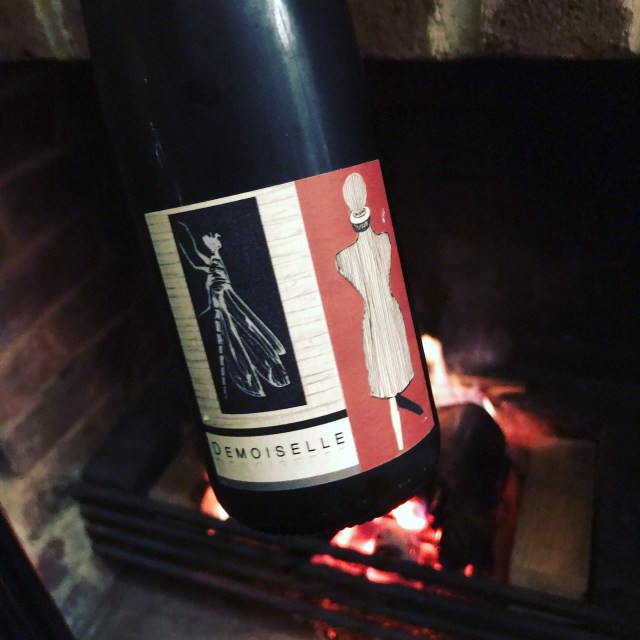
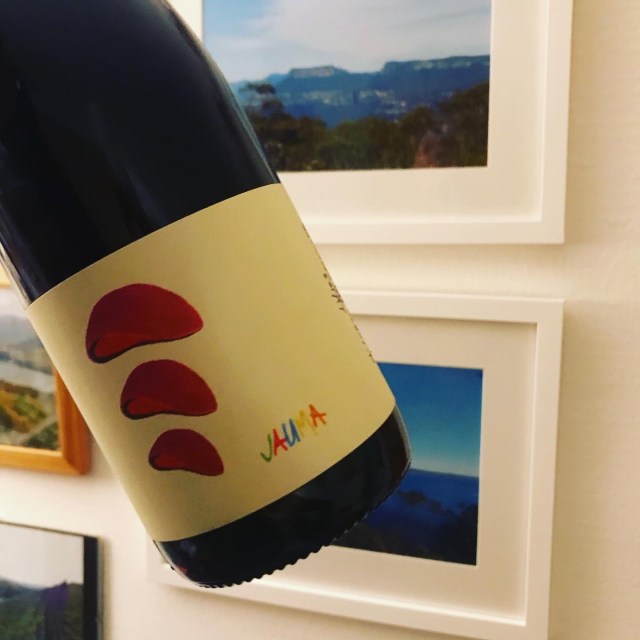
The fruit was destemmed  and given a 48-hour cold soak. It then spent seven days more on skins whilst fermenting, before gentle pressing into 300-litre hogsheads (25% new). The bouquet is all sweet fruit and spice, pretty intense. The palate has structure and supple tannins, with real texture. The fruit is just lovely, but the tannins and the savoury qualities point this towards a 20-year snooze in the cellar if you can manage it.

img_8216

Elenay Shiraz 2017 – The unfathomable name actually relates to the practice of nose to tail eating…”L an’ A” purportedly meaning “lips and arse”. It was originally made from barrels which didn’t make the cut, leftover, but it is no “leftover wine” now, in quality terms. Sweetwater, Kiss, Belford and Dam Block vineyards provide the fruit for this barrel selection wine.
The bouquet here is quite intense violets, but for me (not noted by other tasters) I was definitely getting a little bacon fat forming (my nose is so well attuned to this, partly from my love of older Northern Rhônes, and partly from living in a vegan household). The palate has blueberry and darker fruit, all bound by French oak which sets this out as another twenty year wine. The price, $55, equates to less than £30 at the cellar door. You could be fooled into thinking this is not the serious wine it is.

Kiss Shiraz 2017 – The estate’s flagship Shiraz comes from a vineyard at Pokolbin Estate. The vines, on sandy loam, are fifty years old this year so this 2017 has serious old vine credentials by anyone’s definition of the term. After a 48-hour cold soak it was fermented on skins for nine days before 16 months maturation in the usual 300-litre hogsheads. It was bottled in May this year. It still shows the structure and tannin of oak ageing, but it is spicy as hell and is showing tiny hints of what is possible for the future. This will last over twenty years but may reach its plateau sooner. It would be a shame to drink it now, but if I had to…as the literature says, “Benchmark Hunter Shiraz”. Without doubt the finest Hunter Shiraz I can recall, and I have tried some of the older Mount Pleasant wines in the distant past.

If you can’t bring yourself to see Barossa Shiraz in the same fine wine category as Hermitage or Côte-Rôtie then you probably need to try this. Aus$85, assuming you can get some. Although Kiss sells out on release, or pretty quickly at the cellar door, you can take a look at the Provenance List.  This is a small list of back vintages straight from the domaine, all bottles kept back in temperature controlled cellars, then to wine cabinets in the tasting room when made available for sale. There are some large formats too. Try enlarging the photo for the details of current vintages and prices. I took a 2013 ($130).

img_8470

img_8474

Dam Block Shiraz 2017 – This wine is known as “The Baby Kiss”. It comes from a 0.8ha block just across the dam from the “Kiss” vineyard at Pokolbin. 2017 is its third vintage. The fruit seems a mix of red and blueberry, perhaps more plush than Kiss, certainly concentrated but more approachable. It sees a couple of days fewer fermenting and a month less in oak, but overall the winemaking doesn’t differ a lot. The drinking window is estimated up to fifteen years or over, but it would be less of a waste to broach this sooner. It is only a little over half the price of The Kiss.

img_8217

I think that the top wines here truly are Hunter benchmarks. They are clearly modern wines. Andrew doesn’t seem to allow any faults to get in the way of their expression. Some of the cuvées have an unmistakable mark of the estate on them, yet all are clearly differentiated wines. If Andrew equally manages to illustrate a modern take on the Hunter heritage, it is definitely through allowing the different vineyards to express themselves. At the end of the day they are definitely wines of the vines rather than of the winemaker. They are also stunning.

Thomas Wines is at 28 Mistletoe Lane, on the corner of Hermitage Road, Pokolbin NSW. The excellent cellar door is open every day, 10 ’til 5, bar the usual big holidays of Christmas, New Year and Easter. The entry level wines are free to taste. A fee of $15 per person is charged to taste the premium wines, waived against any purchase. You can link to their web site here.

There’s one more new estate I want to mention here. We didn’t visit Tintilla, which is just round the corner from Thomas Wines. I was aware that my wife’s late Godmother had a relative who made wine in the Hunter but I had no idea who it was and she is sadly no longer around to ask. I only discovered it was Tintilla from her nephew, who we visited later in Sydney. The winemaker is James Lusby whose father, Robert (a vascular surgeon, so another of the Hunter Valley and Australian Wine’s medical men), founded Tintilla in the mid-1990s.

Back in Sydney we drank a bottle of the Tintilla Angus Hunter Semillon 2018, and I’ve just found out that this wine won the Len Sorbello Memorial Trophy at the Winewise Small Vigneron Awards 2019. It comes from Semillon vines grown on the estate’s dry river bed soils on a tributary of Rothbury Creek. The soils drain well, but the grapes need to be harvested before summer rains. This is a wine made with no skin contact and fermented and matured, in classic Hunter fashion, without oak. The style has that lemon and lime nose, with more floral touches too. The palate has a fine line of acidity, but with a touch of richness to ground it. Very nice, though I’m not sure it has any UK distribution. It’s only Aus$30 (a touch over £15) at the cellar door. You don’t need to pay a lot for good quality in the Hunter if you know where to look.

Tintilla Estate is at 725 Hermitage Road, Pokolbin. As well as grapes, the family farm an olive grove too.

c8b82abf-7597-49a7-8470-de8b5f5e0cee

Posted in Australian Wine, Fine Wine, Wine, Wine Travel | Tagged , , , , , , , , , , , , , , | Leave a comment

Hunter Valley Part 1 – Gundog

For those people who discovered Australian wine at the time it exploded onto our shores in the UK, during the 1980s, it would probably have been the Hunter Valley wine region where the grapes were sourced. It would not have been a wine from that region’s two signature grapes, Shiraz and Semillon, which they tasted, but a buttery, fruit-laden, Chardonnay. Rosemount’s base in the Upper Hunter produced the quality Show Reserve and single site Roxburgh wines which a few aficionados sourced, whilst the rest of us, still wearing our shorts when it came to wine, so to speak, guzzled up their diamond label. For many, that was the first Aussie Chardonnay which passed our lips. To all but a few it was a revelation. Back then, the Hunter Valley was Australian Wine Central.

That might come as a surprise to a lot of people. Rosemount, not the export giant it was in the UK, is now far more centred on McLaren Vale, whilst the great Hunter Shiraz wines, such as those made by Maurice O’Shea at Mount Pleasant in the first half of the 20th Century, are but a distant memory to most. Hunter Semillon is certainly still one of the world’s great wines. Unoaked, in youth it often tastes like concentrated lime cordial, but with age it convinces most drinkers it has been meticulously tutored in the finest French oak barrels, and how it ages.

With low alcohol (often 11%) and a steely mineral core, the wines may show a resemblance to Riesling, and before these wines required stricter labelling on export markets, they were often labelled as “Hunter Riesling”. Although few people drink Hunter Valley Semillon outside of Australia today, its reputation is rising once more on the back of sheer quality and younger winemakers putting faith in that quality.

The Hunter Valley is climatically a terrible place to grow vines in some respects. Described as semi-tropical, summers are humid with low and almost constant cloud cover, and harvests can be wet. The volcanic terroir, cut by alluvial river beds, do both provide promising soils but viticulture here is not easy. The region’s advantage has always been proximity to Sydney, around 100 miles to the south and now well connected via the Pacific Motorway (M1).

So why, you ask, is the Hunter Valley still an important part of Australia’s current wine scene as well as the country’s wine heritage? Before he died in 2006 Australian wine writer and famous wine judge Len Evans was interviewed by Max Allen. According to Allen, Evans said (The Future Makers, Hardie Grant Books, 2010, p320) that “Hunter wine has improved out of sight in the past ten years…and it’s thanks to the new ones. There’s a fantastic cadre of young people…swapping information…being very critical of each other.” Perhaps  this is where to look for future greatness as the Hunter Valley struggles to be seen once again as a region for some of Australia’s finest wines.

Over the years the large vineyards of the Upper Hunter Valley have contracted. It’s easier and cheaper for the large corporations to source fruit in South Australia, and indeed from other less well known wine regions in NSW. The generally quality-focused Lower Hunter Valley, an area less than 10km wide and maybe 15 to 20km north to south, sits west of a line drawn between the mining town of Cessnock, and Branxton to the north. The region is centred on Pokolbin, not really a village, more a cluster of a couple of stores and restaurants on Broke Road, between the Visitor Information Centre (useful for a free large scale vineyard map) and the Hunter Valley Gardens, by the roundabouts to the west.

Within this area sit a cluster of wineries, many now boutique in size. Some make their money and fame from wonderful wines of genuine quality, whilst others benefit from the well developed tourist trade. Around the wineries you will find a surprising number of places to stay, to eat, to listen to concerts, look at art, or take a balloon flight. Personally, I’d never argue that the region is beautiful. Not in the way of so many wine regions. But it unquestionably has its own charm, and at least the Brokenback Mountains make a hilly, blue-hued, frame for the vineyards.

Hunter Semillon forms only a small part of the output of the wider Hunter Valley, not surprising as the whole region produces less than one hundredth of Australia’s wine output these days. The region’s fame far outweighs its importance to the “industry”. The Lower Hunter Valley without doubt suffered in the past, as its reputation for some wonderful old wines gave way to the prominence of the bulk producers (mainly) in the Upper Hunter. But in that quiet period others got to work, to rebuild that reputation. Along with Semillon, the valley does provide the right conditions for characterful Shiraz, at least in some vintages. So the revival of the Hunter seems to be focused on those two varieties.

To the wine lover on export markets, especially the UK, names such as Tyrrell’s, Mount Pleasant (the old McWilliams homestead), Lindeman’s, Brokenwood’s Graveyard Vineyard, or possibly Lake’s Folly, founded by Sydney doctor Max Lake in 1963, arguably Australia’s first boutique winery, might be most familiar. Locally there are others building reputations based on quite thrilling wines. I have chosen two producers to highlight who are beacons of excellence by any standard. Perhaps the better known of the two, Andrew Thomas Wines, will be profiled in the second Hunter Valley article. Here, I visit Gundog Estate. If you haven’t heard of them, don’t worry. I hadn’t either until the middle of 2019.

Gundog Estate was founded in 2011 by Matt Burton and partners. Matt, with a degree from Charles Sturt, had gained experience abroad (France and USA), before a career at Coldstream Hills in the Yarra Valley. Coldstream’s former owner, Aussie wine writer James Halliday, has always called the Hunter Valley his first love, though I have no idea what made Matt choose a region in New South Wales, perhaps a little in the doldrums at the time, over that prestigious Victorian vineyard just outside of Melbourne. But choose it he did, and he chose to focus his efforts here on Semillon and Shiraz. Since his first vintage Matt has gone on to scoop many awards, including becoming, in a circular journey of sorts, a “James Halliday Five Red Star Winery”.

Gundog Estate’s tasting room is in the old school house, located on McDonald’s Road, on the right, south of the Broke Road roundabouts. Five vineyards make up the estate’s core fruit. The 48 Block sits a little way behind the tasting room, whilst two more sites, Sunshine Vineyard in the north of Pokolbin, towards Rothbury and The Old Road Vineyard, both sit beside the long Wine Country Drive. That leaves Vernon Vineyard (farmed by David and Sue Vernon, who Matt has worked with for more than twelve years) and Somerset Vineyard, both to the south, either side of Mount View.

Matt treats all his Semillons in the same way. Only the free run juice is used, just as in Champagne. Fermentation is cool, after which the wine rests on fine lees for three or four months. The Shiraz parcels get a two-day cold soak, and are fermented without cooling in open-top vats. The oak regime is intended to play a supporting role, and Matt isn’t looking for overt oak influence, though new oak can be around 30% via the purchase of a brand new oak puncheon occasionally for each wine. Maturation in oak is usually limited to ten months.

The Wines

The Chase Semillon 2019 – The source is old vines in the Somerset Vineyard, where the vines were originally planted on sandy loam in 1965, giving a youthful dry and fresh lime citrus wine with added lemon grass and zippy apple from a ruthless selection of low cropping fruit. Alcohol sits at 11%.

Hunter Valley Semillon 2018 – Up at a heady 11.5% abv, this wine is sourced from heavier soils around Mount View. There’s more of an earthy texture here, and perhaps the acidity, more lemon than lime, suggests earlier drinking. It is nevertheless a characterful wine and nicely differentiated.

Hunter Valley Semillon 2013 – It’s so important to get a handle on how Hunter Semillon ages, although at six years old the wine isn’t fully mature. Indeed, some Semillon will go through a dumb phase at this age. Here we have a smoky fruit character, almost plummy with a bit of stony texture, and plump too. Bigger on the palate, it’s a classic example of a wine you might swear had seen oak.

Somerset Vineyard Semillon 2014 – The vines on this old creek bed are on their own roots, not grafted onto American rootstocks. The soils are interspersed with volcanic elements and limestone, on west facing slopes planted in 1965 and 1970. Lime is concentrated on the palate here, but appended with a sour/bitter savoury note. Released at four years old, this is still very young and might go thirty years if allowed. It doesn’t need that long, but it is rather a shame most is consumed on release. The acid backbone will grant it that age, but there’s a touch of richness to tempt the impatient.

img_8189

Wild Semillon 2019 – This wine is fermented on skins (2 weeks) using only wild yeasts. It has fairly prominent acidity and even a little “Sauvignon Blanc character”, but the wine doesn’t come over as completely dry. This is perhaps the rather peachy fruit, which goes well with the very textural result of the winemaking. A different take. Alcohol is at just 10.5%.

img_8191

Wild Semillon 2014 – it’s always good to try an older vintage of any current wine. The bouquet of this 2014 has developed a gorgeous floral element, and I used the same adjective for the wine as a whole. The acidity has held but there’s just more complexity and the single dimension of the 2019 has broadened into a multi-dimensional wine.
d65d1010-6957-40a1-b40a-04567b8f8cdd

Indomitus Albus Semillon 2018 – The labels of the Indomitus wines show a photographic image of the 12th century Ta Prohm temple in Cambodia’s Angkor Wat complex. This temple has been left pretty much undisturbed since its discovery. Matt is keen to avoid calling the Indomitus wines “natural wines”, but the philosophy is nevertheless to intervene as little as possible, to show yet another side of Hunter Semillon.

The Albus Semillon wine grew as an extension of the Wild Semillon, 50% of the must seeing skins during fermentation for around three months, using wild yeasts of course. Very little sulphur is used. The result is high in acid, but textural. The bouquet is concentrated then explosive. It has a slightly sweet side and a definitely savoury edge too. Complex. It’s far more out on the edge than any Hunter Semillon I’ve tasted before. A bottle drunk later was thrilling, just pipping a bottle of the Wild Semillon 2014  we drank back in Sydney (good as that bottle was). In my view, though, it does need more time.
img_8193

Gundog does make wine from other regions’ fruit. There’s an extremely good Canberra District Riesling (we tasted the 2019) which comes from vines Matt controls at Murrumbateman. Only 100 dozen bottles are currently released each vintage, but it is rightly jumped on, I’m told. Matt also makes a very nice Indomitus Rosa from fruit he sources in the Hilltops Region of NSW (not far from Canberra District, of course). Unusually, the variety is Nebbiolo, making a salmon pink wine with a remarkable scent which is both floral and of pineapple! Delicate, yet a wine of texture, 13% abv, food friendly…I was rather taken with it.

There’s also a concentrated Rutherglen Muscat (don’t spit this one), and a partnership range with Dylan McMahon from the Yarra Valley, for several wines off volcanic soils near Seville. From the latter label I tasted D’Aloisio’s Vineyard Chardonnay 2017. It’s a wine where the malo is not encouraged, though the fresh acids are balanced by 30% new oak and 13% abv. The result is fresh and textured. Texture seems a trait here. Now we come to the Hunter Shiraz.

img_8204

img_8197

Rare Game Shiraz 2018 is remarkably refined with scents of violet combined with dark fruits. A good tannin structure holds it all together well. The low cropped vines are in Somerset Vineyard and Tinkler’s Vineyard, off red volcanic soils. It’s not cheap at Aus$60 (cellar door), but it will age for 5-to-15 years, gaining with complexity.

48 Block Shiraz – The fruit here was once used by Lindeman’s. Matt began working with the Tinkler family in 2014. The vineyard produces small berries, which when picked on the early side produce the kind of Shiraz Matt likes to make, known locally as “Hunter Burgundy”. The bouquet for me is deep cherry, but with a high tone too. The fruit is treated as if it were Pinot Noir so there’s delicacy (despite alcohol up at 13.8%) and spice. The spice comes through a lot, though the fruit has a nice ripe sweetness at the same time. Quite plush.

The Somerset Vineyard 2014 is in the same vein, elegant, savoury and medium-bodied. The Old Road used to be called “Will’s Vineyard” when it belonged to De Bortoli. Will Capper still manages it, but the name was changed due to trademark issues. Planted in 1980, it sits on clay loam and iron-rich gravels. The style is broad and rich, in some contrast to the other two single vineyard Shiraz wines. The single vineyard wines are not on general release. As with so many producers, but this seems especially true of the Hunter Valley, you need to join the Cellar Club to get them. You can understand why. Otherwise, if on general taste they would be gulped down by all the coach parties before they hit your cellar.

img_8202

Despite the relatively low international profile of Gundog Estate, I would recommend a visit. The very pleasant, and friendly, tasting room, run by genuinely knowledgeable and engaging staff, is at 101 McDonald’s Road, Pokolbin. It won a Best Small Cellar Door Award from Gourmet Traveller Wine Magazine in both 2013 and 2018. It is open seven days a week, 10am to 5pm (except Christmas Day, Boxing Day and Easter Sunday). It shares space with the Gourmet Pantry. You can buy a charcuterie and cheese platter to soak up the wine if you wish, and very decent coffee to wake you up afterwards. But more importantly, the wines are seriously impressive.

Gundog Estate’s web site is here.

img_8206

The Tasting Room

Some famous Hunter sights – Lake’s Folly, Mount Pleasant and Tyrrell’s


Posted in Australian Wine, Wine, Wine Travel | Tagged , , , , , , , , , , , , , , , , | 5 Comments

Clonakilla

It doesn’t need anything else in the title, does it. I’ve said before that by personal favourite Australian wine estates have long been Jasper Hill, in Heathcote, and Clonakilla, at Murrumbateman in Canberra District. In the first of my string of articles from Australia I mentioned how I visited Jasper Hill, but due to her delay in getting back to the vineyard, I was unable to taste with Emily Laughton. This visit more than made up for that disappointment.

We drove up to Murrumbateman whilst staying on the coast near Milton, and it was a long old day, around six-to-seven hours driving and nine or more hours on the road with stops and the tasting. We were lucky to make it to Clonakilla because the wind was up and temperatures hit the low thirties, and there was a genuine fear of fires. In fact the coastal highway south to Bateman’s Bay was closed last week due to the proximity of bush fires, and I understand that Clonakilla are not shipping wine this week due to the temperatures.

From Batemans Bay the road climbs steeply through the Budawang Range, to historic Braidwood. Many people stop here, but we drove on for a brunch in Bungendore. Above the mountains there’s a wide plateau which, although way more rocky and larger, reminds me of the high pasture in the Jura, except that the mean terrain means you see many fewer cows (mostly beef) per hectare. From Bungendore you can cut directly northwest to Murrumbateman, avoiding the city of Canberra. The blocks up here get even more windswept and seem even more exposed, with big granite lumps sitting immovable in nearly every paddock.

img_8121

Canberra District was first planted with vines in the 1970s. The pioneers were the Carpenter family at Lark Hill, Lake George Winery (the lake itself, often more or less empty despite its size, lies east of Murrumbateman), and John Kirk, who named his winery after the family dairy back in County Clare, in the mid-west of Ireland. John’s talented son Tim took over in the early 1990s, and undertook one small change at the estate, one which would reverberate around viticultural Australia, and indeed the world.

Tim had visited Guigal in the Northern Rhône, and had been smitten by his great Côte Rôties. On returning he decided to co-ferment some Viognier with his Syrah. In the words of Jancis Robinson, in a quote used on the Clonakilla brochure, “Clonakilla’s subtle Viognier-influenced Shiraz almost single-handedly turned round the Aussie Shiraz super tanker”.

Next we move on a decade to the mid-2000s for another important event in Canberra District wine history. In 2006 Hardy’s decided to close their big winery here, leaving a host of local growers, not so much Canberra people but those who had planted in the nearby Hilltops region near the town of Young, high and dry and risking bankruptcy. All that fruit up there is one reason why you see a lot of wineries all over NSW knocking out some excellent wines from Hilltops fruit.

However, when Tim Kirk lost almost his whole harvest to frost back in 2000 he was pretty much saved by an alternative source of grapes, planted largely for the big Southcorp organisation, fruit which was just itching to be turned into wine by a local star winemaker. By adding Tim’s skills to the mix, the Hilltops blend was born. I remember buying it from Adnams, and later from current UK importer Liberty Wines, and thinking what great value it was.

img_8124

Cellar Door at Clonakilla

Clonakilla isn’t all about Syrah, although there are now several in the range. I always bought their delicious Viognier, which you could find at Fortnum & Mason back in the day (not currently listed but they do sell the Hilltops Shiraz). The white they have probably become best known for is their Riesling, a variety that has massive potential in the region. In fact there’s an “International Riesling Challenge” held in Canberra. The best Australian Riesling 2019 was West Cape Howe Porongurup Riesling (Great Southern Region), but I personally count Clonakilla’s as one of the very finest in the country. Sadly UK importer Liberty Wines doesn’t list it. AG Wines, trading from West Ealing in London, does.

Before we taste some wines we should step back again and say something about the terroir up here near Murrumbateman. The Canberra District vineyards are partly volcanic, but with more loam and shale, with significant granite outcrops. Perhaps it was the wind, but it does feel almost desolate out in the vines. Rainfall is generally low, and over time it is clear that Syrah, Viognier and Riesling thrive, but not exclusively. The Hilltops fruit is on more uniformly volcanic soil. Interestingly, Tim and his team discovered from geological analysis that there is a thin layer of sand through the vineyards which seems to date from the time dinosaurs became extinct. It was as if a great wind had blown across the land and left a layer of fine sediment.


Quite bleak, certainly parched

Clonakilla Riesling 2018 – If the Syrah wines display the subtlety often lost in some Aussie versions, this wine is perhaps not a white wine mirror image. Lime and mineral mouth texture wreath this wine, made from old vines and vinified as whole bunches. The bouquet is largely floral but something of the wine’s steeliness comes through. It’s a wine made to age, but in its youth it has real zip and zest. Why oh why Liberty Wines don’t bring this to the UK I really don’t know? In my view it rates alongside the best of Clare and Watervale.

d35b2dc8-3176-4915-8c80-223f2b57c77a

Clonakilla Viognier “Nouveau” 2019 – Whole bunches into stainless steel, a fresh wine, simple but very tasty. Bottled early it shows 12.5% abv and 1.9g/l of residual sugar. It makes for a light wine, ideal for aperitif drinking. Peach and pear fruit.

Canberra District Viognier 2018 – Another whole bunch fermentation, but this then goes into oak, where it spends a year on lees. The wine is completely different from the Nouveau. The crop in 2018 had been thinned by hail but at harvest the fruit was healthy and super concentrated from a warm growing season and harvest. The oak rounds out its emerging complexity, so that you get stone fruit flavours underpinned by ginger, which really comes through as it warms a little. It is harvested off 500 million year old granite and the wine sort of has that stature. Always liked this, but the 2018 is superb.

Clonakilla Chardonnay 2018 – My first taste of the estate’s Chardonnay. This is from very high grown fruit: Steve Morrisson’s Revee Estate and Heather and Rob Johansen’s vines, both at over 700 metres at Tumbarumba (way southwest of Canberra, close to Granite Mountain). It begins with citrus scents on the nose, followed by a gentle floral note, but the palate has punch, partly through its very clean acidity (apple crunch) which at first hides a savoury finish. It’s a wine to age, but right now it is bracing…thrilling in its own way. A little gras points to its future potential.


Ceoltóiri 2018 – Pronounced keel-toy-ree, this cuvée is named after the Irish word for “musicians”, and reflects the family’s love of making music together. The blend is 50% Grenache, with the rest made up of diminishing amounts of Mourvèdre, Syrah, Cinsault and Counoise, plus a tiny splash of Roussanne. The soft raspberry fruit seems light, and you would never guess (as with many modern Grenache blends done well) that it boasts 14.5% alcohol. The nose is gently perfumed, but the palate does give a hint of opulent fruit from a warm vintage as it warms in the mouth, and a little tannin begins to coat the tongue.

We purchased a bottle of this which we drank up in Sydney. It was gorgeous, a wine with far more elegance than the abv level on the label might suggest. We drank it before a Geoff Merrill “Jacko’s” Shiraz 2012 from McLaren Vale, and the contrast in size was instructive for when it comes to making generalisations that “high alcohol means a big wine”. The Ceoltóiri is no delicate flower, but it’s not remotely a bruiser either.

b3b68ce9-53aa-45f5-ab88-f7e35f052043

For those reading this on a large screen, I apologise for the food stain…got too close to the hob!

Ballinderry 2017 – The name means “place of the oak” in Irish, and relates to an oak tree John Kirk planted along with his first vines back in 1971. This unusual blend for the region is a classic “Bordeaux” medley, with Cabernet Sauvignon, Merlot and Cabernet Franc. It succeeded so well in 2017 because a very wet winter was followed by a dry but humid summer. It’s normally a little too cool for these varieties to excel every vintage around Murrumbateman. It has very concentrated cassis fruit and will see a long life after its two years in oak. The quality does shine through the ripe tannins.

img_8130

We now come to three Clonakilla Syrahs, the signature of the estate. Given the proclivity of those producing a more elegant style of the variety to use “Syrah” over “Shiraz” on the label, the choice of the originator of that more nuanced style might surprise some.

Hilltops Shiraz 2018 is from that warmer region around Young. That richness comes through first on the bouquet. The 2018 vintage was of very high quality, as we shall see with the Shiraz-Viognier, below. The fruit is dark and rich, and this is one of the best of the cuvée I’ve tasted for a while. Although this isn’t Canberra District fruit, you do seem to get that more floral note on the bouquet which singled out Tim’s wines from the beginning of his tenure.

O’Riada Shiraz 2017 – The O’Riada is named after Sean O’Riada, a famous Irish musician and composer who died the same year as John Kirk planted his first vines, in 1971. This is the tenth anniversary bottling of this wine, which is made from fruit sourced around Murrumbateman and Hall (the latter on the north edge of Canberra itself). This is a wine with a wild side. The fruit is nice and brambly, but the main event is spice, as in pepper and cloves. A little classic violet on the nose, and a richness for sure, yet also a sense of restraint. Under starter’s orders, so to speak. Pure Syrah, no Viognier, but still a whole bunch ferment and a maceration lasting a month. Young as it was, I took a bottle for my birthday up in Sydney. Not too young, a glorious treat.


Canberra District Shiraz-Viognier 2018 – Tim describes the ripening season in 2018 as “brilliant”. I hate points, but Nick Stock, Aussie Wines contributor on James Suckling’s site, in giving this ninety-nine of them used the word “perfection”. Whole bunches in the fermentation are limited to around 28% this vintage and Viognier is up nearer 6% than the 2% more often seen in other local wines. Other than that we have a gentle oak regime but a wine built on a tannic structure, to last and last. I drank my older bottles, which came from Adnams in Southwold, where I first discovered Clonakilla, but going back I still have one last bottle of 2008. They never taste old.

A brief TN is perhaps in order. Violets, maybe rose petals and spice vie for control of the bouquet. The palate is strong on berry fruit, red and black, but with ripe plum as well. There’s a note of Bovril, yes, definitely not Vegemite, more beefy/savoury. Many people think this wine is often Australia’s finest Shiraz. Plenty are bigging up the 2018 as the best ever vintage, and more than one critic reckons this is Australia’s absolute finest Shiraz of 2018. But give it ten years, double that if you are young enough. A world classic in the making.

img_8133

After our tasting we decided to take a different route home. The M31 Highway past Goulburn isn’t that interesting, but it got us to a coffee stop at Moss Vale, before we descended Kangaroo Valley towards Nowra, completing a circle. The Valley is rather boastfully described by the regional tourist organisation as “the most beautiful valley in Australia”. I can’t say I’m experienced enough to verify that claim, but as you descend quite fast through the Southern Highlands you swing left to right and back again, continuously, down a steep-sided route of lush rainforest.

You get used to the bush in Australia, gum trees and eucalyptus, pleasant on the eye as the trees habitually let through more light than European forest. The rainforest, not uncommon at all down here, is different. It’s like dense jungle, with local humidity giving the foliage a deep green hue you don’t see in the bush. The trees can shade enormous ferns. The route of the valley follows the Kangaroo River as it tumbles towards Shoalhaven, and a little less than half way down from Moss Vale you will find the famous Fitzroy Falls, a local tourist attraction sadly closed to visitors due to fire risk when we passed.

It was a long day. On my last visit up here we stopped overnight near Lake George, but with the chance to rise early on the farm (if not quite with the cows who head, remarkably quietly so as not disturb the guests, to the milking shed at 4.00am), the trip itself made a nice scenic day out. Visiting Clonakilla was, of course, the icing on the cake.

Clonakilla is at 3 Crisps Lane, Murrumbateman. Access (signposted) is directly off the Bungendore to Murrumbateman road, another good reason to take that route and avoid going around Canberra. There’s a map and full contact details on the Clonakilla web site here.

The cellar door is open to all individual visitors without an appointment, weekdays 11am-4pm, weekends 10am-5pm. A welcome awaits. I don’t believe they charge for tastings, unlike the majority of cellar doors, where a small fee is taken off purchases. Maybe that’s why the sign says “buses by appointment”. But to leave here without at least a bottle or two is inconceivable. If ever there was a need for one of those expensive wine suitcases.


Posted in Australian Wine, Wine, Wine Heroes, Wine Travel | Tagged , , , , , , , , , , , , , , | 2 Comments

Let Me Tell You A Little About Shoalhaven Coast

Australia is brimming with new wine regions. Just as we get used to Tumbarumba and Hastings River in New South Wales we hear that Willyarup, within the wider Margaret River appellation, has just been given approval. One region you may not yet have heard about is Shoalhaven Coast. The first vines were planted here in the 1820s at Coolangatta Estate, by Alexander Berry, a close friend of the famous Australian wine pioneer James Busby…but then it went very quiet. That is, until the 1980s when Coolangatta’s new owner planted Sauvignon Blanc.

The reason this emerging wine region is worth writing about is that it has the potential for quality wine and growth, especially from wine tourism, because it begins just 200km from Sydney. But this coastal region also possesses some of the most beautiful beaches in the whole of NSW. In fact the region is so beautiful, but probably relatively unknown to people outside of Australia, that I think this article will have a bit more of a travelogue feel to it.

There are sixteen cellar doors in the Shoalhaven Coast Region, but eight are listed on the Shoalhaven Coast Wine Trail. This begins at Kiama in the north, with Yarrawa Estate to the west, close to the rainforest of Kangaroo Valley, being the most northerly of the wineries. The route continues south, quickly skipping down the Princes Highway to Shoalhaven and its famous heads, then further south via Nowra and Wandandian to Milton and Ulladulla. Between these two settlements, around an hour’s driving from the north of the region, you will find Cupitt’s Winery. The wine route then goes just a little further to its most southerly outpost, Bawley Vale Estate.

img_8439

It has been the standard view that Shoalhaven Coast is a reasonably cool climate region, based on the prevailing cooling winds off the Tasman Sea, which can ameliorate temperatures. But wine writers invariably caution for summer humidity and especially summer rain. This is a similar problem to that traditionally faced by the Hunter Valley, but that is a long way north, perhaps at least five or six hours driving.

Australia is currently suffering one of her longest droughts. The reason we were down here was principally to visit family, and one of them runs a dairy farm. Feed is in such short supply that he’s shipping it from Western Australia, at crippling cost. There’s not enough rain to make the grass grow, and he has five hundred cows to feed. So at least at the present time the books are not quite accurate. It’s very dry.

The grape varieties planted in the region have, to a certain extent, reflected this perception of humidity and summer rain, so for example you will find the hybrid variety Chambourcin in many vineyards. Chambourcin is particularly resistant to mildew and other fungal diseases, and is used for medium-bodied red wine, rosé and, increasingly, sparkling reds. But planting has been wider and experimental. Vinifera varietals originally planted include Chardonnay, Verdelho (especially), Sauvignon Blanc, Semillon, Cabernet Sauvignon and Syrah, whilst more recent plantings have included Tempranillo, Arneis, Viognier, Sangiovese and Tannat.

What will grow remains to be seen. The region has won “1,000 awards”. Awards are admittedly prolific in the world of Australian Wine, but even if the number can be taken with a pinch of salt, it does show an intent, in terms of quality. What is certain is that the region is well known gastronomically, as you might expect from somewhere which has changed beyond recognition since I first came here several decades ago (my wife spent some of her childhood on the southern coast, at Mollymook, about ten minutes from Milton). It is now a smart playground for the kind of wealthy Sydneysider who craves a “Grand Designs” holiday home and some long and unspoilt surf beaches. So you will dine well down here.

I’m going to write a little about my visit to Cupitt’s Winery, and then mention a lovely neighbourhood restaurant in the shadow, literally, of a much more famous one. If I include some photos of the beaches and the bush in order to make you jealous, or possibly to entice you down, I make no apology.

Cupitt Winery

Rosie and Griff Cupitt founded their winery between Milton and Ulladulla in 2005, choosing the Shoalhaven Coast as somewhere they felt they could make a more European style of wine. Rosie, with a degree in oenology from Charles Sturt University, had gained experience in Europe, including the Upper Loire in France. The couple have more recently passed on winemaking to their sons, Wally and Tom.

img_8110

Like many wineries in less well known regions of New South Wales, and indeed in some well known regions if you read my previous article, on Polperro Wines, fruit is bought in from afar. Cupitt’s has a lot going on. It’s a boutique winery, a micro brewery, and a fromagerie, and they purchase a good number of grapes from the Hilltops Region and Tumbarumba to supplement their currently small crops of home fruit. Fans of Clonakilla will know of Hilltops, northwest of Canberra. The wines from purchased fruit are pretty good. In fact Cupitt’s has become a James Halliday Five Star Winery.

There’s a spicy lees contact Viognier, a very crisp Fiano, a pristine grapefruit Riesling, a fresh skin contact Marsannay, Dusty Dog Syrah (with 2% Viognier co-fermented) and Carolyn’s Cabernet Sauvignon (traditional, oaked), all from Hilltops grapes. There’s also a Provençal style Rosé, a Pinot Noir called The Pointer and a very interesting “Little Red” blending Pinot Noir, Nebbiolo and Barbera, all from Tumbarumba. That’s a lot of wines, and we enjoyed tasting them all (there were still one or two we missed) but not really why we came.

At the present time the only wine Cupitt’s makes from Shoalhaven fruit is a Sauvignon Blanc, called Alphonse Sauvignon Blanc. We tasted the 2019 which has seen a little oak, but not enough to really stand out. It was impressive, showing all the cool climate precision you hope the region is capable of giving. This cuvée saw seven months on lees and it is full of citrus, fresh acidity and a floral bouquet. It is also nice and long.  It’s made as a nod to Alphonse Mellot, the producer of steely biodynamic Sancerres, with whom Rosie had worked and learnt from during her time in Europe. It’s Aus$34 at the cellar door.

47c84898-9c59-4c1b-9d8d-45c842c32ad8

Cupitt’s is expanding its home vineyard plantings, with Semillon, Albariño, Gamay and Cabernet Franc, but these will take a while to produce wine. I’ve not tried any of the beers but the cheeses are remarkably good. There’s a very good Chaource lookalike called Veuve, both young and aged versions available (I have to declare an interest – the milk comes from my wife’s cousin’s farm). We also got to try a hard cheese which at three months old resembled a young Comté (buttery, nutty) from raw milk. Angel Williams is the cheesemaker, and it was as interesting chatting cheese with her as it was tasting the wines. She makes cheeses with Rosie Cupitt, and has also written an acclaimed book How to Say Cheese – An Interactive Cheese Journey.

The excellent restaurant has been under Russell Chinn’s direction since 2010 (he worked at The Waterside Inn under Michel Roux). They have recently won a “Star Cellar Door Award 2019” from Gourmet Traveller Wine Magazine.

Another random connection with the area near Milton is Tallwood Restaurant, at the north end of Mollymook Beach. One of our friends in the UK mentioned that they had worked in New Zealand with a very good chef and his wife, and that turns out to be Matt Upson, who set up Tallwood. Now this is a rather unassuming place in a small parade of shops, a few tables on the pavement but surprisingly spacious inside. It needs to be because it seems to be full all the time. We dined on a Monday evening, when there’s a chef’s special set menu (Aus$55) and it was packed with what I presume were locals. The food was exceptional.

The wine list here is pretty interesting too. We drank Mada Wines Sui Generis IV Whole Bunch Grenache 2018 from Murrumbatemen (quite a nice link for our visit to Clonakilla in the next article). This is a one-off wine from Hamish Young, aged in used French oak and bottled early (February 2019). Deliciously concentrated Grenache from cool climate Canberra District.

Tallwood is at Shop 2/85 Tallwood Avenue, Mollymook Beach, NSW. See the web site Here.

Just a few dozen paces along the road towards the beach is Bannisters by the Sea, one of two Bannisters outposts. Within this luxury hotel is what they describe as the “iconic” Rick Stein Seafood Restaurant. We’ve not tried it. I’m sure it lives up to the hype as everyone talks about it. It’s just that…we went to Tallwood instead.

The village of Milton, and the town of Ulladulla, both on the highway, offer a host of cafes and small restaurants worth exploring as well.

If you find yourself drawn down here, then Mollymook Beach is one of those near perfect expanses of pure white sand. I say “near perfect”. Next beach north is called Narrawallee Beach. It’s equally long, an expanse of sand bordered by the ocean on one side and a small strip of bush on the other, giving the illusion of a desert island. Mollymook is where you will find the surf school and families in summer, but Narrawallee has always been almost deserted when I’ve been there. On a stroll from end to end one morning I counted just four dog walkers.

Just a minute or two further north by car and you get to Narrawallee Creek. This stunningly beautiful inlet boasts mangrove trees and an expanse of shallow water. At low tide you might catch a thousand strong army of soldier crabs appearing from under the sand, along with an attendant flock of long billed waders looking for dinner. Just follow the same road that passes Narrawallee Beach until you reach the car park at the end, near the children’s play park. Look for the steps down and you’re there. Watch the tide.

Narrawallee and Mollymook Beaches, near Milton, NSW

Soldier crabs, Narrawallee Creek

One final recommendation. We drove up into the hills for about twenty-to-thirty minutes off the highway to go on the Mount Bushwalker bush walk. It is described as one of the best bush walks in the state, and it was certainly the best I’ve been on. It’s an eight kilometre walk in total, through varying types of bush and over rock along the top of a ridge, ending with a spectacular view of the flat topped mountains of the Budawang National Park. Because the track is on a ridge the walking is fairly easy, and yellow arrows keep you on the path on the flat rocky parts of the trail. We went up at 7am to avoid the heat and we saw not one soul (nor, thankfully, any snakes), though the bird song was a wonder to listen too, as were the views we soaked up. After half an hour just staring at the Budawangs we managed to tear ourselves away with some difficulty. We were lucky. The following day all the National Parks were closed because of the fire risk. For walk info see Here.

5a447cc6-923e-4f9a-8a21-1aa652b0a05d

Budawangs, Mount Bushwalker – just two people and lots of birds and butterflies. Otherwise a magical silence.

We stayed on Narrawilly Farm, at one of the Narrawilly Farm Cottages. These are two well equipped and comfortable. but simple, mud brick cottages on Narrawilly dairy farm, about three or four minutes north of Milton. If you are interested, check them out on airbnb here.

For Cupitt’s Winery and Restaurant see Here. They can be found at 58 Washburton Road (off Slaughterhouse Road), Ulladulla, NSW. The cellar door is open seven days a week. The winery is signposted off the Princes Highway, both outside of Milton and Ulladulla.

The other wineries on the Shoalhaven Coast Wine Route are (north to south):

  • Yarrawa Estate – Kangaroo Valley
  • Silos Estate – Berry
  • Mountain Ridge Wines – Shoalhaven Heads
  • Coolangatta Estate – Shoalhaven Heads
  • Two Figs – Shoalhaven Heads
  • Cambawarra Estate – Bangalee
  • Bawley Vale Estate – Bawley Point


Posted in Australian Wine, Dining, Wine, Wine Writing | Tagged , , , , , , , , , , , , , , , , , , | Leave a comment

Polperro – A Small Cornish Gem on the Mornington Peninsula

When I first visited Mornington Peninsula about twelve years ago it was just gaining a bit of a name in the UK, where it was seen as very much a cool climate region, all the rage as they say. Located about an hour south of Melbourne, it’s a real peninsula, a hook of land which arches from southeast of Melbourne, following the Nepean and Moorooduc Highways, and the new M11 as they swing west around Port Phillip Bay. On the thin strip of land at it’s most westerly point you can catch a ferry, from Sorrento to Queenscliff, paying a visit to some of the vineyards of Gippsland on the way back to the city. It’s a good idea for a weekend away.

If you drew a loose circle around the towns and villages of Somerville, Hastings, Shoreham, Rosebud, Dromana and Mornington you would have captured most of the Peninsula’s main vineyards within it. The soils here are remarkably diverse, from volcanic soils on the ridges to clay lower down, with a host of different sediments in between, known as “duplex” (aka “texture contrast soils”). As we saw in Macedon in my previous article, where the soils are complex you have a chance to exploit such nuance to make complex wines. It is the potential complexity of Mornington wines which first excited wine lovers when the wines became more visible internationally in the 1990s.

The other major determinant of quality is the climate. The vineyards are proximate to the ocean, which brings winds more than it ameliorates temperatures. Often the vintage will be determined, especially in terms of picking dates, by the prevailing winds. Back in the day, I bought into the cool climate myth, but all views get modified over time. I’ve had shockingly alcoholic red wine from some producers here in warmer years, one Pinot Noir bought off the shelf in London showing 15% on the label (not forgetting allowances). Rather than say that Mornington Peninsula is a “cool climate” region full stop, I’m more inclined to say that it’s a region more prone to vintage variation. In that respect, but perhaps no more than this, it mirrors Bordeaux and her maritime influence.

There are currently just over 200 vineyards and fifty cellar doors on this strip of land, quite a lot. They tend to be small, partly because of land prices. Being just an hour from Melbourne, blessed with ocean surf on one side and safe bathing inside the bay, it has become a haven for Melbournites, and in fact our friends who we stayed with in the city used to have a weekend and holiday home here before they moved up-country. The region is therefore great for wine tourism with cellar doors, and many wineries, sporting excellent restaurants. The down side is that weekends in the height of summer can be busy, as can the normally quieter roads leading down here.

img_8423

Polperro is up at Red Hill. in the heart of the vineyards, in fact about ten minutes by tractor from Kooyong, which has always been my favourite Mornington address. I think the name of the settlement lets us know the soil structure. We are also among the highest sites on the Peninsula, where hang time for the grapes tends to be longer, harvests later. The wines can be very different in character than those grown at lower altitudes on the sediments and clay.

Although I’ve drunk very good Pinot Gris from the region, the main course here as in all vineyards on Mornington is a choice of Chardonnay and Pinot Noir. It’s Pinot Noir in particular which has gained the world’s attention, and doubtless why every second year the region holds its famous International Pinot Celebration.

Polperro was founded by Sam Coverdale and his wife in 2006. Sam had started out as a Tyrells cellar rat, age 18 and then after a degree in business and wine science at Charles Sturt University he went to work for Hardy’s, a career which took him all over the country and to Europe. The name? When Sam visited his father-in-law to be he saw a print of the Cornish fishing village on the wall. His parents had the same print, both families originating from the same place. It’s somewhere I myself know pretty well too. The choice of a name seemed obvious.

I had been tasting Polperro’s wines through 2019 at any event where their UK agent, Graft Wine Company, had been showing them, and I was becoming more and more impressed. I’d received a promise of help in arranging a visit with Sam, but when I finally had a visit window my various emails went unanswered…until much later. The result was that I only had the opportunity for a cellar door visit, and suggestions that I might see the winery were stonewalled by the tasting room. Nevertheless, Erik was an entertaining host, we had a very nice, if off-and-on rainy, trip to the region, and I enjoyed the wines despite not getting to meet Sam.

Polperro’s viticulture and winemaking is, as you’d expect from almost all the wineries in the region, sustainable and with minimum intervention, using biodynamics as an aid rather than a religion. But what Sam seems very good at is teasing out the nuance of his different terroirs via single vineyard wines of some class. There are three main sites. Landaviddy Lane is up at about 160 metres asl at Shoreham, but in a mostly sheltered spot. Mill Hill Vineyard is at Arthur’s Seat on Red Hill, the great high point of the region, an exposed location at least 270 metres asl, with wind playing an important part in harvest date selection. Talland Hill is still on Red Hill, but by the cellar door at 170 metres, and is very well sheltered. It’s the warmest site and the first to pick. Other sites, such as “Bistro Block” and “Bassat” generally provide wines for the blends.

img_8065

The tasting began with some of the wines under the secondary Even Keel label. All prices are cellar door in Aussie Dollars. Even Keel are wines made from fruit purchased outside, as well as on, the Mornington Peninsula, so that for example the Even Keel Chardonnay 2018 is made from fruit grown in the up-and-coming Tumbarumba Region, in the cool of the Australian Alps. As with all wines on this label, it is well made and exceptional value for daily drinking (Aus$35). There is structure, the fruit is grown on granite, but stone fruit, melon and citrus too. It gets eight months in used oak and goes through malo.

Even Keel Pinot Gris 2018 (Aus$29) is fresh, savoury, with a touch of depth. Although we are principally looking at the Burgundian varieties here, as I said, Pinot Gris has a bit of a history in the region. The first wine I drank here was T’Gallant’s PG, which had a very good reputation at the time. This is very popular.

Polperro Pinot Gris 2018 (Aus$45) is obviously a step up. It’s more terroir driven as it comes from those vines up at Arthur’s Seat. Whole bunch pressed with no additives, not even sulphur, nor cultured yeast, after ten months in oak and six months on lees it is spicy, with a bit of pear fruit, and 13.5% abv. Initially the pear is accompanied by a distinctive lemongrass note, but the spice (nutmeg?) comes in later. There’s a bit of residual sugar but it’s not at all like a richer Alsace version despite a bit of gras. In fact the French might rather use the term potelé – chubby or plump, and often used to refer to a baby, which this wine still is.

84ef3e22-f69a-45b2-a47f-a4cd492b7a34

Polperro Chardonnay 2018 (Aus$50) is what Sam calls the classic peninsula style, elegant but fairly rich. It comes again from those highest sites, where three tries are performed at harvest to attain optimum ripeness. It has seen malolactic but is still incredibly fresh, which is what drew me to Sam’s wines in particular over the two or three times I’d tasted them in London. The fruit is in the peach spectrum with a bit of rich citrus. The malo in oak gives a touch of cream, and it finishes with a hint of nuts.

Polperro Talland Hill Chardonnay 2017 (Aus$65) comes from that cellar door vineyard. Although this is the first vineyard to be picked, the wines do manage to retain a mineral streak, very pebbly, which accentuates their freshness…or vice versa perhaps. The intensity is ratcheted up a notch in terms of nuttiness, rich lemon curd fruit, with a hint of vanilla from twelve months in oak. Yet this isn’t a big wine. On the contrary, despite my notes it is supple and subtle. Impressive, even now.

Polperro Fumé Blanc 2018 (Aus$) isn’t listed on the Polperro web site. Interestingly it was poured after chatting as a “then you might be interested in this” wine. It comes from the Shoreham vines at 160m on clay, Sauvignon Blanc looking out over the Bass Strait. The experiment was to give the must a month on skins. 2018 was a warm vintage. The wine has a richness, with spicy mandarin on the nose and a palate brimming with orange, pineapple and passion fruit, though it doesn’t have the depth of colour to call it truly an “orange” wine. The freshness of the exotic fruit makes a tingle of electricity on the tongue (not CO2).  I was surprised, very pleasantly. You might not be, knowing my predilection for wine on skins.

We began the Pinot Noirs with the Even Keel Pinot Noir 2017 (Aus$35), which still had ten months in French oak (10% new). This is made from younger vines from a cooler vintage, fruit sourced from sites at Red Hill, Main Ridge and a site at just 50m asl at Teurong (just to the north, close to Yabby Lake). It begins a whole berry fermentation which leads to a fragrance of concentrated cherry and fruit freshness. Fairly simple yet pretty good, for around £18 at the cellar door.

Polperro Pinot Noir 2018 (Aus$55) is from a warmer vintage, blended from three of the higher hillside sites, including Mill Hill. Again, life begins as a whole berry fermentation in open topped vats, but the oak regime is sixteen months, 30% new, all tight grained staves of Tronçais and Allier wood. The fruit is red spectrum, with a floral and strawberry bouquet. Is that a hint of smokiness? The palate is a little richer and denser, a bit of cherry, and spice. It all suggests complexity to come, yet the wine remains approachable.

Polperro Talland Hill Pinot Noir 2017 (Aus$80) isn’t made by any vastly different method. We still get a whole berry ferment, but the fruit is left on skins for ten days after the sugars are fully fermented. The must is then racked into French oak (30% to 50% new). The fruit is still red berries, but it is a darker and denser wine, despite seeing the same 16 months in oak as the straight “Polperro”. There’s a good deal of spice, and some grip. It is approachable now but will get more complex, for sure. I’d say the oak isn’t too prominent and the wine, though not yet ready to drink, shows very good promise. It does reach 14% abv on the label, but if you give it the 8-to-10 years it deserves you should see a lovely wine come together.

Polperro tasting room and vines stretching down the hill

Our final taste was a very different red, Even Keel Syrah 2018 (Aus$35). The fruit is from Canberra District, from the Fisher & McKenzie Vineyard. As is the tradition up in Canberra, begun by Clonakilla, a little Viognier is co-fermented with the Syrah, 2% in this case. It always lifts the Syrah making it less typically Australian, if there is such a thing. It’s invariably labelled as Syrah, not Shiraz, too. It has a cool climate feel, gentle blueberry and violets dominating the bouquet. The fruit on the palate is made more interesting by clove and cinnamon spice. Entry level it may be, but this still has a tad of tannin to it. The Even Keel wines do show Sam Coverdale to be a very accomplished winemaker, even if his Polperro label is a good notch up.

img_8068

Polperro does have one of those fine restaurants I mentioned above, which looked very nice, and indeed they have “luxury” accommodation as well. We didn’t dine here, having brought a picnic with us. We’d planned to eat it up at Arthur’s Seat, looking down over Port Phillip Bay, but the weather forced us to eat inside the car and then to grab a welcome hot coffee in the cafe at the top of the cable car. The up-side was having the roads more or less to ourselves, and a trip down here is always a pleasant day out, whatever the weather. In a country currently suffering terrible drought I am sure the winemakers were very glad of the showers.

img_8055

Polperro really is a name to watch. The wines are impressive. Don’t take my word alone. Sam Coverdale’s Polperro along with Tom Carson’s Yabby Lake are name checked as “newer talent” by Jancis and team in the new (8th edn) World Wine Atlas out of a total of nine producers mentioned. Praise indeed.

Polperro Wines is at 150 Red Hill Road, Red Hill. All information can be found at their web site here. The cellar door is usually open daily from 11.00am to 4.00pm. At the restaurant, lunch is 12.00 until 3.00pm, dinner is six ’til late. Check opening in the winter season.

Graft Wine Company (formerly Red Squirrel and The Knotted Vine) imports Polperro Wines, currently listing three Even Keel cuvées plus the “Polperro” Chardonnay and Pinot Noir from 2017 on their web site here.

img_8057

The other Polperro


Posted in Artisan Wines, Australian Wine, Wine, Wine Agencies, Wine Travel | Tagged , , , , , , , , | Leave a comment

Central Victoria Part 2 – Bindi

We have moved south from Bendigo, which was our first destination on this Australian adventure, to the Macedon Ranges. If you drive north out of Melbourne the first wine region you hit is Sunbury. North of that you come to this extremely cool climate region. Most of the well known vineyards lie north of Mount Macedon – Cobaw Ridge, Hanging Rock and Curly Flat sit northeast of Kyneton, with Virgin Hills just to its west. Bindi lies in the far south of this region, just fifty kilometres from Victoria’s capital, closer to Sunbury and Craiglee Vineyard than the Kyneton crowd, but it is still pretty chilly down there, and notably windy too.

Most of the vineyards are hidden away in sheltered spots, yet Bindi stands out on a hillside. Ordovician mudstone, clay, sandstone and a generous layer of quartz at the bottom, some of it washed down from the Great Dividing Range in epochs long past, giving way to volcanic soils over a lava flow at the top. The terroir changes every several metres, and in this respect at least, it is not dissimilar in degree to the changes we see on the Côte d’Or in Burgundy.

This patch of land produces what I think are some of the very finest renditions of Pinot Noir and Chardonnay in the whole of Australia. In a couple of hours spent looking round and tasting with Michael Dhillon, one of the most perceptive and thoughtful winemakers I’ve had the pleasure to meet, I was completely blown away by the wines in cask, and again by the bottles I bought and drank during the rest of our time in Australia.

35e90e65-5279-4413-a01b-d5b064558789

It’s almost no wonder that Michael farms here, although it was his father, “Bill” who originally bought the land and converted it to viticulture. Bill, by the way, was his local nickname, they found “Darshan” a little novel for rural Victoria, perhaps. He had emigrated from the Punjab in 1958.

It’s a fairly solitary existence for a man who seems wholly focused on his task, which is to make the best wines he can without compromise. He is assisted by the fact that he appears to do so with humility and without ego. Whilst the farm employs effectively three-and-a-half people, it’s mostly just Michael and his beautiful Golden Retriever, Saffie, who have the place to themselves when outdoors. There is emphatically no cellar door here, no spur of the moment visits, and I sense that the name plaque on the gate is deliberately unreadable…nearly (we drove past first time around before Google saved us), but Michael seemed more than happy to give me some of his precious time with an appointment.

This is another fairly small vineyard, not more than seven hectares of vines on a 170ha farm. Around 15ha more are planted to high grade eucalypts for furniture making and the remainder is left as managed bush, though this native grassland does attract the kangaroos so the vineyards need to be well fenced. What makes it special, aside from the geology? The gentle slope rises 500 metres on a north-facing ridge. It gets the sun, and although it can be bracingly cold here, especially when the north wind blows in winter, it’s just that little bit warmer than the vineyards to the north.

The vines now average thirty or so years of age, but whilst Michael would assert that it’s all down to the vineyard, I doubt it’s as simple as that. He’s worked extensively in Europe, which has given him an eye for the changes in terroir in his own vines, most evident through the rows where there is more quartz under foot.

I think Europe also gave Michael a different perspective on farming methods, one that might be enhanced by a philosophical point of view which may also derive in part, perhaps, by osmosis, from his family’s heritage. Michael does seem a very thoughtful guy, calm too. He refuses to say he is “biodynamic”, although this does form a major part of his viticultural practices. What he does proclaim is a desire to manage his vines through sustainable agriculture, or as he once said to Australian journalist and author Max Allen, he asked himself “what will happen if we promote life instead of inflicting death?”.

It is remarkably difficult to claim to prefer any of the Bindi wines over others, and this is irrespective of price. Australia makes plenty of remarkable wines, and I have been lucky to sample a good few of them over the years. The wines I have listed below are wines of which I can say they have as much personality and striking purity as anything I’ve had before. Those tutored in Australian cliché will be surprised by how genuinely European in style they seem, superficially. Of course they are, in reality, wholly Australian, the product of this unique terroir up in the Macedon Ranges.

It’s just a shame that the wines are not currently available (as far as I am aware) in the UK, although some were imported by Les Caves de Pyrene at one time. The following wines were tasted from barrel with Michael in early November.

Chardonnay 2019 – This is a sample from the lower part of the volcanic soils, due to be bottled in February next year. The grapes are destemmed and the juice fills each barrel one by one, where it remains on lees, post-fermentation. It’s a bright wine with a fine backbone. It signals the Bindi purity.

Kostas Rind Chardonnay 2019 – Kostas Rind was a Lithuanian “sage” (Michael’s description), and the man who introduced Michael’s father to the culture of fine wine. This cuvée comes off a mix of Ordovician and volcanic soils, from vines a little over 30 years old. Fermentation is in French oak, typically 20% new, and it remains on lees over the winter. There’s more nuttiness here, but that streak of fine acidity sets it apart.

Quartz Chardonnay 2019 – I apologise for having first stated that I had no favourites, and now going back on that. This could be the finest Australian Chardonnay I’ve tasted, when placing this sample with the bottle of 2017 below. It’s a wine that has a massive presence yet is far from being a massive wine, if you know what I mean. It’s mineral, so much so that you just have to use that term with authority even if some shun it as a wine descriptor. Lemon zest thrusts through the wine and the mouthfeel has that gentle chalky texture on the middle of the tongue. The 2019 shows real concentration, and it is still tightly wound…but shockingly impressive.

The soils are sandstone, mudstone and clay, but the cuvée hails from that part of the vineyard most dense in quartz. It sees a month or two longer in oak, and the proportion that is first fill goes up to around 35%, so it’s a wine to age (and at just shy of AUS$100 it deserves that respect).

Dixon Pinot Noir 2019 – This is perhaps the most fruit forward of the Bindi Pinots. It comes from “declassified” fruit from the original 1988 Block, plus fruit from Block K, planted in 2001. Winemaking doesn’t differ essentially with all the Pinots. Fruit is mostly destemmed (save about 5%) and fermentation is in small open-topped vats. Ageing begins in French oak (about 11 months), 10-15% of which is new. This is currently showing a pleasant 12.7% abv, and genuine delicacy.

The name? I think Henry Reed Dixon was Michael’s maternal great great grandfather, who moved to Gisborne as a railway paymaster in 1898, as the town was growing on the back of improved communications, before getting into farming and forestry.

Original Vineyard Pinot Noir 2019 – This is a three acre north sloping vineyard (planted 1988) with high density quartz in the soil. The treatment here is a little under a year and a half in oak, of which around 25% are new barrels. It has a more savoury profile than the Dixon, quite spicy, and certainly grippy right now. But the fruit purity is there. It appears that you could perhaps enjoy this soon, yet in truth you’d want to give it five years.

Block 5 Pinot Noir 2019 – We head up the ridge a bit to Block 5, which sits on the volcanic lava flow, which has been eroded on the top of the slope. The vineyard is just half of one hectare. The vines are a little younger (1992), but Michael stresses that this is a special site. Ageing is similar to the Original Vineyard Pinot, except that the new oak is up at 35%. Even now the wine doesn’t seem very oaky, and Michael says it just soaks it up. That said, I think the fruit is darker and it’s quite spicy. Ageing required.

Block 8 Pinot Noir 2019 – You won’t find this for sale. Block 8 is a sample from new vines planted in 2016 at a very high density, on just under two acres. The crop was very small, just four bunches per vine, but Michael is very happy with the results. From barrel it was slightly earthy, but fresh and with depth. As the vines age this will surely be another fine addition to the Bindi stable.

Darshan Pinot Noir 2019 – This cuvée, named of course after Michael’s father, is from the third crop off a plot of just 0.4 ha, planted at a density of 11,300 vines/ha. Michael has had to purchase a special small German “Niko” tractor for the high density plantings, but no synthetic herbicides nor pesticides are sprayed here. Michael says that each harvest from this plot has seen a big step up in the quality of the fruit. Even at such a young vine age, the wine tastes remarkably complete. Darshan and Block 8 are scheduled to see their first releases in 2022.

In addition, the three bottles I purchased were Pyrette Shiraz 2014 (made with fruit from Heathcote), Bindi Quartz Chardonnay 2017 and Bindi Kaye Vineyard Pinot Noir 2015.

Pyrette Syrah 2014 – I said Heathcote, but more specifically, this comes from Colbinabbin on the Mount Camel Range, the name interestingly translated from the Aborigine meaning “the meeting of the black and red soils”. This is the highest block on the famous Cambrian soils, from a cooler slope, facing east. Picking tends to be a couple of weeks earlier than is usual for the long hang time boys around Heathcote, so it won’t surprise you to know that this is one elegant Shiraz showing plum fruit with more tension than usual, some spice and pepper, but all under starters orders, nothing seeping out of the overall structure until loosened by the warming palate. It is no afterthought for this predominantly Pinot producer. We loved it.

img_8041

Bindi Quartz Chardonnay 2017 – One of the pains of long haul travel is how hard it is to bring back wine when your bags, naturally for a six-or-seven week trip, are pushing your 30 kilo limit. So this wine was enjoyed about a week after our visit to Bindi, whilst staying on a farm in NSW. I don’t often say this as I count myself a generous person, but I wasn’t sorry that I shared the single bottle only with my wife. Packed with mineral purity, complexity, elegance, length…I won’t go on. Certainly my white wine of the trip, even this young, and almost certainly my white wine of the year for 2019. Glorious! Expensive, but worth every single cent.

img_8038

Bindi Kaye Pinot Noir 2015 – In its way equally magical. Block K, running next to Block 5, produces the wine named after Kaye Dhillon, who passed away in 1985. The complex soils have, again, a tremendous concentration of fractured quartz, plus an extremely thin topsoil. The vineyard sits right below the lava flow, so the Ordovician mix is joined by washed down fine volcanic soil. The vines were planted in 2001, with clones 115 and MV6 if that is of any interest.

Kaye is a vat selection, so only seventy to one hundred and fifty cases are made depending on vintage. There are many things which struck me about this wine. First, I’d probably not be opening a fine Burgundy from 2015, but this wine didn’t seem a waste. The reason lies in its elegance. For me, the bouquet of a wine is at least as important as the palate, and perhaps more so with Pinot Noir. It was the nose of fine Burgundy which pulled me away from Bordeaux in my youth. The fragrance here is both haunting and ethereal. If the palate will develop further, no matter. The fine fruit rides out of the structure with the same poise. A truly lovely wine.

img_8040

This was a spectacular tasting, and I shall not forget the wines, nor Michael Dhillon’s kind hospitality, for a long time to come.

Saffie, and a lurking wine we didn’t get to taste…Bindi bubbles, I can imagine it could be quite sensational!

Posted in Artisan Wines, Australian Wine, Wine, Wine Heroes, Wine Travel | Tagged , , , , , , , , , | 4 Comments

Central Victoria Part 1 – Around Castlemaine

Castlemaine is a small town in the old Victorian goldfields. It’s an attractive town in many ways, with plenty of places serving the great food and coffee one comes to expect almost anywhere in Australia, but do pronounce it with a hard northern first “a”, not an elongated southern one, unless you want some funny looks. It has a quiet country air, yet at the same time, is weirdly similar to East London. Every second person seemingly sports a fine array of tattoos. It is where I shall begin my journey, three weeks in a country which I hadn’t visited since 2007.

Australia has changed in those intervening twelve years, even more so since my first visit there many years before that. Melbourne and Sydney have added a few million people, the drought is worse, and the bush fires, Grand Designs-style domestic architecture seems to have become ubiquitous, and wine has changed too.

It has to be said that we in the UK, who used to guzzle Aussie blended wines like lemonade on a hot summer’s day, have come late to the new artisan producers who were being identified by those young Australian writers with their finger on the pulse a decade ago. But we are getting there.

0b0559b7-221e-4cca-bc55-ba72336e15e7

This article will cover a couple of small producers in Southern Bendigo, recommended to me on the ground, before a rather drunken visit to Bress, whilst spending time with Adam Marks, who was a pioneer of Bendigo biodynamics.

Although there is a line of granite hills, volcanic soils and red alluvial silts north of Bendigo, which signify the region’s short gold mining past, southern Bendigo around Castlemaine offers granite sands, which Mark likes to call “Harcourt concrete”. It is this part of Bendigo where the excitement lies, blessed as it is with a drier climate, yet still one which would be classed as “cool” in many places.

Blackjack Vineyards

Blackjack is on old granite close to Harcourt (where on the main road through the village you will find a wonderful new café/restaurant at the Harcourt Produce and General Store which sells, both retail and with food, a very good selection of the best local wines). The estate is named after an American sailor who jumped ship in the 1850s and made his fortune in gold. The McKenzie and Pollock families planted four hectares of vines in 1988/9, mainly Shiraz and Cabernet, with another two hectares planted in 1998, so old vines combined with respectful farming makes for artisan wines of class. James Halliday praises them and Blackjack has twice won Best Shiraz at the Royal Melbourne Wine Show.

There is a cadet family of wines, called Major’s Line, which produces a surprisingly good Tempranillo sourced from Heathcote fruit, full of cherry and summer berry freshness, and pretty easy drinking.

There’s a good Cabernet-Merlot blend under the main Blackjack label, which reminded me of how good this Aussie blend used to be before we began to see only the more commercial versions in the UK. But it is the Shiraz here that is of most interest.

Block 6 2017 was a crimson colour, with cinnamon notes contrasting with cherry and raspberry fruit in a rich but restrained wine which will last 5-10 years. Blackjack Shiraz 2017 is much more brick red in colour. It’s quite silky and the deeper fruit brings mulberry to mind. It has a bit more tannin evident right now and needs another few years (it will also last a decade). Chortle’s Edge Shiraz 2016 is more or less ready now, with plump plum flavours dominating, quite soft by comparison to the previous cuvée.

Now I’m not holding Blackjack out as a great new discovery, but what this small winery does illustrate is that you can find really well made wines at superb value in this emerging region. We turned up here mostly because it was quite close to where we were staying, but it does have a local following for its honest wines, and with me “honest” is not to damn with faint praise. If I learn’t anything in Australia, it is that good value, at least at cellar door prices, is far from dead.

Harcourt Valley Winery

This winery is quite a contrast to Blackjack. It’s kind of louder. They proclaim themselves as Bendigo’s most awarded winery, with more than 500 Awards and 34 Trophies listed on their web site. And why not, I suppose. This small James Halliday Five Star Winery has a pretty hot reputation locally, even if you might not have heard of them over here.

Originally an apple orchard, the Livingstone family now farm just four hectares of vines, all around forty years of age. Shiraz is also the main event here, and as well as matching Blackjack in the Royal Melbourne Wine Show, Harcourt Valley has ventured to London and achieved Gold Medal success at the International Wine Challenge.

There’s a small array of other varieties, Riesling in its off-dry style being highly enjoyable. The two Shiraz I tasted at a techno-trance party in the tasting room, stood out as the best wines. Barbara’s Shiraz comes from top blocks at the home vineyard. It has quite a full body, aged for 12 months in a mix of French and American oak. The vanilla cream sits beneath cherry and plum fruit, and the finish is spicy with pepper and mint.

Old Vine Shiraz 2014 – This wine is only made in years deemed exceptional. The vines are indeed old, planted by the original owners in 1975 at Mount Alexander (the Livingstones took over in 1989). They produce very low yields. The wine is aged in French oak and is structured, with mulberry fruit and a hint of eucalyptus on the finish. A serious wine.

I ought to mention that you can usually visit most wineries, barring the famous ones, without an appointment, and they all list cellar door opening times on their web sites. I can’t guarantee it will be party time, but it’s quite nice not to always be tied to a schedule.

Party time at Harcourt Valley Winery – what Aussie’s do on a Saturday lunchtime

Bress

I think perhaps one or two readers may have heard of Bress? Adam Marks farms around nine hectares on the previously mentioned “Harcourt concrete”, not far from the two wineries already visited. He began with 34 hectares planted to 17 varieties but he has cut that down to focus on quality here, although he does source fruit from other nearby regions to try his hand at other wines. I first got to hear about Bress via another producer, Dane Johns, who makes natural wine under the Momento Mori label (occasionally imported through Les Caves de Pyrene). I understand he did a stint at Bress, and that was enough to pique my interest, especially as Dane himself, and his garage, is not easy to track down.

The winery name has its origins in Eastern France. As well as wine making, Adam keeps chickens, of which he is remarkably fond (they are all very tame and you can pick them up if you wish). The name comes from Poulet de Bresse. Adam visited Bourg-en-Bresse in the early 1990s to study how they reared them. I never got round to asking him why he dropped the final “e” when he came round to found his own winery?

The morning began with a tasting in a wooden hut beside the estate’s large fish pond, before we tasted more wines in the small vat shed. Finally, we repaired to the main winery for lunch. Bress opens up for lunch for several weekends in the year from spring through to autumn, and if you ever get the chance, don’t miss it. The food was excellent, a set menu, but two of the five of us were vegan and they catered for that diet both willingly and with enthusiasm.

Bressecco – We began tasting Adam’s creamy mid-weight sparkler made from Pinot Gris, Riesling and Chardonnay, grown at Harcourt and Faraday. The wine has orchard fruit aromas and a little yeastiness on the palate. It’s a simple wine selling at around $30/£15, but fresh and fun, good for oysters and seafood.

You’ll find wines in Australia which, unlike this wine’s fun moniker, are actually called “Prosecco”. It’s a touchy subject. The Aussies will claim that when they agreed a trade deal with the EU Prosecco was a grape variety as well as a wine. We all know that later the Prosecco producers in Italy changed the grape name to Glera exactly in order to stop overseas producers capitalising on that name, just indeed as the Champenois have done viz Champagne. Whatever the arguments, I will say that most of the Australian “proseccos” I have tasted have been of good quality and considerably more expensive than the very cheap Italian Prosecco we see in UK supermarkets. Over here, wines from class producers like Dal Zotto (imported by Graft Wine) have to use a different line of attack. No bad thing with the “cheap” reputation Prosecco has in the UK on the whole.

Of the white wines we were torn between the unoaked Pinot Gris 2019, which has a smoky richness yet remains dry, and my preferred single vineyard Chardonnay. This comes from 40-year-old vines in the Fazio vineyard at Faraday, seeing a mix of stainless steel and oak (about 20% new). This 2019 had only been bottled a week but it was very good.

Adam has always had a bit of a reputation for his Rosé. It comes from Cabernet Sauvignon vines of 38 years of age in Bress’s home vineyard. It sees two months on lees with some gentle stirring and doesn’t go through malo, so it has a touch of complexity but a pert freshness too. It’s certainly dry and quite classy. Adam calls it his Wimbledon wine, and it certainly is all strawberries and cream.

We ended the tasting with Cabernet Franc 2019, bottled just eight weeks previously. From vines a little under 40 years old in Harcourt and Bendigo, it had good acids and delicious fruit. A wine to drink within two or three years but very nice indeed.

Of the other wines, there’s a very good Pinot Noir from a mix of Yarra, Macedon and Faraday fruit, quite grippy, a nice Unplugged Shiraz which I think may be a new cuvée, and a remarkable Reserve Chardonnay 2013. I say remarkable because this wine comes from Macedon fruit from what some would term a poorer vintage, but this is a cracking wine if it really was a bad year. There was Pinot Noir 2015 from Macedon as well. This is from the Chanter’s Ridge vineyard, where the clone D5V12 is trellised with vertical shoots and produces a wine of great fragrance. We drank both of these last two Macedon wines at lunch.

We finished lunch with a treat which Adam headed to the cellar to get for us, a Shiraz 2007. The fruit is Heathcote’s super Shiraz, fermented (as with all wines here) using indigenous yeasts, with the whole process (including malolactic) in oak, mainly hogsheads. This was clearly an older wine. Adam said not to worry if it was shot, but it wasn’t. It had developed a marvellous chocolate richness, but still retained acidity and freshness.

It being a Sunday, Adam had been relaxing, sampling all the wines along with the five of us (though I was spitting before lunch). I think he was pretty much as inebriated as we were (save our poor driver), and as a result we were entertained with some sharp Aussie wit alongside the food. Everyone calls him an entertainer, and I don’t feel bad repeating that because he uses the same phrase on the Bress web site. A great visit.

Southern Bendigo is a frighteningly beautiful wine region, mostly bush with eucalyptus trees as far as the eye can see in some places. Of course it boasts other better known wineries (Sutton Grange and perhaps Balgownie being the famous ones). Bress is just half an hour from the city of Bendigo, which markets itself as a bit of a tech centre (free wifi in the streets), and boasts a pretty good art galley. So let’s have some new Aussie art please…

We have (clockwise from top left) Michael Doonan, Alex Sexton, Angela Brennan, Karla Marchesi, Juan Ford, Victoria Reichelt and Nyurapaiya Nampi(t)jinpa

East of here lies the perhaps better known Heathcote wine region, which has become highly fashionable, really on the back of the success of one winery, Jasper Hill. Ron Laughton founded Jasper Hill what seems like decades ago to me. As soon as Robin Yapp began importing his wines, I fell in love with them. There’s a delicious, under appreciated, Riesling, and now they have added a Nebbiolo (which I am yet to taste), but it is the two Shiraz wines, Georgia’s Paddock and Emily’s Paddock, which always were and remain the benchmarks. The wines which introduced the world to Heathcote Shiraz.

Whilst in Australia I had planned to visit my two favourite Aussie wineries, those being Jasper Hill and Clonakilla. Happily I managed to spend a good couple of hours at Clonakilla later in the trip, but my plans for Jasper Hill were thwarted. I had been talking to Ron, but he was away on the only day I could drive to Heathcote. Emily had hoped to get back to see me but we headed home half an hour before her delayed return. So no tasting at Jasper Hill. Next time, I hope, but I shall include a couple of pics, if only to allow me to gaze wistfully at them once more.

Having missed out on Jasper Hill, misfortune turned to luck. The following day we were driving back to Melbourne. I’d hoped to visit Hanging Rock Winery before an appointment at Bindi. We didn’t have time for Hanging Rock, whose wines I’ve known for many years, but we made our appointment at Bindi almost to the minute. Here I discovered a true jewel, a man making some of the very finest Pinot Noir and Chardonnay in Australia. That is where my next article will take you.

Posted in Artisan Wines, Australian Wine, biodynamic wine, Wine, Wine Travel | Tagged , , , , , , , , | Leave a comment

Godforsaken Grapes (Book Review)

I’d been aware of Jason Wilson’s Godforsaken Grapes (2018) for some time, but it had never really registered as a book I needed to read until an American friend recommended it in the strongest terms. I think what had put me off, although “put off” is perhaps a little strong, is the association of the title with Robert Parker. I think I had mistakenly thought it was a critique of Mr Parker, and it is nothing of the sort. In fact, it is a book I feel could have been written specifically for me.

img_8403

Let’s get the quotation out of the way first. The book’s title is taken from a longer polemic about the assault on the Parker ideal of quality wine from newer wine writers and (perhaps) sommeliers. Parker suggests that “they would have you believe that some godforsaken grapes…can produce wines…that consumers should be beating a path to buy and drink“. Robert helps us out by listing a few, a diverse array of Trousseau, Savagnin, Grand Noir, Negrette, Lignan Blanc, Peloursin, Aubin, Calet, Fongoneu and Blaufränkisch. It’s an odd bunch, mixing new mainstream varieties with way out obscure ones (and I’ve never heard of Fongoneu).

I don’t want to dwell on the Parker angle, because the book is really not about him at all (he gets just three entries in the index), but I will say that I feel the quotation says more about the great critic and perhaps his waning influence than about the quality of wines made from Trousseau, Savagnin and Blaufränkisch, all of which have made wines of world class (and I’m pretty sure wines which Parker himself has praised in the past).

Parker, despite the sense of anger in his statement, does make one valid point, though. He suggests that the pursuit of the obscure is basically a way for those who cannot be heard in a world dominated by established “critics” to “monetise their internet sites”. We really do need to be aware of the danger of pursuing the obscure merely to get heard, although I might add that I’m not a wine “critic” and my site is not monetised (more fool me).

What Parker has always failed to see is that in a world where classic wines (Classified Bordeaux and Burgundy, increasingly California, Barolo, top Tuscans etc) are now out of reach of your average wine drinker, the consumer, especially those who show a real interest in wine, do require people to point out avenues to follow in search of excellent but affordable drinking. That is why some people might see Robert Parker as a sort of dinosaur and the new breed of wine writer as the ascending species.

Wilson begins his story in the Swiss Canton of Valais, moving from a restaurant where he makes the acquaintance of the autochthonous variety Humagne Blanche for the first time to a visit to a producer close to my heart, Domaine de Beudon. His companions in that restaurant, the Château de Villa in Sierre, were Jean-Luc Etievent and José Vouillamoz, and if you even vaguely know who either of those guys are, then you would be inclined to read on. Both of them are principal reasons why we increasingly know about a lot more of the world’s 1,360-or-so winemaking grapes than merely the twenty varieties responsible for making 80% of the world’s wine.

Imagine a world without Gringet, or Zweigelt, Poulsard or Nerello Mascalese, or indeed Fiano and Mencia. If you can imagine such a world, and you think it would be as wonderful as a world without whales, koalas or bees, stop reading right now. It’s not just the cost of Cabernet that puts many people off, and neither is it merely the need for many of the classic varieties to age for a decade or two to even justify their price. Many of us now see classic wines as, well, predictable. As I grow older, and my remaining “Big B’s” (Bordeaux, Burgundy, Barolo) age gracefully, I want some wines to drink perhaps a few years sooner and I want diversity, bags of it. It’s the godforsaken grapes which bring the excitement to the table in a world where searching for the elusive perfect wine (or score) is pointless (excuse the pun).

Jason Wilson started out as a cocktail and general drinks writer but moved into wine because of his developing passion for the subject. This book pretty much takes us on his own journey, where his discoveries are as much internal as ones of a developing palate and tastes. He’s noticed that many wine writers don’t get a kick from the classics any more. He cites Matt Kramer (Wine Spectator) craving “surprise” (in a piece titled “Why I No Longer Buy Expensive Wine”), and Jon Bonné, who wrote in the Washington Post of such wines: “Yes, those wines are great, but I can live without them”.

We are not surprised at such sentiments. In a world where only Parker really counted (Bordeaux), we are saddened and appalled by Wilson’s arrogant and condescending treatment at a top Cru Classé property (described in Chapter Two). We’ve all been there, though perhaps not facing the degree of put down the author experienced. But he survives and thrives, and grows as a winelover as a result. As he moves “off the beaten path”, he reveals that “a larger, more exciting world of wine opened up to me”. That is a mirror of myself, with the emphasis on more exciting.

We spend a lot of time in this book reading about the wines of a broad part of Central Europe which I would call, using the term extremely loosely, “Alpine Wines”. Aside from the obvious we cover those foothills that would include Prosecco and Lambrusco. The author discovered early on (as a very young man) the pleasure to be found in fairly simple Italian frizzante wines, and realises later that it is not merely because of his untutored palate that he enjoys the gently sparkling wines of Northern Italy. They are the first experience many of us have of wines where their value lies in immediate pleasure, especially when paired, like real Lambrusco, with hearty local cuisine.

But this is a book which like the author, is again and again lured by one place. “Austria kept calling me back. Austria felt essential to understanding what wine had been in centuries past, as well as where modern wine might be headed.” So true. Wine from the seat of this great conservative empire, yet now transformed by the younger generation into one of Europe’s most modern wine industries, one whose influence is having such a positive effect on her neighbours. One where tradition is being given new life and a modern face.

In some ways, Austria is the country of godforsaken grapes, perhaps trumping France’s Jura Region for the accolade, assuming that Switzerland, home of Europe’s most obscure bunch of varieties, doesn’t really figure on the radar of all but a few obsessives like Jason and myself. I don’t just mean Blaufränkisch, Zweigelt, Saint-Laurent and Grüner Veltliner. Rotgipfler, Zierfandler, Gelber Muskateller, Roter Veltliner, even Neuburger and others are well capable of producing stunning wines (and don’t get me started on Ströhmeier’s Blauer Wildbacher and the thrilling field blends which make up Vienna’s own wine, Wiener Gemischter Satz).

The few books which cover Austrian wine generally do so with a narrow focus which will dip into the more obscure varieties, but there’s a tendency to underplay the role of natural wines in the “New Austria”, which rather suggests either a prejudice against such wines from many older writers, or a finger more lightly on the pulse of what is happening in Austria today than perhaps it should be. If you are, like me, seriously excited by Austria, then you have another reason for reading Jason Wilson’s book.

In the later chapter “Pouring Unicorn Wines”, the author hits upon the reason why these godforsaken grapes have a growing audience. There’s a new market, people who are frequenting wine bars. In the UK at least, wine bars have become a rival to the traditional pub in many metropolitan urban areas. Young people are drinking wine socially, and places which offer a good selection by the glass, even “on tap” now in many, provide the kind of wine excitement which has perhaps grown in parallel to the craft beer movement. Such venues give consumers the opportunity to taste for themselves. They like what they like rather than what someone tells them is good, and so wine becomes that little bit more demystified.

One example of what the wine bars have achieved can be seen both in the USA and Great Britain through the rise in popularity of the Slavic countries and also former Soviet Georgia. Countries producing wine from behind the old Iron Curtain of Communism are flying, thanks to UK merchants like Basket Press Wines and Les Caves de Pyrene, in the same way that Newcomer WinesDynamic Vines and Alpine Wines helped introduce us to Austria and Switzerland. This work is mirrored in the USA by people like Tara Hammond (Blue Danube Imports in New York), or more generally by importers like Kermit Lynch.

These are the “blue sky” thinkers and disruptors in the wine world. Are they creating tomorrow’s mainstream? Maybe not quite, but their bit part is growing into something quite substantial rather rapidly. It is down to importers like these, along with many more, that to quote Wilson mean that “these days obscurity is less obscure than it ever has been”

In writing my review of Godforsaken Grapes I am aware that what I have thrown at you is less a narrative of the book, which I will say is as much a travelogue as a wine book, and all the more refreshing for it – it is more a set of ideas. If these ideas appeal to you, then this book will appeal to you as well. The writing style took me a chapter to bed down with (divided by a common language as we are), but I zipped through it in a warm glow of appreciation. That is for the wines explored, and for the author’s description of his wine journey, both his actual steps on the ground and his internal journey too.

I believe, and I’m sure Jason Wilson would assert, that it’s a journey that has led to a far greater understanding of wine, and perhaps to gaining greater ultimate pleasure from wine, through not merely sticking to those twenty grape varieties from which 80% of the world’s wine is made.

Wilson at one point describes wine in a way I really like. He says “Wine is not a ladder to climb…Wine is a maze, a labyrinth, one we gladly enter, embracing the fact that we don’t know where it will take us”. This book takes us on a journey through the hidden pathways of that labyrinth, and I won’t spoil the book by describing too many of his destinations. But if you see wine in these terms, then Godforsaken Grapes is certainly a book you will want to read.

Godforsaken Grapes is published by Abrams New York (2018). Since I bought this hardback edition I believe it has come out in paperback/soft cover, although that well known online retailer is only showing the hard cover edition here in the UK.

Perhaps the next nine articles here will focus on my trip to Australia (Victoria and New South Wales). I’ll be covering, over the coming weeks, some less visited wine regions (as well as some better known spots), visiting some new producers along with old favourites, and I hope that even on well trodden ground (Hunter Valley, for example) I can introduce you to some truly exciting new producers. You’ll get to discover some nice restaurants as well, including the place where I ate on my recent birthday, the “Sager+Wilde” of Sydney (Dear Sainte-Éloise). I hope that this diversion will be entertaining.

img_8404


Posted in Austrian Wine, Grape Varieties, Wine, Wine Books, Wine Travel, Wine Writing | Tagged , , , , , , , | 4 Comments