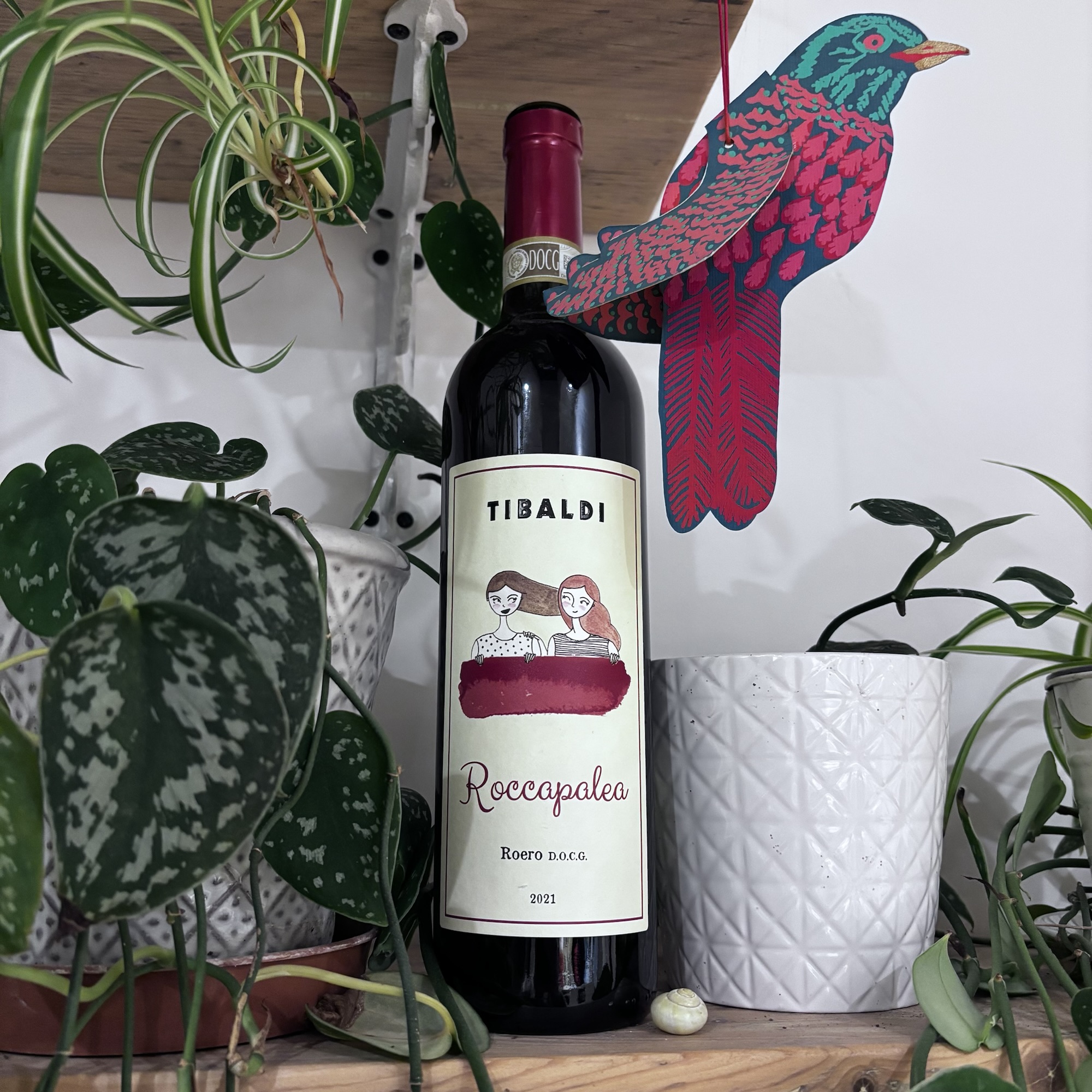
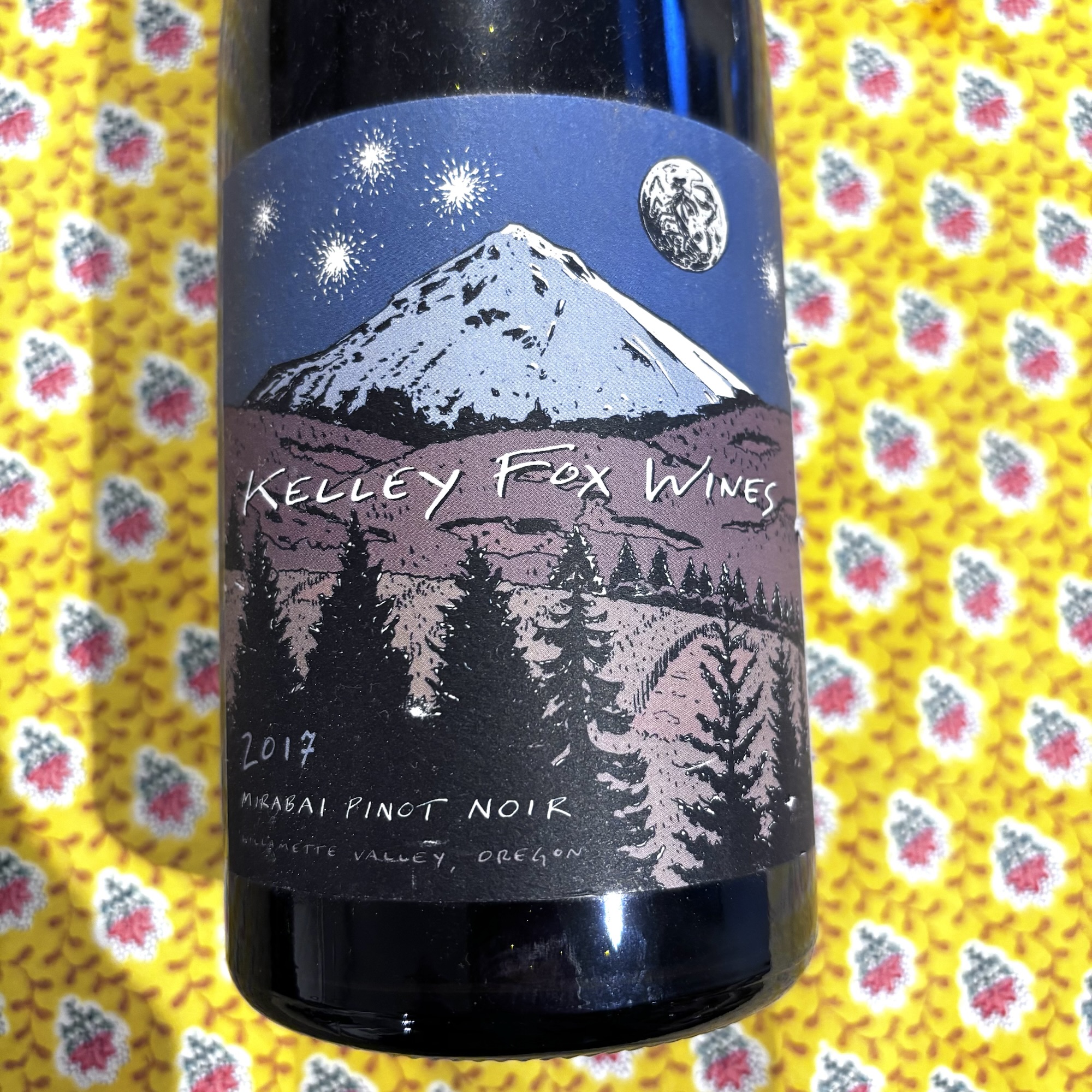
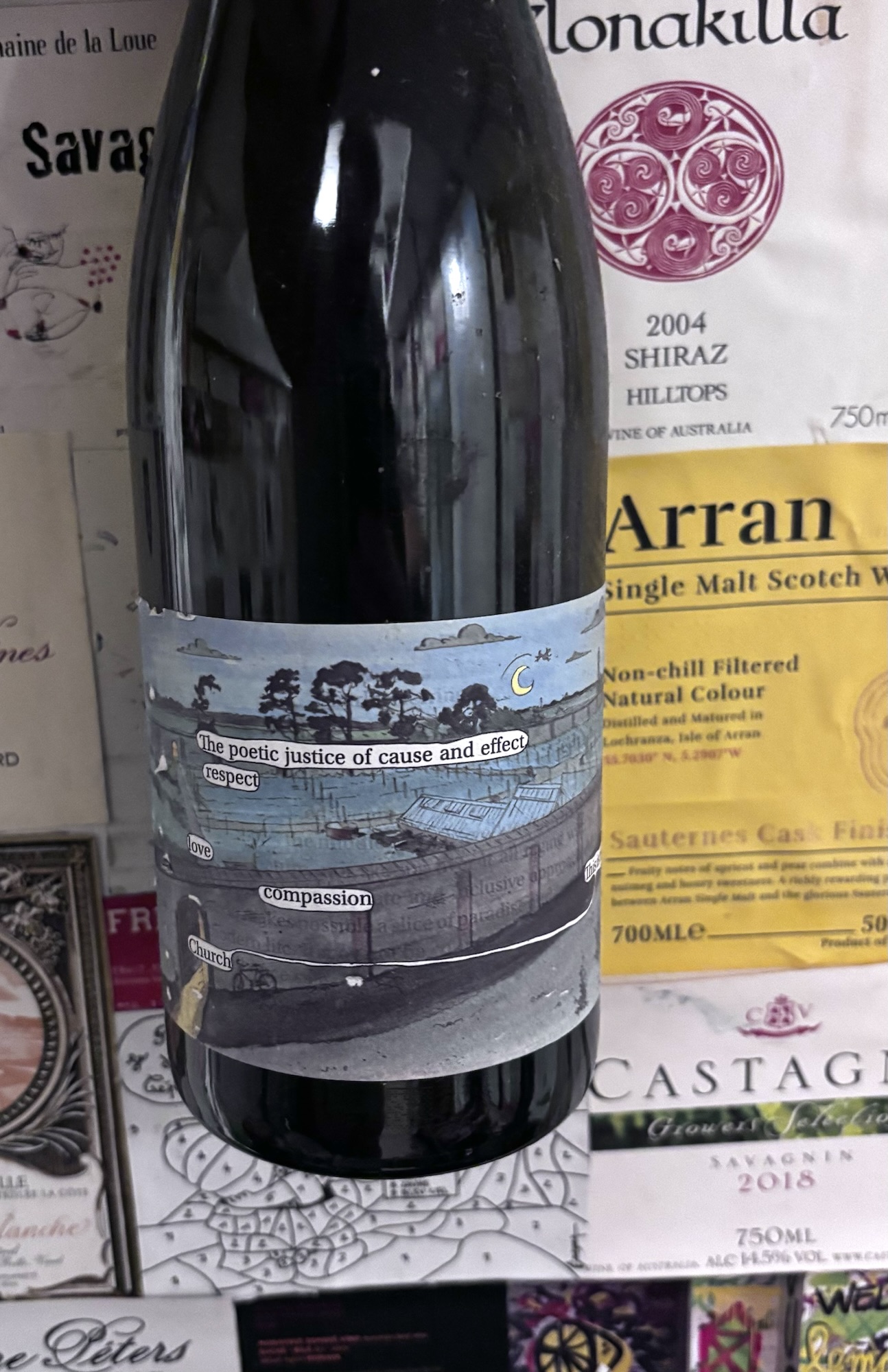
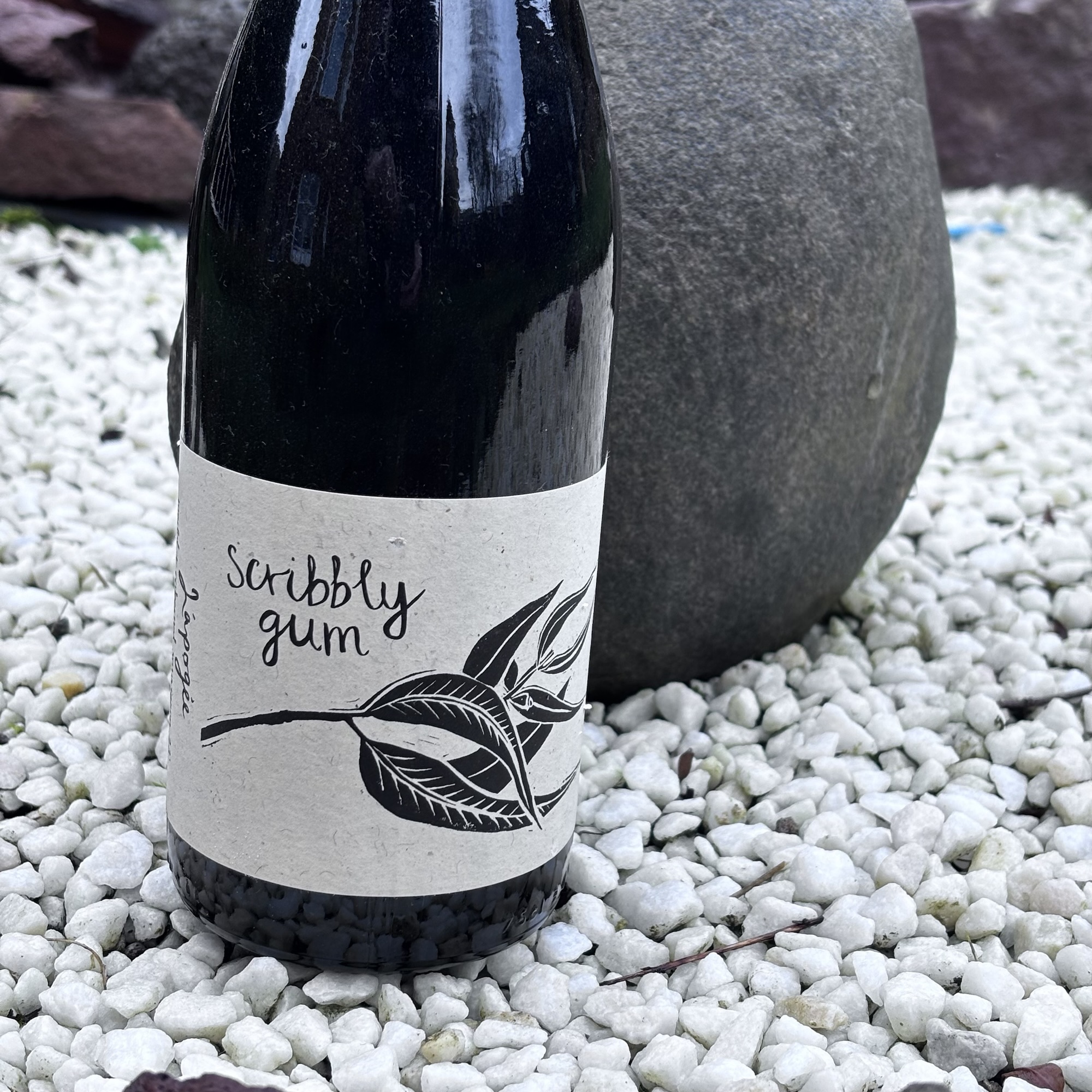
Recent Wines October 2025 (Part 1) #theglouthatbindsus

Back into the swing of Recent Wines, those drunk mostly at home, this first selection from October (Part 1) comprises bottles from Roussillon, Kent, Czech Moravia, Kalecik in Türkiye and Bucelas in Portugal. It’s a nice selection of which you will only pay just over £30 for the most expensive, and £11 for the cheapest, yet I would be very happy to drink them again, each one of them.

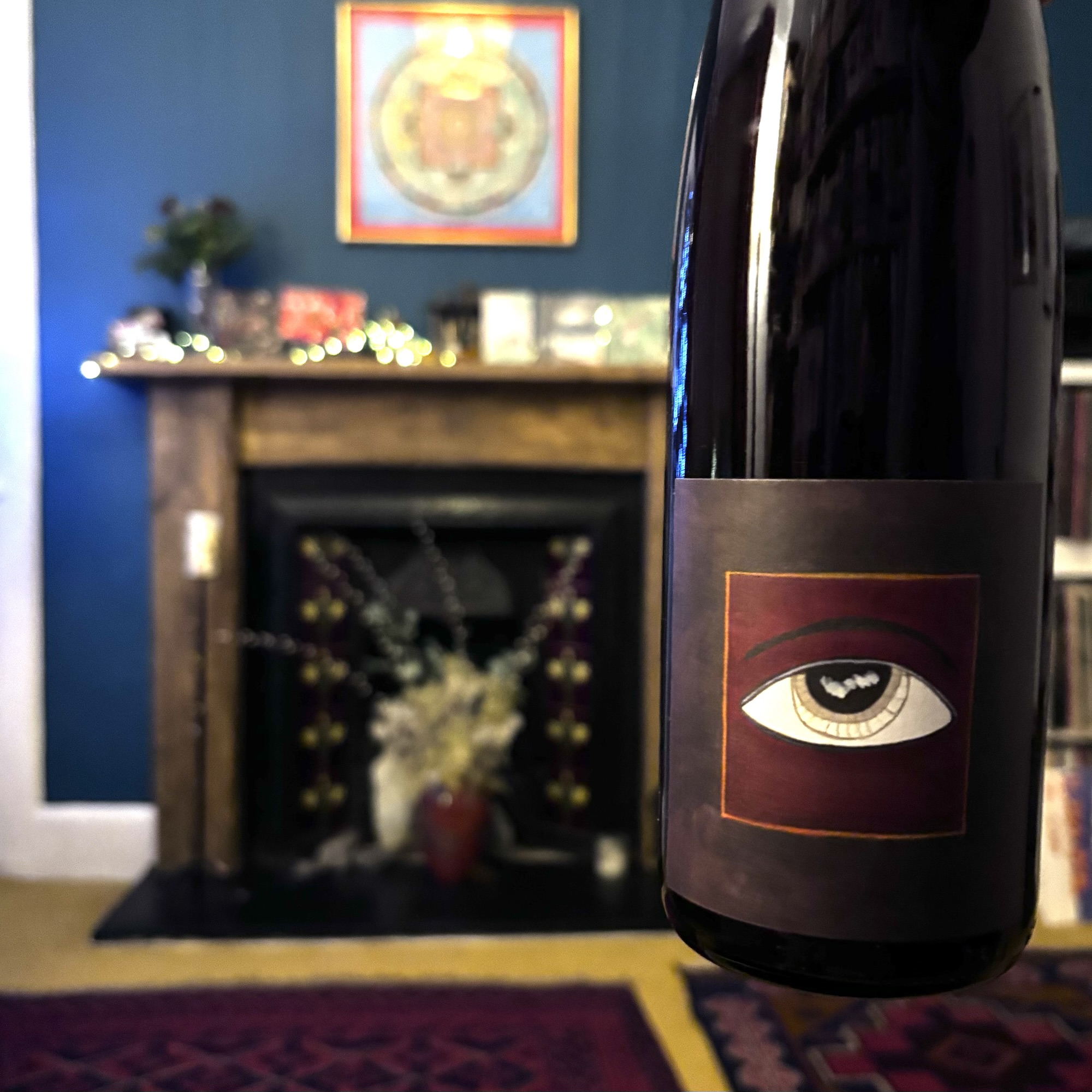
Segna de Cor 2022, Domaine Roc des Anges (Languedoc-Roussillon, France)

Although Roussillon seems to have undergone something of an administrative takeover by Languedoc, this wine is very firmly Roussillon, both by geography and soul. Marjorie Gallet created this cuvée many years ago (it was a regular purchase for years whenever I visited Les Caves de Pyrene at their old warehouse shop in Artington, near Guildford, but I think I temporarily forgot about it). She created it as a repository for the fruit of her young vines. But “young vines” in this case still means forty years old.

Made near the domaine, which is nowadays located close to Latour de France, it is released as a Côtes Catalanes IGP, comprising mostly Grenache, with a little Carignan and Syrah. It is both fermented and aged in concrete. What you get is a pure, fruity, vibrant, natural wine, but with some clear depth to it, doubtless the not so young vines. It’s all cassis fruit acids, dense and concentrated but not at all heavy. Alcohol sits nicely at 13.5% in a well-balanced wine. It will easily age further, but I like it at this slightly crunchy stage, and that cassis fruit is matched by a gorgeous blackcurrant scent which develops in the glass.

Still imported by Les Caves de Pyrene, my bottle cost £22.50 at Solent Cellar (currently sold out but they do have Marjorie’s Llum Blanc at £30). Try also The Sourcing Table. They have both Segna and Llum, and also Roc des Anges’ intriguing “Vin de Voile”.

Westwell Village Chardonnay 2023, Westwell Wine Estate (Kent, England)

Nestled at the foot of the Pilgrim Way on Kent’s Downland chalk, Westwell has carved a reputation for both high quality and also genuine innovation. They have expanded their range yet again with a cuvée which combines that quality focus with another of their specialities, good value.

The idea behind the “village” wines is easy drinking. The Chardonnay comes from two blocks, one of which was planted in 2019, the other a decade before, in 2009. Picked in October 2023, it was immediately pressed and left to settle. A cool, temperature-controlled fermentation took place in stainless steel.

Intended for early drinking, it still has a classic feel of an English chalkland Chardonnay. I mean crisp, fresh, lemony, but there is a hint of chalky (slightly grainy) texture too. Alcohol sits down at 10.5%, but it doesn’t taste weedy at all. The freshness and the gentle mineral scents hold our attention.

In fact, I really enjoyed this and will buy more. I love that Adrian Pike has made a real English artisan Chardonnay that is affordable. It is undoubtedly easy-drinking, with zero pretention to complexity, but it is all the better for that. This was £22 from Cork & Cask, Edinburgh. Looking online now, I think they have some left, among five wines from Westwell on their shelves.

I saw this week that Westwell has re-introduced Wicken Foy, which they rightly describe as a Westwell classic. It’s a classic three-variety blend, 30 months on lees but dosed at 10g/l so should drink from the off. Look out for it. It should be one for Christmas drinking.

Oküzgözü 2021, Vinkara Wines (Kalecik, Türkiye)

Vinkara is an important winery, based between the Mediterranean and the Black Sea, in the mountains, northeast of the capital, Ankara, where you will find Kalecik in the Kizilirmak Valley. Anatolia’s viticulture goes back to 3000 BCE, although Vinkara was only founded in 2003. Oguz Gursel owns the winery and it is managed by his daughter, Ardic.

Oküzgözü is an autochthonous variety, thin-skinned and generally known for attractive, easy-going, wines. The grapes here are grown at between 650-to-700 masl. The climate is continental and the proximity of the Kizilirmak River, the longest river wholly within the country, helps reflect sunlight to aid ripening. Farming is described as using “modern techniques” but “environmentally conscious”, and protecting nature.

Aged in old oak, you get fairly simple but genuinely tasty cherries and other red fruits on both nose and palate. There’s a little dusty tannin there, which grounds an otherwise easy to drink wine showing 13% abv. The bouquet finished with a hint of farmyard. Despite the alcohol I found it easy to quaff. At just £11 from The Wine Society, this is priced for adventure. Türkiye’s wine producers sometimes get a hard time from government, so it is nice to see a few wineries able to export. At the time of writing TWS has several Vinkara wines listed. I suspect I will be trying another in my next order.

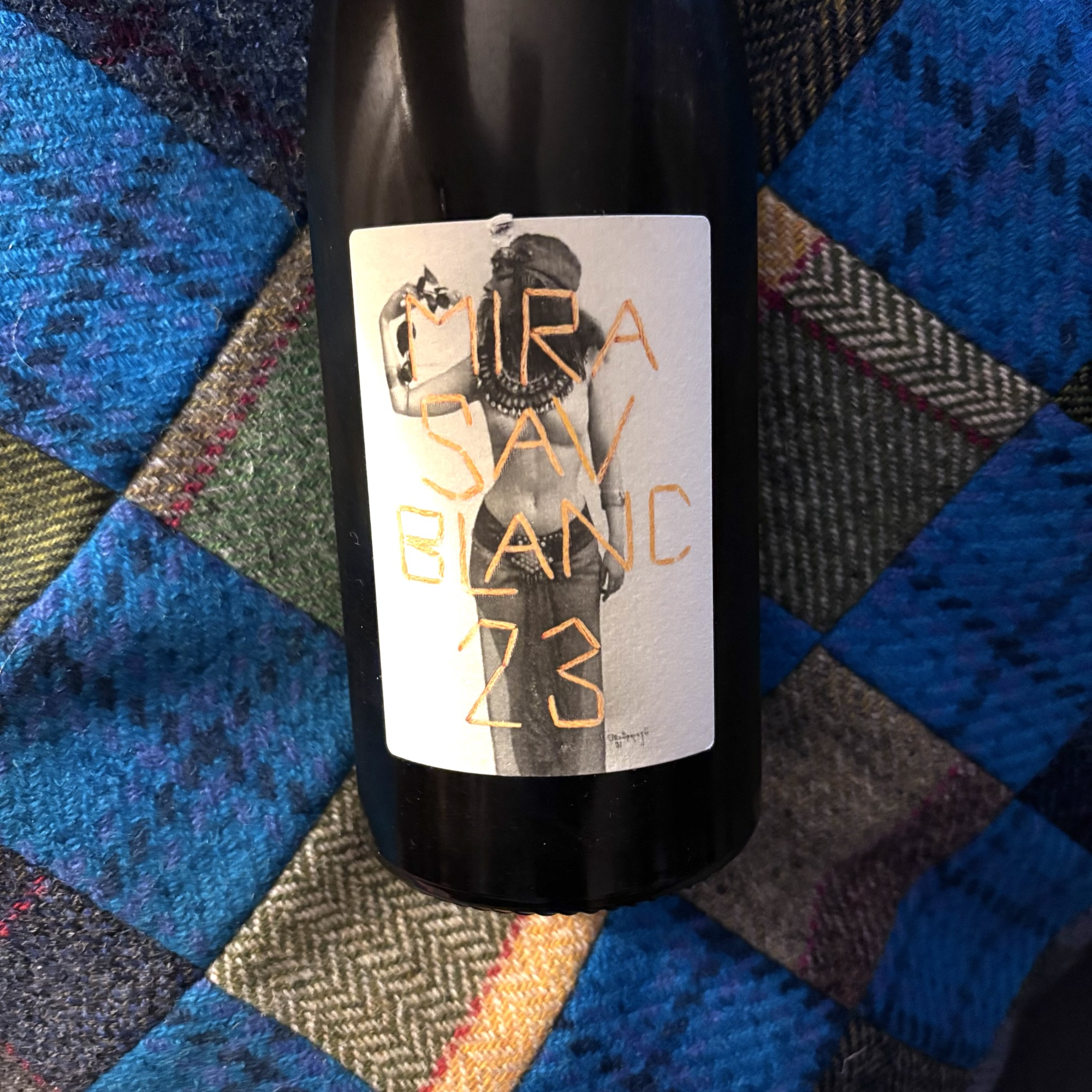
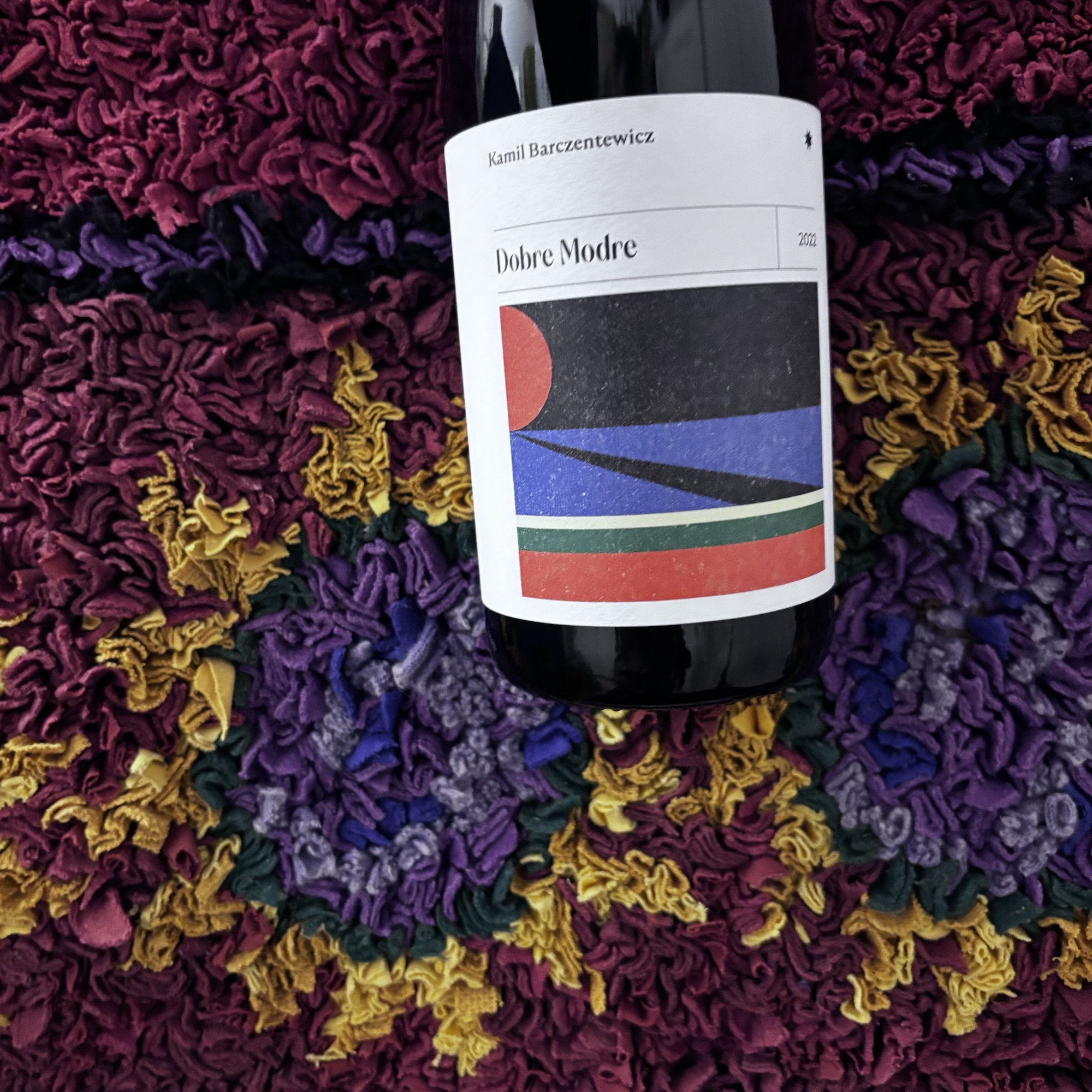
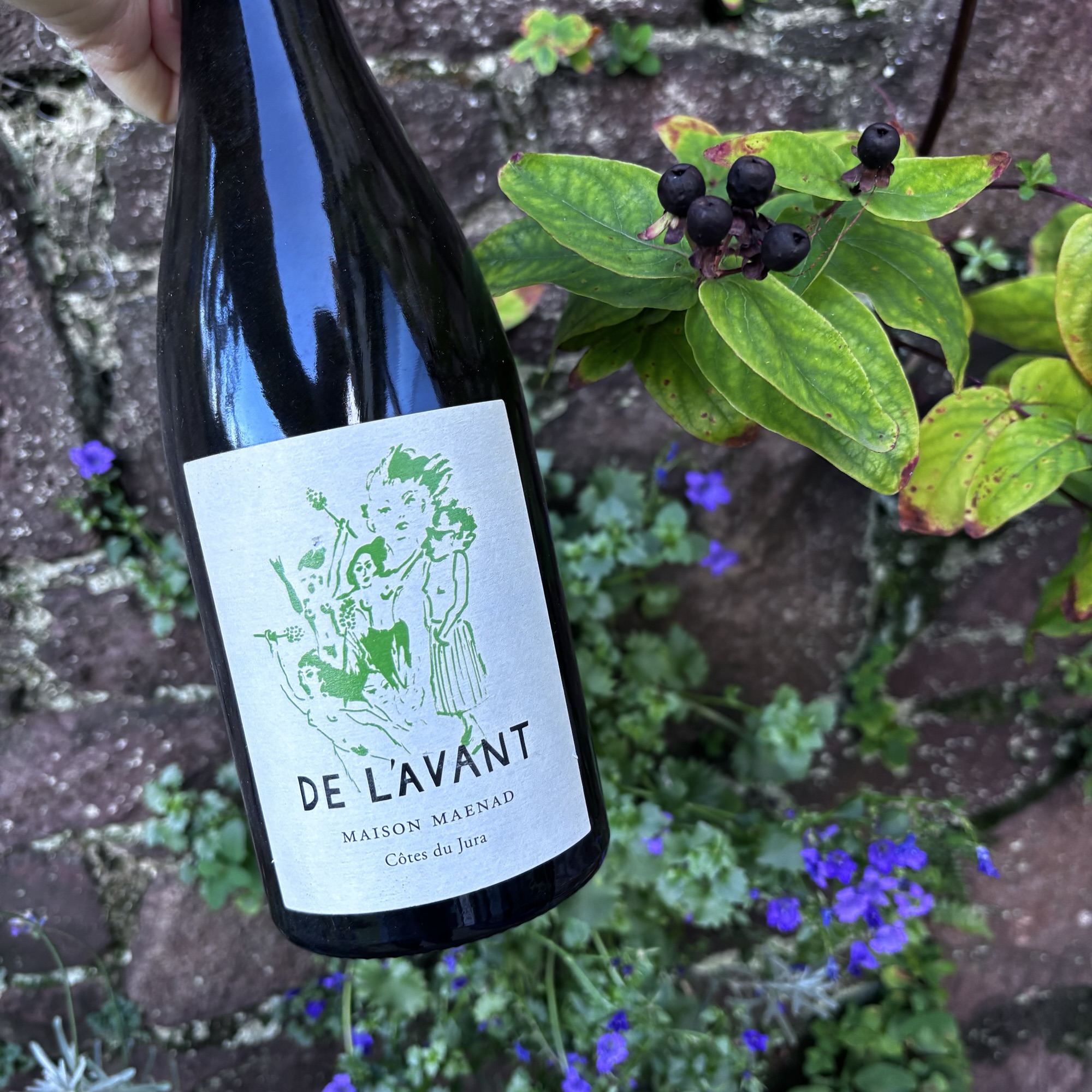
Mira Pinot Noir 2022, Mira Nestarcova (Moravia, Czechia)

From the first wines I had from Mrs Nestarec, I was hooked. I have found them very impressive, especially for their electricity. Mira farms in the same village as Milan, Velké Bilovice, in Southern Moravia. Her vines are left more or less wild with minimal pruning and maybe just some repositioning of very unruly shoots. I think the wines all manage to express this somehow. Mira likes to say that the vines “grow freely in their natural habitat”. The Pinot fruit comes off sandy soils with vines around fifteen years old.

Carbonic, whole berry, fermentation is used after which the wine is aged in used wood for just eight months. Zippy red cherry dominates. The extra year in bottle my 2022 has seen has given it more depth, but it still has youthful vigour as well. There is a bit of funk here, but nothing to scare most of my readers. The energy is quite thrilling.

There are quite a few excellent Czech natural wine producers, many of whom have been going for quite a reasonable number of vintages. I have no idea what level of help or tutelage Milan Nestarec has given his wife, but the whole concept of these wines, right down to the packaging, which reflects her former profession in dance, suggests she is very much in control of her own project. Mira has catapulted herself to sit beside more experienced peers in a few wonderful vintages. Let’s hope my 2024s are secured.

The label is another of Mira’s dancers, Lester Horton. The 2024 arrived recently at Basket Press Wines, and costs £31. There are three other cuvées as well for this year. They will disappear swiftly, of that I’m certain.

“Murgas” Bucelas Branco 2022, Quinta das Murgas (Bucelas, Portugal)

Bucelas is a name I remember from my very early days of wine appreciation. I was introduced to it, along with several more of the older wine regions of Portugal, on a wine course I signed up to in my early twenties, in London. In fact, what I remember most about the man who ran it, apart from many of the wines we tasted being imported by Boutinot, was that he really liked Portuguese wine. Well before his time, it seems.

The World Atlas of Wine in its current 8th edition says of Bucelas that it “soldiers on” but on the basis of this genuinely delicious white wine, it does more than that. The region is north of Lisbon, and a bit more inland than I had realised, closer to the delta and basin of the River Tejo than the ocean. The soils are limestone, the micro-climate still very much influenced by the Atlantic, and the grape variety is Arinto, of which this wine is a varietal expression.

Bernardo Cabral ferments and ages this, 20% in used oak and 80% in stainless steel. Ageing is on the lees, and as with Mira’s Pinot above, for just eight months. The bouquet is very fresh lemon citrus, and this is repeated on the palate. Some have likened the wine to either Chablis, or to a Trocken Riesling, and I can see what they mean, although it does have its own distinctive personality.

Mineral, fresh, a little steely. But for me there’s also a hint of the sea. Just a tiny note of iodine, and bags of salinity. Either way, it’s excellent. A wine you maybe buy to just try something a little different and it kind of stops you in its tracks. It really tastes like a terroir wine, and it also represents (once again) really good value. It would age, for sure, but it’s great right now.

My bottle cost £24 from The Solent Cellar (Lymington). You might find it slightly cheaper (£22.50) at Butlers Wine Cellar (Brighton), though their web site says they have the 2021, not this 2022. Fortnums lists it for £24 (it was recently on offer), but they don’t let on as to which vintage they have. The importer is, of course, Raymond Reynolds.

Posted in Artisan Wines, Czech Wine, English Wine, Languedoc-Roussillon, Natural Wine, Portuguese wine, Turkish Wine, Wine, Wine Agencies | Tagged , , , , , , , , , , , , , , , , , , , , , , | Leave a comment

The Wines of Beaujolais by Natasha Hughes (Book Review)

Two book reviews in a row. I hope that isn’t too much, but with that gift-giving season fast approaching I wanted to get this out there in plenty of time. The Wines of Beaujolais by Natasha Hughes is one of the latest in a series first initiated by Infinite Ideas and now part of the Academie du Vin Library. It joins a roster of essential reading on the wines of the world, whether covering a whole country (The Wines of Austria, Germany, Great Britain etc), a style of wine (Rosé, “Fizz”) or a region, as with Rhône, and Loire, and this work here. There are now nearly twenty books in this series and I have read and enjoyed nine of them so far.

When I first got into wine it was easy to ignore Beaujolais. The “flower label” wines of George Duboeuf were ubiquitous, well made but hardly the most exciting. For those who are rightly about to enjoy this year’s Beaujolais Nouveau, well you might not be old enough to remember how hyped, and often horrible, those wines were in the Nouveau craze of the 1980s. Industrial winemaking was common and terroir hardly considered worth mentioning.

The first thing that piqued my interest in Beaujolais was the landscape. We used to stay on the Côte d’Or for a week each year when we were young, usually Meursault or La Rochepôt, just over the hill from Saint-Aubin. We always made a day trip somewhere. That’s how I ended up falling in love with Arbois and the Jura, but Beaujolais and the Southern Mâconnais were an obvious choice to visit. The hills between Mâcon and Villefranche-sur-Saône are so beautiful that you cannot but wish to explore their villages, their restaurants and their wine.

I also owned a lovely book written by someone more famous as a cricket commentator in my childhood, John Arlott. Arlott on Wine (1986) was more or less a compilation of wine articles he’d written from the 1950s up to the 1980s. I can’t seem to lay my hands on my copy so I hope it wasn’t part of the great cull of books when we deemed 1,000 a generous limit to be moved from Sussex to East Lothian a few years ago. Arlott loved Beaujolais, largely as a bon-viveur, and his enthusiasm was infectious. However, it took me until the 2000s to finally understand what he meant.

All this was long before I had ever heard of Jules Chauvet and natural wine. It was much later, as my eyes opened to natural wines, that I learned how important Beaujolais (with its so-called “gang of four”) was in relation to that movement. Then came my discovery of Jean Foillard. I learned that Gamay’s essence is not what I’d tasted in Nouveau, or negociant Cru wines, but a grape potentially up there with Pinot Noir. Certainly, it is a variety which is capable of ageing, and sometimes, when you do so, you will find it even tastes a bit like an aged Red Burgundy.

I am coming to the end of a vertical run of Foillard Côte du Py which I began purchasing in the late 2000s and stopped regularly buying about six or seven years later. More or less every bottle has been a strong contender for wine of the month in our house. Such wines, especially given their ability to mature so well, do offer amazing value for money, even today, although very few retailers will have the Côte du Py for less than the mid- or upper-forties in pounds now.

Forty is now in my bracket of wines I will only occasionally stretch to nowadays, but in terms of Beaujolais generally, this is not a problem. We have seen an explosion of wines, some from old estates rejuvenated by the next generation, and some from wholly new names who have fallen in love with the region, and it should be said, by the opportunity to buy affordable vineyard parcels. Most of these wines range from good value down to criminally cheap (I use that word because every artisan deserves to make a living and many find themselves sailing close to the wind on that score).

A lot of the most exciting wines today are made by men and women with a better understanding of modern viticulture, health and sustainability. Viticultural, and wine making, practices range from so-called sustainable viticulture through organic, biodynamic to fully natural wine. Very few artisans, or even medium-size producers today go for the full-on chemical dousing which was once normal practice in the region.

Beaujolais also became a happy hunting ground for very small negociant arms of winemakers, usually in Burgundy. The region provides them with the chance to make less expensive wines, but the ones I’m thinking of are still aiming for the same quality focus as their Burgundies, and they often have significant control over how the vines are treated and when the grapes are picked and transported to their wineries. In my case, the Beaujolais wines of the Ozgundian trio, Le Grappin (Andrew and Emma Nielsen), Mark Haisma and Jane Eyre, have all provided me with some lovely, juicy, bottles (and bagnums).

Another major impulse to buy Beaujolais for me was the annual Beaujolais Tastings organised by wine PR company Westbury Communications. In that pre-Brexit, pre-Covid era, they gave the trade an unrivalled opportunity to taste well over a hundred wines, showing the full diversity of Beaujolais from white and pink right up to the Crus. Not to mention the fact that absolutely everyone who was at the cutting edge of wine in the UK at the time, whether importers or retailers, restaurateurs, writers and journalists would all be there.

Natasha Hughes is a Master of Wine and a London-based freelance wine writer, educator and consultant, as her biography says. She became a MW in 2014 and for the last decade has become established as a journalist and a contributor to various books. As far back as two decades ago, she had been section editor for Beaujolais on Oz Clarke’s annual wine guide. She has since become a noted competition judge, as well as being involved in wine education and wine travel as most freelance wine writers are.

The Wines of Beaujolais follows what is now a well-established pattern in these Academie du Vin Library works, and I shall broadly run through the contents below. However, I want to tell you what I think makes an excellent wine book, whether on a whole country, or whether it’s a regional guide. For me it is simply whether the book inspires me to go out and buy the wine. Naturally it’s about increasing my knowledge, but inspiration to seek and drink is the bottom line.

This book definitely achieved that, and after a bit of a lull in purchasing the region’s wines I have already been scouring merchant’s lists and either buying odd bottles here and there, or making a mental note of where to head when I’m next in London.

We begin with some history, some explanation of terroir, of grape varieties, viticulture and winemaking. It should be highlighted, when I talk about grapes, that Gamay is not the only variety grown in Beaujolais. Many will know that there’s a lot of Chardonnay. True, most goes into Crémant de Bourgogne (did you know that?), but increasing quantities of still Beaujolais Blanc is made, albeit at a small scale. If I see one from a grower I know, I always grab it. They can be lively and fresh, and of course good value.

We also have plantings of a wide variety of grapes, from Pinot Noir and Syrah to Viognier, Aligoté, Marsanne and Roussanne, and of course some of the new Piwi varieties. Gamaret, so successful in Switzerland, is planted, as is Chambourcin and Marselan. There’s even a little Muscat and Chenin Blanc in the far south of the region.

Of course, only Gamay and Chardonnay may currently be used in AOC/AOP wines, but then increasingly we are seeing wines from the region, especially those made by young and experimental, forward-thinking producers, bottled as Vin de France instead of under the appellations. Equally, you might have spotted that some of the Gamay is going over to the Jura and appearing in various negoce bottlings there.

The bulk of the book takes us on a journey roughly north to south, starting with the ten Crus, followed by Beaujolais-Villages and Beaujolais. Each of the many featured producers appears under these sections, though located under just one, the most relevant to them, when they make wine in different Crus etc.

All of the top producers appear, along with up-and-coming ones, and others deemed important. I couldn’t think of any that were missed. Certainly, those younger producers I really like (both Suniers, Domaine Chapel, Mee Godard, Domaine de la Madone, to name a few) all get glowing reviews.

We also get to learn of the struggles of some to obtain just a few vines to get them started, and of the financial difficulties many in the region face to keep going due to rising costs and the difficulties obtaining a reasonable price for their wine. We also read about other current issues, not least climate change, which has generally negative effects, except in sites where ripening was once highly marginal.

Warming temperatures are finally making some marginal vineyards at higher altitudes viable. Often these contain great old vines. It may not be too long before long-ignored Crus like Chénas, with its steeper hillsides and higher elevations, become fashionable, and some of the Beaujolais-Villages, also with a preponderance of higher-sited vineyards, are knocking at the door of the Crus. It’s a fact that once hard-to-ripen sites are now becoming warmer…consistently so.

These sites also have other advantages alongside vine age. They are often steep and hard to farm, so you need to be young, fit and enthusiastic to take them on, obviously presenting an opportunity for those desperate for a few rows to get them started. Some sites have been sufficiently abandoned for a long enough time that they have not had sprays used on them for a while. If they are too steep for tractors the soils probably show less compacting too. Some of these vineyards are the future.

All of these issues show that the author is not merely going through the same material others have covered, but has written a very contemporary account of what is happening in Beaujolais right now.

The book concludes with a section on the negociants, including those I mentioned above, followed by half-a-dozen pages giving very useful tips on where to sleep, eat and drink from someone who knows the whole region pretty well.  Very useful in a region where the landscape of attractive hills and typically attractive villages lends itself to tourism, yet which has until recently been pretty poorly geared-up for it.

A note on photographs. It was originally the way with these books that you may have had a few black and white photos through the text, plus some tipped-in glossy pages of photos near the middle. The glossies seem to have been done away with, replaced by matt full colour images for maps and photographs within the text. These photos are attractive but also informative, or directly illustrative. Some might miss the glossies, but I think the move is positive, very much so for the maps. The old monochrome was dull.

Natasha ends with an interesting conclusion, “Where is Beaujolais Heading?” Here she sets out a number of very real possibilities as to where we might be in 2045 (Armageddon not included), which range from positive (effectively consumer realisation of how good these wines are) at one extreme, to negative (effectively climate chaos making the region “unviable as a source of high-quality wines”) at the other.

Naturally, Natasha Hughes hopes that her book will help to nudge us all towards the first scenario. To quote the final sentence of her concluding paragraph, “It is my most fervent wish that in writing this book and opening readers’ eyes to the wonders of Beaujolais I may, in a very small way, have helped to skew the probabilities of future events towards the more positive outcomes for the region.”

I hope so too, and if the region has a better advocate in print today, I am yet to find them. This book will ignite, or perhaps re-ignite, your passion for these lovely, versatile, juicy wines. Just fill your cellar before they become expensive, or dwindle away through climate change.

The Wines of Beaujolais by Natasha Hughes is published by the Academie du Vin Library (2025, 270pp, RRP £35 from the publisher, but you may find it cheaper if you are someone who wants to explore other online options). Either way, Christmas Stocking hints start now.

Posted in Artisan Wines, Beaujolais, Nepal, Wine, Wine Books, Wine Tourism, Wine Travel, Wine Writing | Tagged , , , , , , , , , , , , , | Leave a comment

A Taste for Wine by Rose Murray Brown (Book Review)

In all my years of going to tastings, in London and now in Edinburgh, I have never met Rose Murray Brown MW. I think I may have seen her perhaps once, but we have never spoken. I guess that is perhaps because my focus is largely natural wine, or weird wines from far-flung places as some like to say, yet although it would be easy to assume that venerable Masters of Wine confine themselves to more classical, occasionally more lofty, events, reading Rose’s new book, A Taste for Wine, it is clear that her interests, knowledge, and in fact her far-sighted understanding of the modern wine world extend far beyond that narrower world of wine in which we both grew up in. In other words, I’m rather disappointed that we haven’t met.

Rose Murray Brown is perhaps best known where I live as the wine columnist at The Scotsman. It’s a job she’s been doing for nearly forty years. That is no mean achievement, given the changes in print media over the past couple of decades. But Rose is also an experienced wine educator. She set up her own wine school back in 2000, and in addition to all the events, masterclasses and courses offered, she organises consumer wine tours. Her biog says she has most recently taken groups to Uruguay, Chile, Argentina (let me know if you go to Bolivia, Rose), and slightly closer to home, Georgia, Sicily and Hungary.

All of this does make her eminently well-placed to write a book with the sub-title “A new tasting masterclass for wine lovers”.

So, what exactly has Rose Murray Brown written, and who is it aimed at? The first question is in some ways easy to answer, but that would be somewhat superficial, and a disservice to the author. On the face of it, it looks like another tasting course, but I think it goes well beyond that. In answer to the second question, I think the core audience would be someone starting out on their journey towards being (one hopes) a knowledgeable wine obsessive. But interestingly, it is neither a book that would frighten someone even earlier in their appreciation for wine, nor should anyone who feels they have a good level of knowledge shy away from it. So, let’s approach that question again at the end of the review.

Before setting out the journey on which A Taste for Wine takes us, I would like to say that in every part of this book I found information that I didn’t know, or had forgotten, like the slightly larger Burgundian equivalent of a Bordelais barrique being called a pièce (doubtless forgotten because I can no longer afford the Burgundies I used to drink in younger days).

The methodical way that the sections on taste and its understanding, and the practical mechanics of wine tasting, are put together are helpful to those new to the practice, but also reinforce methodologies for those with more experience. In wine tasting the method, and its repetition, are important.

Of course, there are parts that might scare someone very new to wine, such as meeting a word like “phylloxera” for the first time. Most terms find an explanation somewhere, and I imagine there is a reason no Glossary has been included. The other side of the coin is that a lot of “popular” tasting courses treat us like children and are, as a result, over-simplified. Here, there is no shying away from the technical side of wine.

There are a lot of wines/producers mentioned in the text, whether as examples to try, wineries to visit and so on. I think these are well-chosen. They are not intended to be seen as “the best”, but the wines always show typicity in relation to whatever the author is aiming to express (and, of course, in the case of the wines, alternatives are suggested). It would be very arrogant of any reviewer to, for example, wish to insert a couple of producer names under the entry for Czechia, nor to comment on some recent Swiss wine law that might make a nuanced difference to the text. Because I’m an inveterate wine geek, and 99% of readers won’t be.

We begin with a section of “Taste Essentials”, the building blocks for beginning to taste, as opposed to drink, wine. The next section, the core of the book, is called Understanding Taste. I won’t detail each part but it is interspersed with the sections (in bold on the Contents photo), each of which is a totally practical tasting scenario you can organise at home for different wine styles.

Styles range from Classic Whites (p 46), through nine different styles and genres (eg Sparkling Wine), ending on Full Rich Reds (p 124). These include very handy crib sheets which, after tasting, you can refer to, to see whether your independent conclusions match, or come close to, those of the author.

One of the best things about this book is that it manages to introduce you, the reader, to very current issues in the wine world today. So, alongside these tasting exercises, you will read sections on Piwi grape varieties, climate change, future-proof grapes, and sustainability, whilst at the same time gaining practical knowledge on winemaking, soils, viticulture, and grape varieties (to name a few).

Exploring Taste takes us further in terms of practical tasting, going through different wine types (including petnats, natural wines and orange/skin contact wines). There is no formula here. For orange wine you need to talk about colour but with natural wine you need to know a lot about what natural wine really is. For orange wines the author discusses its versatility with food, whereas for natural wine she talks about the wine bar scene, recommending a whole international list of bars where you might be able to try these wines.

The last section is called Origins of Taste. This part begins with a directory of wineries to visit. The suggestions are good ones because they concentrate on producers who are geared up for wine tourism, as many are, rather than the poor artisan whose work in vineyard and cellar are so often interrupted by wine geeks eager to wipe out a good part of his or her meagre profit by spending two valuable hours of pruning time tasting through their entire range.

The two pages which follow, on the practicalities of, and etiquette for, visiting wineries, are well worth learning by rote, although Rose stops short of telling you to please not to visit that lady with one hectare in the Jura who is trying to juggle hand bottling her 2024 Trousseau without added sulphur with collecting her toddler from nursery and getting them both some dinner without an appointment.

There is also a section on urban wineries, with an international scope, an increasingly attractive option for those on a city break. It isn’t an exhaustive list, so if you are somewhere that might have some, check them out. London has four listed, only two of which I have visited, one other whose wines I’ve tried (I’m pretty sure I saw Blackbook Winery bottles in Fortnums a few weeks ago). Which reminds me…

The nature of the book means that each “country section” is very short. France gets six pages, though several very nice photos take up some of that. Taking photos into account, which I must say throughout the book are very good, Spain, Portugal, England & Wales, and Austria manage less than two pages each. Switzerland gets about three-quarters of a page if you take out the rather nice picture of high-altitude vines in the upper reaches of the Valais.

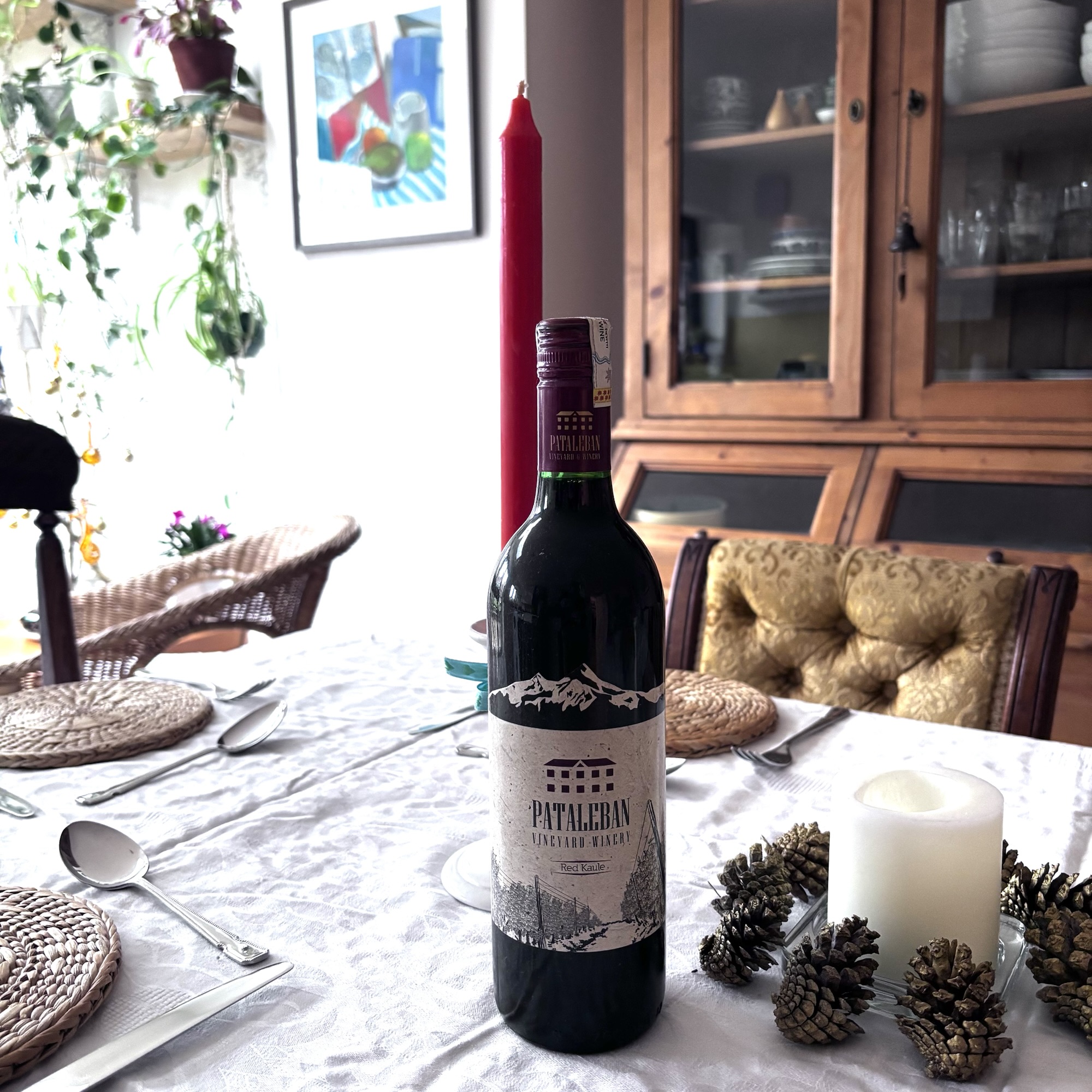
However, what you get here is a good, concise, summary, but not one without some more interesting facts, and comments on important and pertinent country-specific issues. You also will read about viticulture in more off-the-beaten-track places like Armenia, Ukraine, Poland, Czechia, Serbia, Turkey (Turkïye),  Bolivia, Japan and even Bhutan. Albania doesn’t quite make it in this section in its own right (although earlier in this section you do get four recommended Albanian producers to visit for those who know that Albania is one of Europe’s hottest countries to head to right now, though none being the maker of the Albanian wine I drank this week). Nor did Nepal make it, but maybe I’ll get to keep Pataleban Estate for my own readers for a short while longer.

This section will not give you a detailed knowledge of the wine producing countries of the world, for sure, but I found this fifty-page précis of the many dozens of wine books on the shelves in my study pretty impressive. You get the basics for the big hitters, plus a pointer to countries few know, from a wine perspective, yet many of which are making excellent wine which is just beginning to reach our market. Check out for example the adventurous wines The Wine Society is bringing is at the moment (Ukraine, Syria, Turkey, Poland etc), or small specialist importers like Basket Press Wines (mostly a focus on Czechia and Central Europe).

I really enjoyed this book. It manages to appear simple in the practical and methodical way it approaches the task of teaching us to taste wine, and yet it also manages to impart interesting facts and knowledge on a range of subjects within wine. All this is aided by the design and production values we have come to expect from this imprint. Whether a relative beginner or a so-called expert, we will all come out at the end of reading it with greater knowledge and understanding.

At £25 it would be a very useful addition to the wine library of literally anyone who feels wine is something of a hobby. It would also make an excellent Christmas gift for any of your friends who, considering most of my readers are wine obsessives to some degree, would like to learn more about the practicalities of tasting, and thereby gain a greater appreciation for, wine. I myself have friends who have embarked upon WSET courses for whom A Taste for Wine would be an excellent gift.

For some, this book will open up a whole new world. For others it will reinforce our tasting habits, whilst adding in summary form much to our understanding of new wine styles, new threats and solutions to issues in viticulture and winemaking, and more. Having the tools to taste wine, analytically, increases our appreciation of what we are drinking. I am certain of that. This is why wine education has now become a popular passtime for many, way beyond those working in the trade as it once was. So that answers that second question: who should read it? Anyone who enjoys wine and thinks there is more to learn.

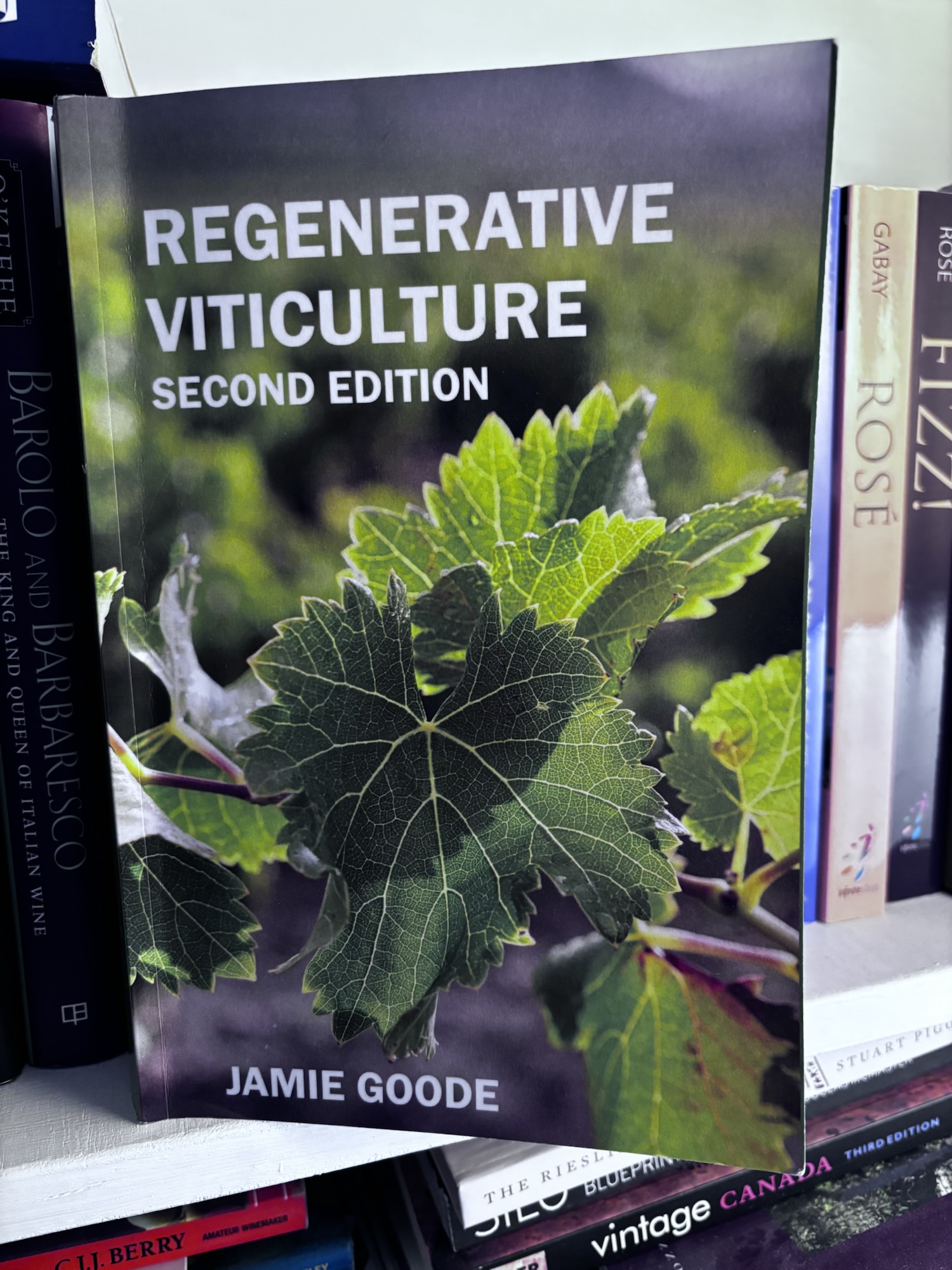
A Taste for Wine – A new tasting masterclass for wine lovers by Rose Murray Brown MW is just published (Mitchell Beazley 2025, hard cover, 224pp, RRP £25).

Posted in Tasting Wine, Viticulture, Wine, Wine Books, Wine Masterclass, Wine Science, Wine Tourism, Wine Travel | Tagged , , , , , , , , , , , | 1 Comment

Switzerland 2025 Part 4 – Wines En-Route

Having written about three Swiss wine regions I have just visited over the past three articles, I thought I would conclude my Swiss trip by giving a very brief run-down of some of the wines we drank along the way, whether that be in restaurants or staying with friends, who as always opened quite a lot of wine, especially wine from Geneva, for us to try.

I shall try to keep the notes very short. I think it is unlikely that many, if any, of these wines will currently be available in the UK, though I am aware that my readership outside the UK seems to be growing quickly, and some US importers are a bit more clued-up on Swiss wines. You will see that Alpine Wines, the UK’s major Swiss Wine specialist, has some wines from one of the producers here (Montmollin), and that The Wine Society has recently stocked one of the wines (Duboux), both of whom I’ve covered in the articles on Neuchâtel and Lavaux.

One thing to note is that although every wine here is, in its own way, modern in terms of flavours and outlook, an awful lot of the domaines go back several generations. This is very noticeable among the family estates in the Geneva appellation. In many ways this sums up Switzerland, where the desire to move forward and keep innovating is usually achieved without losing sight of tradition, because tradition is rooted in the family.

Chasselas de Dardagny 2024, Domaine Les Hutins (Geneva)

It’s probably quite fitting that the first bottle we drank on arrival in Switzerland was from Les Hutins. If you have read my last article, on the Geneva Appellation, you will know that this 13-hectare estate is my favourite producer in the region. It’s a pale, fresh, young wine which was bottled this year. The bouquet reminds me of Mirabelle plums, the palate is mineral and saline, with a characteristic savoury, herbal, twist to the finish. Aperitif, or fondue perhaps. Just 13CHF from the domaine belies how good I think this is, a fine example of crisp, youthful Chasselas. Read more about Les Hutins in Part 3 (30/10).

Gamay and Pinot Noir 2022, Domaine Les Perrières (Geneva)

This estate, owned by the Rochaix family for eight generations, began growing grapes in 1794. The domaine is run today by Frédéric Rochaix in line with the tenets of the regional environmental “Terre Avenir” organisation. They are based at Satigny, which is actually the largest wine commune in Switzerland. Their production consists of wines made from estate-grown fruit and purchased grapes (Cave Les Perrières), but the two wines shown here are domaine wines, and both made from their vines in the nearby village of Peissy. Both wines are from fruit grown on hillside sites up to 500 masl. The Pinot undergoes a traditional fermentation whilst the Gamay is partly made by carbonic maceration (whole berries). We are at the fruity end of the spectrum, although they both register at around 13% abv and have some structure. The Pinot costs around £14, the Gamay at £11.

Cuvée Madame Rosmarie 2023, A Mathier (Valais)

This bottle was drunk with Rösti on our first night in the mountains. It was a good match, although it was not quite as “dry” as I was led to believe by the waitress. It’s a white blend of four varieties: Petite Arvine, Pinot Blanc, Gros Rhin (Silvaner in this instance) and Pinot Gris. It carries 13.5% alcohol, so it was on the weightier side. The estate is at Salquenan, or Salgesch if you are speaking German, just east of Sierre in the heart of the Valais. I know Albert Mathier’s wines, but this was my first from Adrien and Diego Mathier, whose “Cave Nouveau Salquenan” is a modern building in Salgesch. The wine has a floral bouquet and a rich palate which seemed just off-dry.

Garanoir-Pinot Noir 2023 Weinkellerei Riem, Daepp & Co (Thunersee AOC)

This was a local wine more or less, when we were in Grindelwald. In any case, I’d never had a wine from this Bernese winery, so I had to give it a try. Garanoir is, of course, one of the “new” Swiss varieties (created as long ago as 1970) which has got itself a real foothold all over the country. It’s a fruity wine with 12.5% alcohol, simple if I’m honest, but certainly enjoyable and I’m glad we gave it a go. It may have been a bit light for my wild boar. But Switzerland has many wines and regions I’ve never tried. Sometimes you get a perfectly acceptable bottle, other times a gem. Sometimes something in between, like this one.

A Poil Petnat 2023, Domaine de Montmollin (Neuchâtel/Trois Lacs)

If you want to read more about this excellent Auvernier domaine, see Part 1 of my Swiss jaunt (published 24 October). Whilst a number of their wines are available in the UK online, via Alpine Wines, and occasionally in retail outlets they supply, you won’t find the “A Poil” wines here. These are fully natural wines, although the estate is fully biodynamic across its whole range. What makes these wines different is the zero added sulphur regime. In the case of this petnat, it’s a double zero…no dosage added either.

The blend is Chasselas and Sauvignon Blanc and the alcohol is 11.5%.  It’s very dry, but I admit I’m a fan of zero dosage. The spine is firm and the bubbles are fine. The back label suggests it will keep one-to-three years and to drink between 8-to-10 degrees (and to cellar between 10-15 degrees), all making sense. If you serve it too cold you won’t get the nice floral bouquet. I do really like this. 25CHF.

Centaure Pinot Noir 2020, Domaine du Centaure (Geneva)

Another Dardagny domaine you can read more about (in Part 3), among the best producers of the Rive Droite at Geneva. Claude and Julien Ramu make a range of wines, most named after mythical creatures. This one just happens to be named after the domaine itself, but then Pinot Noir is central to what they do so well here. It sees a fairly traditional vinification, a couple of weeks with pigeage by hand daily. Aged in 225-litre oak for 12 months, it will keep for a decade, but this 2020 seemed tasty enough to me.

The nose mixes red fruits, mostly cherry, with a bit of toasty oak, whilst the palate has ripe cherry and a bit of spice. Fruit-forward but will develop. There is also a cheaper “Dardagny Pinot Noir”.

Noir Désir 2021, Domaine de la Mermière (Geneva)

This is an organic and biodynamic producer, the domaine run by Christophe and Yves Batardon, farming 11 hectares in four parcels around their village, Soral and nearby Laconnex, southwest of the city of Geneva. In general, the vines grow on chalky soils with glacial deposits. Noir Désir, possibly named with at least a nod to the controversial French band of that name, I’m not sure, is a red blend comprising Gamay de Chaudenay (a rare mutation), Pinot Noir, Garanoir and Galotta. Whilst Garanoir (and Gamaret) have been popular in the Geneva AOC for a long while, Galotta is a variety I’m beginning to see a lot more of as well now.

This is a wine made in oak. There are plenty of wines made in Geneva which still insist on a bit of muscle and heft, and this is one. You might think it needs ageing, but actually, with its concentrated fruit and structure it tasted pretty good, largely I think because the tannins are well-managed. This 50cl bottle of 2021 weighed in at 14% abv. 21CHF for a full bottle of the 2022 (current vintage), 14CHF for 50cl.

Aligoté 2023, Domaine des Curiades (Geneva)

I recall that this was one of the first Geneva estates I tried some decades ago, but the domaine itself was started in 1909. The fourteen hectares of vineyards, originally planted way back by Benedictine monks around the village of Lully, were acquired by Jules Dupraz, and they have been farmed by four generations of the family to this day. It was Jules who introduced Aligoté though. The desire was to have a white variety with more overt fruit than the Chasselas, and the current team have succeeded in that. There’s none of the old-fashioned acid fest here, and plenty of fruit. It’s a simple white wine in some respects, though I think there is no hurry to drink it up. It’s just 12CHF. It’s one of those wines I’d probably not drive twenty miles for a bottle, but if it were there on the shelf I’d take it, definitely.

Chasselas “Les Murets” Villette AOC 2023, Domaine Blaise Duboux (Lavaux)

Blaise Duboux is one of the best growers on the UNESCO World Heritage terraces of Lavaux. He’s based at Epesses. Note that he isn’t the only Duboux in the region. Blaise, who is now fully certified biodynamic, is, apparently, the 17th generation of his family to farm here. Although the domaine is pretty small, he makes a range of wines, from the Grands Crus of Lavaux down to much cheaper wines, but as they say, a top producer doesn’t release poor wines. This one, off a mix of chalky and sandy soils, could be described as his entry-level Chasselas.

This is a nice citrus-fresh white wine with typical herbal notes which contrast with its floral aromas and give a nice finish, quite savoury. It has good balance between fruit, acidity and texture. As with all good Chasselas, drink as an aperitif, or with raclette and fondue, with which it is a perfect match. Blaise recommends it with sushi…a very good call. At only 12% abv, it’s a good choice as a lunch wine too.

The Wine Society had it listed until earlier this year, where it retailed for £22.50. That’s not a bad markup as it will cost 17CHF at the domaine. Respect to whichever TWS buyer grabbed this. Please bring it back. However, the Grands Crus from this domaine are some of the best Lavaux renditions of Chasselas you will find, I think. You may currently need to head out there to find some, though the Dézaley “Haut de Pierre” would knock you back 41.30CHF at the Lavaux Vinorama. The Grand Crus are intended to be aged.

Gamaret « Noir Combe » 2022, Domaine des Graves (Geneva)

This domaine, farmed by Nicolas and Marie Cadoux at Avusy, southwest of Geneva, has also been in the same family for a long time, in this case since 1918. Nicolas has been farming the vines for the past thirty years, with the next generation apparently waiting in the wings. The wines are modern and they aim for high quality. That does mean here another wine with heft, though despite showing 14.2% abv on the label, it didn’t taste ponderous or heavy. Gamaret can make surprisingly juicy and tasty wines, as with this example. I can be quite put off by high alcohol reds that top the 14% mark, usually because they can tend to be more like tomato soup than fresh, clean and juicy. This doesn’t suffer that fate. Priced at 17CHF (though currently on offer at 13.60 at the domaine’s online store).

So, there we have eleven wines which we drank in Switzerland on our recent trip. A random selection, for sure. These were all wines we enjoyed, though for different reasons. The wines I enjoyed most here, in no particular order, were:

  • Chasselas de Dardagny, Domaine Les Hutins (Dardagny, Geneva)
  • A Poil Petnat, Domaine de Montmollin (Auvernier, Lac de Neuchâtel)
  • Centaure Pinot Noir, Domaine du Centaure (Dardagny, Geneva)
  • Chasselas « Les Murets » Blaise Duboux (Villette AOC, Lavaux)
Posted in Artisan Wines, Swiss Wine, Wine, Wine Tourism | Tagged , , , , , , , , , , , , , , , , , , , , | Leave a comment

Switzerland 2025 Part 3 – Geneva, Rive Droite, Dardagny

Our final visit to a Swiss wine region from our latest trip takes us to the vineyards around Geneva. I’d place a bet that more than half the people reading this article haven’t drunk Geneva’s wines and some may not be aware that the city is served by a thriving vignoble. Of course, “thriving” must be taken within the context of my remarks about the crisis in the Swiss wine industry, which you can read about in my previous article (on Lavaux).

Nevertheless, Jancis et al say, in the World Atlas of Wine (8th edn, Mitchell Beazley, 2019) that “Geneva’s vineyards around the southwestern end of the lake have changed more than any in Switzerland in recent years”. Those changes are many, but not least is the dramatic rise in quality, driven by a decent handful of artisan and family estates, and by a revitalised co-operative.

The region itself divides into three parts. Entre Arve et Lac is broadly northeast of the city, but on Lake Geneva’s southern shore. If you were to extend this area into France then before you reach Evian you will have entered Crépy (home to the fine wines of Dominique Lucas/Les Vignes du Paradis), along with the three other French appellations of Marignan, Marin and Ripaille. The Arve, by the way, flows by this sub-region and joins the Rhône just after it exits the lake.

Entre Arve et Rhône is smaller and sits between the two rivers almost south of the city. The Wine Atlas is very dismissive of these two sub-regions. Of this one it says “make[s] a rather mild wine”. Of Entre Arve et Lac the authors say that its wines are “pretty dry and pallid”. I don’t agree with that, but perhaps those views are about seven years old, maybe more.

Rive Droite, however, gets what appears to be a thumbs-up. Rive Droite sits to the west of Geneva and is the source of around 65-70% of Geneva’s output in wine. It encompasses an area known as Le Mandement, where the bishops of Geneva had their vineyards. It is Rive Droite that we shall be visiting.

Once again, I am honouring my pledge to give you something you won’t find in the Academie du Vin’s Smart Traveller’s Wine Guide Switzerland (by Simon Hardy and Marc Checkley). Doubtless pressed for space, the authors there chose to include a trip through Entre Arve et Rhône, between Corsinge, via Jussy, to Cologny on the edge of the city.

I will go to Dardagny on the Rive Droite, but first I will mention Satigny. These are the two major wine villages here on the Rhône’s right bank. Dardagny is the prettiest of the two, and the one where you will find the producers I rate highly in this article, but Satigny is the location of La Cave de Genève. This co-operative, once perhaps considered very ordinary, has undoubtedly been one of the drivers for change in the wider region.

That change encompasses perhaps three things. First, the move from a preponderance of red wines (Gamay is still the most planted variety I think, although Pinot Noir is fast catching up). White wine now accounts for over half of production and is rising. Everything from Chardonnay and (often excellent) Chasselas, Aligoté, and even Scheurebe and Kerner, are appearing.

Second, many of the new disease-resistant PIWIs, along with older hybrid varieties have been planted alongside those more recent white varieties. I think Gamaret and Garanoir were the first I tasted, maybe twenty years ago, but many more have appeared since. The Geneva Region as a whole allows 21 red varieties and 24 white at the last count.

Third, and by no means least, the co-operative has switched up a gear. It no longer rolls out with a yawn a moribund range for an ageing local clientele, but is now looking at a wider market, one that appeals perhaps to a younger and less conservative audience. Part of the co-operative’s image also includes a move towards a more sustainable future, as well as a greater awareness of a host of environmental measures around both viticulture and winemaking.

La Cave de Genève in Satigny is definitely worth a visit if you fancy a relatively inexpensive introduction to the many styles of wine in the canton.

For me, Dardagny is the go-to village for Geneva’s wine. It doesn’t quite have the charm of a Meursault, or a Mittelbergheim, but it’s not far behind. It’s close enough to Geneva to make a day trip, taking about 45 minutes by a variety of public transport options from the city centre if you don’t have a car. However, the village café and shop (Tea-Room de Dardagny, Rte du Mandement 491) does seem to close immediately after lunch for a while despite the advertised hours, so maybe take a picnic (or see my restaurant recommendation later on).

Below I will mention three of my favourite Dardagny wineries, but I will just add that the gently rolling hills on which the vineyards sit are as pleasant to walk as any other vineyards, and you get the Jura Mountains to the north as a backdrop. On this visit we also found a very nice marked woodland trail with a steam, a cave, and an abundance of mushrooms (some of the most evil fungi I’ve seen for a long time, it must be said) along the Ruisseau de Roulave (search for Vallon du Ruisseau Roulave nature reserve, see photo on right below).

Domaine Les Hutins

Tucked away but well signposted a couple of minutes off Dardagny’s main Route du Mandement at Chemin de Brive 8, Hutins is an exemplar of Genevois winemaking, and my favourite producer in the appellation. They still make Gamay and Chasselas here, albeit very good versions, but other varieties have taken over their focus.

For whites we have Chardonnay, Pinot Gris and Sauvignon Blanc, whilst the top reds tend to be from a range that includes Pinot Noir, Syrah and Merlot. It is their barrique Sauvignon Blanc which was included by the prestigious Mémoire des Vins Suisses Tasting when the domaine was admitted in 2009.

Other wines to look out for are a red blend of Gamaret with Cabernet Sauvignon and Merlot, and if you are on my wavelength, a wine labelled as Savagnin Rose Aromatique. This is Gewurztraminer, but they use this particular synonym because the wine is dry with an ethereal fragrance, and is somewhat understated compared to what most people think of when Gewurz is on the label.

I would argue that the family are currently at the top of their game, and of course the estate is fully organic. The wines all share a certain elegance. The revolution began here in the 1980s under Emilienne Hutin-Zumbach’s father and has progressed under her management ever since. I wasn’t able to have a tasting this time, understandably as harvest was still in full swing, but I was at least able to drink some of their wine (see the next article). I wish they had a UK importer!

Domaine Les Faunes

I first visited Les Faunes many years ago, on one of the “portes ouvertes” days which are such a big thing for Swiss wineries. It brings to mind the open days small producers like Tim Phillips (Charlie Herring Wines) has in Hampshire, where the true fans can come, taste, chat and buy. The estate is three generations old, not long in a Swiss context, but the current generation are certainly “young, innovative and dynamic” as their own web site describes them.

That current generation is Ludovic and Frédéric Mistral and they have made some changes, most notable of which has been to reduce their vineyards to 16 hectares, and to halve yields, thus being able to better focus on quality. It’s hard to choose particular wines, but bear in mind that none of the still wines sell for more than 20CHF (there is currently near parity between the Pound and the Swiss Franc), with just the sparkling wines at 25CHF. Not their best red, but the Pinot Noir at 10CHF seems very cheap for a very decent wine. Gamaret is always worth a try.

The Pinot Noir Rosé is what was known as Oeil de Perdrix here until the winemakers of Neuchâtel reserved the term for themselves (rather as Chasselas was once also called Fendant here before the vignerons of the Valais reserved it). This estate is one that has introduced Scheurebe, and they also make a Viognier, but if those are a bit too out there, there’s the ubiquitous Chardonnay and Aligoté too.

This is altogether an estate making some innovative wines at prices which destroy the notion that Swiss wines are expensive.

Domaine du Centaure

Faunes, Centaures, it sounds like Dardagny has a theme going on. The Ramu family were here first, tracing their presence in Dardagny back to the fourteenth century. Claude Ramu was in charge when I first knew these wines, and it was he who began estate bottling. Julien Ramu is now taking over with plans to continue Claude’s work towards making artisan wines of serious quality.

The winery has an address on the main Route de Mandement, Dardagny’s main street, but the winery is in fact almost hidden away in a courtyard off that road. To find it go from the café in the opposite direction of the château and it’s just a minute or so walk, off on the left, past another producer whose winery is by the road.

Centaure has the usual selection of Geneva cuvées from Chardonnay, Pinot Noir and Gamay, but alongside the almost ubiquitous, but always interesting, Gamaret, you will find both Scheurebe and Kerner here.

I should mention a couple of other Geneva producers not in Dardagny before we leave the region. Domaine Grand ‘Cour is at Peissy, which is further east of Dardagny, closer to the city. Jean-Pierre Pellegrin is usually described as one of the stars of the Geneva Appellation. He now has son Bruno on board. Jean-Pierre seems to be known affectionately as “the watchmaker” locally, because of the precision of his wines. Sue Style in The Landscape of Swiss Wine (Bergli Books, 2019) says that he is “[t]he winemaker who has done the most to raise the bar not only for Geneva winegrowing but for Swiss wines in general”. High praise.

There are affordable wines here, especially the blends such as Chasselas with Pinot Blanc, or Gamay-Pinot Noir. There are also very fine wines that cost a little more, including one of the finest Viognier outside of the Rhône, and a potentially sensational blend of Kerner, Riesling and Sauvignon Blanc. This might just be the best winemaker you’ve never heard of, or at least if I’m hyping him up too much, it does go to show that there’s a world of wine out there that the doyens of UK wine taste just don’t know about.

Another name to mention is Domaine de la Vigne Blanche at Cologny in the Entre Arve et Lac sub-region. This is one of two Entre Arve et Lac producers you will find in the Academie du Vin guide mentioned at the beginning of this article. It is now a certified organic domaine (BioSuisse) using a range of biodynamic methods as well, with something over seven hectares grouped in four separate parcels. The show is now run by Sarah Meylan-Favre, whose grandfather founded the small estate.

As always, there are a wide range of bottlings, but I would draw attention to the Esprit de Genève Cuvée. This is a blend which a small number of local producers make (I have a bottle in my cellar), here comprising 50% Gamay, 30% Gamaret and 20% Cabernet Sauvignon. The blend may differ from producer to producer (I also have a Gamay/Garanoir/Syrah by Sophie Dugerdil), but it is always a premium blend, usually wholly or partially aged in oak, which is intended to promote Geneva’s different terroirs and the canton as a whole. The abovementioned Domaine des Hutins makes a version blending Gamay, Gamaret and Garanoir too.

Finally, I will mention a producer I don’t know at all, but the second Geneva vineyard to get a mention by Hardy and Checkley in the Academie du Vin pocket guide. It’s called La Gara, and is based at Jussy, which is only just inside the Swiss border to the southeast of the city. It sits within the park of a house with a famous garden, the vines and winery run since 2020 by Adeline Wegmüller. The vineyard was originally created in 1753, with seven varieties now planted.

Interesting wines include two Chasselas (one unfiltered, and I’m a sucker for the vibrancy of unfiltered Chasselas), an Assemblage cuvée made from Gamaret, Garanoir and Syrah in 2024, and “Palindrome”, a serious-looking Pinot Noir. Adeline says that ecology is at the heart of what she does. It looks like visits are by appointment only, but with some fine-looking gardens to appreciate, it’s somewhere I’d like to find time to visit. It looks another nice trip out from the city.

If you want to ditch the sandwiches, and the café in Dardagny is closed, you could visit the Café-Restaurant Vignoble Doré, which is in the village of Russin, a four-minute drive away (or approx. 20 minutes by bus…because I think it stops eleven times on the way). I mention it because it’s currently game season and indeed we were able to eat some tasty game (lots of sanglier, especially) on our trip. I’ve just been sent a photo by some friends tucking into the game menu there today, as I type. I’ve only had coffee there, but by all accounts the food is very good.

*Note that Switzerland still bottles wine in 70cl bottles, not 75cl. This is changing, but even the current token Swiss wine sold by The Wine Society, which will have appeared on my Instagram by the time you read this, is bottled at 70cl, though it must be said that most export bottles will nowadays be 75cl.

Posted in Artisan Wines, Swiss Wine, Wine and Food, Wine Tourism, Wine Travel | Tagged , , , , , , , , , , , , , , | Leave a comment

Switzerland 2025 Part 2 – Lavaux and the Vinorama

Part Two of my Swiss trip takes us to Lavaux. Lavaux is certainly the most famous wine growing part of the Canton of Vaud, and along with mountain vineyards of the Valais, further east, it is one of the two most famous vineyard locations in Switzerland. What makes it famous, more than the wines, is the vineyards themselves. These are the steep terraces which cascade down to the north shore of Lac Léman, and which were classified as a UNESCO World Heritage Site in 2007.

Lavaux stretches from Lausanne in the west to roughly Montreux in the east, and sits between the other two major Vaud areas of viticulture, La Côte (between Lausanne and Geneva) and Chablais, to the southeast, which is broadly located on the slopes above the Rhône on its northwest journey from Martigny to Lake Geneva/Lac Léman (after which we enter the Valais, near Martigny).

What makes Lavaux a premium vineyard location is sunshine. The south-facing vines get sunlight reflected off the lake, and also benefit from stored warmth radiating from the stone walls of the terraces themselves. The Cistercian monks who built them in the eleventh century were far from stupid when it came to viticulture.

The main grape of Lavaux is Chasselas. Unlike some, I have always taken a nuanced view on this variety. Those who call it a table grape are correct. It makes wonderful eating. In fact, I was given a couple of bunches at Domaine de Montmollin in Auvernier (see previous article) and they were delicious. But some have called it a mere table grape and they are so wrong. In my opinion the world’s finest Chasselas cuvée is actually made in Germany (Hanspieter Ziereisen’s Jaspis Gutedel 10/4 Alte Reben), but Lavaux has proved capable of world class Chasselas too.

There are two designated Grand Crus on the slopes of Lavaux, namely Calamin and Dézaley. These are well capable of producing thrilling wines, but producer is always key, and a wine from a top producer from one of the other villages here can be just as good.

Someone like Blaise Duboux at Epesses does make a wonderful Dézaley Grand Cru (called Haut de Pierre), but I would trust that producer’s wines from any named village of the appellation (and indeed his entry-level Chasselas from the Villette AOC, called “Les Murets”, which The Wine Society was selling earlier this year is well worth a try too). It is artisan producers like Blaise who prove the critics, usually the English, wrong.

Chasselas isn’t the only grape variety grown in the vineyards of Lavaux. Among them is one I am not aware of finding anywhere else. Plant Robert caught me out when I first came across it because I couldn’t help thinking it must have some Led Zeppelin connection. Not so. It is actually a Gamay mutation. Sometimes it is called Plant Robez, which is the name Blaise Duboux uses for his exemplary version, and rarely Plant Robaz as well. It is well worth seeking out. As indeed are the many wines made from PIWI varieties which are beginning to appear here.

I am hoping the PIWIs help combat the various fungal diseases. Whilst organic viticulture (and more) does have a foothold here (cf Duboux is organic), those pursuing a conventional approach have in the past had a penchant for spraying by helicopter, so those wishing to keep their vines spray-free have a job to keep them away. It’s a controversial topic.

If you want to visit Blaise Duboux, by the way, at Sentier de Creyvavers 3 in Epesses, then call or message for an appointment. However, he is “usually” open to casual visits on Saturday from 9.00am until 3.00pm. Mail at: info@baiseduboux.ch or phone +41 21 799 1880. See also http://www.blaiseduboux.ch .

Now, if you remember, in my introduction in Part 1, I said that I’m planning to tell you about something in each article which does not appear as a recommendation in the Smart Traveller’s Wine Guide to Switzerland, which I reviewed very positively on this blog (29 August 2025). In this case it is the Lavaux Vinorama.

I’ve written about the Vinorama before, but it was a long time ago (A Lavaux Affair, 28/02/2017). I don’t plan to repeat what I wrote there. However, its worth another plug, because I think the place makes a nice stop on any trip to Lavaux, which you can perhaps combine with a visit to either Lausanne or to Montreux for a full day out, or you can head out for a long walk in the vineyards.

The Vinorama is just west of Rivaz and is accessible by car, but it’s also a fairly short walk from Rivaz train station, making it an option if you flew to Geneva but want a vineyard hit (although you will most likely have to change trains to get to Rivaz, I think).

From the outside Lavaux Vinorama looks like a modern concrete bunker, but inside the walls are crammed with a few hundred local wines. You can purchase different tasting packages, from “expert” (five wines and small bites) down. The staff are very helpful and they will discuss the wines with you if you wish. Downstairs there is a mini-cinema showing a film about Lavaux in different languages (be sure to find out times for languages you speak…on our first visit we almost watched in Mandarin). They have also added a small “merch” selection since my last visit, though I sadly didn’t spot a fridge magnet.

The main attraction is undoubtedly the opportunity to buy bottles from what is certainly the largest selection of Lavaux wines I have ever seen. There’s plenty to suit every pocket. The problem for most is the sheer choice, in terms of villages and producers. There may be names you’ve heard of, but the staff, several of whom speak English, are there to help. A couple of Chasselas wines would be a good start, plus a Plant Robert, of course. If you want to try one of the new PIWI varieties, perhaps look for a varietal Divico?

If the sun is shining there are few vineyards which are more lovely to walk in. A set of steep stairs and steps to the right of the Vinorama, on the edge of the car park, climbs, by way of a waterfall, into the vines, from where the views are spectacular. Although steep, the climb takes only ten minutes or less, and from there you will see yellow signposts for vineyard paths towards other villages in both directions.

In fact, there is a Route des Grands Crus de Lavaux described in the aforementioned Smart Traveller’s Wine Guide (Simon Hardy and Mark Checkley, Academie du Vin Library 2025), along with a recommendation to take the train from Lausanne along the shore. I’ve never done it, but my wife has, and would recommend it for the slow way to appreciate views of the vines and the lake. There is also one of those “tourist trains” (motorised version) if that is your bag, though it hasn’t ever interested me as I enjoy walking.

Some will prefer the intimacy of a domaine visit more than the undoubted bustle of the Vinorama. Others might be overwhelmed by the enormous number of wines here. They do sell plenty of wines from the top names though. There were two from Blaise Duboux on the shelf, though not his Plant Robez.

Also, wines from Antoine Bovard (I’ve bought his Dézaley Grand Cru from here before). I was by coincidence listening to Antoine via a link to a Swiss TV piece only last week, as he was one of the winemakers recounting the difficulties of falling consumption and rising costs, which I have mentioned before as particularly affecting Switzerland’s viticulture.

The Swiss Federal Government (as a Member of EFTA) has just signed a comprehensive trade agreement with MERCOSUR that covers wine, so imminent cheap imports from South America can only compound the issues Swiss vigneron(ne)s face. Some producers, unable to make a profit and trying to sell their holdings, can’t give them away.

We in the UK have yet to experience such problems. We already have plenty of wines from South America, both tanker wine, and finer wine, and our own home-grown produce has thus far found a nice little niche somewhere higher up the market. But new plantings in the UK are now flowing onstream and over-supply is a real concern, given the costs of growing grapes and making wine in Great Britain.

One issue the Swiss have is that whilst most English and Welsh wine is seen as a premium product, there is an awful lot of downmarket, cheap, Chasselas in Switzerland, even though very little of it comes from the well-tended slopes we have been visiting here today. I guess that is the key to the variety’s poor reputation among the older British wine fraternity. The Swiss themselves, until relatively recently, seemed reasonably happy to slurp it all up themselves without inflicting it on others. Those producing exemplary Chasselas on these ancient terraces can end up tarred with the same brush when trying not to make a loss on wines which are far higher quality..

You might think the generally conservative Swiss would be loyal to their own wines, but cost now plays a big part. Producer costs rise with inflation to a point where good wine, let alone great wine, becomes unaffordable to those who once drank it enthusiastically.

Apparently, there are now restaurants in Switzerland that list no Swiss wines at all. I even watched a Swiss government minister in the Federal Parliament advocating that people should drink more (preferably Swiss) wine. I can hear the prohibitionists choking on their tap water as I type, and I can’t imagine many politicians in the UK advocating drinking more alcohol (despite the amount they collectively put away behind the closed doors of the House of Commons bar).

Of course, where I’m leading is to advocate that you head to Switzerland and drink a load of Swiss wines. Not just from Lavaux. There are plenty of nice wines to be recommended in this batch of four articles. But there is no doubt that Lavaux makes a nice day out. Just remember to try to avoid rush hour on the way back if you are driving from Geneva.

Lavaux Vinorama is at Route du Lac 2, 1071 Puidoux, Switzerland

See http://www.lavaux-vinorama.ch or telephone +41 21 946 3131. You can find tasting options and prices on the web site.

Opening hours are mostly 10.30 – 20.00, except on Sundays (closes 19.00) and on Tuesday (closed all day).

You can contact to make a tasting reservation but I never have. However, a reservation is required for groups of ten or more. There is a reasonably large car park. You can walk from Rivaz rail station in less than ten minutes, but be careful of traffic.

Posted in Artisan Wines, Swiss Wine, UNESCO World Heritage Sites, Wine, Wine Tastings, Wine Tourism, Wine Travel | Tagged , , , , , , , , | Leave a comment

Switzerland 2025 Part 1 – Auvernier/Neuchâtel

I guess a few of you know I like Swiss Wine, and that I’ve just been to Switzerland, a trip that included some fine walking in the Swiss Alps as a prelude to visiting three Swiss wine regions and drinking quite copious quantities of Swiss wines. I plan to publish a short article on each of those three visits over the next couple of weeks, followed by a roundup of the wines we drank in restaurants and with friends over the seven days we were there.

Why might you be interested in Switzerland, a country whose wines are rarely seen on export markets and when they are spotted, they are quite often excruciatingly expensive…or so we are led to believe?

Well, first of all there is a bit of a crisis in Swiss wine. Local consumption, which is where the vast majority of Swiss producers sell their wines, has fallen by 16% over a fairly short period. Add that to vastly increased costs (which we have seen worldwide, but especially in Europe), and you can see why all but the very top names have wines left over, sometimes from two or three vintages. Some are being forced to quit viticulture altogether.

One answer is to prod at export markets. In the UK we pretty much used to have to head to Alpine Wines for our Swiss fix. Joelle Nebbe-Mornod still does an excellent job of bringing in some top Swiss wines for those who can afford them, along with a number of surprisingly less expensive and affordable wines. But there are other signs of life. I’ve just, for example, bought my second bottle of Swiss wine from The Wine Society this year. The first, from a top Lavaux producer, cost £22.50, the second, from the same region, just £14.

Another reason you might find these articles interesting is that I recently reviewed the Smart Traveller’s Wine Guide on Switzerland, written by Simon Hardy and Marc Checkley and published by the Academie du Vin Library. It’s an excellent guide. I gave a copy to the Swiss friends we were visiting and they love it, even if you might think it’s taking coals to Newcastle (as the saying goes). However, in each of the three wine regions I’m about to write about, I am doing things and visiting places which the authors of that guide, for whatever reason, miss out.

I am in no way criticising the authors of the Swiss guide for doing so, but I know my readers, and what they might like. If you read the articles, starting with this one, I’m sure you will find the places and producers I visit quite appealing.

My first visit is to a region which I can’t say will be the best known in the country by a long way, but it is very attractive, and if you have been reading Wideworldofwine for a while, you may well have read about this producer’s wines, of which it is fair to say I am a fan.

Domaine de Montmollin – Auvernier – Lac de Neuchâtel

Avernier is an old village, surrounded by more recent development, which sits on the western shore of the Lac de Neuchâtel, one of the lakes (along with Bielersee and Murtensee) in the Trois Lacs region. It is, by some margin, the largest of the three lakes, and as the names of the three lakes suggest, we are close here to the bridge between French-speaking Switzerland (Suisse Romande) and German-speaking Switzerland (Deutschschweiz), a bridge which is colloquially known as the Röstigraben, inexplicably named after the famous potato dish which came out of Bern.

We are north of Lausanne and up towards the French border with the mountainous part of the Jura region. The lake’s wine regions here can be confusing because the southern edge of the lake, based loosely on the towns called Grandson and Orbe, are actually part of the wider Vaud region, though even those with a reasonable knowledge of Swiss wines might have to think very hard before they recall the names of the two Vaudois sub-regions there (Bonvillars and Côtes de l’Orbe).

The wines of Auvernier are certainly French-speaking (so to speak), as is the Domaine de Montmollin. Whereas the aforementioned pocket guide gives a recommendation for the wines of the Château d’Auvernier, I’ve been following Montmollin, a stone’s throw away, for many years, since in fact I tasted their Oeil de Perdrix at an Olympic event on London’s South Bank in 2012.

The Montmollin family has a connection with the château because they were once the feudal Lords of Auvernier. They have been farming grapes here since the 1600s. The current generation, brother and sister team of Benoît Montmollin and Rachel Billeter-de-Montmollin, manages a large estate today, some fifty hectares, and it is all cultivated biodynamically (with BioSuisse Certification). The terroir is a mix of limestone and clay, benefitting from the reflective warmth of the lake. Winemaking is largely in stainless steel, to create fruity and fresh wines with a nice line of acidity, but there is some wood, mostly venerable old oak casks still in use, plus some new oak for the top Pinot Noirs.

Last day of Harvest ’25 at Montmollin (1 October)

What of the wines? Importer Alpine Wines (www.alpinewines.co.uk) has the largest selection from Montmollin, currently numbering eight cuvées/vintages on their web pages. A quick look there will show that this estate is well-known for its Pinot Noir. Five of those eight wines are priced under £40. I most often buy their Oeil de Perdrix, something of a regional speciality, made from Pinot Noir. It’s a Rosé wine that repays keeping two or three years after harvest, as its back label will suggest. I also buy their Chasselas, which usually comes in more that one cuvée, including an unfiltered version (very good) and a single site bottling.

There are, I think, around twenty-eight different wines in the range, so you could almost imagine you are visiting some Alsace producer. Aside from those I mentioned already, I picked up a couple of wines I really wanted to try. One was the “A Poil” Petnat which I shall write about in an upcoming article. The other was the “A Poil” red blend, which contains PIWIs Galotta and Divico, the latter a variety I have planted up here as a wild experiment with global warming, in the sunniest and driest part of Scotland. French speakers might guess from the name, A Poil, that these are natural wines, without the addition of sulphur. Nevertheless, all the Montmollin wines like a little age, and 4-5 years is suggested for that cuvée.

Chasselas from a single parcel, “zero zero” petnet À Poil (a glowing note in Falstaff today) and Oeil de Perdrix

If you visit Switzerland, a day up in the Three Lakes would not be a day wasted, and Domaine de Montmollin is very welcoming, even as I caught them on the last day of harvest. I do suggest making an appointment, though unlike some producers, if you fail to do so all may not be lost. They are a very nice family.

As for Swiss wines being expensive…the red blend mentioned above was 26 CHF (which is around £25), the Petnat a little cheaper still.

Domaine de Montmollin is at Grand Rue 3, 2012 Auvernier

Tel +41 (0)32 737 10 00 or email info@domainedemontmollin.ch

Opening hours are Monday to Friday 8am to 12pm and 1.30pm to 5pm, and 09.00 – 12.00 on Saturday. It is common for Swiss cellars to be open without an appointment on Saturday mornings, as well as the Portes Ouvertes days advertised throughout the year.

The town of Neuchâtel has a regional wine festival/Fête des Vendanges which takes place in September. It’s a large and hectic affair, which can either be avoided or scheduled in depending on your preference.

Drive times to Auvernier (depending on traffic): Geneva 1h 40m; Lausanne 1h; Zurich 2h 30m; Basel about 2h; and Bern 1h. Mind you, you can easily double that if you are trying to get back to Geneva in rush hour. Remember to make sure you have a carnet for the Autoroutes.

Views around Montmollin and Auvernier’s old village centre. The last photo on the right is the Château d’Auvernier. To the east of the old village there is a park which leads to the lake shore, which we used as our picnic spot.

Posted in Artisan Wines, biodynamic wine, Swiss Wine, Wine, Wine Tourism, Wine Travel | Tagged , , , , , , , , , , | Leave a comment

Nekter Deli – New in London

I’d not usually pass comment at a new deli opening in London, even if it sold wine, although it does warrant a big cheer in the current economic climate, but my interest was piqued when I heard who is behind it, and the idea behind it. It’s Nekter Deli, and has been set up by Jon Davey, the man behind Nekter Wines, with Xavier Sockeel of Remedy fame.

Nekter Wines is one of those small agencies which I came across a lot at trade tastings down in London before we emigrated north. Their niche, so to speak, was (and still is) what you’d call “New Wave New World” wines. Australia, South Africa and especially some of the finest wines from the USA available in the UK.

This focus translates into much of the wine offering on the walls at Nekter Deli. I only spotted one European wine, and that was made by a Californian producer at his parents’ vineyard in Southwest France.  There is no doubt that if you come here, to the deli, you will have the chance to try some famous names. Ridge (Monte Bello), Mayacamas, Corison, Arnot-Roberts, Matthiason, and I think there might be a £300 Kongsgaard Chardonnay lurking as well. And don’t expect these to be all young vintages. Some bottles on the Reserve List have more than a decade of age to recommend them.

That said, it isn’t all bottles for the wealthy employees who inhabit the stretch of the A10 between Liverpool Street and Shoreditch High Street (cf Latham & Watkins, a very large City solicitors, and Amazon, to mention but two). The smart stuff is on the Reserve List and the less painful purchases are on a separate retail list.

Everything is available retail to take away. A good selection of bottles is always open and sold by the glass, those off the retail list with a small corkage to drink in, but the Reserve wines can be consumed inside at retail prices. This makes drinking the posh stuff, if not exactly a cheap night out, almost certainly the best-priced option for drinking these amazing wines anywhere in London.

There are, that said, plenty of bottles around £30-£40, some cheaper still, with some excellent stuff from Donkey & Goat, Maitre de Chai and Pieter Walser’s excellent Blank Bottle Winery. If you are good to hit fifty quid or thereabouts, I spotted the excellent Jessica Saur’s Elandskloof Pinot Noir, Jolie Laide’s hard to find Sonoma Trousseau Gris, and some of the last bottles of Keep Wines’ Yountville Pinot Meunier (a personal favourite).

The wine offering isn’t exclusively from Nekter, although weighted that way. There are also bottles on the lists sourced through Flint, Liberty, Swig and Roberson. The licence stipulates that you have to consume alcohol with food, and the food on the plate reflects the food in the deli. The deli shelves are lined with some equally fine produce to complement the wines, with a focus, where possible, on local producers.  I could not resist some very tasty turmeric and candied fennel seed biscuits made in Brixton, and some Ozone coffee beans (Ozone has taken over my favourite London coffee place, formerly Association, on Ludgate Hill). The range of goods here in fact goes from Torres Crisps to Oscietra Caviar, with a whole lot in between.

Effectively you have top-end wine, speciality coffee, gourmet groceries and some tasty plates to eat in with your wine (see the menu photo). All of this is tucked away in a small square about a six-or-seven-minute walk from Liverpool Street Station, or a similar stroll from Shoreditch High Street Mainline. Airy and modern inside, I guess minimalist best describes the décor, with plenty of light, but not at all crowded when I was there…they’ve only just opened properly and word has yet to get out.

Upcoming, they will be starting tasting evenings, so check out the web site to see what’s on. Also, Jon told me, once they get well established they plan to introduce kegs adding another string to their bow.

Nekter Deli is at 3 Bowl Street, London EC2A 3BH, opening 9.00 am to 9.30 pm Tuesday to Saturday (closed Sunday & Monday). The web site is https://www.nekterwines.com/deli (bookings via opentable.co.uk).

More than worth a detour, this tucked-away gem of a place is somewhere to seek out. Just go prepared with a large bag to take away both wines and provisions. Oh, and Ozone Coffee is pretty good too.

I go back a few years with Jon, via the tasting circuit, so when I popped in last week, he was kind enough to give me a tasting, from bottles he had open, and in the final case, from a bottle sold by the glass by Coravin. Some brief notes on the seven wines I tried follow here:

Maitre de Chai Sparkling Chenin

Made in an urban winery in Berkeley, founded in 2012 by Alex Pitts (formerly an assistant winemaker at Scholium) and Marty Winters, who has gone via front of house and sommelier at some top Cali restos to a harvest internship at Kongsgaard, and Ashes & Diamonds’ first estate director. Deliciously different, very fine, thrillingly tight-knit.

Blank Bottle Winery Orbitofrontal Cortex 2023

One of Pieter Walser’s striking blends of tiny parcels he’s blagged and cajoled off farmers in the Western Cape. Smooth and certainly textured fruit. It’s always an absolute pleasure to drink Pieter’s wines, especially as he’s a top bloke, and one of the most entertaining advocates for his own secret blends in the business. Especially when the stories involve his surf board and maybe a shark. OFC is one of his best.

Donkey & Goat Perli Vineyards Chardonnay 2017

D&G, as they no doubt have never dared call themselves, also make wine in a Berkeley urban facility, but this Chardonnay is from Mendocino fruit. Definitely natural wine pioneers with a strong ecological creed since 2004, I’ve tried their wines before. This Chardonnay is a little bit more expensive than previous bottles, but after a gentle initial bouquet the palate kicked in. Wow! Tropical fruit and concentrated lime juice. Amazing. Really loved this. Sadly, this was just above my self-imposed price limit (£55 to take away, I think).

L-R: Maitre de Chais Sparkling Chenin, Blank Bottle Orbitofrontal Cortex, (Thorne not tasted) and Donkey & Goat’s stunner Chardonnay

Vinca Minor Light Red 2021

50% Sauvignon Blanc, 25% Pinot Blanc and 25% Carignane makes a wine some would call a light red, others a dark Rosé. These guys make one of the finest Carignanes in California, and Nekter Wines has their Mendocino Carignane online for £40. This perhaps unusual blend of red and white varieties is delicious and very fruity, but with more weight and composure than your more ephemeral pinks. I do like a dark Rosé, whatever they choose to call it.

Saint Jaymes Wines Red 2022

Jack Roberts is the man behind the Keep Wines label, and a former assistant winemaker at Matthiason, but his parents have vines in Southwest France. His wife, Johanna Jensen (or JJ as she is known), by the way, is another former Scholium alumni who also paid dues at Broc Cellars. I reckon their Keep Wines, based just outside of Napa, is something of a well-kept secret, although to be fair Nekter Wines has a lot of producers like that.

The winery name, Saint Jaymes, comes from their location on the Camino de Santiago. A blend of 70% Fer Servadou with 30% Manseng Noir, this is a cool, simple, but super-tasty red with smooth red fruits complemented by a nice edge to the finish. Only £26 to take away.

Maitre de Chai Red Table Wine 2021

Take some Grenache, Cabernet Sauvignon and Zinfandel from Lodi and blend it into a perfectly balanced wine with 12.7% alcohol (a feat of winemaking for much of the state) and knock it out for £30 to take away, and who says California is expensive? These wines are new to Nekter and they really are worth exploring. This has lovely aromatics and vibrant fruit.

Corison Cabernet Sauvignon 2021

Cathy Corison’s Cabernet is 100% Napa fruit (from St Helena) and 100% Napa, that is if you know that the valley can produce wines which are elegant and refined, with purity and precision. No clichés here, well, maybe just the tobacco notes alongside violets and ripe mulberry. I know it needs another decade, perhaps longer, but you know what…like so much of the best wine from California, it is damnedly gorgeous right now and would be hard to resist. Importer Roberson only has this bottling in magnum now, so the few bottles Nekter Deli has at £140 could be seen as a relative bargain.

L-R: Vinca Minor “Light Red”, Saint Jaymes, Maitre de Chai Red and Corison Cab

Also…if you are drinking all French, Italian and Spanish etc, check out the Nekter portfolio of “new wave new world” producers online. Plenty more there for my adventurous readers. I’d like to wish Nekter Deli great success for a unique offering.

A few tasty bottles on the wall which would doubtless have gone home with me if I worked in one of the offices around there, but I don’t. Keep saying I must start doing the Lottery.

Posted in Artisan Wines, Australian Wine, Californian Wine, Fine Wine, North American Wine, South African Wines, Wine, Wine Agencies, Wine Bars, Wine Merchants, Wine Shops | Tagged , , , , , , , , , , , , , , | Leave a comment

Recent Wines September 2025 (Part 2)

Part Two of the wines we drank at home during a September in which we spent half the month away nevertheless contains some very interesting wines. We begin in Alto Adige and move on to Mallorca. Mid-month we drank a genuinely moving Mosel Kabinett I’d been ageing for a few years. Then, before our third trip away in as many weeks we opened a red wine made in Hampshire that has more in common with all those field blends I wrote about in Part One than it does with most English reds. We finished the month early with a Jura Chardonnay before heading off to the Swiss sunshine.

Cuvée Terlaner 2023, Cantina Terlano/Kellerei Terlan (Alto-Adige, Italy)

These days I can think of co-operative cellars all over Europe, from the Southern Rhône, to the Loire, to Geneva, who are turning out quality wines, but back when co-operative was invariably a dirty word for wine lovers, those who knew always pointed out the one place you’d find exceptions. This was Alto-Adige (aka Süd-Tirol). The co-operative cellars at Terlan, founded in 1893, were always an exemplar, for as long as I can remember.

They produce a fine range of wines, not all of them at what you might perceive as co-operative prices. I suppose that this one is hardly supermarket material, but it does provide an entry into the world of higher altitude viticulture in Northeast Italy. It also brings the delights of these wines to an audience who do not have ready access to some of the independent small producers in the region.

Cuvée Terlaner might not be the most expensive wine in the range, but it is intended to be a flagship for the region, and in this it succeeds. We have a blend of Pinot Blanc (60%), Chardonnay (30%) and Sauvignon Blanc (10%) from three sites at Vorberg, Kreuth and Winkl. This is a classic regional blend of varieties which do well up here. Pinot Blanc excels in this blend, Chardonnay adding a little weight and extra sophistication, Sauvignon Blanc in a more Alpine style adding freshness and acidity. Ripeness is not lacking as we get a balanced 13.5% abv.

The bouquet is lifted by freshness and tropical fruits (very definitely a hint of passionfruit in there), with some pear and almond. But the palate is saline with citrus acids and a nice length. This makes it feel lighter than most white wines with a similar alcohol level, yet it does have some weight. Just not heft. The fruit is smooth but the salinity balances it. I think it’s a lovely wine, and very good value for the quality.

This cost £27 from The Solent Cellar (Lymington), and the importer is Astrum Wines. I’ve also seen it at Butlers in Brighton and The Good Wine Shop (London branches).

Manto Negro 2022, Soca-Rel (Mallorca, Spain)

Mallorca has one winery which those deeply interested in Spanish wine would know, but the island’s wines do not appear very often, either at tastings, nor in UK wine shops. Soca-Rel was certainly a new producer for me when I saw it mentioned by Indigo Wine, who are certainly on top of all that is exciting in Spain and on its fringes.

This is a “micro-celler” (sic) in Binissalem, making wines from 4.5 hectares. Binissalem is a tiny DO in the centre of the island, a fraction of the size of Mallorca’s other appellation, Pla i Llevant. It’s a rugged region populated with old vines, which was close to extinction until fairly recently.

This cuvée is made principally from Manto Negro, an autochthonous variety which has a tendency to produce wines of a lightish hue. Winemaker and viticulturalist Pep Rodriquez seasons it with 5% Fogoneu, an extremely rare Balearic variety. Whole berries are fermented in plastic vats using indigenous yeasts. In fact, this is a natural wine. It is aged a short time in stainless steel before bottling early.

You get gentle red berries and rose petals forming a very attractive bouquet. The palate gives us more smooth red fruits, juicy and plump, with just a little bite and crunch on the finish. There is an ethereal quality to the end product, but in no way could you say it’s weak. It glides along like an attractive and restful sonata but the crunchy finish stops you drifting away with it. I find its paleness attractive too.

£34 purchased from The Sourcing Table, via importer partner Indigo Wines.

Kupp Kabinett Faß 8 2017, Weingut Peter Lauer (Saar, Germany)

Ayler Kupp was one of the first German vineyards to stick in my head (remembered as “I look up” in my very early twenties). As I drank some fairly horrible German wines as a student, it’s a wonder I ever got to see the light, but two guys who worked for Majestic Wine back in the 1990s liked the good stuff (Gordon Coates and Matt Wells). They taught me that if I was thrilled by acidity, the antidote to the sugary wines I’d previously known, I should head to the Mosel’s tributary, the Saar.

German wine today is in a different place to where it was around the late 1980s and early 1990s. Stellar quality is assured from the right producers, and Florian Lauer stands towards the summit of the younger names who have revived the wider Mosel Region, and inspired the next new wave.

The Lauer estate, named after Florian’s father, comprises around eight hectares on the blue-grey Devonian slate around the village of Ayl. The vines are on steep slopes, very steep in some cases. The Kupp is a large site, so Florian’s various bottlings from it are intended to reflect the variety of terroirs. Lauer wines of whatever level are always precise, and have a brittle backbone of thrilling acidity which secures or fastens the fine Riesling fruit to the mast.

The Saar is warmer than it was thirty-odd years ago. The grapes here are ripe, properly so, but not overripe. The fruit goes through very thorough sorting and only perfect grapes make the cut. Fermentation is spontaneous. This wine, at Kabinett level, is still so fresh, even though it is eight years old. It seems still youthful, although it does have a reputation of being long-lived. The intense yellow fruit rides above the mineral-citrus lemon and lime acidity. It will indeed live for years but, as Florian himself said, in its youth it is invigorating. Who doesn’t want to ne invigorated? It’s worth noting that it comes in at just 7.5% abv.

This bottle came from Solent Cellar (Hants). It cost around £20, but of course I’ve been cellaring it since release. Naturally it has all gone, but they do have some interesting Lauer wines, including a Kupp Faß 18 from the 2018 vintage (£40). For wider availability of more recent vintages, contact Ripley Wines. Shrine to the Vine had a 2015 quite recently, but today it says sold out. Lay & Wheeler could be worth a look for the Trocken Faß 16 (in bond).

Beaulieu Red 2023, Beaulieu 58 Wines (Hampshire, England)

Beaulieu Estate (pronounced Bewley) in Hampshire is famous for the National Motor Museum, but as well as the “palace” and the ruins of the original abbey which owned the land up until the dissolution of the monasteries, it is also a typical aristocratic farm of some size. Part of the lands owned by the Montague family encompass a vineyard.

Sandy Booth has a thriving New Forest fruit business on the Beaulieu Estate. He was offered the opportunity to take over the running of the vineyard in 2019, with the expectation that he could bring some new ideas from his fruit growing enterprise, and as a result the vineyard has become a centre of some interesting experimentation. It’s not all of a kind that would be of interest to any natural wine fundamentalist, but what Sandy is doing bears taking a good look.

Sandy Booth is committed to growing fruit (including enormous quantities of strawberries) with minimal intervention in a sustainable way. Of course, this is problematic in the climate of the New Forest. So, fruit is grown on coir to enhance water retention, and they say in tunnels (though I’ve seen photos of vines growing uncovered, in an open field).

The soft fruit is picked by robots, a technology that could work more sympathetically than current mechanical harvesters if applied to vineyards. On the other hand, they use natural predators rather than insecticides. All this, aside from the natural predators, would be totally unacceptable in any European appellation, but it does have the demonstrable overall effect of greatly reducing the need for chemical inputs.

Beaulieu Red is a blend put together by Swiss winemaker Guillaume Lagger. The grapes used in this cuvée are not specified, unlike the other wines in the range, but the list of what they have to work with is long. Viniferas like Pinot Noir, Cabernet Franc, Gewurztraminer, Tempranillo, Grenache, Syrah, Merlot, Albariño and Bacchus with modern hybrids (aka PIWIs) like Cabernet Jura, Pinotin and Floreal. If you skim through that list, you will notice a good many varieties that are not usually grown successfully in the UK.

This is all very interesting but what of the wine? Beaulieu Red is the entry level red wine. It is fruity, quite smooth and fresh, tasting of blackberry with plum to me. It’s not complex, not a terroir wine, but I found it interesting. It reminds me of a cross between one or two English reds I drank made from varieties like Rondo some years ago and some of the PIWI reds I’ve tried in Switzerland more recently. Alcohol is a very precise 11.8% according to the label.

This is decent value at £20. I spotted it at Solent Cellar again, which you’d describe as pretty local. There’s also a B58 Red (£27.50), a Rosé (£15) and a Gewurztraminer (£22.50). I’ve been told the more expensive red wine is a good step up, but I thought I’d dip my toe in at entry level first. What they are doing at Beaulieu is definitely very interesting. All said and done though, Tim Phillips is making natural wine just down the road, albeit within the shelter of a brick-walled Clos, using more traditional methods of low intervention cultivation and natural winemaking.

Apparently, Guillaume Lagger has his own small project starting, a vineyard and orchard at nearby Sway, though I know nothing more about it. Doubtless I shall.

Côtes du Jura « La Poirière » 2022, Domaine Berthet-Bondet (Jura, France)

Berthet-Bondet is a venerable domaine based at Château-Chalon, which was originally formed from a three-hectare vineyard taken over by Jean and Chantal Berthet-Bondet in the mid-1980s. Now, fifteen hectares are overseen, since 2018 by Jean and Chantal’s daughter, Hélène. The estate might be best known as a producer of the oxidatively-aged Château-Chalon, but they make what I think are some exceptionally good ouillé (topped-up) wines now. Winemaking here is organic.

La Poirière is a new cuvée to me. It is 100% Chardonnay from thirty-year-old vines, which has spent one year in 228-litre oak, 5% of which was new. Lees-stirring enriches the wine whilst ageing in barrel, and the barrels are topped-up (no oxidative winemaking).

The colour is a nice, bright, green-gold. The bouquet shows lemon citrus, a touch of hazelnut, a whiff of something mineral and a little toasty vanilla oak (only a little). It’s clearly a fresh and youthful Chardonnay on the palate. The rear label says it will age a decade. I don’t doubt it, although drinking it last month I thought it was brilliant, noting the obvious potential.

It came from Solent Cellar once more (well, I did stock up when I was down south in July, after a good browse). It cost £30 at the time, but I’m told the price has since increased, and so it remains sadly out of stock. The agent in the UK is Alliance Wine.
Posted in Artisan Wines, English Wine, German Wine, Italian Wine, Jura, Natural Wine, Spanish Wine, Wine, Wine Agencies | Tagged , , , , , , , , , , , , , , , , | Leave a comment

Recent Wines September 2025 (Part 1) #theglouthatbindsus

I’ve got a lot to write about from my trip to Switzerland, which might interest the kind of open-minded reader I tend to get lurking around this blog (ie the best kind of wine lovers). But first I need to tell you what I drank during September. Considering we were away for more than half of that month, I’m surprised to have ten wines to plug to you. Despite now having a fair few Swiss wines to drink, I do feel the cellar needs a top-up.

The usual two-part format follows, but just five wines in each part. First in Part One, an Austrian favourite which has spurred me to want to buy more, then a rare sighting in Scotland of a wine from Romania. Northwest Spain gets a look-in, as does Czechia. That wine, from Southern Moravia, is one I had last tasted a vintage of in 2022, at the domaine. I’d forgotten how good it is. Last but by no means least is a lovely sparkling wine from Bugey, but this time a dry one.
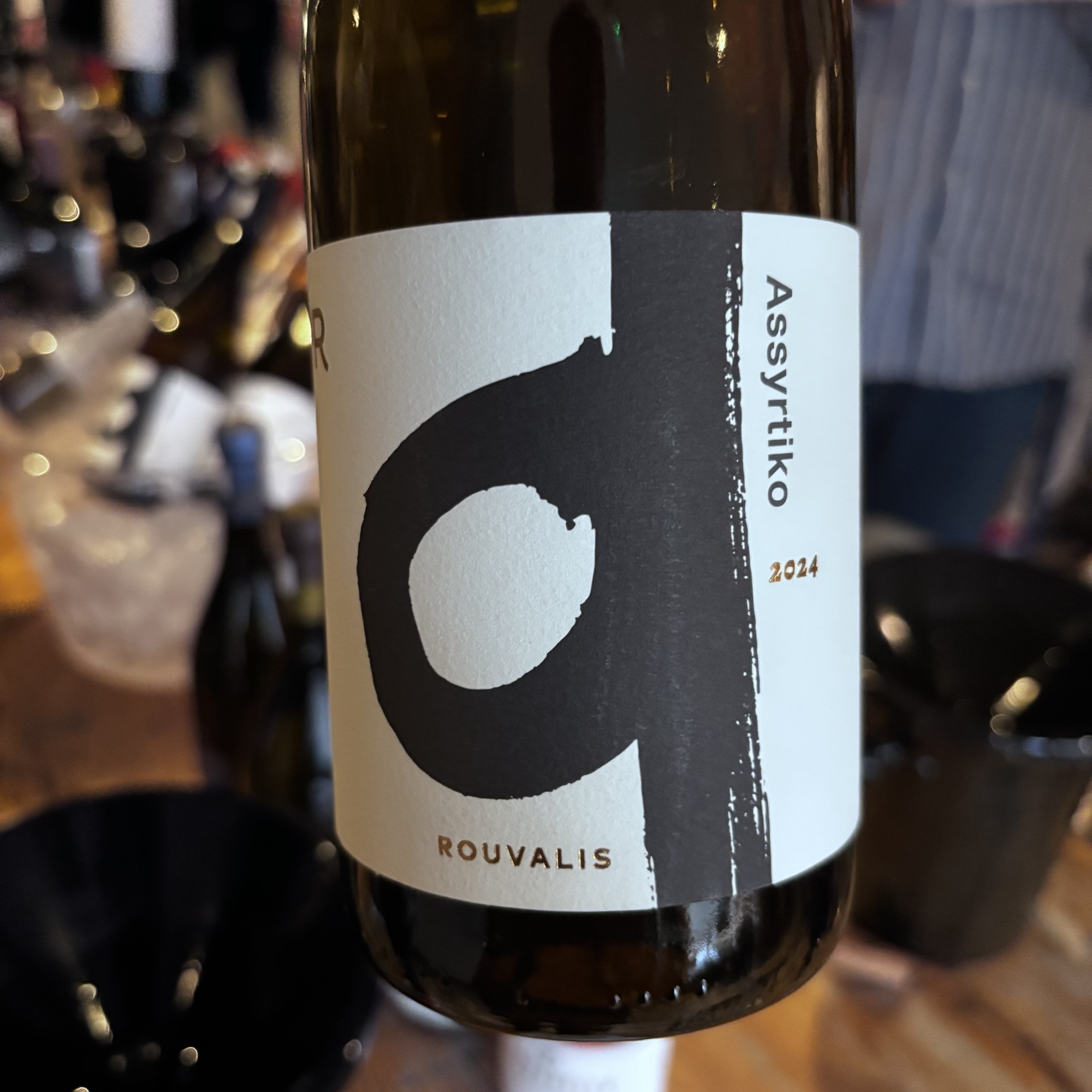
Rakete 2022, Jutta Ambrositsch (Vienna, Austria)

If you’ve ever made the mistake of telling me you are going to Vienna you will doubtless have had me reel off a string of things you must do, things that would more than fill a week, or would drown a long weekend. If there is one thing I do without fail on each visit, it is to walk in the vines, principally above, on and around the Nussberg. I’ll even tell you which metro station to go to, which bus to get and where to get off. Come to think of it, I’ve written it all down on Wideworldofwine (Heurigen, Buschenschanks and Popups: A Walk in the Woods and Vines, 29/08/2018).

I do this walk, with variations, first because it is beautiful up there, looking down on the city and the Danube, but also because I love Vienna’s wines. In the summer months I can even get a drink up there, as the name of that article intimates.

Among all the makers of wine in Vienna’s hinterland, Jutta Ambrositsch is my subjective favourite. I first met Jutta and her husband at a RIBA Tasting organised by Newcomer Wines also back in 2018 (March). She was mentored by the great name in Wiener Gemischter Satz, Franz Wieninger, but with her small operation (around 3ha on the Nussberg and a single hectare over the river at Bisamberg, where Wieninger is based) she was producing the most electric of wines with no interventions, nor additions. She still is.
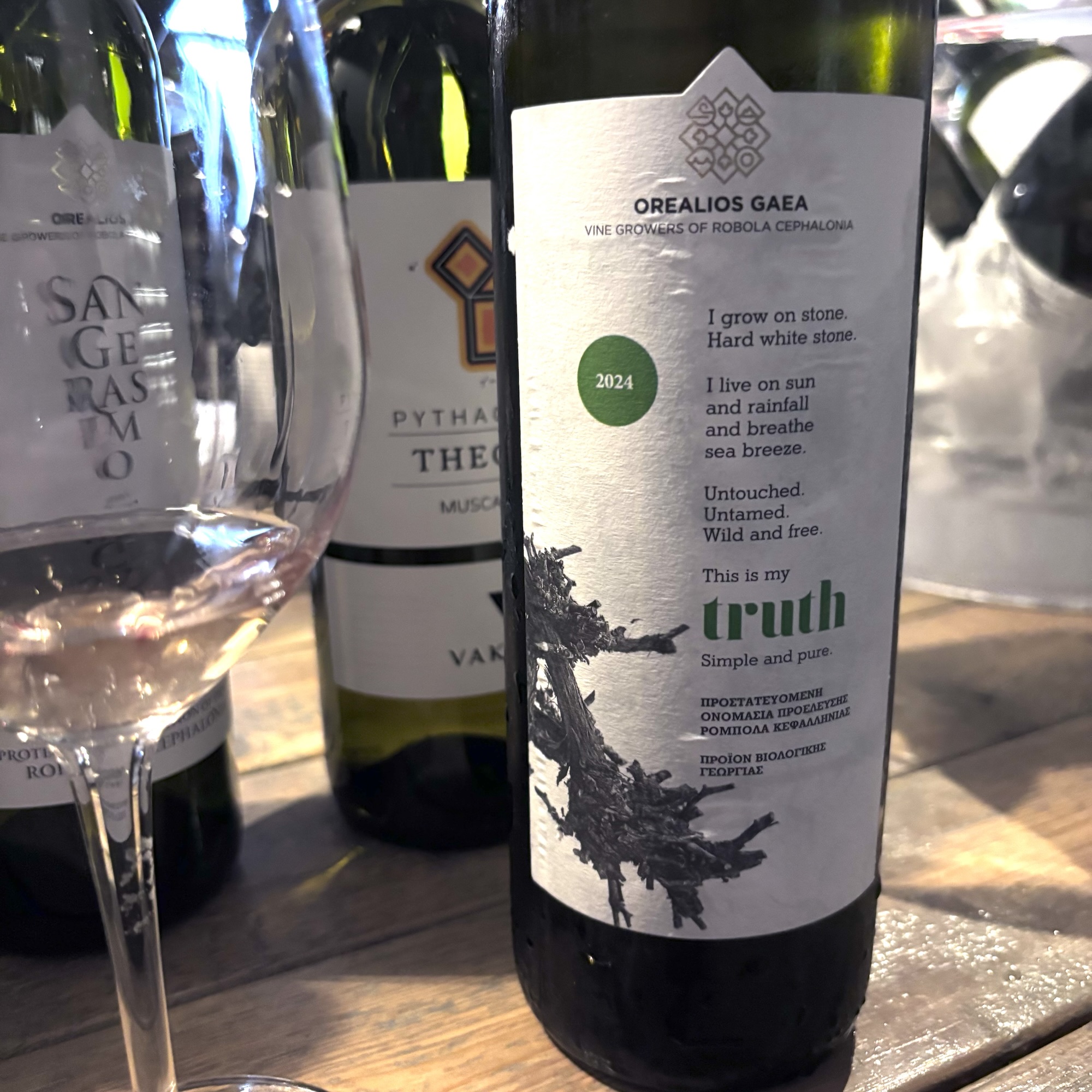
As I have described it before, Rakete is a glowing Gemischter Satz red (but labelled as a table wine). It’s a field blend, all the grapes being grown, picked and fermented together. Gemischter Satz could be called the soul of Vienna, although the style is not exclusive to the city. The varieties in this one are 80% Zweigelt (aka Rotburger), with Saint Laurent, Blauburger (aka Pinot Noir), Merlot and Grüner Veltliner, from just five rows of vines.

Fermentation is in stainless steel and the wine is bottled on fine lees, naturally being unfined and unfiltered. Crunchy ruby-red fruit, lots of red cherry and cranberry, bursts through. There’s a lip-smacking tartness and a slightly grainy texture. Very refreshing, very alive, very, as I said, electric. Obey the order to “shake resolutely” and drink very chilled. You will love it. £25-£30 from Newcomer Wines if they have any.

Gisela 2023, Weingut Edgar Brutler (Satu Mare, Romania)

I have the good fortune to live near a number of excellent Edinburgh wine shops which seem to be a little more adventurous than many of those down in England have become in this era of economic depression. Romania has, perhaps, a reputation for cheaper wines, but this one looked a lot more interesting. An adventurous choice, and from an adventurous importer too.

The Brutler family moved back to Romania from Stuttgart in 1997, after they had spent more than a decade in Germany. They went back to reclaim the land which the family had farmed since the 1850s but had lost during the communist era. This land lay in the Carpathian foothills at Crisana, ideal for viticulture with its iron-rich soils.

Edgar trained at Geisenheim, Germany’s famous wine university on the Rhîne, and then worked in Austria. Although Geisenheim has a reputation for a particularly classical form of wine education, Edgar makes natural wine with no apology. The current winery was built in 2018.

Named after a favourite family chicken (and I know that chickens as pets is sometimes a thing in Romania, and very affectionate they can be), this is another red field blend. The long list of varieties here includes Grüner Veltliner, Welschriesling, Blauer Portugieser, Blaufränkisch, Merlot, Muscat and Királyleánika (more usually known as Feteasca Regala in Romania). All are aged in used oak, one Austrian barrel and one French, after a co-fermentation.

This is a refreshing Rosé wine but definitely on the red fruits spectrum, and with a bit of texture from maceration. That gives it an edge with food, but there is also some lemon citrus acidity. In summary, a fun wine but with some depth as well. Only 900 bottles were produced, and so it seems to have sold out at Cork & Cask now. Importer Roland Wines appears still to have some at £32.50.

Louro do Bolo Godello 2022, Rafael Palacios (Valdeorras, Spain)

Rafael has a famous name. He’s the brother of Àlvaro, who became a superstar, revolutionising Priorat with his L’Ermita before returning to run the winery his father started in Rioja, Palacios Remondo, with no less success. Rafael chose Valdeorras and its autochthonous varieties with which to make his own fame.

He founded his own winery in 2004 after stints working at producers ranging from Pétrus in Pomerol to Penfolds in Australia. He was drawn to Valdeorras first for its rugged, hard to work, steep hills, populated with parcels of often abandoned old vines, and also because he wanted the space to work in more traditional ways than he felt was possible in Rioja at the time.

Louro do Bolo is a label where estate fruit is mixed with that purchased from small farmers within the region. This Godello, the grape Rafa moved here for, is quite rich in this bottling. It shows 14% alcohol. The bouquet has apple and apple blossom and manages to taste honeyed and flinty at the same time. There is actually 90% Godello here, with 10% co-planted Treixadura, harvested at around 600 masl. The grapes are fermented together in French foudres, and aged on lees for just four months.

If you have tasted Rafa Palacios’s As Sortes you will have tasted one of Spain’s very best white wines. It’s a stunning wine, one of great stature and composure without losing a remarkable vibrancy. However, it does merit patience. This relatively inexpensive wine cannot compete on that level, but as we know, great winemakers rarely make duff wines. This does point the way towards that famous cuvée, and it only cost me £25 from Lockett Brothers (East Lothian), via, I think, Liberty Wines.

Moravian Rhapsody 2022, Jaroslav Osička (Moravia, Czechia)

Jaroslav Osička is one of the leading lights of the Moravian natural wine movement, and a former professor at the local wine college. He’s now joined by his son, Luboš at his small winery in Velké Bilovice, making what I call “natural wine plus”. Many people make natural wine and care about ecology and biodiversity. Not many leave out food for the deer, but then if there’s something a little more tasty than the grapes on the vines, whyever not! There certainly are, as I have seen, a lot of deer around Moravia’s vineyards. Not all winemakers, even natural winemakers, are so tolerant.

This is a relatively new wine from this address. I tasted the first vintage, I think, when I was at the domaine in August 2022. This is my first “bottle” since and not a week too soon. Riesling, Müller-Thurgau, Pinot Gris and Neuburger make up the blend. The name is an obvious pun on the Queen song, but it is well chosen. The wine is a rhapsody of fresh scents and flavours.

The bouquet is aromatic and floral. The palate is smooth, with a nice richness, balanced by freshness and a mineral texture. It is matured in neutral acacia barrels. Some have likened this to Chablis, but I think the floral scent element draws me away from that suggestion. For me, if anything, it’s more “Jura”, just a little, but actually I think it’s just itself. I really like this. I like their wines a lot anyway, but I’m going to buy this again, for sure, from the next available vintage.

Moravian Rhapsody cost c £20 from Basket Press Wines. Hopefully a 2023 vintage will become available soon?

Bugey Brut Nature 2021, Domaine D’Ici Là (Bugey, France)

I seem to be slowly working my way through this producer’s wines, this being my third different cuvée (I also have a bottle of Chardonnay in the cellar). I have an inexplicable soft spot for Bugey because I drank my first bottles, Bugey-Cerdon and Bugey Mondeuse, back in my late twenties. Bugey-Cerdon is a demi-sec, low alcohol, reddish-pink, sparkling wine which few seem to have similar feelings to my own in the UK, but it’s just so refreshing…and dessert-friendly. I do keep posting them here from time to time in the vain hope…

Florie Brunet and Adrien Bariol, the couple behind this domaine, started in 2017, are part of a wave of newer and often young producers who are shaking up a region which is tiny, obscure, and was almost obsolete. I say region, but you probably know it’s a region of two halves. The northern half looks towards The Jura for partial inspiration, whilst the southern part looks more towards Savoie.

D’Ici Là is at Groslée-St-Benoît, which sits just above the Rhône Valley, not far from Marestel, so is close to Savoie. Marestel, of course, has its own sparkling wine tradition. This cuvée blends a range of local red and white varieties, vinified en blanc, and aged in bottle on lees for eighteen months. It is bottled with zero dosage, which makes this quite linear and lean, even after some bottle age. I still like it a lot, for its mineral texture and poise. It’s a serious traditional method wine that might taste a bit softer with more post-disgorgement ageing, but don’t let that make you hold back.

This came from Spry Wines (Edinburgh) through UK agent Modal Wines and cost a very reasonable £36 for the quality. Modal also has in stock an Amphora Mondeuse, a Gamay, two Altesse, an orange wine blend and the Chardonnay I have (called Lithos) from the same domaine. It’s the largest selection of one domaine’s Bugey I have seen in the UK. I’m very happy to see Modal shares my passion and belief.

There are plenty of Champagne alternatives coming onto the UK market. By that I don’t mean “lookalikes” (with respect to many fine English sparkling wines made from the Champagne varieties), rather sparkling wines that taste different. Some come from Germany, some from Alsace. Maybe take a little look at Bugey too. £36 is not bad for a good bottle-fermented, traditional method bottle of bubbles.

Posted in Artisan Wines, Austrian Wine, Bugey, Czech Wine, Natural Wine, Romanian Wine, Spanish Wine, Wine, Wine Agencies | Tagged , , , , , , , , , , , , , , , , , , , , , , , | Leave a comment