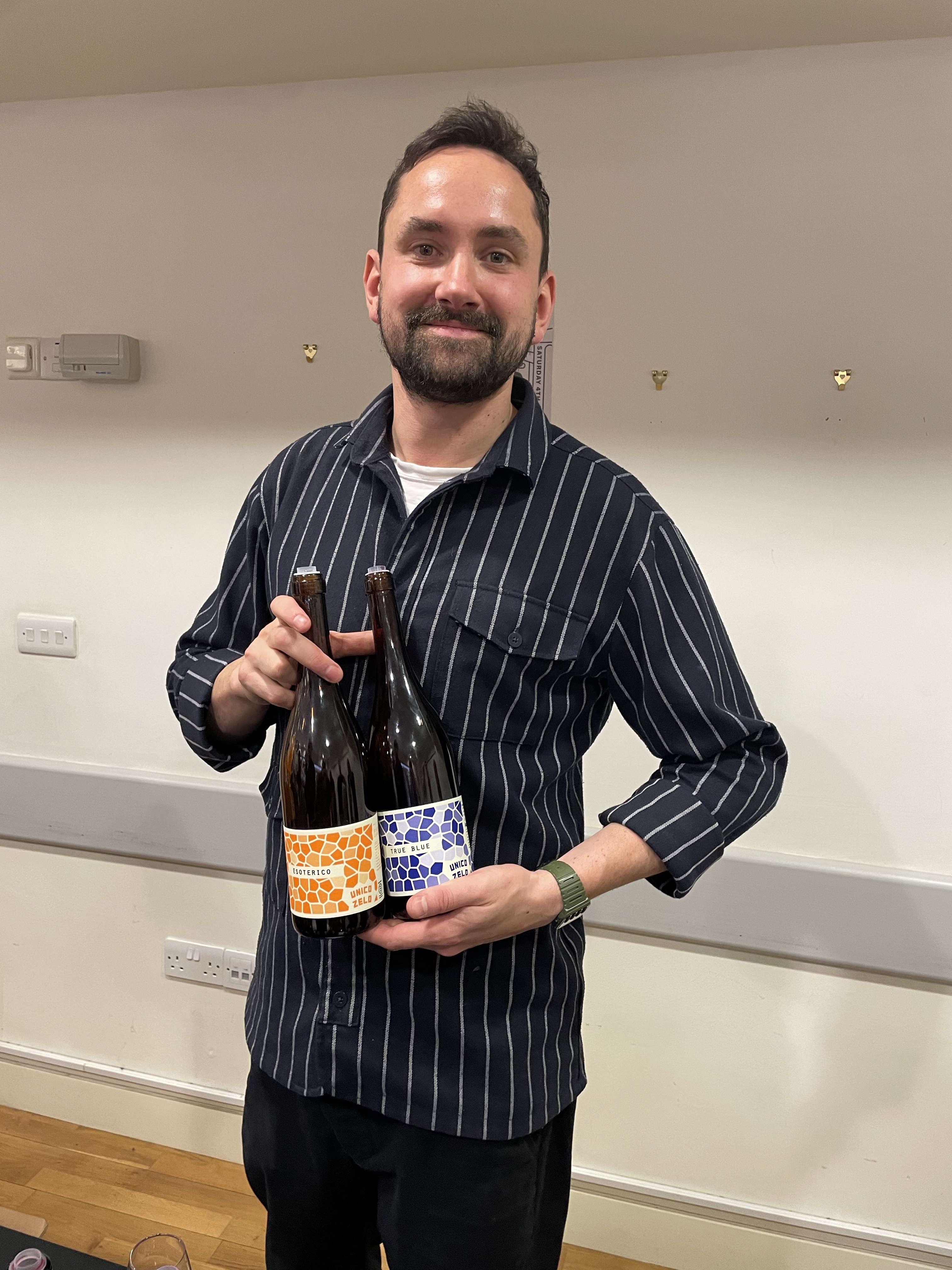
Recent Wines September 2024 (Part 1) #theglouthatbindsus

We have a baker’s dozen of wines for September, and I shall split that two ways, seven wines here in Part One, the six remaining to follow in Part Two. Below, we begin the usual eclectic mix with a classic single vineyard Wiener Gemischter Satz, jumping to a Bergerac “Moelleux”, a Herefordshire Perry, Pinot Noir from Lorraine, a Slovakian white blend, and an Alsace Petnat, before finishing with a very classy Cider from Scotland. I’ve just noticed that the six wines which will appear in Part Two all come from different places to these drinks, so we are really doing that “wide world of wine” thing justice.

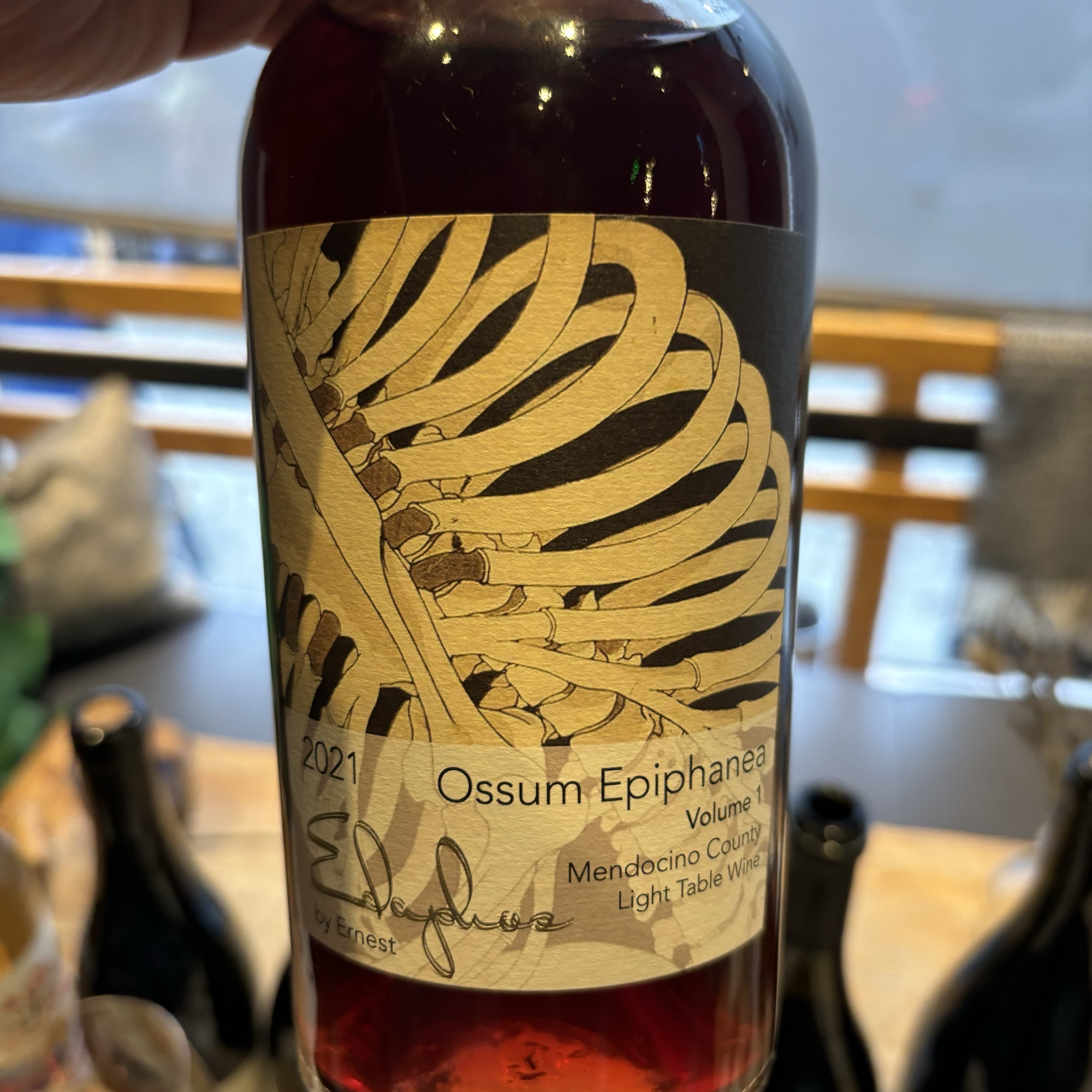
Wiener Gemischter Satz “Ried Rosengartel” 1OTW Nussberg 2017, Wieninger (Vienna, Austria)

Wieninger is possibly the biggest name amongst the winemakers of Vienna, the operation having been run by Fritz since 1987. The Wieninger reputation internationally is based on classic wines made from classic French varieties, but in Vienna they are very well known for a range of traditional gemischter satz. These range from inexpensive and generic to very classy single site iterations of the style. These latter bottles are as much wines of stature as the classic wines I mentioned, and are just as capable of ageing.

There are many opportunities to try a Wiener Gemischter Satz in the city, and there are now several very good producers. These include small, artisan, cellars like that of the inspirational Jutta Ambrositsch (whom Fritz mentored), but, the last point being relevant, it was Fritz Wieninger who pretty much singlehandedly revived this traditional appellation.

Although the Wieninger holding is large, at 50ha, it is all farmed biodynamically (Respekt certified). Wieninger now manage (but keep entirely separately) the producer Hajszan Neumann. They are based below the Nussberg, but Wieninger’s own cellar is in Stammersdorf, just below the Bisamberg, on the other side of the Danube.

Rosengartel is a hemmed-in plot of vines on the slopes of Vienna’s Nussberg which consistently renders fine wines. The “1OTW” classification effectively translates as 1er Cru. Fritz Wieninger and his team farm biodynamically, and the wines produced from this plot are often long lived. In essence, we think of these field blends as wines to drink soon, but Wieninger always proves that assertion to be wholly incorrect. This 2017 is a wine which has aged magnificently so far.

We have nine co-planted and co-fermented varieties. The wine looks remarkably like the colour of a fine Chablis. The bouquet has elements of both herbs and flowers (particularly honeysuckle) with some lemon citrus and orange blossom as it tails away. The palate is dry, mineral, but soft rather than hard-edged (the soils here in this central section of the Nussberg are Muschelkalk).

This is a very fine bottle, complex, but not super complicated making it a versatile food matcher. Very highly recommended if you can find it. This was purchased at the domaine on a visit in 2018, when we were also taken to see Rosengartel, a slice of the hill I hadn’t previously come across. I think it might cost between £40-£50/bottle now. I forget what this cost me but I do have a photo of a magnum in the tasting room, which cost just €54 back then.

Source des Verdots Moelleux 2019, Côtes de Bergerac, Domaine des Verdots (Bergerac, France)

Bergerac languished from lack of interest in the 70s, 80s and 90s. Sometimes we saw its red wines, usually pale Bordeaux imitations. There was a certain popularity in the UK for Bergerac-grown Sauvignon Blanc towards the middle and end of that period, thanks to the Ryman family (of the stationery chain) and their Château de la Jaubertie. But that was about it. The region has not really taken off since, although there has been a revival on a tiny scale of the sweet wines that were traditional, usually under the once moribund Monbazillac appellation.

Monbazillac was, and still is, a sweet wine, similar to Sauternes, perhaps with a little more Muscadelle in the mix, and a whole lot less potential for botrytis. Wines of various degrees of sweetness were made in the wider region, and when I first visited in the mid-80s, just getting interested in wine, you would easily find white wines labelled both moelleux and demi-sec.

Bergerac was the first French wine region I visited, at least after I was legally able to drink wine, so I was very interested to have been invited to a tasting hosted by Maison Wessman who own the Domaine that made this wine. This was one of two bottles given to me on leaving, so I didn’t pay for it (unusual enough that I should mention that).

We have a blend of Semillon and Muscadelle made in a style once traditional here. Labelled “moelleux”, to my palate it was less sweet than a similarly made Loire wine thus labelled, but then it tasted a little sweeter than your average demi-sec. I don’t think it matters. It’s not dry. I think it’s a shame this style has fallen out of favour as it makes a nice aperitif, in a similar way to a Muscat de Beaumes de Venise, drunk as such in France but which the English seemed, at the height of its popularity in the 80s/90s, to have considered a dessert wine.

As well as an aperitif it does work with food, either quite rich food of the type you’d serve a Sauternes with, or with spicy (but not too spicy) food. Sauternes can be a challenge with food, unless you consume a lot of foie gras, but this is less concentrated and perhaps therefore less of a battle between food and wine. The abv is still 13% though, so perhaps not one for a mid-morning slice of cake.

Golden yellow in colour, the bouquet had notes of honey and apricot. The palate had stewed yellow stone fruits like peach, nectarine and apricot. The finish lingers reasonably long. It’s a well-made wine, obviously not having the concentration of a top Sauternes but I think that gives it an advantage in some circumstances. Occasionally you really just want something uncomplicated, smooth, that slips down easily.

The producer is looking for an importer. That’s why the tasting. Westbury Communications organised it. I thought all the wines were good and should sell if taken on. But this one is a style few will buy nowadays. I think they are wrong. If you get the chance to try anything like this, give it a go and see what you think.

Hendre Huffcap “Pét Nat Perry” 2023, Little Pomona (Herefordshire, UK)

Cider has become very popular once again. On the back of the success of the commercial ciders we are seeing many smaller artisan producers gaining a reputation. One of those is Little Pomona, based at Brook House Farm in Bromyard. Susanna and James Forbes launched Little Pomona in 2017 after finding “their dream orchard”, 120 trees with four cider varieties of apple in Thornbury, moving to Bromyard in 2019. Their rise to fame as one of the country’s top producers has been swift.

Perry is like cider, but made from pears. In some ways it is a niche product, which has nowhere near the level of production, nor exposure, as apple cider. However, it is slowly gaining the interest of those drawn to cider, many of whom are natural wine fans who perhaps see cider as a super-refreshing (and often cheaper) alternative to petnat. Another similarity to the natural wine scene is this producer’s desire to experiment, and here is one result, a perry made using the methods for a petnat, and equally much of the philosophy of natural wine.

It is made using a single pear variety, Hendre Huffcap, grown by Guy Thomson at Lyde Farm near Hereford. The first thing you notice, after the fine bead, is its fragrance. A hazy lemon colour reveals a soft and almost creamy texture on the palate, combined with firm, almost slate-like, mineral acidity. The label suggests a yuzu note, and I’m a sucker for Yuzu fruit (I just saw that the revived Body Shop has a yuzu-scented shower gel, but I digress there). But let’s not forget that this is made from pears, and you can taste creamy pear, for sure.

Most will say, quite rightly, that cider and perry lack the complexity of wine. But wine isn’t always complex, and cider (as we shall see below) and perry are not always “simple”. This is delicious and has a lot going for it. So far, it is the best perry I’ve ever tried, though I’m not an expert.

Price? Just £14.50 from Aeble Cider in Anstruther, Fife. That, I would say, is a bargain. Little Pomona has several mixed case options on their web site.

“Pulsations” Pinot Noir des Joncyns 2022, Du Vin aux Liens (Lorraine, France)

To date, Vanessa Letort has been bottling wines from Alsace and The Loire for her Du Vin aux Liens label. She has been moving her operations over the Vosges mountains, to Lorraine, and this is where this cuvée comes from. It is a collaboration with her partner, Farid Yahimi, and a friend, Naoufel Zaim. It comes from seventeen-year-old vines on clay-limestone at Domaine de la Légèreté. This is where the three have purchased a hectare of vines at Bulligny and a further 3.5 hectares at Lucey.

The very keen-eyed reader might notice that Bulligny is close to where Maison Crochet is based, a Lorraine producer (in what was the Côtes de Toul, but the new wave here prefers Vin de France on their labels). I have thoroughly enjoyed the Crochet wines, and Maison Crochet have been very helpful to Vanessa et al in establishing the domaine  .

In this bottle we have 100% Pinot Noir, whole bunch fermented with a one-day maceration before very gentle, slow, pressing. Aged 18 months on its lees, this fully follows a natural wine philosophy, including zero added sulphur. The nose and palate combine raspberry, strawberry, all fine with the red fruits, with water melon and pink grapefruit. There’s definitely pink grapefruit on the finish. If you think that’s weird, it doesn’t taste weird.

There is definitely a resemblance to a natural wine Pinot from Alsace, for certain. It mainlines glouglou drinkability (I’d say smashable but someone beat me to that today). It’s a palish, lighter, red wine that is smooth fruited and very refreshing. The alcohol clocks in at 12.5% but the gentleness of the wine makes it seem less.

Vanessa’s former partner, Yannick Mekert, is getting a lot of attention right now, with a new UK importer (Tutto Wines) and a chapter in Camilla Gjerde’s new book, I noticed. From those I trust, I have heard that is very well deserved, but I also hope Vanessa has great success in Lorraine. Another obscure wine region to seek out is never to be ignored. This is a tasty Pinot to whet the appetite alongside the wines of Maison Crochet.

I bought this from Cork & Cask in Edinburgh’s Marchmont, for £26. They joked that they now have a Lorraine Section on their shelves (they also have some Crochet). The importer is Sevslo in Glasgow.

Oranžový Vlk 2021, Vino Magula (Little Carpathians/Trnava, Slovakia)

Magula is one of the handful of estates at the forefront of Slovakian natural wine, yet this is a fourth-generation family estate farming biodynamically at Suchá nad Parnou in Western Slovakia, northeast of Bratislava. I’ve written about Magula quite a few times, and this wine, the “orange wolf”, more than once. I like it a lot. Harvested quite early, in mid-September, it is a blend of 50% Grüner Veltliner, 30% Welschriesling and 20% Gewurztraminer. Actually, 0.5% of this wine consists of Devín and some other aromatic varieties.

Spontaneous fermentation takes place in open vat with (in 2021) fourteen days on skins. It is, of course, the pinkish Gewurztraminer skins that give the wine most of its colour, although Devín is a red variety. That colour, to me, appears somewhere between orange and salmon pink, but definitely with an almost gold-like glint in the right light. Ageing is in a mix of used oak barrel, and amphora and stoneware. This cuvée is never sulphured. Bottled after just over a year ageing in October 2022, just 3,206 bottles were made.

The wine is ever so slightly cloudy before standing (lees). The bouquet is pure orange blossom and apricot with a touch of sweet and sour. The palate has good salinity and acidity. Perhaps white peach flavours persist most. There is a gentle mineral texture. The wine lingers on the palate and has a lovely soulfulness, which I just love. All Magula’s wines are worth seeking out. This orange wine might be my favourite, after this bottle at least.

Imported by Basket Press Wines Wines. On their web site it is sadly currently out of stock, but check for new deliveries, or check out the other Magula cuvées.

“Gaz de Schistes” [2022], Anna, André and Yann Durrmann (Alsace, France)

I regularly grab a few Durrmann wines ever since I visited them pre-Covid. Luckily, they now have a UK importer, because though I liked their natural wine cuvées back then, the quality here has definitely got even better. This is down to André’s son, Yann, fully taking over and focussing on taking his father’s ecological efforts to another level, as well as increasing the number of sulphur-free cuvées here (labelled “Cuvée Nature”).

The family now farms around nine hectares in thirty sites around Andlau, which if you read Part One of my previous article on my favourite wine regions to be a tourist in, you will know is right at the centre of natural wine in Alsace (though the epicentre of natural wine creeps ever northward in this exciting region).

This is an orange petnat, a wine born of skin contact Pinot Blanc and direct pressed Pinot Gris and more Pinot Blanc, all taken from Schist terroir. The colour is a kind of burnt orange. There’s no cloudiness as this was disgorged. The nose is somewhere between apricot and quince. The palate is dry, mineral and savoury with herbs plus a note of apricot and apple. The apricot has that ever so slightly bitter edge of dried apricot, the apple coming through in the acids.

If 2022 was a difficult vintage in northern Alsace, this was a great success and it went spectacularly well with a sweet potato katsu curry oddly enough (I wondered whether I was being a bit too experimental, but it worked).

It cost £27 from Cork & Cask, who now seem to get a drop of Durrmann wines from importer Wines Under the Bonnet every year. This is out of stock but they do have instead a petnat called Toqué PG (Pinot Gris), a bit of a nod to the past pun there! That cuvée is only £24. It is also a sulphur-free “Cuvée Nature”.

Traditional Method Cider Brut Vintage 2020, The Naughton Cider Company (Fife, Scotland)

Peter Crawford has a backgound in Champagne, but he harvests his apples principally from the family farm on the banks of the Tay in Fife, almost opposite Dundee. Fife is actually a wonderful source for apples, and indeed many other fruits which I am lucky enough to have access to. The fruit there is superb and so are Peter’s ciders. In fact, I hope to pay him a visit next year to see how he does it.

This cuvée is made from fifty varieties of apple, possibly more. It is “vinified” (well, you know what I mean) 35% in ex-Champagne barrels, the rest in stainless steel, where it spends ten months before bottling on its lees, effectively the “traditional method” used to make Champagne. This is almost a natural cider, so no chemicals are used in the orchard or the cuverie, no sugar is added (chaptalisation), and the cider isn’t filtered. Peter does use a minimal addition of sulphur though. I only say “almost” natural because I think (?) they do need to use a cultured yeast to start the fermentation.

As with Grower Champagne, you get a good level of back-label information, so I can tell you that this was bottled in August 2021 and then disgorged in July 2023. This means that it had nearly two years on its lees, so not as “aged” as the 2018 cider I wrote about in my article on Tim Philipps recently, but nevertheless nicely aged. More proof that it works!

This really is a very elegant and refined bottle. It has tiny bubbles, actually the tiniest I can remember seeing in a cider, and a crisp acidity, unusually filigree and rapier-like for (again) a cider. I wonder whether blind you might wonder whether this is a “no-malo” Champagne for the first moments when it hits the palate? The bouquet probably gives it away as it is all fresh apples, perhaps with a hint of lemon citrus. The palate has pure salinity, toasty apple peel, but also is clean and thirst quenching.

The bottle looks more like Champagne than any other cider I have seen, but this is unrepentantly a cider, if a very fine one. That informative back label suggests it should be drunk 2023-2030. I would certainly say that this has everything to enable it to age, and I would like to get some more to try out that suggestion, or at least to give it another three-or-four years. Only 1,550 bottles were made, though.

I bought this, once again, at Aeble Cider in Anstruther, where it cost £25. That is more expensive than most artisan ciders, although Aeble has ciders from affordable right up past £25 if you want to try them, including the famous Swiss Cidrerie du Vulcain. Naughton’s “Overture” cuvée comes in slightly cheaper at £21.

Posted in Alsace, Artisan Cider, Artisan Wines, Austrian Wine, Cider, Natural Wine, Petnat, Slovakian Wine, Wiener Gemischter Satz, Wieninger, Wine, Wine Agencies, Wines of Southwest France, | Tagged , , , , , , , , , , , , , , , , , , , , , , , , , , , , , , , , , , | Leave a comment

My Favourite Wine Regions in Tourist Mode (Part 2)

In the first part of this article, I introduced six of my favourite wine regions with my tourist hat on. Six wine regions I love to visit for reasons other than, or perhaps rather in addition to, the wine. Those were around Arbois (Jura), Vienna’s Nussberg, Alsace, especially Andlau/Mittelbergheim, the Mosel around Bernkastel, the Wachau in Austria and Victoria’s Mornington Peninsula.

For Part Two I’m going to take you around Austria’s Neusiedlersee, to the mountain slopes of Aosta, to the very precipitous vineyards of Lavaux, to the vineyards between Nagano and the Japanese Alps, to Piemonte’s Monferrato Hills, and to the deepest Aveyron. As with Part One, these are in no particular order. Most I have visited more than once, some many times. I’ve only made one trip to these particular Japanese vineyards, but a return there does feature on my list of top three places outside Europe I want to go back to.

As I said in Part One, this is just a bit of fun. I don’t pretend to have visited every beautiful vineyard in the world, so this is totally subjective. So do chip in with your own favourites. However, I might just provide the nudge to a few readers to head somewhere that they’ve always quite fancied a trip to. I hope so.

NEUSIEDLERSEE (Burgenland, by bike and ferry)

If, as I stated in Part 1, The Wachau was where I cut my teeth on Austrian wine, it is the wines of Burgenland, from the villages around the Neusiedlersee, that I drink most today, although the wines of Styria/Steiermark would doubtless push Burgenland a little more were they not so expensive. But also in Part 1 I emphasised that I am writing here about visiting a wine region as a tourist. It just happens that in this case I love the place as much as the wines.

This is a very good thing. To base every living moment of any family trip that just so happens to involve a vineyard landscape (who’d have thought) on the tasting, consumption and purchasing of wine would be shooting myself in the foot. To enable me to go on wine trips with my family, more relevant in the past when our children were young, there had to be something in it for them. As Part 1 demonstrates, if there is walking, cycling, museums and galleries and great food, then everyone is happy.

Now, there’s plenty to do around Europe’s shallowest lake, not least being able to hire a small boat with an engine to go on it (although drought conditions at the time of my last trip in 2022 ruled that out, the lake being no more than about a metre deep in most places, even in a good year). I have hired boats when staying in Rust, down at the marina and it is both relaxing and great fun pottering about on the lake and within the alleyways separated by bullrushes which ring its edges.

Rust is a beautiful town, storks nesting on the rooftops, good food, pretty architecture (you almost expect to see Mozart walking across the town square). There are plenty of wine producers to visit too, either in town or at Oggau, of course, just a short drive or cycle up the road (though if dining at Gut Oggau’s restaurant it’s maybe an idea to use a taxi).

Rust also has a bicycle hire shop on the main square (the Rathaus Platz). On our last visit (2022) to Johann Andreas Schneeburger, he hadn’t changed one bit, but his bike hire had. Now it was pretty much all electric bikes. If, as we did, you want real exercise, then you won’t get asked for your passport, nor a deposit (at least in our case). His dialect is hard to understand, but I’m pretty sure he said not to bother to return the pedal cycles, though we did.

Cycling options from Rust are many. Hungary is one, the border being a short distance south of Morbisch am See. I Guess Brits should take their passports nowadays, though the old Iron Curtain guard post probably still remains unoccupied. But Morbisch is the point from which you catch the flat-bottomed ferry over the lake to Illmitz. That has its own charm, and wine producers, but the ferry trip (you can take the bikes) and the cycling around Illmitz will introduce you to the bird life of the lake, which is plentiful, this being a major bird sanctuary (so there are plenty of hides). It’s also flat cycling, for those who need to know. Just check return departures before you embark on the ferry.

You get to Rust from Vienna by Bus (some require a change in Eisenstadt, some don’t, but as an aside, the Schloss Esterhazy in Eisenstadt is well worth a visit). By train from Vienna Hauptbahnhof, you can access the opposite (eastern) side of the lake via Neusiedl am See. There’s a handy bike hire shed right next to the station there. This is where to go from to visit producers around the north and east of the lake, especially in the village of Gols (around 11km on a bike), with a raft of natural wine stars including the Renners, Claus Preisinger, and the Heinrichs. The lakeside here is no less attractive than on the west side, and in fact you can often get right down to the water’s edge.

There are some beach areas over this way, but there is also a marina at Weiden am See, with both an outdoor swimming pool and a restaurant. In fact, there are several restaurants at the Weiden marina complex, but the one I know is called “Mole West”, and describes itself perfectly as “a casual spot for lakeside dining and drinks”.

I’ve never stayed around the Neusiedlersee lakeside for more than a few days at a time, it always having been combined with time in Vienna, or on my last trip there, Moravia. But there’s definitely more than enough to keep you occupied for a week.

AOSTA (basically mountains)

Well, not only mountains, but they do play a big part. The Val d’Aosta, or Vallée d’Aoste, it being an Italian region where French is still sometimes spoken, sits astride the Dora Baltea River. In the west it is hemmed in by Mont Blanc, whose road tunnel enters the valley on an Autostrade which whips you eastwards, into Northern Piemonte, almost within the blink of an eye. The region’s northern wall of mountains is breached by the Grand St-Bernard Pass, reached from Martigny at the start of the Swiss Valais (Rhône), which is the route in I’ve always taken. To the south, winding roads head up into the beautiful Gran Paradiso National Park.

At the centre of the region is the town of Aosta itself. Aosta is pretty small, with a population of around 35,000, but it has a long history, one which in parts is well represented by a number of Roman remains, including a Triumphal Arch (Arco di Augusto), a Roman Theatre, and a fortified Roman Gate (Porta Pretoria). If you want to do a bit of wine shopping and find somewhere to eat, it is well worth a wander (there’s more to see than I’ve listed here). The Roman theatre, with its mountain backdrop, is especially impressive.

The valley itself has several attractions, with plenty of castles of different eras, and a good number of wine producers. The co-operatives here are perfectly capable of making decent wine, and one, at Donnaz/Donnas, makes some rather good Nebbiolo. That said, the artisan producers make the best wines, wines which because this is Italy’s smallest wine region, rarely get onto export markets (Ottin and Lo Triolet being exceptions you can find here in the UK).

My initial reasons for visiting Aosta, the region, were not directly wine related. That I have discovered how good the wines here can be is largely thanks to one man, now retired. Bruno, and his wife Bruna (coincidentally) ran an auberge (yes, French name, Italian owners) at Bonne, a small hamlet above the village of Valgrisenche in the valley of the same name (accessed from Arvier, source of the wonderfully named red wine, Enfer d’Arvier, on the valley floor).

Bruno had started out as a sommelier in Milan and really knew his wine, so I trusted his local recommendations. On later visits he’d sell me aged local gems from his cellar at silly prices. I miss that couple. I also miss the menu-free restaurant with second helpings, the Grappa ai Mirtilli and the sight of men with crampons and ice axes arriving just in time for dinner.

The mountains are made for walking and there’s plenty of walking here. If I recommend one walk, it would be to drive from Bonne further up the valley, to the end of the reservoir (where you should spot a sunken village). Park, and walk the path to the Refuge of Mario Bezzi (2284m). You may find nature has been unkind, because on my last visit the profusion of butterflies was no longer evident, nor the small glacier we had to traverse. If you are lucky, however, you might hear first, and then hopefully spot, the marmots which we have always enjoyed seeing. Not to mention food at the refuge, which is quite large compared to most.

One final suggestion if you are up here. Valgrisenche has some really nice crafts for sale. And also you can buy real Fontina. This cow’s milk cheese is produced, by name, in many countries and often by highly commercial processes. Here, you will find a different cheese capable of going head-to-head with other great Alpine cheeses, like Beaufort and Abondance. Oddly enough, I had never been able to find a really comparable Fontina until recently, in a shop called The Cheese Lady in my County Town, Haddington. Which is a long way from Aosta.

Roman Gate, Aosta

LAVAUX (walking, tasting, and staring at the view)

I do like Switzerland. A long time ago, before I became Scottish, I would joke about starting a web site called makemeswiss.com. Switzerland has many more wine regions, and in fact many more very tasty wines, than most people imagine, because they are denied to us. Sort of. It’s not that importers shun them, some at least being adventurous enough to stock some. Alpine Wines, based in Yorkshire but shipping nationally, actually specialises in (inter alia) Swiss wines, run by a nice Swiss lady called Joelle Nebbe-Mornod. The issue is that the wines are often, though not always, relatively expensive. Couple that with a lack of consumer awareness and they can be a hard sell in a wine shop.

Even the regions most wouldn’t think of visiting have their charms. Geneva’s vines, largely to the west of the city, are worth a visit for pretty wine villages and some gently rolling hills around Dardagny and Satigny. Others are more spectacular, and perhaps none more so (although the winemakers of the Valais might disagree) than the steeply terraced slopes of Lavaux. So steeply terraced, plunging down into Lac Léman, that they have been designated a UNESCO World Heritage site.

Lavaux, in the Canton of Vaud, stretches from Lausanne in the west, where the region begins at the village of Lutry. Things get more interesting at Epesses, Rivaz and St Saphorin, but the whole stretch as far as Montreux makes for one spectacular vista. Some of the vineyards here are designated “Grand Cru”, but as with most wine regions, producer is key. If you have little knowledge of the region there are a couple of ways to gain that knowledge. One, perhaps difficult now, is to seek out the excellent book “The Landscape of Swiss Wine” by the late Sue Style (Bergli Books, 2019). The other is to taste at the Lavaux Vinorama near Rivaz.

But let’s step back a bit. Montreux can be accessed from Geneva by bâteaux, but that is laborious and you still have to get up to the vines. You can get a train from Geneva. The route is beautiful, but to get to Rivaz you need to get a Brig-bound train to Vevey and then a local train back to Rivaz, leaving you a ten-minute walk to the Vinorama.

Personally, I would take a car if you have access to one. Vinorama looks very much like a concrete bunker, though it claims to have been built with sensitivity to the environment. It sits on the north side of the Route du Lac just before Rivaz (if arriving from Lausanne), and there are two car parks. You can watch a film in the basement, but the main floor is devoted to the wines. I think at last count they had two-hundred-and-fifty on sale, which is impressive, and you can do a number of different tastings with snacks if you wish. You have to pay, but at least on my visits the snacks have been good. They also organise, inter alia, vineyard/cellar tours.

If you are tasting or buying, then many of the wines here are made from Chasselas. Often derided by the old folks who write about wine, they are wrong. Some of the wines you will taste have genuine character, although cheap (for Switzerland) Chasselas is nothing to write home about. But it’s not all Chasselas. If you are in any way a fan of Led Zeppelin you might want to try Plant Robert. No, it has nothing whatsoever to do with Robert Plant, but I can’t help thinking of that band of my youth when I drink some.

Of course, I’m not just recommending a trip here to visit Vinorama. These are vineyards to walk in, and in good Swiss style there are a host of well-marked vineyard paths with accurate distances marked on signposts. You can choose to walk for twenty minutes around Vinorama, or you can walk longer, from village to village. One advantage of getting the train is that you could walk to Montreux, get an early dinner, and then back to Geneva. Montreux is about three hours on foot from Rivaz. The walking here can be gentle, or you can drop, and then climb again, 250 metres. It can be very steep. But try to visit on a sunny day. The lake and the vines are far more unforgettable on foot than when zipping through on the A9 Autoroute.

NAGANO (Vines with history and Culture, sake and chestnuts)

When I say “Nagano” I am talking about a wine region to the northwest of Tokyo which sits in the hills between the city and the beginning of the Japan Alps. If Yamanashi is the first of Japan’s wine regions people may think of, and which is likely to be the source of any bottle of Japanese wine you may be lucky enough to find in the UK, then as Jancis et al state in the World Atlas of Wine, “Nagano has been catching up”.

There is something undeniably both attractive and exciting about the sight of vineyards as you look out of the small train that heads up into the hills from Nagano to the end of the line at Yudanaka (on the Nagano-Dentetsu Line. Yudanaka is around 1h 20m from Nagano, and Obuse, see below, is about half-way, just 40 mins).

This is especially so if the bunches of grapes are wearing their waxed paper hats which protect them from rain. Actually, the secret of these vineyard districts is a relative lack of rain, the region being protected from monsoons rather more than Yamanashi, but harvest in November does follow the rains. It’s also pretty sunny here, though in late summer when we visited it was very mixed. Wet in the mountains but sunny in Obuse.

First, the mountains, as we are, I will remind you, in tourist mode here. You can take a local bus up into some remarkable forest. I won’t go into detail as you can get all the relevant info from the tourist information desk at Yudanaka Station, but there is a UNESCO Biosphere up there. The ancient forest is right out of a Studio Ghibli animation (think Princess Mononoke). We walked along a route where every fifty-or-so-metres there was a large chime with a hammer…to let any bears know you are coming. Bear Spray is generally recommended for mountain walking in Japan, but take advice on whether you need it. We didn’t take any.

We stayed at a ryokan (called Koishiya) at Shibu Onsen, a short drive (thanks to the Ryokan’s owner) to the Snow Monkey Sanctuary, beloved of so many nature documentaries. The monkeys are attracted to the hot springs and you can visit and walk among them (but don’t look them in the eye and don’t carry food). There’s a visitor centre where you can wait to see whether the monkeys turn up, but they live up the mountain and do as they wish, so watching a large troupe with their babies bathing in the steaming pools is not guaranteed. We waited a good 45 minutes one morning but they did come, and the visitor centre staff have cameras to track them.

Shibu Onsen is a twenty-minute walk from Yudanaka, which is where we begin our vineyard journey by getting the train back down to nearby Obuse. Obuse is most famous as the place where Hokusai worked in his later years, and this lovely small market town boasts a very good museum to this Japanese master, which I’d go so far as to call unmissable. It also boasts opportunities to sample a local speciality, chestnuts, and in particular chestnut noodles. Simple but so good.

On the periphery of the town are two equally unmissable temples. One is in a woodland setting which is mysterious and Ghibli-esque, enhanced by its thatched roof and mossy pathway. In its current form it still dates from the 1400s. The other has one of Hokusai’s largest works on its ceiling, among other attractions.

For me, the main attraction in Obuse is Domaine Sogga (sometimes called Obuse Winery). This is the home of one of Japan’s finest artisan winemakers. In 2005 the domaine went organic and concentrated only on vinifera varieties (although many of the wines made in Japan from hybrid varieties are worth drinking). The only chemical additions here are permitted levels of copper on the vines and sulphur in the winery, both being as little used as possible.

The varieties here range from Albariño and Petit Manseng to single site Cabernet Franc, Petit Verdot, Merlot, Tannat and Barbera. Read more about this domaine in Anthony Rose’s “Sake and the Wines of Japan” (Infinite Ideas Classic Wine Library, 2018, pp294ff, now available via the Academie du Vin Library).

You might wonder how you can get out to the periphery of Obuse. You certainly need some transport. We hired bikes (I bet you guessed). Actually, we found the bike shop but the guy spoke no English. We enlisted the assistance of a very helpful young woman in the tourist office, which was more or less over the road. She organised everything, and the bike shop man even drew us a map to get to the temples and Domaine Sogga. I think there might be cycle hire at the station too, though that option means you have to lug them around all day. And I’d definitely allow a day for Obuse. One read of the introductory paragraph on the town in the Rough Guide to Japan should be enough to hook you. I’ve not even mentioned the Masuichi Sake Brewery, a very important place for the tourist to check out.

If you do visit and decide to stay up in Shibu Onsen, itself a very pretty location, do not miss going to an onsen (tattoos permitting, although if you are inked there might be the possibility of hiring a private onsen by the hour, as we did, soaking under the stars). Also be aware that the mountains here are part of the large Shiga-Kogen ski area and there can be snow between December and April. Some of the chair lifts run for walkers in the summer.

Nagano Vines awaiting the rains

MONFERRATO HILLS (Basically the views and the food)

For those, likely most of my readers, who know where the Monferrato Hills are, you might ask why not Barolo and the Langhe? For me, it’s simple. The Barolo villages are spectacularly beautiful, but they are also touristy. Okay, it’s all relative. They are not touristy like Chiantishire can be, and I think when I first visited Piemonte back in the very late 1980s they saw almost no British tourists. But nowadays that has changed, and the pressure of visitors turning up at wineries is no less than in any other region where a hard day’s work needs to come first over an Englishman’s expectation of a comprehensive tasting.

On all but one of my visits to Piemonte I have stayed a little outside of Nizza, or Nizza Monferrato to give its full name. Although Nizza has shot to a degree of fame in recent years on account of its DOCG for the Barbera variety (one of the few places this underrated variety is not second string to Nebbiolo), one wouldn’t say that these gentle hills around the town are among the most spectacular, nor beautiful, in the region. They are generally quiet though, and here you are perfectly located to venture out to visit the wider region’s finest attractions and beyond.

So, if you were based at an agriturismo here, with perhaps a decent on-site restaurant and a pool, what might you do over a relaxing week, other than eat wonderful food in a region I consider to have some of the finest gastronomy in Europe?

Obviously, Barolo. Today, if you are looking for affordable Nebbiolo, then Barbaresco might be a better bet. For genuine bargains maybe head up to Roero, and indeed to beyond, what the wine merchants now tend to call “Alto Piemonte”, which means any DOC up to the Aosta border. However, Barolo’s fame lies not just for its wines, but for the places: Serralunga d’Alba, La Morra, Barolo and Castiglione Falletto to name a few.

Most of the above villages have somewhere to indulge in a long lunch and then a walk in the vines (though be warned these walks inevitably end with an uphill stretch). If you want those famous views of the snow-capped peaks of the Alps, then the hilltop villages of the Langhe may be the place to take your telephoto lens…on a good day.

Then we have the towns. Alba is the region’s gastronomic capital, though if you want to dine here (expensively) in truffle season booking way in advance can be sensible. Asti is somewhat in Alba’s shadow, though it does have a rather good covered market on the edge of town. Bra is quite a trek from Nizza, but it is the home to the Slowfood Movement, and it boasts a very good market (check times, the main market is held on a Friday but smaller markets take place on Mondays, Thursdays and Saturdays). Although the market at Bra sells a wide range of victuals, cheese is a speciality. There is plenty of information on the internet.

Another possibility is to head south, where for me there are three attractions. First, Acqui Terme. Acqui is perhaps not the place to make a special detour to on most days of the week, though it has its attractions like most old towns in Italy. However, it also has a very good market (Tuesdays and Fridays in the morning through most of the year). The town suddenly becomes extremely busy on market days, a good sign, but it is way more difficult to find somewhere to park if you arrive late.

Acqui is also a gateway to the Ligurian Mountains. These hills are wild and rugged, and for me these forested slopes and small villages are very attractive. If you like mountain walking there are numerous options, although there are no metal chimes and hammers to warn the wild boar of your approach.

If you take the road from Acqui to Varazza, an attractive route which winds through several villages including Sasssello, which seems to be a centre for amaretti biscuits, you can detour via the SP334 to Albisola Marina. We were recommended an unprepossessing but very good seafood restaurant here some years ago. Annoyingly, I can’t remember what it was called, but the small seaside town (next to Albisola Superiore) has plenty of seafood eating options, and it also has some beaches (public and somewhat smarter private/pay for ones) if you happen to need a sun tan or to dip your feet in the Med.

Acqui has its own vinous specialities, Brachetto especially. Piemonte’s so-called lesser varieties can best be sampled outside of the more famous DOCG vineyards, and the likes of Grignolino, Freisa, Ruché and the aforesaid Brachetto really should be sought out, certainly by anyone interested enough to be reading this. But also remember that if you venture via my route into Liguria, you will have dropped down into the wine region of Riviera Ligure di Ponente, where you should seek out Vermentino/Pigato, Malvasia and the red Rossese di Dolceacqua. The wines of Cinqueterre taste strangely perfect with the seafood of the Western Ligurian Coast.

Langhe to the Alps with a bit of the old Nebbia (photo credit Anna Beer)

AVEYRON (La France Profonde)

It’s perhaps fitting to end this two-part piece back where we started Part One, in rural France. France was, of course, where I began my obsession with the beautiful landscapes that are vineyards, and it was a lovely old book by author Michael Busselle called The Wine Lover’s Guide to France (Pavilion, 1988) which in fact drew me to a great many of France’s regions. It came out, fortuitously, the first year I visited Arbois, and the year before my first trip to the Aveyron.

The vineyards which are broadly to the north and northwest of Rodez also have another significance for me. They were pretty much the catalyst for me beginning to write a book, which was to be called “The Lost Vineyards of France”. The typed manuscript lies somewhere in a cupboard, I’m not sure where. The project faltered for many reasons, but nowadays the regions I included are all no longer lost, and some have been very much rediscovered, for which I can sadly take little credit…except perhaps for my constant and repetitious plugging of Bugey.

Aveyron has three major wine districts, now all AOP, although “major” is very much subjective and in context, but there are others one might certainly call minor (Coteaux de Glanes, anyone?). These are Estaing, Entraygues-Le Fel and the possibly better known Marcillac.

These are regions that supplied wines locally, and then when coal mining became a major industry here, slaked the thirst of the miners. Post-war rural depopulation almost killed viticulture here. Their renaissance has largely been on the back of the wave of natural wine that swept France at the end of the 20th Century, and the fact that hillside vineyards here were available as abandoned plots for very little money. Life here is very rural indeed, so a certain lifestyle element came into their revival too.

I’m not going to talk about the wines here very much. Even in the 1980s there were one or two producers that bottled a hectare or two of grapes in Entraygues and Estaing, plus small local cooperatives, when these wines were classified under the old VDQS regime. Much of the wine seen outside of the wider region in the 1990s came from Philippe Teulier of Domaine du Cross, whose Marcillac wines were very early on imported into the UK by Les Caves de Pyrene. I used to be a regular purchaser of his “Lo Sang del Païs”, both from Les Caves, and before that, from Adnams. Today, the most lauded artisan producer in Marcillac is Nicolas Carmarans, who once ran that famous Parisian bastion of natural wine, the Café de la Nouvelle-Marie.

But perhaps we should get back into tourist mode. If you are staying in or near Rodez there are several excursions I would recommend. I think these are trips that get you deep into what may be (still) some of France’s poorest regions, but are also, without any doubt, among her most beautiful. Let’s begin with one or two longer drives before we finish in the heart of viticultural Aveyron, at a village that offers the lover of art and history a real treat.

Beyond Aveyron to the east is the Cévennes and, if you wish, the Viaduc de Millau carrying the A75 over the Tarn, which if you find modern bridges even the slightest bit interesting will cause a flutter. Also worth seeking out if heading towards the Southern Cévennes is the old Templar staging post village of La Couvertoirade. It has a uniqueness that is worth an hour of your time. It’s actually close to the Autoroute, just north of Le Caylar.

In the opposite direction, west, you can easily reach Cahors for lunch, assuming you leave after breakfast (just under two hours by car), although the hilltop village of Saint-Cirq-Lapopie, which overlooks the Lot Valley, is well worth a stop en-route, at its most beautiful when the red poppies are in bloom among the riverside fields below.

My choice, if you have time for just one longer day out, would be to perhaps head north, to Salers in the Cantal. To reach it you pass through desolate limestone “Causse” country, where except for the passing of the seasonal transhumance, little happens. The land here is well watered, but the dozens of rivers are unnavigable, their best use put to turning water wheels, so that a town like Laguiole could become famous for its knives. These are now made elsewhere in France (the best in Thiers, where they have, like wine, an IGP), but, as they are not protected by copyright, also in China. If you pick some up in somewhere like TKMax then they may actually be pretty decent but might be from the latter manufactuary. Such is the fame of Laguiole knives that they are much faked.

Salers, like Saint-Cirq, is a member of the Plus Beaux Villages de France Association and its old grey volcanic stones have many tales to tell. Nearby is the extinct volcano, the Puy Marie, which you can climb with much less difficulty than most mountains due to steps having been cut on its most gentle slope. On a good day you can see a very long way to a distant horizon.

Rodez itself has its charm, in the centre around its gothic cathedral, but its once concentrated vignoble has been subsumed into the modern suburbs. From Rodez you can drive a circuit that will take you to find vines, hidden as they may be. Drive northeast to Espalion. Here, divert northwest up the Lot Valley to Estaing with its castle on a bend in the river. A little further up the D920, via the Lot Gorges, is Entraygues from where you must, continuing along the Lot, wind your way on the tiny D107 until you reach the D901. Here, you are almost upon Conques.

Conques is a strong contender for my favourite village in France. This beautiful village, full of turreted medieval dwellings, has at its centre the abbey church of Sainte-Foy (Saint-Faith), named after a young woman martyred in the first years of the 4th Century. The monastery church and cloister are immensely interesting, but the fame, and wealth, of the place rests on the dubious acquisition (or theft) of the relics of the said saint from the poor monks of Agen, from whence Conques just happened to nicely slot into the pilgrim route to Santiago de Compostella in Spain.

Conques has a museum of sacred objects but the “must see” item, housed separately when I was last there, is the Majesté de Sainte-Foy, described as one of the five most important medieval artifacts in France. The so-called “Majesty” is a life-size statue of the young saint in gold and silver, seated on a gold throne, all set with byzantine and roman intaglios, cameos and precious stones. Without this statue the treasures of Conques Abbey would be more than worth a detour, but seeing the magnificent Majesté is something completely different.

The driving back to Rodez is relatively easy, about 45 minutes via the D901, and the road passes through Marcillac-Vallon (to give its full name). You might actually find somewhere to buy local wine here…possibly.

There is so much more to see here than I have space to test your patience by listing, but one final thought. This may still be a remote and very rural part of France, yet it can be very busy at the height of summer. As an example, Saint-Cirq-Lapopie boasts few more than 200 inhabitants, yet can get close to half a million visitors per year. Most probably in August. Many on coaches.

Conques

I hope these two articles have proved interesting. I am quite lucky to have travelled widely through many European wine regions, plus a few more overseas. My enthusiasm for wine began before I’d ever visited a vineyard, but the attraction of the vineyard landscape, which struck a chord with something within me, certainly enhanced my appreciation of wine as I began to travel to stay in them and absorb some of their culture. These two articles cover just a dozen wine regions, but the number that I have enjoyed spending time in is so much greater. The list is so long that I have had great difficulty in choosing just a dozen regions to feature but I hope my special enthusiasm for this particular selection may have been at least a little inspiring.

Posted in Austria, Austrian Wine, Italian Wine, Japan, Neusiedlersee, Piemonte, Rust, Swiss Wine, UNESCO World Heritage Sites, Wine, Wine Tourism, Wine Travel | Tagged , , , , , , , , , , , , , , , , , | Leave a comment

My Favourite Wine Regions in Tourist Mode (Part 1)

As summer fades fast into Autumn, and perhaps for those of us not harvesting grapes, the memory of some 2024 vineyard trips along with it, you might, like me, be turning your attention to next year. Even with one big trip left for me this year, I am doing just that. With vineyard dreams in mind, I thought it might be fun to write about the wine regions I enjoy most. By this I mean effectively as a tourist, not for their wines but for the overall experience.

This article was actually inspired by Jamie Goode. I saw a video he’d taken driving along a part of the Mosel I have cycled along and I was reminded just how thrilling doing stuff like that among the vines can be. It’s funny, but I saw the other day that someone had written an article in the Daily Telegraph which on the face of it looked similar, but thankfully that one bears little resemblance to mine.

My initial shortlist was whittled down to sixteen wine regions, which I have further reduced to a more manageable twelve. This means I think we need this in two parts. I don’t plan to write much, if anything, about the wines. It’s really about experiencing the place. The fact that I love walking and cycling…and cheese, and eating might come into play. Hopefully I can encapsulate what I like most in a few short paragraphs, and perhaps you might be tempted to follow in my footsteps, if you haven’t done so already.

I must begin by saying that I haven’t visited everywhere. I’d love to go and see both the Okanagan Valley and Niagara in Canada, parts of California, Madeira and the Azores, not to mention the vines of Victoria Torres Pécis on La Palma in the Canary Isles. South Africa too!

There are also many places which didn’t make the cut, foremost among them being Alto-Adige, Irouléguy, Tuscany, the Alto Douro, Moravia and Collioure/Banyuls. Of those, the rolling foothills of the Pyrenees around Saint Etienne-de-Baïgorry and Saint Jean-Pied-de-Port, which form the vineyards of Irouléguy, were possibly the hardest to leave out. Perhaps not an obvious choice, but they are so beautiful. Others, like almost any of the diffuse parts that make up Burgundy, didn’t even get a look-in despite these epitomising the viticultural rural idyll for me for so many of my younger years.

So, I have arrived at a dozen wine regions. Who knows, my choice might change by the time I reach Part 2, but the six regions featured here, and the six more that follow in Part 2, are in no specific order. Remember, these are my favourites. This is totally subjective. Feel free to chip in with your own in the comments.

JURA (Around Arbois)

Although I claimed that these wine regions are in no particular order, I had to start with this one. Most readers will know that I have history with the Jura, and Arbois in particular. I first drove in to smell the wood smoke in the 1980s and pretty much made some sort of stop in Arbois, whether to stay a week, a few days, or merely to pass through for lunch and wine buying, every year up until Covid. There is an article on this site called Tourist Jura (published 29/07/2020). The restaurants have changed, significantly, but most of the rest hasn’t. It remains the most read article year in, year out.

Why Arbois in particular? Well, first it is a real town, not especially smart, but among the more mundane shops are some gems, like Les Jardins de St Vincent (natural wine), Hirsinger (pastries and chocolates) and all the wine shops attached to producers (like the shop of Stéphane and Bénédicte Tissot on the Place de la Liberté).

Then there is the walking, which my article talks about at length. Whether it is walking to Montigny-les-Arsures, to Pupillin, to Les Planches, or exploring the ruins and seeking the mouflons up, around La Châtelaine, these walks, along with those in the next entry, form my favourite hiking in France.

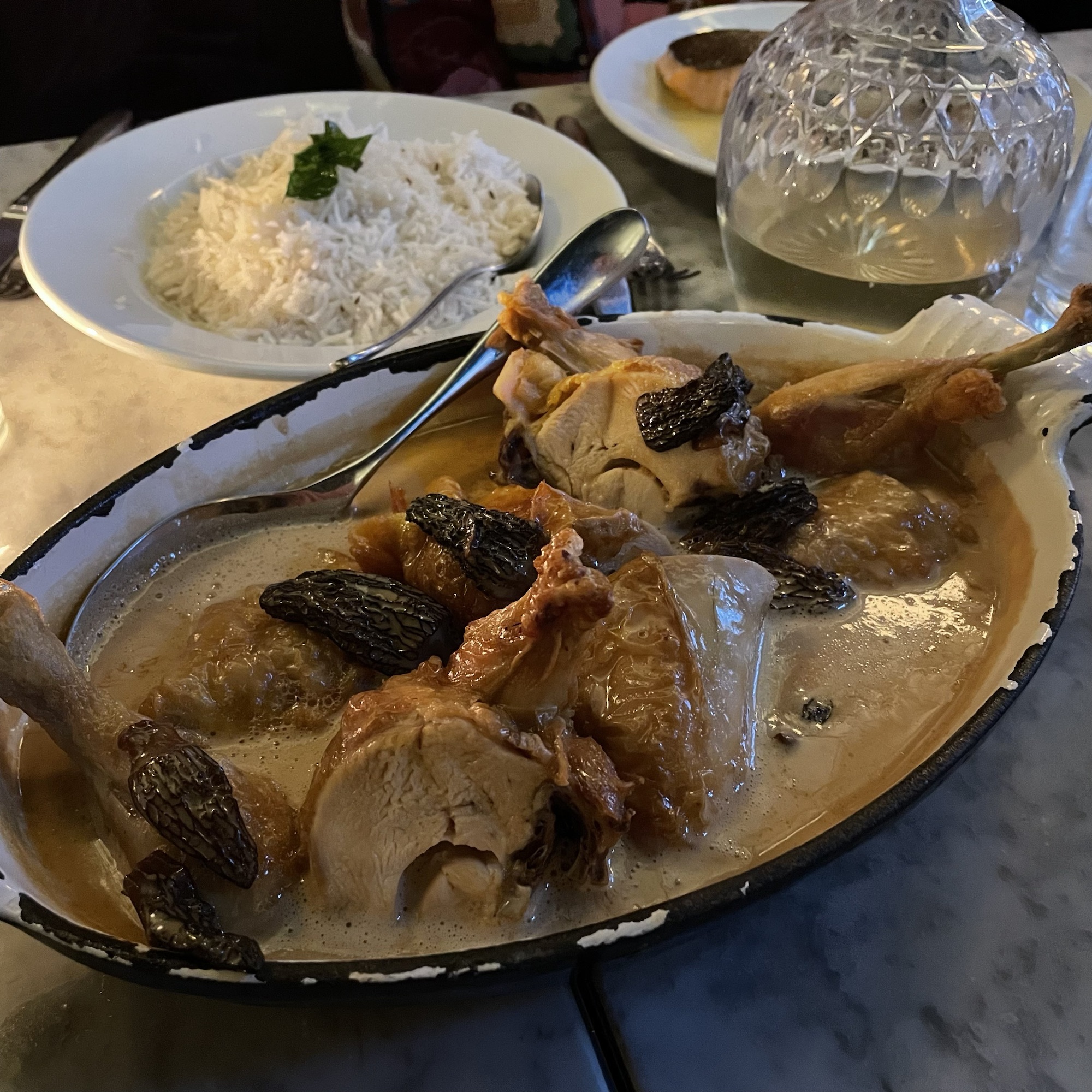
After a day pounding the paths around Arbois, the chance to eat some poulet au Vin Jaune et aux morilles and a hunk of well-aged Comté is pretty hard to beat. So hard to beat that only a large schnitzel in Vienna or a plate of momos in Nepal rival it. Equally, do walk the short Arbois town circuit, half of which takes you down some very attractive back routes as it snakes over and by the river.

Some of these hikes are through the forest, and the scents of the different trees makes you understand the meaning of forest bathing, but the walk, mentioned in that article, which will take you through the vines to Montigny-les-Arsures, passes perhaps the finest vineyard of the northern part of the region, the terraces below the Tour de Curon. There are a number of producers in Montigny, but none perhaps more famous than Domaine A&M Tissot. Stéphane and Bénédicte’s winery is just down the lane on the left hand side of the church.

The extension to this walk takes you back along the road to Arbois (not busy) and detours left just after the hamlet of Vauxelles, and is well worth the effort. You begin through fields to a farm and then detour right. The path comes down at Mesnay, from where you can walk back to Arbois (find the left turn that will return you alongside the Cuissance). My article (see above) tells you which map to find. For me, Arbois and its environs is hard to beat, especially with that accompanying smell of wood smoke.

There is something about the Jura that I find hard to describe. It’s a combination of the scenery, the food culture and the sensory (I happen to adore the smell of wood smoke and the sound of running water). I’ve spent so much time there that it has seeped into my soul, something I feel inside as much as a beautiful and calming landscape that I can see.

I do know one thing, however. My enthusiasm has encouraged other friends to visit, and I find it hard to think of any who have not, like me, become life-long enthusiasts. Barring some Parisian friends who, being Parisians, wonder what we see in such a “rural backwater”. If it has anything to be said against it, it is merely that the politics here do not always match what we imagine might be the ethos of this natural wine paradise.

Arbois, first from the Hermitage, then from the cirque above Les Planches

ALSACE (Andlau and Mittelbergheim)

I’ve been lucky enough to visit Alsace quite a number of times and I have stayed in several different places, from the medieval town of Eguisheim up to the forests of the far north. Some afford good locations for visiting Colmar or Strasbourg, and even Baden in Germany, and most afford great walking, but the place I love more than any other lies in the vicinity of the neighbouring villages of Andlau and Mittelbergheim.

I have said it many times that Alsace is, for me, the most dynamic and exciting French region for natural wines at the moment. If that is true, then the area around these two villages could be termed natural wine central. I could list all the great winemakers working here, but that would go on for a long while, too long for an article which professes to be about place, not wine. However, unlike many natural wine domaines in much of France, many here have tasting rooms, and will welcome visitors with an appropriate appointment. As your typical Alsace vigneron makes a host of different cuvées, you may also find they have wine to sell, if like me you want to bring wine home. With a generally poor selection of Alsace wines available in the UK (exceptions noted), this is even more of a bonus.

That said, the added attraction to wine and the visual beauty of the landscape here, and what is your average geranium-bedecked Alsace village, is some more exciting walking. The Vosges are beautiful mountains to walk in, but if you are staying in one of these villages the added attraction lies in some places to walk to, and between. These are the ruined castles which hide in the forest.

There are many possibilities, but walking up the Kastelberg Grand Cru from Andlau to the ruins of the Château de Spesbourg, snaking along forested tracks to the Château d’Andlau, and then back via Mittelbergheim (taking a picnic to eat along the way) is as good a recommendation as any I could give you. Eguisheim has some nice hilly walks to the west of the town, and if you want to walk in the vines, then perhaps the walks around Riquewihr, maybe from there to the fortified church at Hunawihr, will appeal. But the walks around Andlau and Mittelbergheim strike a chord with me.

The Vosges are unquestionably one of the most “walkable” of Europe’s mountain ranges. They may not have the height and grandeur of some, but with well-marked forest trails and a castle ruin seemingly on almost every hill, they are more than worth exploring. This is even before we discuss the great food available, just the kind of food you need after a day up in the hills.

Looking down on Andlau from the Kastelberg

VIENNA (the Nussberg)

I like Vienna a lot. Superficially, it reeks of its conservative Hapsburg past, but beneath the surface it is something else. It is a city of great food, and I mean “great”, whether traditional or modern (accompanied with natural wine, of course). It is a city of challenging art, and also, not that this is really significant, a city whose politics, despite the Imperial grandeur, is quite different to the rest of the country.
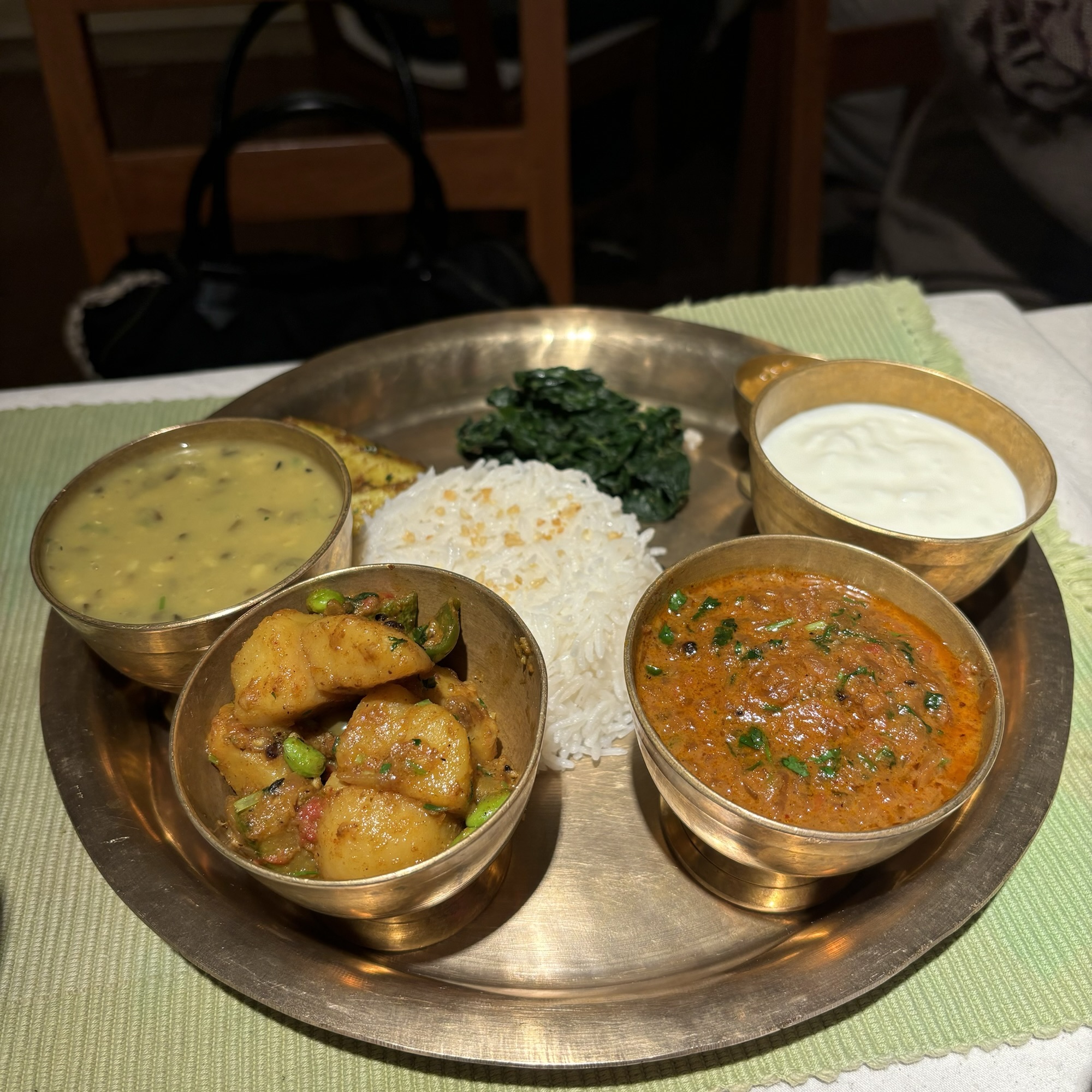
Most readers will be aware that Vienna has its own wine region. In fact, it is more than one area of vines, but that which I want to tell you about is the hill of vines above the suburban village of Grinzing, called the Nussberg. Every time I have visited Vienna, I have walked this hill, and I can’t envisage going to Vienna and not doing so.

Your day out will involve a short journey on the U-Bahn (U4) to Heiligenstadt Station, followed by a bus (the 38A, but do check, it leaves from outside the station) in the direction of Kahlenberg and Leopoldsberg. The stop you want is for the Gnadeskapelle, where you can cross the road to a nice café within the chapel grounds. But right by where you got off the bus is a path through the woods. After a while you will exit the woodland path onto a hill of vines.

In summer the vineyards are dotted with pop-up Heuriger, bars serving light meals with local wines, including the speciality here being the co-fermented field blends called Wiener Gemischter Satz. It’s a wine that is as much a part of Viennese culture as it is an alcoholic beverage.

If you have a good map (such as the Freytag & Berndt Vienna City Map at 1:25,000) you can pick your way down, via the vineyard paths, making sure to take in the views of Vienna afforded from up here, to the wonderful inn, Mayer am Pfarplatz (marked on the map just north of the main road into Heiligenstadt). Beethoven wrote his Eroica Symphony in a room whilst lodging here, but the inn’s main attraction is its attractive old, vine-strewn, outdoor courtyard.

In summer do not miss trying some Himbeersturm. Like Sturm, the fermenting wine served as a refreshment at harvest time, this is a fermenting raspberry drink, few of which can be more refreshing. At harvest time true Sturm is served. It may rot your guts if you drink too much, but this low alcohol, spritzy, still fermenting wine, served in pot glasses like a British half-pint, is equally part of life. The city’s suburbs that adjoin vineyards are full of Heuriger and Buschenschanks that serve it around harvest. Heiligenstadt station is just a few bus stops away.

You can read a bit more about this walk in my article Heuriger, Heurigen, Buschenschanks and popups: A Walk in the Woods and Vines (28/08/2018). You may find it useful for detail. We have done this walk even in winter, and though it is undoubtedly cold, the Nussberg in the snow does have a certain magic too.

Winter on the Nussberg, above the city

MOSEL (Around Bernkastel)

Germany is blessed with a good number of idyllic vineyard locations, and most of her traditional wine regions are located on attractive, often precipitous, slopes with picture postcard villages, bedecked in flowers, by the side of a majestic river. Surely the epitome of all of these must be the Middle Mosel. That stretch between Piesport and Enkirch downstream is the bit that appeals to me, largely because this is a spectacular part of the Mosel Cycle Trail.

If I’m not walking in the vines, then I’m happiest cycling through them. Generally, this cycle path sticks to the flat of the valley floor, though mostly avoiding the road, but there are opportunities to go uphill if you are either fit or have hired an electric bicycle. There’s a good bike shop just a little further on from the bridge over the river from Bernkastel into Kues, the suburb on the left bank of the Mosel opposite Bernkastel. A very leisurely morning cycle will take you to Traben, via Graach, Zeltingen, Kindel, Wolf and Trarbach, with a return on the opposite bank via Kröv, Kinheim, Urzig and Wehlen (don’t forget to look out for the famous sundial).

If you have time, assuming you have not taken too great an advantage of the numerous riverside opportunities to drink beer, do explore Lieser (just next to Bernkastel), which houses the forbidding Schloss (Thomas Haag’s wines are not the least bit forbidding, on the contrary, they are some of the Mosel’s greatest bottles) and Sybille Kuntz, who is no less worth a visit. I happen to love the wines of the Mosel, with a special affection for the filigree acidity and fruit of the Kabinetts. The fact that this region is spectacularly beautiful, and that it is completely geared up for cyclists, is more than an added bonus.

Bernkastel itself is almost the perfect chocolate box representation of a German wine town. Maybe it might be too kitsch for some, but there are plenty of places to eat and drink here, including (if it is still there) a very good Indian restaurant, called the Taj Mahal (Hebegasse 1). Opposite this you will find what is probably my favourite wine shop in Germany, now called the Rieslinghaus (Hebegasse 11). They changed the name a few years ago, from Weinhaus Porn, for some reason. If you like the wines of the Mittelmosel you will almost certainly need help carrying your purchases back to the car park. The owners also run a hotel.

This stretch of the Mosel is just outside Bernkastel looking towards Wehlen

WACHAU (more time on a bike)

I said at the top of this article that these are wine regions I love to visit, and I implied that it is the region rather than its wines that I am praising. The Wachau, specifically the valley of the River Danube as it stretches west from the town of Krems, was certainly where I cut my teeth on Austrian wine. Today I will still heartily recommend producers such as Weingut Knoll, Hirtzberger and the long-time biodynamic estate of Nikolaihof, but it is true that these wines probably don’t form a large part of the Austrian wines I drink today.

However, the river through this wine region is both beautiful and also steeped in history (with the perched castle of Dürnstein acting as the prison for Richard the Lionheart after he was captured on the way back from the Third Crusade being a major tourist attraction for the rivercraft tours here). However, as with the Mosel above, this stretch of the river is yet another opportunity to get on a bike.

The Wachau is an easy train ride from Vienna. If you alight at Krems there’s a cycle hire shop around a five-minute walk from the railway station. I tend to book bikes in advance, but I doubt you’d have any problems just rocking up. If you cycle west, through the old suburb of Stein, you are soon into the vineyards. The Wachau Cycle Path follows the left (north) bank of the Danube past Unterloiben and Oberloiben before the first hill of vines ends at the perched fortress of Dürnstein. Some of the route lies on small roads and goes through the villages, such as Weissenkirchen, but there is generally little traffic, except at harvest time.

How far to go is really the question. My own recommendation would be to stop for lunch at Spitz if you can make it that far. If the weather is nice, you can eat outside at the Gasthof Prankl, then leave your bikes and walk up to the castle perched steeply above it for some great views of the river with vines in the foreground. Spitz also has a very good wine shop. Hubert Fohringer is down on the river, near the quay. It sells mostly classic Wachau wines, but has a comprehensive selection.

An alternative would be to try out one of the inns run by the wine estates. Weingut Knoll runs the Restaurant Loibnerhof at Unterloiben, where you can sit outside if the weather permits, and enjoy the wines of this magnificent estate.

Intrepid cyclists could choose to make a two-day trip of it by cycling on to overnight near Melk, the imposing Benedictine abbey that looks over the river about twenty kilometres further than Spitz. That would allow for lunch at both of my recommendations. The abbey was founded in 1089, although the abbey today showcases the splendour of the Baroque era, from the early eighteenth century. Oddly, the abbey became a centre for Freemasonry at this time, and apparently many of the monks were also Freemasons.

The Wachau in many ways represents Austria’s vinous past. Many of the fans of its wines might be too old to cycle to Melk. Nevertheless, it is a beautiful wine region and those who like our wines without synthetic additions will still love the scenery, the food, and I think the best of the wines as well.

The Danube from the castle ruins above Spitz

MORNINGTON PENINSULA (vineyard gastronomy)

Unlike South Africa’s vineyards, reputedly spectacular but which I’ve never visited, I have spent time in a good many Australian wine regions, from the more obscure (like Shoalhaven Coast or Mudgee) to the “tourist-friendly” (Hunter and Yarra Valleys, for example). Australian Wine regions are often very different to those we know in Europe.

The vineyards whose wines we see the most of here in the UK can be flat, or what one might describe as mildly hilly, and they can be quite spread out, blocks of vines interspersed with blocks of grass or rock. Not all of them look very pretty, especially when they are hard pruned rows of vines regimented and widely spaced to allow for machine harvesting, but even without the odd kangaroo skipping through the vines, they undoubtedly have their charm.

In many ways Mornington Peninsula doesn’t fit that picture (indeed, nor do many of the regions which have emerged since the 1990s). Much of the land on this twenty-mile-long outcrop south of Melbourne is rich stud country, Melbourne of course being Australia’s horseracing mecca, but there are hills, and a lack of the wide horizons some may think monotonous. During the 1970s what had been a few wine producers in the previous century grew to a critical mass, largely based on the peninsula having a maritime climate that gives far greater vintage variation than was common in Australia at the time.

That vintage variation helped make it a perfect climate for growing Pinot Noir, and Chardonnay on the edge. Not quite as on the edge as Tasmania, even further south, but still at times more marginal than many. Those two grape varieties made the region famous, but at the same time Mornington Peninsula was also one of the centres for the “Alternative Varieties” movement.

I’ve just finished (and will review) Max Allen’s latest book, Alternative Reality, which charts the rise of grape varieties other than Shiraz, Cabernet and Chardonnay in Australia’s vineyards through the story of the Australian Alternative Varieties Wine Show (AAVWS). Although on a number of trips to the region I have visited a good few Pinot specialists, one of the main reasons for my first visit was to have lunch at a producer noted for a very different variety.

Although the Trophy for Best White Wine in the first AAVWS was won by a different Victorian winery, Redbank (at Milawa), it was T’Gallant, on the Peninsula, that was making waves back then. I think this was 2007, but the first ten acres of Pinot Gris was only planted on this former apple orchard (close to the now famous Pinot/Chardonnay estate, Ten Minutes by Tractor) in 2003.

But if I’m getting sidetracked by the wines, what you really want to know is why visit Mornington Peninsula? Well, it’s close to Melbourne, but then so is the Yarra Valley. The Yarra has some great restaurants, but Mornington offers such a wide choice in such a concentrated area that it is impossible to choose, even if you can decide between wood-fired pizza or full-on gourmet. Hardly a wine estate on the peninsula doesn’t offer both a cellar door and a restaurant.

The peninsula itself offers a chance for some beach R&R as well. The coast facing the Bass Strait can be wild, with what look to me like some dangerously rocky surf beaches, but inside Port Phillip Bay it is usually calmer, as the aptly named Sorrento perhaps suggests. Sorrento is also the point from which you can take a ferry across Port Phillip Bay to Queenscliff. A short drive from Geelong, this is an entry point to another wine region which has achieved a degree of fame this century.

If you have a willing designated driver, it’s an alternative (if longer) route back to Melbourne, although first time visitors might prefer to spend the time exploring the wineries of Mornington. There are so many that have now achieved a fine reputation, and the fact that there are so many within quite a small area makes it relatively easy to knock up several in a day.

Overnighting on the peninsula is a good idea if you have time, but as it swarms with Melbournites on most weekends and holidays, accommodation can be hard to find and expensive. We have friends who had a weekender down there, but they sold it and bought upstate. It brought a whole lot more wonderful wine regions for us to explore (Heathcote, Bendigo, Macedon Ranges, the latter home to one of my favourite Aussie producers, woefully neglected in the UK, Bindi), but whenever I’m in Melbourne with access to a car, I shall always grab a day down on the Mornington Peninsula.

Polperro Estate in the centre of the vineyards on Mornington Peninsula

As a bonus in Part One, I haven’t written about this place because it’s not a “wine region”, just a single estate, but if you are driving through the Kathmandu Valley, just outside Kathmandu, you might be able to find Pataleban. The edge of the wide world of wine.

Posted in Alsace, Arbois, Australian Wine, Jura, Mosel, Vienna, Wachau, Wine, Wine Tourism, Wine Travel | Tagged , , , , , , , , , , , | Leave a comment

Winemakers Club, London

I’m not sure when I first began visiting Winemakers Club under the Holborn Viaduct arches on London’s Farringdon Street, but I know it was very early on in its existence. It was very familiar to me because even longer ago it was one of Oddbins’ Fine Wine stores. Yes, hard to believe but back then Oddbins in its original incarnation was pretty much the place for enthusiasts of new flavours in wine, much as the old Virgin Megastore on Oxford Street was for lovers of vinyl.

The two are not as incongruously linked as it might seem. Vinyl was at the peak of its first time popularity, the Megastore a mecca for music lovers searching for new music in the late 1970s, and in the early 80s wine was becoming democratised, “Claret” and Burgundy being joined by Australia, South Africa, Chile and North America on the tables of a new, younger, generation.

I once worked just off Fleet Street, and then later over Holborn Underground Station. It was a time when the Press ruled Fleet Street, and places like El Vino’s and The Cheshire Cheese were full of the smog of cigarette smoke and the smell of whisky. Today, Fleet Street is half building site and half corporate. The newspapers have gone and so by-and-large have most of the big law firms who replaced them, many moved down to Docklands. Farringdon Street, which heads north from Fleet Street at its junction with Ludgate Hill, now has the enormous headquarters building of Goldman Sachs right opposite Winemakers Club. I don’t know what the mega-salaried occupants of that modern fortress of finance make of the natural wine heaven over the road?

When I get down to London, which is now only four or five times a year, more often than not I make a visit to Winemakers for a bite to eat and a glass or two. It helps that I’m usually staying very close by. It’s a perfect location to meet a friend or two. I was there on Monday evening, arriving at King’s Cross too late to make the afternoon tasting they had on, but I did manage to catch one or two people I know who had lingered after the tables were clear. I did manage to try one wine from Newcomer Wines, Peter Honneger being one of those lingerers.

Thomas Niedermayr farms at Hof Gandberg in the village of Eppan, just outside Bolzano in Alto-Adige (NE Italy). Vines have their place on a mixed farm where every possible course of action is aimed towards a sustainable ecology amid the peaks of the Dolomites. Paschwai is, I think, one of two wines which Newcomer has begun to ship from the Niedermayr family.

The grape variety is the rarely seen, disease-resistant hybrid, Souvignier Gris. As the notes on Newcomer’s web site say, it is “fresh and fruity, with notes of honey and melon”. Even though we were drinking from the last quarter of the bottle, the wine was immediately attractive and I’d love to try it at home. Newcomer Wines retails this for £36.

Winemakers Club is many things. They put on tastings for the trade, hold events for the public and are a wine bar offering a selection of tasty small plates such as cheese and salami, pâté, rillettes, and, since my last visit, a couple of vegan options. They are a wine shop, and they also import themselves, and it was a couple of those wines we drank on Monday.

Lise and Bertrand Jousset farm around eleven hectares at Montlouis on the Loire. The wine we drank was a Chenin Blanc from a single site of seven hectares, Clos aux Renards. The vines grow on interesting blue clay infused with silex (flint). It has been described by some as one of the greatest Chenin Blanc vineyards in France. I was recommended this by an acquaintance only a day before and it was a brilliant shout. We have old vines (c80yo) grown and vinified as a natural wine with just minimum added sulphur. Natural winemaking here includes no mechanisation either, just horse power and human hands.

This is a very complex wine and subtle too. The bouquet is soft, redolent of lemon, pear and that unmistakable Chenin Blanc giveaway, honey. If minerals dominate the palate, they are more “soft and chalky” than angular like the flint in the vineyard. Salinity and herbal notes come in as well. It’s a wine many would call “different”, and it is, but one to savour. I recommend it with cheese. A wine to drink in a relaxed state, not too cold, and certainly not in a rush. This is expensive, but we benefited as it was on “by-the-glass” (at £16). I think retail it may be around £60/bottle. Winemakers sells four other Jousset wines, ranging from £28 to £47.

Next, we grabbed a bottle from an old favourite. I first met the young couple, Julia and Adam, behind Hegyikalό around eight years ago, at a Winemakers Club tasting, of course. They produce wine at Eger in Hungary’s northeast (though still west of Tokaj), nestled at the eastern end of the Mátra Hills. Again, their vines are part of a small mixed farm. Julia has a doctorate and Adam, at least at the time I first met him, headed up the Viticultural Research Institute at Eger University.

Their gentle natural wines bear only a nod, on occasion, to the “Bulls Blood” that made this region famous in the 1960s and 70s. That nod comes through most in their full-bodied Kékfrankos, Hungary’s rendition of the Austrian Blaufränkisch, and only then in its 14% alcohol.

When I am drinking an Austrian Blaufränkisch I readily admit that I’m looking most often for that restrained minerality off mostly limestone that you get most particularly off the Leithaberg Hills which ring the northern edge of the Neusiedlersee, in Burgenland. Here we have a different rendition of the grape, but one that if you don’t mind the alcohol is very attractive.

That attraction, for me, lies in its fleshy fruit. This combines with a line of freshness of the type typical of red wines off volcanic soils. Yes, I think it does have a certain “bloodlike” intensity, and also something “ferrous”, the old iron filings note. The bouquet is easy to miss in a wine of such initial power, but sit back and look for the hints of tea, roses and green pepper. That subtlety is not something that a quick sniff and sip at a tasting table is likely to elicit.

We (three of us) ate a lot as well. The quality of the food at Winemakers Club has always been high, but the offering has broadened. It in no way has pretentions to be a restaurant, but there is ample tasty fare to lessen the effects of a bottle or two with friends. As I said on an Insta post, whilst I don’t pretend to be on top of every place in London’s natural wine scene (and certainly I would dearly love to visit Sune in Hackney), Winemakers Club is the London venue for natural wine and friendly conversation closest to my heart. John, and an always engaged, team will give you a warm welcome in the relaxing darkness of The Vaults, underneath Holborn Viaduct.

Winemakers Club is at 41a Farringdon Street, London EC4A 4AN (tel 020 7236 2936)

thewinemakersclub.co.uk             @winemakersclub

They are closed on Sundays but open every other day from 11am to 11pm.

Their wines are all imported direct and they are a great place to find some top producers, from Olivier and Serge Horiot in Champagne to Tom Shobbrook in Australia, along with some genuinely fine and rare table and fortified wines. Check out the times when you can sit in and consume bottles at their retail prices (before 4pm), or equally, check out their always interesting changing selection of wines by the glass.

They also sell their wines for nationwide delivery online at thewinemakersclub.shop

Posted in Artisan Wines, Fine Wine, Hungarian Wine, Italian Wine, Loire, Natural Wine, Wine, Wine Agencies, Wine Bars, Wine Merchants, Wine Shops | Tagged , , , , , , , , , , , , | Leave a comment

Recent Wines August 2024 (Part 3) #theglouthatbindsus

The third and final part of August’s wines brings to the table five possibly less august bottles than we drank in Part 2, but then it’s all relative, isn’t it. In order to bring you these articles I have to drink as widely as I can. It’s just as well I’d do that anyway, whether I write about them or not. As a result, Part 3 reads, possibly more than ever, like some random bunch of wines. Oh, and cider. It nevertheless all tasted really good, I promise!

First up is a cider of special interest. Next a Chianti that I drank often in the 2000s but haven’t had for a long time. Then comes a Loire sparkler that I haven’t drunk for at least as long, a rather good Czech Pinot Noir from a name I’ve neglected since I first tasted his wines, and a superb new white Bordeaux made by a very talented outsider.

“Perfect Strangers” Artisan Cider 2018, Charlie Herring Wines (Hampshire, England)

Regular readers will have seen that I visited Tim Phillips in early August (hence my article of 23 August 2024). Whilst there I managed to leave with a small number of bottles, one of which was this vintage cider, made from the fruit of Tim’s orchard which sits just outside his walled vineyard, near Lymington. Note the vintage.

It is a widely held belief among the older school of drinks writer that cider, like petnat, Rosé and Fino Sherry, should be consumed as close to the date they were bottled as possible. Those of us who write about wine who are either physically or mentally under the age of fifty (the latter for me, of course) know this to be patently untrue, at least among the versions we all drink. Tim made this cider to prove a point, that vintage cider is well capable of ageing beautifully.

It is common with very old vintages of wine to recount what the world was like back when it was made. Things like “no internet, no smart phones”, or just “no colour television”. Here, I think it is enough to say this was made “pre-Covid”, equally a different world. It does seem like a long time ago.

Aged on lees after picking the fruit (a mix of eaters and cookers in this one, rather than pure cider varieties), this was only disgorged in May this year. The colour is an orange/pink on account of the addition of 3% of Tim’s South African Shiraz. Usually, Tim has added the wine at bottling but this time he added it into the barrel, and this has, I think, helped it integrate so that I don’t think you really know wine has been added, except for the colour. But in the “sum greater than its parts” sense, it undoubtedly adds to the whole.

The bubbles are extremely fine, Champagne-like. The bouquet is very pure apple zest, the palate is zippy and fresh, and very appley. But perhaps what the age brings is the spice you can taste, and real depth. Cider, when freshly made, can taste of springtime, lively and even skitty. This cuvée has the feel of early autumn. It works really well with food, in the same way that those more “gourmet” Champagnes do, the ones we serve with quail out of a Riedel Riesling glass, or a Zalto Universal, rather than a Zalto Champagne.

In many ways, this is a remarkable cider. Approachable, but something to interest those of us wine lovers who are open to new flavours and textures. Not quite as “unicorn” as Tim’s wines, but this is still so scarce I can’t see any around. But try asking Les Caves de Pyrene, or The Solent Cellar (in Lymington). If you can find any, it is remarkable value for around £18 (I think).

Chianti Classico 2019, Querciabella (Tuscany, Italy)

As I said in my introduction, I used to drink the wines of this property quite often back in the day. I think I first found it on a Tuscan trip in the late 1990s, and it began appearing in the UK as its reputation rose through the 2000s. The estate was built up by Giuseppe Castiglioni and then taken over by his son, Sebastiano Cossia Castiglioni in the early 2000s. Today the estate, in Greve in Chianti, is in the hands of Sebastiano’s sister, Mita, and has 40-hectares under vine producing somewhat more than 250,000 bottles a year, of which this Classico now accounts for around 180,000 bottles. This may sound a lot compared to the thousand or so units that individual artisans whose wines often grace these articles make, but a significant production doesn’t have to mean lesser quality. Take Dom Pérignon.

If Querciabella is most famous for its white blend of Chardonnay and Pinot Blanc called “Batàr” (now what does that sound like?), then the wine most of us will find on a retail shelf is its Chianti Classico. This wine used to have some Cabernet Sauvignon added, but this was reduced over the years, so that today the Classico is 100% Sangiovese. It comes from three plots which are tended with care to allow for “natural winemaking with minimal intervention”.

Ageing is around 14 months in mostly fine-grained oak of 225-litres (some 500-litre tonneaux and even larger oak is also used) before a selection is made of the best barrels set aside for this wine. Chianti Classico is no mere “entry level” wine at Querciabella. It rests a few more months in bottle before release.

The packaging is smart. The Querciabella labels have always appealed to me. The bouquet here is dominated by elegant cherry fruit with a noticeable pepper spice note. The palate has more crunchy cherry, a bit darker now, with depth and hints of nascent complexity. It does come in at 14% abv, but don’t let that put you off. It is nicely balanced.

It is only at the start of its drinking window. One suggested (importer) drinking window gave 2023 to 2030 for this 2019 vintage. The producer suggests it will be “mature” five years from the vintage (ie 2024), and then continue to improve for a decade. I would say that the producer’s nuance matches my expectation after drinking this. I’d certainly leave it a few years but if you do open one now, you should be impressed. My pendulum has swung back to Piemonte of late but a Tuscan wine always comes along to remind me to allow it to swing back a little.

Imported by Lay & Wheeler, this can be had for between £25 if you are very lucky, and £30. Solent Cellar sold me their last bottle, I’m afraid.

Triple Zéro NV, Domaine La Taille aux Loups (Loire, France)

Jacky Blot worked out of two locations, Domaine de la Butte near Bourgueil for mostly red wines, and Domaine La Taille aux Loups at Husseau, just east of Montlouis, along the left bank of the Loire, where Chenin Blanc reigns. I’ve visited the domaine at Husseau, though a very long time ago, and that of fellow Montlouis producer, François Chidaine, also based in the same village. Both men in their own way put Montlouis on the map, an appellation forever in the shadow of Vouvray, over the river. Jacky passed away last year, and his son, Jean-Philippe is now in charge. By all accounts the domaines are in more than safe hands as J-P has been hands-on winemaker for the past decade.

Triple Zéro is a different take on sparkling Montlouis. The more often encountered AOP wine is effectively a Crémant, bottle-fermented like its sibling, Vouvray. This particular wine, being 100% Chenin Blanc like the Crémants, is made, like a petnat, by the Ancestral Method, but like a Crémant it is disgorged of its sediment before release. The name comes from having had zero chaptalisation, zero liqueur de tirage added and zero dosage, so no sugars added at any stage. The dry minerality we have here is also accentuated by the wine not going through its malolactic.

The result here is a bone-dry wine. Some may think it too dry whilst others will adore that aspect of its flavour profile. You get a clear wine in the glass, very bright, with crisp apple and pear aromas. The palate is similar. The importer uses the word “precise” and it is. It has a certain steeliness, and is certainly very dry, but there’s more than just that. There is a creaminess too, which plumps out the body. It is in no way a one-dimensional wine. In fact, the initial feeling of simplicity changes, giving a more complex array of flavours and scents as it opens. This makes it very versatile as a food match.

As with many sparkling wines, this will be better in a few years, but it is drinking nicely now if you want to appreciate it in its full “zero-zero(-zero)” magnificence. It is a little tight on opening, but it does unfurl. In some ways, assuming you like a very dry sparkler, I would recommend this over any other sparkling wine from Montlouis and Vouvray, much as there are a few other fantastic cuvées I could name.

Triple Zéro was a gift from a wine-loving neighbour when we moved house, but it is quite widely available, perhaps most easily, by coincidence, from Lay & Wheeler again. It is also stocked by Justerinis. Expect to pay between £25 and £30 retail.

Pinot Noir “Výběr Z Ročníku” 2020, Jaroslav Springer (Moravia, Czechia)

Many years ago, around 2015 onwards, myself and a friend used to organise lunches at Rochelle Canteen in London, where people brought along “oddities”, strange bottles from strange places. It was at this time that I got to taste the first of very many Czech wines. Whether it was a wine from Milan Nestarec, because I bought his “Forks and Knives” from Newcomer Wines when they were in Shoreditch Box Park, five minutes from the restaurant, or whether it was a Springer Pinot Noir, I’m not sure, but those two certainly started my fruitful Czech wine journey.

I think what happened is that I got to drink a few of Jaroslav’s wines (most then appearing under the Stapleton & Springer label), and so when I later discovered many more of the natural wines on offer from Moravia, I sort of left them by the wayside. It was actually at a more recent tasting in Edinburgh that my nose and palate pricked up at this lovely and impressive wine, so I added a bottle into my next order from the importer. What I can tell you is that I shall definitely avoid neglecting this producer again.

If you read about the Springer winery, you will see that they are generally considered one of the best producers of Pinot Noir and Chardonnay in the Czech Republic, but that geographical restriction doesn’t really do them justice. Jaroslav’s son, Tomás, is now on-board with the winemaking, and this cuvée was made with Craig and Benjamin Stapleton, although they are not listed on the label.

This is a natural wine, as with all the wines I am buying from Czechia, but I would challenge anyone who didn’t know to spot that. There is a certain classical quality to it, but it is not restrained by viticultural or winemaking practices. What we have here is pretty much the equivalent in concept of the “village wine” you find in Burgundy. So, it doesn’t have “Cru” pretensions, but its quality at this level is the real test.

The bouquet is raspberry and strawberry fruit and the palate has red fruits underpinned with a little earthiness. The finish is good and quite long, with a lick of liquorice. By further explanation of the earthiness, the fruits are good and ripe, and also very smooth, but there is a savoury quality that remarkably doesn’t jar with the fruit. It has grip too, but is not especially “grippy”. In the same way as your senses prick up if you find a very good village Burgundy, that happened here.

At this price it’s not amongst the cheapest from the Czech Republic, yet I was nevertheless impressed and would spray this around as a gift if it were but a little cheaper. Especially as what remained in the bottle was even better on the second night, so it should age further. It’s still good value for what you get, around £30 via importer Basket Press Wines.

Blaye Côtes de Bordeaux Blanc 2020, Matthieu Cosse (Bordeaux, France)

White Bordeaux doesn’t pass my lips too often, no reflection on the wine, but more the fact that few wine retailers I frequent actually sell any. That may have changed since the most famous producer of natural wines in Cahors began making wines in the Bordeaux sub-regions of Blaye and Fronsac. It’s a joint project with a good friend of Matthieu’s, Jérôme Ossard, a Bordeaux veteran grape hunter of twenty-five years.

I tasted three of these wines last winter, and at the time I felt that the excellent reds still needed time, but that the white, which we have here, was the best of them all on the day. As a result, this was the first to translate to my cellar.

It is a blend of mostly Sauvignon Blanc with a little Muscadelle, selected from a two-hectare plot. As one would expect from Matthieu, only completely healthy fruit was chosen. The idea behind the project was to make exceptional wines at an affordable price, which at the hands of many winemakers would simply be marketing noise, but here I think it very much is not.

The glass shouts out very fresh Sauvignon Blanc at first, with fresh grapefruit on the nose. The palate comes in with greater depth, almost a surprise after the bouquet. There’s a creaminess and some beeswax. It’s that mix of freshness with a little weight which makes this more than an aperitif wine, but one allowing a degree of versatility with food. My own match would be white fish with a creamy but not heavy sauce, or maybe the garlic butter you get on haddock at a restaurant near me.

This bottle came from Cork & Cask (Edinburgh), who will ship UK-wide, and it cost £24. The importer is, as with Matthieu’s Cosse-Maisonneuve wines from Cahors, Dynamic Vines.

Posted in Artisan Cider, Artisan Wines, Bordeaux Wine, Cider, Czech Wine, English Cider, Italian Wine, Loire, Natural Wine, Tuscan Wine, Wine, Wine Agencies | Tagged , , , , , , , , , , , , , , , , , , , , , , | Leave a comment

Recent Wines August 2024 (Part 2) #theglouthatbindsus

Part 2 brings us to mid-August. Although it sometimes seems an age ago, they were the heady days of our very short English summer this year. Our drinking definitely has a “holidays” feel to it here. This second batch of wines centres around three exceptional Juras, which I would imagine are no less infrequently opened by anyone reading this, as much as for us. We run the traditional gamut with a very rarely encountered Vin Jaune, an equally rare unicorn Savagnin and a remarkable Vin de Paille. In amongst them there is also one of Annamária Réka-Koncz’s more unusual wines, plus a stunning Loire red. As the Chemical Brothers said, here we go…

Arbois Vin Jaune 2015, Domaine de la Loue (Jura, France)

This small domaine is run by ex-film producer, Catherine Hannoun, who caught the wine bug when working on the seminal Mondovino. Catherine is rather out of the way up near Port Lesney, north of Arbois. Her wines are near mythical, rarely seen, but you can read a lovely profile of her in Camilla Gjerda’s We Don’t Want Any Crap in Our Wine (Camilla has a new book ready to drop very soon, for those like me who loved her first).

On the one hand Catherine has managed to expand her vineyard to a little over 3 hectares (double what she had when she started out), and subsequently she has moved to slightly larger premises. She also made quite a bit of wine in 2022. However, she has been hit by grape theft in 2023 (See Wink Lorch, Jura Wine Ten Years On, 2024, p64) and with other problems such as frost and fungal infection etc. Grape theft, in particular, is becoming a thing in the region. I was first told about it back in 2017 or ’18, by a producer near Montigny-les-Arsures, but back then it was rare. For some reason, as in Burgundy and elsewhere, it is becoming a wider problem.

I believe 2015 was Catherine’s first vintage of Vin Jaune. I would suggest it is incredibly successful, though not necessarily fitting the VJ norm, perhaps. To begin with, it has only 12% alcohol. It drinks very smoothly, and I think it’s the most elegant Vin Jaune I’ve drunk in a long time. I understand she has been working with Manu Houillon? It was aged in a big old foudre that came from Jacques Puffeney.

You get apple, roasted hazelnut and fresh citrus, but it bears repeating…that lovely softness. I guess I’d sum it up by stressing the real purity of each flavour. Fantastic. I wish I could drink this again, or perhaps the subsequent 2017 or 2019. Catherine Hannoun is both a creative and intuitive winemaker, and I sure hope she overcomes the trials of the past few vintages. Sending out good vibes to Port Lesney.

“Liner Notes” 2022, Annamária Réka-Koncz (Barabás, Eastern Hungary)

This is Annamária’s new red bottle-fermented sparkling wine. I drank my first bottle of this back in June, but it is worth me highlighting it again, in part because this was even better with an extra couple of months in bottle.

Liner Notes is a petnat blend of 77% Cabernet Sauvignon with 23% Kékfrankos (aka Blaufränkisch), the grapes sourced from a friend at Mátra in the Nagyréde district, two-and-a-half hours west of her base at Barabás, on the Ukraine border. The terroir is volcanic with a base of andesite (eroded lava flow) covered in a light layer of clay. Cabernet off volcanic soils is reasonably rare.

The grapes are all crushed gently and macerated five days. Fermentation begins in a closed tank before transfer to fibreglass, but ageing is in stainless steel. This has just a minimal sulphuring. The first thing to say is that this is a lightly sparkling wine, bottled at just 1.5 Bar of pressure. Not complex, you get concentrated dark fruits and a bit of spice, riding on a fine bead of tiny bubbles. Its length is assisted by the fruit concentration. Since my first bottle this has settled down, with the Cabernet having perhaps mellowed out, enabling the bright fruit to shine more. If I’m looking to give you a comparison, maybe a Schilcher Frizzante comes closest, though with very different grape varieties.

Imported by Basket Press Wines, where I sourced my bottles. Prost Wine still has some for £32.

Savagnin Arbois-Pupillin 2012, Domaine Houillon-Overnoy (Jura, France)

Very much gone are the days when I could pick a bottle of Overnoy off the shelf at Wholefoods Market on Kensington High Street, and how the world of wine has changed since then, especially The Jura. Pierre Overnoy’s story has been told endless times, but not so much by me. In the past decade I’d say one of his wines every two years is about it, and the time for getting a job as Doug Wregg’s assistant is long past. I’ve just checked and my last was a Poulsard in August 2023, so maybe I’m not doing as badly as I thought.

This may be one of the finest domaines in France (let alone merely Pupillin, or the Jura), whether they make natural wine or not, but these wines are more enigmatic than most. As I drink them so rarely, I never remember which cuvée I am drinking, because the only clue is the colour of the wax covering the cork. This is a good thing. Keeps us all on our toes and the palate sharp. But here we have a yellow capsule and this means oxidatively-aged Savagnin. You also get White wax (Chardonnay), Red (Ploussard), allegedly Green (Chardonnay/Savagnin blend) plus 50cl bottles for topped-up, very long-aged, Savagnin. There are a couple of others (see, as ever, Wink Lorch, supra, p88) but if you can find them, let alone purchase one, you are a better person that I am.

Pierre has been retired effectively since the early 2000s and his adopted heir, Emmanuel Houillon, has been making the wine and running the estate, along with his wife, Anne. Pierre is there in the background, on hand for favoured journalists and dishing out his bread loaves, the making of which it seems he has become no less an expert in than he was at being the inspiration for the the Jura natural wine movement.

This bottle would stand out as sensational on a table full of sensational wines. But it is also unusual, so different from wines most of us habitually drink. It is rare that I’ve ever said that a wine exists almost in another realm, and as you know, I’ve tried an awful lot of wine.

Ripe, clean, fruit is a given. The key to creating fine wine, says both Pierre and Manu. No chemicals, including no sulphur (also a given here), just meticulous hygiene and long ageing in old (but in good condition) oak. Aged under flor, yet perhaps rare among such wines, there is no reduction. Classic nutty notes, zesty orange, curry spices, off-the-scale complexity in a wine which changes almost by the minute.

There is little hint that this wine is twelve years old. It seems timeless. It is always a privilege to drink a wine from this estate, and also a reminder that such wines are, for me, in a class of their own. But where to find one? Once I’d have listed a few shops. Latterly the odd restaurant kindly sold me a bottle, but I should add at a reasonable and not inflated price.

It is the fate that Pierre, Manu and Anne have to suffer that their wines are some of the most hyped wines we know, and are exploitatively resold at many times their original sale price. That makes me feel even more lucky to have drunk this bottle. To corrupt a cliché, I don’t know where my next Overnoy-Houillon is coming from? I say “my”. Just as the producers of this wine would have wished, this was drunk with, and courtesy of, very close friends who are as fanatical about Jura wines as I am. As it should be.

Saumur Rouge “Les Motelles” 2015, Domaine Guiberteau (Loire, France)

Back in the days when you could actually buy Pierre Overnoy’s wines in a wine shop, Domaine Guiberteau was just beginning its own journey to Loire fame, and perhaps fortune. Romain Guiberteau is described as a protégé of Clos Rougeard, whose wines are perhaps no less sought after than the wine I’ve just written about.

Clos Rougeard was one of the pioneers of biodynamic farming in the wider Loire, and specifically in Saumur. It is easy to forget that the movement which fuelled Loire natural wine in the late 20th and 21st Century was biodynamics, when the voices of people like Nicolas Joly, and the Foucault brothers (of Rougeard) were seen as the crazy ones. Plus ça change in some quarters.

Guiberteau effectively applied meticulous biodynamics to his Cabernet Franc and Chenin vines at his own domaine at Montreuil-Bellay (home to one of the Loire’s lesser-known châteaux, but one well worth a visit). Since the mid-1990s, Romain has seen his own wines reach a similar acclaim to those of his mentors. Except that the wines of Romain Guiberteau are not difficult to find, and some of them are pretty affordable, especially given the quality.

Les Motelles is a 1.4-ha parcel of Cabernet Franc planted in 1955 on complex soils of sandy clay and gravels over limestone. These very old vines see no systemic treatments at all. Grapes are selected for quality and ripeness and destemmed prior to fermentation in cement (using natural yeasts, of course). Ageing is in used oak for a year.

Very low yields contribute to this cuvée’s concentration, yet interestingly I’d not call this dense by any stretch, more elegant and refined. Perhaps that is partly through the ethereal nature of the wine in the glass. Much modern Cabernet Franc aims to be more fruit-forward as a way of showing that the region is now warm enough to put the vegetal reds of the 70s and 80s behind it. This is Cabernet Franc that gives a nod much more towards Pinot Noir than it does its Cabernet Sauvignon cousin, albeit with a different flavour profile. Elegant, refined and very long.

This single site cuvée comes in at £55 from The Solent Cellar, but they have the domaine’s entry red and white Saumur for under £30. In fact, this retailer is becoming an increasingly interesting source for Loire wines in general.

Vin de Paille 2011, François Mossu (Jura, France)

The public face of the Mossu domaine, at Voiteur near Château-Chalon, now tends to be Alexandra, François’s daughter, but the master is still working as he slowly retires in his daughter’s favour. Whilst the domaine will be in safe hands, it is unlikely (given the Catholic Church’s take on women priests) that she will ever be known, as her father is, by the epithet “The Pope of Vin de Paille”.

This remarkable Jura speciality (though if you ever tasted Gérard Chave’s historic version from Hermitage in the Northern Rhône…) may not be a wine we drink every year. In fact, very little is made, and I drink far more Vin Jaune than Vin de Paille, which is saying something. But it always astonishes me when I have a good Vin de Paille.

The name translates as “straw wine”, named after the method where very healthy bunches (selected during an early hand-harvest, no noble rot allowed to get though) were left to dry and raisin on straw, though today you might see them drying out and concentrating their juice in plastic boxes. Thanks to a half-bottle supplied by Jasper Morris at a Jura tasting many years ago, Mossu’s is the one I’ve sought out most.

As an aside, I learnt yet another interesting fact from Wink Lorch’s new book, Jura Wine Ten Years On (supra). I’ve drunk a good few bottles of Alexandra Mossu’s own red wine, “Sang de Gaillardon”. Apparently (I had no idea), Alex did an oenology degree at Changins in Switzerland. Whilst there, she got interested in the disease-resistant crossings we know best under their German acronym, PIWIs. “…in 2013 she and her father were among the first in the Jura to plant [them]” (Wink Lorch, JWTYO p108). This is the wine they go into.

This Vin de Paille (returning from that diversion) is not a natural wine, but applications are very limited when it comes to vineyard sprays, just once a year, if possible, for weeds and once for fungal disease. It is a blend of Chardonnay, Savagnin and Poulsard. The fruit is dried in a windy loft space in wooden crates. You will find a bit more residual sugar in a Mossu Vin de Paille than most, and the wine ferments extremely slowly in tank before being moved to old oak to age for between one and two years. That isn’t the end of the story. It then gets racked into extremely old 60-litre barrels (ie small) where it sits for another three-to-four years, only released when it is deemed ready.

Although undoubtedly sweet, it is also pretty spicy and herbal on the nose. Figs come to mind on the palate, with more spice, a mix of ginger, nutmeg and fainter mixed curry spices. There is acidity to balance the sweetness. I would say it is perfectly balanced. There’s a degree of complexity, though I wouldn’t overplay that part. It is more than elegant and refined though, and very long indeed.

I don’t know of any UK source for this wine, which a friend bought at the domaine.

The rules for making Vin de Paille are very restrictive, so some producers, especially the young ones making natural wines, make sweet wines not labelled as such. I can think of a few, but perhaps the man who began this trend (not that it is large enough to call a trend) was Stéphane Tissot. I’d definitely recommend checking out his “non-Vins de Paille”, which if only seen rarely in the UK can be found in that domaine’s shop on the Place de la Liberté in Arbois. Berry Bros lists Stéphane and Bénédicte’s “Pour Ma Geule” in halves, but you will have to stretch to £175 to secure one. If you ever spot the black label of a Mossu at one hundred metres, grab it.

Posted in Arbois, Artisan Wines, Fine Wine, Hungarian Wine, Jura, Loire, Natural Wine, Wine, Wine Agencies | Tagged , , , , , , , , , , , , , , , , , , , , , , , | 4 Comments

Recent Wines August 2024 (Part 1) #theglouthatbindsus

August, that month of sunshine, holidays, outdoor dining, beach picnics…well only in part it seems, at least for most of us confined to the UK at this time. Hopefully I shall find some longer spell of warmth soon, but what I did find during August was a batch of excellent wines. Some, befitting the month, were very special too.

Sifting the wheat from the chaff, I’ve chosen fifteen wines and I will divide them into three short and sweet parts, rather than two parts which will take more of your precious time. So, in Part 1 we have a Scottish cider, a Moravian petnat, a fine English sparkling, a superb Mosel Riesling and a Sangiovese from one of my favourite Australians.

Wild Blend 2022, Fleming’s Fife Cider (Fife, Scotland)

I’ve always enjoyed the odd bottle of cider, few things being more refreshing on a hot summer’s day. They haven’t appeared so much on Wideworldofwine, excepting Tim Phillips’ “Perfect Strangers”. I suspect I shall be posting a few more ciders this year, not least after two visits to Aeble Cider Bar, also over in Fife, the county just to the north of me, over the Firth of Forth (for which see my article of 20 August 2024).

Robbie Fleming set up this micro-cider and perry operation at Leuchars in 2022, although he had already completed half-a-dozen harvests prior to becoming a small-scale commercial producer. The fruit for this “Wild Blend” came, as the label suggests, mostly from trees growing wild in fields, at the roadside and in hedgerows, in close to fifty different locations. It includes thirteen varieties of wild seedlings and crab apples, which were blended with some of Robbie’s own orchard fruit. These include eaters and cooking apples as well as traditional cider varieties.

As with natural wine, natural ciders see no additives during the process of making the cider, just as the trees are not sprayed. In this case, fermentation is with wild, naturally occurring, yeasts. When this sparkling cider is “bottle conditioned” no “dosage” of sugar is added. The result is dry, but not what you’d call bone dry, with bags of crisp apple fruit on its bouquet and palate, and plenty of tension and freshness. This was bottled in July 2023.

The similarity of these ciders to a petnat is in their drinkability, fun, and ability to quench a thirst. One difference is the alcohol content. Naturally, ciders vary in alcohol, like wine, but this bottle comes in at just 6.5% abv. This is towards the lower end of the scale, but the lightness and freshness you get, and indeed the pale colour, create a drink that is unbeatably thirst-quenching.

Robbie Fleming is fast getting a very good reputation. Since I first tasted his ciders a couple of years ago, at a Cork & Cask Winter Fair, he has now managed to sell through his production quite quickly. My bottle came from Aeble Cider in Anstruther (£11.50) but they had sold out when I visited last Saturday. Cork & Cask seem to have a single bottle of his “Le Marriage” for £16. That is drier and possibly more complex than “Wild Blend”. Hopefully they will both restock soon.

Pétillant Naturel André Rosé 2022, Syfany Winery (Moravia, Czechia)

This is my third bottle from this new (to me) producer from Southern Moravia, and perhaps my favourite of the three (though I certainly enjoyed the previous two, a Welschriesling and a still red from the same grape variety we have here). André is a pretty successful Moravian crossing between Blaufränkisch and Saint-Laurent from the 1960s.

This petnat is pink and, like the red, it is very easy to glug down. Colour-wise, it is a darker colour than many Rosé wines, but its low, 11.5%, alcohol makes it refreshing, simple but satisfying. You get bags of red fruits, but with a pleasing slightly sour edge that gives off a slight rhubarb flavour to go along with the cranberry and raspberry of the wine’s main body.

It comes with a little bit of grip as well. The bead is fine, and you can taste the carbon dioxide prickle even when the bubbles all look dissolved. This naturally adds to the wine’s refreshing quality. I’d say it’s simple but super-tasty. Syfany Wines are all very good value, most of the still wines sneaking in under £20.

This came from importer Basket Press Wines. I forget what I paid. I see that Winekraft (Edinburgh) has it on the shelf for £29. Forest Wines (Walthamstow, London E17) appears to list it for only £20. Maybe one of those prices is an error? Definitely recommended to add to your petnat list. Czechia, judging by what Basket Press usually lists, is a brilliant source for petnats and I do urge everyone to try them, especially those made by Petr Koráb, and including this one from Syfany too.

Cuvée Marraine Pooks Seyval Blanc Brut 2016, Breaky Bottom (Sussex, England)

I suppose I don’t need to say a lot about Peter Hall’s Breaky Bottom any more. It will be clear to regular readers that I revere these wines. They are pretty easily available, and the only reason they may not be more widely known is that this is a small artisan operation lacking (and I’m sure, not wanting) the large marketing budgets of some of the bigger players.

Part of the allure of Breaky Bottom lies in its location, nestled in a fold (Bottom) in the chalky South Downs, close to Rodmell. Most of the allure, however, lies in the wines. They somehow manage to blend technical brilliance with a soul and personality which totally dominate the winemaking. Peter makes sparkling wine (and only sparkling wine) from the “Champagne” varieties, but the other string to his bow that is Seyval Blanc has something quite unique to it.

As a hybrid, the variety was somewhat looked down upon once the trio of Chardonnay and the two Pinots began to be touted as the future of English sparkling wine. And yet this crossing made by Bertille Seyve and his son-in-law, between Seibel 5656 and Rayon d’Or (Seibel 4986), is gaining some wider recognition for its ability to combat diseases, especially mildews, in colder, wetter, climates.

So, we have Seyval Blanc (also sometimes called Seyve-Villard after its propagators) grown in New York State, Ohio, Virginia, and Oregon. Within the EU it is not allowed in AOP wines, but as I wrote in my last article, it has been planted (and “found”) in vineyards in the Jura, where those making wines labelled Vin de France can and willingly do use it, albeit currently in the vineyards of just a small number of growers. If Bacchus has become a go-to variety for still white wines for many English producers, Seyval Blanc (there is in fact also a Seyval Noir) is slowly becoming an English alternative for wine with bubbles.

Peter Hall has a head start on most others, as his vines are genuinely old. I think this makes a big difference with this variety. He first planted Seyval in the early 1970s, when he was making still wines. Tim Phillips may be curating an older vineyard, but he is just getting to grips with the neglected vines there, much work still to be done before he reaches near-perfection.

At eight years old, this 2016 cuvée from Breaky Bottom is just starting to show how magnificent this misunderstood variety can be. The high acids of youth are beginning to tone down considerably, but you never want that rapier-like thrust to disappear. What you do get is some underlying complexity, which if you try Peter’s still available 2010 Seyval, Cuvée Koizumi Yakumo, you will find amplified even further. Now, in this 2016, we have fresh lemon and apple, but that is perhaps confit Sicilian lemon, and apple with a biscuit crumble and a small spoon of clotted cream. Whatever you find yourself, this is undoubtedly remarkably fine for a hybrid grape variety.

Each Breaky Bottom release is named after a friend or family member. Of course, the Halls have some famous friends and family. This cuvée is named after Peter’s French godmother (“marraine” means godmother) who was a journalist, author and cookery correspondent, writing in The Tatler and The Evening Standard under the name Helen Burke. This cuvée also won a Gold Medal at the International Wine Challenge.

I always purchase Breaky Bottom from Butlers Wine Cellar in East Brighton. They are friends with Peter and his wife and almost always have a very wide selection. Currently they don’t list a full range, but as prices lag behind other sources right now, I suggest taking a swift peek at what they do have. Corney & Barrow is the UK agent. Waitrose sells Breaky Bottom in some local stores, and through their online wine department too. They tend to sell the latest releases, and list two at £36/bottle.

Krettnacher Euchariusberg Riesling Kabinett Alte Reben 2018, Hofgut Falkenstein (Mosel-Saar-Ruwer, Germany)

Over the past several years Hofgut Falkenstein has become one of the wider Mosel’s most sought-after estates. Even their regular bottlings sell out quickly, and are sometimes on allocation on the UK market. Erich Weber and his son Johannes are responsible for creating this fine estate at Konz Niedermennig, the Euchariusberg vineyard rising above the village of Konz not far from where the Saar joins the Mosel, on the road to Trier.

Erich started out in 1985. The family now farms around nine hectares organically on soils of predominantly grey slate with quartz and sandstone. Everything is, of course, hand harvested, with a gravity-fed winery using naturally occurring yeasts to start a spontaneous fermentation. Wines are all lees-aged, usually in large oak (here, 1,000-litre fuders).

This is the old vine version of the Euchariusberg Kabinett, made from vines aged between 75-to-80 years old in a part of the vineyard called “Gross Schock”. With 9% alcohol there is slightly less sugar than in some Kabinetts, and there is certainly plenty of steely acidity. After six years that acidity has toned down a little, and it is now super-refreshing. I would suggest that this wine is thrilling now, but it will probably mature in a classical sense with more time in bottle.

What I found was candied lime peel and ginger spice accompanying grapefruit on the bouquet. The palate has a lot going on. Definitely red fruits (in Riesling), a sort of damson-plum flavour. The fruit was ripe when picked, for sure. But minerality is what you really notice, softly grainy and rock-hard to a degree. So, this wine won’t be at its technical best for 5-10 years I suppose, yet for me it was brilliant enough right now.

This bottle came through Solent Cellar (Lymington). They list some excellent German wines right now, but they don’t seem to have any Falkenstein left. But do inquire. They may have bought some bottles at the Trier Auction? Feral Art & Vin in Bordeaux is always a good source for Falkenstein, with whom Russell has a good relationship.

“La Chiave” 2018, Castagna (Beechworth, Victoria, Australia)

Beechworth is in the far Northeast of the state of Victoria, just south of Rutherglen. Here we are up towards the border with New South Wales, and in fact it’s a fairly short hop from Castagna to the M31 Melbourne to Sydney motorway. This part of Australia avoided the ravages of phylloxera, and Rutherglen, a hot region, became famous for its wonderful fortified Muscats and “Tokays”.

Beechworth is somewhat cooler, and has begun to gain a reputation for mostly Chardonnay and Shiraz/Syrah. However, the region has a host of less-sung varieties, not least with Sorrenberg making very possibly Australia’s best Gamay, plus a number of other varieties being grown by Julian Castagna and his sons near Wangaratta (including a rather good Chenin which I tasted this year). Beechworth in general is a region to watch. In addition to the two producers already mentioned, and let’s not forget Giaconda too, among others, there are now several producers from outside the region eyeing the possibilities here.

If Castagna is perhaps best known for that Aussie classic from a cooler climate, Syrah seasoned with a little Viognier (their “Genesis” Syrah), this cuvée with its Italian name shows the family’s interest in the Tuscan variety, Sangiovese. La Chiave is 100% Sangiovese, which shows the vibrancy of cool-climate fruit and genuine expressive depth and ripeness. It is indeed a very happy marriage between Tuscany and Victoria. There is undoubtedly structure here, and clearly this will age for many years.

I suspect few will allow it the full expression that time will give it. Right now, it is freshly herbal, that unmistakable Italian herb mix despite the Australian terroir and climate. You also get sandalwood, lavender and even a hint of chilli. Of course, you can take for granted the cherry fruit, here, as I have said, as ripe as you’d expect.

I enjoyed tasting this at Real Wine 2024, but it is only when you sit down with a bottle that a wine like this truly shines, as it did here despite its undoubted youth. Mike Bennie, Australian wine judge, joint-owner of P+V Wines in Sydney and all-round Aussie vino supremo said of the 2019 vintage, “triumphant”. That is the vibe of La Chiave. Contact importer Les Caves de Pyrene for availability. Solent Cellar has this for £60, one of three Castagna lines, including the famous Genesis Syrah and Ingenue (Viognier).

Posted in Artisan Wines, Australian Wine, Cider, Czech Wine, English Wine, German Wine, Mosel, Natural Wine, Petnat, Sparkling Wine, Wine, Wine Agencies | Tagged , , , , , , , , , , , , , , , , , , , , , , , | Leave a comment

Jura Wine Ten Years On by Wink Lorch (Book Review)

I’m sure I’m not alone in having a “wine library”, in my case five shelves of about a metre in length, perhaps too many books on wine you may think, but whenever I get rid of some there’s usually something I regret parting with. Books go out of date, but a second or third edition is very rare in wine writing. If a new edition is forthcoming, then the dilemma is whether to pay a lot of money, in many cases, for mostly words I have on paper already with a small proportion of the text updated, and which in another three or four years will be less useful once more.

What Wink Lorch has done with Jura Wine Ten Years On is genius, and as far as I know, hasn’t been done before. If I’m right, it’s so obvious I don’t know why everyone doesn’t do it, except of course that Wink effectively self-publishes so she’s free to do as she pleases. So, Ten Years On is very much not a second edition of Jura Wine (2014). It is, as the author states in her introduction, a companion volume.

The intention is to read it as a stand alone if you want an update on the past decade in this greatly changed wine region. But for new and older Jura lovers, the bulk of the relevant background information, especially the history, the wines and much else, can be found in that original volume, and here’s the great thing about it, Wink has given page references there for further research, reading and exploration.

The great value of this new volume is that so much has changed in a decade that it genuinely warrants another look. The Jura is now no longer considered a wine backwater. Instead, it has become one of France’s most important wine regions. Not in volume terms, because it produces a tiny percentage of French wine, but in terms of influence, in terms of a place where young new growers are starting out, and in terms of awareness and desirability among wine lovers, especially those in search of natural wines, Jura is second to none.

The dramatic rise in popularity of Jura wines has now started to cause some very serious problems, the greatest being that of supply and demand. For many estates, they could sell their annual harvest many times over, although the ridiculous speculative end price of many bottles doesn’t see its way back to the farmer. The grey market means super-profits are made by people selling on their allocations, which includes restaurants and a few agents. Whereas in Burgundy, there’s often a smart “Sunday car” parked in the garage, behind the white vineyard van, Jura winemakers live much more modest lives.

Add to this the efforts of nature, through climate chaos, to deprive the region’s winemakers of a living, mostly through late frosts, but also via grape-shattering hail, and I know that many have been pushed towards the wall. I think that the relatively good and plentiful 2023 harvest was a life-saver for many in the region, but sadly we are looking at another poor harvest in 2024, it seems. The Jura’s weather has not been any kinder than that which we have experienced in the UK, and the vintage looks like being potentially even less productive than the disastrous 2021.

The past decade has sadly taken its toll in other ways. There have been rather too many instances of Jura winemakers who have passed away, and a number have taken their own lives since Wink published Jura Wine in 2014. I don’t want to dwell on this, but I learnt of one or two more on reading this new volume. Likewise, divorces and breaking partnerships. Again, some I knew about, but I had no idea that a couple I really liked, and last visited in 2018, have split. The consequence is that their domaine is no more, and the bottle of Vin Jaune, their first release, which sits in my cellar, and their labels papered to my cellar wall, are all I have left as a memory of Domaine des Bodines. Still, I’m glad it was Wink who broke the news, of which I might otherwise have remained embarrassingly ignorant.

This does lead me on to say one more thing in general about this work before I detail a few specifics. When Wink Lorch published Jura Wine in 2014 she quite rightly says that she was the only person writing regularly on the region. Ten years on she is not alone in that, yet her knowledge of The Jura (and indeed Savoie and Bugey) remains unrivalled. In detailing the changes that have taken place, both many, varied and turbulent, no one would know half the things she is able to tell us, her finger remaining on the pulse more than any other writer today. She’s still the boss.

Below, I shall tell you what’s in the new volume, but I guess I should set out who I think needs it. If you were interested enough to buy the original Jura Wine, then I guess you were lucky enough to be an early fan of the region. I doubt that you will think twice about grabbing a copy of this new work, if you have not already done so via Wink’s Kickstarter campaign.

Like me, you will want to be on top of changes which will affect your next visit, or the wines you are buying. Wink quite rightly gives a shout for the names who have not become the platinum superstars. If we can’t afford Ganevat and we can’t persuade a merchant to sell us a bottle of Miroirs, or Houillon-Overnoy, there are plenty of producers well worth exploring in depth, and guess what, Wink whets our palate for their wines.

If you have come to Jura later, and do not yet own the original Jura Wine, then seriously consider the offer package of both volumes bundled together. If you like the wines, both books are essential, and you will notice that the information in Wink Lorch’s two volumes cannot be easily brought together online without flitting between a multitude of sources. One’s research is not helped by the fact that many smaller producers don’t have the time, nor often the inclination, to keep web sites up-to-date or to post on social media.

After Wink’s Introduction, which helpfully (inter alia) explains how to get the most from the book, the first chapter gives an overview of “The Last Ten Years”, covering the chase for land, greater appreciation of the different terroirs, followed by a rundown of vintages from 2014 to 2023, with comments of a worrying nature on the one about to be picked. This chapter is interspersed, rather fittingly, with a feature on variétes d’intérêt à fin d’adaptaion (VIFA). These are varieties which the INAO will allow to be planted experimentally, and which may include vinifera varieties from other regions (eg Aligoté, Gamay, Chenin Blanc).

Hybrid varieties (older vinifera crossings with other, more resistant, grape families, Seyval Blanc proving quite popular with some producers) and the specially bred varieties which we have come to know as PIWIs, crossings which have been re-crossed many times and developed in order to eradicate as far as possible specific diseases (mildew being a main one) are also being planted, or in the case of the older hybrids, revived and looked after a bit more. Of course, these are not allowed in AOP wines, only in wines labelled Vin de France (without varietal labelling). That’s fine for those producers who don’t put any wines before the tasting committees any more, happy that they can sell their wines without AOP recognition.

Of course, as all over France (my opinion, not Wink’s I should stress), the grapes of a few old vine hybrids planted among the vinifera varieties undoubtedly creep into some wines, perhaps with an AOP. It’s not like the authorities are really on top of it. Those growers (a few) who trained in Switzerland have shown most interest in the PIWIs, and in that country, I think PIWIs have begun to really take off. This is a topic central to the future climate-proofing of Jura wine, a concern to everyone, whether they make AOP wines or Vin de France.

One other vein of interest is in the ancient Jura varieties which one sees rarely but which may have a future. These include Petit Béclan, and especially Enfariné. I published a whole article dedicated to Enfariné and Jura’s other old varieties in January 2019 because a Jura friend, Marcel, has a couple of rows of the variety. At the time it really piqued my interest. It seems that the same can be said for quite a few Jura producers now looking for a red grape with good acids and good disease resistance.

The chapter ends with a number of paragraphs on different aspects of vineyard management, taking us nicely on to the next chapter on “Evolving Winemaking and Wine Styles.” The evolving styles have a lot to do with climate, but they also stem from the popularity of natural wine. Although some of the real pushing of boundaries in natural wine may have moved on to other locations (perhaps nowhere is more radical than Alsace right now), Jura was, along with The Loire, probably in the vanguard of natural wine in Europe after the original work of the Gang of Four in Beaujolais in the 1970s/80s.

The last of the general chapters, before we hit the winemaker profiles, covers the market for Jura wine. Naturally this highlights the increased appreciation, or more like worship in my view, of Jura wines globally, and so it also deals with the speculation that has led to passionate Jura lovers being unable to source wines that were once there to be pulled off a wine shop shelf. Sic transit gloria mundi for many of us!

The sad thing is that this speculation doesn’t benefit the producers in any way. I know many would rather sell me a bottle, which I will treasure and share with appreciative friends, than to a speculator in London, St-Petersburg, New York or Beijing, but they are now way too busy to entertain the likes of me anymore, where once I could make an appointment and leave with a mixed case.

Ironically, if you asked me where are the best places to drink Jura natural wine nowadays I’d say in a Tokyo Jura-specialising wine bar, or at Les Claquets and other restaurants in Arbois and Poligny, bearing in mind the caveat for the latter “on a good day” (when the host/hostess is feeling generous). In Paris you can more or less forget it, unless you have under-the-counter access.

You can also usually find at least some great Jura wine (though rarely the top stars) in the wine shops of the region, of which thankfully there are more than there used to be. Certainly, they are a better bet, on the whole, than most UK retailers (though with notable exceptions). The UK retailers also have to charge more because of the insufferable costs now of importing the wines, and the equally greedy rents and business rates they have to pay. The phrase “fill your boots” literally fits perfectly here, if you are driving down to Arbois and beyond, even with the cost of petrol/recharging.

Pages 57 to 126 provide the main producer profiles. At sixty-nine pages this is only a little shy of half the book. These profiles cover changes since 2014 at producers featured in the original volume, where deemed worthy of mention (although there are many such changes, and as I have already mentioned in relation to Bodines, very often significant ones).

Whilst there are major producers included who didn’t feature first time round, either because they are new or for a host of other reasons, the author provides a page reference (as throughout the book) to a domaine’s original entry in Jura Wine 2014. These new profiles are not the in-depth ones of the original book, so you will wish to use these cross-references to reacquaint yourself with a lot of background information.

Pages 127 to 133 cover just over thirty “Négociants, Newcomers and Small Estates”. Like me, I will bet that most of these are new to you and very often you will be looking for the first time at a name whose wines we shall all come to seek out in the future…if not immediately. Many farm perhaps a hectare or so, but most are looking to expand a little and some have vines waiting to come onstream soon.

The final chapter, as in Wink’s original, is called “Visiting the Region”. The changes here are as great, if not greater, than those affecting the region’s wines. If old stalwarts like the Hirsinger bakery/chocolatier are still going strong (with, I discovered, a vending machine now to help when you fall victim to their rather unusual opening hours), then the region has not only lost my favourite restaurant (La Balance), but also its famous Michelin Two-Star (even the re-named Maison Jeunet has gone, the site I believe being currently closed). And that’s not the half of it.

However, on the other side of the coin Arbois, and the wider region, has many new places to stay, eat and buy wine, and Wink lists many, a list which you won’t find anywhere else. For the latter (buying wine), I would say that especially as it is now difficult to visit producers, even some of those with tasting rooms either closing them completely or limiting their opening hours, it is very good news that we have more wine shops. Even more so with the future of Les Jardins de St-Vincent,  Arbois’ premier natural wine store, in some doubt for several years.

All of this does remind me I must add a note to my perennially popular article “Tourist Jura, a Brief Guide to Arbois and Beyond” (29 July 2020), because there is a lot in there which is dated or plain incorrect now, and it is very often the most read article on my site on any given day. What is not out of date, alongside much general tourist and walking information, is that on the wine shops owned by some producers. I always recommend the shop on Arbois’ Place de la Liberté owned by Stéphane and Bénédicte Tissot, and that of Domaine de la Pinte, a few minutes’ walk down the Rue de L’Hôtel de Ville.

The book ends with an epilogue, and I would like to repeat a few of Wink Lorch’s pleas to readers. I think they should be Commandments for any true Jura lover.

  • Celebrate the region’s wine diversity, both in styles and producers. As I have found with producers like Domaine Mouillard and others, when the philosophy changes, or when one of the younger generation takes over, the quality of the wines can change dramatically, or at least the market’s perception of them. Domaine de la Touraize, for example, was pretty much unknown seven or eight years ago when I first tasted their wines and now, in some forward-thinking markets, they are highly sought after. Trust the region and try other producers’ wines.
  • Please do not badger the producers. I wrote an article on this (“The Visitor”, 26 August 2021). I said pretty much what Wink says, if in a wider context. The small producers do almost everything themselves. If they are not working in the vines or cellar, they are well deserving of some time out. In any case, they are nowadays quite unlikely to have any wine to sell you. Make use of the increasing number of retail shops where the wines will be priced fairly, and especially those tasting rooms that are advertised as being open. Some winemakers do still welcome visitors by appointment, but far fewer than was the case before Covid.

What more can I say in summary? This is a wonderful addition to the wine library of anyone who loves Jura wines and the region in general. I’d say that it is essential for anyone who professes to be a fan. I will repeat that it is a genuine companion to Wink Lorch’s original 2014 volume, and so I would obviously recommend owning both. It might only run to 152pp, but those pages are almost exclusively packed with new information. There is none of the endless repetition of the “new editions”, where we pay £30 or more for a few added sentences and perhaps a new conclusion with a few vintage updates. Nothing could be further from what this book is.

The format is slightly smaller than the original volume, but the design, layout and typeface etc match the original, thus enhancing its feel as a companion volume. This is mirrored in the exemplary photography, much of it taken once more by Mick Rock (Cephas). The matching cover tone was chosen, of course, to match Jura’s iconic Vin Jaune, the wine that first drew me to the region, and which should not be forgotten (nor Vin de Paille, as Wink Lorch pleads) amid all the petnats and ouillé Chardonnay (remarkable as much of the latter is turning out to be).

On a personal note, I am aware of the hard work, blood, sweat and tears Wink has put into this new volume. I know that in the past few years the cost of Jura wine has spiralled, and so have the costs of publishing. That said, Jura wine is so popular that it is extremely important that books like this exist, and I hope that this essential little tome achieves all the success it deserves. One used to say “this costs no more than a bottle of wine”, but of course these days you’d be hard pushed to get a bottle of Jura Wine for fifteen quid, or anywhere near.

Jura Wine (2014) won the André Simon Drinks Book of the Year Prize (and was shortlisted for the Louis Roederer). This book is at least as important. More so for me. It contains much more information that I didn’t know than the last one.

Jura Wine Ten Years On by Wink Lorch is published by Wine Travel Media (soft cover, 2024). It can be purchased from the Académie du Vin Library for £15, shipping from 2 September, though Kickstarter backers will be getting their copies now. There is also the option to bundle it with Jura Wine (2014), and also for these two books plus Wink’s equally good Wines of the French Alps (2019). See academieduvinlibrary.com . For more on the author, Wink Lorch, see her own winetravelmedia.com . I understand that it will not yet be available on a major platform for a while, possibly (this is mere conjecture on my part) becausethey don’t give the author a decent cut and Wink has to cover costs. In any event, wine writing of this calibre needs supporting.

Posted in Arbois, Artisan Wines, Jura, Natural Wine, Wine, Wine Books, Wine Tourism, Wine Travel, Wine Writing | Tagged , , , , , , , , , , , , | 1 Comment

The Wonderful World of Charlie Herring

I’m sure I’ve talked more than once about Tim Phillips being one of the most thoughtful of all the English winemakers I know. Not all of the thoughtful ones are wholly willing to share their thoughts, but Tim is. A morning is never enough. One thing is for sure, a visit to see Tim is no longer merely about wine. In fact, sometimes wine might seem to come somewhere down the list.

On the morning which I spent with Tim this month we visited all three of his sites, the walled vineyard, the old vine plot and the winery. We were never far from vines and wine but the first thing we talked about, at length, were Tim’s new batch of chickens. These are rescue birds and he is spending several hours a day acclimatising them to their new and very pleasant surroundings within the Clos du Paradis.

Rescue birds need to learn everything anew, how to roost, where to feed, and they are requiring treatment for the wounds suffered in the free-for-all of the shed in their previous life (life seeming a rather inappropriate word for their existence). Chickens are very sociable, they love to be held, and reassured, and they are slowly beginning to have a happier time of it. I’m dwelling on the chickens because they reveal a certain intelligence in Tim that is not always present in others.

Someone visiting the vineyard suggested that a few hens are not worth it. The cost involved is way more than the value of the eggs. It doesn’t take a genius to see that for Tim it’s not about the eggs. Of course, it’s about fertiliser, which also breaks down cuttings more quickly, and it is about eating bugs on the vines. It is about creating a biodiverse eco-system that will ultimately profit the soil and the grapes. Tim estimates that all his hens, including those he already had roaming the vines, could produce 250 kilos of droppings per year. That’s reason alone to have them. They also make nice companions for someone who spends much of the day in the vineyard.

Traveling down the vine rows it is easy to see that this has been a difficult year. Signs of incipient downy mildew have to be nipped in the bud, and applying (non-systemic) sprays in a timely fashion is time consuming but necessary. The most easily affected is the Chardonnay. The leaves are demonstrably thinner than the Riesling and the Sauvignon Blanc, and so it is the most susceptible to fungal disease.

Tim is not deterred. He’s doing pretty magnificently with Riesling and Sauvignon Blanc. That he can make excellent bottles of Riesling in the UK is a near-miracle, but of course if you have a walled vineyard a quarter of the size of the Clos du Mesnil you have some serious heat retention in those brick walls. Sauvignon Blanc’s success here lies in Tim being able to make something very distinctive. I don’t mean “distinctively English” but distinctive to this site. A genuine terroir wine.

Chardonnay will succumb to Tim’s stimulation, eventually. It already works so well as a sparkling wine, but Tim wants to create a world class still wine from an English site. He’s not alone. Kit’s Coty, on Kent’s North Downs, has become perhaps the most celebrated site for Chardonnay in England, with Chapel Down making a cuvée many will have tasted. Lyme Bay Winery (Devon) make a couple of different cuvées from single sites in Essex, a part of the country which is racing to the fore for this variety, and indeed Pinot Noir, in and around the Crouch Valley. Many others are seeking the Holy Grail.

We discussed Tim’s plans for Chardonnay, which includes investing in another barrel, assuming that he has a Chardonnay crop that looks viable for a still wine. It will be a François Frères half-barrique (114 litres). For a small artisan grower like Tim, this is a massive investment which can only be made if he can get it to start paying for itself immediately, but thankfully they can knock one out for him in five or six weeks, so he can afford to wait just a little longer to see how the grapes are looking.

Since my last visit Tim has completed his new store shed and I climbed a stepladder to inspect his new sedum roof, which is looking healthy. As are the apple trees. I was keen to talk apples as I’ve just planted an espalier apple tree. Tim’s new trees are doing well and they will complement the old ladies you can see in the photos.

And then there’s the vegetables. The old Victorian glass house has now been turned over to helping feed his family and the tomatoes, cucumbers, and especially the wonderful array of peppers, are more than impressive.

The orchard is where Tim keeps his compost bins, and with the kind of space he has he can make a lot. He has a three-bin system, a bit like a compost solera, I suppose. He moves the compost along the line as it decomposes. It’s nice and warm in there, and this is where a grass snake had made its home, accidentally disturbed by Tim after we left, the photo of which he posted on Instagram. Of course, Tim was naturally gentle with the poor creature, though at least it wasn’t hibernating, neither was there a writhing mass of babies.

Next stop, the old vines, accessed by several twisting tracks in a field in the middle of nowhere. These are three-hundred Seyval Blanc vines, gnarly old ceps which are sixty years old. That is very old by English standards. They belong to Mark Hurley, but Tim has an arrangement to work the vines now as well as make the wine, and they split the bottles accordingly. As those who have tasted Tim’s Seyval already will know, it is very good indeed. It might not quite challenge Peter Hall’s Breaky Bottom Seyvals yet, but then Tim doesn’t have any 2010s on the market with which to compare.

Tim agrees with me that this variety is underrated. It was chosen early on as a variety which would suit the wet and humid English climate, but it probably fell out of favour because it is a hybrid vine, a cross between Seibel 5656 and Rayon d’Or (aka Seibel 4986). It is 50% vinifera, 37% vitis rupestris and 13% vitis licencumii. As I have eluded to, it can make exceptional sparkling wines when treated with respect. Interestingly, I have just read, thanks to Wink Lorch’s new book, that Seyval Blanc is one of the hybrids some growers are trialling in the Jura, part of the attempt there to tackle the climate shock, especially the late frosts and unseasonal rain/drought spikes.

Our final stop of the day was to the winery, and even that involved a long chat on arrival with the joiners who have sliced and diced a fallen tree into planks and beams which Tim will eventually use on a future project. Nothing, yet everything, changes and Tim’s active mind is always planning ahead and full of new ideas.

I was pretty honoured to be present when Tim opened the first bottle of his Riesling 2018. This is a zero-dosage sparkling wine which surprise, surprise, turned out to have a lovely fine bead and already some real depth on the nose, a floral element rising above the mousse. It tastes very dry with a nice mineral texture but it has richness too, with a bit of viscosity, and has pure varietal character. Fresh, steely and impressive, although of course it will age and is intended to do so. I’d love to be like Florian Lauer with his dad’s Sekt and find a half-case of these hidden in a corner in 2044.

Next a little gem Tim has created, though what its future may be. I don’t know. When Tim was learning to make wine in South Africa, way back, he had to make a fortified, and indeed I can’t be the only one for whom Tim has pulled out his Saffer Tawny on some previous occasion. Here, Tim has fashioned something from local honey, cider and eight litres of spirit from Capreolus Distillery in Cirencester. This is just beginning its journey. At one year old it is becoming integrated, the alcohol still evident but not dominating. We next tasted a batch made this June and it was dominated much more by the honey.

I was very lucky to be able to leave with a bottle, my second, of Tim’s new wine, Legion. It’s a solera Sparkling Chardonnay, and at £55 retail is the most expensive wine from Tim so far. But I guess we have to realise that this wine was a decade in the making, and it’s no more expensive than, say, Domaine Hugo’s Brut Nature. Over my budget now, really, but sometimes an exception has to be made.

I also grabbed a bottle of Tim’s latest cider, a cuvée that comes from the 2018 vintage. It rested on lees until it was disgorged in May this year (2024). It’s an attempt to prove that vintage cider can age, as one or two other small-scale producers are attempting to show.

Unsurprisingly I am looking forward to trying it, and as I plan to open it tonight (Weds 21st, as I write), you may have seen a pic on Instagram before you read this. Don’t worry, I have no plans to switch from wine to cider, but with my last article on Aeble Cider Shop and Bar I am definitely reflecting the increased popularity of artisan cider right now. [It was amazing, but you’ll have to wait for the last part of my Recent Wines for August to read more about it].

As always, a visit to Tim’s place ends up with me having a head full of questions, and realising I’ve learnt a whole lot more than I knew before, but I am pleased to be able to contribute my own knowledge. Tim is not just a philosopher and a very good teacher, but he’s a sponge too and soaks up any tiny scrap of information he can file away for potential use in the future. It always feels a privilege to learn from Tim. He’s already taught me how and when to propagate some vines from next spring’s prunings, because after my successful 2021 Frühburgunder Rosé I’m definitely thinking that with the right vine variety I can do something in Scotland. You may think I’m mad but if they can do it in Nova Scotia, you never know. If Tim has taught me anything, it’s to give it a go.

Posted in Artisan Cider, Cider, English Cider, English Wine, Natural Wine, Sparkling Wine, Viticulture, Wine | Tagged , , , , , , , , , , , , | 3 Comments

Aeble Cider Bar and Shop – the Face of Cider in Scotland

There were a lot of corny puns I might have been tempted to use in the title to this article, but I don’t want to make light of either cider as a drink, nor Scotland’s first, and as far as I know, only cider shop/bar. There’s no question that cider has increased in popularity manyfold in the past decade, and one major beneficiary has been artisan cider. As with wine, there is a mass of (semi-)industrial product, and a smaller market for well made, small production, cider and perry.

Cider of this sort, and indeed perry (made from pears), especially the sparkling versions, seem to appeal to the same people who are drinking natural wines, and the sparkling petnats (pétillant naturel). In fact, there are some wags who would say that petnat is just sparkling cider but at least twice as expensive. They can have their joke, but I won’t deny that sparkling cider is a similarly refreshing beverage which mostly (not always, as we shall see) costs much less than a natural wine made by the méthode ancestrale.

Aeble Cider Bar and Shop was started by Grant and Jaye Hutchison in May 2021. Grant is, like me, a drummer, and toured the world (he also, unlike me, had a #9 album and played Glasto) with the successful Scottish indie rock band Frightened Rabbit. He moved into running a cider distribution company, re:stalk, when based in Glasgow, whilst Jaye worked for homeless charity Social Bite as an events coordinator and social media manager.

Moving to the East Neuk of Fife in 2020, Anstruther offered a perfect location. A good mix of locals who know cider, because Fife has a number of thriving artisan cider producers, plus a good dose of tourist traffic. The East Neuk is really very pretty indeed, with several small harbours along the Firth of Forth and the famous Fife Coastal Path, and you have St Andrews not far up the road. You can even get there from North Berwick, by occasional boat, as I did in July when we ended a long walk with a trip to Aeble to quench our thirst.

A passion for cider was a good enough reason to open a cider shop, but Grant and Jaye had also noticed the bars they had visited on their Japanese honeymoon, in Tokyo’s Golden Gai (which I agree are inspirational). Here, a small space has a specialist focus for a few people to enjoy food and drink. This was what inspired them to add in the bar, which has proved a good move, and leads to crossover between those drinking in and those after a bottle to take home. It’s a perfect avenue of discovery for the adventurous drinker.

What makes artisan cider special? Lots of things but Grant highlights provenance as a major factor. It mirrors the increase, albeit slowly, in people wanting to know where their food comes from and then how it is produced. Artisan ciders are a good bit more expensive than supermarket fare, but most people can appreciate the difference, even if not everyone can afford to follow the better path. But it’s also easy to argue that the artisan products are better value too when some supermarket ciders are price-inflated by mega marketing budgets and multi-national mega-profits.

Anstruther does have a lot of tourists, many staying every year in static caravans and camp sites. These provide a good cohort of returning customers in the summer months. Also, as I have found, there is a strong will here, as throughout Scotland, to support local businesses in a population which in general is considerably more community-minded than in the South of England.

The key, Grant says, is to provide a welcoming space which doesn’t intimidate anyone. They have their “aficionados”, both visiting and online, but no one should be made to feel they don’t know enough about the subject. Jaye and Grant have the knowledge to help sell someone a product they will enjoy.

Post-Covid trade has been good, especially this year. Word does seem to be getting out, even UK-wide. I asked Grant what is selling well and what are his and Jaye’s favourites. He cited Artistraw from Herefordshire (for their holistic approach), and Wilding from Somerset. These are “natural ciders”, made like natural wine without chemicals. Often you will find varietals listed on the label just like wine. Single apple varieties like Dabinett, Yarlington Mill and even Bramley have noticeably different characteristics.

As I mentioned above, Fife has become a thriving hub for cider. I discovered this through Robbie Fleming who makes small batches, much from fruit foraged from wild apple trees, from a base at Leuchars, just outside St Andrews. It was tasting these ciders at a Cork & Cask Winter Wine Fair in Edinburgh a couple of years ago that drew my attention to Aeble.

Fleming’s Wild Blend includes fruit foraged in Fife as well as some of Robbie’s own apples. £11.50 from Aeble.

Naughton Cider comes from a farm very close to our friends’ place on the Tay. Peter Crawford has experience in Champagne distribution and so he fashions Traditional Method bottle-fermented ciders from the orchard on his parents’ farm. These are the ciders I mentioned that cost as much as a petnat (around £25). Aipple makes cider currently in Perthshire, but using Fife fruit, another producer that comes highly recommended.

Among the most popular sellers in the shop, we have Little Pomona (their Table Cider), a producer probably known to many readers of this blog. Pomme Pomme by Pilton Cider in Somerset is also very popular. Pilton make “keeved cider” where the juice doesn’t fully ferment so you get a sweetness, but they blend in some quince wine, which balances the sweetness with a hint of acidity. That Little Pomona is their entry level cuvée, and the easiest for first timers to get into.

Naturally Grant and Jaye know their international ciders, a few of which they sell in the shop. It wasn’t hard to get a long list of favourites out of Grant. They stock Bordelet, Kerisac and Fournier from France, and they recommend (if you come across them) Baumans, Seattle Cider Co and Original Sin from the USA. According to Grant, Original Sin makes some of the best canned apple cider in the world.

I suspect a lot more bottles would hit the shelves if space were less of a constraint, including some Spanish ciders from Asturias (they do have Trabanco), Galicia and the Basque Country (where cider and Txacoli, the local white wine, bear many resemblances). I’ve also noticed the famous Swiss Cidrerie du Vulcain (their “Transparente” for £22.50) on the shelf.

Needless to say, I have already mentioned to Grant some of my own favourites, like La Garagista’s cider and wine blend, Fleurine (Vermont), Utopia (Czechia’s Bohemian Highlands) whose “Patience” Ice Cider must rank easily in my top-five ciders ever tasted, and Charlie Herring Wines’ various masterpieces of inspiration (Hampshire).

I had to ask about perry, the pear equivalent of apple cider and something I am only starting to discover. Apparently, it is only getting better known slowly, but Grant says “it can be just as, if not more, elegant a drink [as cider] and also more appealing to a sweeter palate”. Ask Grant for a recommendation, as I shall on my next visit.

What else does Aeble stock? They do keep a small selection of wines, but the natural wines they like are often too expensive for their usual market. Their sweet price point is closer to £15 than £25-£30 as is required for most natural wine. They do stock Ciello from Sicily, and Funkstille from Austria, as well as Little Pomona’s own skin contact Orange Wine. These go hand-in-hand with a very good range of snacks (Superbon seaweed flavour crisps sell well in this location). Cloudy apple juice and a small beer selection can also be picked up, including Futtle, whose brewery is just down the road from Anstruther, in St Monans.

To this, you can add, among other products, Pommeau (cider brandy blended with apple juice), ice cider and eau de vie. I have seen the odd product from Julian Temperley’s Somerset Cider Brandy Company too. I remember meeting Julian, via a friend who knew him, in the 1990s, and we used to get plastic containers filled from the vat when we visited. Now his products are found all over the world, and he’s almost as well-known as his famous daughters.

Finally, a bit of fun…extremely popular in the summer are the cider slushies you can see rotating in glass behind the bar. Winter, of course, sees these replaced with mulled cider. Cider is always available on draft, including their own house cider (which also comes in bottle).

As with any self-respecting and hard-working wine shop, Aeble has a full range of events on offer. The next is a bar snacks evening with Edinburgh bakery Hobz on 30 August. A full list of events can be found on Aeble’s web site at www.aeble.co.uk

As can their opening hours. These vary seasonally, but right now they are open Wednesday to Sunday (closed Monday and Tuesday) from 12.00 until 6pm (8pm Friday and Saturday), but I recommend double-checking before making a journey. Of course, they ship throughout the UK, and also offer a cider club option (six bottles with notes every two months, for currently £80 if you like surprises).

Needless to say, I’m only writing about Aeble because, like the few wine shops I’ve highlighted this year (hopefully one more to come soon), I think this is a brilliant place to get to know cider, whether in person or online. If I imparted all the information Grant relayed to me on his way down to London to help judge the International Cider Challenge it would probably be almost enough for a book. They have a very exciting range in the shop, and cider is a drink many of us are keen to drink a lot more of (and perry too, in my case). There are certainly recent books on artisan cider, and even one dedicated to perry due soon, but I think Grant is the perfect person to give anyone wanting a basic grounding in the subject just that.

Anstruther may be a bit off the beaten track, but UK-wide shipping makes it easy to discover what they have on offer. And, of course, Grant (I’ve yet to meet his wife, Jaye) seems an amazingly nice bloke. As many of you will know, that counts an awful lot in my worldview.

Aeble Cider is at 17 Rodger Street, Anstruther, KY10 3DU. It’s just up the hill on the western side of the harbour, where the main car park is located (there’s one disabled space near the shop).

See info@aeble.co.uk or @aeble_ciderbar on Insta.

Posted in Cider, English Cider | Tagged , , , , , , , , , , , , , , , , , , , , | Leave a comment