Apologies for the tenn day break in writing. I had a nasty virus. For September I shall revert back to two sets of six wines each, less drinking than August but cheaper all round. We still have the usual insane level of eclecticism, but I think four of the wines here sell at £20 or just below, whilst two stretch to £30, or thereabouts. South Africa, Austria’s Kamptal and Limoux start us off, then we visit Slovakia, Australia’s Mornington Peninsula, and a gem of a producer tucked away in France’s Côte Roannaise.
Dark Leap Red Blend 2024, New Dawn by Rüdger Van Wyk (Wellington and Western Cape, S.Africa)
Rüdger Van Wyk left Stark-Condé in 2023, where he had helped create Kara-Tara, to start his own brand. He was a beneficiary of the Cape Winemakers Guild Protegé programme in his fourth year at Stellenbosch University, which aims to help less-advantaged students enter the wine trade. It also gave him an opportunity to do a harvest in Burgundy. Now in his thirties, he has begun to make something of a name for himself among new wave winemakers in the Cape.
Winemaking takes place at Doolhof in Wellington, where Rüdger also consults. Dark Leap blends 58% Syrah, 20% Carignan, 17% Grenache and 5% Cinsaut (sic), the Syrah sourced at Breedekloof (Western Cape). It’s a medium-bodied red playing the acid freshness of mountain fruit with the texture and grip of granite, or so it seems. The red and dark fruit also has a bit of beetroot by way of a concentrated savoury note on the finish.
That spiciness is a major attraction, but so is the price. It does taste young and fresh, but it also tastes as if it might cost more than the £19 that I paid through The Wine Society. The importer is listed on the back label as Museum Wines.

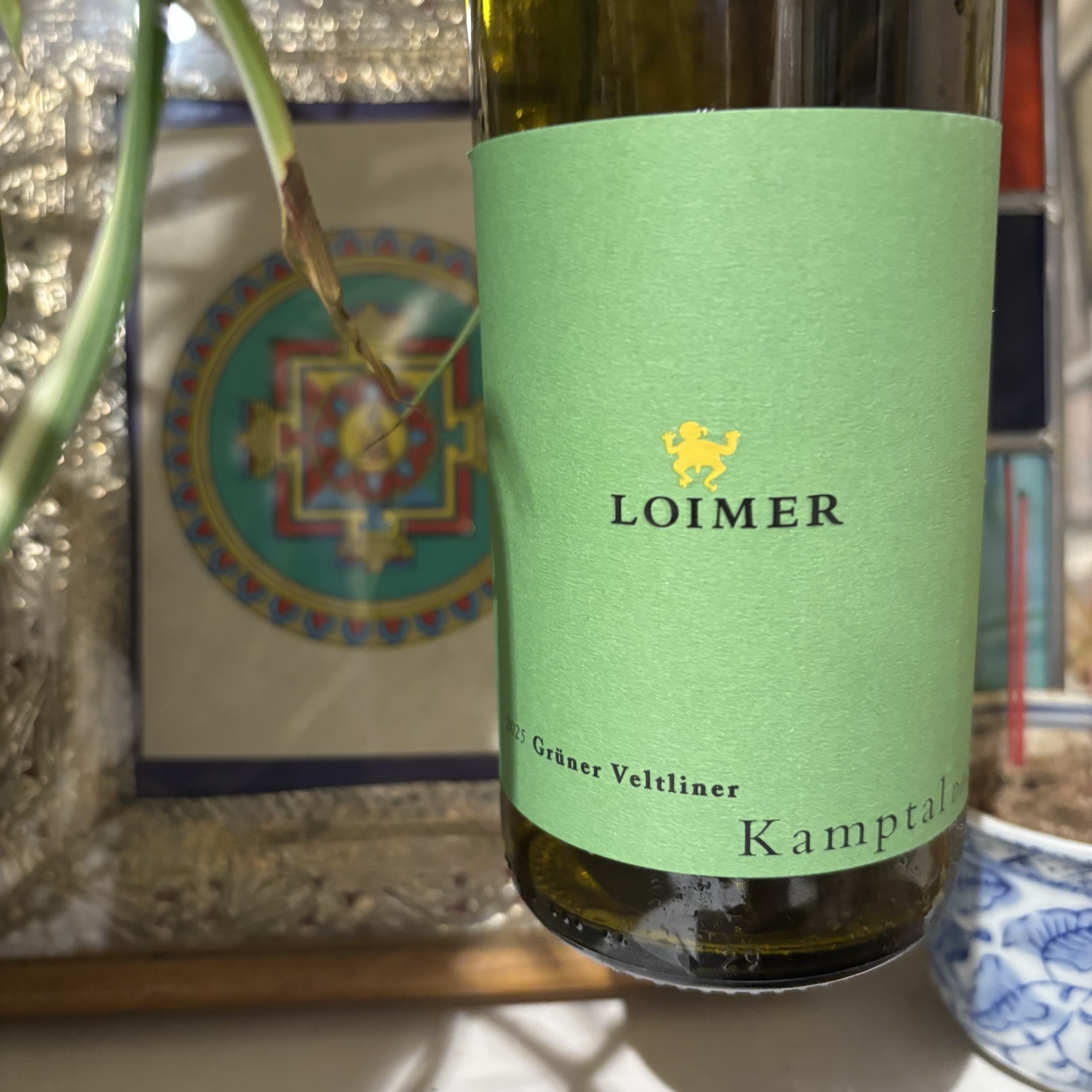
Grüner Veltliner 2025, Weingut Loimer (Kamptal, Austria)
A very long time ago, decades in fact, Fred Loimer’s wines appeared on the UK market, brought in by the same importer they have today. I’m not sure they yet have quite the profile they deserve among younger drinkers, although they often get a nod in more conservative places. But that’s the thing. These wines should appeal to younger drinkers.
Fred took over his family’s vines around Langenlois in 1997, when our awareness of Austrian wine was spreading east, beyond Wachau, to the rivers Krems and Kamp. Since then, he has pretty much led a rejuvenation of the status of these slopes, mostly on rivers that flow south, into the Danube. Biodynamic certification came in 2006.
The soils here are mica-schist and the wines, whether a result of this terroir or not, seem to have vibrancy and zip. This young, entry-level, Grüner is light and both of those things. It’s a “regional wine”, blended across the estate. It’s made in stainless steel but even these grapes undergo a meticulous sorting before hitting the tank.
Aged on lees, we get lemon zest and white pepper on the nose, the palate showing lime and ginger with texture from the lees. It’s all very clean, not complex, but obviously very well made and not lacking personality, even if there’s a whole ladder to climb up to this producer’s best wines. I rate this as an excellent £20 wine which won’t scare anyone not familiar with biodynamics. £20 is exactly what it cost from Lockett Brothers via importer Liberty Wines.
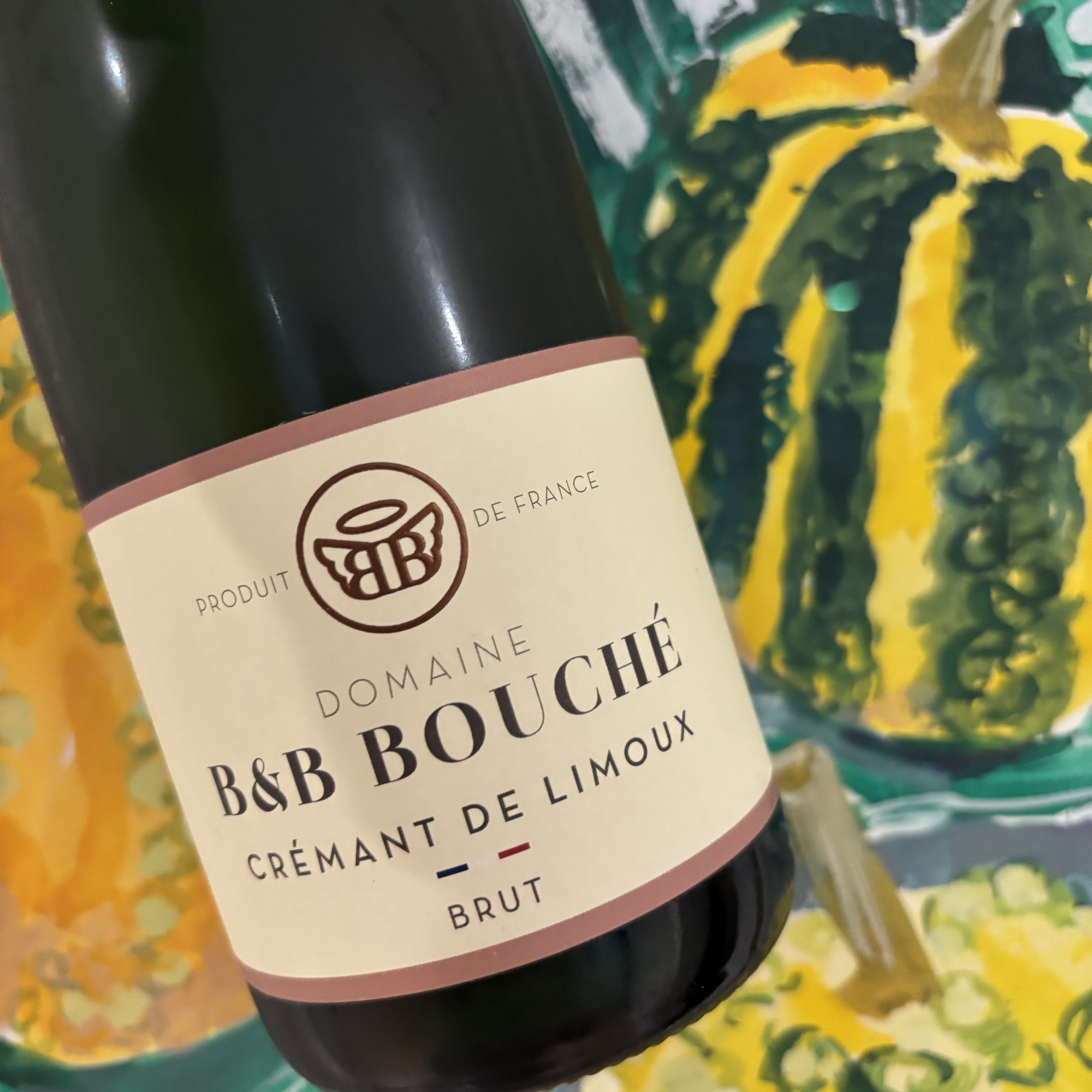
Crémant de Limoux Brut NV, Domaine B&B Bouché (Languedoc, France)
Limoux sits in the very west of Western Languedoc, where sea breezes have created a terroir of green hills far from the hot vineyards many imagine when they think of this part of Southern France. Still wine is increasingly made here, but the appellations in the region were initially based on sparkling wine. These are Blanquette de Limoux, made from the autochthonous Mauzac, and the more recent Crémant de Limoux, which is usually closer to our idea of Traditional Method sparkling wine.
This is the family domaine of a former Champagne producer, of which a number have migrated to Limoux. They arrived back in the 1980s, settling at La Digne D’Aval, directly west of the town of Limoux itself. Their traditional method Crémant is made using the prescribed varieties for the appellation, being Chardonnay (in this cuvée, 50%) with Chenin Blanc (30%) and Pinot Noir (20%).
It isn’t a complex sparkler but it has a gentle mousse, and a yeasty bouquet with baked apple. There’s a bit of depth and softness on the palate and I think it works with food as well as an aperitif, given its rounded fruit and baked bread flavours. Limoux claims to be the oldest production zone for sparkling wine in France. It might not hit the heights of the best Champagnes, but this bottle does prove what good value can be found in the Crémant category. Especially as you need to be lucky to find Champagne worth paying extra for at less than £55 a bottle these days.
Again, from Lockett Brothers who have it on the shelf for £18. This time, I’m not sure who imports it. There’s also a Rosé version, made just from Chardonnay and Pinot Noir, which I shall try to remember to grab to taste.
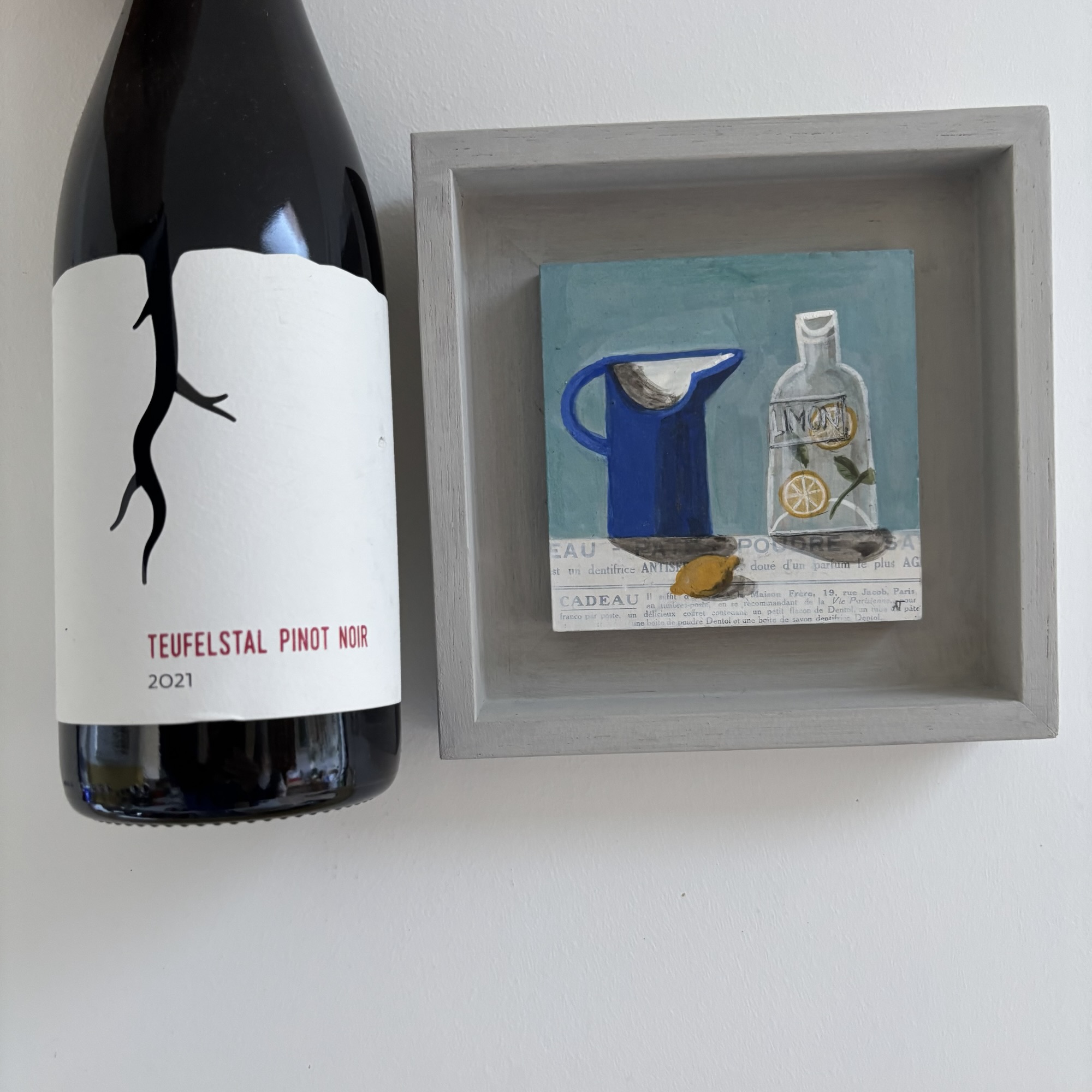
Pinot Noir “Teufelstal” 2021, Vino Magula (Little Carpathians, Slovakia)
I am always impressed with the wines made by the Magula family at Suchá nad Parnou in the Malskarpatská region, and it is rare that a mixed case order goes in to the importer without something from them being included. Indeed, a bottle of Magula is heading to London from me on Friday, their orange wine. The estate was founded back in 1931, becoming organic in 2015, and biodynamic since 2017. Wines are now described as natural.
This wine, which I don’t remember buying before, is a single vineyard Pinot Noir grown on quite unique loess soils close to the winery itself. It spent three weeks on skins in open-top fermenting vats, and was aged in a mix of new and old barrels and amphora.
It has a nice mid-garnet colour, which I like, but the bouquet really hits. Powerfully juicy red fruit plus such intense cherry. The palate combines smooth, juicy fruit with fresh acidity, but grounded with a little tannic grip.
It is an excellent, exciting, multi-faceted wine and I think I’ve found another favourite Pinot Noir to add to my long list of repeat purchases. I think it hits above its price, despite that being £29 (from Basket Press Wines).
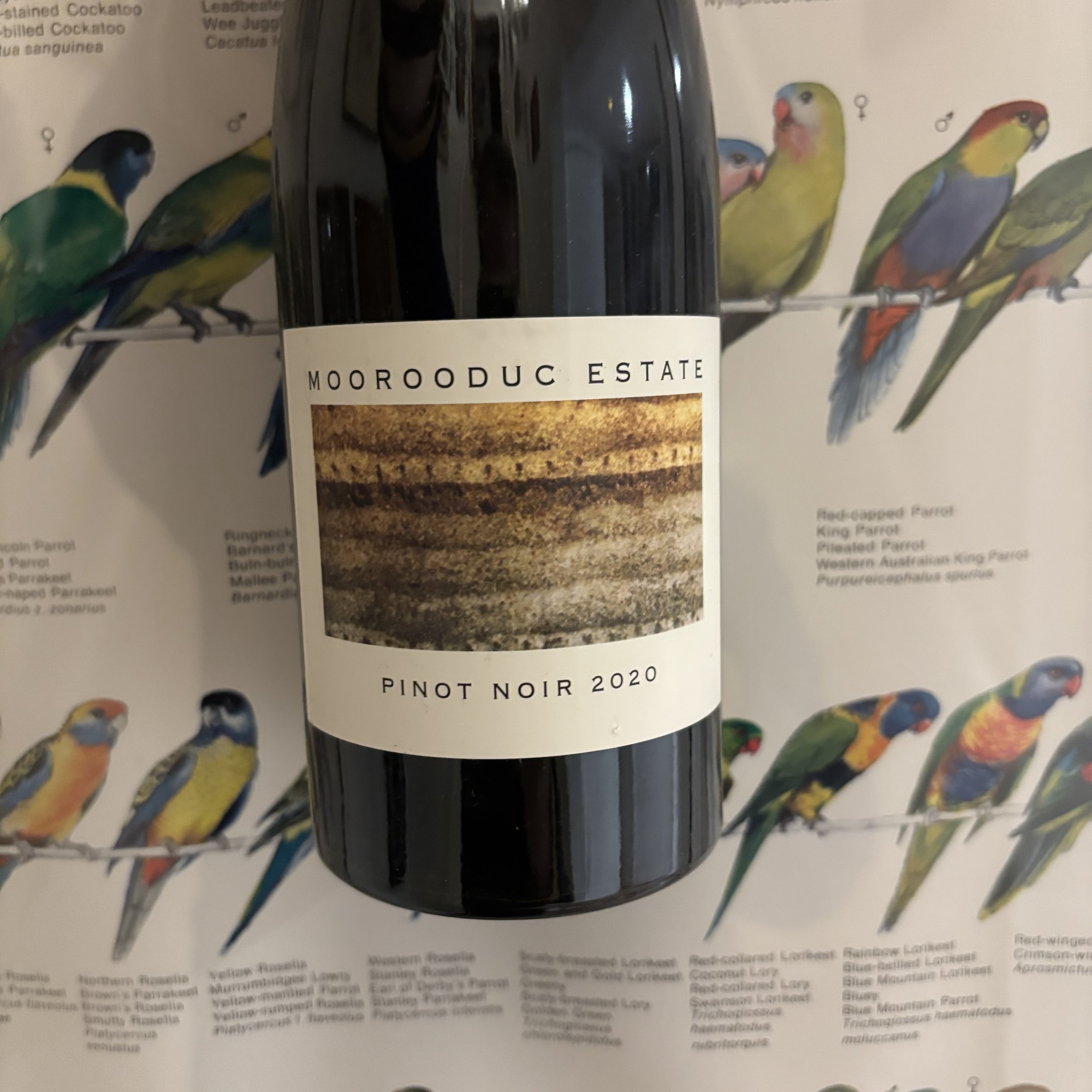
Pinot Noir 2020, Moorooduc Estate (Mornington Peninsula, Victoria, Australia)
Mornington Peninsula, almost directly south of Melbourne, has become especially known for its Pinot Noir, although other grapes are grown with great effect (especially Chardonnay). For Australia it is cool climate, and although some people downplay the maritime influences, it is certainly a region where you get vintage variation. The soil structures differ across the region, from Red Hill’s volcanic soils in the south to the sand and clay loam at Moorooduc, which is naturally where this bottle hails from, the estate being just outside of that village.
Moorooduc Estate was established in 1982 by Richard and Jill McIntyre, pretty soon after the region began to take off and grow, and this is their entry-level Pinot, yet made from 100% estate-grown fruit. It was fermented on natural yeasts, and indeed they say that it is made using natural winemaking, which is actually fairly typical of the region. One that is based on quality, with most estates being small (two-thirds are under 4 ha according to the new edition of the World Atlas of Wine).
The bouquet is rich and smoky, the dominant fruit being cherries. The palate is very smooth, with more cherry fruit (and maybe a touch of lighter raspberry). There’s also a savoury note, perhaps which has come with bottle age. It has good length too. Its 13.5% easily surpasses the previous wine (at 11.5%), and they are very different. As an entry level wine, this lacks the quirky nature and personality of the Slovakian, but it is nevertheless well worth trying (definitely). I’m quite a fan of Mornington wines, especially Kooyong, Polperro and Ten Minutes by Tractor, and, as Jancis et al say in the Wine Atlas, “… [Mornington Peninsula] is one of Australia’s most rewarding sources of handcrafted wine”.
£28 from Solent Cellar (Lymington) and imported by Tamar Selections.
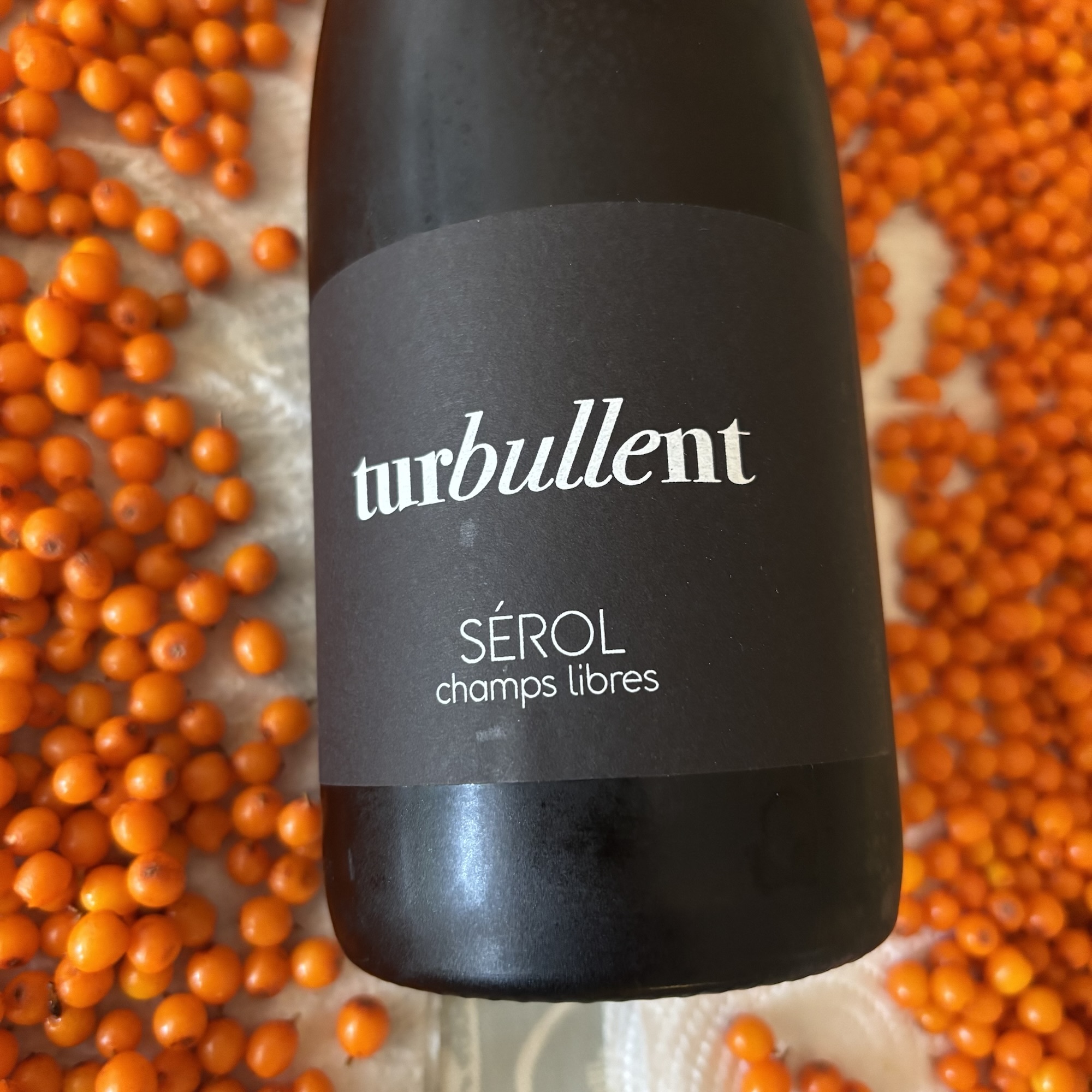
“Turbullent” Vin Mousseux Gamay Rosé Brut, Domaine Sérol (Côte Roannaise, Upper Loire, France)
The Côte Roannaise, like St-Pourçain, Côtes d’Auvergne, and du Forez are difficult to pin down, regionally, but in terms of river systems, all four sit in the Upper Loire, albeit at some distance from that river’s more familiar appellations (although the Loire in its upper reaches does skirt the Côte Roannaise). However, in a genius move these four tiny vignobles have hit upon the idea of grouping together as “Volcanic Loire”. Anything volcanic is only going to be a positive when it comes to marketing wine these days.
Domaine Sérol is at Renaison, pretty much bang in the middle of this thin appellation. They are about sixty miles from Lyon. They make biodynamic wines and are seen as one of the leading estates, perhaps the leading estate, in the region. Vines are grown up at over 500 masl and are protected by the chain of volcanos that run down France’s spine here. So, we don’t need to explain the soils. Generally, vines are grown at higher altitudes than in Beaujolais, over the hills to the east, and the Gamay clone is different.
This is an Ancestral Method pétnat made from the specific “Saint-Romain” clone of Gamay found here. It has a fine mousse and a nice, delicate, pink colour. The fruit is good, though quite linear, and is all redcurrant and raspberry. Acids are crisp although it seems just a tiny touch off-dry. It does have bags of energy. This was my second bottle of the summer (I’d discovered it away from home and then bought another bottle). It was every bit as thirst-quenching and excellent as the first.
Purchased from Solent Cellar but not surprisingly they’ve been cleaned out. I think it was only around £20. The Wine Society also listed it, and I know this because I bought a Sérol still Gamay from them, which I’m yet to open.