For Part 2 of the wines we opened at home in September we have another nice varied selection, although all European wines this time. We start in the far south of Baden, then hit a windy vineyard in the middle of England. Southwest France is followed by Czechia, and then by Jura, before we come to rest in Spain’s Basque Region. Five whites and a pink. It seems incongruous almost, writing about these wines on the exact day I’ve gone for that inevitable extra layer (it’s dull and our 12 Degrees “feels like 8”). But oh, what a glorious summer we were blessed with here in Scotland’s Central Belt.
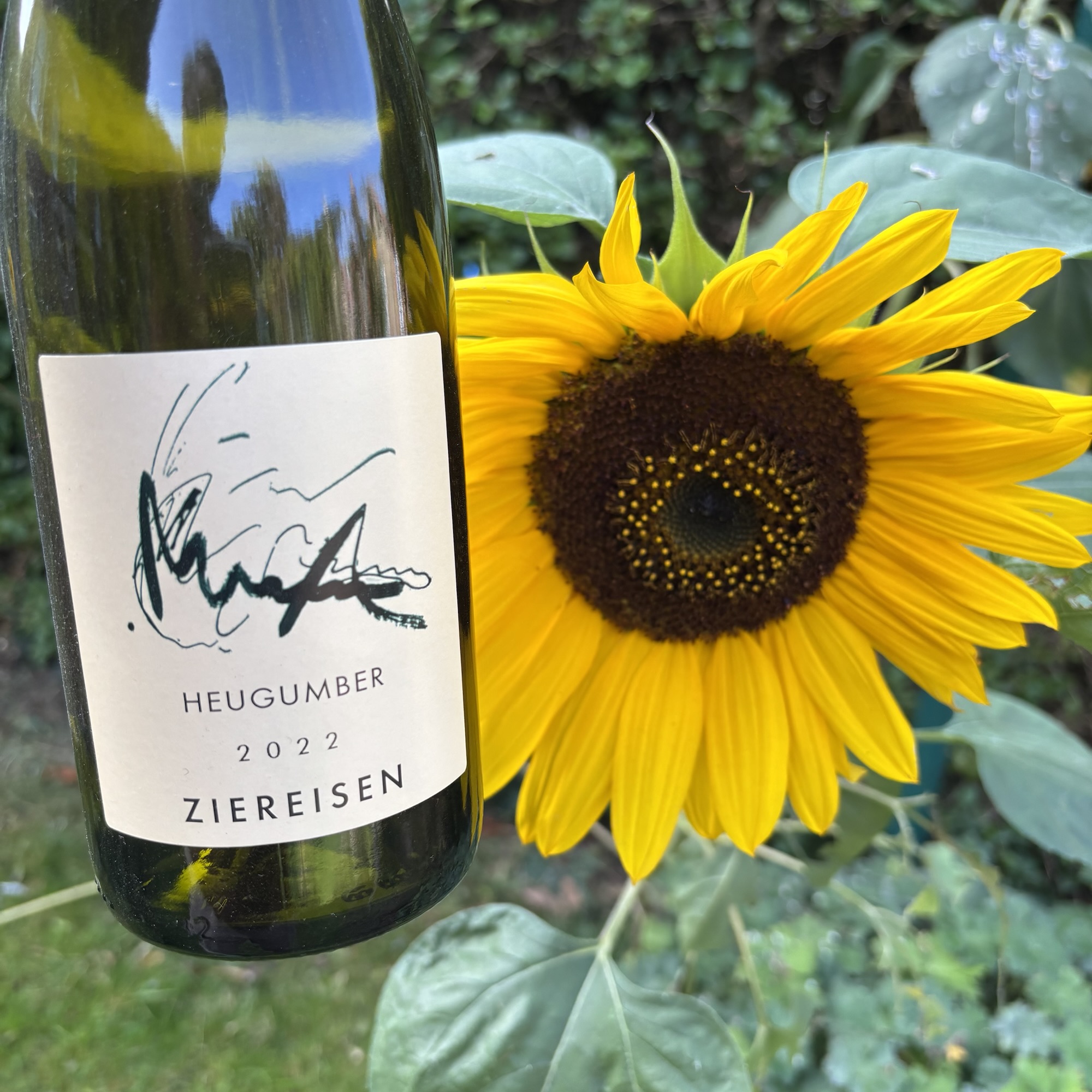
Heugumber 2022, Ziereisen (Baden, Germany)
Many of you will know that Hanspeter Ziereisen is one of my favourite German winemakers (because I probably mention it every time I post about one of his wines). However, it is an inescapable fact that here, as with rather a lot of “favourite” producers, my post-Brexit, post-Covid, post-Truss crash consumption of their wines has inevitably slipped down their hierarchy, as prices and income have diverged in the wrong direction.
The Markgräflerland where the Ziereisens are based (at Efringen-Kirchen) is very close to the Swiss border, surrounded on most sides by the beautiful forests here, which protect the vines from strong winds. But being close to Switzerland, it might not be too much of a surprise to find Chasselas in the vineyards, except that here they call it Gutedel.
I also keep reminding everyone who will listen that my favourite Chasselas in the world is the one made by Hanspeter which sits along with his other finest cuvées, labelled Jaspis. This wine here is very much entry level, but as we know, you won’t find a top producer making much that isn’t worth buying. This bottle saw the usual Ziereisen care. Handpicked grapes were pressed into wooden vats and fermented on indigenous yeasts on skins. The wine saw 20 months on lees before bottling.
We have delicious fresh lime acidity in a natural wine that’s purpose is to be super-tasty and refreshing. It will actually keep, and certainly this 2022 was very fresh. If you are sniffy about Chasselas, or read some wine guru being a little condescending about it, just give this a try, though maybe on a warm day rather than one like today.
I bought this from The Wine Society for only £14. The importer for Ziereisen, which will be a source for their finer wines, when you explore further, is Ripley Wines.
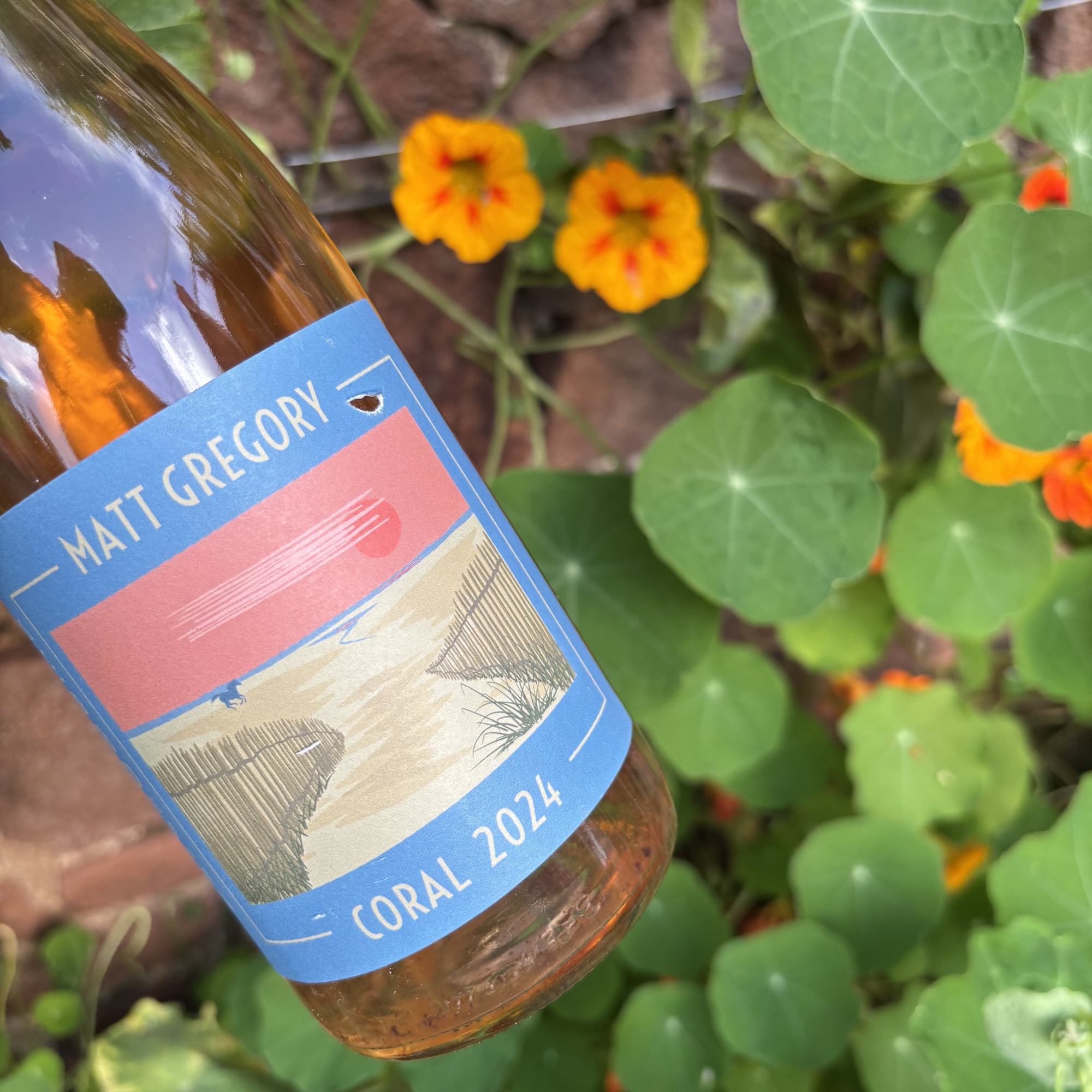
Coral 2024, Matt Gregory (Leicestershire, England)
Matt is one of the English winemakers who appears most on my site, and I guess that has a lot to do with the fact that he’s in a select bunch of boundary-pushers who, from the fringes of English and Welsh wine have been pioneers in all sorts of ways. That could be for natural wine, grape blends, and certainly in Matt’s case, pursuing organic viticulture and making natural wine in the wet and windy Wolds of Leicestershire, where it must be said that the wind does at least blow away nascent funghal diseases.
In 2024 Matt made this delicately-coloured Rosé from a blend of Pinot Noir and Pinot Gris, and I should mention that whilst this blend has now become pretty common among young producers in France, especially Alsace, Matt has certainly championed it in the UK. The mix here is 60% PN and 40% PG.
Around 15% of the fruit was destemmed, the rest direct-pressed, with the pressed juice being put over the whole berries. Fermentation took place in a 500-litre barrel after which it spent nine months in neutral wood followed by eight months in bottle. By this time a wine with only 8.5% alcohol has, one hopes, sufficiently reduced acidity to hit the shelves…I am guessing, from personal winemaking experience (I’ve found it took a couple of years for my former Sussex Frühburgunder to become pleasant). In any case, the wine is zippy and fresh, fruit redolent of both red berries and cooking apples, but there’s something else.
This wine is the essence of delicate. Fragile, even, although the spine of acidity is firm enough to hold it together and the fruit does add some flesh. The acidity is like a thin branch and the fruit sits like delicate buds upon it, fragile to a late spring frost. This kind of wine is more common in England now than it used to be. It makes a natural drink from something which in the past would have been chaptalized. You either appreciate it on its own terms, or you go and grab a bottle of Whispering Angel off the supermarket shelf. It’s a wine with the personality of place. A gift from a tough vintage, and only 934 bottles were made.
Long gone now, but Matt’s wines can be had local to me at Spry Wines and Communiqué Wines in Edinburgh. His UK agent is Wines Under the Bonnet.
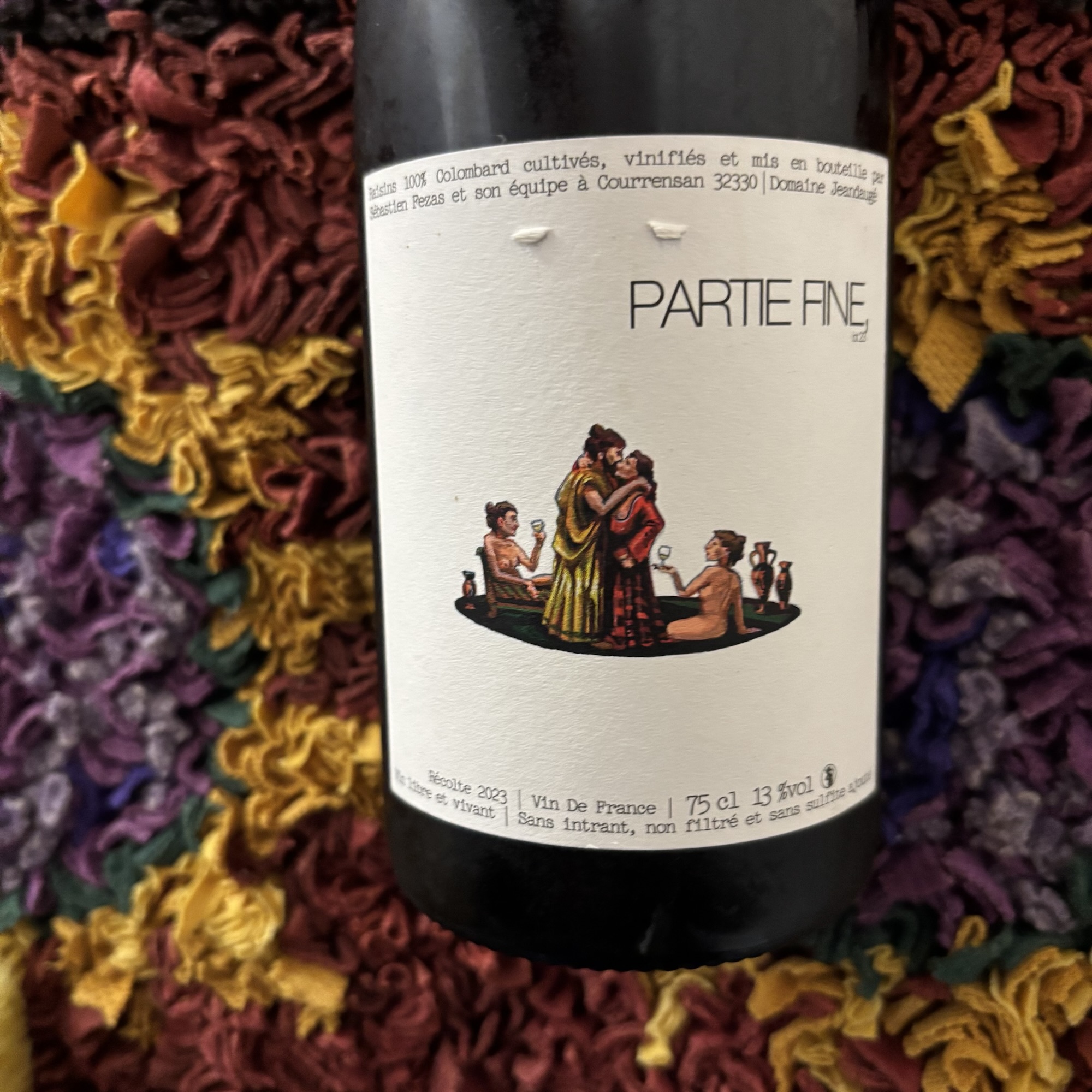
Partie Fine 2023, Domaine Jeandaugé (Gers, France)
I was in the Gers earlier this year and I’ve told the story before of how I was recommended a wine made by Sébastien Fezas at Domaine Jeandaugé in a local wine shop in Lectoure. That wine, a sous-voile Chardonnay, was absolutely fantastic, but as it turned out I’d had the last bottle. As I went back but couldn’t get more before leaving for home, I brought this home with me instead.
The domaine is at Courrensan, not far from Condom. This wine is made from Colombard (100% despite some web sites suggesting it is a blend), and it is 100% natural wine, including zero added sulphur. The fruit is grown biodynamically, and ageing is on the lees. The wine therefore has an explosive bouquet of lemon, grapefruit and white flowers, but the palate is even finer. There’s even more lemon and grapefruit here but nicely layered with a mineral texture. Mouthfilling! The alcohol is up at 13% so this is no light wine, but it does have a delicacy, and an electricity.
This is another superb wine from Sébastien Fezas. It was also half the price of the Chardonnay, at 12€. I have since found out that Les Caves de Pyrene lists some of his wines, which I’m very glad to hear. I’m wondering how to get some.
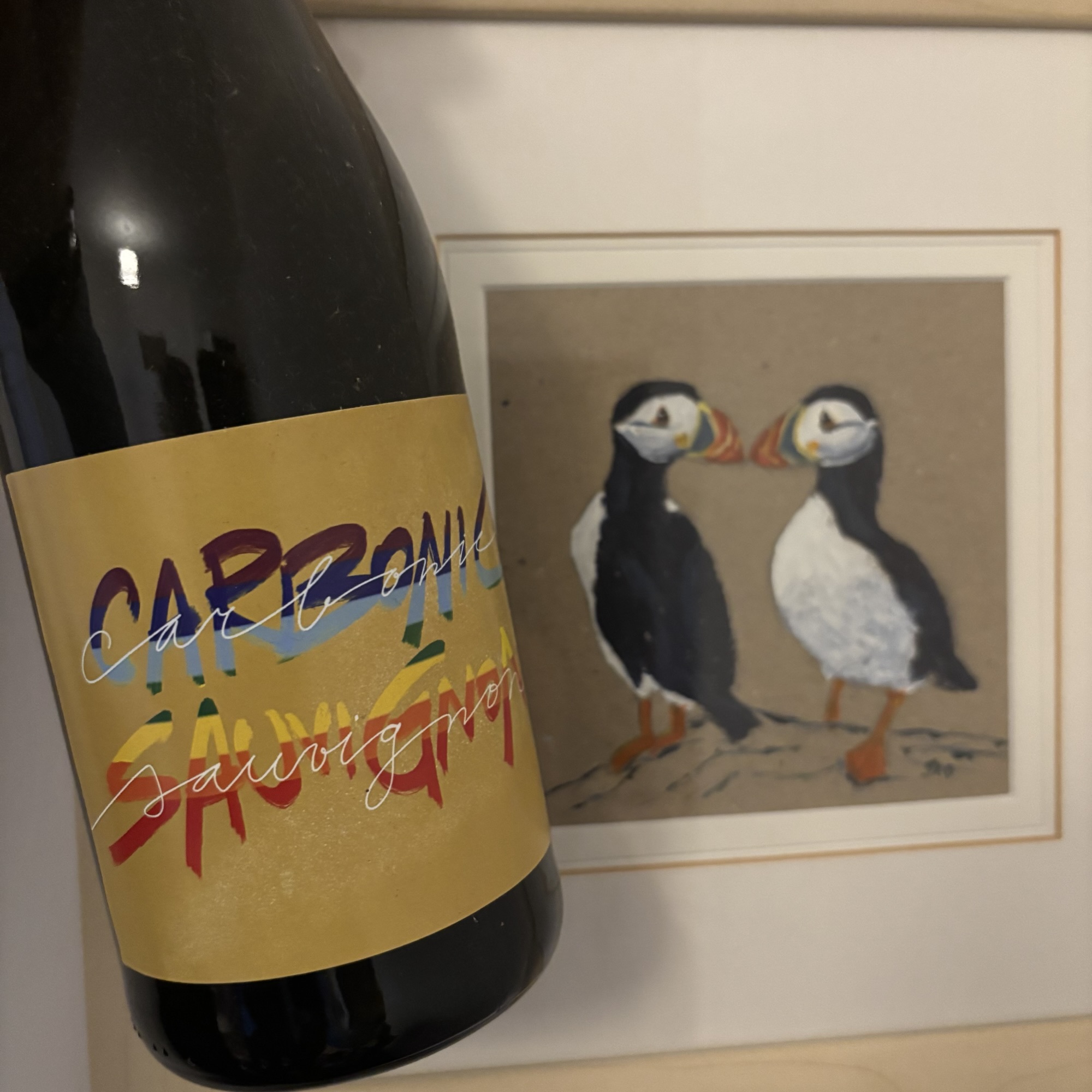
Carbonic Sauvignon [2023], Petr Koráb (Moravia, Czechia)
Petr Koráb, based in Boleradice, is one of the most restlessly innovative winemakers I’ve ever had the pleasure to visit. Many of his exciting cuvées only get one vintage. He says he does what the grapes tell him to do with them, and they must be as restless as he is. However, when I posted a photo of this bottle on IG when we drank it, he did message that he is currently working on the next version of Carbonic Sauvignon.
What we have is a sparkling Sauvignon Blanc, made by the Ancestral Method. A whole berry/carbonic fermentation precedes maturation in a mix of robinia wood and a ceramic vessel, before going into bottle. The colour is quite unexpectedly golden, but it is fresh on the nose with mostly apricot fruit. The palate was more complex, spiced pear with a savoury note. It’s a wine that challenges, and is all the more exciting for it. It shows Petr at one of his furthest points off-piste in a while, which is where he seems to like to take his petnats.
The adventurous will be stimulated. This bottle came from Koráb’s UK importer, Basket Press Wines.
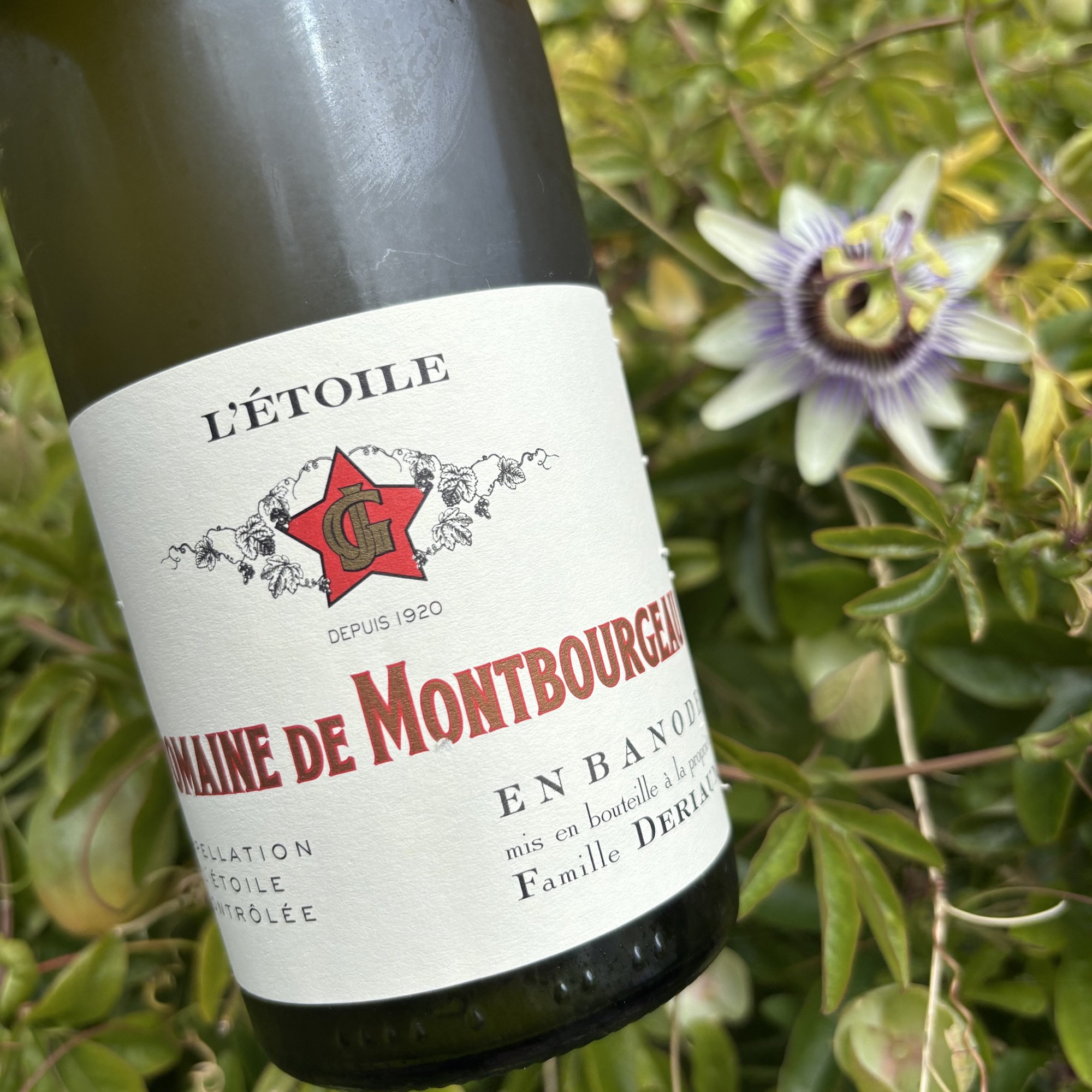
L’Etoile “En Banode” 2019, Domaine de Montbourgeau (Jura, France)
L’Etoile is a small Jura appellation between Poligny and Lons Le Saunier, and just south of Arlay. When it became AOC in 1937 the three villages included within it were best known for their sparkling wines, but today still white wine leads the way, and Domaine de Montbourgeau is the appellation leader.
The domaine is now run by the next generation, César Deriaux and his elder brother Baptiste. When César took over winemaking in 2019 he converted the vineyards to organics, though certification was only sought from the 2026 vintage (according to Wink Lorch, Jura Wine Ten Years On, 2024). However, this has long been a producer of natural wines, and the practical approach here is only to use sulphur if absolutely necessary, and then as little as possible.
The domaine tends to sell most of its wines labelled by vineyard, and En Banode is a site planted in 1970 on marnes gris, with half-and-half Chardonnay and Savagnin. The fruit was harvested together and co-fermented in foudre, and then aged twelve months in barrel, without topping up, with flor developing (sous-voile). The bouquet is of apple and zesty lemon, as is the palate, which adds in a bit of oxidative ageing, walnuts and bags of salinity. It has great length, and it would clearly age longer if you have the patience.
My philosophy is this: age Vin Jaune and some of those sous-voile Savagnins people call a “mini-Vin Jaune” as long as you can, but otherwise, enjoy the freshness, especially in these lovely Savagnin/Chardonnay blends.
This was a mere £25 from The Wine Society. Seems a bargain to me, because you’ll not find Montbourgeau at that price now. This is NLA, but they did have magnums of the 2022 for £63 last time I looked, which fluid ounce for ounce is still a bargain.
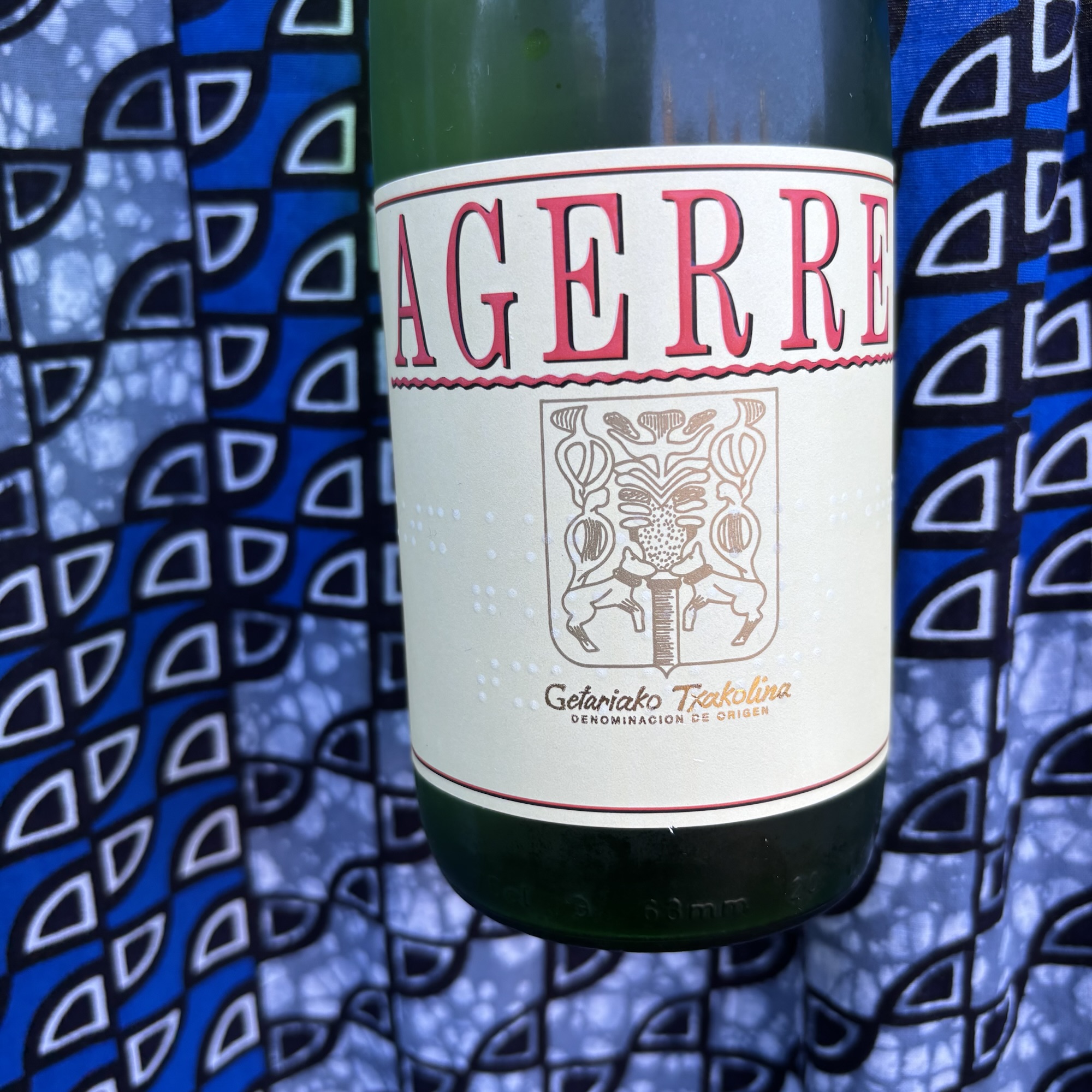
Getariako Txacolina 2025, Bodega Agerre (Basque Region, Spain)
This is a 15-hectare estate in the hills overlooking Getaria, above Donostia/San Sebastian. Apparently in Basque, the place where they make Txacoli isn’t a bodega but a txacolindegia, but I thought you’d be nonplussed if I used that above. Owned by the Ostolaza family, it is currently run by third-generation winemaker here, Emilio Agerre. This traditional Txacoli is made wholly from Hondarrabi Zuri, the major autochthonous variety of the region. The vines are planted on steep slopes and are aged between 20-to-30-years old. They are trained around two metres off the ground to compensate for the humidity, in a relatively warm but wet region and with sandy soils that trap moisture.
Fermented using indigenous yeasts in stainless steel, this wine is dry with crunchy green apple on the nose, and joined on the palate by grapefruit and lemon. The result is a real thirst-quencher of a wine. At 11.5% alcohol, it lends itself well to drinking out of a beaker glass rather than a Zalto, although I’d not go as far as pouring it from a great height as the locals occasionally do for the tourists (mind you, you can’t see me using a sabre to open a bottle of Champagne either, can you?). It has the expected Txacoli mild spritz, which is light and not sparkling, but rather prickles the tongue, adding to the refreshment.
This is no wine of the year contender, but we expect too much from every wine we drink if that’s what we are looking for. Give a wine a break. This is just perfect for those persistently hot and sunny days you southerners have been enjoying (or was it enduring?) over this past summer.
£17 from Lockett Brothers up near me, but widely available through importer Liberty Wines.