
Charles Taylor (World of Fine Wine 47) writes a fine article on contemplation and fine wine. The article, though wide in compass, addresses the contemplation of ideas. I don’t have the background in philosophy to comment on Professor Taylor’s article, except to say that it’s both an enjoyable and an instructive read, but I do have the temerity to suggest that there is another way of looking at, and experiencing wine, one which does not require any conscious thought, but is “of the moment”.
“Perception” is as much an extra sense as “umami” is an additional taste. By Perception, I mean a moment in wine that comes out of the blue, but provides an instant of revelation, requiring no contemplative effort. Does such a thing exist, or have I just drunk too much?
Perception leads to understanding, but not in the intellectual sense. What do I mean? Such a thing is not restricted to wine appreciation. It can happen with art, food and other things. Indeed, for some it is applicable to philosophy or religion and it’s more akin to Archimedes’ “eureka” moment of sudden realisation, or perhaps Saint Paul’s Damascene moment for those of a more religious persuasion.
Some reach perception through meditation; I think, when swirling a glass of wine and losing ourselves in its aroma and taste, we can, even if only for a fleeting moment, enter a near-perfect meditative state. It doesn’t always happen, perhaps it doesn’t often happen. We need to be receptive. But sometimes, when that moment arises we are hit with a profound identification both with, and of, what is in the glass.
The wine professional, and maybe the obsessive amateur, find it difficult not to analyse wine, to judge and critique, even those who shudder at the thought of giving points will do this. When our concentration is transferred to writing a tasting note it feels a bit like when we take the camera out and start viewing our holiday through the lens, and cease to see it with our own eyes.
But when we allow the wine to take over (do we “allow” it, or does it wrest control from us?) so that we stop thinking, then we have a chance to perceive. Something more is revealed – not merely fruits and tannins, acidity, sweetness, but something deeper.
All such experiences are naturally subjective. You will not have the same experience as I do, and I will have a different experience with the same wine on a different day. That’s no different to what will happen with analytical tasting. But I still reckon I’m not the only one who has these revelatory moments where you can’t put into words what the wine is saying, nor even into coherent thoughts perhaps.
Professor Taylor takes us back to Kant and Schopenhauer, but he could just as well take us right back to Buddhism. There is relative and absolute truth in all things, so why should wine be an exception? Everything is impermanent, as in Buddhism so in quantum mechanics/physics, so in that respect our interpretation of reality is both perfect and flawed. In our perception of some inner truth within a wine, we see something of necessity impermanent. Yet that doesn’t mean we have a lesser experience.
So, here we are, perhaps somewhat inebriated, and we start to imagine something more in the glass than the mere physical properties this slurry of particles presents. We have a host of data before us to make the wine something concrete – its back story, its terroir, and the science of its winemaking, alongside our WSET-led analysis of sight, smell and taste. All this enhances our personal relationship with the wine, and yet it doesn’t mean the wine will let us in.
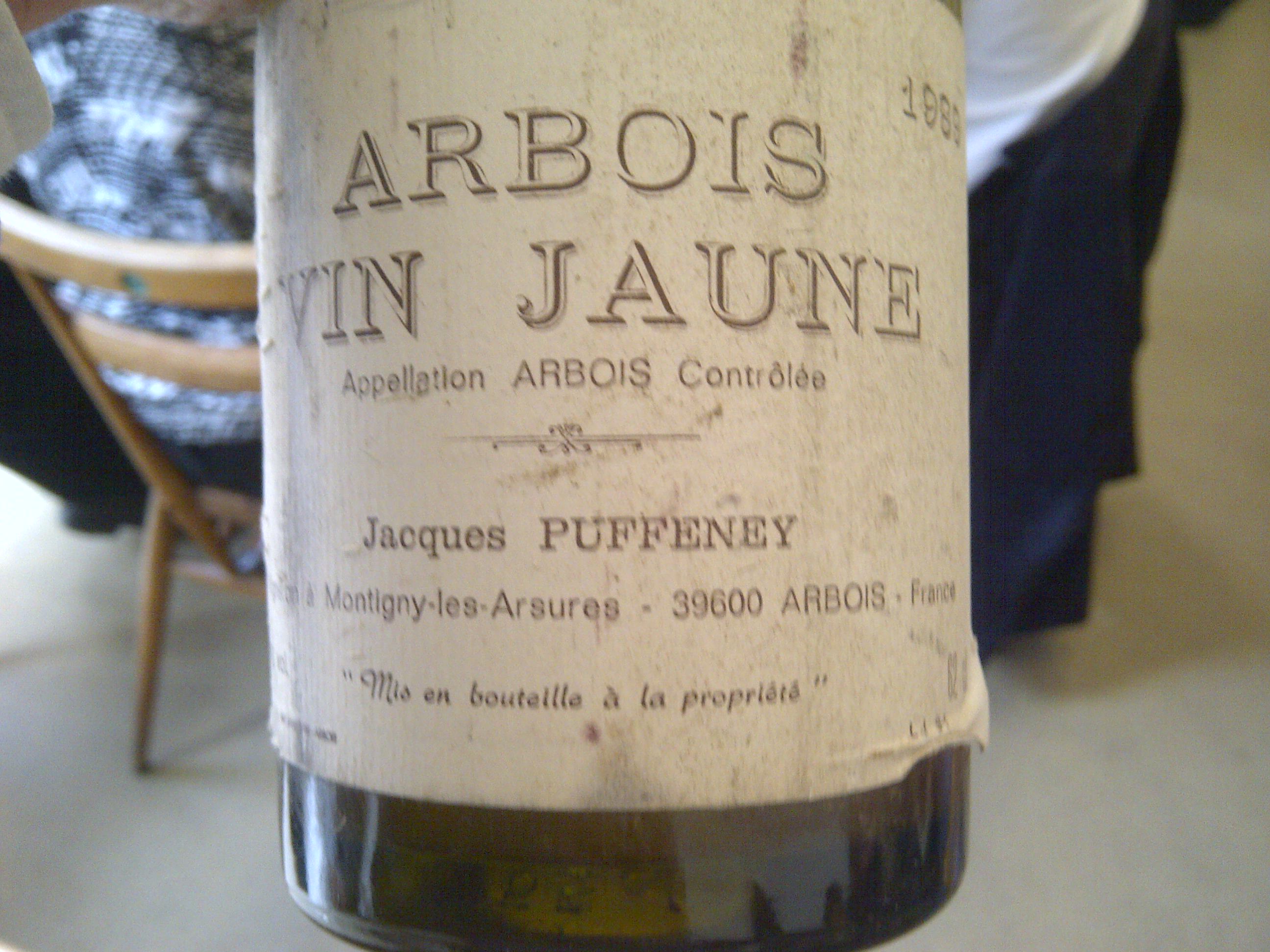
Like any relationship, that which we’re having with this glass can remain shallow, casual, at arm’s length. Or it can grow as we sit with it. Sometimes it can be pure love at first sight (for some their first Latour or SQN, maybe for others a Macle Vin Jaune or just Gut Oggau Winifred Rosé). If anyone has experienced love they well know that the rush of feelings you get cannot easily be comprehended.
Ancient Greek thought describes The Great Chain of Being (the scala naturae or stairway to heaven), and well it might, we believe that Greek philosophers met with Buddhist monks from India and exchanged ideas, and it’s surprising how many ideas in Greek thought seem to have their origins in that philosophical cradle (I love the description, if not the observation, of the atom itself by Democritus – his inability to describe the cause of its motion, criticised by Aristotle, is hardly surprising given what quantum mechanics has discovered) .
Can wine ascend this ladder, along with architecture and the other arts? Can we place the contemplation of wine on this level? Or are we just with the wrong band? The doors of perception, that’s a different thing entirely, a moment of (hopefully not hallucinogenic, it would spoil the wine) clarity which transforms the object in the glass from mere matter to an experience more ethereal, yet not (for me) reaching religious ecstasy. More a profound moment of simple enjoyment. What does it all mean?…apparently there’s a lady who knows! With all our points and tasting notes, that glitter as gold, perhaps just another way to enjoy our passion. Time to stop gibbering and to simply enjoy what’s in the glass.











 David Crossley's Wide World of Wine