My “Recent Wines” articles are usually reserved for the wines we drink at home, but there are of course exceptions. One such exception, as you will discover at the end of Part 2, is for a special bottle from my cellar taken to dinner elsewhere. Another, as with the first two wines here, is when I buy a bottle (or two, in this case) on holiday. They are both wines from Ronda in Andalucia, and well worthy of inclusion on account of their quality as well as the fact that such wines are rarely sighted in the UK (as far as I know, although Miguel Crunia or Ben Henshaw might tell me I’m wrong).
For the rest of Part 1 we bounce around like the proverbial pinball between Burgenland sunset, Salento (but not what you might expect), Kent and Moravia. None of these four, come to think of it, are necessarily what you might expect, all being quite singular expressions of their respective terroirs.
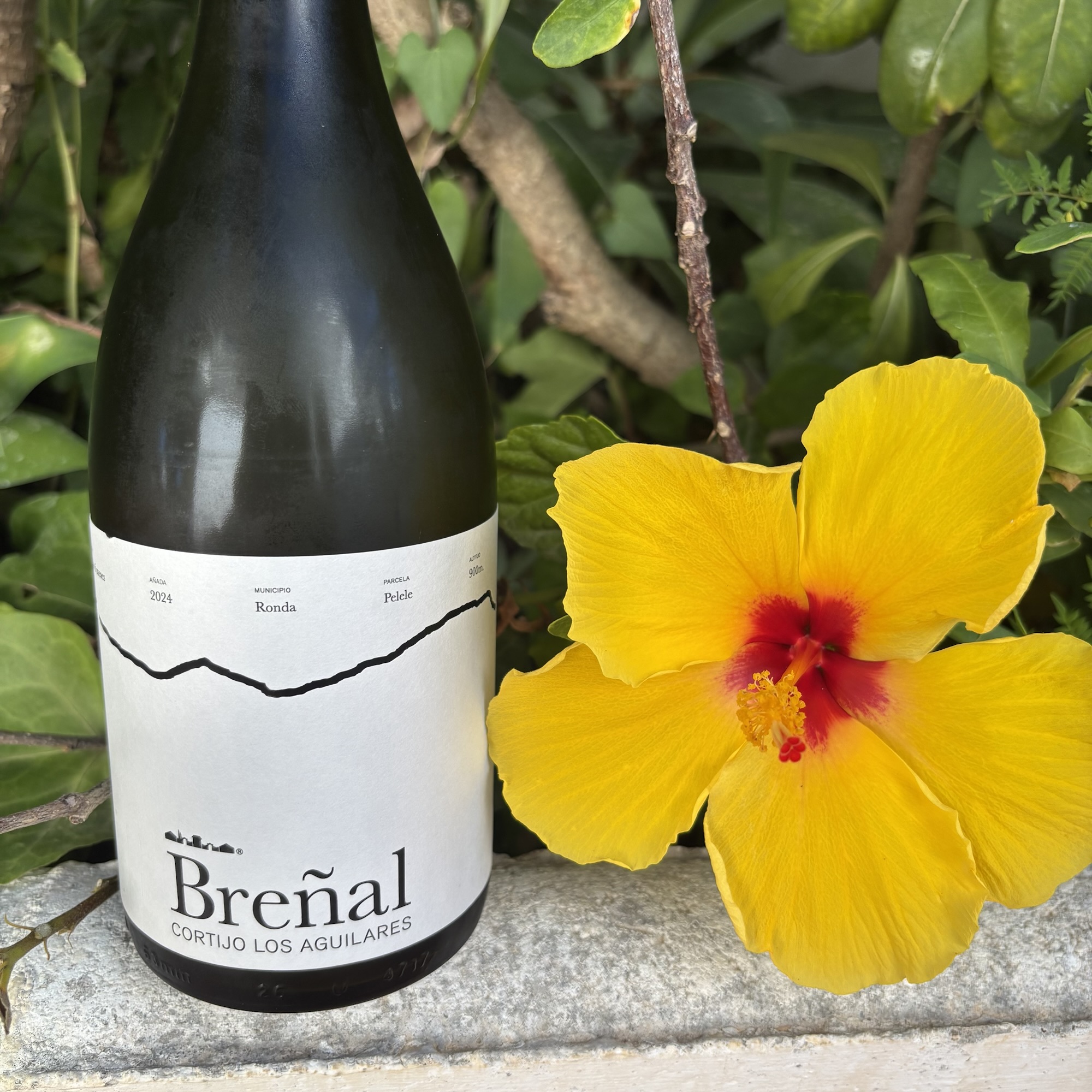
Breñal 2024, Cortijo Los Aguilares (Andalucia, Spain)
This is an unusual blend of Garnacha Blanca, Viognier and Vigiriega (slightly better known as Vijariego Blanco or Diego in the Canary Isles). It comes from Ronda and is bottled under the Sierras de Málaga DO. The vines sit up at 900 masl in a single parcel called “Pelele”, which is the estate’s highest altitude site. Despite the heat of the plains the significant diurnal temperature shifts which the altitude affords mean the wines have a freshness which you certainly don’t get from vines grown at lower levels.
That freshness is enhanced by the wine seeing six months ageing on lees. You are initially struck by very nice aromatics of pear along with a chalky lees element which appears on the nose as well as the palate, where you also find mountain herbs. The texture gives a sense of terroir, however connected (or not) these two elements are.
This is a family bodega farming around 25 hectares of mountain vines. They work within a diverse ecosystem of oak forest and mountain flora. This is not declared as a natural wine, but the family do seem to have a strong affinity with the wider terroir and there is no doubt that this tastes like a mountain wine. It’s interesting that I mentioned the Canaries in relation to Vigiriega. That grape variety plays third fiddle in this wine, yet if I had to search for something as a benchmark, I’d have said the wines of Tenerife. It is worth noting that the alcohol hits 14% but it doesn’t make the wine heavy.
This was purchased in the excellent Birdie Vinos wine store which a friend took us to at Mijas Costa (near Fuengirola). It cost 29€, which, like the Gascon sous-voile Chardonnay I fell in love with (see May, Part 1), was expensive locally, but I regretted not one cent. Very good indeed.
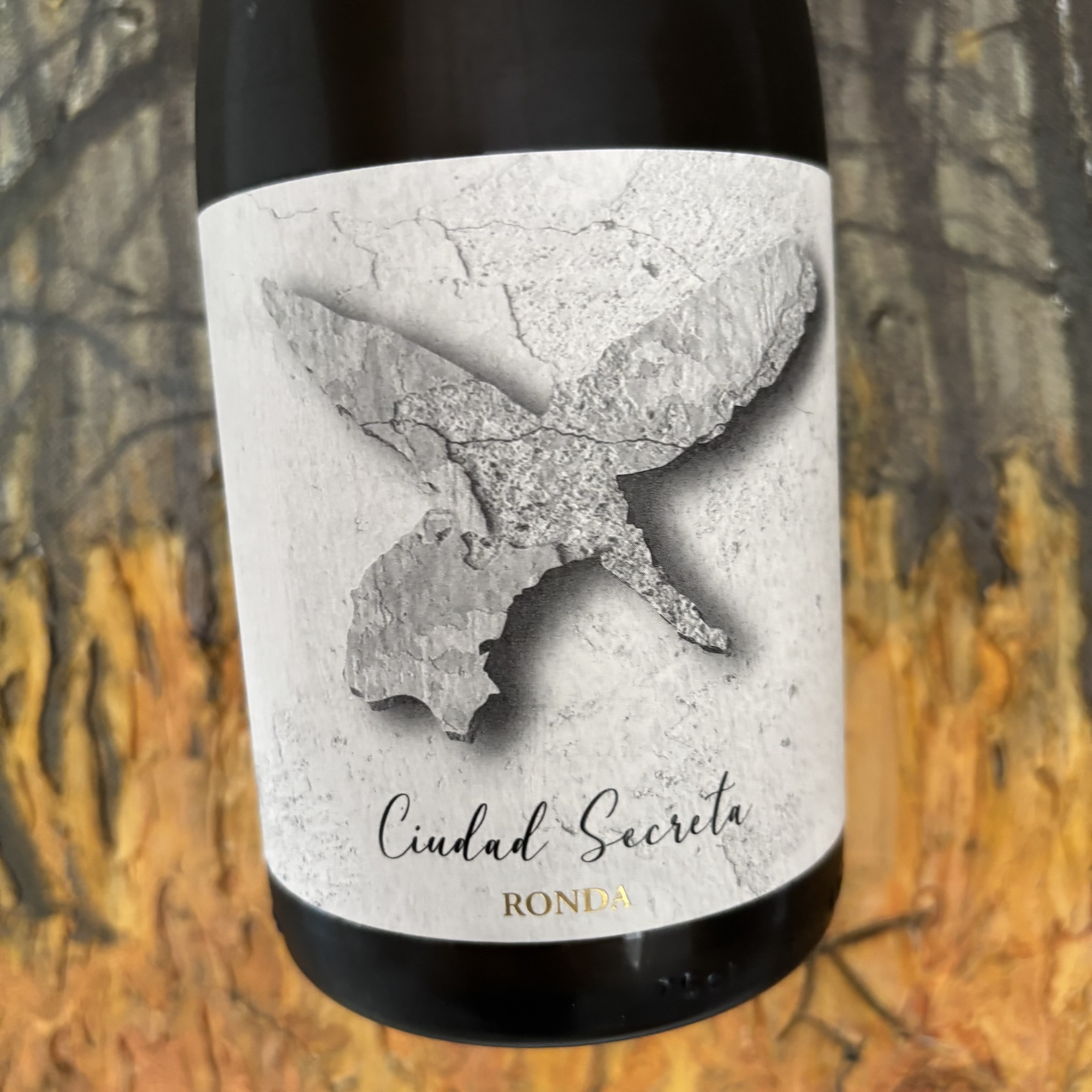
Chardonnay Ciudad Secreta 2024, Bodega Doña Felisa (Andalucia, Spain)
A second bottle from the Sierras de Málaga DO. The bodega is owned by Gema Alonso Araico and her husband José Mária Losantos Hernando, but it is now run by their daughters. The bodega was founded in 1999, with five hectares of vines. The soil here is mostly clay-loam and the vineyards are surrounded by three “natural parks”. The philosophy is to integrate viticulture into the natural environment. All work in the vineyard is done by hand.
This Chardonnay comes from a site at 1,000 masl, where they trellis the vines rather than leave them as bushes, as you will usually see with the autochthonous varieties in the region. Hand-picked into small boxes, the grapes undergo a serious sorting and are taken swiftly to the winery. The grapes see a 24-hour maceration before fermentation and three months ageing in concrete eggs.
The bouquet has a vanilla streak with a nutty undertone and then something quite buttery coming through. That sounds like oak, but no, the real “freshness” and edge given by the concrete egg builds as well. The palate is dominated by freshness and a texture which, though not dominating the wine, is ever present, alongside more nuts (hazel?) and citrus.
This bottle also came from Birdie Vinos (see above), but was half the price of the Breñal. Naturally, what interested me, when chatting to staff there, was the use of concrete eggs because it showed a sense of experimentation. It made for an interesting wine, especially for 14€ (which is a couple of Euros cheaper than the winery sells for online). But bear in mind that a lot of people around there probably look to spend a lot less than 14€ on a bottle to drink at home.
Both of these two Ronda wines are bottles I’d happily buy again, in Spain or in the UK. I drank a few other wines when in Spain, including some local Moscatels from Malaga and Ronda, very nice, but these are the two bottles I chose to include here.
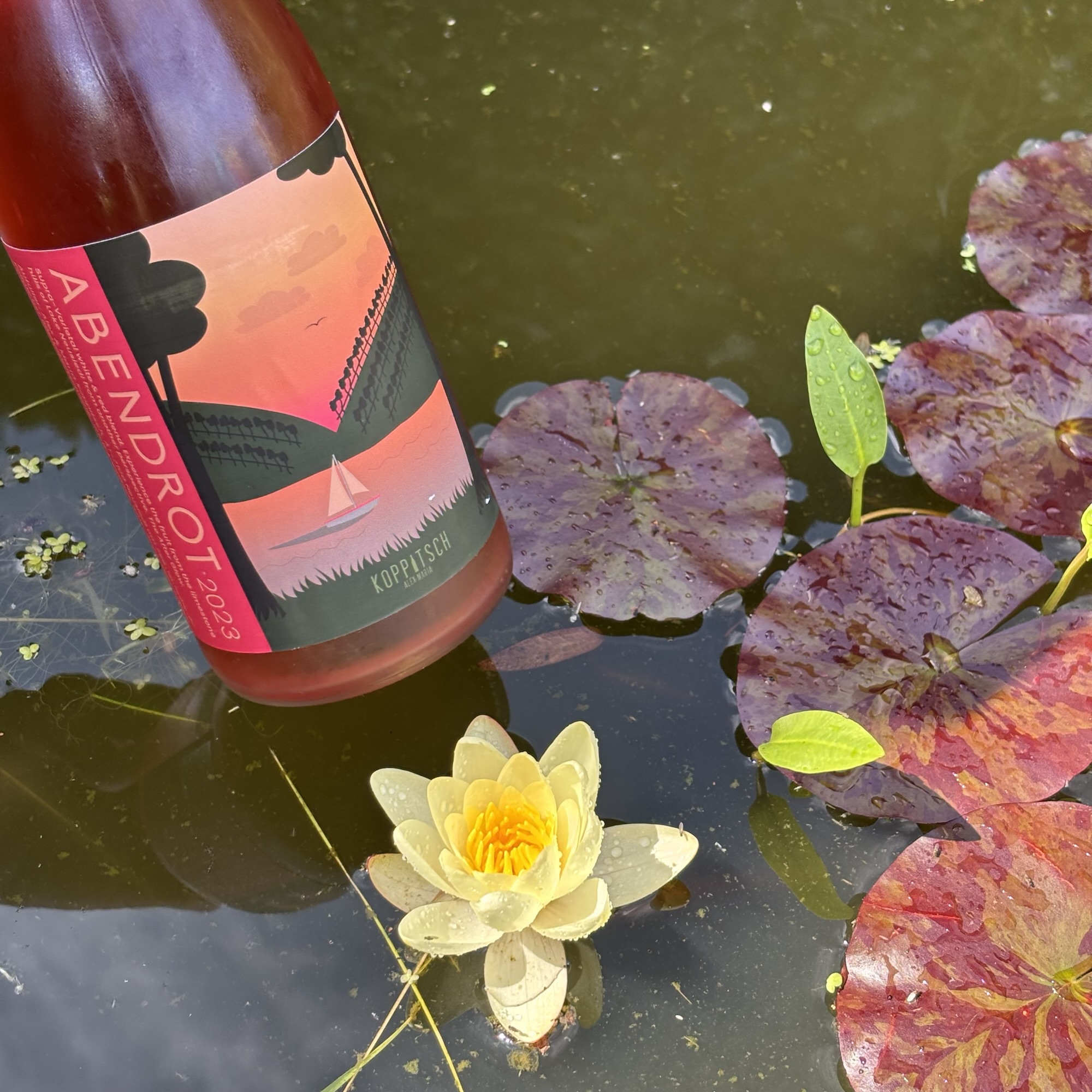
Abendrot 2023, Alex and Maria Koppitsch (Burgenland, Austria)
This is a light red blend from Alex and Maria’s vineyards by the Neusiedlersee, their winery being located, appropriately enough at Neusiedl-am-See, not far from the lake’s northern tip. It’s a co-fermentation of Welschriesling, Chardonnay, Rosenmuskateller, St Laurent, Blaufränkisch and Syrah. The fruit is grown using biodynamics and it is a natural wine with zero added sulphites. Ageing on fine lees takes place in used barriques in this case.
The bouquet is a mix of red fruits (raspberry and redcurrant) with, for me, rhubarb. All of these are mirrored on the palate, along with a citrus note somewhere between lemon and orange, and hibiscus. Someone said “white tea”, and I can understand that.
What also really deserves comment is the colour. We get very beautiful sunsets up in Scotland, and this mirrors the best of them. It’s a luminous sunset red with a tinge of orange to it. Beautiful to look at even before you sniff. I first met Maria at a Raw Wine Fair many years ago and instantly liked both her and the wines. I think that Abendrot is perhaps the cuvée which, for me, shows how far they have come in the past decade.
Roland Wines imports Koppitsch into the UK. This bottle was purchased from Cork & Cask in Edinburgh for £22 (but NLA, I may have got the last one).
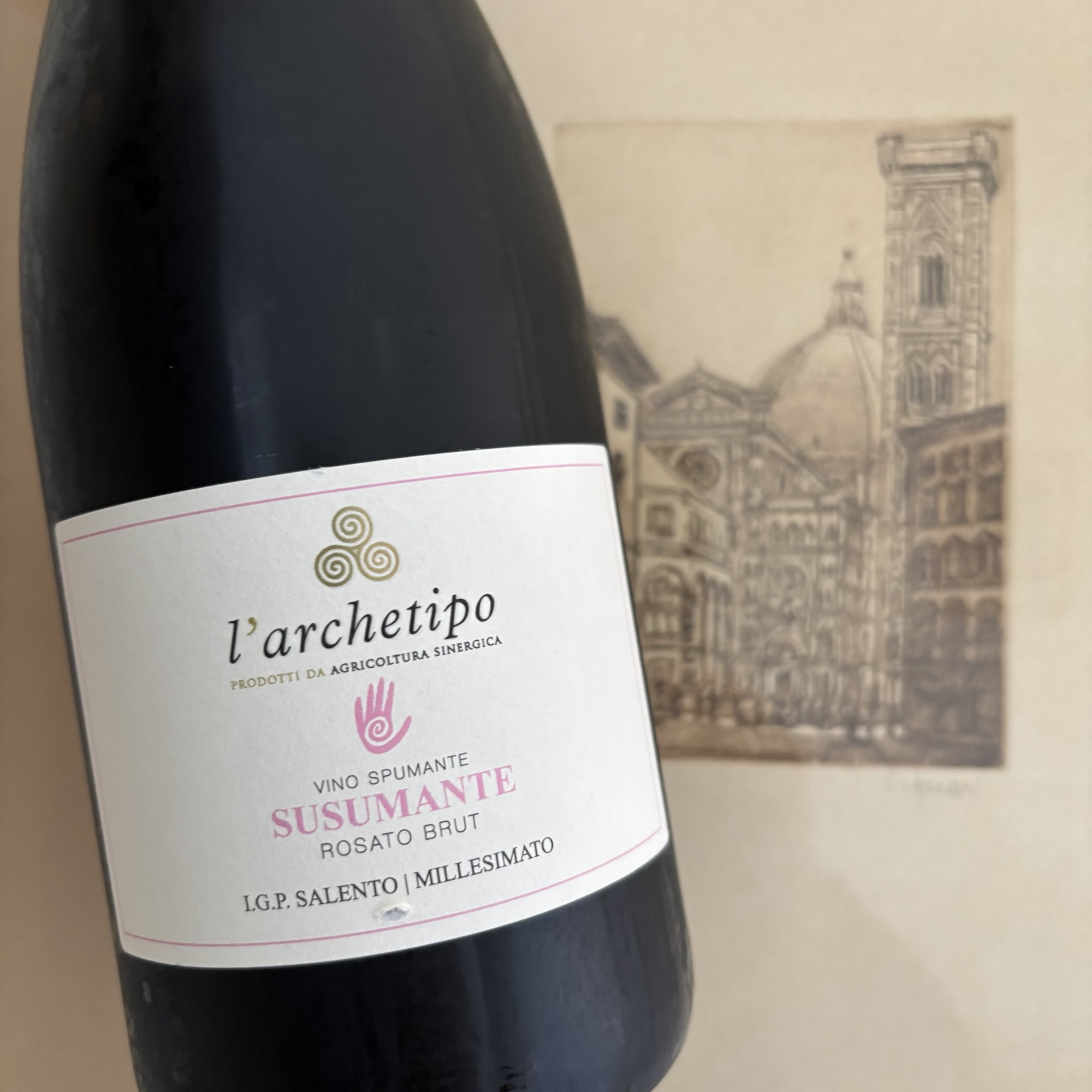
L’Archetipo Susumante 2025, Valentino Dibenedetto (Puglia, Italy)
The wines of Salento are often what you would expect from Italy’s hot heel, beefy bottles of dark tomato and basil soup made from Negroamaro. The other side of the coin in the past has been a range of non-native varietals that have fulfilled the needs of some average restaurants where the wine appears on a price point. Am I being unfair? This wine is neither of those, and it is a wine not only of pretty high quality but also one I found exciting. Recommended by Ali at the wine shop you’ll find below, yet again we have proof that you should listen when your wine merchant gets particularly excited about a bottle.
L’Archetipo is a dark pink, or light red, sparkling wine made from the local Susumaniello variety and it comes under the Salento IGT. The estate focuses on regenerative farming, with a no-till approach based on the teachings and observations of Masanobu Fukuoka (cf The One Straw Revolution). They make natural wines, and they grow ancient grains. Soil health is paramount.
The pomegranate/hibiscus colour of this wine is extraordinary, and with apologies to Abendrot (above), is probably the most beautiful colour in a wine I’ve seen this year. The contents of the bottle are not complex, though on reflection the wine has a serious side occasionally lacking in your average petnat (this is a traditional method bottle fermented sparkling wine). Where it strikes the taster is with the purest of pure red fruits which are there on both the bouquet and palate. For under £30 this really is worth seeking out because it’s made for summer in the garden.
The importer of this innovative beauty is Modal Wines (Nic, Roland, you are on fire right now). Purchased at Communiqué Wines in Stockbridge (Edinburgh). This is one of four wines from this producer imported by Modal, in case you are interested in estates working with no-till viticulture methods.
New Rose 2023, Westwell Wines (Kent, England)
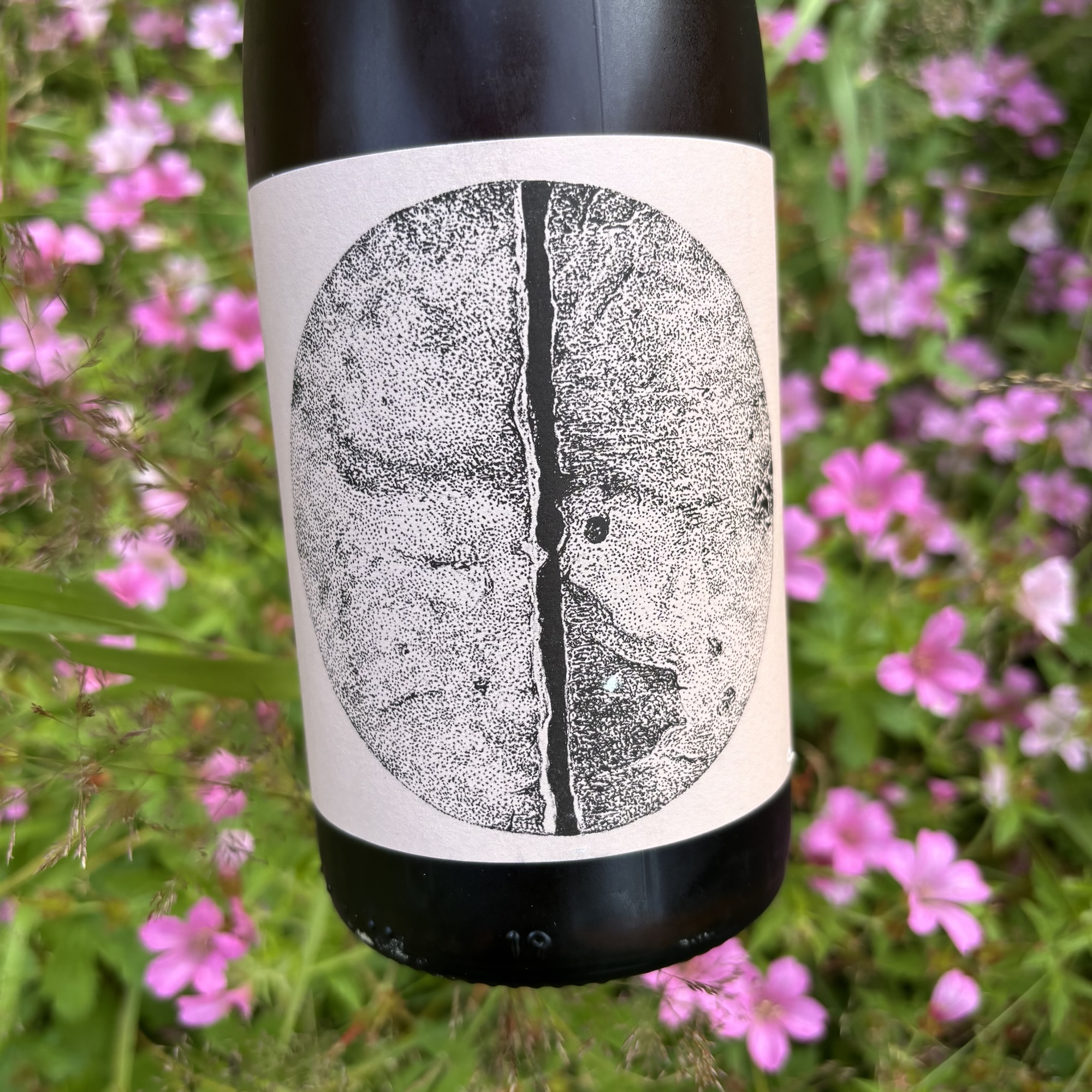
Westwell needs little introduction if you regularly read my blog. Located on the North Downs near Canterbury and the Pilgrim Trail, the wines are made by ex-music label owner Adrian Pike, and the singlularly beautiful labels are made by his partner, Galia. They are one of a handful of English estates whose wines I am sure to drink a number of times each year. As someone who drinks as widely as possible, it’s a firm endorsement for what they are doing.
This cuvée, surely named after that very fine first single by The Damned (Adrian?), is made from the second pressing (around 10% of the juice) of the estate’s Pinots Noir and Meunier, the first press of which is used for the Pelegrim sparkler. Waste not, want not, but this is more than just an afterthought. Fermented on native yeasts the grapes had been harvested late, in October. It was bottled one year later, in October ’24, after ageing in a mix of old oak and stainless steel tank. It was bottled with very little sulphur added.
The colour is a lovely pale coral pink. With very low alcohol (10.5% abv), the purity and delicate red fruit shines through in every aspect. It has just a little bit of texture to ground the smooth fruit. It’s a great example of the new wave of delicate English natural still wines coming through, wines we perhaps saw first from the likes of Westwell and Matt Gregory, and now repeated by Sophie Evans and others.
It’s quite a contrast to the fuller-bodied efforts many English estates try to produce, perhaps most successfully in Essex and the Crouch Valley. If those wines seek to emulate Burgundy, wines like this are perhaps uniquely English, with maybe a nod to Alsace natural wine’s younger producers.
This also came from Communiqué Wines in Edinburgh, but this time the agent is Uncharted Wines. It cost £20.
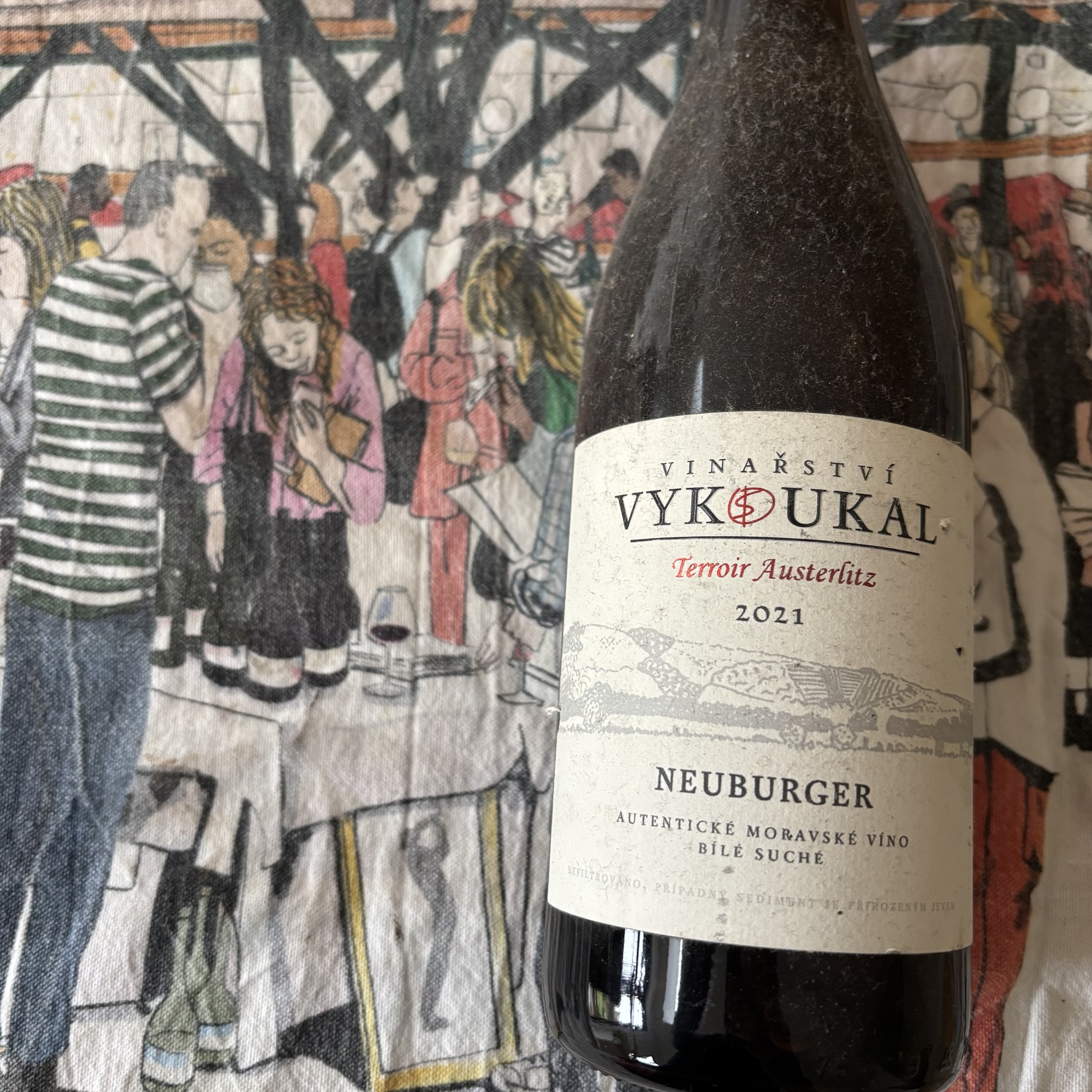
Neuburger Terroir d’Austerlitz 2021, Zdeněk Vykoukal (Moravia, Czechia)
Vykoukal began making wine in Moravia in 1996, on and around the famous Slavkov battlefield where what we know as the Battle of Austerlitz took place in 1805, between France and its enemies Austria, Russia and Italy. A victory for Napoleon was the result, but perhaps not for humanity (24,000 troops died). It is for that reason that I perhaps drink Vykoukal’s wines less than I might, but this is the most exceptional wine of his that I have drunk in a long time, potentially the best yet.
Vykoukal is one of the fine raft of Czech natural wine estates. To be honest, they don’t need a nineteenth century battle to promote them. This 2021 saw twenty-four hours on skins and then twelve months ageing in 600-litre acacia barrel. Finally, it went into stainless steel for six months before bottling.
Neuburger is an Austrian vinifera grape variety, made from crossing Roter Veltliner with Sylvaner. It can produce wines which are quite heavy, but in Austria it is getting a bit more love than it was, and here it has made one of the best, if not the best, Neuburger I can recall tasting.
The colour is quite deep, a golden yellow. It has honey with oranges and lemon all over it, the depth of colour being reflected in the depth of flavour here. It does have a bit of weight and a rounded mouthfeel but it also has some lovely acids, fresh but not at all sharp. The finish has a pleasant savoury, herbal, twist as well and the length is very good.
It was purchased some time ago from importer Basket Press Wines for something like £30-£35, I think. Although they no longer have any left, you might find some at Prost Wines.