
In all my years of going to tastings, in London and now in Edinburgh, I have never met Rose Murray Brown MW. I think I may have seen her perhaps once, but we have never spoken. I guess that is perhaps because my focus is largely natural wine, or weird wines from far-flung places as some like to say, yet although it would be easy to assume that venerable Masters of Wine confine themselves to more classical, occasionally more lofty, events, reading Rose’s new book, A Taste for Wine, it is clear that her interests, knowledge, and in fact her far-sighted understanding of the modern wine world extend far beyond that narrower world of wine in which we both grew up in. In other words, I’m rather disappointed that we haven’t met.

Rose Murray Brown is perhaps best known where I live as the wine columnist at The Scotsman. It’s a job she’s been doing for nearly forty years. That is no mean achievement, given the changes in print media over the past couple of decades. But Rose is also an experienced wine educator. She set up her own wine school back in 2000, and in addition to all the events, masterclasses and courses offered, she organises consumer wine tours. Her biog says she has most recently taken groups to Uruguay, Chile, Argentina (let me know if you go to Bolivia, Rose), and slightly closer to home, Georgia, Sicily and Hungary.
All of this does make her eminently well-placed to write a book with the sub-title “A new tasting masterclass for wine lovers”.
So, what exactly has Rose Murray Brown written, and who is it aimed at? The first question is in some ways easy to answer, but that would be somewhat superficial, and a disservice to the author. On the face of it, it looks like another tasting course, but I think it goes well beyond that. In answer to the second question, I think the core audience would be someone starting out on their journey towards being (one hopes) a knowledgeable wine obsessive. But interestingly, it is neither a book that would frighten someone even earlier in their appreciation for wine, nor should anyone who feels they have a good level of knowledge shy away from it. So, let’s approach that question again at the end of the review.

Before setting out the journey on which A Taste for Wine takes us, I would like to say that in every part of this book I found information that I didn’t know, or had forgotten, like the slightly larger Burgundian equivalent of a Bordelais barrique being called a pièce (doubtless forgotten because I can no longer afford the Burgundies I used to drink in younger days).
The methodical way that the sections on taste and its understanding, and the practical mechanics of wine tasting, are put together are helpful to those new to the practice, but also reinforce methodologies for those with more experience. In wine tasting the method, and its repetition, are important.
Of course, there are parts that might scare someone very new to wine, such as meeting a word like “phylloxera” for the first time. Most terms find an explanation somewhere, and I imagine there is a reason no Glossary has been included. The other side of the coin is that a lot of “popular” tasting courses treat us like children and are, as a result, over-simplified. Here, there is no shying away from the technical side of wine.
There are a lot of wines/producers mentioned in the text, whether as examples to try, wineries to visit and so on. I think these are well-chosen. They are not intended to be seen as “the best”, but the wines always show typicity in relation to whatever the author is aiming to express (and, of course, in the case of the wines, alternatives are suggested). It would be very arrogant of any reviewer to, for example, wish to insert a couple of producer names under the entry for Czechia, nor to comment on some recent Swiss wine law that might make a nuanced difference to the text. Because I’m an inveterate wine geek, and 99% of readers won’t be.
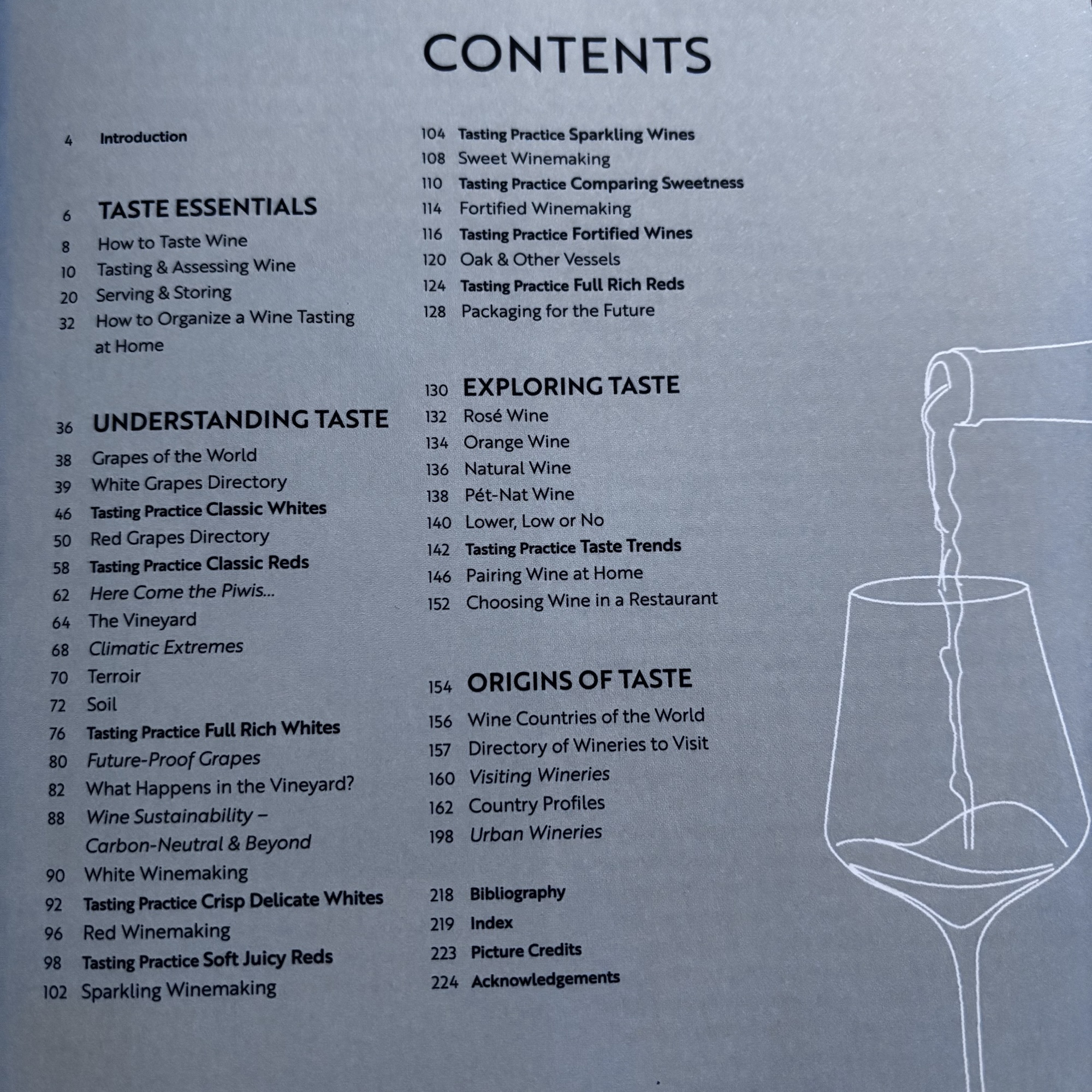
We begin with a section of “Taste Essentials”, the building blocks for beginning to taste, as opposed to drink, wine. The next section, the core of the book, is called Understanding Taste. I won’t detail each part but it is interspersed with the sections (in bold on the Contents photo), each of which is a totally practical tasting scenario you can organise at home for different wine styles.
Styles range from Classic Whites (p 46), through nine different styles and genres (eg Sparkling Wine), ending on Full Rich Reds (p 124). These include very handy crib sheets which, after tasting, you can refer to, to see whether your independent conclusions match, or come close to, those of the author.

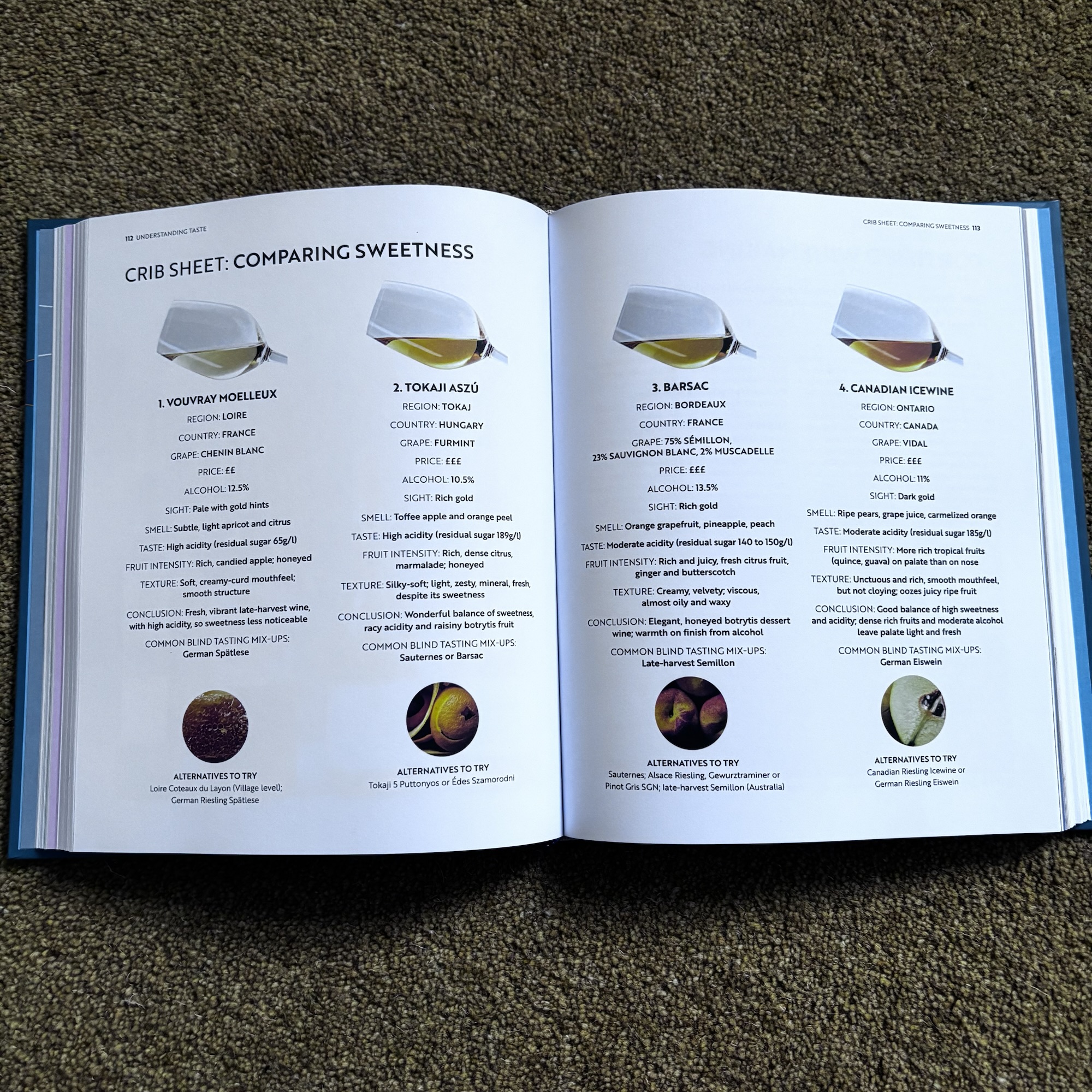
One of the best things about this book is that it manages to introduce you, the reader, to very current issues in the wine world today. So, alongside these tasting exercises, you will read sections on Piwi grape varieties, climate change, future-proof grapes, and sustainability, whilst at the same time gaining practical knowledge on winemaking, soils, viticulture, and grape varieties (to name a few).
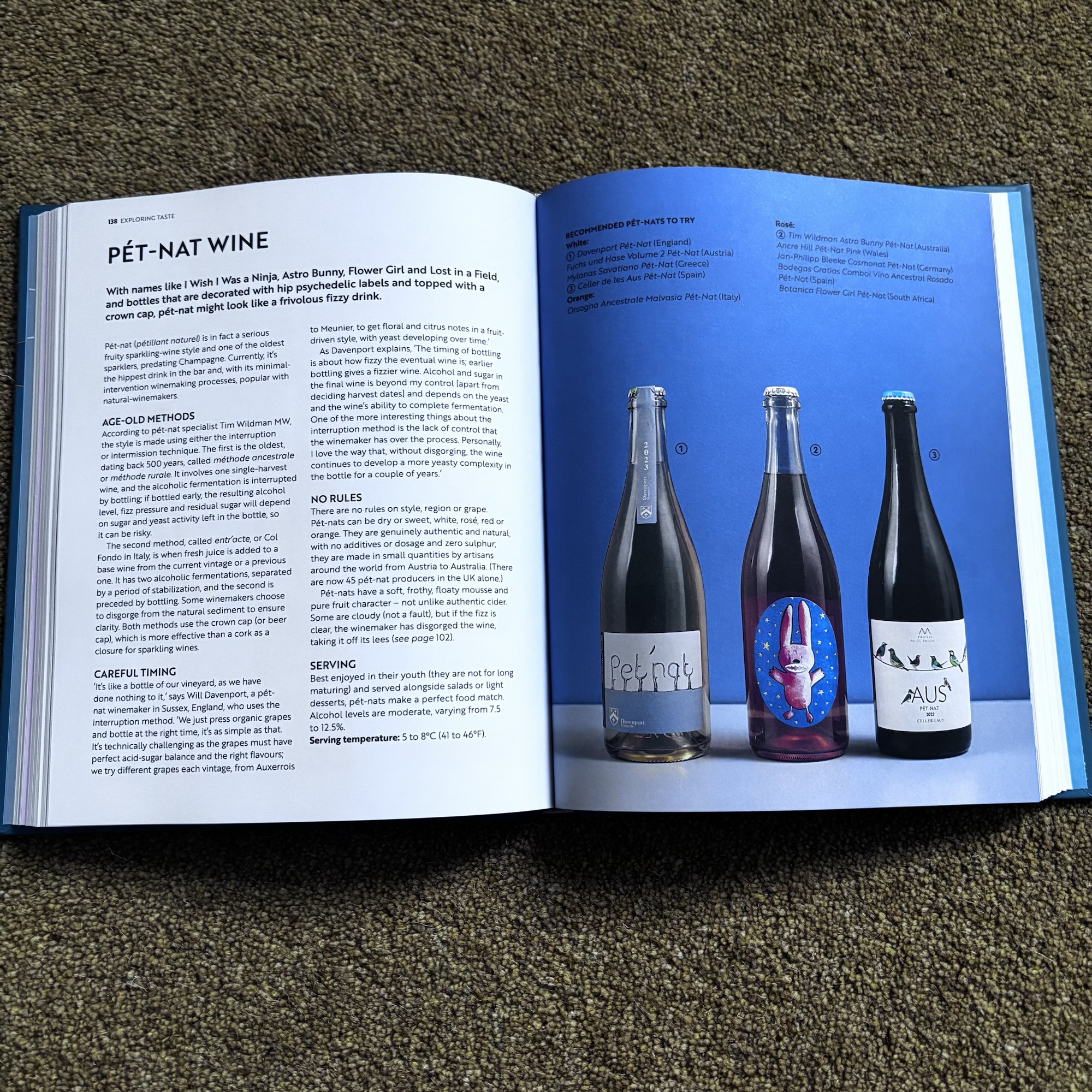
Exploring Taste takes us further in terms of practical tasting, going through different wine types (including petnats, natural wines and orange/skin contact wines). There is no formula here. For orange wine you need to talk about colour but with natural wine you need to know a lot about what natural wine really is. For orange wines the author discusses its versatility with food, whereas for natural wine she talks about the wine bar scene, recommending a whole international list of bars where you might be able to try these wines.
The last section is called Origins of Taste. This part begins with a directory of wineries to visit. The suggestions are good ones because they concentrate on producers who are geared up for wine tourism, as many are, rather than the poor artisan whose work in vineyard and cellar are so often interrupted by wine geeks eager to wipe out a good part of his or her meagre profit by spending two valuable hours of pruning time tasting through their entire range.
The two pages which follow, on the practicalities of, and etiquette for, visiting wineries, are well worth learning by rote, although Rose stops short of telling you to please not to visit that lady with one hectare in the Jura who is trying to juggle hand bottling her 2024 Trousseau without added sulphur with collecting her toddler from nursery and getting them both some dinner without an appointment.
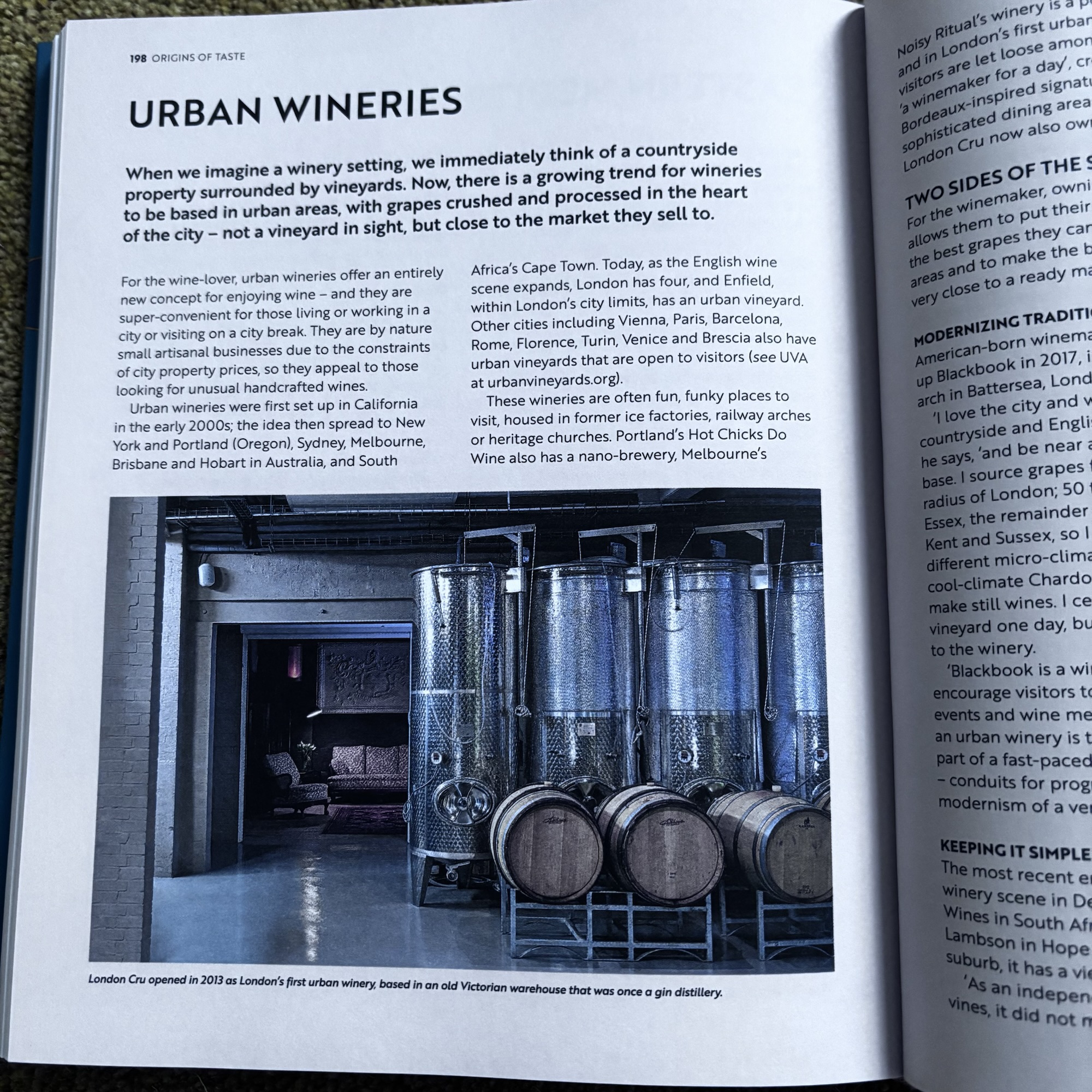
There is also a section on urban wineries, with an international scope, an increasingly attractive option for those on a city break. It isn’t an exhaustive list, so if you are somewhere that might have some, check them out. London has four listed, only two of which I have visited, one other whose wines I’ve tried (I’m pretty sure I saw Blackbook Winery bottles in Fortnums a few weeks ago). Which reminds me…
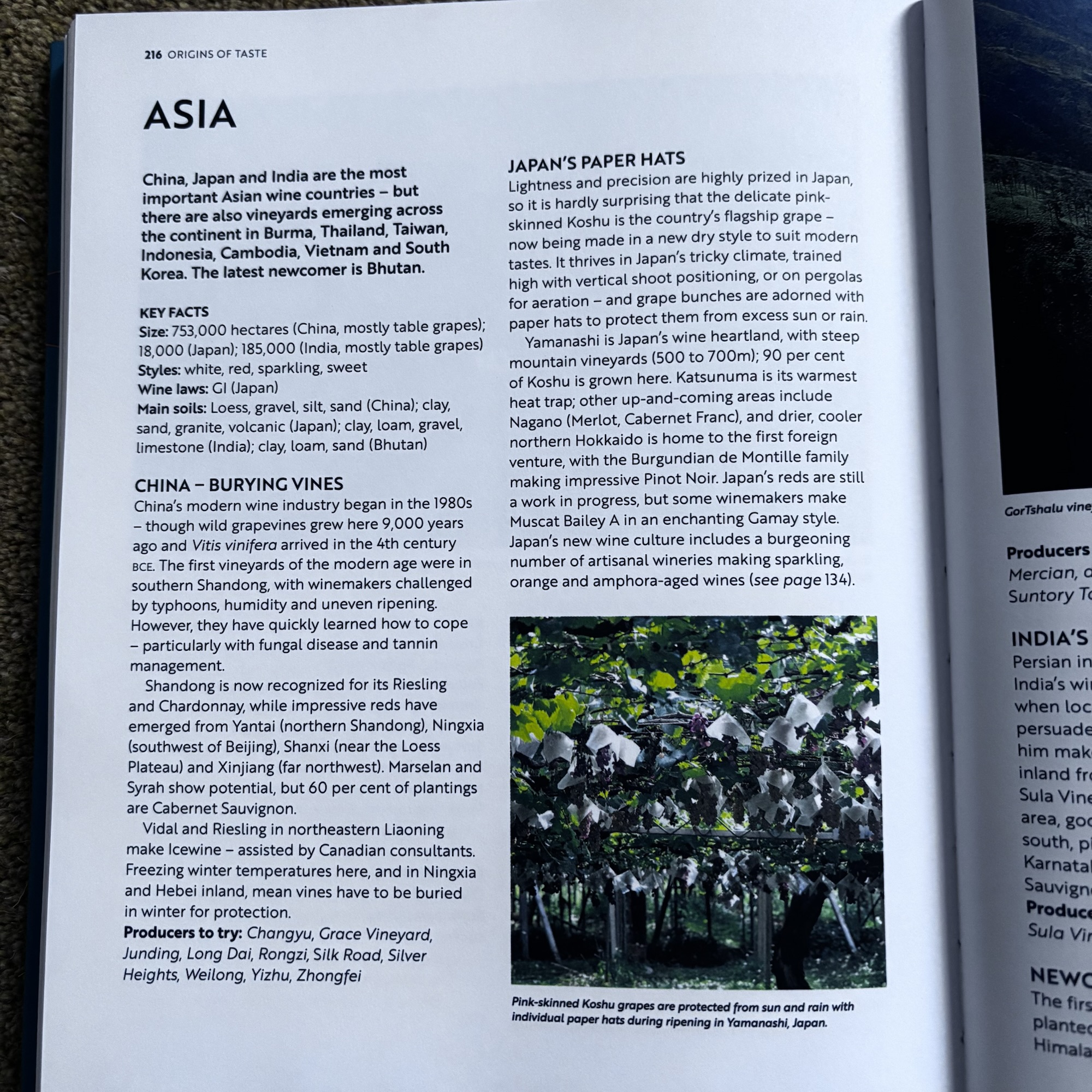
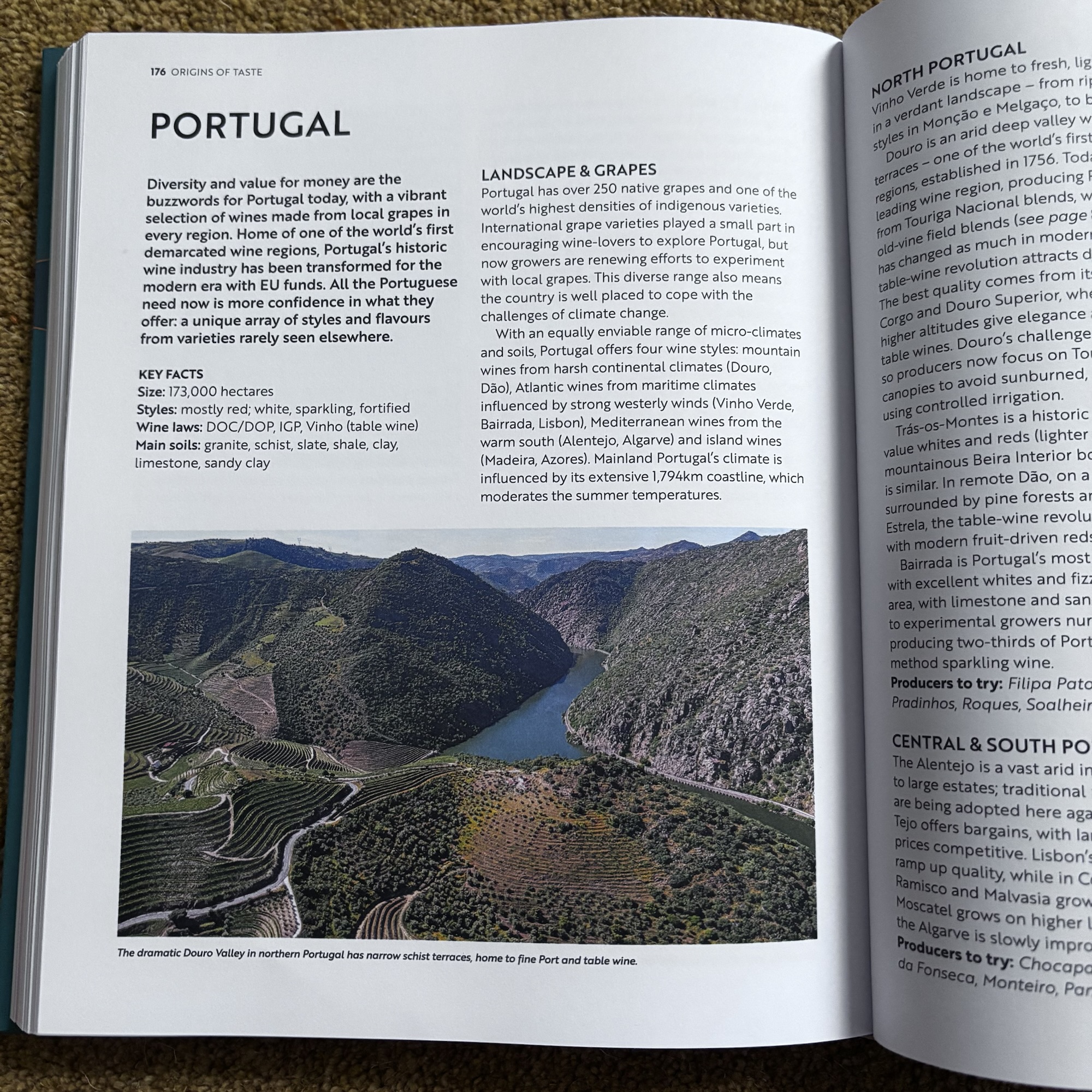
The nature of the book means that each “country section” is very short. France gets six pages, though several very nice photos take up some of that. Taking photos into account, which I must say throughout the book are very good, Spain, Portugal, England & Wales, and Austria manage less than two pages each. Switzerland gets about three-quarters of a page if you take out the rather nice picture of high-altitude vines in the upper reaches of the Valais.
However, what you get here is a good, concise, summary, but not one without some more interesting facts, and comments on important and pertinent country-specific issues. You also will read about viticulture in more off-the-beaten-track places like Armenia, Ukraine, Poland, Czechia, Serbia, Turkey (Turkïye), Bolivia, Japan and even Bhutan. Albania doesn’t quite make it in this section in its own right (although earlier in this section you do get four recommended Albanian producers to visit for those who know that Albania is one of Europe’s hottest countries to head to right now, though none being the maker of the Albanian wine I drank this week). Nor did Nepal make it, but maybe I’ll get to keep Pataleban Estate for my own readers for a short while longer.
This section will not give you a detailed knowledge of the wine producing countries of the world, for sure, but I found this fifty-page précis of the many dozens of wine books on the shelves in my study pretty impressive. You get the basics for the big hitters, plus a pointer to countries few know, from a wine perspective, yet many of which are making excellent wine which is just beginning to reach our market. Check out for example the adventurous wines The Wine Society is bringing is at the moment (Ukraine, Syria, Turkey, Poland etc), or small specialist importers like Basket Press Wines (mostly a focus on Czechia and Central Europe).
I really enjoyed this book. It manages to appear simple in the practical and methodical way it approaches the task of teaching us to taste wine, and yet it also manages to impart interesting facts and knowledge on a range of subjects within wine. All this is aided by the design and production values we have come to expect from this imprint. Whether a relative beginner or a so-called expert, we will all come out at the end of reading it with greater knowledge and understanding.
At £25 it would be a very useful addition to the wine library of literally anyone who feels wine is something of a hobby. It would also make an excellent Christmas gift for any of your friends who, considering most of my readers are wine obsessives to some degree, would like to learn more about the practicalities of tasting, and thereby gain a greater appreciation for, wine. I myself have friends who have embarked upon WSET courses for whom A Taste for Wine would be an excellent gift.
For some, this book will open up a whole new world. For others it will reinforce our tasting habits, whilst adding in summary form much to our understanding of new wine styles, new threats and solutions to issues in viticulture and winemaking, and more. Having the tools to taste wine, analytically, increases our appreciation of what we are drinking. I am certain of that. This is why wine education has now become a popular passtime for many, way beyond those working in the trade as it once was. So that answers that second question: who should read it? Anyone who enjoys wine and thinks there is more to learn.
A Taste for Wine – A new tasting masterclass for wine lovers by Rose Murray Brown MW is just published (Mitchell Beazley 2025, hard cover, 224pp, RRP £25).

 David Crossley's Wide World of Wine
Pingback: A TASTE FOR WINE | Rose Murray Brown