To run through what’s in store in Part Two (of three) of my wines drunk at home in April, we begin in Germany and continue with Jura, Penedès and Champagne. We finish up with two wines from Czechia (or Czech Republic, as many still call it in the UK). I know, two wines from the same region (Moravia) in the same article, that’s a little slack of me, no? Not a bit of it, they are both exceptional wines from older vintages (with a single, even older, bottle to follow next time).
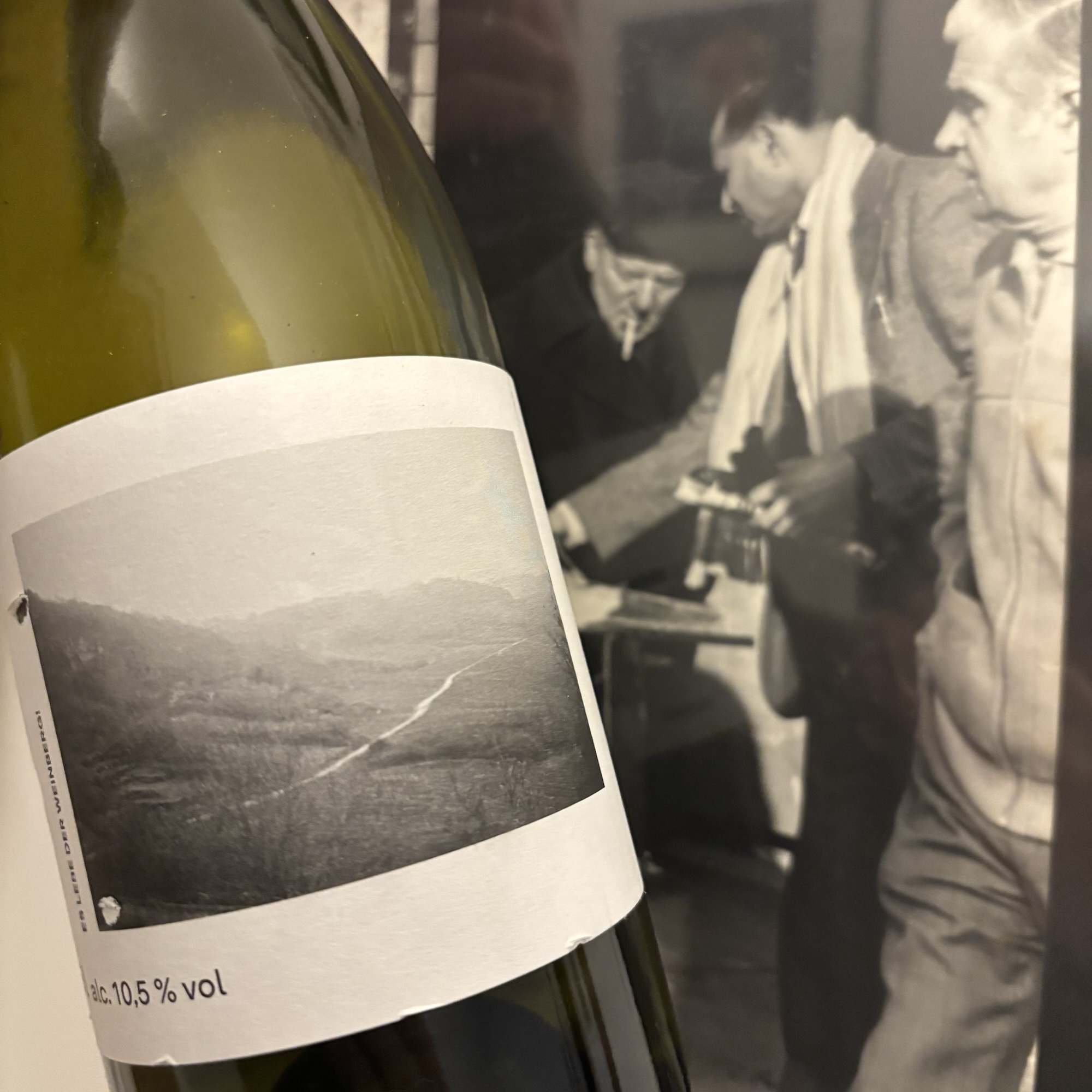
Elbling 2021, Jonas Dostert (Mosel, Germany)
This is a wine which looks, on the face of it, quite simple, but with Jonas nothing is ever simple, or at least in that mildly negative sense. Jonas has been based, since 2018, at Nittel, on that unknown stretch of the Mosel southwest of Trier and the confluence with the Saar. His vines are on limestone here, not your usual Mosel slate (perhaps one of the reasons he makes such amazing Chardonnay).
Elbling is not a variety many outside of Germany will have tasted, perhaps, and there’s a lot of cheap and commercial Elbling in Germany. Here, it is treated with respect. Jonas makes natural wines aiming for freshness and low alcohol, yet wines with poise and tension. His mantra is that the more you do in the cellar the less you taste of the vineyard.
This Elbling is pale, crisp and appley, a very refreshing wine with a steely edge to it, but just 10.5% abv. I must add that it does have some weight to it. More than you’d expect taking what I’ve just said and the low alcohol into account. Just enough weight to give it a presence, something to ponder over and a dimension over and above that refreshment value. This may be because it was aged in wood, albeit used larger oak. That said, it still has a nice brittle quality, something akin to pressing on thin ice with deeper waters beneath.
So far, Newcomer Wines has just brought in this single wine, I think. They list it at £33, but as Jonas made only 861 bottles, it may not last for long. As a 2021, the acids have perhaps subsided a bit but it is still drinking really well. There are other wines available. My go-to merchant in France, Feral Art & Vin lists his blend of Elbling, Pinot Gris and Chardonnay (Karambolage), a Chardonnay/Elbling blend (Pure Dolomite), and from the new 2023 vintage, Chardonnay, and Elbling Alte Reben.
I’ve not tried that old vine Elbling but at least two people have recommended it highly. There is also a Pinot Noir but it’s out of stock, but the Crémant (he’s another German winemaker who uses French over German terms for his labelling) may be available. Really wish I had a lot more Dostert than I do.
Crémant du Jura Brut Nature NV, Domaine Pignier (Jura, France)
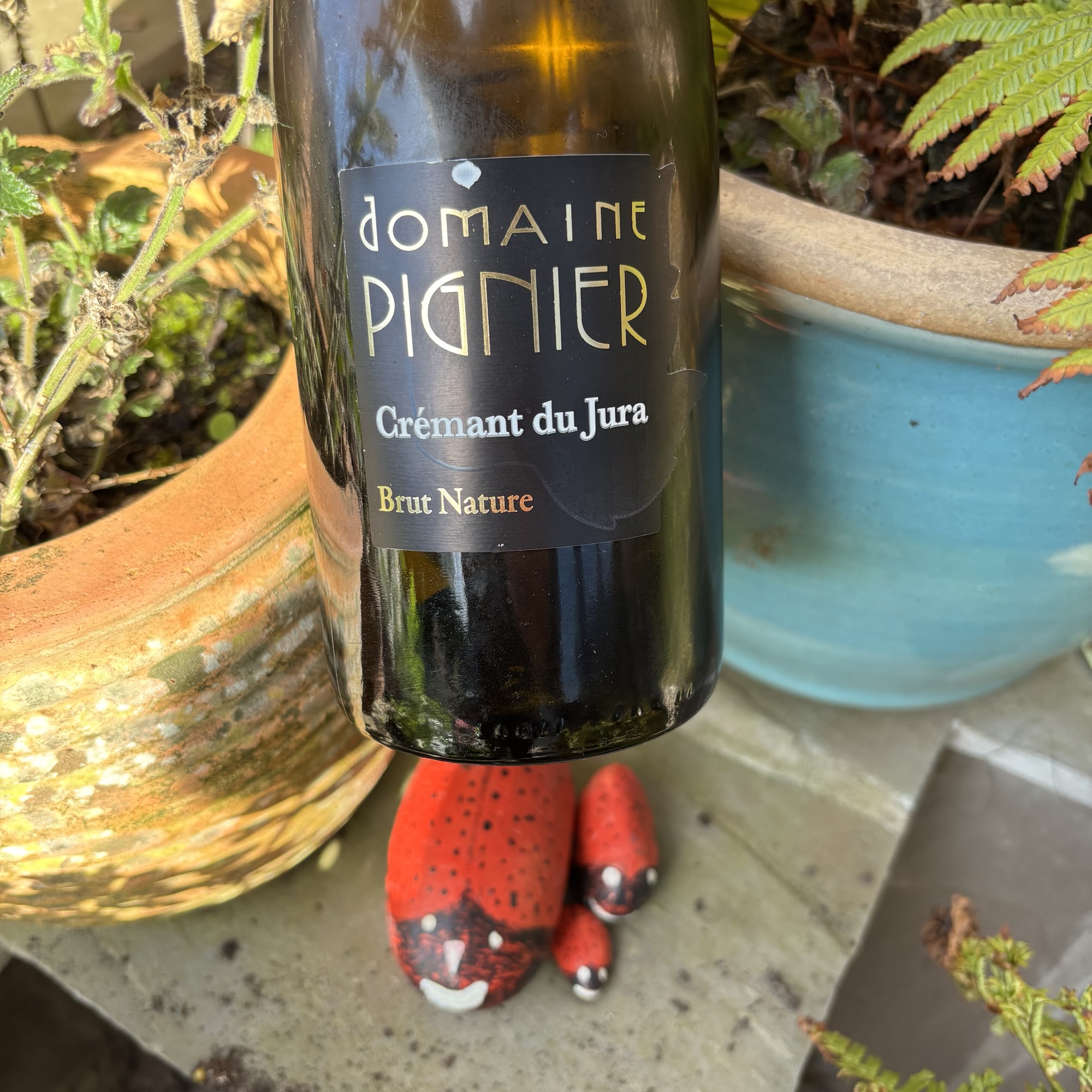
The three Pignier siblings who brought this Montaigu domaine (near Lons) to prominence are close to handing over to Antoine’s son, Thibault, the first of the next generation to commit himself to this highly regarded twelve-hectare domaine in the middle south of the region. I mention Thibault because he worked with Marie-Thérèse Chappaz whose biodynamic vineyards in the Swiss Valais are very special to me. The wines continue to be low intervention, natural, wines, following biodynamics too, with just a small sulphur addition before bottling.
The Crémant is an important wine here. According to Wink Lorch (Jura Wine Ten Years On, 2024), it forms 20% of production. This traditional method wine is mostly Chardonnay (85%) with Pinot Noir, all planted on chalky limestone. It spends 18 months on lees and is bottled with zero dosage.
The bouquet shouts freshness first, and the palate is crisp, but there is ripe appley fruit and a quality which I always hear described in France as nervosité (which maybe translates as nervousness or restlessness). It’s a certain kind of tension and it wakes you up. Left to warm in the glass it does develop and some autolytic character evolves. I’d say soft brioche. It hasn’t had years on lees but it still shows class. It’s why I grab a bottle when I see one. Especially as the price is usually in the low £30s, rare now for quality sparkling wine.
The importer is Raeburn Fine Wines. My bottle came from Smith & Gertrude (Portobello).
Macabeu Sotaterra “Oniríc” 2022, Entre Vinyes (Catalonia, Spain)
This is the third wine from Entre Vinyes I’ve found since I received a very strong recommendation for their wines from my mate Alan March. He really hit the nail on the head in that the Entre Vinyes wines are so good, but also so cheap, at least relatively speaking.
Maria and Pep’s story has been told before, but to be brief, they created this project in Baix Penedès’s Foix Natural Park in 2012. A holistic approach ties in the viticulture with nature and ecology, of which they have a deep appreciation. The landscape here is wild and, insofar as is possible, they want to keep it that way.
This is a skin contact wine, Macabeu fermented fourteen days on skins and then further aged on skins for nine months in amphorae buried in the vineyard. The colour is a gentle orange. With low alcohol (10.5%, like the Dostert) this has a delicacy both on the bouquet where it is both floral and fruity, and on the palate. There, you find a mix of citrus (lemon and orange) with some more tropical notes, but also an underlying texture and fresh acids.
It’s remarkable how the texture isn’t very assertive, nor very tannic, considering the length of time on skins. Indeed, this wine’s best attribute is that it is gentle, not aggressive. This is, by coincidence, another wine purchased from Smith & Gertrude, and it cost just £23.50. This time the importer is Modal Wines.

“Le Cotet” MV, Champagne Jacques Lassaigne (Champagne, France)
Emmanuel Lassaigne is the best-known winemaker in Montgueux, the small Champagne enclave close to Troyes. It’s technically in the Aube/Côte des Bar, though closer to the Côte des Blancs in its geology (chalk rather than the Aube’s more usual marls).
You know, it’s funny how relatively recently numerous little pockets of vines within the wider Champagne region, but outside of the well-known “Côtes”, have come to people’s attention. Perhaps this is why the part of Champagne we used to call simply “The Aube” is now known as the Côte des Bar, so that the Aube’s other pockets (as with similar outposts in the Marne) can have their own identity.
The generalisation made by classic wine writers is that the grapes grown on Montgueux’s more southerly south-facing chalk slopes ripen early, and for once they may be right because Emmanuel Lassaigne certainly makes wonderfully ripe and vinous Chardonnay from his small holdings.
That the fruit is excellent has always been a secret, and some larger houses further north wanted to keep it that way according to a story in Robert Walters’s excellent Bursting Bubbles (Quiller 2017). When asked by a visiting beer executive whether a certain famous label used Montgueux grapes they denied using any fruit from outside of the Marne, yet they were (and maybe still are) the biggest purchaser of fruit from this tiny region.
Mind you, Walters also quotes Charles Heidsieck’s famous chef de cave, Daniel Thibault, as saying “If there is a Montrachet in Champagne, it is in Montgueux that we will find it!”
All this is just to set the scene for a wine from a tiny 0.6-ha lieu-dit called Le Cotet, made by a man who would rank among my favourite four Growers in Champagne. The vines are Chardonnay, all around fifty years of age. The cuvée is always made as a multi-vintage blend of two main vintages, the older aged in oak, plus reserve wines from further much older vintages, added by a method called “remise en cercle”, whereby they have been kept not in tank or oak, but in bottle, on lees, before disgorging directly into the blend.
Bottled with zero dosage, the bouquet is all honeysuckle florality. The palate mixes straw, hazelnut and a creaminess which after six years in my cellar (despite three moves) is showing signs of lovely complexity. Effectively, this is a “natural wine”, and it does have real vinosity. One or two Growers make wine which are sometimes likened to White Burgundy, and perhaps this is one. It might appeal less to the purists, but how can you argue this isn’t special?
I bought this from Les Papilles in Paris. They have been great friends to Emmanuel Lassaigne. In fact, they used to (maybe still do) sell their own bottling from Lassaigne for their House Champagne. You can purchase Le Cotet for 84€ there right now (also available in magnum…now there’s a thought).

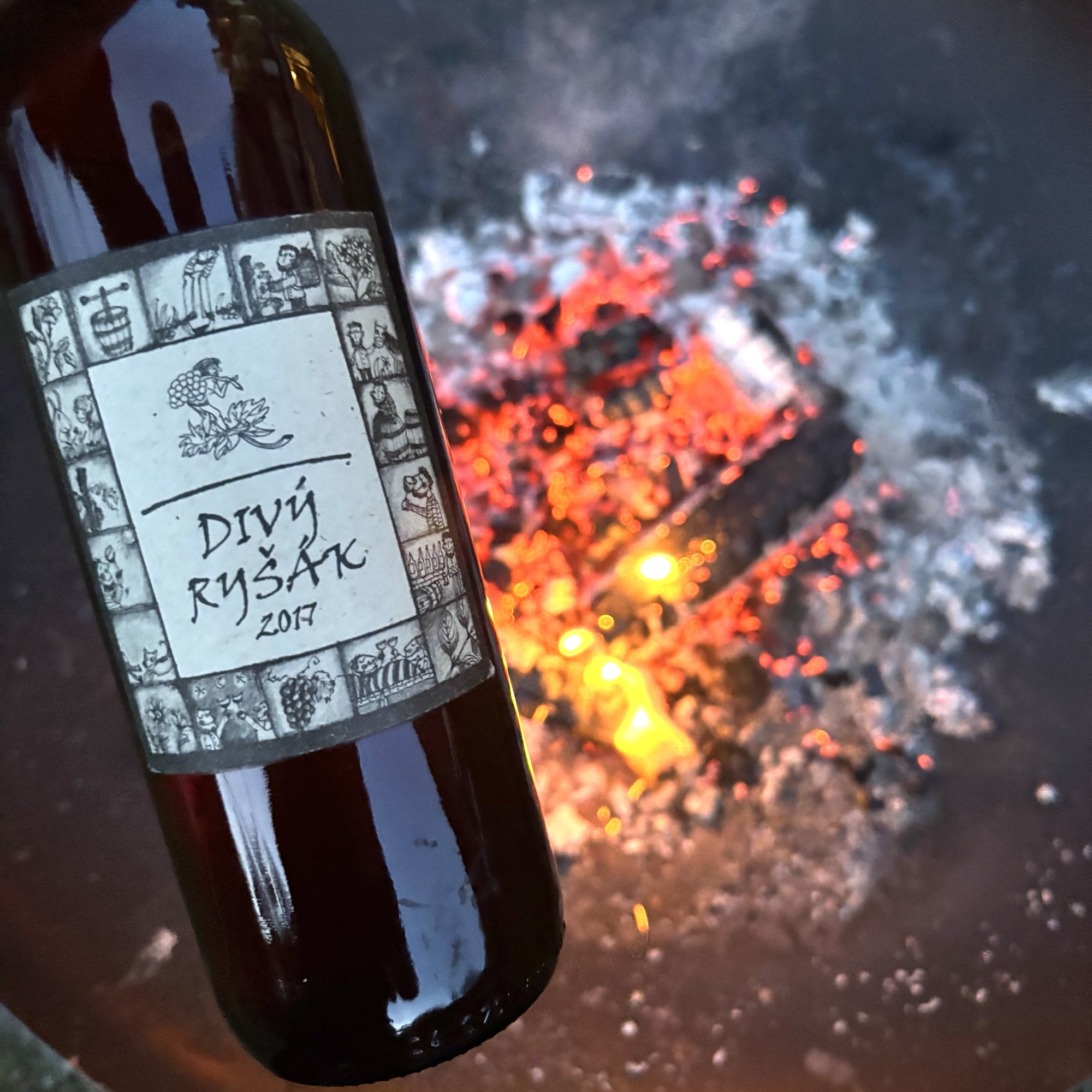
Divý Ryšák 2017, Richard Stávek (Moravia, Czechia)
Richard is one of the original “gang of however many” when it comes to the Moravian natural wine movement. He has a fifteen-hectare farm which has 4.5-ha planted to vines. My visit to tour his very wild and beautiful vineyards and to taste in his home, just two weeks before I moved to Scotland in 2022, was one of the most thought-provoking, enjoyable and illuminating visits I’ve been privileged to take part in.
Ryšák is the name for a “ginger” wine, a field blend of red and white varieties. Here, it’s a field blend of Blaufränkisch, Blauer Portugieser, Welschriesling, Grüner Veltliner and the hybrid Isabella, from a site on sandy loam, where the vines are all more than 45 years old. Farming is organic and winemaking is natural.
The grapes go into open-top fermenters for just two or three days and then the juice is transferred to used acacia wood for a year. The result is pretty amazing, partly on account of its age (2017!). It is still very fruity and juicy, still fresh, but there’s also a more serious side. A highly unique wine, certainly in style (a few Moravian natural winemakers keep it alive), and one from a unique winemaker as well. If he were in France Stávek would be making “unicorn” wines, highly sought after and sold on the grey market. I’m perhaps grateful he isn’t.
Basket Press Wines is, of course, the importer here and this was purchased direct, from their web site. When they restock (I can’t see any current vintage there), expect to pay £30-£40.
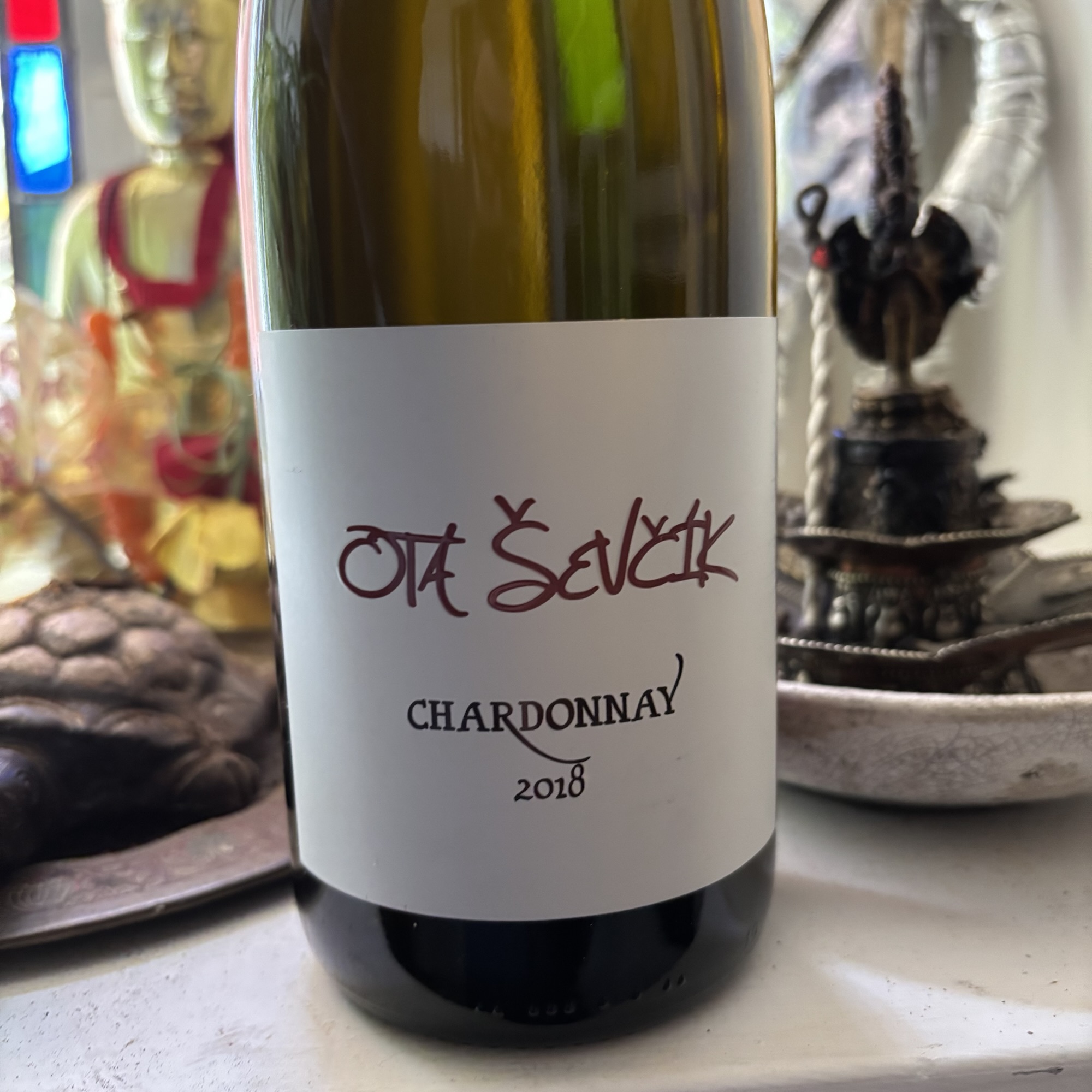
Chardonnay 2018, Otá Ševčik (Moravia, Czechia)
In some ways these Czech natural wines that I’m always banging on about can really come into their own with a bit of bottle age to them. The previous wine proved that (a 2017), and this one does so even more pointedly. Otá Ševčik is one Czech producer I’ve neglected a bit, and I’m so pleased this wine has well and truly put me in my place.
Ota farms a mere 2ha of vines on magnesium-rich, clay, loess and chalk soils at Boretice. As one of the founding members of the Moravian “Authentiste” Group, he farms organically and makes his wines without synthetic agro-chemicals. The importer’s web site bio of him points out that these wines age especially well.
This Chardonnay comes off a single site called Čtvrtě, from which Ota’s neighbour, Jaroslav Springer, makes a very fine Pinot Noir. The grapes undergo a short maceration, 48 hours on the skins, and post-fermentation the wine first spends 18 months on gross lees and then nine months on fine lees. All the wine goes through malolactic, but half is aged in oak and half in acacia, both larger 600-litre barrels.
The colour is a beautiful deep gold. The bouquet is more honeysuckle than more traditional Chardonnay notes, perhaps because the palate is so honeyed and rich. It’s worth noting that for the variety, 12.5% abv is lowish, and the richness, which still seems very fresh, is a lovely surprise. There’s a nice soft texture as well. I could try unsuccessfully to describe this bottle all day, but I can’t help coming back to my original scribbled note: “remarkably like a very good Meursault”.
Well, it was certainly remarkably good. This came from the Basket Press Wines archive and I don’t think they would have any 2018 on their web site. On the basis of drinking this, I will certainly be looking to grab some of this from a recent vintage, hoping I can keep my hands off it for five or so years. I think it retails for £22-£25.