
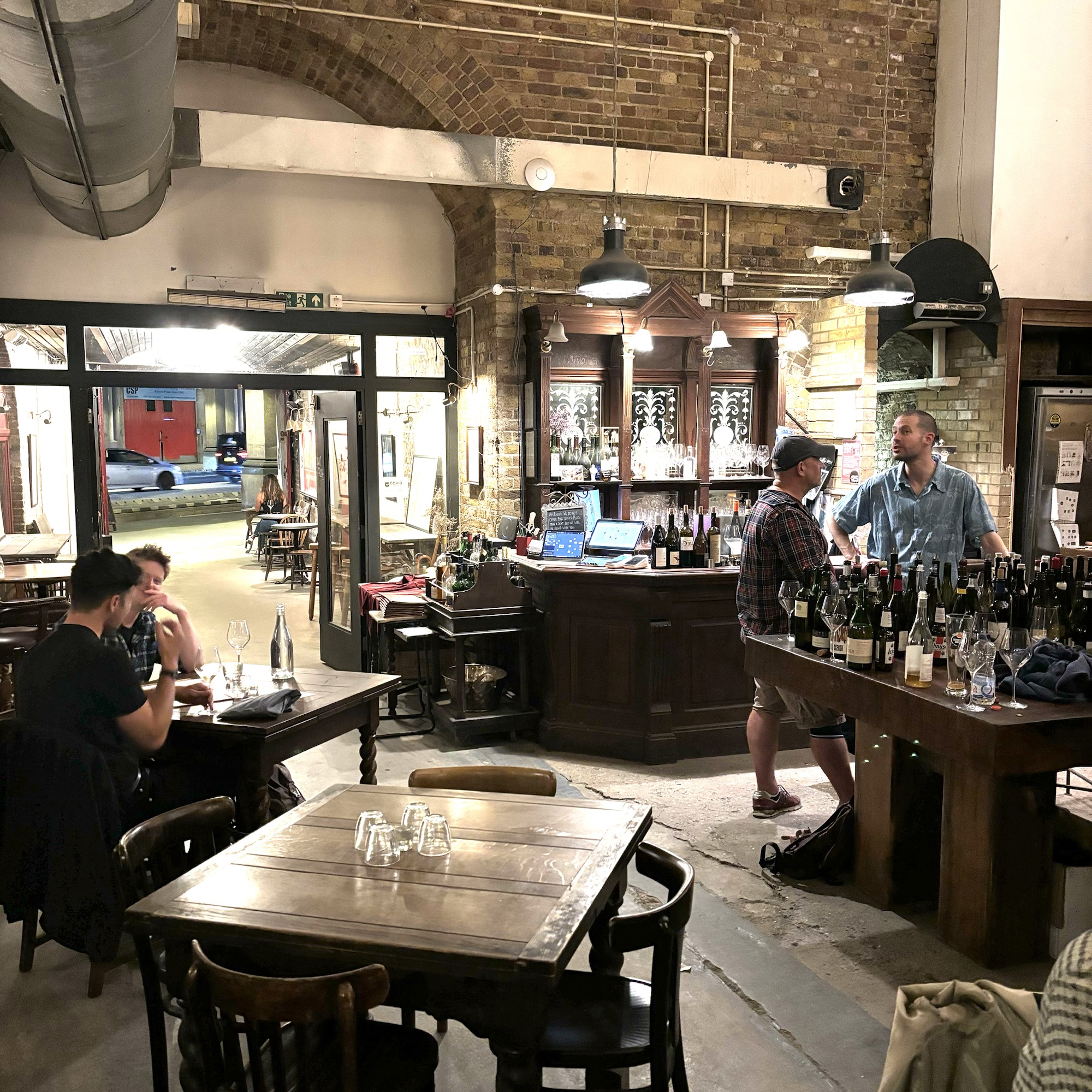
I’m not sure when I first began visiting Winemakers Club under the Holborn Viaduct arches on London’s Farringdon Street, but I know it was very early on in its existence. It was very familiar to me because even longer ago it was one of Oddbins’ Fine Wine stores. Yes, hard to believe but back then Oddbins in its original incarnation was pretty much the place for enthusiasts of new flavours in wine, much as the old Virgin Megastore on Oxford Street was for lovers of vinyl.
The two are not as incongruously linked as it might seem. Vinyl was at the peak of its first time popularity, the Megastore a mecca for music lovers searching for new music in the late 1970s, and in the early 80s wine was becoming democratised, “Claret” and Burgundy being joined by Australia, South Africa, Chile and North America on the tables of a new, younger, generation.
I once worked just off Fleet Street, and then later over Holborn Underground Station. It was a time when the Press ruled Fleet Street, and places like El Vino’s and The Cheshire Cheese were full of the smog of cigarette smoke and the smell of whisky. Today, Fleet Street is half building site and half corporate. The newspapers have gone and so by-and-large have most of the big law firms who replaced them, many moved down to Docklands. Farringdon Street, which heads north from Fleet Street at its junction with Ludgate Hill, now has the enormous headquarters building of Goldman Sachs right opposite Winemakers Club. I don’t know what the mega-salaried occupants of that modern fortress of finance make of the natural wine heaven over the road?
When I get down to London, which is now only four or five times a year, more often than not I make a visit to Winemakers for a bite to eat and a glass or two. It helps that I’m usually staying very close by. It’s a perfect location to meet a friend or two. I was there on Monday evening, arriving at King’s Cross too late to make the afternoon tasting they had on, but I did manage to catch one or two people I know who had lingered after the tables were clear. I did manage to try one wine from Newcomer Wines, Peter Honneger being one of those lingerers.
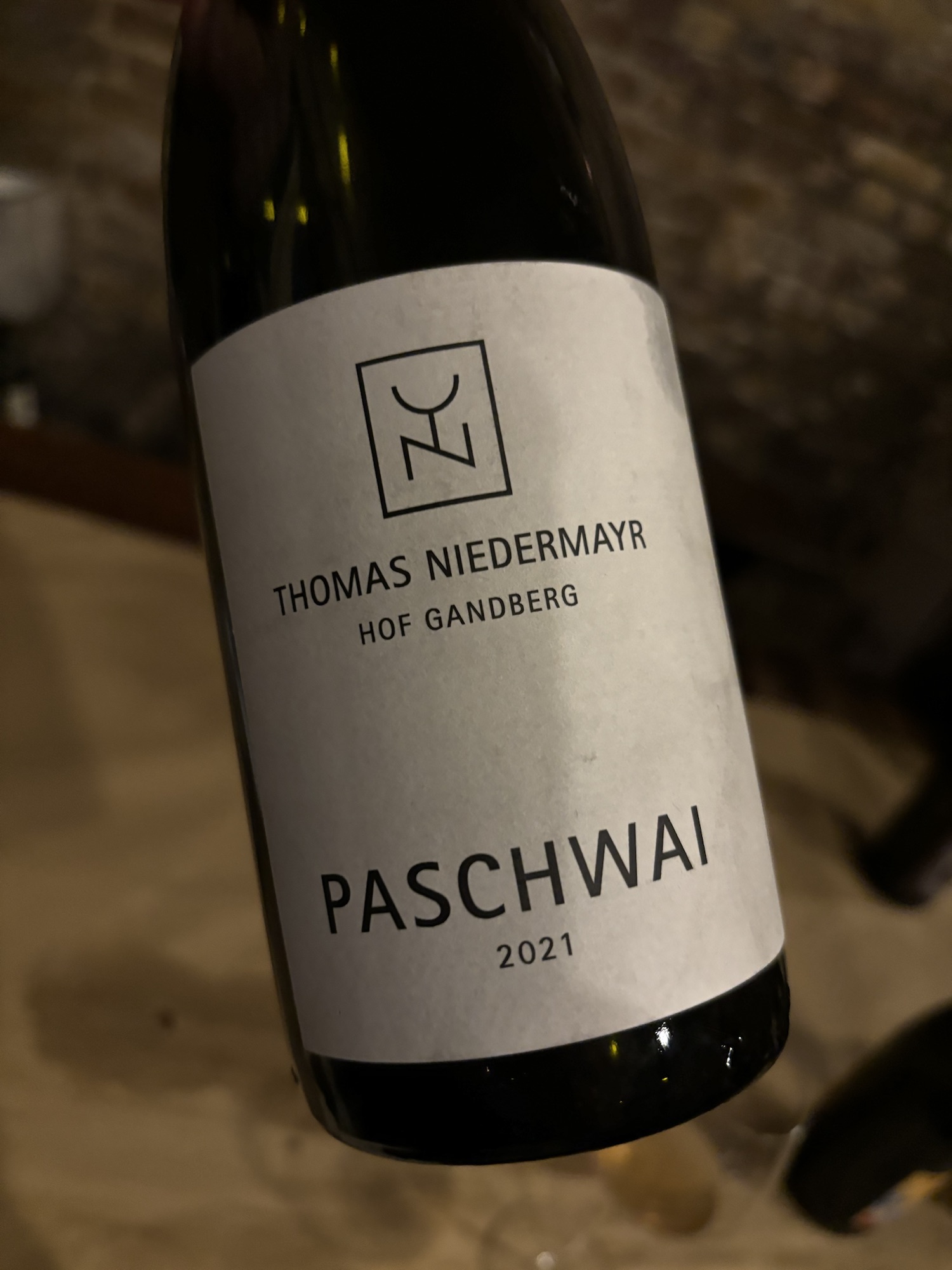
Thomas Niedermayr farms at Hof Gandberg in the village of Eppan, just outside Bolzano in Alto-Adige (NE Italy). Vines have their place on a mixed farm where every possible course of action is aimed towards a sustainable ecology amid the peaks of the Dolomites. Paschwai is, I think, one of two wines which Newcomer has begun to ship from the Niedermayr family.
The grape variety is the rarely seen, disease-resistant hybrid, Souvignier Gris. As the notes on Newcomer’s web site say, it is “fresh and fruity, with notes of honey and melon”. Even though we were drinking from the last quarter of the bottle, the wine was immediately attractive and I’d love to try it at home. Newcomer Wines retails this for £36.
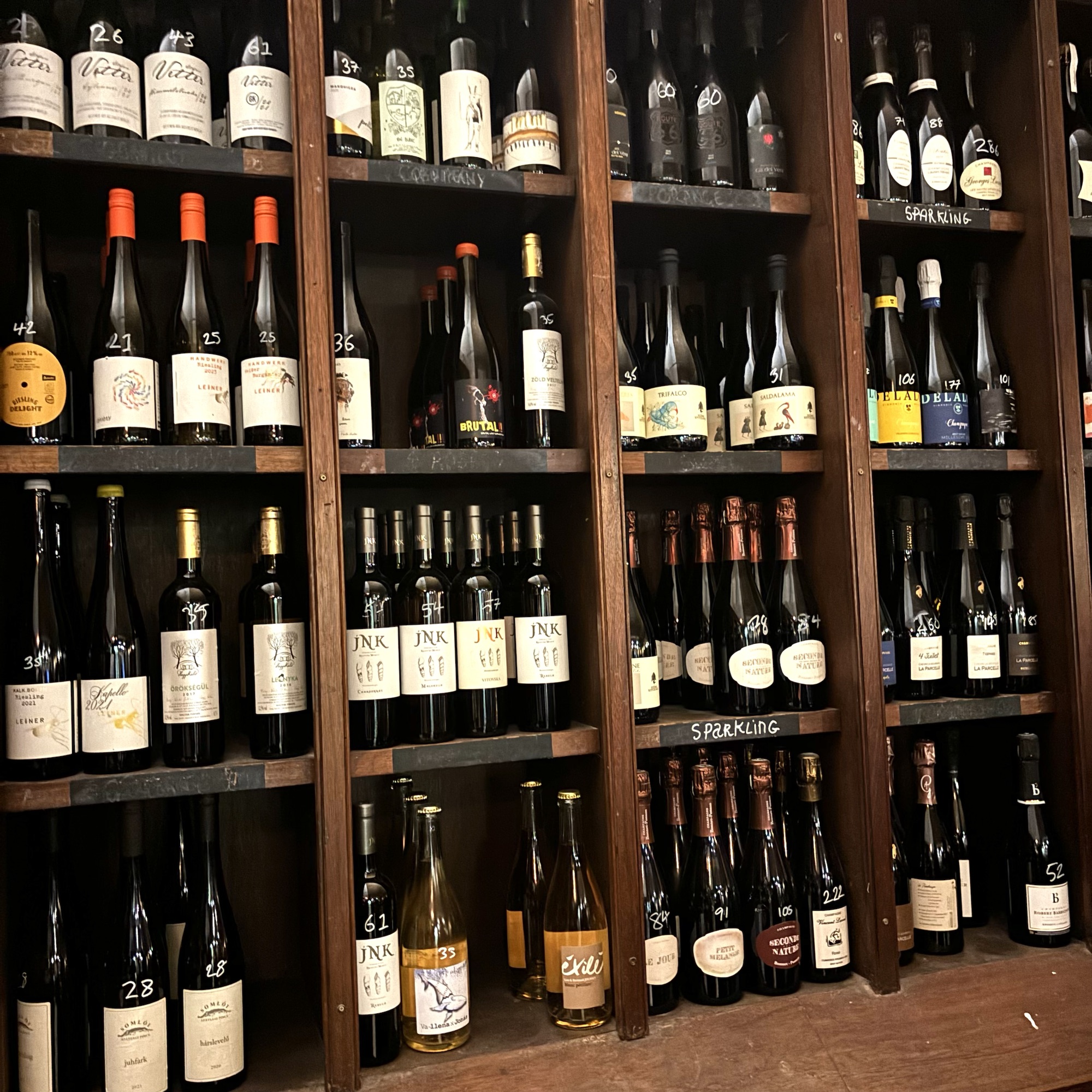
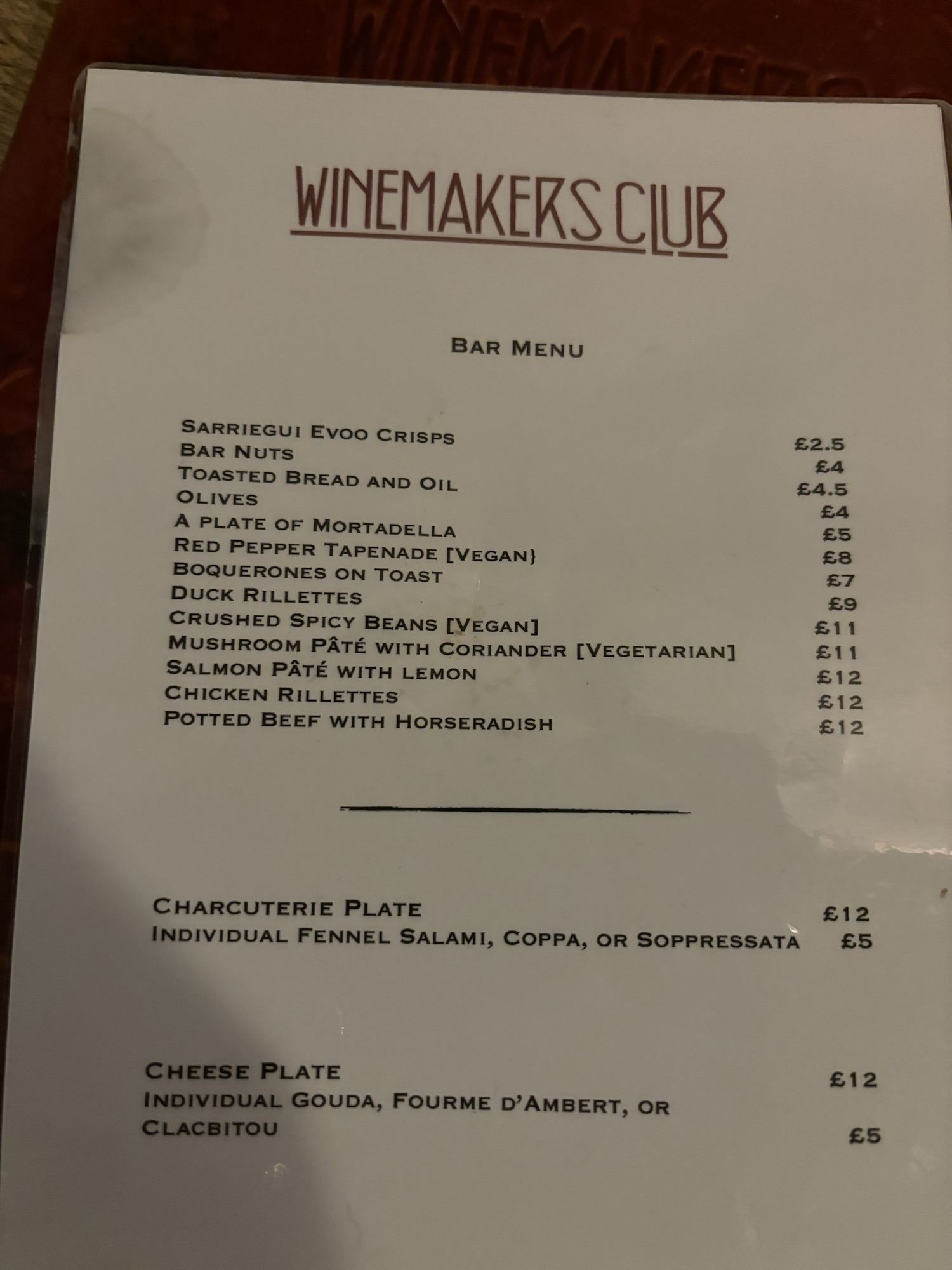
Winemakers Club is many things. They put on tastings for the trade, hold events for the public and are a wine bar offering a selection of tasty small plates such as cheese and salami, pâté, rillettes, and, since my last visit, a couple of vegan options. They are a wine shop, and they also import themselves, and it was a couple of those wines we drank on Monday.
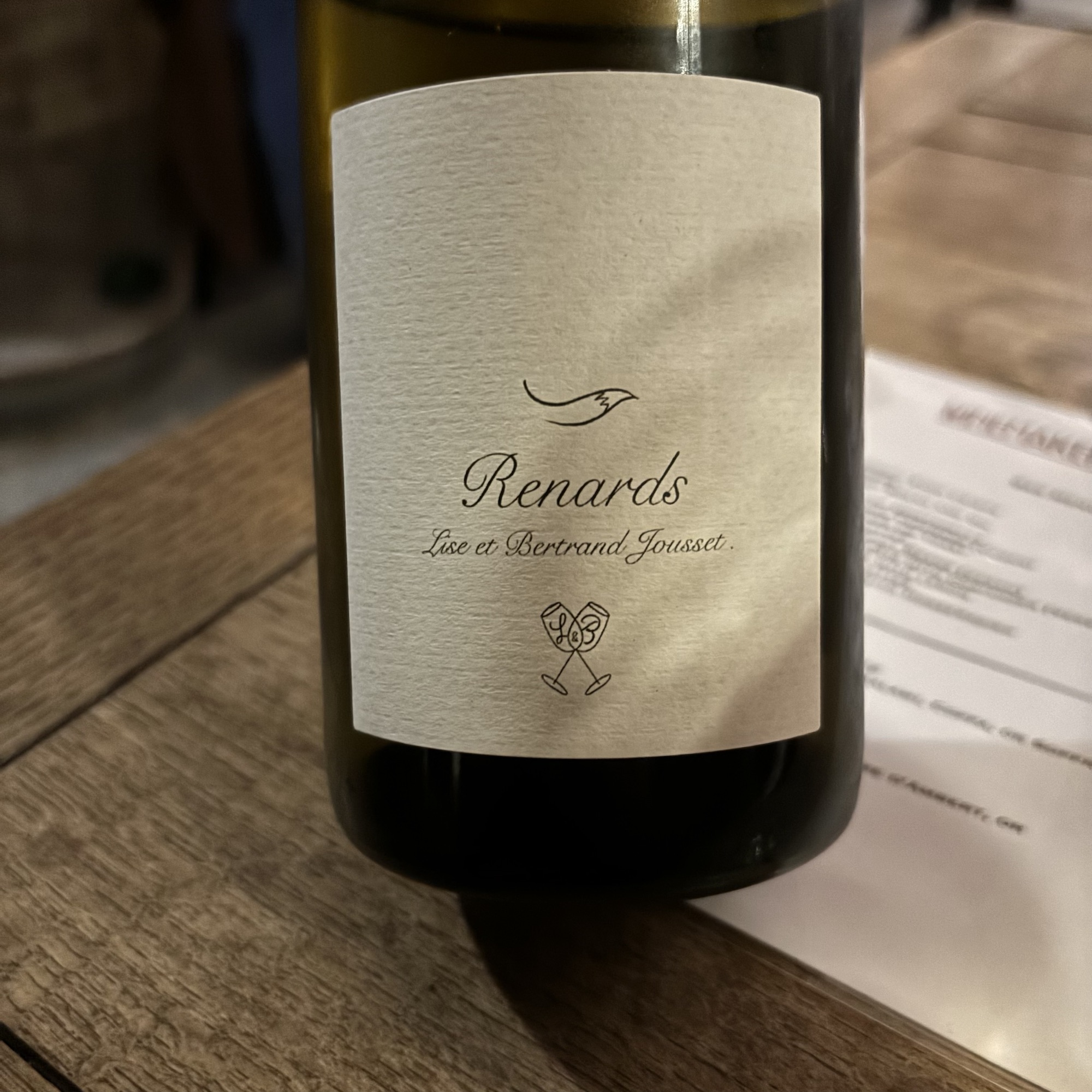
Lise and Bertrand Jousset farm around eleven hectares at Montlouis on the Loire. The wine we drank was a Chenin Blanc from a single site of seven hectares, Clos aux Renards. The vines grow on interesting blue clay infused with silex (flint). It has been described by some as one of the greatest Chenin Blanc vineyards in France. I was recommended this by an acquaintance only a day before and it was a brilliant shout. We have old vines (c80yo) grown and vinified as a natural wine with just minimum added sulphur. Natural winemaking here includes no mechanisation either, just horse power and human hands.
This is a very complex wine and subtle too. The bouquet is soft, redolent of lemon, pear and that unmistakable Chenin Blanc giveaway, honey. If minerals dominate the palate, they are more “soft and chalky” than angular like the flint in the vineyard. Salinity and herbal notes come in as well. It’s a wine many would call “different”, and it is, but one to savour. I recommend it with cheese. A wine to drink in a relaxed state, not too cold, and certainly not in a rush. This is expensive, but we benefited as it was on “by-the-glass” (at £16). I think retail it may be around £60/bottle. Winemakers sells four other Jousset wines, ranging from £28 to £47.
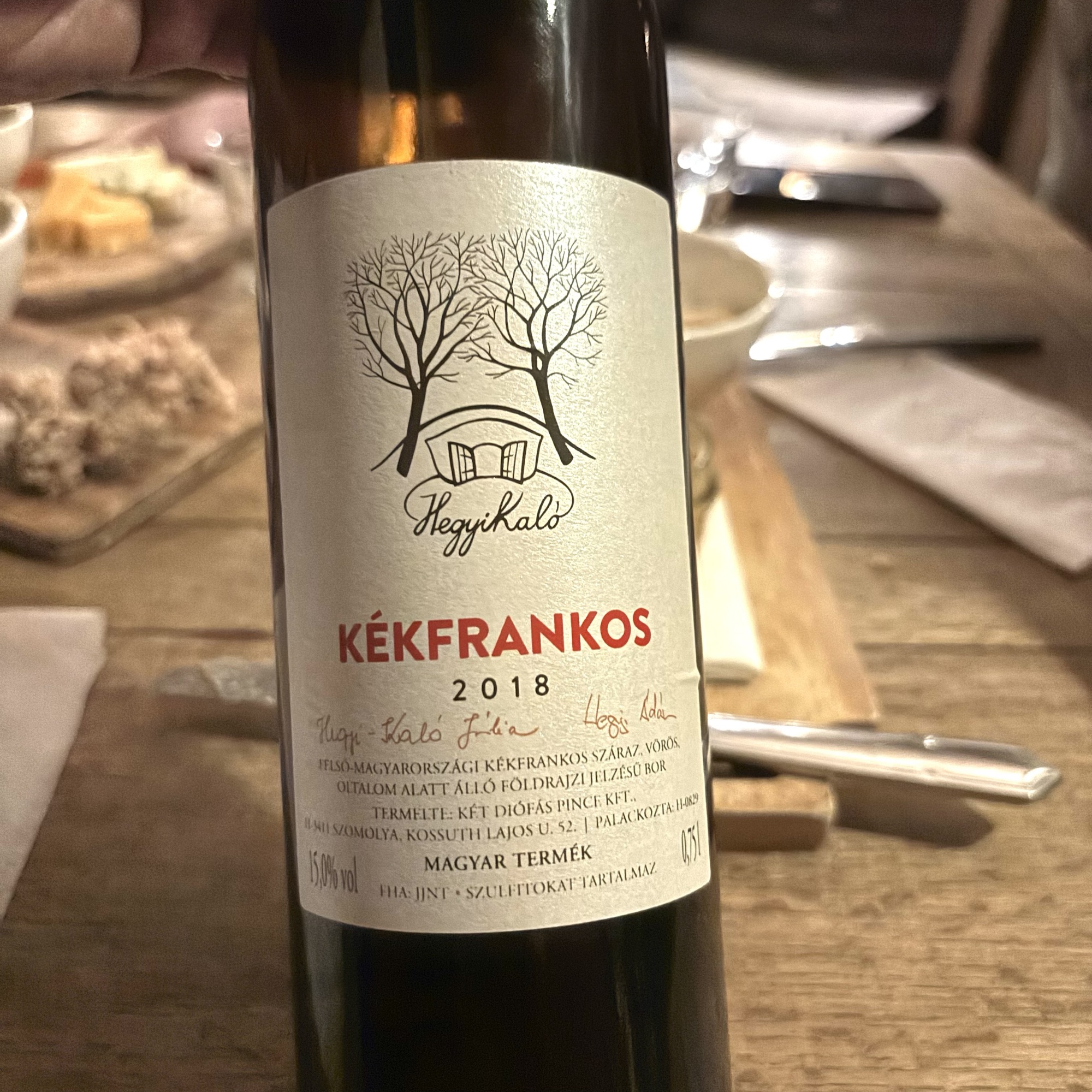
Next, we grabbed a bottle from an old favourite. I first met the young couple, Julia and Adam, behind Hegyikalό around eight years ago, at a Winemakers Club tasting, of course. They produce wine at Eger in Hungary’s northeast (though still west of Tokaj), nestled at the eastern end of the Mátra Hills. Again, their vines are part of a small mixed farm. Julia has a doctorate and Adam, at least at the time I first met him, headed up the Viticultural Research Institute at Eger University.
Their gentle natural wines bear only a nod, on occasion, to the “Bulls Blood” that made this region famous in the 1960s and 70s. That nod comes through most in their full-bodied Kékfrankos, Hungary’s rendition of the Austrian Blaufränkisch, and only then in its 14% alcohol.
When I am drinking an Austrian Blaufränkisch I readily admit that I’m looking most often for that restrained minerality off mostly limestone that you get most particularly off the Leithaberg Hills which ring the northern edge of the Neusiedlersee, in Burgenland. Here we have a different rendition of the grape, but one that if you don’t mind the alcohol is very attractive.
That attraction, for me, lies in its fleshy fruit. This combines with a line of freshness of the type typical of red wines off volcanic soils. Yes, I think it does have a certain “bloodlike” intensity, and also something “ferrous”, the old iron filings note. The bouquet is easy to miss in a wine of such initial power, but sit back and look for the hints of tea, roses and green pepper. That subtlety is not something that a quick sniff and sip at a tasting table is likely to elicit.
We (three of us) ate a lot as well. The quality of the food at Winemakers Club has always been high, but the offering has broadened. It in no way has pretentions to be a restaurant, but there is ample tasty fare to lessen the effects of a bottle or two with friends. As I said on an Insta post, whilst I don’t pretend to be on top of every place in London’s natural wine scene (and certainly I would dearly love to visit Sune in Hackney), Winemakers Club is the London venue for natural wine and friendly conversation closest to my heart. John, and an always engaged, team will give you a warm welcome in the relaxing darkness of The Vaults, underneath Holborn Viaduct.
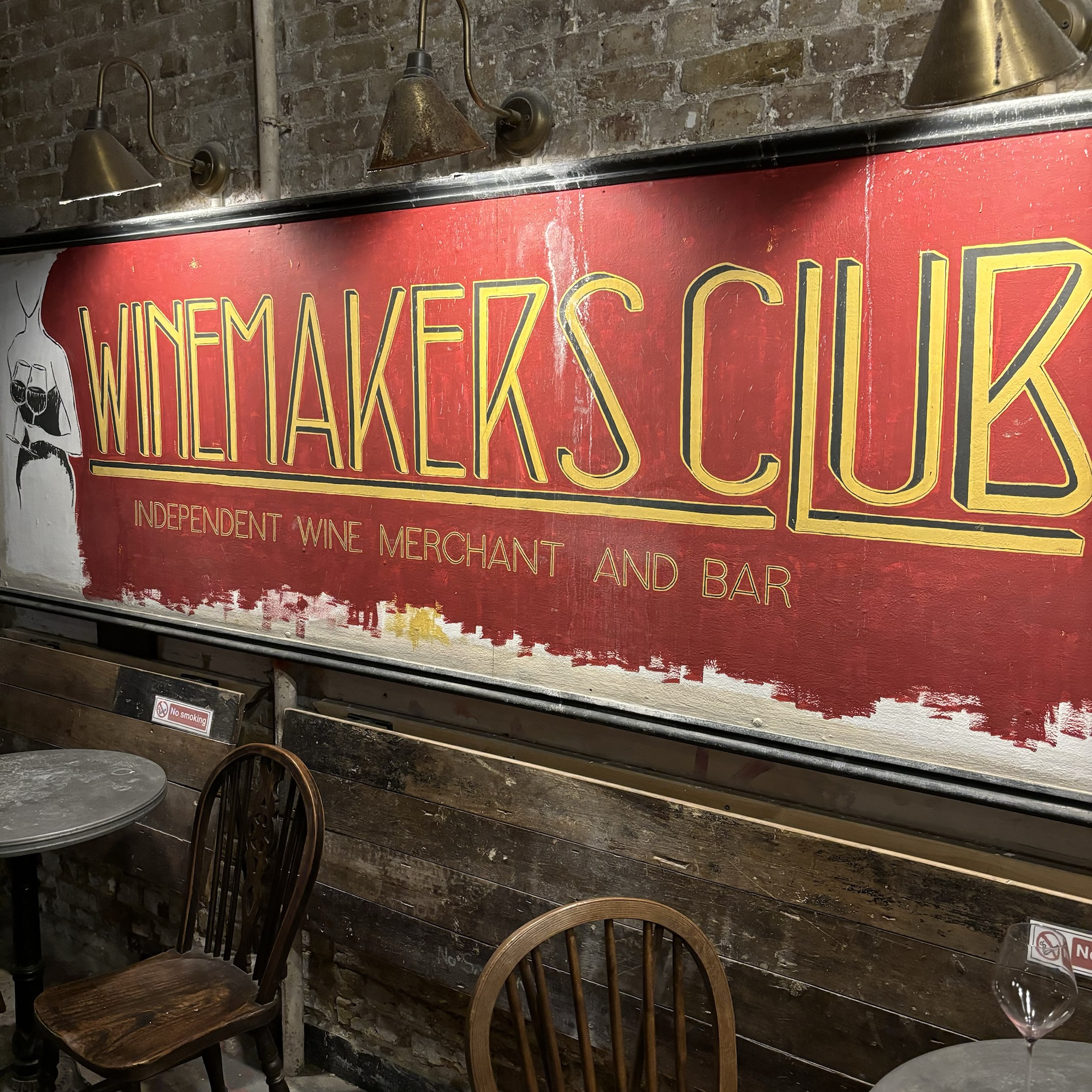
Winemakers Club is at 41a Farringdon Street, London EC4A 4AN (tel 020 7236 2936)
thewinemakersclub.co.uk @winemakersclub
They are closed on Sundays but open every other day from 11am to 11pm.
Their wines are all imported direct and they are a great place to find some top producers, from Olivier and Serge Horiot in Champagne to Tom Shobbrook in Australia, along with some genuinely fine and rare table and fortified wines. Check out the times when you can sit in and consume bottles at their retail prices (before 4pm), or equally, check out their always interesting changing selection of wines by the glass.
They also sell their wines for nationwide delivery online at thewinemakersclub.shop

 David Crossley's Wide World of Wine